โ–ท The world of Pets: Dogs, cats, birds, reptiles, amphibians

Field Spaniel
Inglaterra FCI 123 . Flushing Dogs

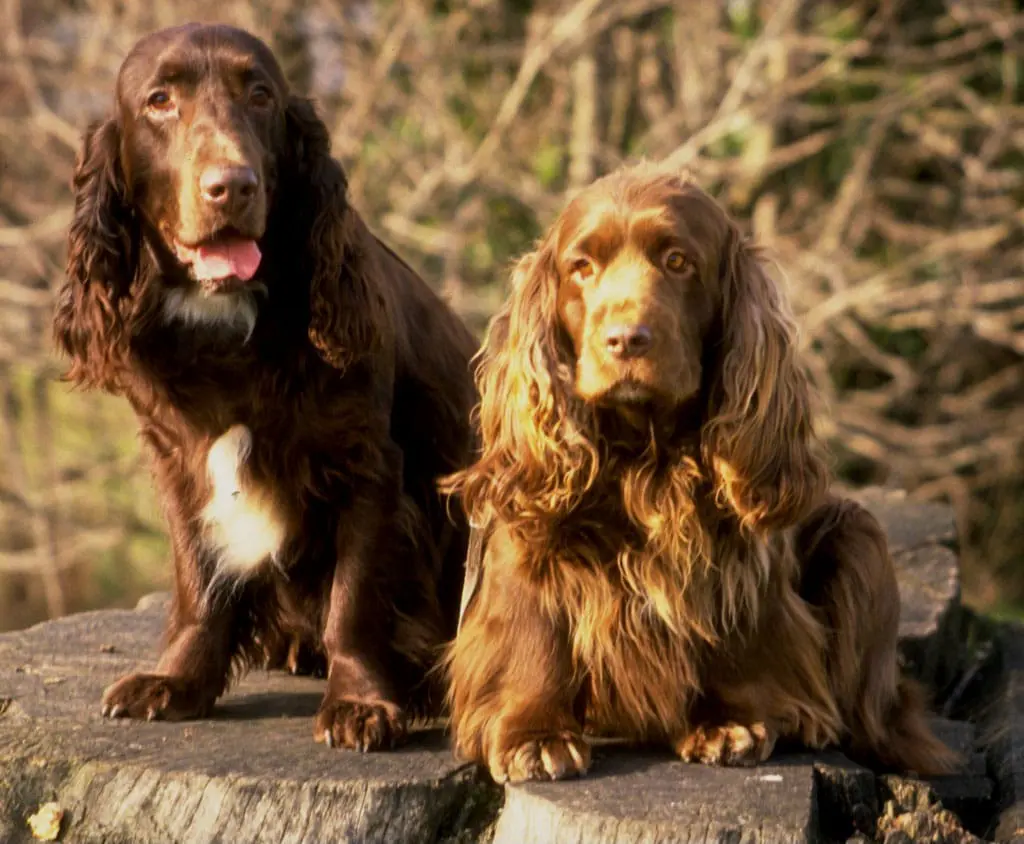
The Field Spaniel take his name ยซfieldยป of its great ability to work in open fields.

Field Spaniel

Content

Characteristics "Field Spaniel"

Coexistence is important that you have with your new friend. Before considering the acquisition of a dog of the breed "Field Spaniel" you know certain factors. Not all breeds of dogs are apt to live in an apartment, you must take into account his character, their need for exercise, their interaction with other pets, their care and if you have small children, their level of tolerance towards them.

Adaptation โ“˜

5,0 of 5 stars (based on 1 review)

friendly dog โ€‹โ€‹โ“˜

5,0 of 5 stars (based on 1 review)

hair loss โ“˜

3,0 of 5 stars (based on 1 review)

Affection level โ“˜

5,0 of 5 stars (based on 1 review)

Need for exercise โ“˜

5,0 of 5 stars (based on 1 review)

Social need โ“˜

4,0 of 5 stars (based on 1 review)

Home โ“˜

4,0 of 5 stars (based on 1 review)

Toilet โ“˜

3,0 of 5 stars (based on 1 review)

Friendly with strangers โ“˜

3,0 of 5 stars (based on 1 review)

barking โ“˜

3,0 of 5 stars (based on 1 review)

Health โ“˜

4,0 of 5 stars (based on 1 review)

Territorial โ“˜

2,0 of 5 stars (based on 1 review)

Cat friendly โ“˜

3,0 of 5 stars (based on 1 review)

Intelligence โ“˜

5,0 of 5 stars (based on 1 review)

Versatility โ“˜

5,0 of 5 stars (based on 1 review)

Child friendly โ“˜

5,0 of 5 stars (based on 1 review)

Surveillance โ“˜

3,0 of 5 stars (based on 1 review)

joy โ“˜

5,0 of 5 stars (based on 1 review)

History

The Field Spaniel (Field) is an example of what can go wrong when trying to breed sporting dogs for their looks without considering their use in the field. In the early days of the breed, in the XVIII century, the Spaniels were defined by their size, and it was considered Field Spaniel to any dog รขโ‚ฌโ€นรขโ‚ฌโ€นthat weighed more than 11 kg (25 pounds). The Spaniels smaller ones were known as "Cockers", and both sizes could be born in the same litter. His fur used to be liver, liver and white, red, Red and white, yellow or black and white.

The advent of dog shows in the mid-19th century motivated dog breeders to start considering both appearance and function.. The different was good. This is how the "black spaniel" was born. That was good, but unfortunately the dogs that were long and short – As the "Sussex Spanielยซ- they were popular at dog shows at the time. The breeders began to cross Field Spaniel con ยซSussex Spanielsยซ. How the size of the dogs was so different, the results were disastrous, converting to Field into a heavy, unattractive dog who could barely move. Even so, exaggerated-looking dogs won at shows.

Finally, people came to their senses and the fashion of Field Spaniel finished. Dogs could have gone extinct, but they were revitalized after the First World War through crosses with the "English Springer Spaniel.", that were more suitable for the size of the Field Spaniel. Through careful breeding, their usefulness as hunting dogs was restored, with the ability to cut through brush that was too difficult for the "Springer", and the speed that the ยซSussex" and the "Clumberยซ.

The breed was not yet saved. World War II put an end to breeding, and then only a few good dogs were left. In United States, there was no Field Spaniel until the age of 60. The Field Spaniel Society of America was formed in 1978. Dogs are still little known today, but they are no longer in danger of extinction. The Field Spaniel ranks 132 between breeds registered by the AKC.

Physical characteristics

The Field Spaniel is closely related to the Cocker Spaniel and the "English Springer Spaniel". In the beginning, the three races were separated mainly by size. With a weight range of 15 to 22 Kg, the Field Spaniel It is larger than the ยซCockerยป but smaller than the ยซSpringerยซ. In addition to hunting, competes in field tests and uses his excellent nose in tracking tests. It is a rare breed, but if you are looking for a solid hunter in addition to a family companion, the Field Spaniel is one of those you should consider.

Weight and size:

Females have an approximate size of 43 cm., While the males measure approximately 45 cm.. Its approximate weight varies from 18 – 25 kg.

Character and skills

The Field Spaniel has the typical features of Spaniel: sensitivity, affection for his family and willingness to learn. With strangers, is reserved, even shy if not well socialized, but their owners will experience a playful and mischievous side. It can be a barker when it shows joy or restlessness.

Its medium size and docile character can make it a good choice for families with children.. He also gets along well with pets, as cats, if he grew up with them. But, pet birds may need to watch their tail. Even though i don't hunt, the Field Spaniel he will take every opportunity to hunt birds and will do his best to go after them. Unless you are in an area with no traffic, keep it on a leash or you'll lose it in the chase.

The Field Spaniel is a dog that needs a job. He is not the type of dog that spends the day eating cookies. Take a daily leash walk of at least an hour, take him to safe, traffic-free areas where he can run off-leash and sign him up for dog sports like agility, obedience, rally and crawl.

Education

The Field Spaniel is intelligent and accepts training well. Like most Spaniels, has a mild temperament and responds best to positive reinforcement techniques, like the compliments, the game and the food rewards. Tends to mature slowly, so you must be patient and constant. In the field he has a natural tendency to explore, which can be stopped by teaching commands such as "Come", "Wait" and "Stay".

Start training your puppy the day you bring him home. Even at eight weeks old, is able to absorb everything that can be taught. Don't wait for you to have 6 months to start training or you will have to deal with a stubborn dog. If possible, take him to a kennel school for puppies when he is between 10 and 12 weeks, and socializes.

Health

All dogs have the potential to develop genetic health problems, like all people have the potential to inherit diseases. Avoid any breeder that does not offer a health guarantee for the puppies, to tell you that the breed has no known problems or to keep puppies isolated from the main part of the house for health reasons. A reputable breeder will be honest and open about breed health problems and the incidence with which they occur.

The Field Spaniel They have some health conditions that may be of concern, especially if you are not cautious with breeder selection. Among them are the Hypothyroidism and eye problems such as cataract, progressive retinal atrophy and retinal dysplasia.

Do not buy a puppy from a breeder who cannot provide you with written documentation that the parents have been exempted from health issues affecting the breed. Having dogs โ€œvet checkedโ€ is no substitute for genetic health testing.

Careful breeders screen their breeding dogs for genetic diseases and breed only the healthiest and best-looking dogs, but sometimes mother nature has other ideas. A puppy can develop one of these diseases despite good husbandry practices. Advances in veterinary medicine mean that, In most cases, dogs can still have a good life. If you are getting a puppy, ask the breeder about the ages of the dogs in their lines and what are the most common causes of death.

Remember that after welcoming a new puppy into your home, you have the power to protect you from one of the most common health problems: the obesity. Keeping the dog at an adequate weight is one of the easiest ways to extend its life. Take advantage of your prevention skills to ensure a healthier dog for life.

Grooming

The Field Spaniel has only one coat, that is to say, does not have undercoat. Silky hair is moderately long and can be straight or slightly wavy. The front of the chest, the belly, The back of the legs and hindquarters have fringes like those seen on "Setter" breeds..

The coat is not heavy and it is easy to maintain. You have to brush it weekly and comb its fringes a couple of times a week, or whenever the dog has been outside or has twigs or other debris stuck to the hair. Trim the hair between the paw pads and inside the ears. Bathe the dog only when necessary; regular brushing should keep it pretty clean. The Field Spaniel they molt moderately.

If you plan to expose your Field Spaniel, ask the breeder for advice on how to present the dog at a dog show. You must have a natural look, but may need a little more razor cleaning, scissors and grooming blades of what a pet dog would receive.

The rest is basic care. Trim nails as needed, usually every few weeks. Yes to your Field Spaniel he likes to swim - and even if he doesn't like- keep hanging ears clean and dry to avoid bacterial or fungal infections. Brush your teeth frequently for general good health and fresh breath.

Images "Field Spaniel"

Photos:

1 – Field Spaniel by Peter, CC BY 2.0, via Wikimedia Commons
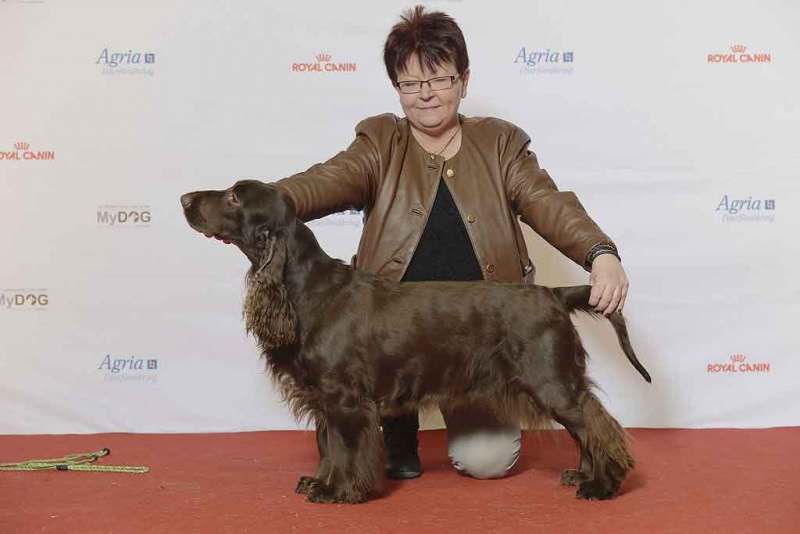
2 – A Grupp 8: FIELD SPANIEL, Winterbourne Itsy Bitsy Spider by Swedish fair
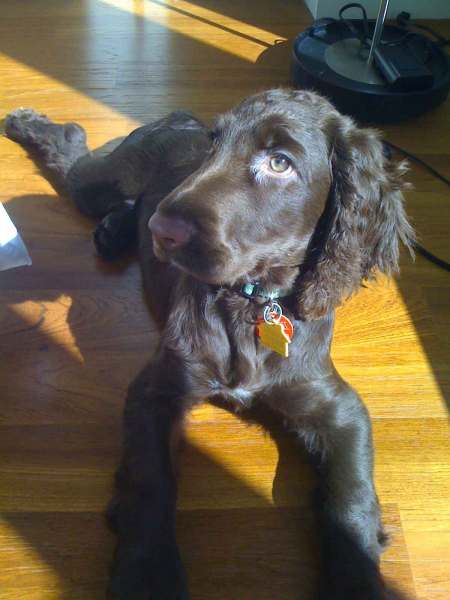
3 – My dog, Lily, after enjoying a smelly romp through a fetid swamp close to home. what a plague. Lily is a Field Spaniel. by Jo-Anna Ghadban, CC BY 2.0, via Wikimedia Commons
4 – Daisy – Field Spaniel by Peter, CC BY 2.0, via Wikimedia Commons
5 – Field Spaniel In Liver Color by RishiBali, CC BY-SA 3.0, via Wikimedia Commons
6 – Field Spaniel The Westminster Kennel Club 137th Annual All Breed Dog Show February 11-12, 2013 New York, NY by Andrea Arden

Videos "Field Spaniel"

Field spaniel Molly
Playing with Jekku
Valpelek Field Spaniel
Field Spaniel Bite jumps into water

Type and recognitions:

  • FCI CLASSIFICATION:
  • Group :
  • Section : . .

Federations:

  • – FCI – Group 8: Retrievers - Flushing Dogs - Water Dogs – Section 2: Retrievers โ“˜
  • – AKC – Sporting โ“˜
  • – ANKC – Group 3 (Gundogs) โ“˜
  • – CKC – Sporting Dogs โ“˜
  • – โ€‹KC – Gundog โ“˜
  • – NZKC – Gundog โ“˜
  • – UKC – Gun Dogs โ“˜

FCI breed standard "Field Spaniel"

Origin:
United Kingdom, England

Date of publication of the valid original standard:
26.03.2009

Use:

Hunting retriever and lifting dog. Ideal for difficult hunting or as a companion for dwellers in rural areas. Not a suitable dog for the city.


General appearance:

Well balanced and noble dog. It is an upright spaniel, sports, developed for activity and endurance.


Behavior / temperament:

It is an upright spaniel, sports, developed for activity and endurance.

Head:

Its features give the impression of quality, character and nobility.

Cranial region:
  • Skull : It is well molded, well-defined occipital region, thin under the eyes; a thickness at this point gives the whole head a rough look. The region of the eye lids is slightly raised.
  • Fronto-nasal depression (Stop) : Is moderate.

facial region:

  • Nose : Well developed, with wide open Windows.
  • Snout : Long and thin, but not pointed or square. Seen in profile, it presents a curvature that gradually descends from the nose to the throat..
  • Jaws/Teeth : Strong JAWS, with healthy and complete teeth; scissor bite, that is, the inner face of the upper incisors is in contact with the outer face of the lower incisors and placed at right angles to the jaws.
  • Eyes : Wide open, but almond shaped, with well-adherent eyelids, without showing the ocular conjunctiva. With grave and gentle expression. dark brown.
  • Ears : Moderately long and wide, set low and well covered with long feather hair.

Neck:

Long, strong and muscular, allowing the dog to collect the prey without undue effort.

Body:

  • Back and kidney region: Strong, level and muscular.
  • Breast : Deep and well developed chest. Ribs moderately sprung. The length of the rib cage should be 2/3 of the body.

Tail:

Previously the custom was to amputate the tail.
  • amputee: Amputated to one third. Low insertion. Never carried above the level of the top line. With good fringe, and lively action.
  • Without amputating: Low insertion. Never carried above the level of the top line. With good fringe, and lively action. It should reach approximately the hocks. Of moderate length in balance with the rest of the dog.


Tips

PREVIOUS MEMBERS: The limbs are of moderate length and straight and flattened bones..

  • Shoulder : Long, oblique and well back.

LATER MEMBERS: Strong and muscular.

  • Knees : Moderately angled.
  • Hocks : They must be well descended.

FEET : compacts, round, not very small with strong footpads.

Movement:

Long stride, slow, with a large drive given by the hind limbs. The short and heavy step is undesirable.

Mantle

HAIR: Long, smooth; its texture is silky and shiny. Never curly, short or hard. Dense and offers weather protection. It should be abundant and feather-shaped on the chest, belly and back of the limbs; However, these should not exist below the tibi-tarsal joints (hocks).

COLOR: Negro, liver or roan. Any of these colors with fire markings. In unicolor dogs, white or roan are allowed on the chest. Combination colors black and white or liver and white are not accepted..


Size and weight:

Approximately 18 '' (18 inches) to the region of the cross.

Weight: Among 18-25 kg (40-55 English pounds).


Fouls:

Any deviation from the aforementioned criteria is considered as a fault and the severity of this is considered to the degree of the deviation to the standard and its consequences on the health and well-being of the dog., and the dog's ability to perform its traditional task.

FALTAS DESCALIFICANTES:

โ€ข Aggressiveness or extreme shyness.
โ€ข Any dog โ€‹โ€‹showing clear signs of physical or behavioral abnormalities.


N.B.:

โ€ข Males must have two normal-appearing testicles fully descended into the scrotum..
โ€ข Only functionally and clinically healthy dogs, with the typical conformation of the breed, should be used for parenting.

Source: F.C.I - International Cynological Federation

Alternative names:

1. Field (English).
2. Field (French).
3. Field (German).
4. Field (Portuguese).
5. Field, Spaniel de campo (espaรฑol).

โ–ท The world of Pets: Dogs, cats, birds, reptiles, amphibians

Flat-coated Retriever
Inglaterra FCI 121 . Retrievers

Flat-coated Retriever

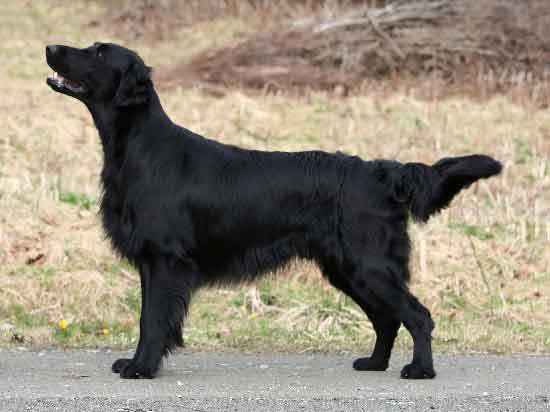
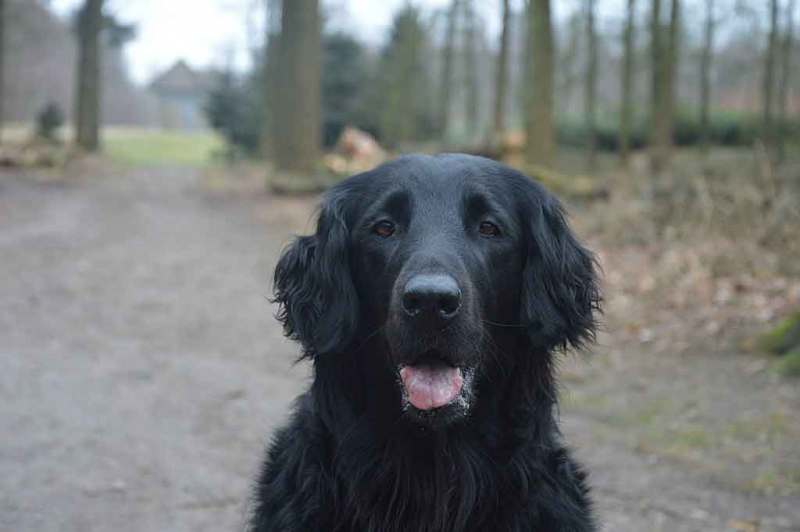
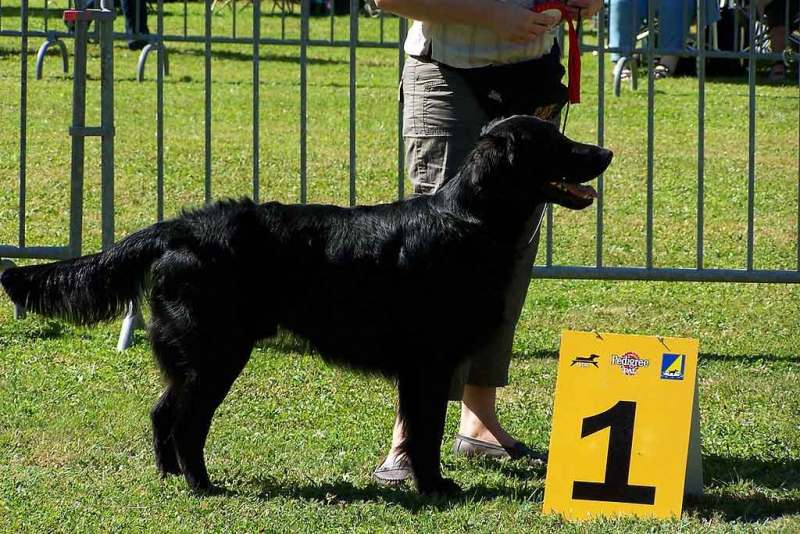
The Flat-coated Retriever should be rediscovered as a companion dog and also for work, because it is still preferred to Labrador Retriever and to a lesser extent to Golden Retriever

Content

History

The Flat-coated Retriever was born during the 19th century in Scotland. He is a member of the great family of the Retriever, with which it shares many physical and mental characteristics. So, is a close cousin of Labrador Retriever, the Golden Retriever, the Chesapeake Bay Retriever, the Curly-coated Retriever and the Nova Scotia Duck Tolling Retriever.

Scottish game wardens developed the Flat-coated Retriever from crosses between the Irish Setter, st john's dogs (already extinct) and the Newfoundland. These last two races, originating from the island of Newfoundland, had been imported by Canadians a few decades earlier, in 1814. These marriages gave rise to Retriever-type canines that could easily evolve both on land and in water.. In particular, hunting guard J. Hull got two dogs named Old Bounce and Young Bounce (father and daughter, respectively), distinguished by their physical and mental abilities. They were used as models to establish the general traits of the breed, so they played a great role in its creation. Although the resulting dogs had wavy hair - they were called Wavy-Coated Retrievers-, the crossing with the Collie and the Labrador Retriever was softening the coat of this dog.

The first representatives of the breed as we know it today were born in the decade of 1860, and many other breeders contributed to its development. We can mention in particular Sewallis E. Shirley, Ettington breeder and founder of The Kennel Club, the british canine club. In the Decade of 1880, established the physical traits of the breed and drafted its official standard. We can also mention a breeder named Braisfort who, in 1869 in Birmingham, was the first to exhibit a representative at a dog show.

The Flat-coated Retriever was first used to help fishermen, retrieving fish or objects dropped in the water in their place. In the 19th century it was especially popular with cod fishermen. But, with the evolution of fishing techniques, professionals gradually began to dispense with their services, but then they were recovered by the hunters. The latter also appreciated his swimming skills, since it was able to bring back the birds that had fallen into the water after being shot by their owner.

The Flat-coated Retriever it was a very popular hunting dog until the end of the First World War, especially for hunting, both on land and in the water. But, the Labrador Retriever and the Golden Retriever they came to dethrone him, causing a great decrease in the number of specimens of the breed in the interwar period and causing it to be in danger of extinction at the beginning of the decade of 1960. The work of the breed's enthusiasts was not enough to restore its reputation: at the end of the decade, was again present in large numbers in the country, though it never regained its former popularity. In fact, the number of breeders interested in it was still limited, even at that time, but this not only had disadvantages: some believe it helped them retain many of the historical qualities of the Flat-coated Retriever, starting with his great capacity for work, his intelligence and his gentle and calm character. Its official recognition by the Fรฉdรฉration Cynologique Internationale (FCI), that came a few years before (in 1954), also helped to regain its reputation.

Worldwide, this dog is still relatively underrepresented. In United States, for example, although it is recognized by the American Kennel Club for more than a century (more specifically since 1915, when he was in decline in his home country) and by the United Kennel Club from 1984, it only ranks slightly higher than 100 in the ranking of breeds according to the number of annual registrations in the organization. His position there is quite stable, contrary to what is observed in France, where it is getting more and more popular. In fact, yes at the beginning of the years 80 less than 10 births per year in the Sociรฉtรฉ Centrale Canine, this figure suddenly increased to 35 in 1987 and then increased almost continuously to about 200 births per year in the early 1990s 2000 and overcome the 300 about fifteen years later.

But, it is not surprising that their presence is greater in their country of origin, with an average of 1.200 births registered each year in The Kennel Club, the British organization of reference. The trend has remained stable in the last ten years.

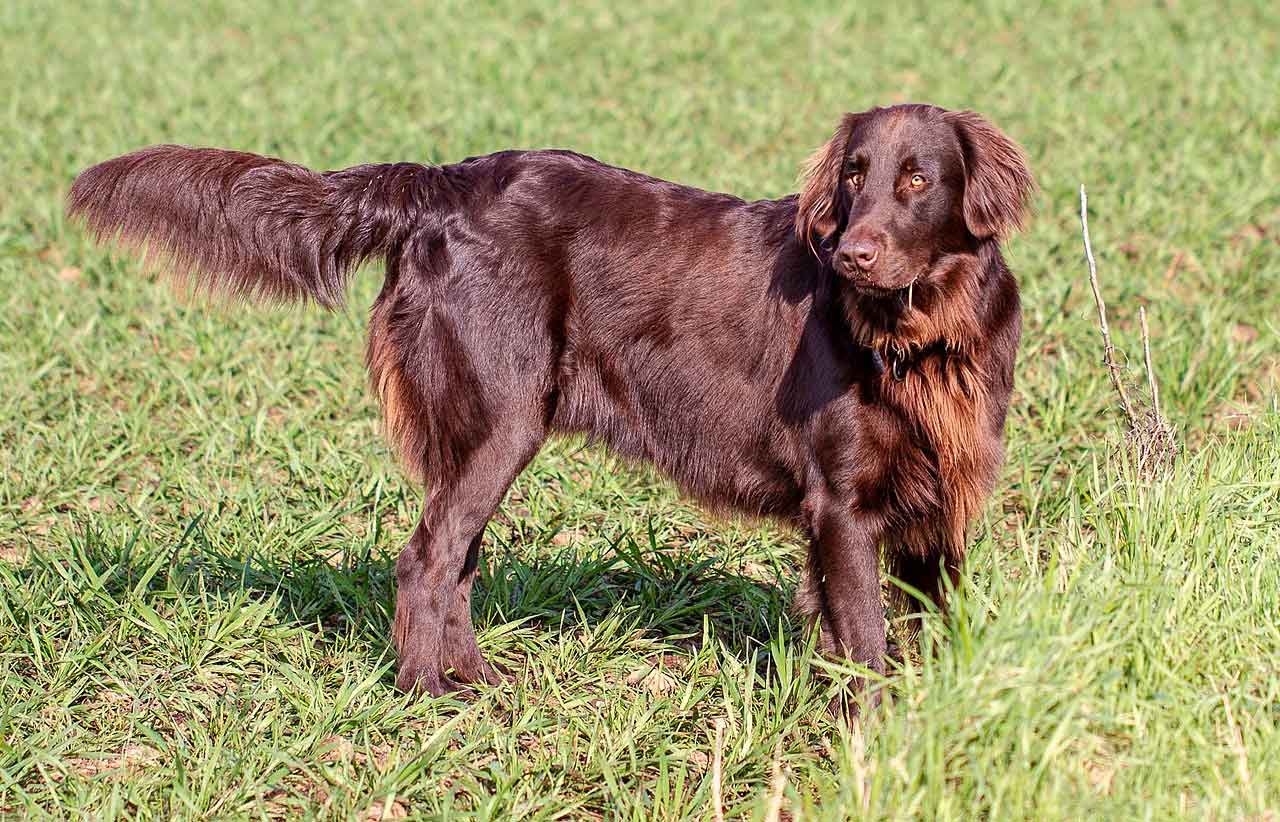
Photo: A liver-colored โ€œSmooth-Coated Retrieverโ€ by Fesoj-wr, CC BY-SA 4.0, via Wikimedia Commons

Physical characteristics

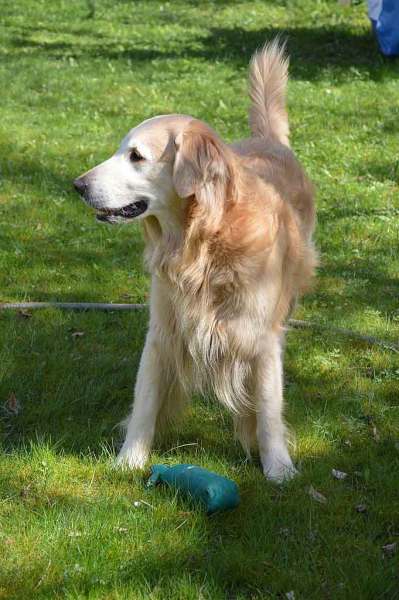
At first sight, I might think that the Flat-coated Retriever it seems like a Golden Retriever black or brown. In fact, the two breeds are so similar that in the past the second was presented at dog shows as a variety of the first. In fact, they are two different races, but the Golden Retriever descends in part of the Flat-coated Retriever and, like this, developed as a hunter for land and water game.

The Flat-coated Retriever they are medium sized dogs, harmonious and with a lively and intelligent expression. The male is usually more imposing than the female, measuring up to about 5 cm taller and weighing up to ten kilos more than the female.

His body is harmonious and well proportioned. The chest is wide and deep, and the spine is short and quite square. The legs are muscular and of solid bones. They are straight when viewed from the front and lead to strong round legs with tight toes.

The tail is quite short, straight and well placed. Always carries it high, but never over the back and hardly ever stops wiggling.

The head is rather long and the skull is rather flat. Jaws are long and strong, capable of carrying medium-sized game animals, such as hares or pheasants. They are shaped like scissors and cover the teeth firmly implanted in the gums.. The ears are quite small, drooping and well placed on top of the head. The eyes are medium in size and hazel or dark brown..

As the name suggests, the fur of the Flat-coated Retriever It is smooth. Black or dark brown, it is also dense and of medium length. This protects the Flat-coated Retriever of all kinds of weather conditions, from water and dirt. His hair is longer in his ears, the chest, the belly, limbs and tail. Males also have longer and more abundant hair on their necks., that resembles a mane.

Height and weight

    ▷ Male size: Of 58 to 61 cm.
    ▷ female size: Of 56 to 59 cm.
    ▷ Male weight: Of 27 to 36 kg
    ▷ female weight: Of 25 to 32 kg

Character and skills

The Flat-coated Retriever It is part of the large family of Retrievers and is particularly close to the Golden Retriever, both physically and in terms of temperament. But, one of the main differences is that they generally mature more slowly than other dogs and have a puppyish exuberance throughout their lives, which is why they are sometimes called the "Peter Pan of Retrievers". This great energy and vitality make it a wonderful and endearing companion., especially for children. On the other hand, It also implies that a certain amount of patience is necessary in their education.

In fact, although he likes to please, the Flat-coated Retriever it can also be somewhat stubborn. This is partly because he loves to entertain himself., but sometimes this means ignoring or disobeying your master. Yes indeed, they are usually good students and are sensitive to reprimands. This sensitivity also means that overly strict and rigid training methods are often not in your best interest., as they can lead you in the wrong direction and make you even more stubborn. So, it is better to favor a dog training method based on positive reinforcement, that is to say, in the reward of good behavior; is the case of clicker training, for example. Food in particular can do wonders for this dog, since it represents an important motivation for him. The Flat-coated Retriever It is an extremely greedy dog, and you can also remember it outside of work sessions: at the slightest drop in attention from its owner, is capable of stealing any food you have on hand, wherever you are. So, it is advisable to be careful not to leave food lying around for this dog who seems to be always hungry.

Tolerant and friendly, loves everyone, even the smallest. Combined with your enthusiasm, these traits even make it an ideal breed of dog for children. But, children must be a certain age: with young children, its exuberance and high energy could lead to unwanted jostling and tail slapping. His rather easy-going and very friendly personality also makes him a good companion for young retirees., as long as you can take him out for regular walks and meet his important exercise needs.

In general, loves human company, has strong ties to his family and needs their attention. Loves to play for hours and especially thrives in a large family.

His good understanding with humans extends to those he does not know. If he barks when a visitor arrives, is to inform his master, and not because he considers any stranger a threat. Very welcoming and friendly, he tends to quickly like any new person who meets him - especially if that person is nice to him- and enjoy the visits, it's made for anything but guard. On the other hand, its great closeness to humans and its great need for attention make it a dog that does not tolerate loneliness well. If he lives in a family too small for him, runs the risk of being unhappy and developing destructive behaviors.

Living with other dogs does not usually pose problems. Can also get along very well with a cat, provided adequate socialization work has been done. On the other hand, it is better to avoid the idea of รขโ‚ฌโ€นรขโ‚ฌโ€นliving with birds or rodents, since his hunting instinct would lead him to chase them.

It also, though it's pretty quiet inside, not really suitable for apartment living. He's a hunter at heart, who likes to exercise in spacious environments that give them the opportunity to run or swim. He is also one of the best swimmers and loves the water, never seems happier than when rolling around in puddles, jump in the fountains or just take long dips in the lakes, rivers and other bodies of water that it finds on its way. You need to spend at least an hour and a half each day to feel good in your paws and on your head. So, who thinks about adopting a Flat-coated Retriever you must ensure that it can provide you with living conditions that are compatible with your needs, because if you can't exercise enough, can quickly develop behavior problems, like stress or aggression.

Education

The Flat-coated Retriever learn very fast, but it is very sensitive: whatever happens, you must be careful not to punish your dog too often or too harshly, as it will remember and could become resistant to work sessions. On the other hand, the use of a dog training method based on positive reinforcement - and, Therefore, in the use of rewards- like clicker training, for example, it comes in handy. It must be said that for him food is an important source of motivation that it would be a shame not to use during work sessions..

The fact that he is late to maturity sometimes complicates his education a bit.. So, it is advisable to just be patient and calm, and above all show great coherence, because this intelligent dog does not stop interpreting every movement and every word of his master. With everything, it is quite simple to train, and the time spent on short work sessions from an early age is a profitable and long-lasting investment in a compliant adult partner.

It also, as with any dog รขโ‚ฌโ€นรขโ‚ฌโ€นof any breed, early socialization can only be beneficial in every way. The Flat-coated Retriever is spontaneously very sociable and open to changes in his environment, and quality socialization, through exposure to all kinds of people, animals, sounds and situations, reinforces these traits, making it even more balanced and perfectly suited to evolve in the midst of humans. In particular, can be especially helpful to avoid confusing cats, birds or rodents with the game.

Health

First of all, It should be noted that the Flat-coated Retriever takes some time to reach full physical maturity and, like all large dog breeds, is especially fragile during its growth period. Depending on the individual, the growth period lasts until 12 or 15 months. So, even if it is a breed with a great need for exercise, avoid any excessive exercise during this phase, at the risk of damaging your joints, often irreparably. In particular, stairs and activities that involve jumping should be avoided. You should also avoid excessively long walks: prior to the 3 months, are enough of 5 to 10 minutes, then it should not exceed half an hour until it has completed the 10 months.

It also, black individuals are especially sensitive to high temperatures. It is advisable to watch out for any signs that suggest heatstroke during the hottest seasons., as the dog's body can quickly overheat.

Having said that, the Flat-coated Retriever is generally in good health. But, like all races, may be subject to certain problems, some of which are hereditary: hip dysplasia. When adopting a Flat-coated Retriever of a breeder, it is advisable to find out about the tests carried out on breeders and their offspring, as this will help rule out certain diseases.

Thus, sometimes have a patellar dislocation, that is to say, a knee slipping out of place, what causes lameness. Long-term, friction caused by this dislocation can also lead to arthritis problems in the dog. Depending on the severity of the dislocation, surgery may be necessary.

like most big dogs, the Flat-coated Retriever you also have an increased risk of hip dysplasia: the femur does not fit perfectly into the pelvic socket of the hip joint. Some individuals may experience pain and lameness in one or two of the hind legs., but others show no symptoms. But, as the dog ages, osteoarthritis problems may appear. How this disease is hereditary, dogs that test positive for hip dysplasia are excluded from breeding. This is at least what every serious breeder of Flat-coated Retriever, and it is advisable to make sure of this when adopting a puppy from a breeder, asking parents' test results.

Another problem to which the Flat-coated Retriever is the dilation-torsion of the stomach. This serious and life-threatening syndrome affects large dogs with deep chests. Air or gases build up in the dog's stomach, that twists and does not allow its evacuation. Even worse, compresses the surrounding veins, thereby interrupting blood flow. No immediate veterinary care, the animal dies very quickly.

The different types of dog cancer also especially affect this breed.

Osteosarcoma, for example, especially affects large dogs, and the Flat-coated Retriever is no exception. It is a fairly aggressive bone cancer, which initially causes lameness. This disease usually leads to amputation of the affected limb and heavy chemotherapy. Unfortunately, it is very rare for a dog to survive this disease, as the problem is often diagnosed too late. According to the case and once identified, those affected may live between 9 months and 2 years longer than if they had not been treated, thanks to adapted treatments.

Another form of cancer to which this dog is more exposed is malignant histiocytosis. Although this form of cancer is rare, is the most commonly observed in this breed, and is usually contracted from 6 years of age. Appears as a localized mass, most often in the elbow or knee, and progresses very quickly once it appears. Can be treated with surgery and chemotherapy, but healing changes are usually small.

The Flat-coated Retriever you can also get lymphosarcoma, one of the most common cancers seen in dogs of all breeds. It can appear in various parts of the body, like spleen, the gastrointestinal tract, lymph nodes, the liver and bone marrow.

In this dog it is also more subject is hemangiosarcoma. This form of malignant cancer is found in the lining of blood vessels and in the spleen. Can be treated with surgery and chemotherapy, but also in this case the affected animal has little chance of recovery.

Grooming

Contrary to what her long dark hair might suggest, the Flat-coated Retriever it is an easy-care breed.

His coat requires weekly brushing, or even a little more if you are regularly abroad. Some owners go so far as to brush it every day to prevent its long, fallen hair from falling throughout the house.. Longer hairs can also be cut, that is to say, those with the ears, the feet, belly and tail; this prevents dirt from accumulating on rides.

The bath should not be prescribed too regularly, but it can be useful in case the dog with long enough hair gets too dirty, for example, as a result of an excursion in a muddy environment. Otherwise, bathe the dog in 2 to 3 times a year is more than enough to keep their coat in good condition, in addition to weekly brushing.

If you come across a water point during one of your walks, the Flat-coated Retriever often tempted to take a dip. If this happens, it is advisable to rinse the Retriever once it has come out of the water, especially if the water is chlorinated, is salty or contains algae, in order to prevent any skin problems and keep it clean.

Trimming your dog's nails once or twice a month can also help.. Contrary to what one might think with such an active dog, natural wear and tear is usually not enough, since its claws grow quite quickly.

It also, as in the case of any dog โ€‹โ€‹with floppy ears, it is necessary to clean them weekly to avoid any risk of infection.

The weekly grooming session should also be an opportunity to take care of your eyes, to make sure there are no problems (tearing, Red eyes…) and to clean the contours with clear water.

It is also necessary to take advantage of this time to clean the teeth. Brushing your dog's teeth helps prevent tartar buildup and the problems that come with it, starting with strong breath.

To avoid any uncomfortable reaction due to its size, it is advisable to get used to being handled as soon as possible, either by his master or by a third person. Learn to take care of the puppy, the noises, the smells and the manipulations involved, should be an integral part of your education.

Use

Used for over a century as a hunting dog, the Flat-coated Retriever continues to excel in this role today. They are suitable for all types of hunting, but they are especially good at tracking smaller animals. They are especially appreciated for their great ability to recover birds that have fallen into the water.

It is also a perfect companion dog, especially for a sports master or family. Anyone who dreams of going for a run with their dog - or even taking long walks- you will find in him an ideal companion, and also stands out in canine sports that take advantage of their physical qualities, like agility, the cani-cross or the flyball.

On the other hand, even if you are the first applicant and have a great need for exercise, It should not be forgotten that it takes time to reach full physical maturity and that, in the meantime, you have to save him. These may include, excessive exercise could cause deformities or alter the correct development of your joints, often with lifelong consequences.

Price

Although less common than some of its Retriever cousins, find a Flat-coated Retriever in Europe it does not present any special difficulties, Unlike, for example, of United States, where months of waiting may be necessary.

The cost of adopting a puppy from Flat-coated Retriever of a quality breeder ranges from 900 and 1200 EUR. Obviously, depends more or less on the quality of your lineage and the reputation of the breeder, as well as their physical qualities. There are no price differences according to the sex of the puppy.

Characteristics "Flat-coated Retriever"

Coexistence is important that you have with your new friend. Before considering the acquisition of a dog of the breed "Flat-coated Retriever" you know certain factors. Not all breeds of dogs are apt to live in an apartment, you must take into account his character, their need for exercise, their interaction with other pets, their care and if you have small children, their level of tolerance towards them.

Adaptation โ“˜

2,0 of 5 stars (based on 1 review)

friendly dog โ€‹โ€‹โ“˜

4,0 of 5 stars (based on 1 review)

hair loss โ“˜

2,0 of 5 stars (based on 1 review)

Affection level โ“˜

5,0 of 5 stars (based on 1 review)

Need for exercise โ“˜

4,0 of 5 stars (based on 1 review)

Social need โ“˜

4,0 of 5 stars (based on 1 review)

Home โ“˜

3,0 of 5 stars (based on 1 review)

Toilet โ“˜

2,0 of 5 stars (based on 1 review)

Friendly with strangers โ“˜

3,0 of 5 stars (based on 1 review)

barking โ“˜

3,0 of 5 stars (based on 1 review)

Health โ“˜

4,0 of 5 stars (based on 1 review)

Territorial โ“˜

2,0 of 5 stars (based on 1 review)

Cat friendly โ“˜

3,0 of 5 stars (based on 1 review)

Intelligence โ“˜

4,0 of 5 stars (based on 1 review)

Versatility โ“˜

3,0 of 5 stars (based on 1 review)

Child friendly โ“˜

5,0 of 5 stars (based on 1 review)

Surveillance โ“˜

3,0 of 5 stars (based on 1 review)

joy โ“˜

5,0 of 5 stars (based on 1 review)

Images "Flat-coated Retriever"

Photos:

1 – Flat Coated Retriever by I, Gunnandreassen, CC BY-SA 3.0, via Wikimedia Commons
2 – ยซSmooth hair collectorยป by https://pixabay.com/photos/flatcoated-retriever-flat-coated-4219166/
3 – ยซSmooth-coated snakeยป, 8 years by Pdusschooten, CC BY-SA 4.0, via Wikimedia Commons
4 – โ€œSmooth-coated retrieverโ€ named Molly by Flickr users David and Lynne Slater, CC BY 2.0, via Wikimedia Commons
5 – Flat-Coated Retriever black by Berthold Werner, CC BY-SA 3.0, via Wikimedia Commons
6 – Yellow Flat Coated Retriever by Dancer9, CC BY-SA 4.0, via Wikimedia Commons

Videos "Flat-coated Retriever"

Type and recognitions:

  • FCI CLASSIFICATION:
  • Group :
  • Section : . .

Federations:

  • – FCI – Group 8: Retrievers - Flushing Dogs - Water Dogs – Section 1: Retrievers โ“˜
  • – AKC – Sporting โ“˜
  • – ANKC – Group 3 (Gundogs) โ“˜
  • – CKC – Sporting Dogs โ“˜
  • – โ€‹KC – Gundog โ“˜
  • – NZKC – Gundog โ“˜
  • – UKC – Gun Dogs โ“˜

FCI breed standard "Flat-coated Retriever"

Origin:
United Kingdom, Scotland

Date of publication of the valid original standard:
08.09.1988

Use:

Retriever hunting and shooting.


General appearance:

Smart and active dog, medium-sized, with a clever expression; it's strong without being heavy, as well as thin without being lacking in substance.


Behavior / temperament:

Endowed with the natural ability of a hunting dog, as well as optimism and friendliness that he demonstrates with the enthusiastic movement of his tail. Confident and caring.

Head:

Long and delicately molded.

Cranial region:
  • Skull: Flattened and moderately wide.
  • Depression links (Stop): Light between the eyes, that should not be accentuated, in such a way that it does not give a drooping or concave appearance.

facial region:

  • Truffle: Good size, with open nostrils.
  • Jaws / Teeth: Long and strong jaws, capable of holding a hare or a pheasant. Complete denture with scissor bite, that is to say that the inner face of the upper incisors is in contact with the outer face of the lower incisors and well placed in the maxillae. Healthy and strong teeth.

Eyes: Medium-sized, brown or hazelnut, with a very clever expression (prominent round eyes are highly undesirable). Not laid obliquely.

Ears: Small and well placed on the sides of the head.

Neck:

The head well placed on the neck that should be reasonably long and without dewlap, symmetrical and obliquely placed on the shoulders that descend well down the back allowing you to easily search the track.

Body:

  • Pork loin: Short and square. Loin poorly coupled highly undesirable.
  • Breast : Deep and moderately wide chest, with a well-defined sill. Moderately flattened front ribs. They must be well developed backwards, have a gradual curvature and be more arched in the center, although this curvature should be less pronounced towards the hindquarters.

Tail:

Short, straight and well set, carried gaily but never much higher than the dorsal line.

Tips

PREVIOUS MEMBERS: They must be straight and of good bones in all its extension.

  • Elbows: They should move neatly and evenly across the chest.

LATER MEMBERS: Muscular, without any deviation.

  • Knee: Moderate angulation.
  • Hocks: Moderate angulation, well descended. Highly undesirable cow hocks.

FEET: Well round and strong, with fingers together and well arched, as well as thick and strong pads.

Movement:

Free and loose, Seen from the front and back it should be in a straight line without any deviation.

Mantle

HAIR: Denso, fine to medium textured and of good quality, as straight as possible. The limbs and tail must have sufficient fringes. The abundant fringes when the dog reaches maturity complete the elegance of a good specimen.

COLOR: Only black or liver.


Size and weight:

Height at the desired withers:

  • Males: 59 โ€“ 61,5 cm. (23-24 inches).
  • females: 56,5 โ€“ 59 cm. (21-23 inches).

Desired weight in good physical condition:

  • Males: 27 โ€“ 36 kg (60-80 English pounds).
  • females: 25 โ€“ 32 kg (55-70 English pounds).


Fouls:

Any deviation from the aforementioned criteria is considered as a fault and the severity of this is considered to the degree of the deviation to the standard and its consequences on the health and well-being of the dog., and the ability of the dog to carry out their traditional work.

FALTAS DESCALIFICANTES:

โ€ข Aggressiveness or extreme shyness.
โ€ข Any dog โ€‹โ€‹showing clear signs of physical or behavioral abnormalities.


N.B.:

โ€ข Males must have two normal-appearing testicles fully descended into the scrotum..
โ€ข Only functionally and clinically healthy dogs, with the typical conformation of the breed, should be used for parenting.

Source: F.C.I - International Cynological Federation

Alternative names:

1. Flatcoat, Flattie, Flatte (Sweden), flatt (Sweden) (English).
2. Flat-Coated Retriever (French).
3. Flat Coated Retriever (German).
4. Flat-coated retriever (Portuguese).
5. Retriever de pelo liso, (en inglรฉs Flat-coated retriever) (espaรฑol).

โ–ท The world of Pets: Dogs, cats, birds, reptiles, amphibians

American Foxhound
Estados Unidos FCI 303 . Large-sized Hounds

Foxhound Americano

The American Foxhound is sweet, friendly, loyal and very affectionate in a house.

Content

Characteristics "American Foxhound"

Coexistence is important that you have with your new friend. Before considering the acquisition of a dog of the breed "American Foxhound" you know certain factors. Not all breeds of dogs are apt to live in an apartment, you must take into account his character, their need for exercise, their interaction with other pets, their care and if you have small children, their level of tolerance towards them.

Adaptation โ“˜

2,0 of 5 stars (based on 1 review)

friendly dog โ€‹โ€‹โ“˜

4,0 of 5 stars (based on 1 review)

hair loss โ“˜

1,0 of 5 stars (based on 1 review)

Affection level โ“˜

4,0 of 5 stars (based on 1 review)

Need for exercise โ“˜

5,0 of 5 stars (based on 1 review)

Social need โ“˜

4,0 of 5 stars (based on 1 review)

Home โ“˜

2,0 of 5 stars (based on 1 review)

Toilet โ“˜

2,0 of 5 stars (based on 1 review)

Friendly with strangers โ“˜

3,0 of 5 stars (based on 1 review)

barking โ“˜

5,0 of 5 stars (based on 1 review)

Health โ“˜

5,0 of 5 stars (based on 1 review)

Territorial โ“˜

2,0 of 5 stars (based on 1 review)

Cat friendly โ“˜

3,0 of 5 stars (based on 1 review)

Intelligence โ“˜

4,0 of 5 stars (based on 1 review)

Versatility โ“˜

3,0 of 5 stars (based on 1 review)

Child friendly โ“˜

5,0 of 5 stars (based on 1 review)

Surveillance โ“˜

1,0 of 5 stars (based on 1 review)

joy โ“˜

5,0 of 5 stars (based on 1 review)

History

Fox hound, American, better known as American Foxhound It is a breed of dog that is very close to the English Foxhound, are hounds, dogs that are guided by smell to hunt foxes.

In 1650, Robert Brooke, brought for the administration of the British colony that was North America a pack of hunting dogs, which became the root of many of the North American hunting dog lines. These dogs remained in the Brooke family about 300 years.

George Washington received fox hunting dogs, French, as the Great Gascony Blue as a gift from the Marquis de Lafayette.

Many of the dogs Washington already owned were descendants of the Brooke family., so when he crossed them with the French, the race began to develop until it reached the present American Foxhound.

Physical characteristics

While the norms of the standard require that the American Foxhound what de 53 to 64 cm in height to the cross, and despite between 29 to 34 kg, Many specimens are, structurally, bigger, females always, slightly smaller than males.

Some breeders have theorized that the variation in height with respect to the standard, It is due to the considerably improved diet the dogs receive currently. Let's not forget that the breed was first recognized by the American Kennel Club in 1886 (and there the standard was set...), and back then it was a common and traditional practice to feed the Foxhound with a diet they called "dog bread", it was a variant of bread made with cornmeal.

Continuing with the physical characteristics, the Foxhound has long legs, lines of bony. His chest is quite narrow. It has a long snout and large skull, dome shaped. He's a big ear... Yes, He has floppy ears like his first cousins โ€‹โ€‹and hazel eyes. (or brown) they are big and bright.

The coat is short and rough. In general, they are very similar to the Beagle, only that foot can be seen that they are taller and larger. Usually have four colors: red, black, and fire, or bluish, They also have white parts.

They tend to throw a good amount of hair in the time of molt, but a weekly brushing will prevent that the sofa is decorated…

Character and skills

The American Foxhound is sweet, friendly, loyal and very affectionate in a house. As with all dogs need a careful training, constant socialization, and one owners who are willing to do enough exercise with your pet!

One Foxhound bored will find by itself, the ways to have fun, and and can be very destructive, Some examples of destruction include, from scratches on doors, destruction of objects found in your path, as toilet paper, for example, as it is very mischievous and, to be quite long, they are able to pick up things of furniture…

If you can not establish a routine walks, Well, at least it would be good if the animal had access to a safe patio, where you can spend your energy, is a good alternative. But, We insist that, the walks, games should be part of your daily life.

Type and recognitions:

  • FCI CLASSIFICATION:
  • Group :
  • Section : . .

Federations:

  • – FCI – Group 6: Scent hounds, and related breeds. – Section 1.1: Large-sized Hounds. โ“˜
  • – AKC – Hound โ“˜

FCI breed standard "American Foxhound"

Origin:
United States

Date of publication of the valid original standard:
07.08.1998

Use:

With working trial.


General appearance:

----


Behavior / temperament:

---

Head:

Medium long, slightly domed in occiput.

Cranial region:
  • Skull : Wide and full.
  • Depression links (Stop) : Moderately defined.

facial region:

  • Snout : Good length, straight and square cut.
  • Eyes : Large, well separated placement, with typical bloodhound expression; soft look, gentle and nice; brown or hazelnut color.
  • Ears : Rather low implantation, so long that, extended, reach almost to the tip of the nose; texture fine; sufficiently wide and almost lacking erectile capacity; hang close to the head with the leading edge slightly turned towards the cheeks; the tips are rounded.

Neck:

Rises freely and lightly over the shoulders, strong in substance but not heavy, medium long; clean throat, no skin folds; but a slight wrinkle under the angle of the jaw is allowed.

Body:

  • Back : Moderately long, robust and muscular.
  • Pork loin : Wide and slightly arched.
  • Breast : Must be deep, giving space for the lungs; narrower in proportion to its depth than the chest of the English Foxhound; a circumference of 71 cm. (28 inches) is considered optimal in a specimen of 58 cm. (23 inches) height.
  • Ribs : Well arched, the hindquarters well extended back.
  • Flank : A flank of 7,6 cm. (3 inches) confers elasticity.

Tail:

Moderately high insertion, high carried, but never forward on the back; slightly curved and with a very sparse fringe of hair.

Tips

PREVIOUS MEMBERS : Straight, with good bones.

  • Shoulder : Oblique, crisp and muscular, neither heavy nor loaded, that give the impression of freedom of movement with great activity and strength.
  • Metacarpus : Short, straight.
  • Previous feet : of fox; well arched fingers; strong nails; hard, full pads.

LATER MEMBERS :

  • Hips and thighs : Strong and muscular, ensuring a powerful thrust.
  • Knees: Strong and low-set.
  • Warm-tarsal joints : Solid, symmetrical and moderately angled.
  • Hind feet : Compact and strong.

Movement:

---

Mantle

HAIR : Medium long, thick, hard texture typical of bloodhound.

COLOR : Any color is allowed.


Size and weight:

  • Males should not measure less than 56 cm. (22 flea) not more than 63,5 cm. (25 inches);
  • females should not measure less than 53 cm. (21 inches) not more than 61 cm. (24 inches).

Measurement should be done with the dog in a natural position, with the limbs well under the body; is taken at the level of the cross.


Fouls:

Any deviation from the aforementioned criteria is considered as a fault and the severity of this is considered to the degree of the deviation to the standard and its consequences on the health and well-being of the dog..

โ€ข Very flat skull, narrow at the top, too above- dice.
โ€ข Roman nose, the raised, giving the nasal bridge a concave shape.
โ€ข Long and pointed snout, or very short, sharply cut under the eyes.
โ€ข Small eyes, sharp-eyed like a Terrier, or prominent and bulging.
โ€ข High set ears, short, or with a tendency to rise above its insertion point.
โ€ข Thick collar, short or rough; worn at the same height as the top of the shoulders Throat with double chin or skin folds.
โ€ข Very long back, convex or defeated.
โ€ข Flat and narrow spine.
โ€ข Excessively wide or shallow chest.
โ€ข Flat ribs.
โ€ข Long tail, curved in the shape of a handle or inclined from birth forward. Rat tail. Total absence of fringe hair.
โ€ข Twisted forelimbs.
โ€ข Shoulder blades straight and vertical.
โ€ข Elbows turned outward.
โ€ข Carpal joint deviated forward or backward.
โ€ข Cow tibio-tarsal joints or very straight.
โ€ข Long feet, fingers apart, crushed.
โ€ข Lack of muscles and drive.
โ€ข Short hair, thin or smooth in texture.

SCALE OF POINTS

points

Head

  • Skull 5
  • Snout 5
  • Eyes 5
  • Ears 5

20

Tips

  • Former members 10
  • Hip, thighs and post limbs. 10
  • Pies 15
  • 35

    Body

    • Neck 5
    • Shoulders and chest 15
    • Back, tenderloin and ribs 15

    35

    Fur and tail

    • Fur 5
    • Tail 5

    10
    ___
    TOTAL 100

    Any dog โ€‹โ€‹showing clear signs of physical or behavioral abnormalities must be disqualified..


    N.B.:

    Males should have two normal-appearing testicles fully descended into the scrotum..

    Source: F.C.I - International Cynological Federation

    Images ยซAmerican Foxhoundยป

    Videos ยซAmerican Foxhoundยป

    Alternative names:

    1. Foxhound (English).
    2. Foxhound (French).
    3. Foxhound (German).
    4. Foxhound americano, Cachorro americano Urrador (Portuguese).
    5. Foxhound americano, Perro de caza de zorros americano (espaรฑol).

    โ–ท The world of Pets: Dogs, cats, birds, reptiles, amphibians

    English Foxhound
    Gran Bretaรฑaa FCI 159 - Large-sized Hounds

    Foxhound Inglรฉs

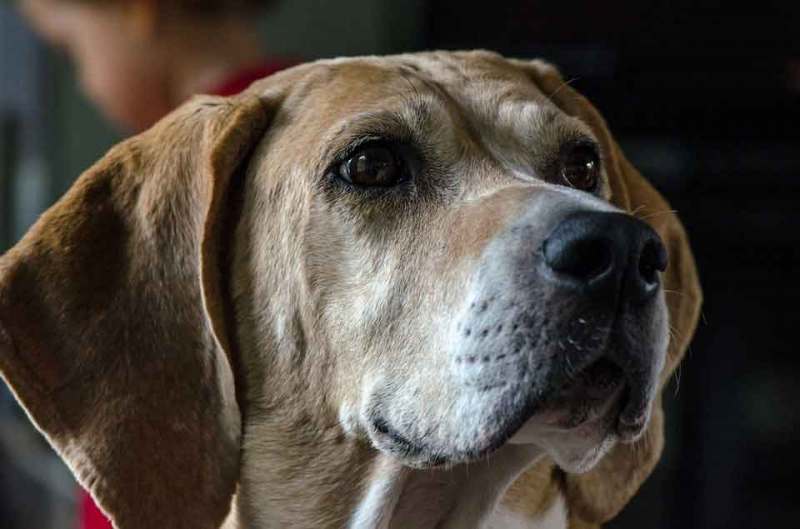
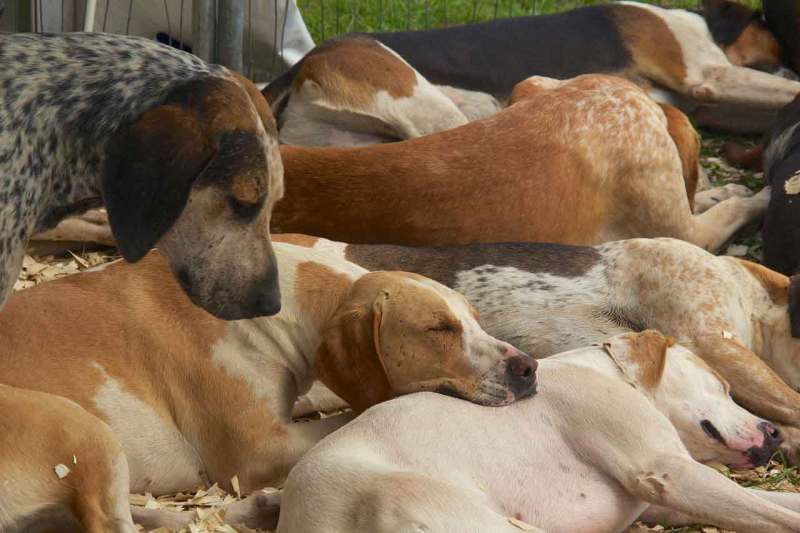
    The English Foxhound is dog friendly appreciates life in the pack, where he gets along with his peers.

    Content

    English Foxhound History

    The English Foxhound can be considered a classic among British hunting dogs. This traditional breed is probably a cross between the Bracken medieval and the greyhounds, which were supposed to provide more lightness to previously heavier tracking dogs. Its field of application was and is hunting, more precisely: fox hunting mounted in pack, also called "hunting by force". In this hunt, the herd chases game animals such as roe deer or foxes until they are exhausted.. Persistent dogs can stay on their prey's heels for up to five hours. Although they are not faster than the pursued, tire the hunt so that the human hunter can hunt it. "Hunting by force" flourished in the 18th and 19th centuries, when it was practiced by the German nobility, British and French. Only the aristocracy could afford this elaborate form of hunting, and often destroyed numerous fields under the hooves of horse carts on the miles of unpredictable routes.

    In the meantime, this form of hunting is prohibited in Great Britain, as well as in most European countries. In Germany, by the way, this prohibition was not originally justified by the practice of hunting, which is questionable from an animal welfare point of view. Rather, prohibition, when came into force in the years 30, was intended to limit the privileges of the nobility – and therefore also hunting. But a few decades later, hunting laws confirmed the ban. But this was not the end for him English Foxhound: Today, trawling is a friendly alternative – not the killing of the hunt, but the joy of riding fast along with the pack is the main focus. In 1964 the breed was recognized by the FCI. Besides of English Foxhound, there is also the American Foxhound, slightly lighter construction.

    Physical Characteristics English Foxhound

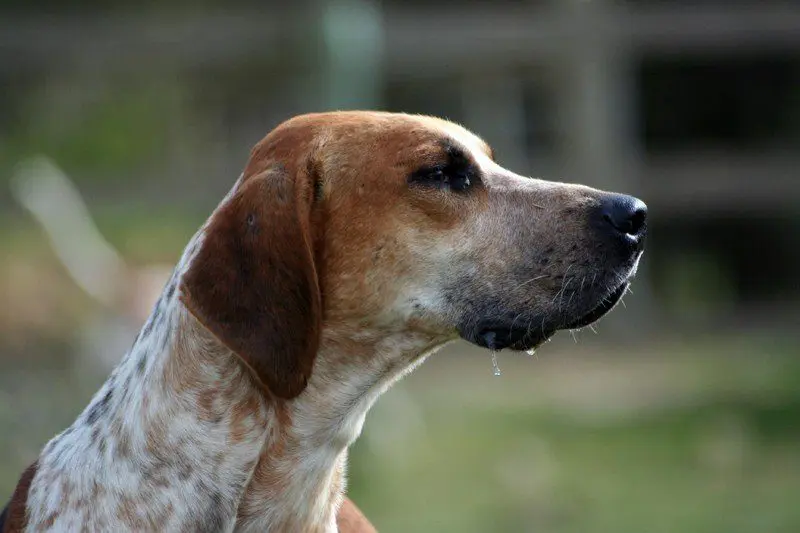
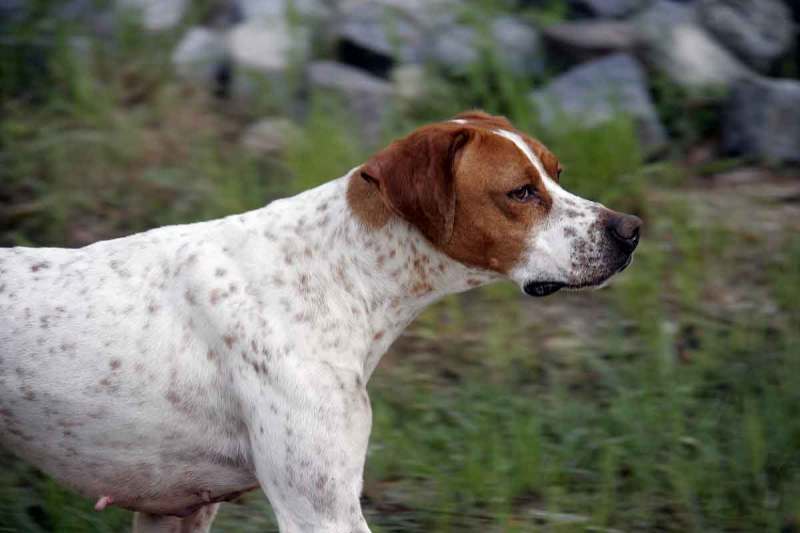
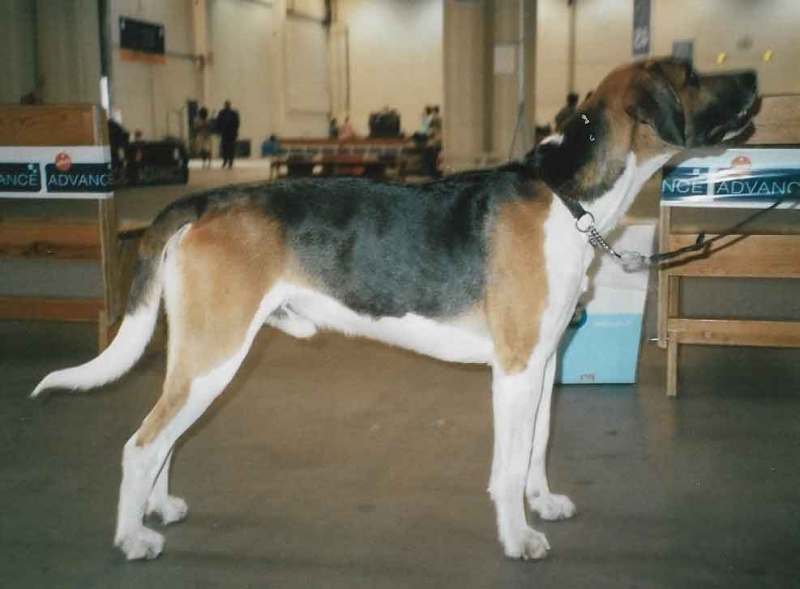
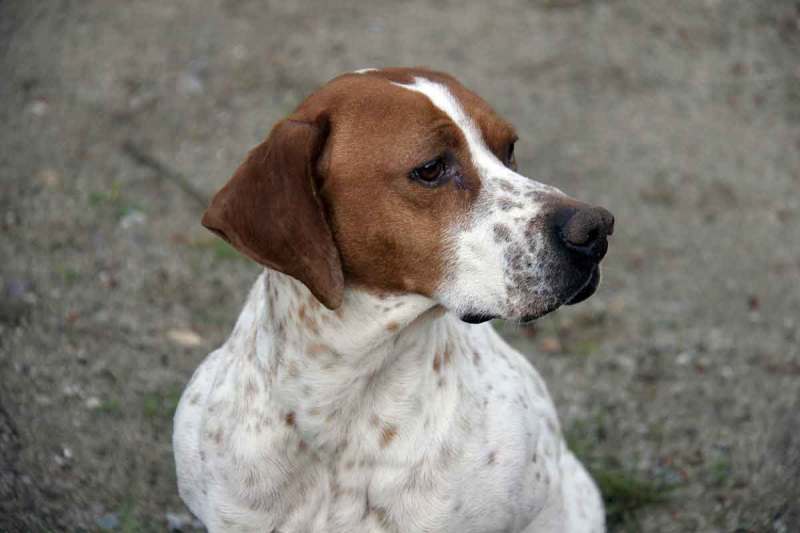
    He bears a strong physical resemblance to him. Beagle, Although it is slightly larger. The average size of English Foxhound varies slightly depending on the gender of the animal. The males measure between 55 and 62,5 cm. up the cross, and females in 50,5 to 60 cm. up the cross. Generally weigh between 25 and 34 kg. Their fur is short and hard, tricolor-negro color, White and toasted or bicolor with a white background. It has a light head, and with pronounced eyebrows. The ears are medium and droopy, Hound style. His muscular back, It has straight legs and well located porte alegre queue, Whip style. The long legs allow the English Foxhound at a fast pace.

    Character and skills English Foxhound

    This friendly dog รขโ‚ฌโ€นรขโ‚ฌโ€นappreciates life in the pack, where he gets along with his peers. In keeping with your original purpose and the life of your ancestors, almost without exception they lived in large herds, the English Foxhound show good obedience, but does not usually establish close relationships with humans individually. Even today the dogs grow up in the pack and stay there. If a stronger impression on humans is desired, the English Foxhound would have to be removed from the pack already at puppy age, but this is not practiced, because these dogs are primarily professional hunting companions and not companion dogs. It also, the Foxhound always retains a relatively high degree of stubbornness and does not show a pronounced "will to please". Despite your stubbornness, the breed also has an affectionate side: to much Foxhounds they love to be petted and are also quite playful.

    English Foxhound Education

    Most of the English Foxhounds are hunters and receive proper hunting dog training, which is absolutely necessary. When you keep a English Foxhound as a companion dog, there may be some obstacles to overcome, because this breed is a passionate hunter who does not have a close relationship with people individually. Especially if you have lived in a pack for a long time, it is difficult to establish a close relationship with the sociable four-legged friend.

    Promote the bond with common rituals and a lot of positive motivation. This doesn't always have to consist of treats – petting or small games can also reward this breed of dog. The breed is considered to be very social and gets along very well with its peers. It should be clear to everyone that this four-legged friend has a great hunting instinct, adjust your walks accordingly and make sure the neighbor's cat or puppies by the roadside remain safe.

    The diet of the English Foxhound

    The English Foxhound needs a species-appropriate food, what it means: It must contain a lot of meat! Offer your English Foxhound grain-free wet or dry food, where meat is the main ingredient. Particularly for Foxhounds who are hunters, the energy requirement depends largely on the calories actually consumed – on days with long runs up to 15 km, the four-legged friend needs correspondingly more energy. A food with a higher fat content is recommended for the most demanding sports needs. Give your dog the last portion about three hours before a sports session, so you have enough time to digest it before you start. Snacks are rarely necessary even during the longest sports drives. It is important that you Foxhound get a nice meal and a long rest after the job is done. The Foxhound it is a very good food processor – to avoid being overweight, watch your waistline and cut your portions accordingly when you start to gain weight. Dry chews are a welcome change to the four-legged friend's diet. But, avoid feeding the rumen with food, as it is suspected of promoting bloodhound ataxia in Foxhounds.

    Remember to give plenty of fluids to drink: allow your Foxhound drink water at least once an hour, even during a hunt. There should always be enough fresh water available for all the four-legged friends in the kennel.

    English Foxhound Health

    One Foxhound healthy is basically a very robust quadruped. But if you want to keep these dogs running, you must inform yourself in advance about the call Hound Ataxia. This is a neurological disorder that mainly affects the Foxhounds and to the Beagle. It usually occurs between the second and seventh year of life and manifests as movement disorders and spasticity. The cause is a breakdown of the white matter in the thoracic cord and of the gray matter in the dog's brain stem.. It is not conclusive if feeding in the rumen favors the outbreak of the disease; However, it is recommended to avoid it as a precautionary measure. Usually, the disease continues to progress without effective treatment options. The English Foxhounds they should also be screened for hip dysplasia before breeding with them. It also, it is important to avoid being overweight, since the English Foxhounds that don't have enough demand get fat quickly. Dogs can reach an age of up to 13 years.

    Activity with the English Foxhound

    Many kilometers at full gallop – this is the amount of work that English Foxhounds not only drive but also appreciate. Trawling is a good alternative to the old hunts and is now organized throughout Europe, for example, in trawling clubs. The animals follow a foxtail or a brine trail from the rumen that drips from the containers that the riders carry later. If, even if it is not the ideal case, you have a English Foxhound that is not used for hunting, you can take him for a bike ride or learn about sports like canicross. It also, their Foxhound should have room to romp, ideally within a large fenced property and with other dogs of the same species. If your specimen is no longer able to hunt due to physical handicaps, give him a mental workload instead and see if slower nasal work, like guided mantrailing, it's a good idea for your dog.

    Caring for the English Foxhound

    The short, soft coat of the English Foxhound does not present a challenge in terms of grooming. Regular brushing or massaging with a grooming mitt removes excess fur and is a pleasure for many quadrupeds.. Especially if you don't have a English Foxhound in a pack but as a companion dog, you should practice such bonding rituals with him from an early age. With older dogs, the claws should be examined regularly to avoid painful hooking when they get too long.. You should also regularly check your dog's coat for parasites and discuss prophylaxis with your vet..

    Where can I find an English Foxhound?

    This breed is usually bred by hunters for hunters, and that's a good thing. If you are interested in having these dogs and you have the time, money and space to raise a herd, you can find out in the trawling clubs. You're probably already familiar with them anyway, because without this form of organized hunting, forming your own herd makes little sense. In any case, stay away from Foxhounds individuals who were raised without papers and whose parents are not hunters. Most of them are dubious sellers who want to make money with the classic hunting dog. Puppies are not usually Foxhounds pure-bred, but mixed races. It is wiser to resort to the animal welfare when looking for mixed-breed dogs with a part of Foxhound, instead of supporting dubious breeding practices.

    If you are looking for a English Foxhound adult, you can find one at professional trawler clubs, for example. These always give away older dogs that are not suitable for very demanding use in trawling.. But, you should ask yourself critically and clarify in discussions with the pack leader if you have the possibility to offer this sporting dog with the characteristics already described a species-appropriate home.

    Characteristics "English Foxhound"

    Coexistence is important that you have with your new friend. Before considering the acquisition of a dog of the breed "English Foxhound" you know certain factors. Not all breeds of dogs are apt to live in an apartment, you must take into account his character, their need for exercise, their interaction with other pets, their care and if you have small children, their level of tolerance towards them.

    Training ?

    3,0 of 5 stars (based on 1 review)

    Suitability of the apartment ?

    1,0 of 5 stars (based on 1 review)

    Can be alone all day ?

    1,0 of 5 stars (based on 1 review)

    Suitable as a first dog ?

    1,0 of 5 stars (based on 1 review)

    Weight gain ?

    4,0 of 5 stars (based on 1 review)

    Health ?

    3,0 of 5 stars (based on 1 review)

    Intelligence ?

    3,0 of 5 stars (based on 1 review)

    Kindness with child ?

    4,0 of 5 stars (based on 1 review)

    Tendency to bite ?

    2,0 of 5 stars (based on 1 review)

    Tendency to bark ?

    3,0 of 5 stars (based on 1 review)

    Tendency to flee ?

    5,0 of 5 stars (based on 1 review)

    hair loss strength ?

    3,0 of 5 stars (based on 1 review)

    Suitable as a guard dog ?

    3,0 of 5 stars (based on 1 review)

    Joy ?

    3,0 of 5 stars (based on 1 review)

    Cat friendliness ?

    1,0 of 5 stars (based on 1 review)

    Power level ?

    5,0 of 5 stars (based on 1 review)

    Images "English Foxhound"

    Photos:

    1 – Foxhound inglรฉs by https://pxhere.com/en/photo/1044061
    2 – English Foxhounds. Cheshire Game and Country Fair 2014 by Photograph by Mike Peel (www.mikepeel.net)., CC BY-SA 4.0, via Wikimedia Commons
    3 – Foxhound inglรฉs by https://pixabay.com/de/photos/hund-foxhound-970780/
    4 – Foxhound inglรฉs by https://www.needpix.com/photo/1391525/foxhounds-foxhound-dog-horse-horses-riders-horseriders-hunt-hunting
    5 – English Foxhound, male by Canarian, CC BY-SA 4.0, via Wikimedia Commons
    6 – Foxhound inglรฉs by https://pxhere.com/es/photo/1044065

    Videos "English Foxhound"

    Type and recognitions:

    • FCI CLASSIFICATION:
    • Group :
    • Section : . .

    Federations:

    • – FCI – Group 6: Scent hounds, and related breeds. – Section 1.1: Large-sized Hounds. โ“˜
    • – AKC – Hound โ“˜
    • – ANKC – Group 4 (Hounds) โ“˜
    • – CKC – Group 2 – Hounds โ“˜
    • – โ€‹KC – Hound โ“˜
    • – NZKC – Hound โ“˜
    • – UKC – Scenthounds โ“˜

    FCI breed standard "English Foxhound"

    Origin:
    England, United Kingdom

    Date of publication of the valid original standard:
    26.03.2009

    Use:

    Pack dog for mounted hunting.


    General appearance:

    Well balanced, powerful and clean cut.


    Behavior / temperament:

    Great vigor and endurance, with natural ability to hunt. Friendly and not aggressive.

    Head:

    Well balanced.

    Cranial region:
    • Skull : It is flat and of medium width.
    • Depression links (Stop) : Light.

    facial region:

    • Truffle : Large nostrils.
    • Snout : Long and square.
    • Belfos: Moderately developed.
    • Jaws / Teeth : Strong jaws with a perfect scissors bite, regular and complete, the upper incisors closely overlapping the lower incisors and being implanted at right angles to the jaw.

    Eyes : Medium-sized, hazel or brown. Cunning expression.

    Ears : Falls, carried close to the head, high insertion.

    Neck:

    Long, slightly arched, well developed without being clumsy.

    Body:

    • Back : Wide and level.
    • Pork loin : Strong.
    • Breast : Deep, well arched ribs.

    Tail:

    High insertion. Happily carried but never curled on the back.

    Tips

    PREVIOUS MEMBERS : Long, straight and good-boned down to the feet.

    • Shoulder : Well oblique back, muscular without being heavily loaded.
    • Metacarpus : Strong.

    LATER MEMBERS : Powerful and well muscled. From good bones to the feet.

    • Knee : Well angled.
    • Hocks : Well descended.

    FEET : Round, tight and strong. Well developed pads. Strong nails. Optional spurs.

    Movement:

    Free movement, tireless with the ability to gallop. Good rear thrust with no hint of rocking.

    Mantle

    HAIR : Short and dense. Impermeable.

    COLOR : Any color and brand accepted on the hounds.


    Size and weight:

    Height to the cross : About 58-64 cm.. (23-25 inches).


    Fouls:

    Any deviation from the aforementioned criteria is considered as a fault and the severity of this is considered to the degree of the deviation to the standard and its consequences on the health and well-being of the dog..

    Any dog โ€‹โ€‹showing clear signs of physical or behavioral abnormalities must be disqualified..


    N.B.:

    Males should have two normal-appearing testicles fully descended into the scrotum..

    Source: F.C.I - International Cynological Federation

    Alternative names:

    1. Foxhound (English).
    2. Foxhound (French).
    3. Foxhound (German).
    4. English Foxhound (Portuguese).
    5. Foxhound (espaรฑol).

    โ–ท The world of Pets: Dogs, cats, birds, reptiles, amphibians

    Fox Terrier (wire)
    Gran Bretaรฑaa FCI 169 - Large and medium sized Terriers

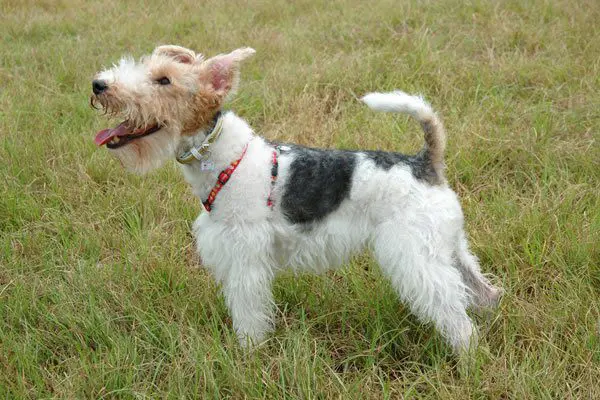
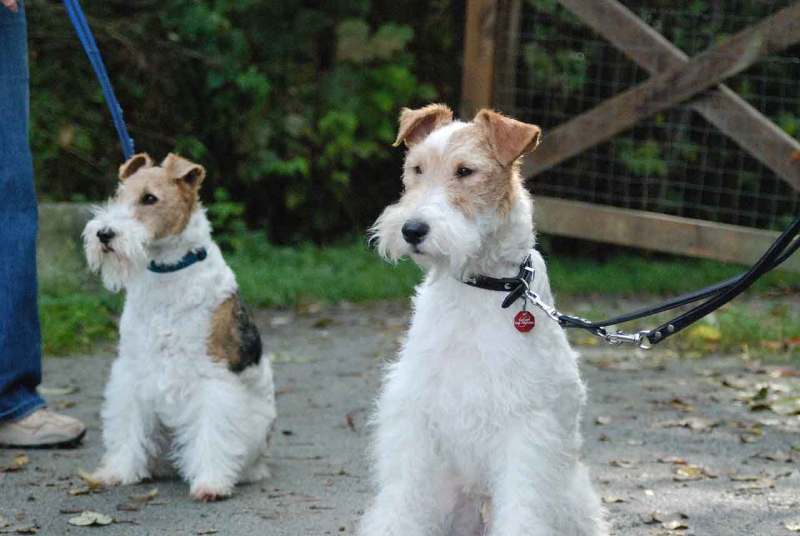
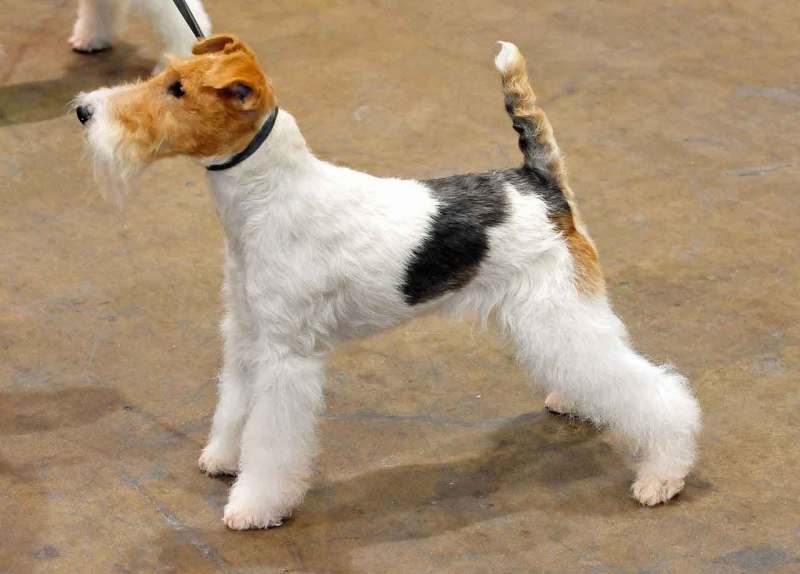
    The Fox Terrier (wire) he is an active and happy dog, of small volume in which bones of good substance and great physical strength are combined, never heavy or rough.

    Fox Terrier pelo de alambre

    Content

    Characteristics "Fox Terrier (wire)"

    Coexistence is important that you have with your new friend. Before considering the acquisition of a dog of the breed "Fox Terrier (wire)" you know certain factors. Not all breeds of dogs are apt to live in an apartment, you must take into account his character, their need for exercise, their interaction with other pets, their care and if you have small children, their level of tolerance towards them.

    Adaptation โ“˜

    5,0 of 5 stars (based on 1 review)

    friendly dog โ€‹โ€‹โ“˜

    2,0 of 5 stars (based on 1 review)

    hair loss โ“˜

    3,0 of 5 stars (based on 1 review)

    Affection level โ“˜

    5,0 of 5 stars (based on 1 review)

    Need for exercise โ“˜

    5,0 of 5 stars (based on 1 review)

    Social need โ“˜

    3,0 of 5 stars (based on 1 review)

    Home โ“˜

    3,0 of 5 stars (based on 1 review)

    Toilet โ“˜

    2,0 of 5 stars (based on 1 review)

    Friendly with strangers โ“˜

    2,0 of 5 stars (based on 1 review)

    barking โ“˜

    5,0 of 5 stars (based on 1 review)

    Health โ“˜

    3,0 of 5 stars (based on 1 review)

    Territorial โ“˜

    5,0 of 5 stars (based on 1 review)

    Cat friendly โ“˜

    1,0 of 5 stars (based on 1 review)

    Intelligence โ“˜

    5,0 of 5 stars (based on 1 review)

    Versatility โ“˜

    3,0 of 5 stars (based on 1 review)

    Child friendly โ“˜

    5,0 of 5 stars (based on 1 review)

    Surveillance โ“˜

    5,0 of 5 stars (based on 1 review)

    joy โ“˜

    5,0 of 5 stars (based on 1 review)

    History

    Terriers form a large group of dogs. Its name is derived from the Latin "Terra" for earth. So they were dogs for work on the land. The first evidence is given by the ancient Romans. Already in the Middle Ages terriers are described in detail. His homeland is in the British Isles. Terriers existed throughout the country. In the stables they kept the little vermin. Even the big rats were not a problem for them. The hens, pigeons and rabbits protected them from martens and foxes. To keep chasing foxes, the terriers were sent to the trench. They were supposed to get the fox out of the hole. All these tasks required an enthusiastic commitment, special courage, independent thinking and so-called predatory acuity. Terriers were the world champions in the then "sport" of rat biting. They were fearless and with every fiber of their being they strove to do their job to the best of their ability..

    We can still experience all of these qualities in our terriers today.. They make the special charm of these dogs. Terriers come in all sizes, but they are mostly quite small dogs up to the Yorkshire Terrier of today. But they were all once very busy working dogs. Most small terriers like Yorkie, the Westie or the Scottish they made their home in the cramped working-class settlements of emerging industry in England or Scotland. Despite her sometimes quite dainty appearance today, they are still whole dogs, yet. They are concise reps with their own heads and bold temperament. Great terriers like him Airedale Terrier they belong to the first service dogs, who worked for the police, customs or army worldwide. Small and medium terriers are still in high demand as hunting dogs, as the Parson Russel Terrier, el Fox Terrier o el German Hunting Terrier.

    In times past all terriers formed a large group of dogs, that were especially suited to the tasks mentioned here. Depending on the special field of application or the surface of the earth, formed different regional lines, that nevertheless remained connected to each other. Only modern pedigree dog breeding created dog breeds genetically separate from this, as we know them today. Like this, no less than 34 races, mostly native to England, Ireland, Scotland or Wales. Just the German Hunting Terrier comes from Germany.

    Physical characteristics

    The Fox Terrier (wire) he is an active and happy dog, of small volume in which bones of good substance and great physical strength are combined, never heavy or rough. Its structure presents a perfect balance, particularly with regard to the proportions between the skull and the muzzle, and in the same way between the height at the cross region and the length of the body from the point of the shoulder to the point of the buttock, they look roughly the same. It stands tall like a hunting horse that has a short back and is able to cover a lot of ground.

    SIZE AND WEIGHT:

    Height to the cross region: It should not exceed 39 cm in males; females are slightly smaller.
    The ideal weight of a developed specimen is 8,25 for males; for females it is slightly lower.

    Character and skills

    Terriers have a concise nature, that distinguishes them all – with a certain restriction also toroidal terriers. They are extraordinarily temperamental dogs that never say no to any adventure.. They are lively, bright, concise. They don't avoid fights. Little ones especially tend to start fights with other dogs of any size due to their chronic overconfidence.. In general, especially the little ones tend to call themselves emperor. This is a challenge for the teacher or caregiver. As construction hunting dogs they are able to make their own decisions, which means they like to be stubborn and stubborn. Terriers can quickly become overbearing if their humans haven't made it clear who determines the house rules.

    Videos "Fox Terrier (wire)"

    Polin (Fox terrier de pelo duro)
    O belo Fox Terrier pรชlo duro. The amazing Wirehair Fox Terrier.

    They are extremely cooperative and docile. It is a great pleasure to work with them. Terriers are faithful to their humans and are very suitable as family dogs, if your strong personality is not only respected, but also appreciated and acted. Hunting terriers especially are characterized by their intelligence and extraordinary courage. They are even able to search for a draft boar, lower it and then bark without hurting yourself. Of course they still go to the dens of the fox and the badger. Even if the Yorkies are carried on the arm with bows – and they are happy to bear it – even the smallest terrier is essentially a daredevil and not a lapdog. They are bundles of energy that love and need a physical and mental challenge..

    Fitness

    Keeping a terrier has no problems. They have no demands regarding the size of the apartment. Only grooming is mandatory. The biggest challenge is his temperament. They need physical and mental challenges. Many are very successful hunters. As a companion dog they are suitable for a wide spectrum. Almost all terriers are great for various canine sports. As a running partner, of a cyclist. Your high level of fitness, their often vigorous health and willingness to work mean both a challenge and an obligation to their masters and mistresses.

    Like most terriers they have a strong hunting instinct., must be kept on a leash in nature. Terriers are very suitable as playmates for children, They are designed for any kind of fun and are robust enough to play with children.. But, the house rules must be correct and the terrier must know his role in the family. Even the smallest terriers shouldn't have room to live out their overconfidence and become the children's school teacher..

    Fox Terrier (wire) Education

    Typical terriers can be trained and educated very well.. The clear announcement and the consequence are the miracle words here based on a respectful and loving relationship with the master or caretaker.. Especially with little terriers, education is an often underestimated chapter.. Although they are cute and delicate, they are still a real terrier. They need a consistent education from the puppy's age. Most terriers can be trained on the basis of a good education for the most different tasks..

    Fox Terrier (wire) care and health

    Terriers are usually very easy to care for. Apart from those with short hair, most terriers need a regular haircut. But they lose comparatively little hair.

    Most terriers are in robust health. Exceptions to this rule are temporarily fashionable or outward-facing breeds such as Yorkie, the Westi or the Bedlington Terrier, in whose population copper toxicosis has spread excessively, a disease that attacks the liver. The tendency to dwarf with copies of less than 3 kg, which is particularly notable in the Yorkie, leads to damage that can be described as nurturing torture.

    Nutrition / Food

    Nutrition is not problematic. But, breeds that are oriented towards outward appearances tend to suffer from allergies, what can make a food diet necessary.

    Wire terrier Fox Terrier life expectancy

    Life expectancy depends on the size of the dogs. The smallest dogs, but not too small, have a longer life expectancy. as a rule, terriers enjoy a long life as a dog, often over 15 years. Lines bred over generations for "beauty" and especially extremely small specimens, so-called minis dogs, Toy- o Teacup, they usually die much earlier.

    Buy a Terrier

    It is best to buy your puppy locally from a breeder affiliated with one of the terrier breeding clubs or you can look around the shelters.. Among 1.000 and 1.500 euros must be planned as costs.

    Images "Fox Terrier (wire)"

    Photos:

    1 – Fox Terrier pelo de alambre Uploaded from http://flickr.com/photo/40567541@N08/8504670637
    2 – A Wire Fox Terrier. by Pharaoh Hound / CC BY-SA
    3 – Photograph of a Wire Fox Terrier sitting down by Walker Whited / CC BY-SA
    4 – wo Wire haired Fox Terriers. Listed on Flickr as ยซDaisy and Gatsbyยป by Alicia Nijdam / CC BY
    5 – Wire Fox Terrier by https://www.flickr.com/photos/paulaloe/140805906/
    6 – Fox Terrier Wire dog show Racibรณrz by I, Lilly M / CC BY-SA

    Videos "Fox Terrier (wire)"

    Type and recognitions:

    • FCI CLASSIFICATION:
    • Group :
    • Section : . .

    Federations:

    • – FCI – Terriers 1 Large and medium-sized terriers. โ“˜
    • – AKC – Dogs working โ“˜
    • – ANKC – Group 6 (utility dogs) โ“˜
    • – CKC – Miscellaneous list โ“˜
    • – โ€‹KC – Working dogs โ“˜
    • – NZKC – Utility dog โ“˜
    • – UKC – Watchdog โ“˜

    FCI breed standard "Fox Terrier (wire)"

    Origin:
    United Kingdom

    Date of publication of the valid original standard:
    26.03.2009

    Use:

    Terrier


    General appearance:

    Alert dog, fast-moving, vivacious expression, always in the expectation of any provocation. Friendly, outgoing and fearless.


    Behavior / temperament:

    Active and happy dog, of small volume in which bones of good substance and great physical strength are combined, never heavy or rough. Its structure presents a perfect balance, particularly with regard to the proportions between the skull and the muzzle, and in the same way between the height at the cross region and the length of the body from the point of the shoulder to the point of the buttock, they look roughly the same. It stands tall like a hunting horse that has a short back and is able to cover a lot of ground.

    Head:

    ---

    Cranial region:
    • Craging: The upper part of the skull is almost flat, slightly sloping and its width gradually decreases towards the eyes.
    • Dnaso-frontal depression (stop): Light.

    facial region:

    • Trufa: It must be black.
    • Horcico: There is almost no difference between the length of the skull and the muzzle. If the muzzle is noticeably shorter, the head looks weak and undefined. The muzzle gradually tapers from the eyes to the nose and sinks slightly at its junction with the forehead., but without cupping or abruptly leaning under the eyes where it should be full and well modeled. Puffy, round cheeks are undesirable.
    • Jaws / Teeth: Strong jaws with perfect, regular and complete scissor bite, that is to say, that the internal face of the upper incisors is in close contact with the external face of the lower incisors and the teeth placed perpendicular to the maxilla. Excessive bone or muscle development of the jaws is undesirable and makes it look unpleasant.
    • Ojors: dark, which denote vivacity and intelligence, moderately small and should not be protruding, but as round as possible. Placed not too far apart, not too high in the skull or too close to the ears. The clear color eyes are very undesirable.
    • Obars: Small, โ€œVโ€ shaped, of a moderate thickness, elegantly bent and falling forward near the cheeks. The fold of the ears well above the level of the skull. Ears erect, tulip or rose shaped are very undesirable.

    Neck:

    crisp, muscular, of moderate length, without jowl; widens towards the shoulders, presenting an elegant curvature when viewed from the side.

    Body:

    • Dorrso: Short, straight and strong, no sign of weakness.
    • Itmor: Powerful and slightly arched. The kidney region must be very short.
    • Pecho: Deep, the anterior ribs moderately arched, the posterior ones deep and well arched.

    Tail:

    Previously the custom was to amputate the tail.

    Tips

    PREVIOUS MEMBERS: Seen from the front, shoulders lean sharply from their neck junction towards shoulder tips which should be fine; seen from side, they should be long and well inclined obliquely back. The region of the cross always well defined. Deep chest, not wide. Seen from anywhere, members should be straight, with good bone structure in all its extension. Elbows must be perpendicular to the body, not hinder movement and carried straight when the dog is on the move.

    LATER MEMBERS: Strong, muscular, without too much angulation. The combination short leg with straight knee is highly undesirable.

    • Thighs: Long and powerful.
    • Rodinllto: Good angulation in the femoral or patellar patellar joints, they should not be turned in or out.
    • Corvejones: Well descended.
    • Metatarsals: Viewed from behind they look straight and parallel.
    • PinIt: Round, compact, with small foot pads, strong and thick; moderately arched fingers; without turning in or out.

    Movement:

    The fore and hind limbs carried straight forward and parallel. The elbows move perpendicular to the body without interfering with movement. The femoro-tibio-patellar joints (knees) they should not be turned in or out. It has good propulsion power coming from well-angled rear members.

    Mantle

    Plink: Denso, rough texture, Its length varies from 3/4 inch (2 cm.) on the shoulders to 1 1/2 inch (4 cm.) in the region of the cross; the back, ribs and hind limbs should have a softer, shorter undercoat. The hair on the back and hind limbs is harder than that on the flanks. The hair of the jaws should be curly and long enough to give the snout a strong appearance.. Members' hair must be thick and frizzy.

    Colorr: White with black spots should predominate, black and leonado or leonado. Brindle color spots, red, liver or slate blue are undesirable.


    Size and weight:

    Alturto the region of the cross:

    It should not exceed 39 cm. (15 1/2 inches) in males; females are slightly smaller.

    The ideal weight of a developed specimen is 8,25 kg (18 English pounds) for males; for females it is slightly lower.


    Fouls:

    Any deviation from the aforementioned criteria is considered as a fault and the severity of this is considered to the degree of the deviation to the standard and its consequences on the health and well-being of the dog..

    FALTAS DISQUALIFYING:

    • Aggressiveness or extreme shyness.
    • Any dog โ€‹โ€‹showing clear signs of physical or behavioral abnormalities must be disqualified..


    N.B.:
      • Males should have two normal-appearing testicles fully descended into the scrotum..
      • Only functionally and clinically healthy dogs, with the typical conformation of the breed, should be used for parenting.

    TRANSLATION: Lic. O. Valverde Calvo (Costa Rica) and Jorge Nallem (Uruguay).

    Source: F.C.I - International Cynological Federation

    Alternative names:

    1. Wire hair fox terrier, Wirehaired terrier, Fox terrier, Wire, WFT (English).
    2. Fox-terrier ร  poil dur (French).
    3. Wirehaired terrier (German).
    4. Fox terrier de pelo duro (Portuguese).
    5. Wire hair fox terrier, Wirehaired terrier, Fox terrier (espaรฑol).

    โ–ท The world of Pets: Dogs, cats, birds, reptiles, amphibians

    Fox Terrier Smooth
    Gran Bretaรฑaa FCI 12 - Large and medium sized Terriers

    Non-hunters who want to keep Fox Terrier as a pure companion dog, they must divert their innate hunting instincts with the sports and games of dogs

    Content

    History

    The first fox terrier, which were first presented at an English dog show in the mid-19th century, they were almost white dogs, especially suitable for fox hunting. Due to his courage, their endurance and ability to track and reach the foxes hidden in their burrow, little terriers soon found a large following among England's hunting and dog lovers. thanks to his physique, the intrepid dogs were able to get into the tubes Fuchsbau narrower. The purpose of breeding for fox hunting was also always the main focus when selecting suitable breeding dogs and ultimately gave the dogs their breed name Fox Terrier. (Fox = Zorro, terre = Earth).

    In 1876 the newly founded Fox Terrier Club introduced the first breed standard for the Fox Terrier. Today the FCI distinguishes two variants of the Fox Terrier: the Fox Terrier Smooth and the Fox Terrier (wire). Although both types of dogs only differ in the structure of their coat, are kept separately.

    At the beginning, the straight hair variant of the fox terrier was much more popular than the Fox Terrier (wire). But, this changed in the decade of 1920, when a real boom developed around the Fox Terrier (wire) and the โ€œpracticalโ€ little dog became the new โ€œfashion dogโ€ for fine ladies. Unfortunately, often forgot that the Fox Terrier was originally bred as a hunting dog and that the animals still possessed a lot of courage, hunting instinct and a certain sharpness.

    Lack of education and inappropriate attitude gave dogs, who liked to dig gardens and seldom avoided a fight with other dogs, the reputation of being scathing and aggressive. In the middle of the last century, the number of entries in the breeding book, especially from Fox Terrier (wire), noticeably decreased. Today, twice as many are born Fox Terrier Smooth that the Fox Terrier (wire). Today, the traditional english dog in both variants belongs to the rather rare dog breeds.

    Physical characteristics

    The body of a Fox Terrier Smooth is compact and muscular, built for speed and agility. The dog has a short body but a long, elegant face with ears that bend toward the cheeks.. The height of this breed should not exceed 39 cm in males; slightly less in females and its weight ranges from seven to eight kilograms.

    The coat of a Fox Terrier Smooth is short, flat against the body and dense. Normally, the hair covers the belly and the inner thighs too. Coat color is predominantly white with black and tan markings.

    Character and skills

    In agility, the Fox Terrier straight hair is in its element. The vivacious little terrier loves to move around and use his cute head. No wonder he never tires of dog sports like agility, obedience and flyball. Lying on the couch and lounging is definitely a thing of the past for smooth-haired Fox Terrier owners..

    Daily exercise and recovery games, jogging together or hiking boots, wheels or horse, during which the persevering four-legged friend can accompany you, should definitely be on the show with a Fox Terrier Smooth.

    The Fox Terrier usually gets along very well with children, after all they share their need to play and exercise. Active families who like to be outdoors will find a lively playmate and a loyal companion in the English Terrier.

    A valuable companion for hunters and non-hunters

    Though, like most dog breeds, Today it is kept primarily as a family and companion dog., the Fox Terrier still has a good figure when hunting. The versatile hunting dog can be used to build and rummage, to recover, to search or even to work in the water. His desire to work, his courage and vigilance make him an invaluable hunting companion. Non-hunters who wish to keep the Fox Terrier as a pure companion dog, they must divert his innate hunting instinct with dog sports and games and thus offer him a suitable alternative occupation.

    Fox Terrier Smooth education

    The Terrier have a reputation for having a mind of their own – the Fox Terrier Smooth is no exception. In case of lack of orientation and carelessness on the part of humans, smart four-legged friend likes to take command, normally not to the delight of his two-legged roommates. A consistent and early education is essential for a harmonious coexistence with the fox terrier. But, if you take your time, knows the most important basic rules of dog training while giving your dog enough mental and physical exercise, you'll have little trouble with this little bundle of power. The Fox Terrier not only is he smart, but also very docile and people-oriented.

    Fox Terrier smooth hair health and care

    Basically, the Fox Terriers they are considered very robust and healthy dogs. Ocular diseases occasionally occur. There is also a certain predisposition to neurological diseases such as ataxia and myelopathy, which can lead to destruction of the spinal cord. With responsible upbringing, a healthy diet, lots of exercise and proper care for each species, the risks of possible illness can, fortunately, reduce.

    The Fox Terrier Smooth they have a clear advantage over their relatives, the Fox Terrier (wire). While the Fox Terriers wire hair need a professional cut, regular brushing is enough to preserve the beautiful coat of the Fox Terrier Smooth. But, How fox terriers don't like to "stay still", you should get your dog used to brushing as early as puppyhood.

    Nutrition as needed and careful care play an important role in maintaining the health of dogs. Needs-based means that the diet must be age-adapted, dog's weight and range of motion. The Fox terrier They are extremely sporty and active dogs and generally need a high energy diet with lots of high quality meat and vegetables..

    Buy Fox Terrier Smooth

    If you are interested in a Fox Terrier Smooth, you must first inform yourself thoroughly about the characteristics of this breed. The Fox Terrier Smooth they are extremely temperamental and demanding dogs, who need consistent handling. A reputable breeder will ask you about your ideas and goals for dog breeding and, if required, will advise you not to buy a fox terrier. In this case, don't look for the next best seller, but carefully reconsider your reasons for buying a fox terrier.

    A purebred puppy should only be purchased from a reputable breeder whose dogs have been tested for possible hereditary diseases and other criteria of suitability for breeding before use. Puppies go on sale at the earliest between the eighth and tenth week of life. The price of the puppy varies between 850 and 1.500 euros and depends on the sporting aptitude and the breeding value of the parents.

    It is important that you know the exact needs of your dog and that you are familiar with the nutritional value of different foods.; both a deficiency and an oversupply of certain substances can cause serious health problems. Alternatively, you can feed your fox terrier with high-quality wet or dry food. Convince yourself of the quality of the processed ingredients and make sure that unhealthy additives such as sugar or artificial flavor enhancers have been avoided. You should also avoid too high a grain content in the food.

    Characteristics "Fox Terrier Smooth"

    Coexistence is important that you have with your new friend. Before considering the acquisition of a dog of the breed "Fox Terrier Smooth" you know certain factors. Not all breeds of dogs are apt to live in an apartment, you must take into account his character, their need for exercise, their interaction with other pets, their care and if you have small children, their level of tolerance towards them.

    Adaptation โ“˜

    5,0 of 5 stars (based on 1 review)

    friendly dog โ€‹โ€‹โ“˜

    2,0 of 5 stars (based on 1 review)

    hair loss โ“˜

    3,0 of 5 stars (based on 1 review)

    Affection level โ“˜

    5,0 of 5 stars (based on 1 review)

    Need for exercise โ“˜

    5,0 of 5 stars (based on 1 review)

    Social need โ“˜

    3,0 of 5 stars (based on 1 review)

    Home โ“˜

    2,0 of 5 stars (based on 1 review)

    Toilet โ“˜

    2,0 of 5 stars (based on 1 review)

    Friendly with strangers โ“˜

    2,0 of 5 stars (based on 1 review)

    barking โ“˜

    5,0 of 5 stars (based on 1 review)

    Health โ“˜

    3,0 of 5 stars (based on 1 review)

    Territorial โ“˜

    5,0 of 5 stars (based on 1 review)

    Cat friendly โ“˜

    1,0 of 5 stars (based on 1 review)

    Intelligence โ“˜

    5,0 of 5 stars (based on 1 review)

    Versatility โ“˜

    3,0 of 5 stars (based on 1 review)

    Child friendly โ“˜

    5,0 of 5 stars (based on 1 review)

    Surveillance โ“˜

    5,0 of 5 stars (based on 1 review)

    joy โ“˜

    5,0 of 5 stars (based on 1 review)

    Images "Fox Terrier Smooth"

    Photos:

    1 – Smooth Fox Terrier by publicdomainpictures.net
    2 – Fox Terrier pelo liso by needpix.com
    3 – Fox Terrier pelo liso by https://pxhere.com/es/photo/738534
    4 – Vos Spits (born in March 2006) in action by Piet ter Beek / Public domain
    5 – Fox Terrier pelo liso by https://pxhere.com/es/photo/1617503
    6 – Smooth Fox Terrier from ยซCzeczugaยป Poland by Piotr Pietryka / CC BY-SA

    Videos "Fox Terrier Smooth"

    Type and recognitions:

    • FCI CLASSIFICATION:
    • Group :
    • Section : . .

    Federations:

    • – FCI – Terriers 1 Large and medium-sized terriers. โ“˜
    • – โ€‹KC – Working dogs โ“˜

    • FCI breed standard "Fox Terrier Smooth"

      Origin:
      United Kingdom

      Date of publication of the valid original standard:
      30.10.2016.

      Use:

      Terrier


      General appearance:

      Active and happy dog, where bones of good substance and great physical strength are combined in a compact package, never heavy or rough. It should not be leggy or very short of limbs, and should stand up like a hunting horse with a short back and able to cover a lot of ground.


      Behavior / temperament:

      Active, fast-moving, vivacious expression, always on the lookout. Friendly, extrovert and fearless. Friendly, extrovert and fearless.

      Head:

      ---

      Cranial region:
      • Skull: Flat and moderately narrow, wide which gradually decreases towards the eyes.
      • Depression links (Stop): Small apparent stop.

      facial region:

      • Truffle: black.
      • Snout: Jaws, Superior and inferior, they are strong and muscular, leaning slightly below the eye This part of the anterior face should be moderately molded, so that it does not descend in a straight line like a wedge.
      • Jaws/Teeth: Strong jaws with perfect, regular and complete scissor bite, that is to say, that the internal face of the upper incisors is in close contact with the external face of the lower incisors and with the teeth placed perpendicular to the maxilla.
      • Cheeks: They should not be outgoing.
      • Eyes: dark, moderately small, as round as possible but not prominent. Of alert and intelligent expression.
      • Ears: Small and โ€œVโ€ shaped, falling forward close to the cheeks and never on the sides of the head. The fold of the ear should be above the level of the skull. Ears should be of moderate thickness.

      Neck:

      crisp, muscular and without dewlap. Of moderate length and gradually widening towards the scapulae.

      Body:

      • Dorrso: Short, straight and firm with no hint of weakness.
      • Kidney region: Powerful, very slightly arched.
      • Chest: Deep without being wide.

      Tail:

      Previously the custom was to amputate the tail.
      • Amcouldtthere is: Rather high insertion, erect, without curving on the back or curled. Of good power.
      • Sinn amputation: Rather high insertion, erect, without curving on the back or curled. As straight as possible. Tail of moderate length to maintain a good balance with the rest of the dog.


      Tips

      PREVIOUS MEMBERS:

      • Shoulder: Long and well sloped back, fine at their ends and well defined in the region of the cross.
      • Arm: Limbs should appear straight when viewed from any angle with little or no ankle pointing forward. Strong bones..
      • Previous feet: Small, round and compact, with firm and hard pads, and with moderately arched fingers, without turning in or out.

      LATER MEMBERS:

      • General appearance: Strong and muscular, without too much angulation.
      • Thighs: Long and powerful.
      • Knees: good angulation.
      • Metatarsus: Hocks well lowered
      • Hind feet: Small, round and compact, with firm and hard pads, and with moderately arched fingers, without turning in or out.

      Movement:

      The fore and hind limbs carried straight forward and parallel. The elbows move perpendicular to the body without interfering with movement, the femoro-tibio-patellar joints should not be turned in or out and the hocks should not be joined. Good propulsion power coming from very flexible rear members.

      Mantle

      Fur: Smooth, flattened, short, hard, dense and abundant. The belly and inner thighs must be covered with hair.

      Colorr: White predominates: the total white, white with tan spots, black and tan or black spots. Tabby spots, red or liver colored are highly undesirable.


      Size and weight:

      Height to the cross: Not exceeding 39 cm in males; slightly less in females.

      Weight:

      • Males: 7,5 โ€“ 8 kg.
      • females: 7 โ€“ 7,5 kg.


      Fouls:

      Any deviation from the aforementioned criteria is considered as a fault and the severity of this is considered to the degree of the deviation to the standard and its consequences on the health and well-being of the dog..

      FALTAS DISQUALIFYING:

      • Aggressiveness or extreme shyness.
      • Any dog โ€‹โ€‹showing clear signs of physical or behavioral abnormalities must be disqualified..


      N.B.:
      • Males should have two normal-appearing testicles fully descended into the scrotum..
      • Only functionally and clinically healthy dogs, with the typical conformation of the breed, should be used for parenting.

      Itlatest changes are in bold.

      TRANSLATION: Brรญgida Nestler / Original version: (IN)

      Technical supervision: Miguel Angel Martinez.

      Last revision: Jorge Nallem.

      Source: F.C.I - International Cynological Federation

      Alternative names:

      1. Fox Terrier, Smooth Fox Terrier, Foxie, SFT (English).
      2. Fox-terrier ร  poil lisse (French).
      3. Glatthaar-Foxterrier, Foxterrier (Glatthaar) (German).
      4. Fox terrier de pelo liso (Portuguese).
      5. Fox terrier ratonero (espaรฑol).

    โ–ท The world of Pets: Dogs, cats, birds, reptiles, amphibians

    Fila Brasileiro
    Brazil FCI 225 - Molossoid - Dogo

    The Fila Brasileiro it is a rare dog in Europe, which implies that it is difficult to find a good puppy.

    Fila Brasileiro

    Content

    Characteristics "Fila Brasileiro"

    Coexistence is important that you have with your new friend. Before considering the acquisition of a dog of the breed "Fila Brasileiro" you know certain factors. Not all breeds of dogs are apt to live in an apartment, you must take into account his character, their need for exercise, their interaction with other pets, their care and if you have small children, their level of tolerance towards them.

    Adaptation โ“˜

    3,0 of 5 stars (based on 1 review)

    friendly dog โ€‹โ€‹โ“˜

    1,0 of 5 stars (based on 1 review)

    hair loss โ“˜

    3,0 of 5 stars (based on 1 review)

    Affection level โ“˜

    4,0 of 5 stars (based on 1 review)

    Need for exercise โ“˜

    4,0 of 5 stars (based on 1 review)

    Social need โ“˜

    3,0 of 5 stars (based on 1 review)

    Home โ“˜

    1,0 of 5 stars (based on 1 review)

    Toilet โ“˜

    1,0 of 5 stars (based on 1 review)

    Friendly with strangers โ“˜

    1,0 of 5 stars (based on 1 review)

    barking โ“˜

    2,0 of 5 stars (based on 1 review)

    Health โ“˜

    2,0 of 5 stars (based on 1 review)

    Territorial โ“˜

    5,0 of 5 stars (based on 1 review)

    Cat friendly โ“˜

    1,0 of 5 stars (based on 1 review)

    Intelligence โ“˜

    3,0 of 5 stars (based on 1 review)

    Versatility โ“˜

    2,0 of 5 stars (based on 1 review)

    Child friendly โ“˜

    2,0 of 5 stars (based on 1 review)

    Surveillance โ“˜

    3,0 of 5 stars (based on 1 review)

    joy โ“˜

    5,0 of 5 stars (based on 1 review)

    History

    The Fila Brasileiro its history is linked to both genetic mixing and Brazilian colonization. There is no consensus on its origin, but probably the Brazilian line is the result of a mixture of dogs whose specialty was hunting and herding animals in the field. The mastiff, the Bulldog, the Terceira line (a portuguese breed) and the Scent hound are just a few examples of possible breeds that have contributed to tracing the DNA of the Brazilian line. Some say that indigenous dogs (Aracambรฉ) and even the savages, like the guarbo wolf, they may also have participated in the miscegenation.

    In some 19th century carvings, the breed was already known to assist in catching oxen, cows, sheep and even big cats, like jaguars, for example. This shows that the Brazilian line was not just a dog to keep at the door, taking a nap in the late afternoon: I was really going to fight! And maybe that's where his keen sense of protection comes from., always putting strangers in their place once they get home.

    In 1946 the first effort was made to set the breed standard. In 1976, the second standard was recognized and approved during the 1st Symposium of the Brazilian Fila Race. In 1984 the third rule was defined, which is still valid today.

    Physical characteristics

    It is a trotting large but very agile. It has a powerful skeleton and a rectangular structure, compact and proportionate. The head is big, heavy and solid, although it is always proportionate to the body. The craniofacial relationship is almost 1:1, with the nose slightly shorter than the skull. The occipital ridge is very prominent, especially in the puppy. The stop is low and inclined, so it should not be seen when looking at the animal from the front. The eyes are medium or large, in the form of almond, quite sunken and colored according to the mantle (yellow to dark brown). Ears are wide and thick, dangling and "V" shaped. The limbs are parallel and straight, with strong bones. A characteristic of the breed is the way of moving in amble. The tail is very broad at the root and tapers rapidly when it reaches the hock..

    • Fur: short.
    • Color: all solid colors are supported, except white, the rat gray and the mottled or stained coat, liable to disqualification. Solid color layers may have stripes of less intense or very dark color. Black mask is optional.
    • Size: in males, of 63 to 75 cm., with a minimum weight of 50 kg; in females, of 60 to 70 cm., with a minimum weight of 40 kg.

    Character and skills

    The Brazilian Fila is very determined, brave and can be very fierce. They can be docile and very obedient to their owners and family and are very tolerant of children.. It is a dog that loves the company of its owner and always tries to be with him.. One of the most striking points of the Fila Brasileiro is the aversion to strangers. So they are excellent guard dogs..

    The Fila Brasileiro are the protectors of the pack (that is to say, the family that raises him) and therefore they need to be educated from an early age. At the age of 7 months already begin to show surveillance potential. As they are very large and very strong dogs, it's important for owners to have a firm wrist and show leadership from an early age, so that the dog becomes obedient and respects the owners.

    They are very smart and tend to easily learn the owners' teachings. Be careful not to be too rigid in your corrections when the Fila Brasileiro does something wrong, because they can be a bit stubborn and make training difficult.

    This dog's aggressive instinct should not be stimulated (and less with bloody methods), because it could become a dangerous animal, given its great bulk. Without a doubt, this is a breed for experts.

    Care of the ยซFila Brasileiroยป

    Videos "Fila Brasileiro"

    Brazilian Fila VideosFila brasileiro

    Fila brasileiro puppies week 7

    The maintenance of a โ€œFila Brasileiroโ€ is not laborious, not too different from other large, short-haired dogs. The frequency of the bath can vary according to the type and intensity of the activities carried out by each dog..

    – Grooming: The "Fila Brasileiro" does not need more than weekly brushing, because its coat is short and the breed doesn't get too dirty. Ideally, you should bathe monthly in summer and, in winter, Every two months.

    – Nails and ears: you always have to check them. The nail cannot grow too long and the ear cannot accumulate wax and dirt. Remember that the โ€œFila Brasileiroโ€ is prone to developing otitis and keeping it clean makes it easier to notice any problem..

    – Eyes: if there is any spot near the eyes or accumulation of discharge, clean them with saline solution.

    – Sol: sunbaths are welcome: stimulate the body to produce vitamin D, essential for strong teeth and bones. The ideal time for this is the same as for humans, avoid the hottest times of the day, between the 10 am and 4 pm.

    Health of the ยซFila Brasileiroยป

    The Fila Brasileiro it is a healthy breed of dog. Maintaining the basic care routine and controlling your physical condition, the chances of you having a happy life are great! See some problems that may affect you:

    – Obesity: common cause of health problems that can affect not only the Fila Brasileiro, but to all overweight dogs. As the Fila Brasileiro have a tendency to gain weight, watch for changes in the general shape of the dog, avoid giving treats and respect the recommended amounts of food for the breed.

    – Otitis is an infection that can affect the hearing of the Fila Brasileiro and it can be caused by age or even poor hygiene.

    Dog's level of exercise

    The Fila Brasileiro need plenty of exercise, what requires available space – even if you walk on walks. Must exercise for one hour daily. And how is a smart dog, seeks to diversify its activities. A simple change in the route of the walk offers new stimulation and keeps you happy.

    Images "Fila Brasileiro"

    Photos:

    1 – PETRA VESELร has published this image ยซFila Brasileiroยป under public domain license.
    2 – Original bitch Fila Brasileiro – branca to AJorgeSC / CC BY-SA
    3 – Fila Brasileiro (ALMODOVAR Rio Grande – from RIO GRANDE kennel) by Pleple2000 / CC BY-SA
    4 – Puppy OFB at 4 months old by AJorgeSC / CC BY-SA
    5 – row brazilian-colombia hatchery – 223 | Julio Cesar Hoyos A | Flickr
    6 – row brazilian-colombia hatchery – 086 – Flickr

    Type and recognitions:

    • FCI CLASSIFICATION:
    • Group :
    • Section : . .

    Federations:

    • – FCI – Pinscher and Schnauzer-Molossoid type dogs – Swiss Mountain Dogs and Cattledogs. Section 2.1 Molossoid, mastiff type. โ“˜
    • – CKC – Miscellaneous list โ“˜
    • – NZKC – Utility dog โ“˜
    • – UKC – Watchdog โ“˜

    FCI breed standard "Fila Brasileiro"

    Origin:
    Brazil

    Date of publication of the valid original standard:
    29.09.2016

    Use:

    Watchdog


    General appearance:

    Race typically molosoid.

    Powerful bone structure, rectangular and compact set, Although harmonious and well-proportioned. It presents, along with his body mass, highly concentrated and easily noticeable agility.Sexual dimorphism must be very well defined and obvious (female females, male males).

    PROPIMPORTANT ORTIONS:

    • Muzzle slightly shorter than skull.
    • The length of the body, measured from the tip of the sternum to the tip of the buttock, exceeds height at withers by15%.


    Behavior / temperament:

    Has courage, remarkable determination and verve. With their masters and the family is docile, obedient and extremely tolerant towards children. Their loyalty is notorious, because he insistently seeks the company of his masters. One of his characteristics is to be distrustful of strangers..

    Is quiet in nature, which reveals a security and self-confidence very typical of his character.. Adapt perfectly well to new environments and strange noises. It is a special guardian of properties, and it is, by instinct, a pasture for cattle dog, as well as a large game hunter.While one of its characteristics is a natural withdrawal towards strangers, especially in their own territory, must be susceptible to controlled manipulation, especially in the ring.

    During rest, he is calm, noble and self-confident.

    Never show a gaze lost or boredom. When is attentive, your expression must show determination, which results in a fixed and penetrating gaze.

    Head:

    Grand, heavy, solid, but always well proportioned to the body. View from the top, looks like a trapezoid into which the pear-shaped head has been inserted.

    Cranial region:
    • Craging: Its profile presents a smooth curve, that extends from the naso-frontal depression to the occipital protuberance, which is marked and outgoing, especially in puppies. Head on, it's wide, with a curved top line. Its lateral lines descend in shallow curves, almost vertically, and decrease towards the snout in a continuous line.
    • Dnaso-frontal depression (Stop): Seen from the front, is practically non-existent. The middle groove gently rises almost to the middle of the skull. Profile view, it is little marked, inclined and almost formed thanks to the superciliary arches, which are well developed.

    facial region:

    • Trufa: Nostrils, wide, well developed, although without occupying the entire width of the maxilla. Its color is black.
    • Horcico: Strong, width, celebrities, always in proportion to the skull. Of good prominence at the base, without being higher than long. Seen from above, it is well filled under the eyes and thinning very slightly to half, then widening slightly to the previous curve. In profile, the nasal passage has a straight or slightly arched upper line, but never ascending. The anterior line is almost perpendicular to the nasal passage., with a slight depression just below the nose.
    • Labios: The upper lip is thick and hanging and covers the bottom in a perfect curve: the lower line of the muzzle is thus almost parallel to the upper one. The lower lip is well applied to the region of the fangs; from there it's loose all the way back, with ยซtoothedยป edges, and ends with the always apparent corner. The edge of the lips forms a deep inverted U.
    • Jaws / Teeth: Teeth are characterized by being wider than they are long. They are strong and white. The upper incisors are wide at the roots and sharp at the edges.. The fangs are strong, are well positioned in the maxilla and are separated. The jointindit is scissor shaped.
    • Ojors: Medium to large, macaroons, well separated and placed medium to deep. Its color ranges from brown to yellow, always in harmony with the color of the coat.However a darker color is preferred.Because the skin is loose, many specimens have hanging eyelids, detail that should not be considered as a fault, since this accentuates the sad aspect of the look, typical of the breed.
    • Obars: Pendants, thick, large, V-shaped. Wide at the root, decrease in extremities, which are rounded. Inserted into the back of the skull, They occur at the level of the midline of the eyes, when the dog is at rest, and they rise above the primitive ligament when it is alert. The ears are tilted at the ligament, since the front edge is higher than the back. Hanging to one side or folded back, so that its interior is visible(Pink).

    Neck:

    Extraordinarily strong and muscular, seems short. The upper edge is slightly convex, well separated from the skull. Chin presence.

    Body:

    Strong trunk, wide and tall, covered by thick and loose skin. The thorax is longer than the abdomen.

    • Lรญnand the top: Height at withers is slightly lower than rump, downline; is wide, due to the separation of the shoulder blades. In the place where the cross ends, the top line changes direction, gently rising to the front of the rump, without any sign of a bulging or arched back (carpal back).
    • Itmo and flank: Less long and wide than the thorax. They are clearly separated. In the female, flank edge is more developed. Seen from above, the loin should be less broad and full than the thorax and rump, but without showing signs of tightness.
    • Glikeness: Wide, long, its obliqueness approaches the 30 degrees above the horizontal and ends in a smooth curve. It is a little higher than the cross. รยก back view, it should be wide, almost equal in width to the chest, and can be even wider in females.
    • Breast : Well arched ribs, although without affecting the position of the shoulders. The chest is broad and well sloped, reaches to the tip of the elbows; the pecs are very prominent.
    • Lรญnlower ea and belly: The chest is long and is parallel to the ground in all its extension. The belly rises gently and is never puffy.

    Tail:

    With wide roots and medium insertion. Quickly gets thinner to finish at hock level. When the dog is excited, the tail is raised, thus accentuating the curvature of the limb. The tail must not fall on the back, nor curl up.

    Tips

    PREVIOUS MEMBERS:

    • Apgeneral arience: Forelimb height, from elbow to floor, It must be equal to the height from the elbow to the withers.
    • Shoulder: The shoulder and arm must be made up of two bones of the same length, shoulder blade and humerus. The shoulder blade forms an angle of 45ยฐ with the horizontal, and the humerus approximately 90ยฐ with the shoulder blade. The scapulo-humeral joint forms the tip of the shoulder, which must be at the level of the tip of the sternum, a little behind this one. In the ideal case, the shoulder and arm must be located in the space that goes from the cross to the sternum, and the end of the shoulder should be in the middle of this path. An imaginary perpendicular descending from the withers should pass through the elbow and reach the foot.
    • Antarm: Members must be parallel. The bones are strong and straight.
    • CArpos: Strong and apparent.
    • Metacarpus: Short, slightly inclined.
    • Pinis previous: They are formed by strong and well arched fingers, although not too close. Support is carried out on thick fingers and wide bearings, long and thick. In the correct position, fingers should be facing forward. The nails are strong, dark, and they can be white when the corresponding finger is also white.

    LATER MEMBERS:

    • Apgeneral arience: The bones are not as thick as those of the forelimbs, however as a whole, they should never look thin. The hind limbs are parallel.
    • Thighs: Widths, with arched edges, since they are formed by the muscles that descend from the ilium and ischium. These shape the curve of the gluteus, hence it is necessary to require a good sized ischium.
    • Ttorsos: they are strong.
    • Metatarsals: Slightly sloping, longer than metacarpus; angulation of the stifle and hock is moderate.
    • Pinis later: A little more oval than the previous ones and similar to these in everything else. There should be no dewclaws.

    Movement:

    Long and elastic step, like that of cats. Its main characteristic is the displacement of the two members on the same side, and then move to the two on the other side, ยซ camel step ยป. This produces a waddle, with lateral rocking of the thorax and haunches, accentuated by the tail when raised. When the dog walks, its head remains below the dorsal line.. Jogging is easy, harmonious, loose, with wide and powerful strides that cover the terrain well. The gallop is powerful and with it the dog reaches an unsuspected speed in such a large and heavy animal. Its movement is always influenced by the typical joints of the molossoid., they not only give the impression, but they actually allow sudden and rapid changes of direction.

    Mantle

    PIEL: One of the most important characteristics of the breed is that the skin must be thick and loose over the entire trunk., mainly on the neck, where it forms pronounced jowls, which in many cases, reach the chest and abdomen. Some dogs have a fold on the sides of the head and another that descends from the cross to the shoulder. During rest, the head should not show folds; when the dog is alert, contraction of the skull skin, which is formed when the dog lifts its ears, makes small longitudinal folds appear on the skull between these.

    • Plink: Short, dense, soft and well stretched over the body.
    • Colorr: Striped, black & Fawn. A black mask may or may not be present. In all allowed colors there may be white marks on the feet, the chest and the tip of the tail.White markings on other parts of the mantle are considered missing.


    Size and weight:

    Alturto the cross:

    • Males: 65 to 75 cm.
    • females: 60 to 70 cm.

    Weight:

    • Minimum, 40 kg for females.
    • Minimum, 50 kg for males.


    Fouls:

    Any deviation from the aforementioned criteria is considered as a fault and the severity of this is considered to the degree of the deviation to the standard and its consequences on the health and well-being of the dog..

    • Bite level.
    • Short snout.
    • Small ears
    • Ears that come up high
    • Overly clear eyes
    • Presence of folds while the dog is at rest.
    • Lower prognathism
    • Double chin (fold in the skin in front of the double chin)
    • Backless
    • Very narrow croup
    • Tail that appears curled on the back
    • Slightly sloping chest.
    • Markedly deviated metatarsals and metacarpus.
    • Highly angled posteriors
    • Short steps

    FALTAS GRAVES:

    • Apathy and shyness.
    • Square silhouette
    • Small head
    • Pronounced naso-frontal depression, front view
    • Short upper lip.
    • Round eyes round eyes. Poor pigmentation of the eyelids.
    • Absence of 2 teeth, except PM1 (premolars 1) or the first premolars
    • Absence of papad
    • Arched back Horizontal top line.
    • Excessively raised bottom line
    • Light bones Lack of substance.
    • V hocks
    • Absence of angulation in the hind limbs (ยซpig's footยป).
    • White marks covering more than a quarter of the body.
    • Size above the maximum required.

    FALTAS DISQUALIFYING:

    • Aggressiveness or extreme shyness.

    Any dog โ€‹โ€‹showing clear signs of physical or behavioral abnormalities must be disqualified..

    • Pink truffle.
    • Prognatismo superio
    • Inferior prognathism that leaves teeth visible even if the muzzle is closed.
    • Missing tusk or one of a molar except M3).
    • blue eyes (different colored eyes).
    • Ears or tail cut off
    • Croup lower than the cross.
    • Dog that doesn't show ambulation.
    • Absence of loose and elastic skin
    • All white dogs, mouse gray color, mottled, black and tan, and blue
    • Males less than 65 cm and females less than 60 cm in height at the shoulder.
    • Cryptorchidism or monorchidism, use of devices, albino specimens, absence of typical characteristics


    N.B.:
    • Males should have two normal-appearing testicles fully descended into the scrotum..
    • Only functionally and clinically healthy dogs, with the typical conformation of the breed, should be used for parenting.

    TRANSLATION: Federation Canรณfila Mexicana, A.C. (Original version: IN).
    Revision: Mrs. Brรญgida Nestler.
    Technical supervision: SR. Miguel Angel Martinez.

    Source: F.C.I - International Cynological Federation

    Alternative names:

    1. Brazilian Mastiff, Onceiro (Jaguar Hound), Cabeรงudo (Big-headed), Black Mouth (English).
    2. chien de Fila (French).
    3. Brasilianischer Mastiff (German).
    4. Brazilian mastiff, Mastiff brasileiro, Boca Negra, Onceiro, Cabeรงudo, Boiadeiro das Minas Gerais, Cรฃo de Fila brasileiro (Portuguese).
    5. Cabeรงudo boiadeiro, Fila brasileรฑo (espaรฑol).