 FCI 242 - Nordic Hunting Dogs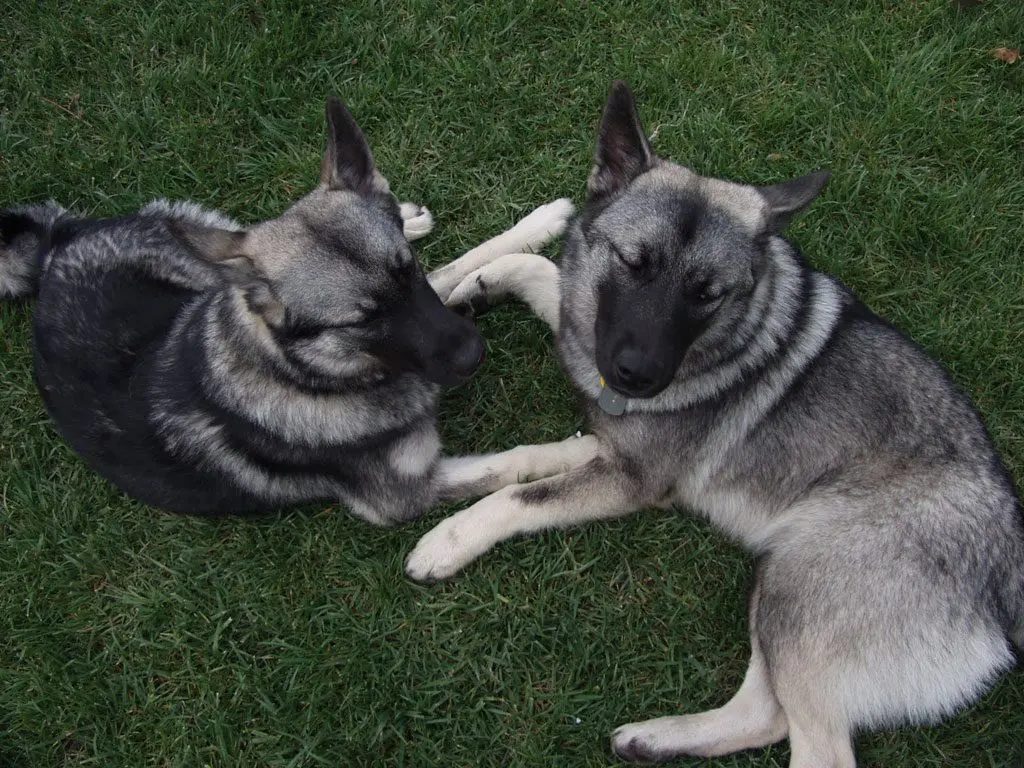
Content |
|---|
Characteristics "Gray Norwegian Elkhound"
Coexistence is important that you have with your new friend. Before considering the acquisition of a dog of the breed "Gray Norwegian Elkhound" you know certain factors. Not all breeds of dogs are apt to live in an apartment, you must take into account his character, their need for exercise, their interaction with other pets, their care and if you have small children, their level of tolerance towards them.
Adaptation ⓘ5,0 of 5 stars (based on 1 review)
|
friendly dog ⓘ3,0 of 5 stars (based on 1 review)
|
hair loss ⓘ5,0 of 5 stars (based on 1 review)
|
|---|---|---|
Affection level ⓘ5,0 of 5 stars (based on 1 review)
|
Need for exercise ⓘ4,0 of 5 stars (based on 1 review)
|
Social need ⓘ3,0 of 5 stars (based on 1 review)
|
Home ⓘ3,0 of 5 stars (based on 1 review)
|
Toilet ⓘ5,0 of 5 stars (based on 1 review)
|
Friendly with strangers ⓘ3,0 of 5 stars (based on 1 review)
|
barking ⓘ5,0 of 5 stars (based on 1 review)
|
Health ⓘ3,0 of 5 stars (based on 1 review)
|
Territorial ⓘ3,0 of 5 stars (based on 1 review)
|
Cat friendly ⓘ3,0 of 5 stars (based on 1 review)
|
Intelligence ⓘ5,0 of 5 stars (based on 1 review)
|
Versatility ⓘ3,0 of 5 stars (based on 1 review)
|
Child friendly ⓘ5,0 of 5 stars (based on 1 review)
|
Surveillance ⓘ3,0 of 5 stars (based on 1 review)
|
joy ⓘ5,0 of 5 stars (based on 1 review)
|
History
The roots of this Norwegian national dog go back a long way.: already Stone Age finds give evidence of a very similar quadruped. Some cynologists suspect that the current appearance of the breed is very close to that of the first western European domestic dogs. In scandinavia, the Gray Norwegian Elkhound they were used mainly to hunt elk, but also bears, hence its name.
For a long time the breed was mainly bred in Sweden, where he was called "gray dog". But since 1981 Norway has had the sponsorship: The breed got its current name, The "gray dog" was formally eliminated as a breed in this context.
In total there are three Moose Hunter dogs: Besides of Gray Norwegian Elkhound, are the Black Norwegian Elkhound and the Jämthund Sueco. The Norwegian gray is the most common: Although rarely seen outside of Scandinavia, he is very popular in his home country and is considered the national dog there.
Physical characteristics
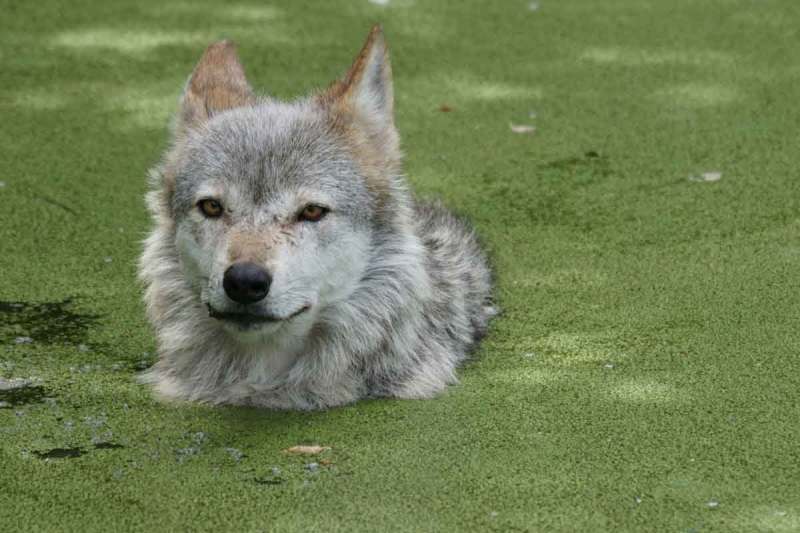
The dog Gray Norwegian Elkhound has a very classic look, similar to the first dogs domesticated by humans in Western Europe. The waterproof coat in typical shades of gray, black and white already gives an indication of the Nordic origin of this dog Moose Hunter. But it also has the effect that some laymen at first glance consider it a mixed race with parts of the Huskys. With a maximum height of 52 cm at the withers and a body weight of about 24 kg with compact structure, the Gray Norwegian Elkhound belongs to the medium-sized breeds and is larger than the Black Norwegian Elkhound. The pointy ears are erect and the tail is ideally rolled slightly over the back..
Character and skills
The Gray Norwegian Elkhound they are intelligent animal companions with their own personalities. So if you are looking for a four-legged friend who is willing to subordinate, you are wrong with this proud fellow. The breed is considered brave, smart and friendly. To the Gray Norwegian Elkhound they usually like to bark, make sure to control it from when they are puppies. Many Gray Norwegian Elkhound they are therefore very suitable as watchdogs, because they are alerted by strangers – However, it is quite possible that this human-friendly breed will be caressed by a stranger. In an emergency, However, loyal four-legged friends are always ready to defend their loved ones. The Gray Norwegian Elkhound can be well kept as a family dog – whenever I exercise a lot outside. He gets along very well with children and shows his playful side, especially when interacting with them.
Gray Norwegian Elkhound Training
Although this breed does not have a submissive nature, is considered easy to create. An advantage is that this friendly and social dog does not tend to dominate or attack. In any case, it is important to have a sufficient workload, because a boring Gray Norwegian Elkhound seek their occupation independently, and this is usually not to the liking of their owners. It also, make sure that from the age of the puppy you work for a good recovery of the hunting dog. You should also take into account the joy of barking when training. Attending a dog training school can support you and your four-legged friend in learning together and also reinforces their social streak in handling conspecifics.
Gray Norwegian Elkhound Health
These Norwegian hunters they are considered very robust and hardly prone to genetic diseases. There is a slight predisposition to the eye disease Progressive Retinal Atrophy (ARP) and hip dysplasia – before buying a puppy, Please, talk to the breeder in question, who will be happy to inform you about the health precautions for your farm animals. Exercising and eating a balanced diet is the best way to keep your puppy's joints in shape during old age.. Make sure this dog always has a cool place to stay in the summer – the breed tolerates the cold well, but is considered to be heat sensitive. The Gray Norwegian Elkhound can reach an age of up to 16 years, some even more.
Gray Norwegian Elkhound Nutrition
Like every dog, the Gray Norwegian Elkhound you need a balanced diet that is high in meat. So make sure you give a food where meat is at the top of their intake., regardless of whether you choose wet or dry food. The Gray Norwegian Elkhound tend to gain weight quickly, so you should always watch your daily ration and include treats. The manufacturer's instructions are only a rough guide., as metabolism and exercise change your dog's energy needs. So check your partner's weight regularly so you can counter if he gains or loses weight. If you want to reward your dog, use high-quality snacks without sugar or grains. Chunks of freeze-dried meat for dogs are a good example. Dry chews meet your partner's chewing needs. Make sure your four-legged friend always has plenty of drinking water available.
Gray Norwegian Elkhound Care
This dog's coat consists of a longer top coat and a dense undercoat.. It is very weather resistant and easy to brush. But, the Gray Norwegian Elkhound you also lose a relatively large amount of hair, especially during coat change twice a year. During this time, you should brush him daily to stop the flood of hair in your home and rid the dog of dead hair. Especially with older animals or if your dog walks mainly on the soft forest floor, you may need to trim the claws regularly. This will prevent your Gray Norwegian Elkhound get hurt if you get stuck with them. If you are not sure, ask your vet to show you how to trim them during checkups – you can usually do the pedicure yourself with special pliers. When brushing your dog's ears, also check that they are not dirty and use a special ear cleaner for dogs if necessary. You can effectively prevent tartar and its consequences by brushing your dog's teeth every day together with a dog toothbrush and an animal-friendly toothpaste.. If you are considering this, you should get your pup used to the ritual around his shiny little teeth.
Is a Norwegian Elkhound right for me??
The Gray Norwegian Elkhound still suits hunters well, but he can also be a happy family dog ​​if he has enough outdoor activity. Not a dog for the city. A fenced garden would be an ideal addition to your home.. This breed is not made for living in a small apartment.. Should already have experience with dogs, because although the Gray Norwegian Elkhound be smart and like to learn, will not accept instructions that seem crazy. Here you need the right mix of knowledge and sensitivity. Can get along with cats, but you should have already known them as potential mates at puppy age.
Like any other four legged friend, keeping this dog requires a not inconsiderable amount of time: Are you prepared to spend a few hours outside with your partner every day, whatever the weather?? It also, estimate costs in advance: In addition to the purchase price and, if required, the basic equipment, there are regular expenses for vet visits, high quality food, as well as the dog's tax and insurance.
Where can I buy a Norwegian Elkhound?
If you are looking for a Gray Norwegian Elkhound outside scandinavia, you must have a little patience. So it makes sense to contact the Nordic dog clubs directly., that can help you, for example, to make contacts abroad. Because especially in the far north there are naturally more specimens. In scandinavia, a few 2.000 puppies of the breed see the light of day every year.
The probability of finding a Gray Norwegian Elkhound adult in animal shelters is extremely low outside of Scandinavia. So, even if you prefer to give an old animal a new home, contact the nordic dog clubs in your country. Possibly the hybrids of the protectors are also questioned, that they will rejoice in a common coexistence with you.
We wish you a lot of joy with your friendly companion from the far north!
Images "Gray Norwegian Elkhound"
 Elkhound 6
 Elkhound 5
 Elkhound 4
 Elkhound 3
 Elkhound 2
 Elkhound 1
Photos:
1 – Norwegian Elk Hunter gray by https://pxhere.com/en/photo/706371
2 – Norwegian Elk Hunter gray by https://pxhere.com/en/photo/869691
3 – Norwegian Elk Hunter gray by https://pxhere.com/en/photo/1336997
4 – Norvin Son of Storm owned by Nichola Herron. Photo by sannse at the City of Birmingham Championship Dog Show, 29th August 2003 by True / CC BY-SA
5 – Norwegian Elk Hunter gray by https://pxhere.com/no/photo/1233791
6 – Gray Norwegian Elk Hunter by https://pixabay.com/es/photos/césped-mamífero-animales-naturaleza-3259673/
Videos "Gray Norwegian Elkhound"
 Norwegian Elkhound – AKC Dog Breed Series
 Dogs 101 – NORWEGIAN ELKHOUND – Top Dog Facts About the NORWEGIAN ELKHOUND
 Gray Norwegian Elkhound (Norwegian Elkhound) – Breed of dog
 Norwegian Elkhounds | Breed Judging 2019
Type and recognitions:
- FCI CLASSIFICATION: 242
- Group 5: Spitz and primitive types
- Section 2: Nordic Hunting Dogs. Proof of work only for the Nordic countries (Sweden, Norway, Finland)..
Federations:
- – FCI – Group 5 – Section 2 Nordic Hunting Dogs. ⓘ
- – AKC – Nordic Hunting Dogs ⓘ
- – ANKC – Nordic Hunting Dogs ⓘ
- – CKC – Nordic Hunting Dogs ⓘ
- – KC – Nordic Hunting Dogs ⓘ
- – NZKC – Nordic Hunting Dogs ⓘ
- – UKC – Nordic Hunting Dogs ⓘ
FCI breed standard "Gray Norwegian Elkhound"
Use:
Hunting dog for moose.
General appearance:
It's a typical Spitz, compact body, short and square. Elastic and well-set collar. erect ears. The coat is dense and abundant, but not bristly or long. The tail is tightly curled over the back.
PROPIMPORTANT ORTIONS: Square shaped. The length of the skull corresponds to that of the muzzle.
Without fear, energetic, brave.
Head:
Wedge shaped, relatively wide at the level of the ears. Thin.- Craging: Slightly arched.
- Dnaso-frontal depression (Stop): Well marked, but not too much.
facial region:
- Trufa: black.
- Horcico: Whether viewed from above or in profile gradually decreases. The nasal helm is straight.
- Labios: Tight.
- Jaws/Teeth: Scissor bite. Complete denture.
- Ojors: They are not prominent and should be dark brown..
- Obars: High insertion, firm and erect, relatively small. Its length slightly exceeds its width at the base; they are pointed and well mobile.
Neck:
Medium length, firm, well upright. Abundant golilla, no loose skin.Body:
Strong, short loin.
- Línand the top: Straight from the withers to the insertion of the tail.
- Cruz: Well developed.
- Espalda: companies, muscular and straight.
- Itmor: Well developed.
- Glikeness: Strong and wide.
- Pecho: Broad and deep; ribs tight.
- Línlower ea and belly: Almost straight.
Tail:
High insertion, strong, relatively short. Dense hair, but without fringes. Tightly curled over the back, but not carried to the side. The tip of the tail cannot be stretched out in adult dogs.Tips
PREVIOUS MEMBERS:
- Apgeneral arience: Strong and firm, straight.
- Hormbros: Inclined.
- Brazo: Moderately inclined.
- Elbows: Well glued, turned neither in nor out.
- Antarm: Straight, be seen from the front or from the side.
- Metacarpus: Straight seen from the front, moderately inclined viewed from the side.
- Pinis previous: Rather small, compact; fingers are directed forward.
LATER MEMBERS:
- Apgeneral arience: Strong, skinny, muscular. Parallels seen from behind. Moderately angled.
- Thigh: Muscled and wide.
- Rodinllto: Moderately angled.Leg: Medium long.
- Corvejón: Moderately angled.
- Metatarsus: On the dog in a standing position, the metatarsal should not be located further back than the insertion of the tail.
- Pinis later: Relatively small, oval, compact. Fingers are directed forward.
Movement:
Light, effortless. Parallel, be seen from the front or the back.Mantle
PIEL: companies, no wrinkles on the head.
- Plink: Medium long; dense outer coat of hair, rough, abundant, without curls. On the head and in the front of the limbs it is short and smooth. It's the longest on the neck, thigh, on the back of the limbs and on the tail. Soft inner fur cover.
- Colorr: Various shades of gray. The black tips of the hairs on the outer layer determine the hue of the color. Gray is lighter on the chest, the belly, the extremities, at the bottom of the tail, below the tail insertion and on the "harness-like markings". The harness marking is a stripe width of 5 cm that extends from the withers to the elbows and in which the hairs of the outer layer do not have black tips. The ears and the front of the muzzle are dark in color (dark mask). The dark line from the eye to the ear insert limits the mask. The undercoat of hairs is light gray.
Size and weight:
Alturto the cross:
- In males: ideal height: 52 cm..
- In females: ideal height: 49 cm..
Fouls:
Any deviation from the aforementioned criteria is considered as a fault and the severity of this is considered to the degree of the deviation to the standard and its consequences on the health and well-being of the dog..
- Round or domed skull.
- Pointed or short snout.
- Pinz bite Irregular bite.
- light eyes.
- Ears that are too big or wide.
- Tail too short, not tightly screwed, deviated to one side.
- flattened feet.
- Too long or too short undercoat.
- Brownish or yellowish color. Dark undercoat. Sooty color.
- White on the tip of the tail; white on chest.
- Weak or nervous temperament.
FALTAS DISQUALIFYING:
- Aggressiveness or extreme shyness.
- Any dog showing clear signs of physical or behavioral abnormalities must be disqualified..
- Upper or lower prognathism.
- Yellow or blue eyes.
- Not erect ears.
- Short tail from birth.
- Spurs on the hind limbs.
- Any color variation other than gray.
- Height to the cross 3 cm minus 4 cm more than the ideal height mentioned in the standard.
- Males should have two normal-appearing testicles descended into the scrotum..
- Only functionally and clinically healthy dogs, with the typical conformation of the breed, should be used for parenting.
Alternative names:
1. Norsk elghund, Grå norsk elghund, Gray Norwegian Elkhound, Small, Grey Elk Dog, Norwegian Moose Dog, Harmaa norjanhirvikoira (English).
2. Norwegian Elkhound (French).
3. Norwegischer Elchhund grau (German).
4. Elkhound, Norueguês cinza (Portuguese).
5. Norsk elghund, Norsk elghund grå, Cazador de alces noruego gris, Gray Norwegian elkhound, Small grey elk dog, Norwegian moose dog (español).