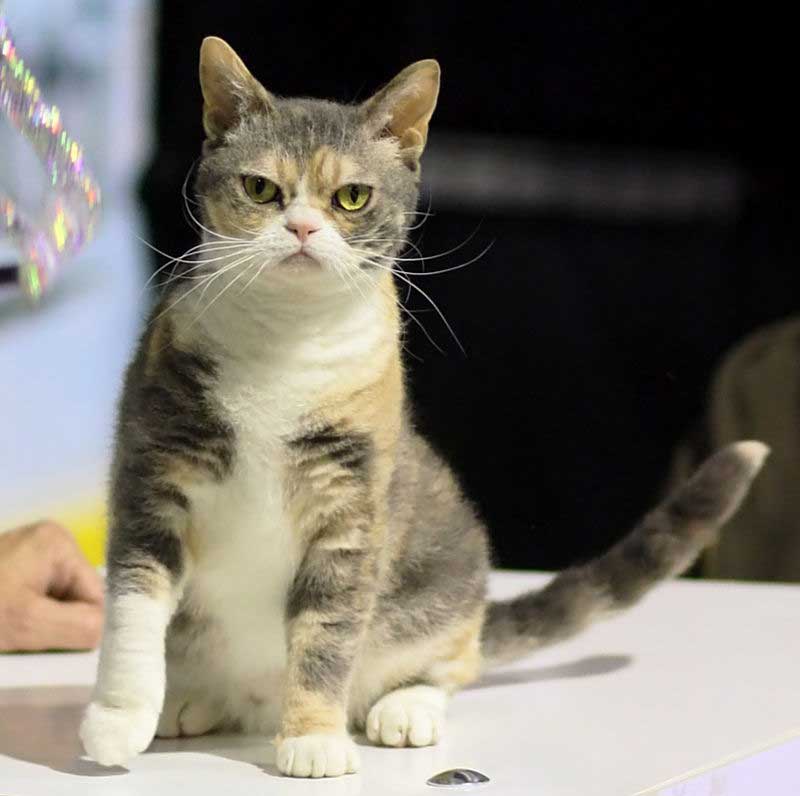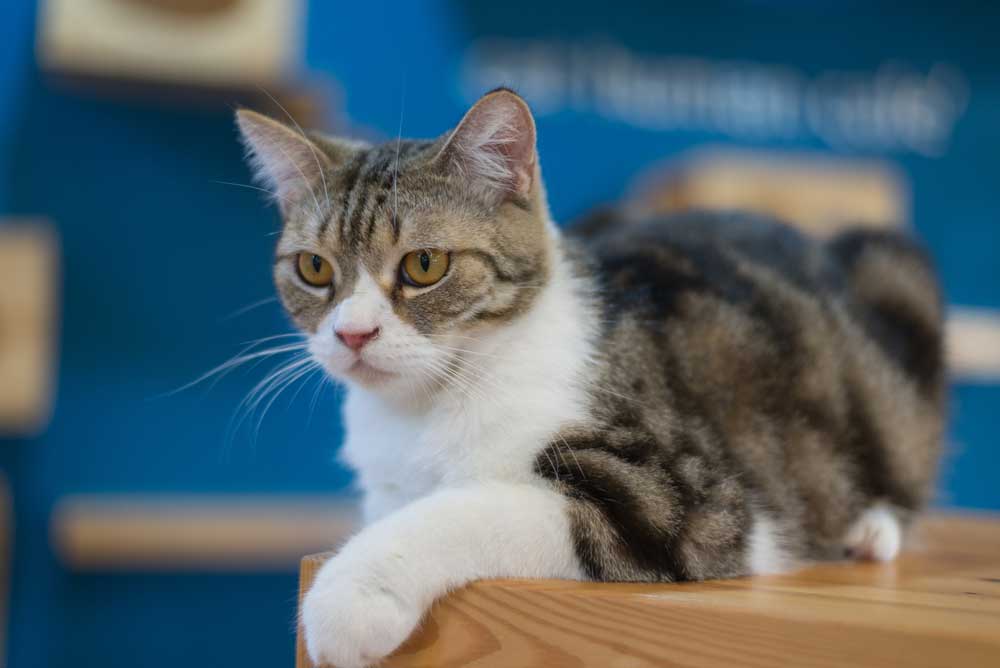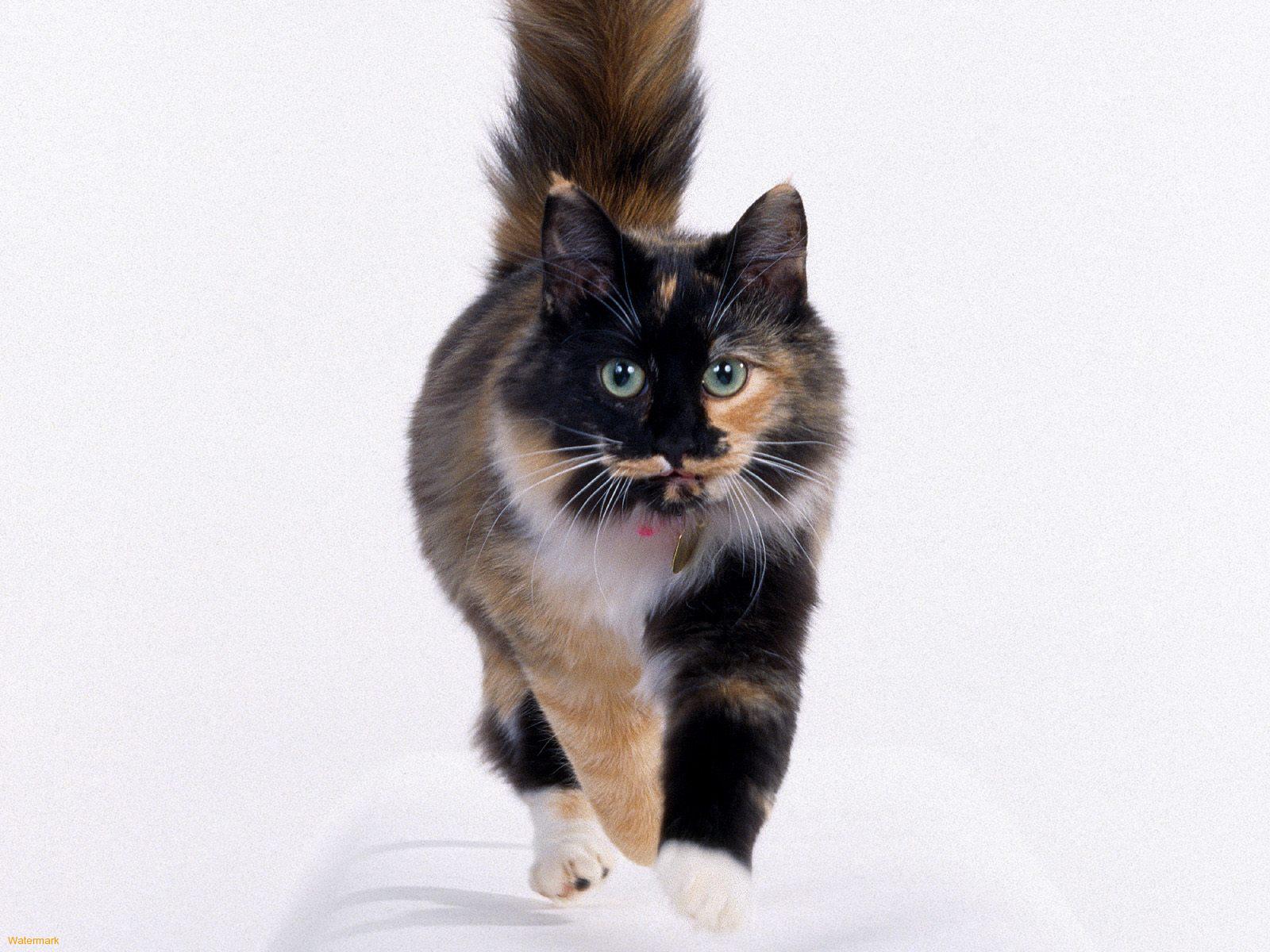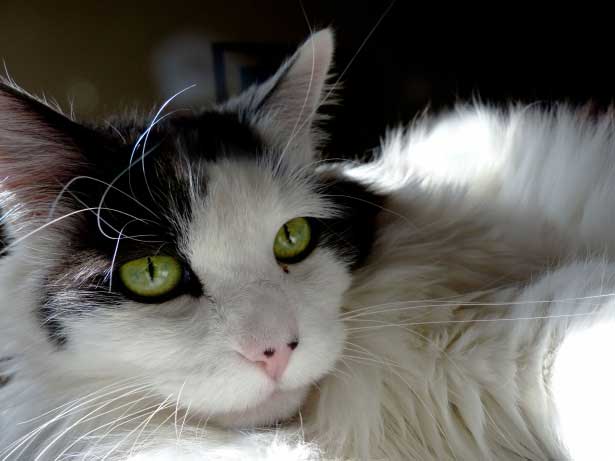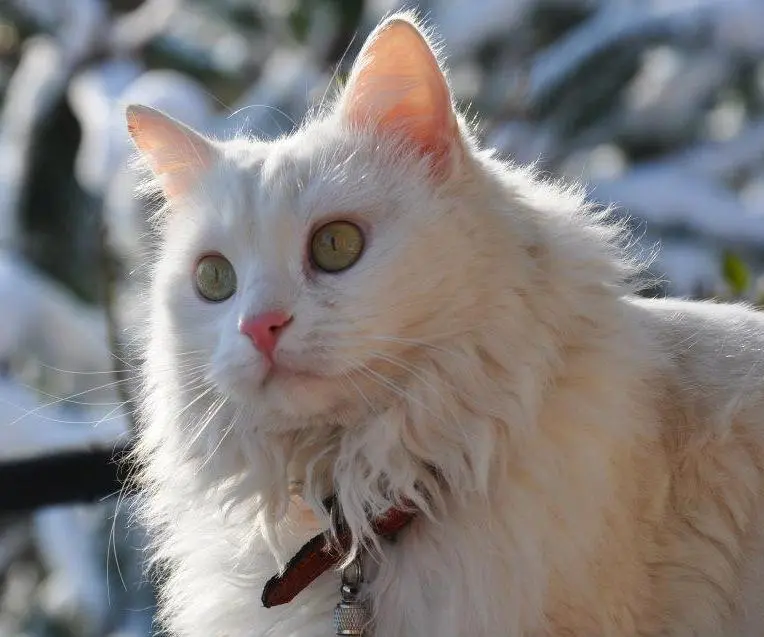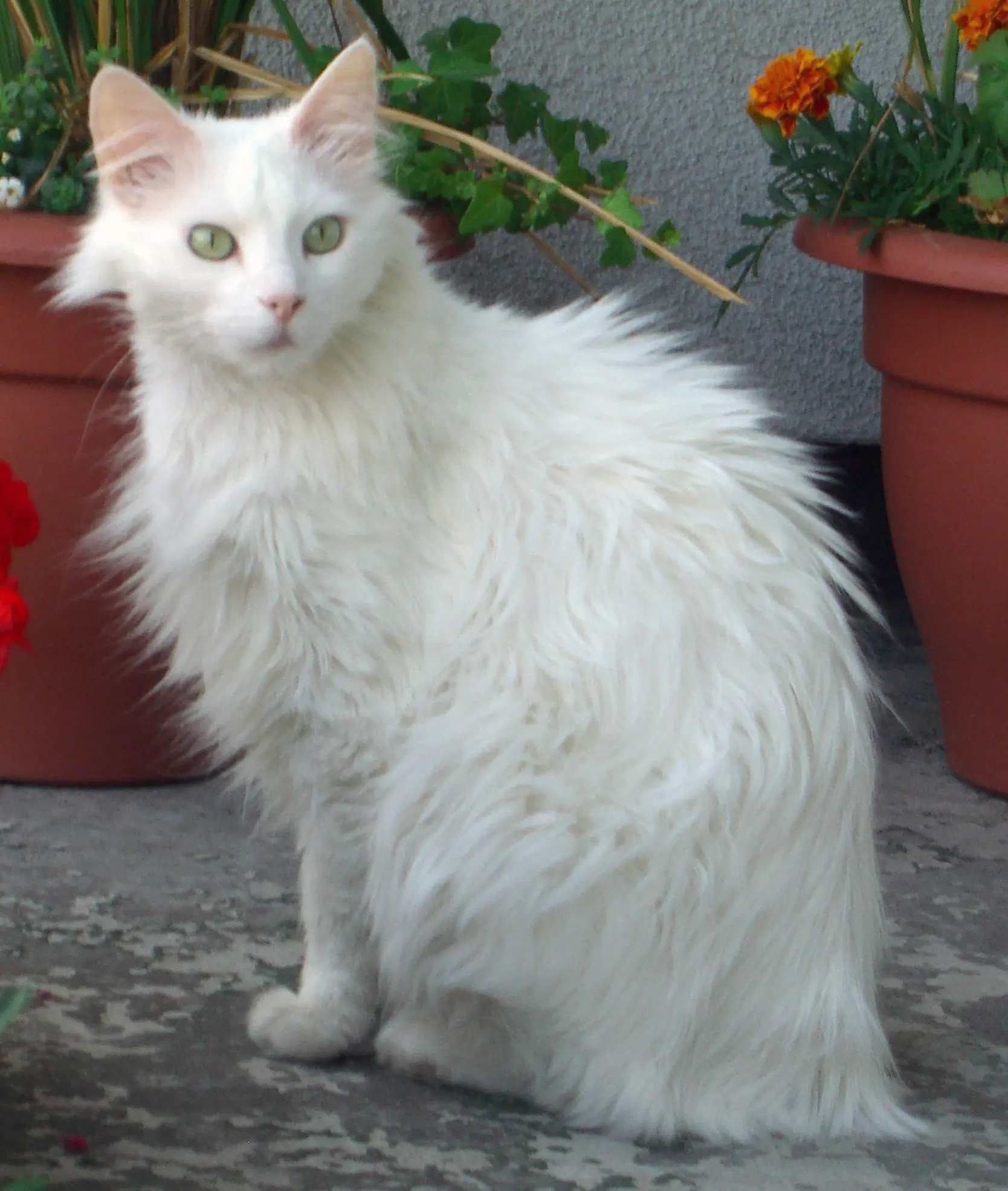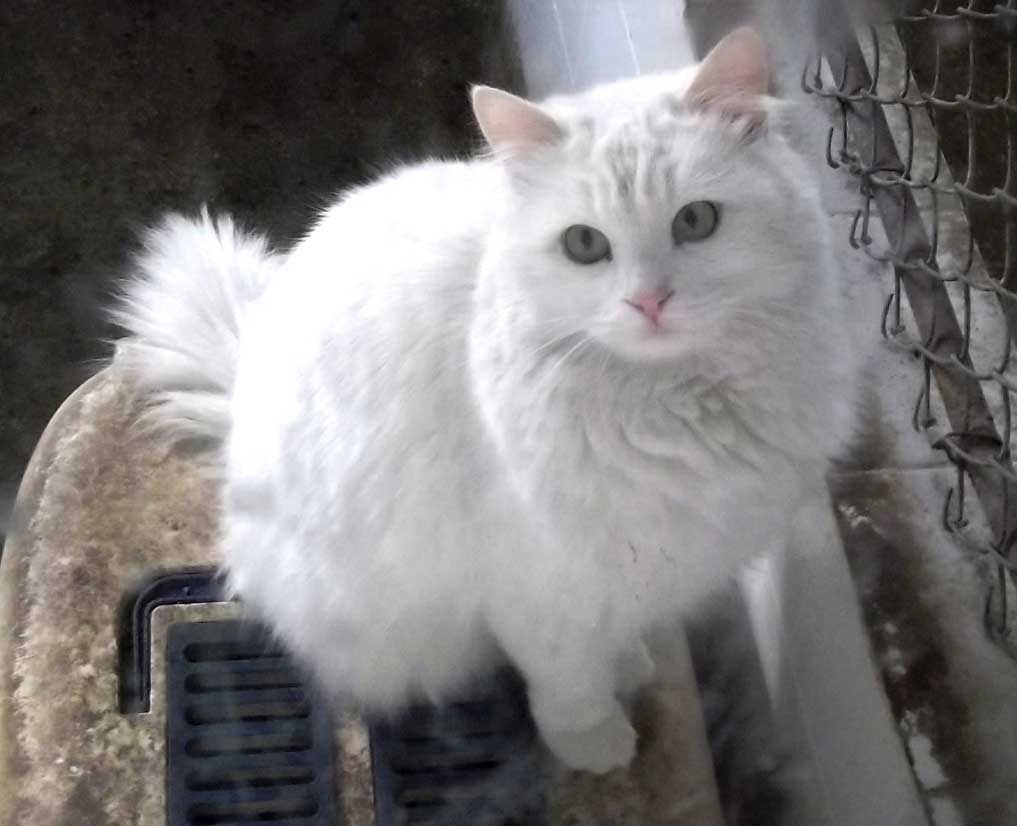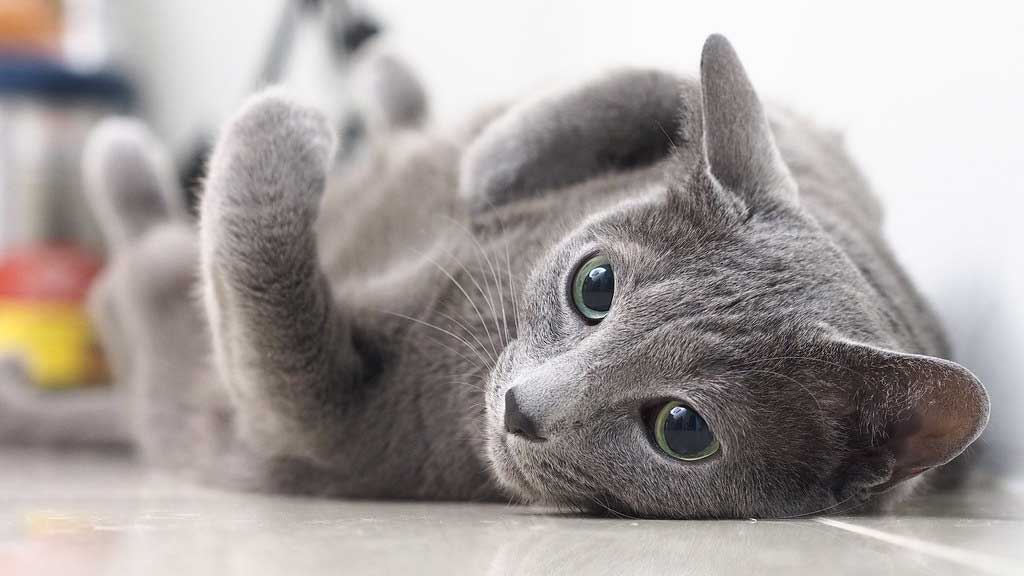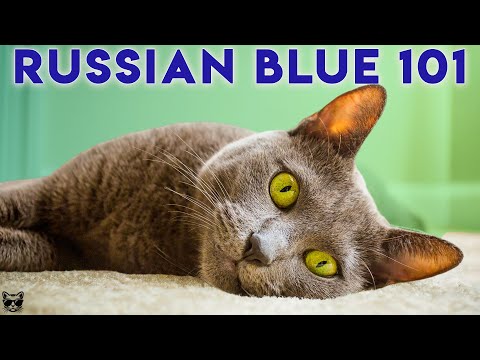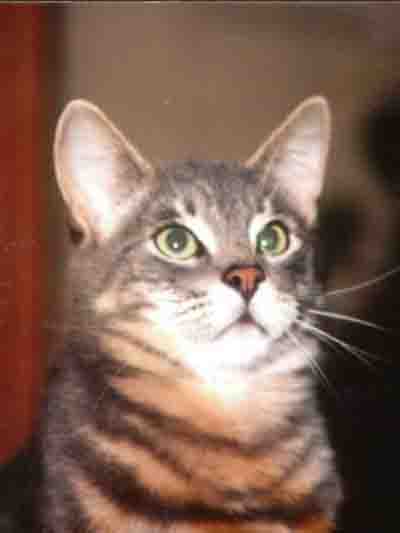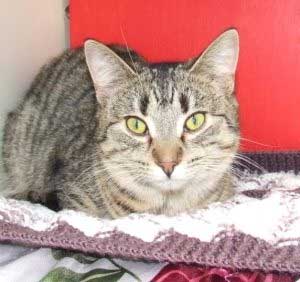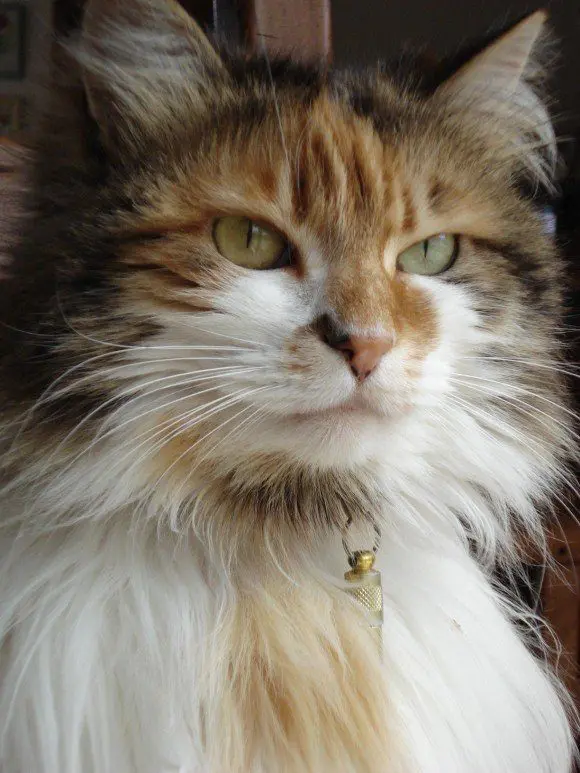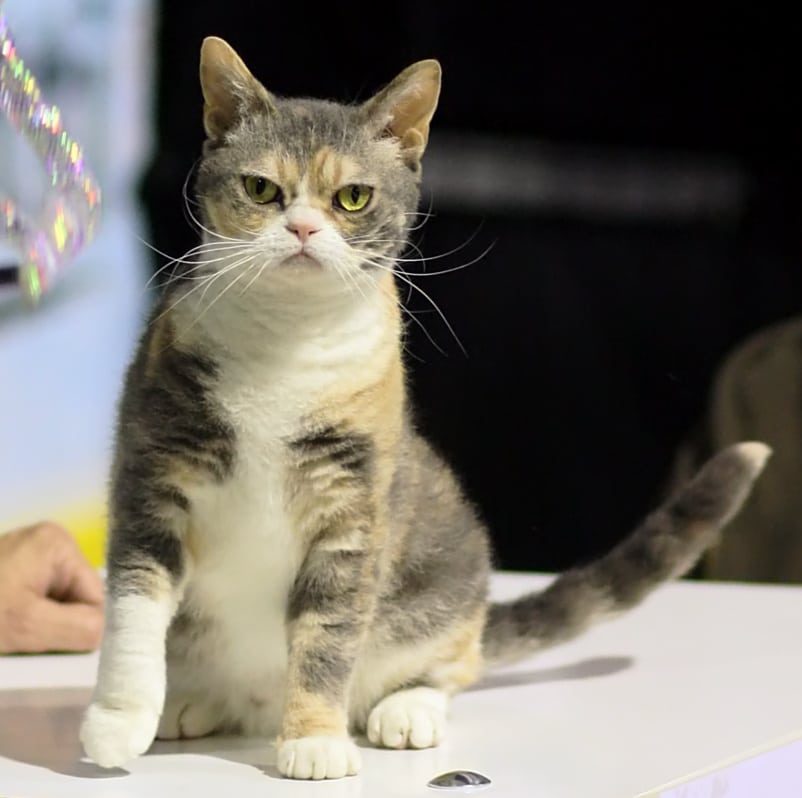
The name of Angora cat can create confusion. It differs enough from the Oriental Longhair cat and of the Turkish Angora cat, and it does not descend the so-called cat Angoras from the 19th century. In fact, this breed emerged by accident.
Content
History
In the Decade of 1960, the English breeder Maureen Silson coupled a Abyssinian cat sorrel and a Siamese cat dotted seal to create a siamese with pointed tips. Their descendants inherited the cinnamon feature (chestnut called the Abyssinian), creating Oriental Longhair cats cinnamon, and the gene for long hair, recessive in the Abyssinian cat, What created this race, known as Angora cat to 2003. The long-haired oriental (angora) is only recognized in Great Britain, although in North America it was called Oriental Longhair cat until another race with the same name was created there. For further confusion, in Europe, this race has been called Javanese cat, a name used for some various hair long in North America, and at one point was also known as mandarin cat.
Physical characteristics
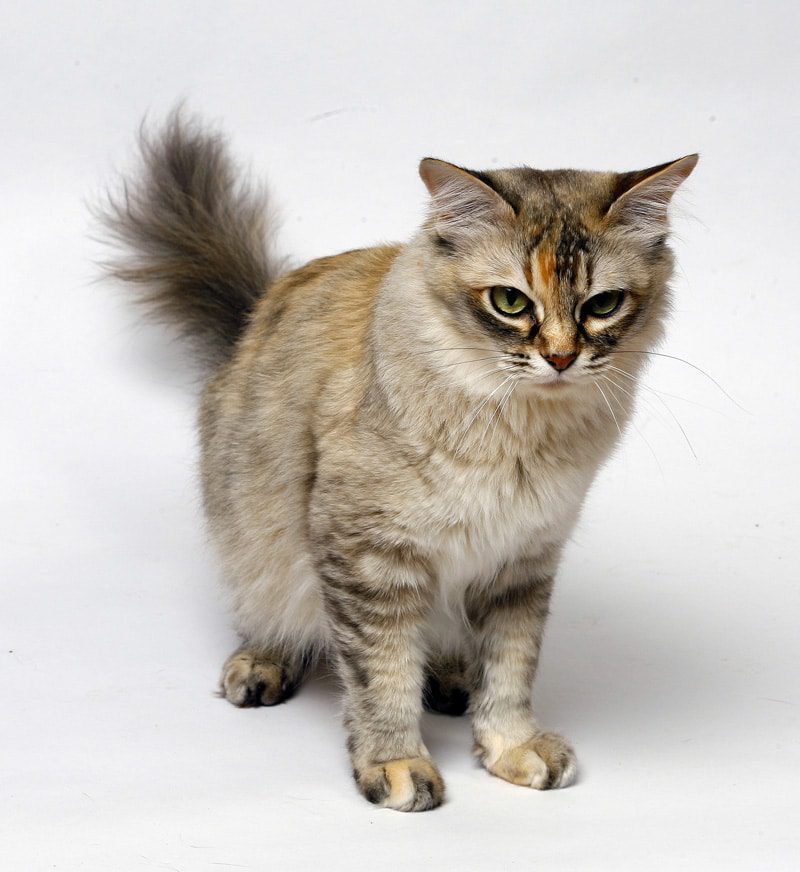
The Oriental Longhair cat is slender, but not extremely. Their legs are muscular, and their wedge-shaped head is not too long. Its fine, silky fur has no Undercoat and falls straight to the body. As a long-haired cat, the angora is relatively easy to care for. His eyes, Green in all varieties, less blank, they are somewhat slanted.
Character and skills
The personality of this breed reveals its kinship with the Siamese. They are playful cats, curious and sociable, they like to live with many cats and they are somewhat noisy.
cat visual guide, Dr. Bruce Fogle Photo: Wikipedia
▷ The world of Pets: Dogs, cats, birds, reptiles, amphibians
Recognized by the CFA, FIFe, TICA, ACFA/CAA, CCA-AFC
Origin: Turkey
Antiquity: Prior to the 18th
Character: Owner of himself
Weight: 3 to 8,5 Kg
The Turkish Angora cat remains the national animal of Turkey today.
Photo: Wilkipedia
Content
History
The Turkish Angora cat It, as the name reflects, a breed of cat native to Turkey, where she was prized for her long hair and fur. Angora is the ancient name of the capital of Turkey, currently Ankara. This breed of cat has a long history, since it is estimated that it can be traced back to ancient Egypt.
In XVII century, the Turkish Angora cat It was introduced to Europe by an Italian explorer named Pietro Della Valle and by a French named Nicolas de Peiresc, who brought several copies to their respective countries. It was a success, since it was the first breed of long-haired cat, since the other European domestic cats were short or semi-long hair. The Swedish naturalist Linnaeus called it Cattus Angorensis to distinguish it from the domestic cat and Chartreux cat, and the French biologist Buffon called it "Angora cat with long hair and completely white.".
Such was the popularity of the cat's fur color that it served as a "royal gift", being appreciated by the entire European aristocracy, especially the court of Louis XV. Painters of the time even chose her as a model to represent their cats in their paintings, for its elegance and beauty.
In the 19th century, the Turkish Angora cat contributed to the birth of Persian cat, to the one who transmitted the gene responsible for long hair. But with the passage of time and the dangerous crosses with other breeds of cats, the Turkish Angora lost the characteristics that had made it famous. At the same time, the dazzling success of the Persian, chosen as a breeding base by the English in Victorian times, caused a disinterest in the Turkish Angora cat as dazzling as its success, to the point that it almost disappeared after WWII. The Turkish government decided to protect the remaining specimens to ensure the survival of the breed, so he decided to prohibit its export.
Finally, The breed was saved by American cat breeders who managed to obtain them from the Ankara Zoo in 1959 a couple of Turkish Angora Cats llamados Star (What does "Star" mean?) y Yıldızcik ("Little Star"). The current Turkish Angoras were born from this couple. Interest in the breed was rekindled in 1963, when the breeders in question presented her to the rest of the world. La C.F.A. (Cat Fanciers’ Association, one of the leading American feline organizations) recorded the first animals in 1970 and recognized the breed in 1973. La F.I.Fe (Fédération Internationale Féline) did the same in 1988.
Despite its beauty, the Turkish Angora cat it is not yet widespread in the world and is still protected in Turkey: some zoos continue to breed to ensure the survival of this breed, which is still considered "fragile". But, the Turkish Angora It is one of the favorite feline breeds of the French, and is often featured at feline shows.
Physical characteristics
Turkish Angora cat at the Atatürk Forest Farm and Zoo in January 2012. The zoo breeds and sells Turkish Angora cats – Ankaracats, CC BY 3.0, via Wikimedia Commons
The Turkish Angora cat it is a small to medium sized cat, with a graceful appearance, has a beautiful head that tapers downwards and is relatively small in relation to the rest of the body. The muzzle has no pinches, the nose is slightly curved, the ears are set high on the head, turns forward and has a lock of hair at the end.
The legs of the Turkish Angora cat they are long and thin, with oval legs and tufts of hair between the toes. The tail is wide at the base and tapers as it grows. The tail is quite long compared to the rest of the body and feathery in appearance., due to the long hair.
The coat is of medium to long length, fine and silky, with a very light undercoat. The hair is slightly more numerous and wavy on the belly. Due to its dense fur, the turkish angora may appear much larger than it actually is: is light-boned and does not usually exceed 5 kg. The molt occurs in summer and is quite considerable.
Originally, only a completely white gown was allowed. Today, although the white variety is still the most popular by far, a wide range of single-color coats is tolerated, bicoloured, brindle and smoked. Just some colors, like chocolate or mink, are not recognized by the standard.
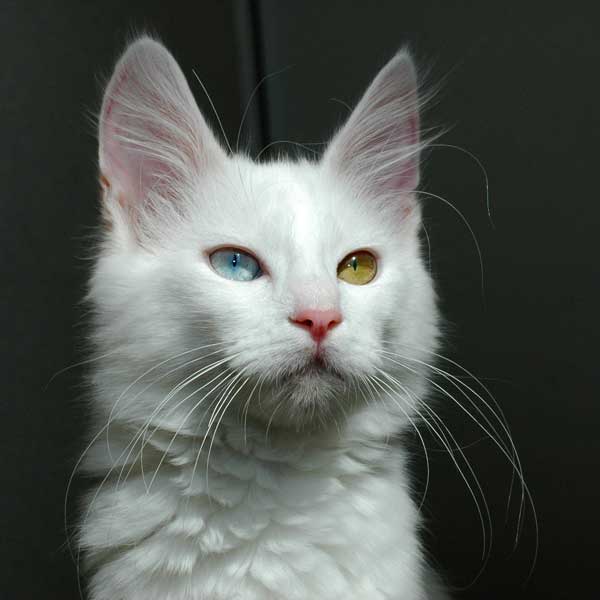
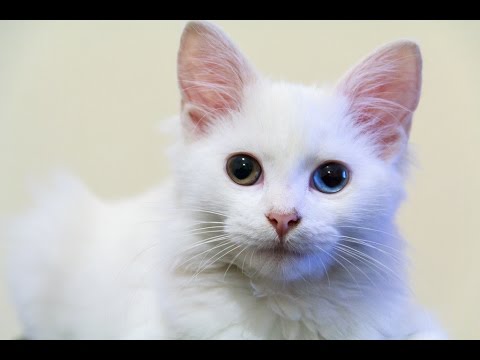
Large, almond-shaped eyes are traditionally amber in color. In the white variety, blue or minnow eyes are also accepted (that is to say, with two different colors), while in the gold and silver varieties green eyes are also tolerated.
Size and weight
Height: 30 – 35 cm.
Weight: 2,5 – 5 kg
Character and skills
A white Turkish Angora cat with odd eyes (heterochromia), which is common among the breed – Karatas., Public domain, via Wikimedia Commons
The Turkish Angora cat it is a very sociable and affectionate cat, who likes to be the center of attention, to the point of being a bit loud at times. Enjoys the company of its owner and other animals, including dogs, and he especially likes children. Being a very playful and intelligent cat, can learn some tricks, how to stand up on its hind legs when presented with a toy or treat, or retrieve and return a small ball.
The Turkish Angora cat he is also an observant cat, and nothing escapes him: is everywhere, following your every move, jumping on your shoulders when you least expect it and picking up your pen as you write. He is very capable of running after taking the glasses case, the glove or tights that were lying on the ground. But she knows how to make up for it by purring and stroking it.
Robust, athletic and hunter, the Turkish Angora is a very independent cat that values ​​its freedom. They need to have a lot of space to develop and they don't like being confined to one floor.
Last, it is one of the few cats that loves water, and will gladly take a dip in a basin or bathtub if given the chance.
Care "Turkish Angora cat"
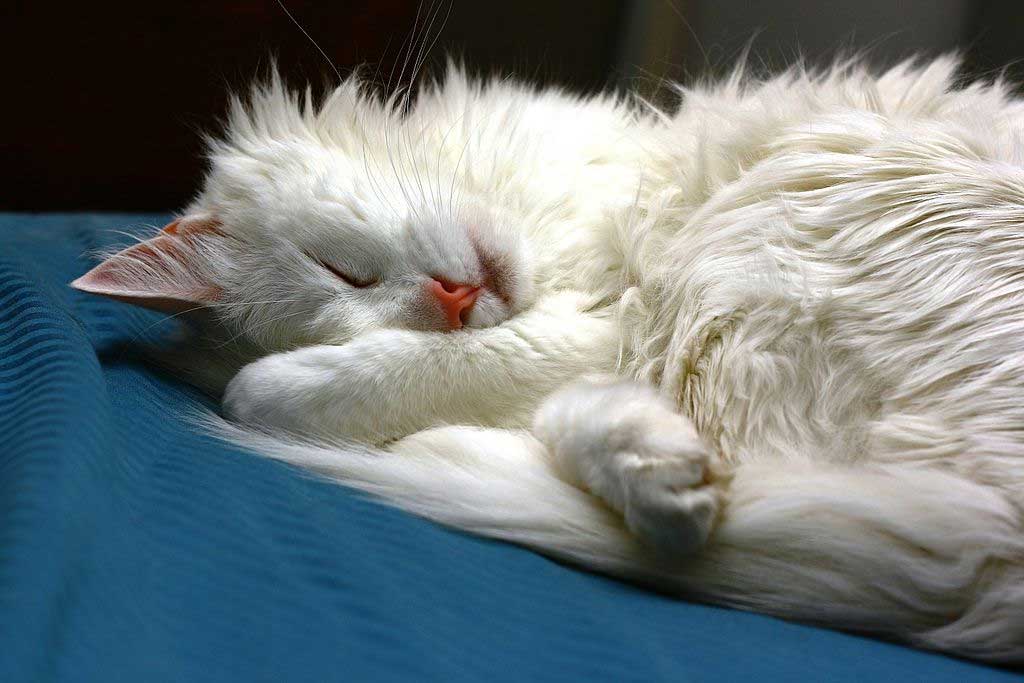
Sleeping cat, white long-hair Turkish Angora – Roo72, CC BY-SA 3.0, via Wikimedia Commons
The Turkish Angora cat Grooming his silky fur himself, so it is enough to brush it from time to time. This helps remove loose hair and strengthens the bond between you and your cat.. How long-haired cats tend to swallow more hair, hairballs can form in the digestive tract. To reduce the formation of these hairballs in the stomach, there are special foods for cats.
Food
Due to the long and dense coat of the Turkish Angora cat, it is recommended to feed the dog a diet rich in fiber so that it can more easily evacuate the trichobezoars (hair balls) what you eat when preening, and thus limit the risk of digestive problems.
Indoor or outdoor cat?
The Turkish Angora cat he is a very calm cat and, therefore, ideal for interiors. It is not particularly demanding in terms of its accommodation conditions and also settles for less space. Especially as an indoor cat, develops an intimate relationship with its owner and enjoys being with the family. For this reason, the loving cat should not be left alone for a long time. If you have the opportunity to let the cat out under supervision, give this opportunity. They enjoy observing their surroundings from an elevated position and breathing fresh air.
How much activity does he need? "Turkish Angora cat"?
This lively and active cat loves creative and challenging toys. He also enjoys learning little tricks., how to recover toys. A sturdy scratching post for playing and sleeping also offers great employment opportunities and also helps the cat care for its nails.. Extensive petting is a must for this affectionate, people-oriented cat.
For sale "Turkish Angora cat"
The Turkish Angora cat it is an excellent cat for beginners, but it also needs enough affection and care. Before buying a cat, you must be sure that you can offer him a full life. Once you have decided on the breed, you must visit a trusted breeder who belongs to a registered club. Pay attention to the behavior and health of kittens and parents as well. For a purebred kitten with papers you pay a few 800 EUR. In the animal shelter you can sometimes find a cat that looks and behaves like a Turkish Angora cat.
Characteristics "Turkish Angora cat"
Coexistence is important that you have with your new friend. Before considering the acquisition of a cat of the breed "Turkish Angora cat" you know certain factors. You must take into account their character, their need for exercise, their interaction with other pets, their care and if you have small children, their level of tolerance towards them.
At first sight, the Tiffanie It is defined by its owners as an "aristocratic" cat: refined, sociable, quiet, often with an air of dignity.
Content
History
The history of the origins of Tiffanie (or Asian Semi-longhair cat) differs slightly from hobbyist to hobbyist. But, all agree that the first kittens Tiffanie They were born from the mating of a Burma and cats Chinchilla. The origin may go back even further and may include the Persian cats and the races of Angora. Whether it is a deliberate crossing or not, the beauty of the resulting kittens prompted the Baroness to repeat the experiment and start a breeding program to produce Burmeses of payment, better known today as Burmilla. Some of the kittens obtained had a color that did not fit the criteria for the Persian chinchilla, or its fur was too long. But, became the founders of the Asian races and Tiffanie respectively.
Due to its relatively recent creation, a lot of people confuse the Tiffany (spelled Tiffanie in the UK) with a American Burmese long-haired or with his distant American cousin the Chantilly-Tiffany Cat. Confusion has persisted for a long time even in America: beyond their physical resemblance, the two breeds developed at similar times and shared the same name until 1992. To limit the risks of the sale of "fake Tiffanys", now only cats resulting from crosses between English Burmese are allowed to be registered as Tiffanys, persian chinchillas, Asians or other Tiffanys.
Despite these efforts, difficulties in accurately identifying the origins of the Tiffanie make it difficult for them to be recognized as a breed in their own right. With the exception of the Australian National Cats (or ANCats), who recognized the breed in 1999, y el British Governing Council of the Cat Fancy (recognition in 2003), other important feline associations, like the LOOF in France, consider that the Tiffanie is a simple long-haired variant of the Birman.
Whatever the name or status of the cat, their representatives are especially present in Australia, the United Kingdom (your country of origin), as well as in Canada and the United States.
Physical characteristics
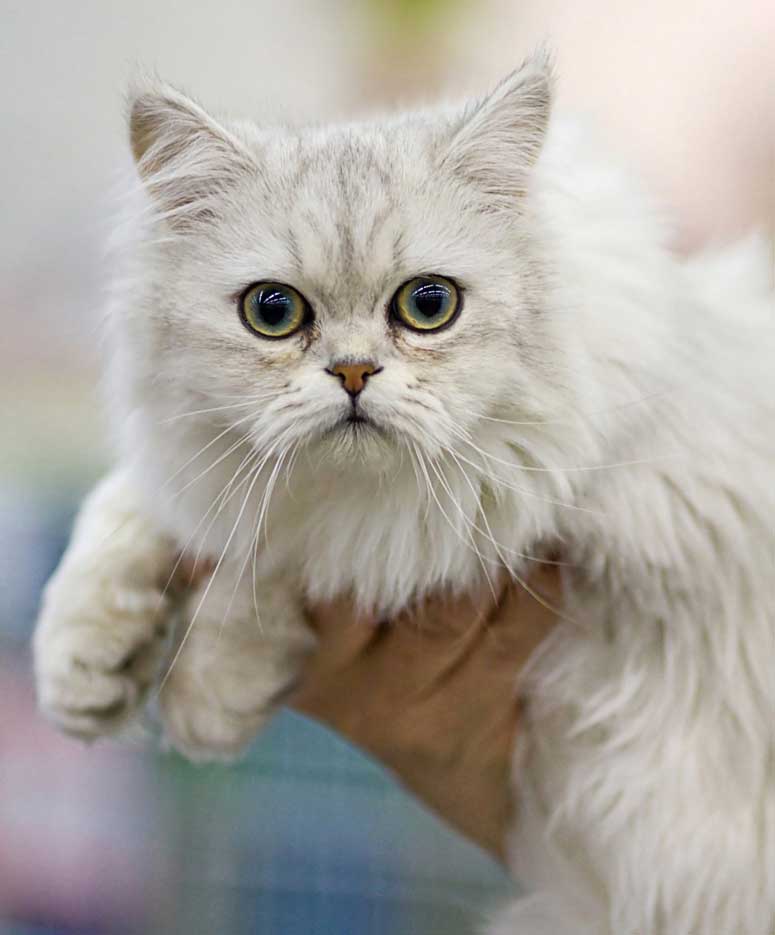
The Tiffanie (or Asian Semi-longhair cat) it's a ball of muscle buried under silky fur. Many agree that he is the height of a Birman with long hair. It is a medium linear cat with a semi-foreal subtype. His body is medium in size and lighter than it seems. The legs are slim and proportionate to the body, with the rear ones higher than the front ones. The tail is moderately thick at the base and tapers to a rounded tip, like a feather. If carried back over the body, should reach the cat's shoulders. Females tend to be thinner than males.
The head it is medium size, but it must be quite high, with rounded skull top. The face has a rather triangular shape, with wide cheekbones, cheeks compact, with a marked stop and a delicate chin without protrusions. The nose is straight, neither too short nor too long. The eyes they are big, oblique and far apart. Its color can vary from gold to amber green. Other eye colors are allowed depending on the cat's coat color, but solid green eyes are considered a fault by the standards, regardless of the associated coat color. The ears they are fine, large and slightly inclined forward, moderate in size. They are widely separated on the skull and rounded at the tip. There may be a tarsus inside, and a discreet plumage is accepted.
Last, the Tiffany has a fur dense, with an undercoat that is usually white, but fine enough to avoid the knot problems that are common in long-haired cats. The top layer is thin, silky and shiny, and forms a collar on the neck and shoulders. It is located along the spine and extends over the breeches, under the belly and on the tail. Ghost brindle markings on non-agouti adults are penalizing, except in the case of kittens or orange cats.
Relatively little shed, and is especially recommended for cats with allergies.
Measurements of the "Asian Semi-longhair cat (Tiffanie)"
Height: Of 20 – 25 cm. Male weight: 5 – 7 kg female weight: 3,5 – 5 kg
Varieties
The "Asian Semi-longhair cat (Tiffanie)" is available in a wide range of colors. Allowable coat patterns are identical to Burmese and Asian: solid, striped, silver, ticked and smoked.
None of these traits are favored or more sought after than another in feline shows..
Character and skills
At first sight, the Tiffanie It is defined by its owners as an "aristocratic" cat: refined, sociable, quiet, often with an air of dignity. But, Beneath his calm demeanor lies an energy and curiosity inherited from his eastern ancestors..
A white male Tiffanie (Asian Semi-longhair) cat presented at TUROK cat show Turku 2008 – Finland: Heikki Siltala, CC BY 3.0, via Wikimedia Commons
Moderately active, but mischievous enough to liven up any home, the Tiffanys they are very close to their owners. He does not hesitate to ask for his share of pampering and attention with many purrs and meows, in addition to chatting with the different people in the family for no particular reason. But, he also knows how to be discreet when his master wants to go about his affairs in peace.
They are not very aggressive and adapt easily to new environments, They are also kind to other animals in the house and to strangers, as long as they respect your quiet time. But, some cats are jealous of other cats if they get too close to their favorite master.
Beware of possible fights!
Apart from these rare cases of jealousy, the affectionate temperament of Tiffanie and its general characteristics make it a suitable cat breed for children, but also in a breed of cat recommended for lonely older people.
The Tiffanie, a house cat, she is a tireless player once the game is on. Beware of fragile objects that can get in the way during your gaming sessions. To channel your excess energy, a cat tree and cat toys are essential. His intelligence and attachment to his owner also allow him to try to teach his cat tricks and commands., such as looking for a toy.
Health
Thanks to its multiple crosses, the "Asian Semi-longhair cat (Tiffanie)" it has a diversified gene pool that makes it quite resistant to diseases that its ancestors could suffer from. Its average life expectancy is estimated to be about 17 years, like his cousin the Burmilla, as long as, of course, is properly fed and cared for.
But, if you want to raise your cat, it is important to be tested for polycystic kidney disease, especially if you have a Persian ancestor. Before any possible acquisition from a breeder of Tiffanie, It is possible to – if not spontaneously, as it should be normally – ask you to provide the kitten and parent screening test results. Cat tests cost between 45 and 75 EUR.
It also, kittens of some lines may have significant umbilical hernias, whose correction requires a small surgical intervention.
Life expectancy
16 years.
Grooming
The Tiffanie (or Asian Semi-longhair cat) should be brushed daily to avoid the development of tangles in the hindquarters. But, unlike some long-haired breeds, they lose very little hair, even during the move, which makes them a hypoallergenic breed of cats. The frequency of brushing the cat's hair does not have to increase at this time.
But, it is necessary to check the ears regularly. Cats produce slightly more earwax than the average cat, but they are not more efficient in cleaning. Thus, it is important to help you in this task, to avoid infections such as cat otitis.
Food
Being the Tiffanie a gluttonous cat, it is recommended to pay attention to the quantity and quality of your food, to avoid any problem of overweight or even obesity of the cat. Vigilance is all the more necessary since its semi-long coat can easily camouflage its curves..
For sale "Asian Semi-longhair cat (Tiffanie)"
A kitten Tiffanie male without castrar sells himself between 400 and 1.500 EUR, according to his lineage. The price of a kitten Tifanny is slightly higher, but it does not exceed 1.600 EUR.
Coexistence is important that you have with your new friend. Before considering the acquisition of a cat of the breed "Asian Semi-longhair cat (Tiffanie)" you know certain factors. You must take into account their character, their need for exercise, their interaction with other pets, their care and if you have small children, their level of tolerance towards them.
Recognized by CFA, FIFe, TICA, ACF, ACFA/CAA, CCA-AFC, GCCF
Origin: Russia
Antiquity: Before the 19th
Character: Reserved and cautious
Weight: 3,5 to 5 Kg.
The nature of Russian Blue Cat it is fascinating and versatile. On the one hand he is frugal and calm, but on the other hand it can also be temperamental and wild.
Photo: Wilkipedia
Content
Characteristics "Russian Blue Cat"
Coexistence is important that you have with your new friend. Before considering the acquisition of a cat of the breed "Russian Blue Cat" you know certain factors. You must take into account their character, their need for exercise, their interaction with other pets, their care and if you have small children, their level of tolerance towards them.
Joy
3,0 of 5 stars (based on 1 review)
Activity level
3,0 of 5 stars (based on 1 review)
Friendliness to other pets
3,0 of 5 stars (based on 1 review)
Friendliness to children
3,0 of 5 stars (based on 1 review)
Grooming requirements
2,0 of 5 stars (based on 1 review)
Vocality
1,0 of 5 stars (based on 1 review)
Need for attention
3,0 of 5 stars (based on 1 review)
Affection towards its owners
3,0 of 5 stars (based on 1 review)
Docility
4,0 of 5 stars (based on 1 review)
Intelligence
4,0 of 5 stars (based on 1 review)
Independence
4,0 of 5 stars (based on 1 review)
Hardiness
4,0 of 5 stars (based on 1 review)
History
Companion of the Russian Tsars, or from the English sailors?
Was the cat born near the cold waters of the Russian port of Arkhangelsk, or under the Maltese or Spanish sun?
Many legends surround the origin of the mysterious Russian Blue Cat. But, fans and official associations today privilege the Russian track, according to the breed name.
It all started in the 17th century on the shores of the White Sea, in the vicinity of the port city of Arkhangelsk, in northern Russia. Coveted and hunted for its unique thick, bluish fur, this typical cat of the region was quickly adopted by sailors for its qualities to hunt rodents. About 1860, British merchant ships brought this amazing feline to their holds. This allowed the breed to spread, initially in the UK and later in the rest of Europe. But, this diffusion is still quite modest.
The first mentions of him Russian Blue Cat as a whole-part race appear in works published in Great Britain from 1865. They are then evoked there under the name of "blue archangels", russian shorthair or still foreign blue. But, was not up 1871 when the breed really became known to Victorian society under the name "Archangel Cat", after his presentation at the Crystal Palace in London.
As a cultural center that hosted part of the Universal Exhibition of 1851 and as a cabinet of animate and inanimate curiosities open to the public, the Crystal Palace had international fame at the time. Animal exhibits, especially cats, were the most common and popular. But, the Russian Blue Cat did not arouse much interest in this first public appearance. Introduced at the same time as other blue-coated cats like the Chartreux or the British shorthair cat, it blended into the background and only attracted the attention of some rare fans, among them one such Constance Carex-Cox.
Russian Blue
Then, in charge of a hatchery of Abyssinian cats, British shorthair cats and Manx cats, acquired his first Russian blues, developed the breed and took it upon himself to promote it to the general public. He wrote an article defending the differences between the Russian Blue Cat and the British shorthair cat in one of the first reference books on cat breeding, The Book of cats, de Frances Simpson (1903). His pugnacity was rewarded in 1912, When the Governing Council of the Cat Fancy (GCCF), the main British feline organism, officially recognized the difference between British shorthair cat and the Russian Blue Cat. As a result, a separate class was created for cat shows, which is now registered under the name of «Foreign Blue». This inversion of the terms in relation to the name used previously ("blue alien") underlines that his most important feature is the blue of his eyes, more than its “exotic” appearance.
In 1939, still in the uk, officially received the name of Russian Blue. The other countries will adopt this name as the breed is recognized by the different national organizations..
In fact, its mitigated success among the British public does not prevent the Russian Blue Cat be exported to the United States and Canada between 1888 and 1890. There it also suffered from comparison with other local blue cats, including American shorthair cat. But, careful crossing allowed to develop a Russian Blue Cat finer than original, which was successful until 1940.
In the rest of europe, and in particular in France, the Russian Blue Cat was almost a victim of history, especially after the Bolshevik revolution of 1917. In fact, driven by deep anti-Bolshevik sentiment, the population despised everything that could have a Russian origin. The race had a hard time establishing itself. But, was presented for the first time in France in 1925 with the name of Maltese cat, before receiving the official name of Russian Blue in 1939, like on the other side of the canal.
The fighting and deprivation of World War II also endangered the survival of the Russian Blue Cat. But, after the end of the conflict, the dynamic breeding programs in England and Scandinavia make it possible to stop the extinction of the breed thanks to, in particular, to crosses with other cats, that contribute to the appearance of various morphological varieties of Russian Blue. In the United Kingdom, Marie Rochford, the only breeder that has preserved a pure lineage, decides to cross their specimens with siameses Blue Point. This permanently modifies the morphology of the Russian Blue, that gets thinner, to the point where the breed standard changes in the fifties. But, this trend stops a few years later, in 1965-1966, in particular thanks to the breeding program established by the Association Russian Blue. In 1967, the British Russian Blue had returned to its original more rounded shape and the original standard was back in force.
At the same time, in scandinavian regions, local breeders chose to recreate the breed by crossing Siamese with local blue stray cats. Compared to British lines, these lines of Russian Blue have a shorter, denser coat and smaller body size.
In United States, the Association of amateurs of cats (CFA) recognized the breed in 1949. But, the importation of British and Scandinavian specimens makes it difficult to evaluate cats in competitions, since the representatives of the breed have very different appearances. From 1960, Crossing programs between the different types were launched in order to homogenize the physical, what drove in the years 90 to the disappearance of the Scandinavian type in the country, for the benefit of British and American types only.
Is this the end of the tribulations of the Russian Blue Cat?
Not counting the interventions of Australian and New Zealand breeders who, over the years 60, they launched experiments to create russian blues black and russian blues White. The Australian Mavis Jones thus obtained the first Russian Blue Cat black and white in the years 70, when crossing a domestic cat white and a Russian Blue. But, 50 years later, only a limited number of organizations recognize the White Russian Blue and Black Russian Blue as official varieties of the breed. But, is the case of the Australian Cat Federation (ACF) in Australia, the New Zealand Cat Fancy (NZCF) in New Zealand, the Southern African Cat Council (SACC) in south africa, just like him Governing Council of the Cat Fancy (GCCF) in the UK and the Official Book of Feline Origins (LOOF) in France. In fact, these various feline organisms have gone so far as to change the breed name to eliminate any reference to color: for them, the cat is now simply Russian. The Cat’s Fanciers Association (CFA) and The International Cat association (TICA) in United States, as well as the Fédération Internationale Féline (FIFé) and World Cat Association (WCF) in Europe and around the world, disagree and refuse to recognize these varieties.
Last, it is impossible to close the history of Russian Blue Cat not to mention his long haired brother, the Nebelung cat, born in the years 80 and today recognized as a breed in its own right.
In the news, the emerald-eyed blue feline has a following mainly in the UK (located between the 10 Britain's most popular cats), Japan, EE.UU. (it is located just below the post 20 of the most popular cat breeds in the U.S.), Germany and France, where does he occupy the position 25 of the favorite breeds of cats of the French, nails on 150 annual inscriptions in the Official Book of Feline Origins (LOOF)
Physical characteristics
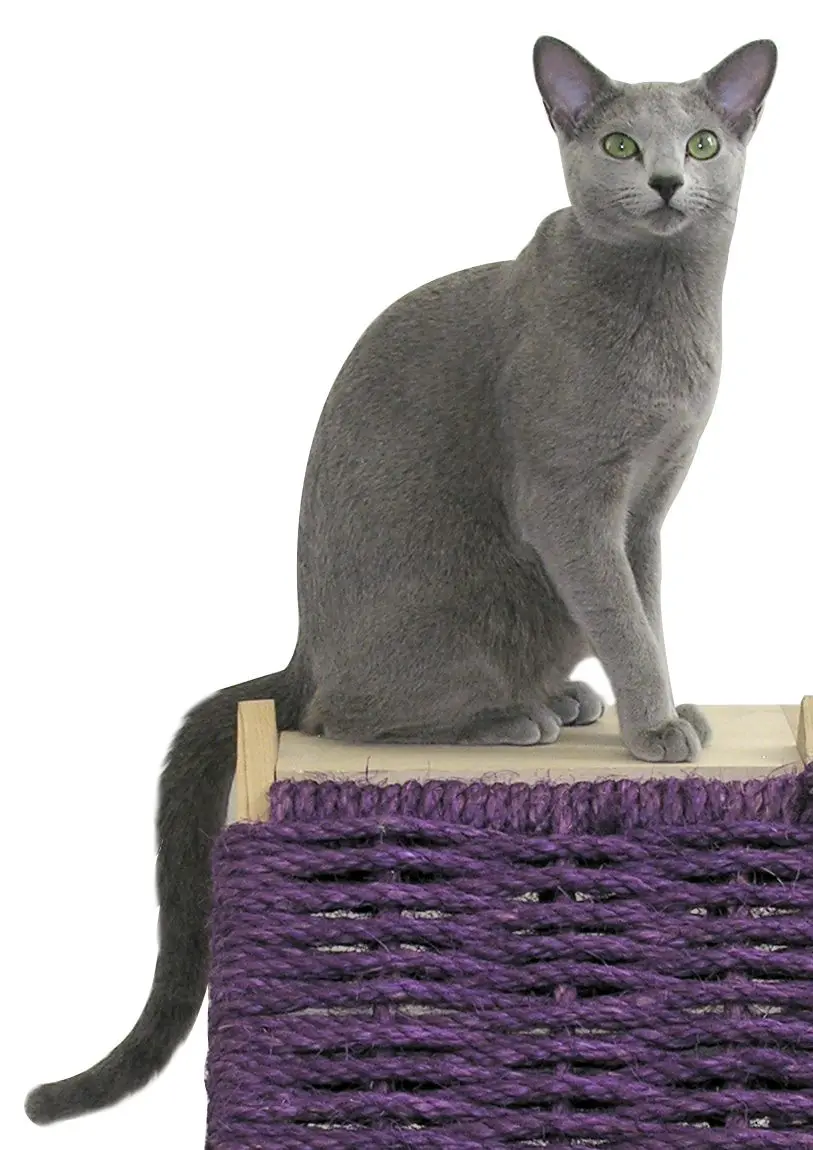
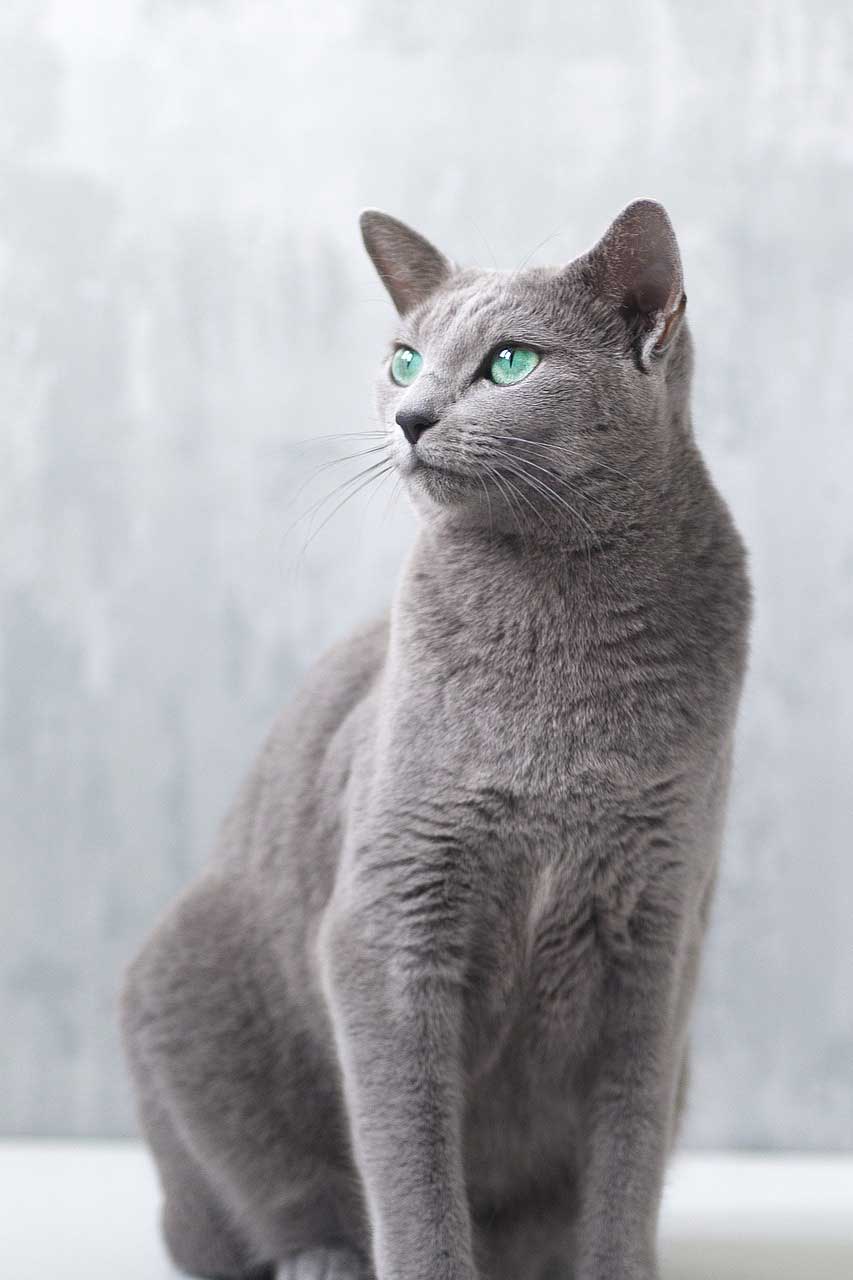
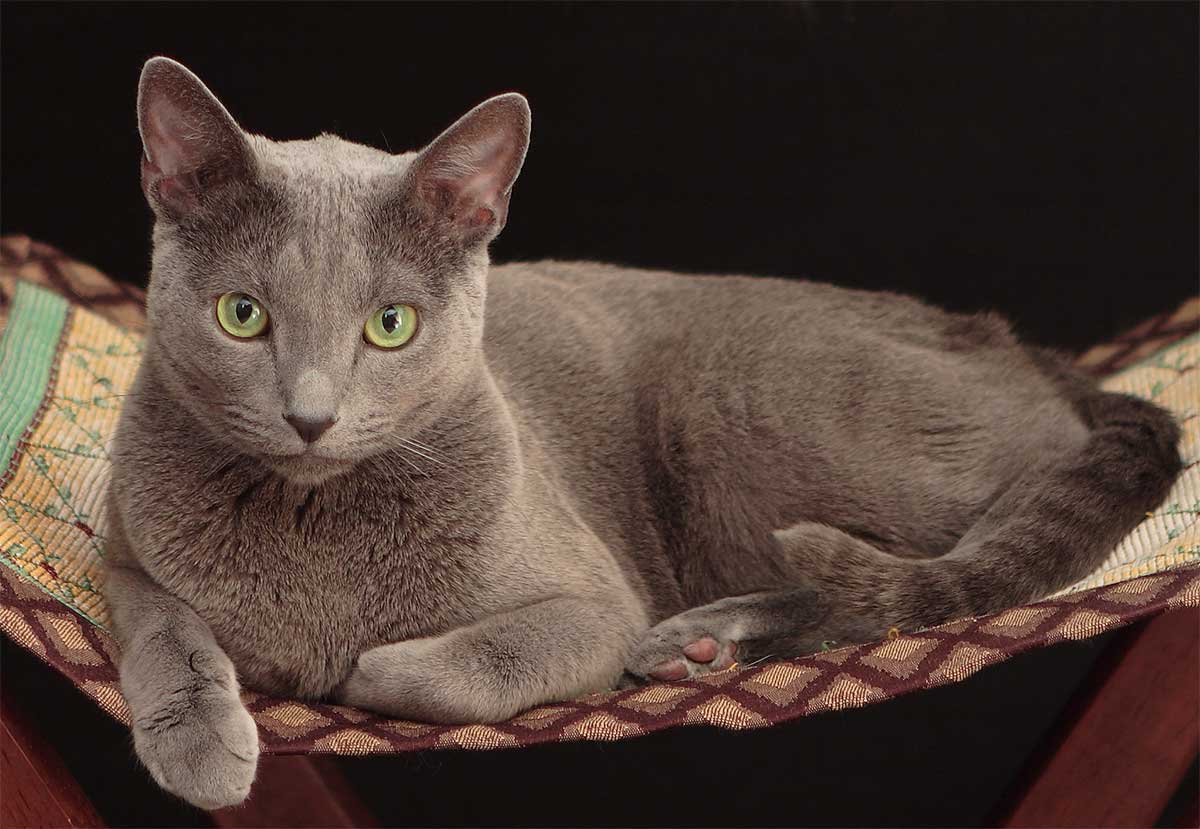
The Russian Blue Cat is an elegant short-haired cat with long legs and a slim complexion..
Russian Blue. American type. The breeder is Brad Kardux, Bluemews Cattery, Pennsylvania – Doug Miller, CC BY 2.0, via Wikimedia Commons
The special feature of Russian Blue it's your calling double fur, in which the outer coat is the same length as the undercoat. This makes the coat stand out and is especially soft and silky.. As the name suggests, the the fur color is always blue or blue-gray. Shading is not allowed, white spots or brindle markings. When they are young, cats may still be slightly tabby.
Although black and white are not recognized by all feline organizations, all agree that the color of the cat's coat must be perfectly uniform throughout the body, including muzzle and paw pads. Shading is excluded, brindle marks or spots. But, kittens can sometimes show ghost markings on their flanks and tail, that disappear at approximately one year of age.
Thanks to the colorless hair ends (tipping), blue fur glows silver in the light.
The elegant Russian has a graceful posture and a head angular with a "smiling" mouth. The Greats eyes, almond-shaped, develop an emerald green coloration in adult animals.
Size and weight
Male size: 30 cm.
female size: 30 cm.
Male weight: 3,5 – 4,5 kg
female weight: 2,5 at 3,5 kg
Varieties "Russian Blue Cat"
Despite the efforts of the breeders of the Russian Blue Cat for standardizing the physique of the breed, different morphological types still exist, due to its rich history:
The type Siberian / Scandinavian, smaller than other representatives of the breed and particularly elegant, with spread ears and a darker color than the other blue Russians;
The American type, the most graceful. It is medium in size, with a rather light color and widely separated ears;
The English type, the most robust. Visually distinguishable from other varieties by its fine vertically placed spikes.
Most big cat associations only recognize the color blue, with a tip of slightly white and gray guard hair, giving the coat a shiny, silver appearance. The nose and pads are gray, charcoal or dark lilac.
The white variety, which is only recognized by organizations in some countries, has white fur with silver highlights and pink nose and pads.
Last, the black variety, which is in the same situation as white in terms of recognition, is characterized by shiny jet-black fur from root to tip, and a black or dark brown nose and pads.
Character and skills
The nature of Russian Blue Cat it is fascinating and versatile. On the one hand he is frugal and calm, but on the other hand it can also be temperamental and wild. But, in general it is a balanced cat that establishes a strong bond with humans.
The russian cats prefer to sleep near their owners or even in bed with them, but they are never intrusive. But, they are quite reserved with strangers and the breed does not tolerate noise very well. To feel comfortable, the sensitive cat prefers a regular daily routine and the company of a sitter.
These smart cats are curious and playful, allowing them to quickly learn new skills. If they want, jumping animals can open doors and climb tall cabinets. But, Your cautious and considerate nature ensures nothing is broken in the process. In summary, The Russian Blue is an ideal cat for a calm couple or a single person.
Care "Russian Blue Cat"
Indoor or outdoor cat?
The Russian Blue Cat it is a frugal cat breed, that is also satisfied with living only inside. Unexpected situations outside can even be too much for the sensitive cat and strangers can scare it.. Secure access outside in a fenced garden or on the balcony is a better alternative, depending on the possibility. The cat is also one of the breeds that can even be taken for a walk on a leash if it gets used to it.. The russian cat will also get along well with people who work and have many opportunities to scratch and climb. He is happy to have a partner to cuddle and play with. It also, the smart cat wants to be challenged and needs challenging activities without access to the outside.
How much activity does he need? "Russian Blue Cat"?
Although the Russian Blue it is a calm and relaxed cat breed, there is also a bit of predator in it. Don't need much, but yes a challenging activity. Most cat intelligence toys are seen more quickly than many other breeds. It is best to alternate between different games and toys so that he does not get bored. Athletic cats also want to exercise their athletic skills regularly.. So, there must be one or more scratching posts and enough room to run. You should not miss the daily pampering sessions with your favorite human. The Russian cat likes to observe the surroundings from a high vantage point and relax in peace and quiet.
Health and nutrition
Close up of a Russian Blue’s face – Wikipedia
The Russian Blue Cat it is a long-lived race, with a life expectancy between 15 and 20 years. In fact, this resistant animal does not present any specific health problem, except a predisposition to kidney stones.
On the other hand, being a big glutton, the risk of obesity in cats is real, especially if they are not active enough or are pampered by their owners. So, it is important to ensure that the cat's daily ration is adapted to its needs, asking the vet for advice if necessary.
Last, It should be noted that litters of the English type tend to have more kittens than those of other types.
For sale "Russian Blue Cat"
If you want to have your own Russian Blue Cat, you will find many breeders of this breed. Unfortunately, More and more Internet scams are selling non-purebred or even sick cats at expensive prices. Thus, make sure the breeder is a member of the Breeders Association of Russian Blue. This is the only way to guarantee a purebred and healthy kitten.. Of course, you will pay much more, with prices that are around 700 EUR, but it's worth it. Most kittens are already house trained, vaccinated, desparasitados and chip. If you want to help an animal in need, you can also find what you are looking for in an animal shelter.
The Antipodean cat was previously known as the New Zealand shorthair cat and / or the Australian longhair cat.
Content
History
The New Zealand cat (domestic) shorthair or longhair is New Zealand's own breed, whose ancestors are the cats that reached the antipodes with the first pioneers of Europe. These early cats were brought by early settlers to hunt rats that threatened the food supply and later worked as "farm cats" and "store cats" in the new colonies..
For more than 150 years, these robust cats have flourished, establishing itself as New Zealand's indigenous house cat, facing the cold of the mountain ranges, to the humidity of subtropical forests, to the dry tundra that borders desert regions and the dangers of a busy life within the confines of the growing city.
Physical characteristics
The Antipodes can be long-haired or short-haired and brindle in color, solid or percal. Cats with points of color (that is to say, Siamese) cannot be considered true Antipodean cats.
The Antipodean cat has a body medium, solidly built, is a muscular cat. Count with one chest broad and rounded, the shoulders well developed, and a level backward, equally broad of shoulder to the hip.
The head is a slightly truncated triangular wedge. The Antipodes has the cheeks full, the jaws large, a forecrown smoothly rounded, and nose straight or slightly curved down.
The ears are slightly rounded at the tips. The eyes they are big and bright, between rounds and almond-shaped. The color of the eyes of the antipodes can be green, Turquoise Blue, yellow, oro, copper, including blue.
It has legs average length, proportional to the body and legs are firm and forward. The tail is heavier at the base and tapers smoothly at the tip.
The New Zealand Shorthair cat and the of Longhair are now registrable with CATZ Inc. Almost any domestic cat can qualify to be included in the open registry of this new breed. But, there are some rating factors…
First of all, cats must be WHOLE and approved for a registered breeding program. This means they must be used to produce PEDIGRED New Zealand Shorthairs and Longhairs or used in another breeding program where New Zealand Shorthairs and Longhairs are an approved cross..
In second place, although the breed comes in a range of over 90 colors, including all standard solids, tabbies, silver tabbies, bicoloured, calicos and vans, must not show any evidence of HYBRIDIZATION. As with the American Shorthair, cannot be color POINTED, of SEPIA of MINK, Neither CHOCOLATE or LILAC, o CINNAMON o FAWN, all colors showing evidence of Hybridization with the Siamese (himalayan pattern) or the Birman (Sepia pattern), or the Tonkinese (Mink pattern), or the Abyssinian (Where did the Cinnamon and the Fawn come from).
Character and skills
Both shorthair and longhair New Zealand are the family of the cats of the antipodes , and it can be a friendly companion and a playmate for children. The shorthaired antipodes is known for its longevity, good health, and by its ability to easy treatment, they are cordial, happy and loyal. They are recognized for their ability to deal with all climates and conditions.
▷ The world of Pets: Dogs, cats, birds, reptiles, amphibians
This feline breed is listed as one of the category VI breeds. under the clause 307.7 of the TICA rules (International Cat Association). The Chinese Harlequin Cat has, of course, the word "Chinese" in the name, but I don't think this cat is from China or a Chinese feline breed. The TICA, from what i see, does not explain the meaning of Category VI, except it's the lowest category. The first four categories are Established Breeds (category 1), Natural breeds (category 2), Variant Breed / Mutation (category 3) and Domestic Hybrid Breed (category 4).
The color pattern of the chinese harlequin is called Van. This pattern is also found in cats Turkish van, but this cat is long-haired.
It is a domestic breed, hair short, bicolor: a predominantly white cat, but with a black tail and black spots on the head and body.
The Chinese Harlequin Cat can be found elsewhere in China, but they are rare. They are accepted as a thoroughbred by the International Cat Association.
They are represented in a large number of ancient Chinese art.
It said that it was an attempt to re-create the old Chinese cat, a race that disappeared.
Character and skills
The Chinese Harlequin Cats they are known for their kind and sweet personality, and they are very popular as pets. Unlike many other cat breeds, this breed is very active and playful, and they love to play and explore. It also, they are very friendly and easy to train, so they are a good option for families with children and other pets. But, it is important to note that the Chinese Harlequin Cats require regular care, including proper nutrition, exercise and regular veterinary care.
▷ The world of Pets: Dogs, cats, birds, reptiles, amphibians
Shiningdiamonds by cattery - of the allerfeinsten.de
Content
History
At the end of the 19th century they appeared repeatedly in the paintings of Anton Julio Adán, called "Adam-cats", in the from Henriette Ronner-Knip and in the work of Arthur Heyer strikingly similar this breed semi-long haired cats.
In this period there was no organized breeding of pedigreed cats on the mainland.
The German Angora cat was originally bred from semi-longhair cats bred and house cats by Mrs.. Aschemeier who retired from breeding in 2010 . Aschemeier always referred to his long-haired cats, as German, not as Angoras.
The German Angora cat was not recognized by any cat association.
The breeders of the Angora Alemán they claimed there was no German Longhair Cat genuine since they are extinct. They describe the German Angora cat as natural long hair in the same way as the «Norwegian Forest Cat «, both are natural hairy breeds.
Was not up 2007, When were the hairy Germans recognized. The German Angora cat longhair and the German Longhair Cat they were synonymous with a race.
In 2007, the Council of administration of the Club German of cat Angora rejected this idea, that ended in a dispute that ended up dividing the Group of breeders.
The German Angora became a trademark and could only be bred by the German Angora Cat Club. International recognition has not been sought.
In the meantime, the German Longhair Cat is raised to meet the old image. Both breeds are described as very similar and both have crossed to the old style of the Persians to improve conformation and coat.
Physical characteristics
This breed has a silky hair, with a lot of background layers and do not tend to sticky. Your body is strong and robust (Cobbytyp). It has a round head and a powerful broad nasal bridge. The eye color should be green, but other colours are permitted. The tail is profusely covered and is intended to show long hair waving. All colors are permitted.
Character and skills
The German Angora cat is considered an active and playful cat, very people-oriented. In a group it is social and friendly.
▷ The world of Pets: Dogs, cats, birds, reptiles, amphibians
The German Longhair Cat it is the only long-haired cat developed on German soil
Content
History
The German Longhair Cat and the German Angora Cat share a tangled history, which includes a deviation through the Traditional Long Hair (Original), the European Long Hair and the German Forest Cat, before eventually becoming a single breed of "German Longhaired Cat".
The German Longhair Cat has waited a long time to be recognized internationally, although since 1929 there is a breed standard and a point scale. The only thing that was missing until a few years ago was a registered breed that corresponded to this standard.. After the 2nd World War, that interrupted cat breeding in Germany, the only indigenous breed of German longhair cat was considered extinct.
In the beginning there was the Cat of Angora which was imported to Europe. Through crossing with other long-haired cats it became the Persian, although the term "angora" became a generic term meaning "long hair". From the Decade of 1920, the preferred conformation in England and France gave rise to the cats we now call Persian Cats "old style", that is to say, They were "Persians with a nose", as opposed to modern brachycephalic Persians (flat-faced).
Long-haired cats in Germany were generically called Angoras and they were raised for the color, not by conformation. Biologist and zoologist Dr.. Friedrich Schwangart (1874-1958) criticized that, in general, did not meet the “Hochzuchtperser” standard ("high breed Persian") seen in british persians, so he created separate standards for the Persian cat and the German Longhair Cat in 1929, describing the differences between the two types. From that moment on, the breeders of «Angoras» had to decide whether to breed British-style Persians or more natural-looking German longhairs. Schwangart hoped that the German Longhair Cat, with your hair silkier and easier to wash, became the most natural counterpart of the Persian cat who had been raised in Britain for decades. The German Longhair Cat was exhibited and recognized for the first time at the national level at the Exhibition of the Federation for the Breeding and Protection of Cats in 1930 In Berlin. In the following years it was seen frequently in cat shows and in 1932, the German Longhair Cat «Fox of the Rhine Castle», owned by Dr. Heine en Leipzig, became a federal winner.
With the standards established in 1929, the types of long-haired cats were divided into 2 categories in the «Classification, Pedigrees and Systems of House Cats" and these should not be crossed to maintain their different types (in Britain, the first Persian Cats, Angoras and long-haired british natives they had interbred to create a single Long haired persian). There was more information in the Schwangart post of 1932 «Training and breeding of domestic cats (results and problems)», in which it was pointed out that other long-haired breeds were the german long hair founded by Schwangart himself and, in the previous two years, the Burmese breed appeared in Paris (that is to say, the Khmer / Birman).
In May of 1935 breeding was officially allowed German Longhair Cat under the auspices of the single state society “Katzenverein des Deutschen Reiches” (German Reich Cat Club), which was the only breeding club at that time. It was grouped in the long-haired class along with the Persian Cat and the Burmese cat, and followed the Schwangart standard. In October of 1939 was recognized by the Confédération Internationale Féline (CIF) como "Borealis" o "Boreali" («Norte»). The CIF was the predecessor of the Fédération Internationale Feline (FIFe) and had been founded by the Societa Felina Italiana, the Paris Cat Club and the Swiss Federation. World War II interrupted the breeding program and the German Longhair stagnated for several years before, apparently, to become extinct. After the Second World War, the DEKZV, the only cat breeding club in Germany until 1969, he again used the race name «Angora«. Until 1965, the German Longhair Cat (which lost most of its players during the war) and the Persian cat they were bred under the same name and the old standard, that he did not distinguish the races according to their conformation.
Unlike in the Persian cat, the German Longhair Cat was not sponsored by a feline association, possibly due to hostility between then-board members and Schwangart. In 1965, the name of the breed «Angora" He was removed, leaving only the Persian cat. The German Longhair Cat it was simply forgotten. When the german longhaired got going again, there was a debate on the name of the breed: ¿German Angora cat or German Longhair Cat? For a time, the German Angora cat he was raised like him Domestic long-haired cat, and the German Longhair Cat it was the traditional long hair (original).
Dagmar Thies reported in 1979 that Mrs.. Renate Aschemeier had managed to locate german longhair cats from original bloodlines and had bred them at the Blasheimer factory since 1968. These cats were considered very typical representatives of the breed and later their descendants would be useful in re-establishing the breed..
The German Angora cat he grew up with that name since the year 2000, but it was not recognized by any feline association and, on the other hand, it was a registered trademark. The breeders of the German Angora cat they affirm that there is no german longhair cats authentic because they have become extinct. The history of modern breeding of the German Angora/longhair cat began in the year 2000 with Dr.. With. Brigitte Leonhard with her long-haired white cat Shiva. According to Bettina Muenter, Shiva was born on a farm in September 2000. The conditions were very poor, but Münter got two white kittens: a strange-eyed white female they named Shiva and a male named Romeo. Unfortunately, Romeo's errant tendencies forced him to be castrated.
In 2001 came across a Burmese black cat x Domestic called Bommel, and then, in 2002, with a Persian cat blue. This sowed the seed of the recreation of the «German Angora cat» that Prof.. Friedrich Schwangart called “German long hair” (Deutsche Langhaar).
In 2003, la Sra. Münter bought two stallions British shorthair, and the sharp purple "Alfons of Golden Kennel" (Rossini) played a special role in founding the German angora cat.
In 2004, Rossini crossed with Shiva and gave rise to a silvery blue torbie, Ashanti (later renamed "Isis"), what happened to Britta Steckelbach, and a short haired sister named Askara. The Sra. Steckelbach crossed Ashanti with the British Longhair “Jo-Jo of Sandokan”. The two women decided to create a race, but after discussing it with an important association they decided that their ideas did not fit with established feline fashion, So they founded the “German Angora Cat Club.” (GACC) in 2005 with other interested breeders who wanted to create a natural feline breed.
In 2005 there was a growing number of breeders interested in preserving or recreating the German Longhair Cat under the name of German Angora cat. They found foundation cats among free-range farm cats that approached the standard of German long hair de Schwangart. The herd book of the German Angora cat opened in 2005. The names of the founding kennels were Bettina Münter («vom Allerfeinsten») y el de Britta Steckelbach («of Mystic German Angoras»). (Although Mrs.. Munter claimed that there was no place for them in the established feline, Anneliese Hackmann, President of the German Edelkatze eV and the WCF, supported his vision from the start).
In 2006 the GACC was affiliated with the WCF and the development of the breed was more focused. Unfortunately, there were disagreements over foundation animals and breeding plans. The Sra. Hackmann suggested that breeders dissatisfied with the GACC move to Deutsche Edelkatze eV. In response, la Sra. Münter and Mrs.. Steckelbach registered the name «German Angora cat» to prevent long haired mixed breeds from being passed off as German Angoras. Only GACC breeders could use the name. Breeders who had joined Deutsche Edelkatze eV needed a new name for their breed. They also rewrote the pedigrees so that the ancestors of the German Angora cat were retrospectively documented as German long hair. German longhairs obtained formal recognition (a sore point with the breeders of Angora Alemán), so the German Angora cat Happened to be called European longhair cat to gain recognition as a long-haired equivalent of the European shorthair cat.
Until 2007, when the German Longhair Cat, the Angora Alemán and the german longhaired they were considered synonyms of the same race. The German Longhair Cat was bred to fit the old image. Both breeds were described as very similar and both had been crossed with Persian Cats old-fashioned to improve conformation and coat. the Board of Directors of the first Cat Club of German Angora discarded the idea that they were the same race, which led to a dispute that divided the group of breeders. In 2009, el GACC (including its founders, Bettina Munter y Britta Steckelbach) applied for recognition of the German Angora, but it was rejected. Munter and Steckelbach tried to put obstacles to the breeders of the German Longhair Cat, but they finally lost in a legal battle.
In 2010 the German Longhair Cat sought breed recognition and several cats were evaluated at a Deutsche Edelkatze exhibition in Grefrath-Oedt. Unfortunately, WCF rejected application for recognition. WCF recognized the Traditional Long Hair (TLH, renamed as Original Long Hair due to trademark issues over a paper record that prefixed numerous breed names with “Traditional”) presented by South African breeders. This breed was an old-style Persian in the Silver and Gold color series. A WCF judge suggested that Original Longhair could be seen as a collective name for primitive longhaired cats and suggested that the Long German Hair should be considered part of that group. This was rejected by most breeders of the German Longhair Cat because the vision of Prof. Schwangart was that of a cat other than the old type Persian. A few raised and exhibited their cats as TLH, but many stayed with the name of German Longhair Cat.
The «Deutsch Langhaar» (DLH, long hair german), with its distinctive type and not Persian, was finally recognized by the WCF at the general assembly of 2012 with a revised standard that, However, still based on Schwangart's description. The few breeders who had tried to obtain recognition through the traditional way (original) long-haired could now raise the German Longhair Cat. In the same general assembly, WCF also recognized TLHs in all other colors.
In 2012, the breeders of German Angora cat they again requested the recognition of their cats, this time under the name of European Long Hair, and with the support of the Internationaler Royal Cat Club (IRCC) y de Mr Stein. The European Long Hair was recognized and the standard was the same as that of the European shorthair cat, except for fur length. Not all german angoras they met that standard. To accommodate the breed name change, The German Angora Cat Club changed its name to the German Cat Club. In 2013, the IRCC and the Katzenverein Leverkusen e.V. (KVL) agreed to treat the European longhair cat and to the one of German long hair due to their similar breeding goals and common ancestry. Ancestral cats were fully recognized without being considered "experimental". Depending on the association, descendants could be registered as German Longhair Cat or European Long Hair. But, in 2014, Herr Stein revoked the recognition of the European Long Hair and, default, the German Angoras they became Long Hair German. The clubs associated with each breed eventually agreed that the two breeds were equivalent.. The German Cat Club (GACC) appears to be inactive since 2014 and in July 2015 there were hardly any breeders of «German Angora cat«.
Physical characteristics
By the standards of the time, both the Persian Cats as the German longhair cats they had a compact conformation, short sturdy legs, a broad head with a relatively short and wide muzzle and moderately small ears (similar to those of the European wildcat). Both had rather short, well-carried tails., level back and long coat (with age differences, seasonal coat and pregnancy to watch out for). And in both cases a "half Angora" type with a slender body or a narrow, pointed face was not desirable..
But, the Persian cat was described as thicker, with a rounded head and a prominent forehead that fell sharply towards a wide, short snout that gave an "angry" expression. (that is to say, a shorter face). The coat of the Persian cat it was denser and woolly, with a well developed collar, and cats were bred with size and density in mind. In contrast to the Persian cat, the German Longhair Cat had a more moderate head: a less prominent and tapered forehead that gently curved upward from a longer nose with a gentler slant. The conformation was less compact, the movement more fluid and the tail longer than that of the Persian. In essence, the German Longhair Cat did not allow the short face and prominent forehead of the Persian cat and in profile the face resembled that of the Short Brindle Hair.
The German Longhair Cat it was in the same colors and patterns as the Persian: monocolor/autocolor (black, blue, cream, Red and white), bicolor, tortoisehsells (with or without white), «masks» (colourpoints), smoked, Chinchilla (tipped), peach (smoky red / cameo), silvers and tabbies both “tiger” (mackerel) like "marble" (Classic).
The description given for the "German Longhair Cat" it was that of a cat with a gently sloping forehead, not bulky or too round, traveling a flat curve or with a slight drop to the arch of the nose. Somewhat long nasal bridge, straight or very slightly arched. Wide snout, not pointed. This head is a companion of the S.H. Tabby. The structure is less rough, "The tail is longer and the action is freer than in the Persian.".
In his latest work «Overview and description of domestic cat breeds» (1954), Schwangart described in detail the German Longhair Cat, pointing out the existence of intermediate forms between the Persian and the German Longhair Cat that were in some of the colors, and the need to eliminate intermediates to reestablish the 2 races as different from each other. It is clear that Persians they had grown up together, perhaps due to the difficulties of maintaining the races in times of war, perhaps to improve the traits of one or another breed or perhaps due to ignorance that they had originally been separate breeds.
Drew up the breed standard, though by then he might feel it was a losing battle due to the growing popularity of the Persian cat. In the German longhaired solid color, amber / yellow was the preferred eye color, except solid white cats, in which amber was allowed, blue or odd eyes. Deafness was a disqualifying offense in white cats, they were to be examined with a whistle out of sight of the cat. He also mentioned the potential for degenerative problems, like deafness, related to "albinism" (blue-eyed white was confused with albinism), so some indication that the cat was not albino was desirable, like a dark membrane. Bicolor and tricolor cats should have more color than white. "Masked" cats were allowed to be less symmetrically marked than bicolor or tricolor cats.. This group included the “black and yellow” and the “Spanish” tortoiseshell. (tortoiseshell and white). Tortoiseshells should ideally have large patches of color, but Schwangart admitted that this was weird. In partial colored cats, eye color should reflect the predominant coat color. Chinchilla eye colors (black tip), peach colors (golden?), smoked and silver were related to the color of their fur (that is to say, in parallel to shorthairs and Persians).
In 2008 a provisional standard of the German Longhair Cat in the World Cat Federation, based on the standards of 1929 and 1954. It is the only long-haired cat developed in German lands and is the long-haired "sister" of the European short-haired breed., to which it resembles in its general conformation.
The modern standard calls for a medium-sized cat with a long figure, rectangular, robust and flexible. It is distinguished from European Shorthair / Celtic Shorthair for having a deeper chest and a bushy tail of medium length that is reduced to a round tip. The sturdy legs are short to medium long with large, firm legs.. The head is rounded, but it is longer than it is wide with a moderately long and sloping nose with a slight stop (a pronounced stop is a foul). Strong chin and cheeks, the latter suggest the Nordic breed of the European wildcat (F. silvestris silvestris). The ears are small to medium size, straight and broad at the base with a rounded tip. The eyes are round to oval, large and slightly diagonal; color is related to coat color / pattern (or with the predominant color in partially colored cats).
The coat is medium long on the shoulders and shorter on the head. It is longer in the flanks, the back and the belly, and it is particularly long on the gola, hind legs and tail. But, the coat is easy to maintain, shiny and not as woolly as that of the Persian. All colors are accepted, except for chocolate, the cinnamon and its diluted, the lilac and the tawny (both in solids and in drawings). Otherwise, colors / patterns include auto / solid, the bicolor, the tortoiseshell, the turtle and the white, the masked", el tipped, the cream, red, the smoked, shading, the silver and the mackerel and the classic tabby. Personality is human-oriented.