โ–ท The world of Pets: Dogs, cats, birds, reptiles, amphibians

Pekingese
China Inglaterra FCI 207 . Japan Chin and Pekingese

Pekinรฉs

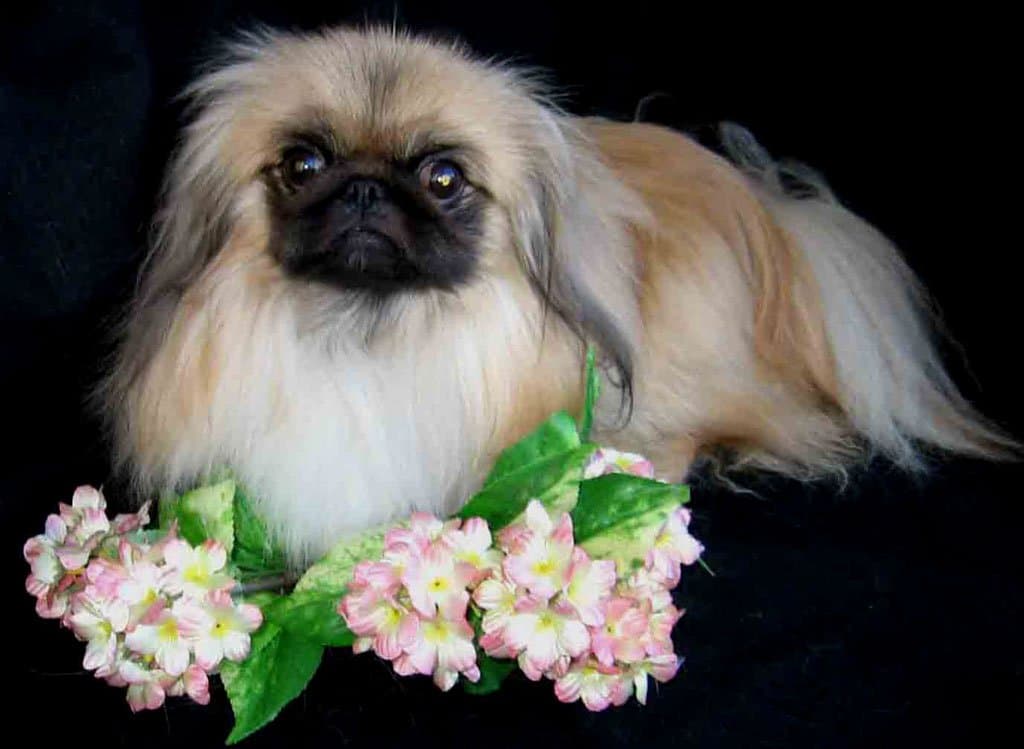
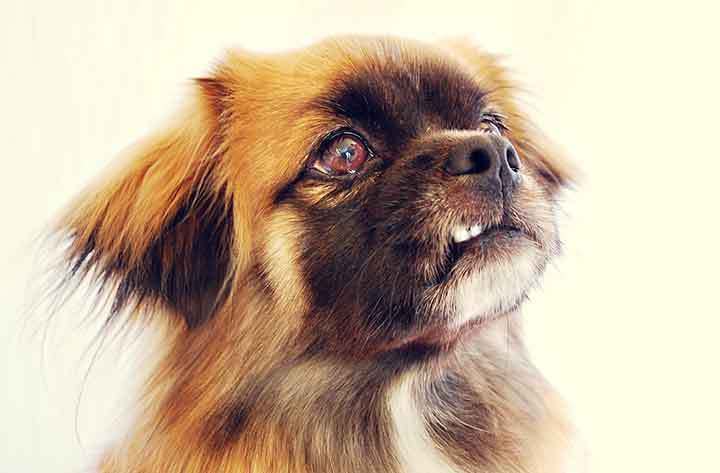
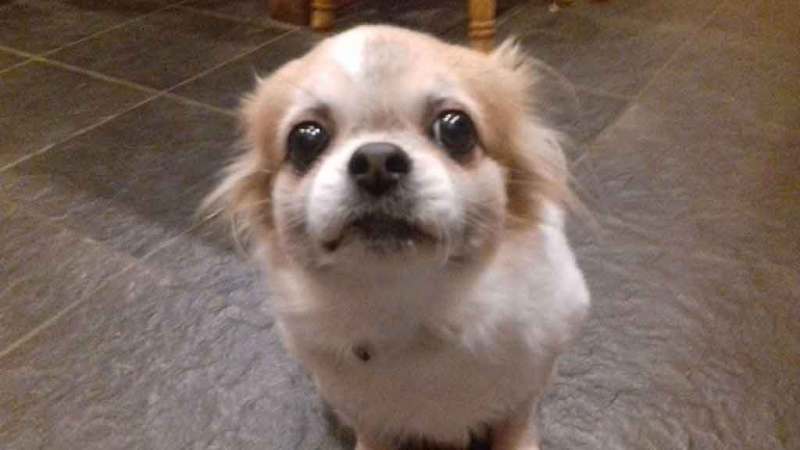
The Pekingese She loves being the center of attention and will ask to be integrated in all family activities.

Content

History

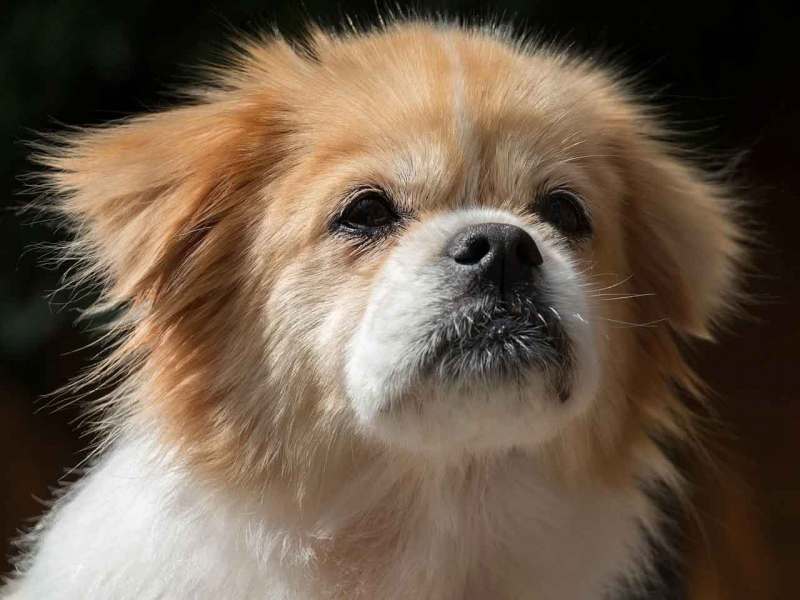
The Pekingese or Pequinรฉs It is a breed of companion dog, developed in China. This small breed of dog is a native of the East Asian area, and is considered a departure from the mythical shaggy dogs of Tibet. Referral after referral, known in Korean prints first official documentation of ago 4.000 years, and others from the 8th century immersed in the Imperial Court of China, in the middle of H'ang Dynasty.

For the Empire, this animal arose in a mythological era, and here is a small paragraph about this origin: โ€œ-Lovely in love with a little monkey, the Lion King sought permission to marry her God magician Hai Ho. -If you are willing to sacrifice your strength and your size, I give my consent, It was the answer of the god.

Read more

โ–ท The world of Pets: Dogs, cats, birds, reptiles, amphibians

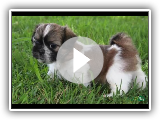
Shih Tzu
Tรญbet FCI 208 . Tibetan breeds.

Shih Tzu

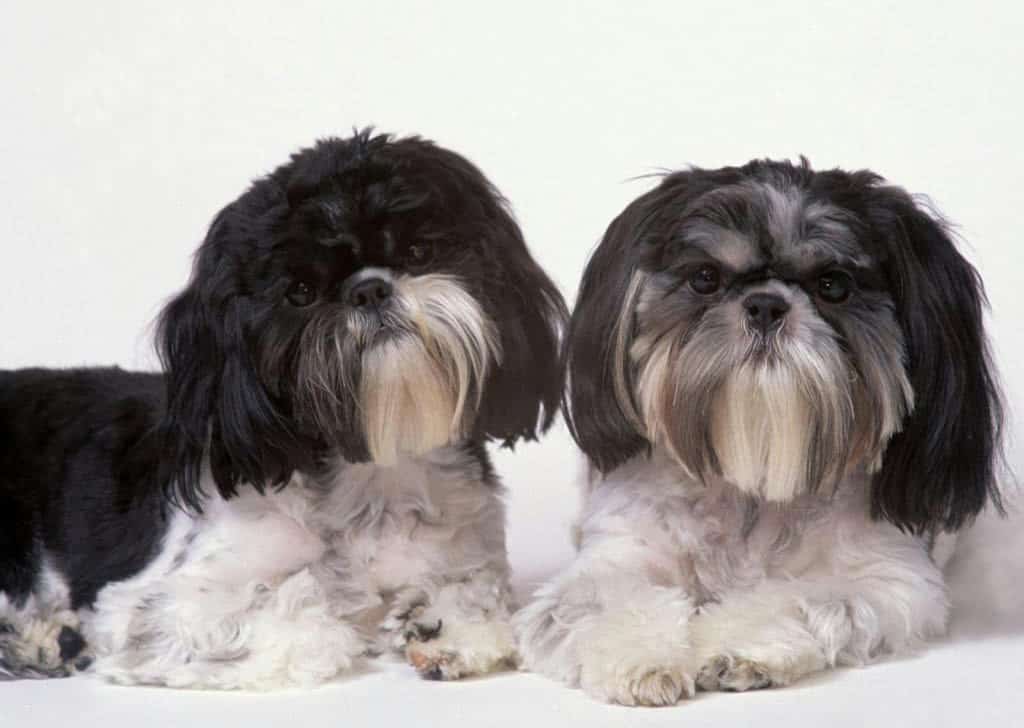
The hair Shih Tzu needs a lot of care, especially with the exhibition specimens

Content

History

The Shih Tzu It is a very ancient breed of dog (the first data found on them date from the 10th century to. C.) originating in China. There is an opinion widely about his origin, but often give acceptable they are descended from similar Tibetan dogs Lhasa Apso.

Like the Lhasa Apso, the Shih Tzu They are a race linked in some way with the Buddhist religion. The Chinese bred them and primped so they seem somewhat Lions. Even the name of the race, "Shi Tzu", means "lion dog", which is usually blamed on the strong and deep bark of these animals.

They were highly prized in China as guard dogs.

In the seventeenth century the history of the Shih Tzu. The Dalai Lama, wanting to fill of gifts to the Chinese emperor, He gave some examples of this breed. Ending the 19th century, Tsโ€™eu-hi, empress who was the grandmother of the last emperor, I was a big fan of the Shih Tzu and for this reason it had more than a hundred and specialized caregivers. When in 1908 the Empress died, the Shih Tzu suffered a severe blow.

At the beginning of the 1930s, He began to creep into houses of Chinese elders, leaving the ivory tower. And in that time he received some names: Lhasa Lion Dog, Tibetan Poodle, etc. And in 1934 was founded the Peking Kennel Club.

In 1937, the invasion of China by the Japanese was the reason for the disappearance of the Shih Tzu in China, your country of origin. But, Luckily, Europeans had already become fond of this breed, that in 1955 began to be extended by United States.

After her appearance, the Shih Tzu they replaced the Lhasa Apso as the favourite dogs of nobles and emperors. Travelers who visited the eastern country during that time brought the fashion for these small, hairy dogs to Europe and, later, to America, where made a strong impression. In the modern era, the fashion of the Shih Tzu gradually disappeared, and after the Communist revolution the dog breed was considered extinct in China, although it had already penetrated deeply in the West.

All the genetic inheritance of Shih Tzu comes from seven pairs of dogs, including a Pekingese, that through the efforts of several historians have been able to be identified.

Physical characteristics

The head of these dogs is small in proportion to the rest of your body, and eyes, black (and rarely even blue or brown) they are always huge, so there they deserve special care if you want to avoid health problems.

Her hair is long and very dense, but never curly (are allowed a bit of undulation), and it can be of all colors, Although it is more normal to the front and the end of the tail are white. The ears are large and pendants, and they have so much hair that seem to form a whole with the hair in the neck.

The snout is short and flat, sometimes causing them breathing problems; for example, is quite common that they ronquen soundly. The average length of life of this dog is fourteen years, However, a Shih Tzu that has been well cared for and has not had major health problems can live up to twenty-three years, in the case of one of the longest known dog breeds. Their colours can be white, dorado, black, liver, Silver, Red or brindel. The Shih Tzu They are animals that, due to their type of hair, do not give allergies to allergic people.

Physically they are not very tall (they measured a maximum 26,7 cm and weigh in 4,5 to 8,1 kg).

Character and skills

Dog breeds are often created for a specific purpose.. In this case, the purpose of Shih Tzu is to be a partner. Has no hunting instinct, nor on guard, and is never aggressive. He was selected just to be a faithful and loving friend.

Dog shih tzu vs Cat Funny Fight

The Shih Tzu It, Therefore, a dog that gets along with everyone, both with children and adults. Also appreciates other animals, especially felines. Sometimes it is said to be a "dog-cat", since its behavior is very similar to that of a feline. In fact, he decides when he wants to be caressed, and once he is an adult, he really appreciates just sitting still on his cushion. It also, tends to be independent and to obey only if you want. It also, like many small breeds of dogs, can be somewhat difficult.

But, the Shih Tzu he is a tender and calm companion, but also full of joy. He loves to play and to be taken care of: his master is everything to him. In fact, can't stand loneliness; if your family is usually far away, the company of another animal is welcome.

The Shih Tzu live as well in apartment as at home. Perfectly adapted to city life, he barks little and his calm character allows him to be carried everywhere: he will remain calmly at the feet of his master. Having said that, not a dog that needs a lot of exercise; a daily walk and games are enough for him. All this makes it an ideal dog for an older person., if it is willing to take on the daily maintenance it requires.

Education

Intelligent and endowed with a good learning ability, the Shih Tzu is nevertheless a stubborn dog. He does not like to obey blindly, and even less that they force him. Your master will have to be persistent and cunning. It is advisable to go through the game and fun rather to make him learn the orders.

Health

The Shih Tzu is generally in good health.

But, you are at risk of developing brachycephalic syndrome, because of his crushed face.

It also, is a dog that can be prone to ear infections, because of his drooping ears, or cataracts for his bulging eyes. You can also get contact conjunctivitis, in case your hair falls into your eyes. That is why it is advisable to lift the hair by putting a toupee on it.. In general, your eyes and ears should be checked regularly.

It also, being longer than tall, the Shih Tzu may have back problems, especially at the level of the intervertebral disc. It is advised to avoid going up and down the stairs too often. So, in the absence of elevator, it is better to take it.

It also, also has a predisposition to atopia, risk that increases if your hair is poorly cared for.

He is a greedy dog, who is prone to obesity. So, it is necessary to take care of the amount of food eaten. A maximum of 100 grams of kibble per day.

Last, if the cold doesn't bother you, the Shih Tzu it is instead sensitive to heat: in summer, it is necessary to shorten the walks, or perform them away from temperature peaks.

Grooming

To the Shih Tzu you have to take care of them with time and a lot of patience.

The maintenance of Shih Tzu requires careful attention.

In addition to the daily hairstyle, it is recommended to groom your Shih Tzu each 3 or 4 weeks. If cleaning is done at home, using a highly nourishing dog shampoo and conditioner will make the job easier. You have to dry the dog with a hair dryer, so that it does not catch cold.

On the other hand, it should be noted that the Shih Tzu only changes, making it one of the most hypoallergenic dog breeds.

On the other hand, his eyes and teeth must be cleaned daily, and the ears once a week.

Food

You must be careful, as well, with food: they are delicate stomach dogs, normally they do not accept well anything else other than dry food. Veterinarians recommend give milk without lactose because many of them cannot tolerate.

Characteristics "Shih Tzu"

Coexistence is important that you have with your new friend. Before considering the acquisition of a dog of the breed "Shih Tzu" you know certain factors. Not all breeds of dogs are apt to live in an apartment, you must take into account his character, their need for exercise, their interaction with other pets, their care and if you have small children, their level of tolerance towards them.

Adaptation โ“˜

2,0 of 5 stars (based on 1 review)

friendly dog โ€‹โ€‹โ“˜

4,0 of 5 stars (based on 1 review)

hair loss โ“˜

1,0 of 5 stars (based on 1 review)

Affection level โ“˜

4,0 of 5 stars (based on 1 review)

Need for exercise โ“˜

2,0 of 5 stars (based on 1 review)

Social need โ“˜

4,0 of 5 stars (based on 1 review)

Home โ“˜

3,0 of 5 stars (based on 1 review)

Toilet โ“˜

4,0 of 5 stars (based on 1 review)

Friendly with strangers โ“˜

3,0 of 5 stars (based on 1 review)

barking โ“˜

2,0 of 5 stars (based on 1 review)

Health โ“˜

3,0 of 5 stars (based on 1 review)

Territorial โ“˜

2,0 of 5 stars (based on 1 review)

Cat friendly โ“˜

4,0 of 5 stars (based on 1 review)

Intelligence โ“˜

4,0 of 5 stars (based on 1 review)

Versatility โ“˜

3,0 of 5 stars (based on 1 review)

Child friendly โ“˜

4,0 of 5 stars (based on 1 review)

Surveillance โ“˜

1,0 of 5 stars (based on 1 review)

joy โ“˜

4,0 of 5 stars (based on 1 review)

Images "Shih Tzu"

Photos:

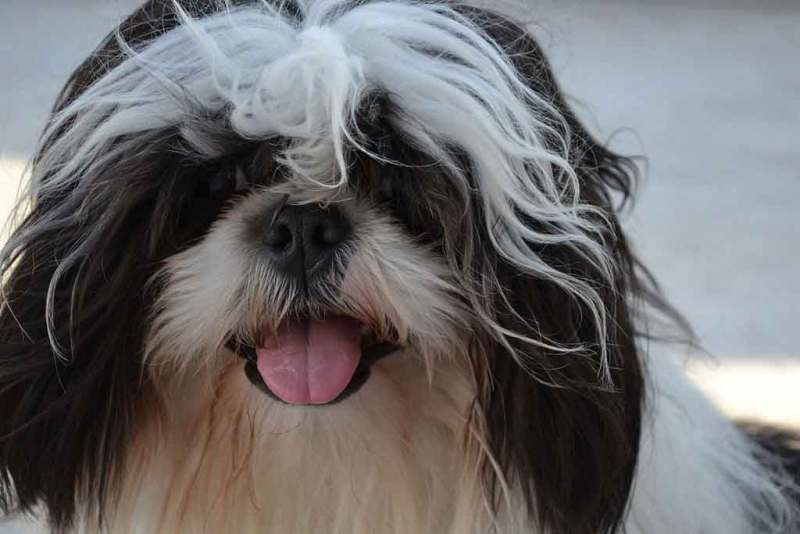
1 – "Shih Tzu" Name: fibi (female), 1,5 years in the photo by Wawri (Tomasz Wawak), CC BY-SA 2.5, via Wikimedia Commons
2 – "Shih Tzu" Tommy by IrinaOnt, CC BY-SA 4.0, via Wikimedia Commons
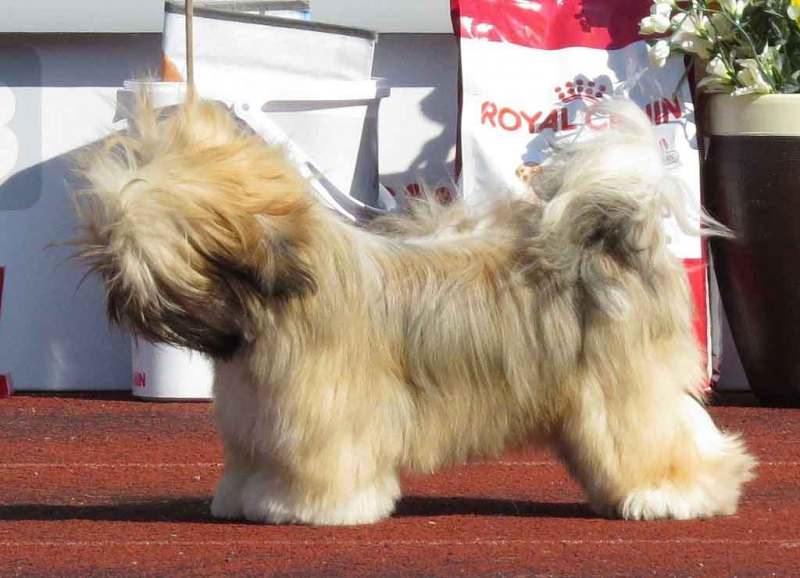
3 – "Shih Tzu" in Tallinn duo CACIB, 17-18 in August of 2013, concurso Best in Puppies by Thomas, CC BY-SA 3.0, via Wikimedia Commons
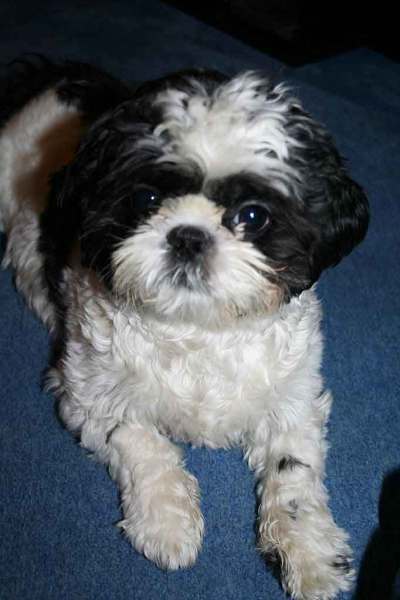
4 – I am a "Shih Tzu" I was born on 2 in February of 2012 by User:Andy the shihtzu, CC BY-SA 3.0, via Wikimedia Commons
5 – "Shih Tzu" pure blood, squirrel by Gabsy, CC BY 3.0, via Wikimedia Commons
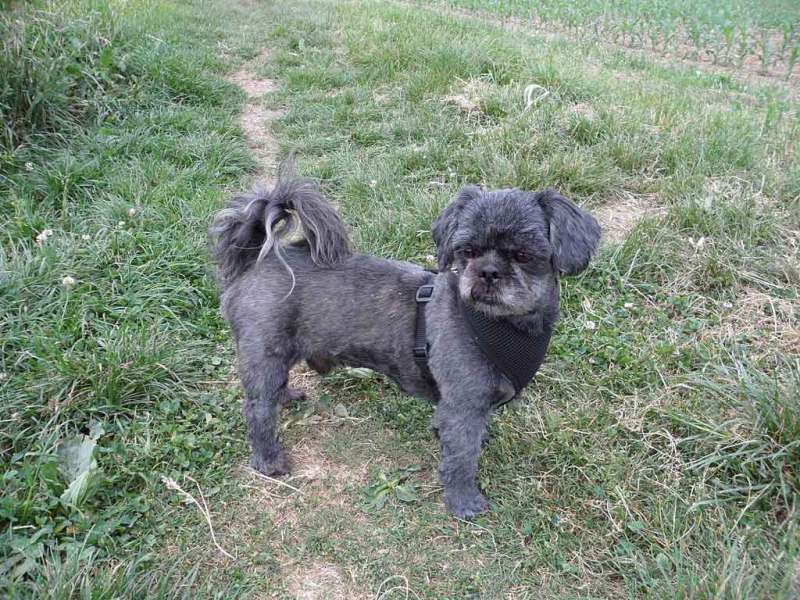
6 – "Shih Tzu" freshly shorn by Yvonne Hering, CC BY-SA 3.0, via Wikimedia Commons

Videos "Shih Tzu"

Type and recognitions:

  • FCI CLASSIFICATION:
  • Group :
  • Section : . .

Federations:

  • FCI – Group 9: Section 5: Tibetan breeds โ“˜
  • AKCToy โ“˜
  • ANKC – (Toy) โ“˜
  • CKC – Group 5 โ€“ (Toy) โ“˜
  • โ€‹KC – Toy โ“˜
  • NZKCToy โ“˜
  • UKC – Group 8 – Companion dog โ“˜

FCI breed standard "Shih Tzu"

Origin:
Tibet, China

Date of publication of the valid original standard:
18.03.2015

Use:

Companion dog.


General appearance:

It is a vigorous dog, copiously covered with hair, of haughty bearing and a face in the shape of a chrysanthemum.


Behavior / temperament:

Intelligent, active and alert. Friendly and independent.

Head:

Wide, round, with width between the eyes. The hair on the head should be shaggy and fall well over the eyes.. Must have a full beard and mustache. The nose hair should grow upwards, giving it a characteristic chrysanthemum-shaped effect..

Cranial region:
  • Depression links (Stop): Well defined.

facial region:

  • Truffle: It is black, although it can be dark liver in those dogs with liver color or spots of that color.. The top of the nose should be in line with or slightly below the edge of the eye. The nostrils are wide and open. A downward sloping nose is highly undesirable., just like the nostrils tight.
  • Snout: Large, square, short, plane, hairy and wrinkle-free. The distance from the tip to the frontonasal depression (stop) must be almost 2,54 cm.. Muzzle level or slightly tilted upwards at the tip. The pigmentation of the muzzle should be as uniform as possible.
  • Lips: Well contiguous.
  • Jaws/Teeth: Wide mouth. Pincer bite or with a slight lower prognathism.
  • Eyes: Large, round, dark colored, placed well apart from each other, although they are not jumpy. They have an affectionate expression. In liver-colored specimens or with spots of that color, lighter colored eyes are allowed. The white part of the eyeball should not be visible.
  • Ears: Large, pendants; long pavilion. Its implantation is slightly below the crown of the skull, and they are covered with hair so dense that it seems to merge with the hair on the neck..

Neck:

Well proportioned, delicately arched, with sufficient length to carry the head proudly.

Body:

Its length from the region of the withers to the base of the tail is greater than the height at the withers..

  • Back: Straight.
  • Pork loin: Well coupled and robust.
  • Breast : Broad and deep.

Tail:

Covered with abundant feather-shaped hair and carried happily on the back. High insertion. The height of the tail should be approximately the same as the skull, so that the dog has a balanced profile.

Tips

Former members

They are short, muscular and strong boned, as straight as possible, compatible with a wide and deep chest.

  • Shoulder: Firms, well leaning back.


Later members

Short, muscular and broad boned. Seen from behind they should look straight. They should look voluminous due to the abundance of hair.

  • Thighs: Well rounded and muscular.

Pies

Round, firm and with thick foot pads; They appear large due to the abundance of hair that covers them.

Movement:

Of proud bearing, harmonious and easy movement; the forelimbs are directed well forward, with a strong push of the hind limbs; these show the footpads completely.

Mantle

Fur

Long, thick, not curly, with a good undercoat. A slight undulation is allowed. It is highly recommended to tie the hair on top of the head..

Color

All colors are allowed. In specimens of various colors it is highly desirable that they have a white tuft on the forehead and at the tip of the tail..


Size and weight:

Height to the cross

It should not exceed 26,7 cm.. The conformation and characteristics of the breed will always be of primary importance., and in no way should only the size be taken into account.

Weight

Of 4,5 to 8,1 kg. The ideal weight is between 4,5 and 7,3 kg.


Fouls:

Any deviation from the aforementioned criteria must be considered a fault and the seriousness of the fault is considered to the degree of the deviation from the standard and its consequences on the health and well-being of the dog..

Any dog โ€‹โ€‹showing clear signs of physical or behavioral abnormalities should be disqualified..

disqualifying fouls:

  • Aggressiveness or extreme shyness.
  • Any dog โ€‹โ€‹showing clear signs of physical or behavioral abnormalities.


N.B.:
  • Males should have two normal-appearing testicles fully descended into the scrotum..
  • Only functionally and clinically healthy dogs, with the typical conformation of the breed, should be used for parenting.

Source: F.C.I - International Cynological Federation

Alternative names:

1. Chrysanthemum Dog (English).
2. Chien lion (French).
3. Lรถwenhund, shih-tzu-kou (German).
4. Chinese Lion (Portuguese).
5. Perro leรณn chino (espaรฑol).

โ–ท The world of Pets: Dogs, cats, birds, reptiles, amphibians

Tibetan spaniel
Tรญbet FCI 231 . Tibetan breeds.

Tibetan spaniel

The Tibetan spaniel it is an awake and very active dog that is very close to its owner.

Content

History

The Tibetan spaniel is a breed native to the mountainous regions of Tibet, as the name reflects. The ancestors of the Tibetan Spaniel are believed to have appeared two millennia ago, along with the Lhasa Apso, the Shih Tzu and the Pekingese, among others. This dog has long accompanied Buddhist monks in their temples, warning their masters and their companions (mainly to Tibetan Mastiff – Do-Khy) from the slightest intrusion.

Even though it's called spaniel, has neither the qualities nor the heritage of a hunting dog. It has always been used as a companion and alert dog.. The first representatives of the breed to be brought to England arrived there at the end of the 19th century.. In United States, the Tibetan spaniel began to be adopted during the decade of 1960 and the national club dedicated to the breed was founded in 1971. 13 years later, earned recognition from the American Kennel Club. In the meantime, the 22 in August of 1961, the Fรฉdรฉration Cynologique Internationale (FCI) granted the breed its own ultimate status.

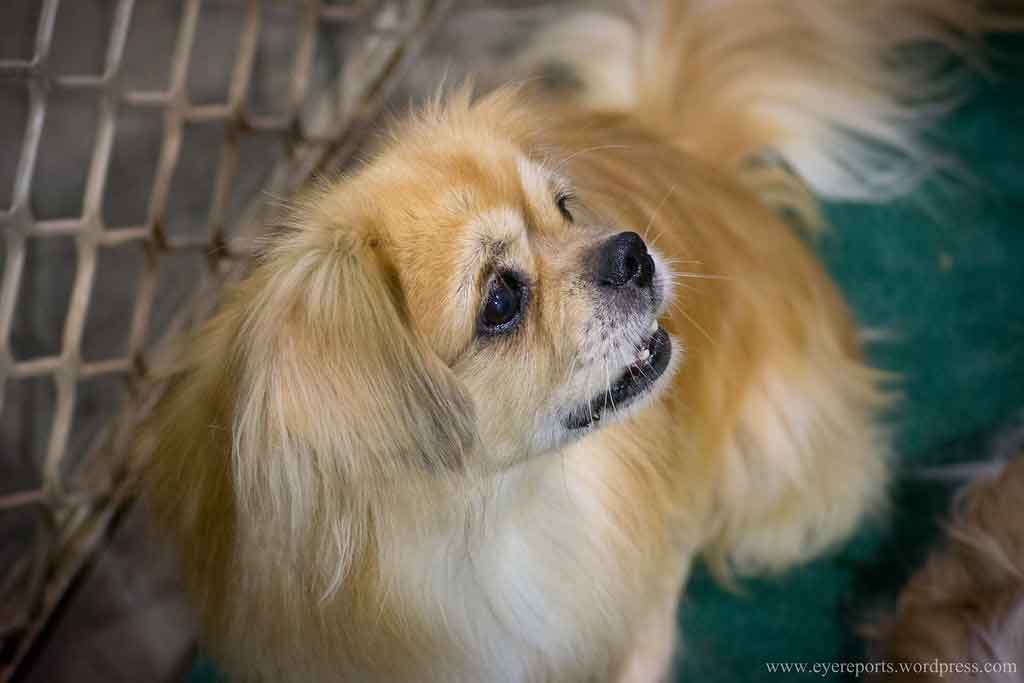
Photo: Tibetan spaniel by gomagotiFlickr

Physical characteristics

▷ Fur: silky, glued, smooth, average length, shorter on the face and in the front of the legs. The fringes are present on the back of the front legs. Hair and mane are less dense in females.
▷ Color: all colors are allowed, shades and combinations.
▷ Head: Small in relation to the body, proud port. The skull is slightly domed, medium width and length. The stop is light but it's marked.
▷ Ears: Medium-sized, high insertion, well feathered and hanging.
▷ Eyes: oval, dark brown, medium-sized, placed far apart, forward facing, showing an expressive and lively look.
▷ Body: rectangular, slightly longer than the height of the withers. The neck is moderately short, strong, covered with a mane (more pronounced in males than females). The loin is straight and the ribs are well sprung.
▷ The tail it is high insertion, happily held, forming a loop on the back when the dog is in action and provided with abundant hair.

Size and weight

▷ Male size: 25 – 26 cm.
▷ female size: 22 – 24 cm.
▷ Male weight: 4 – 7 kg
▷ female weight: 4 – 7 kg

Character and skills

The Tibetan spaniel is an alert and active little dog that shows great intelligence. Your education is very easy. Loyal to his family and close to his masters, it is a dog that nevertheless needs independence.

Accumulate many qualities such as affection, the softness, the sensibility. It is a dog very devoted to his family and that adapts as well to a family with children as to a single person or older. It is not an aggressive dog, but be wary of people you don't know, which makes him a very good alert and guard dog because he is full of security.

The Tibetan spaniel is an indoor dog that fits perfectly into an urban lifestyle, In an apartment. The possibility of enjoying a fenced garden also suits you, but you should always be able to benefit from a shelter from bad weather.

Education

The Tibetan spaniel it is a social race that needs regular contact with its humans. They do not respond well when left alone for long periods of time. Having been developed as a companion dog by Tibetan monks, are emotional and empathic with the needs of their owners.

It is important to socialize him Tibetan spaniel at a young age with a variety of people and situations. They are protectors of their family. Even after socializing, they tend to be distant with strangers. If you are scared or uncomfortable, a Tibetan spaniel will express mistrust with loud alarm barks.

Although it is not a particularly athletic dog, he needs daily walks for his physical balance, psychological and emotional.

Health

The Tibetan spaniel it is a strong and healthy dog. But, the breed is prone to a number of diseases, such as the risk of patella luxation, generalized retinal atrophy, urinary stones and persistent pupillary membrane.

Grooming

The Tibetan spaniel It is subject to 2 seasonal moults per year. During these, you are likely to lose hair extensively. Apart from the changes, its maintenance is still undemanding, but it should be done regularly.

It is recommended to brush the dog once a week outside the shedding periods and daily during them.. Special attention must be paid to the hygiene of the inside of their hanging ears to avoid possible infections. You can give it a bath every 3 or 4 months approximately, but it is not necessary to shear it.

Food

The Tibetan spaniel does not need a special diet. Not a very greedy dog. Like all dogs, a good quality diet is advised, adapted to his age, to your state of health and your physical exercise to keep you in good health.

Price of Tibetan spaniel

The price of a puppy Tibetan spaniel it will depend on the sex, the pedigree of the parents, compliance with breed standards, etc.

▷ Price of a Tibetan spaniel male: of 550 to 1200 EUR.
▷ Price of a female Tibetan spaniel : 600 to 1200 EUR.

breeders of the Tibetan spaniel

Characteristics "Tibetan spaniel"

Coexistence is important that you have with your new friend. Before considering the acquisition of a dog of the breed "Tibetan spaniel" you know certain factors. Not all breeds of dogs are apt to live in an apartment, you must take into account his character, their need for exercise, their interaction with other pets, their care and if you have small children, their level of tolerance towards them.

Adaptation โ“˜

2,0 of 5 stars (based on 1 review)

friendly dog โ€‹โ€‹โ“˜

4,0 of 5 stars (based on 1 review)

hair loss โ“˜

4,0 of 5 stars (based on 1 review)

Affection level โ“˜

3,0 of 5 stars (based on 1 review)

Need for exercise โ“˜

3,0 of 5 stars (based on 1 review)

Social need โ“˜

1,0 of 5 stars (based on 1 review)

Home โ“˜

3,0 of 5 stars (based on 1 review)

Toilet โ“˜

3,0 of 5 stars (based on 1 review)

Friendly with strangers โ“˜

2,0 of 5 stars (based on 1 review)

barking โ“˜

3,0 of 5 stars (based on 1 review)

Health โ“˜

3,0 of 5 stars (based on 1 review)

Territorial โ“˜

4,0 of 5 stars (based on 1 review)

Cat friendly โ“˜

4,0 of 5 stars (based on 1 review)

Intelligence โ“˜

4,0 of 5 stars (based on 1 review)

Versatility โ“˜

2,0 of 5 stars (based on 1 review)

Child friendly โ“˜

4,0 of 5 stars (based on 1 review)

Surveillance โ“˜

3,0 of 5 stars (based on 1 review)

joy โ“˜

3,0 of 5 stars (based on 1 review)

Images "Tibetan spaniel"

Photos:

1 – Tibetan spaniel by Angelica, CC BY 2.0, via Wikimedia Commons
2 – Close up view of a Tibetan spaniel by Docter Nick, CC BY-SA 4.0, via Wikimedia Commons
3 – Buddy, Tibetan spaniel particolor of two years by Ladykransteer, CC0, via Wikimedia Commons
4 – Tibetan spaniel by https://pixabay.com/es/photos/tibetano-spaniel-cachorro-perro-5214218/
5 – Tibetan spaniel by Daimen.Richards, CC BY 2.0, via Wikimedia Commons
6 – Tibetan spaniel relajado by DillyFan503, CC BY-SA 4.0, via Wikimedia Commons

Videos "Tibetan spaniel"

Type and recognitions:

  • FCI CLASSIFICATION:
  • Group :
  • Section : . .

Federations:

  • FCI – Group 9: Section 5: Tibetan breeds โ“˜
  • AKCToy โ“˜
  • ANKC – (Toy) โ“˜
  • CKC – Group 5 โ€“ (Toy) โ“˜
  • โ€‹KC – Toy โ“˜
  • NZKCToy โ“˜
  • UKC – Group 8 – Companion dog โ“˜

FCI breed standard "Tibetan spaniel"

Origin:
Tibet, China

Date of publication of the valid original standard:
18.03.2015

Use:

Companion dog


General appearance:

It is small, active and vigilant. Well balanced in its overall profile; the body is slightly longer than its height measured at the withers.


Behavior / temperament:

It is joyful, very intelligent and behaves with determination. It is reserved with strangers, vigilant, fair, but independent.

Head:

It is small in proportion to the body; wears it proudly. His expression is masculine, but without showing coarseness.

Cranial region:
  • Skull : It is slightly domed, of moderate length and width.
  • Stop : Slightly marked, but defined.

facial region:

  • Truffle : Preferably black.
  • Snout : Of average length, romo, padded, but without wrinkles. The chin shows some depth and width.
  • Jaws / Teeth : Shows a mild undershot. Regularly arranged teeth; and the lower jaw is wide between the canines. Full dentition is desirable. The teeth and tongue should not be visible while the mouth is closed.
  • Eyes : dark brown, oval, bright and expressive. Medium-sized, rather separated, but with the gaze directed towards the front. Black pigmented eyelid edges.
  • Ears : Medium-sized, pendants, with good pen in adults; quite high insertion. It is desirable that they are slightly separated from the head, but not floating. Large ears are atypical, heavy and low insertion.

Neck:

Medium short, strong and well set on the shoulders. Covered with a mane o "chal" (scarf) longer hair, which is more noticeable in males than in females.

Body:

Slightly longer from withers to root of tail, that the height measured up to the withers.

  • Back : Straight.
  • Ribs : Well arched.

Tail:

High insertion, covered with abundant hair in the shape of feathers and carried happily curled on the back during movement. (It should not be penalized if the tail hangs down while the dog is at rest.).

Tips

Former members

Medium structure bone. Slightly curved forelimbs, but firm on the shoulders.

  • Shoulder : Well oblique.

Later members

Strong and well formed.

  • Knee : Moderate angulation.
  • Hocks : Placed well down; viewed from behind should be straight.

Pies

Feet shape "hare". Small and well-formed with fringes of hair between the toes that often extend over the feet. Round feet are undesirable, like cat.

Movement:

Fast movement, straight, free and energetic.

Mantle

Fur

The outer layer is silky in texture, cuts on the face and on the front of the limbs, of moderate length on the body, rather tight and smooth. The undercoat is thin and dense. The ears and the back of the forelimbs have good stripes; the tail and thighs are well adorned with longer hair. The coat should not be overly developed. Females have less developed coat and mane than males.

Color

All colors and their combinations are admitted.


Size and weight:

Height to the cross

Approximate size of 25,4 cm. (10 inches).

Weight

Ideal weight of 4,1 to 6,8 kg (9 โ€“ 15 English pounds).


Fouls:

Any deviation from the aforementioned criteria is considered a fault and the severity of it is considered to the extent of the deviation from the standard and its consequences on the health and well-being of the dog..
Any dog โ€‹โ€‹showing clear signs of physical or behavioral abnormalities should be disqualified..

disqualifying fouls:

  • Aggressiveness or extreme shyness.
  • Any dog โ€‹โ€‹showing clear signs of physical or behavioral abnormalities.


N.B.:

Males should have two normal-appearing testicles fully descended into the scrotum..

Source: F.C.I - International Cynological Federation

Alternative names:

1. Tibbie (English).
2. Du Tibet, Epagneul du Tibet (French).
3. Tibetan Spaniel (German).
4. Tibbie (Portuguese).
5. Tibbie (espaรฑol).

โ–ท The world of Pets: Dogs, cats, birds, reptiles, amphibians

Tibetan Terrier
Tรญbet FCI 209 . Tibetan breeds.

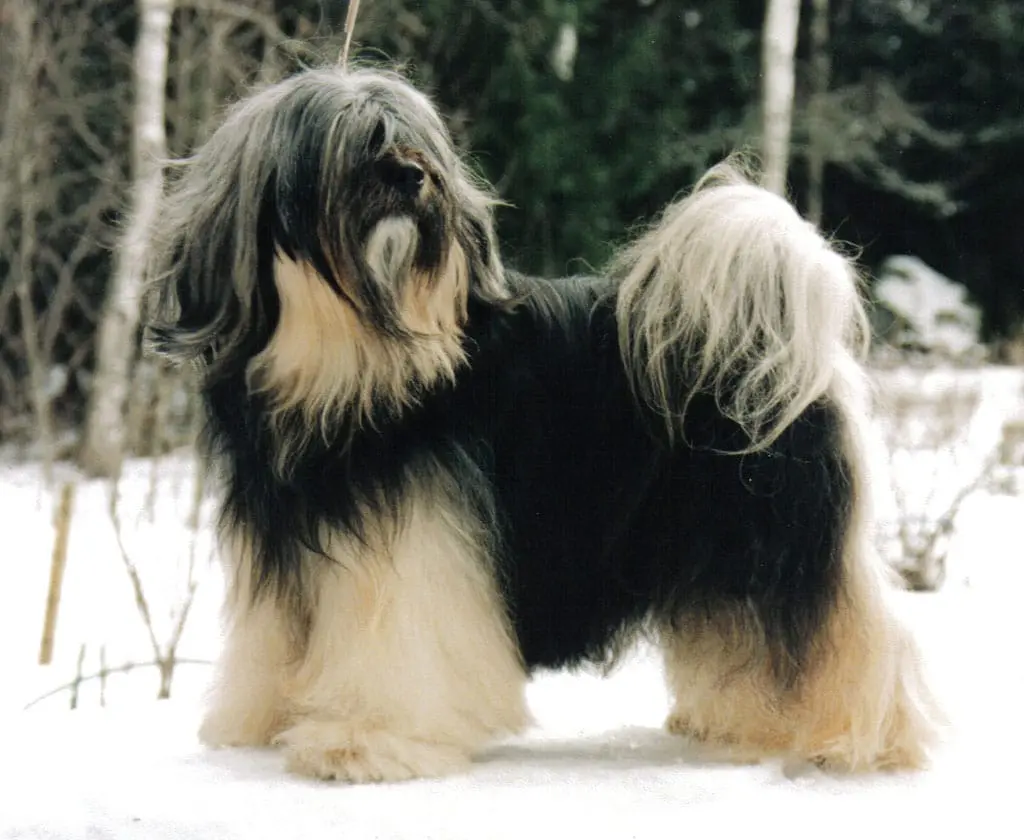
The Tibetan Terrier, despite being considered a sacred dog in Tibet, He also accompanied the shepherds.

Terrier Tibetano

Content

Characteristics "Tibetan Terrier"

Coexistence is important that you have with your new friend. Before considering the acquisition of a dog of the breed "Tibetan Terrier" you know certain factors. Not all breeds of dogs are apt to live in an apartment, you must take into account his character, their need for exercise, their interaction with other pets, their care and if you have small children, their level of tolerance towards them.

Adaptation โ“˜

2,0 of 5 stars (based on 1 review)

friendly dog โ€‹โ€‹โ“˜

3,0 of 5 stars (based on 1 review)

hair loss โ“˜

3,0 of 5 stars (based on 1 review)

Affection level โ“˜

4,0 of 5 stars (based on 1 review)

Need for exercise โ“˜

2,0 of 5 stars (based on 1 review)

Social need โ“˜

3,0 of 5 stars (based on 1 review)

Home โ“˜

4,0 of 5 stars (based on 1 review)

Toilet โ“˜

3,0 of 5 stars (based on 1 review)

Friendly with strangers โ“˜

2,0 of 5 stars (based on 1 review)

barking โ“˜

3,0 of 5 stars (based on 1 review)

Health โ“˜

5,0 of 5 stars (based on 1 review)

Territorial โ“˜

4,0 of 5 stars (based on 1 review)

Cat friendly โ“˜

3,0 of 5 stars (based on 1 review)

Intelligence โ“˜

4,0 of 5 stars (based on 1 review)

Versatility โ“˜

2,0 of 5 stars (based on 1 review)

Child friendly โ“˜

5,0 of 5 stars (based on 1 review)

Surveillance โ“˜

3,0 of 5 stars (based on 1 review)

joy โ“˜

5,0 of 5 stars (based on 1 review)

History

As the name suggests, the Tibetan Terrier was born on the roof of the world, in the heart of Central Asia.

They celebrate their second millennium, since the first writings on them date back to the beginning of our era. Probably related to the Hungarian Puli, the Tibetan Terrier, contrary to what its name might suggest, it was originally a sheepdog. He lived in harmony with the Tibetan monks and the nomads, and his life led him to live with the sheep, the horses and yaks that he guarded. He also herded the herds in mountainous areas too difficult for the larger dogs.. A good sentry, warned as soon as someone approached. In summary, the Tibetan Terrier was both recognized and Sheepdogs as Companion and Toy Dogs.

Out of respect for his soul, tradition dictated that the most vicious pup in a litter should not be killed. On the other hand, was handed over to the monks, who granted him a monastic life. Next to him, was subjected to regular work. This would partly explain the particular character of the Tibetan Terrier. This dog is devoid of all aggressiveness, perhaps because he lived the secluded life of the monasteries and shared everything with his master, being totally part of the family. It is also said that it was reputed to bring good luck..

In fact, considered as a sacred animal and guardian of the temples, this dog was the object of a true cult.

Over the years 20, the DRA. Agnes Greig, an english doctor, received a couple of Tibetan Terrier of one of his patients, a tibetan princess. This is how this breed came to Europe, when the doctor brought these gifts to his country. Was not up 1930 that the Kennel Club of India recognized the Tibetan Terrier as a pure breed, and in 1931 that the British Kennel Club he did the same.

Before being mistakenly named "Tibetan Terrier" by the English, who classified it in the group of Terriers, The Tibetans called it "Chung-chung-paยซ, What does "little person" mean? (unlike in the Tibetan Mastiff (Do-Khy), who was called "big person"), o ยซApso Tchenpoยซ, which means โ€œBig Apsoโ€, in opposition to the "small Apso" which is the Lhasa Apso.

The French had proposed calling it Tibetan Griffin, but this proposal was not kept. Even today, although call it Pastor tibetanor would it be much more appropriate, this breed still carries a misleading name.

Physical characteristics

The Tibetan Terrier He is a medium-sized dog with a robust complexion and a determined expression.. They are recognized by their fur, generously endowed with long hair that covers most of his body. Has the appearance of a dog that can fit in a perfect square.

▷ Fur: long, abundant, fine (without being silky or woolly), smooth or corrugated (never curled), with a fine, woolly undercoat.
▷ Color: All coat colors are allowed, except chocolate and liver. White, grey, cream, dorado, black, Particolored and tricolor.
▷ Head: Well stocked with long hair, falling forward, but never about the eyes. Medium length skull, moderately sharp between ear and eye. The stop is slightly marked.
▷ Ears: V shape, pendants, set high on the sides of the skull and well feathered.
▷ Eyes: His eyes are lined with very long lashes, round, large, quite separate and dark brown.
▷ Body: Muscular, powerful, straight back, short, slightly arched loins, horizontal rump and chest that reaches to the elbow.
▷ Tail: High insertion, average length, happily carried in a loop over the back, with abundant hair.

Size and weight

▷ Male size: 35 – 40 cm.
▷ female size: 35 to 40 cm.
▷ Male weight: 8 – 13 kgs.
▷ female weight: 8 – 13 kgs.

Character and skills

The Tibetan Terrier not a real terrier: It is a Shepherd Dog belonging to the group of Companion Dogs..

This faithful companion is endowed with many attractions. Its sociable, lively, smart and full of energy, and they are neither shy nor aggressive. It is a dog that adapts perfectly to the elderly or to single people who want company.

If you are wary of strangers, may be a barker, but he also knows very quickly that there is no danger, if required. Then it quickly calms down.

He has great security in the mountains and is endowed with a sharp intelligence that allows him to react very quickly to danger., but also behave like a gentleman in the city. Always ready to go out for a walk, he also knows how to be close to his master if he can't go out, because you settle for very little exercise.

If we add to this that it is not very noisy, we quickly understand that it is a breed of dog that can live in an apartment without problem.

Last, not content with being too demonstrative with his master and cuddly as desired, the Tibetan Terrier often appreciates the company of another dog or cat, and gets along very well with children, as long as they respect him and remember that he is not a stuffed animal. On the other hand, it is a dog that tolerates loneliness quite badly, much preferring the presence of his master in all circumstances.

Education

Very smart dog, it is easy and pleasant to work with Tibetan Terrier, although you need to understand the usefulness of what you are being asked to do.

Quite stubborn and not very submissive by nature, the Tibetan Terrier requires from an early age a faultless education, quite firm, but fair. His master must have "an iron hand in a velvet glove" and be infallible., because in general, smart dogs tend to find loopholes, and they can try to take the place of the leader of the pack if they consider that this place is vacant.

Health

The Tibetan Terrier it is a robust and resistant dog that does not have particular health problems. It even has a certain longevity.

Thus, two affections are usually noticed:

  • An abnormality of the vascular supply of the retina, which can lead to long-term blindness;
  • Hip Dysplasia, to a greater or lesser degree.

You can also suffer from deafness or neurological disorders, and also seems to be predisposed to diabetes mellitus.

Life expectancy

14 years

Grooming

During their annual molts, in spring and autumn, the Tibetan Terrier lose a lot of hair, which is quite visible as it has a long coat. During this time, it is necessary to brush it almost every day to avoid knots and maintain the beauty of its coat.

The rest of the year, thorough and regular brushing is necessary every other day. But, mowing can be used to simplify maintenance.

It also, hair under your pads should be cut regularly.

Price:

The purchase price of a Tibetan Terrier ranges from โ‚ฌ900 to โ‚ฌ1000.

Breeders of the ยซTibetan Terrierยป

Images "Tibetan Terrier"

Photos:

1 – Tibetan Terrier in the snow by Mr407SW, Public domain, via Wikimedia Commons
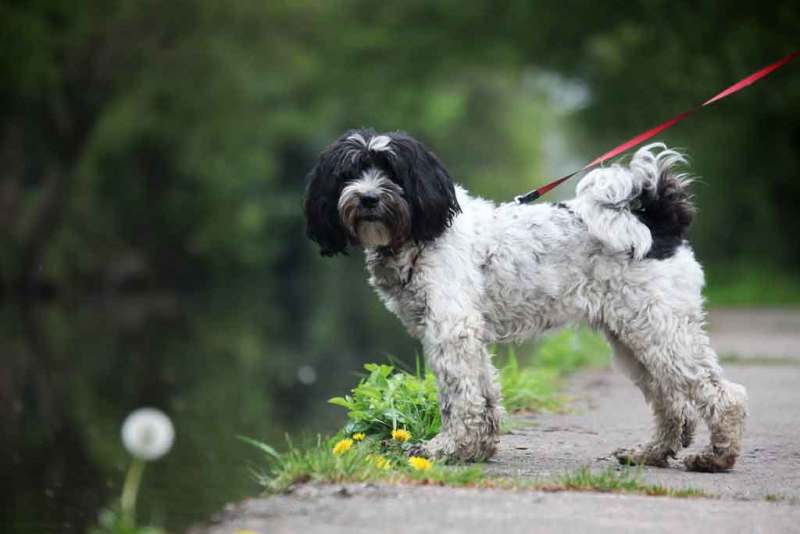
2 – Tibetan Terrier of about 7 meses by PateraIncus, CC BY-SA 3.0, via Wikimedia Commons
3 – Tibetan Terrier by Ian McFeganFlickr
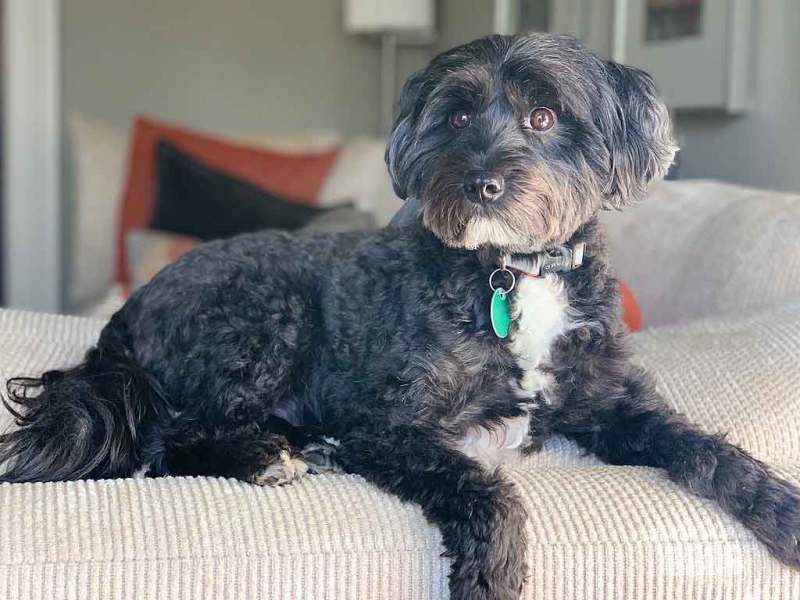
4 – Tibetan Terrier purebred male 8 years sporting a 'puppy cut’ by Getsnarky, CC BY-SA 4.0, via Wikimedia Commons
5 – Tibetan Terrier Daisy, taking a breather during agility class at Dog Barn, 16 in March of 2012 by Ian McFeganFlickr
6 – Tibetan Terrier by Acid Pix, CC BY 2.0, via Wikimedia Commons

Videos "Tibetan Terrier"
Type and recognitions:

  • FCI CLASSIFICATION:
  • Group :
  • Section : . .

Federations:

  • FCI – Group 9: Section 5: Tibetan breeds โ“˜
  • AKCToy โ“˜
  • ANKC – (Toy) โ“˜
  • CKC – Group 5 โ€“ (Toy) โ“˜
  • โ€‹KC – Toy โ“˜
  • NZKCToy โ“˜
  • UKC – Group 8 – Companion dog โ“˜

FCI breed standard "Tibetan Terrier"

Origin:
China

Date of publication of the valid original standard:
22.08.2017.

Use:

Companion dog.


General appearance:

It is a medium-sized dog, robust, longhair, generally square in profile.


Behavior / temperament:

Lively, of good character. He is a faithful companion dog, with many attractions. It is a sociable dog, alert, smart and brave, never intractable or bellicose. Prudent with strangers.

Head:

Must be well covered with long hair, which falls forward but not on the eyes and should not affect the dog's vision. The lower jaw must have a small beard, but not exaggerated. In general you should have a determined expression..

Cranial region:
  • Skull : It has a medium length, it is not wide or rough; tapers slightly from ear insertion to eyes. It is neither dome-shaped nor completely flat between the ears.
  • Depression links (Stop) : It is checked,  but it's not exaggeratedly deep.

facial region:

  • Truffle : black.
  • Snout : Strong. The distance from the eye to the tip of the nose should be equal to the distance from the eye to theocciput.
  • Jaws/Teeth : The lower jaw must be well developed. The incisors should be set in a slight curve, located at the same interval and perpendicular to the maxilla. Inverted scissor or scissor bite.
  • Cheeks : The zygomatic bones are curved but should not be protruding so that they appear protruding.
  • Eyes : Large, round, neither bulging nor sunken; They should be placed quite far apart from each other.. Dark brown in color with black pigmented edges of the eyelids.
  • Ears : Hanging but not worn too close to the head; V-shaped, not too bigset somewhat high on the sides of the skull and with heavy stripes.

Neck:

Strong, muscle, medium length that allows the head a bearing above the level of the back and giving a balanced overall appearance. Flows to well-placed shoulders.

Body:

Well muscled, compact and strong.
  • top line : Straight.
  • Pork loin : Short, slightly arched.
  • Rump : Level.
  • Breast  : Good arching of the ribs with the depth of the chest to the level of the elbows. Ribs well back.

Tail:

Medium length, set quite high and carried happily curled over the back. It must be very well covered with stripes. Often knotted near the tip, which is allowed.

Tips

Former members

  • General appearance: They must be well provided with abundant hair
  • Shoulder : well laidand good long.
  • ForearmGood length and sloping.
  • Arm: Right and parallel extremities.
  • Metacarpus : Slightly sloping.
  • Previous feet: Large, round, well provided with abundant hair between toes and pads. The dog must rest perfectly on the pads; fingers should not be arched.

Later members

  • General appearanceWell covered with thick hair and well muscled. Well angled knees and well lowered hocks level the top line and give good momentum.
  • Knees : Well angulated.
  • Hocks :    Well descended.
  • Hind feet: Large, round, well provided with abundant hair between toes and pads. The dog must rest perfectly on the pads; fingers should not be arched.

Movement:

Uniform; long range and smooth thrust. When the dog walks or jogs, the hind limbs should not follow either inside or outside the movement of the forelimbs.

Mantle

Fur

  • Fur :  Has a double coat of hair.
Undercoat hair is fine and woolly. The hair on the outer coat is abundant, fine, although never it is silky and woolly; is long; either smooth or wavy, but never curly.
 

Color

White, dorado, cream, gray or smoky, black, bicolor and tricolor. Actually all colors are allowed, with the exception of chocolate or liver color.


Size and weight:

Height to the cross:
  • Males: 36 -  41 cm..
  • females: they are slightly smaller.


Fouls:

Any deviation from the aforementioned criteria must be considered a fault and the seriousness of the fault is considered to the degree of the deviation from the standard and its consequences on the health and well-being of the dog..

disqualifying fouls:

  • Aggressive or fearful dog.
  • Any dog โ€‹โ€‹showing clear signs of physical or behavioral abnormalities must be disqualified..


N.B.:
Males should have two normal-appearing testicles fully descended into the scrotum..
The latest changes are in bold.

Source: F.C.I - International Cynological Federation

Alternative names:

1. Tsang Apso, Dokhi Apso (English).
2. Terrier du Tibet, Dhoki Apso (French).
3. Tibetan Terrier, Tsang Apso (German).
4. Tibetan Terrier (Portuguese).
5. Tibetan Terrier, Lhasa Terrier, Tibet Apso,
Tsang Apso
(espaรฑol).

โ–ท The world of Pets: Dogs, cats, birds, reptiles, amphibians

Chinese Crested Dog
China FCI 288 . Hairless Dogs

Perro crestado chino

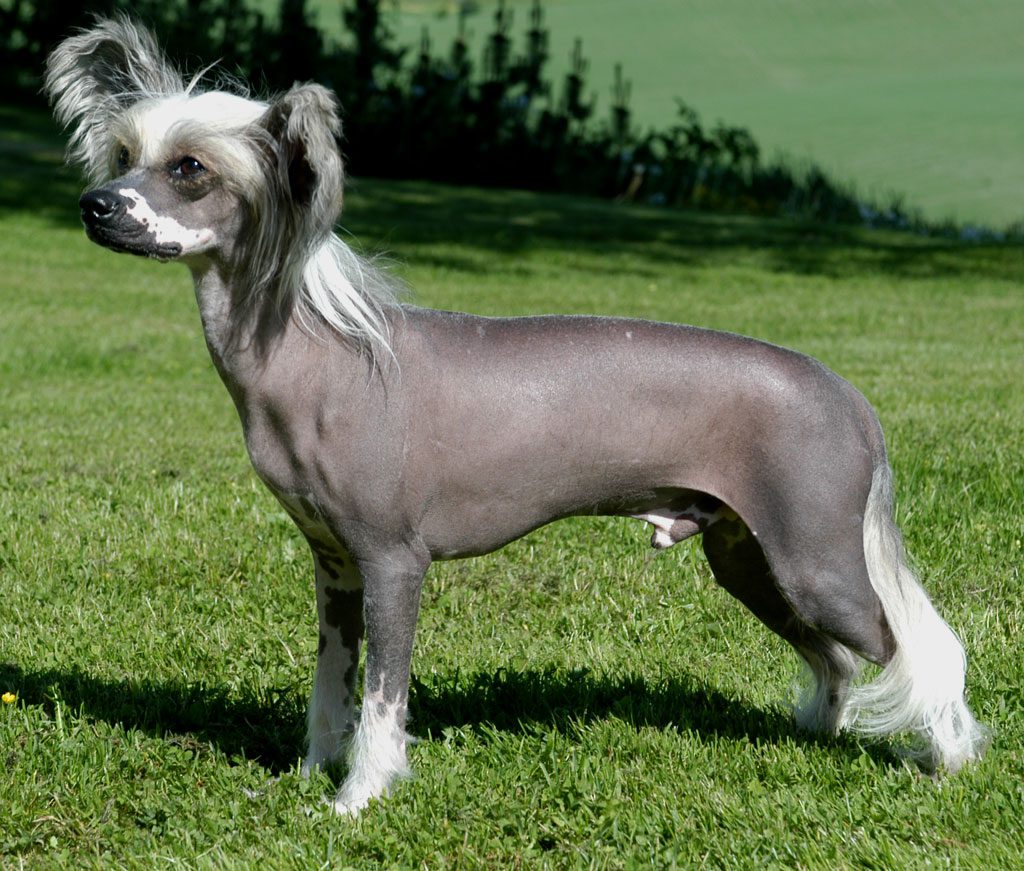
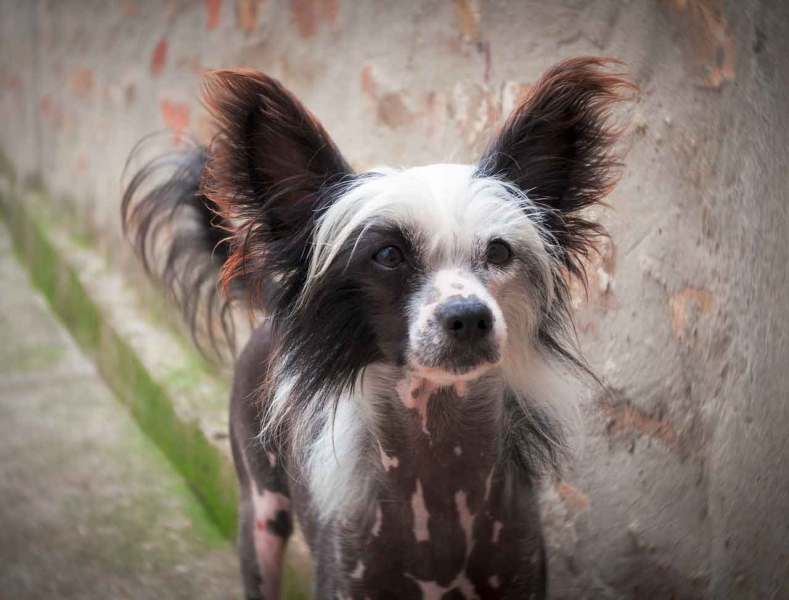
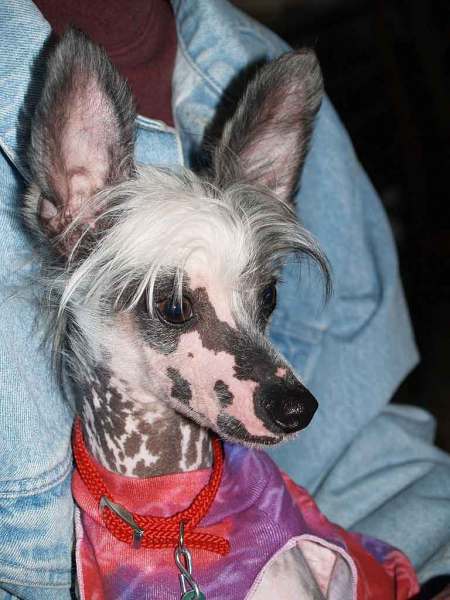
The Chinese Crested Dog is a breed of small hairless companion dog native to China.

Content

History

The origin of the "Chinese created dog" is not very clear. Some specialists see in this breed a descendant of certain Egyptian dogs, but this theory is disputed.

In any case, the oldest traces of this dog date back to the Hans dynasty (226 a.C. to 220 d.C.). It was used as a utility dog (especially by sailors, who took him aboard their boats to hunt rats) and as a companion dog at the imperial court, to the point that the emperors themselves possessed one.

They were also used as currency in ports of call, what contributed to the spread of the breed.

Reports of Europeans who traveled to China in the 18th century mention dogs similar to the Chinese Crested Dog, but it was not until the second half of the 20th century that the first representatives of the breed as we know it today arrived in Europe, and more specifically to Great Britain. The first offspring was created in 1950 by Debora Wood. He founded the first breed club in 1959. The first dogs arrived in France in 1973.

The Chinese Crested Dog is recognized by the FCI since 1987, by the British Kennel Club since 1981 and by the American Kennel Club from 1991.

Physical characteristics

The Chinese Crested Dog is one of the most amazing looking dog breeds. This small dog with a slender silhouette is easily recognizable.

The naked variety, the best known, has a smooth and hairless body, except in the head, legs and tail.

There is another variety, the hairy, which is covered by a veil of long silky hair.

All coat colors are allowed. The ears are erect in the naked variety and drooping in the hairy variety..

Size and weight
    ▷ Male size: 28 – 33 cm.
    ▷ female size: 23 – 30 cm.
    ▷ Male weight: 3 – 4 kg
    ▷ female weight: 3 – 4 kg

Varieties

There are two different types of this breed:

  • Deer type lacking hair all over the body, except in the head, legs and tail, with light bones and lively character.
  • Cobby type long silky hair all over the body, with heavier bones.

Character and skills

The Chinese Crested Dog It is often known as an antidepressant dog due to its pleasant nature, besides her pretty crazy appearance. In fact, this little dog is affectionate, cheerful and playful. It is very endearing and it is never bad. So, it is a good companion for children. Quite suspicious of strangers, it won't take long to bark at the slightest visit.

With moderate needs in terms of physical activity, it is a breed of dog adapted to apartment life. But, what he needs the most Chinese Crested Dog is the company of his master. It can be very "dependent" with this. It also, you may suffer from separation anxiety from the dog. In effect, he is a very demanding partner, who will have a hard time withstanding loneliness.

If he Chinese Crested Dog has been well socialized, will tolerate other animals as well as other dogs without any problem.

Education

The education of Chinese Crested Dog must be firm but not violent, because it is sensitive. Otherwise, can adopt destructive behavior.

Use

The Chinese Crested Dog It is a companion and indoor dog.

People say that, thanks to its body heat, used as a living hot water bottle to treat rheumatism.

Health

The Chinese Crested Dog is prone to various skin diseases:

  • atopic dermatitis ;
  • Allergic dermatitis ;
  • solar dermatitis.

It also, the naked variety of Chinese Crested Dog is especially sensitive to cold and humidity. You should also take special care to protect your dog from the sun., because you could get burned.

Last, the genetic mutation that causes the absence of hair leads to teething problems: the dog usually loses all or part of its teeth at 2 years.

Grooming

In the case of the variety Deer type, without hair, you should bathe your dog frequently using a dog shampoo. No need to hydrate the skin or apply sunscreen.

In the case of the variety Cobby type, you should brush your dog every week, except during the dog's puberty period, when it should be brushed every day. It is advisable to give him a bath regularly. Do not forget to dry it with a hair dryer -low temperature- to prevent you from catching a cold.

Last, Since the Chinese Crested Dog often have dental problems, it is recommended to brush your dog's teeth every other day.

Characteristics "Chinese Crested Dog"

Coexistence is important that you have with your new friend. Before considering the acquisition of a dog of the breed "Chinese Crested Dog" you know certain factors. Not all breeds of dogs are apt to live in an apartment, you must take into account his character, their need for exercise, their interaction with other pets, their care and if you have small children, their level of tolerance towards them.

Adaptation โ“˜

3,0 of 5 stars (based on 1 review)

friendly dog โ€‹โ€‹โ“˜

5,0 of 5 stars (based on 1 review)

hair loss โ“˜

1,0 of 5 stars (based on 1 review)

Affection level โ“˜

5,0 of 5 stars (based on 1 review)

Need for exercise โ“˜

3,0 of 5 stars (based on 1 review)

Social need โ“˜

5,0 of 5 stars (based on 1 review)

Home โ“˜

3,0 of 5 stars (based on 1 review)

Toilet โ“˜

3,0 of 5 stars (based on 1 review)

Friendly with strangers โ“˜

5,0 of 5 stars (based on 1 review)

barking โ“˜

3,0 of 5 stars (based on 1 review)

Health โ“˜

3,0 of 5 stars (based on 1 review)

Territorial โ“˜

1,0 of 5 stars (based on 1 review)

Cat friendly โ“˜

4,0 of 5 stars (based on 1 review)

Intelligence โ“˜

4,0 of 5 stars (based on 1 review)

Versatility โ“˜

3,0 of 5 stars (based on 1 review)

Child friendly โ“˜

5,0 of 5 stars (based on 1 review)

Surveillance โ“˜

1,0 of 5 stars (based on 1 review)

joy โ“˜

4,0 of 5 stars (based on 1 review)

Images "Chinese Crested Dog"

Photos:

1 – "Chinese created dog" by https://pixabay.com/es/illustrations/perro-perro-crestado-chino-4882997/
2 – "Chinese created dog" by https://pixabay.com/es/photos/crestado-chino-cachorro-3799578/
3 – "Chinese created dog" by https://pixabay.com/es/photos/perro-crestado-chino-invierno-2501289/
4 – "Chinese created dog" by Sheri Lands, CC BY 2.0, via Wikimedia Commons
5 – ยซFemale of Perro crestado chino – Auriga Cassiopeia Maytays Minng – with her seven one-month-old puppies – four of them hairless, tres powderpuffยป by HTO, CC BY-SA 3.0, via Wikimedia Commons
6 – "Chinese created dog" by I, Jasmine2501, CC BY-SA 3.0, via Wikimedia Commons

Videos "Chinese Crested Dog"

Type and recognitions:

  • FCI CLASSIFICATION:
  • Group :
  • Section : . .

Federations:

Federations:

  • FCI – Group 9: Section: 3.2 Petit Brabanรงon โ“˜
  • AKCToy โ“˜
  • ANKC – (Toy) โ“˜
  • CKC – Group 5 โ€“ (Toy) โ“˜
  • โ€‹KC – Toy โ“˜
  • NZKCToy โ“˜
  • UKC – Group 8 – Companion dog โ“˜

FCI breed standard "Chinese Crested Dog"

Origin:
China

Date of publication of the valid original standard:
13.10.2010

Use:

Companion dog.


General appearance:

It is a small dog, active and funny; with medium to light bones; lack of hair on the body, showing only fine hair on feet, head and tail or covered with a veil of soft fur. There are two different types of this breed: The "deer type", of light bone and living character and the "cobby" of body and weavy bodies.


Behavior / temperament:

It is joyful, never aloof the malicious.

Head:

Flat without too many wrinkles. The distance between the occiput and the stop is equal to the distance between the stop and the tip of the nose. Presents a funny look, with an alert expression.

Cranial region:
  • Skull: Slightly rounded and elongated.
  • Depression links (Stop): Slightly pronounced but not excessively.

facial region:

  • Truffle: It celebrities, holding close together with the muzzle. Any pigmentation of the truffle is acceptable.
  • Snout: Thinning slightly, but never pointed, thin and without lips.
  • Lips: Thin and adherent.
  • Jaws/Teeth: Strong jaws with a regular and perfect scissor bite, that is to say, that the upper incisors closely overlap the lower ones and are implanted at right angles in the jaws.
  • Cheeks: Clearly outlined, thin and flat, thinning down to the muzzle.
  • Crest: In ideal form, the crest should start from the stop and continue decreasing to the lower part of the neck. It should preferably be long and abundant, but it is also acceptable that it is scarce.
  • Eyes: So dark they appear black. They should not show the conjunctiva or very little of it. Its size is medium and its implantation is very separated.
  • Ears: Low insertion: the highest point of the base of the ear is at the level of the outer corner of the eye. They are long, y lifted, with or without hair fringes, except in the Powder Puffs in whom the fallen ears are allowed.

Neck:

Cleansed, double chin free, long, gracefully leaning up to her insertion with shoulders that are strong. During the movement the dog wears its neck high and slightly arched.

Body:

From medium to elongated. Flexible.

  • Back: Horizontal.
  • Pork loin: companies.
  • Rump: Well rounded and muscular.
  • Breast : Rather deep; descends to the elbow, without presenting ribs. The sternum is not prominent.
  • bottom line: Moderately withdrawn.

Tail:

High insertion, wears it up straight or to the side during movement. It is long, gradually thinning to the tip; it's almost straight, Do not screw or bend anywhere; hangs naturally during rest. Has long, abundant feathers that are limited to the lower two-thirds of the tail. A meager feather is acceptable.

Tips

Former members

Long and thin, well poised under the body.

  • Shoulder: Well-delineated shoulder blades, narrow and well positioned to the rear.
  • Elbows: Glued to the body.
  • Metacarpus: Thin, strong, almost vertical.

Later members

They are well separated. The angulation of the hind limbs should be such that the back is horizontal.

  • Knee: Strong; the long leg slopes gently towards the tibia-tarsal joint.
  • Hock: Low.

Pies

Extremely shaped feet "Hare", narrow and very long, with a unique elongation in its kind of small bones between the joints, especially on the front feet, which almost give the appearance of having an additional connecting piece. Nails can be any color and are moderately long. The "socks" (hairy skin of the feet) should ideally be confined to the fingers and should not extend above the carpal joint. Feet and toes do not deviate outward or inward.

Movement:

It is long, fluid and elegant with good scope and much impulse.

Mantle

Fur

There should be no large areas covered with hair anywhere on the body. The skin should be delicately grainy and smooth, hot to the touch. In Powderpuffs the skin has an undercoat with a soft veil of long hair, The veil -shaped fur being characteristic.

Color

Any color or combination of colors is accepted.


Size and weight:

Height to the cross

  • Males: 28-33 cm..
  • females: 23-30 cm..

The weight varies considerably, but it must not be greater than 5 ยฝ kg.


Fouls:

Any deviation from the aforementioned criteria is considered a fault and its seriousness is considered to the degree of
the deviation to the stay and its consequences on the health and well -being of the dog.

Any dog โ€‹โ€‹showing clear signs of physical or behavioral abnormalities should be disqualified..

Note: Males should have two normal-appearing testicles fully descended into the scrotum..


disqualifying fouls:
  • Aggressiveness or extreme shyness.
  • Any dog โ€‹โ€‹showing clear signs of physical or behavioral abnormalities.


N.B.:

Males should have two normal-appearing testicles fully descended into the scrotum..

Source: F.C.I - International Cynological Federation

Alternative names:

1. Crested, Puff, Hairless Chinese Crested Dog (English).
2. Chien nu chinois (French).
3. Chinese Crested Dog (German).
4. (em chinรชs: ไธญๅ›ฝๅ† ๆฏ›็Šฌ) (Portuguese).
5. Crestado, Puff (espaรฑol).

โ–ท The world of Pets: Dogs, cats, birds, reptiles, amphibians

Pug
China Gran Bretaรฑa FCI 253 . Small Molossian type Dogs

The Pug It is a friendly and affectionate dog with other dogs and with people.

Pug

Content

Characteristics "Pug"

Coexistence is important that you have with your new friend. Before considering the acquisition of a dog of the breed "Pug" you know certain factors. Not all breeds of dogs are apt to live in an apartment, you must take into account his character, their need for exercise, their interaction with other pets, their care and if you have small children, their level of tolerance towards them.

Adaptation โ“˜

5,0 of 5 stars (based on 1 review)

friendly dog โ€‹โ€‹โ“˜

5,0 of 5 stars (based on 1 review)

hair loss โ“˜

4,0 of 5 stars (based on 1 review)

Affection level โ“˜

5,0 of 5 stars (based on 1 review)

Need for exercise โ“˜

1,0 of 5 stars (based on 1 review)

Social need โ“˜

5,0 of 5 stars (based on 1 review)

Home โ“˜

5,0 of 5 stars (based on 1 review)

Toilet โ“˜

1,0 of 5 stars (based on 1 review)

Friendly with strangers โ“˜

5,0 of 5 stars (based on 1 review)

barking โ“˜

3,0 of 5 stars (based on 1 review)

Health โ“˜

5,0 of 5 stars (based on 1 review)

Territorial โ“˜

4,0 of 5 stars (based on 1 review)

Cat friendly โ“˜

5,0 of 5 stars (based on 1 review)

Intelligence โ“˜

3,0 of 5 stars (based on 1 review)

Versatility โ“˜

3,0 of 5 stars (based on 1 review)

Child friendly โ“˜

4,0 of 5 stars (based on 1 review)

Surveillance โ“˜

3,0 of 5 stars (based on 1 review)

joy โ“˜

4,0 of 5 stars (based on 1 review)

History

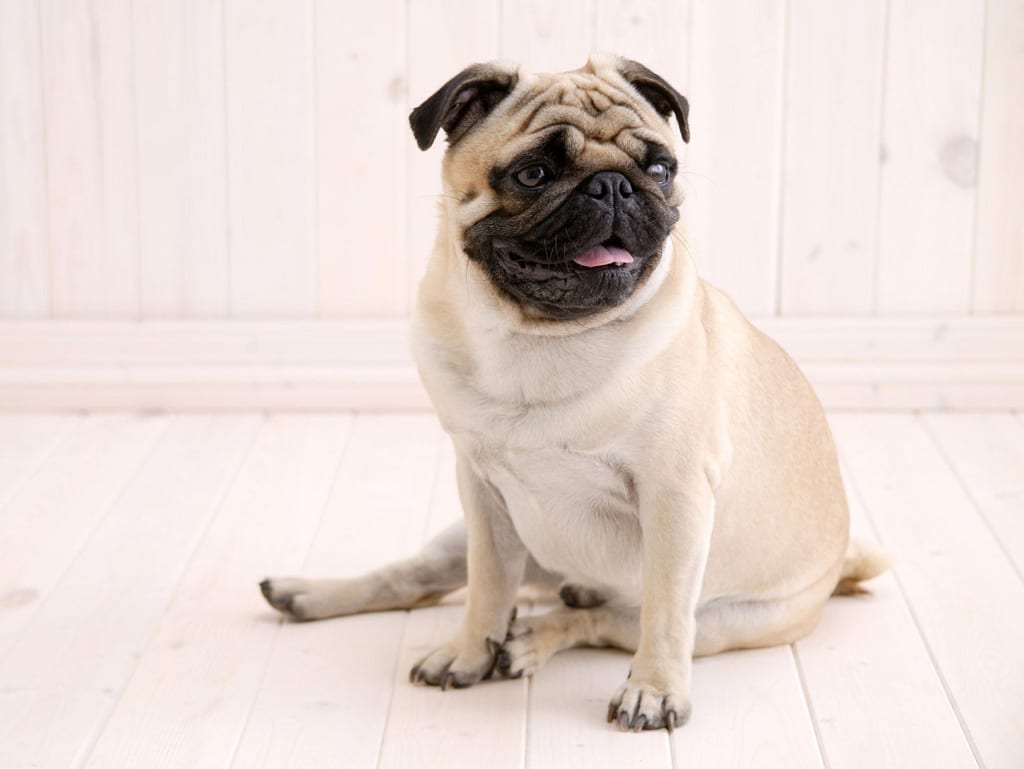
The Pug or Dutch bulldog (also known as Chinese Pug, Mops, Puggu) is a breed of dog miniature with wrinkled face and a body of small to medium-sized, originating in China.

This breed is often summed up as โ€œmultum en parvoโ€ (much in little), describing the personality of the Pug related to its small size.

The word "Pug" may come from the Old English Pugg, it is an affectionate adjective it would be something like a little playful demon or monkey. Pug puppies are called Puglets.

The breed of dog Pug, has very ancient origins. It was raised and selected in China, country where he was the favorite dog of officials, It is also a very popular in Holland and England breed of dog.

In fact, England claimed the patronage of la raza, since they had carried out excellent selection work for years. Finally, part of the patronage of the race was awarded to Great Britain.

This wrinkled and funny puppy, He was a faithful companion of the ladies of the 19th century in Italy.

As almost all dog breeds, it knew how to have its difficult moments, especially when the world wars took place, but it has not been on the verge of extinction like others.

Today the breed Pug it is highly appreciated in almost every corner of the world.

Did you know??

Among the rich and famous are admirers of the Pug King Louis XIV, Josefina, Empress of Napoleon, Queen Victoria, the Duke and Duchess of Windsor and fashion designer Valentino.

Physical characteristics

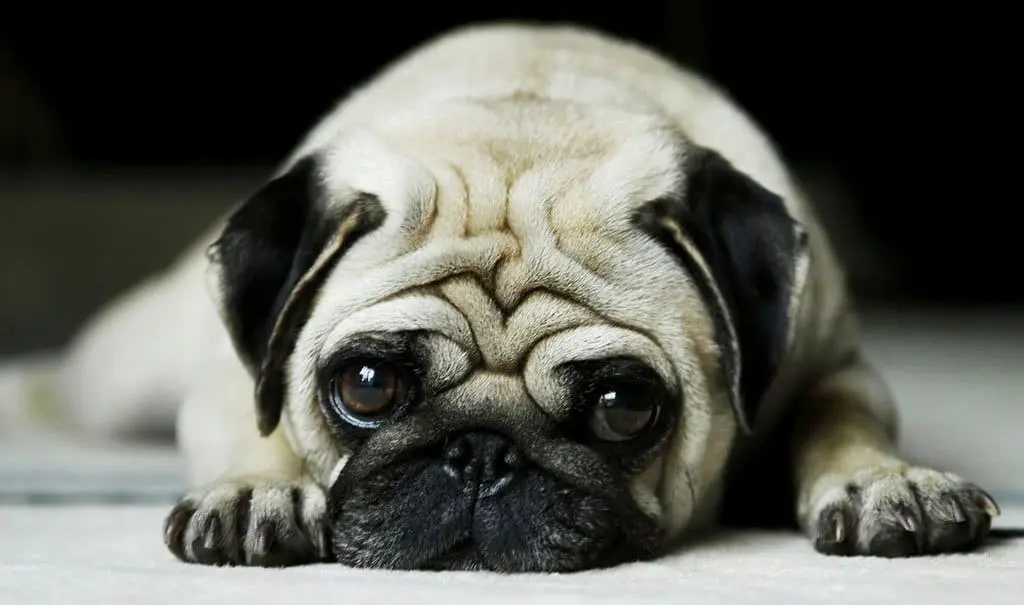
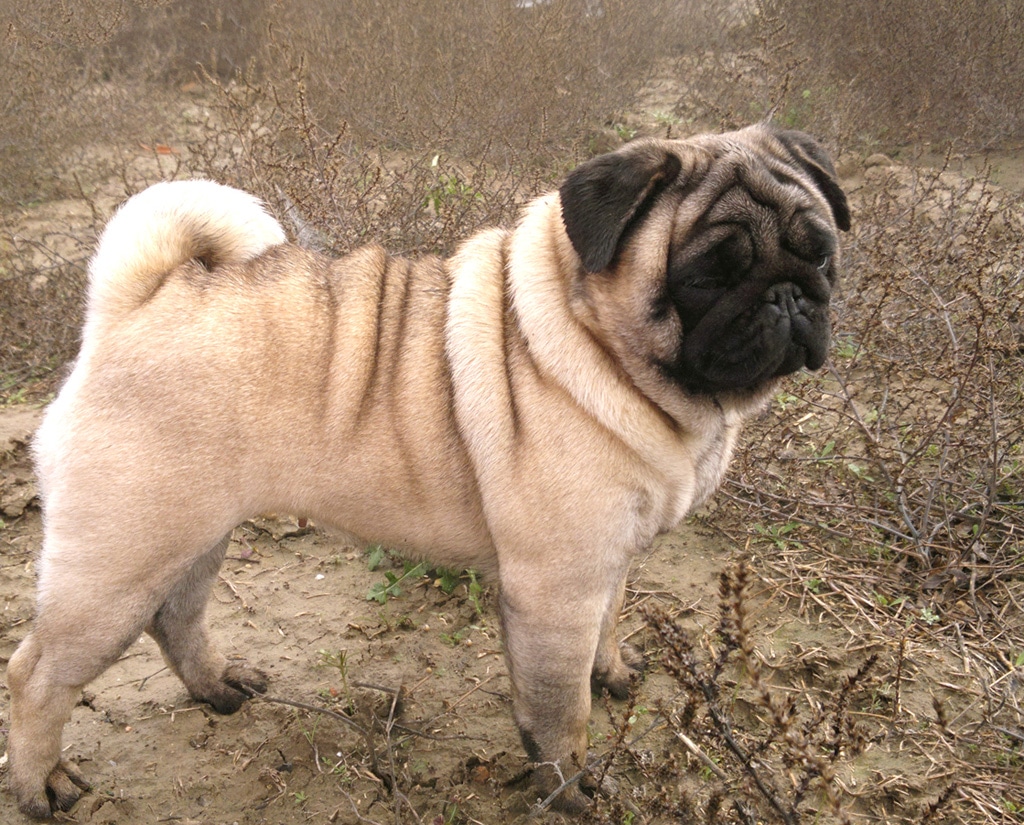
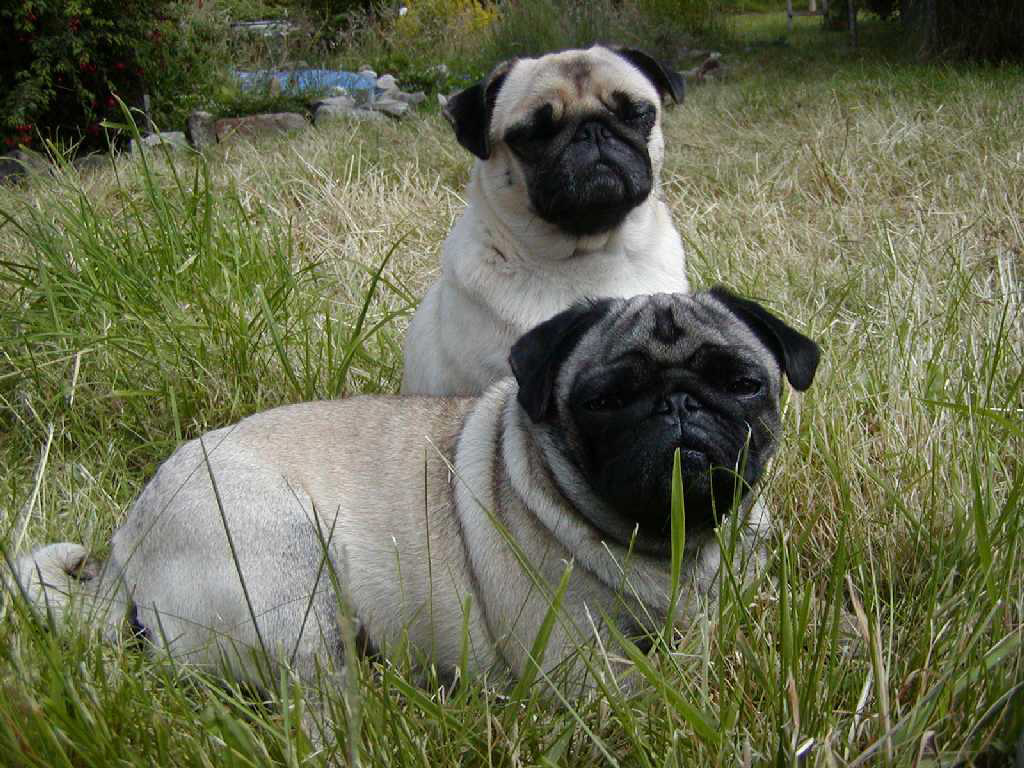
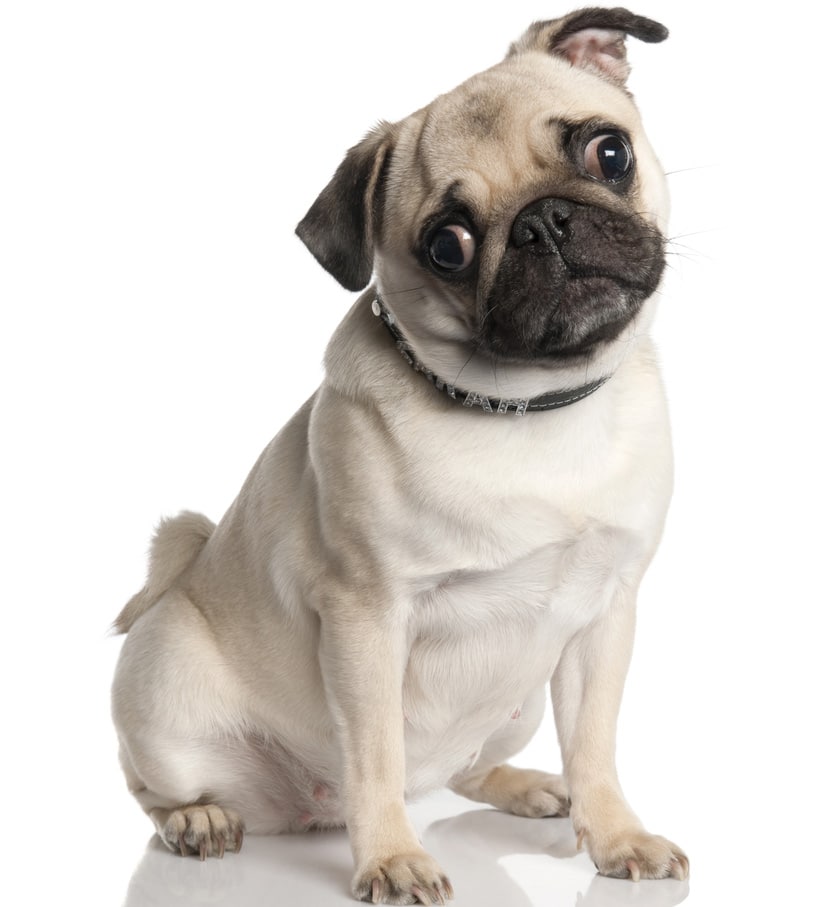
It is a dog under, solid square and compact appearance, well proportioned and muscular; the head, large, rounded and solid appearance, is covered with folds; the muzzle is square and flat; the eyes, large, bulging, they are dark; It has straight legs and looped collector queue. The hair is tight, smooth and shiny.

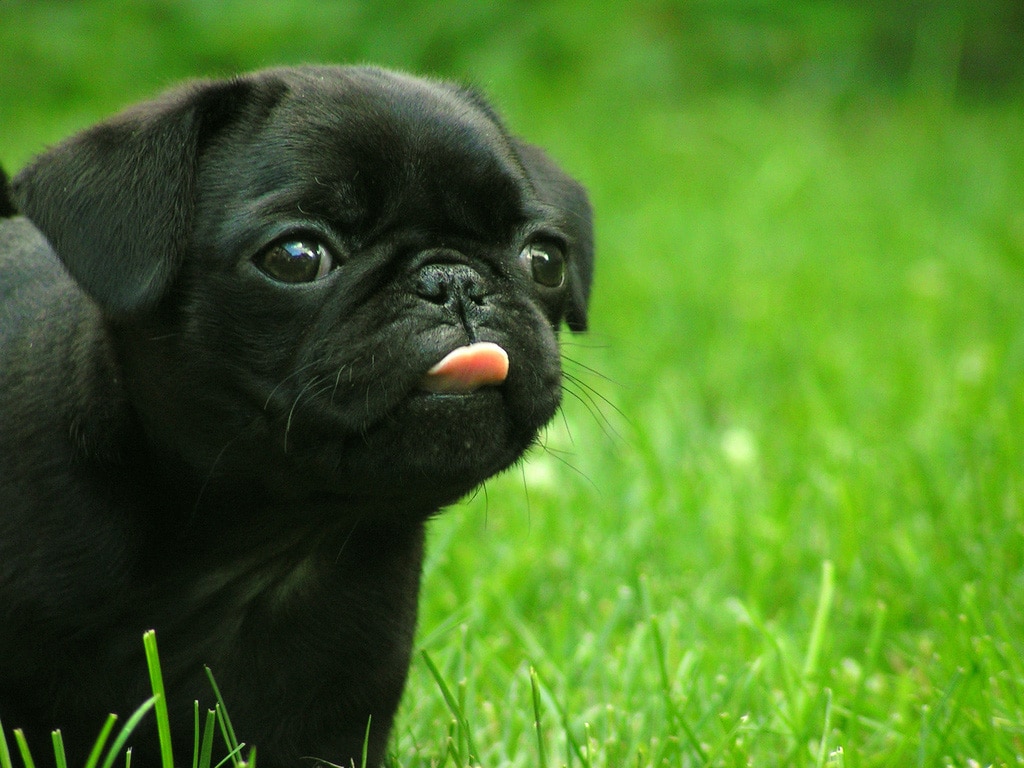
The Pug or Dutch bulldog can be silver or soft apricot with a black mask, in both cases it presents a black stripe that goes from head to tail; It can also be pure black or white which is the more scarce and expensive of all.

It measures each 30 cm to cross and weighs between 6 and 8 kg. His confident nature, docile and friendly makes the Pug an appreciated companion animal. The Pug is particularly a dog "with a sense of humor", exhibiting very human facial expressions given its bone structure. Due to its striking appearance, some people tend to think that the characteristics of the Pug are the result of genetic manipulation or inbreeding.. But, the characteristics of the Pug are similar in the last five hundred years, period in which Europeans began it importing from China.

The Pug's tail has a characteristic spiral or letter "Q" shape.. This variation in the way of the tail is due to the vertebrae in this portion of the column are actually hemivertebra. In some few puppies, This alteration of the shape can be extended to the rest of the column and the animal presents spina bifida.. The spine of the animal must feel before purchasing to avoid choosing a sick puppy. An animal that suffers from this malformation should not be reproduced in order to not pass this problem to their offspring.

Given the shape of the skull, the eyes of the Pug have a bouncy and lively appearance. To find the eyes located above, they are more exposed to friction with plants and objects to the eyes of other animals, and it is advisable to take them to the vet as soon as possible if they have an injury. It is recommended that the owners of the Pug clean the eyes of the animal once a week with a clean cotton moistened with cold boiled water or cold tea, in order to remove secretions or dirt.
The characteristic wrinkles of the face can also accumulate secretions and dirt. It is recommended at least once a week clean gently between wrinkles using the same method. It is not necessary to apply SOAP, creams or other substances. Simple toilet is enough and to spare.

The Pug is a short hair dog, tends to constantly pelechar, so his tenure is not recommended for persons allergic or asthmatic. They have a characteristic pungent odor that may bother some people, but that decreases a bath every couple of weeks.

The biggest health problem presented by the Pug is one that is completely preventable and treatable, and that depends entirely of the OWNER. This disease is the OBESITY. A Pug it receives proper care can live more than fourteen years, Although on average they tend to live around ten.

One 1% Puppy can reach presenting a degenerative neurological disease called Pug encephalitis (or tap for its acronym in English). This disease is lethal and has no known cure. For this reason dogs must not be reproduced within the two years, in order to not transmit the gene to their offspring. Last year of life it is very unlikely that the Pug will have this disease.

Character and skills

The Pug aren't aggressive animals. Like any dog, they can bite, but it is very rare that this happens without the animal mistreatment. Pugs live up to their motto "multum in parvo" and are not intimidated by larger breed dogs, which you can get into trouble.

Before humans, the Pug tend to be playful and seek interaction. However can be apprehensive to strangers, and with their barking to announce the presence of unknown people. Although its size are not guard dogs, If they are good "alert dogs".

The Pug show a moderate level of intelligence, being able to use their short snouts and front paws to obtain objects out of reach. They sometimes tend to stubbornness, and do not necessarily come when you are called, but rather when crave it. Despite this, they do not go far from their owners and prefer their company to that of other dogs..

During the first years of life Pug may occasionally be hyperactive (run, jumping and barking constantly) but this characteristic tends to disappear over the years. The Pug 5 and older tend to be calmer and enjoy the chairs more than the street.

There is a tendency to believe that Pug They are "sick" animals, which is very far from reality. One Pug healthy will be energetic and playful, and even a bit hyperactive in its first years of life. Its solid structure makes they tolerate well the game with children and adults, and its particularly hard head can cause bumps and falls in young children and older adults.

The Pug It's a small animal, and although strong, requires very little food. But, being a pet, owners tend to supercharge them and share their food with them. This must not be. The Pug can perfectly feed on a cup of dry food in the morning and a cup at night, and you won't go hungry or require any extra supplements.

An obese Pug is not a "beautiful" Pug, on the contrary, It is an animal that sick because you can not breathe well, be it exhausted easily and will begin to suffer from problems in the spine and joints. A Pug fed healthy is, on the other hand, a robust animal, with his sharp and clearly visible muscles under the skin. A healthy Pug can run as fast as any other dog, and you can skip two or three times its own height. Although the animal enjoys eating extra foods and receiving "treats" occasionally, is task of the owner to ensure that the quantity and quality of food that consumes is adequate.

Images of the ยซPugยป

ยซPugยป Videos

Type and recognitions:

  • FCI CLASSIFICATION:
  • Group :
  • Section : . .

Federations:

  • Federations: FCI โ“˜, AKC โ“˜, ANKC โ“˜, CKC โ“˜, โ€‹KC โ“˜, NZKC โ“˜, UKC โ“˜

  • FCI breed standard "Pug"

    Origin:
    China, United Kingdom

    Date of publication of the valid original standard:
    13.10.2010

    Use:

    Companion dog


    General appearance:

    It is undoubtedly a square and plump dog, "Multum in parvo" (a lot of substance in a small space) showing it in its compact structure, his well-built proportions and the hardness of his muscles, but it should never seem short-limbed, neither lean nor โ€œlargeโ€.

    IMPORTANT PROPORTIONS:

    Definitely square and compact.


    Behavior / temperament:

    Great charm, dignity and intelligence. Balanced, cheerful and lively.

    Head:

    Relatively large and provided with the body, round, You must not have Apple shape.

    Cranial region:
    • Skull: Without Groove. Wrinkles on the antecara should be clearly defined without exaggeration.

    facial region:

    • Truffle: Black with nostrils large and wide open. Narrow nostrils and heavy on the nose folds are unacceptable and must be severely penalized.
    • Snout: Relatively short, obtuse, square, not drooping upwards. Eyes and nose should never be adversely affected or be hidden by excessive folds on the nose.
    • Jaws / Teeth: With a slight lower prognathism. The lower jaw is wide with the incisors placed almost in a straight line. It is highly undesirable Wry mouth, teeth and tongue look and should be severely penalized.

    Eyes: dark, relatively large, round, sweet and concerned expression, very bright, and when it is excited ardor full. Never protruding, exaggerated or showing white when they look forward. Free eye problems.

    Ears: Thin, small and soft black velvet. There are two types: โ€œEar in pinkโ€, It is a small hanging ear that bends backwards to show the ear canal. โ€œButton earโ€, It is an ear that folds by bending forward, Tip adheres to the skull to cover the opening. The latter are preferred.

    Neck:

    Slightly arched it resembles a crest, strong, thick, with long enough to take the head proudly.

    Body:

    Short and compact.

    • top line: Level; It must be neither concave nor inclined.
    • Breast : Large. Ribs well arched back.

    Tail:

    High insertion, tightly coiled on the hip. The dual threading is highly desirable.

    Tips

    PREVIOUS MEMBERS:

    • Shoulder: Well inclined backwards.
    • forearms: Very strong limbs, straight, long moderate and positioned low in the body.
    • Previous feet: As long as the foot of the Hare nor so round as the foot of the cat; with separate fingers; the nails must be black.

    LATER MEMBERS:

    • General appearance: Very strong limbs, of moderate length, well positioned under body, straight and parallel when you look at them from the back.
    • Knee: Good angulation of stifle warm joints rotulianas (knees).
    • Hind feet: As long as the foot of the Hare nor so round as the foot of the cat; with separate fingers; the nails must be black.

    Movement:

    Viewed from the front you must lift the forelimbs and drop well straight below shoulders, keeping the feet directly forward, unoffset in or out. From behind, the action must be equally correct. The forelimbs uses them with force bringing them well forward and the rear moving freely and bending your knees well. Light balancing the quarterfinals later characterized the journey. Capable of performing a resolved and safe movement.

    Mantle

    Fur: Texture fine, smooth, soft, short and bright. Neither rough nor woolly.

    COLOR: Silver, apricot, Griffon clear or black. Each of these colors must be clearly defined, to emphasize the contrast between the color, the stretch mark (a black line extending from the occiput to the tail) and the mask. The marks must be well defined. The muzzle or mask, the ears, moles on the cheeks, the thumb mark or the forehead rhombus and the striation should be as black as possible.


    Size and weight:

    The ideal weight is between 6,3 and 8,1 kg. You must have strong muscles, but the substance should not be confused with an overweight.


    Fouls:

    Any deviation from the aforementioned criteria is considered a fault and the severity of this is considered to the degree of the deviation from the standard and its consequences on the health and well-being of the dog..

    FALTAS DESCALIFICANTES

    • Aggressive or fearful dog.
    • Any dog โ€‹โ€‹showing clear signs of physical or behavioral abnormalities must be disqualified..


    N.B.:

    โ€ข Males must have two normal-appearing testicles fully descended into the scrotum..
    โ€ข Only functionally and clinically healthy dogs, with the typical conformation of the breed, should be used for parenting.

    TRANSLATION: Brรญgida Nestler / Original version: (IN).

    Source: F.C.I - International Cynological Federation

    Alternative names:

    1. Chinese pug, Dutch mastiff (English).
    2. Pug (French).
    3. Pug (German).
    4. Carlin, Mops (Portuguese).
    5. Pug chino, Mops, Pug carlino, Doguillo (espaรฑol).

    โ–ท The world of Pets: Dogs, cats, birds, reptiles, amphibians

    Chow Chow
    FCI 205 - Asian Spitz and related breeds

    Chow Chow

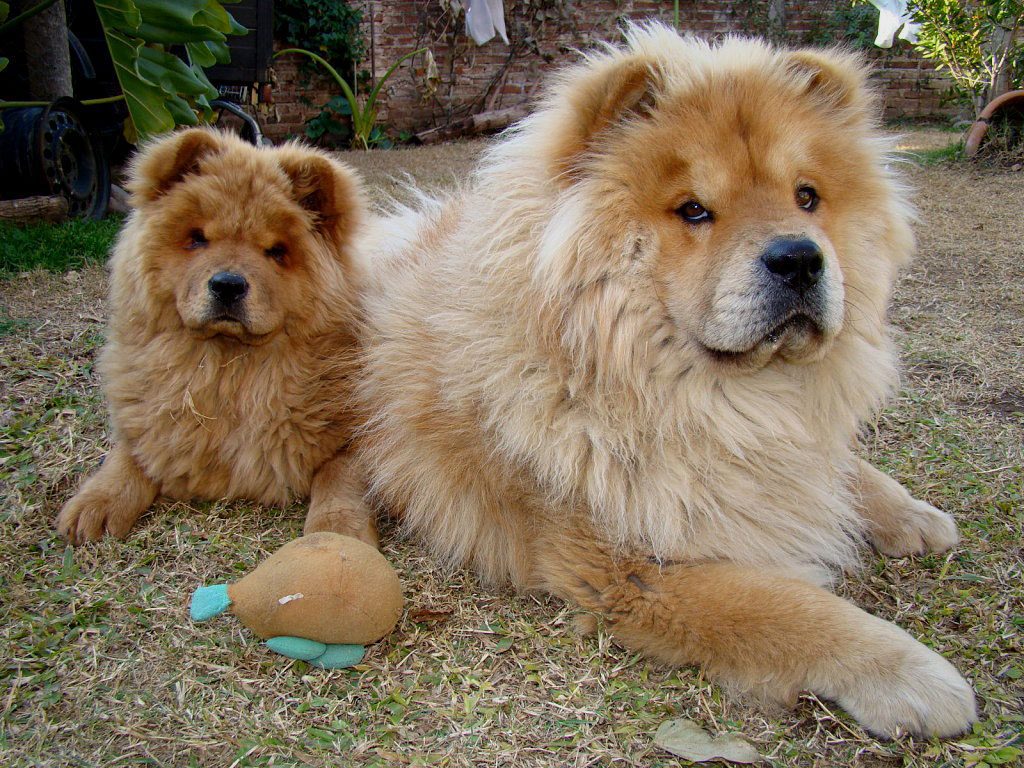
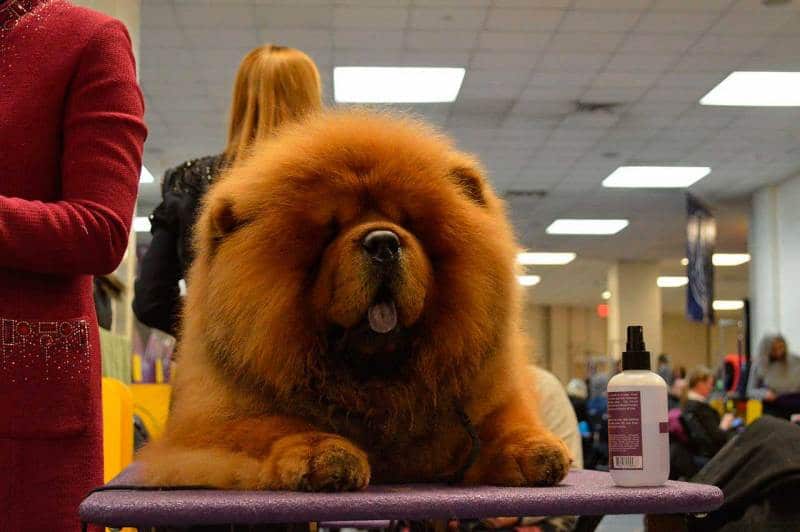
    The Chow Chow are distinguished by their unusual blue-black tongue

    Content

    History

    The Chow Chow has been known for more than 2500 years in China, where it is represented in bas-reliefs of the time. Dog of mysterious origin, belongs to the Spitz family. Some believe it is a cross between a Tibetan Mastiff and a Samoyed., while others think it is more of an original dog, that is to say, that comes from the Nordic dogs (internal temperature above average, particular shape of the bony structure of your skull…). In any case, stories about the origins of Chow Chow they are usually just hypotheses.

    In Manchuria and Mongolia it was used as a war dog, to watch over herds or rushes and as a draft animal. The Chow Chow they were also found in Tibetan monasteries: his function was to defend the monks. Occasionally it was a hunting dog, it was eaten in some parts of china, and his skin was also traded.

    It was introduced in Europe in 1865, when Queen Victoria of England received one as a gift and started raising it. It was officially recognized by the Kennel Club English little less than 30 years later, in 1894. Today, only used as a pet.

    The term ยซChow Chowยซ has appeared recently. In fact, during the interwar period, the Chow-Chow It was known in the West as the "Hong Kong dog".

    Despite some other blood additions over the years 50, the Chow Chow is a breed that has remained pure.

    Physical characteristics

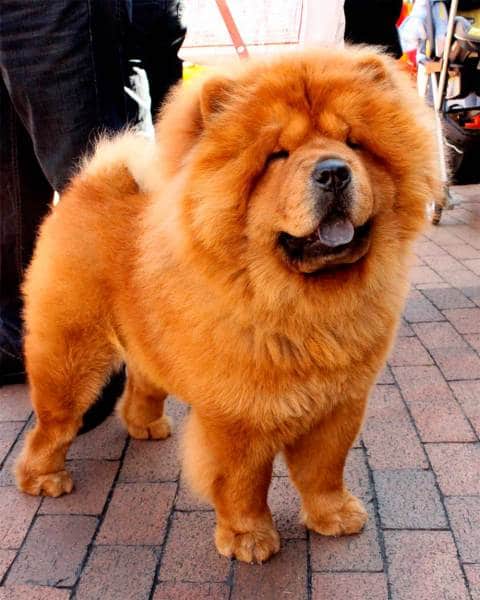
    The Chow Chow It is a dog with a robust body that goes hand in hand with its wide skull and its small triangular ears slightly rounded at the tip and it carries them apart with the tip slightly inclined forward which are always erect. His eyes are dark, from Brown to black always small, almendrada form. The nose is completely black and wide except in color Chow cream and white, which supports the color pink. The mouth is wide and strong. They have a characteristic "stilt" movement, due to the peculiar conformation of their hind legs, which lack angle, and it makes it look like walking on stilts.

    It is a dog of agile and balanced movement. By joining the legs in parallel to two in the movement. This breed has a very dense fur that can be rough or soft, which it accumulates more around his neck, giving it its distinctive frill or horsehair. Its fur can be red, black, Blue and cream. Those who have spotted or multi-coloured fur are considered outside the standards of the breed.

    The Chow Chow They are distinguished by their unusual bluish-black or purple tongue and strong legs.. The gene for the bluish-black or purple tongue is usually dominant in this breed, and so it also tends to be in from mixed races of a Chow Chow.

    A legend that says, When the gods placed the stars in the firmament, pieces of the sky fell that the Chow Chow licked and since that day he has had a blue tongue..

    Character and skills

    Today, the Chow Chow is commonly a companion dog. His strong sense of ownership of their homes with their - sometimes- intriguing approach to strangers may be misinterpreted by those who do not belong to his family. But, signs of shyness and aggression are not characteristic of this breed. Copies of the sex opposite usually coexist with less tension than with those of the same sex, but it is not uncommon to see Chow Chow of different sexes living together peacefully.

    They are extremely loyal to their family and it costs change masters. Affection usually shown only to people you know, so visitors should not push them physically as they will not immediately accept strangers as quickly as they do with their family members.

    They are not a very active breed. Life in an apartment suits them, if they are given the opportunity to get enough physical activity daily. The owners must take daily walks with their Chow Chow, so be it in a small place, to maintain their physical and mental abilities in a healthy way.

    Although this breed shows low energy most of the time, needs a routine to be able to explore their environment and thus maintain a loving nature. Its typical behavior resembles that of a domestic cat more than that of a dog., for cleaning and its enigmatic nature.

    Grooming

    Grooming requirements depend on the type of fur. A Chow straight hair needs to be brushed weekly only. One with a rough coat should be brushed every other day. Both varieties molt twice a year, during which the coat will abundantly. Rarely need a bath, although a hot bath followed by a thorough drying can help remove the coat you're missing.

    The rest is basic care. Trim nails as needed, usually once a month. Brush your teeth frequently for general good health and fresh breath. Check ears weekly for dirt, redness or odor that may indicate an infection. If the ears look dirty, clean them with a damp cotton ball and a mild ear cleaner recommended by your vet.

    Health

    The Chow Chow is the breed of dog most affected by Dysplasia elbow. It is also vulnerable to hip dysplasia, dislocation of patella, thyroid disease, Pemphigus Foliaceus and ocular disorders such as entropion and ectropion. The risk of these disorders increases exponentially when they are purchased at pet stores unscrupulous caregivers who do not test their dogs to see if there is existence of genetic disorders. Like this, a potential buyer of this breed should ask about the health status of the pet to buy. Animal caretakers must provide the client with a guarantee of the dog's health. But despite his delicate health, It is an excellent companion dog for humans..

    Characteristics "Chow Chow"

    Coexistence is important that you have with your new friend. Before considering the acquisition of a dog of the breed "Chow Chow" you know certain factors. Not all breeds of dogs are apt to live in an apartment, you must take into account his character, their need for exercise, their interaction with other pets, their care and if you have small children, their level of tolerance towards them.

    Adaptation โ“˜

    2,0 of 5 stars (based on 1 review)

    friendly dog โ€‹โ€‹โ“˜

    1,0 of 5 stars (based on 1 review)

    hair loss โ“˜

    5,0 of 5 stars (based on 1 review)

    Affection level โ“˜

    2,0 of 5 stars (based on 1 review)

    Need for exercise โ“˜

    2,0 of 5 stars (based on 1 review)

    Social need โ“˜

    2,0 of 5 stars (based on 1 review)

    Home โ“˜

    3,0 of 5 stars (based on 1 review)

    Toilet โ“˜

    5,0 of 5 stars (based on 1 review)

    Friendly with strangers โ“˜

    1,0 of 5 stars (based on 1 review)

    barking โ“˜

    5,0 of 5 stars (based on 1 review)

    Health โ“˜

    4,0 of 5 stars (based on 1 review)

    Territorial โ“˜

    3,0 of 5 stars (based on 1 review)

    Cat friendly โ“˜

    2,0 of 5 stars (based on 1 review)

    Intelligence โ“˜

    2,0 of 5 stars (based on 1 review)

    Versatility โ“˜

    2,0 of 5 stars (based on 1 review)

    Child friendly โ“˜

    2,0 of 5 stars (based on 1 review)

    Surveillance โ“˜

    2,0 of 5 stars (based on 1 review)

    joy โ“˜

    3,0 of 5 stars (based on 1 review)

    Images "Chow Chow"

    credits:

    1 – Flickr: Chowdren
    2 – International Dog Show, Szczecin 2007 by Remigiusz Jรณzefowicz
    3 – Pets Adviser from Brooklyn, USA / CC BYwww.petsadviser.com
    4 – by https://pxhere.com/es/photo/234926
    5 – Flickr: Bokeh the Chow by Luigi Borromeo
    6 – Flickr: Chowdren (chow chow) by Seongbin Im
    7 – by https://www.needpix.com/photo/371158/chow-chow-dog-snow-canine-domestic-pet-portrait-looking-attentive
    8 – Russian: photo from the exhibition by Vladimir gubanov

    Videos "Chow Chow"

    Type and recognitions:

    • FCI CLASSIFICATION:
    • Group :
    • Section : . .

    Federations:

  • Federations: FCI โ“˜, AKC โ“˜, ANKC โ“˜, CKC โ“˜, โ€‹KC โ“˜, NZKC โ“˜, UKC โ“˜

  • FCI breed standard Chow Chow

    FCIFCI - Chow Chow
    CHOW

    Alternative names:

    1. Chow (English).
    2. Chow (French).
    3. Chow (German).
    4. Chow (Portuguese).
    5. Chow (espaรฑol).

    โ–ท The world of Pets: Dogs, cats, birds, reptiles, amphibians

    Shar Pei
    China FCI 309 - Molossoid - Dogo

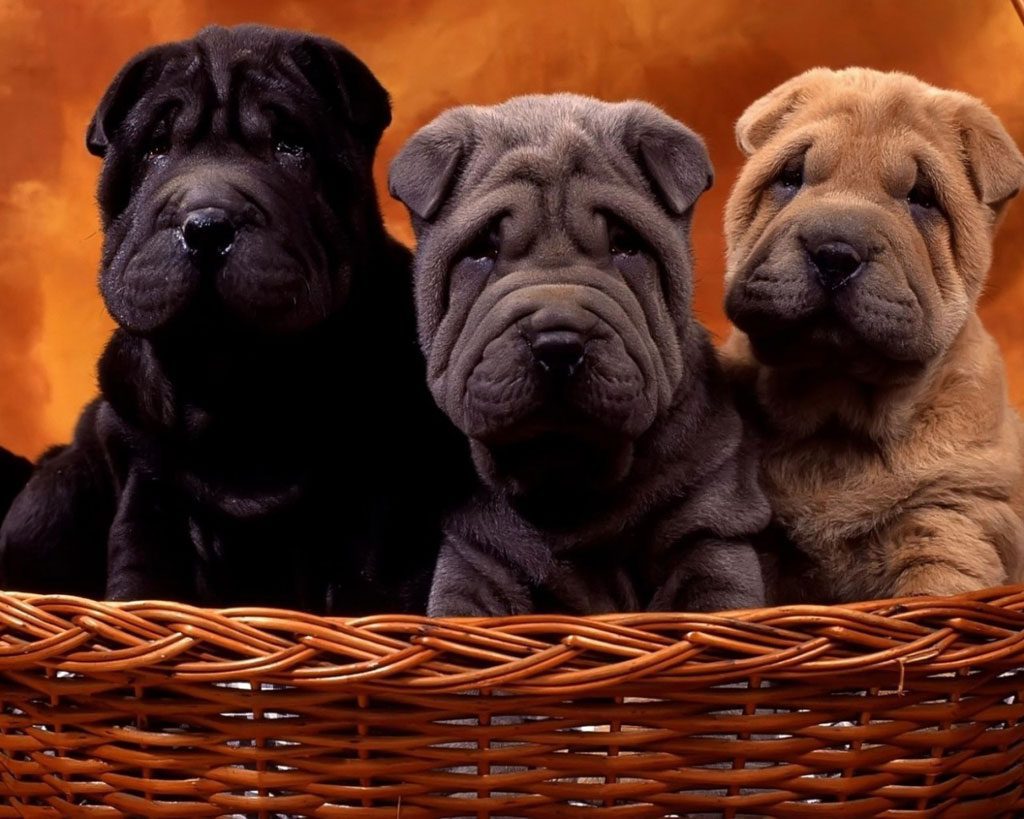
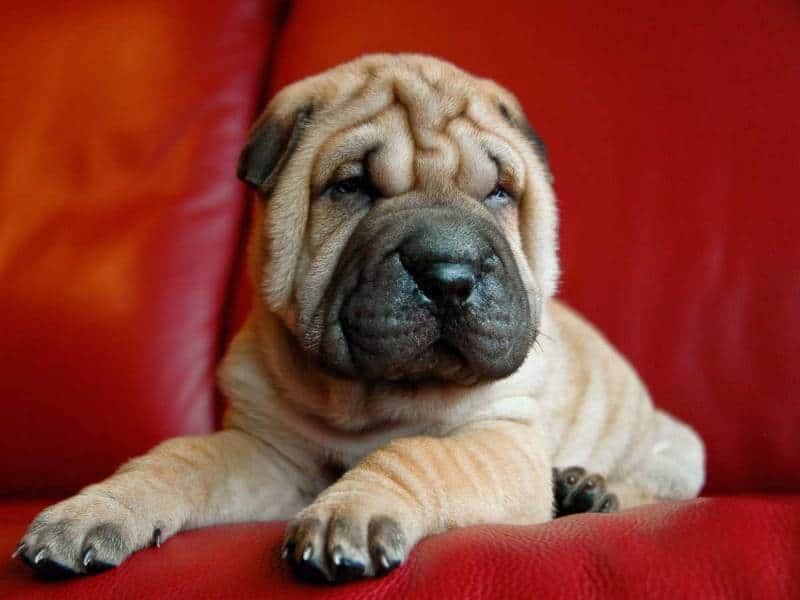
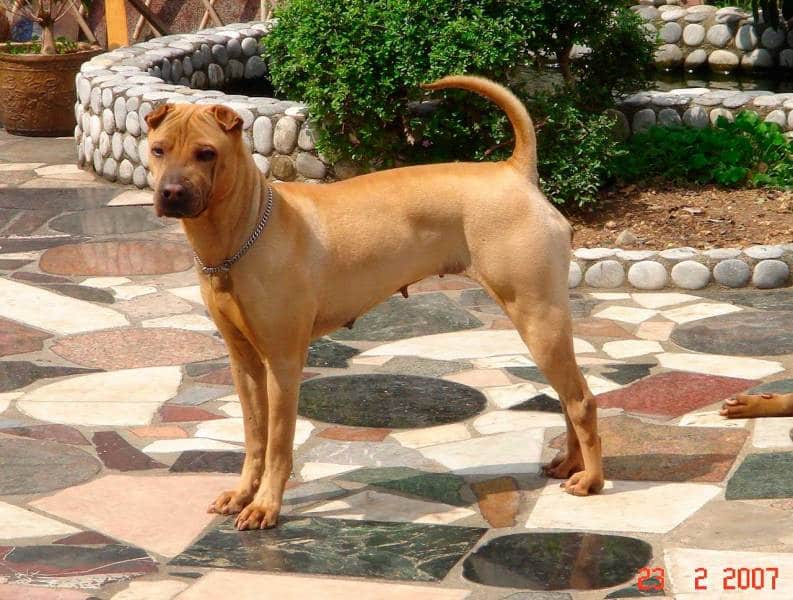
    Shar Pei

    The Shar Pei he is affectionate with his owner; he is quite reserved with strangers.

    Content

    History

    Dogs like breed Shar Pei have existed in southern China for centuries, perhaps from the Han dynasty around 200 A.C. Archaeologists have found statues from that period showing a dog similar to the Shar-Pei.. Later evidence includes a 13th century document referring to a wrinkled dog.

    The first Shar-Pei they were farm and working dogs. They watched over property and livestock, they hunted and herded flocks. The Shar-Pei was a guardian of the house otherwise, as well. His purple tongue, shared with another race, the Chow Chow, and their wrinkled skin was believed to ward off evil spirits. In addition to being working dogs, the Shar Pei fighting dogs were also popular. Their loose fur and rough fur made it difficult for the other dog to hold on to them..

    Life has always been hard in China, but for the Shar Pei became very dangerous after the communist takeover in the early 20th century. In the People's Republic of China, Dogs were a symbol of a decadent past and were virtually eliminated in the 1990s. 1950. Only a few remained in rural areas, as well as in Hong Kong (still under British rule at the time) and in Taiwan, plus a few that had been exported to the United States in 1966.

    In 1973, a Hong Kong breeder named Matgo Law appealed to Western dog aficionados to help save the breed, it was on the verge of extinction. The unusual wrinkled dogs sparked enthusiastic interest among Americans and quickly became "the" dog to have.. The Shar Pei were fully recognized by the American Kennel Club in 1992. After that first burst of popularity, have achieved a moderate level of interest, they are currently in the position 50, below the post 37 a decade.

    Physical characteristics

    It is a robust dog, solid, compact, shorthair. The head is large in proportion to the body. The skull is wide and flat, and the โ“˜stop, very little pronounced. The forehead and the orbital region are covered with abundant and fine wrinkles that extend downwards forming ; eyes are small, sunken, black or brown color in beige specimens. Ears are very small, equilateral triangle, and high insertion and facing forward, above the eyes. The skin forms folds throughout the body, which is a peculiarity of the breed. The tail is inserted high and its carriage in the shape of a trunk above the back is characteristic., without touching it.

    • Fur: thick, very short and straight, with a very visible hardness.
    • Color: black, brown, leonado, beige and cream.
    • Size: 40 – 51 cm..

    The Chinese line presents fewer wrinkles than the American one. Females are smaller in size than males.

    Character and skills

    The Shar Pei he's a little snobby. He's naturally reserved with people he doesn't know and stays aloof once they're introduced. Extensive socialization at a young age is necessary to prevent it from becoming too territorial or aggressive. Only family members receive the overwhelming devotion of this independent dog., alert and intelligent that watches the world go by in a calm and dignified way.

    One Shar Pei it's quiet in the house. It is a remarkable watchdog and rarely barks unless it is playing. If they hear it, you should go and see what has caught your attention. A short, quick walk meets your exercise needs.

    It is a strong and confident dog that learns fast, so don't put off training. The Shar Pei is independent and strong-willed. Be firm but never harsh or physical with him.. Teach him from the beginning to accept grooming procedures like trimming nails, clean ears and brush teeth. You never want you Shar Pei learn that you can be physically intimidated into stopping these procedures.

    like most dogs, to the Shar Pei He doesn't like to have his feet touched and he doesn't like to have his nails cut. That also applies to other procedures..

    The Shar Pei is a watchdog that has hunted and fought with other dogs. to most of the Shar Pei They do not like the company of other dogs., and are easily excited by aggression. A securely fenced yard will prevent you from conflict with other dogs or trying to expand your territory to include the entire block..

    Start training your puppy the day you bring him home. Even at eight weeks old, He is able to absorb everything you can teach him. Don't wait until you have 6 months to start train or have to deal with more stubborn dog. If possible, Take it to a trainer when you have between 10 and 12 weeks, and socializes, socialice, socialice. But, Note that many kinds of training puppies require certain vaccinations (such as kennel cough) stay up to date, and many veterinarians recommend limited exposure to other dogs and public places until puppy vaccinations (including rabies, distemper and parvovirus) They are completed. Instead of formal training, You can start training your puppy to socialize at home and among family and friends until immunizations are completed in the puppy.

    Talk to the breeder, Describe exactly what you want in a dog and ask for help choosing a puppy. Breeders see puppies daily and can make incredibly accurate recommendations once they know something about their lifestyle and personality. Whatever you want from a Shar Pei, look for one whose parents have nice personalities and who has been well socialized since the puppy's young age.

    Health of the ยซShar Peiยป

    All dogs have the potential to develop genetic health problems, just as all people have the potential to inherit a particular disease. Run, do not walk, from any breeder that does not offer a health guarantee on puppies, to tell you that the breed is 100 percent healthy and has no known problems, or tell you that your puppies are isolated from the main part of the home for health reasons. A reputable breeder will be honest and open about the breed's health problems and the incidence with which they occur in their lines..

    The Shar Pei have many health problems, and their owners can develop a close relationship with their vet. Concerns include hip and elbow dysplasia; patella dislocation; Hypothyroidism; eye problems such as entropy, retinal dysplasia and glaucoma, allergies and infections of the skin folds.

    A unique problem is a disease called c fever, a condition in which the dog experiences periodic fevers and its hock joints swell. Accompanying signs may include lethargy, vomiting, diarrhea and shallow breathing.

    Not all of these conditions are detectable on a growing puppy, and it is impossible to predict if an animal will be free of these diseases, so you must find a reputable breeder who is committed to raising the healthiest animals possible.. Must be able to produce independent certification that the dog's parents (and grandparents, etc.) have been examined for common defects and considered healthy for breeding. That's where health records come in..

    Careful breeders screen their breeding dogs for genetic diseases and breed only the healthiest, best-looking specimens., but sometimes mother nature has other ideas and a puppy develops one of these diseases despite good husbandry practices. Advances in veterinary medicine mean that in most cases dogs can still live a good life. If you are going to have a puppy, ask the breeder about the ages of the dogs in their lines and what they died of.

    Remember that after you have welcomed a new puppy into your home, has the power to protect you from one of the most common health problems: the obesity. Keep a Shar Pei with proper weight is one of the easiest ways to extend your life. Make the most of your preventive skills to help ensure a healthier dog for life.

    Care of the ยซShar Peiยป

    Grooming requirements depend on each Shar Pei. Weekly brushing can meet the needs of both the "short-haired" variety and the "brushed" type. (slightly longer), but some Shar Pei of either type can be prone to skin problems. Dogs with skin problems may need a weekly bath and daily brushing.

    All the Shar Pei need regular wrinkle care. Wrinkles should be cleaned with a damp cloth and then dried completely to prevent infection.. Do not oil the skin.

    The Shar Pei they have small ears, tight and triangular that predispose them to chronic ear problems because there is not enough air circulating in the narrow ear canal. Although it is not so easy to clean the ears of a Shar Pei as it is for most races, regular cleaning should be done to help prevent recurrent yeast or bacterial infections.

    Bathe your dog as you like or only when it gets dirty. With the gentle dog shampoos available now, can bathe a Shar Peiweekly if you wish without damaging your coat.

    The rest is basic care. Trim nails as needed, usually every few weeks. Brush your teeth for general good health and fresh breath.

    Characteristics "Shar Pei"

    Coexistence is important that you have with your new friend. Before considering the acquisition of a dog of the breed "Shar Pei" you know certain factors. Not all breeds of dogs are apt to live in an apartment, you must take into account his character, their need for exercise, their interaction with other pets, their care and if you have small children, their level of tolerance towards them.

    Adaptation โ“˜

    3,0 of 5 stars (based on 1 review)

    friendly dog โ€‹โ€‹โ“˜

    2,0 of 5 stars (based on 1 review)

    hair loss โ“˜

    2,0 of 5 stars (based on 1 review)

    Affection level โ“˜

    5,0 of 5 stars (based on 1 review)

    Need for exercise โ“˜

    2,0 of 5 stars (based on 1 review)

    Social need โ“˜

    3,0 of 5 stars (based on 1 review)

    Home โ“˜

    4,0 of 5 stars (based on 1 review)

    Toilet โ“˜

    3,0 of 5 stars (based on 1 review)

    Friendly with strangers โ“˜

    1,0 of 5 stars (based on 1 review)

    barking โ“˜

    1,0 of 5 stars (based on 1 review)

    Health โ“˜

    5,0 of 5 stars (based on 1 review)

    Territorial โ“˜

    3,0 of 5 stars (based on 1 review)

    Cat friendly โ“˜

    3,0 of 5 stars (based on 1 review)

    Intelligence โ“˜

    5,0 of 5 stars (based on 1 review)

    Versatility โ“˜

    3,0 of 5 stars (based on 1 review)

    Child friendly โ“˜

    1,0 of 5 stars (based on 1 review)

    Surveillance โ“˜

    3,0 of 5 stars (based on 1 review)

    joy โ“˜

    3,0 of 5 stars (based on 1 review)

    Images "Shar Pei"

    Photos:

    1 – This is a typical photo of a bone mouth traditional Shar-Pei. CH Dali Pinky, Hong Kong Kennel Club Champion by No machine-readable author provided. Inuyasya1106 assumed (based on copyright claims). / Public domain
    2 – Shar_Pei_female_of_7_months._Chinese_line by Mcarrillo / CC BY-SA
    3 – Shar Pei by https://pxhere.com/es/photo/1267570
    4 – Shar Pei by https://pxhere.com/es/photo/1169173

    Videos "Shar Pei"

    Type and recognitions:

    • FCI CLASSIFICATION:
    • Group :
    • Section : . .

    Federations:

    • FCI – Pinscher and Schnauzer-Molossoid type dogs – Swiss Mountain Dogs and Cattledogs. Section 2.1 Molossoid, mastiff type. โ“˜
    • AKC – Non-Sporting โ“˜
    • ANKC – Group 7 (Non-Sporting) โ“˜
    • CKC – Group 6 – Non-Sporting โ“˜
    • โ€‹KC – Utility dog โ“˜
    • NZKC – Non-Sporting โ“˜
    • UKC – Northern Breed โ“˜

    FCI breed standard "Shar Pei"

    Origin:
    China

    Date of publication of the valid original standard:
    14.04.1999

    Use:

    Hunting and guard dog.


    General appearance:

    This is a medium-sized dog, Active, compact, square, short loin. Wrinkles of the skull and cross, Its small ears and hippo-like snout give it a unique appearance.. Males are more robust than females.

    IMPORTANT PROPORTIONS: HeightShar Pei, from the cross to the ground, is approximately equal to the length of the body, from the tip of the shoulder to the tip of the buttock, especially in males.

    The length of the nose to the naso-frontal depression is approximately equal to that of the naso-frontal depression to the occiput.


    Behavior / temperament:

    This is a calm animal, independent, loyal and affectionate with his family.

    Head:

    It's rather big, in proportion with the body. Wrinkles that form on the forehead and cheeks extend downward to form the double chin.

    Cranial region:
    • Skull: Flat and spacious.
    • Depression links (Stop): Moderate.

    facial region:

    • Truffle: It is great, wide, preferably black, but any other color that harmonizes with the coat color is allowed. The nostrils are wide open.
    • Snout: It is characteristic of the breed. Width, from the root to the tip of the nose, no sign of decline. The lips and the upper part of the muzzle are very full. The presence of a bulge in the nose is allowed.
    • Mouth: Language, the palate, the gums and lips are preferably bluish black. Pink spotted tongue allowed. Solid pink tongue is considered highly inappropriate. In dogs with diluted colored fur, the tongue is solid lavender.
    • Jaws / Teeth: The jaws are strong, with a perfect scissor joint (The upper incisors overlap the lower incisors in close contact and are at right angles to the jaws.). The fleshiness of the lower lip should not be so excessive as to interfere with the function of the jaws..

    EYES: Are dark, almond shaped and frowning look. Lighter color is allowed in dogs with diluted coat. Nor the skin around the eyes, nor the folds, nor the hair, must impede normal function of the eyeball or eyelid. Any indication of irritation of the eyeball, the conjunctiva or the eyelids is considered highly undesirable. There must be no presence of entropion.

    EARS: Very small, rather thick, equilateral triangular shape. The tips are slightly rounded. High implementation, with the tips pointed towards the eyes. Present well forward over the eyes; they are well separated and well attached to the skull. Erect ears are highly undesirable.

    Neck:

    Medium length, strong, well implanted in the shoulders. Loose skin under the neck should not be excessive.

    Body:

    The presence of body skin folds in adult dogs is considered highly undesirable, except at the cross and at the tail, where the folds must be moderate.

    • top line: Descend slightly behind the cross, then he stands up a little on his back.
    • Back: Short and strong.
    • Pork loin: Short, width, slightly arched.
    • Rump: Rather flat.
    • Breast : Broad and deep; the sternum region reaches the elbow. bottom line: Rises slightly below the back.

    Tail:

    Thick and round at the base; gradually thin to a fine point. Well established, a distinctive feature of the breed. Can be tall and hunched, carried in a closed curl, hunched over or falling to one side or the other of the back. The absence of tail or the cut tail are highly undesirable.

    Tips

    PREVIOUS MEMBERS: Straight, of moderate length, for strong bones. There is no presence of wrinkles in the forelimbs.

    • Shoulder: Muscular, well established and inclined.
    • Metacarpus: Slightly sloping, strong, รโ€œรหœรโ€˜รลกรหœรโ€ข.
    • Previous feet: Moderate in size, compact; they are not crushed.
      Fingers have strong joints. There is no presence of spurs on the hind feet.

    LATER MEMBERS: They are muscular, strong, moderately angulated. Seen from the back, They are perpendicular to the ground and parallel to each other.. The presence of wrinkles on the thighs, the legs, the metatarsals, as well as thick skin on the hocks are undesirable.

    • Hocks: Very low.
    • Hind feet: Moderate in size, compact; they are not crushed. Fingers have strong joints. There is no presence of spurs on the hind feet.

    Movement:

    Jogging is the favorite movement. It's free, agile, balanced, with good range in the forelimbs and strong momentum of the hindlimbs. When the dog increases speed, feet tend to converge on a center line. Walking on stilts is undesirable.

    Mantle

    • Fur: It is a distinctive characteristic of the breed: shorthair, tough and piggy. On the trunk, the coat is straight and separated, but in the extremities it is more stuck. There is no presence of an internal layer of hairs. Hair length can vary between 1 to 2,5 cm.. It should never be trimmed.
    • Color: All solid colors, except for the White, are accepted. The tail and back of the thighs are often lighter in color. Darker shading is allowed along the back and on the ears.


    Size and weight:

    • Height to the cross: 44 to 51 cm. (17,5 to 20 inches).


    Fouls:

    Any deviation from the aforementioned criteria is considered as a fault and the severity of this is considered to the degree of the deviation to the standard and its consequences on the health and well-being of the dog..

    SERIOUS FAULTS:

    • Joint not presented in the form of scissors (as a transitional measure, very light upper prognathism is allowed).
    • Pointed snout.
    • Spots on the tongue (except pink spots).
    • big ears.
    • Low set tail.
    • Coat over 2,5 cm..

    FALTAS DESCALIFICANTES:

    • Aggressiveness or extreme shyness.
    • Any dog โ€‹โ€‹showing clear signs of physical or behavioral abnormalities.
    • Flat head front, with pronounced higher prognathism; lower prognathism.
    • Solid pink tongue.
    • Inner bent lower lip, preventing the bite.
    • Round and bulging eyes; entropion or ectropion.
    • Skin, folds or hair that impede normal eye function.
    • erect ears.
    • Absence of tail or tail short of birth.
    • Presence of thick folds of skin on the trunk and extremities (except at the cross and the tail).
    • Non-solid color (albino, striped, with patches, with stains, black and fire color, chair-shaped coloring).

    WARNING: Any artificial physical alteration made to theShar Pei (especially on the lips and eyelids) eliminate the dog from competition.


    N.B.:
    • Males should have two normal-appearing testicles fully descended into the scrotum..
    • Only functionally and clinically healthy dogs, with the typical conformation of the breed, should be used for parenting.

      TRANSLATION: IRIS Carrillo (Federation of Puerto Rico). Official language: IN.
      Revision: SR. Jorge Nallem.

    Source: F.C.I - International Cynological Federation

    Alternative names:

    1. Cantonese Shar-Pei (English).
    2. Shar-peรฏ, sharpeรฏ (French).
    3. Shar-Pei (German).
    4. Shar-pei (Portuguese).
    5. Sharpei (espaรฑol).