โ–ท The world of Pets: Dogs, cats, birds, reptiles, amphibians

Spiny-tailed lizards
- Uromastyx

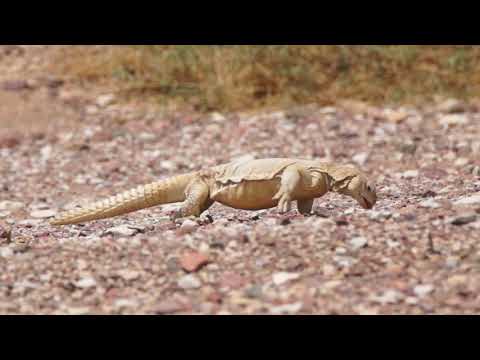
The Spiny-tailed lizards They have perfectly adapted to their natural habitat and the conditions that prevail there, like heat and drought.
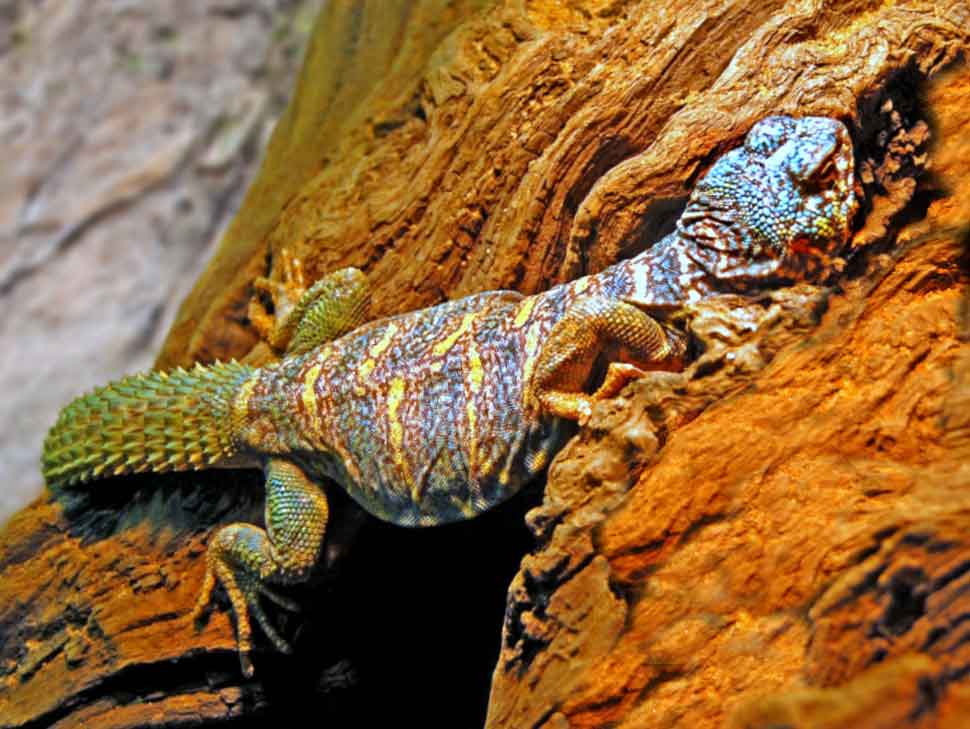
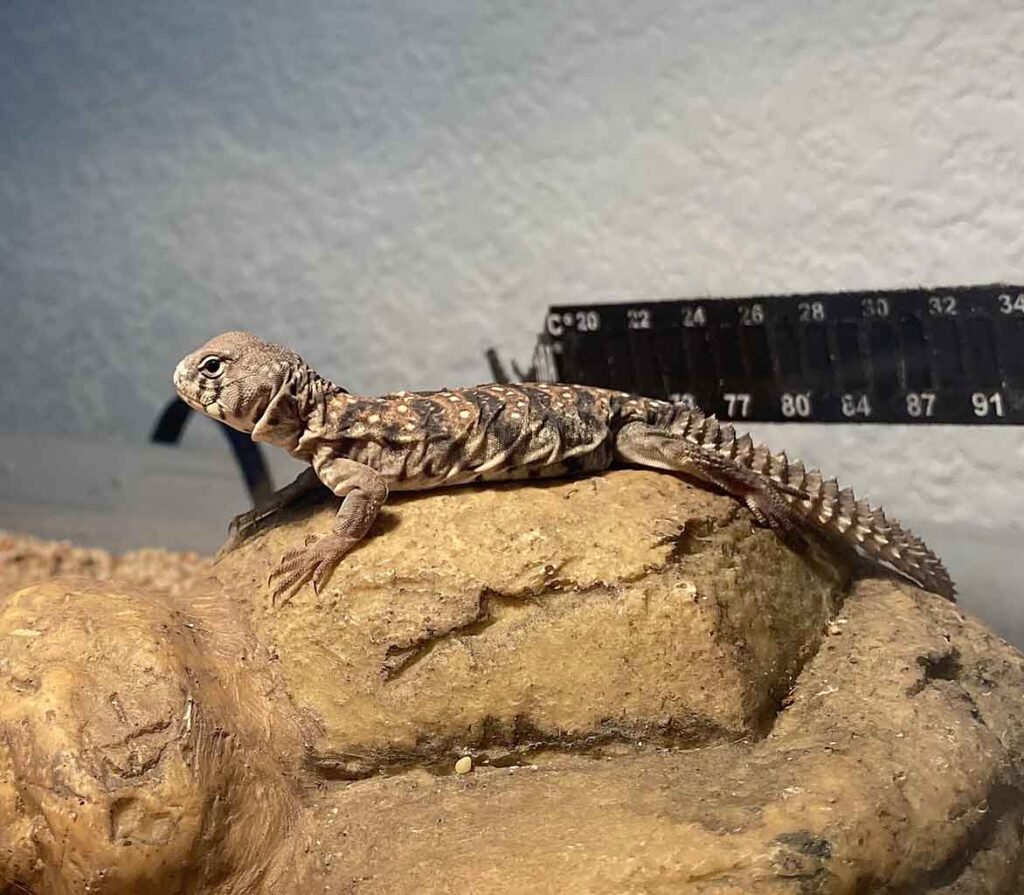
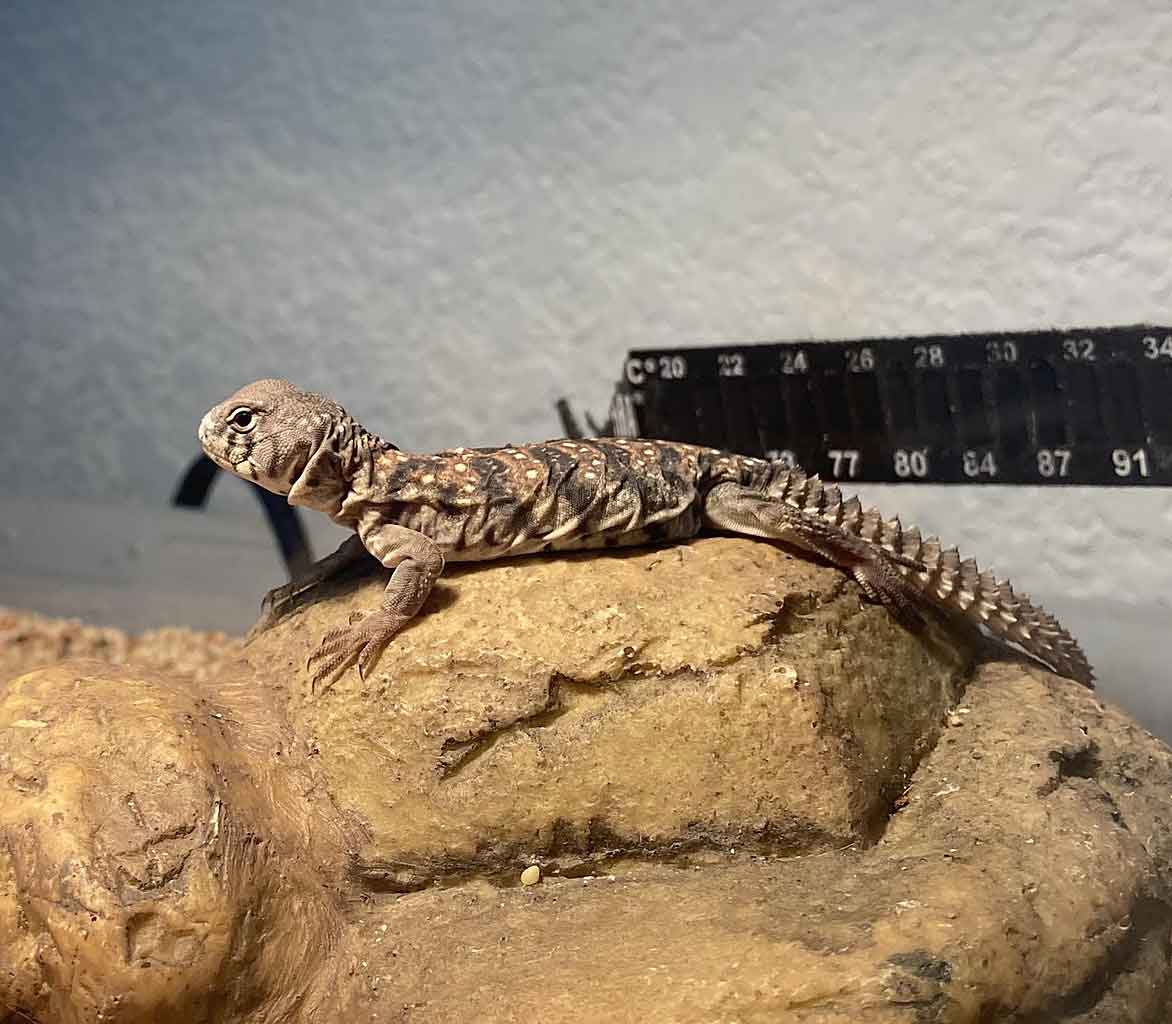
Ocellated spinytail
Uromastyx ocellata juvenile – Deadbilly6, CC BY-SA 4.0, via Wikimedia Commons

Content

The group of Spiny-tailed lizards (Uromastyx) who inhabit the desert comprises near 20 African and Asian species. The Spiny-tailed lizards They have perfectly adapted to their natural habitat and the conditions that prevail there, like heat and drought. Their natural behavior includes the excavation of complex systems of passageways and burrows to which they are removed when necessary..

Among the most popular species are the Ocellated spinytail (Uromastyx ocellata), the Ornate mastigure (Uromastyx ornata), the Egyptian spiny-tailed lizard (Uromastyx aegyptis), the North African mastigure (Uromastyx acanthinura) and Saharan spiny-tailed lizard (Uromastyx geyri). The animals are very demanding to maintain and are not suitable for beginners in terraristics..

All species of Spiny-tailed lizards are subject to species protection legislation. Are subject to registration and proof of origin is required. Buying wild-caught specimens in favor of captive-bred should always be avoided.

Sex differences

Especially in young animals, the sexes are often difficult to distinguish. Sexually mature males usually have distinctive pores on the inside of the thighs, a thickened tail base and, depending on the species, more intense coloration in some parts of the body.

Behavior

The Spiny-tailed lizards show very different levels of intraspecific aggression. Animals can be kept alone or in pairs, in compatible species (for example, the Saharan spiny-tailed lizard – Uromastyx geyri) also in small harems (a male with 2 – 3 females) or groups of females. Animals should be about the same size. Males are usually incompatible with each other. If aggressions occur during socialization, animals must be separated immediately and, as experience has shown, permanently.

The Spiny-tailed lizards are diurnal.

The "Spiny-tailed lizards" in captivity

Terrarium

The minimum dimensions of a terrarium for Spiny-tailed lizards are given in relation to head-torso length (tailless). For each additional lizard, the floor area should be increased by 15 %. For two animals of a medium-sized species such as the Saharan spiny-tailed lizard (Uromastyx geyri), a terrarium of at least 100 x 80 x 60 cm.. But, in the interest of active animals, terrariums should be considerably larger.

Initial team
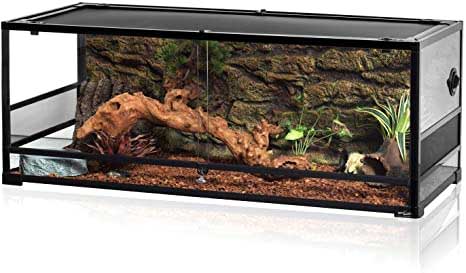
Reptile terrarium
Reptile terrarium
  • Spotlight with UV component and basic lighting
  • Spray bottle for terrariums or irrigation system
  • Thermometer and hygrometer
  • Substrate (mixture of clay and sand)
  • Furniture, for example, estate, caves, stones
  • Water bowl
  • Insects, mineral preparation

Terrarium temperature

Like warm-blooded animals, the Spiny-tailed lizards need a temperature gradient in the terrarium that allows them to reach their optimal body temperature. The ideal is to imitate in the terrarium the natural conditions of the dry regions of Africa and Asia, with areas of bright sun and areas of cooler shade. As such, a powerful heat radiator with UV components is installed on one side of the terrarium, that guarantees strong localized heating at 45 – 50 ยฐC. The other zones should have a temperature of 25 to 30 ยฐC. At night, the temperature of the terrarium should drop slightly for many species.

Terrarium humidity

The humidity should be between the 30 and the 40 %, depending on the species, and may increase slightly at night. This can be achieved by spraying the terrarium with warm water or using a sprinkler system..

Important: In a small area of รขโ‚ฌโ€นรขโ‚ฌโ€นthe terrarium, the substrate should always be slightly moist. Here too wet and collapse-proof burrows should be created. Precise thermometers and hygrometers are needed to measure temperature and humidity.

Terrarium lighting

For proper maintenance of the species, the Spiny-tailed lizards need a lot of light, with a daily lighting period of 12 to 14 hours. At the same time, each animal must have access to resting areas of sufficient size at all times. In addition to a high intensity of light, an adequate supply of UV-A and UV-B radiation must be ensured.

The Spiny-tailed lizards need a lot of ultraviolet light. How light sources emit less and less UV radiation over time (see manufacturer's instructions), must be replaced regularly. Lighting should be placed out of the reach of animals (attention: normal glass is impervious to UV-B rays) or animals must be protected from burns with a closed wire basket.

Terrarium furniture

Rear wall terrarium
Thin back wall terrarium 120 x 60 cm brown resin

Stable rock constructions (also imitations), roots and/or branches have proven suitable as furniture. The furniture must be well installed in the terrarium so that the animals can not be harmed by digging underneath, for example. It also, various hiding places (cork tubes, caves) and a shallow bowl of water, in which animals can also bathe, are part of the basic equipment.

A mixture of sand and clay without dust is suitable as a substrate, that you must have at least 20 cm height for small species, so that animals can dig tunnels as they would in nature.

Food

In the wild, the Spiny-tailed lizards feed on plants and animals.

While the proportion of food of animal origin should remain among the 50 and the 80 % for young animals, adult animals should be fed a 80 – 90 % of plant foods and only receive food of animal origin 1 – 2 times a week.

The right foods are the grass of the meadows (for example, dandelion, chickweed), romaine lettuce and very small amounts of zucchini, grated carrots or cucumbers. Fruit should not be offered.

Most lizards readily accept a mixture of seeds (for example, mixtures for exotic or large parakeets). Live insects, like grasshoppers, cockroaches or crickets, sprinkled with a mineral preparation, are suitable as animal feed to prevent deficiency symptoms.

Mealworms should be avoided, the zophobas, wax moths or baby mice for their high fat content. Fresh water must be available at all times.

Attention: the Spiny-tailed lizards tend to become obese.

Care

Food scraps, molts and droppings should be removed daily. The water bowls should also be cleaned daily and filled with fresh water.

Animal health must be monitored daily. The most common health problems in Spiny-tailed lizards are skin mites, lip crust, fatty degeneration and softening of the bones. In case of anomalies, a reptile vet should be consulted. It is recommended to perform fecal examinations once a year to detect endoparasites..

The intestinal flora of Spiny-tailed lizards usually includes salmonella, that are harmless to animals, but they can cause disease in humans. Simple hygiene measures (wash your hands well, etc.) can reliably prevent infection.

Acclimatization and handling

Reptiles are observation animals and company NO. In the first days in his new home, animals need to rest to get used to their new environment.

Animals should only be captured when necessary. The easiest way to do this with young animals is with a pitcher or landing net.. Larger animals can be held with the bare hand behind the head.

  • Be careful: the Spiny-tailed lizards can bite hard.

Basically, lizards should never be held or fixed by the tail.

Special features

Depending on its origin, the Spiny-tailed lizards hibernate to a greater or lesser extent in nature, during which they are lethargic and do not usually eat. For selective hibernation, lighting duration can be gradually reduced in autumn until turned off. After 1 or 2 months of actual hibernation, lighting gradually increases again. Before starting hibernation, the health of the animals should be checked by a veterinary fecal examination.

Videos "Spiny-tailed lizards"

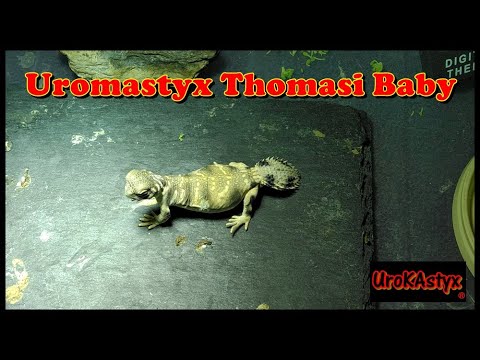
Uromastyx Thomasi Baby (Rambo)

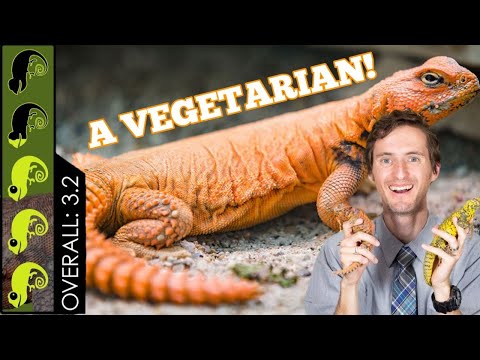
Uromastyx, The Best Pet Lizard?

Alternative names:

1. Spiny-tailed lizards, Uromastyces, Mastigures, Dabb lizards (English).
2. Lรฉzards ร  queue รฉpineuse, Uromastyces, Mastigures, Lรฉzards Dabb (French).
3. Stachelschwanz-Eidechsen, Uromastyces, Mastiguren, Dabb-Eidechsen (German).
4. Lagartos de cauda espinhosa, Uromastyces, Mastigures, Dabb lagartos (Portuguese).
5. Lagartos de cola espinosa, Uromastyces, Mastigures, Lagartos Dabb (espaรฑol).

List of "Spiny-tailed lizards" for maintenance in captivity

We must make sure that our "Spiny-tailed lizards" have not been caught in their natural environment. There are many protected species, therefore, It is important that the animals that we are going to acquire come from captive breeding.

1 Egyptian spiny-tailed lizard
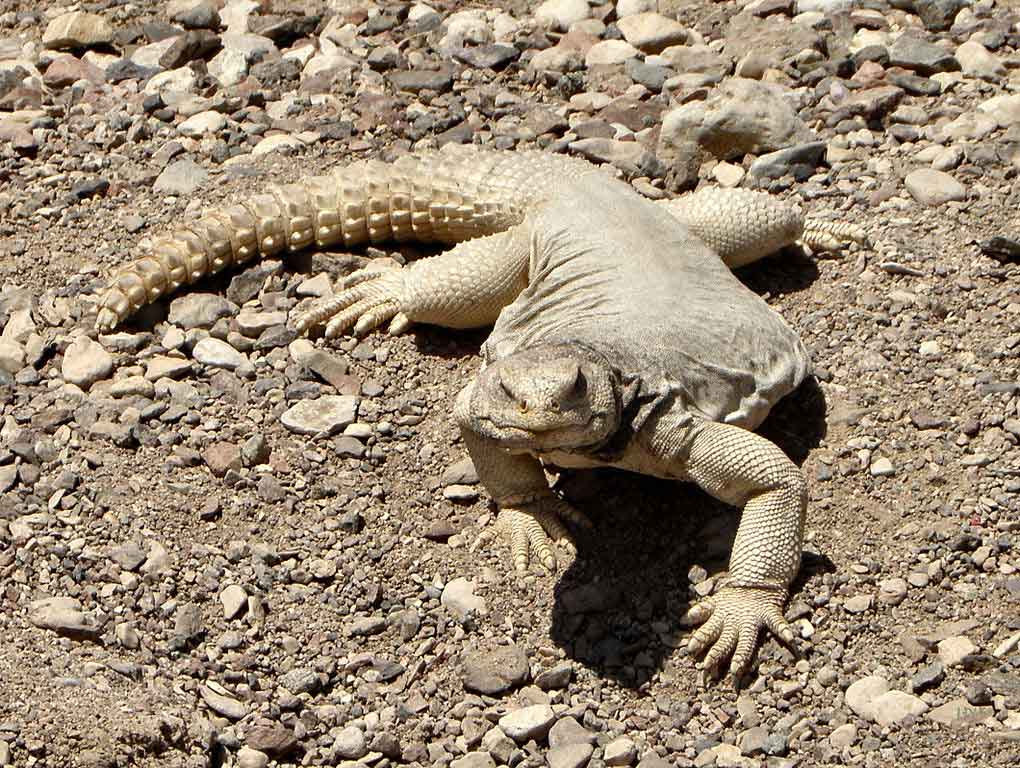
Egyptian spiny-tailed lizard

The Egyptian spiny-tailed lizard It is the largest species of Spiny-tailed lizards

Egyptian spiny-tailed lizard – Ethan Ferman, CC BY-SA 3.0, via Wikimedia Commons

Characteristics

The Thorny tail

... Read more

2 Ocellated spinytail
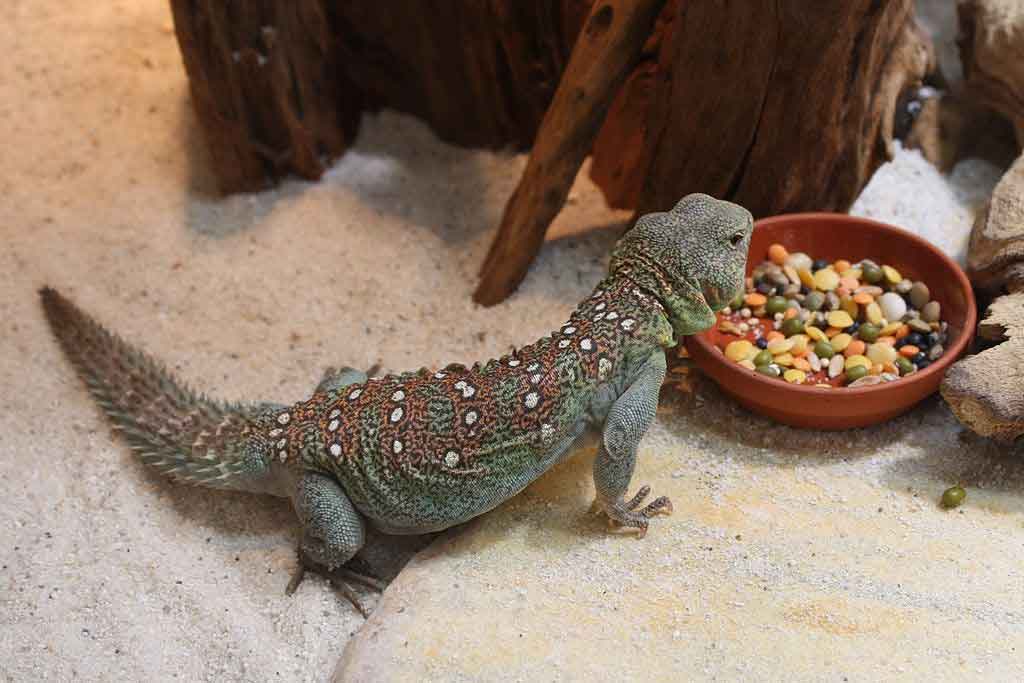
Tail hawthorn ocellated

The Ocellated spinytail is native to northeastern Africa, where it can be found in southern Egypt, Sudan, Eritrea, Djibouti, Ethiopia (near the border with Somalia) and north-western Somalia.

... Read more

3 Ornate mastigure

Ornate mastigure

The Ornate mastigure (Uromastyx ornata) is included in the Appendix 2 of the Washington Convention on International Trade in Endangered Species of Wild Fauna and Flora.

Ornate mastigure (Uromastyx ornata)

... Read more

4 North African mastigure
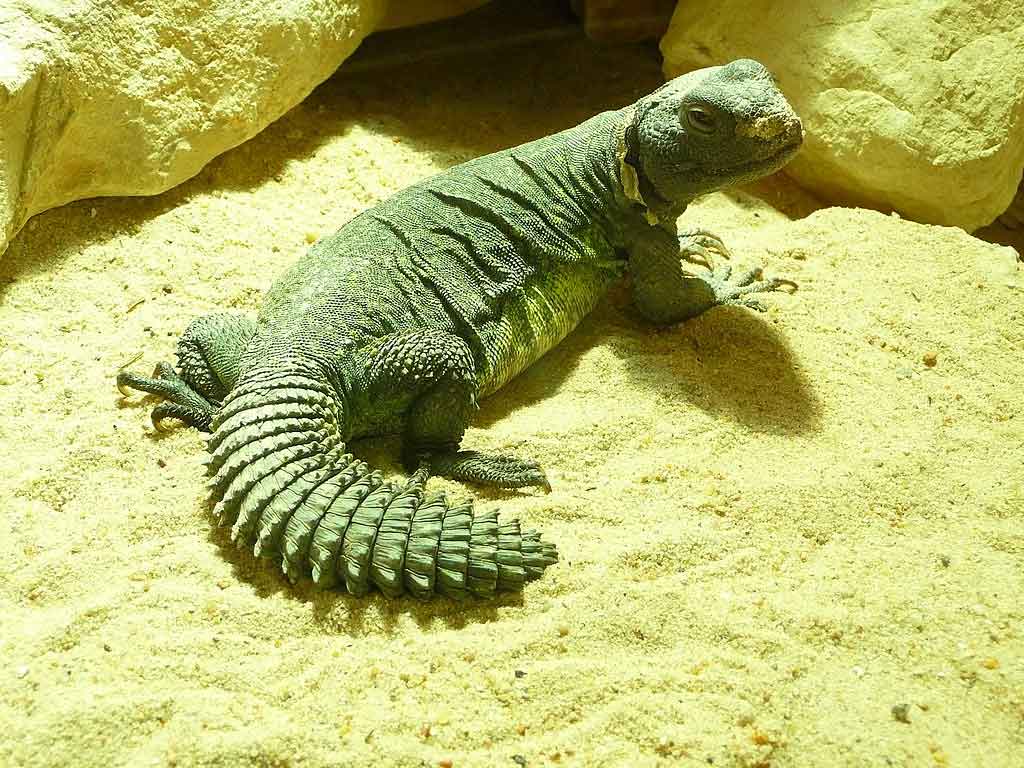
North African mastigure

The North African mastigure It is one of the most representative reptiles of the Sahara desert. It is medium in size: can measure more than 45 cm and weigh around

... Read more

5 Saharan spiny-tailed lizard
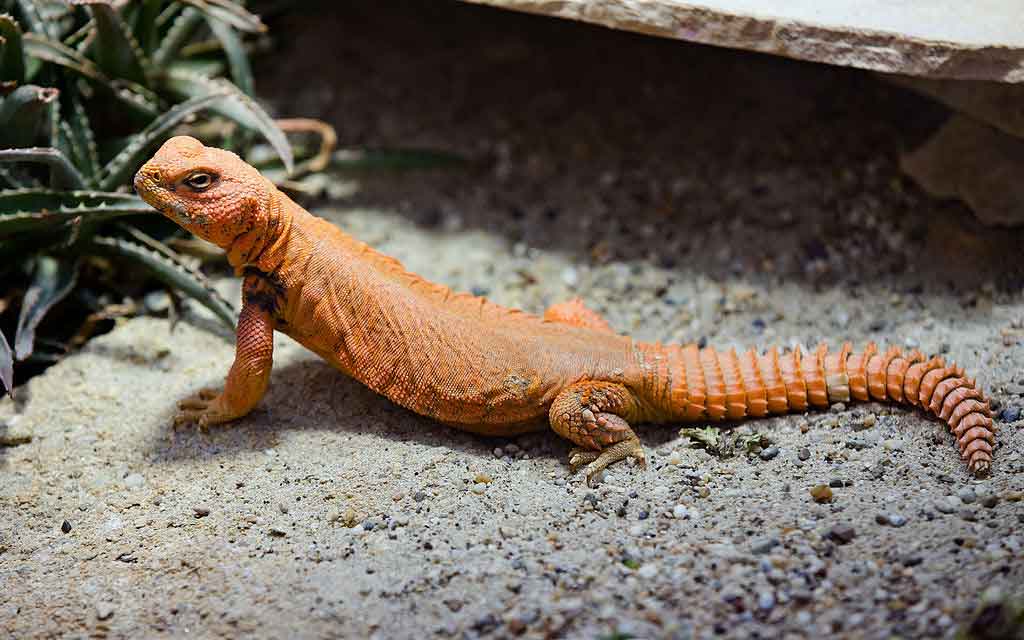
Saharan spiny-tailed lizard

The Saharan spiny-tailed lizard it is a relatively small and slender species for the genus, with an average total length (including the queue) of about 34 cm..

ESPINOSA COLA LAGARTO

... Read more

6 Spiny-tailed lizards

Ocellated spinytail

The Spiny-tailed lizards They have perfectly adapted to their natural habitat and the conditions that prevail there, like heat and drought.

Uromastyx ocellata juvenile – Deadbilly6, CC

... Read more

โ–ท The world of Pets: Dogs, cats, birds, reptiles, amphibians

Ocellated spinytail
- Uromastyx ocellata

The Ocellated spinytail is native to northeastern Africa, where it can be found in southern Egypt, Sudan, Eritrea, Djibouti, Ethiopia (near the border with Somalia) and north-western Somalia.
Tail hawthorn ocellated
Uromastyx ocellata (male) 3-4 years in terrarium – RaSaX, CC BY 3.0, via Wikimedia Commons

Content

Characteristics:

The Ocellated spinytail reaches a total length of 30 cm., with a head-torso length of some 16,5 cm and a tail length of 13,5 cm.. So, is one of the smallest species in the genus of Spiny-tailed lizards. It is, because, of one of the smallest species in the genus of Spiny-tailed lizards.

A characteristic feature of this species is the back decorated with white spots on the eyes on a reddish background.. Males tend to be more colorful. Its head and rump are reddish or greenish in color. The belly usually remains white or yellowish, especially in females. Coloration may vary, depending on heat and light exposure. The claws of the Ocellated spinytail they are especially pronounced for digging underground burrows in which it remains overnight as a diurnal animal.. The tail is endowed with pointed scales. Serves as a defense against predators.

The Ocellated spinytail lives both alone and in smaller groups. They do not hibernate but, during the winter months, if they do it.

Terrarium:

Savannah terrarium (dry terrarium subtype) with excavable substrate of 15-30 height cm. Sturdy stone climbing structures and caves below. The recommended terrarium size to keep the Ocellated spinytail (Uromastyx ocellata) adult in pairs is about 100 x 70 x 50 cm..

  • Pulverize 2-3 times a week in the terrarium.
  • Temperature 27-30ยฐC, at night 16-20ยฐC, sunny islands 40-45ยฐC.
  • Humidity 50-60%.
  • Up to lighting 14 hours. UV irradiation required.

Maintenance:

It is recommended to keep the Ocellated spinytailto (Uromastyx ocellata) in pairs. High temperatures are important for digestion, moderate feeding against fat degeneration of the organs. Hibernate during 3 meses a 10-15ยฐC.

Diet:

Vine and banana leaves, sunflower seeds, cereal grains, corn, rice, millet. Rarely animal feed.

Behavior:

To the Ocellated spinytail (Uromastyx ocellata) likes to dig and climb well. This species defends themselves with tail blows. Like all species of Uromastyx, excrete excess salts through the nasal glands.

Reproduction:

The Ocellated spinytail (Uromastyx ocellata) puts between 10 and 23 eggs.

Buy a "oversized spiny tail"

The price of a Ocellated spinytail bred in captivity in the exotic animal market ranges from 250 – 300 EUR.

Alternative names:

1. Ocellated spinytail (English).
2. Fouette-queue ocellรฉ (French).
3. Geschmรผckte Dornschwanzagame (German).
4. Cauda espinhosa ocelada (Portuguese).
5. Cola espinosa ocelada (espaรฑol).

โ–ท The world of Pets: Dogs, cats, birds, reptiles, amphibians

Ornate mastigure
- Uromastyx ornata

The Ornate mastigure (Uromastyx ornata) is included in the Appendix 2 of the Washington Convention on International Trade in Endangered Species of Wild Fauna and Flora.
Ornate mastigure
Ornate mastigure (Uromastyx ornata) – Hectonichus, CC BY-SA 4.0, via Wikimedia Commons

Content

Distribution

Its natural range is the northeast of the Red Sea, from the Sinai Peninsula in the north to northern Yemen in the south.

This species does not occur in pure sandy deserts. They inhabit the cracks of rocks and caves of their biotopes or use burrows dug by themselves.

Characteristics

The Ornate mastigure reaches a maximum total length of 37 cm., although animals in captivity rarely exceed 32 cm..

Is a sexual dimorphism recognizable, males being much more colorful than females. But, are common to both sexes yellow dots or transverse bands that are visible from the neck on the back to the base of the tail. It also, females have a rather smooth cream coloration in the throat and belly.

Terrarium

The large enclosures are suitable for keeping this species of lizard, dry and spacious terrariums are suitable. I believe that 140 x 60 x 60 (long, width, alto) is the absolute minimum size for a single animal/pair. It's not always easy to find a harmonious partner, but most of the time the animals harmonize very well, and you can keep them as a couple throughout the year.

But, it should be possible to separate them at any time. If you don't want to breed, to the Uromastyx ornata can also be maintained individually, since they are actually solitary by nature. This avoids conflicts within the species.

The most colorful males are especially suitable for this, as they are usually more confident than females, but even a female does not feel alone, but it may happen that it forms unfertilized eggs without a male, which can lead to problems when putting them.

Construction of terrarium

The most suitable as substrate is a mixture of sand and mud suitable for excavation. To create additional space it makes sense to design the rear and side walls of the tank with โ€œrock wallsโ€ modeled from polystyrene., adhesive for tiles and epoxy resin. Other suitable furniture elements are secure stone structures with quarry slabs, the roots, cork tubes and various climbing branches.

It is also important to create several hiding places, but they must be controllable at all times without having to completely disassemble the terrarium. To avoid molting problems, a part of the terrarium may also have a slight moisture of the substrate, but not too much. You also have to spray from time to time. A bowl of water completes the installation.

The Temperatures should be 28-35ยฐC in summer, with 12-14 hours of illumination, and up to 60ยฐC in the sunning place. At night, the temperature can drop to room temperature. In winter, lighting is gradually reduced to 8 hours, and slowly increases again after a few 8-12 weeks. In winter, the temperature should be 20-28ยฐC during the day and 18-20ยฐC at night. A sunny spot should reach about 40-45ยฐC for about 4 hours in this time.

Food

The Ornate mastigure they have an omnivorous diet, that is to say, eat both plant and animal foods.

Should not be fed animal feed too often, once or twice a week is enough. An exception must be made with pregnant females, which must be given a lot of animal protein. You can also feed them more โ€œunhealthyโ€ treats., such as rose beetles or wax moth larvae.

It can be given fresh vegetable food to adult animals about 3-4 times a week. Grain mixture and dried herbs/flowers can always be available to animals. But, in the case of particularly voracious specimens, you also have to ration this food to prevent them from getting fat.

All common types of insects available in specialized stores are suitable as animal feed, as well as self-caught prairie plankton. Grasshoppers, crickets and cockroaches are the most suitable.

All insects should be fed a high-quality diet 1-2 days before feeding, and dusted with a high-quality calcium vitamin mix about once a week. The fat larvae of the wax moth, zophobas and rose weevils should rarely serve as food as treats.

Young animals can be fed green food and insects daily. Subadults feed on green food on a daily basis, of insects on alternate days and a weekly fast.

The cereal mixture adapted to size is also always available for young animals and subadults.

Reproduction

Depending on geographical location and weather conditions, the mating season occurs in the spring months of March and April. Sexual maturity occurs among 3 and 5 years of age and probably a little earlier in females. During reproduction they are oviparous, the female usually buries some 15 – 20 eggs in the sand and after an incubation period of some 3 – 4 months the pups are born.

For sale Ornate mastigure

The price of a Ornate mastigure bred in captivity in the exotic animal market ranges from 350 – 400 EUR.

โ–ท The world of Pets: Dogs, cats, birds, reptiles, amphibians

Egyptian spiny-tailed lizard
- Uromastyx aegyptia

The Egyptian spiny-tailed lizard It is the largest species of Spiny-tailed lizards
Egyptian spiny-tailed lizard
Egyptian spiny-tailed lizard – Ethan Ferman, CC BY-SA 3.0, via Wikimedia Commons

Content

Characteristics

The Egyptian spiny-tailed lizard (Uromastyx aegyptia) attains a head-torso length of up to 75 cm with a body length of 45 cm., which makes him the greatest representative of the Spiny-tailed lizards. Adult animals reach a weight of 1,5 – 1,6 kg.

There are two subspecies of Egyptian spiny-tailed lizard: Uromastyx aegyptia aegyptia and Uromastyx aegyptia microlepis. In both subspecies the body scales are remarkably small and smooth.. The Egyptian spiny-tailed lizard can change the color of his body. At high temperatures it is light brown to light gray in color and at low temperatures it can turn a dark gray., almost black. The juvenile color consists of 5-6 crossed yellow bands on a gray-brown background color. In the Uromastyx aegyptia microlepis, there are also slightly yellow or green animals.

Distribution

The Egyptian spiny-tailed lizard is found in North Africa, from Algeria to Egypt, in sinai, Israel, Jordan and on the Arabian Peninsula, which makes it the only species of Spiny-tailed lizards which is common in both the Asian and African continents.

The "Egyptian spiny tail" in captivity

Terrarium

The Egyptian spiny-tailed lizard It is the largest species of Spiny-tailed lizards and therefore require a larger environment. A baby or a young (up to about 3 or 4 years of age), can be housed in a temporary terrarium 120 x 60 x 60 cm.. But, an adult will need a much larger terrarium.

We recommend a terrarium of about 150 x 90 x 60 cm o 180 x 75 x 60 cm.. You will have to make this terrarium to measure because there are no commercial terrariums with these dimensions.

Food

In early times nicknamed as pure herbivores, it soon became clear that the Egyptian spiny-tailed lizard (Uromastyx aegyptia) they also like to eat foods of animal origin. It is not strange that each Egyptian spiny-tailed lizard develop your own preferences over time. They can get excited about all kinds of worms (zophobas, meal worms, caterpillars of tebo), or preferring grasshoppers and crickets and disdaining altogether the mentioned worms.

Of course, the supply of calcium and vitamins should never be neglected with all reptiles. Sprinkle green food daily with cuttlefish powder and animal food twice a week with vitamins.

The reaction to food given with tweezers is particularly noticeable: Disliked insects are repelled with a clear shake of the head and closing of the eyes. It also, feeds on various grains and herbs such as lentils, oats, corn, millet, various seeds, peanuts (use sparingly), dried carrots (available at pet stores), carrot herb or kitchen herbs. It also, of course, there are fresh green food every day: here you can resort to high quality salads (lamb's lettuce or arugula), but also prairie vegetables such as dandelion or chickweed. Instead of the salad, homemade sprouts are also very popular. It also, the little ones seem to be magically attracted to the color yellow, so dandelion flowers seem to be quite the event.

Buy an ยซEgyptian spiny tailยป

The price of a Egyptian spiny-tailed lizard at the exotic animal market, captive bred, ranges between 200 – 250 euros.ยด

Videos "Egyptian spiny-tailed lizard"

Uromastyx Aegyptia

Uromastyx aegyptian foraging

โ–ท The world of Pets: Dogs, cats, birds, reptiles, amphibians

North African mastigure
- Uromastyx acanthinura

The North African mastigure It is one of the most representative reptiles of the Sahara desert. It is medium in size: can measure more than 45 cm and weigh around 450 g..
North African mastigure
North African spiny-tailed lizard at the Vivarium Darmstadt (Hesse, Germany)

Content

Distribution

The North African mastigure (Uromastyx acanthinura) It is a lizard native to North Africa. (northwest africa).

Their habitats are usually in the mountains and consist of rocky desert and sandy stony desert., not found in purely sandy deserts.

Characteristics

They reach a head-torso length of up to 28 cm and a total length of 45 cm.. To the North African mastigure likes to sunbathe and can change color to regulate temperature. In their native habitat they live in rock deserts and scree, that is to say, in very rare habitats called hamada, and they like to dig. They make their own burrows, have a relatively constant climate.

The "North African mastigure" in captivity

Terrarium

The North African mastigure it is very territorial in nature and keeping one male and several females is only possible in a large terrarium. It is best to keep them in pairs..

To keep the North African mastigure, we recommend the following conditions. Especially when the minimum size is specified, note that optimal conditions can only be achieved in much larger terrariums.

  • temperatures during the day: 28ยฐ a 40ยฐC (locally at least 45ยฐC)
  • Night temperatures: 18-22ยฐC
  • Humidity: 20-30% during the day and 60-80% At night
  • Minimum size of the terrarium: starting at 160 x 120 x 90 cm for a couple

Hibernation

You have to let the animals hibernate for three or four months. The North African mastigure needed between 12 and 18ยฐC โ€‹โ€‹for it. Hibernation is very important for animals to regulate their bodily functions and stay healthy. It's also a good way to prevent obesity.

Reproduction

hibernation is very important. The North African mastigure puts up to 26 eggs. These should not be incubated too wet, otherwise they will easily turn into fungi. The pups of Uromastyx acanthinura can be bred together in a group for up to two years, provided they are compatible. It is essential to provide enough calcium and vitamins.

Food

The diet of the North African mastigure includes banana, vine leaves, dandelion, margaritas, clover, pamplinas, sometimes kitchen herbs and grains like corn, rice, millet, sunflower seeds and others. Young animals feed up to a 75% of animals. These may include, crickets, grasshopper, cockroaches, sometimes zophobas and other live food. Adults should be fed little or no animal food to prevent fatty degeneration..

no lettuce, iceberg lettuce or similar, since its calcium-phosphorus content is unfavorable. And cabbage or spinach should only be fed rarely due to oxalic acid…

Fruit should also be provided only in moderation., if it is accepted.

Additional vitamin and mineral supplements are recommended.

For sale "North African mastigure"

The price of a "North African mastigure" bred in captivity in the exotic animal market, ranges between 150 – 200 EUR.

Video "North African mastigure"

2 juvenile Uromastyx acanthinura

Alternative names:

1. North African mastigure (English).
2. Bell's dabb lizard (French).
3. Nordafrikanische Dornschwanzagame (German).
4. Lagarto-de-Cauda-Espinhosa-Norte-Africano (Portuguese).
5. "Lagarto de cola espinosa del norte de รfrica" (espaรฑol).

โ–ท The world of Pets: Dogs, cats, birds, reptiles, amphibians

Saharan spiny-tailed lizard
- Uromastyx geyri

The Saharan spiny-tailed lizard it is a relatively small and slender species for the genus, with an average total length (including the queue) of about 34 cm..
Saharan spiny-tailed lizard
Saharan spiny-tailed lizard, Flower Gardens Hirschstetten in Vienna, Austria.

Content

Origin

The Saharan spiny-tailed lizard (Uromastyx geyri) is a lizard native to the north of Mali, southern Algeria and northern Niger. Two different color shapes are known (red or yellow).

Characteristics

The Saharan spiny-tailed lizard it is a relatively small and slender species for the genus, with an average total length (including the queue) of about 34 cm.. This lizard is usually beige or orange with lighter spots.

It is one of the brightest colored species in the genus. Uromastyx. There are two colors of the Uromastyx geyri, the "red" and "yellow" variety, being the color its only difference.

The variety red it is often reddish in color almost solid to orange neon pumpkin, and the yellow phase is in or near a neon range. Females are a paler color than males, showing more variations of tan coloration and much less coloration in the belly, as well as less vivid patterns, most females have a simple "freckle" on their back.

The Saharan spiny-tailed lizard are medium-sized lizards, many of them with an average of 28-36 cm of total length and a weight of 250 grams or more as adults.

The "Saharan spiny-tailed lizard" in captivity

Terrarium

The Saharan spiny-tailed lizard they are very territorial in nature and keeping one male and several females is only possible in a large terrarium. It is best to keep them in pairs..

  • temperatures during the day: from 28ยฐ to 35ยฐC (locally approx. 45ยฐC)
  • Night temperatures: 18-22ยฐC
  • Humidity: 40-60
  • Minimum size of the terrarium: starting at 140 x 100 x 120 cm for a couple

The terrarium must be furnished with numerous stones, some climbing possibilities such as thick branches, cork or bark tubes, which also offer many hiding places. To maintain this species properly, the terrarium needs a substrate of at least 20-30 height cm. Spray a little several times a week.

Illumination

For your well-being, good lighting and ultraviolet light are necessary (30% of UVA rays and 10-12% UVB), as well as a place to sunbathe. UV radiation is extremely important and absolutely necessary. In the case of females, it is absolutely necessary to have a suitable place for laying eggs or with several possibilities.

A lighting period of up to 14 hours a day (except during hibernation).

Hibernation

You have to let the animals hibernate for three or four months. As such, the Saharan spiny-tailed lizard they need between 12 y 18ยฐC. Hibernation is very important for animals to regulate their bodily functions and stay healthy. It's also a good way to prevent obesity.

Food

The diet of the Saharan spiny-tailed lizard includes banana, vine leaves, dandelion, margaritas, clover, pamplinas, sometimes kitchen herbs and grains like corn, rice, millet, sunflower seeds and others. Young animals feed up to a 75% of animals. These may include, crickets, grasshopper, cockroaches, sometimes zophobas and other live food. Adults should be fed little or no animal food to prevent fatty degeneration..

no lettuce, iceberg lettuce or similar, since its calcium-phosphorus content is unfavorable. And cabbage or spinach should only be provided rarely because of oxalic acid.…

Fruit should also be provided only in moderation., if it is accepted.

Additional vitamin and mineral supplements are recommended.

For liquid intake, you can place a bowl of water that is cleaned daily.

Reproduction

Winter rest is very important for the young. The "Saharan spiny-tailed lizard" lay eggs. These should not be incubated too wet, otherwise they will easily turn into fungi. Young Uromastyx geyri can be raised together in a group for up to two years, provided they are compatible. It is absolutely necessary to take enough calcium and vitamin supplements.

For sale "Saharan spiny-tailed lizard"

The price of a Saharan spiny-tailed lizard, captive bred, at the exotic animal market, ranges between 100 – 120 EUR.

Video "Saharan spiny-tailed lizard"

Uromastyx Geyri oranges eating flowers 03 2014

Alternative names:

1. Geyr’s dabb lizard, Geyr’s spiny-tailed lizard, Sahara mastigure, Saharan spiny-tailed lizard, Yellow Niger Uromastyx, Saharan yellow uromastyx. (English).
2. Lรฉzard de Geyr, Lรฉzard ร  queue รฉpineuse de Geyr, Mastigure du Sahara, Lรฉzard ร  queue รฉpineuse du Sahara, Uromastyx jaune du Niger, Uromastyx jaune du Sahara. (French).
3. Geyr-Krusteneidechse, Geyr-Stacheleidechse, Sahara-Mastigure, Sahara-Stacheleidechse, Gelber Niger-Uromastyx, Sahara-Gelb-Uromastyx (German).
4. Lagarto do Geyr, lagarto de cauda espinhosa do Geyr, mastigure do Sara, lagarto de cauda espinhosa do Sara, Uromastyx amarelo do Nรญger, uromastyx amarelo do Sara (Portuguese).
5. Lagarto de cola espinosa de Geyr, Lagarto de cola espinosa de Geyr, Mastigure del Sahara, Lagarto de cola espinosa del Sahara, Uromastyx amarillo del Nรญger, Uromastyx amarillo del Sahara (espaรฑol).