Researchers follow the trail of the incredible journeys that domestic and wild felines make through neighborhoods

What does our cat do when he leaves the house and doesn't appear all day?? Where does it go when we lose sight of it? Researchers from the University of Illinois ((UNITED STATES)UU.) they have followed in the footsteps of 42 adult cats, some of them domestic and other street, for two years to get to know each of their movements. His daily life can be amazing. Pets do not go very far, They walk through a territory of about two hectares near home, but the feral can have a breathtaking realm of more of 500. Animals in the study crossed streets and car parks, They merodearon by gardens and forests and even went through a full game baseball field.
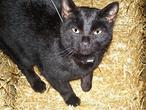
The researchers outfitted the cats with collars that hid sophisticated radio equipment so they could track them through the streets of Champaign and Urbana., surrounding cities in Central Illinois, in a territory of 2.544 hectares. Radio transmitters used in the study, 23 They had vibration sensors that allowed them to know every movement of the felines that carried them.. Without these sensors, It would have been necessary that ten or twelve researchers pursue cats to collect data.
As expected, In most cases, ownerless cats moved within territories larger than domestic cats, and they were most active throughout the year. But the size of the area of the street round surprised even the researchers. One of them, a mixed race male, moved by a huge area of 547 hectares.
Like most feral cats, This "lone ranger" moved through urban and rural places, from urban gardens to agricultural fields and forests. «Let us know, that particular cat was not getting food from humans, "But somehow he survived out there in the midst of the coyotes and foxes.", says Jeff Horn, Head of study. «He crossed all the streets in his area, traffic lights and parking. "We found him making a burrow during a small baseball field during a game.".
The domestic, more cautious
The cats had a much more cautious behavior. Most took shorter walks and tended to stay close to home. Their recreation area did not reach two hectares. «However, "Some of the owners were very surprised to find out that their cats were going so far away.", says Horn. "That's a lot of backyards.".
Is not a bad trip if you consider that domestic cats spend asleep or with a very low activity the 97% of his time. Quite vague, only dedicated the 3% remaining very vigorous activities, like running or stalk their prey, While the cats without an owner, because they have to search for life and food, remained very active the 14% time. His activity was especially noticeable in winter, when your body needs more caloric energy to survive.
Most of the cats in the study, even the savages, stayed in a few 300 meters in the vicinity of human constructions. «This shows that even though they are feral, "They still have a level of dependence on us.", says Nohra Mateus-Pinilla, Wildlife expert.
Fights and disease
But the joint life among wild and domestic cats is not easy, and there are conflicts between them, including the attempted deportation of a pet of your own back yard. In fact, researchers know that one of the leading causes of death gatuna is, precisely and diseases, other colleagues with whiskers.
Cats can also contract diseases from wild cats, take them home and even infect their owners. The parasite Toxoplasma gondii, It can cause neurological problems, reproductive and breathing even in humans, is one of the main problems, In addition to rabies, Cat Scratch fever, feline leukemia and feline immunodeficiency virus. Domestic cats vaccination reduces the risk, but it does not eliminate the threat of disease transmission.
Source: ABC