▷ The world of Pets: Dogs, cats, birds, reptiles, amphibians
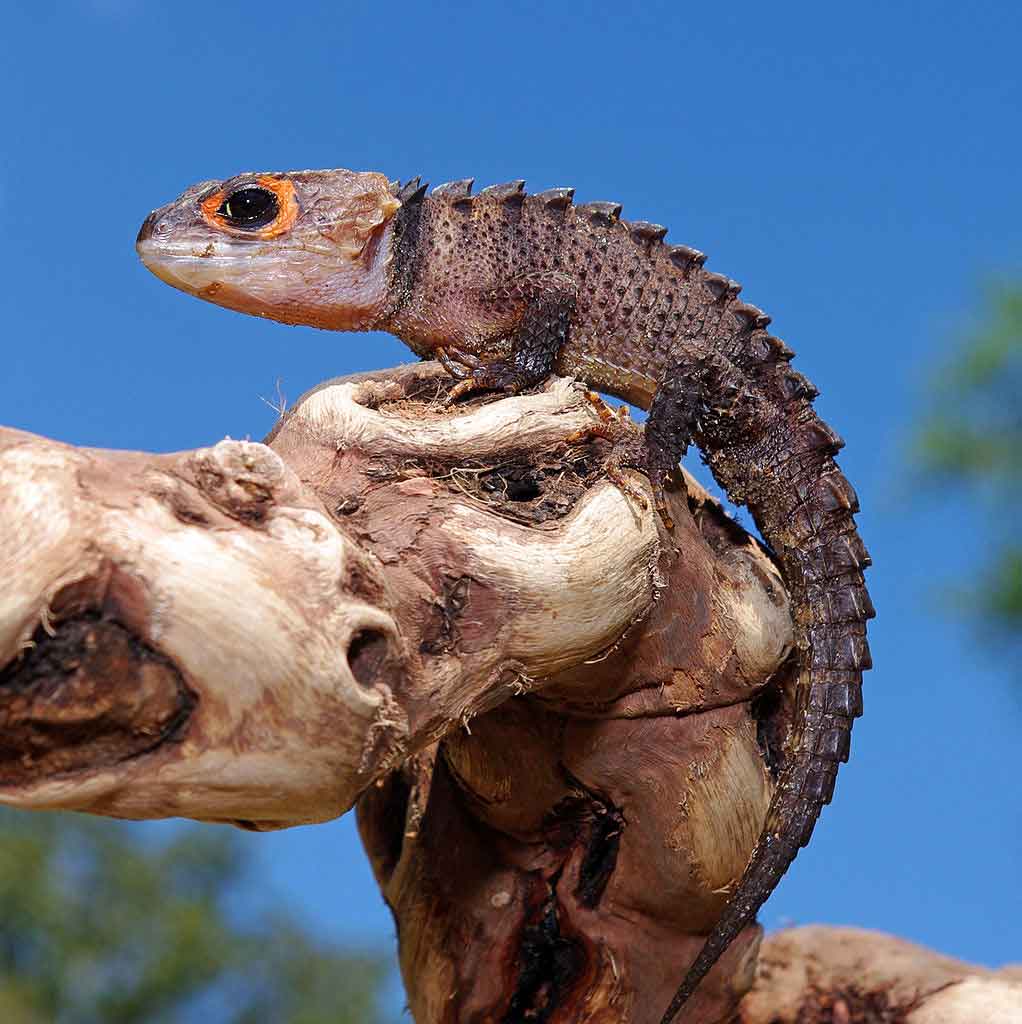
Red-eyed crocodile skink
- Tribolonotus gracilis
Origin: Indonesia and Papua New Guinea
Gender: Tribolonotus
Life expectancy: 10 - 12 years
Length: 17 - 20 cm.
Precious and very rare Indonesian lizard that nowadays is very difficult to find. It likes humid places so we will put a terrarium preferably with moss and a small bathtub in which it can get into, since he likes to even immerse himself completely. Tº aprox. of 27ºC. Insects.
Price ranges from 150 and 250 EUR.
▷ The world of Pets: Dogs, cats, birds, reptiles, amphibians
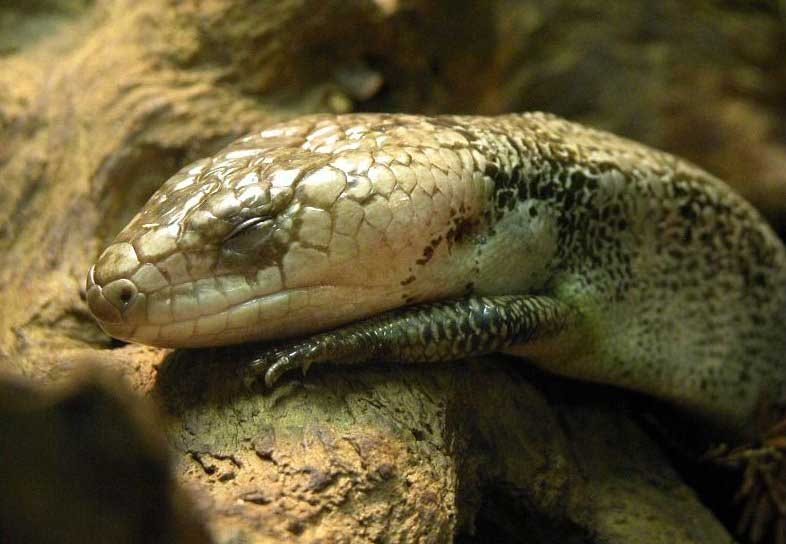
Pink-tongued skink
- Cyclodomorphus gerrardii
Origin: Australia
Gender: Cyclodomorphus
Life expectancy: 8 - 12 years
Length: 45 cm.
The Pink-tongued skink it is a forest animal so in the terrarium we will put some humidity. very easy maintenance.
The Pink-tongued skink reaches more than 45 cm.. The female measures 42 cm long, of which 18 cm correspond to the trunk of the head.
Coloration is grey-brown with a hint of silver, about her until 40 dark brown horizontal stripes, on juveniles strongly contrasting black stripes , that fade in the first year of life after several moults.
Yellow background is not uncommon in young. Adult specimens without transverse stripes have also been seen, raised in the third generation.
The underside is solid gray to pink.. In the young, the tongue is deep blue and only turns pink after two years, which explains the English name «Pink-Tongued Lizard«. Oral mucosa is bright cobalt blue in young, later fades.
In the lower jaw there is an enlarged molar on the left and one on the right, a functional device for crushing shell snails?.
The claws are rather short, they only allow safe climbing even on smooth bark, because the body is relatively light and the long prehensile tail and the long prehensile tail supports it. Once the tail breaks, it only regenerates 1-2 cm..
The sex of an animal can only be determined with certainty it can only be determined with certainty if comparison animals can be used. As is often the case with skinks, males tend to have thicker and wider heads.
Then compare the root of the tail from the ventral side: the female's tail tapers immediately after the cloaca, in contrast to that of the male.
Pink-tongued skink
Distribution and habitat
The Skinks (Scincidae) they are the most diverse family of lizards on the Australian continent, with 140 species. The genus Cyclodomorphus comprises 10 species, 9 of which are restricted to Australia, with at least one species represented in each state. the tenth species, Cyclodomorphus gerrardii, lives outside of Australia in Indonesia and New Guinea. Cyclodomorphus gerrardii is an active skink like Cyclodomorphus casuarinae, but the only species in the genus with a long prehensile tail.
The females of all species of Cyclodomorphus are viviparous. They have a simple built placenta.
The Pink-tongued skink is located north of sydney, in the Gosford/New South Wales region, to Cape York/Queensland. Lives in the coastal jungle on the ground, but also likes to climb low vegetation. It was found in a banana plantation near Coff's Harbor., as well as in a dry hardwood forest in North Queensland.
Diet
They prefer snails to any other food. Field observations in Australia showed that the usual garden snail (Helix sp.) is their usual prey, even if a second, smaller species (Mitor sp.) is present in the same biotope.
It is important to add fiber, for example, cooked rice or buckwheat flakes, as well as calcium, lime, vitamins and trace elements.
A very elaborate substitute food could be mussel meat after having watered it several times.
The drinking needs of the Pink-tongued skink are easy to satisfy. Or they quench their thirst by licking the water sprayed or from the drinker.
Terrarium
Terrarium
A terrarium with the dimensions 60 x 60 x 80 (Length x width x height) is enough for a couple of Pink-tongued skink, even for a third animal.
It is important that the Pink-tongued skink, as climbing animals, can also use the side walls. Cork or tree fern boards are good for covering. Tested glass containers with a ventilation hole on the side and another on the lid.
At the top there is a separate lamp box in which the electrical system, including lighting, is built-in, inaccessible to animals.
If high humidity is created by spraying, the lamp box also ensures more security.
After some experiments, bark mulch with a ratio of sand and peat in the ratio is preferable 3 : 2 : 1 as a substrate. Various ornamental cork tubes serve as decoration and as climbing and hiding places for animals. The walls are covered on all sides with flat cork boards. You can also integrate plants, like ivy (Scindapsus) or a wax flower (Fleshy hoya).
With a sufficient distance to the plant, you can use an HQL lamp from 80 W as a light source, what benefits animals and plants. High luminous efficacy, a certain amount of UV rays and the heat of the focus and ballast make it stand out. It also, there is a focus of 60 W from above.
HQL lamp ballast heats the terrarium floor from the outside. As such, a small Eternit plate is glued under the glass floor as protection against overheating and the ballast is mounted underneath. Try to maintain a constant relative humidity around the 70 % in the terrarium, as well as an air temperature of 28° C. For the soil, 20°C is enough. For the soil, 20°C is enough.
Manual spray can be replaced, time-consuming, by an automatically controlled spray system.
The Pink-tongued skink they move in their terrarium from the 16:00 until midnight.
Another notable feature is the technique of cracking the shell snails or removing them from it. The small shell snails are swallowed whole by the Pink-tongued skink. If the shell snail is large, the skink they try to break it with their jaws.
For sale Pink-tongued skink
The price of a Pink-tongued skink in the exotic animal market is about 200 EUR.
1. Pink-tongued lizard (English).
2. Scinque mangeur d’escargot (French).
3. Rosazungenskink, Schnecken-Blauzungenskink (German).
4. Lagarto de língua rosa (Portuguese).
5. Escinco gigante de lengua rosa (español).
▷ The world of Pets: Dogs, cats, birds, reptiles, amphibians
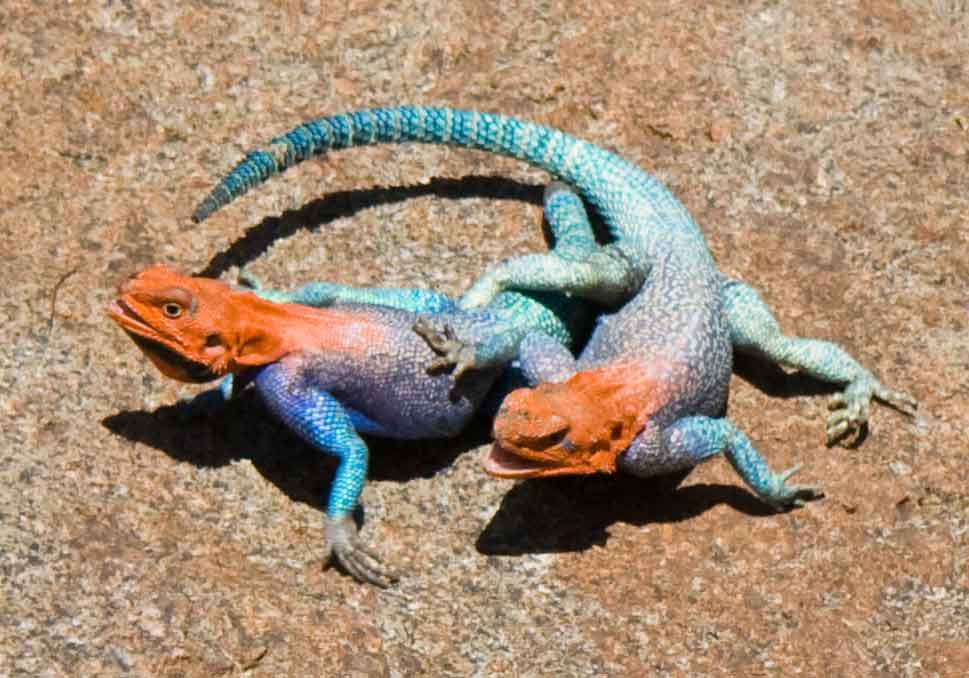
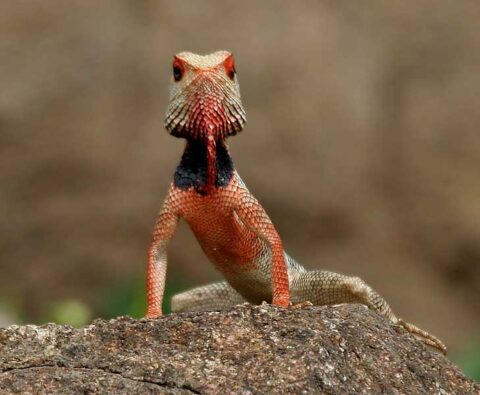
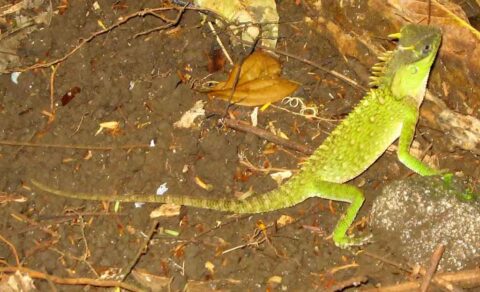
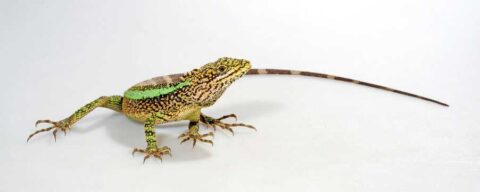
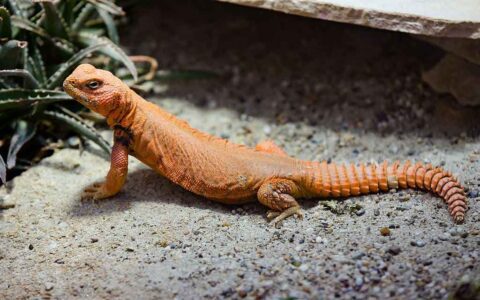
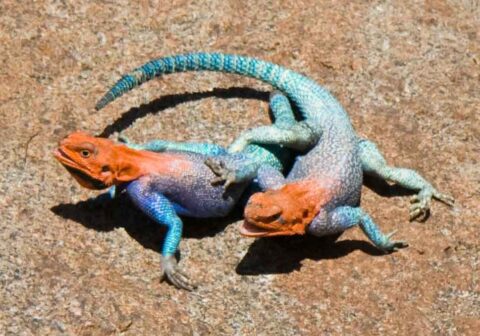
The Agamid Lizards are found in Europe, Africa, Asia and Australia. They show an astonishing diversity of forms and behaviors. They inhabit dry deserts, steppes and forests. The Flying dragons of the gender Draco can plan from one tree to another, the Thorny devils (Moloch horridus) have a system of microscopic grooves on their skin to transport rainwater or moisture from fog to their mouth. The Agamid Lizards they have excellent eyesight and hearing. The sense of smell is not very developed, despite the presence of olfactory cells in the nostrils and Jacobson's organ.
Between the Agamidae, six subfamilies are generally recognized:
Agaminae (Africa, Europe and South Asia)
Amphibolurinae (Australia and New Guinea, 1 species in Southeast Asia)
Draconinae (South and Southeast Asia)
Hydrosaurinae ( Hydrosaurus , Papua New Guinea, Philippines and Indonesia)
Leiolepidinae ( Leiolepis , Southeast Asia)
Uromasticinae ( Saara and Uromastyx , Africa and South Asia)
▷ The world of Pets: Dogs, cats, birds, reptiles, amphibians
Cuban iguana
- Cyclura nubila
Origin: Cuba
Gender: Cyclura
Life expectancy: 40 - 45 years
Length: Until 160 cm.
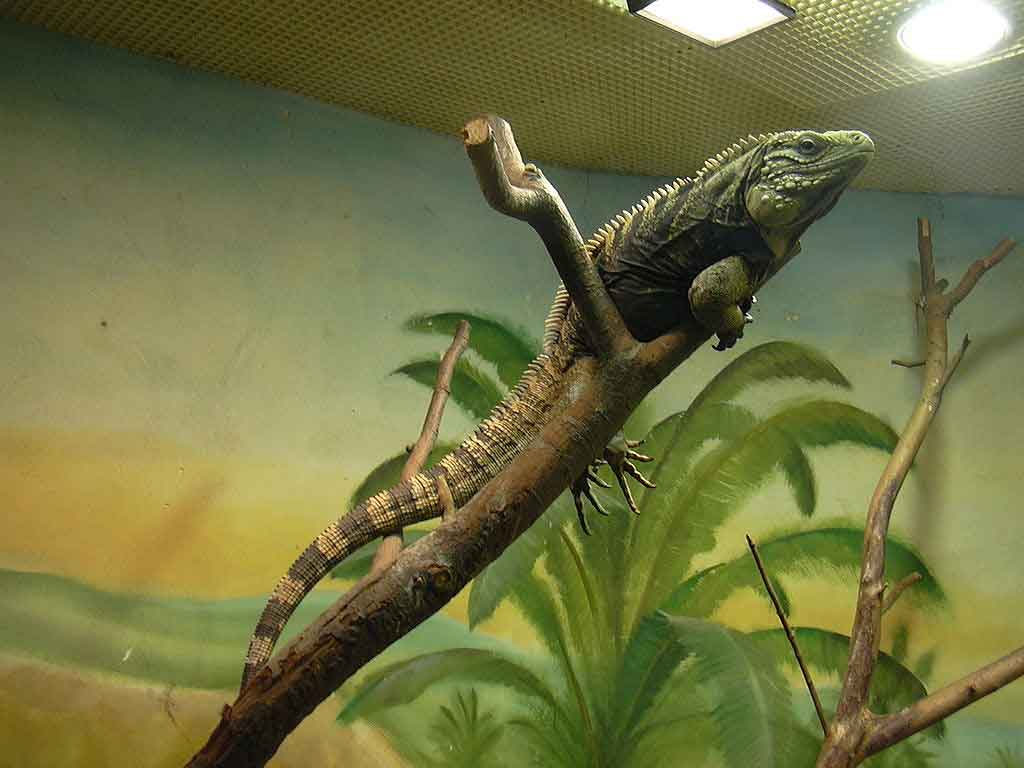
As the largest member of its kind, the Cuban iguana (Cyclura nubila) reaches a total length of 150 cm and a head-torso length of 70 cm..
Cuban iguana (Cyclura nubila nubila) at Zoo Ústí nad Labem, Czech Republic – Miraceti, CC BY-SA 3.0, via Wikimedia Commons
Content
Origin / Distribution
The Cuban iguana (Cyclura nubila) it is found in the rocky coastal areas of Cuba and in the 4.000 islets surrounding the Cuban mainland, including the Isle of Youth, off the southern coast, which has one of the most robust populations. Populations are found on islets along the north and south coasts and in protected areas on the mainland.. [These include the Guanahacabibes Biosphere Reserve in the west., the Desembarco del Granma National Park, Hatibonico Wildlife Refuge, the Punta Negra-Quemados Ecological Reserve and the Delta del Cauto Wildlife Refuge, all in eastern Cuba. [According to Allison Alberts, San Diego Zoo Ecologist, among the many species of fauna at the base, » the Cuban iguana (Cyclura nubila) is one of the largest, certainly the most visible and certainly the most charismatic.". It seems that no one completes a period of service at Guantanamo without meeting these prehistoric-looking giants.". An unusual incident occurred when a detainee at the prison assaulted a guard with a bloodied tail ripped from a Cuban iguana in 2005.
The subspecies, Cyclura nubila caymanensis, it is endemic to the "sister islands" of Little Cayman and Cayman Brac. The population in Cayman Brac is less than 50 of these animals and Small Alligator keeps 1.500. A feral population of C has been established in Grand Cayman. n. caymanensis.
The Cuban iguana makes its burrow near cacti or thistles, sometimes even within the cactus itself. These thorny plants offer protection and their fruits and flowers offer food to iguanas.. In areas without cacti, lizards make their burrows in dead trees, hollow logs and limestone cracks.
In the middle of the Decade of 1960, a small group of Cuban iguanas was released from a zoo on Magueyes Island, southwest of Puerto Rico, forming an independent feral population. As of the year 2000, there has been talk of eliminating or relocating this iguana population by the U.S. Department of the Interior. This feral population is the source of the 90% of captive Cuban iguanas found in private collections.
Characteristics / Appearance
As the largest member of its kind, the Cuban iguana (Cyclura nubila) reaches a total length of 150 cm and a head-torso length of 70 cm.. Males are much larger than females and have large pores on their thighs through which they release pheromones. Both sexes have a dorsal crest. The scales of the muzzle are enlarged and bulging, but they do not form "horns". Skin color varies from dark gray to brick red in males, and is olive green with dark bands in females. Feet are blackish.
Habitat
The Cuban iguana prefers to live in coastal and rocky areas covered with shrubs, holly and opuntia. Animals feed on plant material such as leaves, flowers or fruits. The Cuban iguana is oviparous. Egg clutches consist of 5-11 eggs, that hatch after 77-92 days at an ambient temperature of approximately 30ºC and have a length of 27-32 cm..
Conservation
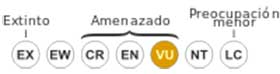
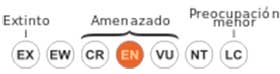
State of conservation ⓘ
Vulnerable ⓘ(UICN)ⓘ
Since 1999, all major concentrations of iguanas, except one, are partially or fully protected by the Cuban government. Although there is no captive breeding program in Cuba, the National Center for Protected Areas has suggested that it will explore this avenue in the future.. In 1985, the Cuban government issued a commemorative peso with a Cuban iguana on the front of the coin in an attempt to raise awareness about this animal.
The Cuban iguana is well established in public and private collections. Many zoos and private individuals keep them in captive breeding programs, minimizing the demand for wild-caught specimens for the pet trade. [The Cuban iguanas are listed as «vulnerable» in the The IUCN Red list, as well as the predominant Cuban subspecies, while the subspecies of the Cayman Islands is "critically endangered". The total population in Cuba is estimated between 40.000 and 60.000 individuals, and the feral population on Magueyes Island is estimated at more than 1.000..
Indirectly, the status of the Cuban iguana under the U.S. Endangered Species Act. USA. came to American jurisprudence. In the autumn of 2003, Attorney Tom Wilner had to persuade U.S. Supreme Court justices. USA. to accept the case of a dozen Kuwaiti detainees who were isolated at Guantanamo Bay (Cuba), no fees, no hearing and no access to a lawyer. [According to Peter Honigsberg, Professor of Law at the University of San Francisco, Wilner unsuccessfully presented two arguments to the Court to hear his case.; in his third argument he changed tactics by mentioning U.S. law and the Cuban iguana. Wilner argued that "anyone, including a federal official, violating the Endangered Species Act by harming an iguana at Guantanamo, can be fined and prosecuted". But, the government argues that U.S. law does not apply to protect human prisoners found there.". According to Honigsberg, the Supreme Court agreed to hear the case because of this argument.
Unlike other Antillean islands where iguanids are found, iguana meat consumption was never widespread in Cuba. Some fishing communities may have practiced it at some point., but for the most part the animal was not consumed by Cubans. According to naturalist Thomas Barbour in 1946, this was based on superstitious beliefs suggesting that iguanas emit a dark fluid reminiscent of the black vomit of yellow fever victims when they are killed..
One of the main threats to iguanas throughout the Caribbean is cats.. In Guantánamo they consume an incalculable number of iguana pups every year.
In 1993, the San Diego Zoo experimentally tested the usefulness of ahead-starting» for newborn Cuban iguanas with funding from the National Science Foundation Conservation and Restoration Biology Program. «Head-starting» is a process by which iguana eggs are born in an incubator and animals are protected and fed during the first 20 months of his life. The purpose is to get animals to a size where they are better able to flee or fight predators.. This technique was originally used to protect newborn sea turtles, to Galapagos land iguanas and to the Ctenosaura bakeri on the island of Útila, but Alberts first used it in a kind of Cyclura with the Cuban iguana. The goal was not only to help the Cuban iguana population., but to test the overall effectiveness of headstarting as a conservation strategy for other critically endangered Cyclura species.
According to Alberts, the strategy was successful when the released iguanas reacted to predators, they sought food and behaved like their free-born congeners.. This strategy has been applied with great success with other species of Cyclura and Ctenosaura endangered in the West Indies and Central America, in particular the Jamaican iguana (Cyclura collei), the Blue iguana of Grand Cayman, the Ricord's ground iguana (Cyclura ricordi), the Allen Cays rock iguana (Cyclura cychlura inornata), the Acklins ground iguana (Cyclura rileyi nuchalis) and Anegada rock iguana (Cyclura pinguis).
The "Cuban iguana" in captivity
Cuba exported 122 wild-caught specimens and the Cayman Islands 14. The last export took place in 2009. in the same period, export was recorded 109 captive bred animals around the world. From them, 56 came from the Czech Republic.
The terrarium
Males and females are extremely aggressive towards each other outside of mating season. So, good terrarium structure and escape possibilities are necessary. Animals must have a pool at their disposal. Temperature and humidity should vary throughout the day.
According to the opinion of reptile experts, a terrarium for a couple should have at least 5 times the length, 4 times the width and 3 times the height of the animals head-torso length. For each additional animal, a is added 15% to the basic surface.
Buy one "Cuban iguana"
It is a protected species, even so we have found copies on the internet, supposedly, of "Cuban iguana" At a price of 40 EUR. Dodax
▷ The world of Pets: Dogs, cats, birds, reptiles, amphibians
Chinese water dragon
- Physignathus cocincinus
Origin: Thailand, Viet Nam, Laos, Cambodia and Burma
Gender: Physignathus
Life expectancy: 20 years
Length: 80 - 100 cm.
Content
The Chinese water dragon the green (Physignathus cocincinus) lives in the rainforests of Southeast Asia, preferably near bodies of water. On trade, small juveniles from breeding farms in the countries of origin are usually offered. As not only can they grow a lot, they are also very scary, they demand a lot for their maintenance. Unfortunately, this is the reason why many animals can have clearly damaged muzzles; this can only be avoided if they are kept in large aquaterrariums. So, the Chinese water dragon not suitable for beginners.
Behavior
The Chinese water dragon, daytime habits, can raise itself, in pairs or in small harems (a male with 2 to 4 females). If they stay in pairs or harems, care must be taken to provide sufficiently large and well-structured terrariums so that females can retreat if necessary. Males are incompatible with each other and show marked territorial behaviour.. If aggressions occur during socialization, animals must be separated immediately and, as experience has shown, permanently.
The Chinese water dragon usually reacts to disturbances with a panic flight, so you need as big terrariums as possible. For a maximum of two adult animals, the terrarium must measure at least 200 x 100 x 150 cm. (length x widht x hight). The underside of the crystals should be covered with opaque tape; This reduces stress on the animals considerably and reduces the danger of them running towards the glass..
Like cold-blooded animals, water dragons need a temperature gradient in the terrarium that allows them to reach their optimal body temperature. Ideally, mimic natural conditions with bright sunny areas and cooler shady areas in the terrarium.. As such, a powerful heat radiator with UV components is installed on one side of the terrarium (for example, a metal vapor lamp), that guarantees a localized heating to 35 °C. The rest of the zones can be heated to a temperature of 25 °C. The remaining zones may have a temperature of 25 to 30 °C. At night, the temperature of the terrarium should drop to 20 – 23 °C.
The humidity should be around 70-80% and can exceed the 95% At night. This can be achieved by spraying the terrarium with lukewarm water or using a sprinkler system. Precise thermometers and hygrometers are needed to measure temperature and humidity.
Fluorescent tubes are suitable as basic lighting; the duration of illumination should be 10 to 14 hours. The water dragons need high light intensity and lots of UV light. How light sources emit less and less UV radiation over time (see manufacturer's instructions), must be replaced regularly. Attention: normal glass is impervious to UV-B rays. The lighting, especially heat emitters, should be placed out of the reach of the Chinese water dragon or secure with a wire mesh basket (Burning danger!).
for shy animals, the side and back walls of the terrarium should be covered with cork or something similar. This prevents the muzzle region from being bumped or rubbed. The horizontally and vertically mounted climbing facilities and rest areas made of cork, estate, remained, etc. have proven to be successful. Animals need a large water area, possibly heated, where they like to flop when they escape. The water bucket can occupy half of the floor space of the terrarium and must have at least 80 x 80 x 20 cm.. The temperature of the water part can be about 25 °C. Installing a filter (term) external facilitates the maintenance of the water section.
Bark mulch or other absorbent substrate for terrariums is suitable as a substrate. (no sand), which should always be kept slightly moist (NOT wet) and must have a height of 20 cm.. Natural planting with robust plants creates additional retreat possibilities and ensures uniform moisture.
Diet
The Chinese water dragon eats exclusively animal food when young, but as an adult he also likes to eat sweet fruit (Apple, berries). Live insects (crickets, domestic crickets, grasshopper, cockroaches, etc.), sprinkled with a mineral preparation, are an adequate food to prevent deficiency symptoms. Mealworms, zophobas or wax moths should only be fed in moderation due to their high fat content. Fresh water must be available at all times.
Young animals grow very fast and, Therefore, need large amounts of food, as well as a good supply of calcium and UVB light.
Food scraps, molts and droppings should be removed daily. The water part can be cleaned by an aquarium filter; in case of heavy contamination, a water change must be performed. External filters should be cleaned regularly.
Animal health must be monitored daily. The most common health problems in the Chinese water dragon are the lesions in the mouth area, the emaciation, fecal changes such as diarrhea and softening of the bones. In case of anomalies, a reptile vet should be consulted. Annual fecal examinations are recommended to detect endoparasites.
The intestinal flora of the Chinese water dragon also includes salmonella, that are harmless to animals but can cause disease in humans. Hygiene measures (wash your hands well, etc.) can prevent infection.
Acclimatization and handling
Reptiles are animals of pure observation and should NOT be petted. The Chinese water dragon, in particular, can become very nervous when approached or moved (suddenly). So, the first days in your new home, animals need adequate rest to get used to their new environment.
Animals should only be captured when necessary. To avoid injury, the easiest way to catch young animals is with a net. Larger animals can be held with the bare hand behind the head. In doing so, body and tail must be well secured. By principle, lizards should never be held or fixed by the tail.
Breeding
The female is courted by the male. This can also lead to persecution. If the female is ready to mate, He pauses and the male applies the so -called "bite in the neck". This involves biting the female on the nape.. This is followed by mating. Some time later, the female builds a nest pit of about 10 to 20 inches deep and lays up 16 eggs, from which the young are born after 67 to 101 days, depending on outside temperature conditions.
Special features
If animals get used to picking up food from the forceps, they will lose some of their shyness towards humans. The Chinese water dragon knows how to swim very well and they also hunt fish in the wild.
The Australian water dragon (Physignathus lesueurii) it can grow even larger and its breeding differs in some respects from that of the Chinese water dragon.
Its price ranges from 60 and 100 EUR.
▷ The world of Pets: Dogs, cats, birds, reptiles, amphibians
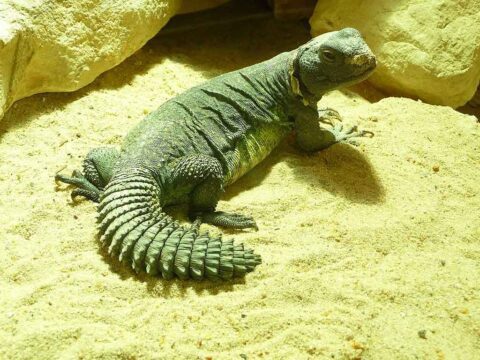
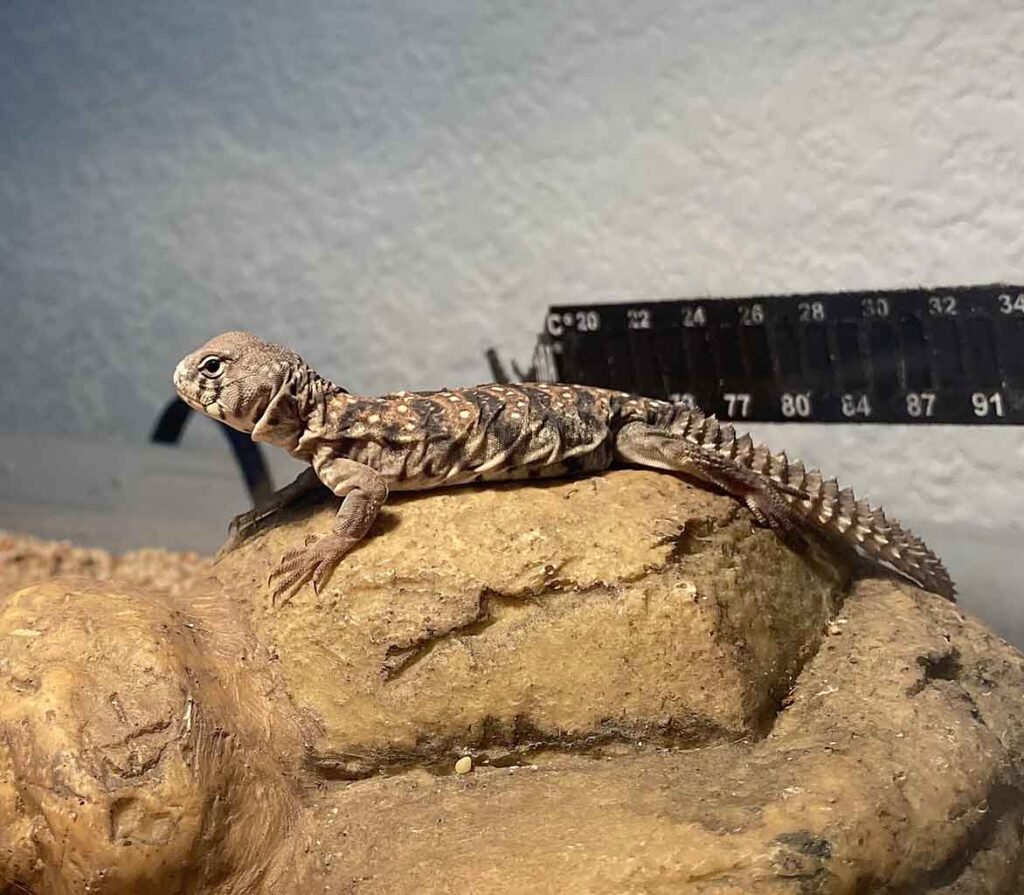
Spiny-tailed lizards
- Uromastyx
Origin: Africa, Asia central, Middle East and India
Gender: Uromastyx
Life expectancy: 10 - 20 years
Length: 25 - 75cm.
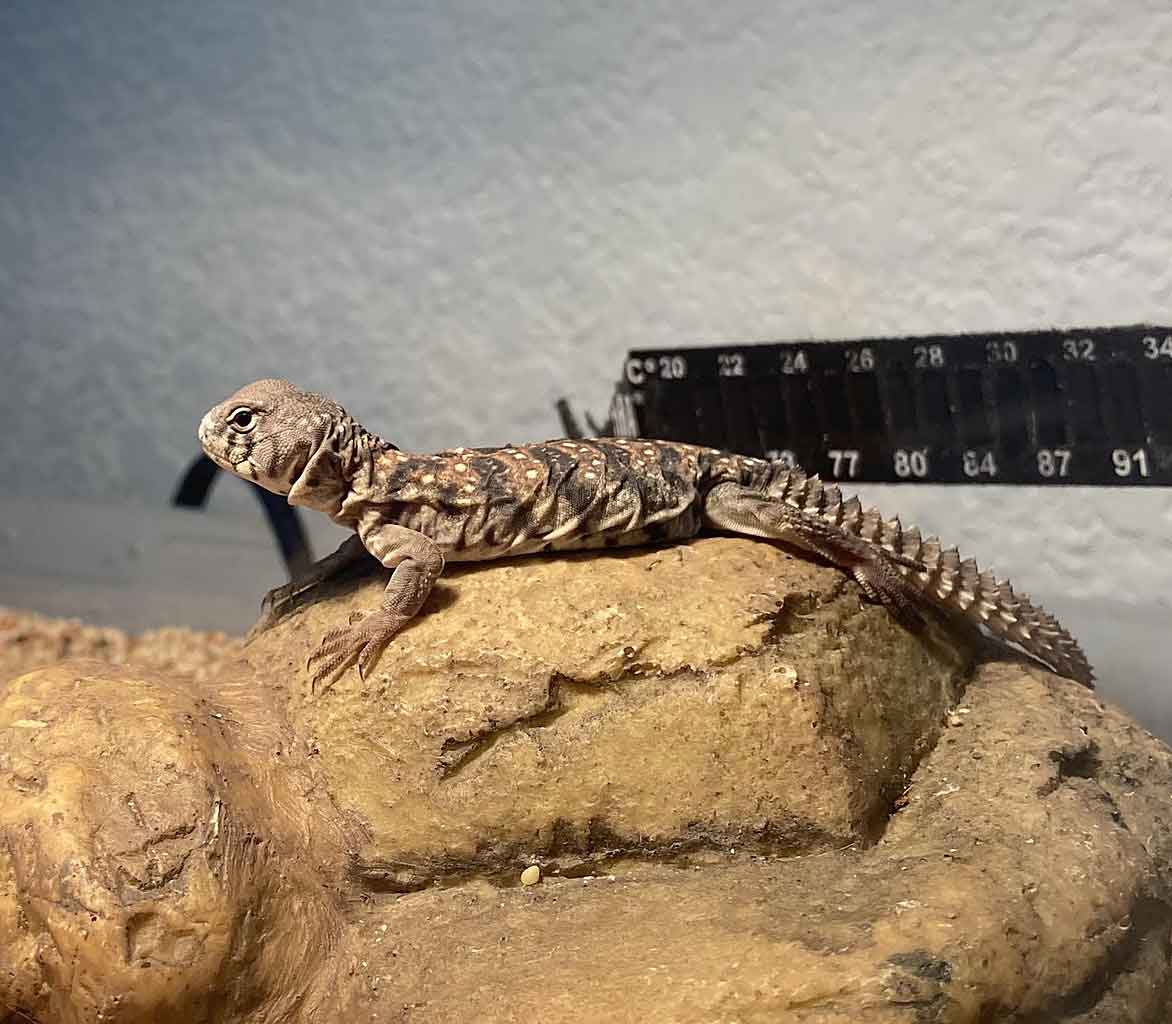
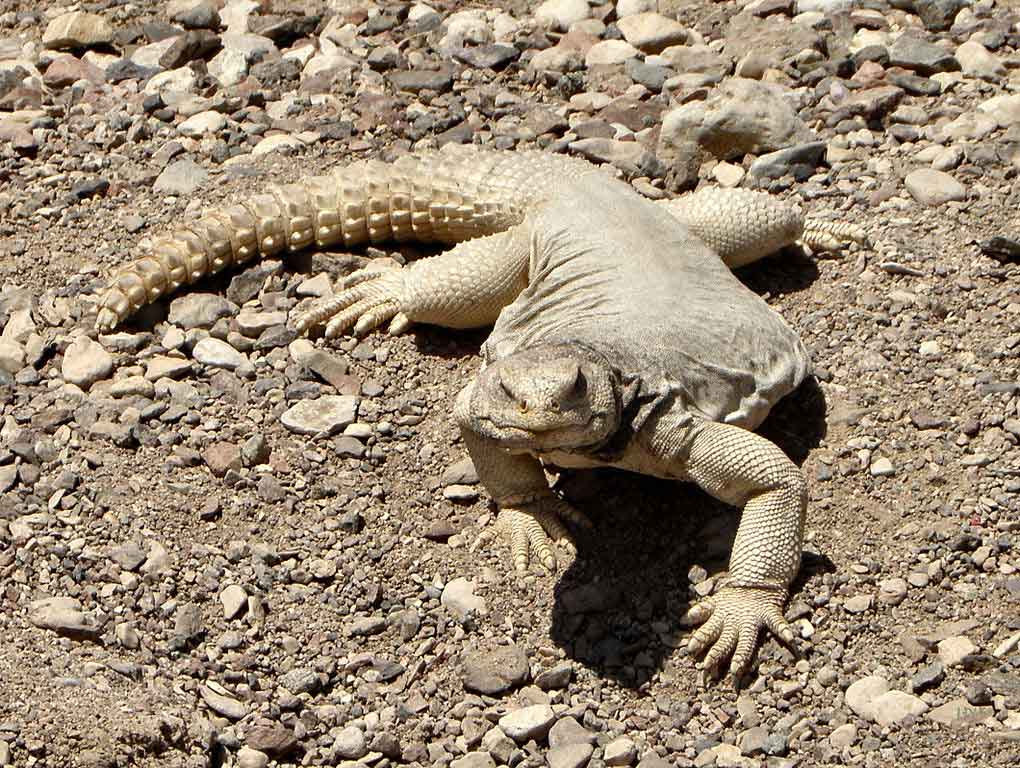
The Spiny-tailed lizards They have perfectly adapted to their natural habitat and the conditions that prevail there, like heat and drought.
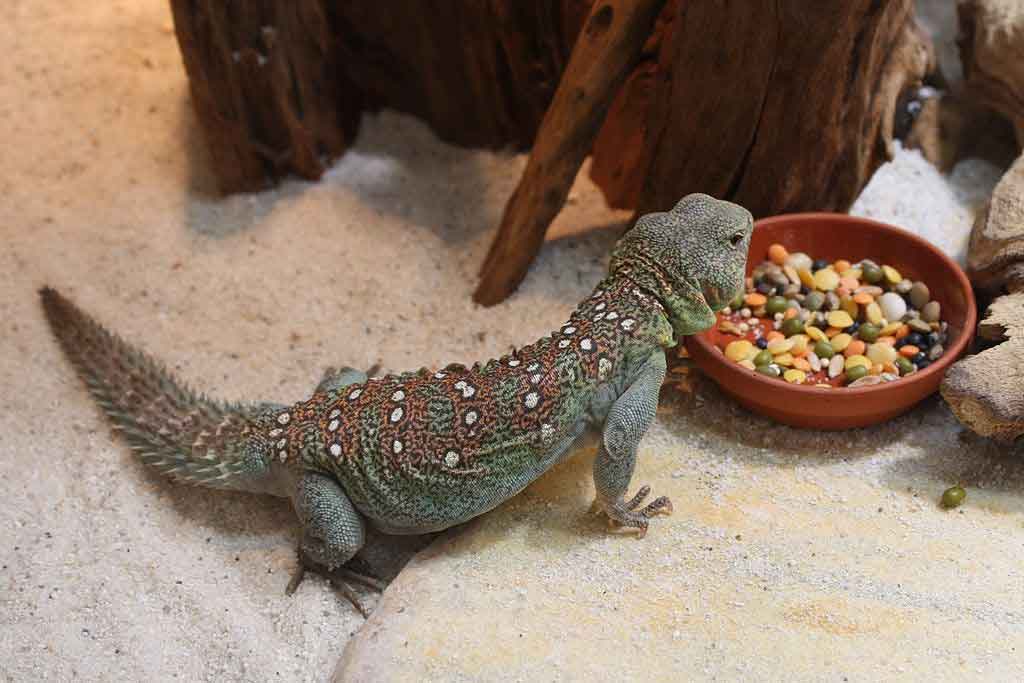
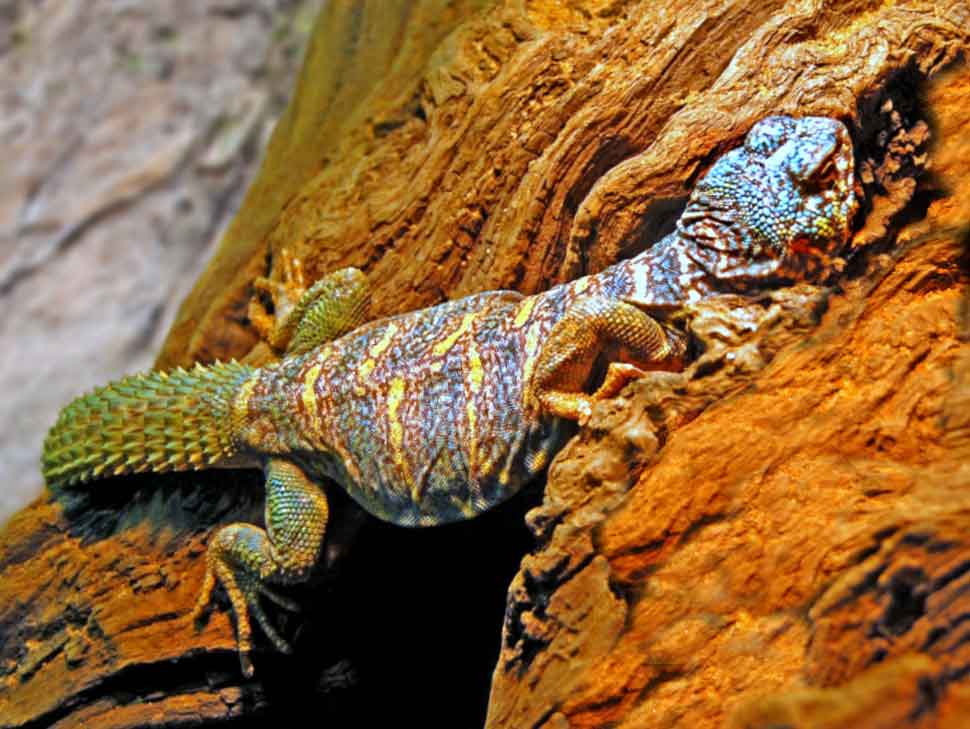
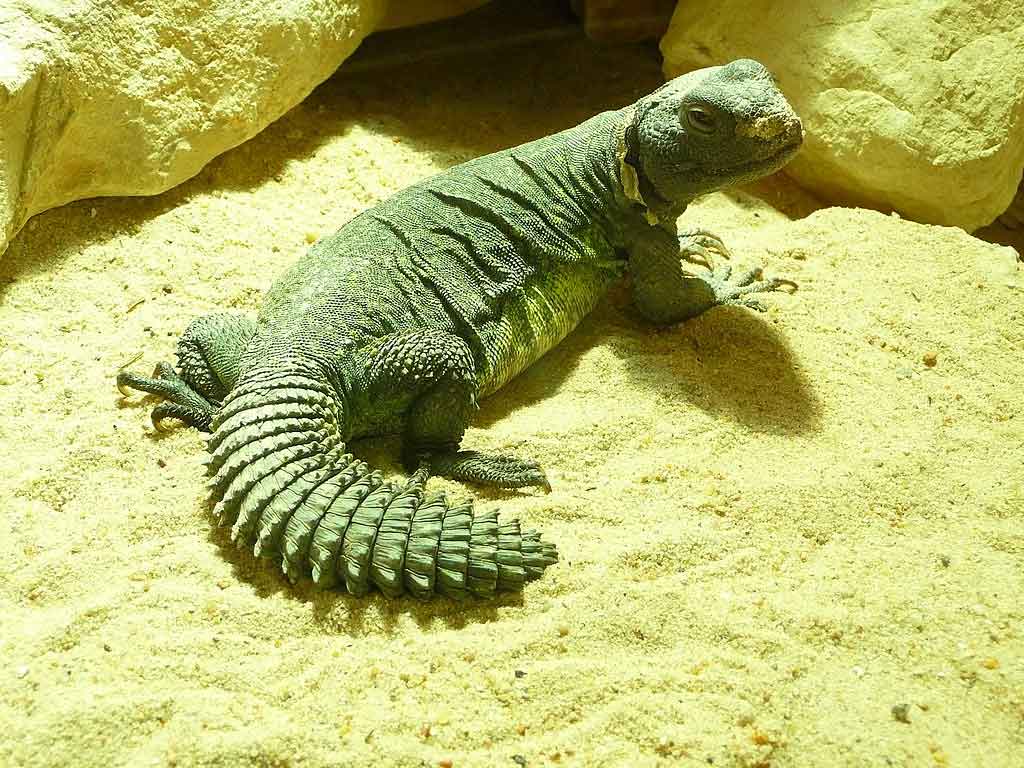
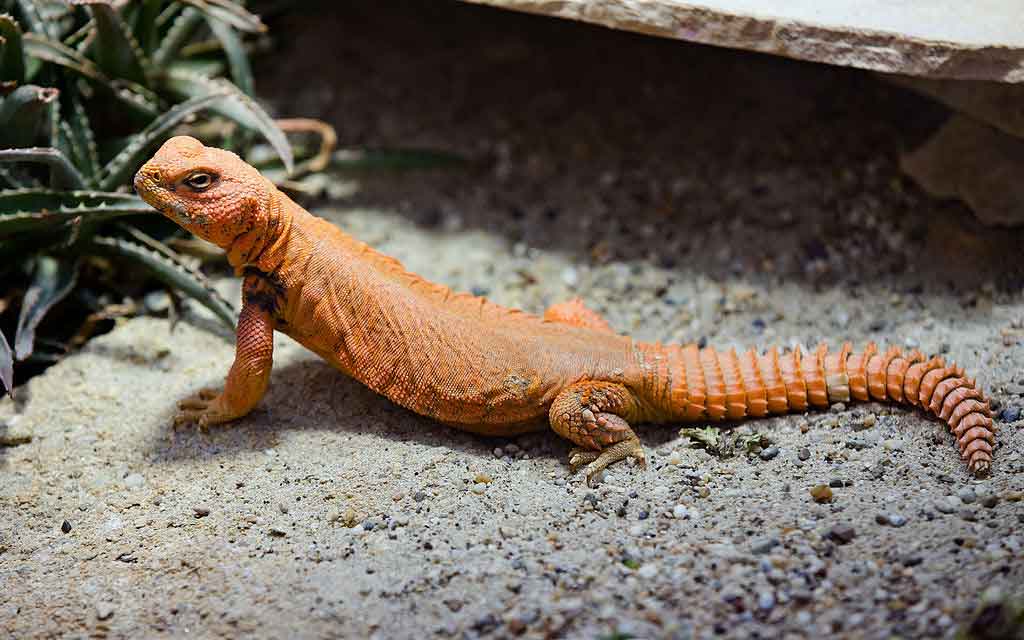
The group of Spiny-tailed lizards (Uromastyx) who inhabit the desert comprises near 20 African and Asian species. The Spiny-tailed lizards They have perfectly adapted to their natural habitat and the conditions that prevail there, like heat and drought. Their natural behavior includes the excavation of complex systems of passageways and burrows to which they are removed when necessary..
Among the most popular species are the Ocellated spinytail (Uromastyx ocellata), the Ornate mastigure (Uromastyx ornata), the Egyptian spiny-tailed lizard (Uromastyx aegyptis), the North African mastigure (Uromastyx acanthinura) and Saharan spiny-tailed lizard (Uromastyx geyri). The animals are very demanding to maintain and are not suitable for beginners in terraristics..
All species of Spiny-tailed lizards are subject to species protection legislation. Are subject to registration and proof of origin is required. Buying wild-caught specimens in favor of captive-bred should always be avoided.
Sex differences
Especially in young animals, the sexes are often difficult to distinguish. Sexually mature males usually have distinctive pores on the inside of the thighs, a thickened tail base and, depending on the species, more intense coloration in some parts of the body.
Behavior
The Spiny-tailed lizards show very different levels of intraspecific aggression. Animals can be kept alone or in pairs, in compatible species (for example, the Saharan spiny-tailed lizard – Uromastyx geyri) also in small harems (a male with 2 – 3 females) or groups of females. Animals should be about the same size. Males are usually incompatible with each other. If aggressions occur during socialization, animals must be separated immediately and, as experience has shown, permanently.
The Spiny-tailed lizards are diurnal.
The "Spiny-tailed lizards" in captivity
Terrarium
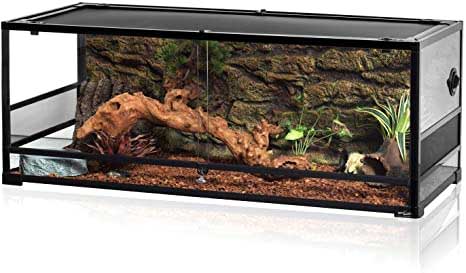
The minimum dimensions of a terrarium for Spiny-tailed lizards are given in relation to head-torso length (tailless). For each additional lizard, the floor area should be increased by 15 %. For two animals of a medium-sized species such as the Saharan spiny-tailed lizard (Uromastyx geyri), a terrarium of at least 100 x 80 x 60 cm.. But, in the interest of active animals, terrariums should be considerably larger.
Initial team
Reptile terrarium
Spotlight with UV component and basic lighting
Spray bottle for terrariums or irrigation system
Thermometer and hygrometer
Substrate (mixture of clay and sand)
Furniture, for example, estate, caves, stones
Water bowl
Insects, mineral preparation
Terrarium temperature
Like warm-blooded animals, the Spiny-tailed lizards need a temperature gradient in the terrarium that allows them to reach their optimal body temperature. The ideal is to imitate in the terrarium the natural conditions of the dry regions of Africa and Asia, with areas of bright sun and areas of cooler shade. As such, a powerful heat radiator with UV components is installed on one side of the terrarium, that guarantees strong localized heating at 45 – 50 °C. The other zones should have a temperature of 25 to 30 °C. At night, the temperature of the terrarium should drop slightly for many species.
Terrarium humidity
The humidity should be between the 30 and the 40 %, depending on the species, and may increase slightly at night. This can be achieved by spraying the terrarium with warm water or using a sprinkler system..
Important: In a small area of ​​the terrarium, the substrate should always be slightly moist. Here too wet and collapse-proof burrows should be created. Precise thermometers and hygrometers are needed to measure temperature and humidity.
Terrarium lighting
For proper maintenance of the species, the Spiny-tailed lizards need a lot of light, with a daily lighting period of 12 to 14 hours. At the same time, each animal must have access to resting areas of sufficient size at all times. In addition to a high intensity of light, an adequate supply of UV-A and UV-B radiation must be ensured.
The Spiny-tailed lizards need a lot of ultraviolet light. How light sources emit less and less UV radiation over time (see manufacturer's instructions), must be replaced regularly. Lighting should be placed out of the reach of animals (attention: normal glass is impervious to UV-B rays) or animals must be protected from burns with a closed wire basket.
Terrarium furniture
Thin back wall terrarium 120 x 60 cm brown resin
Stable rock constructions (also imitations), roots and/or branches have proven suitable as furniture. The furniture must be well installed in the terrarium so that the animals can not be harmed by digging underneath, for example. It also, various hiding places (cork tubes, caves) and a shallow bowl of water, in which animals can also bathe, are part of the basic equipment.
A mixture of sand and clay without dust is suitable as a substrate, that you must have at least 20 cm height for small species, so that animals can dig tunnels as they would in nature.
Food
In the wild, the Spiny-tailed lizards feed on plants and animals.
While the proportion of food of animal origin should remain among the 50 and the 80 % for young animals, adult animals should be fed a 80 – 90 % of plant foods and only receive food of animal origin 1 – 2 times a week.
The right foods are the grass of the meadows (for example, dandelion, chickweed), romaine lettuce and very small amounts of zucchini, grated carrots or cucumbers. Fruit should not be offered.
Most lizards readily accept a mixture of seeds (for example, mixtures for exotic or large parakeets). Live insects, like grasshoppers, cockroaches or crickets, sprinkled with a mineral preparation, are suitable as animal feed to prevent deficiency symptoms.
Mealworms should be avoided, the zophobas, wax moths or baby mice for their high fat content. Fresh water must be available at all times.
Attention: the Spiny-tailed lizards tend to become obese.
Care
Food scraps, molts and droppings should be removed daily. The water bowls should also be cleaned daily and filled with fresh water.
Animal health must be monitored daily. The most common health problems in Spiny-tailed lizards are skin mites, lip crust, fatty degeneration and softening of the bones. In case of anomalies, a reptile vet should be consulted. It is recommended to perform fecal examinations once a year to detect endoparasites..
The intestinal flora of Spiny-tailed lizards usually includes salmonella, that are harmless to animals, but they can cause disease in humans. Simple hygiene measures (wash your hands well, etc.) can reliably prevent infection.
Acclimatization and handling
Reptiles are observation animals and company NO. In the first days in his new home, animals need to rest to get used to their new environment.
Animals should only be captured when necessary. The easiest way to do this with young animals is with a pitcher or landing net.. Larger animals can be held with the bare hand behind the head.
Be careful: the Spiny-tailed lizards can bite hard.
Basically, lizards should never be held or fixed by the tail.
Special features
Depending on its origin, the Spiny-tailed lizards hibernate to a greater or lesser extent in nature, during which they are lethargic and do not usually eat. For selective hibernation, lighting duration can be gradually reduced in autumn until turned off. After 1 or 2 months of actual hibernation, lighting gradually increases again. Before starting hibernation, the health of the animals should be checked by a veterinary fecal examination.
List of "Spiny-tailed lizards" for maintenance in captivity
We must make sure that our "Spiny-tailed lizards" have not been caught in their natural environment. There are many protected species, therefore, It is important that the animals that we are going to acquire come from captive breeding.
Origin: Northeast Africa Gender: Uromastyx Life expectancy: 20 years in captivity Length: 28 cm.
The Ocellated spinytail is native to northeastern Africa, where it can be found in southern Egypt, Sudan, Eritrea, Djibouti, Ethiopia (near the border with Somalia) and north-western Somalia.
Origin: Middle East, Egypt, Israel, Saudi Arabia and Yemen. Gender: Uromastyx Life expectancy: 20 years in captivity Length: 32 - 37 cm.
The Ornate mastigure (Uromastyx ornata) is included in the Appendix 2 of the Washington Convention on International Trade in Endangered Species of Wild Fauna and Flora.
Origin: north west africa Gender: Uromastyx Life expectancy: 20 years Length: 45 cm.
The North African mastigure It is one of the most representative reptiles of the Sahara desert. It is medium in size: can measure more than 45 cm and weigh around
Origin: Algeria, Mali and Nigeria Gender: Uromastyx Life expectancy: 20 years Length: 35 cm.
The Saharan spiny-tailed lizard it is a relatively small and slender species for the genus, with an average total length (including the queue) of about 34 cm..
▷ The world of Pets: Dogs, cats, birds, reptiles, amphibians
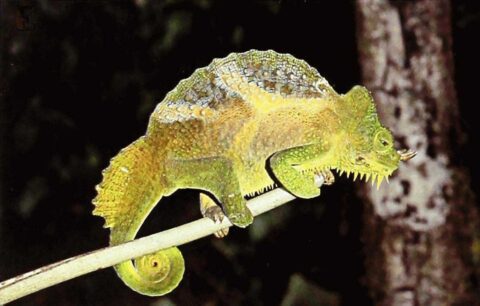
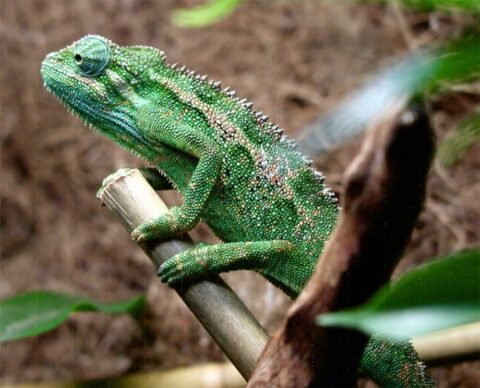
Chameleons
- Chamaeleonidae - Maintenance in captivity
Origin: Africa
Gender: ---
Life expectancy: from five months to 15 years, depending on the species
Length: from three to 80 centimeters long, depending on the species
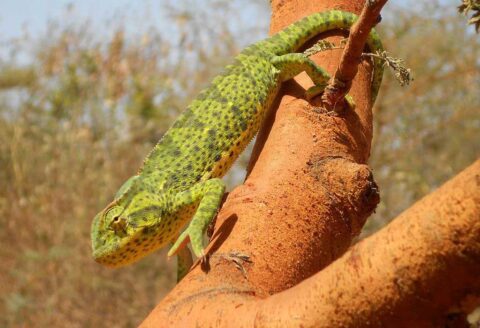
Chameleons are the artists of the transformation of the animal kingdom: Depending on your state of mind, may change color and shape.
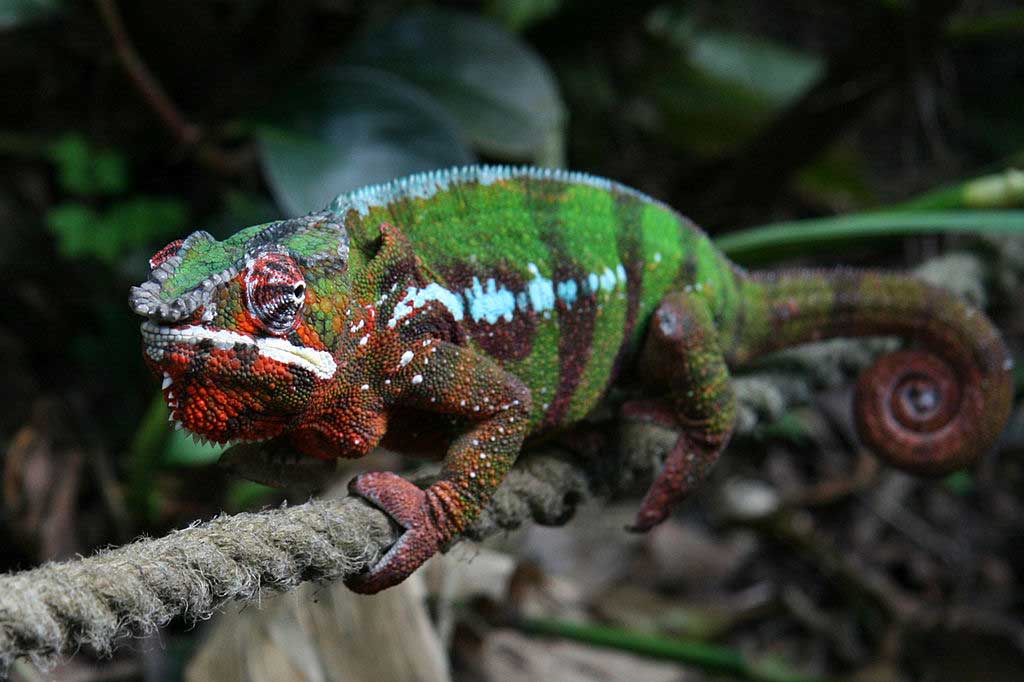
Panther chameleon at Zurich Zoo, Switzerland – Marc Staub, CC BY-SA 2.0, via Wikimedia Commons
Content
What do chameleons look like??
The Chameleons belong to reptiles (crawlers) and they look like lizards: Have an elongated body, four legs and a long tail.
The smallest species only measure three and a half centimeters, the largest reach a meter.
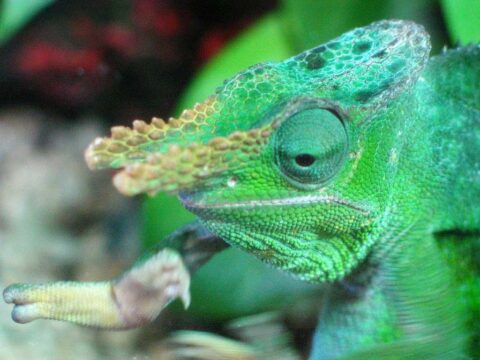
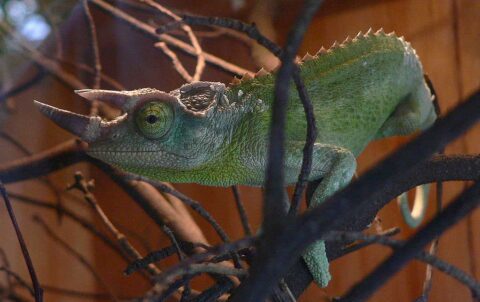
Attention is drawn to the crest of the back and the protrusion in the form of a head helmet.
Some even have small horns in their nose..
His eyes are unmistakable: they are big, protrude from the head like small balls and can move independently in different directions. With them, some species can see clearly up to a kilometer away.
As the top layer of scaly skin is hard, can't grow. So, chameleons have to shed their skin regularly. To make it easier to shed your old skin, animals are often rubbed against branches or stones.
The Chameleons are perfectly adapted to living in trees.
They can grip well even in windy conditions because their hands and feet have been transformed into real tweezers.:
The toes and fingers are fused two by two and three by three.
The bunch with all three toes or fingers points inward, the two points outward.
The tail also serves to hold: can wrap the branches and additionally secure the animal.
That is why it is also especially stable and cannot break and grow back as in other lizards..
Males and females are distinguished by the heel spur: it is a process on the back of the leg that only males have.
One of Madagascar's best-known chameleons, for example, is the Panther chameleon (Furcifer pardalis).
Males come to measure between 40 and 52 centimeters, the females up 30 centimeters.
Depending on the area of origin, have very different colors.
Males are green to turquoise in color and have light stripes, sometimes red, on the sides of the body. Females are usually more discreet.
Although the Panther chameleon originally found only in Madagascar, it was also introduced by man to the islands of Mauritius and Reunion, located east of Madagascar in the Indian Ocean.
Where do chameleons live??
The Chameleons they are only found in the so-called Old World, that is to say, in Africa, Southern Europe and South and Southwest Asia.
Chameleons are arboreal: they stay mainly in the branches of trees and shrubs, sometimes also in the low weeds.
Species that live in regions where there are few plants are adapted to living in the soil.
What species of chameleons exist?
There are some 70 chameleon species. On the island of Madagascar, off the coast of southeast Africa, lives a particularly large number of different species.
How many years do chameleons live?
In a terrarium, chameleons live four to five years. It is not known how many years they live in the wild.
What does a chameleon eat??
The Chameleons they feed mainly on insects.
His favorite food is grasshoppers, but also other insects and small lizards.
in the terrarium, feed them with insects, meal worms, caterpillars and earthworms. Larger chameleons even eat young mice.
Wild chameleons get water by licking leaf spray in the morning.
Chameleons in captivity
The terrarium
One of the most common chameleons in terrariums is the Chameleon of Yemen. It comes from a high valley (until 2.000 m) from Yemen, in the south of the Arabian Peninsula, where it lives in shrubs and trees.
The Chameleon from Yemen come to measure some 60 centimeters, females only a little more than 40 centimeters. But, animals kept in terrariums remain smaller.
The Panther chameleon it is also usually held in terrariums. Comes from the tropical island of Madagascar, where there are dry seasons every year. Thus, this species tolerates better than others fluctuations in temperature and humidity in the terrarium.
But like the Chameleons they are quite demanding solitaires, they are not animals suitable for pampering. It's best to keep them alone.
Males don't get along with each other at all, rather you can put two females together in a very large terrarium.
The Chameleons need a lot of space. The terrarium must be one meter long, one meter wide, at least 50 centimeters deep and, above all, high altitude, as chameleons like to climb.
The enclosure should be provided with many branches and plants. Normal sand is suitable as soil.
The Chameleons need heat: the temperature must be 25 at 32° C, and at night of 15 at 18° C. A special lamp in the terrarium provides the necessary heat.
Chameleon Care Plan
Water should be sprayed into the terrarium once a day to keep the humidity high enough.
The Chameleons they should only be fed every two or four days. Receive crickets, flies, grasshoppers and occasional mealworms. Before feeding them, insects are sprinkled with a mixture of vitamins and minerals.
To drink, chameleons lick plant water or give it to them on a shallow plate.
How does a chameleon live??
The Chameleons they are solitary animals and live in trees because there they can camouflage themselves especially well. But, predators, such as snakes or birds of prey, they cannot be chased away by the play of colors. And chameleons can't run away quickly either.. Avoid attacks by camouflaging themselves: with its spasmodic gait, imitate leaves that move back and forth in the wind. This makes animals appear much clumsier than they are.: Chameleons make excellent climbers. They roll up their long prehensile tail, that is normally coiled into your body, around the branches; this gives them additional support.
With your climbing toes, cling to branches like tweezers. But, these lizards fall off the tree from time to time, but they do it on purpose: if an enemy gets too close, the dead are made and dropped. No harm is done in the process: inflate their huge lungs and thus cushion the fall, as if they had tied a thick pillow.
How do chameleons reproduce??
The Chameleons they are also quarrelsome loners in the mating season. This occurs when several males fight fiercely for a female.; but males and females also quarrel with each other, sometimes even during mating.
The females of chameleon put between 30 and 40 eggs. They have a soft, apergaminated shell and bury themselves in the hot earth.
After a few months – this varies by species and habitat- the young hatch.
They are immediately independent and hunt small insects. Some species of chameleons give birth to live young: here the eggs develop in the womb of the female of the chameleon.
To prevent too many from living Chameleons in the same area, the young quickly go out on their own and search for their own territory.
The young do not yet have a color as defined as that of their parents, but when they turn one they are already adults and can have their own offspring.
How do chameleons hunt?
Chameleons usually sit quietly on a branch and be on the lookout for their prey.. If an insect gets close enough, catches him in an instant with his long tongue.
It is thickened like a club at the end and has two leaf-shaped lobes with which the prey is grasped..
This so-called tongue shot is so fast that it is almost invisible..
What's so special about chameleons??
When the Chameleons males are "in love", are more colorful. Try to impress the ladies with this colorful show. In general, change color depending on your mood, and that in a few minutes. It's as if animals talk to each other in this way..
If they are afraid, for example during a fight over a female, many species change to black. This points to the rival: My opponent feels inferior and prefers not to fight. If, on the other hand, lizards are eager to attack, turn red. This then means something like: "Get lost or you'll get it!!». It also, animals change their skin tone based on temperature and time of day.
In the morning, adopt darker shades to warm up, because dark colors absorb more light and skin, Therefore, absorbs more heat. After a long, hot day, animals are rinsed to cool off.
For a long time it was a mystery how the Chameleons change color so quickly. Scientists discovered it just a few months ago: Tiny blocks of glass in the skin of lizards are responsible for the chromatic frenzy. When light hits these blocks, reflect it in color.
The fact that the color changes is due to the fact that the distances between the crystals change according to the mood of the chameleon. Yes a Panther chameleon (Furcifer pardalis), is relaxed, for example, the blocks are close together and glow blue. When the animal is excited, separate and glow red.
▷ The world of Pets: Dogs, cats, birds, reptiles, amphibians
Blue iguana
- Cyclura lewisi
Origin: Grand Cayman
Gender: Cyclura
Life expectancy: Up to the 70 years
Length: 51 - 76 cm. (No queue)
The Blue iguana (Cyclura lewisi) came to have only between 10 and 25 specimens in the wild.
Grand Cayman blue iguana (Cyclura lewisi) on rocks – or palsson, CC BY 2.0, via Wikimedia Commons
Content
Origin / Distribution
The Blue iguana (Cyclura lewisi), is endemic to the Caribbean island of Grand Cayman. Formerly they were widespread in the dry and coastal habitats of the entire island., but due to severe habitat loss and predation, now they are only found in the High Rock-Battle Hill area, east and south of the Queen's Highway.
Characteristics / Appearance
The Blue iguana is one of the largest lizards in the Western Hemisphere, as it weighs more than 11 kg and measures more than 1,5 m from head to tail. Males are usually larger than females. The length of the snout can measure up to 51,5 cm in males and 41,5 cm in females, and the tail is of equal length.
The Blue iguana characterized by uniform, stiff dorsal spines and a spineless dewlap. His body is covered in scales, and some enlarged scales are present on the head region. Young iguanas have a gray base color with alternating dark gray and cream chevrons.. as they mature, the youthful pattern fades, and the base color of the hatchlings is replaced by a blue-gray base complexion. Some dark scutes are preserved in adulthood. This blue-gray color is typical of land iguanas when resting. But, these iguanas are best known for the stunning shades of turquoise blue they take on during mating season. For this reason, the Cyclura lewisi is also known as the Blue iguana.
Life expectancy
It is believed that the Blue iguana It is one of the longest living lizard species.. In the wild, they are believed to reach ages of at least 25 to 40 years. But, these iguanas can get much older when kept in captivity. The longest-living member of this species was a captive iguana known as "Godzilla" which survived for a few 69 years. But, it is doubtful that wild iguanas can survive to that age, since Godzilla needed extraordinary maintenance in the years before his death.
The Blue iguana lives on the ground and can occupy various habitats, like forests, grasslands and coastal regions, as well as human-modified habitats. They are found primarily in natural xerophytic thickets and along interfaces between farm clearings and dry canopy forest.. Farms provide a variety of resources such as vegetation, fallen fruit and soil to nest.
The Blue iguana spends its nights in shelters such as caves and crevices found within weathered rocks, usually heavily eroded limestone. Although iguanas preferentially select the natural rocky substrate to take refuge, they also use artificial shelters such as piles of construction material and spaces under buildings. While adults are mainly terrestrial, younger individuals tend to be more arboreal. Occasionally, the Blue iguana It can take refuge in the hollows of trees or exposed in the branches of the same..
Behavior
The Blue iguana spend most of the day sunbathing. They are primarily inactive with low to moderate alertness between morning rising and evening retreat.. during activity, iguanas mainly forage, they travel and inspect the substrates, including withdrawals and feces. Iguanas are active for longer periods of time during the summer. Because they are ectothermic, increased sunlight and higher temperatures during the summer allow iguanas to maintain optimal body temperature for a longer period each day.
Reproduction
The Blue iguana it's lonely, except during mating season. Mating is generally polygamous, but some individuals can also be promiscuous or monogamous. During the breeding season, the home range of a dominant male frequently overlaps that of one or more females.
During the breeding season, the Blue iguana takes on a deep blue color. In the spring, hormones spike and males begin to assert their dominance. Males lose weight during this time, since they dedicate their energy to reproduction and to dominating other males. Males expand their territorial range, trying to grab as many female territories as possible. Males in overlapping territories challenge each other and, In most cases, smaller iguanas flee from larger individuals. Physical contact and fights are infrequent and usually limited to individuals of similar size. Fights can be fierce and bloody. the toes, the tips of the tail, crest spines and bits of skin can be torn off in combat.
In March, the abdomen of females Blue iguana It is swollen, since their eggs have formed inside. They do not become receptive to breeding until late April. Females generally avoid males until they begin mating in May., retreating to their holes in the rock when the males are near. Gravid females reduce food intake about two weeks before oviposition, as their digestive tract is compressed by the expanding egg mass. Activity levels also increase during this time.
Copulation is preceded by a mating ritual. The male nods his head and circles behind the female.. Grab the female's neck and try to hold her. The male passes his tail under the female's and positions himself for intromission.. Copulation rarely lasts more than 30 to 90 seconds, and a pair rarely mates more than once or twice a day. Pregnant mature females show a distended abdomen, and the outline of individual eggs can be seen.
At the end of the receiving period, the females of the Blue iguana becomes intolerant of males and drives them out of their territories. The females become so aggressive, in fact, that a female can successfully chase away males much larger than herself.
The Blue iguana lays its eggs in a nest chamber that is excavated about 30 cm below ground surface. while they are in the nest, the eggs absorb moisture from the earth. Little by little they are filled until they are tight and with a slight pressure. On average, the eggs of this iguana are among the largest of all lizards. The eggs hatch in 65 to 100 days, depending on the temperature. The hatching process can take more than 12 hours. Hatchlings slice through the leathery shell of the egg with a microscopic "egg tooth" at the tip of the jaw.
It takes the combined effort of many hatchlings to get out of the nest chambers.. Times, the Blue iguana does not emerge from next chamber until two weeks after hatching. During this time, the young survive with the rest of the egg yolk stored in their abdomen. They can live on the remains of the yolk for weeks before needing to feed or drink..
Young iguanas are independent after hatching. They are usually arboreal and spend most of their young lives in trees to avoid terrestrial predators..
The breeding season of the Blue iguana hard of 2 to 3 weeks, between the end of May and mid-June. Oviposition occurs approximately 40 days after fertilization, usually during the months of June and July. The females lay from 1 to 22 eggs every year. The size of the clutch varies with the age and size of the females. Older and larger females are able to produce more eggs. The eggs are incubated in the nest chamber that is dug to some 30 centimeters below the soil surface. The incubation period ranges from 65 and 90 days. The temperature inside the nest remains relatively constant between 30 and 33 degrees Celsius throughout this period. The Blue iguana it usually begins to reproduce around the 4 years of age in captivity. In the wild, reach sexual maturity among the 2 and 9 years of age.
The Blue iguana is mainly herbivorous, consuming mainly vegetable matter of at least 45 plant species of 24 different families. The leaves and stems are the most consumed, while the fruits, nuts and flowers are consumed in less quantity. Carnivory makes up a small percentage of the diet. This includes predation on invertebrates such as insects, slugs and moth larvae. Specimens of iguanas have also been observed ingesting small rocks, tierra, feces, pieces of molt and mushrooms.
Threats to the species
State of conservation ⓘ
in danger ⓘ(UICN)ⓘ
The Blue iguana it is one of the fastest disappearing and endangered species on Earth. The decline of these iguanas on Grand Cayman probably began in pre-Columbian times., when they were hunted for food by the native Indians of the Arawak and Lucayan tribes. The most serious decline began with the European colonization of the Cayman Islands. As the human population increased, habitat was cleared for agriculture and the construction of homes and businesses. In the news, Habitat loss is the main factor threatening the extinction of the Blue iguana. Vehicle road construction has led to further habitat destruction and has brought fast-moving traffic to remnant habitats. This occasionally results in his death from vehicles.
(Blair, 1991; Burton, 2004to; «ARKive Images of Life on Earth», 2011)
Another great threat associated with European colonization was the introduction of invasive species on the island., like cattle, the goats, the pigs, the rats, cats and dogs. The Blue iguana faces predation or competition from these introduced animals. Less often, iguanas can be illegally trapped or shot by farmers who perceive the iguanas as a threat to their crops.
(Blair, 1991; Burton, 2004to; Burton, 2009; «ARKive Images of Life on Earth», 2011)
The National Trust for the Cayman Islands established the Recovery Program Blue iguana in 1990. This conservation program incorporates research, habitat protection, captive breeding, reintroduction and conservation education. Despite the protection of 2000 acres of dry mangrove forests and wetlands within the Cayman Islands, protected lands suitable for Blue iguana they are very scarce.
(«Blue Iguana Recovery Program, Grand Cayman, Cayman Islands, British Indies», 2011; Burton, 2004to)
The Recovery Program Blue iguana has successfully bred this species in captivity since 1990. Members of this species breed to 2 years old and are released at the Queen Elizabeth II Botanic Park in Grand Cayman. These young iguanas help complement existing wild populations and also establish new wild populations in protected areas..
(«Blue Iguana Recovery Program, Grand Cayman, Cayman Islands, British Indies», 2011; Burton, 2004to)
The Blue iguana is fully protected by local law and is considered critically endangered by the IUCN. It is illegal to kill, capture or keep members of this species in captivity. It also, international trade in this species is prohibited, as it is included in Appendix I of the Convention on International Trade in Endangered Species (CITES).
(Burton, 2004to; «ARKive Images of Life on Earth», 2011)
This species of intense blue color came to have only between 10 and 25 specimens in the wild.
Currently, after years of intensive work, have already been released near 500 captive-bred specimens.
The "Blue iguana" in captivity
The Blue iguana served in his day as food to the natives of the island. In the news, this species is a great attraction for ecotourists. Times, the Blue iguana is captured illegally, sold and kept as a pet.
Buy one "Blue iguana"
If we make inquiries on the Internet related to where or how to buy a Blue iguana, we will find that the search engine shows us some results.
Devoting a few minutes to reviewing these results we can see that they are mostly other species, put up for sale as blue iguanas.
In some cases it may be due to the seller's own ignorance, who does not know how to differentiate between the different species of iguanas. In others, it can be directly a malicious deception.
Even if they were actual specimens of Blue iguana and regardless of the price they ask for them, we must not forget that it is a species in serious danger of extinction.
Videos "Blue iguana"
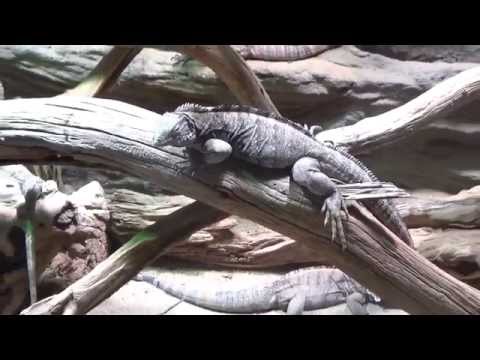
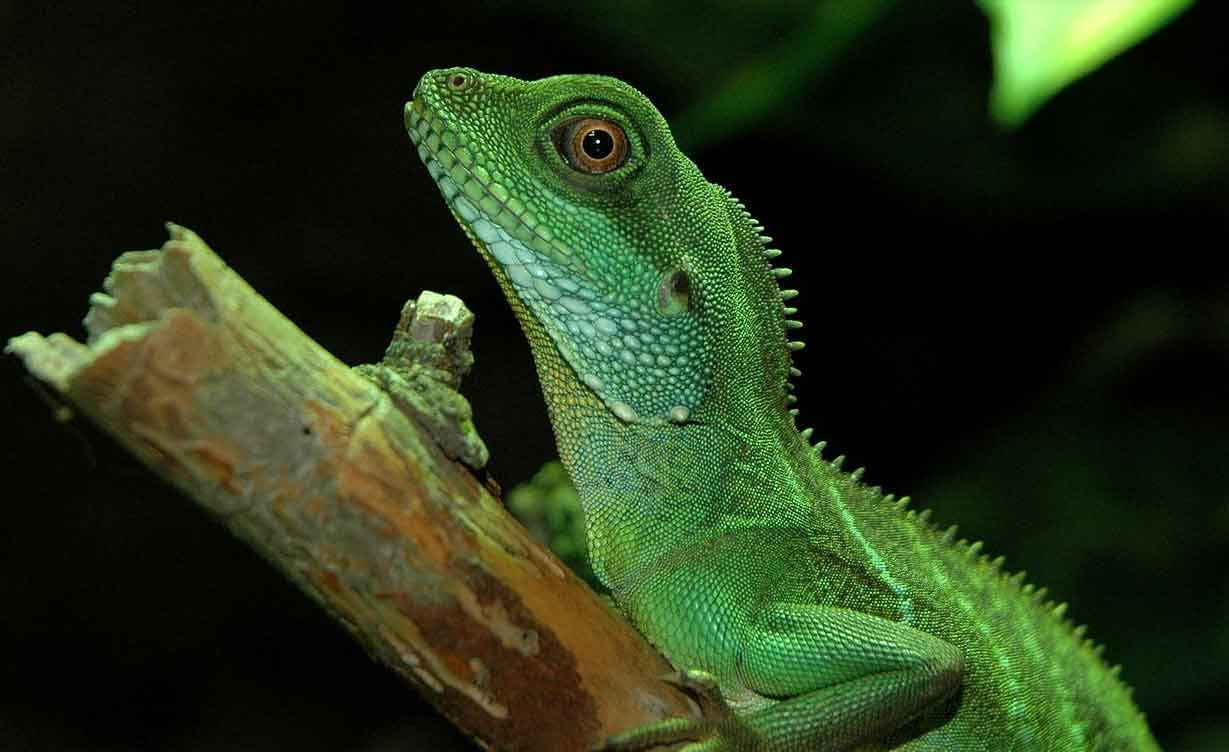
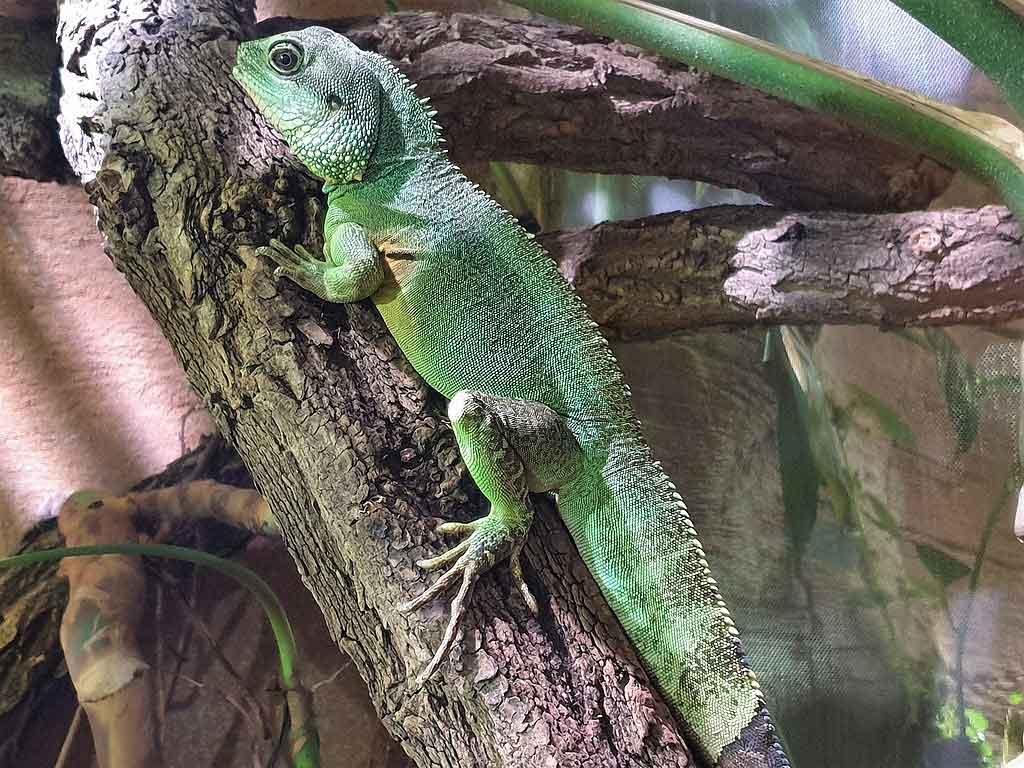
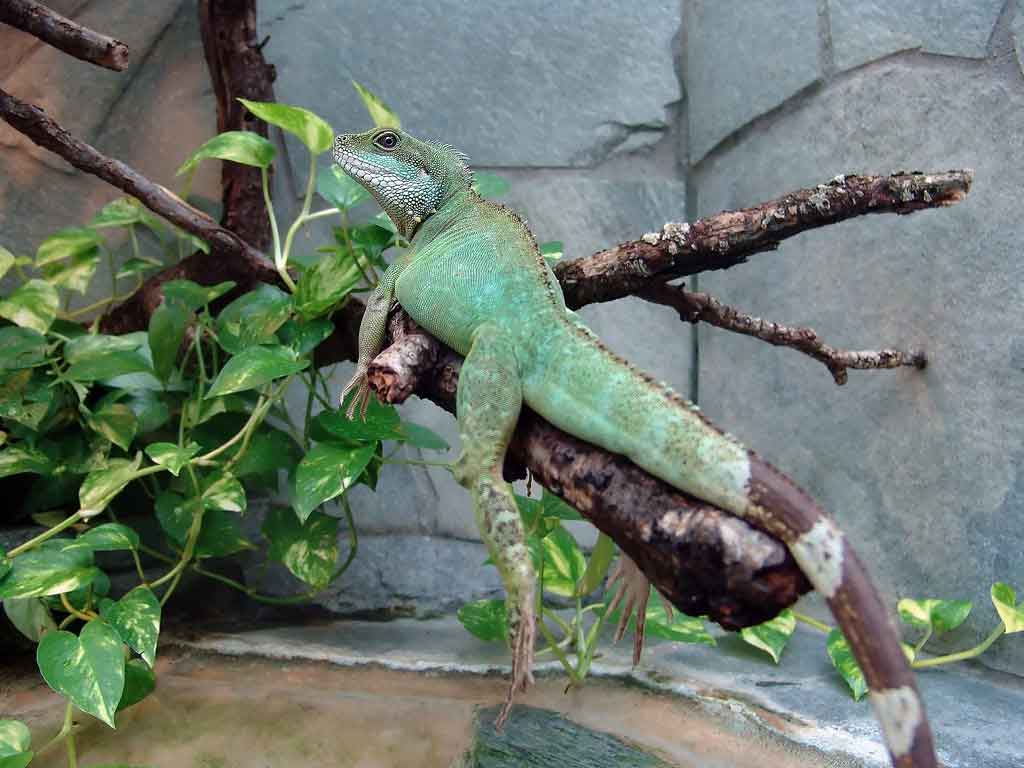
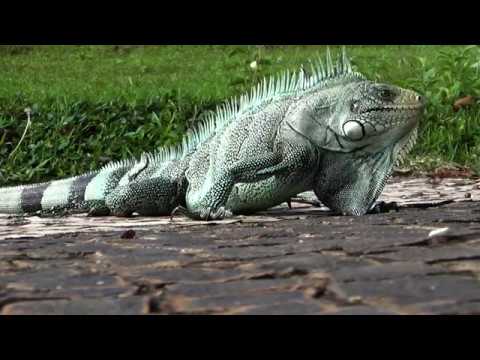
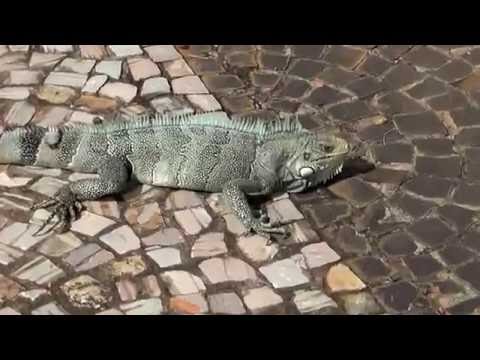
GREEN IGUANA: In the sunbathing in the morning (IGUANA IGUANA), GREEN IGUANA, CHAMELEON.










.jpg)