โท The world of Pets: Dogs, cats, birds, reptiles, amphibians
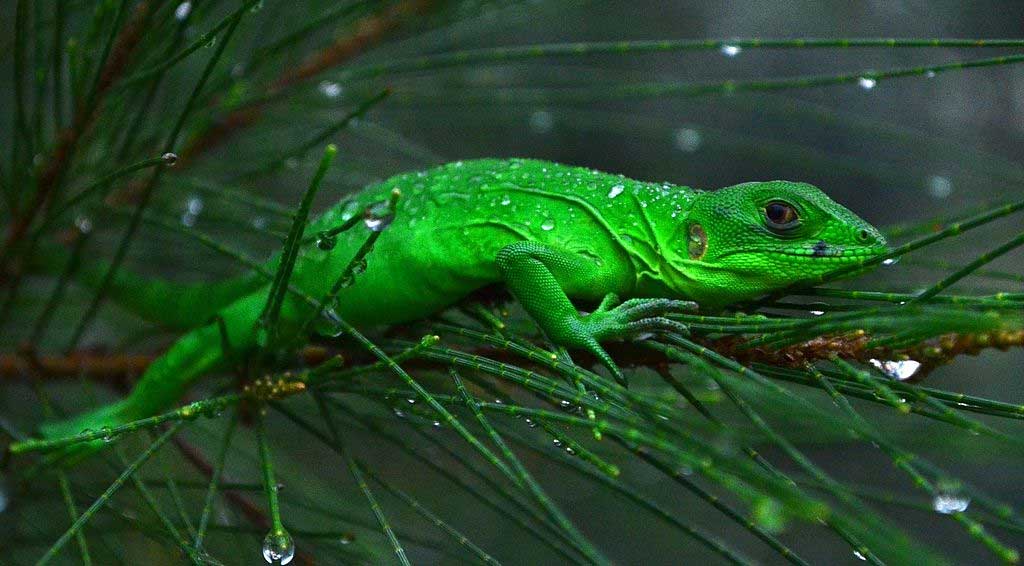
Oriental garden lizard
- Calotes versicolor
Origin: Afghanistan , Pakistan , Nepal , Bhutan , India , Sri Lanka , Bangladesh , Myanmar , Thailand , Malaysia , Viet Nam , Cambodia , Laos , China (South), Indonesian ( Sumatra ) and Singapore.
Although the Oriental garden lizard can be found relatively frequently and at a fairly low price in the trade, not easy to raise, so many wild-caught animals are still being sold.
I don't know why this beautiful reptile is called Oriental garden lizard, It may be because of the red pouch in the throat or, according to population, for his red head, but this lizard is not a Bloodsuckers. The Oriental garden lizard lives from eastern Iraq to southeast Asia in various habitats, diurnal animals live mainly on insects, small invertebrates and vertebrates to mice, only rarely do they eat plant foods.
Description
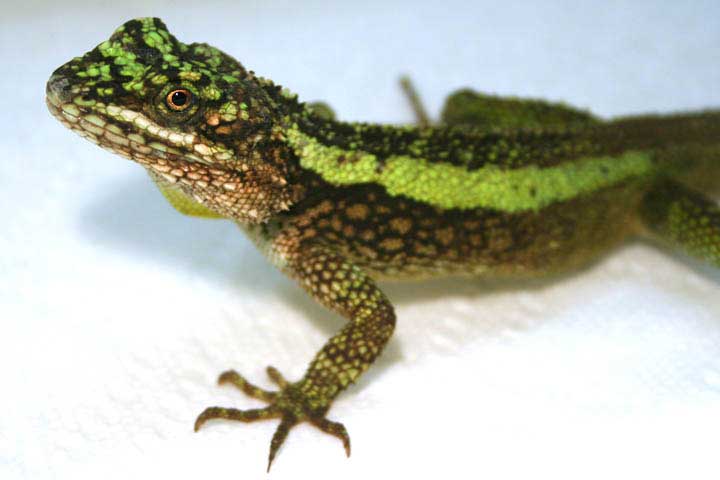
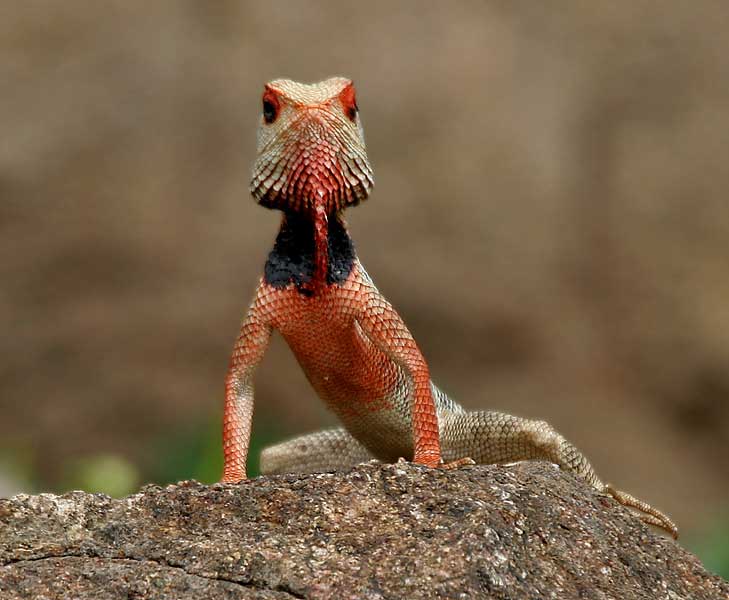
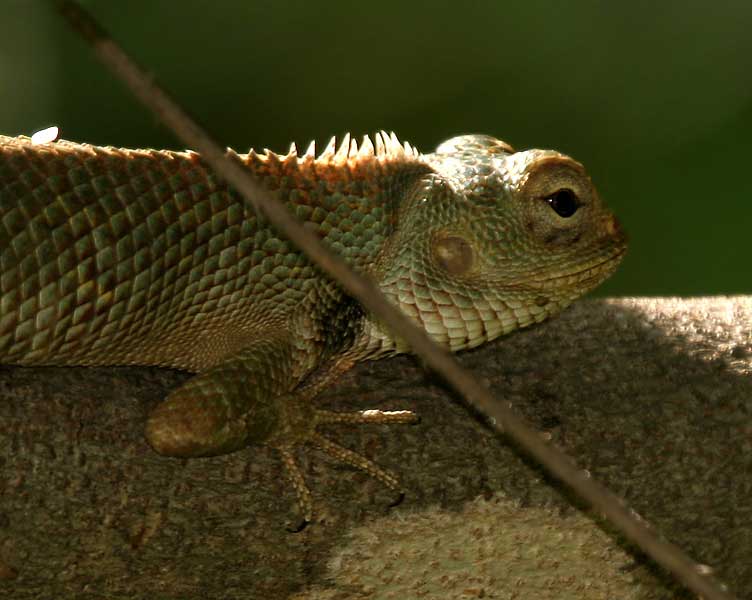
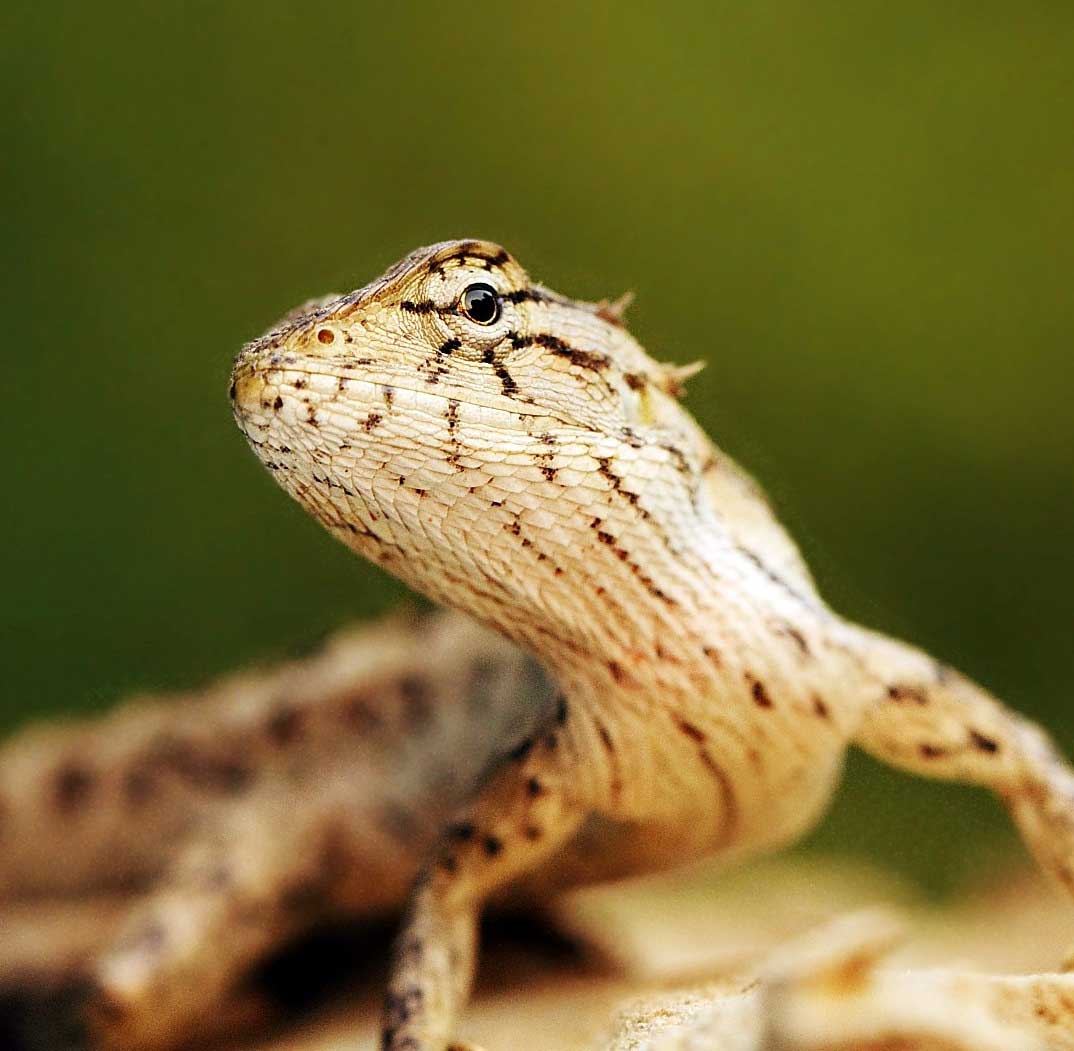
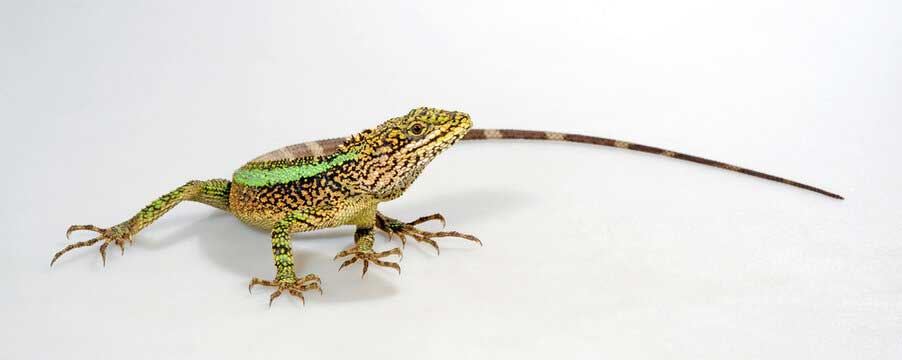
The Oriental garden lizard (Calotes versicolor), found in open areas with shrubs and trees, often also in human settlements. They are usually solitary animals, since males are very territorial and females also react aggressively to other congeners. Males have a dorsal crest that extends from the nape to the root of the tail.. Coloration varies, usually have a yellow head and red throat. The transverse bands, which can be light or dark, are visible on the back.
Sexual dimorphism
Blood-sucking tree dragon in Narsapur, Medak district, Andhra Pradesh, India. – J.M.Garg, CC BY 3.0, via Wikimedia Commons
Males have a distinctive dorsal crest that extends from the back of the head to the root of the tail.. Older specimens have a more massive head and a thicker tail root.. Animals show a remarkable ability to change color. In general, males are less contrasted than females.
The splendid coloration of the male is characteristic. At first there is a pale yellowish coloration of the head and a greenish yellow neck and back. The neck and back end up changing color to a dark blackish brown, while the throat and head stand out for their intense red coloration. A black band emerges from the throat to the cheeks. Limbs become very dark, while the tail clears. Females have a short nuchal crest.
The "Oriental garden lizard" in captivity
Although the Oriental garden lizard can be found relatively frequently and at a fairly low price in the trade, not easy to raise, so many wild-caught animals are still being sold. Unfortunately, these beautiful animals are often kept incorrectly. The Oriental garden lizard must be kept in pairs or groups with one male and several females
Its terrarium it must be big. A length of 180-200 cm., a height of 130 cm and a depth of 70 cm..
In principle, the caregiver of terrarium you can design the tank as you like. It is important that there is plenty of room to climb and that the relative humidity is not less than the 70%. In the warmest place, lizards need a temperature of around 40ยฐC.
for breeding, it is important to have males and females of the same range. Otherwise, there will be no synchronization in sexual maturity and reproduction will remain an unfulfilled dream.
A single female from the population shown here from Vietnam produced no less than 25 eggs! So, breeding can be quite productive.
You can only have one male per terrarium, otherwise there will be murder and manslaughter. terrarium is big enough, can be kept 2-3 females, but it is safer to keep them in pairs.
Diet
Any live food available on the market corresponding to its size can be used as food for the Oriental garden lizard, but baby mice are used very rarely, if they are used. Of course, the diet must be varied and always well pollinated. To cover the low need for plant food, suitable plants can be planted in the terrarium, preferably in pots.
Breeding
After the "dry period", the males will begin to mate, so its coloring is especially attractive, and if they keep well, mating will also occur. The females will put up 20 eggs that must be incubated for about 80 days. Juveniles should be kept as adults, with live food appropriate to its size.
For sale "Oriental garden lizard"
The price of a "Oriental garden lizard" ranges between 15 โ 20 EUR.
Alternative names:
1. Oriental garden lizard, Eastern garden lizard, Indian garden lizard, Common garden lizard, Bloodsucker, or Changeable lizard (English).
2. Agame versicolore, Galรฉote versicolore, Lรฉzard arlequin, Agame arlequin (French).
3. Blutsaugeragame, Verschiedenfarbige Schรถnechse bezeichnet (German).
4. Lagarto-de-Jardim-Oriental, Lagarto comum do jardim, Lagarto jardim indiano (Portuguese).
5. Lagarto bosque de Emma versicolor, Lagarto de jardรญn Oriental (espaรฑol).
โท The world of Pets: Dogs, cats, birds, reptiles, amphibians
North African mastigure
- Uromastyx acanthinura
Origin: north west africa
Gender: Uromastyx
Life expectancy: 20 years
Length: 45 cm.
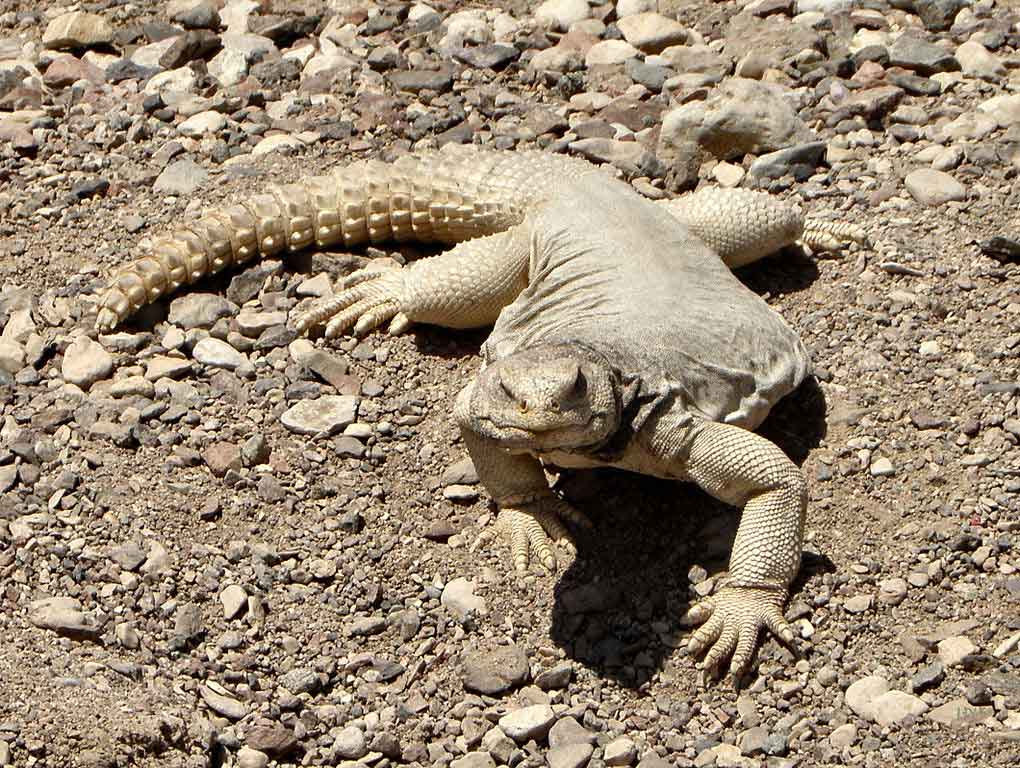
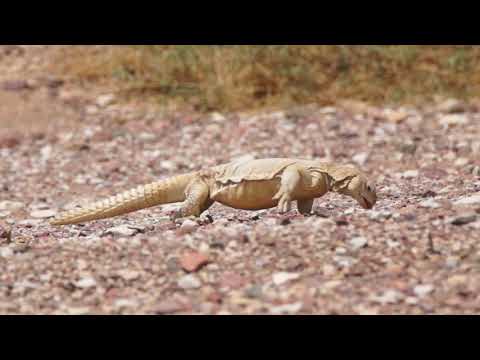
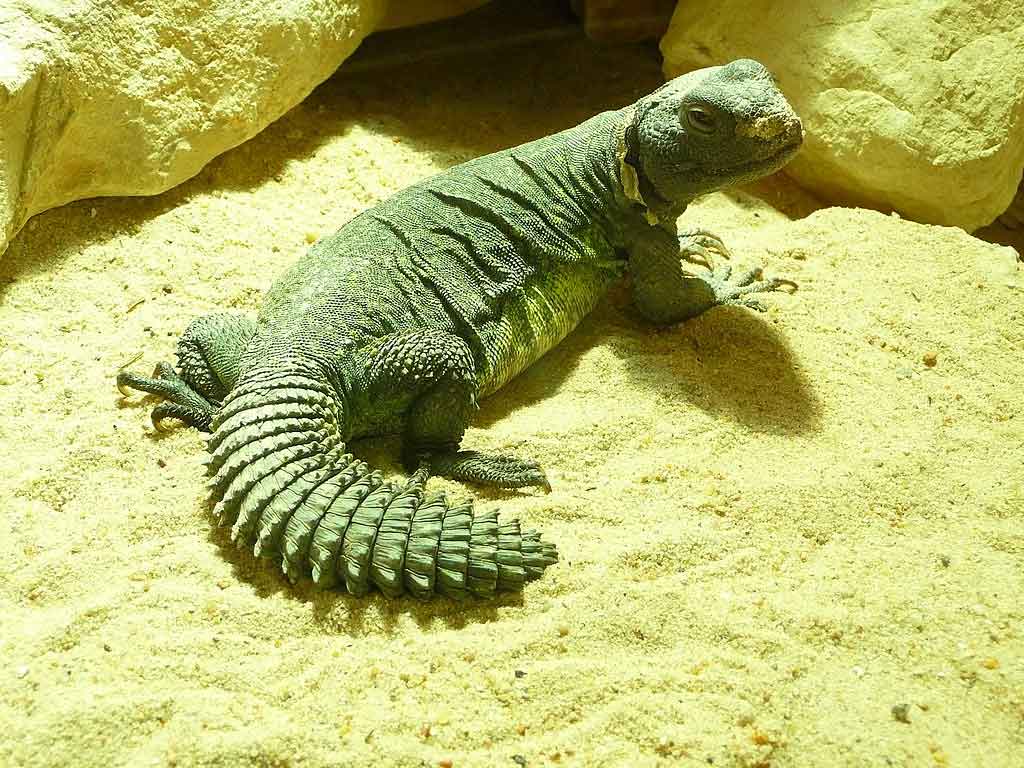
The North African mastigure It is one of the most representative reptiles of the Sahara desert. It is medium in size: can measure more than 45 cm and weigh around 450 g..
North African spiny-tailed lizard at the Vivarium Darmstadt (Hesse, Germany)
Content
Distribution
The North African mastigure (Uromastyx acanthinura) It is a lizard native to North Africa. (northwest africa).
Their habitats are usually in the mountains and consist of rocky desert and sandy stony desert., not found in purely sandy deserts.
Characteristics
They reach a head-torso length of up to 28 cm and a total length of 45 cm.. To the North African mastigure likes to sunbathe and can change color to regulate temperature. In their native habitat they live in rock deserts and scree, that is to say, in very rare habitats called hamada, and they like to dig. They make their own burrows, have a relatively constant climate.
The "North African mastigure" in captivity
Terrarium
The North African mastigure it is very territorial in nature and keeping one male and several females is only possible in a large terrarium. It is best to keep them in pairs..
To keep the North African mastigure, we recommend the following conditions. Especially when the minimum size is specified, note that optimal conditions can only be achieved in much larger terrariums.
temperatures during the day: 28ยฐ a 40ยฐC (locally at least 45ยฐC)
Night temperatures: 18-22ยฐC
Humidity: 20-30% during the day and 60-80% At night
Minimum size of the terrarium: starting at 160 x 120 x 90 cm for a couple
Hibernation
You have to let the animals hibernate for three or four months. The North African mastigure needed between 12 and 18ยฐC โโfor it. Hibernation is very important for animals to regulate their bodily functions and stay healthy. It's also a good way to prevent obesity.
Reproduction
hibernation is very important. The North African mastigure puts up to 26 eggs. These should not be incubated too wet, otherwise they will easily turn into fungi. The pups of Uromastyx acanthinura can be bred together in a group for up to two years, provided they are compatible. It is essential to provide enough calcium and vitamins.
Food
The diet of the North African mastigure includes banana, vine leaves, dandelion, margaritas, clover, pamplinas, sometimes kitchen herbs and grains like corn, rice, millet, sunflower seeds and others. Young animals feed up to a 75% of animals. These may include, crickets, grasshopper, cockroaches, sometimes zophobas and other live food. Adults should be fed little or no animal food to prevent fatty degeneration..
no lettuce, iceberg lettuce or similar, since its calcium-phosphorus content is unfavorable. And cabbage or spinach should only be fed rarely due to oxalic acid…
Fruit should also be provided only in moderation., if it is accepted.
Additional vitamin and mineral supplements are recommended.
For sale "North African mastigure"
The price of a "North African mastigure" bred in captivity in the exotic animal market, ranges between 150 – 200 EUR.
1. North African mastigure (English).
2. Bell's dabb lizard (French).
3. Nordafrikanische Dornschwanzagame (German).
4. Lagarto-de-Cauda-Espinhosa-Norte-Africano (Portuguese).
5. "Lagarto de cola espinosa del norte de รfrica" (espaรฑol).
โท The world of Pets: Dogs, cats, birds, reptiles, amphibians
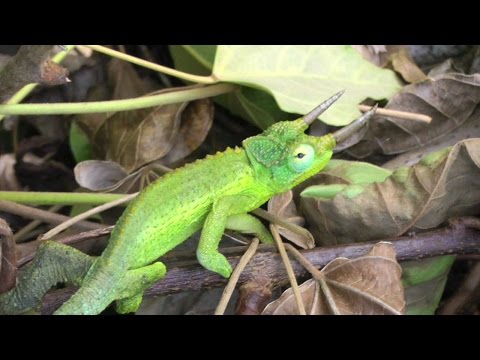
Jackson's chameleon
- Trioceros jacksonii
Origin: Kenya, Tanzania, United States
Gender: Trioceros
Life expectancy: Until 10 years
Length: Head-torso: until 16 cm.
The Jackson's chameleon is diurnal and shows a foraging behavior with few movements per minute and a very slow locomotion rate.
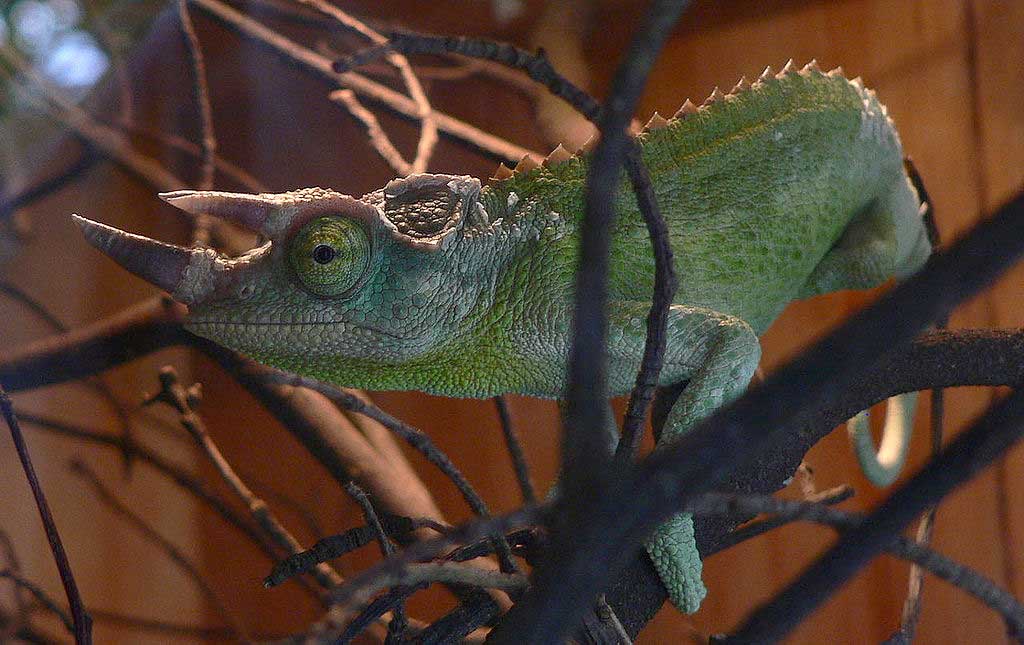
Jackson's chameleon (Chamaeleo jacksonii) b. 27-01-2005 1 year Wellington Zoo 22-01-2006, Wellington, New Zealand – Photo credit: Peter Halasz. (User:Pengo)
Content
Origin / Distribution
The Jackson's chameleon (Trioceros jacksonii) is native to Kenya and Tanzania.
It has been introduced in the US. USA, in California, Hawaii and Florida.
Subspecies of Trioceros Jacksonii
Currently there 3 subspecies of "Jackson's chameleon" described:
The Machakos Hills Jacksonโs Chameleon is originally from Kenya, and it is the rarest type of chameleon. It measures an average of 20-25 cm long. Males have 3 horns, and the females have 1 or 3 little horns, which can sometimes make sex determination difficult. Females are lighter green in color than males., although sometimes they are red. Males are dark green., sometimes with aquamarine blue head and bright yellow patch on flanks. Individuals with this coloration may soon be described as a separate subspecies.
Mount Meru / Dwarf Jacksonโs Chameleon (Trioceros jacksonii merumontanus)
The Dwarf Jacksonโs Chameleon comes from Tanzania and is very difficult to find in captivity. Wild-caught specimens are no longer available, as all export of wildlife from Tanzania is prohibited. it is extremely rare, although there are some breeders of the Mount Meru in Europe.
These chameleons are the smallest of the species, with 17-20 cm length. Males have 3 long narrow horns, while the females only have a diminished horn on the nose. Both sexes have a dark green or blue-green body with much yellow on the face and at the base of the horns.. The eyelids are bluish-green.
The Yellow-Crested Jacksonโs Chameleon is originally from Kenya, specifically from a limited range in the foothills of Mount Kenya and Nyambeni. It is the most common type of Jackson's chameleon. As the largest member of the species, individuals can grow to 36 cm long, and males are known to far outnumber 40 cm.. Males have 3 horns and females do not have horns.
Invasive populations of the Trioceros jacksonii xantholophus are present in the Hawaiian Islands because a well-meaning pet store owner released some in O'ahu in 1972 in an attempt to restore the health of a wild-caught cargo from Africa. They have since spread to Maui., Hawaii and Kauai.
Characteristics / Appearance
Most measure approximately between 15 and 35 cm length. They usually have several shades of green, but they can become as dark as black when they are very distressed.. Are sexually dimorphic. Males have three long, pointed horns protruding from the head. These horns are absent or underdeveloped in females. The back of the head has a small crest. There are small spines along the vertebral line. Like other chameleons, the Jackson's chameleon has zygodactyl feet (divided so that two fingers point inward and three point outward) that are specialized for life in trees, and a prehensile tail that is also used for grasping.
But, the most recognizable feature of all chameleons are their eyes. The pupil is the only visible part from its skin covering. Each eye rotates 180 degrees and is independent of the other. Chameleons have unusually strong control over the curvature of their lenses, and can enlarge an image.
They are considered a long-lived chameleon (until 10 years).
Habitat
The Jackson's chameleon prefers to live in thickets and mountain forests. They need to hide and prefer to live in trees. They rarely venture on the ground, except for laying eggs or mating.
Behavior
Males are territorial and fight with their horns, which they can also use to attract females. When two males meet, they stand on their side, flatten their bodies, curl their tails and push their heads forward. They inflate with air to appear larger and become brightly colored. Next, open their mouths to show the varied colors of their interior, while swaying and wiggling with the occasional soft hiss. The submissive male will normally try to hide, freeze on the spot or try to escape the area. Fade into muted colors. When males fight, they hit each other with their horns and try to push themselves from the branches. These fights can cause physical harm to chameleons.
They use stillness and dull natural coloration to protect themselves from bird predation, Snakes, shrews and lizards.
Reproduction
The Jackson's chameleon has a mating ritual that mimics its threat ritual. The male initiates the display of threat to the female, including color changes, inflating of the throat and elevation of the front legs towards the opponent. The female then has two options. May make threatening gestures, in which case you do not want to mate. If you want to mate, make weak threatening gestures or make no gestures at all, in which case the male recognizes his will. Then the male surrounds the female, grabs your neck with your mouth, is placed on your back and inserts the hemipene into the cloacal orifice. This whole process usually takes a few 13 minutes. The female will continue to mate during 11 days, but not with the same male twice in a day. Gestation lasts approximately 190 days. The young are usually born in the morning. The female opens the cloaca and the young are born one at a time on a branch.. They are still surrounded by a gelatinous egg sac and remain asleep until the egg touches the substrate.. The young then wake up and stretch and break the egg sac.. At birth, the offspring measure some 5,5 cm long and weigh some 0,6 Gm. After 20 days females copulate again. The young will reach sexual maturity at the age of 9 or 10 months.
Food
The diet of this chameleon consists mainly of insects and spiders. Using your eyes independently, sit completely still and watch if an element of prey crosses your path. When you locate it, both eyes converge and it swings a bit to improve its vision and confirm the distance at which the prey is located.. The prey is captured by projecting the tongue, which has a fleshy tip covered in sticky saliva. The prey is brought back to the mouth, chewed and swallowed. Language, one and a half times the length of the lizard, can reach its full length in a sixteenth of a second.
They get water by licking the drops from the leaves.
In the morning, sunbathe, bending one side towards the light and flattening the body and stretching the neck to increase its surface. Once heated, are able to hunt.
Threats to the species
State of conservation โ
Minor Concern โ(UICN)โ
The Convention on International Trade in Endangered Species (CITES) classifies all chameleons as threatened. Two reasons for its decline are habitat destruction and the exotic pet trade.. Demand for chameleons encourages pet suppliers to pull them out of the wild and ship them over long distances; the survival rate may be approximately 1 of each 10, and those who survive arrive malnourished and stressed. Proper care methods for these lizards are not well understood, so they can be mistreated without knowing it. Captive breeding has not been very successful, with the exception of the San Diego Zoo and some private breeders.
The "Jackson's chameleon" in captivity
The terrarium
Size: The bigger, best, minimal 60 x 45 x 90cm.
Type of cage: Full or hybrid mesh (combination of mesh and glass or panel)
Lights: UVB source (inside or outside), natural light source (window or LED) (inside or outside), Heat source (exterior)
Hydration: Nebulizer at night, manual misting in the morning and afternoon
Ventilation: full mesh, Small fans when using a hybrid cage and/or the air is stagnant
Interior: live plants (not fake), natural branches (no fake vines, non-strings, non-bleached wood), non-substrate.
Care
UVB light source: T5 HO 12 hours a day, 5-12% according to the height of the cage Visible light: Full spectrum or natural light, 12 hours a day Resting point: 26-28ยฐC, 1 time maximum 2 times a day Temperature during the day: 21-23ยฐC. Temperature at night: Max. 15-17ยฐC, Ideal temperature below 15ยฐC. Humidity during the day: 50-70%. Humidity at night: 100%, fog Hydration: Nebulizer at night, Manual nebulization, Dropper Type of feeding: Crickets, Soldier flies, Cockroaches, No vegetables, Fruit-free Volume of food: Youth without limit, Adults maximum 1 daily cricket Supplement – Every meal: Simple calcium, Bee pollen Supplementation – Once every two weeks: Calcium with D3
Buy one "Jackson's chameleon"
The price of a "Jackson's chameleon" at the exotic animal market, ranges between 150 – 250 EUR.
1. Jackson's chameleon, Jackson’s horned chameleon, Three-horned chameleon, Kikuyu three-horned chameleon (English).
2. Camรฉlรฉon de Jackson, Chamaeleon jacksonii (French).
3. Dreihornchamรคleon (German).
4. Camaleรฃo-de-jackson, Chamaeleo jacksonii, Camaleรฃo-de-trรชs-chifres (Portuguese).
5. "Camaleรณn de Jackson", Trioceros de Jackson (espaรฑol).
โท The world of Pets: Dogs, cats, birds, reptiles, amphibians
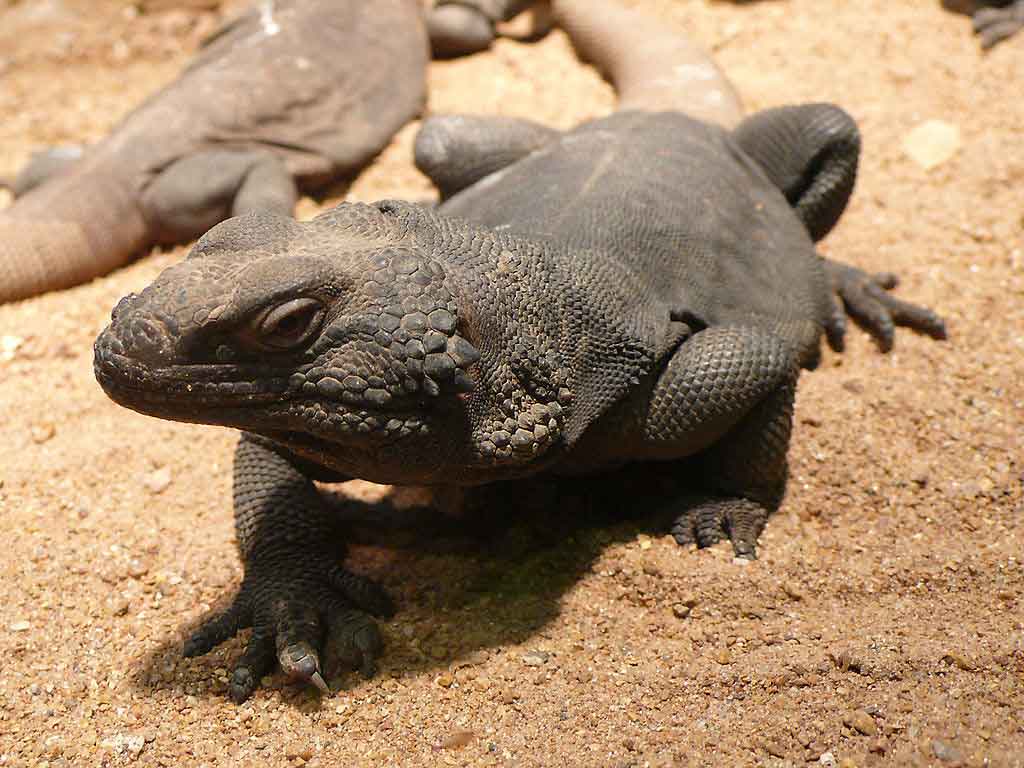
Common chuckwalla
- Sauromalus ater
Origin: Mexico, United States
Gender: Sauromalus
Life expectancy: 30 - 40 years
Length: Among 30 and 50 cm.
The Common chuckwalla found in deserts, where the air is warm and dry (of 9 to 45 degrees Celsius).
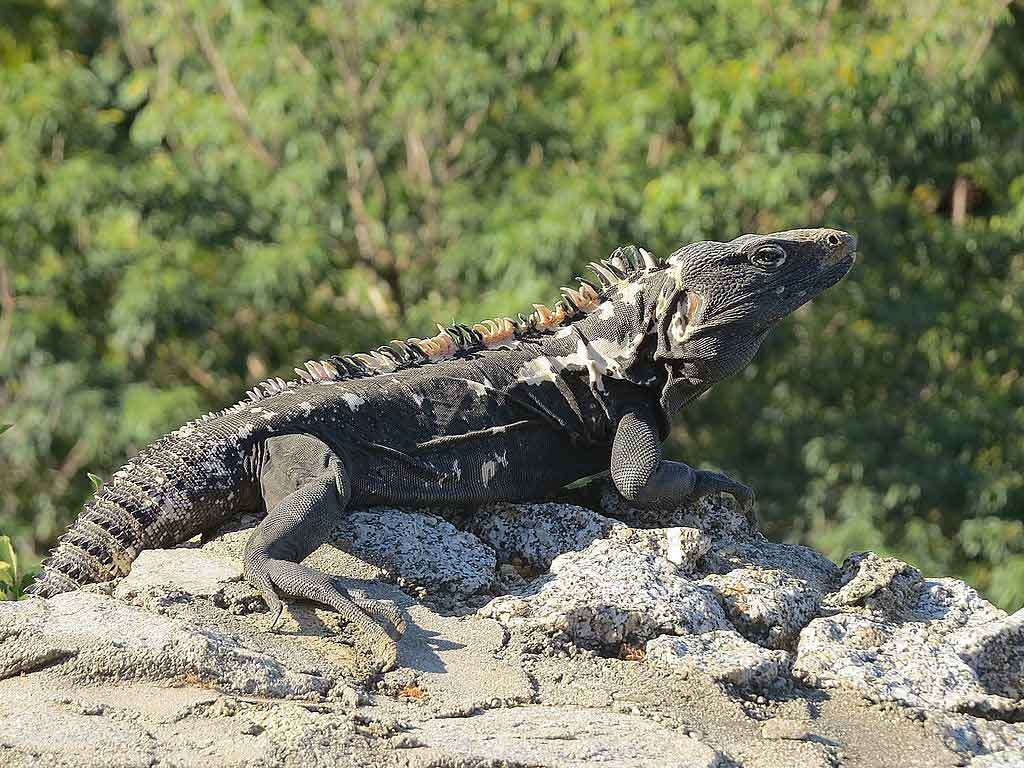
Common chuckwalla (Sauromalus ater) – TimVickers, Public domain, via Wikimedia Commons
Content
Origin / Distribution
The Common chuckwalla (Sauromalus ater) It inhabits the deserts of the western United States and Mexico and in 30 known islands of the Gulf of Mexico. In particular, the Mojave and Sonoran deserts are known to have thriving populations of chuckwallas. They can be found as far west as southeastern California and Nevada, and are abundant in Arizona, New Mexico, Texas, Utah and parts of Colorado.
Characteristics / Appearance
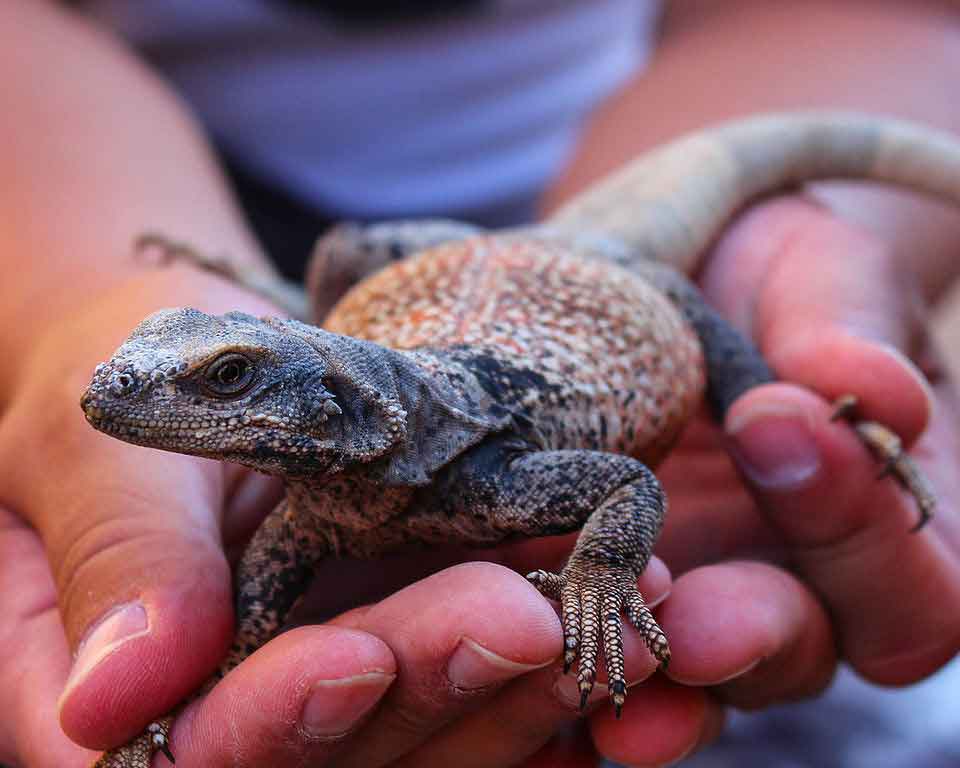
The Common chuckwalla it is a stocky lizard with loose folds of skin near the neck, shoulders and stomach. The skin is covered with hard scales, and the largest are between the nose and the eyes. They have five fingers on each end and the tail is rounded at the tip.. Head color can range from dark brown and gray to dark yellow. Color variation depends on geographic location, the temperature, environment and mood. The tail is thicker near the body and tapers towards the tip.. Males are slightly larger than females and, in some cases, have different scale patterns and head shapes. Females may have a slightly narrower snout and head.. There is also variation in color, juveniles and females have lighter markings than males. The average weight is 245 g. (range of 24 to 315 g.), although males are usually heavier than females. The average length of the head is 35,5 mm and its greatest width is 33,2 mm. The mean length of the snout is 162 mm (range of 80 to 197 mm) and the tail length is 182 mm. Almost half of the length corresponds to the tail.
Habitat
The Common chuckwalla found in deserts, where the air is warm and dry (of 9 to 45 degrees Celsius). They are found in deserts with rocks and crevices to hide in., as areas of ancient lava flows, rocky slopes and outcrops. They use burrows and underground cracks to hibernate in winter.. They inhabit insular and coastal environments. These lizards require a moderate amount of vegetation and foliage in the habitat in order to sustain themselves.. The Common chuckwalla can be found between sea level and 1400 m above sea level.
Behavior
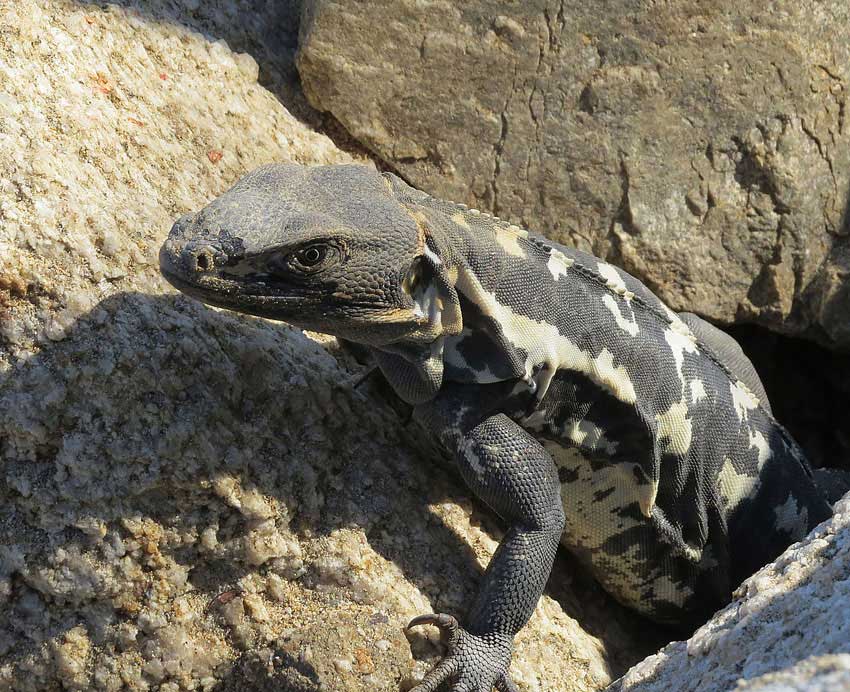
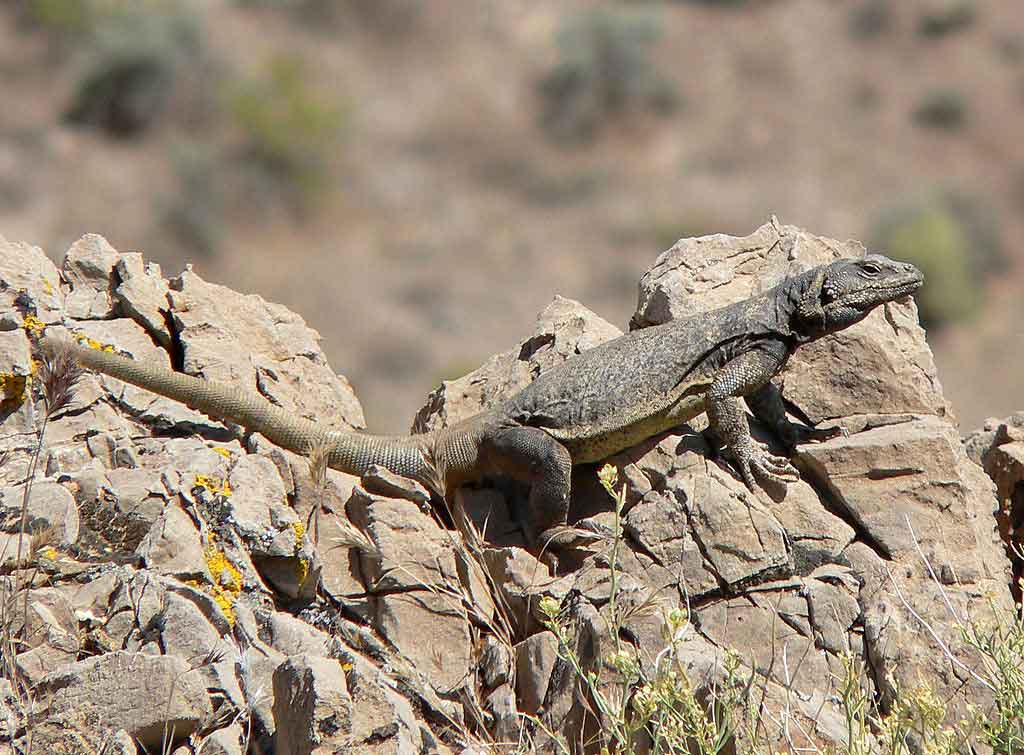
Chuckwalla (Sauromalus ater), San Bernardino County, AU – Connor Long, CC BY-SA 4.0, via Wikimedia Commons
The Common chuckwalla it is mainly solitary and diurnal. They leave rock shelters during the day to eat foliage, but they usually stay close to their shelters. They are active from mid-March to mid-August, but they can aestivate in the summer months when food is scarce. From November to March they can go through brumation (similar to hibernation, but observed in ectotherms). They are active for a 8 hours a day, usually between 06:30 and 19:00. The activity of the Common chuckwalla is greater among 9:15 and 11:30. To avoid overheating, they move in and out of the shade and adopt different orientations towards the sun. Most of their time is spent basking on rocks when they are not foraging for food.. They take refuge in cracks and shallow holes during the hottest part of the day and use these cracks to avoid predators.. Males are territorial and fight over territory and females. The females are not hostile to each other, but the hierarchies of males and females are based on the size.
Developing
After a gestation period of one month, females lay eggs in an underground nest. Once the Common chuckwalla come out of the egg, begin to grow at a rate of about 17 mm per year. The Common chuckwalla abandons its young after hatching and the young are independent at that time. They reach sexual maturity around 2 or 3 years. Reaching adult size takes a few 25 years, after which they continue to grow but at a significantly slower rate, of about 5,5 mm per year. Growth rate is related to food abundance. The Common chuckwalla grows more in spring and summer, when the temperature is high and food is plentiful. La muda, or detachment of the epidermis, also occurs in spring, when the growth rate is high.
Reproduction
the courtship of the Common chuckwalla is that males attract females by their size or persistence. Males usually have several females living in their territory and mate with them.. The males of the Common chuckwalla use head movement, the licks, the circles, the pushes, jaw rubs and other methods to persuade females to mate. Females allow copulation if they determine the male is desired., males can prevail if they are big and forceful. During copulation, males use their mandibles to grasp females by the loose skin on the nape of the neck. Mating usually takes place in early spring, after hibernation. Both sexes have multiple partners year after year. Males compete for females by biting and head-butting..
The Common chuckwalla breeds between April and August, when food is more abundant. When females are receptive, your ovaries enlarge. Males produce sperm each year., while females produce eggs every two years, average. Males reach sexual maturity when they reach 125 mm length at snout, that is to say, to the 2 years of age. Females reach sexual maturity at the same length, but they may take 2 to 3 years to reach it. The average clutch size per breeding season varies from 5 to 16 eggs and the annual reproductive frequency of each female varies greatly from year to year depending on food availability and rainfall. Some females produce two separate clutches., others produce none. The females incubate the eggs until they hatch.. The incubation period lasts about 35 days (range of 33 to 50 days). The hatching mass range of eggs is 6,0 to 9,6 g.. Larger females produce clutches more often than smaller females.. But, smaller females may breed in consecutive years.
Females prepare an underground nest in an area with dry soil that is unlikely to be disturbed.. The females protect their eggs from predators and other threats while they incubate them.. But, after hatching, females no longer care for their young. Males do not provide parental care.
Food
The Common chuckwalla It is herbivorous and feeds on perennial and annual plants.. Their diet is usually high in fiber and low in fat and protein. Annual plants make up the 60% your diet in the summer months, while the perennials suppose the 40%. When annual plants die in winter, perennials become their main food source. They have been observed feeding on the leaves and fruit of creosote bushes in the summer months. (Pasture tridentate), as well as some insects that reside in the vegetation they eat. The (Oenothera clavaeformis) and the desert ambrosia (Franseria dumosa) are the main plants in the diet of the Common chuckwalla. In captivity they feed on various vegetables, fruits and flowers. They obtain water from the plants they eat and produce it metabolically.
Life expectancy
The Common chuckwalla usually live 10 years or more, if the right conditions are met, limited predation and adequate food availability. The half-life in nature is estimated to be about 15 years. Although there is considerable variability from year to year, Survival in the first year is estimated to be 38%. The mortality of the eggs is the one that most affects the survival of animals less than one year old. Those who survive beyond one year experience a median survival of 75% annual. The Common chuckwalla oldest known in nature had 30 years. The Common chuckwalla oldest in captivity lived to be 65 years.
Threats to the species
State of conservation โ
Minor Concern โ(UICN)โ
The populations of Common chuckwalla are protected by national parks and, course, for its remote habitat (rugged terrain and harsh climate). Trends toward development in desert areas of the United States and parts of Mexico are affecting the habitat of the Common chuckwalla; However, the status of the population as a whole has been reported as large and stable.
The commercial sales of Common chuckwalla have not shown any major impact on the species as a whole, but some subspecies are locally threatened by overharvesting and habitat degradation. The South Mountain Subpopulation, near phoenix (Arizona), is in the spotlight because it has a unique color pattern that is desirable for the pet trade. The Colorado River Dam has greatly reduced the populations of Common chuckwalla in the Glen Canyon area, in Utah, and goat herding activities, sheep and donkeys have shown a small negative impact. In general, the IUCN classifies the Common chuckwalla like "Least concernยป due to the wide distribution of the population and the absence of immediate threats. Although the total size of the population is not known, it is estimated that the total size of the adult population could be 100.000 or more.
The "Common chuckwalla" in captivity
Sauromalus ater (chuckwalla) and Columbia Pass, Spring Mountains, on from nevada – Stan Shebs, CC BY-SA 3.0, via Wikimedia Commons
The terrarium
The necessary size of the terrarium for a "Common chuckwalla" is of 120 cm long x 100 cm wide x 60 cm high or 120 cm long x 60 cm wide x 100 centimeters tall, respectively. The terrarium consists of a combination of wood and glass. Inside the terrarium there may be a self-made rear wall with many protrusions and indentations. The Common chuckwalla use almost exclusively the back wall and rarely stay on the ground. There may be a large ventilation area at the front under sliding glass over the entire length of the terrarium. in addition, about half of the lid consists of a ventilation zone to ensure the necessary ventilation.
Furniture
The terrarium substrate consists of a mixture of Lucky Reptile Desert Bedding and shell sand. To some Common chuckwalla they like to eat the small pieces of crushed rock from the shell. There can also be multiple roots, cork tubes, stones and branches in the terrarium. Live plants are eaten immediately, so you should no longer use real plants for decoration. Stones and heavy objects must be firmly anchored, since the animals like to undermine everything and then there is danger of collapse.
Lighting and temperature
Light is a crucial factor in keeping and rearing these lizards.. The terrarium can be illuminated with two T9 fluorescent tubes of 38W each.. Two Solar Raptors 70W serve as heat and UV source. It also, every hour a SolarGlo 150W from Exoterra.
The temperature in the terrarium ranges between 26ยฐC and 30ยฐC. Temperatures of up to 42ยฐC are reached under the radiators. The humidity is around 40% during the day and go up to the 60% At night.
Food
The Common chuckwalla Adult feeds almost exclusively on plants.. Juveniles occasionally hunt grasshoppers, crickets and worms. It is important to feed the animals with a varied diet so that there is no imbalance in the mineral balance. Vegetable food is given daily. During the week, they can have a fast day. What must never be forgotten is to regularly supplement the diet with a vitamin preparation.
You can give them grated carrot, all kinds of lettuce, dandelion and its flowers, Cucumber, cooked rice, zucchini, Peppers, strawberries, raspberries, grated apple and rarely banana. Caution. Please, don't feed them cabbage, as this causes life-threatening flatulence. as with all animals, you have to try what and how much they like to eat. In principle, you can't overfeed them with vegetables, so you always have to have something available.
A great gift is assorted sprouts that you can grow yourself on the windowsill. As such, I spread the lentils, wheat and millet in a container with moist soil and water them daily. after only three days, you can see the first spikes growing out of the ground. After a week and a half or two, the chuckwallas get the bowl with the fresh green.
There is also always a bowl with various grains, like red and brown lentils, special dry food for herbivores, pumpkin seeds and sunflower seeds.
Of course, a bowl of water should not be missing either.
Hibernation
Hibernation is an important part of the life of the Common chuckwalla all the years.
At the end of October / beginning of November, animals become increasingly lethargic and reduce their food intake.
Light duration is reduced from 12-14 to 5 hours a day for weeks while minimizing feeding.
During this time, just offer more water.
for the final hibernation, the animals are moved to a terrarium, similar to turtles.
The optimum temperature is between 12 โ 10 degrees.
They wake up slowly in mid to early March.
The hibernation of Common chuckwalla it is a somewhat difficult matter, since the animals should not wake up too early.
This means that the process of lowering lighting and temperature, as well as upload it, must be done very slowly.
Buy one "Common chuckwalla"
The "Common chuckwalla" not an easy reptile to find. Its price in the exotic animal market ranges from 200 – 300 EUR. It is important that your acquisition comes from animals bred in captivity to preserve their status in the natural environment.
The Red-headed rock agama (Agama agama) It is one of the most colored lizards that we can find, since even the females are quite colorful. They are desert terrarium animals like the Pogona, with whom they can also coexist perfectly.
The Red-headed rock agama has a very marked color change, but it is only visible during the day. At night, the look of a Red-headed rock agama is uniformly gray. According to your mood, the Red-headed rock agama changes its color.
The females., juveniles and lower-ranking males have brown to gray bodies. Dominant males are recognized by their flattened steel-blue or olive-green body and yellow head and tail., about orange to red. Depending on the subspecies, head color spreads over anterior body. The males acquire their splendid colors when they have warmed up in an elevated place during the day.
During gestation, females show yellow to orange spots on flanks and turquoise spots on head. The tail, long and round, does not drop, unlike numerous iguanas or of the Skinks.
Its size varies between 13 and 30 full length cm. Males are usually 7,5 to 12 cm longer than average female.
Behavior
Agama agama at the Schmiding Zoo in Schmiding near Bad Schallerbach, Austria – Michael Gรคbler, CC BY 3.0, via Wikimedia Commons
The Red-headed rock agama lives in colonies with a dominant male in a limited area. Group size can be up to 25 individuals. At dawn, group members are activated. During the day, the dominant male usually stays in a high place and shows his color.
Yet Red-headed rock agama also likes to warm up on a high place in the scorching sun. Stand on front legs and stretch body, and occasionally the tail, diagonally up. When a sexually mature young male changes color, is expelled by the dominant male and has to find his own territory. In a fight with a rival, the fighting male's head turns brown and white spots appear on the body. The males emit hissing sounds and try to strike the opponent's head with their tail.. But, before doing it, adopt a threatening posture. They shake their heads back and forth, lift the body off the ground and unfold the skin folds of the throat.
The "fire lizard" in captivity
Terrarium
In its original habitat, the Red-headed rock agama live in groups of several animals. This condition must also be maintained in the terrarium.
The terrarium for him Red-headed rock agama must have very generous dimensions for a couple, or better, one male with two females, since the Red-headed rock agama captured in the wild have a pronounced flight reflex, apart from great mobility. So, dimensions must be at least 200 cm long x 100 cm deep x 150 centimeters tall.
As the Red-headed rock agama he is very hungry for sun, must be brightly lit, of course with UV, temperatures should be 26-32ยฐC with a basking point per animal up to 38ยฐC. Humidity during the day should be at a constant level. The humidity during the day should be 40-50%, but it should be sprayed every morning and every night.
The terrarium must be provided with a sand mixture suitable for digging as a substrate, as well as various stones and branches to climb, in order to provide the animals with sufficient variety.
Diet
as food, live insects come into question, they must be pollinated regularly, if possible you have to feed many ants, which unfortunately is hardly possible without raising, in any case the diet should be as varied as possible.
Reproduction
The Red-headed rock agama (Agama agama) it's hard to breed
In the wild, mating usually occurs before the rainy season, but it is probably less due to the time of year than to the increased food supply, so maybe you could try to provoke mating in the terrarium by giving more food and spraying with special intensity. If this is successful, which, as I have already said, would be a very lucky case, the eggs are incubated at about 30ยฐC and around 70% of humidity during 60-90 days.
For sale "Red-headed rock agama"
First of all, I would like to say that almost all animals found in trade or exchanges are wild caught, and that it takes a lot of intuition to keep these animals, and wild-caught animals in general, unfortunately most of the animals that are sold die due to improper care, and only very rarely are hatchlings successful in the terrarium, so I would advise anyone who is not really versed in terraristics not to buy them, I know that animals are beautiful, but precisely for this reason we must try to protect them.
The price of a "Red-headed rock agama" in the exotic animal trade ranges from 20 – 25 EUR.
โท The world of Pets: Dogs, cats, birds, reptiles, amphibians
Saharan spiny-tailed lizard
- Uromastyx geyri
Origin: Algeria, Mali and Nigeria
Gender: Uromastyx
Life expectancy: 20 years
Length: 35 cm.
The Saharan spiny-tailed lizard it is a relatively small and slender species for the genus, with an average total length (including the queue) of about 34 cm..
Saharan spiny-tailed lizard, Flower Gardens Hirschstetten in Vienna, Austria.
Content
Origin
The Saharan spiny-tailed lizard (Uromastyx geyri) is a lizard native to the north of Mali, southern Algeria and northern Niger. Two different color shapes are known (red or yellow).
Characteristics
The Saharan spiny-tailed lizard it is a relatively small and slender species for the genus, with an average total length (including the queue) of about 34 cm.. This lizard is usually beige or orange with lighter spots.
It is one of the brightest colored species in the genus. Uromastyx. There are two colors of the Uromastyx geyri, the "red" and "yellow" variety, being the color its only difference.
The variety red it is often reddish in color almost solid to orange neon pumpkin, and the yellow phase is in or near a neon range. Females are a paler color than males, showing more variations of tan coloration and much less coloration in the belly, as well as less vivid patterns, most females have a simple "freckle" on their back.
The Saharan spiny-tailed lizard are medium-sized lizards, many of them with an average of 28-36 cm of total length and a weight of 250 grams or more as adults.
The "Saharan spiny-tailed lizard" in captivity
Terrarium
The Saharan spiny-tailed lizard they are very territorial in nature and keeping one male and several females is only possible in a large terrarium. It is best to keep them in pairs..
temperatures during the day: from 28ยฐ to 35ยฐC (locally approx. 45ยฐC)
Night temperatures: 18-22ยฐC
Humidity: 40-60
Minimum size of the terrarium: starting at 140 x 100 x 120 cm for a couple
The terrarium must be furnished with numerous stones, some climbing possibilities such as thick branches, cork or bark tubes, which also offer many hiding places. To maintain this species properly, the terrarium needs a substrate of at least 20-30 height cm. Spray a little several times a week.
Illumination
For your well-being, good lighting and ultraviolet light are necessary (30% of UVA rays and 10-12% UVB), as well as a place to sunbathe. UV radiation is extremely important and absolutely necessary. In the case of females, it is absolutely necessary to have a suitable place for laying eggs or with several possibilities.
A lighting period of up to 14 hours a day (except during hibernation).
Hibernation
You have to let the animals hibernate for three or four months. As such, the Saharan spiny-tailed lizard they need between 12 y 18ยฐC. Hibernation is very important for animals to regulate their bodily functions and stay healthy. It's also a good way to prevent obesity.
Food
The diet of the Saharan spiny-tailed lizard includes banana, vine leaves, dandelion, margaritas, clover, pamplinas, sometimes kitchen herbs and grains like corn, rice, millet, sunflower seeds and others. Young animals feed up to a 75% of animals. These may include, crickets, grasshopper, cockroaches, sometimes zophobas and other live food. Adults should be fed little or no animal food to prevent fatty degeneration..
no lettuce, iceberg lettuce or similar, since its calcium-phosphorus content is unfavorable. And cabbage or spinach should only be provided rarely because of oxalic acid.…
Fruit should also be provided only in moderation., if it is accepted.
Additional vitamin and mineral supplements are recommended.
For liquid intake, you can place a bowl of water that is cleaned daily.
Reproduction
Winter rest is very important for the young. The "Saharan spiny-tailed lizard" lay eggs. These should not be incubated too wet, otherwise they will easily turn into fungi. Young Uromastyx geyri can be raised together in a group for up to two years, provided they are compatible. It is absolutely necessary to take enough calcium and vitamin supplements.
For sale "Saharan spiny-tailed lizard"
The price of a Saharan spiny-tailed lizard, captive bred, at the exotic animal market, ranges between 100 – 120 EUR.
1. Geyr’s dabb lizard, Geyr’s spiny-tailed lizard, Sahara mastigure, Saharan spiny-tailed lizard, Yellow Niger Uromastyx, Saharan yellow uromastyx. (English).
2. Lรฉzard de Geyr, Lรฉzard ร queue รฉpineuse de Geyr, Mastigure du Sahara, Lรฉzard ร queue รฉpineuse du Sahara, Uromastyx jaune du Niger, Uromastyx jaune du Sahara. (French).
3. Geyr-Krusteneidechse, Geyr-Stacheleidechse, Sahara-Mastigure, Sahara-Stacheleidechse, Gelber Niger-Uromastyx, Sahara-Gelb-Uromastyx (German).
4. Lagarto do Geyr, lagarto de cauda espinhosa do Geyr, mastigure do Sara, lagarto de cauda espinhosa do Sara, Uromastyx amarelo do Nรญger, uromastyx amarelo do Sara (Portuguese).
5. Lagarto de cola espinosa de Geyr, Lagarto de cola espinosa de Geyr, Mastigure del Sahara, Lagarto de cola espinosa del Sahara, Uromastyx amarillo del Nรญger, Uromastyx amarillo del Sahara (espaรฑol).
โท The world of Pets: Dogs, cats, birds, reptiles, amphibians
Panther chameleon
- Furcifer pardalis
Origin: Madagascar
Gender: Furcifer
Life expectancy: 5 - 7 years
Length: 30 - 51 cm. (Male), 20 - 36 cm. (Female)
The most fascinating feature that has the Panther chameleon is its extraordinarily vibrant coloration.
The Furcifer pardalis, also known as Panther chameleon, are native to the island of Madagascar. They are distributed throughout the island, but they are locally abundant on the coasts of the center-east, northeast, north and northwest. The Furcifer pardalis they have also been introduced in areas such as Reunion and Mauritius.
Characteristics / Appearance
The most fascinating feature that has the Panther chameleon is its extraordinarily vibrant coloration. Adult chameleons are sexually dimorphic and males are recognized by their larger size, the swollen base of the tail indicating the presence of hemipenes, and have a wide range of coloration and patterns. Females are identified by being more uniformly pale green or pink in color, smaller, with a thinner tail base and sometimes with eggs detectable through the walls of the body. Adults can reach a length of 23 cm.. It is much more difficult to distinguish the sex of juvenile chameleons of less than 6 months of age due to their smaller size, its dull coloration and lack of hemipenial protrusion in males.
The coloration and pattern of the Panther chameleon varies significantly depending on its origin or location. Normally, the Panther chameleon of the Malagasy island Nosy Be are bluish green, emerald green or have a turquoise body. Northwest coast males are usually bright pink, with a yellowish-white stripe along the sides; this is commonly referred to as "the pink panthers". Males may also be orange, red and dark green, with a large variation of spots, streaks and/or bands around the head and eyes.
The Panther chameleon lack a vomeronasal organ, an auxiliary olfactory sensory organ found in many animals. They also have no outer or middle ear, suggesting chameleons might be deaf. Chameleons have specialized tongue-like feet called zygodactyls.. On each foot, all five fingers are merged into a two-digit group and a three-digit group. On the front feet, the group of three toes is on the inside of the foot, and the group of two fingers is on the outside. This is reversed in the back foot, which gives them a secure and strong grip and allows them to maneuver horizontally or vertically in a wide variety of vegetation or structures. These specialized feet allow chameleons to hold on tightly to narrow branches.. The sharp claws on each finger help them climb and grip surfaces they can't hold on to tightly., like tree trunks.
Habitat
The Panther chameleon it inhabits mainly dry deciduous lowland forests, near belts of thin trees that line rivers and roads. This particular species seems to prefer open habitats that are not excessively shaded.. Scientists believe this is due to the need to colonize open spaces where they can sunbathe and males can use visual cues aimed at females. (during courtship) or for males to establish territories. Male panther chameleons also have a greater elevation range than females, most likely for territorial reasons.
Behavior
In general, the social structure of the Panther chameleon It is little known. It is known that the Furcifer pardalis, like most chameleons, is solitary and territorial, regardless of age or gender. Males tend to have larger distribution areas than females. Males often do not tolerate other males invading their shrub or tree of residence and will defend their territory by participating in an exhibition., chasing and possibly seriously injuring an intruding male. Hostility increases during the breeding season. It is not known whether females of Panther chameleon are intolerant of other females in general or only at nesting sites.
Chameleon eyes do not contain the melanin rods and pigments needed for night vision, which is why Furcifer pardalis is diurnal.
Reproduction
The females of Panther chameleon gestate fertilized eggs during 2 or 3 weeks. The young usually take between 6 months and a year to come out of the eggs. From that moment on, the offspring take others 6 months until they are sexually mature and have developed the coloration and size of an adult.
Courtship usually begins with displays by males. This usually includes the display of bright colors and a series of head movements that shake as they move towards the female.. Some males move slowly, with a choppy or spasmodic step, but others move very quickly and can be aggressive with females. Females that are not receptive or are gravid may run away or face the male chasing them with their mouths open while theirs., they stand on the hind legs and swing to discourage the male's advances. If the female seems interested, the male will mount it by grabbing its flanks and it will be placed to the right or left of its body.. Copulation takes place when the male everteja the closest of his two hemipens and introduces it into the cloaca of the female. Some species copulate for a few minutes and others for several hours, after which they usually follow different paths.
There is little information on the mating systems of the Panther chameleon, but some researchers have observed mating behavior consistent with serial polygyny. Studies in captivity of the Furcifer pardalis have shown that males have wider ranges than females. Females usually stay in a small area and are visited by males during the breeding season. This species has a slight pair bond, which consists of the males deciding to remain in the territory of the female for a period after breeding and probably defend this female from other males. Females that have already mated have shown aggressive behaviors towards successive males that walk through the territory. The successful male stays with the female for a brief period after mating and then continues to roam, probably looking for another partner.
Polygynous mating system
In most places, reproduction occurs between January and May, but this may vary geographically. Females in some areas can breed several times a year. After mating, the period of hard gestation of 3 to 6 weeks. Females dig burrows by digging with their front legs and then backing up on them to deposit 10 to 46 eggs. When they finish, bury eggs, fill in the tunnel and trample the earth to hide the location of the nest. Some females drag leaves and twigs over the place. This is the last act of motherhood of a chameleon, and their offspring shall be independent at birth. The young come out by opening a star-shaped opening at the end of the eggshell with the egg tooth., a sharp, calcified bump at the tip of the upper jaw that then comes off. The young weigh between 0,25 and 0,75 g at birth. Juveniles reach reproductive maturity at 6 months of age.
Females and males of the Furcifer pardalis show no more parental investment than creating and depositing eggs. The mother will try to protect the buried eggs from predators by hiding the location of the nest with twigs and leaves., but that is their last participation and the offspring will be independent immediately after hatching.
The females of Panther chameleon invest a lot of time and energy in making sure their young develop fully. The success of chameleon pups depends largely on the adequate amount of vitamin D from the mother during gestation. Ultraviolet light is known to (UV) the sun produces vitamin D in the skin of many vertebrates, like panther chameleons. UV-induced vitamin D serves as a signal in the body to help adjust the calcium-phosphorus balance in the body. Its main function is to stimulate calcium uptake from the intestine and reduce calcium reabsorption from bone. Eggs do not hatch if the mother does not have an adequate amount of vitamin D, either by exposure to UV rays or by food intake, because you can't supply enough vitamin D to your eggs to make it easier for developing embryos to form their skeleton. An important discovery made in recent years was that females seem to be able to perceive their internal vitamin D status., recognize an external source of UV rays and voluntarily expose themselves to that source when they have a vitamin D deficiency. On the other hand, choose to avoid elevated UV sources when they have enough vitamin D.
Food
The Furcifer pardalis they are considered opportunistic hunters because they wait for prey to pass within reach of their long tongues. They feed mainly on terrestrial invertebrates and, very rarely, of plant material. They have the ability to turn and focus their eyes separately to observe two different objects simultaneously.. This allows them to have an arc of vision 360 degrees around their body while remaining completely still and camouflaged. When the prey is in sight, both eyes can focus in the same direction, providing acute stereoscopic vision and depth perception.
Chameleons have very unique languages specialized in capturing their prey.. An extensive study carried out in the year 2000 revealed the complexities of chameleon language functioning. Prey capture was often attributed only to adherence to the lingual pad., but now scientists believe that the speed and shape of the tongue also create a suction device.. The hyoid bone is a piece of cartilage that extends into the mouth from the throat bones. (called hyaline apparatus) and is attached to the long tongue of the chameleon. This is where the tongue rests when not in use. The tongue is thrown from the hyoid bone with the use of ringed muscles on the tongue. This complex structure is made up of cartilage, muscles, nerves, glands and tissues that work together to create an incredibly fast and effective tongue to grab your food.
Life expectancy
Although males can exceed five years of age in captivity, most Panther chameleon wilderness only survives one or two years after maturity. Females have a shorter half-life in the wild and in captivity due to the stress of reproduction and oviposition..
Threats to the species
The Panther chameleon is one of the most sought-after chameleon species in the international pet trade due to its beautiful coloration and the success of its captive breeding..
Tighter trade quotas have been applied and recent export levels are within a sustainable range. There is currently little risk to this chameleon species, apart from the threat of continued habitat loss and modification.
The local population uses relatively little of the Furcifer pardalis within its range. Chameleons are not used very often in the local kitchen. But, Furcifer pardalis is caught and sold in the international trade of live animals. United States, Europe and Asia are the main participants in this traffic.
The "Panther chameleon" in captivity
The terrarium
The Panther chameleon is kept in a tall terrarium, but does not require as much ventilation as other chameleon species. These animals must be kept individually. The terrarium must have at least 100 x 60 x 150cm. Higher would be better.
Food
The diet of the Panther chameleon consists mainly of insects such as crickets, crickets, grasshopper, flies, fruit flies, cockroaches, rarely wax moth caterpillars… but be careful when feeding him!! These animals gain weight easily and can develop gout. It also, feeds with leaves, colorful flowers, or possibly some fruit.
no lettuce, iceberg lettuce or similar, since its calcium-phosphorus content is unfavorable. And cabbage or spinach should rarely be fed oxalic acid….
Additional vitamin and mineral supplements are recommended.
Lighting and temperature
The temperature in the terrarium of the Panther chameleon should be 22-28ยฐC (locally 35-40ยฐC) during the day and between 16-22ยฐC at night. The humidity should be 60-80% and around the 100% At night.
In the terrarium of a Panther chameleon there must be numerous possibilities to climb, preferably a tree (Ficus benjamina), remained, other plants, cork tubes and bark, which also offer hiding places.
Good lighting and ultraviolet light (30% of UVA rays and 5-10% UVB) are necessary for your well-being, as well as a place to sunbathe. UV radiation is very important and necessary. In the case of females, it is necessary to provide a suitable place for laying eggs or several possibilities.
A spray system can be installed in the terrarium, that sprays water repeatedly (about three to four times a day), or a nebulizer can be installed in the terrarium. For fluid intake, a dropper must be installed that is always cleaned.
Hibernation
The Panther chameleon it is usually more inactive in winter and here you can simulate a kind of hibernation by lighting. Reduce daily lighting time by two to three hours over a period of about two months. Hibernation is very important for animals to regulate body functions and stay healthy. But here you have to observe the animals well to see if they are prepared for rest.. This can be noticed in the behavior when the animal calms down on its own in autumn..
Reproduction
The Panther chameleon puts up to 46 eggs. They are quite aggressive animals, so you have to be careful when mating. Raising young animals individually in small terrariums.
It is essential to provide enough calcium and vitamins in breeding.
Housing conditions
To keep the Furcifer pardalis (Panther chameleon) we recommend creating the following conditions. Especially regarding the minimum size, we ask you to keep in mind that optimal conditions can only be achieved in much larger terrariums.
temperatures during the day: 22ยฐ to 28 ยฐC (locally 35-40ยฐC)
Night temperatures: 16-22ยฐC
Humidity: 60-80% during the day and approx. 100% At night)
Minimum size of the terrarium: from 120x60x150cm for an animal (better higher)
Buy one "Panther chameleon"
The price of a "Panther chameleon" at the exotic animal market, ranges between 300 – 500 EUR.
โท The world of Pets: Dogs, cats, birds, reptiles, amphibians
Angel Island chuckwalla
- Sauromalus hispidus
Origin: Mexico
Gender: Sauromalus
Life expectancy: 17 years in captivity
Length: 31.7 cm. (Head - trunk)
The Angel Island chuckwalla it is the second largest species of the genus Sauromalus (chuckwallas), reaching 44 cm of body length and 64 full length cm
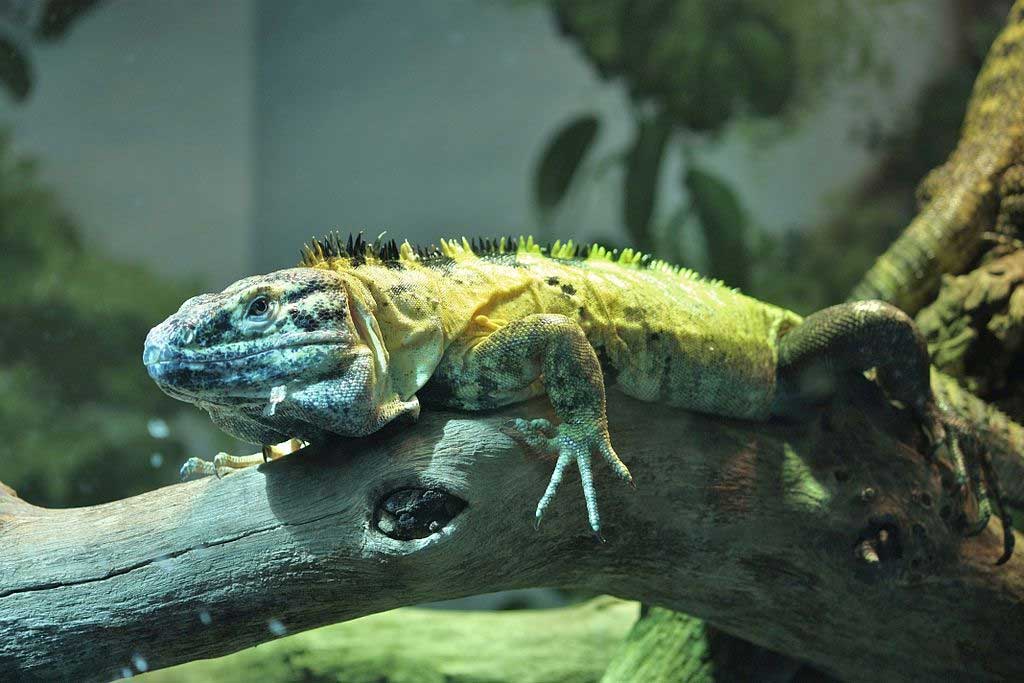
A common collared lizard, (Crotaphytus collaris) sitting in a Angel Island chuckwalla (Sauromalus hispidus;) Reptilium Landau, Germany – H. Zell, CC BY-SA 3.0, via Wikimedia Commons
Content
Origin / Distribution
The Angel Island chuckwalla (Sauromalus hispidus) it is found in the northwestern islands of the Gulf of California (Mexico): Guardian angel, Granite, Mejia, Pond, Saint Lawrence North, South San Lorenzo and smaller islets in the Bay of Los Angeles (Horse's head, Window, Louse, Arrow, Mitlรกn and Coronado). These islands make the west cool and mild in winter and hot in summer..
Characteristics / Appearance
The Angel Island chuckwalla it is the second largest species of the genus Sauromalus (chuckwallas), reaching 44 cm of body length and 64 full length cm, and weighing up to 1,4 kg. It is considered a gigantic species, as it is two to three times the size of their counterparts on the continent. Its body color is a dark brown color with black transverse bands that fade into a solid darker brown to black color as the animal ages..
Habitat
The vegetation is dominated by xerophytic plants. Characteristic are the large cardon cactus (Pachycereus pringlei) and creosote bushes (Larrea tridentata).
The Angel Island chuckwalla it is present in all the smaller islands, but generally prefers the vicinity of rocky areas where animals find their hiding places.
But, due to the influence of the sea, humidity is generally higher than in mainland parts of the Sonoran Desert and rises sharply at night, with occasional early morning mists. Extreme temperatures are a minimum of 8 ยฐC and a maximum of 43 C.
Behavior
When two adults meet, they occasionally flatten on their sides and threaten each other with typical iguana โshovesโ and head nods. But, the animals do not come any closer and move to another rock after a short time.
Also striking is the general absence of any flight reaction towards humans..
Once the morning mist has cleared (between the 8 and 10 in the morning), the Angel Island chuckwalla appears on rocks to warm up in the sun. After the first sunbaths in the morning, many of the observed animals migrate to the canyon, where they feast on growing strawberries.
In the afternoon there is a second phase of activity, in which many animals go back into the canyon and look for food there.
Threats to the species
State of conservation โ
in danger โ(UICN)โ
The Angel Island chuckwalla (Sauromalus hispidus) has recently been assessed by the IUCN Red List of Threatened Species in 2018. Sauromalus hispidus is listed as In danger under criterion B1b
The "Angel Island chuckwalla" in captivity
The islands of the distribution area of โโthe Angel Island chuckwalla have been protected by the Mexican government through the decree of the 2 in August of 1978 as "Reserve and Refuge for Migratory Birds and Wild Fauna". It also, Mexican legislation prohibits in principle the capture of reptiles for commercial purposes from 1952.
The Environmental Protection Law of 1988 establishes in principle that the taking of reptiles from the wild for commercial purposes is permitted under certain conditions, but until 1993 at least, there were no application guidelines for it, and the Mexican government had not issued a single permit for Baja California or the islands of the Gulf of California.
In the Decade of 1970, the giant chuckwallas (mainly Sauromalus varius, but also Sauromalus hispidus) were captured for the pet trade. MELLINK (1993) points out that illegal collection activities continue and that this also affects the Angel Island chuckwalla. While the Sauromalus varius is included in Appendix I of the WA, There is no international protection status for the Angel Island chuckwalla (Sauromalus hispidus).
It follows that at least most of the giant chuckwallas circulating in the terrarium trade must be illegally harvested animals.; this applies to all animals originating from Baja California or from the islands of the Gulf of California. The Angel Island chuckwalla (Sauromalus hispidus) it is rare in the international pet trade, but regularly shows up there at fairly high prices as claimed pups (in july 2001 the species was offered by two dealers in Germany). In U.S.A. the Angel Island chuckwalla (Sauromalus hispidus) is maintained and reproduced by at least three private owners.
The terrarium
Angel Island chuckwalla – Reptilium Landau, Germany – H. Zell, CC BY-SA 3.0, via Wikimedia Commons
The data indicated here are those corresponding to HEIKO WERNING, a breeder of "Angel Island chuckwalla"
Temperatures, illumination, heating
All the animals were always kept together in the same terrarium.. Initially I housed them in a terrarium of 150 x 200 x 200 cm. (wedged in a corner of the flat with diagonal walls, hence it only has average measurements), which was lit by an HQI burner of 150 W y luz natural (a "terrarium wall" was an exterior window).
The "terrarium wall" was an exterior window). a focus of 100 W, shining from a distance of about 30 cm on a platform of artificial rock, served as a hot island. Another local heat source was the HQI lamp ballast, which was mounted on the ground and covered by a metal plate. In both heat islands the temperatures were 40-50 C, The ambient temperature in the terrarium varied between 25 and 35 C, depending on the measuring point. In summer, temperatures could rise above (up to about 40 ยฐC ambient temperature), in autumn and spring they were below (up to about 20 ยฐC ambient temperature). At night, values โโdropped at room temperature (normally 18-22 C). The duration of artificial lighting was 14 constant daily hours outside the winter rest period; the total length of the day varied throughout the year depending on daylight hours in Berlin due to light from outside. In winter, artificial light sources were turned off for a period of 8 to 12 weeks, so that the values โโdropped to room temperature throughout the day and only natural light from outside illuminated the terrarium.
Furniture and design
The terrarium was furnished with artificial rock constructions made of Styrofoam, which were covered with wood glue and then sanded. The artificial rocks manufactured in this way turned out to be quite resistant., even to the mighty claws of the chuckwallas. Several vertical and horizontal "cracks" in the Styrofoam served as hiding places for the lizards, what they used at night, sometimes during the day when it was hot in summer and to hibernate in autumn and winter. The slits were designed in such a way as to provide a comfortable shelter for the animals., but at the same time they always offered contact surfaces from above and below. Sand available on the market was used as substrate., and the set-up was completed with a large climbing branch that almost filled the room and reached just below the HQI spotlight.
In 1999 I move house, and as the new terrarium originally intended for the chuckwallas could not be completed at the moment, they had to move to a much smaller enclosure. They are now kept in a terrarium of 150 x 70 x l00 cm, with whom he had already had a good experience in the maintenance and breeding of common chuckwallas (Sauromalus obesus BAIRD, 1859) (WERNING 1998) and that animals still inhabit today.
Two fluorescent lamps 60 W, a focus of 60 W shining on an artificial rock platform from a distance of 30 cm., and the UV lamp ยซOsram Ultra Vitalux" from 300 W, which is mounted on the lid and burns irregularly once or twice a day for 1-4 hours from a distance of about 60 cm., serve as lighting. This terrarium is also mainly equipped with artificial rocks (made of polystyrene and polyurethane foam, again painted with wood glue and then sanded). Borders and cork boards serve as additional structural and concealing elements. The temperature and lighting regime is similar to that described above, with the exception that there is hardly any natural light.
The tenarium is watered at irregular intervals at night.
Water is usually available in a small bowl. Animals have never been observed drinking.
Food
Photos of Sauromalus from | Depositphotosยฎ
According to the herbivorous way of life, I feed my chuckwallas almost exclusively with plant foods. They are fed an average of three to five times a day at will, that is to say, animals receive the amount of food they eat throughout the day. The main ingredient is lettuce, which has a very high calcium content compared to other leaf lettuce. From the beginning, constituted between 2/3 and 80% of the ration. If this lettuce is not available in season, a mixture of green lettuce, iceberg lettuce and other leaf lettuce (trade name "mixed lettuce") served as main food.
This basic diet is supplemented with other plant foods (mainly banana, Cucumber, tomato, chickweed, Apple, strawberries, grapes, carrots); occasionally I also offer food for animals (young mice, grasshopper, zophoba larvae). Juveniles still do not accept animal food; only at the age of 2-3 years showed for the first time a cautious interest. The Sauromalus hispidus adults from about five years of age, on the other hand, they pounce on all offered food with great avidity and clearly prefer it to any type of vegetable food.
Plant feeds were generally mixed with a mixture of vitamins and minerals. There was no exact dose, but they mixed 1-2 ml of the preparation with the green food in approximately three out of four meals as a well-tested empirical value from the care of the Dipsosaurus dorsalis and Common chuckwallaSauromalus ater.
I feared giving the animals too many vitamins and reduced the addition to every one or two weeks, but I also offered them crushed egg shells and pieces of cuttlefish so that they could meet their calcium needs on their own.. After wintering 1999/2000, clear symptoms (hind leg lameness, slight deformation of the bones) showed that three of the four juveniles of 1997 suffered from a calcium deficiency. A diagnostic examination with rontographs confirmed the suspicion. Two animals died shortly after, one of them could be saved with the administration of vitamin D by the veterinarian. Hind leg injury healed almost completely, the animal returns to normal mobility and shows only slight changes in movement compared to other animals. Since then, the animal has been fed again with a mixture of vitamins and minerals, as described above.
In winter 1999/2000 the animals hibernated from early December to early February. From April 2000, the two adult males displayed completely different behavior. They threaten each other several times a day by flattening on the side and nodding their heads. They stood facing each other, leaning towards each other, so that the two animals together formed almost a circle. after a few nods, they started hitting each other with their tails. Either one of the males ran away, or a few flicks of the tail caused one of the animals to run towards the other and try to bite, what was partially successful. The second male then fled and was chased by the winner through the tenarium for some time., sometimes for several minutes, until finally he left her and the situation relaxed for a while.
In May, these fierce fights, which in two cases resulted in smaller but bloody bite wounds, could be seen almost every hour. But, while they fed, the two males continued to ignore each other and fed together without disturbing each other. If the superior male stood directly in front of the adult female during the chase, he left the adversary and impressed his partner by nodding his head. The 15.5.2001 mating was observed. It took place on the highest rock platform in the corner of the tenaria, illuminated by spotlight. The male had bitten the female's neck in typical iguana fashion and pushed her cloaca below that of his mate.. As I only arrived during copulation, I can't tell how long it lasted. Some 60 Seconds later, the male abandoned the female and a large drop of sperm from the female came out of his cloaca. No more matings could be observed, but the rivalry between the two males remained just as intense until June, and there were repeated clashes between the two until hibernation. In 2001, on the other hand, only very isolated fights without biting attacks were observed between the males.
After observed mating, the female showed a large appetite and quickly gained visibly in body size.
The eggs were visible under the skin when the animal was at rest.. About a week before egg laying, the female began to dig in several places of the ten-ario. In the ten-arium itself there is an artificial rock cavity made of Styrofoam (a few 15 x 30 x 15 cm.), that I have now filled up 2/3 with moist potting soil. The 14.06.2000 The female laid nine eggs of about 40 x 22 mm. It remained in the cavity for about a day. Then, not only was the egg well of the cavity filled with substrate, but the female pushed all the substrate of the terrarium on the artificial cavity, so that it finally disappeared under a mountain of substrate. Eggs were removed shortly after laying and placed in a Styrofoam box converted into an incubator., as described by WERNING (1995). Once the eggs are removed, the female scratched the cavity again to close it completely. For a week or so, seemed to guard the nest cavity and continued to move material up the mountain.
The incubation substrate was moist sand., with which he had already had good experience in laying eggs in the Chacahuala del Noroeste Sauromalus ater. I adjusted the humidity of the substrate with the "safe instinct" that I had already acquired with the other Chuckwallas. The sand is moist but not wet, humidity reaches approx. 90-95 % due to evaporation above the heat source in the brood box. Half of the eggs were buried in the substrate. No light enters the incubator except during controls.
During the first four weeks I incubated at 30ยบC, the remaining 6,5 weeks at 32ยบC. One egg died after about four weeks for no apparent reason. He seemed to have suddenly lost tension; had softened and yielded. The opening showed that she was fertilized. another egg, after eight weeks of incubation, also collapsed a bit and was without tension. Then I increased the humidity of the substrate a little, the egg recovered after a few days and was plump and firm again.
The 01.09.2000 the first eggs hatched. The 03.09.2000 the eight pups were born. The incubation period was, Therefore, of 80 to 83 days. CARL & JoNES (1979) inform of 94-99 days to 29-31 incubation temperature ยบC. In my case, all the young animals first scratched the egg, from which the clear came. Only hours later they took the head out of the egg, followed by the upper body after a few more hours. The pups took a 24 hours to finally hatch. All hatchlings still had a large yolk sac, that were completely reabsorbed during the 48 following hours. During this time I left them in the incubator. The pups measured between 5,5 and 6,1 cm. in length and between 10,1 and 12,3 cm.. So, hatchlings were much smaller than previously reported in the literature (CARL & JoNES 1979: 7,2 cm., SYLBER 1985: 7,1 cm.). Egg sizes also remained below literature values. (CARL & JoNES 1979: 44 x 29 mm, SYLBER 1985: 50 x 35 mm), the smallest clutch size known so far was given by CASE (1982) with 14. But, according to the same author, the smallest female known so far to have reproduced, with a length of 24 cm., was already considerably larger than my female with 18 cm..
Breeding
The newborn pups seemed very weak and barely moved, so I feared that they would not be viable. Once the yolk sac is completely reabsorbed, I placed them in the breeding room. In a few minutes they cheered, they ran around the tank, they caressed all the furniture and even nibbled on a piece of wood from a root.
The average breeding terrarium 100 x 60 x 50 cm and was equipped with two fluorescent lamps of 40 W and a focus of 60 W that illuminated a root from a distance of about 20 cm.. It also, juveniles were irradiated several times a week for 1-2 hours with an Osram Ultra Vitalux lamp.
The glass of the terrarium was replaced by a grid so that the UV rays were not filtered and the lamp was placed at a few 50 cm in front of tenarium. Young animals reacted immediately to radiation. They reached out and clung to the net to get as close to the radiation source as possible.. when they had enough, they gradually retreated to their hiding places.
In addition to the root mentioned, a small artificial rock from the shops and a stack of compressed cork sheets arranged in such a way that there were enough indentations to hide were used as furniture. The back and side walls are pasted over with decorative cork boards, which allowed the animals to climb the walls a little, although the little ones are already quite clumsy when climbing vertical surfaces. I initially chose quartz sand as the substrate, but after discussing with two terrarium keepers I decided to use only cellulose cloths (kitchen towels), as they both reported for their experience of death traps in young Uromastyx and Sauromalus, that had occurred due to clogging as a result of massive ingestion of sand.
feeding the little girl Angel Island chuckwalla did not cause any problems. From the first day in the breeding terrarium they ate all the vegetable food that was offered to them.. Feeding was similar to that of adults.. From the beginning, small crickets were offered, wax moth caterpillars and cockroaches for interest, but the chuckwallas ignored them. Today, they do not accept food of animal origin.
In December, the little ones chuckwallas were subjected to a three-week "mini-hibernation" with the lights off and at room temperature (a few 20 C).
At four months, I moved the young animals to a larger terrarium (150 x 70 x 100 cm.). So far no interactions between the animals have been observed., apart from occasional mutual nods. But, a young man lagged behind in growth. Only too late did I realize I wasn't eating enough. when i split it, he was already refusing food and died shortly after at five months. After nine months there were two more losses. One was apathetic and separated. Although he kept eating, died after a few days. The same day, another animal in the group died without any previous signs of disease. The necropsy revealed a massive salmonella infestation in both animals as the probable cause.. The swabs from the other animals showed the same results., and an antibiogram revealed the sensitivity of microorganisms to Baytril. treatment with Baytril was carried out successfully under veterinary supervision.
Buy one "Angel Island chuckwalla"
When buying a reptile with these characteristics, it is an obligation to make sure that the store where it is sold is certified and has the necessary permits according to the law so that you do not have any type of problem., if it complies and is in order, you make sure to buy an animal that is not in danger of extinction since they are surely from specialized farms for the sale of this particular species.
Please be aware and for no reason acquire animals in clandestine shops illegally or on the black market.. Since you favor the disappearance of species that are in danger of extinction.
1. Angel Island chuckwalla, Spiny chuckwalla (English).
2. Chuckwalla รฉpineux (French).
3. Angel Island Chuckwalla, Stachelige Chuckwalla (German).
4. Chuckwalla espinhosa, Angel island chuckwalla, Ilha dos Anjos chuckwalla (Portuguese).
5. "Iguana espinosa", Chacahuala de la Isla Angel de la Guarda (espaรฑol).