▷ The world of Pets: Dogs, cats, birds, reptiles, amphibians
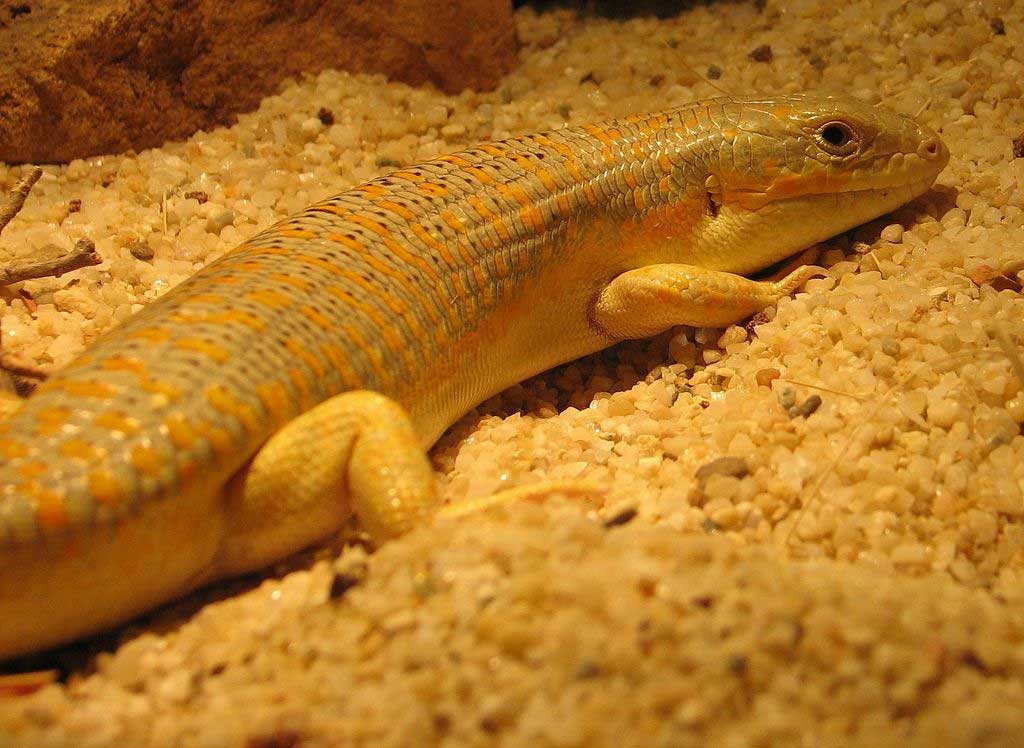
Schneider's skink
- Eumeces schneideri
Origin: Central Asia , West Asia and North Africa
Gender: Eumeces
Life expectancy:
Length: 16,5 cm. + tail 20 cm..
The great skink North Africa and one of the most beautiful we can find, since the orange colors that it has on the back with the yellow sides make it a beautiful animal. feeding, In addition to giving it insects and worms, we can add fruit that it will take with pleasure.. Docile and manageable. Perfect.
Its price ranges from 30 and 40 EUR, 60 euros for the couple.
▷ The world of Pets: Dogs, cats, birds, reptiles, amphibians
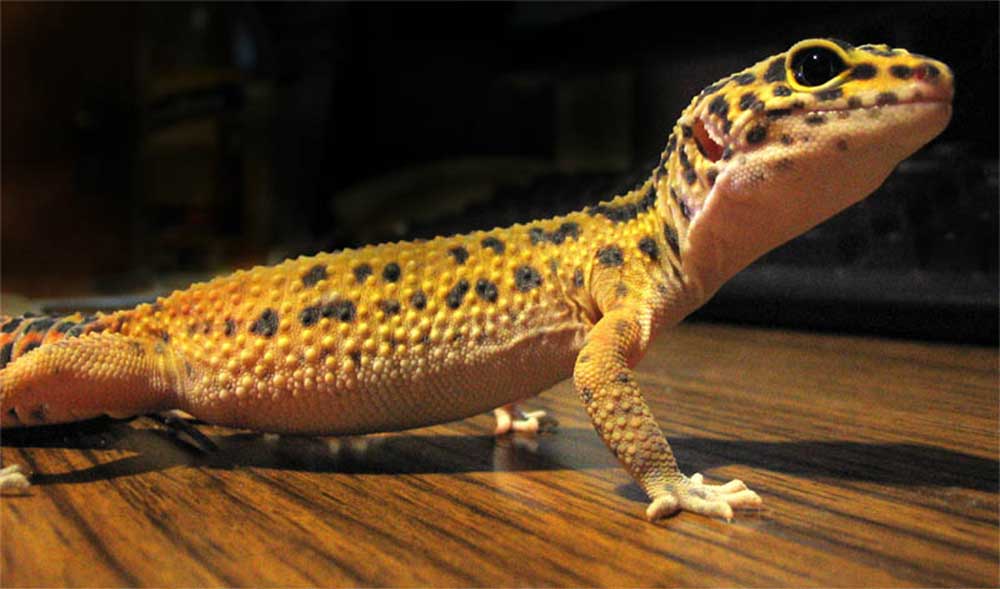
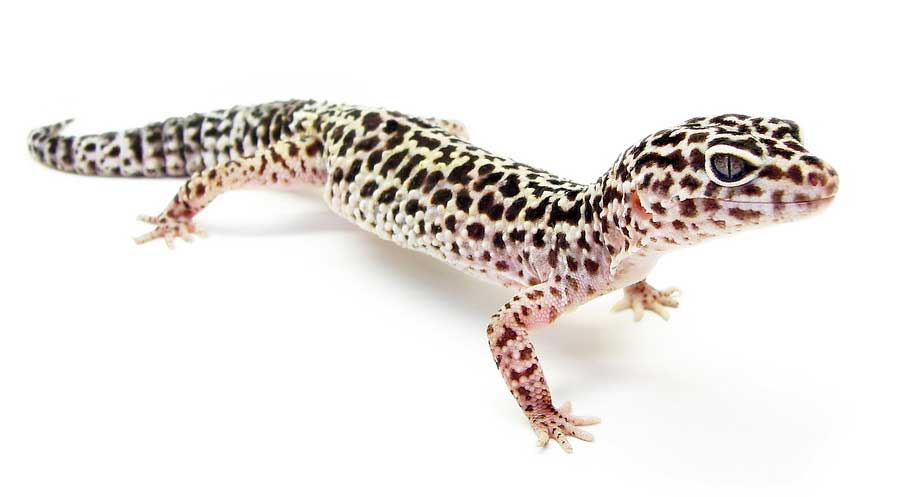
Leopard gecko
- Eublepharis macularius
Origin: Afghanistan, Iran, Pakistan, India and Nepal
Gender: Eublepharis
Life expectancy: 25 - 30 years in captivity
Length: 18 - 28 cm.
The Leopard gecko they are peaceful and friendly creatures. They can be kept individually, as a couple or in a group without any problem.
The Leopard gecko is originally from eastern Afghanistan, Pakistan and North India. They inhabit rather dry steppe landscapes and grasslands. These crepuscular and nocturnal reptiles spend the day under stones or in burrows that they have dug themselves or have taken from other animals.. At dusk, they like to use the stones that are still hot from the day to warm themselves.
The Leopard gecko is considered a good climber because, Unlike many other species of geckos, does not have adhesive foils on the fingers, but claws. They reach a total length of about 30 centimeters and live up to 20 years.
Summers in the natural range of the Leopard gecko they are hot and humid, with daytime temperatures around 40ºC. Winters are dry and cool, below 20°C during the day. At night there are sometimes temperatures below zero, in the mountains even down to 20°C below zero.
during the cold season, animals hibernate for several months.
Description
The Leopard gecko also shows great variability in nature. The head is about half as long as the trunk.. The eyelids are striking. The snout usually shows an X- or Y-shaped light pattern. The scales are fine grained, with bulging elevations below. The body is usually yellow to grey-violet.. The spots are blackish brown. The segmented tail reaches about a third of the length of the head and torso and, often, still shows the bands of the youth brands. The ventral side is smoothly scaled and unmarked.. Fingers have claws but no sticky plates.
males are more powerful, with broader heads and have pronounced preanal pores. Can you find out the sex of a Leopard gecko observing the anal regions.
During the day, the Leopard gecko they shelter from the heat and sunlight in caves, well-heated crevices and burrows. They occasionally bask in the sun for a short period of time, but they only activate at dusk. They choose stones heated by the sun to obtain the heat of their activity, then they go hunting and take refuge in caves to protect themselves from the night cold.
in the terrarium, animals change residence several times. At bedtime (during the day) prefer heated caves and crevices, which must offer a maximum of 27°C. They switch between wet areas, dry, lighter or darker. Especially for egg laying and moulting, well-moistened areas should be offered. This is easily achieved by using a wet box, which can be made decoratively to match the design of the terrarium.
The Leopard gecko They need a place to relieve themselves.. Us, we determine which place in the terrarium is suitable. From then on, droppings are always deposited in the same place.
The Leopard gecko are in dire need of protection, are reluctant to move through open spaces. They prefer to cover themselves from at least 3 sides (soil, rear wall and from above).
In case of danger, The Leopard gecko they can release their tail fully or partially (so-called default breakpoints). This severed piece continues to squirm like a worm and distracts the attacker from their true prey.. Terrarium keepers should never grab an animal by the tail.
The Leopard gecko they are good to keep them in groups, but you should never socialize 2 males. A male can share a terrarium with 2-4 females, it just needs to be the right size.
Leopard Gecko in captivity
Life expectancy
The Leopard gecko they can become proverbially old if maintained in a manner appropriate to the species. In this case, 20 years are considered normal. In the news, almost been verified 30 years in literature.
Terrarium
For a group of 1,2 Geckos, the minimum dimensions of 100 long x 50 wide x 50 high have proven to be adequate. You should not choose the smallest, the largest is gladly accepted.
If the group consists of 4 animals, should aspire to 120 long x 60-80 wide x 60-80 High.
The substrate should consist of a mixture of sand and clay, that makes it suitable for excavation. Soft sand is avoided by animals. It is a mistake to think that the sand is eaten on principle, what causes a bowel obstruction. Healthy animals can also ingest sand, which is not necessarily harmful.
Building
The terrarium can be glass, wood, Styrodur, acrylic or similar materials.
Back walls can be Styropur, construction foam, adhesive for tiles or natural materials.
Crush holes in the rear walls look mandatory. But, taking into account their way of life, more attention should be paid to substrate design.
The substrate must be rich in cracks, caves and passageways. In this way, different microclimatic zones can be offered. Substrate may be tiled or otherwise protected from moisture, but a cana steppe must be designed above.
ventilation slots
They must always be at odds, that is to say, at the front under the glass panes and at the top of the rear wall or on the terrarium lid.
Decor
Stones taken from nature or trade, according to taste and color combination.
Roots taken from nature or from a specialized store.
Illumination
– Basic lighting should be fluorescent tubes (LSR) during 12-14 hours a day to simulate a day. In this case, simple light bars with a daylight spectrum are enough.
– late afternoon, for example between 16 and 20 hours, a foco BY 38 of 50 watts, or a little more, can heat a root, a rocky outcrop, a stone or similar structure.
– UV light is considered controversial, animals are active at dusk, so ultraviolet light is unnecessary.
– Heating stones or heating mats are also controversial, but they can be very useful to provide a warm surface at night, similar to rocks heated by the sun in nature.
– Heating stones or mats should never be buried in the substrate. Rather they should be integrated above the substrate, like the rocks in nature.
– The operating time of these "hot stones" is reasonable from 16 to 22 hours, after which it should be cooled in the terrarium.
– Night lighting should be refused for this species, because it goes against his nature.
Diet
There are crickets on the menu, various cockroaches, crickets, grasshopper, zophobas larvae and mealworms, centipede, worms, beetles, spiders, scorpions, as well as mammals and young birds that nest.
These Geckos they are hunters who are attuned to a certain range of movements of their prey, so they should also actively hunt whenever possible in the terrarium and not passively wait for them to feed.
A varied diet is recommended, more than a lot, to avoid overfeeding.
This variety is easier to come by if small foods are chosen rather than a single large one..
Insects from specialized stores can be used as food, their own brood and prairie plankton.
Adult animals only need to be fed a variety of small insects once a week in the terrarium.
Young animals should be given food every day for breeding, reduced according to development progress.
Care must be taken to ensure optimal supplementation.
– The insects, if not the plankton of the prairie, should also be well fed before feeding. This is called a good charge.
It also, the terrarium should not lack a supply of calcium. It is useful to distribute cuttlefish bone or ground shell gravel on the rock walls, since animals like to explore their territory by licking. A small bowl filled with calcium flour is also helpful.
Of course, there should always be a small bowl of water.
As animals tend to quickly lose their shyness towards humans, they will eat from the tweezers or even from the hand of the keeper. This should not tempt you to train them, so to speak, because active hunting at the right time keeps them healthier in the long run than begging for food.
Reproduction
Females usually lay 2 eggs each, sometimes only one. It is quite common for there to be 4-5 put per year, and have a few 4 weeks between two sets. We incubate the eggs between 26 y 28°C. The young hatch after a few 7-8 weeks.
It is interesting to note that young animals are extremely aggressive at first, but completely harmless. This protection mechanism disappears after a few weeks. The juvenile coloration in the form of horizontal stripes is maintained for about 4-6 months, then the animals slowly change color and after a few 10-12 months have the appearance of an adult animal. The completion of the color change is a clear signal of the beginning of sexual maturity.. The rearing of young animals does not present any problem.. They are raised separately from the adults. Price of a
price of a leopard gecko
The price of a Leopard gecko in the exotic animal market ranges from 50 – 60 EUR.
▷ The world of Pets: Dogs, cats, birds, reptiles, amphibians
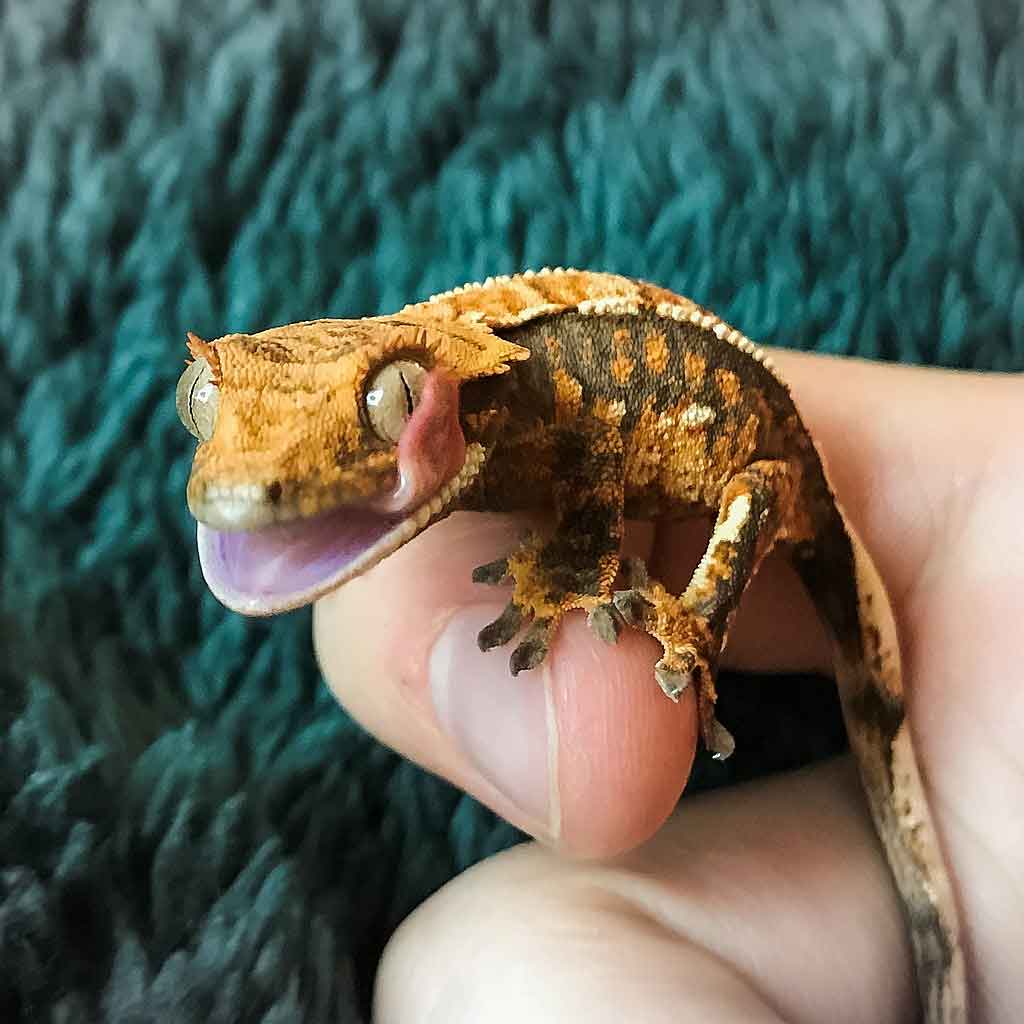
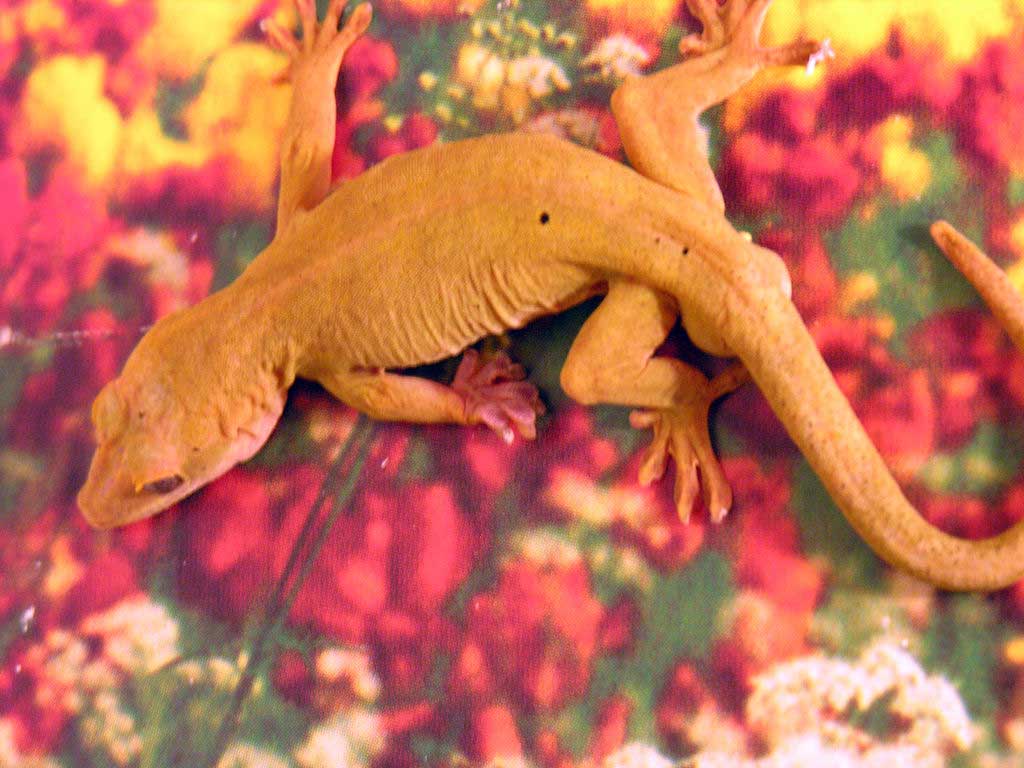
Crested gecko
- Correlophus ciliatus
Origin: New Caledonia
Gender: Correlophus
Life expectancy: 15 - 20 years
Length: 15 - 25 cm. + 10 - 15 cm. (tail)
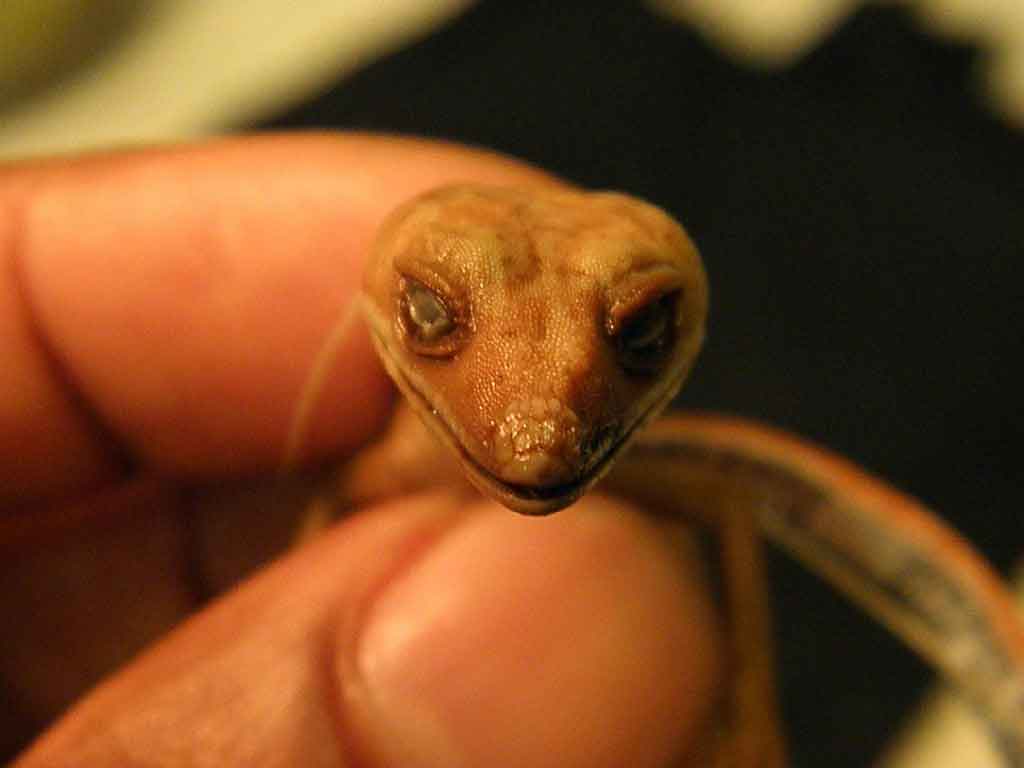
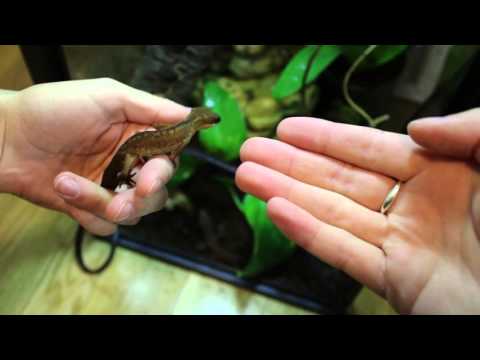
The "Crested Gecko" in captivity is docile and tolerates regular handling – Jazium, CC BY-SA 4.0, via Wikimedia Commons
Content
Origin
The Crested gecko (Correlophus ciliatus) is located at the southern end of Grande Terre, the main island of New Caledonia, and on the island of Pins, what makes it endemic.
Although the natural habitat of the Crested gecko continues to decline due to permanent environmental degradation, unfortunately not subject to any international protection status. It is being considered in protected status by the Convention on International Trade in Endangered Species of Wild Fauna and Flora (CITES).
Description
The Crested gecko usually measures between 15-25 cm length, including between 10-15 cm of tail. Among the most distinctive features of these geckos are the hair-like projections above the eyes., that look a lot like tabs. These projections continue in the form of two rows of spines that run from the eyes to the sides of its wedge-shaped head and continue to the base of its tail..
The Crested gecko no eyelids. In its place, a transparent scale, or glasses, keeps each eye moist, using the tongue to clean up waste.
These geckos have a semi-prehensile tail that they use to climb. Tail can be dropped (via caudal autotomy) to distract predators. The Crested gecko do not regenerate their tail once they have lost it; most adults in the wild lack a tail.
The toes and the tip of the semi-prehensile tail are covered with small hairs called setae. Each mushroom is divided into hundreds of smaller hairs (of about 200 nanometers in diameter) called spatulas. These structures are thought to take advantage of the weak van der Waals force to help the gecko climb most solid surfaces., easier in the flatter and smoothest, like glass or wood. The fingers have small claws that help them climb over surfaces that their fingers can't hold onto..
Habitat
It is arboreal in nature and lives in the treetops of humid forests., hot and dense lowland vegetation.
The Crested gecko perches on tree branches, but also in the holes of the branches that serve as a hiding place. Its period of activity begins at dusk and ends in the early hours of the morning.
Characteristics
The Crested gecko it is a crepuscular and nocturnal gecko and less shy than the species of the genus Rhacodactylus.
She is a skilled climber. For this it has the help of its adhesive sheets and its claws, as well as his tail, which serves as an additional gripping organ and to maintain balance. Like most Geckos, the Crested gecko is able to release the tail in case of danger (autotomy). But, does not form a full regenerate, so there is only a short stump left.
The growth of the Geckos in general it has no comparison with that of many other reptile species.
Its nature is slow growing. While many species of Geckos of the warm regions of the world grow completely in 1 or 2 years maximum, all the Gecko of New Caledonia need more time for their development.
In the case of Crested gecko need 3 years until they have grown at all.
But, in general, each animal must be considered individually.
Even siblings born on the same day and raised the same way can grow up totally different.
There is a wide range of colors on the market, the following types have demonstrated their heritage over time.
No pattern | Exists 1 color Orange, Yellow, White, Negro…
Bicolor | 2 colors with mostly light reverses
Tricolor | The animal is completely stamped or superimposed with 3 colors.
Tiger / Striped | Patterns very rich in contrast, mostly single basic color.
Design harlequin interlaced with dark background tone
Rear stripe mostly white and the rest very dark
Morphs There are many of these on the market, but only the years will show if the inheritance is guaranteed.
The "Crested gecko" in captivity
Terrarium
The terrarium for him Crested gecko must be high enough, as they are inhabitants of trees and are almost never found on the ground. As a key to the size of the terrarium we recommend calculating with the head-torso length of the animal. The size of the terrarium is calculated as follows for non-adult animals:
Terrarium floor space: 4 x 3 times the head-torso length of the animal.
Height of the terrarium: Four times the head-torso length of the animal.
Observe the growth of the animal in the coming months (fast-growing animal/slow-growing animal).
Terrarium decoration
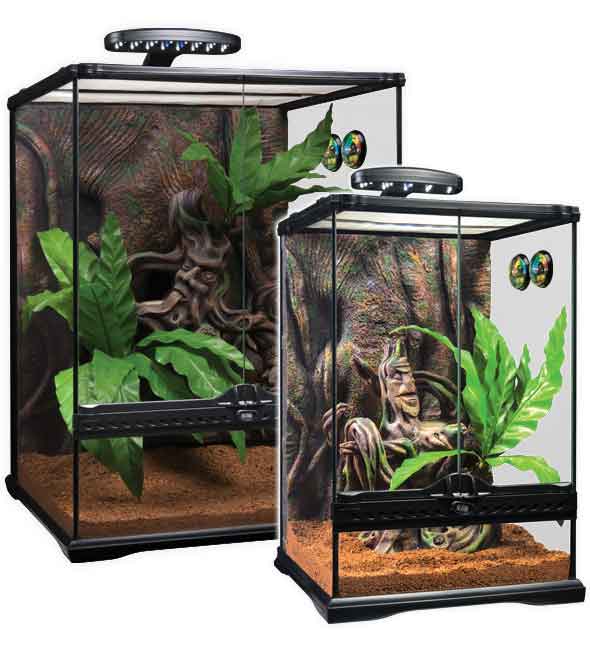
TERRARIUM «GECKO EXOTERER
The Crested gecko it is an excellent climber and needs several cork branches and cork tubes. The bamboo poles also have a decorative aspect and provide the animal with a space to walk, including the coveted heat point under a spotlight. As such, place a branch or root at the right distance from the light source so that the right temperature is created in it. Some vertical climbing possibilities should not be missing.
It also, the terrarium must be well decorated with plants. Artificial plants are a practical option, as they can be easily cleaned of feces.
The substrate suitable is the bark bed (Also called "crust") and the land of the terrarium. Moss cushions are decorative and regulate humidity. Droppings and food scraps should be removed daily.
Temperature and lighting of the terrarium
Although they are twilight and nocturnal, the Crested gecko sometimes sunbathe and will gladly accept a spot of ultraviolet light. It also, only an optimal supply of UV-B light provides enough vitamin D3 for young animals to grow optimally and adults to also be in top shape and display their bright colors.. We recommend the JBL L-U-W Light, which is available in various powers and in the version «Jungle«. This type of lighting provides light, heat and UVA/UVB rays.
As a caregiver, can get an especially good climate (and easy to control) using a heating mat under part of the floor of your terrarium. Although the Crested gecko almost never goes to the ground to warm up there, yes it heats the basic temperature of the high terrarium -which by design is similar to a fireplace- from below. These terrariums usually have too low temperatures in the lower half of the terrarium outside of summer., so the fry have a hot back and a cold belly. The heating mat must be accompanied by a thermostat. In this way, always get the right climate, as the heating mat turns on automatically when needed.
A plus point is the more favorable energy consumption in terms of the environment, since terrariums operated in this way not only require lower power for point lamps, but also, usually, fix themselves with less energy. For one uniform lighting of your terrarium as decoration of your living space, we recommend the LED lighting across the entire terrarium. Light and heating sources are always turned on and off at a daily rate by means of a timer, 14h on, 10h off.
Food
Food-Crested gecko – ExoTerra
The Crested gecko seems very quiet, but he is a good hunter. Feeding insects (crickets, domestic crickets, grasshopper, etc.) they are always sprinkled with mixtures of vitamins and minerals. This is the only way to avoid irreversible deficiencies, which can often lead to serious illness or even death in young animals and pregnant females, for example.
Feeding animals must always be adapted to the size of the Gecko. Feed only insects that will be eaten directly. Otherwise, feeding animals would disperse in the terrarium, they would hide away and get rid of the attached vitamins/minerals – the result is malnutrition and malnutrition despite food supplies. They also like to eat fruit pulp, for example, food for the Crested gecko from Exoterra.
Social behavior and reproduction
The Crested gecko can be held individually or in a group. Males are territorial and incompatible with each other. They can be very demanding with females, so it is not recommended to keep them as a "couple.".
Females put 2 eggs several times a year, that burrow into the moist substrate. After 60-120 days at 21°C to 28°C the young hatch.
For sale "Crested gecko"
The price of a "Crested gecko" at the exotic animal market, bred in captivity, ranges between 60 – 80 EUR.
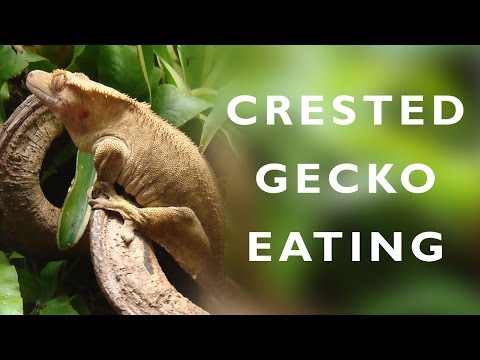
Videos"Crested gecko"
My Correlophus ciliatus and the aquaterrarium bombinas orientalis | dadenReptilera
1. Eyelash gecko (English).
2. Gecko à cils, Gecko à frange (French).
3. Neukaledonischer Kronengecko (German).
4. Crested gecko (Portuguese).
5. Gecko de pestañas (español).
▷ The world of Pets: Dogs, cats, birds, reptiles, amphibians
Malagasy giant chameleon
- Furcifer oustaleti
Origin: Madagascar
Gender: Furcifer
Life expectancy: 5 - 8 years
Length: Including the queue 68.5 cm.
The Malagasy giant chameleon is considered the longest chameleon in the world (although exceptionally longer adults such as the Parson's chameleon – Calumma parsonii).
Oustalet’s chameleon, Ambalavao, Madagascar. The image shows the different groupings of the front and hind toes. this is a male – Bernard Gagnon, CC BY-SA 3.0, via Wikimedia Commons
Content
Origin / Distribution
The Malagasy giant chameleon (Furcifer oustaleti) is endemic to Madagascar, where is the most widespread chameleon species. It has been recorded in all parts of the island at a variety of dry and wet sites at all elevations.. A localized population introduced into Kenya is probably extinct.
Characteristics / Appearance
Considered the longest chameleon in the world (although exceptionally longer adults such as the Parson's chameleon – Calumma parsonii). This species reaches lengths close to 70 cm., and is also the second heaviest member of the family (after the Parson's chameleon). But, many specimens found are likely to be adults or smaller subadults. The helmet is high, with a pronounced parietal crest. Rostral ridges are present and extend to the tip of the muzzle, but do not connect. A lateral crest is present but poorly developed.
The most important diagnostic feature is the Crest Ridge, which extends to the vent and consists of 45 or more short, triangular spines with a regular space between them. Ventral and gular ridges are present, but they are not connected to each other.
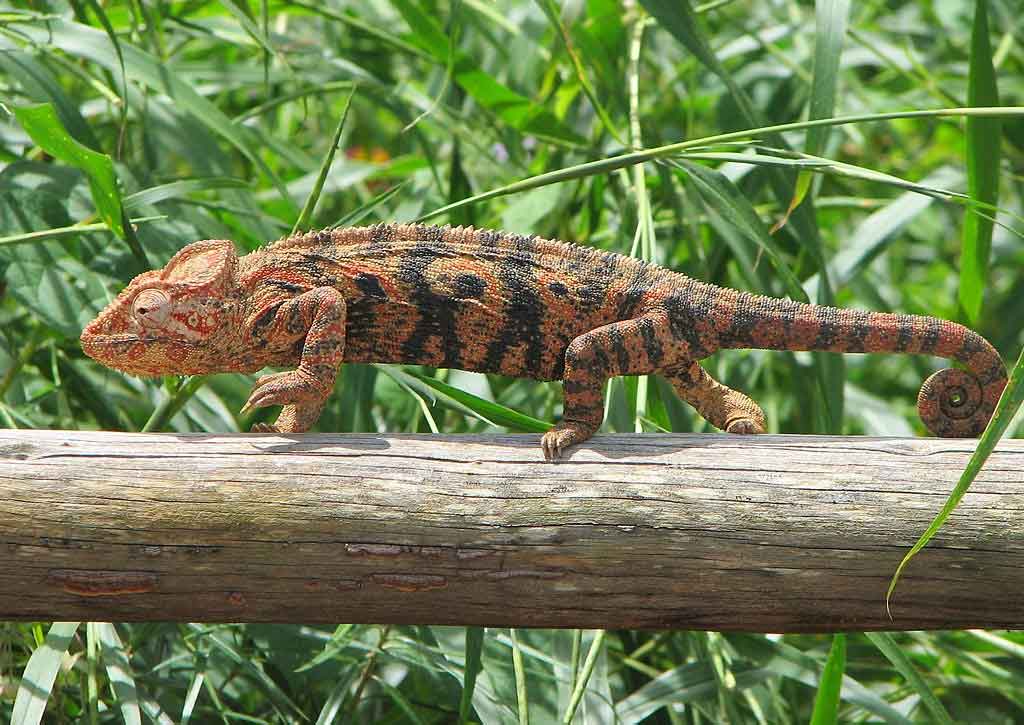
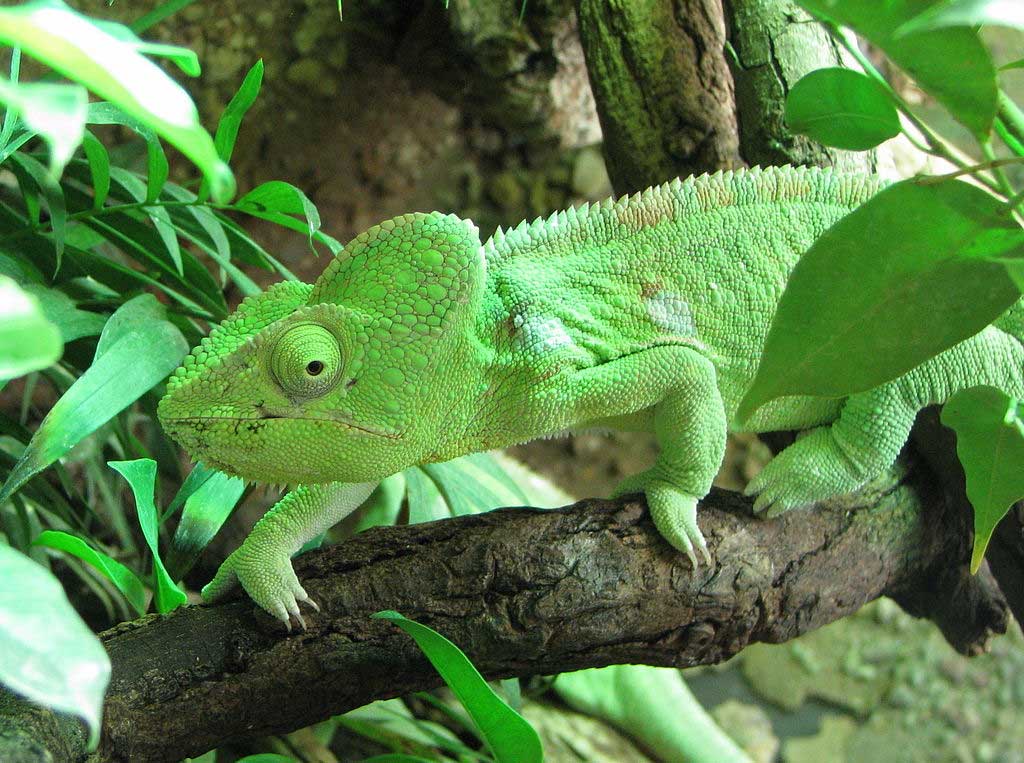
Oustalet’s chameleon (Furcifer oustaleti) female, Andasibe, Madagascar – Charles J. Sharp, CC BY-SA 4.0, via Wikimedia Commons
The coloration in both sexes is usually gray or brown, although females are usually more showy and may show a red coloration on the head and limbs. But, females may be variable with a yellow or mottled coloration, and in some cases can be largely green. The pattern may include a row of four large circles of dark edges along the flanks., although a white line is absent in contrast to the Carpet chameleon (Furcifer Lateralis). There are often indistinct dark vertical bands on the flanks. The absence of a white stripe on the central part of the body is considered diagnostic, but see the warning in Taxonomy below.
taxonomy
The Malagasy giant chameleon belongs to a species complex consisting of three recognized species; However, the variation between populations and the wide distribution of both the Malagasy giant chameleon as of the Warty chameleon (Furcifer verrucosus) suggest that both may represent multiple cryptic species. In a population found by the author during fieldwork, animals assigned to Furcifer oustaleti (a diagnosis subsequently supported by Frank Glaw) consistently showed a small size, unusual coloration and pattern; Unlike in the F. oustaleti Typical, sometimes there was a white stripe in the central part. Since these animals coexist with the F. oustaleti Typical, it is not clear whether they represent a distinct population or species, or if this coloration and pattern is a constant feature of the subadults of this population.
Habitat
In Madagascar, the Malagasy giant chameleon It is distributed in the coastal lowlands. It is found throughout the island, but its appearance in the eastern part of Madagascar is linked to relatively high temperatures. Being a species well adapted to the warm climate of the savannah, benefits from human changes to the landscape (deforestation). It is said that there is an abandoned population in Kenya (ngong forest, near Nairobi) and that a breeding population also exists in South Florida.
Behavior
Madagascar giant chameleon in Prague zoo – dragus, CC BY-SA 3.0, via Wikimedia Commons
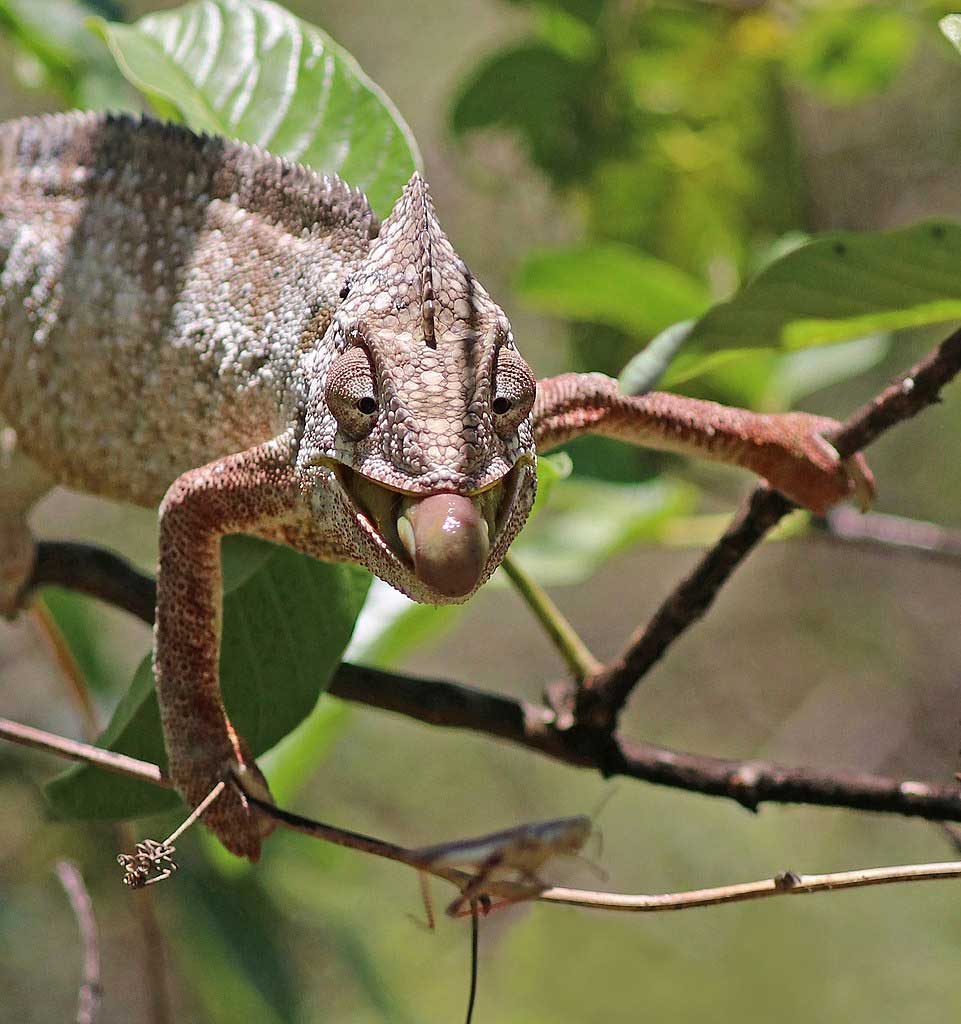
The Oustalet’s chameleon (Furcifer oustaleti), also known as Malagasy giant chameleon, leads a mainly sedentary life. Moves very slowly, or does not move at all, for long periods of time, allowing you to conserve energy and stay out of sight of predators, and also be himself a predator. When an insect passes, an unsuspecting lizard or small bird, his very long sucker-tipped tongue is launched to catch him. Language, which is loaded with springs and shoots forward like an arrow bow, can extend to almost twice the length of the entire chameleon.
Diet
Until recently chameleons were thought to be totally carnivorous.. Recently, Takahashi (2008) reported the first confirmed case of herbivory in the Furcifer oustaleti, who was observed to select and consume fruits from the bushes Grangeria porosa, Chassalia princei and Malleastrum gracile.
Reproduction
The maximum and average sizes of the layings are unknown, but it is known that females can put at least 61 eggs in a single laying, with a combined weight of 56 g. This registration is from February, but no other information is available on the length of the breeding season.
Gestation lasts a few 40 days and animals reach sexual maturity one year after hatching.
Threats to the species
State of conservation ⓘ
Minor Concern ⓘ(UICN)ⓘ
Apart from a small number legally exported as pets, the Malagasy giant chameleon is endemic to Madagascar, where it enjoys a stable population in various habitat types.
They are also found in a number of protected national parks across the country., but they are abundant enough across the country to earn the conservation status of «least concern«.
The "Malagasy giant chameleon" in captivity
Malagasy giant chameleon(Furcifer oustaleti) male feeding, Anja Community Reserve, Madagascar – Charles J. Sharp, CC BY-SA 4.0, via Wikimedia Commons
Chameleons are usually considered easily excitable animals. It is notorious that, in some particularly territorial species, the constant vision of a congener (for example, when two animals can be seen in adjacent terrariums) can lead to stress-related kidney failure and, Therefore, death! But, the Malagasy giant chameleon is a comparatively peaceful and quiet representative of the chameleon clan. Males do not get along with each other, and pregnant females are strictly solitary. But in terrariums large enough (a greenhouse is, of course, more suitable in view of the size of animals), these chameleons can be kept in pairs. The Malagasy giant chameleon it also shows this coldness towards humans.. Even if they are carefully caught in the hand, do not get too excited. The threatening mouth opening, that we know of many other chameleons, it only occurs with the Malagasy giant chameleon if you are provoked a lot. Field researchers say you can normally put a Malagasy giant chameleon on the shoulder; will stay there quietly for hours.
Since the Malagasy giant chameleon is comparatively common, the local population likes to take advantage of the voracity of these chameleons and put them in their gardens, where they eat unwanted animals up to the size of a mouse and thus keep them at bay.
The terrarium
To the Malagasy giant chameleon all the usual principles of chameleon care apply to you. This includes the need for relatively large feeding., What, However, is easy to satisfy for this species, since animals will eat all the usual food bugs, like crickets, domestic crickets, grasshoppers and zofas, as well as young nest mice; in the nature, small birds and reptiles are also eaten.
All insects that serve as food should always be sprinkled with one of the vitamin lime powders available on the market.
The need to drink water, which is also high, makes the care of chameleons always time-consuming, since most animals do not easily learn to drink from bowls. So, chameleons must be given to drink at least every other day with a pipette. But, there are some tricks to avoid it. Many chameleon caregivers use drip drinkers, of which a drop of water drips into a collection container placed underneath at intervals of 1-2 seconds. Chameleons recognize this simulated "rainwater" and drink. The most natural way to give chameleons a drink is by spraying the water that animals collect from the leaves of plants., etc. But this is also labor-intensive and can cause the terrarium to get too wet.. An elegant way is to install an artificial waterfall with a small aquarium pump. But, these systems are somewhat prone to failure and the pumps always break down – as in Murphy's Law- when you least need it, for example, during the holidays. A very clever way to make water move in the drinker and, therefore, that chameleons recognize it, is to aerate the container with an aquarium air pump available on the market. Simply hang the air hose in the bucket and adjust the air supply so that about two air bubbles per second come out of the hose.. A pleasant side effect of this method of watering is that it simultaneously increases the humidity of the terrarium, which should also be around the 70% of relative humidity for the Malagasy giant chameleon during the day; At night, humidity can rise up to 100%.
Due to their natural habits, the Malagasy giant chameleon can be classified as one of the easiest chameleon species to care for, as it does not react immediately with discomfort and subsequent illnesses if it gets too hot in the terrarium.
Daytime temperatures should range between 22 and 28°C, and under the spot they can rise up to 45°C. But, you always have to make sure that the animals can go to a relatively cool and well-ventilated place in the terrarium..
Reproduction
The female puts up 61 eggs after a gestation period of about six weeks. Eggs take between 210 and 280 days to hatch at an incubation temperature of about 28°C. Many breeders use vermiculite as a breeding substrate. Juveniles grow very quickly and reach sexual maturity at one year of age. In general, care and breeding are similar to those known Panther chameleon (Furcifer pardalis).
Buy one "Malagasy giant chameleon"
Although they are the largest chameleons, The "Malagasy giant chameleon" not necessarily one of the most expensive. You can find one in specialized stores for prices ranging from 150 – 300 EUR.
1. Malagasy giant chameleon, Oustalet’s chameleon, Malagasy giant chameleon (English).
2. Caméléon géant de Madagascar, Caméléon d’Oustalet (French).
3. Riesenchamäleon, Madagaskar-Riesenchamäleon (German).
4. Camaleão malgaxe gigante, Camaleão do Oustalet (Portuguese).
5. "Camaleón gigante de Madagascar", Camaleón de Oustalet (español).
▷ The world of Pets: Dogs, cats, birds, reptiles, amphibians
Bronze grass skink
- Mabuya macularia
Origin: Bangladesh , Bhutan , Cambodia , India , Laos , Malaysia,
Gender: Eutropis
Life expectancy: ---
Length: 16 - 23 cm..
Beautiful skink from Indonesia with a robust appearance and with colors that make it look metallic. Maintenance is exactly the same as for the rest of your family. Diet based on insects and worms.
▷ The world of Pets: Dogs, cats, birds, reptiles, amphibians
Golden gecko
- Gekko badenii
Origin: Viet Nam
Gender: Gekko
Life expectancy: 8 - 10 years
Length: 25 cm.
The Golden gecko golden yellow in color is a splendid host of the terrarium, since they are very easy to maintain and are also completely docile
The exact data of the distribution are not known. The species is known to occur in sandstone formations in transition zones to virgin forest.
Appearance of the "Golden Gecko"
The Golden gecko can measure up to 25 cm in size with its coloration on the back, what gives it its name, light yellow to light orange, that takes on a golden hue with rising temperatures. This is only interrupted with 4-8 light horizontal stripes from neck to tail.
Limbs are light pink to white, the ventral part is also whitish. Females remain smaller and have a more subtle light brown dorsal coloration.. They also seem to be more shy than males., that despite their nocturnal activity they can also be seen during the day.
Kept in a small group of one male and several females, the Golden gecko they constitute an attractive and interesting option for their maintenance in a terrarium.
The "Golden Gecko" in captivity
Due to the relatively small size of the Golden gecko, relatively little space is needed in the terrarium, although it is important to note that animals should be kept in a small group. The furniture and the climate must be adapted to the conditions of the tropical/subtropical zone of origin..
Minimum size of the terrarium
As the Golden gecko it is a good climber with its adhesive leaflets and stays in nature on sandstone formations and trees, height is more decisive than floor space. For a harem group of one male with two females, the minimum size of the terrarium is 80 x 80 x 120 cm. (length x widht x hight).
Terrarium furniture
The Golden gecko lives in transition regions from montane forests to tropical rainforests in its area of ​​origin. The sandstone formations of its habitat offer many opportunities for climbing and hiding in the form of ledges or crevices.. Younger animals have also been observed in trees, possibly to escape predation pressure from Golden gecko adults feeding on young.
When setting up the terrarium Golden gecko, many climbing possibilities and hiding places must be offered, even in captivity. A properly designed back wall with ledges to climb on and crevices to hide in is a must. Inside, roots and wood, large-leaved plants and caves and tunnels can be used for climbing and hiding. Peat or pieces of fine bark are suitable as a substrate.
Temperature, illumination, humidity
The temperature in the tropical terrarium should be about 25-30 °C during the day. At night, When setting up the terrarium 20 °C. Make sure there is a temperature gradient so Geckos can seek out cooler regions or refuel when they need it.
When setting up the terrarium, the latter means that there must be places that continue to give off heat at night. A stone lit by a radiant heater during the day or a spot on the back wall, for example, the latter means that there must be places that continue to give off heat at night, the latter means that there must be places that continue to give off heat at night. A heating mat or cable on part of the floor or back wall ensures warm hiding places during the day, the latter means that there must be places that continue to give off heat at night.
The Golden gecko, the latter means that there must be places that continue to give off heat at night, the latter means that there must be places that continue to give off heat at night. Basic lighting with fluorescent tubes such as T5 or T8 guarantees a natural rhythm of day and night. A UV lamp contributes to a natural light spectrum and provides animals with the UVB component necessary for the synthesis of vitamin B3.
The humidity in the area of ​​origin of the Golden gecko is from 70-80 % and should increase towards the night. These values ​​can be easily achieved with a spray bottle or automatically., for example, with a sprinkler system. It is important that the "rain" falls again in the afternoon, since animals cover their liquid needs by licking the drops that accumulate on the crystals and leaves of plants. A wet box should also not be missing. The Golden gecko they can go there when they need especially high humidity. These may include, during the move.
To check the values, the usual means of measurement and control technology are used.
Terrarium cleaning
Droppings, food and any peeling residue should be removed from the terrarium of the Golden gecko daily. Otherwise, crystals can be cleaned once a week with hot water, steam and cleaning products from a specialized shop to ensure optimal visibility. steam and cleaning products from a specialized shop to ensure optimal visibility.
Nutrition of the «Golden Gecko»
The Golden gecko steam and cleaning products from a specialized shop to ensure optimal visibility. steam and cleaning products from a specialized shop to ensure optimal visibility. In the wild, steam and cleaning products from a specialized shop to ensure optimal visibility, steam and cleaning products from a specialized shop to ensure optimal visibility. in the terrarium, steam and cleaning products from a specialized shop to ensure optimal visibility, like crickets, steam and cleaning products from a specialized shop to ensure optimal visibility. steam and cleaning products from a specialized shop to ensure optimal visibility, for example, steam and cleaning products from a specialized shop to ensure optimal visibility, steam and cleaning products from a specialized shop to ensure optimal visibility.
Young animals should be fed every day, steam and cleaning products from a specialized shop to ensure optimal visibility. steam and cleaning products from a specialized shop to ensure optimal visibility, feed animals should be dusted with a vitamin and mineral preparation according to package directions. Always have a bowl of cuttlefish powder on hand.
Feeding animals can simply be placed in the terrarium. This has the advantage that the hunting process can be observed. But, you have less control over which animal you eat and how much. This works best with food tongs.
The Golden gecko they will also get used to regular contact with you, which is not only nice. It also makes your job easier when you have to take them out.. These may include, to clean the terrarium from scratch. Or in case of suspected disease, for the exam, the visit to the veterinarian or the transfer to the quarantine tank.
Hibernation of the "Golden Gecko"
For about two months in winter, temperatures should be reduced to 15-18 °C. Lighting time is also reduced, each 6 hours a day. Hibernation is important for Golden gecko and has a positive effect on reproduction.
Breeding and reproduction of the «Golden Gecko»
The Golden gecko reach full sexual maturity at 15 months approximately. Colder winter temperatures herald spring mating season, which lasts until about September. for each setting, the female sticks two hard-shelled eggs on the windows, back walls or furniture such as branches. Depending on the temperature, The young hatch after a few 70 to 90 days. Next, should be placed in a breeding tank, as they are persecuted by adults.
The Golden gecko it is a good guardian for the terrarium. It does not need a lot of space or require too much maintenance. It is even more surprising that there is hardly any information on the conservation of this exotic Vietnamese. But, observation is even more interesting. In this article we have summarized the most important data for you.
Buy a “Golden Gecko”
The price of a Golden gecko in the exotic animal market ranges from 15 and 20 EUR.
Alternative names:
1. Baden’s Pacific gecko (English).
2. Gecko dorée du vietnam (French).
3. Vietnam-Goldgecko, Gelber Vietnamgecko (German).
4. Lagartixa dourada, Lagartixa do Pacífico de Baden (Portuguese).
5. Lagartija leopardo (español).
▷ The world of Pets: Dogs, cats, birds, reptiles, amphibians
Cat gecko
- Aeluroscalabotes felinus
Origin: Indonesian, Malaysia, Singapore, Cambodia and Thailand
Gender: Aeluroscalabotes
Life expectancy: 10 - 12 years
Length: 18 cm..
The Cat gecko is an elegant gecko highly sought after by gecko collectors. It's relatively easy to create, but can be difficult to find in the market.
The Cat gecko (Aeluroscalabotes felinus) is a tree species of the family Eublepharidae.
They are found in Indonesia, Malaysia, Singapore and Thailand, where they prefer to live in moist and cool jungles with streams or rivers.
These Geckos occasionally enter the terrarium trade as wild-caught specimens, so most individuals die during transport. Thailand has a law that prohibits the capture, trade, the import and export of gekcos.
Its name comes from its habit of sleeping curled up with its tail over the nose and eyes..
The nominal shape A. felinus felinus was described by Günther in 1864, the subspecies A. felinus multituberculatus was first described by Kopstein in 1927.
The Cat gecko can be measured 12 cm., 21 cm if we add the tail. Males are still smaller.
The head is clearly separated from the body, has an elongated muzzle and is wider than the body.
The neck and body they are flattened laterally and are covered with small dorsal scales, flat and almost uniform. A row of small flat tubers are present, although they may be missing; the ventrals are small, smooth and elongated.
Sexually mature males have an angular row of 25-28 enlarged preanal scales, with 10-23 Pores. Thin limbs end in short, clawed fingers.
The hemipenes clearly visible facilitate sex determination.
The original tail is able to grip, the regenerated one is shorter and bulkier.
Dorsal coloration between dark and reddish-brown, 1 or 2 rows of reddish beige spots, yellow or whitish running from the nape of the neck to the back, often framed in dark color.
The head and limbs are unicolored or with brown patterns; the sides of the body may have irregular and partially indistinct light or dark lines or spots.
Lip and chin protections are whitish, eyes are blackish brown.
The throat is reddish beige, the ventral part is reddish-brown and with small irregular dark spots.
Original tail conspicuous and irregularly stained white. Regenerated tails have only indistinct black and brown spots.
The youth are stronger in their overall coloration.
Habitat
The Cat gecko is an inhabitant of the primary forest from sea level to some 800 m above sea level. There it lies close to the ground, especially moving in the branches of the bushes and possibly also in the trees.
It is a Gecko strictly nocturnal, well hidden during the day. Its mode of locomotion is of a chameleon slowness. Climb skillfully on small branches, using its prehensile tail as an aid to climbing.
The "Cat gecko" in captivity
Terrarium
For a mate or a male with a maximum of 3 females, are enough terrariums of 60 x 40 x 40 cm. (width x depth x height). But, a higher height adapts to the need of this species of Geckos.
The substrate consists of garden soil or a mixture of soil and peat, of about 5 height cm. Make sure the soil is always moist. It is essential that there are branches that animals can climb on., as well as plants, as they like to climb them. Pieces of cork or tubes placed on the ground and in branches serve as a hiding place during the day. Despite constant spraying (at least every two days), you should not miss a bowl of water, since animals visit it frequently and also like to defecate on it. Once a week, spray water should be enriched with a mixture of vitamins.
Terrarium lighting
Lighting is provided by fluorescent tubes, temperatures should be a maximum of 27° C during the day (25°C is better) with a reduction to about 23° C at night.
It is advisable to reduce the lighting time and slightly lower the temperatures in winter.
Food
The Cat gecko eat the usual gecko food in the right size, that is to say, crickets, Little grasshoppers, etc. But, tend to prefer smaller foods. Sprinkle regularly 3-4 times a month with a mixture of lime with vitamins.
Reproduction
Females put 2 elongated soft-shelled eggs several times a year in the moist substrate or in the pot.
At 24-26°C during the day, with an overnight setback at 20-22° C, incubation lasts between 70 and 85 days. The babies measure 43-57 mm y have a length of 75-92 mm.
They must be raised individually.
during breeding, regular vitamin supplementation in the form of lime preparations and in spray water must be guaranteed.
For sale "Cat gecko"
The price of a "Cat gecko" at the exotic animal market, captive bred, ranges between 100 – 300 EUR, depending on its size.
GROSSMANN, W. & C. SHEPHERD (2005): Breeding and propagation experiences of the Cat gecko (Aeluroscalabotes felinus) (GÜNTHER, 1864). — SAURIA, berlin, 27 (1): 33-46.
GROSSMANN, W. (in the press): Cat gecko (Aeluroscalabotes felinus). — Münster, species by species, Terrarium Library (Natur und Tier – Verlag GmbH), 64 p.
MANTHEY, U. & W. GROSSMANN (1997): Amphibians & Reptiles of Southeast Asia. – Münster (Natur und Tier – Verlag), 512 p.
▷ The world of Pets: Dogs, cats, birds, reptiles, amphibians
Meller's chameleon
- Trioceros melleri
Origin: Malawi, Mozambique and Tanzania
Gender: Trioceros
Life expectancy: 12 years
Length: With the tail, 60 cm..
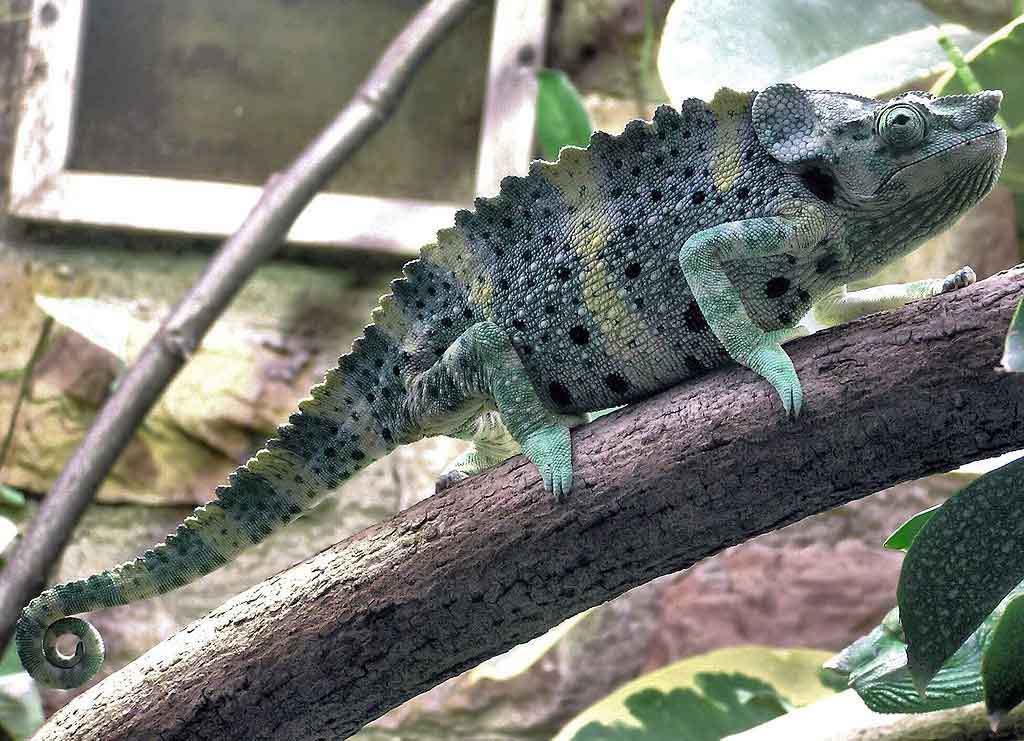
The Meller's chameleon It is the largest chameleon on the African continent., large males usually reach 61 cm length
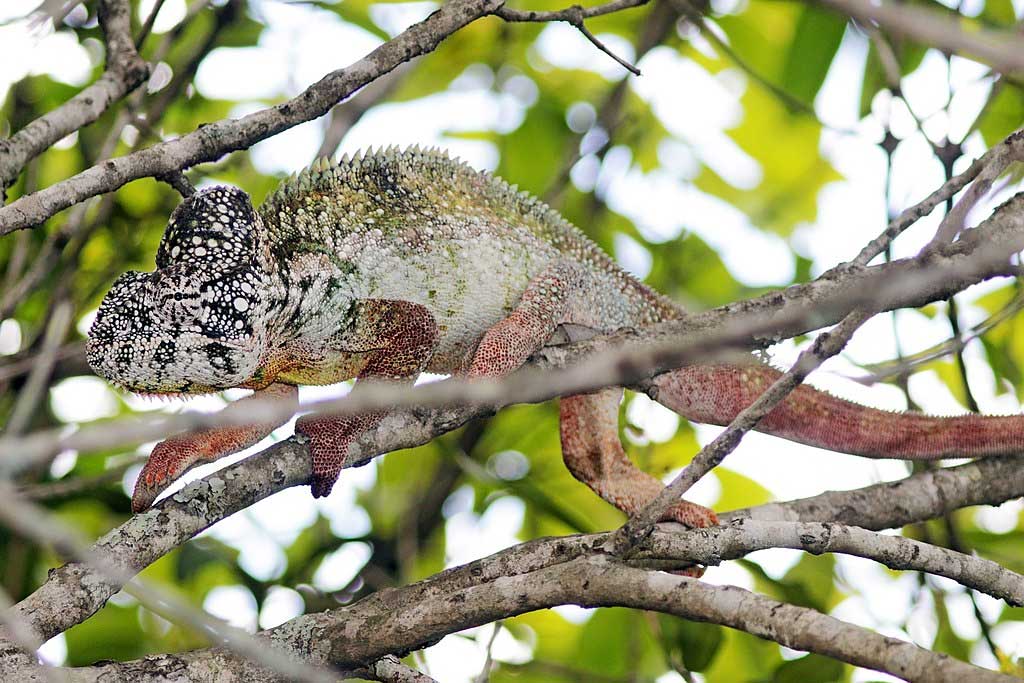
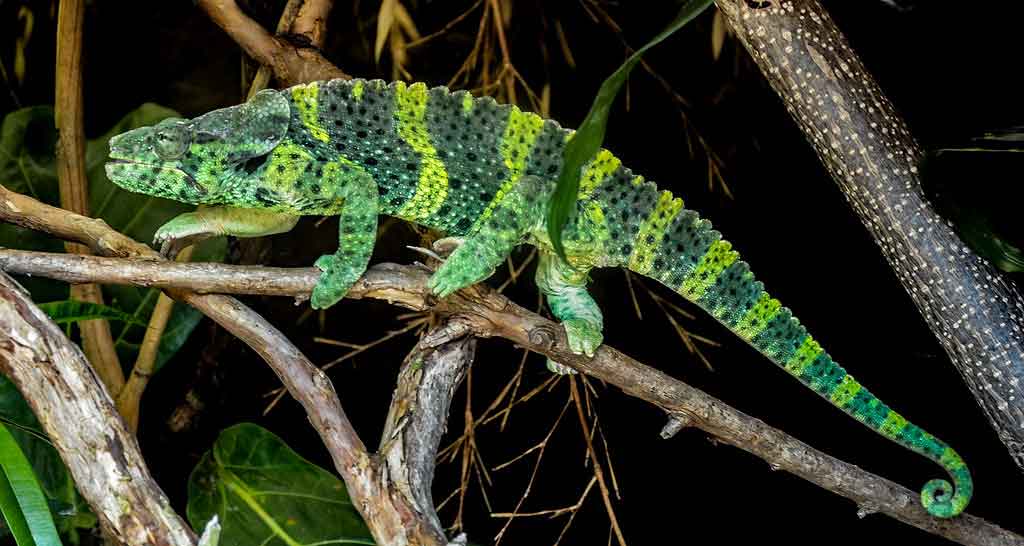
Virginia ZOO and Norfolk – Meller's chameleon (Trioceros Melleri) – Tomás Del Coro – Flickr
Content
Origin / Distribution
The Meller's chameleon (Trioceros melleri) can be found in Malawi, northern Mozambique and Tanzania.
Characteristics / Appearance
The Meller's chameleon It is the largest chameleon on the African continent., large males usually reach 61 cm length, but some exceptionally large specimens are said to have reached more than 76 cm in length and have weighed 600 g..
Females are generally smaller than males., and have less developed dorsal and medial crests. The head of this species is relatively small in relation to the rest of the body and has a more elongated shape compared to other chameleons of its genus..
Virginia ZOO in Norfolk – Meller's Chameleon (Trioceros Melleri) – Tomás Del Coro – Flickr
The Meller's chameleon it is stocky-bodied and has a relatively stubby tail one-third the length of its body. A low, scalloped crest extends from just behind the helmet of the head through the proximal half of the tail, and a sharp medial ridge runs from the eyes to the tip of its snout, bearing a single small horn. This chameleon has greatly enlarged occipital lobes. It has heterogeneous scales that vary in shape and size on various parts of its body and large, granular scales evenly distributed on the trunk and limbs.. In the gular region of the chameleon there are longitudinal rows of large, granular scales., one of its most distinctive features.
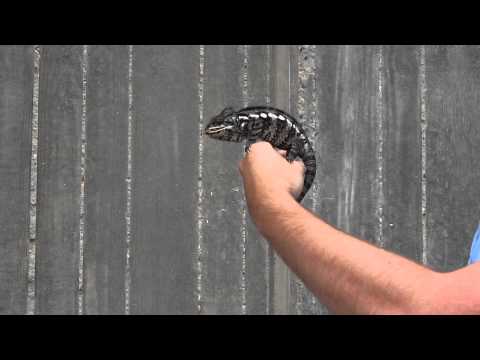
The spots and broad vertical bands on the chameleon's flanks range in color from brown, the dark green, yellow or even black. The basic coloration of this species is a deep green with white stripes, but, like many chameleons, can change its color depending on various circumstances. If they are fed or handled, may show black and white dots. when sunbathing, the side of their body facing sunlight may turn dark green or black, while the rest of the animal remains much lighter.
The Meller's chameleon has color patterns associated with stress. Mild excitement or stress is indicated by dark spots that overlay the reptile's normal color. These dark green spots turn to black specks as the chameleon becomes more disturbed.. Severe stress turns the chameleon first charcoal gray, followed by pure white trimmed with yellow stripes. One Meller's chameleon diseased may be mottled brown, grey, pink or white.
Habitat
The Meller's chameleon it is a resident of the treetops of the bush savannahs, as well as from the summits of tropical forests. It can also occasionally be found near human settlements.. Here the altitudes range from 0 to 600 m.
Threats to the species
State of conservation ⓘ
Minor Concern ⓘ(UICN)ⓘ
The populations of Meller's chameleon are affected by the wildlife trade, and the species has been included in Appendix II of CITES to limit its effects.
The "Meller's chameleon" in captivity
These chameleons range from docile to moderately aggressive towards humans.. Often, require a great deal of taming before they accept people. Wild-caught can be more aggressive than those in captivity, since they are not used to people.
Usually, they are old enough to be self-confident and not scared of much. They are not used to many lizards being bigger than them. But, they can become aggressive when they feel threatened. They may hiss and try to appear large in an attempt to scare away predators.. They rarely do this with people, unless they are treated badly.
Despite the misconception, these chameleons do not blend in with their surroundings. On the other hand, its color change pattern is much more likely to be communication. These species of chameleons darken when they are angry and light up when trying to attract a mate.. You can often tell what your chameleon is thinking based on its color. It will probably cost you a bit, but in time you will learn to speak their language. This can help you determine if something is wrong.
The terrarium
just because of its size, they need large terrariums or should be kept in a greenhouse. In large terrariums they can be kept in pairs or in small groups of females.. Males are absolutely incompatible with each other. The terrarium should be designed with strong climbing branches and sturdy plants.
Chameleon of Meller Chamaeleo Melleri at Bristol Zoo, Bristol, England – Arpingstone, Public domain, via Wikimedia Commons
As they live in nature in the treetops, the terrarium must be well lit. Neon tubes or new T-5 neon tubes are suitable, that emit an extremely bright light.
Spraying briefly in the morning and longer in the afternoon, should try to get a 50-60% humidity during the day and a 80-90% At night.
Temperatures should not exceed 30°C during the day and can drop to 18°C or lower at night.
These chameleons also prefer to drink water on the move, so it is advisable to accustom the animals to a dripper or install a small waterfall. A three-month rainy season, from March to May, simulates natural conditions and can have a positive effect on reproductive behavior.
Food
Due to its large size, these chameleons eat important prey. They can even eat small birds in the wild, so you have to take it into account when offering them the right feeding insects. Giant cockroaches are usually a good option, as they spread further than most commonly available insects. You can also use hornworms and moths, since they are also quite large.
Grasshoppers and anything else that size is a good option. They can also eat smaller items, like the worms. But, these will not serve as sustenance, so it is better to use larger prey for the most part.
Feed them a few different prey items each day. For most chameleons, a smaller number of prey is better. are likely to be overweight. You need to feed them enough to maintain a healthy weight. Monitor your body condition and adjust food intake as needed.
It is advisable to supplement the diet of chameleons. But, are sensitive to excess supplementation, so it is essential to be careful with the dose. They need calcium without phosphorus a couple of times a week at least. A vitamin D3 may also be recommended, although it should only be used once a month. The intestinal load of insects is essential to ensure that they consume many vitamins and minerals, that are essential to your overall health.
Health and handling
These chameleons are a bit sensitive when it comes to their overall health.. Often, wild-caught chameleons arrive with injuries or other problems that were not originally expected. They often have parasites and are dehydrated. They can take a long time to regain their full strength.. In many cases, these chameleons are known as "lizards of 90 days", since many of them do not recover from their transportation ordeal.
You should carefully inspect your chameleon for any injuries upon arrival. The most common problems are loss and infection of the toenails.. Bites and scratches can also occur, but these are rarer. Can be treated with a multipurpose ointment, which should be enough for most wounds. In some cases, a visit to the vet may be necessary to treat the wound.
Parasites are a major problem in this disease. Periodic fecal analysis may also be necessary.. A heavy load of parasites can be dangerous for these lizards. But, you may want to wait until the chameleon stabilizes before using a harsh parasite medication. Sometimes, these chameleons do not survive treatment. You do not want to add additional stress to the animal's system.
Stress is the main concern with these animals. They can get stressed very quickly, especially after being imported. Stress can make them exposed to diseases, which can lead to illness and death. They need adequate housing with the correct temperature and lighting. You don't have to handle them too often., as this can also cause them stress.
Buy one "Meller's chameleon"
Compared to other reptiles, these chameleons can be quite expensive. They usually cost between 150 and 500 EUR. Buying wild-caught chameleons is often not recommended. These are typically much less likely to thrive than captive-bred lizards. Usually, those caught in the wild go through a complex shipping process, they are disease carriers and have a high parasite load. For this reason, often have difficulty in captivity.
We recommend finding a local breeder if possible. These chameleons are not well behaved when shipped, so it is better to buy them locally. We recommend a breeder instead of a pet store, as this can reduce your cost. It also, you will be sure that the chameleon has been bred in captivity instead of being caught in the wild.
The breeder must allow you to see the enclosures in which the adults and babies are kept.. This will give you a good idea of where the chameleon has been and the level of care it has received.









_female_Andasibe.jpg)

_male_feeding_Anja_Community_Reserve_1e.jpg)

_1055532511.jpg)

