▷ The world of Pets: Dogs, cats, birds, reptiles, amphibians
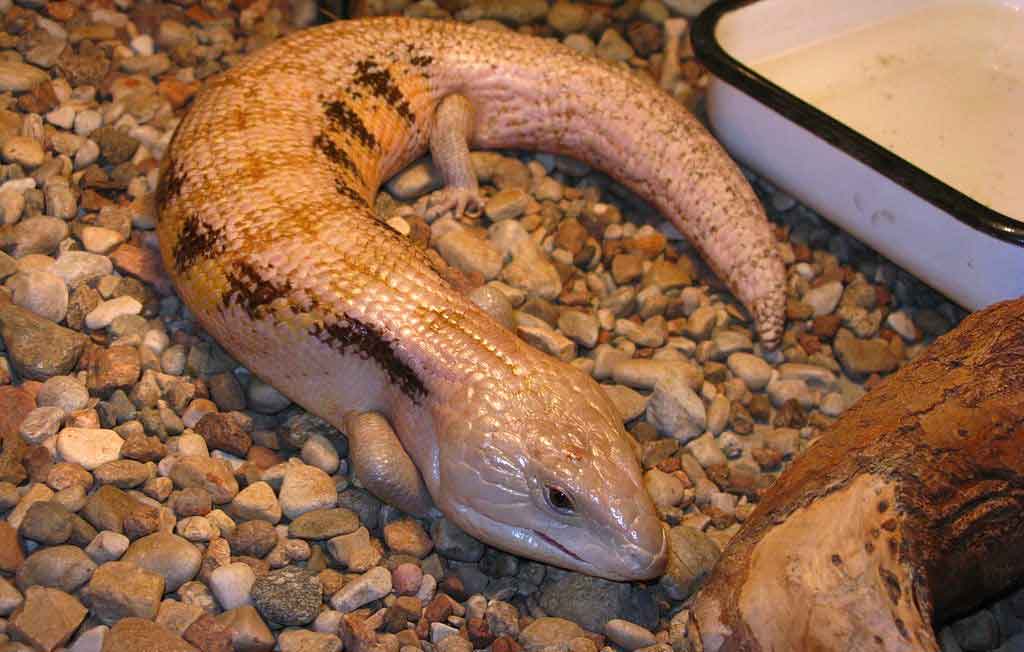
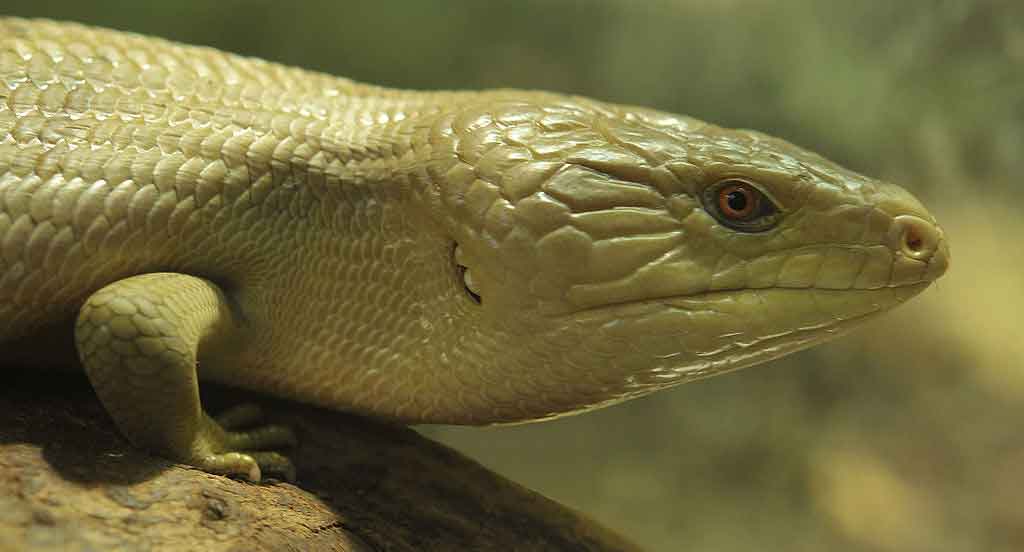
Indonesian blue-tongued skink
- Tiliqua gigas
Origin: Papua New Guinea
Gender: Tiliqua
Life expectancy: 15 - 17 years
Length: 50 - 60 cm.
awesome lizards. This species is one of the best to keep as it is one of the calmest and most manageable. very easy animals, as they feed on everything, insects, mice, fruit, canned meat, etc. Dry terrarium, not desert.
Its price ranges from 180 and 250 EUR.
▷ The world of Pets: Dogs, cats, birds, reptiles, amphibians
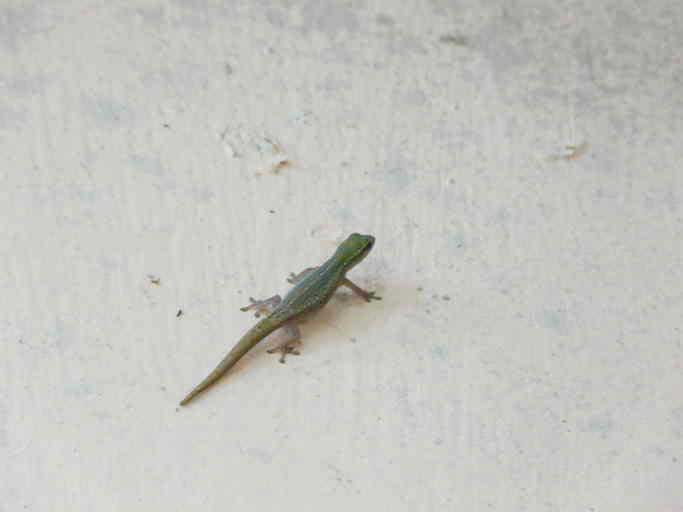
Cameroon dwarf gecko
- Lygodactylus conraui
Origin: West Africa and Central Africa
Gender: Lygodactylus
Life expectancy: 5 - 8 years
Length: 6 - 8 cm.
Extraordinary arboreal dwarf lizard that will soon replace those already only very rarely seen in terrariums Electric blue gecko, with which it keeps quite similar.
Cameroon dwarf gecko in the Bobiri Forest Reserve, Ghana – Simon J. Tonge, CC BY 3.0, via Wikimedia Commons
Content
Description
In normal coloration, the background color is composed of different shades of gray. From the nostril, a black stripe runs along the muzzle, passing through the eye to the back of the head, where it merges with a lighter dorsal line at the nape. This one runs slightly to the side of the back to the tail. From the nape of the neck, the whole body, except for limbs, is dotted with white spots of irregular size. These can be delimited by a thin black line. The largest spots line up in three longitudinal lines, that run along the center of the back and the lighter dorsal lines.
When you are in a good mood, skin glows bluish-green. The belly and throat are a solid light gray to white. The original queue, in the male, is reddish at the bottom. On the other hand, the regenerated tails are featureless gray and do not show any reddish coloration after their total loss. But, regenerated tails may still show red bottom. Male geckos have a total length of 63 mm, while females are much smaller.
The sexes can be easily distinguished by the usual sexual characteristics.. Males are always larger, show distinct hemipen pockets and have four active preanal pores.
Distribution and habitat
The Cameroon dwarf gecko, scientific name Lygodactylus conraui, It is native to the tropical primary forests of Cameroon., Ghana, Togo, Gabon, Benin and Ivory Coast. It lives there mainly hidden in tree trunks, close to the ground. No further usable information on the natural habitat of the Cameroon dwarf gecko.
The Cameroon dwarf gecko in captivity
The Cameroon dwarf gecko It is a peaceful and social animal.. They can be kept in pairs or in mixed groups if there is enough space.
Terrarium
For proper maintenance of the species, the terrarium must have the appropriate dimensions. A copy of 50 x 50 x 70 cm is absolutely enough for the little ones Cameroon dwarf gecko.
There are no limits to your creativity when it comes to furnishing the terrarium. But, it is important that the new habitat is endowed with a hydrating substrate. For this it is recommended to use soil, bark or humus. It also, planting has significant relevance. climbing plants, bamboo tubes and branches are great for climbing and hiding.
The Cameroon dwarf gecko is purely diurnal. They need UV light and a “sunny place” to rest and relax.. The temperature in the terrarium should be between 25-28° C during the day. During the afternoon and evening hours the temperature can be lowered to 21-24° C.
To the Cameroon dwarf gecko he likes humidity. In the terrarium should prevail a humidity of the 60-80% during the day, during the night you can also climb the 90%. It is advisable to spray the terrarium with water several times a week.
Diet
Young Lygodactylus are fed food appropriate to their size. Especially small crickets, springtails, white isopods and Drosophila are readily accepted. You can also offer fruit pulp or fruit yogurt. The feed should be sprinkled with a vitamin preparation / mineral before each feeding to prevent deficiency symptoms. In this way, young animals grow quite rapidly and should have reached sexual maturity within a year.
Breeding
If all conditions for species-appropriate breeding are met, These dwarf geckos they will also reproduce willingly. Females usually produce two eggs, rarely one. These are nailed in a suitable place of the terrarium or in hiding places like bamboo canes.
Hard-shelled eggs, which are usually glued together to form a double clutch, measure 5 mm in diameter. If the eggs are laid on a bamboo stick, it is possible to transfer them to an incubator, where the young are born at a temperature of 25 °C after a few 80 days. If incubated to 28 °C, incubation time is reduced to a few 60 days. The clutches left in the terrarium hatched at temperatures of 20-27°C after about 82 days.
After leaving the eggshell, young people have a length of 24 mm and resemble adults in terms of coloration and markings. Hard-shelled eggs, which are usually glued together to form a double clutch, measure 5 mm in diameter. If the eggs are laid on a bamboo stick, it is possible to transfer them to an incubator, where the young are born at a temperature of 25 °C after a few 80 days. If incubated to 28 °C, incubation time is reduced to a few 60 days.
After leaving the eggshell, young people have a GL of 24 mm and resemble adults in coloration and markings. Only the tail of hatchlings is reddish-brown.. Due to its small body size, young animals must be housed in the so-called terrariums small.
As such, 1l domestic cans converted into terrariums and planted with a small plant (for example, Scindapsus) are the most suitable. This creates a microclimate that benefits the small geckos. Experience has shown that young people Lygodactylus they do better in used breeding tins than in newly installed sterile containers. This could be due to the intestinal flora left by the previous inhabitant, which is absorbed by the "new tenant" through licking and, thus, the latter is more capable of breaking down its food. The breeding boxes are placed in a bright place or illuminated by a fluorescent tube.
Additional irradiation with a UV-emitting light source appears to have a positive effect on the development of young animals.
For sale Cameroon dwarf gecko
The price in the exotic animal market of a Cameroon dwarf gecko ranges between 45 and 60 euros depending on size.
▷ The world of Pets: Dogs, cats, birds, reptiles, amphibians
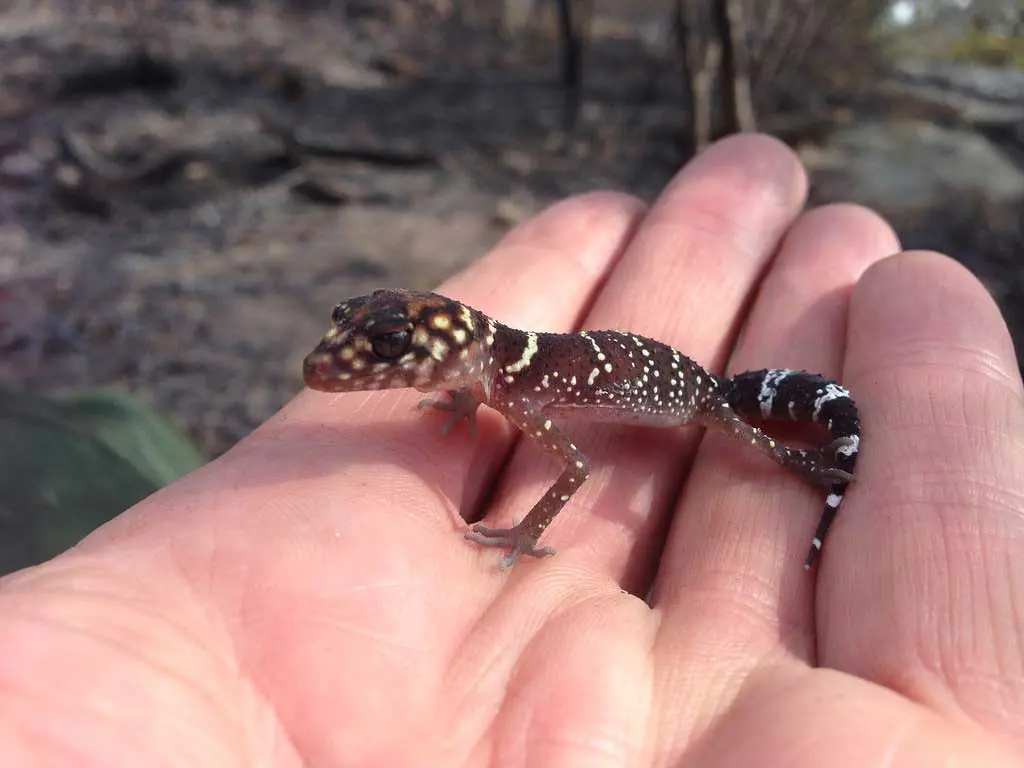
Thick-tailed gecko
- Underwoodisaurus milii
Origin: Australia
Gender: Underwoodisaurus
Life expectancy: 10 - 12 years
Length: 12 - 14 cm.
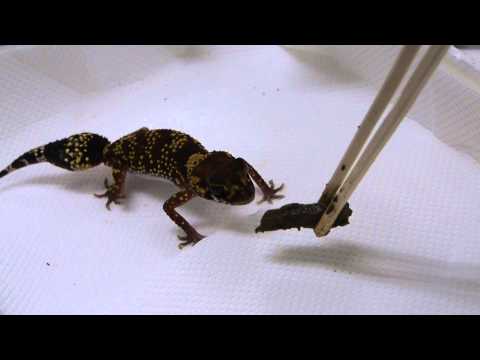
The Thick-tailed gecko They have the nickname "Barking Gecko" because they can make the corresponding sounds. If they feel upset, may complain loudly and threaten. But they are completely harmless..
The Thick-tailed gecko (Underwoodisaurus milii) is found in the Southern regions of Australia. Its distribution in Western Australia extends to the southwest, the gold fields, the wheat belt and the nullarbor regions to the east, and to Shark Bay in the north. It is also found in the Abrolhos of Houtman and in the Recherche Archipelago.
Characteristics
This interesting species of Gecko inhabits the soil and is crepuscular/nocturnal.
The Thick-tailed gecko You can live up 10 years. It is reddish-brown with bands of white and yellow spots, and a paler belly. Usually reaches a total length (including the queue) of 120-140 mm. The original tail is black with several pale bands, but the regenerated tail has little drawing.
Habitat
The Thick-tailed gecko is found in rocky outcrops, and is slightly more cold tolerant than many other Australian gecko species. It is nocturnal and shelters under rocks or in burrows during the day..
The "Thick-tailed gecko" in captivity
Terrarium
The terrariums for him Thick-tailed gecko must have sufficient floor space, since it is an animal that lives on the ground. As a key to the size of the terrarium we recommend calculating with the head-torso length of the animal.
The size of the terrarium is calculated as follows for non-adult animals:
Terrarium floor space: Four times x three times the head-torso length of the animal.
Height of the terrarium: Four times the head-torso length of the animal.
Observe the growth of the animal in the coming months (fast-growing animal/slow-growing animal). A terrarium of at least 50 x 50 x 50 cm..
Terrarium design
The equipment of the terrarium for him Thick-tailed gecko corresponds to that of Australian dry forests. Arranged around caves -in principle, each animal must have its own shelter-, may seem somewhat stony.
A little dry wood is also very decorative and expands the habitat of animals, as they also like to climb.
The substrate Suitable is terrarium sand and mineral granules such as Hobby Terrano Calcium, mixed with a little crust. There is also special sand for caves and burrows, which allows animals to make their own tunnels and burrows and maintains their shape.
Some artificial plants steppe or semi-desert character are hygienic and decorative in this landscape. The so-called "wet box" is filled with moist moss and the animals like to use it as a "steam sauna" before molting.. The Gecko drink water from a shallow bowl. Droppings and food scraps should be removed daily.
Terrarium lighting
The Thick-tailed gecko is native to Australia. Although they are twilight and nocturnal, from time to time it happens that these species of geckos sunbathe, and then they willingly accept a dose of ultraviolet rays.
How reptiles are thermal animals, you have to emulate their natural habitat in the terrarium: temperature and humidity. This is achieved with various heat/light sources and by spraying water.. One thermometer/hygrometer allows the caregiver to control these values. It also, only an optimal supply of UV-B light provides enough vitamin D3 for young animals to grow optimally and adults to also be in top shape.. We recommend the JBL L-U-W Light, which is available in various powers and in the "Desert" version. This type of lighting provides light, heat and UVA/UVB rays.
As a caregiver, can get an especially good climate (and easy to control) using a heating mat under part of the floor of your terrarium. In this way, heat the basic temperature from below and provide warm areas both in the sand and in nature. The heating mat must be accompanied by a thermostat. In this way, always get the right climate, as the heating mat turns on automatically when needed. A plus point is the more favorable energy consumption in terms of the environment, since terrariums operated in this way not only require lower power for point lamps, but also, usually, fix themselves with less energy.
For uniform lighting of your terrarium as decoration of your living space, we recommend the LED lighting across the entire terrarium. Light and heating sources are always turned on and off at a daily rate using a timer, 14h on, 10h off.
Food
Underwoodisaurus milii, thick-tailed gecko – by Doug Beckers
The Thick-tailed gecko is a silent insect hunter. They follow their prey in sight, only to pounce on her "in the last meter". Insects that serve as food (crickets, grasshopper, etc.) are always sprinkled with mixtures of vitamins and minerals. This is the only way to avoid irreversible deficiencies, which can often lead to serious illness or even death in young animals and pregnant females, for example.
The feed animals must always be adapted to the size of the gecko. Feed only insects that will be eaten directly. Otherwise, feeding animals would disperse in the terrarium, they would hide away and get rid of the attached vitamins/minerals – the result is malnutrition and malnutrition despite food supplies.
Social behavior and reproduction
The Thick-tailed gecko can be kept individually or in a group of a male with several females. Males are very territorial and always incompatible with each other..
One hibernation period of 2-3 months at room temperature favors reproduction. The females then put 2 soft-shelled eggs in a moist substrate up to three times a year. The “wet box” described above is ideal for this purpose.. A 26-27°C, the pups take a few 65 days to hatch.
Curiosities
These animals have the nickname "Barking Gecko" because they can make the corresponding sounds. If they feel upset, may complain loudly and threaten. But they are completely harmless..
For the caregiver's advantage, the Thick-tailed gecko usually always use the same corner of the terrarium to defecate.
A moonlight lamp allows you to observe the inhabitants of the terrarium at dusk without disturbing them.
For sale "Thick-tailed gecko"
The price of the "Thick-tailed gecko" in the exotic animal market, bred in captivity, ranges between 70 – 140 EUR.
1. Barking gecko, Australian thick-tailed (English).
2. Gecko aboyeur d’Australie (French).
3. Underwoodisaurus milii (German).
4. Lagartixa latindo (Portuguese).
5. Gecko de cola gruesa, Gecko ladrido (español).
▷ The world of Pets: Dogs, cats, birds, reptiles, amphibians
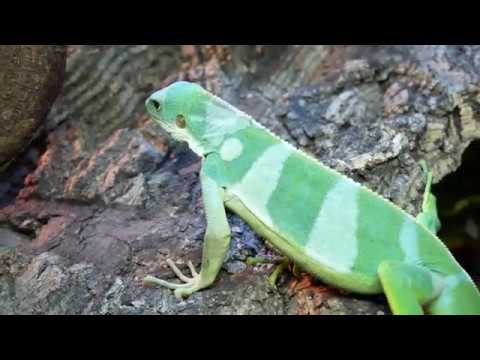
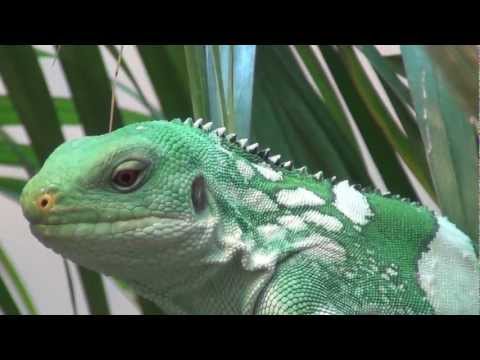
Lau banded iguana
- Brachylophus fasciatus
Origin: fiji
Gender: Brachylophus
Life expectancy: About 25 years
Length: head-torso: until 20 cm.
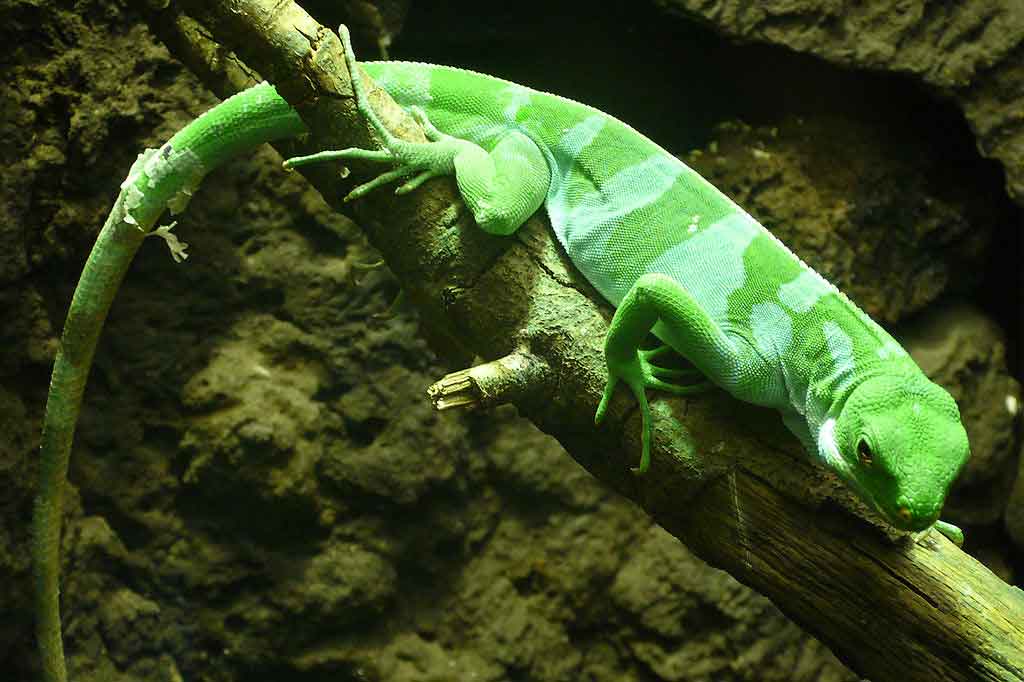
The Lau banded iguana is considered a national treasure by the government of this country, and his image has appeared on postage stamps, currency and phone book covers.
Lau banded iguana – TimVickers, Public domain, via Wikimedia Commons
Content
Origin / Distribution
two species (Brachylophus fasciatus and Brachylophus vitiensis) belong to the genus Brachylophus (Fiji iguanas).
Its geographical distribution is limited to some islands of the archipelago of Fiyi y Tonga. Son, Therefore, the most isolated members of the subfamily Iguaninae (major iguanas), whose other representatives live in America. Until a few years ago, gender was supposed to Brachylophus was monotypic. The nominal species Brachylophus brevicephalus is considered a synonym of Brachylophus fasciatus. Was not up 1981 that a second valid species of Brachylophus, Brachylophus vitiensis.
Characteristics / Appearance
The Lau banded iguana It is a slender build iguana that reaches a total length of more than 70 cm.. The difference in size between both sexes is minimal. The measures, (head – torso), for adults are in the range of 14-19 cm. (male) and 14-18 cm. (female) with a mass of 95-210 g (male) and 105-220 g (female). These weights refer to mating males and egg-laying females..
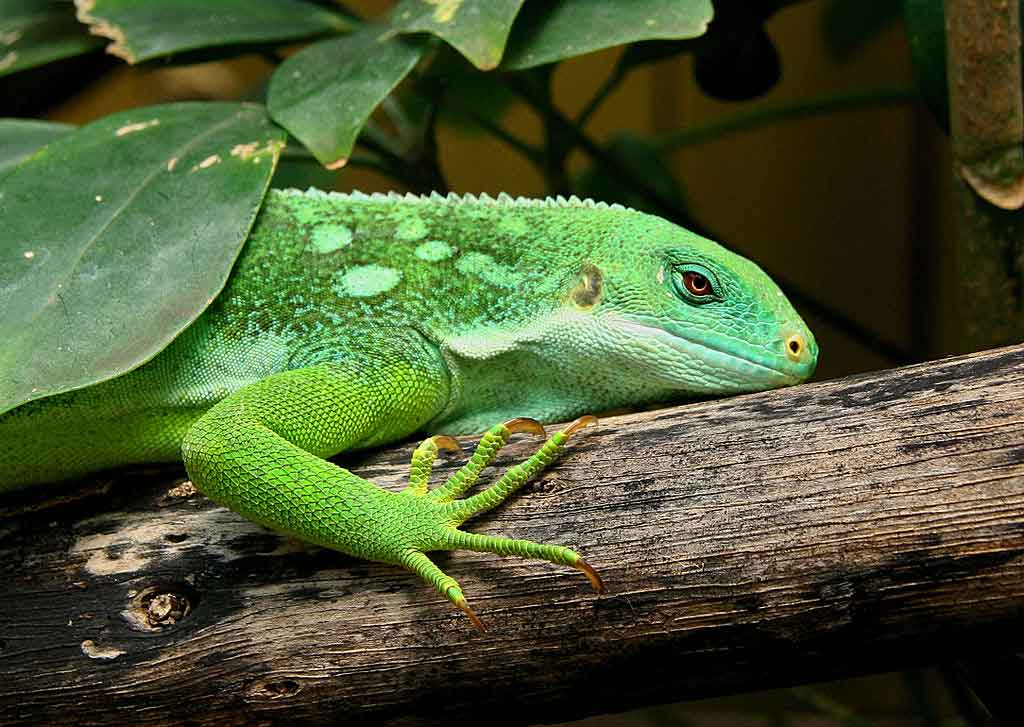
The Crest Ridge is little pronounced in both sexes. there is between 11 and 17 femoral pores on the bottom of each thigh, which are more pronounced in males. Each animal has an individual pattern, neither looks like the other. The normal coloration of females is mostly uniform green, with a light green or white stripe on the front of the body in some specimens. The nostrils are edged with yellow in both sexes.. Males, on the other hand, have a contrasting cross-hatching (green and light blue to two different shades of green) of the body and tail. The intensity of the coloration depends a lot on the mood. In courtship or aggressive phases, light blue stripes on males turn almost white and green stripes dark blue to black.
When the coloration is very intense, yellow spots also appear on front and back legs.
Habitat
The Lau banded iguana feeds on leaves and other plant material. During the day these animals rest in the tops of tall trees. Life expectancy is about 10-15 years.
Behavior
The species is diurnal, spending their days looking for food, basking in the sun and guarding their territories during the day and retreating to the treetops at night. Male iguanas are highly visual and aggressively defend their territories from rival males.. Iguanas deepen their green coloration to intensify their bands, and shake their heads and intimidate intruders by pouncing on them with their mouths open.
Threats to the species
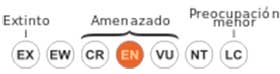
State of conservation ⓘ
in danger ⓘ(UICN)ⓘ
The Lau banded iguana (Brachylophus fasciatus) is unfortunately highly endangered in its natural habitat and is listed on the IUCN red list. If you want to have this species of iguana in Europe, you must have the corresponding papers and regularly document the animals with photos. feral pigs, the goats, dogs, cats and introduced species, like the mongoose, has contributed to the fact that there are only less than 10.000 animals of this species in freedom.
But, in the meantime, there are breeding projects to increase the natural population of the animals again. Unfortunately, A few years ago it was not known that both Brachylophus bulabula as the Brachylophus fasciatus were kept in private homes. The two species were thought to be the same. As the animals hardly differ from each other visually, many animals mixed with each other. It is very likely that there are no pure species of the Lau banded iguana in Europe.
The "Lau banded iguana" in captivity
The terrarium
The Lau banded iguana should be housed in terrariums 200 x 80 x 120 cm.. Containers can be made of plastic plates (of 1 cm thick). This material is lighter, more hygienic and easier to work with than for example, timber. It also has a much longer shelf life.
Since Lau banded iguana only kept singly or in pairs, the terrariums will be designed so that they can be separated in the center with a plastic plate. The advantage is that the iguanas can be separated and reunited without removing them from their usual environment.. Plastic strips will be placed on the front (20 cm height at the bottom, 10 cm at the top). ventilation (round plastic grilles) will also be incorporated into these two front panels. This has the advantage that there is sufficient air circulation but no drafts. But, this design is not suitable for small terrariums. The front is completed with sliding glass panels of 4 mm thick.
Illumination
Lighting is provided by a fluorescent tube (18 watts) per side and one HQL mercury vapor lamp (80 W). The weights are outside the terrarium. The fluorescent tubes will be on during 14 hours all year (of 7:00 to 21:00 hours), HQL lamps will light at 10:00 hours and will be on until 15:00. In general, It should be noted that the intensity of light plays a decisive role in the breeding.
Terrarium Decoration
The terrariums they are provided with thick branches and cork tubes. Pressed cork boards or coconut fiber mats are placed on the rear wall, that are increasingly accepted by juvenile iguanas to climb.
The plastic plants are used as decoration, Since the Lau banded iguana consider real plants as food. This makes food control difficult and can lead to deaths if the plants are poisonous or hard-fibered.. The substrate is filled with river sand (height of 5 to 15 cm.). The females also use it to lay their eggs.. A water reservoir 45 x 20 x 5 cm. , not used for drinking, complete the assembly.
Bottom heaters are not used, as they would be atypical for tree dwellers. Hideouts are not necessary, Since the Lau banded iguana does not seek visual protection from human observers in terrarium conditions.
Terrarium temperature
The air temperature is about 30°C during the day in summer and about 27°C in winter. At night, values drop by about 5°C each. On very hot summer days, temperatures rise to 35°C, but this does not cause any negative reaction in animals.
Measurements are always made at the center of the sidewall, outside the radiation zones of light sources. The iguanas cover their water needs by spraying the terrariums. This is done daily, depending on the season, once in winter to four times in summer.
Food
Augsburg Zoo, Fijian, Brachylophus fasciatus – Rufus46, CC BY-SA 3.0, via Wikimedia Commons
Feeding is done at different intervals. Seasonal conditions and the weight of the animals play a decisive role. As a rule, iguanas feed every five days.
Overweight specimens are only offered vegetable food every two days.
The Lau banded iguana can be fed with tomatoes, cucumbers, carrots, courgettes, various lettuces, chinese cabbages, dandelions and their flowers, as well as with the following fruits: apples, grapes, oranges, tangerines, peaches and bananas. It also, can accept insects (black beetle larvae, Argentine giant cockroaches, grasshopper, crickets and house crickets). All insects are given only with tweezers to prevent their unhindered dispersal.
The Lau banded iguana develop a character of their own and also have individual food preferences. But, the favorite food of adult iguanas is black beetle larvae (Zophobas morio), that are only offered recently dead for security reasons. Females are less picky eaters than males.. The vitamin preparation, minerals and amino acids Korvimin-ZVT is added to each feed.
Management "Lau banded iguana"
The management of Lau banded iguana too easy, since they are not aggressive and do not bite. But, watch out for their sharp claws. Females are usually a bit more shy than males.. It should be noted that the Lau banded iguana seem to be very susceptible to stress when moved.
Reproduction
Good conditioning of the animals is important as a prerequisite for successful breeding. Fat animals are largely unsuitable for breeding. The females of more than 230 g could only have false pregnancies. Males with excess fat just sit in the terrarium. Males reach sexual maturity already under the year. Females do not reach sexual maturity until they are two years old.. In some cases even before.
The Lau banded iguana does not have a specific breeding season, but can reproduce throughout the year. However, the best time for successful copulation is spring..
The male will approach the female with a strong movement of his head.. If the female is willing to mate, does not change color and retains its normal green coloration. The males are normally very gentle in their approach.. But, this can change drastically if the female is unwilling to mate. The chase then becomes increasingly vehement and aggressive and ends with the female seeking shelter and hiding places on the ground.. Then takes on a stress coloration (dark olive green to almost black). I eat very late, stop the experiment and separate the animals to avoid serious bite injuries. Females can also injure smaller males if they are not ready to mate.. Dominant females do not discolor, they do not take stress coloring. when you put them together, always take the time to observe if they harmonize. In the early years, the iguanas were kept in pairs between one day and four weeks.
Otherwise, they were staying individually. with this method, mating is usually quick, but sometimes with little success (false pregnancies, unfertilized clutches). Females that do not lay clutches for a long period of time are mixed with other males on a trial basis.. With this breeding method, females do not show any stress behavior. When copulation occurs, the male carefully approaches the female from behind and harasses her. This is followed by the typical bite on the neck of lizards. In most cases, copulation takes place on branches or cork tubes. No mating has been observed on the ground. Mating lasts only a few minutes.
As places of oviposition, some areas of the bottom substrate remain more or less moist. Moist sandy areas are preferred, whose surface is additionally protected with a cork branch or tube. The first signs that oviposition is approaching are shown by the female searching the ground and exploring suitable places in the sand.. The period of burrowing activity is highly variable. In the fertilized clutches, the burrowing activity of the female is much more constant than in the non-fertilized. If wet sand areas are not prepared, it can happen that the female destroys the entire floor of the terrarium. Post-inserted storage containers are not accepted, e.g. with peat substrate. The females need between one and two weeks from the beginning of the excavation until the laying of fertilized eggs.. For unfertilized eggs, deposition may occur spontaneously; often, the eggs are simply distributed on the ground without the need to dig. In the upper part of the branches, unfertilized eggs can also be deposited., then they will fall to the ground. But, the period can also last 2 months, with the animal taking several breaks.
When the female has found a suitable place, dig a hole about 10 cm in diameter with a lot of intensity, observing their surroundings carefully. It is barely possible to observe the female doing this. If a male is in the terrarium at the time, the female is not disturbed by him. It also ignores the egg-laying activities of the female.. No matter how high the bottom substrate is filled, animals always dig to the bottom of the terrarium. So, the ground level in the planned storage places must be at least 10 cm.. When they are satisfied with their work, its color changes from green to dark olive green (work coloring). This transformation can only be observed for a very short time. This is followed by egg laying. According to observations, clutch size ranges from 1 and 7 eggs, these two being the extremes. They usually put on 3 to 5 eggs. Once the setting is finished, the eggs are placed in the correct position and the clutch is sealed.
Incubation time varies a lot, although the reasons are not clear. The incubation temperature plays, of course, an important role in this regard, but it does not fully explain this phenomenon. the season of the year, the substrate and predevelopment in the female body probably also play a role. At 28°C the young will hatch after 113 to 126 days, at 29.5°C after 103 to 146 days.
When hatchlings see the light of day, They usually need between 6 and 12 hours from when they open the egg shell until they completely leave it. The sex of the pups can now be clearly recognized by their markings. Usually, the yolk sac has not yet been fully depleted, but falls off on its own after a day or two. The newborn pups have a total length of 17 to 24 cm and a mass of approximately 8 g.
the brood, especially in the first four weeks, requires a lot of time and patience. The food spectrum is the same as that of adult iguanas. So far, young animals have mostly rejected all food in the first period. About five days after hatching, they are offered freshly killed wax worms with tweezers. You have to be careful not to stress the iguanas too much, so the animals should not be surprised. If required, repeat feeding attempts several times a day. after a few days, young iguanas usually start eating waxworms on their own (placed on a branch in front of its snout). Only still mineral water is given as a drink up to nine months of age. The same goes for spraying two or three times a day.. This is done as a precaution (chlorine content in tap water). Young animals are moved to terrariums just as large as adults, since this seems to favor its growth. A small disadvantage is that the insects (except grasshoppers) should always be given with tweezers. Solitary breeding is not necessary in the first months; even several males can be kept together without problems. Only in very difficult cases is solitary breeding preferred.. The character of the young animals is already pronounced individually. Some are more confident, others more reserved.
Buy one "Lau banded iguana"
if you want to buy one Lau banded iguana, you should expect to pay a lot of money for it. They are not easy to find online and you are not likely to find one at your local pet store.. As a result, you could end up paying 1.000 euros for one of these iguanas.
1. Lau banded iguana (English).
2. Iguane des Fidji (French).
3. Kurzkammleguan (German).
4. Iguana-listrada-de-fiji (Portuguese).
5. "Iguana bandeada de Fiyi" (español).
▷ The world of Pets: Dogs, cats, birds, reptiles, amphibians
Common blue-tongued skink
- Tiliqua scincoides
Origin: Australia
Gender: Tiliqua
Life expectancy: 25 - 30 years.
Length: 45 - 55 cm.
Its coloration ranges from gray to brown with perpendicular dark bands. reaches 60 cm in length and its is a popular species for keeping in captivity, coming to live 25 years. Dry terrarium, not desert.
Price ranges from 180 and 250 EUR.
▷ The world of Pets: Dogs, cats, birds, reptiles, amphibians
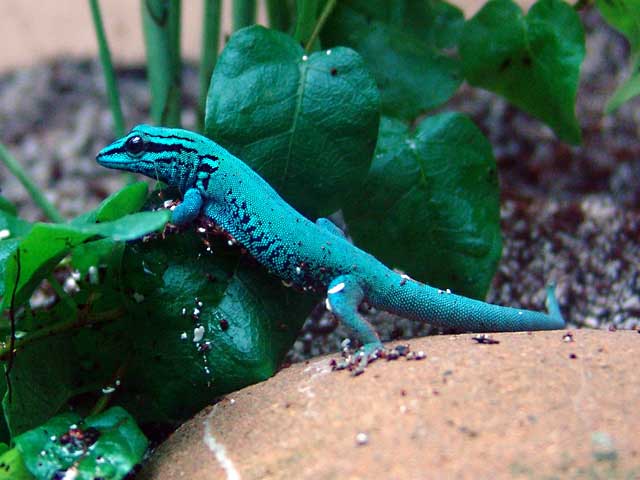
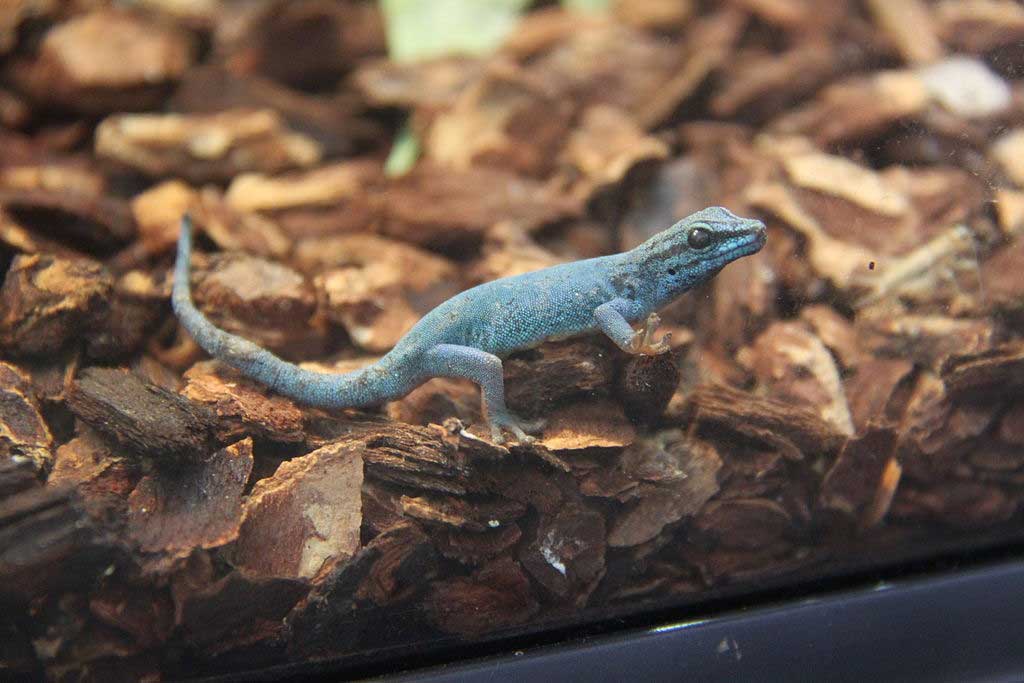
Electric blue gecko
- Lygodactylus williamsi
Origin: Tanzania
Gender: Lygodactylus
Life expectancy: 5 - 10 years
Length: 5 - 8 cm.
The trade of Electric blue gecko is now banned in the EU. Cannot be kept or sold in the EU without documentation and permits, renewables every three years
Males and females of the Electric blue gecko do not show decisive differences in size. Most animals of this species reach a total body length of about 60-80 mm.
The length of the tail is more or less the same (not decisively minor) than the rest of the body including the head. Sex distinction is often made based on the intense blue coloration of males.. But, this method of sex determination can lead to considerable errors, since a male subdued, in contrast to the dominant rival, it doesn't have to show this intense coloration. So, clear sex determination is only possible in strict individual preservation or on the basis of male preanal pores (7 parts). It also, males can be recognized by a thickened tail root.
The females of the Lygodactylus williamsi they have a clear greenish-gold coloration. Both sexes are decorated with a black band from the muzzle over the eyes to the neck.. In the head, a second minor V-shaped line approaches the first. Juveniles of this species have the same coloration as females and are first recognized by distinctive preanal pores..
Distribution and habitat
The Electric blue gecko lives exclusively in the Kimbosa Forest, less than 4 km², and in small nearby areas of Tanzania, and lives to some 350 m above sea level. The Kimboza forest area is very dry during the day and semi-humid at night. Ocean temperatures and rainfall prevail locally. The highest temperatures are reached in December and are 28 degrees Celsius. There is a dry season from the end of June to the end of August. In the other months maximum values of 24 degrees. This species lives in trees and is found mainly in trees of Pandanus (Pandanus kirkii and rabaiensis).
The Electric blue gecko (Lygodactylus williamsi) is under the protection of EU Appendix B in December 2014, under the protection of EU Appendix A in January 2017 and under the protection of CITES Appendix I in January 2017. Cannot be kept or sold in the EU without documentation and permits, renewables every three years, and Geckos must now register. Similar restrictions apply in some other jurisdictions. Trade in these animals is now banned in the EU.
Specimens bred for which an exemption from the trading ban has been issued are exempt from the ban.. So, breeders of these species will in future have to apply for such a marketing permit from their competent nature conservation authority before they can sell their offspring.
Terrarium
Relatively little is known about the life expectancy of the Electric blue gecko in the terrarium. This is because this species was recently discovered and, therefore, has not been kept in the terrarium for a long time. According to other species of Lygodactylus, life expectancy is between 6 and 9 years. It is already known that, especially in the male, intense blue coloration becomes darker and darker and, Therefore, represents the first sign of the aging process.
The huge sexual impulse of the male is often reported and therefore a maintenance of 1,2 or 1,3, so that a single female does not suffer this sexual pressure. I personally recommend keeping the 1.1 for the moment, only if necessary, and whether the terrarium is large enough, possibly a female can be added later. Note that with a 1.x breeding, each animal should have its own place to sunbathe.
The male may copulate once a day after laying the eggs and, for the rest, leaves the female alone. Copulation can last between 10 and 45 minutes. After a brief acclimatization period, one quickly realizes that the Electric blue gecko not a shy species and makes the most of the tank. Especially the male turns out to be a real acrobat and does gymnastics all over the terrarium. Its main phase of activity is mainly in the afternoon, which now lasts until shortly before the lights go out. In the terrarium you can experience jumps of more than 20 cm over and over again.
Terrarium measurements
According to legal regulations, the terrarium must be a size of 30 x 30x 40 cm.. (Length x width x height) As minimum (if a Electric blue gecko of 5 cm.). But, this size cannot be recommended at all and is too small. Due to the behavior already described, a larger terrarium is recommended so that animals can also follow their natural preferences. A terrarium with a minimum size of 50 x 50 x 80 for breeding 1.1. for breeding 1.2 a terrarium with dimensions of 60 x 60 x 100. Of course, the terrarium can also be much larger, because the bigger, best!
When buying the terrarium, make sure that the upper ventilation area is greater than the 6 to 10 cm that standard terrariums usually have. It is also very advantageous to use fine gauze if you want to offer it to the Drosophila as food from time to time.
I can only disagree with the frequently asked questions that it is supposedly more difficult for the animals to get hold of food in a larger tank and that, Therefore, a smaller tank is recommended. The Electric blue gecko It, on the one hand, a very good and agile hunter and, for another, nothing is served on a silver platter in nature. Even in young animals, a pronounced hunting instinct can be observed, which should certainly be encouraged.
Decoration terrarium
As a substrate we use a layer of large balls of expanded clay/seramis as drainage and a layer of untreated coconut fiber on top of it.. To prevent the soil from settling over time and mixing the two layers, you must add a layer of fleece. It is recommended to inoculate the substrate with white isopods and tropical springtails. They can serve as food, but mainly take care of the tasks of natural waste disposal (mold, feces, dead plants).
Otherwise, it is advisable to have at least one large-leaved plant, as: Sanseveria, bromeliads, Palm trees, etc., since they are usually used as walking areas, rest, removal and egg laying. Cork tubes, the branches, lianas or bamboo tubes can be used as additional furniture.
Illumination
In commercial terrariums, a large part of the UV radiation is filtered due to the insufficient ventilation zone at the top and the forced placement of the light source on the glass, and does not reach the animal at all. It also, the glass can crack in the worst case due to the high heat.
In any case, lighting for Geckos (and also for chameleons) must be installed outside the terrarium, because animals, very agile and jumping, can burn with the light source. Metal halide lamps (for example, Bright Sun, SolarRaptor, etc.), which are highly recommended, get very hot and there is a risk of injury.
In any terrarium of any species of gecko or chameleon, lighting - without exception- must be placed outside the terrarium! It doesn't matter what you've been told in a pet store.
Of course, tank lighting should be chosen individually. But, you must pay special attention to the necessary UV radiation. This ultraviolet radiation is very important because reptiles are tetrachromatic.. This means they see in the UV-A range and, unlike us, also have photoreceptors.
So-called compact lamps are not recommended (energy saving lamps) or fluorescent tubes, since neither the illuminance (lux) nor the UV intensity are sufficient for lighting. But, Unfortunately, this type of lighting is often used for cost reasons. You have to be aware that keeping terrariums is a hobby that requires a lot of technology and costs., and you should not skimp on the most basic element (lighting). Insufficient lighting causes deficiency symptoms and diseases in animals.
On a sunny day in nature, an illuminance of approximately 100.000 lux. By way of comparison, compact lamps reach an average of 1.500 lux, while metal halide lamps (HQI) reach approximately 60.000 lux. These values speak for themselves.
For these reasons, it is advisable to buy an HQI spotlight with the appropriate ballast. Bright Sun, Reptile Expert or Solar Raptor can be recommended without reservation. At the time of buying, it is essential to take into account the power and the variant (flood or spot) depending on the size of the terrarium and the manufacturer's specifications (minimum distance to the animal). These lamps must be replaced no later than one year later than, as UV emission is not guaranteed after this period. Also keep in mind that your animals will thank you for this investment with health and activity.
Temperature in the terrarium
The temperature should oscillate between 26 and 30 degrees during the day, and occasionally up to 34 degrees. Make sure each animal has a place to sunbathe. At night, the temperature can oscillate between 18 and 22 degrees (approximately the ambient temperature). Relative humidity should be between the 50 and the 65% during the day and increase to 80% At night.
Food
All usual feeding animals can be offered. Medium-sized crickets, terfly, baked fish and occasionally fruit pulp, Repashy Daygecko Food or gelatin have been successful. Drosophila or worms rarely occur. Drosophila are not well tolerated by all animals and should never be used as exclusive food.. Small wax worms are popular, but they are very rich in content and should be offered as a rare gift or to feed themselves. Otherwise, animals can easily become obese.
Feeding insects should be dusted with a vitamin preparation before approximately every two meals.. We use Korvimin (available at the veterinarian), Herpetal T or Reptivite. Reptivite sticks to feeders better than Korvimin. It also, the animals fed must have been previously fed for an appropriate period of time (good load). We will use DIY gelatin, Repashy SuperLoad or BugBurger for our crickets. You can also use oatmeal, Cucumber, carrots, apples, etc., but the above products are easier to use and there is no risk of mold, but they are also much more expensive.
for females, there should be some cuttlefish/calcium citrate separately in a small container, for an increase in calcium needs (for example, during pregnancy) can be covered individually. The water supply is ensured by spraying water on the terrarium equipment every day. Please, do not use waterfalls or nebulizers, even if it seems "nice" to you, as water becomes contaminated quickly and animals can get sick.
Reproduction and rearing in the terrarium
Due to the enormous demand of the Electric blue gecko, breeding is essential to protect the natural habitat of these animals. During the breeding season, females usually glue a double laying (2 eggs) to an accessory or use an offered place of oviposition. If possible, the laying must be transferred to an incubator. But, no problem in incubating the laying in the terrarium, unless damaged by daily spraying of terrarium furniture. It is not impossible for the parents to chase the young. Our first clutch of eggs could not be removed from the terrarium and one of the hatchlings was eaten by one of the parents., although they were provided with enough food as a precaution.
At a constant incubation temperature of 25 degrees Celsius, the pups will be born after a few 90 days. Due to relatively low temperatures, a higher than average number of females can be bred.
As eggs are hard shelled, moisture does not play an important role during incubation. Once the pups have hatched, I transfer them to our breeding terrarium.
Video Electric blue gecko
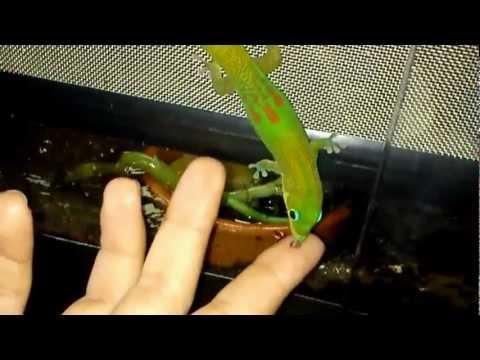
Electric Blue Geckos (Lygodactylus williamsi) at LLLReptile
1. Turquoise dwarf gecko, William’s dwarf gecko (English).
2. Gecko de William (French).
3. Türkisblauer Zwergtaggecko, Williams-Zwerggecko (German).
4. Lagartixa anã turquesa, Lagartixa anã de William (Portuguese).
5. Gecko enano turquesa, Gecko enano de William (español).
▷ The world of Pets: Dogs, cats, birds, reptiles, amphibians
Gold dust day gecko
- Phelsuma laticauda
Origin: Madagascar
Gender: Phelsuma
Life expectancy: 4 - 8 years
Length: 10 - 13cm.
The Gold dust day gecko is commonly known as the mascot of GEICO Insurance, and also the main character of the video game series, Gex.
A Gold dust day gecko (Phelsuma laticauda laticauda) in Kona, Hawaii – Pharaoh Hound, CC BY-SA 2.5, via Wikimedia Commons
Content
Origin
Native to northern Madagascar and the Comoros, currently it is also found in the neighboring islands, the Seychelles and Hawaii.
Characteristics
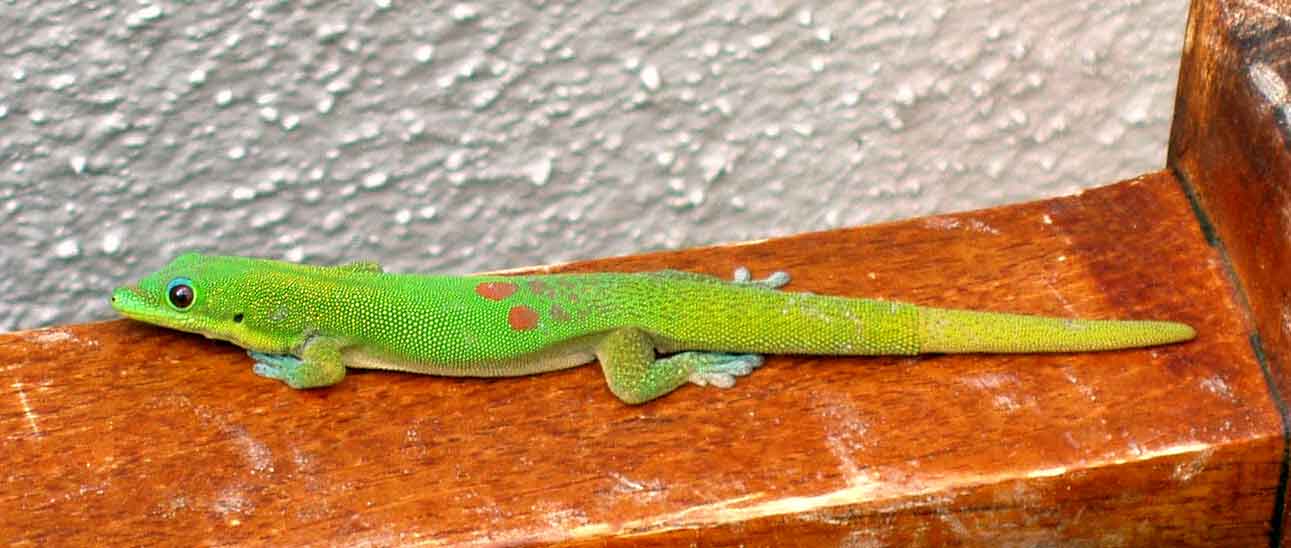
With a head-torso length of up to a few 5 cm., the Gold dust day gecko is one of the smallest representatives of its species. The color of the body is a light green, 3 red stripes on the back appear to be applied with a brush. The golden, shiny scales of the neck and front of the back give it its name. The eyes are "painted" turquoise.
Habitat
The Gold dust day gecko is often found near settlements. It inhabits various tree species, larger plants such as deciduous trees, coconut trees and other palm trees, sisal agaves, bananas and houses. It shares its habitat with the dull day gecko (Phelsuma dubia).
This species feeds on insects and other arthropods. They also tastefully eat sweet fruits, pollen and nectar.
Males of this species of Day gecko can behave quite aggressively. They do not accept other males in the vicinity.
The "Gold dust day gecko" in captivity
The Gold dust day gecko has been raised in the care of humans for generations and, of course, you always have to use the pups.
With the right care and accommodation, the Gold dust day gecko is a grateful pet that gives a lot of pleasure to its owners. But, the conditions and needs of these animals mentioned here must be met. Next we want to show you some special characteristics of day geckos in general for their successful care in the terrarium. Here, animal welfare comes first.
Terrarium measurements
The terrarium for him Gold dust day gecko must be of sufficient height, since it is an animal that lives in trees. As a key to the size of the terrarium we recommend calculating with the head-torso length of the animal. The size of the terrarium is calculated as follows for non-adult animals:
Terrarium floor space: Four times x three times the head-torso length of the animal.
Height of the terrarium: Four times the head-torso length of the animal.
Observe the growth of the animal in the coming months (fast-growing animal/slow-growing animal) For adult animals (of legal age).
As standard measures it is advisable a terrarium of 60 x 40 x 80 cm. (for 1-2 animals).
Terrarium decoration
The Gold dust day gecko is an excellent climber, you are almost never seen on the ground. Various cork branches, cork tubes and bamboo shoots have a decorative look and provide the animal with a space to walk, including the coveted spot for sunbathing under the point of ultraviolet light. As such, place a branch or root at the right distance from the light source so that the right temperature is created in it. They will also willingly accept some vertical climbing opportunities.. It also, the terrarium must be well decorated with plants. Artificial plants are a practical option in this case, as they can be easily cleaned of droppings.
The suitable substrate is the bark bed and earth of the terrarium. Some moss cushions are decorative and regulate humidity. Droppings and food scraps should be removed daily.
Temperature and lighting of the terrarium
The Gold dust day gecko inhabits tropical habitats.
Like the reptiles are warm-blooded animals, you have to simulate their natural habitat in the terrarium: temperature and humidity. This is achieved by various heat/light sources and water misting/spraying. (sprinkler system).
One thermometer/hygrometer allows the caregiver to control these values. Animals have excellent eyesight and visual acuity. Depend on sufficient lighting. So, It good lighting is mandatory of the terrarium. They also need a sunny spot in the terrarium. This is created by the spot lighting, that provides light, heat and UV rays. The highest quality products are good enough here, because only they are equal to the natural light of the sun. The Gold dust day gecko see the colors in the ultraviolet range, so they can't perceive their surroundings normally without adequate light. It also, only an optimal supply of UV-B light provides enough vitamin D3 for young animals to grow optimally and adults to also be in top shape and display their bright colors.. We recommend the JBL L-U-W Light, which is available in different powers and in the version «Desert» o «Jungle«. This type of lighting provides light, heat and UVA/UVB rays.
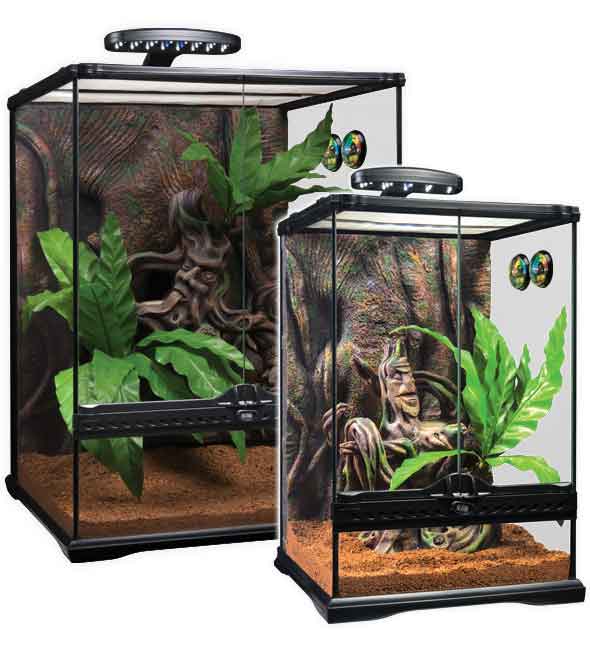
TERRARIUM «Gecko Diurno Dorado» Exoterra
As a caregiver, you can get an especially good climate (and easy to control) using a heating mat under part of the floor of your terrarium. Although the Gold dust day gecko does not go down to the ground to warm up, yes it heats the basic temperature of the high terrarium -which by design is similar to a fireplace- from below. These terrariums usually have too low temperatures in the lower half of the terrarium outside of summer., so the fry have a hot back and a cold belly.
The heating mat must be accompanied by a thermostat. In this way, always get the right climate, as the heating mat turns on automatically when needed. A plus point is the more favorable energy consumption in terms of the environment, since terrariums operated in this way not only require lower power for point lamps, but also, usually, fix themselves with less energy. For uniform lighting of your terrarium as decoration of your living space, we recommend the LED lighting across the entire terrarium. Light and heating sources are always turned on and off at a daily rate using a timer, 14h on, 10h off.
Nutrition
The Gold dust day gecko is a fast and agile hunter. The feeding insects (crickets, domestic crickets, grasshopper, etc.) they are always sprinkled with mixtures of vitamins and minerals. This is the only way to avoid irreversible deficiencies, which can often lead to serious illness or even death in young animals and pregnant females, for example.
Feeding animals must always be adapted to the size of the Gold dust day gecko. Feed only insects that will be eaten directly. Otherwise, feeding animals would disperse around the terrarium, they would hide away and get rid of the attached vitamins/minerals – the result is malnutrition and malnutrition despite food supplies.
It also, to the Gold dust day gecko in nature they like to lick overripe fruits and nectar. With "Exoterra Day Gecko Food" small vessels already prepared with adequate food porridge are obtained. Not offered on the ground, but permanently in the so-called "cup holders" at a high height.
Social behavior and reproduction
The Gold dust day gecko can be maintained individually, in pairs or in a group constellation of one male with several females. Males are always incompatible with each other.
The females of the speciesPhelsuma» put 1-2 eggs after a few 28 days, until 5 times a year. Some species stick eggs to the substrate. The eggs harden quickly in air and the females of the “egg glue species” stick together. 2 eggs each. They like to do it in small cavities like bamboo canes or cork tubes..
The Gold dust day gecko puts up to 5 pairs of eggs per year, this species uses the indentations of bamboo leaves and tubes or similar cavities. At a constant temperature of 28°C, the colorful dwarfs hatch after a few 40-45 days with a size of something less than 60 mm.
Curiosities
It is commonly known as the mascot of GEICO Insurance, and also the main character of the video game series, Gex.
Thanks to the special adhesive foils on your fingers, the Gold dust day gecko not only moves on the smoothest surfaces, but even clings to the glass upside down without problems. In doing so, develop true superpowers through so-called adhesion: thanks to their feet covered with billions of fine hairs, make use of Van der Waals forces and electrostatic forces.
On the sides of the back of the head they have small "calcium sacs", which serve females to store calcium in preparation for egg formation.
In the wild, They guarantee their survival against predators by shedding their tails and "molting in a startled manner". If a hunter grabs them by the trunk, the skin sheds and the Gold dust day gecko escape. Tail and skin regenerate in case of emergency.
For sale "Gold dust day gecko"
The price of a "Gold dust day gecko" at the exotic animal market, bred in captivity, ranges between 80 – 100 EUR.
1. Broad Tailed Day Gecko (English).
2. Gecko diurne à large queue, Gecko diurne des îles, Gecko poudre-d’or, Gecko vert à trois taches, Phelsume poussière-d’or (French).
3. Goldstaubtaggecko (German).
4. Gecko Poudre d’Or (Portuguese).
5. Gecko diurno del polvo de oro (español).
▷ The world of Pets: Dogs, cats, birds, reptiles, amphibians
Green iguana
- Iguana iguana
Origin: Central America, South America, Caribbean
Gender: Iguana
Life expectancy: 20 years
Length: Among 30 and 40 cm. (Head - trunk)
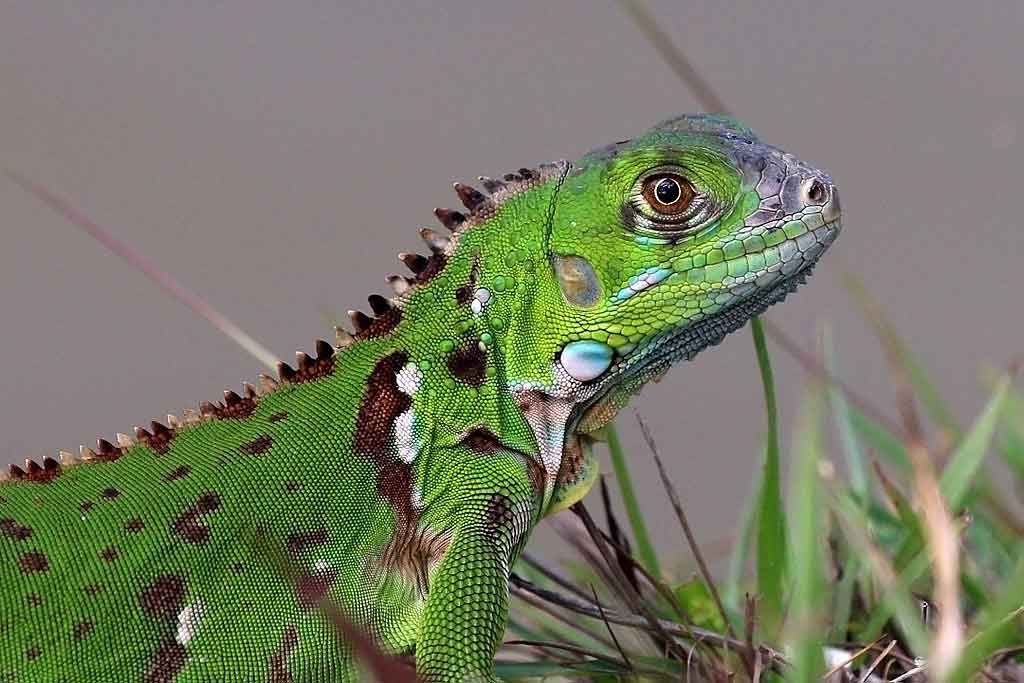
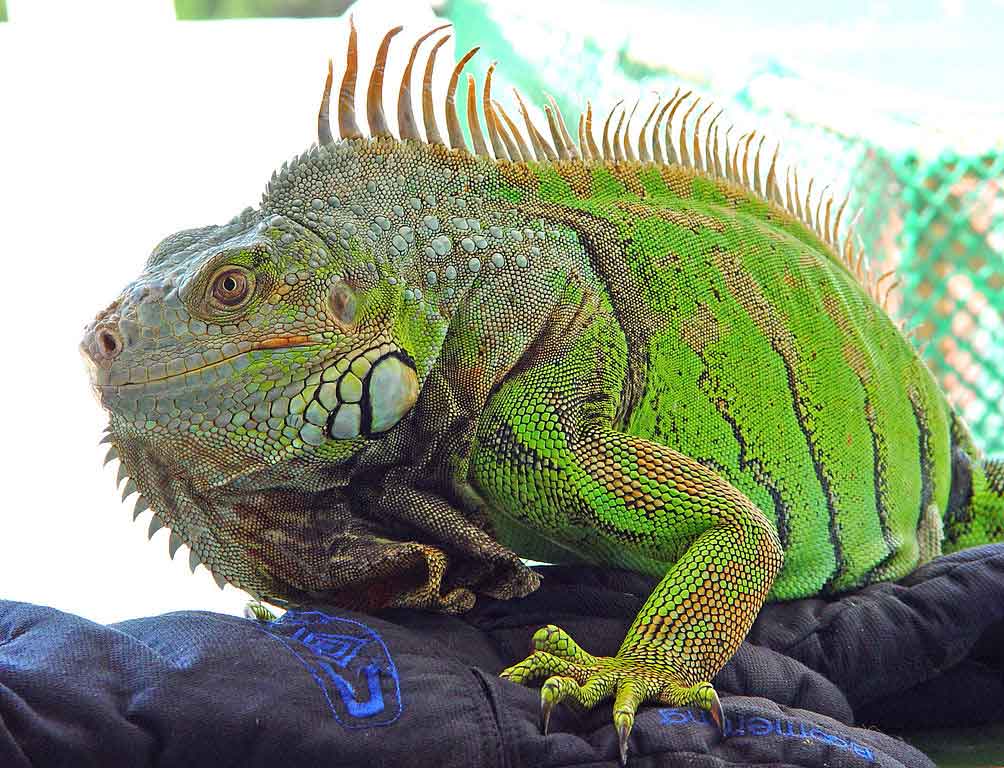
The Green iguana is a large reptile with a powerful body that can reach a length of almost two meters.
The Green iguana (Iguana iguana) belongs to the iguana family (Iguanidae). There are two subspecies, Iguana iguana iguana and Iguana iguana rhinolopha. The latter has two or three horns on the muzzle and thus can be distinguished from the Iguana iguana. A few years ago two other subspecies of the Green iguana: Iguana iguana insularis and Iguana iguana sanctaluciae.
The native range of the Green iguana (Iguana iguana) stretches from southern Mexico to central Brazil, Paraguay and Bolivia and the Caribbean; specifically Grenada, Aruba, Curacao, Trinidad and Tobago, St. Lucia, San Vicente and Útila. They have been introduced in Grand Cayman, Puerto Rico, Hispaniola (in the Dominican Republic), Guadalupe, Texas, Florida, Hawaii and the U.S. Virgin Islands USA. It also, green iguanas colonized the island of Anguilla in 1995 after being swept away by a hurricane. Although the species is not native to Martinique, in the historic Fort of San Luis there is a small wild colony of green iguanas released or escaped.
Characteristics / Appearance
What does a Green iguana?
The Green iguana is a large reptile with a powerful body that can reach a length of almost two meters. But, the average size of a Green iguana is closer to the 1,50 m, much of which is due to its long tail. The body grows to a few 50 cm in males and some 40 cm in females. When fully developed, the Green iguana weighs about ten kilograms. With good care, They can live up to 20 years.
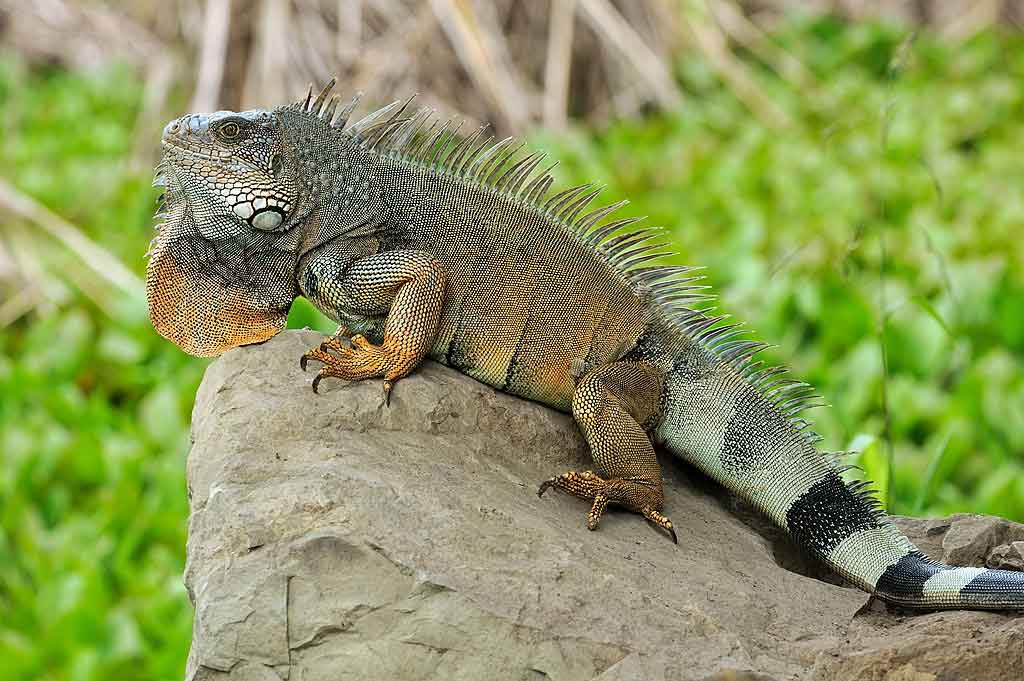
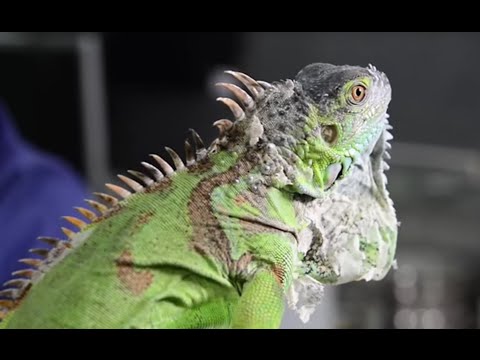
Young iguanas are characterized by a strong green color. With the age, green coloration decreases and becomes darker, sometimes even brown or grayish. They have a crest on the back and tail and usually have dark bands on the body and tail.. The head is characterized by a blunt snout, from which hangs a membranous gular pouch with a large jagged crest.
As inhabitants of the trees, the Green iguana can climb well. Their sharp claws also help them do that.. Diurnal animals can also swim well. As for his character, green iguanas are considered curious, sensitive and relatively confident, although, of course, they are not at all cuddly animals. If the danger threatens, the Green iguana can wag tail like lizards. Then it grows back, but it falls shorter.
Wide variety of colors
Green is not the only color that can be shown by Green iguanas. Its hue is usually bluish and can change throughout your life. Many Green Iguanass become more and more pink, brown, grey or almost black. The Green iguanas are characterized by their scaly and delicate skin. A thorny ridge runs through the back of reptiles; have a double chin under their chin.
Habitat
The natural habitat of the Green iguana are the rainforests of the lowlands, in the vicinity of large bodies of water. Populations in coastal regions with low rainfall are extremely rare.
Behavior
Animals are diurnal and spend most of their time in trees and like to bathe. Although they are considered sociable, there is usually only one adult male in a group. It is important to keep this in mind when keeping them in a terrarium., otherwise fights may occur. A Green iguana can even become meek, which is noticeable in the fact that he greets contact persons by nodding his head..
Threats to the species
State of conservation ⓘ
Minor Concern ⓘ(UICN)ⓘ
The Green iguana is included in Appendix II of the Convention on International Trade in Endangered Species of Wild Fauna and Flora (CITES), which means that international trade is regulated by the CITES permit system. It also, the Green iguana is classified as Least Concern by the IUCN, mentioning that habitat depletion by development is a potential concern for populations of Green iguana in the future. Historically, green iguana meat and eggs have been consumed as a source of protein throughout their range, and are appreciated for their supposed medicinal and aphrodisiac properties. Efforts have been made in the past to breed green iguanas in captivity as a food source in an attempt to encourage more sustainable land use in Panama and Costa Rica..
The "Green iguana" in captivity
The terrarium
Type of terrarium Jungle or tree terrarium
Temperature of 25 to 30 degrees Celsius during the day, 20-25 degrees Celsius at night
Humidity High humidity
Need for sun A sunny place per animal is required with temperatures of approximately 35 – 40 Celsius degrees.
If you want to have a Green iguana, you need a lot of space. Since these animals can reach two meters or more, a medium-sized terrarium is not enough for good conservation. Yes, you Green iguana has to live tight, won't feel comfortable with you. The minimum size of the terrarium for a Green iguana adult should be 300 x 200 x 250 centimeters. Young animals are raised in a smaller terrarium. It is important to have a sufficient height with many climbing branches so that the animals can climb. Animals like to rest on horizontal branches under a spotlight.
If several animals are housed in the same terrarium, they need enough hiding places so they don't look all the time. Thick PVC pipes into which a board or floor is inserted are suitable for this purpose. The ground should be covered with sphagnum, sawdust, linoleum or tiles. Coatings with sharp edges, such as expanded clay or gravel, are absolutely inadequate.
Even with a spacious terrarium, is controversial among terrarium enthusiasts whether the Green iguana must be kept in a terrarium in general. As an alternative, if you have the opportunity, it's a good idea to host the Green iguana in your own reptile room. As long as you can create in it the right weather conditions, this option is preferable to a large terrarium.
Temperature and humidity in the terrarium
Adult green iguana – Cy, CC BY 3.0, via Wikimedia Commons
A rainforest or tree terrarium is suitable for maintaining a Green iguana. It doesn't matter which variant you choose: Temperatures and humidity must be adequate for green iguanas to feel comfortable in them. Temperatures should range from 25 and 35 degrees during the day and at least 20 degrees at night. It also creates a warmer place where the temperature is between 40 and 45 degrees Celsius. If you have several animals in the same terrarium, each of them needs what is called a sun point.
The humidity of the terrarium should be between the 60 and the 80 percent during the day and between 80 and the 95 percent at night. Animals also need UV-B lighting for about twelve hours a day.. To adapt the climate to the natural habitat, animals and terrarium should be sprayed with water daily. During the winter period (December-April), the climate must be maintained 5 cooler and drier degrees Celsius. To avoid bacteria and mold, the terrarium should also be well ventilated.
Tips for decoration
Equip the terrarium or reptile room with enough branches and trunks to climb and rest. Branches for climbing should be at least as thick as the trunk of the lizard. Rocks are also useful, the roots and the cork caves. It is also important to have a water basin with a temperature of about 25 degrees Celsius. It is best to heat it with a bottom heater or a heater in the filter.
You can use real or artificial plants in the terrarium of your iguanas. Real plants are good for the climate, but they can be crushed or eaten. So, real plants must definitely be non-toxic. The substrate must be dry and absorbent.
Care and nutrition
Male Green Iguana (Iguana iguana) of wildlife in the Botanical Garden of Portoviejo, Ecuador – First, CC BY-SA 3.0, via Wikimedia Commons
So that your Green iguana stays well, prudent care is essential. Good care starts with diet. The green iguanas are vegetarian, so animal foods shouldn't be on your menu. Exceptions are young iguanas and pregnant females, whose diet should consist of a 15% of animal feed (insects and eggs).
A varied diet is important to ensure a sufficient supply of nutrients. Leafy greens should make up the main part of the diet, around the 60%. These may include, can be fed with dandelion, Canons, clover, rib or parsley grass. To the green iguanas they also like cabbage. The 40% remaining diet should consist of flowers (30%) and fruits (10%). Papaya, strawberries, mandarins or prickly pear figs are suitable. The foliage of trees is particularly greedily consumed by animals. You can supplement your diet with vitamin and mineral supplements to prevent malnutrition. Animal feed should never exceed the 5%. Its excess can cause kidney problems in animals.
Hygiene also plays an important role in maintaining green iguanas. Infestation with parasites such as mites and worms is relatively common in green iguanas. Thorough hygiene prevents pathogens and, Therefore, diseases. Remove food scraps and droppings every day, change the water daily and clean the entire terrarium regularly. Diseases that are comparatively common in green iguanas include putrefaction of the mouth, tail necrosis and intestinal and respiratory diseases.
How many green iguanas can you keep together?
In the wild, the Green iguana lives in groups consisting of one male and several females. So, you should not maintain a Green iguana individually. You can keep them in pairs or in a small group with a maximum of one male.. The latter option is more relaxed for females, since during the mating season a single female is not too harassed by the male.
It is not recommended to keep several males together. Especially dominant males do not get along with each other. Especially in the season of heat, animals have a marked territorial behavior, which can lead to bloody conflicts between males. In any case, they should only be kept together in very large terrariums with enough hiding places.
Iguanas also get along well with the turtle (Terrapene) of the warmest regions. On the other hand, the Common basilisk (Basiliscus basiliscus) wave Marine iguana (Amblyrhynchus cristatus) should not be kept together with the green iguanas. The similar appearance in terms of physique and color can cause stress in animals.
Are green iguanas suitable for beginners?
It is not the same to have a reptile in the living room of the house than a cat, a dog or rabbit. These exotic inhabitants need adequate climatic conditions and can suffer damage if poorly maintained.. Some species are so demanding that it is desirable or necessary to have previous experience in maintaining terrariums..
The green iguanas fall into this category. They are less forgiving of breeding errors than other reptiles. So, this species of iguana is not the best choice for beginners. Inadequate breeding conditions can lead to illness or premature death of the animal.
Just because of the size of the animals, you should think carefully about whether you can really meet the requirements to have green iguanas. A standard terrarium is usually not enough to keep large reptiles. Don't be dazzled by the small size of very young animals in pet stores. Must be able to offer the animal the space it needs when it has grown.
Buy one "Green iguana"
The green iguanas can be purchased from reputable breeders. Make sure the maintenance conditions are good and the animals look clean, well fed and, in general, healthy. You can also find them at a rescue center or animal shelter.. The pet shop is also a place to go, but here it is not known where the animals come from or under what conditions they have been raised.
For reasons of protection of species and the environment, you should not buy wild-caught animals, especially since they are usually in a worse state of health than the offspring.
The green iguanas cost between 50 and 100 euros per copy. Adult specimens are more expensive, just like the rarest color varieties. The costs of the terrarium and its equipment are much higher than those of the animals themselves. You also have to take into account the costs of food and electricity.
Its natural habitat is in central and central South America., and prefers rainforests and savannah forests with proximity to water. In the news, the iguana is also native to some Caribbean islands and parts of Florida.
What size should a terrarium be for an iguana?
Due to its size, iguanas need very large terrariums with dimensions of approximately 300 x 200 x 250 cm..
How can I distinguish male iguanas from females??
Animals are not easy to distinguish. Male iguanas have a larger throat pouch, larger femoral pores, a thicker tail root and a wider head than females when they are between one and two years old. During the mating season, males have a red color, more intense orange or gold. They are also usually more dominant than females.
How do green iguanas reproduce??
In the wild, animals copulate at the beginning of the dry season, while in captivity they behave differently. In this case, it may be helpful to keep animals apart for a while to stimulate them. If a couple is lying next to each other, sometimes there is a vigorous courtship with head movements that is followed by a mating.
Do iguanas become meek?
If iguanas grow with human contact from an early age, they become tame and you can handle them without leather gloves. Animals that are not used to humans can react aggressively and hit with their tails., scratch with claws and bite. But, with a lot of patience, even the oldest animals can be domesticated by hand.
How are iguanas domesticated??
It is best to feed by hand the green iguanas regularly to get them used to. To feed them, you can also put them on your arm and keep them at eye level while you talk to them.. In this way, you can also show the animals to the veterinarian or move them without problems.
Videos "Green iguana"
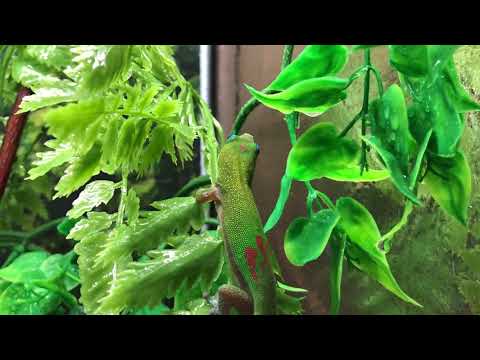
IGUANAS - The green iguana as a pet. How is it? What do you need? What do you eat??






.jpg)


.jpg)

_juvenile_head.jpg)


