โ–ท The world of Pets: Dogs, cats, birds, reptiles, amphibians

African spurred tortoise
- Centrochelys sulcata

The African spurred tortoise It is the third largest tortoise after the Galรกpagos giant tortoise and Aldabra giant tortoise. It is the largest turtle in the world that lives on the continent.

African spurred tortoise
African spurred tortoise – Wikipedia

Content

Origin

The African spurred tortoise first received a scientific name, Testudo sulcata, by the English illustrator of animals and plants John Frederick Miller in 1779. It was later assigned for a long time to the genus. Geochelone Fitzinger, 1835. But, following a proposal by the French herpetologist Roger Bour in 1985, is now placed in the old subgenre Centrochelys Gray, 1872, which has since been elevated to the category of gender. So far no subspecies have been described.

The African spurred tortoise (Centrochelys sulcata) is native to the Sahara Desert and the Sahel, a transitional ecoregion of semi-arid grasslands, savannahs and thorny thickets found in the countries of Burkina Faso, the Central African Republic, Chad, Eritrea, Ethiopia, Mali, Mauritania, Nigeria, Senegal, Saudi Arabia, Sudan, Yemen and possibly Somalia, Algeria, Benin and Cameroon. Possibly extinct in Djibouti and Togo.

Characteristics / Appearance

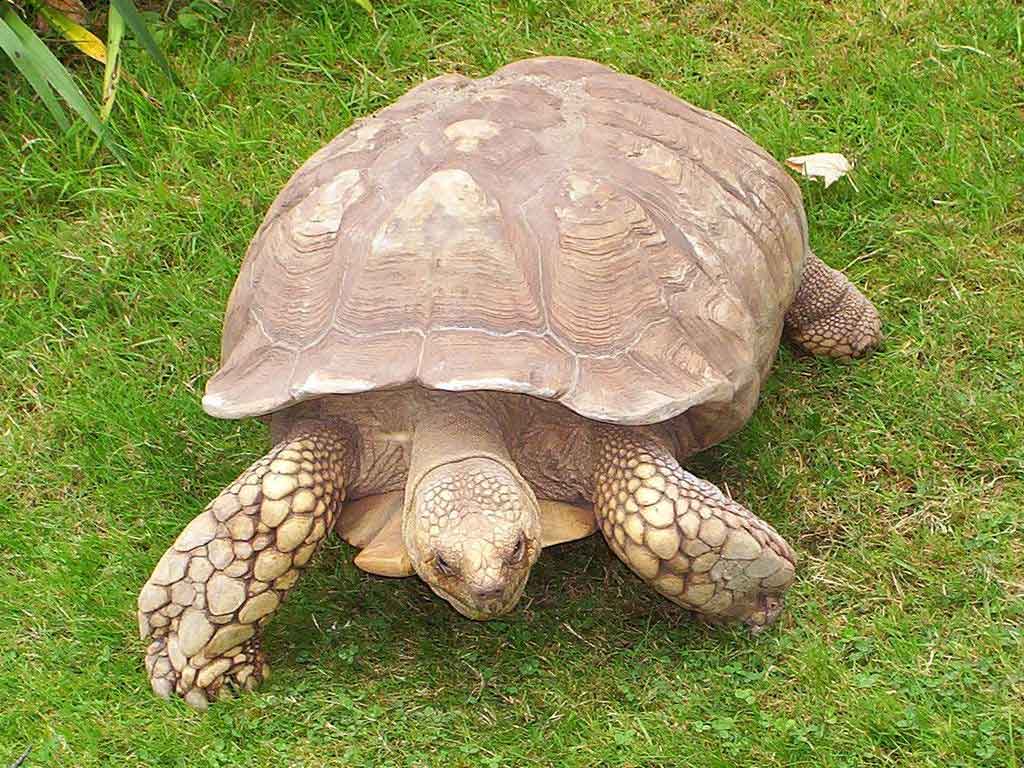
The dorsal shell รขโ‚ฌโ€œ also called the carapacho รขโ‚ฌโ€œ, of about 80 cm size, it is quite flattened and has curved marginal shields around it. Strongly pronounced growth rings remain visible into old age, but they also give it its character. Throat shields protrude from the edge of the dorsal carapace, are curved upwards and are forked. These give the turtle their name of "spur turtle". A split can also be found in the rear shield. The color of the African spurred tortoise is cream, yellow-orange and sometimes brown or olive. You can't name a certain trend.

At the bottom of the African spurred tortoise a very clear and often almost white ventral shell can be seen that also shows growth rings. On the hind legs there is a very striking spur that also gave name to the animals.

Growth of the "African spur turtle"

When are born, theAfrican spurred tortoise weighs between 30 and 40 g.. Their weight multiplies in the first year. At one year of age, usually weigh between 150 and 210 g.. The growth of the African spurred tortoise depends largely on how it is maintained. Animals that are kept in an optimal environment grow evenly and gain weight each month. Specimens exposed to great stress usually have growth problems and can even lose weight in the meantime..

Habitat

The African spurred tortoise inhabits three different vegetation zones. Among them are dry and hot grasslands of semi-desert character, leafy thickets and grasslands with stands of acacia. Daytime temperatures above 40 ยฐC are the norm in its distribution area. You can even reach the 50 ยฐC. The minimum temperature values โ€‹โ€‹are 3-21 ยฐC. But, in some biotopes night frosts may occasionally occur.

The sparse vegetation of the habitat of the African spurred tortoise consists mainly of several species of acacias, baobab, tamarinds, species of thorny shrubs, species of wild millet, Digitaria sp., Panicum sp., thorny herbs Cenchrus sp. and low growth, mainly annual, of herbs and pastures.

Behavior

The African spurred tortoise it is a cold-blooded reptile that needs to minimize seasonal and diurnal temperature fluctuations through appropriate behavior to maintain a suitable body temperature. An important role in this type of thermoregulation is the search for a suitable shelter for the season and time of day.. As such, the African spurred tortoise uses burrows in the ground, that may have up to 4 m depth and 15 m length. If available, use the abandoned burrows of other animals. But from the 2-3 years of age, the African spurred tortoise also digs underground tunnels on its own with its strong front legs and, sometimes, with the throat shields in the form of a hairpin. They don't normally use a single burrow, but "possess" several, that they sometimes share with other turtles and even with other animal species.

In the coldest season, the African spurred tortoise it already comes out of its burrow in the morning and warms up before going in search of food. On the other hand, in the hottest season, often only activated in the evening hours. In the intervening periods, is usually active in two phases, that is to say, returns to its burrow during the hot day. In particular, the wettest season is used intensively, while dry and hot periods must also be endured inactively in the burrow to protect themselves from desiccation. During this summer lethargy, metabolism and heartbeat are greatly reduced, similar to the winter lethargy of other species.

Conservation

State of conservation โ“˜


Vulnerable Vulnerable โ“˜ (UICN)โ“˜

The African spurred tortoise is listed as endangered on the Red List and threatened in Appendix II of the Washington Convention on International Trade in Endangered Species. The reasons are the collection for personal use (pets, foods) and for export, the fragmentation and urban expansion of what was once a huge mountain range, and the advance of the desert towards the mountain range.

On the other hand, breeding in the care of man has been very successful.

The "African spurred tortoise" in captivity

These turtles need a lot of space and cannot be kept in a large terrarium even in winter after two or three years.. Then you need a full room in a room of the house, or a very modern and heavily heated stable. Many owners have converted their garage for this purpose. Insulation made to keep warm, but also good ventilation for good circulation are a great challenge based on opposites.

The African spurred tortoise needs a permanent ambient temperature of 30 ยฐC and also heat sources under which the values โ€‹โ€‹can be reached. 45 ยฐC. Animals must stay outdoors in summer. But, they always need access to the barn or the room where the 30 ยฐC. Who thinks that this is not a problem in summer because of the high temperatures outside, you will soon learn to do better. The place is heated basically all year round and, Therefore, energy costs will amount to several hundred euros.

Food

Then there's the food. Although animals eat almost only hay in winter and feed on straw, you have to bring bales of hay. The African spurred tortoise eats a lot because it is extremely large. Nor should you assume that you are going to buy a Turtle until there is no more space. Why deliver a great African spurred tortoise a new owner is a feat and often unsuccessful. Most of these tortoises reach their owners when they are young., who often don't know what they're doing. There are few people who take a African spurred tortoise adult, and only on rare occasions do they take one from an animal park, because here you have to face reality.

Reproduction of "African spur turtle"

The female of the African spurred tortoise reaches sexual maturity when weighing between 15 and 20 kg. The age of the tortoise plays a very minor role here.. The animal usually reaches that weight at the age of 10 years. Some specimens only reach this weight at the age of 12 to 15 years. Males growing in the same environment usually need one to three more years..

The African spurred tortoise puts 3 clutches per year and up to 40 eggs in a year. The hatchlings take a few 120 days to hatch. There is no specific time of year for mating. In captivity, this usually occurs in the normal summer, since that is when the days are cooler and rainier.

The females of the African spurred tortoise lays eggs about a month after mating.

Buy one "African spurred tortoise"

The price of a "African spurred tortoise" at the exotic animal market, bred in captivity, ranges between 100 – 150 EUR.

Images "African spurred tortoise"

A young woman "African spurred tortoise" (Geochelone sulcata) on his mother's shield
Giant turtle (Geochelone sulcata) in the Guembeul reserve in Senegal

Videos "African spurred tortoise"

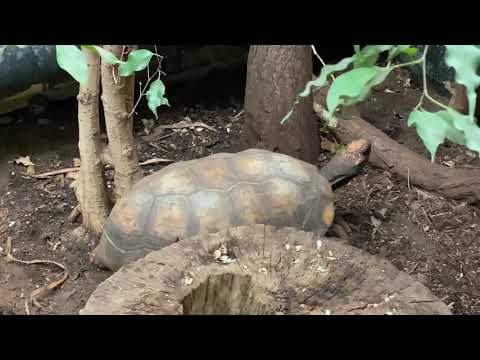
sulcata tortoise review 30 years. Exotic animals 24h

Centrochelys sulcata, giant tortoise ,Giant tortoise,giant tortoise,giant tortoise

Alternative names:

1. Grooved Tortoise, Sahel Tortoise, Tortue Sillonnรฉe (English).
2. Tortue ร  รฉperons (French).
3. Spornschildkrรถte Centrochelys (German).
4. Tartaruga sulcata, Tartaruga-purgada africana (Portuguese).
5. Tortuga Sulcata, Tortuga gigante africana (espaรฑol).

โ–ท The world of Pets: Dogs, cats, birds, reptiles, amphibians

Leopard tortoise
- Stigmochelys pardalis

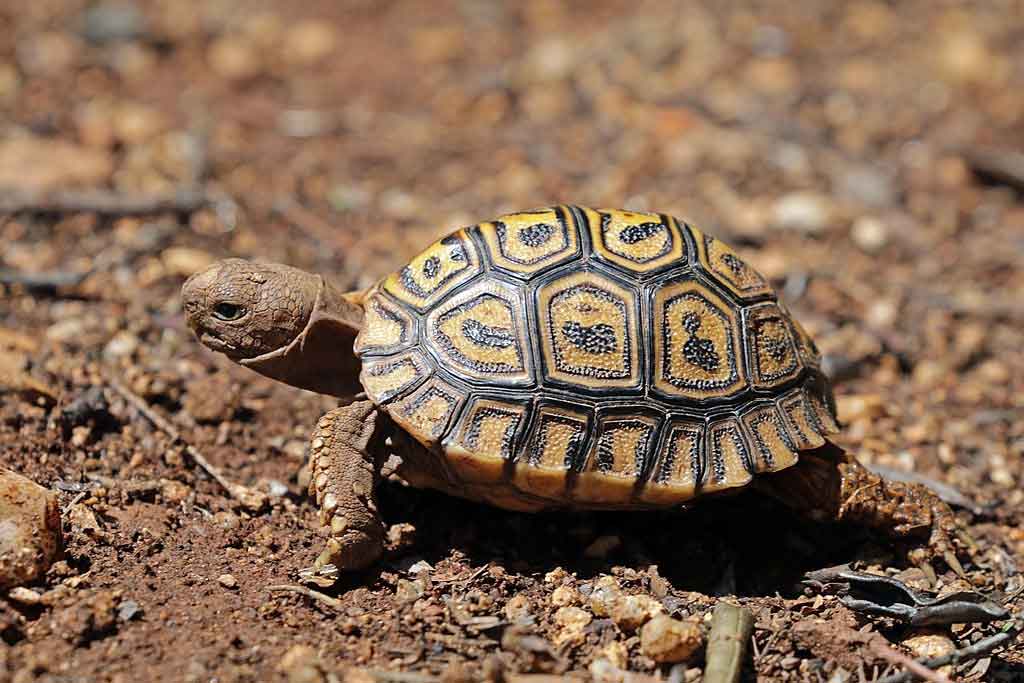
The Leopard tortoise it is a magnificent representative of African tortoises in terms of shell. Young animals in particular have a fantastic spot pattern, reminiscent of a leopard, that's where its name comes from.
Leopard tortoise
Leopard tortoise (Stigmochelys pardalis) juvenile, Walter Sisulu Botanical Gardens, Roodepoort, South Africa – Charles J. Sharp, CC BY-SA 4.0, via Wikimedia Commons

Content

Origin

The Leopard tortoise has been the subject of several revisions. Different authors have placed it in Geochelone (1957), Stigmochelys (2001), Centrochelys (2002) and Psammobates (2006). More recently, the consensus seems to have been established in Stigmochelys, a monotypic genus. There has been much debate about the existence of two subspecies, Stigmochelys pardalis pardalis and Stigmochelys pardalis babcocki, but recent work does not support this distinction.

Stigmochelys is a combination of Greek words: stigma which means "brand" or "tip" and chelone What does "turtle mean". the specific name pardalis comes from the Latin word pardus, which means ยซleopardยป, and refers to leopard-like spots on the turtle's shell.

The Leopard tortoise is located in the following 17 countries: Ethiopia, Angola, Botswana, Djibouti, Kenya, Malawi, Mozambique, Namibia, Zambia, Zimbabwe, Somalia, Sudan, South Africa, South Sudan, Swaziland, Tanzania, Uganda.

Characteristics / Appearance

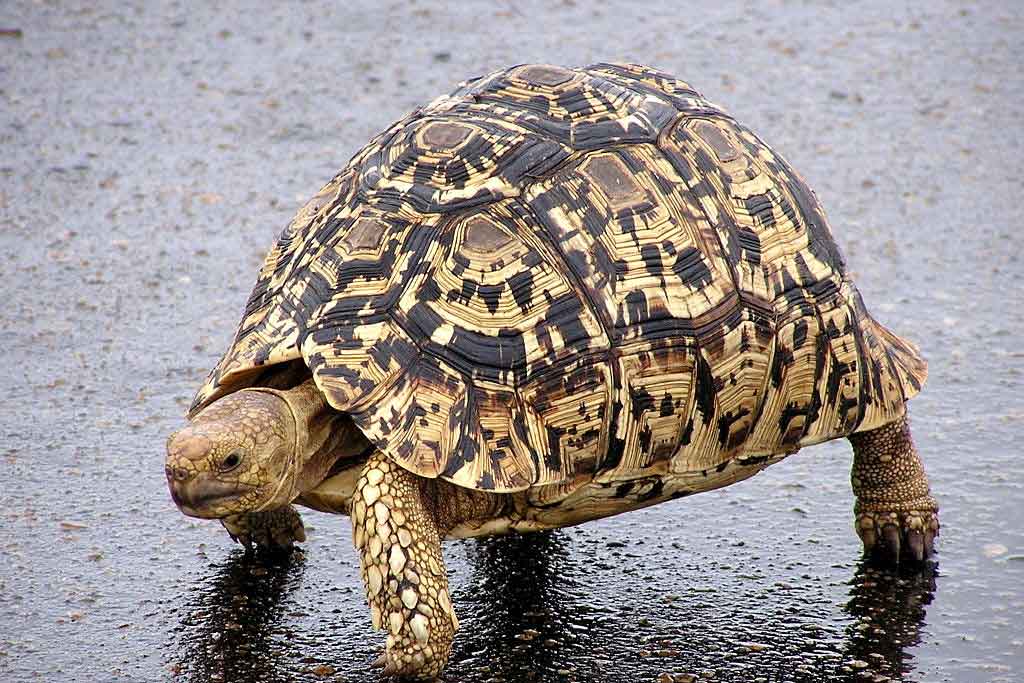
The Leopard tortoise adult has a dorsal shell elongated and strongly curved. It is yellowish to light brown and is covered with irregular dark spots or stripes.. This characteristic coloration gave the species its name.. Unlike many other turtles, the Leopard tortoise no shield on the back of its neck. The legs and head are yellowish to light brown. Rarely do individual dark spots appear on them. The Paws they are covered with large scales and each hind leg has a cone-shaped spur. Equipped with powerful claws, the legs are the ideal tool for digging.

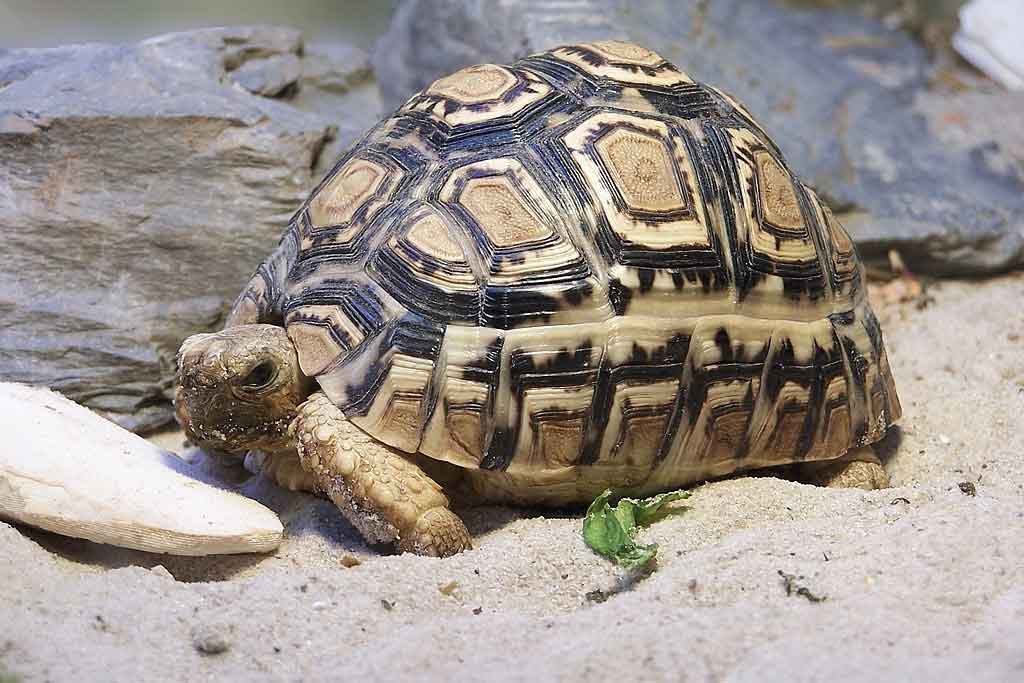
In the youth the coloration of the shell is clearly lighter, with dark spots in the center of the shield. These high-contrast patterns can also sometimes be found in abdominal armor.. The size difference is used to differentiate the sexes, just like the size of the queue. Male animals are usually smaller than their female counterparts and have a stretched body with a longer tail., which is also significantly thicker at the root. It also, the male's abdominal breastplate is slightly curved inward. The claws of the hind legs of females are particularly strong.

  • The life expectancy of these reptiles are around the 50-60 years.

The subspecies

The Leopard tortoise are divided into two subspecies, the Leopard tortoise of East Africa and the Leopard tortoise from South Africa. The clearest distinguishing feature of both species is the coloration of the posterior layer.. In East African species, the basic color is weaker and darker. Juveniles have very few or no dark spots on both the belly and dorsal shell. The South African species has a flatter back and brighter colors.

Habitat

The Leopard tortoise (Stigmochelys pardalis) it is not very demanding in terms of its habitat. Its distribution extends throughout the East African region to South Africa and Namibia.. It is found in warm semi-deserts, dry savannas and rainfed areas. There are even populations more than 2.000 meters above sea level. Only dense forest areas cannot be colonized due to the mass and slowness of reptiles. Daytime temperatures of 28 to 40 degrees centigrade and night temperatures up to 21 degrees Celsius provide optimal living conditions for animals.

Behavior

The Leopard tortoise, like all reptiles, he is a cold blooded animal. They do not have a constant body temperature and adapt to room temperature. Behavior patterns are greatly influenced by this characteristic. According to the corresponding daytime temperatures, animals are forced to look for hiding places in the shade. In dry areas, thorny or grassy shrubs fulfill this function. Otherwise, turtles also look for abandoned animal burrows or rocks. At certain intervals, especially during periods of drought when food is scarce, take longer breaks of their own free will. These periods can last up to several weeks.. Then, food intake is minimized and body temperature may drop below 18 degrees.

Turtles are not nomadic. The only specimen moves in an area of โ€‹โ€‹about 400 hectares without forming territories. But, due to its slowness, they only use a part of this surface. The proportion of females and males is practically the same, and males usually use much smaller territories than females. The Leopard tortoise he is a peaceful animal. There are no territorial fights between congeners.

Food

The excellent adaptation to its habitat allows the Leopard tortoise manage your water balance very sparingly. It usually ingests the necessary amounts with its food and has regulatory bodily functions that allow it to store greater amounts of water in its body.. Their diet consists almost exclusively of plants. Prefers grass, thistles, lily plants and prickly pear.

Reproduction

The Leopard tortoise lives in different climatic zones. Mating behavior adapts to the respective climatic conditions, but it usually takes place in the spring or summer months. Males, otherwise peaceful, they now try to scare away their companions who court the females. They do this by ramming the shells of their opponents.. With the same ritual, female turtles are asked to stop and stick their heads and legs in. Next, mating takes place. The loud gasps emitted are characteristic of the mating ritual in many species of turtles..

Reptiles are not dedicated to the care of the young. Females dig a pit with their hind legs in which they lay eggs. The number per clutch varies greatly and is usually between 10 and 20 eggs. Three to six clutches of eggs are laid per year with an average interval of about 25 days. After placement, the pit is carefully closed. The duration from egg laying to hatching of the young is influenced by many factors.. Temperature and humidity influence the length of the incubation period, that can last from 120 to 450 days. Young turtles measure about five centimeters and have a hemispherical dorsal shell..

Threats to the species

State of conservation โ“˜


minor concern Minor Concern โ“˜ (UICN)โ“˜

The Leopard tortoise Adult has few natural enemies in its habitat. In addition to the hyena and the lion, man is the greatest of them. With its regulatory interventions in the environment, threaten reptile habitat in some areas. Overgrazing, slash-and-burn agriculture, urban expansion and fencing of grazing areas are the main causes of population decline. In some regions the meat of turtles is consumed and body parts are used to produce medicines.. Every year thousands of animals are collected for the international pet trade and shipped all over the world.. Black traders have also discovered this market and try to sell their products through dark channels.. Customs authorities seize large quantities of Leopard tortoise smuggled.

But, the greatest threat is to the clutches of eggs and young. Nests are often raided by small mammals, birds, snakes or even by humans. Young animals also constantly face the dangers of stray dogs and cats., birds of prey, snakes or rats. The Leopard tortoise is not considered endangered in its species and can be acquired in for maintenance in captivity without prior permission. But, according to the European Species Protection Regulation, the acquisition must be notified to the competent authorities. The same provisions of the official notification requirement apply to breeding, delivery, the death and transfer of animals.

The "Leopard tortoise" in captivity

Leopard tortoise
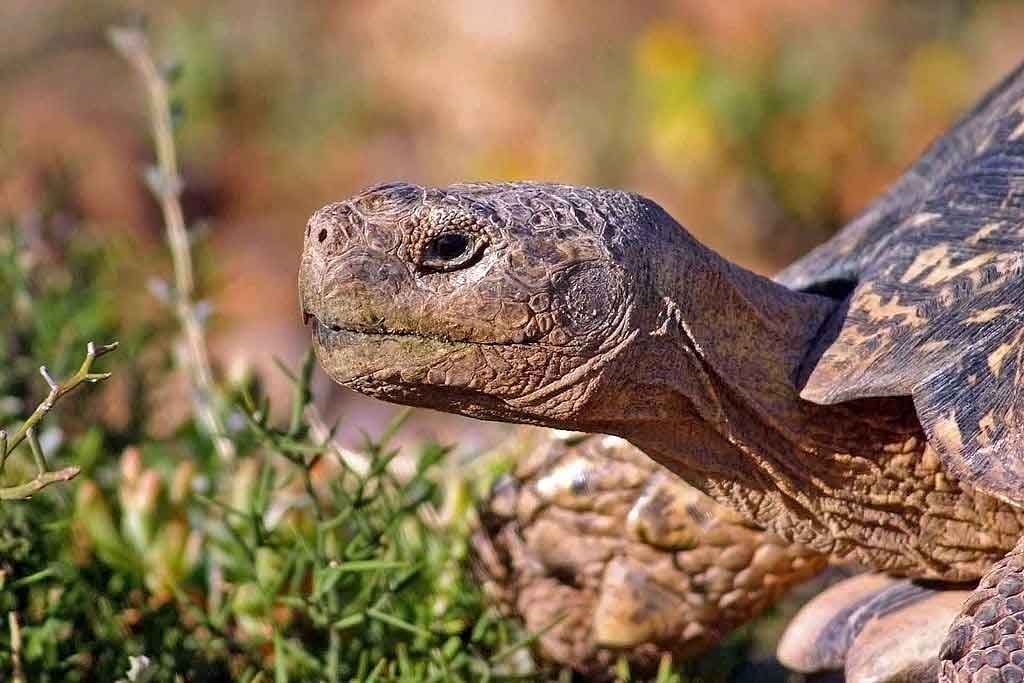
The head of a "leopard turtle" (Stigmochelys pardalis) at Addo Elephant Park, South Africa – Charles J. Sharp, CC BY 3.0, via Wikimedia Commons

Reproduction

Reproduction can begin once animals have reached sexual maturity, that occurs to some 20 – 25 centimeters of carapace length. Mating usually begins in spring with the behavior already described. After a gestation period of several months, females bury their eggs in a warm, moist spot in the ground in late summer. Stress, such as transfers, should be avoided at all costs in pregnant females. after sunset, eggs can be carefully removed from the ground. Half buried in loose sand, now they are placed in the incubator. The temperature should be 30 constant degrees centigrade and the humidity should not drop below 65%. After 150 to 300 days, the first pups are born. In the first weeks, they also need cooler, moister areas than adult animals.

When a Leopard tortoise, one or more individuals should be selected from a breeding stock for health reasons. Specimens caught in the wild are usually carriers of parasites and very susceptible to contracting diseases due to the stress of the long journey.. Deformation and softening of the shell, diseases of the internal organs and respiratory infections are the most common.

The breeding of a Leopard tortoise it's quite expensive. Heating, feeding and the various devices to create an environmental climate suitable for the species at all times of the year, as well as the large space that animals need, place high demands on the owner. But, this species is one of the most beautiful and imposing representatives of turtles and the lover of these animals is compensated daily by its sublime vision.

Maintenance of the "leopard turtle"

The Leopard tortoise is eager to move and run. This guarantees them a digestion that works. For this reason and for its size, only sufficiently sized rooms are adequate to maintain them. In this case, you have to take into account the climatic conditions to which the animals are accustomed. A permanent ambient temperature of 30 degrees and the supply of ultraviolet light in the wave range around 300 nm are prerequisites for keeping animals appropriate to the species. Turtles need ultraviolet light to synthesize vitamin D, that is essential for life. The ideal is to divide the room into several climatic zones so that the animals find a place with the most pleasant ambient temperature.

The Leopard tortoise must be kept in pairs. A mixture of sand and peat is suitable as a substrate. Do not forget the creation of hiding places. Hollow tree trunks or haystacks are useful furniture here. Of course, a bowl of water for drinking and bathing is part of the basic equipment.

Food

When it comes to feeding, pay attention to seasonal peculiarities. Winter corresponds to the dry season in the natural habitat of animals. Consequently, food should consist of dried grass and dried herbs. In summer, wild plants such as hibiscus are recommended, Dandelion, thistles and all wildflowers, from violets to petunias. Cultivated plants, like fruits, lettuce or vegetable leaves, should be the exception in the diet. Under no circumstances should turtles be fed animal products or, for example, with cottage cheese, fruit and pasta.

Reproduction

The breeding of the Leopard tortoise also requires further expansion. If you buy one Leopard tortoise young after hatching, you have some 4 years to think about the later habitat in winter and summer. From then on the animal is already quite large and is already oversized for a very large terrarium in winter. Outer space must have at least 50 m2 and the winter space should not be less than the limit of 10 m2. The Leopard tortoise adult needs more than 100 square meters outdoors. Until then there are some 4 years longer. And don't forget that, no matter how big a room is in winter, it must always be heated to 30 ยฐC.

To be taken into account

The Leopard tortoise has a strong tendency to slouch. Unfortunately, it is not yet possible to say exactly why this is so. Animals are not kept in captivity very often and, if they do, most of the time only by people who have no means to investigate hump formation. Breeders have been observing the phenomenon for years and again and again they manage to breed one Leopard tortoise no hump formation. But, it is not known why, because the animals grew normally like other turtles, which in turn have hump formation.

Completely smooth shells are almost never found in the Leopard tortoise in captivity. On the other hand, in the natural habitat, almost all animals are completely smooth and of great beauty. So that your own animal grows healthy and has a long life, you just have to be very careful with the diet.

Important tips against the formation of humps

The Leopard tortoise young must have a higher humidity and grow in a rather moist soil. Make sure the floor is not misted with moisture more than once a day. Animals should not grow "wet". From the 3 years, animals prefer to grow dry. As in nature. Water must always be available. It is necessary to ensure that the animals do not bathe several times a day. Otherwise, they will absorb too much fluid and develop humps.

In winter, the diet of the Leopard tortoise limited to dry wild grasses that were raised in winter quarters but stopped being watered at some point. Thus, wild herbs dry out in the hot summer, just like in nature. Our winter is the African summer of turtles: do not forget it. There is also straw and plenty of hay in the enclosure. Animals feed on this. Water must always be available, but may run out during the day and should not be refilled. It is only refilled the next day, when everything gets fresh anyway.

The temperature should always be 30 to 33 degrees in the "winter" and 45 degrees (tank surface) under heat sources. If you have the possibility, should reach maximum temperature at noon and cool down again at night. The temperatures of 19 to 22 degrees should be maintained at night. In no case should this temperature be lowered, or surpass it.

In summer, animals eat everything they find outdoors. Unlike many other turtles, to the Leopard tortoise also likes to feed on grass. But, they like to harvest it themselves and don't allow it to be presented to them. So, those who do not let their animals run freely in the garden must plant grass in the enclosure. The grass should be nice and green from April/May to the end of September. Then, the animals usually return to the inner enclosure and then the African summer begins.

The humps of the Leopard tortoise they are not always synonymous with bad breeding. If less or no humps are created it's great. But, if humps develop, no one's heart is broken and animals don't have to be worse off. Unfortunately, there is no exchange of experiences for the Leopard tortoise.

Buy one "Leopard tortoise"

The price of a "Leopard tortoise" at the exotic animal market, ranges between 130 – 200 euros when it is a baby, being able to get to the 500 euros depending on their size and shell.

Images "Leopard tortoise"

Panther turtle in the Kruger National Park, South Africa
S. pardalis, very high back (Photo M.Proot)
S. pardalis, relatively flat (Photo M.Proot)
Young breeding animal, of about three years.

Videos "Leopard tortoise"

Geochelone pardalis - Leopard tortoise

The NEW Leopard Tortoise Habitat RULES!

โ–ท The world of Pets: Dogs, cats, birds, reptiles, amphibians

Red-footed tortoise
- Chelonoidis carbonaria

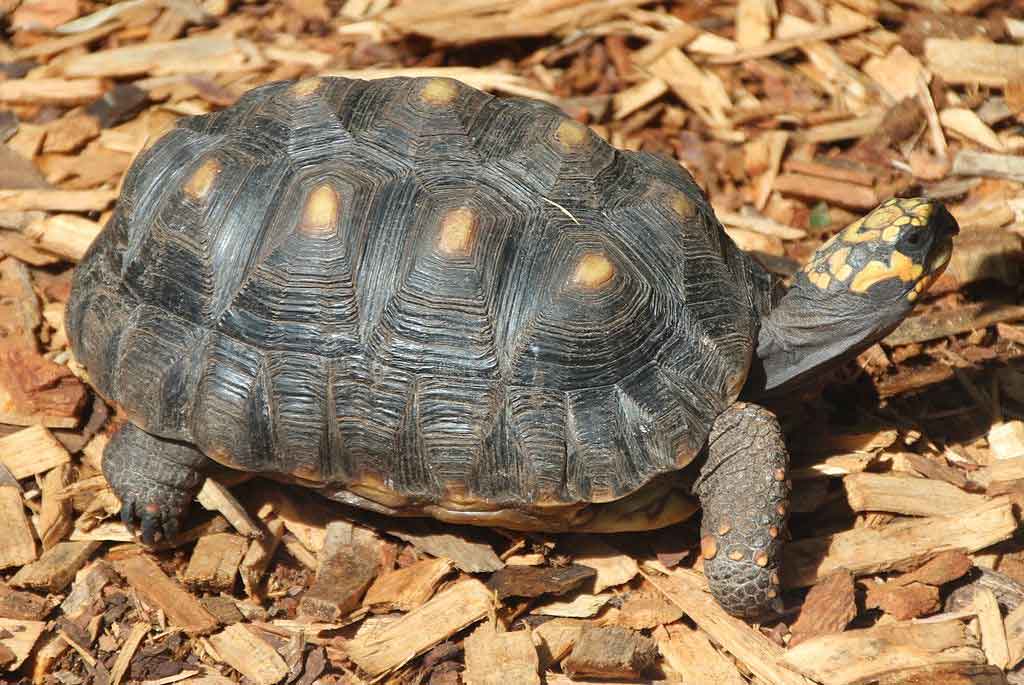
The Red-footed tortoise impresses with bright yellowish or red markings on the shell. Unlike the other turtles, needs a lot of humidity and a place to bathe.
Red-footed tortoise
Red-footed tortoise in Loro Parque, Tenerife – Bjoertvedt, CC BY-SA 4.0, via Wikimedia Commons (Spain)

Content

Origin

The home of the Red-footed tortoise (Chelonoidis carbonaria) is tropical South America, where its distribution is divided into a northern and a southern zone. In the north it is located between Panama and northern Brazil, in the south from southern Brazil through Peru, Bolivia and Paraguay to Argentina. It is represented from tropical to subtropical in the south to the degree 25 latitude. There is a regular alternation between hot summers and dry winters..

Characteristics / Appearance

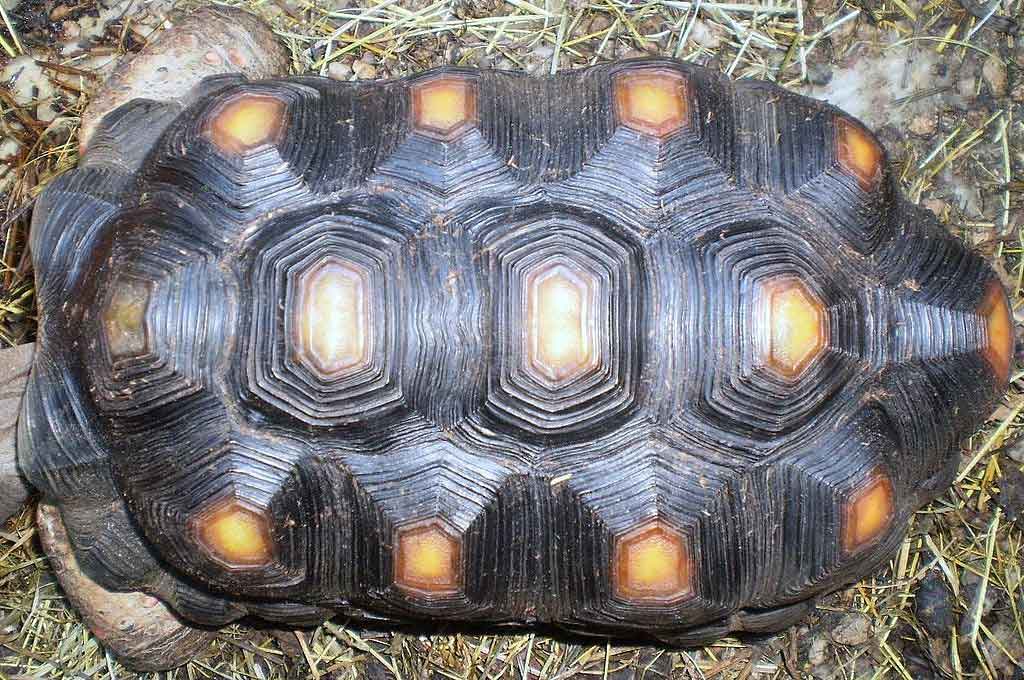
With a dorsal shell of 50 centimeters, the Red-footed tortoise is a medium-sized specimen. As an adult in captivity, usually weighs more than 20 kg. It is especially striking for its black background color, that marks the head, the neck and shell of the animal. The legs of the turtle have spots between red and orange, similar to those of the neck and head. The color is extremely atypical for turtles and is the reason why the animal is also called "red-footed turtle.".

With its high shell, the Red-footed tortoise it is also very well protected against falls on its back and can quickly help itself to its feet in the event of such a fall. The black shields of the dorsal shell are always yellow in the center. As it usually lives in humid areas, the turtle needs long legs to be able to walk easily through swampy areas.

Habitat

The Red-footed tortoise is native to the rainforest, but also of the savannahs. In this wide range, turtles differ quite a bit in size and coloration. In Argentina live populations with specimens that only reach a few 20 cm of shell length. On the other hand, the largest individuals are known in Brazil.

Behavior

Very little is known about the way of life in nature. The Red-footed tortoise lives in dry lowlands, grasslands and adjacent forest regions. Sometimes, these tortoises are also found in open areas of humid forests. The diet is largely made up of plant foods, but also carrion.

Reproduction

The breeding season begins with the start of the rainy season. The female lays from 6 to 10 eggs in a nest dug by herself that only has a few 10 depth cm. The incubation period depends on the ambient temperature and humidity and ranges from 100 and 150 days.

The courtship is ritualized: Males surround females willing to reproduce, biting them repeatedly on the legs. The cloacal region of the female is intensely touched. Finally, the male positions himself frontally in front of the female and rocks his head back and forth before mating.

Threats to the species

State of conservation โ“˜


Vulnerable Vulnerable โ“˜ (UICN)โ“˜

The Red-footed tortoise is considered to be vulnerable and is included in the Appendix II of the CITES, which restricts international trade, although this does not offer protection within a country and smuggling continues to occur in large quantities. Conservation parks and refuges, captive breeding farms in natural conditions and the rise of captive breeding in other countries have helped, but they are still exported in large quantities (35.565 between 2000 and 2005), especially as pets and food. Registered exports do not include smuggling or other losses, which some estimate at more than double that figure. They are considered especially threatened in Argentina and Colombia, and are considered more threatened than the Yellow-footed tortoise (Chelonoidis denticulata) and Chaco tortoise (Chelonoidis chilensis).

They are widely used as food throughout their range, especially where other meats are limited. Their ability to go a long time without eating makes it easy to catch and keeps them fresh for long periods. The Catholic Church allows eating turtles on fast days when most meats are prohibited., like Lent. Turtle cake (served on a turtle shell) It is one of the favorite foods for those days, and large quantities of turtles are exported for that purpose only. Even people who live in countries with abundant livestock available enjoy wild game, like turtles, where possible. Hunting for food is so widespread that Colombia and some other countries import turtles from their neighbors..

The habitat destruction is another major threat to the Red-footed tortoise, and for so many other species. They are also widely collected as local pets and their shells are sold as souvenirs..

The "Red-footed tortoise" in captivity

Keeping

The Red-footed tortoise it can only be maintained adequately to the species in private tenure with a lot of effort. The animal needs a high tropical humidity and at the same time a very high temperature. An ambient temperature of 28 to 32 ยฐC. The temperatures of 40 ยฐC should prevail under various technically constructed basking zones (consisting of HQI lamps). The Red-footed tortoise you need these conditions. It also, the animal must constantly have fresh water for bathing and drinking. Since these turtles like to bathe and often get into the water, small bowls and bowls are not enough. You have to offer real bathroom facilities. Preferably with a drain to maintain hygiene.

Young and semi-sweet animals must have 20 to 30 square meters of outdoor enclosure with an annexed barn or greenhouse. The Red-footed tortoise adult must have at least 50 square meters of outdoor space. For a breeding appropriate to the species, it is recommended to plan from 100 square meters. Animals are extremely active and move around a lot every day. They also differ in the way they face the sun. While our European turtles and many other tropical turtles like direct sun, the Red-footed tortoise needs much shaded areas to protect from direct sun.

Reproduction

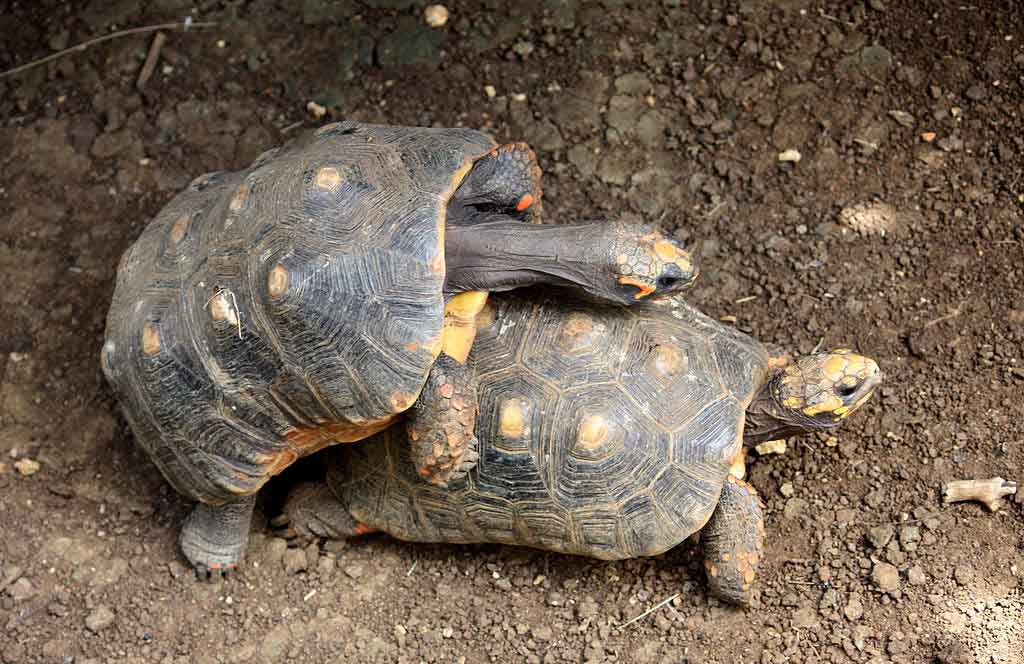
In the wild, breeding begins with the rainy season (in Europe, from May to August) and follows a clear ritual. The male of the Red-footed tortoise surrounds the female and attracts her attention by constantly biting her legs. The male's nose is always in the female's cloaca. As soon as the female no longer flees, the male climbs on top of it and turns his head to the right and left before mating begins..

Keeping turtles in captivity ensures that they can lay eggs virtually all year round. One to two clutches of eggs are produced per year. There are 4 to 10 eggs in each clutch. The female lays the eggs in a pit of up to 20 depth cm, that she herself chooses in a humid and warm place in the outdoor area. In the days before the eggs are laid, the female can often be seen doing some test excavations.

If you want to incubate the eggs and look for young, you need to carefully pick them up after laying and transfer them to an incubator. At a constant substrate temperature of 33 ยฐC, The young will hatch after 110 to 130 days. It is important to maintain the 100% humidity in the incubator and use a very moist substrate. The temperature in the incubator is usually slightly higher than that of the substrate. High fluctuations should be avoided.

Buy one "Red-footed tortoise"

The price of a "Red-footed tortoise" at the exotic animal market, bred in captivity, ranges between 200 – 700 EUR, depending on its shell and size.

Images "Red-footed tortoise"

Red-footed Tortoise (Chelonoidis carbonarius)
Apure, The LLanos, VENEZUELA
Red-footed tortoise
Mating of red-footed turtles (Chelonoidis carbonarius). In captivity in the Barbados Wildlife Reserve. - Postdlf, CC BY-SA 3.0, via Wikimedia Commons
Red-footed turtle karapax - via Wikimedia Commons

Videos "Red-footed tortoise"

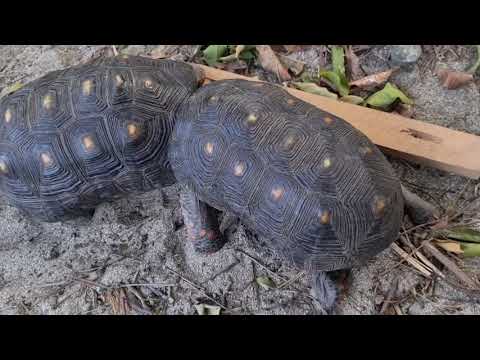
Kร–HLERSCHILDKRร–TE Chelonoidis carbonarius

He fights against the males of Chelonoides carbonarius

Alternative names:

1. Chelonoidis carbonarius (English).
2. Tortue charbonniรจre (French).
3. Morrocoy Schildkrรถte (German).
4. Jabuti, Jabuti-do-cerrado, Jabuti-Vermelho (Portuguese).
5. Tortuga de patas rojas, Morrocoy Sabanero, Morrocoy, Karumbe (espaรฑol).

โ–ท The world of Pets: Dogs, cats, birds, reptiles, amphibians

Hermann's tortoise
- Testudo hermanni

The Hermann's tortoise You can live up 70 years. This should be taken into account when buying a young animal: who will keep my animal then?
Mediterranean turtle
Testudo hermanni boettgeri – Wikimedia

Content

Origin

The Hermann's tortoise (Testudo hermanni) has a wide distribution area. It is located in eastern Spain, the south of France, the Balearic Islands, Corsica, Sardinia, Sicily and Southern and Central Italy (Tuscany). The eastern population (Testudo hermanni boettgeri) is located in Serbia, Kosovo, North Macedonia, Romania, Bulgaria, Albania, Turkey and Greece, while the (Testudo hermanni hercegovinensis) populates the coasts of Bosnia and Herzegovina, Croatia and Montenegro.

Characteristics and description

Turtles Testudo hermanni boettgeri grow to 25 cm.. The Testudo hermanni hermanni comes to measure between 15 and 18 cm and is still quite small relative to the other species.

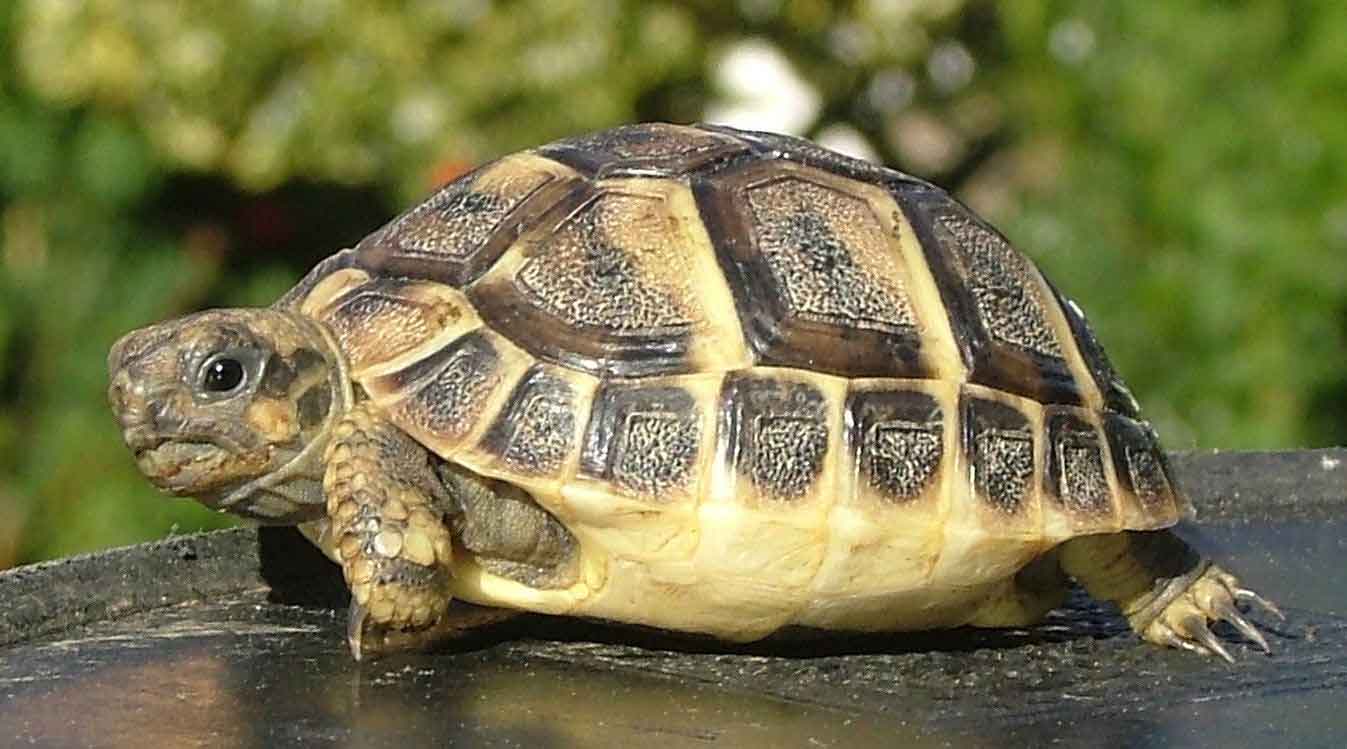
In general, the Hermann's tortoise is a small or medium-sized turtle. The ventral shell of animals is rigid in both males and females. The dorsal shell has a good curvature. A bird's eye view, the Hermann's tortoise appears oval.

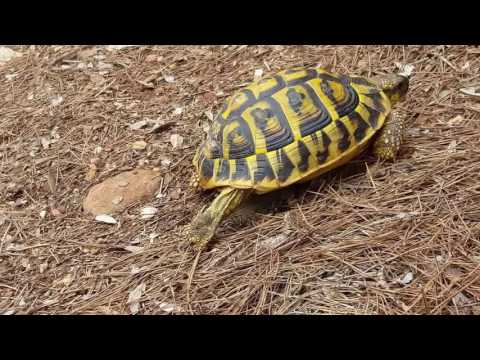
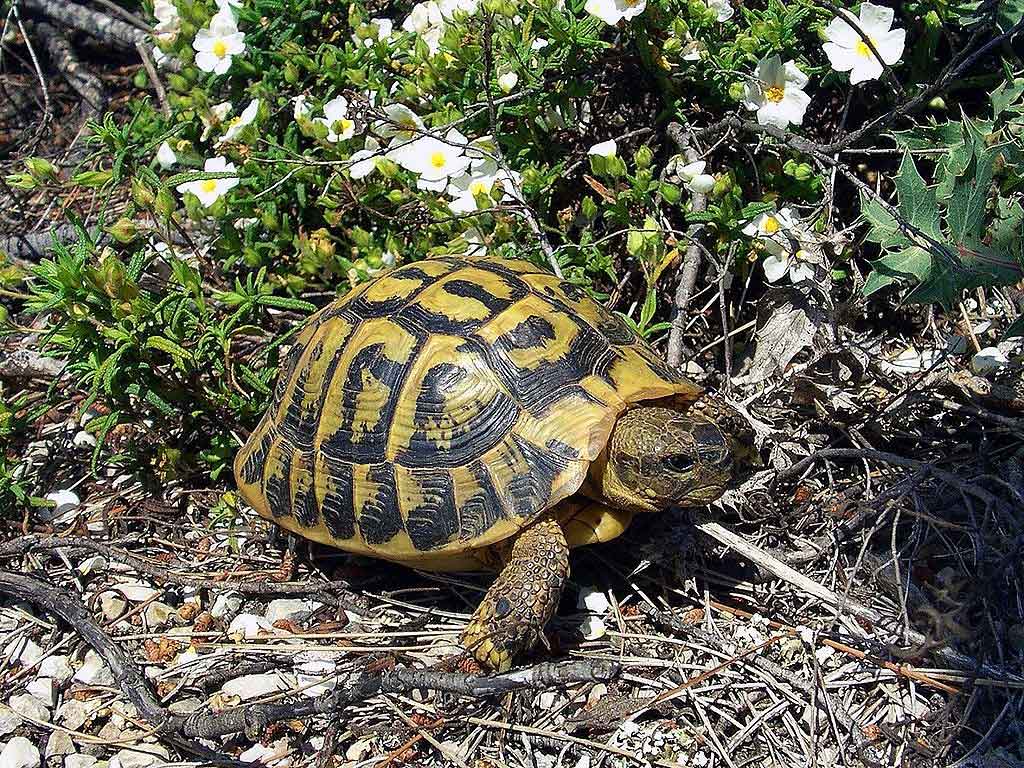
A distinctive feature of these turtles is the split tail shield. The color yellow-olive background and black spots on shields distinguish animals. When they are young, Spots can be compared to a "lock eye". But, marks decline over the years and are barely recognizable as such in old age. Their Paws they have five claws and fairly large scales. In the back, there are only four claws. To distinguish well the Hermann's tortoise of the Greek tortoise (Testudo graeca), note the absence of the horn cone between the tail and hind legs.
Mediterranean turtle
Testudo hermanni hermanni in Mallorca – Orchi, CC BY-SA 3.0, via Wikimedia Commons

sexual characteristics

Males and females have a nail. At the age of four to six years the sexual characteristics of animals are formed. Adult males have a much thicker tail root. It also, males develop a very pronounced nail when they are older. The concave ventral carapace is one of the best features to distinguish the sexes.. Females are heavier than males and also larger. The cloaca of females is closer to the body and the abdominal shell is flat.

Growth of animals

The Hermann's tortoise grows quite linearly during the first six years. Gain approximately one centimeter per year in carapace length. But, after six years growth slows down a bit. The animals then grow around a 30% per year compared to the previous ones. I.e., only 60 to 70 mm. From the tenth to the twelfth year, animals win between a 5 and 15% of growth and weight. The older the animals are, less noticeable the growth of its size. Also the weight almost does not increase. If you feed too much, the animal can also grow much faster. But, this can lead to obesity and organ damage. It also, the shell becomes very developed with humps.

Weight of the "Mediterranean turtle"

Such a turtle, when you have grown up, weighs between 950 and 1100 g.. Animals of up to 1800 g., which however are not too heavy, but they also seem to be somewhat larger. Differences always occur in nature and in captivity and are not a cause for concern. Only animals too "fat" usually stop being healthy and have the weakened organs.

Until the first autumn, the Hermann's tortoise earns approximately the 100% of your birth weight. Animals that were born with 16 g and weigh 32 g in autumn. Especially in the first three months the weight gain is very high, but it also depends on the food available in the outdoor enclosure. For the second autumn, another one is added 50% of the previous weight. And this is how weight gain develops during the first five or six years. Then, it is increasingly reduced until the animals are fully adult.

Habitat

The preferred habitats of the Hermann's tortoise are sunny and dry. But, also lives in slightly humid areas, for example, in areas of open forest, forest edges, dune landscapes with lots of vegetation, But especially in landscapes of thickets such as the "maquis" or the "Garriga". Even in orchards or on the fringes of agricultural land, you can always find these turtles.

The "Hermann's tortoise" in captivity

The Hermann's tortoise is one of the most popular of those kept in captivity. They are also one of the turtles about which more information can be found in the literature and the media.. Unfortunately, this also creates big problems. Turtles are sometimes given away on birthdays. Recipients often have no knowledge about animals and, sometimes, the conditions of tenure are completely wrong.

Maintenance

The Hermann's tortoise is a turtle that stays outdoors all year round, where it also goes into hibernation once a year. One terrarium It has no place in the possession of these animals at all or only serves as a "quarantine" station for sick animals that expect to be cured and are immediately returned to nature.

Young animals of the first three years must have a greenhouse of at least one square meter, abroad, other 2 or 3 square meters. More space is very laudable, but it's also complicated. Always watch young animals and if the area is too large, animals will be buried in too many places where they cannot be found. This makes it difficult, for example, lock them in the greenhouse At night.

Temperature and humidity

Young animals live in a fairly humid environment. The substrate it must be sprayed again every day and the animals can also be slightly moistened every day. It also, there should always be moist moss so that the animals can crawl if necessary. The humidity is especially important for young animals. This allows a nice smooth shell to grow.. In this way, the water balance of the animals remains stable. The Water, in the form of drinkers and bowls for bathing, must always be available in the greenhouse and in the outdoor enclosure, and must be fresh at all times. The Daily water changes are mandatory. No need to bathe animals. Turtles bathe at will. The only exception is a week after hibernation. Here the animals bathe once during 10 or 20 minutes in warm water.

The Temperatures in the outdoor enclosure do not influence to keep them outdoors, as animals do not have access to the outside if temperatures are too low (below 12 ยฐC). In this phase (spring and late autumn), animals continue to hibernate or remain in the cold frame. In the greenhouse, the temperature must be at least 20 ยฐC during the day and not less than 14 ยฐC at night. At these temperatures, turtles have a healthy life during the transition period. In summer, When the greenhouse is open all the time, temperatures only depend on nature. What offers turtles a natural life and appropriate to their species.

What does the "Hermann's tortoise"?

The Hermann's tortoise it is herbivorous. Prefer dried herbs and grasses. The diet can also be completed with fresh vegetables. The food should not be too high in protein, as animals will grow too fast and this can lead to deformities in the shell.

Social behavior and reproduction
Testudo hermanni boettgeri
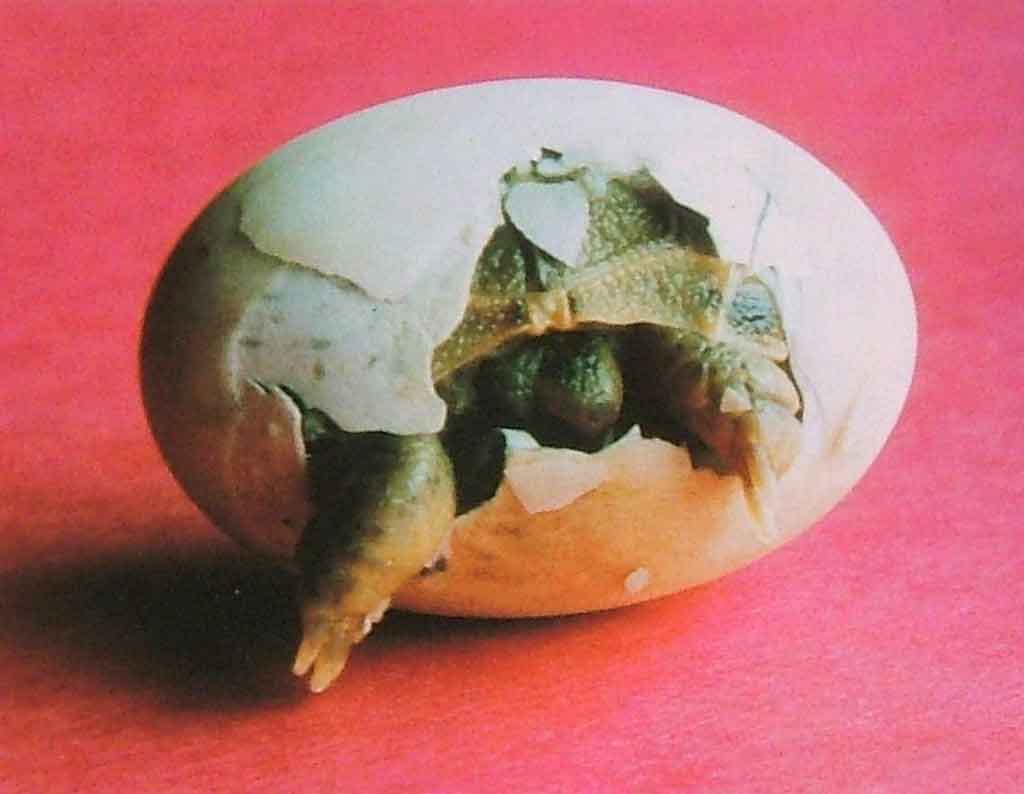
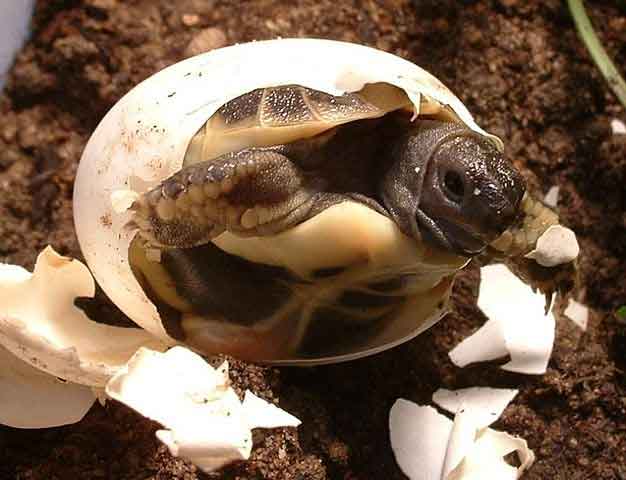
A small "testudo Hermanni Boettgeri" leaves the egg – Photographer/Zeichner: Krueger, CC BY-SA 3.0, via Wikimedia Commons

The Hermann's tortoise is a solitary animal in the wild, but sometimes it can appear in small groups. The sexes can be distinguished quite easily. The tail of females is shorter and thicker. The abdominal shell of males is slightly curved inward. Males are very territorial. You can have one male with three females. Animals should not be able to see each other all the time. Since Hermann's tortoise must subsequently be kept outside, this can be done well with a planting of small bushes and bushes.

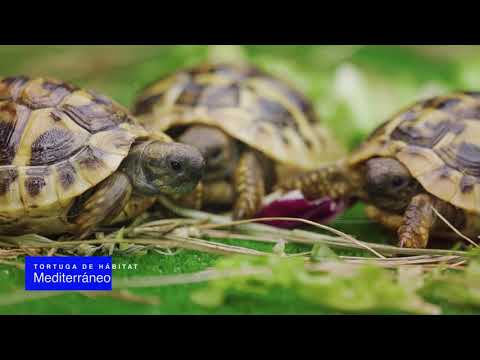
After several months of hibernation, mating usually occurs (rarely in the previous autumn). The females lay from 3 to 10 eggs one to three times a year. The young hatch after 55 to 75 days.

Buy one "Hermann's tortoise"

The price of a "Hermann's tortoise", bred in captivity, in the exotic animal market ranges from 130 – 200 EUR, depending on its size.

Legislation

State of conservation โ“˜


Near-threatened Near Threatened โ“˜ (UICN)โ“˜

The subspecies T. h. hermanni is included in the Red List of the IUCN of species threatened with extinction, like all species in the genus Testudo. The Hermann's tortoise it is protected by the Berne Convention.

It is also included in the CITES and in the directive 1332/2005 of the European Community, so that the capture of wild specimens is absolutely prohibited and the breeding and trade of specimens in captivity is regulated.

Curiosities

The Hermann's tortoise You can live up 70 years. This should be taken into account when buying a young animal. It is advisable to think about inheritance when buying: who will keep my animal then?

How many years does the Hermann's tortoise?

The Hermann's tortoise You can live up 100 years in captivity. Every homeowner should have at least 70 years if turtles are kept well, as they reach this age without problems in nature. On rare occasions, the Hermann's tortoise can live longer than 100 years.

How much does theHermann's tortoise?

The Hermann's tortoise reaches to measure up to 25 cm.. The size of a specimen also depends on the exact subspecies of the Hermann's tortoise, as well as their sex. Female turtles grow larger than males and are also heavier. They belong to the species of medium-sized turtles.

The Hermann's tortoise goes into hibernation?

Yes, the Hermann's tortoise goes into hibernation every year after birth. Usually starts in November and ends at most in May, but in Europe it is usually already in April. So, turtles are in hibernation for four to five months each year.

Videos "Hermann's tortoise"

Mediterranean turtle -Testudo hermanni -Menorca

Turtle Hermanni Paradis Pets 2021

Alternative names:

1. Western Hermann’s tortoise (T. h. hermanni), Eastern Hermann’s tortoise (T. h. boettgeri) (English).
2. Tortue des Maures (French).
3. Mittelmeerschildkrรถte (German).
4. Tartaruga de Hermann (Portuguese).
5. Tortuga de Hermann (espaรฑol).
โ–ท The world of Pets: Dogs, cats, birds, reptiles, amphibians

Marginated tortoise
- Testudo marginata

The Marginated tortoise You can live up 100 years. This should be taken into account when buying a young animal. It is advisable to think about inheritance when buying: who will keep my animal then?
Marginated tortoise
A Marginated tortoise in Achaea, Greece – Konstantinos Kalaentzis, CC BY-SA 4.0, via Wikimedia Commons

Content

Origin

Their presence extends from southern Greece to Albania. In Greece, especially from the Peloponnese to Olympus. In the northeast of Sardinia this type of turtle has also been installed. Now you can see the Marginated tortoise in Italy. But, Italian specimens are considered released specimens.

Characteristics / Aspect

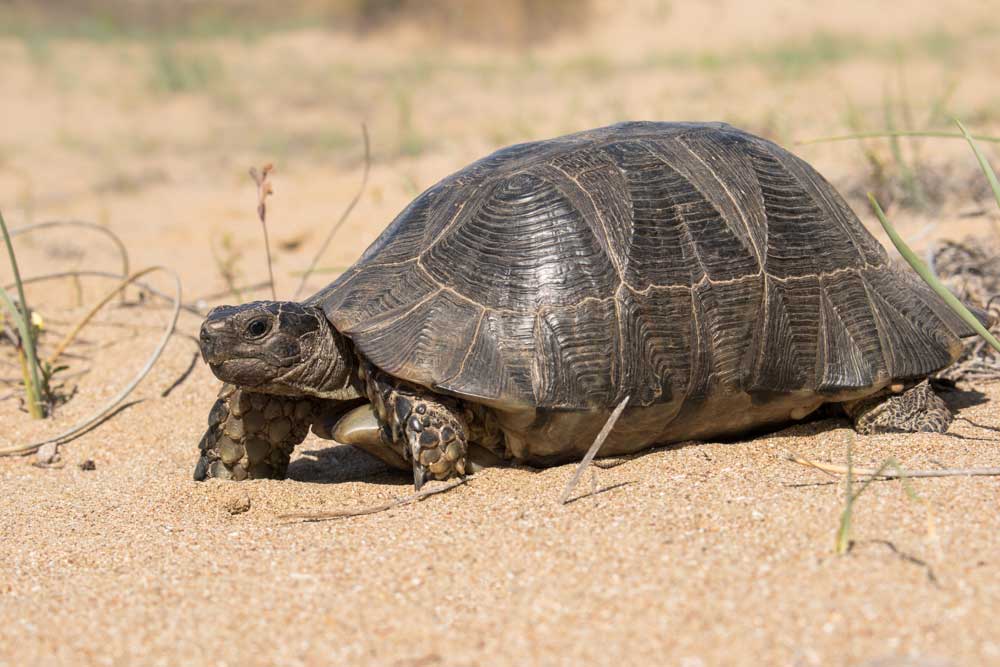
It is the largest European tortoise, and also the largest of the genre Testudo, can weigh more than 5 kg and measure more than 35 cm length.

The Marginated tortoise has the posterior marginal scutes well extended backwards and sometimes slightly curved. Otherwise, the shell of the Marginated tortoise it is quite elongated. halfway up, a kind of waist can be seen in many animals.

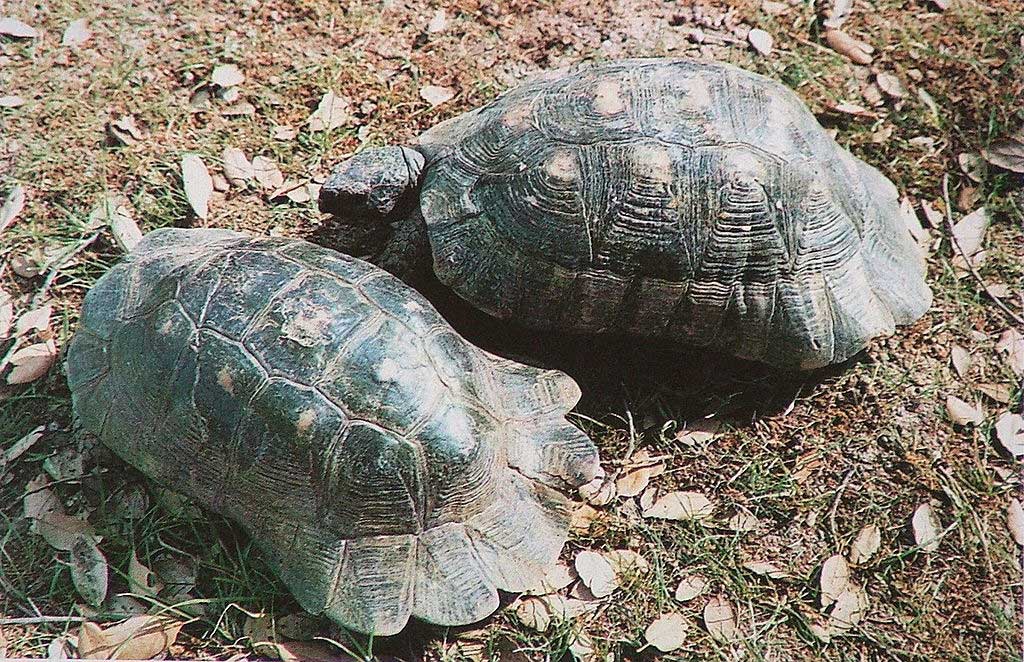
These turtles have a very dark shell, in adults the background color is almost black. The shell has light spots. Very bright triangular spots can be found on the ventral carapace. Animals that have not yet reached sexual maturity and still count as juveniles usually have a rather rounded shell and not elongated. The color is also much lighter. As the broad scutes on the trailing edge only appear when they are larger, young animals can be recognized by their absence.

Habitat

Testudo marginata
Testudo marginata

The habitat of the Marginated tortoise found more in mountainous regions. Males and females live at altitudes up to 1.600 m. At this point it is important to maintain a sufficient temperature. This is where the Marginated tortoise benefits from its dark-colored shell, which directly absorbs the heat of the smallest rays of the sun and causes the body temperature to rise.

Food

In its habitat it feeds mainly on plants that grow in the meadows of the Mediterranean regions.. The females that carry eggs, as well as the youth, they also feed on animal proteins from earthworms and snails. Turtles prefer to forage for food in the morning.. At noon, when is hot, they hide in the shade and wait for the afternoon temperatures to rise.

Their diet consists mainly of plants that are low in protein but rich in crude fiber.. Typical plants for fodder Marginated tortoise are the dandelion, Swiss cheese plant (Monstera deliciosa), wild mallow, the kidney vetch, calendula and nettle. Grass or hay is also mixed with animal feed.

Hibernation

The hibernation is an important issue for Marginated tortoise. in the habitat, they go into hibernation during the cold season. But, they interrupt it on warm days and continue it afterwards. Unlike Greek tortoise, the Testudo marginata does not necessarily go into hibernation for several months without interruption.

Breeding / Reproduction

Immediately after the hibernation, the turtle begins to mate and this is noticeable, among other things, by the vehemence with which the males pursue the female and urge her to reproduce. For the females to give in, repeatedly and inexorably surrounds them and bites them on the legs. Through an intense thrust, the males further harass the females until they finally bring them up. Reproduction is marked by the distinctive sounds of the male. During this time, the female only stretches her head laterally upwards.

The female buries the eggs in suitable places in a burrow that she digs beforehand.. to the burrow, the female needs soft soil that is suitable for digging. If the soil is too hard, you can soften him by draining water from his anal bladder. Only when the burrow is ready, the eggs are carefully laid and rolled to the end of the burrow. After the laying of the last egg, the burrow closes again and an incubation period of about 100 days. The Marginated tortoise puts up to 15 eggs per clutch and can create up to three clutches in a season. If you want to breed yours in captivity, can expect the first pups after only 60 incubation days. Breeding takes place at 31,5 constant degrees.

Conservation

State of conservation โ“˜


minor concern Minor Concern โ“˜ (UICN)โ“˜

The Marginated tortoise (Testudo marginata) is at risk of disappearing in the wild mainly due to anthropogenic factors such as: mechanized agriculture and the use of pesticides, the traffic, the forest fires, the destruction of the environment, the wild urbanization, illegal capture and the threat of new predators. The capture of turtles as food for humans seems non-existent although it existed in the past, the current priority for the conservation of the species is the conservation of its habitat, heavily damaged by the spread of agriculture and urbanization, especially for mass tourism.

The "Marginated tortoise" in captivity

Maintenance

The Marginated tortoise (Testudo marginata) he is a very nice tortoise to keep. It is important to keep the turtle in an outdoor enclosure and never in a terrarium. – the animal grows too much for it and a terrarium does not offer the necessary conditions to keep it. In an outdoor enclosure, a cold enclosure or a greenhouse, both equipped with technology such as heat lamps. The outdoor enclosure must have at least 10 square meters for an adult animal. The food consists of all the wild herbs that can be found in nature. It is advisable to create a self-sufficient diet by planting and growing wild herbs in the enclosure.

Greenhouse

The Marginated tortoise It, by nature, a species that lives in the soil. As a key to the size of the greenhouse we recommend calculating with the length of the animal's carapace. The carapace is the dorsal. The size of the terrarium is calculated as follows for non-adult animals:

  • Greenhouse floor space: eight times x four times the length of the animal's carapace.
  • greenhouse height: Twice the length of the animal's carapace, but not less than 25 cm..

Observe the growth of the animal in the coming months (fast-growing animal/slow-growing animal) For adult animals (of legal age).

What substrate, it is recommended to create different areas. A turtle bed made directly for turtles, a sandy area slightly mixed with calcium gravel (as it is digestible), pine bark and firm clay soil. So the animals have different areas, which are also used differently. They like to bury themselves in the turtle bed when it is slightly damp.. Small roots or stone slabs complete the decoration. Please, make sure this decoration is installed in such a way that it cannot be raised too high. Turtles like to climb, but not very well, of course, and constantly falling on your back stresses animals too much. Vegetable ornaments are eaten, so use artificial plants.

Food

In captivity, care should be taken to ensure a balanced diet. Ideally, only use fresh plants from nature. To ensure that the diet of the Marginated tortoise be varied, it is recommended to selectively cultivate wild herbs. This can also be done directly in the turtles' outdoor enclosure so they can feed themselves..

with special seeds, various wild grasses can be sown from spring to fall.

Buy one "Marginated tortoise"

The price of a "Marginated tortoise" at the exotic animal market, bred in captivity, ranges between 130 – 200 EUR, depending on its size.

Videos "Marginated tortoise"

Marinated tortoise (Testudo marginata) - Marginated Tortoise or Margined Tortoise

Tortuga Testudo Marginata Paradis Pets 2021

Alternative names:

1. Dwarf marginated tortoise (English).
2. Marginata, Tortue marginata (French).
3. Breitrand-Schildkrรถte (German).
4. Tartaruga-dentada (Portuguese).
5. Tortuga de Grecia (espaรฑol).
โ–ท The world of Pets: Dogs, cats, birds, reptiles, amphibians

Greek tortoise
- Testudo graeca

The Greek tortoise You can live up 80 years. This should be taken into account when buying a young animal. So, it is advisable to think about inheritance when buying: who will take my animal?
Greek tortoise
Greek tortoise – Mayer Richard, CC BY-SA 3.0, via Wikimedia Commons

Content

Origin

The Greek tortoise is a representative of the genus Testudo, small to medium size. Its distribution area extends from North Africa to the Balkans and Asia., passing through the eastern Mediterranean. There are also individual populations in southern Spain and the Balearic Islands.. According to the latest discoveries, can be distinguished even 10 subspecies.

Characteristics / Appearance

The largest adult specimens weigh more than 5 kilograms and have a carapace length of up to 35 centimeters.

The Greek tortoise adult has a dorsal shell tall and gently curved. The neck shield is narrow and elongated. Vertebral scutes are trapezoidal in shape and flare downwards. The tail shield is almost always indivisible. Due to its enormous distribution range and associated adaptation to different habitats, the coloration base of the dorsal carapace varies greatly. The spectrum ranges from light brown to olive and from sandy yellow to light gray. The scutes are black to dark brown.. With increasing age, coloration appears faded. The ventral shell it is usually dark in color and clearly thickened in the anterior region. At the end there is a slightly movable hinge.

The Paws of the Greek tortoise they have large horny scales and five claws. typical of the strong hind legs are the horny nipples found next to the tail. The hind legs they have four claws each. The tail short does not have horny nail. This is also the most important characteristic that distinguishes it from the Greek tortoise.. The differentiation of the sexes can be determined by the size of the animals and the different size of the tail.. The female turtles they are usually considerably larger than their male counterparts and have a shorter tail.

These reptiles have a life expectancy of 60 to 80 years in its natural environment. There are also animals that live longer than 100 years.

The subspecies

The categorization of the individual subspecies is as diverse as the inhabited habitat with different climatic influences.. Based on genetic studies, Today we describe some 10 subspecies, divided into oriental species and westerners according to habitat. All species differ in size and weight, in the coloration of the carapace and in the bulging of the rim scutes. The distribution area of the eastern species stretches from the Near East to southeastern Europe and the Arabian Peninsula. The western species They inhabit North Africa to the Iberian Peninsula..

Subspecies

For a long time it was considered that the Greek tortoise was a species with few subspecies, despite its huge distribution area on three continents with different landscapes and climatic zones. But, for some years new varieties have been discovered and described as additional subspecies (for example, Testudo graeca pallasi) or independent species (for example, Testudo graeca perses) or even genres (for example, Testudo graeca nabeulensis), but some of them are not generally recognized. Two recent studies based on genetic studies give the following 10 subspecies for the Greek tortoise.

Eastern subspecies
  • Armenian tortoise, Testudo graeca armeniaca, Chkhikvadze, Bakradze 1991
    This subspecies is characterized by a low carapace shape reminiscent of Testudo horsfieldii and generally quite dark coloration with few contrasting markings.. The maximum size is 20-23 centimeters. After genetic studies, Testudo graeca pallasi, previously described as a separate subspecies, was synonymized with Testudo graeca armeniaca.

    Distribution area: western coastal area of รขโ‚ฌโ€นรขโ‚ฌโ€นthe Caspian Sea, eastern or parts of the central Caucasus in Armenia and Turkey.

  • buxton's tortoise, Testudo graeca buxtoni, Boulenger 1921
    Testudo perses was included in this subspecies.

    Distribution area: Northwestern and central Iran, east caucasus.

  • Asia Minor tortoise, Testudo graeca ibera, Pallas 1814
    This is the largest subspecies. Individual animals reach body sizes of more than 30 centimeters. The shape of the shell is somewhat flatter than in other representatives of the species and from round to oval.. The basic coloration of the carapace when young is olive with light black markings.. With the age, animals tend to darken, especially in the soft parts. Testudo ibera racovitzai and Testudo graeca nikolskii, previously described separately, have also been included in this subspecies.

    Biotope: Open scrub and grasslands, sparse forest edges, sandy coastal strips, steppe and semi-desert.

    Distribution area: south east europe, western Asia Minor, Russian and Georgian Black Sea coast, central caucasus.

    Name's origin: The name of the subspecies ยซiberaยป goes back to an old name of the Kura Valley in Georgia (Iberia) and not to the Iberian Peninsula (Spain).
  • Mesopotamian tortoise, Testudo graeca terrestris Purse 1775
    These animals stand out for their predominantly light coloration., sometimes surprisingly yellow ("golden greek"), shell and soft tissues. Dark pigment spots are rarely black, but rather brown and of reduced extension. The animals are very tall. The head shows a characteristic yellow marking. The maximum size is usually 16 centimeters. Included in this subspecies are Testudo ibera var. bicaudalis, Testudo floweri, Testudo graeca anamurensis and Testudo antakyensis.

    Biotope: steppe with little vegetation, matorral, dry forests.

    Distribution area: southern and eastern Asia Minor, Levantine region

  • Iranian tortoise, Testudo graeca zarudnyi, Nikolsky 1896
    The elongated carapace with a serrated and enlarged posterior margin resembles the Marginated tortoise Testudo marginata. The coloration of the animals is olive to brown, the clear spotting pattern of the juvenile stage only fades later. It is a large subspecies, with carapace lengths greater than 20 centimeters.

    Biotope: Rocky hills and plains up 2500 meters above the sea level.

    Distribution area: east of iran

    Name's origin: This subspecies was named after the Russian zoologist Nikolai Alexeyevich Sarudny..

western subspecies
  • Cyrenaican spur-thighed tortoise, Testudo graeca cyrenaica, Pieh y Perรคlรค 2002
    The cyrenaica tortoise it has narrow forelimbs and only weak defense scales. The shell is notched, with a narrow anterior opening and upwardly puckered posterior margins. The supracaudal scale is comparatively strongly incurved in males..

    Distribution area: Libya

    Name's origin: the name refers to the Cyrenaica region in northeastern Libya.

  • moroccan tortoise, Testudo graeca marokkensis, Pieh y Perรคlรค 2002.
    It has a comparatively flatter dorsal shell than the Greek tortoise. The ocher to yellow background color of the dorsal carapace contrasts with a multitude of fine lines and specks, and the shields have a dark border, partially torn, and spots on the central areola. The ventral carapace is lighter than the back., but it also has black markings. The head is dark with several pale scales., limbs mainly dark with individual lighter scales. Genetic studies have shown that the Testudo graeca lamberti is very closely related to the Testudo graeca moroccoensis and should not be considered as a separate subspecies.

    Biotope: arid landscape with steppe climate.

    Distribution area: north of morocco, on both sides of the Rif

    Name's origin: The name derives from the distribution area in Morocco.

  • Greek tortoise, Testudo graeca graeca, Linnaeus 1758.
    The shell pattern consists of solid markings on a yellow background.. The vertebral scutes have a dark border and also dark spots on the areoles.. The local form described as Testudo graeca whitei genetically belongs to this subspecies.

    Distribution area: Algeria, eastern morocco, Spain (probably introduced here).

  • Souss Valley tortoise, Testudo graeca soussensis, Pieh 2001
    Basic ocher dorsal carapace coloration, low contrast, fine linear markings and almost complete absence of markings on the plastron. The soft parts are brown to sandy., sometimes yellow-orange, with lighter scales, but little contrast, in the head. Juveniles show few or no markings. It's the kind of Moroccan turtle largest, with a dorsal carapace length of up to 25 cm.. The thigh spurs that are usually present in graeca animals are usually absent in the Testudo graeca soussensis, especially in the animals of the Souss valley proper.

    Biotope: Opportunistic colonization of cultivated areas, especially in thorny hedges, that offer protection and food.

    Distribution area: South of Morocco

    Name's origin: the name comes from the Souss valley, in the south of Morocco.

  • Nabeul tortoise, Testudo graeca nabeulensis, Highfield 1990.
    This subspecies has highly contrasting black markings on a yellow background.. Soft tissue skin and limb defense scales are sandy to yellow, sometimes with black tips. The head has a characteristic pattern of bright yellow spots. The Nabeul tortoise is the subspecies graeca smaller. Females usually reach a dorsal carapace length of just over 13 cm and a weight of about 600 g. The males are still much lighter, with a carapace length of just under 12 cm and a mean weight of 375 g.

    Distribution area: Tunisia, eastern algeria, Sardinia and Sicily (probably introduced).

    Name's origin: the name refers to its place of origin.

Testudo graeca subspecies

Different types: Testudo graeca (left) other testudo species (right)
Different subspecies: Tg nabeulensis (left) Iberian Tg (right)
Testudo g. Ibera Heraclea, Turkey
T. g. nabeulensis variety „Sardinian", Sardinian

Habitat

The great expanse of Greek tortoise has made the species adapt to a wide variety of habitats and climatic conditions. Its habitats are dry semi-deserts in the north of the African continent., mild Mediterranean climates in Greece and Turkey, and hot, dry summers with cold winters in the steppes of Asia. The tortoise lives in sandy semi-deserts, scarce forests, grasslands and can be found on the edge of swampy wetlands.

Behavior

The Greek tortoise belongs to the class of reptiles and, like all representatives of this class, is cold-blooded. Body temperature is largely determined by ambient temperature and behavior adapts accordingly. when it's very hot, animals are forced to seek out shady places. If the temperature approaches 40 degrees, they burrow into the ground or seek cool cracks in rocks to prevent their bodies from overheating.

Turtles are diurnal. Thus, in the hot summer months, activities are limited to the early morning and late afternoon. In very hot steppe and desert areas, sometimes the activities stop completely and the tortoise falls into a summer sleep. For the metabolism to work, body temperatures of more than 30 degrees for a few hours a day, that are achieved by sunbathing a lot. If the ambient temperature drops below the 8 degrees, the tortoise can no longer maintain the metabolic cycle and falls into winter torpor. Thus, in the coldest regions, spends the winter buried without activity.

Food

The Greek tortoise it is herbivorous and its diet depends on the vegetation of the corresponding habitat. The herbs, flowering plants and clover are preferred when food is plentiful. Especially the fruits with seeds, buds and young shoots, just like the flowers, are the main foods. in dry habitats, the diet also consists of low-quality plant parts and, in exceptional cases, in insects and invertebrates when food is scarce.

Reproduction

After waking up from hibernation, the mating season begins between February and May. Fierce fights for the female's favor may occur between males. Once the rival has been expelled, mating ritual begins. Females are bitten on the extremities and rammed with the shell to stop them. Once this is done, the act of mating takes place. The male emits the typical screeches.

In spring, the eggs are laid. Up to three clutches of eggs are laid. Females spend a lot of time choosing the best place to lay their eggs.. On average, they stand between 5 and 8 eggs per clutch. As such, the female digs a pit of about 10 centimeters deep in which it lays the eggs. Next, the pit is carefully closed. No more brood care. The incubation period varies between 60 and 100 days. At the end of summer the first young are born, whose dorsal coloration of the carapace is clearly more contrasted than that of adults. Obviously, hatching temperature plays a decisive role in the formation of the sex of turtles. There are indications that an average temperature of more than 30 degrees during the hatching process produces predominantly female animals.

Conservation

State of conservation โ“˜


Vulnerable Vulnerable โ“˜ (UICN)โ“˜

The Greek tortoise is in danger of extinction in its countries of origin. According to the Washington Convention on International Trade in Endangered Species of Wild Fauna and Flora of 1976, animals cannot be officially imported into the EU without documentation. In many countries, especially in North Africa, the turtles, or their shells, are put up for sale in the markets. Anyone who tries to import these animals illegally can be prosecuted.. Within the EU, there are certain restrictions on trade in turtles. There is an obligation to demonstrate to the authorities that the animals were acquired legally. There is also an obligation to notify the sale, donation, exchange, breeding or death of a turtle.

The natural enemies of Greek tortoise in their habitat they are mainly small predators such as foxes, martens or stray dogs. But birds of prey and corvids are also a threat to reptiles. As in all species of turtles, nests are the most threatened. It is not uncommon for nests to be raided by rats, Snakes, birds and boars.

The "Greek tortoise" in captivity

Reproduction

Ideally, keep the Greek tortoise in pairs or in a group. During the mating season, you have to be careful that there are many more females than males in the group, since they can develop quite aggressive behavior towards their congeners during this time. After mating, the females will look for a warm and sunny place to lay their eggs after a few weeks. The pit is dug and they are placed between 5 and 8 eggs. The process is repeated at intervals of 2-3 weeks, give place to 3-4 sunsets. Females react very sensitively to temperature fluctuations during egg laying.. So, in our latitudes, they must be compensated with aids such as a heat lamp. after sunset, eggs can be carefully removed and placed in the incubator. As far as possible, you should not change your position. Approximately between 65 and 90 days after laying, the first pups are born. Feeding is done with the same foods as for adult animals.

Maintenance

The Greek tortoise should be kept in an outdoor enclosure in summer. It must be located in a sunny place, because animals need the warm rays of the sun for digestion to work, among other things. Of course, there should be a place to water and hiding places such as roots or bushes should be provided. Pine soil or peat mixed with sand are suitable as a substrate. Small patches of meadow with some grasses are also a source of food for the turtles.. In their natural habitats, the tortoise hibernates in hibernation. Possibilities must be created in the enclosure so that, even in the coldest local weather, the tortoise can make a burrow and thus survive the winter. Soil must be frost free.

all wild herbs, as well as clover, Dandelion, the hibiscus and all the flowering plants, from pansies to lilies, serve as food. In no case should it be fed with animal products, noodles or pasta. These damage the digestive system of animals and can be deadly. Fruit should be an absolute exception on the menu. If there is a sufficient supply of natural foods, you can do without the addition of vitamins.

Keeping this species of tortoise in a species-appropriate manner requires sufficient space. The outer enclosure must be surrounded by a border of 40 height cm. Young animals must also be protected from smaller predators, like martens or foxes, and the largest birds. The easiest way to do this is with a metal mesh cover over the enclosure. Representatives of the eastern subspecies are especially suitable for conservation. The needs of African species are much greater in terms of warmth and susceptibility to stress and disease. The Greek tortoise It is one of the most common species of turtles..

Buy one "Greek tortoise"

how much does one cost "Greek tortoise"?

The price of a "Greek tortoise" at the exotic animal market, bred in captivity, ranges between 100 – 160 EUR, depending on its size.

Videos "Greek tortoise"

Tortuga Tortudo Greek Iberian Paradis Pets 2021

Alternative names:

1. Spur-thighed tortoise (English).
2. Tortue grecque (French).
3. Testudo graeca (German).
4. Testudo graeca (Portuguese).
5. Tortuga griega (espaรฑol).

โ–ท The world of Pets: Dogs, cats, birds, reptiles, amphibians

Russian tortoise
- Testudo horsfieldii

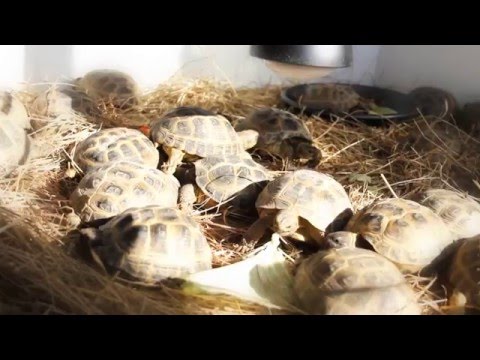
The Russian tortoise (Testudo horsfieldii) during very hot summers, they burrow to spend a period of summer dormancy. In countries where summers are mild, this rarely lasts longer than 3 weeks.
Russian tortoise
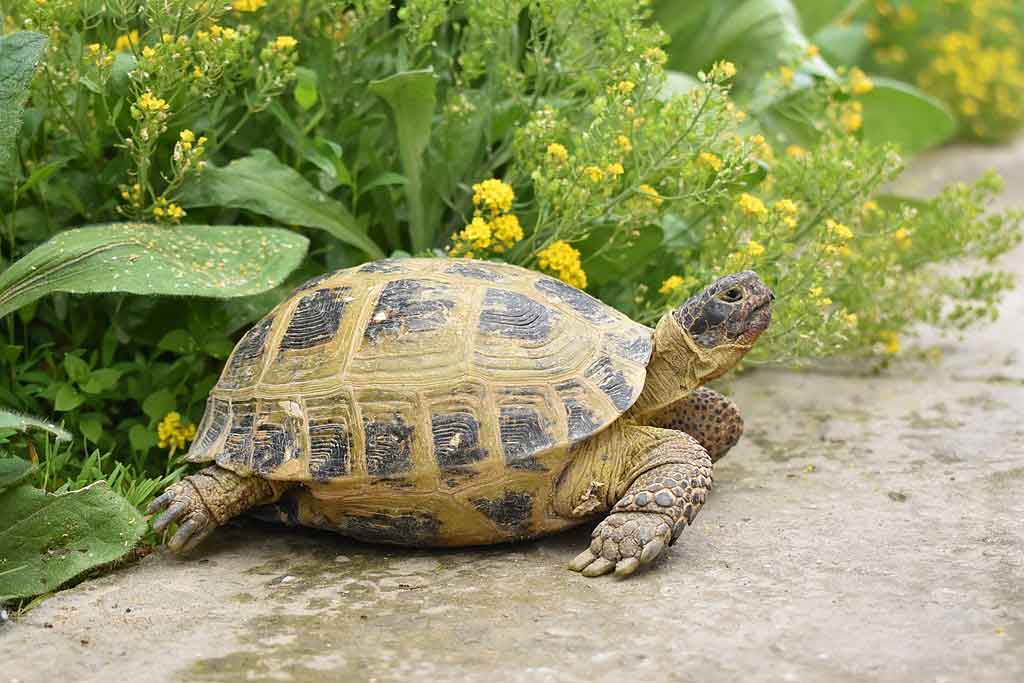
Russian tortoise – Amirekul, CC BY-SA 4.0, via Wikimedia Commons

Content

Origin

There are four subspecies of the Russian tortoise (Testudo horsfieldii), which can be found from the Caspian Sea, passing through Uzbekistan, Kazakhstan and Tajikistan, to eastern Iran and northern Afghanistan. Sometimes, the Russian tortoise can be found even as far away as western China.

Subspecies

This species is traditionally located in Testudo. Due to their clearly different morphological characteristics, in 1966 the monotypic genus was proposed for her Agrionemys. In the news, gender is accepted Agrionemys horsfieldii. DNA sequence analyses usually match, but not too solidly. Some sources also list four separate subspecies of Russian tortoise, but they are not widely accepted by taxonomists:

  • Agrionemys horsfieldii baluchiorum (Annandale, 1906), Balochistan.
  • Agrionemys horsfieldii horsfieldii (John Edward Gray, 1844), Armenia, Azerbaijan, Kyrgyzstan, Tajikistan, Iran, Afghanistan, Pakistan, China.
  • Agrionemys horsfieldii kazajstanica (Chkhikvadze, 1988), Kazakhstan, Turkmenistan, Uzbekistan.
  • Agrionemys horsfieldii rustamovi (Chkhikvadze, Amiranashvili and Ataev, 1990) Turkmenistan, Iran.
  • Characteristics / Appearance

    The species reaches a size of 15 cm. (males) some 25 cm., very rarely 28 body length cm (females) and then weighs between half a kilogram and two kilograms.

    The rather small size of the Russian tortoise it's just a feature, but not one by which it can be definitively recognized. Another feature is the shell. Has an oval dorsal shell, almost circular, which is also quite flat. Much flatter than other species in the genus Testudo. A coloration between yellow and brown and also olive characterizes the basic color of the shell. It also, there are dark spots. The Russian tortoise has basically only four fingers. Other species usually have five fingers.

    The male is recognized by his curved abdominal shell (concave), which makes it easier for you to get on the females and gives them a foothold. Males have a longer and thicker tail than females. On the other hand, females are much larger and have a very flat abdominal shell.

    Habitat

    In their habitats there are always stony and arid tracts of land, so the Russian tortoise it also has its other name, "steppe tortoise". Adapts well in dry and arid areas. But, animals are most often found near rivers.

    Behavior

    Russian tortoise
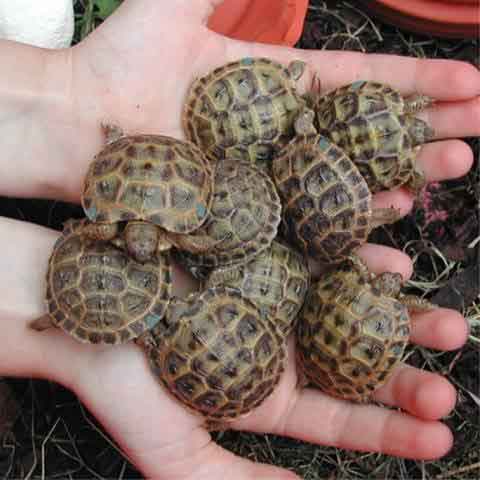
    โ€œRussian Tortoiseโ€ Hatchlings

    The strong claws of the front legs and the flat shell allow the Russian tortoise (Testudo horsfieldii) dig burrows up to four meters long, that you use repeatedly. At night, when it's very hot, during summer and winter lethargy, takes refuge in them, as they provide you with security from predators and soil temperatures remain relatively constant. They are often seen sitting at the entrance of the cave in the morning., when the weather is uncertain. In your range, the continental climate is hot and dry in summer and wet and icy in winter. It is characterized by large daily and seasonal temperature swings of up to 40 ยฐC, and often it doesn't rain in the middle of summer. These conditions demand enormous adaptability of animals in their arid habitats..

    The hibernation lasts until mid to late March, until 6 months. No matter how harsh and cold the winters are, the warm season arrives quickly and without transition with an initial abundance of plants. These turtles only have three to five months to feed, grow and reproduce. With the increase in heat in early summer and the onset of drought, finding food during the day becomes increasingly difficult, so you have to take advantage of the morning and night hours for it. In the middle of summer, it is so hot and dry in many habitats that the animals go into a summer lethargy of one to two months. (aestivation) due to lack of food and heat and do not reappear until September, if at all. They take advantage of the short period until hibernation to look for food until they hibernate again in mid to late October due to nighttime temperatures, often very severe, below zero.

    In the wild, sometimes occupy enormously large territories. They are common 10 hectares for a male and even 30 hectares for a female. So, turtles are rarely found. But, it is precisely these circumstances that make the Russian tortoise a highly specialized species that cannot cope with the usual breeding of a species of European turtle long-term.

    Reproduction

    When a male sees a female, approaches her in courtship plan. With the neck stretched out and the head nodding from top to bottom, the potential partner surrounds your chosen one. Finally, bites her front legs to force her to sit still. Males usually have a much longer tail with a nail on the tail, which can cause serious injury to the cloacal region of the female if mating attempts are too frequent.

    During copulation, the male adopts an almost vertical position behind the female. At the same time, the male opens his mouth, the red, fleshy tongue becomes visible and emits picket sounds.

    Females lay surprisingly large eggs between two and four weeks after mating, usually between 2 and 5 (up to a maximum of 9). Its shape is elongated-oval, of about 35-40 millimeters in length and about 15-20 g. of weight. The babies, almost round, hatch after sixty to a maximum of 100 days if eggs are artificially incubated at 28-32ยฐC. A single successful mating is enough to fertilize the eggs of several clutches. For this reason, and by the huge and almost annoying mating desire of males, it makes sense in human care to keep males and females separate from each other outside of the actual mating season to ensure stress-free maintenance..

    Conservation status and danger of extinction

    State of conservation โ“˜


    Vulnerable Vulnerable โ“˜ (UICN)โ“˜

    Since 1975, this species is subject to the Washington Convention on International Trade in Endangered Species of Wild Fauna and Flora, where listed in Appendix II. EU Species Protection Regulation includes species in Appendix B. Thus, can only change ownership as a hatchling and only with a certificate of origin stating where and when the turtle was bred. It also, animals must be registered within the EU with the local authority responsible for the protection of species (= free).

    IUCN classifies the Russian tortoise as "in danger" (VU, vulnerable).

    The "Russian tortoise" in captivity

    Russian tortoise
    Agrionemys horsfieldi photographed by Richard Mayer – The original uploader was Mayer Richard at German Wikipedia., CC BY-SA 3.0, via Wikimedia Commons

    In their natural habitats, the Russian tortoise is exposed to very contrasting climatic conditions. While in summer the heat causes even the summer lethargy of the animals, the Russian tortoise is forced to enter winter torpor every year in October due to temperatures of up to -21 ยฐC.

    In captivity, animals usually go into hibernation from mid-November at a temperature of between 2 ยฐC y 4 ยฐC. As such, turtles bury themselves in the ground. As such, turtles dig into the ground. The natural habitat allows tunnels of up to 2 m depth. In outdoor enclosures in captivity, the Russian tortoise is usually buried between 30 and 60 cm depth in the enclosure. As such, many caregivers create an additional hibernation pit, which is protected from predators from below and offers frost protection from above, for example by means of a greenhouse.

    A constant temperature of 2ยฐC to 4ยฐC is important for the Russian tortoise. It should not be hotter than this for hibernation, otherwise proper hibernation will not occur. The Russian tortoise remains in hibernation in an outdoor enclosure for the same time as the Greek tortoise, for example. Normally they are 5 months. Many turtles come out of their burrows in spring, from the month of April, and become active quite quickly.

    Food

    The Russian tortoise it is herbivorous. Prefer dried herbs and grasses. The menu can also be completed with fresh vegetables. Should not be fed too much protein, as animals grow too fast and this can lead to shell deformation.

    Buy one "Russian tortoise"

    how much does one cost "Russian tortoise"?

    Only animals raised in the EU can cross national borders and only these animals can be sold. Despite the fact that possession without official papers is allowed, the origin must be proved. So, if you buy one Russian tortoise, needs a proper proof of origin from the breeder. If the purchase is not made from the breeder but from an owner, he usually has such a certificate from the breeder and delivers it at the time of delivery.

    We strongly discourage the purchase of a Russian tortoise (Testudo horsfieldii) without adequate proof of origin. If the origin and filiation are not correctly demonstrated, turtles can be confiscated.

    Having said that, the price of a "Russian tortoise" in the exotic animal market ranges from 80 – 130 EUR.

    Images "Russian tortoise"

    A case of convergence. Gopherus flavomarginata (above) and Testudo horsfieldii (below). Both have flat shells and powerful arms.
    Airtight tanks make it easy to dig into the ground. This makes soft tissues particularly visible.
    Young people do not break the egg at the poles, but in the middle
    Youth: a distinctive central keel on the shell recalls the appearance of earlier ancestors
    Agrionemys horsfieldii
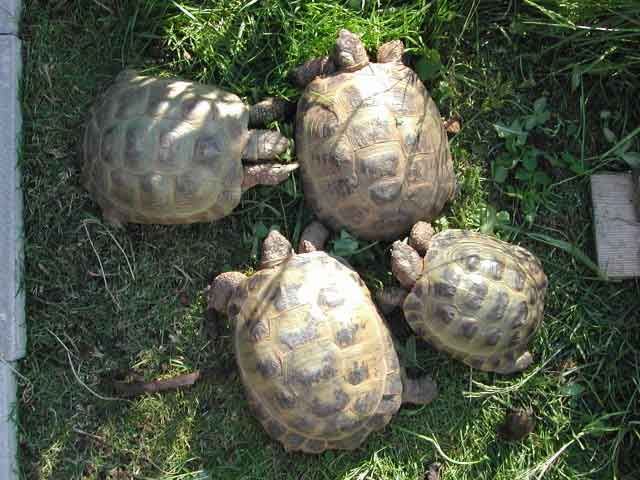
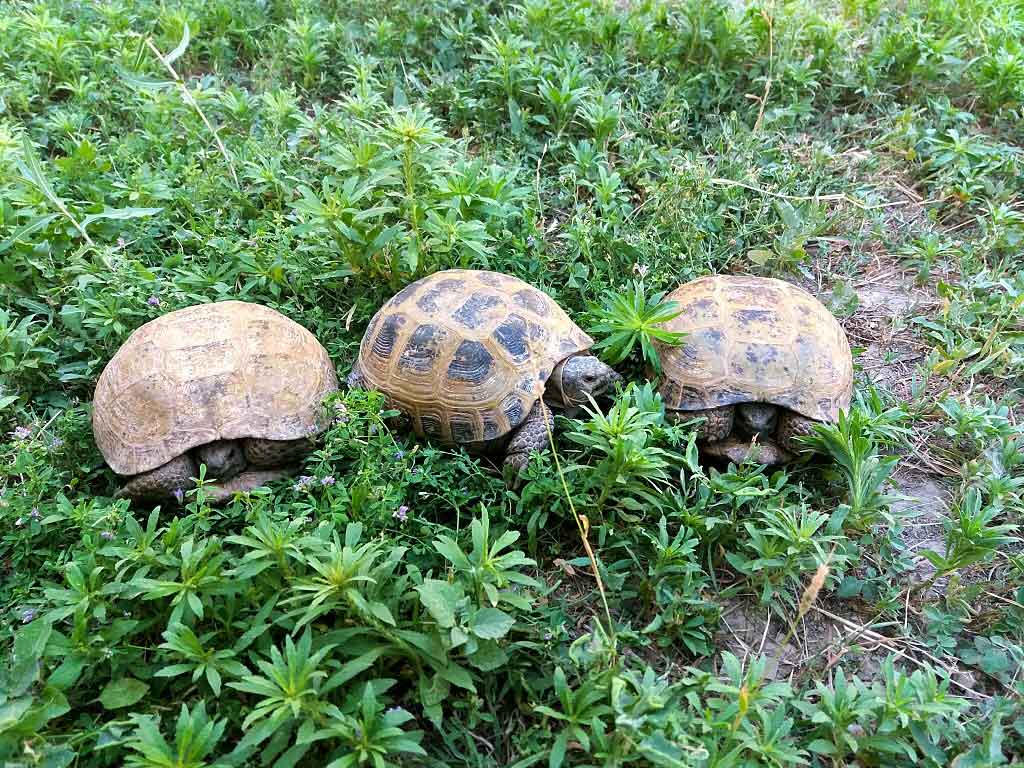
    Male (medium) and two females

    Videos "Russian tortoise"

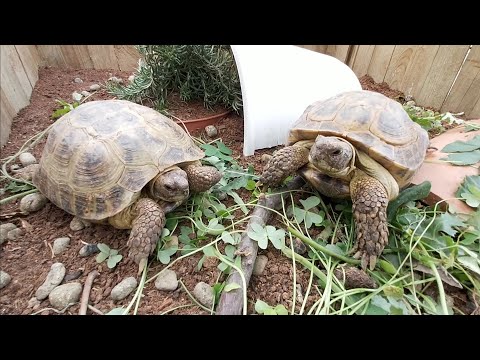
    tortoise Testudo horsfieldii o tortuga rusa en terrario exterior

    Tartarugas Russas (Testudo horsfieldii)

    Alternative names:

    1. Afghan tortoise, Central Asian tortoise, Horsfield’s tortoise, four-clawed tortoise, (Russian) steppe tortoise (English).
    2. Tortue russe, Tortue des steppes (French).
    3. Steppenschildkrรถte, Russische Landschildkrรถte (German).
    4. tartaruga afegรฃ, tartaruga da รsia Central, tartaruga de Horsfield, tartaruga de quatro garras, e tartaruga de estepe (Portuguese).
    5. Tortuga de la estepa, Tortuga Afgana, Tortuga de cuatro dedos (espaรฑol).