โ–ท The world of Pets: Dogs, cats, birds, reptiles, amphibians

Ouvea Parakeet
Eunymphicus uvaeensis

Ouvea Parakeet

Content


Anatomy-parrots

Description:

Of 32cm.. length and 117 g. of weight.

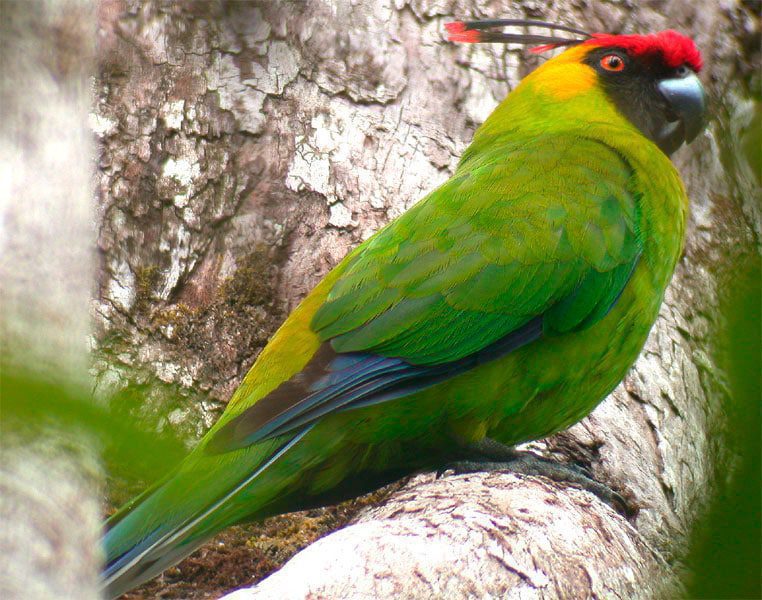
The Ouvea Parakeet (Eunymphicus uvaeensis) is similar to the Horned Parakeet (Eunymphicus cornutus) but with the face and nape green, no yellow, and crest upturned six pens greenish black: the Red of the crown It is limited to the center forecrown.

The Ouvea Parakeet generally bright mid-green. Head green, lighter on ear-coverts with some light shaft-streaks; centre of forecrown red with six wispy blackish-green uperwing feathers forming a small crest; rear-crown darker green; ears and cheeks dark green lower.

The upperparts light green, paler on rump. Wing coverts green; outerweb of primaries greenish-blue with innerwebs black. Underwing-coverts green. Underparts light yellowish-green. Uppertail green with a slight blue suffusion distally and blue edges to lateral feathers; undertail gray.

Bill blue-gray at base, blackish toward tip; irises orange; legs grey.

Both sexes similar.

Taxonomic status:

This taxon is considered a subspecies of Eunymphicus [cornutus or uvaeensis] (sensu lato) by some authors

  • Sound Uvea Parakeet.

Note:

some species, as in the case of Ouvea Parakeet, They are subject to extreme stress due to traps or harassment. The open availability of high-quality recordings of these species may make the problems even worse.. For this reason, transmission and download of these recordings is off. Recorders are free to share in xeno-edge, but they will have to approve access to these recordings.

We do not take this action lightly, and we wish it wasn't necessary, but we are convinced that the negative impacts of offering easy access to these recordings outweigh the benefits. To access these recordings, You can contact directly with the recorder.

Habitat:

It is restricted to areas of old growth forest with holes for nesting, but the highest numbers occur near papaya plantation areas.

The Ouvea Parakeet They are active in early morning and late afternoon, and usually rest in the trees during the heat of the day.

Reproduction:

An average of 2.9 Eggs are laid in one or two broods per year, of which 1.7 chicks hatch, but only 0.75 chicks survive to 30 days (Robinet et al. 1995, Robinet et al. 1996, Robinet and Salas 1999).

Food:

It feeds in the forests and crops of cultivated land adjacent. The Ouvea Parakeet It depends mainly on mature native forests with pines kauri Agathis australis.

Fruits of Ficus spp., there Canaria, scrub and passion fruit. Also forage for seeds. The cultivated papaya (Carica papaya) It is a favorite.

Distribution and status:

Population expansion (breeding/resident): 640 km2

Los Pericos Uvea are confined to 110 km2 in Ouvea island, Loyalty Islands. Introduced unsuccessfully in the nearby Lifou.

The species is found in isolated patches of forest now restricted to the coast, mainly in the district St Joseph between Cape Rossel and Cape Steep. Single 15-25 km2 of suitable habitat was considered to remain on the island in 1993, with about 70-90 birds present, although a more thorough study has suggested a total population of 617 individuals. More recent studies is estimated at 1.780 mature individuals in total (Theuerkauf s suffering. 2016)
In the past, the reduction of individuals to extensive conversion of forests for agriculture due, hunting and trade. The delicate political situation in Uvea, while Kanak Liberation Front struggle for independence France, It has hampered the work of conservation of the species.

It is relying on a captive breeding program based on Forest Park, about Noumea, in New Caledonia. Transfers from island to island also be considered feasible.

Conservation:
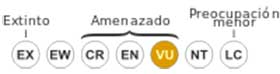

Vulnerable


โ€ข Current category of the Red List of the UICN: Vulnerable.

โ€ข Population trend: Growing.

โ€ข Population size : 600-1800 individuals.

Rationale for the Red List category

This species is classified as Vulnerable because it is in one very small island and can be threatened by invasive species, in particular the Black rat, that could bring the species to the category of Critically Endangered or Extinct in no time.

Justification of the population

The population is estimated at 1.780 mature individuals in total (Theuerkauf s suffering. 2016), rounded here to 1.800 mature individuals.

Justification trend

Barrรฉ et al (2010) reported that the population has increased in a 29% (of 10 birds / km2 34 birds / km2) between 1993 and 2009, which equates to an increase in population 34% in three generations.

Conservation Actions Underway

1 – Appendix I and II of CITES.

2 – The Association for the Protection of Perico Ouvea (ASPO) It was created in 1993 with members mostly local.

3 – ASPO initiated a long-term study of the biology and ecology of the species as the basis for two recovery plans. (1997-2002 and 2003-2008).

4 – Forest loss is being addressed through awareness programs and community trials to mitigate habitat degradation and improve the quality of forests, particularly in regard to nesting sites.

5 – Ten guides are used, whom, among other tasks, nests located.

6 – Illegal trade is being addressed successfully through increased awareness and enforcement.

7 – A captive breeding program has been discussed, but it hasn't started yet, and the species is found only in small quantities in captivity for a very limited reproductive success (Tap 1996).

8 – In 1998 translocation program began to repopulate southern Ouvea, and the number of birds in the south was 395 individuals in 2011 (Theuerkauf s suffering. 2016).

9 – Black rats were trapped on the island (Theuerkauf s suffering. 2016) and predator control is important.

10 – In 2003 a recovery plan was drawn updated, in which it recommended, among other things, the translocation program was canceled, since the population is considered viable and grow naturally; this Recovery Plan has been accepted by the local indigenous authorities (N. Barrรฉ a slightly. 2003, Anon 2004).

11 – Ouvea has been classified as IBA, but a management plan and a protection program involving the communities have not yet been established (Spaggiari et al. 2007).

12 – SCO obtained funding from the British Bird Watching Fair to build and test artificial nests PCV after the failure of trails wooden nest.

13 – ASPO personnel destroyed or removed 187 bee colonies between 2002 and 2008 (L. Verfaille a slightly. 2007, Barrรฉ et al. 2010).

14 – The continued presence of local guides is believed to effectively prevent nest poaching. (Barrรฉ et al. 2010).

Conservation Actions Proposed

1 – Continue population monitoring (Primotel 2000).

2 – Research interactions with Trichoglossus haematodus.

3 – Investigate the non-use of artificial nests.

4 – Review and strengthen measures to control predators.

5 – Assess progress and update plans for translocations.

6 – Review and update all aspects of the Action Plan.

7 – Maintaining the momentum of awareness and participation of the community and the island (Robinet and Salas 1997).

8 – Establish a project IBAs in Ouvea and fund a protection program (N. Barrรฉ a slightly. 2003).

9 – Start a captive breeding program to support future reintroductions.

10 – Carry out surveillance screening BFDV to guide future efforts biosecurity and conservation, and better understand the risk posed by BFDV (Jackson et al. 2014).

"Ouvea Parakeet" in captivity:

The Ouvea Parakeet they are still captured using a rope inside a fruit Upload papaya, and because the island is a plain, exports through an easily accessible atoll are difficult to control. Birds bought from trappers by 50 dollars can be sold by traders up 1.000 Australian dollars.

There is a captive breeding program, but it hasn't started yet, and the species is found only in small quantities in captivity for a very limited reproductive success (Tap 1996).

Alternative names:

– Horned Parakeet (Ouvea), Ouvea Parakeet, Short-horned Parrot, Uvea Parakeet (English).
– Nymphique d’Ouvรฉa, Perruche cornue (Ouvรฉa), Perruche dโ€™Ouvรฉa, Perruche d’Ouvรฉa (French).
– Ouvรฉahornsittich, Uveasittich (German).
– Periquito-de-uvea (Portuguese).
– Perico de Uvea (espaรฑol).

scientific classification:

Edgar Leopold Layard

– Order: Psittaciformes
– Family: Psittaculidae
– Gender: Eunymphicus
– Scientific name: Eunymphicus uvaeensis
– Subpoena: (Layard, THE & Layard, ELC, 1882)
– Protonimo: Nymphicus uvaeensis

Images:

Videos "Ouvea Parakeet"

Sources:

โ€ข Avibase
โ€ข Parrots of the World โ€“ Forshaw Joseph M
โ€ข Parrots A Guide to the Parrots of the World – Tony Juniper & Mike Parr
โ€ข Birdlife

Photos:

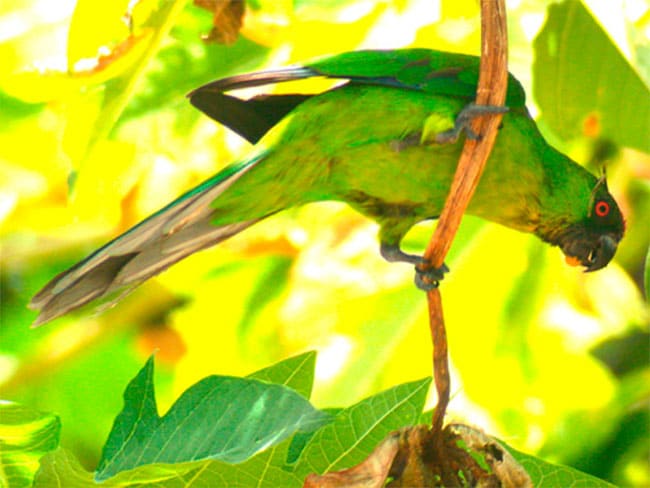
(1) – This Uvea Parakeet was photographed feeding on a papaya at the edge of forest by Tunpin.ong [CC BY-SA 3.0], from Wikimedia Commons

โ–ท The world of Pets: Dogs, cats, birds, reptiles, amphibians

Horned Parakeet
Eunymphicus cornutus


Horned parakeet

Content


Anatomy-parrots

Description

32 cm.. length and an approximate weight of 140 g..

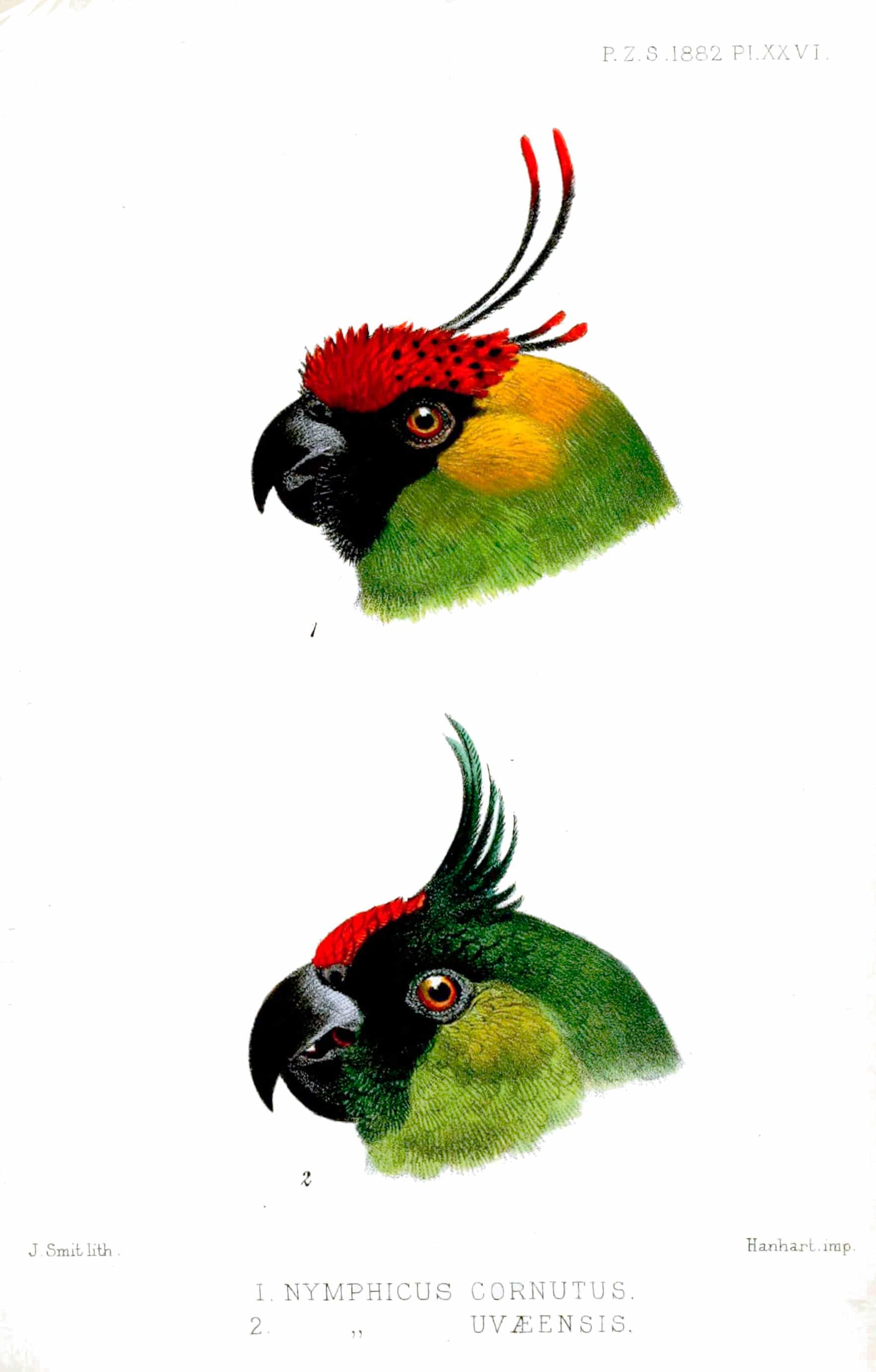
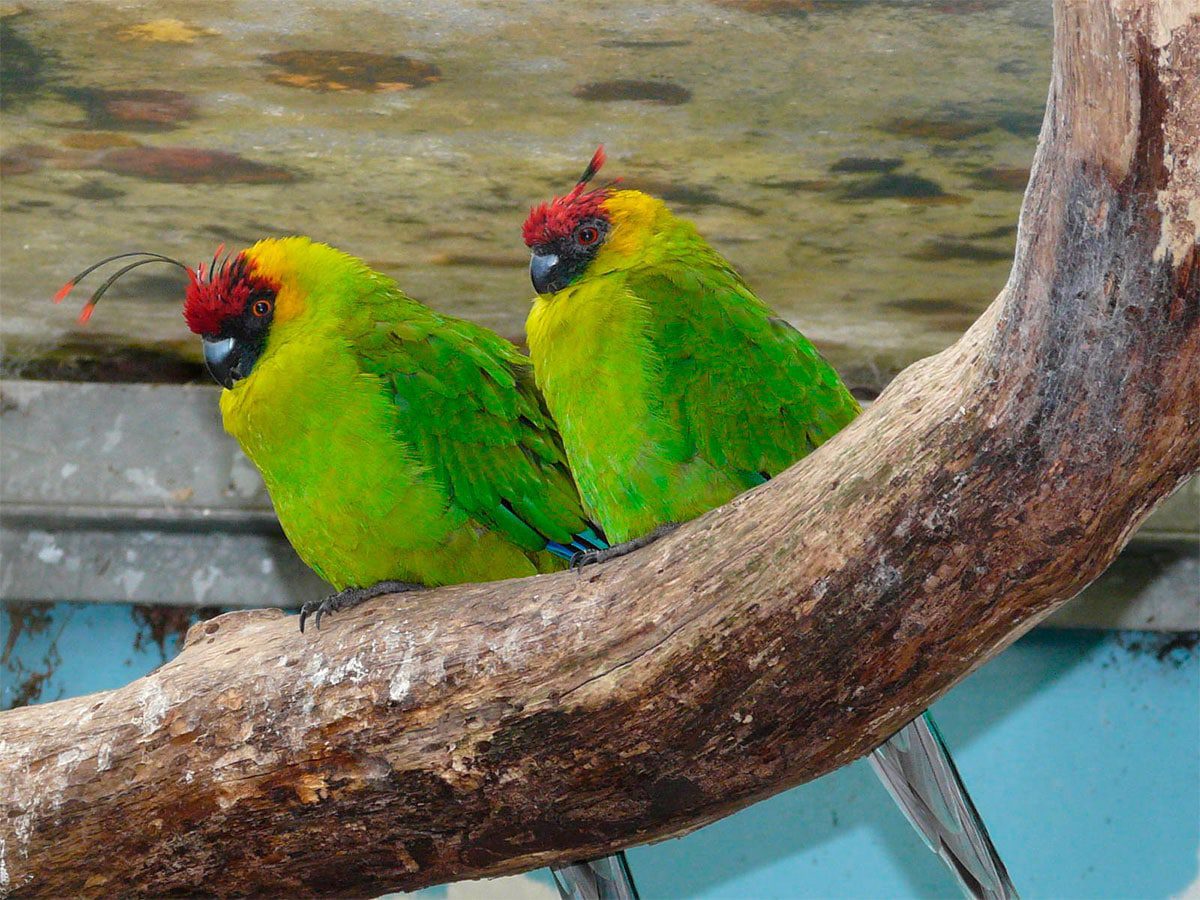
The Horned Parakeet (Eunymphicus cornutus) has a considerable size. It is an incredibly colorful and distinctive bird.. The forecrown is bright red. The front of the crown It has a set of Red curly feathers with black bases. Two long black feathers with Scarlet trim emerge from the center of the crown. The area of the mumps is orange-yellow, that contrasts sharply with the lores and the sides of the cheeks that are black.

The bottom of the cheeks has a greenish black color. Neck and back of the crown bright orange yellow, Turning is gradually to colour green yellow or green bright in the part superior of the the mantle.

The upperparts are green, with the exception of the rump that is greenish-Orange.

The wings covers are green. The primaries are blue-purple on the vane outer, Blackish in the vane inner. The secondaries they are darker on the outer rim.

The underparts is greenish. The lower parts are yellowish green clear. The undertail- coverts they have a slightly bluish in tips. The upper part of the tail is green with strong blue pink, the bottom is dark gray.

The bill It is blue-grey with black tip, irises orange. The legs are black.

Male and female are similar.

The youth they have more gray and less developed facial ornaments. The ear-coverts are pale green, the back of the neck olive green. The bill is color Horn and the irises They are brown.

Taxonomic status:

Until very recently, was generally considered conspecific with the species Eunymphicus uvaeensis. Monotypic.

Subspecies description:

  • Eunymphicus cornutus

    (Gmelin) 1788 – Nominal


  • Eunymphicus uvaeensis

    (Layard,THE & Layard,ELC) 1882 – Of, approximately, 32 cm length. Green color, with the face and dark green head, front with a small red bow and a thin and small dark green Crest. The nape and neck of greenish-yellow, chest and abdomen yellowish green.

    Long tail. black beak.

    It has no sexual dimorphism.

    Today it is considered a kind monotype. See

Habitat:

Horned parakeet, Nymphicus cornutus (above) and Ouvea parakeet, Nymphicus uvaensis (then)

The Horned Parakeet frequent, as a priority, humid forests. They are also areas that are regenerated and scrublands.

The preferred habitat of these birds are the kauris forests (Agathis australis), which are evergreens that are found mainly in the North of New Caledonia. But, They also appreciate the mixed forests with trees of the family Araucaria angustifolia. This species It can live up to the 1200 m. Avoid coconut plantations and areas close to the coast.

endemic to New Caledonia. Its distribution is highly fragmented. These birds are present in the 57% the mountains in the North of the island and in the 42% the mountains of the South. Probably they are very common in the central channel.

The Horned Parakeet they tend to be very prudent, remaining in silence most of the time, and making it difficult to, Therefore, its location.

These parrots they live in pairs or in small flocks of up to ten individuals. When resent, They fly a distance of 100 meters or more before landing at the top of a tree. They rest in the canopy or in the cavity of a tree an hour before dawn., just before starting its activity.

During courtship, the Horned Parakeet, he tries to seduce the female with repeated head inclinations, erect their feathers, shaking his crest and emitting cries intermittently.

Reproduction:

The time of reproduction extends from October to December. The nest is often found in a cavity or on a tree branch healthy, of all of the species of Metrosideros myrtacee. You can also build the nest in the soil, under a rock or under a fallen tree.

The female lays of 3 to 4 eggs, but, generally, only two chicks manage to develop.

In captivity, the incubation lasts a few 21 or 22 days. The young leaves the nest after 5 to 6 weeks.

Food:

The Horned Parakeet they are almost exclusively vegetarian. They feed on flowers, dried fruits, fruit, berries and seeds that are found in shrubs and trees. Also like ripe papaya.

Distribution:

The Horned Parakeet It is endemic to the main island of New Caledonia in the Southwest Pacific, where due to the poor coverage of observers, the status of the species may vary. It is probably stable, but may be threatened to some degree due to trade .

Recent check-ins at Blue River Provincial Park (The Blue River) indicate that it is relatively common in the park. It is almost certainly more common in less accessible areas, over 470 m.

Subspecies distribution:

Conservation:


Vulnerable


โ€ข Current Red List of UICN: Vulnerable.

โ€ข Population trend: Increasing.

The Horned Parakeet It has a small population that probably has been declining for many years with unknown reasons.
Current populations are threatened by habitat degradation and, probably, by the introduction of other mammals, particularly rats. Fortunately, his capture and poaching do not constitute a significant threat for this species.

Considering their low numbers and the small size of their territory, It classified as vulnerable.

Some of the measures taken for their conservation is the start control against introduced predators. Increase the area of โ€‹โ€‹suitable habitat to protect their status and establish captive breeding populations for future reintroductions.

"Horned Parakeet" in captivity:

Very rare poultry.

According to sources, a sample lived during 19,7 years in captivity

Alternative names:

– Horned Parakeet, Crested Parakeet, Horned Parakeet (Horned), Long-horned Parakeet (ingles).
– Perruche cornue (French).
– Hornsittich (German).
– Periquito-de-chifres (Portuguese).
– Perico Cornudo, Perico Maorรญ Cornudo (espaรฑol).


scientific classification:

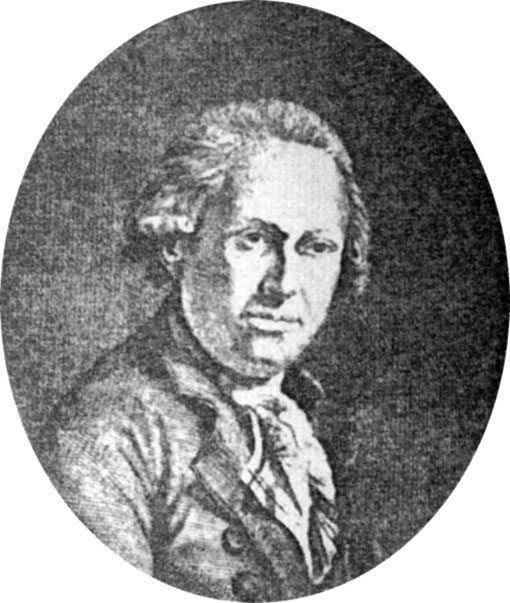
Gmelin Johann Friedrich

– Order: Psittaciformes
– Family: Psittaculidae
– Genus: Eunymphicus
– Scientific name: Eunymphicus cornutus
– Citation: (Gmelin, JF, 1788)
– Protonimo: Psittacus cornutus

ยซHorned parakeetยป images:

Videos "Horned Parakeet"

"Horned parrot" (Eunymphicus cornutus)

Sources:

  • Avibase
  • Parrots of the World โ€“ Forshaw Joseph M
  • Parrots A Guide to the Parrots of the World – Tony Juniper & Mike Parr
  • Birdlife

  • Photos:

(1) – Horned Parakeet By Tunpin.ong (Own work) [CC BY-SA 3.0], via Wikimedia Commons
(2) – Horned Parakeet, Nymphicus cornutus (above) and Uvea Parakeet, Nymphicus uvaensis (below Proceedings of the Zoological Society of London 1882 By Joseph Smit (1836-1929) [Public domain], via Wikimedia Commons
(3) – Horned parakeet by AlexKant – zoochat
(4) – A adult bird perched on a branch by Tomasz Doroล„ – Lynx
(5) – A bird perched in a tree by Josep del Hoyo – Lynx
(6) – Feeding on papaya in a garden by Julien Baudat-Franceschi – Lynx