โ–ท The world of Pets: Dogs, cats, birds, reptiles, amphibians

Little Lorikeet
Parvipsitta petty


Little Lorikeet

Content

Description

16 to 19 cm.. length and an approximate weight of 40 g.. The Little Lorikeet (Parvipsitta petty) is the smallest of the Parrots Australian.

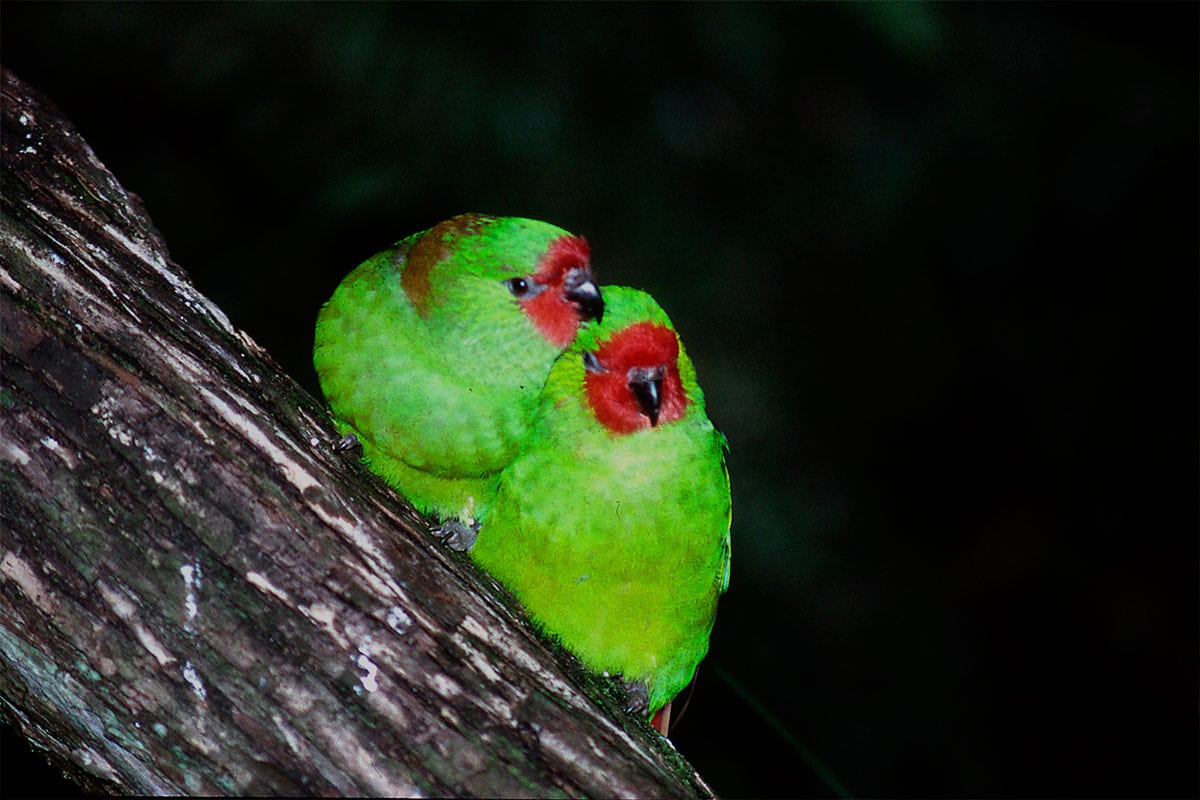
The body is bright green, the area of the nose, the forecrown, the neck, part of the forecrown and cheeks They are red.

The ear-coverts are of color green with stripes of color green light. The neck and back top are brown-green. Under the wings brighter yellowish green. The primary flight feathers they have a very narrow yellowish Board, their underparts is yellowish-green.

The feathers of the tail has reddish orange base, the circle around the eyes is narrow and black, the irises is orange, the legs grayscale and the bill black.

Parvipsitta buttercups

  • Parvipsitta petty
  • Parvipsitta porphyrocephala
  • The immature have more off the Red of the face; the Brown of the upper mantle is minimal. Bill Dark Brown and brown the eye.

    This small Lori is likely to be confused with the Purple-crowned lorikeet (Parvipsitta porphyrocephala).

    Habitat:

    The Little Lorikeet dispatched virtually all areas and at all altitudes with trees. They prefer open areas with flowering or fruit trees and riverbanks.. Found up to one altitude of 1600 m.

    Occasionally seen in orchards and farming areas.

    Son nomads and outside the breeding season they gather in small groups of 4 to 12 birds.

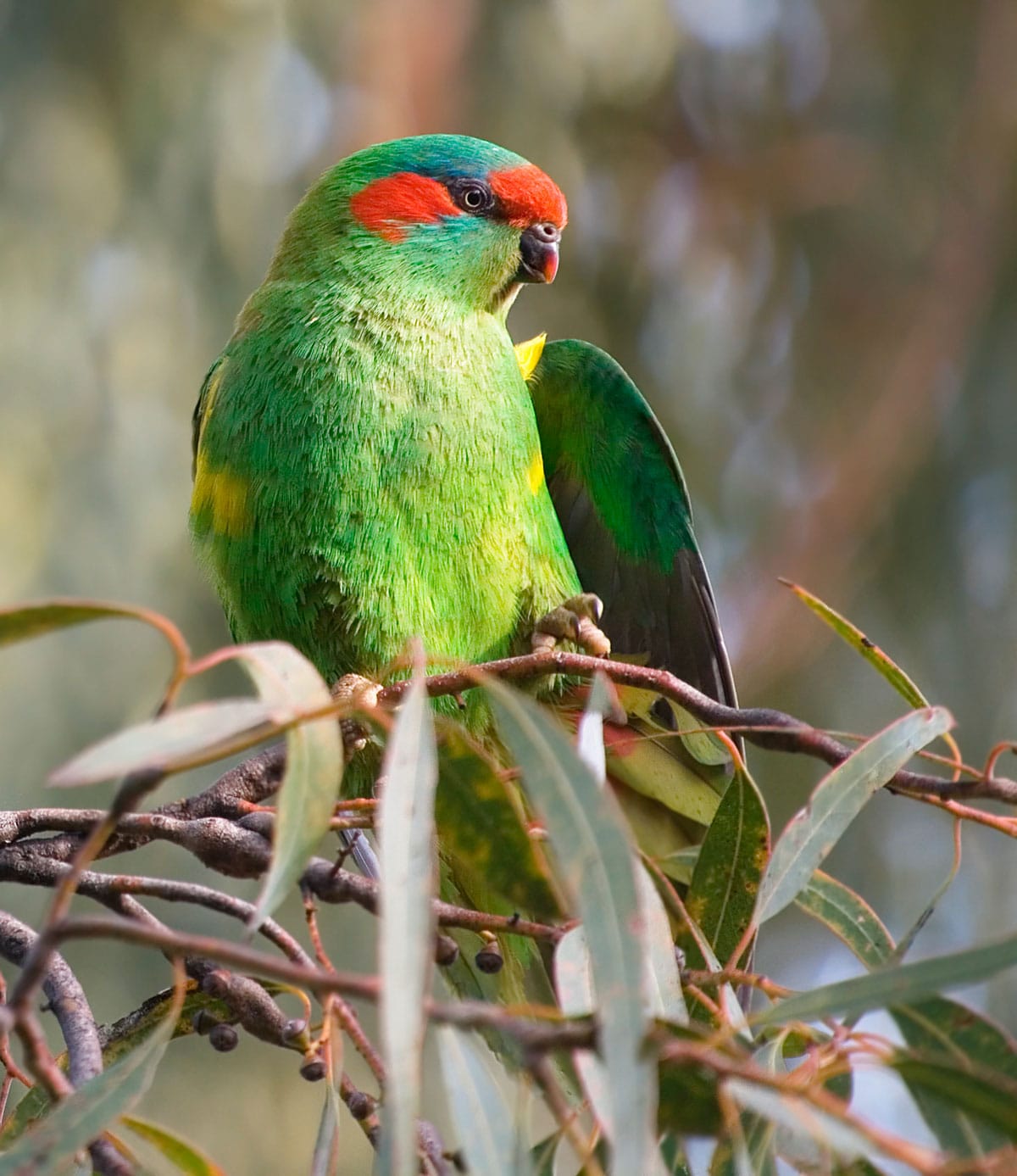
    They prefer tall treetops and are difficult to see due to their small size and green color.. They prefer trees of eucalyptus that they are in bloom and they can attend major meetings when they are feeding, often associated with other lori as the Coconut Lorikeet and the Musk Lorikeet.

    Ruidoso. Their flight is flapping fast and straight, accompanied by shrill calls.

    Reproduction:

    The breeding season It is going may in the North, or August in the South, to December. It nests in the Hollows of trees, where sets of 3 to 5 rounded whitish eggs. The incubation hard ones three weeks.

    Food:

    It feeds mainly from fruits and flowers, including native plants such as those belonging to the genera Xanthorrhoea and (Melaleuca and Loranthus, and introduced plants such as the medlar (Eriobotrya japonica). Occasionally visit orchards.

    Distribution:

    Size of the area of distribution (reproduction / resident): 788.000 km2

    Distribution Lori Carirrojo
    The Little Lorikeet is located in the East and Southeast of Australia, from the vicinity of Cairns to the South by Queensland and New South Wales from the slopes of the Great dividing range until the eastern coasts to most of Victoria and Southeast of Southern Australia. Also located in Tasmania, although there is little abundant.

    Conservation:
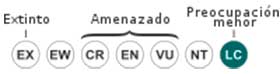

    minor concern

    โ€ข Current category of the Red List of the UICN: Least concern.

    โ€ข Population trend: Stable.

    The main threats to these small parrots are the loss of breeding sites and of those resources food by the clearing of land in course. Most breeding records come from the western slopes, where has been a great loss of habitat trees. The loss of trees nest along the verges of Highway, often associated with roadwork, It is still a constant threat.

    "Little Lorikeet" in captivity:

    Although it was exported to Europe for the first time in 1877, the Little Lorikeet rarely seen outside of Australia. And even in the country of which it is native it is rare in captivity. Has a reputation for being difficult to maintain.

    Alternative names:

    Little Lorikeet, Little Red Lorikeet (ingles).
    Lori ร  masque rouge, Petit Loriquet (French).
    Zwergmoschuslori (German).
    Loris Pusilla (Portuguese).
    Lori Carirrojo, Lori de Cabeza Roja (espaรฑol).

    scientific classification:

    Order: Psittaciformes
    Family: Psittaculidae
    Genus: Parvipsitta
    Scientific name: Parvipsitta petty
    Citation: (Shaw, 1790)
    Protonimo: Psittacus Pusillus

    Images ยซRed-faced Loryยป:

    Videos "Little Lorikeet"


    ยซOn Carirrojoยป (Parvipsitta petty)


    Sources:

    Avibase
    Parrots of the World โ€“ Forshaw Joseph M
    Parrots A Guide to the Parrots of the World – Tony Juniper & Mike Parr
    Wikipedia
    environment.NSW.gov.au

    Photos:

    1 – By JJ Harrison (jjharrison89@facebook.com) (Hand darbas) [CC BY-SA 3.0 or GFDL], via Wikimedia Commons
    2 – By Joxerra Aihartza (ร โ€˜ire argazki bilduma / own picture) [FAL], via Wikimedia Commons
    3 – Little Lorikeets by Julian Robinson, on Flickr – Flickr
    4 โ€“ Little Lorikeets (Glossopsitta pusilla) by David Cook, on Flickr – Flickr
    5 – Musk Lorikeet [Glossopsitta concinna] again! by Norm Hanson, on Flickr – Flickr

    Sounds: Marc Anderson (Xeno-canto)
    โ–ท The world of Pets: Dogs, cats, birds, reptiles, amphibians

    Purple-crowned lorikeet
    Parvipsitta porphyrocephala

    Purple-crowned lorikeet

    Content

    Description

    The Purple-crowned lorikeet (Parvipsitta porphyrocephala) has a length of 16 cm.. and a weight between 40 and 50 g..

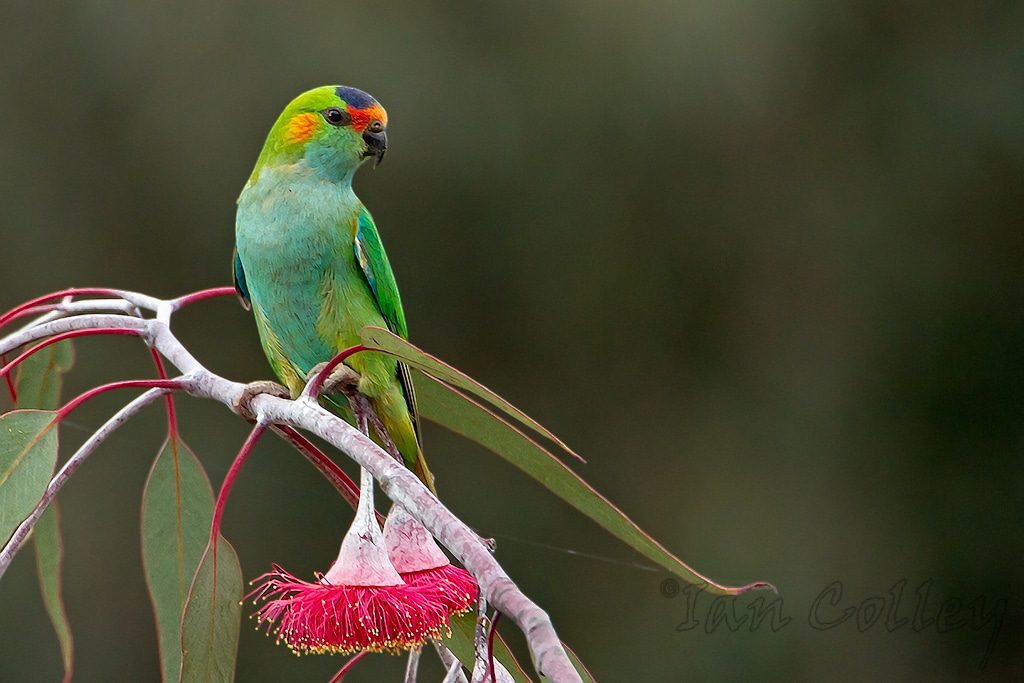
    The part forward of the crown is orange, merging is in red in the lores. Above and in front of the eyes, orange-yellow. Crown dark purple color, merging into green at the nape, also showing a few feathers of orange-red.
    The ear-coverts, yellowish-orange, Red Centre. Chin and throat, of color turquoise light.
    Upperparts, of color green with washed Brown in the the mantle and rump more bright, slightly greenish-blue.

    The upperwing green color, bright blue marked in the curve and on the edge of the carpal area.

    The interior of the flight feather color black; fine yellow margins in primaries.
    Coverts interiors, red. Breast , neck and upperparts, of color green with a wash light blue turquoise; sides chest top with slight brownish wash; Center of belly washed turquoise with flanks and coverts, of color color green; yellowish stains on the bottom sides of the chest hidden with the wing folded. Green the upper part of the tail and yellow on the inside.

    Its small bill curved is black, their legs grayscale and the irises her Brown eyes.

    The female is similar but has the irises darker, the ear-coverts lighter and lacks crimson spots.

    The immature are more muted tones and lack of purple coloration of the head.

    Habitat:

    It is a nomadic local that often are found in the forests dried sclerophyllous, especially when the eucalyptus Bloom.
    Nomadic flocks may also travel far, Sometimes the inside of the Australian continent.

    The flowering of the eucalyptus is mainly responsible of its movements unpredictable, Although in some areas, the birds may be present throughout the year.

    Found in diverse areas forming large flocks of hundreds of individuals, often with groups mixed from others Lori including the Musk Lorikeet.

    Found commonly in Woods and forests, but also visitors are urban areas, where feed on ornamental flowers.

    Casual visitors during the winter of banksias in habitats of Heath.

    The Purple-crowned lorikeet is characteristic of drier areas, lightly lined, especially eucalyptus Woods.
    Can convert it in a plague to the orchards.

    Roosts in large groups, sometimes very far from the feeding areas. Manso and discreet While feeds, except the constant calls. Usually feed on low branches and shrubs.

    Reproduction:

    The breeding season It includes the months of August to December. The nests are located in holes in trees, preferably a eucalyptus near the water. Several couples often occupy neighboring holes in the same tree.

    The cycle of of reproduction in captivity gives a period of incubation of around 22 days, with the young people of 6 to 7 weeks weaned high is after the hatching.

    Food:

    Feed primarily of nectar and pollen of the flowering of the eucalyptus, but they can also attack the orchards to feed on ripe fruit.

    Distribution:

    Size of the area of distribution (reproduction / resident): 938.000 km2

    The Purple-crowned lorikeet are located in two areas separate from Australia to the Southwest and Southeast of the continent. Separate ranges, but racial differences are not recognized, and it is possible that the birds can travel from time to time between the two areas of distribution. Also located in the Kangaroo Island, Although not found in Tasmania.

    Conservation:


    minor concern

    โ€ข Current IUCN Red List category: Least concern

    โ€ข Population trend: Decreasing

    The world population It is believed that it is superior to 50.000 individuals.
    This species has a very large range, and therefore not approaching the thresholds for Vulnerable according to the range size criterion.

    While the trend of the population seems to be decreasing, the descent do not believe that it is sufficiently fast for approaching the thresholds of Vulnerable according to the criterion of population trend.

    For these reasons, the species is evaluated as Least concern.

    "Purple-crowned lorikeet" in captivity:

    It is a bird noisy, sociable and always in motion.

    Very rare in captivity out of Australia.

    Alternative names:

    Purple crowned Lorikeet, Purple-crowned Lorikeet (ingles).
    Lori ร  couronne pourpre (French).
    Blauscheitellori (German).
    Lorikeet Roxo-coroado (Portuguese).
    Lori Coronipรบrpura, Lori de Corona Pรบrpura (espaรฑol).

    scientific classification:

    Order: Psittaciformes
    Family: Psittaculidae
    Genus: Parvipsitta
    Scientific name: Parvipsitta porphyrocephala
    Citation: (Dietrichsen, 1837)
    Protonimo: Trichoglossus porphyrocephalus

    Images "Lori Coronipurpin":

    Videos "Purple-crowned lorikeet"


    ยซOn Coroniprightยป (Parvipsitta porphyrocephala)


    Sources:

    Avibase
    Parrots of the World โ€“ Forshaw Joseph M
    Parrots A Guide to the Parrots of the World – Tony Juniper & Mike Parr
    BirdLife.org

    Photos:

    1 – by Ian Colley – IBC.lynxeds.com
    2 – "Purple-crowned Lorikeetvon KeresH – Eigenes Werk. Lizenziert unter CC BY-SA 3.0 รผber Wikimedia Commons.
    3 – by Nick Talbot – IBC.lynxeds.com
    4 โ€“ by Nick Talbot – IBC.lynxeds.com
    5 – gopixpic.com

    Sounds: nick talbot (Xeno-canto)