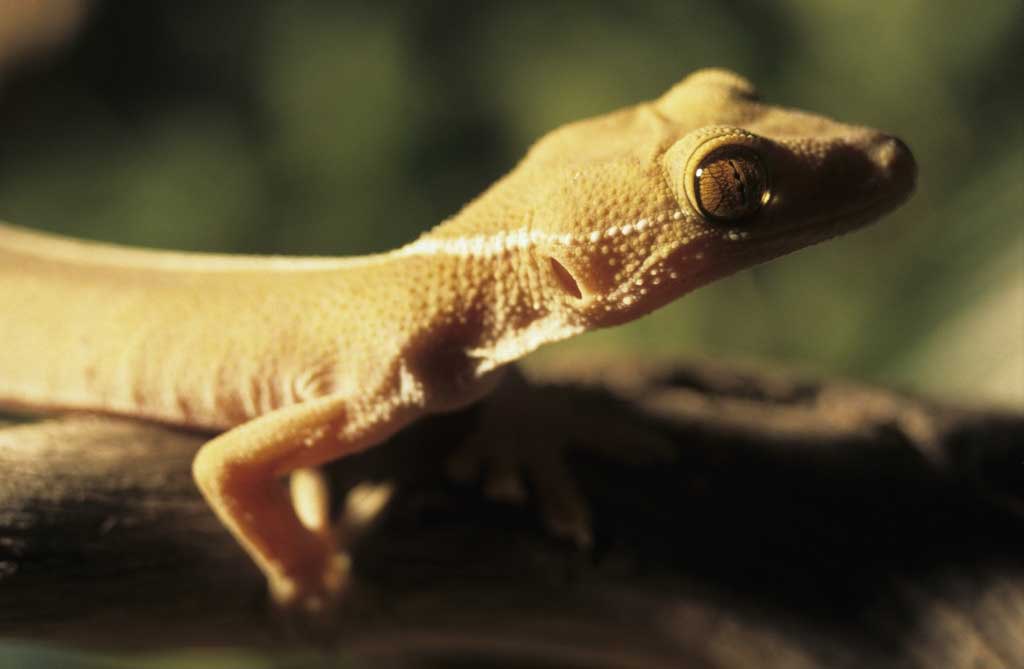
The Lined gecko is a slender representative of the genus Gekko, which can reach a length of up to 30 cm.. The tail represents just over half. But, numerous individuals are fully developed with a length of about 25 cm..
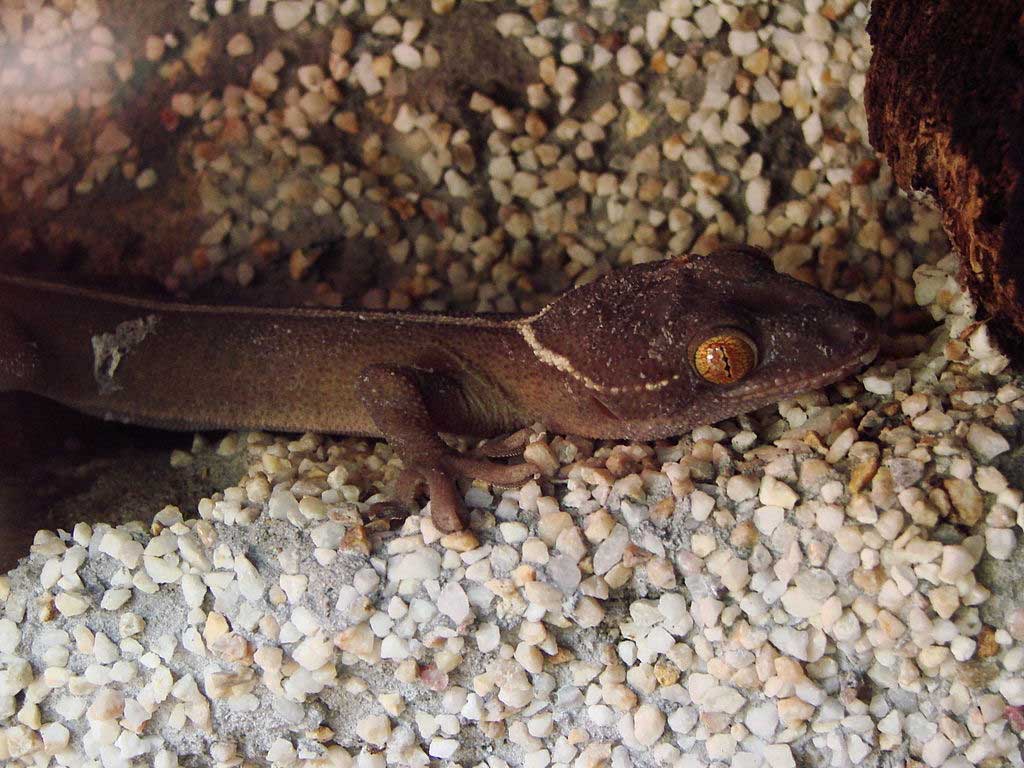
Due to the slender body and narrow head, the extremities, and especially the fingers and toes, appear larger. The white stripe that runs from the base of the tail to the back of the head, where it divides and reaches the sides of the eyes, It is characteristic and very striking. This strip is responsible for its trivial name. The original queue, on the other hand, has white transverse bands. A regenerated tail no longer shows this transverse band.
Dorsal coloration is usually yellowish-brown, but there are also individuals of slightly greenish yellow or reddish and dark brown color. Specimens with two longitudinal stripes are also known., just a very faint stripe and also without any streaks.
Distribution and habitat
Indonesian, east of Java through numerous islands such as Halmahera, in New Guinea to Oceania.
Way of life
The Lined gecko, of night activity, prefers to live in trees, Palm trees, pandanus and banana plants in his native country, but in many regions it can also be found as a cultural follower in houses and cabins.
The Lined gecko in captivity
The Lined gecko is easy to preserve, provided that one or two important points are taken into account.
The terrarium must be taller than it is wide, since it is an arboreal species. 80 x 50 x 100 cm. (width x depth x height) is enough for a couple of Lined gecko. Walls must be coated, for example, of natural cork. Some cork tubes provide the necessary hiding places. The necessary increase in humidity is achieved by spraying several times a day. One plant (for example, Scindapsus) complete the assembly.
There should also be a large bowl of water, or better a small part of water or a waterfall in the terrarium.
Substrate:
Use a white peat mixture (without fertilizer) and plantation land, of about 10 height cm. To avoid stagnation of water at the bottom of the terrarium, use a layer of clay balls.
Illumination
It is debatable whether ultraviolet light is necessary for the Lined gecko, but it won't do you any harm. Temperatures should be 24-28°C during the day, with sunny spots up to 35°C, and drop to 20-22°C at night. Humidity should oscillate between 70-90% during the day, which can be easily achieved with a daily spray (morning and evening) and through the water section. To check these parameters, use a thermometer and hygrometer.
Diet
The diet of the Lined gecko is based on insects. Easily accepts all kinds of insects: crickets, cockroaches, lobsters, worms, … It is important to vary your diet. This prevents your Gecko get bored, but above all it provides you with all the necessary nutrients.
You should always make sure to give to your Gecko a prey adapted to its size.
Last, from time to time, it is advisable to supplement your diet with calcium and vitamins, to avoid any shortcomings. This is especially important for the growth of Geckos juveniles.
Breeding and reproduction
with a good brood, the reproduction of animals does itself. the female may lay one or two eggs several times a year, that can be left in the terrarium. The pups are born after about 100 to 120 days and can stay in the terrarium up to a size of some 15 cm..
The pups usually look the same as the parents., in some populations they show white spots on the head. Only the tail is slightly darker, so that the transverse white bands appear brighter and thus have a signaling effect. When parents approach, wag their tail to avoid being accidentally eaten by them. Keeping them in a group is only possible with young animals until they reach sexual maturity.. As soon as they are adults, you have to take them out of the terrarium, otherwise they can be attacked by parents.
For sale Lined gecko
The price of a Lined gecko in the exotic animal market ranges from 40 and 50 EUR.
▷ The world of Pets: Dogs, cats, birds, reptiles, amphibians
Saharan spiny-tailed lizard
- Uromastyx geyri
Origin: Algeria, Mali and Nigeria
Gender: Uromastyx
Life expectancy: 20 years
Length: 35 cm.
The Saharan spiny-tailed lizard it is a relatively small and slender species for the genus, with an average total length (including the queue) of about 34 cm..
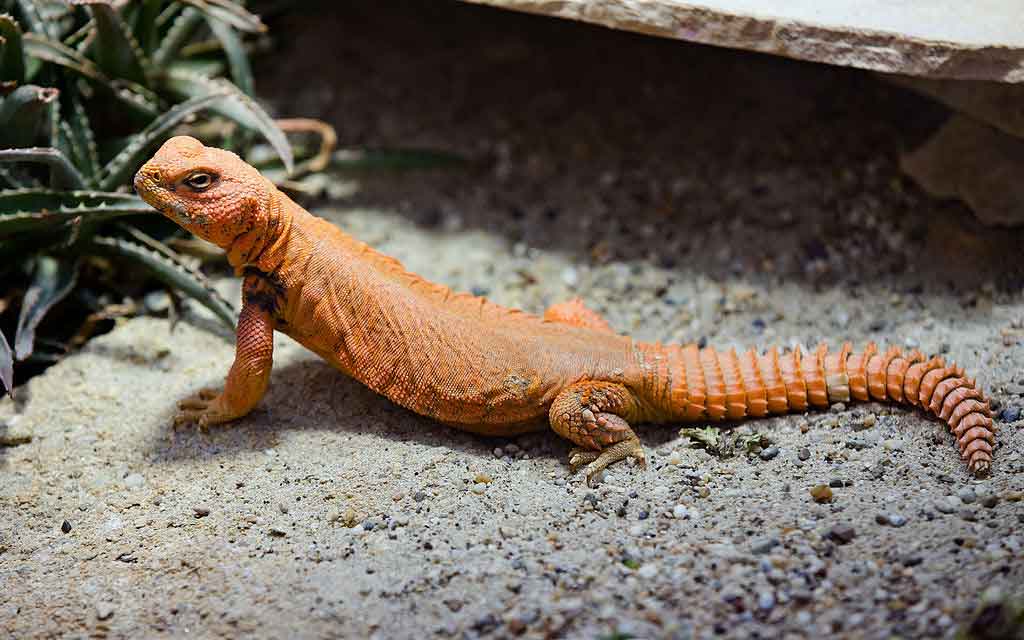
Saharan spiny-tailed lizard, Flower Gardens Hirschstetten in Vienna, Austria.
Content
Origin
The Saharan spiny-tailed lizard (Uromastyx geyri) is a lizard native to the north of Mali, southern Algeria and northern Niger. Two different color shapes are known (red or yellow).
Characteristics
The Saharan spiny-tailed lizard it is a relatively small and slender species for the genus, with an average total length (including the queue) of about 34 cm.. This lizard is usually beige or orange with lighter spots.
It is one of the brightest colored species in the genus. Uromastyx. There are two colors of the Uromastyx geyri, the "red" and "yellow" variety, being the color its only difference.
The variety red it is often reddish in color almost solid to orange neon pumpkin, and the yellow phase is in or near a neon range. Females are a paler color than males, showing more variations of tan coloration and much less coloration in the belly, as well as less vivid patterns, most females have a simple "freckle" on their back.
The Saharan spiny-tailed lizard are medium-sized lizards, many of them with an average of 28-36 cm of total length and a weight of 250 grams or more as adults.
The "Saharan spiny-tailed lizard" in captivity
Terrarium
The Saharan spiny-tailed lizard they are very territorial in nature and keeping one male and several females is only possible in a large terrarium. It is best to keep them in pairs..
temperatures during the day: from 28° to 35°C (locally approx. 45°C)
Night temperatures: 18-22°C
Humidity: 40-60
Minimum size of the terrarium: starting at 140 x 100 x 120 cm for a couple
The terrarium must be furnished with numerous stones, some climbing possibilities such as thick branches, cork or bark tubes, which also offer many hiding places. To maintain this species properly, the terrarium needs a substrate of at least 20-30 height cm. Spray a little several times a week.
Illumination
For your well-being, good lighting and ultraviolet light are necessary (30% of UVA rays and 10-12% UVB), as well as a place to sunbathe. UV radiation is extremely important and absolutely necessary. In the case of females, it is absolutely necessary to have a suitable place for laying eggs or with several possibilities.
A lighting period of up to 14 hours a day (except during hibernation).
Hibernation
You have to let the animals hibernate for three or four months. As such, the Saharan spiny-tailed lizard they need between 12 y 18°C. Hibernation is very important for animals to regulate their bodily functions and stay healthy. It's also a good way to prevent obesity.
Food
The diet of the Saharan spiny-tailed lizard includes banana, vine leaves, dandelion, margaritas, clover, pamplinas, sometimes kitchen herbs and grains like corn, rice, millet, sunflower seeds and others. Young animals feed up to a 75% of animals. These may include, crickets, grasshopper, cockroaches, sometimes zophobas and other live food. Adults should be fed little or no animal food to prevent fatty degeneration..
no lettuce, iceberg lettuce or similar, since its calcium-phosphorus content is unfavorable. And cabbage or spinach should only be provided rarely because of oxalic acid.…
Fruit should also be provided only in moderation., if it is accepted.
Additional vitamin and mineral supplements are recommended.
For liquid intake, you can place a bowl of water that is cleaned daily.
Reproduction
Winter rest is very important for the young. The "Saharan spiny-tailed lizard" lay eggs. These should not be incubated too wet, otherwise they will easily turn into fungi. Young Uromastyx geyri can be raised together in a group for up to two years, provided they are compatible. It is absolutely necessary to take enough calcium and vitamin supplements.
For sale "Saharan spiny-tailed lizard"
The price of a Saharan spiny-tailed lizard, captive bred, at the exotic animal market, ranges between 100 – 120 EUR.
1. Geyr’s dabb lizard, Geyr’s spiny-tailed lizard, Sahara mastigure, Saharan spiny-tailed lizard, Yellow Niger Uromastyx, Saharan yellow uromastyx. (English).
2. Lézard de Geyr, Lézard à queue épineuse de Geyr, Mastigure du Sahara, Lézard à queue épineuse du Sahara, Uromastyx jaune du Niger, Uromastyx jaune du Sahara. (French).
3. Geyr-Krusteneidechse, Geyr-Stacheleidechse, Sahara-Mastigure, Sahara-Stacheleidechse, Gelber Niger-Uromastyx, Sahara-Gelb-Uromastyx (German).
4. Lagarto do Geyr, lagarto de cauda espinhosa do Geyr, mastigure do Sara, lagarto de cauda espinhosa do Sara, Uromastyx amarelo do Níger, uromastyx amarelo do Sara (Portuguese).
5. Lagarto de cola espinosa de Geyr, Lagarto de cola espinosa de Geyr, Mastigure del Sahara, Lagarto de cola espinosa del Sahara, Uromastyx amarillo del Níger, Uromastyx amarillo del Sahara (español).
▷ The world of Pets: Dogs, cats, birds, reptiles, amphibians
Leopard tortoise
- Stigmochelys pardalis
Origin: Ethiopia, Angola, Botswana, Djibouti, Kenya, Malawi, Mozambique, Namibia, Zambia, Zimbabwe, Somalia, Sudan, South Africa, South Sudan, Swaziland, Tanzania, Uganda
Gender: Stigmochelys
Life expectancy: 60 years
Length: Until 55 cm.
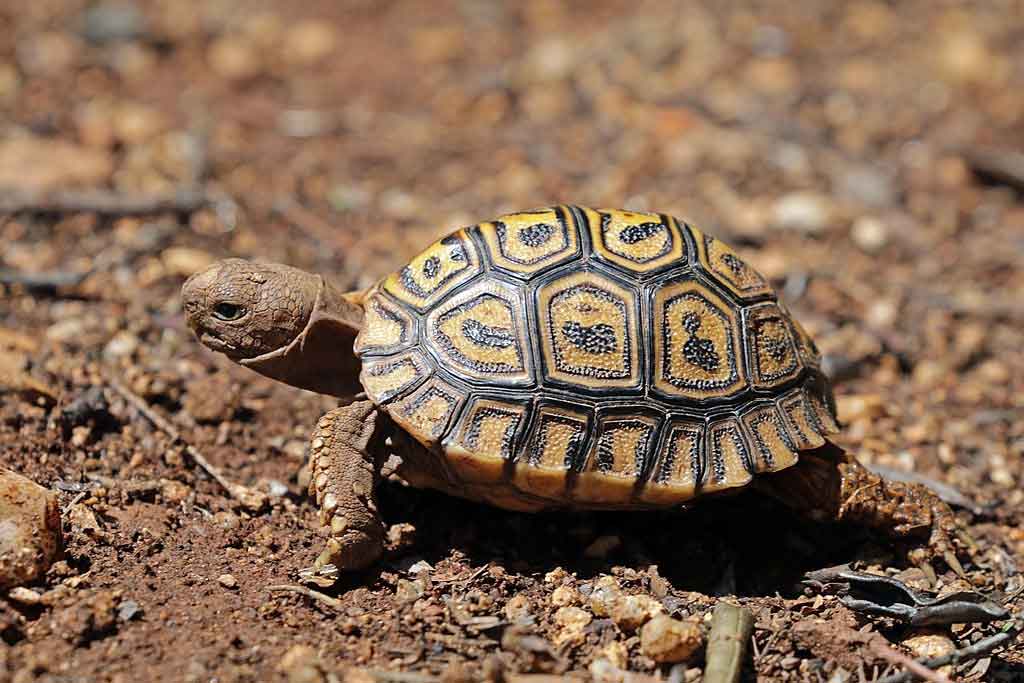
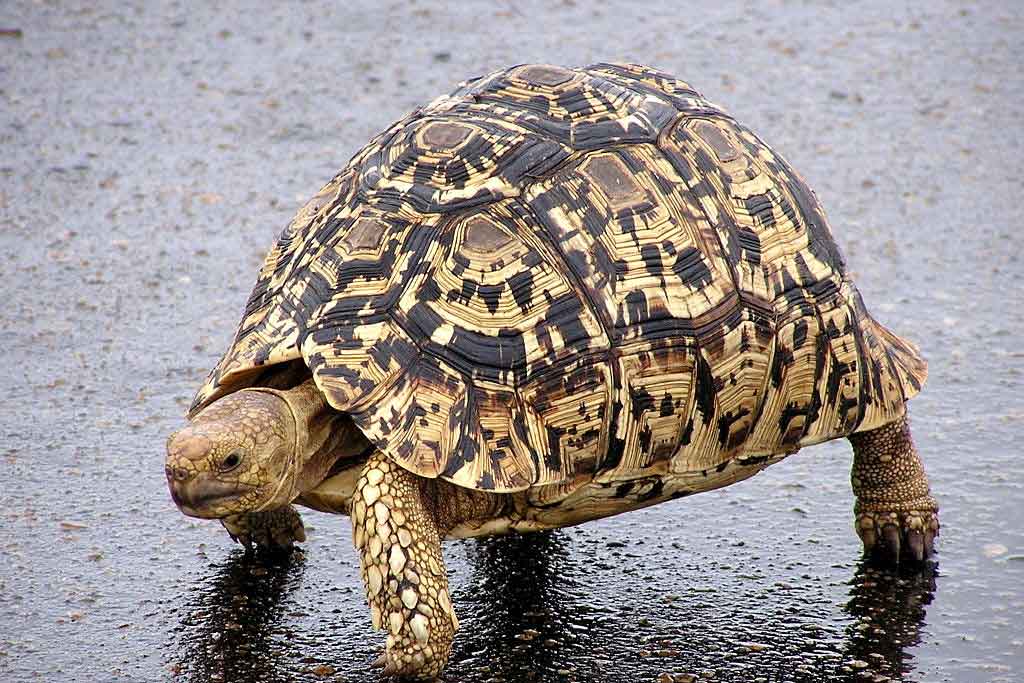
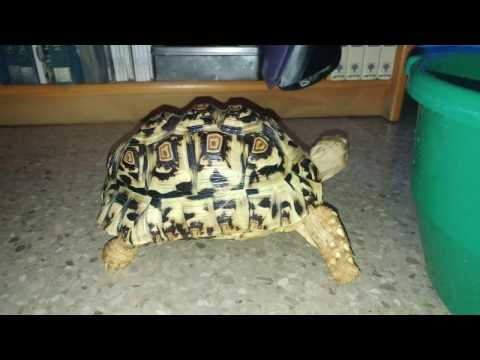
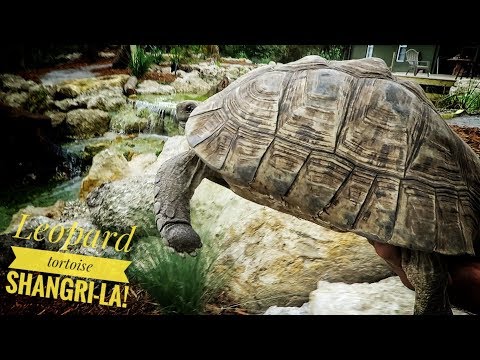
The Leopard tortoise it is a magnificent representative of African tortoises in terms of shell. Young animals in particular have a fantastic spot pattern, reminiscent of a leopard, that's where its name comes from.
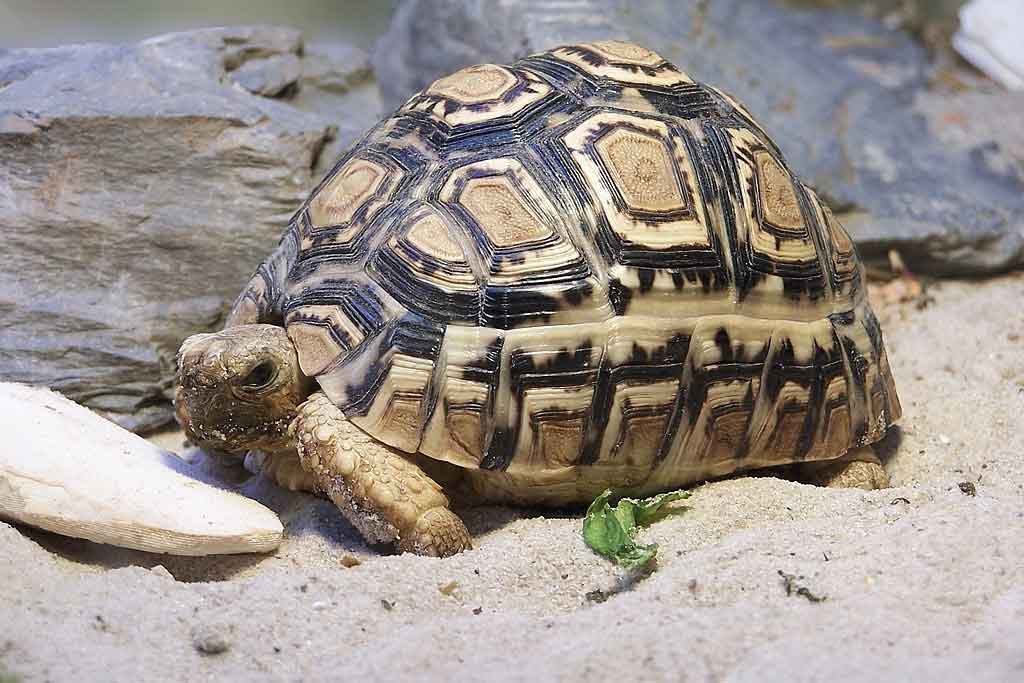
Leopard tortoise (Stigmochelys pardalis) juvenile, Walter Sisulu Botanical Gardens, Roodepoort, South Africa – Charles J. Sharp, CC BY-SA 4.0, via Wikimedia Commons
Content
Origin
The Leopard tortoise has been the subject of several revisions. Different authors have placed it in Geochelone (1957), Stigmochelys (2001), Centrochelys (2002) and Psammobates (2006). More recently, the consensus seems to have been established in Stigmochelys, a monotypic genus. There has been much debate about the existence of two subspecies, Stigmochelys pardalis pardalis and Stigmochelys pardalis babcocki, but recent work does not support this distinction.
Stigmochelys is a combination of Greek words: stigma which means "brand" or "tip" and chelone What does "turtle mean". the specific name pardalis comes from the Latin word pardus, which means «leopard», and refers to leopard-like spots on the turtle's shell.
The Leopard tortoise is located in the following 17 countries: Ethiopia, Angola, Botswana, Djibouti, Kenya, Malawi, Mozambique, Namibia, Zambia, Zimbabwe, Somalia, Sudan, South Africa, South Sudan, Swaziland, Tanzania, Uganda.
Characteristics / Appearance
The Leopard tortoise adult has a dorsal shell elongated and strongly curved. It is yellowish to light brown and is covered with irregular dark spots or stripes.. This characteristic coloration gave the species its name.. Unlike many other turtles, the Leopard tortoise no shield on the back of its neck. The legs and head are yellowish to light brown. Rarely do individual dark spots appear on them. The Paws they are covered with large scales and each hind leg has a cone-shaped spur. Equipped with powerful claws, the legs are the ideal tool for digging.
In the youth the coloration of the shell is clearly lighter, with dark spots in the center of the shield. These high-contrast patterns can also sometimes be found in abdominal armor.. The size difference is used to differentiate the sexes, just like the size of the queue. Male animals are usually smaller than their female counterparts and have a stretched body with a longer tail., which is also significantly thicker at the root. It also, the male's abdominal breastplate is slightly curved inward. The claws of the hind legs of females are particularly strong.
The life expectancy of these reptiles are around the 50-60 years.
The subspecies
The Leopard tortoise are divided into two subspecies, the Leopard tortoise of East Africa and the Leopard tortoise from South Africa. The clearest distinguishing feature of both species is the coloration of the posterior layer.. In East African species, the basic color is weaker and darker. Juveniles have very few or no dark spots on both the belly and dorsal shell. The South African species has a flatter back and brighter colors.
Habitat
The Leopard tortoise (Stigmochelys pardalis) it is not very demanding in terms of its habitat. Its distribution extends throughout the East African region to South Africa and Namibia.. It is found in warm semi-deserts, dry savannas and rainfed areas. There are even populations more than 2.000 meters above sea level. Only dense forest areas cannot be colonized due to the mass and slowness of reptiles. Daytime temperatures of 28 to 40 degrees centigrade and night temperatures up to 21 degrees Celsius provide optimal living conditions for animals.
Behavior
The Leopard tortoise, like all reptiles, he is a cold blooded animal. They do not have a constant body temperature and adapt to room temperature. Behavior patterns are greatly influenced by this characteristic. According to the corresponding daytime temperatures, animals are forced to look for hiding places in the shade. In dry areas, thorny or grassy shrubs fulfill this function. Otherwise, turtles also look for abandoned animal burrows or rocks. At certain intervals, especially during periods of drought when food is scarce, take longer breaks of their own free will. These periods can last up to several weeks.. Then, food intake is minimized and body temperature may drop below 18 degrees.
Turtles are not nomadic. The only specimen moves in an area of about 400 hectares without forming territories. But, due to its slowness, they only use a part of this surface. The proportion of females and males is practically the same, and males usually use much smaller territories than females. The Leopard tortoise he is a peaceful animal. There are no territorial fights between congeners.
Food
The excellent adaptation to its habitat allows the Leopard tortoise manage your water balance very sparingly. It usually ingests the necessary amounts with its food and has regulatory bodily functions that allow it to store greater amounts of water in its body.. Their diet consists almost exclusively of plants. Prefers grass, thistles, lily plants and prickly pear.
Reproduction
The Leopard tortoise lives in different climatic zones. Mating behavior adapts to the respective climatic conditions, but it usually takes place in the spring or summer months. Males, otherwise peaceful, they now try to scare away their companions who court the females. They do this by ramming the shells of their opponents.. With the same ritual, female turtles are asked to stop and stick their heads and legs in. Next, mating takes place. The loud gasps emitted are characteristic of the mating ritual in many species of turtles..
Reptiles are not dedicated to the care of the young. Females dig a pit with their hind legs in which they lay eggs. The number per clutch varies greatly and is usually between 10 and 20 eggs. Three to six clutches of eggs are laid per year with an average interval of about 25 days. After placement, the pit is carefully closed. The duration from egg laying to hatching of the young is influenced by many factors.. Temperature and humidity influence the length of the incubation period, that can last from 120 to 450 days. Young turtles measure about five centimeters and have a hemispherical dorsal shell..
Threats to the species
State of conservation ⓘ
Minor Concern ⓘ(UICN)ⓘ
The Leopard tortoise Adult has few natural enemies in its habitat. In addition to the hyena and the lion, man is the greatest of them. With its regulatory interventions in the environment, threaten reptile habitat in some areas. Overgrazing, slash-and-burn agriculture, urban expansion and fencing of grazing areas are the main causes of population decline. In some regions the meat of turtles is consumed and body parts are used to produce medicines.. Every year thousands of animals are collected for the international pet trade and shipped all over the world.. Black traders have also discovered this market and try to sell their products through dark channels.. Customs authorities seize large quantities of Leopard tortoise smuggled.
But, the greatest threat is to the clutches of eggs and young. Nests are often raided by small mammals, birds, snakes or even by humans. Young animals also constantly face the dangers of stray dogs and cats., birds of prey, snakes or rats. The Leopard tortoise is not considered endangered in its species and can be acquired in for maintenance in captivity without prior permission. But, according to the European Species Protection Regulation, the acquisition must be notified to the competent authorities. The same provisions of the official notification requirement apply to breeding, delivery, the death and transfer of animals.
The "Leopard tortoise" in captivity
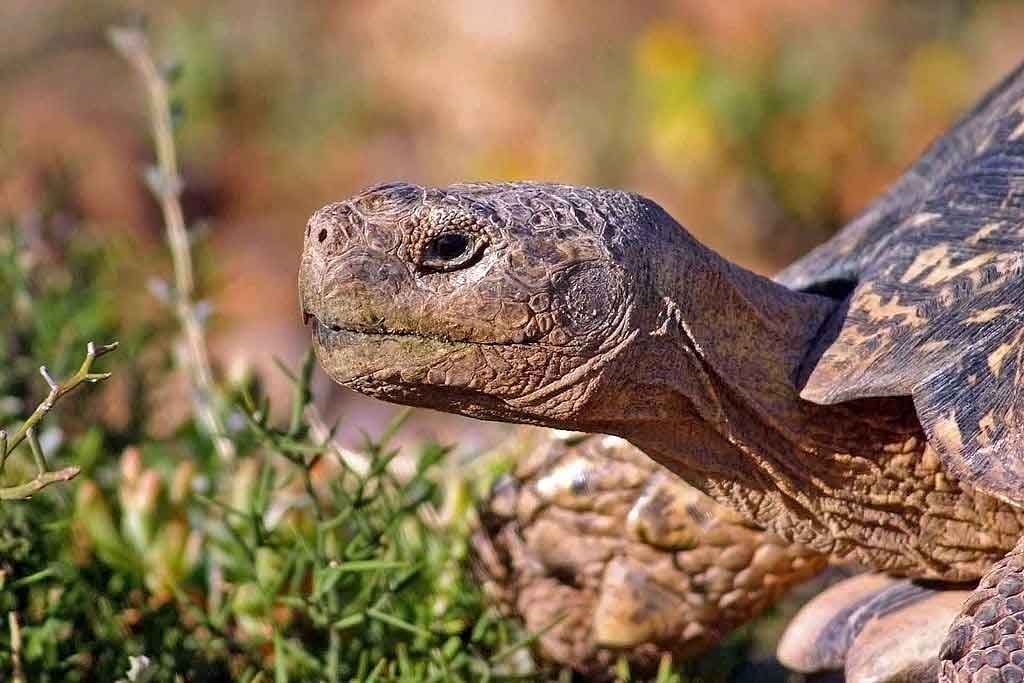
The head of a "leopard turtle" (Stigmochelys pardalis) at Addo Elephant Park, South Africa – Charles J. Sharp, CC BY 3.0, via Wikimedia Commons
Reproduction
Reproduction can begin once animals have reached sexual maturity, that occurs to some 20 – 25 centimeters of carapace length. Mating usually begins in spring with the behavior already described. After a gestation period of several months, females bury their eggs in a warm, moist spot in the ground in late summer. Stress, such as transfers, should be avoided at all costs in pregnant females. after sunset, eggs can be carefully removed from the ground. Half buried in loose sand, now they are placed in the incubator. The temperature should be 30 constant degrees centigrade and the humidity should not drop below 65%. After 150 to 300 days, the first pups are born. In the first weeks, they also need cooler, moister areas than adult animals.
When a Leopard tortoise, one or more individuals should be selected from a breeding stock for health reasons. Specimens caught in the wild are usually carriers of parasites and very susceptible to contracting diseases due to the stress of the long journey.. Deformation and softening of the shell, diseases of the internal organs and respiratory infections are the most common.
The breeding of a Leopard tortoise it's quite expensive. Heating, feeding and the various devices to create an environmental climate suitable for the species at all times of the year, as well as the large space that animals need, place high demands on the owner. But, this species is one of the most beautiful and imposing representatives of turtles and the lover of these animals is compensated daily by its sublime vision.
Maintenance of the "leopard turtle"
The Leopard tortoise is eager to move and run. This guarantees them a digestion that works. For this reason and for its size, only sufficiently sized rooms are adequate to maintain them. In this case, you have to take into account the climatic conditions to which the animals are accustomed. A permanent ambient temperature of 30 degrees and the supply of ultraviolet light in the wave range around 300 nm are prerequisites for keeping animals appropriate to the species. Turtles need ultraviolet light to synthesize vitamin D, that is essential for life. The ideal is to divide the room into several climatic zones so that the animals find a place with the most pleasant ambient temperature.
The Leopard tortoise must be kept in pairs. A mixture of sand and peat is suitable as a substrate. Do not forget the creation of hiding places. Hollow tree trunks or haystacks are useful furniture here. Of course, a bowl of water for drinking and bathing is part of the basic equipment.
Food
When it comes to feeding, pay attention to seasonal peculiarities. Winter corresponds to the dry season in the natural habitat of animals. Consequently, food should consist of dried grass and dried herbs. In summer, wild plants such as hibiscus are recommended, Dandelion, thistles and all wildflowers, from violets to petunias. Cultivated plants, like fruits, lettuce or vegetable leaves, should be the exception in the diet. Under no circumstances should turtles be fed animal products or, for example, with cottage cheese, fruit and pasta.
Reproduction
The breeding of the Leopard tortoise also requires further expansion. If you buy one Leopard tortoise young after hatching, you have some 4 years to think about the later habitat in winter and summer. From then on the animal is already quite large and is already oversized for a very large terrarium in winter. Outer space must have at least 50 m2 and the winter space should not be less than the limit of 10 m2. The Leopard tortoise adult needs more than 100 square meters outdoors. Until then there are some 4 years longer. And don't forget that, no matter how big a room is in winter, it must always be heated to 30 °C.
To be taken into account
The Leopard tortoise has a strong tendency to slouch. Unfortunately, it is not yet possible to say exactly why this is so. Animals are not kept in captivity very often and, if they do, most of the time only by people who have no means to investigate hump formation. Breeders have been observing the phenomenon for years and again and again they manage to breed one Leopard tortoise no hump formation. But, it is not known why, because the animals grew normally like other turtles, which in turn have hump formation.
Completely smooth shells are almost never found in the Leopard tortoise in captivity. On the other hand, in the natural habitat, almost all animals are completely smooth and of great beauty. So that your own animal grows healthy and has a long life, you just have to be very careful with the diet.
Important tips against the formation of humps
The Leopard tortoise young must have a higher humidity and grow in a rather moist soil. Make sure the floor is not misted with moisture more than once a day. Animals should not grow "wet". From the 3 years, animals prefer to grow dry. As in nature. Water must always be available. It is necessary to ensure that the animals do not bathe several times a day. Otherwise, they will absorb too much fluid and develop humps.
In winter, the diet of the Leopard tortoise limited to dry wild grasses that were raised in winter quarters but stopped being watered at some point. Thus, wild herbs dry out in the hot summer, just like in nature. Our winter is the African summer of turtles: do not forget it. There is also straw and plenty of hay in the enclosure. Animals feed on this. Water must always be available, but may run out during the day and should not be refilled. It is only refilled the next day, when everything gets fresh anyway.
The temperature should always be 30 to 33 degrees in the "winter" and 45 degrees (tank surface) under heat sources. If you have the possibility, should reach maximum temperature at noon and cool down again at night. The temperatures of 19 to 22 degrees should be maintained at night. In no case should this temperature be lowered, or surpass it.
In summer, animals eat everything they find outdoors. Unlike many other turtles, to the Leopard tortoise also likes to feed on grass. But, they like to harvest it themselves and don't allow it to be presented to them. So, those who do not let their animals run freely in the garden must plant grass in the enclosure. The grass should be nice and green from April/May to the end of September. Then, the animals usually return to the inner enclosure and then the African summer begins.
The humps of the Leopard tortoise they are not always synonymous with bad breeding. If less or no humps are created it's great. But, if humps develop, no one's heart is broken and animals don't have to be worse off. Unfortunately, there is no exchange of experiences for the Leopard tortoise.
Buy one "Leopard tortoise"
The price of a "Leopard tortoise" at the exotic animal market, ranges between 130 – 200 euros when it is a baby, being able to get to the 500 euros depending on their size and shell.
Images "Leopard tortoise"
Panther turtle in the Kruger National Park, South Africa
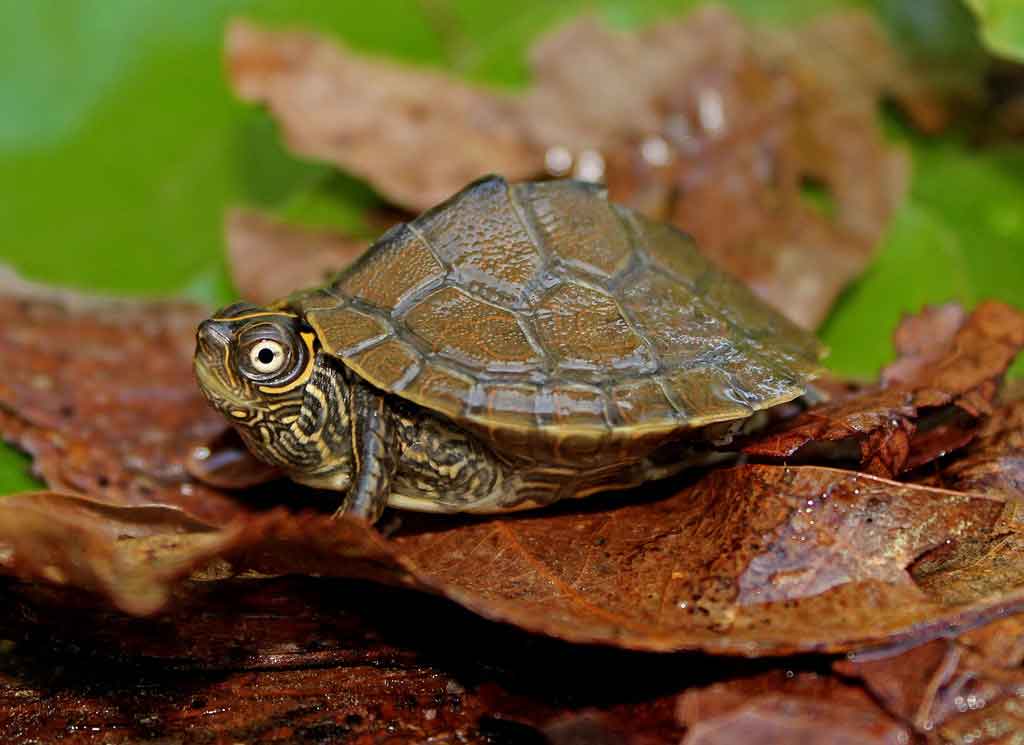
The Mississippi map turtle (Graptemys pseudogeographica kohni) found along the Mississippi River and its tributaries, from Illinois and Missouri south.
Characteristics / Appearance
In the Mississippi map turtle(Graptemys pseudogeographica kohnii), two prominent lines also run from the neck towards the eye and bend there, but then they go much further and enclose the eye in the shape of a crescent or a sickle. The circular markings on the head are relatively small and occur almost exclusively on the chin. Neck stripes do not touch the eye, because there is already the drawing in the shape of a sickle around. The iris is white and only rarely has a dark line. The beak is colorless to whitish.. Leg and neck lines are evenly thick, with lighter and darker lines.
Threats to the species
State of conservation ⓘ
Minor Concern ⓘ(UICN)ⓘ
This species faces several threats, such as destruction of egg nests by animals and insects, falling into gillnets and shooting. The Mississippi map turtle, like the Red-eared slider (Trachemys scripta elegans), have also been collected for the pet trade.
All Map turtles are included in CITES Appendix III and in Appendix C of the EU Species Protection Regulation. But, they do not need any documents when trading within the EU and are not subject to declaration.
The "Mississippi map turtle" in captivity
Aquaterrarium
The Mississippi map turtle can reach a maximum size of about 20 cm in the aquarium. Females grow considerably larger than males. For the maintenance and care of aquatic turtles, A tank with a minimum length of 150 cm.. It is important that the water level is very high. In this way, your turtles will be able to swim wonderfully in it. In addition to the water level, a part of soil must also be integrated into the aquarium. can be plastic, stone or cork. Your turtles can sit on it and sunbathe. It is recommended to use sand or fine gravel as a substrate in the aquarium. It also, must offer your Mississippi map turtle roots or stone structures. These decorations provide good structure in the tank and create a natural habitat..
The Mississippi map turtle is a solitary animal. This will not change in the aquarium. Animals should ideally be kept individually.
The Mississippi map turtle optimally adapts to the values of the water in the tank. They feel comfortable in waters with temperatures between 25 and 28 degrees centigrade and a pH value between 6,0 and 8,0. During the winter months, the water turtle hibernates. During this time, the water temperature should be reduced to 4 – 12 Celsius degrees. "On land, the temperature should be about 40 degrees Celsius. A metal halide lamp can be very useful in this case.
Food
Mississippi Humpback Turtles Prefer a Varied Diet. It can be live food, frozen, dry the vegetable.
Reproduction of the Mississippi map turtle in the aquarium
The Mississippi map turtle (Graptemys pseudogeographica kohni) has already been successfully bred in the aquarium. Plastic boxes are recommended as egg laying sites.
Buy one "Mississippi map turtle"
The price of a "Mississippi map turtle" at the exotic animal market, ranges between 30 – 70 EUR
Videos "Mississippi map turtle"
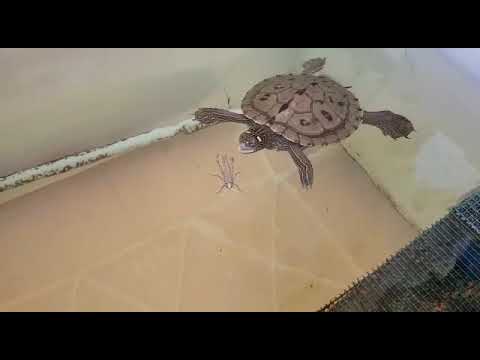
Mississippi map turtle (Graptemys pseudogeographica kohni ) having a lobster for lunch
1. Mississippi map turtle (English).
2. Tortue géographique du Mississippi (French).
3. Mississippi-Höckerschildkröte (German).
4. Tartaruga do mapa do Mississippi (Portuguese).
5. "Tortuga Mapa del Mississipi" (español).
▷ The world of Pets: Dogs, cats, birds, reptiles, amphibians
Malagasy giant chameleon
- Furcifer oustaleti
Origin: Madagascar
Gender: Furcifer
Life expectancy: 5 - 8 years
Length: Including the queue 68.5 cm.
The Malagasy giant chameleon is considered the longest chameleon in the world (although exceptionally longer adults such as the Parson's chameleon – Calumma parsonii).
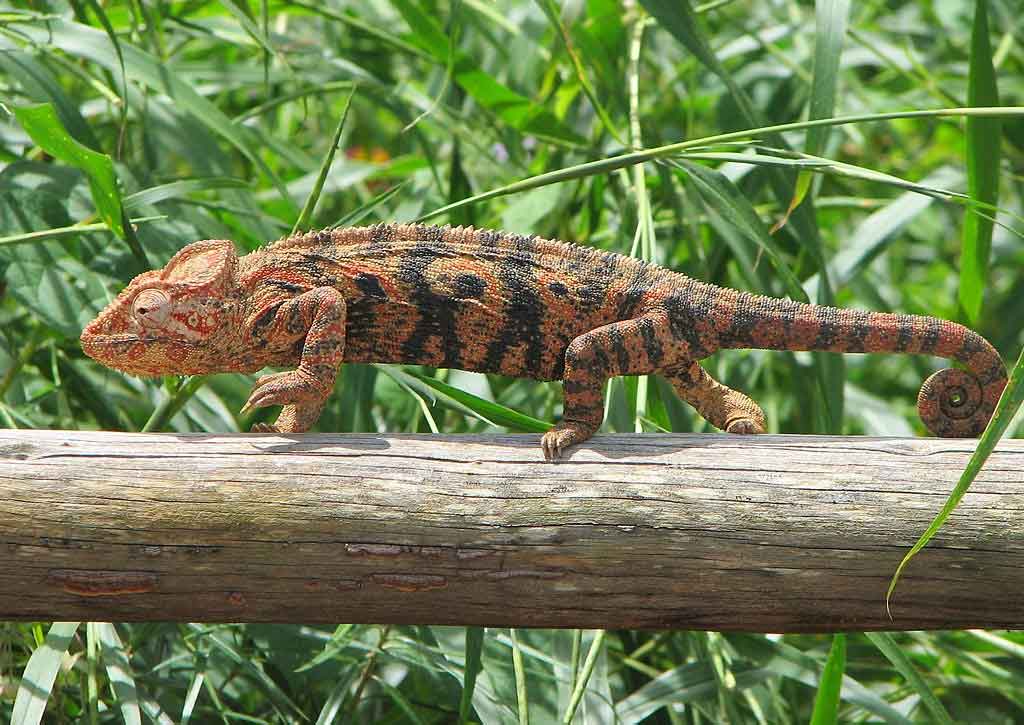
Oustalet’s chameleon, Ambalavao, Madagascar. The image shows the different groupings of the front and hind toes. this is a male – Bernard Gagnon, CC BY-SA 3.0, via Wikimedia Commons
Content
Origin / Distribution
The Malagasy giant chameleon (Furcifer oustaleti) is endemic to Madagascar, where is the most widespread chameleon species. It has been recorded in all parts of the island at a variety of dry and wet sites at all elevations.. A localized population introduced into Kenya is probably extinct.
Characteristics / Appearance
Considered the longest chameleon in the world (although exceptionally longer adults such as the Parson's chameleon – Calumma parsonii). This species reaches lengths close to 70 cm., and is also the second heaviest member of the family (after the Parson's chameleon). But, many specimens found are likely to be adults or smaller subadults. The helmet is high, with a pronounced parietal crest. Rostral ridges are present and extend to the tip of the muzzle, but do not connect. A lateral crest is present but poorly developed.
The most important diagnostic feature is the Crest Ridge, which extends to the vent and consists of 45 or more short, triangular spines with a regular space between them. Ventral and gular ridges are present, but they are not connected to each other.
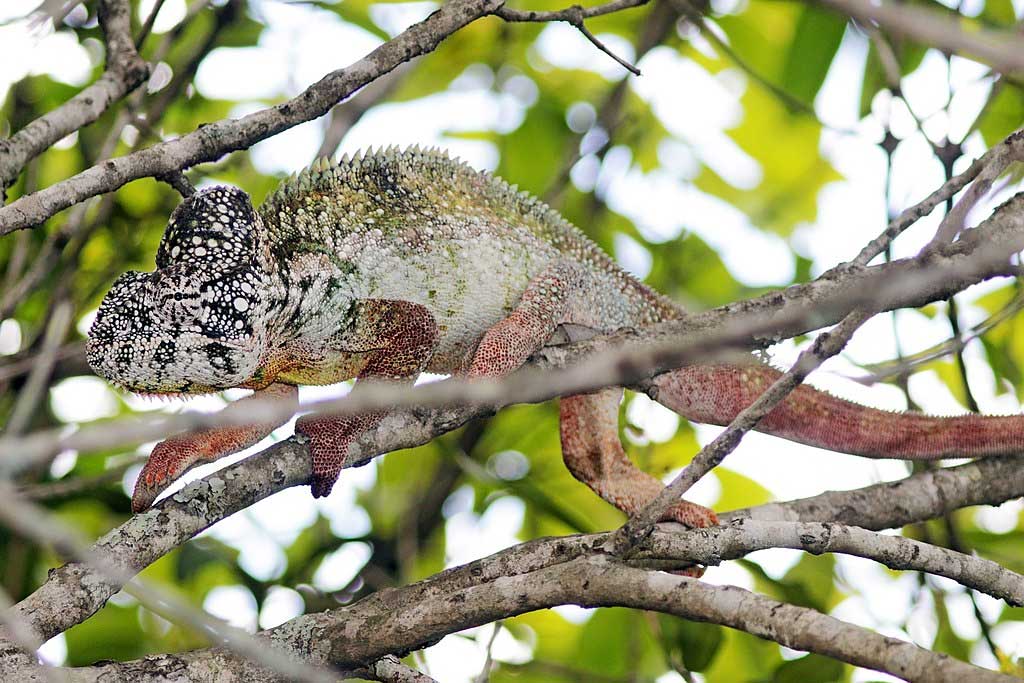
Oustalet’s chameleon (Furcifer oustaleti) female, Andasibe, Madagascar – Charles J. Sharp, CC BY-SA 4.0, via Wikimedia Commons
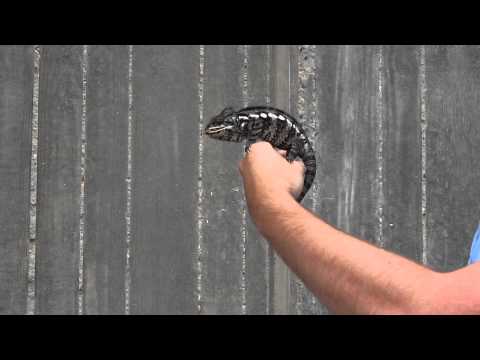
The coloration in both sexes is usually gray or brown, although females are usually more showy and may show a red coloration on the head and limbs. But, females may be variable with a yellow or mottled coloration, and in some cases can be largely green. The pattern may include a row of four large circles of dark edges along the flanks., although a white line is absent in contrast to the Carpet chameleon (Furcifer Lateralis). There are often indistinct dark vertical bands on the flanks. The absence of a white stripe on the central part of the body is considered diagnostic, but see the warning in Taxonomy below.
taxonomy
The Malagasy giant chameleon belongs to a species complex consisting of three recognized species; However, the variation between populations and the wide distribution of both the Malagasy giant chameleon as of the Warty chameleon (Furcifer verrucosus) suggest that both may represent multiple cryptic species. In a population found by the author during fieldwork, animals assigned to Furcifer oustaleti (a diagnosis subsequently supported by Frank Glaw) consistently showed a small size, unusual coloration and pattern; Unlike in the F. oustaleti Typical, sometimes there was a white stripe in the central part. Since these animals coexist with the F. oustaleti Typical, it is not clear whether they represent a distinct population or species, or if this coloration and pattern is a constant feature of the subadults of this population.
Habitat
In Madagascar, the Malagasy giant chameleon It is distributed in the coastal lowlands. It is found throughout the island, but its appearance in the eastern part of Madagascar is linked to relatively high temperatures. Being a species well adapted to the warm climate of the savannah, benefits from human changes to the landscape (deforestation). It is said that there is an abandoned population in Kenya (ngong forest, near Nairobi) and that a breeding population also exists in South Florida.
Behavior
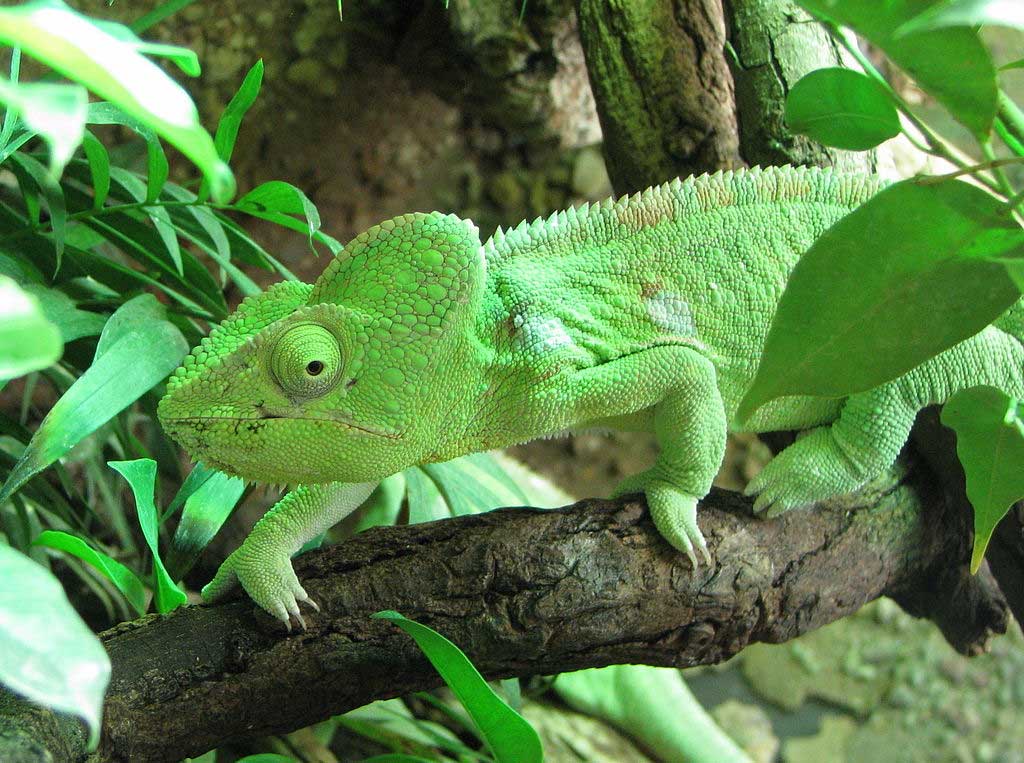
Madagascar giant chameleon in Prague zoo – dragus, CC BY-SA 3.0, via Wikimedia Commons
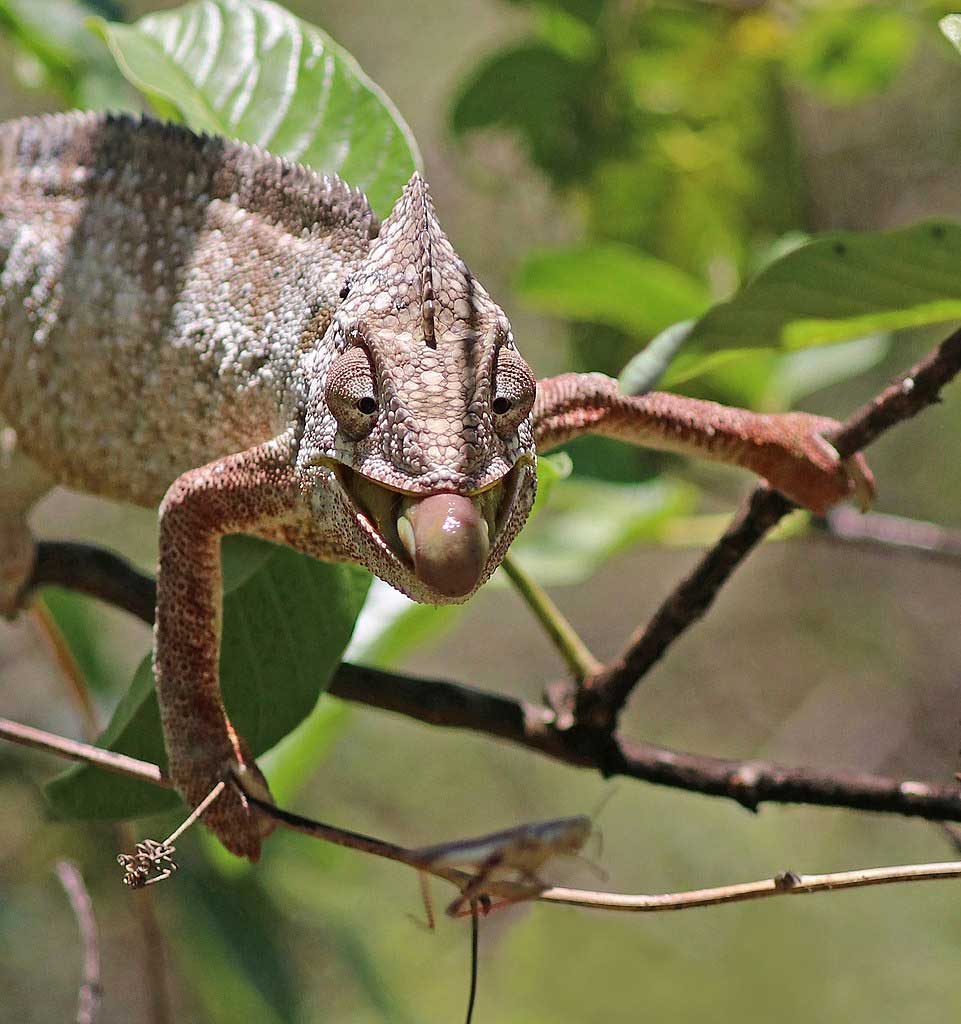
The Oustalet’s chameleon (Furcifer oustaleti), also known as Malagasy giant chameleon, leads a mainly sedentary life. Moves very slowly, or does not move at all, for long periods of time, allowing you to conserve energy and stay out of sight of predators, and also be himself a predator. When an insect passes, an unsuspecting lizard or small bird, his very long sucker-tipped tongue is launched to catch him. Language, which is loaded with springs and shoots forward like an arrow bow, can extend to almost twice the length of the entire chameleon.
Diet
Until recently chameleons were thought to be totally carnivorous.. Recently, Takahashi (2008) reported the first confirmed case of herbivory in the Furcifer oustaleti, who was observed to select and consume fruits from the bushes Grangeria porosa, Chassalia princei and Malleastrum gracile.
Reproduction
The maximum and average sizes of the layings are unknown, but it is known that females can put at least 61 eggs in a single laying, with a combined weight of 56 g. This registration is from February, but no other information is available on the length of the breeding season.
Gestation lasts a few 40 days and animals reach sexual maturity one year after hatching.
Threats to the species
State of conservation ⓘ
Minor Concern ⓘ(UICN)ⓘ
Apart from a small number legally exported as pets, the Malagasy giant chameleon is endemic to Madagascar, where it enjoys a stable population in various habitat types.
They are also found in a number of protected national parks across the country., but they are abundant enough across the country to earn the conservation status of «least concern«.
The "Malagasy giant chameleon" in captivity
Malagasy giant chameleon(Furcifer oustaleti) male feeding, Anja Community Reserve, Madagascar – Charles J. Sharp, CC BY-SA 4.0, via Wikimedia Commons
Chameleons are usually considered easily excitable animals. It is notorious that, in some particularly territorial species, the constant vision of a congener (for example, when two animals can be seen in adjacent terrariums) can lead to stress-related kidney failure and, Therefore, death! But, the Malagasy giant chameleon is a comparatively peaceful and quiet representative of the chameleon clan. Males do not get along with each other, and pregnant females are strictly solitary. But in terrariums large enough (a greenhouse is, of course, more suitable in view of the size of animals), these chameleons can be kept in pairs. The Malagasy giant chameleon it also shows this coldness towards humans.. Even if they are carefully caught in the hand, do not get too excited. The threatening mouth opening, that we know of many other chameleons, it only occurs with the Malagasy giant chameleon if you are provoked a lot. Field researchers say you can normally put a Malagasy giant chameleon on the shoulder; will stay there quietly for hours.
Since the Malagasy giant chameleon is comparatively common, the local population likes to take advantage of the voracity of these chameleons and put them in their gardens, where they eat unwanted animals up to the size of a mouse and thus keep them at bay.
The terrarium
To the Malagasy giant chameleon all the usual principles of chameleon care apply to you. This includes the need for relatively large feeding., What, However, is easy to satisfy for this species, since animals will eat all the usual food bugs, like crickets, domestic crickets, grasshoppers and zofas, as well as young nest mice; in the nature, small birds and reptiles are also eaten.
All insects that serve as food should always be sprinkled with one of the vitamin lime powders available on the market.
The need to drink water, which is also high, makes the care of chameleons always time-consuming, since most animals do not easily learn to drink from bowls. So, chameleons must be given to drink at least every other day with a pipette. But, there are some tricks to avoid it. Many chameleon caregivers use drip drinkers, of which a drop of water drips into a collection container placed underneath at intervals of 1-2 seconds. Chameleons recognize this simulated "rainwater" and drink. The most natural way to give chameleons a drink is by spraying the water that animals collect from the leaves of plants., etc. But this is also labor-intensive and can cause the terrarium to get too wet.. An elegant way is to install an artificial waterfall with a small aquarium pump. But, these systems are somewhat prone to failure and the pumps always break down – as in Murphy's Law- when you least need it, for example, during the holidays. A very clever way to make water move in the drinker and, therefore, that chameleons recognize it, is to aerate the container with an aquarium air pump available on the market. Simply hang the air hose in the bucket and adjust the air supply so that about two air bubbles per second come out of the hose.. A pleasant side effect of this method of watering is that it simultaneously increases the humidity of the terrarium, which should also be around the 70% of relative humidity for the Malagasy giant chameleon during the day; At night, humidity can rise up to 100%.
Due to their natural habits, the Malagasy giant chameleon can be classified as one of the easiest chameleon species to care for, as it does not react immediately with discomfort and subsequent illnesses if it gets too hot in the terrarium.
Daytime temperatures should range between 22 and 28°C, and under the spot they can rise up to 45°C. But, you always have to make sure that the animals can go to a relatively cool and well-ventilated place in the terrarium..
Reproduction
The female puts up 61 eggs after a gestation period of about six weeks. Eggs take between 210 and 280 days to hatch at an incubation temperature of about 28°C. Many breeders use vermiculite as a breeding substrate. Juveniles grow very quickly and reach sexual maturity at one year of age. In general, care and breeding are similar to those known Panther chameleon (Furcifer pardalis).
Buy one "Malagasy giant chameleon"
Although they are the largest chameleons, The "Malagasy giant chameleon" not necessarily one of the most expensive. You can find one in specialized stores for prices ranging from 150 – 300 EUR.
The Ball python (Python regius), also known as Royal python, found in the grasslands and open woodlands of western and central Africa. They are native to the Sudanese sub-province west of the Nile, in south sudan, the Bahrel Ghazal region and the Nuba mountains, from Senegal to Sierra Leone in West Africa, and in Ivory Coast and some parts of central Africa.
Characteristics / Appearance
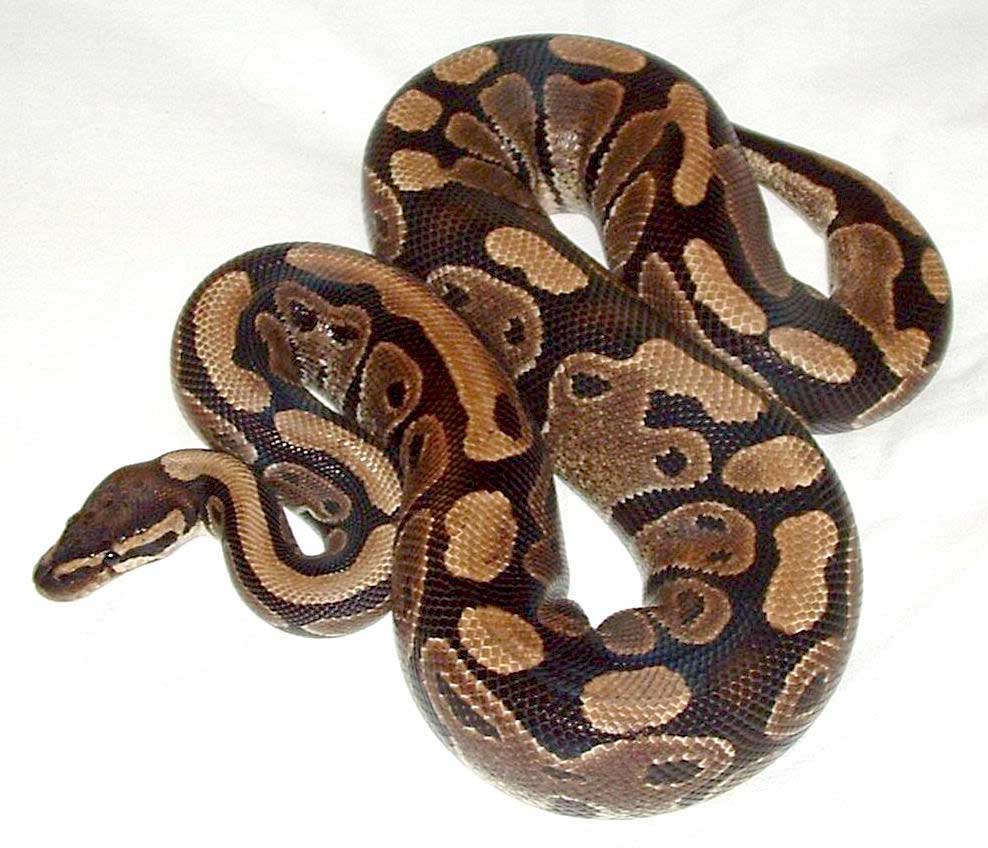
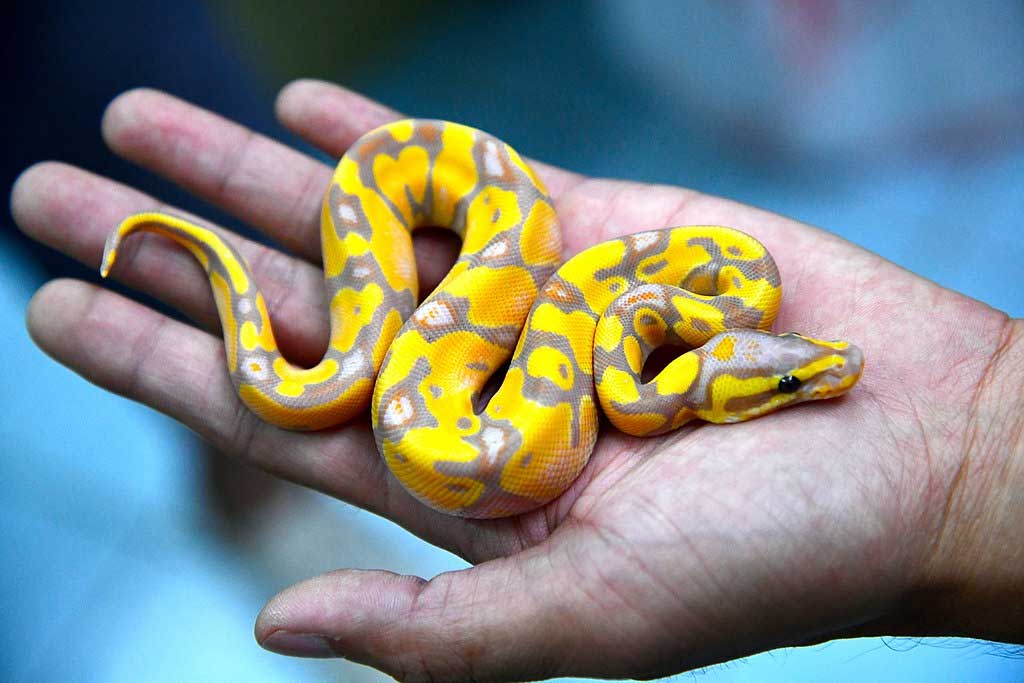
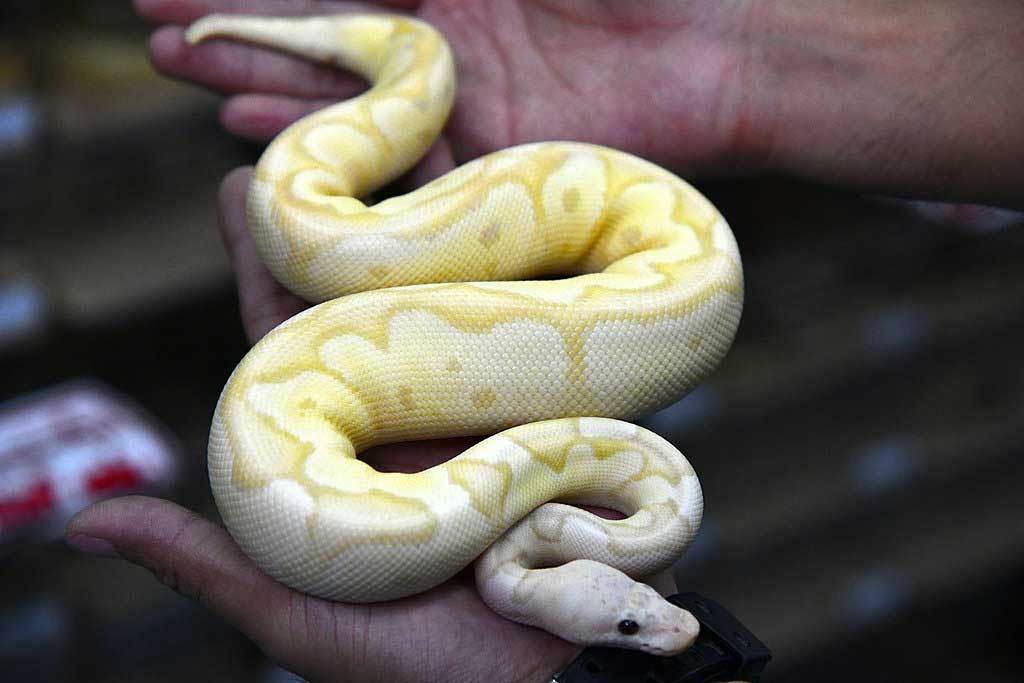
At birth, the Ball python measured between 25 and 43 centimeters in length and grows up to 1 or 1,5 meters in adulthood. There are some reports of Ball python found in nature with 1,83 metres in length. Their heads are larger than their relatively slender necks and are considered heavy-bodied.. The Ball python typical has large brown markings with lighter medium brown spots interspersed between the darker spots. They may also have yellow stripes from the nostrils to the eyes. The belly is usually ivory white.
Adult female ball pythons are larger than adult males.. This sexual dimorphism is not present in neonates, but it is evident in adults. Adult females also have longer jaws than their male counterparts.. The resulting increase in swallowing ability can improve your hunting ability.
Habitat
The Ball python spends most of its time on or under the ground, in burrows. They are most active at dawn and dusk. They inhabit savannah grasslands or open woodlands and are found in areas that have been cleared for agriculture..
Behavior
Ball Python from the Jatujak Market Pet Zone, Thailand – Tris T7, CC BY-SA 4.0, via Wikimedia Commons
The Ball python moves by rectilinear locomotion, in which bilateral symmetrical contractions propel it forward while pushing against the surface. The Ball python is known for its "balling" protection mechanism, in which it forms a tight ball with its head in the center in response to threats, which has earned it the common name of «Royal python«.
Developing
The pups of Ball python They measure between 25 and 43 centimeters; grown ups, between 0,9 and 1,5 m. The gestation period is about 44 to 54 days. Most of them lay their eggs during the second half of the dry season., from mid-February to early April. The eggs hatch from mid-April to mid-June.. About 3 weeks after ovulation, the Ball python female begins to shed her skin. The eggs are laid 4 weeks later.
Reproduction
The Ball python It has a long reproductive life that lasts between 27 months and 30 years. The breeding season is mainly from mid-September to mid-November., in correlation with the minor rainy season. One set is from 1 to 11 eggs. Eggs tend to stick together. A few days before hatching they lose their adhesion. Once the eggs are no longer attached and are ready to hatch, the offspring of Ball python they crack the shells with their egg tooth and make their way. The birth weight is 65 to 103 g., with an average of 86 g.. The females of Ball python reach reproductive maturity between 27 and 31 months. Males reach reproductive maturity between 16 and 18 months. Both male and female ball pythons have large cloacal spurs..
Humans can determine the sex of the python by placing a probe through the cloacal spur and into the inverted hemipenis.. The probe will go deeper into the base of the tail in the case of male ball pythons, encompassing of 8 to 10 subcaudal scales, in contrast to females, in which the probe can be inserted only at a distance of 2 to 4 subcaudal scales.
Once the females of the Ball python lay their eggs, they constantly group around them to protect them. The Ball python it also stays close to the eggs to protect them from predators.
After laying her clutch of eggs, the females of Ball python they coil around their clutches until they hatch (after about 2 months). The young become independent immediately, but they stay around for months.
Threats to the species
State of conservation ⓘ
Near Threatened ⓘ(UICN)ⓘ
The Ball python is classified as Near-threatened on the IUCN Red list; experiences a high level of exploitation and the population is believed to be in decline in most of West Africa. The Ball python is primarily threatened by poaching for the international exotic pet trade. It is also hunted for its fur, its meat and its use in traditional medicine.
Other threats include habitat loss as a result of intensifying agriculture and the use of pesticides.. Rural hunters in Togo collect gravid females and egg-laying, who sell to the snake ranches. Only in 2019, 58 hunters interviewed had collected 3.000 Ball python Alive and 5.000 eggs.
Life expectancy
The half life of Ball python in captivity is 20 years. Reports document that the maximum lifespan in captivity ranges from 28 years (at the Oakland Zoo) and 50 years (according to the Philadelphia Zoo). The average lifespan in nature is 10 years.
Food
The Ball python it is carnivorous and has movable upper and lower jaws. They use chemical and visual signals to hunt their prey.. This species sits and waits to ambush its prey. As they are heavy bodied snakes, they are less active and choose good ambush spots. The feeding strategy is to retract the head and neck and attack rapidly. After the quick hit, swallow prey alive or immobilize it by constriction.
They feed almost exclusively on rodents and eat infrequently. They have adapted by having the ability to extensively regulate gastrointestinal function with feeding and fasting.
The Ball python it feeds on rodents and is vital to control these pests, especially in rural communities. Rodent prey includes african giant rats (Cricetomys gambianus), the black rat (Rattus rattus), the wrinkle-nosed rats (species Oenomys), the furry rats (species Dasymys) and grass mice (species Lemniscomys).
The "Ball python" in captivity
Ball Python from the Jatujak Market Pet Zone, Thailand – Tris T7, CC BY-SA 4.0, via Wikimedia Commons
The Ball python It is the most popular pet snake and the second most popular pet reptile after the Bearded dragons. According to the IUCN Red List, although captive-bred animals are widely available in the pet trade, the capture of wild specimens for sale continues to cause significant damage to wild populations. Wild-caught specimens have a harder time adapting to a captive environment, which can cause them to refuse to feed, and are usually carriers of internal or external parasites. This species can do quite well in captivity, regularly living between 15 and 30 years with good care. The Ball python oldest recorded in captivity has 62 years, 59 of them in the San Luis Zoo.
The “Royal Python” terrarium
As one Ball python doesn't grow much, the space needed for the terrarium is manageable.
A plastic terrarium in the measures of 100 x 50 x 50 cm o 120 x 60 x 60 cm are completely sufficient for a Ball python, It has been shown in recent decades that a Ball python it develops excellently and better in flat and not huge terrariums than in a higher terrarium (in nature these species usually live in termite burrows and tree stumps), a terrarium height of 50 to 60 cm has proven to be very successful.
Like the natural habitat, as already mentioned, they are usually termite burrows or tree stumps, no climbing facilities or branches or the like are needed in a terrarium of Ball python, where they can climb.
Having vertical branches or objects rather brings disadvantages, Since the Ball python climb up them, and as an inexperienced climber could be injured by uncontrolled falls.
But, the Ball python must have several hiding places, like corcho tubes or cuevas, and it is also advisable to place them in different temperature ranges so that the python can choose its own place of comfort.
As the Ball python it's a snake that doesn't swim (although i can do it) just provide a small container of water. Must be cleaned regularly (once a day) and fill with new water.
Terrarium substrate for the «Royal Python»
A Ball python not very demanding on the substrate area, here you can configure and design almost according to your own decoration taste, it doesn't matter if it's a humus bark mulch mix, bed of bark or a bed of softwood, the Ball python you will feel comfortable in it.
Recent discoveries in the United States have shown that coconut products are excellently suited to maintaining a Ball python, so it is recommended to use coconut substrate for terrariums HUSK CHIPS From the first moment.
Humidity.
As already described, the Ball python is originally from central or western Africa, in its natural environment it rarely rains permanently, so the humidity is rather dry than wet. If a moist box with sufficiently moist Sphagnum moss is provided in the terrarium of the Ball python, this is completely enough, the Ball python will also look for a moist spot in the habitat if it needs a more humid environment. It would then be removed to the wet box. So, daily or regular spraying is not absolutely necessary.
Do not install an irrigation system, this is more than superfluous.
Heating and lighting
In fact, the light is more for us humans, Since the Ball python is a nocturnal animal, you don't need any elaborate lighting technology like in the desert terrariums of a Bearded Dragon, for example.
Spartan lighting with a small LED terrarium light is enough to simulate a day/night rhythm.
As the Ball python prefers a daytime temperature of 26-32°c, it is necessary to help with an artificial heat source. Today, the most suitable heat source is a thermal panel, controlled with a simple digital controller, as the Temperature Control Pro. The application is quite simple, the sensor of the control unit is placed in the desired location and the control unit is adjusted, for example, a 30°c daily temperature, the control unit regulates the terrarium permanently to the set value.
A night temperature gradient is advantageous, but also a "much discussed" topic, we recommend reducing the night temperature to 24-25°c or lowering the terrarium by 4-5°c.
As an alternative to a thermal panel, thermal design (heat source) can continue to be built in the classic way with a heat point or a ceramic radiator, but it is important that a protective basket is placed around the ceramic skirting with the point radiator or ceramic radiator to prevent burns.
It is not necessary to heat the entire terrarium to night or day temperature, the Ball python needs a temperature gradient to be able to retreat to a cooler place as well. So, it is recommended to place a hiding place in each heat zone.
Food
Usually, you should not feed a snake in the terrarium. It has been shown to be positive if the snake is taken out of the terrarium and placed in a feeding box. But, there are many opinions about what is wrong or right.
On one thing most snake keepers agree, animals kept in the cage must also be fed in the cage.
The Ball python can be fed to many different rodents such as mice or rats, it is no longer necessary to feed the Ball python with live rodents in this captive breeding season. like many things, this is also a controversial topic, whether to feed live or dead rodents to a snake (frozen food).
The Ball python feeds on small mouse pups and later on rat pups when young. As it grows, it is necessary to adjust the size of the dam.
It is really urgent to make sure that the animal is not fed only mice / baby rats throughout their lives.
A snake can eat much larger prey, many, especially novice reptile keepers, they underestimate this.
Buy one "Ball python"
Prohibition of the sale of «Royal Python» in Spain
The Ball python (Python regius) not for sale in many countries, since its sale and possession is strictly prohibited.
In Spain it has recently been included as an invasive species. (Royal Decree that regulates the Catalog of Invasive Species in Spain, 1 of January of 2022). The snake Ball python (Python regius) swallows its prey alive or after suffocating it shows great preference for rodents.
The regulations allow them to be kept after that date, provided that the owners communicate their tenure to the corresponding autonomous community and this establishes control conditions, such as sterilization, marking or a responsible statement that this species will not be released into the environment.
This makes it a potential competitor against other native species..
Their diet fits in with that of native species, and, In addition, its territoriality, aggressiveness and size could compromise the survival of numerous species in our natural environment.
The New Guinea ground boa (Candoia aspera) is present in Papua New Guinea, Irian Jaya, various Indonesian islands, the Moluccas, the bismarck archipelago, the Solomon Islands and the Tokelau Islands.
Subespecies list
Candoia aspera aspera (Günther, 1877)
Candoia aspera schmidti (Stull, 1932)
Characteristics / Appearance
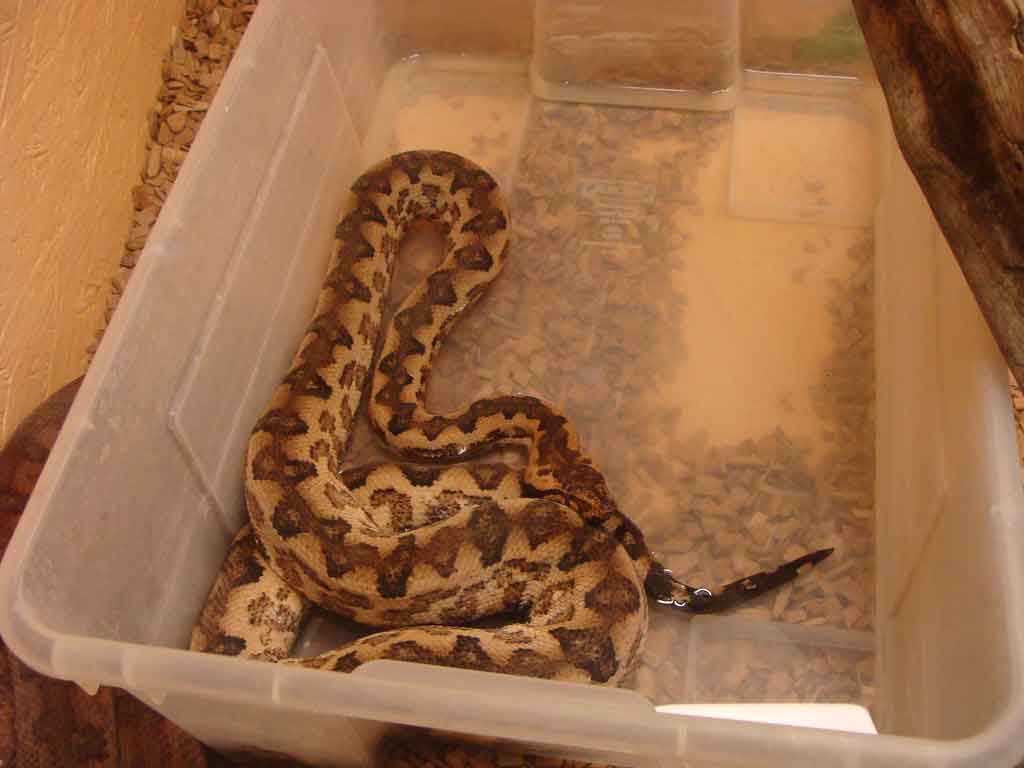
The New Guinea ground boa It is a species of relatively small boa. On average, this snake only reaches a few 60 cm., the individuals of 80-100 cm are a big exception. The scales are strongly rough/ribbed and they have a stocky physique and the tail is relatively short – only 7-8% of the total length. The reason why this species in English is sometimes called «Viper boas» is due to the similarity in terms of complexion and pattern with the death adder (Acanthophis) which also occurs in the same area. They blend in perfectly with their surroundings and camouflage well.
Habitat
Its natural habitat consists of moist lowlands, forests and swamps where the water level is under the influence of the tides and the rainy season. It is not uncommon for these regions to be seasonally flooded.
Behavior
The species is mainly nocturnal and moves on the ground and is only occasionally found in trees.. Animals often hide under vegetation or leaf litter. when they are threatened, they curl up with their heads hidden in the center. They feed on skinks, other lizards, frogs, small land mammals and birds. The New Guinea ground boa it is viviparous.
Threats to the species
This species is found in the pet trade and populations in Indonesia are subject to CITES quotas..
Yuwono (1998) recorded trade in this species from Indonesian New Guinea, and that thousands of specimens could be collected if needed.
Natusch y Lyons (2012) observed trade in this species from Jayapura and the Vogelkop in New Guinea Indonesia. Between September 2010 and April 2011 fifteen and forty-four individuals were recorded, respectively, in wildlife trades. The quota for this species was 500 from Papua and 800 from West Papua.
There is no Papua New Guinea quota.
It is unlikely that there are major threats to this species. Found in the pet trade, but this is unlikely to pose a significant threat.
The "New Guinea ground boa" in captivity
The terrarium
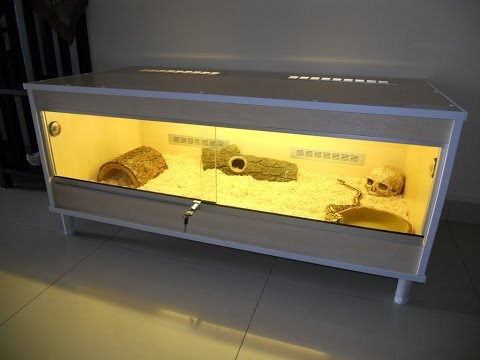
Exo Terra terrarium 90 X 45 X 45 cm.
Since these snakes barely climb, the height of the enclosure is not as important as a suitable floor area. Because of his shy nature and reclusive lifestyle and earthly needs, this snake would "fit" to be housed in the well-known snake "rack". But, you can also opt for a naturally decorated terrarium (bioactive). This is not only very pleasing to the eye and has a lower level of maintenance. You will also be able to observe them better at night, when they are active, and we all agree that this is a big and important part of reptile farming, observing their interesting behaviors.
A very suitable terrarium for New Guinea ground boa is the terrarium Exo-Terra Glass from 60x45x30 to 90x45x45. These have enough surface area for a single animal, they are well ventilated and have a good closing system.
Substrate
Give it a substrate at least 8cm deep as these animals love to dig. The best thing to choose is a substrate that retains moisture well, such as coco peat soil or coconut chips.. Optionally, can be mixed with reptibark, cypress bark or mulch. Keep the soil moist at all times, but not wet. If the environment gets too dry, the snake will have trouble shedding properly.
Humidity
Keep the humidity medium around 70-80% and do regular nebulizations to maintain this level. As these snakes love to get soaked, it is important to provide them with a container of water large enough for them to submerge completely. Keep in mind that these snakes usually defecate in the water. Thus, change the water daily and disinfect the drinker once a week.
Terrarium decoration
Decorate the terrarium with various hiding places like caves for reptiles, cork logs and tropical wood. In the terrarium you can also add live plants such as small Ficus and Scindapsus. Plants help a lot to maintain humidity, they provide additional hiding places and are a nice way to decorate the terrarium.
Temperature
The heating can be placed on one side by means of a heat radiator or a ceramic heater connected to a thermostat to avoid too high temperatures. A spot heat lamp is not recommended because these animals do not naturally bask. Lighting with a low power bulb, such as a compact daylight lamp or fluorescent tube, will mimic the natural day-night rhythm. This species requires a moderate but fairly constant temperature. In its natural habitat there is little difference between day and night temperatures. You have to provide an average temperature of 26-28 degrees centigrade with a hot spot of 30-32C. At night the temperature can drop to 24C.
Food
Their natural diet consists mainly of various species of frogs and small lizards such as geckos and skinks., they will only sporadically eat a small rodent. Due to this natural diet, especially the Candoia newborns seem reluctant to accept small rodents at birth. Thus, sometimes it is necessary to help or force them to eat a few times before they begin to feed themselves. Another possibility is to aromatize a mouse (live) pink with a lizard or a frog. Candoia hatchlings often react to the scent and soon start feeding on these scented prey. Once the hatchlings have had several of these scented prey, the number of odors can be reduced so that they become fully accustomed to feeding on rodents. Wild-caught adult animals seem to easily change to small rodents (live).
Buy one "New Guinea ground boa"
Depending on the country where a "New Guinea ground boa", its price can range between 200 – 600 euros in the exotic animal market.
1. New Guinea ground boa, Viper boa (English).
2. Boa vipère de Nouvelle-Guinée, Boa vipère (French).
3. Neuguinea-Boa, Viper-Boa, Pazifikboa, Südsee-Boa (German).
4. Jibóia-da-nova-guiné (Portuguese).
5. "Boa terrestre de Nueva Guinea", Boa de tierra de Nueva Guinea, Boa viperina (español).











_juvenile.jpg)
_head.jpg)

_female_Andasibe.jpg)

_male_feeding_Anja_Community_Reserve_1e.jpg)


