▷ The world of Pets: Dogs, cats, birds, reptiles, amphibians
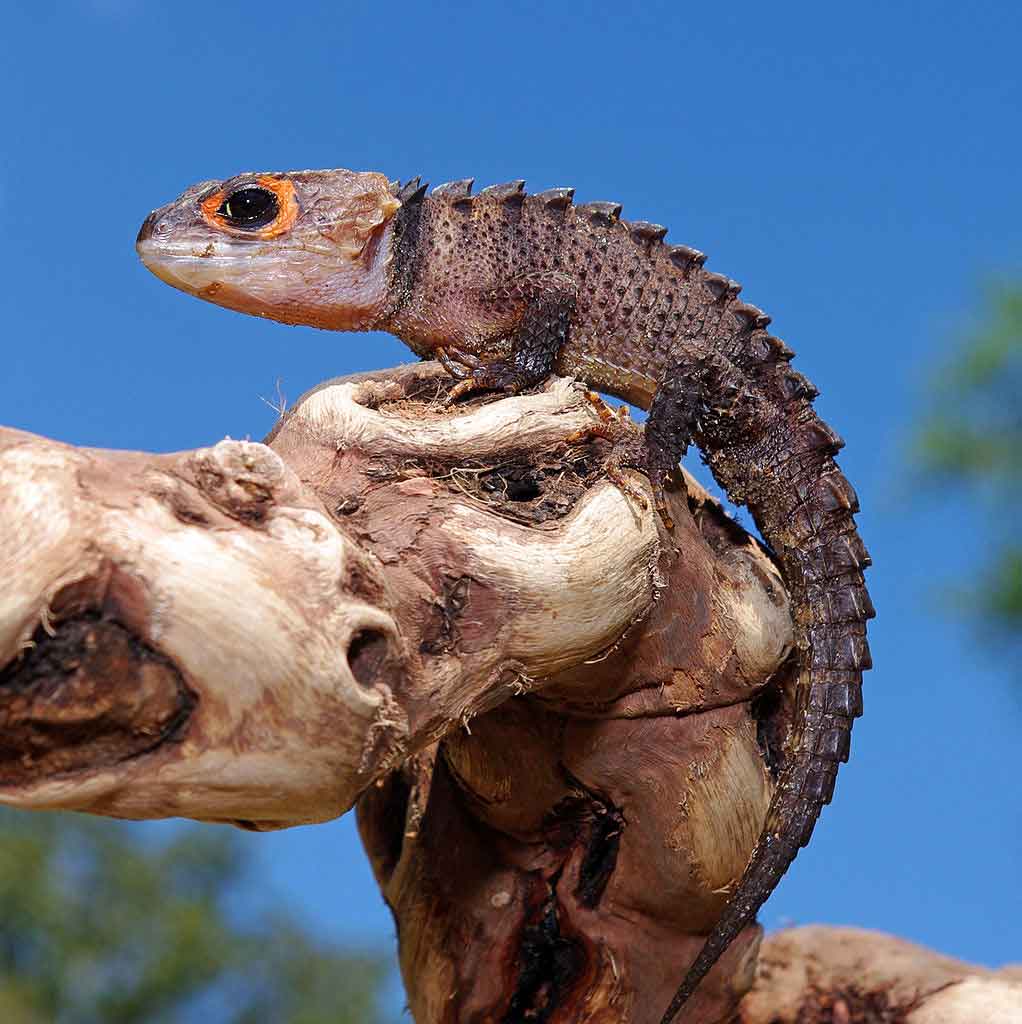
Red-eyed crocodile skink
- Tribolonotus gracilis
Origin: Indonesia and Papua New Guinea
Gender: Tribolonotus
Life expectancy: 10 - 12 years
Length: 17 - 20 cm.
Precious and very rare Indonesian lizard that nowadays is very difficult to find. It likes humid places so we will put a terrarium preferably with moss and a small bathtub in which it can get into, since he likes to even immerse himself completely. Tº aprox. of 27ºC. Insects.
Price ranges from 150 and 250 EUR.
▷ The world of Pets: Dogs, cats, birds, reptiles, amphibians
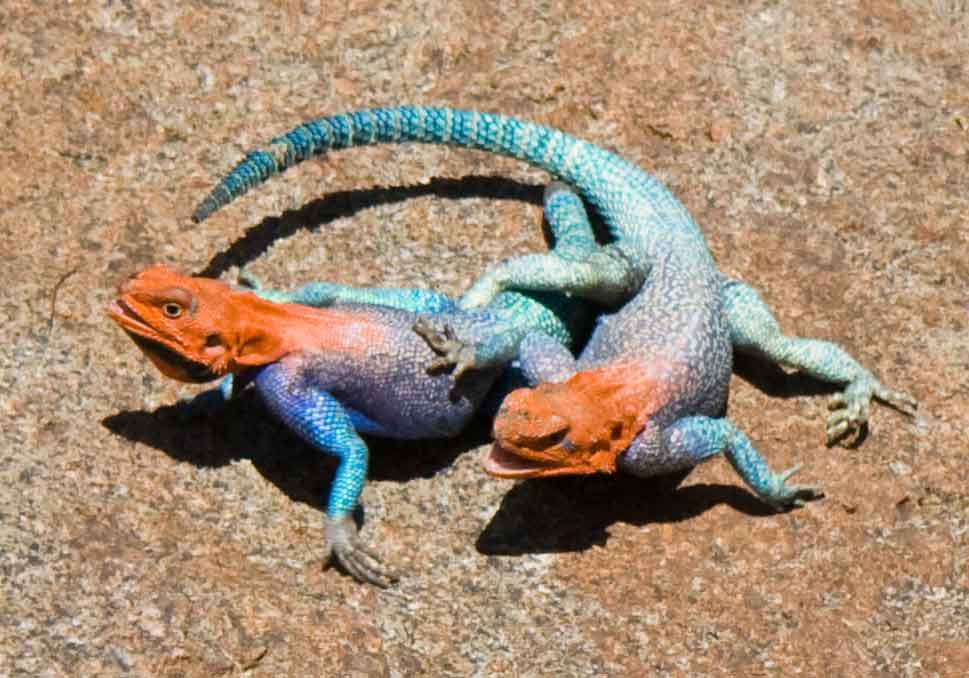
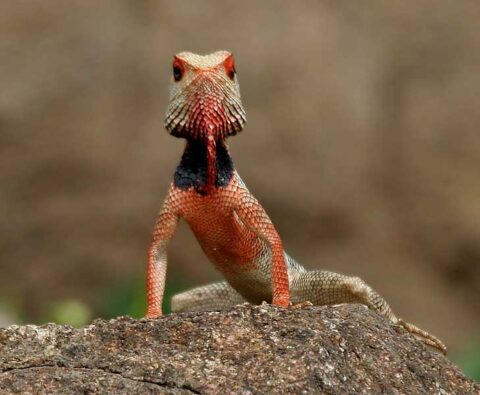
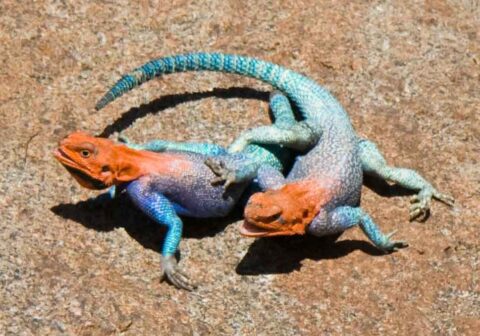
The Red-headed rock agama (Agama agama) It is one of the most colored lizards that we can find, since even the females are quite colorful. They are desert terrarium animals like the Pogona, with whom they can also coexist perfectly.
The Red-headed rock agama has a very marked color change, but it is only visible during the day. At night, the look of a Red-headed rock agama is uniformly gray. According to your mood, the Red-headed rock agama changes its color.
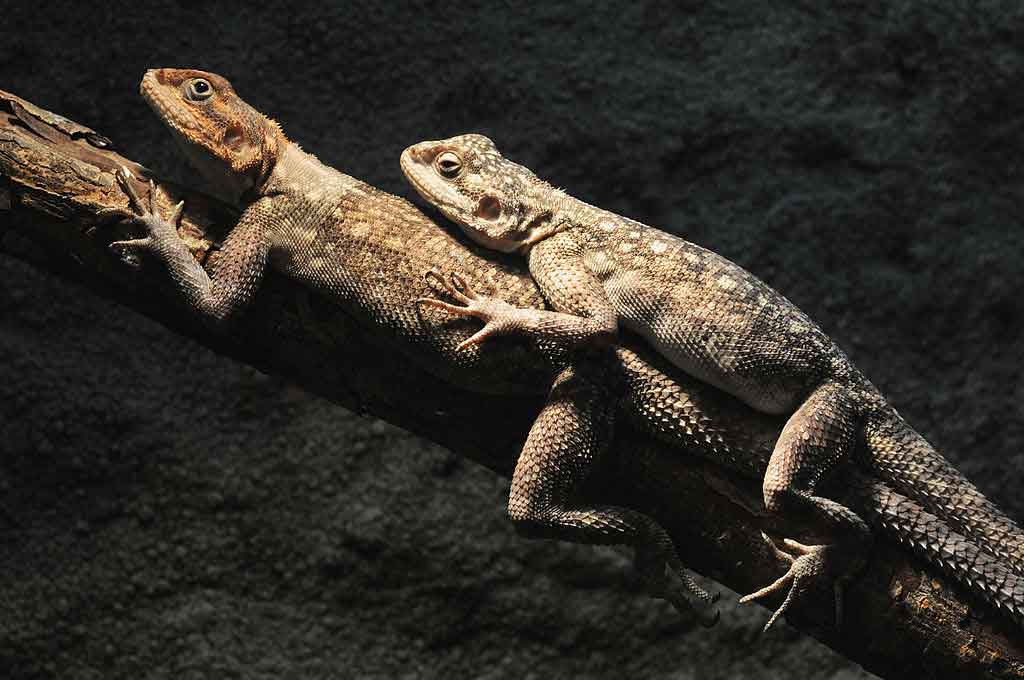
The females., juveniles and lower-ranking males have brown to gray bodies. Dominant males are recognized by their flattened steel-blue or olive-green body and yellow head and tail., about orange to red. Depending on the subspecies, head color spreads over anterior body. The males acquire their splendid colors when they have warmed up in an elevated place during the day.
During gestation, females show yellow to orange spots on flanks and turquoise spots on head. The tail, long and round, does not drop, unlike numerous iguanas or of the Skinks.
Its size varies between 13 and 30 full length cm. Males are usually 7,5 to 12 cm longer than average female.
Behavior
Agama agama at the Schmiding Zoo in Schmiding near Bad Schallerbach, Austria – Michael Gäbler, CC BY 3.0, via Wikimedia Commons
The Red-headed rock agama lives in colonies with a dominant male in a limited area. Group size can be up to 25 individuals. At dawn, group members are activated. During the day, the dominant male usually stays in a high place and shows his color.
Yet Red-headed rock agama also likes to warm up on a high place in the scorching sun. Stand on front legs and stretch body, and occasionally the tail, diagonally up. When a sexually mature young male changes color, is expelled by the dominant male and has to find his own territory. In a fight with a rival, the fighting male's head turns brown and white spots appear on the body. The males emit hissing sounds and try to strike the opponent's head with their tail.. But, before doing it, adopt a threatening posture. They shake their heads back and forth, lift the body off the ground and unfold the skin folds of the throat.
The "fire lizard" in captivity
Terrarium
In its original habitat, the Red-headed rock agama live in groups of several animals. This condition must also be maintained in the terrarium.
The terrarium for him Red-headed rock agama must have very generous dimensions for a couple, or better, one male with two females, since the Red-headed rock agama captured in the wild have a pronounced flight reflex, apart from great mobility. So, dimensions must be at least 200 cm long x 100 cm deep x 150 centimeters tall.
As the Red-headed rock agama he is very hungry for sun, must be brightly lit, of course with UV, temperatures should be 26-32°C with a basking point per animal up to 38°C. Humidity during the day should be at a constant level. The humidity during the day should be 40-50%, but it should be sprayed every morning and every night.
The terrarium must be provided with a sand mixture suitable for digging as a substrate, as well as various stones and branches to climb, in order to provide the animals with sufficient variety.
Diet
as food, live insects come into question, they must be pollinated regularly, if possible you have to feed many ants, which unfortunately is hardly possible without raising, in any case the diet should be as varied as possible.
Reproduction
The Red-headed rock agama (Agama agama) it's hard to breed
In the wild, mating usually occurs before the rainy season, but it is probably less due to the time of year than to the increased food supply, so maybe you could try to provoke mating in the terrarium by giving more food and spraying with special intensity. If this is successful, which, as I have already said, would be a very lucky case, the eggs are incubated at about 30°C and around 70% of humidity during 60-90 days.
For sale "Red-headed rock agama"
First of all, I would like to say that almost all animals found in trade or exchanges are wild caught, and that it takes a lot of intuition to keep these animals, and wild-caught animals in general, unfortunately most of the animals that are sold die due to improper care, and only very rarely are hatchlings successful in the terrarium, so I would advise anyone who is not really versed in terraristics not to buy them, I know that animals are beautiful, but precisely for this reason we must try to protect them.
The price of a "Red-headed rock agama" in the exotic animal trade ranges from 20 – 25 EUR.
▷ The world of Pets: Dogs, cats, birds, reptiles, amphibians
Feeding the lizards
What do lizards eat in the terrarium?
The lizards they feed mainly on living beings, usually from invertebrates. But this pattern does not work for all lizards. Some are always vegetarians, others change to vegetarian during their evolution.
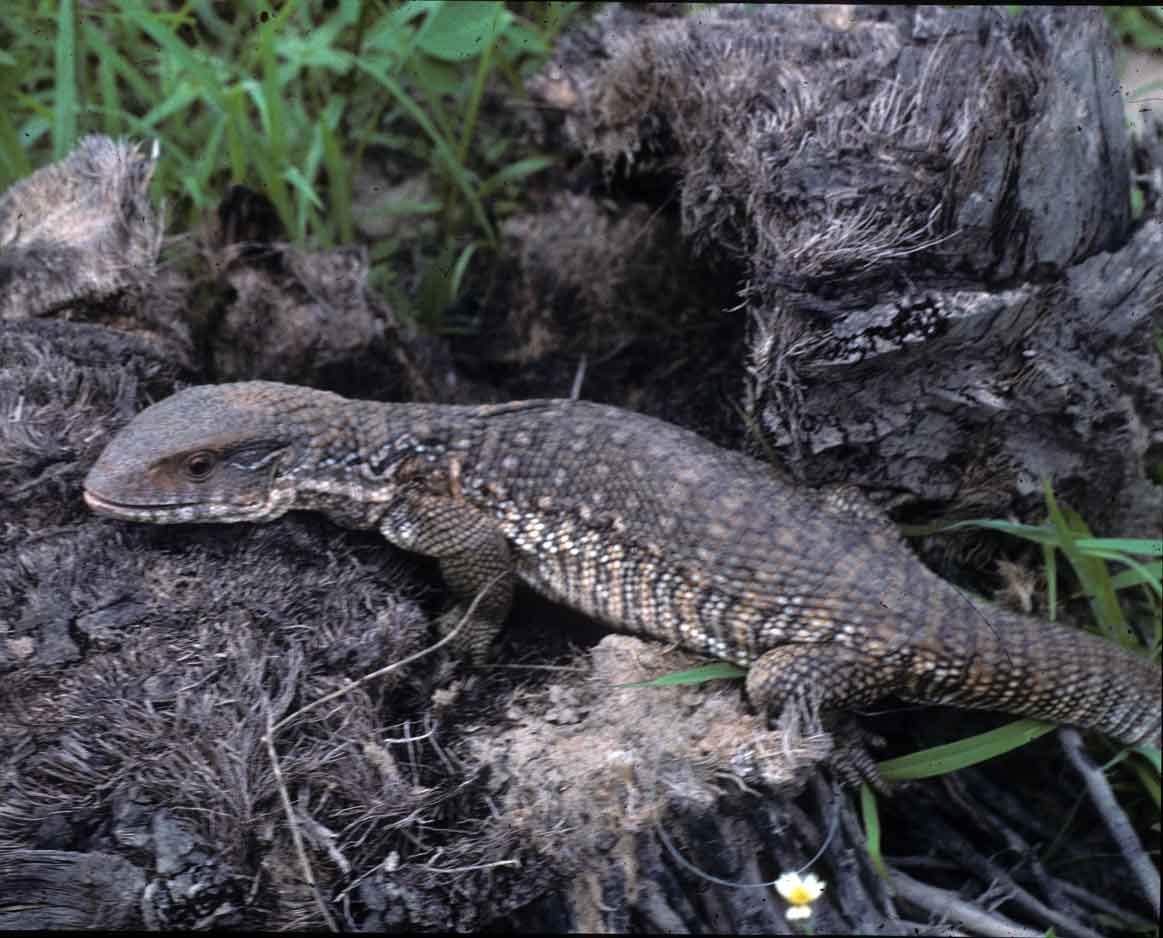
Varanus exanthematicus in the coastal plain of Ghana – Daniel Bennett, CC BY-SA 3.0, via Wikimedia Commons
Content
What do lizards eat in the terrarium?
Most species of lizards are not very picky about what they eat., as they eat almost all invertebrates and arthropods that they can master. As with snakes, among the lizards there are also feeding specialists who are not suitable for the care of the terrarium (for example, ant and egg eaters). On the other hand, the vegetarian and those who eat snails are very suitable.
Most of the lizards use the combination language and the Jacobson's organ to search for food to look for food, which often exceeds the olfactory capacity of the nose.
Animal-feeding lizards also find their prey by eye contact, especially for their movements. in the terrarium, for example, you can observe a Gecko sitting a few inches from an insect that doesn't move. If you move, will eat it immediately; if you stay still, the Salamander will leave the place and look for food elsewhere. But, not all lizards display this hunting behavior; many smooth lizards, for example, they also perceive the immobile arthropods as food and prey on them.
Gecko
The capture and treatment of the food vary, of course: for example, the Chameleons They "shoot" their food with their tongue at great distances and swallow it; the Skinks and other lizards push on purpose with the muzzle, using lateral head movements to place bulky limbs in a good position to swallow, or they are completely stripped away; the Geckos and some Monitor lizard they hit large prey caught with their mouths against objects to stun them, crush or soften them.
Types of food
Depending on the species and, above all, its size, you have to offer feed the lizards once or twice a day. Young animals, in particular, they should be fed once a day if possible.
The following types of food are suitable:
Various types of crickets, domestic crickets, fruit flies, flies, your worms, various types of worms, mealybugs and their larvae, other beetles and their larvae, wax moths, wax worms, various types of grasshoppers and cockroaches, Collembola, oven fish, mealybugs and prairie plankton. In the case of the latter, nature conservation laws must be respected and poisonous food animals may not be given to the young.
Some of the food species mentioned can be purchased, but the breeding of some of these invertebrates is quite easy and also advantageous, as then there is always enough food available, also in the required size. In general, the animals themselves must be fed a substantial diet, that is to say, they should only be offered the best food. Some animals that our lizards feed on would immediately hide in the terrariums, so they must be offered in suitable containers or directly on the tweezers.
Vegetarian food
Offering vegetarian food is easier. In general, food can be placed directly on a plate or in a bowl in the terrarium. Also in this case it is important to offer food during the activity time of the fry, that is to say, do not put food in the terrarium at night (this does not apply to Skinks night and vegetarian wraparound tail).
Some vegetarians also like to eat dry or wilted foods. (spiny-tailed lizards), but vegetarians also get much of the fluid they need from their fresh, green foods. The “lettuce” diet should be a thing of the past, because lizards need more nutrients than they contain.
Wild herbs are especially suitable for feeding vegetarian lizards: the leaves and flowers of dandelion, clover varieties, nettle, alfalfa, also sprouted wheat and various types of banana, lentil and thistle. Also vegetables like zucchini, pumpkin or cucumber, while hard varieties such as carrots can be offered grated. Even hay is an important part of the food assortment..
Some more important notes:
It is better to use homemade or organic products, as many vegetables and fruits imported from southern Europe, in particular, are heavily contaminated with various toxins. It also, the vegetables offered should be washed thoroughly. The mixture of lime preparations and vitamin products should be used at appropriate intervals.
Like the skinks mentioned are fairly large members of your family, they can usually break large shell snails by themselves with the help of their jaws. The smallest snails should be offered to their young. If they are not available in appropriate sizes, open the shells of large snails.
To some lizards, especially to some species of Geckos, like to eat sweet foods. For this reason, in the nature, lick the overripe fruit or eat the nectar of the flowers. They are offered fruit pulp, fruit yogurt or fruit puree in small bowls, that are placed on the ground or on top of the terrarium, according to the way of life of lizards. You have to be careful not to give these sweet food components too often, since many lizards then tend to gain weight.
To other lizards - for example, the Monitor lizard or the Argentine black and white tegu (Salvator merianae)- like to eat ready-made foods, as dog or cat food, heart meat of cow and poultry, dead chicks, Rats, hamsters or guinea pigs, instead of live food. Keep in mind that day-old chicks, for example, do not contain large amounts of nutritional values, so they should not be fed or only very rarely.
▷ The world of Pets: Dogs, cats, birds, reptiles, amphibians
The Agamid Lizards are found in Europe, Africa, Asia and Australia. They show an astonishing diversity of forms and behaviors. They inhabit dry deserts, steppes and forests. The Flying dragons of the gender Draco can plan from one tree to another, the Thorny devils (Moloch horridus) have a system of microscopic grooves on their skin to transport rainwater or moisture from fog to their mouth. The Agamid Lizards they have excellent eyesight and hearing. The sense of smell is not very developed, despite the presence of olfactory cells in the nostrils and Jacobson's organ.
Between the Agamidae, six subfamilies are generally recognized:
Agaminae (Africa, Europe and South Asia)
Amphibolurinae (Australia and New Guinea, 1 species in Southeast Asia)
Draconinae (South and Southeast Asia)
Hydrosaurinae ( Hydrosaurus , Papua New Guinea, Philippines and Indonesia)
Leiolepidinae ( Leiolepis , Southeast Asia)
Uromasticinae ( Saara and Uromastyx , Africa and South Asia)
▷ The world of Pets: Dogs, cats, birds, reptiles, amphibians
Chinese softshell turtle
- Pelodiscus sinensis
Origin: China, Taiwan, Korea, Manchuria, Vietnam and Japan.
Gender: Pelodiscus
Life expectancy: 35 years
Length: 28 cm.
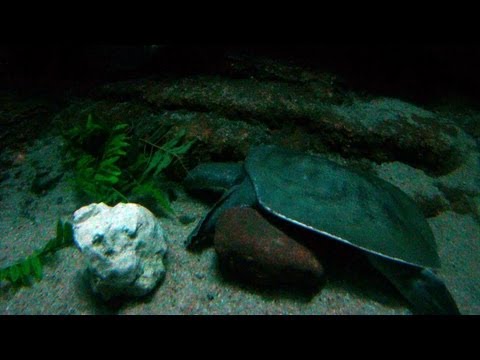
The Chinese softshell turtle it is completely different from all other turtles, if only for the soft shell.
“Chinese softshell turtle” Bangkok, Thailand by J. Maughn – Flickr
Content
Origin / Distribution
The tortoise we know in Europe as Chinese softshell turtle has recently been subjected to a great deal of taxonomic work by scientists. In fact, for many years the name was used Pelodiscus sinensis for all Chinese softshell turtles. In the meantime, the genre has been divided into many ways:
Pelodiscus parviformis – Small Chinese softshell turtle
Pelodiscus sinensis – Chinese softshell turtle
Pelodiscus variegatus – Spotted softshell turtle
Probably not the end of the story and more species will be added. It is questionable to what extent care was taken to keep these forms separate on Asian breeding farms.; there is already evidence of the existence of hybrids on farms. It is also doubtful whether the specimens found in Europe can be clearly assigned to one of the species.
Currently the Chinese softshell turtle (Pelodiscus sinensis) is widespread in China (Anhui, Fujian, Gansu, Guangdong, Guangxi, Guizhou, Hainan, Hebei, Henan, Hong Kong, Hubei, Hunan, Jiangsu, Jiangxi, Nei Mongol, Shaanxi, Shandong, Shanxi , Sichuan, Yunnan, Zhejiang) and they also live in Japan, Korea and Vietnam.
Characteristics / Appearance
The Chinese softshell turtle reaches a body length of 15 to 25 centimeters. Males are significantly smaller than females, until 15 centimeters.
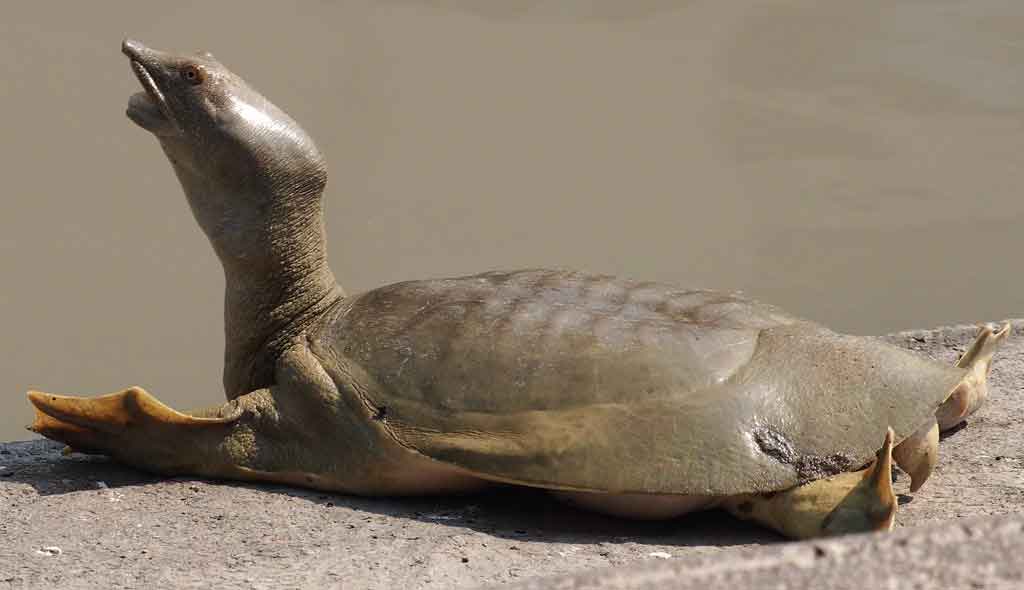
The shell is relatively flat, with an elevation in the anterior part in the form of a hump. Like all softshell turtles, the shell of the Chinese softshell turtle it is not rigid, but soft and flexible. The shell surface is smooth and mostly olive-green to olive-brown in color.
The ventral plastron is predominantly whitish to cream in color.. The plastron of juveniles is red.. Like the shell, the plastron has a leathery appearance.
The neck is long and much thinner than the huge head.. head area, especially under the eyes, shows some lighter spots. The tip of the nose has been transformed into an elongated snorkel.
Adult males and females cannot be distinguished by size alone. In the male, the root of the tail is much thicker than in the female. Limbs end in long fingers, each with a small claw.
Between the fingers, the Chinese softshell turtle has clearly visible webbed feet, which makes her a very good swimmer. In the period from October to March, this chinese tortoise hibernates.
Habitat
The Chinese softshell turtle lives in water most of the time, and only comes out to the shore to sunbathe and lay her eggs. When they rest in the water, they are usually buried in the ground. The waters usually have a muddy substrate. Here the turtle can dig with special ease and speed.
Behavior
The Chinese softshell turtle has a leathery soft shell. This shell naturally offers less protection, so these softshell turtles are more aggressive than other aquatic turtles. Another tradeoff for the soft shell is different behavior, to the Chinese softshell turtle likes to bury itself in sandy substrate.
With its very long neck and huge fin-shaped legs, They are excellent swimmers and very effective predators.. Their diet is predominantly carnivorous.. eat worms, insects, snails, crustaceans and fish. A fascinating aquatic turtle and very easy to maintain.
Threats to the species
In nature the Chinese softshell turtle is almost extinct. The reason for this is not just habitat destruction, but also catch for Asian food markets and traditional Chinese medicine.
The "Chinese softshell turtle" in captivity
Chinese softshell turtle – S64, CC BY 3.0, via Wikimedia Commons
Aquaterrarium
For the Chinese softshell turtle of up 15 cm of shell length, an aquarium with a base surface of 100 x 40 cm.; The water level should be such that soft-shelled turtles standing on their hind legs can barely reach the surface of the water with their “trunk.”.
In principle, the length of the aquarium must be at least five times the length of the shell. The Chinese softshell turtle spends a lot of time buried in the sand, but she is an excellent swimmer and explores the tank a lot.
Basically, the substrate is a very important element for this species of turtle because they spend a lot of time buried in it. Its soft shell offers little protection, so buried in the substrate they can compensate for this disadvantage. So, the substrate must be sand. The substrate for young animals should consist of a layer of sand of 6 to 8 cm thick. The thickness of the sand layer will increase with growth, so that the layer of sand always corresponds to at least twice the height of the shell, but better to the width of it. In this way, the Chinese softshell turtle can comfortably dig into the substrate.
heavy furniture, like the stones, they have no place in an aquarium for Chinese softshell turtle, precisely because the turtles would undermine them. But, you can create some structure above the sand layer with some roots. You can even plant, but not with plants that form roots in the substrate.
for filtration, external pot filters are recommended, since the inmates are quickly victims of the destructive fury of the Chinese softshell turtle.
Lighting and ground part
It is often said that the Chinese softshell turtle does not need a land part. This is a mistake. These turtles occasionally bask in the sun, both in the wild and in the aquarium. Not as often as ornamental turtles, but they do. So, turtles should be given the opportunity to do so even when kept in an aquarium.
For juveniles and males, a piece of land made of cork or a willow bridge is enough. If they remain female, must have an egg-laying area with a substrate depth of at least 20 cm..
For one Chinese softshell turtle, metal halide lamps with a UV component have proven effective for lighting. For fry up to 15 cm., is enough a hqi with 35 watts, for example the set of lamps SolarRaptor HID incl. ECG + ClampLamp* or the complete lighting set Exo Terra Sun Ray*. For the Chinese softshell turtle bigger should be a lamp 70 watts. The distance between the lamp and the sunbathing area on the ground must be chosen in such a way that a temperature of 40-45 °C.
This turtle's shell seems to "let through" UV-B light more easily, so it is necessary to sunbathe in a less prolonged and intensive way to produce enough vitamin D. So, sunbathing on the surface of the water may be enough and you don't necessarily have to leave the safety of the water to do so.
Food
Although in nature the Chinese softshell turtle feeds mostly in the evening and at night, in the aquarium it easily accepts food also during the day.
The diet of this turtle in the wild is mainly carnivorous.. They feed on worms, mussels, snails, crustaceans, amphibians and fish, but also seeds and other parts of the water lily (Euryale ferox). This can be easily reproduced in the aquarium with dry food animals, frozen food and live food. While the juveniles can be fed daily in the year of hatching, it is enough to feed the Chinese softshell turtle adult one to three times a week.
Aggressiveness
These softshell turtles are more aggressive than other aquatic turtles. Its shell offers little protection, so they bite quickly. If you take them by hand, you'll be amazed how long his neck can get. Even if you grab them by the back half of their shell, they can bite you.
Chinese soft-shelled turtles are also very aggressive towards each other.. They are very territorial and can constantly bite and chase other inhabitants. So, it is recommended to keep this species of tortoise individually, even when young.
Reproduction
The Chinese softshell turtle They reach sexual maturity at about 14-18 cm..
Softshell turtles are more aggressive than other aquatic turtles. Its shell offers little protection, so they bite quickly. If you take them by hand, you'll be amazed how long his neck can get. Even if you grab the Chinese softshell turtle by the back half of its shell, can bite you.
The Chinese softshell turtles They are also very aggressive towards each other.. They are very territorial and can constantly bite and chase other inhabitants. So, it is recommended to keep this species of tortoise individually, even when young.
Reproduction
The Chinese softshell turtles They reach sexual maturity at about 14-18 cm.. Like other aquatic turtles, mating takes place in spring and spawning takes place in spring and summer. They bury their eggs as deep as 20 cm.. Each female can lay up to five clutches of 5-50 eggs each.
The Chinese softshell turtle basically has a genetic sex fixation, so it is not influenced by the playback temperature. So, the sex of the turtle cannot be influenced by hatching temperature. The ideal is to incubate the eggs at about 28 °C, and the young are born after a little more than 50 days.
The growth of the Chinese softshell turtle it's fast. After hatching with 3-3,5 g, reach of 11,5 to 18,0 g in hatching year, a year already 100,0 – 125,5 g, at two years they weigh 220,0 – 263,0 g and at three years already 450,0 – 480,0 g.
Buy one "Chinese softshell turtle"
The price of a "Chinese softshell turtle" at the exotic animal market, ranges between 20 – 40 EUR and 60 – 100 euros for the albino species.
1. Chinese softshell turtle (English).
2. Trionyx de Chine, Tortue à carapace molle de Chine (French).
3. Chinesische Weichschildkröte (German).
4. Tartaruga-de-carapaça-mole-chinesa (Portuguese).
5. "Tortuga china de caparazón blando" (español).
Sources:
Ernst, C. H. y J. E. LOVICH (2009): Turtles of the United States and Canada – Second edition. – The John Hopkins University Press (Baltimore): 827 pp.
Wolf, B., Ziegler, T., Pham, C. T., Ong, A. v., & U. Fritz (2019): A new species of Pelodiscus from northeastern Indochina (Testudines, Trionychidae). – ZooKeys, (824), 71. HTTPS://www.ncbi.nlm.nih.gov/pmc/articles/PMC6382751/
Gong, S., Vamberger, M., Auer, M., Praschag, P. y U. Fritz (2018): Chinese softshell turtles' ancient ranching (Pelodiscus spp.) causes massive erosion of biodiversity. – The Science of Nature, 105(5-6), 34.
Gong, ALREADY., L.-F. Peng, S. Huang, Y.-F. Lin, R.-Y. Huang, Y.-H. Coins, D.-C. Yang and L.-W. Not (2021): A new species of the genus Pelodiscus FRITZINGER, 1835 (Testudines: Trionychidae) de Huangshan, Anhui, China. – Zootaxa 5060(1): S. 137-145.
Kuzmin, S. L. (2002): The turtles of Russia and other former Soviet republics. – Chimaira, 159 p.*
Laicher, T. & F. Müncheberg (2020): Breeding and Breeding of the Albino Softshell Turtle, Pelodiscus sp. – reptile (141): S. 58-64.
Tortoise Taxonomy Working Group [Rhodin, A.G.J., J.B. Iverson, R. Bour, U. Fritz, A. Georges, H.B. Shaffer y P.P. van Dijk]. (2017): turtles of the world: Annotated Checklist and Atlas of Taxonomy, Synonymy, Distribution, and Conservation Status (8th ed.). – In: Rhodin, A.G.J., J.B. Iverson, P.P. van Dijk, R.A. Brine, K.A. Buhlmann, P.C.H. Pritchard & R. A. Mittermeier (eds.): Conservation Biology of Freshwater Turtles: A compilation project of the IUCN/SSC Tortoise and Aquatic Turtle Specialist Group. – Chelonian Research Monographs 7: pp. 1-292.
Wang, D., Z. Tang and Y. So (1997): Biochemical composition of the Chinese soft-shelled turtle (Trionyx sinensis). – Acta Hydrologica Sinica 21(4): 299-305.
▷ The world of Pets: Dogs, cats, birds, reptiles, amphibians
Montane side-striped chameleon
- Trioceros ellioti
Origin: Burundi, Kenya, South Sudan, Rwanda, Tanzania, Uganda and the Democratic Republic of the Congo
Gender: Trioceros
Life expectancy: 4 years
Length: 22 cm. females - 17 cm males
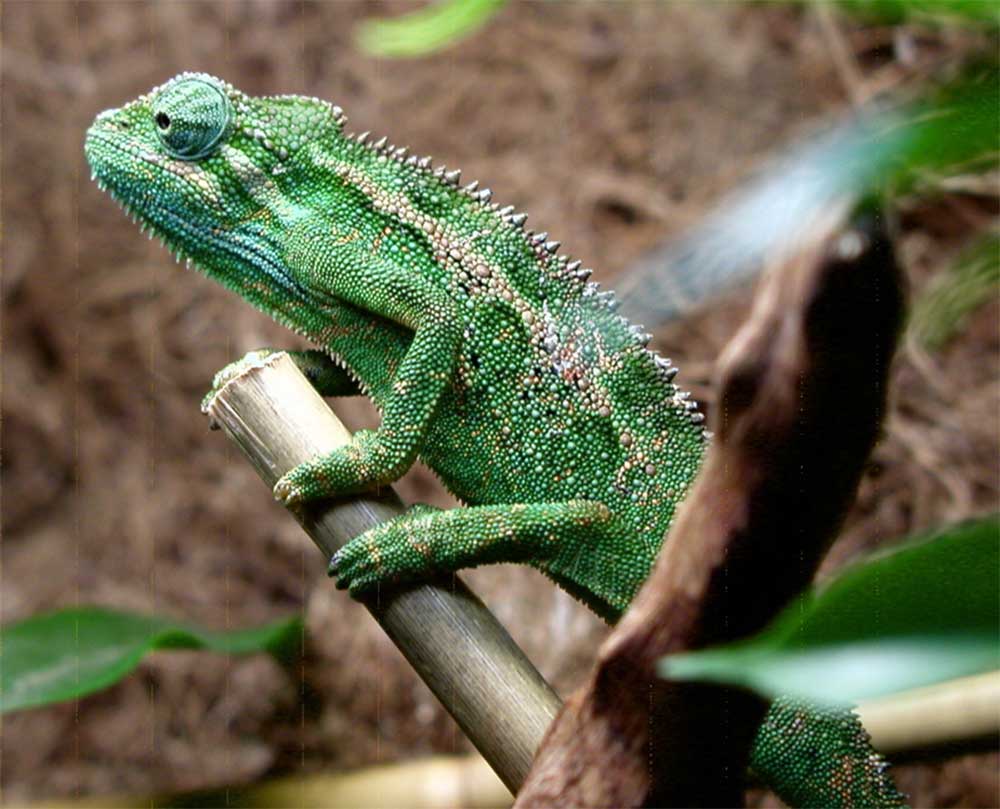
The Montane side-striped chameleon (Trioceros ellioti) has a soft personality. Although no chameleon should be considered a pet to be kept and interacted with, this chameleon isn't as over the top as some of its bigger cousins.
The Montane side-striped chameleon (Trioceros ellioti) is a small chameleon that lives in East African countries like Uganda, Tanzania, Kenya, Rwanda, Congo, Sudan and Burundi.
It has many common names, as Side-striped chameleon, Elliot’s groove-throated chameleon or Montane side-striped chameleon. But, these common names are rarely used and, when they are used, they are not very consistent. The Trioceros ellioti is one of those chameleons whose scientific name is the best known.
Characteristics / Appearance
The Trioceros ellioti usually reaches an age of 1 to 2 years in nature. But, In captivity they can live up to 4 years. In these animals, the transition to ovoviviparity stands out., that allows them to reproduce even in the coldest areas of high mountains.
Its helmet is slightly pronounced and there are evenly serrated ridges on its back., belly and throat. The rest of the body has a rather irregular scale. The females of this species reach a total length of 22 cm.. Males are still somewhat smaller, with a maximum of 17 cm..
A definite distinguishing feature of the sex is the thickened tail root, very pronounced in males and completely absent in females. The great heterogeneous range and the extreme altitude amplitude are also reflected in the color variability. Like this, depending on the population, the color spectrum of the males is just as diverse as that of the Carpet chameleon (Furcifer lateralis) and usually shows high proportions of blue and yellow. Females are usually less conspicuous and appear exclusively in shades of brown., gray or green. The white or brown lateral stripe is common to all animals., that runs along the entire flank. Due to its close relationship with the Trioceros bitaeniatus, is often confused with the latter. But, can be easily distinguished from Trioceros bitaeniatus by its 2-3 longitudinal black stripes on the interstitial skin of the throat sac.
Habitat
It is a very adaptable species of chameleon, found at altitudes of 600-3000 m above sea level. They prefer savannah landscapes with low bushes and tall grasses., as well as the edges of the forests and, in some cases, farmland and gardens. They must have reached the latter through human introduction, daytime temperatures typically range from 25 and 27 °C and drop to 16-18 °C at night, and even up to 10 °C at higher altitude. The relative humidity is 60-80%, with an average precipitation of 1.000 mm per year.
The Montane side-striped chameleon (Trioceros ellioti) it is ovoviviparous. The females of this species give birth to 2 to 14 pups up to four times a year. This usually happens in the early hours of the morning, whereby the fully grown hatchlings are simply deposited in a clear eggshell on the grass. just a few minutes later, the hatchlings break free of this skin. Due to the ability to store sperm in the seminal receptacle, females can produce multiple clutches with a single mating. But, they are ready to mate again 14 days after birth.
The young reach sexual maturity after about six to nine months and the gestation period is 100 to 160 days. For the mating act itself, he approaches the female. After a brief orientation, the male should approach the female with head movements. If the female is not ready to mate, will display warning coloration and will bite or attempt to escape if male approaches closer. Otherwise, does nothing and mating occurs when the male climbs sideways onto the female and tries to bring both cloacal openings over each other. Copulation itself lasts a few 15 minutes.
Threats to the species
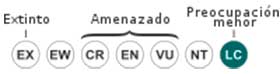
State of conservation ⓘ
Minor Concern ⓘ(UICN)ⓘ
This species has a wide distribution and seems to have the ability to adapt to a certain degradation of its natural habitat., as it also occurs in agricultural and semi-urban areas. It has therefore been classified as a "species of least concern" by the UICN.
How it is being captured for the wildlife trade,1the species has been included in the Appendix II of CITES to limit its effects
The "Montane side-striped chameleon" in captivity
The Montane side-striped chameleon (Trioceros ellioti) has a soft personality. Although no chameleon should be considered a pet to be kept and interacted with, this chameleon isn't as over the top as some of its bigger cousins. Usually, they are not aggressive towards each other, although there are reports of sudden violent responses in the interaction between chameleons.
Like all chameleons, the ideal situation is one chameleon per terrarium. Although breeders can keep two females in one terrarium if they are kept together, be careful not to let this give you a false sense of security. When this species behaves, he does it in a very strong way that is potentially dangerous to his cage mates.
The pups seem to be calm with each other, but it is better to separate them as soon as possible. This species grows rapidly, so they are not "babies" for a long time.
Currently, the Montane side-striped chameleon is available both in the wild and captive-born. Captive-born are ALWAYS the best option and deserve the extra money. These pups are raised with the best nutrition and are raised between humans and cages to acclimate to captive conditions.. If you are familiar with acclimatizing wild-caught chameleons and want to breed them to introduce a new bloodline, then you know what you're getting into by buying wild-caught animals. But if you want to get one of these chameleons for the pleasure of keeping it, then avoid the challenge of acclimatization and get one born in captivity.
If you buy a female caught in the wild or any female that has been kept with the males once it is from 4-6 months of age you are likely to have a female who will give birth to live babies. The timing of this is unknown and one morning you may come across babies crawling around the cage. The females will store the sperm and produce multiple sets of babies from a mating., so being away from a male for a year doesn't save you from this. It is a very good idea to be prepared for babies unless you are sure you have a captive-born female who has never been in a cage with a male.. after 3 to 4 months of age.
The terrarium
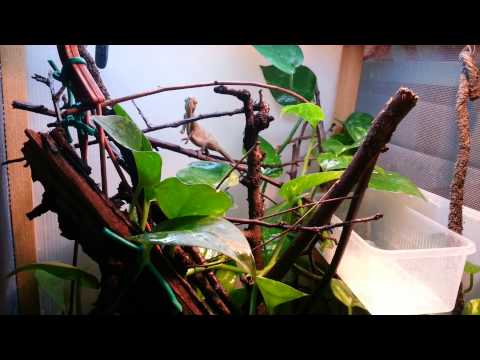
Terrarium Size: 36 x 24 x 18 inches. Tough screen lid provides ventilation and allows UVB and infrared penetration.
terrarium size: The Montane side-striped chameleon is a small chameleon with little need for movement. So, can be accommodated in small terrariums. The absolute minimum size of the terrarium for a copy is 40 x 40 x 50 cm.. But this is for experienced caregivers and breeders who know how to create the necessary conditions of a terrarium in small spaces. If you are going to buy a chameleon to enjoy it, then don't settle for the minimum. The size of the terrarium of 45 x 45 x 90 cm., easy to get, gives a little more space. But if you want to maximize your enjoyment and comfort of your chameleons, get a terrarium of 60 x 60 x 120 cm o 90 x 45 x 90 cm.. Your little chameleon will be happy in that amount of space.
Consider it from this perspective. When you get a minimum size terrarium, you place the branches, plants and lights very strategically because you only have one chance to create the minimum gradients and microclimates necessary for the chameleon's healthy life. When you get a terrarium that gives you extra space you start looking at the cage artistically.. You place plants and branches where they look best. Of course, you have the needs of the chameleon in mind when you do this, but now you have the luxury of meeting these needs with an artistic approach that is pleasing to the human eye. This can create a piece of nature that is much more pleasant, soothing and beautiful than is possible with the condition of a terrarium of minimum dimensions.
Y, finally, with a small space, you are responsible for creating the proper temperature gradients with light bulbs that are designed to terrariums bigger. This means it's very easy to provide more heat or UVB than is healthy simply because the small space was quickly energized and there is physically less room to escape heat or UVB..
Type of terrarium: You can use mesh terrariums, hybrids or glass terrariums. The terrarium should be chosen based on the help you need to achieve the environmental goals of temperature and humidity.
Ambient temperature
The Elliot's chameleons thrive in the typical mountainous environment, daytime temperatures are usually between 25 and 27 °C y caen a 16-18 °C at night, and even a 10 °C at higher altitudes. It may seem to us that they survive well in a different environment, but temperatures very different from those of their natural environment will end up affecting them. It will be a constant and cumulative physical stress on the body and will result in a compromised immune system. This allows opportunistic infectious agents to gain a foothold.
Resting temperature
A low night temperature is a requirement for a Montane side-striped chameleon (Trioceros ellioti) healthy. But your chameleon will need to warm up in the morning to start the day off right.. In the wild, chameleons watch the sunrise and bask until their body temperature is sufficient for optimal hunting, digestion and general function.
In captivity, We give them this heating through a sunlight bulb which is usually an incandescent or halogen bulb that shines on their sunlight branch..
Care must be taken when placing this bulb, since it is very easy to burn the chameleon. Chameleons don't seem to have a keen sense of when they're burning. They know when they need to warm up, but they have not developed a mechanism to measure the concept of "too hot". There is nothing in nature that encourages the development of this ability. So chameleons get overheated or even burnt. We have to be very careful to protect them from this possibility.. This is why we encourage the tanning bulbs to be mounted on top of the terrarium rather than on top of it.. The closer to the bulb, more temperature difference can be in a centimeter. The ideal scenario is to have a higher wattage bulb further away. This produces a larger, "softer" heated area that is not at risk of burns..
Regarding the solar temperature, these chameleons seem to like basking temperatures in the range of 30 Celsius degrees. This is slightly taller than other known montane chameleons, but still ok within reasonable limits. But the exact temperature is not so important. It is more important that you set it up so that you feel a soft, warm warmth on the back of your hand when you place it on top of your chameleon's head when it is sunning itself.. Its main goal is to set a safe temperature to start with and then it will adjust the distance from the bulb based on your chameleon's behavior. If your chameleon displays the following behaviors, you can consider the possibility of providing a solar temperature for a longer time or, With precaution, a higher solar temperature.
Hanging from the top panel of the screen under the light bulb.
Staying dark and lethargic. After sunbathing, they should take rest colors.
The problem with relying on behaviors as a cue to ward off the lightbulb is that it's usually physical harm to the body., like burnt gray areas, open wounds and fused spines. And it is worrying how long this type of situation lasts before the caregiver realizes what is happening. This means that the chameleon will be sunbathing even if it is too hot.. Also keep in mind when reading your chameleon's behavior that each chameleon will be slightly different. Learn about your chameleon's behaviors so you can verify that they are following standard chameleon behaviors.
Humidity
The elliot's chameleons experience high humidity nights and medium to low humidity days. A night humidity of between 75% and the 100% and a descent to 30-50% during the day will allow them to carry out their natural humidity cycle. Exact figures are not critical. There are two important aspects.
1) During times of high humidity, keep the air moving. Terrariums are often modified to close off the sides to prevent airflow so that a mist can increase humidity. In this case, have a ceiling or computer fan mounted on top of the terrarium to ensure the "fog bank" circulates. stagnant air, no matter how wet, it is not healthy.
2) All surfaces must be dry during the day. Even if the humidity is higher than the indicated figures, if the surfaces are dry there should be no health problems. When the surfaces, like the branches that the chameleon climbs, are constantly wet, the paws become full of sores and bacteria, fungus and mold take hold.
Illumination
The Montane side-striped chameleon they accept the standard bright light that we put in our chameleon terrariums. A four times the width of its cage high output T5 fixture with four 6500K fluorescent bulbs will nicely illuminate a terrarium of 15 height cm. A cycle is used 12 power on hours and 12 off hours. Kenya is near the equator, so this cycle 12 power on hours and 12 off hours do not have to change throughout the year.
Your chameleon will need light inside its terrarium. The biggest deficiency of a terrarium, besides not having a hiding place, is the lack of light, because when you look at the terrarium, the chameleon seems to be in a cave with a skylight. A luminous terrarium will allow plants to grow and their environment to be vibrant.
Natural sunlight through a window is great, but dangerous. Sunlight tends to be too strong and could overheat your chameleon. Be careful in sunlight. Definitely, give your chameleons natural sunlight whenever possible, but the sun can cook your chameleon quickly, especially a small one like him Montane side-striped chameleon. Well-planted outdoor greenhouses and constant supervision are recipes for success.
UVB
Out of natural unfiltered sunlight, the most efficient and reliable way to produce UVB for your chameleon is with high output T5 linear fluorescent tubes. These bulbs can go in a multi-bulb fixture, but they are more effective in a single bulb reflector. I highly recommend using a single bulb reflector for your UVB source, as it gives you not only the full power of the bulb (your UVB is absorbed by other bulbs), but it gives you full control over the UVB force that reaches the sunbathing zone based on the height of raising the appliance above the cage.
Currently, a good goal is a UV index of 2-3 in the sunlight branch with a maximum of UVI of 6 to allow sufficient synthesis of vitamin D3. This is usually what can be generated using an accessory T5 HO Arcadia ProT5 with 6% of UVB or Zoomed Reptisun 5.0 on a single bulb reflector on a sunning branch 6″ inches of light going through a standard screen cage top panel. All of these numbers are general estimates., as each reflector has its own reflective properties and each bulb will have a different strength depending on age. Fortunately, this does not have to be an exact value. An approximate value is fine. If you are using a Reptisun T8 10.0 in a single bulb installation, the sunning branch must be at 8 cm below the bulb running through the top of the cage screen. Ideally,, regardless of the bulb you use, can lift it from the upper surface of the terrarium. UVB bulbs produce very high UVB radiation in the first few centimeters in front of the bulb. You can continue to use the given distances of the bulb with the bulbs raised two or three inches above the top of the cage. This reduces the maximum level of UVB that enters the cage and your chameleon is exposed to. Although we have not been able to measure what damage occurs at what levels of UVB, it's safe to expect there to be a point where the high UVB from the lamp can cause problems. They may not be human, but chameleons have living cells, and living cells are damaged by UVB.
Just a note, UVB meters are expensive equipment, but they are a valuable tool in setting up your chameleon's environment. if you can get one, ¡hazlo! get the model Solarmeter 6.5.
Set the lighting and hydration schedule
When we set our daily schedule, we try to reproduce the wild conditions to which the chameleon has become accustomed. let's start at midnight.
At midnight, the chameleon has slept for many hours. It's dark and, though the moon waxes and wanes, chameleons will look for dark places to sleep. They see light of all colors well and any light can disturb their rest.
As the morning progresses, humidity increases. Fog banks may begin to form and the chameleon breathes moist air. This high humidity forms an important part of your natural hydration.. To simulate this, we turn on ultrasonic humidifiers around the 1:30AM. Fog from humidifiers tends to bounce off surfaces and exit the cage, so we operate the misting system for a couple of minutes to cover the cage with a layer of water. This helps make the fogger more effective and the mist tends to stay. The nebulizer goes from 1:30 to 6:00 in a pattern of 30 minutes of ignition and 30 minutes off. This is to protect against excess mist.. This is wise when you have closed off three or more sides of your terrarium to retain moisture.. If you have a full screen terrarium, you can leave it on all the time. All this is done so that the chameleon can breathe moisture. Right before the lights come on, run the foggers for a couple more minutes to ensure that when the chameleon wakes up it finds surfaces covered in "dew". This is a natural source of water for them, even in its dry season. Once the dew has settled, lights can be turned on.
Around the 7 in the morning the lights of the day turn on. This may include UVB light if they are the same fixture. If it is separate installations, no need to turn on the UVB light to match the sleep bulb on. It's okay to leave daylight bulbs on for 15 or 30 minutes to give the chameleon a chance to calmly lick whatever spray it wants. Next, I turn on the sunlight bulb to warm them up.
As the ambient temperature begins to warm, the sunlight lamp is no longer necessary and it turns off. The actual length of time the tanning lamp is on will depend on your chameleon's needs. Observe their behavior. If the chameleon routinely gets the heat it needs in 30 minutes and then walks away with the happy colors to hunt, then reduce the time in the sun to that time in which you make use of the heat. If they need the heat for a longer time, leave the bulb on for longer or consider slightly increasing the temperature. Watch your chameleon and he will tell you what he needs. With a mesh terrarium there is usually no problem leaving it on during the day, but if daytime temperatures start to get too hot for your comfort, you can turn off the heating lamp.
at some point of the day (can be the 3 in the afternoon) start the dropper. This is a reserve hydration strategy to make sure they have enough water. While it is true that they do not have drippers every day in nature during the dry season, they also do not need to reconstitute dry calcium powder in all their feeders. The advantage of using a dropper is that it is completely optional for them and, as advantage, it also allows you the opportunity to ensure that your plants receive water. Place it on a different plant each day and, over week, all plants will receive water. The time the dripper is started is not critical. It may be in the late afternoon so that the chameleon can rehydrate before the night's rest.. It is a good rule to start the dropper an hour or more after feeding them so that they can replenish what they need.. In the wild, your food is an important source of hydration. We spoil it a bit with the food we provide them and a dropper is a way to compensate for that.. Ideally, the chameleon will have obtained sufficient hydration from the humid night air, morning dew and food. I consider it a hit when the chameleon ignores the dropper and an early warning sign when he drinks from the dropper.
Once the chameleon settles down and goes to sleep it is good to maintain a couple of minutes of misting just to establish the humidity for the night.
You will notice that there are no daytime mists. Although this is common in chameleon breeding. Chameleons have been consistent in their communication that they don't like to be sprayed. You do not have to decide that I know what is best for them and you have to start listening to them. the night fog, morning dew and evening dropper provide necessary hydration naturally. With them there is no need to force them to shower in the middle of the day.
Food and supplements
Feeding of the Montane side-striped chameleon (Trioceros ellioti)
The Montane side-striped chameleon not a picky eater. Will eat the insects that we feed standard for chameleons. Flying insects are highly prized. An interesting feature is that it seems to prefer smaller than normal food.. Usually, when determining the proper feeder size for a chameleon, we choose a size of the length equivalent to the width between the eyes. And then the chameleon often surprises us and gobbles up something bigger. The Montane side-striped chameleon, on the other hand, seems to prefer smaller foods than we would normally give him. It is important to pay attention to the sizes of food that each chameleon prefers. they are the experts. Try different sizes and your chameleon will quickly let you know what he prefers. But don't worry if your adult goes after a fruit fly.. This is a characteristic of the species.
The Montane side-striped chameleon it is insectivorous. You can feed them anything that moves and fits in their mouth. It is not necessary to provide fruits or vegetables to this species.
As with the care of any of our chameleon species, we want the insects we feed to be as nutritious as possible. Unfortunately, our knowledge of nutrition from insects to chameleons is in its infancy, so we do not know what the diet of wild insects gives chameleons or, even what nutrients in what we feed our feeders gives chameleons. There are reports that insects exposed to UVB rays produce vitamin D3. Then, do chameleons really get any dietary D3 in the wild? There is a lot of speculation and little firmness. So, we feed these insects with the greatest possible variety of food and with the greatest variety of fruits, vegetables, grains, etc., What can we find. A healthy, well-fed cricket is supposed to be nutritionally superior to one that has eaten little..
We also dust the feeders with mineral/vitamin powder to provide the chameleon with calcium.. We call this supplementation.
Supplementation is one of the less defined aspects of chameleon husbandry. We literally don't know what they need. we are guessing. The best thing we can do is try to get as close as possible to their natural processes and try regimes..
There will be a number of approaches that work. The background test is whether it produces a healthy, long-lived chameleon. If you do, is valid.
It is assumed that the Montane side-striped chameleon has typical "mountain" sensitivity to overfeeding. Although we are not seeing that cases of edema are known.
Supplementation
In the news, we see that the Trioceros ellioti behaves well when regularly supplemented with calcium and bee pollen. Monthly vitamin supplementation has been included, although currently you have to check the pros and cons of including vitamin A made in this monthly dose. Mineral supplements are being recommended, as it has been tested, but it is being evaluated Arcadia RevitaliseD3 for their equivalent levels of D3 and the addition of small amounts of vitamin A. We are depending on UVB for our D3.
Reproduction of "Eliot's Chameleon"
The Montane side-striped chameleon is a life-carrying species and, since the mother incubates the eggs, it is quite easy to breed. In fact, if your mature female has had contact with a male in the past two years, may have offspring, whether you like them or not.
As exciting as it sounds, having chameleon pups can be heartbreaking if you're not prepared. If you have a female who had any chance of having contact with a male, then at least read about caring for chameleon offspring.
The actual breeding process is standard. The female moves to the male's cage. If she is receptive, will allow you to mount it. If you are not receptive, will be speechless, will sway menacingly and show dappled colors. It is highly recommended to monitor the situation.
Gestation is three to four months and then they can be born up to 22 pups, depending on the size of the female.
Buy an "Eliot's Chameleon"
The price of a "Montane side-striped chameleon" at the exotic animal market, ranges between 60 – 120 EUR.
1. Montane side-striped chameleon, Elliot’s groove-throated chameleon, Mountain Dwarf Chameleon (English).
2. Caméléon d'Elliot (French).
3. Elliot's Chamäleon, Chamaeleo ellioti (German).
4. Camaleão-de-Elliot, Camaleão listrado de montanha, Camaleão de garganta estriada de Elliot (Portuguese).
5. "Camaleón de Elliot", Camaleón de montaña de ellioti (español).
▷ The world of Pets: Dogs, cats, birds, reptiles, amphibians
Rhinoceros iguana
- Cyclura cornuta
Origin: Hispaniola (Dominican Republic and Haiti)
Gender: Cyclura
Life expectancy: 16 years
Length: 1,10 m (Including the queue)
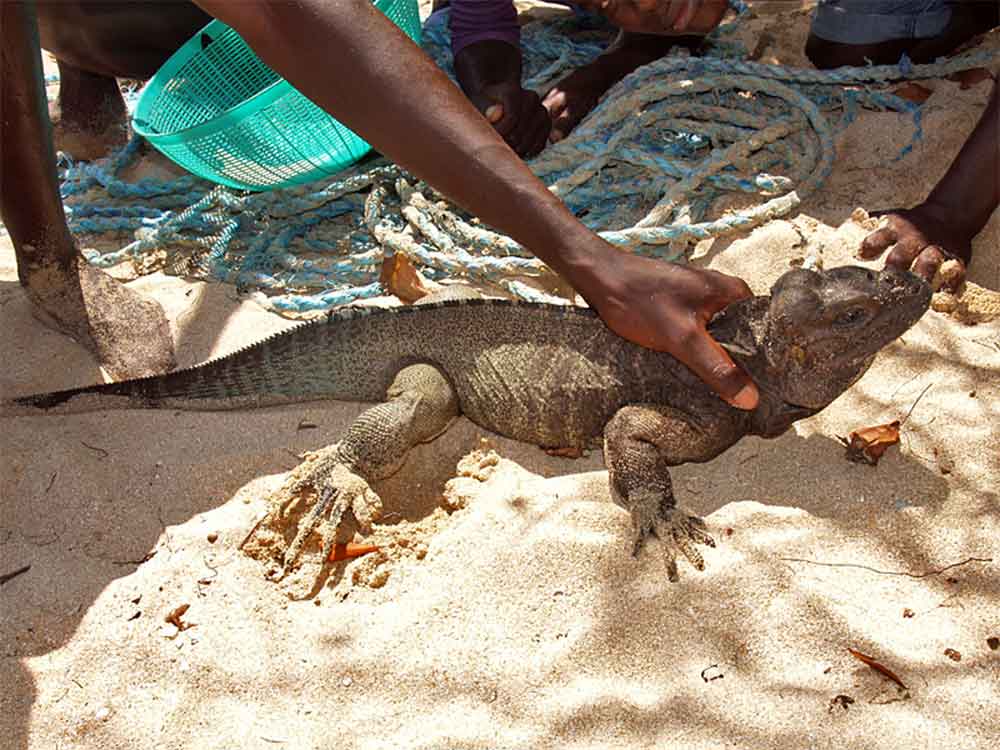
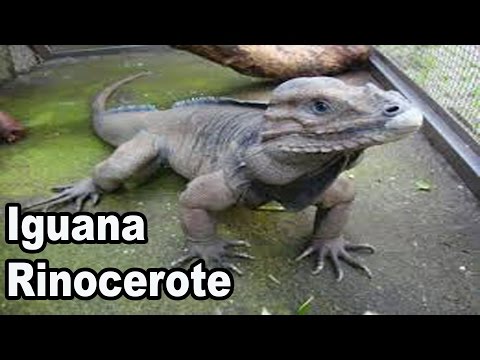
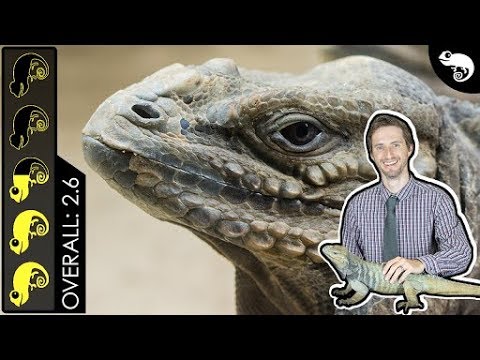
The Rhinoceros iguana (Cyclura cornuta) It is one of the most requested pets by iguana keepers., but due to its size and temperature requirements it is not easy to care for.
The Rhinoceros iguana (Cyclura cornuta) It is endemic to La Española with the offshore islands Isla Beata, Petite Gonave Island, Tortoise Island, Big Island Cayemite, Island of the Petite Cayemite, Isla Saona, Kid Island (Dominican Republic and Haiti).
The Rhinoceros iguana it is distinguished from the Green Iguana by its dentition and the absence of the dewlap, but more conspicuously for its heavily armored tail, the upper part of which is distinguished by the fact that between three or four rows of ordinary scales there is a ring of scales which, although they are not particularly long, have turned into sharp vertical spines. The dorsal crest may be interrupted in the region of the shoulder and sacrum.
The teeth are not incisors, sino bialobulados o trilobulados, palatal teeth are small but numerous. Femoral pores are present . The males of the Rhinoceros iguana they are conspicuous by their widened back of the head with large crests. They can reach a head-torso length of about 60-70 cm and a total length of about 130 cm.. Body weights of more than 10 kg. The females are still 10 smaller cm. There is a 3-5 enlarged horn-shaped scales on snout, only indicated in females.
Habitat
male rhino iguana, province of Pedernales, Dominican Republic – Tim Ross, Public domain, via Wikimedia Commons
The Rhinoceros iguana prefers rocky areas, dry and semi-arid sparsely populated, from sea level to the 400 m, with an annual rainfall of 470-1.000 mm and an average annual temperature of 25ºC. It is diurnal and spends the night in self-excavated or natural caves., cracks in the rocks, hollow tree trunks, etc., which he also uses during the day to rest or hide.
It has been displaced from much of its original range in La Española by habitat destruction and the introduction of predators.
Behavior
Easily excitable like all iguanas, goes into a violent rage when threatened, swells, bristle the loin, open the mouth, shows its sharp teeth, frowns at the adversary and prepares to attack. If you are provoked now, turns around quickly, strikes with a very fast lateral movement of the tail, and then you flip to the other side and repeat the same thing the same way.
Food consists of plant material such as leaves, flowers or fruits. Males are territorial and seek out territories with high, sunny spots and suitable retreats for females.. The mating season falls on the first rainy season of the year. Females probably reach sexual maturity at 2-3 years of age. They put an average of 17 (2-34) eggs, that they bury in the ground, and guard the spawn for a few days. The young are born after a few 85 days.
Threats to the species
The populations of the Rhinoceros iguana are fragmented and in decline. Thus, in 1996 the species was classified as endangered, and in 2019 a new review placed it in the category of critical danger [Red list: IN DANGER.
International trade is restricted by CITES Appendix I.
This species is also threatened by illegal poaching for food and medicinal use.. non-native species, like wild cats, dogs, mongooses and pigs, pose a risk of predation, while the herbivores, like cows and goats, compete for food sources. Habitat is often destroyed due to charcoal production, as well as development for tourism, land conversion for agriculture and bauxite mining.
In the Dominican Republic, international wildlife trade is controlled by CITES, but it is not the case of Haiti. In the Dominican Republic, iguanas are traded as pets and for tourist exhibits, known as iguana.
A local non-governmental organization, the Jaragua Group, manage conservation efforts Rhinoceros iguana in the Dominican Republic. These include monitoring and habitat restoration, outreach and education, and land acquisition. Recommended conservation measures are better law enforcement and the development of an island-wide conservation management plan..
The "Rhinoceros iguana" in captivity
The Rhinoceros iguana (Cyclura cornuta) It is one of the most requested pets by iguana keepers., but due to its size and temperature requirements it is not easy to care for.
The terrarium
Not all terrarium keepers have the possibility to offer a terrarium large enough to take care of the Rhinoceros iguana adult. An adult animal needs at least 4 m2, but you have to refrain from keeping them individually so that the iguanas can show their natural social behavior. Only in a well structured terrarium with enough places to hide and sunbathe is it possible to keep several rhinoceros iguana (also several males).
Visual barriers should serve to interrupt visual contact between individuals so that lower-ranking animals can eat and sunbathe in peace..
The enclosure must be equipped with heat and UV lamps, as well as underfloor heating. The temperature should be 30-35ºC during the day, locally higher, and drop to about 25-28ºC at night.
According to the opinion of reptile experts, a terrarium for a couple should have at least 5 times the length, 4 times the width and 3 times the head-torso height of animals. For each additional animal, a is added 15% to the basic surface.
Buy one "Rhinoceros iguana"
There is a legal trade Rhinoceros iguana bred in captivity. Potential buyers should always insist on full documentation to ensure they are not receiving illegally harvested wildlife. Illegal collection endangers the species and is detrimental to the pet trade, as wild animals often carry parasites and diseases that have been eliminated from captive-bred populations.
Its price ranges from 500 – 600 EUR.
Videos "Rhinoceros iguana"
Terrarium With Rhinoceros Iguana (Cyclura cornuta)
▷ The world of Pets: Dogs, cats, birds, reptiles, amphibians
Painted bronzeback
- Dendrelaphis pictus
Origin: Bangladesh, Borneo, Cambodia, China, India, Indonesian, Laos, Malaysia, Philippines, Singapore, Thailand and Vietnam
Gender: Dendrelaphis
Life expectancy: 15 - 20 years
Length: 120 cm.
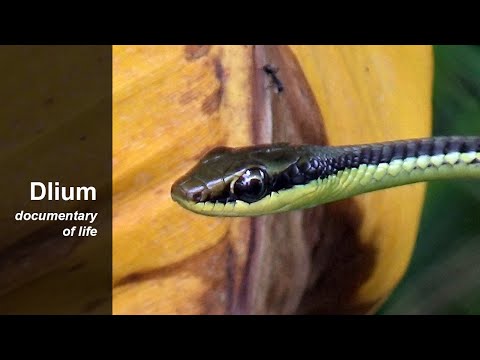
The Painted bronzeback It is the most common type of snakes of the genus Dendrelaphis. Active during the day, usually wanders in trees, plants or bushes.
The Painted bronzeback (Dendrelaphis pictus) is present in Bangladesh, Borneo, Cambodia, China, India, Indonesian, Laos, Malaysia, Philippines, Singapore, Thailand and Vietnam.
Their presence is uncertain in Burma.
Characteristics / Appearance
The coloration of the Painted bronzeback it is olive or brown above with a yellow lateral stripe, bordered below by a dark line between outer and ventral scales. A black stripe on each side of the head passes through the eye, widens or splits into spots, separated by bluish-green bands on nape. The upper lip is yellow and the lower surface is yellowish or greenish.. Head and body length is approx. 740 mm and the tail of 440 mm.
Habitat
The habitats of the Painted bronzeback range from tropical rainforests to plantations and agriculture. This snake is also often found near human settlements..
Behavior
The Painted bronzeback It is the most common type of snakes of the genus Dendrelaphis. Active during the day, usually wanders in trees, plants or bushes. This snake sometimes also roams on the ground or in the grass. Like other species of snakes of the genus Dendrelaphis, this snake is not poisonous and has fangs type Aglypha, which is a uniform arrangement of teeth without fangs. feeling threatened, this snake will flatten its neck, so that on both sides of his neck the edges of bluish scales will be seen.
The main food of Painted bronzeback are the types of lizards, geckos and little frogs / toads.
This species reproduces by laying eggs. (oviparous). The number of eggs produced is 2 to 10 eggs. Each newly hatched young snake measures about 25 cm length.
Threats to the species
State of conservation ⓘ
Minor Concern ⓘ(UICN)ⓘ
The Painted bronzeback has recently been assessed on the IUCN Red List of Threatened Species in 2019.
This species is listed as Least Concern in view of its wide distribution., its presumed large global population and because it is found in several protected areas, has tolerance to a degree of habitat modification and appears to exist as a stable population.
The "Painted bronzeback" in captivity
This beautiful creature is highly adaptable to a wide range of habitats., making it a popular item for the pet trade. Their abundance in Southeast Asia has also made them vulnerable to poachers.. They can be easily found in online stores and are often sold out..
The terrarium
Temperature: 25 – 30C. Illumination: 10 – 12 hours. They do not need UVB. Humidity: 50 – 70%. Recommended terrarium dimensions: 120 x 60 x 40 cm.. captive feeding: basically rodents. Due to lack of natural food resources, many keepers have to change their snakes diet from frogs and lizards to rodents and worms. Snakes that don't prefer their new diet have to be force-fed, which can be dangerous and easily cause injury to snakes.
Behavior
Son hibernantes, varying the time of hibernation according to the terrestrial latitude, being longer at high latitudes of its distribution than at low latitudes. Their defense mechanism against predators is based on a strong bite and the expulsion of feces when they are caught.. Temperament in front of their peers: They are usually ophiophagous. Temperament in front of the human being: Passive.
Buy one "Painted bronzeback"
The price of a "Painted bronzeback" at the exotic animal market, ranges between 50 – 100 EUR.









.jpg)


