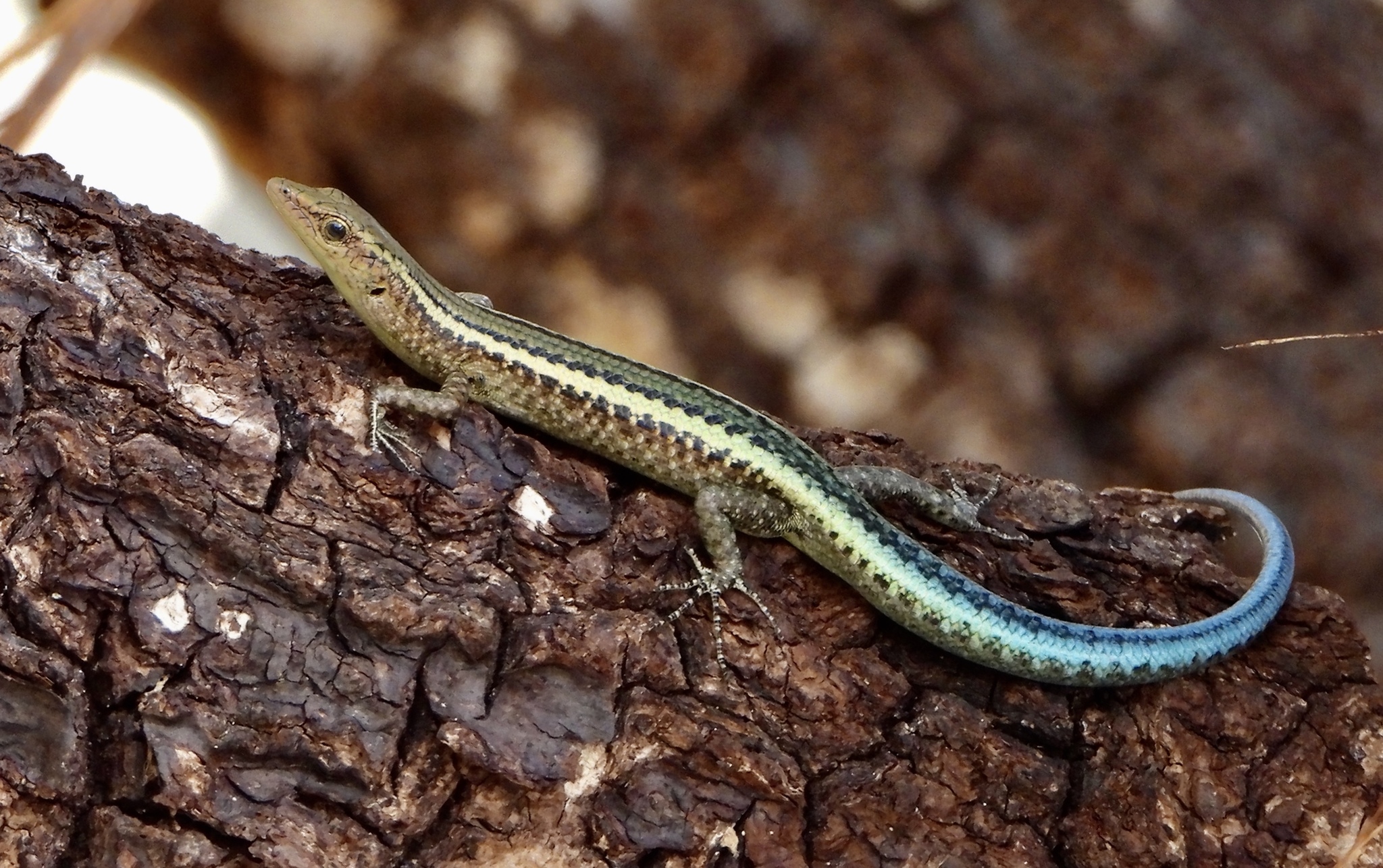
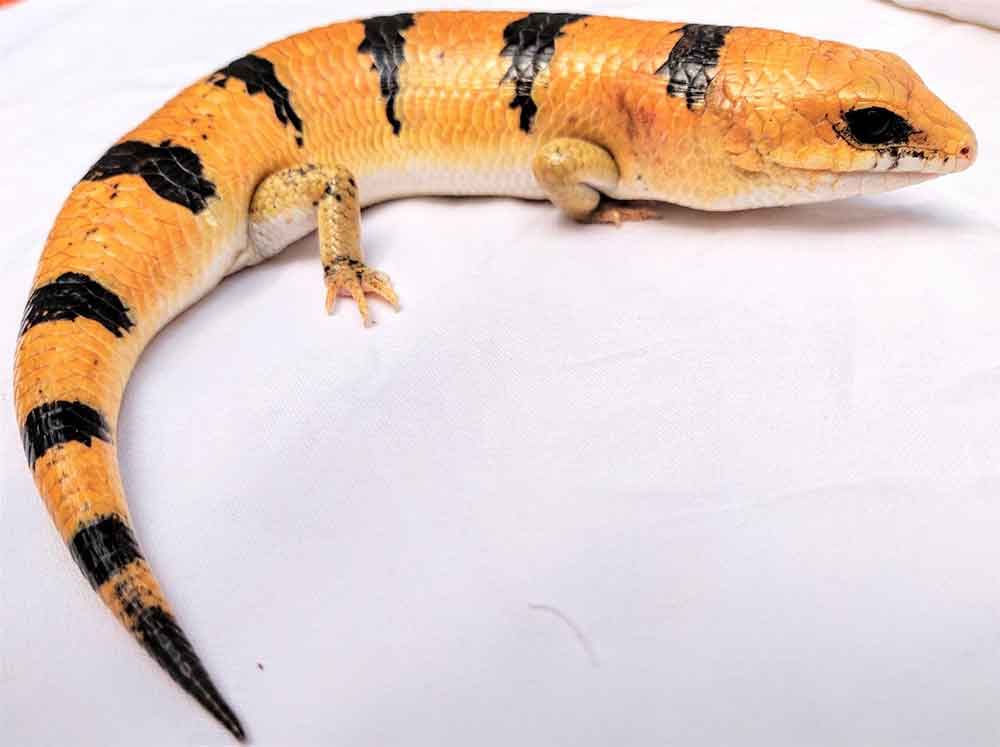
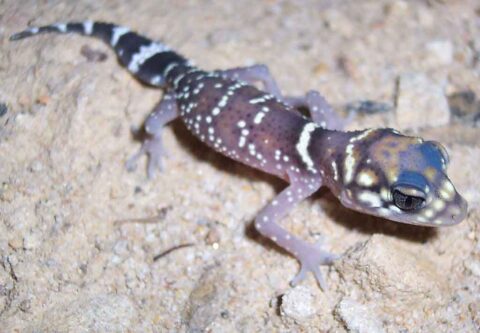
Very rare and very little seen niger skink. It is an animal of terrestrial customs and dry areas, desert and semi-desert type Sahel. The diet is based on insects. It is convenient to put a grotto to make you feel more comfortable, although it is a sociable and very docile animal.
Its price ranges from 90 and 140 EUR.
Alternative names:
1. Peters's banded skink (English).
2. Scinque bandé de Peter (French).
3. Tunesischer Nachtskink (German).
4. Lagartixa de Peters (Portuguese).
5. "Escinco gigante de Níger" (español).
▷ The world of Pets: Dogs, cats, birds, reptiles, amphibians
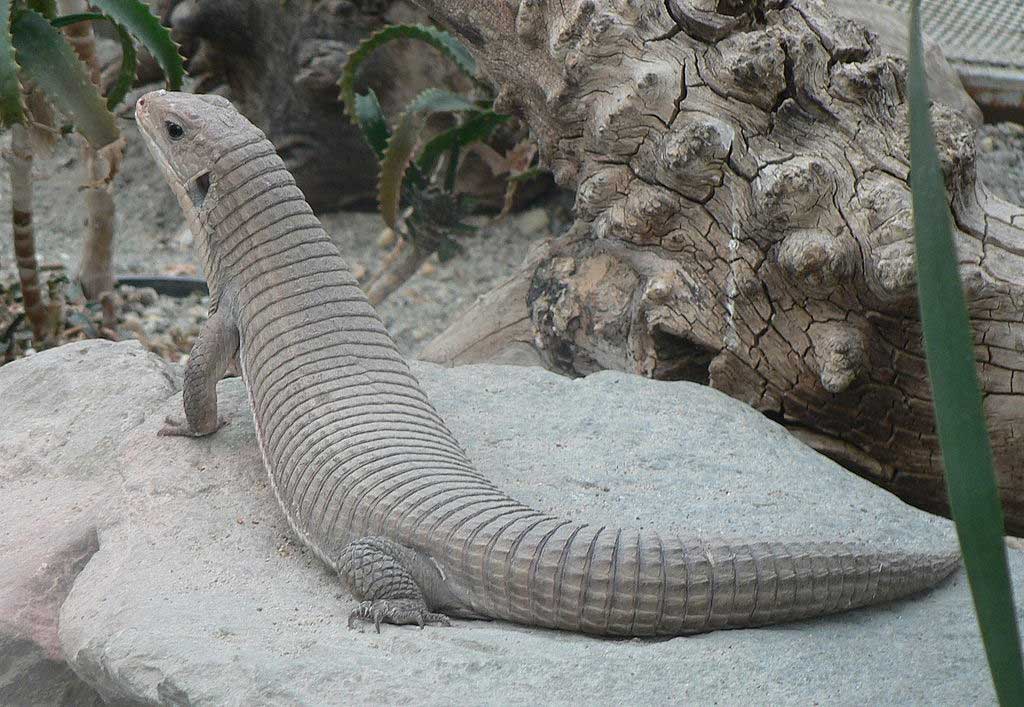
Sudan plated lizard
- Gerrhosaurus major
Origin: East and central Africa
Gender: Gerrhosaurus
Life expectancy: 20 - 25 years
Length: 55 cm.
How they are easily domesticated and relatively easy to maintain, the Sudan plated lizard is a very popular terrarium animal.
Gerrhosaurus major, at Budapest Zoo – Wikimedia
Content
Description
The Sudan plated lizard is large and powerful, being able to reach a total length of up to 48-56 cm., but they usually grow up to 30-40 cm..
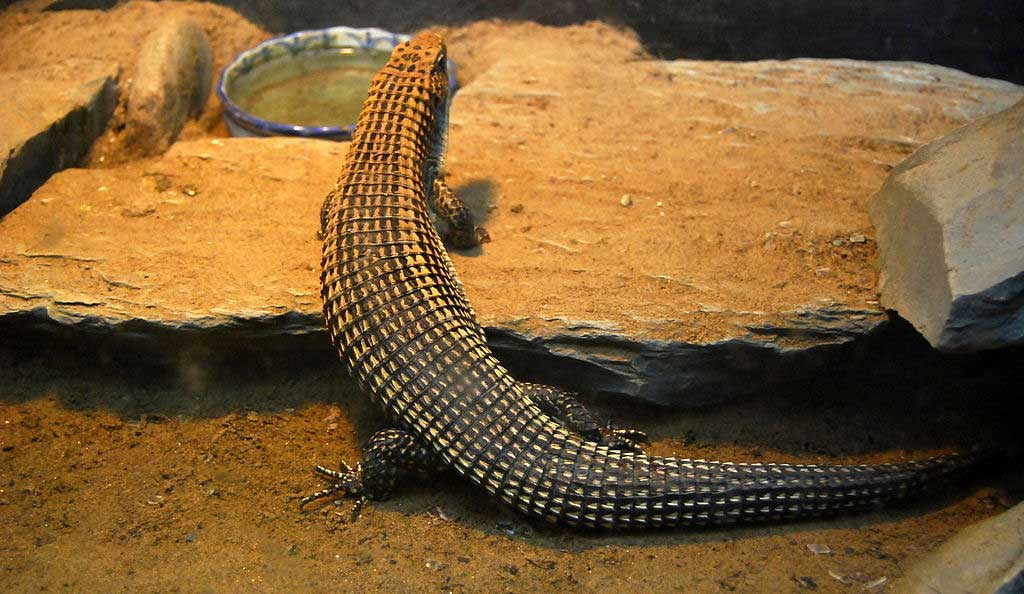
Rounded muzzle and large eyes give them a kind look. A longitudinal fold runs from the mandible to the hind legs on each flank.. The scales of the head are very rough. Dorsal scales, strongly faired, are distributed in 14-19 longitudinal rows and 31-33 Transverse, and the ventral in 10 longitudinal rows.
The soles of the feet are covered with weakly keeled scales. The back is light brown, the individual scales in the center are usually darker, on both sides there may be a clear longitudinal stripe between the back and flanks, as well as between the flanks and the belly. The chin and throat are cream to yellow in color, the belly ash gray to light brown
Life expectancy is 15 to 20 years.
Distribution and habitat
The range of this type of lizard is not limited to Sudan, as the name reflects. They inhabit dry savannas and rocky areas from Ghana in an easterly direction, passing through Nigeria and Sudan, to the east coast of Africa, and from Eritrea, passing through Somalia and Tanzania, southbound, to Zimbabwe and Botswana.
Although they are diurnal, hide in burrows or cracks when it's hot. Prefer holes in the ground, cracks in rocks and caves, to those who return immediately when they flee.
They like a dry and hot climate, around 30°C.
Breeding
The Sudan plated lizard buries its two to four soft-shelled eggs in warm, moist soil. The young hatch after about 4 months.
Diet
This Sudan plated lizard feeds on insects, spiders and small vertebrates. Mollusks, like the giant African snail and the great millipedes, They are also part of the varied menu. Plant food is not the main component of your diet, but they like to eat juicy fruit, as has been observed quite frequently in nature.
The Sudan plated lizard in captivity
How they are easily domesticated and relatively easy to maintain, the Sudan plated lizard is a very popular terrarium animal.
Terrarium
Sudan plated lizard at Beijing Zoo – Shizhao, CC BY-SA 3.0, via Wikimedia Commons
The Sudan plated lizard acclimatizes quickly in a large terrarium. To keep a pair or a trio, a terrarium of at least 150 x 60 x 60 cm.. It should be equipped with heat lamps and ultraviolet rays and furnished with roots, climbing branches and stone structures that animals prefer to use as resting places and hiding places, as well as a shallow bowl of water.
To increase the area of action, the rear and side walls can be covered with rock structures. Sand or a mixture of sand and clay is suitable as a substrate that must always be kept slightly moist.. The air temperature should be between 28-32°C during the day, locally up to 45°C, and reduce to 18-22°C at night.
Buy a “Giant Silver Lizard”
The price of a Sudan plated lizard in the exotic animal market ranges from 125 and 150 EUR.
Alternative names:
1. Western plated lizard, Great plated lizard, or Broadley’s rough-scaled plated lizard (English).
2. Broadleysaurus major (French).
3. Braune Schildechse, Riesenschildechse (German).
4. Lagarto ocidental, Lagarto grande ou Lagarto de Broadley (Portuguese).
5. Lagarto «acorazado» de Sudán (español).
▷ The world of Pets: Dogs, cats, birds, reptiles, amphibians
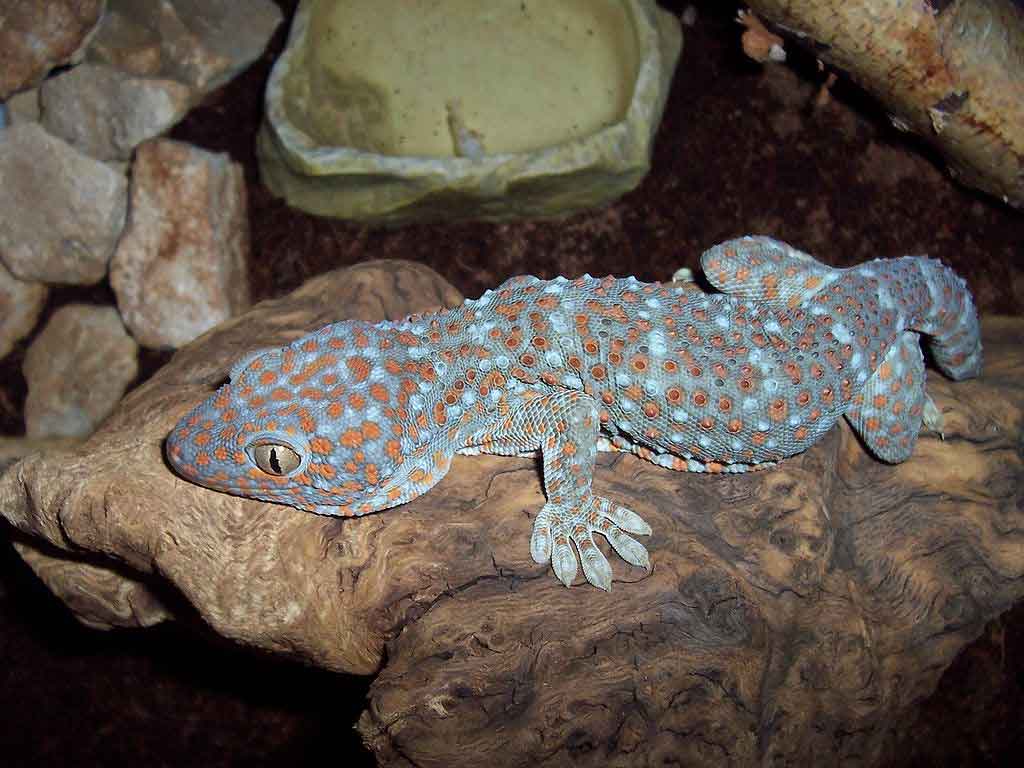
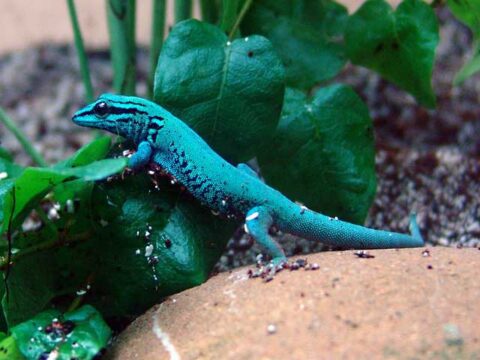
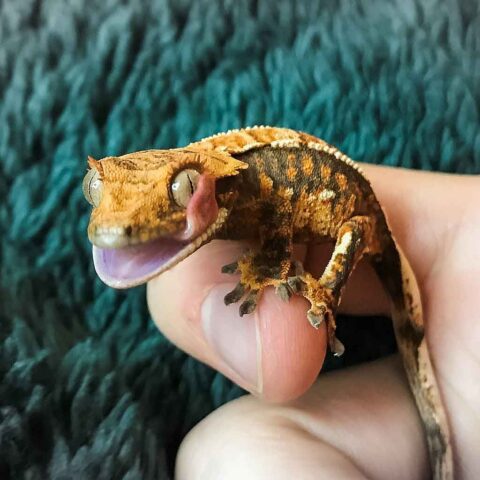
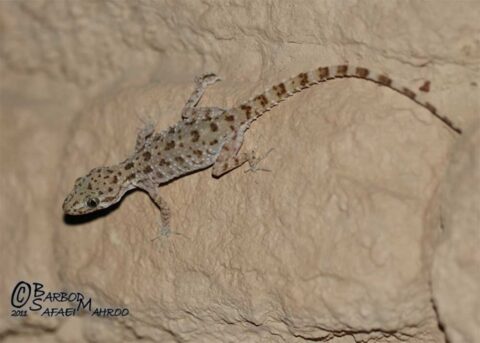
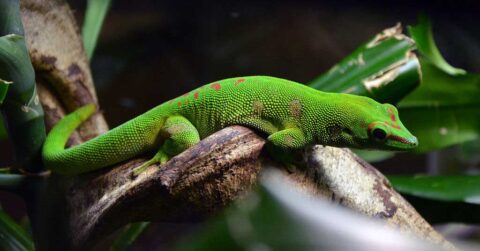
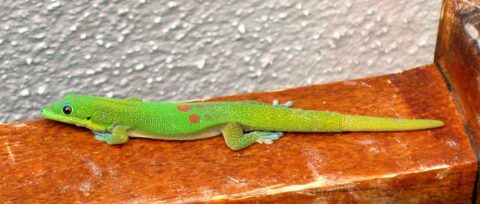
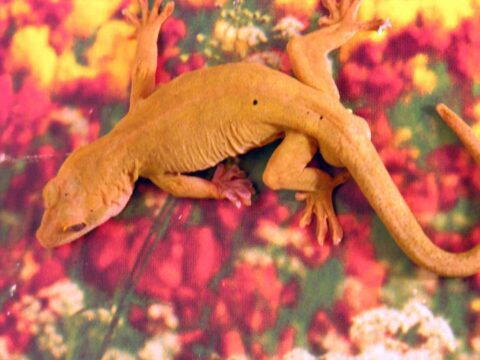
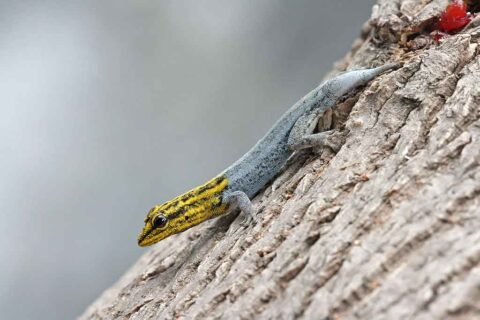
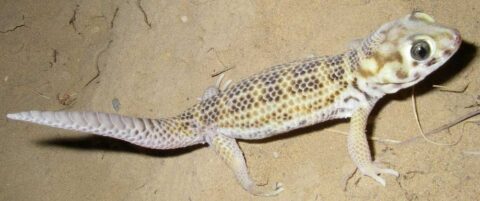
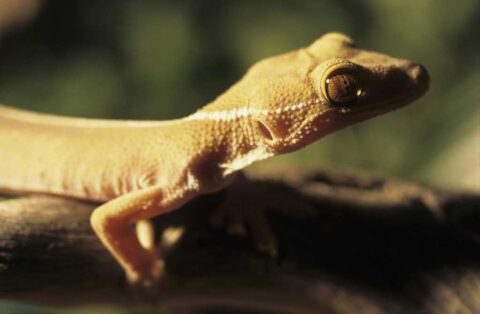
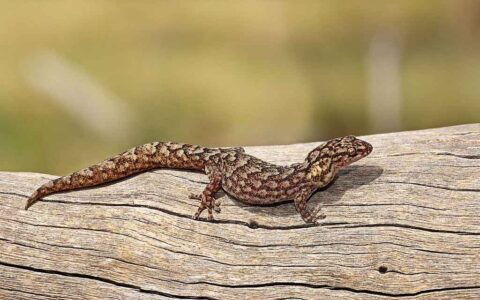
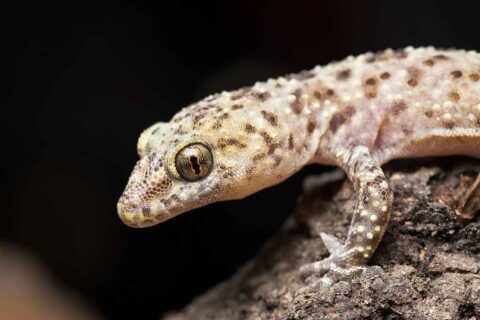
The Geckos are, without a doubt, fascinating animals. Although they are becoming more popular as pets, the Geckos they continue to enjoy a kind of exotic status. The following brief profile aims to introduce a little to these interesting reptiles.
Origin
The Geckos have an impressive adaptability. That is why there is no region of the world in which they are exclusively located.. The Geckos can be found both in temperate climate regions such as in the desert or in the tropics.
Social behaviour
In the wild, most species of Geckos live in loose associations. But, some species are also strictly solitary, and males and females only come together to mate. In pet ownership, the Geckos they are usually kept in groups of two or more per terrarium.
But, if you keep several Geckos in different terrariums, you will be able to observe very well the communication between the animals. If there are others Geckos in the same territory, greeting each other, will threaten or make courtship sounds.
As there are different species of Gecko, the physique of animals is sometimes very different. In total, the respective species reach a length of about 4 to 60 cm.. But, the species of Geckos smaller ones are especially suitable for keeping as pets, as they require less space.
A special feature of the Geckos are its legs, since many species have adhesive sheets with which they can cling to very smooth objects or walk and climb them. Other species, However, have intermediate skins on their fingers and can walk on sand.
Life expectancy
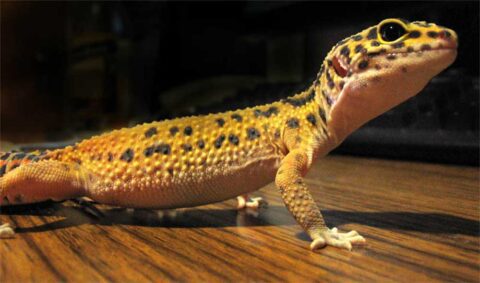
As a rule, the Geckos they live between 8 and 15 years, but there are exceptions. The Leopard gecko, for example, can live 25 years. In principle, you can already tell by the size of the species of Gecko whether the animal can reach a longer life. The smaller a Gecko, the lower your life expectancy will be.
If the Geckos are kept as pets, their life expectancy depends mainly on the conditions in which they are maintained. Keep the Geckos in conditions that are not appropriate for the species usually causes premature death.
Sexual maturity
Sexual maturity in Geckos usually begins at 12-18 months, although there may be differences from one species to another. If the Geckos find abundance of food, females may reach sexual maturity before their physical development is complete. This fact can have fatal consequences for the Gecko.
Gestation period
As for the gestation period, also varies from species to species. In general, However, it can be said that the Geckos have a gestation period of about 45 to 60 days. Depending on the ambient temperature, can pass up to 80 days until hatching. But, in ideal conditions, it only takes a few 50 days.
Food
To maintain the health of the Geckos, depend on a varied and nutritious diet. Between the Geckos there are carnivores, herbivores, omnivores and scavengers. So, the diet can include both insects and snails, green foods and even smaller mammals.
Minimum space required
Before deciding on the terrarium size, you should know what kind of Gecko is and how many animals you want to have together. Basically, the necessary space depends on the body size of adult animals.
So, the species of Geckos smaller require less space than larger ones. If two are maintained Geckos in a terrarium, it is assumed that a minimum space of about 100 cm x 75 cm x 50 cm.. With each additional animal, the need for space increases a 50% more.
Frequently Asked Questions about Geckos
There are questions about the Geckos that are often done. We would like to answer some of them here.
Because the Geckos they can stick to smooth surfaces and thus climb walls?
The secret of the climbing ability of many species of Geckos resides on its special legs. The Geckos have millions of fine hairs on the soles of their feet. These hairs are so fine that even a human hair is hundreds of times thicker.. With the help of these hairs, unique in nature, the Gecko find a foothold even on the smoothest surfaces. This is because a weak electrostatic force acts at the molecular level between each of the tiny hairs and the surface.. For a single hair, this attraction is almost insignificant, but the large number of combined hairs ensures that the Geckos can adhere to almost anywhere.
How do geckos communicate?? do they make sounds?
In fact, most species of Geckos they also communicate with each other using their own vocal language. So that, there are typical calls that can be used to clearly identify certain species of geckos (for example, the Tokay gecko (Gekko gecko)). The frequency and volume of the calls differ according to the species. And even within the same species there are individual differences from one animal to another..
Questions before buying a Gecko
Before buying Geckos, there are some basic questions you should ask yourself. It's important to know what you're getting into, because once you have them at home, you have to be prepared to take care of them for several years. During this time, not only will the costs of keeping the animals occur. Of course, the owner also has to invest a lot of work and time in maintaining the Geckos in a way appropriate to the species.
If you are not familiar with the Geckos as pets, first you should thoroughly inform yourself about the requirements for keeping these reptiles before buying them. Once the purchase decision has been made, the question of where you can buy geckos.
But before you do it, you should check if the Geckos are the right pet for you. And if it is suitable for keeping geckos at all. To avoid impulse purchases, you should take a little time and answer the following questions honestly:
I know what breeding is like Geckos appropriate to the species?
Work only starts with purchase. Am I willing to sacrifice time, money and space for animals?
The costs of breeding Geckos are easily underestimated due to their small size. can i afford to buy a Gecko?
The Geckos they can also get sick. Am I willing to pay for any veterinary treatment and medication and can I?
One terrarium needs space and special weather conditions. Do I have a suitable room to accommodate the animals?
The Geckos they are not stuffed animals. the characteristics of the Geckos fit my ideas about a pet?
The Geckos eat live animals. Am I prepared to buy and feed them myself?, and even to raise them?
What are the purchase and maintenance costs that I have to reckon with??
As already mentioned, many people underestimate the costs of maintaining Geckos of appropriate shape to the species due to its small size. But, the costs of keeping pets do not necessarily depend on their size, but of the demands they pose for their maintenance.
Basically, It can be said that the most "exotic" pets, including reptiles such as Geckos, tend to be more expensive to maintain. This is due to the fact that these exotic animals live in nature in completely different climatic conditions than those that prevail here.. The "simulation" of the natural habitat is correspondingly more complex and, Therefore, also more expensive.
Basically, you can distinguish between one-off costs (or rare) and regular to maintain the Geckos.
One-off costs
Acquisition costs of animals
Terrarium
Furnish
Illumination
Heating systems or thermal carpets
Humidifiers or irrigation systems
Thermometer
Hygrometer
Ordinary costs
Food
Minerals
Detergent
Soils
Illuminators
Electricity for heating and lighting
One-time or infrequent costs amount to approximately several hundred euros, because terrariums and the necessary technology are usually not exactly cheap. It also, there are the costs of buying the animals, in which you have to have some 30 to 100 euros per Gecko.
The usual costs of raising Geckos are somewhat minor, although they should not be underestimated. Food and electricity also cost money. And finally, but not less important, do not forget the veterinary expenses. Regular costs should be at least 20 to 50 euros per animal per month.
Are geckos suitable for children?
And again, parents make the mistake of buying their children a Gecko as a pet. They think that a Gecko It is something completely different and that your child will have a "special" pet. But not even the Gecko nor will the child enjoy this decision, because geckos are definitely not pets for children.
Like the Geckos require a lot of attention, knowledge and care, children would quickly be overwhelmed by them. It also, you must be able to ensure that you are aware of the requirements of the Gecko. And the Geckos they are not stuffed animals, although this claim is often used as a sales strategy in the pet trade.
Of course, there is nothing wrong with buying a Gecko and let the children have a part of the new cohabitant. But, children should not be left to take care of the Gecko solos.
Buy a gecko
The Geckos can be purchased in pet stores, to breeders or at reptile fairs. But, the best and safest option is to buy directly from the breeder. The breeder can often give you advice on breeding Geckos or offer help with any questions or problems. You can also ask the breeder to show you where the Geckos and thus decide for yourself whether the breeder is trustworthy and experienced in breeding Geckos.
At the time of buying Geckos, you must first observe the behavior of animals. Only if the Gecko seems to be healthy and alert you should take it home. In the breeder, you can usually take your time to look and then decide which gecko you like best.. You can also make an appointment with the breeder beforehand and see how the animal is fed..
Unfortunately, there are always black sheep among breeders who only take into account the economic aspect and do not care about animals. It is better to avoid this type of breeders, because each purchase guarantees the continuity of the system.
At the time of buying, pay special attention to whether the terrariums are clean, if the Geckos behave fearfully, if they have enough space and fresh water, and what is the feeding of the Geckos. As you already know what a gecko needs, now it's easy to find out if geckos go well where you want to buy them.
Once you have decided on a Gecko, notice the following:
light eyes
No wounds or scars
No deformities in the toes
Age and size
Properly fed
Acclimatization period after purchase
After taking the Gecko at home, you need time to get used to your new environment. It is important that you place the animal in the terrarium ready for use immediately after transport and then only observe or talk to you.. In no case should it be removed Gecko to play the first day. New animals must first settle in their unfamiliar environment and this is already stressful enough for the Geckos. If you start too early with pressure or even coercion, there is a risk that animals will react with fear and shyness.
So that the Gecko feel comfortable, the terrarium must be arranged appropriately to the species. If he Gecko has enough hiding places, will be installed faster. after a few days, you should try to attract the Gecko with food and, when sufficiently domesticated, you can try to get it out. If you're lucky, the Gecko it will come to your hand later on its own, but it's also possible that he's still shy. Both must be accepted, because in the end each animal is its own individual.
▷ The world of Pets: Dogs, cats, birds, reptiles, amphibians
Red-footed tortoise
- Chelonoidis carbonaria
Origin: Argentina, Bolivia, Brazil, Colombia, Guyana, Guyana, Paraguay, Peru, Suriname, Venezuela and Panama
Gender: Chelonoidis
Life expectancy: 100 years
Length: 45 cm.
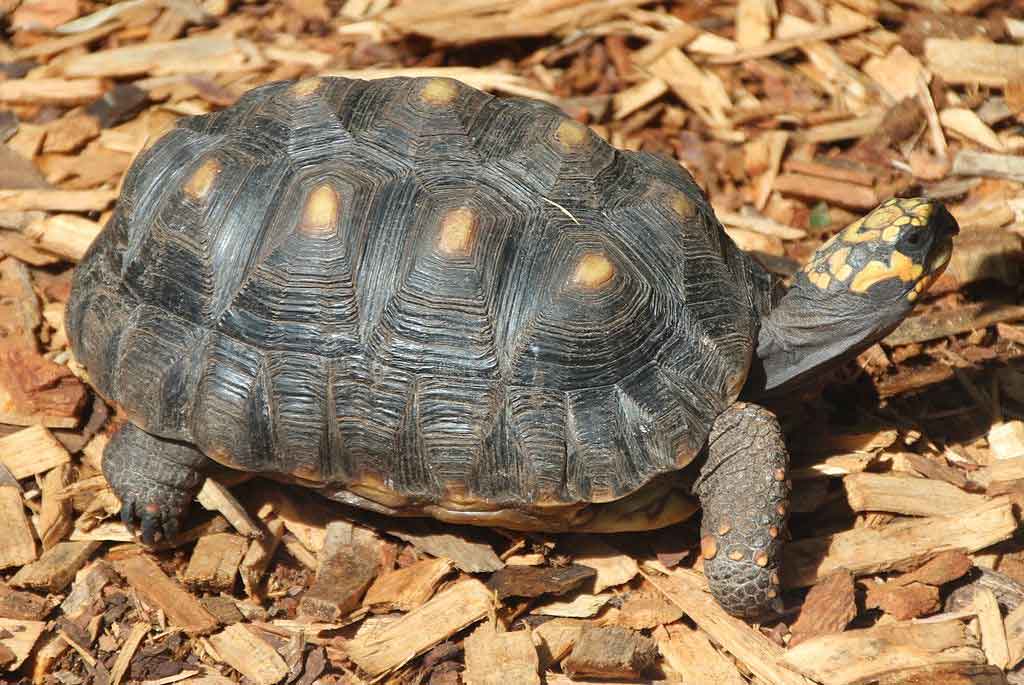
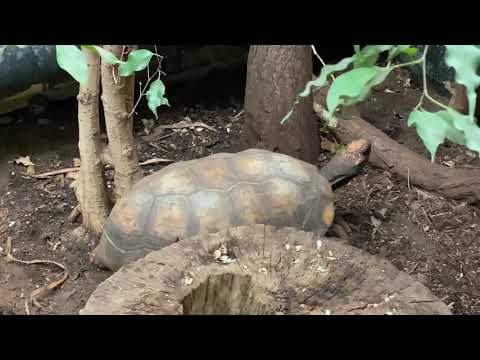
The Red-footed tortoise impresses with bright yellowish or red markings on the shell. Unlike the other turtles, needs a lot of humidity and a place to bathe.
Red-footed tortoise in Loro Parque, Tenerife – Bjoertvedt, CC BY-SA 4.0, via Wikimedia Commons (Spain)
Content
Origin
The home of the Red-footed tortoise (Chelonoidis carbonaria) is tropical South America, where its distribution is divided into a northern and a southern zone. In the north it is located between Panama and northern Brazil, in the south from southern Brazil through Peru, Bolivia and Paraguay to Argentina. It is represented from tropical to subtropical in the south to the degree 25 latitude. There is a regular alternation between hot summers and dry winters..
Characteristics / Appearance
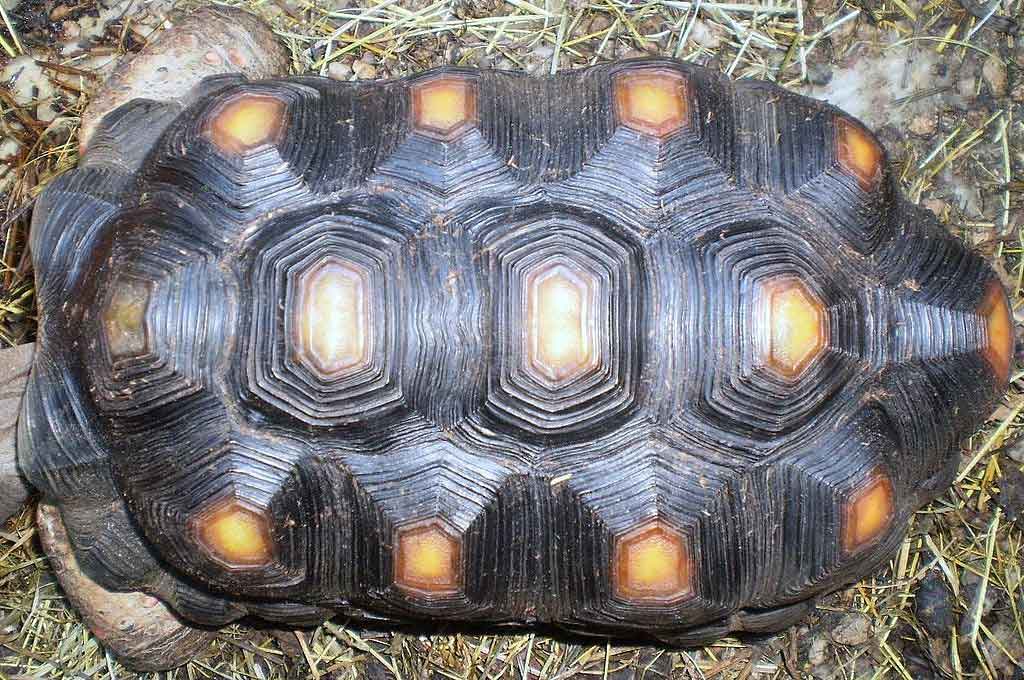
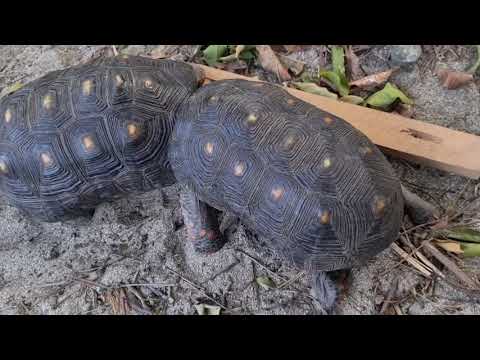
With a dorsal shell of 50 centimeters, the Red-footed tortoise is a medium-sized specimen. As an adult in captivity, usually weighs more than 20 kg. It is especially striking for its black background color, that marks the head, the neck and shell of the animal. The legs of the turtle have spots between red and orange, similar to those of the neck and head. The color is extremely atypical for turtles and is the reason why the animal is also called "red-footed turtle.".
With its high shell, the Red-footed tortoise it is also very well protected against falls on its back and can quickly help itself to its feet in the event of such a fall. The black shields of the dorsal shell are always yellow in the center. As it usually lives in humid areas, the turtle needs long legs to be able to walk easily through swampy areas.
Habitat
The Red-footed tortoise is native to the rainforest, but also of the savannahs. In this wide range, turtles differ quite a bit in size and coloration. In Argentina live populations with specimens that only reach a few 20 cm of shell length. On the other hand, the largest individuals are known in Brazil.
Behavior
Very little is known about the way of life in nature. The Red-footed tortoise lives in dry lowlands, grasslands and adjacent forest regions. Sometimes, these tortoises are also found in open areas of humid forests. The diet is largely made up of plant foods, but also carrion.
Reproduction
The breeding season begins with the start of the rainy season. The female lays from 6 to 10 eggs in a nest dug by herself that only has a few 10 depth cm. The incubation period depends on the ambient temperature and humidity and ranges from 100 and 150 days.
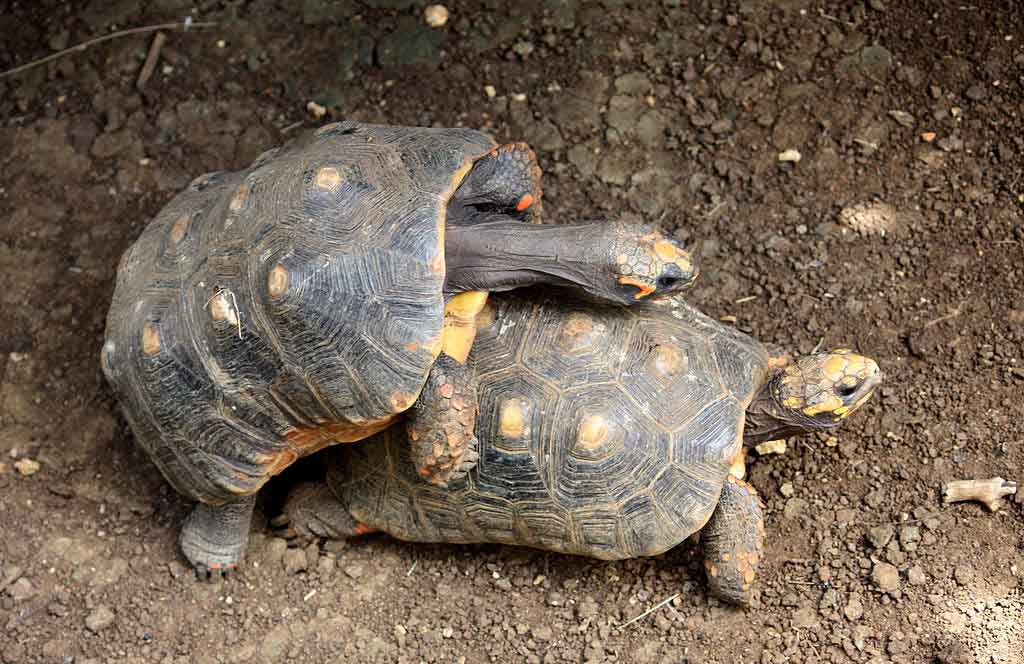
The courtship is ritualized: Males surround females willing to reproduce, biting them repeatedly on the legs. The cloacal region of the female is intensely touched. Finally, the male positions himself frontally in front of the female and rocks his head back and forth before mating.
Threats to the species
State of conservation ⓘ
Vulnerable ⓘ(UICN)ⓘ
The Red-footed tortoise is considered to be vulnerable and is included in the Appendix II of the CITES, which restricts international trade, although this does not offer protection within a country and smuggling continues to occur in large quantities. Conservation parks and refuges, captive breeding farms in natural conditions and the rise of captive breeding in other countries have helped, but they are still exported in large quantities (35.565 between 2000 and 2005), especially as pets and food. Registered exports do not include smuggling or other losses, which some estimate at more than double that figure. They are considered especially threatened in Argentina and Colombia, and are considered more threatened than the Yellow-footed tortoise (Chelonoidis denticulata) and Chaco tortoise (Chelonoidis chilensis).
They are widely used as food throughout their range, especially where other meats are limited. Their ability to go a long time without eating makes it easy to catch and keeps them fresh for long periods. The Catholic Church allows eating turtles on fast days when most meats are prohibited., like Lent. Turtle cake (served on a turtle shell) It is one of the favorite foods for those days, and large quantities of turtles are exported for that purpose only. Even people who live in countries with abundant livestock available enjoy wild game, like turtles, where possible. Hunting for food is so widespread that Colombia and some other countries import turtles from their neighbors..
The habitat destruction is another major threat to the Red-footed tortoise, and for so many other species. They are also widely collected as local pets and their shells are sold as souvenirs..
The "Red-footed tortoise" in captivity
Keeping
The Red-footed tortoise it can only be maintained adequately to the species in private tenure with a lot of effort. The animal needs a high tropical humidity and at the same time a very high temperature. An ambient temperature of 28 to 32 °C. The temperatures of 40 °C should prevail under various technically constructed basking zones (consisting of HQI lamps). The Red-footed tortoise you need these conditions. It also, the animal must constantly have fresh water for bathing and drinking. Since these turtles like to bathe and often get into the water, small bowls and bowls are not enough. You have to offer real bathroom facilities. Preferably with a drain to maintain hygiene.
Young and semi-sweet animals must have 20 to 30 square meters of outdoor enclosure with an annexed barn or greenhouse. The Red-footed tortoise adult must have at least 50 square meters of outdoor space. For a breeding appropriate to the species, it is recommended to plan from 100 square meters. Animals are extremely active and move around a lot every day. They also differ in the way they face the sun. While our European turtles and many other tropical turtles like direct sun, the Red-footed tortoise needs much shaded areas to protect from direct sun.
Reproduction
In the wild, breeding begins with the rainy season (in Europe, from May to August) and follows a clear ritual. The male of the Red-footed tortoise surrounds the female and attracts her attention by constantly biting her legs. The male's nose is always in the female's cloaca. As soon as the female no longer flees, the male climbs on top of it and turns his head to the right and left before mating begins..
Keeping turtles in captivity ensures that they can lay eggs virtually all year round. One to two clutches of eggs are produced per year. There are 4 to 10 eggs in each clutch. The female lays the eggs in a pit of up to 20 depth cm, that she herself chooses in a humid and warm place in the outdoor area. In the days before the eggs are laid, the female can often be seen doing some test excavations.
If you want to incubate the eggs and look for young, you need to carefully pick them up after laying and transfer them to an incubator. At a constant substrate temperature of 33 °C, The young will hatch after 110 to 130 days. It is important to maintain the 100% humidity in the incubator and use a very moist substrate. The temperature in the incubator is usually slightly higher than that of the substrate. High fluctuations should be avoided.
Buy one "Red-footed tortoise"
The price of a "Red-footed tortoise" at the exotic animal market, bred in captivity, ranges between 200 – 700 EUR, depending on its shell and size.
▷ The world of Pets: Dogs, cats, birds, reptiles, amphibians
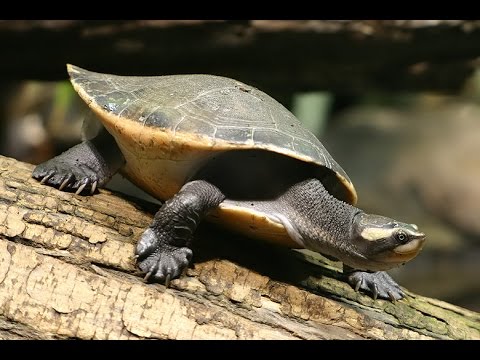
Red-bellied short-necked turtle
- Emydura subglobosa
Origin: Australia, New Guinea
Gender: Emydura
Life expectancy: 15 - 20 years
Length: Until 26 cm.
Are you looking for an active and colorful turtle that does not need to spend the winter? So, the Red-bellied short-necked turtle is ideal for you!
Red-bellied short-necked turtle – Location taken: National Aquarium in Baltimore, Baltimore – Photo by David J. pole, CC BY-SA 4.0, via Wikimedia Commons
Content
Origin / Distribution
The species had been described in 1876 by the director of the Sydney Natural History Museum, born in Brunswick, Johann Ludwig Gerard KREFFT, as Emydura subglobosa and in 1888 by BOULENGER as Emydura albertisii. For a long time the name given by BOULENGER was used. The specimens described as Emydura australis albertisii in the literature of a few years ago or still today in zoos they belong to the Emydura subglobosa. The two subspecies are distinguished subglobosa and worrelli.
The Red-bellied short-necked turtle (Emydura subglobosa) found on islands and rivers off the coast of Australia and New Guinea, like Fraser Island, the garden river, Daru, cape york, the Stradbroke Islands and the Torres Strait Islands. These turtles are also found in lowland swamps, covering large areas of the open tropical plains in western Papua New Guinea.
Characteristics / Appearance
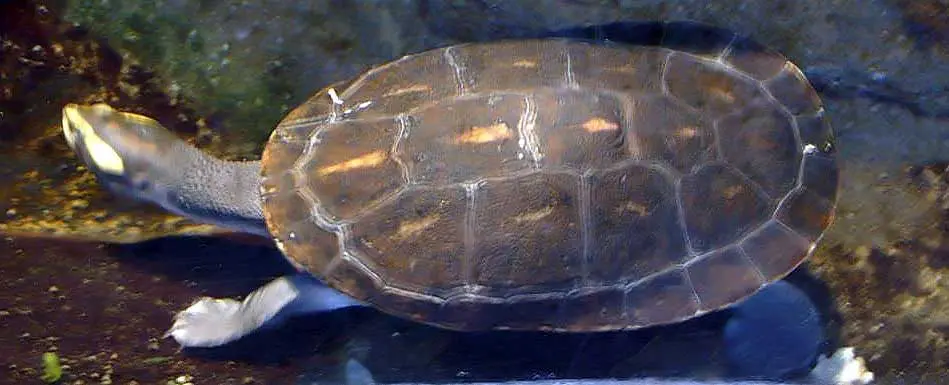
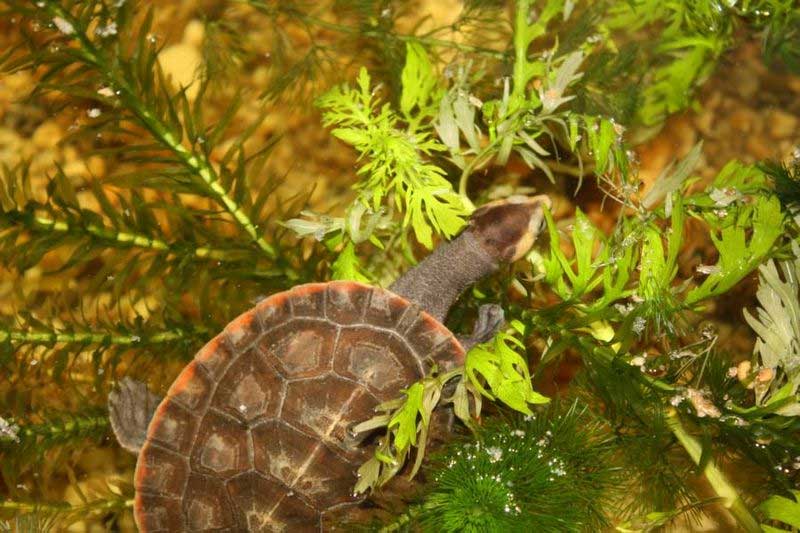
The Red-bellied short-necked turtle owes its name to its purple-red ventral carapace, that fades with age. Shell, of up 26,5 cm length, it's rather flat, wider behind than in front, with a keel in juveniles and without it in adults. It is brown or gray, except marginal shields, whose edge and bottom are red.
The plastron is red, pink or yellow with a reddish lateral stripe. Bright yellow stripe over eye to ear is eye-catching. The neck is relatively short. the snout is pointed. There are two yellow barbels on the chin. Juveniles are more colorful than adults, males have more contrasting colored heads than females.
In many sea turtles, freshwater and terrestrial, the sex of the embryo is influenced by the incubation temperature. But, this is not the case for Australian chelids studied to date, lacking temperature-dependent sex determination.
The preferred habitat of the Red-bellied short-necked turtle are the rivers, swamps and ponds of Papua New Guinea and Australia. In the lower reaches of the Kikori and Omati rivers they inhabit slow-moving waters, seasonal wetlands and wetlands.
Like other freshwater turtles, the Red-bellied short-necked turtle alternate periods in the water with sunny time to increase body temperature. Most of their life is spent in the water, where they look for food. If there is a shortage of water in the warmer months, move to flooded areas.
Behavior
The Red-bellied short-necked turtle swims and sunbathes to control internal body temperature. During the sunbathing process, tears go down the side of the turtle's head and enter the mouth as it opens and closes, what are known as gular movements. Wheezing and foaming at the mouth have been observed, although it is more common in Emydura macquarii than in the other Emydura species. Wetting the head or limbs, removing limbs from heat exposure and changing breathing patterns are mechanisms that prevent overheating
The Red-bellied short-necked turtle snap and bite when threatened, causing painful wounds. They stick their heads in while tilting their shell towards predators to reduce damage to soft body parts.
The Red-bellied short-necked turtle has highly developed senses, necessary for communication and perception. These senses help them locate food, avoid predators and find a mate during the breeding season. Studies have shown that these freshwater turtles can communicate with each other through a wide range of vocalizations that are too soft for humans to hear.. Evidence also suggests that echolocation may evolve to find prey., in addition to being used to obtain a three-dimensional image of the turtle pond).
The Red-bellied short-necked turtle, like other freshwater turtles, has a nictitating membrane (transparent third eyelid) for underwater vision. Your sense of smell is achieved through your nose and a specialized Jacobsen's organ., that identifies chemical residues floating in the air and water.
Although turtles do not have an external ear hole, they have an eardrum that is covered with skin and can detect low-frequency vibrations underwater and on land. Red-bellied short-necked turtles have four scent glands in their shell. These glands produce a scent as a defense against predators and between competing males during the breeding season.. They communicate with potential mates through extensive courtship ceremonies that include bobbing their heads as they align their bodies..
Food
The Red-bellied short-necked turtle it is omnivorous and feeds on filamentous algae, perifiton, sponges, aquatic macrophytes, aquatic macroinvertebrates, terrestrial insects falling into the water and carrion. These turtles also rely heavily on mollusc crushing., fish, insects, worms, aquatic plants, plant matter and seeds as part of your daily life.
Reproduction
During the breeding season, males communicate with females with a series of signaling postures, including a combination of simultaneous caresses, blinking eyes and swinging of the head.
In the Red-bellied short-necked turtle, females have a large area inside their shell to store eggs, while the males have a larger tail. Ovulation and nesting begin in early spring. Only female turtles come out of the water at night or first thing in the morning to lay eggs in hollow cavities built into sand or soil.. Females lay eggs in about an hour.
These turtles can produce two to four clutches a year., laying four to eleven eggs each time, with an average of 7 eggs in each clutch. The eggs hatch and hatch in the next dry season, between July and August.
Threats to the species
The Red-bellied short-necked turtle It is listed as a species of least concern by the UICN. But, isolated populations may occur in arid regions throughout their range and have long times to sexual maturity. This combination leads some associations to think that a preventive conservation program should be applied. Increasing anthropogenic threats also pose a threat.
Human predation includes the collection of eggs and the capture of adult turtles as a local food source..
The "Red-bellied short-necked turtle" in captivity
Aquaterrarium
For the maintenance and care of the Red-bellied short-necked turtle, an aquaterrarium with a rim length of at least 150 cm.. This aquaterrarium must have an aquatic part and a terrestrial part for the benefit of the animals. The water part must be very large and offer swimming animals a lot of free space. Other decorations would only unnecessarily restrict the turtles' swimming space and, Therefore, are not necessary.
The Red-bellied short-necked turtle he is a peaceful and friendly creature. They can be kept as a couple or in a group without problems..
They prefer water temperatures between 22 and 28 degrees centigrade and a pH value between 6 and 8. A UV lamp must be installed for the turtles to sunbathe. It is important that turtles always stay in clean water. Animals are native to tropical and subtropical regions. They don't go into hibernation.
Temperature
The duration of illumination is always given as twelve hours, because in the natural range the length of the day hardly changes over the course of the year. December is hotter than July, which is easy to explain: The red-bellied pointy-headed turtle comes from the southern hemisphere, and the seasons there shift half a year, compared to our seasons in the northern hemisphere.
But, it makes sense to care for these aquatic turtles according to our seasons, that is to say, shift temperatures half a year. In this way, heating costs are reduced in winter and also less water evaporates in winter (danger of mold!).
In summer, animals should be kept at a water temperature slightly lower than the 30 °C, while in spring and autumn temperatures of about 26-27 °C. This species does not hibernate, so it is enough to lower the temperatures to 25°C to simulate winter.
Food
The Red-bellied short-necked turtle it is a species that feeds in a mixed way and to which the full range of foods of animal origin can be offered, but plant-based foods should also be on the menu. But, the emphasis is clearly on foods of animal origin.
These aquatic turtles also like to eat creek fleas, various mosquito larvae and insects (like crickets).
Reproduction
Both sexes of this turtle reach sexual maturity with a carapace length of between 14 and 16 cm.. Smaller specimens are assumed to be sexually mature with 12 cm of shell length.
In New Guinea, egg laying takes place in August and October, and is often dispersed throughout the year in captive breeding. A clutch usually consists of five to eleven eggs and is laid at a depth of five to 15 cm.. In the Red-bellied short-necked turtle, three to four clutches may occur per year.
The Emydura subglobosa belongs to the group of aquatic turtles with genetic sex fixation, that is to say, sex is not influenced by breeding temperature. At a rearing temperature of 25-30 °C, The young are born after 50 to 80 days.
Buy one "Red-bellied short-necked turtle"
Occasionally, the Red-bellied short-necked turtle are offered in pet stores. The specimens offered in the pet shop are usually European pups. But, it is more advisable to buy this beautiful tortoise from a breeder. Since this turtle is comparatively easy to breed, there are some breeders.
1. Red-bellied short-necked turtle, Pink-bellied side-necked turtle, Jardine River turtle (English).
2. Tortue à ventre rouge, Emydure à ventre rouge (French).
3. Rotbauch-Spitzkopfschildkröte (German).
4. Tartaruga-de-barriga-vermelha, Tartaruga de barriga vermelha e pescoço curto (Portuguese).
5. "Tortuga de cuello corto", Tortuga de cuello corto de vientre rojo, Tortuga de cuello lateral de vientre rosado, tortuga del río Jardine, Tortuga payaso (español).
▷ The world of Pets: Dogs, cats, birds, reptiles, amphibians
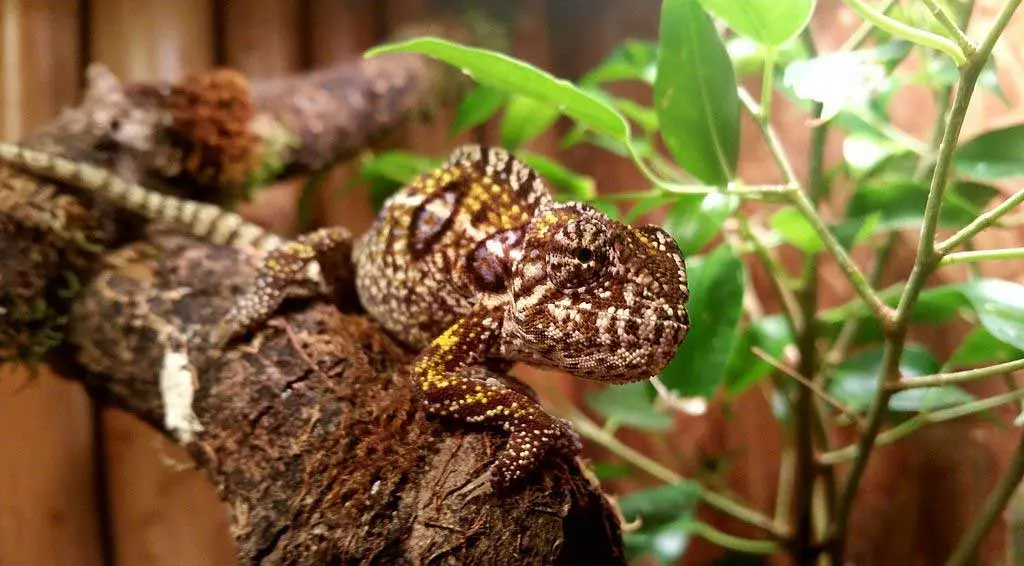
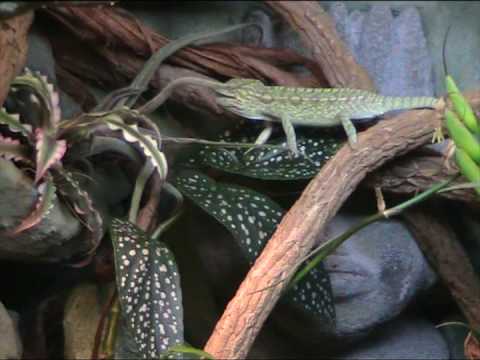
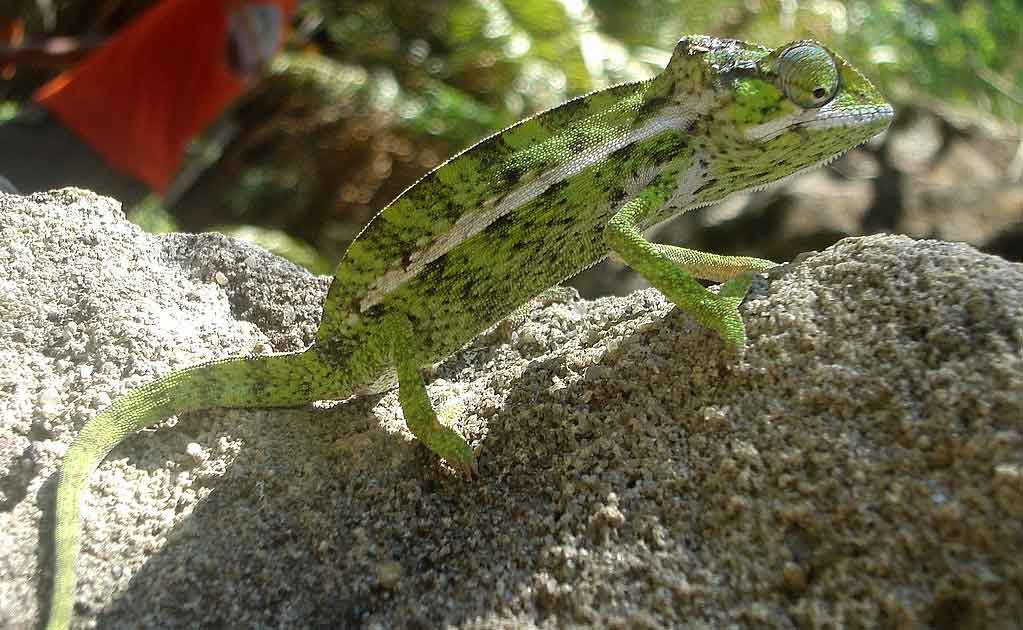
Carpet chameleon
- Furcifer lateralis
Origin: Madagascar
Gender: Furcifer
Life expectancy: 3 years
Length: 17 - 25 cm.
The Carpet chameleon, formerly known as Chamaeleo lateralis, is a beautiful species in high demand for the pet trade.
The Carpet chameleon (Furcifer lateralis) is native to the island of Madagascar, in the Indian Ocean, and its range covers much of the island.
Characteristics / Appearance
Both males and females of the Carpet chameleon reach a maximum length of between 17 and 25 cm.. Males are generally green with a white midline and a series of dark bands extending from behind the head to the end of the tail.. Females usually have a heavier body and are more colorful (especially when pregnant), with dark bands and white or yellowish lateral ocelli and a poorly defined orange half-lateral stripe on a brownish background. The throat and lips of both sexes are usually scratched. These chameleons can change color and intensity depending on mood and certain environmental factors..
Habitat
The Carpet chameleon is strictly arboreal, and especially likes small trees and shrubs. It is usually found at an altitude of between 600 and 1200 m, usually in areas of moderate shade and high humidity, with access to direct sunlight. This species has also infiltrated the cities of Madagascar, and performs quite well in the private gardens and shrubs of the parks.
Behavior
This species, like most chameleons, is strictly diurnal. Usually, they spend the first part of the day warming their bodies by adopting a very dark coloration and exposing as much surface area as possible to sunlight.. once the desired body temperature has been reached, begin to hunt prey, activity that usually lasts the rest of the daylight hours.
Males are very territorial and adopt a series of very elaborate postures., color changes and whistles to try to scare away rival males. They also scare away females that are not in a position to reproduce..
The Carpet chameleon is a species that generally follows the same routine every day, to the point of sleeping on the same branch every night.
Reproduction
The Carpet chameleon matures in a very short period of time, and is usually able to reproduce by three months of age. Males are usually very territorial and usually try to attract females to their territory to mate.. Females deposit the clutches of eggs in a depression that they dig into the ground. Typical clutch size ranges from 8 and 23 eggs, and up to three clutches can be laid in a year. Incubation requires about six months at a temperature close to 24°C .
Food
The Carpet chameleon is almost entirely insectivorous, and prefers insects that normally reside in trees or shrubs. Among them are most flies, grasshoppers and crickets, as well as various insect larvae. It is also known that adult specimens consume very small lizards and even small newborn rodents (in captivity). This species hunts its food with the typical chameleon style of slowly crawling through the branches of trees or shrubs., using their excellent eyesight to detect insects. When you select the desired prey, the Carpet chameleon gets as close as possible to its prey and catches it by quickly spreading its tongue (which may be equal to the length of the lizard), capturing the insect on the sticky tip and then quickly retracting its tongue
Threats to the species
State of conservation ⓘ
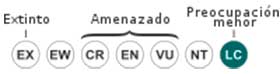
Minor Concern ⓘ(UICN)ⓘ
The Carpet chameleon is a relatively popular species in the pet trade, and most of the individuals available today are bred in captivity.
Without a doubt, chameleons help control insect populations in areas where they are common.
Currently, the Carpet chameleon is found quite well in its native habitat, and even seems to benefit from some degree of habitat alteration. It has proven to be quite versatile when moving to urban areas and establishing populations there..
The "Carpet chameleon" in captivity
The Carpet chameleon, formerly known as Chamaeleo lateralis, is a beautiful species in high demand for the pet trade. Wild-caught specimens that enter the pet trade are often in poor health when they arrive at retail markets., and mortality has been very high. Captive-bred pups are easier to keep alive. These animals seem to have a relatively short lifespan even under natural conditions., and few Furcifer lateralis live more than 3 years
The Carpet chameleon is reserved and shy, so it's not the kind that hangs on your shoulder. Once they are out of their habitat, can become stressed very quickly, which can cause a wide range of problems for your overall health.
These creatures prefer to be on a branch or trunk sunbathing in their enclosure. They move quietly from branch to branch, no need for space to climb. They like to stay out of sight, hiding under branches and inside hiding places.
How chameleons spend their lives in trees, you will need a terrarium taller than wide. You'll need a space that measures at least 45 x 45 x 90 centimeters for an adult—but more is always better.
The terrarium should be lined with gravel or clay granules for optimal drainage.
Temperature
Like many other cold-blooded creatures, there must be several temperatures available in the enclosure. They have to be able to regulate their body accordingly..
Sun area: 32º – 35º
Terrarium top: 26º – 29º
Bottom of the terrarium: 21º – 24º
Vegetation
Chameleons need leafy, healthy plants within their enclosure to climb and shade..
Before buying, you have to keep in mind that you will also be responsible for keeping your plants healthy, as well as your chameleon.
Humidity
Yet Carpet chameleon loves hot and humid weather. Your enclosure must maintain humidity levels between the 50% and the 60% continuously. You have to put a hydrometer in your terrarium to control the levels.
Illumination
Chameleons need lighting that mimics natural light and night cycles. They benefit considerably from double fluorescent lamps.
Food
Yet Carpet chameleon loves all kinds of tasty insects.
Among the appropriate dietary options are:
Crickets
Mealworms
Cockroaches
Fruit flies
Beetles of beans
Juveniles should eat one serving of insects a day, as much as they can in one sitting. Normally, this supposes a total of some 12 insects a day.
Adults should eat every other day, and eat much less, approximately 6 insects per intake.
The Carpet chameleon can be a very picky animal and difficult to maintain. They are ultrasensitive to stress and the environmental environment. So, one of the main things you need to do is make sure your chameleon feels as comfortable as possible..
Before you take your Carpet chameleon at home, you have to find an exotic veterinarian in your area. You can't take a reptile to traditional veterinarians, since they do not have the necessary specialization to serve them efficiently.
These chameleons are susceptible to various diseases and problems.
These are the most common problems:
Stress
Upper respiratory infections
Metabolic bone disease
Dehydration
Egg retention
Stomatitis
Edema
Gout
If you notice any peculiar behavior or physical abnormalities, do not hesitate to take him to the veterinarian.
If you have no experience, you may want to avoid breeding a Carpet chameleon until you've had a few. Since chameleons are so difficult to care for, their breeding can carry even more risks.
But if you are familiar with the species, can try to breed.
A good recommendation is to wait for the female to lay her first eggs before mating.. After a few weeks, you can reintroduce the female with the male. The mating of a Carpet chameleon can last up to an hour, so when it docks, be patient and don't bother.
Sperm retention is common, which means that one breeding session can fertilize several subsequent clutches. After the females put their first clutch between the 8 and 12 months, remain gravid throughout their lives.
They can give birth up to 30 offspring at the same time after a gestation of 4 to 6 months.
Buy one "Carpet chameleon"
The price of a Carpet chameleon may vary depending on several factors. But, the average cost ranges between 100 and 500 EUR. Sometimes, you can get lucky and find a person who wants to give their chameleon to a good home for free.
Keep in mind that you also need plenty of supplies to get started.. Don't skip the basics, as these are fragile creatures that need proper care.
For installation, including enclosures, the substrate, decoration, vegetation and diet, you can spend between 300 and 800 EUR.
1. Carpet chameleon, White-lined chameleon, Jewelled Chameleon (English).
2. Caméléon à bandes latérale, Caméléon-joyau (French).
3. Teppichchamäleon (German).
4. Camaleão do tapete, Camaleão de linha branca (Portuguese).
5. "Camaleón de alfombra", Camaleón de líneas blancas (español).
▷ The world of Pets: Dogs, cats, birds, reptiles, amphibians
Green tree python
- Morelia viridis
Origin: Australia, Papua New Guinea
Gender: Morelia
Life expectancy: 20 years
Length: 1,80 m
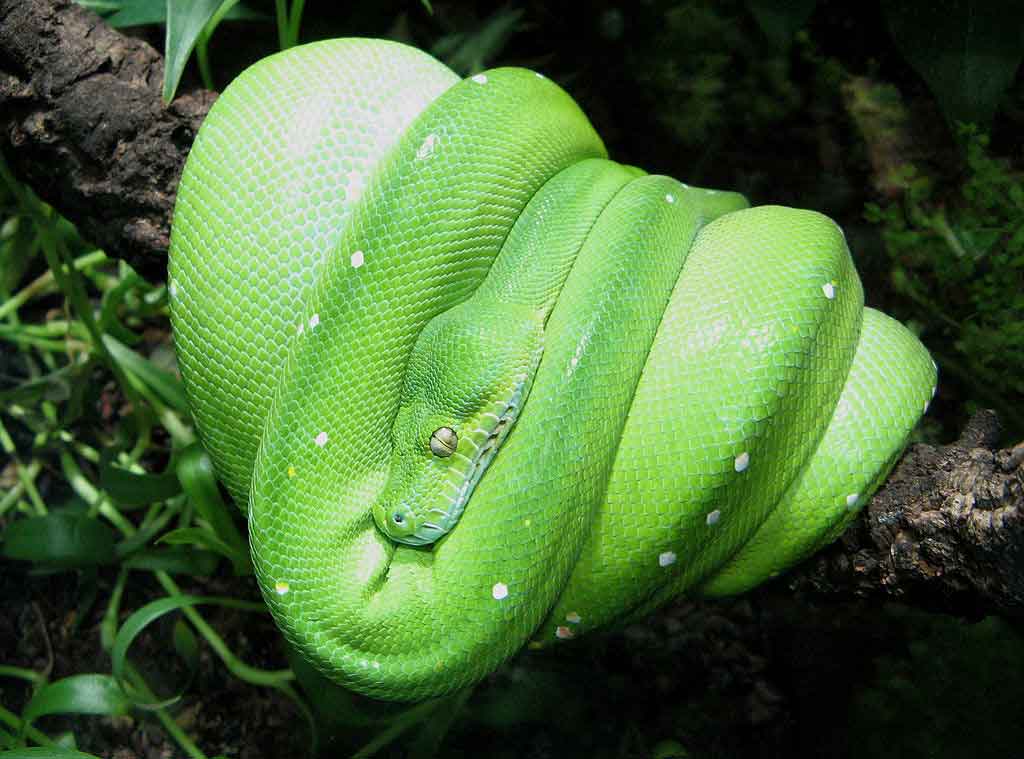
The Green tree python has two different poses, depending on whether you are resting or hunting. In the resting position, the body of the snake coils and hangs from a horizontal branch or vine.
Morelia viridis, berlin aquarium (Zoological Garden) – Micha L. giant, Attribution, via Wikimedia Commons
Content
Origin / Distribution
The Green tree python (Morelia viridis) found throughout New Guinea and surrounding islands, with the exception of the Bismarck Archipelago. They are also found on the Cape York Peninsula of Queensland., Australia. The juvenile yellow morph of Morelia viridis is found throughout this range, while the juvenile red morph is only found in parts of New Guinea.
Characteristics / Appearance
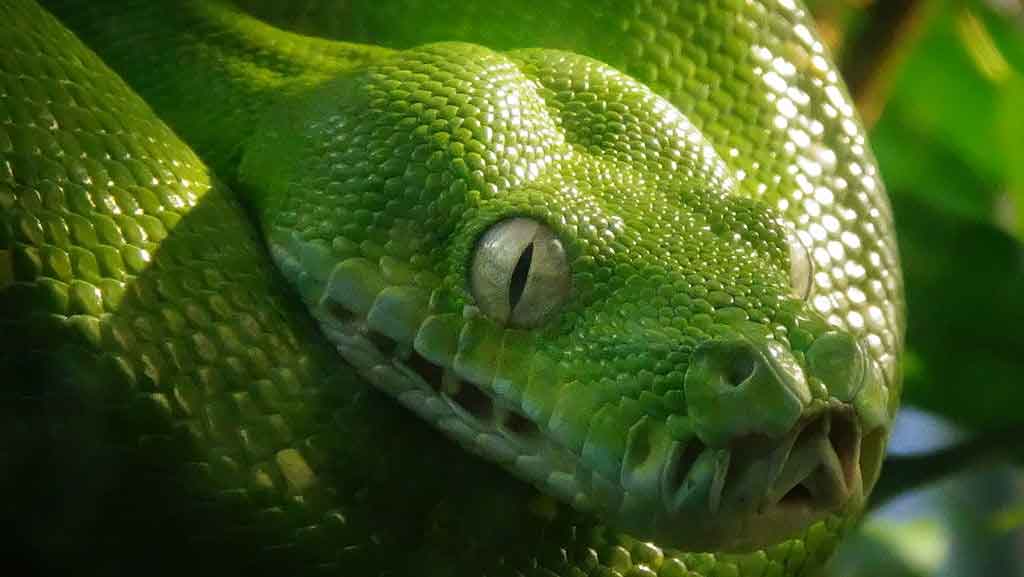
The Green tree python reaches an average length of 1,5 m, being the largest recorded specimen of 2,2 metres in length. The scales on the head are irregular and small, and its heat-sensing labial pits are found only within the scales on the upper lip.. His tail is prehensile, what helps them climb. The Green tree python does not appear to show sexual dimorphism in adulthood; However, at shorter lengths juvenile females have broader and longer heads compared to similarly sized males.
when she is an adult, the Green tree python displays a bright green color over most of its body. On the dorsal surface there is a distinctive ridge of scales that is usually white to yellow in color and forms a broken or continuous line across the body.. in the ventral part, scales are usually yellow. But, some individuals may have duller yellow to white ventral scales and have a scattered blue tint on dorsal surface scales.
The Green tree python juvenile can be bright yellow or brick red. along the dorsal surface, show a series of white spots with black or brown borders. These spots may be symmetrical or randomly placed on both sides of the body.. In both color ways, a white stripe bordered with black runs from the nostril, passing through the eye, to the back of the head. The distributions of these two color morphs appear to be different, although it is not uncommon for both color morphs to be in the same clutch in captive situations. In the wild, only the yellow morph has been recorded in Australia. Although little studied, the red morph appears to be restricted to Biak Island and Baliem Valley in Papua (Indonesian) and in the Sepik Basin in Papua New Guinea. In some populations of Morelia viridis, adults may not completely change to green and retain some of their juvenile yellow coloration.
Habitat
The Green tree python it is a tropical rainforest species that mainly inhabits the lowland and montane lowland rainforest habitat, between 0 and 2000 m. It can also be found in secondary forests and regrowth areas. When they are young, the Green tree python limited to hollows in treetops or forest edges, where light can easily reach the ground. when they are adults, they are usually found in humid closed canopy forests.
Behavior
Morelia viridis – green python – loury cedric – Cedricguppy, CC BY-SA 4.0, via Wikimedia Commons
The Morelia viridis it is the most arboreal python species, although it can be found on the ground occasionally. when they are adults, they are nocturnal and hunt mainly at night, when larger nocturnal prey are also active. Before ontogenetic color change, the Green tree python it is diurnal, coinciding with smaller prey that are active during the day.
The Green tree python has two different poses, depending on whether you are resting or hunting. In the resting position, the body of the snake coils and hangs from a horizontal branch or vine. This is how the animal is usually shown in photographs. When resting, green tree pythons often take refuge in tree hollows or epiphytic vegetation. In a hunting stance, the anterior end of the body extends from the ramus and folds like an accordion, ready to hit the ground or a lower branch, while the rear end wraps tightly around its perch. The Green tree python it usually changes between these postures only during twilight or dawn so as not to give away its location.
Activity rates are different between the sexes. Females are more likely to change position from one day to the next than males.. They are also more active and travel further in the month of February.. On the other hand, males are most active in January and March. But, from about April to the beginning of the following breeding season in October, both sexes are sedentary and inactive. When moving, the distances traveled by adult snakes are the same as those traveled by juveniles, regardless of its comparatively smaller size.
Developing
The Green tree python measure about 30,5 cm when hatched. In this phase, are bright yellow or brick red. They must undergo an ontogenetic color change to acquire their adult green coloration. This usually occurs between six months and one year of age., but it does not coincide with sexual maturity, as one would expect. On the other hand, at this age, the juvenile python will have between 53 and 59 cm in length and is large enough to change its foraging behavior and habitat. Each color stage appears to provide adequate camouflage to its immediate habitat.. when it is a young snake, red or yellow color blends best in gaps or forest edges, where smaller animals reside. The adult green coloration is better integrated into the closed canopy of the forest, where the largest prey live. The change is not usually associated with a molting event and can occur as quickly as overnight or take up to several months.. The red guys from Morelia viridis take longer to undergo this change, since they first lighten until they reach a yellow color, in several spots at once, and later change to their adult green color.
Reproduction
Breeding in the wild has never been reported. Morelia viridis and the mating system is unknown.
Most of the available information on breeding has been published from hobbyists of the captive pet trade., although some speculation can be made from on-site scientific research. The lack of sexual dimorphism and the presence of an equal sex ratio in the Green tree python suggests that males do not physically compete in male-male combat to mate with females. In its place, a male's ability to obtain a mate may be determined primarily by how well they can search for a female. Apparently, this is the reason why males do not maintain stable home ranges. Males seem to stop feeding when looking for a mate.. Once the male has found a sexually mature female, he will stimulate her with his cloacal spurs (vestigial digits) to make her receptive to mating.
The Green tree python has a highly seasonal breeding cycle; However, few young are found in a year, suggesting that these pythons do not breed every year. The actual mating season in the wild is not known., although in captivity it can vary widely from August to January and tends to be stimulated by the onset of low pressure fronts and storms. like all pythons, the Morelia viridis is oviparous. In the wild, females lay their clutches in October and then brood for about 50 days, but this can vary from 39 to 60 days. Hatching takes place in November, which corresponds to the beginning of the wet season in the Australian region. At the time of hatching, the Green tree python measures approximately 30,5 cm in length and can be brick red or bright yellow. Reaching sexual maturity can take several years and may be long after they have changed to their adult green coloration.. In males, sexual maturity occurs after 2,4 years and in females, after 3,6 years.
Food
Like the rest of the snake species, the Morelia viridis is exclusively carnivorous. They are obligate ambush predators that feed on small reptiles., invertebrates, mammals and birds throughout their lives. There is a clear change in their eating habits that coincides with their color change from red or yellow to their adult green coloration. Once they hatch, their main prey are Carlia longipes and diurnal invertebrates.
In captivity, However, hatchlings are known to cannibalize their nestmates. The Green tree python juvenile feed mainly on small animals, like lizards. As they grow, their mouths become larger and they are capable of ingesting larger vertebrate prey. in adulthood, the Green tree python feeds mainly on mammals and birds. These may include, the main prey species of the Iron Range populations of Cape York Peninsula (Australia) are the rodents Rattus leucopus and Melomys capensis. Since they are ambush predators, the Green tree python does not move often and can use the same ambush spot until 14 days, waiting for actively feeding prey to come within reach. The tip of the tail has been observed to attract small animals, especially in the young. Although the ambush feeding strategy does not frequently produce prey, the Green tree python has an efficient digestive system and does not need to feed frequently.
Life expectancy
Information on actual ages in the wild is limited for the Morelia viridis. But, a population in the Iron Range, on Cape York Peninsula, Australia, had an average age of 3,4 years. It is anticipated that these pythons could live at least 15 years, with a maximum age of 19. The Green tree python in captivity has lived only a little longer, with a record age of 20 years.
Threats to the species
The situation of the Morelia viridis it is indeterminate, as it is not listed on the IUCN Red List or CITES. But, populations may be vulnerable to capture for the captive pet trade. Most of the pet trade for the United States and Europe is sourced from Irian Jaya populations, although recently it has been possible to breed individuals in captivity. In Australia, It is illegal to catch the Green tree python or import individuals originating in New Guinea. Apart from the pet trade, these pythons are also vulnerable to habitat degradation due to logging and slash-and-burn agriculture. However, until their number cannot be accurately counted, it may be impossible to determine the status of this species in the wild.
The "Green tree python" in captivity
Video AquaTerrarium "Green tree python"
AquaTerrarium Serpent / Morelia Viridis / Green Tree Python
For terraristas it is very important to know that in tropical jungle areas there is no change in weather between seasons. This means that the Morelia viridis needs the same climate in the terrarium throughout the year. Keep in mind that the humidity in the jungle areas is very high and is between 75 and the 85% during the day. Next, rises to values between 95 and the 100% At night. During the day, the temperature fluctuates between 27 and 32 degrees. And at night go down to 22-25 degrees.
The terrarium
Due to its arboreal lifestyle, to the Green tree python he should be offered a spacious terrarium. Although they spend a very compact time in their resting position during the day, morelias are very active at night.
Some professional journal authors advocate a minimum size of 0,9 m x 0,6 m x 0,6 m, as well as for an ideal size of 1,2 m x 0,6 m x 0,75 m. These sizes are great for creating a temperature gradient and keeping moisture in.. Large breeders trust these sizes.
Substrate
As a substrate for Green tree python uses coconut bricks and pressed humus, that dissolved in hot water form a very pleasant and moisturizing substrate.
The substrate is lightly sprayed 1 or 2 times a day with a pressure sprayer to ensure increased humidity in the terrarium.
Decor
As the Green tree python Lives in the trees, offered at least 2-3 horizontal branches. It is best to place the different branches (various types of wood are suitable for this) at different heights so that the snake can freely choose its preferred area. The lying branches of our terrariums can be mounted in such a way that the branch can be freely removed from its anchor if it needs to be replaced..
In addition to LED lighting (under cabinet light fixture), real plants like ivy (Epipremnum aureum) and Dieffenbachia They can also be part of the terrarium furniture. These grow excellently in the light spectrum and are also wonderfully suited to maintaining the microclimate.. The temperature and humidity in the terrarium of the Morelia Virids do not negatively influence plant growth, but rather the opposite: plants even thrive so well on this spectrum that they have to be shortened 1-2 times a year.
Temperature
It is a good rule of thumb to use 50W heat panels that are controlled by a thermostat. Under the thermal panel we have a temperature of 31°C and in the coldest corner a temperature of 26°C. At night we leave the temperature under the thermal panel. At night, let the temperature under the thermal panel drop to 26°C.
Air exchange is sometimes the most important factor, but unfortunately it is also usually the one that is most neglected. There is nothing worse than stagnant air and waterlogging in the terrariums of tree snakes like the Morelia Viridis.
When buying or building the terrarium, it is essential to ensure that there are sufficient ventilation zones to guarantee the exchange of used and fresh air. in addition, terrarium ventilation zones should not be too close to a wall, as this also hinders the constant exchange of air.
It also, the substrate of the terrarium must never be wet, but only wet, so it can dry again during the day.
We keep the humidity high by spraying warm water in the terrarium once a day by hand.. with plastic terrariums, the humidity stays very high. In the case of glass terrariums it may be necessary to spray twice.
Diet
Diet consists mainly of small mammals and lizards. But, birds also eat them with pleasure. Young animals also eat insects, among other things.
It is important to know that animals drink from their own body. That is why it is necessary to spray them regularly. However, there should always be a bowl of water in the terrarium.
Buy one "Green tree python"
The price of a "Green tree python" at the exotic animal market, can oscillate between 400 – 800 EUR.
1. Green tree python (English).
2. Python vert, Python arboricole vert australien, Python arboricole vert ou Serpent Émeraude (French).
3. Grüner Baumpython (German).
4. Pitão-verde-arborícola (Portuguese).
5. "Pitón arborícola verde" (español).
Sources:
References
Bartlett, R. 1995. Folk pythons and boas: Complete guide for owners of large snake species. Mission Viejo, California: Bowtie Press.
Cogger, H. 1983. Reptiles and amphibians of Australia. Sanibel, Florida: Ralph Curtis Books.
McDowell, S. 1975. A Catalogue of the Snakes of New Guinea and the Solomons, with Special Reference to Those in the Bernice P. Bishop Museum. Part II. Anilioidea and Pythoninae. Journal of Herpetology, 9/1: 1-79.
O’Shea, M. 2007. Boas and Pythons of the World. Princeton, New Jersey: Princeton University Press.
Rawlings, (L)., S. Donnellan. 2003. Phylogeographic analysis of the green python, Morelia viridis, reveals cryptic diversity. Molecular Phylogenetics and Evolution, 27: 36-44.
Ross, R., G. March. 1990. The Reproductive Husbandry of Pythons and Boas. Monks, Iowa: Garner Printing, Inc.
Torr, G. 2000. Pythons of Australia: A Natural History. Malabar, Florida: Krieger Publishing Company.
Wilson, D. 2007. Foraging ecology and diet of an ambush predator: the green python Morelia viridis. Pp. 141-150 and R Henderson, R Powell, eds. Biology of the Boas and Pythons. Eagle Mountain, Utah: Eagle Mountain Publishing.
Wilson, D. 2006. On green tree pythons: The ecology and conservation of Morelia viridis – PhD Thesis. Austrailian National University, 1: 1-127.
Wilson, D., R. Heinsohn. 2007. Geographic range, population structure and conservation status of the green python (Morelia viridis), a popular snake in the captive pet trade. Australian Journal of Zoology, 55: 147-154.
Wilson, D., R. Heinsohn, J. Endler. 2007. The adaptive significance of ontogenetic colour change in a tropical python. Biology Letters, 3: 40-43.
Wilson, D., R. Heinsohn, S. Law. 2006. Age- and sex-related differences in the spatial ecology of a dichromatic tropical python (Morelia viridis). Australian Ecology, 31: 577-587.
Wilson, D., R. Heinsohn, J. Wood. 2006. Life-history traits and ontogenetic colour change in an arboreal tropical python, Morelia viridis. Journal of Zoology, 270: 399-407.
▷ The world of Pets: Dogs, cats, birds, reptiles, amphibians
Oriental wolf snake
- Lycodon capucinus
Origin: Indo-Australian Archipelago
Gender: Lycodon
Life expectancy: 15 years
Length: 40-80 cm.
Although the Oriental wolf snake it is poisonous, this poison is relatively mild. Even when they bite humans, the impact is usually not harmful.
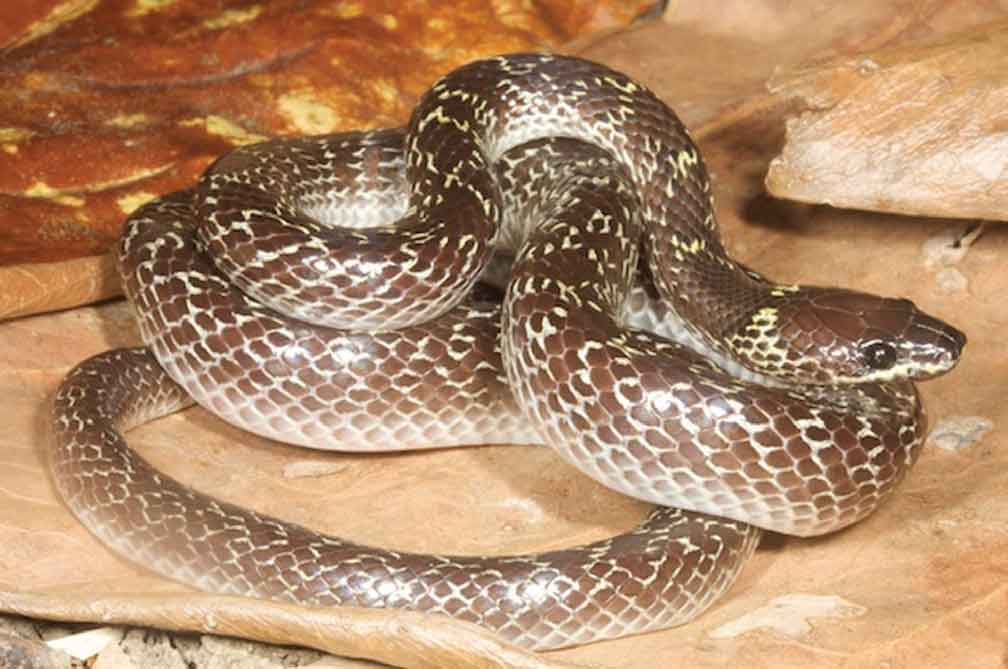
Lycodon capucinus. Male from the city of Same, Manufahi Distict. Mark O’Shea, CC BY 3.0, via Wikimedia Commons
Content
Origin / Distribution
The Oriental wolf snake (Lycodon capucinus) this species is known to occur in Myanmar, Thailand, Laos, Cambodia, Viet Nam, south china, Peninsular Malaysia, Singapore, Philippines and the Indonesian islands of Sumatra, Borneo, Java, Bali, Sulawesi and the Lesser Sundas.
Characteristics / Appearance
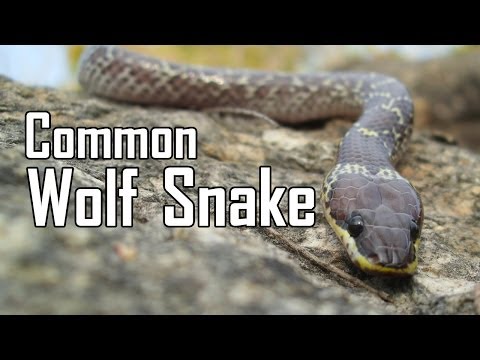
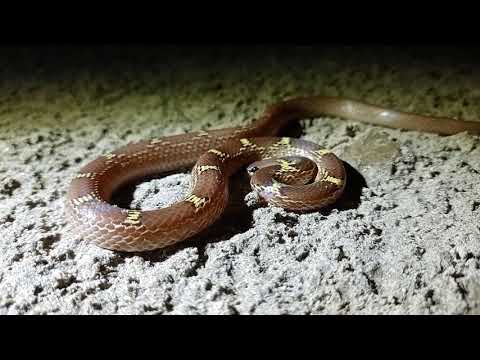
Its body is relatively slim and its flattened head is larger than its body.. Its dorsal skin is brown, with yellowish markings forming a nominally "reticulated" pattern. There is a pale yellow band around the neck, and the suprablabial labial scales are also yellowish. His underside is pale.
Habitat
The Oriental wolf snake it is a lowland forest species. Its habits are both terrestrial and arboreal and it can be found, for example, in the dark crevices of fig and other trees.
The species is also known as domestic snake, since it usually lives in old properties, such as colonial-era bungalows and buildings near wooded areas. In these places, it is supposed to feed on domestic geckos.
Behavior
Although the Oriental wolf snake it is poisonous, this poison is relatively mild. Even when they bite humans, the impact is usually not harmful. Most bites cause pain and swelling, and do not cause any serious harm. It is a rather nervous snake when it is picked up or handled and will not hesitate to bite. It can also move its tail in a back-and-forth motion much like a rattlesnake when threatened..
It is a fossil animal, who loves digging in the dirt, but most often found in open ground, on rocks or in low vegetation. Sometimes shows semi-arboreal behavior. It's a nocturnal creature, more active at night, but it is also observed during sunrise, and climb the walls of any building. Most captive specimens become tame after some time and with proper handling.
Food
The Oriental wolf snake is carnivorous. They feed mainly on small lizards, as the Geckos, and they are also among the main predators of the skinks. They can also eat small frogs, If they are available.
Reproduction
Little is known about the reproductive habits of the Oriental wolf snake. Usually, put between 3 and 11 eggs per clutch. The young are born fully developed and are totally independent at birth.
Threats to the species
State of conservation ⓘ
Minor Concern ⓘ(UICN)ⓘ
The IUCN has classified this species asLeast concern«. Although it is a very common snake, rarely seen. The continuing destruction of primary and secondary forests, the conversion of fertile land into agricultural and residential areas, as well as the indiscriminate killing of human beings can threaten the survival of this animal.
It is endangered in many parts of mainland Asia and peninsular Southeast Asia..
on christmas island, which is part of Australia, where it was introduced around 1982, It is an invasive species that threatens some native species such as the Mangrove skink or, in the case of Cryptoblepharus egeriae, has already caused its extinction in the wild. In Timor Oriental, The species was introduced in the 1980s. 1960 and in 2018 first observed in New Guinea. It may also have spread to Micronesian islands.
The "Oriental wolf snake" in captivity
The Oriental wolf snake not a good pet, gets nervous when handled by humans and bites if threatened. They are also difficult to feed in captivity because they often eat lizards., frogs and skinks.
The terrarium
This species is relatively small, so it does not require very large habitats. Since they dig under the ground, it is important to provide them with several different hiding places and a soft substrate to burrow in, like the sand. These snakes do not eat small mammals, and you have to feed them with lizards, skinks, frogs or other natural prey.
Buy one "Oriental wolf snake"
The price of a "Oriental wolf snake" at the exotic animal market, oscillates on the 200 EUR.





_by_Robert_Michniewicz.jpg)


_Chameleon._Furcifer_lateralis_-_Flickr_-_gailhampshire.jpg)