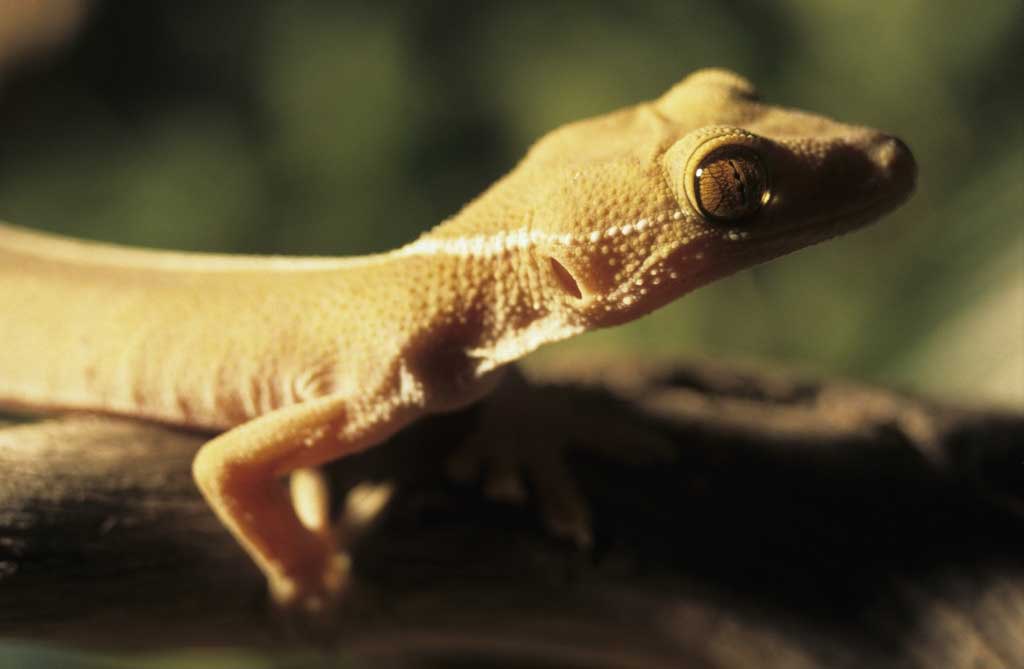
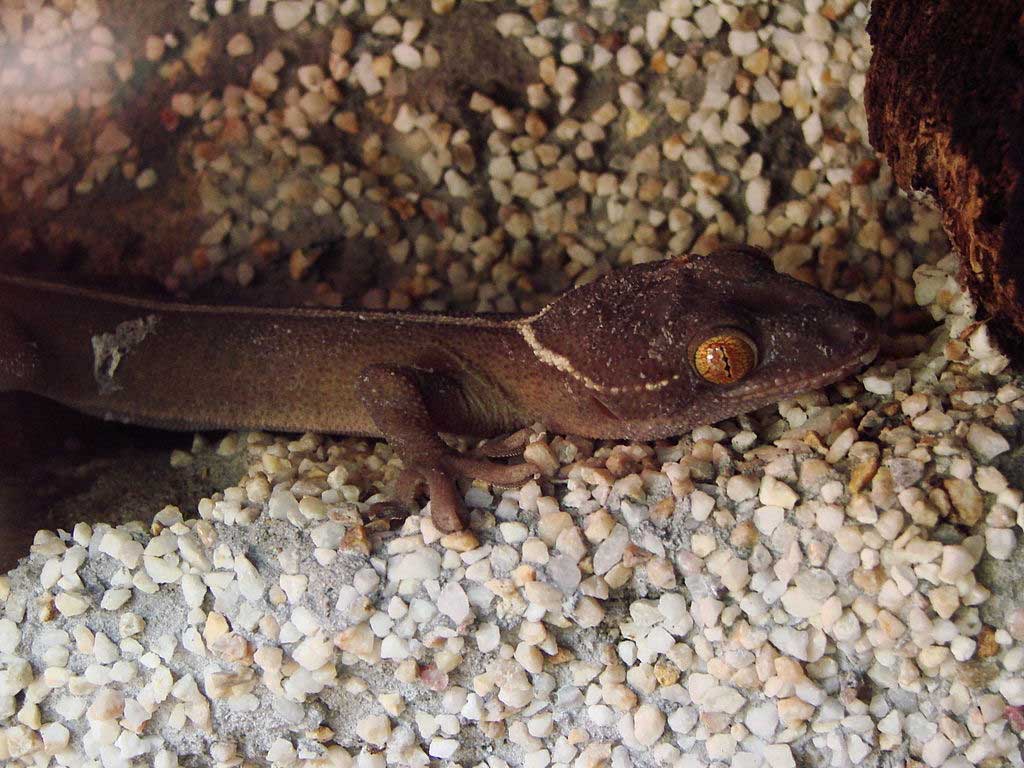
The Lined gecko is a slender representative of the genus Gekko, which can reach a length of up to 30 cm.. The tail represents just over half. But, numerous individuals are fully developed with a length of about 25 cm..
Due to the slender body and narrow head, the extremities, and especially the fingers and toes, appear larger. The white stripe that runs from the base of the tail to the back of the head, where it divides and reaches the sides of the eyes, It is characteristic and very striking. This strip is responsible for its trivial name. The original queue, on the other hand, has white transverse bands. A regenerated tail no longer shows this transverse band.
Dorsal coloration is usually yellowish-brown, but there are also individuals of slightly greenish yellow or reddish and dark brown color. Specimens with two longitudinal stripes are also known., just a very faint stripe and also without any streaks.
Distribution and habitat
Indonesian, east of Java through numerous islands such as Halmahera, in New Guinea to Oceania.
Way of life
The Lined gecko, of night activity, prefers to live in trees, Palm trees, pandanus and banana plants in his native country, but in many regions it can also be found as a cultural follower in houses and cabins.
The Lined gecko in captivity
The Lined gecko is easy to preserve, provided that one or two important points are taken into account.
The terrarium must be taller than it is wide, since it is an arboreal species. 80 x 50 x 100 cm. (width x depth x height) is enough for a couple of Lined gecko. Walls must be coated, for example, of natural cork. Some cork tubes provide the necessary hiding places. The necessary increase in humidity is achieved by spraying several times a day. One plant (for example, Scindapsus) complete the assembly.
There should also be a large bowl of water, or better a small part of water or a waterfall in the terrarium.
Substrate:
Use a white peat mixture (without fertilizer) and plantation land, of about 10 height cm. To avoid stagnation of water at the bottom of the terrarium, use a layer of clay balls.
Illumination
It is debatable whether ultraviolet light is necessary for the Lined gecko, but it won't do you any harm. Temperatures should be 24-28°C during the day, with sunny spots up to 35°C, and drop to 20-22°C at night. Humidity should oscillate between 70-90% during the day, which can be easily achieved with a daily spray (morning and evening) and through the water section. To check these parameters, use a thermometer and hygrometer.
Diet
The diet of the Lined gecko is based on insects. Easily accepts all kinds of insects: crickets, cockroaches, lobsters, worms, … It is important to vary your diet. This prevents your Gecko get bored, but above all it provides you with all the necessary nutrients.
You should always make sure to give to your Gecko a prey adapted to its size.
Last, from time to time, it is advisable to supplement your diet with calcium and vitamins, to avoid any shortcomings. This is especially important for the growth of Geckos juveniles.
Breeding and reproduction
with a good brood, the reproduction of animals does itself. the female may lay one or two eggs several times a year, that can be left in the terrarium. The pups are born after about 100 to 120 days and can stay in the terrarium up to a size of some 15 cm..
The pups usually look the same as the parents., in some populations they show white spots on the head. Only the tail is slightly darker, so that the transverse white bands appear brighter and thus have a signaling effect. When parents approach, wag their tail to avoid being accidentally eaten by them. Keeping them in a group is only possible with young animals until they reach sexual maturity.. As soon as they are adults, you have to take them out of the terrarium, otherwise they can be attacked by parents.
For sale Lined gecko
The price of a Lined gecko in the exotic animal market ranges from 40 and 50 EUR.
▷ The world of Pets: Dogs, cats, birds, reptiles, amphibians
Saharan spiny-tailed lizard
- Uromastyx geyri
Origin: Algeria, Mali and Nigeria
Gender: Uromastyx
Life expectancy: 20 years
Length: 35 cm.
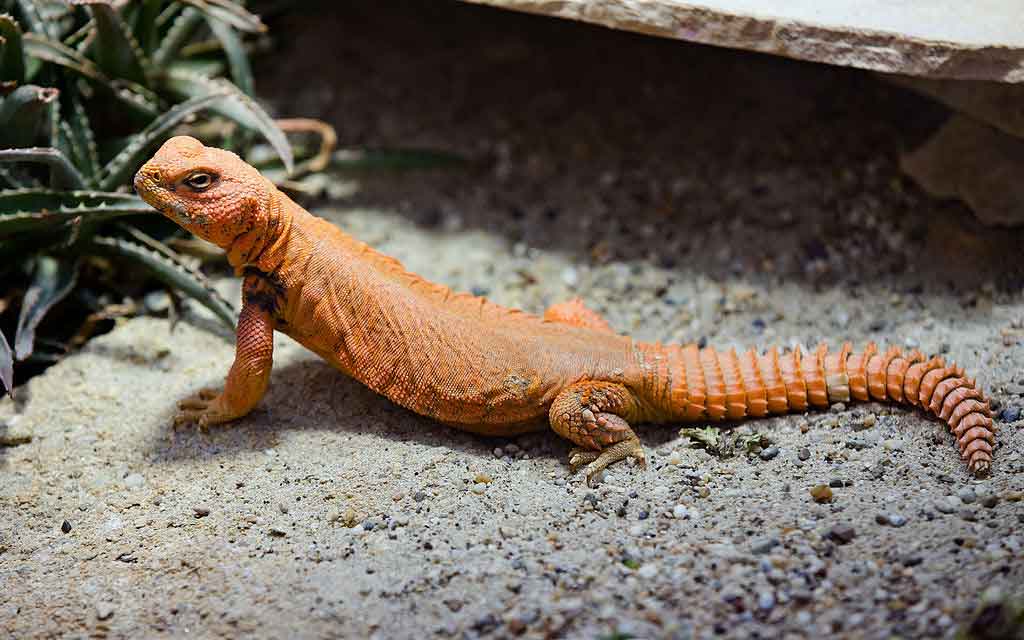
The Saharan spiny-tailed lizard it is a relatively small and slender species for the genus, with an average total length (including the queue) of about 34 cm..
Saharan spiny-tailed lizard, Flower Gardens Hirschstetten in Vienna, Austria.
Content
Origin
The Saharan spiny-tailed lizard (Uromastyx geyri) is a lizard native to the north of Mali, southern Algeria and northern Niger. Two different color shapes are known (red or yellow).
Characteristics
The Saharan spiny-tailed lizard it is a relatively small and slender species for the genus, with an average total length (including the queue) of about 34 cm.. This lizard is usually beige or orange with lighter spots.
It is one of the brightest colored species in the genus. Uromastyx. There are two colors of the Uromastyx geyri, the "red" and "yellow" variety, being the color its only difference.
The variety red it is often reddish in color almost solid to orange neon pumpkin, and the yellow phase is in or near a neon range. Females are a paler color than males, showing more variations of tan coloration and much less coloration in the belly, as well as less vivid patterns, most females have a simple "freckle" on their back.
The Saharan spiny-tailed lizard are medium-sized lizards, many of them with an average of 28-36 cm of total length and a weight of 250 grams or more as adults.
The "Saharan spiny-tailed lizard" in captivity
Terrarium
The Saharan spiny-tailed lizard they are very territorial in nature and keeping one male and several females is only possible in a large terrarium. It is best to keep them in pairs..
temperatures during the day: from 28° to 35°C (locally approx. 45°C)
Night temperatures: 18-22°C
Humidity: 40-60
Minimum size of the terrarium: starting at 140 x 100 x 120 cm for a couple
The terrarium must be furnished with numerous stones, some climbing possibilities such as thick branches, cork or bark tubes, which also offer many hiding places. To maintain this species properly, the terrarium needs a substrate of at least 20-30 height cm. Spray a little several times a week.
Illumination
For your well-being, good lighting and ultraviolet light are necessary (30% of UVA rays and 10-12% UVB), as well as a place to sunbathe. UV radiation is extremely important and absolutely necessary. In the case of females, it is absolutely necessary to have a suitable place for laying eggs or with several possibilities.
A lighting period of up to 14 hours a day (except during hibernation).
Hibernation
You have to let the animals hibernate for three or four months. As such, the Saharan spiny-tailed lizard they need between 12 y 18°C. Hibernation is very important for animals to regulate their bodily functions and stay healthy. It's also a good way to prevent obesity.
Food
The diet of the Saharan spiny-tailed lizard includes banana, vine leaves, dandelion, margaritas, clover, pamplinas, sometimes kitchen herbs and grains like corn, rice, millet, sunflower seeds and others. Young animals feed up to a 75% of animals. These may include, crickets, grasshopper, cockroaches, sometimes zophobas and other live food. Adults should be fed little or no animal food to prevent fatty degeneration..
no lettuce, iceberg lettuce or similar, since its calcium-phosphorus content is unfavorable. And cabbage or spinach should only be provided rarely because of oxalic acid.…
Fruit should also be provided only in moderation., if it is accepted.
Additional vitamin and mineral supplements are recommended.
For liquid intake, you can place a bowl of water that is cleaned daily.
Reproduction
Winter rest is very important for the young. The "Saharan spiny-tailed lizard" lay eggs. These should not be incubated too wet, otherwise they will easily turn into fungi. Young Uromastyx geyri can be raised together in a group for up to two years, provided they are compatible. It is absolutely necessary to take enough calcium and vitamin supplements.
For sale "Saharan spiny-tailed lizard"
The price of a Saharan spiny-tailed lizard, captive bred, at the exotic animal market, ranges between 100 – 120 EUR.
1. Geyr’s dabb lizard, Geyr’s spiny-tailed lizard, Sahara mastigure, Saharan spiny-tailed lizard, Yellow Niger Uromastyx, Saharan yellow uromastyx. (English).
2. Lézard de Geyr, Lézard à queue épineuse de Geyr, Mastigure du Sahara, Lézard à queue épineuse du Sahara, Uromastyx jaune du Niger, Uromastyx jaune du Sahara. (French).
3. Geyr-Krusteneidechse, Geyr-Stacheleidechse, Sahara-Mastigure, Sahara-Stacheleidechse, Gelber Niger-Uromastyx, Sahara-Gelb-Uromastyx (German).
4. Lagarto do Geyr, lagarto de cauda espinhosa do Geyr, mastigure do Sara, lagarto de cauda espinhosa do Sara, Uromastyx amarelo do Níger, uromastyx amarelo do Sara (Portuguese).
5. Lagarto de cola espinosa de Geyr, Lagarto de cola espinosa de Geyr, Mastigure del Sahara, Lagarto de cola espinosa del Sahara, Uromastyx amarillo del Níger, Uromastyx amarillo del Sahara (español).
▷ The world of Pets: Dogs, cats, birds, reptiles, amphibians
Leopard tortoise
- Stigmochelys pardalis
Origin: Ethiopia, Angola, Botswana, Djibouti, Kenya, Malawi, Mozambique, Namibia, Zambia, Zimbabwe, Somalia, Sudan, South Africa, South Sudan, Swaziland, Tanzania, Uganda
Gender: Stigmochelys
Life expectancy: 60 years
Length: Until 55 cm.
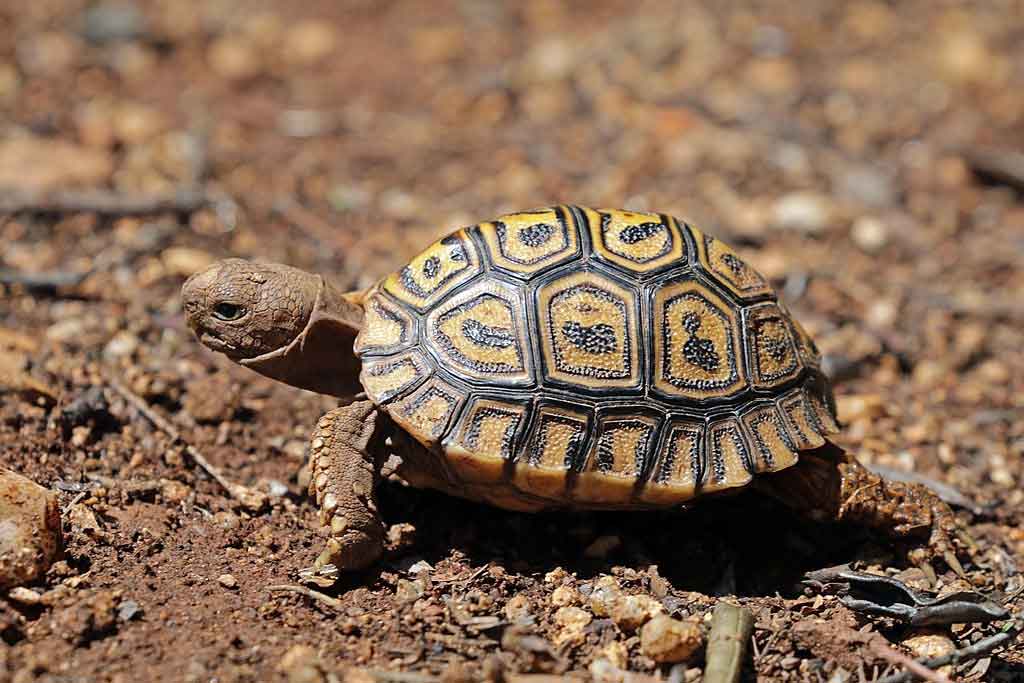
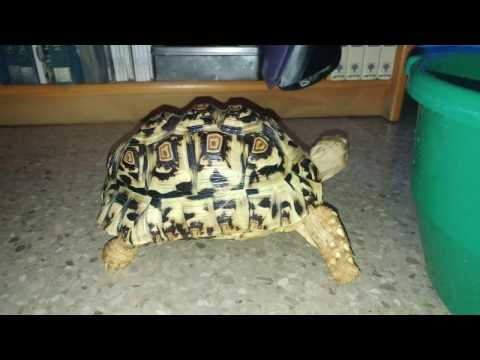
The Leopard tortoise it is a magnificent representative of African tortoises in terms of shell. Young animals in particular have a fantastic spot pattern, reminiscent of a leopard, that's where its name comes from.
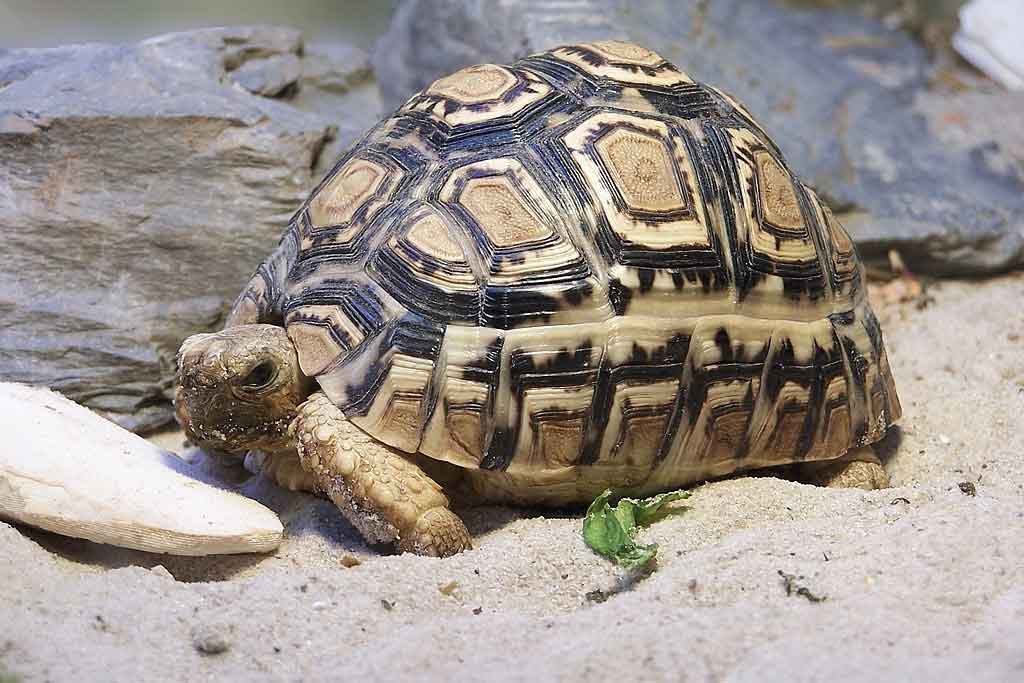
Leopard tortoise (Stigmochelys pardalis) juvenile, Walter Sisulu Botanical Gardens, Roodepoort, South Africa – Charles J. Sharp, CC BY-SA 4.0, via Wikimedia Commons
Content
Origin
The Leopard tortoise has been the subject of several revisions. Different authors have placed it in Geochelone (1957), Stigmochelys (2001), Centrochelys (2002) and Psammobates (2006). More recently, the consensus seems to have been established in Stigmochelys, a monotypic genus. There has been much debate about the existence of two subspecies, Stigmochelys pardalis pardalis and Stigmochelys pardalis babcocki, but recent work does not support this distinction.
Stigmochelys is a combination of Greek words: stigma which means "brand" or "tip" and chelone What does "turtle mean". the specific name pardalis comes from the Latin word pardus, which means «leopard», and refers to leopard-like spots on the turtle's shell.
The Leopard tortoise is located in the following 17 countries: Ethiopia, Angola, Botswana, Djibouti, Kenya, Malawi, Mozambique, Namibia, Zambia, Zimbabwe, Somalia, Sudan, South Africa, South Sudan, Swaziland, Tanzania, Uganda.
Characteristics / Appearance
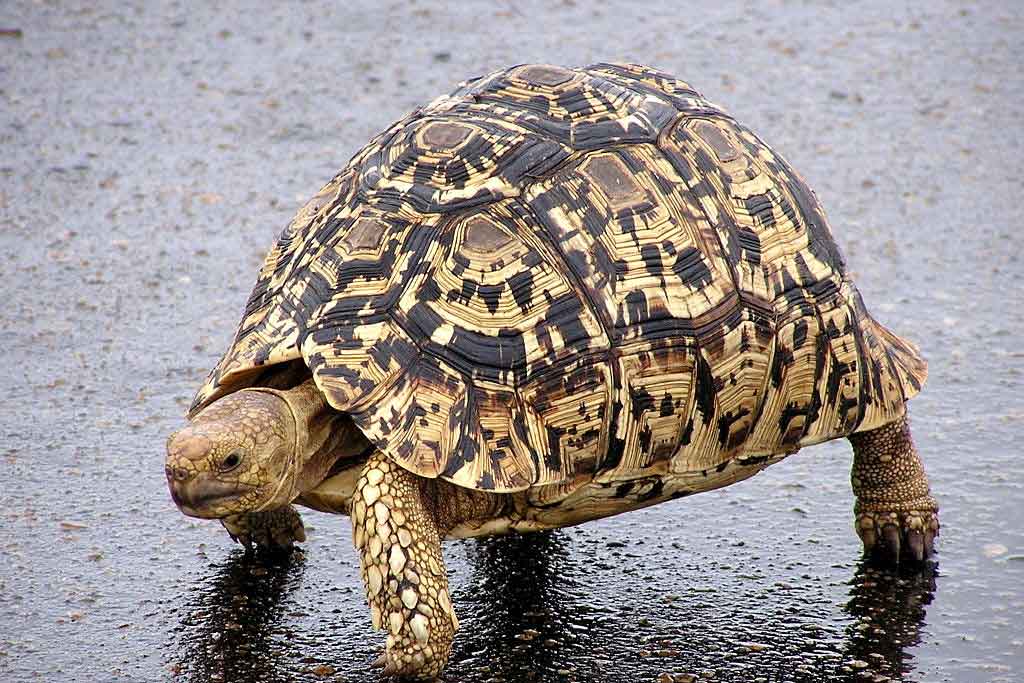
The Leopard tortoise adult has a dorsal shell elongated and strongly curved. It is yellowish to light brown and is covered with irregular dark spots or stripes.. This characteristic coloration gave the species its name.. Unlike many other turtles, the Leopard tortoise no shield on the back of its neck. The legs and head are yellowish to light brown. Rarely do individual dark spots appear on them. The Paws they are covered with large scales and each hind leg has a cone-shaped spur. Equipped with powerful claws, the legs are the ideal tool for digging.
In the youth the coloration of the shell is clearly lighter, with dark spots in the center of the shield. These high-contrast patterns can also sometimes be found in abdominal armor.. The size difference is used to differentiate the sexes, just like the size of the queue. Male animals are usually smaller than their female counterparts and have a stretched body with a longer tail., which is also significantly thicker at the root. It also, the male's abdominal breastplate is slightly curved inward. The claws of the hind legs of females are particularly strong.
The life expectancy of these reptiles are around the 50-60 years.
The subspecies
The Leopard tortoise are divided into two subspecies, the Leopard tortoise of East Africa and the Leopard tortoise from South Africa. The clearest distinguishing feature of both species is the coloration of the posterior layer.. In East African species, the basic color is weaker and darker. Juveniles have very few or no dark spots on both the belly and dorsal shell. The South African species has a flatter back and brighter colors.
Habitat
The Leopard tortoise (Stigmochelys pardalis) it is not very demanding in terms of its habitat. Its distribution extends throughout the East African region to South Africa and Namibia.. It is found in warm semi-deserts, dry savannas and rainfed areas. There are even populations more than 2.000 meters above sea level. Only dense forest areas cannot be colonized due to the mass and slowness of reptiles. Daytime temperatures of 28 to 40 degrees centigrade and night temperatures up to 21 degrees Celsius provide optimal living conditions for animals.
Behavior
The Leopard tortoise, like all reptiles, he is a cold blooded animal. They do not have a constant body temperature and adapt to room temperature. Behavior patterns are greatly influenced by this characteristic. According to the corresponding daytime temperatures, animals are forced to look for hiding places in the shade. In dry areas, thorny or grassy shrubs fulfill this function. Otherwise, turtles also look for abandoned animal burrows or rocks. At certain intervals, especially during periods of drought when food is scarce, take longer breaks of their own free will. These periods can last up to several weeks.. Then, food intake is minimized and body temperature may drop below 18 degrees.
Turtles are not nomadic. The only specimen moves in an area of about 400 hectares without forming territories. But, due to its slowness, they only use a part of this surface. The proportion of females and males is practically the same, and males usually use much smaller territories than females. The Leopard tortoise he is a peaceful animal. There are no territorial fights between congeners.
Food
The excellent adaptation to its habitat allows the Leopard tortoise manage your water balance very sparingly. It usually ingests the necessary amounts with its food and has regulatory bodily functions that allow it to store greater amounts of water in its body.. Their diet consists almost exclusively of plants. Prefers grass, thistles, lily plants and prickly pear.
Reproduction
The Leopard tortoise lives in different climatic zones. Mating behavior adapts to the respective climatic conditions, but it usually takes place in the spring or summer months. Males, otherwise peaceful, they now try to scare away their companions who court the females. They do this by ramming the shells of their opponents.. With the same ritual, female turtles are asked to stop and stick their heads and legs in. Next, mating takes place. The loud gasps emitted are characteristic of the mating ritual in many species of turtles..
Reptiles are not dedicated to the care of the young. Females dig a pit with their hind legs in which they lay eggs. The number per clutch varies greatly and is usually between 10 and 20 eggs. Three to six clutches of eggs are laid per year with an average interval of about 25 days. After placement, the pit is carefully closed. The duration from egg laying to hatching of the young is influenced by many factors.. Temperature and humidity influence the length of the incubation period, that can last from 120 to 450 days. Young turtles measure about five centimeters and have a hemispherical dorsal shell..
Threats to the species
State of conservation ⓘ
Minor Concern ⓘ(UICN)ⓘ
The Leopard tortoise Adult has few natural enemies in its habitat. In addition to the hyena and the lion, man is the greatest of them. With its regulatory interventions in the environment, threaten reptile habitat in some areas. Overgrazing, slash-and-burn agriculture, urban expansion and fencing of grazing areas are the main causes of population decline. In some regions the meat of turtles is consumed and body parts are used to produce medicines.. Every year thousands of animals are collected for the international pet trade and shipped all over the world.. Black traders have also discovered this market and try to sell their products through dark channels.. Customs authorities seize large quantities of Leopard tortoise smuggled.
But, the greatest threat is to the clutches of eggs and young. Nests are often raided by small mammals, birds, snakes or even by humans. Young animals also constantly face the dangers of stray dogs and cats., birds of prey, snakes or rats. The Leopard tortoise is not considered endangered in its species and can be acquired in for maintenance in captivity without prior permission. But, according to the European Species Protection Regulation, the acquisition must be notified to the competent authorities. The same provisions of the official notification requirement apply to breeding, delivery, the death and transfer of animals.
The "Leopard tortoise" in captivity
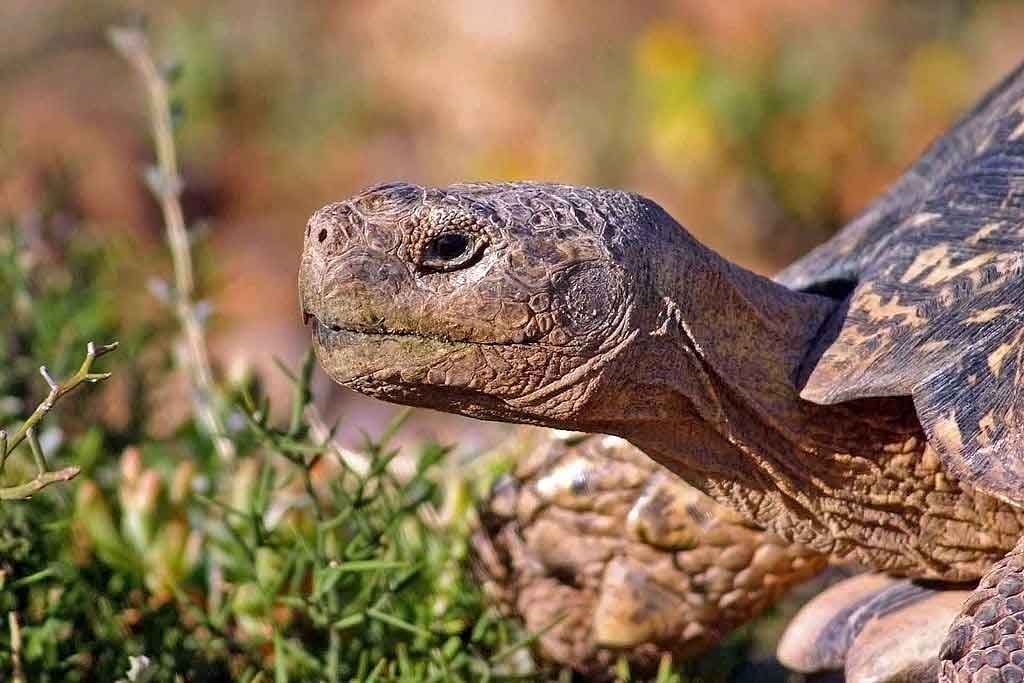
The head of a "leopard turtle" (Stigmochelys pardalis) at Addo Elephant Park, South Africa – Charles J. Sharp, CC BY 3.0, via Wikimedia Commons
Reproduction
Reproduction can begin once animals have reached sexual maturity, that occurs to some 20 – 25 centimeters of carapace length. Mating usually begins in spring with the behavior already described. After a gestation period of several months, females bury their eggs in a warm, moist spot in the ground in late summer. Stress, such as transfers, should be avoided at all costs in pregnant females. after sunset, eggs can be carefully removed from the ground. Half buried in loose sand, now they are placed in the incubator. The temperature should be 30 constant degrees centigrade and the humidity should not drop below 65%. After 150 to 300 days, the first pups are born. In the first weeks, they also need cooler, moister areas than adult animals.
When a Leopard tortoise, one or more individuals should be selected from a breeding stock for health reasons. Specimens caught in the wild are usually carriers of parasites and very susceptible to contracting diseases due to the stress of the long journey.. Deformation and softening of the shell, diseases of the internal organs and respiratory infections are the most common.
The breeding of a Leopard tortoise it's quite expensive. Heating, feeding and the various devices to create an environmental climate suitable for the species at all times of the year, as well as the large space that animals need, place high demands on the owner. But, this species is one of the most beautiful and imposing representatives of turtles and the lover of these animals is compensated daily by its sublime vision.
Maintenance of the "leopard turtle"
The Leopard tortoise is eager to move and run. This guarantees them a digestion that works. For this reason and for its size, only sufficiently sized rooms are adequate to maintain them. In this case, you have to take into account the climatic conditions to which the animals are accustomed. A permanent ambient temperature of 30 degrees and the supply of ultraviolet light in the wave range around 300 nm are prerequisites for keeping animals appropriate to the species. Turtles need ultraviolet light to synthesize vitamin D, that is essential for life. The ideal is to divide the room into several climatic zones so that the animals find a place with the most pleasant ambient temperature.
The Leopard tortoise must be kept in pairs. A mixture of sand and peat is suitable as a substrate. Do not forget the creation of hiding places. Hollow tree trunks or haystacks are useful furniture here. Of course, a bowl of water for drinking and bathing is part of the basic equipment.
Food
When it comes to feeding, pay attention to seasonal peculiarities. Winter corresponds to the dry season in the natural habitat of animals. Consequently, food should consist of dried grass and dried herbs. In summer, wild plants such as hibiscus are recommended, Dandelion, thistles and all wildflowers, from violets to petunias. Cultivated plants, like fruits, lettuce or vegetable leaves, should be the exception in the diet. Under no circumstances should turtles be fed animal products or, for example, with cottage cheese, fruit and pasta.
Reproduction
The breeding of the Leopard tortoise also requires further expansion. If you buy one Leopard tortoise young after hatching, you have some 4 years to think about the later habitat in winter and summer. From then on the animal is already quite large and is already oversized for a very large terrarium in winter. Outer space must have at least 50 m2 and the winter space should not be less than the limit of 10 m2. The Leopard tortoise adult needs more than 100 square meters outdoors. Until then there are some 4 years longer. And don't forget that, no matter how big a room is in winter, it must always be heated to 30 °C.
To be taken into account
The Leopard tortoise has a strong tendency to slouch. Unfortunately, it is not yet possible to say exactly why this is so. Animals are not kept in captivity very often and, if they do, most of the time only by people who have no means to investigate hump formation. Breeders have been observing the phenomenon for years and again and again they manage to breed one Leopard tortoise no hump formation. But, it is not known why, because the animals grew normally like other turtles, which in turn have hump formation.
Completely smooth shells are almost never found in the Leopard tortoise in captivity. On the other hand, in the natural habitat, almost all animals are completely smooth and of great beauty. So that your own animal grows healthy and has a long life, you just have to be very careful with the diet.
Important tips against the formation of humps
The Leopard tortoise young must have a higher humidity and grow in a rather moist soil. Make sure the floor is not misted with moisture more than once a day. Animals should not grow "wet". From the 3 years, animals prefer to grow dry. As in nature. Water must always be available. It is necessary to ensure that the animals do not bathe several times a day. Otherwise, they will absorb too much fluid and develop humps.
In winter, the diet of the Leopard tortoise limited to dry wild grasses that were raised in winter quarters but stopped being watered at some point. Thus, wild herbs dry out in the hot summer, just like in nature. Our winter is the African summer of turtles: do not forget it. There is also straw and plenty of hay in the enclosure. Animals feed on this. Water must always be available, but may run out during the day and should not be refilled. It is only refilled the next day, when everything gets fresh anyway.
The temperature should always be 30 to 33 degrees in the "winter" and 45 degrees (tank surface) under heat sources. If you have the possibility, should reach maximum temperature at noon and cool down again at night. The temperatures of 19 to 22 degrees should be maintained at night. In no case should this temperature be lowered, or surpass it.
In summer, animals eat everything they find outdoors. Unlike many other turtles, to the Leopard tortoise also likes to feed on grass. But, they like to harvest it themselves and don't allow it to be presented to them. So, those who do not let their animals run freely in the garden must plant grass in the enclosure. The grass should be nice and green from April/May to the end of September. Then, the animals usually return to the inner enclosure and then the African summer begins.
The humps of the Leopard tortoise they are not always synonymous with bad breeding. If less or no humps are created it's great. But, if humps develop, no one's heart is broken and animals don't have to be worse off. Unfortunately, there is no exchange of experiences for the Leopard tortoise.
Buy one "Leopard tortoise"
The price of a "Leopard tortoise" at the exotic animal market, ranges between 130 – 200 euros when it is a baby, being able to get to the 500 euros depending on their size and shell.
Images "Leopard tortoise"
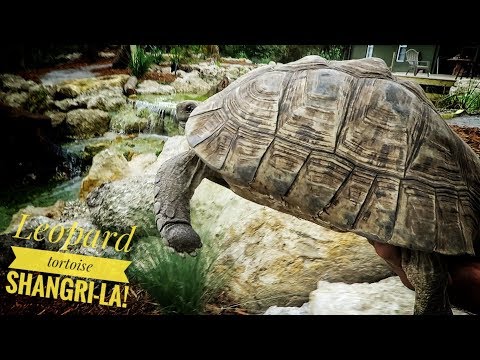
Panther turtle in the Kruger National Park, South Africa
▷ The world of Pets: Dogs, cats, birds, reptiles, amphibians
Rio Grande cooter
- Pseudemys gorzugi
Origin: United States, Mexico
Gender: Pseudemys
Life expectancy: 20 - 30 years
Length: Until 38 cm.
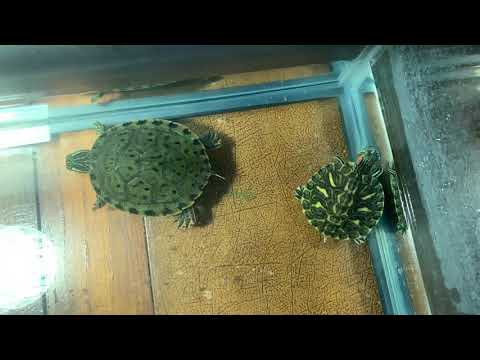
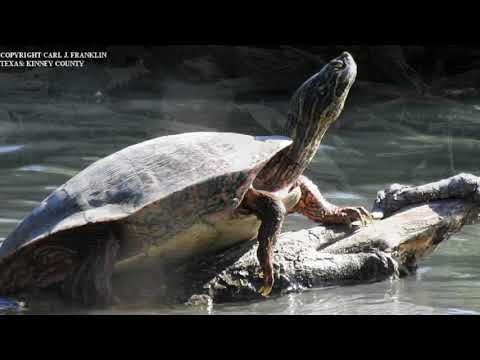
The Rio Grande cooter it is a medium to large sized aquatic turtle with pronounced sexual dimorphism in body size and other characteristics.
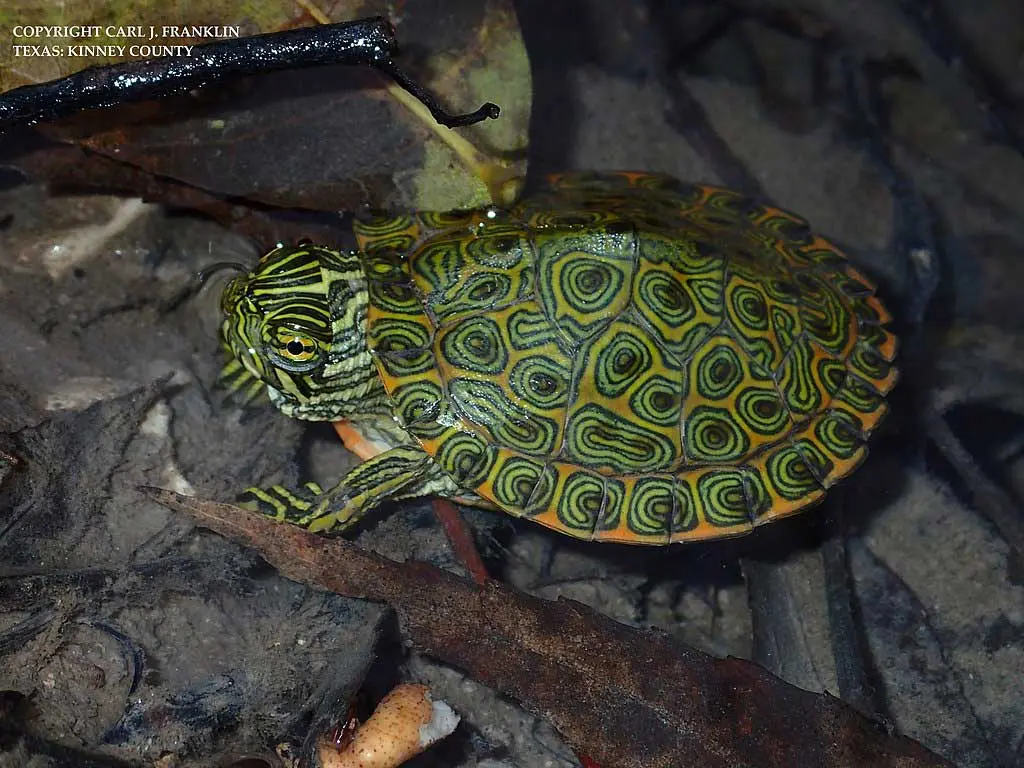
A baby “Rio Grande Turtle” from Kinney County, Texas – Texas Turtles, CC BY-SA 4.0, via Wikimedia Commons
Content
Origin / Distribution
The Rio Grande cooter (Pseudemys gorzugi), It lives in Mexico and the United States. It is distributed along the Rio Grande (= Rio Grande do Norte) from the Big Bend region to the Gulf of Mexico; the Pecos River from southeastern New Mexico to its confluence with the Rio Grande, with an apparent gap from just south of the New Mexico border to Independence Creek in Terrell County, Texas; and in the tributary streams of these two rivers in northeastern Mexico (Coahuila, Nuevo León, Tamaulipas and possibly Chihuahua) and in the southwestern United States (New Mexico and Texas).
Characteristics / Appearance
The Rio Grande cooter it is a medium to large sized aquatic turtle with pronounced sexual dimorphism in body size and other characteristics. The carapace of adults is elongated and oval., more convex in males than in females, and has its tallest point near the center and widest just behind the center. The posterior marginals are toothed and the pleurals are shallow.. Males have significantly longer and thicker tails and longer front legs than females..
Habitat
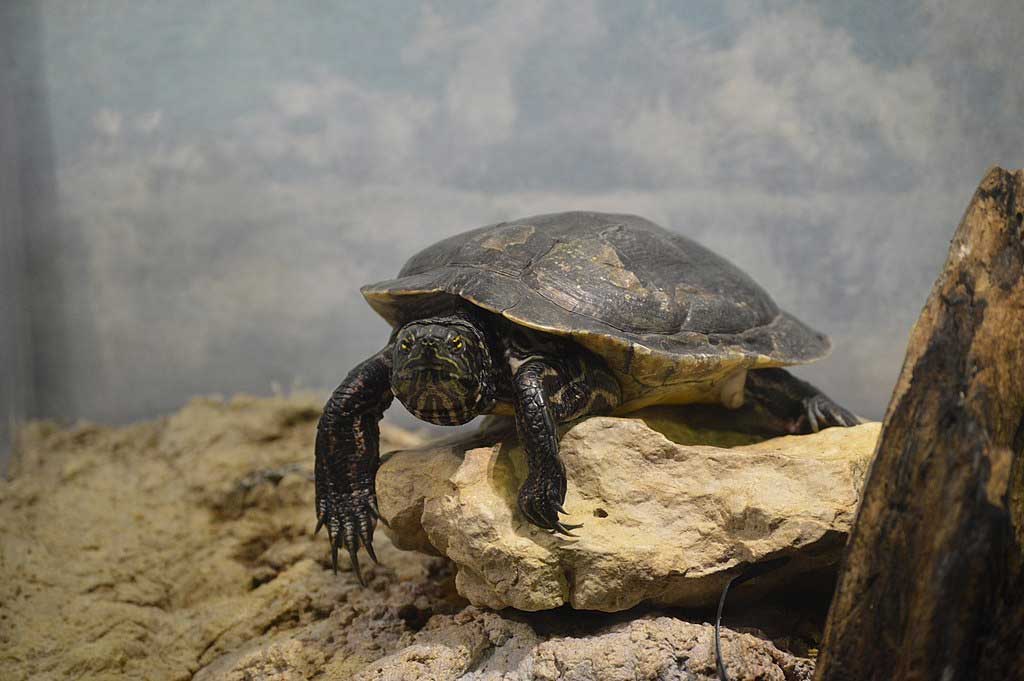
Rio Grande Turtle at the Fort Worth Zoo in Fort Worth, TX, EE.UU. – Sesamehoneytart, CC BY-SA 4.0, via Wikimedia Commons
The Rio Grande cooter found in a variety of freshwater habitats. It has a preference for larger and deeper pools in the streams it occupies., normally, but not always, where are aquatic plants. Substrates in their aquatic habitat vary from muddy or sandy to rocky, including algae covered limestone bedrock, and water quality ranges from clear to cloudy.
The species is found at elevations from near sea level in the lower Rio Grande to about 1100 m in southeastern New Mexico
Behavior
The eating habits of Rio Grande cooter have not been well studied, but the species is apparently omnivorous and feeds opportunistically. As with other Pseudemys, adults are probably more herbivorous than young. Specimens captured in New Mexico have been observed feeding on algae that grow on submerged boulders in the Negro River., and often defecated plant matter, especially green algae.
Threats to the species
State of conservation ⓘ
Near Threatened ⓘ(UICN)ⓘ
The International Union for Conservation of Nature (UICN) has classified the species Pseudemys gorzugi as Near Threatened due to its limited distribution (perhaps less than 2.000 km2), the decline in the quality and quantity of their aquatic habitat and the collection of individuals from wild populations for the pet trade. These multiple threats and other, combined with low genetic diversity and low recruitment of the species, endanger the persistence of the species in many places. In this sense, the Rio Grande cooter is similar to others freshwater turtles from the southwestern United States, facing similar threats.
Predation by other animals appears to affect all life stages of the Rio Grande cooter, from eggs to adults, Although direct evidence is lacking.
The "Rio Grande cooter" in captivity
Aquaterrarium
Smaller individuals can be kept in aquariums or indoor tanks if they are provided with an ultraviolet light source., adults are likely to do better if kept in large open-air ponds or livestock water tanks, equipped with a water circulation and filtration system and with platforms for sunbathing.
The young eat lettuce and other green leafy vegetables., in addition to commercial food for turtles and fish, raw meat and chicken. The pups require ample sunlight or constant exposure to a normal incandescent light bulb to maintain body temperature and induce the formation of vitamin D necessary for proper calcium metabolism.
The young feed on mosquitoes (Gambusia sp.), River Crabs, lettuce, spinach and aquatic plants collected in the wild, and juveniles are fed commercial food such as dry or canned dog food, trout and catfish food or cat food.
Eggs laid in water by captive females can be incubated with excellent results., provided they recover shortly after laying. Depending on the temperature, incubation in captivity can last between 70 and 110 days. You can get a hatching success higher than 90% incubating the eggs in moist newspaper, vermiculite or clean sand.
Buy one "Rio Grande cooter"
The price of a "Rio Grande cooter" at the exotic animal market, ranges between 50 – 80 EUR.
1. Rio Grande cooter, Western River Cooter (English).
2. Pseudémyde du Rio Grande (French).
3. Rio-Grande-Schmuckschildkröte (German).
4. Cooter do Rio Grande (Portuguese).
5. "Tortuga del Río Grande", Tortuga de Oreja Amarilla, Jicotéa del Río Bravo, Terrapene del Río Grande (español).
▷ The world of Pets: Dogs, cats, birds, reptiles, amphibians
Senegal chameleon
- Chamaeleo senegalensis
Origin: Senegal, Mali, Nigeria, Togo, Cameroon and Gambia
Gender: Chamaeleo
Life expectancy: 4 - 6 years
Length: Head - trunk: 14 cm.
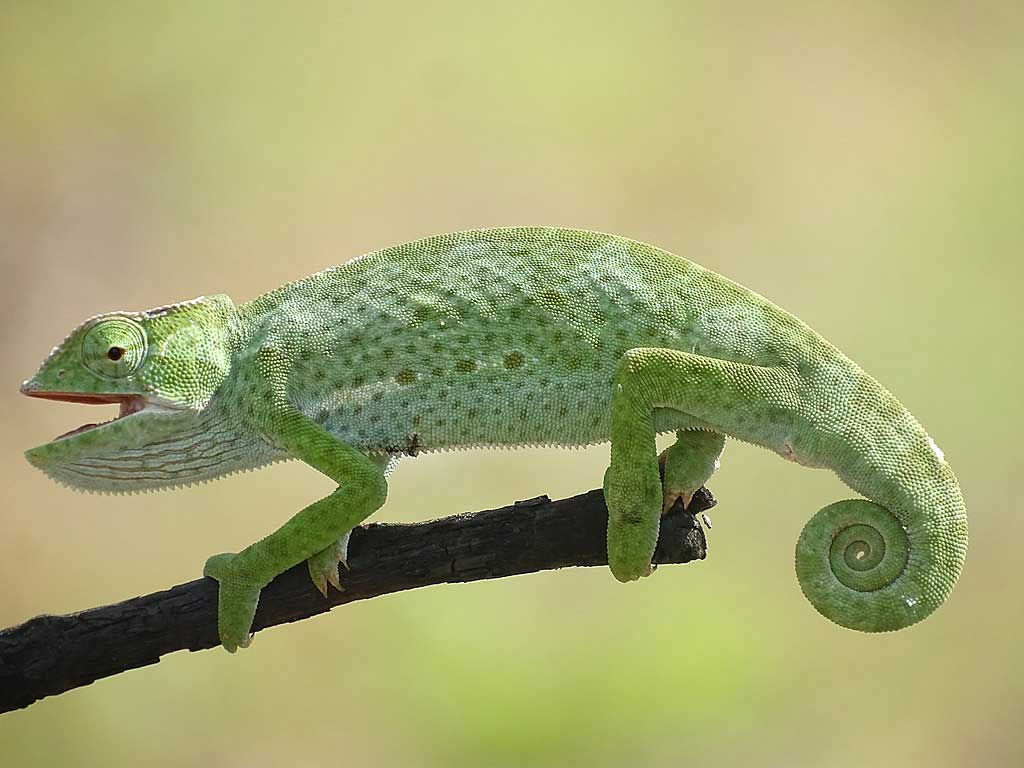
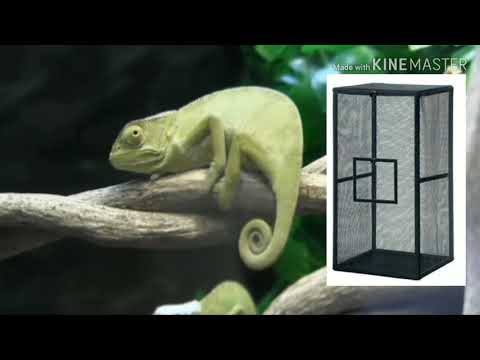
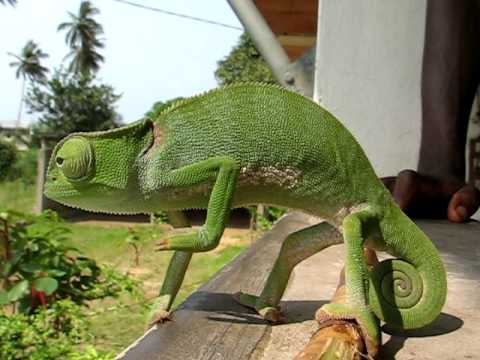
The Senegal chameleon comes from West Africa and requires special care, as it is quite fragile.
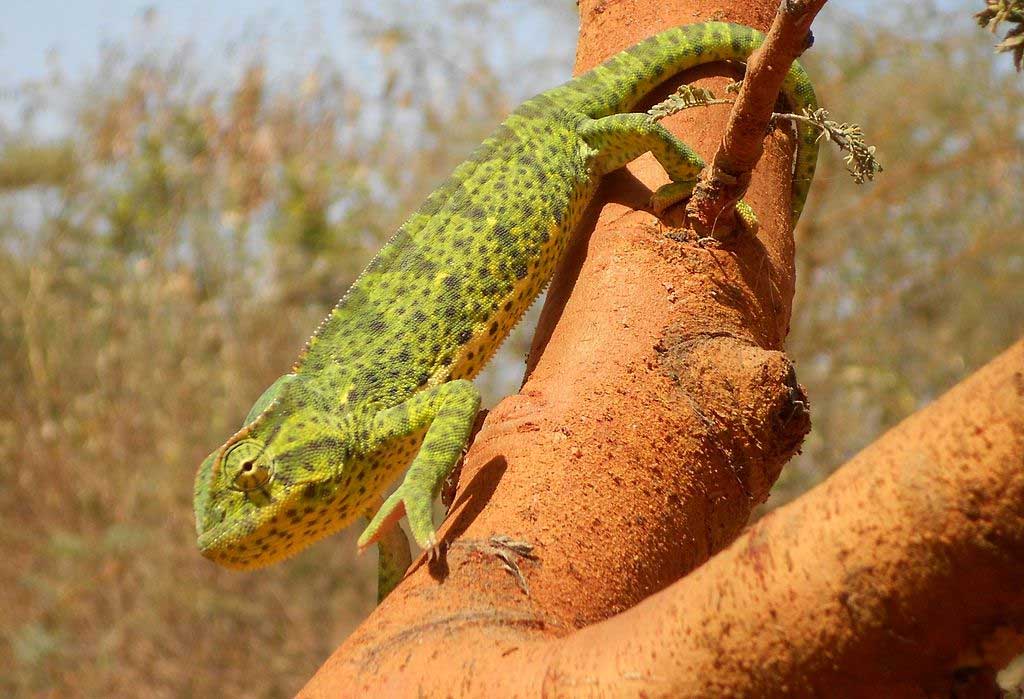
Chamaeleo senegalensis on Acacia seyal at the Beer-Sheba project near Sandiara, Senegal – NoahElhardt, CC BY-SA 3.0, via Wikimedia Commons
Content
Origin / Distribution
The Senegal chameleon (Chamaeleo senegalensis) lives in large areas of West Africa, as Togo, Cameroon and Gambia.
It is also said to be present in Mauritania.
Characteristics / Appearance
The Senegal chameleon shows no conspicuous special features.
hull is low, but the head is clearly separated from the trunk.
The scales on the helmet are larger than those on the body..
Body scales are homogeneous. A light side stripe runs from the chin to the anus. in addition, a slight longitudinal band runs from the armpit to the hips, but without reaching them. Males can reach a total length of 28 cm., of which the tail occupies about half.
Coloration consists of different shades of green.
Males sometimes show a more gray-brown color.
Habitat
Its habitats are savannah and arid forests., but it is also common to find them in inhabited centers.
Behavior
It is a kind of diurnal habits. It feeds on insects and other arthropods..
Threats to the species
Due to its wide range and unknown population, the Senegal chameleon is classified as Least concern on the IUCN Red list. But, may be threatened by the pet trade
Mira, but don't touch. This is exactly how you should treat your Senegal chameleon. Once your chameleon has settled into its habitat, you should have as little direct interaction with him as possible.
On the other hand, you can tell how your chameleon is feeling based on its color change. If the chameleon is depressed, you will notice that its color is not so bright and vibrant. And if you're really upset, will turn brown and black. But when you see them bright and colorful, you'll know they're alright.
The Senegal chameleon is an amazing creature with some of nature's most unique abilities. And they are docile pets that are best left under observation. But that doesn't mean they're easy to care for..
Like all chameleons, Senegalese require a lot of time, energy and resources. You have to be very prepared to assume the commitment of having and raising one. As wonderful as they are, You shouldn't jump headlong into chameleon parenting without a bit of experience..
The terrarium
When you build your chameleon's habitat, you'll want to make sure he has plenty of room to move around and plenty of tree branches to climb on. We recommend that, in fact, build your habitat more vertically than horizontally.
Lighting and heating
the body of your Senegal chameleon is attuned to a very specific environment. And if you are going to raise a healthy lizard, you will have to do your best to reproduce those conditions. Your enclosure should have heat lamps strategically placed to allow for three different temperature zones:
30º: Sunbathing
24º: For the day
22º: For the night
You will also need UV lamps to help your chameleon stay healthy.. These lights are used to help regulate your metabolism, the appetite, and synthesize vitamin D. Vitamin D is exceptionally important for chameleons, as it helps strengthen your bones and joints.
If possible, you should spend time exposing your chameleon to direct sunlight for several hours each day. But, this is hardly possible. Thus, We recommend getting UV lights with timers that activate on a cycle of 12 power on hours and 12 off hours.
Hydration
Chameleons are native to extremely humid climates.. And without that same humidity and level of hydration inside your house, they won't last long. But it is not as simple as putting a bowl of water in its enclosure..
They drink by licking dew and water droplets from leaves, so you will have to spray them several times a day. This can be done by manual nebulization (that is to say, with a spray bottle) or by automatic means. A drip system or automatic misting system is a good investment to ensure the humidity in your chameleon's enclosure stays high.
The Senegal chameleon lives on a diet strictly based on live insects. This means you will need to invest in an insect habitat to meet dietary requirements., unless you like to go to the pet or bait store every day.
It is also worth mentioning that these insects must be fed by the intestine.. This means that the insects must be fed special food that, when ingested, add more nutrition to your chameleon's diet. There is also a special calcium powder that you can put on the bugs to help prevent bone disorders in your lizard..
When you feed your chameleon, it is important not to put too many insects at once. Your lizard will not overfeed, which means the leftovers will be left around the cage. Dead insects will begin to decompose, making your chameleon more susceptible to disease. Live insects can also clump together and attack your chameleon. In any case, not good.
Health and conditions
The Senegal chameleon well cared for it can be quite a strong creature. But, you may have a rocky start even when you first get it. These chameleons are usually caught in the wild. The shipping and transportation process alone can wreak havoc on their delicate constitutions.. Not only that, but their wild diet makes them more prone to parasitic infestation.
Your chameleon may already have a stress-related illness when you bring him home. The best way to care for him back to health is to make sure he has a suitable environment and give him his space.. Really, they don't want to be manipulated. That can complicate things even more.
One of the diseases caused by the stress of transport is known as dystocia. This occurs when egg-carrying females have depressed calcium levels or are too stressed and dehydrated to expel the eggs they are carrying.. Without the intervention of a veterinarian, it's a death note for them.
Another major problem your chameleon can suffer from is dehydration.. Although it is common for your new lizard to be dehydrated upon arrival, dehydration can also occur in long-term captives. That is why it is so important to put an automatic drip or mist system in your enclosure and maintain humidity.
Male vs female
Both males and females of the Senegal chameleon they are very similar in nature. Its color ranges from olive green to light brown., with more intense color bursts depending on the temperature, humidity and mood. Females tend to be slightly larger and more aggressive in this species of chameleon..
Buy one "Senegal chameleon"
when you buy a Senegal chameleon, you should first try to find out if it was bred in captivity or not. Wild-caught chameleons are not as robust as those bred in captivity, and they may have diseases or disorders when you buy them. It is also not known exactly what they have eaten in the wild. This means they are more than likely to have harmful intestinal bacteria or parasites.. If you acquire a wild-caught chameleon, you'll need to take him to the vet for very regular fecal tests to ensure your lizard's gut health.
It also, you should be careful if you get a breeding pair. The females of Senegal chameleon can put up 70 eggs per year. at that rate, soon you will be invaded by chameleons. And many of them may not survive just because of the stress.
The actual base cost of a Senegal chameleon is of some 40 EUR. With that you already have the lizard. But we would be lying if we didn't tell you that owning a chameleon can be very expensive.. It's everything else that goes into raising a chameleon properly that makes them such an impactful addition to your portfolio..
Chameleons need very specific conditions to live and stay healthy. This includes hydration and moisture, temperature and even ultraviolet light. To meet these conditions, you will have to buy a combination of heat lamps, UV lamps, nebulizers and other control instruments. And you will have to have live food on hand every day.
Videos "Senegal chameleon"
Senegal chameleon (Chamaeleo senegalensis)-General information and care guide
1. Senegal chameleon (English).
2. Caméléon du Sénégal (French).
3. Senegalesische Chamäleon (German).
4. Camaleão do Senegal (Portuguese).
5. "Camaleón de Senegal" (español).
▷ The world of Pets: Dogs, cats, birds, reptiles, amphibians
Honduran milk snake
- Lampropeltis triangulum hondurensis
Origin: Honduras
Gender: Lampropeltis
Life expectancy: 20 years
Length: 1,30 m
The name of Honduran milk snake has its origin in the erroneous belief that they drank milk from the udders of cows, because they were often seen in barns and stables.
Lampropeltis triangulum hondurensis at the Louisville Zoo – Ltshears, CC BY-SA 4.0, via Wikimedia Commons
Content
Origin / Distribution
naturally, the Honduran milk snake (Lampropeltis triangulum hondurensis) found in the tropical rainforests of northeastern Costa Rica, in almost all of Honduras -area from which this snake receives its common name- and in Nicaragua.
Characteristics / Appearance
The Honduran milk snake It is one of the largest species of Lampropeltis and is second only to the large Lampropeltis triangulum gaigeae. They have a calm character and, Like most species of Lampropeltis, a strong feeding response. This, combined with the many mutations that exist today, makes them a fan favorite milk snakes.
On average, the Honduran milk snake In captivity it reaches a length of 130 cm.. But, there are many cases in captivity in which the snakes reach a length of 150 to 160 cm.. Young animals already measure between 25 and 32 cm when hatched.
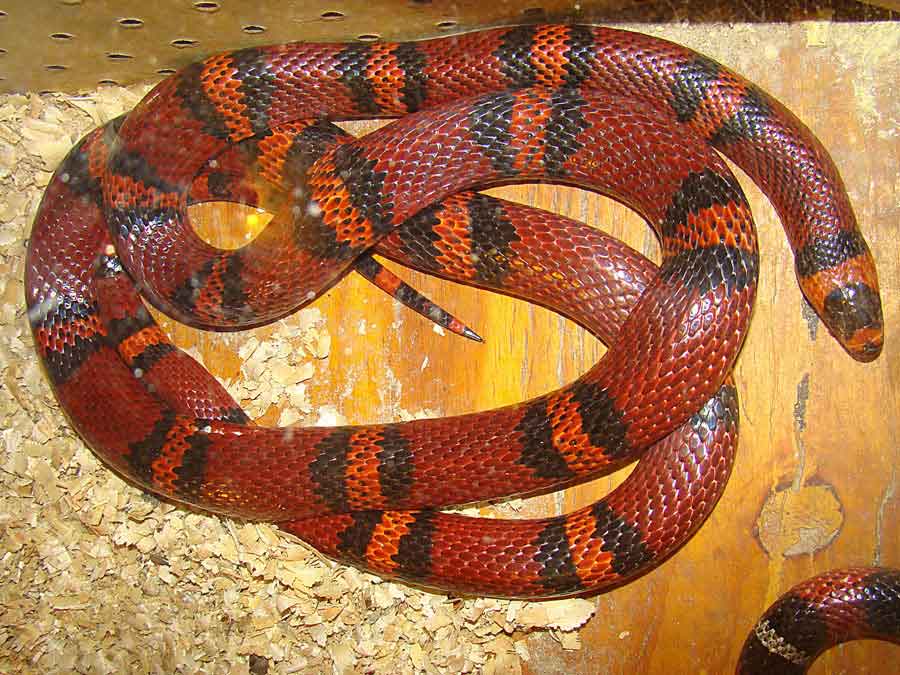
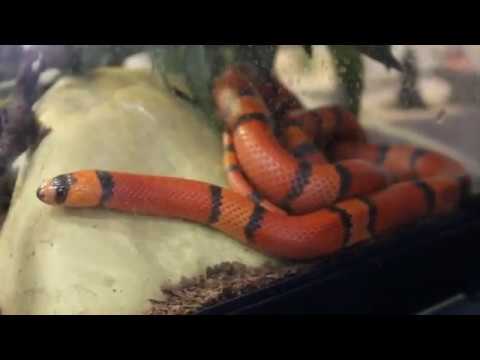
The head is wide and slightly separated from the neck.. Two natural variants are known, the well-known "tricolor", with the classic red-black-white-black band ring, and the "bicolor", also called "tangerine", in which the normally white band is orange to red. At the end of each scale there is a small black dot. Melanin level increases as snakes mature. Sometimes makes them almost black with faint pattern.
If you want an adult with the appearance of a Lampropeltis t. hondurensis new born, it is an option to buy one of the “hypomelanistic” variants. These have a reduced melanin content and thus retain their more youthful appearance.
Habitat
They are true bottom dwellers and live naturally among the fallen leaves and branches on the jungle floor.. Temperatures here are moderate and there is little difference between day and night temperatures, humidity is relatively high. Keep this in mind when preparing an enclosure for these snakes..
Behavior
Honduran milk snake in the Serpentarium of Mendoza, Argentina – Dick Culbert, CC BY 2.0, via Wikimedia Commons
They like to hide among the vegetation cover of the forest, between fallen branches, leaves and stems. In the past, the Honduran milk snake wild-caught could be very shy and would hide when disturbed. Most of the time they tried to get away, but could bite when improperly fixed or handled. Today, virtually all of the Honduran milk snakes that are kept come from the offspring of many generations of animals kept in captivity and this has resulted in active snakes, curious and calm. This species is most active during dusk and night.
Diet
Small mammals like voles, mice and rats, birds, eggs and other reptiles (ofiofagia) including snakes (even poisonous ones) and lizards.
Reproduction
Oviparous, lays eggs
As in most snakes, sexual maturity is usually reached by size, more than age. But, Honduran women are usually mature at the age of 18 months. Most mating occurs in May. Females appear to gather at communal egg-laying sites in early June.. It is not known why they do it. It is suspected that it may be due to the lack of suitable places to nest., more than for social reasons.
The female lays between 3 and 18 leathery shell eggs under rocks, on decaying plants or rotting logs, compost and manure piles, under boards and on loose earth. The incubation period is 10 weeks. The young are large and robust and should start eating after their first moult., that occurs at 5-10 days out of the egg.
Like many reptiles, the incubation temperature of their eggs determines the sex of the hatchlings (hotter = males; cooler = females).
Threats to the species
use and trade: suffers from collection for the pet trade
Threats: The two biggest causes of their population decline are likely mortality on the roads and deliberate killing by humans who believe they are dangerous.. Habitat loss will also end up affecting their numbers.
predators: Birds of prey, wild felids, humans (mimics the brightly colored banding of local poisonous coral snakes and so protects itself from predators).
many other important predators, like birds of prey, they feed on young snakes. This means that snakes serve both predator and prey roles in regional food chains.. Milk snakes are also valuable for their role in curbing rodent populations, especially those near human settlements.
The "Honduran milk snake" in captivity
The Honduran milk snake is well adapted to captivity due to its relative ease of care and docile nature, and its moderate size and bright colors make it an impressive and attractive pet.
The terrarium
Like many species of Lampropeltis, the Honduran milk snake can be cannibal, so it is advisable to always have them separated outside the breeding season. Young animals can be raised in a small tub or faunabox as the Faunarium PT2310 from Exo-Terra. For adult animals, a minimum area of 100 x 50 cm.. Large individuals deserve a terrarium with a bottom surface of 120 x 50 cm or greater.
Substrate
Offer them a substrate in which they can dig, like a poplar bed or a coconut based soil, such as coco peat or Exo-Terra planting soil. The average humidity should be between 60 and the 70%. High humidity does not mean a wet substrate. Coco peat will retain moisture better and help maintain a higher humidity level, while the Aspen will have less effect in this regard. But, it is easier to see the dirt on the aspen bed and remove it when it stains. You can also choose to keep the ground cover slightly drier and offer a stash box filled with moist moss. This moist shelter will be used especially when in the shed or for laying eggs.
Temperature
Heating can be done with a heating cable or heating tape. Since these snakes do not bask in the sun, you don't need a place to sunbathe. This heat source should not exceed a third of the ground floor so that the snake always has space to move away from the heat source and to thermoregulate between the warmest and coldest areas..
The average temperature should be 24-25C in the cold zone and 28C in the warm zone., with a hot spot of 30C. At night, the temperature may drop slightly, but preferably not below 20C. Always take a good look at your snakes and monitor their behavior. If your Honduran is continually on the cold side or lies in the water bowl, may be an indication that it is too hot in the warm zone.
Provide plenty of hiding places in various temperature zones in the terrarium. As these snakes are mainly land animals, the height of the container plays a small role. That makes this species very suitable for housing in the so-called "shelf system". Of course, It is always best to observe your snake's natural behavior in a well decorated terrarium and with a snake rack you lose a lot of the fun in keeping these animals.
Hibernation
The Honduran milk snake naturally withstands a period of lower temperatures. This colder season starts in October, when you stop feeding for three weeks under normal conditions. Temperatures drop during the following month to about 10 at 15C and lighting hours are reduced during this month of 12 hours to 8 hours. This break lasts an average of 8 to 12 weeks. After this period, the temperature can be raised again to its previous level.. The breeding season begins after this period, so make sure Lampropeltis are well fed before placing animals together for breeding.
Diet
By nature these snakes have a very varied diet consisting of small mammals but also a variety of lizards and snakes.. Young animals also sometimes feed on small amphibians. In captivity, this species feeds very well on small mammals such as mice and young rats.. Do not feed these snakes with a single large prey, but with several small or medium-sized prey per feeding that are no wider than the 110% from the thickest part of the snake.
Young animals can be fed once every 4 or 5 days during the first year of his life. Do not offer any food during the moulting period. The Lampropeltis subadults and adults may feed once every 7 or 10 days. Due to the large size of the young when they hatch, this species is, with much, one of the easiest to get started with mice of all Lampropeltis. Sometimes one immediately starts feeding little fuzzies instead of little mouse pinkies.
Curiosities
The milk snakes they got their name from the ancient belief that they drank cow's milk. People actually believed this because milk snakes were frequently found in barns full of dairy cows., where they were probably attracted by rodents that lived inside.
Buy one "Honduran milk snake"
The price of a "Honduran milk snake" at the exotic animal market , ranges between 100 – 150 EUR.
The Gold-ringed cat snake – Mangrove snake (Boiga dendrophila) It is widely distributed in Southeast Asia., including Indonesian, Malaysia, Thailand, Singapore, Viet Nam, Cambodia and the Philippines. is native, but not common, in singapore. A population of mangrove snakes was also accidentally introduced to Texas.
Taxonomists currently recognize nine subspecies of mangrove snake. But, it is still debated whether some of them are distinct species, or if there are more subspecies to be determined. The nine recognized subspecies occupy different parts of the snake's range and exhibit slight color variations..
Subspecies
Boiga dendrophila occidentalis – Indonesian (BABi, Batu Archipelago, Girls, Sumatra)
Boiga dendrophilaannectens – Indonesian (Kalimantan); Brunei; Malaysia (East Malaysia).
Boiga dendrophila dendrophila – Indonesian (Java).
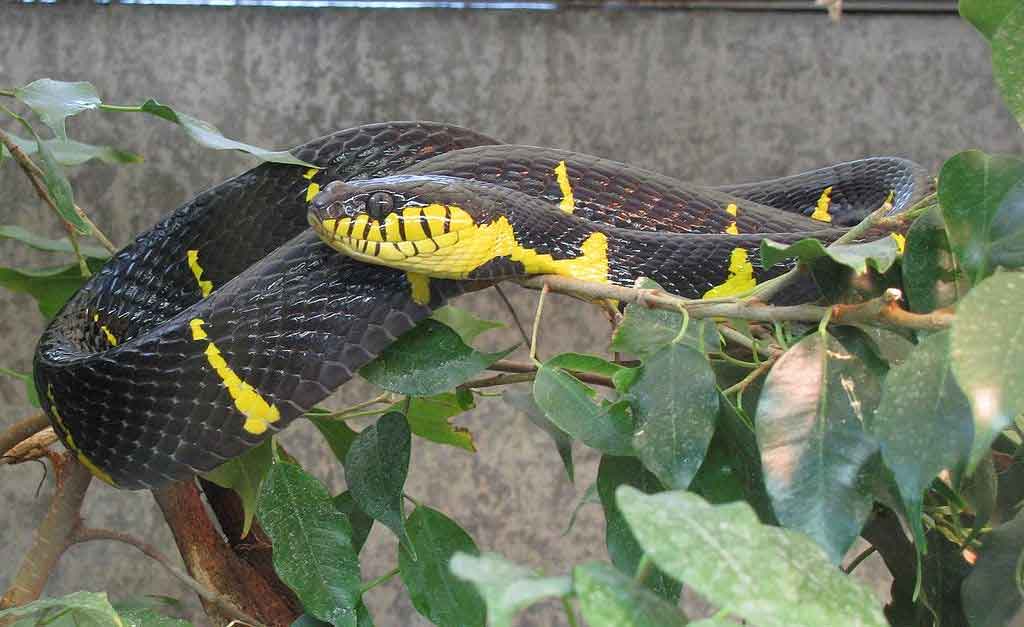
This slender snake is primarily black with yellow scales around the face and bands around the body.. The yellow bands do not usually meet on the back or under the belly. the eyes of the Mangrove snake they are big, with narrow, vertical slits, which has earned it another common name: yellow ringed cat snake. The structure of the eyes allows you to see better at night, when active and hunting.
The Mangrove snake it is slightly venomous with rear fangs. Like other members of the family of colubrids, has a Duvernoy's gland, which is distinct from the venom gland and is composed of cells that produce saliva. Duvernoy's gland is located at the posterior end of the eye with a duct that connects to the rear fangs., which are enlarged and have grooves through which the poison flows. This is a common adaptation of snakes with rear fangs. The fangs are angled backwards to aid in biting and holding onto prey., although sometimes it is necessary to chew the prey so that the poison is injected correctly.
The toxin of the Mangrove snake, call denmotoxina, it is especially useful for hunting its main prey, birds. In a study published in 2006 in the Journal of Biological Chemistry, scientists found that the muscles of mice were not as susceptible to the Mangrove Snake's immobilizing venom as the muscles of birds. Snake venom is not lethal to humans, but can cause painful swelling and skin discoloration.
Although intoxication in humans is mild, visually, due to the alternating black and yellow transverse bands and the triangular cross section of the body, the Gold-ringed cat snake – Mangrove snake can be confused with the Banded krait (Bungarus fasciatus), which is extremely poisonous.
Habitat
The Mangrove snake gets its name from the areas it inhabits: forests of mangrove, river areas and lowland forests. They spend most of their time basking in the sun on tree branches. 30 meters or more, but they descend to the forest floor at night to hunt.
Food
These snakes hunt a wide variety of prey., like other snakes, lizards and frogs. Most often they seek out small mammals, like bats and birds (and her eggs).
Reproduction
The Mangrove snake lays its eggs in tree holes. Their clutch size is an average of 10 eggs, but it ranges between four and 15. After a gestation period of about 45 days, the pups are born. The pups measure about 20 centimeters long and have a color similar to that of adults.
Behavior
Mainly occurs in mangrove or river habitats. During the day it remains motionless on the overhanging branches, but at night it becomes active, approaching the ground and feeding on other vertebrates, as rodents, small birds and their eggs, frogs, bats and, sometimes, other snakes. She is also an expert swimmer.
It is a venomous species with rear fangs. Although during the day it can seem quite tame, don't get too close, as some individuals may have an unpredictable temperament.
Threats to the species
The population and trade study together with the education and information campaign, and habitat protection and restoration could help conserve populations of these mangrove snakes
The "Gold-ringed cat snake – Mangrove snake" in captivity
The Gold-ringed cat snake it is a potentially aggressive snake, mostly nocturnal. Even captive-bred specimens can be nervous and can strike repeatedly. Although many specimens calm down and allow manipulation, they are usually easily stressed and may refuse food for long periods of time if disturbed. The manipulation, of course, must involve safety precautions for the handler, due to the nervous nature of the snake and the fact that a bite can cause pain and injury.
The most important thing when acclimating wild-caught animals is peace and quiet, preferably kept alone in a relatively small, dark terrarium.
The terrarium
Depending on the size of the adults, the measures of the terrarium can oscillate between 80 x 60 x 80 cm and 120 x 70 x 100 cm.. the climbing branches, best planted in abundance and providing hiding places, relax the animals. spray liberally, animals prefer to drink the spray water. Daytime temperature 27-29 °C, nocturnal 23-25 °C, humidity 60-90 %. Fluorescent tubes, wall or ceiling heating, substrate, for example, coconut fiber mixed with moss or coconut shreds or other loose, absorbent substrate.
Food
rodents, birds, eggs, fish, frogs, lizards, Snakes. If the wild birds do not want to eat, quail eggs or even chicken eggs often help.
Posible problems
Puddles can cause skin and lung infections.
Wild-caught birds are always infested with endoparasites, usually protozoa and gastrointestinal or pulmonary nematodes, which should be treated with metronidazole or panacur respectively. Use ivermectin against nematodes.
Tendency to cannibalism even in individuals of the same size.
Breeding and reproduction
It is possible to keep them in pairs, but see the keyword “food”. I highly recommend single tenure, which should only be kept for mating attempts. 5-15 eggs, hatching (pups of 35-40 cm.) after 110-120 days to 27-29 °C.
Buy one "Gold-ringed cat snake – Mangrove snake"
The price of the "Gold-ringed cat snake – Mangrove snake" at the exotic animal market, ranges between 300 – 700 EUR.
Unfortunately, it is very difficult to find and obtain healthy animals.
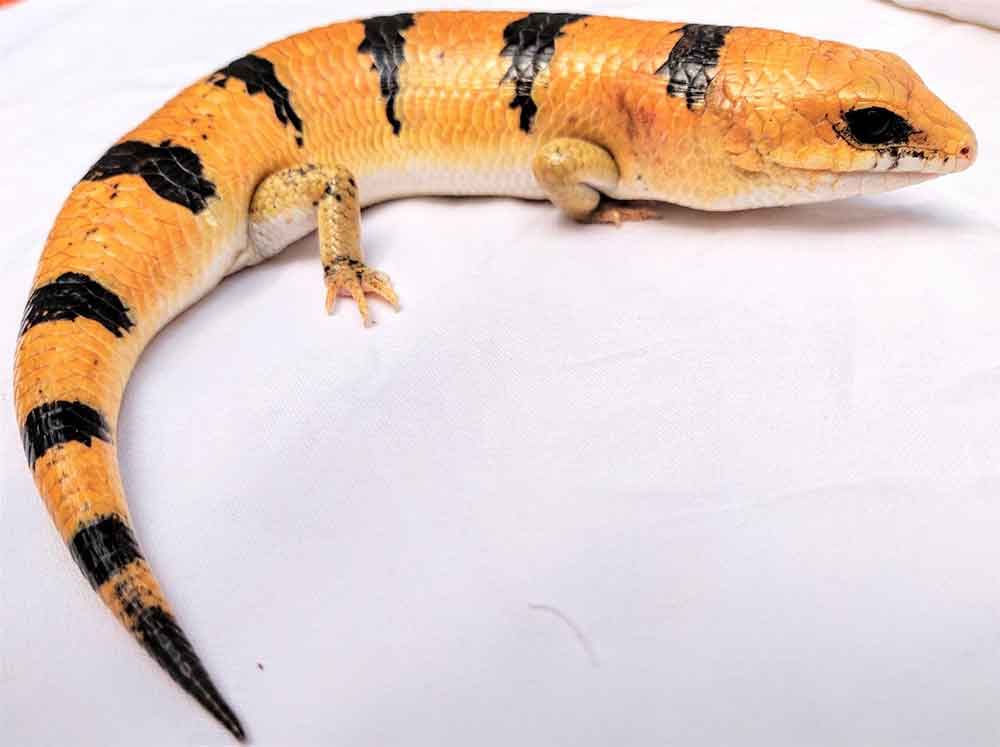
Very rare and very little seen niger skink. It is an animal of terrestrial customs and dry areas, desert and semi-desert type Sahel. The diet is based on insects. It is convenient to put a grotto to make you feel more comfortable, although it is a sociable and very docile animal.
Its price ranges from 90 and 140 EUR.
Alternative names:
1. Peters's banded skink (English).
2. Scinque bandé de Peter (French).
3. Tunesischer Nachtskink (German).
4. Lagartixa de Peters (Portuguese).
5. "Escinco gigante de Níger" (español).







_juvenile.jpg)
_head.jpg)


_(2).JPG)