โ–ท The world of Pets: Dogs, cats, birds, reptiles, amphibians

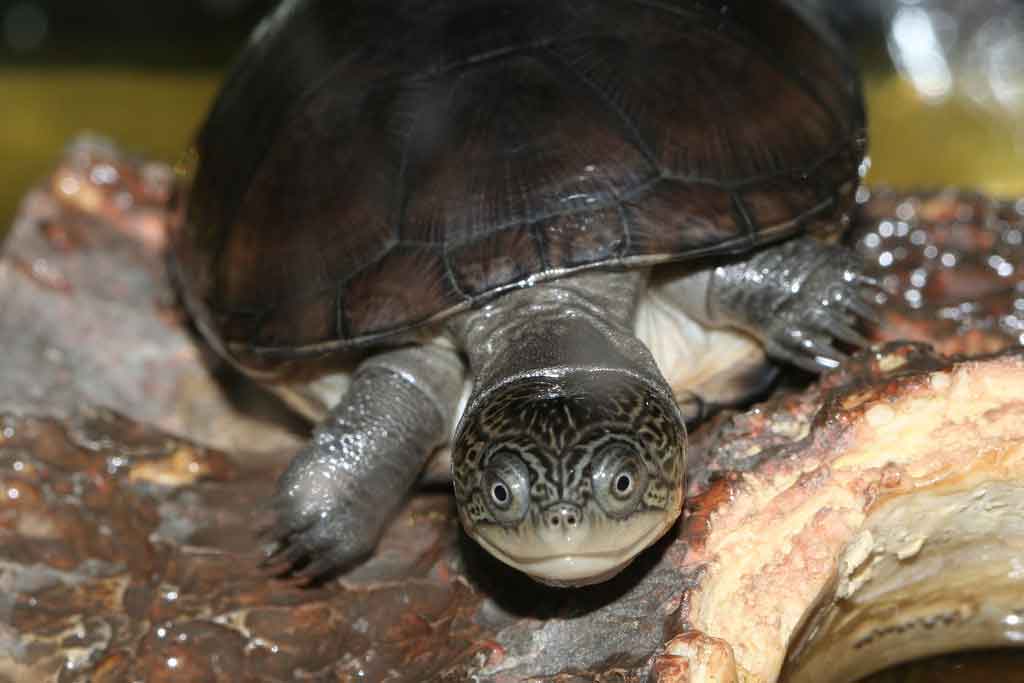
Scorpion mud turtle
- Kinosternon scorpioides

The Scorpion mud turtle is a Kinosternidae (mud turtle) medium to large in size with an oval shell (top shell) with a length of 92-270 mm.
Scorpion mud turtle
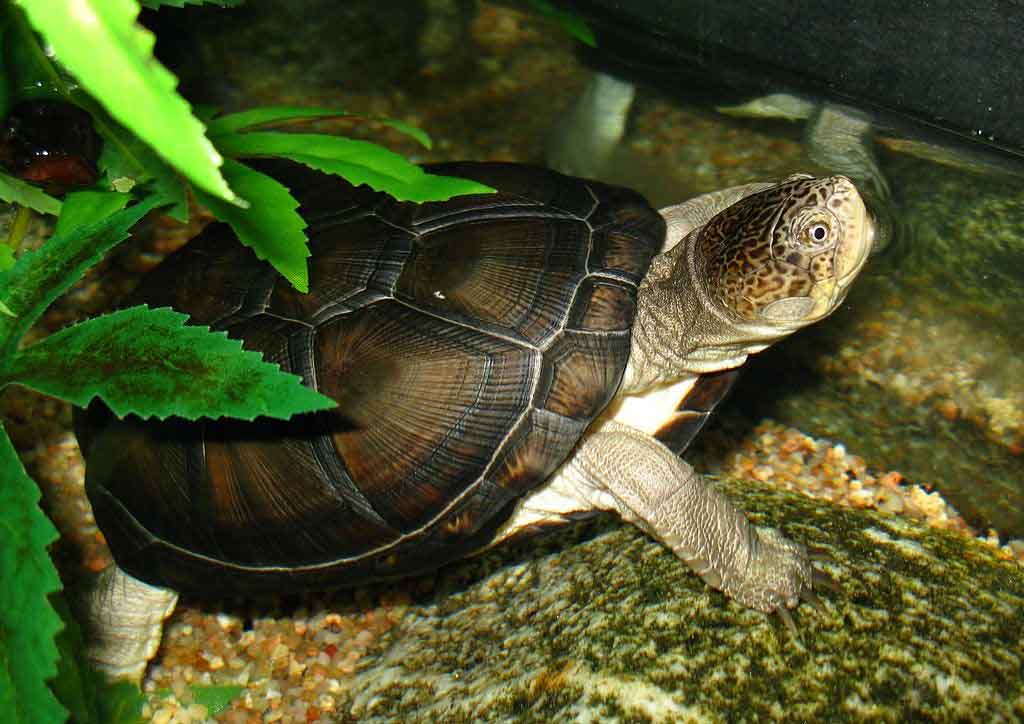
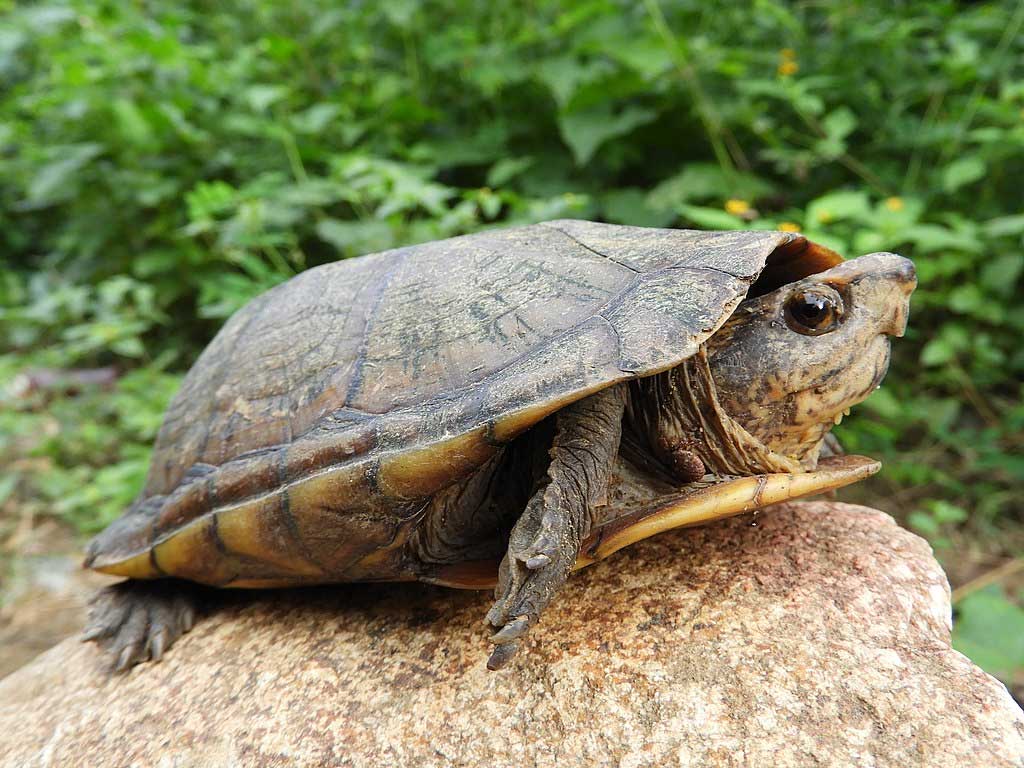
Scorpion mud turtle (Kinosternon scorpioides scorpioides) – Jose Gabriel Julio Guzman, CC BY 4.0, via Wikimedia Commons

Content

Origin / Distribution

The Scorpion mud turtle (Kinosternon scorpioides) It is native to the south-southeast of Mexico., including Cozumel Island), south to Belize, and in the Caribbean channels in Honduras, Nicaragua and on the Island of San Andres, Colombia. It also, It is distributed in the Pacific channels in southern Mexico., Central America to Panama; Atlantic drainages, and other inland or coastal regions of South America, including Bolivia, Brazil, Colombia, the Guianas, Ecuador, Peru, Trinidad, Venezuela, and disjunct populations in Argentina and Paraguay.

Subspecies

  • Scorpion mud turtle (subspecies) – Kinosternon scorpioides scorpioides (Linnaeus, 1766)
  • White-throated mud turtle – Kinosternon scorpioides albogulare (Dumรฉril and Bibron, 1870)
  • Red cheeked mud turtle – Kinosternon scorpioides cruentatum (Dumรฉril, Bibron and Dumรฉril, 1851)

Characteristics / Appearance

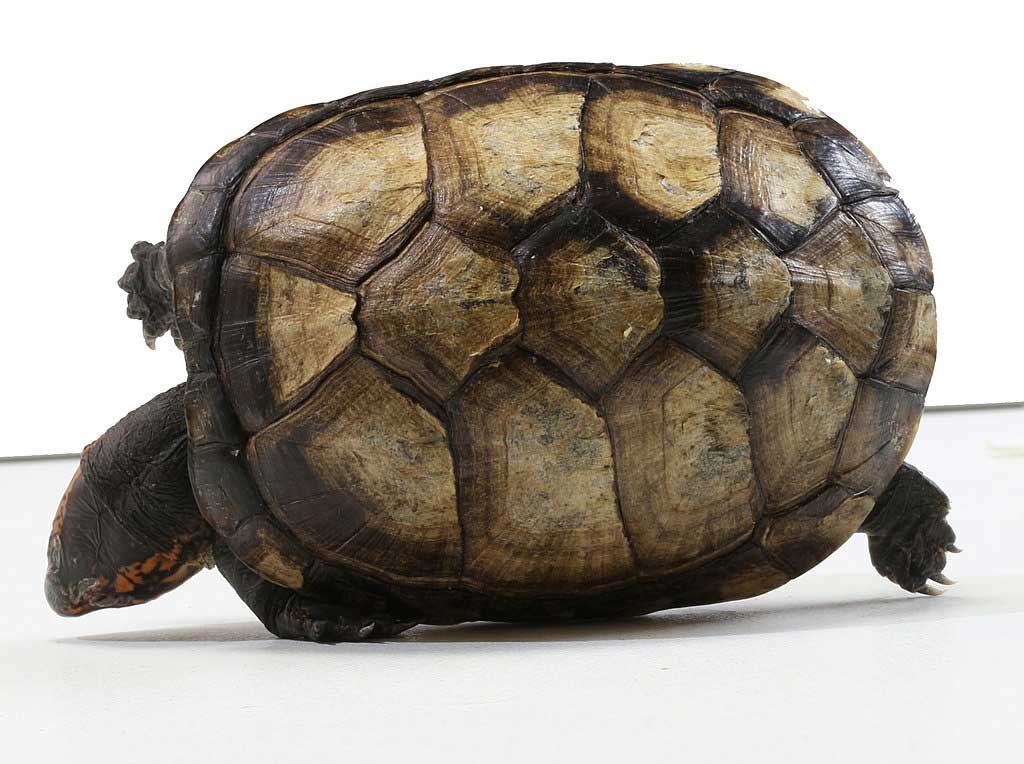
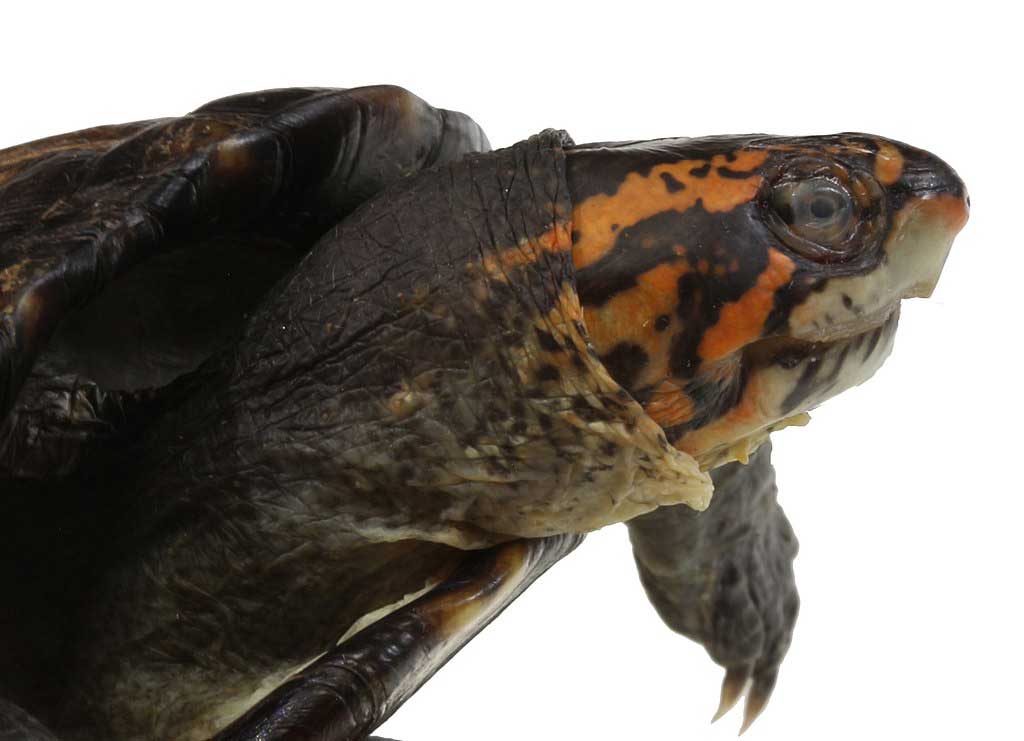
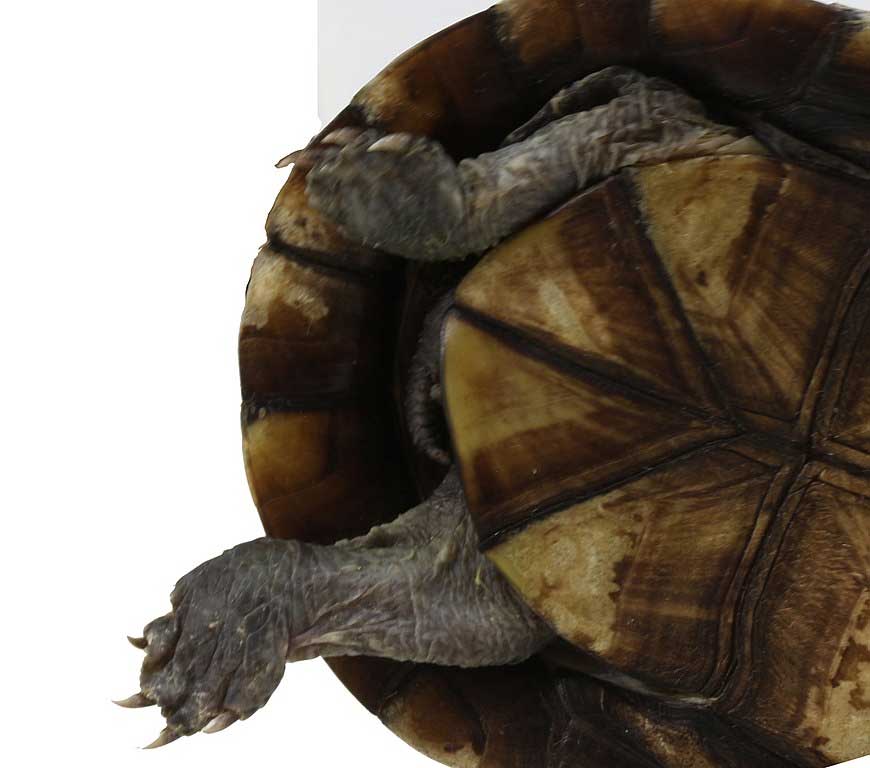
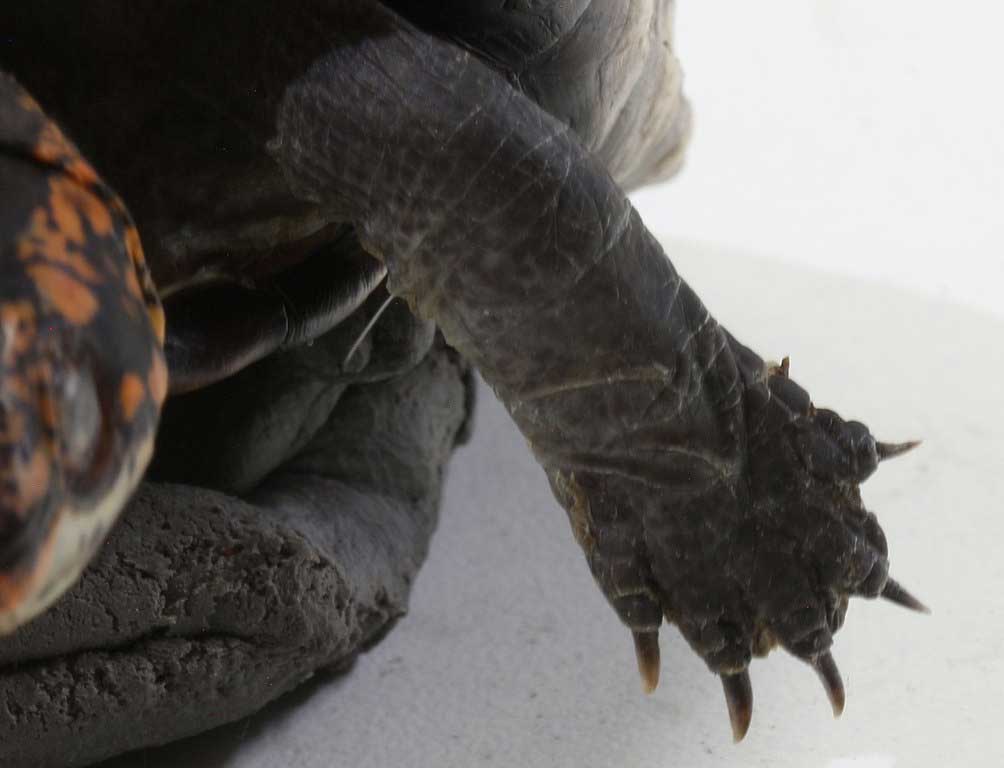
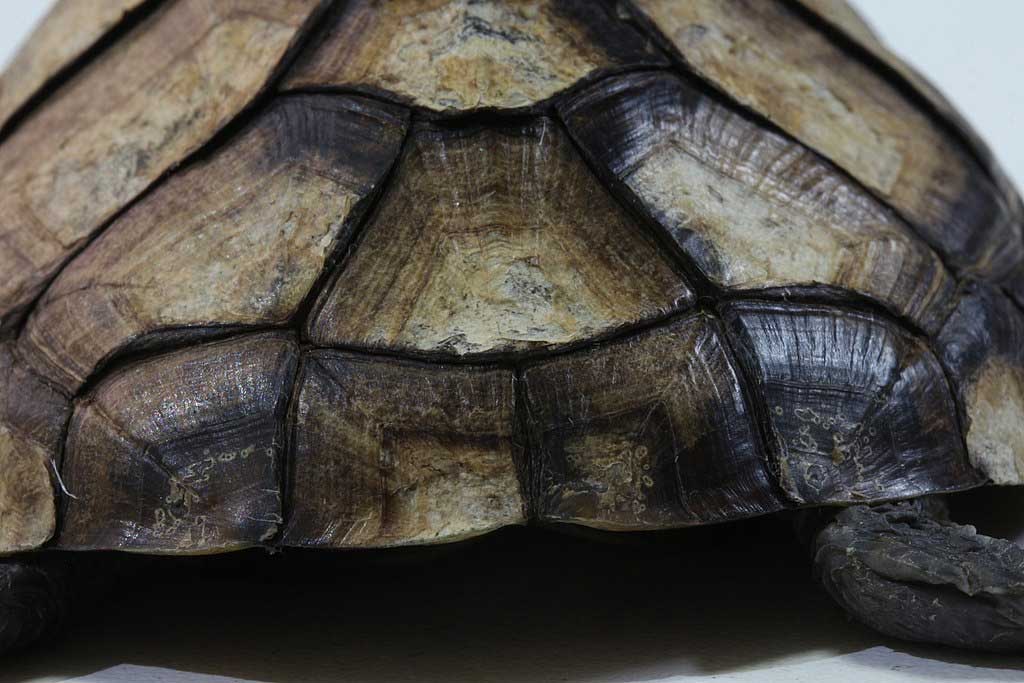
The Scorpion mud turtle is a Kinosternidae (mud turtle) medium to large in size with an oval shell (top shell) with a length of 92-270 mm. The shell may have three keels (Crests) in many individuals . The plastron (lower shell) has two hinges and little or no anal notch on posterior lobe. The first vertebral scale (shield or foil) of the carapace is wider than long, and the vertebral scales 1 to 4 have distinct posterior notches. Shell color varies from light brown to olive or black; head may be brown, gray or black with a reticulate or cream-colored spotted pattern, orange, red, pink or yellow. In most individuals the tip of the tail has a horny spine.. This description of Scorpion mud turtle should be compared with the anatomical features of other kinosteridos similar-looking North Americans described in other works.

Scorpion mud turtle
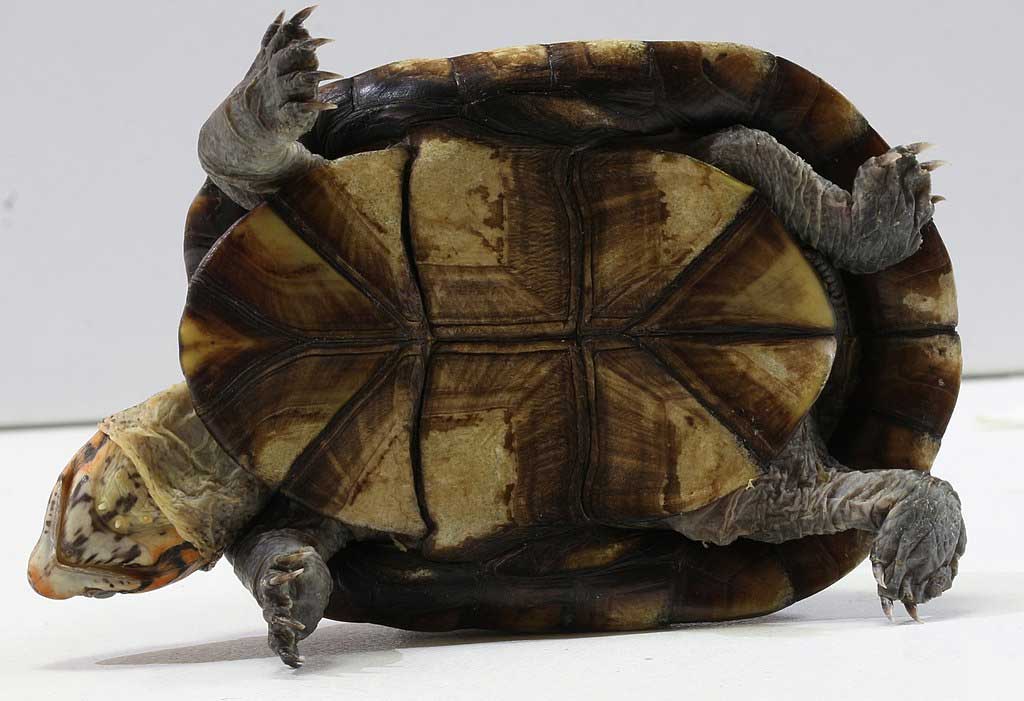
Detail view of the plastron, look at the shape and shields of the bridge Shell view of Kinosternon scorpioides Kinosternon scorpioides, head details Kinosternon scorpioides, hind leg details Kinosternon scorpioides, front leg details Detail of supracaudal shields
Source: Vicente.niclos

Size:

Carapace length 92-270 mm

Habitat

They are found in shallow water, in flooded forests, swamps and ponds from Mexico to Argentina and is said to be the quelonio with the widest distribution in the neotropics.

Behavior

Its feet are webbed, but this species of turtle divides its time between water and land and prefers to walk on the bottom instead of swimming. They can be aggressive and can inflict a painful bite with their horny parrot-like beak. When the male of a species is larger than the female, usually indicates that males compete for females or have to subdue them.

  • Diet: Omnivores, they eat fruit, seeds, algae, fish, amphibians and carrion. They tend towards the more carnivorous end of the omnivorous scale.
  • Reproduction: They are of 2 to 6 eggs in a shallow ground nest. The incubation period varies from 3 to 6 months and is determined by a series of environmental conditions, not necessarily the temperature. The sex of the offspring is determined by temperature..

  • Threats to the species

    Not currently classified as at risk, but the widespread consumption of adults and eggs, along with deforestation, has caused a decrease in their number in some areas.

    This species is widely consumed in For, where the "casquinha de Muรงuรฃยป is one of the most famous dishes of Belem.

    The "Scorpion mud turtle" in captivity

    The Scorpion mud turtle usually kept as a pet. Of course, they are beautiful aquatic turtles, but that alone is not enough. They are easy to care for. One of the reasons is that, like tropical turtles, they do not need to hibernate. Since they feed almost exclusively on foods of animal origin, planted aquariums are also possible.

    Aquaterrarium

    To the Scorpion mud turtle he likes to climb.

    The Scorpion mud turtle can grow to a maximum body length of 20 cm in the aquarium. These aquatic turtles need an aquarium with an integrated terrestrial part for basking.. Said container must have a size of at least 80 x 40 x 40 cm.. The water part must have a sand or gravel substrate. It also, the Scorpion mud turtle needs climbing opportunities. especially the stones, roots or plants are very popular.

    The Scorpion mud turtle is a solitary animal. The ideal is to keep them individually in a nice aquarium.

    These reptiles adapt perfectly to the conditions of the aquarium water.. They prefer water temperatures between 20 and 28 Celsius degrees. low heat point, temperature can also be 40 degrees Celsius.

    Food

    The Scorpion mud turtle accepts meat and vegetable food. In the aquarium, However, live and frozen food preferred. They also eat turtle sticks or dried animals.

    Reproduction in the aquarium

    The Scorpion mud turtle (Kinosternon scorpioides) have already been successfully bred in the aquarium. They lay eggs, which they then bury in the sand. A set can contain up to 5 eggs. The young hatch after 60 to 120 days.

    Buy one "Scorpion mud turtle"

    The price of the offspring "Scorpion mud turtle" at the exotic animal market, ranges between 80 – 120 EUR.

    Videos "Scorpion mud turtle"

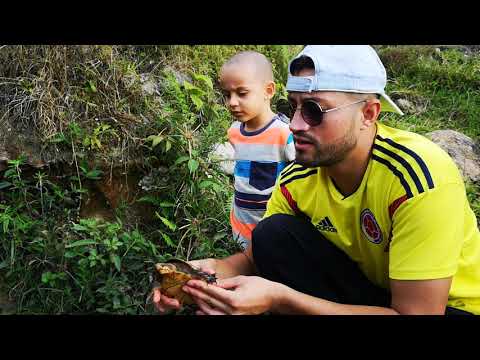
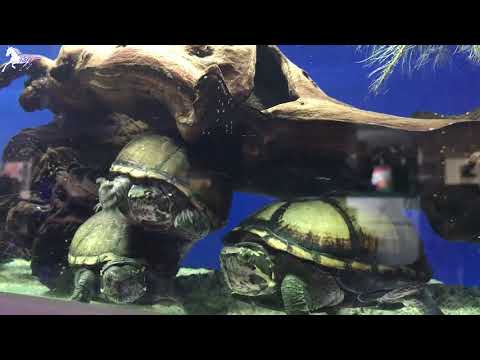
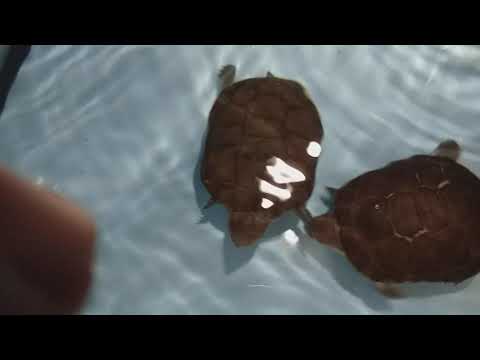
    Case Turtle Release (kinosternon scorpioides)

    Kinosternon scorpioides HD

    Alternative names:

    1. Scorpion mud turtle (English).
    2. Tortue scorpion, Cinosterne de l’amazone (French).
    3. Skorpions-Klappschildkrรถte (German).
    4. Muรงuรฃ, Jurarรก (Portuguese).
    5. "Tortuga estuche", Casquito escorpiรณn, Morrocoy de agua, Tapaculo, Chachagua y Tortuga de pecho quebrado (espaรฑol).

    โ–ท The world of Pets: Dogs, cats, birds, reptiles, amphibians

    West African mud turtle
    - Pelusios castaneus

    The West African mud turtle it is extremely adaptable and can be found in all types of waters. Pools, ponds, lakes, rivers…
    West African mud turtle
    West African mud turtle – Loran, CC BY 2.0, via Wikimedia Commons

    Content

    Origin / Distribution

    The call Seychelles black terrapin, Seychelles mud turtle or Seychelles aquatic turtle was considered a species of turtle (Pelusios seychellensis) family Pelomedusidae, endemic to Seychelles.

    But, genetic analysis of the lectotype has shown that this turtle was never a separate species and, in fact, It Pelusios castaneus.

    The West African mud turtle (Pelusios castaneus) it is one of the most widespread turtle species in Africa. It is present practically throughout the Atlantic coast of the black continent: from southern Mauritania, Senegal, passing through Gambia, Guinea-Bissau, Guinea, Sierra Leone, Liberia, Ivory Coast, Ghana, Togo, Benin, Nigeria, Cameroon and as far north-west of the Central African Republic. It also, looking south from Cameroon, the species colonizes an area of Equatorial Guinea, Gabon, Congo, DR Congo and reaches the northernmost part of Angola.

    The species is also found in Sรฃo Tomรฉ, an island off Gabon. There is a human population in the Caribbean, on the island of Guadeloupe, where it probably comes from the slaves who carried the animals as live food (the turtle is still eaten today, it will be discussed later). There is also said to be a feral population in Florida., these animals would have been abandoned by an animal trader.

    Characteristics / Appearance

    West African mud turtle
    Pelusios castaneus by Laurent Lebois – Flickr

    Large turtle, rather flat, with oval and elongated dorsal carapace, which has the largest width in the back area. Adults have a slightly separated vertebra at the front and a slightly separated vertebra toward the rear. Both vertebrae are wider than they are long.

    The margin of the shell is smooth and not sawn. The dorsal carapace is mostly dark brown to black. The ventral shell forms a closed solid plate and is slightly narrower in the posterior region than in the anterior region.. The background color of the plastron is yellow in the center with a brown-black tint towards the edges. The skin is light gray to beige.

    The head is mottled with a distinctive pattern, characteristic of each individual, as a fingerprint. On the chin there is 2 short, closed beards. The front legs also have scales and all the feet have strong claws..

    Males have a shell length of about 20 cm.. Females can reach up to 38 cm of shell length, but they are usually much smaller (~ 25 cm of shell length). In addition to the usual elongated tail, the most conspicuous secondary sexual characteristic of males is a distinctly concave plastron.

    Habitat

    The West African mud turtle it is extremely adaptable and can be found in all types of waters. Pools, ponds, lakes, rivers… is at home everywhere. In much of its range, living waters dry up during 6-7 months per year, time that the P. castaneus passes buried in the substrate. But, there are also rainforest species that have water all year round.

    The West African mud turtle nor is it very demanding in terms of food. Feeds on insects, snails, carrion, small fish, amphibians and, occasionally, fruits and seeds. The species is also very fertile. Large females can easily produce two clutches a year with up to 18 eggs.

    Behavior

    The West African mud turtle It is carnivorous and feeds on aquatic prey.. The feeding consists of five phases: preliminary fixation of the head on the dam, the adjustment of the head fixation, the final approach of the head, prey grip followed by handling and transport, and suction, which results in the ingestion after which the prey is swallowed. The final phase varies depending on whether the prey is fast, like a fish, or slow, as a gastropod mollusk.

    Threats to the species

    State of conservation โ“˜


    minor concern Minor Concern โ“˜ (UICN)โ“˜

    Unfortunately, today one can hardly talk about turtles without talking about the threatened situation of the species. Given its huge distribution area and its great adaptability, the West African mud turtle shouldn't be endangered. But, natural populations in most of its range have not been studied scientifically. Hardly any funds are allocated to field research, so hardly anything is known about the evolution of the population.

    Scientists from Nigeria follow a very interesting approach: They regularly visit markets where โ€œbush meatโ€ is offered for consumption.. This includes, of course, these species of turtles. Unfortunately, during these visits it was necessary to verify that the populations of turtles of the genus Kinixys are in clear decline. But, the West African mud turtle not yet considered endangered and not subject to international trade restrictions.

    The "West African mud turtle" in captivity

    Aquaterrarium

    Due to the climatic conditions of the country of origin, the size of the animals (up to a maximum of 38 cm of shell length!) and its activity, the West African mud turtle needs large, air-conditioned aquaterrariums with plenty of space to swim all year round.

    The water section for an adult animal must have a minimum size of 150 x 60 cm and a water depth of at least 50 cm.. In addition to the free swimming areas, the water part must be structured with stones, branches and plants to offer animals stimulation and variety.

    In addition to a sunny area on land and the mandatory egg-laying area when having females, the facility must also offer shallow water areas. Floating plants on the surface of the water offer protection and invite you to rest on the surface.

    Although the West African mud turtle does not sunbathe as extensively as, for example, "North American ornamental turtles", the sunbathing area is frequently visited and used, so it must always be available.

    Equipment

    West African mud turtle
    Pelusios chestnut en Aquaterrarium – Carsten Beeg, CC BY-SA 3.0, via Wikimedia Commons

    Standard tank technical equipment includes fluorescent daylight tubes, heat radiators over the shallow water/stunning area and, occasionally, on the egg-laying area, external filter, heater, thermometer and timer. As an alternative, instead of daylight fluorescent tubes and heat radiators, powerful HQI radiators can be installed to illuminate a part of the tank and generate sufficient temperatures locally in the sunbathing area.

    As for water and air temperatures, you must follow the climatic guidelines in the seasonal change of the country of origin (West Africa). In tropical areas there is also a day/night variation, as well as seasonal differences, although less pronounced than here.
    A rough guideline is a water temperature of 25-28ยฐ and a local air temperature of up to 40ยฐ in the sun. You can get a night setback by turning off the heating at night.

    Summer lethargy does not necessarily have to be applied in captivity. But, animals should not be kept at constantly high temperatures throughout the year. For a few weeks, or even months, should simulate colder phases at a water temperature of about 20-24ยฐ. Transitions should be gradual and the temperature should be increased or decreased over a few days.

    Food

    The West African mud turtle does not have high food requirements. Eat anything offered to you as animal feed. The spectrum ranges from dry food (Lundi pellets, colored koi pellets, Sera Raffy P pellets, gammarus and dried fish, brekkies), to fish (various freshwater fish, smelts, pollock, etc.), mussel meat, common earthworm, heart of veal and mice (little mice and jumpers).

    In addition to the aquatic plants present in the tank (Juncos, duckweeds, horn, duckweed, water hyacinth, water cabbage), green food is regularly offered (dandelion, Canons, oak leaf lettuce, Cucumber, zucchini and tomatoes).

    Reproduction

    Like almost all male turtles, the males of the West African mud turtle are always willing to mate, but their courtship behavior is more moderate and less aggressive than that of many other species. However, the sexes must be kept separate for a part of the year for the females to rest.

    The courtship exhibition of this species can last several hours. First the male tries head and neck movements to attract attention. If the female is interested and does not avoid it, the male seeks direct body contact, pushing your nose. If the female then indicates that she is willing to mate by brief choppy head movements, the male rides. At no time does it try to bite the female.

    Adult females need a place of oviposition of at least 60 x 50 x 50, since they bury their laying of up to 22-32 eggs very deep in the sand.

    Hibernation

    The West African mud turtle does not hibernate due to the climatic demands of the countries of origin (West Africa). However, day/night latency, as well as seasonal differences, must be simulated with technical aids.

    Buy one "West African mud turtle"

    All turtles pelomedus are not internationally protected species, so wild-caught specimens remain regularly available in the reptile trade. Wild catches are often surprisingly hard, weakened by long transport and numerous intermediate stops. If you have the opportunity, do not hesitate to buy european pups. The young are much more stable and less susceptible to diseases.

    The price of a "West African mud turtle" at the exotic animal market, bred in captivity, ranges between 25 – 50 EUR.

    Videos "West African mud turtle"

    African Mud Turtles (Castaneus Fluff) - Africa Turtles

    AFRICAN BOX TURTLE - CASTANEUS FLUFF

    Alternative names:

    1. West African mud turtle, West African side-necked turtle or swamp terrapin (English).
    2. Pรฉluse de Schweigger (French).
    3. Westafrikanische Klappbrust-Pelomedusenschildkrรถte, Westafrikanische Seitenhalsschildkrรถte oder Sumpfschildkrรถte bekannt (German).
    4. Tartaruga de lama da รfrica Ocidental, Tartaruga de pescoรงo lateral da รfrica Ocidental ou pรขntano (Portuguese).
    5. Tortuga del barro de รfrica Occidental, Tortuga de caja africana (espaรฑol).

    โ–ท The world of Pets: Dogs, cats, birds, reptiles, amphibians

    African helmeted turtle
    - Pelomedusa subrufa

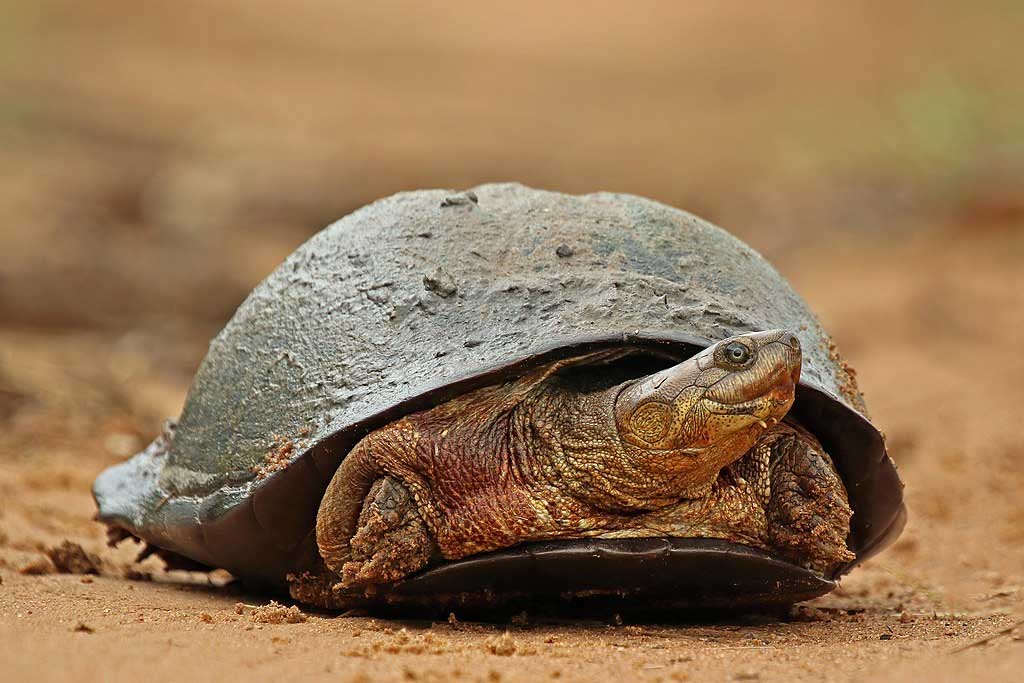
    The African helmeted turtle is very popular among turtle fans. Animals live both in water and on land.
    African helmeted turtle
    An African helmeted turtle (Pelomedusa subrufa) closes at ground level. – Charles J. Sharp, CC BY-SA 4.0, via Wikimedia Commons

    Content

    Origin / Distribution

    Since 2014 ten species have been distinguished. It also, there are two others that have not yet been fully classified:

  • Pelomedusa galeata
  • Pelomedusa subrufa.

  • Other subspecies:

    Pelomedusa barbata, Pelomedusa gehalfie, Pelomedusa kobe, Pelomedusa neumanni, Pelomedusa olivacea, Pelomedusa schweinfurthi, Pelomedusa somailca, Pelomedusa variabilis.

    The African helmeted turtle, whose scientific name is Pelomedusa subrufa, lives in southern and eastern Africa and in the southwestern Arabian Peninsula. The distribution area extends from Senegal in the west to Madagascar in the east and to South Africa.. So far, it was assumed that it was a single species that inhabited this wide area. But, There are many species, some of which have very small home ranges.

    Characteristics / Appearance

    The African helmeted turtle has a very round and flat shell. It is dark brown to olive green in color.. The plastron is usually black, but may also have a yellow/horned coloration.

    The skin is dark in color on top. Like this, the upper part of the tail is black and the extremities dark gray. The underside of the head is light gray, almost white. The African helmeted turtle he has a round head, short snout and round eyes. they also smile. Sex is recognized by the tail. The tail of the males is longer and thicker than that of the females..

    They are called neck spinners. (Pleurodia) and, Therefore, they cannot fit their heads vertically into the S-shaped shell. On the other hand, they put it on its side, horizontal s-shaped, against the body.

    Size: The Pelomedusa reach a length of 14 to 30 cm and weighing up to more than 2 kg, depending on the species. The males grow a little more. The Pelemedusa subrufa it is the smallest species, Medusa galeata the largest.

    Life expectancy: 30-50 years

    Habitat

    Preferred habitat is swamps and still waters. It also sometimes temporarily inhabits existing waters and travels considerable distances to reach new habitats.. If accessible waters dry up, is buried until 5 cm deep in the mud. Depending on the exact area of โ€‹โ€‹origin, temperatures can vary greatly between day and night.

    Behavior

    The African helmeted turtle it is a relatively peaceful turtle and predominantly crepuscular or nocturnal. They spend a lot of time on the bottom and also like to burrow in the sand.. In the African winter months, they maintain a dry dormancy and bury themselves in the mud to do so. Dry torpor is followed by the rainy season, during which animals become extremely active.

    Threats to the species

    No conservation status. But, Saudi Arabia is currently working on conservation measures for the various species that are not as widespread. Until very recently, one of the species was assumed to be distributed throughout Africa. But, there are several and one species is already in serious danger of extinction.

    The "African helmeted turtle" in captivity

    African helmeted turtle
    "African shield turtle" (Pelomedusa subrufa) in the Natural History Museum and Vivarium of Tournai (Belgium) – Vassil, CC0, via Wikimedia Commons

    Aquaterrarium

    The African helmeted turtle needs a large aquaterrarium (minimum requirement 5ร—2.5 (LxA) of carapace length, that is to say, 130-150 cm length depending on the species). The water level should be 30-40 cm.. It also, They need a large land area that accounts for approximately 1/3 of the total area. This should be filled especially with moist sand or substrate, for the ones pelomedus can dig during dry break. For dry idle, the water level must drop constantly to simulate the desiccation of the natural habitat. The dry break is followed by the rainy season, during which the water level must be replenished.

    Egg laying place: When you have females, an egg-laying place is always necessary. However, these turtles must have a sand pit large enough to rest dry.

    Lighting and temperature

    They should not miss the sources of ultraviolet light and heat. To the African helmeted turtle likes to sunbathe on land and also needs high temperatures. The water must also be heated (to. 22-30ยฐ), as our ambient temperatures are well below African conditions. Heaters that are attached directly to the tank are not recommended, since glass bodies don't necessarily support turtles. A heater built into the filter is more suitable. This heater must work with a timer to guarantee night emission. Spot heaters prevent animals from getting cold when they get out of the hot water. If the temperature of the air is lower than that of the water, pneumonia can occur. Fluorescent tubes provide enough light in the tank. In any case, need a big filter. In the case of aquatic turtles, it is said to always use a filter that can handle one and a half times the actual amount of water, since turtles pollute the water more than fish.

    Diet

    Turtles Pelomedus have a predominantly carnivorous diet. The right food is earthworms, the snails, mussels and fish. A cuttlefish bone should be available. In the wild it also feeds on frogs and carrion.. It has also been observed that pelomedus they snatch and drown the birds that bathe. Plant food includes aquatic plants, estate, flowers and fruits. But, they also eat them only in the water.

    Buy one "African helmeted turtle"

    most of the turtles Pelomedusa found in the animal trade in Europe are called 'subrufa" in the shops.

    The price for the offspring of the "African helmeted turtle" at the exotic animal market, ranges between 25 – 40 EUR.

    Videos "African helmeted turtle"

    Pelomedusa Subrufa Y Pelusios Castaneus

    Pelomedusa subrufa (movie 08) - Blood Feeding time.

    Alternative names:

    1. African helmeted turtle, Marsh terrapin, Crocodile turtle, African side-necked turtle (English).
    2. Tortue ร  cou cachรฉ d'Afrique, Pรฉlomรฉduse rousse, Pรฉlomรฉduse roussรขtre (French).
    3. Starrbrust-Pelomedusen (German).
    4. Tartaruga-de-capacete-africano, Tartaruga de pรขntano, Tartaruga de crocodilo, Tartaruga-de-pescoรงo-africano (Portuguese).
    5. "Tortuga de escudo africana", Tortuga de casco (espaรฑol).