▷ The world of Pets: Dogs, cats, birds, reptiles, amphibians
Eurasian bullfinch
Pyrrhula pyrrhula
Origin:
Character: Sociable
Life expectancy: 10 to 15 years
Height: 15 to 17,5 cm.
Its coloration is unmistakable: While the female has more muted colors, the male looks reddish plumage in the chest. It is not threatened and has populations of between fifteen and twenty-eight million copies in Europe.
It is a bird highly sociable, which serves immediately when called by imitating his song.
Despite being a quiet animal, during the early morning hours his State will of euphoria and very active. In the evening turns into a passive pet, lazy and dormilona. Both the male and female sing in a similar way. It is not one of their most notable qualities, since its melody lacks musical notes and is not too powerful. You will observe how your interesting friend will inflate his feathers and throat in unison at the moment of starting the song.
Their traditions They are very different from those of other birds and many ornithologists think that their partners are stable, because they are generally of two by two, male and female, in both summer and winter. The male is equipped with a sumptuous plumage, that puts in evidence during courtship. Spongy chest, leaves hanging their wings, to display contrasting drawing of his obispillo and swings conton is.
▷ The world of Pets: Dogs, cats, birds, reptiles, amphibians
Red avadavat
Amandava amandava
Origin:
Character: Social
Life expectancy: 8 years.
Height: 9 to 11 cm.
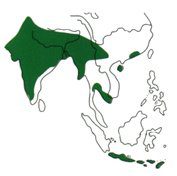
The species is native to Bangladesh, Cambodia, China, Egypt, India, Indonesian, Burma, Nepal, Pakistan, Thailand and Viet Nam.
There are established populations in the Iberian Peninsula (Spain and Portugal), Brunei, fiji, Malaysia, Puerto Rico, Singapore and Hawaii.
The sexes are different. In the adult male plumage is almost entirely red, the Chin, throat, chest, top of the abdomen and flanks are bright Scarlet. The sides of the chest and flanks have spotted with small white dots. The tail is blackish brown, finely fringed in white at the tip of the lower face. The lower part of the abdomen, the anal area and the bottom of the tail are black or blackish brown with shades of Red. The beak is short, red.
common at local level, red bengals are prevalent among the tall grass, Juncos, reedbeds, shrubs and bushes, generally, in areas close to water or wetlands. It is above all a kind of the Plains, but can climb to the 1500 meters in Java and Bali, even up 2400 meters in the small islands of the Sunda.
There are two subspecies:
–Amandava flavidiventris He lives in Burma,in the North of Indochina and the Sunda Islands.
–Amandava punicea He lives in Indochina, Java and Bali and has many more white spots. The Red of their nuptial plumage is more alive than in the nominal species. The two subspecies are somewhat smaller and less present in imports.
Generally live in pairs or in small groups of up to thirty individuals. In winter, the demonstrations are larger and sometimes birds are grouped into more than a hundred individuals, sometimes with other species such as Capuchin, sparrows or email us. Their bedrooms are usually located in the common cane or cane fields. They are very territorial and vigorously defend the entrances to some of their nests.
In the India, breeding season occurs during the second half of the monsoon season or during the dry season. The nests are found on land or at a low height. They are built with thin strips of grass, stems and other plant materials. The female lays 4-6 white eggs which are incubated during 11 to 12 days for both parents. The young leave the nest after 3 weeks. When leaving the nest, adults are very attentive and communicate with their chicks with sweet notes, especially in the night, When it comes to remind them the location of its nest.
It has a mainly vegetarian diet. This bird feeds on grass and a wide variety of seeds. Also eat rice and millet. Their observation in captivity suggests that Red Bengals also feed in the wild on a small number of insects such as ants and caterpillars..
The population is suspected to be stable in the absence of evidence of any reduction or substantial threats.
Bengals can be kept both in spacious cages and in outdoor or indoor aviaries., although the breeding has a greater chance of success if they are kept in outdoor aviaries. Since it does not like empty spaces, it is best to decorate its habitat with an abundance of plants. . Love the Sun and the heat so the Aviary should be oriented so that you can to maximize the available hours of sunshine. At the same time, it must be sheltered and have a shelter that protects them from cold days during the winter months..
The Bengali gets along very well with the other species with which it can share a habitat. Less tolerant with its own species during the breeding season. ,It is best to keep a single partner in each Aviary.
Origin: Colombia, Ecuador, Peru, Brazil, French Guiana
Character: Ruidoso, social
Life expectancy: ----
Height: 23 to 24 cm..
Content
Description:
23 to 24 cm.. height and between 188 and 233 g. weight.
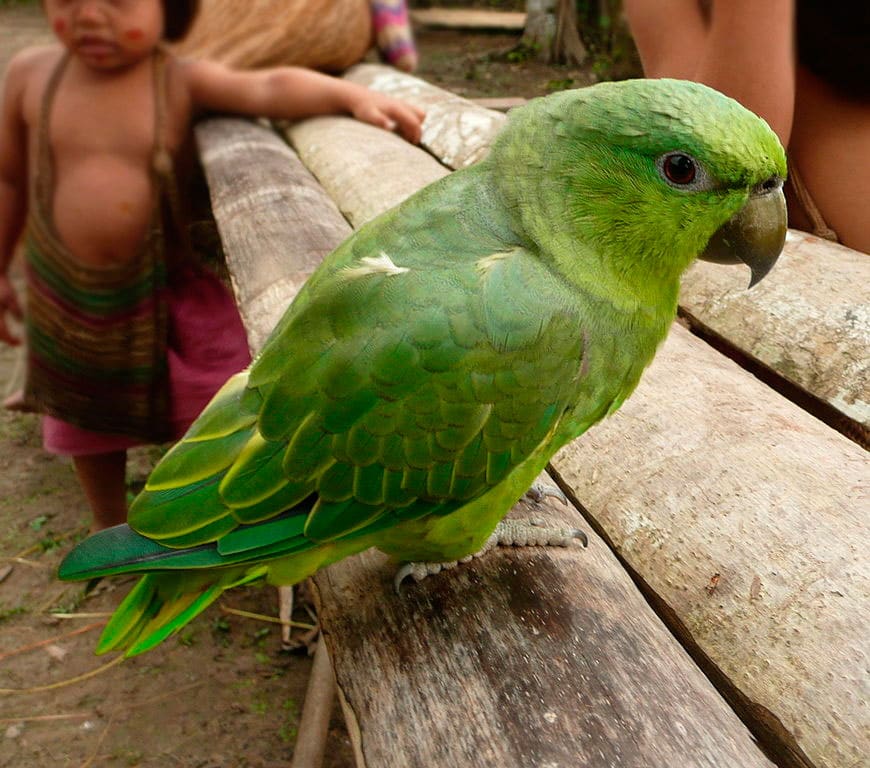
The short tail Short tailed Parrot(Graydidascalus brachyurus) It is the most distinctive, although it is also known the eyes red orange.
generally green, somewhat yellowish on wing
and the belly; Flying red noted in the base of the outer feathers tail and a small upper portion of wing
towards the armpit.
The beak is greenish gray, large.
The sexual dimorphism in this species it is absent.
This species, the only one of the genre Graydidascalus, is related with the Yellow-faced Parrot(Alipiopsitta xanthops), own kind of Bolivia and Brazil.
It inhabits in swampy forests, intervenidas, River Islands, borders of humid and semi-humid forest, until the 400 m, associated with river banks.
Fly quickly in large groups of up to 50 individuals, is very noisy and visit populated places. They are very social outside the breeding season. It will associate with other species of parrots in the wild.
Reproduction:
With plays during the last quarter of the year.
Successes captive breeding have not yet been registered; although several females put one or two eggs, but no chicks. In its natural habitat, the clutch average consists of 3 to 4 eggs. The period of incubation is of 24 to 25 days.
Food:
Consume large variety of fruits (very fond of guava), tubers and possibly berries, seeds, sprouts and flowers. Foraging in the treetops.
Distribution:
Size of the area of distribution (reproduction / resident): 3.870.000 km2
Its population is distributed among the rivers of the southeast of Colombia, east of Ecuador, northeastern Peru and northern Brazil, on Basin Amazon.
Conservation:
• Current category of the Red List of the UICN: Least concern.
• Population trend: Decreasing.
Justification of the population
The population size World has not been quantified, but this species is described as «quite common» (Stotz et to the., 1996).
Justification of trend
It is suspected that this species has lost 19.1-20.4% of habitat within its distribution over three generations (15 years) based on a model of Amazon deforestation (Soares-Filho et to the., 2006, Bird et to the., 2011). Given the susceptibility of the species to hunting and / or capture, you suspect your decrease in population <25% over the next three generations.
"Short tailed Parrot" in captivity:
Rare in captivity. Young people are susceptible to stress and disease.
Alternative names:
– Short-tailed Parrot, Short tailed Parrot (English).
– Caïque à queue courte, Perroquet à queue courte, Perroquet nain de Panama (French).
– Kurzschwanzpapagei, Kurzschwangenpapagei (German).
– curica-verde, curica-pequena, curiquinha, papagainho-verde (Portuguese).
– Cotorra Colicorta, Cotorrita Cabezona, Lorito Colicorto (español).
– Cotorra Colicorta (Colombia).
– Loro de Cola Corta (Peru).
▷ The world of Pets: Dogs, cats, birds, reptiles, amphibians
Red-cheeked Cordonbleu
Uraeginthus bengalus
Origin:
Character: Social
Life expectancy: 12 to 14 years.
Height: 12 to 13 cm.
Bluebirds from Senegal are from Equatorial Africa and East Africa. They live in pairs or in groups of a few individuals in semi-arid areas.
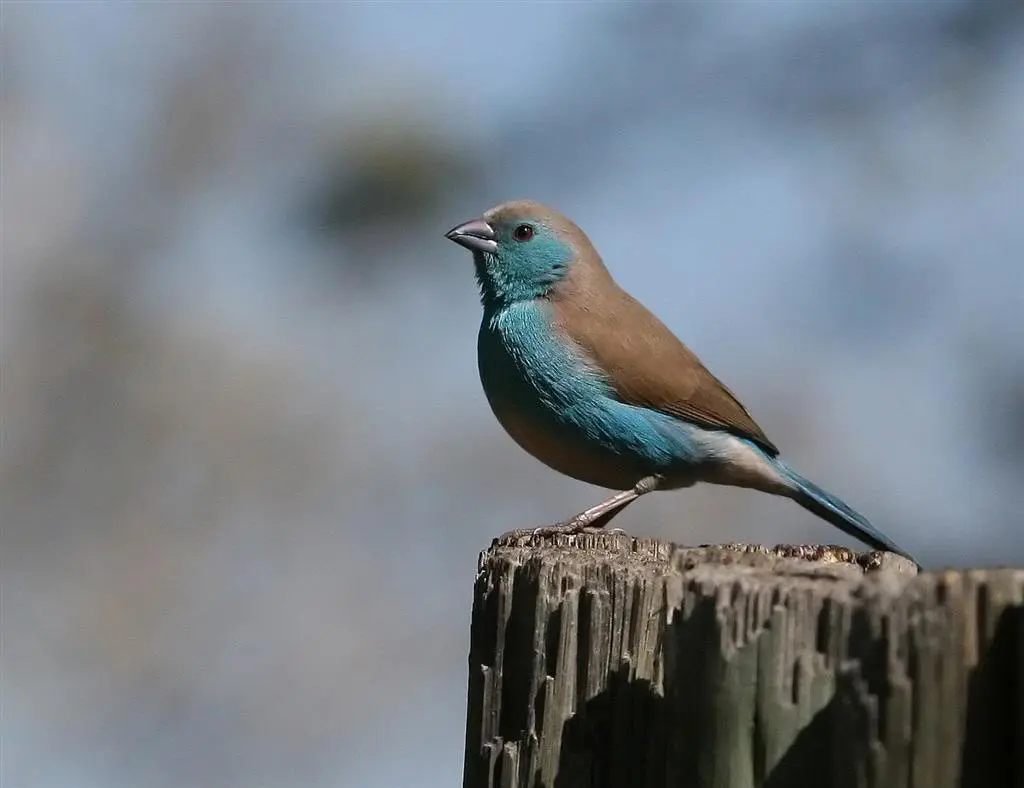
They have a melodious song, that varies by species. Males have more brightly colored than females. The cheeks of the males are red. The female has a blue paler . Sometimes the female also sings, so you can't rely on the voice to determine the sex of the bird.
It is a large bird, It can co-exist with other small exotic birds. Small species of the Azulito of Senegal can co-exist if there is sufficient space, but the larger species are very aggressive and should not be mixed with other species of Azulitos.
They are insectivorous and granivorous.. Must be accustomed gradually to fruit and vegetables to prevent the occurrence of gastrointestinal disorders (diarrhea). Must be given in small amounts, washed and dried at room temperature, withdrawing them as soon as they lose their freshness. Vitamins can also be put in drinking water, especially in times of illness, stress, molting and reproduction.
The best thing is to install them in the Aviary, so they can fly to and organize themselves into a social group. These birds are sensitive to cold and humidity.. They need to keep at a temperature between 20 and 25 ° C. They must be protected from the cold currents and air, Although over time can be adapted to more extreme temperatures.
Reproduction must stay in pairs in a large cage (100 * 50 * 50 cm minimum for a couple), in groups of the same species in a spacious Aviary, with a lot of places to hide, allowing them to build their nest in peace. Reproduction is usually easy, when birds are calm and have sufficient space. They must have variety of foods (seed mix, germinated seeds, spray millet and living insects (are essential during the breeding season).
The female lays from 3 to 7 eggs, the parents take turns incubating and hard incubation of 15 to 17 days. The young leave the nest to the 3 weeks and are weaned at the 6 weeks. The sexual dimorphism appears to the 5 months.
Red-cheeked Cordonbleu (Uraeginthus bengalus)
▷ The world of Pets: Dogs, cats, birds, reptiles, amphibians
linnet sizerin
Carduelis Flammea
The linnet sizerin He is a confident bird, friendly, naive, harmless and equipped with a voice, a chant, really magnificent –a comparable beauty to the Nightingale and the goldfinch–, This bird, If human, We would say of him that he is a very good person., reliable in every respect.
There are a variety of pardillo, called sizerín (carduelis flammea), which is of even more superlative goodness.
Small striped finch 13 – 15 cm., grey brown, with red front, Chin black and two pale wing stripes. Male in breeding season with pink breast and rump, for the rest, similar sexes. Young red and poorly marked Chin.
In France they worship. Such is the tenderness that he felt the French call it that, popularly, the naive bird
His singing brings together a series of flight claims mixed with short trills alive and more melodiosas rolling notes.
The diet is the same as that of the goldfinch is, feeds mainly on seeds, outbreaks of various wild plants and trees.
Sources:
– Wilkipedia
– FERRAN MONEGAL
▷ The world of Pets: Dogs, cats, birds, reptiles, amphibians
Red siskin
Spinus cucullatus
Origin: Venezuela, Colombia, Guyana, Trinidad and Tobago
Character: Trusting and loving
Life expectancy:
Height: 11 to 12 cm..
Photo:canaricultura.es
Content
Those who come to achieve Red siskin it seems that they are satisfied with the sole idea of getting the coveted F1 from him (hybrids of this beautiful exotic with a female canary), completely disregarding more information and knowledge of their particular biology.
The lack of information available on the Customs is very strange, feeding, reproduction and habitat of Red siskin.
“In canariculture and ornithology treatises, only their colors are described., its properties to convey the color red to the Canary and well little more. Perhaps this is due to the fact that those closest to the life of this little finch, such as twitchers & dealers, they jealously keep to themselves, the knowledge of their customs, thus avoiding, "commercial competition". This belief comes to mind because we know perfectly well the illegal trade that exists in their country of origin..
“Due to the great demand for Cardinals, coming from all the countries where canariculture of color is practiced, This bird has become the most coveted by stealthy casual and hunters merchants. In Caracas, as well as in La Guaira, its famous seaport, the trade of buying and selling of Red siskin constituted, until very recently, an authentic international business. Sailors and travelers came to pay exorbitant amounts for a Red siskin. The few who came alive to Europe listed to astronomical prices.
“It is not strange to think, because, that the scientific ignorance of its wildlife is the result of a tacit agreement between hunters and clandestine traders. As you want it, This disregard for his life and customs brings, as a result, the early illness and death of most Red siskin who manage to reach Europe alive.
"Secondly, This species is seriously threatened with extinction. This beautiful winged ruby from the northern regions of Venezuela, It is already very sparsely found by have turned, inevitably, in one more victim of selfishness and the irrational whim of man. Fortunately, the measures taken by the Government, rigorously applying existing laws for the protection of Venezuelan fauna, they come to alleviate, as far as possible, the damage caused to this species. These laws are being strongly enforced today and trade, as flourishing in past years, This disappearing, with the natural joy of ornithologists and nature lovers from all over the world.
VERNACULAR AND SCIENTIFIC NAMES.-
“ This beautiful American finch measures 11 to 12 centimeters. It is known by various vernacular names, such as Tarín, in Argentina, Lúgano Rojo, in other South American countries, Cardenalillo, in Spain, Cardenalito, in Venezuela, etc. The scientific denomination is also varied and confusing: Spinus cucullatus, Carduelis cucullatus and Crhysomitris cucullatus. As we see it, ornithologists have also not delved much into its study and taxonomy: Some include him among theCarduelis”, others among theSpinus”, etc.
“All this contributes negatively to the authentic scientific knowledge of this beautiful tropical bird., so fundamental to the canaricultor of color. What we have no doubt about is that the Red siskin is closely related to a large group of American finches: los “Spinus”.
COLORS OF THE MALE.-
"Head, the neck and throat are black Jet, in the form of Hood; the back is dark red; the chest and the obispillo are red fire, beautiful; the tail, completely black. The wings are black, with a beautiful and wide strip of color orange through primary and secondary shirts. The legs and beak, dark brown. The eyes are amber.
COLORS OF THE FEMALE.-
"The female of Red siskin has a head, the neck, the back and the flanks of ash grey streaks, with little red colouring on the chest and obispillo. The tail is black; the wings of the same color, taking the same strip Orange wing than the male.
COLORS OF THE INMATUROS YOUTH.-
“Immature young are perfectly identified by their uniform grayish-brown coloration. The color of the wing band is barely noticeable in the first days after leaving the nest.. Similar to the adult female Saint, but without the black and red colours, being the shade of grey, duller.
WILDLIFE.-
“This beautiful finch is native to the northern regions of Venezuela, characterized by mountain ranges, hills and Plains. This wide strip is characterized by its totally different weather stations.: A , rainy and humid, comprising of April to U.k. and other dry, from November to March. The vegetation is itself the American Savannah, This is, shrubs, grasses and herbs of all kinds, with very little Grove. The average temperatures in this area vary considerably, depending on the wet or dry season.
"Live the Red siskin in wandering flocks, on the plains of lower floors. It feeds on seeds, tender stems and small insects. It nests in the spring. The female lays three to five eggs, pure white, that incubates alone. The male brings food, providing a longer regurgitado. The nest is built in the shape of a cup, with abundant dry material of grasses and hairs. The female so carefully lined with feathers and other soft materials. To the 11-12 days of being incubated the eggs, hatch chicks, covered with a fine low down. They are fed with insects, larvae and seed peeled and regurgitadas, by both parents. To the 15 days, they leave the nest. The female makes two to three released per year.
THE “LITTLE CARDINAL OF VENEZUELA” IN CAPTIVITY.-
"The Red siskin easily gets used to life in captivity; he is trusting and affectionate with whoever takes care of him and is not quarrelsome with other birds that come into his company. He is cheerful and very cantor. His singing resembles our serin (Serinus serinus). Is always on the move. Much like the green food, especially the lettuce. He is so loving the Whitehorn that if, by your tastes outside, I would only eat this seed and lettuce. Some consent to die than testing other grains. But the Whitehorn just becoming ill will. They must eat of this oilseed seed, but not in excess, because they resist not a diet continued on the basis of this food.
“It is necessary to make them eat birdseed too, millet, Turnip rape, Thistle and rapeseed seed, as well as some fruit and green food. Should they also be lettuce seeds, Blue poppy and some crushed cañamones. Should not be given egg pasta, as is done with the Canaries, because they end up becoming ill hepatitis and die soon.
“The most difficult thing is its adaptation and acclimatization to our latitudes. Must acclimate them very slowly and to ensure that the temperature does not fall from the 10 degrees Celsius. It is a very chilly bird, immediately accusing the lack of heat. Once made the first move in the cage, already does not require special care.
"The evident proof of his health is the singing. Yes a Red siskin Canta, We can think of to raise with him with many chances of success. Is very hot in nature and if this strong and healthy, can attach you with two female perfetamente.
“But in this work we are not going to deal with their reproductive and genetic qualities, Neither of its extraordinary influence on color canaricultura. This item, together with a deep scientific-practical study of its reproduction in captivity with its own female, It will be developed, in detail, in a next job. We advance, However, that this ornithological event has taken place in Spain with Red siskin brought from Venezuela and adapted to our climate. This achievement has been achieved, after long years of tests and trials by the author of this article”.
by José Moreno Sánchez
Judge of the F.O.E. (Spain)
Several tests have been carried out to try to estimate the number of wild individuals that currently survive; However, Dear sayings are characterized by their inaccuracies and is not really known the current population. Estimates range from as low as 600 until 800 birds across the country, of which are calculated each 350 to 500 individuals in the West, and other 300 in the central zone. Other estimates indicate that they currently survive around 4.000 Red siskin wild in total, of which approximately 2.500 they live in the States of Lara and Falcón. The numbers of birds captured would support the second estimate more than the first.. It is necessary to clarify that, While you can ensure that the figure is low, information is still lacking to accurately estimate the population. In any case, the current figures are lower than the previous ones and most of the populations referred to in the past are now extinct.
Source: Wilkipedia
▷ The world of Pets: Dogs, cats, birds, reptiles, amphibians
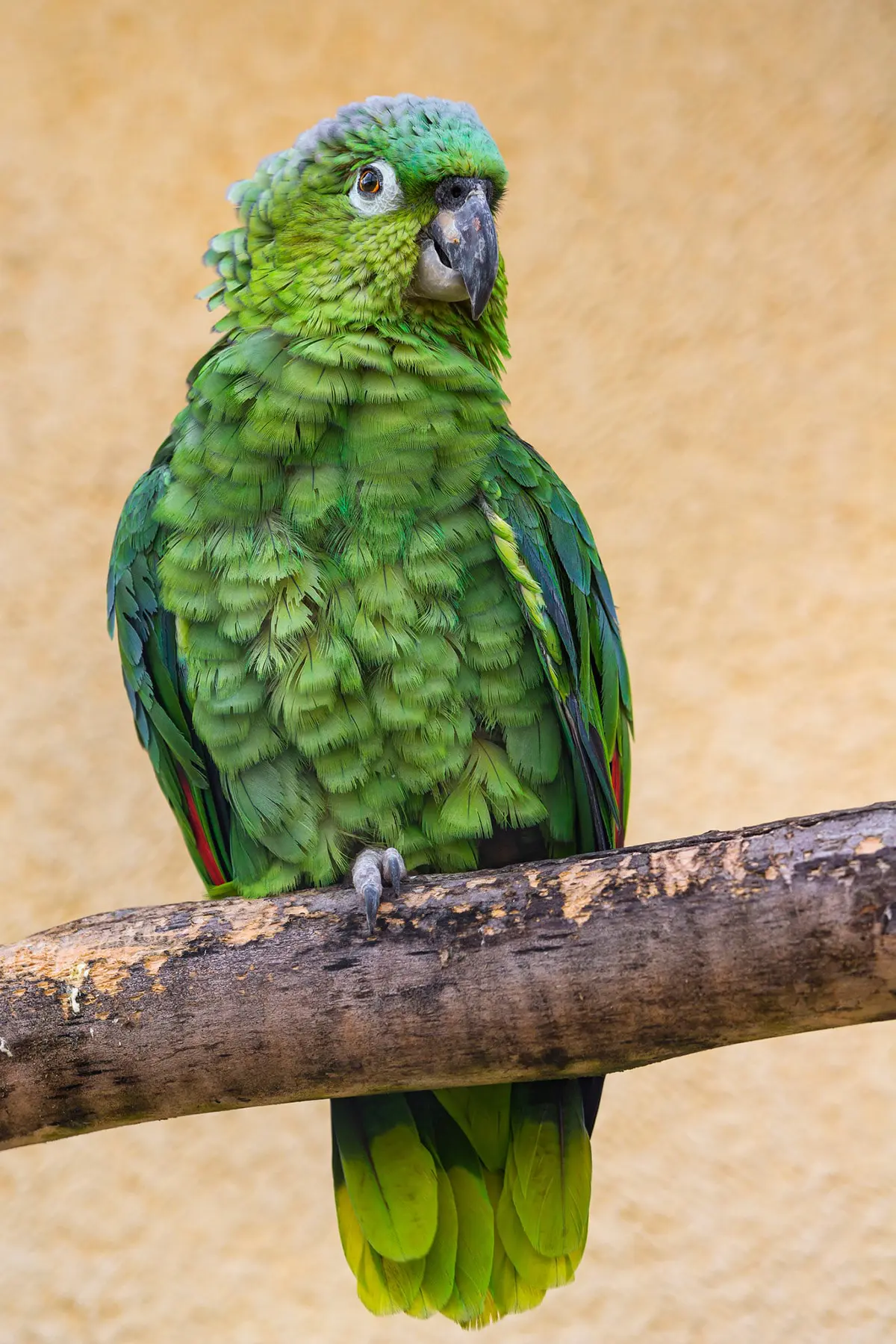
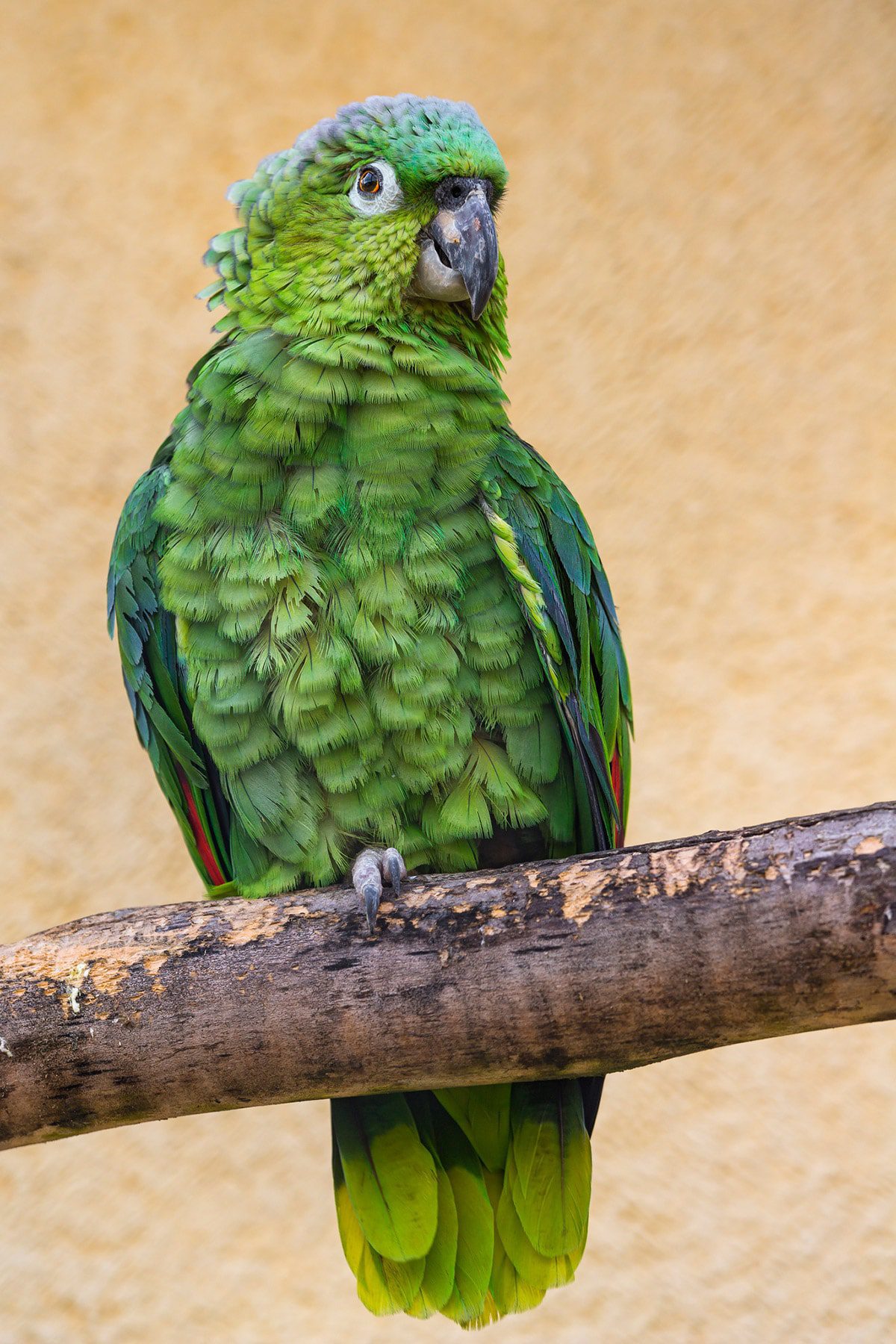
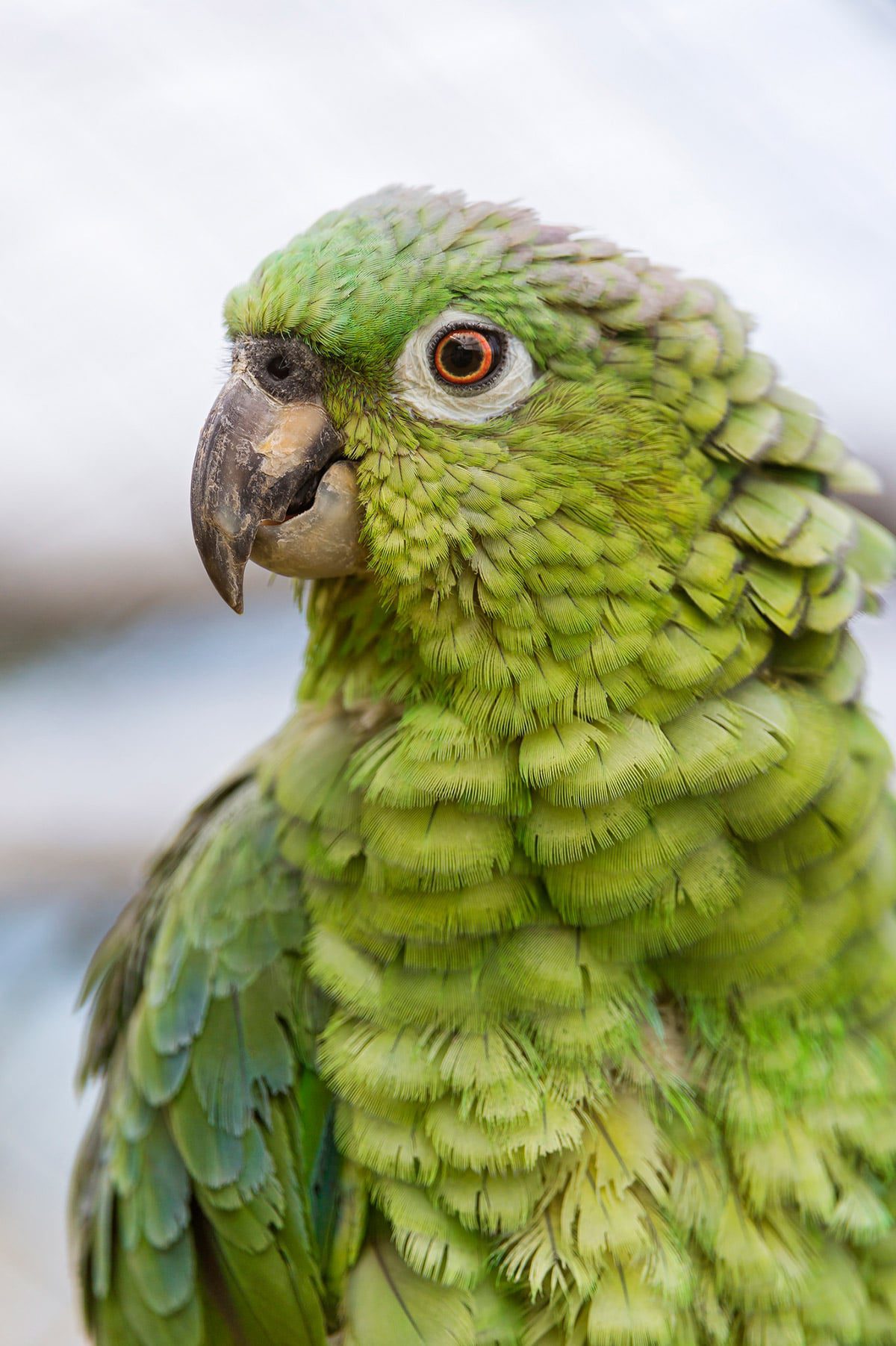
Mealy Amazon
Amazona farinosa
Origin: Mexico, Bolivia, Brazil, Costa Rica, Panama, Colombia
Character: Curious
Life expectancy: 50 to 60 years.
Height: 38 to 46 cm..
Content
Description Orange-winged Parrot
38 to 46 cm.. height and between 705 and 766g weight.
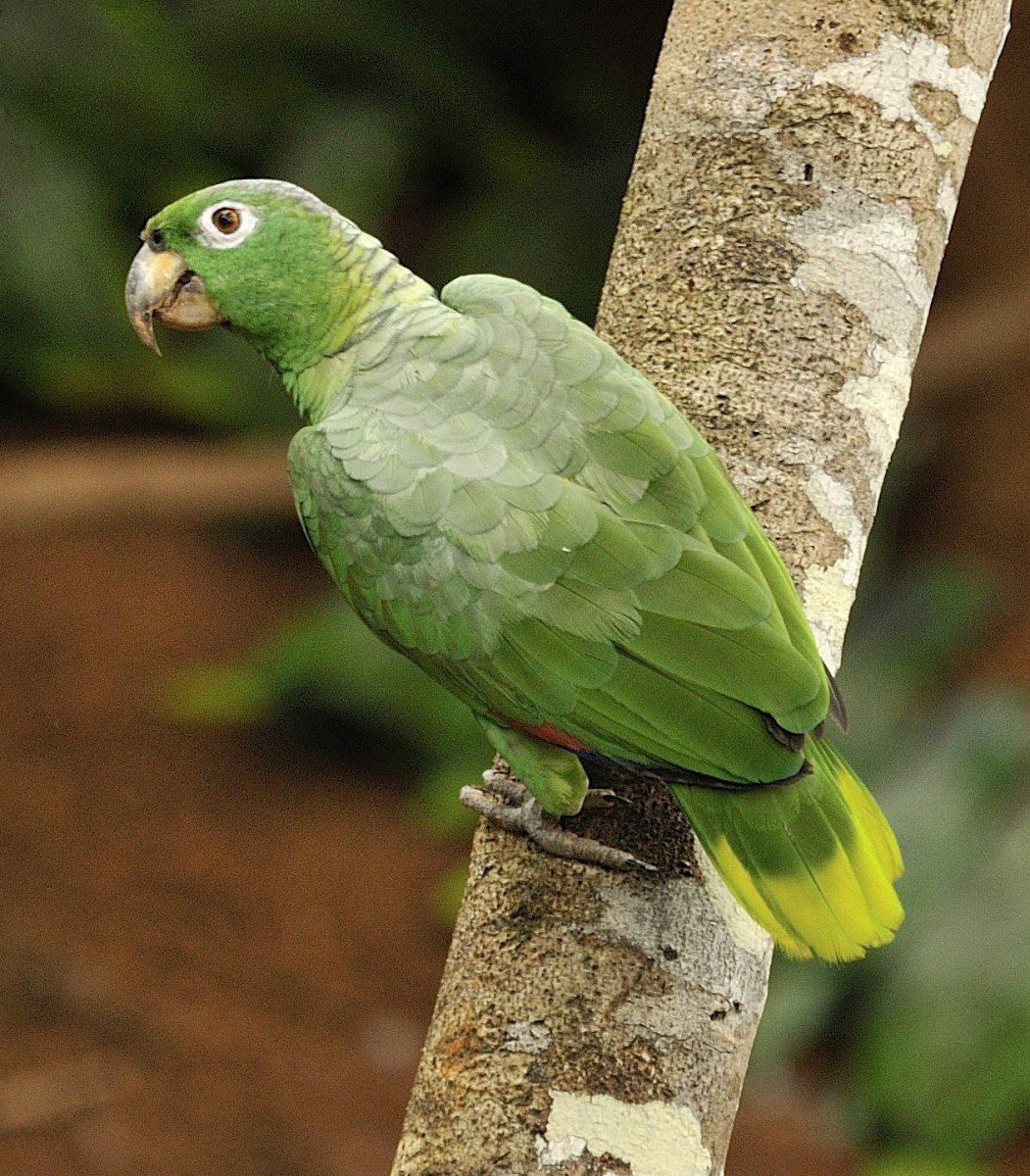
The Mealy Amazon It is distinguishable by its large size and the Ashen green color of dorsal plumage, bluish green feathers with a slight black border in the neck, edge of the Red Wing and tail with two intensities of green.
The young are similar to adults, but with the eyes of Brown.
It is a monogamous species, keeping the couple formation throughout the year.
The mealy Amazon is one of the noisiest species of parrot of the Amazon, so they are easier to observe than other species.
Like all parrots, its most important function in the ecosystem is predatory or disperser of seeds of the canopy.
Subspecies:
– A. f. inornata (Mealy Amazon Inornata)
– A. f. Finch (Mealy Amazon green head or Costa Rica)
– A. f. Archive (Blue Crown or Guatemalan mealy Amazon)
– A. f. farinosa
– A. f. chapmani (Chapman's mealy Amazon)
Lives in humid forests, semi-humid, deciduous and gallery forests, also in stubble to the 1100 m.
Flying in pairs and rarely in flocks.
Reproduction:
Nests in hollow trees and outgoing Rocky possibly during the first quarter of the year.
Food:
Feeds on a variety of fruits including palms.
Seeds, tender leaves, buds of flowers and nectar. Clay in colpas.
Distribution:
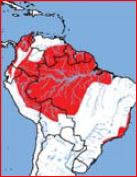
From Mexico South to Western Ecuador, and in Amazon, to the northeast of Bolivia.
Not considered under any category of threat (LC); deforestation and hunting for consumption are its main threats.
Conservation:
Although it appears as little concern by IUCN the species has been captured by the wild bird trade; There is no evidence of a decline in the population.
Hunted for food in French Guiana.
In Mexico in danger of extinction.
In captivity:
Something rare in captivity.
Charming, gentle disposition; It can be noisy at times. Good copycat.
Probably can live among 50 and 60 years.
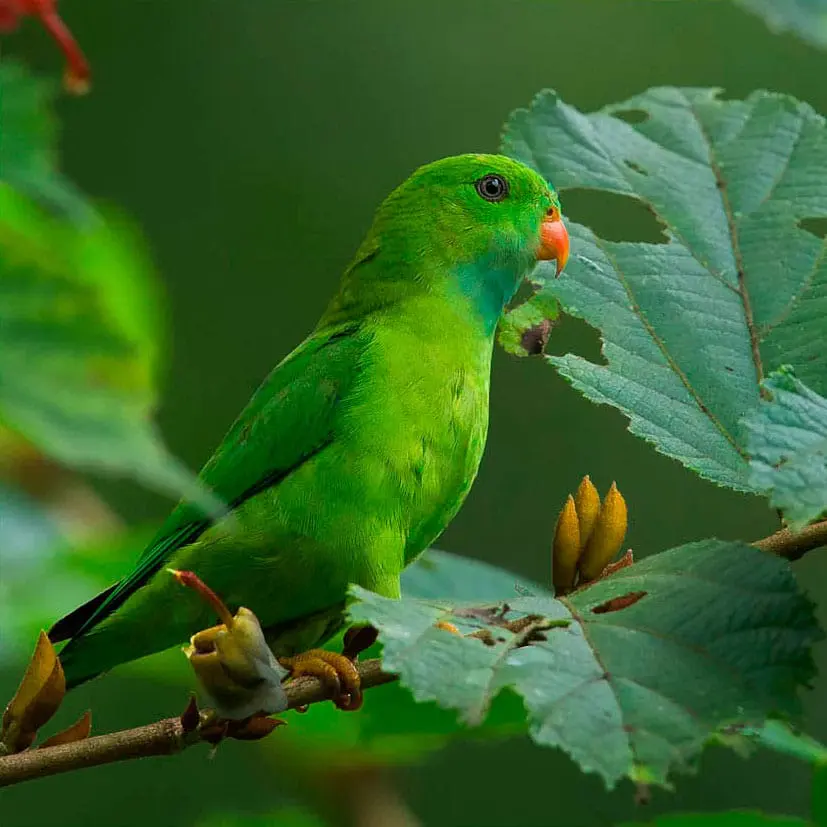
The head of the Vernal hanging parrot(Loriculus vernalis) is bright green, lighter and more yellowish in the chin. Rest of the upper region green, with the bottom of the back, rump and upper coverts bright crimson. Wing coverts a little darker than the the mantle green. Primaries bright green with vane inner blackish and a light blue-green diffusion in the feathers of the vane outer; secondaries Black with exterior bands of green and a bit of green in vane inner. Under the wing
a brilliant turquoise blue, except coverts and axillary, that are pale green. The underparts more greenish-yellow that the upperparts, with a patch light blue in the throat. Upper, the tail green; Turquoise Blue below.
Bill coral red with yellow tip: irises Brown to yellowish-white; the legs they pale brown to yellowish Orange.
The females they are slightly more off than males and have a patch blue in the throat less extensive.
The young birds lack of the patch blue in the throat and have a bill paler, the rump narrow and green feathers of the tail and legs brown.
The young birds they need at least a year to mature.
Some movements, possibly related to seasonal rains, have been observed, but they require further study. The species is found in a variety of habitats, including Evergreen deciduous forests and, next to clear forest, secondary growth, bamboo thickets, orchards and too grown crops, up to approximately 2.000 m.
The birds are found in pairs, family nuclei, loose herds of up to 50 individuals or groups mixed with other birds. Their size and coloration make it a discrete ave, but they are not shy and can be found feeding in the canopy, Sometimes the attention of an observer with short flights and circular around the tops of the trees.
Jump between the branches and climb swiftly using both beak and legs, sometimes form 'spirals'’ to ascend. Lie, They groom and sleep strung upside down one or both legs, Although juveniles may remain in vertical position, scratching your head over the wing.
Reproduction:
Like the Lovebirds, cut small strips of bark, leaves and other plant materials, they put them in the contour feathers and carried them to the nest as an overlay. The breeding occurs between January and April; between two and four whites, often spotted brown eggs, they are deposited in the cavity of a rotten trunk. The narrow entrance is sometimes enlarged by birds, and the deep hole can extend below the ground level in exceptional cases.
The incubation, that lasts around 22 days, It is carried out by the female. The male helps feed the chicks as they mature over a five-week period..
Food:
They feed on acrobatic form of nectar in the trees in flower (for example, trees of Coral Erythrina) and in fruit trees especially figs Ficus or guava (Psidium guajava), as well as various berries and plant species such as bamboo and casuarina. Also consume collected potted Palm wine, and they can then take, and damage to orchards.
Distribution:
Size of its range (reproduction / resident): 6.460.000 km2
The size of the world's population has not been quantified, It is thought that it may be above the 1.000.000 of copies. The species according to information, is very rare in China, in general, common elsewhere (pit et to the. 1997).
The population is suspected to be stable in the absence of evidence of any reduction or substantial threats.