 Pets
Pets
▷ The world of Pets: Dogs, cats, birds, reptiles, amphibians
▷ The world of Pets: Dogs, cats, birds, reptiles, amphibians
AKC Marketplace
▷ The world of Pets: Dogs, cats, birds, reptiles, amphibians
Tucuman Parrot Amazona tucumana

Content |
|---|
Description:
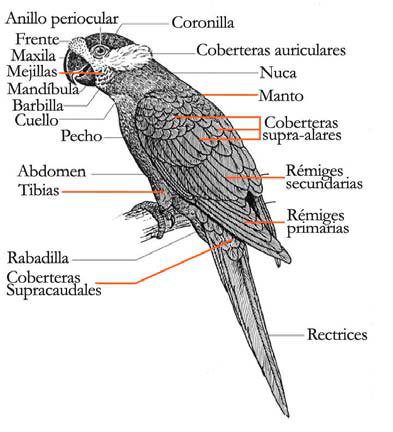
31 cm.. length.
The Tucuman Parrot (Amazona tucumana) It is mostly green, with black borders on the feathers, giving the whole a scalloped appearance.
Relatively large and stocky have the forecrown red and eye rings white. Has also patch Red in the wing-coverts (most notoriously in flight); thin yellow line on shoulder almost half of wing ; the primary wing feathers They have the blue tips, and the thighs They are orange-yellow. The tail It is short and feathers yellow.
The bill It is yellowish to pinkish, and eyes adults are orange-yellow. The legs They are pale gray.
As he male as the female They are similar in appearance, but the immature They are generally green in full, with the thighs green than orange and less red on the forecrown. Another key difference between adult and immature is that eyes young people are gray.
Taxonomic note:
Until a few years ago it was considered a subspecies of the Red-spectacled Parrot (Amazona pretrei) (Fjeldså y Krabbe 1990), but now they are recognized as separate species, although closely related to each other and, In addition, with the Vinaceous Parrot (Amazona vinacea), who possibly form a basal group to all other parrots of the genus (Russello y Amato 2004).
- Sound of the Amazona tucumana.
Habitat:
Video – "Tucuman Parrot" |
|---|
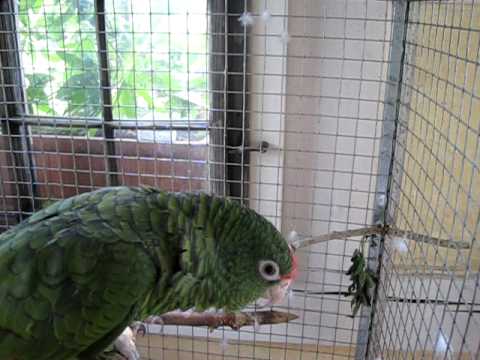
It is found in open forests Andean mountain forests Yungas, particularly in areas with Alnus acuminata or Podocarpus parlatorei, as well as other species of Alnus, Podocarpus and Nothofagus. This species It is in elevations of between 1.600 and 2.600 metres in the breeding season, but during the non-breeding season they descend to lower elevations of about 350 m. Right now, sometimes you can enter inhabited areas.
Often gathers in large flocks, often numbering more than 200 individuals.
Reproduction:
The Tucuman Parrot They breed between November and January or February, building usually your nest in a hole in a tree Alnus or Podocarpus. The normal size clutch is three to four eggs, although they have been reported sunsets from one to five eggs. The incubation lasts around 26 to 29 days, usually it is the female that the male incubates and which feeds, and the main source of food for chicks come from seeds and flowers Podocarpus parlatorei. Young they leave the nest usually after seven to nine weeks.
Food:
The Tucuman Parrot They feed on trees Family Myrtaceae, as well as the seeds and flowers trees as Podocarpus parlatorei, Juglans australis and Alnus, of the immature fruits of the species Cedrela and flowers species Erythrina.
Distribution and status:
Size of its range (breeding/resident ): 86.200 km2
The Amazona tucumana It is located in northwest Argentina and in southern Bolivia, where it is known in 12 locations departments Tarija, Chuquisaca and Santa Cruz (A. Maccormick in some. 2005, R. Hoyer in some. Slightly., 2012).
A recent study of the situation and distribution of the species Argentina registered 6.015 individuals (Rivera et al., 2007) and estimated that the Argentine population amounted to about 10.000 birds, but around 20.000 They were exported from Argentina in the mid 80, suggesting that there may have been a substantial population decline.
After inclusion in the Appendix I of the CITES, international trade was cut, although the continuous local exploitation. But, It does not appear that the stocks have recovered, and loss of habitat is of concern, particularly in Argentina, where their habitat is highly degraded and there are only a few remains of small forests and isolated. Threats to habitat are less severe in Bolivia, but the species has declined there and is projected to continue to do so (A. Maccormick in a bit., 2005).
The main concentrations of this species in Bolivia are in clad hills, Villa Serrano and Tariquía National Reserve of Flora and Fauna, with 1.643 individuals recorded in several places during a recent study (Rivera et al., 2009).
Conservation:
State of conservation ⓘ |
||
|---|---|---|
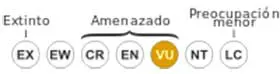 Vulnerable ⓘ (UICN)ⓘ
| ||
• Current category of the Red List of the UICN: Vulnerable.
• Population trend: Decreasing.
• Population size : 6000-15000.
Rationale for the Red List category
This species is classified as Vulnerable, as it is experiencing rapid population decline due to the loss of habitat and capture for the bird trade.
Justification of the population
A recent study of the situation and distribution of the species Argentina registered 6,015 individuals and Argentina estimated that the population was approximately 10.000 birds (L. Rivera in a bit., 2004). It also, 1.643 individuals were recorded at several sites in Bolivia during another recent study (Rivera et al., 2007). The total population is thus situated in the band 10.000-19.999 individuals (L. Rivera in a bit., 2012). This is equivalent to 6,667-13,333 mature individuals, rounded here to 6,000-15,000 mature individuals.
Justification of trend
The results of the survey, observations on habitat loss and the local occurrence of the species, and catch and trade data suggest that the population is suffering rapid population decline (L. Rivera in some.)
The Tucuman Parrot in captivity:
Parrots Gender Amazona are among the most recognizable and sought-after pet birds. Their colorful plumage and ability to imitate the human voice have made them highly sought after for centuries, and one unfortunate consequence of this is the threatened status of most species. (Russello y Amato 2004). In the Red list of Threatened Species International Union for the conservation of nature, 16 parrot species of this genus are included either as Vulnerable, Endangered or Critically Endangered (IUCN 2010). In the same way, 16 species are listed in Appendix I of the Convention on International Trade in Endangered Species (CITES).
The Amazona tucumana It is a species that should only be kept in captive with the sole purpose of achieving their reproduction and subsequent insertion into the wild.
Alternative names:
– Tucuman Parrot, Alder Amazon, Alder Parrot, Tucuman Amazon (English).
– Tucumanaamazone, Tucumanamazone (German).
– Amazone de Tucuman (French).
– Papagaio-tucumă (Portuguese).
– Amazona Alisera, Amazona Tucumana, Loro alisero (español).
– Loro alisero (Argentina).
– Loro alisero (Bolivia).
scientific classification:
– Order: Psittaciformes
– Family: Psittacidae
– Genus: Amazona
– Scientific name: Amazona tucumana
– Citation: (Cabanis, 1885)
– Protonimo: Chysotis tucumana
Images Tucuman Parrot:
Videos "Tucuman Parrot"
Sources:
– Avibase
– Parrots of the World – Forshaw Joseph M
– Parrots A Guide to the Parrots of the World – Tony Juniper & Mike Parr
– Birdlife
– RIVERA, Luis; POLICE, Natalia y BUCHER, Enrique H. Ecology and conservation of the Alder Parrot (Amazona tucumana). Hornero [online]. 2012, vol.27, n.1 [aforementioned 2017-01-29], pp. 51-61 . Available in:
– Photos:
(1) – Tucuman Parrot (Amazona tucumana) by birdsandbirds
– Sounds: Niels Krabbe, XC29107. accessible www.xeno-canto.org/29107
▷ The world of Pets: Dogs, cats, birds, reptiles, amphibians
Sinú parakeet (sub) Pyrrhura subandina
Content |
|---|
Description:
21 to 23 cm.. height.
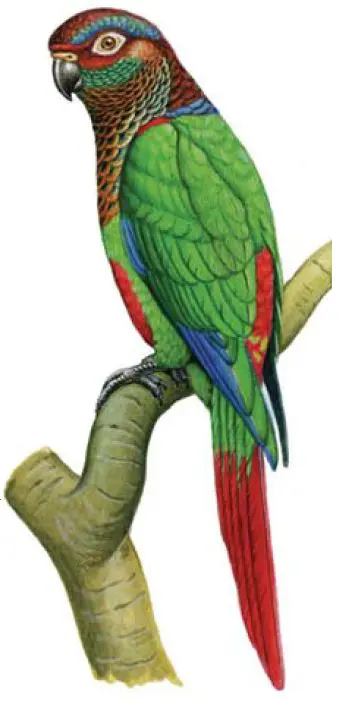
The Sinú parakeet (Pyrrhura subandina) It, in general, green, with the forecrown and areas around eyes dark red.
In flight It is very evident dark red stain abdomen, the wings below greyish. The cheeks They have a greenish blue tone, the area surrounding the ear It is yellowish-brown and the breast feathers with design marginalized gray escamado.
Lives or lived in humid jungle, semi-humid, deciduous and gallery forests,low. It nests on trees of considerable size in hollow nests woodpeckers.
endemic to Colombia, in the lower valley of sinu river, Jaraquiel, Murrucucú hill, Córdoba.
Expeditions carried out in recent years have failed to sight it.
Estimated population: 0-100; The population trend: possibly extinct
We recommend that you devote to Sinú parakeet immediate attention to the conservation of this unique endemic species of the plain Sinu River.
Habitats in the jungle and near the Sinú river valley have been extensively altered and lost.
History:
The Sinú parakeet It was described by Todd 1917 as a distinctive bird endemic Valley Sinu River, Córdoba Department, Northwest of Colombia. Peters (1937), without evidence or any basis placed the Pyrrhura subandina within the species Pyrrhura picta, and the species immediately fell into obscurity as subspecies. However, Joseph and Stockwell (2002) they restored the status to Pyrrhura subandina as a species, based on a detailed assessment and phylogenetic analyses recent (com. pers. 2003).
DNA analysis has shown that the population of the Sinú parakeet (Pyrrhura subandina) It is probably different (monotype) (Joseph & Stockwell 2002), although at present it remains a subspecies of the Pyrrhura picta pending further studies (SACC 2007).
There is no information on the ecology of the Sinú parakeet or current status. The species has never been reported alive and its range has been extensively deforested (Salaman obs. pers.)
At the beginning of 2004 Paul Salman He visited the four sites type; two are entirely deforested, While Quimari and the Cerro Murrucucú still have some fragmented forests. No evidence of any Pyrrhura It was obtained by observations and interviews with the local community. In May of 2004, a researcher at ProAves spent three months exploring in search of this species throughout the Murrucucú hill but their results were not favorable. The lack of recent records of this species and its restricted and unprotected range give reasons for concern about their survival and current status.
-
Reference: Joseph, L. and Stockwell, D. 2002. Climatic modeling of the distribution of some Pyrrhura parakeets of northwestern South America with notes on their systematics and special reference to Pyrrhura caeruleiceps Todd, 1947. Ornitologia Neotropical 13: 1-8.
The Sinú parakeet (Pyrrhura subandina) was last reliably recorded in 1949. Almost nothing was recorded about their habits. Not found during searches on 2004 and 2006 (ProAves Colombia 2008). He may be extinct, but if it still survives, this bird will be seriously threatened by habitat loss and hunting associated with the armed conflict in the region; The future of this Pyrrhura It looks bleak.
* Subspecies included within the species Pyrrhura picta.
Sinú parakeet (Pyrrhura subandina)
Sources:
– Parrot Book, Parrots and macaws.
– eLibrary
– proaves
– Extinct Birds by Julian P. Hume, Michael Walters.
Photo: Parrots, Parrots and macaws Neotropical
▷ The world of Pets: Dogs, cats, birds, reptiles, amphibians
Red-billed leiothrix Leiothrix lutea

Content |
|---|
Distribution
The Red-billed leiothrix It is in Japan, from China. They live in the wild in the mountainous regions of Southeast Asia, to the South of the range of the Himalayas in the North and the South of Indochina. It has a preference for wooded areas.
Some populations have been introduced in Japan and Hawaii where only live from the years 80 of the 20th century,There are also several colonies in Europe of birds breaks present in Portugal, France and Spain where it is recognized as an invasive species due to its establishment in the Collserola mountain range, next to the urban center of Barcelona.
The invasive nature of this species has led to the prohibition of importation, sale, reared and released into the environment in Japan
Physical characteristics
The japanese nightingale measured between 13 and 15 cm.. Your body is robust, the upper part is gray-green. The very round head of the same color. His eyes are black and round. The throat is bright yellow, becoming orange on the chest. The legs are short and strong an amarillo-pardo color, the Orange beak, thin, rugged.
These birds are very curious. Love to see the person who feeds them. They live to almost 1200 meters above the level of the sea in its natural habitat,
The wings are short and strong, with the rounded edges and small feathers of red and grey color, Black at the tip of the tail.
Very resistant to harsh weather conditions.
The sexual dimorphism it is not obvious, It is known with certainty by the song and the color of the chest in the female which is usually less intense. Another small difference is the width at the end of the queue, in the male it is of 1,5 cm in black, in the female this width is of 0,5 cm.. The female does not sing, emits small sharp noises.
Character and skills
The Red-billed leiothrix has many qualities, has a beautiful singing, mellow and pleasant without despising their plumage colorful.
In an Aviary it coexists with ease with other species that live in your House such as the Canaries, exotic small and finches. You will never see any aggression between them.
He is passionate about bathing and washing several times a day with joy.
Individually they can pleasantly live in a cage of 60 cm in length by 30 cm of width by 40 height cm. A couple of isolated re-sell without difficulty in a crate outside of 1 m in length by 1 m wide by 1,5 height m, situated ‘hanging’ under the canopy of a leafy tree and with an internal equipment of branches where able to weave the nest. An outdoor-indoor aviary is much more suitable for the breeding of these animals, but it will not be overcrowded and the other inhabitants should have protected nesting corners.
Food
This so-called Mockingbird has a very varied diet. It is mainly an insectivore, and it has a preference for insects, molluscs and snails. She loves the tender shoots and ant eggs. He is also fond of the fruit (sweet), citrus, apples, Pears, strawberries …. It also feeds on seeds, birdseed, oats, Niger, not to mention the pasta for insectivores and mealworms.
Nesting
Its nesting extends from May to July. The eggs (3 or 4 accounted for by the) be incubarán during 14 days. The young leave the nest quickly (13 days), Although parents continue feeding them for a while.
Images "Red-billed leiothrix"
Videos "Red-billed leiothrix"
▷ The world of Pets: Dogs, cats, birds, reptiles, amphibians
Hyacinth Macaw Anodorhynchus hyacinthinus
Content |
|---|
Description:
90 to 100 cm.. of length and a weight of 1,5 to 1,7 kg.
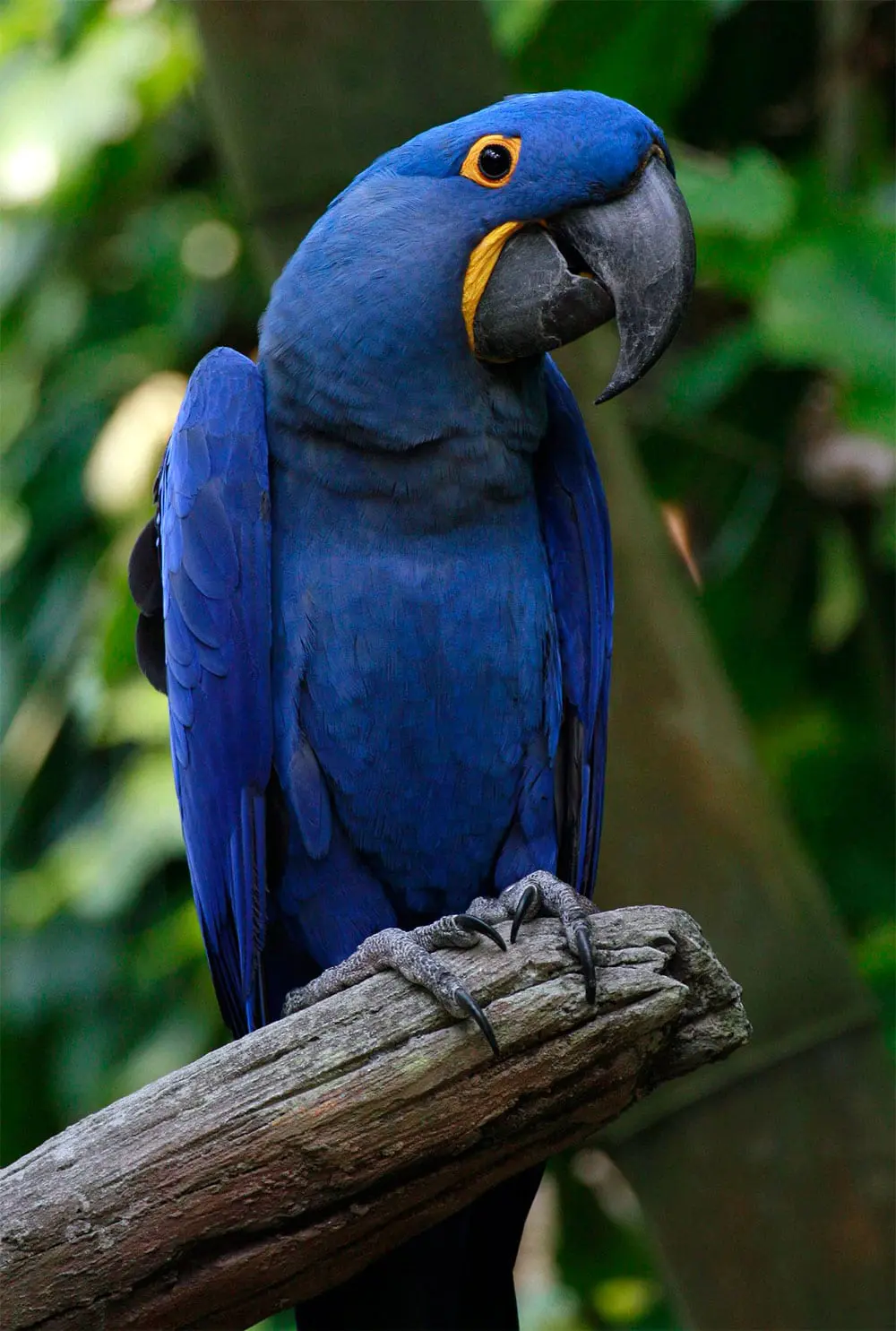
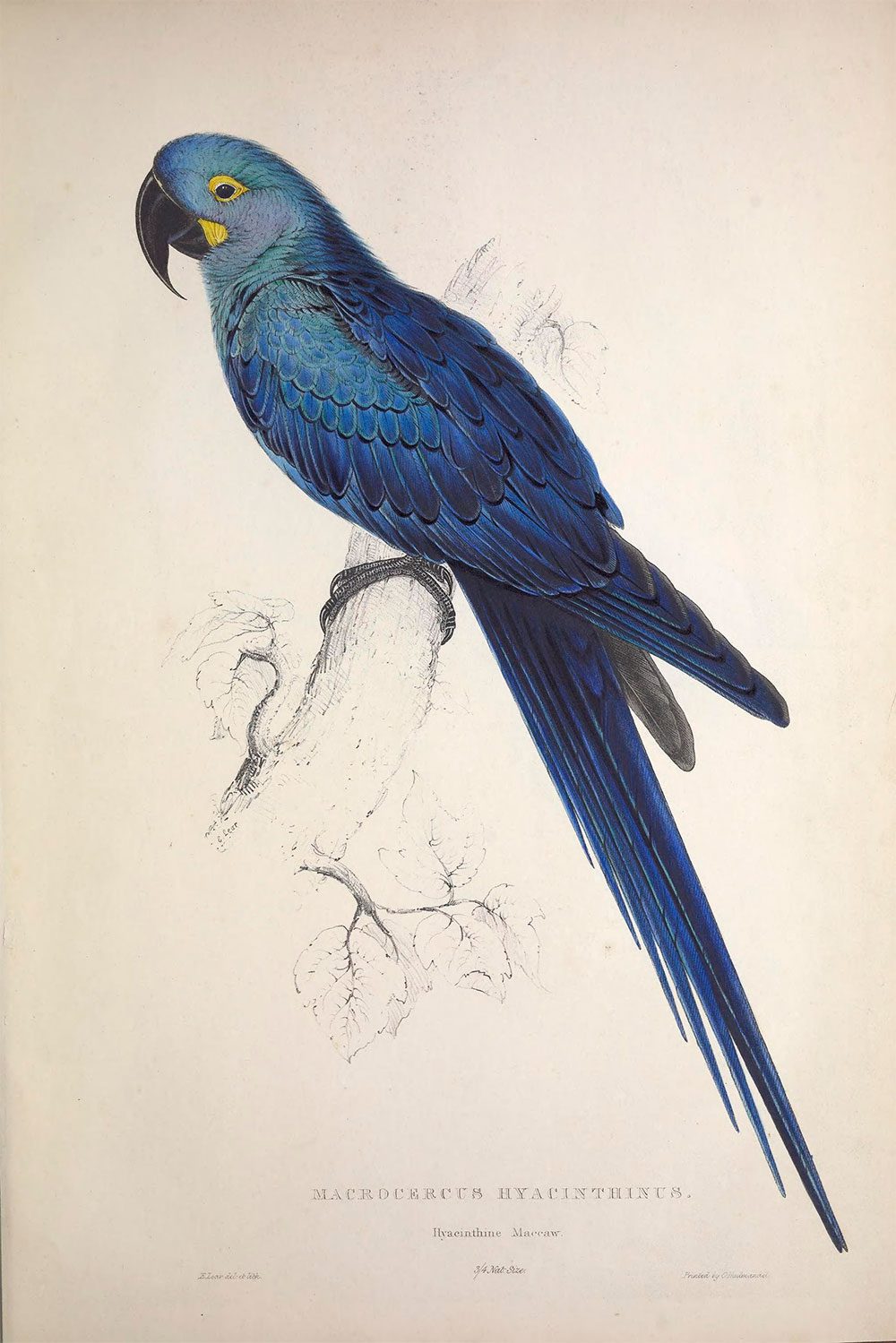
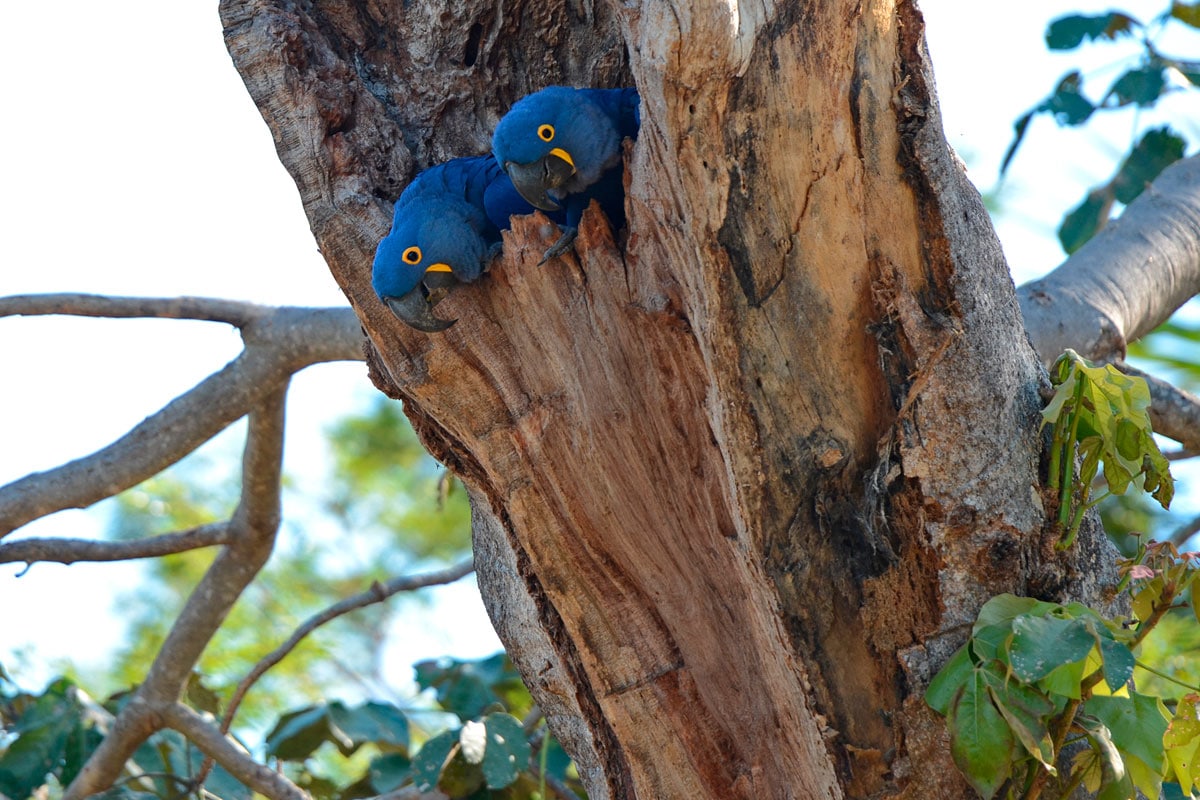
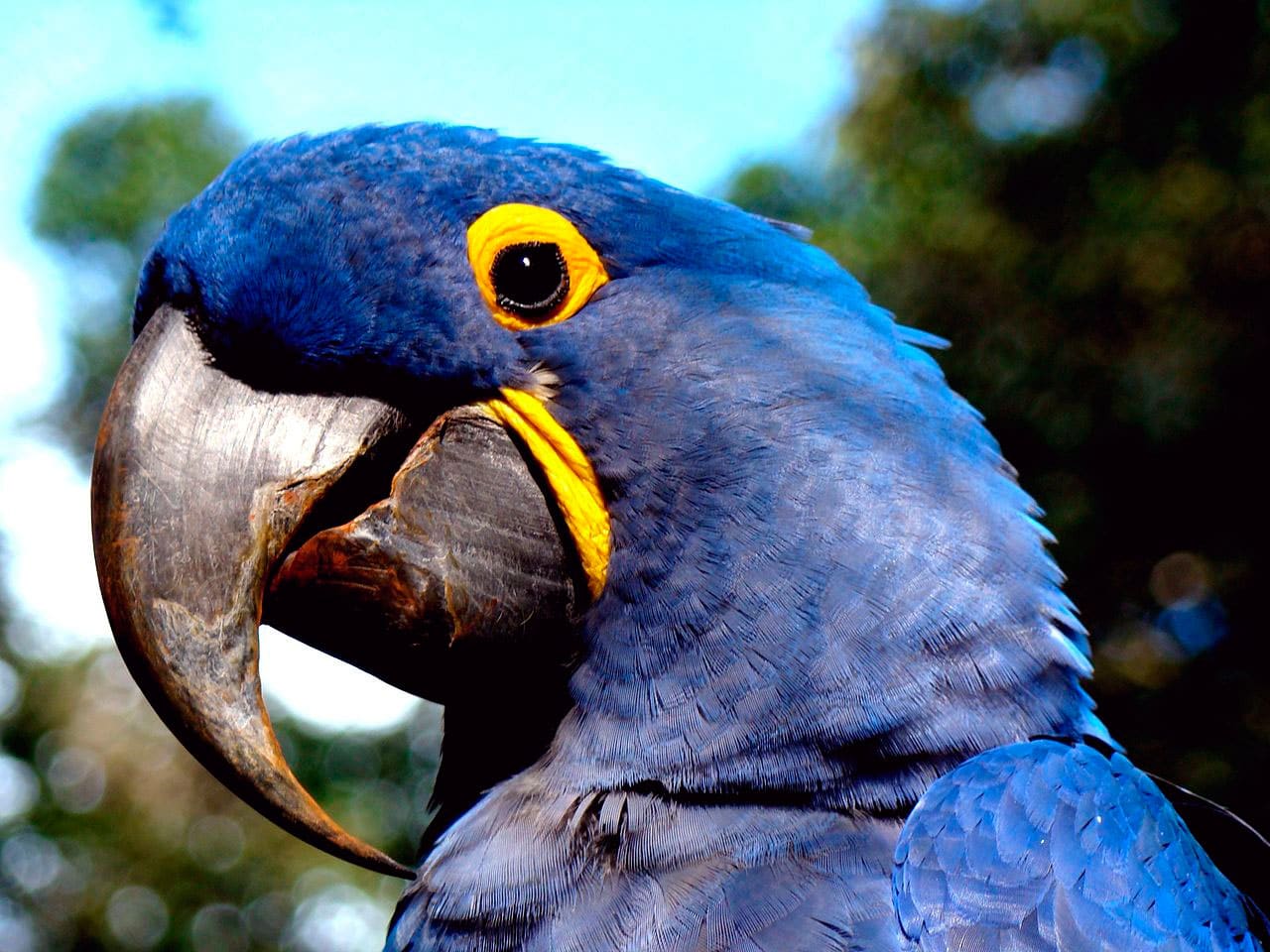
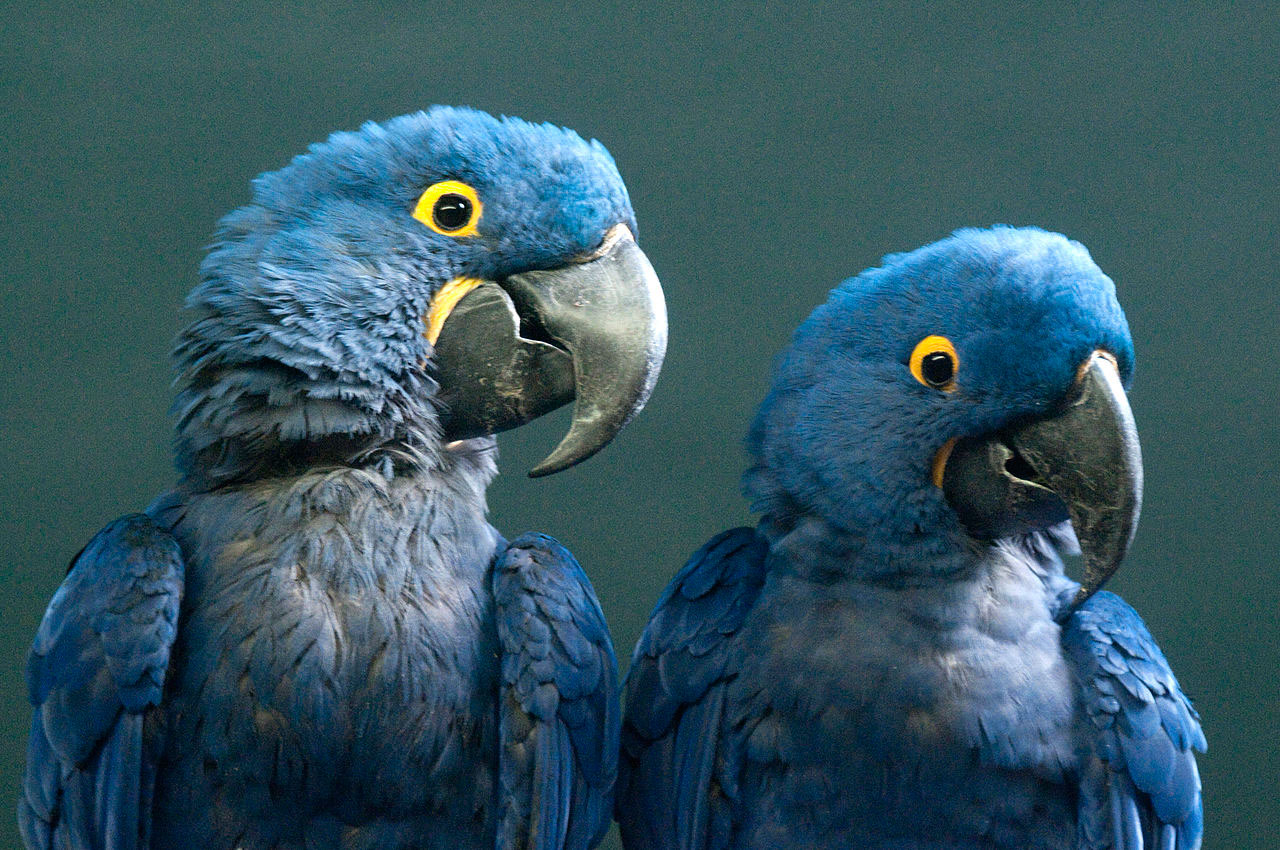
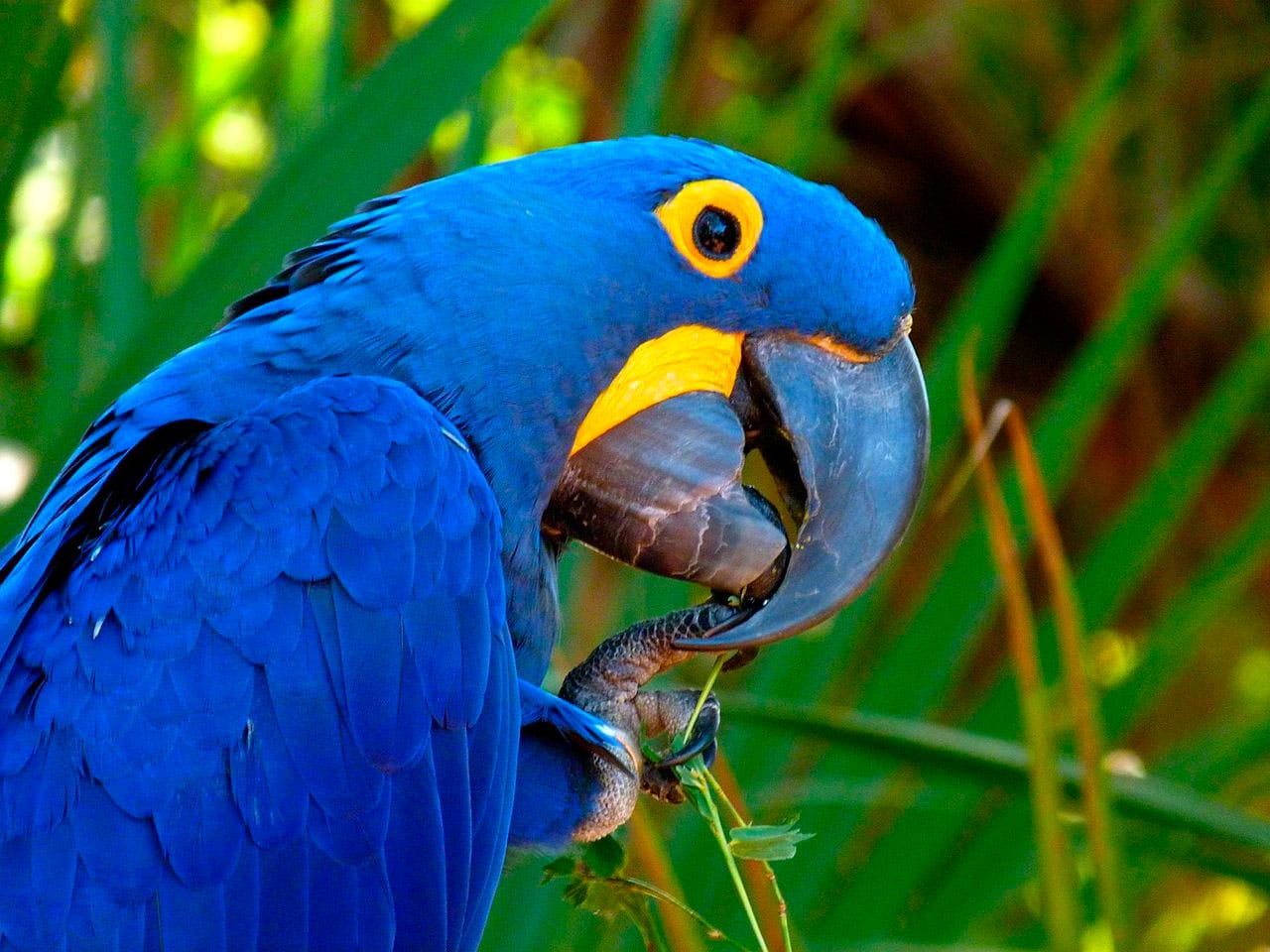
The Hyacinth Macaw (Anodorhynchus hyacinthinus) is the largest parrot; has a distinctive coloration, mostly blue intense, with different colors. Wings and tail below black. The basis of the bill and periocular ring, naked and yellow. The tail is very long, and its powerful bill Black is deeply curved and pointed.
The species Anodorhynchus glaucus, similar but smaller, extinct in the early 20th century, It may have been present in Bolivia.
- Sound of the Hyacinth Macaw.
Habitat:
The Hyacinth Macaw take advantage of a great diversity of habitats rich in various species of Palm trees with large seeds, of which feeds.
In the Brazilian Amazon avoid areas of more moisture, preferring lowland forests and seasonally wet formations with clear zones. In the drier parts of the northeast of Brazil inhabits areas of Plateau cut by Rocky valleys, steep with closed deciduous woodland, gallery forest and swamps with Mauritia flexuosa.
In the the Pantanal region birds frequent gallery forest with palm trees in areas covered with wet grass.
Apparently performs migratory movements.
Usually seen in pairs, family groups or small flocks (usually up to 10); much larger flocks reported before the decline.
Reproduction:
They nest in large tree hollows, in cracks in rocks from cliffs in the northeast of Brazil or in moriche or aguaje (Mauritia).
The favorite for nesting trees in the Mato Grosso, Brazil, include Enterolobium and Sterculia striata. In Northeast Brazil, the nest is located in Palms Mauritia dead or on cliffs.
They usually put one or two eggs, although only one young usually survives if the second egg hatches a few days after the first, since the smaller calf cannot compete with the larger for food.
The incubation period lasts about a month, and the male will assist his partner while she incubates the eggs.
Young people remain with their parents up to three months of age. They reach maturity and begin to play on the seven years.
The breeding season is from August to December, Maybe a little later in areas of pantanal.
Food:
The diet Hyacinth Macaw consists mainly of nuts, locally available of various Palms, including (on Amazonia) Maximiliana regia, Orbignya martiana and Astrocaryum, in the northeast of Brazil, of the Syagrus coronata and Orbignya eicherir, in areas of wetlands of Bone collectors and Acrocomia.
The palm nuts they take them from the own soil or plant (especially after a fire or when available as undigested remains in livestock droppings).
Other fruits that have information are the from the Ficus sp., as well as aquatic molluscs Pomacea.
Birds drink liquid from green palm fruits.
Distribution:
Its distribution includes the Centre of South America, Perhaps in several spacious separate areas.
In the Amazonia in For from the Tapajos River, to the East of the basin of the Tocantins River, extending to the South, possibly to the Northwestern area of Tocantins. At least before present North of the Amazon River (in Amapá, amazon and Roraima, Brazil) and perhaps some specimens can still inhabit, Although there is no known recent records.
Distributed, as well, through the Northeast interior of Brazil, more or less centered on the Microregion of the Chapadas das Mangabeiras in the union between Maranhão, Piauí, Goiás and Bay, Brazil (the region Gerais).
A third important population focuses on habitats wetlands of the upper basin of the Paraguay River in the southwest of Mato Grosso, Mato Grosso do Sul, Brazil, and extending into the adjacent area of the East of Bolivia and North end of Paraguay.
Reported as probable for the Mapori River to the South-East of Colombia (Vaupés).
Movements General residents but perhaps seasonal in the Amazon in relation to the ecology of the plants on which they feed.
The territory between the three current major distributions, can still be busy even though recent trends given, They seem to indicate that this seems unlikely.
Formerly common in some areas (for example, Mato Grosso). Now they are rather unevenly distributed, with the recent and likely declines continuous in its population due mainly to the illegal trade internal and to the smaller, but significant, international market of live birds. Also hunted for its feathers (especially Pari) and as food. Declining in some areas (for example Eastern Amazonia), because of the alteration or loss of habitat.
Total estimated wild population in 3000 (1.992). CITES Appendix I.
VULNERABLE.
Conservation:
• Current Red List of UICN: Vulnerable
• Population trend: Decreasing
The Hyacinth Macaw It has been subjected to a massive illegal trade. At least 10.000 birds were captured in the wild, in the decade of 1980, with a 50% destined to the Brazilian market (Mittermeier et to the. 1990).
Among 1983-1984, more than 2.500 birds were moved out of Black Bay, Paraguay, with others 600 extra at the end of 1980 (J. Pryor in litt., 1998). Although these numbers are now much smaller, illegal trade continues (for example 10 bird went through a pet market in Santa Cruz, Bolivia, in August 2004 until July 2005, where the birds were changing hands for 1.000 $ US and went to Peru [Herrera and Hennessey 2007]). More recently it has been noted that there appears to be almost no illegal trade in this species in Bolivia (B. Hennessey in litt. 2012).
Through its area of distribution, There is something of the local game for use as food and for its feathers.
In the Amazon, habitat loss has occurred for cattle ranching and hydroelectric power systems in the rivers Tocantins and Xingu.
In the Pantanal, only the 5% trees S. apetala have suitable cavities (Guedes 1993, Johnson 1996). Young trees are used as food for livestock and burned by frequent fires (Newton 1994).
The Gerais is it being quickly transformed by mechanized agriculture, ranching and plantations of exotic trees (Conservation International 1999).
In Paraguay, the preferred habitats of the Hyacinth Macaw are considered seriously threatened (N. Kochalka Lopez in litt. 2013) and the Paso Bravo National Park suffering from illegal logging.
Conservation Actions Underway:
-
– CITES Appendix I and II, protected under Brazilian and Bolivian law and prohibition of exports from all countries of origin.
– Many landowners in the Pantanal (more and more in the Gerais) they do not allow hunters on their property.
– There are several studies long-term and conservation initiatives (for example. Anon 2004).
– In the Refuge Caiman ecological in the Pantanal, the Hyacinth Macaw Project has used artificial nests and hatchling management techniques and raised awareness among farmers (Anonymous 2004).
Conservation Actions Proposed:
-
– Study of the range, the current status of the population and the scope of the negotiation of the different parts of its area of distribution (Snyder et to the., 2000).
– Assess the effectiveness of artificial nesting boxes (Snyder et to the., 2000).
– To enforce the legal measures that hinder trade.
– Experiment with ecotourism in one or two sites to encourage donors (Snyder et to the., 2000).
"Hyacinth Macaw" in captivity:
Rare up to 1970; then, starting at 1980, increased considerably in number of captive birds due to increased breeding.
Despite the prohibitions, many of these Macaws they are still trading at high prices (10.000 euros or more), due to its beauty and ease to mimic human language.
Rearing this species can be difficult and, Unfortunately, many chicks die each year in inexperienced hands.
From this page we strongly preserve these beautiful birds in their natural environment, sincerely not us seems reasonable to his tenure as a pet.
Alternative names:
– Hyacinth Macaw, Blue Macaw, Black Macaw (English).
– Ara hyacinthe (French).
– Hyazinthara, Hyathinzara (German).
– Arara-azul-grande, arara-azul, arara-hiacinta, arara-preta, arara-roxa, arara-una, canindé (Portuguese).
– arara-azul, Arara-azul-grande, arara-hiacinta, arara-preta, arara-roxa, Ararauna, arara-una, canindé (Portuguese (Brazil)).
– Guacamayo Azul, Guacamayo Jacinto, Papagayo azul (español).
– Jacinta azul, Paraba azul (Bolivia).
– Vihina (Desana).
– Kaheta (Carijona).
– Guaía-hovy (Guarani).
– Arara-úna (Tupi Guaraní).
scientific classification:
– Order: Psittaciformes
– Family: Psittacidae
– Genus: Anodorhynchus
– Scientific name: Anodorhynchus hyacinthinus
– Citation: (Latham, 1790)
– Protonimo: Psittacus hyacinthinus
Images Hyacinth Macaw:




Videos "Hyacinth Macaw"
«Guacamayo Jacinto» (Anodorhynchus hyacinthinus)
Sources:
– Avibase
– Parrots of the World – Forshaw Joseph M
– Parrots A Guide to the Parrots of the World – Tony Juniper & Mike Parr
– Birdlife
– Parrots, Parrots and macaws (Neotropical)
– Photos:
(1) – Hyacinth Macaw also known as Hyacinthine Macaw at Disney’s Animal Kingdom Park by Hank Gillette [CC BY-SA 3.0 or GFDL], via Wikimedia Commons
(2) – A Hyacinth Macaw at Brevard Zoo, Florida, USA By Rusty Clark from merritt usland FLA (Brevard Zoo Hyacinth Macaw) [CC BY 2.0], via Wikimedia Commons
(3) – Hyacinthine Macaw at Melbourne Zoo, Australia By derivative work: Snowmanradio (talk)Anodorhynchus_hyacinthinus_-Australia_Zoo_-8.jpg: Erik (HASH) Hersman [CC BY 2.0], via Wikimedia Commons
(4) – Hyacinth Macaws at Stone Zoo, Stoneham, Massachusetts, USA By Eric Kilby (originally posted to Flickr as Squawking Heads) [CC BY-SA 2.0], via Wikimedia Commons
(5) – Hyacinthine Macaw (Anodorhynchus hyacinthinus) By Ana_Cotta (originally posted to Flickr as ARARA) [CC BY 2.0], via Wikimedia Commons
(6) – Hyacinth Macaws, Anodorhynchus hyacinthinus at the Aquarium of the Americas in New Orleans, Louisiana By Derek Jensen [CC BY 2.0], via Wikimedia Commons
(7) – A pair of Hyacinth Macaws and thier nest in Mato Grosso do Sul, Brazil By Geoff Gallice from Gainesville, FL, USA (Hyacinth macaws) [CC BY 2.0], via Wikimedia Commons
(8) – A Hyacinth Macaw preening at the Aquarium of the Americas, New Orleans, USA By Quinn Dombrowski (originally posted to Flickr as Dainty) [CC BY-SA 2.0], via Wikimedia Commons
(9) – Anodorhynchus hyacinthinus by Hans – Pixabay
(10) – Illustration Guacamayo Jacinto By Lear, Edward [CC BY 2.0 or Public domain], via Wikimedia Commons


.jpg)

_(8116335153).jpg)
– Sounds: Niels Poul Dreyer (Xeno-canto)
▷ The world of Pets: Dogs, cats, birds, reptiles, amphibians
White-cheeked turaco Turaco leucotis

Content |
|---|
Characteristics
This striking bird is native to Africa (area of Ethiopia) and reaches a size of 42 to 43 cm..
It has bright green feathers, with a dark crest on the head, may stands at will, the Underwing coverts are blue like the tail, While the primaries are intense red, and in general only be appreciated with the bird in flight. The beak is orange-red, like the ring around the eyes. In front of the eye they have "white cheeks" and two oblique white marks on the neck..
Has several other anatomical features of interest. First of all, they have strong feet and you can turn your fourth finger of the foot forward or backwards to get a better grip on its perch. In second place, the chickens of this species have claws on their wings, a strange and evocative anatomical feature for a bird that almost seems to be reminiscent of its ancient cousin, the Archaeopteryx. The chicks emerging from these claws at the time of leaving the nest.
Most of these birds have green plumage and is the result of a combination of structural coloration and pigments.. They are unique since only the Turacos, among all the birds, they produce a Green pigment, turacoverdin, It is the color of their feathers.
Character and skills
This beautiful and energetic African bird is a very popular bird in the United States and the United Kingdom., they can even be hand fed by what you become very mansas pets.
Another curiosity, and one of the things by which this bird strikes is by singing, which, It resembles the squeal of a wild monkey.
Images "White-cheeked turaco"
Videos "White-cheeked turaco"
▷ The world of Pets: Dogs, cats, birds, reptiles, amphibians
European greenfinch Chloris chloris

The plumage of the European greenfinch It is a striking green, more intense in the breeding season, with the sides of the tail and the obispillo, yellow..
It is a bird which fits easily in captivity.
His chirping is quite articulate and interspersed with some typical call notes, It is punctuated by a sustained nose whistle, It seems as if were produced by a forced inspiration. It also mimics the songs of other birds.
This species is found mostly in areas open to the presence of trees, as for example clear forest, huertas, cereal crops, Gardens, … It can be seen frequently in areas with human presence.
This species is present from sea level up to the 1. 900metros, Although the most commonly found among 0-800 m.
They are gradually increasing populations of this species due to the adjustment to urbanized areas.
It is one of the 10 species with greater distribution in Spain.
In captivity a couple needs at least one cage of a meter in length or greater. It is not good to stay in a smaller space because aggression problems may occur between them.
Food almost entirely seeds, wild fruits and berries.
Sources:
Wilkipedia
cinerea.org