â–· The world of Pets: Dogs, cats, birds, reptiles, amphibians

Canary
Serinus Canaria

Canary. Popular cage bird.

Welcome to our blog about the fascinating world of canaries! On this occasion, We will delve into the life and characteristics of these popular cage birds. Canaries are known for their beauty, Melodious song and lovely personality. If you are bird lover or are you thinking of having a feathered partner at home, You can't miss this article! Discover everything about the Canaries: From its vibrant colors to its different alternative names. Keep reading to immerse yourself in the wonderful universe of the Canary. Let's start!

The Canarian: A winged charm in our homes

The Canaries, those small birds of vibrant colors and melodic songs, They have been appreciated in homes around the world for centuries. You are charming creatures, belonging to the Fingílidos family, They have gained popularity as cage birds thanks to their fascinating characteristics and captivating behavior.

Characteristics of the Canary:

Canaries are known for their compact size, with a length that usually ranges between 10 and 25 centimeters. His plumage is extremely varied, presenting colors ranging from bright yellow to more turned off tones, and even color combinations that can include orange, black and white. These birds are also recognized by their striking peaks and expressive eyes.

Natural distribution and habitat:

Native of the Canary Islands, Located in the Northwest Atlantic, Canaries thrive in warm and subtropical climates. Although their natural habitats include forested areas and scrubbers, Their adaptability has allowed them to acclimatize to various conditions, From forests to urban areas.

Reproduction:

The reproduction of the canaries is a fascinating process. The female usually puts eggs, that incubate for approximately two weeks. Parents actively participate in chick care, feeding them and providing them with protection. It is essential to provide a safe and comfortable environment in the cage to promote a successful reproductive process.

Melodic song:

One of the most appreciated attributes of the Canaries is their talent for song. Males, in particular, They are known for their melodious vocalizations. These birds can learn various notes and singing patterns, creating a unique symphony that loves those who have the pleasure of listening to it. Regular practice and interaction with other canaries stimulate their ability to develop a more elaborate and harmonious song.

Price and popularity as pets:

Due to its friendly beauty and personality, Canaries are a popular option as pets. The price of a canary can vary according to factors such as color, Age and singing ability. Canaries with more unusual colors or with exceptional song skills can have a higher price.

Common diseases:

When raising Canaries in captivity, It is essential to be aware of possible diseases. Obesity, Respiratory infections and mites are common problems that can affect these birds. Provide a balanced diet, A clean environment and perform regular veterinary reviews will contribute to maintaining the health of these delicate winged companions.

Colors and varieties:

Canaries have raised selectively over the years, What has resulted in a wide variety of colors and patterns. From the yellow classic to white, black, red and even more exotic tones, The canary's color palette is as diverse as beautiful.

In summary, Canaries not only provide an explosion of color and melody to our homes, but also connect to nature in a unique way. As charming and entertaining fellow, These little singers have conquered the hearts of those who seek joy and beauty in their daily lives.
â–· The world of Pets: Dogs, cats, birds, reptiles, amphibians

Red-cheeked Cordonbleu
Uraeginthus bengalus

Azulito de Senegal

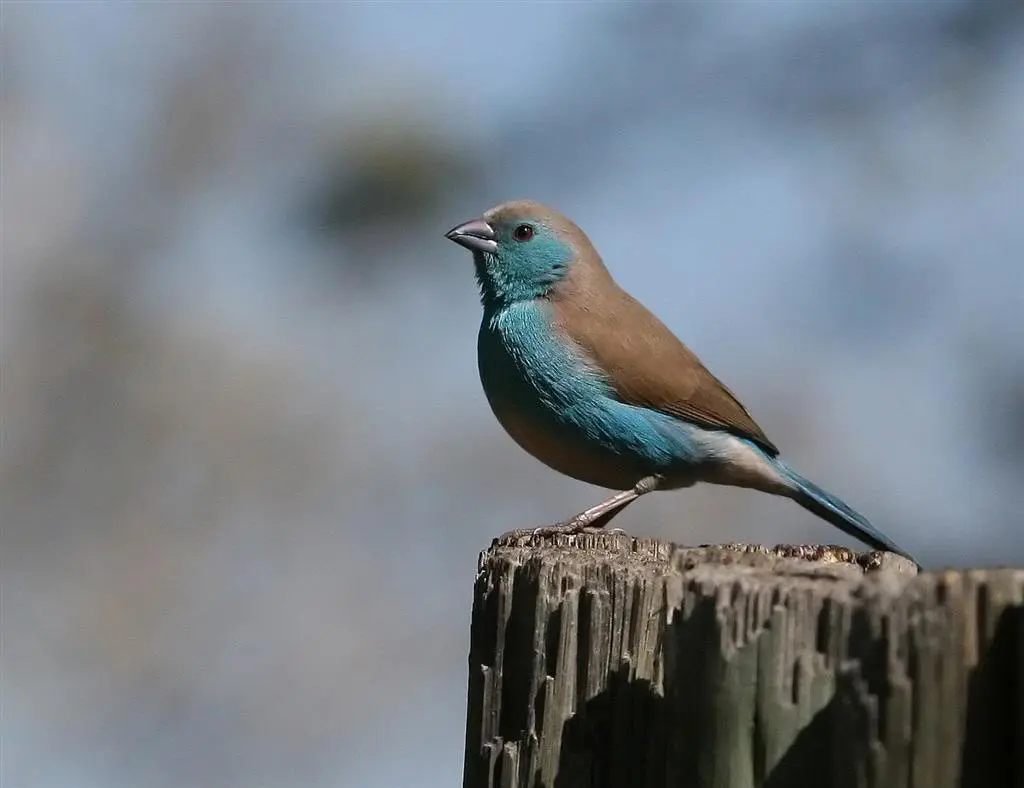
Bluebirds from Senegal are from Equatorial Africa and East Africa. They live in pairs or in groups of a few individuals in semi-arid areas.

They have a melodious song, that varies by species. Males have more brightly colored than females. The cheeks of the males are red. The female has a blue paler . Sometimes the female also sings, so you can't rely on the voice to determine the sex of the bird.

It is a large bird, It can co-exist with other small exotic birds. Small species of the Azulito of Senegal can co-exist if there is sufficient space, but the larger species are very aggressive and should not be mixed with other species of Azulitos.

They are insectivorous and granivorous.. Must be accustomed gradually to fruit and vegetables to prevent the occurrence of gastrointestinal disorders (diarrhea). Must be given in small amounts, washed and dried at room temperature, withdrawing them as soon as they lose their freshness. Vitamins can also be put in drinking water, especially in times of illness, stress, molting and reproduction.

The best thing is to install them in the Aviary, so they can fly to and organize themselves into a social group. These birds are sensitive to cold and humidity.. They need to keep at a temperature between 20 and 25 ° C. They must be protected from the cold currents and air, Although over time can be adapted to more extreme temperatures.

Reproduction must stay in pairs in a large cage (100 * 50 * 50 cm minimum for a couple), in groups of the same species in a spacious Aviary, with a lot of places to hide, allowing them to build their nest in peace. Reproduction is usually easy, when birds are calm and have sufficient space. They must have variety of foods (seed mix, germinated seeds, spray millet and living insects (are essential during the breeding season).

The female lays from 3 to 7 eggs, the parents take turns incubating and hard incubation of 15 to 17 days. The young leave the nest to the 3 weeks and are weaned at the 6 weeks. The sexual dimorphism appears to the 5 months.

Red-cheeked Cordonbleu (Uraeginthus bengalus)

â–· The world of Pets: Dogs, cats, birds, reptiles, amphibians

â–· The world of Pets: Dogs, cats, birds, reptiles, amphibians

Painted Parakeet
Pyrrhura picta

Painted Parakeet

Content

Description:


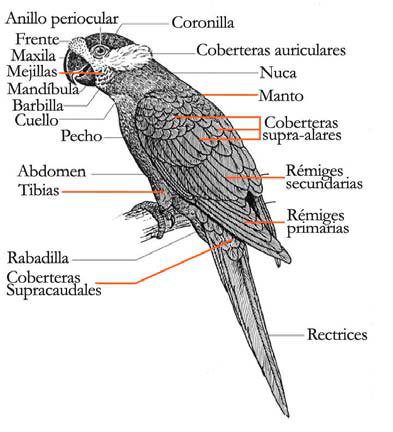
Anatomy-parrots

23 cm.. length and 54-70 g. of weight.

The Painted Parakeet (Pyrrhura picta) has a close frontal band, lores, upper cheeks and area around eyes, dull red.

lower cheeks matte red with blue points on some feathers; the front of the crown is blue; rear area of the crown and of the neck, opaque reddish brown with some blue spots; ear-coverts yellowish. Nape bluish green to green in fusion area the mantle; the scapulars and the top and bottom of the back They are brown; rump and uppertail-coverts, green. Upperwing-coverts green except for primary coverts external blue and some red feathers in the carpal area. Primaries blue up, gray below. Underwing-coverts green. Feathers of the throat, upper region chest and sides neck, opaque yellowish brown with wide margins, which results in a surprising scaled in the form of half diamonds or semicircles; bottom area chest and sides belly, green; center of belly brown; undertail-coverts green. Tail verde basalmente, brown distally. Bill brownish-grey; bare periophthalmic grey; brown the irises; legs grey.

Both sexes are similar.

Taxonomic status:

This taxon is considered a subspecies of Pyrrhura [picta, roseifrons, lucianii, amazonum, snethlageae or peruviana] (sensu lato) by some authors

  • Sound of the Painted Parakeet.

Description 4 subspecies
  • Pyrrhura picta caeruleiceps

    (Todd, 1947) – 22 cm.. length. Mostly green with a long tail reddish brown, patch belly dark red color and the primaries Bright blue. The front of the crown blue is becoming fuzzy blue brown behind; the area of the carpus red and ear-coverts gray-brown pale.


  • Azuero parakeet By Itzel Fong Gadea (www.itzelfong.com) [GFDL or CC BY 3.0], via Wikimedia Commons
  • Pyrrhura picta eisenmanni

    (Dr. Francisco Delgado – ornithologist panameño, 1985) – 22 cm.. length. Of mostly green with a long tail brown, the flight feathers blue, belly dark red and white patch cheek. This species has most of its face Red Color, Lacking any blue has except in the rear area neck. It has the eyes dark. Pens top chest They are dark gray with cream colored tips. The front of the crown It is red, quickly becoming a dark brown from the middle of the crown to the back of the neck.


  • Pyrrhura picta picta

    (Statius Müller, 1776) – Nominal.


  • Pyrrhura picta subandina

    (Todd, 1917) – 21 cm.. Has the face bright brownish-red; the forecrown blue and dull red; Scalloped yellow and gray in the chest. Share with other species Pyrrhura a long tail red, the primaries blue and patch belly dark red. The zone of carpus is green, Unlike the red color Pyrrhura picta caeruleiceps which it is the closest geographically.

Habitat:

They inhabit in humid forests of mainland and borders, seasonally flooded forests (várzea), and on the slopes of tepuyes.

They travel in flocks with quick flights.

Reproduction:

The breeding season It is between the months of December and February. Nest in hollow trees or old abandoned nests of woodpeckers.

Food:

They feed on, to a large extent, of fruit of Goupia glabra, Bagassa guianensis, Trema micrantha, Heisteria spruceana, Zanthoxylum, flowers and seeds.

Distribution:

Size of its range (Play / residents): 1.560.000 km2

The Painted Parakeet It is located in northeast South America, distributed south of Orinoco, in Venezuela, eastward through Guyana, French Guiana, Suriname and the state of Amapá in the North of Brazil (pit et to the. 1997).

In the states of amazon and western and southern Bolívar, in Venezuela They can be observed, mainly, on the slopes of the tepuyes, while further east inhabit the lowlands.

Distribution and status of 4 subspecies
  • Pyrrhura picta caeruleiceps

    (Todd, 1947) – It is located on the western slope at the northern end of the Andes to the east, from south Cesar state north through Los Motilones on Sierra de Perija, at the border of Venezuela and Colombia. It is estimated to have lost about 70% of its original habitat within their distribution Colombia, and its area of ​​occupation within Colombia It is expected to be less than 3.700 km2 (Botero-Delgadillo et to the. 2012to, b). It's kind extremely poorly known Venezuela, there are some samples and records of sightings in only four locations, all in the Zulia state; very infrequently recorded in recent years, despite the significant fieldwork (Sharpe 2015, CJ Sharpe in litt . 2015).

  • Classified as danger of extinction. Its population is constantly declining due to fragmentation of their habitat and capture for the pet trade.

  • Pyrrhura picta eisenmanni

    (Dr. Francisco Delgado – ornithologist panameño, 1985) – Known only in the Cerro Hoya National Park in provinces Veraguas and The Saints, in the South of Panama. The distribution area is considered to be less than 700 km2; is common locally up to 1.660 m (Juniper and Parr 1998, Forshaw 2006, 2010, Montañez and Angehr 2007). But, the population It has been estimated less than 2.000 individuals (World Parrot Trust 2014), and it is considered nationally threatened (Montañez and Angehr 2007).


  • Pyrrhura picta picta

    (Statius Müller, 1776) – Nominal. They can be observed in Northeast South America, distributed south of Orinoco, in Venezuela, eastward through Guyana, French Guiana, Suriname, and in the North of Brazil, state Amapá (pit et to the. 1997). In amazon and western and southern Bolívar states Venezuela mainly inhabit hillside tepuyes, while further east are distributed in the lowlands.

  • This species is classified as least concern, although the size of its population is decreasing mainly because of its capture for trade in bird cage.

  • Pyrrhura picta subandina

    (Todd, 1917) – Observed only in the Valley of the sinu river in the North of Colombia, although recent searches have not been able to find the species, so it may be extinct (PGW Salaman in litt. 2011). 18 specimens are known from four locations; Jaraquiel, Quimari and Murucucu in Bolivar, and Tierra Alta Nazareth (Joseph and Stockwell 2002). Placements Nazareth and in Jaraquiel, apparently, They have been deforested, but apparently small areas of suitable habitat may occur in Quimari and in the Murucucu hills although searches of these sites failed to find any evidence of the continued presence of the Pyrrhura picta subandina (Pgv Salman in Lit. . 2011).

  • There have been no confirmed records of this parakeet from Colombia 1949 despite extensive searches, and any remaining population is likely to be extremely small and declining. So, It has been classified as critically endangered (possibly extinct).

Conservation:

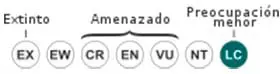
State of conservation ⓘ


minor concern Minor Concern ⓘ (UICN)ⓘ

• Current category of the Red List of the UICN: Least concern.

• Population trend: Decreasing.

Justification of the Red List of the Category

The Painted Parakeet has a range very large, and therefore does not approach the thresholds for Vulnerable under the range size criterion. While the trend of the population seems to be decreasing, the decline is not believed to be rapid enough to approach the thresholds for Vulnerable under the population trend criterion (> 30% decrease of more than ten years or three generations). The population size has not been quantified, but are not believed to approach the thresholds for Vulnerable based on population size criteria (<10.000 individuos maduros con una disminución continua estima en> 10% in ten years or three generations, or a specific population structure). For these reasons, the species is evaluated as Least concern.

Justification of the population

The world population It has not been quantified, due to recent taxonomic divisions.

Justification trend

This species is suspected that there may be lost 6,5-7,3% of habitat within its distribution over three generations (18 years) based on a deforestation model of the Amazon (Soares-Filho et to the . 2006, Bird et to the . 2011). Given the susceptibility of this species to hunting and / or entrapment, It is suspected that it will fall in <25% en tres generaciones.

"Painted Parakeet" in captivity:

Rare.

Alternative names:

– Painted Parakeet, Painted, Azuero, Sinu or Todd’s Parakeet (English).
– Conure versicolore, Conure versicolore, C. d’Eisenmann, C. du Sinu ou C. de Todd (French).
– Rotzügelsittich (German).
– Tiriba-de-testa-azul (Portuguese).
– Cotorra Pintada, Periquito Pintado (español).
– Periquito Pintado (Colombia).
– Perico Pechiescamado (Venezuela).

scientific classification:

– Order: Psittaciformes
– Family: Psittacidae
– Genus: Pyrrhura
– Scientific name: Pyrrhura picta
– Citation: (Statius Müller, 1776)
– Protonimo: Psittacus pictus

Images Painted Parakeet:

Videos of the "Painted Parakeet"


Especies del género Pyrrhura

Painted Parakeet (Pyrrhura picta)


Sources:

– Avibase
– Parrots of the World – Forshaw Joseph M
– Parrots A Guide to the Parrots of the World – Tony Juniper & Mike Parr
– Birdlife

– Photos:

(1) – Venezuelan Parakeet | Perico Pintado ( Pyrrhura picta emma) By Fernando Flores from Caracas, Venezuela [CC BY-SA 2.0 or CC BY-SA 2.0], via Wikimedia Commons

– Sounds: William Adsett, XC82876. accessible www.xeno-canto.org/82876

â–· The world of Pets: Dogs, cats, birds, reptiles, amphibians

Short tailed Parrot
Graydidascalus brachyurus

Short tailed Parrot

Content

Short tailed Parrot

Description:

23 to 24 cm.. height and between 188 and 233 g. weight.

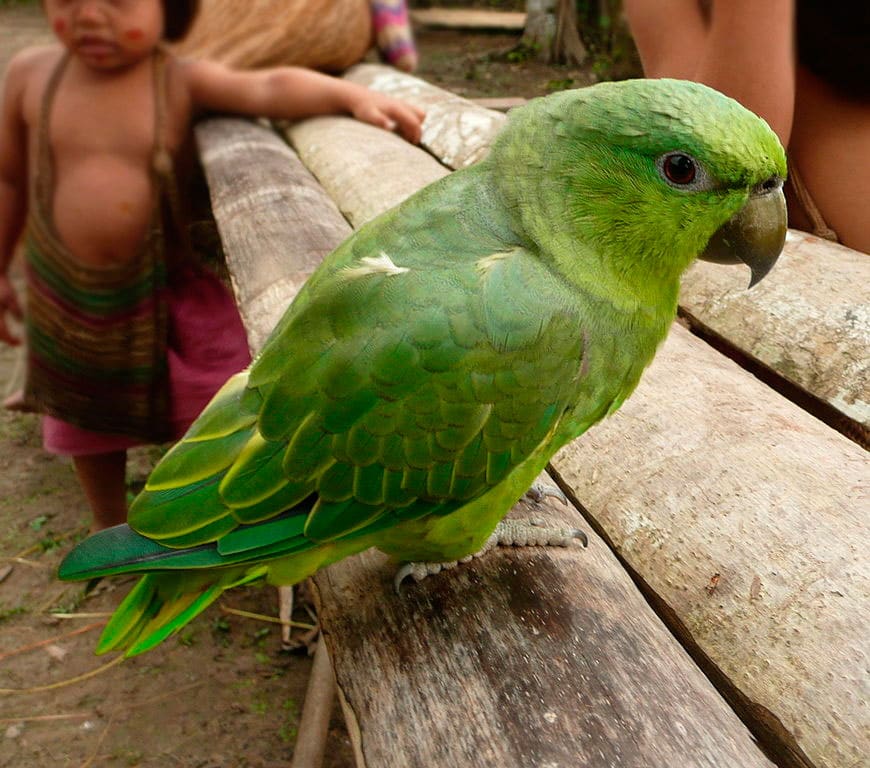
The short tail Short tailed Parrot (Graydidascalus brachyurus) It is the most distinctive, although it is also known the eyes red orange.

generally green, somewhat yellowish on wing and the belly; Flying red noted in the base of the outer feathers tail and a small upper portion of wing towards the armpit.

The beak is greenish gray, large.
The sexual dimorphism in this species it is absent.

This species, the only one of the genre Graydidascalus, is related with the Yellow-faced Parrot (Alipiopsitta xanthops), own kind of Bolivia and Brazil.

Habitat:

It inhabits in swampy forests, intervenidas, River Islands, borders of humid and semi-humid forest, until the 400 m, associated with river banks.

Fly quickly in large groups of up to 50 individuals, is very noisy and visit populated places. They are very social outside the breeding season. It will associate with other species of parrots in the wild.

Reproduction:

With plays during the last quarter of the year.
Successes captive breeding have not yet been registered; although several females put one or two eggs, but no chicks. In its natural habitat, the clutch average consists of 3 to 4 eggs. The period of incubation is of 24 to 25 days.

Food:

Consume large variety of fruits (very fond of guava), tubers and possibly berries, seeds, sprouts and flowers. Foraging in the treetops.

Distribution:

Size of the area of distribution (reproduction / resident): 3.870.000 km2

Its population is distributed among the rivers of the southeast of Colombia, east of Ecuador, northeastern Peru and northern Brazil, on Basin Amazon.

Conservation:


minor concern


• Current category of the Red List of the UICN: Least concern.

• Population trend: Decreasing.

Justification of the population

The population size World has not been quantified, but this species is described as «quite common» (Stotz et to the., 1996).

Justification of trend

It is suspected that this species has lost 19.1-20.4% of habitat within its distribution over three generations (15 years) based on a model of Amazon deforestation (Soares-Filho et to the., 2006, Bird et to the., 2011). Given the susceptibility of the species to hunting and / or capture, you suspect your decrease in population <25% over the next three generations.

"Short tailed Parrot" in captivity:

Rare in captivity. Young people are susceptible to stress and disease.

Alternative names:

– Short-tailed Parrot, Short tailed Parrot (English).
– Caïque à queue courte, Perroquet à queue courte, Perroquet nain de Panama (French).
– Kurzschwanzpapagei, Kurzschwangenpapagei (German).
– curica-verde, curica-pequena, curiquinha, papagainho-verde (Portuguese).
– Cotorra Colicorta, Cotorrita Cabezona, Lorito Colicorto (español).
– Cotorra Colicorta (Colombia).
– Loro de Cola Corta (Peru).

scientific classification:

– Order: Psittaciformes
– Family: Psittacidae
– Genus: Graydidascalus
– Scientific name: Graydidascalus brachyurus
– Citation: (Temminck & Kuhl, 1820)
– Protonimo: Psittacus brachyurus

Images «Lorito Colicorto»:

Short tailed Parrot
Peruvian Indians with Short-tailed Parrot (Graydidascalus brachyurus)

Videos "Short tailed Parrot"

"Lorito Colicorto" (Graydidascalus brachyurus)


Sources:

  • Avibase
  • Parrots of the World – Forshaw Joseph M
  • Parrots A Guide to the Parrots of the World – Tony Juniper & Mike Parr
  • Birdlife
  • Parrot Book, Parrots and macaws Neotropical

  • Photos:

(1) – IBC.lynxeds.com
(2) – Peruvian Indians with Short-tailed Parrot (Graydidascalus brachyurus) By derivative work: Snowmanradio (talk)Peruvian_Indians_with_Short-tailed_Parrot-6.jpg: Shea Hazarian [CC BY 2.0], via Wikimedia Commons
(3) – Plate 155. Psittacus viridissimus. Green Parrot. Modern accepted name (2012) is Graydidascalus brachyurusBy William Swainson, F.R.S., F.L.S. (Zoological Illustrations, Volume III.) [Public domain], via Wikimedia Commons

â–· The world of Pets: Dogs, cats, birds, reptiles, amphibians

Red-crested Cardinal

It is a beautiful bird colors is appreciated for its beauty and singing, If that be prodige in this activity is recommended to leave only the male.

It feeds on millet, oats, birdseed, wheat, rapeseed, and a long etc. We can also add various herbs and fruits. This bird should be always available fresh water as she loves to bathe. It must be said that it is very strong and resistant and supports hassle-free winter in an outdoor cage. Well looked after is a bird that can live up to 20 years in captivity.

For breeding, its greatest comfort is in a large aviary., with shrubs which can establish its nest, although this is not always the case and sometimes they also nest in open nests.

The implementation consists of 3 to 6 eggs which the female incubates almost always alone, Although in some couples both parents take turns to do so. The incubation period is 15 days and the little ones leave the nest at 17 days although the parents continue to feed them for three more weeks.

The Red-crested Cardinal lives in South America, from the South of Brazil, Bolivia and reaches the central part of Argentina.

The female is indistinguishable from the male as the colorful, but in a quiet State male has bun dropped on his head and Hedgehog it in moments of excitement. Young Cardinals have the head of a brown hue and not present bow, This begins to grow them seven weeks after his birth, Although not harder adult plumage until the second year.

Source: criaderofaunashop

Fuente de la imagen: Brazilian Cardinal Taken on the North Shore of Oahu by Rich Engelbrecht originally posted to Flickr

â–· The world of Pets: Dogs, cats, birds, reptiles, amphibians

Vernal hanging parrot
Loriculus vernalis

Vernal hanging

Content

Description

Solo 14 cm.. length and 28 g. of weight.

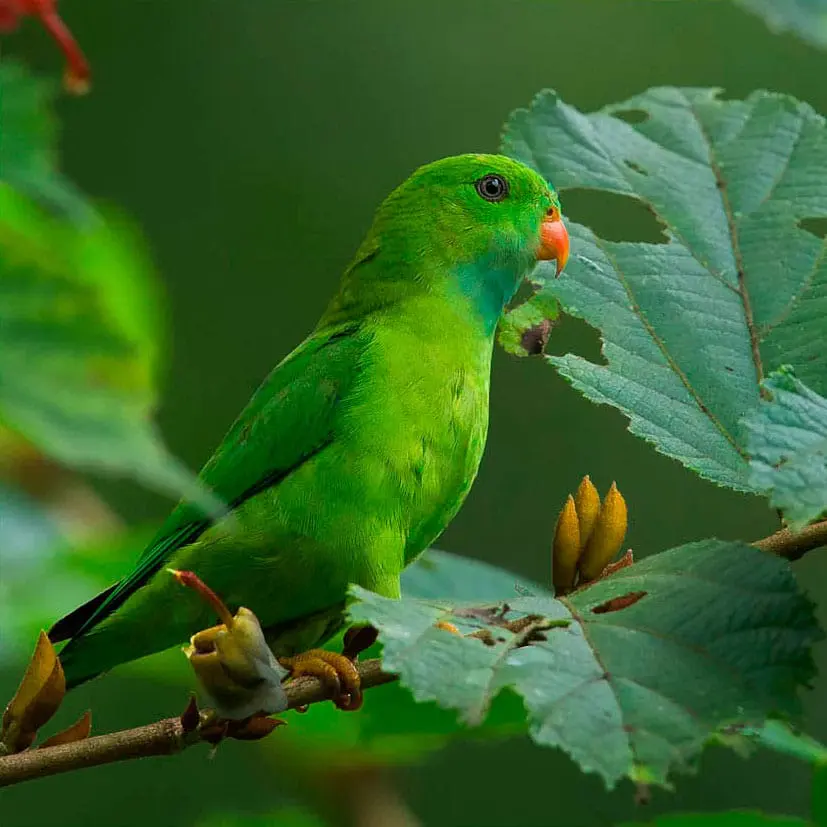
The head of the Vernal hanging parrot (Loriculus vernalis) is bright green, lighter and more yellowish in the chin. Rest of the upper region green, with the bottom of the back, rump and upper coverts bright crimson. Wing coverts a little darker than the the mantle green. Primaries bright green with vane inner blackish and a light blue-green diffusion in the feathers of the vane outer; secondaries Black with exterior bands of green and a bit of green in vane inner. Under the wing a brilliant turquoise blue, except coverts and axillary, that are pale green. The underparts more greenish-yellow that the upperparts, with a patch light blue in the throat. Upper, the tail green; Turquoise Blue below.

Bill coral red with yellow tip: irises Brown to yellowish-white; the legs they pale brown to yellowish Orange.

The females they are slightly more off than males and have a patch blue in the throat less extensive.

The young birds lack of the patch blue in the throat and have a bill paler, the rump narrow and green feathers of the tail and legs brown.

The young birds they need at least a year to mature.

  • Sound of the Vernal hanging parrot.
[audio:HTTPS://www.mascotarios.org/wp-content/themes/generatepress_child/sonidos/Loriculo Vernal.mp3]

Habitat:

Some movements, possibly related to seasonal rains, have been observed, but they require further study. The species is found in a variety of habitats, including Evergreen deciduous forests and, next to clear forest, secondary growth, bamboo thickets, orchards and too grown crops, up to approximately 2.000 m.

The birds are found in pairs, family nuclei, loose herds of up to 50 individuals or groups mixed with other birds. Their size and coloration make it a discrete ave, but they are not shy and can be found feeding in the canopy, Sometimes the attention of an observer with short flights and circular around the tops of the trees.

Jump between the branches and climb swiftly using both beak and legs, sometimes form 'spirals'’ to ascend. Lie, They groom and sleep strung upside down one or both legs, Although juveniles may remain in vertical position, scratching your head over the wing.

Reproduction:

Like the Lovebirds, cut small strips of bark, leaves and other plant materials, they put them in the contour feathers and carried them to the nest as an overlay. The breeding occurs between January and April; between two and four whites, often spotted brown eggs, they are deposited in the cavity of a rotten trunk. The narrow entrance is sometimes enlarged by birds, and the deep hole can extend below the ground level in exceptional cases.

The incubation, that lasts around 22 days, It is carried out by the female. The male helps feed the chicks as they mature over a five-week period..

Food:

They feed on acrobatic form of nectar in the trees in flower (for example, trees of Coral Erythrina) and in fruit trees especially figs Ficus or guava (Psidium guajava), as well as various berries and plant species such as bamboo and casuarina. Also consume collected potted Palm wine, and they can then take, and damage to orchards.

Distribution:

Size of its range (reproduction / resident): 6.460.000 km2

widespread, from the West coast of the India some 19 ° Norte, through at least Maharashtra, Madhya Pradesh, Karnataka, Kerala, Tamil Nadu, Andhra Pradesh, Orissa, West Bengal, Assam, Nagaland, Manipur and Tripura, and is also distributed in the Andaman and Nicobar Islands. In Nepal is distributed in small amounts in the lowlands of the Terai , and also have been in the area of Chitwan.
Observed in Bhutan; Southwest of Sichuan through Yunnan, and possibly in Kwangtung, in China; Sylhet, Quotation mark and Chittagong in Bangladesh; Myanmar including the Mergui archipelago: Thailand Around South of 10 ° Norte (also observed to the South, on Phuket Island); Laos; Cambodia; and Viet Nam. The species has not been recorded in Sikkim, Hong Kong and Malaysia.

Conservation:

• Current IUCN Red List category: Least concern

• Population trend: Stable

The size of the world's population has not been quantified, It is thought that it may be above the 1.000.000 of copies. The species according to information, is very rare in China, in general, common elsewhere (pit et to the. 1997).

The population is suspected to be stable in the absence of evidence of any reduction or substantial threats.

"Vernal hanging parrot" in captivity:

Limited number in captivity

Alternative names:

– Vernal Hanging-Parrot, Indian Hanging Parrot, Indian Hanging-Parrot, Indian Lorikeet, Vernal Hanging Parrot (ingles).
– Coryllis vernal, Coryllis d’Inde, Loricule vernal (French).
– Frühlingspapageichen, Frühlings-Papageichen (German).
– Lóris-indiano (Portuguese).
– Lorículo Vernal (español).

scientific classification:

– Order: Psittaciformes
– Family: Psittaculidae
– Genus: Loriculus
– Scientific name: Loriculus vernalis
– Citation: (Sparrman, 1787)
– Protonimo: Psittacus vernalis

Vernal Parrot Images:

————————————————————————————————

Vernal hanging parrot (Loriculus vernalis)


Sources:

– Avibase
– Parrots of the World – Forshaw Joseph M
– Parrots A Guide to the Parrots of the World – Tony Juniper & Mike Parr
– Birdlife

– Photos:

(1) – «Loriculus vernalis-Ganeshgudi, Karnataka, India-male-8-1c» by Loriculus vernalis-Ganeshgudi,_Karnataka,_India_-male-8. jpg: viwakederivative work: Snowmanradio – This file was derived from:Loriculus vernalis-Ganeshgudi,_Karnataka,_India_-male-8. jpg . Licensed under CC BY-SA 2.0 via Wikimedia Commons.
(2) – «Vernal Hanging Parrot» by Jason Thompson – Flickr: Vernal Hanging Parrot. Licensed under CC BY 2.0 via Wikimedia Commons.
(3) – By viwake [CC BY-SA 2.0], via Wikimedia Commons
(4) – A male bird – Author vasanthan.p.j – lynx
(5) – «Loriculus vernalis-Prague Zoo, Czech Republic-male-8a» by Jozef MurgaÅ¡ – ZOO Praha 34Uploaded by snowmanradio. Licensed under CC BY-SA 2.0 via Wikimedia Commons.

– Sounds: Mathias Ritschard (Xeno-canto)

â–· The world of Pets: Dogs, cats, birds, reptiles, amphibians

A Kiwi
Apteryx

Kiwi

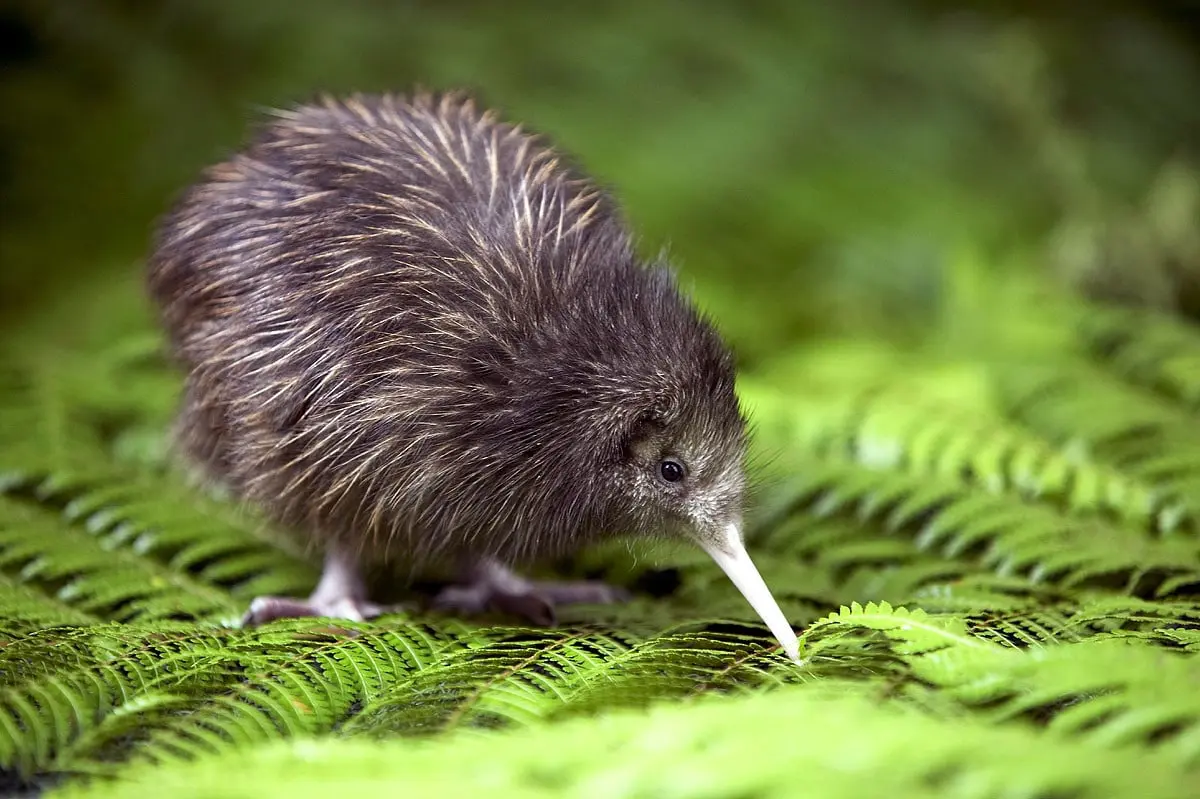
Kiwis are shy, nocturnal creatures with a highly developed sense of smell thanks to the existence of real whiskers around their beaks., These whiskers are effective olfactory organs.

Read more