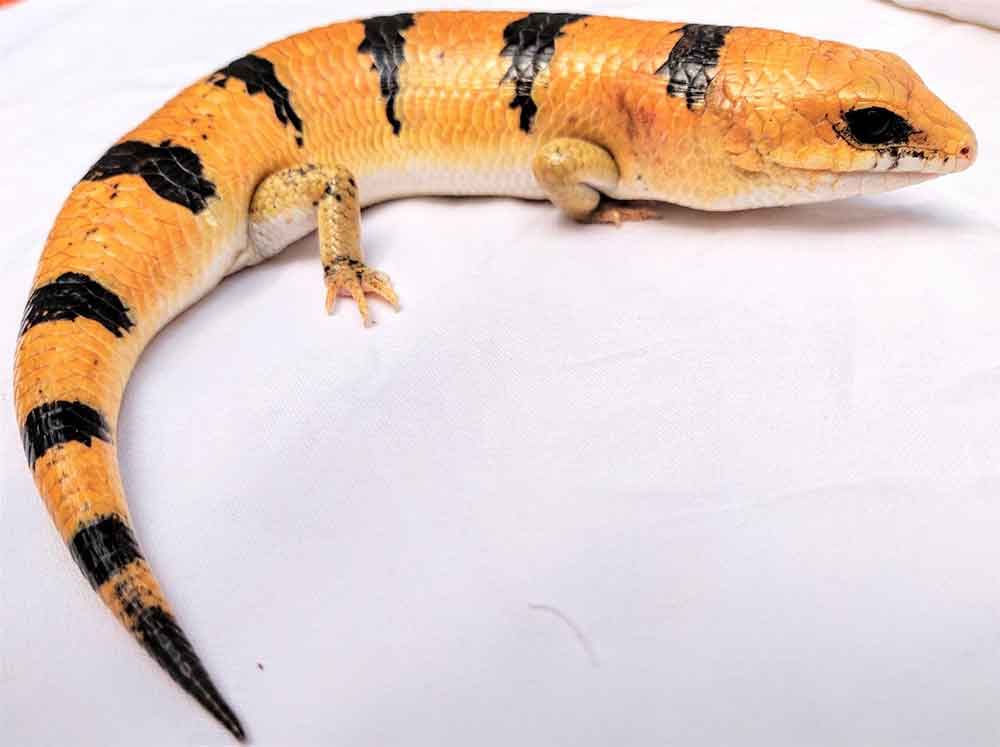
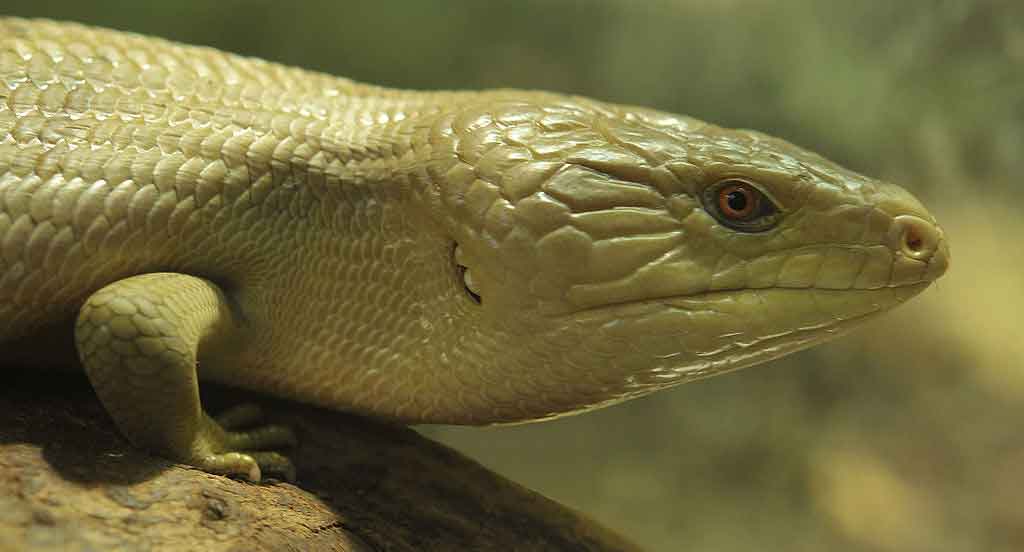
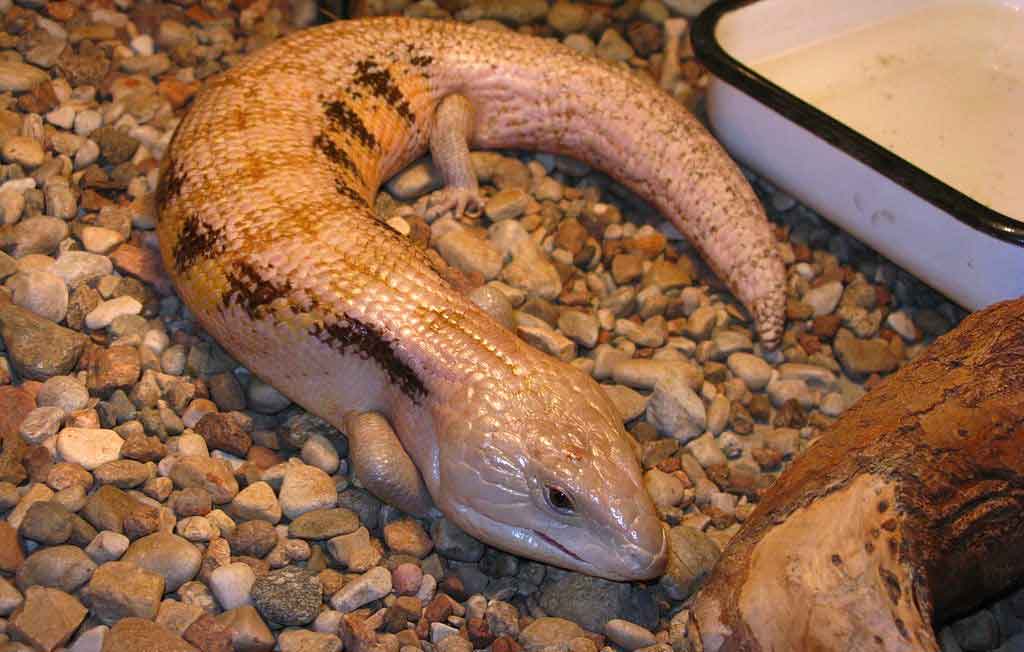
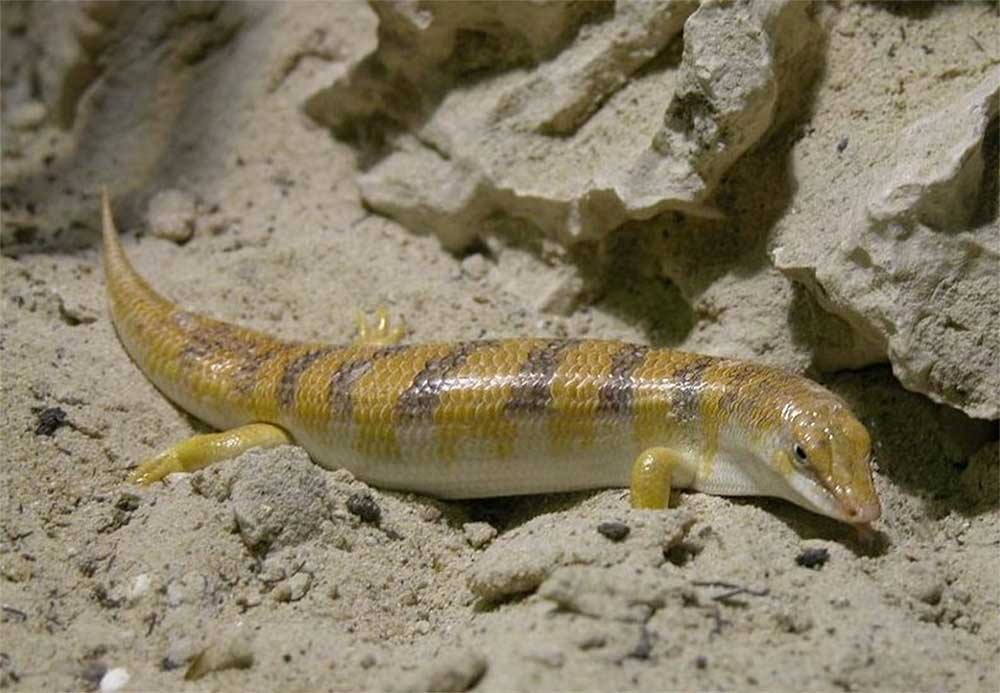
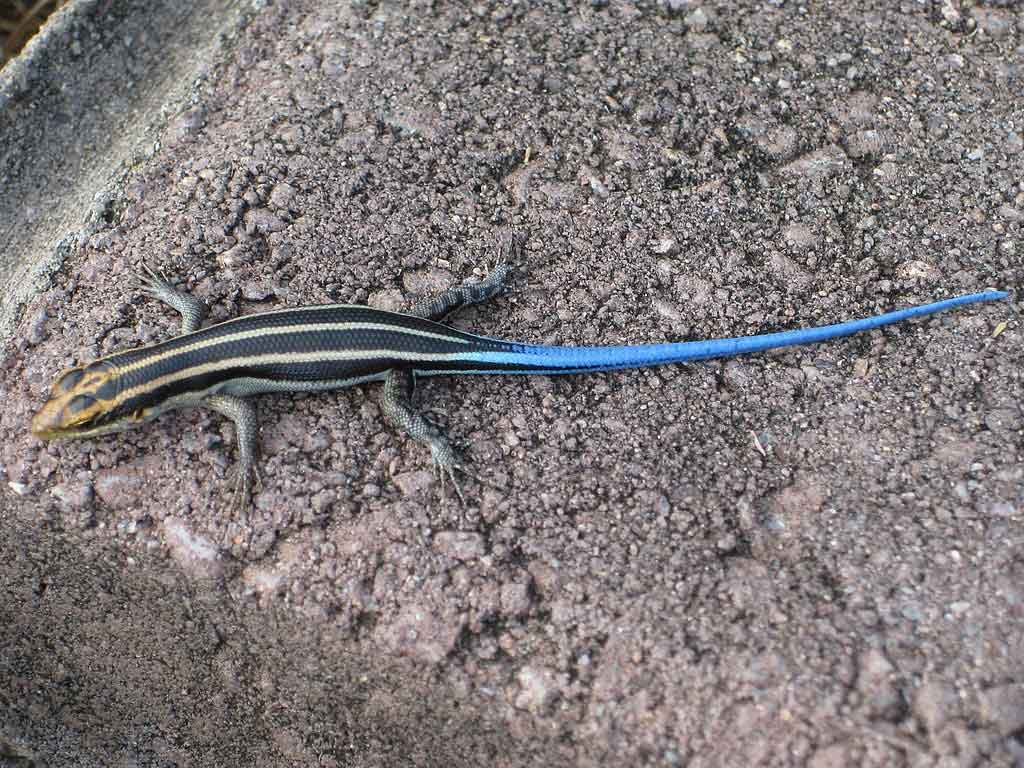
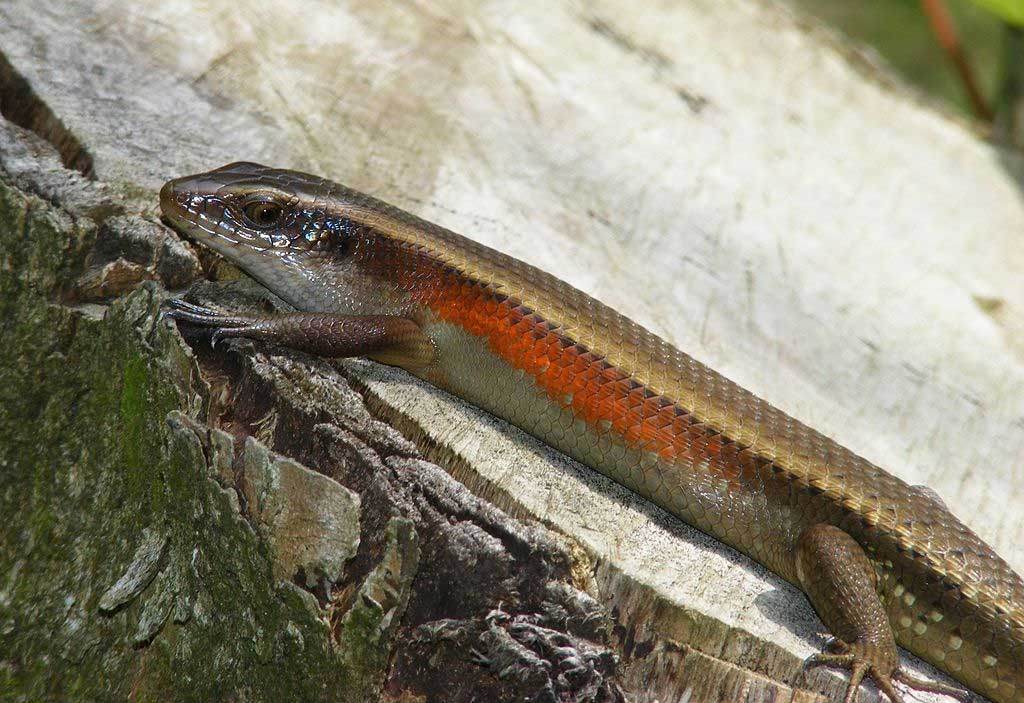
Very rare and very little seen niger skink. It is an animal of terrestrial customs and dry areas, desert and semi-desert type Sahel. The diet is based on insects. It is convenient to put a grotto to make you feel more comfortable, although it is a sociable and very docile animal.
Its price ranges from 90 and 140 EUR.
Alternative names:
1. Peters's banded skink (English).
2. Scinque bandé de Peter (French).
3. Tunesischer Nachtskink (German).
4. Lagartixa de Peters (Portuguese).
5. "Escinco gigante de Níger" (español).
▷ The world of Pets: Dogs, cats, birds, reptiles, amphibians
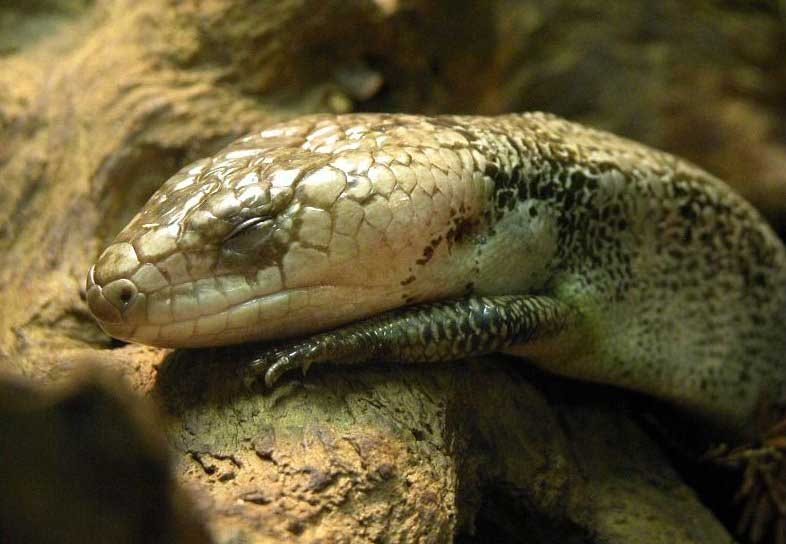
Common blue-tongued skink
- Tiliqua scincoides
Origin: Australia
Gender: Tiliqua
Life expectancy: 25 - 30 years.
Length: 45 - 55 cm.
Its coloration ranges from gray to brown with perpendicular dark bands. reaches 60 cm in length and its is a popular species for keeping in captivity, coming to live 25 years. Dry terrarium, not desert.
Price ranges from 180 and 250 EUR.
▷ The world of Pets: Dogs, cats, birds, reptiles, amphibians
Schneider's skink
- Eumeces schneideri
Origin: Central Asia , West Asia and North Africa
Gender: Eumeces
Life expectancy:
Length: 16,5 cm. + tail 20 cm..
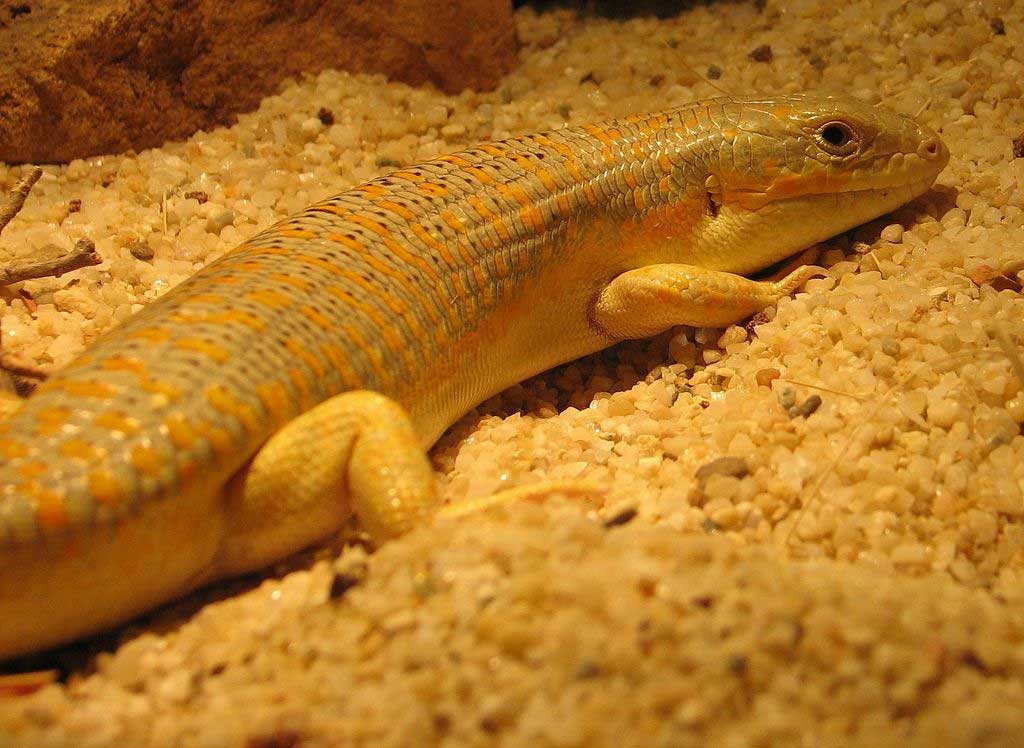
The great skink North Africa and one of the most beautiful we can find, since the orange colors that it has on the back with the yellow sides make it a beautiful animal. feeding, In addition to giving it insects and worms, we can add fruit that it will take with pleasure.. Docile and manageable. Perfect.
Its price ranges from 30 and 40 EUR, 60 euros for the couple.
▷ The world of Pets: Dogs, cats, birds, reptiles, amphibians
Axolotl
- Ambystoma mexicanum
Origin: Mexico
Gender: Ambystoma
Life expectancy: 12 - 20 years
Length: 23 - 28 cm.
Content
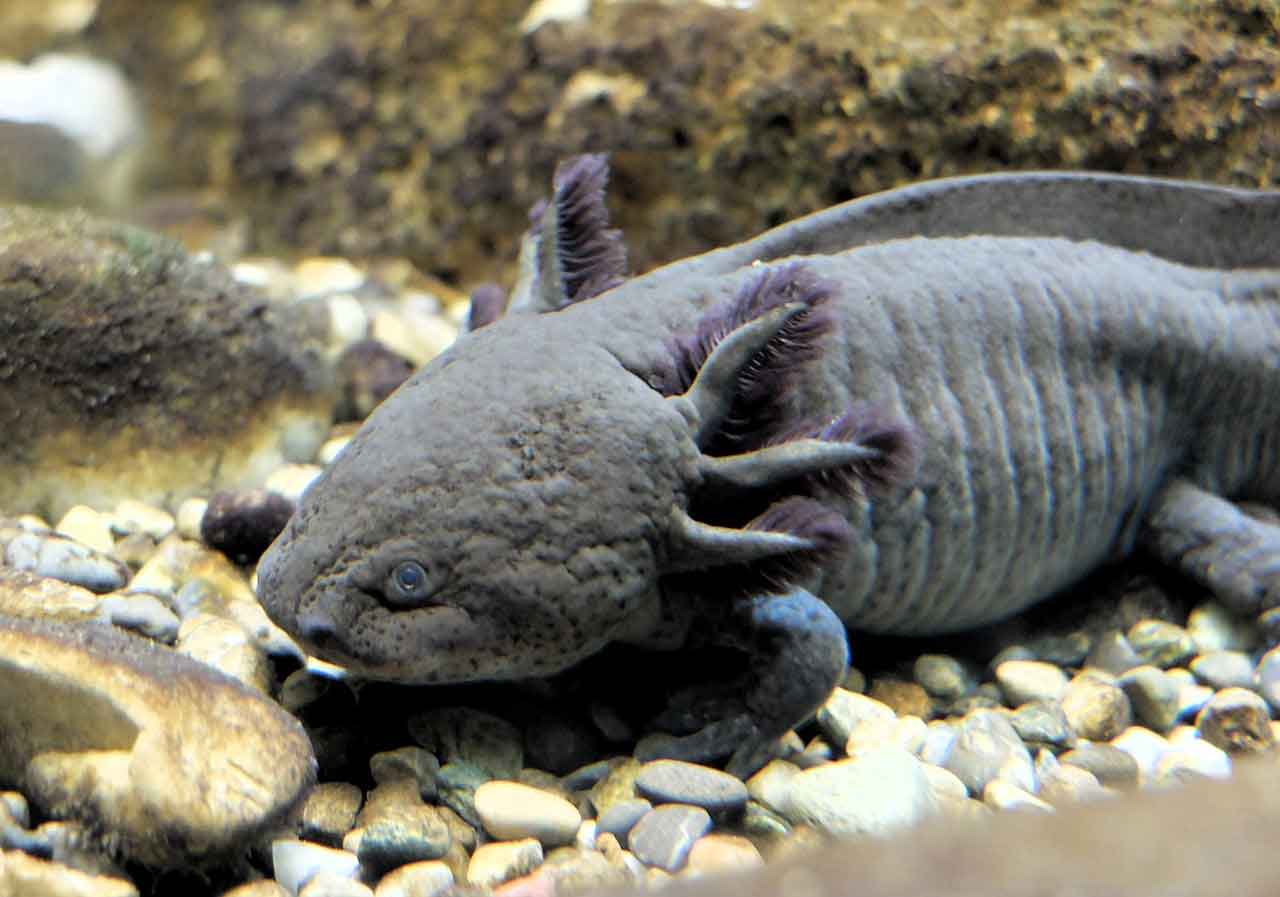
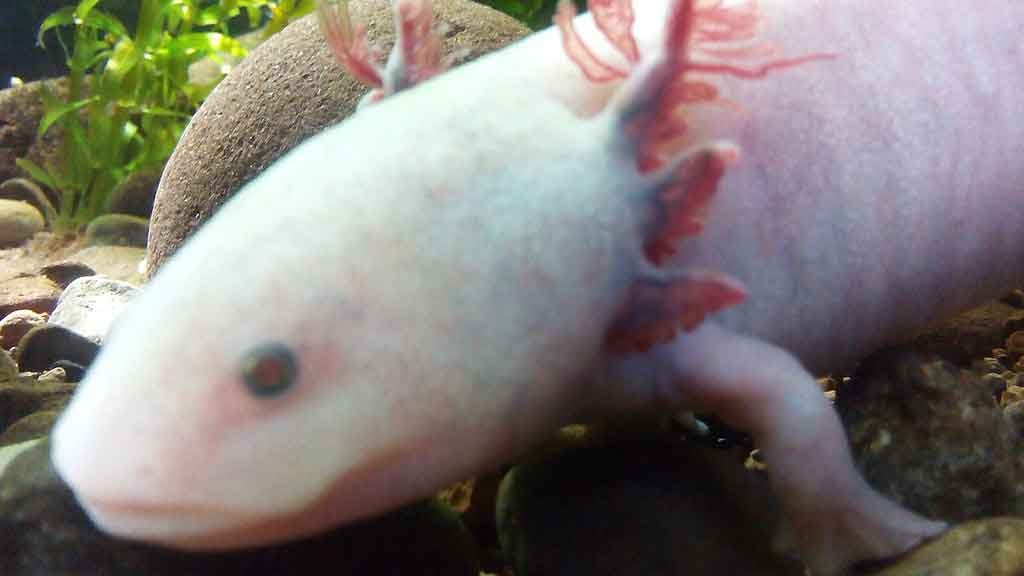
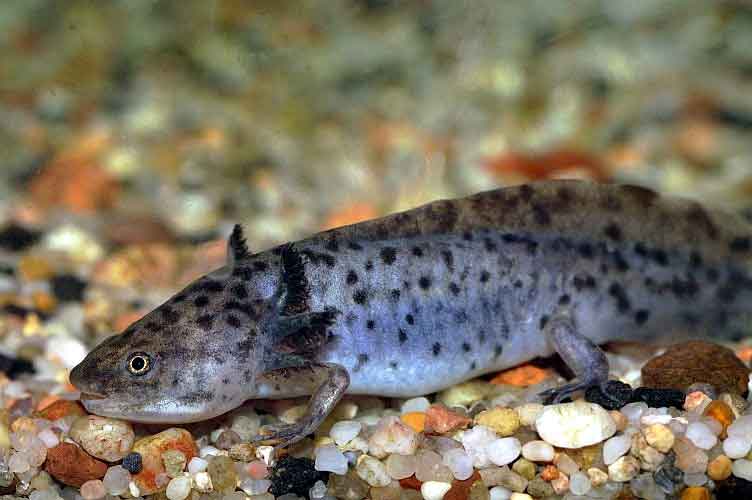
The Axolotl (Ambystoma mexicanum), member of the family of caudados, found exclusively in a few high-altitude Mexican lakes, Therefore, animals prefer fresh, oxygen-rich waters.. Unlike other caudados, as the common salamander, spends its entire life as a permanent larva in water, breathes throughout its life through external gills and also reaches sexual maturity (neotenia) in this stage. The reason for the absence of metamorphosis - otherwise typical- is a congenital defect of the thyroid gland.
Although Axolotls are in danger of extinction in their natural habitat, have been raised in Europe for many decades, among other things for research purposes. In addition to the naturally mottled dark gray to brown shape, in recent years more and more variants have been bred (color), like albinotic animals (white with red eyes) and leucistic (white with dark eyes), as well as the white "harlequins".
Sex differences
Sexually mature animals are distinguished by the cloacal region, which is clearly bulky in the male and flatter in the female.
Behavior
The Axolotl does not show pronounced social behavior. Animals can be kept individually, in pairs or groups, as long as there is enough space, suitable hiding places and structures. If there is a lack of food, bites can come on quickly. Specimens of different sizes should not be kept together, since smaller animals could be seen as food.
The Axolotl they are from twilight to night; in low light they are also daytime.
As the Axolotl does not usually come out of the water, an aquarium of at least 100 x 50 x 50 cm. (length x widht x hight) it is suitable to hold up to 4 adult animals. The water temperature should be 14 to 18 °C, prolonged temperatures above 22 °C will harm animals (may need to be chilled!). An accurate thermometer is needed to measure temperature. Other water values: pH value 6,0 – 8,0, total hardness up to 30 °dGH.
The aquarium must be equipped with a powerful filter with a secured inlet. A good oxygen supply can be ensured by additional aeration. The aquarium must have enough hiding places, for example, wood roots, clay tubes and dense plants. Coarse river pebbles and/or fine sand can be used as a substrate. Aquarium gravel is ingested by those with a sweet tooth along with food and can lead to intestinal obstruction or injury.. Lighting can be dispensed with; if required, a floating green canopy provides the necessary shade. The Axolotl must not live with fish or crustaceans (for example, prawns or crayfish), as they could damage their sensitive external gills.
Nutrition
The Axolotl it is a pure carnivore. They prefer live food, for example, earthworms of various sizes or red gnat larvae. Also accepted as frozen food. Pet stores also offer pellets specially adapted to the needs of pets. Axolotls, that are eaten with pleasure once they have become accustomed to them. Alternatively, sturgeon pellets are also suitable for a full diet of Axolotls.
Caution: the Axolotl tends to become obese. In the case of adult animals, it is enough to feed them every two or three days.
For the operation of an aquarium, a filter of sufficient dimensions is always necessary. The filter should be checked regularly and cleaned if necessary. Axolotls sometimes react sensitively to increased contamination by germs in the water. A regular and weekly partial water change of (at least) the 25 % removes pollutants and increases animal welfare. Regular padding of the substrate also helps reduce water contamination. Warm, stagnant water should be used for water changes; However, water treatment agents should not be used for axolotl.
The most important water parameters for animal welfare -such as temperature, the pH value, ammonium / ammonia, nitrite, nitrate and carbonate and total hardness- should be checked regularly.
Animal health must be monitored daily. The most common health problems in a Axolotl are alterations in the gills and skin, the lesions (by bite) and fat degeneration. If there is any abnormality, consult a veterinarian who is familiar with amphibians.
Acclimatization and handling
When i get home, the first thing to do is turn off the aquarium lighting. Next, The carry bag can be placed on the surface of the water during 10 – 15 minutes to adjust temperature. Next, open the bag and gradually add as much aquarium water as there is transport water in the bag. The Axolotl can then be carefully introduced. For a gentle acclimatization, the light should be turned off until the next morning.
Amphibians are observation animals and NOT companion animals.. In the first days in his new home, animals need adequate rest to get used to their new environment. Slightly deeper, fine mesh nets or appropriately sized containers are suitable for capturing animals. Trapping them by hand should be avoided due to the risk of injury.
Breeding
The Axolotl reaches sexual maturity between 8 and 15 months. In their natural habitats, the mating season occurs in February, when snow melts in the mountains and fresh meltwater temporarily lowers the water temperature of source lakes significantly. In aquariums, Playback may also occur at other times.
The male courtship display is a kind of dance: while the erect tail often makes rapid sinuous movements, the body is bent. Next, one or more spermatophores are deposited on the ground. The female collects them with her cloaca. Spawning takes place a few hours later. Eggs adhere preferentially to the leaves of aquatic plants. A set consists of between 80 and 800 eggs.
The larvae hatch after a few 15 to 20 days of embryonic development, depending on the temperature. At the beginning, they feed on its yolk for another two days before going off to find food on their own.
Special features
All the Axolotls that are offered in trade are offspring. The Axolotls they are protected species, but they are not subject to registration; However, proof of origin is required.
The Axolotls can regenerate injured and lost limbs. But, these lesions always indicate a bad breeding. If the characteristic tufted external gills recede, experience has shown that there are breeding errors, for example, too high temperatures or too much water stress.
The care of Axolotl only makes sense if the required low temperatures are guaranteed also in summer, for example, in a cool cellar or using an aquarium cooler.
The Axolotl lays eggs more often, even without specific breeding intentions. Larvae should only be reared if the right buyers are known in advance.
▷ The world of Pets: Dogs, cats, birds, reptiles, amphibians
Indonesian blue-tongued skink
- Tiliqua gigas
Origin: Papua New Guinea
Gender: Tiliqua
Life expectancy: 15 - 17 years
Length: 50 - 60 cm.
awesome lizards. This species is one of the best to keep as it is one of the calmest and most manageable. very easy animals, as they feed on everything, insects, mice, fruit, canned meat, etc. Dry terrarium, not desert.
Its price ranges from 180 and 250 EUR.
▷ The world of Pets: Dogs, cats, birds, reptiles, amphibians
Bronze grass skink
- Mabuya macularia
Origin: Bangladesh , Bhutan , Cambodia , India , Laos , Malaysia,
Gender: Eutropis
Life expectancy: ---
Length: 16 - 23 cm..
Beautiful skink from Indonesia with a robust appearance and with colors that make it look metallic. Maintenance is exactly the same as for the rest of your family. Diet based on insects and worms.
▷ The world of Pets: Dogs, cats, birds, reptiles, amphibians
Skinks
Family: Scincidae
Origin: North of Africa
Gender: Scincus
Life expectancy: 5 to 20 years
Length: 20 - 45 cm.
The lizards resembling Skinks first appear in the fossil record about 140 millions of years, during the early Cretaceous , mainly in the form of mandibles that look very much like Skinks. The definitive fossils of skink show up later, during the Miocene period.
The skinks (Scincidae) they are the largest family of lizards, with more than 1.500 species, understands the escincos, skins, corners or skinks. Most of the skinks They are characterized by a round, cylindrical body that blends smoothly into the neck and small, smooth scales.. Most species live on the ground and have comparatively short legs. But, there are also arboreal representatives, as well as subterranean species that completely lack legs. Among the species that are frequently offered, and that live mainly on the ground, are the Sand fish (Scincus scincus), the African five-lined skink (Trachylepis) and the fire skink (Lepidothyris fernandi). These species are not usually subject to species protection legislation. Buying wild-caught species should always be avoided in favor of captive-bred species.
Sex differences
Difficult or impossible to recognize depending on the species, for example, the Sand fish (Scincus scincus). In some species, sexually mature males have a more splendid coloration.
Behavior
The skinks they are mostly nocturnal; even diurnal species tend to live very hidden. Many species can stand alone, in pairs or in small harems (a male with 2 – 4 females). Males are usually incompatible with each other. If aggressions occur during socialization, animals must be separated immediately and, as experience has shown, permanently.
Suitable accommodation
The minimum dimensions of a terrarium for the skinks of the terrestrial species mentioned are given as a function of head-torso length (tailless) of the animals, being the proportion 6 x 4 x 3 times that length (length x widht x hight) for 2 animals. Like this, a terrarium for up to two Sand fish should have at least the dimensions of 80 x 50 x 40 cm.. For each additional animal, the floor area should be increased by 15 %.
like cold blooded animals, the skinks need a temperature gradient in the terrarium that allows them to reach their optimal body temperature. Ideally, mimic natural conditions with sunny areas and cooler shaded areas in the terrarium. As such, is installed on one side of the terrarium a powerful heat radiator with UV components, that guarantees strong localized heating at 35 – 40 °C. Other areas can be heated to 24 °C. The other zones may have a temperature of 24 to 28 °C. At night, the temperature of the terrarium should drop slightly for most species. The basic temperature can be generated through room temperature or with thermal mats. Heating mats should always be installed outside the terrarium and heat a maximum of one third of the floor surface; the desired temperature can be adjusted with the help of a thermal controller.
The humidity should be around the 60%, the fire skink needs higher humidity ( to 80%). This can be achieved by spraying the terrarium with warm water or using a sprinkler system.. Precise thermometers and hygrometers are needed to measure temperature and humidity.
The duration of the illumination should be 10 to 14 hours. How light sources emit less and less UV radiation over time (see manufacturer's instructions), must be replaced regularly. The lighting should be placed out of the reach of skinks (note: normal glass is impervious to UV-B rays) o the animals must be protected from burns by a closed metal mesh basket.
Except for the Sand fish (Scincus scincus), the land of terrarium or the coco substrate, which should always be kept slightly moist, are suitable as a substrate. It is also important to provide many shelters and hiding places in the form of cork tubes., chunks of bark, stones and roots. Natural planting creates additional retreat possibilities and ensures uniform and increasing humidity. To much skinks that live on the bottom also like to climb. As such, you have to cover 2, preferably 3, sides of the terrarium with cork or similar. The vertical climbing zones and the horizontal resting zones, like roots, remained, etc., have proven useful as additional furniture. A shallow water bowl is also part of the basic equipment.
The Sand fish (Scincus scincus) is purely ground dweller and can be well kept in a terrarium with sandy bottom and sink-proof stone structures. For excavating species, the height of the substrate must be at least equal to the length of the head, for example, at least 15 cm for him Sand fish.
Diet
In the wild, the mentioned species feed mainly on small invertebrates. The suitable animal food is live insects (crickets, domestic crickets, Little grasshoppers, cockroaches, etc.), which are sprinkled with a mineral preparation to avoid deficiency symptoms. Mealworms or wax moths can only feed you sparingly due to their high fat content, since the Sand fish (Scincus scincus), in particular, you tend to overeat mealworms.
Fresh water must be available at all times. Young animals should be fed daily; for adult specimens, are enough 2 or 3 feedings per week. Many animals also like to eat soft, ripe fruit or fruit pulp., which can be well enriched with vitamins and minerals. Here we must insist on strict hygiene, since these feed spoil quickly.
Breeding
Although most species of Skinks They are oviparous and lay eggs in clutches., around the 45% of the species of Skinks they are viviparous in one sense or another. Many species are ovoviviparous, the babies (skinklets) develop lecithotrophically in eggs that hatch within the mother's reproductive tract and emerge as live hatchlings.
in some genres, However, as Tiliqua and Corucia , the young that develop in the reproductive tract obtain their nourishment from a mammal-like placenta attached to the female, unequivocal examples of "viviparous matrotrophy". It also, a recently described example in the species Trachylepis ivensi is the most extreme to date: a purely reptilian placenta directly comparable in structure and function to a eutherian placenta.
Clearly, this viviparum has repeatedly developed independently in the evolutionary history of the Scincidae and the different examples are not ancestral to each other. In particular, placental development of any degree in lizards is phylogenetically analogous, instead of counterpart, to functionally similar processes in mammals.
Care
Food scraps, molts and droppings should be removed daily. The water bowls should also be cleaned daily and filled with fresh water.
Animal health must be monitored daily. The most common health problems in skinks are skin mites, emaciation, tail injuries, fecal changes and softening of the bones. In case of anomalies, a reptile vet should be consulted. It is recommended to perform fecal examinations once a year to detect endoparasites.
The intestinal flora of skinks usually includes salmonella, that are harmless to animals, but they can cause disease in humans. Hygiene measures (wash your hands well, etc.) can prevent infection.
Acclimatization and handling
In the first days in his new home, animals need adequate rest to get used to their new environment. Reptiles are animals of pure observation and should NOT be petted.
Animals should only be captured when necessary. The easiest way to do this with young animals is with a pitcher or landing net.. Larger animals can be held with the bare hand behind the head. Basically, lizards should never be held or fixed by the tail.
Special features
Some skinks they can drop their tail in case of danger; therefore, you must be extremely careful when picking them up and never grabbing them by the tail.
Species that live on the ground tend to move - like snakes- with undulating movements.
Other representatives of the skinks, as the Shiny skink from Indonesia to (Mabuya macularia) or the East Indian brown mabuya (Mabuya [Eutropis] multifaceted). Their breeding conditions differ in part significantly from the species described.
Origin: Bangladesh, Cambodia, China, India, Indonesian, Myanmar, New Guinea, Philippines, Singapore, Taiwan, Thailand and Vietnam Gender: Eutropis Life expectancy: --- Length: 35 cm.
Another species of this genus so docile and friendly from Southeast Asia. They are just as easy to maintain as the others. It suits
▷ The world of Pets: Dogs, cats, birds, reptiles, amphibians
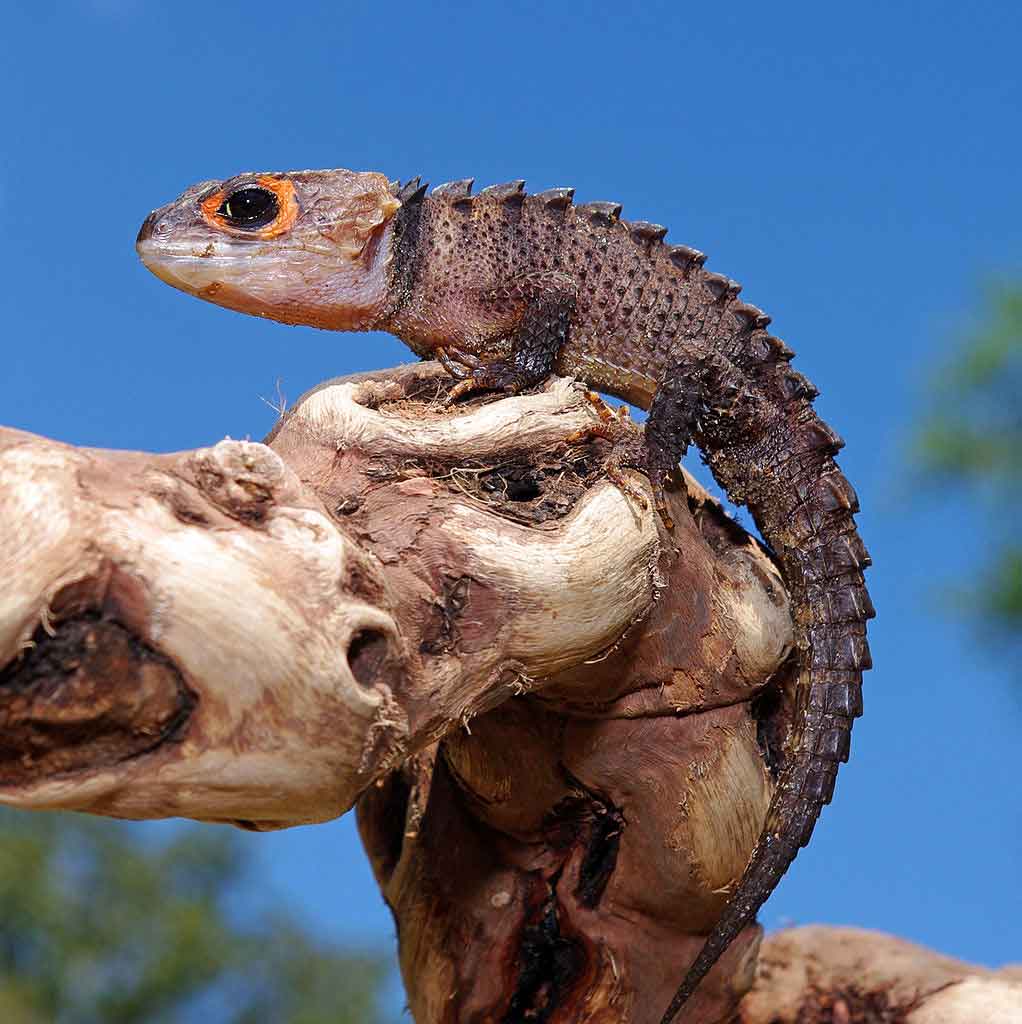
Red-eyed crocodile skink
- Tribolonotus gracilis
Origin: Indonesia and Papua New Guinea
Gender: Tribolonotus
Life expectancy: 10 - 12 years
Length: 17 - 20 cm.
Precious and very rare Indonesian lizard that nowadays is very difficult to find. It likes humid places so we will put a terrarium preferably with moss and a small bathtub in which it can get into, since he likes to even immerse himself completely. Tº aprox. of 27ºC. Insects.