โ–ท The world of Pets: Dogs, cats, birds, reptiles, amphibians

Black-lored Parrot
Tanygnathus gramineus

Black-lored Parrot

Content


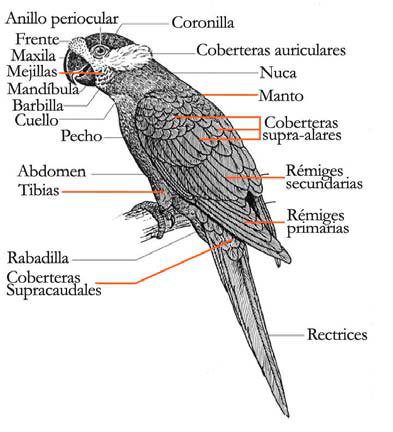
Anatomy-parrots

Description

40 to 42 cm. long.

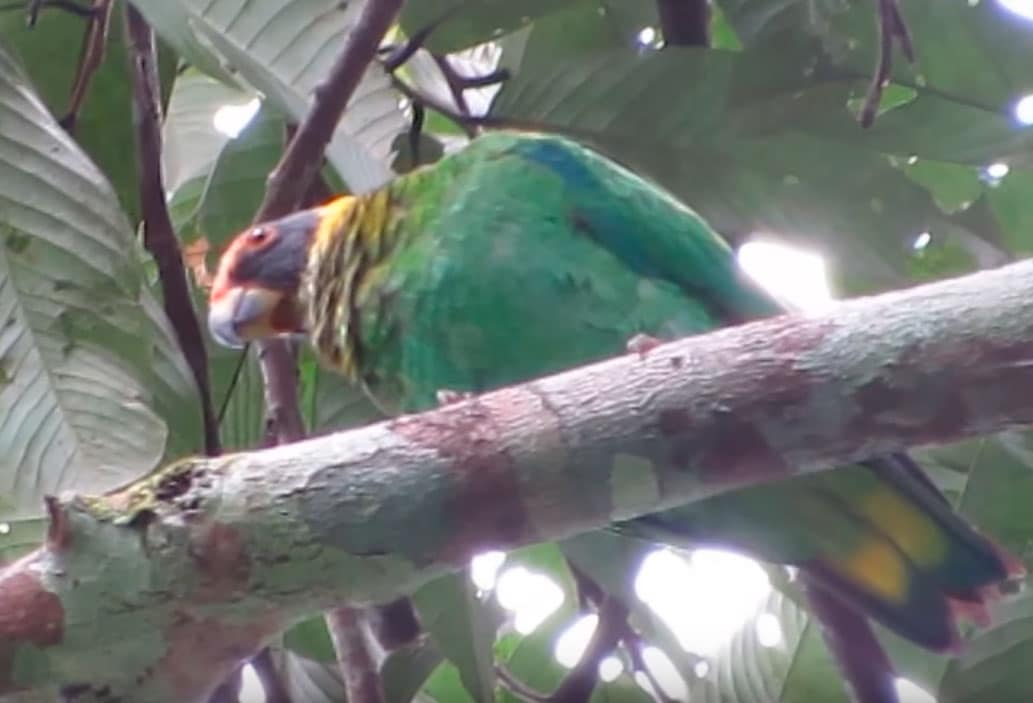
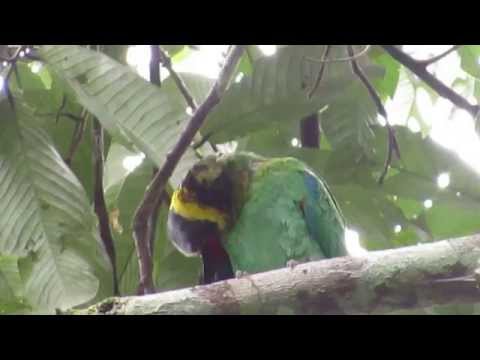
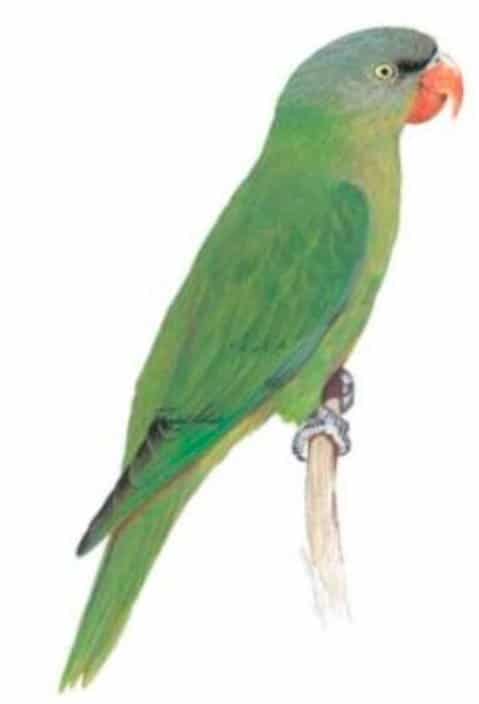
The Black-lored Parrot (Tanygnathus gramineus) It has a green head with a black line that goes from the top of the beak to the eyes.; steeped in turquoise blue Crown. The upper parts of green grass.

The medium-sized wing coverts, green; flight feather, green, a little darker, with blackish margins to the vane inner. Supracaudales coverts yellowish-green. The more underparts, more yellowish green, especially in the lower part of the cheeks and upper part of the chest. Upper, the Green tail with yellow tips; undertail, the Brown tail olive warm.

Billed red; iris yellow ; greyish legs.

Female with the grey brown peak, not red.

Immature undescribed.

Habitat:

Information is received for the first time of the Black-lored Parrot Thanks to ornithologist side Hendrik Cornelis Sieber (1890-1949) in 1930.

Very little of this species is known. Is distributed in mountain forests above 600-700 meters and also, according to sources, in the lowlands, hills and coastal areas. It is partially nocturnal, although sightings of birds perched on treetops during the day, They show that, similar to the Azure-rumped parrot, they can also be active during the day.

Migration is relatively weak and there are only a few reports of parrots flying to high altitudes during the day and descending at night., Judging from their voices.

Reproduction:

There is no data.

Food:

Possibly fruits, berries, seeds and nuts

Distribution:

Endemic to Buru, Indonesian.

Bird predominantly occupies the central part, High Island, where according to sources, There are settlements in Gunung Tagalago, WA Temun and Kunturun, at elevations of 700-1100 m, also in the lowlands of the South in Fรคkal, EHU and Leksula. There was a sighting of these parrots near Kayeli Bay on the eastern shores of Buru. Most recent observations made outside North (Waflia) and (Wamlana) Northwest Coast.

The voice of the Black-lored Parrot is heard frequently in Kunturun, mostly 1-7 hours after the sunset, where the locals call the bird ยซThe ol' blue cockatooยซ, which means Blue-headed Parrot. But, was caught during the day with slingshots in fruit trees, suggesting that his activity is not purely night.

Conservation:
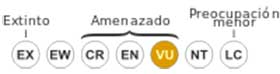

Vulnerable


โ€ข Current category of the Red List of the UICN: Vulnerable

โ€ข Population trend: Decreasing

The population is estimated at 2,500-9,999 mature individuals based on an assessment of the known records, descriptions of the abundance and range size. This estimate is equivalent to 3,500-15,000 specimens.

There are no data on trends for this species and has not been seen in the wild since 1995. Their habitat continues to decline slowly and were recorded in domestic trade in the year 2001. So, the population of the species is suspected of have been declining.

Conservation Actions Proposed:

– Conduct surveys, mostly using their vocalizations at night, mainly in the mountain areas.
– Investigate their ecological requirements and movements in order to develop appropriate conservation strategy.
– Identify the most suitable area for the conservation of this and other endangered species in Buru, and promote its establishment as protected areas.

"Black-lored Parrot" in captivity:

Unknown outside the island of Buru

Alternative names:

Black-lored Parrot, Black lored Parrot, Blacklored Parrot, Buru Parrot (ingles).
Perruche de Buru, Perruche ร  calotte bleue (French).
Burupapagei, Buru Papagei (German).
Tanygnathus gramineus (Portuguese).
Loro de Buru (espaรฑol).

scientific classification:

Order: Psittaciformes
Family: Psittaculidae
Genus: Tanygnathus
Scientific name: Tanygnathus gramineus
Citation: (Gmelin, JF, 1788)
Protonimo: Psittacus gramineus

Images "Black-lored Parrot"

————————————————————————————————

ยซLoro de Buruยป (Tanygnathus gramineus)

Sources:

Avibase
– Parrots of the World โ€“ Forshaw Joseph M
– Parrots A Guide to the Parrots of the World – Tony Juniper & Mike Parr
– Birdlife
Wikipedia

Photos:

(1) – Parrots A Guide to the Parrots of the World – Tony Juniper & Mike Parr

Sounds: Frank Lambert (Xeno-canto)

โ–ท The world of Pets: Dogs, cats, birds, reptiles, amphibians

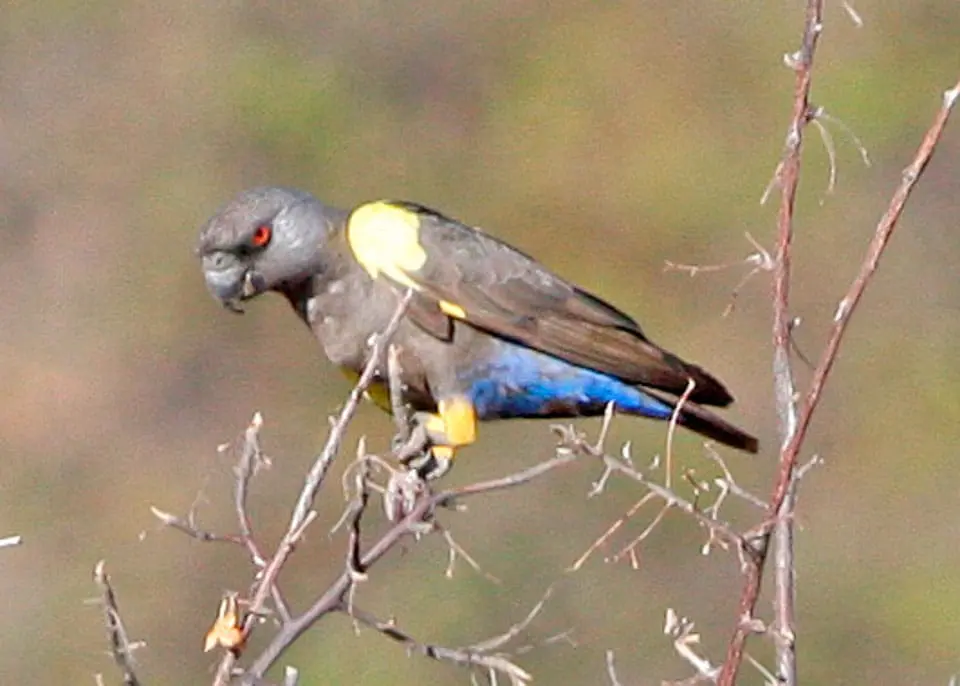
Rรผppell's parrot
Poicephalus rueppellii


Lorito de Rรผppell

Content

Lorito de Rรผppell Ilustraciรณn

Description:

22 cm.. length and a weight between 105 and 132 g..

The Rรผppell's parrot (Poicephalus rueppellii) has the head, generally, dark brown, clearer in the sides of the face with ear-coverts Silver. Nape, the mantle and scapulars brown in color with slightly paler silver tips and rather diffused on most feathers (especially in the nape); rump brown with blue wash, occasionally feathers Bright blue. Upper, the under wing-coverts brown. Leading Edge wing , Since the carpal joints at the base of the primaries bright yellow. The primaries and secondaries brown above, paler below. Wing feathers bright yellow.

The underparts, above all, uniformly brown, clearly lighter than the upperparts; the thighs bright yellow; undertail- coverts and posterior flanks with blue wash, sometimes a few feathers with bright blue tips. Tail darker brown than the rest of the plumage.

Bill greyish black; cere black; irises orange-red; perioftalmico ring black ; legs black.

The females They have lower back, rump, uppertail-coverts, lower abdomen, undertail- coverts and the back of the flanks bright blue..

The immature They are similar to females but duller blue and less extensive, lighter brown in the body, the thighs brown. Wing feathers and set carpiano yellowish brown brown; clear margins in the wing-coverts.

Habitat:

They live in forests along water courses dry, dry forests (including forests Euphorbia), dry steppe thorny veld, showing a preference for areas with Adansonia or other tall trees; also in formations Acacia / Commiphora in Escarpment Namibia. Not registered above 1.250 metres in Angola.

Usually they found near water, in small flocks (until 20 birds); sometimes in greater numbers when food is plentiful.

Reproduction:

The nest usually it located in the old hole of a carpenter, at a height of up to 5 meters above the ground. It is believed that usually they breed from the months of February to May, but juvenile birds have been observed in September: the breeding It may be more closely linked to precipitation of the season. Of 3 to 5 egg white, rounded form the usual commissioning.

Food:

They feed yolks, outbreaks, nectar, flowers, seeds, guilt, etc… (the endocarpio It is believed to be very important in your diet), of the Acacia karoo, A. erubescens, Prosopis juliflora, Faidherbia whitish, Terminalia prunoides, Combretum beardless, Grewia, Loniceroides, Ficus and melons; insect larvae They have also been registered in your diet.

The Rรผppell's parrot quake, normally, morning and afternoon.

Distribution:

Size of the area of distribution (reproduction / resident): 940.000 km2

Distributed by Southwest Africa, from the southwest of Angola (Luanda) to Damaraland, West of Ovamboland and North of Namaqualand (region Rehoboth), in the North of Namibia.

Some local nomadic movements in relation to the food supply, otherwise residents. Usually they reported as locally common but fluctuations can occur with nomadic movements.

Conservation:


minor concern


โ€ข Current IUCN Red List: Least concern

โ€ข Population trend: Decreasing

The size of the world's population has not been quantified, although it is estimated below 30.000 individuals.

The species according to information, It quite common within suitable habitat.

The population is suspected of being in decline due to unsustainable levels of exploitation. Also their population numbers are threatened by the cage bird trade – an estimated number between 600 and 1000 birds are exported annually to South Africa and Europe, approximately 60-70% of them die during transport.

"Rรผppell's parrot" in captivity:

Very rare in captivity.

Take it easy, It is a species in which males seem to speak better than females, usually they have easy to mimic sounds of other birds.

In terms of their longevity, according to sources, a specimen lived 34,3 years in captivity.

Alternative names:

Rueppell’s Parrot, Ruppell’s Parrot, Rรผppell’s Parrot (English).
Perroquet de Rรผppell (French).
Rรผppellpapagei, Rรผppell Papagei, Rรผppell-Papagei (German).
Papagaio de Rรผppell, Papagaio-de-rรผppell (Portuguese).
Lorito de Ruppell, Lorito de Rรผppell (espaรฑol).

scientific classification:

Order: Psittaciformes
Family: Psittacidae
Genus: Poicephalus
Scientific name: Poicephalus rueppellii
Citation: (Gray, GR, 1849)
Protonimo: Psittacus Rรผppelii

Images "Rรผppell's Lorito":

Videos "Rรผppell's parrot"

————————————————————————————————

"Rรผppell's Lorito" (Poicephalus rueppellii)


Sources:

Avibase
– Parrots of the World โ€“ Forshaw Joseph M
– Parrots A Guide to the Parrots of the World – Tony Juniper & Mike Parr
– Birdlife

Photos:

(1) – An adult female Rรผppellโ€™s Parrot near Hobatere Lodge, Kamanjab, Namibia By Ron Knight from Seaford, East Sussex, United Kingdom (Ruppellโ€™s ParrotUploaded by snowmanradio) [CC BY 2.0], via Wikimedia Commons
(2) – In captivity by Udo Berg –> Heggy – Wikipedia
(3) – Rรผppel's parrot – papageien.org
(4) – Poicephalus rueppellii rueppells parrot – Birds-pet-wallpapers
(5) – Poicephalus rueppellii in Erongo Mountains, Namibia – Buckham Birding
(6) – Proceedings of the Zoological Society of London 1882 by Joseph Smit [Public domain], via Wikimedia Commons

Sounds: Charles Hesse (Xeno-canto)

โ–ท The world of Pets: Dogs, cats, birds, reptiles, amphibians

Vulturine Parrot
Pyrilia vulturina

Vulturine Parrot

Content

Description:

23 cm.. length and a weight between 138-165 g..

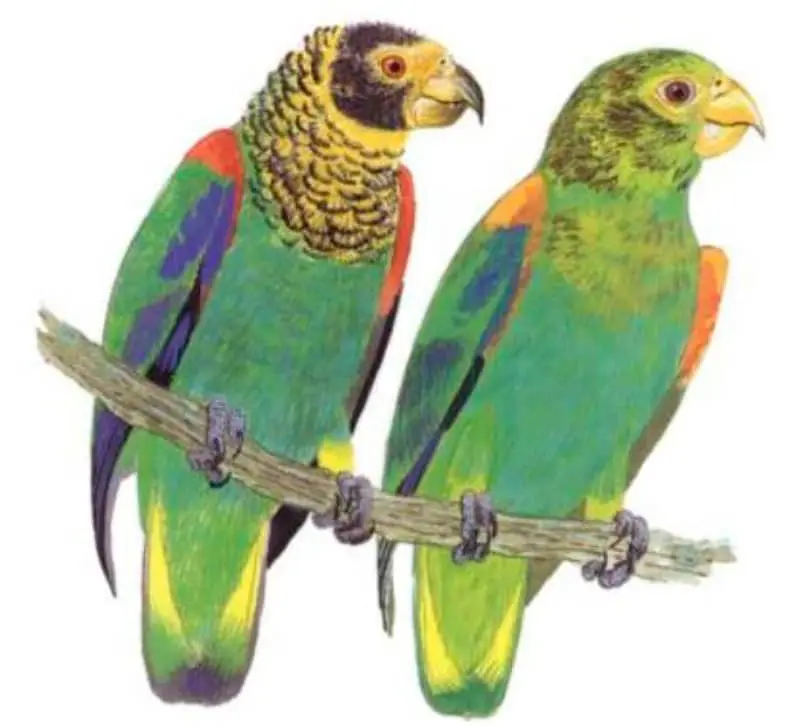
The Vulturine Parrot (Pyrilia vulturina) It is a small parrot with bare skin yellow orange and covered bristles pale hairlike, in the area that covers the forecrown and back of the crown, until the eyes; bare skin on lores, the cheeks and center of crown black and covered with bristles black hairlike; feathers on the sides of neck and in the part back from the crown, are yellow, forming a band bright contrasting with the black of the head bare; back of the neck, black; upperparts green.

carpal area and lesser upperwing-coverts, orange-yellow; outer median coverts with some blue; leading edge of wing, red; primary coverts blue; rest of the upper parts of the wings, green.

Primaries bluish-black with narrow bluish-green margins to outerweb. Under, the wings with coverts red; flight feather green with blackish tips. feathers throat and the chest, olive yellow with dark tips, giving a scalloped effect; belly green with bluish tint; undertail-coverts brighter yellowish green. Tail green with tips blue and outer feathers with yellow on base of innerwebs. Bill dark blackish-grey with patch pale yellow at the base of the upper jaw; cere yellowish-horn; irises brownish-orange; legs grey.

Both sexes are similar.

The head of the immature, fully feathered (except in the eye ring); greenish on the cheeks and yellow olive in the rest of the head with no collar yellow. The bend of wing and underwing-coverts, yellowish-orange; irises darker.

  • Sound of the Vulturine Parrot.

Habitat:

It inhabits in the rainforest of lowland formations vรกrzea (seasonally flooded forest), and the Mainland (without flooding). Gregarious.

Reproduction:

No details on the reproductive biology of this species.

Food:

diet includes fruit, seeds and berries taken in the forest canopy. Its bareheaded adaptation may be a high frugivore diet, to prevent the fruit pulp enmaraรฑara their feathers.

Distribution and status:

Size of its range (breeding/resident ): 1.030.000 km2

endemic to northeast Brazil, to the South of the amazon, from the eastern state of amazon, on the east bank of Madeira River, passing by For, to the south, up to the Serra do Cachimbo, extending eastward to the areas bordering northwest Maranhรฃo, in the region of the Gurupi River. May be restricted to areas around major rivers within this region, which would mean that the size of the range may be overestimated.

References in relation to its range to include Venezuela (lower basin Caura River) and Guyana, They are apparently wrong.

generally considered Rare, although undoubtedly they not have a lot of data due to the difficulty of observation of this species.

The continuing rapid deforestation throughout its range has had to contribute to a substantial decrease in the population Vulturine Parrot in the last decades.

They can be seen in protected forests in the west of its range, but illegal logging and colonization remain a threat even there.

Conservation:


Vulnerable


โ€ข Current category of the Red List of the UICN: Vulnerable.

โ€ข Population trend: Decreasing.

Rationale for the Red List category

Based on a model of future deforestation in the amazon basin and its dependence on primary forest and sensitivity to fragmentation, It is suspected that population of this species will decrease rapidly during the next three generations and, therefore, It has risen to Vulnerability.

Justification of the population

The population size World has not been quantified, but this species is described as ยซRareยป (Stotz et to the ., 1996).

Justification of trend

It is suspected that this species has lost 37,1-54,8% of habitat within its distribution over three generations (21 years) starting from a model of deforestation Amazon (Soares-Filho et to the ., 2006, Bird et to the ., 2011). Although the species may have some susceptibility to hunting and / or capture, also it appears to have some degree of tolerance habitat degradation (A. Lees in litt ., 2011). So, you suspect your population decline by 30-49% during three generations.

Conservation Actions Underway

โ€ข Is listed as Vulnerable nationally in Brazil (MMA 2014).

โ€ข No specific actions known.

Conservation Actions Proposed

โ€ข Expand the network of protected areas to effectively protect the IBA.

โ€ข Effectively manage existing and new protected areas and resources, using the emerging opportunities for financing the management of protected areas with the overall goal of reducing carbon emissions and maximize the conservation of biodiversity.

โ€ข It is also essential to conservation on private land, through the expansion of market pressures for proper land management and prevention of deforestation on land not suitable for agriculture (Soares-Filho et to the., 2006).

โ€ข Campaign against proposed changes to the Brazilian Forest Code that would lead to a decrease in the width of the areas of riparian forest protected as Permanent Preservation Areas (APPs), that function as vital corridors in fragmented landscapes.

"Vulturine Parrot" in captivity:

It is not found in aviculture; Probably they never stood outside Brazil.

Alternative names:

Vulturine Parrot (English).
Caรฏque vautourin (French).
Kahlkopfpapagei (German).
curica-urubu, papagaio-urubu, periquito d’anta, periquito-urubu, pirรญ-pirรญ, urubu-paraguรก (Portuguese).
Lorito Cabeza Zamuro, Lorito Vulturino (espaรฑol).

scientific classification:


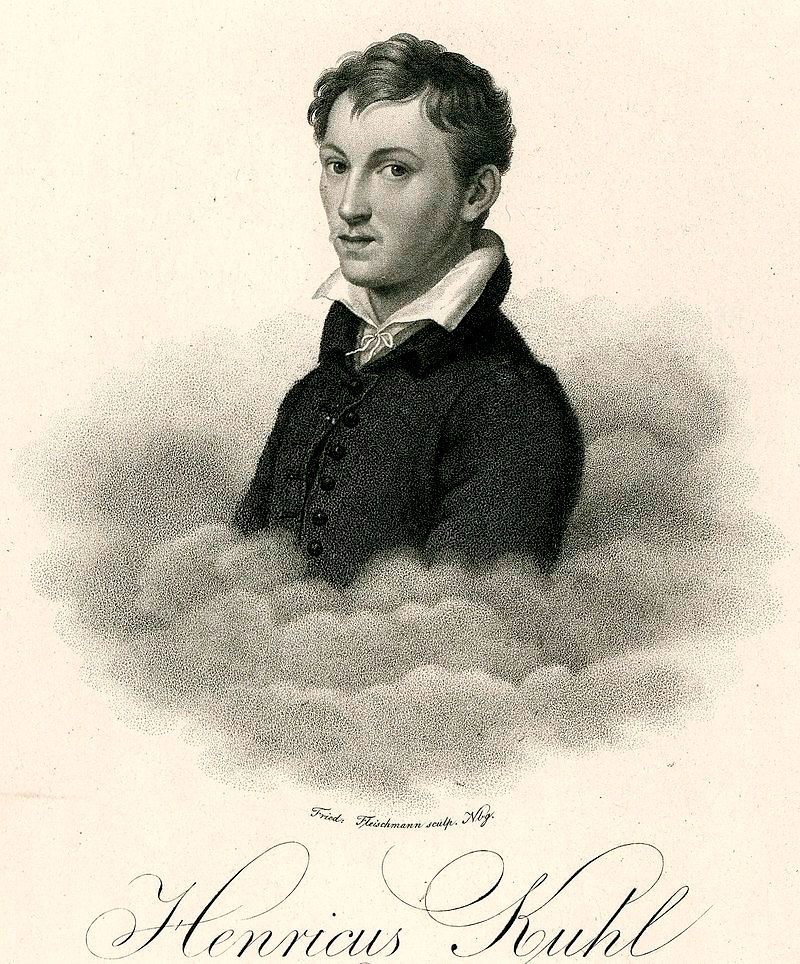
Kuhl, Heinrich
Heinrich Kuhl

Order: Psittaciformes
Family: Psittacidae
Genus: Pyrilia
Scientific name: Pyrilia vulturina
Citation: (Kuhl, 1820)
Protonimo: Psittacus vulturinus

Images "Lorito Vulturino":

 Vulturine Parrot

Videos Lorito Vulturino:

Pyrilia vulturina ( Curica Vulture)

"Lorito Vulturino" (Pyrilia vulturina)

Sources:

  • Avibase
  • Parrots of the World โ€“ Forshaw Joseph M
  • Parrots A Guide to the Parrots of the World – Tony Juniper & Mike Parr
  • Birdlife

  • Photos:

(1) – Pyrilia vulturina (adult and immature) – Imagen de Parrots A Guide to the Parrots of the World – Tony Juniper & Mike Parr
(2) – Pyrilia vulturina ( Curica Vulture) by victor castro

โ–ท The world of Pets: Dogs, cats, birds, reptiles, amphibians

Red fan Parrot
Deroptyus accipitrinus

Deroptyus accipitrinus
National Zoo - Washington DC

Content


Anatomy-parrots

Description

35 to 41 cm.. height and between 190 and 277 g. of weight.

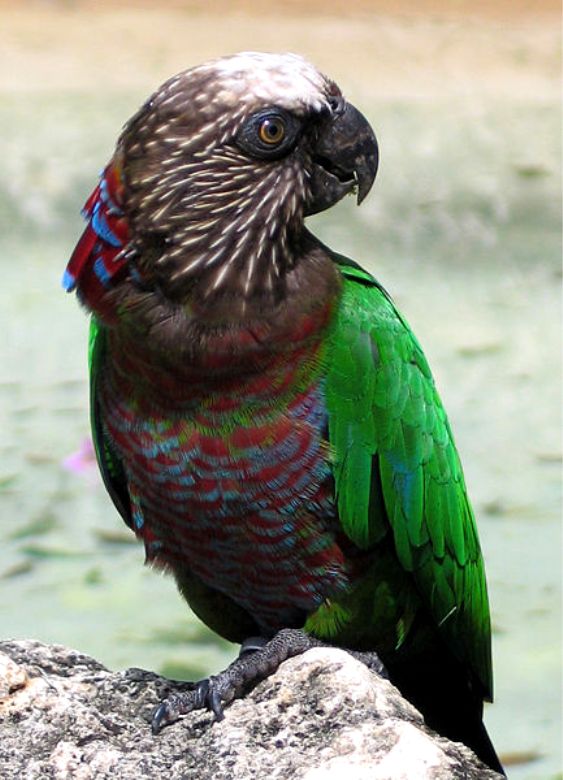
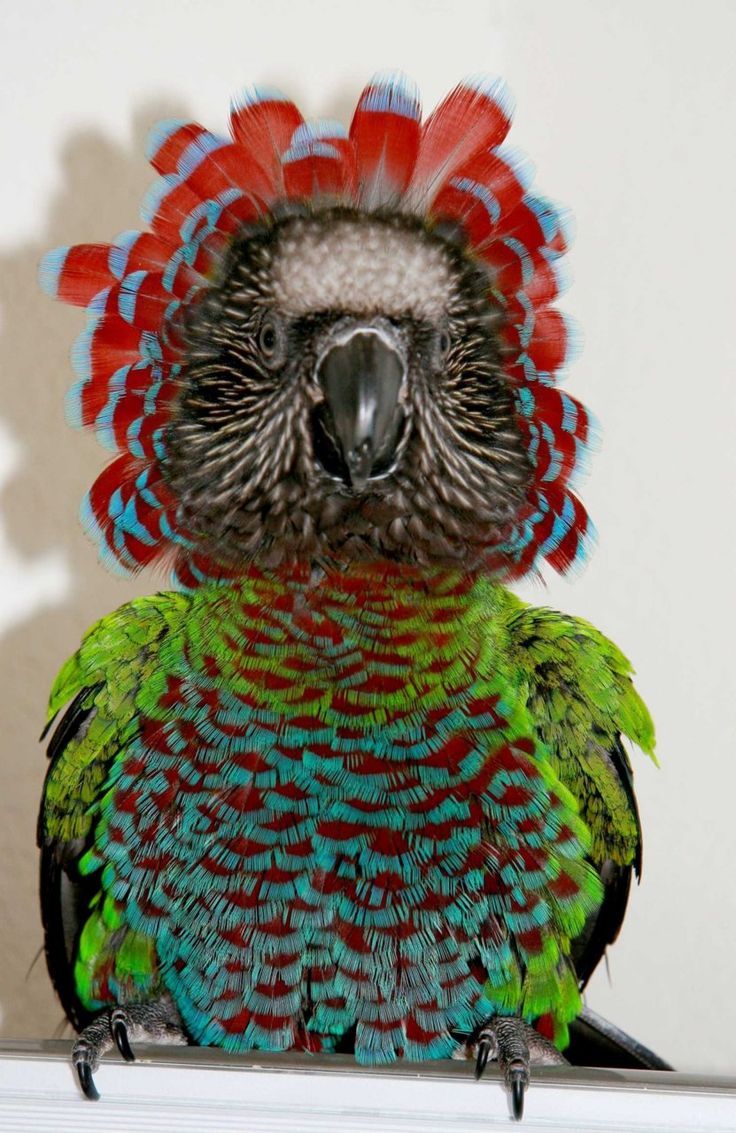
The Red fan Parrot (Deroptyus accipitrinus) is unmistakable for its showy colours. Has the forecrown and crown yellowish white, fading is back to Brown with striped pale in the part back from the neck and a bordered of feathers elongated in form of collar of color red Bordeaux in its base and blue bright in the tips; lores brown; cheeks, throat, sides neck and supercilii area, brown, strongly striped with shades yellow.

The upperparts are green. The under wing-coverts medium-sized and small are green; primary coverts of color blue dark dark. Primaries blackish, secondaries Green with dark tips. Under, the wings green, flight feather blackish. Sides of chest and belly green; center of chest and the belly red Bordeaux with blue tips, creating an effect bleached blue and Red, sometimes with a little bit of green, especially in the part superior of the chest; the thighs and undertail-coverts green. Upper, the tail green with blue tips, outer feathers with blue in the outerweb and Red hidden in the base of the innerwebs; undertail, the tail black. Bill blackish, paler at the tip; cere black; yellow the irises; legs dark grey.

It is not possible to determine the sex safely by their appearance.

Immature has lower jaw of color Horn and a rainbow Brown warm.

Description 2 subspecies

  • Deroptyus accipitrinus accipitrinus

    (Linnaeus, 1758) – Nominal. With the forecrown whitish.


  • Deroptyus accipitrinus fuscifrons

    (Hellmayr, 1905) – With the forecrown dark brown.

Habitat:

The Red fan Parrot living in the jungle tropical of land low, preferring the formations of land firm, including the ground slightly wavy or of the hills (perhaps due to a greater diversity of plants of which is fed). Apparently prevents them forests and marshes, edge of forest and clear, but there is a report of birds in forest flooded in the drainage of Morona River, Peru, and feeds mainly on riverine forests in Venezuela. Only comes to them 400 meters in the southeast of Colombia and a 200 metres in Venezuela.

Not is very gregarious, are distributed in pairs or small groups of 3-4. On rare occasions, until 10. Pre-breeding aggregations appear to break up into pairs or trios at the onset of nesting. Rest in the cups give the trees in small groups (Perhaps alone in tree cavities). It feeds mainly in the canopy.

Not are very sociable. They show an appearance of Raptor, Deploying the feathers of the back of the head fan.

Reproduction:

Nest in tree holes, including an old nest of Woody Woodpecker, for example of a Woodpecker grebes (Campephilus rubricollis). The rapid flapping of wings, followed of a mild decline of sliding, they give a deeply undulating display flight during the breeding period. Breeding March-June, Venezuela; January-March, Guiana; February-April, Suriname; December-February, Brazil. Clutch 2-3 in captivity.

Food:

Feeds of leaves and outbreaks of Bombacopsis, unripe fruits of Dialium, fruits of Euterpe, Attalea, fagifolia, Astrocaryum; Also takes Inga and guava in cultivated areas.

Distribution:

Size of the area of distribution (reproduction / resident): 4.240.000 km2

Discontinuous. Amazonia, from the South of Venezuela to the northeast of Ecuador and Peru, the Guianas and Amazonia Brazil.

Distribution 2 subspecies:

  • Deroptyus accipitrinus accipitrinus

    (Linnaeus, 1758) – Nominal. From the South-East of Colombia to Venezuela, the Guianas; Northeast of Peru and North of Brazil.


  • Deroptyus accipitrinus fuscifrons

    (Hellmayr, 1905) – Brazil, to the South of the amazon rivers (from For to the North of Mato Grosso) possibly Bolivia.

Conservation:


minor concern


โ€ข Current category of the Red List of the UICN: Least concern.

โ€ข Population trend: Decreasing.

Justification of the population

The size of the world population It has not been quantified, but this species is described as ยซquite commonยป (Stotz et to the., 1996).

Justification of trend

It is suspected that this species has lost 24-31.3% of habitat suitable within their distribution during three generations (23 years) based on a model of Amazon deforestation (Soares-Filho et to the., 2006, Bird et to the., 2011). But, given the tolerance of the species to the effects of fragmentation / degradation / edges and / or the magnitude of the losses global, It is suspected that will decrease in <25% en tres generaciones.

"Red fan Parrot" in captivity:

The Red fan Parrot or Parrot Hawk is a bird very Intelligent, playful and very beautiful. However and, Despite its undeniable appeal, It is not ideal to have captive species. Are extremely nervous and in occasions this is translated in that is start or bite them feathers or even can get to self-harm is.

Are parrots extremely noisy and having a copy inside the house does not seem too tolerable and yes, a tough test for our patience.

Alternative names:

Red fan Parrot, Hawk-headed Parrot, Red-fan Parrot, Red-fen parrot (English).
Papegeai maillรฉ, Perroquet accipitrin, Perroquet maillรฉ, Perroquet papegai (French).
Fรคcherpapagei (German).
Anacรฃ, curiba-bacabal, maracanรฃ-guaรงu, papagaio-de-coleira, vanaquiรก (Portuguese).
Lora Gavilana, Loro Cacique, Quinaquina (espaรฑol).
Loro Cacique, Jia-Jia (Venezuela).


scientific classification:

Carl Linnaeus
Carl Linnaeus

Order: Psittaciformes
Family: Psittacidae
Genus: Deroptyus
Scientific name: Deroptyus accipitrinus
Citation: (Linnaeus, 1758)
Protonimo: parrot accipitrinns


Images of ยซParrot Caciqueยป :

Videos "Red fan Parrot"

——————————————————————————————-

ยซChief Parrotยป (Deroptyus accipitrinus)


Sources:
– Parrot Book, Parrots and macaws Neotropical
avibase
– mundoexotics.com
Birdlife

– Photos: Dennis Avon, National Zoo - Washington DC, sutterkane.Tumblr.com, www.zoochat.com

– Sounds: Roger Ahlman

โ–ท The world of Pets: Dogs, cats, birds, reptiles, amphibians

Scaly breasted Lorikeet
Trichoglossus chlorolepidotus

Scaly breasted Lorikeet

Content

Description

23 cm.. length and a weight between 75 and 95 gr.

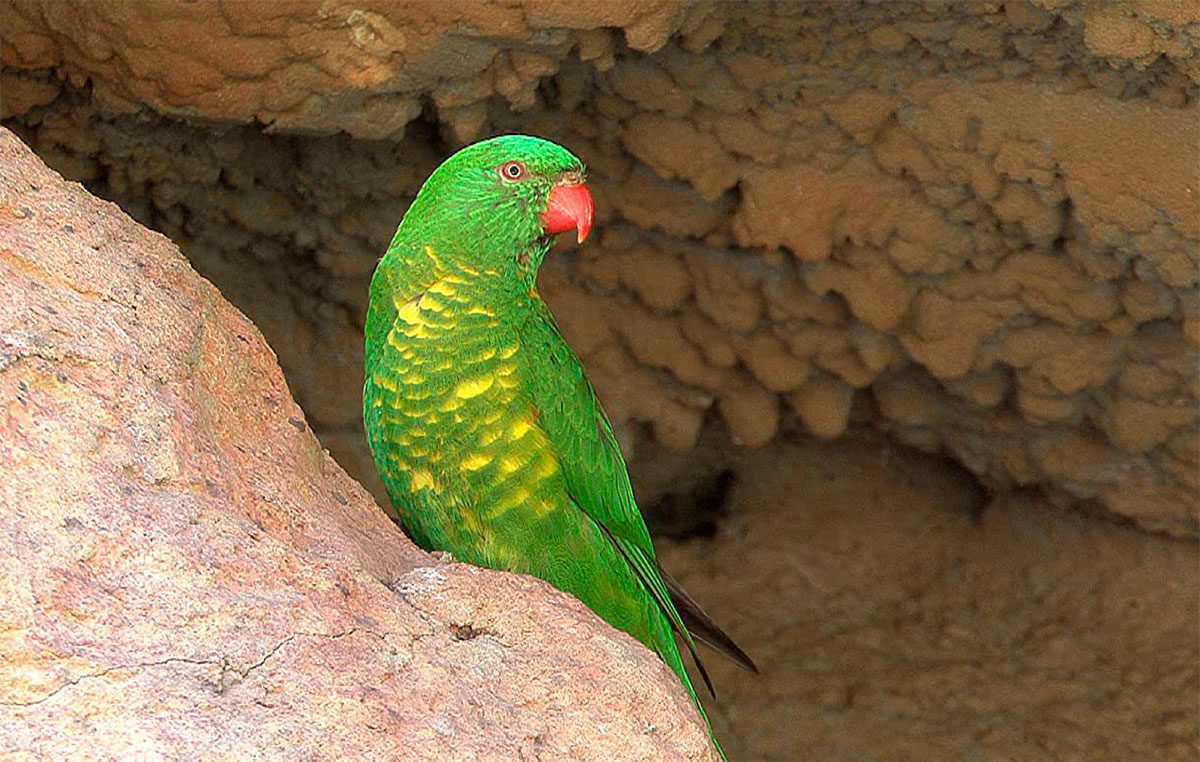
The plumage of the Scaly breasted Lorikeet (Trichoglossus chlorolepidotus) is usually green.

The part back from your neck, the throat and the chest has several brands of yellow.
Under its tail, the the thighs and the sides of the body they are clearly marked with yellow.
Under its wing , and more specifically by the part inferior of them flight feather, its color is reddish orange.
The circle around the eyes is narrow and grey. Its irises is yellowish-Orange. The legs are ash and the bill orange.

The immature are equal to adults, but with less scalloped yellow; the thighs Brown pale and tail shorter. The bill brown. The eye ring White grey.

Habitat:

The Scaly breasted Lorikeet they are distributed by many forest habitats, including parks and Gardens located on the outskirts of cities and farmland, where are the flowering trees present.

They usually found in coastal areas and adjacent plateaus.

They have a strong preference for agricultural land and coastal scrub that are dominated by trees of the genus Banksia.

They can also be seen along the rivers, to the West of the Great dividing range. They can live up to 600 m.

The Scaly breasted Lorikeet they have quite similar patterns to the of the Coconut Lorikeet. It is not uncommon to find them together in mixed flocks where one of the two species generally outnumbers the other..

Most of the time, the Scaly breasted Lorikeet they live in pairs or in small groups of up to 10 individuals. They are most active at dawn, shortly after the dormitories are scattered.

They usually roam locally. These short trips are motivated by the search for food.

During flowering of trees, large groups may intervene if resources are abundant. The dispersion of groups is immediately after flowering.

In urban districts, are sedentary Since the sources of food are abundant in the gardens during all the year.

They are particularly friends of cultivated fruit, arriving to cause much damage in the orchards.

These birds have a flying fast and direct. When they are in the air they are immediately identifiable by its green head and bright orange red wings bass. When flying over the tops of them trees with rhythms fast, their wings produce a buzzing sound which is easily audible.

Reproduction:

The nesting season comprises of mayo to February in the North of the area of distribution, probably related to the decrease of rainfall.

In the southern part of the State of Victoria It takes place between August and January.

The Scaly breasted Lorikeet They nest in tree cavities, usually at a considerable height from the ground. They cover the bottom of the nest with a layer of sawdust and then lay two or three white eggs., oval in shape.

The incubation lasts a few 25 days. The male spends most of its time near hollow, but it does not seem to participate in the incubation. Both parents feed the chicks until they leave the nest, of 6 to 8 weeks after hatching.

Food:

The Scaly breasted Lorikeet they have a scheme rather similar to the of the Coconut Lorikeet. Both species feed primarily on nectar and pollen from the flowers especially the Niaouli (Melaleuca quinquenervia).

They feed also on flowers, berries, fruit, seeds, small insects and their larvae. Are big lovers of the fruits cultivated. They also enter sorghum and corn fields because they crave small immature milky grains..

Distribution:

Size of the area of distribution (reproduction / resident): 2.310.000 km2

The Scaly breasted Lorikeet being endemic to the Australian continent.

Its area of distribution extends from Bamaga in the extreme north of Queensland the District of Illawarra, on the South coast of New South Wales.

These birds are sedentary and abundant in the North, nomadic and less numerous in the South. They were introduced in the District of Melbourne, in the State of Victoria.

Conservation:


minor concern


โ€ข Current IUCN Red List category: Least concern

โ€ข Population trend: Stable

The population World has not been quantified, but is estimated above 100.000 specimens.

The species is described as common in the center of its area of distribution and more rare toward the areas north and South of their area of distribution.

It is suspected that the population It stable in the absence of evidence of any reduction or substantial threats.

"Scaly breasted Lorikeet" in captivity:

Rare out of Australia; small number in the United States and the United Kingdom.

Gregarious, playful and loud. A bit messy due to a diet of nectar.
Its life in captivity ranges between 20 and 25 years.

Alternative names:

Scaly breasted Lorikeet, Scalybreasted Lorikeet, Scaly-breasted Lorikeet (ingles).
Loriquet vert, Loriquet ร  poitrine squameuse, Loriquet รฉcaillรฉ (French).
Schuppenlori (German).
Lรณris-verde-de-peito-escamosos (Portuguese).
Lori Escuamiverde, Tricogloso de Pecho Escamoso (espaรฑol).

Kuhl, Heinrich
Heinrich Kuhl

scientific classification:


Order: Psittaciformes
Family: Psittaculidae
Genus: Trichoglossus
Scientific name: Trichoglossus chlorolepidotus
Citation: (Kuhl, 1820)
Protonimo: Psittacus chlorolepidotus


Images ยซGreen-skinned Loryยป:

Videos "Scaly breasted Lorikeet"

——————————————————————————————————-

ยซGreen-skinned Loryยป (Trichoglossus chlorolepidotus)


Sources:
Avibase
– BirdLife.org
– Parrots of the World โ€“ Forshaw Joseph M
– Parrots A Guide to the Parrots of the World – Tony Juniper & Mike Parr

Photos:

– Josep de el Hoyo – IBC.lynxeds.com
– by Tobias Spaltenberger – Two Scaly-breasted Lorikeets at Taronga Zoo, Australia. – Wikimedia
– by Ken Havard – IBC.lynxeds.com
– by Aviceda – Wikipedia
– by Jeremy Eades – Wikipedia

Sounds: Peter Woodall (Xeno-canto)

โ–ท The world of Pets: Dogs, cats, birds, reptiles, amphibians

Collared Lory
Phigys solitarius


Collared Lory

Content

Description

The Collared Lory (Phigys solitarius) has an approximate length of 20 cm.. and a weight ranging between 75 and 85 g..

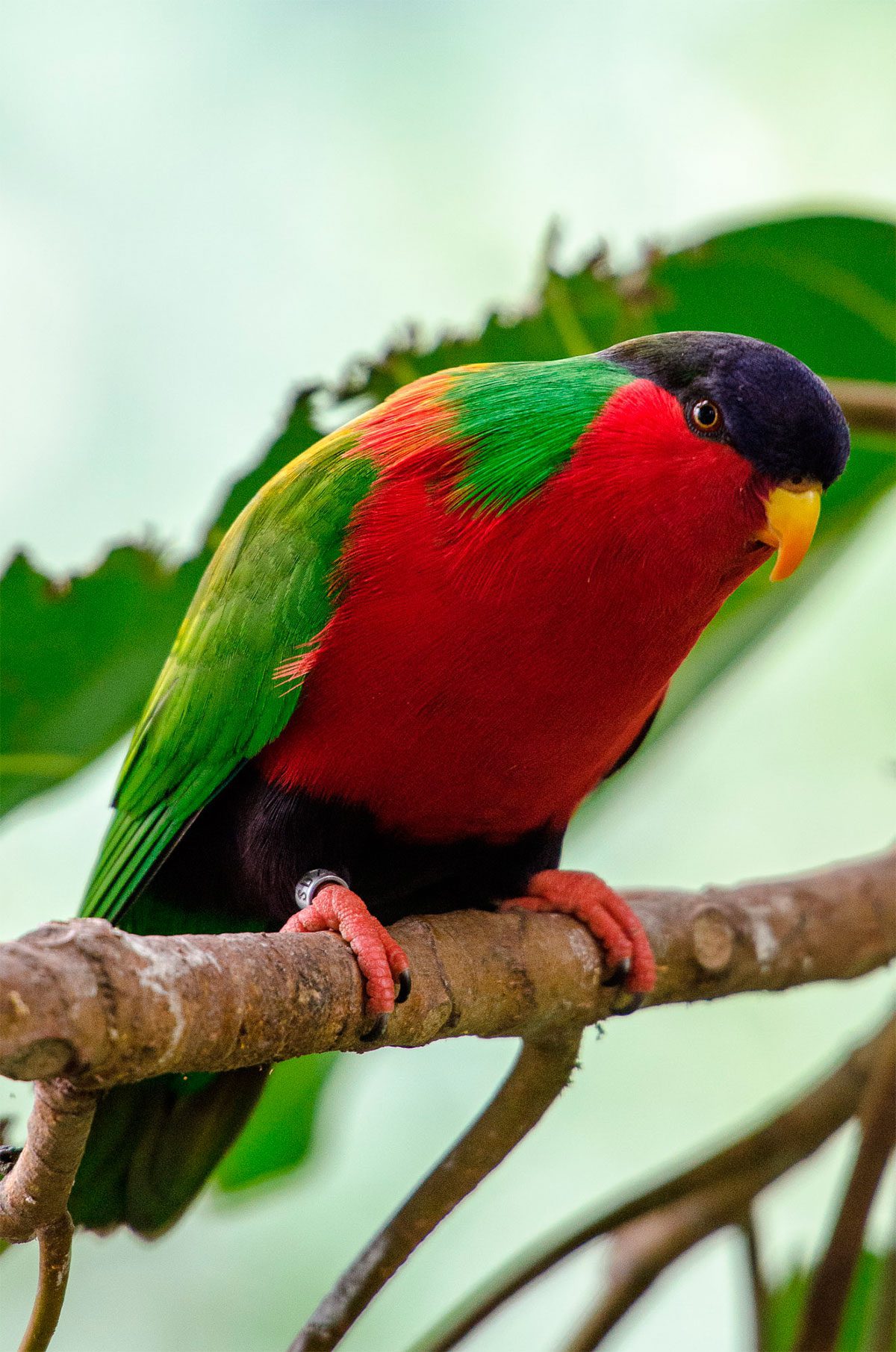
The upper zone of the crown it is dark purple, In contrast with the ear-coverts, cheeks and throat that have a bright color red Scarlet;

The front of the crown, occasionally, with a mottled red light;
The tail feathers of the neck are of a green living with completion in red and a colorful blanket.
Under the the mantle, rump and top of the tail, bright green.

Upper wing green colour with the inside of the flight feather and coverts, in black color.
Underwing coverts Red and green. Underparts Scarlet Red, but with the bottom of the abdomen, lower side of the rump and the thighs, in dark purple.
Orange-yellow spot in Central feathers of the tail. Undertail Matt Brown-Green, showing orange spots on the basis.

Bill orange; Iris from yellow to red; Orange yellow the legs.

The females has more green under the nape, less red in the the mantle, a pronounced green glow in the crown back and a bright purple on the crown front.

The immature show freckles slightly purplish color and some greenish hidden spots in the chest; crown Green rear: they lack the elongated feathers red of the nape up to eight months of age. They lack orange spots in the tail. Bill more Brown than adults; irises brown: legs dark.

Habitat:

Visible and noisy. Found usually in pairs or in small groups of five to fifteen members, Although flocks have also been of up to 50 birds . They are mainly distributed in the lowlands of humid forest, edge of the forest, plantations and second growth up to 1,200 m, but they can be found anywhere with flowering gardens.

It is usually more common in wet windward areas, being less common on agricultural leeward coasts.

The Collared Lory are Mobile and something nomads, they are prepared to travel to almost any habitat with trees in bloom.

Often seen flying over trees or feeding are loud in acrobatic groups.

Reproduction:

The nesting they occur in the second half of the year, especially after August. Two white eggs are placed in a hollow tree. Adults aggressively defend the nesting sites.

In an instance of captive breeding, the incubation lasted 30 days and the young bird left the nest almost nine weeks later.

Food:

The diet of the Collared Lory consists of seeds, nectar and flowers. Trees of your choice include the drala (Erythrina variegata), the coconut tree (Cocoa nuts) and the African tulip introduced and invasive (Spathodea campanulata).
Also eat fruits as the Mango (Mangifera indica).

Distribution:

The Collared Lory is endemic of the Fiji Islands, including the main islands of Vanua Levu and Viti Levu, In addition to Rabbi, Taveuni, Koro, Wakaya, Ovalau, Gau, Ono, Kadavu, Matuku, Moala and some islands in the Lau group (Naitaba, Vatu Vara, Lakeba). In the extreme south of the Fiji Islands group, the Collared Lory It is replaced by the Blue-crowned Lorikeet.

The species is common and the world population is estimated between 10.000 and 100.000 specimens.

Some are kept in captivity. Red feathers were previously used by the Samoan and Tongan to make edges of floor mats, but trade does not seem to have had an impact on the abundance of the species in Fiji. Some birds are reported, they have escaped in Tonga and Samoa.

Conservation:


minor concern


– Current IUCN Red List category: Least concern.

– The population trend: Stable.

The world's population has not been quantified, but the species is described as common in Viti Levu, the island of Vanua Levu and Makogai and rare in the Ngau island, Fiji.

The population It is suspected to be stable in the absence of evidence of any reduction or substantial threats.

"Collared Lory" in captivity:

Very rare to see them in captivity.

Alternative names:

Collared Lory, Solitary Lory, Ruffed Lory, Fiji Lory (ingles).
Lori des Fidji, Lori phigy (francรฉs).
Einsiedlerlori (alemรกn).
Lรณris-solitรกrio (portuguรฉs).
Lori Solitario (espaรฑol).

scientific classification:

Order: Psittaciformes
Family: Psittaculidae
Scientific name: Phigys solitarius
Genus: Phigys
Citation: (Suckow, 1800)
Protonimo: lone parrot

โ€œLonely Loryโ€ Images:

Videos "Collared Lory"

————————————————————————————————

ยซLonely Loriยป (Phigys solitarius)


Sources:

Avibase
– Parrots of the World โ€“ Forshaw Joseph M
– Parrots A Guide to the Parrots of the World – Tony Juniper & Mike Parr
– Birdlife

Photos:

1 – ยซPhigys solitarius - San Diego Zoo, California, USA-8a (1)ยป by DerekL123 from Cypress, USA – San Diego Zoo-48.jpgUploaded by snowmanradio. Licensed under CC BY-SA 2.0 via Wikimedia Commons.
2 – Collared lory (Vini [Phygis] solitarius) handjob by Chlidonias – ZooChat
3 – Collared Lory Perroquets – computer wallpapers
4 โ€“ Collared lory [Phigys solitarius] – Birds-pet-wallpapers
5 – By DickDaniels (http://carolinabirds.org /) (Own work) [CC BY-SA 3.0 or GFDL], via Wikimedia Commons

Sounds: Matthias Feuersenger (Xeno-canto)

โ–ท The world of Pets: Dogs, cats, birds, reptiles, amphibians

Fairy Lorikeet
Charmosyna pulchella


Fairy Lorikeet

Content

Description

18 cm.. length and a weight between 24 and 34 g..

The head of the Fairy Lorikeet (Charmosyna pulchella) is dark red with the back of the crown Black extending from above and behind the eyes up to the nape. Mantle Green with a black area below the nape and collar of color red dark at the height of the shoulders; under the back It shows a patch of dark violet interspersed with some green feathers on the ends; rump and tail coverts view from above of color green.
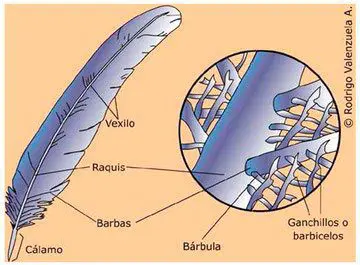
Wings Green with extremes of color black in them flight feather and in the internal parts of the coats. below the wings Red with coverts marginal green; flight feather blackish.

The underparts Red with stripes of pale yellow in the center of the chest, the thighs purple with yellow stripes. The tail view from the top of green at the top with a black shaft in the Center and the rest of red and yellow at the tip; view from below, the tail is yellow, bathed in red and green ends.

The bill is orange with gray tip; irises yellow red; legs oranges.

The female shows a color green beige, not red, on the sides and a yellow patch in the flanks that extends to the sides of the rump.

The female of the subspecies Rothschildi also shows more green in the underparts males and a green mottling on the upper part of the chest.

The Immature They show the yellow patch of the flanks more defined than the females. The lower part of the back, mainly green with some blue-violet. Top of the chest Green mottled without clearly defined yellow stripes adult. Crown Red with black patch restricted to the nape and mixed with the green of the upper mantle. Lack of the Red of the part back from neck clearly defined in adults. Yellow area at the bottom of the flight feather. Iris brown. Beak and feet grayish brown.

Subspecies description

There are two subspecies including the nominal. A third, Charmosyna pulchella beautiful, described by Devis (1900), is considered here as Charmosyna pulchella pulchella.

  • Charmosyna pulchella pulchella

    : (Gray,GR, 1859) – The nominal


  • Charmosyna pulchella rothschildi

    : (Hartert, 1930) – The patch of the crown descends to find is with them eye; Green fusion behind the yellow lines of the chest, and green fusion in the flanks and the thighs (that can also show some yellow stripes); without the Red of the neck and much less defined the violet patch in the lower part of the back.

Habitat:

Nomads. They are mainly distributed in montane forests, at the edges of forests and secondary growth forests. Its preferred habitat are the mountains between 500 and 1.800 m, but also found in lowlands up to the level of the sea and in the mountains up to 2.300 m.

Found in pairs or flocks of 15 or more members, uniting in the tops of trees in flower with others Charmosyna lorikeets, including the Josephine's Lorikeet.

Reproduction:

In captivity it nests continuously, with incubation of 25 days shared by both parents. Usually, It lays two eggs in a hole in the base of one epiphyte. In nature it is intended that nests between January and April (Pratt picked up breeding males in March).

Food:

It feeds on pollen and nectar.

Distribution:

The Fairy Lorikeet is distributed between New Guinea in Irian Java (Indonesian) and Papua New Guinea, from the East of Vogelkop to the peninsula of Huon. Owen Stanley mountains and southeastern intervals.

Subspecies distribution:

  • Charmosyna pulchella pulchella

    : The nominal


  • Charmosyna pulchella rothschildi

    : The mountains Cyclops and the slope North of the mountains on the idenburg river (Irian Java).

Conservation:


minor concern


โ€ข Current IUCN Red List category: Least concern.

โ€ข Population trend: Stable.

The world's population has not been quantified, It is thought that it surpasses the 500.000 birds. the species, according to information, is abundant in some areas, but few in others due to the trade (pit et to the., 1997). Suspected that the population is stable in the absence of evidence of any reduction or substantial threats.

"Fairy Lorikeet" in captivity:

A small number of captivity.

Alternative names:

Fairy Lorikeet, Little Red Lorikeet, Little Red Lory (ingles).
Lori fรฉรฉrique, Lori ร  croupion noir, Lori fรฉerique, Loriquet ร  croupion noir (French).
Goldstrichellori (German).
Lori Lindo (espaรฑol).

scientific classification:

Order: Psittaciformes
Family: Psittaculidae
Scientific name: Charmosyna pulchella
Citation: Gray,GR, 1859
Protonimo: Charmosyna pulchella

ยซCute Loriยป Images:

————————————————————————————————

ยซLori Lindoยป (Charmosyna pulchella)


Sources:

Avibase
– Parrots of the World โ€“ Forshaw Joseph M
– Parrots A Guide to the Parrots of the World – Tony Juniper & Mike Parr
– Birdlife

Photos:

1 – animalphotos.me
2 – by W. Voit – koppiekrauw
3 – animalphotos.me
4 – Author iggino in Vogelpark Walsrode, Walsrode, Lower Saxony, Germany – lynx
5 – in Neues vom Loro-Parque – koelle-zoo

โ–ท The world of Pets: Dogs, cats, birds, reptiles, amphibians

Colasisi
Loriculus philippensis


Loriculo Filipino

Content


Anatomy-parrots

Description

14 cm.. length and a weight between 31 and 40 g..

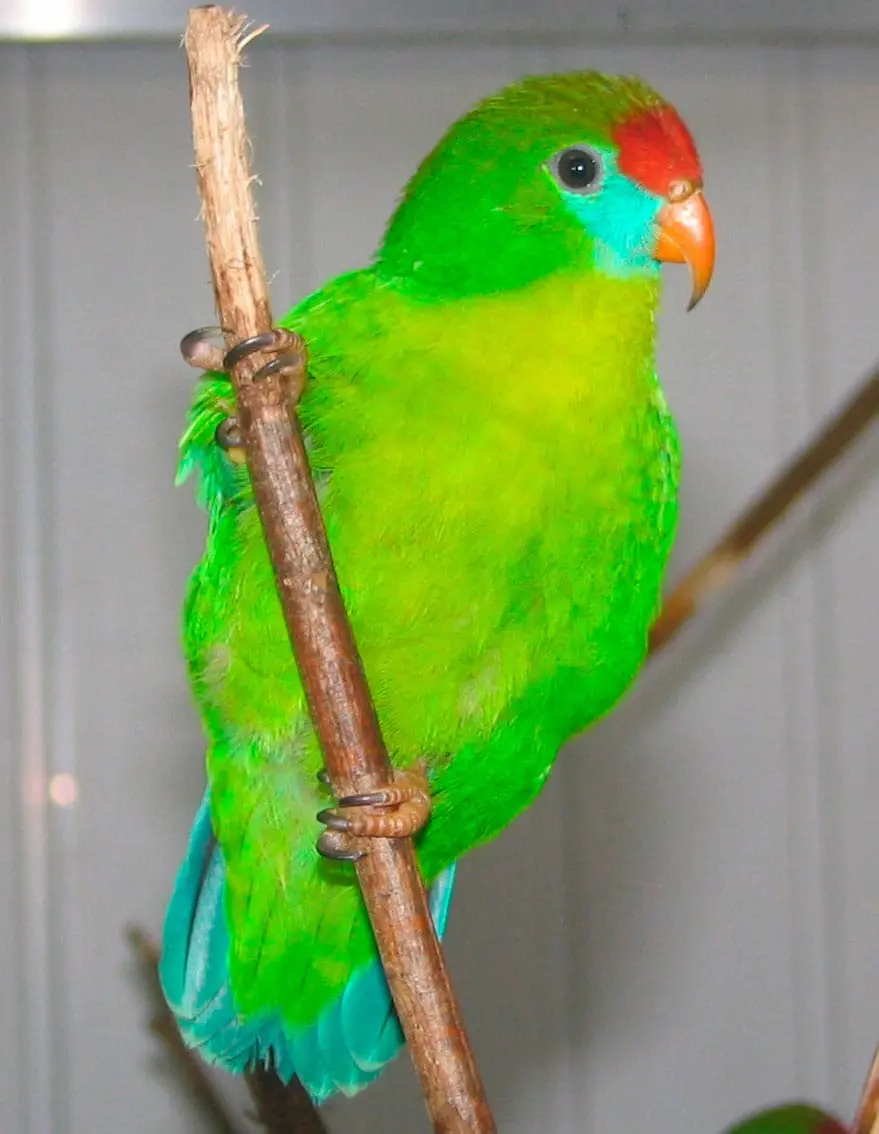
The head of the Colasisi (Loriculus philippensis) is bright green with a patch of narrow Scarlet color on the front of the Crown, bordered orange-red color on the back edge; yellowish-green Chin: narrow collar on the back of the Orange and red neck, with a wash light yellowish in the neck.

Bright green upperparts with dark crimson rump and uppertail coverts (lower sides of light blue). Bright green wings with vane internal to the darker flight feathers. Under, the wings of turquoise-blue with the exception of the outermost coverts which are green. Bright red throat Center, merging to red-orange in the center of the chest (yellow on the bases of feathers); rest of the lower region of bright green, lighter and more yellow than the upper region. Upper, the green tail; Blue below.

Coral red beak; dark brown irises; dark orange legs.

The female has a face marked in blue and does not have the Red bib, that is replaced by a greenish yellow colour wash. The female Crown is washed in yellow-orange (stronger than in the male).

Young birds have a more off Crown and paler beak.

Subspecies description
Subspecies
  • Loriculus philippensis apicalis

    (Souance 1856): Two aberrant samples previously attributed to theLoriculus salvadorii. They are larger, with less red on the Crown, more blue on the tail, and darker green colour. All the Crown of this subspecies is Scarlet, merging in Orange on the back of the neck and orange on the mantle in both sexes (duller in females). Bright red in the hip and more orange on the top.

  • Loriculus (philippensis) bonapartei

    (Souance 18563): You have the back of the head with pronunciation orange hue, Pico black and grey legs.

  • Loriculus philippensis bournsi

    (McGregor 1905): The male with red only in the front and light yellow area in the center of the Crown (female much less yellow on the Crown), upper part of the Crown of the male less yellow shows that the L. p. Regulus. Orange line on the nape of the male is less clear in the female. Female with less blue in the face that the nominal species.

  • Loriculus philippensis chrysonotus

    (Sclater, PL 1872): Frontal area and rest of the crown bright red that extends in golden yellow color on the mantle, and showing a fine reddish collar on the back of the neck. Male with more orange in the lower part of the throat patch. The female Crown similar but less marked.

  • Loriculus philippensis dohertyi

    (Hartert 1906): Maybe more orange in the mantle, but hardly different to the L. p. apicalis.

  • Loriculus philippensis mindorensis

    (Steere 1890): Orange-yellow on the neck line. Crown Green. More extensive turquoise patch on both sides of the rump.

  • Loriculus philippensis philippensis

    (Statius Mรผller 1776): Nominal

  • Loriculus philippensis regulus

    (Souance 1856): Similar to the L. p. bournsi but male with much more yellow on the Crown (female shows a more subdued yellow broadcast, but more than in the previous race). Nape line weaker than in the bournsi. Male with more Scarlet patch.

  • Loriculus philippensis siquijorensis

    (Steere 1890): Male with less red bib and the red spot of the largest Crown than in the nominal species. Back of the Green Crown. Falata neck mark. Female with more blue in the face.

  • Loriculus philippensis worcesteri

    (Steere 1890): Male Scarlet throat patch smaller than that in the L. p. chrysonotus. Both sexes show a more extensive Crown of orange-red in the rear margin. There is a small patch on the back of the neck of orange color and a light reddish color in the mantle of diffusion.

  • Loriculus (philippensis) camiguinensis

    (Tello, JG 2006): has mainly green plumage, with throat, front side of the face and thighs of azure-blue; the front, the pileus, the obispillo and the top of the red tail, While the rest of the tail is blue. Males and females are identical in appearance, What is unusual in others Philippine parrots, Since only males of other species have red forehead.

Habitat:

The species is found along the edges of the forest, secondary growth, Bamboo forests, areas cultivated near villages, orchards and plantations of coconut. The birds are alone, in pairs or in family groups, sometimes in small flocks, sometimes with other birds.

Reproduction:

The breeding season has been recorded from April to August.. Three eggs are deposited and incubated by the female during 20 days, the young leave the nest in five weeks.

Food:

They feed in the upper levels of flowering plants or fruit trees, sometimes at lower levels, flower, nectar, fruit (including figs) and seeds, sometimes intoxicated by consumption of fermented coconut nectar (coconuts).

Distribution:

Limited to the Philippines (less the Sulu archipelago), where are widespread and resident except in Palawan. Its abundance varies according to the subspecies.. In general, the species is locally common up to 1000 meters above sea level, but have been recorded at altitudes of up to 2.500 m (Mount Apo, Mindanao).

Subspecies distribution
Subspecies

Conservation:


minor concern


– Current IUCN Red List category: Least concern

– The population trend: Decreasing

The world population is considered to be above the 20,000 exemplary but decreasing due to loss of habitat. The subspecies Mindoro is considered as threatened, and both subspecies of Cebu as Siquijor, are nearly extinct the loss of habitat (as these birds are commonly caged and traded between islands, contemporary records of birds from Siquijor they require confirmation to determine whether they refer to the breeds).

The combined population of Mindoro, Sibuyan, Blacks, Surigao del Sur, Tables, Romblon, Masbate, Ticao, Cuimaras and Basilan (subspecies L. p. mindorensis, L. p. bournsi, L. p. Regulus and L. p. dohertyi) probably add in total not more than 5.000 birds.

"Colasisi" in captivity:

Very rare.

Alternative names:

Colasisi, Philippine Hanging-parrot (ingles).
Coryllis des Philippines (French).
Philippinenpapageichen (German).
Loriculus philippensis (Portuguese).
Lorรญculo Filipino (espaรฑol).

scientific classification:

Order: Psittaciformes
Family: Psittaculidae
Scientific name: Loriculus philippensis
Genus: Loriculus
Citation: (Statius Mรผller, 1776)
Protonimo: Psittacus philippensis

Images ยซFilipino Loriculusยป:

Videos "Colasisi"

————————————————————————————————

ยซPhilippine Lorikeetยป (Loriculus philippensis)


Sources:

Avibase
– Parrots of the World โ€“ Forshaw Joseph M
– Parrots A Guide to the Parrots of the World – Tony Juniper & Mike Parr
– Birdlife

Photos:

(1) – a female perched. by iggino – lynx
(2) – Birds-pet-wallpapers – link
(3) – Loriculus philippensis camiguinensis (Author AlexKant) – Crocolandia Foundation – ZooChat
(4) – Loriculus p. apicalis, male, By iggino – lynx
(5) – tapety-papousci

Sounds: David Edwards (Xeno-canto)