Content |
|---|
All breeds and species.
Content |
|---|
Of 12,7 to 15 cm in length and a weight between 42 and 58 g..
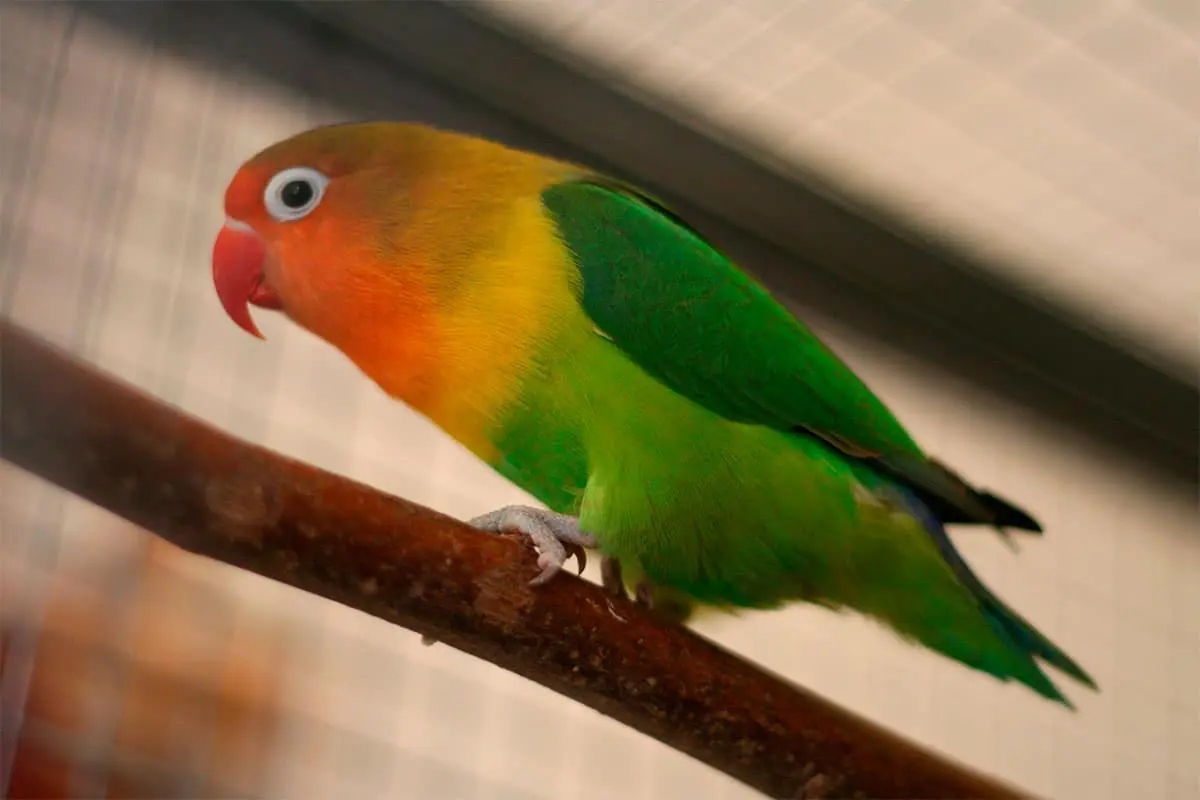
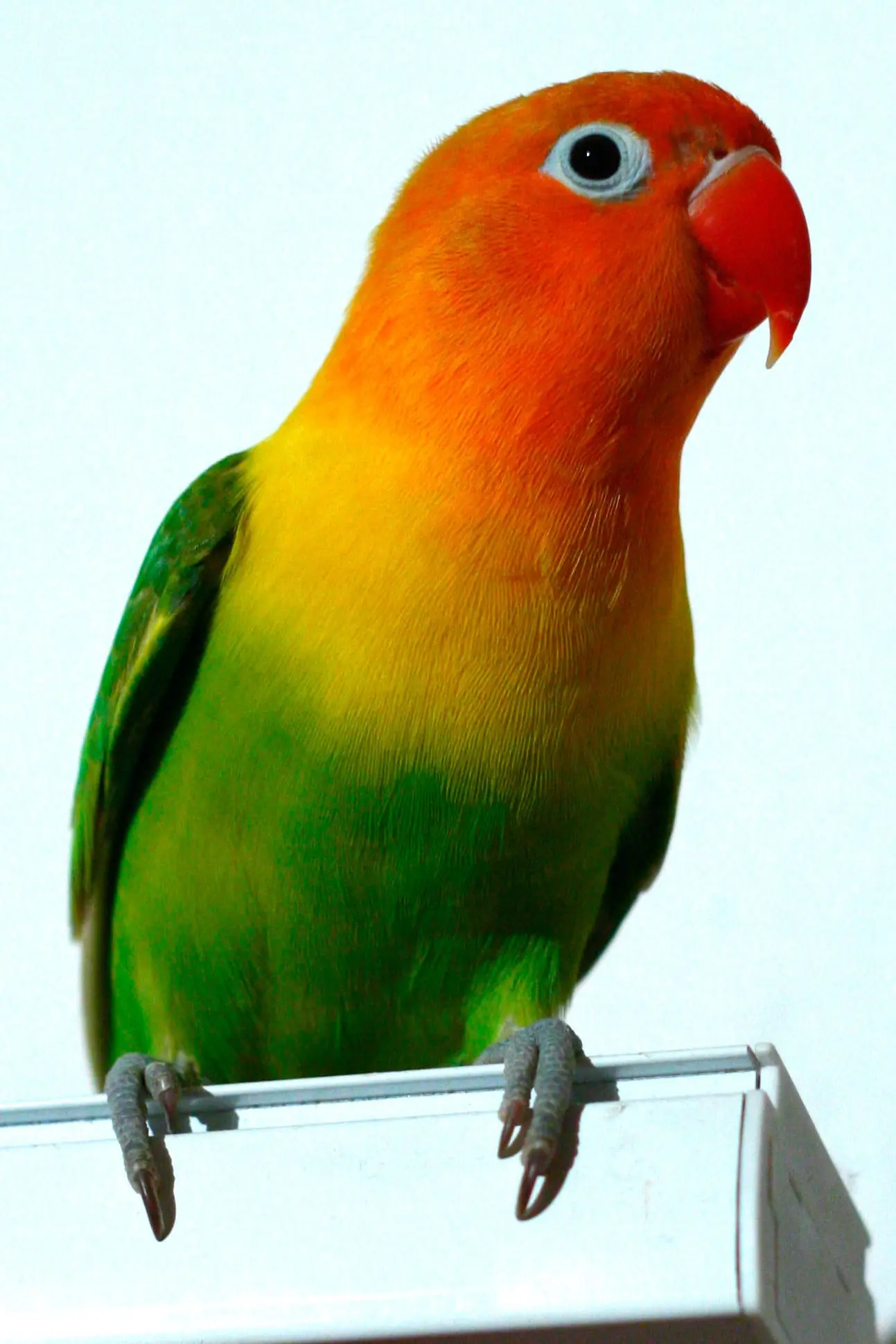
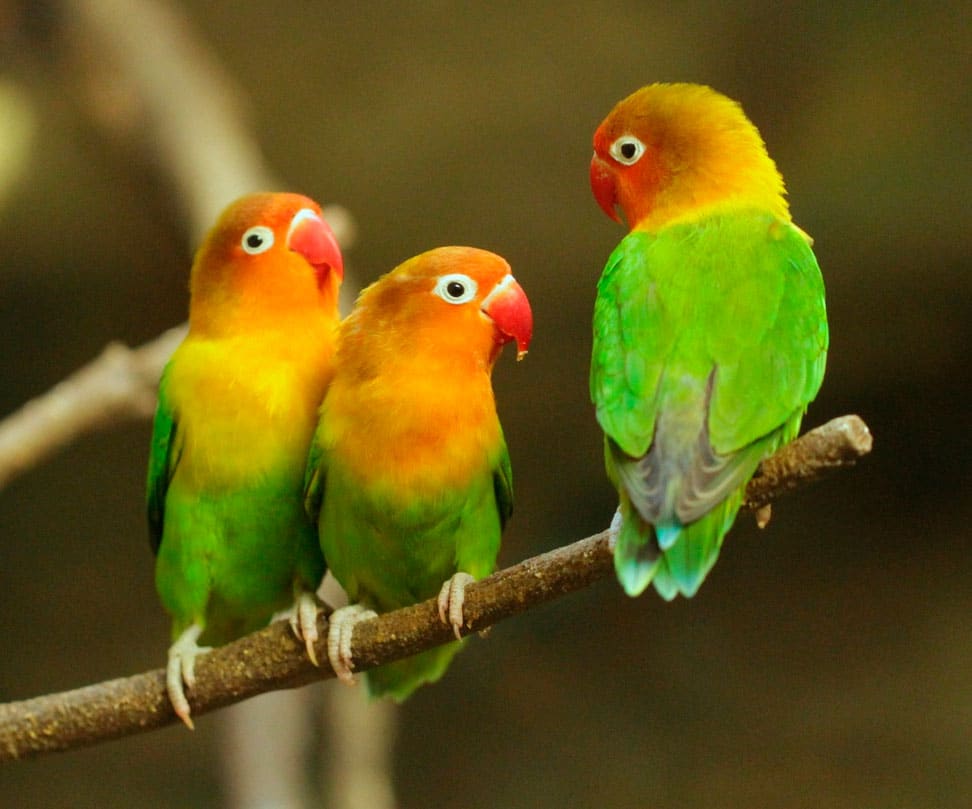
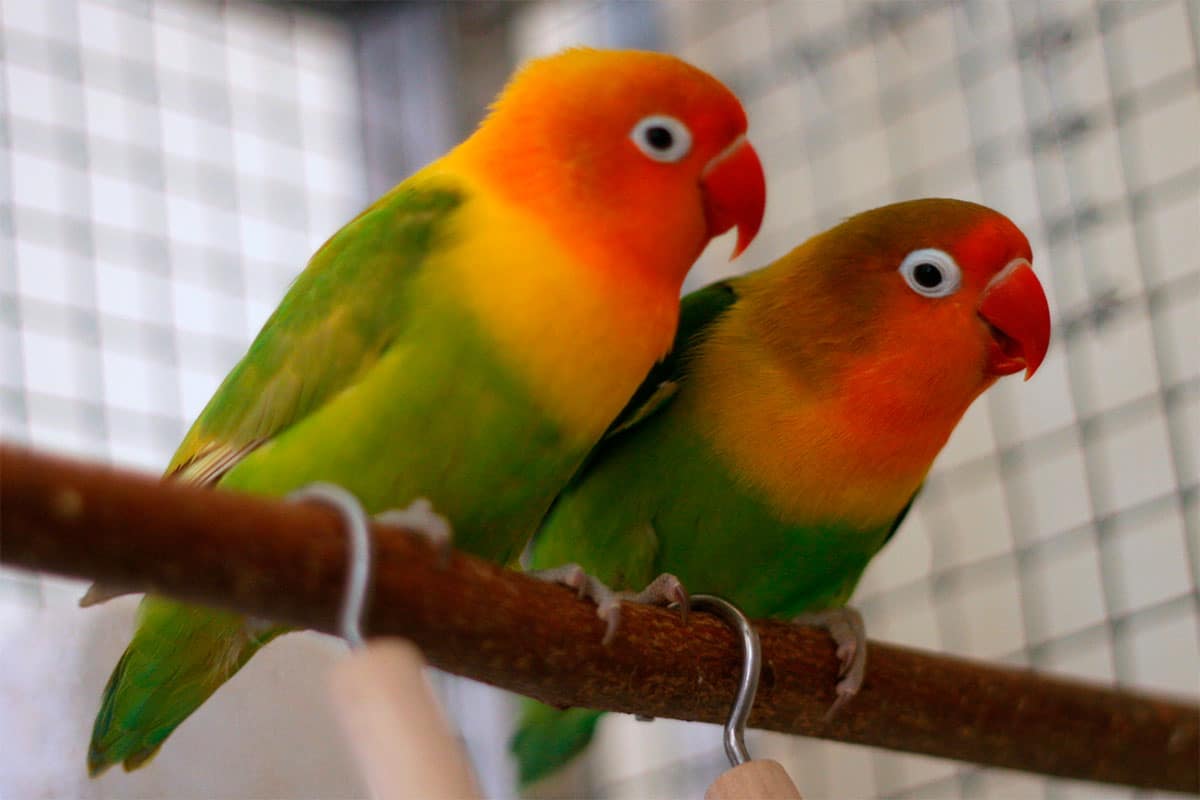
The Fischer's Lovebird (Agapornis fischeri) has a frontal band, the lores and cheeks bright red with an orange shaded in red chin and throat. Upper chest is orange-yellow; crown and nape They are brown. Width collar adjacent yellowish brown and yellowish orange band at the top of chest.
The the mantle, scapulars and front of the rump, are green; the back of the rump and uppertail-coverts dark blue. Upper, the wing-coverts green; primaries and secondaries blackish brown with green edges to the vane outer. Under, the wing-coverts green; underside of flight feather grey-black. The low area chest up to the undertail- coverts pale yellowish green.
Tail bluish green, tipped yellow and bordered by a black line.
The bill is red, whitish towards the base of the upper jaw; cere white; irises brown; periophthalmic ring white of a 2 mm; legs pale grey.
Both sexes similar, indeed there no sexual dimorphism Between both.
One method that is very effective in distinguishing the sex of our Fischer's Lovebird It is the bone of the pelvis, being more open in females than in males.
The immature They have reduced the blue in the uppertail-coverts and they are both duller than adults, particularly on neck, the head and the chest; black markings, sometimes at the base of the upper jaw.
The Fischer's Lovebird They inhabit wooded grasslands with acacias, Commiphora; especially in the west, also in more open grasslands with Adansonia and cultivated areas. More common in sheets with different types of acacias and trees of the genus Egyptian balanites; also in terrestrial flora zones including Penisetum, Digitaria, Themeda and pastures Eustachys.
In the south of its range They are present in the forest with palm trees Borassus aethiopum.
When the season is dry, They can also be seen in areas of riverine forests Ficus, Boolean, Tamarindus, Aphania, Garcinia and Eckberg.
Avoid wooded savannah type miombo.
usually in altitude between 1,100-2.000 m. Often near water, especially in hot weather.
Gregarious, at least outside the breeding season , and generally in small flocks. Sometimes more important meetings form, for example, where abundant food.
In Tanzania They meet roosting nests leveraging Rufous-tailed Weaver (Histurgops ruficauda).
The main known predators Fischer's Lovebird they are the Borni Falcon (Falco biarmicus).
The Fischer's Lovebird They breed in colonies.
The breeding It takes place from January to April and in June and July, coinciding with the dry season; the exact timing depends on the locality.
Most of the nests They are located 2.15 meters above the ground, at the base of leaves overhead palm, in the holes and cracks of dead trees or dead branches and live trees, sometimes nest on cliffs.
The nest It comprises grass stalks and peel strips carried by the female in his beak.
The Clutch size in captivity is three to eight eggs, with a period of incubation of 23 days and period incipient of 38 days.
The diet of the Fischer's Lovebird is mainly granivorous. It feeds on seeds such as Pennisetum mezianum, also it feeds millet and corn, although the species does not come to be considered a serious pest for crops; Also they take seeds Acacia directly from trees, grass Achyranths asper, fallen berries and fruit Ficus, Rhus shaggy and Commiphora.
They need to drink daily.
The Fischer's Lovebird They are endemic to the north and northwest Tanzania from Kondoa in the South-East, Serengeti National Park, in the north and the Lago Manyara in the East; possibly closer to the border Kenya in some areas.
In Rwanda and Burundi the species is either a recent natural settler, or I asilvestrado from 1970, or an irruptive visitor in response to drought.
Observed on the islands Ukerewe and KNIT in southern Lago Victoria.
Wild populations established in the region Dar es Salaam and Thong in Tanzania, and around Mombasa, Nairobi, Naivasha and Isiolo, in Kenya.
Probably some Local movements in the dry season with irruptions in drought years. Within its tiny range, is a common bird, with large flocks in some areas, scarce and seemingly in decline, especially outside protected areas where low density is attributed to the capture for trade.
There is a self-sustaining wild population derived from escapes from captivity in Southeast France, where Yellow-collared Lovebird (Agapornis personatus) also they escaped, along with hybrids also observed.
A big number of Fischer's Lovebird in captivity.

• Current Red List of UICN: Near threatened
• Population trend: Decreasing
The population of the Fischer's Lovebird release has been estimated to range between 290.205 and 1.002.210 birds.
There has been a significant population decline Since the Decade of 1970, mainly because of widespread trapping for the wild bird trade.
The Fischer's Lovebird wild bird was the most traded in the world 1987 and was the most popular wild parrot imported into the then European economic community, representing about 80% exports of parrots in Tanzania (RSPB 1991).
The legal collection for export has been stopped, but the population remains much lower than it was, and trade could start again (Moyer 1995).
The species hybridized with the Yellow-collared Lovebird (Agapornis personatus) in the nature, but not within the natural range of the species (there is a range of overlap but the Fischer's Lovebird It appears to be a non-breeding visitor habitat Yellow-collared Lovebird [N. Baker a slightly. 1999, Morton y Bhatia 1992]) so this is unlikely to pose a threat.
Conservation Actions Proposed
– Conduct surveys to obtain an estimate of the population-date.
– Monitor population trends through regular surveys.
– It prevent capture for export to start again. Investigate the extent of hybridization with the Yellow-collared Lovebird (Agapornis personatus).
The Fischer's Lovebird They have been kept as pets from, approximately, mid-sixteenth century. They became part of the trade in live birds 1926. The first successful captive breeding of Agapornis fischeri It was documented 11 in January of 1928. For the year 1931, the berlin zoo (Germany) they had raised 68 copies successfully in captivity. Today they are bred and sold as pets, mainly in the United States and Europe. In 1987 was the most traded bird species in the world.
The Fischer's Lovebird they are difficult birds to keep healthy in captivity. Son active birds they need a lot of space. When you are confined in a cage, health tends to deteriorate. Instead of being active and vocal, often they sit on the floor of the cage in a corner. physical problems such as negative young and the overweight also they shortened their longevity.
Being very active birds and require wide cage (a minimum of 50 x 50 x 75 cm. to a bird and 65 x 65 x 75 cm for a couple.). It is appropriate to give a little spot inside the cage to hide in when they feel insecure.
Surprisingly, they don't seem to have much trouble acclimatizing to cold weather even though their original habitat is tropical. If they kept away from drafts, they can withstand the long winters on other continents.
If allowed out of his cage must be very careful not to have utensils close that they can damage or may damage, they are avid chewers, they have strong beaks and can quickly cause damage.
They are very vocal birds and their shrill noise can be a nuisance.
.
Of all species of Lovebirds, the Fischer's Lovebird He is known to be the most acrobatic.
With regard to its longevity, a demographic study suggested that these birds are aging rapidly with maximum longevity 7,7 years. An exemplary, as indicated sources, lived 12.6 years in captivity. Maximum longevity could be underestimated; More studies are needed. It has also been informed by other sources that these animals can live up 32,2 years in captivity, but this has not been verified.
– Fischer’s Lovebird (English).
– Inséparable de Fischer (French).
– Pfirsichköpfchen (German).
– Inseparável-de-fisher (Portuguese).
– Inseparable de Fischer, Agapornis Fischer (español).

– Order: Psittaciformes
– Family: Psittaculidae
– Genus: Lovebirds
– Scientific name: Agapornis fischeri
– Citation: Reichenow, 1887
– Protonimo: Agapornis Fischeri


Sources:
– Avibase
– Parrots of the World – Forshaw Joseph M
– Parrots A Guide to the Parrots of the World – Tony Juniper & Mike Parr
– Birdlife
– Photos:
(1) – Fischer’s Lovebird, (Agapornis fischeri); side view of a pet on a perch By Peter Békési (Flickr) [CC BY 2.0], via Wikimedia Commons
(2) – Two Fischer’s Lovebirds, (Agapornis fischeri). Pets on a perch By Peter Békési from Budapest, Hungary (IMG_2303) [CC BY 2.0], via Wikimedia Commons
(3) – Three Fischer’s Lovebirds at Ueno Zoo, Japan By Agapornis_fischeri_-Ueno_Zoo,_Japan_-three-8a.jpg: Takashi Hososhima from Tokyo, Japanderivative work: Snowmanradio [CC BY-SA 2.0], via Wikimedia Commons
(4) – Fischer’s Lovebirds, Agapornis fischeri, social grooming By Peter Békési (originally posted to Flickr as IMG_0692) [CC BY-SA 2.0], via Wikimedia Commons
(5) – Fischer’s Lovebird perching on a branch in captivity By Françoise Walthéry from Bruxelles, Belgium (8_Buiten_reeks_8) [CC BY-SA 2.0], via Wikimedia Commons
(6) – Fischer’s Lovebirds at World of Birds Wildlife Sanctuary and Monkey Park in Cape Town, South Africa By Mara 1 (originally posted to Flickr as I Love You !) [CC BY 2.0], via Wikimedia Commons
(7) – Fischer’s Lovebird (Agapornis fischeri). Two on a branch By Lucia Smit (originally posted to Flickr as Sonny & Cher) [CC BY 2.0], via Wikimedia Commons
(8) – Fischer’s Lovebirds, Agapornis fischeri By Peter Békési (originally posted to Flickr as IMG_0736) [CC BY-SA 2.0], via Wikimedia Commons
(9) – A group of Fischer’s Lovebirds feeding at Ueno Zoo, Japan By kanegen (originally posted to Flickr as Ueno Zoo) [CC BY 2.0], via Wikimedia Commons
(10) – Fischer’s Lovebird, (Agapornis fischeri) perching on a box By Peter Békési (Flickr) [CC BY-SA 2.0], via Wikimedia Commons
– Sounds: Rory Nefdt (Xeno-canto)
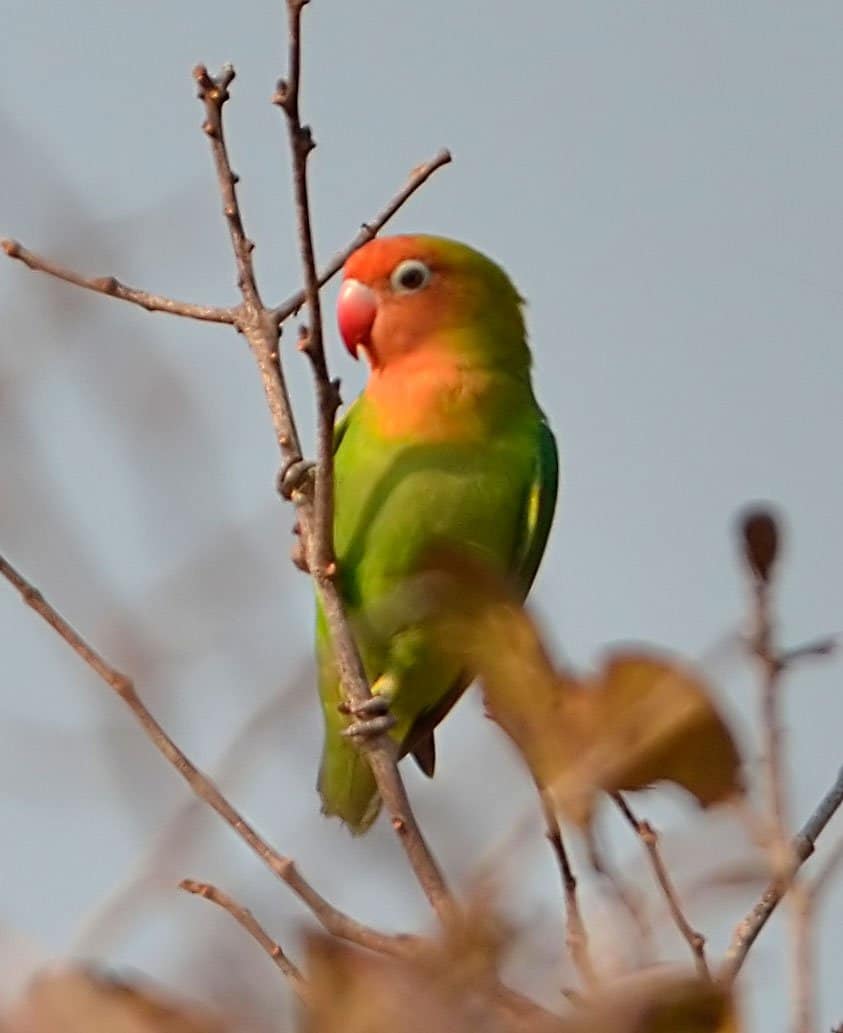
Content |
|---|
14 cm.. length and a weight between 28 and 37 g..
The colorful plumage of Nyasa small Inseparable (Agapornis lilianae) may cause their extinction, as it faces the constant threat of capture for the cage bird trade.
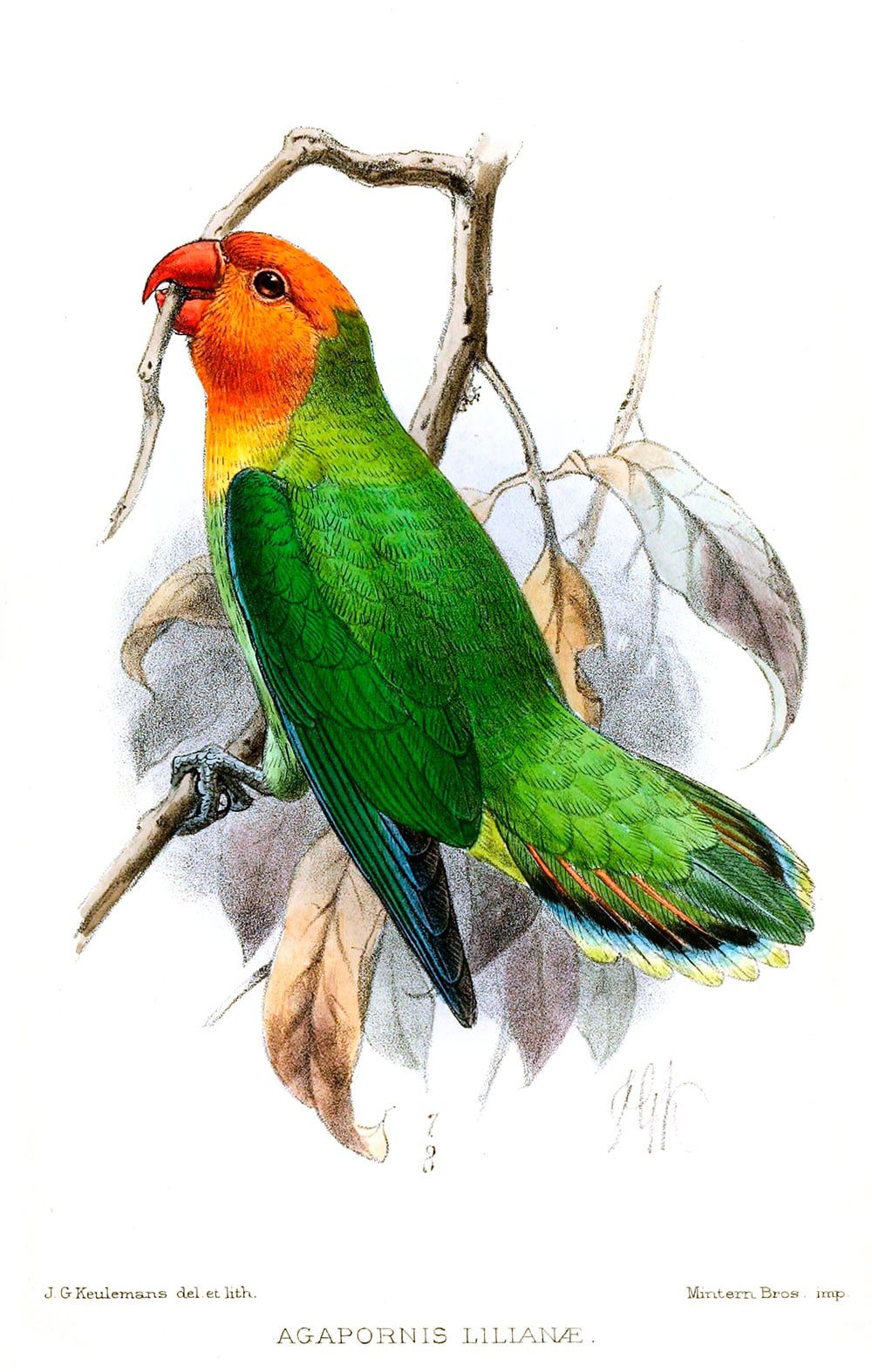
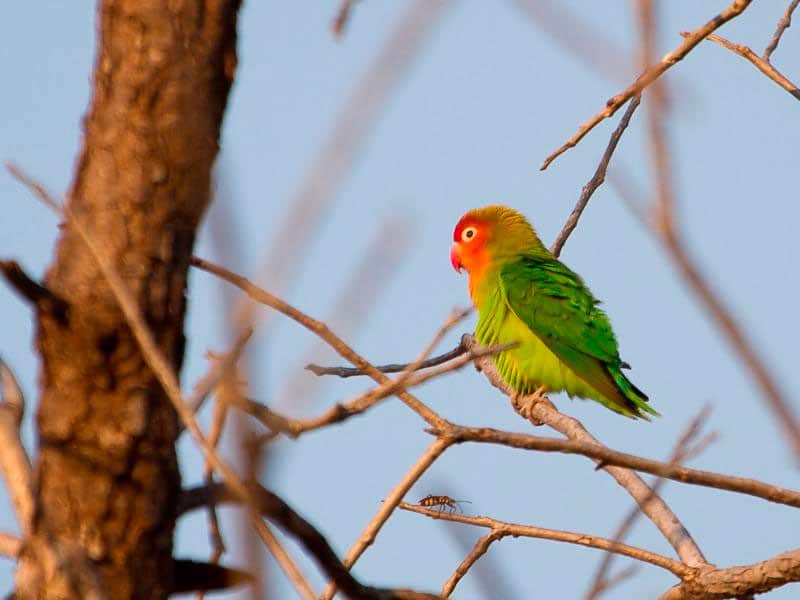
They have forecrown, fore crown, lores and cheeks brick red, merging with an orange and yellow-green wash on the back of the crown, ear-coverts, sides neck and nape, but occasionally (including samples taken in Malawi and unlikely to be hybrids with the Black-cheeked Lovebird (Agapornis nigrigenis)) brick red is replaced by dark crimson and orange by dark brown.
Mantle and scapulars bright green, rump and uppertail-coverts, Also bright green, but lighter. Upper, wing-coverts bright green; sometimes in yellow alula; vane outside of primaries and secondaries green; vane blackish internal. Under, the wing-coverts green with some blue feathers; bottoms of the flight feather blackish. Throat and top of the chest orange-red to pink salmon; bottom of the chest up to the undertail- coverts light green. The tail green, except central feathers with orange-red base and subterminal band dark.
Bill coral red; cere white; irises brown; eye ring white (2mm wide); legs pale grey.
Both sexes similar.
Immature and adults, but in black suffusion ear-coverts and black marks on the basis of upper jaw.
The Lilian's Lovebird It is in groves mopane (Colophospermum mopane) and acacias in alluvial deposits and banks of river valleys, in general, below the 1.000 m, preferring areas with figs. Avoid trees miombo.
Very sociable and usually observed in noisy flocks of 20 to 100 birds, sometimes many more, especially when food is plentiful. The birds are not breeding, forman communal roosts in hollow trees, where between 4 and 20 sleeping birds clinging to the walls of the chamber.
Before settling in the place of descando, the Lilian's Lovebird They engaged, to a great extent, to engage in fights and chases.
Reproduction colonies.
The nest it is a bulky dome-shaped structure with a tube-shaped entrance built from strips of bark, branches and stems brought to the nest by females at the peak.
They build nests in the cavities of trees Mopane, sometimes in some nest of the White-billed Buffalo-Weaver (Bubalornis albirostris).
Wild birds Lundazi nest in the eaves of buildings. the brood, according to sources, It takes place in the months of January and February (birds possibly introduced), September in Zimbabwe and between January and July Zambia.
The laying you can have between 3 and 8 eggs in captivity.
The diet Lilian's Lovebird It is mainly composed of grass seeds, including Rice perennial and cultivated varieties like millet (particularly unripe) and the sorghum, also seeds acacias, flowers A. whitish, African Erythrophleum, Vitex duamiana and African Cordyla, berries and leaf buds.
The food is collected directly from plants and soil. Often they need to drink, so usually they live near water sources.
Size of the area of distribution (reproduction / resident): 129.000 km2
Several populations Lilian's Lovebird separated on a restricted area in the southeast africa.
They are distributed in the middle of the valley Zambezi River, from the top of Lake Kariba around East of Binga to province Head in Mozambique, in northern and southern belt Zambezi River, below the 1.000 m, including valleys Angwa and Hunyani in Zimbabwe and valleys Lunsemfwa and Sash in Zambia.
In Northeast Zambia, It is also located north of valle de Luangwa, seemingly isolated from the valley Zambezi River, where possibly they were imported.
In Malawi, There is an isolated population of Inseparable the Nyasa located in forests Mopane in the region of the Lake Malombe, to the South of the Lake Malawi. There is also dispersed populations in southern Tanzania.
Wild birds are believed to exist (at least in the past) in the District of Choma and Mazabuka, to the South of Zambia. Aves on al Namibia are escapes from.
generally common, in some places abundant, but probably overall decline due to habitat loss, for example, in the basin of the Lake Kariba.
Apparently they are sedentary, but you can make local movements in response to the food supply.
There is a large number of Lilian's Lovebird in captivity.
• Current Red List of UICN: Near threatened
• Population trend: Decreasing
The population of the Lilian's Lovebird It is suspected of being in decline due to predation by invasive species and unsustainable levels of exploitation.
Its population has been greatly reduced by the flooding of much of the valley Zambezi by the Lake Kariba, and probably also by the dam Cahorra Low in Mozambique.
They considered a pest, small-scale, by farmers (Harrison et al. 1997). Besides the captura legal large quantities for the international trade in cage birds (more than 10.000 from 1981 when it began to be mentioned in the CITES Appendix II), many are caught and sold locally Mozambique, and the species is also caught and sold in Zimbabwe and Zambia (V. Parker in little . 2003, UNEP-WCMC CITES Trade Database, January 2005).
Conservation Actions Underway:
This species is well studied in South Africa "Research Project" conducted by the "Research Center for Parrot Conservation" of the University of Kwazulu-Natal. Studies to better understand its ecology and conservation.
They were imported to Europe 1926.
Rarely seen among breeders and many crossed with Fischer's Lovebird (Agapornis fischeri).
The Lilian's Lovebird son aves gregarias, that coexist very well in Cologne. They have a character quite scary because not very frequent, they have not yet become very familiar with the human being, but once caught enough confidence spend the day making a racket.
You can keep an aviary with Black-cheeked Lovebird (Agapornis nigrigenis).
They are birds something else complicated to create than other varieties Lovebird, are birds more timid and therefore need more peace of mind, plus the percentage of egg fertility in this species is a 40 % to 60 %.
Apparently they have problems to survive the first moult, so in this case it is recommended to acquire and adults.
With regard to its longevity, according to sources, a specimen lived 19,2 years in captivity.
– Nyasa Lovebird, Black-cheeked Lovebird, Nyassa Lovebird (English).
– Inséparable de Lilian, Inséparable de Liliane, Inséparable liliane, Inséparable nyasa (French).
– Erdbeerköpfchen (German).
– Inseparável do Niassa, Inseparável-de-niassa (Portuguese).
– Inseparable del Nyasa, Inseparable Liliana, Agapornis Lilianae (español).
– Order: Psittaciformes
– Family: Psittaculidae
– Genus: Lovebirds
– Scientific name: Agapornis lilianae
– Citation: Shelley, 1894
– Protonimo: Agapornis lilianae



Sources:
– Avibase
– Parrots of the World – Forshaw Joseph M
– Parrots A Guide to the Parrots of the World – Tony Juniper & Mike Parr
– Birdlife
– Photos:
(1) – Lilian’s Lovebird at South Luangwa Valley National Park, Zambia © Hans Hillewaert/, via Wikimedia Commons
(2) – Three Agapornis lilianae birds By derivative work: Snowmanradio (talk)Agapornis_lilianae.jpg: Wessel van der Veen (Agapornis_lilianae.jpg) [CC BY 3.0], via Wikimedia Commons
(3) – Agapornis lilianae green D (Jade) By Gonzalo Blanco – Linx
(4) – A perched bird By Paul van Giersbergen – Lynx
(5) – Pair By Philip Perry – Lynx
(6) – Illustration by Ibis 1894
– Sounds: Derek Solomon (Xeno-canto)

Content |
|---|
13 cm. length and weight of 39 to 41 g.
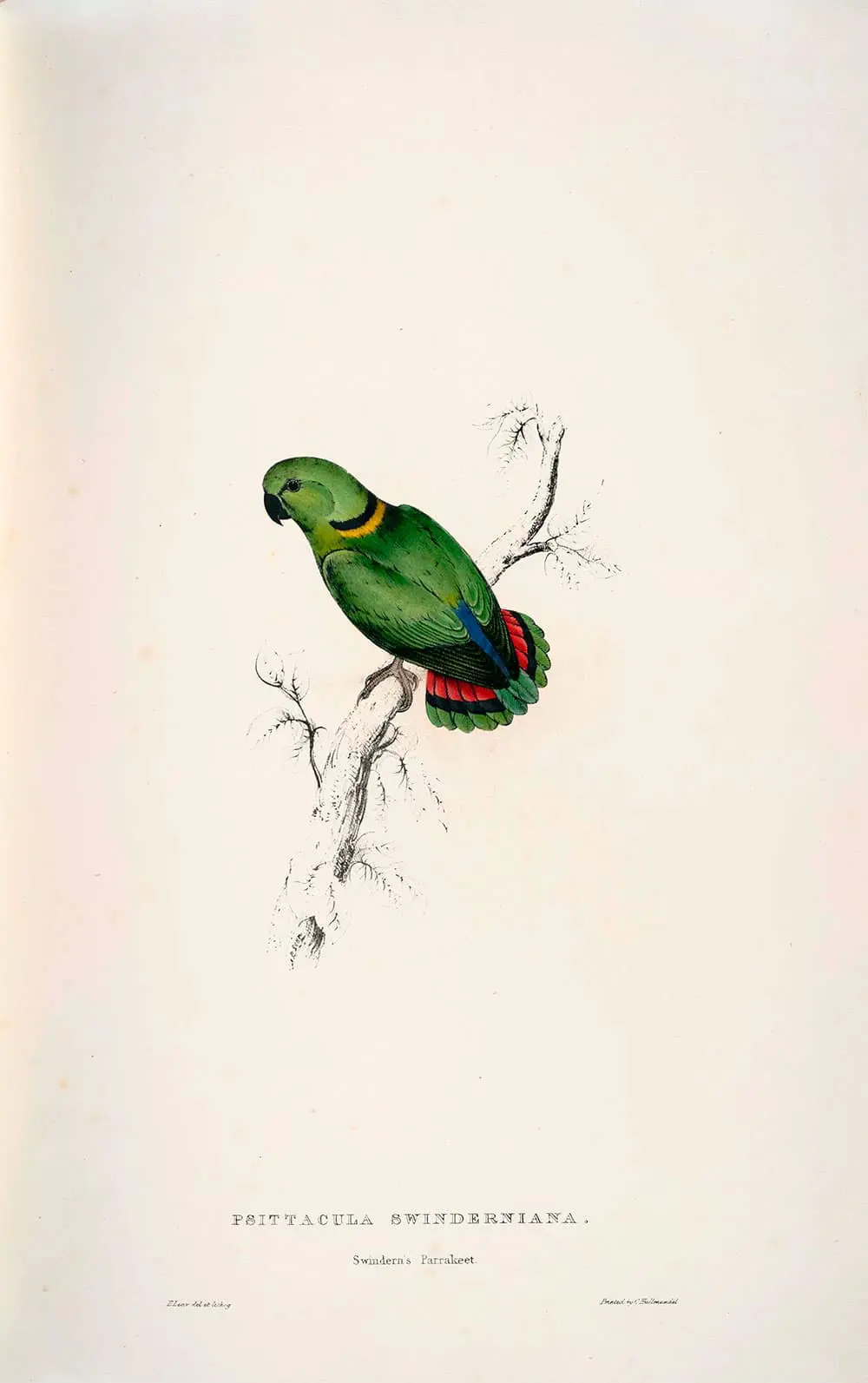
The Black-collared Lovebird (Agapornis swindernianus) has the forecrown, the lores and crown emerald green. Narrow black band at the nape, behind yellow lined. Mantle and scapulars green; rump and coverts bright blue. Upperwing-coverts green. Flight feathers Blackish with vane Green external on the upper face. Underwing-coverts emerald green.
The underparts pale green pretty boring, particularly on chest; flanks brightest. Central feathers of the tail, large black hand with green tips; other red at the base, green tips with broad black subterminal band.
Bill greyish black; irises yellow; legs Dark yellow green.
Both sexes similar.
The immature they are like adult, but without the nuchal collar. The Green head, the Blue rump and red tail, colors are duller than adults. Iris brown. beak pale gray with black spot at the base.
The Black-collared Lovebird They inhabit lowland tropical evergreen forests, both primary and secondary, generally below the 700 m. although some reports indicate sightings 1.800 metres in Uganda.
Visits occasionally cultivated land. In general, in small flocks (until 20 birds), sometimes in larger groups during the dry season.
It is a bird, generally, arboreal; frequent the treetops, where they can be very difficult to detect when they remain silent.
Forman communal roosts in their favorite places.
Reproduction of this species is, to a great extent, unknown; They have been observed in arboreal termite nests and it is suspected that breeding in the northern basin of the congo river It is in July.
Their main food is, apparently, seeds Ficus, extracted from its fruits, in mature forests, light areas near the forest and trees growing areas around the villages; They also take millet, corn and other seeds, as well as insects and their larvae.
birds in the distrito de Ituri, Democratic Republic of the Congo, feeding were observed in the rice crops and Sesame.
The Black-collared Lovebird they are endemic in West Africa center in at least two (possibly three or four) separate populations.
In West Africa The species is found in Liberia, Ivory Coast (Taï National Park) to the South of Ghana, which recently they occurred in the Bia National Park.
In West Central Africa Its distribution extends from southern Cameroon south on Gabon and east to the north Congo river and extreme southwestern Central African Republic.
You can also see from the basin Congo river in West Uganda.
• Current Red List of UICN: Least concern
• Population trend: Stable
The size of the world population Black-collared Lovebird It has not been quantified, but the species, according to sources, It is considered rare in Ghana and probably confined to forest reserves. Described as common in Gabon and Democratic Republic of the Congo and reasonably common in lowlands in Bwamba of Uganda.
The population is suspected to be stable in the absence of evidence of any reduction or substantial threats.
As a curiosity, emphasize that governments Liberia and Uganda stamps have been printed with his image.
Probably It not kept out of their range; some captured birds died after a few days or weeks; No further information is available.
As with any other pet, it is essential to ensure that the birds one is about to purchase have been captive bred and not wild caught. In addition to conservation and ethical reasons, trapped wild animals are more likely to get sick and die.
– Black-collared Lovebird, Black collared Lovebird (English).
– Inséparable à collier noir, Inséparable à collier, Inséparable du Libéria (French).
– Grüköpfchen, Grünköpchen, Grünköpfchen (German).
– Inseparável-acollarado (Portuguese).
– Inseparable Acollarado, Inseparable de Cuello Negro (español).
– Order: Psittaciformes
– Family: Psittaculidae
– Genus: Lovebirds
– Scientific name: Agapornis swindernianus
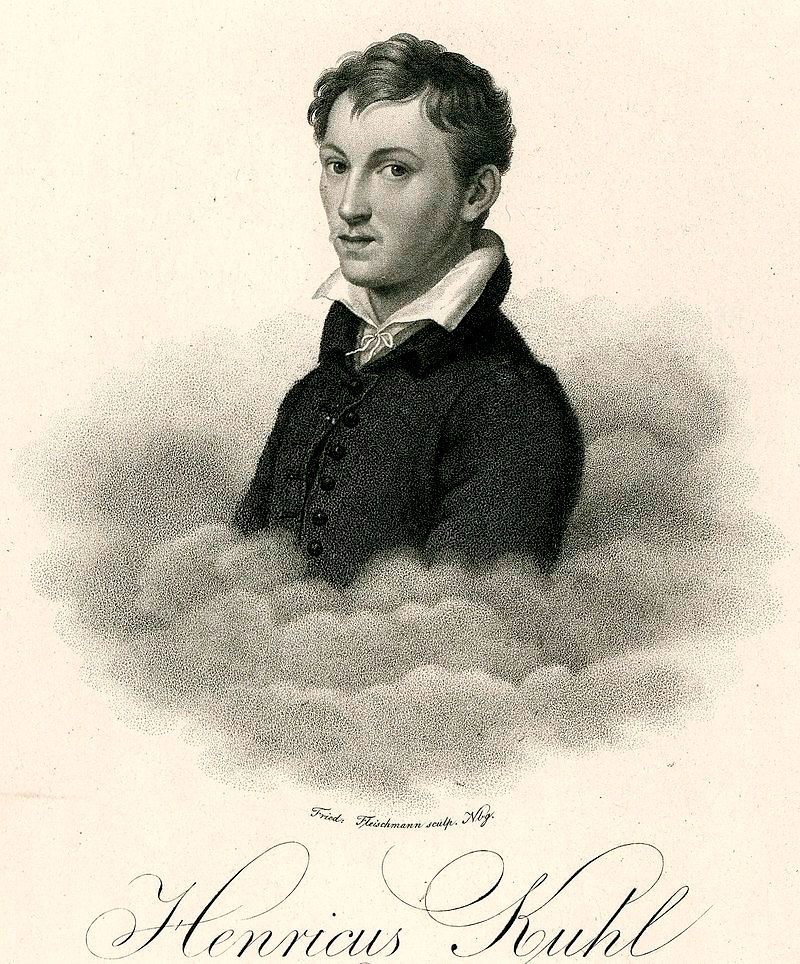
– Citation: (Kuhl, 1820)
– Protonimo: Psittacus Swindernianus
Sources:
– Avibase
– Parrots of the World – Forshaw Joseph M
– Parrots A Guide to the Parrots of the World – Tony Juniper & Mike Parr
– Birdlife
– Photos:
(1) – Black-collared lovebird, the great unknown – fischospi
(2) – A painting of a Black-collared Lovebird (originally captioned «Psittacula swinderniana. Swindern’s Parakeet») by Edward Lear (1812-1888) [Public domain], via Wikimedia Commons
Content |
|---|
23-24 cm.. height.
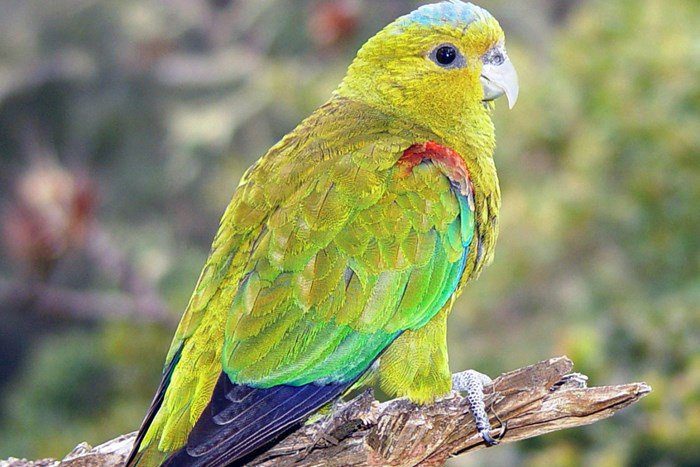
In 2002 It was the rediscovery of the the Indigo-winged Parrot (Hapalopsittaca fuertesi), an enigmatic parrot that had been lost to the world for more than 90 years and continues being one of the birds more rare of the Earth. It has a plumage mainly yellowish-green and is highlighted by the blue of the crown and olive yellow tone of the forecrown (except a strip), cheeks and sides of the eyes, narrow strip in the forecrown, under abdomen and shoulders red. End of the wing blue violet dark, tail Blue with red base.
The bill Horn colored with blue color, Grey at the base of the upper jaw. Iris Green-yellow.
The immature It has less yellow streaks and more off face.
Is a kind of range restricted, very rare and difficult to observe. It inhabits high Andean forests and frequent cloud subparamos, between 2600 and 3800 m on the level of the sea, being the majority of the records between 2.900 and 3.150 m. With guavas, encenillo and laurels where he eats fruits of thematapalo”, and with Oak (Quercus humboldtii).
Observed in fairly open forests, and possibly disturbed, with small Palm trees and tree ferns.
Fly in flocks of 6 to 25 individuals.
It believes that the nests they make them in cavities of tall, mature trees.
The nesting period takes place from January to may. The average size clutch is three eggs. The incubation is performed only by the female, Although the attention back to the hatching is biparental (Díaz 2006).
The ecology of breeding and feeding of the Indigo-winged Parrot is practically unknown, but it has been observed the birds feeding of berries, and is likely to show a preference for the berries of mistletoe.
Size distribution (reproduction / resident): 100 km2
Restricted to a small strip on the western slope of the Andes Central of Colombia, near the border of the Quindio, Risaralda and Tolima.
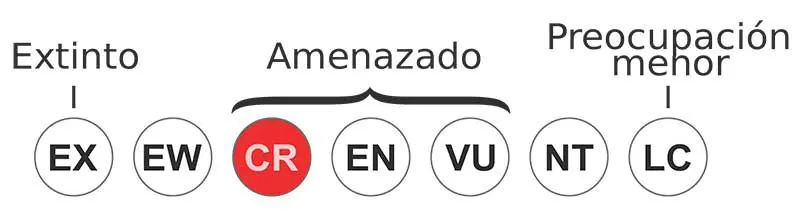
• Current category of the Red List of the UICN: critically endangered.
• Population trend: Decreasing.
According to the categories of UICN is considered in Critical Hazard (CR), due to the accelerated process of deforestation in the Andean forests.
Since ago 90 years it was thought that the bird was extinct until it was rediscovered in 2002, When a few biologists of the ProAves Foundation in the montane forest of the municipality of Genoa, department of Quindío, where the group more large observed consisted of 25 birds and the total population was of approximately 60 individuals.
Currently there are some 300 mature free individuals.
Thanks to the efforts made by different project is have retrieved data of them fluctuations in the abundances of them individuals during the year associated to its reproduction. Is very likely that the offer of the artificial nests This already having a positive impact that the length of the project It has observed an increase in the size population.
They do not exist in captivity.
– Indigo-winged Parrot, Fuerte’s Parrot, Fuertes’s Parrot, Indigo winged Parrot (English).
– Caïque de Fuertes, Caïque de Colombie (French).
– Fuertespapagei, Chapmans Zwergamazone, Zwergamazone (German).
– Indigo-winged Parrot (Portuguese).
– Cotorra Aliazul, Lorito de Fuertes (español).
– Cotorra Aliazul, Loro coroniazul (Colombia).

– Order: Psittaciformes
– Family: Psittacidae
– Genus: Hapalopsittaca
– Scientific name: Hapalopsittaca fuertesi
– Citation: (Chapman, 1912)
– Protonimo: Pionopsitta fuertesi
————————————————————————————————
Sources:
– Avibase
– Parrots of the World – Forshaw Joseph M
– Parrots A Guide to the Parrots of the World – Tony Juniper & Mike Parr
– Birdlife
– proaves.org
– Parrot Book, Parrots and macaws Neotropical
– Photos:
(1) – Conservationbirding.org
– Sounds: controles-canto.org
%3B_side_view_of_pet_IMG_2309.jpg)


_perching_on_a_box.jpg)
.jpg)

_by_Edward_Lear.jpg)