โ–ท The world of Pets: Dogs, cats, birds, reptiles, amphibians

Red-throated Lorikeet
Charmosyna amabilis

Red-throated Lorikeet

Content

Description

18 cm.. length.

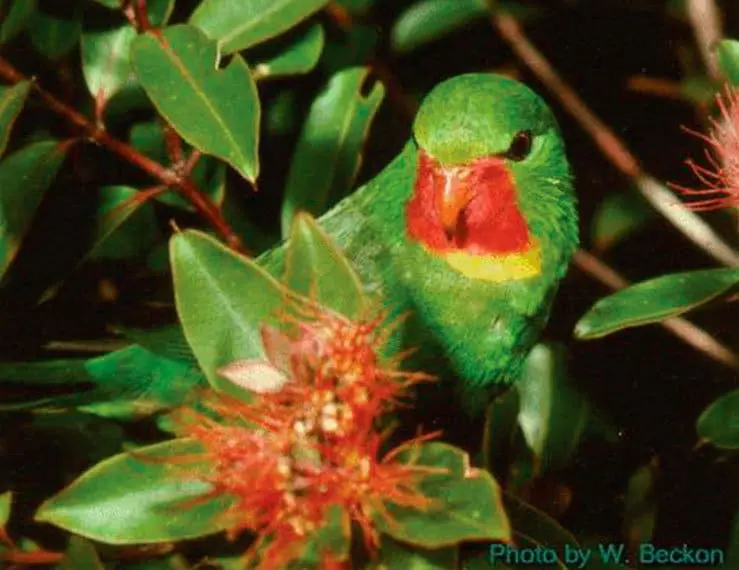
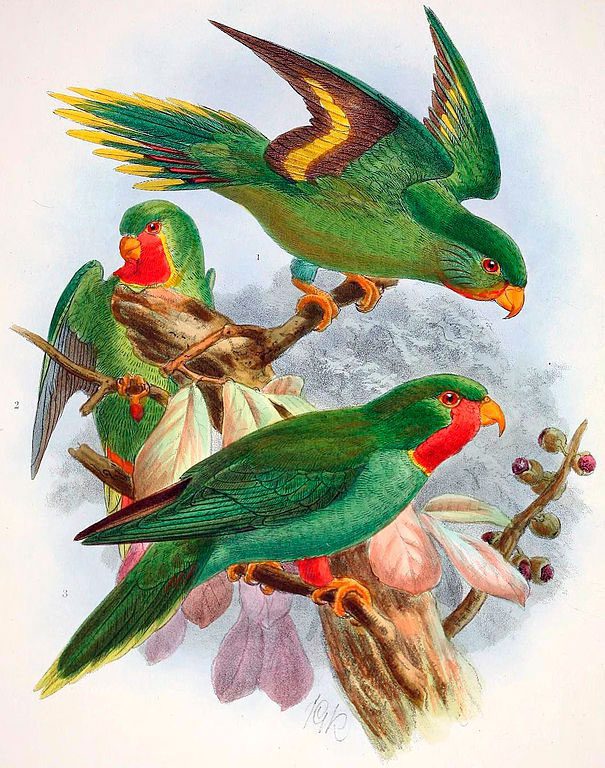
The head of the Red-throated Lorikeet (Charmosyna amabilis) is green with lores and chin red. Upperparts green. Wings internal and ends with green feathers flight feather color black. Throat red, bordered below by a narrow yellow collar; rest of the underparts with a yellowish green that upperparts, particularly in the center of belly; the thighs red. The tail above green a little darker than the rump, with yellow ends; undertail yellow. Bill orange; irises yellow; legs orange-red.

Male and female are equal.

Immature generally duller. The the thighs dull purple. The yellow band throat much weaker than in adults and the red facial and marks throat more restricted.

Habitat:

Move by tropical forests, mainly over the 500 m. Son nomads and fly in pairs or small flocks of 5-8 birds in search of flowering trees, uniting to feed on flowers, nectar and pollen. They prefer to feed in the canopy, and although it is apparently ejected away from the areas of power by the aggressive Collared Lory, Holyoak He found two species feeding on the same tree during his remarks in 1973.

Reproduction:

Breeding and nesting habits unknown.

Food:

They feed actively, to often hung upside down to get to flores.

Distribution:

Size of the area of distribution (reproduction / resident): 37.100 km2

endemic to the Fiji Islands where it is rare and usually only moves above 500 meters and below 1.000 m. Is distributed between in Viti Levu, Ovalau (where it may now be extinct), Vanua Levu and Taveuni. In 1973 Holyoak found at a Red-throated Lorikeet on a wooded Ridge around 250 metres in Viti Levu, species you saw or heard on five different days while exploring Taveuni thinking that the species was widespread in the rainy forests at an altitude between 550 and 1,000 m. The species was also recorded in rainforests between 120 meters and 980 feet by Martyn L. Gorman (1975), but it is said that they are rare. These records are among the few documented sightings of this century. The world's population is believed to be of less than 10.000 specimens. Despite its apparent rarity, This species may be overlooked due to their unobtrusive plumage and behavior.

Conservation:
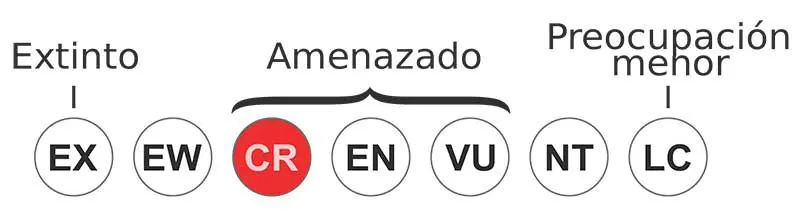

critical hazard


โ€ข Current IUCN Red List category: Critical Hazard

โ€ข Population trend: Decreasing

Threats to the lowlands and hills of the forest is slowly being erased much of Fiji. But, the rarity and assumed decline of this species is probably largely the result of predation by introduced mammals, especially Black Rat (Rattus rattus) , as it is the case with the closely related New Caledonian Lorikeet (Charmosyna diadema).

Increases in course in the logging and the expansion of the road network, especially around the Highlands of Monasavu and Serua in Viti Levu, It is likely that you have caused an increase of the density of these rats (Watling 2000, G. Dutson in litt. 2005). The Indian Brown Mongoose (Herpestes fuscus) introduced, is also present in the areas of distribution of the Red-throated Lorikeet and it can be a threat (V. Masibalavu in litt. 2012).

Agricultural expansion is encroaching on primary forest in Taveuni. Have a distribution in mountains close to the maximum altitude within its distribution area, It also makes this potentially susceptible species to climate change (BirdLife International).

Is species is protected by the laws of Fiji. In Viti Levu, dwells within the Tomaniivi nature reserve, but this is not large enough to maintain a resident population and, Despite the creation of the extension Wabu proposal to make a reservation of adequate size, this would not provide better protection against rats if the reserve is kept unmanaged (D. Watling in litt. 2000)

"Red-throated Lorikeet" in captivity:

Unknown in captivity.

Alternative names:

Red-throated Lorikeet, Red throated Lorikeet (ingles).
Lori ร  gorge rouge (French).
Rothรถschen (German).
Lori de Garganta Roja, Lori Gorgirrojo (espaรฑol).

scientific classification:

Order: Psittaciformes
Family: Psittaculidae
Scientific name: Charmosyna amabilis
Citation: (Ramsay, 1875)
Protonimo: Trichoglossus (Glossopsitta) amabilis

————————————————————————————————

ยซOn Gorgirroยป (Charmosyna amabilis)


Sources:

Avibase
– Parrots of the World โ€“ Forshaw Joseph M
– Parrots A Guide to the Parrots of the World – Tony Juniper & Mike Parr
– Birdlife

Photos:

1 – (Photo by Bill Beckon, 1973)
2 – Charmosyna amabilis By Artwork by John Gerard Keulemans (1842-1912). [Public domain], via Wikimedia Commons
โ–ท The world of Pets: Dogs, cats, birds, reptiles, amphibians

Coconut Lorikeet (massena)
T. haematodus massena


Coconut Lorikeet (massena)

Content

Description (1)

25 cm.. length.

The Coconut Lorikeet (massena) (Trichoglossus haematodus massena) is a variation of the nominal (Trichoglossus Haematodus).

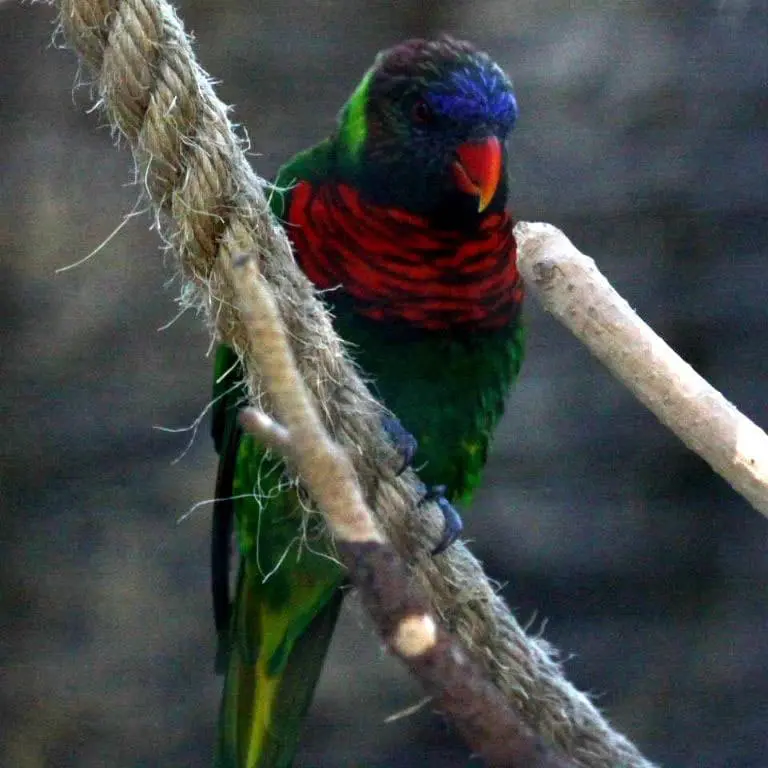
The plumage is similar to the of the Ornate Lory except that it is usually paler. The head is blue, ending at the nape with dark brown feathers interspersed with more Brown clear. The chest is reddish color with a narrow dark blue edging. In some cases, You can see some yellow zones in chest plumage. The abdomen is green; but there may be some kind of marking on the lower abdomen blue-violet.

The eyes are orange brown in juveniles and adult. The beak is orange-red.

Distribution:

Bismarck Archipelago, Solomon Islands and Vanuatu.

Conservation:

This species is endangered due to habitat loss and capture for the pet trade.

Alternative names:

Coconut Lorikeet (massena) (ingles).
Loriquet ร  tรชte bleue (massena) (French).
Allfarblori (massena) (German).
Lรณris-arco-รญris (massena) (Portuguese).
Lori Arcoiris Massena, Tricogloso de Pecho Rojo (massena) (espaรฑol).

scientific classification:

Order: Psittaciformes
Family: Psittaculidae
Scientific name: Trichoglossus haematodus massena
Genus: Trichoglossus
Citation: Bonaparte, 1854
Protonimo: Trichoglossus massena

————————————————————————————————

    (1) – Subspecies Coconut Lorikeet (Trichoglossus haematodus)

————————————————————————————————

ยซLori Arcoiris Massenaยป (Trichoglossus haematodus massena)


Sources:

Avibase

Photos: animalphotos.me

โ–ท The world of Pets: Dogs, cats, birds, reptiles, amphibians

Ultramarine Lorikeet
Vini ultramarina

Ultramarine Lorikeet

Content

Description

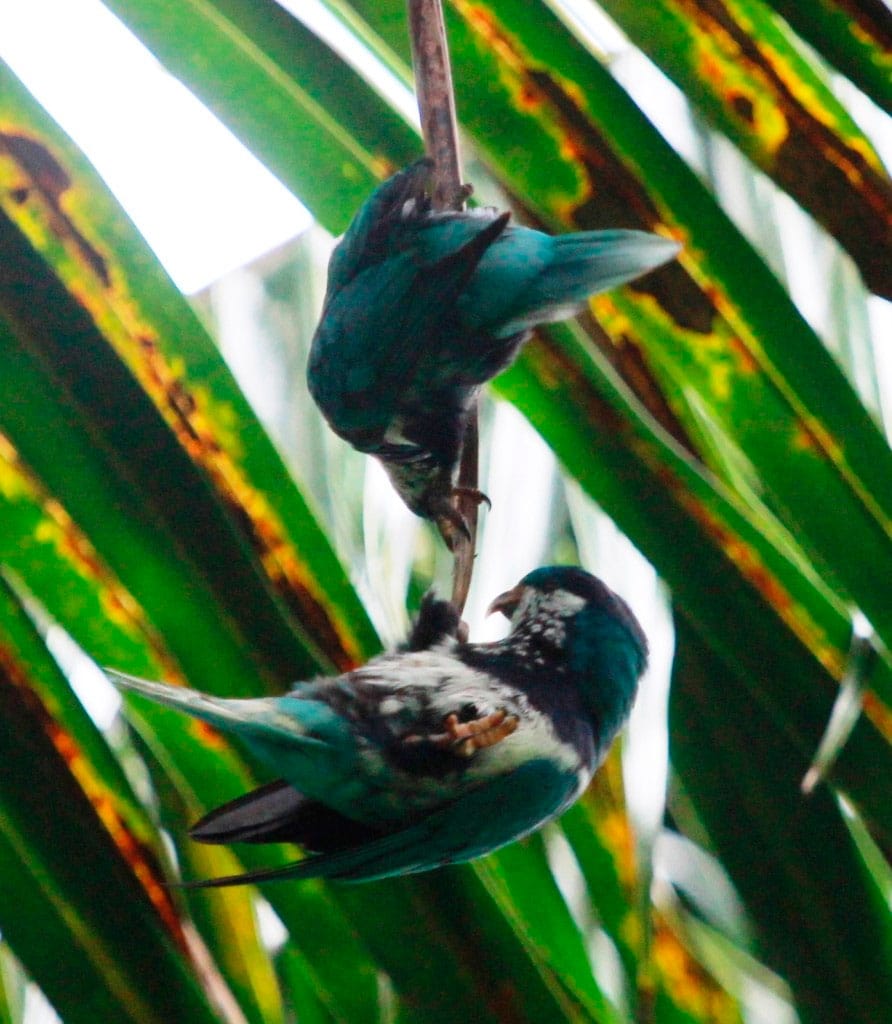
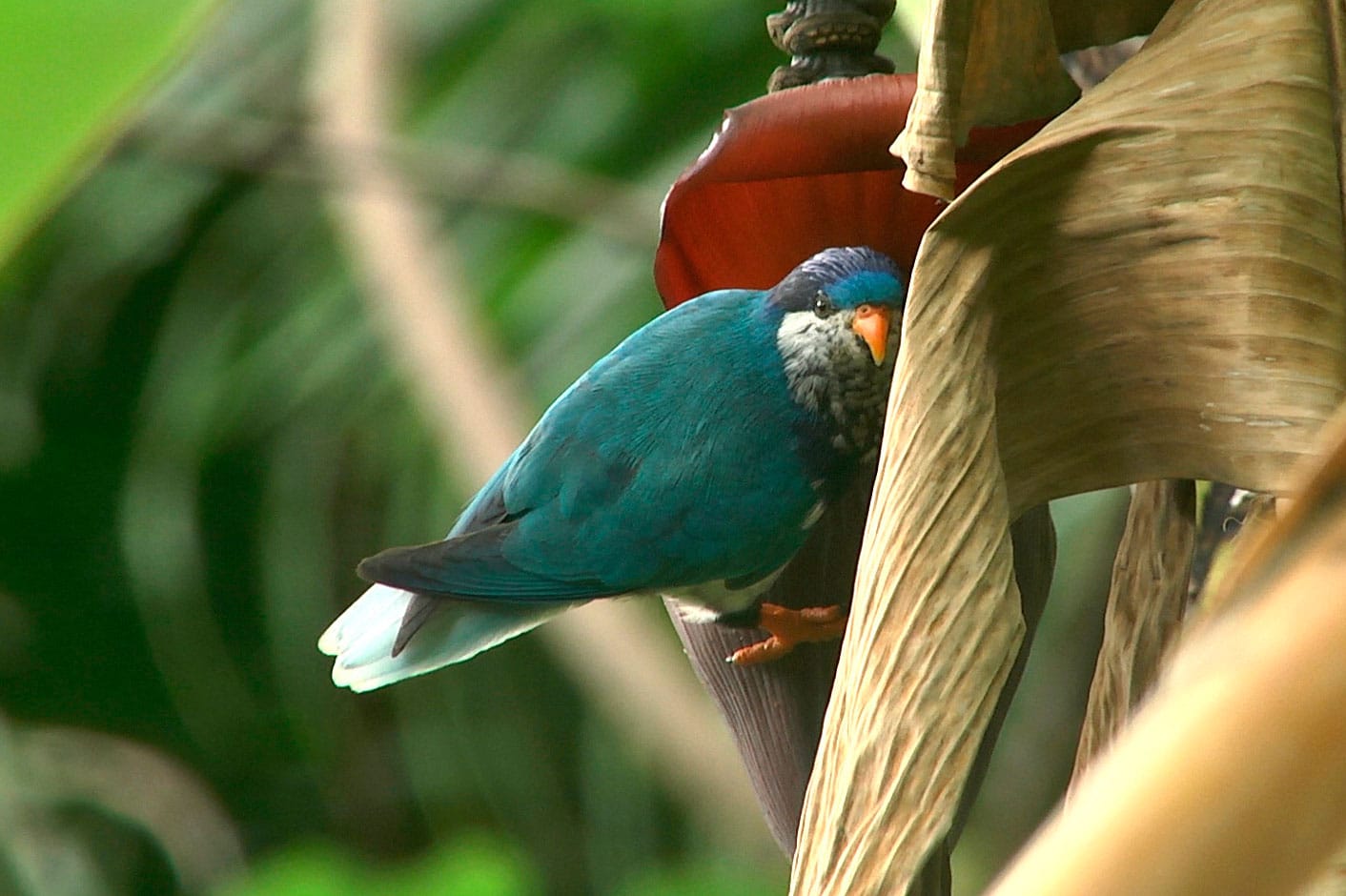
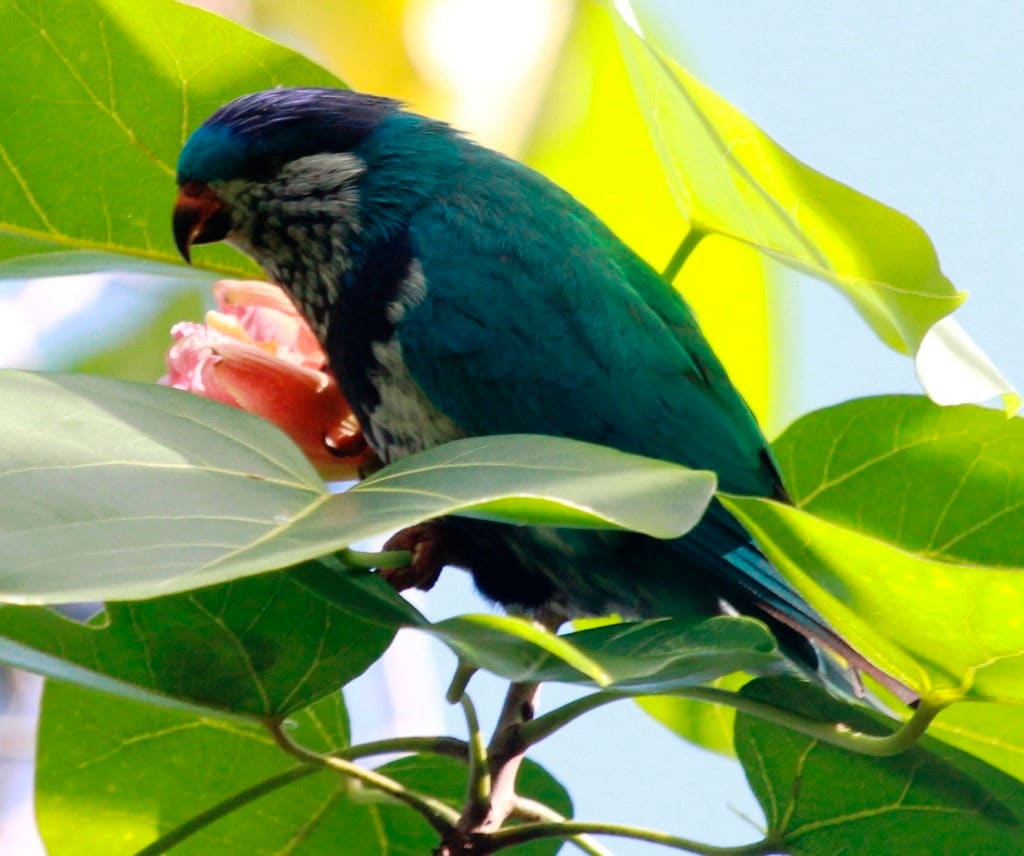
The Ultramarine Lorikeet (Vini ultramarina) has a length of 18 cm.. and an approximate weight of 35 g..

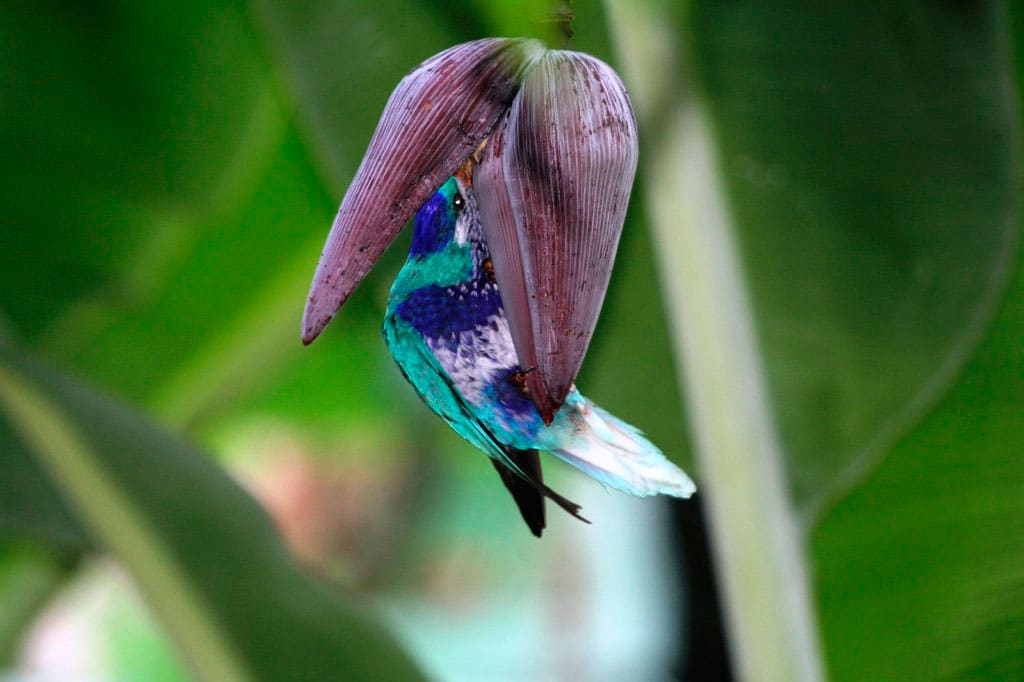
Forehead bright navy blue iridescent; crown and nape Mallow dark blue with streaks of light blue; lores and spots on ear-coverts, white (bases of ear-coverts, purple and blue color). Mantle and covert wing, Navy blue; rump and tail coverts, dark blue light. The flight feather, light blue, blackish internal. Blue off the Underwing coverts. Throat dark blue with white speckles; in the band chest mauve blue with รกrea subterminal pale blue feathers. Belly blank slate bases in feathers, giving a mottled appearance; the thighs dark blue malva; coverts, Turquoise.

The uppertail-coverts, whitish blue with navy blue light diffuse in the outer margins;
undertail coverts whitish merged with navy and some irregular gray markings.

Bill yellow orange, upper jaw, blackish brown at the base; irises brownish yellow; the orange legs.

Both sexes are equal but the female It is slightly smaller.

The immature adult differ by the absence of white on underparts, they are uniformly blackish. Also by bill black, irises Dark Brown and legs orange-brown.

Habitat:

In the Decade of 1970 in Nuku Hiva, these parrots were found only in pristine forests (that they have not been touched and that it is in its original condition) on the 700 m.

There is a similar habitat preferences in UA Pu, where are located mainly in montane forests between 700 and 1.000 m. Populations have also been of Ultramarine Lorikeet in banana plantations, coconut and mango (Mangifera indica), in coastal areas.

The species seems to have a wider range of habitat preferences in UA Pu., being found at altitudes ranging from the coast to wooded crests.

They feed in trees with flowers, especially coconut trees and Erythrina.

Loud and lively; the birds move freely between the canopy and lower floors, allowing the human approach. They usually travel in pairs or groups of up to a dozen of individuals. Most of its flights are made below the level of the trees, but for longer distances they rise spiral up to considerable heights.

Extremely Active, rarely long they stay in a tree and feeds using the peak acrobaticamente support.

Reproduction:

The nesting of these birds is from June to August.

It nests in hollow trees, preferring Artocarpus altilis, Pometia, Pandanus tectorius and Hibiscus tileacus. Sometimes they use the old nest of another species. They lay two white eggs.

A captive breeding record gives the chick eight weeks to become independent.

Food:

It feeds on a great variety of trees in flower, nectar and pollen. Within your preferences are the flowers of the coconut palm, the native tree and banana Hibiscus tileaceus.

It also feeds on fruits, especially mango and insects.

Distribution:

Size of its range (reproduction / resident): 100 km2

The Ultramarine Lorikeet is endemic of the Marquesas Islands, of Nuku Hiva, UA Pu and UA Huka, Although fossil remains show that previously most widely spread.

In UA Pu the population was estimated at 250-300 couples in 1975. But in 1988 had shrunk around the 60%, probably due to the spread of rats Rattus rattus, and a hurricane in 1988, Although its effects on the population of birds are uncertain.

In Nuku Hiva the small population of around of 70 birds that inhabited the high valleys and ridges in the northwestern part of the island, between 700 and 1.000 d., You can that they are now extinct.

The majority of the population, to this day, remains in UA Huka, where the species was introduced in 1940. This population would have grown from 200 to 250 couples in the late 1970s and was considered abundant in 1990 at altitudes environment to the 500 d., with a population estimated between 1.000 and 1.500 birds. The main threat to the species, here, is the potential arrival of rats, and between 1993 and 1994, 14 Ultramarine Lorikeet they were moved to Fatu Hiva in an attempt to keep them safe from rats; But, habitat deterioration by grazing mammals and avian malaria, also they have been and are still potential factors to increase the vulnerability of this species.

Conservation:


Endangered


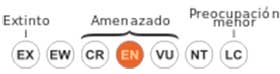
โ€ข Current IUCN Red List category: Danger.

โ€ข Population trend: Decreasing.

CITES Appendix I. in danger of extinction.

The entire population is located on an island where the species is stable, in other islands recently has been extinguished. The general trend is suspected to be a slow and continuous decrease. If the black rats come to UA Huka the decrease will be quick and severe.

Other threats included are logging in some sectors of the habitat of the Ultramarine Lorikeet to plant crops, fruit trees, and use the trunks for woodcarvings for tourism.

"Ultramarine Lorikeet" in captivity:

Extremely rare.

Alternative names:

Ultramarine Lorikeet, Marquesas Lorikeet, Ultramarine Lory (ingles).
Lori ultramarin, Lori de Goupil, Lori des Marquises (French).
Ultramarinlori (German).
Loris Vini Ultramarine (Portuguese).
Lori Ultramar, Lori Ultramarino (espaรฑol).

scientific classification:

Order: Psittaciformes
Family: Psittaculidae
Scientific name: Vini ultramarina
Citation: (Kuhl, 1820)
Protonimo: Psittacus ultramarinus

Images ยซOverseas Loryยป:

Videos "Ultramarine Lorikeet"

————————————————————————————————

ยซLori Ultramarยป (Vini ultramarina)


Sources:

Avibase
– Parrots of the World โ€“ Forshaw Joseph M
– Parrots A Guide to the Parrots of the World – Tony Juniper & Mike Parr
– Birdlife

Photos:

1 – Miles to the wild – link
2 – Miles to the wild – link
3 – Miles to the wild – link
4 โ€“ An adult bird perched on a palm tree – Author Josep del Hoyo – IBC.lynxeds.com
5- A juvenile bird feeding in a tree. – Author Josep del Hoyo – IBC.lynxeds.com

Sounds: Mark Todd (Xeno-canto)

โ–ท The world of Pets: Dogs, cats, birds, reptiles, amphibians

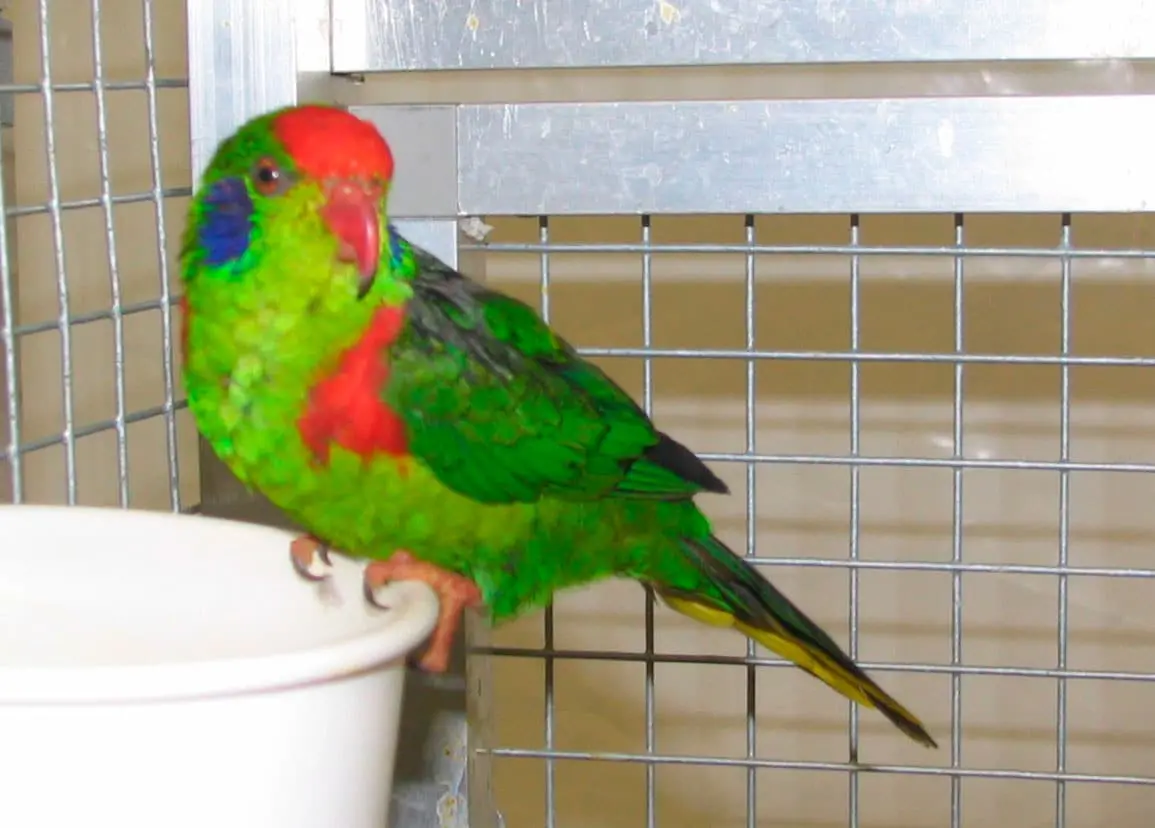
Red-fronted Lorikeet
Charmosyna rubronotata


Red-fronted Lorikeet

Content

Charmosyna rubronotata kordoana

Description

17 cm.. length and a weight between 30 and 35 g..

The front of the crown of the Red-fronted Lorikeet (Charmosyna rubronotata) is red; rest of the crown green; chin, the throat and headphones coverts, yellowish green with a prominent patch purple-blue in the center of the ear coverts. Upperparts green; lower part of the rump and tail coverts, matte red. Wings Green with a bit of yellow in the curve. Under, the wings red; flight feather blackish brown with a yellow stripe in the Center. The underparts yellowish green with prominent red blotch on the upper side of the chest; the thighs green. The tail above blackish brown with green piping; below, the tail Brown with wide yellow tips (except central pair) and Red covered in the base. The bill Red pink; cere pinkish; irises brown; legs Pink.

females lack of red color in the crown, in the marks of the chest and at the bottom of the wings (that are greenish yellow). ear patch It is replaced by streaks of greenish-yellow.

Description 2 subspecies

  • Charmosyna rubronotata kordoana

    (Meyer,AB, 1874) – Female is similar to the nominal. The male has the patch of the crown paler, extensive and blue; minus purple blue ear-coverts.


  • Charmosyna rubronotata rubronotata

    (Wallace, 1862) – Nominal.

Habitat:

It inhabits in the humid forests, edges of forests and plantations of coconut, Once in a while visit the trees and shrubs in open field. Are from the lowlands up to the 850 m. Usually found in small flocks of up to 10 birds flying over dense forest, or feeding on flowers in the canopy, sometimes with other parrots. Habits are similar to the of the Red-flanked Lorikeet.

Reproduction:

Nesting and breeding habits not described.

Food:

Feeds of pollen, nectar, flowers and seeds.

Distribution:

Size of the area of distribution (reproduction / resident): 417.000 km2

New Guinea in West Papua New (Indonesian) and Papua New Guinea. The range goes from East of Vogel-kop through Maprik, the lower reaches of the rivers Sepik and Ramu reaching Astrolabe Bay in the East. Also in Salawati in the islands of the West of papua and in Biak. The Red-fronted Lorikeet It is irregularly distributed throughout its area of distribution, but may be locally common in some areas. It seems to be less common than the Red-flanked Lorikeet, He replaced at higher altitudes, where the two species overlap.

Description 2 subspecies

Conservation:


minor concern


โ€ข Current IUCN Red List category: Least concern.

โ€ข Population trend: Stable.

The trend of the population seems to be stable, and therefore, the species does not approach the thresholds for Vulnerable according to the population trend criteria.

The world population It has not been quantified, It is believed that it is by the 100.000 specimens and stable.

The species is described as common to local scale.

"Red-fronted Lorikeet" in captivity:

There is no data on its breeding in captivity..

Alternative names:

Red-fronted Lorikeet, Red fronted Lorikeet, Red-fronted Blue-eared Lorikeet, Red-fronted Blue-eared Lory, Red-spotted Blue-eared Lorikeet, Red-spotted Lorikeet (ingles).
Lori ร  front rouge, Lori de Wallace, Loriquet ร  croupion rouge (French).
Rotstirnlori (German).
Lori de Frente Roja, Lori Frentirrojo (espaรฑol).


scientific classification:

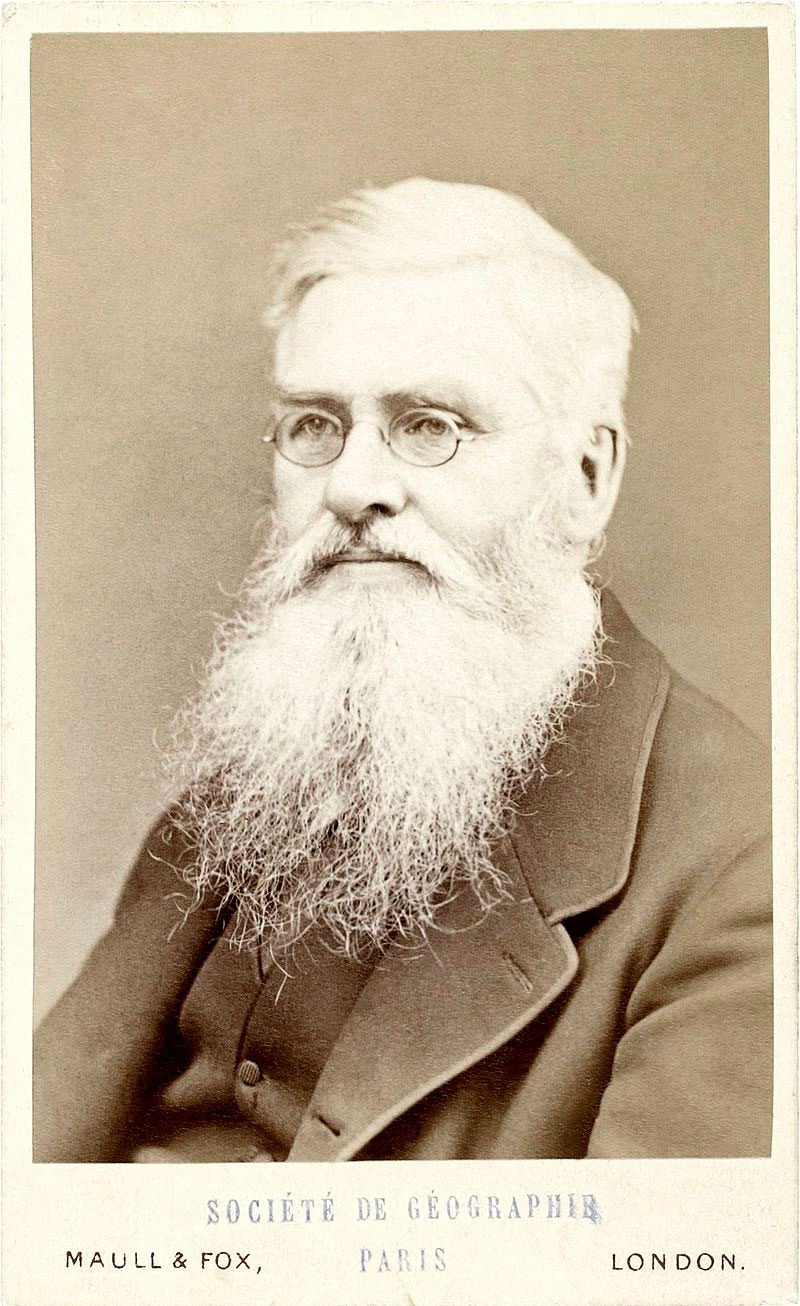
Alfred Russel Wallace

Order: Psittaciformes
Family: Psittaculidae
Scientific name: Charmosyna rubronotata
Citation: (Wallace, 1862)
Protonimo: Coriphilus rubronotatus


Images ยซRed-fronted Loryยป:

————————————————————————————————

ยซLori Frentirrojoยป (Charmosyna rubronotata)


Sources:

Avibase
– Parrots of the World โ€“ Forshaw Joseph M
– Parrots A Guide to the Parrots of the World – Tony Juniper & Mike Parr
– Birdlife

Photos:

1 – Author iggino – lynx
2 – Charmosyna rubronotata kordoana by Biodiversity Heritage Library

Sounds: Katerina Sam (Tvardikova) – (Xeno-canto)

โ–ท The world of Pets: Dogs, cats, birds, reptiles, amphibians

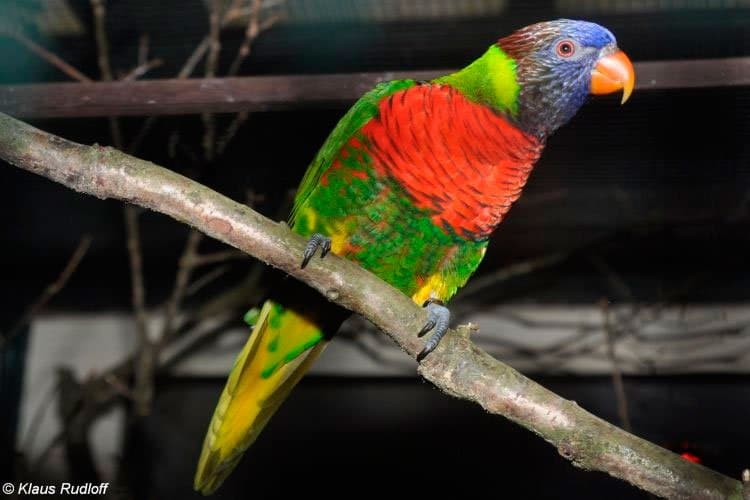
Coconut Lorikeet (deplanchii)
T. haematodus deplanchii


Coconut Lorikeet (deplanchii)

Content

Description (1)

26 cm.. of length and a weight of 140 gr.

The Coconut Lorikeet (deplanchii) (T. haematodus deplanchii) is a variation of the nominal (Trichoglossus Haematodus)

Similar to the nominal Haematodus, but slightly paler plumage. The head has a bright blue. Reddish orange on the chest, similar to the Trichoglossus haematodus massena, only that more alive. The abdomen is yellowish green and extends to the back of the neck. The thighs and the feathers under the yellow tail and tail olive green top.

Distribution:

New Caledonia and Loyalty Islands.

Alternative names:

Coconut Lorikeet (deplanchii) (ingles).
Loriquet ร  tรชte bleue (deplanchii) (French).
Allfarblori Deplanche (German).
Loris Arco Iris Deplanchii (Portuguese).
Lori Deplanche, Lori Arcoiris Deplanche (espaรฑol).

scientific classification:

Order: Psittaciformes
Family: Psittaculidae
Scientific name: Trichoglossus haematodus deplanchii
Genus: Trichoglossus
Citation: Verreaux,J & Des Murs, 1860
Protonimo: Trichoglossus Deplanchii

————————————————————————————————

    (1) – Subspecies Coconut Lorikeet (Trichoglossus haematodus)

————————————————————————————————

ยซLori Arcoiris Deplancheยป (T. haematodus deplanchii)


Sources:

Avibase

Photos: by Klaus Rudloff (kdrudloff@web.de) – biolib.cz

โ–ท The world of Pets: Dogs, cats, birds, reptiles, amphibians

Blue Lorikeet
Vini peruviana


Blue Lorikeet

Content

Description

The Blue Lorikeet (Vini peruviana) has an approximate length of 18 cm.. and a weight ranging between 31 and 34 g..

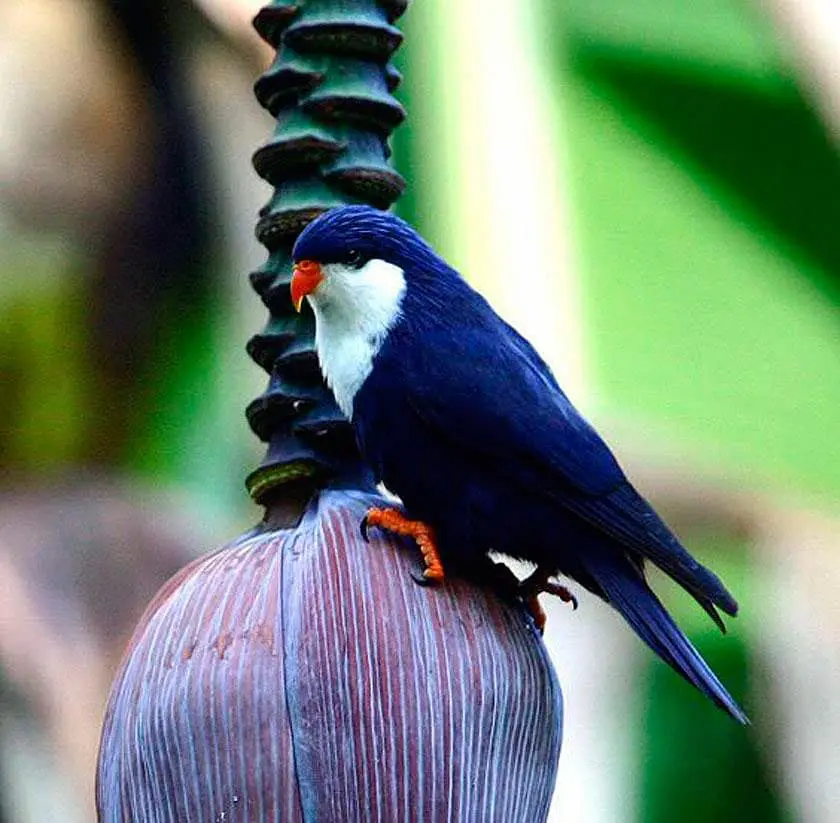
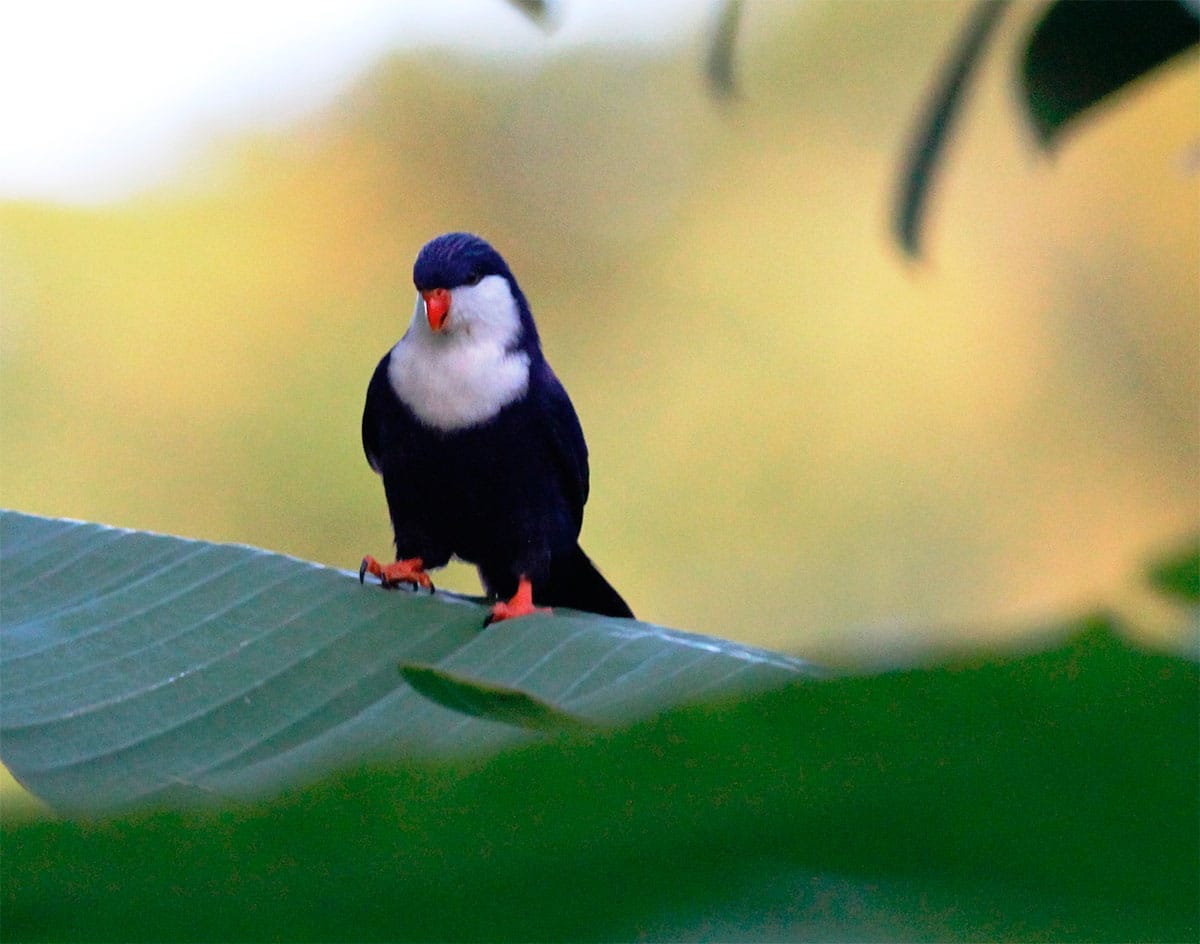
Dark blue bright in the crown with paler veins; The feathers of the back of the crown, elongated as in other members of the genus; Lords and ear-coverts white. Upperparts dark blue bright with Plumas-bases blackish. Upper wing bright blue with the internals of the flight feather brownish colour. Underwing coverts dark blue, the rest of Underwing color negro.

Throat and upper breast white; bright dark blue rest, underparts on the basis of blackish feathers. The tail dark blue, with the slightly elongated central feathers typical of the genus; undertail blackish.

The bill orange; Iris yellowish brown; Legs orange color.

Male slightly larger, particularly the head and the bill, with the chin pure white. Legs they can also be a bit darker.

The immature differs from the adult as having the underparts uniform greyish-black, with the exception of some small white spots on the chin. Black the bill. Dark brown the irises and legs dark brown.

Habitat:

It depends largely on coconut palm (Cocoa nuts) for food and nesting, Although other species such as the banana and Hibiscus they are also frequented by the Blue Lorikeet.

Sometimes they look around the villages and in the gardens. The Blue Lorikeet they are very active, rarely remain long in one place. They are usually seen in small groups of a maximum of seven birds that fly between the coconut trees in flower.

Reproduction:

The breeding It is estimated that it is from May to July. Nests in the coconut trees, either in a hollow log or in a rotten coconut palm still attached to the tree, also have seen them are nesting in a stump of Pandanus fallen. The laying is two eggs that incubate for 25 days and the fledgling young leaves the nest in 6-8 weeks.

Food:

They feed on nectar, but foraging on the ground and the search for small insects on the underside of the leaves have also been recorded..

Distribution:

The Blue Lorikeet It was formerly widespread in the The Society Islands and the Tuatnotu archipelago, but at present is absent from 15 of the 23 Islands where dwelt in the past (some of which can be to come back to enter), including tahiti, Bora-Bora and Moorea, the largest group of the Society Islands (c expiry date. 1900 of tahiti and Moorea; decade of 1920 for Bora-Bora).

Although the population decline has been linked to a series of threats, including the introduction of the the swamp Harrier (Cirrus approximans) and introduction of a malaria avian provoked by the Culicoides mosquito; predation by rats and cats is the most serious problem facing the species. The distribution currently in the different islands, including population estimated with the dates when they know, shown below (but there are several more islands that have never been visited and that could still be suitable to support the species).

The Society Islands: Motu One 250 couples; Manuae 300-400 couples in 1974 but in apparent decline following the introduction of cats in 1975.

Tuamotu archipelago: Tikehau 30 couples in 1984; Rangiroa 100-200 birds before 1972, were kept in 1991 but the numbers are not quantified; Arutua, apparently they were still present 1975 but no current stats; Manihi a bird in 1991; Kaukura last sighting in 1923; No estimate of population; Apataki 1989 survey gave a minimum of 300 birds.

Islas Cook: Aitutaki probably introduced; until 500 couples present in 1991; Island Hervey possibly introduced in the past, but there is no recent information.

– The population in Aitutaki seems stable and as the Black Rat (Ratuus ruttus) is not present, This island is thought to be the hope for the survival of the species.

Conservation:


Vulnerable


– Current IUCN Red List category: Vulnerable

– The population trend: Decreasing

There are few data on population trends; But, the species has declined gradually in each island, where cats, the black rats of Marsh Harriers have colonized the coast. So, a slow to moderate fall in the population is suspicious.

The threat of extinction of this species in the Islands, It is more than likely due to their predation by black rats (Rattus rattus) and to a lesser extent, by the Feral cats (Felis catus). Their extinction since Makatea in the Tuamotu archipelago could have been accelerated by a particularly violent hurricane. Its reduction in the scope of the Society Islands correlated with the spread of the marsh harriers (Circus approximans) introduced. The accidental introduction of black rats on islands where the Blue Lorikeet It is a continuous threat to the species.

"Blue Lorikeet" in captivity:

There are more than 20 males in captivity, but only about ten females. The species was first raised in captivity in 1937 by Lord Tavistock, but until 1977, When a group of birds seized in the U.S.. He was sent to the poultry farmer Rosemary Low en el Reino Unido, These birds were practically unknown in poultry.

Also have grown up in the San Diego Zoo, whose success with breeding two females in 1979 He had much international publicity when parents, that had been confiscated from smugglers, escaped destruction by customs officers after a public outcry.

Alternative names:

Blue Lorikeet, Pacific Lorikeet, Tahiti Lorikeet, Tahiti Lory, Tahitian Lorikeet, Tahitian Lory, Thaitian lory, Violet Lorikeet (ingles).
Lori nonnette, Lori de Tahiti, Perruche nonnette (French).
Saphirlori (German).
Loris Vini Peruviana (Portuguese).
Lori Monjita, Lorito Zafiro (espaรฑol).

scientific classification:

Order: Psittaciformes
Family: Psittaculidae
Genus: Vini
Scientific name: Vini peruviana
Citation: (Statius Mรผller, 1776)
Protonimo: Psittacus peruvianus

โ€œLori Monjitaโ€ images:

โ€œLori Monjitaโ€ video:

————————————————————————————————

"Lori Monjita" (Vini peruviana)


Sources:

Avibase
– Parrots of the World โ€“ Forshaw Joseph M
– Parrots A Guide to the Parrots of the World – Tony Juniper & Mike Parr
– Birdlife

Photos:

1 – free-pet-wallpapers
2 – Two adults (left) close to a three immature birds perched in a palm tree. – Author Josep del Hoyo – lynxeds
3 – Miles to the wild – Enlace
4 โ€“ Miles to the wild – Enlace
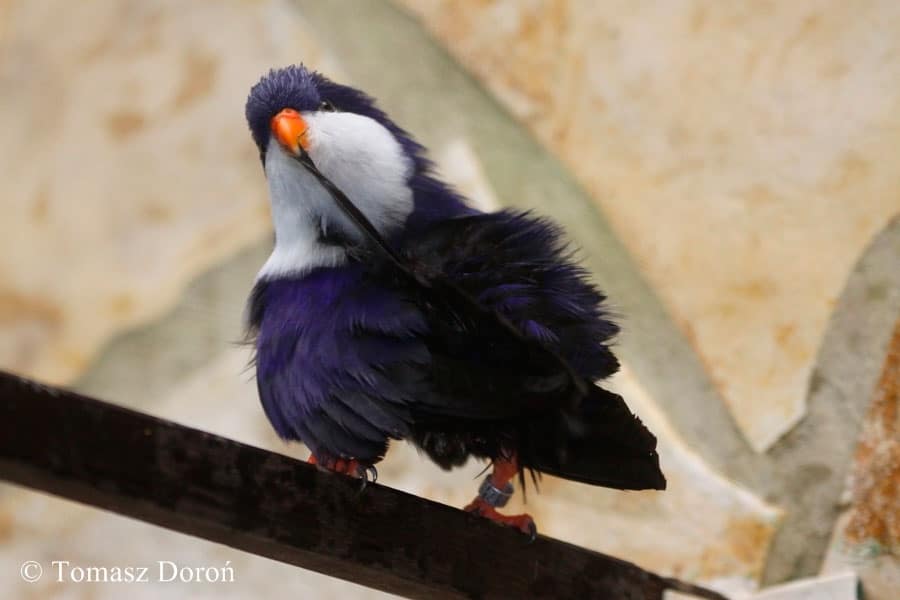
5 – Adult bird preening. Author Tomasz Doron – lynxeds

Sounds: Matthias Feuersenger (Xeno-canto)

โ–ท The world of Pets: Dogs, cats, birds, reptiles, amphibians

Fairy Lorikeet
Charmosyna pulchella


Fairy Lorikeet

Content

Description

18 cm.. length and a weight between 24 and 34 g..

The head of the Fairy Lorikeet (Charmosyna pulchella) is dark red with the back of the crown Black extending from above and behind the eyes up to the nape. Mantle Green with a black area below the nape and collar of color red dark at the height of the shoulders; under the back It shows a patch of dark violet interspersed with some green feathers on the ends; rump and tail coverts view from above of color green.

Wings Green with extremes of color black in them flight feather and in the internal parts of the coats. below the wings Red with coverts marginal green; flight feather blackish.

The underparts Red with stripes of pale yellow in the center of the chest, the thighs purple with yellow stripes. The tail view from the top of green at the top with a black shaft in the Center and the rest of red and yellow at the tip; view from below, the tail is yellow, bathed in red and green ends.

The bill is orange with gray tip; irises yellow red; legs oranges.

The female shows a color green beige, not red, on the sides and a yellow patch in the flanks that extends to the sides of the rump.

The female of the subspecies Rothschildi also shows more green in the underparts males and a green mottling on the upper part of the chest.

The Immature They show the yellow patch of the flanks more defined than the females. The lower part of the back, mainly green with some blue-violet. Top of the chest Green mottled without clearly defined yellow stripes adult. Crown Red with black patch restricted to the nape and mixed with the green of the upper mantle. Lack of the Red of the part back from neck clearly defined in adults. Yellow area at the bottom of the flight feather. Iris brown. Beak and feet grayish brown.

Subspecies description

There are two subspecies including the nominal. A third, Charmosyna pulchella beautiful, described by Devis (1900), is considered here as Charmosyna pulchella pulchella.

  • Charmosyna pulchella pulchella

    : (Gray,GR, 1859) – The nominal


  • Charmosyna pulchella rothschildi

    : (Hartert, 1930) – The patch of the crown descends to find is with them eye; Green fusion behind the yellow lines of the chest, and green fusion in the flanks and the thighs (that can also show some yellow stripes); without the Red of the neck and much less defined the violet patch in the lower part of the back.

Habitat:

Nomads. They are mainly distributed in montane forests, at the edges of forests and secondary growth forests. Its preferred habitat are the mountains between 500 and 1.800 m, but also found in lowlands up to the level of the sea and in the mountains up to 2.300 m.

Found in pairs or flocks of 15 or more members, uniting in the tops of trees in flower with others Charmosyna lorikeets, including the Josephine's Lorikeet.

Reproduction:

In captivity it nests continuously, with incubation of 25 days shared by both parents. Usually, It lays two eggs in a hole in the base of one epiphyte. In nature it is intended that nests between January and April (Pratt picked up breeding males in March).

Food:

It feeds on pollen and nectar.

Distribution:

The Fairy Lorikeet is distributed between New Guinea in Irian Java (Indonesian) and Papua New Guinea, from the East of Vogelkop to the peninsula of Huon. Owen Stanley mountains and southeastern intervals.

Subspecies distribution:

  • Charmosyna pulchella pulchella

    : The nominal


  • Charmosyna pulchella rothschildi

    : The mountains Cyclops and the slope North of the mountains on the idenburg river (Irian Java).

Conservation:


minor concern


โ€ข Current IUCN Red List category: Least concern.

โ€ข Population trend: Stable.

The world's population has not been quantified, It is thought that it surpasses the 500.000 birds. the species, according to information, is abundant in some areas, but few in others due to the trade (pit et to the., 1997). Suspected that the population is stable in the absence of evidence of any reduction or substantial threats.

"Fairy Lorikeet" in captivity:

A small number of captivity.

Alternative names:

Fairy Lorikeet, Little Red Lorikeet, Little Red Lory (ingles).
Lori fรฉรฉrique, Lori ร  croupion noir, Lori fรฉerique, Loriquet ร  croupion noir (French).
Goldstrichellori (German).
Lori Lindo (espaรฑol).

scientific classification:

Order: Psittaciformes
Family: Psittaculidae
Scientific name: Charmosyna pulchella
Citation: Gray,GR, 1859
Protonimo: Charmosyna pulchella

ยซCute Loriยป Images:

————————————————————————————————

ยซLori Lindoยป (Charmosyna pulchella)


Sources:

Avibase
– Parrots of the World โ€“ Forshaw Joseph M
– Parrots A Guide to the Parrots of the World – Tony Juniper & Mike Parr
– Birdlife

Photos:

1 – animalphotos.me
2 – by W. Voit – koppiekrauw
3 – animalphotos.me
4 – Author iggino in Vogelpark Walsrode, Walsrode, Lower Saxony, Germany – lynx
5 – in Neues vom Loro-Parque – koelle-zoo