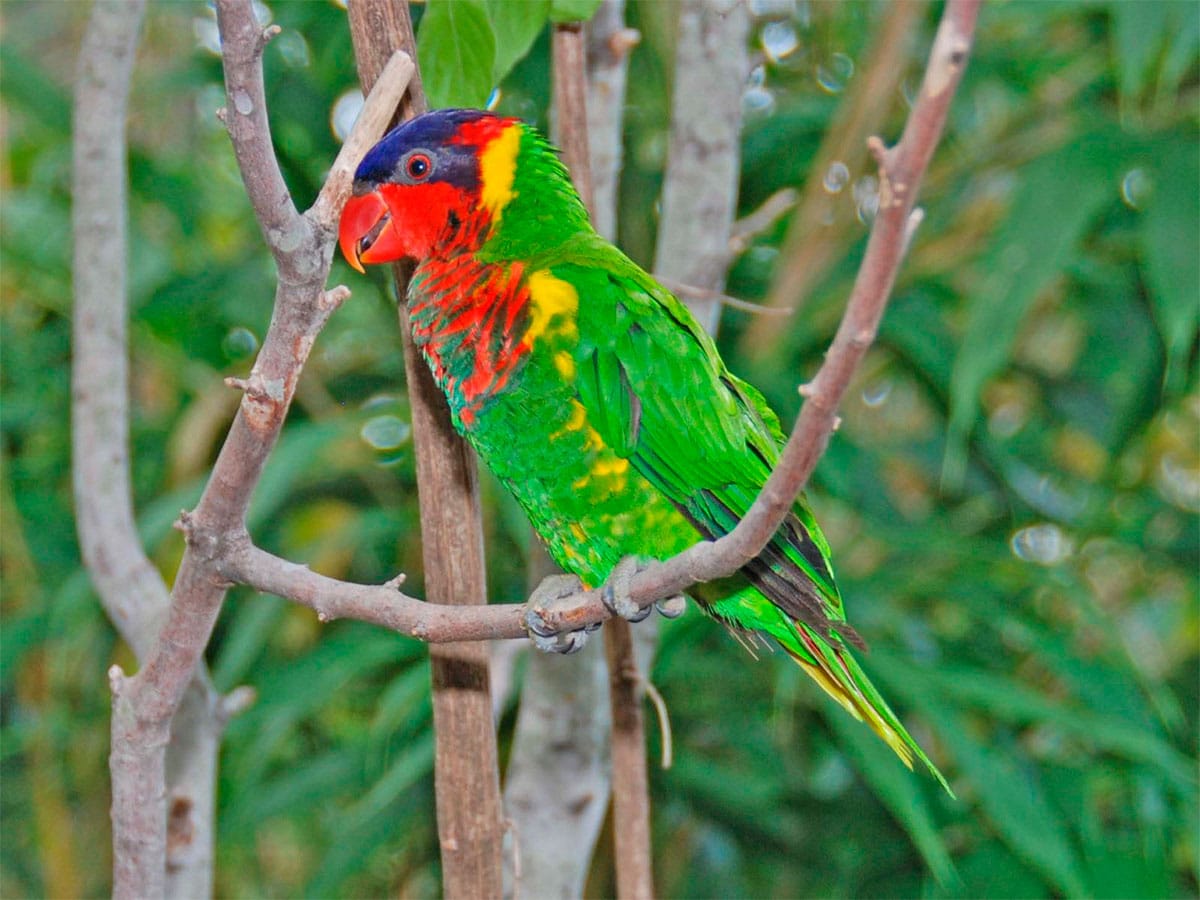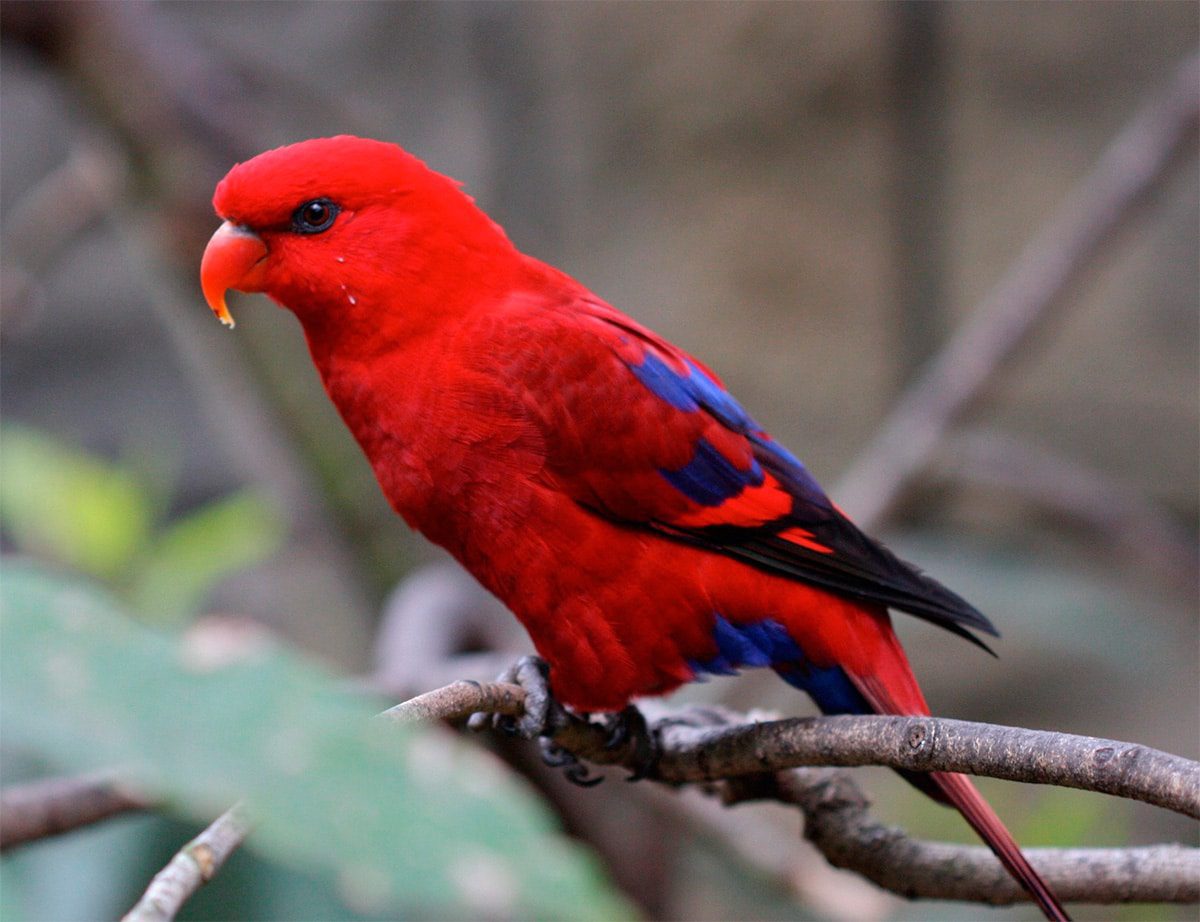
โ–ท The world of Pets: Dogs, cats, birds, reptiles, amphibians

Iris Lorikeet
Psitteuteles iris


Iris Lorikeet

Content

Description

20 cm.. length and a weight between 65 and 75 gr.

The Iris Lorikeet (Psitteuteles iris) It has three subspecies recognized including the nominal, the extent and gradation of red and purple coloration in the head varies among the three subspecies:

  • Psitteuteles iris iris

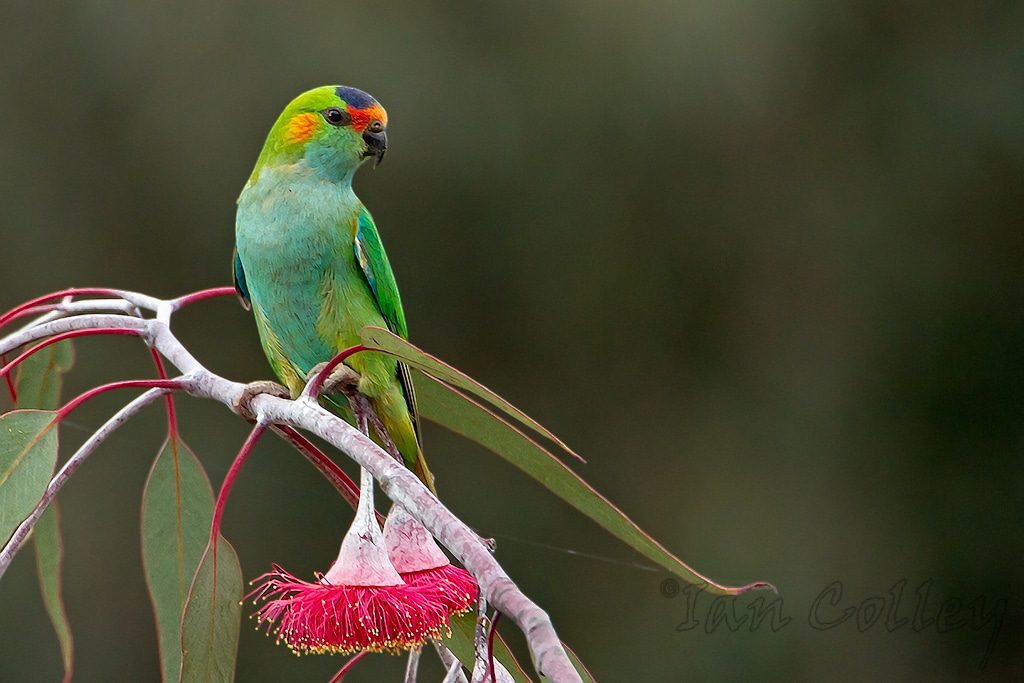
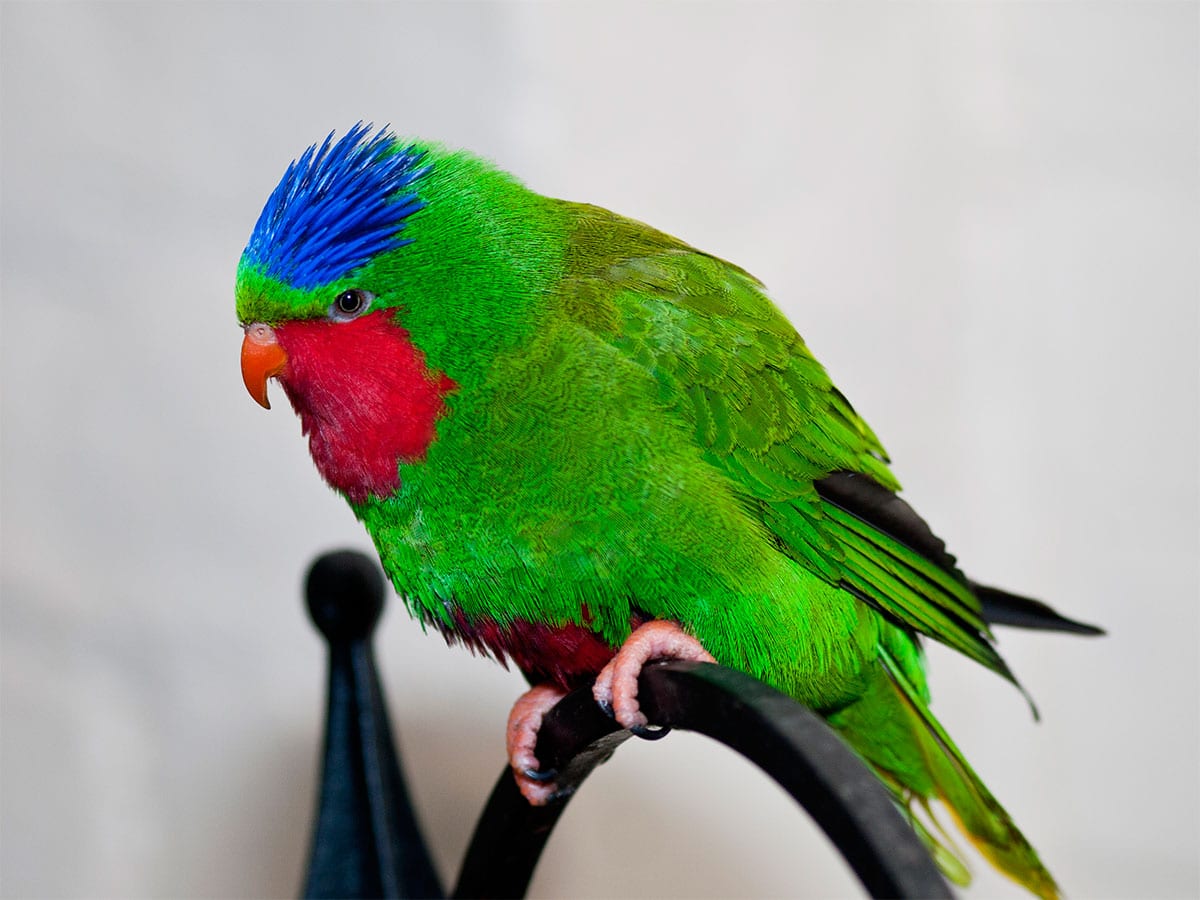
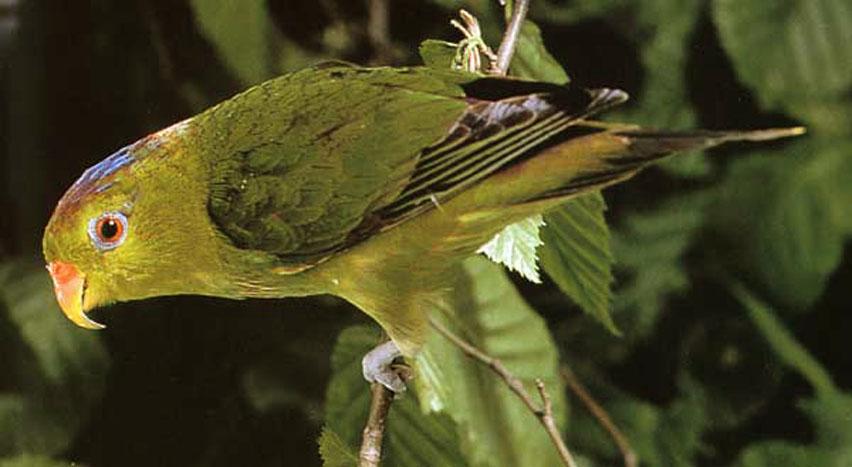
    The Iris Lorikeet (Psitteuteles iris) has a plumage, in general, Green with stripes of color green light in the underparts.

    The forecrown, lores and zone extending in a narrow line around the Crown rear, red.
    Cheeks yellowish green. The eye-stripe and headphones feathers purple.
    Center of the crown, Turquoise, extending it until it nape in a large yellow-green necklace.
    The chest and abdomen are yellowish-green. The feathers of the neck and the chest they have dark green edges. Wings and tail green.
    Bill and irises orange. The legs greyish black.

    It presents sexual dimorphism. The Red coloration of the female on head It is more off and less extensive that in the male.


  • Psitteuteles iris rubripileum

    It has all the forecrown and crown Red and the headphones feathers Violet Blue.


  • Psitteuteles iris wetterensis

    Larger, the crown It is red and mixed with Violet Blue variable extension. The cheeks they are dark green. The chest bright yellow contrast with the Panza green.

Note:

It has placed at times as subspecies to the Neopsittacus. The validity of the subspecies Psitteuteles iris rubripileum, is questionable, and it was claimed that the differences with the nominal species It may be due to age or individual variation.

Habitat:

Found up to a height of 1.500 meters above the sea level.

The Iris Lorikeet They inhabit monsoon forests, plantations and agricultural land with flowering trees.
Although they are apparently more common in the higher elevations, its local abundance is based on the availability of trees with flowers for food, as is the case with most Lori.
The flight of the Iris Lorikeet fast and slightly wavy.

Reproduction:

Little is known about the breeding ecology of this species in its natural environment.. A record of a captive calf states that the laying is of two eggs, with a period of incubation of 23 days and emancipation some nine weeks more afternoon.

Food:

Feeds of nectar of the flowers Sesbania sp.

Distribution:

Size of the area of distribution (reproduction / resident): 31.300 km2

Endemic to the Islands Wetar and Timor (Indonesian).

Subspecies distribution:

  • Psitteuteles iris Iris

    : West of Timor.


  • Psitteuteles iris Rubripileum

    : It is from Timor.


  • Psitteuteles iris Wetterrensis

    : Wetar island.

Conservation:


Near-threatened


โ€ข Current IUCN Red List category: Near threatened

โ€ข Population trend: Decreasing

There are no data on population trend; But, the species is suspected to be in decline due to the capture and the degradation of the habitat.

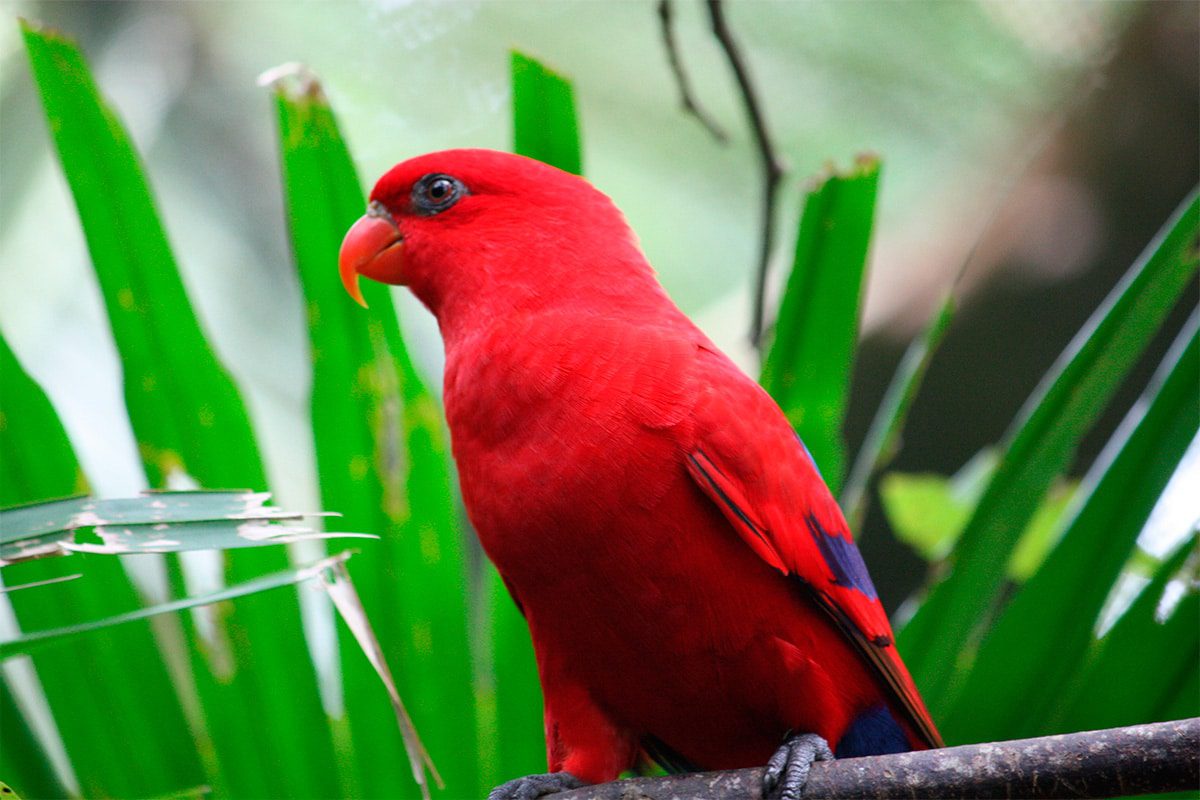
Previously considered common, but not found in the Island of Wetar during a search in 1990, found only in two places during a study of nine weeks in the jungle in Timor West in 1993. Considered main many that the Olive headed Lorikeet and the Coconut Lorikeet in East Timor. World population around 10.000 specimens. VULNERABLE.

"Iris Lorikeet" in captivity:

Quite rare.

Alternative names:

Iris Lory, Iris Lorikeet (ingles).
Loriquet iris, Loriquet d’Iris (French).
Irislori (German).
Lรณris-รญris (Portuguese).
Lori de Goldie, Lori Iris, Tricogloso Iris (espaรฑol).

scientific classification:

Order: Psittaciformes
Family: Psittaculidae
Scientific name: Psitteuteles iris
Citation: (Temminck, 1835)
Protonimo: Psittacus iris

Images ยซLori Irisยป:

————————————————————————————————

ยซIris Truckยป (Psitteuteles iris)


Sources:

Avibase
– Parrots of the World โ€“ Forshaw Joseph M
– Parrots A Guide to the Parrots of the World – Tony Juniper & Mike Parr
– BirdLife.org

Photos:

1 – By Dirk (originally posted to Flickr as DSC_7897) [CC-BY-2.0], via Wikimedia Commons
2 – By Dirk (originally posted to Flickr as DSC_2608) [CC-BY-2.0], via Wikimedia Commons
3 – By Asim Bharwani (originally posted to Flickr as San Diego Zoo) [CC-BY-2.0], via Wikimedia Commons
4 – By tinyfroglet [CC-BY-2.0], via Wikimedia Commons
5 – By Liam from Washington DC, USA (IMG_9040Uploaded by snowmanradio) [CC-BY-2.0], via Wikimedia Commons

Sounds: Filip Noel (Xeno-canto)

โ–ท The world of Pets: Dogs, cats, birds, reptiles, amphibians

Palm Lorikeet
Charmosyna palmarum

Content

Description

17 cm.. length and an approximate weight of 35 g..
Palm Lorikeet

The head of the Palm Lorikeet (Charmosyna palmarum) is bright green, showing some red markings around the base of the bill, lores and the chin. The upperparts are bright green with a light washed olive brown through the mantle.

The wings are green. Under the greenish-gray wing coverts. The lower parts are bright green, more yellowish in the chin, the throat and the center of the belly (males sometimes also with some feathers red in the abdomen and the thighs). Tail Green with yellow in the Center and by the side of the feathers; below the tail is yellow.
Bill orange; cere orange; irises yellow; legs yellowish-orange.

In the females, Red in the face is reduced or absent. Immature similar to the female, but in general most off. Iris ochre-coloured. Bill yellowish brown.

Habitat:

The Palm Lorikeet It is distributed in the forests and wooded lands, more common in the foothills than in the lowlands, and mostly uninhabited cloud forests of the larger islands above 1.000 m. He travels a lot between feeding sites and is found in pairs or flocks in the tops of the trees, where its Green plumage blends with the surroundings when it feeds among the flowers.
In flocks, couples have been observed grooming are, indicating that the pair bond is maintained when the birds are in larger groups.

A constant chatter deals the presence of these parrots in their search for food.

Reproduction:

Breeding habits they are little known, but a nest with two chicks in Holy (Vanuatu), It was found, in December of 1961, in a branch of a hollow tree to 6 meters above the ground in the cloud to 1,600 m forests. altitude.
They appear in the lowlands of sporadically, especially when the Erythnna and sago palm they are in flower.

Food:

Feeds in the Palms, lianas, fig trees and shrubs, taking nectar, pollen, fruits and berries, and particularly fond with the sago palm (Cycas circinalis).

Distribution:

Size of the area of distribution (reproduction / resident): 11.300 km2

Distributed by Southwest of Polynesia in Vanuatu, the Duff Islands, Santa Cruz Islands and Banks Islands.
Range seems to expand and contract, and it has been speculated that this may be related to the effect of cyclones, or sporadic colonies as a result of blooms. These may include, in Vanuatu It was noted from fate in 1879 for the first time in 30 years, and was still present there in the decade of 1930, but by the Decade of 1960 had disappeared.

Has also been recorded in Vanuatu from Holy Spirit, Aoba, Maewo, Pentecost, Malakula, Ambrym, Paama, Lopรฉvi, Tongoa, EMAE, Nguna, Eromanga, Tanna and Futuna; in Banks group in Santa Maria. Ureparapara, Vanua Lava Lava and Mere; and in the Group of Tinakula Santa Cruz, Utupua and Vanikoro.

Conservation:


Vulnerable


โ€ข Current IUCN Red List category: Vulnerable

โ€ข Population trend: Decreasing

The total size of the population It is estimated that it will fall within the band of 1,000-2,499 mature individuals.

Avian malaria, the cyclones and the natural cycles are suggested causes of the fluctuating range. Lowland forests, especially in small islands with high populations human, It is clearing for agriculture, domestic demand for timber and commercial logging, avoiding this kind of habitat can be regularly used by this species.

"Palm Lorikeet" in captivity:

Very rare poultry.

Alternative names:

Palm Lorikeet, Green Palm Lorikeet (ingles).
Lori des palmiers (French).
Palmenlori (German).
Lori Palmero (espaรฑol).

scientific classification:

Order: Psittaciformes
Family: Psittaculidae
Genus: Charmosyna
Scientific name: Charmosyna palmarum
Citation: (Gmelin, 1788)
Protonimo: parrot trees

Images "Palm Lorikeet"

————————————————————————————————

"Lori Palmer" (Charmosyna palmarum)


Sources:

Avibase
– Parrots of the World โ€“ Forshaw Joseph M
– Parrots A Guide to the Parrots of the World – Tony Juniper & Mike Parr
– Birdlife

Photos:

1 – taenos

โ–ท The world of Pets: Dogs, cats, birds, reptiles, amphibians

Scarlet-breasted Lorikeet
Trichoglossus forsteni

Scarlet-breasted Lorikeet

Content

Description:

25 to 30 centimeters length and 100-157 g. of weight.

The distinctive and colorful Scarlet-breasted Lorikeet (Trichoglossus forsteni) has the head dark blue, neck pale green, chest smooth red, and belly dark blue. The remaining plumage It is a bright pale green, and the bill typical is red.

In flight the species shows a flash of bright yellow on the inside of all flight feather, and coverts bright red at the bottom of the wings.

  • Sound of the Scarlet-breasted Lorikeet.

taxonomy:

This taxon is considered a subspecies of Trichoglossus [haematodus, rosenbergii, moluccana, forsteni, capistratus, weberi] (sensu lato) by some authors.

The specific epithet forsteni commemorates the Dutch naturalist Eltio Alegondas Forestry.

Subspecies description
  • Trichoglossus forsteni djampeanus

    (Hartert 1897) – They differ from the species nominal by the fact that their head it is darker and more obviously streaked with bright purple/blue.


  • Trichoglossus forsteni forsteni

    (Bonaparte 1850) – Nominal.


  • Trichoglossus forsteni mitchellii

    (Gray,GR 1859) – Both adults have head black / brown with gray / green streaks in crown up to the cheeks; red / brown in occiput; chest red with minimal or no barring; neck yellow green; purple/black belly; smaller.


  • Trichoglossus forsteni stresemanni

    (Meise 1929) – As the species nominal but with paler chest orange / red; green washing occiput; feathers the mantle yellow / orange basis.

Habitat:

The Scarlet-breasted Lorikeet is located in lowlands and lower montane forests, including secondary growth and plantations, tending to be observed at the edges and around perturbed vegetation instead of inside the closed canopy forest (pit et to the. 1997). In Sumbawa the Trichoglossus forsteni varies from sea level to 800-1200 meters and up 2150 metres in Lombok (pit et to the. 1997); at least in Sumbawa, the variation in altitudinal range is attributed to the movements in monitoring trees in bloom in a large area (White y Bruce 1986).

Reproduction:

Birds have been reported in breeding conditions in May Sumbawa (White y Bruce 1986). It nests in a deep hole in a large tree (pit et to the. 1997).

Food:

No specific data, but presumably similar to Coconut Lorikeet (Trichoglossus haematodus)

Distribution:

Extension of the distribution (breeding/resident): 101.000 km2

The Scarlet-breasted Lorikeet (incorporating subspecies mitchelli, djampeanus and stresemanni) It is located on the islands of Bali, Lombok, Sumbawa, Tanahjampea and Kalaotowa, Indonesian.

An assessment of the state of the taxa that make up the species indicates that the species may no longer be present in Bali, It is extinct in Tanahjampea after capture, mainly before 1990, and it is not clear if he persists in kalatom (Eaton et al. 2015). In Lombok the species is still present, with a recent observation of a flock of 18 individuals above 1.500 metres in 2015 (F. Rheindt per Eaton et al. 2015), although given the lack of other records for many decades, it can be assumed that the population is likely to be small. Sumbawa now it may be the stronghold of the species, and it was suggested that the species is "secureยป (Eaton et al. 2015), and there is a large area of รขโ‚ฌโ€นรขโ‚ฌโ€นpotentially suitable habitat remaining on the island.

Subspecies distribution

Conservation:


Vulnerable


โ€ข Current category of the Red List of the UICN: Vulnerable.

โ€ข Population trend: Decreasing.

โ€ข Population size : 1600-7000 individuals.

Rationale for the Red List category

It is estimated that this newly divided species has a small population that is experiencing suspected moderately rapid population decline due to the pressure of the traps for wild bird trade. So, is classified as Vulnerable.

Justification of the population

It is estimated that the population size is lower to 10.000 mature individuals, based on a provisional assessment of locations where any numbers of the species are likely to be retained. It also, it is considered possible that the population supposedly higher in Sumbawa does not exceed 1.000 mature individuals.

Justification trend

It is suspected that the population is experiencing descent moderately fast because of unsustainable levels of exploitation.

Conservation actions and research in progress

Appendix II of the CITES, where they include species that are not necessarily threatened with extinction, but in which trade must be controlled in order to avoid utilization incompatible with their survival. CMS Appendix II (Convention on the Conservation of Migratory Species of Wild Animals).

Proposed Research and Conservation Actions

– Estimate the population and assess population trends and scale of capture pressure.
– Carry out a species-specific survey to identify important sites, in order to provide protection.
– Conduct research on their status and habitat use (with particular attention to food ecology and forest fragmentation).
– Initiate awareness campaigns to enlist the support of local people in protecting forests and preventing illegal trade.

"Scarlet-breasted Lorikeet" in captivity:

Rare in captivity. Each captive specimen of this species which is capable of reproducing, must be placed in a well-managed captive breeding program and not sold as a pet, in order to ensure its long-term survival. However it copies sold from the Loroparque Foundation at a price of around 400 EUR.

In captivity, It appeared in the late nineteenth and early twentieth century, for example, in 1896 It was imported by the London Zoo. The first offspring of the world recorded in 1990 on India.

The Scarlet-breasted Lorikeet It has a longevity 20 years in nature, 15-25 years in captivity.

Alternative names:

Rainbow Lorikeet (Sunset), Scarlet-breasted Lorikeet, Scarley-breasted Lorikeet, Sunset Lorikeet (English).
Loriquet ร  face bleue, Loriquet ร  tรชte bleue (de Forsten), Loriquet ร  tรชte bleue [forsteni], Loriquet de Forsten (French).
Bali-Allfarblori, Forstenlori (German).
Lรณris-de-forstein (Portuguese).
Lori de Puesta del Sol, Lori pechiescarlata (espaรฑol).


Charles Lucien Bonaparte

scientific classification:


Order: Psittaciformes
Family: Psittaculidae
Gender: Trichoglossus
Scientific name: Trichoglossus forsteni
Subpoena: Bonaparte, 1850
Protonimo: Psittacus forsteni

โ€œScarlet-breasted Loryโ€ Images:


"Scarlet Peechie Lori" (Trichoglossus forsteni)

    Sources:

    โ€ข Avibase
    โ€ข Parrots of the World โ€“ Forshaw Joseph M
    โ€ข Parrots A Guide to the Parrots of the World – Tony Juniper & Mike Parr
    โ€ข Birdlife

    Photos:

    (1) – Sunset Lorikeet (also known as the Scarlet-breasted Lorikeet and Forstenโ€™s Lorikeet) at Cincinnati Zoo, USA by Ted [CC BY-SA 2.0], via Wikimedia Commons
    (2) – A Sunset Lorikeet (also known as the Scarlet-breasted Lorikeet and Forstenโ€™s Lorikeet) at Cincinnati Zoo, Ohio, USA by Ted [CC BY-SA 2.0], via Wikimedia Commons
    (3) – Two Rainbow Lorikeets at Newport Aquarium. This subspecies of the Rainbow Lorikeet is also called Forstenโ€™s Lorikeet by Trichoglossus_haematodus_-Newport_Aquarium-8a.jpg: Jeff Kubinaderivative work: Snowmanradio [CC BY-SA 2.0], via Wikimedia Commons
    (4) – Two Rainbow Lorikeets at Newport Aquarium. This subspecies of the Rainbow Lorikeet is also called Forstenโ€™s Lorikeet
    Date 22 April 2009, 15:31 (UTC)_haematodus_-Newport_Aquarium-8a.jpg: Jeff Kubinaderivative work: Snowmanradio [CC BY-SA 2.0], via Wikimedia Commons
    (5) – Lories at the Jurong BirdPark, Singapore. Taken by Terence Ong in November 2006. Trichoglossus haematodus forsteni by rk, Singapore. Taken by Terence Ong in November 2006. Trichoglossus haematodus forsteniNo machine-readable author provided. Terence assumed (based on copyright claims). [GFDL, CC-BY-SA-3.0 or CC BY 2.5], via Wikimedia Commons

    Sounds: Patrik ร…berg, XC40063. accessible www.xeno-canto.org/40063

โ–ท The world of Pets: Dogs, cats, birds, reptiles, amphibians

Violet-necked Lory
Eos squamata

Lori Escamoso

Content

Description

27 cm.. height and an approximate weight of 110 gr.

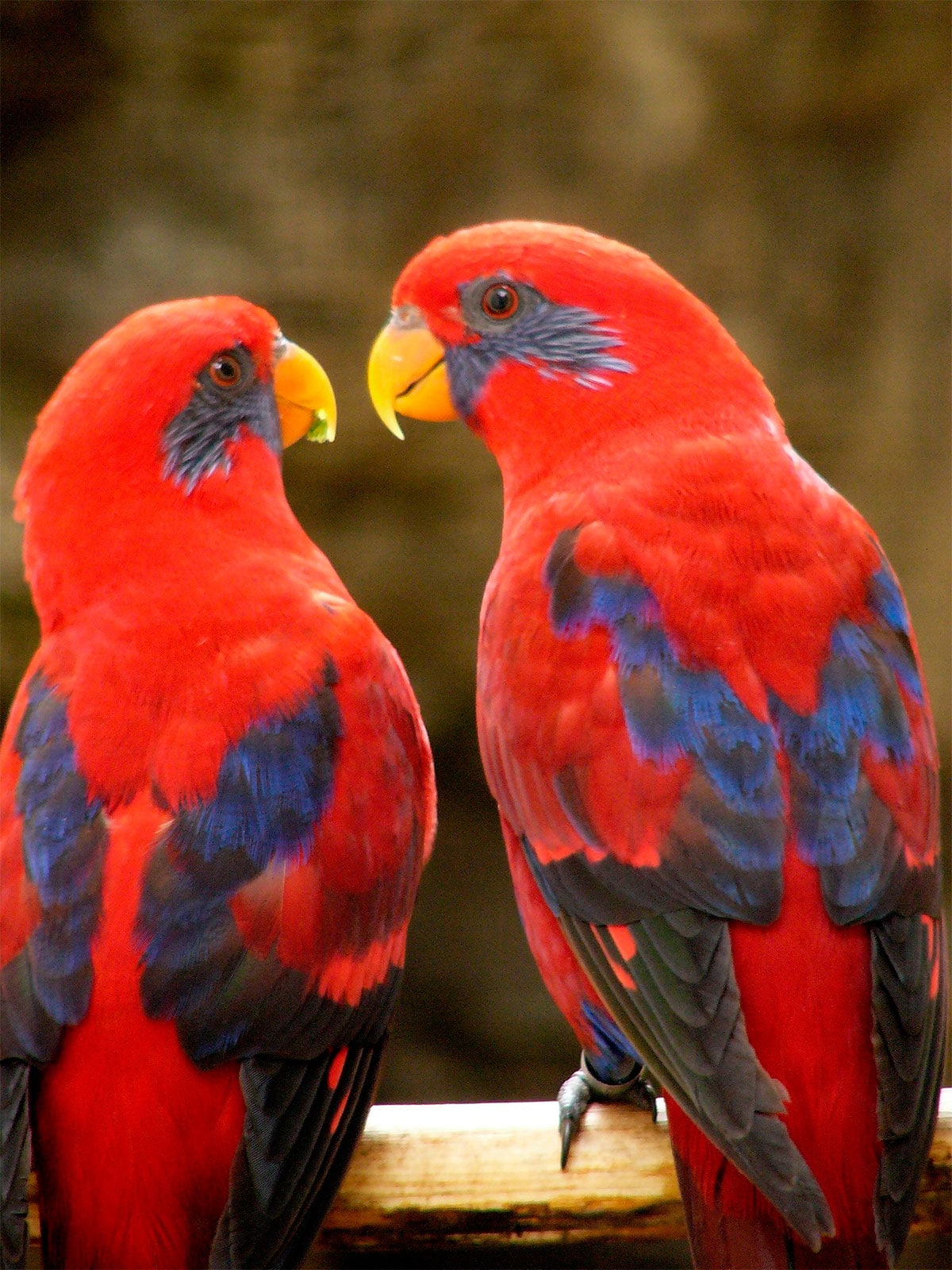
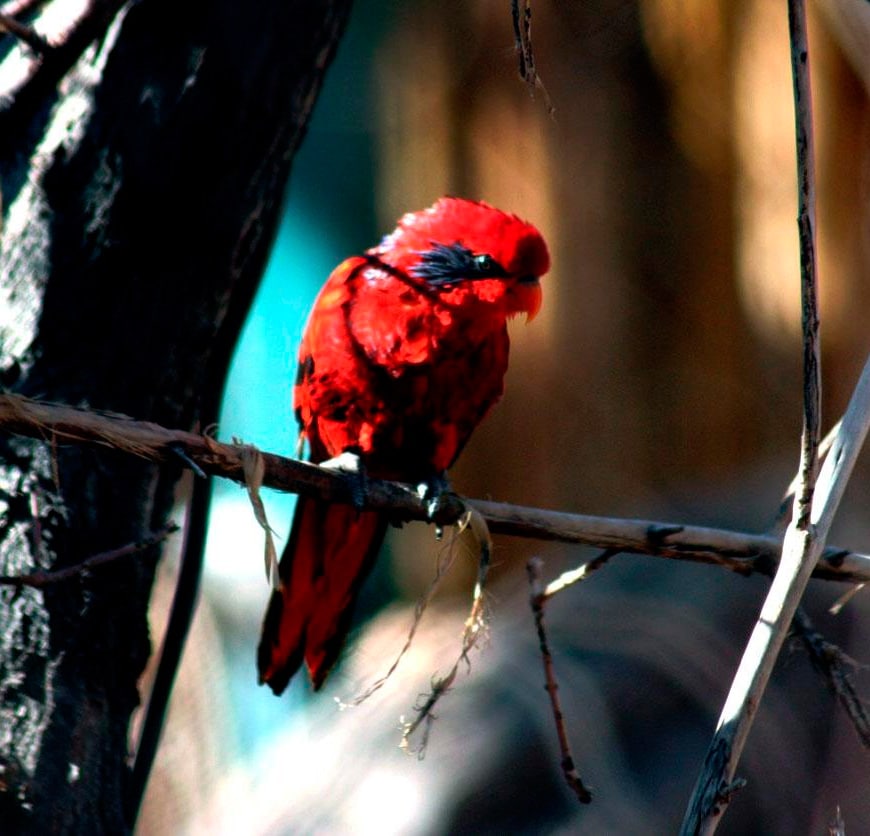
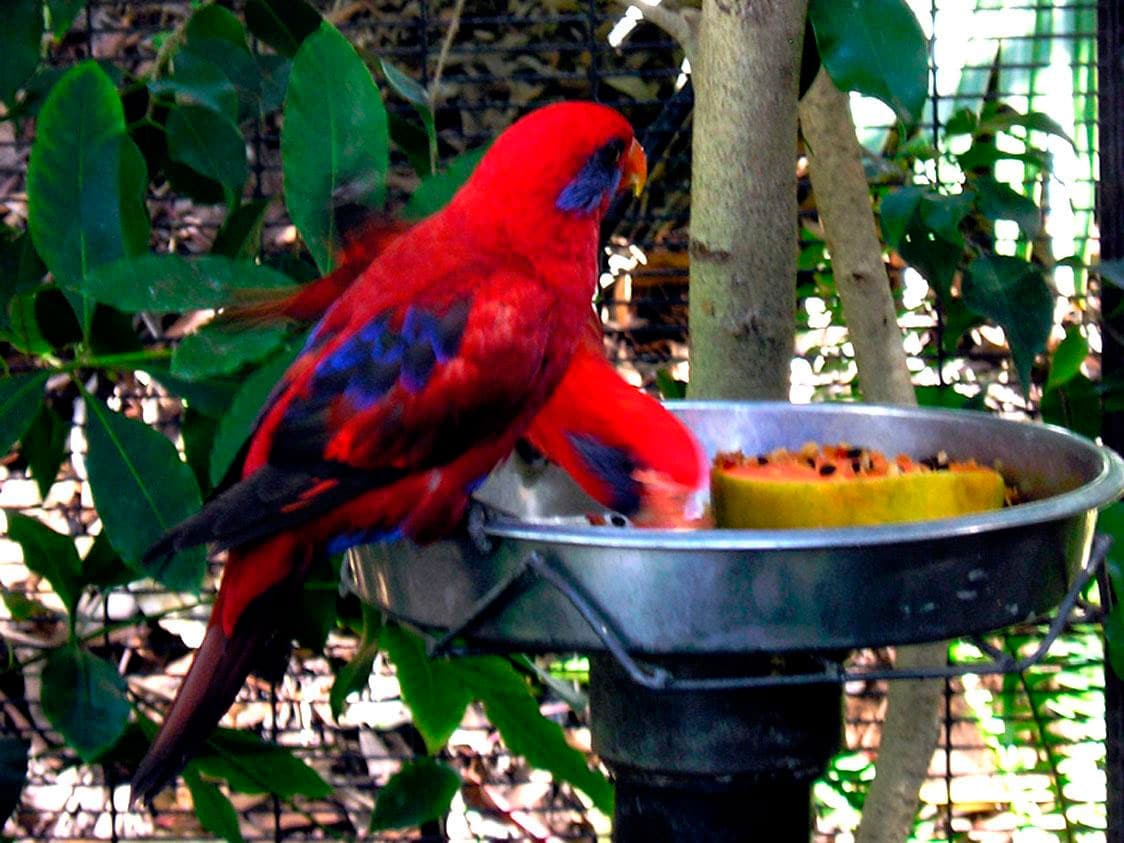
Along with the Red Lory (Eos Bornea) the "Scaly Lory" (Eos squamata) it is the only lory of the genus Eos it does not have blue marks on the ear-coverts.

Its plumage It has a scarlet general appearance. The neck It is surrounded by a violet blue collar which is well developed in some individuals, but nearly absent in others. The area from the abdomen up to the subcaudales it is dark purple. The scapulars they are dull purple with black tips. The feathers of the greater coverts and flight feather They are red with black tips.
The bottom of the wings and of remiges from below they are red with black spots at the primary level. The tail is purple red.

The irises is orange, the legs grey.

In the immature the feathers of the lower parts, have broad dull blackish purple borders. The irises They are brown.

Description 3 subspecies

  • Eos squamata squamata

    : (Boddaert, 1783) – Something smaller and feathers in the nominal species They are blue violet, in this subspecies are blackish blue.


  • Eos squamata riciniata

    : (Bechstein, 1811) – Smaller and band chest and neck is violet gray.


  • Eos squamata obiensis

    : (Rothschild, 1899) – It is somewhat smaller and with shoulders blacks. the band of neck It is variable and greyish violet. The area of the nape is red.

Habitat:

The Violet-necked Lory they are relatively common in the primeval forests or secondary forests that have large mature trees. Also found in the mountain forests and also, but with lower density in the coconut plantations bordering the coast, in the bushes during regeneration, in the abandoned gardens and mangroves.

Populations that inhabit small islands tend to stay near the coast.
On the larger islands, These birds can run in the forests of the mountains up to a height of 1.220 meters above the sea level.

The Violet-necked Lory they are particularly noisy and easily identifiable when they are in flocks, but they are a much more secretive behavior when in isolated pairs.

They usually gather in large flocks when they find abundant food sources.. This habit makes appearing more or less abundant in different regions. These flocks of birds are usually just above the tops of the trees.

Every day, they make short trips between the different islands. To do this they use a flight quick and direct, It consists of shallow wing beats. When they beat their wings produce a very audible hum.

Reproduction:

There is almost no information on the reproduction in the wild. In captivity, the implementation is of 2 eggs that are incubated during 27 days. As with all loris, the reproductive cycle is particularly long and hard about 80 days.

Food:

Exclusively vegetarian. They feed on sago palm in bloom and consume figs when they are still firm. Also eat nectar from big red flowers of Erythrina family Fabaceae.

Distribution:

Size of its range (reproduction / resident): 189.000 km2

The Violet-necked Lory They are endemic to the islands or archipelagos which are among New Guinea and Las Celebes.

They are mostly found in West Papua and of the Moluccan Islands.

Distribution 3 subspecies

  • Eos squamata squamata

    : (Boddaert, 1783) – Islands West Papua, that is to say Stupid, Waigeo, Batanta and Misool and islas Turtle (Indonesian)


  • Eos squamata riciniata

    : (Bechstein, 1811) – North of Moluccas, from Morotai to Bacan and Damar, also in islas Widi and Mayu islands in the sea of Moluccas (Indonesian).


  • Eos squamata obiensis

    : (Rothschild, 1899) – Only in the Obi Islands in the northern Moluccas.

Conservation:


minor concern


โ€ข Current IUCN Red List category: Least concern

โ€ข Population trend: Stable

The population size is very large, and therefore not approaching the threshold of Vulnerable under the criterion of population size.
The world population is estimated between 100,000 and 500,000 individuals.

About 3.000 specimens are caught every year for the trade aviaries. The pressure on the species is estimated to be quite reasonable, but it is recommended, by many associations, the establishment of catch quotas for the year.

"Violet-necked Lory" in captivity:

Son loving, curious, extroverts and show some unique behaviors. Some like to wrap yourself in a blanket to sleep. Sometimes, they can even be sleeping on your back. They can learn to mimic sounds and words.

They are capable of aggressive behavior if their territories and possessions is disregarded.

They are demanding in the requirements should be for their care, requiring much attention. Baths or showers daily should be part of your daily habit.

Alternative names:

Violet-necked Lory, Moluccan Red Lory, Violet necked Lory (ingles).
Lori รฉcaillรฉ, Lori ร  nuque violette, Lori de Wallace (French).
Kapuzenlori (German).
Lรณris-de-colar-violeta (Portuguese).
Lori de Collar Violeta, Lori Escamosa, Lori Escamoso (espaรฑol).

scientific classification:

Order: Psittaciformes
Family: Psittaculidae
Scientific name: Eos squamata
Genus: Eos
Citation: (Boddaert, 1783)
Protonimo: Psittacus Squamatus

โ€œScaly Loryโ€ Images:

Videos "Violet-necked Lory"

————————————————————————————————–

"Scaly Lory" (Eos squamata)


Sources:
Avibase, BirdLife.org, Oiseaux.NET
– Photos: SALIS- (Flickr), Bernard DUPONT (Flickr), Wikimedia, IBC.lynxeds.com
– Sounds: Frank Lambert (Xeno-canto)
โ–ท The world of Pets: Dogs, cats, birds, reptiles, amphibians

Goldie's Lorikeet
Psitteuteles goldiei

Goldie's Lorikeet

Content

Description

19 cm.. long and weighing between 45 and 60 g..

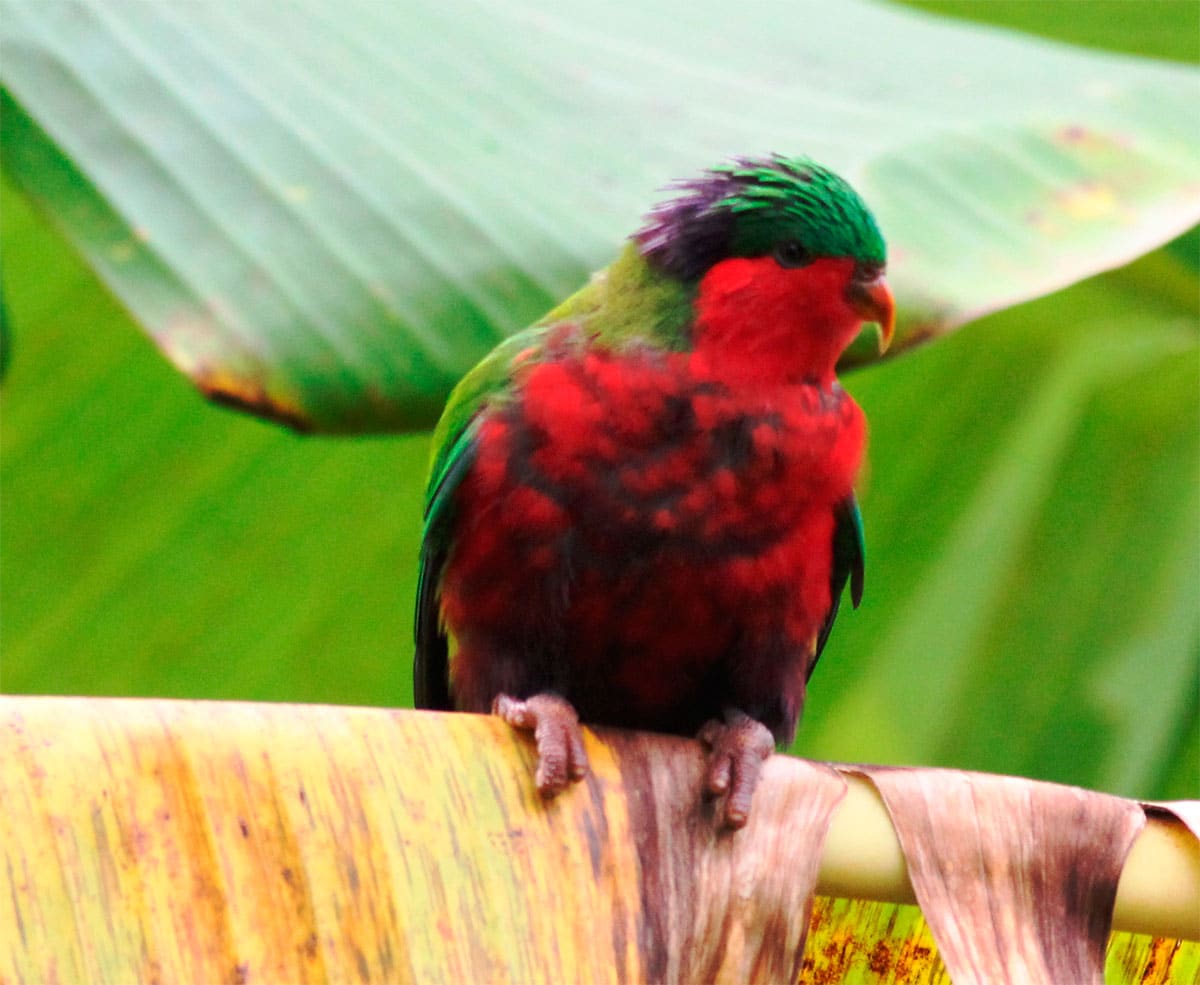
The Goldie's Lorikeet (Psitteuteles goldiei) has the top red. Its neck is surrounded by a strip blue opaque that it extends to the edge of the eye.

The mumps and their cheeks They are pink with multiple dark blue veins.. The upperparts of color green dark streaked of black in the part inferior of the neck and of color yellow greenish mottling on the sides of the layer.
The feathers that cover the wing are dark green, as well as the top of the tail.
The feathers they have a green color with black internal wires and a fine yellow edge.

The underparts are yellowish green with many streaks of dark green, more concentrated in the area of the chest. The bottom of the tail is of color yellow grey.

The bill is black, brown the iris. The legs son grises.

The females adult, they have the top more opaque and less developed.

In the immature, the top is reddish with dark blue spots. The upper mantle is spotted of yellow.

There are no geographic variations. The species is considered monotype.

Habitat:

The Goldie's Lorikeet It is distributed mainly by primary forests, mountain forests and eucalyptus between 1.000 and 2.200 meters above sea level. But, These birds are very Mobile and their habitat may vary from sea level to the 2.800 m.

At higher altitudes, sometimes be parked in the forests of beech and false Podocarpus. They are also set fairly regularly in the areas where the trees are in bloom and around small mountain villages. They have been , occasionally, in small groups of trees isolated in the middle of open spaces.

The Goldie's Lorikeet they are very sociebles. They are often associated with other Charmosyna type Loris: Fairy Lorikeet (Charmosyna pulchella) and Lori Flanquirrojo (Charmosyna placentis).

Most of the time they live in large groups of 30 or more individuals. These birds make long flights daily, often in the company of Pygmy Lorikeet (Charmosyna wilhelminae). Move from their places of rest to its feeding sites found at the middle level, or at the top of the tall trees in flower.

They probably make seasonal migrations to meet their specific feeding needs.. Between mid June and early January, the Goldie's Lorikeet they are common in the forests of the lowlands around Port Moresby.

Reproduction:

We really know very little about free-range breeding.. Apparently, the nest is well hidden inside a tree in thick foliage dry, mostly big pandanus. The female lays two white eggs.

In captivity, the incubation period ranges between 23 and 24 days. Young are altricial, and leave the nest after 8 to 9 weeks.

Food:

The Goldie's Lorikeet they have a scheme rather similar to all the lori, that is to say, they are almost exclusively vegetarian. Its menu consists mainly of pollen, nectar, flowers and fruits than that found in the trees of the genus Casuarina in shrubs of the genus honey Grevillea and of the eucalyptus.

Distribution:

Size of the area of distribution (reproduction / resident): 307.000 km2

This species is endemic of New Guinea. Lives exclusively in the mountains in the center of the island and stretches to the mountains of the Huon Peninsula and Owen Stanley.

Conservation:


minor concern

– Current IUCN Red List category: Least concern

– The population trend: Stable

The population suspected to be stable in the absence of evidence of any reduction or substantial threats.

The world population It has not been quantified, It is estimated above 100.000 specimens, but the species is reported to be locally common depending on food availability.

"Goldie's Lorikeet" in captivity:

The Goldie's Lorikeet is a bird prized as a pet. His character is not aggressive, or destructive and is quite silent for a parrot. They can be taken in pairs or in large communities. Some of them come to imitate the human voice.

Alternative names:

Goldie’s Lorikeet, Red-capped Streaked Lorikeet, Red-capped Streaked Lory (ingles).
Loriquet de Goldie (French).
Veilchenlori (German).
Lรณris-de-goldie (Portuguese).
Lori de Goldie, Tricogloso de Goldie (espaรฑol).

scientific classification:

Order: Psittaciformes
Family: Psittaculidae
Genus: Psitteuteles
Scientific name: Psitteuteles goldiei
Citation: (Sharpe, 1882)
Protonimo: Trichoglossus Goldiei

"Goldie's Lory" Images:

————————————————————————————————

"Lori de Goldie" (Psitteuteles goldiei)


Sources:

Avibase
– Parrots of the World โ€“ Forshaw Joseph M
– Parrots A Guide to the Parrots of the World – Tony Juniper & Mike Parr
– BirdLife.org
Wikipedia

Photos:

1 – ยซPsitteuteles goldiei - Pittsburgh National Aviary-8-3 cยป by derivative work: Snowmanradio (talk)Psitteuteles_goldiei_-Pittsburgh_National_Aviary-8.jpg: Benny Mazur – originally posted to Flickr as Goldieโ€™s Lorikeet and uploaded to commons as Psitteuteles_goldiei_-Pittsburgh_National_Aviary-8.jpg. Licensed under CC BY 2.0 via Wikimedia Commons.
2 – animalhouse.Re.it
3 – ยซGoldies Lorikeetยป by LtshearsOwn work. Licensed under CC BY-SA 3.0 via Wikimedia Commons.
4 โ€“ Jackson Zoological Park – Jackson, MS, USA ยฉ 2004 Jeff Whitlock
5- Bird feeding on fruit in a tree. by David Cook Wildlife Photography – IBC.lynxeds.com

Sounds: Michiel de Boer (Xeno-canto)
โ–ท The world of Pets: Dogs, cats, birds, reptiles, amphibians

Red-chinned Lory
Charmosyna rubrigularis

Content


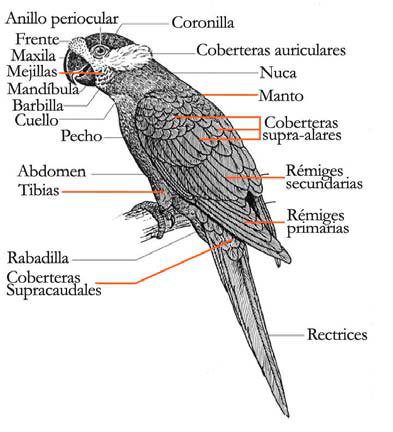
Anatomy-parrots

Description

17 to 20 cm.. length between 33 and 40 g. of weight.

Red-chinned Lory

The Red-chinned Lory (Charmosyna rubrigularis) has the head green; ear-coverts brilliant emerald green with pale green streaks and showing even paler on the crown; chin, top of the throat and lower lores, surrounded by yellow red. The upperparts, Green olive darker than the underparts. The wings Green with the part internal black and them edges yellow. Yellowish-green below-wing coverts; flight feather grey and black with stripe yellow central.

Underparts brighter yellowish green, clearly more gentle to them upperparts. The tail above it is green with yellow tips, lateral feathers marked in red, black and orange in the bases; by below with broad lateral feathers red, with tips yellow (more or less hidden red rest), central feathers Black with them ends yellow.

Bill orange red; irises orange; legs orange-yellow.

Both sexes are equal.

Immature they are similar to the adult with less red in the chin and throat.

Habitat:

With distributed by the humid forest, mainly in the mountains. Usually found in small flocks of up to ten birds, feeding in the canopy or flying above. Can be seen in the company of others Loris that is feed from nectar, including the much larger Coconut Lorikeet. You can be assured while feeding.

Reproduction:

Unknown breeding habits.

Food:

Feeds of pollen and nectar and it has been noted that they frequent native Palms in the mountains of New Ireland.

Distribution:

Size of the area of distribution (reproduction / resident): 185.000 km2

In Karkar island (off the northeast coast) and the Bismarck Archipelago (New Britain, New Hanover and New Ireland), Papua New Guinea. In Karkar is found from sea level to the top but rarely below 625 m, and more common among 1.150 meters of 1,280 m. common since 450 meters up in New Britain and in New Ireland from 1.500 metres to the Summit of the Hans Meyer Range; Although found as low as a 70 m. It tends to replace Red-flanked Lorikeet at higher altitudes, but it may be sympatric with species in some areas.

Conservation:


minor concern

โ€ข Current IUCN Red List category: Least concern

โ€ข Population trend: Stable

The population World has not been quantified, but the species according to information is common and abundant (pit et to the. 1997).

Justification of trend

It is suspected that the population is stable in the absence of evidence of any reduction or substantial threats.

"Red-chinned Lory" in captivity:

The species does not arise today as a cage bird.

Alternative names:

Red-chinned Lory, Red chinned Lorikeet, Red-chinned Lorikeet (ingles).
Lori ร  menton rouge (French).
Rotkinnlori (German).
Lori Barbirrojo, Lori de Barba Roja (espaรฑol).

Philip Sclater
Philip Sclater

scientific classification:


Order: Psittaciformes
Family: Psittaculidae
Genus: Charmosyna
Scientific name: Charmosyna rubrigularis
Citation: (Sclater,PL, 1881)
Protonimo: Trichoglossus rubrigularis

Images "Red-chinned Lory"

————————————————————————————————

ยซOn Barbirroยป (Charmosyna rubrigularis)


Sources:

Avibase
– Parrots of the World โ€“ Forshaw Joseph M
– Parrots A Guide to the Parrots of the World – Tony Juniper & Mike Parr
– Birdlife

Sounds: Frank Lambert (Xeno-canto)

โ–ท The world of Pets: Dogs, cats, birds, reptiles, amphibians

Flores Lorikeet
Trichoglossus weberi

Flores Lorikeet

Content

 Flores Lorikeet

Description Lori Flores:

25 cm. length and 100-150 g. of weight.

The Flores Lorikeet (Trichoglossus weberi) is generally Green; light green / blue stripes on the forecrown and lores, the rest of the head with brighter green stripes; underwing-coverts yellow / green. The chest and the thighs are yellowish or reddish. The bill It is orange-red and irises orange-red. The legs son grises. Smaller size than other species Trichoglossus.

The youth they are similar to adults.

    taxonomy:

Sometimes you think you're closer Olive headed Lorikeet (Trichoglossus euteles). With one exception, so far it has been treated as a subspecies within the complex Coconut Lorikeet (Trichoglossus haematodus), but differs in its chest rather pale green; abdominal patch medium green; head dark green with streaks of bright green; small size (less than a Scarlet-breasted Lorikeet (Trichoglossus forsteni) relatively small). Monotypic.

  • Sound of the Flores Lorikeet. (1)

(1) Some species are under extreme pressure because of traps and harassment. The open availability of high-quality recordings of these species may make the problems even worse.. For this reason, transmission and download of these recordings is off. Recorders are free to share in xeno-edge, but they will have to approve access to these recordings.

Habitat:

It's more common in the lowlands, but it is up 2400 meters above sea level. Wide variety of areas including settlements, forests, coconut plantations, Savanna, eucalyptus forests and mangroves.

It is found in mixed flocks with other parrots; small and noisy groups. Nomads, since they depend on flowering trees. It perches communally in groups of hundreds of birds.

Reproduction:

Birds have been recorded in conditions reproduction in June and is reported reproduction between February and August (White and Bruce 1986, Reeve y Rabenak 2016).

It will nest on the ground in some of the predator-free islands.

Food:

It feeds mainly from nectar, but also feeds on figs, insects and can be found around artificial feeding stations.

Distribution:

Extension of the distribution (breeding/resident): 25.500 km2

The Lori Flores are endemic to the flower island, Indonesian, where it is described as common (pit et to the. 1997).

Conservation Lori Flores:


Near-threatened

1. Current red list category of the UICN: Near-threatened.

2. The population trend: Decreasing.

3. Population size : 10000-19999 individuals.

    Rationale for the Red List category

It is believed that this species has recently split a moderately small population (approaching 10.000 mature individuals), forming one subpopulation, inferring that is suffering moderately rapid decreases due to the pressure of capture and loss of habitat. So, It has been classified as Near threatened, but more information on population size, trends and threats can lead to a reassessment of their status.

    Justification of the population

It is believed that the population of Flores Lorikeet It is moderately small (that is to say, approaching 10.000 mature individuals).

    Justification trend

They suspected that the population is declining due to loss of habitat and unsustainable levels of exploitation.

    Threats

The habitat destruction through the combined impacts of firewood collection, commercial logging, timber extraction for construction materials and clearance for agriculture may represent the most relevant threat.

The loss and fragmentation of forests It is already extensive in Flowers, where no semi-permanent forest below the 1.000 meters is included within the protected areas published in the Official Gazette. These threats are exacerbated by the expansion of human population, with large volumes of wood needed for housing construction, and the fact that the application of the laws by the government is little or no.

The moist deciduous forest is being cleared extensively through land grabbing and the establishment of agricultural areas, a factor that is inevitably reducing the range and population of this species. Forest clearing continues in the coastal belt to make way for crops, and illegal logging continues in protected areas.

It is presumed that the capture for trade in wild birds It represents an additional threat, as for other subspecies of the complex (Trichoglossus haemotodus).

Conservation actions and research in progress

Appendix II of the CITES. CMS Appendix II. It has been recorded in the Mbeliling Forest Reserve (Reeve y Rabenak 2016).

Proposed Research and Conservation Actions

1 – Estimate the population and assess population trends and scale of the pressure catch.

2- Conduct a species-specific study to identify important sites, in order to provide protection.

3- Carry out research on their status and habitat use (with special attention to feeding ecology and forest fragmentation) so that long-term management of the species facilitate.

4- Monitor trade to investigate whether this represents a significant threat.

5- Initiate campaigns sensitization to get the support of local people in forest protection.

In captivity:

In captivity it is kind enough rare de lori. He was raised for the first time Great Britain, in 1969, in Germany in 1984.

Because of its endangered status, Any suitable specimen can not be released back into their natural habitat (native range) It should preferably be placed in a breeding program well managed to ensure the continued survival of this species.

Alternative names

Flores Island rainbow lory, Flores Lorikeet, Leaf Lorikeet, Rainbow Lorikeet (Leaf) (English).
Loriquet ร  tรชte bleue (Weber), Loriquet ร  tรชte bleue (weberi), Loriquet de Flores, Loriquet de Weber (French).
Flores Blauwangenallfarblori, Flores-Allfarblori, Webers Lori (German).
Periquito-arco-รญris (weberi) (Portuguese).
Lori de Flores, Lori Arcoiris (weberi) (espaรฑol).

scientific classification:

Order: Psittaciformes
Family: Psittaculidae
Gender: Trichoglossus
Scientific name: Trichoglossus weberi
Subpoena: (Buttikofer, 1894)
Protonimo: Psitteuteles weber

"Lori de Flores" images:

Videos "Flores Lorikeet"


ยซLori de Floresยป (Trichoglossus weberi)


    Sources:

    1. Avibase
    2. Parrots of the World โ€“ Forshaw Joseph M
    3. Parrots A Guide to the Parrots of the World – Tony Juniper & Mike Parr
    4. Birdlife

    Photos:

    (1) – Flores Lorikeet, Trichoglossus (haematodus) weberi, at New Port Aquarium, Cincinnati, USA by derivative work: Snowmanradio (talk)Trichoglossus_haematodus_weberi_-New_Port_Aquarium-8.jpg: Serge Melki [CC BY 2.0], via Wikimedia Commons
    (2) – Weberโ€™s Lorikeets (Trichoglossus haematodus weberi) at Newport Aquarium by Ltshears [CC BY-SA 3.0 or GFDL], from Wikimedia Commons
    (3) – Fig. 1: Flores Lorikeet (Trichoglossus = Psitteuteles Weber Weber)
    Fig. 2: Olive-headed Lorikeet (Trichoglossus euteles = Psitteuteles euteles) by A Weberโ€™s lorikeet (Trichoglossus weberi) at the Jerusalem Biblical Zoo by SuperJew [CC BY-SA 4.0], from Wikimedia Commons
    (4) – Trichoglossus haematodus weberi Buttikofer, 1894 bt Huub Veldhuijzen van Zanten / Naturalis Biodiversity Center [CC BY-SA 3.0]

    (5) – Weberโ€™s lorikeet, Picture taken at Loro Parque in Puerto de la Cruz / Tenerife by Dominik DeobaldFlickr
    (6) – Johann Buttikofer [Public domain], via Wikimedia Commons

    Sounds: Raf Floats, XC350575. accessible www.xeno-canto.org/350575

โ–ท The world of Pets: Dogs, cats, birds, reptiles, amphibians

Blue streaked Lory
Eos reticulata


Blue streaked Lory

Content

Description

About 30 cm.. length and a weight between 140 and 170 gr.

Like all species of the genus Eos, the โ€œTanimbar Loryโ€ (Eos reticulata), shows a beautiful plumage mainly red. In adults, a great band blue-violet crosses the region of the eye and continues in the patches that cover the ears, at the sides of the neck.

The under neck and the mantle they are covered with long, violet-blue stripes.
The back and tail they are more or less blue red striped.

The pens and large blankets have terminations in black. The primary is almost entirely black. The tail is brownish black above and below a red opaque.

The bottom of the wings they have the edge and dark tips. Thighs and flanks they are completely Red. The bill coral red. Iris orange-red. The legs are grey.

In youth , the feathers the lower parts are aligned blue-black variably. The shield It is covered with blue spots instead of stripes. The bill is brownish Orange. The irises They are brown.

Habitat:

The Blue streaked Lory they live mostly in the most wooded areas, including primary and secondary forests. They are also found in coconut plantations, of sago palms, in the mangroves and the cultivated lands.

It seems that they show a certain attraction for the monsoon forests, relatively open and located in low-lying areas.

They live alone, in pairs or in small groups of up to ten or more individuals. These are rather shy and discreet, but their presence is often betrayed by the screams produced flocks in flight.

They have a direct flight, quite fast and composed of many flapping. Often feed on coconut blossom trees and the sago palms.

Reproduction:

There is little information of the natural environment. The Blue streaked Lory They typically make 2 or 3 eggs that colouring of 24 to 26 days. The chicks leave the nest after 7 to 8 weeks. But, even after feather, they return regularly to rest awhile. The youth they stay in the family throughout the summer and then join the dormitories where they continue their learning.

Food:

They have an exclusively vegetarian diet. They feed on fruits, seeds, buds and immature seeds. His tongue with a brush-shaped end is specialized to collect nectar and pollen.

Distribution:

Lori distribution of the Tanimbar
Is located in Yamdena and Larat, Tanimbar Islands and island of Babar, Indonesian. Introduced in Kai Islands and island of Damar, where has possibly gone.

Conservation:


Near-threatened

– Current IUCN Red List category: Near threatened

– The population trend: Decreasing

Habitat loss continues apace in southern Yamdena
The species is suspected that it is decreasing at a rate of slow to moderate, due to the combined forces of habitat loss and capture.
It is estimated a population of 220.000 ยฑ 50.000 birds in Yamdena

Nearly 3000 birds are traded on the international market of birds each year, fact that probably has not caused a decrease in its population. Habitat loss continues however, and this, combined with capture, probably if that will lead to more declines.

Conservation Actions Proposed:

– Regularly monitoring at certain sites throughout its range to determine population trends.
– Investigate the degree of capture and take appropriate measures, including the use of awareness-raising campaigns, to address these issues.
– Protection of the areas significant of forest right in all the Islands where is distributes the species.

"Blue streaked Lory" in captivity:

Lives of 15 to 30 years in the wild; and between 28 and 32 years in captivity.
Fairly common in the s 1970. Nowadays it is not unusual to see them in captivity.

Alternative names:

Blue streaked Lory, Blue-streaked Lory (ingles).
Lori rรฉticulรฉ, Lori ร  raies bleues, Lori striรฉ bleu (French).
Strichellori (German).
Lรณris-de-crista-azul (Portuguese).
Lori de las Tanimbar, Lori Reticulado (espaรฑol).

scientific classification:

Order: Psittaciformes
Family: Psittaculidae
Scientific name: Eos reticulata
Citation: (Muller,S, 1841)
Protonimo: Psittacus reticulatus

โ€œTanimbar Loryโ€ Images:

Videos "Blue streaked Lory"

————————————————————————————————————————–

ยซTanimbar Loryยป (Eos reticulata)


Sources:
Avibase, BirdLife.org, Oiseaux.NET
– Photos: Wikipedia – Uploaded by Benjamint444 , Jurong Bird Park, Singapore by chong kwang (Wikimedia), Jurong Bird Park, Singapore 2 by Michael Gwyther-Jones (Wikimedia), Photographed by Benjamint444 (Wikimedia), Renรฉ Modery (Wikimedia)
– Sounds: Mike Catsis (Xeno-canto)