โ–ท The world of Pets: Dogs, cats, birds, reptiles, amphibians

Bronze winged Parrot
Pionus chalcopterus


Bronze winged Parrot

Content

Description:

28 to 30 cm.. tall and around 210 weight g.

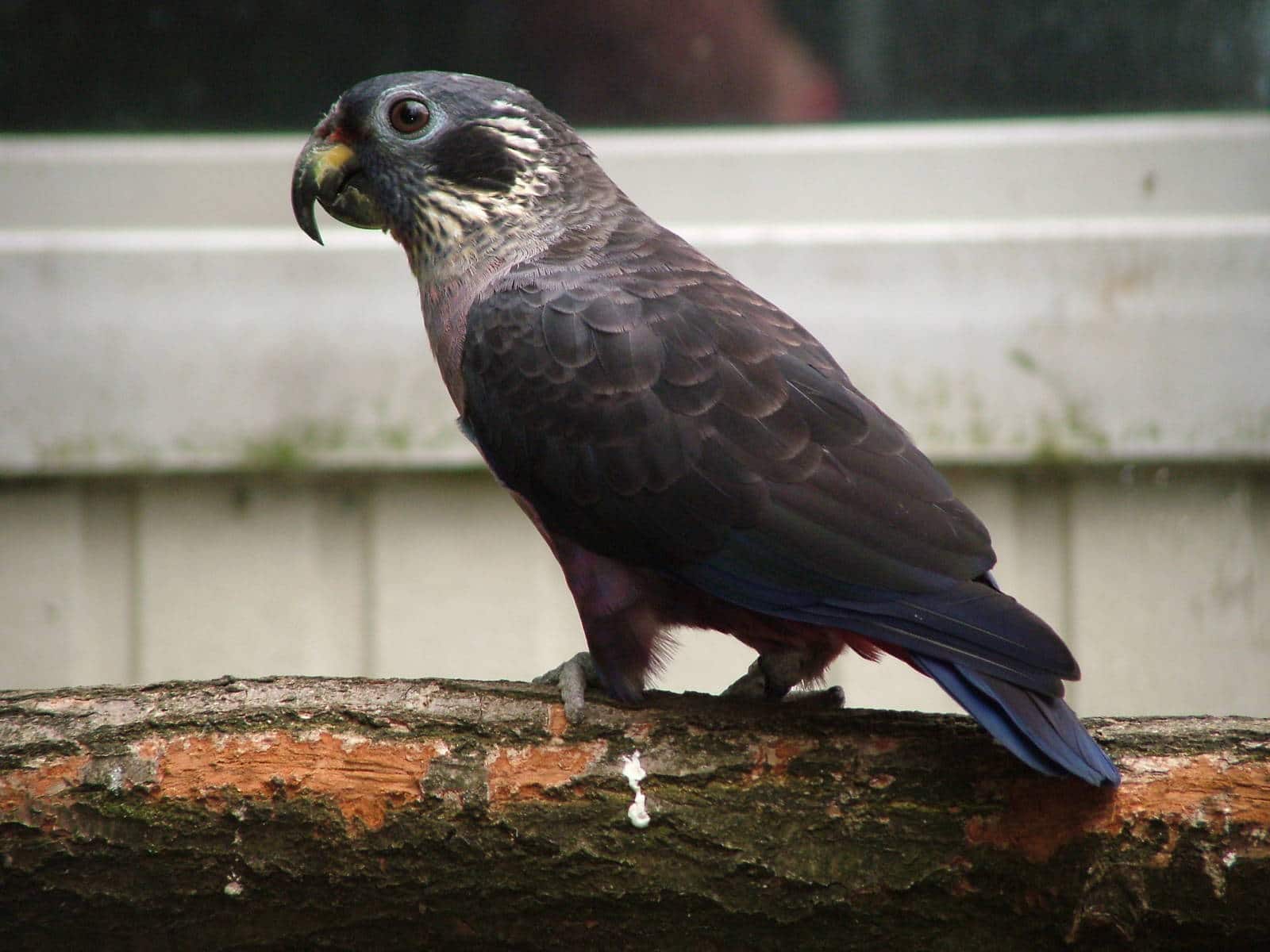
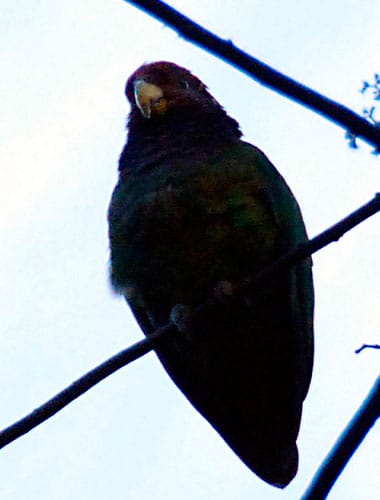
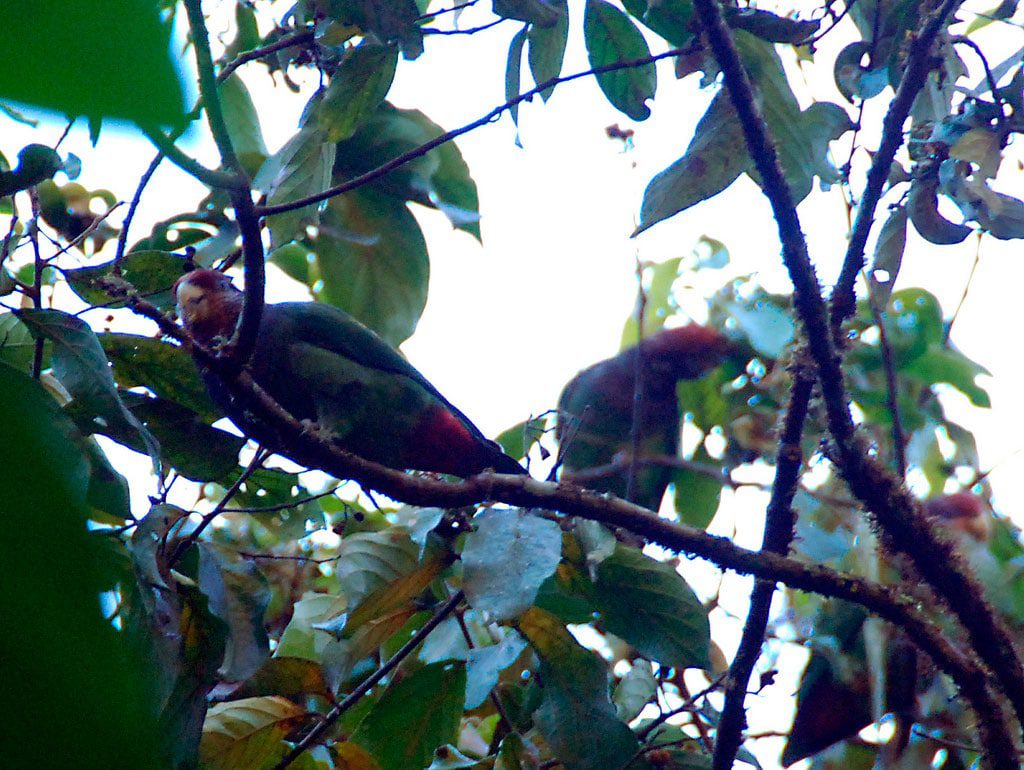
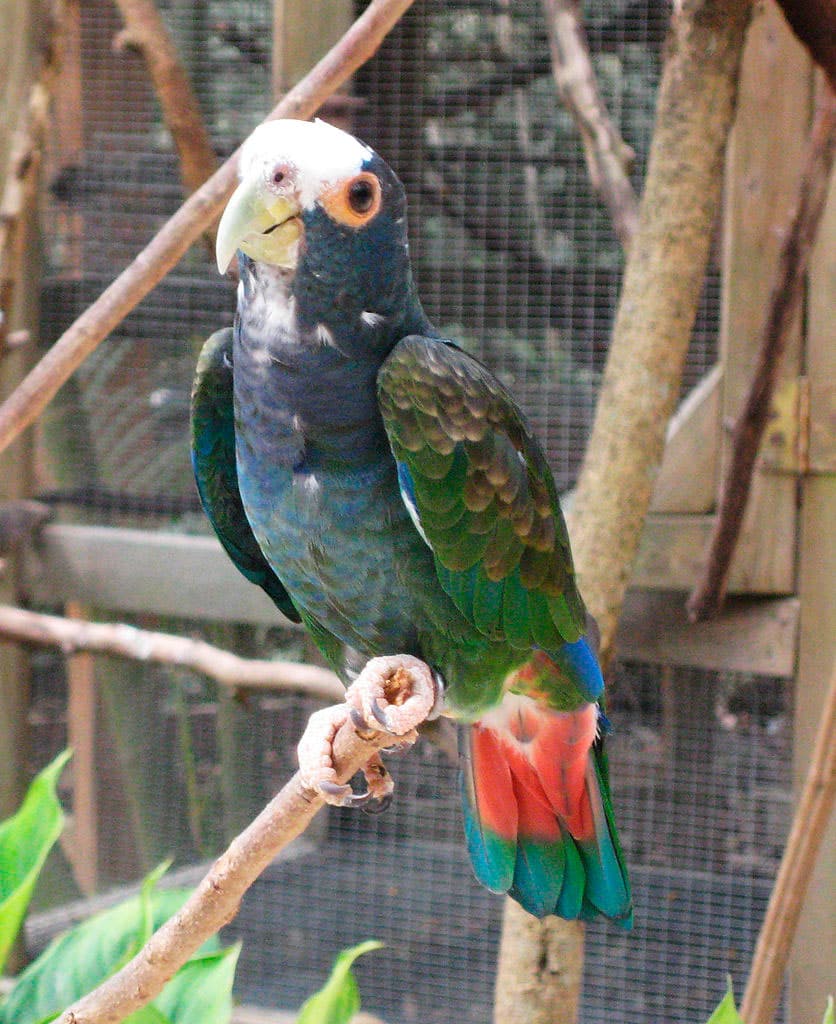
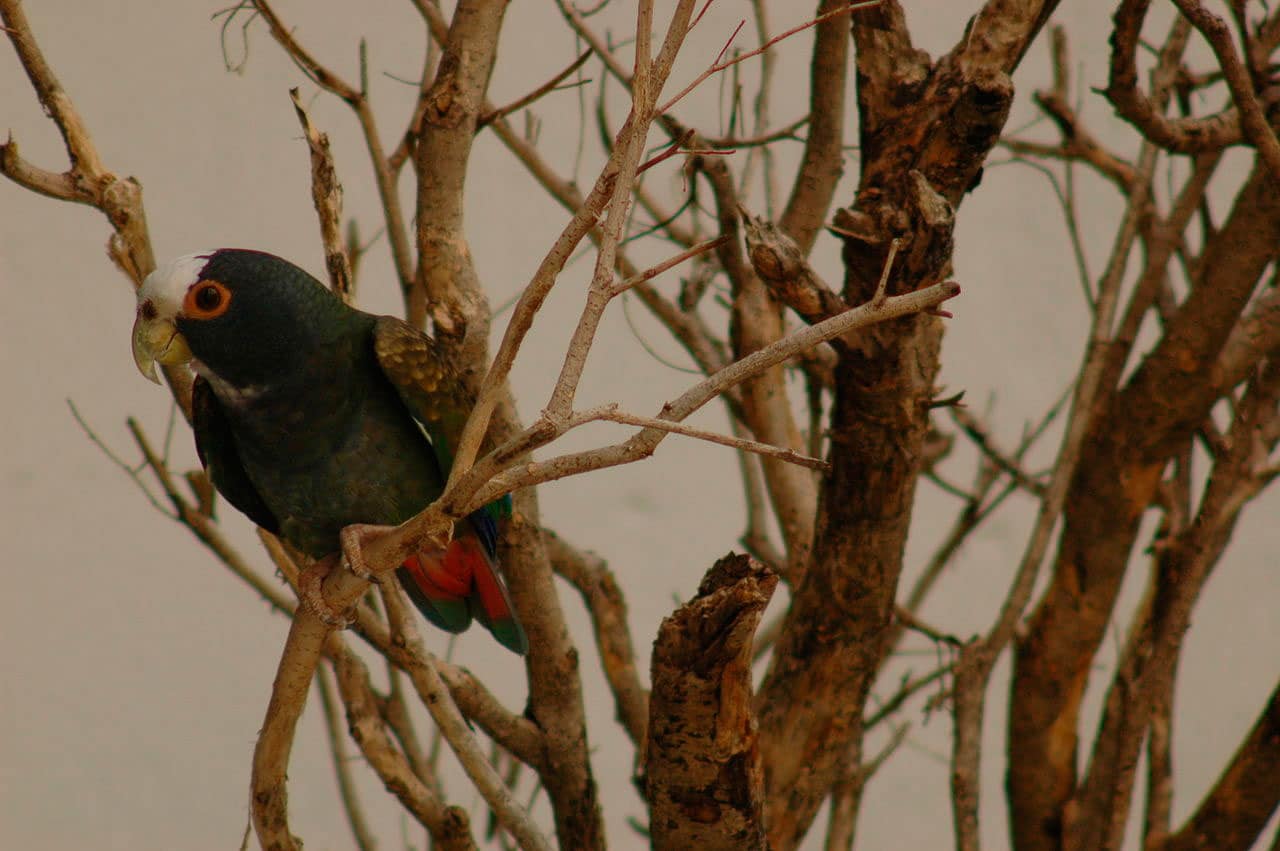
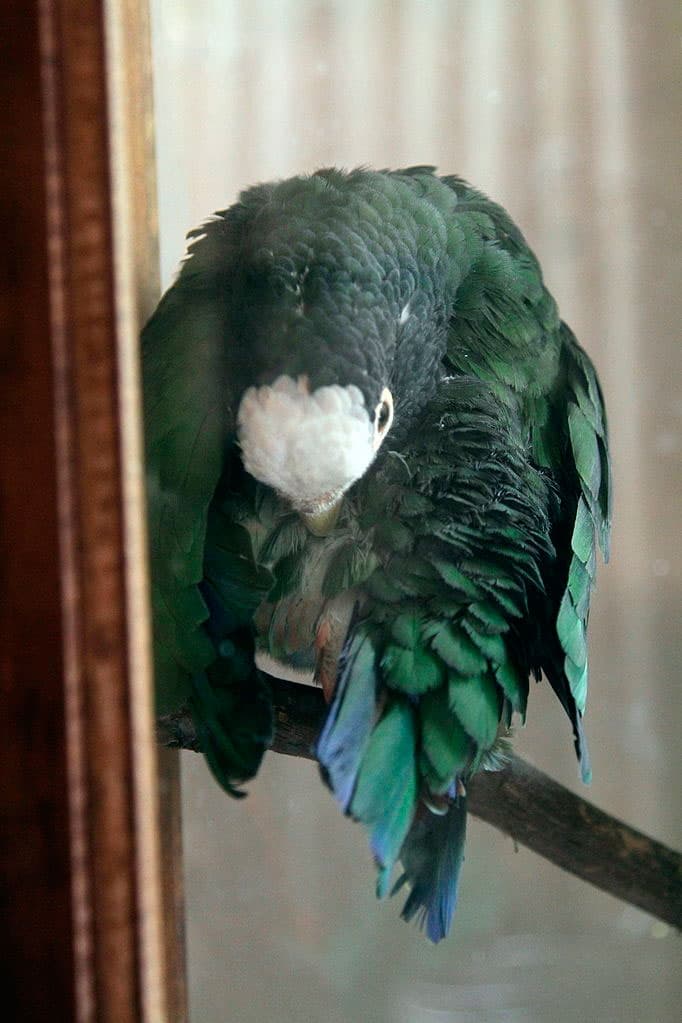
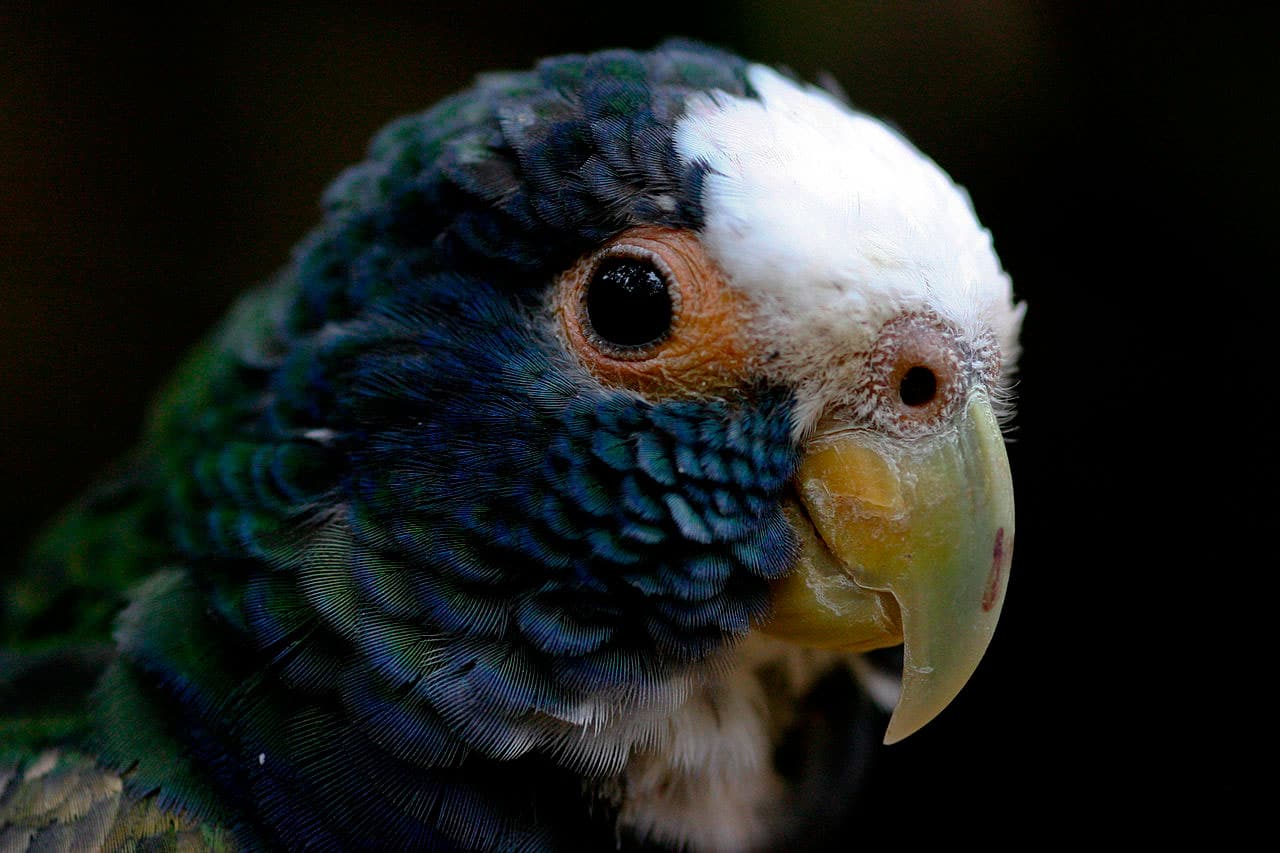
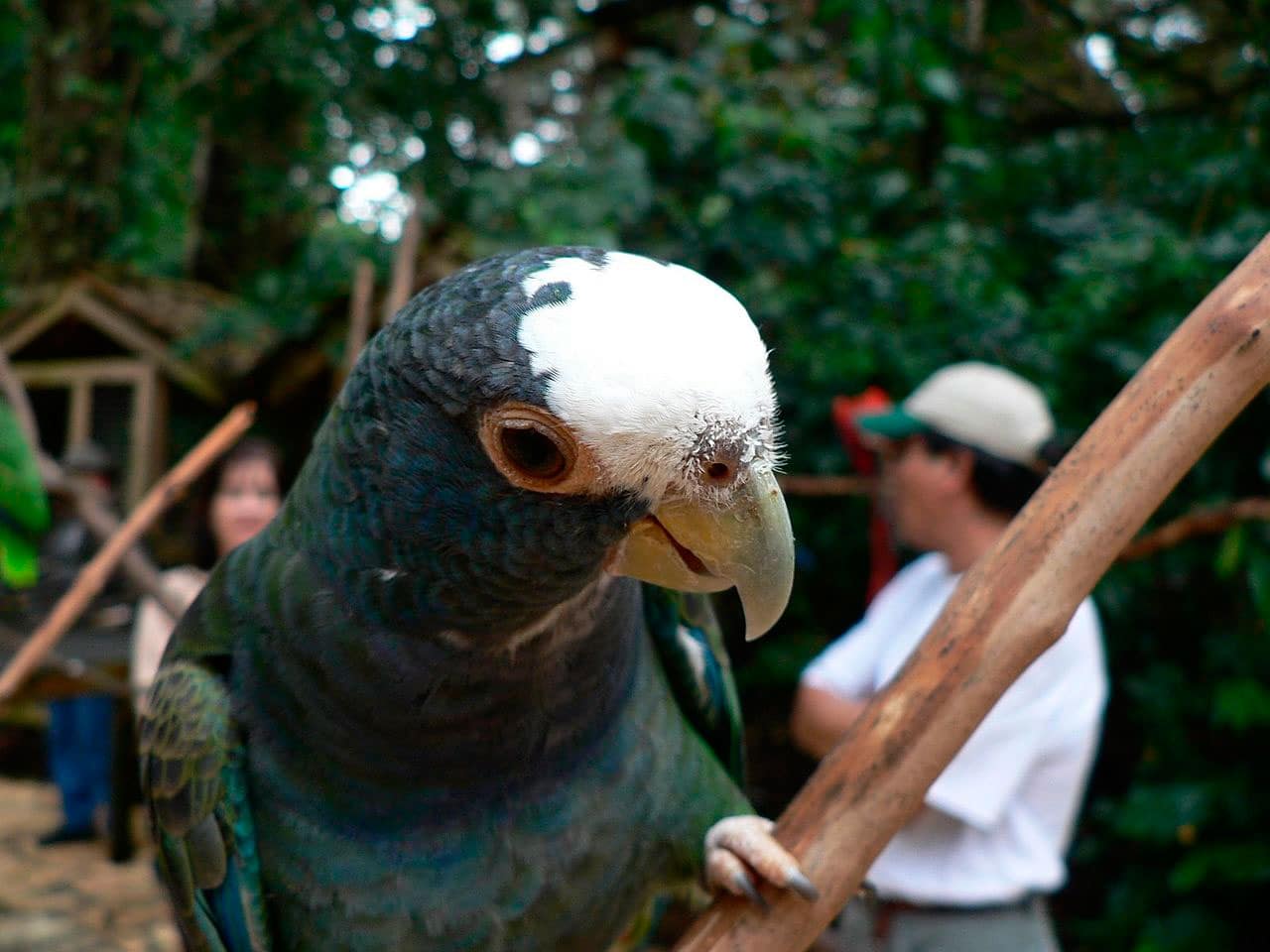
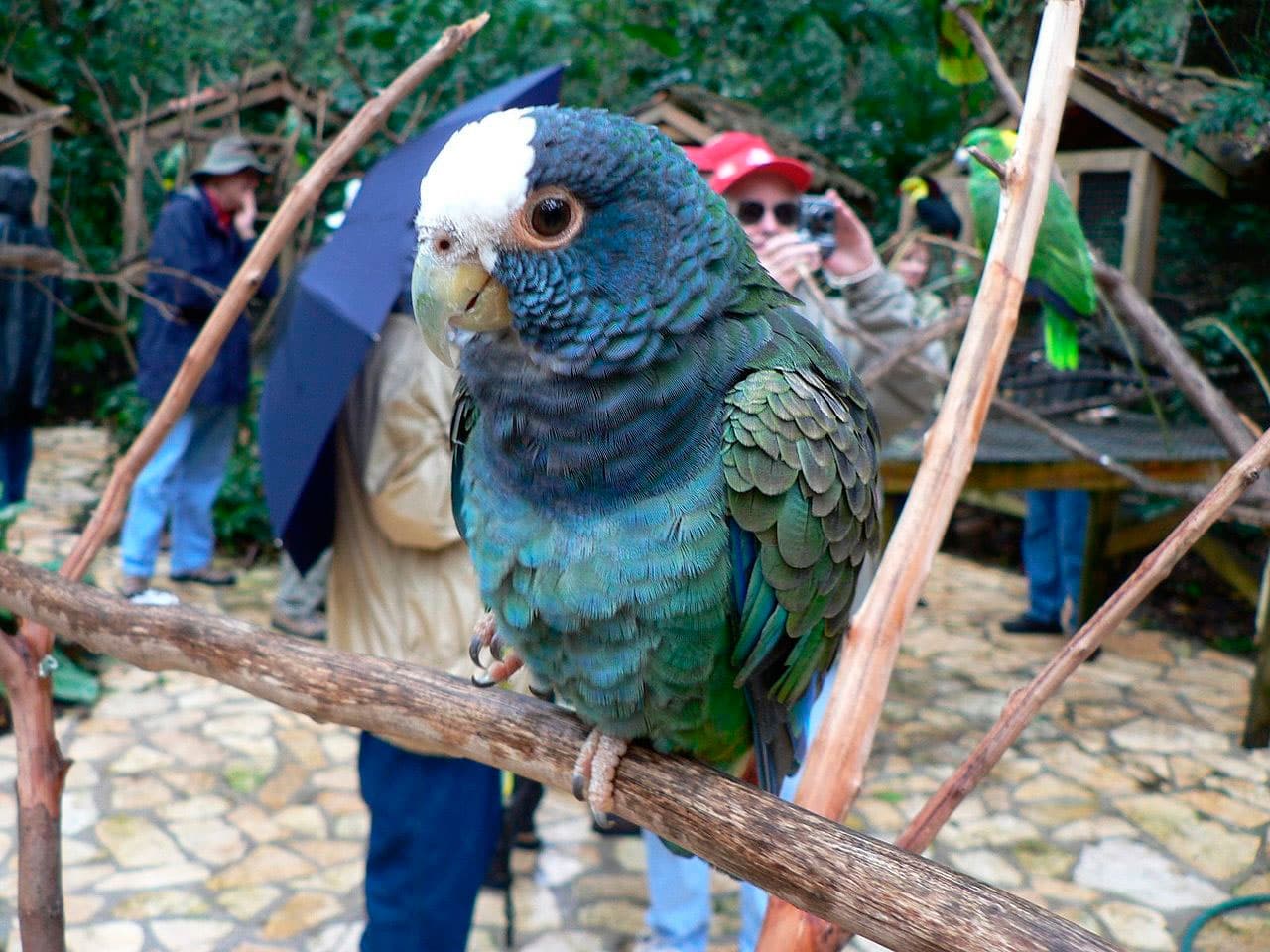
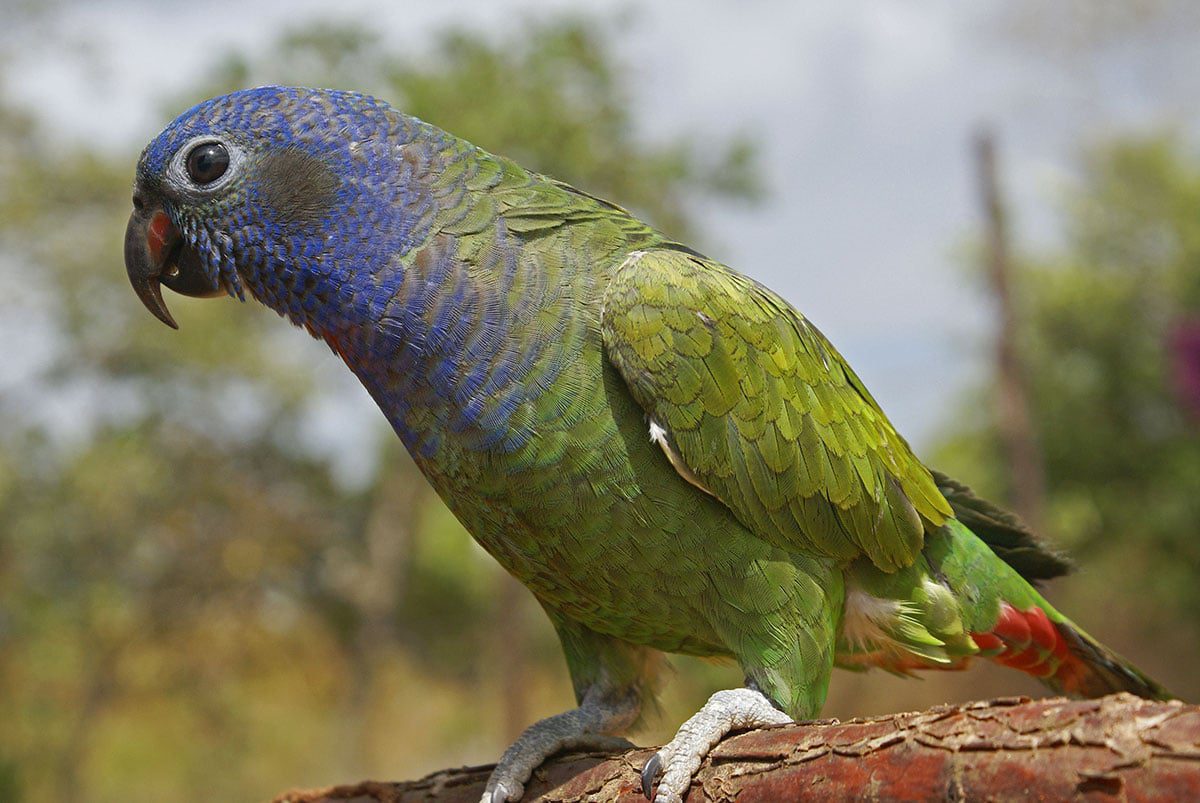
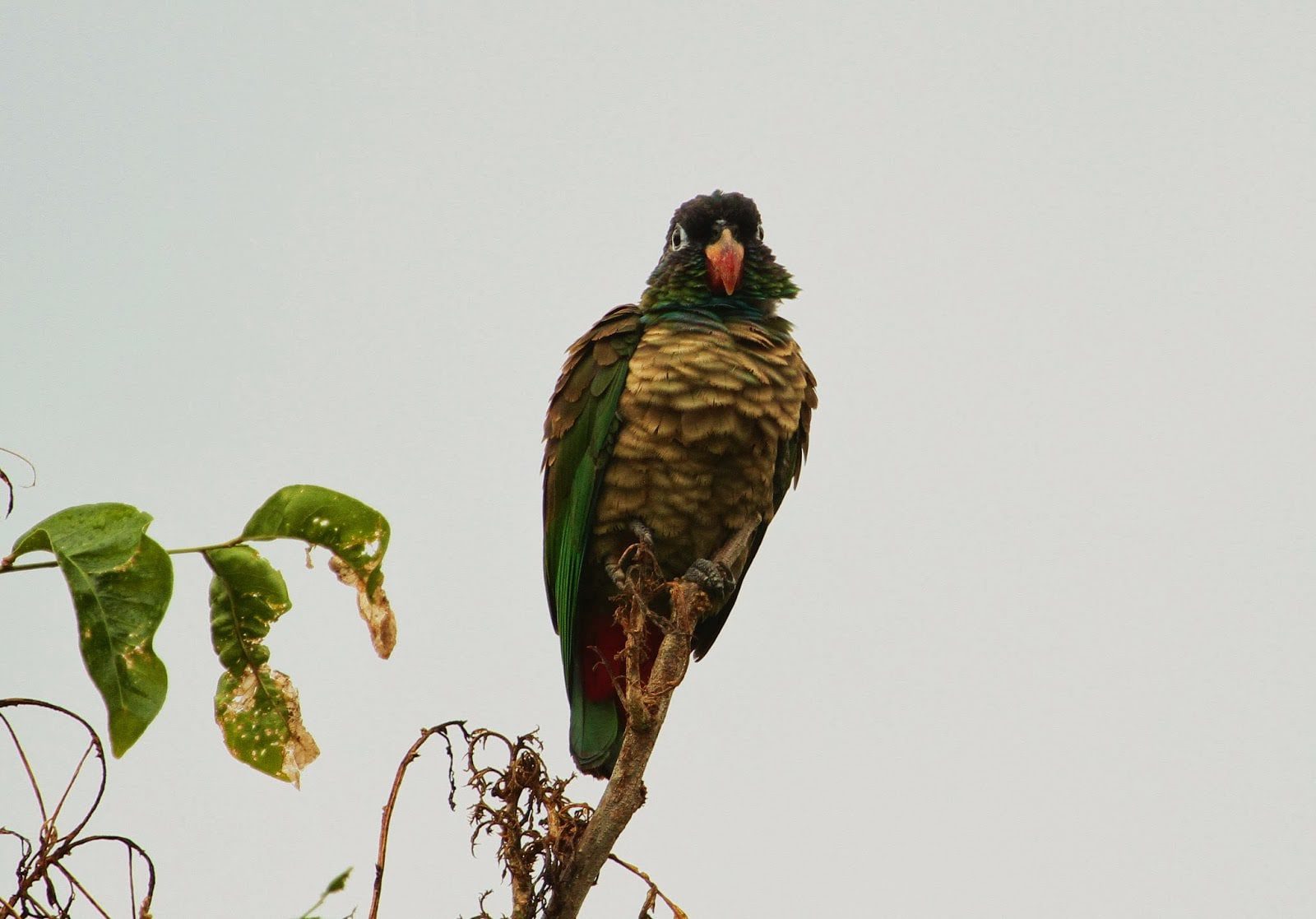
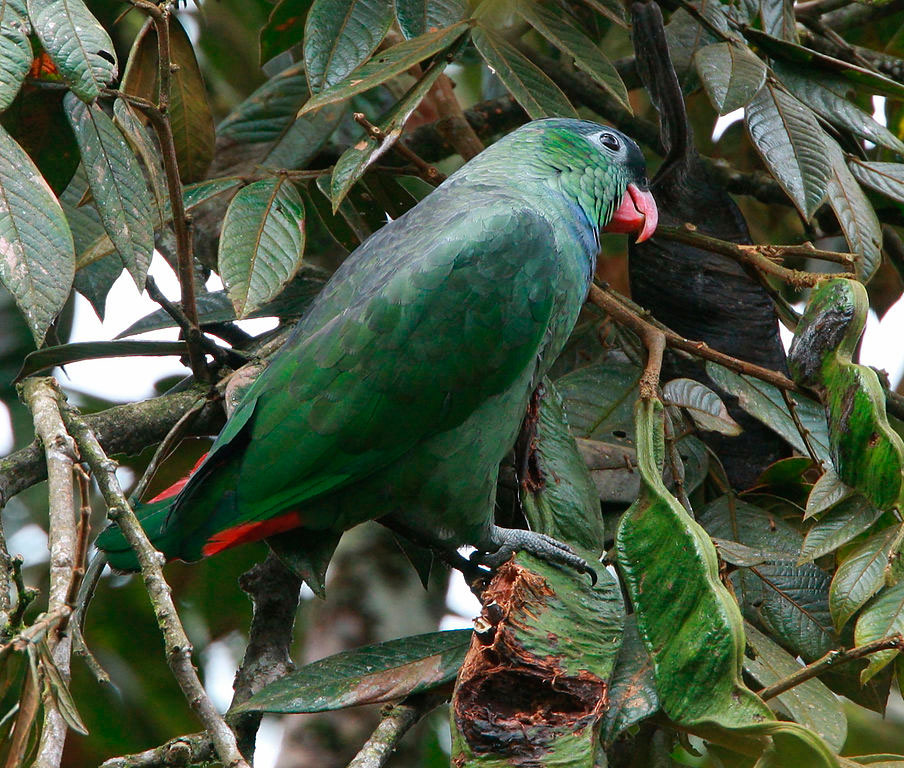
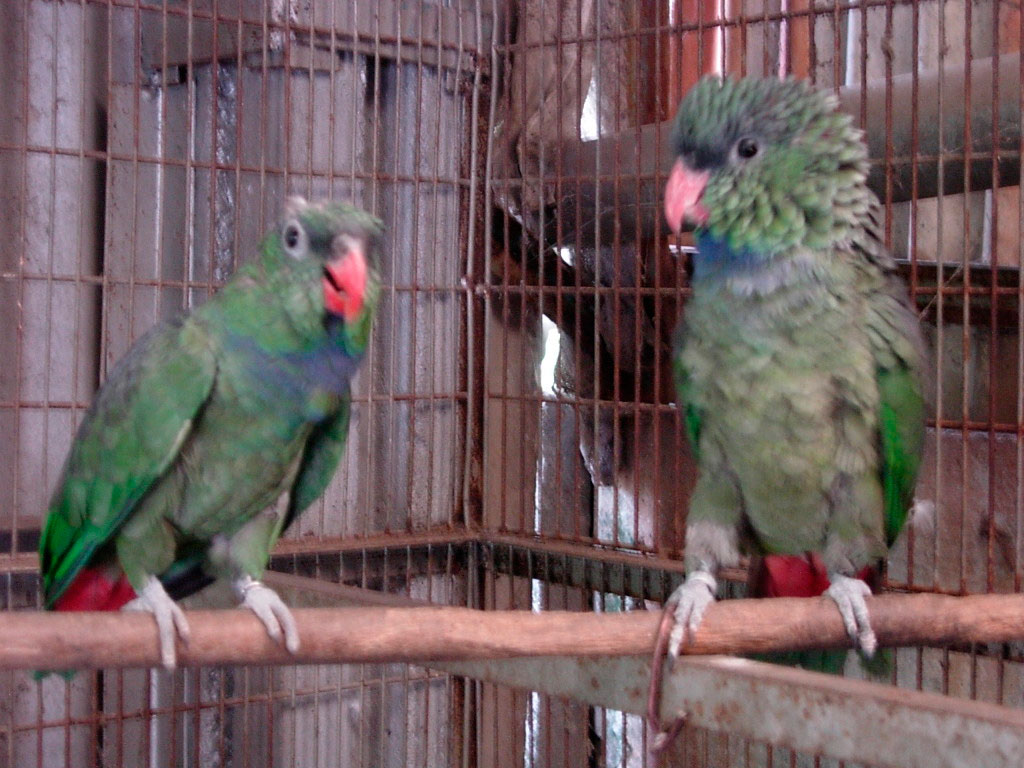
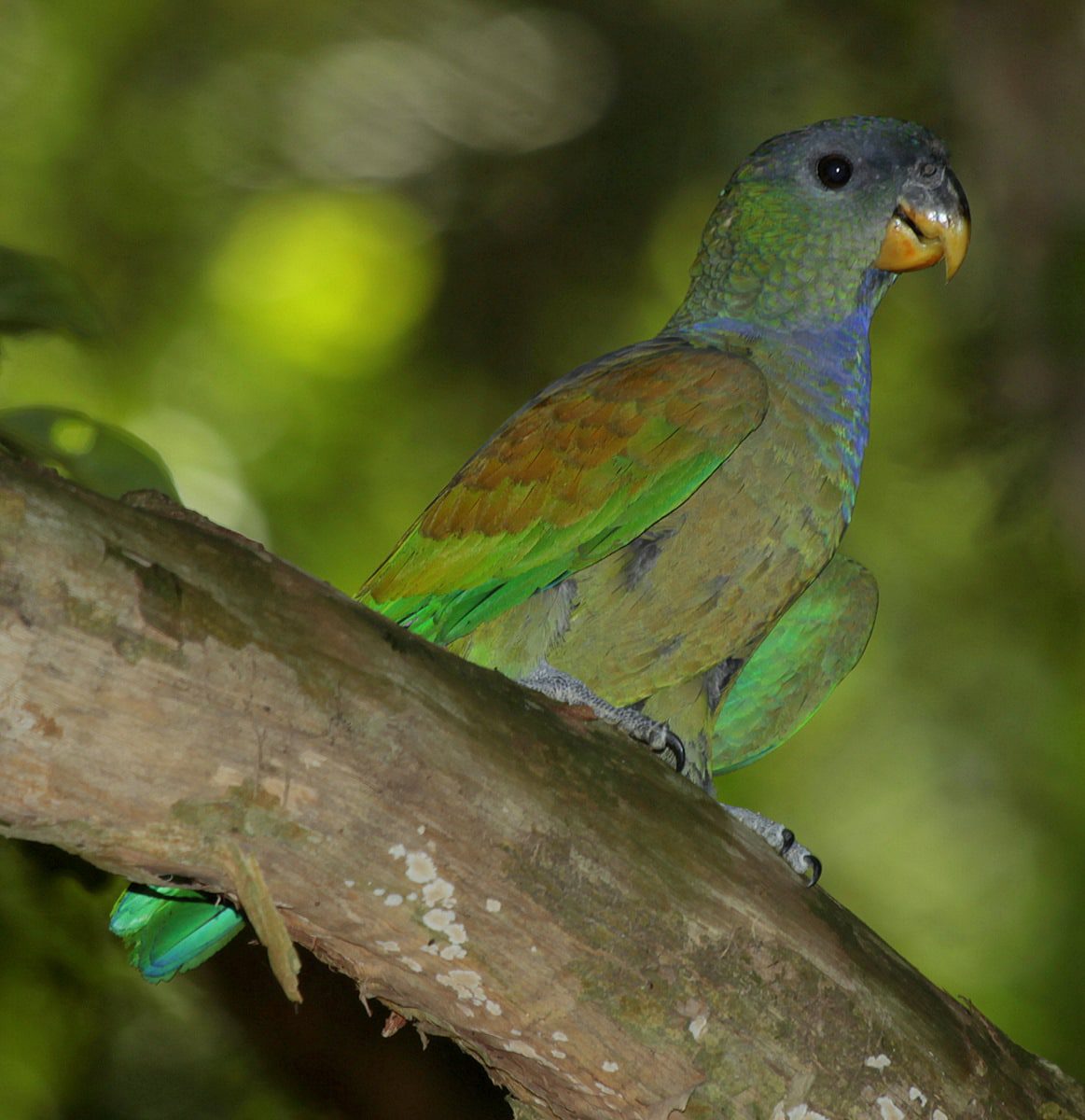
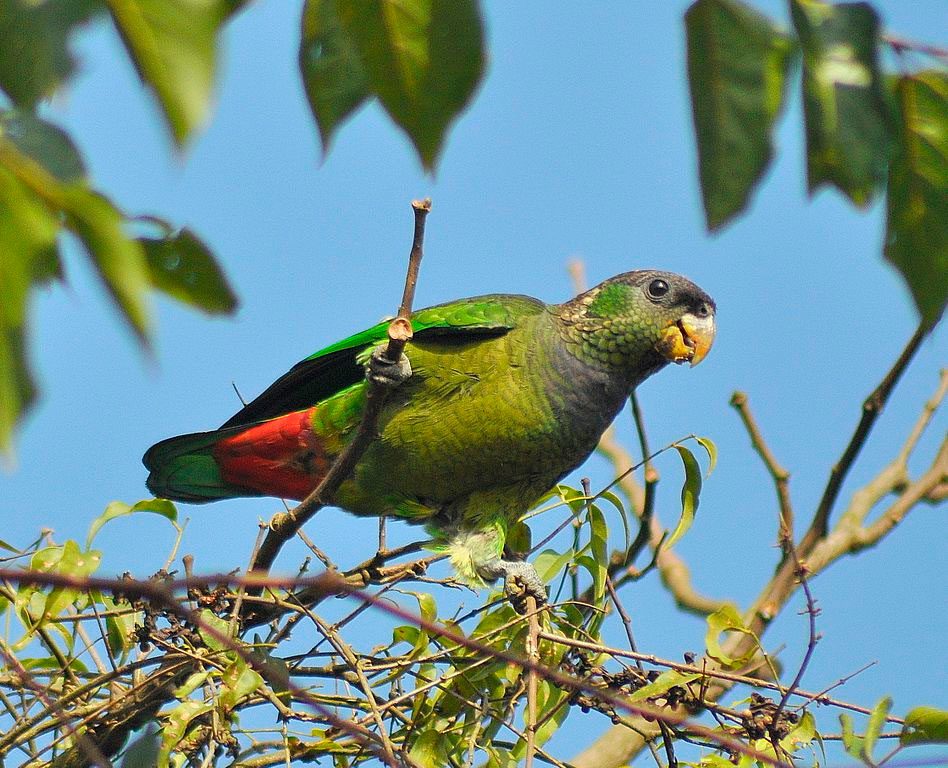
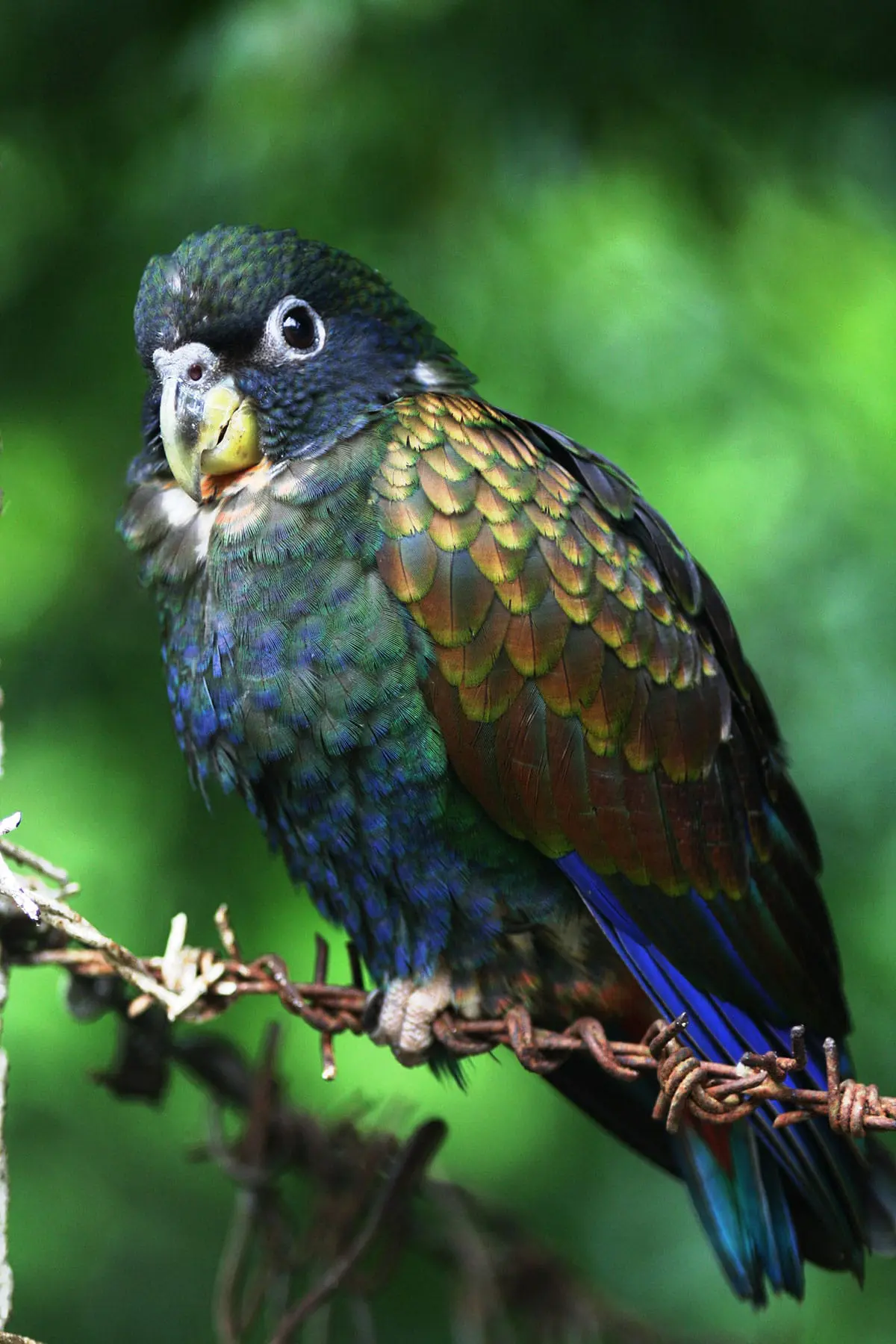
The Bronze winged Parrot (Pionus chalcopterus) has the general Brown, darker in head, neck, chest and flanks, This plumage with blue-violet edge.

The throat whitish and pink; wings bronze green.

Flight is evident violet blue at the top of the wing the Green bottom, that contrasts with the Red of the lower abdomen. Dorsally Violet Blue is notorious in the rump, shoulder and tail. The feathers of the tail are dark blue with a shade of red at the base.

The bill is of color beige, area of naked skin surrounding the eyes of pink. The legs They are pink.

Habitat:

It inhabits in humid jungle, semi-humid, crops and forest edge between 120 and 2800 m.

They are birds gregarious and noisy. Every tomorrow is mobilized in flocks in search of food. Within the flocks are can observe to the couples, that form of life, and who interact with a variety of contact behaviors that reaffirm the marital bond.

Reproduction:

Prefer for their nests broken rods, hollow of logs and palm trees. They nest in the months of October-may. The female often put in two to four eggs they are incubated during three weeks approximately, after which are born them chicks naked or just covered with down. The chicks remain with their parents until the next reproductive shekel.

Food:

Will congregate in cornfields in groups up to of 40 individuals, feeding is of pulp and seeds many fruits and other material ingredients as nectar and flower petals, complementing occasionally its diet with insects.

Distribution:

Its population is distributed by the mountain range of the Andes, from Colombia, Northwest of Venezuela; to the South, by the mountains to the Northwest of Peru.

Conservation:

minor concern


โ€ข Red List category of the UICN current: Least concern

โ€ข Population trend: Decreasing

The size of the population World of the Bronze winged Parrot It has not been quantified, but this species is described as ‘rare‘ (Stotz et to the., 1996).

The population was suspected of being in decline due to ongoing habitat destruction.

This species is characterized be decreasing in Colombia and West Ecuador, due to the logging of forest subtropical, which has been severe and quick on the slopes of the Andes (Juniper and Parr 1998).

The evident anecdotal, based on the frequency of sightings, suggests that the species has declined in Pineapples, South of Ecuador, in recent years c.15-20 (M. By D Sanchez. Dรญaz in litt. 2011). Also is says that has been extirpated from areas previously occupied as the slopes of them Andes and valleys of the Cauca and the Magdalena river in Colombia, again due to loss of habitat (Juniper and Parr 1998).

In Venezuela the species is scarce and local, limited, to a large extent, to the slope West of them Andes in Mรฉrida and Sierra de Perija, with occasional records in Tรกchira (CJ Sharpe in litt. 2011). These areas have experienced rapid deforestation for at least the last few 24 years for cultivation and livestock.

Surveys conducted in the Northwest of Peru in the decade of 1990 they appeared to detect a sharp decrease in population from 1993 (Rosales et to the., 2007), although this species is known to be nomadic and its local numbers can fluctuate.

"Bronze winged Parrot" in captivity:

Rare in captivity, It is not a main target of poachers (CJ Sharpe in litt. 2011, R. Clay in litt. 2011), although it is still present in the illegal trade of Peru (F. Angle in litt. 2011)

Intelligent, playful and curious. You can be nervous, loving with your caregiver and aggressive with other people. It has a tendency to obesity.

It requires a spacious cage unless the bird pass periods of time outside of it. Not must keep is to open air where the temperatures fall below them 5 ยฐC.

With feed a wide variety of seeds, fruits and berries.

It is a relatively healthy bird, While it may be more susceptible to infection aspergillosis that other species.

In captivity they lay two eggs the incubation takes 26 days.

Alternative names:

Bronze winged Parrot, Bronze-winged Parrot (English).
Pione noire, Pionus noir (French).
Glanzflรผgelpapagei, Glanzflรผgel-Papagei (German).
Curica-asa-de-bronze (Portuguese).
Cotorra Oscura (Colombia).
Cotorra Negra (Venezuela).
Cotorra Oscura, Loro Alibronceado, Loro de Alas Bronceadas, Cheja alibronceada (espaรฑol).

scientific classification:

Order: Psittaciformes
Family: Psittacidae
Genus: Pionus
Scientific name: Pionus chalcopterus
Citation: (Fraser, 1841)
Protonimo: Psittacus chalcopterus

Images "Bronze winged Parrot"

Videos "Bronze winged Parrot"

ยซLoro Alibronceadoยป (Pionus chalcopterus)

Sources:

  • Avibase
  • Parrots of the World โ€“ Forshaw Joseph M
  • Parrots A Guide to the Parrots of the World – Tony Juniper & Mike Parr
  • Birdlife

  • Photos:

(1) – IBC.lynxeds.com
(2) –
(3) –
(4) –
(5) –

โ–ท The world of Pets: Dogs, cats, birds, reptiles, amphibians

Dusky Parrot
Pionus fuscus

Dusky Parrot

Content


Anatomy-parrots

Description:

24 to 26 cm.. height and between 179 and 222g. weight.

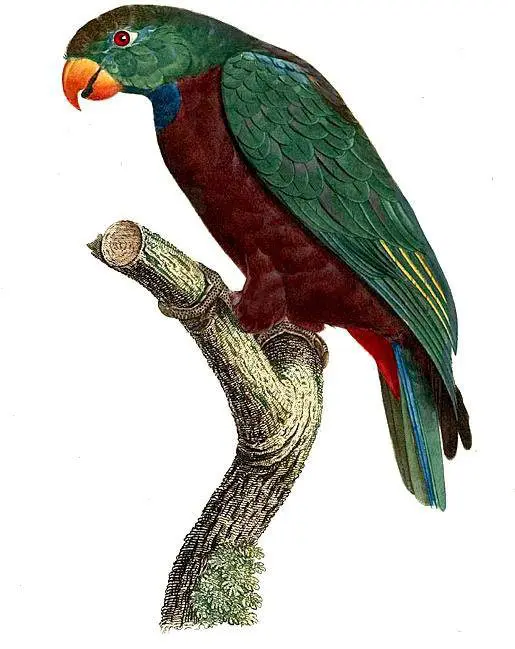
The coloration general of the Dusky Parrot (Pionus fuscus) is blue violet dark. Small patch of feathers on the front of the lores; on the basis of the cere, Pink; for the rest, lores, cheeks, forecrown and crown, lavender blue pale with white feather bases in the crown, What gives a faint mottled appearance in some birds; ear-coverts more dark and more grey, forming a distinctive patch; feathers in the throat and the sides of the neck narrow Brown in the Center and tips of pale blue white stripe, forming the joint a collar incomplete.

feathers in the the mantle and back, of color Brown leaden with those margins pale, giving the scalloped effect; Scapulars, rump and uppertail-coverts, darker grey brown, with very weak pale margins (or absent).

Coverts smaller and medium-sized, of color Brown leaden with margins pale; coverts primary and higher, as well as the flight feather, cobalt blue; undertail, the wings deep blue. Feathers on the top of the chest, pale pinkish with pale Lavender color tips; area more low in the chest with less dye Lavender, becoming darker and more color came in the belly, reaching, Some birds, the center of the belly of a rich colour came; undertail-coverts crimson.

Tail of color blue with red at the base. upper jaw Blackish at the tip with patch of color Horn in the base, lower jaw Blackish with the base more clear and more pale visible in some birds; Iris dark brown; Legs grey.

Both sexes similar.

In the immature staining is equal to the adult, but with some roofs on the upper wings with green edge; secondary feathers dyed in green and the eye ring naked and white.

Habitat:

Dusky Parrot

They inhabit mainly in lowland rainforests and moist forests in the foothills, in where the birds spend the greater part of the time in the canopy; Mainly in the forest land, occasionally in forests and marshes and less frequently in igapรณ (permanently flooded forests), Although there have been reports of birds in Savannah (Suriname), coastal gallery forest (French Guiana) and cultivated areas (Although avoiding habitats more open and less seen in clearings or edges of forest to some close relatives, such as the Blue-headed Parrot (Pionus menstruus).

rare species, flying alone or in small groups on the forest canopy,

Are you can see in Venezuela from the level of the sea to close them 1.000 m, and in close 1.200-1.800 meters on the side Colombian of the Sierra de Perija.

gregarious, especially outside the breeding season.

Reproduction:

It nests in hollows of old trees, probably during the second quarter of the year, although a nest was observed in the month of November in For, Brazil. The laying is of 3-4 eggs.

Food:

It feeds mainly in the canopy but also on the branches of fruiting trees in light areas..

The diet includes seeds of the gender Eschweilera and Micropholis.
Distribution:

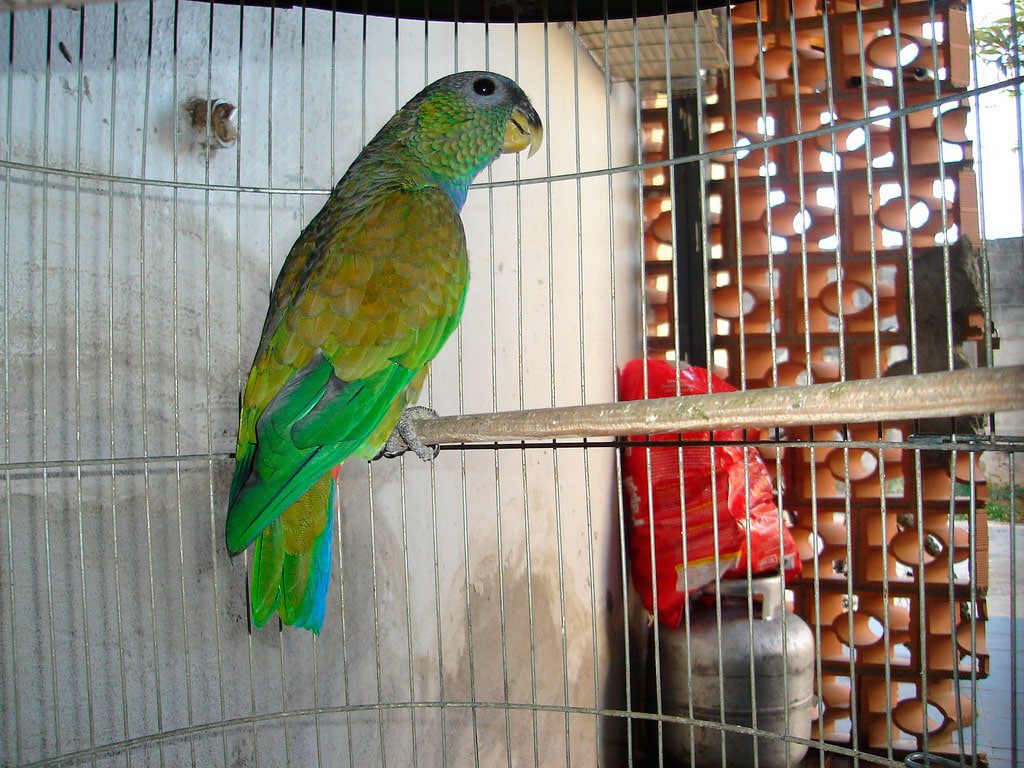
Size distribution (reproduction / resident): 1.870.000 km2

Its population is discontinuous. There is an isolated population in the Sierra de Perija (border between Colombia and Venezuela); regardless of population, The species is found in Venezuela, to the South of the Orinoco in Bolรญvar, from the Caura River, in the Northwest, up to the Nuria upland, the upper area of the cuyuni river and Sierra de Lema in the areas border with Guyana, in the East, extending through the forested parts of Guyana, Suriname and presumably it French Guiana (There are no known records) until Amapรก, the North-East of Brazil, and spreading more broadly to the East of the Brazilian Amazon, from Black river in the North and South, from the Madeira river to the East of For and Maranhรฃo.
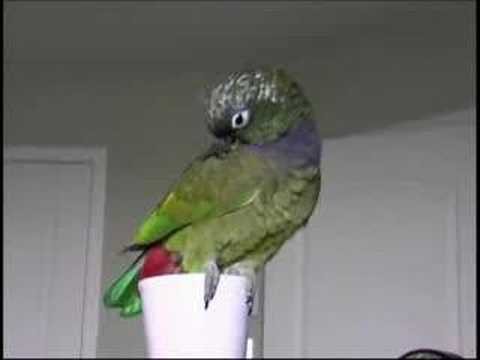
Movements regular seasonal occur in Suriname, with the birds present in the coastal region in the months of July and August.

In general quite common, Although distributed locally; reports of a moderate and widespread presence in Guyana (although rare in Mountains Kanuku in the Southwest); Common in coastal forests, the savanna and forests inside of Suriname.

The deforestation severe and rapid in parts of its range (for example, For and Maranhรฃo, Brazil) is, presumably, causing a decline in the population of the Dusky Parrot.

Very tight in bondage.

Conservation:


minor concern


โ€ข Not considered low No category of threat.

โ€ข Not known as a cage bird, but the loss of habitat may be affecting their populations.

Justification of the population:

The size of the world population Dusky Parrot It has not been quantified, but this species is described as ยซRareยป (Stotz et to the., 1996).

Justification of trend:

It is suspected that this species has lost the 1,1% of habitat within its distribution over three generations (20 years) on the basis of a model of Amazon deforestation (Soares-Filho et to the., 2006, Bird et to the., 2011).

Given the susceptibility of the species to hunt or capture, It is suspected that it will fall in <25% durante tres generaciones.

"Dusky Parrot" in captivity:

Intelligent, curious, a bit noisy, playful when acclimatizes to the owner.
Rare in captivity until the Decade of 1970 When in small quantities were imported from Guyana.

Its longevity is of some 25 years.

Alternative names:

Dusky Parrot, Little Dusky Parrot, Violaceous Parrot, Violet Parrot (English).
Pione violette, Pionus violet (French).
Veilchenpapagei, Veilchen-Papagei (German).
maitaca-roxa, curica, papagainho-roxo, paranรก-i (Portuguese).
Cotorra de Perijรก, Loro Morado (espaรฑol).
Cotorra de Perijรก (Colombia).
Cotorra Morada (Venezuela).

scientific classification:

Order: Psittaciformes
Family: Psittacidae
Genus: Pionus
Scientific name: Pionus fuscus
Citation: (Statius Mรผller, 1776)
Protonimo: Psittacus fuscus

Images "Dusky Parrot"

Videos "Dusky Parrot"

———————————————————————————————–

ยซPurple Parrotยป (Pionus fuscus)


Sources:

Avibase
– Parrots of the World โ€“ Forshaw Joseph M
– Parrots A Guide to the Parrots of the World – Tony Juniper & Mike Parr
Birdlife

Photos:

(1) – Veldhoven
(2) – Dusky Parrot (Pionus fuscus) or Dusky Pionus by Jacques Barraband [Public domain], via Wikimedia Commons

โ–ท The world of Pets: Dogs, cats, birds, reptiles, amphibians

Speckle-faced Parrot
Pionus tumultuosus

Speckle-faced Parrot

Content


Anatomy-parrots

Description:

28 to 31 cm.. tall and around 250 g. weight.

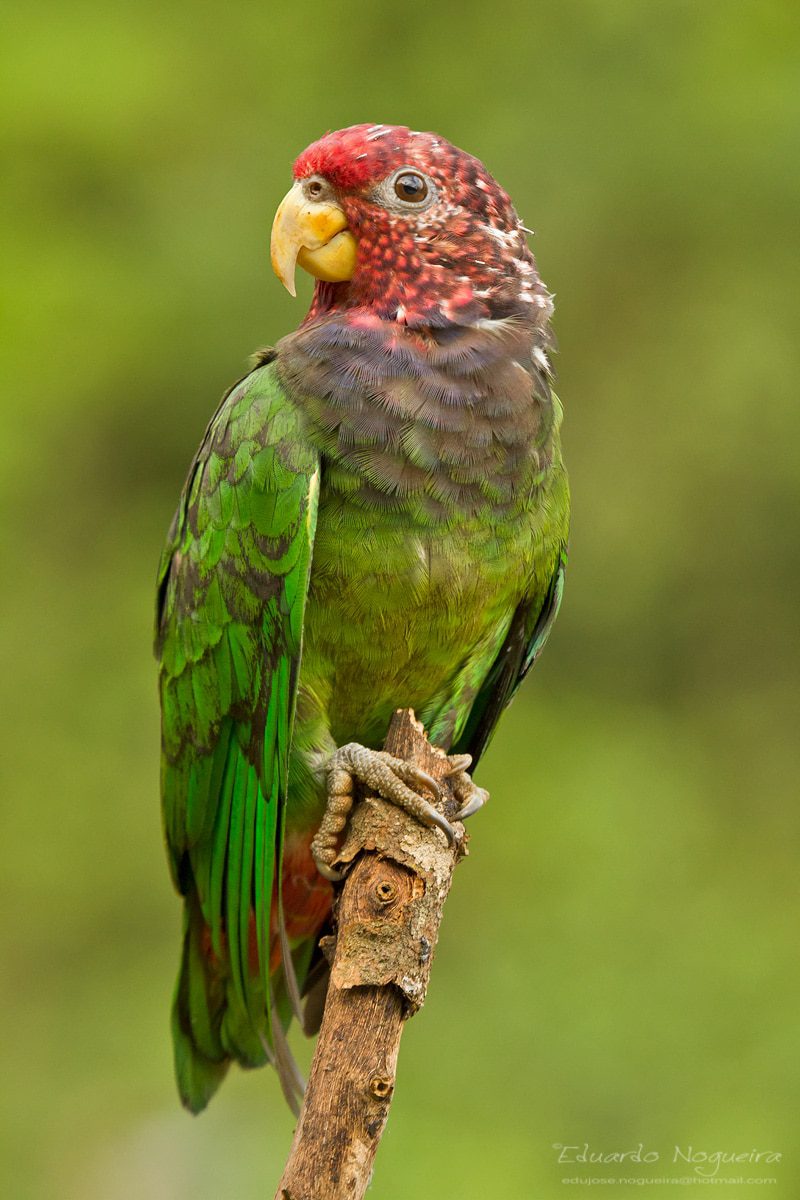
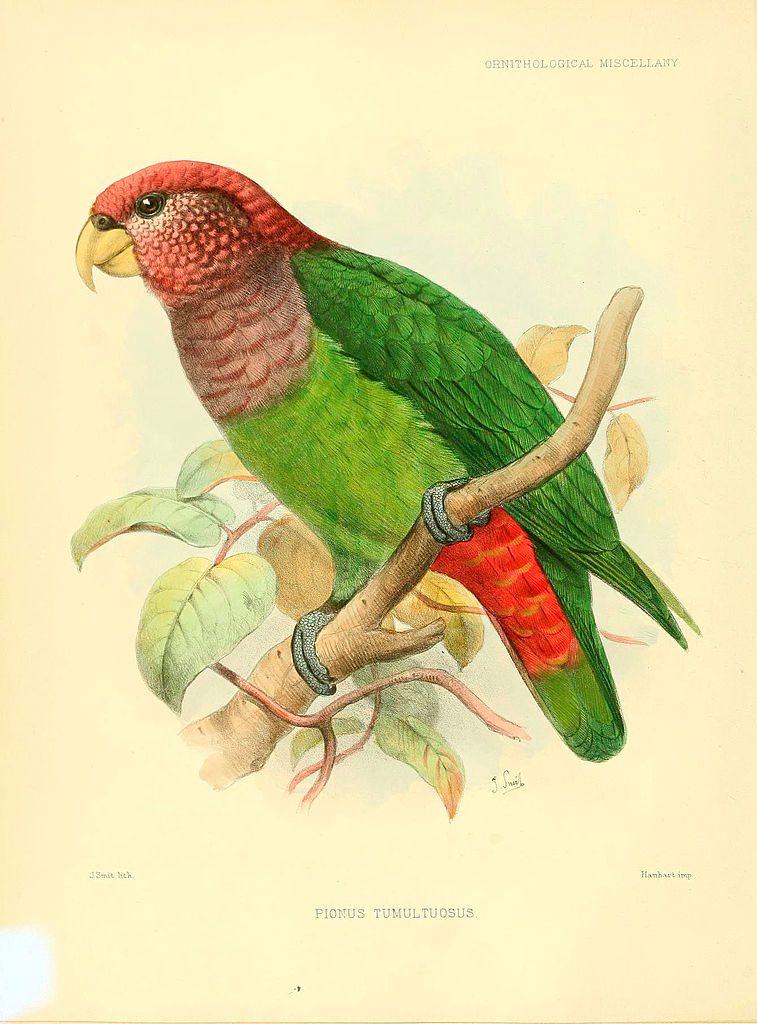
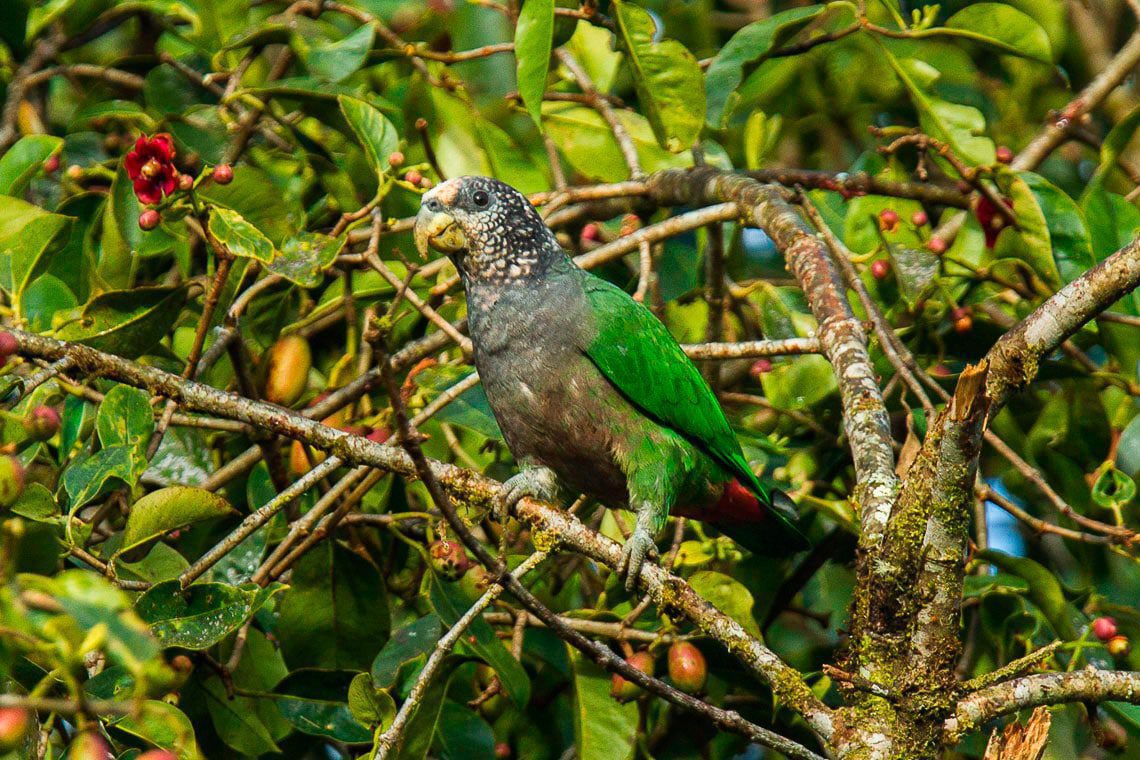
The Speckle-faced Parrot (Pionus tumultuosus) It is distinguishable by color from whitish crown up to the nape; base bill red rose, with forecrown redder. Cheeks whitish with a red and purple tinge towards the neck; purple chest.

Shoulder with thin strip yellow with reddish tint, inside base tail and crissum, red; the rest of the tail is green with blue on the outer feathers; under belly with red feathers with green edge.

ocula ringr greyish

The youth They have almost all head green and the wings, greenish yellow.

Taxonomic note:

The Speckle-faced Parrot It is probably the rarest and most controversial genre Pionus. It is sometimes divided into two species, in which case, the Pionus tumultuosus South is known as Speckle-faced Parrot, while the North, Pionus seniloides, They are known as White-capped Parrot (which leads to easy confusion with Pionus senilis).

Habitat:

Speckle-faced Parrot

It inhabits in Andean and sub-Andean cloud forests and forest edges, between 1600 and 3200 meters above sea level.
It is highly Nomad with temporal variations in terms of the number of individuals that can be registered in a locality.

Reproduction:

With reproduce In September. In captivity puts 4 eggs which incubated about 26 days. No other aspects of its reproductive biology are known..

Food:

It has been registered consuming fruits of Turpinia paniculata and are sometimes seen in large numbers feeding on maize crops in cultivated areas and banana plantations.

Distribution:

Its population is distributed in the southern Andes, from the center of Peru until Bolivia.

Size of the area of distribution (reproduction / resident): 329.000 km2

Conservation:


minor concern


โ€ข Current category of the Red List of the UICN: Least concern.

โ€ข Population trend: Decreasing.

Justification of the population

The size of the world population It has not been quantified, but this species is described as ยซquite common, but irregular distributionยป (Stotz et to the., 1996).

Justification of trend

It is suspected that the population is in decline due to the continuous habitat destruction.

"Speckle-faced Parrot" in captivity:

This species is virtually nonexistent in poultry farming. There is only a small collection, private property in the United States. The Fundaciรณn Loro Parque in Tenerife, Spain, It has some copies.
Most of the Speckle-faced Parrot imported to United States they were the victim of aspergillosis โ€“ probably caused by the stress suffered during the import process.

In captivity They were observed as the to intelligent species, inquisitive and sometimes shy and nervous. Will get used to their caregiver over time. You can interact with a person and jealously attacking others. Prone to obesity.

Alternative names:

Speckle-faced Parrot, Plum-crowned Parrot, Speckle-faced Parrot (Plum-crowned) (inglรฉs).
Pione pailletรฉe, Pione pourprรฉe (francรฉs).
Purpurstirnpapagei (alemรกn).
Curica-de-cara-manchada (portuguรฉs).
Cotorra Gorriblanca, Loro Rosado, Loro Tumultuoso (espaรฑol).


Clasificaciรณn cientรญfica:

Tschudi Johann Jakob von

Orden: Psittaciformes
Familia: Psittacidae
Genus: Pionus
Nombre cientรญfico: Pionus tumultuosus
Citation: (von Tschudi, 1844)
Protรณnimo: Psittacus tumultuosus


Imรกgenes ยซLoro tumultuosoยป:

Videos del "Loro tumultuoso"

ยซLoro tumultuosoยป (Pionus tumultuosus)

    Fuentes:

    Avibase
    – Parrots of the World โ€“ Forshaw Joseph M
    – Parrots A Guide to the Parrots of the World – Tony Juniper & Mike Par
    Birdlife
    – Libro Loros, Pericos y Guacamayas Neotropicales

    Fotos:

    (1) – Eduardo Nogueira
    (2) – Speckle-faced Parrot at La Merced Zoo By josecajacuri [CC BY-SA 2.0], via Wikimedia Commons
    (3) – Speckle-faced Parrot ยซPionus tumultuosusยป on the grounds of the Pueblo Hotel, Aguas Calientes by Carol FoilFlickr
    (4) – Speckle-faced Parrot ยซPionus tumultuosusยป on the grounds of the Pueblo Hotel, Aguas Calientes by Carol FoilFlickr
    (5) – Speckle-faced Parrot ยซPionus tumultuosusยป on the grounds of the Pueblo Hotel, Aguas Calientes by Carol FoilFlickr
    (6) – PIONUS TUMULTUOSUS By Allen, Edgar W.; Erxleben, J.; Hanhart, Michael; Hanhart, N; Keulemans, J. G.; Mintern Bros.; Rowley, George Dawson; Smith, J.; Walther, T. [CC BY 2.0 or Public domain], via Wikimedia Commons

    Sonidos: Sebastian K. Herzog

โ–ท The world of Pets: Dogs, cats, birds, reptiles, amphibians

White-capped Parrot
Pionus seniloides

White-capped Parrot

Content


Anatomy-parrots

Description:

28 to 30 cm.. high and about 229 g. of weight.

The White-capped Parrot (Pionus seniloides) It is easily identifiable by the "peak" yellow, head usually white, with the crown with reddish speckles, feathers of the nape and sides of the head with dark blue edges and red dyes which gives the appearance of flake.

Breast with greenish blue edges, under belly and internal base tail red.

Iris of color Brown and legs gray-green.

The youth have crown and chest green, and green spots on the sides of the head and neck.

Note:

Previously he was treated as a subspecies of the species Pionus tumultuosus, that is to say, Pionus tumultuosus seniloides. A midyear 2014 it is considered as own species.

Habitat and behavior:

White-capped Parrot

It is a kind Rare.
It inhabits in humid jungle and edges, from the 1900 to 3000 m. It is mainly a species of temperate zone, but you can descend to lower elevations.

Like most highland parrots, the White-capped Parrot are rather nomads, widely wandering in search of fruits and seeds (now perhaps more as a result of extensive deforestation). Usually observed in flocks 3-25 birds, sometimes more. More active with grey weather, overcast skies. Difficult to see while feeding or resting in the upper canopy. Its silhouette in flight resembles a Amazona but with the beating of wings deepest.

Reproduction:

It nests in tree hollows.

Food:

Feeds of seeds, fruit of Turpinia paniculata and plants of the family Clusiaceae; sometimes in cornfields, causing damage to their crops.

Distribution:

Size of its range (reproduction / resident): 1.020.000 km2

Live west of Venezuela (from the border TrujilloLara) through the East of the Andes of Colombia (rare in the western Andes), and on both sides of the Andes in Ecuador and Northwest of Peru (west to Cajamarca and this, at least until Freedom)

Conservation:


minor concern


โ€ข Current category of the Red List of the UICN: Least concern.

โ€ข Population trend: Decreasing.

Justification of the population

The size of the world population It has not been quantified, but this species is described as ยซquite commonยซ, but irregular distribution (Stotz et to the., 1996).

Justification of trend

They suspected that the population is declining due to the continuous habitat destruction.

"White-capped Parrot" in captivity:

Rare in captivity. In Europe they arrived first at the beginning of the century 20 and then the early 70. In captivity, However, They were raised for the first time in the second half of the 80.

Alternative names:

White-capped Parrot, Speckle-faced Parrot (White-capped), White-headed Parrot (English).
Pione givrรฉe (French).
Greisenkopfpapagei, Glatzenkopfpapagei, Greisenkopf-Papagei (German).
White-capped Parrot (Portuguese).
Loro de Cabeza Blanca, Loro seniloide, Loro gorriblanco (espaรฑol).
Cotorra Cabeciblanca (Venezuela).

scientific classification:

Order: Psittaciformes
Family: Psittacidae
Genus: Pionus
Scientific name: Pionus seniloides
Citation: (Massena & Souancรฉ, 1854)
Protonimo: Psittacus seniloides

Images "Seniloid parrot":

Videos "White-capped Parrot"

————————————————————————————————

White-capped Parrot (Pionus seniloides)


Sources:

Avibase
– Parrots of the World โ€“ Forshaw Joseph M
– Parrots A Guide to the Parrots of the World – Tony Juniper & Mike Parr
Birdlife
– Parrot Book, Parrots and macaws Neotropical
parrots.org

Photos:

(1) – By Francesco Veronesi [CC BY-SA 2.0], via Wikimedia Commons White-capped Parrot (Pionus seniloides), Ecuador by
(2) – Iconographie des perroquets :Paris :P. Bertrand,1857 by Biodiversity Heritage LibraryFlickr

Sounds: Andrew Spencer

โ–ท The world of Pets: Dogs, cats, birds, reptiles, amphibians

White-crowned Parrot
Pionus senilis

White-crowned Parrot

Content


Anatomy-parrots

Description:

24 cm.. length and a weight between 193-229 g..

The White-crowned Parrot (Pionus senilis) has the forecrown, crown and lores, white. The feathers of the cheeks, sides head, behind eyes, and rear of the neck, basically pale bluish green with green or blue violet and blue subterminal band darker margins, giving the whole a intricate scaly appearance.

Mantle and back, green with copper plating shine; rump and uppertail-coverts, brighter green; scapulars basically colored green with coppery bronze in the points and outerweb. Lesser coverts and median, bronze with paler tips coppery, giving a mottled appearance; primary coverts, violet blue; greater coverts green. Primaries and secondaries outer, violet blue with green tips to outerweb of the primaries and inner secondary.

Under, the wings pale bluish green. Patch in chin and top of the throat, white; feathers of the chest, green at the base (mostly hidden part) tipped dark blue or violet-blue and blue band paler, giving the whole a scalloped effect; undertail-coverts red. Tail green in the center, outer feathers blue with red at base. Bill pale yellow color with light green tint; eye ring Pink; irises dark brown: legs yellowish gray.

Both sexes are similar. The immature has the head, the back of the neck and the chest, green, pale yellow with margins in the cheeks and crown, giving a pale mottling.

Note:

The subspecies decoloratus, which was distributed from yucatan peninsula to western Panama, previously recognized on the basis of their throat more purple (less blue) and your chest and wings, more blue. But, There is not much geographic variation in the species Pionus senilis and the aforementioned characters are not consistent on the proposed range.

  • Sound of the White-crowned Parrot.

Habitat:

The habitat of the Senile Parrot is mainly the humid forest (including tropical rain forest), but locally it can be found in forests of oak pine, and low mountain forest. Birds have been reported in forest edges, cultivated areas and grassland areas with scattered trees, plantations, secondary forest with emergent trees, woodlands and streams in Costa Rica, on the edge of urban areas.

Lives mainly in lowlands, but they are distributed locally 2.300 meters in Guatemala and near 1.600 meters in Costa Rica 1.800 meters in Panama. gregarious, mostly in pairs or out of breeding season, in small herds; sometimes in larger meetings of up to several hundred birds.

Reproduction:

Build your nests in tree cavities or hollow trunks of palm trees. The reproduction period occurs between February to May; in March in Mexico; in January-April Costa Rica; February to May in Honduras. The incubation comprises of 26-28 days, Followed by 54-68 pup growth days. It has been difficult to breed the species in captivity and there is little information on its reproduction in the wild..

The size of clutch is of 3 to 5 eggs

Food:

It feeds mainly on the tops of the trees seeds mature Inga and Erythrina and fruits Palm; sometimes cultures corn and Sorghum.

Distribution and status:

Size of its range (breeding/resident ): 1.290.000 km2

Endemic to Central America, from Mexico until Panama.

The White-crowned Parrot It is found in the humid tropics of eastern Mexico on the Caribbean side of Tamaulipas and to the East of San Luis Potosi eastward through yucatan peninsula, in Campeche and Quintana Roo, the borders of Belice and the northern lowlands and highlands of eastern Guatemala. It is found throughout the Caribbean slope of Honduras, mainly below 1.100 m (Occasionally highest altitudes) and in Roatan in the Bay islands, and on the Caribbean side of Nicaragua (possibly also on the side of peaceful) until Costa Rica, where it remains mainly in the lowlands and foothills of the Caribbean slope, becoming less and less numerous south of Lemon; also observed in the slope of peaceful in the South of Costa Rica and on both sides West Panama, to the West of Chiriqui and to the West of Bull's mouths.

Some local migrations (also apparently vertical) occur (for example, in parts of Oaxaca, Mexico and parts of Costa Rica). The species is widespread, but abundance varies from rare to very common depending on locality; It is perhaps the largest parrot in Costa Rica.

current distribution: No data where the current distribution of specified White-crowned Parrot. This species of psittacine still has a presence throughout its range, although there are regions where it has been extirpated, as the West's Quintana Roo and Gulf Coast (INE 2000).

Despite being frequently eaten by native peoples (at least once), persecuted as a pest of crops, caught in low numbers for the live bird trade and severely deforesting parts of their range, It has not detected a serious overall decline in population.

Conservation:


minor concern


โ€ข Current category of the Red List of the UICN: Least concern.

โ€ข Population trend: decreasing.

sheltered Mexico by the Official Mexican Standard (NOMโ€“059โ€“SEMARNATโ€“2001โ€“2010) under the category of Threatened.

Rationale for the Red List category

This species has a very large range and therefore it is not close to the thresholds for Vulnerable under the criterion of size range (Extension Occurrence <20,000 km2 combinada con un tamaรฑo de rango decreciente o fluctuante, extensiรณn / calidad de hรกbitat o tamaรฑo de poblaciรณn y un pequeรฑo nรบmero De lugares o fragmentaciรณn severa). A pesar de que la tendencia de la poblaciรณn parece estar disminuyendo, no se cree que la disminuciรณn sea suficientemente rรกpida para acercarse a los umbrales de Vulnerables bajo el criterio de tendencia poblacional (> 30% decline in ten years or three generations). The population size is very large and, therefore, not approaching the thresholds for vulnerable under the criterion of population size (<10.000 individuos maduros con una disminuciรณn continua estimada en> 10% in ten years or three generations or with a specific population structure). For these reasons the species is evaluated as the least concern.

Justification of the population

Partners in Flight estimates the total population of 50.000-499.999 individuals (A. Panjabi in a bit., 2008).

Justification of trend

It is suspected that the population is declining due to continuous habitat destruction.

"White-crowned Parrot" in captivity:

(CITES) It included in the Appendix II (It includes species not necessarily threatened with extinction, but in which trade must be controlled to avoid utilization incompatible with their survival.)

The species ranked first in the 80's among the most traded parrot species in Mexico (Iรฑigo Elias and Ramos 1992). Currently, there marketing of the species in the national and international market.

Valued as a pet or ornamental bird by its feathers, ability to imitate sounds and its tendency to form bonds with people.

Alternative names:

White-crowned Parrot, White crowned Parrot, White-capped Parrot (English).
Pione ร  couronne blanche, Pione givrรฉe, Pionus ร  front blanc, Pionus ร  front blanche (French).
Glatzenkopfpapagei, Glatzenkopf, Glatzenkopf-Papagei, WeiรŸkappenpapagei (German).
Curica-de-testa-branca (Portuguese).
Lora coroniblanca, Loro Corona Blanca, loro corona-blanca, Loro Coroniblanco, Loro de Corona Blanca, Loro Gorgiblanco, Loro Senil (espaรฑol).
Loro coroniblanco (Costa Rica).
Lora coroniblanca (Honduras).
loro corona blanca, loro corona-blanca, Loro Coroniblanco (Mexico).
Loro Gorgiblanco (Nicaragua).


scientific classification:

Johann Baptist von Spix

Order: Psittaciformes
Family: Psittacidae
Genus: Pionus
Scientific name: Pionus senilis
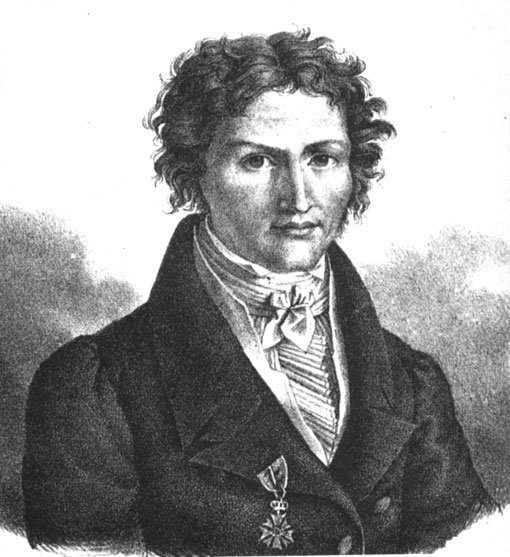
Citation: (von Spix, 1824)
Protonimo: Psittacus senilis


Images "Loro Senile":

Videos "White-crowned Parrot"

————————————————————————————————

"Their Senil" (Pionus senilis)


Sources:

Avibase
– Parrots of the World โ€“ Forshaw Joseph M
– Parrots A Guide to the Parrots of the World – Tony Juniper & Mike Parr
– Birdlife

Photos:

(1) – A White-crowned Parrot (also known as White-crowned Pionus) at Macaw Mountain Bird Park, Honduras By Pionus_senilis_-Macaw_Mountain_Bird_Park,_Honduras-8a.jpg: Sarah and Jasonderivative work: Snowmanradio [CC BY-SA 2.0], via Wikimedia Commons
(2) – A White-crowned Parrot (also known as White-crowned Pionus) at Macaw Mountain Bird Park, Honduras By nakashi (Flickr: P1100396) [CC BY-SA 2.0], via Wikimedia Commons
(3) – A White-crowned Parrot (also known as White-crowned Pionus) at Macaw Mountain Bird Park, Honduras By nakashi (Flickr: P1100397) [CC BY-SA 2.0], via Wikimedia Commons
(4) – (Pionus Senilis). White-crowned Parrot , Guatemala By Virgilrm at English Wikipedia (Transferred from en.wikipedia to Commons.) [Public domain], via Wikimedia Commons
(5) – A White-crowned Parrot (also known as White-crowned Pionus) at Macaw Mountain Bird Park, Honduras By nakashi (Flickr: P1100398) [CC BY-SA 2.0], via Wikimedia Commons
(6) – White-crowned Parrot (also known as the White-crowned Pionus); close up of upper body By Brian Gratwicke [CC BY 2.0], via Wikimedia Commons
(7) – A White-crowned Parrot at Cape May Zoo, New Jersey, USA By Jim Capaldi (Flickr: Parrot) [CC BY 2.0], via Wikimedia Commons
(8) – (Pionus Senilis) White-crowned Parrot in a tree By Virgilrm at English Wikipedia (Transferred from en.wikipedia to Commons.) [Public domain], via Wikimedia Commons
(9) – White-crowned Parrot (Pionus senilis), also known as White-crowned Pionus, at the aviary Birds of Eden in South Africa By SandyCole (mailto:sandyc@dicksandy.org) (Own work) [CC BY-SA 3.0 or GFDL], via Wikimedia Commons

Sounds:

โ–ท The world of Pets: Dogs, cats, birds, reptiles, amphibians

Blue-headed Parrot
Pionus menstruus


Blue-headed Parrot

Content


Anatomy-parrots

Description "Loro Cabeciazul":

28 to 30 cm.. height and between 234 and 295g. weight.

The Blue-headed Parrot (Pionus menstruus) is distinguishable by having the head, neck and chest blue; Red in the rump and in the Base ventral of the tail (very visible on the fly), basis of the bill and neck dotted with pink.

Shoulder and end of the wing olive green with yellow border, tail green with blue tip.

Subspecies description:

  • Pionus menstruus menstruus

    (Linnaeus, 1766) – The nominal

  • Pionus menstruus reichenowi

    (Heine, 1884) – Blue head, the neck and darker throat; lower underparts washed with blue green color; coverts red infracaudales with blue ends.

  • Pionus menstruus rubrigularis

    (Cabanis, 1881) – Smaller, head pale blue, neck more extensive and clear Red.

Habitat:

Species very common, lives in humid forests, semi-wet, from gallery, stubble, crop areas until the 1500 m.

Reproduction:

It feeds on various seeds, fruits and flowers.

Food:

It nests in hollows of trees and palms in dry season.

Loro distribution-headed:

They live in freedom from the South of Costa Rica, North of South America to the West of Ecuador. To the East of the Andes, comes to Peru, part of Brazil to the North of Bolivia.

Subspecies description:

  • Pionus menstruus menstruus

    (Linnaeus, 1766) – The nominal

  • Pionus menstruus reichenowi

    (Heine, 1884) – Coastal areas of the northeast of Brazil (Alagoas until Holy Spirit)

  • Pionus menstruus rubrigularis

    (Cabanis, 1881) – Tropical North of Costa Rica to western Colombia and West of Ecuador.

Conservation-headed Parrot:


minor concern


โ€ข Red List category of the UICN current: Least concern

โ€ข Population trend: Decreasing

The size of the world population of the Blue-headed Parrot It has not been quantified, but this species is described as ยซcommonยป (Stotz et to the., 1996).

This species is suspected that it may lose 18,5-23% of habitat within its distribution over three generations (20 years) based on a deforestation model of the Amazon (Soares-Filho et to the., 2006, Bird et to the. 2011). So, they suspected that can decrease in <25% in three generations.

In captivity:

Pretty common in captivity. Intelligent, inquisitive although sometimes shy. Active by nature, they can become overweight if you don't have a wide space where exercise your flight. Mature birds usually match throughout his life with his partner, you will defend with aggression of any intruder.

Its diet in captivity is wide. fruits such as: Apple, pear, orange, banana, granada, cactus fruits, Kiwi, they form around the 30 percent of the diet; vegetables such as: Carrot, celery, green beans and peas in pods; fresh corn; Greens such as: chard, lettuce, Kale, dandelion, healer, chickweed; mixture of small seeds, such as: millet, birdseed, and small amounts of buckwheat, oats, safflower and hemp; soaked and sprouted sunflower; beans, cooked legumes and boiled corn.

Alternative names

Blue-headed Parrot, Cobalt Parrot (English).
Schwarzohrpapagei, Schwarzohr-Papagei (German).
Cotorra Cabeciazul, Loro Cabeciazul, Loro de Cabeza Azul (espaรฑol).
Pione ร  tรชte bleue, Pionus ร  tรชte bleue (French).
baitaca, curica, maitaca, maitaca-de-barriga-azulada, maitaca-de-cabeรงa-azul, sijรก, Sรดia, Suia (potuguรฉs).
Pappagallo testablu (Italian).


scientific classification:

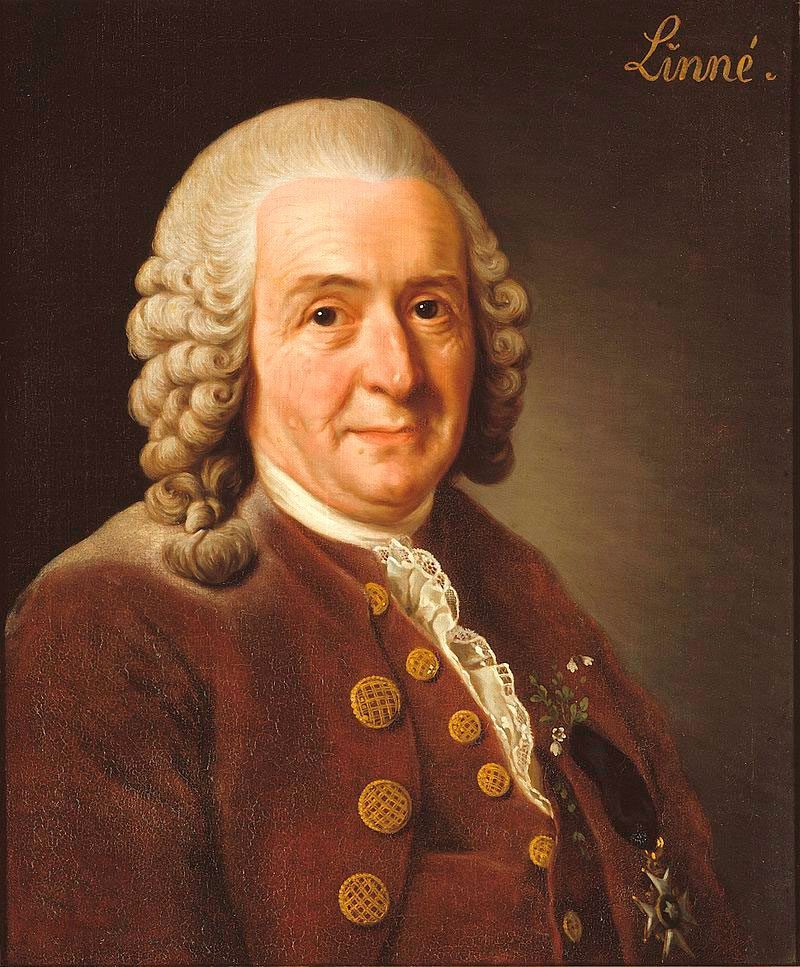
Carl Linnaeus
Carl Linnaeus

Order: Psittaciformes
Family: Psittacidae
Genus: Pionus
Scientific name: Pionus menstruus
Citation: (Linnaeus, 1766)
Protonimo: Psittacus menstruus

Images "Blue-headed Parrot"

Videos "Blue-headed Parrot"

ยซLoro Cabeciazulยป (Pionus menstruus)


โ–ท The world of Pets: Dogs, cats, birds, reptiles, amphibians

Red billed Parrot
Pionus sordidus

Tropicbird Parrot

Content


Anatomy-parrots

Description:

The Red billed Parrot (Pionus sordidus), of looking scruffy, has a length of 28 to 31 cm. and a weight between 255 and 275 g..

The subspecies Pionus sordidus corallinus, the most widespread, has the feathers of the forecrown, lores and behind the eyes, Green at the base and with blue edges widths; the cheeks, ear-coverts and the sides of the neck, mainly green with some blue narrow tips; the crown and rear of the neck, Green with edges blue narrow. Mantle and back pretty dull green with paler blue margins; rump and uppertail-coverts, of color green basally, more Brown olive distally. Coverts medium and small with wide olive green tips; the front edge of the wing ; coverts primary and higher and flight feather brightest which the parts superiores and others wing-coverts.

Under, the wings green; chin green; throat and upper breast with band broadband of color blue violet; belly green, Some birds with gray Suffusion; undertail-coverts crimson. Tail Green by the Center, Blue side; Red at the base.

Bill coral red, pale at the base of the upper jaw; cere dark grey; bare periophthalmic pale grey; Iris dark brown; legs pale grey.

Both sexes are similar. Immature sample undertail-coverts yellowish-green with some red marks; head green.

Subspecies description

Description 6 subspecies
  • Pionus sordidus antelius

    (Todd, 1947) – Similar to the nominal species but the feathers of the throat lack of edges blue and the center of the chest is in color pink.

  • Pionus sordidus corallinus

    (Bonaparte, 1854) – Described above.

  • Pionus sordidus mindoensis

    (Chapman, 1925) – Is as the subspecies Pionus sordidus corallinus, but of color green more beige, those edges blue of the feathers of the head are more narrow and the under wing-coverts not have them edges dark.

  • Pionus sordidus ponsi

    (Aveledo & Gines, 1950) – Throat of color blue violet almost solid. The chest and upperparts they are darker and greener that the of the nominal species, they lack clear margins to the feathers of the back and of the wing-coverts.

  • Pionus sordidus saturatus

    (Todd, 1915) – More dark and more green that it nominal species with the feathers of the upperparts lack of margins of color green olive. Less green in the throat and cheeks.

  • Pionus sordidus sordidus

    (Linnaeus, 1758) – Nominal. Much more Brown that the subspecies Pionus sordidus corallinus, with blue (turquoise) more reduced in the throat. Feathers in them upperparts with most distinctive pale margins.

Habitat:

Red billed Parrot

It is a very rare species. It inhabits in mountains of humid and semi-humid cloudy forests, edges of forest and partially deforested areas, between 200-2850 m, Although they are more frequent at altitudes of 500-1.500 m. They use areas of secondary growth, partially deforested with tall trees scattered and sometimes light forests on coffee plantations, being less frequent in dry areas.

Gregarious outside of breeding season; formations in flocks of up to 50 birds, sometimes more where the food is abundant. Children sleep in community.

Reproduction:

They nest in the cavity of the trees, sometimes in very degraded habitats. Birds in breeding attitude during the months of February-April in Colombia; It breeds in the months of April-June in Venezuela, January-may in Ecuador; Nest occupied in October in Bolivia. Laying three eggs in captivity.

Food:

Feeds of fruit, berries and seeds.

Distribution:

Size of the area of distribution (reproduction / resident): 169.000 km2

This species has a distribution batch through them land high in the North and West of South America, from Venezuela to the North of Bolivia. You can find in the North of Venezuela, in the mountains of Anzoรกtegui, Sucre, North of Monagas and apparently, of way to discontinuous, in the Highlands of the Federal District through the mountains coastal, to the West, until Lara and Falcon, then in the Sierra de Perija, Zulia and parts adjacent in Colombia, West to the foothills of Santa Marta in Magdalena, also locally in the Eastern Andes of Boyacรก and Huila. Extends over the Western side of the Andes in Ecuador, from Pichincha until Gold and for all the East side to the northeast of Peru.

Although there are no records in the Eastern Andean slope, in the central and southern Peru, the range includes the Yungas North of Bolivia in Santa Cruz and Cochabamba.

common locally; apparently less numerous in the West of Ecuador and North of Bolivia, and probably in decline locally due to the deforestation (for example, in the Ecuador Western, North of Venezuela and Andes of Colombia).

A recent study not localized to the subspecies Pionus sordidus antelius in its area of distribution widely cleared, Although the subspecies can dwell in forests moderately disturbed.

Kept as pets locally although generally scarce in captivity.

Subspecies distribution

Distribution 6 subspecies

Conservation:


minor concern


โ€ข Current category of the Red List of the UICN: Least concern.

โ€ข Population trend: Decreasing.

Justification of the population

The size of the world population It has not been quantified, but this species is described as ยซquite commonยป (Stotz et to the., 1996).

Justification of trend

It is suspected that the population is in decline due to ongoing habitat destruction.

"Red billed Parrot" in captivity:

Very rare in captivity. In general, they are not so nervous in temperament as other parrots. They can learn to imitate.

Its diet in captivity It varied: fruits such as: Apple, orange, banana, granada, Cactus, they form approximately the 30 percent of the diet; vegetables such as: Carrot, celery, green beans, pea in the pod, fresh corn; Greens such as: chard, lettuce, dandelion, Aviary grass; millet; mixture of small seeds, such as: millet, birdseed, and small amounts of oats, buckwheat, safflower and hemp; soaked and sprouted sunflower seeds; beans, cooked legumes and boiled corn; hard cheese.

Alternative names:

Red-billed Parrot, Dusky parrot, Red billed Parrot, Sordid parrot (English).
Pione ร  bec rouge, Perroquet sordide (French).
Dunenkopfpapagei, Dunenkopf, Dunenkopf-Papagei (German).
Curica-de-bico-vermelho (Portuguese).
Cotorra Piquirroja, Loro de Pico Rojo, Loro Piquirrojo (espaรฑol).
Cotorra piquiroja, Cotorra Piquirroja (Colombia).
Loro de Pico Rojo (Peru).
Perico Pico Rojo (Venezuela).

scientific classification:

Carl Linnaeus
Carl Linnaeus

Order: Psittaciformes
Family: Psittacidae
Genus: Pionus
Scientific name: Pionus sordidus
Citation: (Linnaeus, 1758)
Protonimo: Psittacus sordidus


Images ยซLoro Piquirrojoยป:

Videos "Red billed Parrot"

ยซLoro Piquirrojoยป (Pionus sordidus)

Sources:

  • Avibase
  • Parrots of the World โ€“ Forshaw Joseph M
  • Parrots A Guide to the Parrots of the World – Tony Juniper & Mike Parr
  • Birdlife
  • Parrot Book, Parrots and macaws Neotropical

  • Photos:

(1) – Red-billed Parrot, Pionus s. sordidus, Perico Pico Rojo – Our beautiful world
(2) – Red-billed Parrot, Pionus s. sordidus, Perico Pico Rojo – Our beautiful world
(3) – Red-billed Parrot, Pionus s. sordidus, Perico Pico Rojo – Our beautiful world
(4) – Red-billed Parrot (also known ans the Red-billed Pionus); two captive By TJ Lin (originally posted to Flickr as coral-billed pionus) [CC BY-SA 2.0], via Wikimedia Commons
(5) – Red-billed-Parrot (Pionus sordidus), Pajaro Jumbo Reserve, NW Ecuador By Nomdeploom (Own work) [CC BY-SA 4.0], via Wikimedia Commons
(6) – BARRABAND, Jacques (1767/8-1809) Le Perroquet brun [Red-billed Parrot (Pionus sordidus)] – Wikimedia

  • Sounds: Sebastian K. Herzog

โ–ท The world of Pets: Dogs, cats, birds, reptiles, amphibians

Scaly-headed Parrot
Pionus maximiliani

Scaly-headed Parrot

Content


Anatomy-parrots

Description:

27 to 29 cm.. height and between 233 and 293 g. of weight.

The Scaly-headed Parrot (Pionus maximiliani) It is medium in size and tail very short; has the lores, the forecrown and the eye area opaque dark bronze; the feathers on crown, the cheeks, the chin and the sides of the neck, basal green with wide enough margins bronze that give the appearance of flake; ear-coverts with dark green margins but brighter than other pens head.

The back of the neck and green the mantle become more brown and olive green upper lower parts, where some feathers have quite indistinct darker tips. Coverts smaller and medium-sized green olive brown with indistinct dark tips; alula, primary and greater coverts and flight feathers, brighter green, contrasting with the upperparts brown, duller.

Under the wings, opaque green. The throat and the top chest blue violet off that fade in brownish olive green in the bottom of the chest and most of the belly, but they are become brighter and greener in flanks and the thighs; undertail-coverts crimson. Upper, the tail green in the center, outer feathers mainly blue and red at the base; undertail, the tail, bluish green duller. Bill black with yellow edges on the upper jaw and the bottom tip; orbital skin pale grey; irises dark brown; legs grey.
Scaly-headed Parrot
Both sexes are similar. Immature It has less intense the blue throat; feathers head more green with less distinct margins.

Description 4 subspecies:

  • Pionus maximiliani lacerus

    (Heine, 1884) – Similar to the subspecies Pionus maximiliani siy but with a bill stronger, the chest more purple and perhaps larger on average.


  • Pionus maximiliani maximiliani

    (Kuhl, 1820) – Nominal.


  • Pionus maximiliani melanoblepharus

    (Ribeiro, 1920) – Blue darker in throat and darker above. Larger.


  • Pionus maximiliani siy

    (Souance , 1856) – Much like the nominal species but darker below, more purple and less blue in the chest, yellower in back and Blue throat lighter.

Habitat:

It inhabits in a wide range of forested habitats, but mostly in dry forests lowland ranging from caatinga very dry, inside the northeast of Brazil, through the savannas Cerrado seasonal, to chaco; also in wetter forests, including gallery forests and forests of araucarias, especially in southeast Brazil. They can also be seen in subtropical forests in Eastern Andean slopes some 2.000 meters in the Northwest of Argentina and some 1.500 meters in the mountains of the South of Brazil.

Tolerant to human alteration of forest habitats and sometimes cultivated areas. Usually gregarious, arriving to form flocks numerous in places in where the food is abundant probably is hiding in small groups in them cups of them trees.

Reproduction:

They nest in tree hollows. Birds in terms of breeding in the month of October in Paraguay; November in Sรฃo Paulo; laying 3-5 eggs.

Food:

The plants food include Erythrina, Inga, Piptadenia, Copaifera, Croton, Pachystroma, Plathymenia reticulata, Ficus and Araucaria.

Distribution:

Size of the area of distribution (reproduction / resident): 6.650.000 km2

The species is found in the Center, South and East of Brazil, from maranhรฃo and Cearรก in the Northeast, to the South by Piauรญ, Bay, Goiรกs, Minas Gerais, Brazil and the eastern coastal States up to Rio Grande do Sul and to the South of Mato Grosso (region pantanal), extending to the southeast of Bolivia, from Santa Cruz to the South in the Eastern Andes and to the North of Argentina in Salta, Tucumรกn and Catamarca in the East and North of Santa Fe in the West.

Mainly resident, although it may not grow in the drier parts of the Argentine Chaco. Apparently more numerous in the center of its area of distribution, where its abundance is only surpassed by the Maroon-bellied Parakeet (Pyrrhura frontalis); progressively more scarce toward the periphery.

Locally quite common the common in Bolivia and locally common in the North of Argentina, where it is most abundant in the South of Salta, Tucumรกn and areas adjacent in Catamarca. Moderately common in Rio Grande do Sul and common in the pantanal; densities Brazilian more high in Sรฃo Paulo.

The decrease apparent, in some parts of the range, (for example, North of the Argentina) is attributable to the trade, but in other places (for example, the southeast of Brazil) is undoubtedly its decline due to the loss of forests.

Distribution 4 subspecies:

  • Pionus maximiliani lacerus

    (Heine, 1884) – Northwest of Argentina.


  • Pionus maximiliani maximiliani

    (Kuhl, 1820) – Nominal. Northeast of Brazil.


  • Pionus maximiliani melanoblepharus

    (Ribeiro, 1920) – It is from Paraguay, Brazil and northeast of Argentina (Missions)


  • Pionus maximiliani siy

    (Souance , 1856) – Southeast of Bolivia until Paraguay, West of Brazil (Mato Grosso), North of Argentina.

Conservation:


minor concern


โ€ข Current category of the Red List of the UICN: Least concern.

โ€ข Population trend: Decreasing.

Justification of the population

The size of the world population It has not been quantified, but this species is described as ยซquite commonยป (Stotz et to the., 1996).

Justification of trend

It is suspected that the population is in decline due to the continuous habitat destruction and to levels of exploitation unsustainable.

Threats

The species has been object of strong exchanges: from 1981, When is included in the Appendix II of the CITES, they have been 93.234 individuals captured in the wild in the international trade (database CITES from the UNEP-WCMC, January 2005).

"Scaly-headed Parrot" in captivity:

Curious, very intelligent and social. Quiet and relatively little aggressive. Prone to obesity. You can learn to imitate.
Pretty common in captivity. Life expectancy: 20 years.

Housing: Enclosure suspended at least 2 metres in height.

Diet: fruit as: Apple, pear, orange, banana, granada, cactus fruits, they form approximately the 30 percent of the diet; vegetables as: Carrot, celery, green beans, pea in the pod; corn fresh; green leaves such as: chard, lettuce, dandelion, Aviary grass; millet; mix of seeds small e.g.: millet, and small amounts of buckwheat, oats, safflower and hemp; soaked and sprouted from seeds of sunflower; beans, cooked legumes and boiled corn.

It needs regular exercise it is necessary to provide you with an Aviary as large as possible. Provide shallow bowls of water for bathing. Also provide stairs, swings, strings, different sizes of hooks and assorted toys.

Alternative names:

Scaly-headed Parrot, Maximilian’s Parrot, Scaly headed Parrot (English).
Pione de Maximilien, Pionus de Maximilien (French).
Maximilianpapagei (German).
Maitaca, baitaca, maitaca-bronzeada, maitaca-de-Maximiliano, maitaca-suia, maitaca-verde, suia, umaitรก (Portuguese).
Loro Bronceado, Loro choclero, Loro maitaca (espaรฑol).


scientific classification:

Kuhl, Heinrich
Heinrich Kuhl

Order: Psittaciformes
Family: Psittacidae
Genus: Pionus
Scientific name: Pionus maximiliani
Citation: (Kuhl, 1820)
Protonimo: Maximilian parrot

ยซChoclero Parrotยป Images:

Videos "Scaly-headed Parrot"

pichu - My Maximilian Pionus

Scaly-headed Parrot (Pionus maximiliani)


Sources:

  • Avibase
  • Parrots of the World โ€“ Forshaw Joseph M
  • Parrots A Guide to the Parrots of the World – Tony Juniper & Mike Parr
  • Birdlife
  • Parrot Book, Parrots and macaws Neotropical
  • parrots.org

  • Photos:

(1) – IBC.lynxeds.com
(2) – A Scaly-headed Parrot (also called a Scaly-headed Pionus, Maximilianโ€™s Pionus, amd Maximilianโ€™s Parrot) in a cage By Alex Knowles [CC BY 2.0], via Wikimedia Commons
(3) – A pet male Scaly-headed Parrot (also called Maximilian Pionus, Maximilian Parrot, Maximilianโ€™s Pionus, or Maximilianโ€™s Parrot) By Snowmanradio (Own work) [CC BY-SA 3.0 or GFDL], via Wikimedia Commons
(4) – Scaly-headed Pionus (also called Maximilian Pionus, Maximilian Parrot, Maximilianโ€™s Pionus, or Maximilianโ€™s Parrot) at Zoolรณgico de Americana, Sao Paulo, Brazil By Moe Oliveira [CC BY 2.0], via Wikimedia Commons
(5) – Loro Choclero By Danbrazil (Own work) [CC BY-SA 4.0], via Wikimedia Commons
(6) – Iconographie des perroquets : non figurรฉs dans les publications de Levaillant et de M. Bourjot Saint-Hilaire By Blanchard, Emile; Bonaparte, Charles Lucian; Bourjot Saint-Hilaire, Alexandre; Le Vaillant, Franรงois; Souancรฉ, Charles de. [CC BY 2.0 or Public domain], via Wikimedia Commons