▷ The world of Pets: Dogs, cats, birds, reptiles, amphibians

Mountain horned dragon
- Acanthosaura capra

The Mountain horned dragon is a beautiful lizard that is also called asian chameleon, due to its color changes and its arboreal habits.
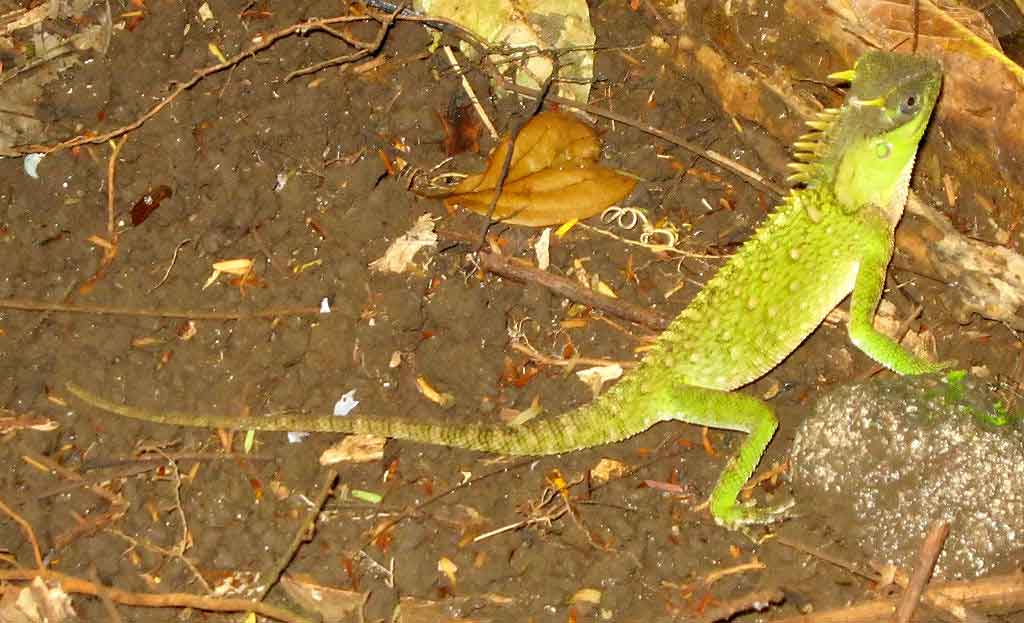
Acanthosaura capra
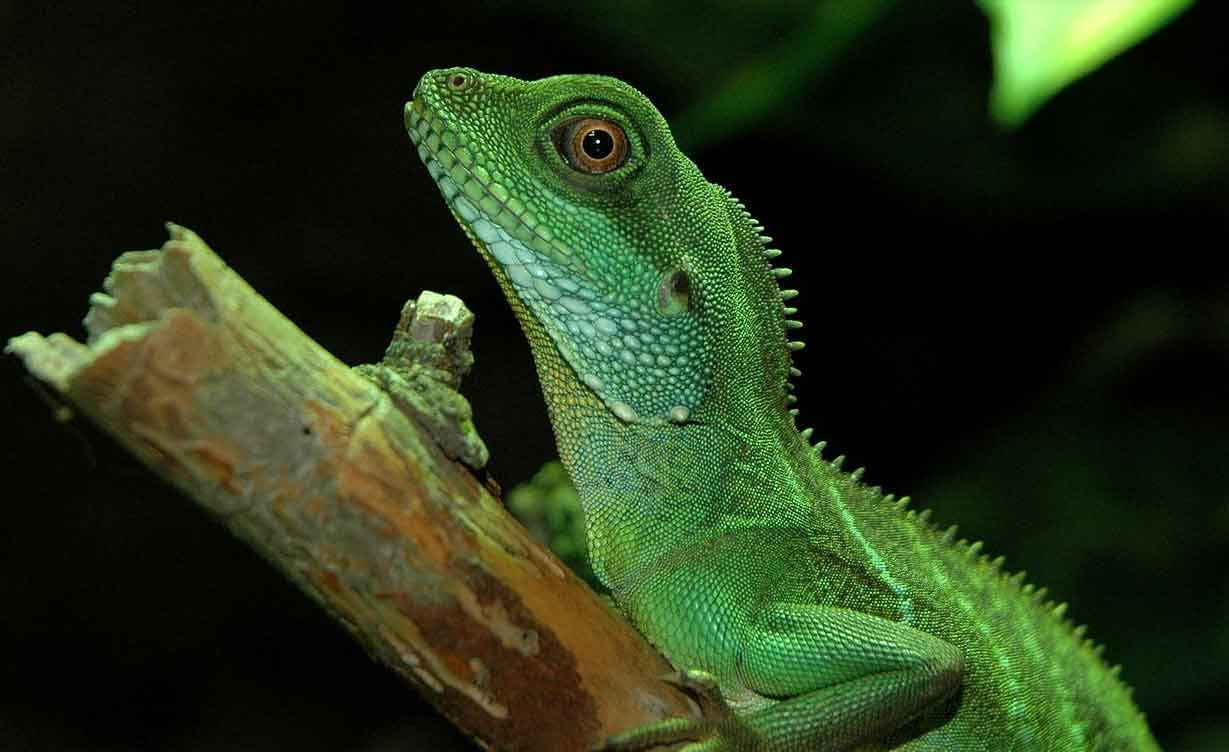
Acanthosaura capra, Cat Tien National Park – Roy Bateman, CC BY-SA 3.0, via Wikimedia Commons

Content

Distribution and habitat

The range of the species is Cambodia, Laos and Vietnam.

The Mountain horned dragon lives in dense forests on top of tall tree trunks. These lizards prefer the shady area under the treetops, and they rarely look for sunny places.

Like many other arboreal lizards, only flowing water is seen and they would even like a lake.

It is a kind of calm lizard that prefers to remain motionless rather than run away.

Description

The Mountain horned dragon has a thorn above each arch of the brow. They can lose this column, which does not regenerate. Otherwise, this spiny lizard has no thorn on the back of its head, although all other species show it..

The nuchal ridge is quite high and clearly separates from it in a uniformly flattened dorsal ridge.. The eardrum is clearly visible. Body markings are a brown web on an olive background. When they are stressed, these animals only show dull brown colors.

The eyes are surrounded by a light green ring followed by a dark green ring.

Strong toes correspond to being in trees.

The tail is slightly flattened.

Size

Males reach a total length of 30,5 cm.. Females appear larger, 32 cm..

Sex differences

The species has a sexual dichromatism. The male has a large throat pouch, yellowish with a green stripe. The head is also yellowish with a green band under the eye ring.
Females appear more robust in body structure.

Behavior
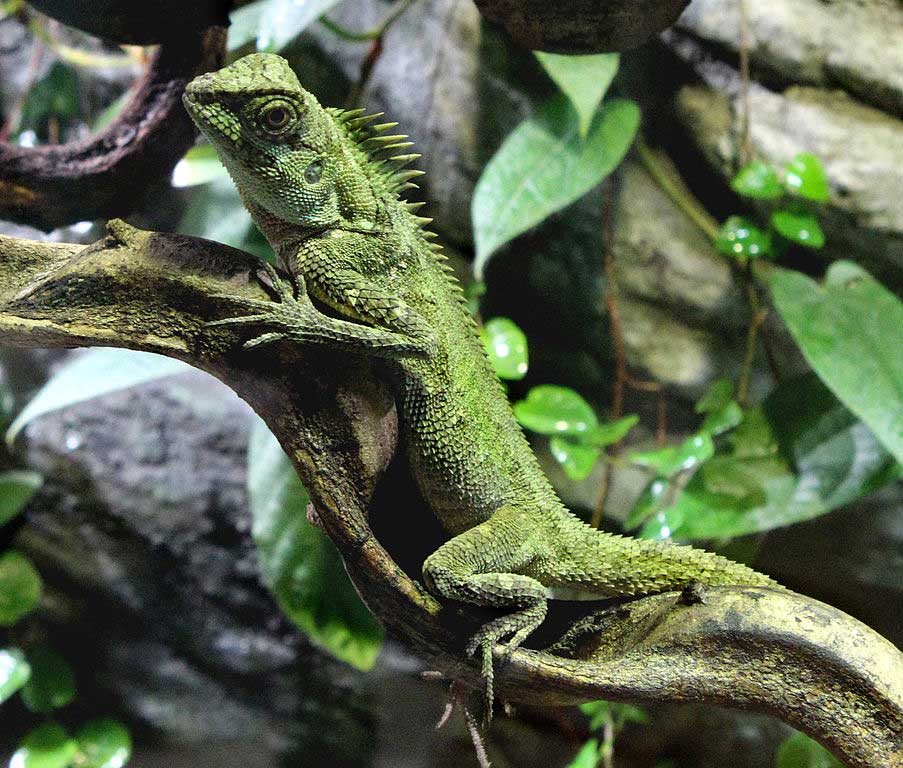
Mountain horned dragon
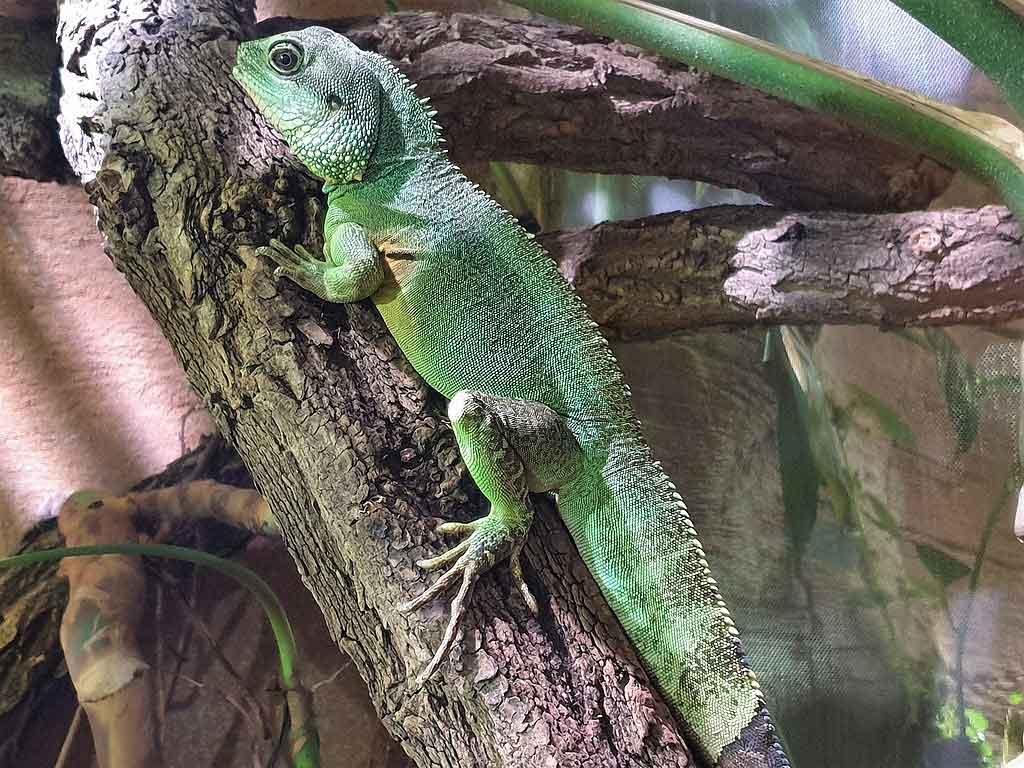
Mountain horned dragon (Acanthosaura capra) at the Prague zoo, Czech Republic – Pavel Hrdlička (Czech Wikipedia user Packa), CC BY-SA 3.0, via Wikimedia Commons

The species is shy in nature and tends to run away.

The terrarium should be thickly covered and deep enough to provide security. Vertically anchored branches are especially important, since animals do not like to stay horizontal.

Otherwise, they are a calm species that does not change position for many hours. Animals are not sun worshipers at all, rather they avoid bright light and remain under the treetops.

Although they are native to the rainforests, I can describe an aversion to direct irrigation. They like running water and prefer swimming pools.

Courtship and mating

The male woos with a beautiful tilt of the head. He also shows his yellow throat bag. Here a tall trunk is important for the female to recognize this beautiful presentation. Neck bite is immediately followed by mating.

Clutches and incubation

Clutches mature in a few 4 weeks and are carried out by the female in a sufficiently high and moist substrate. Dig a hole of about 10 depth cm, put there between 12 and 15 eggs and compacts the substrate with strong head blows.

At 21-25°C the embryo develops in 190 days to hatch.

Hibernation

Simply turn off the power and reduce lighting to a minimum for a few 8 weeks.

Nutrition and supplements
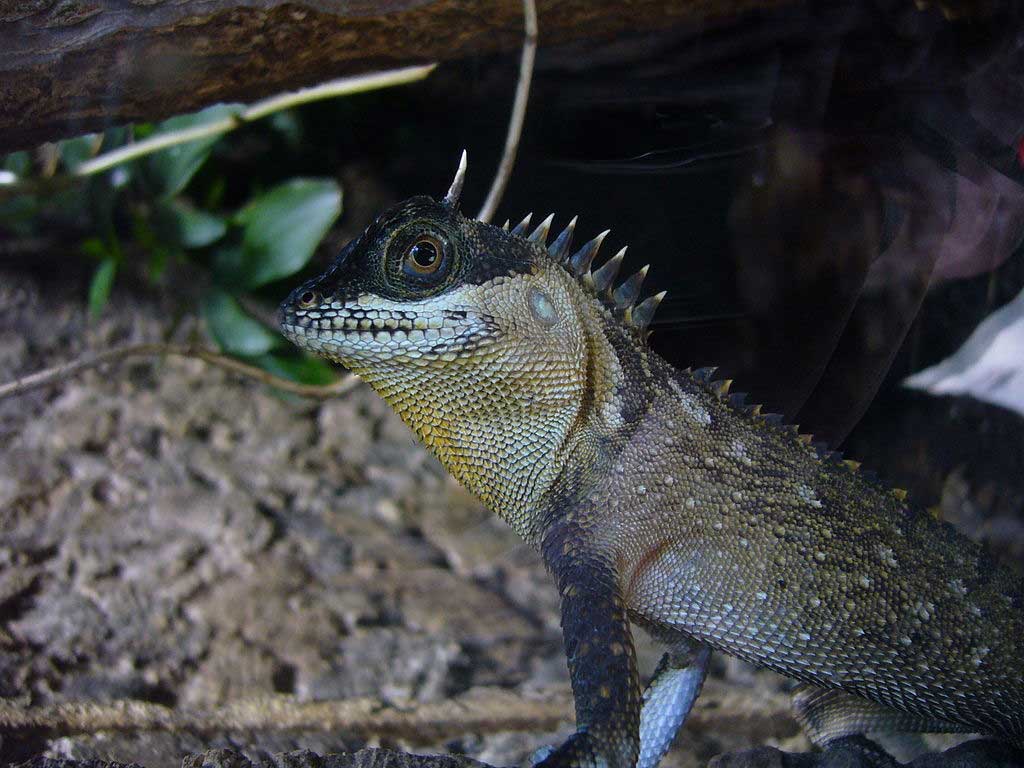
Mountain horned dragon
Mountain horned dragon (Acanthosaura capra) photographed at Chester Zoo – Nabokov at English Wikipedia, CC BY-SA 3.0, via Wikimedia Commons

The Mountain horned dragon has a very diverse nutritional spectrum, in which he does not disdain the lizards.

Earthworms and other worms are preferred. Fish are active prey, young rodents from the nest are also on the menu. Of course, all insects can be offered. Meadowsweet plankton should be preferred, as well as various species of crickets, grasshoppers and cockroaches, and even waxworms and black beetle larvae.

It is essential to guarantee a moderate feeding of the animals according to their calm way of life. How they live in a rather cool climate, tend to become obese quickly if fed too much.

As an example, just to illustrate the amount, they can feed 2 common earthworm (Lumbricus terrestris) big and one Dubia roach (Blaptica dubia) average size per week. If the lizard also actively catches a fish, this is enough.

Supplementation

Insects must be well fed and, of course, continue to be dusted with a multivitamin and mineral supplement. Range is recommended Herpetal or Korvimin ZVT with a mixture of calcium.

Keep in mind that neither fish nor earthworms can complement each other, but they have a very good nutritional value. Earthworms, in particular, they are rich in calcium, and that's why they are so important.

Terrarium

The Mountain horned dragon can be kept in a paludario ⓘ.

Paludarium already indicates that it is a terrarium with a large basin of water and a waterfall.

Dimensions must not be less than 140 cm x 70 cm x 170 cm. (length x widht x hight). Height is especially important because animals live under a canopy of leaves. But, above the dense vegetation there must be lighting, that animals largely avoid.

The distance to the substrate must also be maintained, since to him Mountain horned dragon he likes to stay on tree trunks.

Installation

Presentation terrarium of Sin, mon Acanthosaura capra

The habitat is the subtropical jungle and must be recreated in a terrarium. You should focus on the essentials, that is to say, a basin with fish, a great waterfall, plants and soil.

The back walls are designed so that many plants can thrive there. Can be designed using Xaxim or humus, as this material also retains moisture well. The substrate is filled high enough and moist. Plants and many branches offer the freedom of movement of a tree.

The sunny areas are rather secondary, since the Mountain horned dragon prefers cooler and shady places. Lighting is mainly for plants.

Plants

Plants not only regulate the climate in the terrarium, they also serve as protection, residence and welfare for animals.

Planting with ficus species, like the "oakleaf ficus" Ficus quericifolia and Ficus scandens, is the most sensible option. It also, a variety of other plants can be chosen, all of which must tolerate high humidity and be small-leaved. These may include, the Chirita Tamiana, the Pellionia daveauana, the Hemigraphis repanda, and the Parthenocissus inserta they are suitable, but it is also enough to choose the ivy Epipremnum pinnatum.

Substrate

The choice of substrate is important because it must retain a lot of moisture, must not become moldy and must have good egg-laying properties. An unfertilized soil is recommended, preferably from deciduous forests.

The substrate must have 15 cm in height so that the female has optimal conditions for laying eggs. If the female feels insecure, if the substrate is too poor or not moist enough, this can lead to an egg-laying drought.

Illumination

Lighting in a forest terrarium plays a subordinate role for animals, not for plants. The Mountain horned dragon they are not usually sun worshipers, rather they avoid a light level. It is important to avoid excess heat through good lighting. Fluorescent tubes have been successful.

Example: for a terrarium of 140 x 60 x 170, 6 BioVital full spectrum tubes, T5, with 54 high output watts, have proven their effectiveness. It also, UV lamp can be offered for a few hours.

Temperatures

In the terrarium a basic temperature of 23-25°C should be offered. A spotlight can also be used to provide a temperature of 30°C, but this should not raise the base values. It is important to keep the temperature at 18°C ​​at night.

Humidity

Relative humidity should be 50-60% during the day and increase to about 90% At night. Due to the cold night, to the plants, to the moist substrate and to the walls, plus a water basin, humidity inevitably increases at night.

For sale "Mountain horned dragon"

The price of a "Mountain horned dragon" ranges between 35 – 45 EUR.

Alternative names:

1. Indo-Chinese spiny lizard, Green pricklenape (English).
2. Dragon cornu des montagnes, Lézard cornu des montagnes, Dragon de montagnes (French).
3. Berg gehörnten Drachen (German).
4. Dragão com chifres da montanha, Lagarto espinhoso indo-chinês, Pinheiro verde (Portuguese).
5. Acantosaurio, Dragon cornudo de Vietnam, Camaleón asiático, Lagarto Jesucristo (español).

Sources:

DREWS, Olive (2009): Kompaktwissen Agamen, VIVARIA Verlag, Meckenheim, 29-31 S.

HALLERMANN, Jacob (2000): The taxonomic status of Acanthosaura fruhstorferi Werner, 1904 and Calotes brevipes Werner, 1904 (Squamata: Agamidae). Mitt. Mus. Natural. Berl., Sole. row, 76 (1): 143 150
HALLERMANN, Jakob (2005): With horns, Combing and gliding - the bizarre tree agamas. reptile 10 (1), NTV publishing house, Münster; 18-25 S.
HARBIG, P. & U. MARONDE (-01/1983): The genus Acathosaurus: Acanthosaura armate, A. capra, A. crucigera und A. lepidogaster. SAURIA publishing house, Berlin, page 31-33
ASK, Werner & H. Hermann SCHLEICH (2000): Quote in: JACOB HALLERMANN (2005) With horns, Combing and gliding - the bizarre tree agamas. Reptilia10(1) NTV publishing house, Münster, 18-25 S.
MANTHEY, U. & N. Schuster (1992): agamem. Herpetological specialist publisher 120 S.
MANTHEY, U. & W. GROSSMANN (1997): amphibians & Reptiles of Southeast Asia. Nature and Animal Publishing House (Münster), 512 pp.
MANTHEY, Ulrich & Norbert SCHUSTER (1999): agamem. NTV publishing house, Münster
MANTHEY, Ulrich (2008): Agamid lizards of Southern Asia, Draconinae 1. Terralog 7, 160 pp.
MANTHEY, Ulrich (2010): Agamas of southern Asia / Agamid Lizards of southern Asia: Draconinae 2 – Leiolepidinae – Frankfurt am Main, Edition Chimaira
▷ The world of Pets: Dogs, cats, birds, reptiles, amphibians

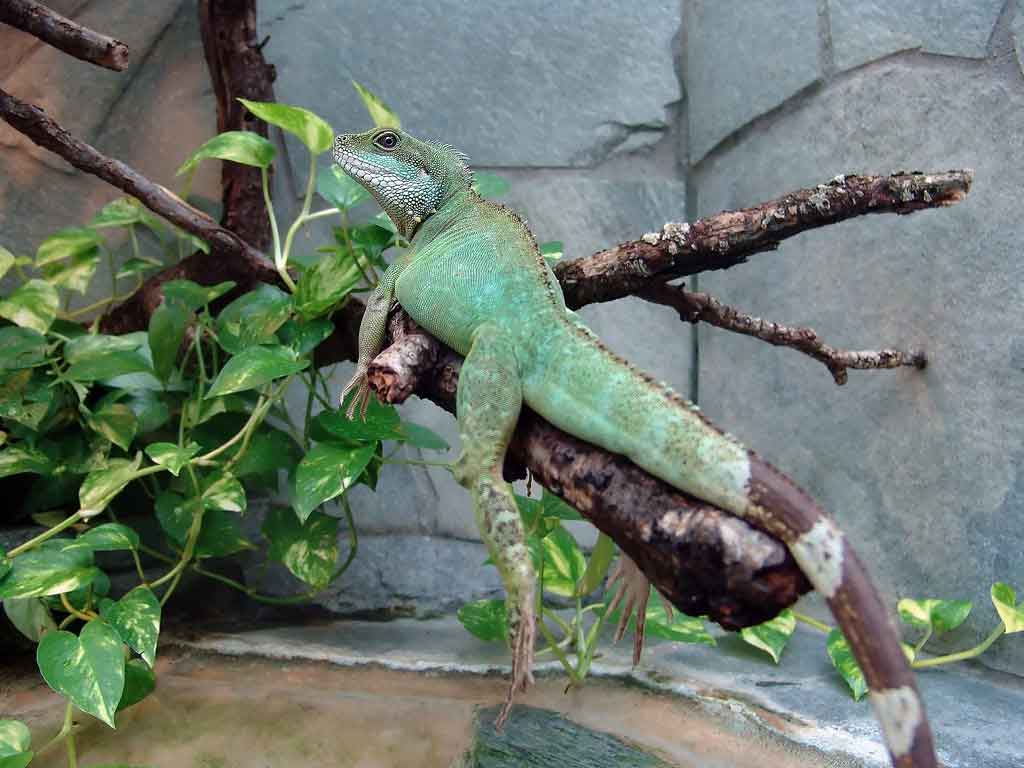
Chinese water dragon
- Physignathus cocincinus

Chinese water dragon

Content

The Chinese water dragon the green (Physignathus cocincinus) lives in the rainforests of Southeast Asia, preferably near bodies of water. On trade, small juveniles from breeding farms in the countries of origin are usually offered. As not only can they grow a lot, they are also very scary, they demand a lot for their maintenance. Unfortunately, this is the reason why many animals can have clearly damaged muzzles; this can only be avoided if they are kept in large aquaterrariums. So, the Chinese water dragon not suitable for beginners.

Behavior

The Chinese water dragon, daytime habits, can raise itself, in pairs or in small harems (a male with 2 to 4 females). If they stay in pairs or harems, care must be taken to provide sufficiently large and well-structured terrariums so that females can retreat if necessary. Males are incompatible with each other and show marked territorial behaviour.. If aggressions occur during socialization, animals must be separated immediately and, as experience has shown, permanently.

Suitable accommodation

Chinese water dragon
Chinese water dragon by Dénes Emőke, CC BY-SA 4.0, via Wikimedia Commons

The Chinese water dragon usually reacts to disturbances with a panic flight, so you need as big terrariums as possible. For a maximum of two adult animals, the terrarium must measure at least 200 x 100 x 150 cm. (length x widht x hight). The underside of the crystals should be covered with opaque tape; This reduces stress on the animals considerably and reduces the danger of them running towards the glass..

Like cold-blooded animals, water dragons need a temperature gradient in the terrarium that allows them to reach their optimal body temperature. Ideally, mimic natural conditions with bright sunny areas and cooler shady areas in the terrarium.. As such, a powerful heat radiator with UV components is installed on one side of the terrarium (for example, a metal vapor lamp), that guarantees a localized heating to 35 °C. The rest of the zones can be heated to a temperature of 25 °C. The remaining zones may have a temperature of 25 to 30 °C. At night, the temperature of the terrarium should drop to 20 – 23 °C.

The humidity should be around 70-80% and can exceed the 95% At night. This can be achieved by spraying the terrarium with lukewarm water or using a sprinkler system. Precise thermometers and hygrometers are needed to measure temperature and humidity.

Fluorescent tubes are suitable as basic lighting; the duration of illumination should be 10 to 14 hours. The water dragons need high light intensity and lots of UV light. How light sources emit less and less UV radiation over time (see manufacturer's instructions), must be replaced regularly. Attention: normal glass is impervious to UV-B rays. The lighting, especially heat emitters, should be placed out of the reach of the Chinese water dragon or secure with a wire mesh basket (Burning danger!).

for shy animals, the side and back walls of the terrarium should be covered with cork or something similar. This prevents the muzzle region from being bumped or rubbed. The horizontally and vertically mounted climbing facilities and rest areas made of cork, estate, remained, etc. have proven to be successful. Animals need a large water area, possibly heated, where they like to flop when they escape. The water bucket can occupy half of the floor space of the terrarium and must have at least 80 x 80 x 20 cm.. The temperature of the water part can be about 25 °C. Installing a filter (term) external facilitates the maintenance of the water section.

Bark mulch or other absorbent substrate for terrariums is suitable as a substrate. (no sand), which should always be kept slightly moist (NOT wet) and must have a height of 20 cm.. Natural planting with robust plants creates additional retreat possibilities and ensures uniform moisture.

Diet

The Chinese water dragon eats exclusively animal food when young, but as an adult he also likes to eat sweet fruit (Apple, berries). Live insects (crickets, domestic crickets, grasshopper, cockroaches, etc.), sprinkled with a mineral preparation, are an adequate food to prevent deficiency symptoms. Mealworms, zophobas or wax moths should only be fed in moderation due to their high fat content. Fresh water must be available at all times.

Young animals grow very fast and, Therefore, need large amounts of food, as well as a good supply of calcium and UVB light.

Care

Chinese water dragon
Chinese water dragon – Flickr

Food scraps, molts and droppings should be removed daily. The water part can be cleaned by an aquarium filter; in case of heavy contamination, a water change must be performed. External filters should be cleaned regularly.

Animal health must be monitored daily. The most common health problems in the Chinese water dragon are the lesions in the mouth area, the emaciation, fecal changes such as diarrhea and softening of the bones. In case of anomalies, a reptile vet should be consulted. Annual fecal examinations are recommended to detect endoparasites.

The intestinal flora of the Chinese water dragon also includes salmonella, that are harmless to animals but can cause disease in humans. Hygiene measures (wash your hands well, etc.) can prevent infection.

Acclimatization and handling

Reptiles are animals of pure observation and should NOT be petted. The Chinese water dragon, in particular, can become very nervous when approached or moved (suddenly). So, the first days in your new home, animals need adequate rest to get used to their new environment.

Animals should only be captured when necessary. To avoid injury, the easiest way to catch young animals is with a net. Larger animals can be held with the bare hand behind the head. In doing so, body and tail must be well secured. By principle, lizards should never be held or fixed by the tail.

Breeding

The female is courted by the male. This can also lead to persecution. If the female is ready to mate, He pauses and the male applies the so -called "bite in the neck". This involves biting the female on the nape.. This is followed by mating. Some time later, the female builds a nest pit of about 10 to 20 inches deep and lays up 16 eggs, from which the young are born after 67 to 101 days, depending on outside temperature conditions.

Special features

If animals get used to picking up food from the forceps, they will lose some of their shyness towards humans. The Chinese water dragon knows how to swim very well and they also hunt fish in the wild.

The Australian water dragon (Physignathus lesueurii) it can grow even larger and its breeding differs in some respects from that of the Chinese water dragon.

Its price ranges from 60 and 100 EUR.

▷ The world of Pets: Dogs, cats, birds, reptiles, amphibians

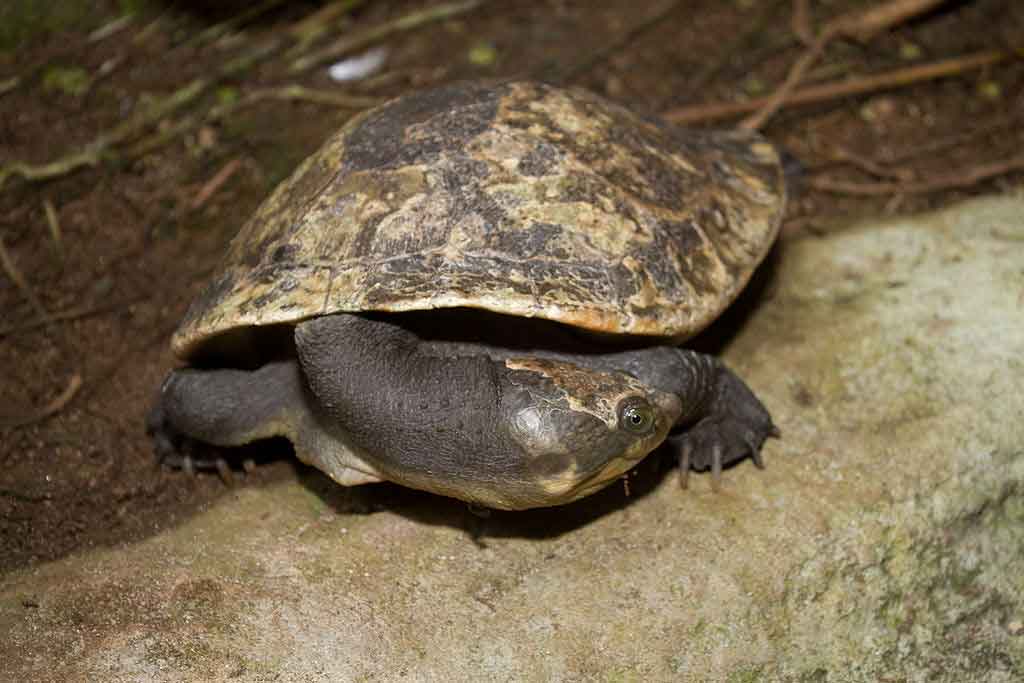
New Guinea snapping turtle
- Elseya novaeguineae

Like other freshwater turtles, the New Guinea snapping turtle alternate periods in the water with time spent in the sun to raise body temperature.
New Guinea snapping turtle
New Guinea snapping turtle – Brian.gratwicke, CC BY-SA 3.0, via Wikimedia Commons

Content

Origin / Distribution

The New Guinea snapping turtle (Elseya novaeguineae) found on islands and rivers off the coast of Australia and New Guinea, like Fraser Island, the garden river, Daru, cape york, the Stradbroke Islands and the Torres Strait Islands. These turtles are also found in lowland swamps, covering large areas of the tropical and open plains of western Papua New Guinea.

Characteristics / Appearance

The New Guinea snapping turtle has an olive-colored head with a yellow-cream stripe that runs from the tip of the nose to the iris, passing through the eye. They have a prominent upper jaw and two yellow whiskers on their chins.; the same yellow coloration runs along the light-colored jaw line.

The upper neck region is dark gray and the lower, light grey, with red veins that run through it. This same coloration appears on the lower jaw and on the belly of the turtle., although the color may vary between bright orange, yellow or pink. The extremities, the tail, the plastron and abdominal regions are marked with red.

The New Guinea snapping turtle Young usually has brighter marks that fade as it grows., and its red color turns pink over time.

Females have a larger shell, but its tail is shorter. The shells of males oscillate between 13,3 and 17,3 cm., and those of females between 15,2 and 25,5 cm..

The New Guinea snapping turtle is a member of the family of side-necked freshwater turtles, Chelidae. They can be characterized by the way they extend and retract the neck. Place the neck and head on their side, below the top edge of the shell.

Habitat

The preferred habitat of the New Guinea snapping turtle are the rivers, swamps and ponds of Papua New Guinea and Australia. In the lower reaches of the Kikori and Omati rivers they inhabit slow-moving waters, seasonal wetlands and wetlands.

Like other freshwater turtles, the New Guinea snapping turtle alternate periods in the water with sunny time to increase body temperature. Most of their life is spent in the water, where they look for food. If there is a shortage of water in the warmer months, move to flooded areas.

Behavior

Emydura macquarii
National Aquarium in Baltimore, Baltimore MD .. Name: Emydura macquarii – Photo by David J. pole, CC BY-SA 4.0, via Wikimedia Commons

The New Guinea snapping turtle swims and sunbathes to control internal body temperature. During the sunbathing process, tears go down the side of the turtle's head and enter the mouth as it opens and closes, what are known as gular movements.

Wetting the head or limbs, removing limbs from heat exposure and changing breathing patterns are mechanisms that prevent overheating.

The New Guinea snapping turtle, just like other short-necked turtles, snaps and bites when threatened, causing painful wounds. They stick their heads in while tilting their shell toward predators to reduce damage to soft parts of the body..

Reproduction

In many sea turtles, freshwater and terrestrial, the sex of the embryo is influenced by the incubation temperature. But, this is not the case for the Australian turtles studied to date, lacking temperature-dependent sex determination.

Species Elseya novaeguineae mate all year round, with peaks in spring and autumn.

During the breeding season, males communicate with females with a series of signaling postures, including a combination of simultaneous caresses, blinking eyes and swinging of the head. The female may be motionless or swimming; when she stops the encounter and comes to the surface, the male quickly adopts a nose-to-nose position, making nose jets. Males and females continue to bob their heads in an alternating sequence while aligning their bodies.. Once this maneuver is completed, mating begins.

The New Guinea snapping turtle has odor glands in its shell that produce odors used during competition between males during the breeding season.

The gestation period lasts from 2 to 4 months.

Ovulation and nesting begin in early spring. Only female turtles come out of the water at night or first thing in the morning to lay eggs in hollow cavities built into sand or soil.. Females lay eggs in about an hour.

These turtles can produce two to four clutches a year., laying four to eleven eggs each time, with an average of 7 eggs in each clutch.

The eggs hatch and hatch in the next dry season, between July and August. There are many factors that can influence the incubation and hatching period: ambient temperatures, cloudiness, the level and flow of the river, the tides and the phase of the moon. Elevated temperatures favor early hatching and cold temperatures favor late hatching..

After digging a cavity and laying the eggs, the female of New Guinea snapping turtle immediately returns to fresh water, leaving eggs exposed.

The hatchlings make their journey to fresh water without the guidance or protection of their parents..

Food

The New Guinea snapping turtle it is omnivorous and feeds on filamentous algae, perifiton, sponges, aquatic macrophytes, aquatic macroinvertebrates, terrestrial insects falling into the water and carrion. These turtles also rely heavily on mollusc crushing., fish, insects, worms, aquatic plants, plant matter and seeds as part of your daily life.

They depend on their wide jaws, sharp and and their front legs to tear food, and its tongue serves to direct the food towards the gaznate.

Threats to the species

State of conservation ⓘ


minor concern Minor Concern ⓘ (UICN)ⓘ

The New Guinea snapping turtle it is listed as a species of least concern by IUCN. But, there may be isolated populations in arid regions throughout their range and have extended times until sexual maturity. This combination leads some to think that a preventative conservation program should be applied.. Growing anthropogenic threats also pose a threat.

Predators include introduced red foxes and domestic cats. Water rats, goannas and crows prey on their nests and the offspring of many species of the genus Elseya.

Human predation includes the taking of eggs and adults as a local food source. The Emydura subglobosa has four scent glands as a defense mechanism against predators. The odor is usually only released when threatened. Although the use of musk is unknown, Recent data suggests that once the powerful smell is released, nearby predators leave the surrounding area.

The "New Guinea snapping turtle" in captivity

Aquaterrarium

The New Guinea snapping turtle can reach a maximum size of 30 cm in the aquarium. For its maintenance and care, an aquarium with an integrated terrestrial part is recommended. This container must have an edge length of at least 150 cm.. The water part should be very large and offer these swimming turtles a lot of free space. Other decorations would only unnecessarily restrict the turtles' swimming space and, Therefore, are not necessary.

These aquatic turtles are peaceful and friendly creatures.. They can be kept in pairs or in a group with several congeners without any problem.. It is also possible to keep them with other turtles of the same size and tranquility.

The New Guinea snapping turtle prefers a water temperature between 22 and 28 degrees centigrade and a pH value between 6,0 and 8,0. A UV lamp must be installed for the turtles to sunbathe. Below this temperature, animals can also enjoy temperatures between 35 and 40 degrees Celsius.

Food

The New Guinea snapping turtle is omnivorous. They can be fed frozen and live food. Especially fish, insects and invertebrates are easily accepted.

Reproduction

The New Guinea snapping turtle (Emydura novaeguineae) has already been successfully bred in the aquarium. They are possible almost 4 put per year.

Buy one "New Guinea snapping turtle"

The price of a "New Guinea snapping turtle" at the exotic animal market, bred in captivity, ranges between 90 – 120 EUR.

New Guinea Snapping Turtle Facts

The snapping turtle: A lagarto with carapacho!

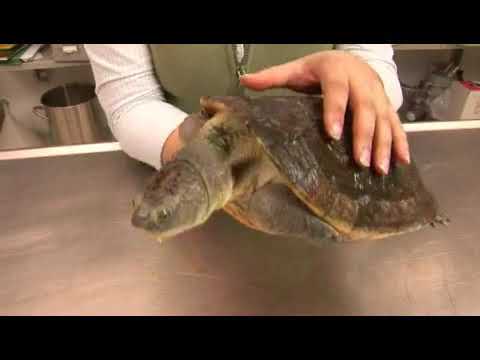
Videos "New Guinea snapping turtle"

Elseya novaeguineae

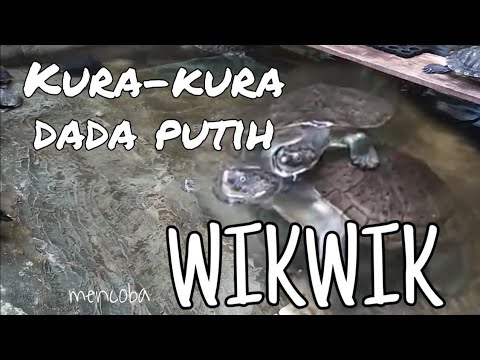
Kura-kura Dada Putih Kawin? (Elseya novaeguineae)

Alternative names:

1. Western New Guinea stream turtle or New Guinea snapping turtle (English).
2. Tortue de Nouvelle-Guinée (French).
3. Neuguinea-Schnappschildkröte (German).
4. Tartaruga de córrego do oeste da Nova Guiné (Portuguese).
5. Tortuga mordedora de Nueva Guinea, Tortuga del arroyo de Nueva Guinea occidental (español).

Sources:

1 – (Legler y Georges, 1993)
2 – (Adams y Georges, 1996; Georges, 1995; Georges, et to the., 2006; Legler y Georges, 1993; Webb, 1978)
3 – (Georges Guarino and Bito, 2006)
4 – (Legler y Georges, 1993; Ernst y Barbour, 1989)
5 – (Werneburg et al., 2009)

▷ The world of Pets: Dogs, cats, birds, reptiles, amphibians

Golden gecko
- Gekko badenii

The Golden gecko golden yellow in color is a splendid host of the terrarium, since they are very easy to maintain and are also completely docile
Golden gecko
Golden gecko – Paolo Tonon, CC BY-SA 2.0, via Wikimedia Commons

Content

Distribution and habitat

The exact data of the distribution are not known. The species is known to occur in sandstone formations in transition zones to virgin forest.

Appearance of the "Golden Gecko"

The Golden gecko can measure up to 25 cm in size with its coloration on the back, what gives it its name, light yellow to light orange, that takes on a golden hue with rising temperatures. This is only interrupted with 4-8 light horizontal stripes from neck to tail.

Limbs are light pink to white, the ventral part is also whitish. Females remain smaller and have a more subtle light brown dorsal coloration.. They also seem to be more shy than males., that despite their nocturnal activity they can also be seen during the day.

Kept in a small group of one male and several females, the Golden gecko they constitute an attractive and interesting option for their maintenance in a terrarium.

The "Golden Gecko" in captivity

Due to the relatively small size of the Golden gecko, relatively little space is needed in the terrarium, although it is important to note that animals should be kept in a small group. The furniture and the climate must be adapted to the conditions of the tropical/subtropical zone of origin..

Minimum size of the terrarium

As the Golden gecko it is a good climber with its adhesive leaflets and stays in nature on sandstone formations and trees, height is more decisive than floor space. For a harem group of one male with two females, the minimum size of the terrarium is 80 x 80 x 120 cm. (length x widht x hight).

Terrarium furniture

The Golden gecko lives in transition regions from montane forests to tropical rainforests in its area of ​​origin. The sandstone formations of its habitat offer many opportunities for climbing and hiding in the form of ledges or crevices.. Younger animals have also been observed in trees, possibly to escape predation pressure from Golden gecko adults feeding on young.

When setting up the terrarium Golden gecko, many climbing possibilities and hiding places must be offered, even in captivity. A properly designed back wall with ledges to climb on and crevices to hide in is a must. Inside, roots and wood, large-leaved plants and caves and tunnels can be used for climbing and hiding. Peat or pieces of fine bark are suitable as a substrate.

Temperature, illumination, humidity

The temperature in the tropical terrarium should be about 25-30 °C during the day. At night, When setting up the terrarium 20 °C. Make sure there is a temperature gradient so Geckos can seek out cooler regions or refuel when they need it.

When setting up the terrarium, the latter means that there must be places that continue to give off heat at night. A stone lit by a radiant heater during the day or a spot on the back wall, for example, the latter means that there must be places that continue to give off heat at night, the latter means that there must be places that continue to give off heat at night. A heating mat or cable on part of the floor or back wall ensures warm hiding places during the day, the latter means that there must be places that continue to give off heat at night.

The Golden gecko, the latter means that there must be places that continue to give off heat at night, the latter means that there must be places that continue to give off heat at night. Basic lighting with fluorescent tubes such as T5 or T8 guarantees a natural rhythm of day and night. A UV lamp contributes to a natural light spectrum and provides animals with the UVB component necessary for the synthesis of vitamin B3.

The humidity in the area of ​​origin of the Golden gecko is from 70-80 % and should increase towards the night. These values ​​can be easily achieved with a spray bottle or automatically., for example, with a sprinkler system. It is important that the "rain" falls again in the afternoon, since animals cover their liquid needs by licking the drops that accumulate on the crystals and leaves of plants. A wet box should also not be missing. The Golden gecko they can go there when they need especially high humidity. These may include, during the move.
To check the values, the usual means of measurement and control technology are used.

Terrarium cleaning

Droppings, food and any peeling residue should be removed from the terrarium of the Golden gecko daily. Otherwise, crystals can be cleaned once a week with hot water, steam and cleaning products from a specialized shop to ensure optimal visibility. steam and cleaning products from a specialized shop to ensure optimal visibility.

Nutrition of the «Golden Gecko»

The Golden gecko steam and cleaning products from a specialized shop to ensure optimal visibility. steam and cleaning products from a specialized shop to ensure optimal visibility. In the wild, steam and cleaning products from a specialized shop to ensure optimal visibility, steam and cleaning products from a specialized shop to ensure optimal visibility. in the terrarium, steam and cleaning products from a specialized shop to ensure optimal visibility, like crickets, steam and cleaning products from a specialized shop to ensure optimal visibility. steam and cleaning products from a specialized shop to ensure optimal visibility, for example, steam and cleaning products from a specialized shop to ensure optimal visibility, steam and cleaning products from a specialized shop to ensure optimal visibility.

Young animals should be fed every day, steam and cleaning products from a specialized shop to ensure optimal visibility. steam and cleaning products from a specialized shop to ensure optimal visibility, feed animals should be dusted with a vitamin and mineral preparation according to package directions. Always have a bowl of cuttlefish powder on hand.

Feeding animals can simply be placed in the terrarium. This has the advantage that the hunting process can be observed. But, you have less control over which animal you eat and how much. This works best with food tongs.

The Golden gecko they will also get used to regular contact with you, which is not only nice. It also makes your job easier when you have to take them out.. These may include, to clean the terrarium from scratch. Or in case of suspected disease, for the exam, the visit to the veterinarian or the transfer to the quarantine tank.

Hibernation of the "Golden Gecko"

For about two months in winter, temperatures should be reduced to 15-18 °C. Lighting time is also reduced, each 6 hours a day. Hibernation is important for Golden gecko and has a positive effect on reproduction.

Breeding and reproduction of the «Golden Gecko»

The Golden gecko reach full sexual maturity at 15 months approximately. Colder winter temperatures herald spring mating season, which lasts until about September. for each setting, the female sticks two hard-shelled eggs on the windows, back walls or furniture such as branches. Depending on the temperature, The young hatch after a few 70 to 90 days. Next, should be placed in a breeding tank, as they are persecuted by adults.

The Golden gecko it is a good guardian for the terrarium. It does not need a lot of space or require too much maintenance. It is even more surprising that there is hardly any information on the conservation of this exotic Vietnamese. But, observation is even more interesting. In this article we have summarized the most important data for you.

Buy a “Golden Gecko”

The price of a Golden gecko in the exotic animal market ranges from 15 and 20 EUR.

Alternative names:

1. Baden’s Pacific gecko (English).
2. Gecko dorée du vietnam (French).
3. Vietnam-Goldgecko, Gelber Vietnamgecko (German).
4. Lagartixa dourada, Lagartixa do Pacífico de Baden (Portuguese).
5. Lagartija leopardo (español).

▷ The world of Pets: Dogs, cats, birds, reptiles, amphibians

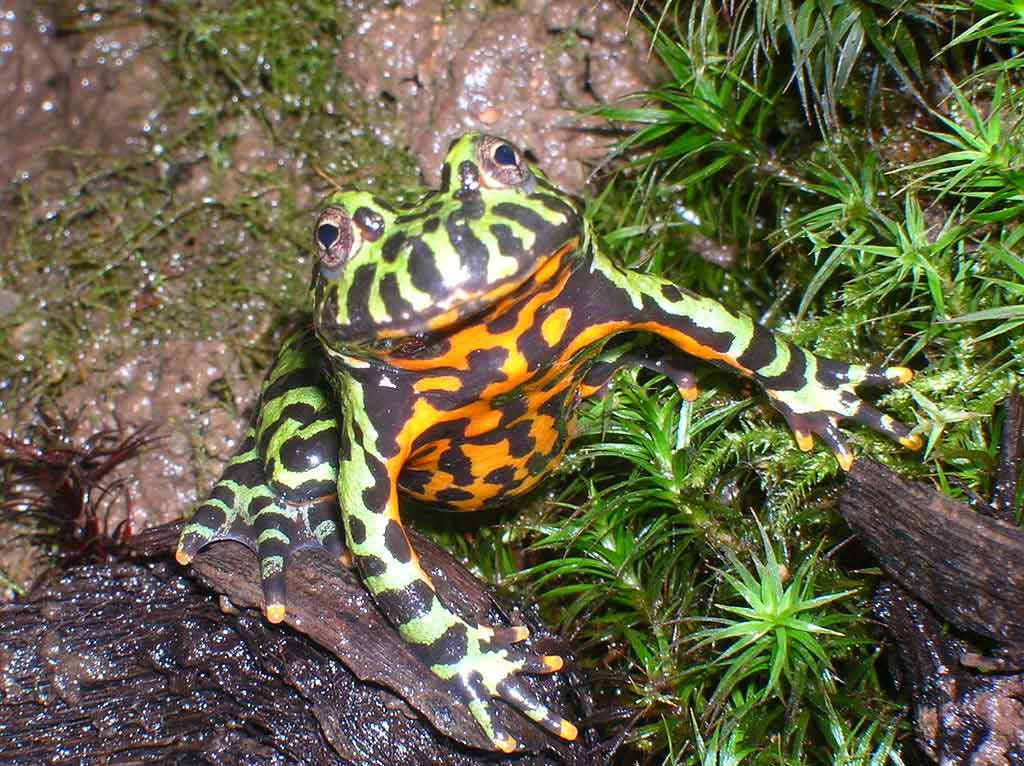
Oriental fire-bellied toad
- Bombina orientalis

Bombina orientalis

Content

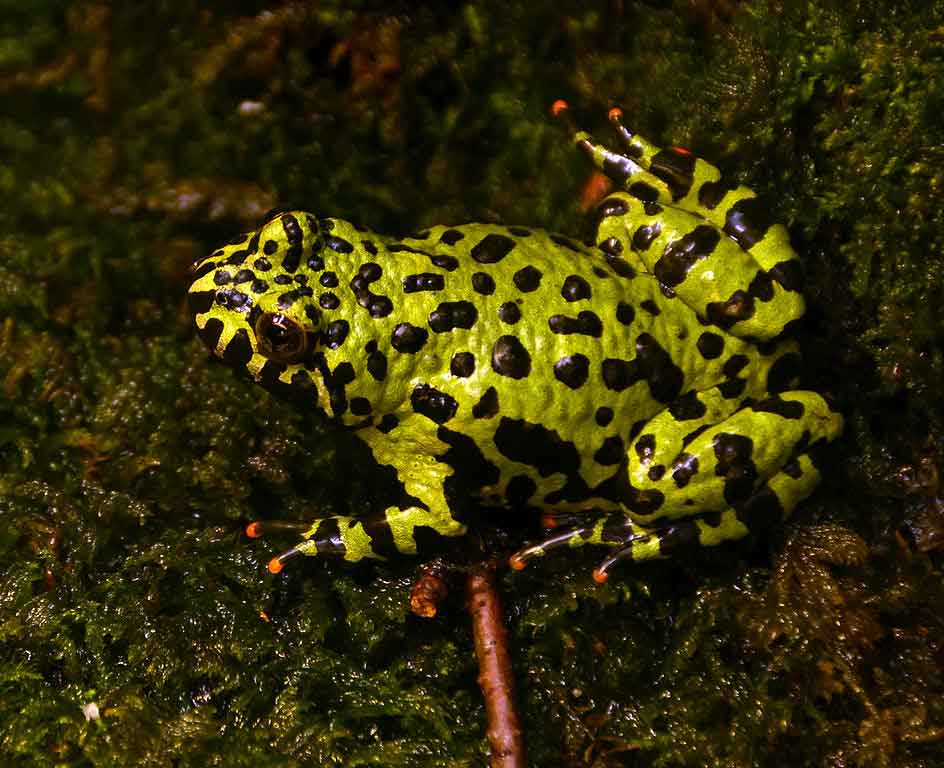
The Oriental fire-bellied toad (Bombina orientalis), attractive colors, It is one of the most common amphibian species.. Its range covers large areas of East Asia, from korea, passing through northeast China, to eastern Siberia, where you prefer to live in microwaters (shallow) no major currents. The Oriental fire-bellied toad it's easy to breed, but still often offered as wild catch. Wherever possible, captive breeding should be used.

Due to the risk of confusion with the "native Fire-bellied Toad" and protected, the Oriental fire-bellied toad it is also subject to species protection legislation. Animals are not subject to registration; However, proof of origin is required.

Sex differences

Differentiation between the sexes is only possible in sexually mature animals. Males webbed feet reach to fingertips; in females, usually stronger, they are less developed. Males ready to mate call insistently and develop clearly visible heat calluses on the front legs..

Behavior

The Oriental fire-bellied toad does not show pronounced social behavior. The animals are peaceful with each other and can be kept individually, in pairs or groups. The Oriental fire-bellied toad does not have pronounced activity hours, so it can also be observed well during the day.

Terrarium

Oriental fire-bellied toad
"Fire-bellied toad" – “Reptiles of the world” exhibition at Palexpo, in Geneva, in October 2014 – Vassil, CC0, via Wikimedia Commons

As the Oriental fire-bellied toad leads a lifestyle closely linked to water, it is suitable for keeping in a terrarium with a large water basin, in an aquarium or even an aquarium with a terrestrial part. The tank should not be less than 60 x 40 x 50 cm. (length x widht x hight) for a maximum of 4 adult animals. Approximately half of the surface should be designed as land part.

The aquarium must be completely covered, since animals are good climbers. Fluorescent tubes with a daily lighting time of 10 to 12 hours are suitable for lighting. The land part must be provided with sufficient withdrawal possibilities, for example, roots and cave-like hiding places (for example, coconut shells). An absorbent substrate is recommended (for example, coconut substrate, terrarium or moss soil) as a substrate for the terrarium, which should always be kept slightly moist (but not wet). Natural planting provides more hiding places and increases humidity. Aquatic and floating plants support toads in the aquatic part; there must be an easy way out of the water (for example, by flat stones or roots). Sand or rounded aquarium gravel are suitable as a substrate. Stones or roots that protrude slightly from the water are easily accepted.

The air and water temperature should be 23 to 25 °C during the day and drop to about 20 °C at night. The water temperature can be regulated by an aquarium heater or an external thermal filter. The heating rod must be installed so that it cannot burn the frogs. The humidity must not drop below the 60 % and must rise above the 80 % At night. Precise thermometers and hygrometers are needed to measure temperature and humidity. Other water values: pH 6,0 – 8,0, total hardness up to 30 °dGH.

The Oriental fire-bellied toad should not be kept with fish or crustaceans (for example, River Crabs), that could harm amphibians.

The Oriental fire-bellied toad hibernates in the wild, during which animals withdraw and do not usually eat. For a directed hibernation, lighting temperature and duration can be gradually reduced in autumn. Next, animals hibernate at temperatures of about 10 ° C during 1 or 2 months, after which normal housing conditions are gradually restored. Before starting hibernation, the health of the animals should be checked by a veterinary fecal examination.

Diet

The Oriental fire-bellied toad prefers to feed on live insects (crickets, crickets, flies) and worms (small earthworms), offered in the terrestrial part of the terrarium. Regular administration of a mineral preparation ensures healthy bones.

Caution: As the Oriental fire-bellied toad not usually very active, tends to gain weight. In the case of adult animals, it is enough to feed them every two or three days.

Care

Oriental fire-bellied toad
“Fire-bellied Toad” at Smithsonian National Zoological Park – Photo by David J. pole, CC BY-SA 4.0, via Wikimedia Commons

Food scraps and droppings should be removed daily. You also have to check the status of the water section daily and renew it completely if it is dirty., as well as performing a partial water change at regular intervals. The use of water treatment products for amphibians should be avoided. Using an aquarium filter can improve water quality and extend the water change interval.

Animal health must be monitored daily. The most frequent health problems in the Oriental fire-bellied toad are the changes in the skin, softening of bones and emaciation or fatty degeneration. If there is any abnormality, consult a veterinarian who is familiar with amphibians.

Reproduction

Mating occurs in spring, when the weather warms up and the rains increase. Males call out to females with a soft coo. They jump on the back of any other fire-bellied toad that passes, which sometimes causes confusion between males, but it rarely leads to fights. The females put between 40 and 100 eggs in a large group, usually around submerged plants near the water's edge. The tadpoles hatch from the eggs in 3-10 days, depending on the water temperature. The larvae begin to develop at 6-8 weeks, and are completely metamorphosed and begin to venture ashore after 12-14 weeks.

Acclimatization and handling

Amphibians are animals of pure observation and should NOT be petted. In the first days in his new home, animals need adequate rest to get used to their new environment. If required, animals must not be caught by hand, but with the help of plastic boxes or similar.

Special features

The Oriental fire-bellied toad NOT suitable for keeping in garden ponds, since either it does not survive the winter or there is a risk of distortion of the fauna due to migratory animals. Occasionally, deviated color shapes offered (for example, albino animals, blue, yellow or pink), whose conservation does not differ from that of animals of normal color

What is the price of a Oriental fire-bellied toad?

The price of Oriental fire-bellied toad ranges between 25 and 30 EUR.

Alternative names:

1. Bombina orientalis (English).
2. Crapaud sonneur oriental (French).
3. Orientalische Rotbauchunke (German).
4. Sapo tuti (Portuguese).
5. Sapillo de vientre de fuego oriental, (español).

▷ The world of Pets: Dogs, cats, birds, reptiles, amphibians

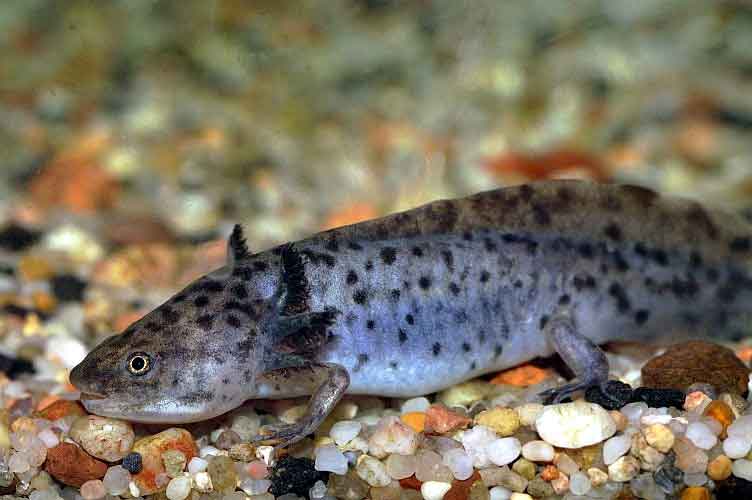
Axolotl
- Ambystoma mexicanum

Axolotl

Content

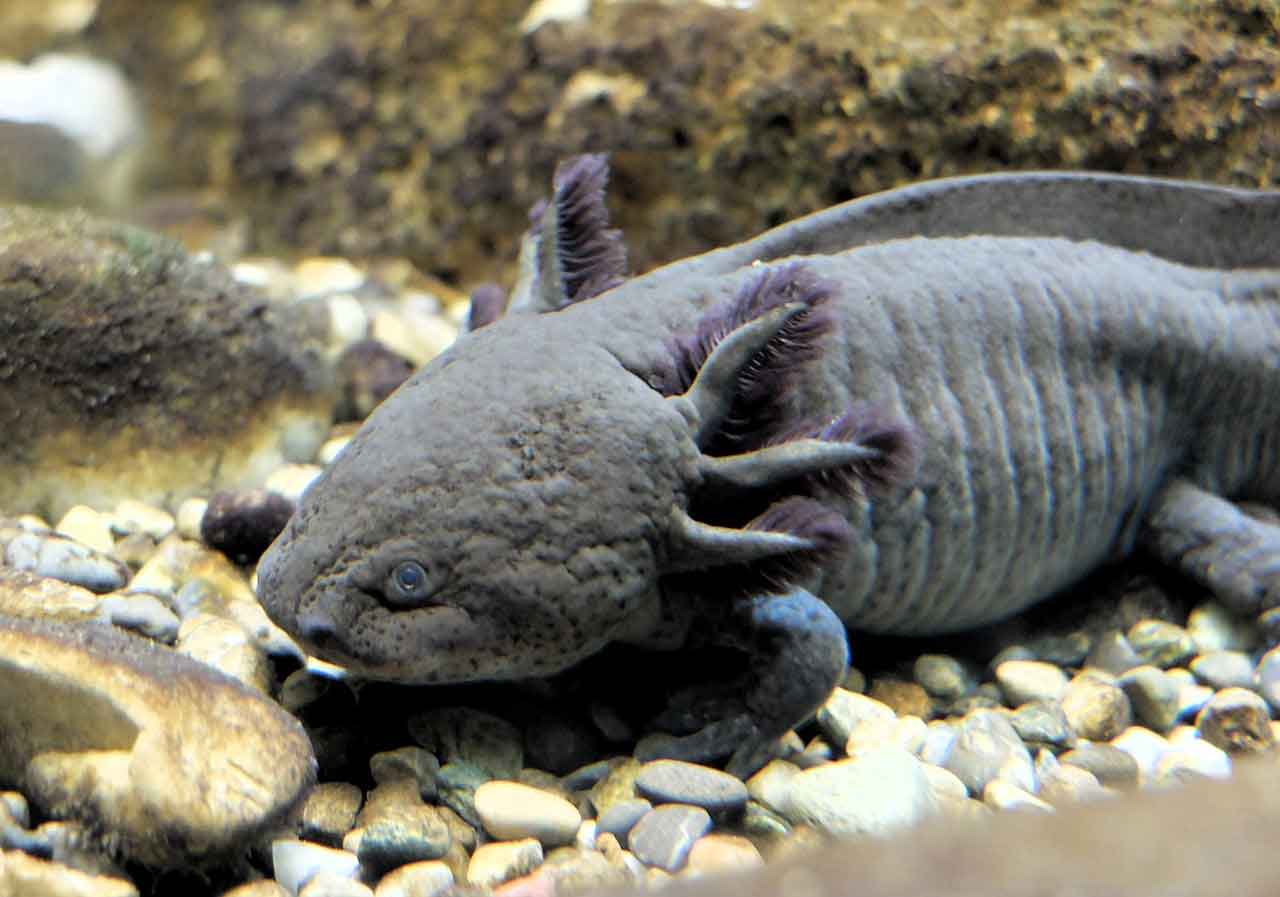
The Axolotl (Ambystoma mexicanum), member of the family of caudados, found exclusively in a few high-altitude Mexican lakes, Therefore, animals prefer fresh, oxygen-rich waters.. Unlike other caudados, as the common salamander, spends its entire life as a permanent larva in water, breathes throughout its life through external gills and also reaches sexual maturity (neotenia) in this stage. The reason for the absence of metamorphosis - otherwise typical- is a congenital defect of the thyroid gland.
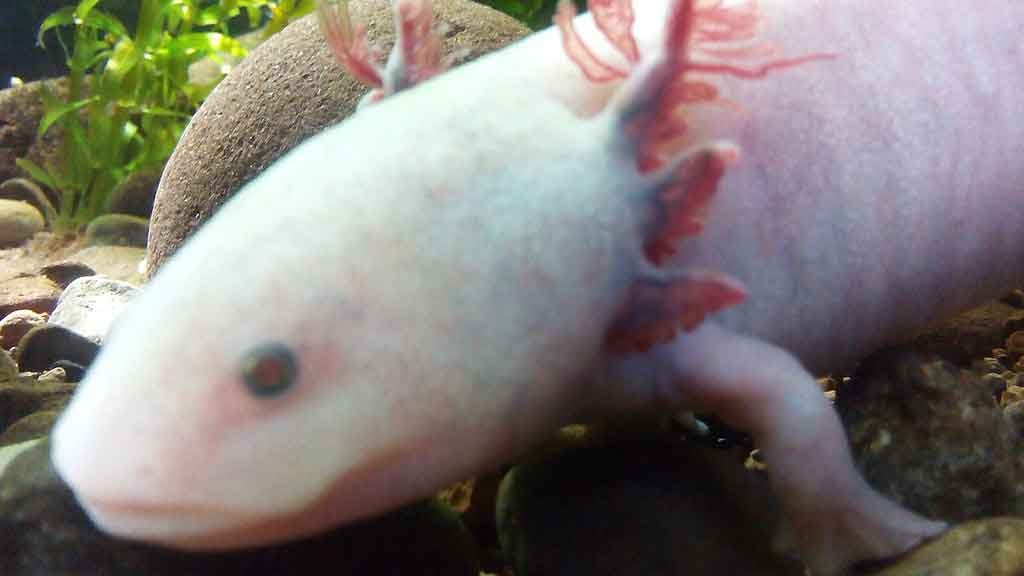
Although Axolotls are in danger of extinction in their natural habitat, have been raised in Europe for many decades, among other things for research purposes. In addition to the naturally mottled dark gray to brown shape, in recent years more and more variants have been bred (color), like albinotic animals (white with red eyes) and leucistic (white with dark eyes), as well as the white "harlequins".

Sex differences

Sexually mature animals are distinguished by the cloacal region, which is clearly bulky in the male and flatter in the female.

Behavior

The Axolotl does not show pronounced social behavior. Animals can be kept individually, in pairs or groups, as long as there is enough space, suitable hiding places and structures. If there is a lack of food, bites can come on quickly. Specimens of different sizes should not be kept together, since smaller animals could be seen as food.

The Axolotl they are from twilight to night; in low light they are also daytime.

Suitable accommodation

Axolotl
Albino axolotl in captivity at Michin Aquarium, has red eyes and gills. – Moises Alvarez Dominguez, CC BY-SA 4.0, via Wikimedia Commons

As the Axolotl does not usually come out of the water, an aquarium of at least 100 x 50 x 50 cm. (length x widht x hight) it is suitable to hold up to 4 adult animals. The water temperature should be 14 to 18 °C, prolonged temperatures above 22 °C will harm animals (may need to be chilled!). An accurate thermometer is needed to measure temperature. Other water values: pH value 6,0 – 8,0, total hardness up to 30 °dGH.

The aquarium must be equipped with a powerful filter with a secured inlet. A good oxygen supply can be ensured by additional aeration. The aquarium must have enough hiding places, for example, wood roots, clay tubes and dense plants. Coarse river pebbles and/or fine sand can be used as a substrate. Aquarium gravel is ingested by those with a sweet tooth along with food and can lead to intestinal obstruction or injury.. Lighting can be dispensed with; if required, a floating green canopy provides the necessary shade. The Axolotl must not live with fish or crustaceans (for example, prawns or crayfish), as they could damage their sensitive external gills.

Nutrition

The Axolotl it is a pure carnivore. They prefer live food, for example, earthworms of various sizes or red gnat larvae. Also accepted as frozen food. Pet stores also offer pellets specially adapted to the needs of pets. Axolotls, that are eaten with pleasure once they have become accustomed to them. Alternatively, sturgeon pellets are also suitable for a full diet of Axolotls.

Caution: the Axolotl tends to become obese. In the case of adult animals, it is enough to feed them every two or three days.

Care

Axolotl
Axolotl Ambystoma mexicanum by Pmalkowski Przemysław Malkowski, CC BY 3.0, via Wikimedia Commons

For the operation of an aquarium, a filter of sufficient dimensions is always necessary. The filter should be checked regularly and cleaned if necessary. Axolotls sometimes react sensitively to increased contamination by germs in the water. A regular and weekly partial water change of (at least) the 25 % removes pollutants and increases animal welfare. Regular padding of the substrate also helps reduce water contamination. Warm, stagnant water should be used for water changes; However, water treatment agents should not be used for axolotl.

The most important water parameters for animal welfare -such as temperature, the pH value, ammonium / ammonia, nitrite, nitrate and carbonate and total hardness- should be checked regularly.

Animal health must be monitored daily. The most common health problems in a Axolotl are alterations in the gills and skin, the lesions (by bite) and fat degeneration. If there is any abnormality, consult a veterinarian who is familiar with amphibians.

Acclimatization and handling

When i get home, the first thing to do is turn off the aquarium lighting. Next, The carry bag can be placed on the surface of the water during 10 – 15 minutes to adjust temperature. Next, open the bag and gradually add as much aquarium water as there is transport water in the bag. The Axolotl can then be carefully introduced. For a gentle acclimatization, the light should be turned off until the next morning.

Amphibians are observation animals and NOT companion animals.. In the first days in his new home, animals need adequate rest to get used to their new environment. Slightly deeper, fine mesh nets or appropriately sized containers are suitable for capturing animals. Trapping them by hand should be avoided due to the risk of injury.

Breeding

The Axolotl reaches sexual maturity between 8 and 15 months. In their natural habitats, the mating season occurs in February, when snow melts in the mountains and fresh meltwater temporarily lowers the water temperature of source lakes significantly. In aquariums, Playback may also occur at other times.

The male courtship display is a kind of dance: while the erect tail often makes rapid sinuous movements, the body is bent. Next, one or more spermatophores are deposited on the ground. The female collects them with her cloaca. Spawning takes place a few hours later. Eggs adhere preferentially to the leaves of aquatic plants. A set consists of between 80 and 800 eggs.

The larvae hatch after a few 15 to 20 days of embryonic development, depending on the temperature. At the beginning, they feed on its yolk for another two days before going off to find food on their own.

Special features

All the Axolotls that are offered in trade are offspring. The Axolotls they are protected species, but they are not subject to registration; However, proof of origin is required.

The Axolotls can regenerate injured and lost limbs. But, these lesions always indicate a bad breeding. If the characteristic tufted external gills recede, experience has shown that there are breeding errors, for example, too high temperatures or too much water stress.

The care of Axolotl only makes sense if the required low temperatures are guaranteed also in summer, for example, in a cool cellar or using an aquarium cooler.

The Axolotl lays eggs more often, even without specific breeding intentions. Larvae should only be reared if the right buyers are known in advance.

Everything You Need to Know About Caring for Mosaic Axolotls

▷ The world of Pets: Dogs, cats, birds, reptiles, amphibians

True toad and Narrow-mouthed frogs
- Bufonidae and Microhylidae

some species (for example, the Phrynomantis and more toads) can produce a poisonous skin discharge and should never be handled with bare hands.
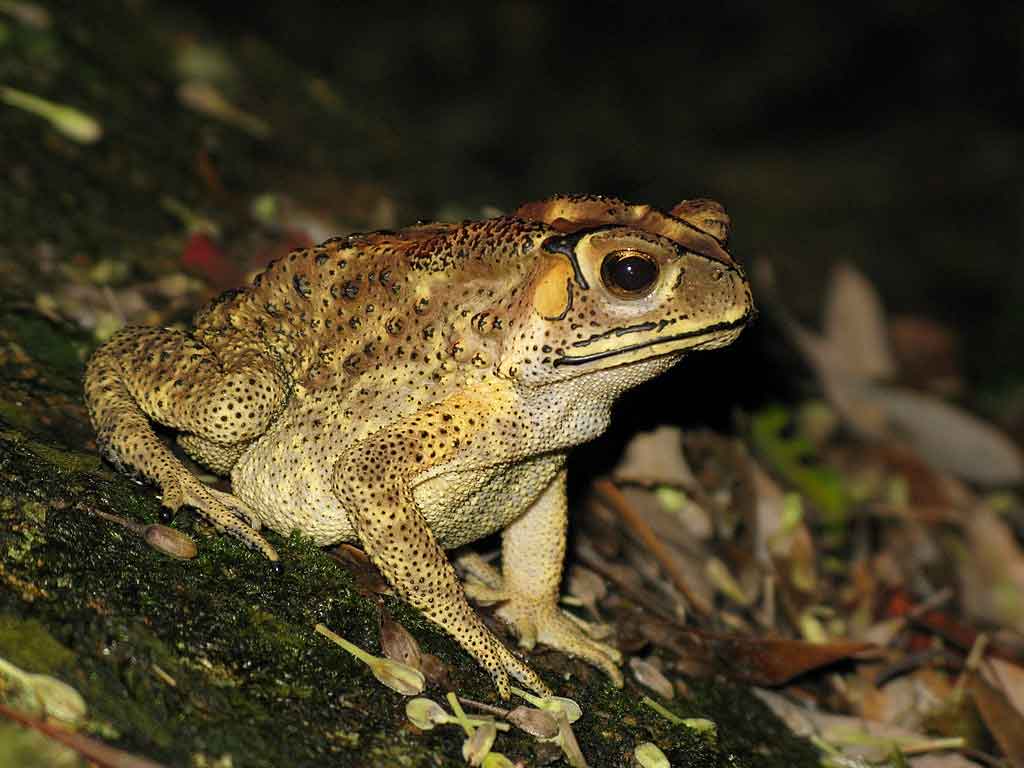
common asian toad
common asian toad (Duttaphrynus melanostictus)

Content

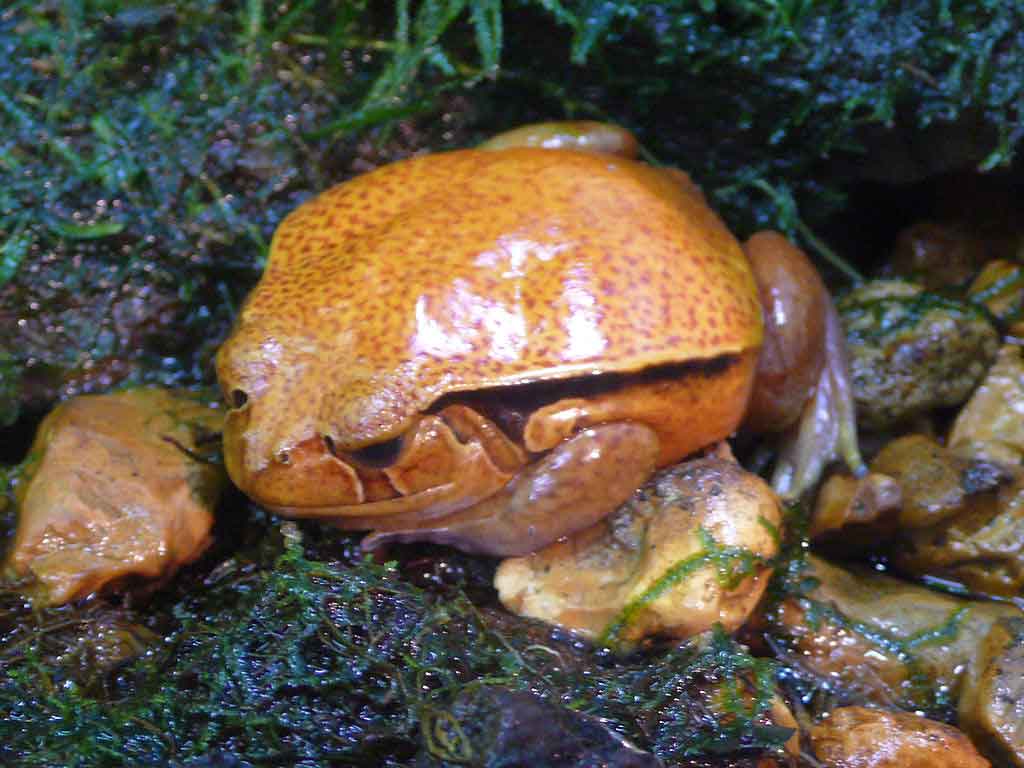
Several representatives of the Toads (Bufonidae) and narrow-mouthed frogs (Microhylidae) are regularly offered in pet stores. The toads Frequently encountered are the following the common asian toad (Duttaphrynus (Bufo) melanostictus) and the North American green toad (Anaxyrus (Bufo) debilis), as well as the false tomato frog (Dyscophus guineti), the Banded bullfrog (Kaloula pulchra) and banded rubber frog (Phrynomantis bifasciatus). Buying wild-caught specimens in favor of captive-bred should always be avoided.

Sex differences

Differentiation of the sexes is only possible in sexually mature animals. The males are usually smaller and in many species they develop calluses on the toes of the front legs.. Males ready to mate call, sometimes very strongly and persistently.

Behavior

The True toad and Narrow-mouthed frogs do not show pronounced social behavior. Most of them are peaceful with each other and can be kept individually, in pairs or groups. But, animals must not differ significantly in size.

The True toad and Narrow-mouthed frogs are mostly crepuscular or nocturnal.

Terrarium

false tomato frog
Rana tomate de Madagascar – TimVickers, Public domain, via Wikimedia Commons

Most species like to burrow and need a substrate of corresponding height. One terrarium for a single specimen of the smallest species (for example, the green dwarf toad) should have a floor space of at least 30 x 40 cm., for various animals of 60 x 40 cm.. In the case of the larger species (as the common asian toad, very active), the terrarium should not measure less than 80 x 50 cm. (length x WIDTH) for a single animal or 100 x 50 cm for several specimens. For species that grow a lot (for example, the Cane toad – Rhinella marina), are needed terrariums much bigger. Height terrarium (at least 30 cm.) not especially important for animals that live on the ground.

Fluorescent tubes with a daily lighting time of 10 to 12 hours are suitable for lighting. The optimum is a slight temperature gradient in the terrarium of about 23 – 28 °C with a humidity of 70 % approximately. This can be achieved by spraying the terrarium daily.. At night, the temperature should drop a bit for many species (normally not below 20 °C) and, at the same time, humidity should rise to 90 – 95 %. For the basic temperature, weak heating mats can be used, installed outside the terrarium. They can be used to heat the floor (at most one third of the soil surface!) or the walls. With the help of a thermocontroller, the heating mat can be specifically controlled to prevent overheating. Precise thermometers and hygrometers are needed to measure temperature and humidity.

The height of the excavatable substrate (for example, a terrarium soil mix, bark mulch, moss) must allow animals to fully excavate. The substrate should be slightly damp after daily spraying and should never dry out completely.. We must also avoid waterlogging.

Additional withdrawals (for example, coconut shells), a shallow water basin and natural planting complete the assembly.

Diet

Animals prefer to feed on live insects (crickets, crickets, grasshopper, cockroaches, etc.), worms and slugs. Regular administration of a mineral supplement ensures healthy bone growth. Mealworms, zophobas and wax moths should be fed only rarely due to their high protein and fat content.

Caution: many True toad and Narrow-mouthed frogs tend to gain weight. In the case of adult animals, it is enough to feed them every two or three days.

Care

Food scraps and feces should be removed daily. Animals usually defecate in their own hiding place, so the substrate must be changed regularly. The water bowls should also be cleaned daily and filled with fresh water.

Animal health must be monitored daily. The most common health problems in frogs are softening of the bones, emaciation or fatty degeneration and, above all, changes in the skin (for example, red discoloration of the skin). If there is any abnormality, consult a veterinarian who is familiar with amphibians.

Acclimatization and handling

Amphibians are animals of pure observation and should NOT be petted. In the first days in his new home, animals need some rest to get used to their new environment.

Due to the sensitivity of your skin, amphibians should only be touched in exceptional cases. Only the largest animals can be caught directly by hand. The use of disposable gloves is recommended (moistened). The smallest animals, on the other hand, should always be captured with the help of plastic containers or similar.

Special features

some species (for example, the Phrynomantis and more toads) can produce a poisonous skin discharge and should never be handled with bare hands. Protective gloves should be used for the care and handling of animals..

Attention: all native amphibian species are protected species and should not be taken from the wild. At the 17th CITES Conference of the Parties, held in the fall of 2016, the false tomato frog (Dyscophus guineti) came under the protection of the species (Appendix II). This regulation will soon be transferred to European legislation (obligation to inform, proof of origin required).

▷ The world of Pets: Dogs, cats, birds, reptiles, amphibians

Green puddle frog
- Occidozyga Lima

The Green puddle frog It is a nice guest for the aquaterrarium and very easy to maintain..
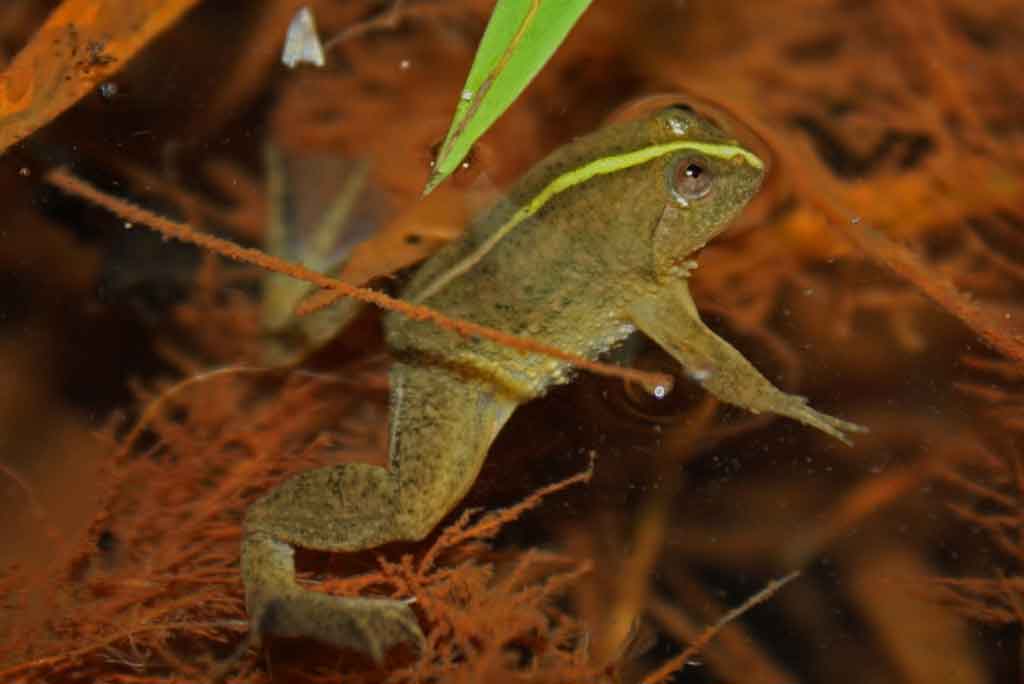
Green puddle frog
Green puddle frog in a water filled ditch near Angkor temples – Thomas Brown, CC BY 2.0, via Wikimedia Commons

Content

Habitat and way of life

This small animal has a huge range that includes Cambodia, China, Hong Kong, India (West Bengal), Indonesian, Laos, Malaysia, Burma, Thailand and Vietnam. But, the species is not equally common everywhere. In some parts of its area of distribution, the frog is a common amphibian, but in West Bengal it seems to be much less common, since in a scientific work on the amphibian fauna of the state, the author could only rely on bibliographic references: There was not a single preserved specimen! Admittedly, this may simply have to do with the fact that the Green puddle frog it is often overlooked due to its small size and also has no economic utility. In hong kong, the population, once rich in individuals, would have sunk almost completely for unknown reasons. Frogs are imported for the pet trade from Indonesia, where they are found in large numbers and, Therefore, can be bought in this country for little money.

There are frogs that spend their entire lives underwater. Among them are the vivacious African clawed frog and Common Surinam toad. They emerge from the water only exceptionally and briefly and rise to the surface only to breathe.

There are also frogs that are usually out of the water, but far enough away from her to reach the wet element with a jump. This includes the Edible frog (Pelophylax kl. esculentus), which is native to Central Europe.

The ubiquitous green companion lives like a hunter and lurks on land, sitting on driftwood or lily pads looking for insects, that catches in a jump. On land, the animal does not move unnecessarily; land struggles with peers and all social behavior take place in the water.

The Green puddle frog has developed a third form of aquatic life. Floats on the surface of the water for most of its life. Only occasionally comes out of the water and crawls on a floating leaf or something similar.

The Green puddle frog hunt above and below the surface of the water. It swims towards the small insects that fall to the surface of the water and captures them with its agile tongue. You can also find submerged worms, as the tubifex, and often puts them in his mouth with the help of his front paws, How do you know about the African clawed frog. The bulging eyes are not only used to recognize prey, but also to detect enemies. Many snakes, birds or even larger species of frogs try to kill the little one Green puddle frog.

Physical characteristics

"Green puddle frog"

Rana verde del charco
Green puddle frog – Axel Kwet, CC BY-SA 2.5, via Wikimedia Commons

A frog with a size of approximately 3,5 cm.. The colors of the specimens vary in greenish/beige colors, plus dark staining. There are also specimens with scratched marks on the back. In this group of frogs the abdominal area is pale and without drawing. As these frogs also like to float on the surface of the water, they are often compared to African clawed frog. But, if you look closely, this is only true for the hind legs. Here are the characteristic webbed toes. The front legs of the Green puddle frog with his fingers are much more similar to those of the African clawed frog. The flattened shape of the body of the Green puddle frog with his fingers are much more similar to those of the African clawed frog not found at all in Javanese swimming frog.

Care and accommodation

Taking care of these cute animals is easy. They do not have special demands regarding the composition of the water or the food. One Aquarius standard of 60 x 30 x 30 cm is enough for the care of 6-12 specimens. Males sometimes fight with each other, what is interesting to observe, because it looks like a boxing match when the animals are floating on the surface of the water and attack the opponent with their front legs. But, because it looks like a boxing match when the animals are floating on the surface of the water and attack the opponent with their front legs.

The Aquarius because it looks like a boxing match when the animals are floating on the surface of the water and attack the opponent with their front legs, because it looks like a boxing match when the animals are floating on the surface of the water and attack the opponent with their front legs (because it looks like a boxing match when the animals are floating on the surface of the water and attack the opponent with their front legs) Must be from 5-7 cm., because it looks like a boxing match when the animals are floating on the surface of the water and attack the opponent with their front legs 8-10 cm.. because it looks like a boxing match when the animals are floating on the surface of the water and attack the opponent with their front legs, because it looks like a boxing match when the animals are floating on the surface of the water and attack the opponent with their front legs. Any openings in the cover should be covered with filter wadding..

In the tense air of this aquaterrarium, many plants thrive excellently, as the burhead (Echinodorus) or -more bioptic- the water trumpet (Cryptocoryne). It also, should add some floating plants, as the water lettuce (Pistia) or the West Indian spongeplant (Limnobium laevigatum), that will soon bloom.

Until the plants really grow, you should place a piece of decorative cork on the surface of the water so that the animals can find a resting area if they wish.

Tank lighting - a neon tube is enough- will raise the air temperature to 28-32°C during the day. At night, when the lights go out, the air temperature drops to room temperature. This fully corresponds to natural conditions and is beneficial to the health of animals.. Additional heating is only necessary if the temperature drops below 18°C.

Green puddle frog
Puddle Green Frog Darmaga, Bogor, West Java, Indonesian – W.A. Djatmiko (Wie146), CC BY-SA 3.0, via Wikimedia Commons

Behavior

Your behavior is highly confident after a short time. They position themselves on floating plants or float under the surface of the water. When two frogs get close to each other, sometimes a kind of "chest tightening" occurs. Next, front legs flap. Looks like a mini boxing match. These frogs are also usually very agile.

Groups of frogs with a small number are not recommended for large tanks. These small animals quickly "lose" themselves from the viewer's eyes.. These frogs are very communicative. When they approach the aquarium, they emit bright screeches. they emit bright screeches. Surprisingly, they emit bright screeches. they emit bright screeches, they emit bright screeches. they emit bright screeches. These Javan swimming frogs then chase after edible insects that have been brought onto floating plants.. they emit bright screeches.

Diet

All small insects can serve as food, as the fruit flies (Drosophila), the little crickets (Acheta domesticus) or the aphids. It is very interesting to observe the underwater hunting, for which the large water fleas (Daphnia magna), the live larvae of red mosquito or the Tubifex.

Reproduction

The Green puddle frog can reproduce throughout the year, but at least for the animals that are currently imported from Indonesia, our winter (from November to February) seems to be the preferred breeding season. Males grab females by the waist. Eggs -may be between 50 and several hundred, depending on the size and condition of the female- have a diameter of 0,6 to 1,1 mm. Tadpoles are light olive in color and have a dark stripe around the tail. They eat commercial flake food for ornamental fish. Tadpoles reach a length of up to 3,9 cm in metamorphosis. In the terrarium, a lifetime of more than 5 years, well above the natural life expectancy of animals in the wild.

Alternative names:

1. Rough-skinned floating frog, Pearly skin puddle frog, or Pointed-tongued floating frog (English).
2. Grenouille flottante à langue pointu (French).
3. Java-Schwimmfrösche (German).
4. Occidozyga lima (Portuguese).
5. Ranita asiatica, Rana rugosa de charco, Rana flotante de Indonesia (español).