▷ The world of Pets: Dogs, cats, birds, reptiles, amphibians

Rhinoceros iguana
- Cyclura cornuta

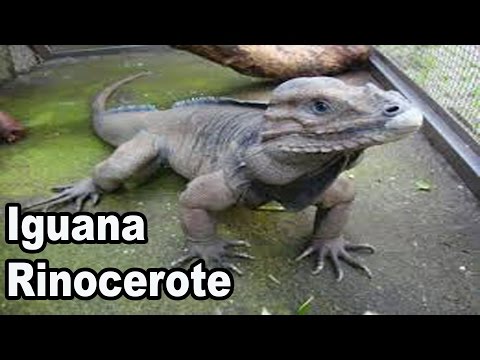
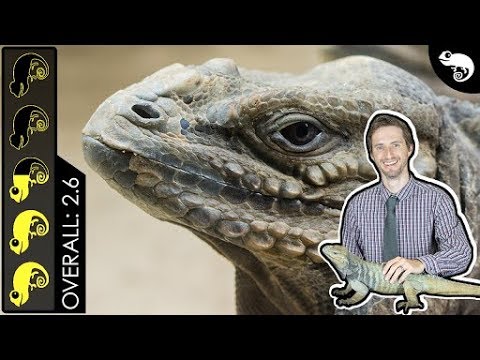
The Rhinoceros iguana (Cyclura cornuta) It is one of the most requested pets by iguana keepers., but due to its size and temperature requirements it is not easy to care for.
Rhinoceros iguana
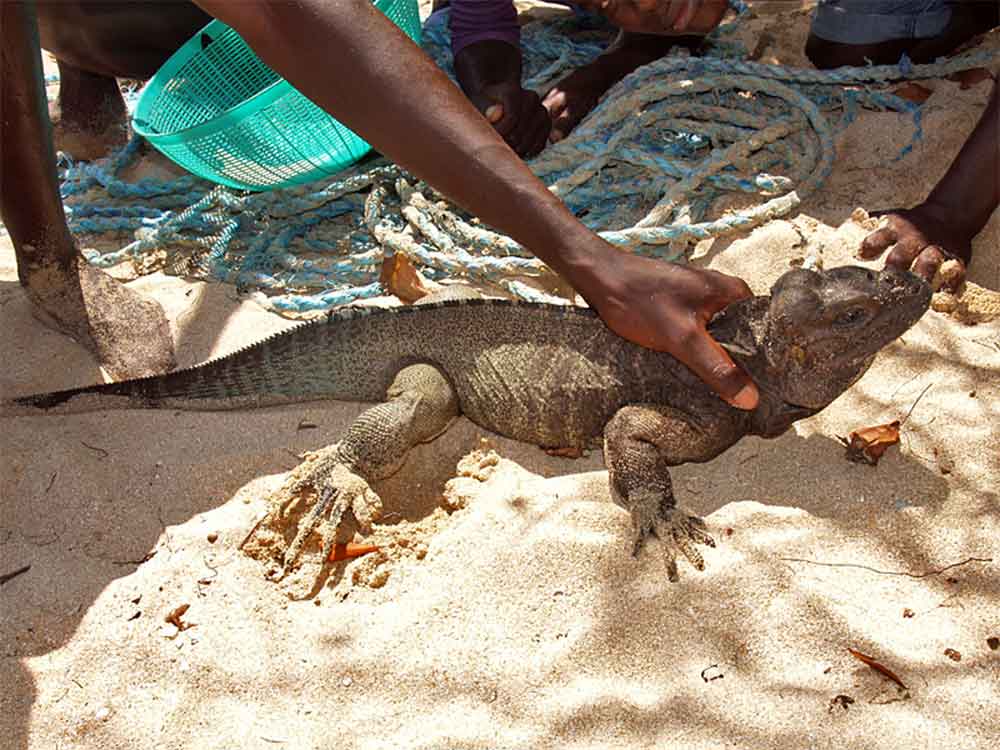
Rhinoceros iguana (Cyclura cornuta) on the island of Limbe, in northern Haiti. – Nhobgood (talk) Nick Hobgood, CC BY-SA 3.0, via Wikimedia Commons

Content

Origin / Distribution

The Rhinoceros iguana (Cyclura cornuta) It is endemic to La Española with the offshore islands Isla Beata, Petite Gonave Island, Tortoise Island, Big Island Cayemite, Island of the Petite Cayemite, Isla Saona, Kid Island (Dominican Republic and Haiti).

The subspecies:

  • Cyclura cornuta stejnegeri: Isla Mona (Puerto Rico, USA).
  • Cyclura cornuta onchiopsis (presumed extinct): Isla Navassa (USA).

  • Characteristics / Appearance

    The Rhinoceros iguana it is distinguished from the Green Iguana by its dentition and the absence of the dewlap, but more conspicuously for its heavily armored tail, the upper part of which is distinguished by the fact that between three or four rows of ordinary scales there is a ring of scales which, although they are not particularly long, have turned into sharp vertical spines. The dorsal crest may be interrupted in the region of the shoulder and sacrum.

    The teeth are not incisors, sino bialobulados o trilobulados, palatal teeth are small but numerous. Femoral pores are present . The males of the Rhinoceros iguana they are conspicuous by their widened back of the head with large crests. They can reach a head-torso length of about 60-70 cm and a total length of about 130 cm.. Body weights of more than 10 kg. The females are still 10 smaller cm. There is a 3-5 enlarged horn-shaped scales on snout, only indicated in females.

    Habitat

    Rhinoceros iguana
    male rhino iguana, province of Pedernales, Dominican Republic – Tim Ross, Public domain, via Wikimedia Commons

    The Rhinoceros iguana prefers rocky areas, dry and semi-arid sparsely populated, from sea level to the 400 m, with an annual rainfall of 470-1.000 mm and an average annual temperature of 25ºC. It is diurnal and spends the night in self-excavated or natural caves., cracks in the rocks, hollow tree trunks, etc., which he also uses during the day to rest or hide.

    It has been displaced from much of its original range in La Española by habitat destruction and the introduction of predators.

    Behavior

    Easily excitable like all iguanas, goes into a violent rage when threatened, swells, bristle the loin, open the mouth, shows its sharp teeth, frowns at the adversary and prepares to attack. If you are provoked now, turns around quickly, strikes with a very fast lateral movement of the tail, and then you flip to the other side and repeat the same thing the same way.

    Food consists of plant material such as leaves, flowers or fruits. Males are territorial and seek out territories with high, sunny spots and suitable retreats for females.. The mating season falls on the first rainy season of the year. Females probably reach sexual maturity at 2-3 years of age. They put an average of 17 (2-34) eggs, that they bury in the ground, and guard the spawn for a few days. The young are born after a few 85 days.

    Threats to the species

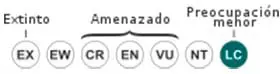
    The populations of the Rhinoceros iguana are fragmented and in decline. Thus, in 1996 the species was classified as endangered, and in 2019 a new review placed it in the category of critical danger [Red list: IN DANGER.

    International trade is restricted by CITES Appendix I.

    This species is also threatened by illegal poaching for food and medicinal use.. non-native species, like wild cats, dogs, mongooses and pigs, pose a risk of predation, while the herbivores, like cows and goats, compete for food sources. Habitat is often destroyed due to charcoal production, as well as development for tourism, land conversion for agriculture and bauxite mining.

    In the Dominican Republic, international wildlife trade is controlled by CITES, but it is not the case of Haiti. In the Dominican Republic, iguanas are traded as pets and for tourist exhibits, known as iguana.

    A local non-governmental organization, the Jaragua Group, manage conservation efforts Rhinoceros iguana in the Dominican Republic. These include monitoring and habitat restoration, outreach and education, and land acquisition. Recommended conservation measures are better law enforcement and the development of an island-wide conservation management plan..

    The "Rhinoceros iguana" in captivity

    The Rhinoceros iguana (Cyclura cornuta) It is one of the most requested pets by iguana keepers., but due to its size and temperature requirements it is not easy to care for.

    The terrarium

    Not all terrarium keepers have the possibility to offer a terrarium large enough to take care of the Rhinoceros iguana adult. An adult animal needs at least 4 m2, but you have to refrain from keeping them individually so that the iguanas can show their natural social behavior. Only in a well structured terrarium with enough places to hide and sunbathe is it possible to keep several rhinoceros iguana (also several males).
    Visual barriers should serve to interrupt visual contact between individuals so that lower-ranking animals can eat and sunbathe in peace..

    The enclosure must be equipped with heat and UV lamps, as well as underfloor heating. The temperature should be 30-35ºC during the day, locally higher, and drop to about 25-28ºC at night.

    According to the opinion of reptile experts, a terrarium for a couple should have at least 5 times the length, 4 times the width and 3 times the head-torso height of animals. For each additional animal, a is added 15% to the basic surface.

    Buy one "Rhinoceros iguana"

    There is a legal trade Rhinoceros iguana bred in captivity. Potential buyers should always insist on full documentation to ensure they are not receiving illegally harvested wildlife. Illegal collection endangers the species and is detrimental to the pet trade, as wild animals often carry parasites and diseases that have been eliminated from captive-bred populations.

    Its price ranges from 500 – 600 EUR.

    Videos "Rhinoceros iguana"

    Terrarium With Rhinoceros Iguana (Cyclura cornuta)

    Rhinoceros Iguana, The Best Pet Lizard?

    Alternative names:

    1. Rhinoceros iguana (English).
    2. Iguane rhinocéros (French).
    3. Nashornleguan (German).
    4. Iguana rinoceronte, iguana Cyclura cornuta (Portuguese).
    5. "Iguana rinoceronte", Iguana cornuda (español).
    ▷ The world of Pets: Dogs, cats, birds, reptiles, amphibians

    Carpet chameleon
    - Furcifer lateralis

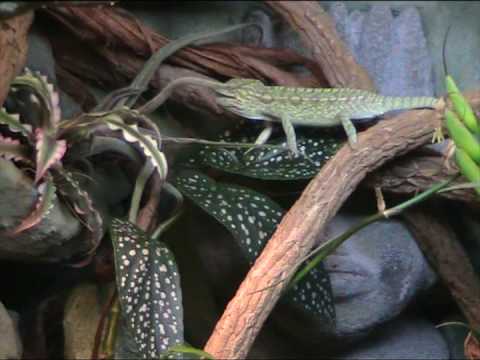
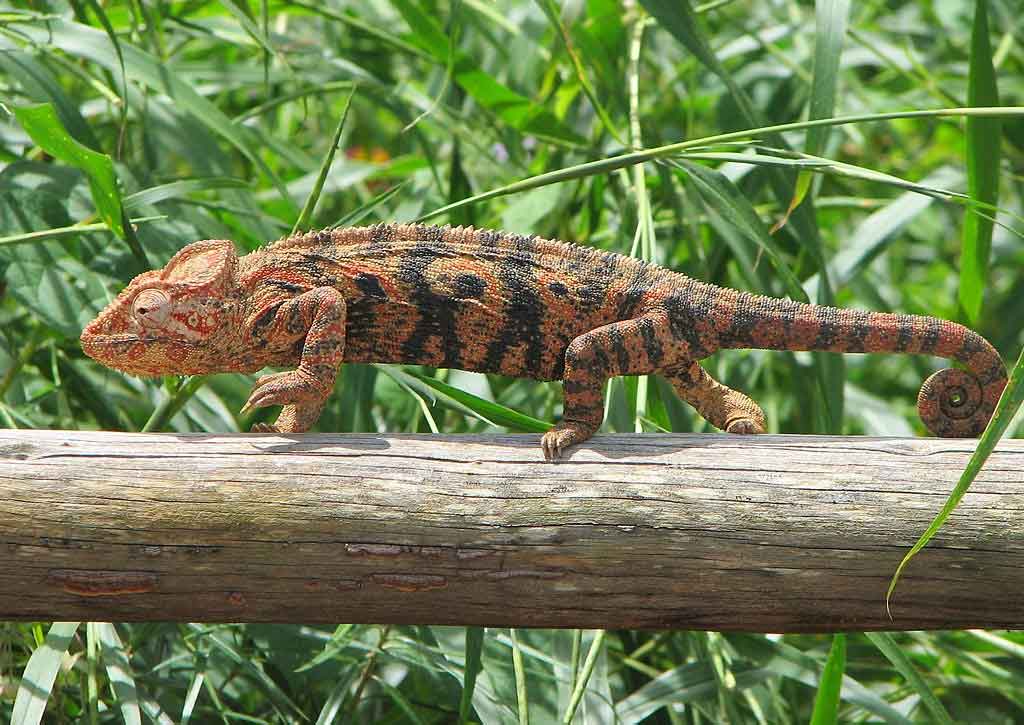
    The Carpet chameleon, formerly known as Chamaeleo lateralis, is a beautiful species in high demand for the pet trade.
    Carpet chameleon
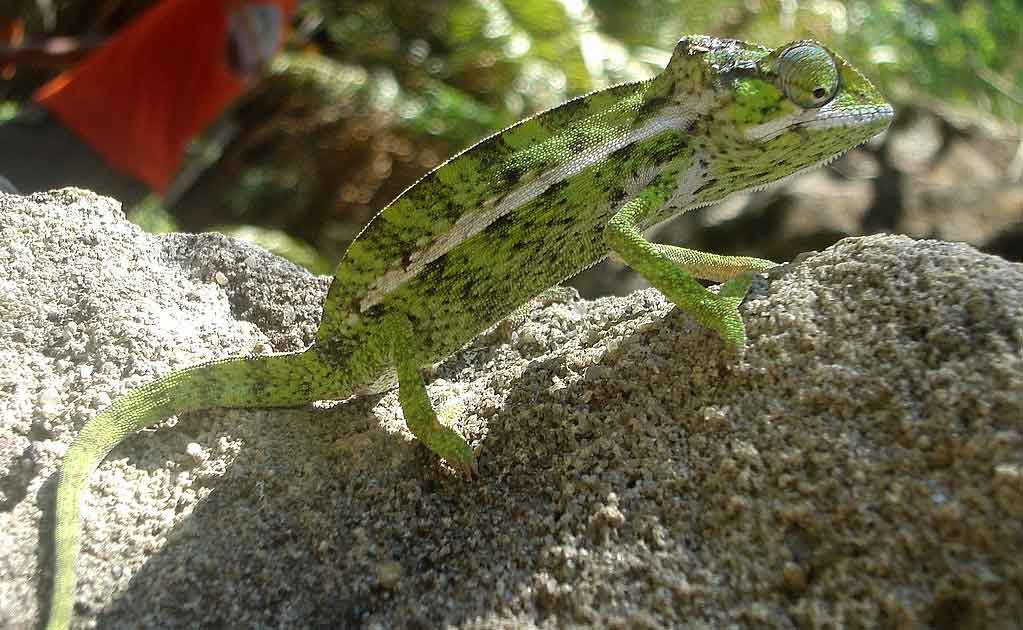
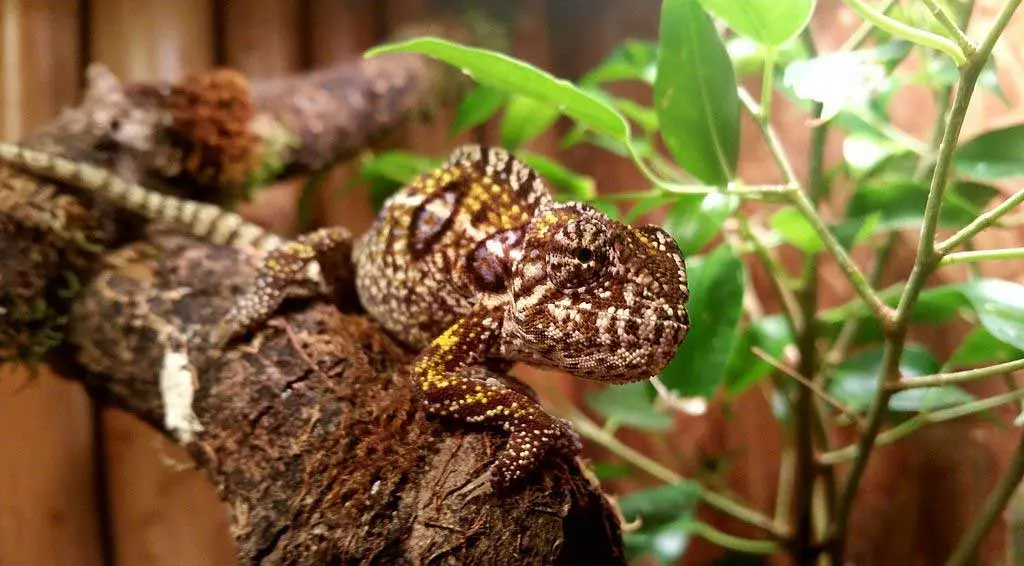
    Furcifer lateralis, female – dododotzler, CC BY-SA 4.0, via Wikimedia Commons

    Content

    Origin / Distribution

    The Carpet chameleon (Furcifer lateralis) is native to the island of Madagascar, in the Indian Ocean, and its range covers much of the island.

    Characteristics / Appearance

    Both males and females of the Carpet chameleon reach a maximum length of between 17 and 25 cm.. Males are generally green with a white midline and a series of dark bands extending from behind the head to the end of the tail.. Females usually have a heavier body and are more colorful (especially when pregnant), with dark bands and white or yellowish lateral ocelli and a poorly defined orange half-lateral stripe on a brownish background. The throat and lips of both sexes are usually scratched. These chameleons can change color and intensity depending on mood and certain environmental factors..

    Habitat

    The Carpet chameleon is strictly arboreal, and especially likes small trees and shrubs. It is usually found at an altitude of between 600 and 1200 m, usually in areas of moderate shade and high humidity, with access to direct sunlight. This species has also infiltrated the cities of Madagascar, and performs quite well in the private gardens and shrubs of the parks.

    Behavior

    This species, like most chameleons, is strictly diurnal. Usually, they spend the first part of the day warming their bodies by adopting a very dark coloration and exposing as much surface area as possible to sunlight.. once the desired body temperature has been reached, begin to hunt prey, activity that usually lasts the rest of the daylight hours.

    • Males are very territorial and adopt a series of very elaborate postures., color changes and whistles to try to scare away rival males. They also scare away females that are not in a position to reproduce..
    • The Carpet chameleon is a species that generally follows the same routine every day, to the point of sleeping on the same branch every night.

    Reproduction

    The Carpet chameleon matures in a very short period of time, and is usually able to reproduce by three months of age. Males are usually very territorial and usually try to attract females to their territory to mate.. Females deposit the clutches of eggs in a depression that they dig into the ground. Typical clutch size ranges from 8 and 23 eggs, and up to three clutches can be laid in a year. Incubation requires about six months at a temperature close to 24°C .

    Food

    The Carpet chameleon is almost entirely insectivorous, and prefers insects that normally reside in trees or shrubs. Among them are most flies, grasshoppers and crickets, as well as various insect larvae. It is also known that adult specimens consume very small lizards and even small newborn rodents (in captivity). This species hunts its food with the typical chameleon style of slowly crawling through the branches of trees or shrubs., using their excellent eyesight to detect insects. When you select the desired prey, the Carpet chameleon gets as close as possible to its prey and catches it by quickly spreading its tongue (which may be equal to the length of the lizard), capturing the insect on the sticky tip and then quickly retracting its tongue

    Threats to the species

    State of conservation ⓘ


    minor concern Minor Concern ⓘ (UICN)ⓘ

    The Carpet chameleon is a relatively popular species in the pet trade, and most of the individuals available today are bred in captivity.

    Without a doubt, chameleons help control insect populations in areas where they are common.

    Currently, the Carpet chameleon is found quite well in its native habitat, and even seems to benefit from some degree of habitat alteration. It has proven to be quite versatile when moving to urban areas and establishing populations there..

    The "Carpet chameleon" in captivity

    The Carpet chameleon, formerly known as Chamaeleo lateralis, is a beautiful species in high demand for the pet trade. Wild-caught specimens that enter the pet trade are often in poor health when they arrive at retail markets., and mortality has been very high. Captive-bred pups are easier to keep alive. These animals seem to have a relatively short lifespan even under natural conditions., and few Furcifer lateralis live more than 3 years

    The terrarium

    Terrarium "Carpet chameleon"

    Furcifer lateralis

    The Carpet chameleon is reserved and shy, so it's not the kind that hangs on your shoulder. Once they are out of their habitat, can become stressed very quickly, which can cause a wide range of problems for your overall health.

    These creatures prefer to be on a branch or trunk sunbathing in their enclosure. They move quietly from branch to branch, no need for space to climb. They like to stay out of sight, hiding under branches and inside hiding places.

    How chameleons spend their lives in trees, you will need a terrarium taller than wide. You'll need a space that measures at least 45 x 45 x 90 centimeters for an adult—but more is always better.

    The terrarium should be lined with gravel or clay granules for optimal drainage.

    Temperature

    Like many other cold-blooded creatures, there must be several temperatures available in the enclosure. They have to be able to regulate their body accordingly..

    • Sun area: 32º – 35º
    • Terrarium top: 26º – 29º
    • Bottom of the terrarium: 21º – 24º

    Vegetation

    Chameleons need leafy, healthy plants within their enclosure to climb and shade..

    Some common plants for chameleons are:

  • Weeping fig tree (Ficus Benjamina)
  • Manioc
  • Rubber trees (Hevea brasiliensis)
  • Hibiscus
  • Jade plant (Crassula ovata)

  • Before buying, you have to keep in mind that you will also be responsible for keeping your plants healthy, as well as your chameleon.

    Humidity

    Yet Carpet chameleon loves hot and humid weather. Your enclosure must maintain humidity levels between the 50% and the 60% continuously. You have to put a hydrometer in your terrarium to control the levels.

    Illumination

    Chameleons need lighting that mimics natural light and night cycles. They benefit considerably from double fluorescent lamps.

    Food

    Yet Carpet chameleon loves all kinds of tasty insects.

    Among the appropriate dietary options are:

  • Crickets
  • Mealworms
  • Cockroaches
  • Fruit flies
  • Beetles of beans

  • Juveniles should eat one serving of insects a day, as much as they can in one sitting. Normally, this supposes a total of some 12 insects a day.

    Adults should eat every other day, and eat much less, approximately 6 insects per intake.

    Health and care

    Carpet chameleon
    Carpet chameleon (Furcifer lateralis) – gailhampshire from Cradley, Malvern, U.K, CC BY 2.0, via Wikimedia Commons

    The Carpet chameleon can be a very picky animal and difficult to maintain. They are ultrasensitive to stress and the environmental environment. So, one of the main things you need to do is make sure your chameleon feels as comfortable as possible..

    Before you take your Carpet chameleon at home, you have to find an exotic veterinarian in your area. You can't take a reptile to traditional veterinarians, since they do not have the necessary specialization to serve them efficiently.

    These chameleons are susceptible to various diseases and problems.

    These are the most common problems:

  • Stress
  • Upper respiratory infections
  • Metabolic bone disease
  • Dehydration
  • Egg retention
  • Stomatitis
  • Edema
  • Gout

  • If you notice any peculiar behavior or physical abnormalities, do not hesitate to take him to the veterinarian.

    Reproduction

    Reproduction of the "Carpet chameleon"

    Furcifer lateralis (Chameleon Carpet) with EGGS🥚😱

    If you have no experience, you may want to avoid breeding a Carpet chameleon until you've had a few. Since chameleons are so difficult to care for, their breeding can carry even more risks.

    But if you are familiar with the species, can try to breed.

    A good recommendation is to wait for the female to lay her first eggs before mating.. After a few weeks, you can reintroduce the female with the male. The mating of a Carpet chameleon can last up to an hour, so when it docks, be patient and don't bother.

    Sperm retention is common, which means that one breeding session can fertilize several subsequent clutches. After the females put their first clutch between the 8 and 12 months, remain gravid throughout their lives.

    They can give birth up to 30 offspring at the same time after a gestation of 4 to 6 months.

    Buy one "Carpet chameleon"

    The price of a Carpet chameleon may vary depending on several factors. But, the average cost ranges between 100 and 500 EUR. Sometimes, you can get lucky and find a person who wants to give their chameleon to a good home for free.

    Keep in mind that you also need plenty of supplies to get started.. Don't skip the basics, as these are fragile creatures that need proper care.

    For installation, including enclosures, the substrate, decoration, vegetation and diet, you can spend between 300 and 800 EUR.

    Videos "Carpet chameleon"

    Carpet chameleon (Furcifer lateralis) Care
    Furcifer lateralis

    Alternative names:

    1. Carpet chameleon, White-lined chameleon, Jewelled Chameleon (English).
    2. Caméléon à bandes latérale, Caméléon-joyau (French).
    3. Teppichchamäleon (German).
    4. Camaleão do tapete, Camaleão de linha branca (Portuguese).
    5. "Camaleón de alfombra", Camaleón de líneas blancas (español).

    ▷ The world of Pets: Dogs, cats, birds, reptiles, amphibians

    Toadhead turtle
    - Mesoclemmys gibba

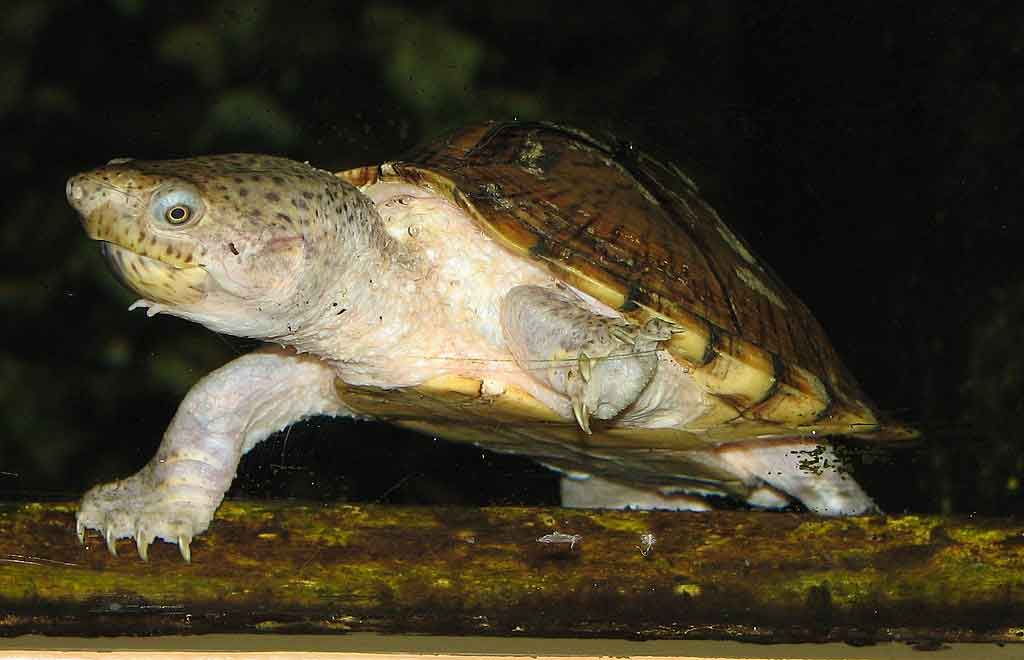
    The Toadhead turtle It is a shy species with nocturnal and aquatic habits that prefers the bottom of bodies of water.. These turtles change their diet as they mature.
    hideous galapagos
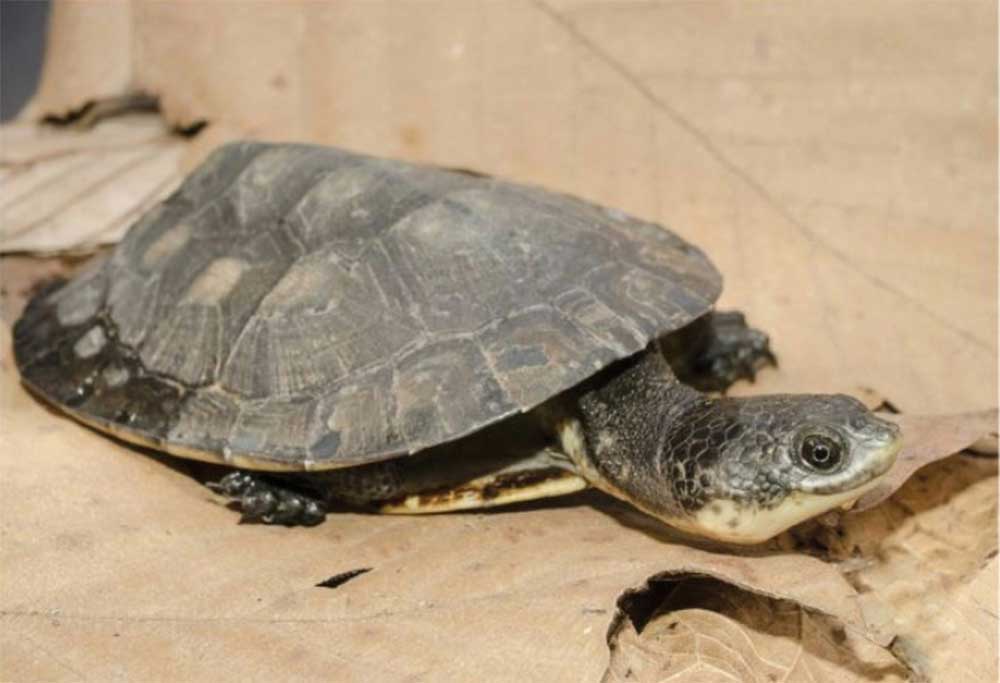
    Toadhead turtle – Leandro J.C.L. Moraes, Alexander P.. of Almeida, Raphael of Fraga, Rommel R. Zamora, Renata M. Pirani, Ariane A.A. Silva, Vinícius T. oak, Marcelo Gordo, Fernanda P. Werneck., CC BY-SA 4.0, via Wikimedia Commons

    Content

    Origin / Distribution

    The Toadhead turtle (Mesoclemmys gibba) it is a smaller representative of the South American necked turtles (Chelidae). These animals have been known to science and the hobby for a long time, but unfortunately they have not been sufficiently investigated so far.

    Its distribution is in a wide area of ​​South America., in Peru, Ecuador, Colombia, Venezuela, Trinidad, Guyana, Suriname, Paraguay and parts of Brazil.

    In any case, in Europe mainly animals with Guyanese and Surinamese ancestry are kept.

    Characteristics / Appearance

    The Toadhead turtle is small, with a carapace length of 15-18 cm in males and 18 cm in females. In this species, sexual dimorphism is not very evident., although males tend to have longer tails and a more forked plastron at the level of the anal scutes. In Venezuela, individuals with a carapace length of up to 23 cm..

    Its head is narrow compared to other species of the same genus, back of head lined with small granules; two short barbules on chin, whose length is not greater than the size of the eye; broad, flattened carapace with a serrated-looking vertebral carina, which is smaller in adults; vertebral scutes wider than long, the third and fifth have an inconspicuous posterior projection towards the keel; the intergular shield completely divides the gulars, but not to the humerals; scales between orbit and eardrum smaller than those on top of head; webbed feet with 5 nails on the forelimbs and 4 in the later;

    Habitat

    These turtles live in rivers, as well as in its tributaries and floodplains in the tropics. They are good swimmers and probably quite nocturnal.. Due to its distribution area, the Toadhead turtle it is active all year round and does not need to hibernate.

    Behavior

    Toadhead turtle
    Transpantaneira, poconé, Mato Grosso, BRAZIL – Bernard DUPONT from FRANCE, CC BY-SA 2.0, via Wikimedia Commons

    It is a shy species with nocturnal and aquatic habits that prefers aquatic bottoms.. These turtles change their diet as they mature: juveniles have an omnivorous diet and become more carnivorous as they grow. Some plants have been reported in the diet of juveniles., like the fruits of the palm Mauritia flexuosa and grasses of the species Pennisetum purpureum and Sacharum sinensis; while adults consume fish, Tadpoles, crustaceans, larvae of aquatic insects and other small invertebrates. To build nests, they dig in well-shaded clay soils., close to bodies of water, or at the base of tree trunks. The nests consist of 2-4 eggs longer than wide and hard-shelled. As a defense mechanism against predators, these turtles expel a strong musky odor and bite.

    Threats to the species

    throughout its range, Little is known about their ecology and the status of their populations., reason why it has not been evaluated by the IUCN. In any case, the destruction, habitat fragmentation and pollution are its biggest threat.

    The "Toadhead turtle" in captivity

    Aquaterrarium

    The Toadhead turtle tends to socialize well with fish and even with shrimp, but they break the shell of the snails and eat them right away. Estas humpback turtles tend to be shy when kept with other species, and stress in combination with too high a pH value of the water can sometimes lead to skin problems. So, it is recommended to raise the young individually or in small groups of 3 to 5 animals in spacious tanks with lots of cover, and check regularly if they are stressed.

    A tank is recommended. 120 x 50 x 60cm minimum to maintain a couple, although males may be better housed separately. The water temperature should vary between 24-28°C. Due to its tropical origin, animals don't hibernate, but they should not be kept in the pond either.

    Food

    The species feeds almost entirely carnivorously.. This means that only food of animal origin is accepted, except for bananas and sweet berries. The carnivorous component must consist of insect larvae, snails, crustaceans, mussels, worms and insects. Pellets can also be added to this species to prevent deficiency symptoms. (vitamin deficiency, etc.). The shell of cuttlefish as a source of calcium is convenient to keep in our aquaterrarium.

    Reproduction

    As long as a couple stays, will eventually reproduce. The females lay from 1 to 5 hard shell eggs. These should not be incubated too wet. At a constant temperature of 28 degrees Celsius, the animals hatch after a few 150 days; in the nature, the eggs need between 150 and 180 days. This has to do with the slower development of embryos due to fluctuating temperatures.. A fluctuating incubation between 24-29 degrees. In this case, young animals hatch with more vitality.

    Buy one "Toadhead turtle"

    The price of a "Toadhead turtle" at the exotic animal market, ranges between 90 – 120 EUR.

    Videos "Toadhead turtle"

    Mesoclemmys gibba

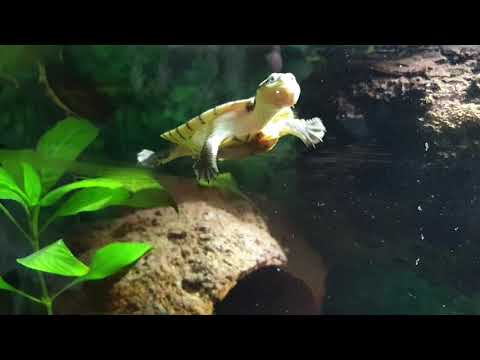
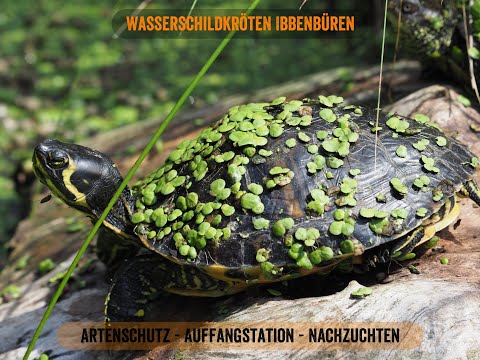
    Turtles in Ibbenbüren - A small summary

    Alternative names:

    1. Toadhead turtle, Gibba turtle, Lesser toad-headed turtle (English).
    2. Tortue bossue (French).
    3. Buckelschildkröte, Gibba-Schildkröte, Krötenkopfschildkröte (German).
    4. Tartaruga gibba, Tartaruga toadhead, Cágado-de-poças-da-floresta (Portuguese).
    5. Ashna charapitas , Asna charapas , Hediondas , Galápago hediondo , Charapitas de aguajal , Charapitas de cananguchal , Charapitas de altura , Curizas, Tortuga cabeza de sapo (español).

    ▷ The world of Pets: Dogs, cats, birds, reptiles, amphibians

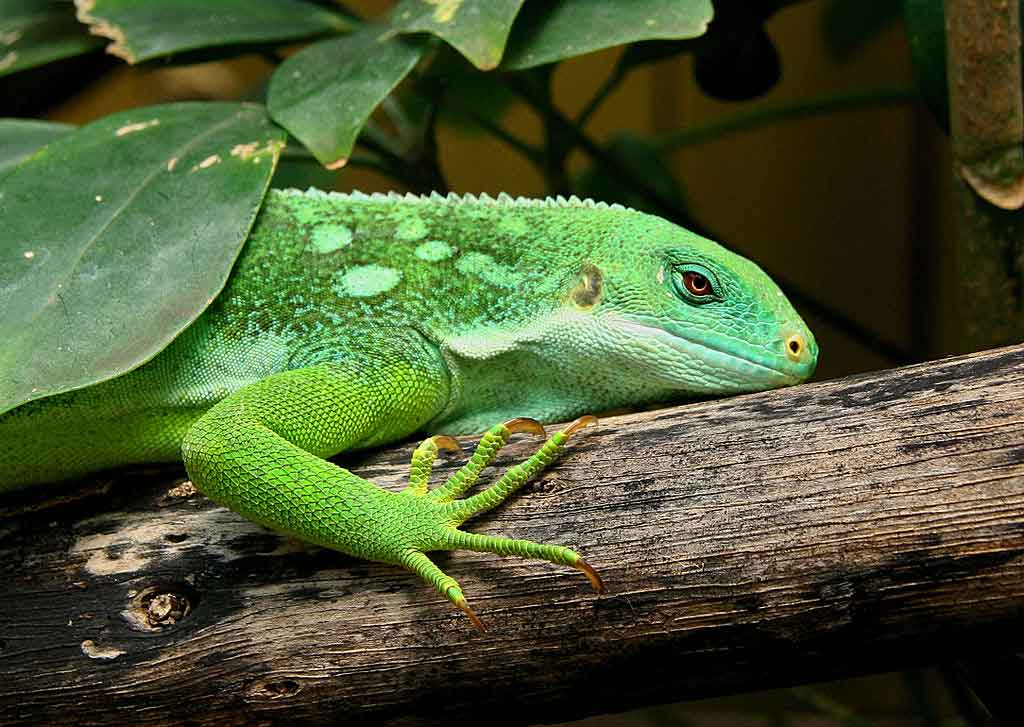
    Lau banded iguana
    - Brachylophus fasciatus

    The Lau banded iguana is considered a national treasure by the government of this country, and his image has appeared on postage stamps, currency and phone book covers.
    Lau banded iguana
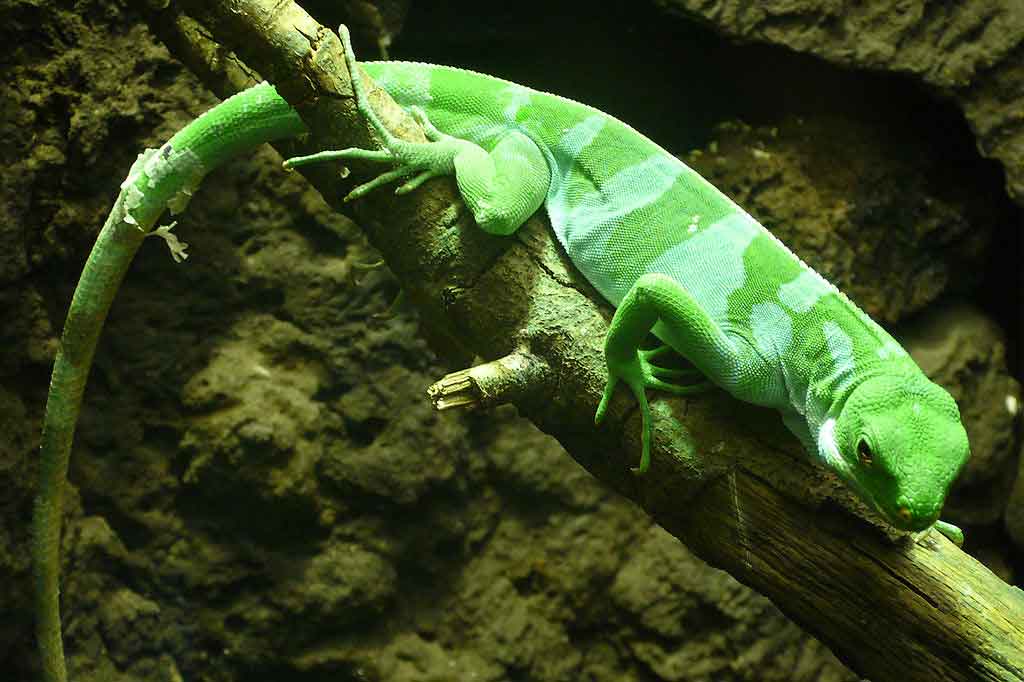
    Lau banded iguana – TimVickers, Public domain, via Wikimedia Commons

    Content

    Origin / Distribution

    two species (Brachylophus fasciatus and Brachylophus vitiensis) belong to the genus Brachylophus (Fiji iguanas).

    Its geographical distribution is limited to some islands of the archipelago of Fiyi y Tonga. Son, Therefore, the most isolated members of the subfamily Iguaninae (major iguanas), whose other representatives live in America. Until a few years ago, gender was supposed to Brachylophus was monotypic. The nominal species Brachylophus brevicephalus is considered a synonym of Brachylophus fasciatus. Was not up 1981 that a second valid species of Brachylophus, Brachylophus vitiensis.

    Characteristics / Appearance

    The Lau banded iguana It is a slender build iguana that reaches a total length of more than 70 cm.. The difference in size between both sexes is minimal. The measures, (head – torso), for adults are in the range of 14-19 cm. (male) and 14-18 cm. (female) with a mass of 95-210 g (male) and 105-220 g (female). These weights refer to mating males and egg-laying females..

    The Crest Ridge is little pronounced in both sexes. there is between 11 and 17 femoral pores on the bottom of each thigh, which are more pronounced in males. Each animal has an individual pattern, neither looks like the other. The normal coloration of females is mostly uniform green, with a light green or white stripe on the front of the body in some specimens. The nostrils are edged with yellow in both sexes.. Males, on the other hand, have a contrasting cross-hatching (green and light blue to two different shades of green) of the body and tail. The intensity of the coloration depends a lot on the mood. In courtship or aggressive phases, light blue stripes on males turn almost white and green stripes dark blue to black.
    When the coloration is very intense, yellow spots also appear on front and back legs.

    Habitat

    The Lau banded iguana feeds on leaves and other plant material. During the day these animals rest in the tops of tall trees. Life expectancy is about 10-15 years.

    Behavior

    The species is diurnal, spending their days looking for food, basking in the sun and guarding their territories during the day and retreating to the treetops at night. Male iguanas are highly visual and aggressively defend their territories from rival males.. Iguanas deepen their green coloration to intensify their bands, and shake their heads and intimidate intruders by pouncing on them with their mouths open.

    Threats to the species

    State of conservation ⓘ


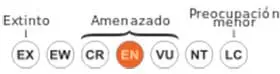
    Endangered in danger ⓘ (UICN)ⓘ

    The Lau banded iguana (Brachylophus fasciatus) is unfortunately highly endangered in its natural habitat and is listed on the IUCN red list. If you want to have this species of iguana in Europe, you must have the corresponding papers and regularly document the animals with photos. feral pigs, the goats, dogs, cats and introduced species, like the mongoose, has contributed to the fact that there are only less than 10.000 animals of this species in freedom.

    But, in the meantime, there are breeding projects to increase the natural population of the animals again. Unfortunately, A few years ago it was not known that both Brachylophus bulabula as the Brachylophus fasciatus were kept in private homes. The two species were thought to be the same. As the animals hardly differ from each other visually, many animals mixed with each other. It is very likely that there are no pure species of the Lau banded iguana in Europe.

    The "Lau banded iguana" in captivity

    The terrarium

    The Lau banded iguana should be housed in terrariums 200 x 80 x 120 cm.. Containers can be made of plastic plates (of 1 cm thick). This material is lighter, more hygienic and easier to work with than for example, timber. It also has a much longer shelf life.

    Since Lau banded iguana only kept singly or in pairs, the terrariums will be designed so that they can be separated in the center with a plastic plate. The advantage is that the iguanas can be separated and reunited without removing them from their usual environment.. Plastic strips will be placed on the front (20 cm height at the bottom, 10 cm at the top). ventilation (round plastic grilles) will also be incorporated into these two front panels. This has the advantage that there is sufficient air circulation but no drafts. But, this design is not suitable for small terrariums. The front is completed with sliding glass panels of 4 mm thick.

    Illumination

    Lighting is provided by a fluorescent tube (18 watts) per side and one HQL mercury vapor lamp (80 W). The weights are outside the terrarium. The fluorescent tubes will be on during 14 hours all year (of 7:00 to 21:00 hours), HQL lamps will light at 10:00 hours and will be on until 15:00. In general, It should be noted that the intensity of light plays a decisive role in the breeding.

    Terrarium Decoration

    The terrariums they are provided with thick branches and cork tubes. Pressed cork boards or coconut fiber mats are placed on the rear wall, that are increasingly accepted by juvenile iguanas to climb.

    The plastic plants are used as decoration, Since the Lau banded iguana consider real plants as food. This makes food control difficult and can lead to deaths if the plants are poisonous or hard-fibered.. The substrate is filled with river sand (height of 5 to 15 cm.). The females also use it to lay their eggs.. A water reservoir 45 x 20 x 5 cm. , not used for drinking, complete the assembly.

    Bottom heaters are not used, as they would be atypical for tree dwellers. Hideouts are not necessary, Since the Lau banded iguana does not seek visual protection from human observers in terrarium conditions.

    Terrarium temperature

    The air temperature is about 30°C during the day in summer and about 27°C in winter. At night, values ​​drop by about 5°C each. On very hot summer days, temperatures rise to 35°C, but this does not cause any negative reaction in animals.

    Measurements are always made at the center of the sidewall, outside the radiation zones of light sources. The iguanas cover their water needs by spraying the terrariums. This is done daily, depending on the season, once in winter to four times in summer.

    Food

    Lau banded iguana
    Augsburg Zoo, Fijian, Brachylophus fasciatus – Rufus46, CC BY-SA 3.0, via Wikimedia Commons

    Feeding is done at different intervals. Seasonal conditions and the weight of the animals play a decisive role. As a rule, iguanas feed every five days.
    Overweight specimens are only offered vegetable food every two days.

    The Lau banded iguana can be fed with tomatoes, cucumbers, carrots, courgettes, various lettuces, chinese cabbages, dandelions and their flowers, as well as with the following fruits: apples, grapes, oranges, tangerines, peaches and bananas. It also, can accept insects (black beetle larvae, Argentine giant cockroaches, grasshopper, crickets and house crickets). All insects are given only with tweezers to prevent their unhindered dispersal.

    The Lau banded iguana develop a character of their own and also have individual food preferences. But, the favorite food of adult iguanas is black beetle larvae (Zophobas morio), that are only offered recently dead for security reasons. Females are less picky eaters than males.. The vitamin preparation, minerals and amino acids Korvimin-ZVT is added to each feed.

    Management "Lau banded iguana"

    The management of Lau banded iguana too easy, since they are not aggressive and do not bite. But, watch out for their sharp claws. Females are usually a bit more shy than males.. It should be noted that the Lau banded iguana seem to be very susceptible to stress when moved.

    Reproduction

    Good conditioning of the animals is important as a prerequisite for successful breeding. Fat animals are largely unsuitable for breeding. The females of more than 230 g could only have false pregnancies. Males with excess fat just sit in the terrarium. Males reach sexual maturity already under the year. Females do not reach sexual maturity until they are two years old.. In some cases even before.

    The Lau banded iguana does not have a specific breeding season, but can reproduce throughout the year. However, the best time for successful copulation is spring..

    The male will approach the female with a strong movement of his head.. If the female is willing to mate, does not change color and retains its normal green coloration. The males are normally very gentle in their approach.. But, this can change drastically if the female is unwilling to mate. The chase then becomes increasingly vehement and aggressive and ends with the female seeking shelter and hiding places on the ground.. Then takes on a stress coloration (dark olive green to almost black). I eat very late, stop the experiment and separate the animals to avoid serious bite injuries. Females can also injure smaller males if they are not ready to mate.. Dominant females do not discolor, they do not take stress coloring. when you put them together, always take the time to observe if they harmonize. In the early years, the iguanas were kept in pairs between one day and four weeks.
    Otherwise, they were staying individually. with this method, mating is usually quick, but sometimes with little success (false pregnancies, unfertilized clutches). Females that do not lay clutches for a long period of time are mixed with other males on a trial basis.. With this breeding method, females do not show any stress behavior. When copulation occurs, the male carefully approaches the female from behind and harasses her. This is followed by the typical bite on the neck of lizards. In most cases, copulation takes place on branches or cork tubes. No mating has been observed on the ground. Mating lasts only a few minutes.

    As places of oviposition, some areas of the bottom substrate remain more or less moist. Moist sandy areas are preferred, whose surface is additionally protected with a cork branch or tube. The first signs that oviposition is approaching are shown by the female searching the ground and exploring suitable places in the sand.. The period of burrowing activity is highly variable. In the fertilized clutches, the burrowing activity of the female is much more constant than in the non-fertilized. If wet sand areas are not prepared, it can happen that the female destroys the entire floor of the terrarium. Post-inserted storage containers are not accepted, e.g. with peat substrate. The females need between one and two weeks from the beginning of the excavation until the laying of fertilized eggs.. For unfertilized eggs, deposition may occur spontaneously; often, the eggs are simply distributed on the ground without the need to dig. In the upper part of the branches, unfertilized eggs can also be deposited., then they will fall to the ground. But, the period can also last 2 months, with the animal taking several breaks.

    When the female has found a suitable place, dig a hole about 10 cm in diameter with a lot of intensity, observing their surroundings carefully. It is barely possible to observe the female doing this. If a male is in the terrarium at the time, the female is not disturbed by him. It also ignores the egg-laying activities of the female.. No matter how high the bottom substrate is filled, animals always dig to the bottom of the terrarium. So, the ground level in the planned storage places must be at least 10 cm.. When they are satisfied with their work, its color changes from green to dark olive green (work coloring). This transformation can only be observed for a very short time. This is followed by egg laying. According to observations, clutch size ranges from 1 and 7 eggs, these two being the extremes. They usually put on 3 to 5 eggs. Once the setting is finished, the eggs are placed in the correct position and the clutch is sealed.

    Incubation

    Lau banded iguana
    A Fiji Iguana photographed at ZooParc de Beauval – Clement Bardot, CC BY-SA 3.0, via Wikimedia Commons

    Incubation time varies a lot, although the reasons are not clear. The incubation temperature plays, of course, an important role in this regard, but it does not fully explain this phenomenon. the season of the year, the substrate and predevelopment in the female body probably also play a role. At 28°C the young will hatch after 113 to 126 days, at 29.5°C after 103 to 146 days.

    When hatchlings see the light of day, They usually need between 6 and 12 hours from when they open the egg shell until they completely leave it. The sex of the pups can now be clearly recognized by their markings. Usually, the yolk sac has not yet been fully depleted, but falls off on its own after a day or two. The newborn pups have a total length of 17 to 24 cm and a mass of approximately 8 g.

    the brood, especially in the first four weeks, requires a lot of time and patience. The food spectrum is the same as that of adult iguanas. So far, young animals have mostly rejected all food in the first period. About five days after hatching, they are offered freshly killed wax worms with tweezers. You have to be careful not to stress the iguanas too much, so the animals should not be surprised. If required, repeat feeding attempts several times a day. after a few days, young iguanas usually start eating waxworms on their own (placed on a branch in front of its snout). Only still mineral water is given as a drink up to nine months of age. The same goes for spraying two or three times a day.. This is done as a precaution (chlorine content in tap water). Young animals are moved to terrariums just as large as adults, since this seems to favor its growth. A small disadvantage is that the insects (except grasshoppers) should always be given with tweezers. Solitary breeding is not necessary in the first months; even several males can be kept together without problems. Only in very difficult cases is solitary breeding preferred.. The character of the young animals is already pronounced individually. Some are more confident, others more reserved.

    Buy one "Lau banded iguana"

    if you want to buy one Lau banded iguana, you should expect to pay a lot of money for it. They are not easy to find online and you are not likely to find one at your local pet store.. As a result, you could end up paying 1.000 euros for one of these iguanas.

    Videos "Lau banded iguana"

    Brachylophus Fasciatus in 4k - Iguanas Fiji in 4k

    Fiji Island Iguana - Brachylophus fasciatus

    Alternative names:

    1. Lau banded iguana (English).
    2. Iguane des Fidji (French).
    3. Kurzkammleguan (German).
    4. Iguana-listrada-de-fiji (Portuguese).
    5. "Iguana bandeada de Fiyi" (español).

    ▷ The world of Pets: Dogs, cats, birds, reptiles, amphibians

    Malagasy giant chameleon
    - Furcifer oustaleti

    The Malagasy giant chameleon is considered the longest chameleon in the world (although exceptionally longer adults such as the Parson's chameleon – Calumma parsonii).
    Malagasy giant chameleon
    Oustalet’s chameleon, Ambalavao, Madagascar. The image shows the different groupings of the front and hind toes. this is a male – Bernard Gagnon, CC BY-SA 3.0, via Wikimedia Commons

    Content

    Origin / Distribution

    The Malagasy giant chameleon (Furcifer oustaleti) is endemic to Madagascar, where is the most widespread chameleon species. It has been recorded in all parts of the island at a variety of dry and wet sites at all elevations.. A localized population introduced into Kenya is probably extinct.

    Characteristics / Appearance

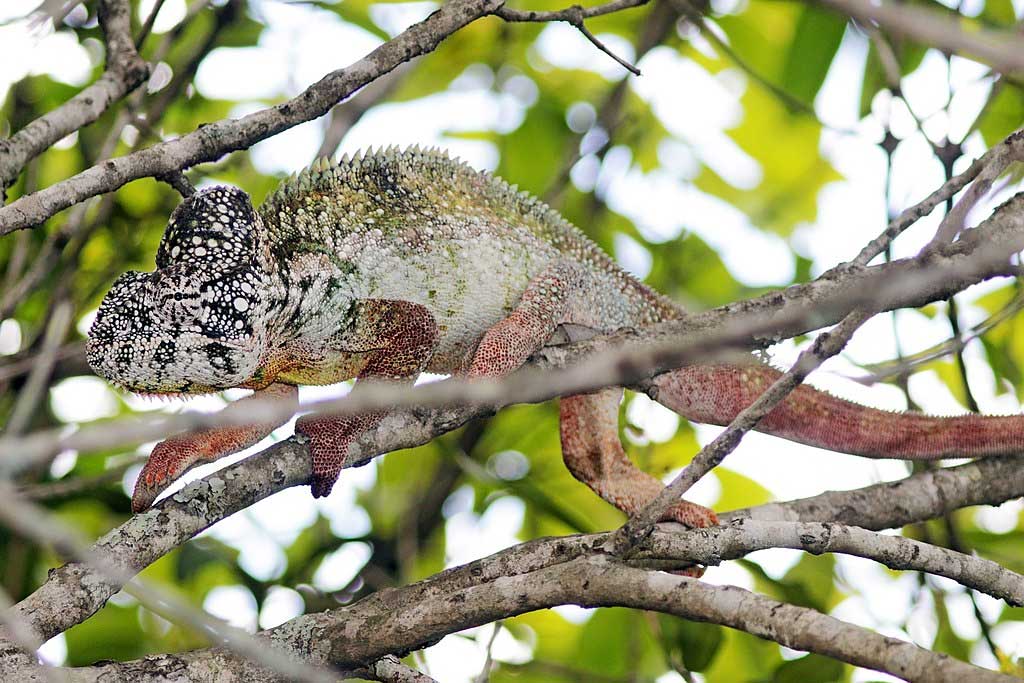
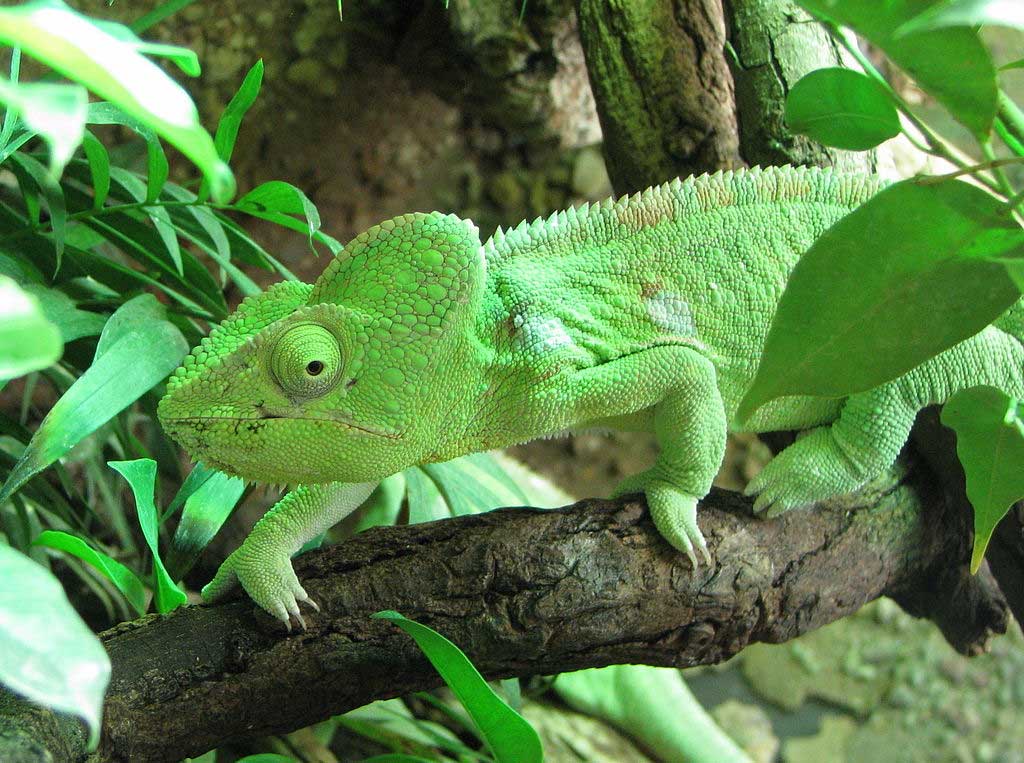
    Considered the longest chameleon in the world (although exceptionally longer adults such as the Parson's chameleon – Calumma parsonii). This species reaches lengths close to 70 cm., and is also the second heaviest member of the family (after the Parson's chameleon). But, many specimens found are likely to be adults or smaller subadults. The helmet is high, with a pronounced parietal crest. Rostral ridges are present and extend to the tip of the muzzle, but do not connect. A lateral crest is present but poorly developed.

    The most important diagnostic feature is the Crest Ridge, which extends to the vent and consists of 45 or more short, triangular spines with a regular space between them. Ventral and gular ridges are present, but they are not connected to each other.

    Malagasy giant chameleon
    Oustalet’s chameleon (Furcifer oustaleti) female, Andasibe, Madagascar – Charles J. Sharp, CC BY-SA 4.0, via Wikimedia Commons

    The coloration in both sexes is usually gray or brown, although females are usually more showy and may show a red coloration on the head and limbs. But, females may be variable with a yellow or mottled coloration, and in some cases can be largely green. The pattern may include a row of four large circles of dark edges along the flanks., although a white line is absent in contrast to the Carpet chameleon (Furcifer Lateralis). There are often indistinct dark vertical bands on the flanks. The absence of a white stripe on the central part of the body is considered diagnostic, but see the warning in Taxonomy below.

    taxonomy

    The Malagasy giant chameleon belongs to a species complex consisting of three recognized species; However, the variation between populations and the wide distribution of both the Malagasy giant chameleon as of the Warty chameleon (Furcifer verrucosus) suggest that both may represent multiple cryptic species. In a population found by the author during fieldwork, animals assigned to Furcifer oustaleti (a diagnosis subsequently supported by Frank Glaw) consistently showed a small size, unusual coloration and pattern; Unlike in the F. oustaleti Typical, sometimes there was a white stripe in the central part. Since these animals coexist with the F. oustaleti Typical, it is not clear whether they represent a distinct population or species, or if this coloration and pattern is a constant feature of the subadults of this population.

    Habitat

    In Madagascar, the Malagasy giant chameleon It is distributed in the coastal lowlands. It is found throughout the island, but its appearance in the eastern part of Madagascar is linked to relatively high temperatures. Being a species well adapted to the warm climate of the savannah, benefits from human changes to the landscape (deforestation). It is said that there is an abandoned population in Kenya (ngong forest, near Nairobi) and that a breeding population also exists in South Florida.

    Behavior

    Malagasy giant chameleon
    Madagascar giant chameleon in Prague zoo – dragus, CC BY-SA 3.0, via Wikimedia Commons

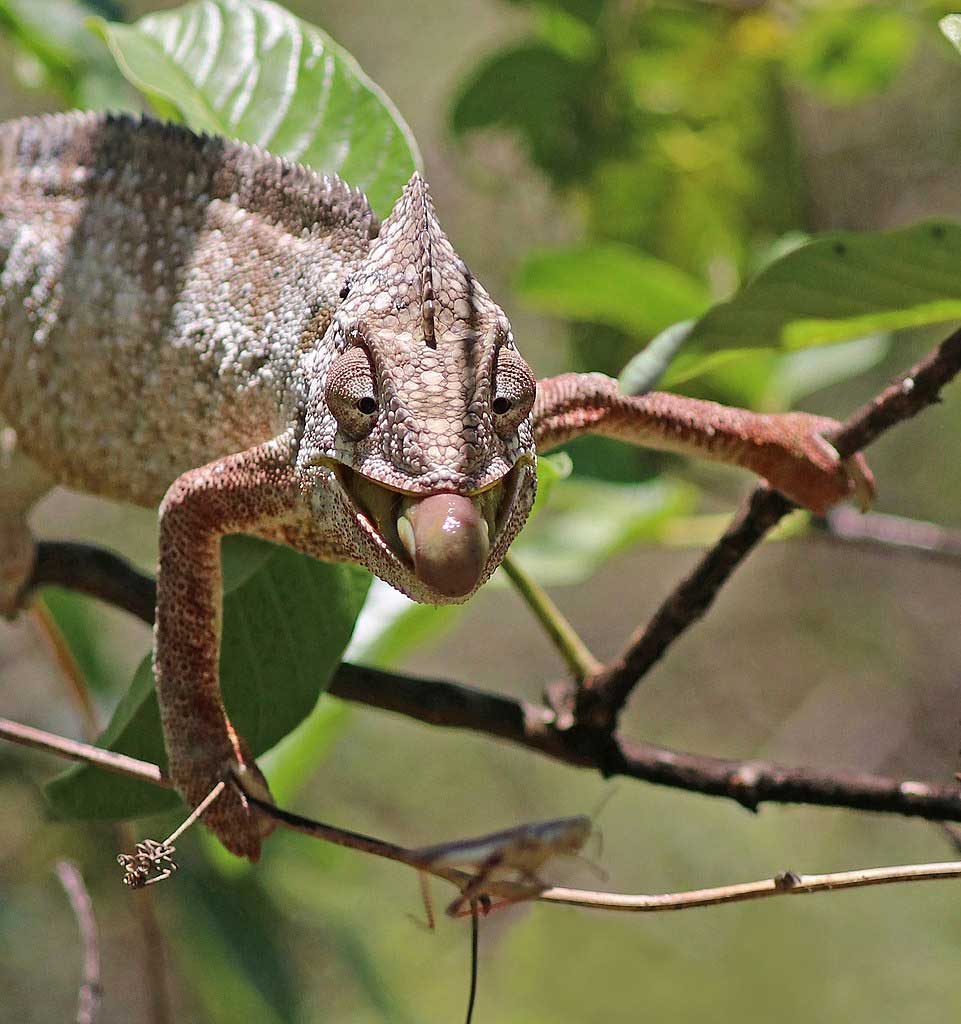
    The Oustalet’s chameleon (Furcifer oustaleti), also known as Malagasy giant chameleon, leads a mainly sedentary life. Moves very slowly, or does not move at all, for long periods of time, allowing you to conserve energy and stay out of sight of predators, and also be himself a predator. When an insect passes, an unsuspecting lizard or small bird, his very long sucker-tipped tongue is launched to catch him. Language, which is loaded with springs and shoots forward like an arrow bow, can extend to almost twice the length of the entire chameleon.

    Diet

    Until recently chameleons were thought to be totally carnivorous.. Recently, Takahashi (2008) reported the first confirmed case of herbivory in the Furcifer oustaleti, who was observed to select and consume fruits from the bushes Grangeria porosa, Chassalia princei and Malleastrum gracile.

    Reproduction

    The maximum and average sizes of the layings are unknown, but it is known that females can put at least 61 eggs in a single laying, with a combined weight of 56 g. This registration is from February, but no other information is available on the length of the breeding season.

    Gestation lasts a few 40 days and animals reach sexual maturity one year after hatching.

    Threats to the species

    State of conservation ⓘ


    minor concern Minor Concern ⓘ (UICN)ⓘ

    Apart from a small number legally exported as pets, the Malagasy giant chameleon is endemic to Madagascar, where it enjoys a stable population in various habitat types.

    They are also found in a number of protected national parks across the country., but they are abundant enough across the country to earn the conservation status of «least concern«.

    The "Malagasy giant chameleon" in captivity

    Malagasy giant chameleon
    Malagasy giant chameleon(Furcifer oustaleti) male feeding, Anja Community Reserve, Madagascar – Charles J. Sharp, CC BY-SA 4.0, via Wikimedia Commons

    Chameleons are usually considered easily excitable animals. It is notorious that, in some particularly territorial species, the constant vision of a congener (for example, when two animals can be seen in adjacent terrariums) can lead to stress-related kidney failure and, Therefore, death! But, the Malagasy giant chameleon is a comparatively peaceful and quiet representative of the chameleon clan. Males do not get along with each other, and pregnant females are strictly solitary. But in terrariums large enough (a greenhouse is, of course, more suitable in view of the size of animals), these chameleons can be kept in pairs. The Malagasy giant chameleon it also shows this coldness towards humans.. Even if they are carefully caught in the hand, do not get too excited. The threatening mouth opening, that we know of many other chameleons, it only occurs with the Malagasy giant chameleon if you are provoked a lot. Field researchers say you can normally put a Malagasy giant chameleon on the shoulder; will stay there quietly for hours.

    Since the Malagasy giant chameleon is comparatively common, the local population likes to take advantage of the voracity of these chameleons and put them in their gardens, where they eat unwanted animals up to the size of a mouse and thus keep them at bay.

    The terrarium

    To the Malagasy giant chameleon all the usual principles of chameleon care apply to you. This includes the need for relatively large feeding., What, However, is easy to satisfy for this species, since animals will eat all the usual food bugs, like crickets, domestic crickets, grasshoppers and zofas, as well as young nest mice; in the nature, small birds and reptiles are also eaten.

    All insects that serve as food should always be sprinkled with one of the vitamin lime powders available on the market.

    The need to drink water, which is also high, makes the care of chameleons always time-consuming, since most animals do not easily learn to drink from bowls. So, chameleons must be given to drink at least every other day with a pipette. But, there are some tricks to avoid it. Many chameleon caregivers use drip drinkers, of which a drop of water drips into a collection container placed underneath at intervals of 1-2 seconds. Chameleons recognize this simulated "rainwater" and drink. The most natural way to give chameleons a drink is by spraying the water that animals collect from the leaves of plants., etc. But this is also labor-intensive and can cause the terrarium to get too wet.. An elegant way is to install an artificial waterfall with a small aquarium pump. But, these systems are somewhat prone to failure and the pumps always break down – as in Murphy's Law- when you least need it, for example, during the holidays. A very clever way to make water move in the drinker and, therefore, that chameleons recognize it, is to aerate the container with an aquarium air pump available on the market. Simply hang the air hose in the bucket and adjust the air supply so that about two air bubbles per second come out of the hose.. A pleasant side effect of this method of watering is that it simultaneously increases the humidity of the terrarium, which should also be around the 70% of relative humidity for the Malagasy giant chameleon during the day; At night, humidity can rise up to 100%.

    Due to their natural habits, the Malagasy giant chameleon can be classified as one of the easiest chameleon species to care for, as it does not react immediately with discomfort and subsequent illnesses if it gets too hot in the terrarium.

    Daytime temperatures should range between 22 and 28°C, and under the spot they can rise up to 45°C. But, you always have to make sure that the animals can go to a relatively cool and well-ventilated place in the terrarium..

    Reproduction

    The female puts up 61 eggs after a gestation period of about six weeks. Eggs take between 210 and 280 days to hatch at an incubation temperature of about 28°C. Many breeders use vermiculite as a breeding substrate. Juveniles grow very quickly and reach sexual maturity at one year of age. In general, care and breeding are similar to those known Panther chameleon (Furcifer pardalis).

    Buy one "Malagasy giant chameleon"

    Although they are the largest chameleons, The "Malagasy giant chameleon" not necessarily one of the most expensive. You can find one in specialized stores for prices ranging from 150 – 300 EUR.

    Videos "Malagasy giant chameleon"

    Oustalets Chameleon (Furcifer oustaleti) Hand-Feeding

    Furcifer oustaleti, Oustalet's Chameleon in central west Madagascar

    Alternative names:

    1. Malagasy giant chameleon, Oustalet’s chameleon, Malagasy giant chameleon (English).
    2. Caméléon géant de Madagascar, Caméléon d’Oustalet (French).
    3. Riesenchamäleon, Madagaskar-Riesenchamäleon (German).
    4. Camaleão malgaxe gigante, Camaleão do Oustalet (Portuguese).
    5. "Camaleón gigante de Madagascar", Camaleón de Oustalet (español).

    ▷ The world of Pets: Dogs, cats, birds, reptiles, amphibians

    Aquatic Turtle
    Maintenance in captivity

    Aquatic Turtle
    Aquatic Turtle

    Content

    Keeping “Water Turtles” in the Garden Pond

    Especially for the Aquatic Turtle bigger, keep them in a garden pond could be an optimal solution. Especially when you have several adult aquatic turtles, a aquaterrarium it is usually too small or a bigger one just too expensive.

    Of course, the pond must be large enough and species-appropriate temperatures are a basic requirement.

    According to the regulations for the conservation of nature and animals, the pond must be fenced. This is important because turtles are protected species.

    The pond must be at least one meter deep, but there should also be shallow water areas.

    Aquaterrarium – turtle farming

    The aquaterrarium is a mixture of Aquarius and terrarium. The swamp and water turtles they mainly need a generous aquatic area, as they spend most of their time in the water.

    The soil must have a surface area of at least 50 × 120 cm for a adult aquatic turtle.

    The more turtles you have, the bigger the aquarium should be. The water must have a depth of at least 40 to 50 cm.. Also need a powerful filter and a heater.

    A land part is also needed, because aquatic turtles also like to sunbathe. This should be as easy as possible for the turtles to reach., as buoyancy is scarce out of water.

    Prefabricated aquariums usually have a platform with inclined access, which is also recommended.

    The terrestrial part of the aquaterrarium should be large enough so that all aquatic turtles can sit there at the same time.

    Equipment for the aquatic terrarium

    For the aquatic terrarium a filter powerful, a heater, decorations for the aquarium, the floor and also the right lighting.

    They can also be included plants in the aquatic terrarium. Since it needs to be cleaned frequently, the selected plant should be easy to care for and insensitive.

    Recommended, for example, the plants Sansevieria, as they also increase the quality of the water. Another option is bamboo sticks, that take up little space.

    Also keep in mind that an aquarium must have a firm base.. Also recommended is a aquarium furniture as a basis.

    The lighting

    The illumination is vitally important to keep turtles in a aquaterrarium. Lighting ensures simulation of species-appropriate day and night, and aquatic turtles also need to sunbathe from time to time.

    • The duration of lighting must be adapted to the annual rhythm.
    • Lighting illuminates the landing area (sunny area) and the island of asoleo in the aquaterrarium.
    • UV-B temperature should be 40-45°C in the landing zone so that body function can be maintained.

    What food do aquatic turtles really need??

    Diet is especially important for a turtle. Otherwise, keeping them is problematic. It is often assumed that the aquatic turtles are purely carnivorous.

    But, the Aquatic Turtle they feed mainly on plants, although the meat (fish, insects) is an important part of your diet.

    Many of the typical diseases of the Aquatic Turtle are the result of an incorrect diet, so a balanced diet is very important.

    The ideal ratio of plant and animal food varies according to the species of aquatic turtle. It is worth doing more detailed research on this..

    Feeding with prepared food should only be done to a limited extent.

    Recommended food for aquatic turtles

    The calcium and vitamin D3 are vital for Aquatic Turtle. The most popular plants for the diet are water lettuce, the duckweed, the Water lilies, the frog, the dandelion and pond liverwort.

    Plant foods often lack vitamin D3, but this can be compensated by UV-B radiation.

    The recommended animal feeds are the prawns, the snails, the common earthworm and also the brown prawns. To young turtles, in particular, like to hunt.

    You can encourage them to eat a species-appropriate diet with May fly larvae, mosquito larvae or water fleas.

    What a Water Turtle Shouldn't Eat

    An incorrect diet can lead to illness or even death of the turtle. The fruit and vegetable should be avoided altogether, otherwise digestive problems may occur.

    Maintenance of Water Turtles – hibernation

    Not all aquatic turtles Hibernate, this should be clear to all caregivers.

    It depends on the geographical origin of the species of aquatic turtle whether hibernation occurs or not. So, it is very important that the turtle species is correctly identified.

    A basic distinction is made between:

    • Hibernating aquatic turtles
    • Aquatic turtles with a reduced activity phase and
    • Aquatic turtles from warm regions that have neither hibernation nor reduced activity phase.

    Aquatic turtles with hibernation

    Some species of aquatic turtles from temperate latitudes maintain their winter torpor, that must be artificially induced in an aquaterrarium.

    Due to heating and lighting settings, the water temperature and also the lighting decrease considerably in November.

    The aquatic turtle reduces its metabolism, gradually becomes slow and eventually stops eating.

    At a water temperature of about 10ºC, the turtle goes into hibernation. Metabolism is reduced to a minimum and heart and respiratory rate decreases.

    The aquatic turtle can now be transferred to the refrigerator or cellar, temperature should be 4-7°C.

    during hibernation, the turtle is placed in a plastic bathtub, the water level should reach just above the shell.

    The turtle must be able to pull its head out of the water. Hibernation begins after 10-12 weeks. The animals are again exposed to a higher temperature and get used to longer "sunny days".

    With rising temperatures, the circulation of aquatic turtles increases again and the amount of food can be increasing.

    Aquatic turtles with a reduced activity phase

    The reduced activity phase is also typical of some aquatic turtles of temperate latitudes.

    Just like during hibernation, lighting and also temperatures in the aquarium are gradually reduced. Temperature should be 15-17°C, the lighting is off.

    Turtles become lazy and barely eat. But, it is important to continue feeding the Aquatic Turtle.

    Hibernation occurs by gradually increasing the temperature, lighting and adding food.

    Aquatic turtles from warm regions

    The Aquatic Turtle of warm regions do not hibernate or have a reduced activity phase.

    Only water temperatures and also lighting should be adapted to the respective annual rhythm of the aquatic turtles.

    What should be observed during the hibernation of aquatic turtles in general?

    Next, we will explain what should be observed during the hibernation of aquatic turtles.

    Before hibernation:
    • Comprehensive examination for infections and parasites.
    • Treatment against worms
    • deep defecation
    • Weigh the turtle
    • Before hibernation, the turtle must be healthy (clean eyes and nose).

    during hibernation
    • Keep the temperature constant
    • Aquatic turtles should not be disturbed
    • Regularly check turtles for diseases and abnormalities

    end hibernation immediately in the following cases:
    • The turtle has awakened, recognizable diseases on the shell or skin.
    • Mold in water, other diseases

    after hibernation:
    • Weigh the turtle. The difference should be around the 10%.
    • Examine the turtle: Health, behavioral anomalies
    • Check temperature and lighting
    • Initially, a low water level is recommended to prevent the turtle from drowning

    How much does a Water Turtle really cost?

    The aquatic turtles they are not cheap pets. The primary purchase of a water turtle costs - depending on the species- between 30 and 120 EUR.

    The most important item is the cost of the aquaterrarium and the associated team. Expenses can quickly add up to 1.000 EUR.

    It is recommended to choose a larger tank even for a still very small aquatic turtle, since in any case it would have to be expanded as it grows.

    It also, are the running costs of the vet and, possibly, turtle food. Here you should calculate with 20-40 euros per month.

    Legal regulations for the possession of aquatic turtles

    In the case of some species of turtles, EU species protection regulation must be respected, especially in the case of turtles.

    These may include, the turtles of the Appendix A of the Washington Convention on International Trade in Endangered Species of Wild Fauna and Flora must be registered and there is an obligation to label them.

    This applies, for example, to the Greek tortoise and to the Leopard tortoise.

    These may include, the Red-eared slider and all subspecies of ornamental turtles are included in the Appendix B of the Convention on International Trade in Endangered Species of Wild Fauna and Flora.

    So, these species are subject to mandatory registration and proof of origin is required.

    Frequently asked questions

    How much does a Water Turtle cost??

    Among 30 and 120 EUR.

    How many years does a water turtle live?

    Until 60 years.

    How do you know the age of a turtle?

    The most common method to calculate the age of a turtle is to observe the lines that form on its shell.

    How often to feed a water turtle?

    Adult aquatic turtles should be fed animal food about twice a week, and the young every two days.

    What can an aquatic turtle eat?

    Most species of aquatic turtles are mainly herbivorous, but the meat (insects, fish, etc.) it is also an important part of their diet.

    Can aquatic turtles eat on land?

    Aquatic turtles eat in the water. Most species also cannot swallow on land.

    What to keep in mind with aquatic turtles?

    They are kept to 28 degrees of water temperature and at least 28 air temperature degrees. In the part of the ground that is directly under the UV lamp it must be at least 38 degrees and a maximum of 45 degrees. The tank should be covered with glass plates, only the area above the UV lamp is free.

    What aquarium do I need for aquatic turtles?

    An aquaterrarium of 120 x 50 centimeters is enough for an adult animal.

    List of "Water Turtles" for maintenance in captivity

    No entries found.

    ▷ The world of Pets: Dogs, cats, birds, reptiles, amphibians

    Razor-backed musk turtle
    - Sternotherus carinatus

    Like all species of the genus Sternotherus, the Razor-backed musk turtle it is a very aquatic species that rarely comes out of the water to sunbathe. It is very territorial and does not migrate much..
    Musk turtle
    Musk turtle – Sternotherus carinatus at the Louisville Zoo in Kentucky – Ltshears, Public domain, via Wikimedia Commons

    Content

    Origin / Distribution

    The Razor-backed musk turtle (Sternotherus carinatus) is originally from the southern United States. Its range extends through Alabama waters., Arkansas, Louisanna, Oklahoma, Texas y Florida.

    Characteristics / Appearance

    the shell of the Razor-backed musk turtle it is light brown, between beige and olive brown, and has dark spots and line markings on each shield, with individual carapace scutes bordered by a narrow dark stripe. Its name refers to the strongly pronounced central keel, resembling a roof. In the youngest specimens, the keel can be especially pronounced and flatten with age.

    The plastron scutes are very poorly developed (somewhat stronger in the female), and the color can vary between yellow and brown.

    The soft parts of the species are gray to grey-brown with black flecks., the jaw is decorated with black stripes. There is a pair of barbels on the chin.

    Shell, plastron and soft tissues of juveniles light brown with various dot and line patterns. The posterior margin of the carapace is serrated.

    The males of the Razor-backed musk turtle grow to 17,5 cm length, Females reach a maximum body length of 13 cm.. This makes it the largest species in the genus. Sternotherus.

    Habitat

    The habitat of the Razor-backed musk turtle ranges from large slow-flowing rivers to heavily vegetated swamps and floodplains, preferring soft sandy bottoms. The presence of dead wood, both above water to sunbathe and underwater to retreat, appears to be an important factor determining habitat suitability. (Lindeman 2008).

    Behavior

    Musk turtle ( Sternotherus carinatus ) in the Natural History Museum and Vivarium of Tournai (Belgium) – Vassil, CC0, via Wikimedia Commons

    Like all species of the genus Sternotherus, the Razor-backed musk turtle it is a very aquatic species that rarely comes out of the water to sunbathe. It is very territorial and does not migrate much.. From December to February, animals go into hibernation, looking for hiding places in the substrate and on the banks. The species is active in the early hours of the morning and from afternoon to night. The Razor-backed musk turtle It is almost exclusively carnivorous and feeds on aquatic insects., clams, snails and crayfish. Molluscs increase their proportion in the diet as animals grow.

    Reproduction

    Breeding season runs mainly from spring to fall. Like this, up to two clutches of eggs may be laid per season. The sets usually contain 2 to 5 eggs. under natural conditions, The incubation period lasts between 100 and 140 days. Like this, the pups of the Razor-backed musk turtle are the latest compared to the different species of Sternotherus.

    Threats to the species

    State of conservation ⓘ


    minor concern Minor Concern ⓘ (UICN)ⓘ

    The Razor-backed musk turtle has been evaluated by the International Union for Conservation of Nature (UICN), and their abundant populations result in their inclusion in the category of Least concern.

    While populations appear to be stable, potential risks include habitat destruction, contaminated water and dead wood extraction. They are also considered the fifth most vulnerable turtle species in the commercial pet trade..


    The "Razor-backed musk turtle" in captivity

    The pups of Razor-backed musk turtle are caught and sold in the commercial pet trade. These turtles are quite popular, especially in Europe, and it is estimated that around 50 000 individuals were sent to the European Union between 2008 and 2012. But, between 2002 and 2005, only about 900 individuals from the United States, suggesting that its popularity has recently increased.

    The "Kelified Musk Turtle" needs an aquaterrarium

    Theoretically, the final size of a Razor-backed musk turtle You can reach up 17 cm., but in captivity it is usually only of 10 to 15 cm., and females are usually somewhat smaller than males. These turtles need a tank with a rim length of at least 100 cm., a conceivable size would be 100 x 50 x 50 cm.. The aquaterrarium must have an aquatic part and a terrestrial part for the benefit of the animals. The water level must be at least 15 cm and can be up to 30 cm..

    Although they are classified as Aquatic Turtle, to the Razor-backed musk turtle offer them some climbing opportunities, which are usually accepted with gratitude by animals.

    The illumination with an ultraviolet component it approaches nature and is recommended. Sunbathing, a spotlight should be placed on land for aquatic turtles, under which the temperature can be up to 40 degrees.

    The Razor-backed musk turtle it is a rather solitary animal. The ideal is to keep them alone in the aquarium. Males are unfortunately incompatible, a socialization of females CAN work.

    The Razor-backed musk turtle prefers a water temperature of between 22 and 28 degrees centigrade with a pH value between 6 and 8. During the winter months the turtle maintains the hibernation. During this time, the water temperature should be reduced to 10 – 15 Celsius degrees.

    Food

    The "Razor-backed musk turtle" it's easy to feed. They can get used to frozen food, to live food and dry food. In the wild they like to eat snails and mussels which they can easily snap with their strong jaws., also insect larvae and small crustaceans and shrimps are taken with pleasure.

    breeding of the Razor-backed musk turtle in the aquarium

    The Razor-backed musk turtle has already been successfully bred in aquaterrariums.

    Curiosities

    This turtle owes its name musk to your musk glands, with whose help it can secrete a strong-smelling secretion to scare away predators. When kept in a aquaterrarium, the use of the glands is very rare, for example, when taken in hand. They are not used to swimming freely in the aquarium.

    Buy one "Razor-backed musk turtle"

    The price of a "Razor-backed musk turtle" at the exotic animal market, bred in captivity, ranges between 100 – 140 EUR.

    Videos "Razor-backed musk turtle"

    Sternotherus Carinatus (Razorback Musk Turtle) vs Sternotherus Minor (Loggerhead Musk Turtle)

    Sternotherus carinatus

    Alternative names:

    1. Razor-backed musk turtle, Keeled Musk Turtle (English).
    2. Cinosterne caréné (French).
    3. Dach-Moschusschildkröte, Hochrückige Moschusschildkröte (German).
    4. Tartaruga almiscarada de dorso de navalha (Portuguese).
    5. Tortuga Carenata, Tortuga almizclera aquillada (español).

    ▷ The world of Pets: Dogs, cats, birds, reptiles, amphibians

    Von Höhnel's chameleon
    - Trioceros hoehnelii

    The Von Höhnel's chameleon (Trioceros hoehnelii) is a high-altitude species that ascends to more than 3.000 m on Mount Elgon.
    Von Höhnel's chameleon
    Von Höhnel's chameleon – Wikipedia

    Content

    Origin / Distribution

    The Von Höhnel's chameleon (Trioceros hoehnelii) found mainly in Kenya, but is represented by a wide range of local variations. The form found on Mount Elgon, in Uganda, is called Trioceros hoehnelii «altaeelgonis«. Whether there are subspecies within this species is disputed.. But, regardless of official status, the breeder and caretaker community has adopted the term "altaeelgonis» for varieties from Uganda.

    Characteristics / Appearance

    The Von Höhnel's chameleon has a very pronounced helmet, which is much more marked in males than in females. Also noteworthy is a small nasal process, which is also higher in males. There are a large number of local and location variations. Especially the helmet and the nasal process are quite different. The species has a coarsely spiny dorsal crest that extends the entire length of the body and tapers towards the end of the tail.. The throat and ventral crest are formed by large spiny scales.. Both sides of the body usually have 2 greatly enlarged plate-like scale rows. Scale and body coloration are highly variable, consisting mainly of shades of brown and green with partially light transverse bands.. There are reddish or brown animals, as well as a well-known color form with a yellow head and green body.

    Male hemipenis pouches are clearly developed by the time they reach sexual maturity. Females show a much more homogeneous scaling, secondary sexual characteristics are less pronounced in them. Males grow to a maximum length of 25 centimeters, females reach a maximum length of 20 centimeters. The life expectancy is of 2 to 4 years.

    Habitat

    The Von Höhnel's chameleon is a high-altitude species that ascends to more than 3.000 m on Mount Elgon. They have developed the ability to regulate their body temperature through sunlight to take into account low ambient temperatures.

    Behavior

    The Von Höhnel's chameleon shows very interesting defensive behavior in the wild. The greatest danger for this species of chameleon is the snakes that live in the trees, as the green mamba. If the chameleon sees a snake, immediately turns deep black, he rolls up his body and drops to the ground, where the snake does not usually follow. Next, the animal remains motionless on the ground until the danger has passed.

    Threats to the species

    State of conservation ⓘ


    minor concern Minor Concern ⓘ (UICN)ⓘ

    This species has a wide distribution and seems to have the ability to adapt to a degradation of its natural habitat., since it also occurs in agricultural and semi-urban areas. It has therefore been classified as a "species of least concern" by the UICN.How is it being captured for the wildlife trade?,The species has been included in Appendix II of CITES to limit its effects.

    The "Von Höhnel's chameleon" in captivity

    "The Ugandan Variation of the Trioceros hoehnelii rarely seen, since Africa's exports come from Kenya, having different varieties of color. There are several populations at different heights, each with a different color scheme.

    Care is very similar to Montane side-striped chameleon (Trioceros ellioti). Thrives in a well planted terrarium. They have been kept in groups from one male to multiple females, but the females can have two litters a year and, therefore, are almost always at some stage of pregnancy and must be separated. So, despite reports that they are not aggressive, the saying is still valid: One chameleon per cage and not to worry.

    They seem to be enjoying their morning sunbath. Taking into account the drastic drop in nighttime temperature in your home environment, they are experts in absorbing all the sun's rays they can. And the decrease in night temperature is important for health. Special care must be taken with the young and the heat.

    Hydration is through a standard chameleon protocol of around three hours of night misting in the early morning with 15 minutes of fogging in the morning and 15 minutes in the afternoon.

    Breeding is not difficult. The gestation is 4 to 6 months. Young females can produce 6 offspring while a mature female can produce 20. They can have two litters of pups a year and become receptive again 40-50 days after delivery. The young are sexually mature after one year..

    The terrarium

    the bigger, best!. Minimum (45 x 45 x 90 cm.).
    Full or hybrid mesh (combination of mesh and glass or panel).
    UVB source (inside or outside).
    natural light source (inside or outside).
    Heat source (exterior).
    Nebulizer at night.
    Manual fogging in the morning and at night.
    full mesh.
    Small fans when using a hybrid cage and/or the air is stagnant.
    live plants (not fake)
    natural branches (no fake vines, no strings, or bleached wood).
    No substrate or bioactives

    Food

    In captivity, animals eat crickets, domestic crickets, all kinds of flying insects and small cockroaches. It also, get vitamins and minerals (pollinating insects). Animals can cover their water needs by lapping up the sprayed water.

    Reproduction

    The Helmeted Chameleon is viviparous in the egg., and there is also fertilization by storage; can get pregnant again right away. In courtship, the male approaches the female, nodding and flattening to one side. When the female is ready to mate, he remains seated and mating occurs, this process can be repeated for several days. Gravid females repel males willing to mate.. If the stress is too great for a pregnant female, must be separated. During pregnancy, females have a greater need to drink and feed. After a gestation period of 150 to 180 days, females give birth between 4 and 22 pups. Before this, the female becomes restless and egg laying takes place in the early morning hours, preferably on thick bark or rough branches. The young are released from the egg case and are immediately independent.. Sexual maturity is reached around 8 months. But, should not be mated before one year.

    For sale "Von Höhnel's chameleon"

    The price of a "Von Höhnel's chameleon" at the exotic animal market, ranges between 50 – 150 EUR.

    Videos "Von Höhnel's chameleon"

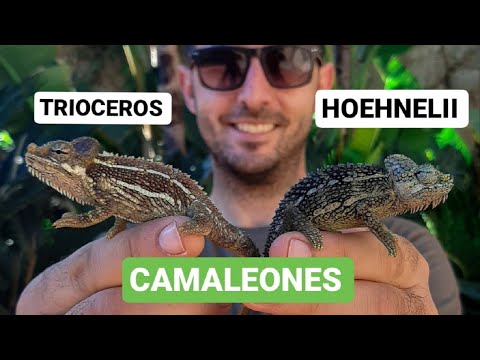
    MOUNTAIN CHAMELEONS 🦎 Trioceros hoehnelii ⛰ Care, information...

    George the Trioceros hoehnelii Chameleon

    Alternative names:

    1. Von Höhnel's chameleon, Helmeted chameleon, High-casqued chameleon, Kenyan high-casqued chameleon (English).
    2. Caméléon à casque élevé (French).
    3. Helmchamäleon (German).
    4. Chamaeleo hoehnelii (Portuguese).
    5. "Camaleón de casco" (español).