▷ The world of Pets: Dogs, cats, birds, reptiles, amphibians
Brygoo's chameleon
- Brookesia brygooi
Origin: Madagascar
Gender: Brookesia
Life expectancy: 4 - 6 years
Length: Head-torso: until 10 cm.
The Brygoo's chameleon it is a small to medium sized chameleon, earthy brown to blend in with leaf litter.
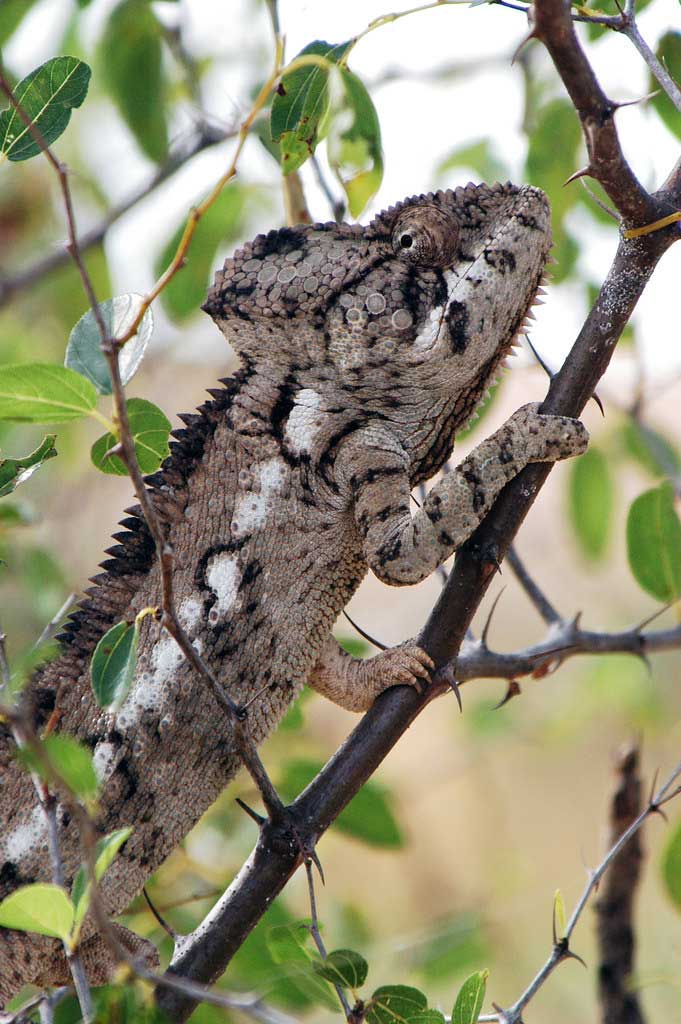
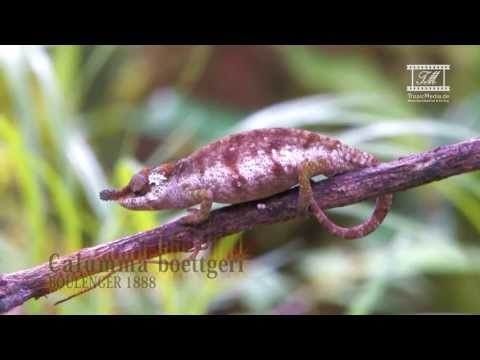
leaf chameleon (Brookesia brygooi), South Center of Madagascar – GRID-Arendal – Flickr
Content
Origin / Distribution
The Brygoo's chameleon (Brookesia brygooi) it is endemic to southwestern Madagascar, where its type locality is Analavelona, in the province of Fianarantsoa, in south-central Madagascar.
Characteristics / Appearance
The Brookesia Chameleons they are some of the smallest reptiles in the world: one of the species reaches a maximum length of just over an inch (30 mm). These tiny creatures are found in the leaf litter of tropical rainforests and dry deciduous forests across much of Madagascar..
The Brygoo's chameleon it is a small to medium sized chameleon, earthy brown to blend in with leaf litter.
Habitat
It is located at an altitude between 20 and 571 m above mean sea level, and in an area of 147.782 square kilometers. Details about the true population of the Brygoo's chameleon, although it is known to be very widespread.
Behavior
The Brookesia they feed on small insects and respond with their camouflage to hide from predators. When resent, these chameleons play dead in an effort to look like a fallen leaf.
Brookesias are easier to find at night, when they sleep on the leaves of small bushes.
Threats to the species
Because it is widespread and commonly found in protected areas, was listed as Least concern by the International Union for Conservation of Nature.
The "Brygoo's chameleon" in captivity
The terrarium
Minimum measurements are 60 x 31 x 46 cm..
Behavior
Males can become territorial and separate from other males. It is usually meek, but frequent handling stresses the animal. It is usually quite docile and shy. The species is diurnal.
captive environment
Use full spectrum lighting 12 to 14 hours a day. Provide multiple climbing areas on branches, trunks and plants. This species likes dense foliage to hide when climbing.
Temperature
The daytime temperature should be between 23 – 27 degrees C. Maintain night temperature between 20 – 2 degrees C.
Humidity
This species requires moderate to high humidity levels.
Water requirements
Provide a large, shallow container for drinking and soaking. Provide a constant running or trickling water supply. The enclosure must be well ventilated.
Nutritional requirements
This species is carnivorous (like meat). eat small insects, flies, mosquitoes and insect larvae. Always offer variety for proper nutrition. Sprinkle food with calcium and vitamins.
Buy one "Brygoo's chameleon"
It's probably the leaf chameleon What is most legally exported from Madagascar. Specimens of this species can be found relatively easily in specialized stores.. Its price in the exotic animal market ranges from 120 – 150 EUR.
1. Brygoo's chameleon, Brygoo’s pygmy chameleon, Leaf chameleon (English).
2. Caméléon feuille de Brygoo (French).
3. Brygoos Chamäleon, Brygoos Pygmäenchamäleon, Blattchamäleon (German).
4. Camaleão de Brygoo, Camaleão pigmeu de Brygoo, Camaleão de folha (Portuguese).
5. "Camaleón pigmeo de Brygoo", Camaleón de Brygoo, Camaleón de hoja, Camaleón pigmeo malgache (español).
▷ The world of Pets: Dogs, cats, birds, reptiles, amphibians
Leopard tortoise
- Stigmochelys pardalis
Origin: Ethiopia, Angola, Botswana, Djibouti, Kenya, Malawi, Mozambique, Namibia, Zambia, Zimbabwe, Somalia, Sudan, South Africa, South Sudan, Swaziland, Tanzania, Uganda
Gender: Stigmochelys
Life expectancy: 60 years
Length: Until 55 cm.
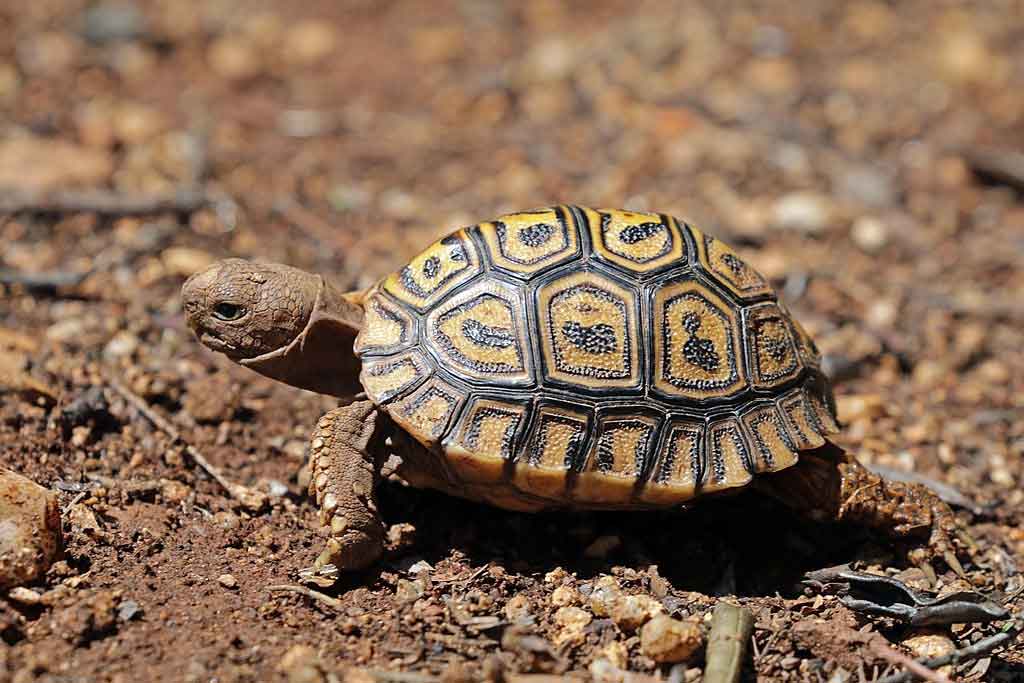
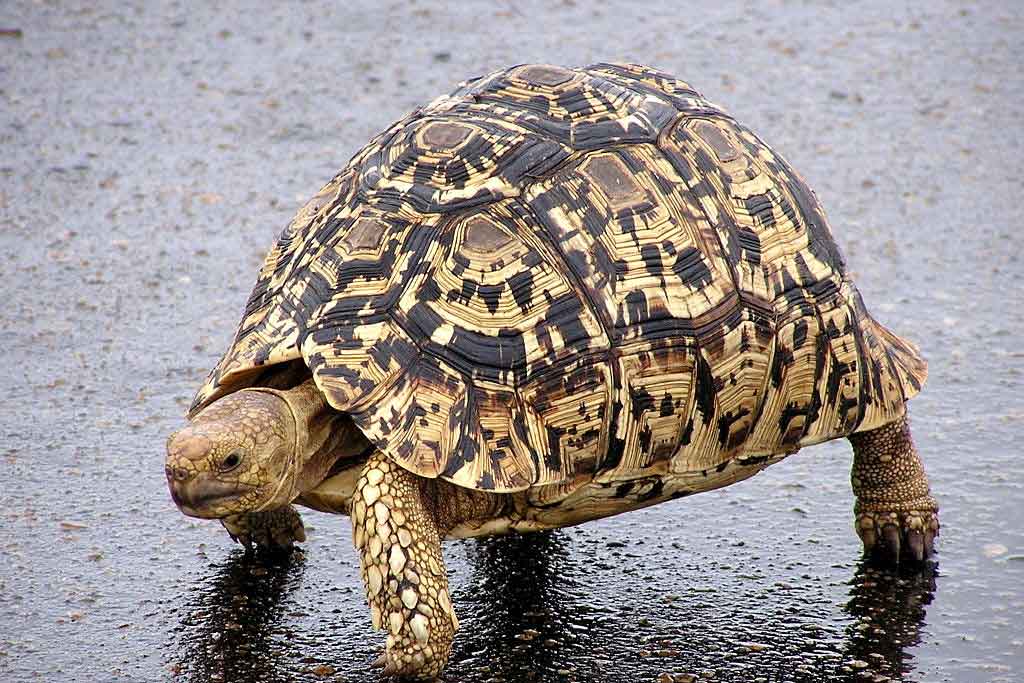
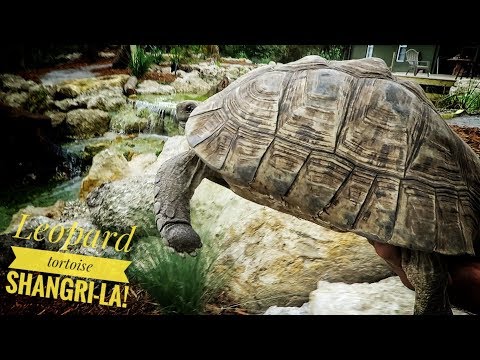
The Leopard tortoise it is a magnificent representative of African tortoises in terms of shell. Young animals in particular have a fantastic spot pattern, reminiscent of a leopard, that's where its name comes from.
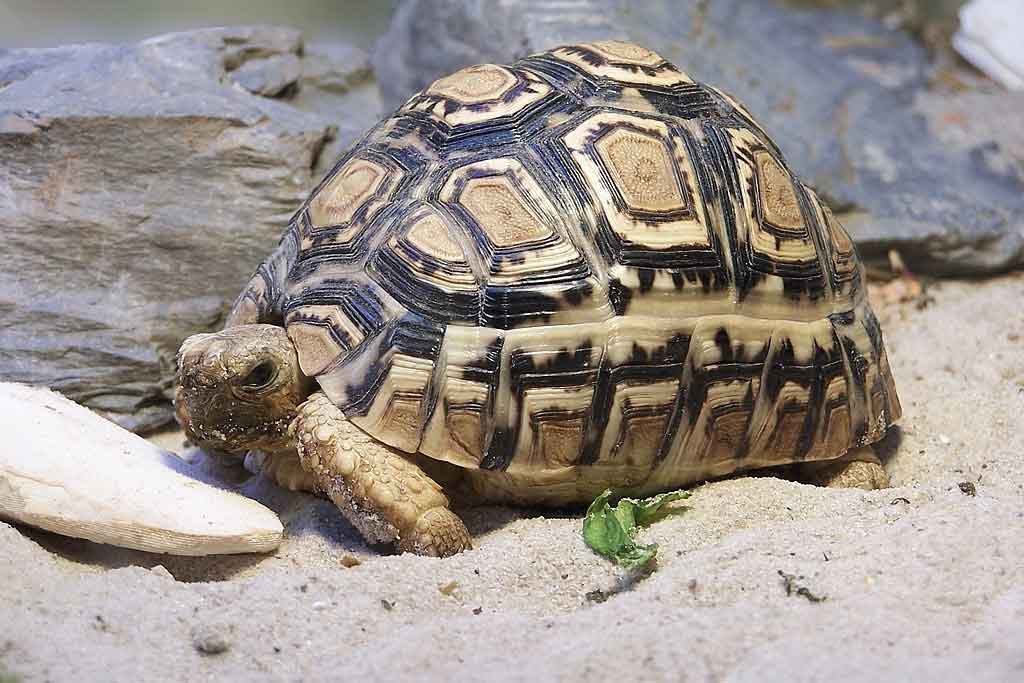
Leopard tortoise (Stigmochelys pardalis) juvenile, Walter Sisulu Botanical Gardens, Roodepoort, South Africa – Charles J. Sharp, CC BY-SA 4.0, via Wikimedia Commons
Content
Origin
The Leopard tortoise has been the subject of several revisions. Different authors have placed it in Geochelone (1957), Stigmochelys (2001), Centrochelys (2002) and Psammobates (2006). More recently, the consensus seems to have been established in Stigmochelys, a monotypic genus. There has been much debate about the existence of two subspecies, Stigmochelys pardalis pardalis and Stigmochelys pardalis babcocki, but recent work does not support this distinction.
Stigmochelys is a combination of Greek words: stigma which means "brand" or "tip" and chelone What does "turtle mean". the specific name pardalis comes from the Latin word pardus, which means «leopard», and refers to leopard-like spots on the turtle's shell.
The Leopard tortoise is located in the following 17 countries: Ethiopia, Angola, Botswana, Djibouti, Kenya, Malawi, Mozambique, Namibia, Zambia, Zimbabwe, Somalia, Sudan, South Africa, South Sudan, Swaziland, Tanzania, Uganda.
Characteristics / Appearance
The Leopard tortoise adult has a dorsal shell elongated and strongly curved. It is yellowish to light brown and is covered with irregular dark spots or stripes.. This characteristic coloration gave the species its name.. Unlike many other turtles, the Leopard tortoise no shield on the back of its neck. The legs and head are yellowish to light brown. Rarely do individual dark spots appear on them. The Paws they are covered with large scales and each hind leg has a cone-shaped spur. Equipped with powerful claws, the legs are the ideal tool for digging.
In the youth the coloration of the shell is clearly lighter, with dark spots in the center of the shield. These high-contrast patterns can also sometimes be found in abdominal armor.. The size difference is used to differentiate the sexes, just like the size of the queue. Male animals are usually smaller than their female counterparts and have a stretched body with a longer tail., which is also significantly thicker at the root. It also, the male's abdominal breastplate is slightly curved inward. The claws of the hind legs of females are particularly strong.
The life expectancy of these reptiles are around the 50-60 years.
The subspecies
The Leopard tortoise are divided into two subspecies, the Leopard tortoise of East Africa and the Leopard tortoise from South Africa. The clearest distinguishing feature of both species is the coloration of the posterior layer.. In East African species, the basic color is weaker and darker. Juveniles have very few or no dark spots on both the belly and dorsal shell. The South African species has a flatter back and brighter colors.
Habitat
The Leopard tortoise (Stigmochelys pardalis) it is not very demanding in terms of its habitat. Its distribution extends throughout the East African region to South Africa and Namibia.. It is found in warm semi-deserts, dry savannas and rainfed areas. There are even populations more than 2.000 meters above sea level. Only dense forest areas cannot be colonized due to the mass and slowness of reptiles. Daytime temperatures of 28 to 40 degrees centigrade and night temperatures up to 21 degrees Celsius provide optimal living conditions for animals.
Behavior
The Leopard tortoise, like all reptiles, he is a cold blooded animal. They do not have a constant body temperature and adapt to room temperature. Behavior patterns are greatly influenced by this characteristic. According to the corresponding daytime temperatures, animals are forced to look for hiding places in the shade. In dry areas, thorny or grassy shrubs fulfill this function. Otherwise, turtles also look for abandoned animal burrows or rocks. At certain intervals, especially during periods of drought when food is scarce, take longer breaks of their own free will. These periods can last up to several weeks.. Then, food intake is minimized and body temperature may drop below 18 degrees.
Turtles are not nomadic. The only specimen moves in an area of about 400 hectares without forming territories. But, due to its slowness, they only use a part of this surface. The proportion of females and males is practically the same, and males usually use much smaller territories than females. The Leopard tortoise he is a peaceful animal. There are no territorial fights between congeners.
Food
The excellent adaptation to its habitat allows the Leopard tortoise manage your water balance very sparingly. It usually ingests the necessary amounts with its food and has regulatory bodily functions that allow it to store greater amounts of water in its body.. Their diet consists almost exclusively of plants. Prefers grass, thistles, lily plants and prickly pear.
Reproduction
The Leopard tortoise lives in different climatic zones. Mating behavior adapts to the respective climatic conditions, but it usually takes place in the spring or summer months. Males, otherwise peaceful, they now try to scare away their companions who court the females. They do this by ramming the shells of their opponents.. With the same ritual, female turtles are asked to stop and stick their heads and legs in. Next, mating takes place. The loud gasps emitted are characteristic of the mating ritual in many species of turtles..
Reptiles are not dedicated to the care of the young. Females dig a pit with their hind legs in which they lay eggs. The number per clutch varies greatly and is usually between 10 and 20 eggs. Three to six clutches of eggs are laid per year with an average interval of about 25 days. After placement, the pit is carefully closed. The duration from egg laying to hatching of the young is influenced by many factors.. Temperature and humidity influence the length of the incubation period, that can last from 120 to 450 days. Young turtles measure about five centimeters and have a hemispherical dorsal shell..
Threats to the species
State of conservation ⓘ
Minor Concern ⓘ(UICN)ⓘ
The Leopard tortoise Adult has few natural enemies in its habitat. In addition to the hyena and the lion, man is the greatest of them. With its regulatory interventions in the environment, threaten reptile habitat in some areas. Overgrazing, slash-and-burn agriculture, urban expansion and fencing of grazing areas are the main causes of population decline. In some regions the meat of turtles is consumed and body parts are used to produce medicines.. Every year thousands of animals are collected for the international pet trade and shipped all over the world.. Black traders have also discovered this market and try to sell their products through dark channels.. Customs authorities seize large quantities of Leopard tortoise smuggled.
But, the greatest threat is to the clutches of eggs and young. Nests are often raided by small mammals, birds, snakes or even by humans. Young animals also constantly face the dangers of stray dogs and cats., birds of prey, snakes or rats. The Leopard tortoise is not considered endangered in its species and can be acquired in for maintenance in captivity without prior permission. But, according to the European Species Protection Regulation, the acquisition must be notified to the competent authorities. The same provisions of the official notification requirement apply to breeding, delivery, the death and transfer of animals.
The "Leopard tortoise" in captivity
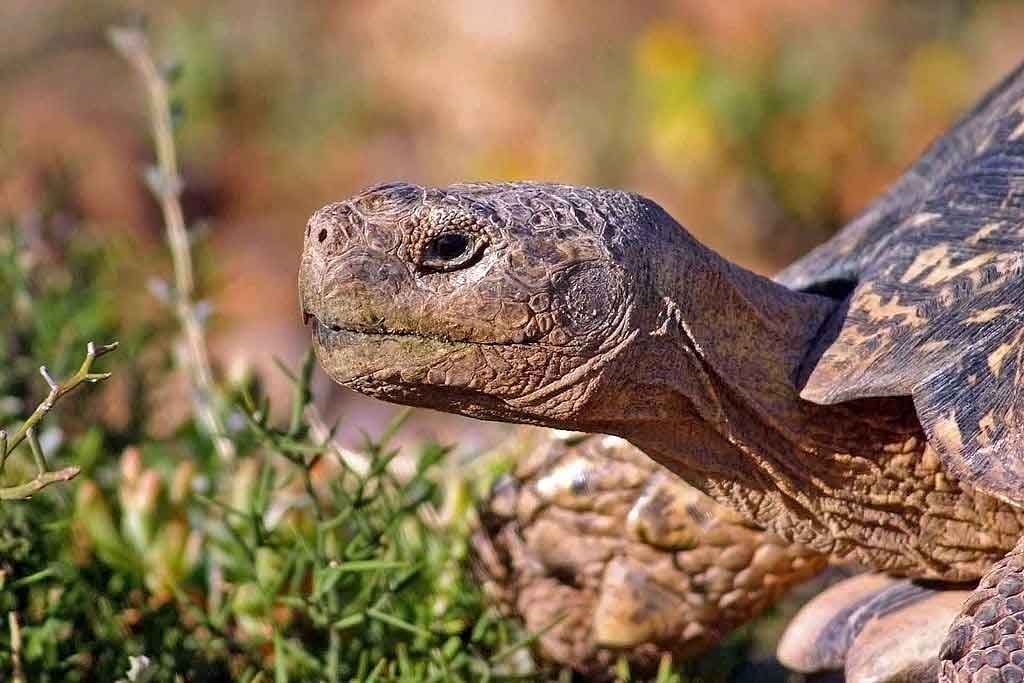
The head of a "leopard turtle" (Stigmochelys pardalis) at Addo Elephant Park, South Africa – Charles J. Sharp, CC BY 3.0, via Wikimedia Commons
Reproduction
Reproduction can begin once animals have reached sexual maturity, that occurs to some 20 – 25 centimeters of carapace length. Mating usually begins in spring with the behavior already described. After a gestation period of several months, females bury their eggs in a warm, moist spot in the ground in late summer. Stress, such as transfers, should be avoided at all costs in pregnant females. after sunset, eggs can be carefully removed from the ground. Half buried in loose sand, now they are placed in the incubator. The temperature should be 30 constant degrees centigrade and the humidity should not drop below 65%. After 150 to 300 days, the first pups are born. In the first weeks, they also need cooler, moister areas than adult animals.
When a Leopard tortoise, one or more individuals should be selected from a breeding stock for health reasons. Specimens caught in the wild are usually carriers of parasites and very susceptible to contracting diseases due to the stress of the long journey.. Deformation and softening of the shell, diseases of the internal organs and respiratory infections are the most common.
The breeding of a Leopard tortoise it's quite expensive. Heating, feeding and the various devices to create an environmental climate suitable for the species at all times of the year, as well as the large space that animals need, place high demands on the owner. But, this species is one of the most beautiful and imposing representatives of turtles and the lover of these animals is compensated daily by its sublime vision.
Maintenance of the "leopard turtle"
The Leopard tortoise is eager to move and run. This guarantees them a digestion that works. For this reason and for its size, only sufficiently sized rooms are adequate to maintain them. In this case, you have to take into account the climatic conditions to which the animals are accustomed. A permanent ambient temperature of 30 degrees and the supply of ultraviolet light in the wave range around 300 nm are prerequisites for keeping animals appropriate to the species. Turtles need ultraviolet light to synthesize vitamin D, that is essential for life. The ideal is to divide the room into several climatic zones so that the animals find a place with the most pleasant ambient temperature.
The Leopard tortoise must be kept in pairs. A mixture of sand and peat is suitable as a substrate. Do not forget the creation of hiding places. Hollow tree trunks or haystacks are useful furniture here. Of course, a bowl of water for drinking and bathing is part of the basic equipment.
Food
When it comes to feeding, pay attention to seasonal peculiarities. Winter corresponds to the dry season in the natural habitat of animals. Consequently, food should consist of dried grass and dried herbs. In summer, wild plants such as hibiscus are recommended, Dandelion, thistles and all wildflowers, from violets to petunias. Cultivated plants, like fruits, lettuce or vegetable leaves, should be the exception in the diet. Under no circumstances should turtles be fed animal products or, for example, with cottage cheese, fruit and pasta.
Reproduction
The breeding of the Leopard tortoise also requires further expansion. If you buy one Leopard tortoise young after hatching, you have some 4 years to think about the later habitat in winter and summer. From then on the animal is already quite large and is already oversized for a very large terrarium in winter. Outer space must have at least 50 m2 and the winter space should not be less than the limit of 10 m2. The Leopard tortoise adult needs more than 100 square meters outdoors. Until then there are some 4 years longer. And don't forget that, no matter how big a room is in winter, it must always be heated to 30 °C.
To be taken into account
The Leopard tortoise has a strong tendency to slouch. Unfortunately, it is not yet possible to say exactly why this is so. Animals are not kept in captivity very often and, if they do, most of the time only by people who have no means to investigate hump formation. Breeders have been observing the phenomenon for years and again and again they manage to breed one Leopard tortoise no hump formation. But, it is not known why, because the animals grew normally like other turtles, which in turn have hump formation.
Completely smooth shells are almost never found in the Leopard tortoise in captivity. On the other hand, in the natural habitat, almost all animals are completely smooth and of great beauty. So that your own animal grows healthy and has a long life, you just have to be very careful with the diet.
Important tips against the formation of humps
The Leopard tortoise young must have a higher humidity and grow in a rather moist soil. Make sure the floor is not misted with moisture more than once a day. Animals should not grow "wet". From the 3 years, animals prefer to grow dry. As in nature. Water must always be available. It is necessary to ensure that the animals do not bathe several times a day. Otherwise, they will absorb too much fluid and develop humps.
In winter, the diet of the Leopard tortoise limited to dry wild grasses that were raised in winter quarters but stopped being watered at some point. Thus, wild herbs dry out in the hot summer, just like in nature. Our winter is the African summer of turtles: do not forget it. There is also straw and plenty of hay in the enclosure. Animals feed on this. Water must always be available, but may run out during the day and should not be refilled. It is only refilled the next day, when everything gets fresh anyway.
The temperature should always be 30 to 33 degrees in the "winter" and 45 degrees (tank surface) under heat sources. If you have the possibility, should reach maximum temperature at noon and cool down again at night. The temperatures of 19 to 22 degrees should be maintained at night. In no case should this temperature be lowered, or surpass it.
In summer, animals eat everything they find outdoors. Unlike many other turtles, to the Leopard tortoise also likes to feed on grass. But, they like to harvest it themselves and don't allow it to be presented to them. So, those who do not let their animals run freely in the garden must plant grass in the enclosure. The grass should be nice and green from April/May to the end of September. Then, the animals usually return to the inner enclosure and then the African summer begins.
The humps of the Leopard tortoise they are not always synonymous with bad breeding. If less or no humps are created it's great. But, if humps develop, no one's heart is broken and animals don't have to be worse off. Unfortunately, there is no exchange of experiences for the Leopard tortoise.
Buy one "Leopard tortoise"
The price of a "Leopard tortoise" at the exotic animal market, ranges between 130 – 200 euros when it is a baby, being able to get to the 500 euros depending on their size and shell.
Images "Leopard tortoise"
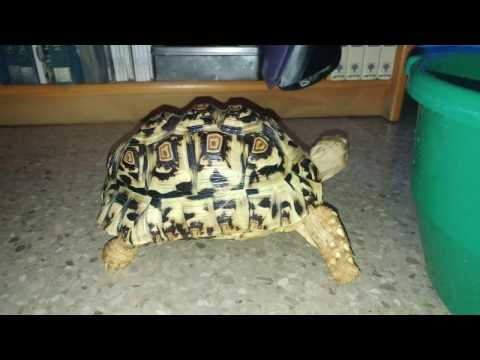
Panther turtle in the Kruger National Park, South Africa
▷ The world of Pets: Dogs, cats, birds, reptiles, amphibians
Indonesian blue-tongued skink
- Tiliqua gigas
Origin: Papua New Guinea
Gender: Tiliqua
Life expectancy: 15 - 17 years
Length: 50 - 60 cm.
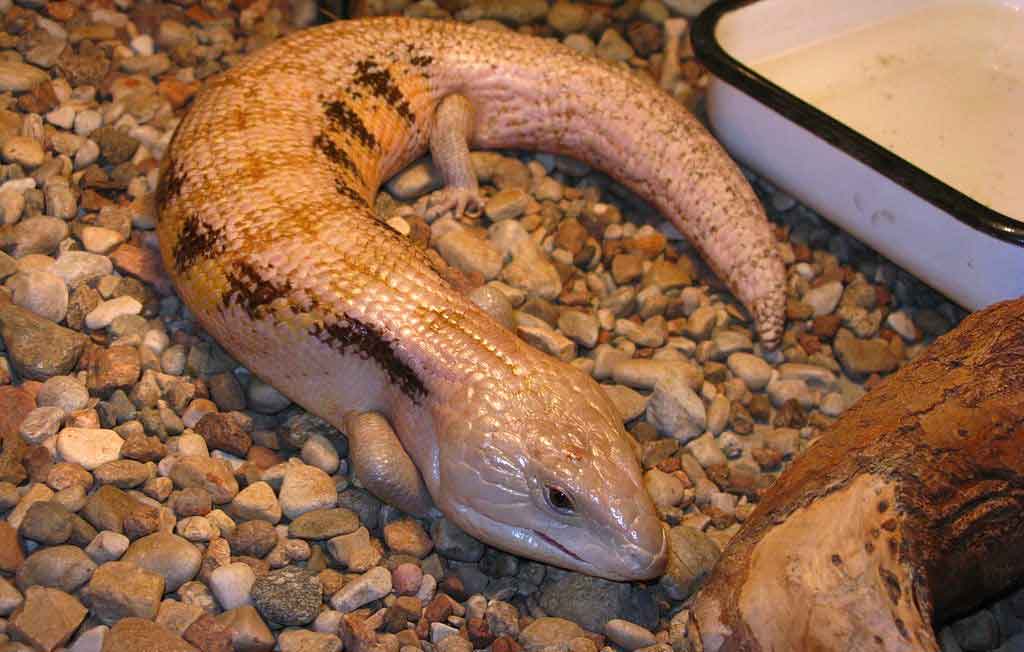
awesome lizards. This species is one of the best to keep as it is one of the calmest and most manageable. very easy animals, as they feed on everything, insects, mice, fruit, canned meat, etc. Dry terrarium, not desert.
Its price ranges from 180 and 250 EUR.
▷ The world of Pets: Dogs, cats, birds, reptiles, amphibians
Saharan spiny-tailed lizard
- Uromastyx geyri
Origin: Algeria, Mali and Nigeria
Gender: Uromastyx
Life expectancy: 20 years
Length: 35 cm.
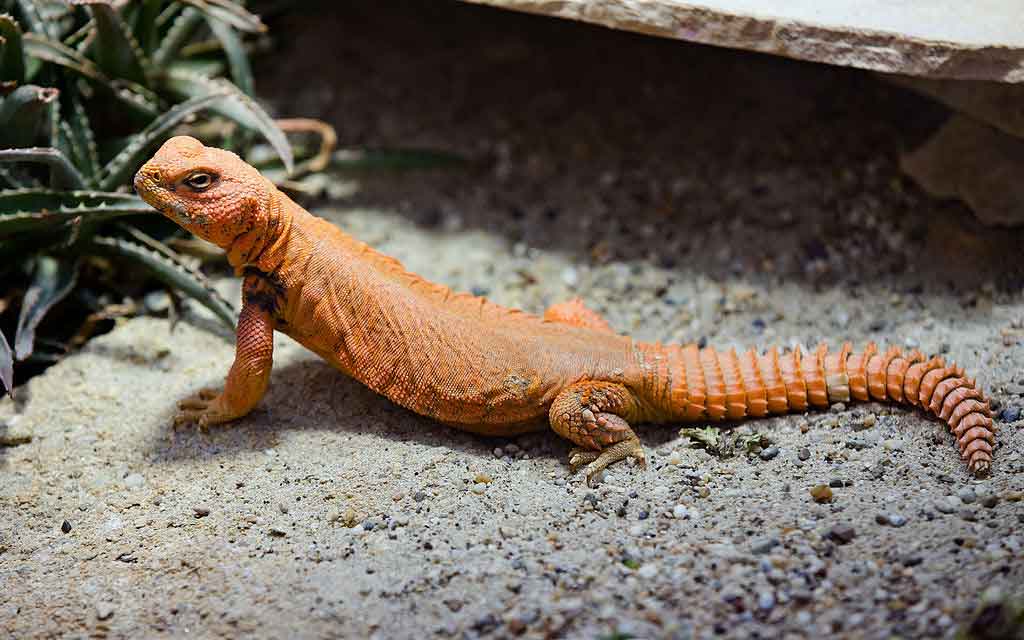
The Saharan spiny-tailed lizard it is a relatively small and slender species for the genus, with an average total length (including the queue) of about 34 cm..
Saharan spiny-tailed lizard, Flower Gardens Hirschstetten in Vienna, Austria.
Content
Origin
The Saharan spiny-tailed lizard (Uromastyx geyri) is a lizard native to the north of Mali, southern Algeria and northern Niger. Two different color shapes are known (red or yellow).
Characteristics
The Saharan spiny-tailed lizard it is a relatively small and slender species for the genus, with an average total length (including the queue) of about 34 cm.. This lizard is usually beige or orange with lighter spots.
It is one of the brightest colored species in the genus. Uromastyx. There are two colors of the Uromastyx geyri, the "red" and "yellow" variety, being the color its only difference.
The variety red it is often reddish in color almost solid to orange neon pumpkin, and the yellow phase is in or near a neon range. Females are a paler color than males, showing more variations of tan coloration and much less coloration in the belly, as well as less vivid patterns, most females have a simple "freckle" on their back.
The Saharan spiny-tailed lizard are medium-sized lizards, many of them with an average of 28-36 cm of total length and a weight of 250 grams or more as adults.
The "Saharan spiny-tailed lizard" in captivity
Terrarium
The Saharan spiny-tailed lizard they are very territorial in nature and keeping one male and several females is only possible in a large terrarium. It is best to keep them in pairs..
temperatures during the day: from 28° to 35°C (locally approx. 45°C)
Night temperatures: 18-22°C
Humidity: 40-60
Minimum size of the terrarium: starting at 140 x 100 x 120 cm for a couple
The terrarium must be furnished with numerous stones, some climbing possibilities such as thick branches, cork or bark tubes, which also offer many hiding places. To maintain this species properly, the terrarium needs a substrate of at least 20-30 height cm. Spray a little several times a week.
Illumination
For your well-being, good lighting and ultraviolet light are necessary (30% of UVA rays and 10-12% UVB), as well as a place to sunbathe. UV radiation is extremely important and absolutely necessary. In the case of females, it is absolutely necessary to have a suitable place for laying eggs or with several possibilities.
A lighting period of up to 14 hours a day (except during hibernation).
Hibernation
You have to let the animals hibernate for three or four months. As such, the Saharan spiny-tailed lizard they need between 12 y 18°C. Hibernation is very important for animals to regulate their bodily functions and stay healthy. It's also a good way to prevent obesity.
Food
The diet of the Saharan spiny-tailed lizard includes banana, vine leaves, dandelion, margaritas, clover, pamplinas, sometimes kitchen herbs and grains like corn, rice, millet, sunflower seeds and others. Young animals feed up to a 75% of animals. These may include, crickets, grasshopper, cockroaches, sometimes zophobas and other live food. Adults should be fed little or no animal food to prevent fatty degeneration..
no lettuce, iceberg lettuce or similar, since its calcium-phosphorus content is unfavorable. And cabbage or spinach should only be provided rarely because of oxalic acid.…
Fruit should also be provided only in moderation., if it is accepted.
Additional vitamin and mineral supplements are recommended.
For liquid intake, you can place a bowl of water that is cleaned daily.
Reproduction
Winter rest is very important for the young. The "Saharan spiny-tailed lizard" lay eggs. These should not be incubated too wet, otherwise they will easily turn into fungi. Young Uromastyx geyri can be raised together in a group for up to two years, provided they are compatible. It is absolutely necessary to take enough calcium and vitamin supplements.
For sale "Saharan spiny-tailed lizard"
The price of a Saharan spiny-tailed lizard, captive bred, at the exotic animal market, ranges between 100 – 120 EUR.
1. Geyr’s dabb lizard, Geyr’s spiny-tailed lizard, Sahara mastigure, Saharan spiny-tailed lizard, Yellow Niger Uromastyx, Saharan yellow uromastyx. (English).
2. Lézard de Geyr, Lézard à queue épineuse de Geyr, Mastigure du Sahara, Lézard à queue épineuse du Sahara, Uromastyx jaune du Niger, Uromastyx jaune du Sahara. (French).
3. Geyr-Krusteneidechse, Geyr-Stacheleidechse, Sahara-Mastigure, Sahara-Stacheleidechse, Gelber Niger-Uromastyx, Sahara-Gelb-Uromastyx (German).
4. Lagarto do Geyr, lagarto de cauda espinhosa do Geyr, mastigure do Sara, lagarto de cauda espinhosa do Sara, Uromastyx amarelo do Níger, uromastyx amarelo do Sara (Portuguese).
5. Lagarto de cola espinosa de Geyr, Lagarto de cola espinosa de Geyr, Mastigure del Sahara, Lagarto de cola espinosa del Sahara, Uromastyx amarillo del Níger, Uromastyx amarillo del Sahara (español).
▷ The world of Pets: Dogs, cats, birds, reptiles, amphibians
Painted wood turtle
- Rhinoclemys pulcherrima manni
Origin: Costa Rica, Nicaragua
Gender: Rhinoclemmys
Life expectancy: In captivity 20 years
Length: 15 cm.
The Painted wood turtle it is a very striking turtle thanks to its colors and therefore it is easy to find it as a pet.
Turtle, Rhinoclemmys pulcherrima incisa, berlin zoo, Germany – Tornado stop, CC BY-SA 3.0, via Wikimedia Commons
Content
Origin / Distribution
The Painted wood turtle (Rhinoclemys pulcherrima manni) It is a kind of tortoise of the family Geoemydidae
The genus of turtles (Rhinoclemmys) includes species that occur in mainly tropical and subtropical regions of Central and South America. The habitats of the different species are very different, which is also reflected in his breeding. The Rhinoclemmys pulcherrima presented in this report lives in both aquatic and terrestrial environments
The different subspecies are found:
Rhinoclemmys pulcherrima incisa is located in El Salvador, Guatemala, Honduras, Nicaragua and Mexico in the states of Chiapas and Oaxaca;
Rhinoclemmys pulcherrima manni It is found in Costa Rica and Nicaragua.;
Rhinoclemmys pulcherrima it is found in Mexico in the states of Guerrero and Oaxaca;
Rhinoclemmys pulcherrima rogerbarbouri it is found in Mexico in the states of Colima, Jalisco, Nayarit, Sinaloa and Sonora.
In Europe, there are relatively many possessors of the Rhinoclemmys pulcherrima incisa and Rhinoclemmys pulcherrima manniin, so with a little luck you can quickly find offspring of these subspecies.
Characteristics / Appearance
Turtle, «Rhinoclemmys manni», berlin zoo, Germany – Tornado stop, CC BY-SA 3.0, via Wikimedia Commons
The shell is highly arched and slightly faired in the center., males are somewhat flatter overall.
The basic color of the shell is brown to yellowish., on the ribbed scutes there are yellow and red ocelli of different sizes. The posterior margin of the carapace is serrated like a saw.. The basic color of the plastron is light yellow to cream., around the center seam there is a narrow black mark. There is also an anal notch on the plastron. The skin is colored in various shades of brown and olive, on which the stripes of the brands stand out, predominantly red, but partly also yellow.
When they are not covered by a layer of earth, the Painted wood turtle draws attention and is one of the most beautiful. The males of this species reach a size of just over 15 cm and can weigh up to 600 g. The females., on the other hand, They can grow to more than 20 cm and weigh 1,2 kg. But, most are still smaller. The Rhinoclemmys pulcherrima incisa it is the largest subspecies.
Sex differences
Males are still smaller, the carapace is flatter and the tail is comparatively longer than in females. It also, the anal notch usually shows a more acute angle in males compared to females.
Habitat
The Painted wood turtle (Rhinoclemmys manni) lives in the tropical dry forest of the lowlands of Nicaragua and Costa Rica. The annual rainfall is about 1500 mm.
Their way of life is semi-aquatic.. Prefers to live in areas rich in vegetation near running water. If you move a little away from the bodies of water, this species retreats to moist vegetation.
Temperatures in the habitat exceed 20 °C throughout the year, and there is also a high humidity throughout the year. In the months of December to April, humidity is around 60-70% (a few 3-10 mm of precipitation per month), otherwise the humidity in the habitat is around 80-100% with a rainfall of about 160-300 mm al mes. The climate is characterized by a clear alternation of rainy and dry seasons..
Habitat vegetation is very dense. Due to weather conditions, tropical dry forests are characterized by tree species that shed their leaves in the dry season to reduce moisture loss (for example, the white gum tree). It also, various bromeliads grow here, Cactus, etc. in the rainy season, the vegetation resembles that of tropical forests with lush growth.
But, during the season, dry, that lasts several months, the ground becomes very hard. Smaller bodies of water dry up completely, leaving only a few shallow puddles. Much of the vegetation withers, the trees shed their leaves.
Behavior
Food
The Painted wood turtle eats fruit, insects and worms. Your diet should consist of a 60% of green leafy vegetables, a 30% of protein and a 20% of fruits and vegetables. In addition to a varied diet, they need extra calcium to ensure healthy shell growth. Unlike other aquatic turtles, this turtle does not need water to swallow its food.
Reproduction
The Painted wood turtle is oviparous. The females lay from 3 to 5 eggs at a time. Eggs at low temperatures may be dormant in the early stages, and can sleep for some time in low temperatures, when the temperature returns to normal you can proceed to incubation.
Threats to the species
The species has not been cataloged in the red list of the UICN. Populations in the wild have decreased in recent years, mainly due to the felling of trees.. It's not in the treaty either. CITES
Main threats
Illegal collection and trafficking.
Deforestation and loss of habitat for agricultural use.
The Painted wood turtle can reach a maximum carapace length of up to 20 cm.. These animals live semi-aquatic.. That is why they need an aquaterrarium with an integrated terrestrial part. As turtles love to swim and dive, the portion of water must be very generous. For the benefit of the Rhinoclemmys pulcherrima manni, there should be another container of water on the land side. The surface of the terrarium should not be less than 120 x 50 cm.. The bucket of water must be at least 50 x 50 cm and have a water depth of 15-20 cm..
This species prefers temperatures between 26 and 30 degrees centigrade with humidity between 70 and the 100 %. The temperature can be reduced to 25 Celsius at night. Animals need a hot spot to sunbathe at about 35° Celsius and must be irradiated with a UVB/UVA lamp during the day..
Food
The Painted wood turtle is omnivorous. They accept meat and vegetable foods. But, plant food is preferred. dandelions, fruits and lettuces are at the top of the menu. They also like to eat earthworms, mealworms and zoophobas. You can also give fish (smelts), mice and mussel meat. The worms should always be dusted with a preparation of vitamins and minerals for insects. Of course, turtles will also take commercially available turtle pellets.
breeding of the Painted wood turtle in the aquaterrarium
It is possible to breed Costa Rican turtles (Rhinoclemmys pulcherrima manni) in an aquaterrarium. Some breeding reports can be found.
Buy one "Painted wood turtle"
Unfortunately, many aquatic turtles are still being extracted from nature and put on the market. These animals are usually very weak and difficult to get used to having them in the terrarium. They are also often full of parasites and worms. So, it is strongly recommended to buy young animals from the breeder. Although the pups can be a little more expensive, they are much more agile and you save yourself the hassle of acclimatization and deworming. Now there are enough breeders of some subspecies such as Rhinoclemmys pulcherrima manni so that the gene pool in Europe is large enough to avoid inbreeding.
The price of the "Painted wood turtle" in the exotic animal market ranges from 65 – 120 EUR.
Videos "Painted wood turtle"
TORUGAS RHINOCLEMMYS BEAUTIFUL MAN (WOOD OR PAINTED FOREST TURTLES)
1. Painted wood turtle (English).
2. Tortue forestière peinte (French).
3. Pracht-Erdschildkröte (German).
4. Tartaruga de madeira ornamentada (Portuguese).
5. "Tortuga Dragon", Tortuga de Monte Pintada Centroamericana, Tortuga de bosque, Tortuga pintada de bosque (español).
▷ The world of Pets: Dogs, cats, birds, reptiles, amphibians
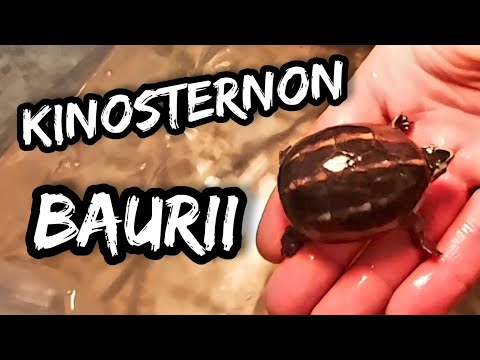
Striped mud turtle
- Kinosternon baurii
Origin: United States
Gender: Kinosternon
Life expectancy: 50 years
Length: 10 - 12 cm.
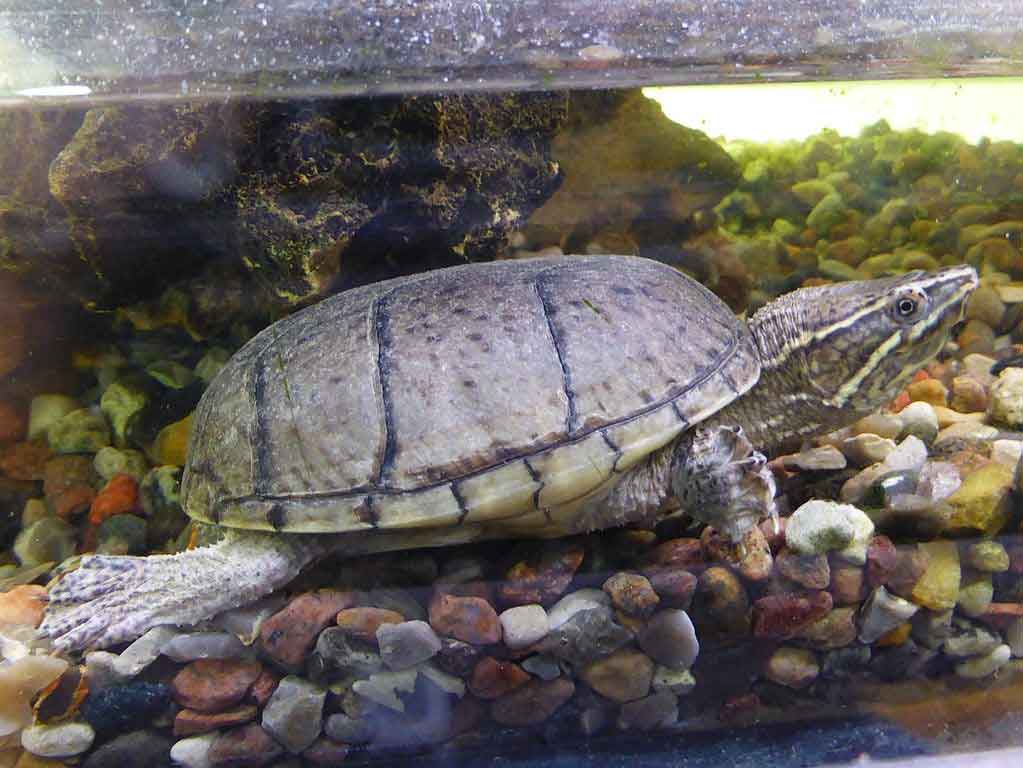
The Striped mud turtle inhabits stagnant and slow-flowing waters of all kinds, including temporary.
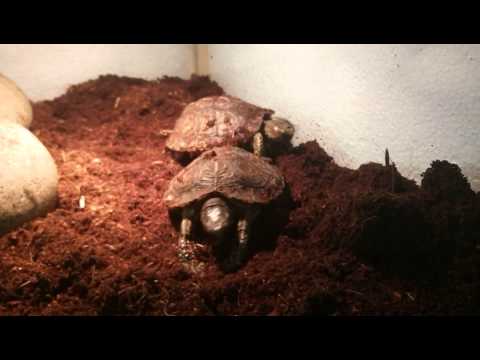
Kinosternon baurii au Vivarium Elapsoidea (Meyrin, Geneva, Switzerland) – Totodu74, CC BY-SA 3.0, via Wikimedia Commons
Content
Origin / Distribution
The Striped mud turtle (Kinosternon baurii) is native to the southeastern United States. The main distribution area is the Florida panhandle, but the species is also present in the coastal lowlands of South Carolina, Georgia, Alabama, North Carolina and Virginia. In general, the species is considered common and not endangered, and is not subject to trade restrictions or species protection laws. But, the local population of the Florida Keys is threatened by the destruction of the biotope and, therefore, has been placed under protection in the United States. Trade has no impact on natural populations.
Characteristics / Appearance
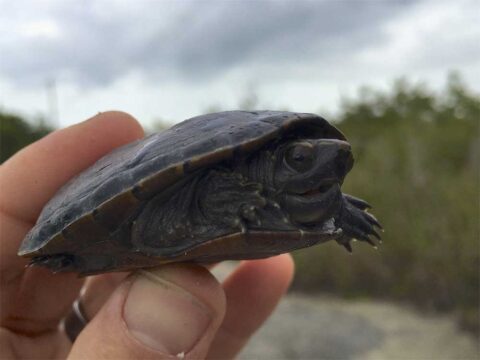
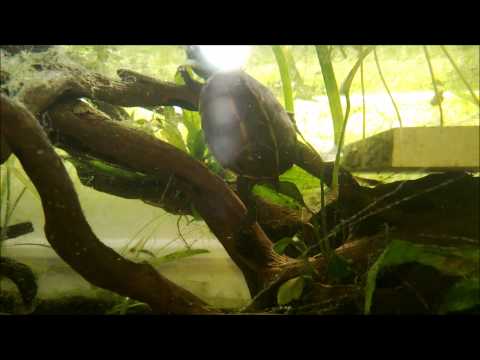
The Striped mud turtle it has an oval shape and a dark brown or black shell. The skin is dark and the underside of the shell is slightly yellowish.. In most places in Florida, animals have stripes on their shells that give them their names. But, there are regions where these turtles continue to have signs of these stripes or do not have any. this is known, for example, by populations of the Everglades.
These reptiles usually have two distinct stripes on their heads on each side.. This goes practically through the eye to the tip of the nose. Females have longer tails that are slightly bent at the end.. It is assumed that this fold serves to better cling to the female when courting and mating..
With a maximum shell length of only 12 cm in females, males are even smaller, about 10 cm., this turtle is really small. These are already record dimensions; females reach sexual maturity when they measure about 7-8 cm long and have 5-6 years.
Habitat
The Striped mud turtle inhabits stagnant and slow-flowing waters of all kinds, including temporary. If such a pond dries up, animals change habitat. Migrations of up to 3,5 km. They also look for the preferred places for laying eggs.. Thus, the Striped mud turtle, is unfortunately a frequent victim in road traffic.
Behavior
These little turtles are omnivorous by nature and feed on palm seeds, algae, insects, snails and the like. For its part, They are common prey for alligators and birds of prey such as the snail kite.. The small hatchlings and eggs are eaten by a large number of animals, which the turtles compensate with a very high reproductive rate.
A female can produce up to six (normally: three) broods per year with 1-6 (normally: 2-3) eggs each. The eggs are huge compared to the mother, one wonders how they fit in little mama. Eggs need between 80 and 145 days to mature, and only grow at temperatures between 28 y 30ºC. If the temperature drops to 22.5-24°C, the embryo pauses in its development. The pups measure between 2 and 2,5 cm in length and weigh between 2,1 and 3,9 g..
The "Striped mud turtle" in captivity
This Striped mud turtle (Kinosternon baurii) was one of six mud turtles observed on two islands in the Florida Keys during a survey in January 2016. This listed reptile is one of seven species targeted during this study. Foto de Jonathan Mays – Flickr
Aquaterrarium
The minimum size of the aquaterrarium for the care of a single animal is three times the length of the carapace as the length of the tank, one and a half times the length of the shell as the width of the tank and two times the height of the shell as the water level. For a single animal this means (with a maximum carapace length of 12 cm.) a background surface of 36 x 18 cm with a water level of about 10-12 cm.. But, you will hardly be able to keep a turtle in such a small aquarium. But, a standard aquarium of 60 cm is absolutely sufficient to create a well-structured living environment for the little turtle. The following principles are very important: The Striped mud turtle climb and run instead of swimming. So, the water surface must always be easily accessible and the water level must not exceed 20 cm..
Aquaterrarium decoration
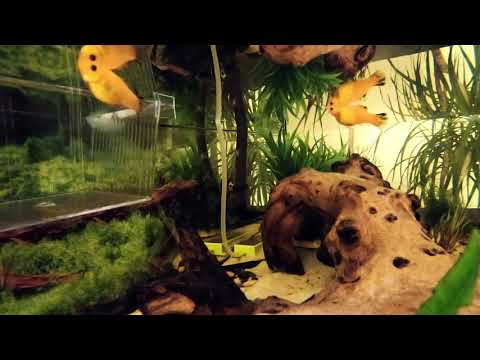
Waterproof roots and round stones are suitable for furnishings. The substrate should consist of a layer of fine sand of about 5 height cm, since animals like to dig. Many specimens only come out of the water to lay their eggs.. But, this varies greatly from one individual to another and, therefore, must be tested: add a piece of floating decorative cork to the tank. If you visit this part of land, a fixed part of earth must be installed, which may consist of a plastic bowl suspended and filled with sand, for example.
Illumination
On the ground part can be installed a weak focus under which a temperature of 30-35°C is reached. The uv need of these turtles is low; a commercially available fluorescent terrarium tube with a UV component is perfectly suitable. A too bright location of the aquaterrarium should be avoided.
Temperature
The water temperature should oscillate between 22 and 26°C from February to November, with 14 daylight hours. A hibernation period of about two months with only a few 8 daylight hours (this is much more decisive for the start of hibernation, that is regulated by hormones, than temperature) at 12-15°C is very favorable for keeping turtles healthy for many years and for reproduction.
Individual maintenance, as a couple or in a group?
In principle, It is best to keep all swamp turtles alone. The males are very incompatible with each other and can drive the females crazy by their constant willingness to mate.. Females also prostitute themselves sometimes with violence against each other. But, this varies greatly from individual to individual. You can be very lucky and buy a pair that will get along very well, but unfortunately you can't trust it. Sometimes, the animals only split up after years of peaceful coexistence. This is said to occur even in humans…
In principle, you should have as many tanks as animals you want to have, so you can elegantly avoid all difficulties from the beginning and you can react quickly if necessary.
for breeding, the female is put with the male, which usually bears fruit very quickly. In this way we have a fertilization rate of almost 100%, while annoying females often do not take care of themselves if they are kept together for a long time.
Unlike many other reptiles, females are not at all demanding when it comes to laying eggs. They gladly accept the sand-filled dirt area described above. At worst, they will simply lay the eggs in the water, but don't let it go to that extreme. By the way, females that stand alone also produce eggs (unfertilized, of course). It's like with chickens, they don't need a rooster to produce eggs for breakfast.
The most exciting and beautiful thing is to keep the turtles together with the fish.. First of all, the aquarium becomes more attractive - there are more things in it- and, in the second place, fish realize very quickly when something goes wrong in the water. The right species for the biotope are, for example, the Jordanella floridae (Jordanella floridae), the Least killifish (Heterandria formosa), the Blackbanded sunfish (Enneacathus chaetodon) or the Everglades pygmy sunfish (Elassoma evergladei).
If you are lucky enough to have the Sailfin molly (Poecilia latipinna), You will see how these creatures, otherwise delicate, become authentic beauties. For reasons that are still unknown, the Sailfin molly they develop exceptionally well when kept next to turtles. Of course, the selection of fish species is not limited to those mentioned. Only the slow fish that live on the bottom, as the Whiptail catfish (Rineloricaria fallax, etc.), should not live with turtles. As a rule, fish are safe from small shell carriers; at most, weak or sick specimens become their victims, but that doesn't matter.
Food
The Striped mud turtle is more carnivorous than omnivorous. It is advisable to grow duckweed, especially the large species Spirodela polyrhiza, in the tank. Like this, they are simply available as food when turtles feel like vegetarian food. Otherwise, feeding is very easy, because Kinosternon baurii is not demanding. But, food should always be absolutely fresh and of high quality. It doesn't matter if it's industrially produced food for swamp and water turtles or frozen food..
Vitamins and valuable unsaturated fatty acids are destroyed more quickly than many people realize. Here we continue to sin a lot. Always buy food in small containers. Dry food should be consumed at the latest 6 weeks after opening the can, and frozen food after about half a year. Dry food should never be stored in a bright place, warm and humid. They should always be stored in an airtight container, in a dark and cool place.
If properly cared for, these friendly dwarfs hardly cause problems and give years of pleasure to their caregiver.
Buy one "Striped mud turtle"
The price of a "Striped mud turtle" ranges between 130 – 160 EUR.
1. Striped mud turtle (English).
2. Tortue de boue rayée (French).
3. Dreistreifen-Klappschildkröte (German).
4. Tartaruga de lama listrada (Portuguese).
5. "Tortuga de pantano rayada" (español).
▷ The world of Pets: Dogs, cats, birds, reptiles, amphibians
True toad and Narrow-mouthed frogs
- Bufonidae and Microhylidae
Origin: Everyone
Gender: Anura
Life expectancy: 10 years
Length: 5 - 25 cm.
some species (for example, the Phrynomantis and more toads) can produce a poisonous skin discharge and should never be handled with bare hands.
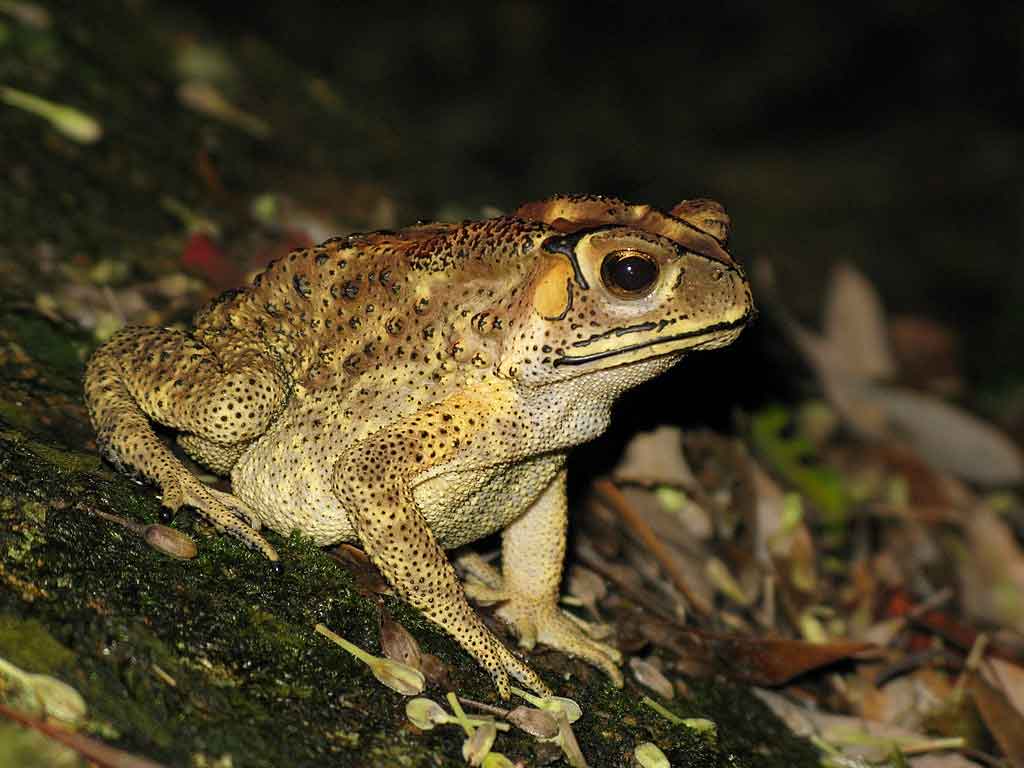
common asian toad (Duttaphrynus melanostictus)
Content
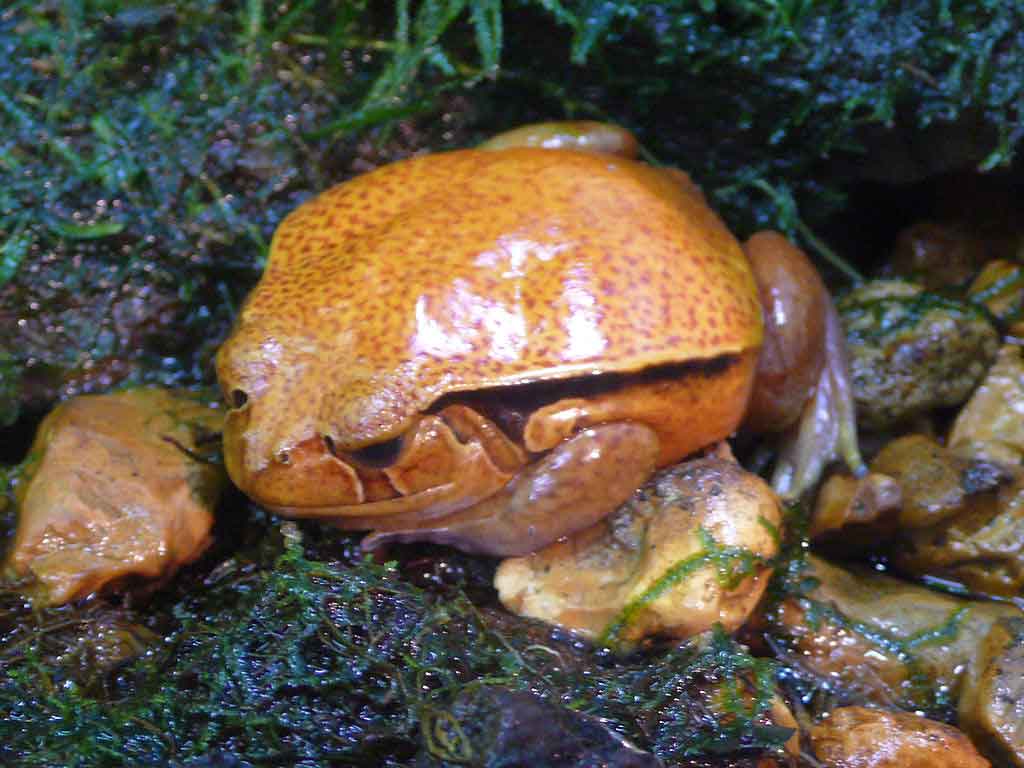
Several representatives of the Toads (Bufonidae) and narrow-mouthed frogs (Microhylidae) are regularly offered in pet stores. The toads Frequently encountered are the following the common asian toad (Duttaphrynus (Bufo) melanostictus) and the North American green toad (Anaxyrus (Bufo) debilis), as well as the false tomato frog (Dyscophus guineti), the Banded bullfrog (Kaloula pulchra) and banded rubber frog (Phrynomantis bifasciatus). Buying wild-caught specimens in favor of captive-bred should always be avoided.
Sex differences
Differentiation of the sexes is only possible in sexually mature animals. The males are usually smaller and in many species they develop calluses on the toes of the front legs.. Males ready to mate call, sometimes very strongly and persistently.
Behavior
The True toad and Narrow-mouthed frogs do not show pronounced social behavior. Most of them are peaceful with each other and can be kept individually, in pairs or groups. But, animals must not differ significantly in size.
The True toad and Narrow-mouthed frogs are mostly crepuscular or nocturnal.
Terrarium
Rana tomate de Madagascar – TimVickers, Public domain, via Wikimedia Commons
Most species like to burrow and need a substrate of corresponding height. One terrarium for a single specimen of the smallest species (for example, the green dwarf toad) should have a floor space of at least 30 x 40 cm., for various animals of 60 x 40 cm.. In the case of the larger species (as the common asian toad, very active), the terrarium should not measure less than 80 x 50 cm. (length x WIDTH) for a single animal or 100 x 50 cm for several specimens. For species that grow a lot (for example, the Cane toad – Rhinella marina), are needed terrariums much bigger. Height terrarium (at least 30 cm.) not especially important for animals that live on the ground.
Fluorescent tubes with a daily lighting time of 10 to 12 hours are suitable for lighting. The optimum is a slight temperature gradient in the terrarium of about 23 – 28 °C with a humidity of 70 % approximately. This can be achieved by spraying the terrarium daily.. At night, the temperature should drop a bit for many species (normally not below 20 °C) and, at the same time, humidity should rise to 90 – 95 %. For the basic temperature, weak heating mats can be used, installed outside the terrarium. They can be used to heat the floor (at most one third of the soil surface!) or the walls. With the help of a thermocontroller, the heating mat can be specifically controlled to prevent overheating. Precise thermometers and hygrometers are needed to measure temperature and humidity.
The height of the excavatable substrate (for example, a terrarium soil mix, bark mulch, moss) must allow animals to fully excavate. The substrate should be slightly damp after daily spraying and should never dry out completely.. We must also avoid waterlogging.
Additional withdrawals (for example, coconut shells), a shallow water basin and natural planting complete the assembly.
Diet
Animals prefer to feed on live insects (crickets, crickets, grasshopper, cockroaches, etc.), worms and slugs. Regular administration of a mineral supplement ensures healthy bone growth. Mealworms, zophobas and wax moths should be fed only rarely due to their high protein and fat content.
Caution: many True toad and Narrow-mouthed frogs tend to gain weight. In the case of adult animals, it is enough to feed them every two or three days.
Care
Food scraps and feces should be removed daily. Animals usually defecate in their own hiding place, so the substrate must be changed regularly. The water bowls should also be cleaned daily and filled with fresh water.
Animal health must be monitored daily. The most common health problems in frogs are softening of the bones, emaciation or fatty degeneration and, above all, changes in the skin (for example, red discoloration of the skin). If there is any abnormality, consult a veterinarian who is familiar with amphibians.
Acclimatization and handling
Amphibians are animals of pure observation and should NOT be petted. In the first days in his new home, animals need some rest to get used to their new environment.
Due to the sensitivity of your skin, amphibians should only be touched in exceptional cases. Only the largest animals can be caught directly by hand. The use of disposable gloves is recommended (moistened). The smallest animals, on the other hand, should always be captured with the help of plastic containers or similar.
Special features
some species (for example, the Phrynomantis and more toads) can produce a poisonous skin discharge and should never be handled with bare hands. Protective gloves should be used for the care and handling of animals..
Attention: all native amphibian species are protected species and should not be taken from the wild. At the 17th CITES Conference of the Parties, held in the fall of 2016, the false tomato frog (Dyscophus guineti) came under the protection of the species (Appendix II). This regulation will soon be transferred to European legislation (obligation to inform, proof of origin required).
▷ The world of Pets: Dogs, cats, birds, reptiles, amphibians
Tree frogs
- Hylidae
Origin: America, Eurasia and North Africa
Gender: Hylidae
Life expectancy: 5 - 12 years
Length: 6 - 14 cm.
The tree frog has a slightly toxic skin discharge that can cause irritation when it comes in contact with human skin.
The tree frogs they are found worldwide in a wide variety of species and have characteristic sticky discs on their toes. These excellent climbers mainly inhabit trees and shrubs.
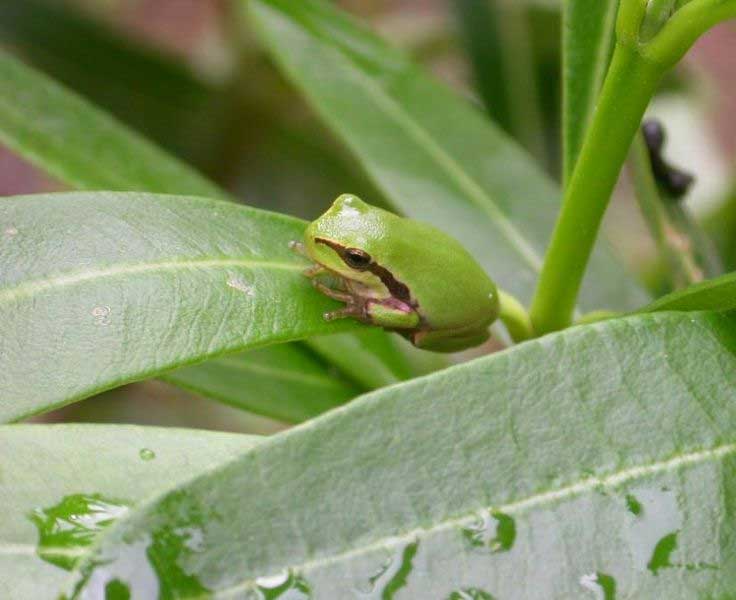
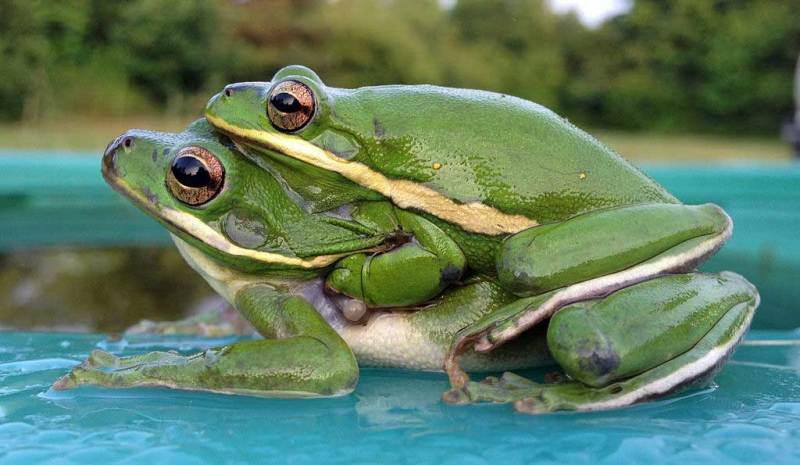
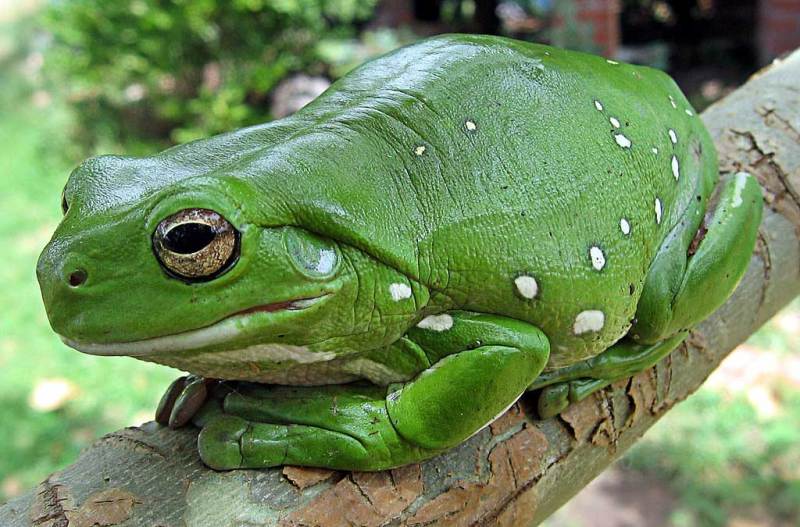
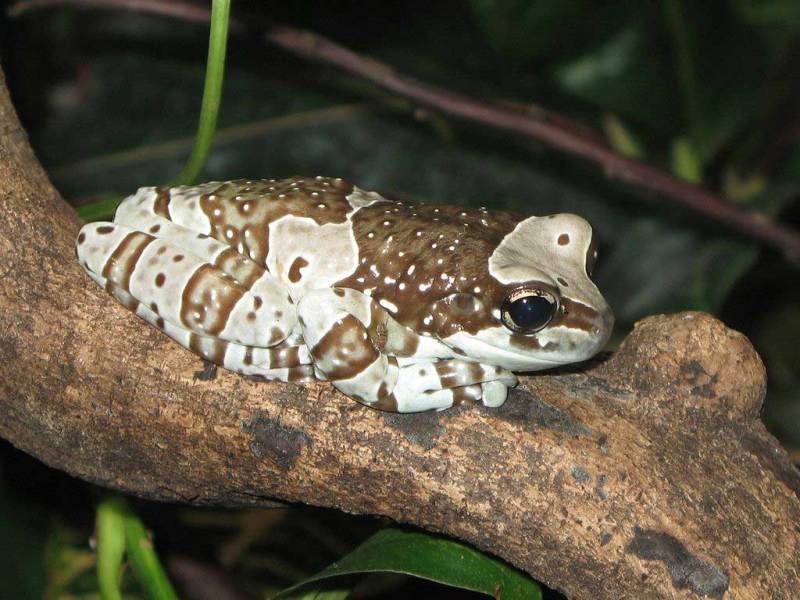
Among the most popular species are the American green tree frog (Hyla cinerea), the gray treefrog (Hyla versicolor), the Australian green tree frog (Litoria caerulea), the mission golden-eyed tree frog (Trachycephalus resinifictrix), the northern orange-legged leaf frog (Phyllomedusa hypochondrialis) and red-eyed tree frog (Agalychnis callidryas).
These species, as well as some others tree frogs, increasingly offered as captive breeds; However, wild-caught frogs are still common on the market. Wherever possible, you have to opt for species bred in captivity.
Images "Tree frogs"
Hyla
cinerea
Hyla
versicolor
Litoria
caerulea
Trachycephalus
resinifictrix
Phyllomedusa
hypochondrialis
Phyllomedusa
hypochondrialis
Sex differences
The sexes can be distinguished in many species by the coloration of the throat, which is usually more striking (yellowish to black) in sexually mature males than in females (from white to gray). Females tend to grow slightly larger than males.. Males ready to mate call, sometimes very strongly and persistently.
Behavior
The tree frogs do not show social behavior and can stand alone, in pairs or groups in well structured terrariums. Do not socialize different species or animals with clear differences in size. Each animal must have enough places to sit, rest and hide. The tree frogs they are mainly twilight and night.
Terrarium
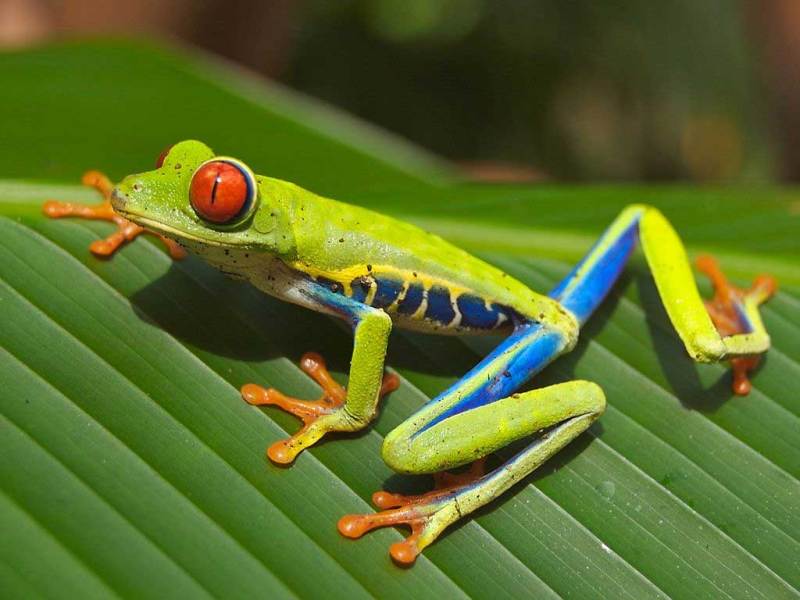
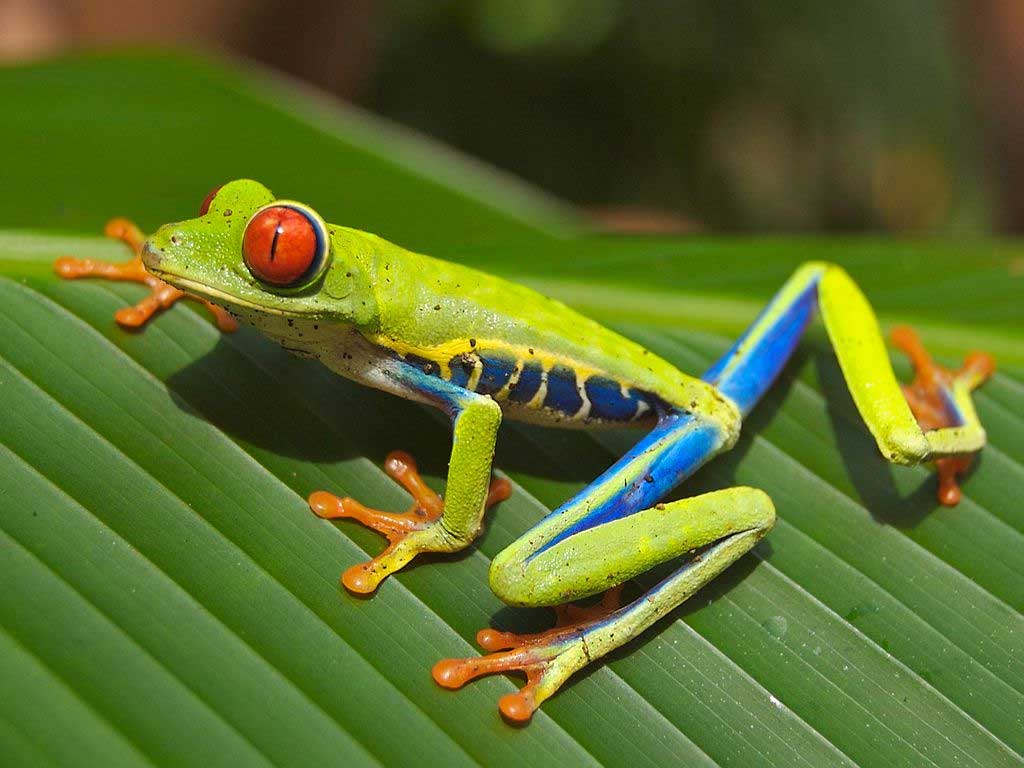
Red-eyed green frog (Agalychnis callidryas), photographed near Jaco Beach in Costa Rica – Careyjamesbalboa (Carey James Balboa), Public domain, via Wikimedia Commons
One terrarium for tree frogs must always be tall enough, for example, 60 x 40 x 60 cm. (length x widht x hight) for smaller species, as the American green tree frog (Hyla cinerea), and 100 x 40 x 80 cm. (length x widht x hight) for larger frogs like the Australian green tree frog (Litoria caerulea), each for a maximum of 4 animals. Caution: non-acclimatized animals tend to jump against the glass with great force and injure themselves, especially on the head and muzzle.
Fluorescent tubes with a daily lighting time of 10 to 12 hours are suitable for lighting. The temperature can be regulated with the help of a suitable heating mat, which is fixed to the rear wall from the outside. For most species, a slight temperature gradient in the terrarium of about 22 to 28 °C (max. 24 °C for subtropical species) with a humidity of 60 to the 70 %. At night, the temperature should drop to about 20 °C; at the same time, humidity can rise up to 90 or the 95 % for tropical species. This can be achieved by spraying the terrarium with warm water or using a sprinkler system.. For the basic temperature, weak heating mats can be used, installed outside the terrarium. They can be used to heat the floor (at most one third of the soil surface!) or the walls. With the help of a thermocontroller, the heating mat can be specifically controlled to prevent overheating. Precise thermometers and hydrometers are needed to measure temperature and humidity.
For climbing animals, 2, preferably 3 sides of the terrarium should be covered with cork or similar. climbing facilities, like roots, lianas, remained, etc., have proven their effectiveness. Hollow bamboo sticks and cork tubes are popular hiding places. Depending on the species, a shallow water basin in which animals can also bathe or a larger basin of water (for example, for the Australian green tree frog – Litoria caerulea) it is also part of the basic equipment. Terrarium soil or coconut substrate are suitable as a substrate. The substrate should always be kept slightly moist. Natural planting creates additional retreat possibilities and ensures uniform and increasing humidity.
Diet
The tree frogs they feed exclusively on small live animals. The insects (crickets, crickets, Little grasshoppers, etc.) make up the main part of your diet, but many species also like to eat worms or slugs. Regular administration of a mineral supplement ensures healthy bone growth. Mealworms, Zophobas or wax moths should only be fed rarely due to their high protein and fat content. For the adults of the larger species it is sufficient to feed each 2 or 3 days. The Australian green tree frog – Litoria caerulea) you tend to become obese due to your lazy lifestyle
Care
Food scraps and droppings should be removed daily. The water bowls should also be cleaned daily and filled with fresh water.
Animal health must be monitored daily. The most frequent health problems in the tree frogs are the softening of the bones, emaciation and changes in skin and stools. If there is any abnormality, consult a veterinarian who is familiar with amphibians.
Acclimatization and handling
Amphibians are animals of pure observation and NOT must be caressed. In the first days in his new home, animals need adequate rest to get used to their new environment. Due to the sensitivity of your skin, it is recommended to capture the tree frogs only with the help of small containers.
Special features
The tree frog has a slightly toxic skin discharge that can cause irritation when it comes in contact with human skin (protective gloves!).
According to the area of origin, controlled hibernation can have a vitality-boosting effect. American and Asian tree frog species from temperate climates should not be placed in the garden pond under any circumstances, since there is a danger that the fauna will be distorted.
Attention: all native amphibian species are protected species and should not be taken from the wild. But, most species of tree frogs Non-native species are not subject to the species protection law. But, the red-eyed tree frog (Agalychnis callidryas), for example, is subject to registration and proof of origin is required.








_juvenile.jpg)
_head.jpg)


.jpg)

