▷ The world of Pets: Dogs, cats, birds, reptiles, amphibians
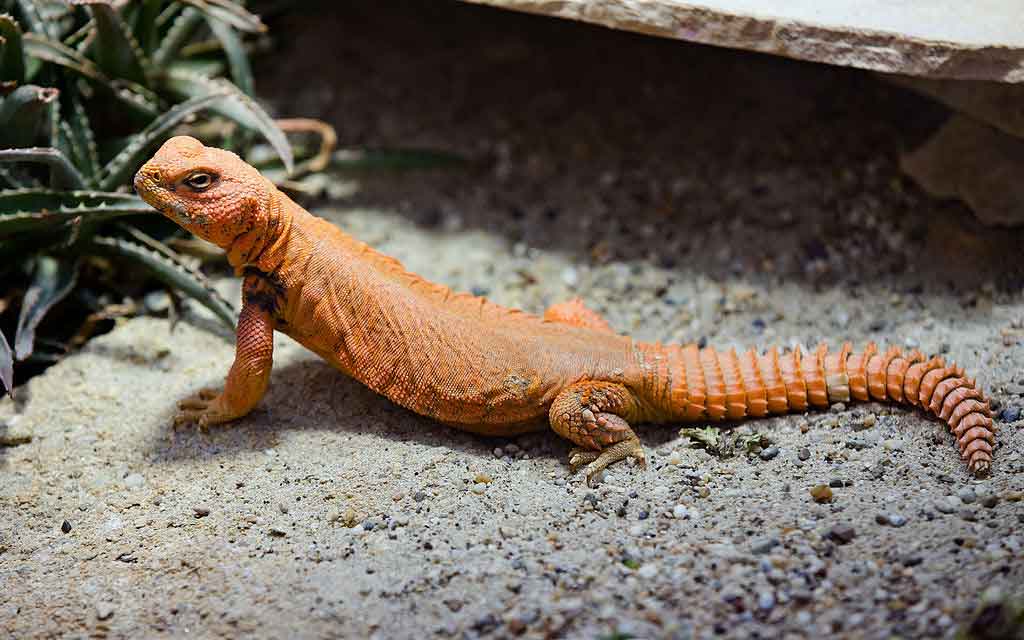
Saharan spiny-tailed lizard
- Uromastyx geyri
Origin: Algeria, Mali and Nigeria
Gender: Uromastyx
Life expectancy: 20 years
Length: 35 cm.
The Saharan spiny-tailed lizard it is a relatively small and slender species for the genus, with an average total length (including the queue) of about 34 cm..
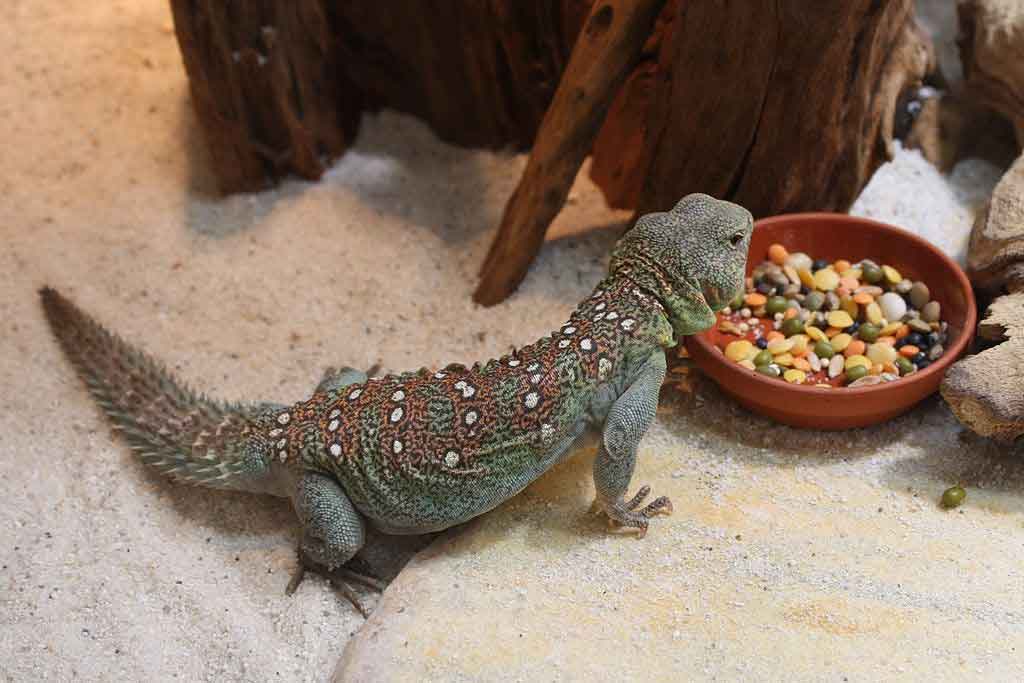
Saharan spiny-tailed lizard, Flower Gardens Hirschstetten in Vienna, Austria.
Content
Origin
The Saharan spiny-tailed lizard (Uromastyx geyri) is a lizard native to the north of Mali, southern Algeria and northern Niger. Two different color shapes are known (red or yellow).
Characteristics
The Saharan spiny-tailed lizard it is a relatively small and slender species for the genus, with an average total length (including the queue) of about 34 cm.. This lizard is usually beige or orange with lighter spots.
It is one of the brightest colored species in the genus. Uromastyx. There are two colors of the Uromastyx geyri, the "red" and "yellow" variety, being the color its only difference.
The variety red it is often reddish in color almost solid to orange neon pumpkin, and the yellow phase is in or near a neon range. Females are a paler color than males, showing more variations of tan coloration and much less coloration in the belly, as well as less vivid patterns, most females have a simple "freckle" on their back.
The Saharan spiny-tailed lizard are medium-sized lizards, many of them with an average of 28-36 cm of total length and a weight of 250 grams or more as adults.
The "Saharan spiny-tailed lizard" in captivity
Terrarium
The Saharan spiny-tailed lizard they are very territorial in nature and keeping one male and several females is only possible in a large terrarium. It is best to keep them in pairs..
temperatures during the day: from 28° to 35°C (locally approx. 45°C)
Night temperatures: 18-22°C
Humidity: 40-60
Minimum size of the terrarium: starting at 140 x 100 x 120 cm for a couple
The terrarium must be furnished with numerous stones, some climbing possibilities such as thick branches, cork or bark tubes, which also offer many hiding places. To maintain this species properly, the terrarium needs a substrate of at least 20-30 height cm. Spray a little several times a week.
Illumination
For your well-being, good lighting and ultraviolet light are necessary (30% of UVA rays and 10-12% UVB), as well as a place to sunbathe. UV radiation is extremely important and absolutely necessary. In the case of females, it is absolutely necessary to have a suitable place for laying eggs or with several possibilities.
A lighting period of up to 14 hours a day (except during hibernation).
Hibernation
You have to let the animals hibernate for three or four months. As such, the Saharan spiny-tailed lizard they need between 12 y 18°C. Hibernation is very important for animals to regulate their bodily functions and stay healthy. It's also a good way to prevent obesity.
Food
The diet of the Saharan spiny-tailed lizard includes banana, vine leaves, dandelion, margaritas, clover, pamplinas, sometimes kitchen herbs and grains like corn, rice, millet, sunflower seeds and others. Young animals feed up to a 75% of animals. These may include, crickets, grasshopper, cockroaches, sometimes zophobas and other live food. Adults should be fed little or no animal food to prevent fatty degeneration..
no lettuce, iceberg lettuce or similar, since its calcium-phosphorus content is unfavorable. And cabbage or spinach should only be provided rarely because of oxalic acid.…
Fruit should also be provided only in moderation., if it is accepted.
Additional vitamin and mineral supplements are recommended.
For liquid intake, you can place a bowl of water that is cleaned daily.
Reproduction
Winter rest is very important for the young. The "Saharan spiny-tailed lizard" lay eggs. These should not be incubated too wet, otherwise they will easily turn into fungi. Young Uromastyx geyri can be raised together in a group for up to two years, provided they are compatible. It is absolutely necessary to take enough calcium and vitamin supplements.
For sale "Saharan spiny-tailed lizard"
The price of a Saharan spiny-tailed lizard, captive bred, at the exotic animal market, ranges between 100 – 120 EUR.
1. Geyr’s dabb lizard, Geyr’s spiny-tailed lizard, Sahara mastigure, Saharan spiny-tailed lizard, Yellow Niger Uromastyx, Saharan yellow uromastyx. (English).
2. Lézard de Geyr, Lézard à queue épineuse de Geyr, Mastigure du Sahara, Lézard à queue épineuse du Sahara, Uromastyx jaune du Niger, Uromastyx jaune du Sahara. (French).
3. Geyr-Krusteneidechse, Geyr-Stacheleidechse, Sahara-Mastigure, Sahara-Stacheleidechse, Gelber Niger-Uromastyx, Sahara-Gelb-Uromastyx (German).
4. Lagarto do Geyr, lagarto de cauda espinhosa do Geyr, mastigure do Sara, lagarto de cauda espinhosa do Sara, Uromastyx amarelo do Níger, uromastyx amarelo do Sara (Portuguese).
5. Lagarto de cola espinosa de Geyr, Lagarto de cola espinosa de Geyr, Mastigure del Sahara, Lagarto de cola espinosa del Sahara, Uromastyx amarillo del Níger, Uromastyx amarillo del Sahara (español).
▷ The world of Pets: Dogs, cats, birds, reptiles, amphibians
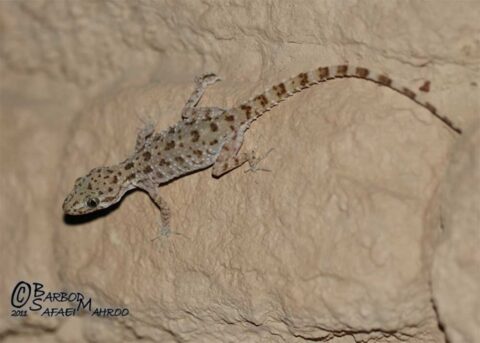
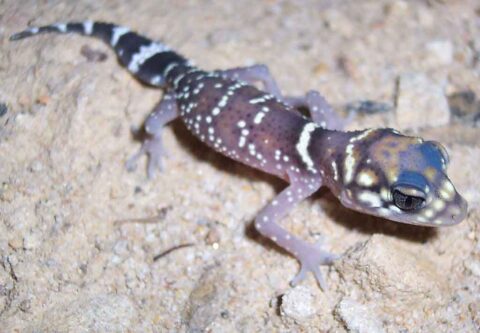
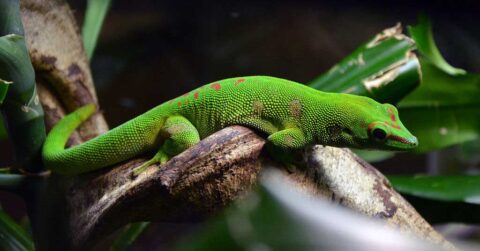
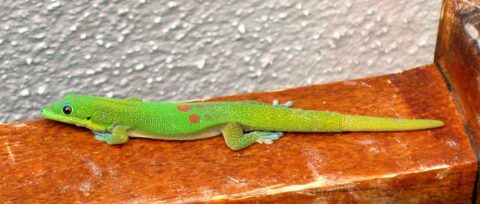
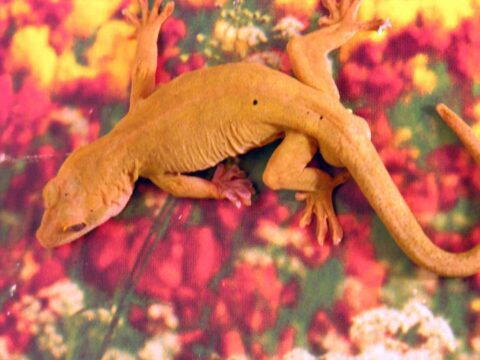
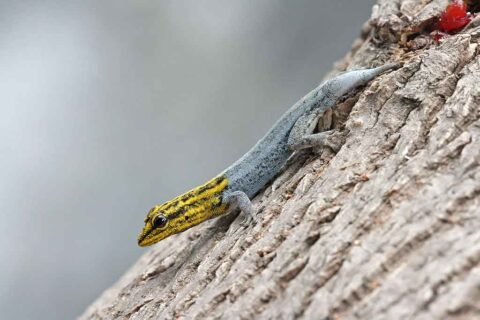
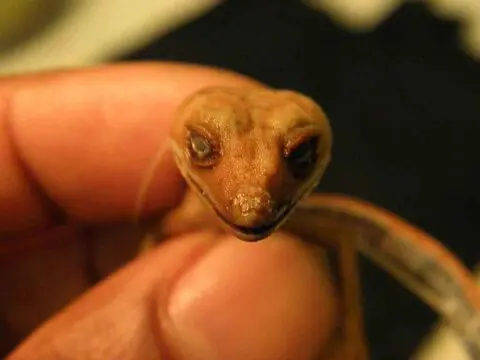
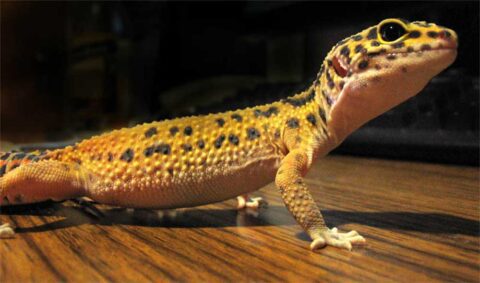
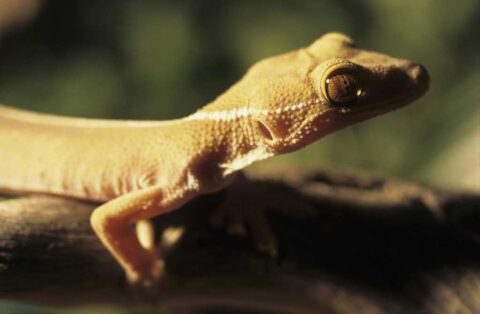
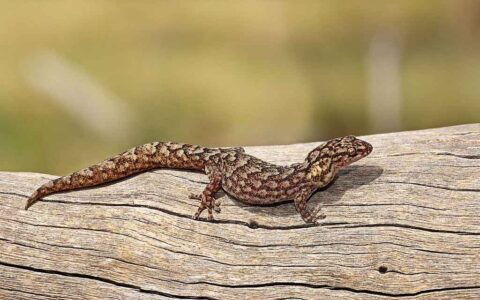
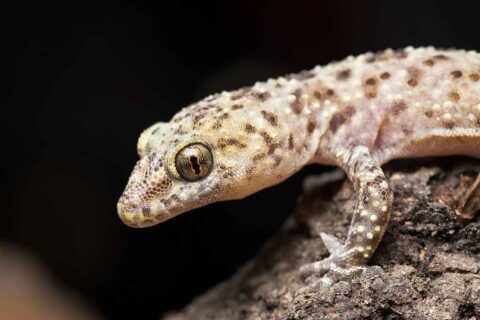
The Geckos are, without a doubt, fascinating animals. Although they are becoming more popular as pets, the Geckos they continue to enjoy a kind of exotic status. The following brief profile aims to introduce a little to these interesting reptiles.
Origin
The Geckos have an impressive adaptability. That is why there is no region of the world in which they are exclusively located.. The Geckos can be found both in temperate climate regions such as in the desert or in the tropics.
Social behaviour
In the wild, most species of Geckos live in loose associations. But, some species are also strictly solitary, and males and females only come together to mate. In pet ownership, the Geckos they are usually kept in groups of two or more per terrarium.
But, if you keep several Geckos in different terrariums, you will be able to observe very well the communication between the animals. If there are others Geckos in the same territory, greeting each other, will threaten or make courtship sounds.
As there are different species of Gecko, the physique of animals is sometimes very different. In total, the respective species reach a length of about 4 to 60 cm.. But, the species of Geckos smaller ones are especially suitable for keeping as pets, as they require less space.
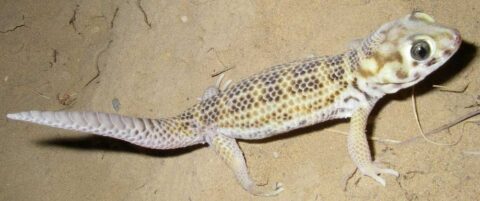
A special feature of the Geckos are its legs, since many species have adhesive sheets with which they can cling to very smooth objects or walk and climb them. Other species, However, have intermediate skins on their fingers and can walk on sand.
Life expectancy
As a rule, the Geckos they live between 8 and 15 years, but there are exceptions. The Leopard gecko, for example, can live 25 years. In principle, you can already tell by the size of the species of Gecko whether the animal can reach a longer life. The smaller a Gecko, the lower your life expectancy will be.
If the Geckos are kept as pets, their life expectancy depends mainly on the conditions in which they are maintained. Keep the Geckos in conditions that are not appropriate for the species usually causes premature death.
Sexual maturity
Sexual maturity in Geckos usually begins at 12-18 months, although there may be differences from one species to another. If the Geckos find abundance of food, females may reach sexual maturity before their physical development is complete. This fact can have fatal consequences for the Gecko.
Gestation period
As for the gestation period, also varies from species to species. In general, However, it can be said that the Geckos have a gestation period of about 45 to 60 days. Depending on the ambient temperature, can pass up to 80 days until hatching. But, in ideal conditions, it only takes a few 50 days.
Food
To maintain the health of the Geckos, depend on a varied and nutritious diet. Between the Geckos there are carnivores, herbivores, omnivores and scavengers. So, the diet can include both insects and snails, green foods and even smaller mammals.
Minimum space required
Before deciding on the terrarium size, you should know what kind of Gecko is and how many animals you want to have together. Basically, the necessary space depends on the body size of adult animals.
So, the species of Geckos smaller require less space than larger ones. If two are maintained Geckos in a terrarium, it is assumed that a minimum space of about 100 cm x 75 cm x 50 cm.. With each additional animal, the need for space increases a 50% more.
Frequently Asked Questions about Geckos
There are questions about the Geckos that are often done. We would like to answer some of them here.
Because the Geckos they can stick to smooth surfaces and thus climb walls?
The secret of the climbing ability of many species of Geckos resides on its special legs. The Geckos have millions of fine hairs on the soles of their feet. These hairs are so fine that even a human hair is hundreds of times thicker.. With the help of these hairs, unique in nature, the Gecko find a foothold even on the smoothest surfaces. This is because a weak electrostatic force acts at the molecular level between each of the tiny hairs and the surface.. For a single hair, this attraction is almost insignificant, but the large number of combined hairs ensures that the Geckos can adhere to almost anywhere.
How do geckos communicate?? do they make sounds?
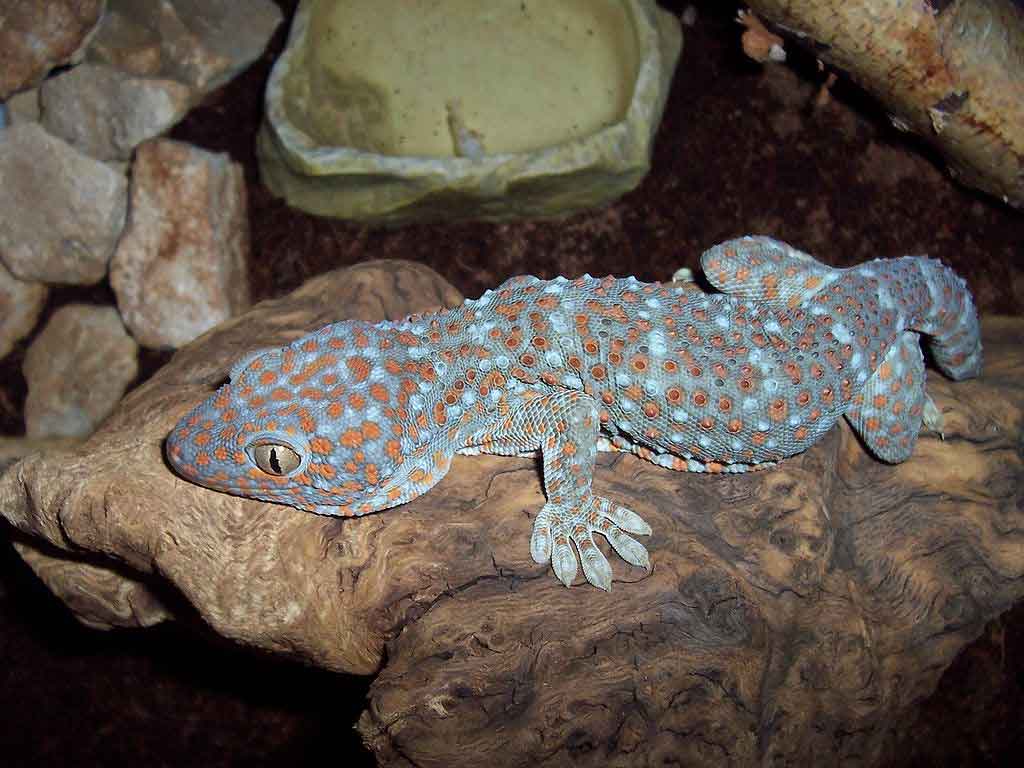
In fact, most species of Geckos they also communicate with each other using their own vocal language. So that, there are typical calls that can be used to clearly identify certain species of geckos (for example, the Tokay gecko (Gekko gecko)). The frequency and volume of the calls differ according to the species. And even within the same species there are individual differences from one animal to another..
Questions before buying a Gecko
Before buying Geckos, there are some basic questions you should ask yourself. It's important to know what you're getting into, because once you have them at home, you have to be prepared to take care of them for several years. During this time, not only will the costs of keeping the animals occur. Of course, the owner also has to invest a lot of work and time in maintaining the Geckos in a way appropriate to the species.
If you are not familiar with the Geckos as pets, first you should thoroughly inform yourself about the requirements for keeping these reptiles before buying them. Once the purchase decision has been made, the question of where you can buy geckos.
But before you do it, you should check if the Geckos are the right pet for you. And if it is suitable for keeping geckos at all. To avoid impulse purchases, you should take a little time and answer the following questions honestly:
I know what breeding is like Geckos appropriate to the species?
Work only starts with purchase. Am I willing to sacrifice time, money and space for animals?
The costs of breeding Geckos are easily underestimated due to their small size. can i afford to buy a Gecko?
The Geckos they can also get sick. Am I willing to pay for any veterinary treatment and medication and can I?
One terrarium needs space and special weather conditions. Do I have a suitable room to accommodate the animals?
The Geckos they are not stuffed animals. the characteristics of the Geckos fit my ideas about a pet?
The Geckos eat live animals. Am I prepared to buy and feed them myself?, and even to raise them?
What are the purchase and maintenance costs that I have to reckon with??
As already mentioned, many people underestimate the costs of maintaining Geckos of appropriate shape to the species due to its small size. But, the costs of keeping pets do not necessarily depend on their size, but of the demands they pose for their maintenance.
Basically, It can be said that the most "exotic" pets, including reptiles such as Geckos, tend to be more expensive to maintain. This is due to the fact that these exotic animals live in nature in completely different climatic conditions than those that prevail here.. The "simulation" of the natural habitat is correspondingly more complex and, Therefore, also more expensive.
Basically, you can distinguish between one-off costs (or rare) and regular to maintain the Geckos.
One-off costs
Acquisition costs of animals
Terrarium
Furnish
Illumination
Heating systems or thermal carpets
Humidifiers or irrigation systems
Thermometer
Hygrometer
Ordinary costs
Food
Minerals
Detergent
Soils
Illuminators
Electricity for heating and lighting
One-time or infrequent costs amount to approximately several hundred euros, because terrariums and the necessary technology are usually not exactly cheap. It also, there are the costs of buying the animals, in which you have to have some 30 to 100 euros per Gecko.
The usual costs of raising Geckos are somewhat minor, although they should not be underestimated. Food and electricity also cost money. And finally, but not less important, do not forget the veterinary expenses. Regular costs should be at least 20 to 50 euros per animal per month.
Are geckos suitable for children?
And again, parents make the mistake of buying their children a Gecko as a pet. They think that a Gecko It is something completely different and that your child will have a "special" pet. But not even the Gecko nor will the child enjoy this decision, because geckos are definitely not pets for children.
Like the Geckos require a lot of attention, knowledge and care, children would quickly be overwhelmed by them. It also, you must be able to ensure that you are aware of the requirements of the Gecko. And the Geckos they are not stuffed animals, although this claim is often used as a sales strategy in the pet trade.
Of course, there is nothing wrong with buying a Gecko and let the children have a part of the new cohabitant. But, children should not be left to take care of the Gecko solos.
Buy a gecko
The Geckos can be purchased in pet stores, to breeders or at reptile fairs. But, the best and safest option is to buy directly from the breeder. The breeder can often give you advice on breeding Geckos or offer help with any questions or problems. You can also ask the breeder to show you where the Geckos and thus decide for yourself whether the breeder is trustworthy and experienced in breeding Geckos.
At the time of buying Geckos, you must first observe the behavior of animals. Only if the Gecko seems to be healthy and alert you should take it home. In the breeder, you can usually take your time to look and then decide which gecko you like best.. You can also make an appointment with the breeder beforehand and see how the animal is fed..
Unfortunately, there are always black sheep among breeders who only take into account the economic aspect and do not care about animals. It is better to avoid this type of breeders, because each purchase guarantees the continuity of the system.
At the time of buying, pay special attention to whether the terrariums are clean, if the Geckos behave fearfully, if they have enough space and fresh water, and what is the feeding of the Geckos. As you already know what a gecko needs, now it's easy to find out if geckos go well where you want to buy them.
Once you have decided on a Gecko, notice the following:
light eyes
No wounds or scars
No deformities in the toes
Age and size
Properly fed
Acclimatization period after purchase
After taking the Gecko at home, you need time to get used to your new environment. It is important that you place the animal in the terrarium ready for use immediately after transport and then only observe or talk to you.. In no case should it be removed Gecko to play the first day. New animals must first settle in their unfamiliar environment and this is already stressful enough for the Geckos. If you start too early with pressure or even coercion, there is a risk that animals will react with fear and shyness.
So that the Gecko feel comfortable, the terrarium must be arranged appropriately to the species. If he Gecko has enough hiding places, will be installed faster. after a few days, you should try to attract the Gecko with food and, when sufficiently domesticated, you can try to get it out. If you're lucky, the Gecko it will come to your hand later on its own, but it's also possible that he's still shy. Both must be accepted, because in the end each animal is its own individual.
▷ The world of Pets: Dogs, cats, birds, reptiles, amphibians
Russian tortoise
- Testudo horsfieldii
Origin: Russia, Afghanistan, China, Pakistan, Kazakhstan, Turkmenistán y Uzbekistán.
Gender: Testudo
Life expectancy: 40 years
Length: 25 cm.
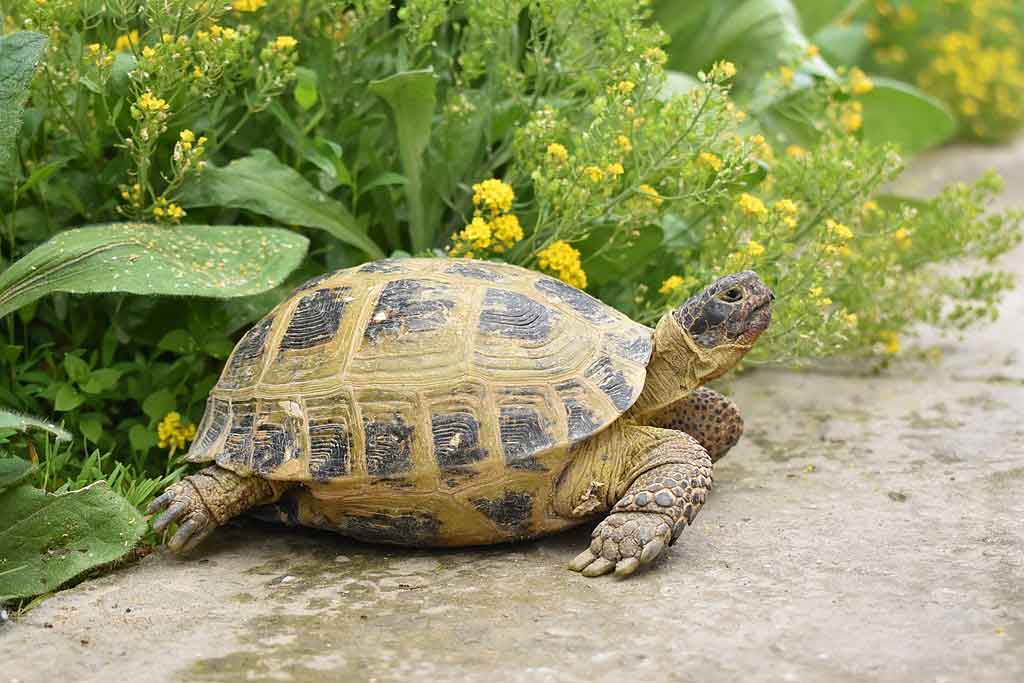
The Russian tortoise (Testudo horsfieldii) during very hot summers, they burrow to spend a period of summer dormancy. In countries where summers are mild, this rarely lasts longer than 3 weeks.
There are four subspecies of the Russian tortoise (Testudo horsfieldii), which can be found from the Caspian Sea, passing through Uzbekistan, Kazakhstan and Tajikistan, to eastern Iran and northern Afghanistan. Sometimes, the Russian tortoise can be found even as far away as western China.
Subspecies
This species is traditionally located in Testudo. Due to their clearly different morphological characteristics, in 1966 the monotypic genus was proposed for her Agrionemys. In the news, gender is accepted Agrionemys horsfieldii. DNA sequence analyses usually match, but not too solidly. Some sources also list four separate subspecies of Russian tortoise, but they are not widely accepted by taxonomists:
Agrionemys horsfieldii rustamovi (Chkhikvadze, Amiranashvili and Ataev, 1990) Turkmenistan, Iran.
Characteristics / Appearance
The species reaches a size of 15 cm. (males) some 25 cm., very rarely 28 body length cm (females) and then weighs between half a kilogram and two kilograms.
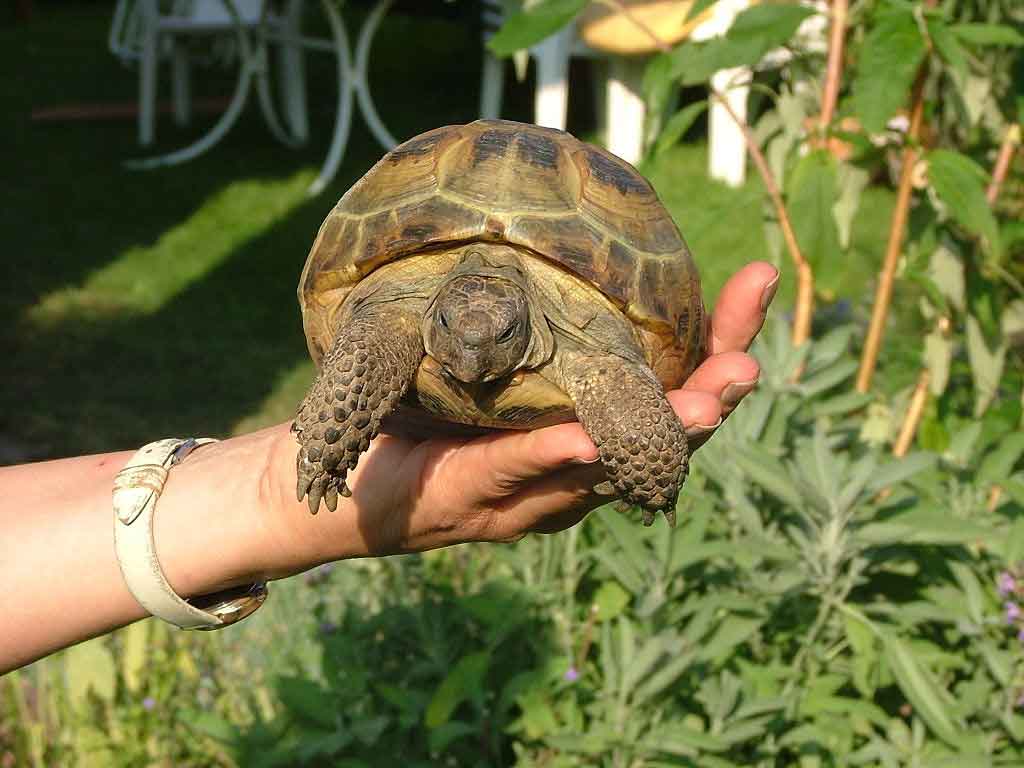
The rather small size of the Russian tortoise it's just a feature, but not one by which it can be definitively recognized. Another feature is the shell. Has an oval dorsal shell, almost circular, which is also quite flat. Much flatter than other species in the genus Testudo. A coloration between yellow and brown and also olive characterizes the basic color of the shell. It also, there are dark spots. The Russian tortoise has basically only four fingers. Other species usually have five fingers.
The male is recognized by his curved abdominal shell (concave), which makes it easier for you to get on the females and gives them a foothold. Males have a longer and thicker tail than females. On the other hand, females are much larger and have a very flat abdominal shell.
Habitat
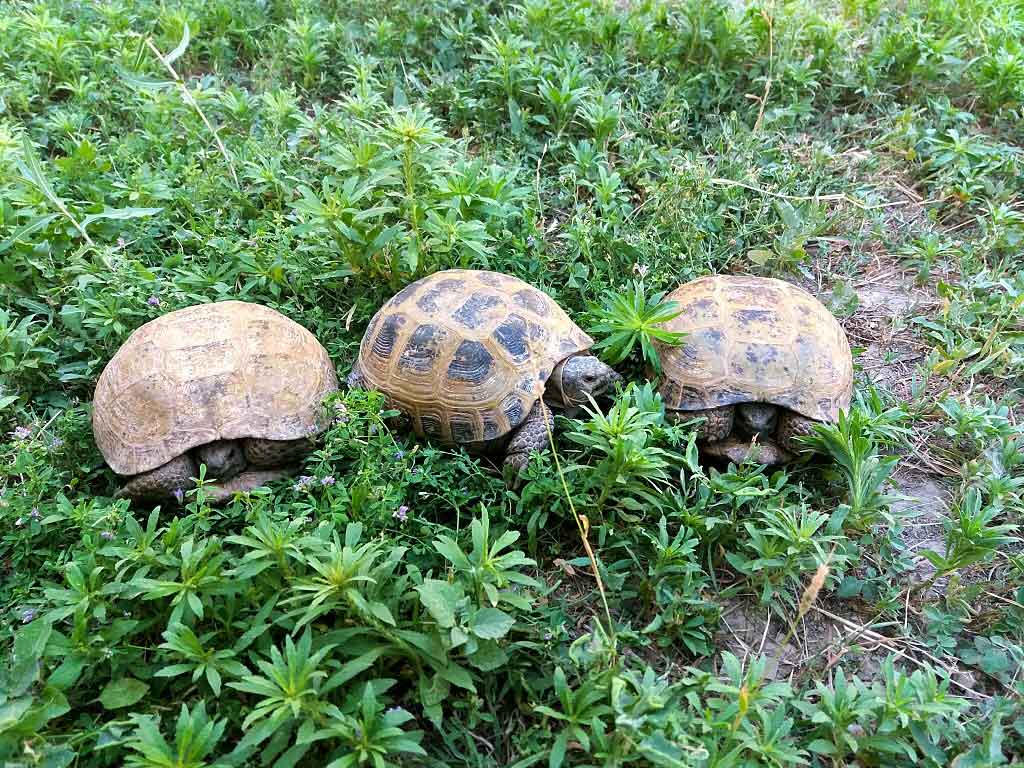
In their habitats there are always stony and arid tracts of land, so the Russian tortoise it also has its other name, "steppe tortoise". Adapts well in dry and arid areas. But, animals are most often found near rivers.
Behavior
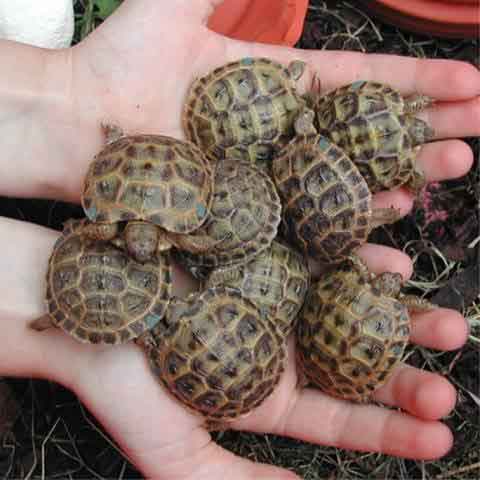
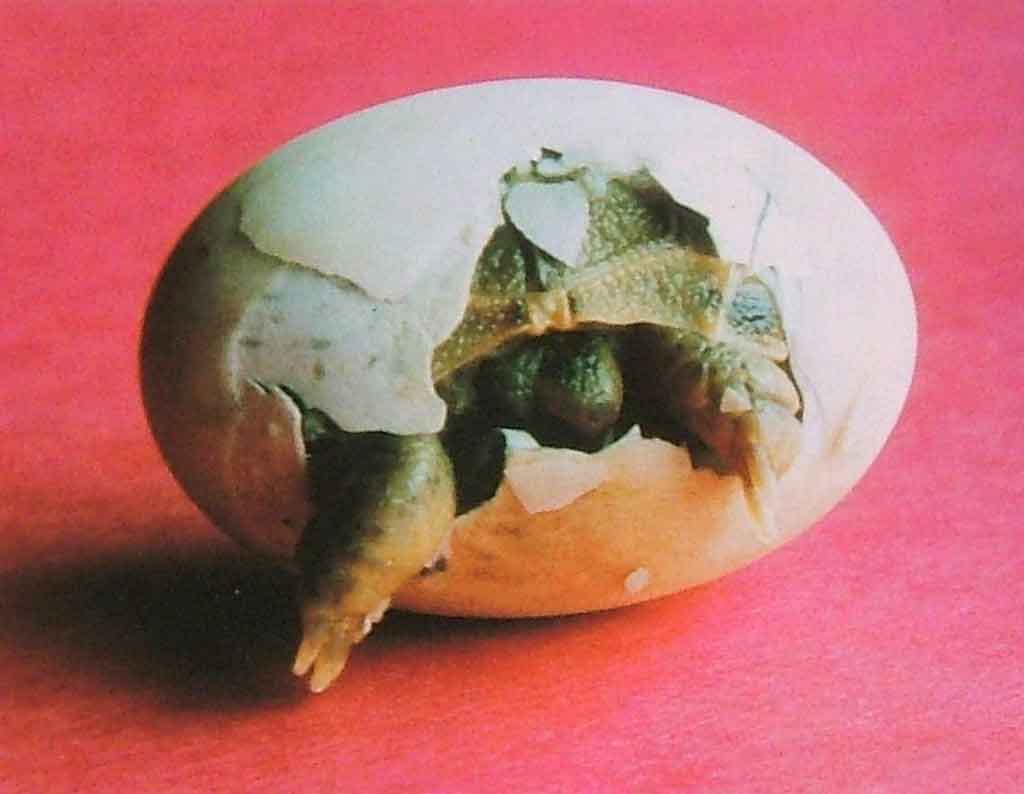
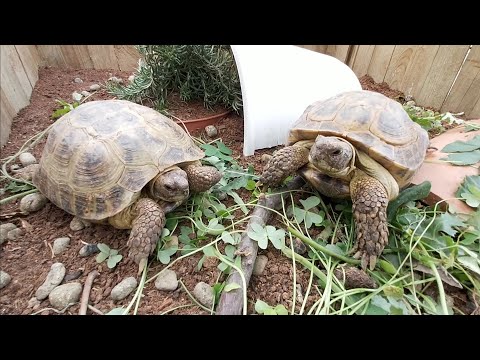
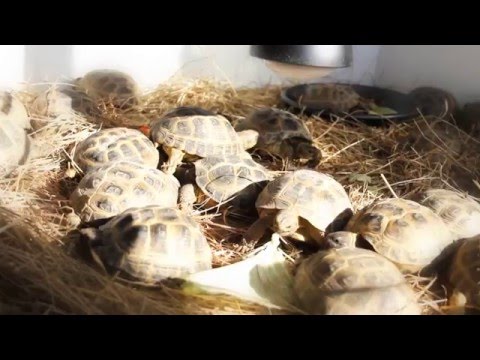
“Russian Tortoise” Hatchlings
The strong claws of the front legs and the flat shell allow the Russian tortoise (Testudo horsfieldii) dig burrows up to four meters long, that you use repeatedly. At night, when it's very hot, during summer and winter lethargy, takes refuge in them, as they provide you with security from predators and soil temperatures remain relatively constant. They are often seen sitting at the entrance of the cave in the morning., when the weather is uncertain. In your range, the continental climate is hot and dry in summer and wet and icy in winter. It is characterized by large daily and seasonal temperature swings of up to 40 °C, and often it doesn't rain in the middle of summer. These conditions demand enormous adaptability of animals in their arid habitats..
The hibernation lasts until mid to late March, until 6 months. No matter how harsh and cold the winters are, the warm season arrives quickly and without transition with an initial abundance of plants. These turtles only have three to five months to feed, grow and reproduce. With the increase in heat in early summer and the onset of drought, finding food during the day becomes increasingly difficult, so you have to take advantage of the morning and night hours for it. In the middle of summer, it is so hot and dry in many habitats that the animals go into a summer lethargy of one to two months. (aestivation) due to lack of food and heat and do not reappear until September, if at all. They take advantage of the short period until hibernation to look for food until they hibernate again in mid to late October due to nighttime temperatures, often very severe, below zero.
In the wild, sometimes occupy enormously large territories. They are common 10 hectares for a male and even 30 hectares for a female. So, turtles are rarely found. But, it is precisely these circumstances that make the Russian tortoise a highly specialized species that cannot cope with the usual breeding of a species of European turtle long-term.
Reproduction
When a male sees a female, approaches her in courtship plan. With the neck stretched out and the head nodding from top to bottom, the potential partner surrounds your chosen one. Finally, bites her front legs to force her to sit still. Males usually have a much longer tail with a nail on the tail, which can cause serious injury to the cloacal region of the female if mating attempts are too frequent.
During copulation, the male adopts an almost vertical position behind the female. At the same time, the male opens his mouth, the red, fleshy tongue becomes visible and emits picket sounds.
Females lay surprisingly large eggs between two and four weeks after mating, usually between 2 and 5 (up to a maximum of 9). Its shape is elongated-oval, of about 35-40 millimeters in length and about 15-20 g. of weight. The babies, almost round, hatch after sixty to a maximum of 100 days if eggs are artificially incubated at 28-32°C. A single successful mating is enough to fertilize the eggs of several clutches. For this reason, and by the huge and almost annoying mating desire of males, it makes sense in human care to keep males and females separate from each other outside of the actual mating season to ensure stress-free maintenance..
Conservation status and danger of extinction
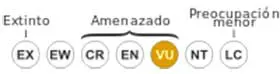
State of conservation ⓘ
Vulnerable ⓘ(UICN)ⓘ
Since 1975, this species is subject to the Washington Convention on International Trade in Endangered Species of Wild Fauna and Flora, where listed in Appendix II. EU Species Protection Regulation includes species in Appendix B. Thus, can only change ownership as a hatchling and only with a certificate of origin stating where and when the turtle was bred. It also, animals must be registered within the EU with the local authority responsible for the protection of species (= free).
IUCN classifies the Russian tortoise as "in danger" (VU, vulnerable).
In their natural habitats, the Russian tortoise is exposed to very contrasting climatic conditions. While in summer the heat causes even the summer lethargy of the animals, the Russian tortoise is forced to enter winter torpor every year in October due to temperatures of up to -21 °C.
In captivity, animals usually go into hibernation from mid-November at a temperature of between 2 °C y 4 °C. As such, turtles bury themselves in the ground. As such, turtles dig into the ground. The natural habitat allows tunnels of up to 2 m depth. In outdoor enclosures in captivity, the Russian tortoise is usually buried between 30 and 60 cm depth in the enclosure. As such, many caregivers create an additional hibernation pit, which is protected from predators from below and offers frost protection from above, for example by means of a greenhouse.
A constant temperature of 2°C to 4°C is important for the Russian tortoise. It should not be hotter than this for hibernation, otherwise proper hibernation will not occur. The Russian tortoise remains in hibernation in an outdoor enclosure for the same time as the Greek tortoise, for example. Normally they are 5 months. Many turtles come out of their burrows in spring, from the month of April, and become active quite quickly.
Food
The Russian tortoise it is herbivorous. Prefer dried herbs and grasses. The menu can also be completed with fresh vegetables. Should not be fed too much protein, as animals grow too fast and this can lead to shell deformation.
Buy one "Russian tortoise"
how much does one cost "Russian tortoise"?
Only animals raised in the EU can cross national borders and only these animals can be sold. Despite the fact that possession without official papers is allowed, the origin must be proved. So, if you buy one Russian tortoise, needs a proper proof of origin from the breeder. If the purchase is not made from the breeder but from an owner, he usually has such a certificate from the breeder and delivers it at the time of delivery.
We strongly discourage the purchase of a Russian tortoise (Testudo horsfieldii) without adequate proof of origin. If the origin and filiation are not correctly demonstrated, turtles can be confiscated.
Having said that, the price of a "Russian tortoise" in the exotic animal market ranges from 80 – 130 EUR.
Images "Russian tortoise"
A case of convergence. Gopherus flavomarginata (above) and Testudo horsfieldii (below). Both have flat shells and powerful arms.
Airtight tanks make it easy to dig into the ground. This makes soft tissues particularly visible.
Young people do not break the egg at the poles, but in the middle
Youth: a distinctive central keel on the shell recalls the appearance of earlier ancestors
Agrionemys horsfieldii
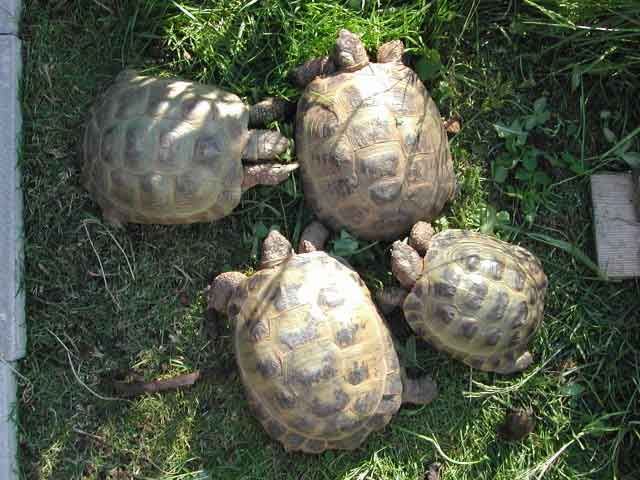
Male (medium) and two females
Videos "Russian tortoise"
tortoise Testudo horsfieldii o tortuga rusa en terrario exterior
1. Afghan tortoise, Central Asian tortoise, Horsfield’s tortoise, four-clawed tortoise, (Russian) steppe tortoise (English).
2. Tortue russe, Tortue des steppes (French).
3. Steppenschildkröte, Russische Landschildkröte (German).
4. tartaruga afegã, tartaruga da Ásia Central, tartaruga de Horsfield, tartaruga de quatro garras, e tartaruga de estepe (Portuguese).
5. Tortuga de la estepa, Tortuga Afgana, Tortuga de cuatro dedos (español).
▷ The world of Pets: Dogs, cats, birds, reptiles, amphibians
Pet Iguanas
- Iguanidae
Origin: United States, Mexico, Central America, Caribbean, South America, Madagascar y Fiyi
Gender: Iguanidae
Life expectancy: 10 - 20 years
Length: Until 2 m
Lau banded iguana (Brachylophus fasciatus) – H. Zell, CC BY-SA 3.0, via Wikimedia Commons
Content
Due to its comparatively simple breeding requirements, the iguanas are very popular, especially among beginners in reptile breeding in terrariums. Reptiles fascinate for their diversity of species, but they also require some special care that must be taken into account when choosing an animal. Here you can read more about the appearance, the origin and conservation of iguanas. Immerse yourself in the world of reptiles and learn exciting information about the different species.
Things You Should Know About Your Iguanas
Many species of iguanas live in the forests of South and Central America, preferring this warm and humid vegetation of the region, where they can be found climbing trees. But, depending on the species, these lizards also live on the ground or in rocky outcrops. Iguanas belong to the order of Pangolins and are closely related to the Chameleons and the Red-headed rock agama. In total, there is almost 40 different species, from the Common collared lizard (Crotaphytus collaris) until the Long-nosed leopard lizard (Gambelia wislizenii), which are divided into eight genera.
The iguanas differ in color and size. There are species that only grow a few centimeters, while others can reach a majestic total length of more than two meters. It is characteristic that the tail is longer than the body. In the color, the Green iguana (Iguana iguana) is especially known. But, may also have gray accents, blue, brown and even red on their scales. Males also change color from green to brown during the mating season..
The iguanas have a life expectancy of 10 to 20 years. You should take this fact into account before buying a iguana. It also, iguanas live in a social group in the wild and should not be kept alone at home. It is better to keep a pair or two females in combination with a male.
The optimal accommodation for iguanas
The iguanas need space, enough opportunities to climb and different levels of trees, branches and plants. How they can reach a total length of two meters at the time they fully grow, the enclosure must already offer enough space in advance for reptiles to develop freely. Hiding places are also part of the terrarium. Caves made of cork or other natural materials are suitable for this. Iguanas are also excellent swimmers. A combination of many climbing possibilities and a natural substrate with a water basin are ideal for reptiles.
Since iguanas come from warm and humid regions, a tropical climate is a basic requirement for the well-being of lizards. So, the terrarium should be heated and kept moist with an irrigation system. A humidity of the 90 % is optimal. The temperature must be higher than 35 degrees, but iguanas feel more comfortable at night if the temperature cools to a few 25 degrees.
Another important point in the optimal configuration of the terrarium is the light intensity, since this should not only be especially high, but also contain UV-A and UV-B irradiation.
What do iguanas eat??
Although it may seem that iguanas have rodents and other small animals on their daily menu, are purely vegetarian. An exception is very young iguanas, who eat small insects from time to time due to their higher protein needs. Otherwise, reptiles prefer leaves, the plants, fruits and vegetables. The ideal is a lettuce rich in nutrients and vitamins in a proportion of 80 % and fruits and vegetables in a proportion of 20 %. To meet calcium needs, cuttlefish bones or food supplements containing calcium are suitable.
Iguanas need a lot of attention
The maintenance of a iguana can be complex. These may include, reptiles take up a lot of space and require a coordinated technical system in the enclosure to achieve optimal weather conditions. Feeding is not usually complicated, but must be provided in the appropriate proportions.
Wide climbing possibilities are essential to keeping iguanas. Even outside the terrarium, an iguana can enjoy the fresh air in summer in a safe area of the garden, for example. It is important that nothing poisonous is found in its vicinity. Since variety is also part of the natural needs of an iguana, terrarium furniture can also be varied or reorganized regularly.
When it comes to cleaning, you have to take into account some things. Food and fresh water should be a matter of course every day. If there is a pile of water in the ground, reptiles can urinate on it when climbing. So, you should also make sure that the water is always fresh and clean..
In general, iguanas are popular pets and are suitable for beginners if cared for properly. But, your requirements and, above all, the space they need are huge. This should be considered before buying. With proper care, these lizards can also be tamed and bring joy to the whole family.
List of Iguanas for their maintenance in captivity
No entries found.
▷ The world of Pets: Dogs, cats, birds, reptiles, amphibians
Aquatic Turtle
Maintenance in captivity
Aquatic Turtle
Content
Keeping “Water Turtles” in the Garden Pond
Especially for the Aquatic Turtle bigger, keep them in a garden pond could be an optimal solution. Especially when you have several adult aquatic turtles, a aquaterrarium it is usually too small or a bigger one just too expensive.
Of course, the pond must be large enough and species-appropriate temperatures are a basic requirement.
According to the regulations for the conservation of nature and animals, the pond must be fenced. This is important because turtles are protected species.
The pond must be at least one meter deep, but there should also be shallow water areas.
Aquaterrarium – turtle farming
The aquaterrarium is a mixture of Aquarius and terrarium. The swamp and water turtles they mainly need a generous aquatic area, as they spend most of their time in the water.
The soil must have a surface area of at least 50 × 120 cm for a adult aquatic turtle.
The more turtles you have, the bigger the aquarium should be. The water must have a depth of at least 40 to 50 cm.. Also need a powerful filter and a heater.
A land part is also needed, because aquatic turtles also like to sunbathe. This should be as easy as possible for the turtles to reach., as buoyancy is scarce out of water.
Prefabricated aquariums usually have a platform with inclined access, which is also recommended.
The terrestrial part of the aquaterrarium should be large enough so that all aquatic turtles can sit there at the same time.
Equipment for the aquatic terrarium
For the aquatic terrarium a filter powerful, a heater, decorations for the aquarium, the floor and also the right lighting.
They can also be included plants in the aquatic terrarium. Since it needs to be cleaned frequently, the selected plant should be easy to care for and insensitive.
Recommended, for example, the plants Sansevieria, as they also increase the quality of the water. Another option is bamboo sticks, that take up little space.
Also keep in mind that an aquarium must have a firm base.. Also recommended is a aquarium furniture as a basis.
The lighting
The illumination is vitally important to keep turtles in a aquaterrarium. Lighting ensures simulation of species-appropriate day and night, and aquatic turtles also need to sunbathe from time to time.
The duration of lighting must be adapted to the annual rhythm.
Lighting illuminates the landing area (sunny area) and the island of asoleo in the aquaterrarium.
UV-B temperature should be 40-45°C in the landing zone so that body function can be maintained.
What food do aquatic turtles really need??
Diet is especially important for a turtle. Otherwise, keeping them is problematic. It is often assumed that the aquatic turtles are purely carnivorous.
But, the Aquatic Turtle they feed mainly on plants, although the meat (fish, insects) is an important part of your diet.
Many of the typical diseases of the Aquatic Turtle are the result of an incorrect diet, so a balanced diet is very important.
The ideal ratio of plant and animal food varies according to the species of aquatic turtle. It is worth doing more detailed research on this..
Feeding with prepared food should only be done to a limited extent.
Recommended food for aquatic turtles
The calcium and vitamin D3 are vital for Aquatic Turtle. The most popular plants for the diet are water lettuce, the duckweed, the Water lilies, the frog, the dandelion and pond liverwort.
Plant foods often lack vitamin D3, but this can be compensated by UV-B radiation.
The recommended animal feeds are the prawns, the snails, the common earthworm and also the brown prawns. To young turtles, in particular, like to hunt.
You can encourage them to eat a species-appropriate diet with May fly larvae, mosquito larvae or water fleas.
What a Water Turtle Shouldn't Eat
An incorrect diet can lead to illness or even death of the turtle. The fruit and vegetable should be avoided altogether, otherwise digestive problems may occur.
Maintenance of Water Turtles – hibernation
Not all aquatic turtles Hibernate, this should be clear to all caregivers.
It depends on the geographical origin of the species of aquatic turtle whether hibernation occurs or not. So, it is very important that the turtle species is correctly identified.
A basic distinction is made between:
Hibernating aquatic turtles
Aquatic turtles with a reduced activity phase and
Aquatic turtles from warm regions that have neither hibernation nor reduced activity phase.
Aquatic turtles with hibernation
Some species of aquatic turtles from temperate latitudes maintain their winter torpor, that must be artificially induced in an aquaterrarium.
Due to heating and lighting settings, the water temperature and also the lighting decrease considerably in November.
The aquatic turtle reduces its metabolism, gradually becomes slow and eventually stops eating.
At a water temperature of about 10ºC, the turtle goes into hibernation. Metabolism is reduced to a minimum and heart and respiratory rate decreases.
The aquatic turtle can now be transferred to the refrigerator or cellar, temperature should be 4-7°C.
during hibernation, the turtle is placed in a plastic bathtub, the water level should reach just above the shell.
The turtle must be able to pull its head out of the water. Hibernation begins after 10-12 weeks. The animals are again exposed to a higher temperature and get used to longer "sunny days".
With rising temperatures, the circulation of aquatic turtles increases again and the amount of food can be increasing.
Aquatic turtles with a reduced activity phase
The reduced activity phase is also typical of some aquatic turtles of temperate latitudes.
Just like during hibernation, lighting and also temperatures in the aquarium are gradually reduced. Temperature should be 15-17°C, the lighting is off.
Turtles become lazy and barely eat. But, it is important to continue feeding the Aquatic Turtle.
Hibernation occurs by gradually increasing the temperature, lighting and adding food.
Aquatic turtles from warm regions
The Aquatic Turtle of warm regions do not hibernate or have a reduced activity phase.
Only water temperatures and also lighting should be adapted to the respective annual rhythm of the aquatic turtles.
What should be observed during the hibernation of aquatic turtles in general?
Next, we will explain what should be observed during the hibernation of aquatic turtles.
Before hibernation:
Comprehensive examination for infections and parasites.
Treatment against worms
deep defecation
Weigh the turtle
Before hibernation, the turtle must be healthy (clean eyes and nose).
during hibernation
Keep the temperature constant
Aquatic turtles should not be disturbed
Regularly check turtles for diseases and abnormalities
end hibernation immediately in the following cases:
The turtle has awakened, recognizable diseases on the shell or skin.
Mold in water, other diseases
after hibernation:
Weigh the turtle. The difference should be around the 10%.
Examine the turtle: Health, behavioral anomalies
Check temperature and lighting
Initially, a low water level is recommended to prevent the turtle from drowning
How much does a Water Turtle really cost?
The aquatic turtles they are not cheap pets. The primary purchase of a water turtle costs - depending on the species- between 30 and 120 EUR.
The most important item is the cost of the aquaterrarium and the associated team. Expenses can quickly add up to 1.000 EUR.
It is recommended to choose a larger tank even for a still very small aquatic turtle, since in any case it would have to be expanded as it grows.
It also, are the running costs of the vet and, possibly, turtle food. Here you should calculate with 20-40 euros per month.
Legal regulations for the possession of aquatic turtles
In the case of some species of turtles, EU species protection regulation must be respected, especially in the case of turtles.
These may include, the turtles of the Appendix A of the Washington Convention on International Trade in Endangered Species of Wild Fauna and Flora must be registered and there is an obligation to label them.
These may include, the Red-eared slider and all subspecies of ornamental turtles are included in the Appendix B of the Convention on International Trade in Endangered Species of Wild Fauna and Flora.
So, these species are subject to mandatory registration and proof of origin is required.
Frequently asked questions
How much does a Water Turtle cost??
Among 30 and 120 EUR.
How many years does a water turtle live?
Until 60 years.
How do you know the age of a turtle?
The most common method to calculate the age of a turtle is to observe the lines that form on its shell.
How often to feed a water turtle?
Adult aquatic turtles should be fed animal food about twice a week, and the young every two days.
What can an aquatic turtle eat?
Most species of aquatic turtles are mainly herbivorous, but the meat (insects, fish, etc.) it is also an important part of their diet.
Can aquatic turtles eat on land?
Aquatic turtles eat in the water. Most species also cannot swallow on land.
What to keep in mind with aquatic turtles?
They are kept to 28 degrees of water temperature and at least 28 air temperature degrees. In the part of the ground that is directly under the UV lamp it must be at least 38 degrees and a maximum of 45 degrees. The tank should be covered with glass plates, only the area above the UV lamp is free.
What aquarium do I need for aquatic turtles?
An aquaterrarium of 120 x 50 centimeters is enough for an adult animal.
List of "Water Turtles" for maintenance in captivity
No entries found.
▷ The world of Pets: Dogs, cats, birds, reptiles, amphibians
Land tortoises
Maintenance in captivity
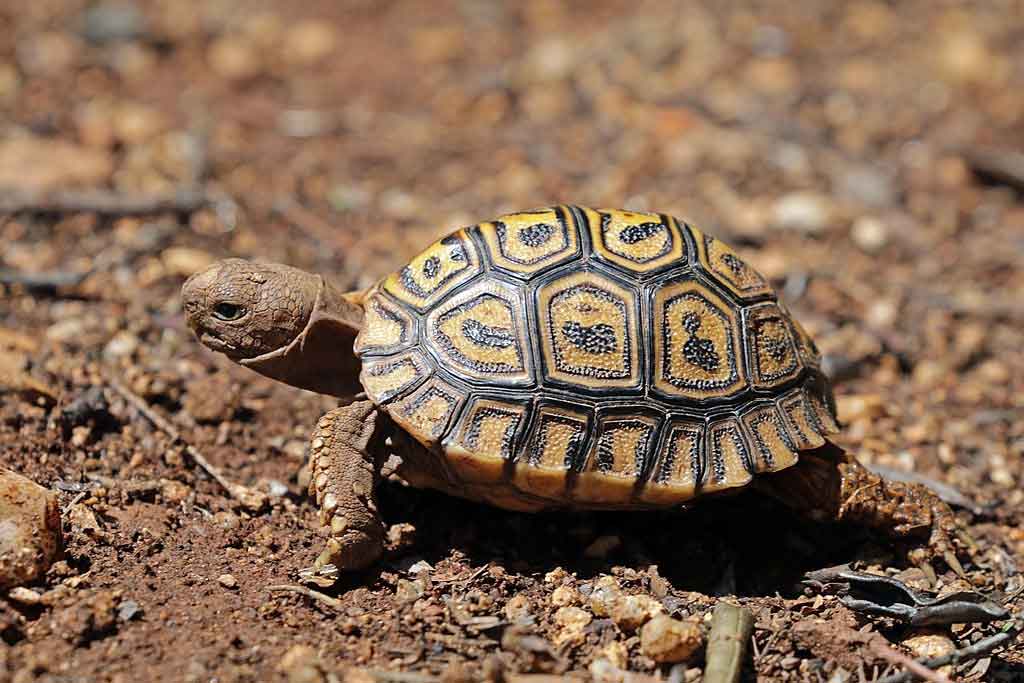
Leopard tortoise (Stigmochelys pardalis) juvenile, Walter Sisulu Botanical Gardens, Roodepoort, South Africa – Charles J. Sharp, CC BY-SA 4.0, via Wikimedia Commons
Content
The Turtles are reptiles of the family Testudinidae of the order Testudines . They are especially distinguished from other turtles (including order Chelonia) for being exclusively terrestrial, while many (although not all) other turtle species are at least partially aquatic. Turtles have a shell to protect against predation and other threats. The shell of turtles is generally hard and, as well as other members of the suborder Cryptodira, retract the neck and head directly back into the shell to protect themselves.
The size of turtles You can vary, since some species, as the Galápagos giant tortoise, reach more than 1,2 metres in length, while others, as the Spotted turtle (Clemmys guttata), have a shell of only 6,8 centimeters.
They are usually animals daytime with a tendency to be twilight depending on ambient temperatures. They are usually reclusive animals. Turtles are the world's longest-lived land animals, although the longest-lived turtle species is the subject of debate. Galapagos tortoises are known to live more than 150 years, but one Aldabra giant tortoise (Aldabrachelys gigantea) called Adwaita may have lived some 255 years. In general, most species of tortoises can live between 80 and 150 years.
Turtles are placid and move very slowly, with an average running speed of 0,2-0,5 km/h.
Behavior
Communication in the Turtles is different from many other reptiles. Being limited by their shell and short limbs, visual communication is not a strong form of communication in turtles. Turtles use olfactory signals to determine the sex of other turtles and thus be able to find a possible mate. The tactile communication is very important in turtles during combat and courtship. Both in combat and courtship, turtles use the onslaught to communicate with other individuals.
Food
Turtles are essentially herbivores and consume grass, flowers, succulent plants, fruits,… although some species feed on carrion.
Reproduction
Son oviparous and in some species females can several egg layings in the same season.
List of “Land Turtles” for maintenance in captivity
▷ The world of Pets: Dogs, cats, birds, reptiles, amphibians
Ocellated spinytail
- Uromastyx ocellata
Origin: Northeast Africa
Gender: Uromastyx
Life expectancy: 20 years in captivity
Length: 28 cm.
The Ocellated spinytail is native to northeastern Africa, where it can be found in southern Egypt, Sudan, Eritrea, Djibouti, Ethiopia (near the border with Somalia) and north-western Somalia.
Uromastyx ocellata (male) 3-4 years in terrarium – RaSaX, CC BY 3.0, via Wikimedia Commons
Content
Characteristics:
The Ocellated spinytail reaches a total length of 30 cm., with a head-torso length of some 16,5 cm and a tail length of 13,5 cm.. So, is one of the smallest species in the genus of Spiny-tailed lizards. It is, because, of one of the smallest species in the genus of Spiny-tailed lizards.
A characteristic feature of this species is the back decorated with white spots on the eyes on a reddish background.. Males tend to be more colorful. Its head and rump are reddish or greenish in color. The belly usually remains white or yellowish, especially in females. Coloration may vary, depending on heat and light exposure. The claws of the Ocellated spinytail they are especially pronounced for digging underground burrows in which it remains overnight as a diurnal animal.. The tail is endowed with pointed scales. Serves as a defense against predators.
The Ocellated spinytail lives both alone and in smaller groups. They do not hibernate but, during the winter months, if they do it.
Terrarium:
Savannah terrarium (dry terrarium subtype) with excavable substrate of 15-30 height cm. Sturdy stone climbing structures and caves below. The recommended terrarium size to keep the Ocellated spinytail (Uromastyx ocellata) adult in pairs is about 100 x 70 x 50 cm..
Pulverize 2-3 times a week in the terrarium.
Temperature 27-30°C, at night 16-20°C, sunny islands 40-45°C.
Humidity 50-60%.
Up to lighting 14 hours. UV irradiation required.
Maintenance:
It is recommended to keep the Ocellated spinytailto (Uromastyx ocellata) in pairs. High temperatures are important for digestion, moderate feeding against fat degeneration of the organs. Hibernate during 3 meses a 10-15°C.
To the Ocellated spinytail (Uromastyx ocellata) likes to dig and climb well. This species defends themselves with tail blows. Like all species of Uromastyx, excrete excess salts through the nasal glands.
Reproduction:
The Ocellated spinytail (Uromastyx ocellata) puts between 10 and 23 eggs.
Buy a "oversized spiny tail"
The price of a Ocellated spinytail bred in captivity in the exotic animal market ranges from 250 – 300 EUR.
▷ The world of Pets: Dogs, cats, birds, reptiles, amphibians
Turtle feeding
What do turtles eat in the terrarium?
The Turtles they can be carnivorous, omnivorous or herbivorous and there are some species that change their diet as they grow and tend to go from a carnivorous diet to a more omnivorous one.
Even if they seem like it, are not porcelain …, are real, alive and well alive – Get this image at: Flickr
Content
TABLE 1
Classification of Some Turtles Terrestrial according to their Diet
herbivores
Omnivores
Sulcata turtle
Box Turtles
Leopard Turtle
Terrapenes Turtles
Yellow-footed turtle
Articulated Turtles
Radiated Turtle
Some Asian box turtles
Chilean turtle
Turtles of the species Testudo
Turtle feeding (chelonians)
The pets, which are very popular today, place high demands on people. Especially when it comes to maintaining and feeding, it is very important to know the conditions in the areas of origin of the turtles and to orient oneself on them. although Turtles can live up to very old, unfortunately it is not uncommon for them to live a few years in captivity. The proper feeding of the species is, therefore, an indispensable factor for successful maintenance. In contrast, incorrect nutrition of turtles is the most common cause of illness and death.
Its original habitat consists of arid and dry landscapes. There, the Turtles you will find slow-growing plants very rich in minerals, trace elements, vitamins, crude fibres and fodder. If you look at this habitat, it is clear that our lush, protein-rich meadows, fruits, cultivated lettuce and vegetables are not part of your natural food supply.
The intestines cannot properly digest this overly soft and sugary food. Even the occasional feeding with fruits, Salads and vegetables lead to an altered balance of microorganisms in the gut. This imbalance in the intestine sometimes leads to severe diarrhea. What, Unfortunately, turtles are not able to distinguish between healthy and unhealthy foods, tomatoes, salads and vegetables are tastefully eaten. The drop, constipation, shell and fatty liver deformities and even death are often the result.
The Turtles they can be carnivorous, omnivorous or herbivorous and there are some species that change their diet as they grow (see tables 1 and 2); for example the aquatic turtles of the gender Trachemys tend to go from a carnivorous to a more omnivorous diet as they grow older; becoming adult vegetarians. This is a reflection of changing dietary requirements, from its phase of greatest development to maturity.
An appropriate one turtle nutrition (chelonians) allows adequate growth, shell conformation and reproductive capacity (48).
Turtle feeding (chelonians) omnivorous
TABLE 2
Classification of Some Aquatic Turtles according to your Diet
herbivores
Omnivores
carnivores or predominantly carnivorous
There are very few aquatic turtles herbivores like Indian Roof Turtle
Painted Turtles
European Pond Turtle
Adult Emidids of North America
Spotted Turtle along with the other species of Clemmys
Crocodile and alligator turtle
Map turtles
Tortuga Mata mata
Swamp Turtles
Soft-shelled turtles
Red-eared turtle
Shield turtle
Turtles of the genus Phrynops
Long-necked turtles
South American turtles of the gender Platemys
Most of the omnivorous chelonians they are mainly carnivorous during their youth, but as they mature they increase their consumption of plant matter. It is suggested that their diet in captivity contains plant and animal matter in proportions of 75:25 to 90:10 (49).
In the wild, omnivorous species have access to a wide variety of live foods., frequently insects such as earthworms, snails, slugs, one hundred feet, Pupae, worms, mealybugs, crickets, etc. To get a better idea of the components that a diet may contain for these species in captivity it is recommended to see the table 3 and 4 (50).
TABLE 3
Recommended Components for the Diet of Omnivorous Terrestrial Turtles
Worms, slugs, snails, myriopods, mealybugs, among other invertebrates
Pinkies (newborn mice)
Skinned and chopped adult mouse
Vegetables and pastures (fungi, lettuce)
fallen fruit (bananas, Peaches, tomatoes)
(McArthur et al, 2004).
TABLE 4
Recommended Components for the Omnivorous Water Turtles Diet
Pellets for turtles (Tortuguetas [Petmmal], ReptoMin®sticks [Tetra])
Green leaves
Fruits
Low-fat canned dog food
Low-fat rehydrated dog kibble
Pellets for pond fish
Raw whole fish
Fresh meat (liver)
Insects (red worms, tubifex worms, artemias)
Prawns
Since insects contain more phosphorus than calcium (especially the larvae), should be supplemented with vitamins and minerals (calcium), to avoid the presence of nutritional deficiencies. So insects should be fed a diet rich in vitamins and minerals especially calcium, 24h before being offered to the reptile; this is known as "gut loaded" in English, and moments before offering them should also be sprinkled. Occasionally they may be provided with a small amount of meat, fish or dog food «LIGHT» (Normal foods are high in fat), in order to maintain a balanced diet (51).
The frequency of inclusion of animal matter in the diet, depends on the lifestyle of the animal and the degree of meat consumption of the species, excessive amounts of cat food, dogs or monkey, cause metastatic mineralization problems; as it contains high levels of vitamin D3. Most omnivores will refuse to eat fresh vegetables and fruits., showing preference for mature plant material (52).
As for aquatic turtles, they also develop well with a suitable combination of animal and plant material, dried shrimp lack an adequate balance of vitamins and minerals, while greasy fish in large quantities produce steatosis, fatty liver and vitamin B deficiency due to excess thiaminases. So a proper diet is based on a balance of ingredients, a small amount of low-fat dog food can be given 1 once a week occasionally, and natural ingredients should always be preferred (53).
It should be remembered that high-protein diets have a higher content of phosphorus in relation to calcium, so they should be supplemented with calcium (e.g.. Calciosol with fixative) and some fish contain thiaminases, so you also have to supplement with vitamin B1 (e.g.. Thiaminal B-12, Benerva®. Roche Laboratories), to ensure intake (because the animals feed in the water and the supplements are lost) it is recommended to liquefy all the ingredients and then add grenetin to the mixture, to make a gelatin which prevents the loss in the water of calcium and vitamins ensuring its consumption (54).
The key is to prevent animals from being pigeonholed with one or two foods., as they frequently become addicted to meat or fish; which results in a poor diet. It is important to have a separate tank from the main tank so that the animals are transferred to it at feeding time and thus reduce the contamination of the water in the main tank. (55).
Adequate proportions of a diet for red-eared turtles, painted and swamp turtles and stinky:
Turtle
60-70% animal matter: sofobas, crickets, waxworm larvae, common earthworm, tubifex, Anemias, aquatic snails, small fish, trout pellets or low-fat dog kibble, avoid using raw or cooked meat, especially in juveniles due to its low calcium content, tubifex and snails can bring parasites.
20-30% green leafy vegetables or aquatic plants.
In the wild they feed on snails, slug, insects, crabs, other aquatic invertebrates, Tadpoles, small fish, carrion, algae and aquatic plants, and as mentioned at the beginning, juvenile omnivorous turtles are more carnivorous and become more herbivorous as they mature. Adults can be fed from 2-3 times a week and only give them an amount of food that they can eat in a 30-40 minutes, it is recommended to give aquatic plants such as duckweed, water lettuce, Water hyacinth along with other aquatic plants and swamp plants, which form a substantial part of adult diets (56).
Feeding of herbivorous turtles
Microbial fermentation of intake occurs in the large intestine, microorganisms digest parts of the intake such as cellulose that the host cannot digest and this flora produces additional protein derivatives by modifying the plant material (57).
The diet of herbivorous reptiles should contain:
High-fiber vegetables that make up most of the diet.
It must be rich in certain minerals such as calcium.
Rich in vitamins such as vitamin A and D3.
Must have an adequate calcium and phosphorus balance, which must be at least 1.5-2: 1 That: P. wild chelonian diets contain at least one radius Ca: P of 4: 1.
Adequate water content.
Low phosphorus.
Low in fats and oils.
low in protein.
Low in thiocyanates, oxalates and phytates. (58).
Should be high in slow-digesting carbohydrates (e.g.. cellulose) and low-carb, high-digesting (e.g.. Feints)
Requirements are easily met when fed with wild plants, like flowers, pastures and weeds (be sure they are free of pesticides and pests), as store-bought greens are often high in protein and low in fiber compared to natural forages. Turtles can graze on their own if they are provided with adequate space for this., without the presence of poisonous plants, even so your diet should be supplemented, the species that benefit most from grazing are the leopard turtles and sulcata (59).
The Turtles have food preferences and will only eat 1 or 2 food to the exclusion of others, which can bring deficiencies. To reduce selective feeding it is recommended to liquefy the food, which is supplemented with vitamins and minerals (e.g.. Vitafort-A and Calciosol with fixative) (see Fig. 5), diet ingredients should be fresh and raw. Food must be washed very well to remove pesticide residues (60).
Fig. 5. Turtle eating a supplemented salad.
Animal protein should not be offered (see table 5) to herbivorous reptiles as it can affect the intestinal flora and predispose to hyperuricemia and therefore to gout, In addition to causing accelerated and abnormal growth in juvenile reptiles (61).
TABLE 5
Foods to Avoid herbivorous reptiles
Cat food
Meat
Dog food
Bread
Milk
Cheese
Refried beans
Bacon
Ham
Recovery diets for mammals (a/d Hill’s)
Insects: worms, sofobas, tenebrios
Meat
To mention a few (McArthur et al, 2004; Walls, 1998).
Although pellet-based diets are very popular, some authors do not recommend them as the majority part of the diet, especially in juvenile animals since they provide them with accelerated growth as most are high in protein (>45%), which is detrimental to growth in juveniles, as the shell is deformed; its use in adults is also of dubious benefit to some; however it all depends on the quality and quantity of the ingredients (62).
As mentioned earlier in the green matter section, care should be taken with vegetables containing oxalates and thiocyanates (see table 6), since depending on the amount of these in the diet mineral deficiencies can occur (iodine and calcium) (63).
The herbivorous turtles differ from each other regarding their preferred intake of fiber, Mediterranean turtles are ramoneadoras so they will be better off if they are allowed to ram in gardens with herbaceous plants; While the leopard turtles and sulcata are better off with a diet high in grasses and hay (70-75%) because they require a higher intake of fiber, although it has been seen that in the wild some eat a greater amount of herbaceous plants, it has also kept a record of growth in freedom that can serve as a captive turtle guide, young and subadults grow 7mm/month, adult females grow 5.7mm/month and adult males 3.2mm/month (64).
A diet recommendation for herbivorous tortoises is:
Mediterranean turtles: 25% rubiaceae (Nubia, white gallium, coffee family), 22% legumes (bean, peanut, broad bean, lentil, soy, pea and chickpeas), 10% asteraceae or compounds (lettuce, Sunflower, endive, chicory, daisy, chamomile and safflower), 8% ranunculaceae (be careful with these because many are toxic like aconite, knight spur and adonis), these can be grown at home to ensure they are pesticide-free and it is recommended that it be in calcium-rich soils to ensure that the plants have a high content of this mineral..
Leopard and sulcata turtles: their diet is similar to that of Mediterranean turtles, but with a higher proportion of pastures (20%) such as achicalada alfalfa and good quality Timothy grass hay (65).
In general, the food should be provided ad libitum per meal. The newly hatched specimens and up to their juvenile stage should eat 2 times per day, chopping the food to obtain particles of the appropriate size. Juveniles and adults can be fed once a day and both juveniles and adults should have access to fresh water for both drinking and bathing. (66).
Canned and dehydrated herbivore diets are commercially available and a small portion may be used in the omnivore diet. (67).
Sources:
Corral Gutiérrez, Karla Marina. (2009). «Development of a manual and interactive disk on nutrition, "Frequent installations and diseases in reptiles used as pets". (Bachelor's Thesis). National Autonomous University of Mexico, Faculty of Higher Studies Cuautitlán, UNAM. Retrieved from https://repositorio.unam.mx/contenidos/3449228
Bibliography:
(48) (Alderton, 2002; Beynon and Cooper, 1999; McArthur et al, 2004).
(49) (Alderton, 2002; Girling and Raiti, 2004; Mader, 2006; Merck Veterinary Manual, 2007; McArthur et al, 2004).
(50) (McArthur et al, 2004; Wissman M. A., 2003).
(51) (McArthur et al, 2004; UNAM Diploma in Medicine and Wildlife Management, 1993).
(52) (McArthur et al, 2004).
(53) (McArthur et al, 2004).
(54) (Girling and Raiti, 2004; McArthur et al, 2004).
(55) (Girling and Raiti, 2004; McArthur et al, 2004).
(56) (Girling and Raiti, 2004; McArthur et al, 2004).
(57) (McArthur et al. 2004).
(58) (Girling and Raiti, 2004; McArthur et al, 2004).
(59) (Mader, 2006; McArthur et al, 2004).
(60) (McArthur et al, 2004; Wissman M. A., 2003; Syria et al., 2002; Walls, 1998).
(61) (McArthur et al, 2004).
(62) (McArthur et al, 2004).
(63) (Mader, 2006).
(64) (Girling and Raiti, 2004).
(65) (Girling and Raiti, 2004).
(66) (IMFAC, Practical Medicine Course in Non-Conventional Companion Species, 2006; McArthur et al, 2004).
(67) (Wissman M. A., 2003).








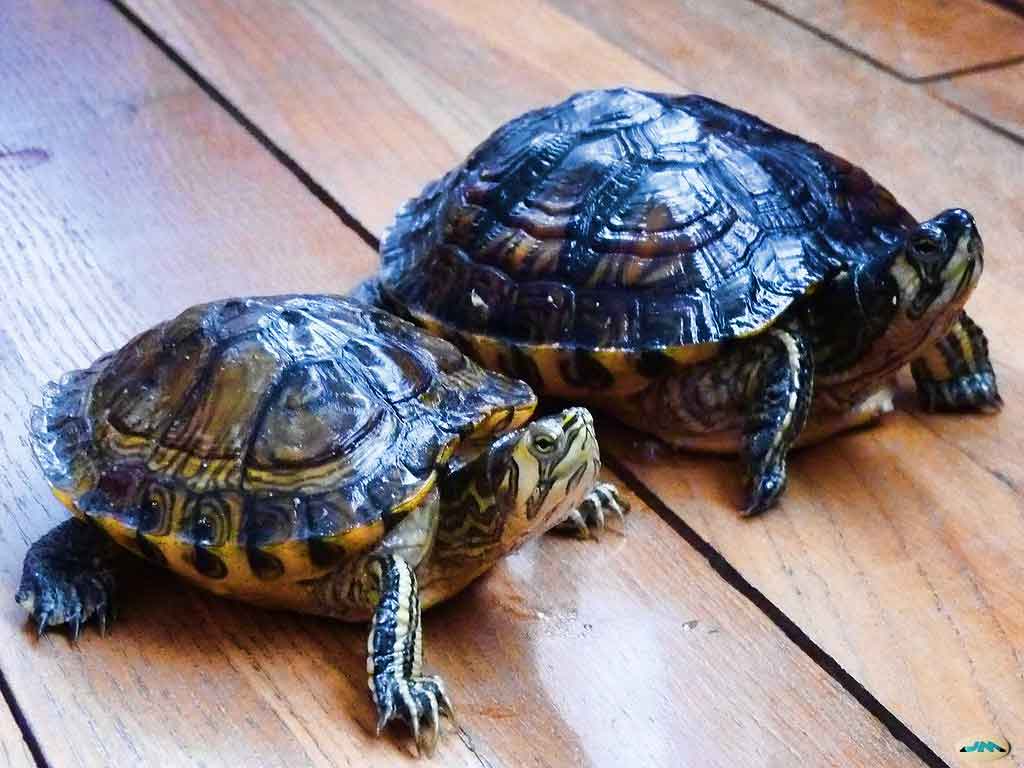
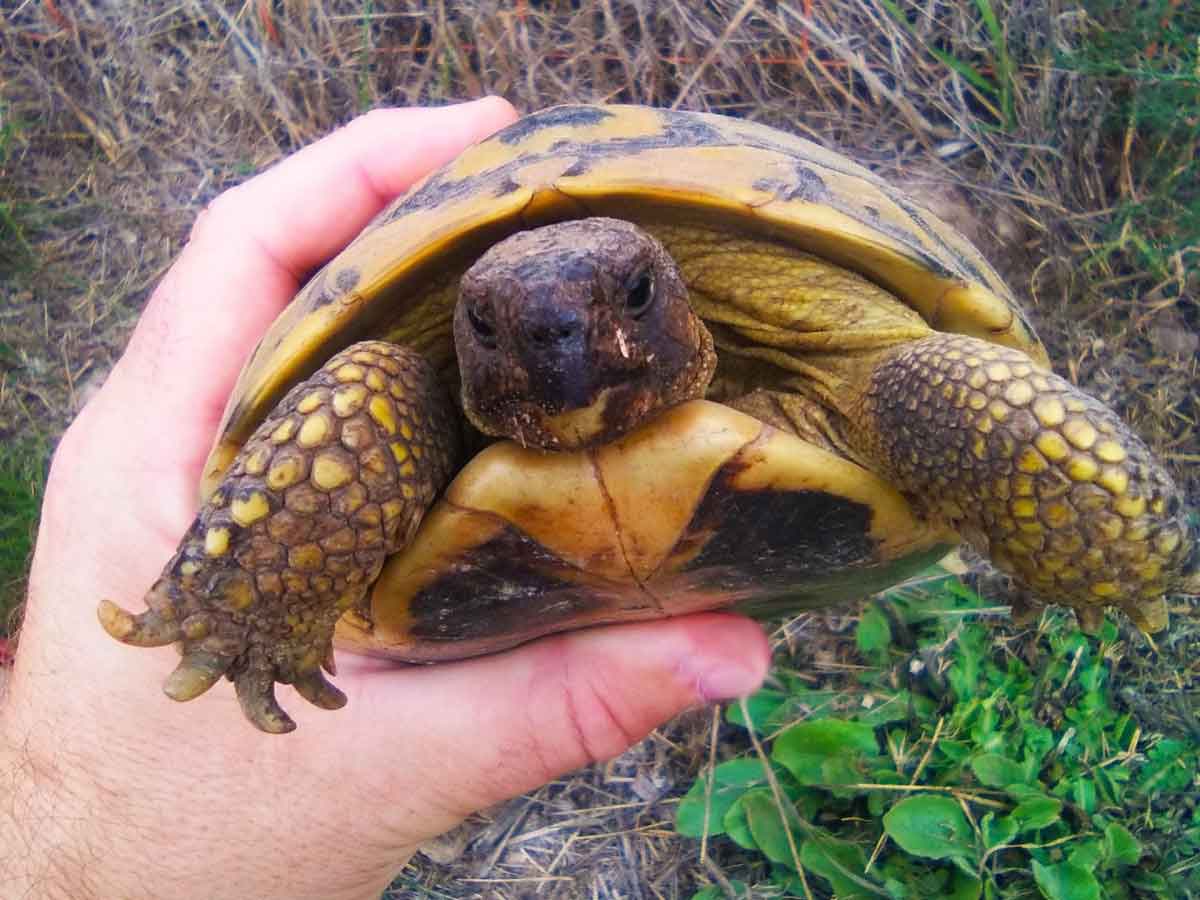
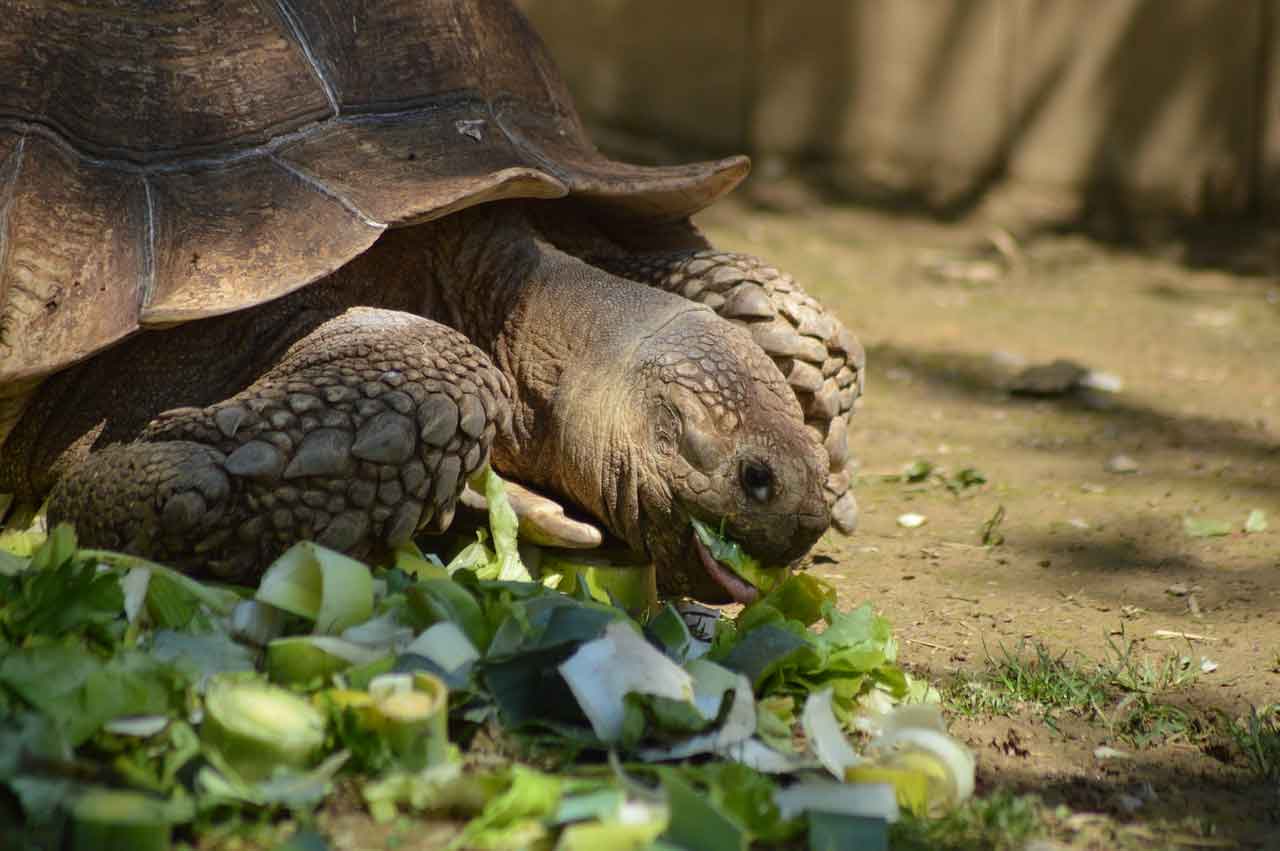
_by_Robert_Michniewicz.jpg)


_juvenile.jpg)
