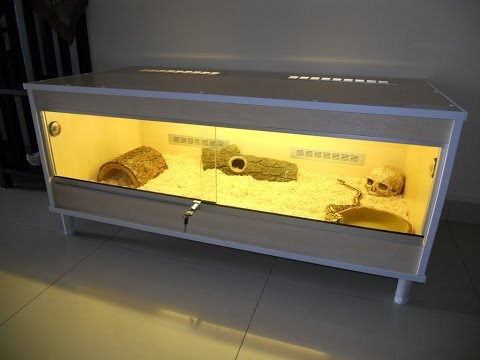
▷ The world of Pets: Dogs, cats, birds, reptiles, amphibians

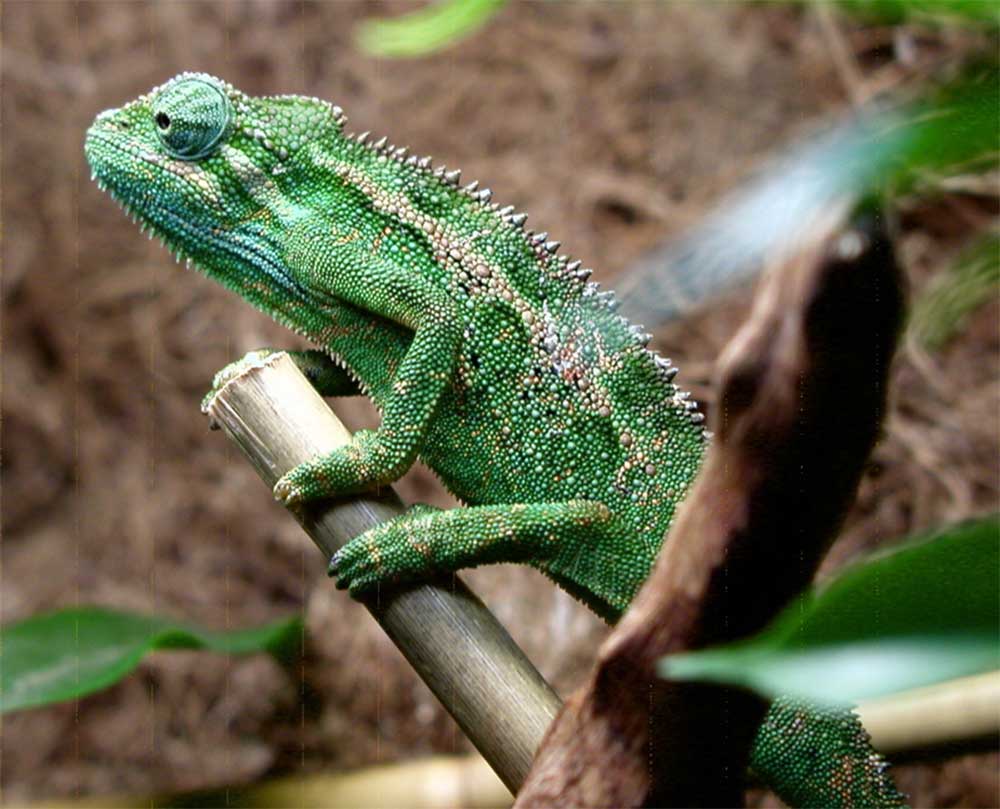
Montane side-striped chameleon
- Trioceros ellioti

The Montane side-striped chameleon (Trioceros ellioti) has a soft personality. Although no chameleon should be considered a pet to be kept and interacted with, this chameleon isn't as over the top as some of its bigger cousins.
Montane side-striped chameleon
Montane side-striped chameleon – Uganda – Benjamin Klingebiel, CC BY-SA 2.0 OF, via Wikimedia Commons

Content

Origin / Distribution

The Montane side-striped chameleon (Trioceros ellioti) is a small chameleon that lives in East African countries like Uganda, Tanzania, Kenya, Rwanda, Congo, Sudan and Burundi.

It has many common names, as Side-striped chameleon, Elliot’s groove-throated chameleon or Montane side-striped chameleon. But, these common names are rarely used and, when they are used, they are not very consistent. The Trioceros ellioti is one of those chameleons whose scientific name is the best known.

Characteristics / Appearance

The Trioceros ellioti usually reaches an age of 1 to 2 years in nature. But, In captivity they can live up to 4 years. In these animals, the transition to ovoviviparity stands out., that allows them to reproduce even in the coldest areas of high mountains.

Its helmet is slightly pronounced and there are evenly serrated ridges on its back., belly and throat. The rest of the body has a rather irregular scale. The females of this species reach a total length of 22 cm.. Males are still somewhat smaller, with a maximum of 17 cm..

A definite distinguishing feature of the sex is the thickened tail root, very pronounced in males and completely absent in females. The great heterogeneous range and the extreme altitude amplitude are also reflected in the color variability. Like this, depending on the population, the color spectrum of the males is just as diverse as that of the Carpet chameleon (Furcifer lateralis) and usually shows high proportions of blue and yellow. Females are usually less conspicuous and appear exclusively in shades of brown., gray or green. The white or brown lateral stripe is common to all animals., that runs along the entire flank. Due to its close relationship with the Trioceros bitaeniatus, is often confused with the latter. But, can be easily distinguished from Trioceros bitaeniatus by its 2-3 longitudinal black stripes on the interstitial skin of the throat sac.

Habitat

It is a very adaptable species of chameleon, found at altitudes of 600-3000 m above sea level. They prefer savannah landscapes with low bushes and tall grasses., as well as the edges of the forests and, in some cases, farmland and gardens. They must have reached the latter through human introduction, daytime temperatures typically range from 25 and 27 °C and drop to 16-18 °C at night, and even up to 10 °C at higher altitude. The relative humidity is 60-80%, with an average precipitation of 1.000 mm per year.

Reproduction

Montane side-striped chameleon
Chamaeleo ellioti – Carsten Kopschutz, CC BY-SA 3.0, via Wikimedia Commons

The Montane side-striped chameleon (Trioceros ellioti) it is ovoviviparous. The females of this species give birth to 2 to 14 pups up to four times a year. This usually happens in the early hours of the morning, whereby the fully grown hatchlings are simply deposited in a clear eggshell on the grass. just a few minutes later, the hatchlings break free of this skin. Due to the ability to store sperm in the seminal receptacle, females can produce multiple clutches with a single mating. But, they are ready to mate again 14 days after birth.

The young reach sexual maturity after about six to nine months and the gestation period is 100 to 160 days. For the mating act itself, he approaches the female. After a brief orientation, the male should approach the female with head movements. If the female is not ready to mate, will display warning coloration and will bite or attempt to escape if male approaches closer. Otherwise, does nothing and mating occurs when the male climbs sideways onto the female and tries to bring both cloacal openings over each other. Copulation itself lasts a few 15 minutes.

Threats to the species

State of conservation ⓘ


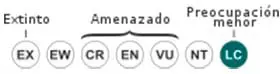
minor concern Minor Concern ⓘ (UICN)ⓘ

This species has a wide distribution and seems to have the ability to adapt to a certain degradation of its natural habitat., as it also occurs in agricultural and semi-urban areas. It has therefore been classified as a "species of least concern" by the UICN.

How it is being captured for the wildlife trade,1the species has been included in the Appendix II of CITES to limit its effects

The "Montane side-striped chameleon" in captivity

The Montane side-striped chameleon (Trioceros ellioti) has a soft personality. Although no chameleon should be considered a pet to be kept and interacted with, this chameleon isn't as over the top as some of its bigger cousins. Usually, they are not aggressive towards each other, although there are reports of sudden violent responses in the interaction between chameleons.

Like all chameleons, the ideal situation is one chameleon per terrarium. Although breeders can keep two females in one terrarium if they are kept together, be careful not to let this give you a false sense of security. When this species behaves, he does it in a very strong way that is potentially dangerous to his cage mates.

The pups seem to be calm with each other, but it is better to separate them as soon as possible. This species grows rapidly, so they are not "babies" for a long time.

Currently, the Montane side-striped chameleon is available both in the wild and captive-born. Captive-born are ALWAYS the best option and deserve the extra money. These pups are raised with the best nutrition and are raised between humans and cages to acclimate to captive conditions.. If you are familiar with acclimatizing wild-caught chameleons and want to breed them to introduce a new bloodline, then you know what you're getting into by buying wild-caught animals. But if you want to get one of these chameleons for the pleasure of keeping it, then avoid the challenge of acclimatization and get one born in captivity.

If you buy a female caught in the wild or any female that has been kept with the males once it is from 4-6 months of age you are likely to have a female who will give birth to live babies. The timing of this is unknown and one morning you may come across babies crawling around the cage. The females will store the sperm and produce multiple sets of babies from a mating., so being away from a male for a year doesn't save you from this. It is a very good idea to be prepared for babies unless you are sure you have a captive-born female who has never been in a cage with a male.. after 3 to 4 months of age.

The terrarium

Terrarium Size: 36 x 24 x 18 inches. Tough screen lid provides ventilation and allows UVB and infrared penetration.

terrarium size: The Montane side-striped chameleon is a small chameleon with little need for movement. So, can be accommodated in small terrariums. The absolute minimum size of the terrarium for a copy is 40 x 40 x 50 cm.. But this is for experienced caregivers and breeders who know how to create the necessary conditions of a terrarium in small spaces. If you are going to buy a chameleon to enjoy it, then don't settle for the minimum. The size of the terrarium of 45 x 45 x 90 cm., easy to get, gives a little more space. But if you want to maximize your enjoyment and comfort of your chameleons, get a terrarium of 60 x 60 x 120 cm o 90 x 45 x 90 cm.. Your little chameleon will be happy in that amount of space.

Consider it from this perspective. When you get a minimum size terrarium, you place the branches, plants and lights very strategically because you only have one chance to create the minimum gradients and microclimates necessary for the chameleon's healthy life. When you get a terrarium that gives you extra space you start looking at the cage artistically.. You place plants and branches where they look best. Of course, you have the needs of the chameleon in mind when you do this, but now you have the luxury of meeting these needs with an artistic approach that is pleasing to the human eye. This can create a piece of nature that is much more pleasant, soothing and beautiful than is possible with the condition of a terrarium of minimum dimensions.

Y, finally, with a small space, you are responsible for creating the proper temperature gradients with light bulbs that are designed to terrariums bigger. This means it's very easy to provide more heat or UVB than is healthy simply because the small space was quickly energized and there is physically less room to escape heat or UVB..

Type of terrarium: You can use mesh terrariums, hybrids or glass terrariums. The terrarium should be chosen based on the help you need to achieve the environmental goals of temperature and humidity.

Ambient temperature

The Elliot's chameleons thrive in the typical mountainous environment, daytime temperatures are usually between 25 and 27 °C y caen a 16-18 °C at night, and even a 10 °C at higher altitudes. It may seem to us that they survive well in a different environment, but temperatures very different from those of their natural environment will end up affecting them. It will be a constant and cumulative physical stress on the body and will result in a compromised immune system. This allows opportunistic infectious agents to gain a foothold.

Resting temperature

A low night temperature is a requirement for a Montane side-striped chameleon (Trioceros ellioti) healthy. But your chameleon will need to warm up in the morning to start the day off right.. In the wild, chameleons watch the sunrise and bask until their body temperature is sufficient for optimal hunting, digestion and general function.

In captivity, We give them this heating through a sunlight bulb which is usually an incandescent or halogen bulb that shines on their sunlight branch..

Care must be taken when placing this bulb, since it is very easy to burn the chameleon. Chameleons don't seem to have a keen sense of when they're burning. They know when they need to warm up, but they have not developed a mechanism to measure the concept of "too hot". There is nothing in nature that encourages the development of this ability. So chameleons get overheated or even burnt. We have to be very careful to protect them from this possibility.. This is why we encourage the tanning bulbs to be mounted on top of the terrarium rather than on top of it.. The closer to the bulb, more temperature difference can be in a centimeter. The ideal scenario is to have a higher wattage bulb further away. This produces a larger, "softer" heated area that is not at risk of burns..

Regarding the solar temperature, these chameleons seem to like basking temperatures in the range of 30 Celsius degrees. This is slightly taller than other known montane chameleons, but still ok within reasonable limits. But the exact temperature is not so important. It is more important that you set it up so that you feel a soft, warm warmth on the back of your hand when you place it on top of your chameleon's head when it is sunning itself.. Its main goal is to set a safe temperature to start with and then it will adjust the distance from the bulb based on your chameleon's behavior. If your chameleon displays the following behaviors, you can consider the possibility of providing a solar temperature for a longer time or, With precaution, a higher solar temperature.

  • Hanging from the top panel of the screen under the light bulb.
  • Staying dark and lethargic. After sunbathing, they should take rest colors.

  • The problem with relying on behaviors as a cue to ward off the lightbulb is that it's usually physical harm to the body., like burnt gray areas, open wounds and fused spines. And it is worrying how long this type of situation lasts before the caregiver realizes what is happening. This means that the chameleon will be sunbathing even if it is too hot.. Also keep in mind when reading your chameleon's behavior that each chameleon will be slightly different. Learn about your chameleon's behaviors so you can verify that they are following standard chameleon behaviors.

    Humidity

    The elliot's chameleons experience high humidity nights and medium to low humidity days. A night humidity of between 75% and the 100% and a descent to 30-50% during the day will allow them to carry out their natural humidity cycle. Exact figures are not critical. There are two important aspects.

      1) During times of high humidity, keep the air moving. Terrariums are often modified to close off the sides to prevent airflow so that a mist can increase humidity. In this case, have a ceiling or computer fan mounted on top of the terrarium to ensure the "fog bank" circulates. stagnant air, no matter how wet, it is not healthy.

      2) All surfaces must be dry during the day. Even if the humidity is higher than the indicated figures, if the surfaces are dry there should be no health problems. When the surfaces, like the branches that the chameleon climbs, are constantly wet, the paws become full of sores and bacteria, fungus and mold take hold.

    Illumination

    The Montane side-striped chameleon they accept the standard bright light that we put in our chameleon terrariums. A four times the width of its cage high output T5 fixture with four 6500K fluorescent bulbs will nicely illuminate a terrarium of 15 height cm. A cycle is used 12 power on hours and 12 off hours. Kenya is near the equator, so this cycle 12 power on hours and 12 off hours do not have to change throughout the year.

    Your chameleon will need light inside its terrarium. The biggest deficiency of a terrarium, besides not having a hiding place, is the lack of light, because when you look at the terrarium, the chameleon seems to be in a cave with a skylight. A luminous terrarium will allow plants to grow and their environment to be vibrant.

    Natural sunlight through a window is great, but dangerous. Sunlight tends to be too strong and could overheat your chameleon. Be careful in sunlight. Definitely, give your chameleons natural sunlight whenever possible, but the sun can cook your chameleon quickly, especially a small one like him Montane side-striped chameleon. Well-planted outdoor greenhouses and constant supervision are recipes for success.

    UVB

    Out of natural unfiltered sunlight, the most efficient and reliable way to produce UVB for your chameleon is with high output T5 linear fluorescent tubes. These bulbs can go in a multi-bulb fixture, but they are more effective in a single bulb reflector. I highly recommend using a single bulb reflector for your UVB source, as it gives you not only the full power of the bulb (your UVB is absorbed by other bulbs), but it gives you full control over the UVB force that reaches the sunbathing zone based on the height of raising the appliance above the cage.

    Currently, a good goal is a UV index of 2-3 in the sunlight branch with a maximum of UVI of 6 to allow sufficient synthesis of vitamin D3. This is usually what can be generated using an accessory T5 HO Arcadia ProT5 with 6% of UVB or Zoomed Reptisun 5.0 on a single bulb reflector on a sunning branch 6″ inches of light going through a standard screen cage top panel. All of these numbers are general estimates., as each reflector has its own reflective properties and each bulb will have a different strength depending on age. Fortunately, this does not have to be an exact value. An approximate value is fine. If you are using a Reptisun T8 10.0 in a single bulb installation, the sunning branch must be at 8 cm below the bulb running through the top of the cage screen. Ideally,, regardless of the bulb you use, can lift it from the upper surface of the terrarium. UVB bulbs produce very high UVB radiation in the first few centimeters in front of the bulb. You can continue to use the given distances of the bulb with the bulbs raised two or three inches above the top of the cage. This reduces the maximum level of UVB that enters the cage and your chameleon is exposed to. Although we have not been able to measure what damage occurs at what levels of UVB, it's safe to expect there to be a point where the high UVB from the lamp can cause problems. They may not be human, but chameleons have living cells, and living cells are damaged by UVB.

    Just a note, UVB meters are expensive equipment, but they are a valuable tool in setting up your chameleon's environment. if you can get one, ¡hazlo! get the model Solarmeter 6.5.

    Set the lighting and hydration schedule

    When we set our daily schedule, we try to reproduce the wild conditions to which the chameleon has become accustomed. let's start at midnight.

    At midnight, the chameleon has slept for many hours. It's dark and, though the moon waxes and wanes, chameleons will look for dark places to sleep. They see light of all colors well and any light can disturb their rest.

    As the morning progresses, humidity increases. Fog banks may begin to form and the chameleon breathes moist air. This high humidity forms an important part of your natural hydration.. To simulate this, we turn on ultrasonic humidifiers around the 1:30AM. Fog from humidifiers tends to bounce off surfaces and exit the cage, so we operate the misting system for a couple of minutes to cover the cage with a layer of water. This helps make the fogger more effective and the mist tends to stay. The nebulizer goes from 1:30 to 6:00 in a pattern of 30 minutes of ignition and 30 minutes off. This is to protect against excess mist.. This is wise when you have closed off three or more sides of your terrarium to retain moisture.. If you have a full screen terrarium, you can leave it on all the time. All this is done so that the chameleon can breathe moisture. Right before the lights come on, run the foggers for a couple more minutes to ensure that when the chameleon wakes up it finds surfaces covered in "dew". This is a natural source of water for them, even in its dry season. Once the dew has settled, lights can be turned on.

    Around the 7 in the morning the lights of the day turn on. This may include UVB light if they are the same fixture. If it is separate installations, no need to turn on the UVB light to match the sleep bulb on. It's okay to leave daylight bulbs on for 15 or 30 minutes to give the chameleon a chance to calmly lick whatever spray it wants. Next, I turn on the sunlight bulb to warm them up.

    As the ambient temperature begins to warm, the sunlight lamp is no longer necessary and it turns off. The actual length of time the tanning lamp is on will depend on your chameleon's needs. Observe their behavior. If the chameleon routinely gets the heat it needs in 30 minutes and then walks away with the happy colors to hunt, then reduce the time in the sun to that time in which you make use of the heat. If they need the heat for a longer time, leave the bulb on for longer or consider slightly increasing the temperature. Watch your chameleon and he will tell you what he needs. With a mesh terrarium there is usually no problem leaving it on during the day, but if daytime temperatures start to get too hot for your comfort, you can turn off the heating lamp.

    at some point of the day (can be the 3 in the afternoon) start the dropper. This is a reserve hydration strategy to make sure they have enough water. While it is true that they do not have drippers every day in nature during the dry season, they also do not need to reconstitute dry calcium powder in all their feeders. The advantage of using a dropper is that it is completely optional for them and, as advantage, it also allows you the opportunity to ensure that your plants receive water. Place it on a different plant each day and, over week, all plants will receive water. The time the dripper is started is not critical. It may be in the late afternoon so that the chameleon can rehydrate before the night's rest.. It is a good rule to start the dropper an hour or more after feeding them so that they can replenish what they need.. In the wild, your food is an important source of hydration. We spoil it a bit with the food we provide them and a dropper is a way to compensate for that.. Ideally, the chameleon will have obtained sufficient hydration from the humid night air, morning dew and food. I consider it a hit when the chameleon ignores the dropper and an early warning sign when he drinks from the dropper.

    Once the chameleon settles down and goes to sleep it is good to maintain a couple of minutes of misting just to establish the humidity for the night.

    You will notice that there are no daytime mists. Although this is common in chameleon breeding. Chameleons have been consistent in their communication that they don't like to be sprayed. You do not have to decide that I know what is best for them and you have to start listening to them. the night fog, morning dew and evening dropper provide necessary hydration naturally. With them there is no need to force them to shower in the middle of the day.

    Food and supplements

    Feeding of the Montane side-striped chameleon (Trioceros ellioti)

    The Montane side-striped chameleon not a picky eater. Will eat the insects that we feed standard for chameleons. Flying insects are highly prized. An interesting feature is that it seems to prefer smaller than normal food.. Usually, when determining the proper feeder size for a chameleon, we choose a size of the length equivalent to the width between the eyes. And then the chameleon often surprises us and gobbles up something bigger. The Montane side-striped chameleon, on the other hand, seems to prefer smaller foods than we would normally give him. It is important to pay attention to the sizes of food that each chameleon prefers. they are the experts. Try different sizes and your chameleon will quickly let you know what he prefers. But don't worry if your adult goes after a fruit fly.. This is a characteristic of the species.

    The Montane side-striped chameleon it is insectivorous. You can feed them anything that moves and fits in their mouth. It is not necessary to provide fruits or vegetables to this species.

    As with the care of any of our chameleon species, we want the insects we feed to be as nutritious as possible. Unfortunately, our knowledge of nutrition from insects to chameleons is in its infancy, so we do not know what the diet of wild insects gives chameleons or, even what nutrients in what we feed our feeders gives chameleons. There are reports that insects exposed to UVB rays produce vitamin D3. Then, do chameleons really get any dietary D3 in the wild? There is a lot of speculation and little firmness. So, we feed these insects with the greatest possible variety of food and with the greatest variety of fruits, vegetables, grains, etc., What can we find. A healthy, well-fed cricket is supposed to be nutritionally superior to one that has eaten little..

    We also dust the feeders with mineral/vitamin powder to provide the chameleon with calcium.. We call this supplementation.

    Supplementation is one of the less defined aspects of chameleon husbandry. We literally don't know what they need. we are guessing. The best thing we can do is try to get as close as possible to their natural processes and try regimes..

    There will be a number of approaches that work. The background test is whether it produces a healthy, long-lived chameleon. If you do, is valid.

    It is assumed that the Montane side-striped chameleon has typical "mountain" sensitivity to overfeeding. Although we are not seeing that cases of edema are known.

    Supplementation

    In the news, we see that the Trioceros ellioti behaves well when regularly supplemented with calcium and bee pollen. Monthly vitamin supplementation has been included, although currently you have to check the pros and cons of including vitamin A made in this monthly dose. Mineral supplements are being recommended, as it has been tested, but it is being evaluated Arcadia RevitaliseD3 for their equivalent levels of D3 and the addition of small amounts of vitamin A. We are depending on UVB for our D3.

    Reproduction of "Eliot's Chameleon"

    The Montane side-striped chameleon is a life-carrying species and, since the mother incubates the eggs, it is quite easy to breed. In fact, if your mature female has had contact with a male in the past two years, may have offspring, whether you like them or not.

    As exciting as it sounds, having chameleon pups can be heartbreaking if you're not prepared. If you have a female who had any chance of having contact with a male, then at least read about caring for chameleon offspring.

    The actual breeding process is standard. The female moves to the male's cage. If she is receptive, will allow you to mount it. If you are not receptive, will be speechless, will sway menacingly and show dappled colors. It is highly recommended to monitor the situation.

    Gestation is three to four months and then they can be born up to 22 pups, depending on the size of the female.

    Buy an "Eliot's Chameleon"

    The price of a "Montane side-striped chameleon" at the exotic animal market, ranges between 60 – 120 EUR.

    Videos "Montane side-striped chameleon"

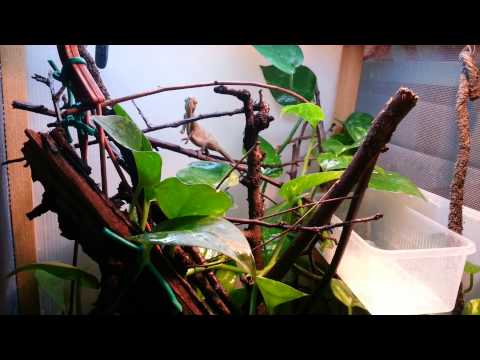
    Trioceros ellioti

    Alternative names:

    1. Montane side-striped chameleon, Elliot’s groove-throated chameleon, Mountain Dwarf Chameleon (English).
    2. Caméléon d'Elliot (French).
    3. Elliot's Chamäleon, Chamaeleo ellioti (German).
    4. Camaleão-de-Elliot, Camaleão listrado de montanha, Camaleão de garganta estriada de Elliot (Portuguese).
    5. "Camaleón de Elliot", Camaleón de montaña de ellioti (español).
    ▷ The world of Pets: Dogs, cats, birds, reptiles, amphibians

    African helmeted turtle
    - Pelomedusa subrufa

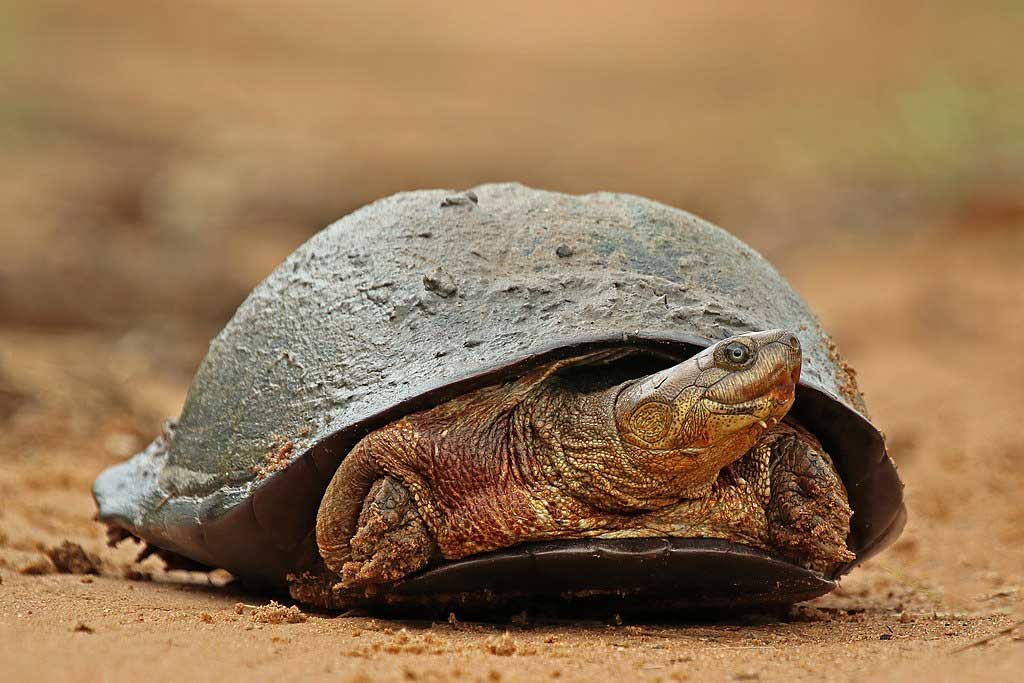
    The African helmeted turtle is very popular among turtle fans. Animals live both in water and on land.
    African helmeted turtle
    An African helmeted turtle (Pelomedusa subrufa) closes at ground level. – Charles J. Sharp, CC BY-SA 4.0, via Wikimedia Commons

    Content

    Origin / Distribution

    Since 2014 ten species have been distinguished. It also, there are two others that have not yet been fully classified:

  • Pelomedusa galeata
  • Pelomedusa subrufa.

  • Other subspecies:

    Pelomedusa barbata, Pelomedusa gehalfie, Pelomedusa kobe, Pelomedusa neumanni, Pelomedusa olivacea, Pelomedusa schweinfurthi, Pelomedusa somailca, Pelomedusa variabilis.

    The African helmeted turtle, whose scientific name is Pelomedusa subrufa, lives in southern and eastern Africa and in the southwestern Arabian Peninsula. The distribution area extends from Senegal in the west to Madagascar in the east and to South Africa.. So far, it was assumed that it was a single species that inhabited this wide area. But, There are many species, some of which have very small home ranges.

    Characteristics / Appearance

    The African helmeted turtle has a very round and flat shell. It is dark brown to olive green in color.. The plastron is usually black, but may also have a yellow/horned coloration.

    The skin is dark in color on top. Like this, the upper part of the tail is black and the extremities dark gray. The underside of the head is light gray, almost white. The African helmeted turtle he has a round head, short snout and round eyes. they also smile. Sex is recognized by the tail. The tail of the males is longer and thicker than that of the females..

    They are called neck spinners. (Pleurodia) and, Therefore, they cannot fit their heads vertically into the S-shaped shell. On the other hand, they put it on its side, horizontal s-shaped, against the body.

    Size: The Pelomedusa reach a length of 14 to 30 cm and weighing up to more than 2 kg, depending on the species. The males grow a little more. The Pelemedusa subrufa it is the smallest species, Medusa galeata the largest.

    Life expectancy: 30-50 years

    Habitat

    Preferred habitat is swamps and still waters. It also sometimes temporarily inhabits existing waters and travels considerable distances to reach new habitats.. If accessible waters dry up, is buried until 5 cm deep in the mud. Depending on the exact area of ​​origin, temperatures can vary greatly between day and night.

    Behavior

    The African helmeted turtle it is a relatively peaceful turtle and predominantly crepuscular or nocturnal. They spend a lot of time on the bottom and also like to burrow in the sand.. In the African winter months, they maintain a dry dormancy and bury themselves in the mud to do so. Dry torpor is followed by the rainy season, during which animals become extremely active.

    Threats to the species

    No conservation status. But, Saudi Arabia is currently working on conservation measures for the various species that are not as widespread. Until very recently, one of the species was assumed to be distributed throughout Africa. But, there are several and one species is already in serious danger of extinction.

    The "African helmeted turtle" in captivity

    African helmeted turtle
    "African shield turtle" (Pelomedusa subrufa) in the Natural History Museum and Vivarium of Tournai (Belgium) – Vassil, CC0, via Wikimedia Commons

    Aquaterrarium

    The African helmeted turtle needs a large aquaterrarium (minimum requirement 5×2.5 (LxA) of carapace length, that is to say, 130-150 cm length depending on the species). The water level should be 30-40 cm.. It also, They need a large land area that accounts for approximately 1/3 of the total area. This should be filled especially with moist sand or substrate, for the ones pelomedus can dig during dry break. For dry idle, the water level must drop constantly to simulate the desiccation of the natural habitat. The dry break is followed by the rainy season, during which the water level must be replenished.

    Egg laying place: When you have females, an egg-laying place is always necessary. However, these turtles must have a sand pit large enough to rest dry.

    Lighting and temperature

    They should not miss the sources of ultraviolet light and heat. To the African helmeted turtle likes to sunbathe on land and also needs high temperatures. The water must also be heated (to. 22-30°), as our ambient temperatures are well below African conditions. Heaters that are attached directly to the tank are not recommended, since glass bodies don't necessarily support turtles. A heater built into the filter is more suitable. This heater must work with a timer to guarantee night emission. Spot heaters prevent animals from getting cold when they get out of the hot water. If the temperature of the air is lower than that of the water, pneumonia can occur. Fluorescent tubes provide enough light in the tank. In any case, need a big filter. In the case of aquatic turtles, it is said to always use a filter that can handle one and a half times the actual amount of water, since turtles pollute the water more than fish.

    Diet

    Turtles Pelomedus have a predominantly carnivorous diet. The right food is earthworms, the snails, mussels and fish. A cuttlefish bone should be available. In the wild it also feeds on frogs and carrion.. It has also been observed that pelomedus they snatch and drown the birds that bathe. Plant food includes aquatic plants, estate, flowers and fruits. But, they also eat them only in the water.

    Buy one "African helmeted turtle"

    most of the turtles Pelomedusa found in the animal trade in Europe are called 'subrufa" in the shops.

    The price for the offspring of the "African helmeted turtle" at the exotic animal market, ranges between 25 – 40 EUR.

    Videos "African helmeted turtle"

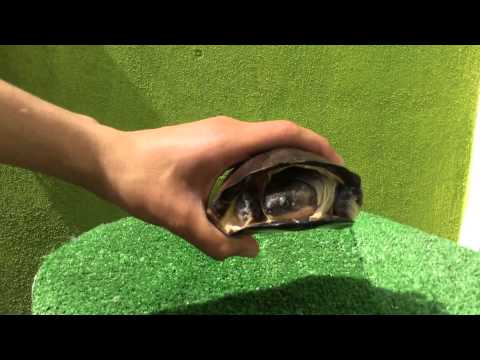
    Pelomedusa Subrufa Y Pelusios Castaneus

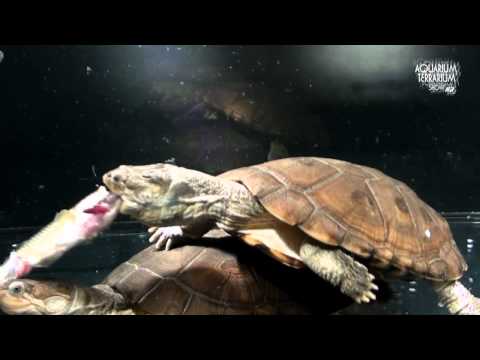
    Pelomedusa subrufa (movie 08) - Blood Feeding time.

    Alternative names:

    1. African helmeted turtle, Marsh terrapin, Crocodile turtle, African side-necked turtle (English).
    2. Tortue à cou caché d'Afrique, Péloméduse rousse, Péloméduse roussâtre (French).
    3. Starrbrust-Pelomedusen (German).
    4. Tartaruga-de-capacete-africano, Tartaruga de pântano, Tartaruga de crocodilo, Tartaruga-de-pescoço-africano (Portuguese).
    5. "Tortuga de escudo africana", Tortuga de casco (español).

    ▷ The world of Pets: Dogs, cats, birds, reptiles, amphibians

    Turtle feeding
    What do turtles eat in the terrarium?

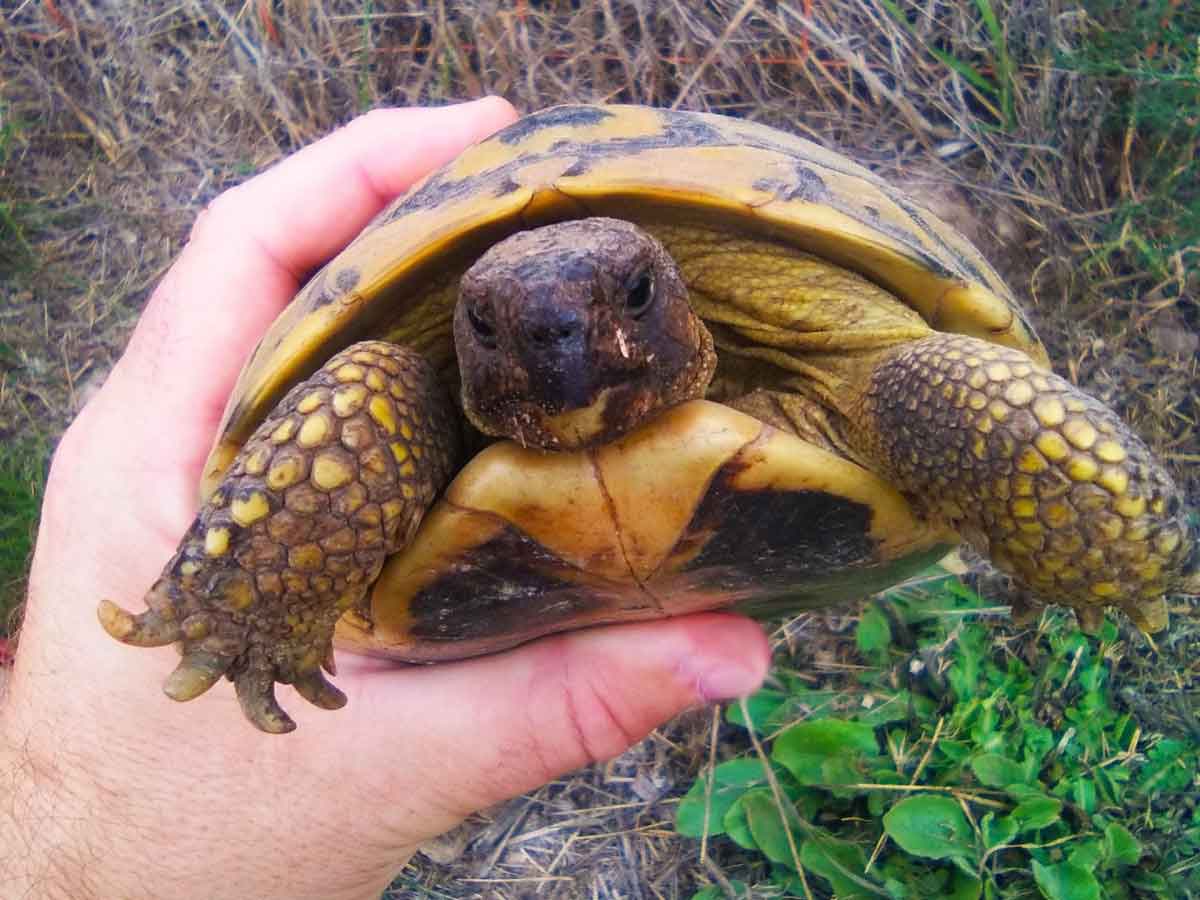
    The Turtles they can be carnivorous, omnivorous or herbivorous and there are some species that change their diet as they grow and tend to go from a carnivorous diet to a more omnivorous one.
    Turtles in captivity
    Even if they seem like it, are not porcelain …, are real, alive and well alive – Get this image at: Flickr

    Content

    TABLE 1

    Classification of Some Turtles
    Terrestrial according to their Diet

    herbivores Omnivores
    Sulcata turtle Box Turtles
    Leopard Turtle Terrapenes Turtles
    Yellow-footed turtle Articulated Turtles
    Radiated Turtle Some Asian box turtles
    Chilean turtle
    Turtles of the species Testudo

    Turtle feeding (chelonians)

    The pets, which are very popular today, place high demands on people. Especially when it comes to maintaining and feeding, it is very important to know the conditions in the areas of origin of the turtles and to orient oneself on them. although Turtles can live up to very old, unfortunately it is not uncommon for them to live a few years in captivity. The proper feeding of the species is, therefore, an indispensable factor for successful maintenance. In contrast, incorrect nutrition of turtles is the most common cause of illness and death.

    Its original habitat consists of arid and dry landscapes. There, the Turtles you will find slow-growing plants very rich in minerals, trace elements, vitamins, crude fibres and fodder. If you look at this habitat, it is clear that our lush, protein-rich meadows, fruits, cultivated lettuce and vegetables are not part of your natural food supply.

    The intestines cannot properly digest this overly soft and sugary food. Even the occasional feeding with fruits, Salads and vegetables lead to an altered balance of microorganisms in the gut. This imbalance in the intestine sometimes leads to severe diarrhea. What, Unfortunately, turtles are not able to distinguish between healthy and unhealthy foods, tomatoes, salads and vegetables are tastefully eaten. The drop, constipation, shell and fatty liver deformities and even death are often the result.

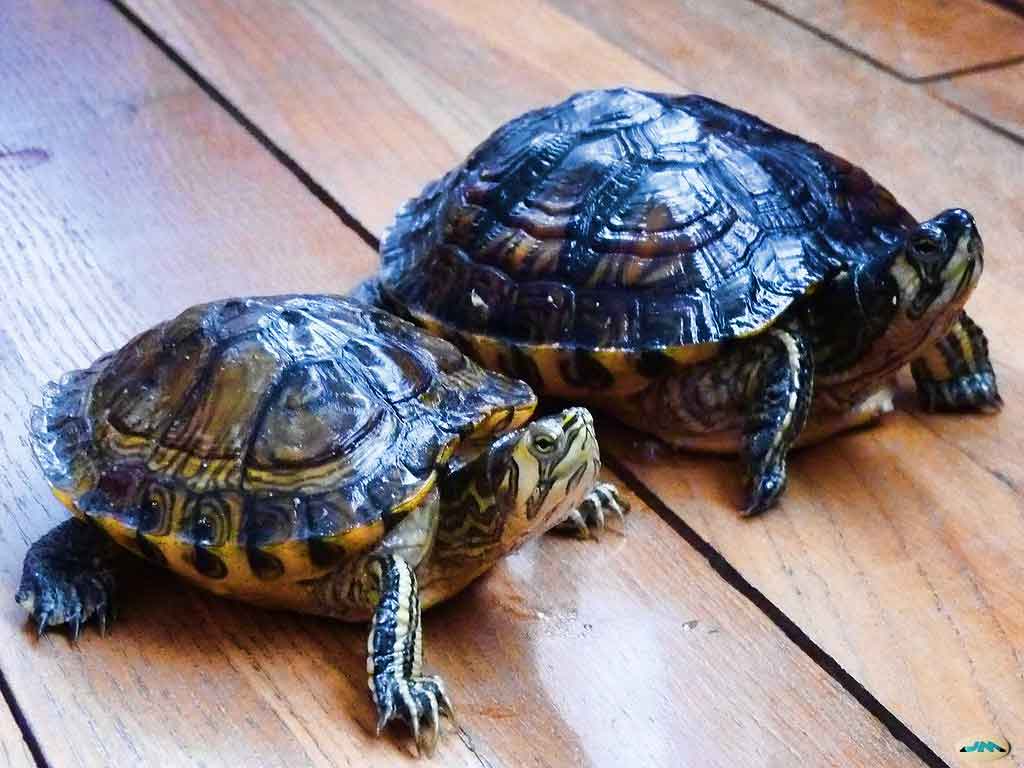
    The Turtles they can be carnivorous, omnivorous or herbivorous and there are some species that change their diet as they grow (see tables 1 and 2); for example the aquatic turtles of the gender Trachemys tend to go from a carnivorous to a more omnivorous diet as they grow older; becoming adult vegetarians. This is a reflection of changing dietary requirements, from its phase of greatest development to maturity.

    An appropriate one turtle nutrition (chelonians) allows adequate growth, shell conformation and reproductive capacity (48).

    Turtle feeding (chelonians) omnivorous

    TABLE 2

    Classification of Some Aquatic Turtles
    according to your Diet

    herbivores Omnivores carnivores or
    predominantly
    carnivorous
    There are very few aquatic turtles
    herbivores like
    Indian Roof Turtle
    Painted Turtles European Pond Turtle
    Adult Emidids of North America Spotted Turtle along with the
    other species of Clemmys
    Crocodile and alligator turtle
    Map turtles Tortuga Mata mata
    Swamp Turtles Soft-shelled turtles
    Red-eared turtle Shield turtle
    Turtles of the genus Phrynops Long-necked turtles
    South American turtles
    of the gender Platemys

    Most of the omnivorous chelonians they are mainly carnivorous during their youth, but as they mature they increase their consumption of plant matter. It is suggested that their diet in captivity contains plant and animal matter in proportions of 75:25 to 90:10 (49).

    In the wild, omnivorous species have access to a wide variety of live foods., frequently insects such as earthworms, snails, slugs, one hundred feet, Pupae, worms, mealybugs, crickets, etc. To get a better idea of the components that a diet may contain for these species in captivity it is recommended to see the table 3 and 4 (50).

    TABLE 3

    Recommended Components for the
    Diet of Omnivorous Terrestrial Turtles

    Worms, slugs, snails, myriopods, mealybugs, among other invertebrates
    Pinkies (newborn mice)
    Skinned and chopped adult mouse
    Vegetables and pastures (fungi, lettuce)
    fallen fruit (bananas, Peaches, tomatoes)
    (McArthur et al, 2004).
    TABLE 4

    Recommended Components for the
    Omnivorous Water Turtles Diet

    Pellets for turtles (Tortuguetas [Petmmal], ReptoMin®sticks [Tetra])
    Green leaves
    Fruits
    Low-fat canned dog food
    Low-fat rehydrated dog kibble
    Pellets for pond fish
    Raw whole fish
    Fresh meat (liver)
    Insects (red worms, tubifex worms, artemias)
    Prawns

    Since insects contain more phosphorus than calcium (especially the larvae), should be supplemented with vitamins and minerals (calcium), to avoid the presence of nutritional deficiencies. So insects should be fed a diet rich in vitamins and minerals especially calcium, 24h before being offered to the reptile; this is known as "gut loaded" in English, and moments before offering them should also be sprinkled. Occasionally they may be provided with a small amount of meat, fish or dog food «LIGHT» (Normal foods are high in fat), in order to maintain a balanced diet (51).

    The frequency of inclusion of animal matter in the diet, depends on the lifestyle of the animal and the degree of meat consumption of the species, excessive amounts of cat food, dogs or monkey, cause metastatic mineralization problems; as it contains high levels of vitamin D3. Most omnivores will refuse to eat fresh vegetables and fruits., showing preference for mature plant material (52).
    As for aquatic turtles, they also develop well with a suitable combination of animal and plant material, dried shrimp lack an adequate balance of vitamins and minerals, while greasy fish in large quantities produce steatosis, fatty liver and vitamin B deficiency due to excess thiaminases. So a proper diet is based on a balance of ingredients, a small amount of low-fat dog food can be given 1 once a week occasionally, and natural ingredients should always be preferred (53).
    It should be remembered that high-protein diets have a higher content of phosphorus in relation to calcium, so they should be supplemented with calcium (e.g.. Calciosol with fixative) and some fish contain thiaminases, so you also have to supplement with vitamin B1 (e.g.. Thiaminal B-12, Benerva®. Roche Laboratories), to ensure intake (because the animals feed in the water and the supplements are lost) it is recommended to liquefy all the ingredients and then add grenetin to the mixture, to make a gelatin which prevents the loss in the water of calcium and vitamins ensuring its consumption (54).
    The key is to prevent animals from being pigeonholed with one or two foods., as they frequently become addicted to meat or fish; which results in a poor diet. It is important to have a separate tank from the main tank so that the animals are transferred to it at feeding time and thus reduce the contamination of the water in the main tank. (55).

    Adequate proportions of a diet for red-eared turtles, painted and swamp turtles and stinky:
    Turtle in captivity
    Turtle
    • 60-70% animal matter: sofobas, crickets, waxworm larvae, common earthworm, tubifex, Anemias, aquatic snails, small fish, trout pellets or low-fat dog kibble, avoid using raw or cooked meat, especially in juveniles due to its low calcium content, tubifex and snails can bring parasites.
    • 20-30% green leafy vegetables or aquatic plants.

    In the wild they feed on snails, slug, insects, crabs, other aquatic invertebrates, Tadpoles, small fish, carrion, algae and aquatic plants, and as mentioned at the beginning, juvenile omnivorous turtles are more carnivorous and become more herbivorous as they mature. Adults can be fed from 2-3 times a week and only give them an amount of food that they can eat in a 30-40 minutes, it is recommended to give aquatic plants such as duckweed, water lettuce, Water hyacinth along with other aquatic plants and swamp plants, which form a substantial part of adult diets (56).

    Feeding of herbivorous turtles

    Microbial fermentation of intake occurs in the large intestine, microorganisms digest parts of the intake such as cellulose that the host cannot digest and this flora produces additional protein derivatives by modifying the plant material (57).

    The diet of herbivorous reptiles should contain:
    • High-fiber vegetables that make up most of the diet.
    • It must be rich in certain minerals such as calcium.
    • Rich in vitamins such as vitamin A and D3.
    • Must have an adequate calcium and phosphorus balance, which must be at least 1.5-2: 1 That: P. wild chelonian diets contain at least one radius Ca: P of 4: 1.
    • Adequate water content.
    • Low phosphorus.
    • Low in fats and oils.
    • low in protein.
    • Low in thiocyanates, oxalates and phytates. (58).
    • Should be high in slow-digesting carbohydrates (e.g.. cellulose) and low-carb, high-digesting (e.g.. Feints)

    Requirements are easily met when fed with wild plants, like flowers, pastures and weeds (be sure they are free of pesticides and pests), as store-bought greens are often high in protein and low in fiber compared to natural forages. Turtles can graze on their own if they are provided with adequate space for this., without the presence of poisonous plants, even so your diet should be supplemented, the species that benefit most from grazing are the leopard turtles and sulcata (59).

    The Turtles have food preferences and will only eat 1 or 2 food to the exclusion of others, which can bring deficiencies. To reduce selective feeding it is recommended to liquefy the food, which is supplemented with vitamins and minerals (e.g.. Vitafort-A and Calciosol with fixative) (see Fig. 5), diet ingredients should be fresh and raw. Food must be washed very well to remove pesticide residues (60).

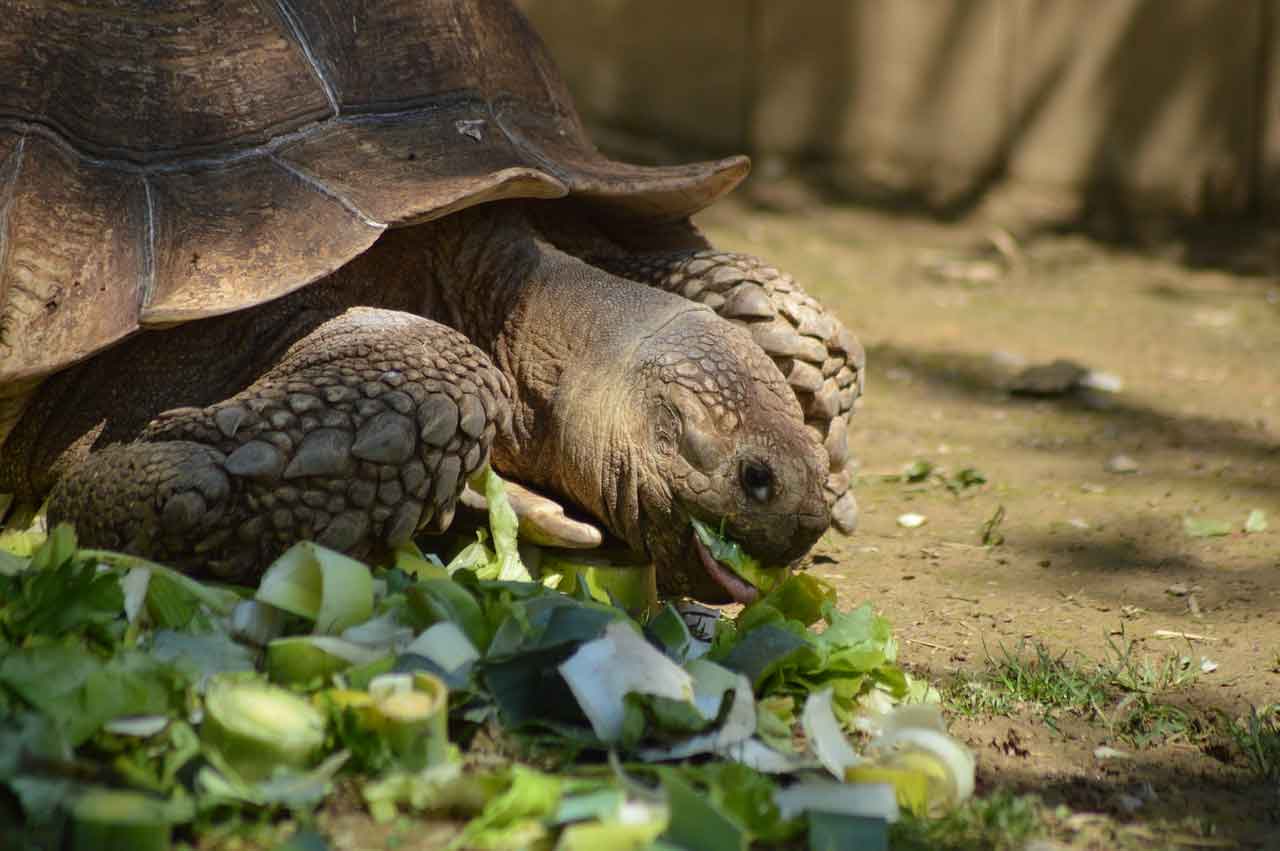
    Turtle eating a salad
    Fig. 5. Turtle eating a supplemented salad.

    Animal protein should not be offered (see table 5) to herbivorous reptiles as it can affect the intestinal flora and predispose to hyperuricemia and therefore to gout, In addition to causing accelerated and abnormal growth in juvenile reptiles (61).

    TABLE 5

    Foods to Avoid
    herbivorous reptiles

    Cat food
    Meat
    Dog food
    Bread
    Milk
    Cheese
    Refried beans
    Bacon
    Ham
    Recovery diets for mammals (a/d Hill’s)
    Insects: worms, sofobas, tenebrios
    Meat
    To mention a few
    (McArthur et al, 2004; Walls, 1998).

    Although pellet-based diets are very popular, some authors do not recommend them as the majority part of the diet, especially in juvenile animals since they provide them with accelerated growth as most are high in protein (>45%), which is detrimental to growth in juveniles, as the shell is deformed; its use in adults is also of dubious benefit to some; however it all depends on the quality and quantity of the ingredients (62).

    As mentioned earlier in the green matter section, care should be taken with vegetables containing oxalates and thiocyanates (see table 6), since depending on the amount of these in the diet mineral deficiencies can occur (iodine and calcium) (63).

    The herbivorous turtles differ from each other regarding their preferred intake of fiber, Mediterranean turtles are ramoneadoras so they will be better off if they are allowed to ram in gardens with herbaceous plants; While the leopard turtles and sulcata are better off with a diet high in grasses and hay (70-75%) because they require a higher intake of fiber, although it has been seen that in the wild some eat a greater amount of herbaceous plants, it has also kept a record of growth in freedom that can serve as a captive turtle guide, young and subadults grow 7mm/month, adult females grow 5.7mm/month and adult males 3.2mm/month (64).

    A diet recommendation for herbivorous tortoises is:

    • Mediterranean turtles: 25% rubiaceae (Nubia, white gallium, coffee family), 22% legumes (bean, peanut, broad bean, lentil, soy, pea and chickpeas), 10% asteraceae or compounds (lettuce, Sunflower, endive, chicory, daisy, chamomile and safflower), 8% ranunculaceae (be careful with these because many are toxic like aconite, knight spur and adonis), these can be grown at home to ensure they are pesticide-free and it is recommended that it be in calcium-rich soils to ensure that the plants have a high content of this mineral..
    • Leopard and sulcata turtles: their diet is similar to that of Mediterranean turtles, but with a higher proportion of pastures (20%) such as achicalada alfalfa and good quality Timothy grass hay (65).

    In general, the food should be provided ad libitum per meal. The newly hatched specimens and up to their juvenile stage should eat 2 times per day, chopping the food to obtain particles of the appropriate size. Juveniles and adults can be fed once a day and both juveniles and adults should have access to fresh water for both drinking and bathing. (66).

    Canned and dehydrated herbivore diets are commercially available and a small portion may be used in the omnivore diet. (67).

    Sources:

    Corral Gutiérrez, Karla Marina. (2009). «Development of a manual and interactive disk on nutrition, "Frequent installations and diseases in reptiles used as pets". (Bachelor's Thesis). National Autonomous University of Mexico, Faculty of Higher Studies Cuautitlán, UNAM. Retrieved from https://repositorio.unam.mx/contenidos/3449228
    Bibliography:
    (48) (Alderton, 2002; Beynon and Cooper, 1999; McArthur et al, 2004).
    (49) (Alderton, 2002; Girling and Raiti, 2004; Mader, 2006; Merck Veterinary Manual, 2007; McArthur et al, 2004).
    (50) (McArthur et al, 2004; Wissman M. A., 2003).
    (51) (McArthur et al, 2004; UNAM Diploma in Medicine and Wildlife Management, 1993).
    (52) (McArthur et al, 2004).
    (53) (McArthur et al, 2004).
    (54) (Girling and Raiti, 2004; McArthur et al, 2004).
    (55) (Girling and Raiti, 2004; McArthur et al, 2004).
    (56) (Girling and Raiti, 2004; McArthur et al, 2004).
    (57) (McArthur et al. 2004).
    (58) (Girling and Raiti, 2004; McArthur et al, 2004).
    (59) (Mader, 2006; McArthur et al, 2004).
    (60) (McArthur et al, 2004; Wissman M. A., 2003; Syria et al., 2002; Walls, 1998).
    (61) (McArthur et al, 2004).
    (62) (McArthur et al, 2004).
    (63) (Mader, 2006).
    (64) (Girling and Raiti, 2004).
    (65) (Girling and Raiti, 2004).
    (66) (IMFAC, Practical Medicine Course in Non-Conventional Companion Species, 2006; McArthur et al, 2004).
    (67) (Wissman M. A., 2003).

    ▷ The world of Pets: Dogs, cats, birds, reptiles, amphibians

    Von Höhnel's chameleon
    - Trioceros hoehnelii

    The Von Höhnel's chameleon (Trioceros hoehnelii) is a high-altitude species that ascends to more than 3.000 m on Mount Elgon.
    Von Höhnel's chameleon
    Von Höhnel's chameleon – Wikipedia

    Content

    Origin / Distribution

    The Von Höhnel's chameleon (Trioceros hoehnelii) found mainly in Kenya, but is represented by a wide range of local variations. The form found on Mount Elgon, in Uganda, is called Trioceros hoehnelii «altaeelgonis«. Whether there are subspecies within this species is disputed.. But, regardless of official status, the breeder and caretaker community has adopted the term "altaeelgonis» for varieties from Uganda.

    Characteristics / Appearance

    The Von Höhnel's chameleon has a very pronounced helmet, which is much more marked in males than in females. Also noteworthy is a small nasal process, which is also higher in males. There are a large number of local and location variations. Especially the helmet and the nasal process are quite different. The species has a coarsely spiny dorsal crest that extends the entire length of the body and tapers towards the end of the tail.. The throat and ventral crest are formed by large spiny scales.. Both sides of the body usually have 2 greatly enlarged plate-like scale rows. Scale and body coloration are highly variable, consisting mainly of shades of brown and green with partially light transverse bands.. There are reddish or brown animals, as well as a well-known color form with a yellow head and green body.

    Male hemipenis pouches are clearly developed by the time they reach sexual maturity. Females show a much more homogeneous scaling, secondary sexual characteristics are less pronounced in them. Males grow to a maximum length of 25 centimeters, females reach a maximum length of 20 centimeters. The life expectancy is of 2 to 4 years.

    Habitat

    The Von Höhnel's chameleon is a high-altitude species that ascends to more than 3.000 m on Mount Elgon. They have developed the ability to regulate their body temperature through sunlight to take into account low ambient temperatures.

    Behavior

    The Von Höhnel's chameleon shows very interesting defensive behavior in the wild. The greatest danger for this species of chameleon is the snakes that live in the trees, as the green mamba. If the chameleon sees a snake, immediately turns deep black, he rolls up his body and drops to the ground, where the snake does not usually follow. Next, the animal remains motionless on the ground until the danger has passed.

    Threats to the species

    State of conservation ⓘ


    minor concern Minor Concern ⓘ (UICN)ⓘ

    This species has a wide distribution and seems to have the ability to adapt to a degradation of its natural habitat., since it also occurs in agricultural and semi-urban areas. It has therefore been classified as a "species of least concern" by the UICN.How is it being captured for the wildlife trade?,The species has been included in Appendix II of CITES to limit its effects.

    The "Von Höhnel's chameleon" in captivity

    "The Ugandan Variation of the Trioceros hoehnelii rarely seen, since Africa's exports come from Kenya, having different varieties of color. There are several populations at different heights, each with a different color scheme.

    Care is very similar to Montane side-striped chameleon (Trioceros ellioti). Thrives in a well planted terrarium. They have been kept in groups from one male to multiple females, but the females can have two litters a year and, therefore, are almost always at some stage of pregnancy and must be separated. So, despite reports that they are not aggressive, the saying is still valid: One chameleon per cage and not to worry.

    They seem to be enjoying their morning sunbath. Taking into account the drastic drop in nighttime temperature in your home environment, they are experts in absorbing all the sun's rays they can. And the decrease in night temperature is important for health. Special care must be taken with the young and the heat.

    Hydration is through a standard chameleon protocol of around three hours of night misting in the early morning with 15 minutes of fogging in the morning and 15 minutes in the afternoon.

    Breeding is not difficult. The gestation is 4 to 6 months. Young females can produce 6 offspring while a mature female can produce 20. They can have two litters of pups a year and become receptive again 40-50 days after delivery. The young are sexually mature after one year..

    The terrarium

    the bigger, best!. Minimum (45 x 45 x 90 cm.).
    Full or hybrid mesh (combination of mesh and glass or panel).
    UVB source (inside or outside).
    natural light source (inside or outside).
    Heat source (exterior).
    Nebulizer at night.
    Manual fogging in the morning and at night.
    full mesh.
    Small fans when using a hybrid cage and/or the air is stagnant.
    live plants (not fake)
    natural branches (no fake vines, no strings, or bleached wood).
    No substrate or bioactives

    Food

    In captivity, animals eat crickets, domestic crickets, all kinds of flying insects and small cockroaches. It also, get vitamins and minerals (pollinating insects). Animals can cover their water needs by lapping up the sprayed water.

    Reproduction

    The Helmeted Chameleon is viviparous in the egg., and there is also fertilization by storage; can get pregnant again right away. In courtship, the male approaches the female, nodding and flattening to one side. When the female is ready to mate, he remains seated and mating occurs, this process can be repeated for several days. Gravid females repel males willing to mate.. If the stress is too great for a pregnant female, must be separated. During pregnancy, females have a greater need to drink and feed. After a gestation period of 150 to 180 days, females give birth between 4 and 22 pups. Before this, the female becomes restless and egg laying takes place in the early morning hours, preferably on thick bark or rough branches. The young are released from the egg case and are immediately independent.. Sexual maturity is reached around 8 months. But, should not be mated before one year.

    For sale "Von Höhnel's chameleon"

    The price of a "Von Höhnel's chameleon" at the exotic animal market, ranges between 50 – 150 EUR.

    Videos "Von Höhnel's chameleon"

    MOUNTAIN CHAMELEONS 🦎 Trioceros hoehnelii ⛰ Care, information...

    George the Trioceros hoehnelii Chameleon

    Alternative names:

    1. Von Höhnel's chameleon, Helmeted chameleon, High-casqued chameleon, Kenyan high-casqued chameleon (English).
    2. Caméléon à casque élevé (French).
    3. Helmchamäleon (German).
    4. Chamaeleo hoehnelii (Portuguese).
    5. "Camaleón de casco" (español).

    ▷ The world of Pets: Dogs, cats, birds, reptiles, amphibians

    Green puddle frog
    - Occidozyga Lima

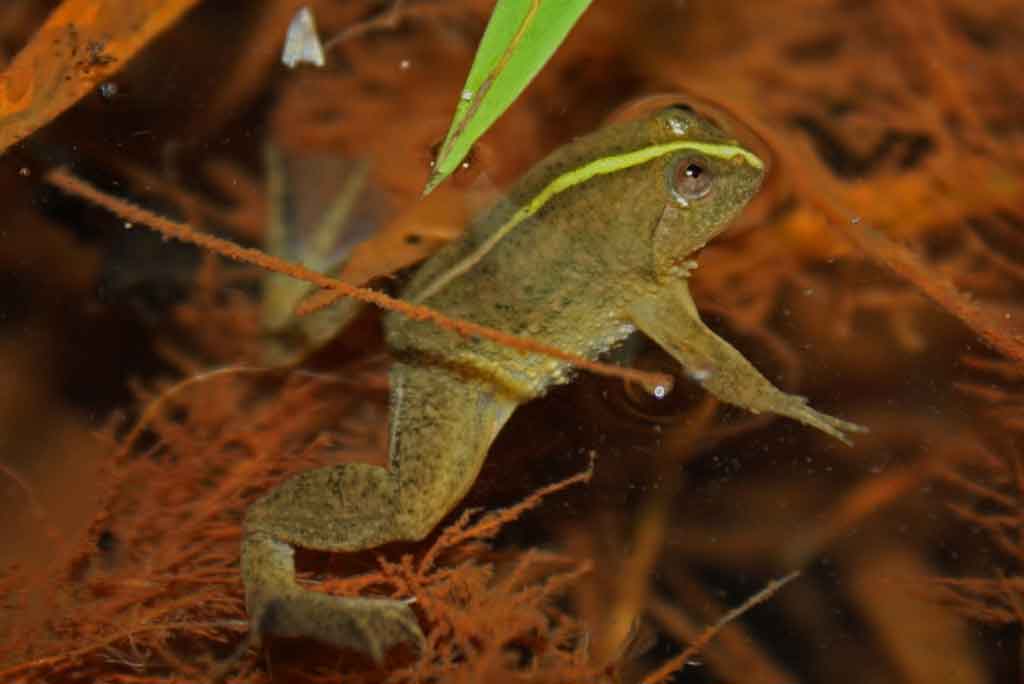
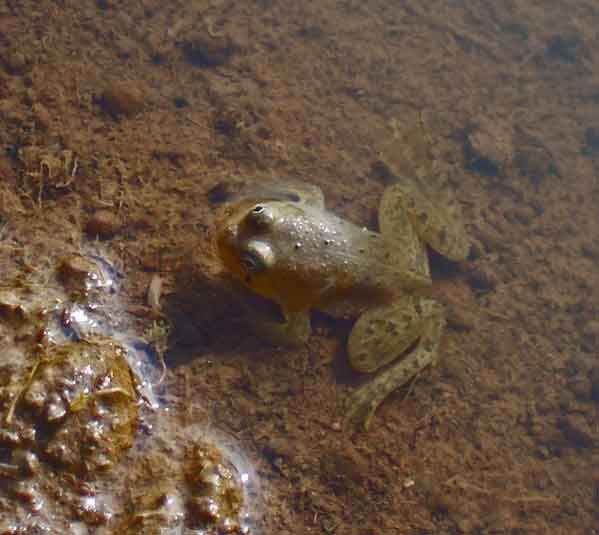
    The Green puddle frog It is a nice guest for the aquaterrarium and very easy to maintain..
    Green puddle frog
    Green puddle frog in a water filled ditch near Angkor temples – Thomas Brown, CC BY 2.0, via Wikimedia Commons

    Content

    Habitat and way of life

    This small animal has a huge range that includes Cambodia, China, Hong Kong, India (West Bengal), Indonesian, Laos, Malaysia, Burma, Thailand and Vietnam. But, the species is not equally common everywhere. In some parts of its area of distribution, the frog is a common amphibian, but in West Bengal it seems to be much less common, since in a scientific work on the amphibian fauna of the state, the author could only rely on bibliographic references: There was not a single preserved specimen! Admittedly, this may simply have to do with the fact that the Green puddle frog it is often overlooked due to its small size and also has no economic utility. In hong kong, the population, once rich in individuals, would have sunk almost completely for unknown reasons. Frogs are imported for the pet trade from Indonesia, where they are found in large numbers and, Therefore, can be bought in this country for little money.

    There are frogs that spend their entire lives underwater. Among them are the vivacious African clawed frog and Common Surinam toad. They emerge from the water only exceptionally and briefly and rise to the surface only to breathe.

    There are also frogs that are usually out of the water, but far enough away from her to reach the wet element with a jump. This includes the Edible frog (Pelophylax kl. esculentus), which is native to Central Europe.

    The ubiquitous green companion lives like a hunter and lurks on land, sitting on driftwood or lily pads looking for insects, that catches in a jump. On land, the animal does not move unnecessarily; land struggles with peers and all social behavior take place in the water.

    The Green puddle frog has developed a third form of aquatic life. Floats on the surface of the water for most of its life. Only occasionally comes out of the water and crawls on a floating leaf or something similar.

    The Green puddle frog hunt above and below the surface of the water. It swims towards the small insects that fall to the surface of the water and captures them with its agile tongue. You can also find submerged worms, as the tubifex, and often puts them in his mouth with the help of his front paws, How do you know about the African clawed frog. The bulging eyes are not only used to recognize prey, but also to detect enemies. Many snakes, birds or even larger species of frogs try to kill the little one Green puddle frog.

    Physical characteristics

    "Green puddle frog"

    Rana verde del charco
    Green puddle frog – Axel Kwet, CC BY-SA 2.5, via Wikimedia Commons

    A frog with a size of approximately 3,5 cm.. The colors of the specimens vary in greenish/beige colors, plus dark staining. There are also specimens with scratched marks on the back. In this group of frogs the abdominal area is pale and without drawing. As these frogs also like to float on the surface of the water, they are often compared to African clawed frog. But, if you look closely, this is only true for the hind legs. Here are the characteristic webbed toes. The front legs of the Green puddle frog with his fingers are much more similar to those of the African clawed frog. The flattened shape of the body of the Green puddle frog with his fingers are much more similar to those of the African clawed frog not found at all in Javanese swimming frog.

    Care and accommodation

    Taking care of these cute animals is easy. They do not have special demands regarding the composition of the water or the food. One Aquarius standard of 60 x 30 x 30 cm is enough for the care of 6-12 specimens. Males sometimes fight with each other, what is interesting to observe, because it looks like a boxing match when the animals are floating on the surface of the water and attack the opponent with their front legs. But, because it looks like a boxing match when the animals are floating on the surface of the water and attack the opponent with their front legs.

    The Aquarius because it looks like a boxing match when the animals are floating on the surface of the water and attack the opponent with their front legs, because it looks like a boxing match when the animals are floating on the surface of the water and attack the opponent with their front legs (because it looks like a boxing match when the animals are floating on the surface of the water and attack the opponent with their front legs) Must be from 5-7 cm., because it looks like a boxing match when the animals are floating on the surface of the water and attack the opponent with their front legs 8-10 cm.. because it looks like a boxing match when the animals are floating on the surface of the water and attack the opponent with their front legs, because it looks like a boxing match when the animals are floating on the surface of the water and attack the opponent with their front legs. Any openings in the cover should be covered with filter wadding..

    In the tense air of this aquaterrarium, many plants thrive excellently, as the burhead (Echinodorus) or -more bioptic- the water trumpet (Cryptocoryne). It also, should add some floating plants, as the water lettuce (Pistia) or the West Indian spongeplant (Limnobium laevigatum), that will soon bloom.

    Until the plants really grow, you should place a piece of decorative cork on the surface of the water so that the animals can find a resting area if they wish.

    Tank lighting - a neon tube is enough- will raise the air temperature to 28-32°C during the day. At night, when the lights go out, the air temperature drops to room temperature. This fully corresponds to natural conditions and is beneficial to the health of animals.. Additional heating is only necessary if the temperature drops below 18°C.

    Green puddle frog
    Puddle Green Frog Darmaga, Bogor, West Java, Indonesian – W.A. Djatmiko (Wie146), CC BY-SA 3.0, via Wikimedia Commons

    Behavior

    Your behavior is highly confident after a short time. They position themselves on floating plants or float under the surface of the water. When two frogs get close to each other, sometimes a kind of "chest tightening" occurs. Next, front legs flap. Looks like a mini boxing match. These frogs are also usually very agile.

    Groups of frogs with a small number are not recommended for large tanks. These small animals quickly "lose" themselves from the viewer's eyes.. These frogs are very communicative. When they approach the aquarium, they emit bright screeches. they emit bright screeches. Surprisingly, they emit bright screeches. they emit bright screeches, they emit bright screeches. they emit bright screeches. These Javan swimming frogs then chase after edible insects that have been brought onto floating plants.. they emit bright screeches.

    Diet

    All small insects can serve as food, as the fruit flies (Drosophila), the little crickets (Acheta domesticus) or the aphids. It is very interesting to observe the underwater hunting, for which the large water fleas (Daphnia magna), the live larvae of red mosquito or the Tubifex.

    Reproduction

    The Green puddle frog can reproduce throughout the year, but at least for the animals that are currently imported from Indonesia, our winter (from November to February) seems to be the preferred breeding season. Males grab females by the waist. Eggs -may be between 50 and several hundred, depending on the size and condition of the female- have a diameter of 0,6 to 1,1 mm. Tadpoles are light olive in color and have a dark stripe around the tail. They eat commercial flake food for ornamental fish. Tadpoles reach a length of up to 3,9 cm in metamorphosis. In the terrarium, a lifetime of more than 5 years, well above the natural life expectancy of animals in the wild.

    Alternative names:

    1. Rough-skinned floating frog, Pearly skin puddle frog, or Pointed-tongued floating frog (English).
    2. Grenouille flottante à langue pointu (French).
    3. Java-Schwimmfrösche (German).
    4. Occidozyga lima (Portuguese).
    5. Ranita asiatica, Rana rugosa de charco, Rana flotante de Indonesia (español).

    ▷ The world of Pets: Dogs, cats, birds, reptiles, amphibians

    Black iguana
    - Ctenosaura similis

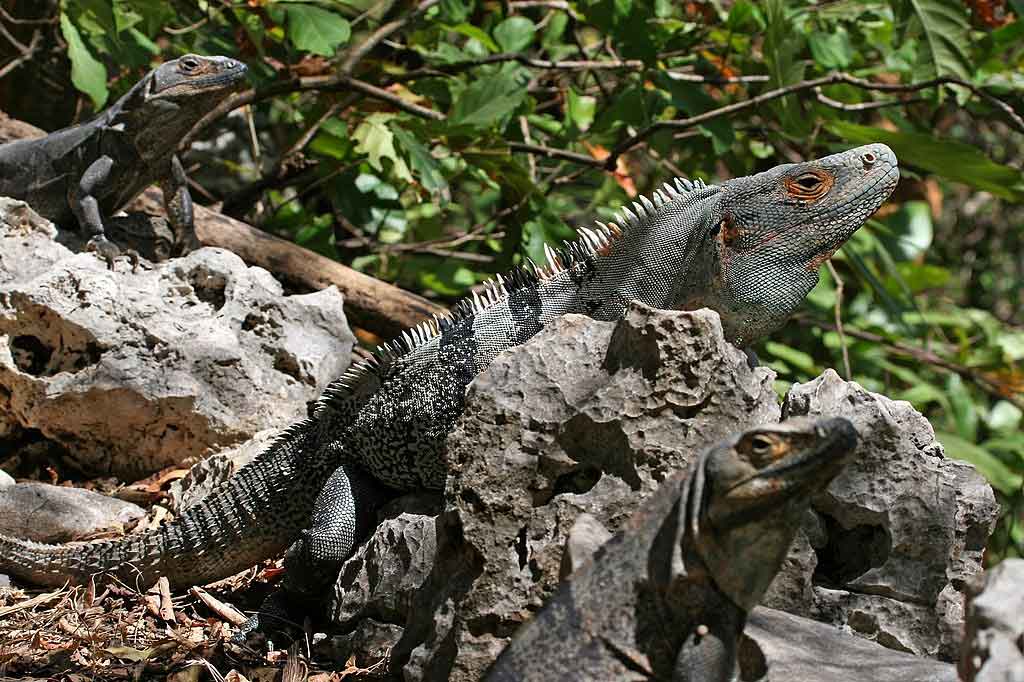
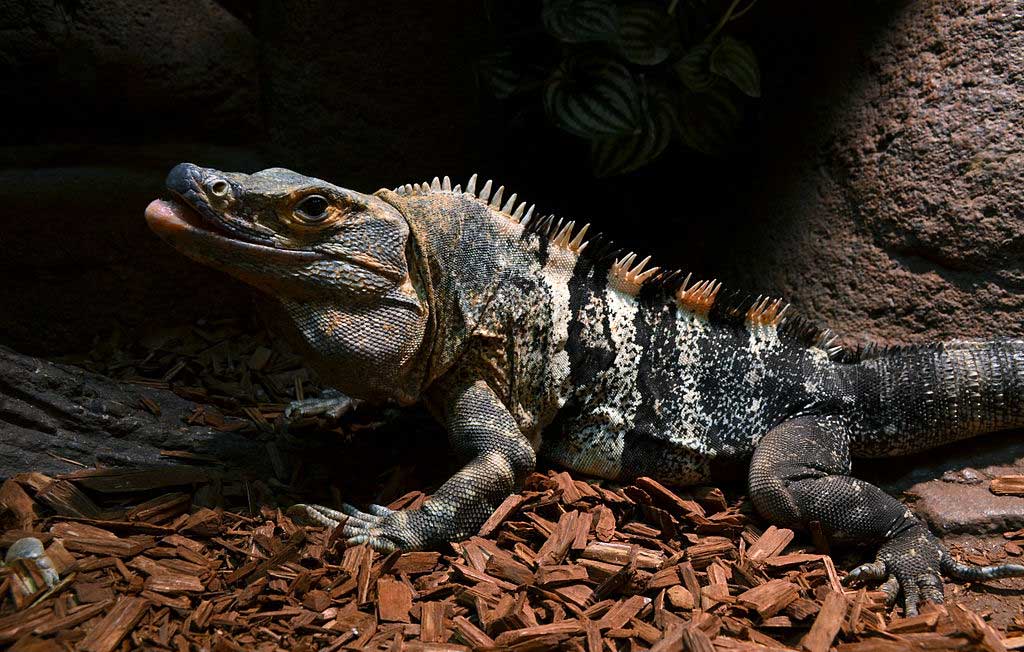
    The Black iguana it is a large and bulky lizard, and adult males reach 45 cm long with a tail of 30 cm..
    Black iguana
    One male iguana and two females, Barra Honda National Park, Costa Rica – Christian Mehlfuhrer, User:Chmehl, CC BY 2.5, via Wikimedia Commons

    Content

    Origin / Distribution

    The Black iguana (Ctenosaura similis) is native to Central America, and has the widest range of all Ctenosaura species from the Isthmus of Tehuantepec to northeastern Nicaragua and western Panama on the respective Atlantic and Pacific coasts. It is commonly found throughout Costa Rica, Honduras and has been reported in some Colombian islands both in the Caribbean Sea and in the Pacific Ocean.

    It has been introduced to southern Florida and breeds in the wild in several feral populations.. On the southwest coast of Florida, has been discovered from Collier County north to Tampa Bay. On the southeastern coast of Florida, black spiny-tailed iguanas have been found in Key Biscayne, Hialeah and in Broward County. This iguana has also been introduced to several Caribbean islands. As this species feeds opportunistically on small vertebrates, like fish, rodents, eggs, birds and even hatchling sea turtles, may pose a threat to native endangered species.

    Characteristics / Appearance

    The Black iguana it is a large and bulky lizard, and adult males reach 45 cm long with a tail of 30 cm.. They are predominantly black, but the dorsal surface may show black bands on a greyish background. Most have black mottling on back. The color may also lighten after sunbathing with yellowish and orange markings becoming apparent along the sides..

    Adult males and females are dimorphic. Adult males have well-developed dorsal crests and small dewlaps.. double chin, the crescent of skin that may extend under the throat, it is not inflated. A small spine bends to extend the jowls during moments of threat, courtship or defense of territory. Females lack obvious crests. There is considerable variation with age and sex, so identification can be difficult.

    These iguanas have ringed tails with rows of sharp, curved spines., hence also the name Spiny-tailed Iguana. The spines on the back are short. Juveniles tend to be olive green, turning tan and finally grayish as they grow.

    Habitat

    These lizards are great diggers and hunters.. They are around ruins, stone walls, open rocky slopes and branches of large trees along the open edges of forests. They usually live in dry land, arid and open.

    Behavior

    Black iguana
    black spiny tailed iguana (Ctenosaurus), in the serpentarium, and Blankenberge – Vassil, CC0, via Wikimedia Commons

    This species can be belligerent and can bite or injure an aggressor with its spines.. More terrestrial than aboral, can run bipedally. Highly gregarious and territorial, these iguanas live in colonies, governed by a strict pecking order. One male of the colony is the dominant, and although the other males have territories, they only defend them against each other and not against the leader. Territorial deployments include color changes, body inflation, jaw clicking, "push-ups" or rapid movements of the head and, sometimes, bite and tail swipe battles. Larger males tend to have bigger and better territories and mate more often. Fighting usually occurs when iguanas gain or defend territory or a mate..

    The male always courts, but you can only move forward if your partner provides you with the right stimuli. She must respond with sexual stimuli, and as one of its own kind; with a female of the wrong species their reproductive investments would result in sterile hybrids, if there is any baby. You should also point out that you are receptive, with mature eggs ready for fertilization. Some of the visual cues that are often important in courtship are that males often bite, scratch or lick females that have signaled their receptivity.

    Juvenile iguanas usually come out of the nest hole together, a strategy against predators in which many eyes are better than two and large numbers make individual capture less likely. Young iguanas usually remain in a group and one of them temporarily behaves as a leader. They lick each other's tongues and groom each other, and rub their body and chin. At night they usually sleep together in the branches.

    Reproduction

    This species reaches sexual maturity around 3 or 4 years of age. They gather and mate during specific times of the year that vary between populations. Male iguanas have a pair of intromittent organs., los hemipenes. when they are not used, hemipenes are found adjacent to the cloaca at the base of the tail.

    During sexual activity, one of the hemipenis everts by the action of the muscles and fills with blood.. in copulation, that follows courtship behavior, only one hemipenis inserts into the female's cloaca, and the sperm travel along a groove in the hemipenis. The retraction of the hemipenis is carried out by draining the blood sinuses and activating the retractor muscles that invert the structure when withdrawing it..

    In the breeding season, oviparous females migrate to suitable nesting areas. After digging a burrow half a meter deep, the female lays from 2 to 25 eggs in the nest. She then defends the burrow for some time to prevent other females from nesting in the same place.. Young iguanas are born between 3 and 4 months later and take a week to leave the nest. These little iguanas fit easily in the palm of one hand.. If they survive the difficult first years of life, where food is often scarce and predators, like hawks and owls, they are a danger, these iguanas can live more than 60 years.

    Food

    Diet Black iguana it is generally herbivorous, especially leguminous fruits, but it is also known to have a diverse carnivorous diet consisting of small animals.

    The Black iguana has eaten rodents, bats, frogs, small birds and a wide variety of insects. They have even been observed to eat the eggs of their own young and, in a case, the tail of a juvenile was found inside an adult male, suggesting cannibalism. The young are mainly insectivorous., transitioning to herbivorous habits as adults.

    Threats to the species

    State of conservation ⓘ


    minor concern Minor Concern ⓘ (UICN)ⓘ

    Man and his domestic animals are inevitably destroying the environment of these iguanas. The domestic animals, like the cows, devour most of the vegetation, what is the food source of iguanas. Its meat is savored in many parts of the world, but it is not exploited in excess. In some parts of South America, iguanas are hunted by men who imitate the cries of hawks. The iguana's reaction to screaming is to "freeze" and are then easily caught.

    The presence of human settlements in coastal areas is an important displacement factor for many species; as well as the fragmentation of the forests and the devastation of mangroves.

    In Mexico, the NAME-059-SEMARNAT-2010 considers this iguana as Threatened; the IUCN 2019-1 like Least concern.

    The "Black iguana" in captivity

    Black iguana
    Juvenile Striped Iguana in Santa Rosa NP, COSTA RICA (Ctenosaura similis) – Bernard DUPONT – Flickr

    To keep the Ctenosaura similis (Black iguana) as appropriate as possible to the species, we recommend the following conditions. Especially when the minimum size is specified, note that optimal conditions can only be achieved in much larger terrariums.

    • temperatures during the day: 25°-35°C (place of asoleo local approx. 40-45°C)
    • Night temperatures: 18-22°C
    • Humidity: approx.. 50% during the day and 80-90% At night
    • Minimum size of the terrarium: starting at 300 x 250 x 180 cm for two animals

    The terrarium

    The Black iguana often found in nature in multiples. has been individually maintained, in pairs or in a group with a single male and three to four females. But, the terrarium must be large enough and have enough structures. It is best to plan an indoor terrarium for a group. For a terrarium for two animals, should have at least 300 x 250 x 180 cm.. For a group, terrariums of more than 400 x 350 surface cm.

    Food

    Diet Black iguana consists mainly of leafy plants, seedlings, flowers, herbs and rarely fruits. They are also eaten by insects and should also be offered. It also, from time to time it is necessary to make available to these iguanas smaller mammals. Vegetables like carrots, cucumber and tomato are also important foods. Adult animals feed on a 80-90% vegetarian, young feed mainly on insects.

    no lettuce, iceberg lettuce or similar, since the calcium-phosphorus content is unfavorable in this case. And cabbage or spinach should rarely be fed due to oxalic acid.

    Additional vitamin and mineral supplements are recommended.

    Temperature

    The temperature for these terrarium animals should be 25-35°C during the day, the solar island 40-45°C and between 18-22°C at night. The humidity should be around 50% during the day and 80-90% At night.

    Decor

    The terrarium can be furnished with numerous stones, climbing facilities, a bathing area, remained, foliage, cork and bark tubes, which also offer many hiding places. To keep the Black iguana many structures and opportunities are needed to hide.

    Illumination

    For your well-being, good lighting and ultraviolet light are necessary (30% of UVA rays and 10-12% UVB), as well as a place to sunbathe. UV radiation is very important and absolutely necessary. In the case of females, it is necessary to provide a suitable place for laying eggs or several possibilities.

    For fluid intake, an additional water bowl can be placed, that is cleaned daily.

    Hibernation

    Usually, the Black iguana hibernates for about four weeks at about 18°C.

    Reproduction

    The Black iguana is sexually mature after two years. A female lays up 80 eggs after about eight weeks. A 28-30°C y 90-100% moisture, the young hatch after about three months. It is essential to give young people enough calcium and vitamins.

    Buy one "Black iguana"

    The price of a "Black iguana" at the exotic animal market, ranges between 40 – 60 euros for a baby.

    Videos "Black iguana"

    Black iguana (Ctenosaura similis)

    Garrobo | Spiny tailed Iguana | Ctenosaura similis

    Alternative names:

    1. Black iguana, Black spiny-tailed iguana (English).
    2. Cténosaure noir, Iguane à queue épineuse noire (French).
    3. Gemeiner Schwarzleguan, Schwarzer Leguan, Stachelig-angebundener Leguan (German).
    4. Iguana-Negra, Iguana de cauda espinhosa preta, Ctenossauro preto (Portuguese).
    5. "Iguana rayada", Iguana negra de cola espinosa, Iguana de cola espinosa de Gray, Tilcampo, Chiguipile o Tolok (español).

    ▷ The world of Pets: Dogs, cats, birds, reptiles, amphibians

    Fischer's chameleon
    - Kinyongia fischeri

    If a «Fischer's chameleon» in a pet store or elsewhere, it is not uncommon for it to be another species of two-horned chameleon in the same genus.
    Fischer's chameleon
    Fischer's chameleon – Denise Chan, CC BY-SA 2.0, via Wikimedia Commons

    Content

    Origin / Distribution

    The species is endemic to Tanzania.

    The Fischer's chameleon (Kinyongia fischeri) split into several species 2008. Most of them are potentially or critically endangered. They are medium-sized chameleons that are characterized by having two nasal horns., and which are popular with private carers, especially in the United States, but rarely seen in European zoos. Usually, not a real Fischer's chameleon, but representatives of other species of the complex Kinyongia fischeri.

    Characteristics / Appearance

    The Fischer's chameleon reaches a total length of 26 – 33,5 cm., the females being much smaller than the males. The queue occupies between 15 and 20 cm.. The most prominent feature is the strongly laterally compressed and warty snout processes., that can measure up to 20 mm in males. In females they reach 8 mm is missing completely. A helmet is only vaguely present. The first third of the back bears a crest formed by a loose row of spiny scales..

    Habitat

    The Fischer's chameleon It inhabits the edges of humid mountain forests and, possibly, in neighboring plantations and gardens, at an altitude of 800-1.700 m, with an annual rainfall of 800-2.000 mm, and with a dry season of 2-3 months.

    Behavior

    The Fischer's chameleon prefers to eat beetles and grasshoppers, but also takes other invertebrates and small vertebrates. Mating females are light green with a red head.. 47-55 days after mating, the female lays between 10 and 21 eggs in a hole 15-20 depth cm. The young grow rapidly and can reach sexual maturity at 6 months. The most important predator of the fishing chameleon is the hummingbird (Dispholidus typus).

    Threats to the species

    State of conservation ⓘ


    Near-threatened Near Threatened ⓘ (UICN)ⓘ

    The Fischer's chameleon (Kinyongia fischeri) is listed as potentially threatened on the IUCN Red List since 2014 because the area of ​​the species is small and the habitat is fragmented. The habitat is gradually disappearing due to conversion of forests to farmland, logging and underuse of crops. The same goes for the Kinyongia boehmei, Kinyongia tavetana, Kinyongia matschiei, Kinyongia multituberculata and Kinyongia vosseleri, are classified as critically endangered. Kinyongia uluguruensis It is not considered in danger of extinction.

    International trade is regulated by CITES Appendix II.

    Among 2001 and 2015, Tanzania exported an annual average of about 3.700 animals. The main buyers were the United States, with a 53%, Germany, with a 13% (a few 470 animals per year) and japan, with a 10%. But, It was rarely the Kinyongia fischeri Properly said, but mainly from Kinyongia multituberculata, Kinyongia matschiei, Kinyongia vosseleri and possibly Kinyongia tavetana and Kinyongia boehmei. Exports of hatchlings from Europe and North America are insignificant

    The "Fischer's chameleon" in captivity

    The terrarium

    The Fischer's chameleon should normally be kept alone. To support an adult individual, A well-ventilated and humid terrarium is recommended. 4 x 3 x 6 times (length x widht x hight) the length of the head and torso, that is to say, a few 60 x 45 x 90 cm for a large male. If they stay in pairs, you have to add a 20% of the ground surface.

    The terrarium should be equipped with spotlights and UV lamps and have plenty of climbing branches and a water trough. It is recommended to plant the back and side walls with, for example, Ficus benjamina. A mixture of sand and peat is suitable as a substrate that should always be kept slightly moist..

    The substrate for the terrarium Fischer's chameleon should be loose and absorbent. These may include, a mixture of sand and peat is suitable. If you have a female, it is important that the substrate is filled to a sufficient height. In this case, the substrate must have at least 20 centimeters high so that the chameleon can bury its eggs.

    Air temperature should vary between 24-28°C during the day, locally up to more than 30°C and drop about 10°C at night. Relative humidity should be 50-70% during the day, with slightly higher night values.

    Buy one "Fischer's chameleon"

    If a «Fischer's chameleon» in a pet store or elsewhere, it is not uncommon for it to be another species of two-horned chameleon in the same genus. The gender Kinyongia includes now 18 species; Kinyongia fischeri It is one of the species that is least kept in captivity.. Often an apparent Fischer's chameleon hides close relatives like Kinyongia multituberculata, Kinyongia matschiei or Kinyongia boehmei.

    The prices of Fischer's chameleon are usually correspondingly high due to this rarity. It is difficult to give a general amount because it depends on the seller, but you probably won't get a Fischer's chameleon for less than 100 EUR.

    The fact that the real Fischer's chameleon is rarely offered is also due to its comparatively small area of ​​origin.

    Videos "Fischer's chameleon"

    Chameleon Showdown - Giant Monkey-tailed Fischer's Chameleons

    Alternative names:

    1. Fischer's chameleon, Fischer’s two-horned chameleon, Nguru blade-horned chameleon (English).
    2. Caméléon nain de Fischer (French).
    3. Fischer's Zweihornchamäleon (German).
    4. Camaleão de Fischer (Portuguese).
    5. "Camaleón de Fischer" (español).

    ▷ The world of Pets: Dogs, cats, birds, reptiles, amphibians

    Ball python
    - Python regius

    At birth, the Ball python measured between 25 and 43 centimeters in length and grows up to 1 or 1,5 meters in adulthood.
    Ball python
    My pet ball python – normal phase, probably an import (rescue) – Mokele at English Wikipedia, CC BY-SA 3.0, via Wikimedia Commons

    Content

    Origin / Distribution

    The Ball python (Python regius), also known as Royal python, found in the grasslands and open woodlands of western and central Africa. They are native to the Sudanese sub-province west of the Nile, in south sudan, the Bahrel Ghazal region and the Nuba mountains, from Senegal to Sierra Leone in West Africa, and in Ivory Coast and some parts of central Africa.

    Characteristics / Appearance

    At birth, the Ball python measured between 25 and 43 centimeters in length and grows up to 1 or 1,5 meters in adulthood. There are some reports of Ball python found in nature with 1,83 metres in length. Their heads are larger than their relatively slender necks and are considered heavy-bodied.. The Ball python typical has large brown markings with lighter medium brown spots interspersed between the darker spots. They may also have yellow stripes from the nostrils to the eyes. The belly is usually ivory white.

    Adult female ball pythons are larger than adult males.. This sexual dimorphism is not present in neonates, but it is evident in adults. Adult females also have longer jaws than their male counterparts.. The resulting increase in swallowing ability can improve your hunting ability.

    Habitat

    The Ball python spends most of its time on or under the ground, in burrows. They are most active at dawn and dusk. They inhabit savannah grasslands or open woodlands and are found in areas that have been cleared for agriculture..

    Behavior

    Ball python
    Ball Python from the Jatujak Market Pet Zone, Thailand – Tris T7, CC BY-SA 4.0, via Wikimedia Commons

    The Ball python moves by rectilinear locomotion, in which bilateral symmetrical contractions propel it forward while pushing against the surface. The Ball python is known for its "balling" protection mechanism, in which it forms a tight ball with its head in the center in response to threats, which has earned it the common name of «Royal python«.

    Developing

    The pups of Ball python They measure between 25 and 43 centimeters; grown ups, between 0,9 and 1,5 m. The gestation period is about 44 to 54 days. Most of them lay their eggs during the second half of the dry season., from mid-February to early April. The eggs hatch from mid-April to mid-June.. About 3 weeks after ovulation, the Ball python female begins to shed her skin. The eggs are laid 4 weeks later.

    Reproduction

    The Ball python It has a long reproductive life that lasts between 27 months and 30 years. The breeding season is mainly from mid-September to mid-November., in correlation with the minor rainy season. One set is from 1 to 11 eggs. Eggs tend to stick together. A few days before hatching they lose their adhesion. Once the eggs are no longer attached and are ready to hatch, the offspring of Ball python they crack the shells with their egg tooth and make their way. The birth weight is 65 to 103 g., with an average of 86 g.. The females of Ball python reach reproductive maturity between 27 and 31 months. Males reach reproductive maturity between 16 and 18 months. Both male and female ball pythons have large cloacal spurs..

    Humans can determine the sex of the python by placing a probe through the cloacal spur and into the inverted hemipenis.. The probe will go deeper into the base of the tail in the case of male ball pythons, encompassing of 8 to 10 subcaudal scales, in contrast to females, in which the probe can be inserted only at a distance of 2 to 4 subcaudal scales.

    Once the females of the Ball python lay their eggs, they constantly group around them to protect them. The Ball python it also stays close to the eggs to protect them from predators.

    After laying her clutch of eggs, the females of Ball python they coil around their clutches until they hatch (after about 2 months). The young become independent immediately, but they stay around for months.

    Threats to the species

    State of conservation ⓘ


    Near-threatened Near Threatened ⓘ (UICN)ⓘ

    The Ball python is classified as Near-threatened on the IUCN Red list; experiences a high level of exploitation and the population is believed to be in decline in most of West Africa. The Ball python is primarily threatened by poaching for the international exotic pet trade. It is also hunted for its fur, its meat and its use in traditional medicine.

    Other threats include habitat loss as a result of intensifying agriculture and the use of pesticides.. Rural hunters in Togo collect gravid females and egg-laying, who sell to the snake ranches. Only in 2019, 58 hunters interviewed had collected 3.000 Ball python Alive and 5.000 eggs.

    Life expectancy

    The half life of Ball python in captivity is 20 years. Reports document that the maximum lifespan in captivity ranges from 28 years (at the Oakland Zoo) and 50 years (according to the Philadelphia Zoo). The average lifespan in nature is 10 years.

    Food

    The Ball python it is carnivorous and has movable upper and lower jaws. They use chemical and visual signals to hunt their prey.. This species sits and waits to ambush its prey. As they are heavy bodied snakes, they are less active and choose good ambush spots. The feeding strategy is to retract the head and neck and attack rapidly. After the quick hit, swallow prey alive or immobilize it by constriction.

    They feed almost exclusively on rodents and eat infrequently. They have adapted by having the ability to extensively regulate gastrointestinal function with feeding and fasting.

    The Ball python it feeds on rodents and is vital to control these pests, especially in rural communities. Rodent prey includes african giant rats (Cricetomys gambianus), the black rat (Rattus rattus), the wrinkle-nosed rats (species Oenomys), the furry rats (species Dasymys) and grass mice (species Lemniscomys).

    The "Ball python" in captivity

    Ball python
    Ball Python from the Jatujak Market Pet Zone, Thailand – Tris T7, CC BY-SA 4.0, via Wikimedia Commons

    The Ball python It is the most popular pet snake and the second most popular pet reptile after the Bearded dragons. According to the IUCN Red List, although captive-bred animals are widely available in the pet trade, the capture of wild specimens for sale continues to cause significant damage to wild populations. Wild-caught specimens have a harder time adapting to a captive environment, which can cause them to refuse to feed, and are usually carriers of internal or external parasites. This species can do quite well in captivity, regularly living between 15 and 30 years with good care. The Ball python oldest recorded in captivity has 62 years, 59 of them in the San Luis Zoo.

    The “Royal Python” terrarium

    As one Ball python doesn't grow much, the space needed for the terrarium is manageable.

    A plastic terrarium in the measures of 100 x 50 x 50 cm o 120 x 60 x 60 cm are completely sufficient for a Ball python, It has been shown in recent decades that a Ball python it develops excellently and better in flat and not huge terrariums than in a higher terrarium (in nature these species usually live in termite burrows and tree stumps), a terrarium height of 50 to 60 cm has proven to be very successful.

    Like the natural habitat, as already mentioned, they are usually termite burrows or tree stumps, no climbing facilities or branches or the like are needed in a terrarium of Ball python, where they can climb.
    Having vertical branches or objects rather brings disadvantages, Since the Ball python climb up them, and as an inexperienced climber could be injured by uncontrolled falls.

    But, the Ball python must have several hiding places, like corcho tubes or cuevas, and it is also advisable to place them in different temperature ranges so that the python can choose its own place of comfort.

    As the Ball python it's a snake that doesn't swim (although i can do it) just provide a small container of water. Must be cleaned regularly (once a day) and fill with new water.

    Terrarium substrate for the «Royal Python»

    A Ball python not very demanding on the substrate area, here you can configure and design almost according to your own decoration taste, it doesn't matter if it's a humus bark mulch mix, bed of bark or a bed of softwood, the Ball python you will feel comfortable in it.

    Recent discoveries in the United States have shown that coconut products are excellently suited to maintaining a Ball python, so it is recommended to use coconut substrate for terrariums HUSK CHIPS From the first moment.

    Humidity.

    As already described, the Ball python is originally from central or western Africa, in its natural environment it rarely rains permanently, so the humidity is rather dry than wet. If a moist box with sufficiently moist Sphagnum moss is provided in the terrarium of the Ball python, this is completely enough, the Ball python will also look for a moist spot in the habitat if it needs a more humid environment. It would then be removed to the wet box. So, daily or regular spraying is not absolutely necessary.

    Do not install an irrigation system, this is more than superfluous.

    Heating and lighting

    In fact, the light is more for us humans, Since the Ball python is a nocturnal animal, you don't need any elaborate lighting technology like in the desert terrariums of a Bearded Dragon, for example.

    Spartan lighting with a small LED terrarium light is enough to simulate a day/night rhythm.

    As the Ball python prefers a daytime temperature of 26-32°c, it is necessary to help with an artificial heat source. Today, the most suitable heat source is a thermal panel, controlled with a simple digital controller, as the Temperature Control Pro. The application is quite simple, the sensor of the control unit is placed in the desired location and the control unit is adjusted, for example, a 30°c daily temperature, the control unit regulates the terrarium permanently to the set value.

    A night temperature gradient is advantageous, but also a "much discussed" topic, we recommend reducing the night temperature to 24-25°c or lowering the terrarium by 4-5°c.

    As an alternative to a thermal panel, thermal design (heat source) can continue to be built in the classic way with a heat point or a ceramic radiator, but it is important that a protective basket is placed around the ceramic skirting with the point radiator or ceramic radiator to prevent burns.

    It is not necessary to heat the entire terrarium to night or day temperature, the Ball python needs a temperature gradient to be able to retreat to a cooler place as well. So, it is recommended to place a hiding place in each heat zone.

    Food

    Usually, you should not feed a snake in the terrarium. It has been shown to be positive if the snake is taken out of the terrarium and placed in a feeding box. But, there are many opinions about what is wrong or right.

    On one thing most snake keepers agree, animals kept in the cage must also be fed in the cage.

    The Ball python can be fed to many different rodents such as mice or rats, it is no longer necessary to feed the Ball python with live rodents in this captive breeding season. like many things, this is also a controversial topic, whether to feed live or dead rodents to a snake (frozen food).

    The Ball python feeds on small mouse pups and later on rat pups when young. As it grows, it is necessary to adjust the size of the dam.

    It is really urgent to make sure that the animal is not fed only mice / baby rats throughout their lives.

    A snake can eat much larger prey, many, especially novice reptile keepers, they underestimate this.

    Buy one "Ball python"

    Prohibition of the sale of «Royal Python» in Spain

    Prohibition BALL PYTHON?🐍🚫 UPDATE + UNBOXING 🤟

    The Ball python (Python regius) not for sale in many countries, since its sale and possession is strictly prohibited.

    In Spain it has recently been included as an invasive species. (Royal Decree that regulates the Catalog of Invasive Species in Spain, 1 of January of 2022). The snake Ball python (Python regius) swallows its prey alive or after suffocating it shows great preference for rodents.

    The regulations allow them to be kept after that date, provided that the owners communicate their tenure to the corresponding autonomous community and this establishes control conditions, such as sterilization, marking or a responsible statement that this species will not be released into the environment.

    This makes it a potential competitor against other native species..

    Their diet fits in with that of native species, and, In addition, its territoriality, aggressiveness and size could compromise the survival of numerous species in our natural environment.

    Videos "Ball python"

    Ball python (Python regius) in BIOPARC Valencia

    Royal Ball Python (Python regius) Snake Reptile Stallion / Terrarium Set-Up

    Alternative names:

    1. Ball python, Royal python (English).
    2. Python royal, Python boule (French).
    3. Königspython (German).
    4. Píton-real (Portuguese).
    5. "Pitón real", Pitón bola (español).