▷ The world of Pets: Dogs, cats, birds, reptiles, amphibians
Nicaraguan slider
- Trachemys emolli
Origin: Costa Rica, El Salvador, Honduras, Nicaragua
Gender: Trachemys
Life expectancy: 30 - 40 years
Length: Male: 29,6 cm. - Female: 37,2 cm.
The Nicaraguan slider lives in all kinds of watercourses: lazy rivers, lakes, swamps, ponds, voice,… They adapt to almost any aquatic environment, except fast-flowing rivers.
The Trachemys emolli was first described as a subspecies of Trachemys scripta in 1990. From 2002, was treated as a separate species.
The Nicaraguan slider (Trachemys grayi emolli) It has its distribution area in Costa Rica., El Salvador, Honduras and Nicaragua.
Characteristics / Appearance
The Nicaraguan slider is similar to Red-eared slider (Trachemys scripta), but from the point of view of the animal keeper it has the advantage that it is not on the list of invasive species in the EU. Rarely kept in zoos.
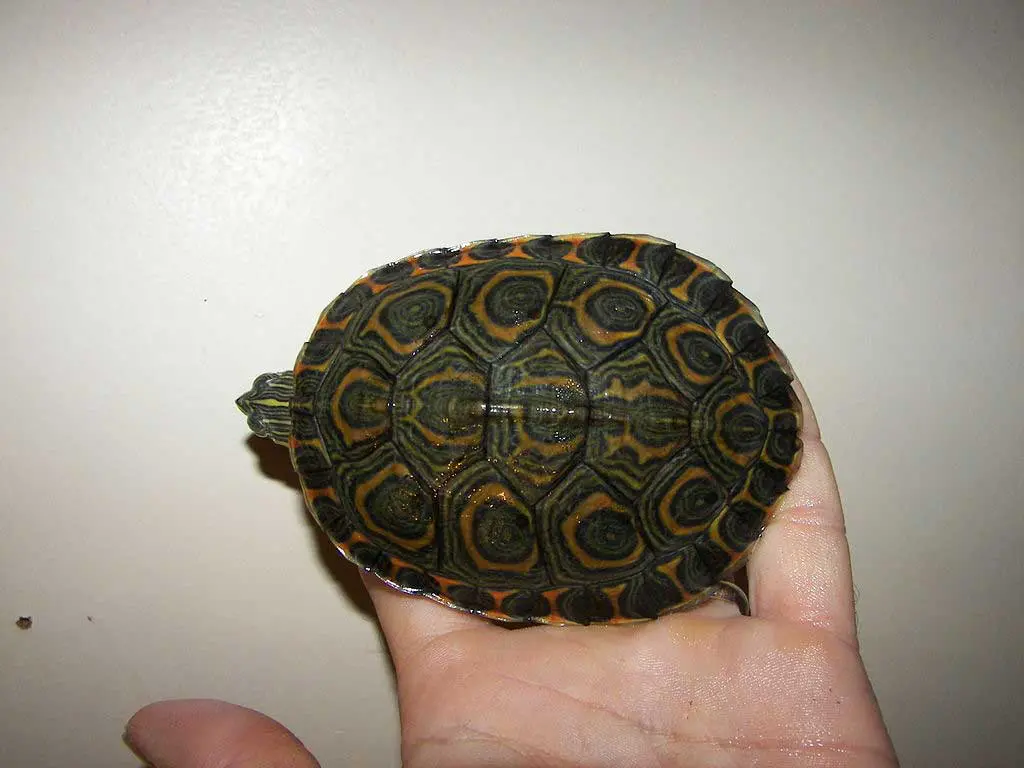
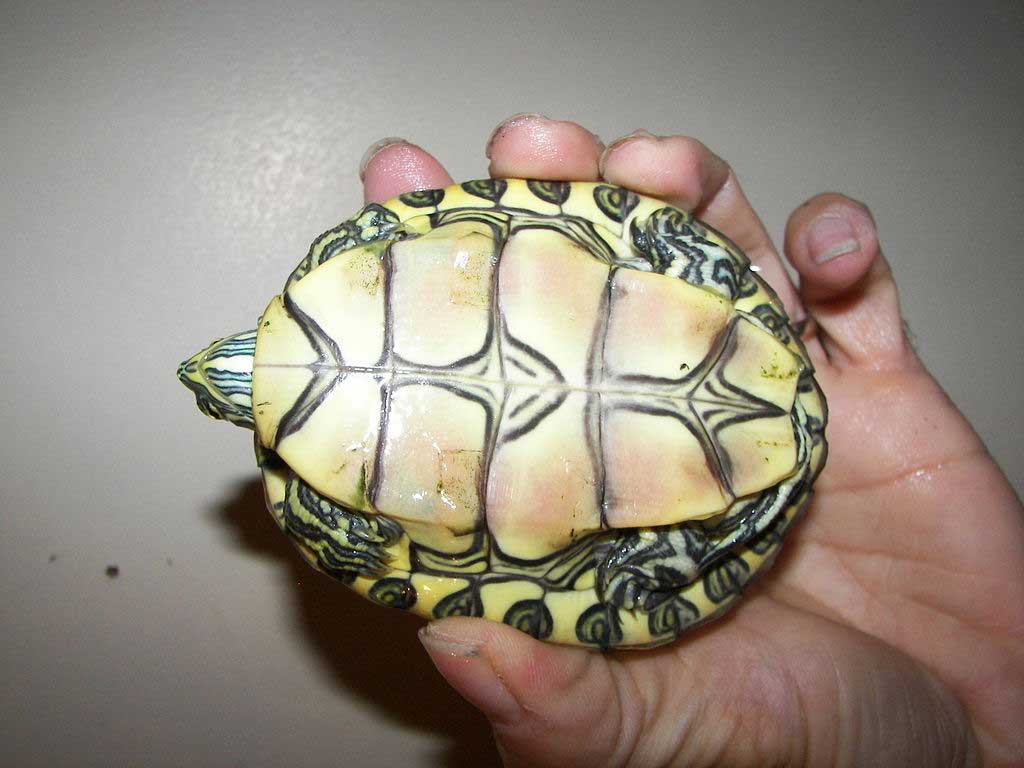
The Nicaraguan slider grows quite a lot, the males 20-30 cm., the females up 38 cm and possibly more. Shell, with circular markings, it is slightly keeled and serrated on the posterior margin. The basic color of the body and soft tissues is olive green to dark brown., the markings are yellow, the yellow-orange cheek patch.
The species prefers stagnant or slow-flowing waters with mostly dense underwater vegetation.. Juveniles feed mainly on small animals such as tadpoles., small fish and crustaceans, snails and insects. With increasing age, algae and aquatic plants are also increasingly taken. Females can produce several clutches of eggs per season., which lasts from December to May and can contain up to 30 eggs.
Threats to the species
The Nicaraguan slider serves as a provider of meat and eggs for the local population. Breeding farms have also been created.
International trade is not regulated by the CITES.
The "Nicaraguan slider" in captivity
Aquaterrarium
The Nicaraguan slider needs an integrated land area.
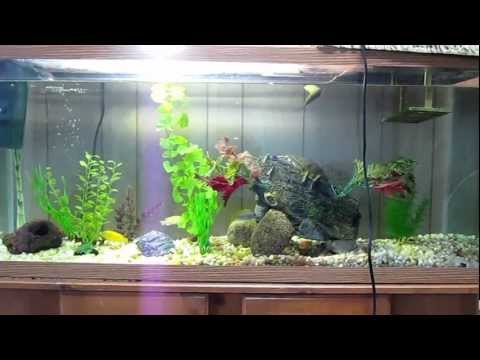
They can reach a total length of 28 cm in the aquarium. Females always grow slightly larger than males.. So, they need an aquarium with a rim length of at least 150 cm.. But, more is always better.
They need hiding places and shelters. especially the roots, timber, aquarium plants and stone or rock structures are gladly accepted by the animals.
Tortoises can be kept in pairs or in groups with several conspecifics.. Socialization with other turtles is also possible.
The Nicaraguan slider adapts wonderfully to aquarium conditions. They feel very comfortable in water temperatures between 23 and 30 degrees Celsius. The pH value should be between 6,0 and 7,5. Low heat point of the integrated ground part, the temperature can even reach 40 degrees Celsius. During the winter months, between october and february, you have to lower the temperature of the water to 23 – 25 degrees Celsius.
The Nicaraguan slider feed mixed. They accept both meat and plant foods.
Buy one "Nicaraguan slider"
The price of a "Nicaraguan slider" at the exotic animal market, ranges between 60 – 100 EUR.
▷ The world of Pets: Dogs, cats, birds, reptiles, amphibians
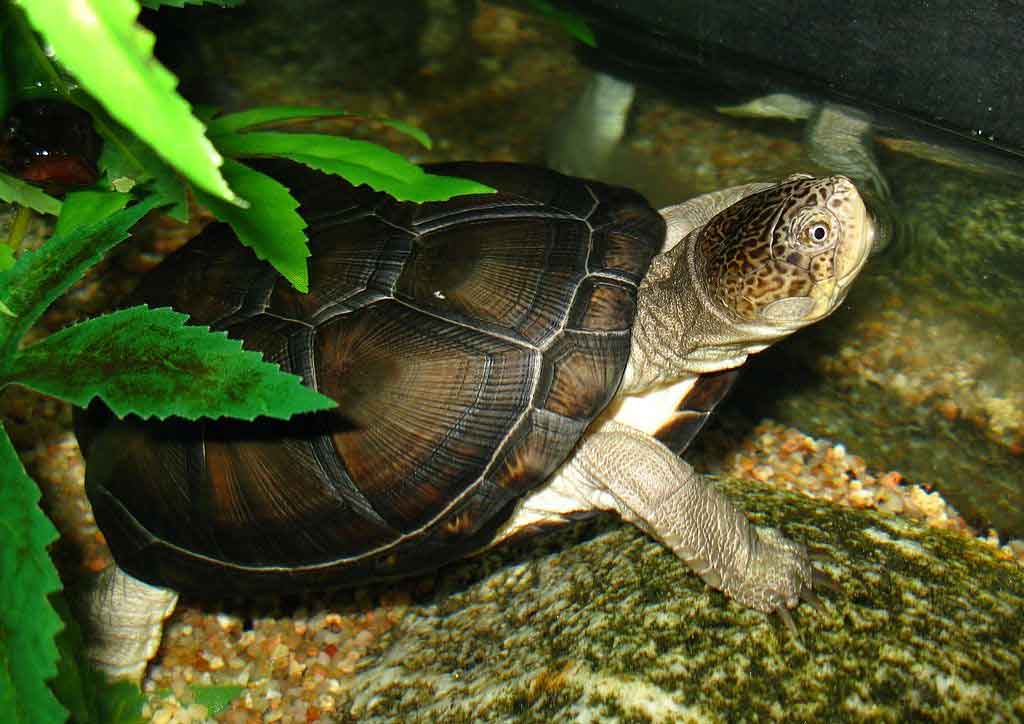
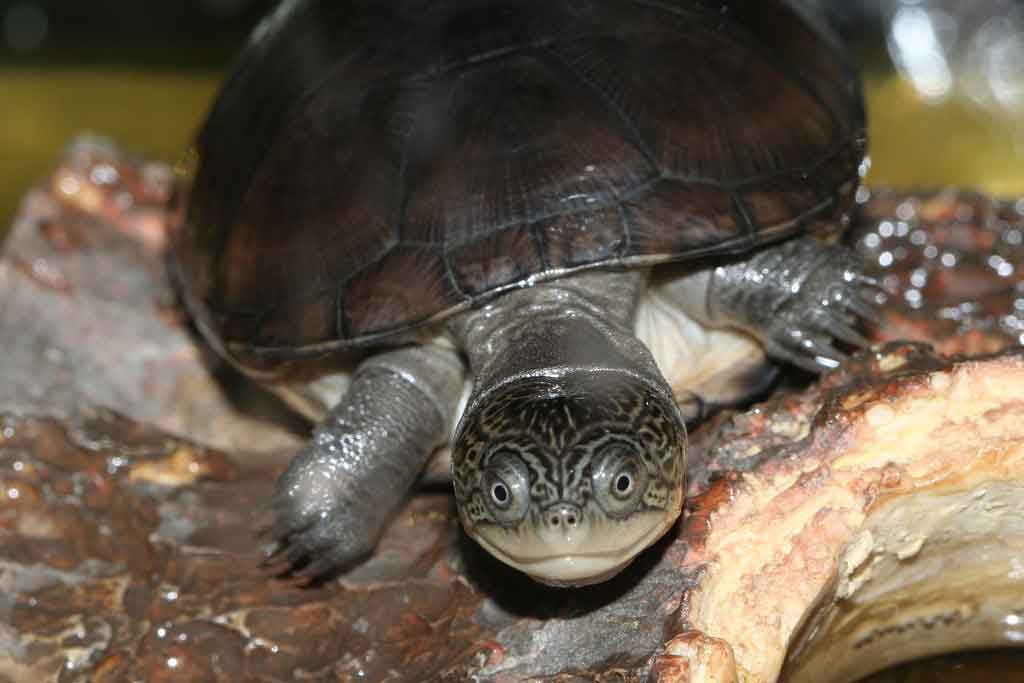
West African mud turtle
- Pelusios castaneus
Origin: west and central africa
Gender: Pelusios
Life expectancy: 25 - 40 years
Length: 20 - 38 cm.
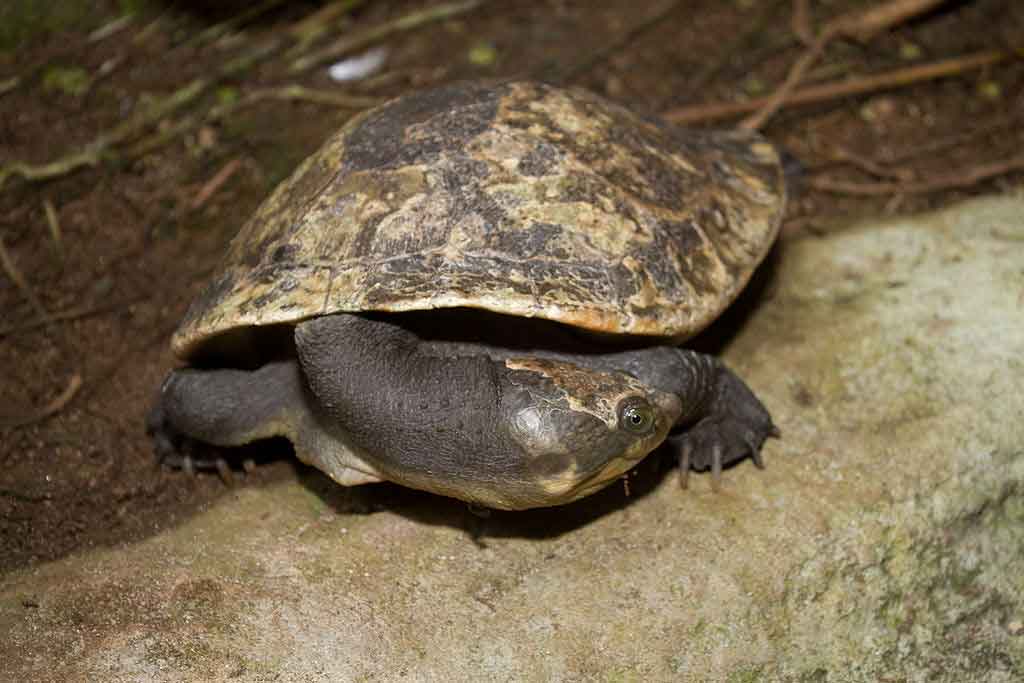
The West African mud turtle it is extremely adaptable and can be found in all types of waters. Pools, ponds, lakes, rivers…
West African mud turtle – Loran, CC BY 2.0, via Wikimedia Commons
Content
Origin / Distribution
The call Seychelles black terrapin, Seychelles mud turtle or Seychelles aquatic turtle was considered a species of turtle (Pelusios seychellensis) family Pelomedusidae, endemic to Seychelles.
But, genetic analysis of the lectotype has shown that this turtle was never a separate species and, in fact, It Pelusios castaneus.
The West African mud turtle (Pelusios castaneus) it is one of the most widespread turtle species in Africa. It is present practically throughout the Atlantic coast of the black continent: from southern Mauritania, Senegal, passing through Gambia, Guinea-Bissau, Guinea, Sierra Leone, Liberia, Ivory Coast, Ghana, Togo, Benin, Nigeria, Cameroon and as far north-west of the Central African Republic. It also, looking south from Cameroon, the species colonizes an area of Equatorial Guinea, Gabon, Congo, DR Congo and reaches the northernmost part of Angola.
The species is also found in São Tomé, an island off Gabon. There is a human population in the Caribbean, on the island of Guadeloupe, where it probably comes from the slaves who carried the animals as live food (the turtle is still eaten today, it will be discussed later). There is also said to be a feral population in Florida., these animals would have been abandoned by an animal trader.
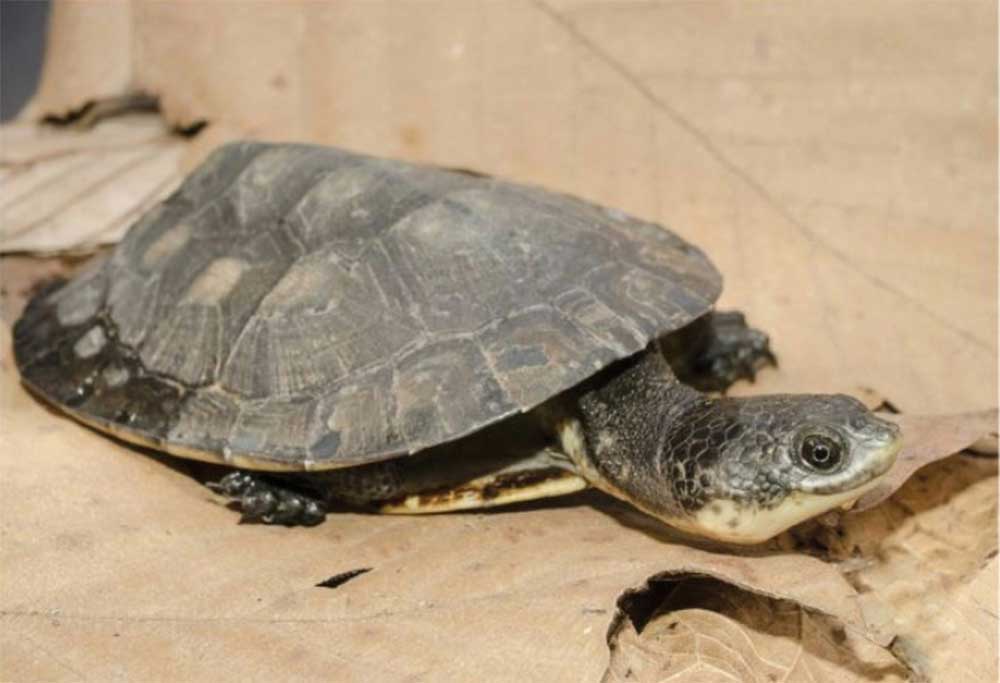
Large turtle, rather flat, with oval and elongated dorsal carapace, which has the largest width in the back area. Adults have a slightly separated vertebra at the front and a slightly separated vertebra toward the rear. Both vertebrae are wider than they are long.
The margin of the shell is smooth and not sawn. The dorsal carapace is mostly dark brown to black. The ventral shell forms a closed solid plate and is slightly narrower in the posterior region than in the anterior region.. The background color of the plastron is yellow in the center with a brown-black tint towards the edges. The skin is light gray to beige.
The head is mottled with a distinctive pattern, characteristic of each individual, as a fingerprint. On the chin there is 2 short, closed beards. The front legs also have scales and all the feet have strong claws..
Males have a shell length of about 20 cm.. Females can reach up to 38 cm of shell length, but they are usually much smaller (~ 25 cm of shell length). In addition to the usual elongated tail, the most conspicuous secondary sexual characteristic of males is a distinctly concave plastron.
Habitat
The West African mud turtle it is extremely adaptable and can be found in all types of waters. Pools, ponds, lakes, rivers… is at home everywhere. In much of its range, living waters dry up during 6-7 months per year, time that the P. castaneus passes buried in the substrate. But, there are also rainforest species that have water all year round.
The West African mud turtle nor is it very demanding in terms of food. Feeds on insects, snails, carrion, small fish, amphibians and, occasionally, fruits and seeds. The species is also very fertile. Large females can easily produce two clutches a year with up to 18 eggs.
Behavior
The West African mud turtle It is carnivorous and feeds on aquatic prey.. The feeding consists of five phases: preliminary fixation of the head on the dam, the adjustment of the head fixation, the final approach of the head, prey grip followed by handling and transport, and suction, which results in the ingestion after which the prey is swallowed. The final phase varies depending on whether the prey is fast, like a fish, or slow, as a gastropod mollusk.
Threats to the species
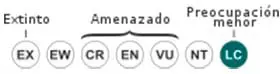
State of conservation ⓘ
Minor Concern ⓘ(UICN)ⓘ
Unfortunately, today one can hardly talk about turtles without talking about the threatened situation of the species. Given its huge distribution area and its great adaptability, the West African mud turtle shouldn't be endangered. But, natural populations in most of its range have not been studied scientifically. Hardly any funds are allocated to field research, so hardly anything is known about the evolution of the population.
Scientists from Nigeria follow a very interesting approach: They regularly visit markets where “bush meat” is offered for consumption.. This includes, of course, these species of turtles. Unfortunately, during these visits it was necessary to verify that the populations of turtles of the genus Kinixys are in clear decline. But, the West African mud turtle not yet considered endangered and not subject to international trade restrictions.
The "West African mud turtle" in captivity
Aquaterrarium
Due to the climatic conditions of the country of origin, the size of the animals (up to a maximum of 38 cm of shell length!) and its activity, the West African mud turtle needs large, air-conditioned aquaterrariums with plenty of space to swim all year round.
The water section for an adult animal must have a minimum size of 150 x 60 cm and a water depth of at least 50 cm.. In addition to the free swimming areas, the water part must be structured with stones, branches and plants to offer animals stimulation and variety.
In addition to a sunny area on land and the mandatory egg-laying area when having females, the facility must also offer shallow water areas. Floating plants on the surface of the water offer protection and invite you to rest on the surface.
Although the West African mud turtle does not sunbathe as extensively as, for example, "North American ornamental turtles", the sunbathing area is frequently visited and used, so it must always be available.
Standard tank technical equipment includes fluorescent daylight tubes, heat radiators over the shallow water/stunning area and, occasionally, on the egg-laying area, external filter, heater, thermometer and timer. As an alternative, instead of daylight fluorescent tubes and heat radiators, powerful HQI radiators can be installed to illuminate a part of the tank and generate sufficient temperatures locally in the sunbathing area.
As for water and air temperatures, you must follow the climatic guidelines in the seasonal change of the country of origin (West Africa). In tropical areas there is also a day/night variation, as well as seasonal differences, although less pronounced than here.
A rough guideline is a water temperature of 25-28° and a local air temperature of up to 40° in the sun. You can get a night setback by turning off the heating at night.
Summer lethargy does not necessarily have to be applied in captivity. But, animals should not be kept at constantly high temperatures throughout the year. For a few weeks, or even months, should simulate colder phases at a water temperature of about 20-24°. Transitions should be gradual and the temperature should be increased or decreased over a few days.
Food
The West African mud turtle does not have high food requirements. Eat anything offered to you as animal feed. The spectrum ranges from dry food (Lundi pellets, colored koi pellets, Sera Raffy P pellets, gammarus and dried fish, brekkies), to fish (various freshwater fish, smelts, pollock, etc.), mussel meat, common earthworm, heart of veal and mice (little mice and jumpers).
In addition to the aquatic plants present in the tank (Juncos, duckweeds, horn, duckweed, water hyacinth, water cabbage), green food is regularly offered (dandelion, Canons, oak leaf lettuce, Cucumber, zucchini and tomatoes).
Reproduction
Like almost all male turtles, the males of the West African mud turtle are always willing to mate, but their courtship behavior is more moderate and less aggressive than that of many other species. However, the sexes must be kept separate for a part of the year for the females to rest.
The courtship exhibition of this species can last several hours. First the male tries head and neck movements to attract attention. If the female is interested and does not avoid it, the male seeks direct body contact, pushing your nose. If the female then indicates that she is willing to mate by brief choppy head movements, the male rides. At no time does it try to bite the female.
Adult females need a place of oviposition of at least 60 x 50 x 50, since they bury their laying of up to 22-32 eggs very deep in the sand.
Hibernation
The West African mud turtle does not hibernate due to the climatic demands of the countries of origin (West Africa). However, day/night latency, as well as seasonal differences, must be simulated with technical aids.
Buy one "West African mud turtle"
All turtles pelomedus are not internationally protected species, so wild-caught specimens remain regularly available in the reptile trade. Wild catches are often surprisingly hard, weakened by long transport and numerous intermediate stops. If you have the opportunity, do not hesitate to buy european pups. The young are much more stable and less susceptible to diseases.
The price of a "West African mud turtle" at the exotic animal market, bred in captivity, ranges between 25 – 50 EUR.
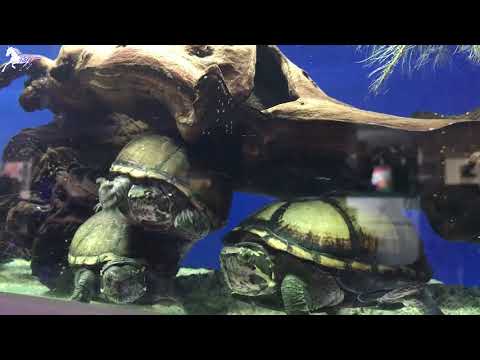
Videos "West African mud turtle"
African Mud Turtles (Castaneus Fluff) - Africa Turtles
1. West African mud turtle, West African side-necked turtle or swamp terrapin (English).
2. Péluse de Schweigger (French).
3. Westafrikanische Klappbrust-Pelomedusenschildkröte, Westafrikanische Seitenhalsschildkröte oder Sumpfschildkröte bekannt (German).
4. Tartaruga de lama da África Ocidental, Tartaruga de pescoço lateral da África Ocidental ou pântano (Portuguese).
5. Tortuga del barro de África Occidental, Tortuga de caja africana (español).
▷ The world of Pets: Dogs, cats, birds, reptiles, amphibians
Toadhead turtle
- Mesoclemmys gibba
Origin: Colombia, Ecuador, Peru, Bolivia, Brazil, Venezuela, Suriname, French Guiana and Guyana.
Gender: Mesoclemmys
Life expectancy: 20 - 25 years
Length: 23 to 30 cm.
The Toadhead turtle It is a shy species with nocturnal and aquatic habits that prefers the bottom of bodies of water.. These turtles change their diet as they mature.
The Toadhead turtle (Mesoclemmys gibba) it is a smaller representative of the South American necked turtles (Chelidae). These animals have been known to science and the hobby for a long time, but unfortunately they have not been sufficiently investigated so far.
Its distribution is in a wide area of ​​South America., in Peru, Ecuador, Colombia, Venezuela, Trinidad, Guyana, Suriname, Paraguay and parts of Brazil.
In any case, in Europe mainly animals with Guyanese and Surinamese ancestry are kept.
Characteristics / Appearance
The Toadhead turtle is small, with a carapace length of 15-18 cm in males and 18 cm in females. In this species, sexual dimorphism is not very evident., although males tend to have longer tails and a more forked plastron at the level of the anal scutes. In Venezuela, individuals with a carapace length of up to 23 cm..
Its head is narrow compared to other species of the same genus, back of head lined with small granules; two short barbules on chin, whose length is not greater than the size of the eye; broad, flattened carapace with a serrated-looking vertebral carina, which is smaller in adults; vertebral scutes wider than long, the third and fifth have an inconspicuous posterior projection towards the keel; the intergular shield completely divides the gulars, but not to the humerals; scales between orbit and eardrum smaller than those on top of head; webbed feet with 5 nails on the forelimbs and 4 in the later;
Habitat
These turtles live in rivers, as well as in its tributaries and floodplains in the tropics. They are good swimmers and probably quite nocturnal.. Due to its distribution area, the Toadhead turtle it is active all year round and does not need to hibernate.
It is a shy species with nocturnal and aquatic habits that prefers aquatic bottoms.. These turtles change their diet as they mature: juveniles have an omnivorous diet and become more carnivorous as they grow. Some plants have been reported in the diet of juveniles., like the fruits of the palm Mauritia flexuosa and grasses of the species Pennisetum purpureum and Sacharum sinensis; while adults consume fish, Tadpoles, crustaceans, larvae of aquatic insects and other small invertebrates. To build nests, they dig in well-shaded clay soils., close to bodies of water, or at the base of tree trunks. The nests consist of 2-4 eggs longer than wide and hard-shelled. As a defense mechanism against predators, these turtles expel a strong musky odor and bite.
Threats to the species
throughout its range, Little is known about their ecology and the status of their populations., reason why it has not been evaluated by the IUCN. In any case, the destruction, habitat fragmentation and pollution are its biggest threat.
The "Toadhead turtle" in captivity
Aquaterrarium
The Toadhead turtle tends to socialize well with fish and even with shrimp, but they break the shell of the snails and eat them right away. Estas humpback turtles tend to be shy when kept with other species, and stress in combination with too high a pH value of the water can sometimes lead to skin problems. So, it is recommended to raise the young individually or in small groups of 3 to 5 animals in spacious tanks with lots of cover, and check regularly if they are stressed.
A tank is recommended. 120 x 50 x 60cm minimum to maintain a couple, although males may be better housed separately. The water temperature should vary between 24-28°C. Due to its tropical origin, animals don't hibernate, but they should not be kept in the pond either.
Food
The species feeds almost entirely carnivorously.. This means that only food of animal origin is accepted, except for bananas and sweet berries. The carnivorous component must consist of insect larvae, snails, crustaceans, mussels, worms and insects. Pellets can also be added to this species to prevent deficiency symptoms. (vitamin deficiency, etc.). The shell of cuttlefish as a source of calcium is convenient to keep in our aquaterrarium.
Reproduction
As long as a couple stays, will eventually reproduce. The females lay from 1 to 5 hard shell eggs. These should not be incubated too wet. At a constant temperature of 28 degrees Celsius, the animals hatch after a few 150 days; in the nature, the eggs need between 150 and 180 days. This has to do with the slower development of embryos due to fluctuating temperatures.. A fluctuating incubation between 24-29 degrees. In this case, young animals hatch with more vitality.
Buy one "Toadhead turtle"
The price of a "Toadhead turtle" at the exotic animal market, ranges between 90 – 120 EUR.
▷ The world of Pets: Dogs, cats, birds, reptiles, amphibians
Chinese stripe-necked turtle
- Mauremys sinensis
Origin: China, Taiwan and Vietnam
Gender: Mauremys
Life expectancy: 20 years in captivity
Length: Until 25 cm..
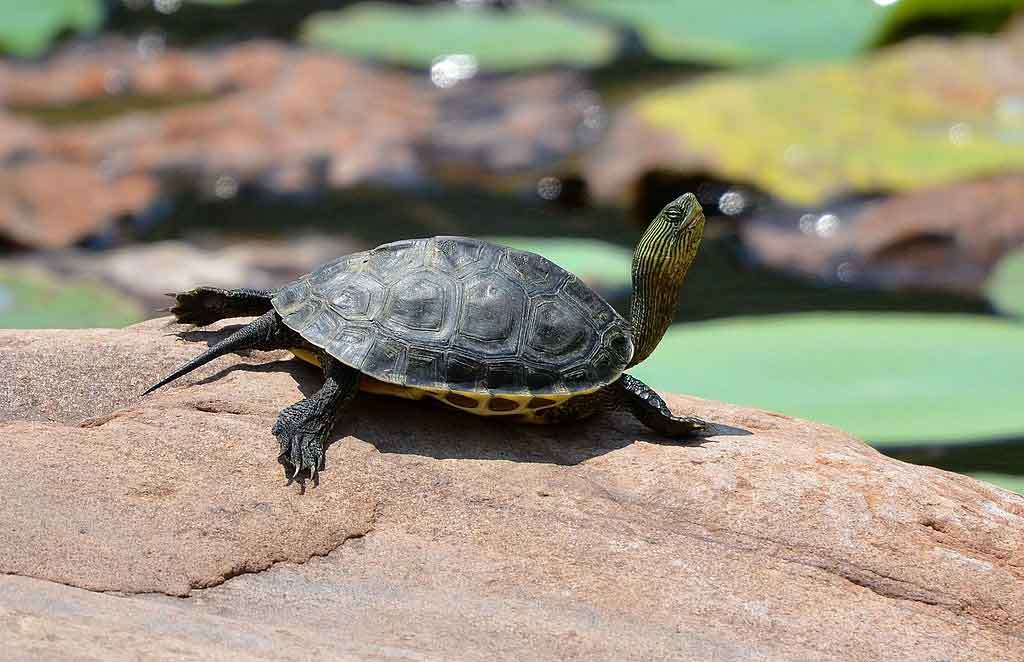
To the Chinese stripe-necked turtle he likes sunbathing. It is quite a resistant species., peaceful and good swimmer. No hibernation.
Common thread turtle (Mauremys sinensis) – Zinogre, CC BY-SA 4.0, via Wikimedia Commons
Content
Origin / Distribution
The Chinese stripe-necked turtle (Mauremys sinensis) found in the southern coastal provinces of China, north and central vietnam, Laos and Taiwan.
Characteristics / Appearance
The Chinese stripe-necked turtle can reach the 25 cm., for an average of 20 to 22 cm..
The dorsal plate has 3 carinas (1 spinal and 2 side) which are highly visible in young turtles, and fade as the tortoise grows
The back of juveniles is lighter (greenish to light brown, with yellow-orange sprays) than that of adults (Brown very dark). Vertebral scales are wider in front than behind. The 5th vertebral scale is wider than it is long..
The plastron is yellow-orange, with extensive dark spots on each scale.
Compared to other species of aquatic turtles, the tail of the Chinese stripe-necked turtle it is quite long in both males and females.
The head, legs and tail are olive green to gray (more or less dark), with fine light stripes (pale yellow to pale green), which gives it the common name "striped-necked turtle". The bottom of the head is lighter (yellow).
The iris is cream to pale yellow., with a dark spot.
Sexual dimorphism
The plastron of the male is concave and the tail is longer and thicker than that of the female.. The cloaca is located closer to the tip of the tail., while in females it is found on the supracaudal scales. Males are also smaller than females..
Habitat
This species lives in swamps, muddy canals, slow flowing freshwater streams, ponds, swamps, shallow lakes and muddy ponds. It especially likes bodies of water with lots of vegetation.
Behavior
Chinese stripe-necked turtle in Cologne Zoological Garden. – NasserHalaweh, CC BY-SA 4.0, via Wikimedia Commons
To the Chinese stripe-necked turtle he likes sunbathing. It is quite a resistant species., peaceful and good swimmer. No hibernation.
Reproduction
Mating takes place mainly in spring. Egg laying takes place just over two months after (about ten eggs on average). The eggs are elliptical in shape and measure 25 x 40 mm. The incubation period can vary from 60 to 150 days.
Newborns measure between 30 and 35 mm.
Food
In the wild, the Chinese stripe-necked turtle feeds both in water and on land: plants and various aquatic plants in large quantities, as well as worms, snails, fish, insects, mollusks, carrion, small crustaceans in smaller quantities. Males and young animals are more likely to feed on meat, while females and older animals are mainly herbivores.
Threats to the species
State of conservation ⓘ
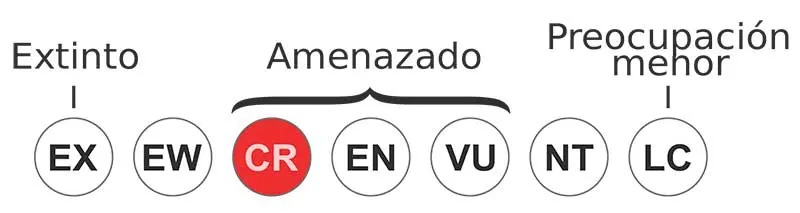
Critical danger ⓘ(UICN)ⓘ
The UICN considers that this species is in danger of extinction in its natural environment (catch for human consumption, urbanization, pollution, etc.).
The "Chinese stripe-necked turtle" in captivity
Aquaterrarium
For one Chinese stripe-necked turtle adult, the aquarium should have a length of at least 120 cm. – 150 cm., since females can grow more than 25 cm.. Of course, juveniles can be kept in smaller tanks and should be if possible. They are relatively good swimmers, but they need many opportunities to climb (plants, estate, stones). The water level should be at least twice the length of the shell.
Even with a water level of 80 cm., the Chinese stripe-necked turtle has no problems and is even more active with a higher water level.
Like all other species of aquatic turtles, the Chinese stripe-necked turtle need clean water. Be prepared to change the water every few days or rely on large external filters (for a 200L aquarium, choose an external filter for a 360L aquarium). We have had the best experience with EHEIM external filters. However, It is advisable to carry out a water change of at least 50% every few weeks.
Sand can be used as a substrate, wash or engrave. If sand is provided, turtles often burrow into it. So, we mainly use sand as a substrate.
To get warm temperatures, the aquarium should also have a heating rod.
In the very hot summer months, the Chinese stripe-necked turtle can be kept in the pond, as long as there are enough plants and other climbing possibilities there too.
Dry ground is absolutely necessary for these sun-loving tortoises. A metal halide lamp (HQI) should also shine above it. In this way, the required ground temperature can be reached without problems, of 40 to 45 °C. As in all species, the female also needs a place to lay her eggs.
The water temperature should be 25-28°C in summer and 20-24°C in spring and autumn. Instead of hibernating, this species goes through the phase of reduced activity, with water at 15°C.
The HQI lamp only shines 6 hours in winter, 8-10 hours in spring and autumn and at least 12 hours in summer.
Keeping them in a group is difficult and only works with females, if it does. But even in this case, individual conservation is always preferable. Males are usually very biting and aggressive as adults..
Food
This species of turtle tends to eat meaty foods, but must have plenty of aquatic plants available. Plant food includes various aquatic plants, like duckweed, mussel flower, duckweed and many more, but also carrots. Fleshy food can consist of live food (worm, mealybugs), but also in frozen food (mosquito larvae, mussel meat, prawns, etc.). Turtle pellets or dry food should only be given occasionally.
Buy one "Chinese stripe-necked turtle"
They can be found in pet stores and some breeders.. The price of the "Chinese stripe-necked turtle" ranges between 30 – 50 EUR.
1. Chinese stripe-necked turtle, Golden thread turtle (English).
2. Emyde à cou rayé, Emyde de Chine (French).
3. Chinesische Streifenschildkröte, Bunte Streifenschildkröte (German).
4. Tartaruga chinesa de pescoço listrado, Tartaruga de fio dourado (Portuguese).
5. Tortuga de hilo dorado, Tortuga de cuello rayado, Tortuga ocadia (español).
▷ The world of Pets: Dogs, cats, birds, reptiles, amphibians
Chinese softshell turtle
- Pelodiscus sinensis
Origin: China, Taiwan, Korea, Manchuria, Vietnam and Japan.
Gender: Pelodiscus
Life expectancy: 35 years
Length: 28 cm.
The Chinese softshell turtle it is completely different from all other turtles, if only for the soft shell.
“Chinese softshell turtle” Bangkok, Thailand by J. Maughn – Flickr
Content
Origin / Distribution
The tortoise we know in Europe as Chinese softshell turtle has recently been subjected to a great deal of taxonomic work by scientists. In fact, for many years the name was used Pelodiscus sinensis for all Chinese softshell turtles. In the meantime, the genre has been divided into many ways:
Pelodiscus parviformis – Small Chinese softshell turtle
Pelodiscus sinensis – Chinese softshell turtle
Pelodiscus variegatus – Spotted softshell turtle
Probably not the end of the story and more species will be added. It is questionable to what extent care was taken to keep these forms separate on Asian breeding farms.; there is already evidence of the existence of hybrids on farms. It is also doubtful whether the specimens found in Europe can be clearly assigned to one of the species.
Currently the Chinese softshell turtle (Pelodiscus sinensis) is widespread in China (Anhui, Fujian, Gansu, Guangdong, Guangxi, Guizhou, Hainan, Hebei, Henan, Hong Kong, Hubei, Hunan, Jiangsu, Jiangxi, Nei Mongol, Shaanxi, Shandong, Shanxi , Sichuan, Yunnan, Zhejiang) and they also live in Japan, Korea and Vietnam.
Characteristics / Appearance
The Chinese softshell turtle reaches a body length of 15 to 25 centimeters. Males are significantly smaller than females, until 15 centimeters.
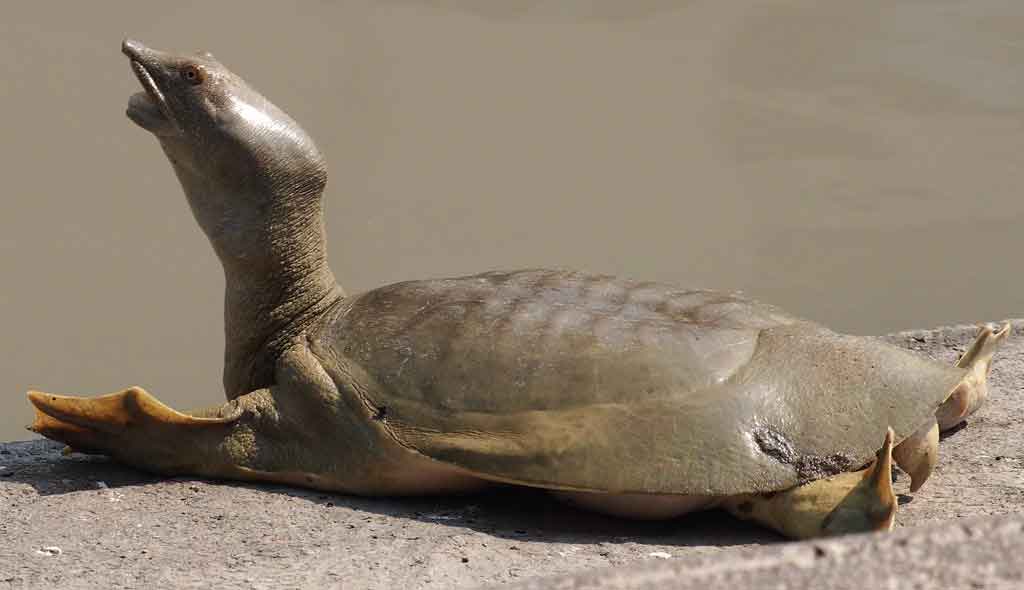
The shell is relatively flat, with an elevation in the anterior part in the form of a hump. Like all softshell turtles, the shell of the Chinese softshell turtle it is not rigid, but soft and flexible. The shell surface is smooth and mostly olive-green to olive-brown in color.
The ventral plastron is predominantly whitish to cream in color.. The plastron of juveniles is red.. Like the shell, the plastron has a leathery appearance.
The neck is long and much thinner than the huge head.. head area, especially under the eyes, shows some lighter spots. The tip of the nose has been transformed into an elongated snorkel.
Adult males and females cannot be distinguished by size alone. In the male, the root of the tail is much thicker than in the female. Limbs end in long fingers, each with a small claw.
Between the fingers, the Chinese softshell turtle has clearly visible webbed feet, which makes her a very good swimmer. In the period from October to March, this chinese tortoise hibernates.
Habitat
The Chinese softshell turtle lives in water most of the time, and only comes out to the shore to sunbathe and lay her eggs. When they rest in the water, they are usually buried in the ground. The waters usually have a muddy substrate. Here the turtle can dig with special ease and speed.
Behavior
The Chinese softshell turtle has a leathery soft shell. This shell naturally offers less protection, so these softshell turtles are more aggressive than other aquatic turtles. Another tradeoff for the soft shell is different behavior, to the Chinese softshell turtle likes to bury itself in sandy substrate.
With its very long neck and huge fin-shaped legs, They are excellent swimmers and very effective predators.. Their diet is predominantly carnivorous.. eat worms, insects, snails, crustaceans and fish. A fascinating aquatic turtle and very easy to maintain.
Threats to the species
In nature the Chinese softshell turtle is almost extinct. The reason for this is not just habitat destruction, but also catch for Asian food markets and traditional Chinese medicine.
The "Chinese softshell turtle" in captivity
Chinese softshell turtle – S64, CC BY 3.0, via Wikimedia Commons
Aquaterrarium
For the Chinese softshell turtle of up 15 cm of shell length, an aquarium with a base surface of 100 x 40 cm.; The water level should be such that soft-shelled turtles standing on their hind legs can barely reach the surface of the water with their “trunk.”.
In principle, the length of the aquarium must be at least five times the length of the shell. The Chinese softshell turtle spends a lot of time buried in the sand, but she is an excellent swimmer and explores the tank a lot.
Basically, the substrate is a very important element for this species of turtle because they spend a lot of time buried in it. Its soft shell offers little protection, so buried in the substrate they can compensate for this disadvantage. So, the substrate must be sand. The substrate for young animals should consist of a layer of sand of 6 to 8 cm thick. The thickness of the sand layer will increase with growth, so that the layer of sand always corresponds to at least twice the height of the shell, but better to the width of it. In this way, the Chinese softshell turtle can comfortably dig into the substrate.
heavy furniture, like the stones, they have no place in an aquarium for Chinese softshell turtle, precisely because the turtles would undermine them. But, you can create some structure above the sand layer with some roots. You can even plant, but not with plants that form roots in the substrate.
for filtration, external pot filters are recommended, since the inmates are quickly victims of the destructive fury of the Chinese softshell turtle.
Lighting and ground part
It is often said that the Chinese softshell turtle does not need a land part. This is a mistake. These turtles occasionally bask in the sun, both in the wild and in the aquarium. Not as often as ornamental turtles, but they do. So, turtles should be given the opportunity to do so even when kept in an aquarium.
For juveniles and males, a piece of land made of cork or a willow bridge is enough. If they remain female, must have an egg-laying area with a substrate depth of at least 20 cm..
For one Chinese softshell turtle, metal halide lamps with a UV component have proven effective for lighting. For fry up to 15 cm., is enough a hqi with 35 watts, for example the set of lamps SolarRaptor HID incl. ECG + ClampLamp* or the complete lighting set Exo Terra Sun Ray*. For the Chinese softshell turtle bigger should be a lamp 70 watts. The distance between the lamp and the sunbathing area on the ground must be chosen in such a way that a temperature of 40-45 °C.
This turtle's shell seems to "let through" UV-B light more easily, so it is necessary to sunbathe in a less prolonged and intensive way to produce enough vitamin D. So, sunbathing on the surface of the water may be enough and you don't necessarily have to leave the safety of the water to do so.
Food
Although in nature the Chinese softshell turtle feeds mostly in the evening and at night, in the aquarium it easily accepts food also during the day.
The diet of this turtle in the wild is mainly carnivorous.. They feed on worms, mussels, snails, crustaceans, amphibians and fish, but also seeds and other parts of the water lily (Euryale ferox). This can be easily reproduced in the aquarium with dry food animals, frozen food and live food. While the juveniles can be fed daily in the year of hatching, it is enough to feed the Chinese softshell turtle adult one to three times a week.
Aggressiveness
These softshell turtles are more aggressive than other aquatic turtles. Its shell offers little protection, so they bite quickly. If you take them by hand, you'll be amazed how long his neck can get. Even if you grab them by the back half of their shell, they can bite you.
Chinese soft-shelled turtles are also very aggressive towards each other.. They are very territorial and can constantly bite and chase other inhabitants. So, it is recommended to keep this species of tortoise individually, even when young.
Reproduction
The Chinese softshell turtle They reach sexual maturity at about 14-18 cm..
Softshell turtles are more aggressive than other aquatic turtles. Its shell offers little protection, so they bite quickly. If you take them by hand, you'll be amazed how long his neck can get. Even if you grab the Chinese softshell turtle by the back half of its shell, can bite you.
The Chinese softshell turtles They are also very aggressive towards each other.. They are very territorial and can constantly bite and chase other inhabitants. So, it is recommended to keep this species of tortoise individually, even when young.
Reproduction
The Chinese softshell turtles They reach sexual maturity at about 14-18 cm.. Like other aquatic turtles, mating takes place in spring and spawning takes place in spring and summer. They bury their eggs as deep as 20 cm.. Each female can lay up to five clutches of 5-50 eggs each.
The Chinese softshell turtle basically has a genetic sex fixation, so it is not influenced by the playback temperature. So, the sex of the turtle cannot be influenced by hatching temperature. The ideal is to incubate the eggs at about 28 °C, and the young are born after a little more than 50 days.
The growth of the Chinese softshell turtle it's fast. After hatching with 3-3,5 g, reach of 11,5 to 18,0 g in hatching year, a year already 100,0 – 125,5 g, at two years they weigh 220,0 – 263,0 g and at three years already 450,0 – 480,0 g.
Buy one "Chinese softshell turtle"
The price of a "Chinese softshell turtle" at the exotic animal market, ranges between 20 – 40 EUR and 60 – 100 euros for the albino species.
1. Chinese softshell turtle (English).
2. Trionyx de Chine, Tortue à carapace molle de Chine (French).
3. Chinesische Weichschildkröte (German).
4. Tartaruga-de-carapaça-mole-chinesa (Portuguese).
5. "Tortuga china de caparazón blando" (español).
Sources:
Ernst, C. H. y J. E. LOVICH (2009): Turtles of the United States and Canada – Second edition. – The John Hopkins University Press (Baltimore): 827 pp.
Wolf, B., Ziegler, T., Pham, C. T., Ong, A. v., & U. Fritz (2019): A new species of Pelodiscus from northeastern Indochina (Testudines, Trionychidae). – ZooKeys, (824), 71. HTTPS://www.ncbi.nlm.nih.gov/pmc/articles/PMC6382751/
Gong, S., Vamberger, M., Auer, M., Praschag, P. y U. Fritz (2018): Chinese softshell turtles' ancient ranching (Pelodiscus spp.) causes massive erosion of biodiversity. – The Science of Nature, 105(5-6), 34.
Gong, ALREADY., L.-F. Peng, S. Huang, Y.-F. Lin, R.-Y. Huang, Y.-H. Coins, D.-C. Yang and L.-W. Not (2021): A new species of the genus Pelodiscus FRITZINGER, 1835 (Testudines: Trionychidae) de Huangshan, Anhui, China. – Zootaxa 5060(1): S. 137-145.
Kuzmin, S. L. (2002): The turtles of Russia and other former Soviet republics. – Chimaira, 159 p.*
Laicher, T. & F. Müncheberg (2020): Breeding and Breeding of the Albino Softshell Turtle, Pelodiscus sp. – reptile (141): S. 58-64.
Tortoise Taxonomy Working Group [Rhodin, A.G.J., J.B. Iverson, R. Bour, U. Fritz, A. Georges, H.B. Shaffer y P.P. van Dijk]. (2017): turtles of the world: Annotated Checklist and Atlas of Taxonomy, Synonymy, Distribution, and Conservation Status (8th ed.). – In: Rhodin, A.G.J., J.B. Iverson, P.P. van Dijk, R.A. Brine, K.A. Buhlmann, P.C.H. Pritchard & R. A. Mittermeier (eds.): Conservation Biology of Freshwater Turtles: A compilation project of the IUCN/SSC Tortoise and Aquatic Turtle Specialist Group. – Chelonian Research Monographs 7: pp. 1-292.
Wang, D., Z. Tang and Y. So (1997): Biochemical composition of the Chinese soft-shelled turtle (Trionyx sinensis). – Acta Hydrologica Sinica 21(4): 299-305.
▷ The world of Pets: Dogs, cats, birds, reptiles, amphibians
Checkered garter snake
- Thamnophis marcianus
Origin: United States, Mexico, Guatemala, Belice, El Salvador, Honduras, Nicaragua and Costa Rica
Gender: Thamnophis
Life expectancy: 15 years
Length: 45 - 90 cm.
This species has a calm character. When the Checkered garter snake feels threatened, usually flees.
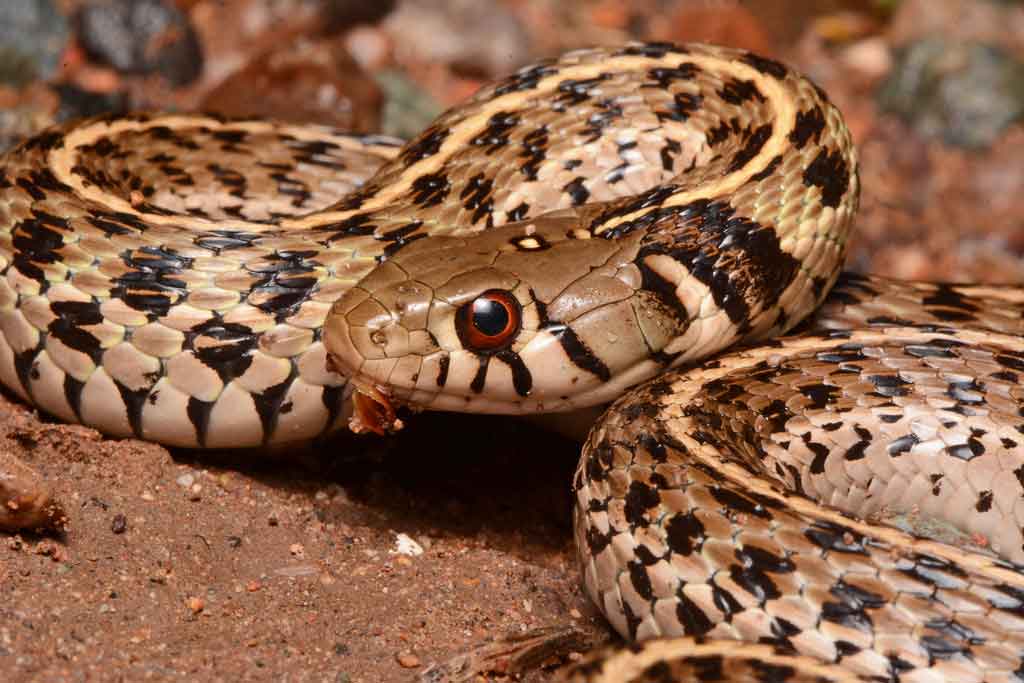
(Thamnophis marcianus marcianus) from Hidalgo County, New Mexico, USA. – Andrew DuBois – Flickr
Content
Origin / Distribution
The Checkered garter snake (Thamnophis marcianus) is commonly found in the United States, Mexico and some parts of Central America. In United States, are found in Southwestern California, southwestern Arizona and southern New Mexico. In Mexico, have been found as disjoint populations along the Rio Grande, Veracruz, Juchitán de Zaragoza, Tabasco and the center of the Yucatan Peninsula. In Central America, have been found in Tegucigalpa, Honduras; Lake Nicaragua and Managua, Nicaragua; northeastern Costa Rica; The Estrus, Guatemala and Orange Walk, Belice.
Characteristics / Appearance
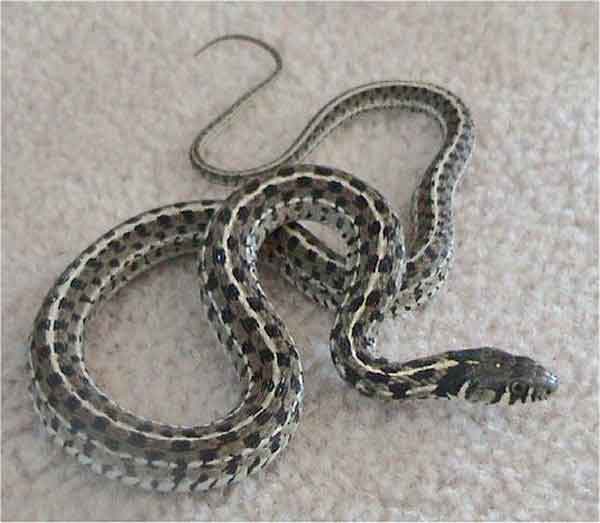
The Checkered garter snake it gets its common name from the checkered pattern of light black and gray spots along its body.. Both females and males have the same pattern. They have pale yellow stripes along their spines and sides, while its ventral sides are cream-colored. Their heads are olive green with a single thick black line on the neck.. Your body may be gray, brown, oliva, tanned or albino. They have 21 rows of keel-shaped dorsal scales.
Adults weigh an average of 60 g, but they can come to weigh between 31 and 122 g. Adults, can measure between 45 and 106 cm., but the average for adults is 55 cm. (including the queue). The average length of the tail is 16 cm.. The tip of the tongue is black and the rest is a deep red. On the head they have a pale yellow crescent in front of the neck. The females of the Checkered garter snake are bulkier and longer than males, that are thinner and shorter. Females measure an average of 82 cm and weigh 81 g, while males measure 51 cm and weigh 51 g.
The Checkered garter snake measured between 15 and 20 cm. (including the queue) at birth. Juveniles have the same checkerboard patterns as adults.
Habitat
The Checkered garter snake it inhabits areas ranging from sea level to elevations of 2.200 m. It can be found in a variety of habitats ranging from wetlands. (for example, humid tropical forests) to the drylands (deserts and dry forests). They are located in or near water sources such as rivers, ponds, Springs, ditches and lakes. When they are in the grasslands, tend to dig under rocks, logs and thick vegetation. They can also be found in courtyards and gardens. Their populations are shifting westward, traveling along irrigation canals.
From November to the end of February, hibernates at a temperature between 10 and 15° C.
Mating takes place between March and April. From June to August you can give birth to more than 30 live offspring.
Behavior
This species has a calm character. When the Checkered garter snake feels threatened, usually flees. If escape is not possible, defend themselves by threatening and, if that doesn't work, Biting. A last defensive technique that can be used by the Checkered garter snake is emptying your glands and often defecating at the same time. This releases a very unpleasant smell.
Reproduction
The Checkered garter snake begins mating in spring – as soon as it comes out of hibernation at the end of March- until the beginning of April. When it's time to mate, females stop eating and groups of males emit strong pheromones so that females can find them. Once a female has mated, her partner goes to find another female to inseminate her. Females also have the ability to store sperm.
In the North, mating occurs in burrows, where temperatures are warmer; temperatures below 10 °C may cause death or neurological disorders. In the South, when temperatures are 15 at 30°C, reproduction is usually more successful. When they finish mating, females can store sperm or fertilize immediately after mating. Its gestation period is normally 80 to 105 days. Females give birth to a clutch from between 6 and 35 offspring between the months of July and September. Ford and Karges (1987) studied cage snakes in south Texas and northeastern Mexico, and hypothesized that some females may have two clutches a year.. Although they do not support it directly, his anecdotal evidence was the discovery of "fully developed" offspring at two points in the season.: April and September.
Males reach sexual maturity at 1,5 years, while females do it to the 2 years. As soon as they are born they are already independent. At birth, the Checkered garter snake weighs an average of 13 g.
The males of the Checkered garter snake have no parental involvement beyond the act of insemination. Females carry and protect their young in their body until they are born. Once born mothers do not provide more parental care.
Food
Diet Checkered garter snake consists of a wide variety of animals, like worms, mice, fish, lizards, slugs, amphibians and eggs. Types of amphibians they eat include tadpoles, adult frogs and salamanders. They hunt small prey in ditches and streams using smell and sight. When kept in captivity, eat thawed mice or other snakes.
Threats to the species
State of conservation ⓘ
Minor Concern ⓘ(UICN)ⓘ
The Checkered garter snake is classified as a species of "Least Concern" on the IUCN Red List. They do not have special status on the U.S. federal list, in CITES or on the State of Michigan's list.
Most of the populations of the Checkered garter snake throughout their range are stable, but a few disjoint populations in Mexico could be threatened. Several emerging threats include excessive use of pesticides (that can eliminate prey species or bioaccumulate in snakes), the loss of amphibious prey in Mexico and habitat loss.
In some cases, the Checkered garter snake already inhabits protected land (for example, national parks) and there are captive breeding colonies in Mexico. They are also somewhat common in the pet trade., because they are easy to keep in captivity and quite docile. It is believed that the Checkered garter snake is increasing its range following irrigation ditches (in correlation with the expansion of agricultural practices).
The Checkered garter snake is active throughout the day. This species is usually more active than most domestic snakes.. During the coolest hours of the day they travel their territory in search of food.
The terrarium
Minimum enclosure size for a couple: 80 x 50 x 50 cm..
Surface: 0,5 m2
Daytime temperature: 24-28º
Night temperature: 18-22º
Daylight hours: 12 hours
Humidity: 40% -60%
Land cover: newsprint, humus or sand
Diet
You can choose between offering live or dead prey. It is advisable to offer dead food. This is more practical and prevents the animal that serves as your food from harming your snake.. It also, it is recommended to offer the food with a clamp and do it outside the enclosure. This ensures that her hand is not exposed as food and prevents it from clinging to your hand while you feed it.. If you choose to feed it with live food, you should watch while feeding it. This is because two snakes that have the same prey can injure each other and, sometimes, even eating each other. The ideal prey is as wide as the widest part of the snake.
Cleaning
A hygienic living environment is important to maintain the health of your Checkered garter snake. As such, it is necessary to clean the enclosure regularly. Cleaning once a week is enough. To prevent the accumulation of bacteria, you have to clean and disinfect the entire terrarium a couple of times a year.
Management
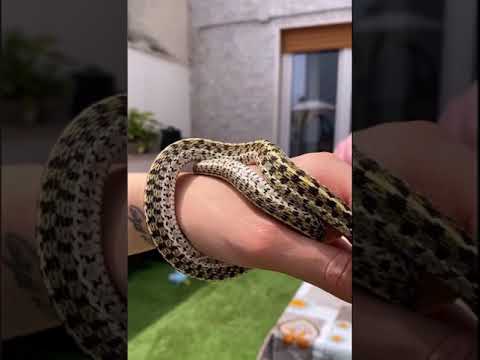
This variety has a calm character and is usually easy to handle. But, you have to take into account some things when handling it. Never squeeze the Checkered garter snake when handling it, as the rotating links are fragile and can break easily. It is best to let the snake rest comfortably in the hand. Also make sure your hands are washed and don't smell like food..
Buy one "Checkered garter snake"
When buying, preferably choose young offspring. Animals caught in the wild are usually infected with parasites (internal and/or external), are habitual carriers of diseases and are very sensitive to stress.
Its price in the exotic animal market ranges from 50 – 100 EUR.
1. Checkered garter snake (English).
2. Serpent jarretière à damier (French).
3. Karierte Strumpfbandnatter, Bunte Strumpfbandnatter, Schachbrettnatter (German).
4. Cobra-liga quadriculada, Serpente de liga quadriculada (Portuguese).
5. "Culebra listonada manchada", Sochuate, Culebra de agua, Culebra Jarretera Ajedrezada (español).
▷ The world of Pets: Dogs, cats, birds, reptiles, amphibians
Painted wood turtle
- Rhinoclemys pulcherrima manni
Origin: Costa Rica, Nicaragua
Gender: Rhinoclemmys
Life expectancy: In captivity 20 years
Length: 15 cm.
The Painted wood turtle it is a very striking turtle thanks to its colors and therefore it is easy to find it as a pet.
Turtle, Rhinoclemmys pulcherrima incisa, berlin zoo, Germany – Tornado stop, CC BY-SA 3.0, via Wikimedia Commons
Content
Origin / Distribution
The Painted wood turtle (Rhinoclemys pulcherrima manni) It is a kind of tortoise of the family Geoemydidae
The genus of turtles (Rhinoclemmys) includes species that occur in mainly tropical and subtropical regions of Central and South America. The habitats of the different species are very different, which is also reflected in his breeding. The Rhinoclemmys pulcherrima presented in this report lives in both aquatic and terrestrial environments
The different subspecies are found:
Rhinoclemmys pulcherrima incisa is located in El Salvador, Guatemala, Honduras, Nicaragua and Mexico in the states of Chiapas and Oaxaca;
Rhinoclemmys pulcherrima manni It is found in Costa Rica and Nicaragua.;
Rhinoclemmys pulcherrima it is found in Mexico in the states of Guerrero and Oaxaca;
Rhinoclemmys pulcherrima rogerbarbouri it is found in Mexico in the states of Colima, Jalisco, Nayarit, Sinaloa and Sonora.
In Europe, there are relatively many possessors of the Rhinoclemmys pulcherrima incisa and Rhinoclemmys pulcherrima manniin, so with a little luck you can quickly find offspring of these subspecies.
Characteristics / Appearance
Turtle, «Rhinoclemmys manni», berlin zoo, Germany – Tornado stop, CC BY-SA 3.0, via Wikimedia Commons
The shell is highly arched and slightly faired in the center., males are somewhat flatter overall.
The basic color of the shell is brown to yellowish., on the ribbed scutes there are yellow and red ocelli of different sizes. The posterior margin of the carapace is serrated like a saw.. The basic color of the plastron is light yellow to cream., around the center seam there is a narrow black mark. There is also an anal notch on the plastron. The skin is colored in various shades of brown and olive, on which the stripes of the brands stand out, predominantly red, but partly also yellow.
When they are not covered by a layer of earth, the Painted wood turtle draws attention and is one of the most beautiful. The males of this species reach a size of just over 15 cm and can weigh up to 600 g. The females., on the other hand, They can grow to more than 20 cm and weigh 1,2 kg. But, most are still smaller. The Rhinoclemmys pulcherrima incisa it is the largest subspecies.
Sex differences
Males are still smaller, the carapace is flatter and the tail is comparatively longer than in females. It also, the anal notch usually shows a more acute angle in males compared to females.
Habitat
The Painted wood turtle (Rhinoclemmys manni) lives in the tropical dry forest of the lowlands of Nicaragua and Costa Rica. The annual rainfall is about 1500 mm.
Their way of life is semi-aquatic.. Prefers to live in areas rich in vegetation near running water. If you move a little away from the bodies of water, this species retreats to moist vegetation.
Temperatures in the habitat exceed 20 °C throughout the year, and there is also a high humidity throughout the year. In the months of December to April, humidity is around 60-70% (a few 3-10 mm of precipitation per month), otherwise the humidity in the habitat is around 80-100% with a rainfall of about 160-300 mm al mes. The climate is characterized by a clear alternation of rainy and dry seasons..
Habitat vegetation is very dense. Due to weather conditions, tropical dry forests are characterized by tree species that shed their leaves in the dry season to reduce moisture loss (for example, the white gum tree). It also, various bromeliads grow here, Cactus, etc. in the rainy season, the vegetation resembles that of tropical forests with lush growth.
But, during the season, dry, that lasts several months, the ground becomes very hard. Smaller bodies of water dry up completely, leaving only a few shallow puddles. Much of the vegetation withers, the trees shed their leaves.
Behavior
Food
The Painted wood turtle eats fruit, insects and worms. Your diet should consist of a 60% of green leafy vegetables, a 30% of protein and a 20% of fruits and vegetables. In addition to a varied diet, they need extra calcium to ensure healthy shell growth. Unlike other aquatic turtles, this turtle does not need water to swallow its food.
Reproduction
The Painted wood turtle is oviparous. The females lay from 3 to 5 eggs at a time. Eggs at low temperatures may be dormant in the early stages, and can sleep for some time in low temperatures, when the temperature returns to normal you can proceed to incubation.
Threats to the species
The species has not been cataloged in the red list of the UICN. Populations in the wild have decreased in recent years, mainly due to the felling of trees.. It's not in the treaty either. CITES
Main threats
Illegal collection and trafficking.
Deforestation and loss of habitat for agricultural use.
The Painted wood turtle can reach a maximum carapace length of up to 20 cm.. These animals live semi-aquatic.. That is why they need an aquaterrarium with an integrated terrestrial part. As turtles love to swim and dive, the portion of water must be very generous. For the benefit of the Rhinoclemmys pulcherrima manni, there should be another container of water on the land side. The surface of the terrarium should not be less than 120 x 50 cm.. The bucket of water must be at least 50 x 50 cm and have a water depth of 15-20 cm..
This species prefers temperatures between 26 and 30 degrees centigrade with humidity between 70 and the 100 %. The temperature can be reduced to 25 Celsius at night. Animals need a hot spot to sunbathe at about 35° Celsius and must be irradiated with a UVB/UVA lamp during the day..
Food
The Painted wood turtle is omnivorous. They accept meat and vegetable foods. But, plant food is preferred. dandelions, fruits and lettuces are at the top of the menu. They also like to eat earthworms, mealworms and zoophobas. You can also give fish (smelts), mice and mussel meat. The worms should always be dusted with a preparation of vitamins and minerals for insects. Of course, turtles will also take commercially available turtle pellets.
breeding of the Painted wood turtle in the aquaterrarium
It is possible to breed Costa Rican turtles (Rhinoclemmys pulcherrima manni) in an aquaterrarium. Some breeding reports can be found.
Buy one "Painted wood turtle"
Unfortunately, many aquatic turtles are still being extracted from nature and put on the market. These animals are usually very weak and difficult to get used to having them in the terrarium. They are also often full of parasites and worms. So, it is strongly recommended to buy young animals from the breeder. Although the pups can be a little more expensive, they are much more agile and you save yourself the hassle of acclimatization and deworming. Now there are enough breeders of some subspecies such as Rhinoclemmys pulcherrima manni so that the gene pool in Europe is large enough to avoid inbreeding.
The price of the "Painted wood turtle" in the exotic animal market ranges from 65 – 120 EUR.
Videos "Painted wood turtle"
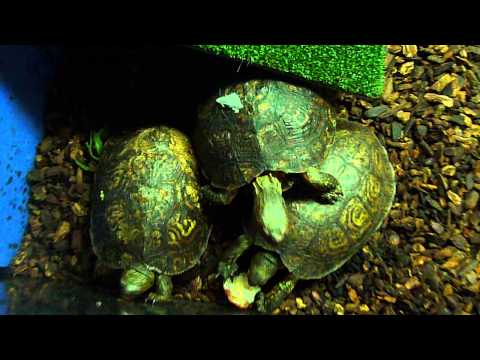
TORUGAS RHINOCLEMMYS BEAUTIFUL MAN (WOOD OR PAINTED FOREST TURTLES)
The New Guinea snapping turtle (Elseya novaeguineae) found on islands and rivers off the coast of Australia and New Guinea, like Fraser Island, the garden river, Daru, cape york, the Stradbroke Islands and the Torres Strait Islands. These turtles are also found in lowland swamps, covering large areas of the tropical and open plains of western Papua New Guinea.
Characteristics / Appearance
The New Guinea snapping turtle has an olive-colored head with a yellow-cream stripe that runs from the tip of the nose to the iris, passing through the eye. They have a prominent upper jaw and two yellow whiskers on their chins.; the same yellow coloration runs along the light-colored jaw line.
The upper neck region is dark gray and the lower, light grey, with red veins that run through it. This same coloration appears on the lower jaw and on the belly of the turtle., although the color may vary between bright orange, yellow or pink. The extremities, the tail, the plastron and abdominal regions are marked with red.
The New Guinea snapping turtle Young usually has brighter marks that fade as it grows., and its red color turns pink over time.
Females have a larger shell, but its tail is shorter. The shells of males oscillate between 13,3 and 17,3 cm., and those of females between 15,2 and 25,5 cm..
The New Guinea snapping turtle is a member of the family of side-necked freshwater turtles, Chelidae. They can be characterized by the way they extend and retract the neck. Place the neck and head on their side, below the top edge of the shell.
Habitat
The preferred habitat of the New Guinea snapping turtle are the rivers, swamps and ponds of Papua New Guinea and Australia. In the lower reaches of the Kikori and Omati rivers they inhabit slow-moving waters, seasonal wetlands and wetlands.
Like other freshwater turtles, the New Guinea snapping turtle alternate periods in the water with sunny time to increase body temperature. Most of their life is spent in the water, where they look for food. If there is a shortage of water in the warmer months, move to flooded areas.
The New Guinea snapping turtle swims and sunbathes to control internal body temperature. During the sunbathing process, tears go down the side of the turtle's head and enter the mouth as it opens and closes, what are known as gular movements.
Wetting the head or limbs, removing limbs from heat exposure and changing breathing patterns are mechanisms that prevent overheating.
The New Guinea snapping turtle, just like other short-necked turtles, snaps and bites when threatened, causing painful wounds. They stick their heads in while tilting their shell toward predators to reduce damage to soft parts of the body..
Reproduction
In many sea turtles, freshwater and terrestrial, the sex of the embryo is influenced by the incubation temperature. But, this is not the case for the Australian turtles studied to date, lacking temperature-dependent sex determination.
Species Elseya novaeguineae mate all year round, with peaks in spring and autumn.
During the breeding season, males communicate with females with a series of signaling postures, including a combination of simultaneous caresses, blinking eyes and swinging of the head. The female may be motionless or swimming; when she stops the encounter and comes to the surface, the male quickly adopts a nose-to-nose position, making nose jets. Males and females continue to bob their heads in an alternating sequence while aligning their bodies.. Once this maneuver is completed, mating begins.
The New Guinea snapping turtle has odor glands in its shell that produce odors used during competition between males during the breeding season.
The gestation period lasts from 2 to 4 months.
Ovulation and nesting begin in early spring. Only female turtles come out of the water at night or first thing in the morning to lay eggs in hollow cavities built into sand or soil.. Females lay eggs in about an hour.
These turtles can produce two to four clutches a year., laying four to eleven eggs each time, with an average of 7 eggs in each clutch.
The eggs hatch and hatch in the next dry season, between July and August. There are many factors that can influence the incubation and hatching period: ambient temperatures, cloudiness, the level and flow of the river, the tides and the phase of the moon. Elevated temperatures favor early hatching and cold temperatures favor late hatching..
After digging a cavity and laying the eggs, the female of New Guinea snapping turtle immediately returns to fresh water, leaving eggs exposed.
The hatchlings make their journey to fresh water without the guidance or protection of their parents..
Food
The New Guinea snapping turtle it is omnivorous and feeds on filamentous algae, perifiton, sponges, aquatic macrophytes, aquatic macroinvertebrates, terrestrial insects falling into the water and carrion. These turtles also rely heavily on mollusc crushing., fish, insects, worms, aquatic plants, plant matter and seeds as part of your daily life.
They depend on their wide jaws, sharp and and their front legs to tear food, and its tongue serves to direct the food towards the gaznate.
Threats to the species
State of conservation ⓘ
Minor Concern ⓘ(UICN)ⓘ
The New Guinea snapping turtle it is listed as a species of least concern by IUCN. But, there may be isolated populations in arid regions throughout their range and have extended times until sexual maturity. This combination leads some to think that a preventative conservation program should be applied.. Growing anthropogenic threats also pose a threat.
Predators include introduced red foxes and domestic cats. Water rats, goannas and crows prey on their nests and the offspring of many species of the genus Elseya.
Human predation includes the taking of eggs and adults as a local food source. The Emydura subglobosa has four scent glands as a defense mechanism against predators. The odor is usually only released when threatened. Although the use of musk is unknown, Recent data suggests that once the powerful smell is released, nearby predators leave the surrounding area.
The "New Guinea snapping turtle" in captivity
Aquaterrarium
The New Guinea snapping turtle can reach a maximum size of 30 cm in the aquarium. For its maintenance and care, an aquarium with an integrated terrestrial part is recommended. This container must have an edge length of at least 150 cm.. The water part should be very large and offer these swimming turtles a lot of free space. Other decorations would only unnecessarily restrict the turtles' swimming space and, Therefore, are not necessary.
These aquatic turtles are peaceful and friendly creatures.. They can be kept in pairs or in a group with several congeners without any problem.. It is also possible to keep them with other turtles of the same size and tranquility.
The New Guinea snapping turtle prefers a water temperature between 22 and 28 degrees centigrade and a pH value between 6,0 and 8,0. A UV lamp must be installed for the turtles to sunbathe. Below this temperature, animals can also enjoy temperatures between 35 and 40 degrees Celsius.
Food
The New Guinea snapping turtle is omnivorous. They can be fed frozen and live food. Especially fish, insects and invertebrates are easily accepted.
Reproduction
The New Guinea snapping turtle (Emydura novaeguineae) has already been successfully bred in the aquarium. They are possible almost 4 put per year.
Buy one "New Guinea snapping turtle"
The price of a "New Guinea snapping turtle" at the exotic animal market, bred in captivity, ranges between 90 – 120 EUR.
1. Western New Guinea stream turtle or New Guinea snapping turtle (English).
2. Tortue de Nouvelle-Guinée (French).
3. Neuguinea-Schnappschildkröte (German).
4. Tartaruga de córrego do oeste da Nova Guiné (Portuguese).
5. Tortuga mordedora de Nueva Guinea, Tortuga del arroyo de Nueva Guinea occidental (español).
Sources:
1 – (Legler y Georges, 1993)
2 – (Adams y Georges, 1996; Georges, 1995; Georges, et to the., 2006; Legler y Georges, 1993; Webb, 1978)
3 – (Georges Guarino and Bito, 2006)
4 – (Legler y Georges, 1993; Ernst y Barbour, 1989)
5 – (Werneburg et al., 2009)













_(31831317365).jpg)


