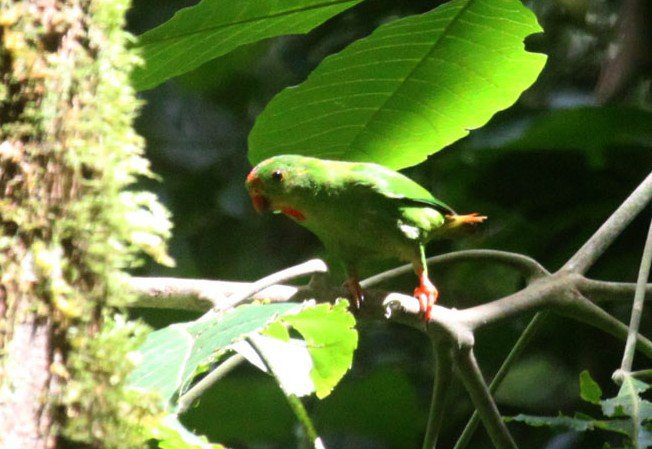
โ–ท The world of Pets: Dogs, cats, birds, reptiles, amphibians

Timneh Parrot
Psittacus timneh


Loro Timneh

Content


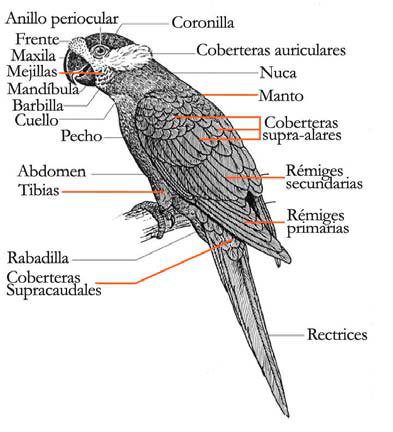
Anatomy-parrots

Description:

28 to 32 cm.. length and a weight between 275 and 375 g..

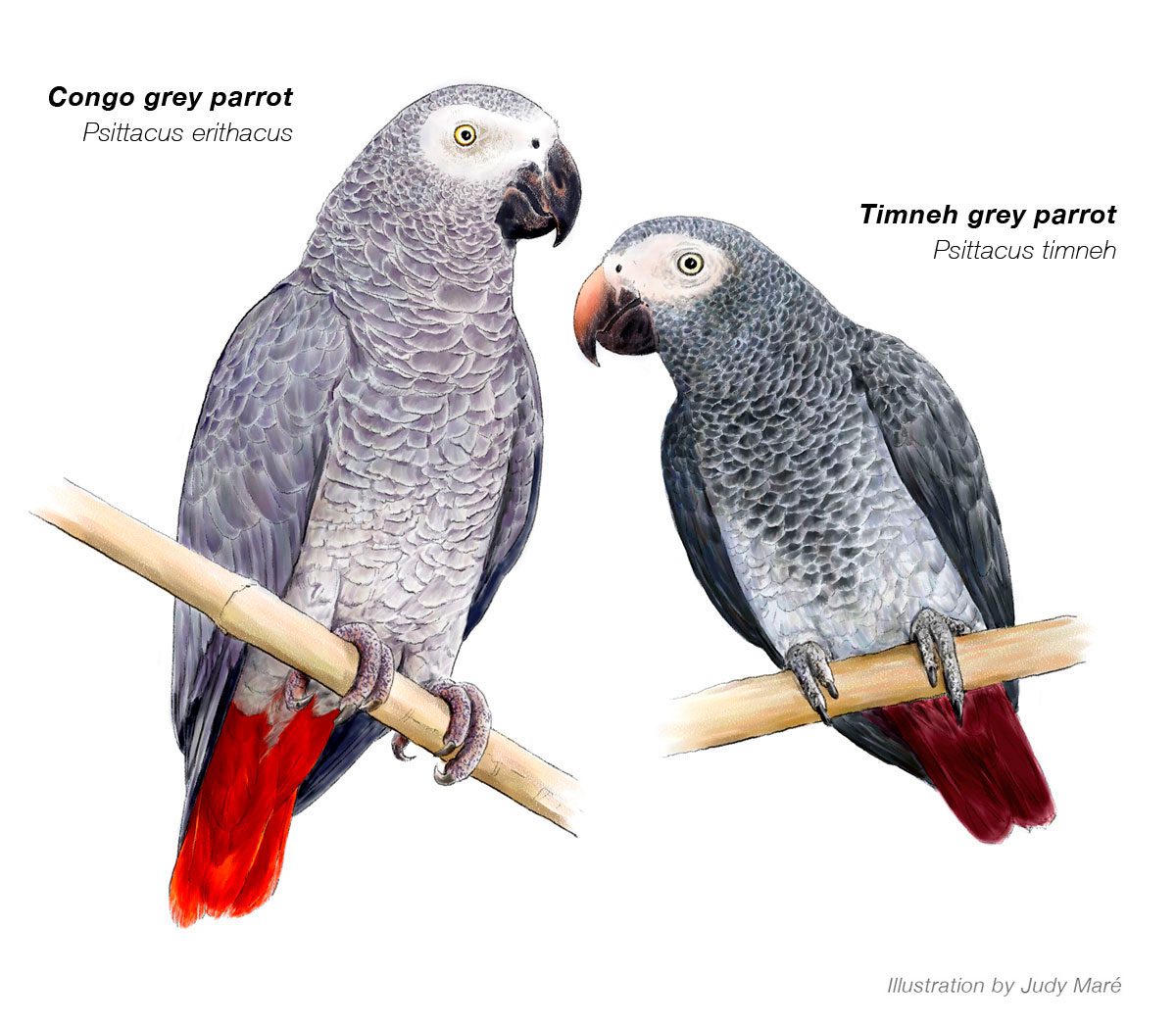
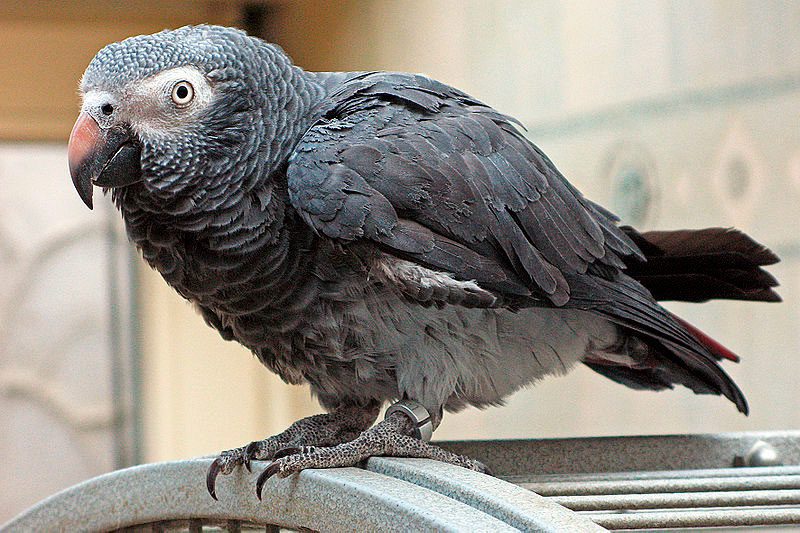
The Timneh Parrot (Psittacus timneh) is darker than Grey Parrot and the Red of the the tail feathers more off, darker and usually Brown (not Scarlet).

The uppertail-coverts son grises, dyed red (not Scarlet).

The bill It is mostly black, but it has an ivory-coloured or pinkish in the upper third of the upper jaw.

There is no visible difference between male and female.

The youth they have black eyes that become a yellowish cream at the age of two years.

Smaller that the Grey Parrot

Description 2 subspecies:

  • Psittacus timneh princeps

    (Alexander, 1909) – Darker and slightly larger than the subspecies Psittacus timneh timneh, although its size is still below the Grey Parrot (Psittacus erithacus). The feathers of the tail are as red as those of Grey Parrot, but marked by a greater contrast with the almost black feathers body, giving a different impression this subspecies. The eyes are yellow, the bill It is black and legs are dark gray.


  • Psittacus timneh timneh

    (Fraser, 1844) – Nominal.

Habitat:

Ilustraciรณn por Judy Marรฉ
Illustration by Judy Mare

Although they normally inhabit the dense forests, they are also usually seen at the edges of forests, clear, gallery forest, mangroves, tree-lined sheets, cultivated areas, and even the gardens, Although it is not clear if it's self-sustaining populations.

You can do seasonal movements out of the drier areas of its distribution in the station area dry.

Sometimes travel long distances to feed. They nest in hollow trees high above the ground. Found in small flocks of a few dozen, usually no more. Flocks of birds can be noisy.

Reproduction:

Little known difference with regard to the Grey Parrot.

The breeding season is usually from November to April in the westernmost areas of west africal, probably, especially during the season dry.

During the season of breeding they put in 2 to 4 eggs, every two or three days. These hatch in 28-30 days and the young are independent in 12 to 14 weeks.

Food:

In the wild, the Timneh Parrot they eat seeds, nuts, fruits and vegetables. they climb trees, instead of flying, to collect food and keep it with one leg while eating. They enjoy eating the external Walnut meat of the Palm oil, and have been observed eating snails.

In West Africa, his hobby is known for beads, attacking cornfields and becoming considered pests in certain places.

Distribution:

Size of the area of distribution (reproduction / resident): 541.000 km2

They are distributed in the West, in the humid forest areas of the Upper Guinea and bordering savannahs of West Africa from Guinea-Bissau, Sierra Leone and South of Mali to the East of Ivory Coast, at least a 70 kilometers to the East of the bandama river.

The wild population is distributed along with the species nominal in Abidjan, Ivory Coast.

Distribution 2 subspecies:

  • Psittacus timneh princeps

    (Alexander, 1909) – Principe Island (gulf of guinea).


  • Psittacus timneh timneh

    (Fraser, 1844) – Nominal. South of Guinea, Sierra Leone and Liberia, as well as the western part of Ivory Coast. There are also smaller groups Guinea Bissau and Mali. Populations Senegal They have disappeared fish trade.

Conservation:


Vulnerable


โ€ข Current Red List of UICN: Vulnerable

โ€ข Population trend: Decreasing

Its population is estimated between 100,000 and 500,000 exemplary and decreasing.
The P. erithacus, before the division of the timneh, He was put in the Appendix II of CITES with all Psittaciformes in 1981 at the request of Switzerland and Liechtenstein. Due to concerns about the effects of the large number of this species traded, It was the subject of a review of significant trade of the CITES, in which was listed as "possible concern" (Inskipp et to the. 1988).

The Animals Committee of the CITES he imposed a sanction of two years from January of 2007 on exports of timneh from four countries of West Africa (Ivory Coast, Liberia, Sierra Leone and Guinea), and banned the import of wild birds into the EU in 2007 (Anon 2011).

In 2009 Guinea exported 720 timneh, Despite having a share of 0 (Anonymous 2011).

The controlled legal trade by CITES may represent only a small proportion of total numbers caught in the wild.

The species is found in a number of protected areas.

A PhD study assessed the distribution, abundance and the impacts of trade and habitat loss for the timneh started in 2011 (Anon 2011).

Conservation Actions Proposed:

    โ€ข Ensure that proposed trade restrictions are enforced.

    โ€ข Monitor wild populations to determine ongoing trends..

"Timneh Parrot" in captivity:

Poultry are known in a manner abbreviated as TAG (Timneh African grey).

The Parrot Timneh is equivalent in intelligence and ability of his Congo counterpart, the Grey Parrot, being, generally, less nervous and with a great ability to imitate sounds (they often learn to imitate human sounds before the Grey Parrot). They can have a wide vocabulary of hundreds of words.

Unlike the Parrot Yaco, their voices are not an exact replica of the voice of the person you are copying. The Timneh Parrot they have their own special little voice.

Alternative names:

Timneh Parrot, Gray Parrot (Timneh), Sierra Leone Gray Parrot, Sierra Leone Grey Parrot, Zambesi Green Pigeon (English).
Perroquet timneh (French).
Timnehgraupapagei (German).
papagaio-timneh (Portuguese).
Loro timneh, Loro Gris de Cola Vinagre (espaรฑol).

scientific classification:

Order: Psittaciformes
Family: Psittacidae
Genus: Psittacus
Scientific name: Psittacus timneh
Citation: Fraser, 1844
Protonimo: Psittacus Timneh

ยซTimneh Parrotยป Images:

————————————————————————————————

"Two Timneh" (Psittacus timneh)


Sources:

Avibase
– Parrots of the World โ€“ Forshaw Joseph M
– Parrots A Guide to the Parrots of the World – Tony Juniper & Mike Parr
– Birdlife

Photos:

(1) – Timneh African Grey Parrot (Psittacus erithacus timneh) Pet parrot sanding on a cage By Peter Fuchs (Flickr) [CC BY-SA 2.0], via Wikimedia Commons
(2) – Two pet Timneh African Grey Parrots perching on a manโ€™s arm By rebeccakoconnor (originally posted to Flickr as Timneh Greys) [CC BY 2.0], via Wikimedia Commons
(3) – Timneh African Grey Parrot (Psittacus erithacus timneh). A pet parrot standing on a cage. Photo shows the maroon tail feathers By Peter Fuchs (originally posted to Flickr as henry tired) [CC BY-SA 2.0], via Wikimedia Commons
(4) – A Timneh African Grey Parrot at Birds of Eden, South Africa By Graham (originally posted to Flickr as IMG_0972) [CC BY-SA 2.0], via Wikimedia Commons
(5) – A Timneh African Grey Parrot that is allowed to fly free in Tropical Birdland, Leicestershire, England I, Snowmanradio [GFDL or CC-BY-SA-3.0], via Wikimedia Commons
(6) Ilustraciรณn by Judy Marรฉ – Africa Geographic Magazine

Sounds: Etienne Leroy (Xeno-canto)

โ–ท The world of Pets: Dogs, cats, birds, reptiles, amphibians

Speckle-faced Parrot
Pionus tumultuosus

Speckle-faced Parrot

Content


Anatomy-parrots

Description:

28 to 31 cm.. tall and around 250 g. weight.

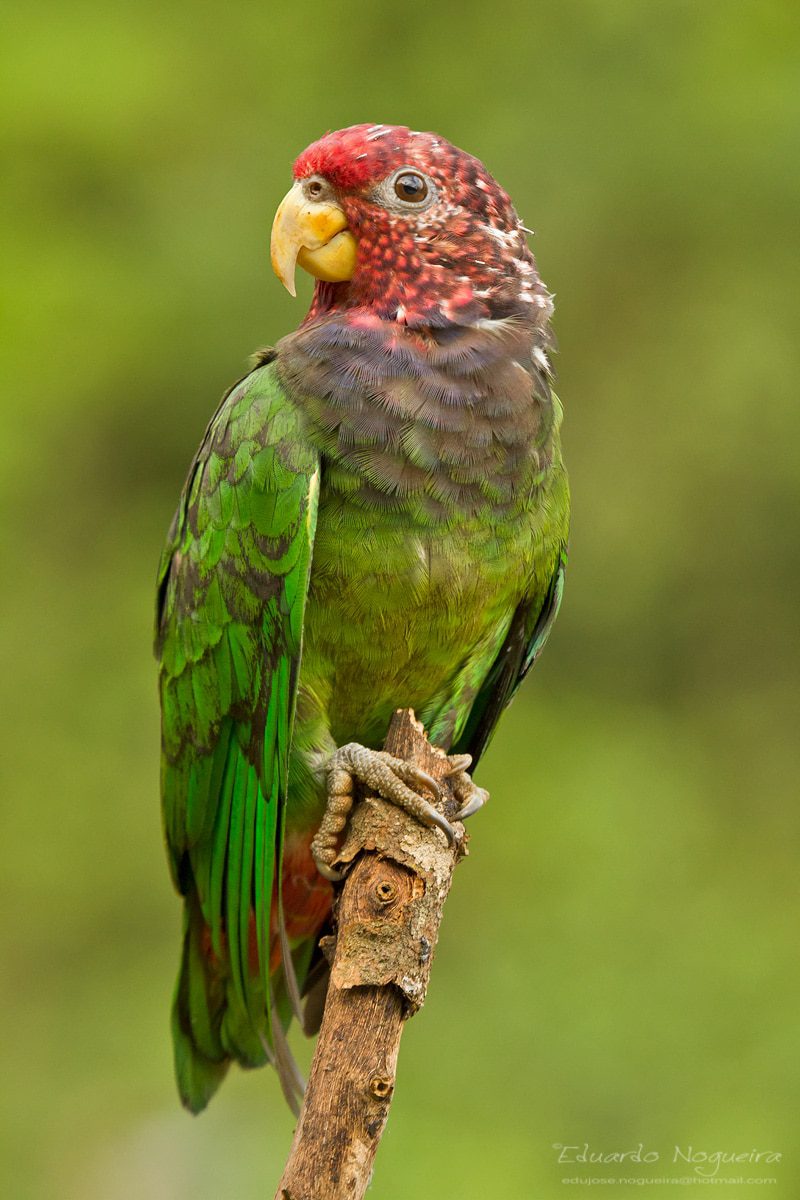
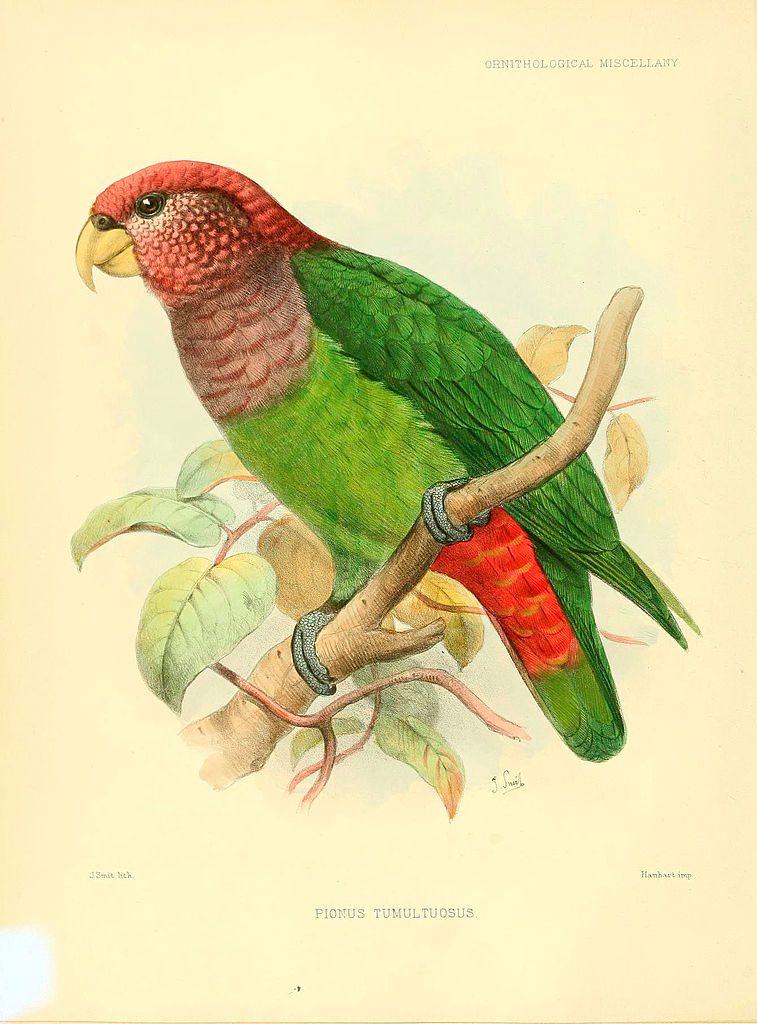
The Speckle-faced Parrot (Pionus tumultuosus) It is distinguishable by color from whitish crown up to the nape; base bill red rose, with forecrown redder. Cheeks whitish with a red and purple tinge towards the neck; purple chest.

Shoulder with thin strip yellow with reddish tint, inside base tail and crissum, red; the rest of the tail is green with blue on the outer feathers; under belly with red feathers with green edge.

ocula ringr greyish

The youth They have almost all head green and the wings, greenish yellow.

Taxonomic note:

The Speckle-faced Parrot It is probably the rarest and most controversial genre Pionus. It is sometimes divided into two species, in which case, the Pionus tumultuosus South is known as Speckle-faced Parrot, while the North, Pionus seniloides, They are known as White-capped Parrot (which leads to easy confusion with Pionus senilis).

Habitat:

Speckle-faced Parrot

It inhabits in Andean and sub-Andean cloud forests and forest edges, between 1600 and 3200 meters above sea level.
It is highly Nomad with temporal variations in terms of the number of individuals that can be registered in a locality.

Reproduction:

With reproduce In September. In captivity puts 4 eggs which incubated about 26 days. No other aspects of its reproductive biology are known..

Food:

It has been registered consuming fruits of Turpinia paniculata and are sometimes seen in large numbers feeding on maize crops in cultivated areas and banana plantations.

Distribution:

Its population is distributed in the southern Andes, from the center of Peru until Bolivia.

Size of the area of distribution (reproduction / resident): 329.000 km2

Conservation:


minor concern


โ€ข Current category of the Red List of the UICN: Least concern.

โ€ข Population trend: Decreasing.

Justification of the population

The size of the world population It has not been quantified, but this species is described as ยซquite common, but irregular distributionยป (Stotz et to the., 1996).

Justification of trend

It is suspected that the population is in decline due to the continuous habitat destruction.

"Speckle-faced Parrot" in captivity:

This species is virtually nonexistent in poultry farming. There is only a small collection, private property in the United States. The Fundaciรณn Loro Parque in Tenerife, Spain, It has some copies.
Most of the Speckle-faced Parrot imported to United States they were the victim of aspergillosis โ€“ probably caused by the stress suffered during the import process.

In captivity They were observed as the to intelligent species, inquisitive and sometimes shy and nervous. Will get used to their caregiver over time. You can interact with a person and jealously attacking others. Prone to obesity.

Alternative names:

Speckle-faced Parrot, Plum-crowned Parrot, Speckle-faced Parrot (Plum-crowned) (inglรฉs).
Pione pailletรฉe, Pione pourprรฉe (francรฉs).
Purpurstirnpapagei (alemรกn).
Curica-de-cara-manchada (portuguรฉs).
Cotorra Gorriblanca, Loro Rosado, Loro Tumultuoso (espaรฑol).


Clasificaciรณn cientรญfica:

Tschudi Johann Jakob von

Orden: Psittaciformes
Familia: Psittacidae
Genus: Pionus
Nombre cientรญfico: Pionus tumultuosus
Citation: (von Tschudi, 1844)
Protรณnimo: Psittacus tumultuosus


Imรกgenes ยซLoro tumultuosoยป:

Videos del "Loro tumultuoso"

ยซLoro tumultuosoยป (Pionus tumultuosus)

    Fuentes:

    Avibase
    – Parrots of the World โ€“ Forshaw Joseph M
    – Parrots A Guide to the Parrots of the World – Tony Juniper & Mike Par
    Birdlife
    – Libro Loros, Pericos y Guacamayas Neotropicales

    Fotos:

    (1) – Eduardo Nogueira
    (2) – Speckle-faced Parrot at La Merced Zoo By josecajacuri [CC BY-SA 2.0], via Wikimedia Commons
    (3) – Speckle-faced Parrot ยซPionus tumultuosusยป on the grounds of the Pueblo Hotel, Aguas Calientes by Carol FoilFlickr
    (4) – Speckle-faced Parrot ยซPionus tumultuosusยป on the grounds of the Pueblo Hotel, Aguas Calientes by Carol FoilFlickr
    (5) – Speckle-faced Parrot ยซPionus tumultuosusยป on the grounds of the Pueblo Hotel, Aguas Calientes by Carol FoilFlickr
    (6) – PIONUS TUMULTUOSUS By Allen, Edgar W.; Erxleben, J.; Hanhart, Michael; Hanhart, N; Keulemans, J. G.; Mintern Bros.; Rowley, George Dawson; Smith, J.; Walther, T. [CC BY 2.0 or Public domain], via Wikimedia Commons

    Sonidos: Sebastian K. Herzog

โ–ท The world of Pets: Dogs, cats, birds, reptiles, amphibians

Scarlet-breasted Lorikeet
Trichoglossus forsteni

Scarlet-breasted Lorikeet

Content

Description:

25 to 30 centimeters length and 100-157 g. of weight.

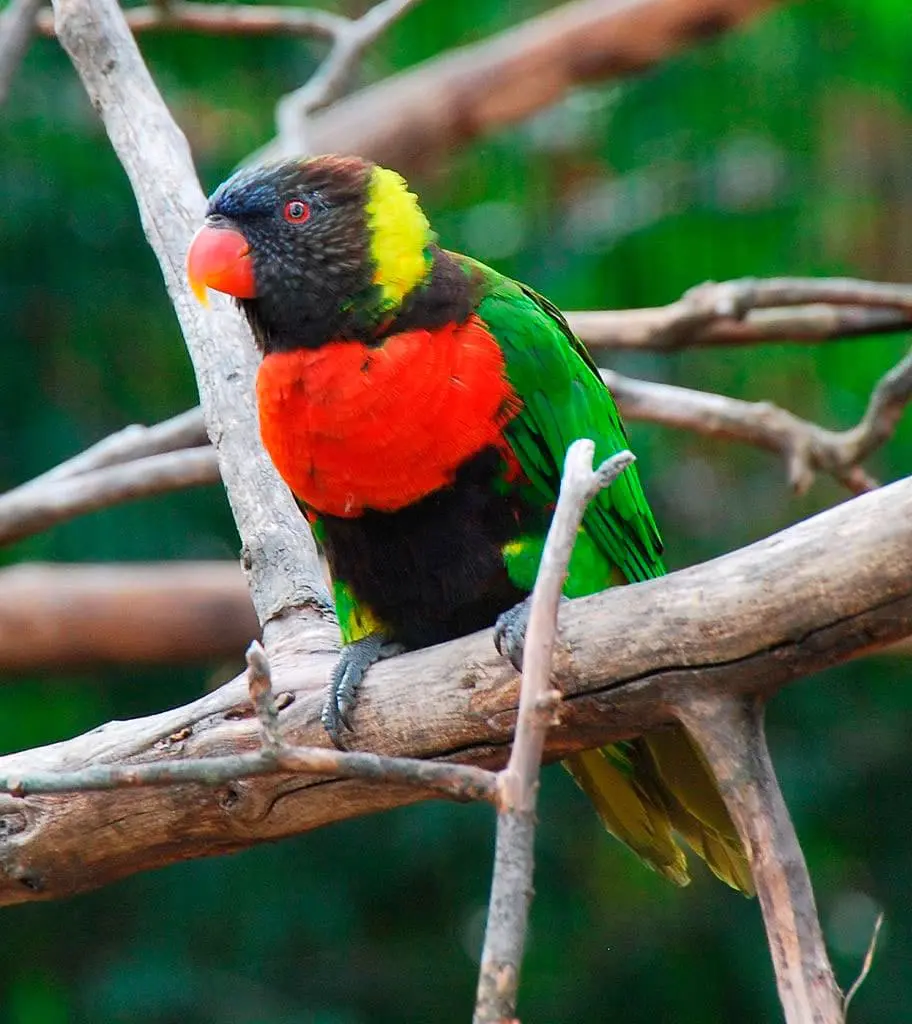
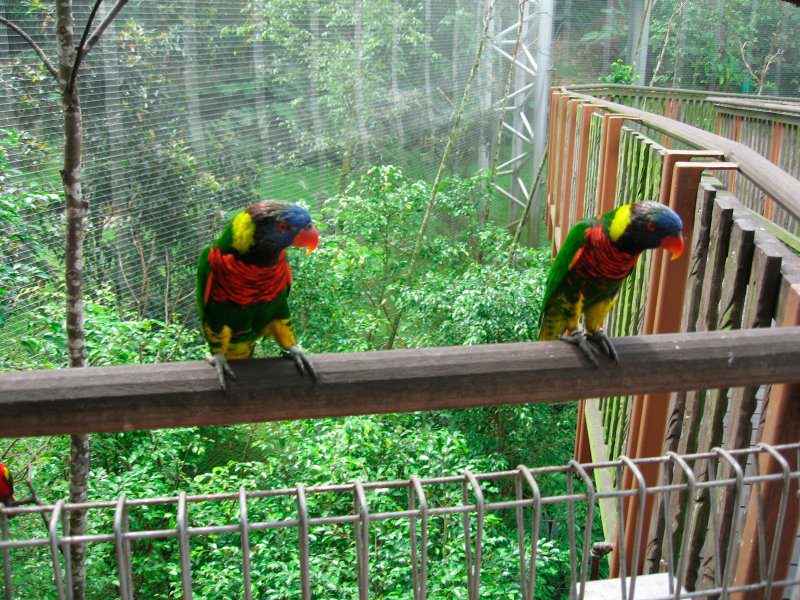
The distinctive and colorful Scarlet-breasted Lorikeet (Trichoglossus forsteni) has the head dark blue, neck pale green, chest smooth red, and belly dark blue. The remaining plumage It is a bright pale green, and the bill typical is red.

In flight the species shows a flash of bright yellow on the inside of all flight feather, and coverts bright red at the bottom of the wings.

  • Sound of the Scarlet-breasted Lorikeet.

taxonomy:

This taxon is considered a subspecies of Trichoglossus [haematodus, rosenbergii, moluccana, forsteni, capistratus, weberi] (sensu lato) by some authors.

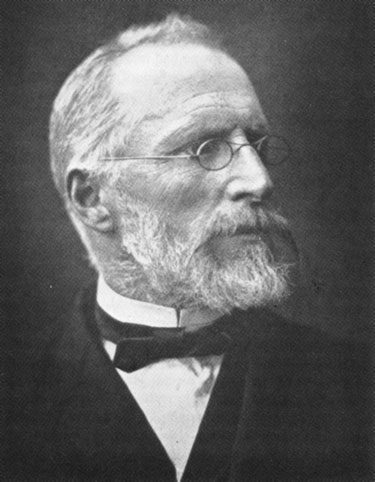
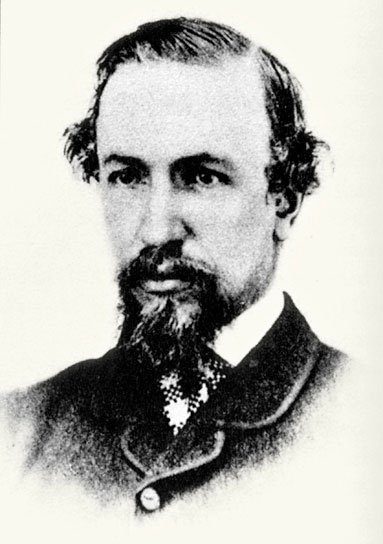
The specific epithet forsteni commemorates the Dutch naturalist Eltio Alegondas Forestry.

Subspecies description
  • Trichoglossus forsteni djampeanus

    (Hartert 1897) – They differ from the species nominal by the fact that their head it is darker and more obviously streaked with bright purple/blue.


  • Trichoglossus forsteni forsteni

    (Bonaparte 1850) – Nominal.


  • Trichoglossus forsteni mitchellii

    (Gray,GR 1859) – Both adults have head black / brown with gray / green streaks in crown up to the cheeks; red / brown in occiput; chest red with minimal or no barring; neck yellow green; purple/black belly; smaller.


  • Trichoglossus forsteni stresemanni

    (Meise 1929) – As the species nominal but with paler chest orange / red; green washing occiput; feathers the mantle yellow / orange basis.

Habitat:

The Scarlet-breasted Lorikeet is located in lowlands and lower montane forests, including secondary growth and plantations, tending to be observed at the edges and around perturbed vegetation instead of inside the closed canopy forest (pit et to the. 1997). In Sumbawa the Trichoglossus forsteni varies from sea level to 800-1200 meters and up 2150 metres in Lombok (pit et to the. 1997); at least in Sumbawa, the variation in altitudinal range is attributed to the movements in monitoring trees in bloom in a large area (White y Bruce 1986).

Reproduction:

Birds have been reported in breeding conditions in May Sumbawa (White y Bruce 1986). It nests in a deep hole in a large tree (pit et to the. 1997).

Food:

No specific data, but presumably similar to Coconut Lorikeet (Trichoglossus haematodus)

Distribution:

Extension of the distribution (breeding/resident): 101.000 km2

The Scarlet-breasted Lorikeet (incorporating subspecies mitchelli, djampeanus and stresemanni) It is located on the islands of Bali, Lombok, Sumbawa, Tanahjampea and Kalaotowa, Indonesian.

An assessment of the state of the taxa that make up the species indicates that the species may no longer be present in Bali, It is extinct in Tanahjampea after capture, mainly before 1990, and it is not clear if he persists in kalatom (Eaton et al. 2015). In Lombok the species is still present, with a recent observation of a flock of 18 individuals above 1.500 metres in 2015 (F. Rheindt per Eaton et al. 2015), although given the lack of other records for many decades, it can be assumed that the population is likely to be small. Sumbawa now it may be the stronghold of the species, and it was suggested that the species is "secureยป (Eaton et al. 2015), and there is a large area of รขโ‚ฌโ€นรขโ‚ฌโ€นpotentially suitable habitat remaining on the island.

Subspecies distribution

Conservation:


Vulnerable


โ€ข Current category of the Red List of the UICN: Vulnerable.

โ€ข Population trend: Decreasing.

โ€ข Population size : 1600-7000 individuals.

Rationale for the Red List category

It is estimated that this newly divided species has a small population that is experiencing suspected moderately rapid population decline due to the pressure of the traps for wild bird trade. So, is classified as Vulnerable.

Justification of the population

It is estimated that the population size is lower to 10.000 mature individuals, based on a provisional assessment of locations where any numbers of the species are likely to be retained. It also, it is considered possible that the population supposedly higher in Sumbawa does not exceed 1.000 mature individuals.

Justification trend

It is suspected that the population is experiencing descent moderately fast because of unsustainable levels of exploitation.

Conservation actions and research in progress

Appendix II of the CITES, where they include species that are not necessarily threatened with extinction, but in which trade must be controlled in order to avoid utilization incompatible with their survival. CMS Appendix II (Convention on the Conservation of Migratory Species of Wild Animals).

Proposed Research and Conservation Actions

– Estimate the population and assess population trends and scale of capture pressure.
– Carry out a species-specific survey to identify important sites, in order to provide protection.
– Conduct research on their status and habitat use (with particular attention to food ecology and forest fragmentation).
– Initiate awareness campaigns to enlist the support of local people in protecting forests and preventing illegal trade.

"Scarlet-breasted Lorikeet" in captivity:

Rare in captivity. Each captive specimen of this species which is capable of reproducing, must be placed in a well-managed captive breeding program and not sold as a pet, in order to ensure its long-term survival. However it copies sold from the Loroparque Foundation at a price of around 400 EUR.

In captivity, It appeared in the late nineteenth and early twentieth century, for example, in 1896 It was imported by the London Zoo. The first offspring of the world recorded in 1990 on India.

The Scarlet-breasted Lorikeet It has a longevity 20 years in nature, 15-25 years in captivity.

Alternative names:

Rainbow Lorikeet (Sunset), Scarlet-breasted Lorikeet, Scarley-breasted Lorikeet, Sunset Lorikeet (English).
Loriquet ร  face bleue, Loriquet ร  tรชte bleue (de Forsten), Loriquet ร  tรชte bleue [forsteni], Loriquet de Forsten (French).
Bali-Allfarblori, Forstenlori (German).
Lรณris-de-forstein (Portuguese).
Lori de Puesta del Sol, Lori pechiescarlata (espaรฑol).


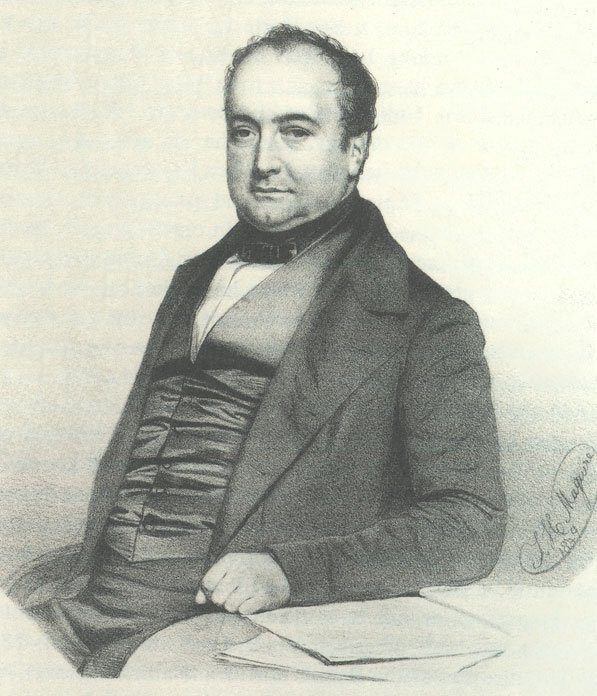
Charles Lucien Bonaparte

scientific classification:


Order: Psittaciformes
Family: Psittaculidae
Gender: Trichoglossus
Scientific name: Trichoglossus forsteni
Subpoena: Bonaparte, 1850
Protonimo: Psittacus forsteni

โ€œScarlet-breasted Loryโ€ Images:


"Scarlet Peechie Lori" (Trichoglossus forsteni)

    Sources:

    โ€ข Avibase
    โ€ข Parrots of the World โ€“ Forshaw Joseph M
    โ€ข Parrots A Guide to the Parrots of the World – Tony Juniper & Mike Parr
    โ€ข Birdlife

    Photos:

    (1) – Sunset Lorikeet (also known as the Scarlet-breasted Lorikeet and Forstenโ€™s Lorikeet) at Cincinnati Zoo, USA by Ted [CC BY-SA 2.0], via Wikimedia Commons
    (2) – A Sunset Lorikeet (also known as the Scarlet-breasted Lorikeet and Forstenโ€™s Lorikeet) at Cincinnati Zoo, Ohio, USA by Ted [CC BY-SA 2.0], via Wikimedia Commons
    (3) – Two Rainbow Lorikeets at Newport Aquarium. This subspecies of the Rainbow Lorikeet is also called Forstenโ€™s Lorikeet by Trichoglossus_haematodus_-Newport_Aquarium-8a.jpg: Jeff Kubinaderivative work: Snowmanradio [CC BY-SA 2.0], via Wikimedia Commons
    (4) – Two Rainbow Lorikeets at Newport Aquarium. This subspecies of the Rainbow Lorikeet is also called Forstenโ€™s Lorikeet
    Date 22 April 2009, 15:31 (UTC)_haematodus_-Newport_Aquarium-8a.jpg: Jeff Kubinaderivative work: Snowmanradio [CC BY-SA 2.0], via Wikimedia Commons
    (5) – Lories at the Jurong BirdPark, Singapore. Taken by Terence Ong in November 2006. Trichoglossus haematodus forsteni by rk, Singapore. Taken by Terence Ong in November 2006. Trichoglossus haematodus forsteniNo machine-readable author provided. Terence assumed (based on copyright claims). [GFDL, CC-BY-SA-3.0 or CC BY 2.5], via Wikimedia Commons

    Sounds: Patrik ร…berg, XC40063. accessible www.xeno-canto.org/40063

โ–ท The world of Pets: Dogs, cats, birds, reptiles, amphibians

Red-faced Parrot
Hapalopsittaca pyrrhops

Red-faced Parrot

Content


Anatomy-parrots

Description:

23 cm.. height.

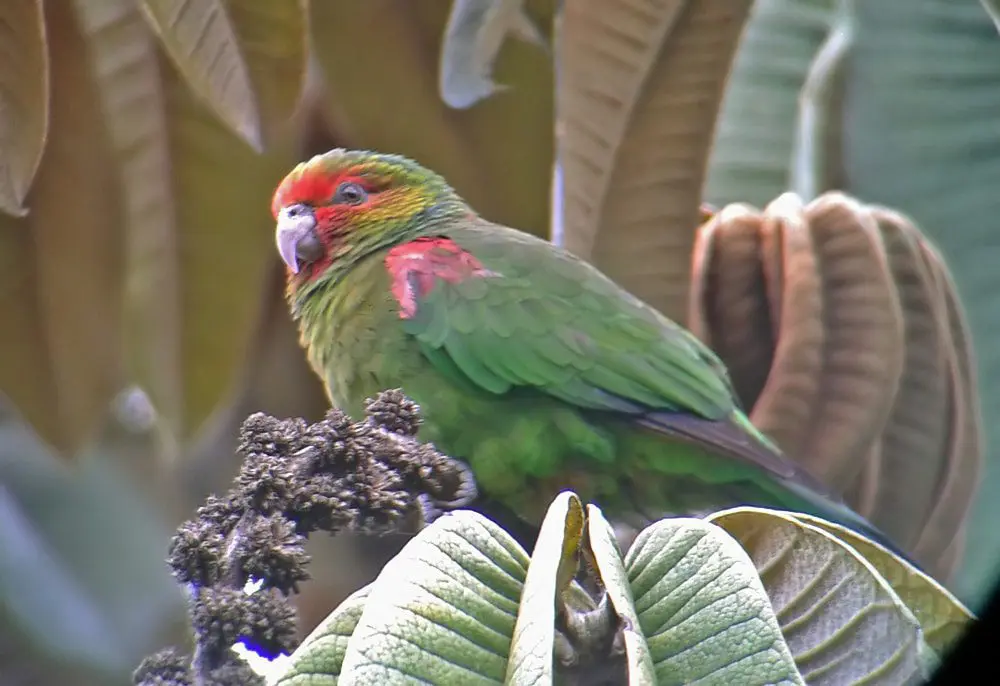
The Red-faced Parrot (Hapalopsittaca pyrrhops) It is distinguishable by the intense red in face and pink magenta in shoulder.

Of bill Of course, yellow feathers on the sides of the neck, crown Green with more bluish back.
Dorsally, wing with blue stain and end blackish; tail with blue border.
In flight, wing with armpit red, Blue-Green rest, tail Red with blue tip.
Youth with the face less red.

Habitat:

Rare. It inhabits in the Woods high Andean, near fells, edges and secondary forests, from the 2400 to 3500 m. They are gregarious, usually in pairs or small flocks of 4 to 6 individuals, rarely more.
They are mostly sedentary. But, can arise some movements seasonal altitudinal.

Reproduction:

Nest in the cavities of trees in October-January; the laying of eggs in late November; the chicks are born in early December, and they leave the nest in late January.

Food:

They feed in the canopy of the forest.
Its diet includes outbreaks, flowers, berries and seeds.

Distribution:

Size of the area of distribution (reproduction / resident): 33.800 km2

Inhabits the southern Andes Ecuador and North end of Peru.

Conservation:


Vulnerable


โ€ข Current category of the Red List of the UICN: Vulnerable.

โ€ข Population trend: Decreasing.

The population is estimated to be a number of 2.500-9.999 mature individuals.

Threats

Its decline is attributed to the destruction and fragmentation of habitat, largely through the conversion of burning forests to small farms (Jacobs and Walker, 1999).

Severe loss of this species can be expected due to deforestation and degradation of forests, by burning and grazing, on Cordillera de Chilla, Loja of Ecuador, although 1995 there were still extensive forest areas (Toyne and Flanagan 1997, Jacobs and Walker 1999).

"Red-faced Parrot" in captivity:

Unknown in the poultry.

Alternative names:

Red-faced Parrot, Ecuadorian Parrot, Red faced Parrot (English).
Caรฏque de Salvin, Caรฏque ร  face rouge (French).
Salvinpapagei, Salvins Zwergpapagei (German).
Red-faced Parrot (Portuguese).
Lorito Ecuatoriano (espaรฑol).
Loro de Cara Roja (Peru).


scientific classification:

Salvin Osbert
Salvin Osbert

Order: Psittaciformes
Family: Psittacidae
Genus: Hapalopsittaca
Scientific name: Hapalopsittaca pyrrhops
Citation: (Salvin, 1876)
Protonimo: Pionopsitta pyrrhops

Images "Red-faced Parrot"

Videos "Red-faced Parrot"


"Ecuadorian Lorito" (Hapalopsittaca pyrrhops)


Sources:

  • Avibase
  • Parrots of the World โ€“ Forshaw Joseph M
  • Parrots A Guide to the Parrots of the World – Tony Juniper & Mike Parr
  • Birdlife
  • Parrot Book, Parrots and macaws Neotropical

  • Photos:

(1) – Red-faced Parrot (Hapalopsittaca pyrrhops) by Dusan M. Brinkhuizen – IBC

โ–ท The world of Pets: Dogs, cats, birds, reptiles, amphibians

Red-and-blue Lory
Eos histrio

Eos histrio

Content

Lori-of-them-sangihe-6

Description

31 cm.. length and a weight between 150 and 185 gr.

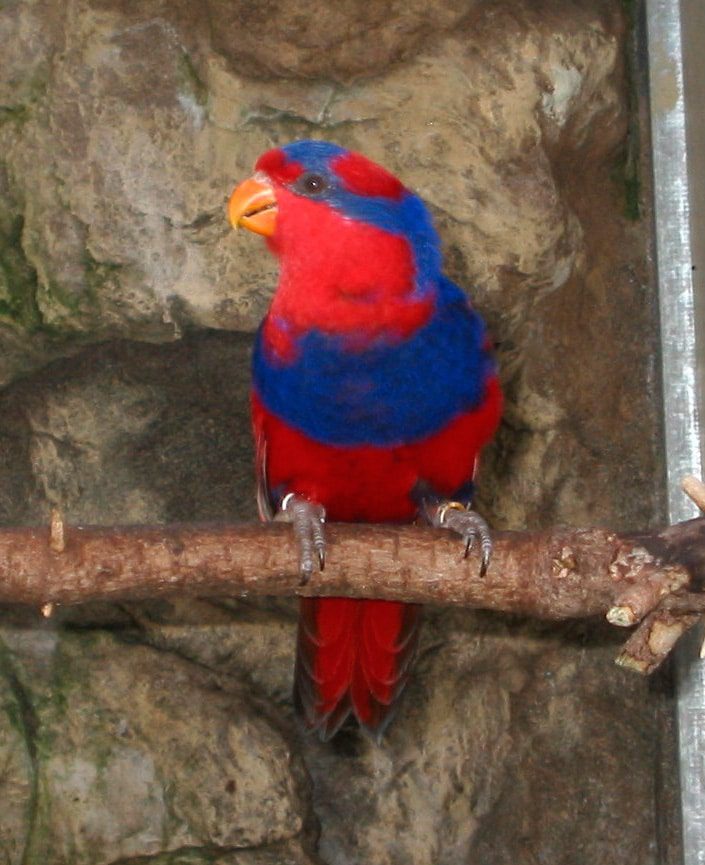
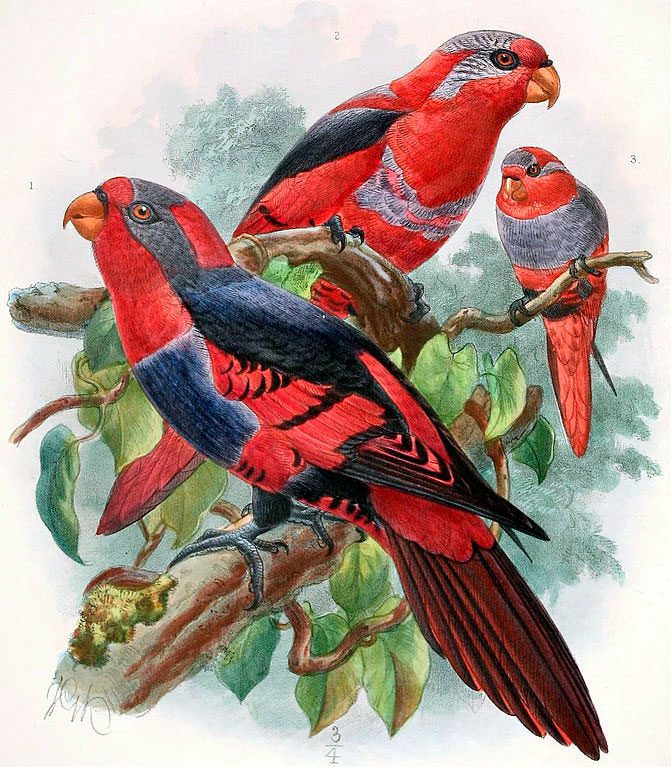
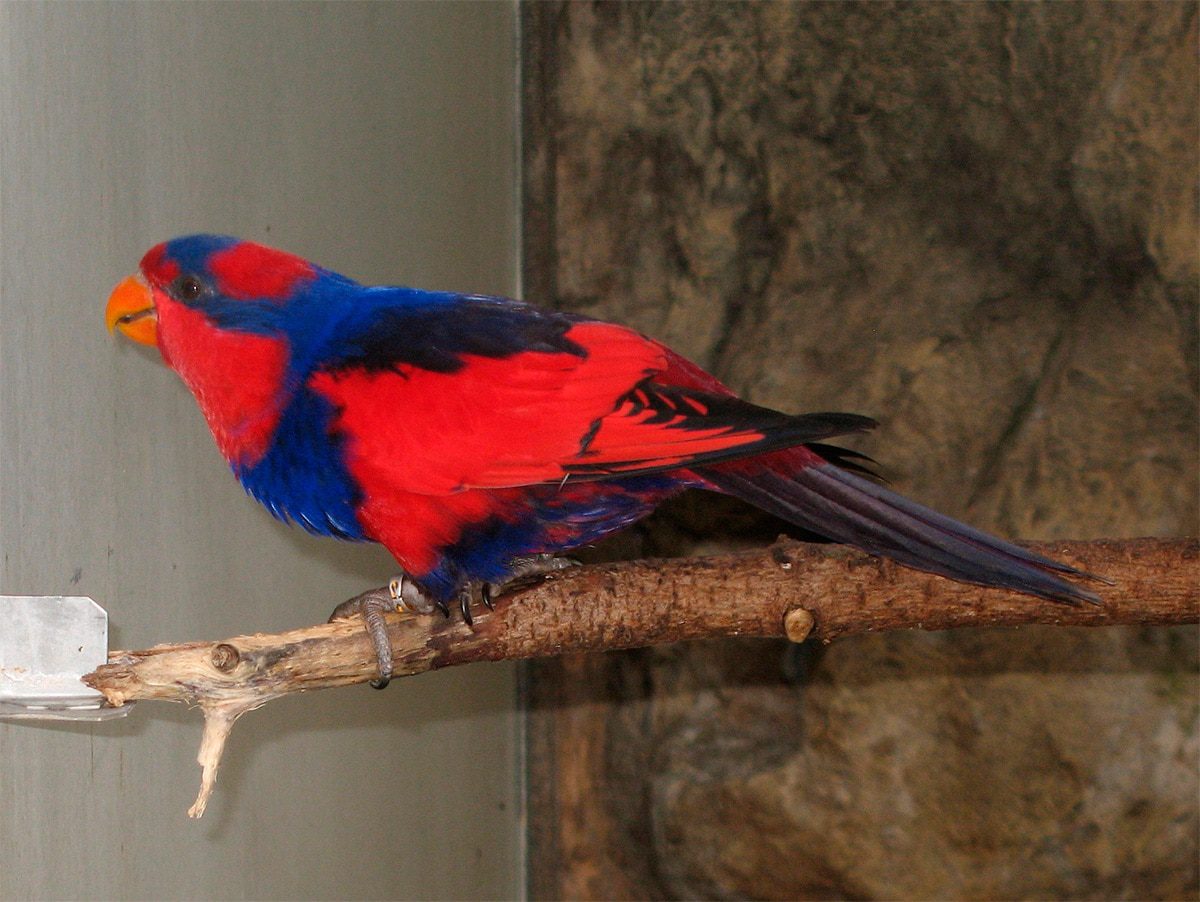
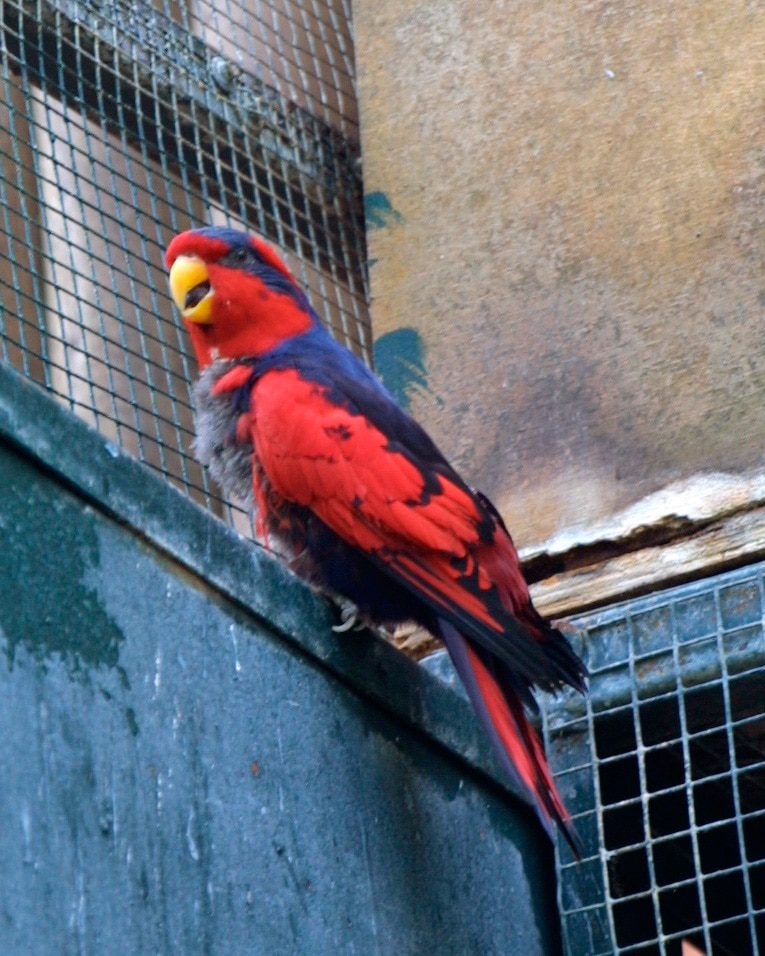
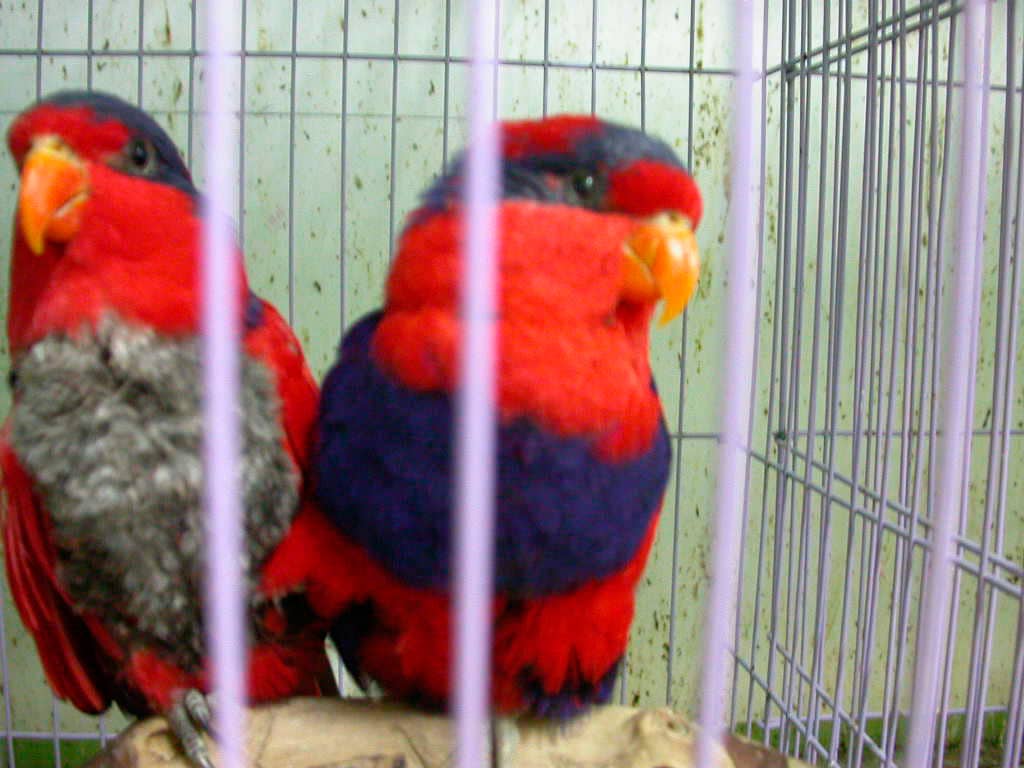
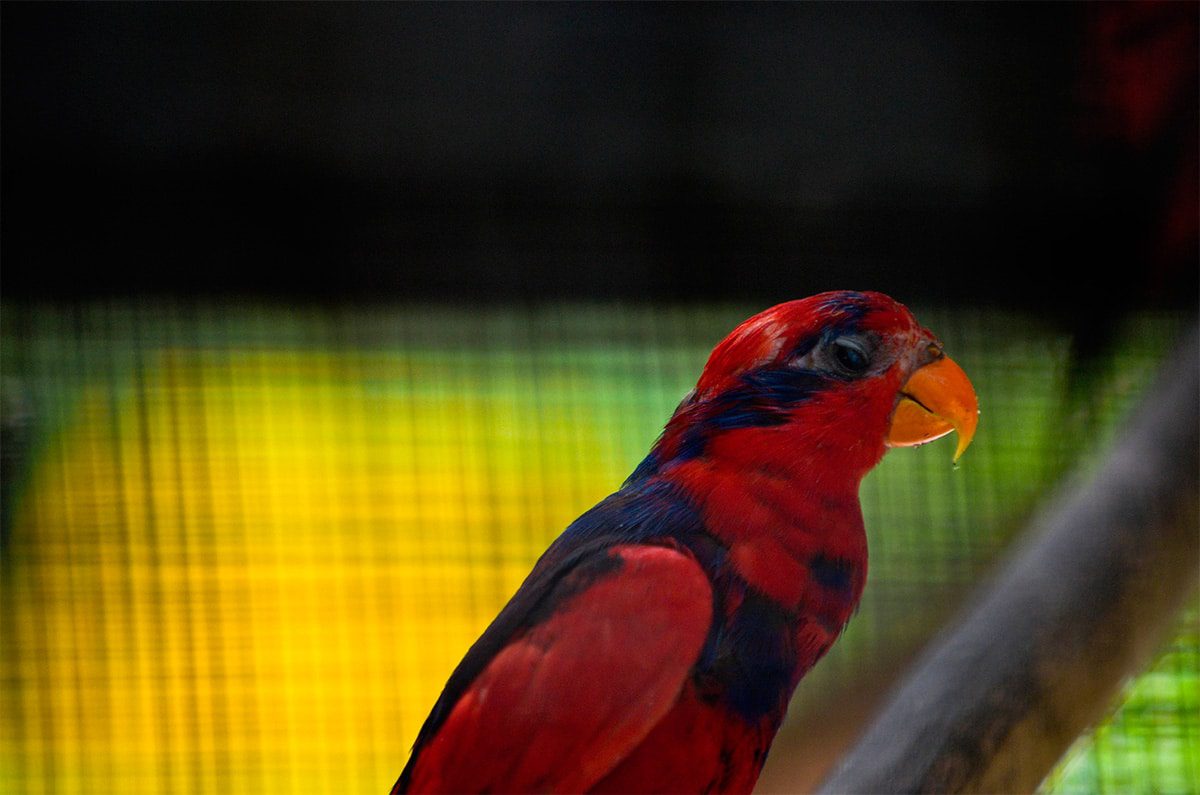
The two main colors of the Red-and-blue Lory (Eos histrio) they are the red and blue.

A broad blue-purple line extends from the eyes through the ears and for the sides of the neck. A broad transverse band blue on the chest. The tail coverts they have blue pink. The feathers of the part superior of the tail they are reddish purple.

The irises is red, the legs grey.

Both sexes are very similar.

In immature, the feathers of the head and the chest they have a dark blue edging. The blue of the crown extends up to the neck and below the eyes. Thighs they are dull purple. The irises They are brown.

Description 3 subspecies

  • Eos histrio challengeri

    (Salvadori, 1891) – The band blue of the chest is of smaller size and mixed with red; the blue band of the eyes does not extend to the the mantle; smaller.


  • Eos histrio histrio

    (Statius Mรผller, 1776) – Nominal.


  • Eos histrio talautensis

    (Meyer,AB & Wiglesworth, 1894) – More black in the corbeteras wing and in the flight feather.

Habitat:

The Red-and-blue Lory they are common in primary forests, and on the hills of the hills. The feed, they made raids in coconut plantations along the coast and in the more open areas.

They make short trips daily. In the Talaud Islands You can see flying from island to island.

Initially, They lived in large flocks and concentrated in large numbers in common dormitories..

Today, in view of its decline, them find in pairs or in small groups. Large gatherings have become extremely rare or virtually non-existent.

In the Karakelong island were seen, However, on two occasions, more groups of 400 birds.

The Red-and-blue Lory they are birds noisy, which makes them quite easy to observe.

Reproduction:

The species nests in holes in tall trees, most belonging to the class canarium family Burseraceae, and the breeding period main seems to be from May to June, Although it is suspected that nesting may include other months.

We find nests, both in the forests and cultivated areas. The spawning usually includes 2 eggs which are incubated for approximately 25 or 26 days. There is no any other information in the natural environment.

Food:

Although they also consume some insect larvae, the Red-and-blue Lory are mostly vegetarian. They feed on coconut plantations, in the fig trees and trees of the genus canarium It produces edible nuts.

Distribution:

Size of the area of distribution (reproduction / resident): 1,000 km2

The Red-and-blue Lory is confined to the Talaud Islands (almost exclusively in Karakelang) front North of Sulawesi, Indonesian

Description 3 subspecies

Conservation:


Endangered

โ€ข Current category of the Red List of the UICN: Endangered.

โ€ข Population trend: Decreasing.

This species has a very small range (It is known only in some places), and it is declining due to habitat loss. It has been a downhill fast in the population, largely as a result of their capture for trade, and this is expected to increase in the future. So, qualified as In danger.

Although it was previously abundant, the species has decreased and the population in KarakelongIt was estimated in 8,230-21,400 birds in 1999 (Riley 2003). The subspecies of the nominal of the Sangihe Islands, is likely that has been extinguished.

The encroachment and logging are driving the loss of forests, aggravated by the threat of illegal trade in the species, contribute to the acceleration in the decrease of the population.

In 1999, the investigation concluded that you the 1.000 and 2.000 birds were being captured in Karakelang each year, the 80% (illegally) for the markets of birds of the Philippines.

Ongoing conservation actions:

Since 1995, the project "Action Sampiriยป has been working for the conservation of biodiversity in Sangihe and Talaud, in the implementation of awareness-raising programmes of field work and the conservation and development of ideas for the future use of the land.

Efforts have been made to promote the local support of the species at Talaud, his last bastion.

It has been reported that the poaching and the trade of this species have decreased drastically after the confiscation of assets by Ranger of the forest Department in 2005 (RT Prayudhi in litt., 2008).

The bird is part of the European Association of Zoos, the program Aquariaโ€™s European Endangered [species] and Parrot Taxon Advisory Group (Wilkinson 2000), where it is being bred in captivity (Sweeney, 1998).

"Red-and-blue Lory" in captivity:

It is currently very rare in captivity.

Due to its status in danger of extinction, any specimen that can not be returned to their natural habitat (natural range) should preferably be placed in a well-managed breeding program to ensure the survival of the species.

Alternative names:

Red-and-blue Lory, Blue-tailed Lory, Red & Blue Lory, Red and Blue Lory, Red-blue Lory (ingles).
Lori arlequin, Lori histrion (French).
Harlekinlori (German).
Lรณris-arlequin (Portuguese).
Lori de las Sangihe, Lori Rojo y Azul (espaรฑol).

scientific classification:

Order: Psittaciformes
Family: Psittaculidae
Genus: Eos
Scientific name: Eos histrio
Citation: (Statius Mรผller, 1776)
Protonimo: A player parrot

โ€œSangihe Loryโ€ images:

——————————————————————————————————-

ยซLori de las Sangiheยป (Eos histrio)


Sources:

Avibase, BirdLife.org

Photos:

1 – En Loro Parque (Spain, Tenerife) by Drรคgรผs – Wikimedia
2 – Lori en Loro Parque, Tenerife, Espaรฑa by Drรคgรผs – Wikimedia
3 – En ZooParc de Beauval, France by User:Edhral – Wikimedia
4 – Red-and-blue lory. two in a cage. by TJ Lin – Wikimedia
5 – A Red-and-blue lory in a zoo by jojo nicdao – Wikimedia
6 – The Red and Blue Lory (Eos histrio now Eos histrio histrio) and The Challenger Lory (EOS challengeri now Eos histrio challengeri) Chromolithograph. Plate VII from A monograph of the lories, or brush-tongued parrots, composing the family Loriidae. By St. George Jackson St. Mivart (1827โ€“1900). Artwork by John Gerard Keulemans (1842-1912). This was published by R. H. Porter (London) in 1896. By John Gerard Keulemans [Public domain], via Wikimedia Commons

Sounds: Frank Lambert (Xeno-canto)

โ–ท The world of Pets: Dogs, cats, birds, reptiles, amphibians

Little Lorikeet
Parvipsitta petty


Little Lorikeet

Content

Description

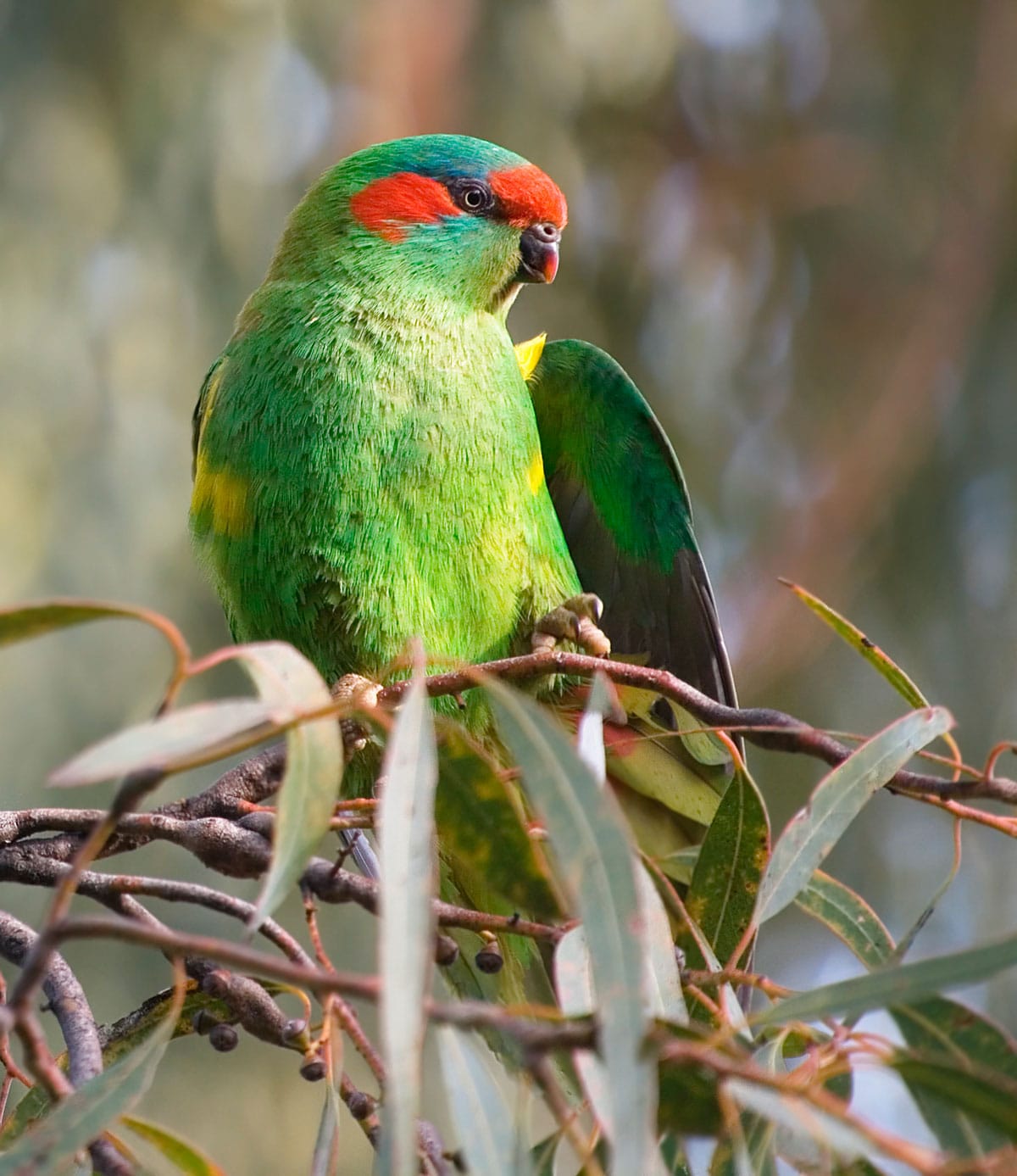
16 to 19 cm.. length and an approximate weight of 40 g.. The Little Lorikeet (Parvipsitta petty) is the smallest of the Parrots Australian.

The body is bright green, the area of the nose, the forecrown, the neck, part of the forecrown and cheeks They are red.

The ear-coverts are of color green with stripes of color green light. The neck and back top are brown-green. Under the wings brighter yellowish green. The primary flight feathers they have a very narrow yellowish Board, their underparts is yellowish-green.

The feathers of the tail has reddish orange base, the circle around the eyes is narrow and black, the irises is orange, the legs grayscale and the bill black.

Parvipsitta buttercups

  • Parvipsitta petty
  • Parvipsitta porphyrocephala
  • The immature have more off the Red of the face; the Brown of the upper mantle is minimal. Bill Dark Brown and brown the eye.

    This small Lori is likely to be confused with the Purple-crowned lorikeet (Parvipsitta porphyrocephala).

    Habitat:

    The Little Lorikeet dispatched virtually all areas and at all altitudes with trees. They prefer open areas with flowering or fruit trees and riverbanks.. Found up to one altitude of 1600 m.

    Occasionally seen in orchards and farming areas.

    Son nomads and outside the breeding season they gather in small groups of 4 to 12 birds.

    They prefer tall treetops and are difficult to see due to their small size and green color.. They prefer trees of eucalyptus that they are in bloom and they can attend major meetings when they are feeding, often associated with other lori as the Coconut Lorikeet and the Musk Lorikeet.

    Ruidoso. Their flight is flapping fast and straight, accompanied by shrill calls.

    Reproduction:

    The breeding season It is going may in the North, or August in the South, to December. It nests in the Hollows of trees, where sets of 3 to 5 rounded whitish eggs. The incubation hard ones three weeks.

    Food:

    It feeds mainly from fruits and flowers, including native plants such as those belonging to the genera Xanthorrhoea and (Melaleuca and Loranthus, and introduced plants such as the medlar (Eriobotrya japonica). Occasionally visit orchards.

    Distribution:

    Size of the area of distribution (reproduction / resident): 788.000 km2

    Distribution Lori Carirrojo
    The Little Lorikeet is located in the East and Southeast of Australia, from the vicinity of Cairns to the South by Queensland and New South Wales from the slopes of the Great dividing range until the eastern coasts to most of Victoria and Southeast of Southern Australia. Also located in Tasmania, although there is little abundant.

    Conservation:


    minor concern

    โ€ข Current category of the Red List of the UICN: Least concern.

    โ€ข Population trend: Stable.

    The main threats to these small parrots are the loss of breeding sites and of those resources food by the clearing of land in course. Most breeding records come from the western slopes, where has been a great loss of habitat trees. The loss of trees nest along the verges of Highway, often associated with roadwork, It is still a constant threat.

    "Little Lorikeet" in captivity:

    Although it was exported to Europe for the first time in 1877, the Little Lorikeet rarely seen outside of Australia. And even in the country of which it is native it is rare in captivity. Has a reputation for being difficult to maintain.

    Alternative names:

    Little Lorikeet, Little Red Lorikeet (ingles).
    Lori ร  masque rouge, Petit Loriquet (French).
    Zwergmoschuslori (German).
    Loris Pusilla (Portuguese).
    Lori Carirrojo, Lori de Cabeza Roja (espaรฑol).

    scientific classification:

    Order: Psittaciformes
    Family: Psittaculidae
    Genus: Parvipsitta
    Scientific name: Parvipsitta petty
    Citation: (Shaw, 1790)
    Protonimo: Psittacus Pusillus

    Images ยซRed-faced Loryยป:

    Videos "Little Lorikeet"


    ยซOn Carirrojoยป (Parvipsitta petty)


    Sources:

    Avibase
    Parrots of the World โ€“ Forshaw Joseph M
    Parrots A Guide to the Parrots of the World – Tony Juniper & Mike Parr
    Wikipedia
    environment.NSW.gov.au

    Photos:

    1 – By JJ Harrison (jjharrison89@facebook.com) (Hand darbas) [CC BY-SA 3.0 or GFDL], via Wikimedia Commons
    2 – By Joxerra Aihartza (ร โ€˜ire argazki bilduma / own picture) [FAL], via Wikimedia Commons
    3 – Little Lorikeets by Julian Robinson, on Flickr – Flickr
    4 โ€“ Little Lorikeets (Glossopsitta pusilla) by David Cook, on Flickr – Flickr
    5 – Musk Lorikeet [Glossopsitta concinna] again! by Norm Hanson, on Flickr – Flickr

    Sounds: Marc Anderson (Xeno-canto)

    โ–ท The world of Pets: Dogs, cats, birds, reptiles, amphibians

    Meek's Lorikeet
    Charmosyna meeki

    Content

    Description

    Of 16 cm.. length and a weight between 23 and 32 g..

    Meek's Lorikeet

    The head of the Meek's Lorikeet (Charmosyna meeki) is bright green, more yellowish in the Chin and throat, darker on crown and streaked on ear coats; patch of dark green blue above and in front of the eye. Green upper parts with fused olive through the mantle.

    The wings of green at the top. Under the yellowish-green wing coverts. The yellowish green underparts, lighter in the back and more yellow from the chest to the belly. Top of tail dark green with yellow tip; the yellow bottom. Orange peak; pale red irises; legs Orange.

    Both sexes are equal. Immature with the paler beak with base brown color and shorter tail.

    Habitat:

    Nomad. It is distributed in the humid hills and montane forests, but they have also found found in lowland coconut palms. Usually found alone or in small flocks of about of 10 to 15 birds flying through or above the forest cover. Larger groups can gather in the blooming of trees to feed on pollen and nectar. It can be associated with other parrots as the Duchess Lorikeet, Finsch's Pygmy-Parrot, Yellow-bibbed Lory and Coconut Lorikeet

    Reproduction:

    Information is not available.

    Food:

    Its diet includes pollen and nectar.

    Distribution:

    Endemic to the mountains of the largest islands in the Group of Solomons: Bougainville, New Georgia, Malaita, Kolombangara, Guadalcanal and in the past Santa Isabel. Moves starting from the 300 m, until the 1.700 m, but reportedly rarely in the lowlands or above 1.200 m. The world's population is believed to be below 50,000 exemplary but probably stable.

    Conservation:


    Near-threatened

    โ€ข Current IUCN Red List category: Near threatened
    โ€ข Population trend: Decreasing

    The size of the world's population has not been quantified, It is believed that it is below 50,000 specimens, but the species is described as abundant at the Summit of Kolombangara.

    There is still no evidence of a decline in its population, but would be threatened by any future large-scale export trade

    "Meek's Lorikeet" in captivity:

    They are not known to be in captivity.

    Alternative names:

    Meek’s Lorikeet (ingles).
    Lori de Meek (French).
    Salomonenlori (German).
    Lori de Meek (espaรฑol).

    scientific classification:

    Order: Psittaciformes
    Family: Psittaculidae
    Scientific name: Charmosyna meeki
    Citation: (Rothschild & Hartert, 1901)
    Protonimo: Hypocharmosyna meeki

    Lori Meek images:

    ————————————————————————————————

    "Lori de Meek" (Charmosyna meeki)


    Sources:

    Avibase
    – Parrots of the World โ€“ Forshaw Joseph M
    – Parrots A Guide to the Parrots of the World – Tony Juniper & Mike Parr
    – Birdlife

    Sounds: Mark Todd (Xeno-canto)

    โ–ท The world of Pets: Dogs, cats, birds, reptiles, amphibians

    Wallace's hanging parrot
    Loriculus flosculus

    Wallace's hanging parrot

    Content

    Description

    11 to 12 cm.. length.

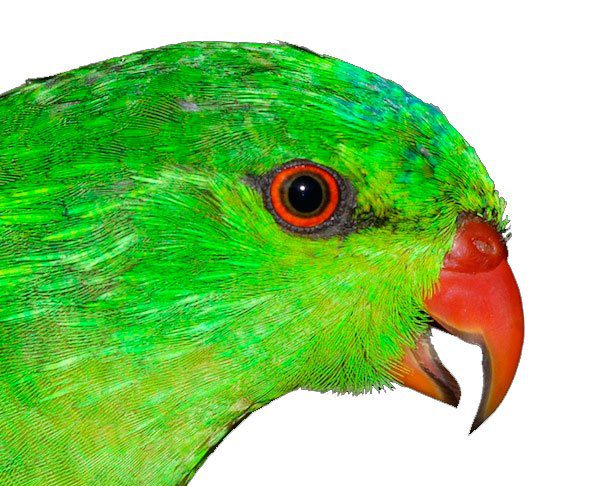
    The head of the Wallace's hanging parrot (Loriculus flosculus) is green. Upperparts green with faint orange on the back of the neck; rump and uppertail-coverts red.

    Wings green above. Chin red; rest of the underparts green, lighter in undertail-coverts. The tail, at the top, green color with a lighter Green Tip; ends of the lateral feathers, orange-red: Under, the tail bluish green. The bill red; Orange the irises; legs yellowish-orange.

    Female with red chin reduced or nonexistent.

    Immature with the red chin smaller. The color of the bill and legs more off.

    Habitat:

    Seem to need the humid mountain forests semi-evergreen. Birds have been seen in fruit trees, and outside the breeding season they gather in small flocks of up to 20 birds. Its altitudinal distribution seems to be closely linked to the distribution of fruiting figs.

    They easily unnoticed due to its small size and green plumage, and they are most often in flight when they can be identified by the size, strident calls and the buzz of the rapid flapping. They are most frequently, flying above the canopy.

    Reproduction:

    There are no data from the reproductive process in nature.

    Food:

    Most sightings in 1993, the Wallace's hanging parrot they were in the fig tree in fruit trees, and dependence or specialization in this food resource is more than likely.
    Its diet includes, In addition, nectar, outbreaks, flowers and seeds.

    Distribution:

    Size of its range (reproduction / resident): 13.400 km2

    Endemic to Flowers. Found at semi-annual primary forest at an altitude between 400 and 980 m (more between 850 and 980 meters during the fructification of the Ficus figs) during observations on 1993. These birds were recorded in the area of Tanjung Kerita Mese, about Paku, to the East of Flowers and proposed as protected area.

    Conservation:


    Endangered


    โ€ข Current IUCN Red List category: Danger

    โ€ข Population trend: Decreasing

    The habitat destruction through the combined effects of collecting firewood, the logging, timber extraction for construction materials and authorization for Agriculture, together they represent more relevant threats. Loss and fragmentation of forests is already widespread in Flowers, where there are semi-annual forest below 1.000 meters included within officially protected areas. These threats are exacerbated by the expansion of human population, with large volumes of wood necessary for housing construction, and the fact that there is little or no government enforcement of laws. Wet deciduous forest, it is currently being extensively destroyed through land grabbing and the establishment of agricultural areas., a factor that is inevitably shrinking the reach and the population of this species. Forest clearing continues on the coastal strip to make way for crops, and illegal logging continues in protected areas.

    The population is estimated at a number of 2,500-9,999 mature individuals based on an assessment of the known records, descriptions of the abundance and range size.

    Two recent studies have focused on endemic birds of Flowers. Two sites in which inhabits this species for the establishment as protected areas are proposed: Tanjung Kerita Mese and Egon Iliwuli (in Gunung Egon).

    "Wallace's hanging parrot" in captivity:

    Very rare in captivity.

    Alternative names:

    Wallace’s Hanging-Parrot, Flores Hanging-Parrot, Wallace’s Hanging Parrot (ingles).
    Coryllis de Wallace (French).
    Florespapageichen, Flores Papageichen (German).
    Lorรญculo do Flores (Portuguese).
    Lorรญculo de Flores (espaรฑol).

    scientific classification:

    Order: Psittaciformes
    Family: Psittaculidae
    Genus: Loriculus
    Scientific name: Loriculus flosculus
    Citation: Wallace, 1864
    Protonimo: Loriculus flosculus

    Images:

    ————————————————————————————————

    Wallace's hanging parrot (Loriculus flosculus)


    Sources:

    Avibase
    – Parrots of the World โ€“ Forshaw Joseph M
    – Parrots A Guide to the Parrots of the World – Tony Juniper & Mike Parr
    – Birdlife

    Photos:

    (1) – by ยฉ Hanom Bashari – Oriental Bird Club

    Sounds: Allen T. Chartier (Xeno-canto)