โ–ท The world of Pets: Dogs, cats, birds, reptiles, amphibians

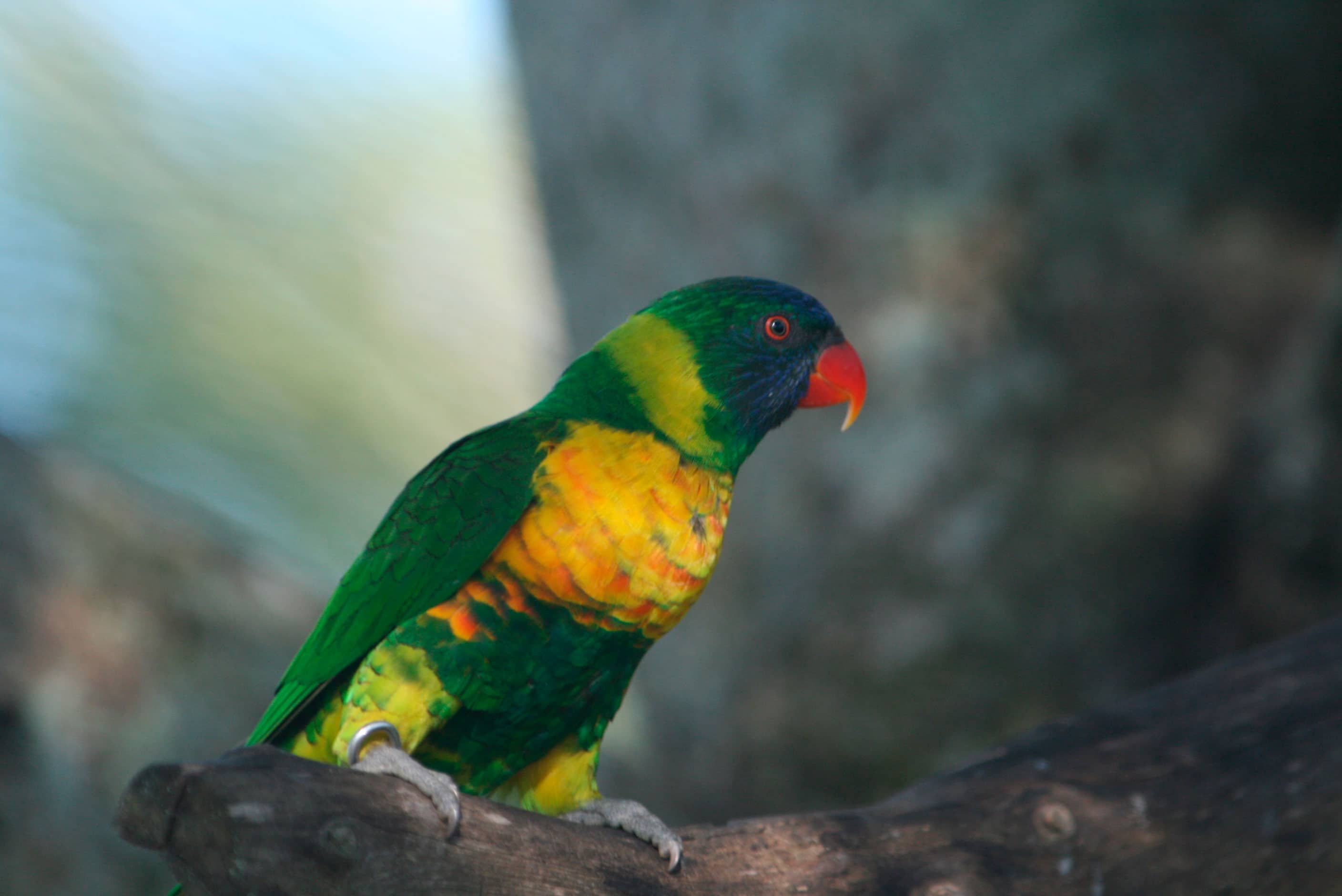
Marigold Lorikeet
Trichoglossus capistratus

Marigold Lorikeet

Content

Description ยซFringed loryยป:

26 cm.. length and a weight between 100-157 g..

The Marigold Lorikeet (Trichoglossus capistratus) has the forecrown, the cheeks and chin, dark blue; and the rest of the head It is green with a broadband yellow-green in nape (part posterior of the neck). The upper breast is yellow with green narrow edges feathers. Underwing-coverts are yellow with scattered orange marks. Males may have some red on their edges. The abdomen is dark green. Their peaks They are hooked.

The males and females and players seem to depend on DNA or endoscopic sexing to determine gender.

Taxonomic status:

This taxon is considered a subspecies of Trichoglossus [haematodus, rosenbergii, moluccana, forsteni, capistratus, weberi] (sensu lato) by some authors.

  • Sound of the Marigold Lorikeet (1).

(1) Some species are under extreme pressure because of traps and harassment. So, the open availability of high-quality recordings of these species may further worsen the problems, this being the reason why downloading these recordings is off. In conclusion, recorders themselves are free to share these files on xeno-canto, but they will have to approve access to these recordings.

We do not take this action lightly, and we wish it wasn't necessary, but we are convinced that the negative impacts of offering easy access to these recordings outweigh the benefits. To access these recordings, You can contact directly with the recorder.

Description 3 subspecies:

  • Trichoglossus capistratus capistratus

    (Bechstein, 1811) – Nominal.

  • Trichoglossus capistratus flavotectus

    (Hellmayr, 1914) – Head green with purple/blue veins on the forecrown up to the cheeks; variability of yellow to deep orange in chest; neck wide and yellow; abdomen dark green to green / black; underwing-coverts yellow with orange markings variables.

  • Trichoglossus capistratus fortis

    (Hartert, 1898) – Head black/brown with purple/blue veins on the forecrown up to the cheeks; lores , throat, line from top to back of the eyes and occiput, green; chest bright yellow with orange but not barred / red marks; abdomen dark green, with occasional shades blue / black; underwing-coverts yellow.

Habitat โ€œBridled Loryโ€:

The Marigold Lorikeet They are in mixed flocks with other parrots; small and noisy groups. Nomads, since they depend on flowering trees. It perches communally in groups of hundreds of birds.

It is more common in lowlands, but it is up to altitudes of 2400 m. Wide variety of areas including settlements, forests, coconut plantations, Savanna, eucalyptus forests and mangroves, including dry forest Roti.

Reproduction ยซBridled Loryยป:

Total of 21 nests found in Sumba between late August and early October 1992, all cavities in large trees (principalmente deciduous).

Feeding ยซFlanged loryยป:

Few specific dietary data, but presumably similar to Trichoglossus haematodus and it is known to take nectar and pollen from native trees, as well as figs and insects.

Distribution ยซFlanged loryยป:

Extension of the distribution (breeding/resident): 171.000 km2

The Marigold Lorikeet It is a species of parrot endemic to the islands of Southeast Asia Sumba, Roti, Wetar and Blend (Indonesian) and Timor (Indonesia and East Timor).

Distribution 3 subspecies:

Conservation ยซFlanged Loryยป:


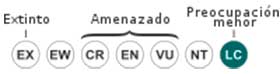
minor concern


1. Current red list category of the UICN: Least concern.

2. The population trend: Decreasing.

3. Population size : —.

Rationale for the Red List category

Although this species may have a restricted range, It not believed to approach the thresholds Vulnerable under the criterion of size range (Scope of the presence <20.000 km2 combined with a decreasing area size or fluctuating distribution, extension / habitat quality, or population size and a small number of places or severe fragmentation).

While the trend of the population seems to be decreasing, the decline is not believed to be rapid enough to approach the Vulnerable thresholds according to the population trend criterion (decrease of more than 30% in ten years or three generations).
The population size has not been quantified, but it is not believed to approach the thresholds Vulnerable under the criterion of population size (<10.000 mature individuals with an estimated continuous decrease in> 10% in ten years or three generations, or with a specific population structure). For these reasons, the species is assessed as Least concern.

Justification of the population

Global population size has not been quantified, but the species is described as common in Timor (pit et to the. 1997).

Justification trend

They suspected that the population is declining due to unsustainable levels of exploitation.

Threats

The species has been the subject of a intense trade: from 1981, When it was included in the Appendix II of the CITES, they have been 100.388 individuals captured in international trade (UNEP-WCMC CITES Trade Database, January 2005).

In captivity:

It's one of the lori rainbow less noisy although uncommon in captivity except for Dili (Capital of Timor Oriental), where it is quite common. Its longevity It 20 years en libertad, 15-25 years in captivity.

Alternative names

Marigold Lorikeet, Rainbow Lorikeet (Marigold) (English).
Loriquet ร  tรชte bleue (harnachรฉ), Loriquet ร  tรชte bleue [capistratus], Loriquet d’Edward, Loriquet harnachรฉ (French).
Blauwangenlori, Timor-Allfarblori (German).
Periquito-arco-รญris-de-timor, Lรณris-de-timor (Portuguese).
Lori de Calรฉndula, Lori embridado, Lori Arcoiris [capistratus Group] (espaรฑol).


scientific classification:

Johann Matthew Bechstein

Order: Psittaciformes
Family: Psittaculidae
Gender: Trichoglossus
Scientific name: Trichoglossus capistratus
Subpoena: (Bechstein, 1811)
Protonimo: Psittacus capistratus

ยซBridled loryยป images:

Videos "Marigold Lorikeet"


"Bridled lory" (Trichoglossus capistratus)

โ–ท The world of Pets: Dogs, cats, birds, reptiles, amphibians

Blue-headed Parrot
Pionus menstruus


Blue-headed Parrot

Content


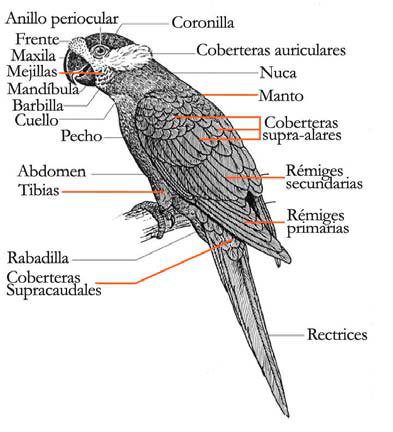
Anatomy-parrots

Description "Loro Cabeciazul":

28 to 30 cm.. height and between 234 and 295g. weight.

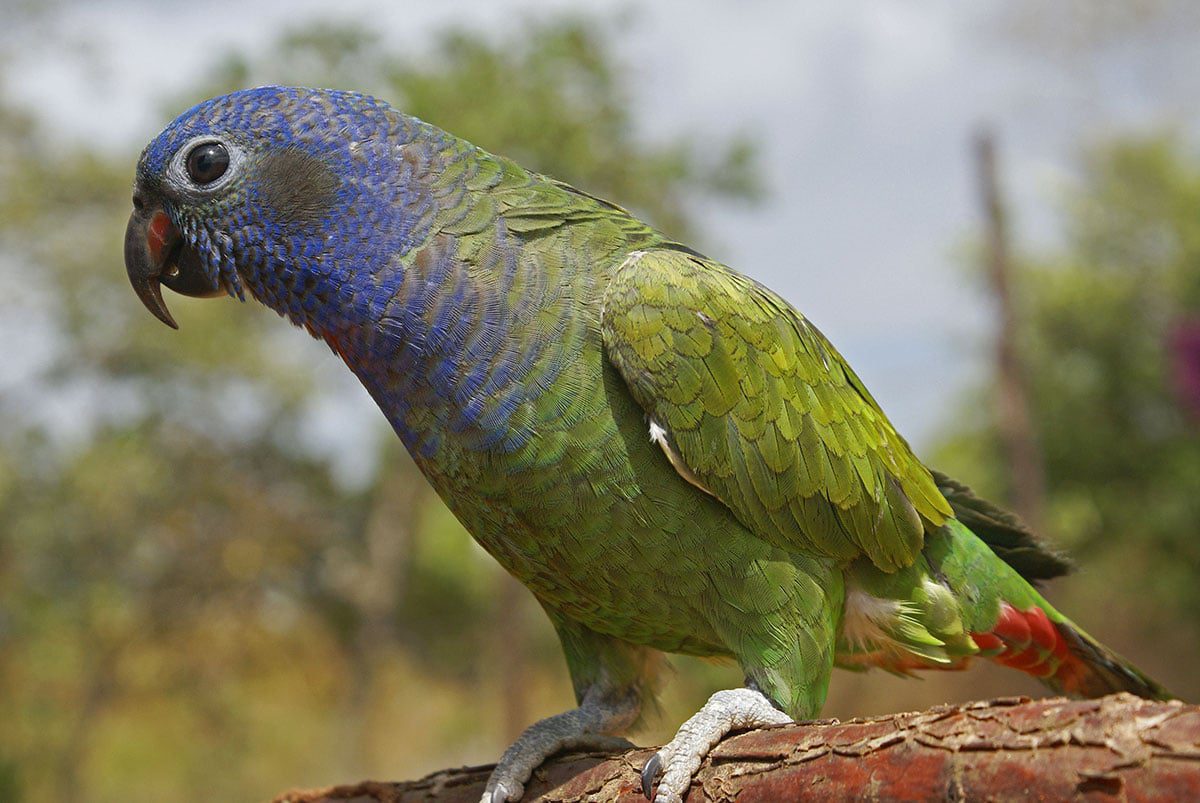
The Blue-headed Parrot (Pionus menstruus) is distinguishable by having the head, neck and chest blue; Red in the rump and in the Base ventral of the tail (very visible on the fly), basis of the bill and neck dotted with pink.

Shoulder and end of the wing olive green with yellow border, tail green with blue tip.

Subspecies description:

  • Pionus menstruus menstruus

    (Linnaeus, 1766) – The nominal

  • Pionus menstruus reichenowi

    (Heine, 1884) – Blue head, the neck and darker throat; lower underparts washed with blue green color; coverts red infracaudales with blue ends.

  • Pionus menstruus rubrigularis

    (Cabanis, 1881) – Smaller, head pale blue, neck more extensive and clear Red.

Habitat:

Species very common, lives in humid forests, semi-wet, from gallery, stubble, crop areas until the 1500 m.

Reproduction:

It feeds on various seeds, fruits and flowers.

Food:

It nests in hollows of trees and palms in dry season.

Loro distribution-headed:

They live in freedom from the South of Costa Rica, North of South America to the West of Ecuador. To the East of the Andes, comes to Peru, part of Brazil to the North of Bolivia.

Subspecies description:

  • Pionus menstruus menstruus

    (Linnaeus, 1766) – The nominal

  • Pionus menstruus reichenowi

    (Heine, 1884) – Coastal areas of the northeast of Brazil (Alagoas until Holy Spirit)

  • Pionus menstruus rubrigularis

    (Cabanis, 1881) – Tropical North of Costa Rica to western Colombia and West of Ecuador.

Conservation-headed Parrot:


minor concern


โ€ข Red List category of the UICN current: Least concern

โ€ข Population trend: Decreasing

The size of the world population of the Blue-headed Parrot It has not been quantified, but this species is described as ยซcommonยป (Stotz et to the., 1996).

This species is suspected that it may lose 18,5-23% of habitat within its distribution over three generations (20 years) based on a deforestation model of the Amazon (Soares-Filho et to the., 2006, Bird et to the. 2011). So, they suspected that can decrease in <25% in three generations.

In captivity:

Pretty common in captivity. Intelligent, inquisitive although sometimes shy. Active by nature, they can become overweight if you don't have a wide space where exercise your flight. Mature birds usually match throughout his life with his partner, you will defend with aggression of any intruder.

Its diet in captivity is wide. fruits such as: Apple, pear, orange, banana, granada, cactus fruits, Kiwi, they form around the 30 percent of the diet; vegetables such as: Carrot, celery, green beans and peas in pods; fresh corn; Greens such as: chard, lettuce, Kale, dandelion, healer, chickweed; mixture of small seeds, such as: millet, birdseed, and small amounts of buckwheat, oats, safflower and hemp; soaked and sprouted sunflower; beans, cooked legumes and boiled corn.

Alternative names

Blue-headed Parrot, Cobalt Parrot (English).
Schwarzohrpapagei, Schwarzohr-Papagei (German).
Cotorra Cabeciazul, Loro Cabeciazul, Loro de Cabeza Azul (espaรฑol).
Pione ร  tรชte bleue, Pionus ร  tรชte bleue (French).
baitaca, curica, maitaca, maitaca-de-barriga-azulada, maitaca-de-cabeรงa-azul, sijรก, Sรดia, Suia (potuguรฉs).
Pappagallo testablu (Italian).


scientific classification:

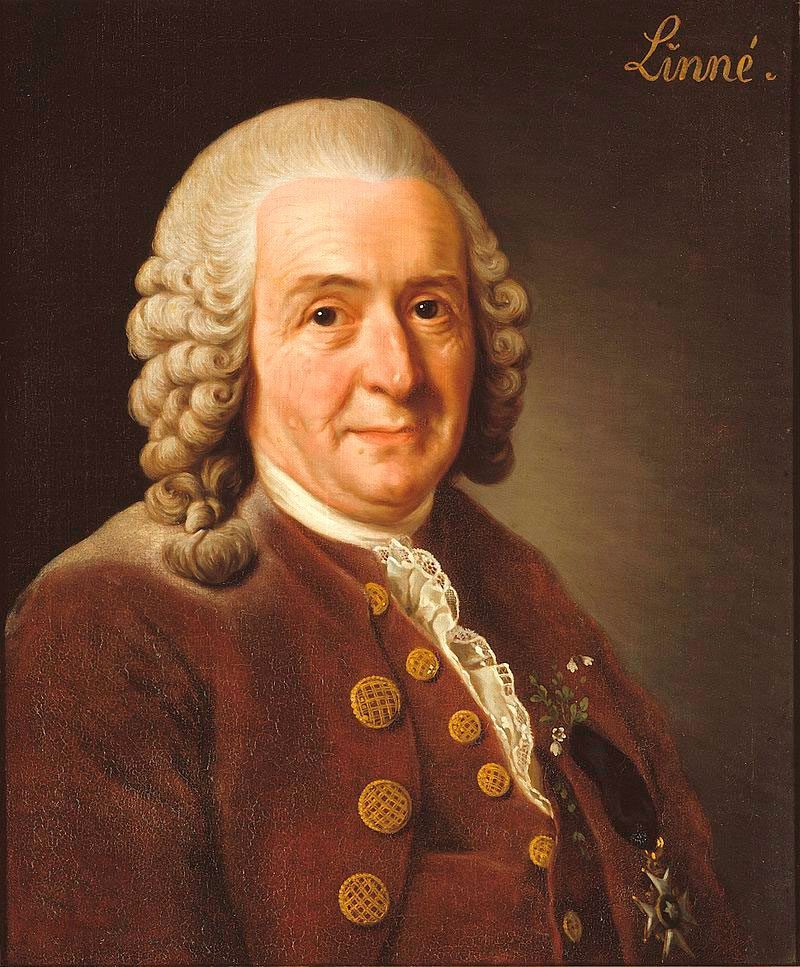
Carl Linnaeus
Carl Linnaeus

Order: Psittaciformes
Family: Psittacidae
Genus: Pionus
Scientific name: Pionus menstruus
Citation: (Linnaeus, 1766)
Protonimo: Psittacus menstruus

Images "Blue-headed Parrot"

Videos "Blue-headed Parrot"

ยซLoro Cabeciazulยป (Pionus menstruus)


โ–ท The world of Pets: Dogs, cats, birds, reptiles, amphibians

Blue-eared Lory
Eos semilarvata


Lori de Seram

Content

Description

Is the more small of the gender Eos, with only 24 cm.. length and an approximate weight of 170 gr.

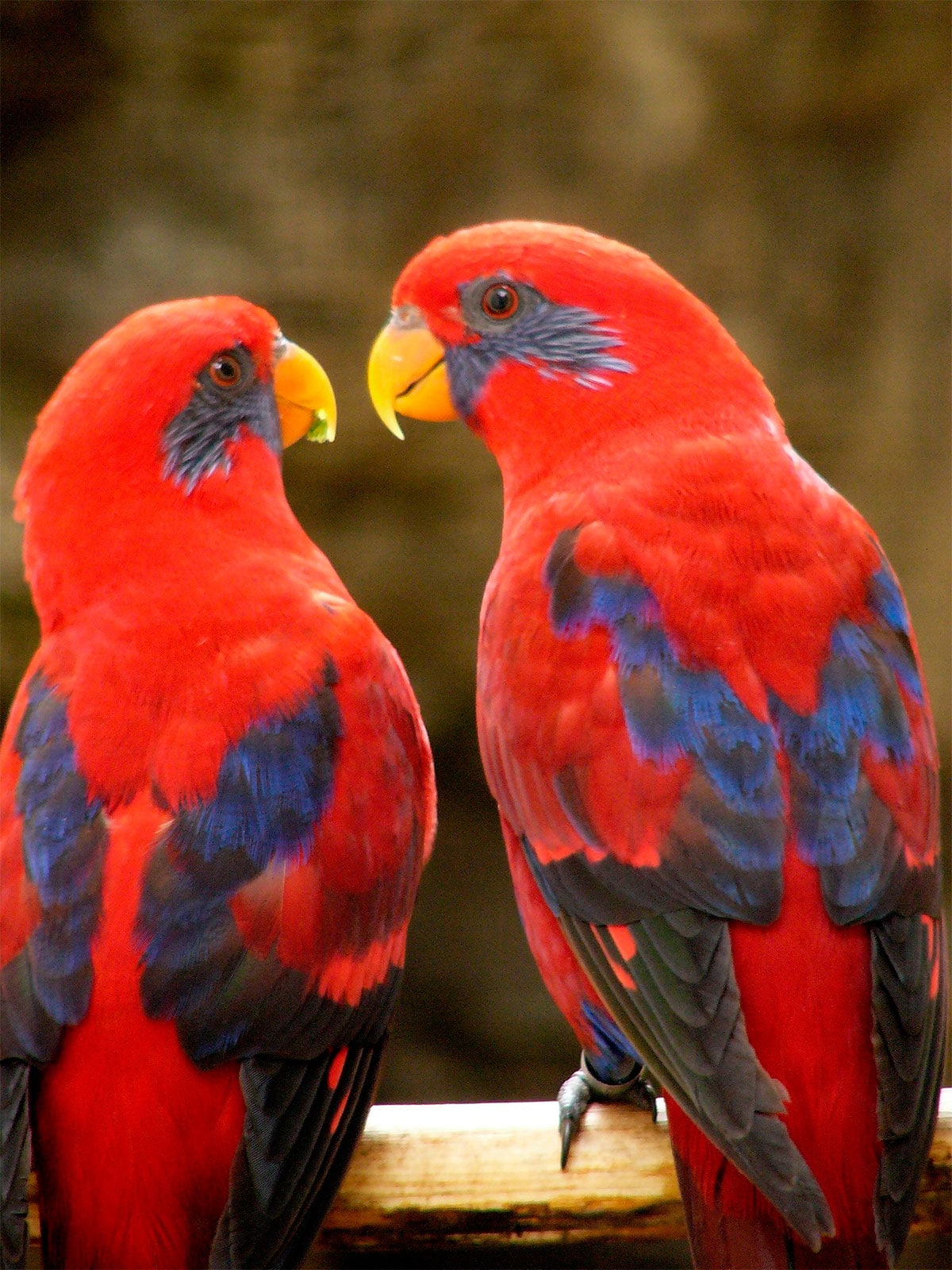
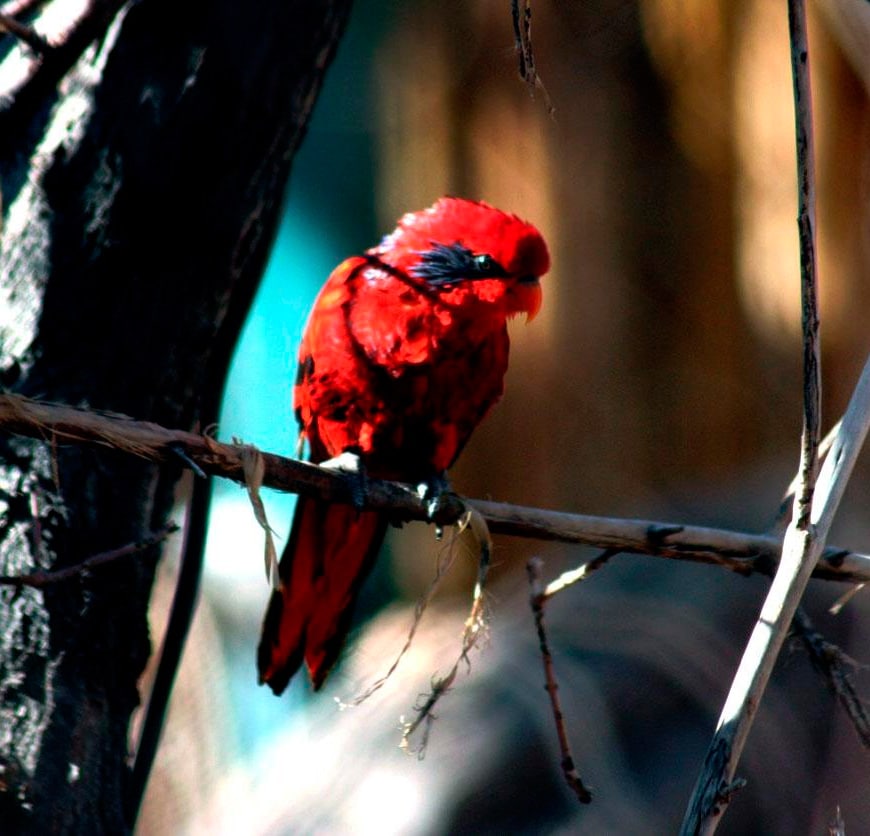
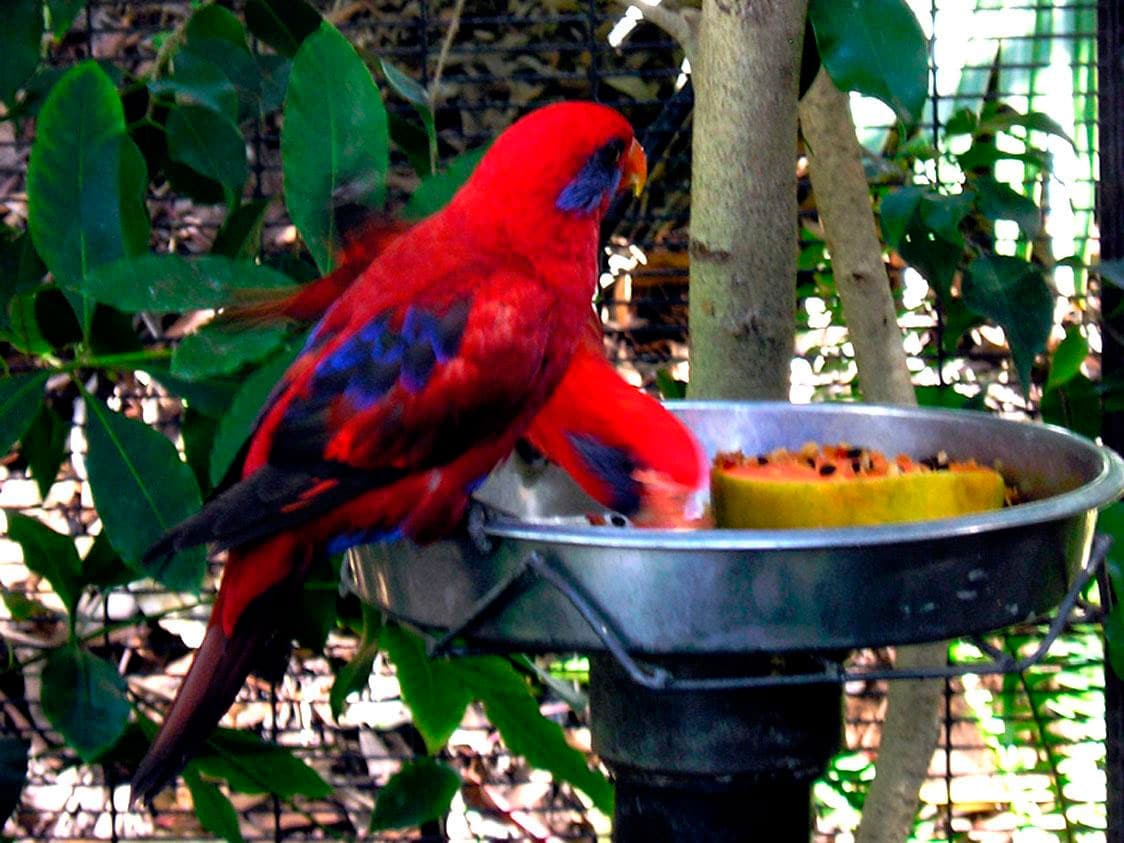
The plumage of the Blue-eared Lory x(Psittacus erithacus) is bright red.

The upperparts of the cheeks and ear-coverts form a band blue violet.

The feathers of abdomen and under the tail are blue, the primaries are black and red color on the inside, the secondaries has black spots, the feathers largest of the shoulder are blue, the back is red-brown, the underparts bright red, their irises are reddish brown, the legs grey and orange red the bill.

The plumage of the youth usually appears paler and duller Red. The mask boils down to a simple pale blue dot under the eye and the mumps. The scapulars are brownish grey with light blue striped uniform. The feathers of abdomen are red with some blue touches. The irises reddish color.

The Blue-eared Lory EOS can be mistaken for other species of the genus, but in its area of distribution, only the Red Lory (Eos Bornea) shows similarity of characters. But, does not display a blue stain in the face or at the bottom of the abdomen.

Habitat:

Frequently not only in primary forests, but also in the Highlands bordering the bare mountain peaks.

This bird usually lives above the 1.200 meters above sea level, area to which the Red Lory (Eos Bornea) fails. But, from time to time is reduced to 800 m, so sometimes they interfere in the same area two species.

The Blue-eared Lory they live alone, in pairs or small family groups.

They feed in the foreign branches of trees in flower.

They are noisy birds in flight, but they are relatively quiet and discrete When feed. When they move they tend to fly at low altitude.

Reproduction:

There is not much information of their reproduction habits in the natural environment. But, It can be assumed that the Red Lory It takes a form of very similar to that of other nesting Loris. These are cavemen, that is to say, you install their nests in tree cavities.

The season of spawning It estimated that the months of September to March.
Usually, they lay two eggs per clutch and its incubation lasts a few 26 days.

Young people are often taken up to 10 weeks before you fly.

Food:

They feed mainly on nectar in the trees in flower in lower altitudes and Heath (Heather, gorse, broom) at higher altitudes.

Distribution:

Lori distribution of Seram
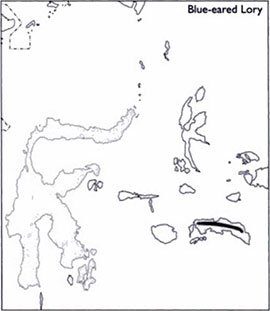
The Blue-eared Lory is endemic of the Seram island in the Moluccas (Indonesian).

Conservation:


minor concern

– Current IUCN Red List category: Least concern

– The population trend: Decreasing

The world population It has not been quantified, but the species is estimated that it can range from common to abundant at the local level (pit et to the. 1997). However, justified the population trend, It is suspected to be in decline due to unsustainable levels of exploitation.
The population range is between 5,000 and 50,000 birds released.

Probably the Blue-eared Lory It will always remain a rare specimen in the world of birds.

In March of 1995 the Government of Indonesian stopped the export of these birds.

Its hunting for local trade has become especially intense.. Fortunately, There is no reason to keep to the Blue-eared Lory as a pet on the part of the indigenous population.

"Blue-eared Lory" in captivity:

Since its population is decreasing, any specimen that can not be returned to their natural habitat (natural range) should preferably be placed in a well-managed breeding program to ensure the survival of the species.

Alternative names:

Blue-eared Lory, Ceram Lory, Blue eared Lory, Seram Lory (ingles).
Lori masquรฉ, Lori ร  oreilles bleues (French).
Halbmaskenlori (German).
Loris Semilarvata (Portuguese).
Lori de Orejas Azul, Lori de Seram (espaรฑol).

scientific classification:

Order: Psittaciformes
Family: Psittaculidae
Genus: Eos
Scientific name: Eos semilarvata
Citation: Bonaparte, 1850
Protonimo: Eos semilarvata

Images ยซLory of Seramยป:

Videos "Blue-eared Lory"

————————————————————————————————–

ยซLori de Seramยป – (Eos semilarvata)


Sources:

Avibase
– BirdLife.org
Oiseaux.NET

Photos:

– Blue-eared Lory in the Walsrode Bird Park, Germany by Quartl – Wikimedia
papageien.org
– Blue-eared Lory (Eos semilarvata) at the San Diego Zoo by Leon Mitchell – Wikipedia
– free-pet-wallpapers.com
kanaria1898tuttlingen.de

Sounds: Mark Todd (Xeno-canto)

โ–ท The world of Pets: Dogs, cats, birds, reptiles, amphibians

Blue-crowned Lorikeet
Vini australis


Blue-crowned Lorikeet

Content

Description

19 cm.. of length and a weight of 40 to 55 g..

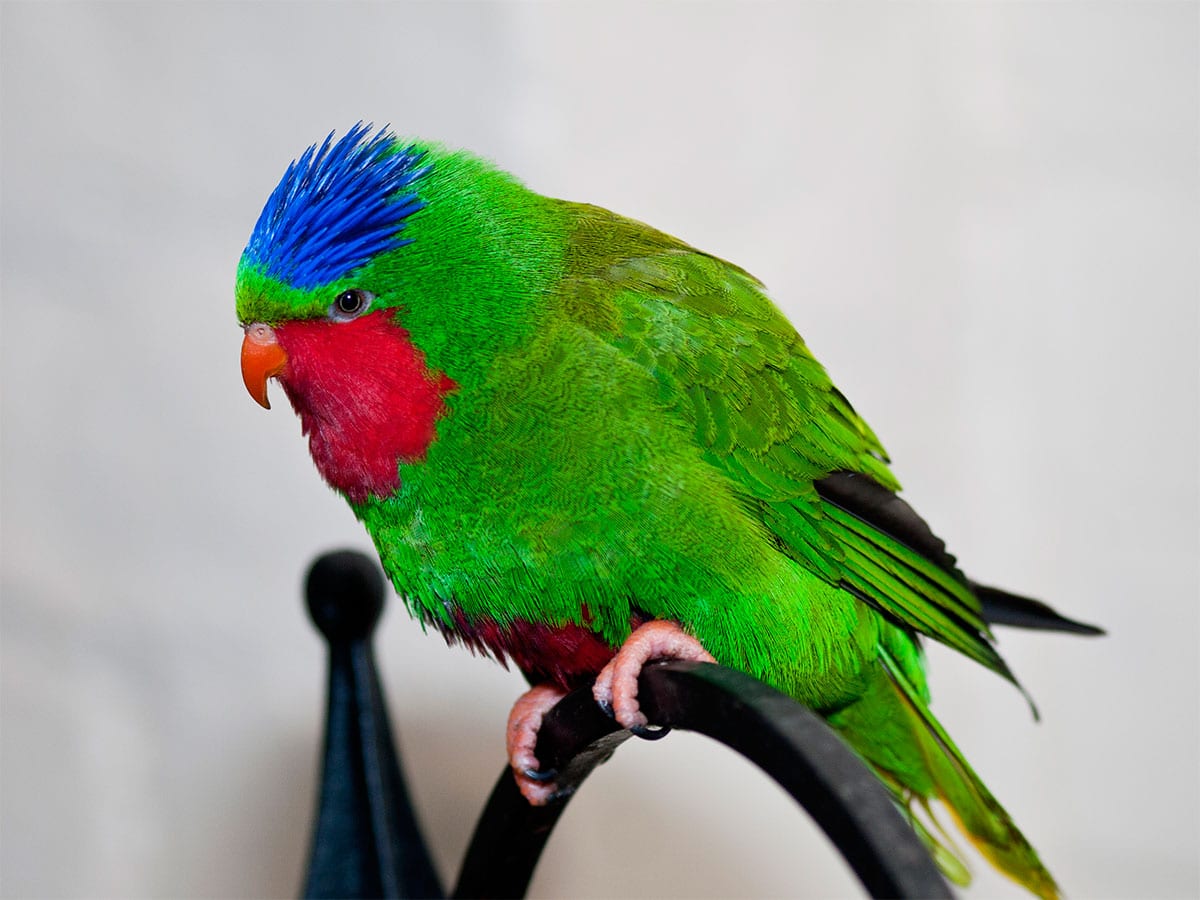
The Blue-crowned Lorikeet (Vini australis) has a plumage mostly green. The upper part of the head is dark blue with light blue streaks. The region of the windows of the nose, the cheeks, the ear-coverts, the neck and the abdomen They are red. the lower part of abdomen and the thighs they are purple blue. The back is green, the interior of the tail is yellowish-green. The irises is reddish brown. The legs are of color red and the bill is orange.

The youth are equal to adults, but with less red in the face and throat, little or none abdominal patch, stripes blue shorter in the crown, no purpura on the thighs, brown the eyes.

Habitat:

It is found in forests, coconut palms or any habitat where flowering trees; coastal mountains, gardens and agricultural areas. Nomad, sometimes traveling between the Islands.

Daily movements in search of food. Aggressive but gregarious, they often move in flocks of up to 12 individuals, except during the breeding season they live with their partners.

In Samoa it is common around villages and plantations and less common in moist forests, higher elevations in the rain forest and secondary growth.

Reproduction:

Nests in holes or hollows of trees, It has also been reported that they dig burrows in the banks of Earth, Although it has not confirmed. The laying is one or two white eggs. Breeding registered in June and August. In captivity the incubation It has been calculated in 23 days.

Food:

It feeds on nectar, pollen and red fruits. It particularly prefers Erythrina, Wild hibiscus and coconut.

Distribution:

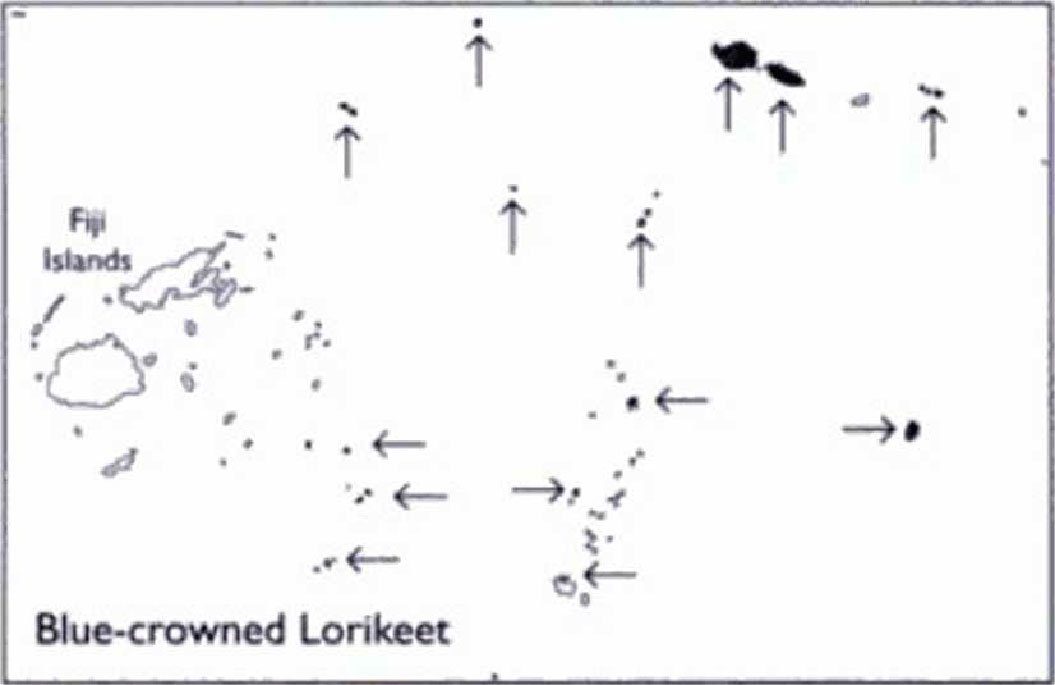
Samoa distribution of Lori
Extends over the archipelagos of Samoa, Tonga and LAU, distributed by Islands: Love, Futuha'a, Fulago, Futuna, Ha'afeva, You're young, Moce, Niue, Ofu, Olosega, Samoa, Salt, Tafahi, Say, Tofua, Tungua, Fire, It's cool, Varoa, I'm sorry and Voleva. In the past was also in ‘USA, Tongatapu and Mata-Utu but there it is extinct.

Conservation:


minor concern

– Current IUCN Red List category: Least concern.

– The population trend: Decreasing.

The world population It has not been quantified, but the species is informed that it is common in much of its restricted area of distribution.

The population is suspected to be in decline due to the predation by species invasive.

Still fairly common throughout its range, but it has become extinct on many islands and it is decreasing in Tonga (probably because of the rats).

"Blue-crowned Lorikeet" in captivity:

Like the others Vini lories, the Blue-crowned Lorikeet still quite rare in poultry farming, probably as a result of the protection they receive in their native South Pacific countries.

Alternative names:

Blue-crowned Lorikeet, Blue crowned Lorikeet, Blue-crowned Lory (ingles).
Lori fringillaire (French).
Blaukรคppchen (German).
Loris Vini Australis (Portuguese).
Lori de Samoa (espaรฑol).

scientific classification:

Order: Psittaciformes
Family: Psittaculidae
Genus: Vini
Scientific name: Vini australis
Citation: (Gmelin, 1788)
Protonimo: Psittacus australis

โ€œSamoan loryโ€ images:

Videos "Blue-crowned Lorikeet"

————————————————————————————————

"Samoan Lori" (Vini australis)


Sources:

Avibase
– Parrots of the World โ€“ Forshaw Joseph M
– Parrots A Guide to the Parrots of the World – Tony Juniper & Mike Parr
– BirdLife.org

Photos:

1 – ยซVini australis-London Zoo, England-8aยป by William Warby from London, England – Unknown-Tropical BirdUploaded by Snowmanradio. Licensed under CC BY 2.0 via Wikimedia Commons.
2 – ยซVini australis-two on a perch-8a-4cยป by Vini_australis_-two_on_a_perch-8a.jpg: TJ Lin – originally posted to Flickr as Dscn6140 and uploaded to commons at Vini_australis_-two_on_a_perch-8a.jpg. Licensed under CC BY-SA 2.0 via Wikimedia Commons.
3 – By Duncan Wright (Own work) [GFDL or CC BY-SA 3.0], via Wikimedia Commons
4 โ€“ By Steven G. Johnson on commons (same as unnormalized on flickr) (Dsc_0014uploaded by Snowmanradio) [CC BY-SA 2.0], via Wikimedia Commons
5- by Zambar – zoochat.com

Sounds: Samuel Jones (Xeno-canto)

โ–ท The world of Pets: Dogs, cats, birds, reptiles, amphibians

Blue-fronted Lorikeet
Charmosyna toxopei

Content


Anatomy-parrots

Description

16 cm.. length.

Blue-fronted Lorikeet

The forecrown of the Blue-fronted Lorikeet (Charmosyna toxopei) is bright green, the front of the crown, above the eyes is bright blue; rest of the head green. Upperparts green, bright in the rump. Wings Green with blackish inner feathers. The underwing-coverts green; flight feather Blackish with yellow band in the whole lower part of the secondaries. The underparts brighter yellowish green. Tail green, with red bases and blackish stain. The bill orange; the irises yellow orange; legs orange-red.

Habitat:

If recent observations were in fact of the Blue-fronted Lorikeet, species can be nomadic, moving from high to low altitude on the basis of the availability of food (like some other small parrots). This could explain the paucity of records, especially for a species already by itself it is distributed sparsely. The other possibility is that the birds are distributed only in the forested hills.

Interviews with local residents suggest that the species moved to the lowlands during the two annual seasons of heat, in March-April and August-November.

Reproduction:

There is no data.

Food:

The locals who live in the plateau frog They reported that the bird feeds on nectar and pollen from the trees in flower.

Distribution:

Endemic to Buru, Indonesian. Obviously, is a rare species, and virtually nothing is known of its State. The original specimens were collected in the wooded hills between 850 m and 1.000 m.

In 1980 the species was reported to be quite common in plantations, secondary and primary forest, but this record has been suggested as a reference to the Red-flanked Lorikeet (Charmosyna placentis) (the record of this species from Buru It is in fact wrong). In 1989 two flocks of five to six birds, supposedly this species, they were seen during a selective felling of forests to 600 meters on the Teluk Bara. There is also a report of 1993 of four small unidentified parakeets seen in the same area as the observations of 1.980. The species are now considered endangered by Birdlife International, although a thorough search must be carried out before its status can be fully determined. VULNERABLE.

Conservation:


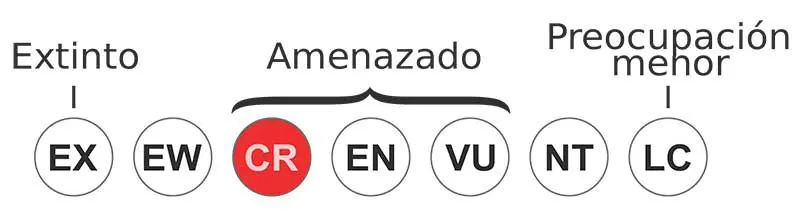
critical hazard

โ€ข Current IUCN Red List category: Critical Hazard

โ€ข Population trend: Decreasing

โ€ข Population size: 50-249 mature individuals

Although there are few records (confirmed or unconfirmed) of the species, It is suspected that it is declining due to loss of forests in the lowlands.

Most of the forests in the coastal lowlands of Buru have they been clarified, and much of the forest in the northern part of the island has been connected shape selective or degraded and fragmented by migratory agriculture, in such a way that only a few small patches of lowland primary forest remain. But, the island's gardens still contain many indigenous tree species. In 2010, There was at least one search operation on a large scale above Buru, located in the lowlands. But, extensive forests of mountain of the island remain largely without being scanned. The topography of the mountain range Kaplamandan is the hope that almost all of the montane forest is inaccessible to loggers (A. Gray in litt. 2010).

All of the original specimens were captured alive using lime, However, the species is not kept as a pet, does not seem to be listed. Have a distribution of mountain which is close to the maximum altitude within its distribution area, does this species is potentially susceptible to climate change (BirdLife International data not publ.).

"Blue-fronted Lorikeet" in captivity:

Not found in captivity.

Alternative names:

Blue-fronted Lorikeet, Blue fronted Lorikeet, Buru Lorikeet (ingles).
Lori de Buru (French).
Burolori, Burulori (German).
Lori de Buru (espaรฑol).

scientific classification:

Order: Psittaciformes
Family: Psittaculidae
Genus: Charmosyna
Scientific name: Charmosyna toxopei
Citation: (Siebers, 1930)
Protonimo: Hypocharmosyna toxopei

Images "Blue-fronted Lorikeet"

————————————————————————————————

ยซLori de Buruยป (Charmosyna toxopei)


Sources:

Avibase
– Parrots of the World โ€“ Forshaw Joseph M
– Parrots A Guide to the Parrots of the World – Tony Juniper & Mike Parr
– Birdlife

โ–ท The world of Pets: Dogs, cats, birds, reptiles, amphibians

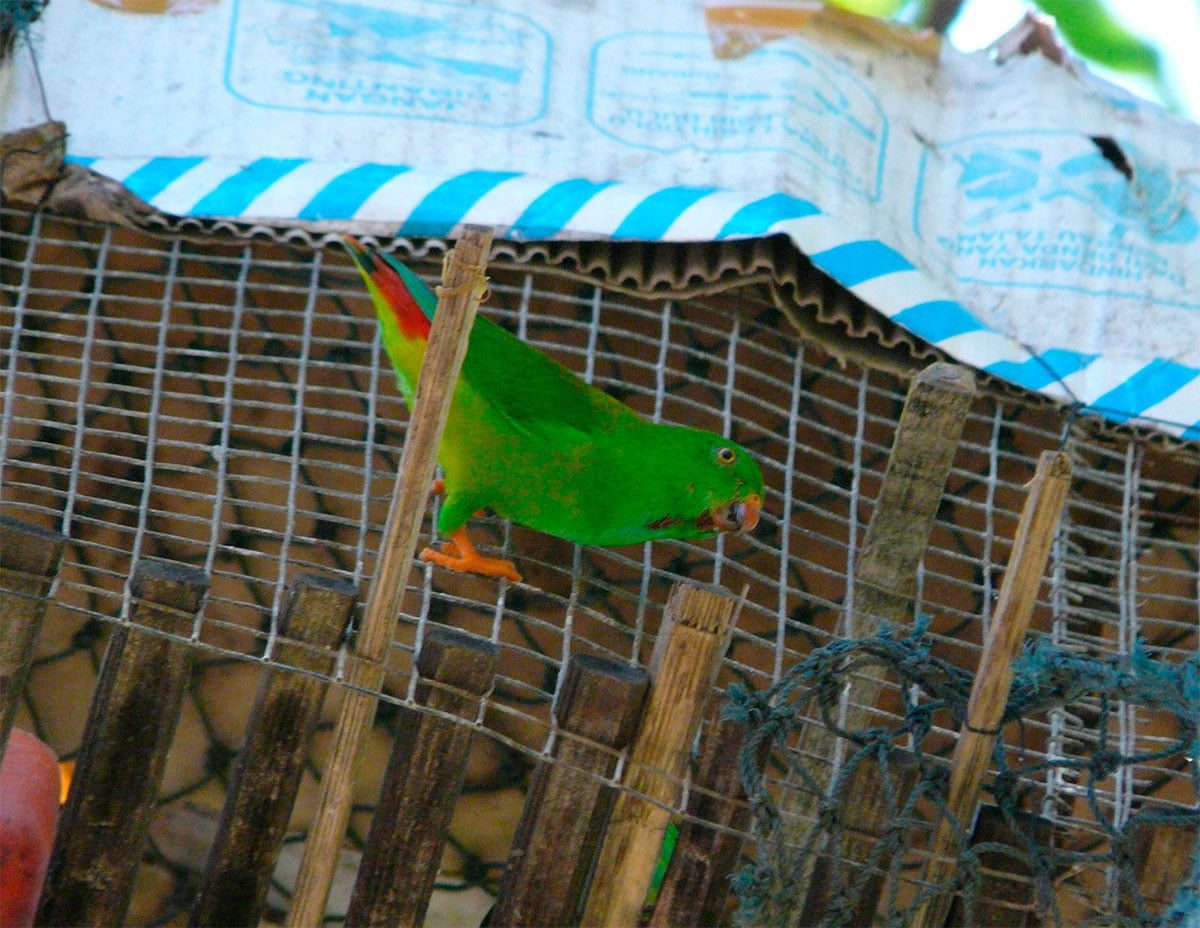
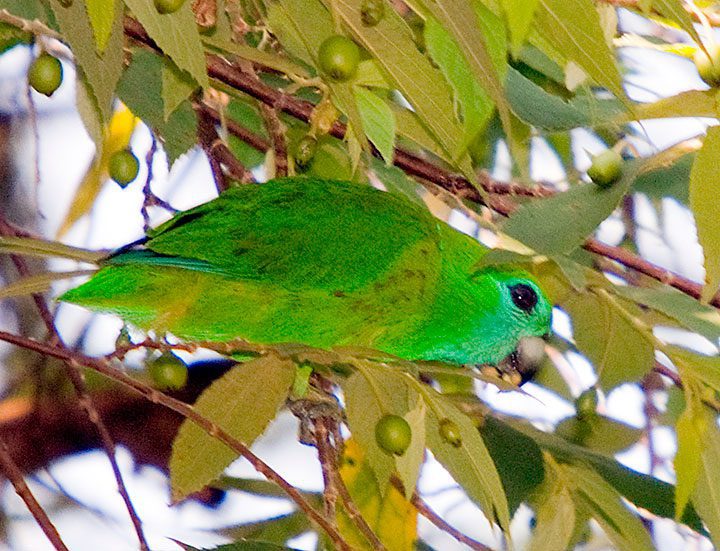
Pygmy hanging parrot
Loriculus exilis

Pygmy hanging parrot

Content


Anatomy-parrots

Description

10 to 11 cm.. length.

Pygmy hanging parrot

The head of the Pygmy hanging parrot (Loriculus exilis) is green, brighter around the base of the bill and bathed in bluish green at the chin, the throat, the cheeks and the part front of it crown.

The underparts is green, with the rump and uppertail-coverts dark red (very extended below the tail); the sides and the base of the rump are greenish-yellow. Wings green. Under, the wings Turquoise with coverts green. Throat of color red bordered of blue pale and extending is about part superior of the chest; rest of the underparts green, slightly more clear that the upperparts. The tail, at the top, Green with yellowish tips; undertail, the tail is of a pale color green blue.

The bill coral red; irises yellow; legs oranges.

The females lack of the bib red (or have very small bib). Also have a reduced blue diffusion in the chest and irises brown.

The young birds they have a bib Red small, a bill yellowish brown, and a pale brown iris.

Habitat:

Usually little-known. It is distributed by forests, coastal mangroves, around the villages and in the open field, from the lowlands to the wooded hills to some 1.000 m, altitudes and in similar habitats to the of the Great hanging parrot.

The birds are found in groups of up to five copies, feeding in the canopy of figs or the trees in flower nectar; their power moves have been compared with the movements of crawling in the Pygmy Parrot Micropsitta. Larger flocks have been found in the mangroves during may, Although the species can reproduce twice a year, in February and August; it is not known if these represent post-breeding concentrations or nomadic groups.

Reproduction:

A hole in a dead palm tree is the only known record of a zone of nesting.

Food:

Feeds of figs or nectar.

Distribution:

Size of the area of distribution (reproduction / resident): 103.000 km2

Endemic to Sulawesi, where is located from the North, on Minahassa Peninsula, to the South.

Conservation:


Near-threatened


โ€ข Current IUCN Red List category: Near threatened

โ€ข Population trend: Decreasing

The size of the world population It has not been quantified, Although it is estimated at more than 10.000 specimens. The species is described as uncommon and rare.

There are no data on trends in the population, but the species is suspected to be decreasing at a moderately fast pace, due to degradation of the habitat.

"Pygmy hanging parrot" in captivity:

Very rare in captivity.

Alternative names:

Red-billed Hanging-Parrot, Celebes Lilliput Hanging-Parrot, Green Hanging Parrot, Green Hanging-Parrot, Lilliput Hanging-Parrot, Pygmy Hanging Parrot, Pygmy Hanging-Parrot, Red billed Hanging Parrot, Red-billed Hanging Parrot, Talabula Hanging-Parrot (ingles).
Coryllis vert (French).
Dรคumlingspapageichen, Dรคumlings-Papageichen (German).
Lorรญculo Exiguo (Portuguese).
Lorรญculo Exiguo (espaรฑol).

scientific classification:

Order: Psittaciformes
Family: Psittaculidae
Genus: Loriculus
Scientific name: Loriculus exilis
Citation: Schlegel, 1866
Protonimo: Loriculus exilis

Videos "Pygmy hanging parrot"

Videos "Pygmy hanging parrot"

————————————————————————————————

"Meager Parrot" (Loriculus exilis)


Sources:

Avibase
– Parrots of the World โ€“ Forshaw Joseph M
– Parrots A Guide to the Parrots of the World – Tony Juniper & Mike Parr
– Birdlife

Photos:

(1) – By Peter Waanders – Caged female has attracted wild male. lynx
(2) – Loriculus exilis by John Gerrard Keulemans [Public domain], via Wikimedia Commons

Sounds: Mike Nelson (Xeno-canto)

โ–ท The world of Pets: Dogs, cats, birds, reptiles, amphibians

Guaiabero
Bolbopsittacus lunulatus


Guaiabero

Content

Guaiabero

Description

15 cm.. length between 62 and 77 g. of weight.

The head of the Guaiabero (Bolbopsittacus lunulatus), is mainly green, strongly impregnated of color blue light around them eyes, in the lores, the chin and (vaguely) on throat. Mantle slightly of a green over dark that it crown, bordered above pale yellowish green.

Primary coverts blue; the others wing-coverts, greenish. The flight feather with the vane bluish external, alula bluish. Uppertail bright green, great coverts Underwing bordered with yellow; rest of the underwings with pale yellow bar in all vane internal of flight feather (except the primaries outermost). Underparts uniform Green, slightly paler which the upperparts. Tail closed from color green bright by over, pale blue below.

Bill greyish black; irises dark brown; legs gray.

The female much less blue sign in the face, and has yellowish the part back from the neck and rump, both showing darker scalloped.

Immature are like females, but with the bill lighter.

Subspecies description

  • Bolbopsittacus lunulatus lunulatus

    : (Scopoli, 1786) – Nominal


  • Bolbopsittacus lunulatus callainipictus

    : (Parkes, 1971) – The male is like the intermedius, but with the plumage, in general, more yellow, above all in the underparts; face and neck nuchal darker and more bluish green; cheeks with less blue. The female as in the intermedius, but in general with more plumage yellow; rump and the nuchal collar more yellow and brighter. The youth adult females are.


  • Bolbopsittacus lunulatus intermedius

    : (Salvadori, 1891) – The face male is dark blue tinged with purple; neck brilliant blue. Female bordered blue in the throat; cheeks pale green; Green more pale around them eyes; neck yellow-orange. The youth are like the female adult.


  • Bolbopsittacus lunulatus mindanensis

    : (Steere, 1890) – The cheeks of the male are green, Blue around them eyes, Blue throat; neck darker and brighter blue than the lunulatus; yellow tint to green in the head. The female as of the lunulatus, but the head tinted yellowish-green. The youth adult females are.

Habitat:

It inhabits in open forests, forests and their surroundings, secondary vegetation, Savannah, farmland, gardens and mangroves, in the lowlands up to approximately 600 meters above sea level. Birds congregate in fruit trees sometimes in groups of up to 50 Member. Easier to detect in flight. While feeding they move silently and can be difficult to locate..

Reproduction:

The ecology of the species is poorly understood.. A female in breeding conditions It was observed during the month of March.

Food:

The diet includes fruit, especially the guavas (Psidium guajava)

Distribution:

Size of the area of distribution (reproduction / resident): 212.000 km2

Limited to the lowlands of the Philippine Islands, including Luzon, Mindanao, Samar, Leyte and Panaon.

Distribution of the subspecies:

  • Bolbopsittacus lunulatus lunulatus

    : Nominal

  • Bolbopsittacus lunulatus callainipictus

    : Samar (central Philippines)


  • Bolbopsittacus lunulatus intermedius

    : Northern Philippines (Leyte and Panaon)


  • Bolbopsittacus lunulatus mindanensis

    : Mindanao (Southern Philippines)

Conservation:


minor concern


โ€ข Current IUCN Red List category: Least concern

โ€ข Population trend: Stable

The size of the world population It has not been quantified, Although estimated at more of 50.000 specimens. The species, according to sources, it is enough common in all its limited area of distribution (pit et to the. 1997).

The population suspected to be stable in the absence of evidence of any reduction or substantial threats.

"Guaiabero" in captivity:

Almost unknown in captivity.

Parrot quiet and gentle. Sensitive to stress and infections, primarily by protozoa. Strict hygiene is necessary to protect this species of infectious diseases. They must be kept in pairs.

Alternative names:

Guaiabero (ingles).
Guaiabero lunulรฉ, Perruche lunulรฉe, Psittacule lunulรฉe (French).
Stummelschwanzpapagei (German).
Guaiabero (Portuguese).
Lorito Guayabero, Lorito Guayabo (espaรฑol).

scientific classification:

Order: Psittaciformes
Family: Psittaculidae
Genus: Bolbopsittacus
Scientific name: Bolbopsittacus lunulatus
Citation: (Scopoli, 1786)
Protonimo: Psittacus ephypium

Images "Guaiabero"

Videos "Guaiabero"

"Lorito's Guayabero" (Bolbopsittacus lunulatus)

Sources:

  • Avibase
  • Parrots of the World โ€“ Forshaw Joseph M
  • Parrots A Guide to the Parrots of the World – Tony Juniper & Mike Parr
  • Birdlife

Photos:

(1) – Guaiabero (Bolbopsittacus lunulatus) By Luis V. Limchiu [CC BY-SA 3.0, GFDL or Public domain], via Wikimedia Commons
(2) – A painting of a green parrot by Edward Lear. It looks like a female Guaiabero (Bolbopsittacus lunulatus) Edward Lear [Public domain], via Wikimedia Commons

Sounds: Paul Noakes (Xeno-canto)

โ–ท The world of Pets: Dogs, cats, birds, reptiles, amphibians

Mindanao Racquet-tail
Prioniturus waterstradti

Content

Description

Mindanao Racquet-tail

27 cm.. length between 120 and 160 g. of weight.

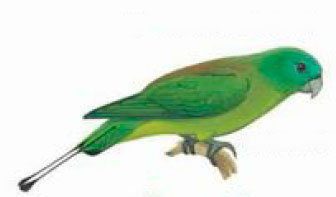
The Mindanao Racquet-tail (Prioniturus waterstradti) has the head bright green, with broadcasting slightly more blue-green in the cheeks, the lores and front of the crown. Duller green mantle; olive rump with different shades. The Green wings, with vane Dark internal to the flight feather, narrow marginalized yellow on the edges Interior; carpal edge yellow, wing feathers green; underside of primaries with blue dye.

The underparts brighter yellowish green, more yellow in undertail-coverts. Upper, the tail green, with side feathers blackish tip; undertail, the tail bluish; Blackish spatulas

Bill light grey; Brown irises; legs blackish gray.

females with extensions of tail more short.

Subspecies:

  • Prioniturus waterstradti malindangensis

    (Mearns, 1909) – Both adults, the color blue in the forecrown and the area under the eyes, paler; less Brown at the back.


  • Prioniturus waterstradti waterstradti

    (Rothschild, 1904) – The nominal

Habitat:

It is distributed in the humid montane forest, mainly between 850 and 2000 m, but have been recorded at altitudes of 450 m. Little is known about the habits of this species, that until recently was considered the same species as the Luzon Racquet-tail. Most of the observations refer to small flocks of between two and ten birds.. Apparently lower than other members of its genus is distributed in densities.

Reproduction:

There are no data on its reproductive ecology.

Food:

Without data

Distribution:

Size of the area of distribution (reproduction / resident): 11.300 km2

Endemic to the Highlands of Mindanao, Philippines. The records come from the Mount Apo, the Mount Malindang, Mount Kitanglad, Mount Mayon, Mount Matutum, Mt. Lebo, Anakan, Civolig, the Mount McKinley, Lake Faggamb and Baracatan, But even though the total population is estimated at 5.000 specimens, currently only limited to five mountains.

Subspecies distribution:

  • Prioniturus waterstradti malindangensis

    (Mearns, 1909) – Southeast of the mountains of Mindanao (Southeast of Philippines).


  • Prioniturus waterstradti waterstradti

    (Rothschild, 1904) – The nominal

Conservation:


Near-threatened


โ€ข Current IUCN Red List category: Near threatened

โ€ข Population trend: Decreasing

In 1993, the population was estimated at 5,000 individuals (Lambert et to the. 1993)

The population is suspected that it may be declining due to the continuous degradation of the forests and the capture for the cage bird trade.

Conservation Actions Proposed:

– Collect data on the impacts of the international and domestic trade.
– Review the estimate of the population.
– Calculate loss of forests within their geographic range and altitude using satellite and remote sensing images.
– Protect effectively important tracts of forest right in key places, both in the areas of strict protection, such as multi-use areas.

"Mindanao Racquet-tail" in captivity:

Not found in captivity.

Alternative names:

Mindanao Racquet-tail, Crimson-spotted Racket-tailed Parrot, Crimson-spotted Racquet-tailed Parr, Minadnao racket-tailed parrot, Mindanao Montane Racquet-tail, Mindanao Racket-Tail, Mindanao Racket-tailed Parrot, Mindanao Racquet tail, Mindanao Racquet-tailed Parrot (ingles).
Palette de Mindanao, Palette de Waterstradt, Perroquet ร  raquette de Mindanao (French).
Mindanao-Spatelschwanzpapagei, Mindanao Spatelschwanz-Papagei, Mindanaopapagei, Mindano-Spatelschwanzpapagei (German).
Prioniturus waterstradti (Portuguese).
Lorito Momoto de Mindanao, Lorito-momoto de Mindanao (espaรฑol).

scientific classification:

Order: Psittaciformes
Family: Psittaculidae
Genus: Prioniturus
Scientific name: Prioniturus waterstradti
Citation: Rothschild, 1904
Protonimo: Prioniturus waterstradti

Images "Mindanao Racquet-tail"

Video of the "Mindanao Racquet-tail"

————————————————————————————————

ยซLorito momo de Mindanaoยป (Prioniturus waterstradti)


Sources:

Avibase
– Parrots of the World โ€“ Forshaw Joseph M
– Parrots A Guide to the Parrots of the World – Tony Juniper & Mike Parr
– Birdlife

Sounds: Desmond Allen (Xeno-canto)