▷ The world of Pets: Dogs, cats, birds, reptiles, amphibians
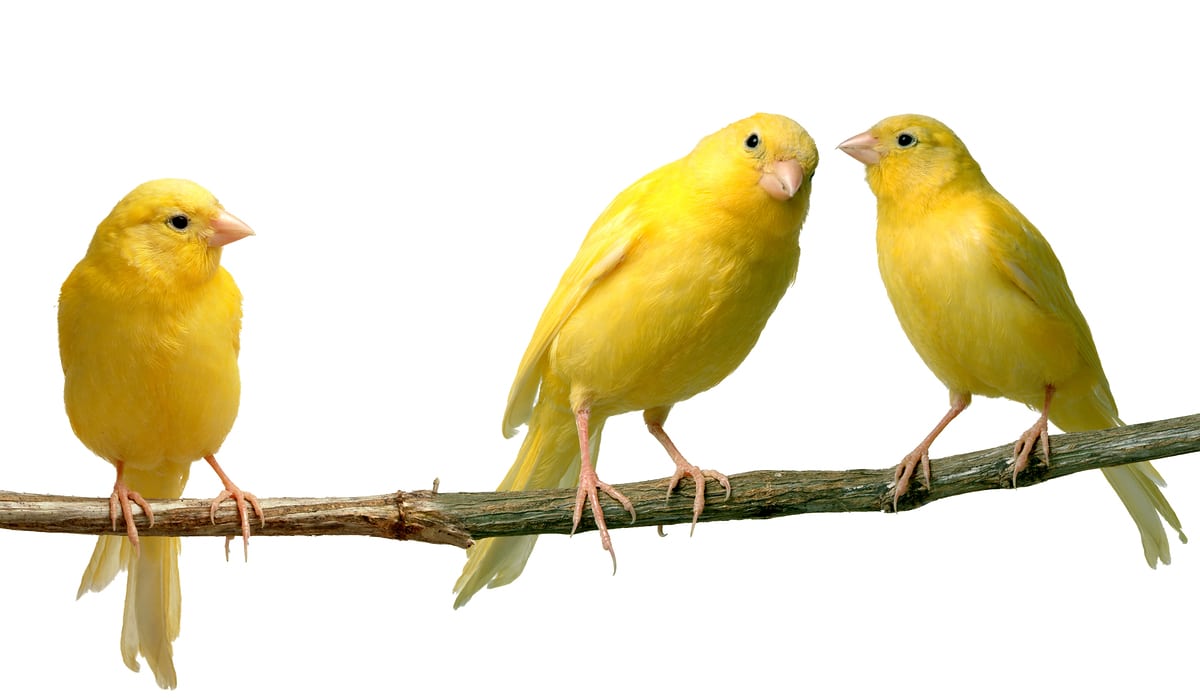
Canary
Serinus Canaria
Origin: Spain, Portugal
Character: Cheerful and docile
Life expectancy: 10 to 15 years
Height: 12 to 20 cms.
Canary. Popular cage bird.
Welcome to our blog about the fascinating world of canaries! On this occasion, We will delve into the life and characteristics of these popular cage birds. Canaries are known for their beauty, Melodious song and lovely personality. If you are bird lover or are you thinking of having a feathered partner at home, You can't miss this article! Discover everything about the Canaries: From its vibrant colors to its different alternative names. Keep reading to immerse yourself in the wonderful universe of the Canary. Let's start!
The Canarian: A winged charm in our homes
The Canaries, those small birds of vibrant colors and melodic songs, They have been appreciated in homes around the world for centuries. You are charming creatures, belonging to the Fingílidos family, They have gained popularity as cage birds thanks to their fascinating characteristics and captivating behavior.
Characteristics of the Canary:
Canaries are known for their compact size, with a length that usually ranges between 10 and 25 centimeters. His plumage is extremely varied, presenting colors ranging from bright yellow to more turned off tones, and even color combinations that can include orange, black and white. These birds are also recognized by their striking peaks and expressive eyes.
Natural distribution and habitat:
Native of the Canary Islands, Located in the Northwest Atlantic, Canaries thrive in warm and subtropical climates. Although their natural habitats include forested areas and scrubbers, Their adaptability has allowed them to acclimatize to various conditions, From forests to urban areas.
Reproduction:
The reproduction of the canaries is a fascinating process. The female usually puts eggs, that incubate for approximately two weeks. Parents actively participate in chick care, feeding them and providing them with protection. It is essential to provide a safe and comfortable environment in the cage to promote a successful reproductive process.
Melodic song:
One of the most appreciated attributes of the Canaries is their talent for song. Males, in particular, They are known for their melodious vocalizations. These birds can learn various notes and singing patterns, creating a unique symphony that loves those who have the pleasure of listening to it. Regular practice and interaction with other canaries stimulate their ability to develop a more elaborate and harmonious song.
Price and popularity as pets:
Due to its friendly beauty and personality, Canaries are a popular option as pets. The price of a canary can vary according to factors such as color, Age and singing ability. Canaries with more unusual colors or with exceptional song skills can have a higher price.
Common diseases:
When raising Canaries in captivity, It is essential to be aware of possible diseases. Obesity, Respiratory infections and mites are common problems that can affect these birds. Provide a balanced diet, A clean environment and perform regular veterinary reviews will contribute to maintaining the health of these delicate winged companions.
Colors and varieties:
Canaries have raised selectively over the years, What has resulted in a wide variety of colors and patterns. From the yellow classic to white, black, red and even more exotic tones, The canary's color palette is as diverse as beautiful.
In summary, Canaries not only provide an explosion of color and melody to our homes, but also connect to nature in a unique way. As charming and entertaining fellow, These little singers have conquered the hearts of those who seek joy and beauty in their daily lives.
▷ The world of Pets: Dogs, cats, birds, reptiles, amphibians
Exotic birds
Content
Exotic birds: Everything you need to know about its care and maintenance.
The exotic birds, as the parakeets, they are very popular companion animals in aviaries and require proper care and occupation. Deciding which exotic birds you want to have is not easy. Thus, it is important to find out in advance what exactly are required storage conditions. Discover in our guides the different exotic birds, which species harmonize with each other and what demands are made by the parrots & with their owners. So that you can give them a home where they feel comfortable and can establish a close relationship with you.
Exotic birds in pet ownership
Most of the exotic birds they were discovered at some point and brought to Europe by amateurs. There they continued to breed and ended up in cages in poor maintenance conditions., where they had an inadequate and ultimately short life. Today, However, things are different. Due to the level of knowledge in the field of maintenance conditions, exotic birds are popular pets that can bring joy to young and old for many years.
The parakeet, in particular, is very popular in pet ownership and is ideal for beginners. These colorful birds quickly seek contact with people, they even become tame with intensive care and are also suitable for children. However, it is necessary to take into account the following: never leave the child and the animal unattended, because pets are not toys.
How should exotic birds be kept?
Maintenance conditions depend on the bird species. Many exotic birds also live together in flocks in the wild. So, keeping them alone is not appropriate for the species. Animals would be lonely. So, at least one pair or two females with one male should be kept.
Birds need to fly freely every day. In addition to a large aviary that serves as a place of retreat and feeding, You must provide your exotic birds a bird-proof room where they can demonstrate their ability to fly and thus strengthen their muscles. It is also important to always offer a balanced and species-appropriate diet.. Pay attention to the nutritional and psychological needs of your exotic birds. While some species are purely vegetarian, others need animal protein as a source of energy. Many exotic birds they also prefer fresh fruits and vegetables in the right proportions.
Professional opportunities are also part of the basic equipment. In the end, most bird species are docile animals, curious and active who are constantly exploring. the suspension bridges, the ropes to climb, bird showers and play rings are just a few examples of how you can keep your birds exotic birds busy.
What else you need to consider with your exotic birds
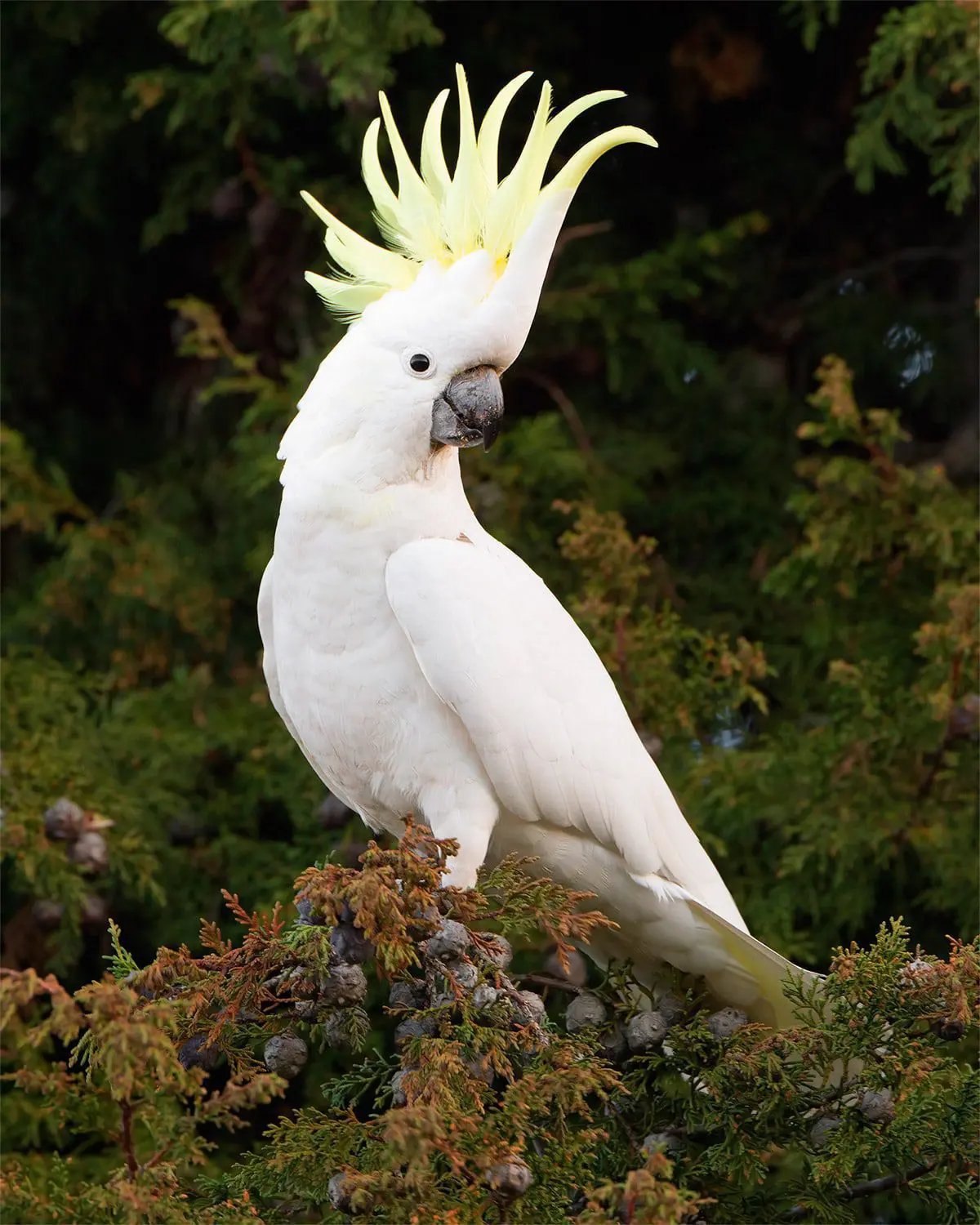
With great care and activity, most bird species can be tamed. While the parakeets can become tame after a short period of acclimatization, other animals like Cockatoos they usually need a little more time. Many exotic birds they are also very good at talking. With a lot of patience you can teach them to speak a few words.
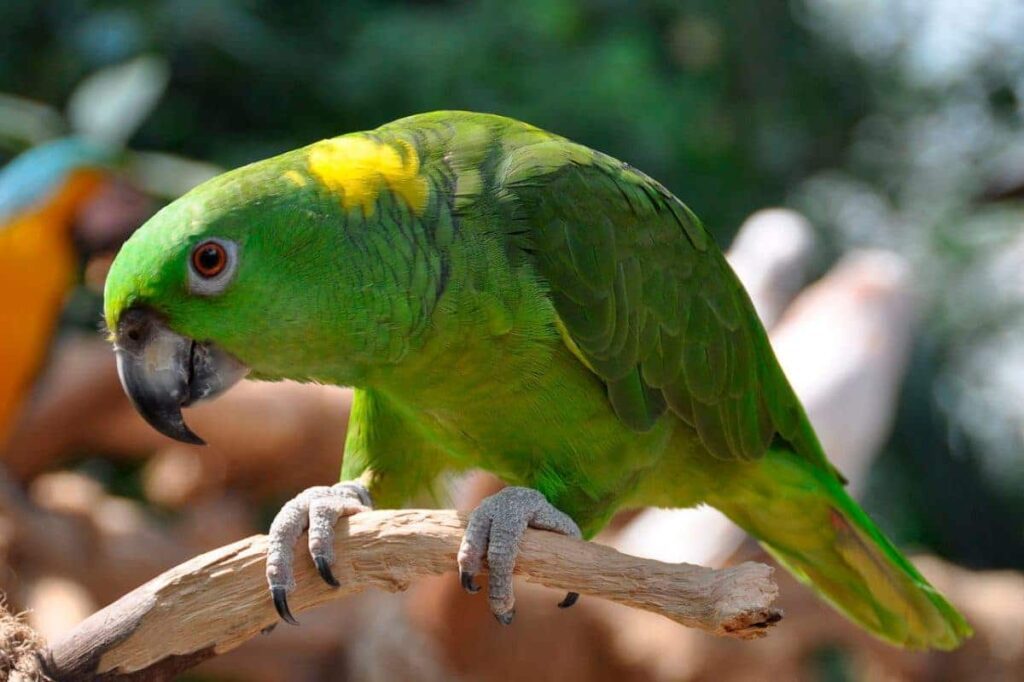
Before buying, You need to think carefully about how you want to support your exotic birds and if you have enough space. some species of birds, as the parrots, they can live with you for many years. Make sure you know in advance if you will be able to provide the birds with a good home for a long period of time and who will take care of them while you are away.
Once you have clarified all the open questions and informed yourself about the exact maintenance conditions of your exotic birds, nothing will stand in the way of a beautiful coexistence.
Exotic birds
We describe the different exotic birds ➝. We should pay special attention to their vulnerability and discouraging the purchase of these animals in order to keep them in captivity.
Exotic bird finder by continents - All Psittaciformes birds (Psittaciformes) from America. Oceania, Asia, Africa. Psittaciformes (Psittaciformes) of ...
History, natural habitat, characteristics and conservation. Alphabetical order of parrots The vast majority of these beautiful birds are not suitable ...
History, natural habitat, characteristics and conservation. Alphabetical order of parrots The vast majority of these beautiful birds are not suitable ...
History, natural habitat, characteristics and conservation. Alphabetical order of parrots The vast majority of these beautiful birds are not suitable ...
History, natural habitat, characteristics and conservation. Alphabetical order of parrots The vast majority of these beautiful birds are not suitable ...
History, natural habitat, characteristics and conservation. Alphabetical order of parrots The vast majority of these beautiful birds are not suitable ...
History, natural habitat, characteristics and conservation. Alphabetical order of parrots The vast majority of these beautiful birds are not suitable ...
History, natural habitat, characteristics and conservation. Alphabetical order of parrots The vast majority of these beautiful birds are not suitable ...
The vast majority of these beautiful birds are not suitable for captivity.. History and characteristics of the species.
▷ The world of Pets: Dogs, cats, birds, reptiles, amphibians
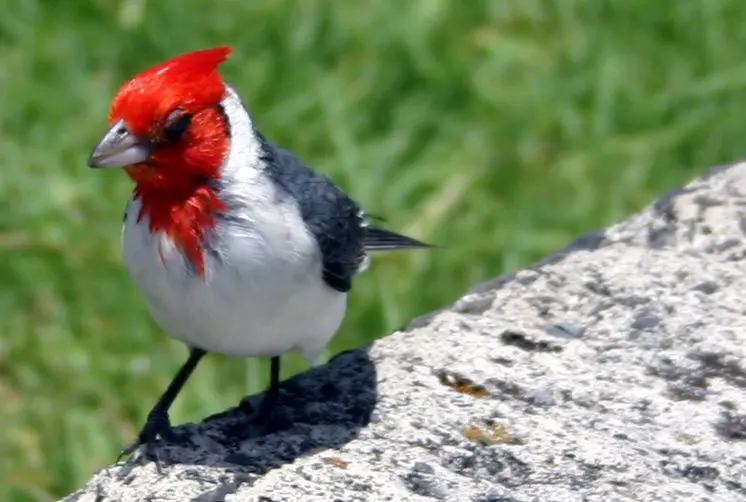
Red-crested Cardinal
It is a beautiful bird colors is appreciated for its beauty and singing, If that be prodige in this activity is recommended to leave only the male.
It feeds on millet, oats, birdseed, wheat, rapeseed, and a long etc. We can also add various herbs and fruits. This bird should be always available fresh water as she loves to bathe. It must be said that it is very strong and resistant and supports hassle-free winter in an outdoor cage. Well looked after is a bird that can live up to 20 years in captivity.
For breeding, its greatest comfort is in a large aviary., with shrubs which can establish its nest, although this is not always the case and sometimes they also nest in open nests.
The implementation consists of 3 to 6 eggs which the female incubates almost always alone, Although in some couples both parents take turns to do so. The incubation period is 15 days and the little ones leave the nest at 17 days although the parents continue to feed them for three more weeks.
The Red-crested Cardinal lives in South America, from the South of Brazil, Bolivia and reaches the central part of Argentina.
The female is indistinguishable from the male as the colorful, but in a quiet State male has bun dropped on his head and Hedgehog it in moments of excitement. Young Cardinals have the head of a brown hue and not present bow, This begins to grow them seven weeks after his birth, Although not harder adult plumage until the second year.
Source: criaderofaunashop
Fuente de la imagen: Brazilian Cardinal Taken on the North Shore of Oahu by Rich Engelbrecht originally posted to Flickr
▷ The world of Pets: Dogs, cats, birds, reptiles, amphibians
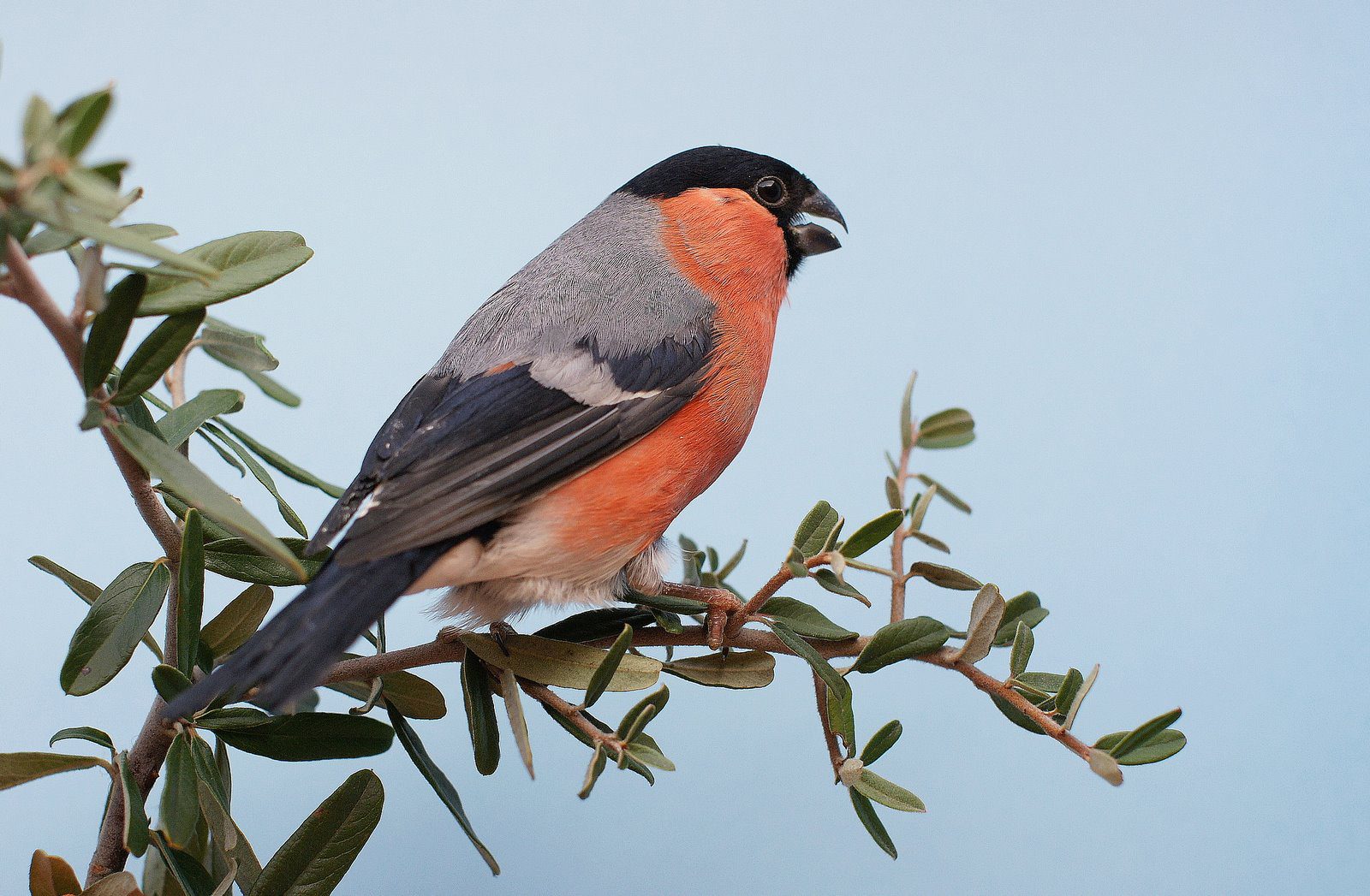
Eurasian bullfinch
Pyrrhula pyrrhula
Origin:
Character: Sociable
Life expectancy: 10 to 15 years
Height: 15 to 17,5 cm.
Its coloration is unmistakable: While the female has more muted colors, the male looks reddish plumage in the chest. It is not threatened and has populations of between fifteen and twenty-eight million copies in Europe.
It is a bird highly sociable, which serves immediately when called by imitating his song.
Despite being a quiet animal, during the early morning hours his State will of euphoria and very active. In the evening turns into a passive pet, lazy and dormilona. Both the male and female sing in a similar way. It is not one of their most notable qualities, since its melody lacks musical notes and is not too powerful. You will observe how your interesting friend will inflate his feathers and throat in unison at the moment of starting the song.
Their traditions They are very different from those of other birds and many ornithologists think that their partners are stable, because they are generally of two by two, male and female, in both summer and winter. The male is equipped with a sumptuous plumage, that puts in evidence during courtship. Spongy chest, leaves hanging their wings, to display contrasting drawing of his obispillo and swings conton is.
▷ The world of Pets: Dogs, cats, birds, reptiles, amphibians
Red siskin
Spinus cucullatus
Origin: Venezuela, Colombia, Guyana, Trinidad and Tobago
Character: Trusting and loving
Life expectancy:
Height: 11 to 12 cm..
Photo:canaricultura.es
Content
Those who come to achieve Red siskin it seems that they are satisfied with the sole idea of getting the coveted F1 from him (hybrids of this beautiful exotic with a female canary), completely disregarding more information and knowledge of their particular biology.
The lack of information available on the Customs is very strange, feeding, reproduction and habitat of Red siskin.
“In canariculture and ornithology treatises, only their colors are described., its properties to convey the color red to the Canary and well little more. Perhaps this is due to the fact that those closest to the life of this little finch, such as twitchers & dealers, they jealously keep to themselves, the knowledge of their customs, thus avoiding, "commercial competition". This belief comes to mind because we know perfectly well the illegal trade that exists in their country of origin..
“Due to the great demand for Cardinals, coming from all the countries where canariculture of color is practiced, This bird has become the most coveted by stealthy casual and hunters merchants. In Caracas, as well as in La Guaira, its famous seaport, the trade of buying and selling of Red siskin constituted, until very recently, an authentic international business. Sailors and travelers came to pay exorbitant amounts for a Red siskin. The few who came alive to Europe listed to astronomical prices.
“It is not strange to think, because, that the scientific ignorance of its wildlife is the result of a tacit agreement between hunters and clandestine traders. As you want it, This disregard for his life and customs brings, as a result, the early illness and death of most Red siskin who manage to reach Europe alive.
"Secondly, This species is seriously threatened with extinction. This beautiful winged ruby from the northern regions of Venezuela, It is already very sparsely found by have turned, inevitably, in one more victim of selfishness and the irrational whim of man. Fortunately, the measures taken by the Government, rigorously applying existing laws for the protection of Venezuelan fauna, they come to alleviate, as far as possible, the damage caused to this species. These laws are being strongly enforced today and trade, as flourishing in past years, This disappearing, with the natural joy of ornithologists and nature lovers from all over the world.
VERNACULAR AND SCIENTIFIC NAMES.-
“ This beautiful American finch measures 11 to 12 centimeters. It is known by various vernacular names, such as Tarín, in Argentina, Lúgano Rojo, in other South American countries, Cardenalillo, in Spain, Cardenalito, in Venezuela, etc. The scientific denomination is also varied and confusing: Spinus cucullatus, Carduelis cucullatus and Crhysomitris cucullatus. As we see it, ornithologists have also not delved much into its study and taxonomy: Some include him among theCarduelis”, others among theSpinus”, etc.
“All this contributes negatively to the authentic scientific knowledge of this beautiful tropical bird., so fundamental to the canaricultor of color. What we have no doubt about is that the Red siskin is closely related to a large group of American finches: los “Spinus”.
COLORS OF THE MALE.-
"Head, the neck and throat are black Jet, in the form of Hood; the back is dark red; the chest and the obispillo are red fire, beautiful; the tail, completely black. The wings are black, with a beautiful and wide strip of color orange through primary and secondary shirts. The legs and beak, dark brown. The eyes are amber.
COLORS OF THE FEMALE.-
"The female of Red siskin has a head, the neck, the back and the flanks of ash grey streaks, with little red colouring on the chest and obispillo. The tail is black; the wings of the same color, taking the same strip Orange wing than the male.
COLORS OF THE INMATUROS YOUTH.-
“Immature young are perfectly identified by their uniform grayish-brown coloration. The color of the wing band is barely noticeable in the first days after leaving the nest.. Similar to the adult female Saint, but without the black and red colours, being the shade of grey, duller.
WILDLIFE.-
“This beautiful finch is native to the northern regions of Venezuela, characterized by mountain ranges, hills and Plains. This wide strip is characterized by its totally different weather stations.: A , rainy and humid, comprising of April to U.k. and other dry, from November to March. The vegetation is itself the American Savannah, This is, shrubs, grasses and herbs of all kinds, with very little Grove. The average temperatures in this area vary considerably, depending on the wet or dry season.
"Live the Red siskin in wandering flocks, on the plains of lower floors. It feeds on seeds, tender stems and small insects. It nests in the spring. The female lays three to five eggs, pure white, that incubates alone. The male brings food, providing a longer regurgitado. The nest is built in the shape of a cup, with abundant dry material of grasses and hairs. The female so carefully lined with feathers and other soft materials. To the 11-12 days of being incubated the eggs, hatch chicks, covered with a fine low down. They are fed with insects, larvae and seed peeled and regurgitadas, by both parents. To the 15 days, they leave the nest. The female makes two to three released per year.
THE “LITTLE CARDINAL OF VENEZUELA” IN CAPTIVITY.-
"The Red siskin easily gets used to life in captivity; he is trusting and affectionate with whoever takes care of him and is not quarrelsome with other birds that come into his company. He is cheerful and very cantor. His singing resembles our serin (Serinus serinus). Is always on the move. Much like the green food, especially the lettuce. He is so loving the Whitehorn that if, by your tastes outside, I would only eat this seed and lettuce. Some consent to die than testing other grains. But the Whitehorn just becoming ill will. They must eat of this oilseed seed, but not in excess, because they resist not a diet continued on the basis of this food.
“It is necessary to make them eat birdseed too, millet, Turnip rape, Thistle and rapeseed seed, as well as some fruit and green food. Should they also be lettuce seeds, Blue poppy and some crushed cañamones. Should not be given egg pasta, as is done with the Canaries, because they end up becoming ill hepatitis and die soon.
“The most difficult thing is its adaptation and acclimatization to our latitudes. Must acclimate them very slowly and to ensure that the temperature does not fall from the 10 degrees Celsius. It is a very chilly bird, immediately accusing the lack of heat. Once made the first move in the cage, already does not require special care.
"The evident proof of his health is the singing. Yes a Red siskin Canta, We can think of to raise with him with many chances of success. Is very hot in nature and if this strong and healthy, can attach you with two female perfetamente.
“But in this work we are not going to deal with their reproductive and genetic qualities, Neither of its extraordinary influence on color canaricultura. This item, together with a deep scientific-practical study of its reproduction in captivity with its own female, It will be developed, in detail, in a next job. We advance, However, that this ornithological event has taken place in Spain with Red siskin brought from Venezuela and adapted to our climate. This achievement has been achieved, after long years of tests and trials by the author of this article”.
by José Moreno Sánchez
Judge of the F.O.E. (Spain)
Several tests have been carried out to try to estimate the number of wild individuals that currently survive; However, Dear sayings are characterized by their inaccuracies and is not really known the current population. Estimates range from as low as 600 until 800 birds across the country, of which are calculated each 350 to 500 individuals in the West, and other 300 in the central zone. Other estimates indicate that they currently survive around 4.000 Red siskin wild in total, of which approximately 2.500 they live in the States of Lara and Falcón. The numbers of birds captured would support the second estimate more than the first.. It is necessary to clarify that, While you can ensure that the figure is low, information is still lacking to accurately estimate the population. In any case, the current figures are lower than the previous ones and most of the populations referred to in the past are now extinct.
Source: Wilkipedia
▷ The world of Pets: Dogs, cats, birds, reptiles, amphibians
linnet sizerin
Carduelis Flammea
The linnet sizerin He is a confident bird, friendly, naive, harmless and equipped with a voice, a chant, really magnificent –a comparable beauty to the Nightingale and the goldfinch–, This bird, If human, We would say of him that he is a very good person., reliable in every respect.
There are a variety of pardillo, called sizerín (carduelis flammea), which is of even more superlative goodness.
Small striped finch 13 – 15 cm., grey brown, with red front, Chin black and two pale wing stripes. Male in breeding season with pink breast and rump, for the rest, similar sexes. Young red and poorly marked Chin.
In France they worship. Such is the tenderness that he felt the French call it that, popularly, the naive bird
His singing brings together a series of flight claims mixed with short trills alive and more melodiosas rolling notes.
The diet is the same as that of the goldfinch is, feeds mainly on seeds, outbreaks of various wild plants and trees.
Sources:
– Wilkipedia
– FERRAN MONEGAL
▷ The world of Pets: Dogs, cats, birds, reptiles, amphibians
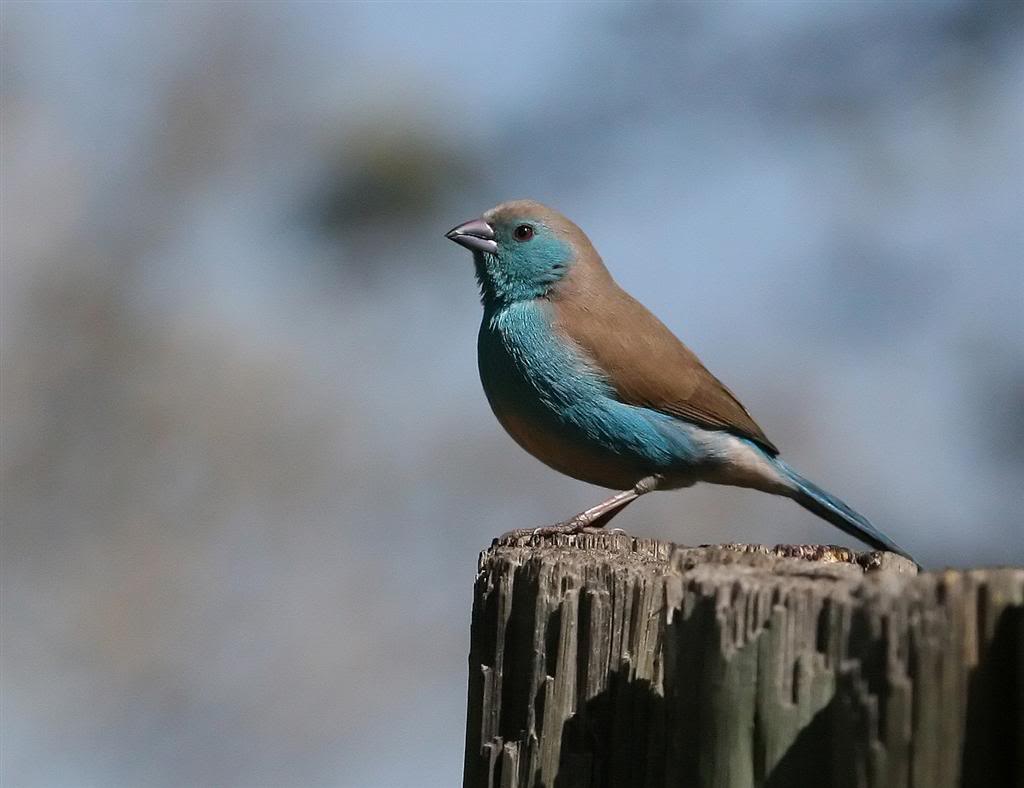
Red-cheeked Cordonbleu
Uraeginthus bengalus
Origin:
Character: Social
Life expectancy: 12 to 14 years.
Height: 12 to 13 cm.
Bluebirds from Senegal are from Equatorial Africa and East Africa. They live in pairs or in groups of a few individuals in semi-arid areas.
They have a melodious song, that varies by species. Males have more brightly colored than females. The cheeks of the males are red. The female has a blue paler . Sometimes the female also sings, so you can't rely on the voice to determine the sex of the bird.
It is a large bird, It can co-exist with other small exotic birds. Small species of the Azulito of Senegal can co-exist if there is sufficient space, but the larger species are very aggressive and should not be mixed with other species of Azulitos.
They are insectivorous and granivorous.. Must be accustomed gradually to fruit and vegetables to prevent the occurrence of gastrointestinal disorders (diarrhea). Must be given in small amounts, washed and dried at room temperature, withdrawing them as soon as they lose their freshness. Vitamins can also be put in drinking water, especially in times of illness, stress, molting and reproduction.
The best thing is to install them in the Aviary, so they can fly to and organize themselves into a social group. These birds are sensitive to cold and humidity.. They need to keep at a temperature between 20 and 25 ° C. They must be protected from the cold currents and air, Although over time can be adapted to more extreme temperatures.
Reproduction must stay in pairs in a large cage (100 * 50 * 50 cm minimum for a couple), in groups of the same species in a spacious Aviary, with a lot of places to hide, allowing them to build their nest in peace. Reproduction is usually easy, when birds are calm and have sufficient space. They must have variety of foods (seed mix, germinated seeds, spray millet and living insects (are essential during the breeding season).
The female lays from 3 to 7 eggs, the parents take turns incubating and hard incubation of 15 to 17 days. The young leave the nest to the 3 weeks and are weaned at the 6 weeks. The sexual dimorphism appears to the 5 months.
Red-cheeked Cordonbleu (Uraeginthus bengalus)
▷ The world of Pets: Dogs, cats, birds, reptiles, amphibians
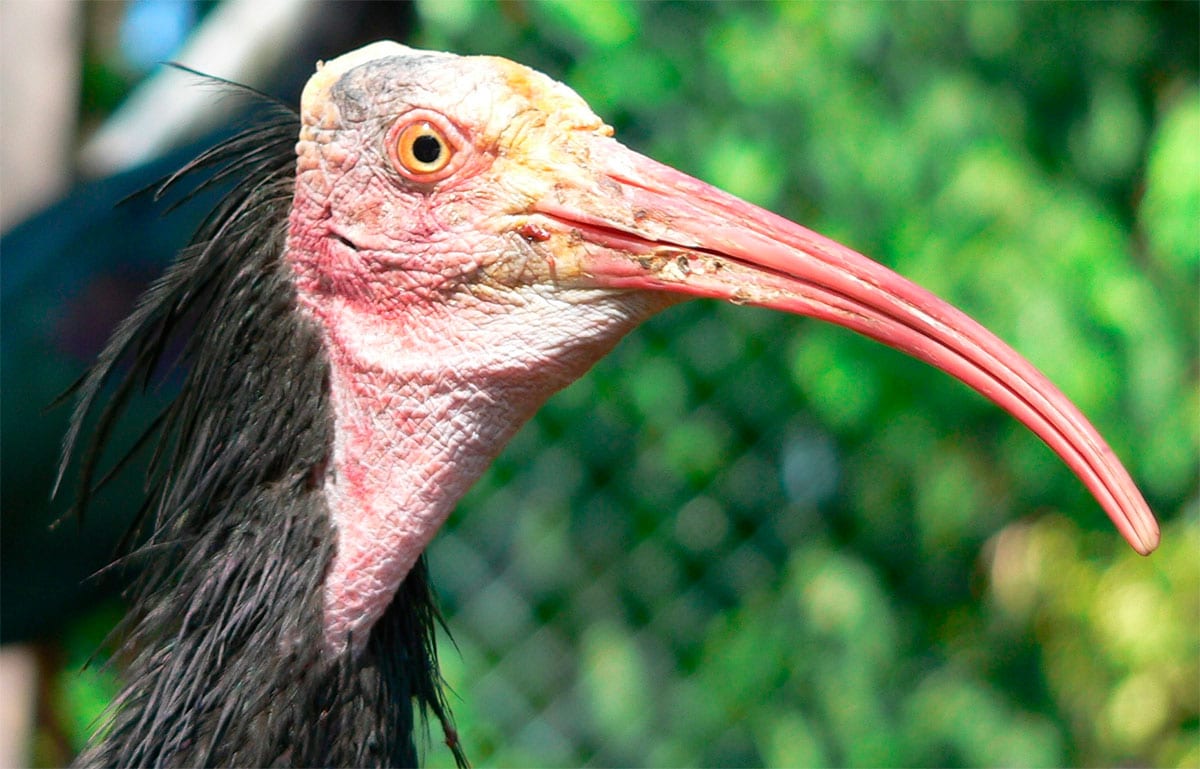
Ibis: a sacred and ugly but very “clean” Egyptian bird
Threskiornithinae
Origin: Egypt
Character: Social
Life expectancy:
Height: 75 cm.
It was considered a beneficent ave, capable of devouring poisonous snakes that terrorized the population, and this is the reason why associated it to the God Thoth health. Read more in franciscojaviertostado