โ–ท The world of Pets: Dogs, cats, birds, reptiles, amphibians

Cuban Parrot
Amazona leucocephala

Cuban Parrot

Content

Description:


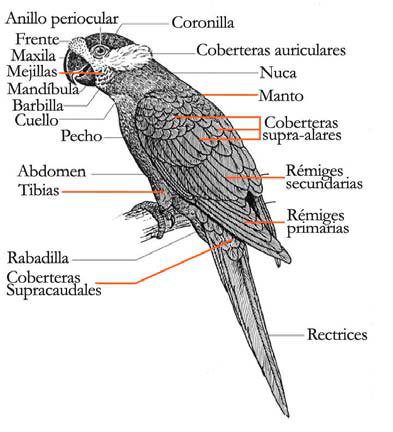
Anatomy-parrots

28-33 cm.. length and 260-301 g. of weight.
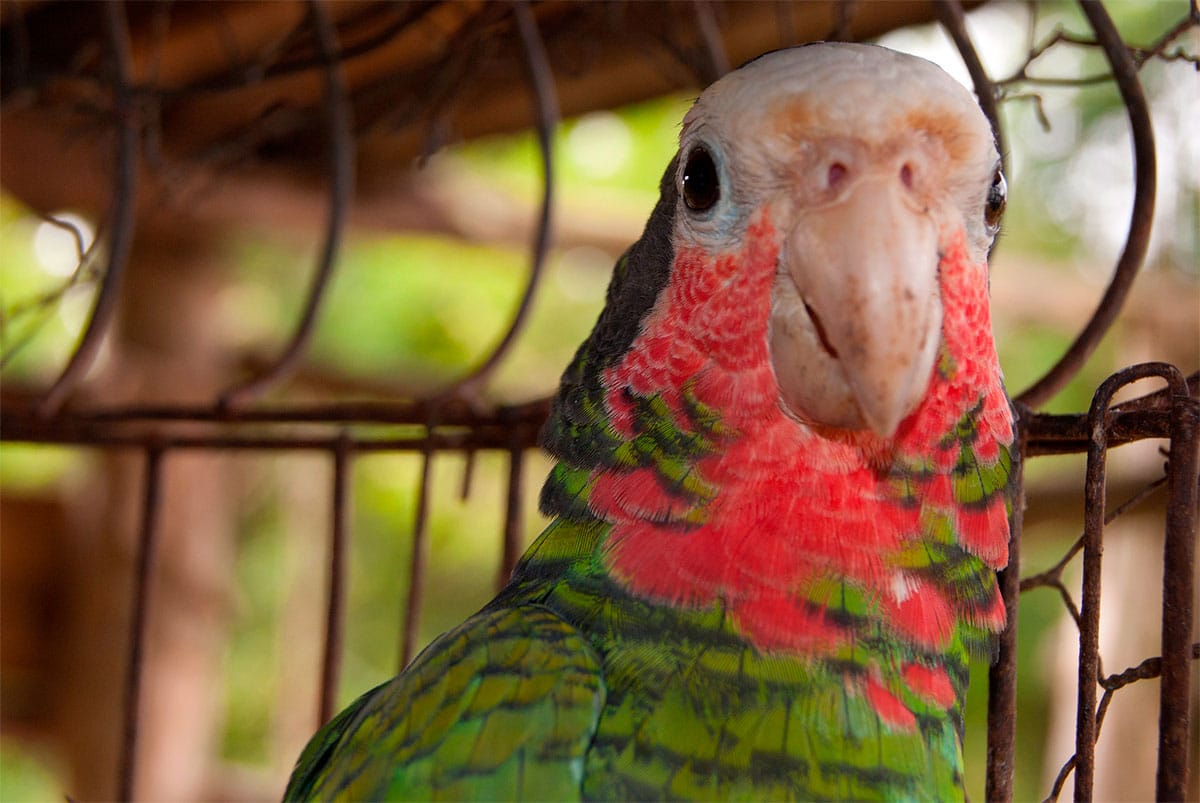
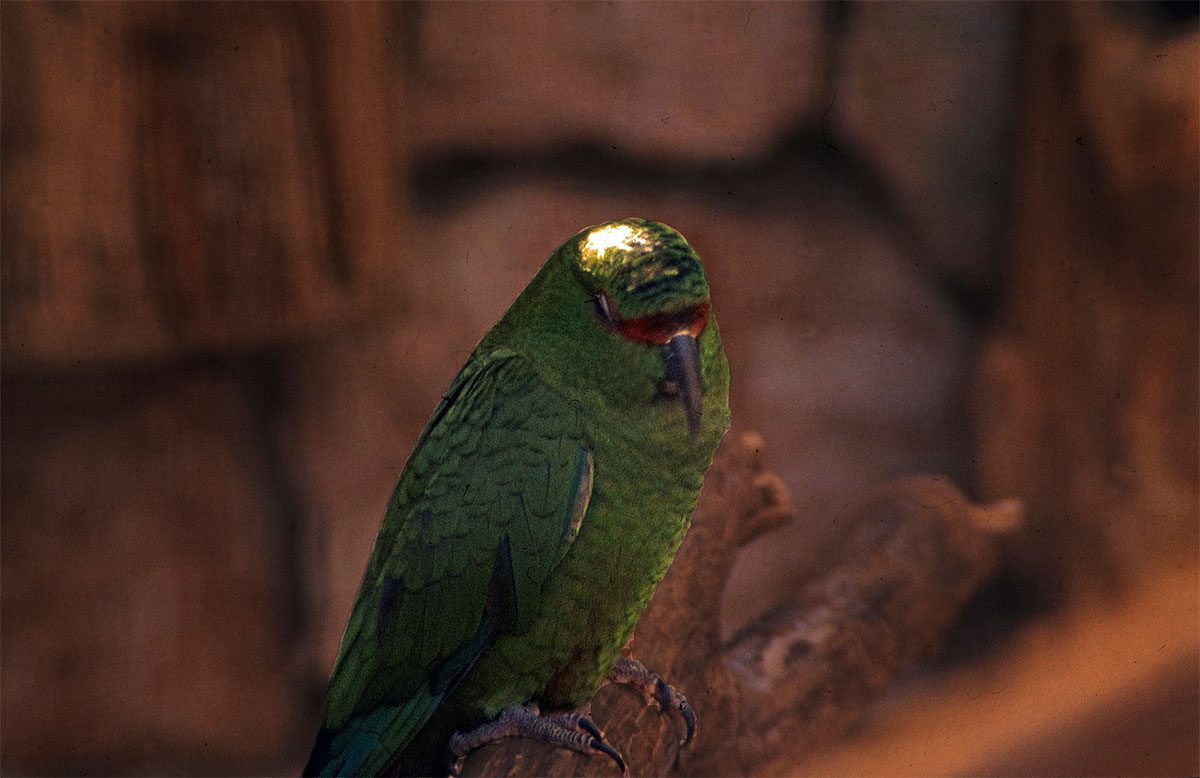
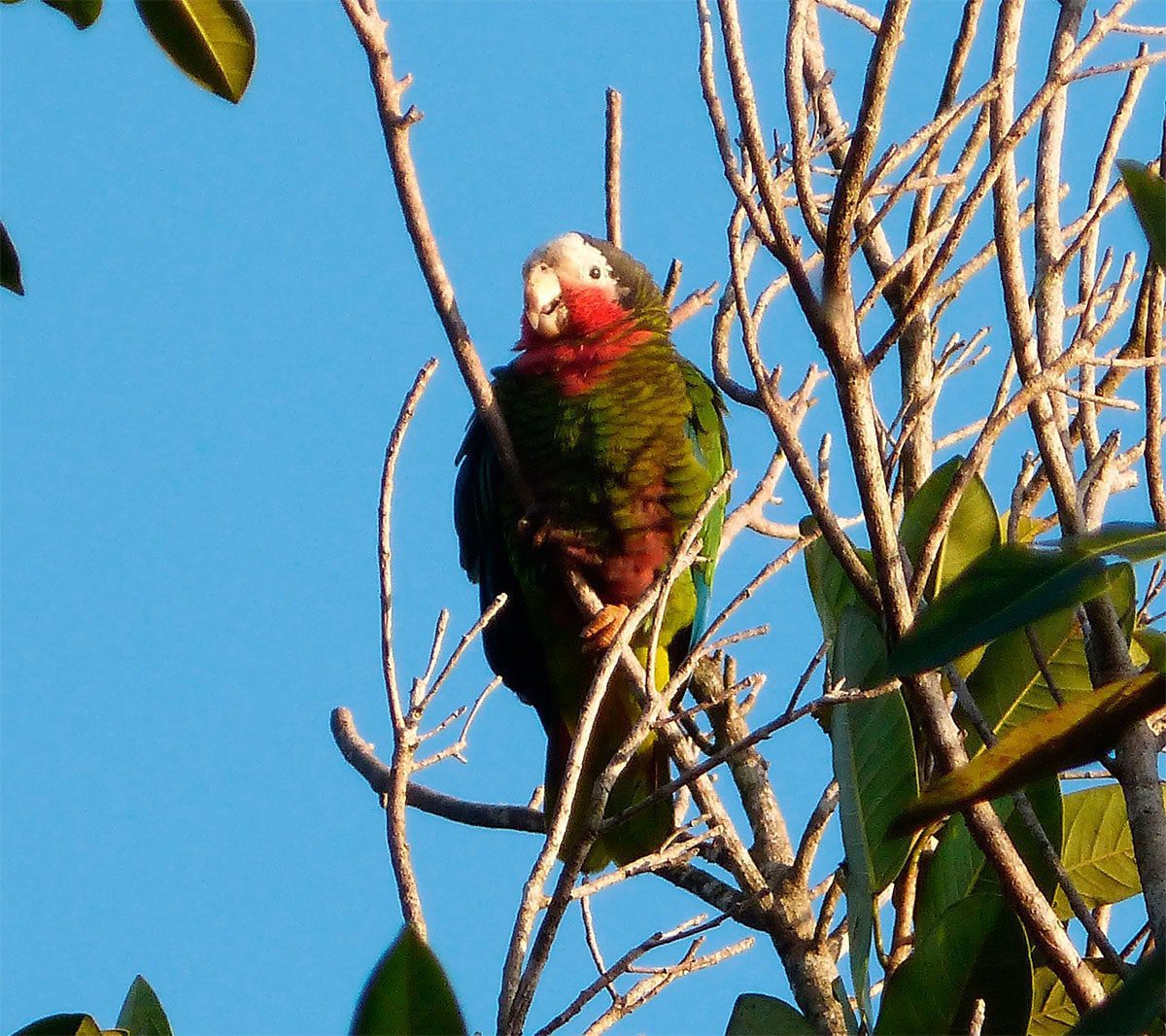
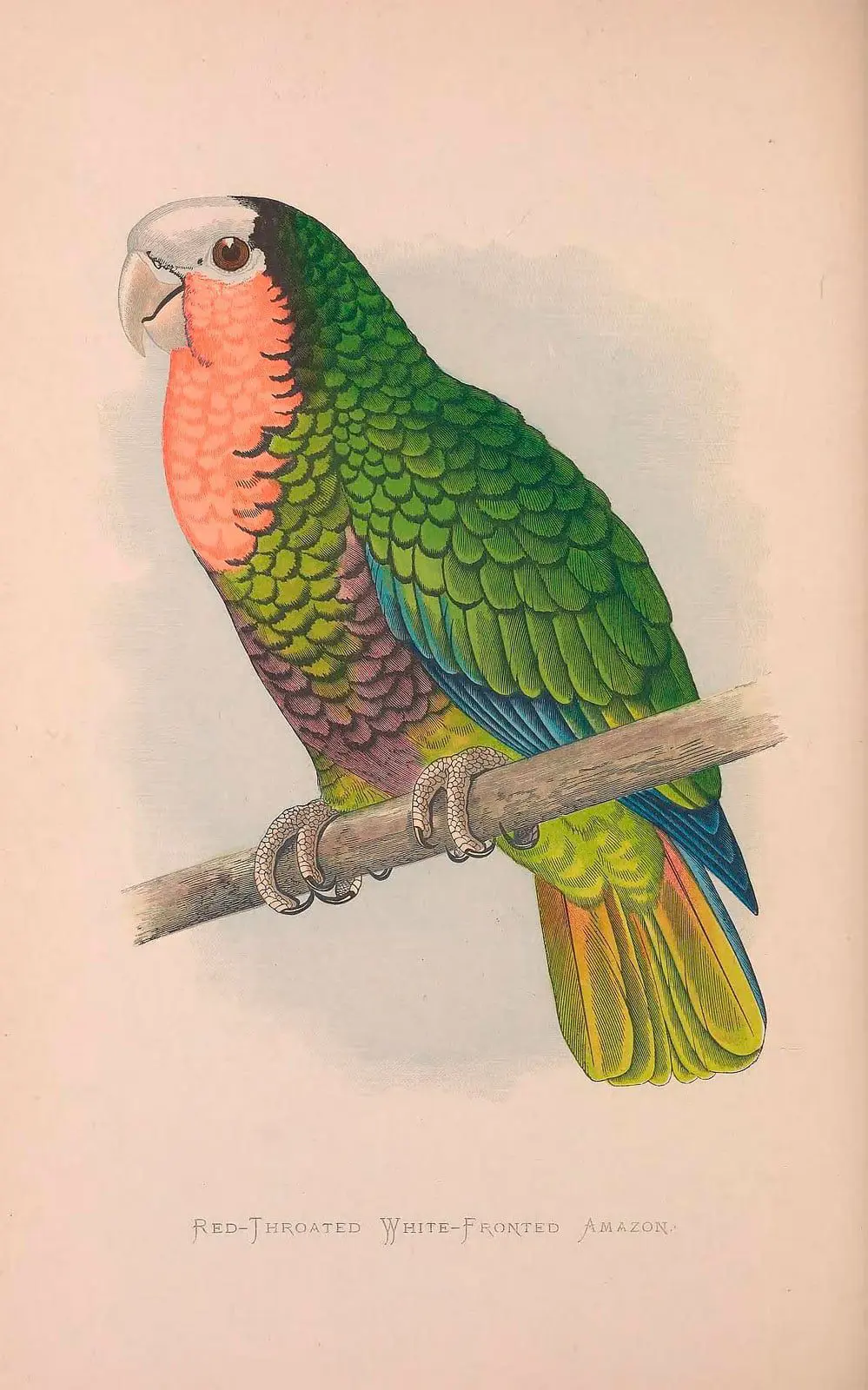
The Cuban Parrot (Amazona leucocephala) has a plumage rather variable, a main color ranging from bright green to olive color,, some birds feathers yellow dispersed in wings and in the back.

Forehead, fore crown, lores and area around eyes, white; lower cheeks and throat, red-pink; feathers the back of the crown and nape, bluish-green with black margins, giving the whole a heavy barred effect; similar pattern on the sides of neck but with the bluish tint absent; ear-coverts charcoal grey. Feathers of the back and the mantle, green with black distal margins but less intense than in the nape and head; rump and uppertail-coverts, dark green with weak margins to some feathers rump.
Cuban Parrot

Alula, greater coverts and flight feather, blue on the outerweb, gray on inner; remaining coberteras green with dark margins, showing most distinct barring on lesser coverts. Under the wings, green with dark margins, flight feather grey. Breast green with dark margins to most feathers; feathers on belly with vinaceous base showing green at margins forming a patch variable-sized, barely noticeable in some birds, striking in other; the thighs green or with some vinaceous feathers; undertail-coverts green. feathers tail green with red at base. Bill yellow-horn: irises reddish brown; legs yellowish brown.

Both sexes are alike, but males of the subspecies caymanenis reportedly larger and brighter than females. Usually, the immature show less black borders on the body feathers and less red wine in the belly.

  • Sound of the Cuban Parrot.

Description 4 subspecies:
  • Amazona leucocephala bahamensis

    (Bryant,H, 1867) – Larger that the nominal species, with slate blue on the back of the crown and more extensive white color head. Pens red wine in the belly, reduced or absent and red at the bottom of the tail less extensive.


  • Amazona leucocephala caymanensis

    (Cory, 1886) – It differs from other subspecies by the turquoise dye in the chest and in the rump and rosacea suffusion (sometimes yellowish) in white feathers head. Plumage Barred yellower and less thick than the nominal species (especially below and on upperwing-coverts), with less white in the head and much less pronounced the patch red wine belly.


  • Amazona leucocephala hesterna

    (Bangs, 1916) – Smaller and darker than the nominal species and that the subspecies caymanensis, most individuals with the red color confined to a point under the eye and patch smaller target in the crown, it lacks the rosy tint of the subspecies caymanensis. Patch red wine in the larger belly than the subspecies caymanensis.


  • Amazona leucocephala leucocephala

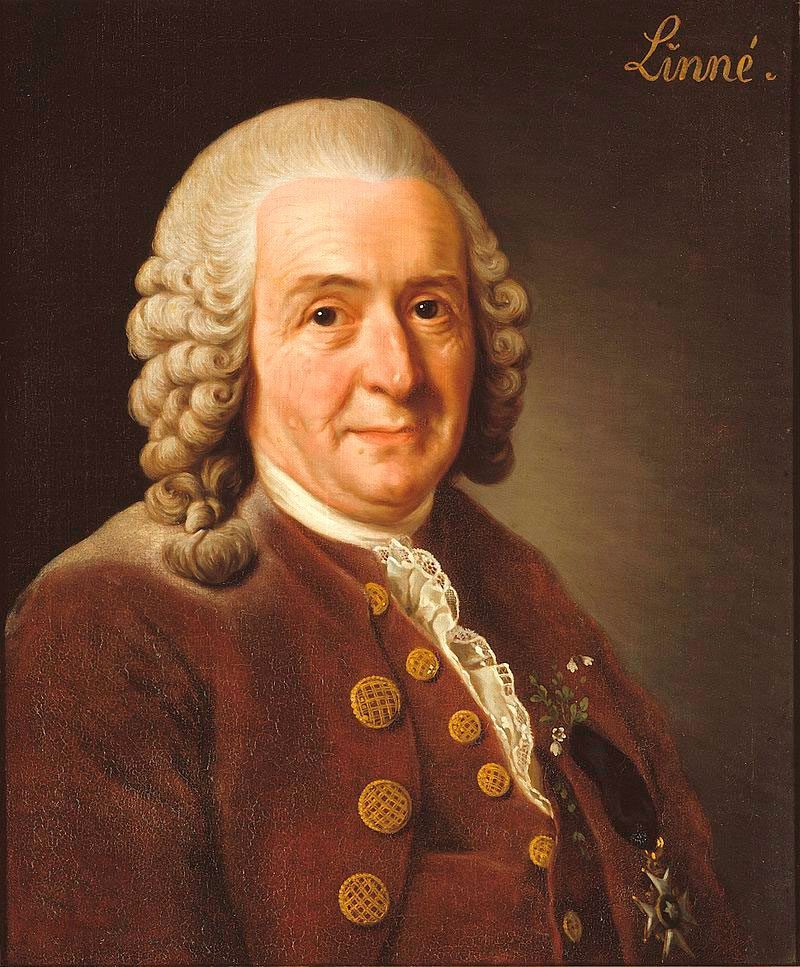
    (Linnaeus, 1758) – Nominal.

Habitat:

Cuban Amazon Video

The Cuban Parrot They inhabit in different habitats in different islands. In Cuba They inhabit dense forests; in the Bahamas, in native broadleaf forests and pine forests, and in the Cayman Islands, in dry forests in the plateau ridge and on nearby farmland (Bond 1979, King 1981, Sibley y Monroe 1990). Usually in small groups but forages while forming larger groups in places where food is plentiful; couples or family groups in flocks discernable. More usually in pairs during breeding. They sleep communally outside the breeding season.

Reproduction:

The Cuban Parrot make their nests in cavities or palm tree hollows created by termites or woodpeckers. The population of Abaco It is particularly interesting because nests in natural holes in substrate limestone in the soil (O'Brien et al., 2006); over there, chicks and adults are completely isolated from the frequent fires in the pine forests They are forming their habitat. Breeding March until mid-summer Cuba and Abaco. The laying usually it comprises between 2 and 4 eggs, the incubation period hard of 26 to 28 days and the chicks remain in the nest between 56 and 60 days.

Food:

The diet It includes yema Leaf Roystonea, the cones and new shoots tender the Pinus caribea, sea รขโ‚ฌโ€นรขโ‚ฌโ€นgrape uvifera and Conocarpus erretis, fruits and seeds of Smilax, Sabal, Durant, Exothea, Ernodea, Tabebuia, Acacia, Metopium, Tetrazygia, Swietenia, Cupania and Lisiloma. Sometimes they are persecuted for damage cultivated fruits like Mango (Mangifera) and grain.

Distribution and status:

Size of its range (breeding/resident): 590.000 km2

The Cuban Parrot live in Cuba, Island Pines, Bahamas and Cayman Islands. Formerly observed throughout the island Cuba but now it is difficult to see or is extinct in much of the island. They are still locally distributed throughout the provinces but they are still only common in a few redoubts, including the peninsulas of Zapata and Guanahacabibes and in Sierra de sewage.

You can see in the Isle of Pines (Isle of youth) which dropped dramatically in the twentieth century, especially during the sixties, with most of the population surviving on Lanier Swamp National Park.

Formerly distributed by all the major islands of the Bahamas, but currently extinct, Except in Gran Inagua (spread south, east and north) and Abaco (especially in the southern third). You can visit Little Inagua from Great Inagua.

Mainly in the central and eastern parts of Grand Cayman where habitat loss is less severe. A residual population persists Cayman Brac but it became extinct in little Cayman about 1932.

Mainly resident, but with some seasonal movements, for example in the Isle of youth, where birds possibly (at least once) moved to the coast from the dry interior in the non-breeding season.

The decline across the range is due to the habitat destruction and capture of birds Vivas (for use as pets locally and for export).

Poor breeding success in Grand Cayman in the seventies it was due to mosquito attacks against the pups. Birds that nest on the ground in Abaco attacked by wild cats. The hurricanes They can cause shortages of food and nesting sites. It is likely that Bahamas are stable, but generally decreasing. You can not be considered safe in most of its range.

Distribution 4 subspecies:

Conservation:

State of conservation โ“˜


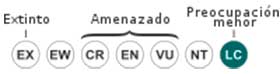
Near-threatened Near Threatened โ“˜ (UICN)โ“˜

Rationale for the Red List category

The Cuban Parrot It is classified as near threatened because it is suspected to have suffered a reduction in population in Cuba, which has not ceased, mainly due to the capture and destruction of nesting sites.

โ€ข Current category of the Red List of the UICN: Near-threatened.

โ€ข Population trend: Decreasing.

โ€ข Population size : 13600-23000

Justification of the population

Population estimates for Bahamas and Cayman Islands they are as follows: 2.000 in Gran Cayman in 1995 (Bradley 2000), about 450 in Cayman Brac in 2013 (Marsden, 2013), 8.000-13.000 in Great Inagua, 3.000-5.000 in Abaco and around 10 individuals in new Providence (Bahamas National Trust 2016, S. Cant-Woodside in a bit., 2016). It is estimated that the population of Cuba amounts of 7.000 to 14.000 copies based on estimates recorded population density and the fact that it is likely that only a proportion of the estimated extent of occurrence deal. So, the total population It is estimated in 20.460-34.460 individuals, which is equivalent to 13.640-22.973 mature individuals, rounded here to 13.600-23.000 mature individuals.

Justification of trend

It is considered that the species is declining mainly due to the capture and destruction of nesting sites. It is considered that the population of the Bahamas It has remained stable or increased. The population of the Cayman Islands It has increased since the species was protected in 1989 (Bradley 20000). It is believed that the Cuban population has decreased in recent years, mainly due to the poaching (Canizares 2012, M. Canizares in a bit., 2016). Although there is no data on the extent of this decline, the species has been classified as Vulnerable in Cuba (Canizares 2012). So, It is suspected that the total population has decreased 10-20% over three generations.

Conservation Actions Underway

โ€ข CITES Appendix 1.

โ€ข Protected in the Bahamas under the Wild birds Protection Act (Protection).

โ€ข Rightfully protected in the Cayman Islands from 1989.

โ€ข Los artificial nests a variety of designs are in use in several locations Cuba and they have been used by more than 1.300 birds (Waugh 2006). The facts of artificial materials have proved more durable (Waugh 2006).

โ€ข Los volunteers counts in the center of Cuba They have been conducted twice a year since 2009 and more than 1.500 local people are involved in the activity.

โ€ข Important plant species are used for parrot feeding for reforestation and forest enrichment..

Conservation Actions Proposed

โ€ข Discourage the taking of birds from the wild through public education campaigns.

โ€ข Promote better bird-keeping practices to increase the longevity of captive birds and reduce the demand for wild populations.

โ€ข In Abaco, protect vital areas of broadleaf forests.

โ€ข In Cuba, make and erect more artificial nests.

โ€ข Monitor the population trends across its range.

Cuban Parrot in captivity:

Currently international trade Cuban Parrot It is legally prohibited; However, at regional level, the illegal traffic This species is one of the most worrying in Cuba.

Each captive specimen of this species which is capable of reproducing, must be placed in a well-managed captive breeding program and not sold as a pet, in order to ensure its long-term survival.

Alternative names:

bahaman parrot, Caribbean Amazon, Caribbean Parrot, Cuban Amazon, Cuban Parrot, Rose-throated Parrot, White-headed Amazon, White-headed Parrot (English).
Amazone ร  face rouge, Amazone ร  tรชte blanche, Amazone de Cuba (French).
Kubaamazone (German).
Papagaio-de-cuba (Portuguese).
Amazona Cubana, Cotorra (espaรฑol).

Carl Linnaeus

scientific classification:


Order: Psittaciformes
Family: Psittacidae
Genus: Amazona
Scientific name: Amazona leucocephala
Citation: (Linnaeus, 1758)
Protonimo: Psittacus leucocephalus


Images Cuban Parrot:


Species of the genus Amazona


Sources:

(1) Avibase
(2) Parrots of the World โ€“ Forshaw Joseph M
(3) Parrots A Guide to the Parrots of the World – Tony Juniper & Mike Parr
(4) Birdlife

Photos:

(1) – Rose-throated Parrot. Amazona leucocephala Long Beach, Zapata N.P. Cuba by gailhampshireFlickr
(2) – A Cuban parrot (amazona leucocephala) in Naturarte Center. santa Clara, Cuba 2011 by lezumbalaberenjenaFlickr
(3) – A Cuban parrot (Amazona leucocephala) Vega de Palma, Camajuanรญ, Cuba by lezumbalaberenjenaFlickr
(4) – Amazona leucocephala by Ekaterina Chernetsova (Papchinskaya)Flickr
(5) – Amazona leucocephala by Ekaterina Chernetsova (Papchinskaya)Flickr
(6) – Cuban Parrot (Amazona leucocephala) by HeathFlickr
(7) – Cuban Amazon by Eric SavageFlickr
(8) – Two Cuban Amazons in Matanzas, Matanzas Province, Cuba By Laura Gooch (BI110211-174 – Cuban Parrot) [CC BY-SA 2.0], via Wikimedia Commons
(9) – Cuban Amazon parrot on Grand Cayman Island By Lhb1239 (Own work) [CC BY-SA 3.0], via Wikimedia Commons
(10) – Cuban Amazon (also known as the Rose-throated Parrot) at Jungle Island, Miami, USA By Chris Acuna from Miami, USA (Jungle Island-20090823-086) [CC BY 2.0], via Wikimedia Commons
(11) – A Cuban Amazon in Isla de la Juventud, Cuba. It is in a small round cage on a balcony By Alex Graves (Parrot) [CC BY-SA 2.0], via Wikimedia Commons
(12) – A Cuban Amazon flying in Matanzas, Matanzas Province, Cuba By Laura Gooch (BI110211-159 – Cuban Parrot) [CC BY-SA 2.0], via Wikimedia Commons
(13) – Cayman parrot (Amazona leucocephala caymanensis), Grand Cayman By Charlesjsharp (Own work, from Sharp Photography, sharpphotography) [CC BY-SA 4.0], via Wikimedia Commons
(14) – Parrots in captivity /. London :George Bell and Sons,1884-1887 [i.e. 1883-1888] by Biodiversity Heritage LibraryFlickr

Sounds: Hans Matheve, XC256757. accessible www.xeno-canto.org/256757
โ–ท The world of Pets: Dogs, cats, birds, reptiles, amphibians

Kawall's Parrot
Amazona kawalli

Kawall's Parrot

Content

Description:

35-36 cm.. length.

The Kawall's Parrot (Amazona kawalli) after not having been recorded in the wild for a few 70 years, It was rediscovered in the early 1980.

Wrongly confused with Southern Mealy Parrot (Amazona farinosa) which differs from the remarkable white band at the base of bill.

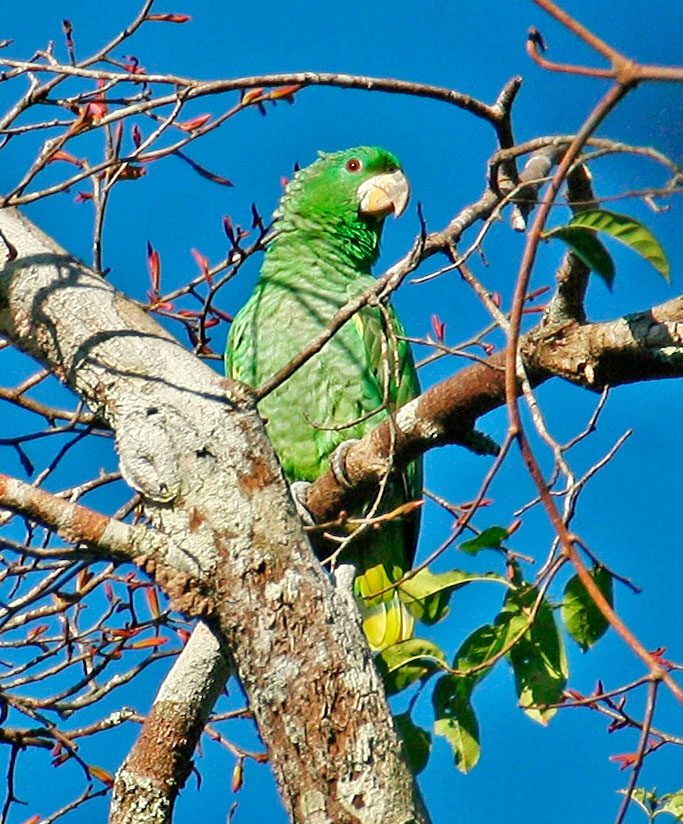
They have forecrown, the lores, the cheeks and ear-coverts green, although in some birds appear blackish. The crown, sides and back of the neck, as well as the nape, They are green with broad blackish margins to feathers, giving the whole a intricate scaly appearance, with escalation most pronounced in the nape and the the mantle.

Kawall's Parrot

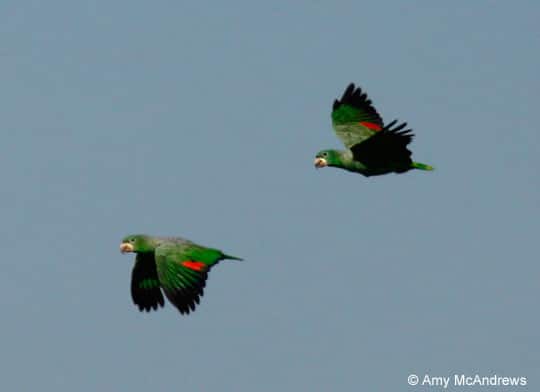
Upperwing-coverts green, with the coverts smaller and medium dark shades showing weak at tips; some feathers yellowish green in the leading edge of wing . Primaries green with black towards the tips and some blue in outerweb (a specimen with primary external bright yellow in a wing); red in the three secondaries External form a speculum bright. The underparts They are green with scaling effect derived from the blackish tips to the feathers on the sides of the low chest; some feathers with dark tips in the middle of the chest although little visible; undertail-coverts, more greenish yellow. Upper, the tail It is green with wide band terminal greenish yellow, lateral feathers variably marked dark red (sometimes lined with black-brown and blue) in basal half; undertail, the tail similar but slightly off.


Anatomy-parrots

Bill gray bare skin cream in the base and a cream patch on the upper jaw; irises reddish-orange; legs gray.

The male has the lores and perhaps gray bill largest. Immature not described.

  • Sound of the Kawall's Parrot.

Habitat:

The Kawall's Parrot They inhabit tropical rainforests, with apparent preference for river edges and permanently flooded forests (igapรณ).

Reproduction:

Nests observed in tree cavities flooded forest

Food:

Foods reported include seeds trees Hevea brasiliensis and H. spruceana, mesocarpio palm fruit Maximiliana maripa and seeds of Eichleria and Joannesia.

Distribution:

Size of its range (breeding/resident ): 1,160,000 km2

The few published records come from the Amazon basin of Brazil; on top of Juruรก (under Eirunepรฉ), in the amazon; the confluence of roosevelt river and Aripuanรฃ River, to the South of For; and southern Santarรฉm, For.

Possibly they overlooked in the field due to morphological similarities with some of the best known and there are almost certainly more individuals than congeners the few records suggest. Distribution map based on alleged occurrence among localities known. No details on the population or condition.

Conservation:

State of conservation โ“˜


Near-threatened Near Threatened โ“˜ (UICN)โ“˜

โ€ข Current category of the Red List of the UICN: Near-threatened.

โ€ข Population trend: Stable.

Rationale for the Red List category

Based on a model of future deforestation in the Amazon basin and the susceptibility of the species to habitat fragmentation and hunting , It suspected population decline by 25-30% in the next three generations and, therefore, It has risen to Near Threatened.

Justification of the population

The size of the world's population has not been quantified, but this species is described as ยซrareยป (Stotz et to the., 1996).

Justification of trend

It is suspected that this species has lost 19.1-33.6% of habitat suitable within their distribution during three generations (37 years), based on a model of Amazon deforestation (Soares-Filho et to the., 2006, Bird et to the., 2011). But, it is considered that the species has a wider distribution than indicated on the map used in this analysis (A. Lees in litt 2011), As it suspected to decline by 25-30% during three generations.

Conservation Actions Underway

The species in Appendix II CITES.

Conservation Actions Proposed

First of all, expand the network of protected areas to effectively protect the IBA. Second manage more effectively the resources and existing and new protected areas, using the emerging opportunities for funding the management of protected areas with the overall goal of reducing carbon emissions and maximize the conservation of biodiversity. Especially relevant conservation on private land, through the expansion of market pressures for proper land management and prevention of deforestation on land not suitable for agriculture (Soares-Filho et to the., 2006). Campaign against proposed changes to Brazilian Forest Code that would lead to a decrease in the width of protected riparian forest areas such as Permanent Preservation Areas (APPs), that function as vital corridors in fragmented landscapes.

"Kawall's Parrot" in captivity:

The Kawall's Parrot It is a half-noisy parrot, not very active and hard chewing. They can easily tame. They are not common in aviculture. They are hardy once acclimated. Its minimum temperature tolerance is 15 degrees. Any lower temperature than this requires supplemental heat until the Parrot has acclimatized.

Alternative names:

Kawall’s Amazon, Kawall’s Parrot, Kawall’sParrot, White-cheeked Amazon, White-faced Amazon (English).
Amazone de Kawall (French).
Kawallamazone, Stromamazone (German).
papagaio-dos-Garbes (Portuguese).
Amazona de Kawall, Loro de Kawall, Loro de Kawallรญ, Amazonas de mejillas blancas,
loro de garbes
(espaรฑol).


scientific classification:

Rolf Grantsau

Order: Psittaciformes
Family: Psittacidae
Genus: Amazona
Scientific name: Amazona kawalli
Citation: Grantsau & Camargo, 1989
Protonimo: Amazona kawalli

Kawall's Parrot images:

Amazona de Control


Videos Kawall's Amazon:


Species of the genus Amazona


Sources:

  • Avibase
  • Parrots of the World โ€“ Forshaw Joseph M
  • Parrots A Guide to the Parrots of the World – Tony Juniper & Mike Parr
  • Birdlife

Photos:

(1) – Kawallโ€™s Amazon at Rio Cristalino, Mato Grosso, Brazil by Jacek Kisielewski [CC BY-SA 3.0], via Wikimedia Commons
(2) – Kawallโ€™s Parrot (Amazona kawalli) Cristalino Jungle Lodge, Mato Grosso, Brazil by Amy McAndrewsFlickr
(3) – ROLF GRANTSAU* and Hร‰LIO F. DE ALMEIDA CAMARGO** Museum of Zoology of the University of Sรฃo Paulo CP 7172, Sao Paulo, Brazil – NEW BRAZILIAN AMAZON SPECIES

Sounds: Jeremy Recall, XC313948. accessible www.xeno-canto.org/313948

โ–ท The world of Pets: Dogs, cats, birds, reptiles, amphibians

Slender-billed Parakeet
Enicognathus leptorhynchus

Slender-billed Parakeet

Content

Description:

40 to 42 cms. length and 200 to 250 g. of weight.
The Slender-billed Parakeet (Enicognathus leptorhynchus) has the lores, forecrown and a narrow ring feathers around the eyes bright crimson red; cheeks and sides neck, green; feathers of the crown, the nape, the the mantle and back, with dark green margins producing a scalloped effect (more pronounced in the crown, where the feathers are brighter and more emerald).

Scapulars, rump and uppertail-coverts They are green. Primary coverts green with blue suffusion; other coverts green. Flight feathers green-blue above with dark margins in innerwebs near the tips; light gray below. Underwing-coverts brighter yellowish green. Underparts yellowish green with patch dull red in centre of belly. Upper, the long tail red is off; greenish toward the tip; undertail, dull red suffused greyish.

Slender-billed Parakeet

The upper jaw It is dark gray with colored tip horn, the lower jaw is horn; Strait bare periophthalmic grey; irises orange-red; legs grey.

Both sexes are similar.

Immature darker, with the upper jaw shorter, less red in the face little or no red on belly.

  • Sound of the Slender-billed Parakeet.

Habitat:

Video – "Slender-billed Parakeet" (Enicognathus leptorhynchus)

CHOROY PARROT EATING

The Slender-billed Parakeet dwells in wooded areas, mainly Nothofagus and Araucaria, although they can be seen in more open cultivated fields or pastures, especially in winter. Its range is from sea level in winter to 2.000 meters in summer. Usually in flocks, of a few individuals to several hundred, even in breeding season; large communal concentrations sometimes composed of several thousand birds.

Reproduction:

Nests generally treeholes, often at a certain height and several couples using the same tree; very deep holes fill them with twigs to raise the base level. Occasionally nidifican in rock crevices, building the nest with twigs (for example, bamboo thicket This chusquea) if there is no tree cavities available. breeding season in November-December. Clutch 5-6 eggs.

Food:

Its diet It consists of seeds of wild and cultivated plants (They are sometimes considered a pest), including grains and thistles, seed cones araucaria (March April) open with its elongated peaks, acorns, seeds of Nothofagus and bulbous roots. generally place vigilantes while the rest of the birds feed.

Distribution and status:

Distribution area (breeding / resident): 195.000 km2

The Slender-billed Parakeet It is confined to the center Chile, from the South of Santiago through coastal lowlands and valleys on the slopes of hills peaceful, south to the Chiloe Island and maybe Palena River in the North of Aysen; They can also be seen in Isla Mocha off the southwest coast bio bio.

made some movements altitudinal seasonal, with moving from coastal lowlands to the foothills of the hills between spring and autumn bird (September-May).

Quite common, although in recent decades its population has suffered a decline due to, fundamentally, deforestation, his capture and the Newcastle disease.

Less frequent and perhaps only sporadic in the northern and southern ends of its range.

Caught locally as pets, although quite rare in captivity outside Chile.

Conservation:

State of conservation โ“˜


minor concern Minor Concern โ“˜ (UICN)โ“˜
  1. Current red list category of the UICN: Least concern.
  2. The population trend: Stable.
  3. Population size : Unknown.

(classified in Appendix II of CITES)

Justification of the Red List of the Category

This species has a range very large, and as a result does not approach the thresholds for Vulnerable under the range size criterion (extent of occurrence <20.000 km2). La tendencia de la population seems to be stable, and therefore the species does not approach the thresholds for Vulnerable according to the population trend criterion. (> 30% decrease of more than ten years or three generations). The population size It has not been quantified, but are not believed to approach the thresholds for Vulnerable based on population size criteria (<10.000 individuos maduros con una disminuciรณn continua estima en> 10% in ten years or three generations, or in a particular population structure). For these reasons, the species is evaluated as Least concern.

Justification of the population

The world population It has not been quantified, but the species according to sources is locally common (pit et to the., 1997).

Justification trend

The population suspected to be stable in the absence of evidence of any reduction or substantial threats.

"Slender-billed Parakeet" in captivity:

Virtually unknown until 1976.

It is a nice and noisy bird, whose docility and cunning behavior have meant it to be hunted down and captured to commercialize as pets, very common but absolutely illegal practice, because they are removed from their natural means of inhabitancy in South Chile, which they can not be replaced in urban areas and in captivity. People who do sell through a network of illegal trafficking. However, it is a rare bird watching in captivity outside Chile.

In captivity, according to sources, a specimen lived 15,3 years.

Alternative names:

Chilean Parakeet, Long-billed Conure, Long-billed Parakeet, Slender billed Parakeet, Slender-billed Conure, Slender-billed Parakeet, Slight-billed Conure, Slight-billed Parakeet (English).
Conure ร  long bec, Perriche ร  long bec, Perruche ร  long bec (French).
Langschnabelsittich, Langschnabel-Sittich (German).
Periquito Delgado-faturado (Portuguese).
Choroy, Cotorra Choroy (espaรฑol).


scientific classification:

Admiral Phillip Parker King

Order: Psittaciformes
Family: Psittacidae
Genus: Enicognathus
Scientific name: Enicognathus leptorhynchus
Citation: (King, PP, 1831)
Protonimo: Psittacara leptorhyncha

Images Slender-billed Parakeet:


Species of the genus Enicognathus

Sources:

  • Avibase
  • Parrots of the World โ€“ Forshaw Joseph M
  • Parrots A Guide to the Parrots of the World – Tony Juniper & Mike Parr
  • Birdlife
  • surmagico

Photos:

  • (1) Enicognathus leptorhynchus (Slender-billed parakeet), Vogelpark Walsrode Taken sometime during 1985 by Rรผdiger StehnFlickr
  • (2) Enicognathus leptorhynchus Paso Mamuil by Malal xerofitoFlickr
  • (3) they choroy, recovering after being stoned Austral By Blizzard (Own work) [CC BY-SA 4.0], via Wikimedia Commons
  • (4) Slender-billed Parakeets rehabilitating in a Parque Tumbes in a large aviary, Talcahuano, Bio Bio Region, Chile. In January 2012, about a 100 parrots were rescued from a pet shop in La Granja, Santiago Province, Chile. They were rehabilitated for about three months before being released to the wild. By Municipality of Talcahuano [CC BY-SA 2.0], via Wikimedia Commons
  • (5) Enicognathus leptorhynchus – thin-beaked conure – Slender-billed conure – long-billed conure Florin FeneruFlickr
  • (6) A painting of a Slender-billed Parakeet (originally captioned ยซPsittacara leptorhyncha Long-billed. Parrakeet-Maccaw.ยป) by Edward Lear 1812-1888 [Public domain], via Wikimedia Commons

Sounds: Ross Gallardy, XC296142. accessible www.xeno-canto.org/296142

โ–ท The world of Pets: Dogs, cats, birds, reptiles, amphibians

Ouvea Parakeet
Eunymphicus uvaeensis

Ouvea Parakeet

Content


Anatomy-parrots

Description:

Of 32cm.. length and 117 g. of weight.

The Ouvea Parakeet (Eunymphicus uvaeensis) is similar to the Horned Parakeet (Eunymphicus cornutus) but with the face and nape green, no yellow, and crest upturned six pens greenish black: the Red of the crown It is limited to the center forecrown.

The Ouvea Parakeet generally bright mid-green. Head green, lighter on ear-coverts with some light shaft-streaks; centre of forecrown red with six wispy blackish-green uperwing feathers forming a small crest; rear-crown darker green; ears and cheeks dark green lower.

The upperparts light green, paler on rump. Wing coverts green; outerweb of primaries greenish-blue with innerwebs black. Underwing-coverts green. Underparts light yellowish-green. Uppertail green with a slight blue suffusion distally and blue edges to lateral feathers; undertail gray.

Bill blue-gray at base, blackish toward tip; irises orange; legs grey.

Both sexes similar.

Taxonomic status:

This taxon is considered a subspecies of Eunymphicus [cornutus or uvaeensis] (sensu lato) by some authors

  • Sound Uvea Parakeet.

Note:

some species, as in the case of Ouvea Parakeet, They are subject to extreme stress due to traps or harassment. The open availability of high-quality recordings of these species may make the problems even worse.. For this reason, transmission and download of these recordings is off. Recorders are free to share in xeno-edge, but they will have to approve access to these recordings.

We do not take this action lightly, and we wish it wasn't necessary, but we are convinced that the negative impacts of offering easy access to these recordings outweigh the benefits. To access these recordings, You can contact directly with the recorder.

Habitat:

It is restricted to areas of old growth forest with holes for nesting, but the highest numbers occur near papaya plantation areas.

The Ouvea Parakeet They are active in early morning and late afternoon, and usually rest in the trees during the heat of the day.

Reproduction:

An average of 2.9 Eggs are laid in one or two broods per year, of which 1.7 chicks hatch, but only 0.75 chicks survive to 30 days (Robinet et al. 1995, Robinet et al. 1996, Robinet and Salas 1999).

Food:

It feeds in the forests and crops of cultivated land adjacent. The Ouvea Parakeet It depends mainly on mature native forests with pines kauri Agathis australis.

Fruits of Ficus spp., there Canaria, scrub and passion fruit. Also forage for seeds. The cultivated papaya (Carica papaya) It is a favorite.

Distribution and status:

Population expansion (breeding/resident): 640 km2

Los Pericos Uvea are confined to 110 km2 in Ouvea island, Loyalty Islands. Introduced unsuccessfully in the nearby Lifou.

The species is found in isolated patches of forest now restricted to the coast, mainly in the district St Joseph between Cape Rossel and Cape Steep. Single 15-25 km2 of suitable habitat was considered to remain on the island in 1993, with about 70-90 birds present, although a more thorough study has suggested a total population of 617 individuals. More recent studies is estimated at 1.780 mature individuals in total (Theuerkauf s suffering. 2016)
In the past, the reduction of individuals to extensive conversion of forests for agriculture due, hunting and trade. The delicate political situation in Uvea, while Kanak Liberation Front struggle for independence France, It has hampered the work of conservation of the species.

It is relying on a captive breeding program based on Forest Park, about Noumea, in New Caledonia. Transfers from island to island also be considered feasible.

Conservation:


Vulnerable


โ€ข Current category of the Red List of the UICN: Vulnerable.

โ€ข Population trend: Growing.

โ€ข Population size : 600-1800 individuals.

Rationale for the Red List category

This species is classified as Vulnerable because it is in one very small island and can be threatened by invasive species, in particular the Black rat, that could bring the species to the category of Critically Endangered or Extinct in no time.

Justification of the population

The population is estimated at 1.780 mature individuals in total (Theuerkauf s suffering. 2016), rounded here to 1.800 mature individuals.

Justification trend

Barrรฉ et al (2010) reported that the population has increased in a 29% (of 10 birds / km2 34 birds / km2) between 1993 and 2009, which equates to an increase in population 34% in three generations.

Conservation Actions Underway

1 – Appendix I and II of CITES.

2 – The Association for the Protection of Perico Ouvea (ASPO) It was created in 1993 with members mostly local.

3 – ASPO initiated a long-term study of the biology and ecology of the species as the basis for two recovery plans. (1997-2002 and 2003-2008).

4 – Forest loss is being addressed through awareness programs and community trials to mitigate habitat degradation and improve the quality of forests, particularly in regard to nesting sites.

5 – Ten guides are used, whom, among other tasks, nests located.

6 – Illegal trade is being addressed successfully through increased awareness and enforcement.

7 – A captive breeding program has been discussed, but it hasn't started yet, and the species is found only in small quantities in captivity for a very limited reproductive success (Tap 1996).

8 – In 1998 translocation program began to repopulate southern Ouvea, and the number of birds in the south was 395 individuals in 2011 (Theuerkauf s suffering. 2016).

9 – Black rats were trapped on the island (Theuerkauf s suffering. 2016) and predator control is important.

10 – In 2003 a recovery plan was drawn updated, in which it recommended, among other things, the translocation program was canceled, since the population is considered viable and grow naturally; this Recovery Plan has been accepted by the local indigenous authorities (N. Barrรฉ a slightly. 2003, Anon 2004).

11 – Ouvea has been classified as IBA, but a management plan and a protection program involving the communities have not yet been established (Spaggiari et al. 2007).

12 – SCO obtained funding from the British Bird Watching Fair to build and test artificial nests PCV after the failure of trails wooden nest.

13 – ASPO personnel destroyed or removed 187 bee colonies between 2002 and 2008 (L. Verfaille a slightly. 2007, Barrรฉ et al. 2010).

14 – The continued presence of local guides is believed to effectively prevent nest poaching. (Barrรฉ et al. 2010).

Conservation Actions Proposed

1 – Continue population monitoring (Primotel 2000).

2 – Research interactions with Trichoglossus haematodus.

3 – Investigate the non-use of artificial nests.

4 – Review and strengthen measures to control predators.

5 – Assess progress and update plans for translocations.

6 – Review and update all aspects of the Action Plan.

7 – Maintaining the momentum of awareness and participation of the community and the island (Robinet and Salas 1997).

8 – Establish a project IBAs in Ouvea and fund a protection program (N. Barrรฉ a slightly. 2003).

9 – Start a captive breeding program to support future reintroductions.

10 – Carry out surveillance screening BFDV to guide future efforts biosecurity and conservation, and better understand the risk posed by BFDV (Jackson et al. 2014).

"Ouvea Parakeet" in captivity:

The Ouvea Parakeet they are still captured using a rope inside a fruit Upload papaya, and because the island is a plain, exports through an easily accessible atoll are difficult to control. Birds bought from trappers by 50 dollars can be sold by traders up 1.000 Australian dollars.

There is a captive breeding program, but it hasn't started yet, and the species is found only in small quantities in captivity for a very limited reproductive success (Tap 1996).

Alternative names:

Horned Parakeet (Ouvea), Ouvea Parakeet, Short-horned Parrot, Uvea Parakeet (English).
Nymphique d’Ouvรฉa, Perruche cornue (Ouvรฉa), Perruche dโ€™Ouvรฉa, Perruche d’Ouvรฉa (French).
Ouvรฉahornsittich, Uveasittich (German).
Periquito-de-uvea (Portuguese).
Perico de Uvea (espaรฑol).

scientific classification:

Edgar Leopold Layard

Order: Psittaciformes
Family: Psittaculidae
Gender: Eunymphicus
Scientific name: Eunymphicus uvaeensis
Subpoena: (Layard, THE & Layard, ELC, 1882)
Protonimo: Nymphicus uvaeensis

Images:

Videos "Ouvea Parakeet"

Sources:

โ€ข Avibase
โ€ข Parrots of the World โ€“ Forshaw Joseph M
โ€ข Parrots A Guide to the Parrots of the World – Tony Juniper & Mike Parr
โ€ข Birdlife

Photos:

(1) – This Uvea Parakeet was photographed feeding on a papaya at the edge of forest by Tunpin.ong [CC BY-SA 3.0], from Wikimedia Commons

โ–ท The world of Pets: Dogs, cats, birds, reptiles, amphibians

Red-collared Lorikee
Trichoglossus rubritorquis

Red-collared Lorikee

Content

Description Red-collared Lorikeet:

Red-collared Lorikee

26 cm. in length and 103โ€“140 grams in weight.

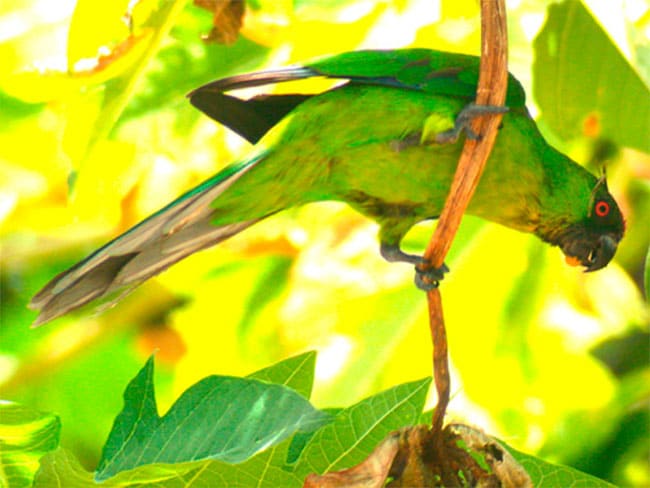
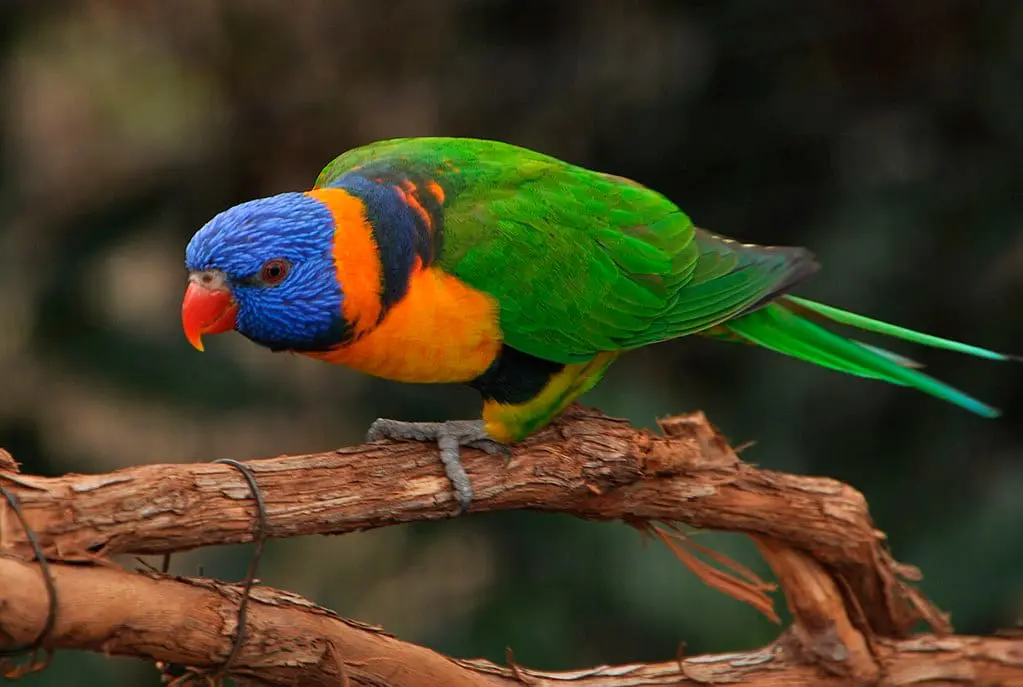
The Red-collared Lorikee (Trichoglossus rubritorquis) they have the head violet / blue with purple / blue streaks on face; throat and sides of the nape blackish; neck orange / red; chest yellow / orange without sweeping; abdomen dark green; the thighs green / yellow until undertail-coverts; upperparts and tail green; underwing-coverts orange; yellow and broadband under the wing . Bill orange / red. Eyes dark orange.
The youth they are similar to adults.

    taxonomy:

Occasionally he treated in Australian literature as a separate species of Coconut Lorikeet (Trichoglossus haematodus), but this is only appropriate review, as here, the whole complex of Rainbow Lorikeet: differs from Rainbow Lorikeet (Trichoglossus moluccanus) in his collar Orange Fire vs. pale green; Blue neck vs. green; vs belly black. blue; and of the Scarlet-breasted Lorikeet (Trichoglossus forsteni) in his collar Orange Fire vs. yellowish green; nape blue vs. red crab; nape blue vs. dark blue or green; larger size.

Species Monotypic.

  • Sound of the Red-collared Lorikee.

Habitat:

There have been no large-scale seasonal movements are common throughout the year in some places.

It's more common in lowlands, but it is up 2400 meters above sea level. They can be observed in a wide variety of areas including settlements, forests, coconut plantations, Savanna, eucalyptus forests and mangroves. They are in mixed flocks with other parrots; small and noisy groups. Nomads, since they depend on flowering trees. It perches communally in groups of hundreds of birds.

Reproduction:

Reproductive biology very similar to that of the Coconut Lorikeet (Trichoglossus haematodus). May-January season in Northern Territory. The laying Typically two or three eggs.

Food:

Diet very similar to the Coconut Lorikeet (Trichoglossus haematodus) which feeds on nectar, fruit, flowers and insects, including Pandanus spiralis. It can also be found around artificial feeding stations.

I necked Lori distribution:

Extension of the distribution (breeding/resident): 1.100.000 km2

North Autรณctono Australia, which they inhabit the lowlands. Integrated or hybridized with Coconut Lorikeet (Trichoglossus haematodus) on queensland peninsula, Australia, in southwest Cape York.

Red-collared Lorikeet Conservation:

Rationale for the Red List category

1. Current red list category of the UICN: Least Concern..


minor concern

2. The population trend: Decreasing.

3. Population size : It is unknown.

This species has a extremely large distribution area, and therefore does not approach the thresholds Vulnerable under the criterion of size range (Extent of Occurrence <20,000 km2 combined with a decreasing area size or fluctuating distribution, extension / habitat quality, or population size and a small number of places or severe fragmentation).

While the trend of the population seems to be decreasing, the decline is not believed to be rapid enough to approach the Vulnerable thresholds according to the population trend criterion (decrease of more than 30% in ten years or three generations).

The population size has not been quantified, but it is not believed to approach the thresholds Vulnerable under the criterion of population size (<10.000 mature individuals with an estimated continuous decrease in> 10% in ten years or three generations, or with a specific population structure). For these reasons, the species is assessed as Least concern.

    Justification of the population

Global population size has not been quantified, but the species is described as abundant (pit et to the. 1997).

    Justification trend

It is suspected that the population is declining due to unsustainable levels of exploitation.

    Threats

The species has been the subject of a intense trade: from 1981, When it was included in the Appendix II of the CITES, they have been 100.388 individuals caught in international trade (UNEP-WCMC CITES Trade Database, January 2005).

In captivity:

In Europe, this species of lori has been largely imported from early last century, and in 1910 it managed to raise in the zoo London (four years later, the first calf in France). Currently it is rare outside Australia. Life expectancy: 20 years in nature, 15-25 years in captivity.

Alternative names

Australian rainbow lory, Rainbow Lorikeet (Red-collared), Red collared Lorikeet, Red-collared Lorikeet (English).
Loriquet ร  col rouge, Loriquet ร  collier rouge, Loriquet ร  tรชte bleue (ร  col rouge), Loriquet ร  tรชte bleue (rubritorquis) (French).
Australischer Blauwangenallfarblori, Darwin-Allfarblori, Rotnackenlori (German).
Periquito-arco-รญris (rubritorquis), Lรณris-de-colar-rojo (Portuguese).
Lori cuellirrojo, Lori Arcoiris (rubritorquis) (espaรฑol).

scientific classification:


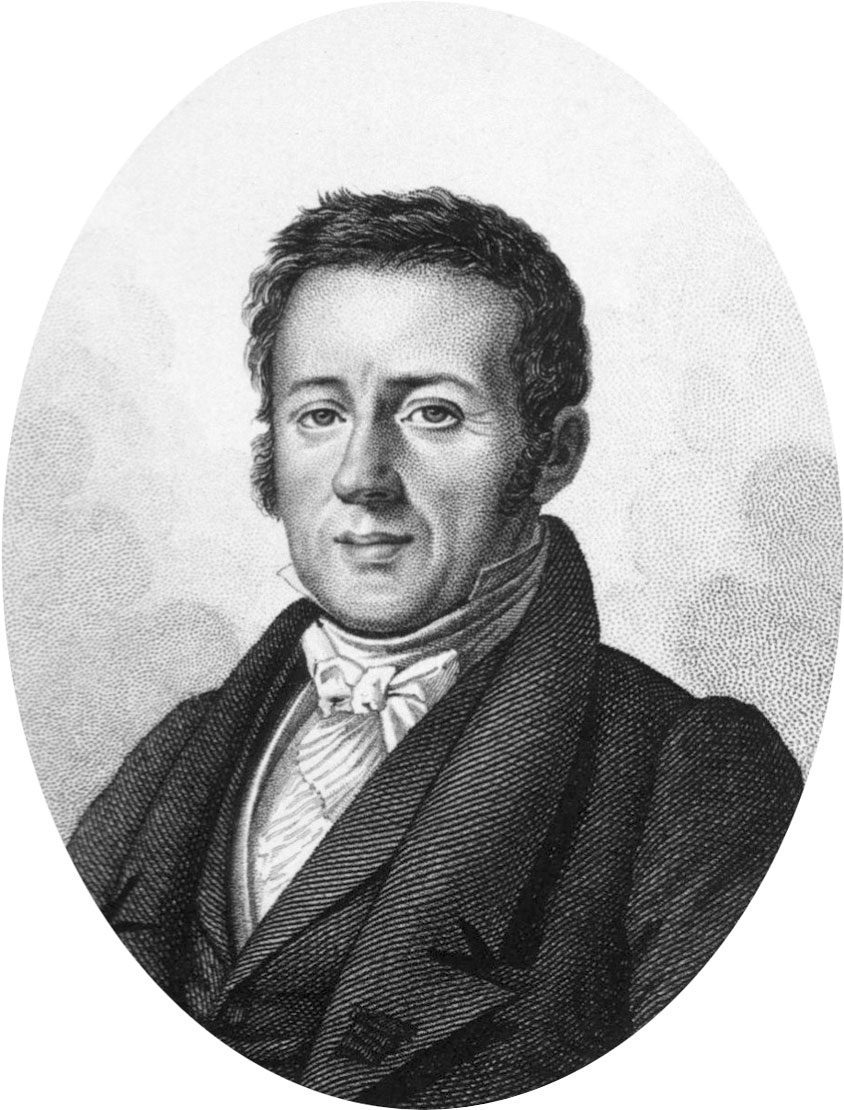
Thomas Horsfield
Thomas Horsfield

Order: Psittaciformes
Family: Psittaculidae
Gender: Trichoglossus
Scientific name: Trichoglossus rubritorquis
Subpoena: Vigors & Horsfield, 1827
Protonimo: Trichoglossus Rubritorquis

ยซRed-necked loryยป images:

Videos "Red-collared Lorikee"


ยซLori cuellirrojoยป (Trichoglossus rubritorquis)

    Sources:

    1. Avibase
    2. Parrots of the World โ€“ Forshaw Joseph M
    3. Parrots A Guide to the Parrots of the World – Tony Juniper & Mike Parr
    4. Birdlife

    Photos:

    (1) – A Red-collared Lorikeet at Cincinnati Zoo, Ohio, USA by Fr. Ted Bobosh [CC BY-SA 2.0], via Wikimedia Commons
    (2) – A Red-collared Lorikeet at Cincinnati Zoo, Ohio, USA by Ted [CC BY-SA 2.0], via Wikimedia Commons
    (3) – Red-collared Lorikeet standing on a manโ€™s cap at Lion Country Safari, Florida, USA by derivative work: Snowmanradio (talk)Trichoglossus_haematodus_rubritorquis_-Lion_Country_Safari-6.jpg: Duncan Rawlinson from Vancouver, BC [CC BY 2.0 or CC BY 2.0], via Wikimedia Commons
    (4) – Red-collared Lorikeet (Trichoglossus rubritorquis) in the Walsrode Bird Park, Germany by Quartl [CC BY-SA 3.0], from Wikimedia Commons
    (5) – Red-collared Lorikeet (Trichoglossus haemotodius rubritorquis) by Geoff WhalanFlickr
    (6) – Red-collared Lorikeet (Trichoglossus haemotodius rubritorquis) by Geoff WhalanFlickr
    (7) – Red-collared Lorikeet (Trichoglossus haematodus rubritorquis) by Graham WinterfloodFlickr
    (8) – Trichoglossus haematodus rubritorquis Location taken: Lion Country Safari, Loxahatchee, Florida Photo by David J. pole [CC BY-SA 4.0], via Wikimedia Commons
    (9) – Red-collared Lorikeet (Trichoglossus haemotodius rubritorquis) by Geoff WhalanFlickr
    (10) – A painting of a Red-collared Lorikeet (originally captioned ยซTrichoglossus rubritorquis. Scarlet-collared Parrakeet by Edward Lear [Public domain]

    Sounds: Phil Gregory, XC287820. accessible www.xeno-canto.org/287820

โ–ท The world of Pets: Dogs, cats, birds, reptiles, amphibians

Mountain Parakeet
Psilopsiagon aurifrons


Mountain Parakeet

Content

Description:


Anatomy-parrots

17 to 19 cm.. height.
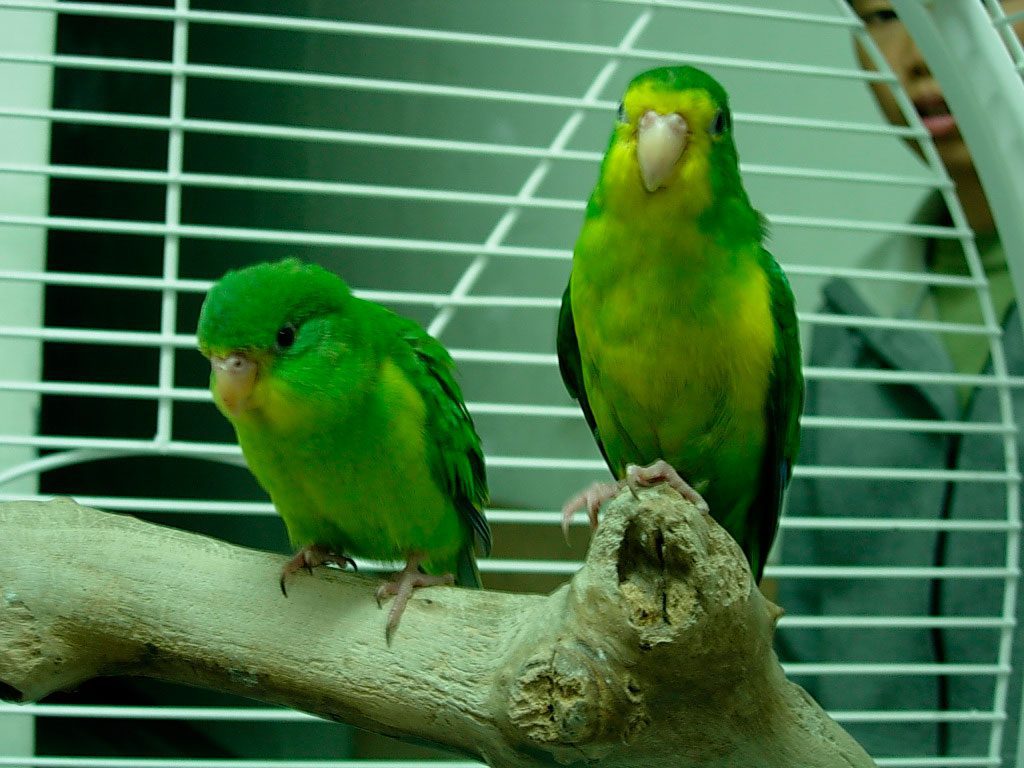
The Mountain Parakeet (Psilopsiagon aurifrons) is distinguishable by the face yellow and the belly yellow with dye-Green, bill pale, wing with extreme blue (notorious is when closed), tail long. Bill and legs color clear. Iris black.
The female with face green and belly yellow-green.
Treated above as Bolborhynchus aurifrons.

Subspecies description:

  • Psilopsiagon aurifrons aurifrons

    (Lesson, 1830) – The nominal,

  • Psilopsiagon aurifrons margaritae

    (Berlioz & Dorst, 1956) – With very little or nothing of yellow and very little dimorphic sexual, they resemble females of the subspecies nominal and robertsi. The females sometimes have the bill grey;

  • Psilopsiagon aurifrons robertsi

    (Carriker, 1933) – It has yellow only in the forecrown, sides bill, throat with green dye, and belly green with yellow line on the sides.

  • Psilopsiagon aurifrons rubrirostris

    (Burmeister, 1860) – With mask facial blue sky and no sexual dimorphism

Habitat:

Video – "Mountain Parakeet" (Psilopsiagon aurifrons)

Serrano catita girl (Psilopsiagon aurifrons): VOICE

It is found in variety of ecosystems, forest in gallery, Puna and crops, from 1000 to 2900 m (sometimes from sea level up to 4500 m). It is possible to carry out local migration after reproduction. gregarious.

Reproduction:

Sometimes They nest colonially, in cracks or holes in inaccessible Rocky escarpments.
breeding station: From October to December, North of Chile, February/March, Argentina.

Food:

It feeds on shoots, seeds, vegetables and fruits.

Distribution:

Size of the distribution (reproduction / resident): 820.000 km2

Can be found in the Centre and South of the Andes, from Peru until Argentina and Chile.

Subspecies distribution:

  • Psilopsiagon aurifrons aurifrons

    (Lesson, 1830) – The nominal,

  • Psilopsiagon aurifrons margaritae

    (Berlioz & Dorst, 1956) – The Andean slopes in the South of Peru, Bolivia, North of Chile and Northwest of Argentina.

  • Psilopsiagon aurifrons robertsi

    (Carriker, 1933) – The Valley of the Maranon River in the Center-North of Peru.

  • Psilopsiagon aurifrons rubrirostris

    (Burmeister, 1860) – The sheds Andean of the Northwest Argentine, between Catamarca and Cรณrdoba, and South of Chile

Conservation:

State of conservation โ“˜


minor concern Minor Concern โ“˜ (UICN)โ“˜

โ€ข Current category of the Red List of the UICN: Least concern.

โ€ข Population trend: Stable.

This species has a very large range, and therefore not it approaches the threshold of Vulnerable on the criterion of size of the area.

The trend of the population seems to be stable, and therefore, the species is not approaching thresholds for vulnerable under the trend of criterion.

For these reasons, the species is evaluated as Least concern.

"Mountain Parakeet" in captivity:

Itร‚ยดs rare in captivity. They are very susceptible to stress and disease, so many die during the process of acclimatization. It is good to acclimatize it in a large aviary with other birds. Prone to deficiency of vitamin D3.

Need of hiding places so that they may disappear from view.

Alternative names:

Mountain Parakeet, Golden-fronted Parakeet (English).
Toui ร  bandeau jaune, Perruche ร  bandeau jaune (French).
Zitronensittich, Zitronen-Sittich (German).
Periquito-da-cordilheira (Portuguese).
Catita de Frente Dorada, Catita Frentidorada, Catita serrana chica, Perico cordillerano (espaรฑol).
Catita serrana chica (Argentina).
Perico cordillerano (Chile).
Perico Cordillerano (Peru).
Cialla (Aymara).

scientific classification:

Renรฉ Primevรจre Lesson

Order: Psittaciformes
Family: Psittacidae
Genus: Psilopsiagon
Scientific name: Psilopsiagon aurifrons
Citation: (Lesson, 1831)
Protonimo: Psittacus (Lathamus) aurifrons

Images "Mountain Parakeet"

Mountain Parakeet

Two Mountain Parakeet views between Uquia and Yavi, Salta, Argentina


Species of the genus Psilopsiagon

Sources:

Avibase
– Parrots of the World โ€“ Forshaw Joseph M
– Parrots A Guide to the Parrots of the World – Tony Juniper & Mike Parr
Birdlife
– Parrot Book, Parrots and macaws Neotropical

Photos:

(1) – Mountain Parakeet; two in a cage By TJ Lin (originally posted to Flickr as mountain oarakeet) [CC BY-SA 2.0], via Wikimedia Commons
(2) – Two Mountain Parakeets seen between Uquia to Yavi, Salta, Argentina By Ron Knight from Seaford, East Sussex, United Kingdom (Mountain ParakeetUploaded by snowmanradio) [CC BY 2.0], via Wikimedia Commons

Sounds: (Xeno-canto)

โ–ท The world of Pets: Dogs, cats, birds, reptiles, amphibians

Lilac-tailed Parrotlet
Touit batavicus

Lilac-tailed Parrotlet

Content

Description:

Lilac-tailed Parrotlet

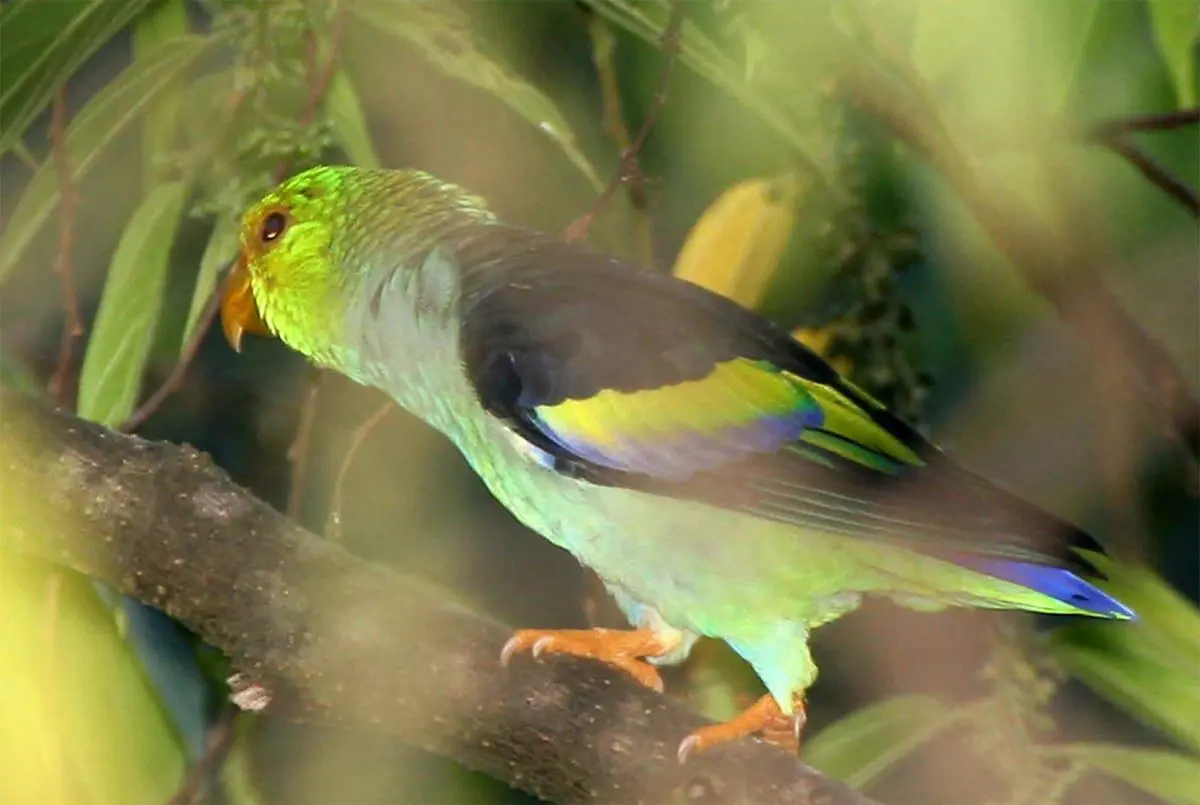
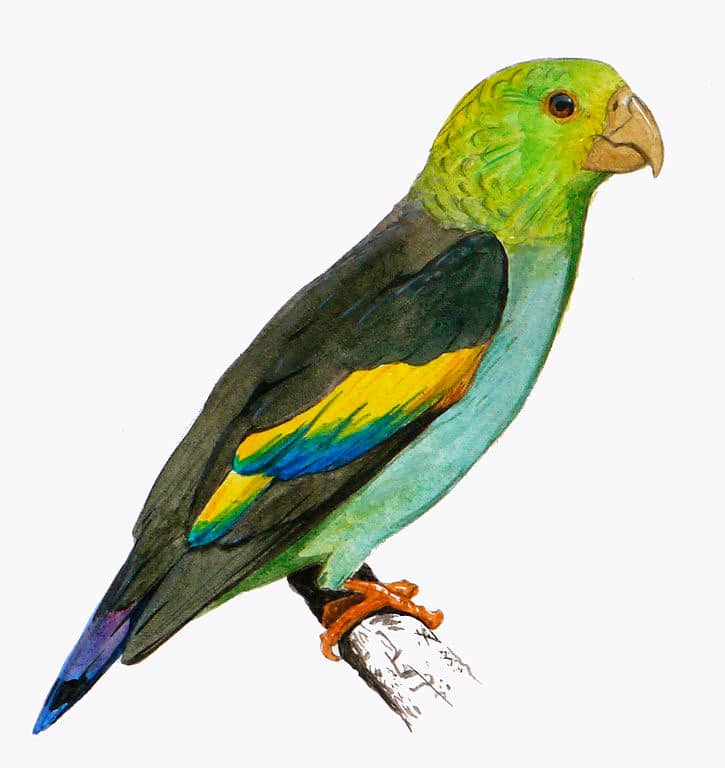
The Lilac-tailed Parrotlet (Touit batavicus) has 14 cm.. height. Usually black in it upperparts (back and wings) and green in it lower. With the crown and nape yellowish-green with black border (What gives a suspiciously aspect). The forecrown, cheeks and chin Yellow Gold, chest Azure Blue, Yellow patch in the wing , tail ends reddish purple and black subterminal edge.

Habitat:

It inhabits in forest dry and jungles cloudy between 400 and 1700 m (in Colombia).
Considered powerful flying, the sharp profile of its wings, They quickly fly over the forest canopy, in groups of 10 to 50 and they are gregarious except in the time reproductive.

It is of a forest Ave, but it can be seen near the shore of the sea in the areas where the edge of the forest close to the coast.

The calls during the flight they are soft and nasal, reaching a high tone, Buzz.

Reproduction:

It nests in hollows in trees or in arboreal termite holes, between the months of February and March. It is thought that it has migratory movements.

Food:

Its diet is composed of flowers, nectar, fruit, outbreaks, berries and seeds.

Distribution:

Size of the area of distribution (reproduction / resident): 330.000 km2

Can be found from the North of Venezuela According to the East up to Guyana, Suriname, French Guiana and in Trinidad and Tobago.

Conservation:

State of conservation โ“˜


minor concern Minor Concern โ“˜ (UICN)โ“˜

โ€ข Current category of the Red List of the UICN: Least concern.
โ€ข Population trend: Decreasing.

Justification of the population

The size of the world population It has not been quantified, but this species is described as ยซquite commonยป (Stotz et to the., 1996).

Justification of trend

They suspect that this species has lost a 8,2-8,4% of habitat suitable within their distribution during three generations (15 years) based on a model of Amazon deforestation (Soares-Filho et to the., 2006, Bird et to the., 2011). Given the susceptibility of the species to the hunting or the capture, It is suspected that will decrease in <25% during three generations.

"Lilac-tailed Parrotlet " in captivity:

It's hard to keep alive captivity, refuses food during the acclimatization period. Deaths occur for this reason and the unbalanced diet.

Images of the "Lilac-tailed Parrotlet "

Videos:

Alternative names:

Lilac-tailed Parrotlet, Black-winged Parrot, Lilac tailed Parrotlet, Scopoli’s Parrot, Seven-colored Parrot, Seven-colored Parrotlet, Seven-coloured Parrot, Seven-coloured Parrotlet (English).
Toui ร  sept couleurs (French).
Siebenfarbenpapagei, Siebenfarben-Papagei (German).
Lilac-tailed Parrotlet (Portuguese).
Cotorrita Sietecolores, Lorito de Siete Colores (espaรฑol).


scientific classification:

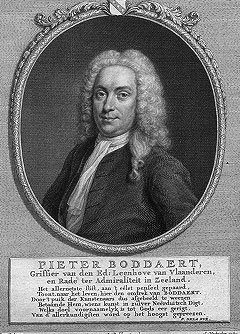
Pieter Boddaert
Pieter Boddaert

Order: Psittaciformes
Family: Psittacidae
Genus: Touit
Scientific name: Touit batavicus
Citation: (Boddaert, 1783)
Protonimo: Psittaca Batavica


Lilac-tailed Parrotlet (Touit batavicus)


Species of the genus Touit


Sources:

  • Avibase
  • Parrots of the World โ€“ Forshaw Joseph M
  • Parrots A Guide to the Parrots of the World – Tony Juniper & Mike Parr
  • Parrot Book, Parrots and macaws Neotropical

Photos:

(1) – birdsoftt
(2) – Lilac-tailed Parrotlet. Watercolor, Romain Risso By Gossipguy (Own work) [CC BY-SA 3.0], via Wikimedia Commons

โ–ท The world of Pets: Dogs, cats, birds, reptiles, amphibians

Dusky Parrot
Pionus fuscus

Dusky Parrot

Content


Anatomy-parrots

Description:

24 to 26 cm.. height and between 179 and 222g. weight.

The coloration general of the Dusky Parrot (Pionus fuscus) is blue violet dark. Small patch of feathers on the front of the lores; on the basis of the cere, Pink; for the rest, lores, cheeks, forecrown and crown, lavender blue pale with white feather bases in the crown, What gives a faint mottled appearance in some birds; ear-coverts more dark and more grey, forming a distinctive patch; feathers in the throat and the sides of the neck narrow Brown in the Center and tips of pale blue white stripe, forming the joint a collar incomplete.

feathers in the the mantle and back, of color Brown leaden with those margins pale, giving the scalloped effect; Scapulars, rump and uppertail-coverts, darker grey brown, with very weak pale margins (or absent).

Coverts smaller and medium-sized, of color Brown leaden with margins pale; coverts primary and higher, as well as the flight feather, cobalt blue; undertail, the wings deep blue. Feathers on the top of the chest, pale pinkish with pale Lavender color tips; area more low in the chest with less dye Lavender, becoming darker and more color came in the belly, reaching, Some birds, the center of the belly of a rich colour came; undertail-coverts crimson.

Tail of color blue with red at the base. upper jaw Blackish at the tip with patch of color Horn in the base, lower jaw Blackish with the base more clear and more pale visible in some birds; Iris dark brown; Legs grey.

Both sexes similar.

In the immature staining is equal to the adult, but with some roofs on the upper wings with green edge; secondary feathers dyed in green and the eye ring naked and white.

Habitat:

Dusky Parrot

They inhabit mainly in lowland rainforests and moist forests in the foothills, in where the birds spend the greater part of the time in the canopy; Mainly in the forest land, occasionally in forests and marshes and less frequently in igapรณ (permanently flooded forests), Although there have been reports of birds in Savannah (Suriname), coastal gallery forest (French Guiana) and cultivated areas (Although avoiding habitats more open and less seen in clearings or edges of forest to some close relatives, such as the Blue-headed Parrot (Pionus menstruus).

rare species, flying alone or in small groups on the forest canopy,

Are you can see in Venezuela from the level of the sea to close them 1.000 m, and in close 1.200-1.800 meters on the side Colombian of the Sierra de Perija.

gregarious, especially outside the breeding season.

Reproduction:

It nests in hollows of old trees, probably during the second quarter of the year, although a nest was observed in the month of November in For, Brazil. The laying is of 3-4 eggs.

Food:

It feeds mainly in the canopy but also on the branches of fruiting trees in light areas..

The diet includes seeds of the gender Eschweilera and Micropholis.

Distribution:

Size distribution (reproduction / resident): 1.870.000 km2

Its population is discontinuous. There is an isolated population in the Sierra de Perija (border between Colombia and Venezuela); regardless of population, The species is found in Venezuela, to the South of the Orinoco in Bolรญvar, from the Caura River, in the Northwest, up to the Nuria upland, the upper area of the cuyuni river and Sierra de Lema in the areas border with Guyana, in the East, extending through the forested parts of Guyana, Suriname and presumably it French Guiana (There are no known records) until Amapรก, the North-East of Brazil, and spreading more broadly to the East of the Brazilian Amazon, from Black river in the North and South, from the Madeira river to the East of For and Maranhรฃo.

Movements regular seasonal occur in Suriname, with the birds present in the coastal region in the months of July and August.

In general quite common, Although distributed locally; reports of a moderate and widespread presence in Guyana (although rare in Mountains Kanuku in the Southwest); Common in coastal forests, the savanna and forests inside of Suriname.

The deforestation severe and rapid in parts of its range (for example, For and Maranhรฃo, Brazil) is, presumably, causing a decline in the population of the Dusky Parrot.

Very tight in bondage.

Conservation:


minor concern


โ€ข Not considered low No category of threat.

โ€ข Not known as a cage bird, but the loss of habitat may be affecting their populations.

Justification of the population:

The size of the world population Dusky Parrot It has not been quantified, but this species is described as ยซRareยป (Stotz et to the., 1996).

Justification of trend:

It is suspected that this species has lost the 1,1% of habitat within its distribution over three generations (20 years) on the basis of a model of Amazon deforestation (Soares-Filho et to the., 2006, Bird et to the., 2011).

Given the susceptibility of the species to hunt or capture, It is suspected that it will fall in <25% durante tres generaciones.

"Dusky Parrot" in captivity:

Intelligent, curious, a bit noisy, playful when acclimatizes to the owner.
Rare in captivity until the Decade of 1970 When in small quantities were imported from Guyana.

Its longevity is of some 25 years.

Alternative names:

Dusky Parrot, Little Dusky Parrot, Violaceous Parrot, Violet Parrot (English).
Pione violette, Pionus violet (French).
Veilchenpapagei, Veilchen-Papagei (German).
maitaca-roxa, curica, papagainho-roxo, paranรก-i (Portuguese).
Cotorra de Perijรก, Loro Morado (espaรฑol).
Cotorra de Perijรก (Colombia).
Cotorra Morada (Venezuela).

scientific classification:

Order: Psittaciformes
Family: Psittacidae
Genus: Pionus
Scientific name: Pionus fuscus
Citation: (Statius Mรผller, 1776)
Protonimo: Psittacus fuscus

Images "Dusky Parrot"

Videos "Dusky Parrot"

———————————————————————————————–

ยซPurple Parrotยป (Pionus fuscus)


Sources:

Avibase
– Parrots of the World โ€“ Forshaw Joseph M
– Parrots A Guide to the Parrots of the World – Tony Juniper & Mike Parr
Birdlife

Photos:

(1) – Veldhoven
(2) – Dusky Parrot (Pionus fuscus) or Dusky Pionus by Jacques Barraband [Public domain], via Wikimedia Commons

+ More