โ–ท The world of Pets: Dogs, cats, birds, reptiles, amphibians

Hyacinth Macaw
Anodorhynchus hyacinthinus


Hyacinth Macaw

Content

Description:

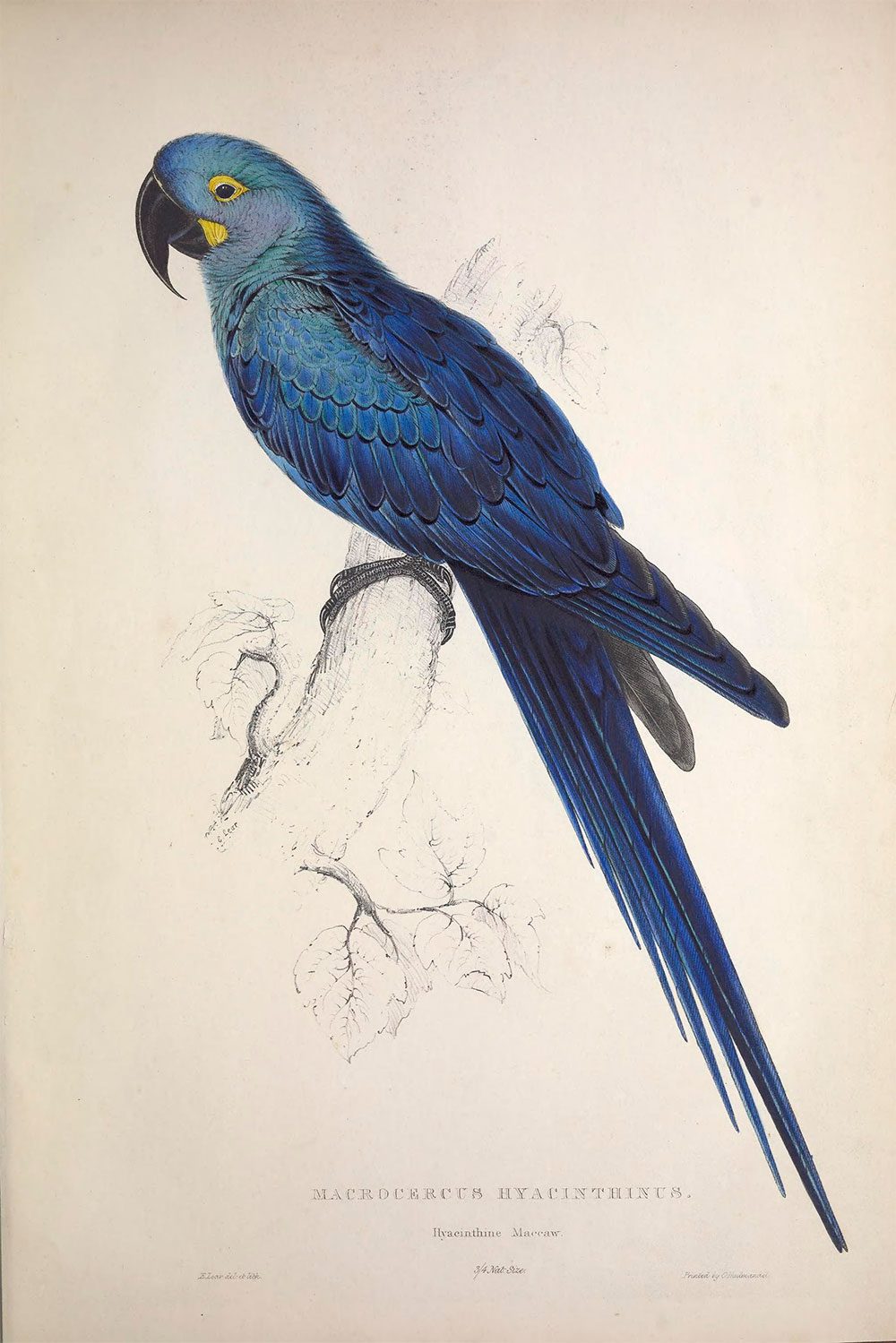
Hyacinth Macaw illustration

90 to 100 cm.. of length and a weight of 1,5 to 1,7 kg.

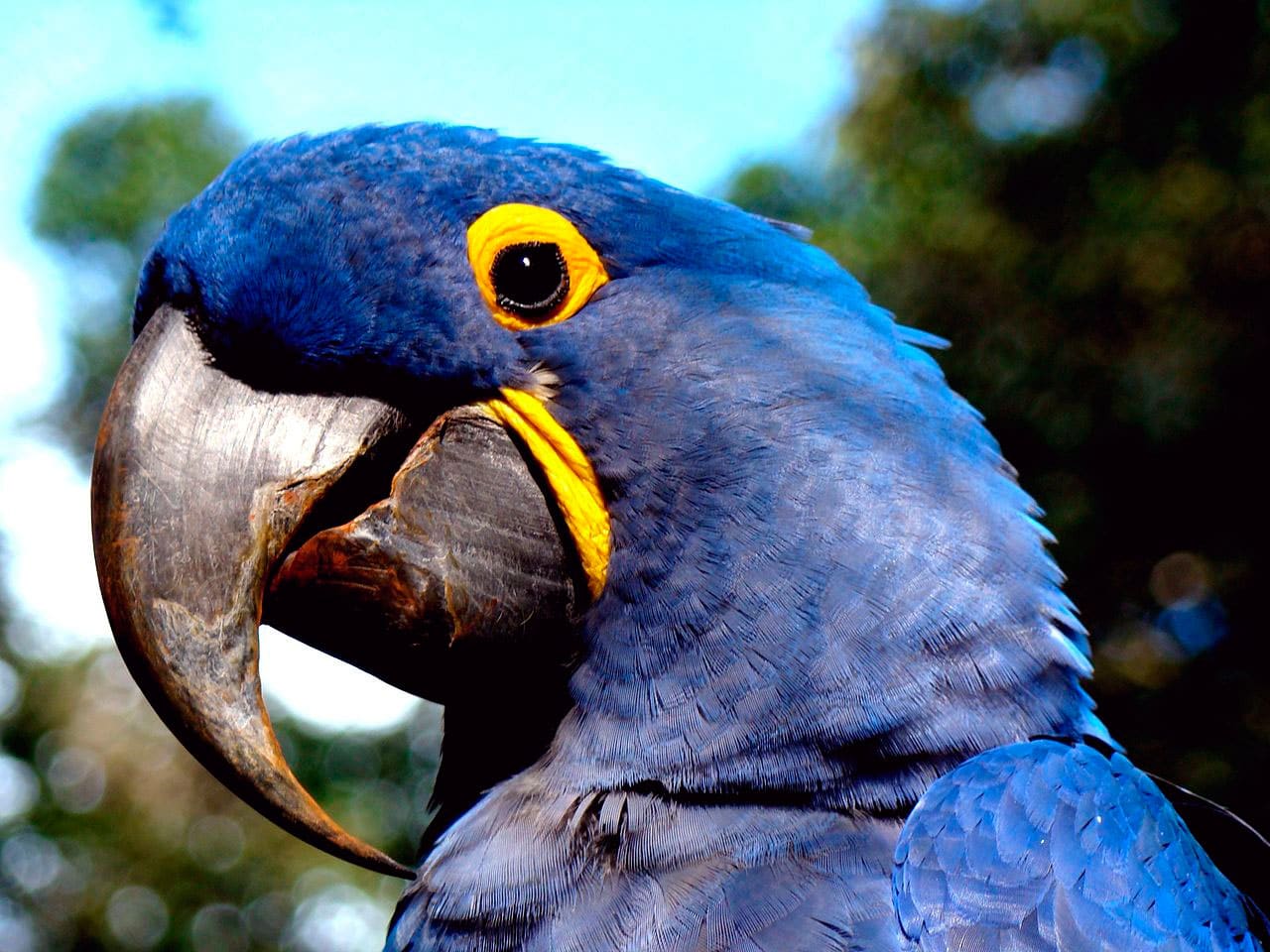
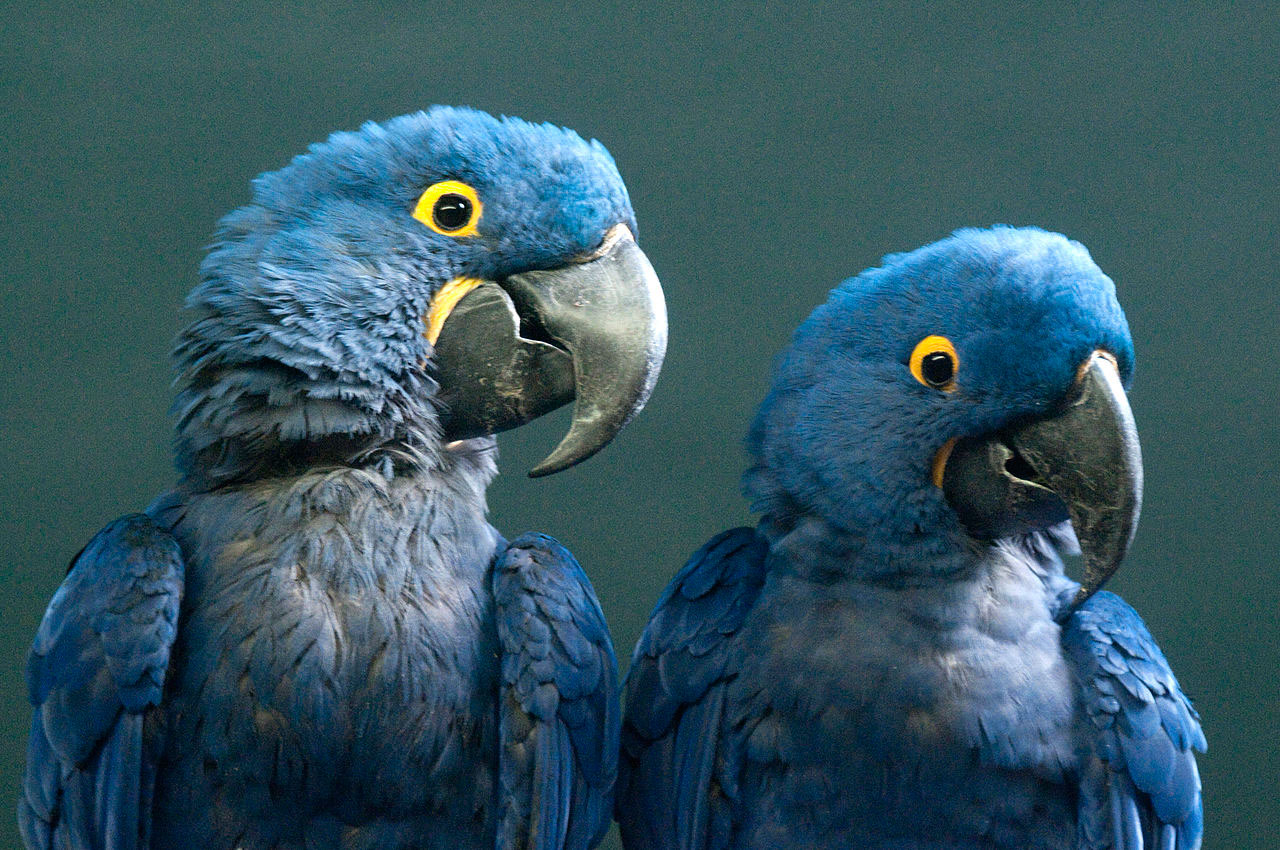
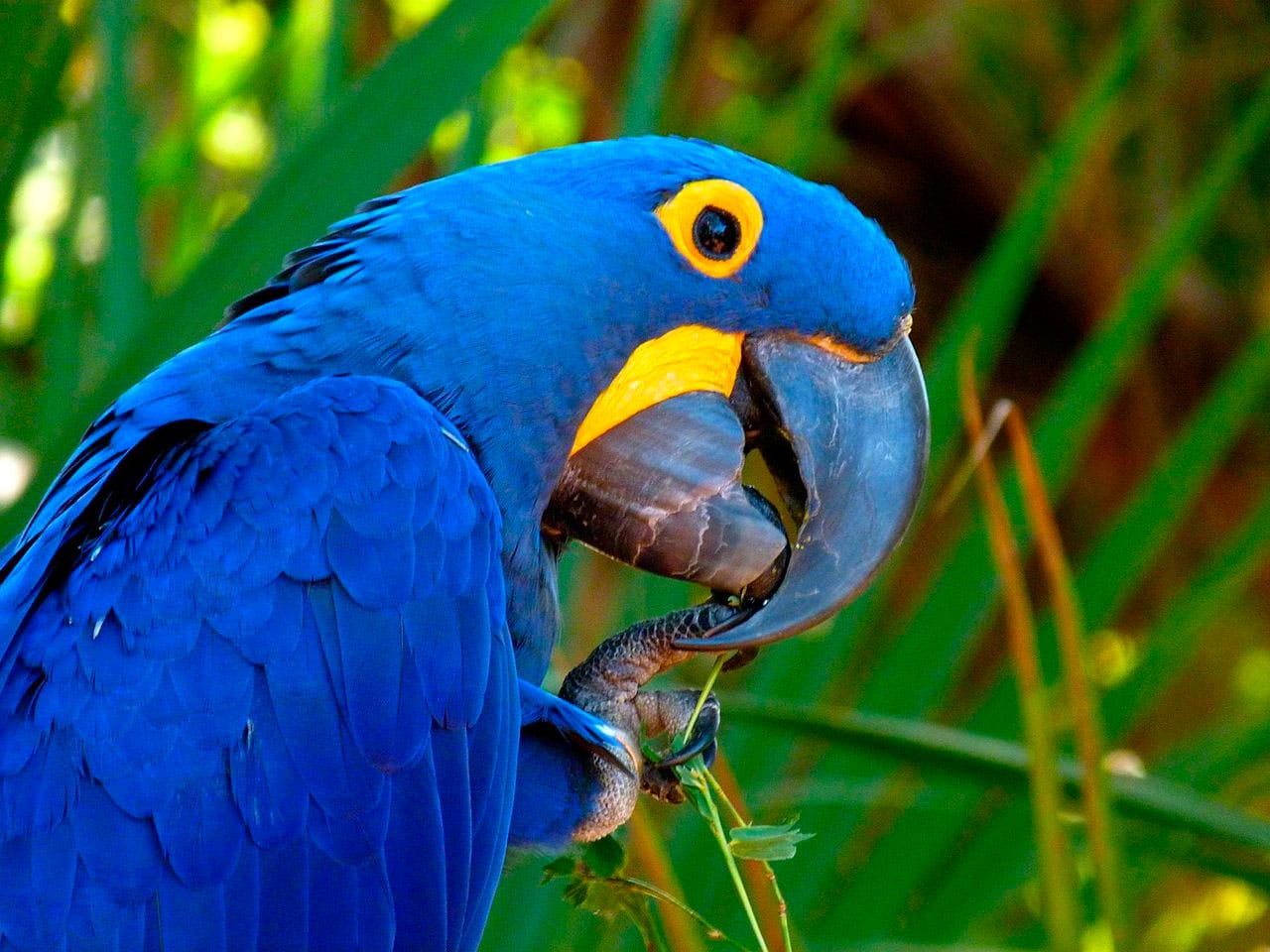
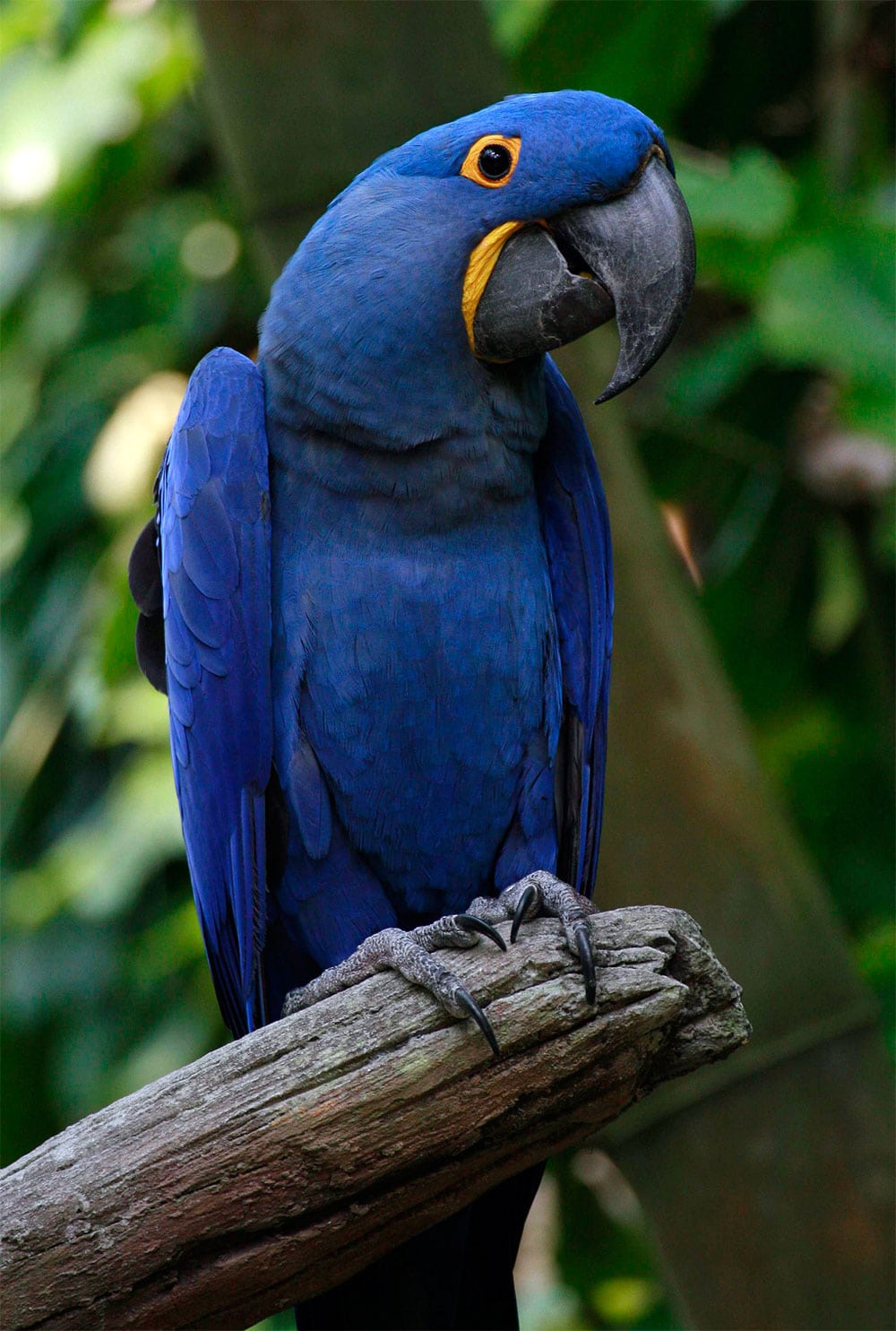
The Hyacinth Macaw (Anodorhynchus hyacinthinus) is the largest parrot; has a distinctive coloration, mostly blue intense, with different colors. Wings and tail below black. The basis of the bill and periocular ring, naked and yellow. The tail is very long, and its powerful bill Black is deeply curved and pointed.

The species Anodorhynchus glaucus, similar but smaller, extinct in the early 20th century, It may have been present in Bolivia.

Habitat:

The Hyacinth Macaw take advantage of a great diversity of habitats rich in various species of Palm trees with large seeds, of which feeds.

In the Brazilian Amazon avoid areas of more moisture, preferring lowland forests and seasonally wet formations with clear zones. In the drier parts of the northeast of Brazil inhabits areas of Plateau cut by Rocky valleys, steep with closed deciduous woodland, gallery forest and swamps with Mauritia flexuosa.

In the the Pantanal region birds frequent gallery forest with palm trees in areas covered with wet grass.

Apparently performs migratory movements.

Usually seen in pairs, family groups or small flocks (usually up to 10); much larger flocks reported before the decline.

Reproduction:

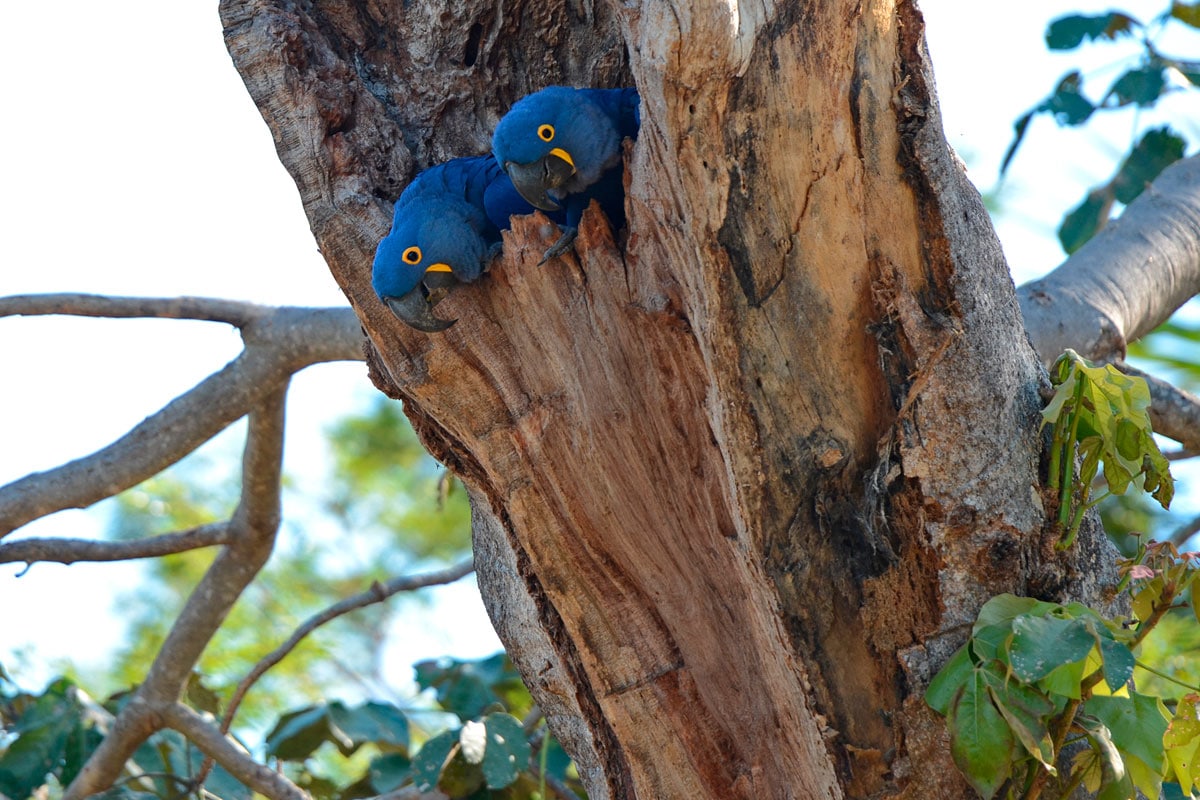
They nest in large tree hollows, in cracks in rocks from cliffs in the northeast of Brazil or in moriche or aguaje (Mauritia).

The favorite for nesting trees in the Mato Grosso, Brazil, include Enterolobium and Sterculia striata. In Northeast Brazil, the nest is located in Palms Mauritia dead or on cliffs.

They usually put one or two eggs, although only one young usually survives if the second egg hatches a few days after the first, since the smaller calf cannot compete with the larger for food.

The incubation period lasts about a month, and the male will assist his partner while she incubates the eggs.

Young people remain with their parents up to three months of age. They reach maturity and begin to play on the seven years.

The breeding season is from August to December, Maybe a little later in areas of pantanal.

Food:

The diet Hyacinth Macaw consists mainly of nuts, locally available of various Palms, including (on Amazonia) Maximiliana regia, Orbignya martiana and Astrocaryum, in the northeast of Brazil, of the Syagrus coronata and Orbignya eicherir, in areas of wetlands of Bone collectors and Acrocomia.

The palm nuts they take them from the own soil or plant (especially after a fire or when available as undigested remains in livestock droppings).

Other fruits that have information are the from the Ficus sp., as well as aquatic molluscs Pomacea.

Birds drink liquid from green palm fruits.

Distribution:

Its distribution includes the Centre of South America, Perhaps in several spacious separate areas.

In the Amazonia in For from the Tapajos River, to the East of the basin of the Tocantins River, extending to the South, possibly to the Northwestern area of Tocantins. At least before present North of the Amazon River (in Amapรก, amazon and Roraima, Brazil) and perhaps some specimens can still inhabit, Although there is no known recent records.

Distributed, as well, through the Northeast interior of Brazil, more or less centered on the Microregion of the Chapadas das Mangabeiras in the union between Maranhรฃo, Piauรญ, Goiรกs and Bay, Brazil (the region Gerais).

A third important population focuses on habitats wetlands of the upper basin of the Paraguay River in the southwest of Mato Grosso, Mato Grosso do Sul, Brazil, and extending into the adjacent area of the East of Bolivia and North end of Paraguay.

Reported as probable for the Mapori River to the South-East of Colombia (Vaupรฉs).

Movements General residents but perhaps seasonal in the Amazon in relation to the ecology of the plants on which they feed.

The territory between the three current major distributions, can still be busy even though recent trends given, They seem to indicate that this seems unlikely.

Formerly common in some areas (for example, Mato Grosso). Now they are rather unevenly distributed, with the recent and likely declines continuous in its population due mainly to the illegal trade internal and to the smaller, but significant, international market of live birds. Also hunted for its feathers (especially Pari) and as food. Declining in some areas (for example Eastern Amazonia), because of the alteration or loss of habitat.

Total estimated wild population in 3000 (1.992). CITES Appendix I.

VULNERABLE.

Conservation:
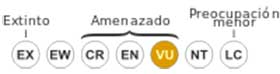

Vulnerable

โ€ข Current Red List of UICN: Vulnerable

โ€ข Population trend: Decreasing

The Hyacinth Macaw It has been subjected to a massive illegal trade. At least 10.000 birds were captured in the wild, in the decade of 1980, with a 50% destined to the Brazilian market (Mittermeier et to the. 1990).

Among 1983-1984, more than 2.500 birds were moved out of Black Bay, Paraguay, with others 600 extra at the end of 1980 (J. Pryor in litt., 1998). Although these numbers are now much smaller, illegal trade continues (for example 10 bird went through a pet market in Santa Cruz, Bolivia, in August 2004 until July 2005, where the birds were changing hands for 1.000 $ US and went to Peru [Herrera and Hennessey 2007]). More recently it has been noted that there appears to be almost no illegal trade in this species in Bolivia (B. Hennessey in litt. 2012).

Through its area of distribution, There is something of the local game for use as food and for its feathers.

In the Amazon, habitat loss has occurred for cattle ranching and hydroelectric power systems in the rivers Tocantins and Xingu.

In the Pantanal, only the 5% trees S. apetala have suitable cavities (Guedes 1993, Johnson 1996). Young trees are used as food for livestock and burned by frequent fires (Newton 1994).

The Gerais is it being quickly transformed by mechanized agriculture, ranching and plantations of exotic trees (Conservation International 1999).

In Paraguay, the preferred habitats of the Hyacinth Macaw are considered seriously threatened (N. Kochalka Lopez in litt. 2013) and the Paso Bravo National Park suffering from illegal logging.

Conservation Actions Underway:

    – CITES Appendix I and II, protected under Brazilian and Bolivian law and prohibition of exports from all countries of origin.

    – Many landowners in the Pantanal (more and more in the Gerais) they do not allow hunters on their property.

    – There are several studies long-term and conservation initiatives (for example. Anon 2004).

    – In the Refuge Caiman ecological in the Pantanal, the Hyacinth Macaw Project has used artificial nests and hatchling management techniques and raised awareness among farmers (Anonymous 2004).

Conservation Actions Proposed:

    – Study of the range, the current status of the population and the scope of the negotiation of the different parts of its area of distribution (Snyder et to the., 2000).

    – Assess the effectiveness of artificial nesting boxes (Snyder et to the., 2000).

    – To enforce the legal measures that hinder trade.

    – Experiment with ecotourism in one or two sites to encourage donors (Snyder et to the., 2000).

"Hyacinth Macaw" in captivity:

Rare up to 1970; then, starting at 1980, increased considerably in number of captive birds due to increased breeding.

Despite the prohibitions, many of these Macaws they are still trading at high prices (10.000 euros or more), due to its beauty and ease to mimic human language.

Rearing this species can be difficult and, Unfortunately, many chicks die each year in inexperienced hands.

From this page we strongly preserve these beautiful birds in their natural environment, sincerely not us seems reasonable to his tenure as a pet.

Alternative names:

– Hyacinth Macaw, Blue Macaw, Black Macaw (English).
– Ara hyacinthe (French).
– Hyazinthara, Hyathinzara (German).
– Arara-azul-grande, arara-azul, arara-hiacinta, arara-preta, arara-roxa, arara-una, canindรฉ (Portuguese).
– arara-azul, Arara-azul-grande, arara-hiacinta, arara-preta, arara-roxa, Ararauna, arara-una, canindรฉ (Portuguese (Brazil)).
– Guacamayo Azul, Guacamayo Jacinto, Papagayo azul (espaรฑol).
– Jacinta azul, Paraba azul (Bolivia).
– Vihina (Desana).
– Kaheta (Carijona).
– Guaรญa-hovy (Guarani).
– Arara-รบna (Tupi Guaranรญ).

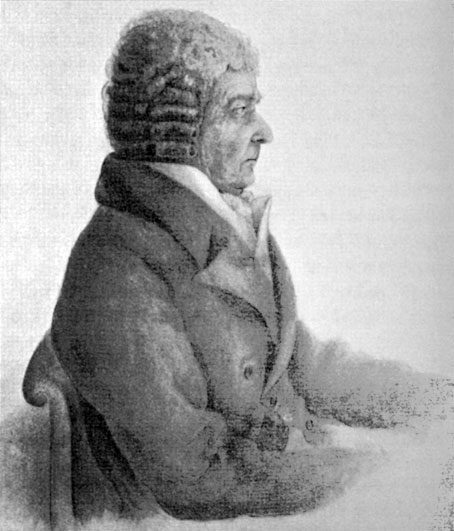
John Latham
John Latham

scientific classification:


– Order: Psittaciformes
– Family: Psittacidae
– Genus: Anodorhynchus
– Scientific name: Anodorhynchus hyacinthinus
– Citation: (Latham, 1790)
– Protonimo: Psittacus hyacinthinus


Images Hyacinth Macaw:

Videos "Hyacinth Macaw"


Species of the genus Anodorhynchus

ยซGuacamayo Jacintoยป (Anodorhynchus hyacinthinus)


Sources:

– Avibase
– Parrots of the World โ€“ Forshaw Joseph M
– Parrots A Guide to the Parrots of the World – Tony Juniper & Mike Parr
– Birdlife
– Parrots, Parrots and macaws (Neotropical)

– Photos:

(1) – Hyacinth Macaw also known as Hyacinthine Macaw at Disneyโ€™s Animal Kingdom Park by Hank Gillette [CC BY-SA 3.0 or GFDL], via Wikimedia Commons
(2) – A Hyacinth Macaw at Brevard Zoo, Florida, USA By Rusty Clark from merritt usland FLA (Brevard Zoo Hyacinth Macaw) [CC BY 2.0], via Wikimedia Commons
(3) – Hyacinthine Macaw at Melbourne Zoo, Australia By derivative work: Snowmanradio (talk)Anodorhynchus_hyacinthinus_-Australia_Zoo_-8.jpg: Erik (HASH) Hersman [CC BY 2.0], via Wikimedia Commons
(4) – Hyacinth Macaws at Stone Zoo, Stoneham, Massachusetts, USA By Eric Kilby (originally posted to Flickr as Squawking Heads) [CC BY-SA 2.0], via Wikimedia Commons
(5) – Hyacinthine Macaw (Anodorhynchus hyacinthinus) By Ana_Cotta (originally posted to Flickr as ARARA) [CC BY 2.0], via Wikimedia Commons
(6) – Hyacinth Macaws, Anodorhynchus hyacinthinus at the Aquarium of the Americas in New Orleans, Louisiana By Derek Jensen [CC BY 2.0], via Wikimedia Commons
(7) – A pair of Hyacinth Macaws and thier nest in Mato Grosso do Sul, Brazil By Geoff Gallice from Gainesville, FL, USA (Hyacinth macaws) [CC BY 2.0], via Wikimedia Commons
(8) – A Hyacinth Macaw preening at the Aquarium of the Americas, New Orleans, USA By Quinn Dombrowski (originally posted to Flickr as Dainty) [CC BY-SA 2.0], via Wikimedia Commons
(9) – Anodorhynchus hyacinthinus by Hans – Pixabay
(10) – Illustration Guacamayo Jacinto By Lear, Edward [CC BY 2.0 or Public domain], via Wikimedia Commons

– Sounds: Niels Poul Dreyer (Xeno-canto)
โ–ท The world of Pets: Dogs, cats, birds, reptiles, amphibians

Indigo Macaw
Anodorhynchus leari


Guacamayo de Lear

Content

Description:

Ilustraciรณn Guacamayo de Lear

75 cm.. length and 940 g. of weight.

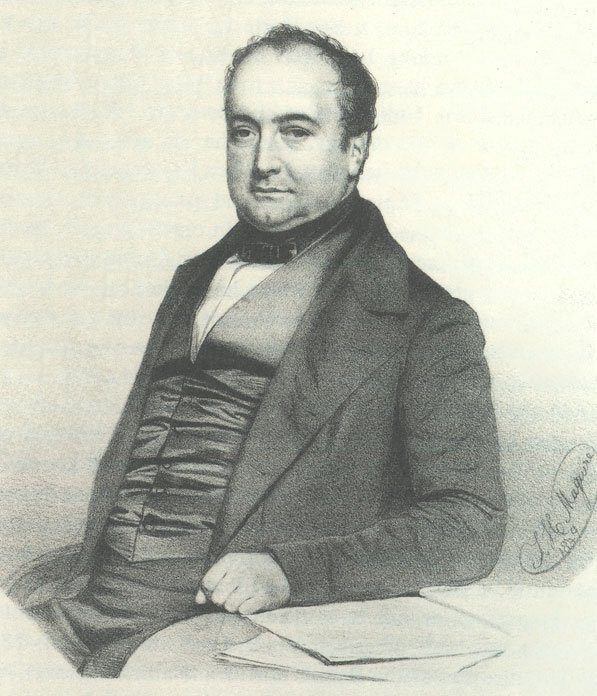
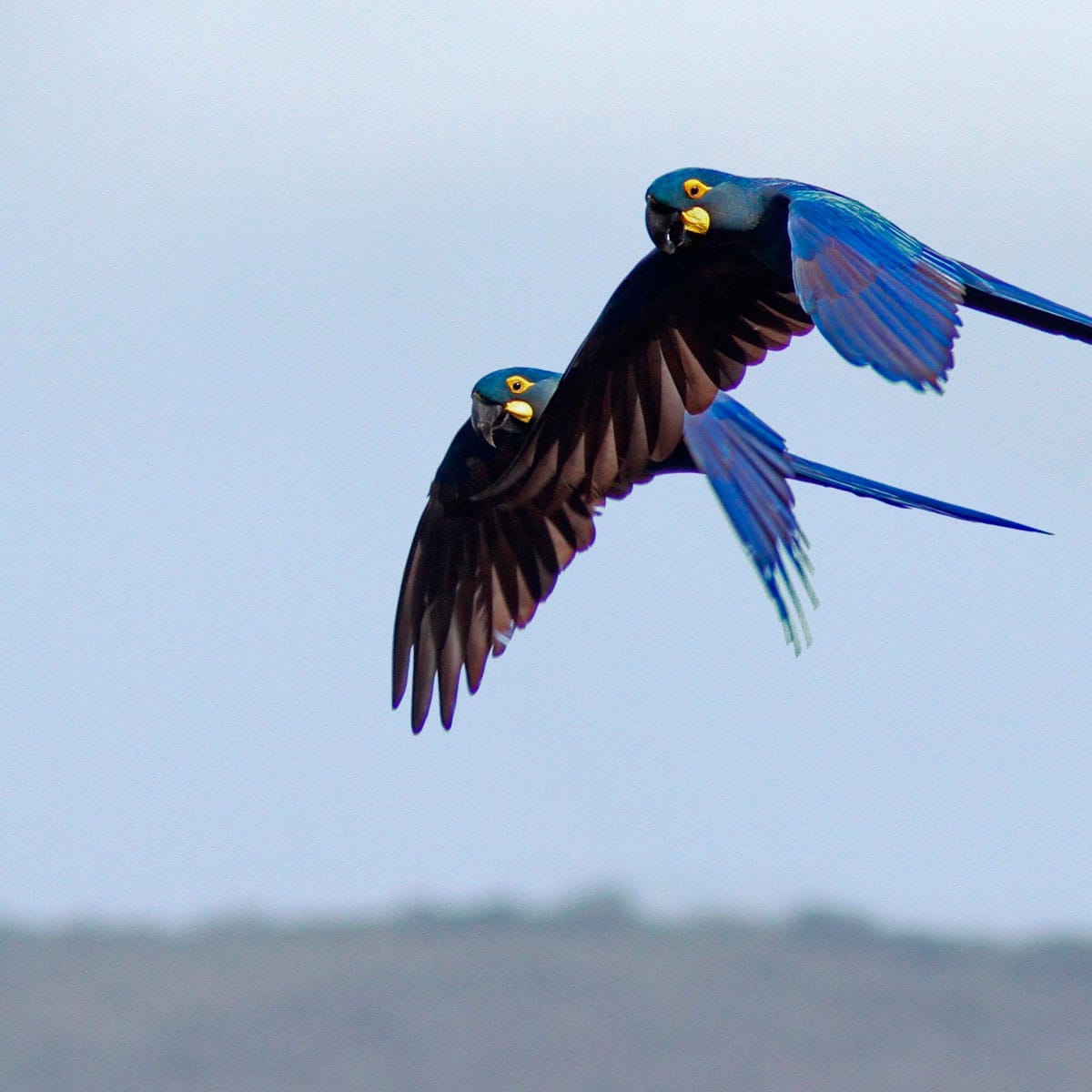
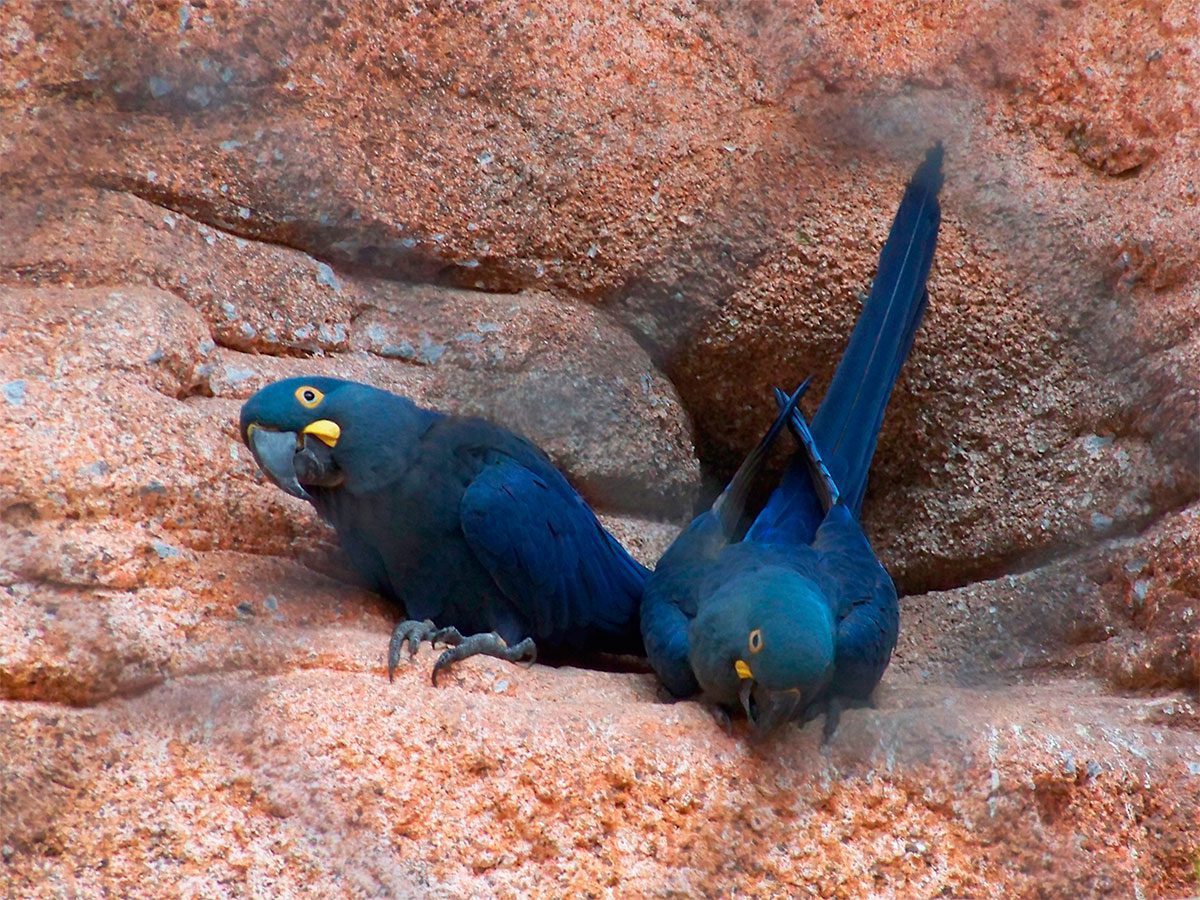
The Indigo Macaw (Anodorhynchus leari) It is a beautiful Blue Parrot with a long tail. Similar to the Hyacinth Macaw, but much smaller and chunky, with a large yellow spot in the cheeks. It was described for the first time in 1858 by the nephew of Napoleon, Lucien Bonaparte, from an illustration by the famous English illustrator and artist known for his absurd poetry, Edward Lear.

This Parrot, However, remained elusive in nature, and it was only accepted as a distinct species in 1978, When the naturalist Helmut Sick finally found a wild population.

The head, the neck and underparts This Parrot are greenish-blue, While the rest of the body looks like a purple / indigo. The bare skin around the eyes and at the base of the bill It is pale yellow.

The irises are dark brown and the bill, Although predominantly black, You may have a grey stains clear.

Males and females They seem to. The male can have a larger beak and can usually be larger in size, but those differences vary or may be only slight and are not considered reliable for gender identification.

The youth they can be identified by its shorter tail; the upper beak is pale.

Habitat:

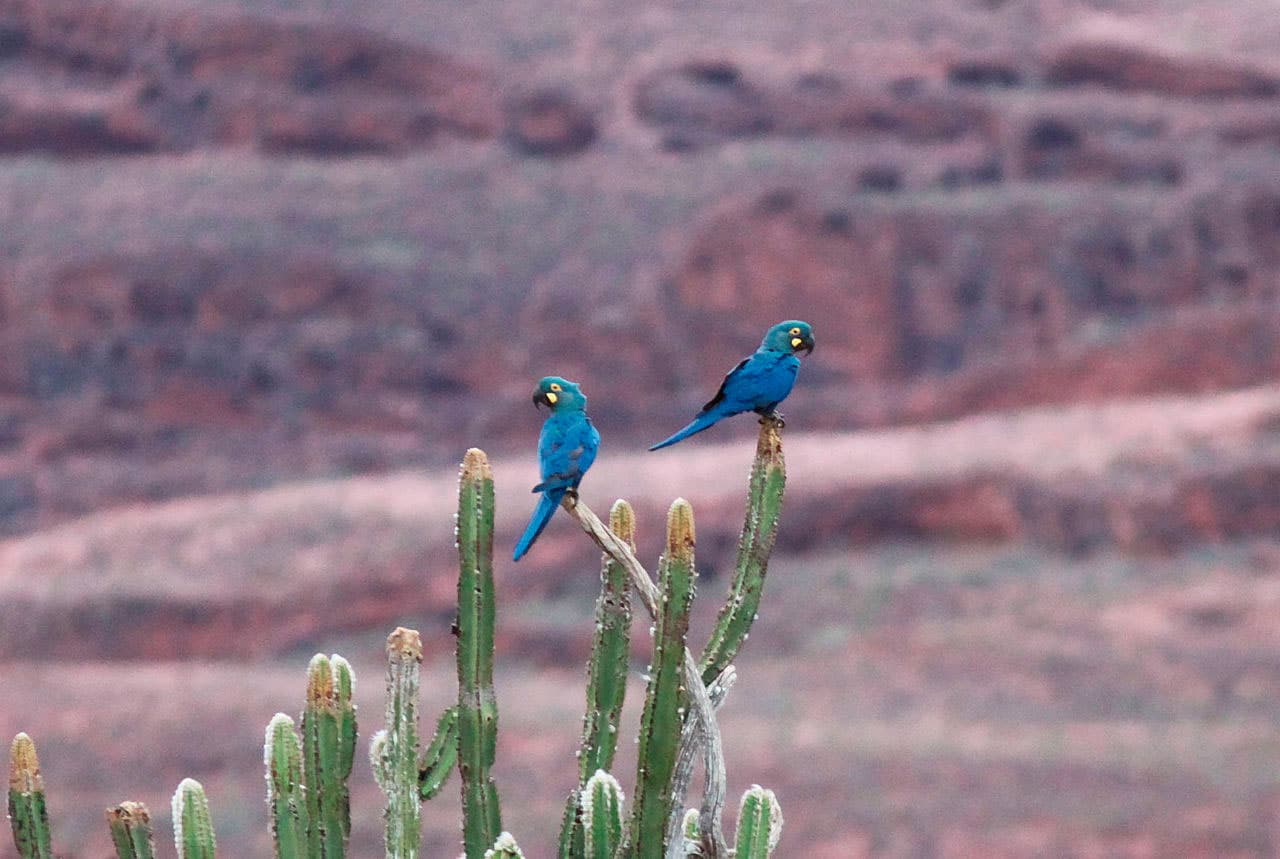
They live in drylands, with resistant vegetation of caatinga (thorny scrub), especially in areas with Palm trees Syagrus coronata.

They require sandstone cliffs to perch and nest.

gregarious and in general in flocks, although usually in very small numbers. Shapes communal roosts in cracks eroded near the top of the walls of canyons of sandstone at altitudes between 30 and 50 m. Many birds perch on the largest holes, while others cling to rocks or rest on the cornices.

The Indigo Macaw leave the roosts in family groups to go to the feeding areas before dawn to return at dusk.

Reproduction:

The nests of the Indigo Macaw they are located in crevices in cliffs, Although sometimes they also nest in shallow tree cavities.

The breeding season It is located in the months February-April, coinciding with the rainy season and possibly coinciding with the maximum availability of palm nuts.
The average clutch size is two to three eggs. The average period of incubation is of 28 days and the average age of feathered is of 16 to 20 weeks.

Food:

The staple food of the Indigo Macaw they are palm nuts Syagrus (a bird can take 350 nuts in a day). Also take seeds from Melanoxylon, above all when the walnuts Syagrus they are scarce (July-September). Other reported foods include fruits of Jatropha pohliana, Dioclea and Spondias tuberosa, flowers Agave and corn.

Fluid from the unripe fruit of Palms is perhaps the main source of moisture.

The Indigo Macaw they feed in the trees and on the ground.

Distribution:

Confined to the plateau Raso da Catarina, to the northeast of Bay in Brazil; mainly occupy an area close to 8,000 km 2 in the center of Rรญo Vasa Neighborhoods, in the South of the plateau. Two main colonies are known, one on each side of the Vasa Barris.

These birds make daytime movements South of Holy and Euclides da Cunha and possibly from the North to the north-western edge of the plateau to feed.

There is a peripheral population smaller at several hundred kilometers of Vasa Barris and there are unconfirmed reports of other small groups in remote northern dry inside of Bay.

Resident, remaining close to the cliffs where nest and their favorite roosting birds.

The population of Indigo Macaw is estimated at 139 birds (117 more 22) with an evident decline during the last 100 years. The pressures arising from the trade in birds, hunting, the loss of plants used as food for livestock, the disturbance and, possibly, inbreeding depression, could quickly lead to extinction in freedom of this beautiful species.

Conservation:

โ€ข Current Red List of UICN: Danger

โ€ข Population trend: Unknown

The Indigo Macaw suffered a historic long-term drop due to the capture, but estimates of population remained fairly stable after its rediscovery in the wild in 1978 until the mid of 1990 when the numbers began to rise rapidly; While this may reflect in part, improvements in the survey methodology, also there has been a real increase due to intense conservation efforts.

According to specialists, they only survive in the world, mainly in zoos, a few 1.300 specimens This species whose natural habitat are the rock walls in the arid interior of the state of bahia (Northeast of Brazil).

For its part, the Spix's Macaw It is considered extinct in the wild since 2000, Although currently survive in captivity a few 90 specimens, that are maintained by institutions from different countries, mostly out of Brazil.

"Indigo Macaw" in captivity:

The Indigo Macaw It is the most uncommon of all the macaws in captivity. There are three known copies in United States and a similar amount in Europe. The Government of Brazil does not recognize any other legal specimen of this species outside its borders. On the other hand, in the zoos of Rio de Janeiro and Sรฃo Paulo in Brazil, they have several copies. Twelve copies of Indigo Macaw with that features the Zoo's Sรฃo Paulo they are isolated and in cages that cannot be visited by the public due to the risk of extinction of the species.

With regard to its longevity, They have News of a captive bird that lived 38,3 years.

During the last ten years, attempts to smuggle this species have been discovered from Brazil and some birds have confiscated, who have been returned to the country.

A Special Committee has been formed by the part of the IBAMA of the Government of Brazil to initiate actions for the conservation of this species. Likewise, other countries that have also signed the treaty CITES they should support Brazil in their attempts to establish pairs of players in captivity and to conserve the habitat of the Indigo Macaw.

If anyone knows the whereabouts of illegal copies of this species must notify the authorities for his immediate intervention. This species is on the verge of extinction and all possible actions to save her must be coordinated through a working group for the conservation.

Notes:

They are accomplished in Brazil the first reproduction in captivity of a Lear's macaw

Alternative names:

– Indigo Macaw, Lear’s Macaw (English).
– Ara de Lear (French).
– Learara, Lear-Ara (German).
– Arara-azul-pequeรฑa, arara-azul-de-Lear, arara-azul-pequena (Portuguese).
– Arara-azul-de-lear, arara-azul-pequena (Portuguese (Brazil)).
– Guacamayo de Lear, Guacamayo Indio (espaรฑol).

Charles Lucien Bonaparte

scientific classification:


– Order: Psittaciformes
– Family: Psittacidae
– Genus: Anodorhynchus
– Scientific name: Anodorhynchus leari
– Citation: Bonaparte, 1856
– Protonimo: Anodorhynchus leari


Images Indigo Macaw:

Videos "Indigo Macaw"


Species of the genus Anodorhynchus

ยซGuacamayo de Learยป (Anodorhynchus leari)


Sources:

– Avibase
– Parrots of the World โ€“ Forshaw Joseph M
– Parrots A Guide to the Parrots of the World – Tony Juniper & Mike Parr
– Birdlife
– Wildscreen Arkive
– Macaws. A Complete Guide by Rick Jordan.

– Photos:

(1) – Two Learโ€™s Macaws at Rio de Janeiro Zoo, Brazil By Marcos Pereira (originally posted to Flickr as blue macaw couple) [CC BY 2.0], via Wikimedia Commons
(2) – Learโ€™s Macaw Anodorhynchus leari By https://www.flickr.com/photos/jquental [CC BY 2.0], via Wikimedia Commons
(3) – Two Learโ€™s Macaws at Canudos Biological Station, Bahia, Brazil By Miguelrangeljr (Own work) [Public domain], via Wikimedia Commons
(4) – Anodorhynchus lear By Rick elis.simpson (Own work) [CC BY-SA 3.0], via Wikimedia Commons
(5) – PROGRAMA DE CATIVEIRO DA ARARA-AZUL-DE-LEAR by Fabio Nunes – icmbio.gov.br
(6) – Illustration by Edward Lear (1812โ€“88) first published in his book Illustrations of the Family of the Psittacidae, or Parrots in 1832

– Sounds: Hans Matheve (Xeno-canto)

โ–ท The world of Pets: Dogs, cats, birds, reptiles, amphibians

Glaucous macaw โ€ 
Anodorhynchus glaucus

Glaucous Macaw

Content

Description:

72 cm.. length.

Glaucous Macaw

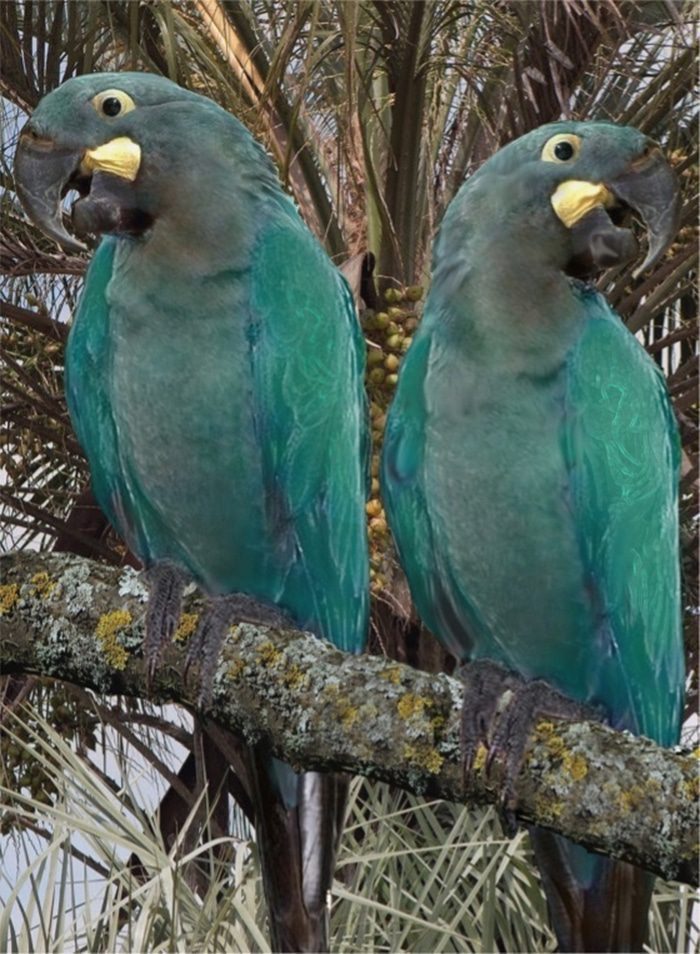
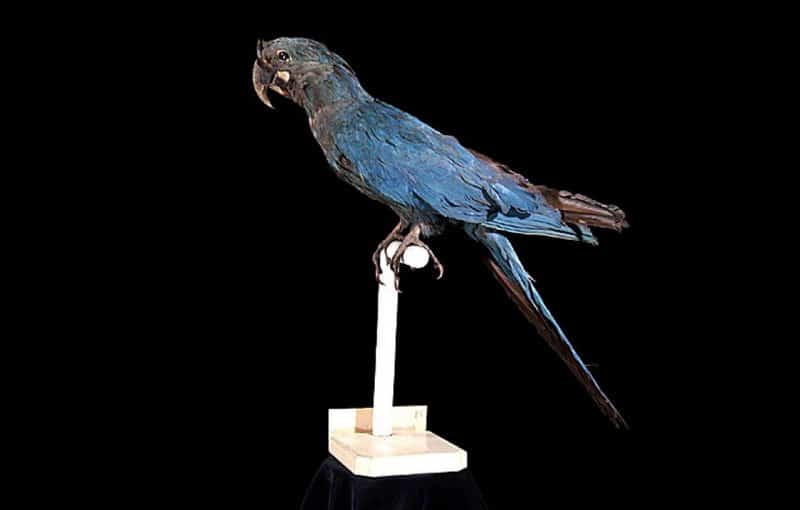
The plumage general of the Glaucous Macaw (Anodorhynchus glaucus) It is light blue, almost turquoise top, with strong grayish hue in head and underparts.

Uppertail greenish blue; undertail gray.

The bill It is dark blackish gray, the naked flames in the base lower jaw they are yellow, but paler than the periophthalmic skin; the irises is dark brown, the periophthalmic skin Nude yellow; the legs They are dark.

Habitat:

probably he occupied subtropical gallery forests with cliffs, but also used lightly wooded savannas and rich in palm trees. The few contemporary records suggest it was naturalists gregarious.

Reproduction:

It has been reported that anidaba on steep slopes or cliffs, or less generally in the cavities of trees and the average size of laying It was probably two eggs

Food:

Its diet It was probably basic nuts palm Butia horizontal (nearest equivalent in rank to size nuts Syagrus used by the Indigo Macaw, It is having the same dimensions peak).

Distribution:

Extending its range (breeding/resident): 1 km2

the Glaucous Macaw They were distributed at the time by the south-eastern South America, where apparently they were recorded in average growth of the main rivers, including Parana River, the Uruguay River and the Paraguay River, with most of the evidence of a prior distribution in the province of Currents, to the North of Argentina; cases were also recorded in western Uruguay and Southeast of Brazil (Rio Grande do Sul and Paranรก), and evidently in the south and east of Paraguay. The records of Bolivia They seem wrong. Almost certainly extinct after a precipitous decline in the early 19th century. Only two records in the twentieth century.

Conservation:

โ€ข Current category of the Red List of the UICN: Critically Endangered.

โ€ข Population trend: Unknown.

โ€ข Population size : 1-49 individuals.

Rationale for the Red List category

This species was last recorded in the 1990s. 1960 and it is likely that its population has declined dramatically as a result of hunt, Besides the degradation and habitat destruction. But, you may still exist, since not all its wide range of data, above wide, It has been adequately studied, and there have been persistent and convincing local reports. Any remaining population is likely to be small., and for these reasons it is treated as in Critically Endangered.

Justification of the population

It is assumed that any remaining population is small (counting less than 50 individuals) due to lack of confirmed records since the early 1960.

Threats

The settlement of the major river basins within its range was allegedly accompanied by the widespread loss of palms, whether by direct cleaning for agriculture or suppression of regeneration by livestock settlers. The palma de Horizontal, of the species probably fed, It was chosen to be cleared by early settlers because it was an indicator of good soil quality (Necklace et to the. 2014). The widespread loss of gallery forests could also have had an impact on the species. (Necklace et to the. 2014). The size and appearance of the bird probably made him a prime target for hunters, and even capture hatchlings as pets could have been important. There is some evidence that were sold, but few to support various claims that there has been recent trade in live specimens.

Any current trade in eggs, skins or live specimens would obviously be extremely damaging.

Conservation actions underway

    – Appendix I of CITES and protected by Brazilian law.

    – There have been several attempts (so far unsuccessful) to rediscover the species.

    – There are proposals for funding under way to try to fund a work program to confirm the presence of this species in the wild.

Conservation Actions Proposed

    – Conducting interviews with the local population, especially with parrots and ancient hunters assets, to assess the likelihood of any population remains.

    – Getting ready to follow up any positive data from these interviews.

"Glaucous macaw โ€ " in captivity:

There is some evidence that were sold, but few to support various claims that there has been recent trade in live specimens.

Alternative names:

– Glaucous Macaw (inglรฉs).
– Ara glauque (francรฉs).
– Tรผrkisara (alemรกn).
– arara-azul-pequena, arara-celeste, guacamaio (portuguรฉs).
– Guacamayo Azul, Guacamayo Glauco, Guacamayo Violรกceo, Papagayo violรกceo (espaรฑol).
– Guacamayo azul (Argentina).
– Papagayo violรกceo (Paraguay).
– Guacamayo Azul (Uruguay).

scientific classification:

– Order: Psittaciformes
– Family: Psittacidae
– Genus: Anodorhynchus
– Scientific name: Anodorhynchus glaucus
– Citation: (Vieillot, 1816)
– Protonimo: Macrocercus glaucus

Images Glaucous Macaw:


Species of the genus Anodorhynchus

ยซGuacamayo Glaucoยป (Anodorhynchus glaucus)


Sources:

– Avibase
– Parrots of the World โ€“ Forshaw Joseph M
– Parrots A Guide to the Parrots of the World – Tony Juniper & Mike Parr
– Birdlife

– Photos:

(1) – digital recreation of glaucous macaw. The background with Butia yatay is courtesy of http://floradeluruguay.blogspot.com/2010/05/butia-yatay.html , Andrรฉs Gonzรกlez. By Rod6807 (Martin Rodrรญguez Pontes) (Own work) [CC BY-SA 3.0], via Wikimedia Commons
(2) – Anodorhynchus glaucus by Huub Veldhuijzen van Zanten / Naturalis Biodiversity Center [CC BY-SA 3.0], via Wikimedia Commons
(3) – Anodorhynchus glaucus by Huub Veldhuijzen van Zanten / Naturalis Biodiversity Center [CC BY-SA 3.0], via Wikimedia Commons
(4) – Anodorhynchus glaucus By Vieillot, 1816 [CC BY-SA 3.0], via Wikimedia Commons
(5) – Anodorhynchus glaucus by Huub Veldhuijzen van Zanten / Naturalis Biodiversity Center [CC BY-SA 3.0], via Wikimedia Commons
(6) – Early illustration of the Glaucous Macaw illustration from Bourjot Saint-Hilaire, 1837-1838 By Bourjot Saint-Hilaire [Public domain], via Wikimedia Commons