โ–ท The world of Pets: Dogs, cats, birds, reptiles, amphibians

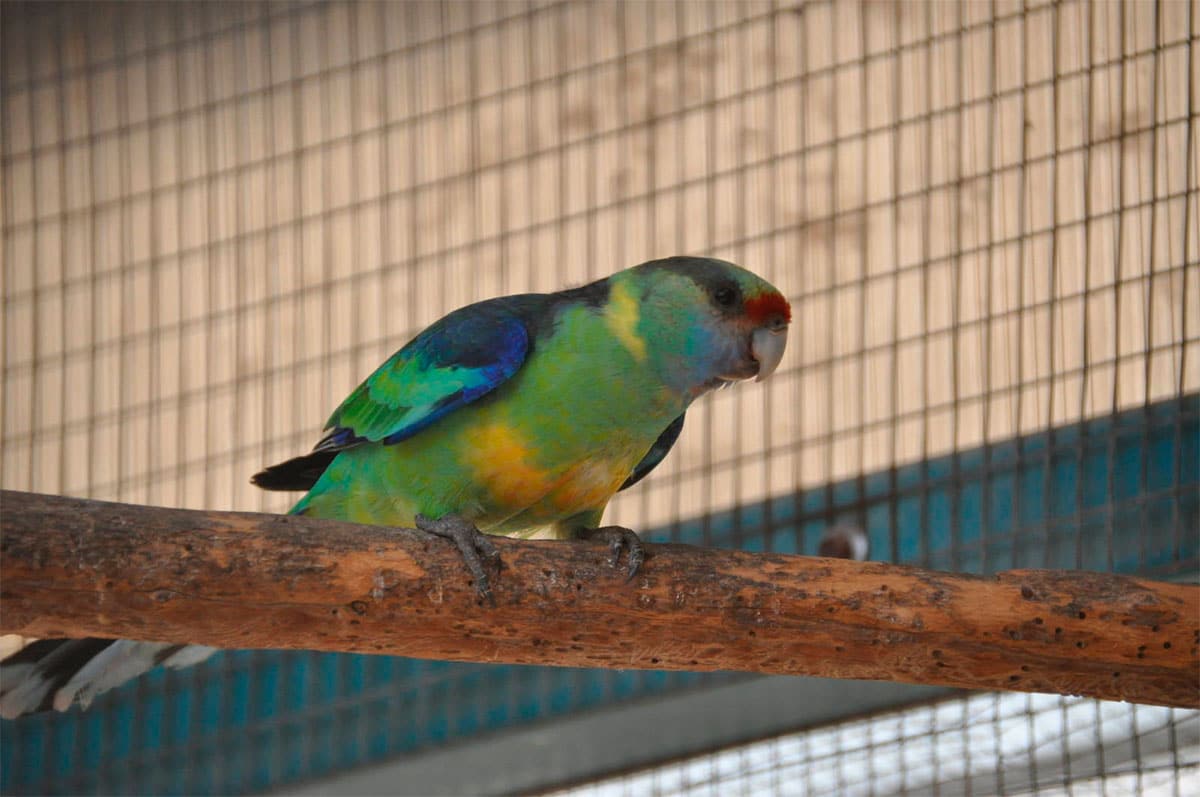
Mallee Ringneck
Barnardius barnardi

Mallee Ringneck

Content


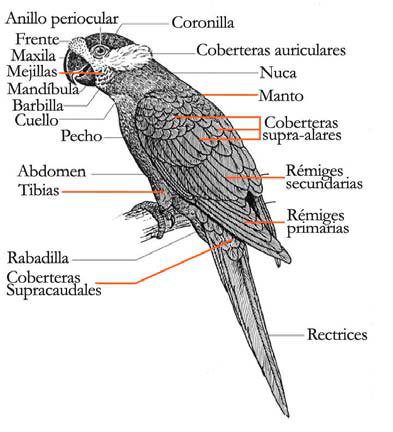
Anatomy-parrots

Perico description of Barnard

Of 35 cm.. length between 105 and 143 g. of weight.

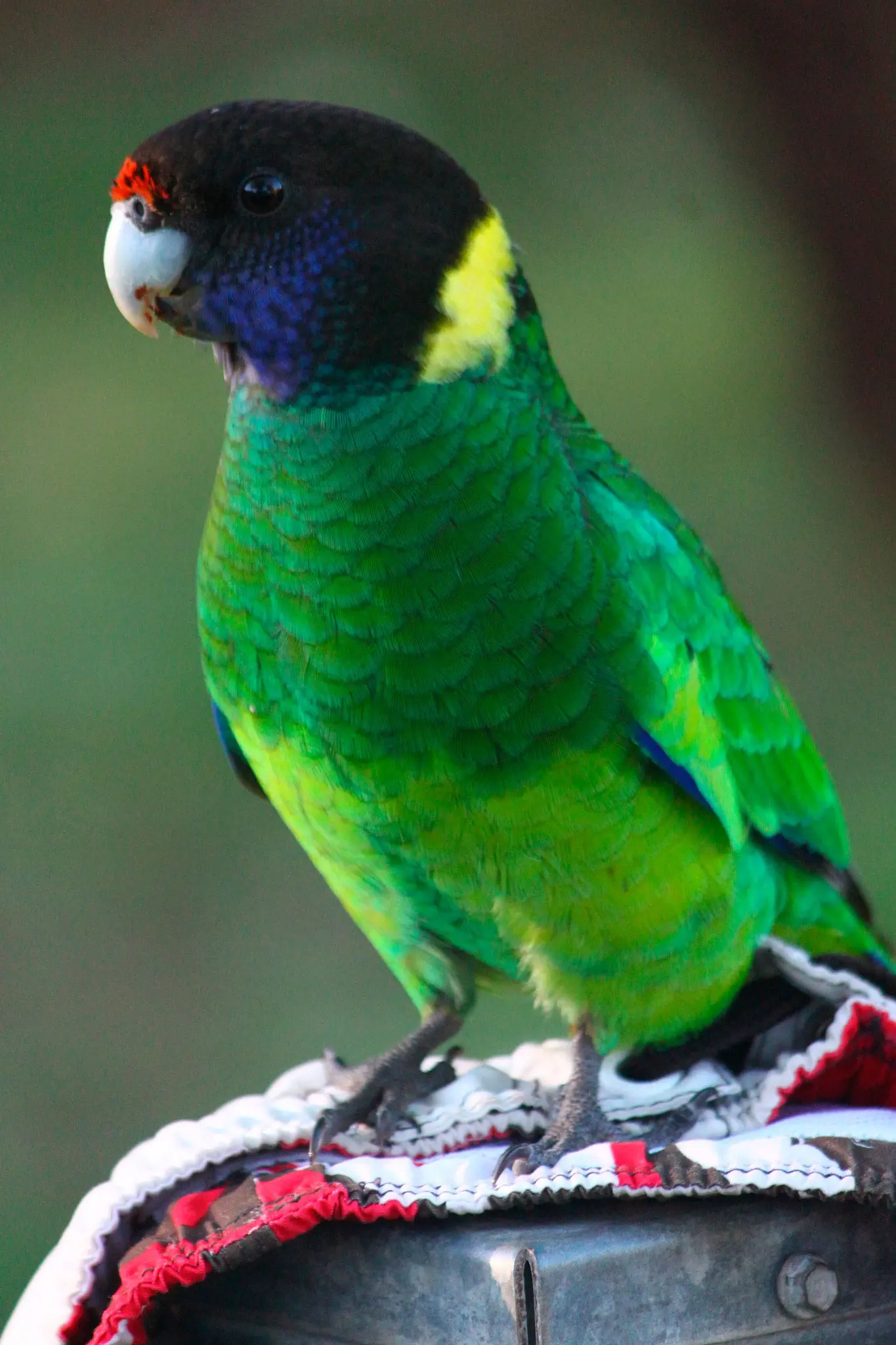
The Mallee Ringneck (Barnardius barnardi) has the plumage predominantly Green, crown and sides of the head bright green, with the cheeks slightly tinged blue and a small red band across the forecrown. The neck It is olive brown with a yellow ring around its back.

The lower area of the back is dark blue. The chest and the abdomen are turquoise blue, separated one from the other by a transverse band of yellow color which is more or less wide. The curvature of the wing It shows a greenish blue that overflows on the mantle.

The greater coverts are yellowish-green. The secondaries They are pale blue, In contrast with the covered and primaries which they are dark blue.

The underparts is blue. The upperparts tail is dark green, their central feathers with blue spikes and outer blue with pale tips.

The bill is whitish grey. The strait bare periophthalmic is solid gray. The irises is of color Brown dark and the legs grey.

The female It has colors more muted than your partner. The back and the lumbar area show a dark greenish gray. The underside is grey, with a more or less visible clear band.

The immature with even duller colors than females. They have the neck and back of the crown brown. The cheeks blues are often more developed. The back and tail are greyish green. The band underwing usually visible.

    Two species were traditionally recognized in the genus Barnardius, Barnardius zonarius and Barnardius barnardi, but both hibridaban in the contact area and are currently considered a single species.

    Taxonomic status:

This taxon is considered a subspecies of Barnardius [zonarius or Barnardi] (sensu lato) by some authors

Subspecies Barnardius barnardi

  • Barnardius barnardi barnardi

    : (Vigors and Horsfield, 1827) The nominal species

  • Barnardius barnardi whitei

    : (Mathews, 1912) Of 35 cm.. length. It has feathers off, especially the chest and abdomen where the turquoise color is absent. Female plumage more clear than the nominal. Is believed to be a hybrid of the Barnardius Zonarius with the Barnardius Barnardi.

  • Barnardius barnardi macgillivrayi

    : (North, 1900) Of 33 cm.. length. More small, more pale, with the greenish-yellow forehead more pale and with clear bright blue hue on the cheeks and below the headphone feathers. Broad band of yellow on the abdomen.

Barnard's Parakeet Habitat:

The Parakeets Barnard They are mainly sedentary, but there may be some moves to small scale in response to climate change.

The species occupies the arid areas of mallee composed almost exclusively of Eucalyptus gracilis. Also found in shrubs of acacia and cypresses and in a wide variety of very similar habitats.

The species living in the areas of the North has a clear preference for the rubber Red (Eucalyptus camaldulensis) It covers temporary streams and shows a more arboreal lifestyle.

Generally less common in populated areas and in more humid regions. Large flocks are more rare to observe; pairs or small groups are the usual social units.

Less bold and curious that the Australian Ringneck, Although the two species share habits, diet and cortejo similar.

The Mallee Ringneck have been recorded feeding in the company of the Crimson Rosella (Platycercus elegans), Pale-headed Rosella (Platycercus adscitus), Red-rumped Parrot (Psephotus haematonotus) and Bluebonnet

Reproduction:

During courtship, the male shrugs, causing the wings to vibrate slightly.
Like most other parrot species, the Mallee Ringneck they have as a practice gnaw and chew wood, whether to put his personal stamp on his favorite tree, or to enlarge the cavity entrance. This activity allows them to keep their beaks in good condition.

The nest is usually in a hollow tree, and usually four to five eggs make up the implementation, deposited on a base of wood decaying waste.

In the North, breeding season tends to be governed by weather, and the nesting coincides with the end of the wet planting season.

In the South, playback starts in July or August and the season can be extended until January with a second litter. Incubation lasts around 20 days and is carried out by the female.

The young birds leave the nest after 5 weeks, but remain in the household with his parents for a while.

Food:

The Mallee Ringneck they are mainly vegetarians, they feed on seeds – Melon seeds (Cucumber myriocarpus), bitter melons (Citrullus lanatus), fruits of the tree of the tobacco (introduced), fruits, nectar and flowers. Its menu is complemented with insects and larvae.

ยซBarnard's Parakeetยป Distribution:

The Mallee Ringneck they are distributed through the interior of the East Australia, to the West of the Great dividing range, with a practically isolated population in the Northwest of Queensland, stretching across the border of the Northern Territory, along the nicholson river, in the North, and reaching Glenormiston, and western part of Queensland, in the South; its eastern limit is about Kynuna.

The the Northern subspecies meets the nominal species in the region of Range Forsythe, and extends to the South, with its eastern boundary running near Barcaldine, Mitchell and Goondiwindi, and in New South Wales.

To the South extends East through Moree, Dubbo and Wagga Wagga to get up to Kerang in Victoria.

In the West, the species is dispersed through of Western Queensland to the region of Cooper Creek of South Australia around Innamincka.

In New South Wales, is located to the West of the basin of the darling river, about Broken Hill.

Distributes lengthwise of the murray river, and in Victoria It extends through the Northwest corner to the South, until around Edenhope.

In the southeast of South Australia ranges through Naracoorte and Mount Lofty Ranges in Port Augusta and Montes Flinders, where is integrated with the Australian Ringneck; the two species are also more North.

Getaways birds have been registered in Brisbane, Melbourne and Sydney.

Subspecies B distribution. barnardi

  • Barnardius barnardi barnardi

    (Vigors and Horsfield, 1827) The nominal species

  • Barnardius barnardi whitei

    (Mathews, 1912) Flinders Ranges, South Australia

  • Barnardius barnardi macgillivrayi

    (North, 1900) This, Territory of the North and Northwest Queensland

Conservation ยซBarnard's Parakeetยป:


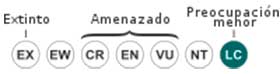
minor concern


โ€ข Current category of the Red List of the UICN: Least concern

โ€ข Population trend: Growing

The species is considered common throughout its range..

The world population is estimated at around 500 000 individuals and it seems stable.

But, seems less able to adapt to the changes that have occurred in the habitat that the Australian Ringneck.

In captivity:

The Mallee Ringneck It is appreciated as a pet, but the birds in captivity are relatively few.

Una muestra viviรณ 17,9 years in captivity. According to some sources, these animals can live up to 31,6 years in captivity, but this has not been verified.

Most common in Europe and Australia; not so much in the United Kingdom or United States.

Initially it is a timid and nervous bird, Although soon it acclimatizes caregiver. Bonding with a partner to do when both birds are young, as adults they do not usually live in harmony. Aggressive with other parrots.

Alternative names:

– Mallee Ringneck, Mallee Parrot, Mallee Ringneck Parrot, Ringneck Parrot (ingles).
– Perruche de Barnard, Barnardius barnardi, Perruche cloncurry (French).
– Barnardsittich, Barnard Sittich, Barnard-Sittich (German).
– Periquito-de-Barnard (Portuguese).
– Perico de Barnard (espaรฑol).

scientific classification:

– Order: Psittaciformes
– Family: Psittaculidae
– Genus: Barnardius
– Scientific name: Barnardius barnardi
– Citation: (Vigors & Horsfield, 1827)
– Protonimo: Platycercus theelectronicjumper

Images "Mallee Ringneck"

Videos "Mallee Ringneck"

ยซBarnard's Pericoยป (Barnardius barnardi)


    Sources:

    – Avibase
    – Parrots of the World โ€“ Forshaw Joseph M
    – Parrots A Guide to the Parrots of the World – Tony Juniper & Mike Parr
    – LoroMania
    AnAge: The Animal Ageing and Longevity Database – Genomics.senescence.info
    – Birdlife

    – Photos:

    (1) – By AlexKant – Israel> Petach Tikva Zoo – ZooChat

    – Sounds: Patrik ร…berg (Xeno-canto)

โ–ท The world of Pets: Dogs, cats, birds, reptiles, amphibians

Australian Ringneck
Barnardius zonarius

Australian Ringneck

Content


Anatomy-parrots

Description

Among 32 to 44 cm.. length and a weight between 121 and 200 g..

Two species were traditionally recognized in the genus Barnardius, Barnardius zonarius and Barnardius barnardi, but both hibridaban in the contact area and are currently considered a single species.
The Australian Ringneck (Barnardius zonarius) It has the head of blackish brown with cheeks, both sides of the throat and underside of the headset coverts densely dotted with dark blue (You can display a few red spots on the front of the Crown); the back of the neck of bright yellow.
Middle of the mantle of dark green with thin dark stripes; slightly more bright green rump; a little more off than the rump supracaudales coverts.

External Middle coverts slightly greenish-yellow color, Green the inner coverts, the large green with blue-green and pale inner margins coverts green outer margins in the outermost feathers; curve of the wing of Turquoise, It extends slightly towards small coverts; primary coverts dark brown with vane dark blue external; blackish flight feathers, strongly marginalized in foreign feathers, showing fusion from the blue color in the vane external to the blue gray of the tips.

Under, with turquoise coverts blackish flight feathers. Dark green chest with fine dark stripes; upper part of the abdomen of bright yellow, Green the lower belly area, slightly impregnated yellow; subcaudales coverts greenish-yellow. Central tail feathers of dark green merging to dark blue, the external of pale blue with dark bases and white tips. Under, pale blue tail.

The greyish white Peak: the Brown irises; legs grey

The female It has peak and smaller head, the slightly Browner head, and you can display a mark in the form of bar at the bottom of the wings.

The immature, they are a brand of pale bar on the wings (disappearing earlier in males than in females); they are more turned off, with a head of Brown and dissemination of greyish-Brown mantle and upper chest area; the tail is green above. Adult plumage is reached between 12 and 15 months.

Subspecies Barnardius zonarius

  • Barnardius zonarius semitorquatus

    (Quoy and Gaimard, 1830) – Of 40 cm.. length approximately. It is more than nominal, but with the red front, abdomen green more off, Pico mas grande. Female plumage more pale and head color more Brown, the Red coloration of the forehead is narrower in some absentee.

  • Barnardius zonarius zonarius

    (Shaw, 1805) – Equal to the Barnardius zonarius collared, but with a yellow abdomen and without the prominent crimson red stripe on the forehead, that if you have the subspecies collared.

  • Barnardius zonarius macgillivrayi

    (North, 1900) – Cloncurry Ringneck – Crown and nape of an intense green color and some reddish tones on the cheeks. Is lighter green shades, No red frontal band, and with a broad band uniform across your abdomen. Not recognized by all experts.

  • Barnardius zonarius barnardi

    (Vigors and Horsfield, 1827) – It has an intense green crown and nape and certain reddish tones on the cheeks.. Their underparts are Turquoise green with an irregular band yellow orange across the abdomen. Your back and mantle are blackish blue and also this subspecies has a red band on the forehead.
    Presumably either the nominal race.

Habitat:

Australian Ringneck

The Australian Ringneck is mainly sedentary, with occasional movements during extreme weather conditions. The species occupies a range of habitats, including eucalyptus red zones (Eucalyptus camaldulensis), along water courses, acacia scrub and mallee (Eucalyptus gracilis), eucalyptus open woodlands, agricultural fields, desert shrubland and suburban areas.

In general has adapted better to the effects produced by settlements that the Mallee Ringneck, and it has been particularly successful in the South-West wheat belt, in where the birds are observed while they eat at road verges. The subspecies collared has a more specific habitat, preferring the high forests of coastal eucalyptus, particularly marri (Eucalyptus calophylla).

The Australian Ringneck form strong pair bonds and, normally, is found in small family parties or groups of up to eight birds. They are usually visible, loud and inquisitive, being more active during the morning and evening. They tend to remain silent while they feed on the ground, but they chatter loudly when feeding in the canopy and when gathering to sleep after drinking, remaining assets after the sunset.

Reproduction:

The time of nesting is from June to February, starting earliest in the North.

The birds are territorial around the nest, and there are many fights at the beginning of the breeding season. In courtship, the male drops his wings, WAGs tail producing a buzzing sound, He chatters loudly and shakes head. Courtship feeding is also common. The nest is built at different heights, usually in the natural hollow of a tree based on decomposition of waste wood inside.

Between four and seven (normally five) white eggs are laid during the implementation, sometimes producing two offspring. The female incubates during 19 days and leaves the nest only to feed herself or be fed by the male. At the beginning, She feeds the chicks alone, but a week after hatching, the male joins food tasks. The young leave the nest about four weeks after. Family groups remain together for some time after the chicks have fled the nest..

Food:

The diet consists of nectar, flowers, seeds, fruit, insects and their larvae (that sometimes stripping the bark of lso trees). The cereal crops and orchards are often attacked by the Australian Ringneck, registering birds digging up onion bulbs (Romulea longifolia).

The more arboreal southwestern subspecies has preference by the ripe fruits of eucalyptus, especially those of marri.

Distribution:

The Australian Ringneck they are in the West, Central and South of Australia. Is distributed from Port Augusta, the Eyre Peninsula and Cordillera Gawler, to the North, through the center of Southern Australia in the Northern Territory, where stretches through of the MacDonnell Ranges and lies to the North of Newcastle Waters and Winnecke Creek.

Birds may also go more towards the East, sometimes up to the border of Queensland, and an off-eastern boundary record comes from Pine Creek in New South Wales.

In Western Australia, the species is increasing in the South West which concentrates around King George Sound, in the South, to murchison river, in the North, reaching inside for Kalgoorlie and Wiluna the east. Further north, is scattered through the Northwest corner, and extends eastward to the upper part of the Grey River system.

There is a small isolated population, probably, at the East end of Western Australia in the Gardiner Range region. Escapes have been recorded in the District of Port Wakefield, about Melbourne, Canberra, Sydney, Darwin and Hobart, in Tasmania.

A population of probable leak in the Lofty Mountains It was destroyed to prevent cross-breeding with the Mallee Ringneck, but there is a zone of hybridization with the Mallee Ringneck in the Montes Flinders. The two species are found and hybridize in other places also.

The world's population is piobablemente well above the current estimate of 100.000 specimens given by Lambert (1993).

A moderate number of captive.

The birds can be low temperatures under permit in some districts to prevent damage in orchards.

Subspecies B distribution. zonarius

Conservation:


minor concern


โ€ข Current category of the Red List of the UICN: Least concern

โ€ข Population trend: Growing
The size of the world's population has not been quantified, It is estimated over 100 000 specimens. The species, according to sources, is the most common species of birds in the wheat belt of Australia (pit et to the. 1997).

The population is suspected that it may be increasing. To mitigate the effects of the degradation of the habitat, new areas of suitable habitat are being created.

In the East, numbers are affected by scrub clearing Mallee and forests for agriculture. The Australian Ringneck they were considered vermin in Western Australia and in the seasons of hunting by be considered pests of orchards. Fugadas birds in aviaries are seen around the urban areas in the East.

"Australian Ringneck" in captivity:

Son aggressive toward other birds, especially during the breeding season, and it is better to accommodate them with a couple by Aviary.

Although friendly, they are not as sociable with people like other parrots. They are formidable chewing and require a heavy duty cage. You can learn to imitate.

Una muestra viviรณ 17,9 years in captivity. According to some sources, these animals can live up to 31,6 years in captivity, but this has not been verified.

Common in Europe, less in the United Kingdom and United States. UU.

Alternative names:

– Australian Ringneck, Banded Parakeet, Banded Parrot, Barnard’s Parakeet, Barnard’s Parrot, Bauer’s Parakeet, Buln Buln, Buln-buln Parakeet, Buln-buln Parrot, Cloncurry Buln-buln, Cloncurry Parrot, Eastern Ringneck, Mallee Parrot, Mallee Ringneck, Mallee Ringneck-Parrot, Mrs Morgan’s Parrot, North Parakeet, Northern Buln-buln, North’s Parrot, Port Lincoln Parrot, Port Lincoln Ringneck, Port Lincoln Ringnecked Parrot, Ringneck, Ring-necked Parrot, Scrub Parrot, Twenty-eight Parakeet, Twenty-eight Parrot, Western Banded Parakeet, Western Ringneck, Yellow-banded Parrot, Yellow-collared Parakeet, Yellow-collared Parrot, Yellow-naped Parakeet, Yellow-naped Parrot (ingles).
– Perruche ร  collier jaune, Perruche de Bauer, Perruche de Port Lincoln (French).
– Ringsittich (German).
– Periquito-port-lincoln (Portuguese).
– Perico de Port Lincoln (espaรฑol).

scientific classification:

– Order: Psittaciformes
– Family: Psittaculidae
– Genus: Barnardius
– Scientific name: Barnardius zonarius
– Citation: (Shaw, 1805)
– Protonimo: Psittacus zonarius

Images ยซPort Lincoln Parakeetยป:

Videos "Australian Ringneck"

————————————————————————————————

ยซPerico de Port Lincolnยป (Barnardius zonarius)

Sources:

– Avibase
– Parrots of the World โ€“ Forshaw Joseph M
– Parrots A Guide to the Parrots of the World – Tony Juniper & Mike Parr
– Parromania
– Wikipedia
– AnAge: The Animal Ageing and Longevity Database – Genomics.senescence.info
– Birdlife

– Photos:

(1) – An Australian Ringneck in Perth, Western Australia, Australia By Luke Durkin (Img_9967 (3)Uploaded by snowmanradio) [CC BY 2.0], via Wikimedia Commons
(2) – An Australian Ringneck at Gloucester National Park, Western Australia, Australia By Ken & Nyetta (Ring Necked CocatooUploaded by Snowmanradio) [CC BY 2.0], via Wikimedia Commons
(3) – A Australian Ringneck in Karratha, Pilbara, Western Australia, Australia By Jim Benton from Karratha, Australia (ring necked parrot_1Uploaded by snowmanradio) [CC BY-SA 2.0], via Wikimedia Commons
(4) – Twenty Eight Parrot (Barnardius zonarius collared) at Mundaring Weir picnic reserve. It is eating by holding food in is left foot By Casliber (Own work) [CC BY-SA 3.0 or GFDL], via Wikimedia Commons
(5) – ยซBarnardius zonarius macgillivrayi – Buffalo Zooยป by Dave Pape – Own work. Licensed under Public Domain via Wikimedia Commons.
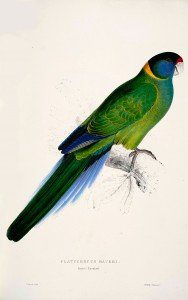
(6) – A painting of an jpg Australian Ringneck (originally captioned ยซPlatycercus baueri. Bauerโ€™s Parrakeet.ยป by Edward Lear 1812-1888. – Edward Lear [Public domain], via Wikimedia Commons

– Sounds: Patrik ร…berg (Xeno-canto)