โ–ท The world of Pets: Dogs, cats, birds, reptiles, amphibians

Red-tailed black cockatoo
Calyptorhynchus banksii

Red-tailed black cockatoo

Content

Description

55 to 60 cm.. length between 570 and 870 weight g.

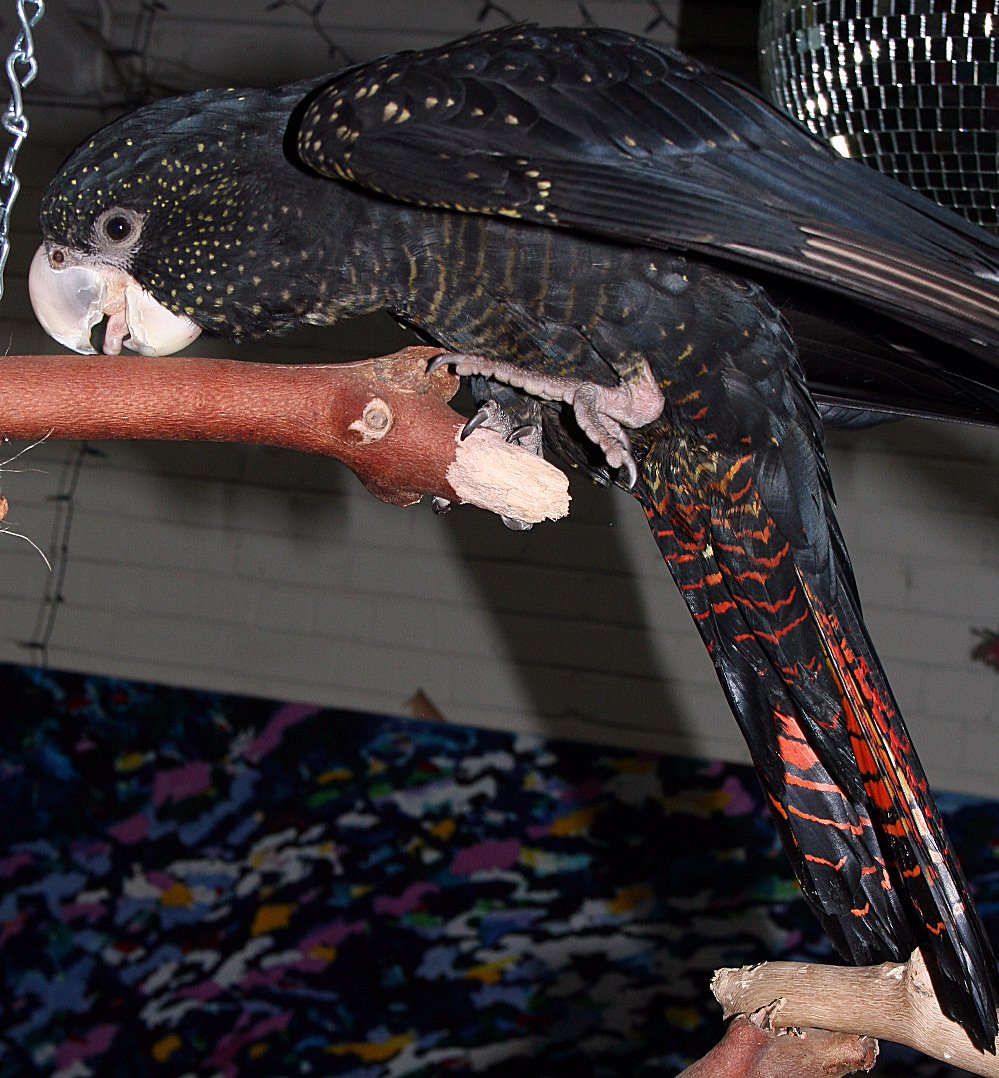
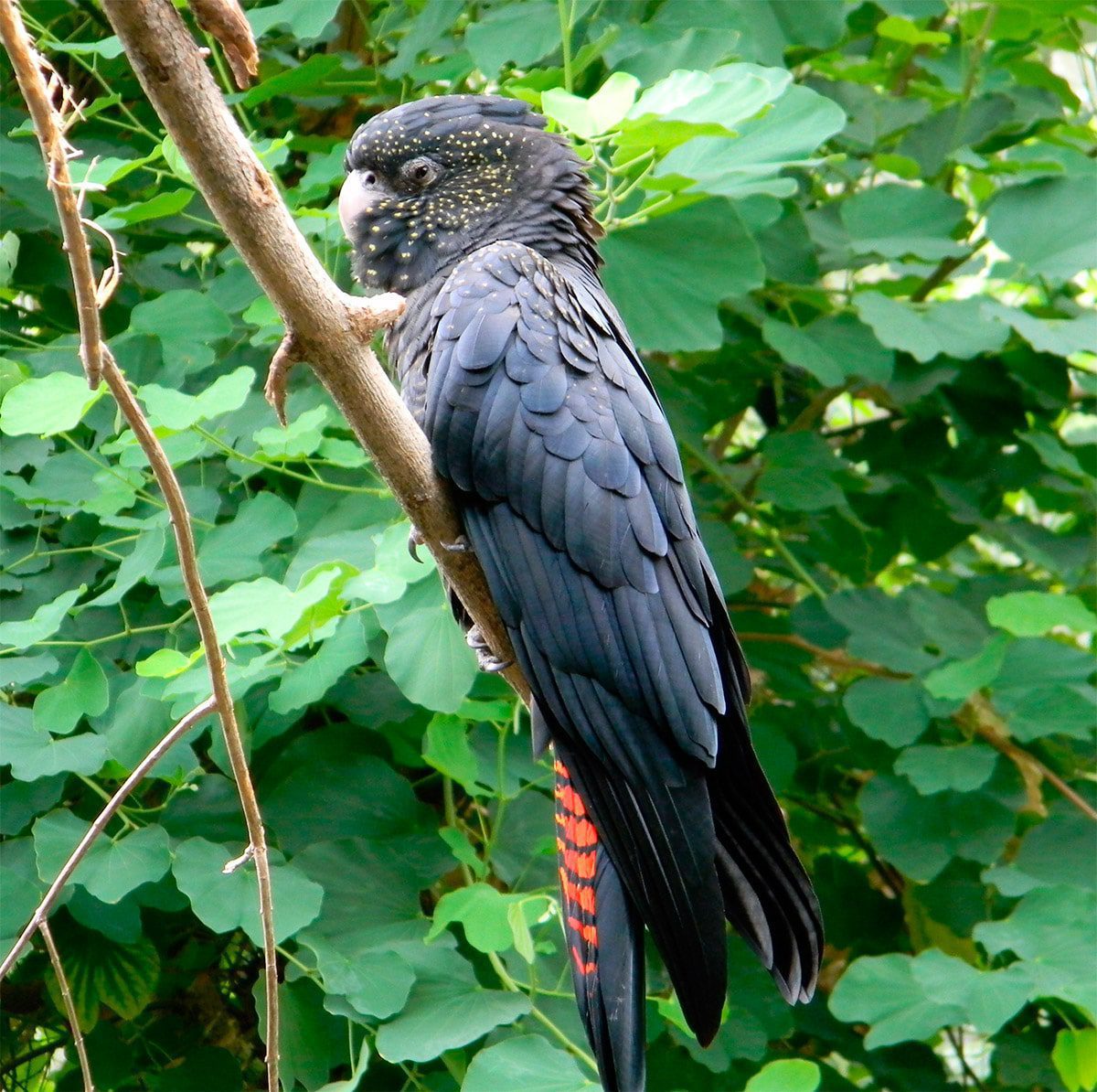
The adults of the Red-tailed black cockatoo (Calyptorhynchus banksii) present sexual dimorphism. The male is entirely black, with the exception of the sides of the tail that are of color red glossy. The upper part of the head It is a long Ridge which starts from the front and goes up to the nape. The bill is grey dark.

The females they are slightly smaller. Show a plumage blackish brown with yellow-orange stripes on the tail and the chest. The cheeks and wings they are covered with small yellow spots. The bill is of color bone pale. Lower parts to the tail coverts they are finely excluded in beige.

The youth are similar to the females until they reach the maturity sexual, around the 4 years. Gradually, as they approach this age, YM will acquire their feathers red which gradually replaced their initial feathers in yellow.

Description 5 subspecies

They differ from each other mainly by the size of their beak.

  • Calyptorhynchus banksii banksii

    (Latham, 1790) – Nominal. Grand. Bill dark grey.


  • Calyptorhynchus banksii graptogyne

    (Schodde, Saunders,DA & Homberger, 1989) – It is the smaller of the 5 Subspecies.


  • Calyptorhynchus banksii macrorhynchus

    (Gould, 1843) – Large as it nominal.


  • Calyptorhynchus banksii naso

    (Gould, 1837) – They have wings that seem to be more long and pointy.


  • Calyptorhynchus banksii samueli

    (Mathews, 1917) – Have a size and bill smaller.

Habitat:

Wide variety of habitats. Grasslands and scrub, from the dense rainforests to the forests of acacia and eucalyptus.
Nestbox, These birds are generally dependent on the old eucalyptus, although according to which regions regions, the variety of trees for nesting, could be different.

To feed, flocks of these cockatoos, they penetrate in agricultural lands and orchards, becoming a real plague.
In all parts of the Australian mainland, have been observed seasonal movements.
In the North, most cockatoos flee from high humidity areas during the rainy season.
In other parts of the continent, We are seeing movements directly related to food.
In South Australia, the movements are carried out in the South-North direction and are not necessarily linked to the stations.

Reproduction:

It nests in the hollow of the following trees: MARRI, Jarrah, Wandoo, Karri and Bullich. Eggs are laid on the bottom of a hollow log, up dry branches, between March and December. The cavity can have a depth of one to two meters. The diameter of the entry may vary from 25 to 50 centimeters.

The laying is of an only egg (In rare cases two). The incubation runs by features of the female and lasts between 29 and 31 days.
At birth the chicks are covered by a little and yellow plumage. Most of the time, the second calf is abandoned and eventually dies from lack of food. The surviving offspring is fed by both parents..

Food:

It feeds mainly from seeds, in particular those of Eucalyptus Marri (E. calophylla). Chew small branches, grabs clusters with its legs and โ€œchewsโ€ them to extract the seeds. Strip the remains to the soil, at the foot of the tree. It is a great vegetarian, also eats berries, fruit, some insects and larvae. Occasionally it feeds on plants or varieties introduced as the radish wild, turnips or melons.

Distribution:

Size of the area of distribution (reproduction / resident): 8.680.000 km2

endemic to Australia, where in drier areas.
They are especially prevalent in the northern part of the country. In the South, they are less abundant and more dispersed.

The WPT (World Parrot Trust) contributed funds to a project in the South of Australia for help to save to these birds.

Distribution 5 subspecies

They differ from each other mainly by the size of their beak.

Conservation:

State of conservation โ“˜


minor concern Minor Concern โ“˜ (UICN)โ“˜

โ€ข Current category of the Red List of the UICN: Least concern.

โ€ข Population trend: Decreasing.

In the past it was common, but now it has become rare, It is distributed unevenly in areas that have been significantly reduced.
The decrease is caused by the deforestation, the competition for the nesting with species native and exotic, as well as the fires.

It is believed that the world's population exceeds the 100.000 individuals.
the subspecies graptogyne was estimated to be in less of 1.000 individuals in 1989.
Only the subspecies of the Southwest, Calyptorhynchus banksii naso, is listed as "Vulnerable".

The subspecies Calyptorhynchus banksii banksii is not classified as threatened in all regions.

"Red-tailed black cockatoo" in captivity:

Excellent with a very devoted owner. It can be quite noisy. It has a moderate ability to imitate human sound.
There has been an increase in captive birds in Australia. It is very rare as bird cage.
They can live in 50 to 100 years in captivity. The variety Calyptorhynchus banksii naso, of 25 to 50 years.

Alternative names:

Red-tailed Black-Cockatoo, Banksian Cockatoo, Banks’s Black Cockatoo, Black Cockatoo (English).
Cacatoรจs banksien, Cacatoรจs de Banks (French).
Rabenkakadu (German).
Cacatua-negra-de-cauda-vermelha (Portuguese).
Cacatรบa Colirroja, Cacatรบa Fรบnebre de Cola Roja (espaรฑol).

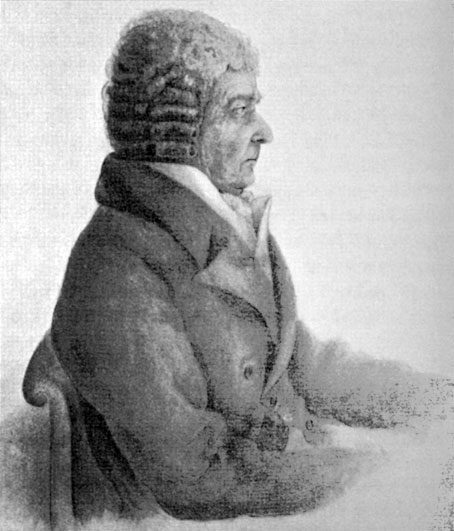
John Latham
John Latham

scientific classification:


Order: Psittaciformes
Family: Cacatuidae
Genus: Calyptorhynchus
Scientific name: Calyptorhynchus banksii
Citation: (Latham, 1790)
Protonimo: Psittacus Banksii


Images Red-tailed Cockatoo:


Species of the genus Calyptorhynchus
  • Calyptorhynchus banksii
  • —- Calyptorhynchus banksii banksii
  • —- Calyptorhynchus banksii graptogyne
  • —- Calyptorhynchus banksii macrorhynchus
  • —- Calyptorhynchus banksii naso
  • —- Calyptorhynchus banksii samueli
  • Calyptorhynchus lathami
  • —- Calyptorhynchus lathami erebus
  • —- Calyptorhynchus lathami halmaturinus
  • —- Calyptorhynchus lathami lathami

  • Sources:

    Avibase
    – Parrots of the World โ€“ Forshaw Joseph M
    – Parrots A Guide to the Parrots of the World – Tony Juniper & Mike Parr
    Birdlife

    – Photos: Laslovarga (commons.wikimedia.org), Wikipedia, Scarlet23 (Wikipedia), Uploaded by Casliber (Wikipedia), Uploaded by Peter Campbell (Wikipedia)

    – Sounds: Nigel Jackett
    โ–ท The world of Pets: Dogs, cats, birds, reptiles, amphibians

    Glossy black cockatoo
    Calyptorhynchus lathami


    Glossy black cockatoo

    Content

    Description

    46 to 51 cm.. height and between 400 and 500 g. of weight.
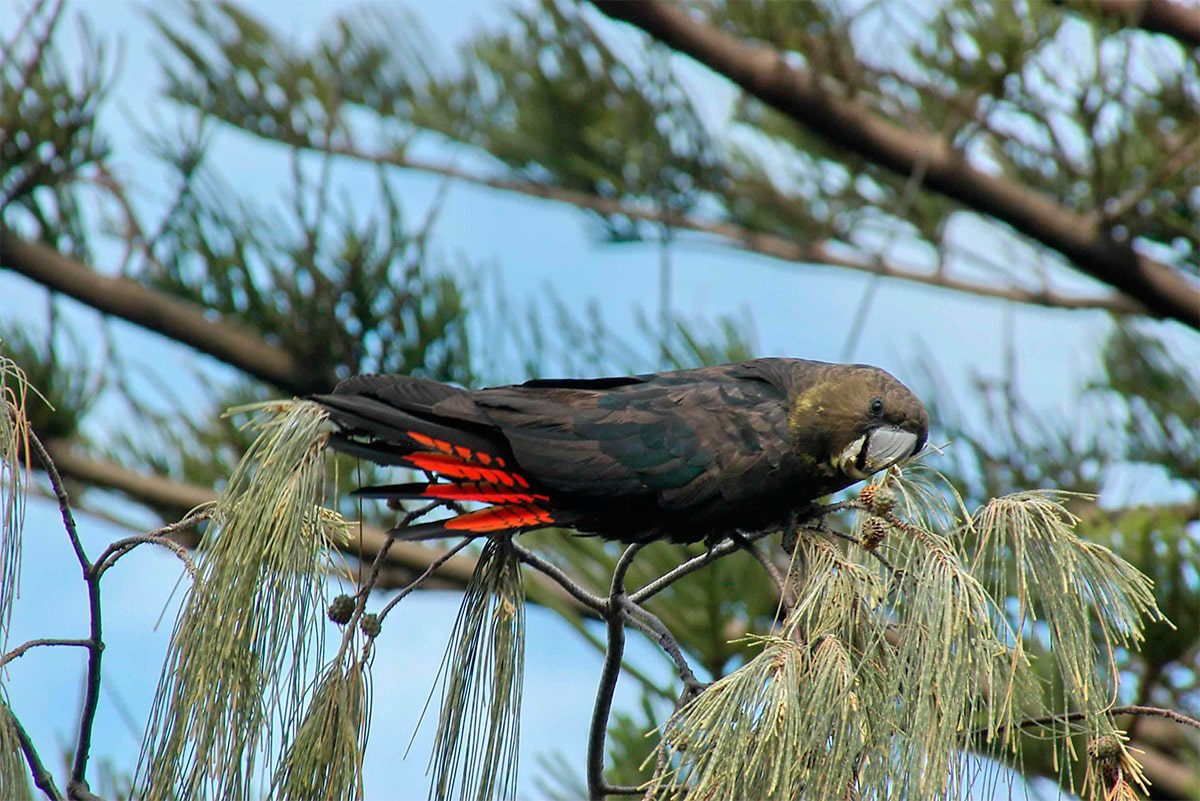
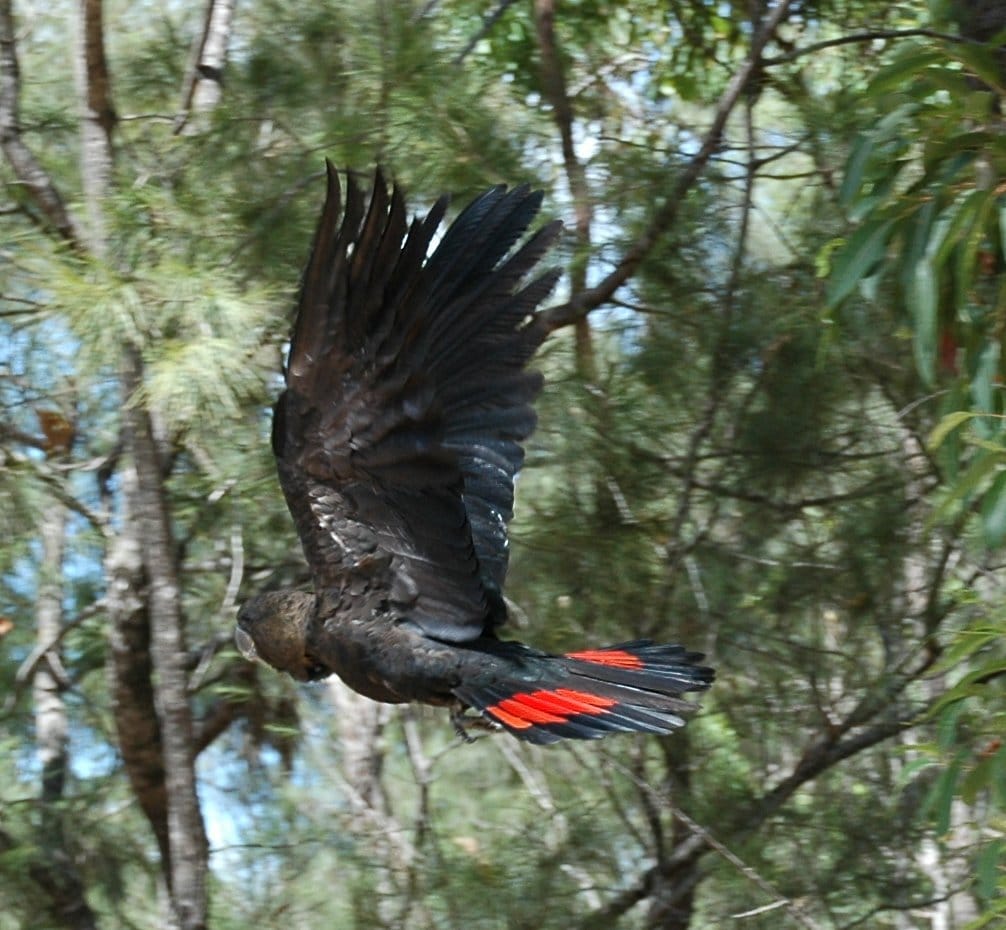
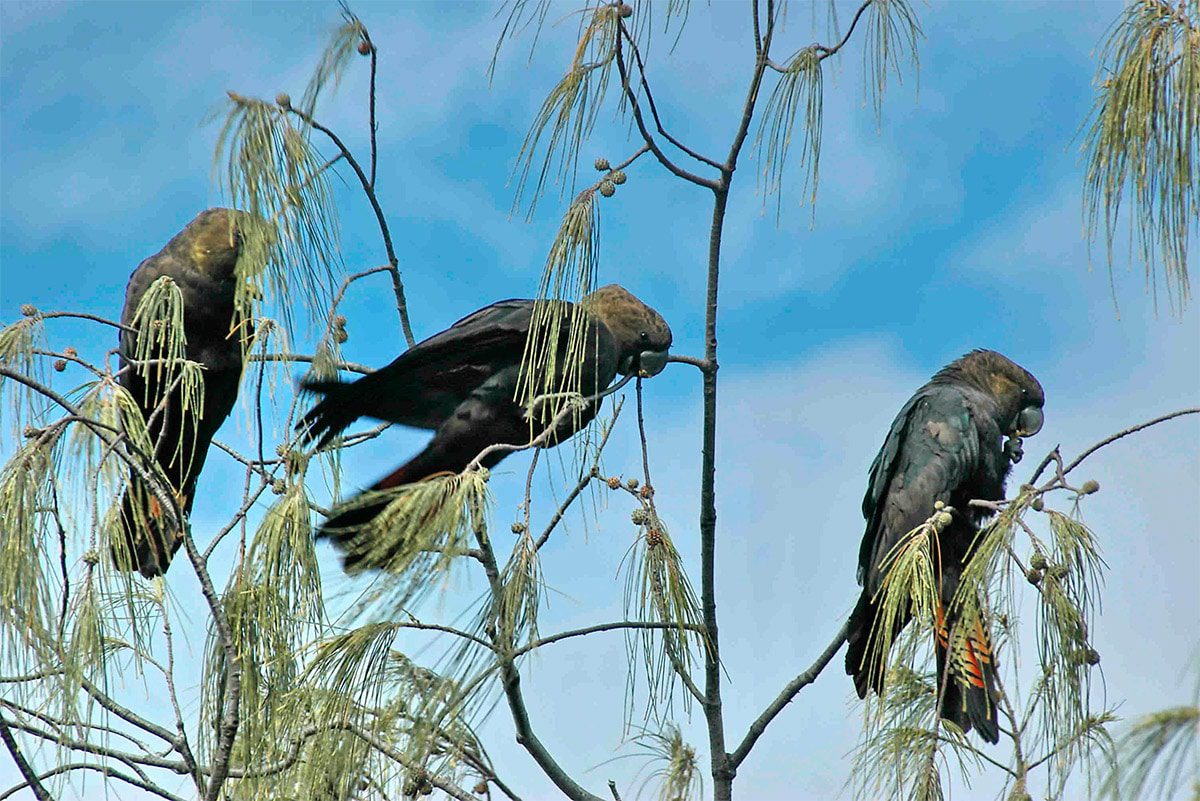
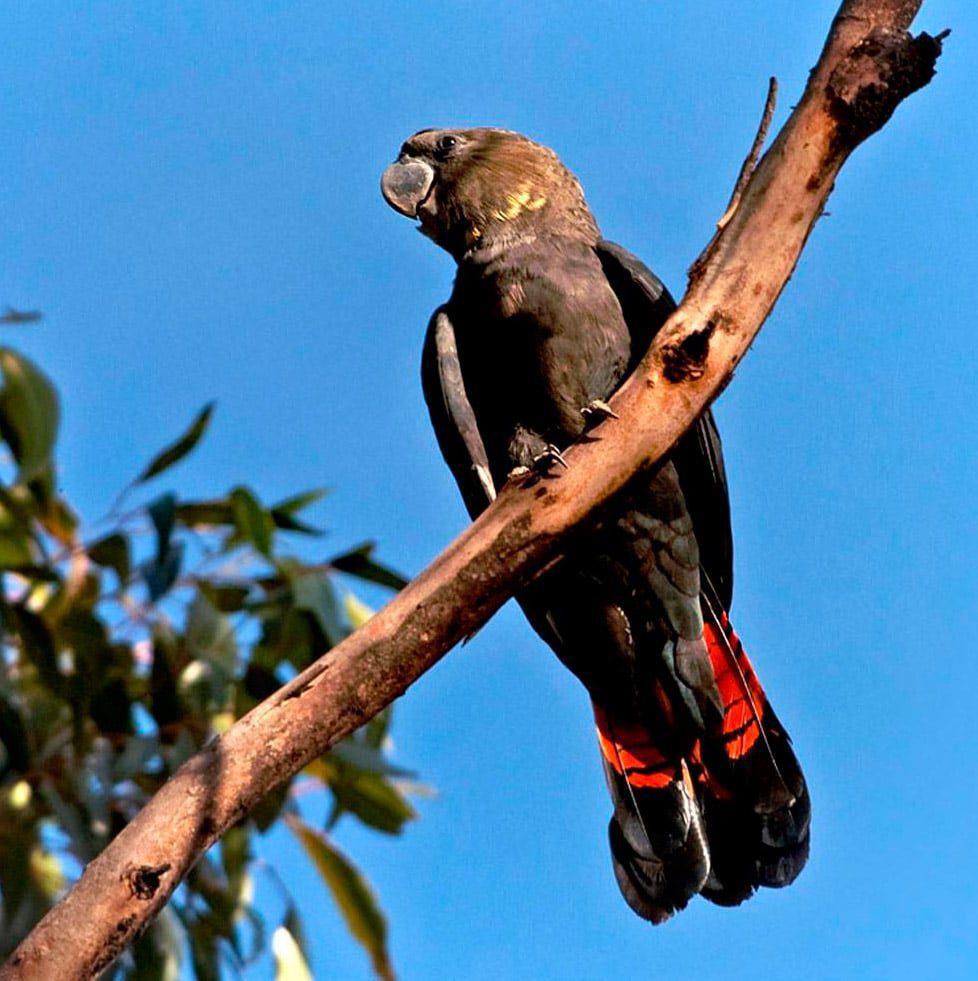
    The Glossy black cockatoo (Calyptorhynchus lathami) is the smallest of the 5 black cockatoos and is restricted to the East coast of Australia (a population isolated also is reproduced in the Islands Kangaroo).
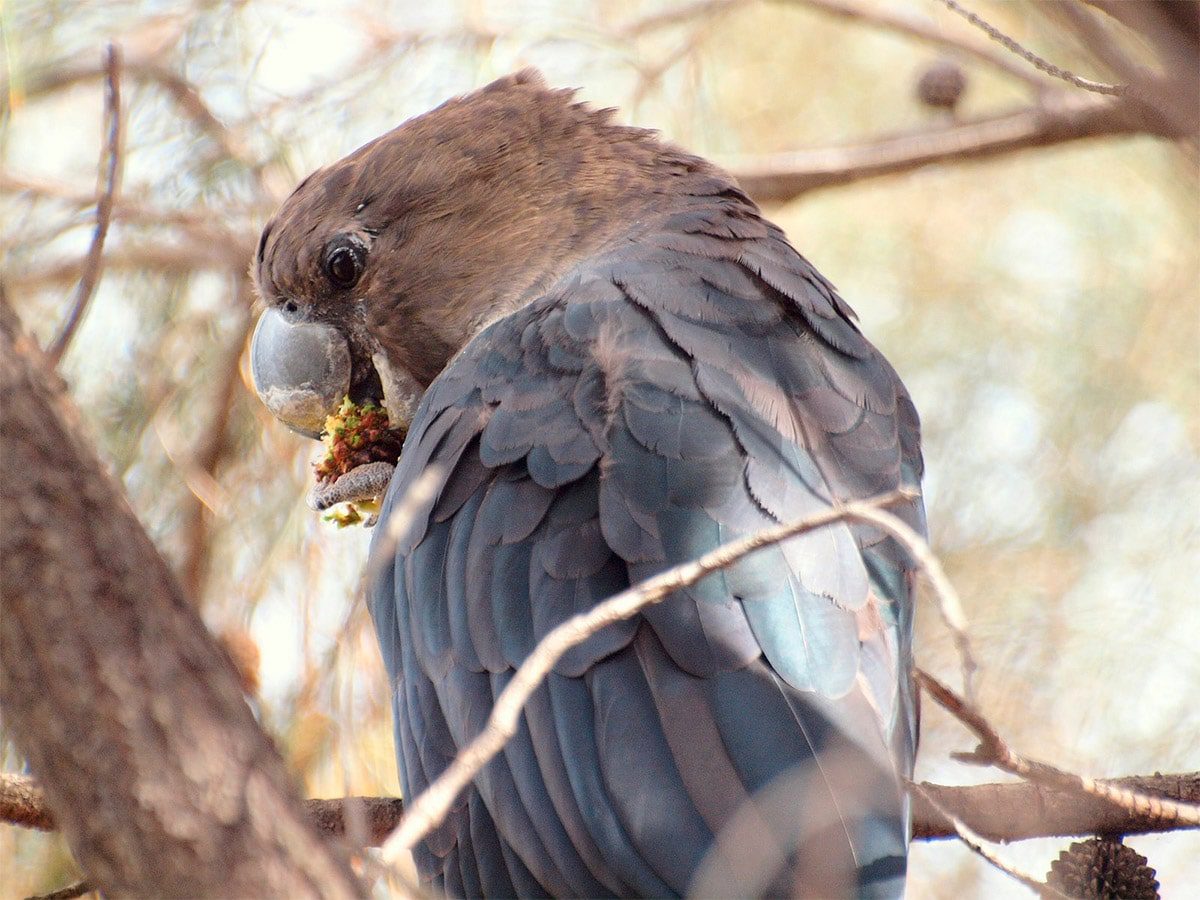
    The male is brown-black color with a small crest rounded and bright Scarlet spots in the tail. The female shows spots irregular in color yellow in it head, The Scarlet patches in the tail they are permeated by narrow black bars and edges of pale yellow on the underparts of the wings.
    The immature they are similar to the females, but they lack the yellow markings on the head and show different yellowish tones in the feathers, the chest and in the belly.

    Subspecies description

    • Calyptorhynchus lathami lathami

      (Temminck, 1807) – The nominal.


    • Calyptorhynchus lathami halmaturinus

      (Mathews, 1912) – Medium-size ones 48 cm. length and 510 to 515 weight g, with a wing of approximately 90 cm.. The of adults they are mainly black, dark brown in the head, the neck and the bottom of the body, and Red panels (in males) or orange-red with bars Black (in females) on tail. The female adult is also conspicuous in the head. These patches are absent from most males., Although they can be expressed faintly in a few individuals (Higgins 1999).

      The immature are similar in appearance to the male adult, but have small stains yellow in it head; spots or bars yellow in the chest, belly and flanks; yellow or orange spots on the wing (mainly on the bottom); Red or orange-yellow panels with black bars at the tail; One bill pale grey (instead of dark); And a ring of skin around the eye pale grey (instead of grey dark) (Higgins 1999, L. Pedler 2007, com. Pers.).


    • Calyptorhynchus lathami erebus

      (Schodde & Mason,IJ, 1993) – The only difference with the nominal species resides in that has the bill shorter.

    Habitat:

    Video – "Glossy black cockatoo" (Calyptorhynchus lathami)

    Glossy-black Cockatoo (Calyptorhynchus lathami ) HD Video clip 1/3

    Areas forested frequently dominated by casuarinas of which are highly dependent for its food. These are small shrubs commonly known as the Sheoaks, wood for beef (Beefwood) or Australian pine. These shrubs are widespread in tropical and subtropical regions.

    They are also distributed in open humid forests, difficult terrain where deforestation has not been too great. They have an imperative for natural tree cavities to nest.

    Reproduction:

    Forman couple during all the life. The couple has relationships throughout the year. This type of family of them parrots prefers to nest in cavities natural of the eucalyptus, whether dead or in full vitality. The nest usually placed at an altitude that ranges between the 3 and 30 meters above the ground. The cavity is filled with leaves and branches. Sometimes, together with other breeding pairs, they share the same tree year after year.

    In New South Wales the season extends from March to August. The spawning It consists of a single egg white. It is the female that takes charge of most of the tasks.: It prepares the nest and incubates herself. Never leave the nest until the small is reached the age of one week. In most cases, the male provides the female with food and assistance until the young can fend for itself, normally four months which remains with them until the next breeding season.

    Food:

    It feeds almost exclusively on the seeds several species of She-oak (Casuarina and Allocasuarina). You can also sometimes eat larvae of wood-boring. They feed in threes, less frequently in pairs, small groups or flocks of up to 60 birds. They can be detected by the snapping of their beaks and the remains of the casuarina cones and twigs that fall.

    Distribution:

    Size distribution (reproduction / resident): 770.000 km2

    The species is Rare Although widespread in suitable forests of the central coast and forest habitats of Queensland and in the interior of the southern plateaus and Plains of the Midwest's New South Wales, with a small population in the Riverina. There is an isolated population in the Kangaroo Island, South of Australia.

    Subspecies distribution

    • Calyptorhynchus lathami lathami

      (Temminck, 1807) – The nominal.


    • Calyptorhynchus lathami halmaturinus

      (Mathews, 1912) – Kangaroo Island (South of Australia)


    • Calyptorhynchus lathami erebus

      (Schodde & Mason,IJ, 1993) – It is from Australia (the central eastern coastal area of Queensland)

    Conservation:

    State of conservation โ“˜


    minor concern Minor Concern โ“˜ (UICN)โ“˜

    โ€ข Current category of the Red List of the UICN: Least concern.

    โ€ข Population trend: Decreasing.

    Like most parrot species, the Glossy black cockatoo is protected by the Convention on international trade in endangered species of Fauna and Flora Silvestres ( CITES ), with its inclusion in the list of the Appendix II of vulnerable species, What makes the import, the export and trade of animals captured in the wild is illegal.

    Justification of the population

    Garnett and Crowley (2000) estimated the size of the population in the following way: 12.000 individuals of the subspecies lathami, 70 breeding pairs of the subspecies halmaturinus (equivalent to 140 individuals) and 5.000 individuals of the subspecies erebus giving a total of 17.140 individuals.

    Justification of trend

    They suspected that the population is declining in general Since the largest subpopulation, lathami, It is slowly decreasing throughout its range. However it is believed that the subspecies Erebus is increasing and the subspecies halmaturinus It is increasing as a result of conservation efforts in the Island Ganguro (Garnett and Crowley 2000).

    "Glossy black cockatoo" in captivity:

    Like the other black cockatoos, the Glossy black cockatoo (Calyptorhynchus lathami) is extremely rare in the poultry. In Australia It has attained breed in captivity.

    Alternative names:

    Glossy Black-Cockatoo, Casuarina Cockatoo, Casuarine Cockatoo, Latham’s Cockatoo, Leach’s Black-Cockatoo, Leach’s Red-tailed Cockatoo, Nutcracker (English).
    Cacatoรจs de Latham, Cacatoรจs noir รฉtincelant (French).
    Braunkopfkakadu (German).
    Cacatua-preto-brilhante (Portuguese).

    scientific classification:

    Order: Psittaciformes
    Family: Cacatuidae
    Scientific name: Calyptorhynchus lathami
    Genus: Calyptorhynchus
    Citation: (Temminck, 1807)
    Protonimo: Psittacus Lathami

    Images Calyptorhynchus lathami:


    Species of the genus Calyptorhynchus
  • Calyptorhynchus banksii
  • —- Calyptorhynchus banksii banksii
  • —- Calyptorhynchus banksii graptogyne
  • —- Calyptorhynchus banksii macrorhynchus
  • —- Calyptorhynchus banksii naso
  • —- Calyptorhynchus banksii samueli
  • Calyptorhynchus lathami
  • —- Calyptorhynchus lathami erebus
  • —- Calyptorhynchus lathami halmaturinus
  • —- Calyptorhynchus lathami lathami

  • Sources:
    Avibase
    – Parrots of the World โ€“ Forshaw Joseph M
    – Parrots A Guide to the Parrots of the World – Tony Juniper & Mike Parr
    – Birdlife

    Photos: commons.wikimedia.org, The Glossy Black Conservancy,

    Sounds: Nigel Jackett (Xeno-canto)