โ–ท The world of Pets: Dogs, cats, birds, reptiles, amphibians

Black-headed Parrot
Pionites melanocephalus

Cotorra pechiblanca

Content

Description:

Black-headed Parrot

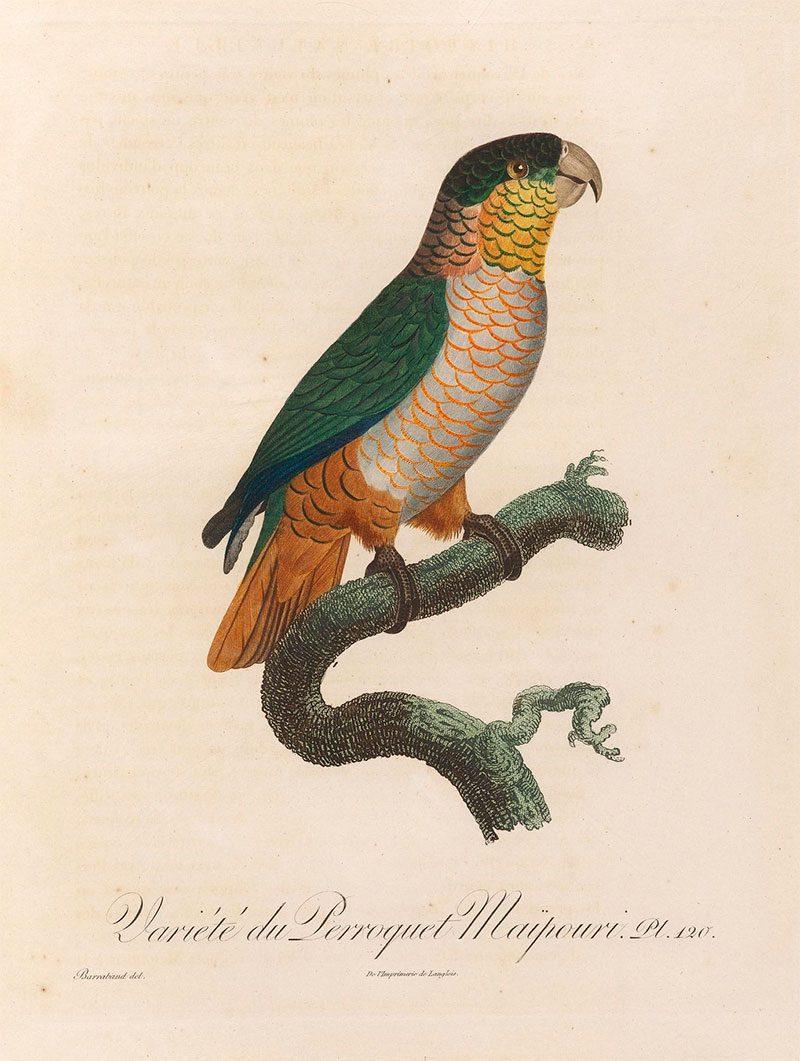
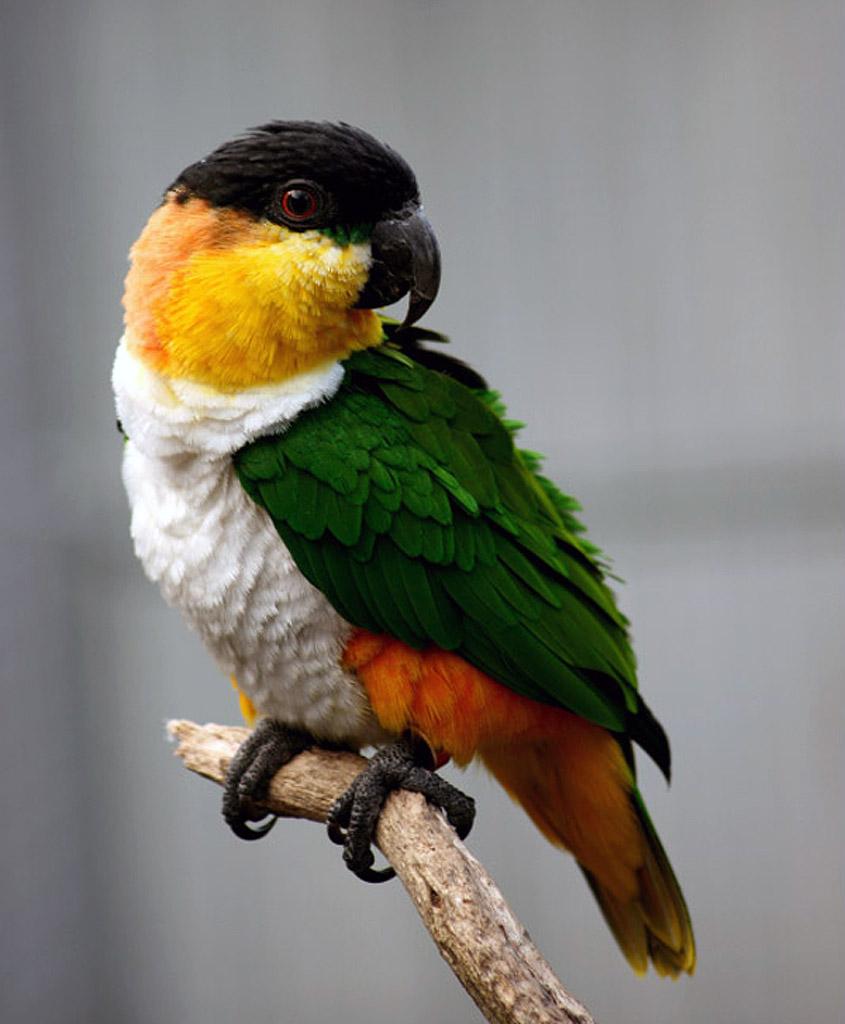
The Black-headed Parrot (Pionites melanocephalus) measures of 21 to 23 cm.. height.

Unmistakable by crown black, chest and belly white, the latter with yellow sides (very visible on the fly). Breast bright yellow, nape orange acanelada, back and rump green. Tip pens of wings They are blue and dark go the closer they get to the body.

Legs and bill dark gray.

The youth They have bluish green spots on the nape, with chest and belly yellowish.

There is no sexual dimorphism in this species. The identification of genus must be performed by DNA testing or a surgical probe.

Description 2 subspecies:

  • Pionites melanocephalus melanocephalus

    (Linnaeus,1758) – The subspecies nominal.


  • Pionites melanocephalus pallidus

    (Berlepsch, 1890) – It has bright yellow in the throat, the thighs and tail.

Habitat:

It inhabits humid jungles, semi-wet, swampy, gallery woods, stubble and crop to the 1000 m. Walks in small flocks between 3 to 10 individuals, feed in the canopy, very rare in stratum low forest.

Reproduction:

Its laying is of 2 to 4 eggs and the breeding season It is from December to February in French Guiana, april in Venezuela, April to May Colombia, October to November Suriname.

Food:

Feeds of seeds several species of plants cellulose, plants, flowers and leaves. There is also evidence of some insects in your diet.

Distribution:

She can be seen in the wild along the Amazonia, from the North of the Amazon River, bordering south to northeastern Peru, also in the Guyanas.

Distribution 2 subspecies:

  • Pionites melanocephalus melanocephalus

    (Linnaeus,1758) – The subspecies nominal.


  • Pionites melanocephalus pallidus

    (Berlepsch, 1890) – South of Colombia to the East of Ecuador and northeast of Peru.

Conservation:

State of conservation โ“˜


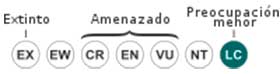
minor concern Minor Concern โ“˜ (UICN)โ“˜

Although not in danger of extinction Its population has declined significantly. The illegal marketing is the main theory against its appearance and adaptation in an environment foreign to its natural environment. Poaching of pigeons and felling of trees are common in the south of the country.

"Black-headed Parrot" in captivity:

Popular poultry farming. They adapt easily to the bird or Aviary cages. You need a degree quite high commitment and attention by the owner. The like to interact with other birds and people. The love to play with toys and can be quite noisy. An interesting feature of the Black-headed Parrot It is their habit of rolling on his back and play with toys help of their paws.
He manages to replace their jungle habitats in parks or green areas of large cities.
Its price is quite high compared to other species due to its striking plumage and friendliness..

Alternative names:

Black headed Parrot, Black-crowned Parrot, Black-headed Caique, Black-headed Parrot(English)
Cotorra pechiblanca, Loro cacique o Loro mocho (Colombia)
Perico calzoncito (Venezuela)
Loro coroninegro (Ecuador)
Chirricles cabeza negra (Peru)
Grรผnzรผgelpapagei, Grรผnzรผgel-Papagei (Germany)
Lorito Chirlecrรฉs, Lorito Chirlicrรฉs, Lorito Gordo de Cabeza Negra (Spain)
Caรฏque ร  tรชte noire, Caรฏque maรฏpouri (France)
cabeรงa-preta, maipurรฉ, marianinha-da-cabeรงa-preta, Marianinha-de-cabeรงa-preta (Brazil)

scientific classification:

  • Order: Psittaciformes
  • Family: Psittacidae
  • Genus: Pionites
  • Scientific name: Pionites melanocephalus
  • Citation: (Linnaeus, 1758)
  • Protonimo: Psittacus melanocephalus

Images "Black-headed Parrot"

Videos "Black-headed Parrot"


Species of the genus Pionites
  • Pionites melanocephalus
  • —- Pionites melanocephalus melanocephalus
  • —- Pionites melanocephalus pallidus
  • Pionites leucogaster
  • —- Pionites leucogaster leucogaster
  • —- Pionites leucogaster xanthomerius
  • —- Pionites leucogaster xanthurus


Black-headed Parrot (Pionites melanocephalus)


Sources:

  • Avibase
  • Parrots of the World โ€“ Forshaw Joseph M
  • Parrots A Guide to the Parrots of the World – Tony Juniper & Mike Parr
  • Parrots, Parrots and macaws Neotropical
  • Baywood
  • caiqueparrots

  • Photos: Natural history of parrots /.A Paris :chez Levrault … ;an IX (1801)-an XIII (1805).. biodiversitylibrary.org/page/40064546

  • Sounds: controles-canto.org – Patrick INGREMEAU
โ–ท The world of Pets: Dogs, cats, birds, reptiles, amphibians

White-bellied Parrot
Pionites leucogaster

Lorito Rubio

Content

White-bellied Parrot

Description:

23 cm.. height.

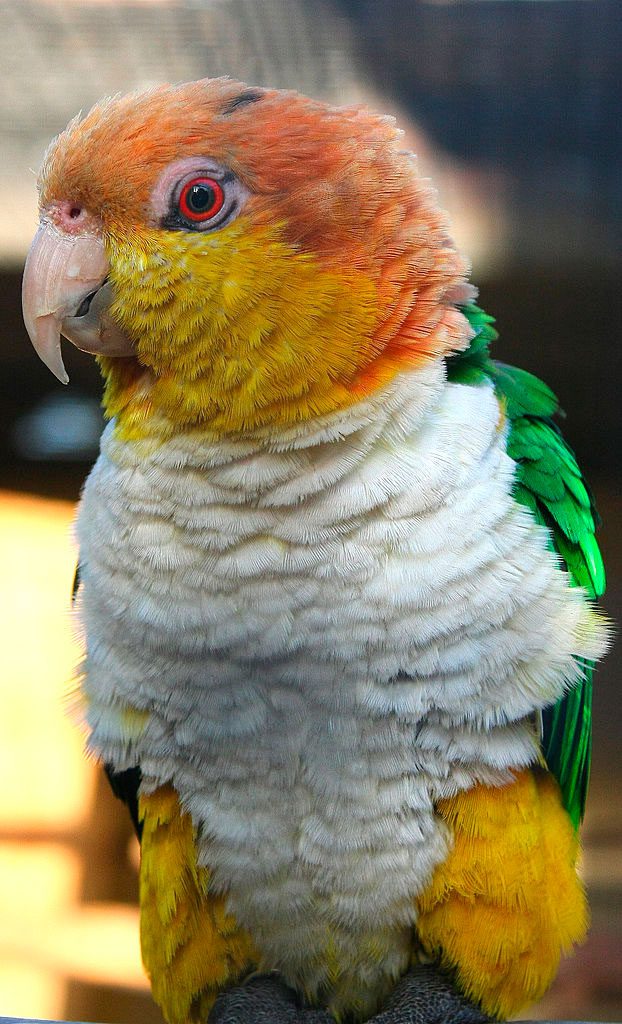
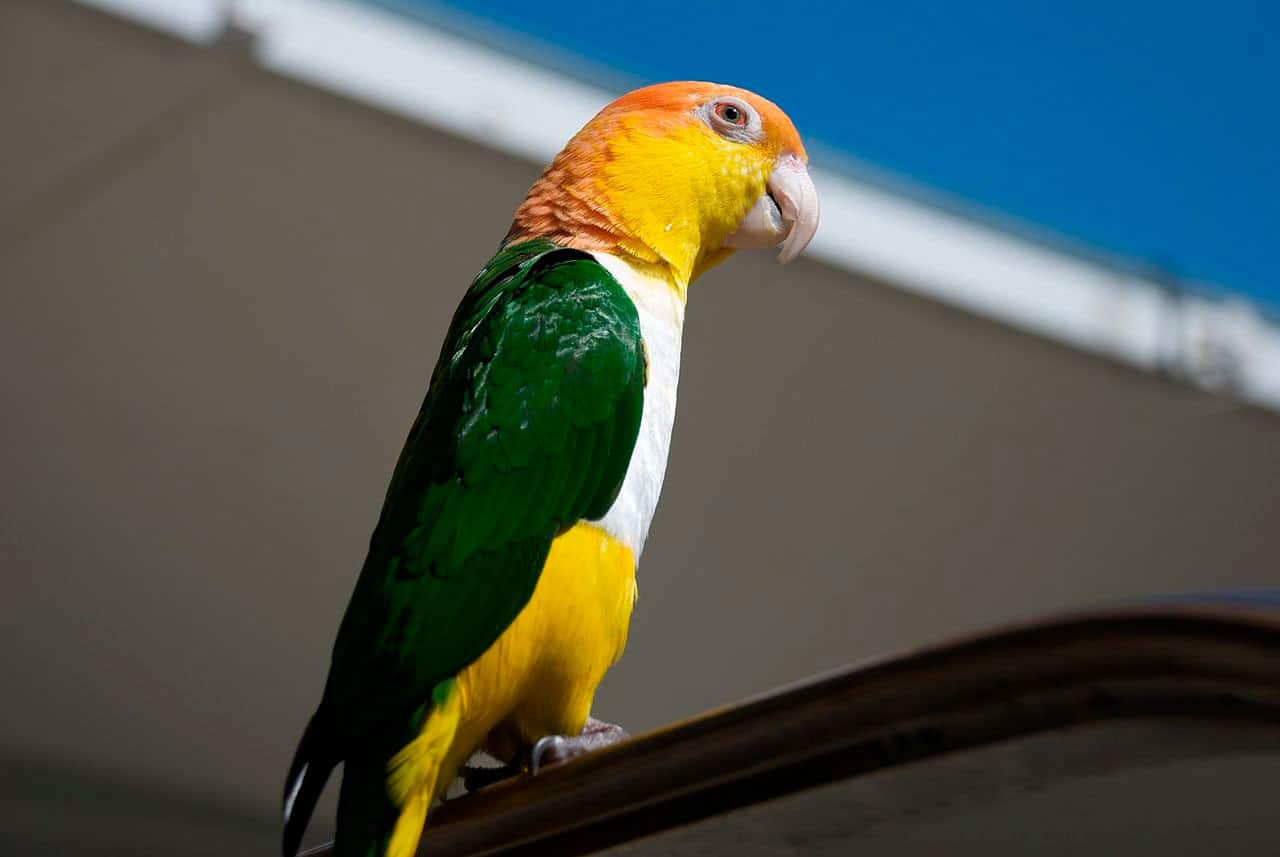
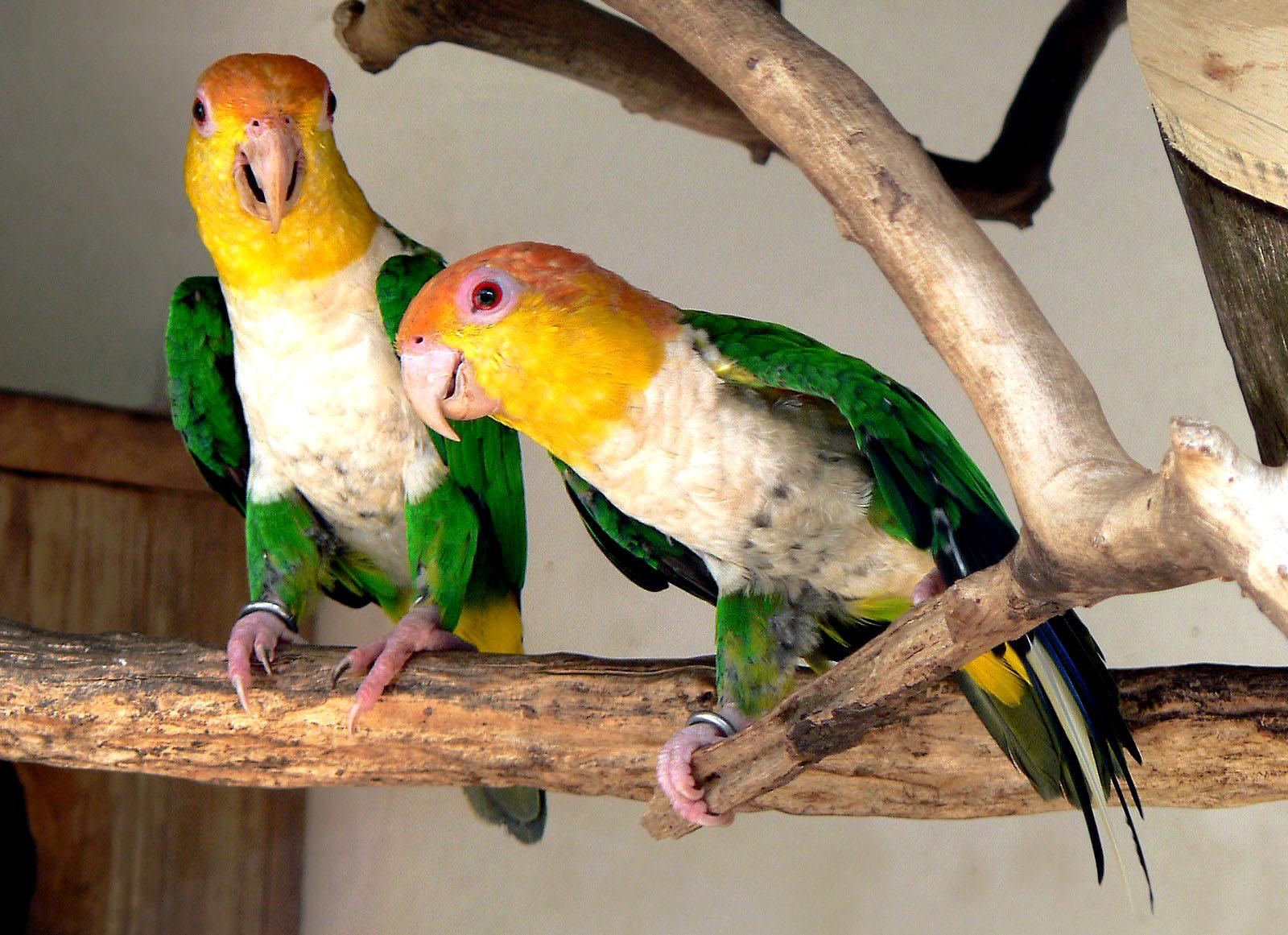
the unmistakable White-bellied Parrot (Pionites leucogaster) has the lores, cheeks and throat, bright yellow lemon; "ear coverts", forecrown and crown, bright orange red; sides and rear of the neck, orange, but paler.

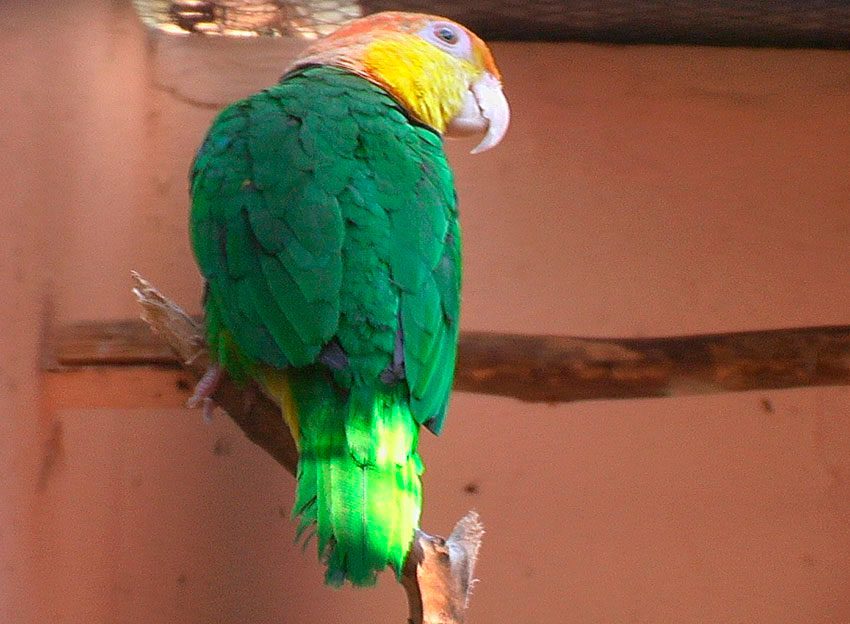
Upperparts green. Primary coverts blue; other coverts green. Primaries blue with green margins in outerweb. Underwing-coverts green. Breast and center belly, white; undersides of belly and feathers the thighs, green; undertail-coverts Yellow. Upper, the tail green; undertail, pale grayish brown. Bill, color pale horn; cere Pink; irises reddish brown; legs pink.

Both sexes are similar.

Immature paler, especially the yellow color face.

  • Sound of the White-bellied Parrot.

Description 3 subspecies:

  • Pionites leucogaster leucogaster

    (Kuhl, 1820) – Nominal.


  • Pionites leucogaster xanthomerius

    (Sclater,PL, 1858) – As the nominal species but with the thighs and flanks bright yellow lemon (no verde); tail green.


  • Pionites leucogaster xanthurus

    (Todd, 1925) – As the nominal species, but with the thighs yellow; flanks and tail, yellow and green the uppertail-coverts.

Habitat:

Prefers low humid forests, areas of land and vรกrzea with probable preference for the latter and for clearings in the forests. Also observed in the drier forests (where it is less common) in the South of its range. Gregarious; Observed in the company of Blue-headed Parrot (Pionus menstruus) on Eastern Amazonia. Seen in small groups or couples.

Since they have very heavy body and very short wings, the White-bellied Parrot You can not fly long distances.

Reproduction:

With plays in January and nests in hollow trees; a nest 30m found in the cavity of a tree in the east of its range. Clutch Normal probably 2-4 eggs.

Food:

Very similar in habits Lorito Chirlecrรฉs (Pionites melanocephalus) but no specific information about their diet; probably seeds, fruit and berries.

Distribution:

The size of its distribution area (reproduction / resident): 2.140.000 km2

The White-bellied Parrot It extends through southern amazon in Brazil, from northwest maranhรฃo and around Bethlehem in the State of For, west on Mato Grosso to the North of Bolivia and Southeast of Peru, to the top of Ucayali, where it approaches the range of Lorito Chirlecrรฉs (Pionites melanocephalus). Reports in eastern Ecuador (well within the limits of the latter) still not substantiated.

Distribution 3 subspecies:

Conservation:


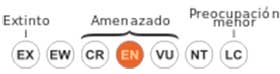
Endangered


โ€ข Current category of the Red List of the UICN: In danger of extinction.

โ€ข Population trend: Decreasing.

Usually common but perhaps more scarce in drier forests on the southern fringes of the range. It is not at serious risk, but decreases locally (for example, the Eastern Amazonia) due to deforestation, and possibly extinct now Santa Cruz, Bolivia, due to the loss of habitat. Trapped for Local international trade (at least years), but apparently not yet having a serious impact on wild populations.

Conservation Actions Underway

โ€ข No specific conservation actions are known for this species.

Conservation Actions Proposed

โ€ข Expand the network of protected areas to effectively protect the IBA.
โ€ข Effectively treat resources and manage existing and new protected areas., using the emerging opportunities for funding the management of protected areas with the overall goal of reducing carbon emissions and maximize the conservation of biodiversity.
โ€ข Conservation on private land is also essential, through the expansion of market pressures for rational land management and prevention of logging on land not suitable for agriculture (Soares-Filho et to the., 2006).
โ€ข Campaign against proposed changes to the Brazilian Forest Code that would lead to a decrease in the width of protected riparian forest areas such as Permanent Preservation Areas (APPs), that function as vital corridors in fragmented landscapes.

"White-bellied Parrot" in captivity:

Do not have the capacity to speak of his larger parrots cousins, but they are very assets and can be very good pets, Despite not being very common to see them in captivity.

Alternative names:

White-bellied Parrot, White bellied Parrot, White-bellied Caique (English).
Maรฏpouri ร  ventre blanc, Caรฏque ร  ventre blanc (French).
Rostkappenpapagei, Rostkappen-Papagei (German).
Marianinha-de-cabeรงa-amarela, maipurรฉ, marianinha, mariquita, periquito-d’anta, periquito-de-anta, periquito-de-cabeรงa-preta Pionopsitta barrabandi (Portuguese).
Lorito Gordo de Cabeza Rojiza, Lorito Rubio (espaรฑol).
Loro de Vientre Blanco (Peru).


scientific classification:

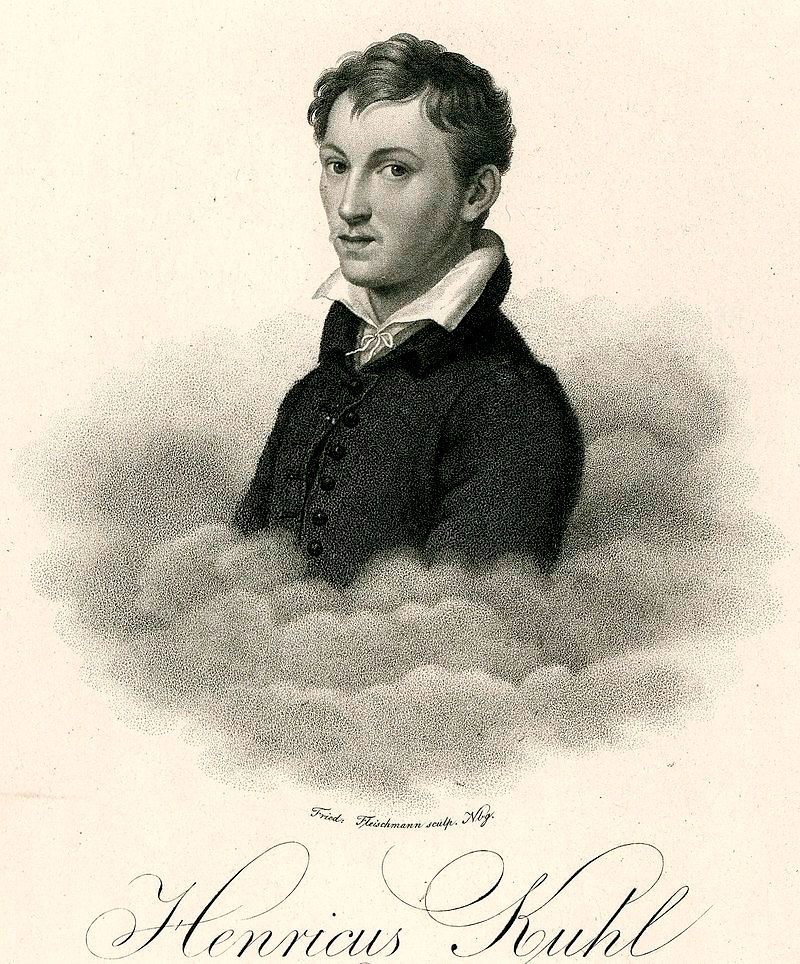
Kuhl, Heinrich
Heinrich Kuhl

Order: Psittaciformes
Family: Psittacidae
Genus: Pionites
Scientific name: Pionites leucogaster
Citation: (Kuhl, 1820)
Protonimo: Psittacus leucogaster


Images "Lorito Rubio":

Videos "White-bellied Parrot"


ยซBlond Parrotยป (Pionites leucogaster)


Sources:

  • Avibase
  • Parrots of the World โ€“ Forshaw Joseph M
  • Parrots A Guide to the Parrots of the World – Tony Juniper & Mike Parr
  • Birdlife

  • Photos:

(1) – Pionites leucogaster xanthomeria By Mirjam (Picasa Web Albums) [CC BY-SA 3.0], via Wikimedia Commons
(2) – Pionites leucogaster leucogaster White-bellied Parrot (this subspecies is also know as the Green-thighed Parrot). Two in a cage with a nestbox By TJ Lin (originally posted to Flickr as 140) [CC BY-SA 2.0], via Wikimedia Commons
(3) – Pionites leucogaster xanthomerius A pet adult male White-bellied Caique perching by a row of books By pionetes (Own work (self-portrait)) [CC BY-SA 3.0], via Wikimedia Commons
(4) – Five White-bellied Parrots (also known as White-bellied Caique) at Bird Park, Foz do Iguaรงu, Brazil. This subspecies is also known as the Green-thighed Caique (Pionites leucogaster leucogaster) By Chad Bordes (Picasa Web Albums) [CC BY 3.0], via Wikimedia Commons
(5) – White-bellied Parrot by Peter TanFlickr
(6) – White-bellied Parrot in captivity at Iguaรงu Bird Park, Foz do Iguaรงu, Brazil. Photographed on 23 April 2003 By Arthur Chapman [CC BY 2.0], via Wikimedia Commons
(7) – White-bellied Parrot (Pionites leucogaster) often referred to as the White-bellied Caique in captivity by whiskymac (Flickr) [CC BY 2.0], via Wikimedia Commons
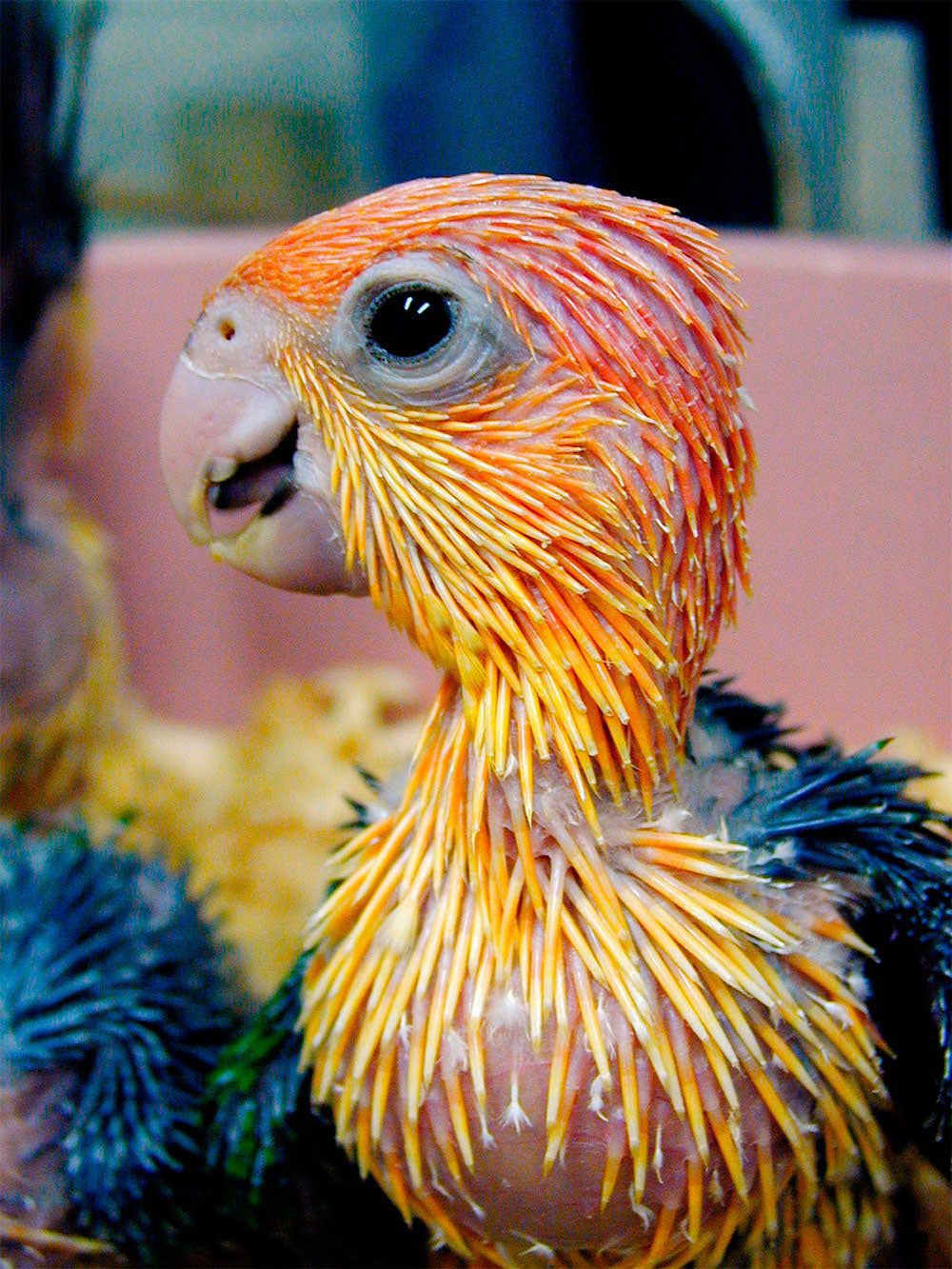
(8) – White-bellied Parrot (often referred to as the White-bellied Caique); a chick. Its feathers have not opened yet By Ruth Rogers (originally posted to Flickr as Caique) [CC BY 2.0], via Wikimedia Commons
(9) – A painting of a White-bellied Parrot (originally captioned ยซPsittacus badiceps. Bay-headed Parrotยป) by Edward Lear (1812-1888) Edward Lear [Public domain], via Wikimedia Commons