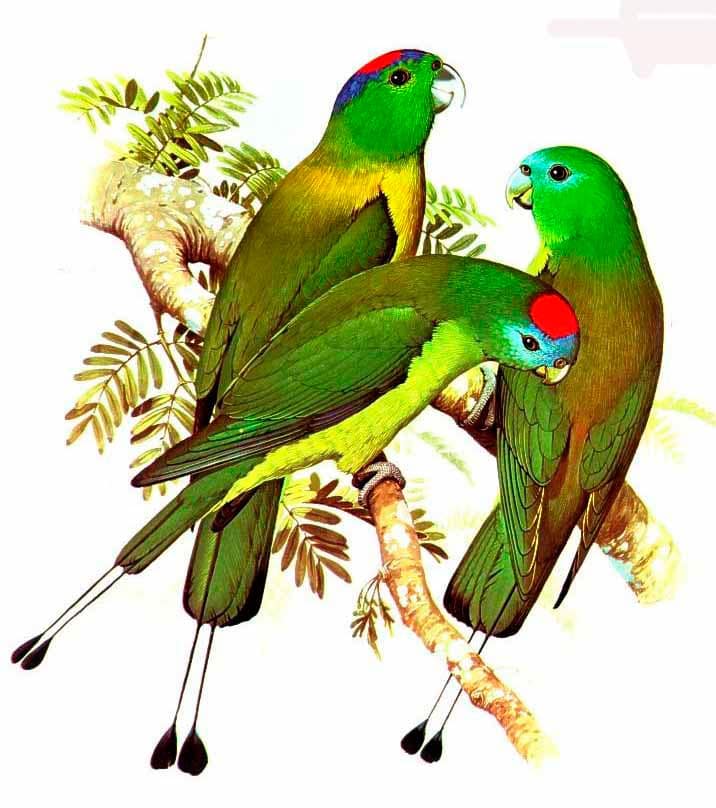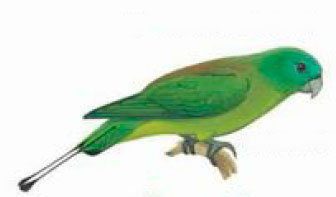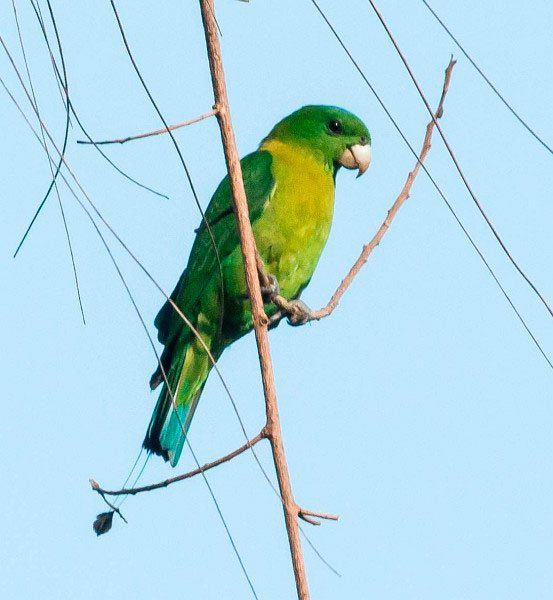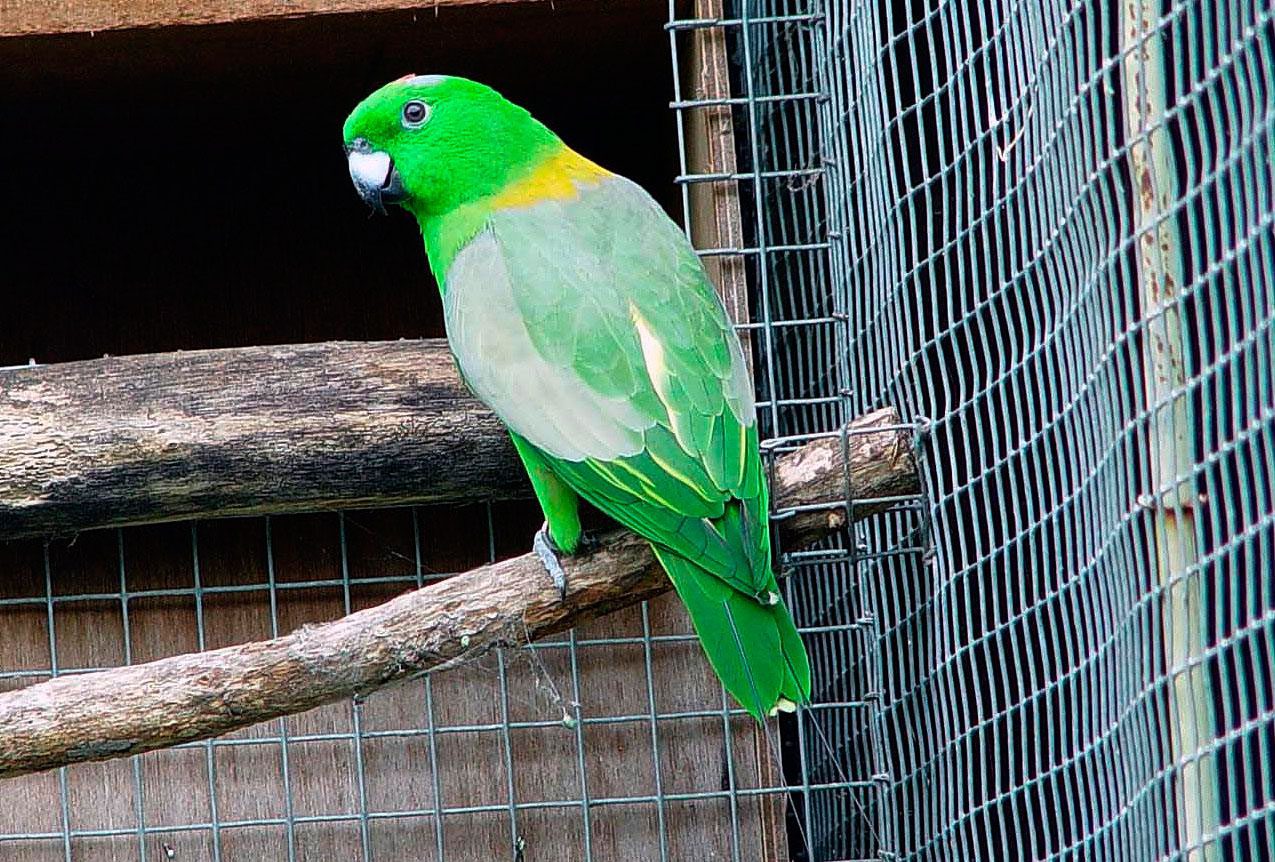
โ–ท The world of Pets: Dogs, cats, birds, reptiles, amphibians

Blue-headed Racquet-tail
Prioniturus platenae


Blue-headed Racquet-tail

Content

Blue-headed Racquet-tail

Description

27 to 28 centimeters length (23,5 not to mention their racquets).

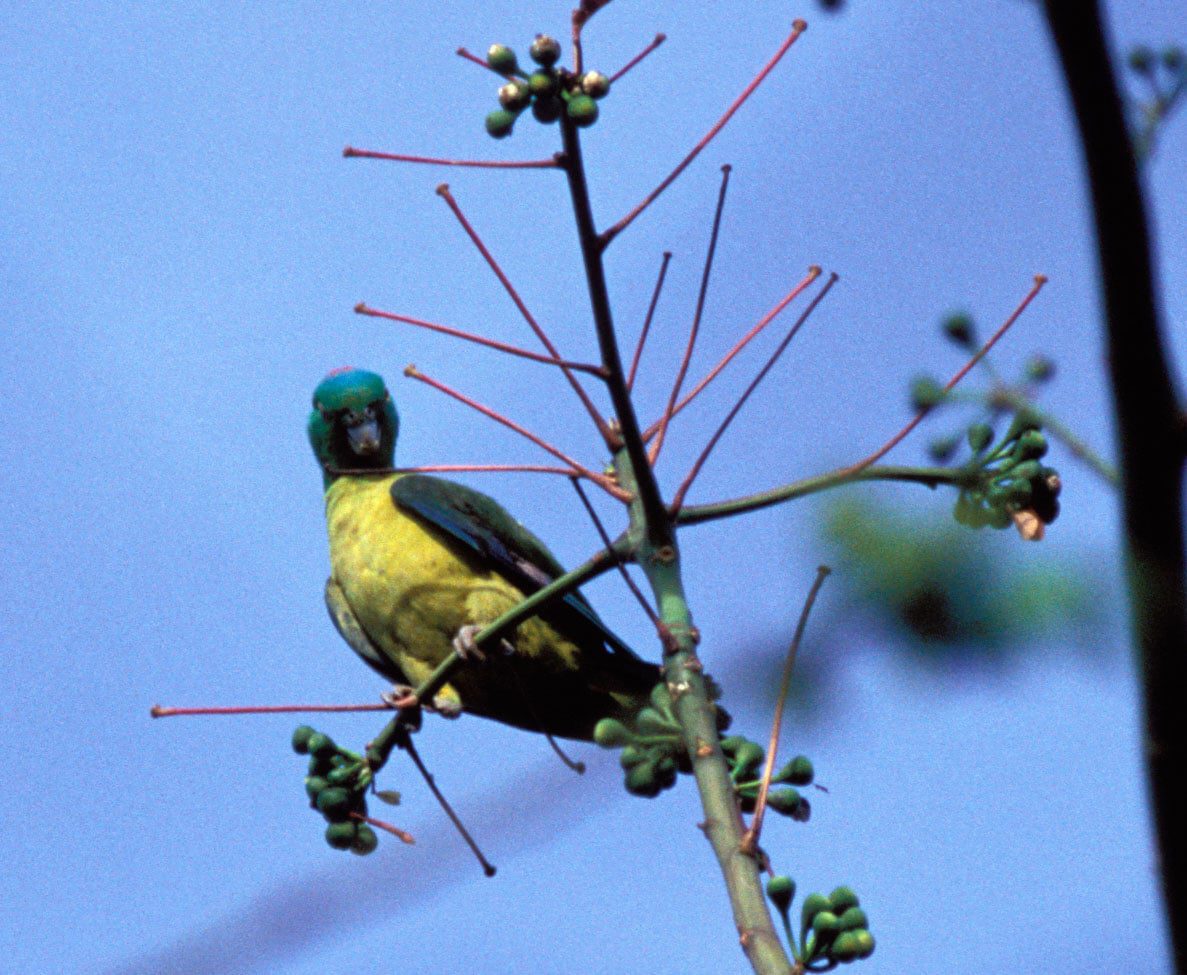
The head of the Blue-headed Racquet-tail (Prioniturus platenae) is clear brilliant blue. Mantle and back of color green light; rump slightly brighter green. Wings green, flight feather with vane blackish internal.

Underwing coverts Turquoise Green, strongly impregnated with blue. Upper abdominal area green, strongly impregnated with blue; undertail-coverts brighter yellowish green, uppertail-coverts bright. Upper, the tail green, Blue-Green lateral feathers with black tips; undertail, the tail dark, bathed in blue; spatulas blackish

Bill blue-white; irises yellowish; legs black.

Female no blue in the underparts (or simply a wash light blue) and a wash light turquoise blue in the head, in the absence of the male light blue Cap; also with extensions in tail shorter.

Habitat:

Little-known. The species is found in moist lowland forests and nearby crops up to altitudes above 300 m. In the islands of the North of Palawan, you have registered in the ultrabรกsico forest, bamboo thickets, mangroves and natural grasslands with scattered trees.. Birds are often recorded in small groups and their habits are presumably similar to those of other Prioniturus.

Reproduction:

There are hardly any data relating to its reproduction. Marked juvenile birds have been collected in January (two) and in August, and a markedly immature, in the month of may.

Food:

There are many data about food. Remains of nuts have been found in the stomachs of the specimens.

Distribution:

Endemic to Palawan and associated Islands, West of Philippines. Registered in Balabac, Dumaran and the islands of the Calamian group (Culion, Calauit, Busuanga). Uncommon and declining due to the destruction of their habitat and indiscriminate capture. The species is uncommon but regular in the Puerto Princesa Subterranean River National Park.

Conservation:


Vulnerable


โ€ข Current category of the Red List of the UICN: Vulnerable

โ€ข Population trend: Decreasing

The population is estimated at 2,500-9,999 individuals based on an assessment of the known records, descriptions of the abundance and range size.

The lack of recent information on this species is opposed to making strong claims about its current trend, but threats by logging, mining and trapping, They suggest that the species is declining rapidly.

The set of Palawan It is classified as a hunting ground, where is hunting illegal, the island was designated as a Biosphere reserve in 1990. But, legislation controlling habitat disturbance and hunting is difficult to enforce effectively.

"Blue-headed Racquet-tail" in captivity:

Not found in captivity.

Alternative names:

Blue-headed Racquet-tail, Blue headed Racquet tail, Blue-headed Racket-Tail, Blueheaded Racket-tailed Parrot, Blue-headed Racquet Tail, Palawan Racket-tailed Parrot, Palawan Racquet-tail, Palawan Racquet-tailed Parrot (ingles).
Palette de Palawan, Palette ร  tรชte bleue, Perroquet ร  raquette de Palawan (French).
Palawan-Spatelschwanzpapagei, Palawan Spatelschwanz-Papagei, Palawanpapagei (German).
Prioniturus platenae (Portuguese).
Lorito Momoto de Palau, Lorito momoto de Palawan, Lorito-momoto de Palawan (espaรฑol).

scientific classification:

Order: Psittaciformes
Family: Psittaculidae
Genus: Prioniturus
Scientific name: Prioniturus platenae
Citation: Blasius,W, 1888
Protonimo: Prioniturus platenae

– Recent phylogenetic study suggests that this species is part of a clade containing also to the P. waterstradti, P. Montanus and P. mindorensis. Formerly treated as a subspecies of the P. discurus, but the treatment recently strengthened as species, considers it Monotypic.

Images "Blue-headed Racquet-tail"

————————————————————————————————

โ€œPalawan Momoto Loritoโ€ (Prioniturus platenae)

Sources:

Avibase
– Parrots of the World โ€“ Forshaw Joseph M
– Parrots A Guide to the Parrots of the World – Tony Juniper & Mike Parr
– Birdlife

Photos:

(1) – Birds of the Philippines – Near Coron Airport, Coron, Palawan. April 2010 – manilaoldtimer
(2) – minghouse.infolinker.com.tw

Sounds: Paul Noakes (Xeno-canto)

โ–ท The world of Pets: Dogs, cats, birds, reptiles, amphibians

Blue-winged Racquet-tail
Prioniturus verticalis


Blue-winged Racquet-tail

Content

Blue-winged Racquet-tail

Description

27 cm. long, not to mention their racquets, measuring of 5 to 6 cm..

The Blue-winged Racquet-tail (Prioniturus verticalis) It has a bright green head, brighter around the lores and the base of the beak; front of the bright blue Crown with central red dot.

Light yellowish green mantle; back and rump Green. green wings, with a wash of dark blue in both bands of all primaries. green wing feathers. The underparts light yellowish-green, more green on the belly and coverts infracaudales. At the top of the queue, Foreign feathers green with black tips; dark the infracaudales, with blue bathed at the edges of the vane inner; tail blades, blackish

Whitish gray peak; dark brown irises: grey legs.

The female It has a light blue Crown, with the absence of the male Red stain: the areas of green yellow more turned off.

Young without snowshoes.

Habitat:

It lives in the lowlands of humid forests., next to forests, the mangroves, dense remnants of forest fragments and agricultural areas. The birds are seen most frequently in pairs, in quick flights over the top of the dense vegetation. They feed on fruit trees, staying calm and hard to spot.

Reproduction:

A nest was discovered in September 1991 with a female: the nest was in a large Palm tree with a broken lid in a Grove near the forest.
Little else is known about the reproductive ecology of this species..

Food:

It is known that it feeds on fruit trees, little more is known about their eating habits.

Distribution:

Is distributed in the Islands to the South-West of the Sulu archipelago, including Tawi-tawi, Bongao (considered probably extinct), Manuk Manka, Sanga Sanga (probably extinct), Tumindao, (There are no recent records) and Sibutu. Although reports indicated that the species was common in the mangroves of Tawi-tawi during the last century, Today it seems to have suffered a serious decline. Today the world population is estimated to be less than 5.000 and the species is being affected by the capture and the rapid elimination of the last forests on the islands.

The birds are also, apparently, used for shooting practice by the Islanders. In 1991 small numbers were observed near virgin forests. During 1994, in Tawi-tawi, There was a rapid elimination of its remnant forest and only six birds were observed.

Conservation:

critical hazard


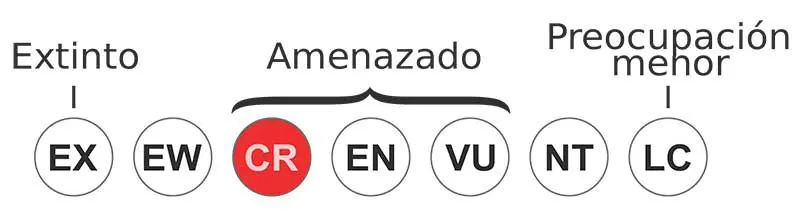
โ€ข Current category of the Red List of the UICN: Critical Hazard

โ€ข Population trend: Decreasing

This parrot has been upgraded to the category a Critically Endangered due to observations that suggest that it now has a very small population, with the suspicion of a fast and rapid deterioration due to the continuous logging of forests, as well as his persecution. Conservation actions are hampered by security concerns. Urgent action is required to assess the gravity of the situation of the species, lessen the impact of threats, start your recovery.

The population was previously estimated at less of 1.000 mature individuals (BirdLife International 2001), but the most recent observations indicate that it could currently be less than 250 mature individuals, Therefore the population is now in the band of 50 to 249 mature individuals, probably equivalent to a total population of 75 to 375 individuals.

Military activity and the insurgency are still presenting a serious obstacle to the general conservation activity in the Sulus. There is no formal protected areas in the archipelago. In 1997, began an awareness campaign focused on the conservation of terrestrial biodiversity in Tawi-Tawi. There is a proposal to finance the conservation of Tawi Tawi, Coastal zone Sulu, Although neither the result nor the potential benefits for the species are known. A municipal resolution has been developing, hoping to put an end to the hunting of endemic species (I. Sarenas in litt., 2010).

"Blue-winged Racquet-tail" in captivity:

Unknown in captivity.

Alternative names:

Blue-winged Racquet-tail, Blue winged Racquet tail, Blue-winged Racket-tail, Blue-winged Racket-tailed Parrot, Blue-winged Racquet Tail, Blue-winged Racquet-tailed Parrot, Sulu Racket-tail, Sulu Racket-tailed Parrot, Sulu Racquet-tail, Sulu Racquet-tail Parrot, Sulu Racquet-tailed Parrot (ingles).
Palette des Sulu, Palette ร  ailes bleues, Perroquet ร  raquette des Sulu (French).
Sulu-Spatelschwanzpapagei, Sulu Spatelschwanz-Papapgei, Sulupapagei (German).
Prioniturus verticalis (Portuguese).
Lorito momoto de las Sulu, Lorito Momoto Sulu, Lorito-momoto de las Sulu (espaรฑol).

scientific classification:

Order: Psittaciformes
Family: Psittaculidae
Genus: Prioniturus
Scientific name: Prioniturus verticalis
Citation: Sharpe, 1893
Protonimo: Prioniturus verticalis

————————————————————————————————

โ€œSulu Motmot Parrotโ€ (Prioniturus verticalis)

Sources:

Avibase
– Parrots of the World โ€“ Forshaw Joseph M
– Parrots A Guide to the Parrots of the World – Tony Juniper & Mike Parr
– Birdlife

Photos:

(1) – preening in top of tree by Desmond Allen – Lynx
(2) – ยซPrioniturusverticaliskeulemansยป by {{{Name}}} – Ibis 1894. Licensed under Public Domain via Wikimedia Commons.

Sounds: Desmond Allen (Xeno-canto)

โ–ท The world of Pets: Dogs, cats, birds, reptiles, amphibians

Luzon Racquet-tail
Prioniturus montanus

Content

Luzon Racquet-tail

Description

23 centimeters long, not to mention their racquets, and a weight between 100 and 140 g..

The Luzon Racquet-tail (Prioniturus montanus) has the head of color green with a strong diffusion of color blue turquoise in the face; point red in the center of the crown. Upperparts dull green. Wings green, vane outside of the flight feather, green; vane grey internal, Yellow-edged; networks internal of secondary marked in color yellow pale.

green wing feathers, bottom of bluish flight feathers; paler in network interiors to secondary internal. The underparts more green beige that the area of the back. Upper, the tail green in the center, black blue at the ends laterally; undertail, dark, blue margin to vane inner; spatulas blackish.

Bill blue; irises dark brown; legs black blue.

Female lacks of the point red and has less blue on the crown; rackets also shorter.

Young have tail Central with extensions of feathers narrow. Pens eventually lost beards to leave spatulas.

Habitat:

Little-known. Is distributed in the moist montane forests at altitudes ranging between the 850 and 2.000 m.

Reproduction:

The breeding season you have registered in the months of August and September. A nest was observed in the stump of an oak high (Quercus) at a height between 3 and 4 meters above the ground.

Food:

The birds feed on seeds, fruit, berries and nuts, and there have also been incursions into fields in the company of the Green Racquet-tail.

Distribution:

Size of the area of distribution (reproduction / resident): 10.400 km2

Endemic to Luzon. Being common in the Cordillera Central (for example, area Mount Pulag) and Sierra Madre, but threatened by the capture and loss of habitat in other places. The population world is inferior to 10.000 specimens.

Conservation:


Near-threatened


โ€ข Current category of the Red List of the UICN: Near threatened

โ€ข Population trend: Decreasing

Lambert et to the. (1993) estimated a maximum of 10.000 individuals.

The population is suspected of being in decline due to destruction of habitat, hunting and capture for the cage bird trade.

Conservation Actions Proposed:

Calculate loss of forests within its altitudinal range in Luzon. Estimate the remaining area of suitable habitat and, through surveys, produce an estimate of density to permit calculation of the size of its population. Protect effectively important tracts of forest right in key places, both in the areas of strict protection. as in multi-use areas.

"Luzon Racquet-tail" in captivity:

Its breeding in captivity is unknown..

Alternative names:

Luzon Racquet-tail, Luzon Montane Racquet-tail, Montane Racket-tail, Montane Racquet-tail, Montane Racquet-tail (nominal form), Montane Racquet-tail (nominate), Mountain Racket-tailed Parrot, Mountain Racquet-tailed Parrot (ingles).
Palette momot, Palette momot (nominal), Palette momot (nominale), Palette momot (race nominale) (French).
Motmotpapagei (German).
Prioniturus montanus (Portuguese).
Lorito momoto Montano, Lorito-momoto Montano (espaรฑol).

scientific classification:

Order: Psittaciformes
Family: Psittaculidae
Genus: Prioniturus
Scientific name: Prioniturus montanus
Citation: Ogilvie-Grant, 1895
Protonimo: Prioniturus montanus

————————————————————————————————

ยซLorito Momoto Montanoยป (Prioniturus montanus)

Sources:

Avibase
– Parrots of the World โ€“ Forshaw Joseph M
– Parrots A Guide to the Parrots of the World – Tony Juniper & Mike Parr
– Birdlife

Photos:

(1) – PetsHome.ro – Prioniturus montanus
(2) – By Bram Demeulemeester – Flickr

Sounds: Romeo B. Galang, Jr (Xeno-canto)

โ–ท The world of Pets: Dogs, cats, birds, reptiles, amphibians

Mindanao Racquet-tail
Prioniturus waterstradti

Content

Description

Mindanao Racquet-tail

27 cm.. length between 120 and 160 g. of weight.

The Mindanao Racquet-tail (Prioniturus waterstradti) has the head bright green, with broadcasting slightly more blue-green in the cheeks, the lores and front of the crown. Duller green mantle; olive rump with different shades. The Green wings, with vane Dark internal to the flight feather, narrow marginalized yellow on the edges Interior; carpal edge yellow, wing feathers green; underside of primaries with blue dye.

The underparts brighter yellowish green, more yellow in undertail-coverts. Upper, the tail green, with side feathers blackish tip; undertail, the tail bluish; Blackish spatulas

Bill light grey; Brown irises; legs blackish gray.

females with extensions of tail more short.

Subspecies:

  • Prioniturus waterstradti malindangensis

    (Mearns, 1909) – Both adults, the color blue in the forecrown and the area under the eyes, paler; less Brown at the back.


  • Prioniturus waterstradti waterstradti

    (Rothschild, 1904) – The nominal

Habitat:

It is distributed in the humid montane forest, mainly between 850 and 2000 m, but have been recorded at altitudes of 450 m. Little is known about the habits of this species, that until recently was considered the same species as the Luzon Racquet-tail. Most of the observations refer to small flocks of between two and ten birds.. Apparently lower than other members of its genus is distributed in densities.

Reproduction:

There are no data on its reproductive ecology.

Food:

Without data

Distribution:

Size of the area of distribution (reproduction / resident): 11.300 km2

Endemic to the Highlands of Mindanao, Philippines. The records come from the Mount Apo, the Mount Malindang, Mount Kitanglad, Mount Mayon, Mount Matutum, Mt. Lebo, Anakan, Civolig, the Mount McKinley, Lake Faggamb and Baracatan, But even though the total population is estimated at 5.000 specimens, currently only limited to five mountains.

Subspecies distribution:

  • Prioniturus waterstradti malindangensis

    (Mearns, 1909) – Southeast of the mountains of Mindanao (Southeast of Philippines).


  • Prioniturus waterstradti waterstradti

    (Rothschild, 1904) – The nominal

Conservation:


Near-threatened


โ€ข Current IUCN Red List category: Near threatened

โ€ข Population trend: Decreasing

In 1993, the population was estimated at 5,000 individuals (Lambert et to the. 1993)

The population is suspected that it may be declining due to the continuous degradation of the forests and the capture for the cage bird trade.

Conservation Actions Proposed:

– Collect data on the impacts of the international and domestic trade.
– Review the estimate of the population.
– Calculate loss of forests within their geographic range and altitude using satellite and remote sensing images.
– Protect effectively important tracts of forest right in key places, both in the areas of strict protection, such as multi-use areas.

"Mindanao Racquet-tail" in captivity:

Not found in captivity.

Alternative names:

Mindanao Racquet-tail, Crimson-spotted Racket-tailed Parrot, Crimson-spotted Racquet-tailed Parr, Minadnao racket-tailed parrot, Mindanao Montane Racquet-tail, Mindanao Racket-Tail, Mindanao Racket-tailed Parrot, Mindanao Racquet tail, Mindanao Racquet-tailed Parrot (ingles).
Palette de Mindanao, Palette de Waterstradt, Perroquet ร  raquette de Mindanao (French).
Mindanao-Spatelschwanzpapagei, Mindanao Spatelschwanz-Papagei, Mindanaopapagei, Mindano-Spatelschwanzpapagei (German).
Prioniturus waterstradti (Portuguese).
Lorito Momoto de Mindanao, Lorito-momoto de Mindanao (espaรฑol).

scientific classification:

Order: Psittaciformes
Family: Psittaculidae
Genus: Prioniturus
Scientific name: Prioniturus waterstradti
Citation: Rothschild, 1904
Protonimo: Prioniturus waterstradti

Images "Mindanao Racquet-tail"

Video of the "Mindanao Racquet-tail"

————————————————————————————————

ยซLorito momo de Mindanaoยป (Prioniturus waterstradti)


Sources:

Avibase
– Parrots of the World โ€“ Forshaw Joseph M
– Parrots A Guide to the Parrots of the World – Tony Juniper & Mike Parr
– Birdlife

Sounds: Desmond Allen (Xeno-canto)
โ–ท The world of Pets: Dogs, cats, birds, reptiles, amphibians

Mindoro Racquet-tail
Prioniturus mindorensis

Mindoro Racquet-tail

Content

Mindoro Racquet-tail

Description:

27 cms length.

The Mindoro Racquet-tail (Prioniturus mindorensis) They are closely related to the Blue-crowned Racquet-tail but it is distinguished by the patch crown in the mindorensis it is blue with a slight violet tinge and stands out sharply against the forecrown green; the bill is larger and the rackets are never as long as in adult specimens of the discurus.

-similar female to female Blue-crowned Racquet-tail, but often with violet traces in the patch crown.

Formerly considered conspecific (belonging to the same species) with the Blue-crowned Racquet-tail (Prioniturus discurus).

Habitat:

They can be found in humid lowland forests, most recently being observed records, in groups of birds visiting the IBA Siburan.

Reproduction:

No information about their reproductive behavior.

Food:

Surely it feeds their congeners fruits, berries, nuts and seeds.

Distribution:

Extending its range (breeding/resident): 12.100 km2

endemic to the Mindoro Island in Philippines.

Conservation:


Vulnerable


Rationale for the Red List category: Vulnerable.

Population size: 2500-9999 specimens.

The population trend: In decline.

Rationale for the Red List category

This newly divided species is listed as Vulnerable it is believed to have a small town, which infers that is in decline due to the continuous pressure of capture and loss of habitat.

Justification of the population

The population size of this species has not been formally quantified, but it is estimated preliminarily that has less than 10.000 mature individuals. So, placed in the band 2.500-9.999 mature individuals, which it is supposed equivalent to a total population of 3.750-14.999 individuals, rounded here to 3.500-15.000 approximately. It is presumed that all mature individuals form a single subpopulation.

Justification trend

It is inferred that the population of the species is continuous decrease due to the constant pressure capture and habitat loss (Juniper and Parr 1998).

Threats

Little information is available about threats to this species, but it is believed that the continuous capture for pet trade and the continuous loss of habitat through agricultural expansion, timber harvesting and development are causing a negative population trend.

conservation actions

Conservation actions underway

No specific conservation actions are known for this species., although suitable habitat is officially protected.

Conservation Actions Proposed

Surveys to quantify the population.
Study the habitat needs of the species.
Assess the level of threat of capture pressure.
Using remote sensing techniques to track the change in land use in Mindoro.
Carry out awareness activities to reduce trapping activities.

"Mindoro Racquet-tail" in captivity:

Not found in captivity.

Alternative names:

Blue-crowned Racquet-tail (mindorensis), Mindoro Racket-tail, Mindoro Racquet-tail (English).
Palette ร  couronne bleue (mindorensis), Palette de Mindoro (French).
Mindoro-Spatelschwanzpapagei (German).
Prioniturus mindorensis (Portuguese).
Lorito momoto de Mindoro (espaรฑol).


scientific classification:

Joseph Beal Steere
Joseph Beal Steere

Order: Psittaciformes
Family: Psittaculidae
Genus: Prioniturus
Scientific name: Prioniturus mindorensis
Citation: Steere, 1890
Protonimo: Prioniturus mindorensis

Images "Mindoro Racquet-tail"

ยซLorito Momoto de Mindoroยป (Prioniturus mindorensis)

Sources:

Avibase
Parrots of the World โ€“ Forshaw Joseph M
Parrots A Guide to the Parrots of the World – Tony Juniper & Mike Parr
Birdlife

Photos:

(1) – Mindoro Racquet-tail Prioniturus mindorensis (Young bird with no racquets) in Mounts Iglit-Baco National Park, Mindoro, Philippines by Djop Tabaranza Accessible at hbw.com/ibc/1405853.
(2) – Mindoro Racquet-tail (Prioniturus mindorensis) – https://www.hbw.com/species/mindoro-racquet-tail-prioniturus-mindorensis

Sounds: Desmond Allen, XC79225. accessible www.xeno-canto.org/79225.

โ–ท The world of Pets: Dogs, cats, birds, reptiles, amphibians

Yellowish-breasted Racquet-tail
Prioniturus flavicans

Yellowish-breasted Racquet-tail

Content

Yellowish-breasted Racquet-tail

Description

37 cm.. length.

The head of the Yellowish-breasted Racquet-tail (Prioniturus flavicans) is bright green, brighter around the lores and the base of the bill.

The front of the crown is green, rest of bright blue with red spot in the center crown. Mantle ocher yellow, well delimited from the blue nape the green of the wings and back; Back and rump green. Wings green, with vane Dark internal to the flight feather and blue to primaries longer. green's Underwing coverts; underside of primaries marked dark blue.

Underparts brighter yellowish green, ocher yellow in the chest. Upper, the outer feathers of the tail green with black and turquoise tips on vane outside of the outer feathers; below, the tail dark colored, bathed in blue at the edges of the vane inner; spatulas blackish.

Bill horn; the dark brown irises; the gray legs.

Female less blue, no red dot on the crown, the underparts and the mantle, greener and rackets (a thin extension of the central tail feathers, almost as hair, It is ending with a more oval-shaped racket) shorter.

Young without rackets.

Habitat:

Found in the primary forest usually below the 1,000 m. But times may vary up to the 1.900 m. They are also observed in trees in cultivated areas.

Reproduction:

Little is known of their reproductive habits.

Food:

The birds they feed on the ground, among the plants of lowland and Hill forests, flocking often in fruit trees. They feed slowly along with other frugivorous birds..

Distribution:

Size of its range (breeding/resident ): 66.700 km2

Are distributed in the North of Sulawesi, Indonesian and on the Islands around, including Bangka, Lembeh and Togian. The species also, possibly, It is distributed in groups of Islands Sangir and Banggai. Although its population may be declining due to habitat loss and trade in birds, It is not considered threatened and is still, relatively, common on reserve Dumoga-Bone. It overlaps, although it is less common, with the Golden-mantled Racquet-tail.

Conservation:


Near-threatened


โ€ข Current category of the Red List of the UICN: Near threatened

โ€ข Population trend: Decreasing

The population It has been estimated in the order of 45.000 individuals (Walker and Cahill 2000).

It is suspected that this species has diminished recently at a moderately fast pace, due to the continuing loss of forests.

Conservation Actions Proposed:

    – Evaluate the threats to this species. Calculate loss of forests in the lowlands of the North of Sulawesi.
    – Investigate the level of dependency of the forest habitats of the species.
    – Protect effectively important tracts of forest right in key places, both in strict protection areas and in multiple use areas.

"Yellowish-breasted Racquet-tail" in captivity:

Not found in captivity.

Alternative names:

Yellow-breasted Racquet-tail, Yellow-breasted Racket-tail, Red Spotted Racket-tailed Parrot, Red-spotted Racket-tailed Parrot, Red-spotted Racquet-tail, Red-spotted Racquet-tail Parrot, Red-spotted Racquet-tailed Parrot, Yellowish breasted Racquet tail, Yellowish-breasted Racket-tail, Yellowish-breasted Racket-tailed Pa, Yellowish-breasted Racquet Tail, Yellowish-breasted Racquet-tail, Yellowish-breasted Racquet-tailed P (ingles).
Palette de Cassin, Perroquet ร  raquette de Cassin (French).
Flaggenschwanzpapagei, Flaggen-Schwanzpapagei (German).
Prioniturus flavicans (Portuguese).
Lorito momoto Amarillento, Lorito Momoto Amarillo, Lorito-momoto Amarillento (espaรฑol).


scientific classification:

John Cassin
John Cassin

Order: Psittaciformes
Family: Psittaculidae
Genus: Prioniturus
Scientific name: Prioniturus flavicans
Citation: Cassin, 1853
Protonimo: Prioniturus flavicans


Images ยซLorito Momoto Amarillantoยป:

Videos "Yellowish-breasted Racquet-tail"

————————————————————————————————

ยซLorito Momoto Amarillantoยป (Prioniturus flavicans)

Sources:

Avibase
– Parrots of the World โ€“ Forshaw Joseph M
– Parrots A Guide to the Parrots of the World – Tony Juniper & Mike Parr
– Birdlife

Photos:

(1) – By ยฉ Simon van der Meulen – Oriental Bird Images
(2) – ยซPrioniturus flavicans" for John Gould – [1]. Available under the Public Domain license via Wikimedia Commons.

Sounds: Mike Nelson (Xeno-canto)

โ–ท The world of Pets: Dogs, cats, birds, reptiles, amphibians

Golden-mantled Racquet-tail
Prioniturus platurus


Golden-mantled Racquet-tail

Content

Golden-mantled Racquet-tail

Description

28 cm.. length and a weight between 200 and 225 g..

The head of the Golden-mantled Racquet-tail (Prioniturus platurus) is light green. The crown Violet gray with a red spot on the front edge; rear of the neck Ocre-Naranja. Mantle light grey, changing to green (marked in grey) on the back; rump and uppertail-coverts green. Wing coverts green, strongly impregnated with pale grey (more green in the coverts more internal); primaries Greens with vane Dark internal; secondary internal green with yellow line in the margins; bend of wing grey violet, carpal edge yellow. Wing feathers green; underside of flight feather marked in blue. Underparts brighter yellowish green, more green in the upper part of the chest, and yellow in the undertail-coverts. Upper, the tail green in the center, dotted in bluish black on the sides; undertail, the tail pale blue; spatulas blackish.

Bill pale grey, with the lower jaw and the tip of the bill darker; irises dark brown; legs grey.

The female lacks the color red and blue marks from the crown and of the collar back orange; underparts washed in less differentiated grey; rackets shorter tail.

Immature without rackets the tail.

Subspecies:

  • Prioniturus platurus platurus

    – The nominal.


  • Prioniturus platurus talautensis

    – (Hartert, E, 1898) Paler in general males; less grey on the mantle and the upper wing coverts; stain clear reddish pink on the back of the Crown with most blue patch.
    The female as the nominal species but green with paler
    Juveniles as the nominal species but also with the Green pale


  • Prioniturus platurus sinerubris

    – (Forshaw, 1971) Males with reddish pink spot away from the back of the Crown; mantle and upper wing coverts, green, slightly washed with grey; curve of wing and lesser coverts bathed in purple; smaller.

Habitat:

The Golden-mantled Racquet-tail inhabits the edges of humid forests, forests, orchards and forests of the lowlands Moss, to 2.000 m (most common above 1.000 m). The birds are seen generally in small noisy groups of 5-10 Member, flying over the forest, or during daily movements between the feeding and rest areas.

Reproduction:

A female in breeding condition was observed in October and the nest was in a hollow tree; nothing more is known about the reproductive behavior of the species.

Food:

Have been seen feeding on fruiting mango (Mangifera indica), and the diet includes fruits, seeds and flowers.

Distribution:

Size of the distribution (reproduction / resident): 186.000 km2

Restricted to Sulawesi and nearby islands, including Talaud, Siau, Lembeh, Togian, Group Banggai, Ambon, Muna and Button. Usually, the species is common and the world population is considered to be above 10.000 exemplary and stable: Nominal race numbers are calculated to be above the 10.000 birds and stable, the subspecies talautensis It is less numerous with a population of about of 5.000 specimens, and the sinerubris It is thought that it may be around 10.000 exemplary and probably stable.

Subspecies distribution:

  • Prioniturus platurus platurus

    – The nominal.


  • Prioniturus platurus talautensis

    – (Hartert, E, 1898) Is distributed in the Talaud Islands.


  • Prioniturus platurus sinerubris

    – (Forshaw, 1971) Is distributed in Taliabu and Mangole in the Sula Islands

One of the places where you can see this bird is the Gunung Ambang nature reserve in Sulawesi.

Conservation:


minor concern


โ€ข Current category of the Red List of the UICN: Least concern

โ€ข Population trend: Stable


The size of the world population It has not been quantified, Although it is estimated that it may be between 10,000 and 20,000 specimens. The species is described as common (pit et to the. 1997).

The population is suspected to be stable in the absence of evidence of any reduction or substantial threats.


"Golden-mantled Racquet-tail" in captivity:

Susceptible to fungal infections.
Rare in captivity.

Alternative names:

Golden-mantled Racquet-tail, Gold-backed Racquet-tail, Gold-backed Racquet-tailed Parrot, Golden Mantled Racket-tailed Parrot, Golden mantled Racquet tail, Golden-mantled Racket-tail, Golden-mantled Racket-tailed Parrot, Golden-mantled Racquet-tail Parrot, Golden-mantled Racquet-tailed Parrot, Gold-mantled Racket-tail, Gold-mantled Racket-tailed Parrot, Gold-mantled Racquet-tailed Parrot (ingles).
Palette ร  manteau d’or, Perroquet ร  raquette ร  manteau d’or (French).
Goldmantelpapagei (German).
Prioniturus platurus (Portuguese).
Lorito Momoto Dorado, Lorito momoto Dorsidorado, Lorito-momoto Dorsidorado (espaรฑol).

scientific classification:

Order: Psittaciformes
Family: Psittaculidae
Genus: Prioniturus
Scientific name: Prioniturus platurus
Citation: (Vieillot, 1818)
Protonimo: parrot platurus

Images "Golden-mantled Racquet-tail"

Videos "Golden-mantled Racquet-tail"

————————————————————————————————

ยซLorito momoto dorsidoradoยป (Prioniturus platurus)

Sources:

Avibase
– Parrots of the World โ€“ Forshaw Joseph M
– Parrots A Guide to the Parrots of the World – Tony Juniper & Mike Parr
Wikipedia
– Birdlife

Photos:

(1) – Prioniturus platurus golden mantled racquet tail – Parrot-birds
(2) – ยซPrioniturus platurusยป by John Gould – Gould, John, 1804-1881; Sharpe, Richard Bowdler, 1847-1909: Birds of Asia., Volume 6, London, [2]. Licensed under Public Domain via Wikimedia Commons.

Sounds: Frank Lambert (Xeno-canto)

โ–ท The world of Pets: Dogs, cats, birds, reptiles, amphibians

Buru Racket-tail
Prioniturus mada


Buru Racket-tail

Content

Buru Racket-tail

Description

32 cm.. length.

The head of the Buru Racket-tail (Prioniturus mada) is bright green, marked in blue-gray dark in the crown and in the nape. The upperparts are green, marked in grisaceo-azul dark in the upper mantle; Uppertail green. Wings green with lesser coverts and bend of wing Dark greyish-blue. Wing feathers green; underside of flight feather. Bluish.

The underparts are yellowish-green, more yellow in undertail-coverts. Upper, the tail green, outer feathers tipped dark blue; light blue, the tail down.

Bill grey; irises dark brown; legs grey.

Female lacks the blue color in the crown, nape and the the mantle; the blue in the bend of wing is smaller; rackets of the tail shorter.

Young without rackets on tail; males with blue in the nape.

Habitat:

Found until the 1600 meters above sea level, in all types of forest habitat, including selective exploitation and secondary high growth areas; also found in cultivated areas remaining trees; most common around 600 m. You often see them in small groups of up to ten birds. Tends to substitute to the Red-checked Parrot at higher elevations.

Reproduction:

breeding season from December to February. Up to five young can be raised in a nest.

Food:

It feeds on fruits, flowers, berries and seeds.

Distribution:

endemic to the island of Buru, Indonesian. The inclusion of the species as Near-threatened is based on the assumption of a very restricted range above the 1.000 m, but newly published evidence shows that it is common throughout the island with an estimated world population between 189.000-48S.000 birds.

Conservation:


minor concern


โ€ข Current category of the Red List of the UICN: Least concern

โ€ข Population trend: Stable

The size of the world population It has not been quantified, It is estimated between 189,000 and 483,000 individuals.

The species is described as common and widespread (pit et to the. 1997).

The population is suspected to be stable in the absence of evidence of any reduction or substantial threats.

"Buru Racket-tail" in captivity:

Not found in captivity.

Alternative names:

Buru Racket-tail, Buru Racket-tailed Parrot, Buru Racquet tail, Buru Racquet-tail, Buru Racquet-tail Parrot, Buru Racquet-tailed Parrot (ingles).
Palette de Buru, Perroquet ร  raquette de Buru (French).
Madapapagei (German).
Prioniturus mada (Portuguese).
Lorito Momoto de Buru, Lorito-momoto de Buru (espaรฑol).

scientific classification:

Order: Psittaciformes
Family: Psittaculidae
Genus: Prioniturus
Scientific name: Prioniturus mada
Citation: Hartert, E, 1900
Protonimo: Prioniturus mada

Images "Lorito momoto de Buru":

Videos "Buru Racket-tail"

————————————————————————————————

ยซLorito Momoto de Buruยป (Prioniturus mada)

Sources:

Avibase
– Parrots of the World โ€“ Forshaw Joseph M
– Parrots A Guide to the Parrots of the World – Tony Juniper & Mike Parr
– Birdlife

Photos:

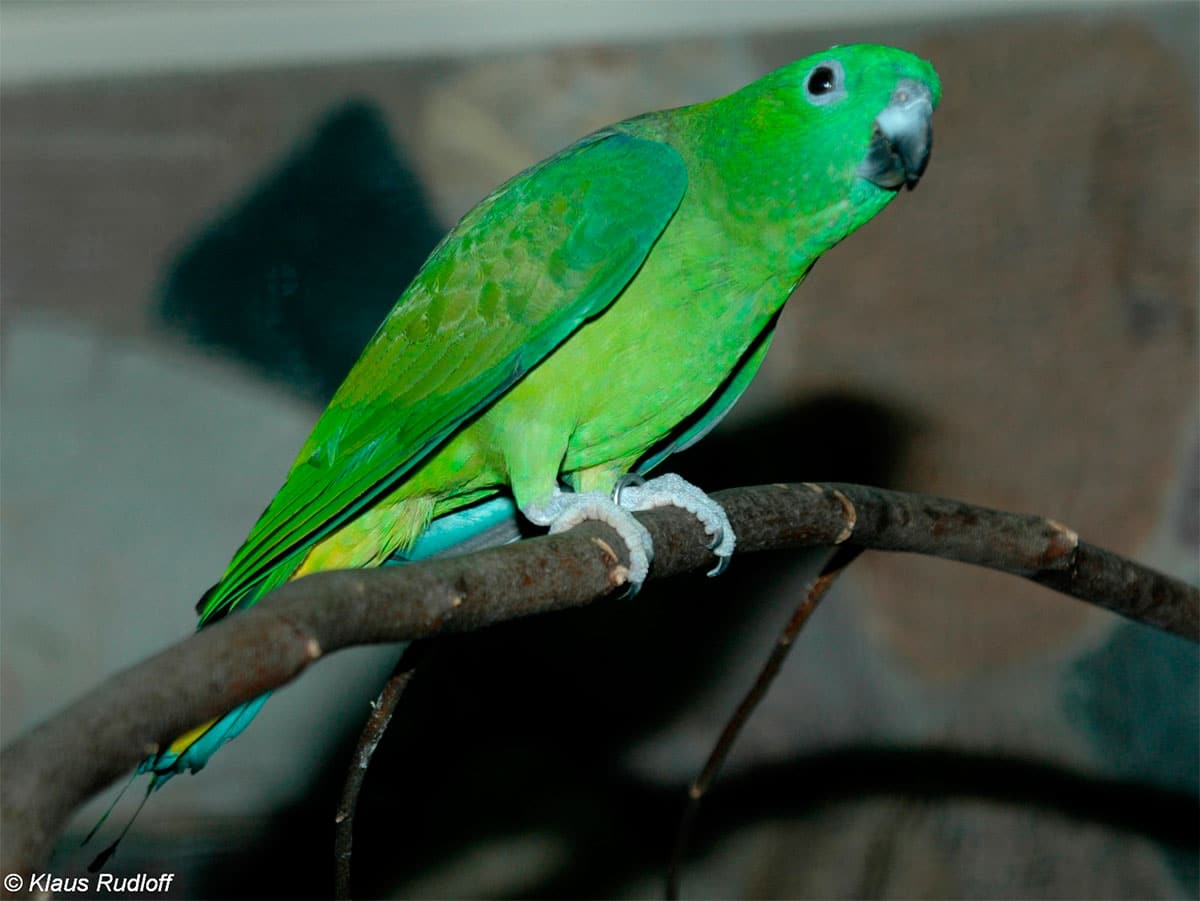
(1) – By Klaus Rudloff (kdrudloff@web.de) – Germany , Weltvogelpark / World Bird Park – Walsrode – biolib
(2) – ยซPrioniturus mada qtl1ยป by QuartlOwn work. Licensed under CC BY-SA 3.0 via Wikimedia Commons.
(3) – ยซPrioniturus mada-captive-8a-tocยป by Prioniturus_mada_-captive-8a.jpg: Robert01.Original uploader was Robert01 at de.wikipediaderivative work: Snowmanradio (talk) – Transferred from de.wikipedia; transferred to Commons by User:Snowmanradio using Commonshelper.(Original text: selbst fotografiert) to Prioniturus_mada_-captive-8a.jpg. Licensed under CC BY-SA 3.0 of via Wikimedia Commons.
(4) – by jon hornbuckle – BIRDING AROUND THE WORLD
(5) – Prioniturus mada buru racquet tail – link

Sounds: Frank Lambert (Xeno-canto)