▷ The world of Pets: Dogs, cats, birds, reptiles, amphibians

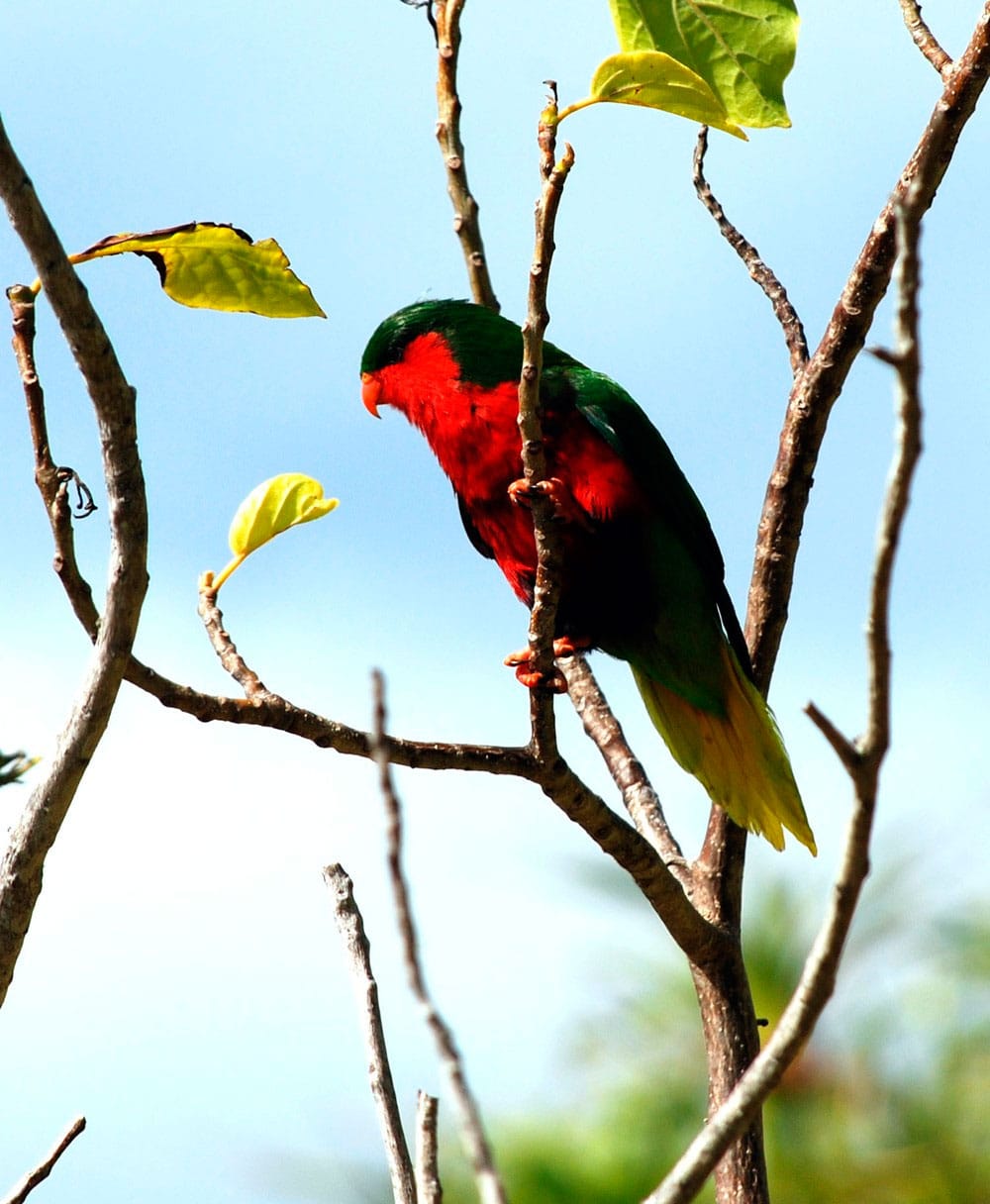
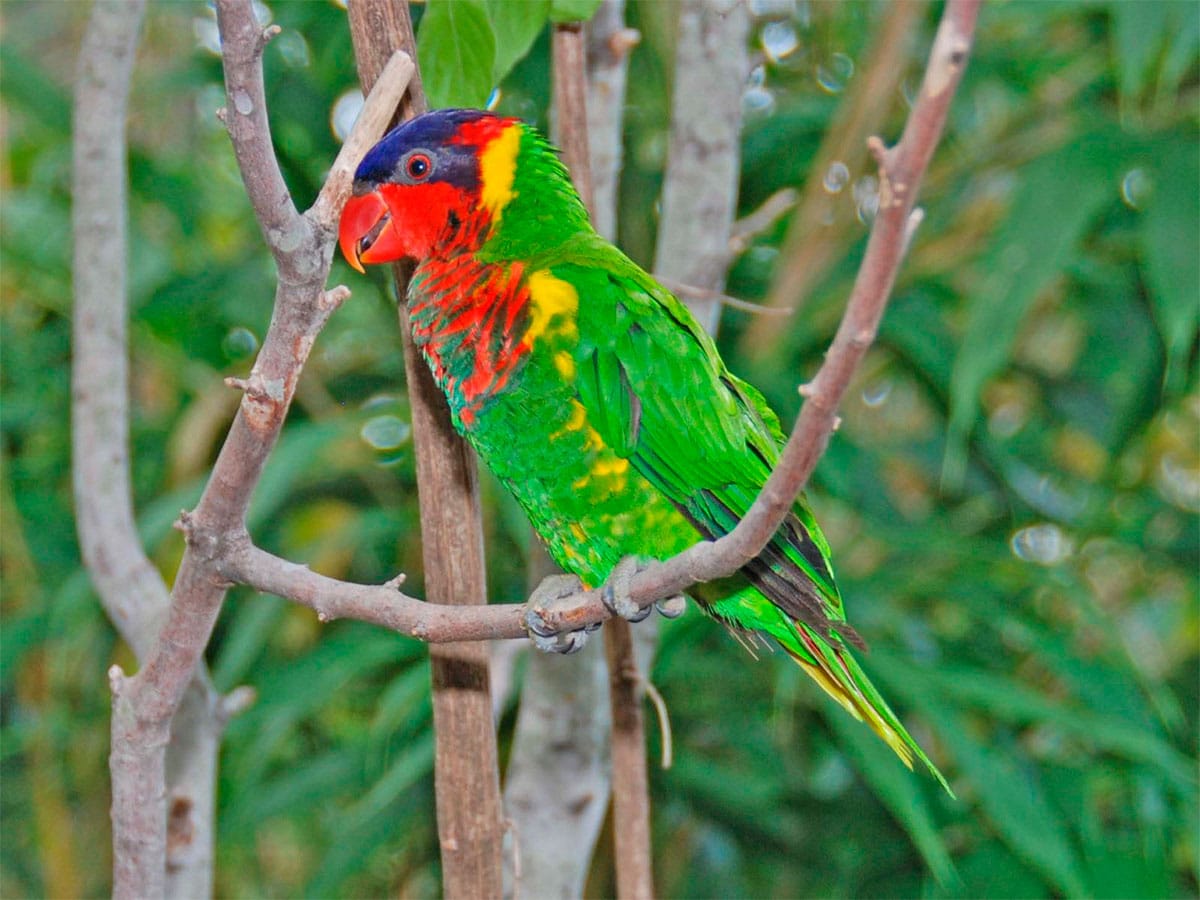
Coconut Lorikeet (deplanchii)
T. haematodus deplanchii


Coconut Lorikeet (deplanchii)

Content

Description (1)

26 cm.. of length and a weight of 140 gr.

The Coconut Lorikeet (deplanchii) (T. haematodus deplanchii) is a variation of the nominal (Trichoglossus Haematodus)

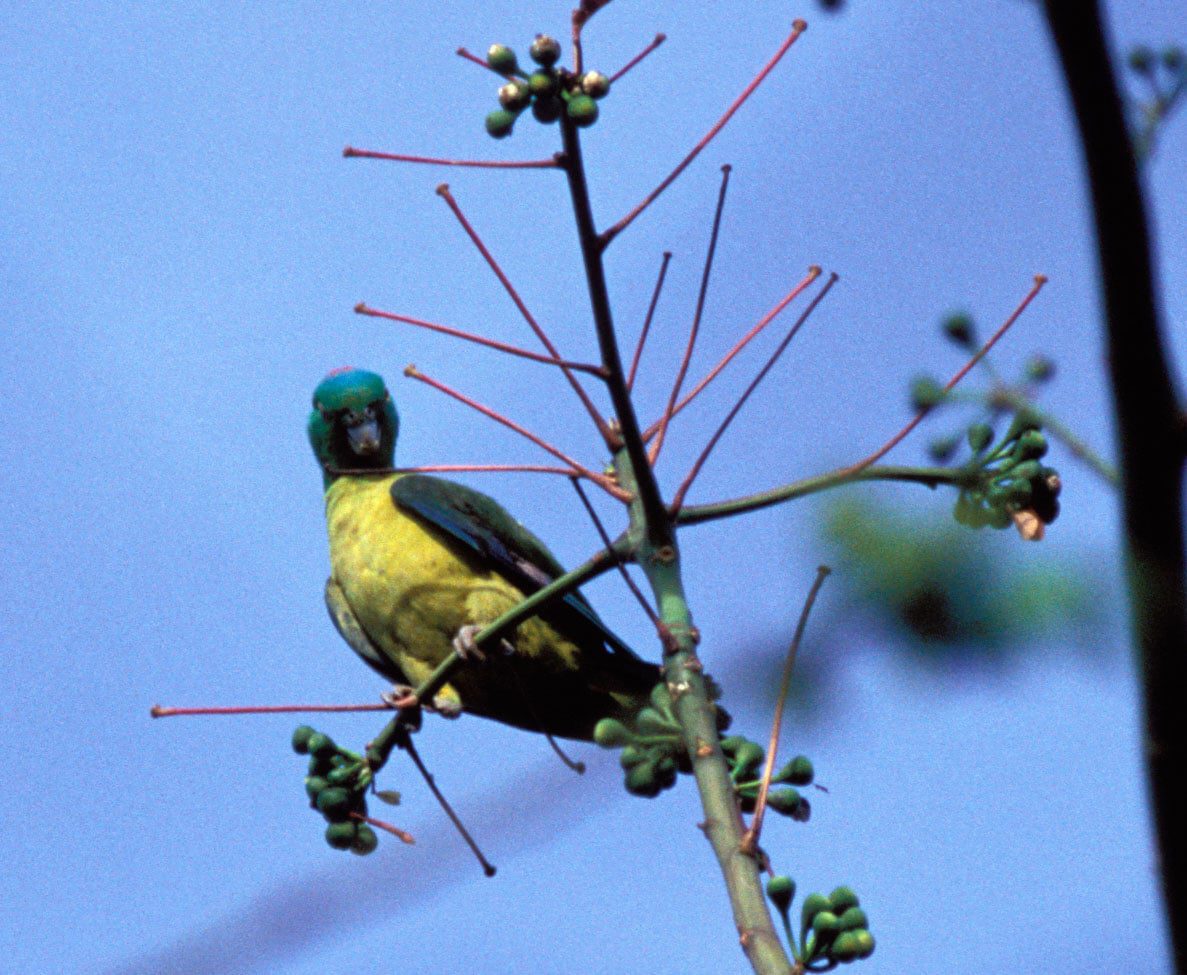
Similar to the nominal Haematodus, but slightly paler plumage. The head has a bright blue. Reddish orange on the chest, similar to the Trichoglossus haematodus massena, only that more alive. The abdomen is yellowish green and extends to the back of the neck. The thighs and the feathers under the yellow tail and tail olive green top.

Distribution:

New Caledonia and Loyalty Islands.

Alternative names:

Coconut Lorikeet (deplanchii) (ingles).
Loriquet à tête bleue (deplanchii) (French).
Allfarblori Deplanche (German).
Loris Arco Iris Deplanchii (Portuguese).
Lori Deplanche, Lori Arcoiris Deplanche (español).

scientific classification:

Order: Psittaciformes
Family: Psittaculidae
Scientific name: Trichoglossus haematodus deplanchii
Genus: Trichoglossus
Citation: Verreaux,J & Des Murs, 1860
Protonimo: Trichoglossus Deplanchii

————————————————————————————————

    (1) – Subspecies Coconut Lorikeet (Trichoglossus haematodus)

————————————————————————————————

«Lori Arcoiris Deplanche» (T. haematodus deplanchii)


Sources:

Avibase

Photos: by Klaus Rudloff (kdrudloff@web.de) – biolib.cz

▷ The world of Pets: Dogs, cats, birds, reptiles, amphibians

Collared Lory
Phigys solitarius


Collared Lory

Content

Description

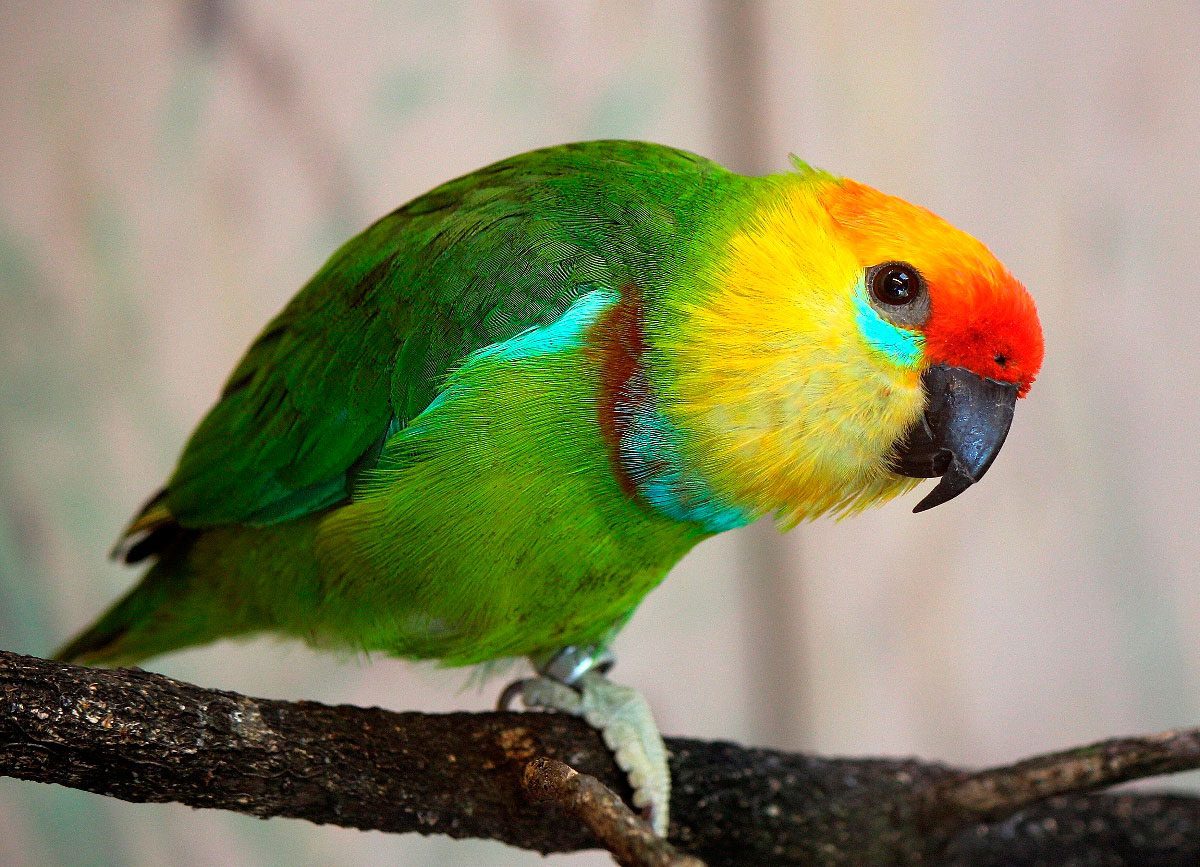
The Collared Lory (Phigys solitarius) has an approximate length of 20 cm.. and a weight ranging between 75 and 85 g..

The upper zone of the crown it is dark purple, In contrast with the ear-coverts, cheeks and throat that have a bright color red Scarlet;

The front of the crown, occasionally, with a mottled red light;
The tail feathers of the neck are of a green living with completion in red and a colorful blanket.
Under the the mantle, rump and top of the tail, bright green.

Upper wing green colour with the inside of the flight feather and coverts, in black color.
Underwing coverts Red and green. Underparts Scarlet Red, but with the bottom of the abdomen, lower side of the rump and the thighs, in dark purple.
Orange-yellow spot in Central feathers of the tail. Undertail Matt Brown-Green, showing orange spots on the basis.

Bill orange; Iris from yellow to red; Orange yellow the legs.

The females has more green under the nape, less red in the the mantle, a pronounced green glow in the crown back and a bright purple on the crown front.

The immature show freckles slightly purplish color and some greenish hidden spots in the chest; crown Green rear: they lack the elongated feathers red of the nape up to eight months of age. They lack orange spots in the tail. Bill more Brown than adults; irises brown: legs dark.

Habitat:

Visible and noisy. Found usually in pairs or in small groups of five to fifteen members, Although flocks have also been of up to 50 birds . They are mainly distributed in the lowlands of humid forest, edge of the forest, plantations and second growth up to 1,200 m, but they can be found anywhere with flowering gardens.

It is usually more common in wet windward areas, being less common on agricultural leeward coasts.

The Collared Lory are Mobile and something nomads, they are prepared to travel to almost any habitat with trees in bloom.

Often seen flying over trees or feeding are loud in acrobatic groups.

Reproduction:

The nesting they occur in the second half of the year, especially after August. Two white eggs are placed in a hollow tree. Adults aggressively defend the nesting sites.

In an instance of captive breeding, the incubation lasted 30 days and the young bird left the nest almost nine weeks later.

Food:

The diet of the Collared Lory consists of seeds, nectar and flowers. Trees of your choice include the drala (Erythrina variegata), the coconut tree (Cocoa nuts) and the African tulip introduced and invasive (Spathodea campanulata).
Also eat fruits as the Mango (Mangifera indica).

Distribution:

The Collared Lory is endemic of the Fiji Islands, including the main islands of Vanua Levu and Viti Levu, In addition to Rabbi, Taveuni, Koro, Wakaya, Ovalau, Gau, Ono, Kadavu, Matuku, Moala and some islands in the Lau group (Naitaba, Vatu Vara, Lakeba). In the extreme south of the Fiji Islands group, the Collared Lory It is replaced by the Blue-crowned Lorikeet.

The species is common and the world population is estimated between 10.000 and 100.000 specimens.

Some are kept in captivity. Red feathers were previously used by the Samoan and Tongan to make edges of floor mats, but trade does not seem to have had an impact on the abundance of the species in Fiji. Some birds are reported, they have escaped in Tonga and Samoa.

Conservation:


minor concern


– Current IUCN Red List category: Least concern.

– The population trend: Stable.

The world's population has not been quantified, but the species is described as common in Viti Levu, the island of Vanua Levu and Makogai and rare in the Ngau island, Fiji.

The population It is suspected to be stable in the absence of evidence of any reduction or substantial threats.

"Collared Lory" in captivity:

Very rare to see them in captivity.

Alternative names:

Collared Lory, Solitary Lory, Ruffed Lory, Fiji Lory (ingles).
Lori des Fidji, Lori phigy (francés).
Einsiedlerlori (alemán).
Lóris-solitário (portugués).
Lori Solitario (español).

scientific classification:

Order: Psittaciformes
Family: Psittaculidae
Scientific name: Phigys solitarius
Genus: Phigys
Citation: (Suckow, 1800)
Protonimo: lone parrot

“Lonely Lory” Images:

Videos "Collared Lory"

————————————————————————————————

«Lonely Lori» (Phigys solitarius)


Sources:

Avibase
– Parrots of the World – Forshaw Joseph M
– Parrots A Guide to the Parrots of the World – Tony Juniper & Mike Parr
– Birdlife

Photos:

1 – «Phigys solitarius - San Diego Zoo, California, USA-8a (1)» by DerekL123 from Cypress, USA – San Diego Zoo-48.jpgUploaded by snowmanradio. Licensed under CC BY-SA 2.0 via Wikimedia Commons.
2 – Collared lory (Vini [Phygis] solitarius) handjob by Chlidonias – ZooChat
3 – Collared Lory Perroquets – computer wallpapers
4 – Collared lory [Phigys solitarius] – Birds-pet-wallpapers
5 – By DickDaniels (http://carolinabirds.org /) (Own work) [CC BY-SA 3.0 or GFDL], via Wikimedia Commons

Sounds: Matthias Feuersenger (Xeno-canto)

▷ The world of Pets: Dogs, cats, birds, reptiles, amphibians

Josephine's Lorikeet
Charmosyna josefinae


Josephine's Lorikeet

Content

Lori-of-Josefina drawing

Description

24 cm.. length and an approximate weight of 68 g..

The head of the Josephine's Lorikeet (Charmosyna josefinae) it is red in color with a conspicuous black patch extending from the back of the crown to the nape and in a transverse line to the eyes; back of the Crown is marked with purple stripes; large red necklace. Mantle and scapulars Green; bottom of the Red back: rump with a central patch of dark blue; views from the top, the coverts of the tail of blue to red. The wings, from above, green with vane internal greyish towards flight feathers; marginal coverts Green. View from below, the coverts of Red Wings. Red underparts with a purplish-black spot in the center of the belly, that extends to the flanks on the thighs; seen from below, tail-coats are red. From above, the tail shows red with yellow tip and green color side feathers; from below, the tail is yellow. The peak, orange red; iris yellow ; orange-yellow legs.

The female It shows the lower part of the back of yellow, tending to green on the rump.

The immature with impregnated in green belly patch, and bluish black thighs. The blue rump patch impregnated in green. Makes color lilac in the back of the Crown replaced by blue-green color marks.

Immature females It shows the low back of red with some yellow marks.

Subspecies description

  • Charmosyna josefinae josefinae

    : The nominal.


  • Charmosyna josefinae sepikiana

    : It differs from the nominal value by having more extensive black belly patch and more grey marks on the back of the Crown. Females lack of greenish broadcasting on the flanks and in the low back.


  • Charmosyna josefinae cyclopum

    : Differs from the nominal value by the absence of black belly patch and the practical absence of grisaceo-azul in the back color of the Crown marks.

Habitat:

Possibly Nomad. Frequents montane forests, edges of forests and partially cleared areas, mainly between 760 and 2.200 meters and more common between 850 and 1.200 meters although there have been up to at sea level. Usually seen in pairs or small groups. Despite their striking coloration, is quite discreet. Feeds in the tops of trees in flower, flowering vines or plants epiphytes, often with him Fairy Lorikeet.

Reproduction:

Nesting and breeding to be described.

Food:

Diet includes pollen, nectar, flower buds and soft fruits.

Distribution:

New Guinea in Irian Java (Indonesian) and Papua New Guinea, mainly in the Western and central cordillera, Since the Mountains Parotia and Vogelkop, to the Bismarck range in the Northeast (Jimi and also Baiyer River). There has been since Jayapura, on the North coast of Irian Java, and come to the South of Mount Bosavi, Papua New Guinea.

Subspecies distribution:

  • Charmosyna josefinae josefinae

    : The nominal.


  • Charmosyna josefinae sepikiana

    : Mountains of the region of Sepik, Papua New Guinea and in the Highlands of the West to the East until approximately the area of the jimi river and to the South of Mount Bosavi


  • Charmosyna josefinae cyclopum

    : Cyclops ranges.

Conservation:


minor concern

• Current IUCN Red List category: Least concern.

• Population trend: Stable.

The world's population has not been quantified, but it is thought that it may be above the 300.000 specimens.

A small number in captivity.

The population is suspected to be stable in the absence of evidence of any reduction or substantial threats.

"Josephine's Lorikeet" in captivity:

Take it easy, but at the lively and active time. Some new birds may initially be nervous. Young birds, in particular, curious and playful. Aggressive toward other birds. Susceptible to stress and disease during the acclimatization. Strict hygiene necessary due to a mainly liquid diet.

Alternative names:

Josephine’s Lorikeet, Josephine’s Lory (ingles).
Lori de Josephine, Lori de Joséphine (French).
Josefinenlori (German).
Lori de Josefina (español).

scientific classification:

Order: Psittaciformes
Family: Psittaculidae
Scientific name: Charmosyna josefinae
Genus: Charmosyna
Citation: (Finsch, 1873)
Protonimo: Trichoglossus Josefinae

«Lori de Josefin» images:

————————————————————————————————

«Lori de Josefina» (Charmosyna josefinae)


Sources:

Avibase
– Parrots of the World – Forshaw Joseph M
– Parrots A Guide to the Parrots of the World – Tony Juniper & Mike Parr
– Birdlife

Photos:

1 – danskloriklub.dk
2 – By Drägus (Own work) [Public domain], via Wikimedia Commons
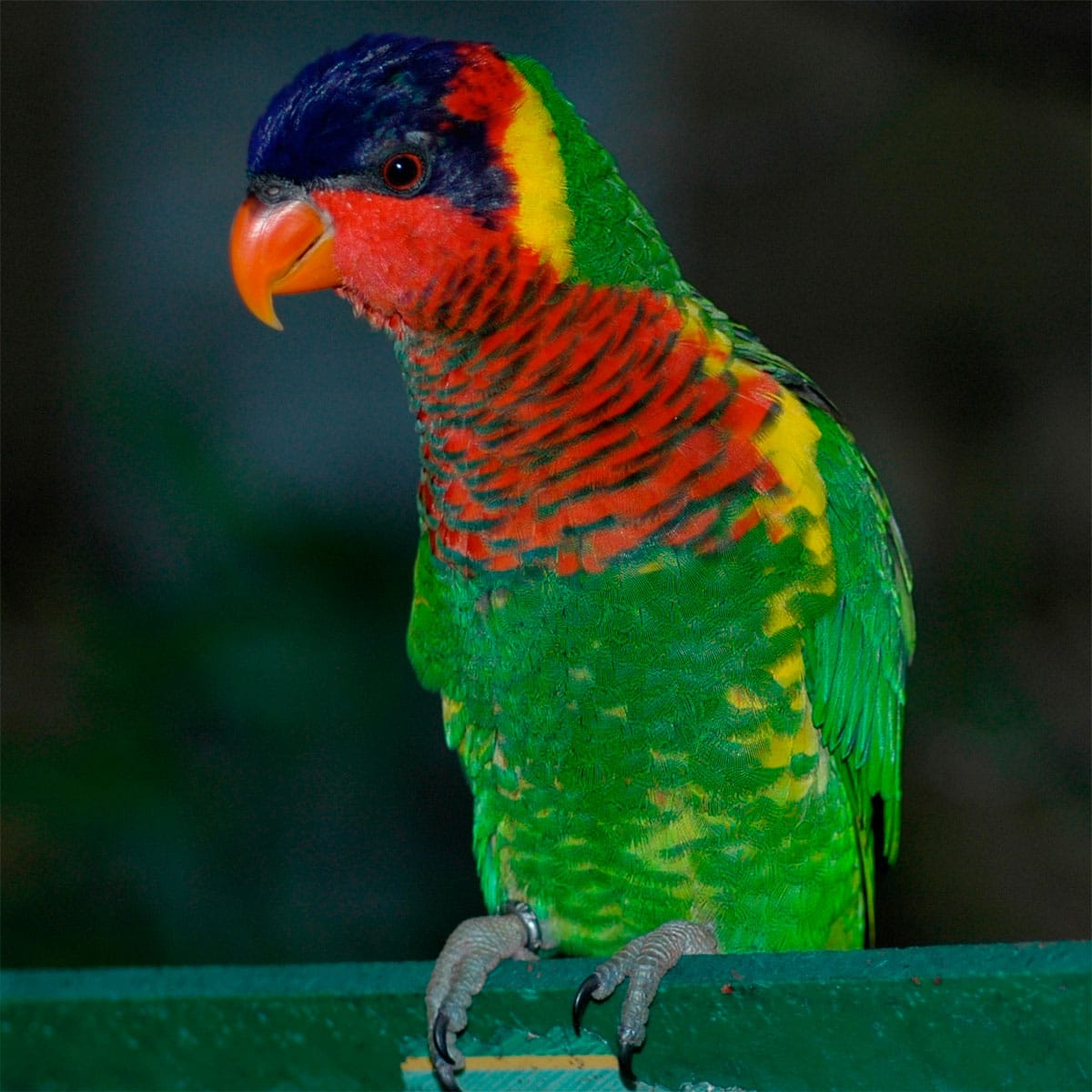
3 – By Katerina Tvardikova – Photo of Charmosyna josefinae [By Drägus (Own work) [Public domain], via Wikimedia Commons] – Charmosyna josefinae
4 – papageien.org
5 – animalphotos.me
6 – Dibujo by HBW.com

Sounds: BAS van Balen (Xeno-canto)

▷ The world of Pets: Dogs, cats, birds, reptiles, amphibians

Guaiabero
Bolbopsittacus lunulatus


Guaiabero

Content

Guaiabero

Description

15 cm.. length between 62 and 77 g. of weight.

The head of the Guaiabero (Bolbopsittacus lunulatus), is mainly green, strongly impregnated of color blue light around them eyes, in the lores, the chin and (vaguely) on throat. Mantle slightly of a green over dark that it crown, bordered above pale yellowish green.

Primary coverts blue; the others wing-coverts, greenish. The flight feather with the vane bluish external, alula bluish. Uppertail bright green, great coverts Underwing bordered with yellow; rest of the underwings with pale yellow bar in all vane internal of flight feather (except the primaries outermost). Underparts uniform Green, slightly paler which the upperparts. Tail closed from color green bright by over, pale blue below.

Bill greyish black; irises dark brown; legs gray.

The female much less blue sign in the face, and has yellowish the part back from the neck and rump, both showing darker scalloped.

Immature are like females, but with the bill lighter.

Subspecies description

  • Bolbopsittacus lunulatus lunulatus

    : (Scopoli, 1786) – Nominal


  • Bolbopsittacus lunulatus callainipictus

    : (Parkes, 1971) – The male is like the intermedius, but with the plumage, in general, more yellow, above all in the underparts; face and neck nuchal darker and more bluish green; cheeks with less blue. The female as in the intermedius, but in general with more plumage yellow; rump and the nuchal collar more yellow and brighter. The youth adult females are.


  • Bolbopsittacus lunulatus intermedius

    : (Salvadori, 1891) – The face male is dark blue tinged with purple; neck brilliant blue. Female bordered blue in the throat; cheeks pale green; Green more pale around them eyes; neck yellow-orange. The youth are like the female adult.


  • Bolbopsittacus lunulatus mindanensis

    : (Steere, 1890) – The cheeks of the male are green, Blue around them eyes, Blue throat; neck darker and brighter blue than the lunulatus; yellow tint to green in the head. The female as of the lunulatus, but the head tinted yellowish-green. The youth adult females are.

Habitat:

It inhabits in open forests, forests and their surroundings, secondary vegetation, Savannah, farmland, gardens and mangroves, in the lowlands up to approximately 600 meters above sea level. Birds congregate in fruit trees sometimes in groups of up to 50 Member. Easier to detect in flight. While feeding they move silently and can be difficult to locate..

Reproduction:

The ecology of the species is poorly understood.. A female in breeding conditions It was observed during the month of March.

Food:

The diet includes fruit, especially the guavas (Psidium guajava)

Distribution:

Size of the area of distribution (reproduction / resident): 212.000 km2

Limited to the lowlands of the Philippine Islands, including Luzon, Mindanao, Samar, Leyte and Panaon.

Distribution of the subspecies:

  • Bolbopsittacus lunulatus lunulatus

    : Nominal

  • Bolbopsittacus lunulatus callainipictus

    : Samar (central Philippines)


  • Bolbopsittacus lunulatus intermedius

    : Northern Philippines (Leyte and Panaon)


  • Bolbopsittacus lunulatus mindanensis

    : Mindanao (Southern Philippines)

Conservation:


minor concern


• Current IUCN Red List category: Least concern

• Population trend: Stable

The size of the world population It has not been quantified, Although estimated at more of 50.000 specimens. The species, according to sources, it is enough common in all its limited area of distribution (pit et to the. 1997).

The population suspected to be stable in the absence of evidence of any reduction or substantial threats.

"Guaiabero" in captivity:

Almost unknown in captivity.

Parrot quiet and gentle. Sensitive to stress and infections, primarily by protozoa. Strict hygiene is necessary to protect this species of infectious diseases. They must be kept in pairs.

Alternative names:

Guaiabero (ingles).
Guaiabero lunulé, Perruche lunulée, Psittacule lunulée (French).
Stummelschwanzpapagei (German).
Guaiabero (Portuguese).
Lorito Guayabero, Lorito Guayabo (español).

scientific classification:

Order: Psittaciformes
Family: Psittaculidae
Genus: Bolbopsittacus
Scientific name: Bolbopsittacus lunulatus
Citation: (Scopoli, 1786)
Protonimo: Psittacus ephypium

Images "Guaiabero"

Videos "Guaiabero"

"Lorito's Guayabero" (Bolbopsittacus lunulatus)

Sources:

  • Avibase
  • Parrots of the World – Forshaw Joseph M
  • Parrots A Guide to the Parrots of the World – Tony Juniper & Mike Parr
  • Birdlife

Photos:

(1) – Guaiabero (Bolbopsittacus lunulatus) By Luis V. Limchiu [CC BY-SA 3.0, GFDL or Public domain], via Wikimedia Commons
(2) – A painting of a green parrot by Edward Lear. It looks like a female Guaiabero (Bolbopsittacus lunulatus) Edward Lear [Public domain], via Wikimedia Commons
Sounds: Paul Noakes (Xeno-canto)

▷ The world of Pets: Dogs, cats, birds, reptiles, amphibians

Great-billed Parrot
Tanygnathus megalorynchos


Great-billed Parrot

Content


Anatomy-parrots

Description

33 to 43 cm.. length and an approximate weight of 260 g..

The Great-billed Parrot (Tanygnathus megalorynchos) It has a bright green head. Green mantle with narrow blue stripes to the feathers of the back; pale blue rump; coverts underwings light green.

Scapulars black bordered of blue-green; less black on the inner wing coverts, the blue-green external; medium black coverts, with yellow margins in both bands: large blue-green coverts with yellow margins.

Secondary green with thin yellow margins; primary heavily drenched blue in vane external with a gradient through the greenish or blackish blue in the vane inner. The wings and bright yellow axillary feathers; lower part of flight feathers black gray, the inner most dyed yellow.

The underparts, greenish yellow, greener-tinged in the belly, the coverts and thighs undertail. Upper, green tail with yellow tips; at the bottom I light brown with orange tips.

Billed red; iris yellow ; black legs.

Males and the females similar.

Young with beaming less variegated in wings.

Subspecies

List of subspecies Tanygnathus megalorynchos
  • Tanygnathus Megalorynchos Affinis

    (Wallace, 1863) – The head with light bluish hue and chest and abdomen much more green, bend of the blue wing. More green in general.

  • Tanygnathus Megalorynchos Djampeae

    (Hartert, 1924) – Chest and abdomen pale green, the secondary feathers of the coverts bluish green with bordered Straits.

  • Tanygnathus Megalorynchos Floris

    (Hartert, 1924) – Chest and abdomen pale green, the lower part of the back blue is more dark.

  • Tanygnathus Megalorynchos Hellmayri

    (Mayr, 1944) – It is more small, more green by the chest and abdomen while the head is yellowish-green. Practically has tones of blue and on the wings has little black color. In females it just black coloration in the wings.

  • Tanygnathus Megalorynchos Subaffinis

    (PL Sclater, 1883) – Face with slight bluish hue, more green in general and below the back and rump area, light blue-green hue.

  • Tanygnathus Megalorynchos Sumbensis

    (AB Meyer, 1882) – It is more large, with much more blue and blue more dark in the lower area of the back.

  • Tanygnathus Megalorync Viridipennis

    (Hartert, 1903) – The primary feathers of green wings, and in some cases also the secondary.

Habitat:

Great-billed Parrot

The Great-billed Parrot is distributed mainly primary lowland forests, as well as in secondary and coastal forests, mangroves, cultivated areas, gardens and plantations up to 1.000 meters above sea level. The birds regularly travel between the smaller islands and make daily flights between roosts and areas of foraging, calling the attention with its loud cries in flight as a time to settle to rest.

They normally gather in small groups of up to a dozen individuals in search of food., usually fruits and nuts, and commonly throw the remains of from the trees where they feed, since they discard unwanted elements.

Reproduction:

Nesting has been recorded between August and December, Noting a nest in the hollow of a mature tree in the forest at a height of some 30 m.

Food:

The fruit of the Sonneratia alba, as well Canarium vulgare and casuarinas.

Distribution:

Widely but unevenly distributed across Nusa Tenggara, the Moluccas and Islands to the West of papua. The range includes the following Islands: Sumba, Timor (West end) and adjacent Semau , Flowers, Madu, Kalaotowa, Kalao, Tanahjampea, the Group Tukangbesi to the southwest of Sulawesi, Damar, Babar, the Group Tanimbar, Seram, Haruku, Buru, OBI, Bacan, Kayoa, Halmahera, Makian, Moti, Ternate, Ternate, Morotai, Mayu, islets to the North of Sulawesi and the Group Togian to the East of Sulawesi, Sangir and groups Talaud, Widi, Muor, give, Waigeo, Batanta, Salawati and Misool. The nominal race seems to have been introduced in Balut at the southern end of Mindanao, Philippines. Occasional records in Java and Bali they are probably leaks, but the birds on the Mainland of New Guinea they may be wandering genuine, probably from the small islands of the West Group of papua. The species is quite common, but you might be getting some local decreases as a result of trade and habitat loss. The world population is estimated at more of 100.000 birds.

Subspecies

Distribution of subspecies Tanygnathus megalorynchos
  • Tanygnathus Megalorynchos Affinis

    (Wallace, 1863) – South of Moluccas

  • Tanygnathus Megalorynchos Djampeae

    (Hartert, 1924) – Islands Tanahjampea and Kalao, South of Sulawesi

  • Tanygnathus Megalorynchos Floris

    (Hartert, 1924) – Islands Flowers and Lesser Sunda.

  • Tanygnathus Megalorynchos Hellmayri

    (Mayr, 1944) – Southwest of the Islands Timor, Semau and Roti.

  • Tanygnathus Megalorynchos Subaffinis

    (PL Sclater, 1883) – Tanimbar Islands, and Babar Islands.

  • Tanygnathus Megalorynchos Sumbensis

    (AB Meyer, 1882) – Islands Sumba and Lesser Sunda.

  • Tanygnathus Megalorync Viridipennis

    (Hartert, 1903) – Islands Kalaotowa and Madu, South of Sulawesi.

Conservation:


minor concern


• Current category of the Red List of the UICN: Least concern

• Population trend: Decreasing

The world population is estimated at more of 100.000 birds.

This species has a very large range, and therefore not approaching the thresholds for Vulnerable according to the range size criterion.

The population is suspected to be declining due to the destruction of habitat in course and unsustainable levels of exploitation.

"Great-billed Parrot" in captivity:

Quiet, little shrill, don't like to be touched.
Rare in captivity.

Alternative names:

Great-billed Parrot, Great billed Parrot, Island Parrot, Large-billed Parrot, Moluccan Parrot (ingles).
Perruche à bec de sang, Perruche à gros bec (French).
Schwarzschulterpapagei, Schwarzschulter-Papagei (German).
Tanygnathus megalorynchos (Portuguese).
Loro de Pico Grueso, Loro Picogordo, Loro Picogoro (español).

scientific classification:

Order: Psittaciformes
Family: Psittaculidae
Genus: Tanygnathus
Scientific name: Tanygnathus megalorynchos
Citation: (Boddaert, 1783)
Protonimo: Psittacus megalorynchos

Images "Picogordo Loro"

Videos "Great-billed Parrot"

————————————————————————————————

"Their picogordo" (Tanygnathus megalorynchos)

Sources:

Avibase
– Parrots of the World – Forshaw Joseph M
– Parrots A Guide to the Parrots of the World – Tony Juniper & Mike Parr
– Loromania
– Birdlife

Photos:

(1) – By TJ Lin (originally posted to Flickr as photo 1445) [CC BY-SA 2.0 (http://creativecommons.org/licenses/by-sa/2.0)], via Wikimedia Commons from Wikimedia Commons – Wikimedia
(2) – By TJ Lin (originally posted to Flickr as great-billed parrot) [CC BY-SA 2.0], via Wikimedia Commons
(3) – «Tanygnathus megalorynchos-two in captivity-8a» by TJ Lin – originally posted to Flickr as photo 1466. Licensed under CC BY-SA 2.0 via Wikimedia Commons.
(4) – «Tanygnathus megalorynchos-captivity-8a" for TJ Lin – originally posted to Flickr as great-billed parrot. Disponible bajo la licencia CC BY-SA 2.0 via Wikimedia Commons.
(5) – A bird in flight by James Eaton – Lynx
(6) – «Tanygnathus megalorynchos – Barraband«. Licensed under Public Domain via Wikimedia Commons.

Sounds: Mike Catsis (Xeno-canto)

▷ The world of Pets: Dogs, cats, birds, reptiles, amphibians

Crimson Rosella
Platycercus elegans

Crimson Rosella

Content


Anatomy-parrots

Description

Among 30 and 37 cm.. length and a weight between 99 and 170 g..

The Crimson Rosella (Platycercus elegans) has a predominantly red plumage.

Its head is bright crimson in color with the lower part of the cheeks and the throat of blue color.. Mantle feathers are black with broad crimson margins of variable intensity.; rump and uppertail coverts crimson.

Medium and lower inner wing coverts black; bend of wing, lesser coverts and medium blue color external; external greater coverts bright blue, Black Interior with red edges giving a scaly appearance to this area; primary coverts blue violet; feathers of flying blackish with thin margin foreign white in them more external and blue violet in vane outer; secondary black with vane external blue violet; tertiary black with red borders.

Under, Blackish wings with blue coats. Underparts showy crimson.

Upper, the tail is blue, the center of green-washed, Foreign feathers with vane Blackish internal and vane Violet Blue outer with pale at both ends; undertail, the tail of pale blue edged blackish when closed.

The peak of grayish-white; dark brown irises; greyish Brown legs.

The female It is smaller with narrower peak. It has no stripe under the wings..

The immature is very different, with upper parts olive green (including the tail at the top), and green underparts greyish.
The centers to the mantle feathers are dark brown, and the black markings of the wings of the adult are replaced by green. Very young birds rump is green Orange. There is a pale stripe on the bottom of the wings (formed by stains pale in vane inner). It shows red feathers on the head, chest, buttocks and subcaudales coverts and move through the first fall.

Adult plumage is reached in a few 15 months. Immatures of the population in the North are mainly red, and there are less green unripe in Norfolk Island than mainland populations.

Subspecies

Description subspecies Platycercus elegans
  • Platycercus elegans elegans

    (Gmelin, 1788) – The nominal species


  • Platycercus elegans flaveolus

    (Gould, 1837) – With 33 cm.. length, approximately, It is but little that the nominal species, Yellow has no orange hue and there is orange in the neck, chest and abdomen.


  • Platycercus elegans fleurieuensis

    (Ashby, 1917) – IMG – It differs from the species rated as having an intense orange color, Red plumage, the mantle and black gray back, with pale orange-red spots; pale blue medium and secondary wing coverts.


  • Platycercus elegans melanopterus

    (North, 1906) – Of 36 cm.. length, approximately. The bordered red are more narrow, with which the back looks more black. Female as the nominal.


  • Platycercus elegans nigrescens

    (Ramsay,EP, 1888) – With 34 cm.. length, It is smaller than the nominal value and the color red is much more dark. Red feathers are more narrow. Female as the nominal.


  • Platycercus elegans subadelaidae

    (Mathews, 1912) – Approximately from 36 cm.. length. Instead of Red Blend Red, Orange and yellow. Orange red forehead, the Crown and face, they turned to brighter red frontal band. Yellow olive from the low back to the supracaudales coverts

Habitat:

Crimson Rosella

The Crimson Rosella they frequent tropical and humid subtropical forests near the coast and the surroundings of montane forests at altitudes up to 1.900 m.

They are mainly on the edges of jungle, in the secondary zones and in the dense forests of eucalyptus they arrive at a good stage of maturity.

To the South of the hunter river in New South Wales, they are distributed at all altitudes.

The nominal species has a preference for thick wooded areas, but often goes into open areas and farmland where it is mixed with the Perico conr (Platycercus eximius).

It also tends to visit plots of pine trees.

In the Kangaroo Island, where is the only parakeet present, He lives in all types of forest habitats, they are also adapting to farmland.

The subspecies subadelaidae and fleurieuensis, sometimes grouped under the term Adelaide parakeet, frequent valleys forest, arboreal galleries that border the rivers or trees on the edge of the roads. They are also present in the orchards and farmland.

The Flaveolus subspecies attends the same types of habitat, that is to say, curtains of trees dominated by red rubber trees along the river.

To feed, move away from rivers and raid agricultural land, flooded Plains, or thickets «Mallee«.

Adults are sedentary. Usually, they live in pairs or in small groups. On the other hand, juveniles and subadults form noisy groups and many roam locally when leaving dormitory at sunrise.

Its main activity is carried out in the morning and in the evening. in the middle of the day, they rest in the shady foliage. But, If the sky is overcast and the weather is cool, these birds are active during the day.

The Crimson Rosella they seek food on Earth, in trees and shrubs. They often feed in the company of the Eastern Rosella (Platycercus eximius), But if the joint working group is altered during its activity, the two species are separated in flight and taken opposite directions, each seeking refuge by his side.

The Crimson Rosella they are not very shy and can be approached at a very short distance.
In urban areas, they are particularly friendly.

Reproduction:

The breeding season covers the months of August to February and, sometimes even later.

The elegant parakeet build their nests on a branch or in the cavity of a tree trunk. Usually, Choose a healthy or dead eucalyptus, but sometimes they install their nests in a place as strange as the metal beam of a construction crane.

In all cases, the nest is located high above the ground. Spawning usually includes 4 to 7 white eggs, rarely 8, which are incubated during approximately 19 days.

The female incubates the eggs alone, but the chicks receive equal attention from both parents.

The nesting cycle is quite long and it takes around 5 weeks

Food:

The Crimson Rosella they have a mainly vegetarian mixed diet. Consume the seeds of black Cypress of Australia (Callitris endlicheri), figs, seeds of acacia and eucalyptus.

The vegetable part of its menu is complemented by a wide variety of imported plants such as Rosa rubiginosa, clover or chickweed (Stellaria media).

In the South of its range, they eat the fruits or flowers trees of Melaleuca, banksia and casuarina.

Insects are not forgotten in your menu: Hemiptera, psyllids, termites, aphids and larvae of beetles.

These parrots times behave as true pests in orchards, eating apples, Plums, pears and quinces.

Distribution:

Confined to the coastal area of Eastern Australia where are widely distributed in the wooded areas along and East of the Great dividing range.

There is an isolated population in the North between the surrounding of Atherton, Northeast of Queensland, to the South of the mountain range of Clarke and Eungella (the population in Eungella It can also be isolated).

The main population is distributed around Gympie, Southeast of Queensland, in the North, across the border with New South Wales, coming up to the Warrumbungle National Park, Bathurst and Wagga Wagga, where are approaching the eastern end where the Yellow Rosella.

In Victoria extends from the East to the Grampian and the Edenhope district, where spills into the Southeast end of Australia, coming to Kingston at its western end.

There is also an isolated population in the Kangaroo Island.

The species is found in the wild around Sydney, Brisbane and Melbourne, and leaks from birds have been around Perth. There are records in the North of Tasmania and the islands of the bass strait, probably, also refer to birds Getaways.

It is common in the Norfolk Island where it was introduced in the century 19, but is absent in the vicinity of Nepean and Philip Island; an attempt to introduce the species in Lord Howe Island failed.

Was also introduced in New Zealand, showing in the West suburbs of Wellington, and some birds can also persist in the District of Dunedin of South Island where can hybridize with the introduced Perico conr.

The world's population is above 200.000. Moderate numbers in captivity.
The birds can be eradicated with a permit in States where the destruction of crops occurs.

Subspecies

Distribution subspecies Platycercus elegans

Conservation:


minor concern


• Current category of the Red List of the UICN: Least concern

• Population Trend: Decreasing

The size of the world's population has not been quantified, Although it is estimated above 200.000 specimens.

The Crimson Rosella they are infrequent at both ends of its distribution area, but in other places, they are locally abundant and common.
In the North, they are slightly less numerous. In the past recent, they have colonized successfully parks and urban gardens, so now are very widespread in the suburbs of Canberra and Adelaide.
In the Norfolk Island, the import is so successful that they now represent a competition and a significant danger to the Red-crowned parakeet (Cyanoramphus novaezelandiae).

"Crimson Rosella" in captivity:

Moderately loud, very active, they are acclimatized to the owner. It is not usually compatible with other birds.
A sample of the subspecies subadelaidae lived 26,8 years in captivity
Rare in captivity.

Alternative names:

Crimson Rosella, Adelaide Parakeet, Beautiful Lory, Blue-cheeked Rosella, Campbell Parakeet, Crimson Rosella (Crimson), Mountain Lowry, Murray Rosella, Murray Smoker, Murrumbidgee Lowry, Murrumbidgee Rosella, Pennant’s Parakeet, Pennant’s Rosella, Red Lory, Red Lowry, Red Parrot, Swamp Lory, Yellow Parakeet, Yellow Parrot (ingles).
Perruche de Pennant (French).
Pennantsittich, Adelaidesittich, Pennant-Sittich (German).
Rosela-Pennant (Portuguese).
Perico Elegante, Rosela Roja, Periquito Pennant, Rosella Carmesí (español).

scientific classification:

Order: Psittaciformes
Family: Psittaculidae
Genus: Platycercus
Scientific name: Platycercus elegans
Citation: (Gmelin, JF, 1788)
Protonimo: Psittacus elegans

"Elegant Perico" images:

Videos "Crimson Rosella"

Crimson Rosella (Platycercus elegans)

Sources:

  • Avibase
  • Parrots of the World – Forshaw Joseph M
  • Parrots A Guide to the Parrots of the World – Tony Juniper & Mike Parr
  • Wikipedia
  • Loromania
  • Birdlife
  • AnAge: The Animal Ageing and Longevity Database – Anagé Database

  • Photos:

(1) – An adult Crimson Rosella (Platycercus elegans), Wilsons Promontory National Park, Victoria, Australia By JJ Harrison (jjharrison89@facebook.com) (Own work) [CC BY-SA 3.0], via Wikimedia Commons
(2) – A Crimson Rosella photographed though a window in the Blue Mountains, Australia By John Poulakis from Australia (Crimson RosellaUploaded by Snowmanradio) [CC BY 2.0], via Wikimedia Commons
(3) – Crimson Rosella (Platycercus elegans) photographed taken in Swifts Creek, Victoria, Australia Fir0002 [GFDL, CC-BY-SA-3.0 or GFDL 1.2], via Wikimedia Commons
(4) – A Crimson Rosella in a bird bath Canberra, Australia By Duncan McCaskill (Picasa Web Albums) [CC BY 3.0], via Wikimedia Commons
(5) – Juvenile Crimson Rosella (Platycercus elegans) by David CookFlickr
(6) – An adult Crimson Rosella (Platycercus elegans) Jacques Barraband [Public domain], via Wikimedia Commons
▷ The world of Pets: Dogs, cats, birds, reptiles, amphibians

Bourke's Parrot
Neopsephotus bourkii


Bourke's Parrot

Content


Anatomy-parrots

Description

19 cm. length and an approximate weight of 39 g..

The Bourke's Parrot (Neopsephotus bourkii) has frontal area white. The chin, lores and contour of the eyes they are also white and form a kind of orbital ring clear when seen from a distance.

The ear-coverts and upper cheeks they are dark brown with pink dots and specks. The pileum and the neck are greenish-Brown, with darker edges.

The upperparts are brown-grey color with pale edges on scapulars.

The rump and the top of the tail has darker tones, with some pale blue on the sides. The curvature of the wing is blue.

The small coverts are blue, the median they have light blue, the greater coverts they have a dark tint with yellow-white and blue pink.

The flight feather primaries and secondaries are mostly blue.

The underparts is blue.

The breast feathers are brown with pink ends, giving an appearance of general pinkish brown.

The abdomen is bright pink.

Thighs, lower flanks, side of the rump, under belly and lower area of the tail they have a light blue color. The upper part of the tail infiltrates with bluish-grey.

The bill is greyish black, no hook in upper jaw. The irises They are brown, legs grey-brown.

The female in General, the colors are off and the blue coloration is very little visible or is absent.

The youth they are equal to the female adult but more muted, with a pale band under the wings which is less pronounced in the male juvenile

For a long time, the Bourke's Parrot It was classified in the genus Neophema. A number of ornithologists, more and more, is of the opinion that this parakeet does not belong to this genus and species have been classified in a separate genus called Neopsephotus.

Habitat:

The Bourke's Parrot they are distributed among the driest inland areas.
They mark a strong preference for scattered areas of mulga (Acacia aneura) but does not disdain the plantations of eucalyptus. Can also be observed in plots along streams and afforestation of Callitris which are conifers belonging to the family of cypress.

Son nomads and slightly Twilight. These birds establish themselves in a territory and remain there for several years before disappearing completely.. The Bourke's Parrot they can be very sociable. During periods of drought, You can meet thousands around the water wells and springs.

During the months of summer, We can see them in the morning and in the evening around the ponds.

In Winter, these parakeets come to drink during the day in the company of species of doves such as the common bronze pigeon (Phaps chalcoptera). In places close to the drinking fountains, the Bourke's Parrot They fly in Group emitting loud cries and making whistling wings. But, These parakeets sometimes go unnoticed, they are able to rest or to eat ground in pairs or in small groups. They remain in silence on the floor or hide in the dead wood that serves as camouflage. There are more assets during the sunset.

Reproduction:

The Bourke's Parrot they usually reproduce in August to december, but the season can vary depending on rainfall. The courtship of this bird are similar to those of other species of Parrot Neophema. Males approach the female in upright position with outspread wings and tail.

The nest is located in one a tree cavity, between 1 and 3 meters above the ground. The laying is formed by between 3 and 6 eggs they are incubated during at least 18 days. There are often two broods in the season. The female leaves the nest only once a day in order to be replenished by the male.. The male is also in charge of mounted guard, patrolling and emitting calls in the vicinity of the nest, with the intention to deter intruders.

At birth, the chicks have a white marker, are altricial and remain in the nest for at least 4 weeks. They remain dependent on their parents during a week after feather.

Food:

The Bourke's Parrot they are almost exclusively vegetarian: they eat grass seeds, especially those that are dispersed by the wind. They also eat herbs collected in the soil and in the bushes. These parakeets also appreciate the fresh young shoots and seeds of Acacia or of Bassia, which are small shrubs belonging to the category of Chenopodium album.

Distribution:

Scattered through the interior of Australia, where are nomads but locally common.

The species ranges from the West coast of Western Australia around the inside of Geraldton to río Ashburton and South, through Leonora, and through Gibson and the Great Victoria desert in the South of the Northern Territory, about 20 °S.

Extends from the Northwest of Southern Australia, South-East through Woomera until Port Augusta, that also extends to the North through Oodnadatta and the regions of the Lake Eyre and the Lake Frome.

The birds, to the This of the Montes Flinders You can isolate, since there are no records between 139º and 140 °E.

Apparently, the species has declined in the center of New South Wales due to overgrazing by cattle and rabbits, and is now mainly in the West, from the surroundings of Broken Hill, to paroo river; nomads, However, There have been more towards the This, in the surroundings of Narrandera in the South and the Lightning Ridge in the North.

In the South of Queensland, the Bourke's Parrot are distributed to the This, about Dirranbandi and Cunnamulla. and in the North until Windorah.

Escapes There have been around Brisbane.

The world population is considered to be more of 50.000 specimens.

The species is probably increasing in the west due to agricultural expansion including the provision of artificial irrigation sites..

Conservation:


minor concern


• Current category of the Red List of the UICN: Least concern

• Population Trend: Growing

It is estimated one population superior to the 50 000 individuals.

In the western part of its range, the numbers are growing, probably due to the development of agriculture and the installation of new irrigation areas. The reason for its development can also be found in the reduction of sheep farming and the replacement of saline areas with grass..

"Bourke's Parrot" in captivity:

The Bourke's Parrot they are very good birds for beginners amateurs, easy-to-play.

It is a bird peaceful, silent and that it is active only in the first and last hours of the day. Son calm and confident by nature and easy to maintain. It has almost no cravings for crack and your bathroom need depends on the individual. A dry climate supports well, but it is sensitive to cold and wet fog.

Les gusta estar en tierra firme y son susceptibles a la infección por gusanos, también son susceptibles a infecciones oculares.

With regard to its longevity, according to sources, a sample lived 12,6 years in captivity. In captivity, estos animales pueden criar, approximately, to the 2 years of age.

Alternative names:

Bourke’s Parrot, Blue-vented Parakeet, Blue-vented Parrot, Bourke Grass-Parakeet, Bourke Parakeet, Bourke Parrot, Bourke’s Grass-Parakeet, Night Parrot, Pink-bellied Parakeet, Pink-bellied Parrot, Sundown Parrot (ingles).
Perruche de Bourke (French).
Bourkesittich, Bourke-Sittich (German).
Periquito-rosa (Portuguese).
Papagayo de Bourke, Periquito Rosado (español).

scientific classification:

John Gould
John Gould

Order: Psittaciformes
Family: Psittaculidae
Genus: Neopsephotus
Scientific name: Neopsephotus bourkii
Citation: (Gould, 1841)
Protonimo: Euphema Bourkii

Images "Pink Periquito":

Videos "Bourke's Parrot"

————————————————————————————————

"Pink Periquito" (Neopsephotus bourkii)


Sources:

Avibase
– Parrots of the World – Forshaw Joseph M
– Parrots A Guide to the Parrots of the World – Tony Juniper & Mike Parr
– Birdlife

Photos:

(1) – Bourke’s parrot (Neopsephotus bourkii) By Flickr user Jan Tik (Flickr) [CC BY 2.0], via Wikimedia Commons
(2) – Bourke’s Parrot – Neopsephotus bourkii taken at the Cincinnati Zoo and Botanical Gardens By Greg5030 (Own work) [CC BY-SA 3.0], via Wikimedia Commons
(3) – Bourke’s Parrot Neopsephotus bourkii. Wild pair at Bowra Station, near Cunamulla, Queensland, Australia By Bruce Kendall (Own work) [CC BY-SA 3.0 or GFDL], via Wikimedia Commons
(4) – A male Bourke’s Parrot at the Flying High Bird Sanctuary, Apple Tree Creek, Queensland, Australia By paulgear (Picasa Web Albums) [CC BY-SA 3.0], via Wikimedia Commons
(5) – Neopsephotus bourkii (formally placed in genus Neophema) By Jan Tik (originally posted to Flickr as Hitchhiker) [CC BY 2.0], via Wikimedia Commons
(6) – By T.H. Maguire (1821–1895) (http://www.birdresearch.dk/dk/jgould.htm) [Public domain], via Wikimedia Commons

Sounds: Tom Tarrant (Xeno-canto)

▷ The world of Pets: Dogs, cats, birds, reptiles, amphibians

Brown-headed Parrot
Poicephalus cryptoxanthus


Lorito Cabecipardo

Content

Description:

Of 22 cm.. length and a weight between 120 and 156 g..

The Brown-headed Parrot (Poicephalus cryptoxanthus) has the head, including the nape, the chin and throat brown; ear-coverts paler. Mantle brown, but more to the tail; scapulars dark green-edged Brown; rump and uppertail-coverts bright green. Upper, the wing-coverts green, sometimes with a small yellow spot on the curve of the wing folded; wing feathers yellow. Primaries brown with vane Blue-Green external; the secondaries brown.

The feathers in the upper area of the chest brown with a narrow green edge at the bottom; the rest of the underparts green, but darker bases of the feathers, giving a mottled look.

Tail dark brown with green washing and dark green tip.

The upper jaw and cere grey-black (darker towards tip), lower pale, almost white; irises yellow-green light; periophthalmic ring and legs dark grey to black.

Both sexes similar.

Immature generally more muted than adults and with the irises brown.

Subspecies description:

  • Poicephalus cryptoxanthus cryptoxanthus (Peters,W, 1854) – Nominal species

  • Poicephalus cryptoxanthus tanganyikae (Bowen, 1930) – As the nominal but more pale species; more green and less Brown. Green mantle and underparts brighter. Bib of brown feathers on the throat and upper of the much smaller chest than in the nominal species; the head more color olive brown.

Habitat:

Is located in almost all the forests: riparian forests, in the interior of the savannah forests and in the dry forests of southeastern Africa, but it seems to avoid the miombo woodland and prefers areas with baobabs.

Registered in coconut plantations, riparian forest, the edges of small farms and mangroves.

Confined in lowlands (below the 1.200 metres above sea level in Tanzania and 1.000 metres in Malawi).

Gregarious; usually seen them is in small flocks of about 12 birds, but can meet up to 50 in places of power. Sometimes it is associated with the Cape Parrot and also observed feeding in the company of the Madagascar Green-Pigeon.

Reproduction:

Normally nest in hollows of old trees of woodpeckers, between 4 and 10 meters above the ground. Often has to compete with the Cape Parrot, Meyer's Parrot, squirrels and Crowned Hornbill the nesting sites.

Season of laying egg is April-May in the South of its range.

The laying is of 2 to 4 eggs, which are incubated solely by the female during 26-30 days, While the male feeds her on the nest.

The chicks they remain in the nest during 50-54 days Before leaving for the "breeding area", which is usually an area of ​​dense broadleaf trees with a nearby water supply. During this time the chicks are silent and largely immobile, becoming fully independent a few 28 days later.

Food:

Diet includes figs, berries cultivation of cassava Manihot esculenta, seeds of Adansonia, coconut palm flowers, new shoots of trees, fruits of Pseudocadia zambesica, pods of Acacia nigrescens and Albizia gummifera, immature seeds of Erythrina and nectar from flowers of Aloe and African Kigelia; also takes millet and corn and in some areas considered a pest.

They forage, with slow and deliberate movements, climbing and often holding the food between the claws. They drink daily, around midday.

Distribution:

The Brown-headed Parrot are distributed by the southeast of Africa. From the North-East of South Africa (Swaziland, Zululand and Transvaal) through the southeast of Zimbabwe, Mozambique and South of Malawi to the East of Tanzania (including the island of Pemba and southern end of Zanzibar) and southeastern edge of Kenya.

There are also in Wasini island.

Apparently sedentary. In some places, the Brown-headed Parrot, are a species common, especially close to the coast and in the South of its range, but in some other areas are scarce or rather local; in Zanzibar possibly extinct.

Distribution Subspecies:

  • Poicephalus cryptoxanthus cryptoxanthus (Peters,W, 1854) – Nominal species

  • Poicephalus cryptoxanthus tanganyikae (Bowen, 1930) – Mozambique, to the North of the Save River across the South of Malawi and this from Tanzania to the coastal part of Kenya.

Conservation:


minor concern


• Current Red List of UICN: Least concern

• Population trend: Stable

It is not threatened, although its distribution has contracted since 1990, to a large extent due to the capture illegal for the industry of cage birds.

More and more vulnerable due to the loss and fragmentation of their habitat.

Largely confined to protected areas in Zululand and East of Transvaal.

"Brown-headed Parrot" in captivity:

The only data we have on this bird, according to sources, is that one specimen was still alive after 32,1 years in captivity.

Alternative names:

Brown-headed Parrot, Brown headed Parrot, Brownheaded Parrot (English).
Perroquet à tête brune (French).
Braunkopfpapagei, Braunkopf-Papagei (German).
Papagaio-de-cabeça-castanha (Portuguese).
Lorito Cabecipardo, Lorito de Cabeza Parda (español).


scientific classification:

Peters Wilhelm
Peters Wilhelm

Order: Psittaciformes
Family: Psittacidae
Genus: Poicephalus
Scientific name: Poicephalus cryptoxanthus
Citation: (Peters, W, 1854)
Protonimo: Psittacus (Poiocephalus) [sic] cryptoxanthus

Images "Lorito Caecipardo»:

Videos "Brown-headed Parrot"

————————————————————————————————

“Lorito Caecipardo» (Poicephalus cryptoxanthus)


Sources:

Avibase
– Parrots of the World – Forshaw Joseph M
– Parrots A Guide to the Parrots of the World – Tony Juniper & Mike Parr
– Birdlife

Photos:

(1) – A Brown-headed Parrot at Kruger National Park, South Africa Henry Flower at en.Wikipedia [CC BY-SA 3.0 or GFDL], from Wikimedia Commons
(2) – Bungalow N°51, Mopani Camp, Kruger NP, SOUTH AFRICA By Bernard DUPONT from FRANCE (Brown-headed Parrot (Poicephalus cryptoxanthus)) [CC BY-SA 2.0], via Wikimedia Commons
(3) – A Brown-headed Parrot in KwaZulu-Natal, South Africa By New Jersey Birds (Brown-headed ParrotUploaded by snowmanradio) [CC BY-SA 2.0], via Wikimedia Commons
(4) – Bungalow N°51, Mopani Camp, Kruger NP, SOUTH AFRICA By Bernard DUPONT from FRANCE (Brown-headed Parrot (Poicephalus cryptoxanthus)) [CC BY-SA 2.0], via Wikimedia Commons
(5) – Lower Sabie Camp, Kruger NP, SOUTH AFRICA By Bernard DUPONT from FRANCE (Brown-headed Parrot (Poicephalus cryptoxanthus)) [CC BY-SA 2.0], via Wikimedia Commons

Sounds: Peter Boesman (Xeno-canto)