โท The world of Pets: Dogs, cats, birds, reptiles, amphibians
Puff-faced water snake
- Homalopsis buccata
Origin: Malay Peninsula, Borneo and Sumatra
Gender: Homalopsis
Life expectancy: 20 years
Length: 100 - 140 cm.
The Puff-faced water snake inhabits freshwater bodies, like swamps, forest ponds and streams.
Homalopsis buccata of East Kalimantan – Rob Steubing, CC BY 3.0, via Wikimedia Commons
Content
Origin / Distribution
The Puff-faced water snake (Homalopsis buccata) is distributed from India, Bangladesh and Myanmar to most of Southeast Asia, including Cambodia, Thailand, Malaysia and Singapore. In Indonesia it is present in Borneo, Sumatra and Java.
Characteristics / Appearance
The Puff-faced water snake is dark brown above, with narrow pale brown transverse bands with black edges, in young specimens of yellow color; pale head with a dark triangular or V-shaped mark on the muzzle, an A-shaped spot on the occiput and a dark band on each side that passes through the eye and extends to before the eye. The lower surface is white or yellowish, with dark brown spots along each side; the tail has brown spots. Head and body length 820 mm; tail 230 mm.
Habitat
The Puff-faced water snake inhabits freshwater bodies, like swamps, forest ponds and streams. Of nocturnal habits, feeds mainly on small fish or frogs.
Behavior
It feeds on small crustaceans, fish and amphibians, that it captures using its venom and its jaws, instead of constriction.
Threats to the species
State of conservation โ
Minor Concern โ(UICN)โ
The Puff-faced water snake is piscivorous, so she is attracted to fish farms and, often, it is considered a pest.
This snake is frequently hunted for human consumption, for feeding farm crocodiles and leather goods. Millions of Homalopsis skins are exported to the United States and China each year.
No conservation measures are known for this species, although it is known to be present in several protected areas, including the National Park of U Mnh Thuong. Further research is needed to resolve the taxonomy of this group. It also, further research is needed on their abundance, trends and catch levels to ensure that a threat status is not triggered in the future. This species can be bred in captivity.
The "Puff-faced water snake" in captivity
Not suitable for neophytes more than anything due to the presence of medium strength venom. Caution is advised in its handling given the delicacy of the skin but, in general, its handling is quite easy.
The terrarium
Terrarium of 60 x 40 x 60 cm or even higher (it is also recommended 120 x 70 x 100 cm.), being aquatic arboreal, with a substrate of 5 cm of coconut fiber, moss and foliage that provides hiding places and greater absorption. Insertion of many plants and branches is recommended, to allow the creation of dark hiding places highly appreciated by this variety, allowing greater acclimatization and enrichment for the animal. Daily nebulizations should be abundant since these snakes love to drink both from a bowl of water and from the water deposited in the glasses or inside the terrarium..
It is a diurnal tree snake that loves to be in the low branches and in the water where it spends a lot of time..
Daytime temperature 26 – 27 ยฐC; 23 – 24 ยฐC at night; humidity 80/85%.
Buy one "Puff-faced water snake"
The price of a "Puff-faced water snake", in the exotic anomaly market, ranges between 100 – 150 EUR.
1. Puff-faced water snake, Masked water snake (English).
2. Homalopside joufflu (French).
3. Boa-Wassertrugnatter (German).
4. Homalopsis buccata (Portuguese).
5. "Serpiente acuรกtica enmascarada", Serpiente de agua careta, Serpiente de agua de Borneo (espaรฑol).
โท The world of Pets: Dogs, cats, birds, reptiles, amphibians
Skinks
Family: Scincidae
Origin: North of Africa
Gender: Scincus
Life expectancy: 5 to 20 years
Length: 20 - 45 cm.
The lizards resembling Skinks first appear in the fossil record about 140 millions of years, during the early Cretaceous , mainly in the form of mandibles that look very much like Skinks. The definitive fossils of skink show up later, during the Miocene period.
The skinks (Scincidae) they are the largest family of lizards, with more than 1.500 species, understands the escincos, skins, corners or skinks. Most of the skinks They are characterized by a round, cylindrical body that blends smoothly into the neck and small, smooth scales.. Most species live on the ground and have comparatively short legs. But, there are also arboreal representatives, as well as subterranean species that completely lack legs. Among the species that are frequently offered, and that live mainly on the ground, are the Sand fish (Scincus scincus), the African five-lined skink (Trachylepis) and the fire skink (Lepidothyris fernandi). These species are not usually subject to species protection legislation. Buying wild-caught species should always be avoided in favor of captive-bred species.
Sex differences
Difficult or impossible to recognize depending on the species, for example, the Sand fish (Scincus scincus). In some species, sexually mature males have a more splendid coloration.
Behavior
The skinks they are mostly nocturnal; even diurnal species tend to live very hidden. Many species can stand alone, in pairs or in small harems (a male with 2 – 4 females). Males are usually incompatible with each other. If aggressions occur during socialization, animals must be separated immediately and, as experience has shown, permanently.
Suitable accommodation
The minimum dimensions of a terrarium for the skinks of the terrestrial species mentioned are given as a function of head-torso length (tailless) of the animals, being the proportion 6 x 4 x 3 times that length (length x widht x hight) for 2 animals. Like this, a terrarium for up to two Sand fish should have at least the dimensions of 80 x 50 x 40 cm.. For each additional animal, the floor area should be increased by 15 %.
like cold blooded animals, the skinks need a temperature gradient in the terrarium that allows them to reach their optimal body temperature. Ideally, mimic natural conditions with sunny areas and cooler shaded areas in the terrarium. As such, is installed on one side of the terrarium a powerful heat radiator with UV components, that guarantees strong localized heating at 35 – 40 ยฐC. Other areas can be heated to 24 ยฐC. The other zones may have a temperature of 24 to 28 ยฐC. At night, the temperature of the terrarium should drop slightly for most species. The basic temperature can be generated through room temperature or with thermal mats. Heating mats should always be installed outside the terrarium and heat a maximum of one third of the floor surface; the desired temperature can be adjusted with the help of a thermal controller.
The humidity should be around the 60%, the fire skink needs higher humidity ( to 80%). This can be achieved by spraying the terrarium with warm water or using a sprinkler system.. Precise thermometers and hygrometers are needed to measure temperature and humidity.
The duration of the illumination should be 10 to 14 hours. How light sources emit less and less UV radiation over time (see manufacturer's instructions), must be replaced regularly. The lighting should be placed out of the reach of skinks (note: normal glass is impervious to UV-B rays) o the animals must be protected from burns by a closed metal mesh basket.
Except for the Sand fish (Scincus scincus), the land of terrarium or the coco substrate, which should always be kept slightly moist, are suitable as a substrate. It is also important to provide many shelters and hiding places in the form of cork tubes., chunks of bark, stones and roots. Natural planting creates additional retreat possibilities and ensures uniform and increasing humidity. To much skinks that live on the bottom also like to climb. As such, you have to cover 2, preferably 3, sides of the terrarium with cork or similar. The vertical climbing zones and the horizontal resting zones, like roots, remained, etc., have proven useful as additional furniture. A shallow water bowl is also part of the basic equipment.
The Sand fish (Scincus scincus) is purely ground dweller and can be well kept in a terrarium with sandy bottom and sink-proof stone structures. For excavating species, the height of the substrate must be at least equal to the length of the head, for example, at least 15 cm for him Sand fish.
Diet
In the wild, the mentioned species feed mainly on small invertebrates. The suitable animal food is live insects (crickets, domestic crickets, Little grasshoppers, cockroaches, etc.), which are sprinkled with a mineral preparation to avoid deficiency symptoms. Mealworms or wax moths can only feed you sparingly due to their high fat content, since the Sand fish (Scincus scincus), in particular, you tend to overeat mealworms.
Fresh water must be available at all times. Young animals should be fed daily; for adult specimens, are enough 2 or 3 feedings per week. Many animals also like to eat soft, ripe fruit or fruit pulp., which can be well enriched with vitamins and minerals. Here we must insist on strict hygiene, since these feed spoil quickly.
Breeding
Although most species of Skinks They are oviparous and lay eggs in clutches., around the 45% of the species of Skinks they are viviparous in one sense or another. Many species are ovoviviparous, the babies (skinklets) develop lecithotrophically in eggs that hatch within the mother's reproductive tract and emerge as live hatchlings.
in some genres, However, as Tiliqua and Corucia , the young that develop in the reproductive tract obtain their nourishment from a mammal-like placenta attached to the female, unequivocal examples of "viviparous matrotrophy". It also, a recently described example in the species Trachylepis ivensi is the most extreme to date: a purely reptilian placenta directly comparable in structure and function to a eutherian placenta.
Clearly, this viviparum has repeatedly developed independently in the evolutionary history of the Scincidae and the different examples are not ancestral to each other. In particular, placental development of any degree in lizards is phylogenetically analogous, instead of counterpart, to functionally similar processes in mammals.
Care
Food scraps, molts and droppings should be removed daily. The water bowls should also be cleaned daily and filled with fresh water.
Animal health must be monitored daily. The most common health problems in skinks are skin mites, emaciation, tail injuries, fecal changes and softening of the bones. In case of anomalies, a reptile vet should be consulted. It is recommended to perform fecal examinations once a year to detect endoparasites.
The intestinal flora of skinks usually includes salmonella, that are harmless to animals, but they can cause disease in humans. Hygiene measures (wash your hands well, etc.) can prevent infection.
Acclimatization and handling
In the first days in his new home, animals need adequate rest to get used to their new environment. Reptiles are animals of pure observation and should NOT be petted.
Animals should only be captured when necessary. The easiest way to do this with young animals is with a pitcher or landing net.. Larger animals can be held with the bare hand behind the head. Basically, lizards should never be held or fixed by the tail.
Special features
Some skinks they can drop their tail in case of danger; therefore, you must be extremely careful when picking them up and never grabbing them by the tail.
Species that live on the ground tend to move - like snakes- with undulating movements.
Other representatives of the skinks, as the Shiny skink from Indonesia to (Mabuya macularia) or the East Indian brown mabuya (Mabuya [Eutropis] multifaceted). Their breeding conditions differ in part significantly from the species described.
Origin: Egypt, South Africa, Florida (USA) Gender: Trachylepis Life expectancy: --- Length: 20 cm..
Nice small lizard of the family of the escindidos. As you can see, full of the stripes that give it its name and a beautiful blue tail. They are animals to have in a community terrarium
Origin: Bangladesh , Bhutan , Cambodia , India , Laos , Malaysia, Gender: Eutropis Life expectancy: --- Length: 16 - 23 cm..
Beautiful skink from Indonesia with a robust appearance and with colors that make it look metallic. Maintenance is exactly the same as for the rest of your family. Feeding based on insects and
Origin: Indonesia and Papua New Guinea Gender: Tribolonotus Life expectancy: 10 - 12 years Length: 17 - 20 cm.
Precious and very rare Indonesian lizard that nowadays is very difficult to find. He likes humid places so we will put him in a terrarium, preferably with moss and a small bathtub in
Origin: Papua New Guinea Gender: Tiliqua Life expectancy: 15 - 17 years Length: 50 - 60 cm.
awesome lizards. This species is one of the best to keep as it is one of the calmest and most manageable. very easy animals, as they feed on everything, insects, mice, fruit, canned meat, etc.
Origin: Australia Gender: Tiliqua Life expectancy: 25 - 30 years. Length: 45 - 55 cm.
Its coloration ranges from gray to brown with perpendicular dark bands. reaches 60 cm in length and its is a popular species for keeping in captivity, coming to live 25 years. Terrarium
Origin: Algeria, Chad, Libya, Mali, Mauritania, Niger, Sudan, Tunisia Gender: Scicopus Life expectancy: --- Length: 20-25 cm.
Very rare and very little seen niger skink. It is an animal of terrestrial customs and dry areas, desert and semi-desert type Sahel. The diet is based on insects. It suits
Origin: Bangladesh, Cambodia, China, India, Indonesian, Myanmar, New Guinea, Philippines, Singapore, Taiwan, Thailand and Vietnam Gender: Eutropis Life expectancy: --- Length: 35 cm.
Another species of this genus so docile and friendly from Southeast Asia. They are just as easy to maintain as the others. It is advisable to put a little humidity in the terrarium so that they remain
The tree frogs they are found worldwide in a wide variety of species and have characteristic sticky discs on their toes. These excellent climbers mainly inhabit trees and shrubs.
Among the most popular species are the American green tree frog (Hyla cinerea), the gray treefrog (Hyla versicolor), the Australian green tree frog (Litoria caerulea), the mission golden-eyed tree frog (Trachycephalus resinifictrix), the northern orange-legged leaf frog (Phyllomedusa hypochondrialis) and red-eyed tree frog (Agalychnis callidryas).
These species, as well as some others tree frogs, increasingly offered as captive breeds; However, wild-caught frogs are still common on the market. Wherever possible, you have to opt for species bred in captivity.
Images "Tree frogs"
Hyla
cinerea
Hyla
versicolor
Litoria
caerulea
Trachycephalus
resinifictrix
Phyllomedusa
hypochondrialis
Phyllomedusa
hypochondrialis
Sex differences
The sexes can be distinguished in many species by the coloration of the throat, which is usually more striking (yellowish to black) in sexually mature males than in females (from white to gray). Females tend to grow slightly larger than males.. Males ready to mate call, sometimes very strongly and persistently.
Behavior
The tree frogs do not show social behavior and can stand alone, in pairs or groups in well structured terrariums. Do not socialize different species or animals with clear differences in size. Each animal must have enough places to sit, rest and hide. The tree frogs they are mainly twilight and night.
Terrarium
Red-eyed green frog (Agalychnis callidryas), photographed near Jaco Beach in Costa Rica – Careyjamesbalboa (Carey James Balboa), Public domain, via Wikimedia Commons
One terrarium for tree frogs must always be tall enough, for example, 60 x 40 x 60 cm. (length x widht x hight) for smaller species, as the American green tree frog (Hyla cinerea), and 100 x 40 x 80 cm. (length x widht x hight) for larger frogs like the Australian green tree frog (Litoria caerulea), each for a maximum of 4 animals. Caution: non-acclimatized animals tend to jump against the glass with great force and injure themselves, especially on the head and muzzle.
Fluorescent tubes with a daily lighting time of 10 to 12 hours are suitable for lighting. The temperature can be regulated with the help of a suitable heating mat, which is fixed to the rear wall from the outside. For most species, a slight temperature gradient in the terrarium of about 22 to 28 ยฐC (max. 24 ยฐC for subtropical species) with a humidity of 60 to the 70 %. At night, the temperature should drop to about 20 ยฐC; at the same time, humidity can rise up to 90 or the 95 % for tropical species. This can be achieved by spraying the terrarium with warm water or using a sprinkler system.. For the basic temperature, weak heating mats can be used, installed outside the terrarium. They can be used to heat the floor (at most one third of the soil surface!) or the walls. With the help of a thermocontroller, the heating mat can be specifically controlled to prevent overheating. Precise thermometers and hydrometers are needed to measure temperature and humidity.
For climbing animals, 2, preferably 3 sides of the terrarium should be covered with cork or similar. climbing facilities, like roots, lianas, remained, etc., have proven their effectiveness. Hollow bamboo sticks and cork tubes are popular hiding places. Depending on the species, a shallow water basin in which animals can also bathe or a larger basin of water (for example, for the Australian green tree frog – Litoria caerulea) it is also part of the basic equipment. Terrarium soil or coconut substrate are suitable as a substrate. The substrate should always be kept slightly moist. Natural planting creates additional retreat possibilities and ensures uniform and increasing humidity.
Diet
The tree frogs they feed exclusively on small live animals. The insects (crickets, crickets, Little grasshoppers, etc.) make up the main part of your diet, but many species also like to eat worms or slugs. Regular administration of a mineral supplement ensures healthy bone growth. Mealworms, Zophobas or wax moths should only be fed rarely due to their high protein and fat content. For the adults of the larger species it is sufficient to feed each 2 or 3 days. The Australian green tree frog – Litoria caerulea) you tend to become obese due to your lazy lifestyle
Care
Food scraps and droppings should be removed daily. The water bowls should also be cleaned daily and filled with fresh water.
Animal health must be monitored daily. The most frequent health problems in the tree frogs are the softening of the bones, emaciation and changes in skin and stools. If there is any abnormality, consult a veterinarian who is familiar with amphibians.
Acclimatization and handling
Amphibians are animals of pure observation and NOT must be caressed. In the first days in his new home, animals need adequate rest to get used to their new environment. Due to the sensitivity of your skin, it is recommended to capture the tree frogs only with the help of small containers.
Special features
The tree frog has a slightly toxic skin discharge that can cause irritation when it comes in contact with human skin (protective gloves!).
According to the area of โโorigin, controlled hibernation can have a vitality-boosting effect. American and Asian tree frog species from temperate climates should not be placed in the garden pond under any circumstances, since there is a danger that the fauna will be distorted.
Attention: all native amphibian species are protected species and should not be taken from the wild. But, most species of tree frogs Non-native species are not subject to the species protection law. But, the red-eyed tree frog (Agalychnis callidryas), for example, is subject to registration and proof of origin is required.
โท The world of Pets: Dogs, cats, birds, reptiles, amphibians
Cameroon dwarf gecko
- Lygodactylus conraui
Origin: West Africa and Central Africa
Gender: Lygodactylus
Life expectancy: 5 - 8 years
Length: 6 - 8 cm.
Extraordinary arboreal dwarf lizard that will soon replace those already only very rarely seen in terrariums Electric blue gecko, with which it keeps quite similar.
Cameroon dwarf gecko in the Bobiri Forest Reserve, Ghana – Simon J. Tonge, CC BY 3.0, via Wikimedia Commons
Content
Description
In normal coloration, the background color is composed of different shades of gray. From the nostril, a black stripe runs along the muzzle, passing through the eye to the back of the head, where it merges with a lighter dorsal line at the nape. This one runs slightly to the side of the back to the tail. From the nape of the neck, the whole body, except for limbs, is dotted with white spots of irregular size. These can be delimited by a thin black line. The largest spots line up in three longitudinal lines, that run along the center of the back and the lighter dorsal lines.
When you are in a good mood, skin glows bluish-green. The belly and throat are a solid light gray to white. The original queue, in the male, is reddish at the bottom. On the other hand, the regenerated tails are featureless gray and do not show any reddish coloration after their total loss. But, regenerated tails may still show red bottom. Male geckos have a total length of 63 mm, while females are much smaller.
The sexes can be easily distinguished by the usual sexual characteristics.. Males are always larger, show distinct hemipen pockets and have four active preanal pores.
Distribution and habitat
The Cameroon dwarf gecko, scientific name Lygodactylus conraui, It is native to the tropical primary forests of Cameroon., Ghana, Togo, Gabon, Benin and Ivory Coast. It lives there mainly hidden in tree trunks, close to the ground. No further usable information on the natural habitat of the Cameroon dwarf gecko.
The Cameroon dwarf gecko in captivity
The Cameroon dwarf gecko It is a peaceful and social animal.. They can be kept in pairs or in mixed groups if there is enough space.
Terrarium
For proper maintenance of the species, the terrarium must have the appropriate dimensions. A copy of 50 x 50 x 70 cm is absolutely enough for the little ones Cameroon dwarf gecko.
There are no limits to your creativity when it comes to furnishing the terrarium. But, it is important that the new habitat is endowed with a hydrating substrate. For this it is recommended to use soil, bark or humus. It also, planting has significant relevance. climbing plants, bamboo tubes and branches are great for climbing and hiding.
The Cameroon dwarf gecko is purely diurnal. They need UV light and a โsunny placeโ to rest and relax.. The temperature in the terrarium should be between 25-28ยฐ C during the day. During the afternoon and evening hours the temperature can be lowered to 21-24ยฐ C.
To the Cameroon dwarf gecko he likes humidity. In the terrarium should prevail a humidity of the 60-80% during the day, during the night you can also climb the 90%. It is advisable to spray the terrarium with water several times a week.
Diet
Young Lygodactylus are fed food appropriate to their size. Especially small crickets, springtails, white isopods and Drosophila are readily accepted. You can also offer fruit pulp or fruit yogurt. The feed should be sprinkled with a vitamin preparation / mineral before each feeding to prevent deficiency symptoms. In this way, young animals grow quite rapidly and should have reached sexual maturity within a year.
Breeding
If all conditions for species-appropriate breeding are met, These dwarf geckos they will also reproduce willingly. Females usually produce two eggs, rarely one. These are nailed in a suitable place of the terrarium or in hiding places like bamboo canes.
Hard-shelled eggs, which are usually glued together to form a double clutch, measure 5 mm in diameter. If the eggs are laid on a bamboo stick, it is possible to transfer them to an incubator, where the young are born at a temperature of 25 ยฐC after a few 80 days. If incubated to 28 ยฐC, incubation time is reduced to a few 60 days. The clutches left in the terrarium hatched at temperatures of 20-27ยฐC after about 82 days.
After leaving the eggshell, young people have a length of 24 mm and resemble adults in terms of coloration and markings. Hard-shelled eggs, which are usually glued together to form a double clutch, measure 5 mm in diameter. If the eggs are laid on a bamboo stick, it is possible to transfer them to an incubator, where the young are born at a temperature of 25 ยฐC after a few 80 days. If incubated to 28 ยฐC, incubation time is reduced to a few 60 days.
After leaving the eggshell, young people have a GL of 24 mm and resemble adults in coloration and markings. Only the tail of hatchlings is reddish-brown.. Due to its small body size, young animals must be housed in the so-called terrariums small.
As such, 1l domestic cans converted into terrariums and planted with a small plant (for example, Scindapsus) are the most suitable. This creates a microclimate that benefits the small geckos. Experience has shown that young people Lygodactylus they do better in used breeding tins than in newly installed sterile containers. This could be due to the intestinal flora left by the previous inhabitant, which is absorbed by the "new tenant" through licking and, thus, the latter is more capable of breaking down its food. The breeding boxes are placed in a bright place or illuminated by a fluorescent tube.
Additional irradiation with a UV-emitting light source appears to have a positive effect on the development of young animals.
For sale Cameroon dwarf gecko
The price in the exotic animal market of a Cameroon dwarf gecko ranges between 45 and 60 euros depending on size.
โท The world of Pets: Dogs, cats, birds, reptiles, amphibians
Mediterranean house gecko
- Hemidactylus turcicus
Origin: Mediterranean region
Gender: Hemidactylus
Life expectancy: 10 years
Length: 12 cm.
The Mediterranean house gecko is active at sunset and at night. It only activates sporadically during the day, especially when it's sunny on the warmest days of winter.
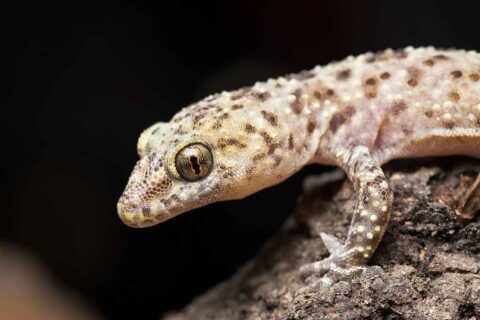
The Mediterranean house gecko is a small reptile (until 12 cm of total head length), thin and with a depressed body and a narrow, short head, but well differentiated from the rest of the body. The back of the animal is covered with small granules that give it a rough appearance. It has a pink color with pale or sandy ocher tones and an almost translucent appearance.. The spots on the tail give it a ringed appearance by alternating light and dark bands. The fingers are widened at the base and have a row of sheets below, divided in the center (hence the Latin name: middle -finger hemi -dactyl-). Has claws on all toes.
Habitat
Species that prefer warm places, as rocky places, tree trunks, stones, abandoned and dilapidated houses. It is found less in cities than the common gecko (Tarentola mauritanica). Common in small rural areas, as irrigation systems, wells and wells.
Behavior
The Mediterranean house gecko is active at sunset and at night. It only activates sporadically during the day, especially when it's sunny on the warmest days of winter. Climb slightly vertical surfaces with great agility. The accession mechanism is similar to that of the common gecko: the inner laminae of their fingers have hairs that exert a chemical and electrostatic attraction on the attachment surface (Van der Waals forces). It is active almost all year round, although it is more difficult to observe between November and February, when it falls into a semi-targo that can be interrupted during some sunny days. Essentially, feeds on small insects and nocturnal arachnids. Take advantage of the fact that they are attracted to artificial light.
Reproduction
The breeding season runs from March to July. Right now, males show aggressive behavior, defend their territory and emit vocal noises, something unusual among reptiles. Females can put 1 to 2 eggs two or three times a year and are buried under stones, in cracks in the trunk or on the ground. The pups of the Mediterranean house gecko are born between one and three months after laying eggs.
Degree of protection
It doesn't seem to have major conservation issues, which is related to the fact that it can live both in human habitat and in unspoiled nature.
The "Mediterranean house gecko" in captivity
Adaptable in nature, makes them resistant to many environments. They also have a sweet and docile temperament that makes them friendly with beginners..
They often live in human homes and adapt well to man-made habitats..
Pros
They are very resistant and do not suffer from many health problems.
This species is tiny and pretty.
They are very easy to care for and cost between 5 and 20 EUR.
Contras
They are agile and move very fast so they can easily escape.
Your droppings can stain fabrics.
They get stressed very easily, so they require careful handling.
Food
The Mediterranean house gecko it is insectivorous. They eat a wide variety of insects.
In the wild, this reptile hunts by slowly crawling towards its prey before pounced and threw its head forward to catch the insect.. They most often hunt around porch lights or man-made light structures..
Mediterranean house gecko with prey on a wall: (Hemidactylus turcicus) in Messenia, Greece – Koppi2, GFDL 1.2, via Wikimedia Commons
Your Gecko can eat crickets, cockroaches and worms.
feed your Gecko three to four times a week. In each feeding session, provide it from four to five crickets.
Be sure to feed insects that are no larger than the size of your dog's head. Gecko. Whether the insects are the right size, can maintain a consistent feeding schedule almost daily.
Sprinkle insects with a vitamin and mineral supplement before feeding them. In the case of adults, do it once a week and in the case of growing geckos, do it three times a week. Use a supplement that includes calcium but not phosphorus.
You can also load the insect guts a few days before feeding for extra nutrients.
Leave the food out for a couple of hours before taking it out of the cage.
Provide a bowl of water to your Mediterranean house gecko, although this species normally prefers to drink from water drops. Mist his cage daily to keep humidity high and provide drops of water to drink..
Care & Health
The Mediterranean house gecko lives between three and nine years.
They are very resistant reptiles, but they can suffer from some health problems if their breeding and care routine is not followed:
Problems can occur when they eat something they can't digest. The most common source is the substrate. It can be fatal if left untreated, but it is easy to avoid if you feed on a diet only of insects and use the correct substrate (for example, paper or newspaper towels).
Parasites can infect your Mediterranean house gecko through contact with spoiled food. Your Gecko will appear lethargic or vomit frequently.
Sometimes respiratory infections can occur due to incorrect temperature or humidity in your enclosure. This is characterized by lethargy, loss of appetite or breathing with your mouth open.
Molting problems can be caused by low humidity levels. If the excess skin seems to be stuck to your Gecko, you must increase the humidity in your cage.
Metabolic bone disease can cause curved limbs, instability and difficulty standing up. Be sure to feed your lizard a healthy amount of supplements to keep its bones strong.
Frequently asked questions
Is the "Pink Gecko" poisonous??
This Gecko it is not poisonous and is completely harmless to humans. Unlike some reptiles, are completely harmless and rarely bite.
Do the tails of the "Pink Gecko" grow back??
Yes, grows back. The Mediterranean house gecko drop your tail if you feel threatened. But, its tail contains significant fat reserves, so try not to stress your gecko. If your pet drops its tail, make sure she has plenty of food and is comfortable while she grows back.
Signs that you are healthy
Uniform skin and consistent texture.
Regular feeding and defecation.
Full and rounded body.
light eyes.
disease symptoms
Head or mouth dropped.
Lumps or swelling.
Discharge from the nose, the eyes or mouth.
Weakness, loss of appetite and lethargy.
Terrarium
This species of Gecko usually lives next to humans. They live on, inside and under houses. They can often be found hiding under roof tiles, behind refrigerators and climbing walls.
They are resistant, so they can live in tropical and subtropical environments from the Mediterranean to India.
Type of terrarium: Glass aquarium. Aquarium size: 40 litres. Illumination: UVB. Substrate: kitchen paper or newspapers.
Terrarium Configuration
These Geckos are small but like to live in large spaces.
One terrarium glass 40 liters with a mesh cap will work, but a "high" enclosure of 80 liters is much better. The terrariums for juveniles and hatchlings may be slightly smaller, of 20 litres.
Add 20 additional liters per each Gecko female if she harbors more than three, a tank of 80 liters is appropriate. It is not recommended to accommodate other reptiles apart from the common gecko (Tarentola mauritanica) with this species.
Place branches and foliage in your tank. Also make sure there are at least two hiding places per Gecko.
A UVB bulb is recommended. No need for full-spectrum lighting, but make sure they have a cycle 12 hours of day and night.
Installing a designated sunbathing point will help create a heat gradient and provide a warm place for the sleeping gecko.. The Geckos are thermoregulated, so it is essential to have a hot and a cold side in the aquarium.
To heat your enclosure use a heating pad or an incandescent bulb. The temperature inside the tank should be 24ยฐ to 32ยฐC in the morning and 18ยฐ to 24ยฐC at night.. Place the heating elements only in one of the halves of the tank, which will help create a heat gradient.
The humidity should be between 60 and the 75% at all times.
To keep humidity high, mist the cage with a spray bottle every day; point to walls, not to your lizard. You can also introduce live plants to increase humidity or bring your water dish closer to the sunny spot..
Reptile carpet can be used as a substrate, but it will need to be changed frequently because it may harbor bacteria. The best option is paper towels or newspapers.
Paper substrates should be changed three times a week.
Terrarium cleaning
Your tank should be cleaned once a month with soap (or a bleach solution 10%) and water.
When cleaning the terrarium, be sure to observe the droppings of your Gecko.
Their droppings should be long and light brown with white tips. They must maintain their shape. Droppings that leak or crumble are usually a sign of illness.
Behavior in captivity
The Mediterranean house gecko communicate primarily through visual cues. This is similar to what happens with the African fat-tailed gecko (Hemitheconyx caudicinctus), who usually greets.
One Gecko submissive will be removed or frozen, while an aggressor will snap his mouth, lash out or bite. In domain demos, two Geckos they will face and squeal – this is common in males.
In captivity, this lizard has a docile temperament.
Females can cohabit, but males can be territorial.
Common behaviors in captivity include sticking out the tongue and hitting the substrate with the nose to perceive its surroundings..
They are usually found in their hiding places during the day and are more active at night.
This Gecko mist in the colder months, but not necessary in captivity.
Brumation can be dangerous and is not recommended for first-time owners or Geckos youth.
Handling tips
This reptile tolerates handling, but it is very fast and can escape in the blink of an eye.
You should only handle adults when they have had a chance to get used to you..
When you handle it, do not hold or grab it by the tail or lower belly. This can cause them to release their tail in a panic or cause them stress.. Instead,, hold it tightly on top and gently support it on the lower belly.
Always wash your hands before and after handling your reptile.
Courtship
Males court females through aggressive behaviors and vocalizations.
He will approach the female and touch her with his muzzle or bite her neck. It will also vocalize before and after mating. The courtship is very brief and the female will leave shortly after to build a nest in an excavated substrate. Most of the eggs hatch within 45 to 60 days.
The breeding season occurs between April and August.
Females have small clutches of one to three eggs twice a season.
Incubation temperature can affect the sex of the hatchlings., females are more likely to be born at higher temperatures.
Price
The Mediterranean house gecko it's very affordable. They usually cost between 5 and 20 EUR, depending on size and age.
The cage, light and substrate should cost 50 EUR.
Recurring costs (for example, food and vitamins) will be around the 150 euros per year.
Despite being widely available in nature, it is much better to buy it bred in captivity from a breeder or a pet store.
When you buy a Mediterranean house gecko, make sure you have clear eyes and a healthy appetite.
Avoid pups with dry patches on their skin, no toes or tail drooping. If the tail is disproportionate to your body size, it's a sign that they've dropped it recently.
Treat the hatchlings the same as adults and make sure they receive nutrients from the insects they carry in their intestines.
โท The world of Pets: Dogs, cats, birds, reptiles, amphibians
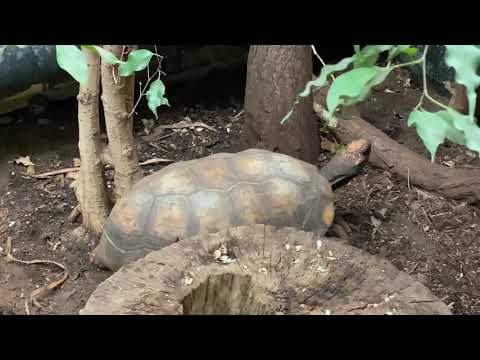
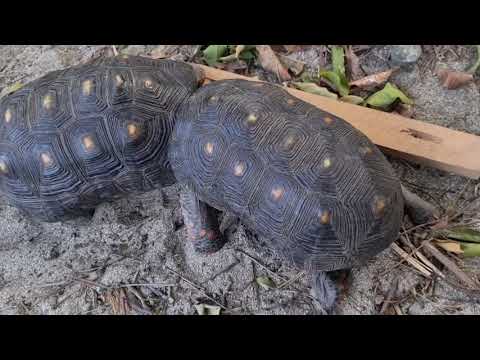
Land tortoises
Maintenance in captivity
Leopard tortoise (Stigmochelys pardalis) juvenile, Walter Sisulu Botanical Gardens, Roodepoort, South Africa – Charles J. Sharp, CC BY-SA 4.0, via Wikimedia Commons
Content
The Turtles are reptiles of the family Testudinidae of the order Testudines . They are especially distinguished from other turtles (including order Chelonia) for being exclusively terrestrial, while many (although not all) other turtle species are at least partially aquatic. Turtles have a shell to protect against predation and other threats. The shell of turtles is generally hard and, as well as other members of the suborder Cryptodira, retract the neck and head directly back into the shell to protect themselves.
The size of turtles You can vary, since some species, as the Galรกpagos giant tortoise, reach more than 1,2 metres in length, while others, as the Spotted turtle (Clemmys guttata), have a shell of only 6,8 centimeters.
They are usually animals daytime with a tendency to be twilight depending on ambient temperatures. They are usually reclusive animals. Turtles are the world's longest-lived land animals, although the longest-lived turtle species is the subject of debate. Galapagos tortoises are known to live more than 150 years, but one Aldabra giant tortoise (Aldabrachelys gigantea) called Adwaita may have lived some 255 years. In general, most species of tortoises can live between 80 and 150 years.
Turtles are placid and move very slowly, with an average running speed of 0,2-0,5 km/h.
Behavior
Communication in the Turtles is different from many other reptiles. Being limited by their shell and short limbs, visual communication is not a strong form of communication in turtles. Turtles use olfactory signals to determine the sex of other turtles and thus be able to find a possible mate. The tactile communication is very important in turtles during combat and courtship. Both in combat and courtship, turtles use the onslaught to communicate with other individuals.
Food
Turtles are essentially herbivores and consume grass, flowers, succulent plants, fruits,… although some species feed on carrion.
Reproduction
Son oviparous and in some species females can several egg layings in the same season.
List of โLand Turtlesโ for maintenance in captivity
โท The world of Pets: Dogs, cats, birds, reptiles, amphibians
Eastern mud turtle
- Kinosternon subrubrum
Origin: United States
Gender: Kinosternon
Life expectancy: 20 - 30 years
Length: Until 12 cm.
The Eastern mud turtle uses tactile senses and vision when searching for food. They use vision to search for prey and tactile senses to consume it..
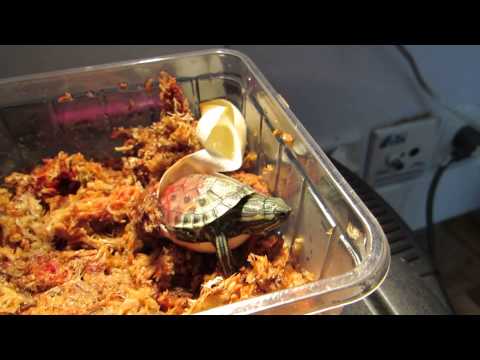
Eastern mud turtle – Kinosternon subrubrum subrubrum – Bombay Hook National Wildlife Refuge, Smyrna, Delaware. He wasn't sure if he wanted to hide or not.. I was glad he didn't totally retreat into the shell. – Judy Gallagher, CC BY 2.0, via Wikimedia Commons
Content
Origin / Distribution
Two subspecies are recognized as valid, including nominate subspecies.
The Eastern mud turtle (Kinosternon subrubrum) found in the US states of Alabama, Arkansas, Delaware, Florida, Georgia, Illinois, Indiana, Kentucky, Louisiana, Maryland, Mississippi, Measure, New Jersey, New York City, North Carolina, Oklahoma, Pennsylvania, South Carolina, Tennessee, Texas y Virginia.
In Indiana, the Eastern mud turtle is listed as an endangered species.
Characteristics / Appearance
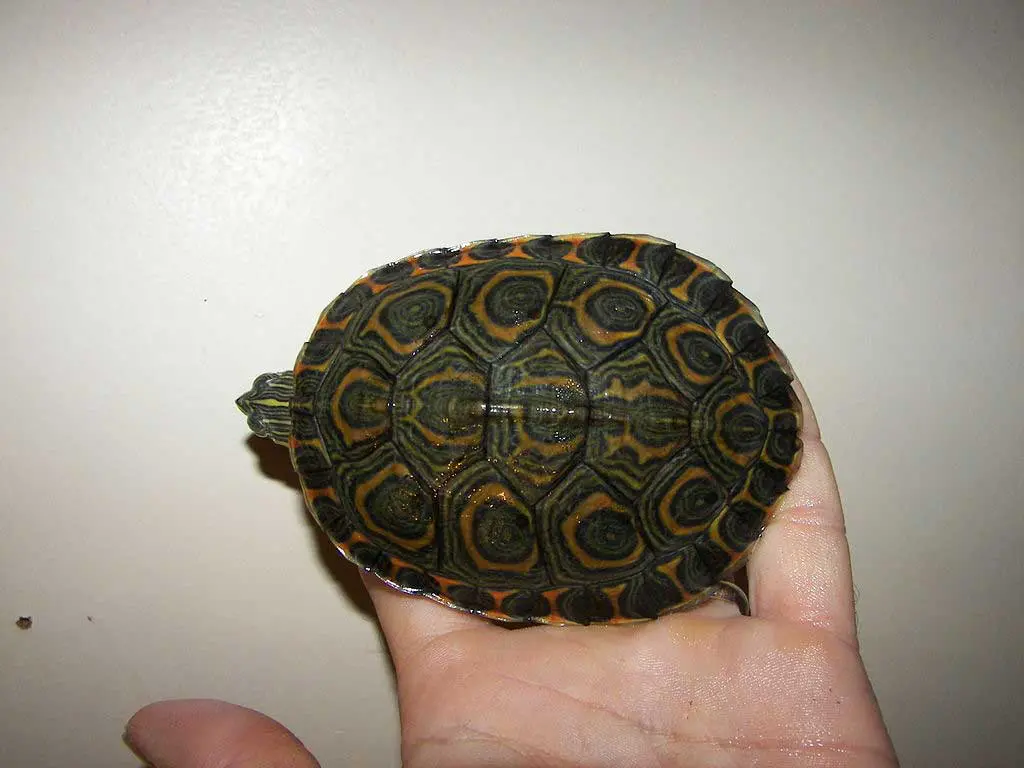
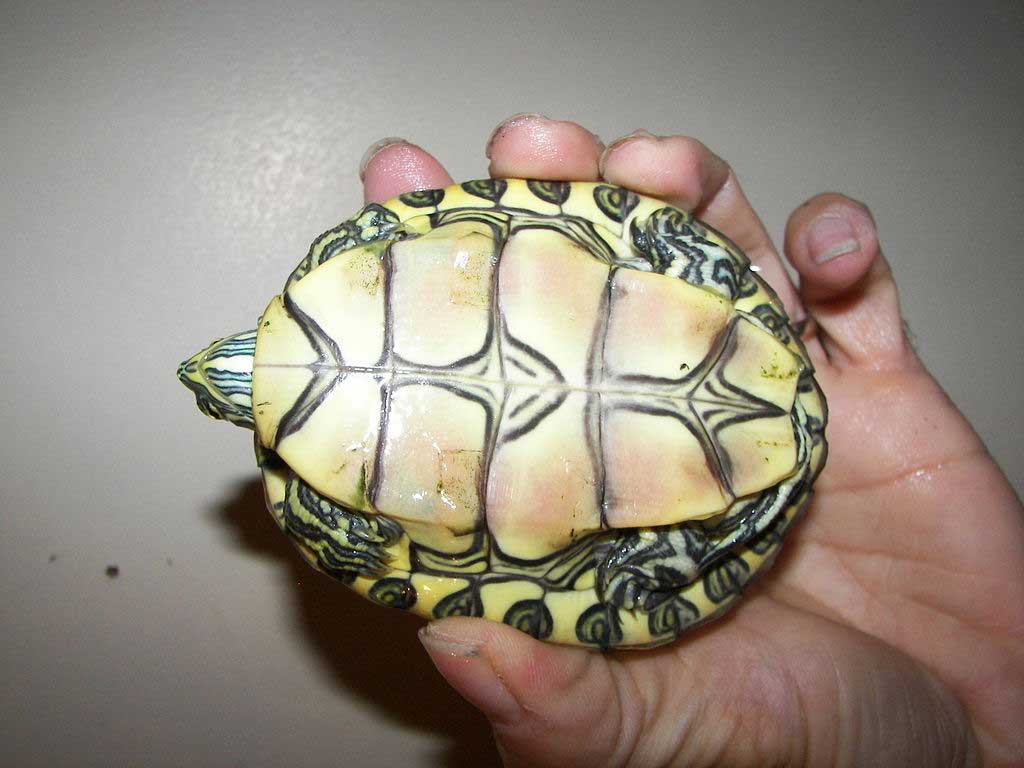
The Eastern mud turtle it is a small species, with a carapace length of 7 to 10 cm for adults. The head is irregularly mottled or streaked with yellow. The shell is convex, yellow to black, and lacks a keel or distinctive pattern. The plastron is yellow to brown in color and may have a variable number of dark markings.. Sometimes they are confused with the Common musk turtle. But, the plastron of the Eastern mud turtle differs from that of Common musk turtle in that it has two hinges and a triangular-shaped pectoral shield. As well, Unlike in the Common musk turtle, he doesn't have two stripes on his face.
The sexes are similar in size. Males have a longer preanal length with the vent posterior to the edge of the carapace.. The youth of the Eastern mud turtle are darker in color, they lack head markings and their plastron is orange to red with a dark center.
Habitat
The Eastern mud turtle it is semi-aquatic and prefers relatively calm and shallow bodies of water. wet meadows, ponds, swamps and drainage ditches are their typical habitats. in coastal areas, eastern mud turtles can tolerate brackish water and are found on the edges of mudflats and offshore islands. Although they do not sunbathe often, They are much more terrestrial than the Common musk turtle and can often be seen on land from spring through fall. They reach maturity between 4 and 8 years of age. Individuals in captivity have lived up to 38 years. The Eastern mud turtle feeds mainly on the bottom of the sea. Their diet consists of a variety of insects, mollusks, Tadpoles, crustaceans, carrion and aquatic vegetation.
Behavior
Eastern mud turtle
The Eastern mud turtle it is swimming and lonely. They hibernate between November and March., but start and end times vary by location. The hibernaculum of these turtles includes shallow burrows at the edge of wetlands. They are crepuscular. Depending on ambient temperature, they spend their time submerged in shallow water or basking on the surface of the water. These tortoises can sunbathe with conspecifics on the same trunk, but this occurs mostly during the mating season.
These turtles are occasionally aggressive and fight each other with head-to-head confrontations.. Such clashes can lead to possible serious injury, such as limb amputation, but the motive for the attack is unknown. The Eastern mud turtle uses color perception to distinguish the sexes, what plays a role in courtship. when they mate, female musk glands release pheromones to signal males to initiate courtship. The females dig their nests and hide them using their front and hind legs., and then they lay their brood.
Food
The Eastern mud turtle it is omnivorous and its diet is very varied. They feed mostly on the bottom., consuming mainly in the water, but sometimes they rise to the surface if the opportunity arises. Its range of consumption includes seeds, small invertebrates like earthworms (family Lumbricidae) and snails (Lymnaea, Physa, Planorbis), small insects like moths and butterflies (orden Lepidoptera ), june beetles (orden Coleoptera, familia Scarabaeidae, Melolonthinae subfamily), as well as arachnids (order Araneae), green algae, crustaceans and carrion. Strecker (1927) reported that these turtles also consumed a small striped snake (Tropidoclonion lineatum).
Mahmound (1967) investigated the diet Eastern mud turtle
Threats to the species
State of conservation โ
Minor Concern โ(UICN)โ
The Eastern mud turtle It is classified as a species of โLeast Concernโ according to the IUCN Red List.. They are not on the US federal list., CITES or listed by the state of Michigan. The Eastern mud turtle are considered endangered at the state level in Indiana, New York and Pennsylvania, and a species of greatest conservation need in Kentucky (Meshaka et al. 2017).
The main threat to these turtles is habitat loss and road mortality., since few turtles manage to cross them. Habitat loss through roads bisecting aquatic habitats, increased urbanization and climate change that raises sea levels harm these mud turtles. The illegal pet trade of this species has also caused damage to its native ecosystem through loss of biodiversity..
Potential conservation efforts to reduce mortality rates include wetland legislation that protects a terrestrial buffer zone around these semi-aquatic habitats. These terrestrial buffer zones are already intact in national parks. Future conservation efforts need a better understanding of population changes over time, as well as their perceived response to general climate change and microhabitat change.
The "Eastern mud turtle" in captivity
Aquaterrarium
The Eastern mud turtle They can reach a maximum carapace length of 12 cm.. So, they need an aquarium with a rim length of at least 80 cm.. For the benefit of Kinosternon subrubrum, the aquarium should have several hiding places and retreats. So, they need an aquarium with a rim length of at least 80 cm.. For the benefit of the Kinosternon subrubrum, the aquarium should have several hiding places and retreats. The roots, dense plantings of tanks and stone or rock structures are suitable for it. There should also be an integrated area for sunbathing
These turtles are solitary animals. Ideally, keep them individually in a species tank. Especially the males tend to be aggressive. In any case, must be stored separately.
The Eastern mud turtle feels very comfortable in water temperatures between 17 and 28 degrees Celsius. But, they need a fixed change between summer and winter. During the winter months you can reduce the lighting time and lower the water temperature to 10 – 17 Celsius degrees.
Food
The Eastern mud turtle they are carnivorous. They prefer live food, frozen food or dried animals. The insects, the molluscs, amphibians or even plants are at the top of the menu.
Reproduction
The Eastern mud turtle (Kinosternon subrubrum) have already been successfully bred in the aquarium.
Buy one "Eastern mud turtle"
The prices of one "Eastern mud turtle" in the exotic animal market ranges from 50 – 100 EUR.
Videos "Eastern mud turtle"
HTTPS://www.YouTube.com/watch?v=U95SSLoQ4dk
HTTPS://youtu.be/xnHl0EZqG9g
Alternative names:
1. Eastern mud turtle, Common mud turtle (English).
2. Cinosterne rougeรขtre (French).
3. Pennsylvania-Klappschildkrรถte, Kinosternon subrubrum, Mississippi-Schlammschildkrรถte, รstliche Klappschildkrรถte (German).
4. Tartaruga de barro comum, Tartaruga de barro orienta (Portuguese).
5. "Tortuga de pantano comรบn", Tortuga de pantano del este (espaรฑol).
โท The world of Pets: Dogs, cats, birds, reptiles, amphibians
Four-horned chameleon
- Trioceros quadricornis
Origin: Cameroon and Nigeria
Gender: Trioceros
Life expectancy: 4 - 6 years
Length: 25 to 35 cm.
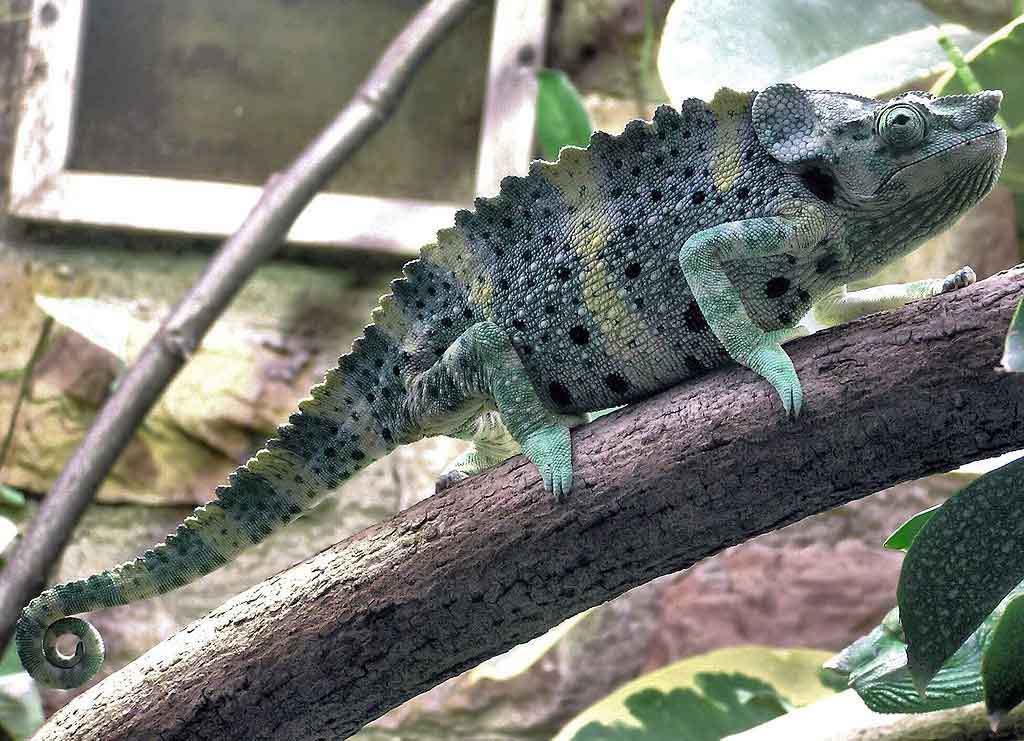
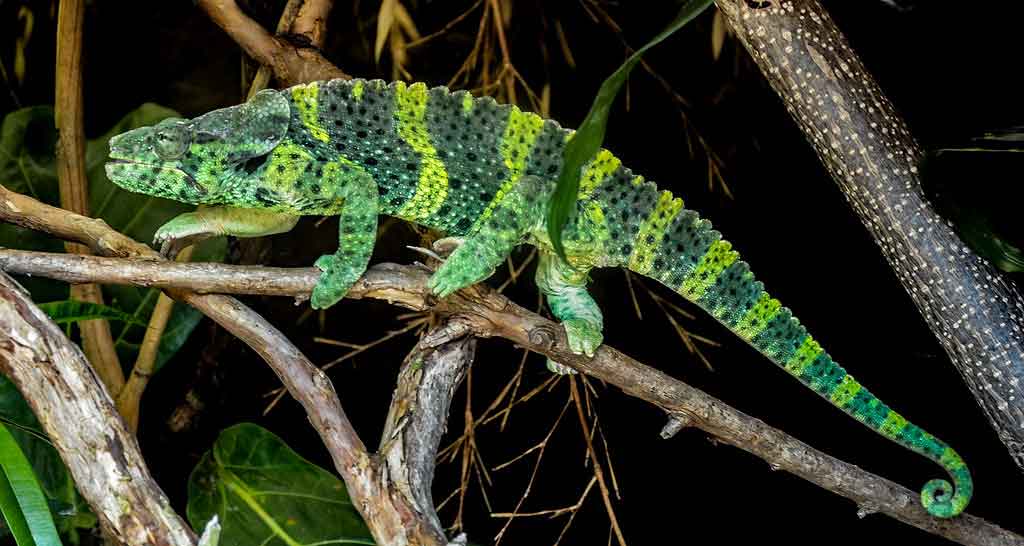
The Four-horned chameleon, also known as Cameroon bearded chameleon, it is recognizable not only by its four protruding horns, but also because of his flaky "beard", its large crest and sail-shaped fin.
The Four-horned chameleon (Trioceros quadricornis) only found in some land areas of Cameroon and eastern Nigeria; its range includes the western highlands, the bamboo massif, Mount Manengouba, the oku massif, the Bakossi mountains, including Mount Kupe, and the Obudu Plateau in Nigeria. In particular, the subspecies Trioceros quadricornis eisentrauti is endemic to the Rumpi Hills in Cameroon.
Characteristics / Appearance
Like many other chameleons, the Four-horned chameleon it has a prehensile tail and simple claws on its toes. Usually, has four protruding horns, but sometimes two with up to four adjacent reduced horns are present;adults usually grow to 25 to 35 cm long. The Four-horned chameleon male has a prominent hemipenal bulge and gular beard, while some females have a horn or even two horns at the tip of their snout.
Habitat
In general, the Four-horned chameleon has a presence extension of 13.300 km2 and an inferred occupation area of 1.000 km2. The species is mainly associated with relatively intact montane forests with little human activity, where it has a relatively restricted elevation range (1150 to 2400 m). Research suggests this likely reflects competition with other chameleon species rather than physiological tolerances.. The type locality of the species is Monte Manegouba in Cameroon
Behavior
The species feeds almost exclusively on arthropods..
Reproduction: puts up 14 eggs.
Incubation period between 130-160 days at 18-25ยฐC. Temperatures should not exceed 25ยฐC.
Life expectancy: a few 7 years.
Threats to the species
State of conservation โ
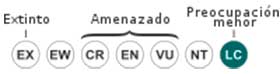
Vulnerable โ(UICN)โ
The main threat to this species is deforestation.. Agricultural development extends to the 1.700 m altitude near the village of Nsoung on Mount Manengouba, and the forest on the southeast slope of the mountain is rapidly disappearing. In 1995, forest degradation on the western slope of Mount Kupe had reached 1.200 m above sea level, due to selective logging for firewood and construction materials. So, future encroachment of human activities on the slope may pose a threat to this chameleon, which depends on a largely pristine forest and, therefore, likely to be at risk from forest degradation or clearing. Deforestation for cultivation and the burning of nearby grasslands to renew pasture for cattle threaten the species in much of its range..
Due to its small and fragmented distribution area and the numerous threats that weigh on the population, the Four-horned chameleon It is classified as vulnerable by the International Union for Conservation of Nature.
Of the three subspecies, T. quadricornis quadricornis, T. quadricornis gracilior and T. quadricornis eisentrauti. The T. q. quadricornis is the most common, but the gracilior not uncommon. The T. quadricornis eisentrauti, on the other hand, not known (far as I know) that is in captive collections. It is even difficult to find images of the subspecies.
It is not a pet suitable for beginners.
The terrarium
terrarium size: individual storage is recommended. It is possible to keep the animals in pairs, but always pay attention to size and furnishings. For single breeding: A terrarium of at least 100 x 60 x 120 cm..
The cages/flexarios they are just as suitable. Chameleons love fresh air..
Temperature
During the day approx.. 20-25ยฐC, local heating up to approx.. 30-32ยฐC. Go down to at least 15ยฐC at night. Better still lower. If a cool cellar is available, you can also spend the night there.
Humidity
The humidity in the terrarium should range between 80-100%. In the morning and evening, spray the terrarium with warm water. But, Please, do not spray the animal.
Lighting and temperature
Daylight fluorescent tubes and/or light bulbs.
To obtain sufficient UV radiation, We use a solar light 75 watts for hobbyists. Get a surrounding heating of about 25-27 ยฐC and local heating up to 32 ยฐC at the highest point of the terrarium. In this case, an additional daylight lamp is not necessary..
Substrate
For us, pine bark and forest leaves have given good results, but it can be terrarium sand… The 30% of the terrarium soil must be kept moist at all times. The leaves of the forest serve as living food. to the piglets, for example, they like to crawl under, the leaves are moved by the animals and the chameleon can naturally search and observe the prey and then hunt it on its own.
Decoration terrarium
Lots of climbing opportunities, branches should not be too thick or slippery and should be easy to grip with feet.
Privacy screen for the rear and side walls. In summer, we take a flexo to the garden.
For planting we use Ficus benjamini and ivy, bamboo and, of course, a trough made by ourselves.
Food
house crickets, mealybugs, cockroaches, two-spotted crickets, zophobas, meal worms, wax worms, etc.
In summer, they go to a secluded meadow armed with a net and collect everything that crawls and flies. But it's better to do without roadside critters. We don't want to poison it!
Regular mineral and vitamin supplements are also indispensable in this case.
They only eat fruits and vegetables to cover their water needs.
The sprayed and dripping leaves are gladly used as a water source.
Buy one "Four-horned chameleon"
These Cameroonian chameleons ultra rare they are highly prized within the reptile community for their incomparable horns, its high dorsal crest, its coloration and scarcity.
Its price in the exotic animal market is around 200 EUR.
Videos "Four-horned chameleon"
Four Horned Chameleon (Trioceros quadricornis) | Zeppelin the Uni-Quad and Eris