▷ The world of Pets: Dogs, cats, birds, reptiles, amphibians
Rice paddy snake
- Hypsiscopus plumbea
Origin: Myanmar, Thailand, Cambodia, Laos, Malaysia, Indonesian, Viet Nam, South China and Taiwan
Gender: Hypsiscopus
Life expectancy: 15 years
Length: 72 cm.
The Rice paddy snake, mostly nocturnal, comes out at night to hunt fish and amphibians.
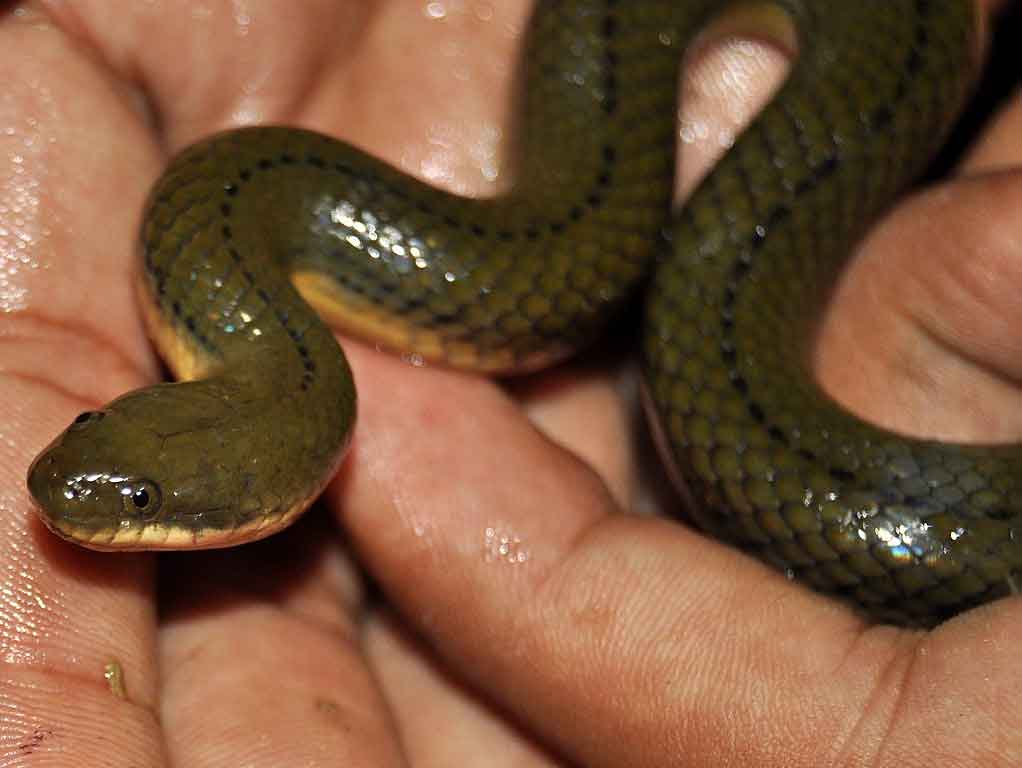
Rice paddy snake (Enhydris plumbea); California. 40cm TL. From Karawang, West Java – Wibowo Djatmiko (Wie146), CC BY-SA 3.0, via Wikimedia Commons
Content
Origin / Distribution
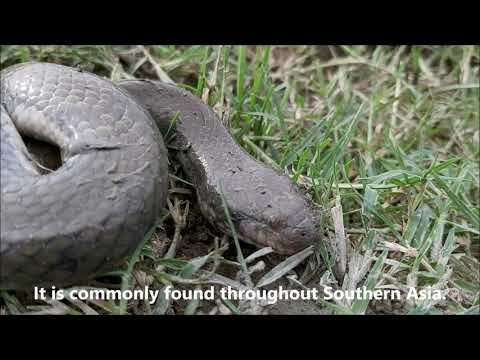
The Rice paddy snake (Hypsiscopus plumbea) it is one of the most widespread Asian water snakes. Previously it was called Enhydris plumbea, but the name was changed 2014.
In mainland Southeast Asia, the Rice paddy snake is present in Myanmar, Indochina (Cambodia, Laos, Viet Nam), Thailand and Peninsular Malaysia. out of region, found in parts of India (Islas Andaman) and south China (including Taiwan). In insular Southeast Asia it is present on the islands of Sumatra, Borneo, Java, Bali, Sulawesi and possibly on other islands further east.
Characteristics / Appearance
Gray color on the upper part of his body, although in some populations its upper part can be olive gray, dark brown or green. There may be small dark spots along the vertebral line. Its underside is yellow, sometimes with black spots.
Its body is robust and cylindrical in section., its short head is barely wider than its body and its tail is short. His eyes are located on the top of his head.
Habitat
The species usually inhabits calm or shallow bodies of water, like rice paddies, open swamps, bogs, streams and ditches.
Behavior
The Rice paddy snake, mostly nocturnal, comes out at night to hunt fish and amphibians. They usually remain motionless in shallow stagnant water and also burrow into mud.. They also show a characteristic jump when trying to move quickly to escape.. They are quick to bite, starch, defecating and squirming excessively. They are not considered dangerous to humans.. They are slightly poisonous, but there are no known cases of poisoning or serious reactions in humans.
Threats to the species
No known conservation issues. It is a common species in Thailand, although its population in Taiwan is in danger.
The "Rice paddy snake" in captivity
The Rice paddy snake attacks aggressively when cornered on the ground, but its small size prevents it from causing much damage. Although it's a snake with back fangs and some venom, the poison has a limited effect on humans, being able to cause some swelling in the worst cases.
Buy one "Rice paddy snake"
The price of a "Rice paddy snake" at the exotic animal market, ranges between 80 – 100 EUR.
1. Rice paddy snake, Rice paddy snake, Plumbeous water snake, Boie’s Mud Snake (English).
2. Serpent de riz paddy (French).
3. Reisfeldschlange, Plumbeöse Wasserschlange (German).
4. Cobra arroz em casca, Serpente de água plumbeous (Portuguese).
5. "Serpiente acuática de vientre amarillo", Serpiente de arroz con cáscara, Serpiente de agua plomiza, Serpiente del arroz, Serpiente de arrozal (español).
▷ The world of Pets: Dogs, cats, birds, reptiles, amphibians
Schneider's skink
- Eumeces schneideri
Origin: Central Asia , West Asia and North Africa
Gender: Eumeces
Life expectancy:
Length: 16,5 cm. + tail 20 cm..
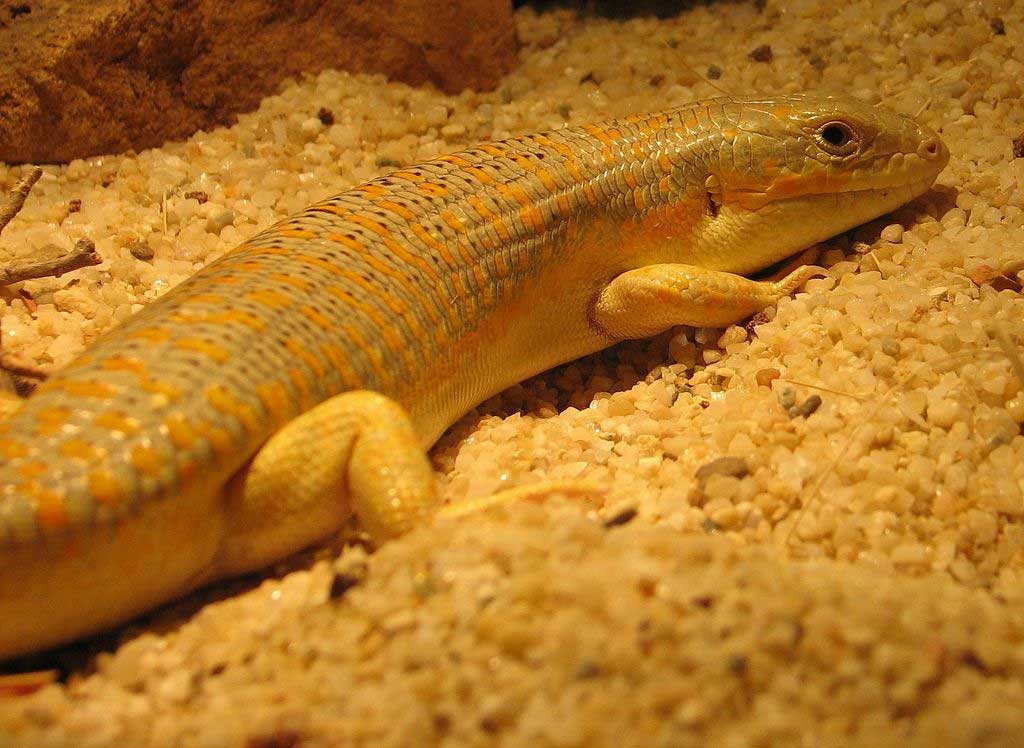
The great skink North Africa and one of the most beautiful we can find, since the orange colors that it has on the back with the yellow sides make it a beautiful animal. feeding, In addition to giving it insects and worms, we can add fruit that it will take with pleasure.. Docile and manageable. Perfect.
Its price ranges from 30 and 40 EUR, 60 euros for the couple.
▷ The world of Pets: Dogs, cats, birds, reptiles, amphibians
South American horned frogs
- Ceratophrys
Origin: South America
Gender: Ceratophrys
Life expectancy: 6 - 10 years
Length: 18 cm.
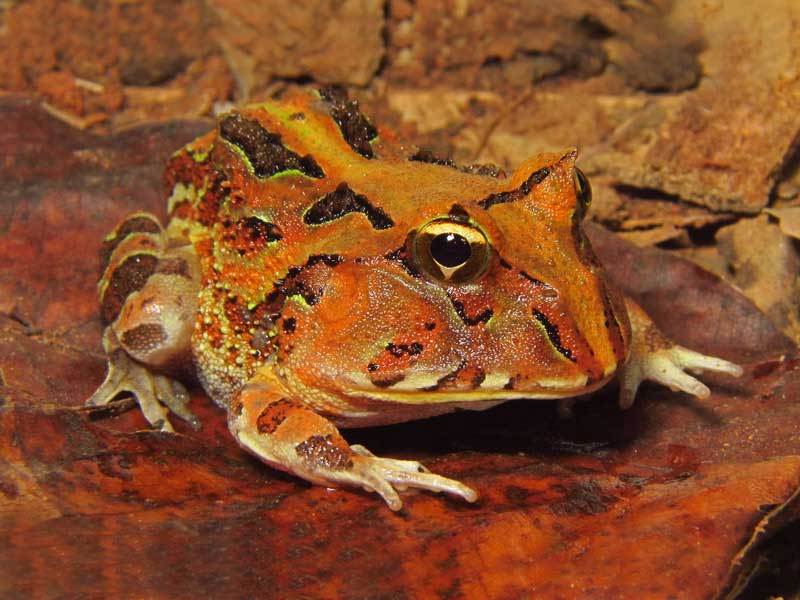
The South American horned frogs They are originally from South America., but now they are bred in many color varieties.
In addition to the horn-shaped projections on the eyes that give them their name, the South American horned frogs (genus Ceratophrys) have other characteristic features: A huge mouth and an almost circular body. The South American horned frogs They are originally from South America., but now they are bred in many color varieties. The most common species are the Surinam horned frog (Ceratophrys cornuta), the Cranwell's horned frog (Ceratophrys cranwelli) and the Common foreshortening (Ceratophrys ornata). Occasionally, other species are offered - some as wild-caught specimens- as well as frequently sterile crosses. If possible, use captive-bred species.
Images "South American horned frogs"
Ceratophrys
calcarata
Ceratophrys
cornuta
Ceratophrys
cranwelli
Ceratophrys
ornata
Ceratophrys
stolzmanni
Ceratophrys
aurita
Sex differences
Differentiation of the sexes is difficult and is only possible in sexually mature animals.. Males develop heat calluses on the front legs, they usually have a darker throat region and call during the mating season.
Behavior
Like the South American horned frogs they occasionally eat their peers, it's better to keep them alone.
The South American horned frogs they are twilight and night.
Terrarium
The South American horned frogs they are hunters on the prowl, who like to dig and only actively seek food when hungry. One terrarium for an adult specimen it must measure at least 80 x 40 x 40 cm. (length x widht x hight).
Fluorescent tubes with a daily light duration of 10 to 12 hours are suitable for lighting. The optimum is a slight temperature gradient in the terrarium of between 24 and 30 ° C with a 80 % moisture, so that the horned frog you can choose your preferred place of residence. At night, the temperature should drop to about 23 °C y, at the same time, humidity should rise to 90 or the 95 %. The temperature can be regulated with the help of a heating mat installed outside the terrarium and that covers a maximum of one third of the floor surface. The heating mat should be controlled with the help of a thermocontroller to avoid overheating. Moisture can be achieved by spraying the terrarium With warm water. Precise thermometers and hygrometers are needed to measure temperature and humidity.
The height of the excavatable substrate (for example, a terrarium soil mix, coconut substrate, moss) must allow the frog to burrow completely and be of at least 10 cm for adult animals. The substrate should always be slightly moist (but not wet). This can be achieved by placing a drainage layer of expanded clay on the bottom.. Additional withdrawals (coconut shells, etc.), a shallow water basin and natural planting complete the assembly.
Diet
The South American horned frogs they are voracious eaters and prefer live insects (crickets, grasshopper, cockroaches, etc.), earthworms, slugs and small vertebrates. Regular administration of a mineral supplement ensures healthy bone growth. Mealworms, the zophobas, wax moths or mouse pups should be fed only rarely due to their high protein and fat content.
Caution: the South American horned frogs tend to become obese. In the case of adult animals, it is enough to feed them every two or three days.
Care
Food scraps and feces should be removed daily. Animals defecate in their self-dug hiding place; an occasional change of location should always be used to renew the substrate from the previous site. It also, all substrate must be replaced regularly. The water bowls should also be cleaned daily and filled with fresh water.
Animal health must be monitored daily. The most frequent health problems in the South American horned frogs are the softening of the bones, wasting or fatty degeneration. Skin changes are also more common, especially in the belly, often recognizable by a red coloration. So, the belly of the animals should be checked at least once a week. If there is any abnormality, consult a veterinarian who knows amphibians.
Acclimatization and handling
Amphibians are animals of pure observation and should NOT be petted. In the first days in his new home, animals need adequate rest to get used to their new environment. If required, animals must not be caught by hand, but with the help of a container. Only larger animals can be handled with care by hand (protection gloves). But, the South American horned frogs they tend to lash out at anything that moves and have teeth with which they can cause painful wounds. This is another reason why it is advisable to capture the animals with the help of a container..
Special features
Due to the rapid growth of young animals, a good supply of calcium and vitamins is very important.
The South American horned frogs are not subject to species protection legislation.
▷ The world of Pets: Dogs, cats, birds, reptiles, amphibians
Electric blue gecko
- Lygodactylus williamsi
Origin: Tanzania
Gender: Lygodactylus
Life expectancy: 5 - 10 years
Length: 5 - 8 cm.
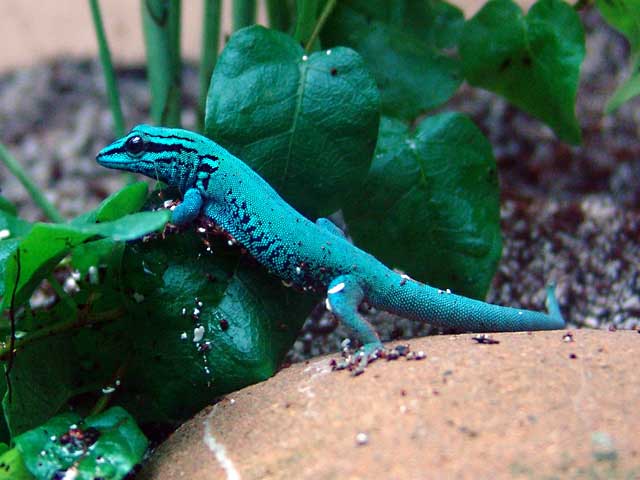
The trade of Electric blue gecko is now banned in the EU. Cannot be kept or sold in the EU without documentation and permits, renewables every three years
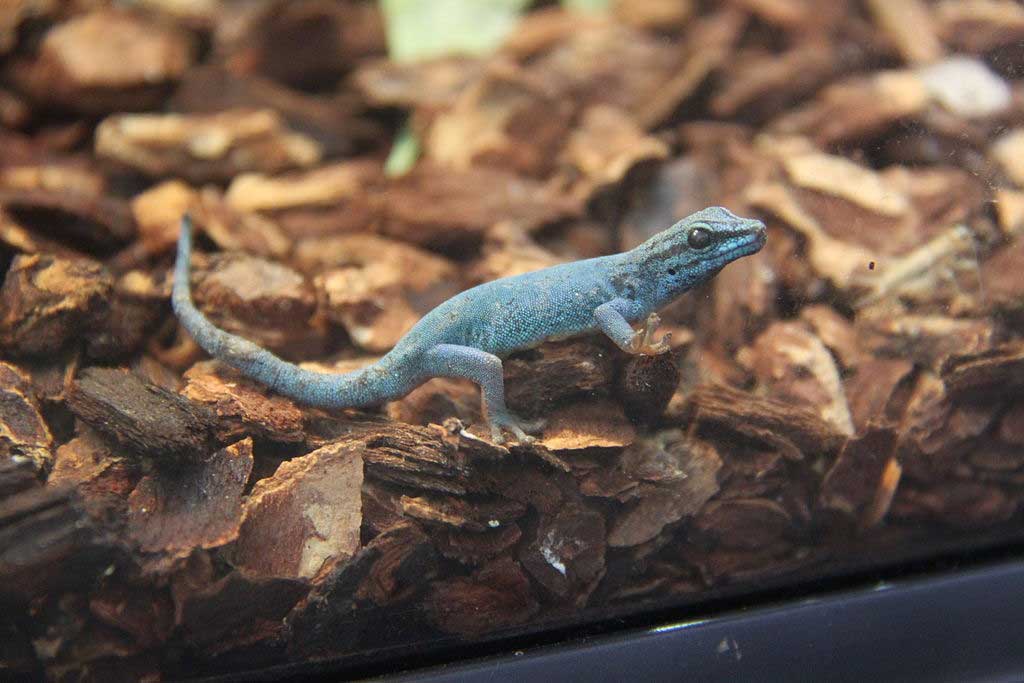
Males and females of the Electric blue gecko do not show decisive differences in size. Most animals of this species reach a total body length of about 60-80 mm.
The length of the tail is more or less the same (not decisively minor) than the rest of the body including the head. Sex distinction is often made based on the intense blue coloration of males.. But, this method of sex determination can lead to considerable errors, since a male subdued, in contrast to the dominant rival, it doesn't have to show this intense coloration. So, clear sex determination is only possible in strict individual preservation or on the basis of male preanal pores (7 parts). It also, males can be recognized by a thickened tail root.
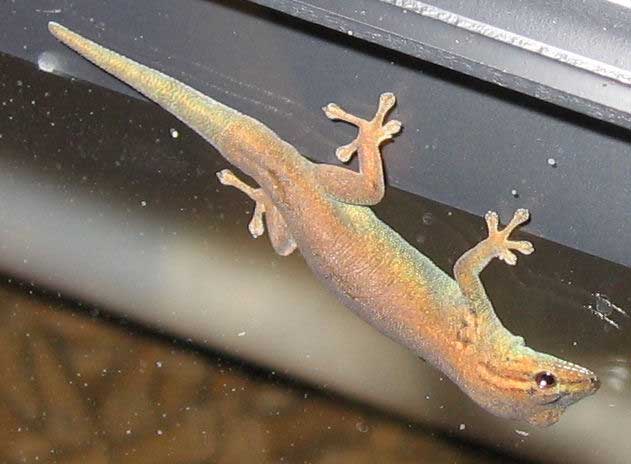
The females of the Lygodactylus williamsi they have a clear greenish-gold coloration. Both sexes are decorated with a black band from the muzzle over the eyes to the neck.. In the head, a second minor V-shaped line approaches the first. Juveniles of this species have the same coloration as females and are first recognized by distinctive preanal pores..
Distribution and habitat
The Electric blue gecko lives exclusively in the Kimbosa Forest, less than 4 km², and in small nearby areas of Tanzania, and lives to some 350 m above sea level. The Kimboza forest area is very dry during the day and semi-humid at night. Ocean temperatures and rainfall prevail locally. The highest temperatures are reached in December and are 28 degrees Celsius. There is a dry season from the end of June to the end of August. In the other months maximum values of 24 degrees. This species lives in trees and is found mainly in trees of Pandanus (Pandanus kirkii and rabaiensis).
The Electric blue gecko (Lygodactylus williamsi) is under the protection of EU Appendix B in December 2014, under the protection of EU Appendix A in January 2017 and under the protection of CITES Appendix I in January 2017. Cannot be kept or sold in the EU without documentation and permits, renewables every three years, and Geckos must now register. Similar restrictions apply in some other jurisdictions. Trade in these animals is now banned in the EU.
Specimens bred for which an exemption from the trading ban has been issued are exempt from the ban.. So, breeders of these species will in future have to apply for such a marketing permit from their competent nature conservation authority before they can sell their offspring.
Terrarium
Relatively little is known about the life expectancy of the Electric blue gecko in the terrarium. This is because this species was recently discovered and, therefore, has not been kept in the terrarium for a long time. According to other species of Lygodactylus, life expectancy is between 6 and 9 years. It is already known that, especially in the male, intense blue coloration becomes darker and darker and, Therefore, represents the first sign of the aging process.
The huge sexual impulse of the male is often reported and therefore a maintenance of 1,2 or 1,3, so that a single female does not suffer this sexual pressure. I personally recommend keeping the 1.1 for the moment, only if necessary, and whether the terrarium is large enough, possibly a female can be added later. Note that with a 1.x breeding, each animal should have its own place to sunbathe.
The male may copulate once a day after laying the eggs and, for the rest, leaves the female alone. Copulation can last between 10 and 45 minutes. After a brief acclimatization period, one quickly realizes that the Electric blue gecko not a shy species and makes the most of the tank. Especially the male turns out to be a real acrobat and does gymnastics all over the terrarium. Its main phase of activity is mainly in the afternoon, which now lasts until shortly before the lights go out. In the terrarium you can experience jumps of more than 20 cm over and over again.
Terrarium measurements
According to legal regulations, the terrarium must be a size of 30 x 30x 40 cm.. (Length x width x height) As minimum (if a Electric blue gecko of 5 cm.). But, this size cannot be recommended at all and is too small. Due to the behavior already described, a larger terrarium is recommended so that animals can also follow their natural preferences. A terrarium with a minimum size of 50 x 50 x 80 for breeding 1.1. for breeding 1.2 a terrarium with dimensions of 60 x 60 x 100. Of course, the terrarium can also be much larger, because the bigger, best!
When buying the terrarium, make sure that the upper ventilation area is greater than the 6 to 10 cm that standard terrariums usually have. It is also very advantageous to use fine gauze if you want to offer it to the Drosophila as food from time to time.
I can only disagree with the frequently asked questions that it is supposedly more difficult for the animals to get hold of food in a larger tank and that, Therefore, a smaller tank is recommended. The Electric blue gecko It, on the one hand, a very good and agile hunter and, for another, nothing is served on a silver platter in nature. Even in young animals, a pronounced hunting instinct can be observed, which should certainly be encouraged.
Decoration terrarium
As a substrate we use a layer of large balls of expanded clay/seramis as drainage and a layer of untreated coconut fiber on top of it.. To prevent the soil from settling over time and mixing the two layers, you must add a layer of fleece. It is recommended to inoculate the substrate with white isopods and tropical springtails. They can serve as food, but mainly take care of the tasks of natural waste disposal (mold, feces, dead plants).
Otherwise, it is advisable to have at least one large-leaved plant, as: Sanseveria, bromeliads, Palm trees, etc., since they are usually used as walking areas, rest, removal and egg laying. Cork tubes, the branches, lianas or bamboo tubes can be used as additional furniture.
Illumination
In commercial terrariums, a large part of the UV radiation is filtered due to the insufficient ventilation zone at the top and the forced placement of the light source on the glass, and does not reach the animal at all. It also, the glass can crack in the worst case due to the high heat.
In any case, lighting for Geckos (and also for chameleons) must be installed outside the terrarium, because animals, very agile and jumping, can burn with the light source. Metal halide lamps (for example, Bright Sun, SolarRaptor, etc.), which are highly recommended, get very hot and there is a risk of injury.
In any terrarium of any species of gecko or chameleon, lighting - without exception- must be placed outside the terrarium! It doesn't matter what you've been told in a pet store.
Of course, tank lighting should be chosen individually. But, you must pay special attention to the necessary UV radiation. This ultraviolet radiation is very important because reptiles are tetrachromatic.. This means they see in the UV-A range and, unlike us, also have photoreceptors.
So-called compact lamps are not recommended (energy saving lamps) or fluorescent tubes, since neither the illuminance (lux) nor the UV intensity are sufficient for lighting. But, Unfortunately, this type of lighting is often used for cost reasons. You have to be aware that keeping terrariums is a hobby that requires a lot of technology and costs., and you should not skimp on the most basic element (lighting). Insufficient lighting causes deficiency symptoms and diseases in animals.
On a sunny day in nature, an illuminance of approximately 100.000 lux. By way of comparison, compact lamps reach an average of 1.500 lux, while metal halide lamps (HQI) reach approximately 60.000 lux. These values speak for themselves.
For these reasons, it is advisable to buy an HQI spotlight with the appropriate ballast. Bright Sun, Reptile Expert or Solar Raptor can be recommended without reservation. At the time of buying, it is essential to take into account the power and the variant (flood or spot) depending on the size of the terrarium and the manufacturer's specifications (minimum distance to the animal). These lamps must be replaced no later than one year later than, as UV emission is not guaranteed after this period. Also keep in mind that your animals will thank you for this investment with health and activity.
Temperature in the terrarium
The temperature should oscillate between 26 and 30 degrees during the day, and occasionally up to 34 degrees. Make sure each animal has a place to sunbathe. At night, the temperature can oscillate between 18 and 22 degrees (approximately the ambient temperature). Relative humidity should be between the 50 and the 65% during the day and increase to 80% At night.
Food
All usual feeding animals can be offered. Medium-sized crickets, terfly, baked fish and occasionally fruit pulp, Repashy Daygecko Food or gelatin have been successful. Drosophila or worms rarely occur. Drosophila are not well tolerated by all animals and should never be used as exclusive food.. Small wax worms are popular, but they are very rich in content and should be offered as a rare gift or to feed themselves. Otherwise, animals can easily become obese.
Feeding insects should be dusted with a vitamin preparation before approximately every two meals.. We use Korvimin (available at the veterinarian), Herpetal T or Reptivite. Reptivite sticks to feeders better than Korvimin. It also, the animals fed must have been previously fed for an appropriate period of time (good load). We will use DIY gelatin, Repashy SuperLoad or BugBurger for our crickets. You can also use oatmeal, Cucumber, carrots, apples, etc., but the above products are easier to use and there is no risk of mold, but they are also much more expensive.
for females, there should be some cuttlefish/calcium citrate separately in a small container, for an increase in calcium needs (for example, during pregnancy) can be covered individually. The water supply is ensured by spraying water on the terrarium equipment every day. Please, do not use waterfalls or nebulizers, even if it seems "nice" to you, as water becomes contaminated quickly and animals can get sick.
Reproduction and rearing in the terrarium
Due to the enormous demand of the Electric blue gecko, breeding is essential to protect the natural habitat of these animals. During the breeding season, females usually glue a double laying (2 eggs) to an accessory or use an offered place of oviposition. If possible, the laying must be transferred to an incubator. But, no problem in incubating the laying in the terrarium, unless damaged by daily spraying of terrarium furniture. It is not impossible for the parents to chase the young. Our first clutch of eggs could not be removed from the terrarium and one of the hatchlings was eaten by one of the parents., although they were provided with enough food as a precaution.
At a constant incubation temperature of 25 degrees Celsius, the pups will be born after a few 90 days. Due to relatively low temperatures, a higher than average number of females can be bred.
As eggs are hard shelled, moisture does not play an important role during incubation. Once the pups have hatched, I transfer them to our breeding terrarium.
Video Electric blue gecko
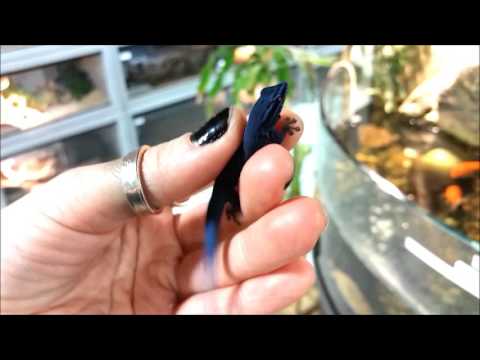
Electric Blue Geckos (Lygodactylus williamsi) at LLLReptile
1. Turquoise dwarf gecko, William’s dwarf gecko (English).
2. Gecko de William (French).
3. Türkisblauer Zwergtaggecko, Williams-Zwerggecko (German).
4. Lagartixa anã turquesa, Lagartixa anã de William (Portuguese).
5. Gecko enano turquesa, Gecko enano de William (español).
▷ The world of Pets: Dogs, cats, birds, reptiles, amphibians
Crested gecko
- Correlophus ciliatus
Origin: New Caledonia
Gender: Correlophus
Life expectancy: 15 - 20 years
Length: 15 - 25 cm. + 10 - 15 cm. (tail)
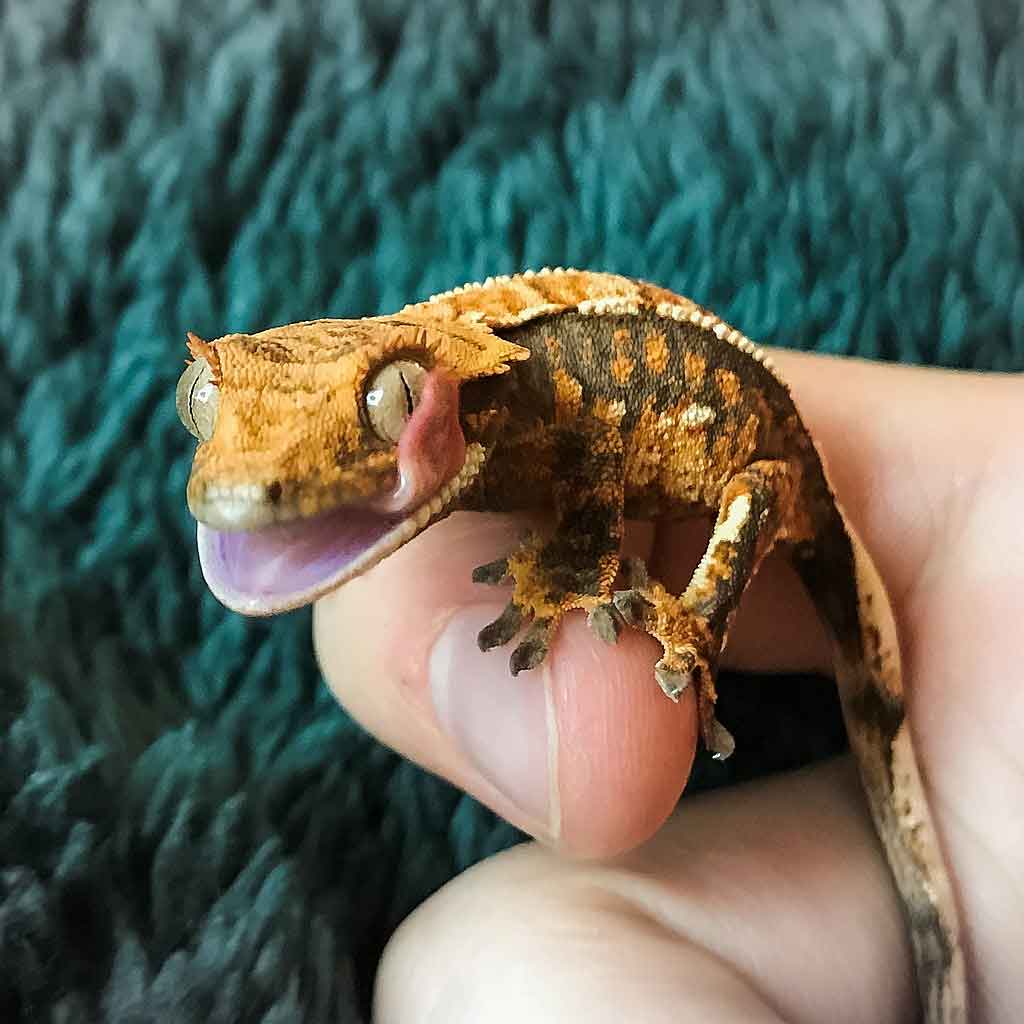
The "Crested Gecko" in captivity is docile and tolerates regular handling – Jazium, CC BY-SA 4.0, via Wikimedia Commons
Content
Origin
The Crested gecko (Correlophus ciliatus) is located at the southern end of Grande Terre, the main island of New Caledonia, and on the island of Pins, what makes it endemic.
Although the natural habitat of the Crested gecko continues to decline due to permanent environmental degradation, unfortunately not subject to any international protection status. It is being considered in protected status by the Convention on International Trade in Endangered Species of Wild Fauna and Flora (CITES).
Description
The Crested gecko usually measures between 15-25 cm length, including between 10-15 cm of tail. Among the most distinctive features of these geckos are the hair-like projections above the eyes., that look a lot like tabs. These projections continue in the form of two rows of spines that run from the eyes to the sides of its wedge-shaped head and continue to the base of its tail..
The Crested gecko no eyelids. In its place, a transparent scale, or glasses, keeps each eye moist, using the tongue to clean up waste.
These geckos have a semi-prehensile tail that they use to climb. Tail can be dropped (via caudal autotomy) to distract predators. The Crested gecko do not regenerate their tail once they have lost it; most adults in the wild lack a tail.
The toes and the tip of the semi-prehensile tail are covered with small hairs called setae. Each mushroom is divided into hundreds of smaller hairs (of about 200 nanometers in diameter) called spatulas. These structures are thought to take advantage of the weak van der Waals force to help the gecko climb most solid surfaces., easier in the flatter and smoothest, like glass or wood. The fingers have small claws that help them climb over surfaces that their fingers can't hold onto..
Habitat
It is arboreal in nature and lives in the treetops of humid forests., hot and dense lowland vegetation.
The Crested gecko perches on tree branches, but also in the holes of the branches that serve as a hiding place. Its period of activity begins at dusk and ends in the early hours of the morning.
Characteristics
The Crested gecko it is a crepuscular and nocturnal gecko and less shy than the species of the genus Rhacodactylus.
She is a skilled climber. For this it has the help of its adhesive sheets and its claws, as well as his tail, which serves as an additional gripping organ and to maintain balance. Like most Geckos, the Crested gecko is able to release the tail in case of danger (autotomy). But, does not form a full regenerate, so there is only a short stump left.
The growth of the Geckos in general it has no comparison with that of many other reptile species.
Its nature is slow growing. While many species of Geckos of the warm regions of the world grow completely in 1 or 2 years maximum, all the Gecko of New Caledonia need more time for their development.
In the case of Crested gecko need 3 years until they have grown at all.
But, in general, each animal must be considered individually.
Even siblings born on the same day and raised the same way can grow up totally different.
There is a wide range of colors on the market, the following types have demonstrated their heritage over time.
No pattern | Exists 1 color Orange, Yellow, White, Negro…
Bicolor | 2 colors with mostly light reverses
Tricolor | The animal is completely stamped or superimposed with 3 colors.
Tiger / Striped | Patterns very rich in contrast, mostly single basic color.
Design harlequin interlaced with dark background tone
Rear stripe mostly white and the rest very dark
Morphs There are many of these on the market, but only the years will show if the inheritance is guaranteed.
The "Crested gecko" in captivity
Terrarium
The terrarium for him Crested gecko must be high enough, as they are inhabitants of trees and are almost never found on the ground. As a key to the size of the terrarium we recommend calculating with the head-torso length of the animal. The size of the terrarium is calculated as follows for non-adult animals:
Terrarium floor space: 4 x 3 times the head-torso length of the animal.
Height of the terrarium: Four times the head-torso length of the animal.
Observe the growth of the animal in the coming months (fast-growing animal/slow-growing animal).
Terrarium decoration
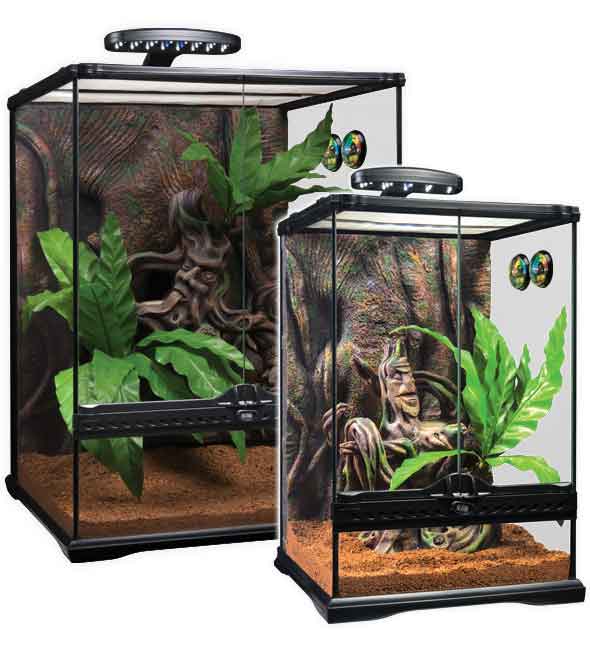
TERRARIUM «GECKO EXOTERER
The Crested gecko it is an excellent climber and needs several cork branches and cork tubes. The bamboo poles also have a decorative aspect and provide the animal with a space to walk, including the coveted heat point under a spotlight. As such, place a branch or root at the right distance from the light source so that the right temperature is created in it. Some vertical climbing possibilities should not be missing.
It also, the terrarium must be well decorated with plants. Artificial plants are a practical option, as they can be easily cleaned of feces.
The substrate suitable is the bark bed (Also called "crust") and the land of the terrarium. Moss cushions are decorative and regulate humidity. Droppings and food scraps should be removed daily.
Temperature and lighting of the terrarium
Although they are twilight and nocturnal, the Crested gecko sometimes sunbathe and will gladly accept a spot of ultraviolet light. It also, only an optimal supply of UV-B light provides enough vitamin D3 for young animals to grow optimally and adults to also be in top shape and display their bright colors.. We recommend the JBL L-U-W Light, which is available in various powers and in the version «Jungle«. This type of lighting provides light, heat and UVA/UVB rays.
As a caregiver, can get an especially good climate (and easy to control) using a heating mat under part of the floor of your terrarium. Although the Crested gecko almost never goes to the ground to warm up there, yes it heats the basic temperature of the high terrarium -which by design is similar to a fireplace- from below. These terrariums usually have too low temperatures in the lower half of the terrarium outside of summer., so the fry have a hot back and a cold belly. The heating mat must be accompanied by a thermostat. In this way, always get the right climate, as the heating mat turns on automatically when needed.
A plus point is the more favorable energy consumption in terms of the environment, since terrariums operated in this way not only require lower power for point lamps, but also, usually, fix themselves with less energy. For one uniform lighting of your terrarium as decoration of your living space, we recommend the LED lighting across the entire terrarium. Light and heating sources are always turned on and off at a daily rate by means of a timer, 14h on, 10h off.
Food
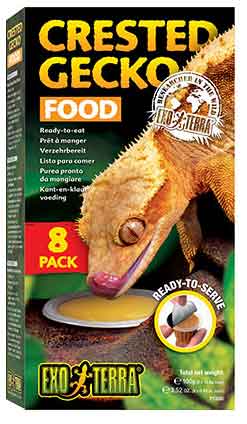
Food-Crested gecko – ExoTerra
The Crested gecko seems very quiet, but he is a good hunter. Feeding insects (crickets, domestic crickets, grasshopper, etc.) they are always sprinkled with mixtures of vitamins and minerals. This is the only way to avoid irreversible deficiencies, which can often lead to serious illness or even death in young animals and pregnant females, for example.
Feeding animals must always be adapted to the size of the Gecko. Feed only insects that will be eaten directly. Otherwise, feeding animals would disperse in the terrarium, they would hide away and get rid of the attached vitamins/minerals – the result is malnutrition and malnutrition despite food supplies. They also like to eat fruit pulp, for example, food for the Crested gecko from Exoterra.
Social behavior and reproduction
The Crested gecko can be held individually or in a group. Males are territorial and incompatible with each other. They can be very demanding with females, so it is not recommended to keep them as a "couple.".
Females put 2 eggs several times a year, that burrow into the moist substrate. After 60-120 days at 21°C to 28°C the young hatch.
For sale "Crested gecko"
The price of a "Crested gecko" at the exotic animal market, bred in captivity, ranges between 60 – 80 EUR.
Videos"Crested gecko"
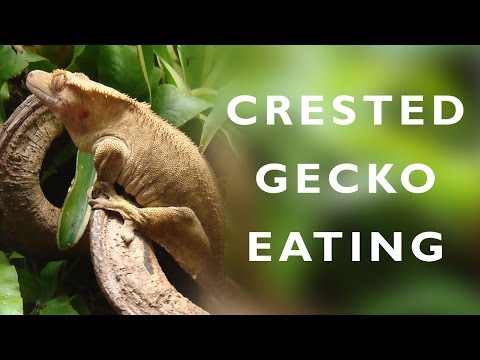
My Correlophus ciliatus and the aquaterrarium bombinas orientalis | dadenReptilera
1. Eyelash gecko (English).
2. Gecko à cils, Gecko à frange (French).
3. Neukaledonischer Kronengecko (German).
4. Crested gecko (Portuguese).
5. Gecko de pestañas (español).
▷ The world of Pets: Dogs, cats, birds, reptiles, amphibians
Aquatic Turtle
Maintenance in captivity
Aquatic Turtle
Content
Keeping “Water Turtles” in the Garden Pond
Especially for the Aquatic Turtle bigger, keep them in a garden pond could be an optimal solution. Especially when you have several adult aquatic turtles, a aquaterrarium it is usually too small or a bigger one just too expensive.
Of course, the pond must be large enough and species-appropriate temperatures are a basic requirement.
According to the regulations for the conservation of nature and animals, the pond must be fenced. This is important because turtles are protected species.
The pond must be at least one meter deep, but there should also be shallow water areas.
Aquaterrarium – turtle farming
The aquaterrarium is a mixture of Aquarius and terrarium. The swamp and water turtles they mainly need a generous aquatic area, as they spend most of their time in the water.
The soil must have a surface area of at least 50 × 120 cm for a adult aquatic turtle.
The more turtles you have, the bigger the aquarium should be. The water must have a depth of at least 40 to 50 cm.. Also need a powerful filter and a heater.
A land part is also needed, because aquatic turtles also like to sunbathe. This should be as easy as possible for the turtles to reach., as buoyancy is scarce out of water.
Prefabricated aquariums usually have a platform with inclined access, which is also recommended.
The terrestrial part of the aquaterrarium should be large enough so that all aquatic turtles can sit there at the same time.
Equipment for the aquatic terrarium
For the aquatic terrarium a filter powerful, a heater, decorations for the aquarium, the floor and also the right lighting.
They can also be included plants in the aquatic terrarium. Since it needs to be cleaned frequently, the selected plant should be easy to care for and insensitive.
Recommended, for example, the plants Sansevieria, as they also increase the quality of the water. Another option is bamboo sticks, that take up little space.
Also keep in mind that an aquarium must have a firm base.. Also recommended is a aquarium furniture as a basis.
The lighting
The illumination is vitally important to keep turtles in a aquaterrarium. Lighting ensures simulation of species-appropriate day and night, and aquatic turtles also need to sunbathe from time to time.
The duration of lighting must be adapted to the annual rhythm.
Lighting illuminates the landing area (sunny area) and the island of asoleo in the aquaterrarium.
UV-B temperature should be 40-45°C in the landing zone so that body function can be maintained.
What food do aquatic turtles really need??
Diet is especially important for a turtle. Otherwise, keeping them is problematic. It is often assumed that the aquatic turtles are purely carnivorous.
But, the Aquatic Turtle they feed mainly on plants, although the meat (fish, insects) is an important part of your diet.
Many of the typical diseases of the Aquatic Turtle are the result of an incorrect diet, so a balanced diet is very important.
The ideal ratio of plant and animal food varies according to the species of aquatic turtle. It is worth doing more detailed research on this..
Feeding with prepared food should only be done to a limited extent.
Recommended food for aquatic turtles
The calcium and vitamin D3 are vital for Aquatic Turtle. The most popular plants for the diet are water lettuce, the duckweed, the Water lilies, the frog, the dandelion and pond liverwort.
Plant foods often lack vitamin D3, but this can be compensated by UV-B radiation.
The recommended animal feeds are the prawns, the snails, the common earthworm and also the brown prawns. To young turtles, in particular, like to hunt.
You can encourage them to eat a species-appropriate diet with May fly larvae, mosquito larvae or water fleas.
What a Water Turtle Shouldn't Eat
An incorrect diet can lead to illness or even death of the turtle. The fruit and vegetable should be avoided altogether, otherwise digestive problems may occur.
Maintenance of Water Turtles – hibernation
Not all aquatic turtles Hibernate, this should be clear to all caregivers.
It depends on the geographical origin of the species of aquatic turtle whether hibernation occurs or not. So, it is very important that the turtle species is correctly identified.
A basic distinction is made between:
Hibernating aquatic turtles
Aquatic turtles with a reduced activity phase and
Aquatic turtles from warm regions that have neither hibernation nor reduced activity phase.
Aquatic turtles with hibernation
Some species of aquatic turtles from temperate latitudes maintain their winter torpor, that must be artificially induced in an aquaterrarium.
Due to heating and lighting settings, the water temperature and also the lighting decrease considerably in November.
The aquatic turtle reduces its metabolism, gradually becomes slow and eventually stops eating.
At a water temperature of about 10ºC, the turtle goes into hibernation. Metabolism is reduced to a minimum and heart and respiratory rate decreases.
The aquatic turtle can now be transferred to the refrigerator or cellar, temperature should be 4-7°C.
during hibernation, the turtle is placed in a plastic bathtub, the water level should reach just above the shell.
The turtle must be able to pull its head out of the water. Hibernation begins after 10-12 weeks. The animals are again exposed to a higher temperature and get used to longer "sunny days".
With rising temperatures, the circulation of aquatic turtles increases again and the amount of food can be increasing.
Aquatic turtles with a reduced activity phase
The reduced activity phase is also typical of some aquatic turtles of temperate latitudes.
Just like during hibernation, lighting and also temperatures in the aquarium are gradually reduced. Temperature should be 15-17°C, the lighting is off.
Turtles become lazy and barely eat. But, it is important to continue feeding the Aquatic Turtle.
Hibernation occurs by gradually increasing the temperature, lighting and adding food.
Aquatic turtles from warm regions
The Aquatic Turtle of warm regions do not hibernate or have a reduced activity phase.
Only water temperatures and also lighting should be adapted to the respective annual rhythm of the aquatic turtles.
What should be observed during the hibernation of aquatic turtles in general?
Next, we will explain what should be observed during the hibernation of aquatic turtles.
Before hibernation:
Comprehensive examination for infections and parasites.
Treatment against worms
deep defecation
Weigh the turtle
Before hibernation, the turtle must be healthy (clean eyes and nose).
during hibernation
Keep the temperature constant
Aquatic turtles should not be disturbed
Regularly check turtles for diseases and abnormalities
end hibernation immediately in the following cases:
The turtle has awakened, recognizable diseases on the shell or skin.
Mold in water, other diseases
after hibernation:
Weigh the turtle. The difference should be around the 10%.
Examine the turtle: Health, behavioral anomalies
Check temperature and lighting
Initially, a low water level is recommended to prevent the turtle from drowning
How much does a Water Turtle really cost?
The aquatic turtles they are not cheap pets. The primary purchase of a water turtle costs - depending on the species- between 30 and 120 EUR.
The most important item is the cost of the aquaterrarium and the associated team. Expenses can quickly add up to 1.000 EUR.
It is recommended to choose a larger tank even for a still very small aquatic turtle, since in any case it would have to be expanded as it grows.
It also, are the running costs of the vet and, possibly, turtle food. Here you should calculate with 20-40 euros per month.
Legal regulations for the possession of aquatic turtles
In the case of some species of turtles, EU species protection regulation must be respected, especially in the case of turtles.
These may include, the turtles of the Appendix A of the Washington Convention on International Trade in Endangered Species of Wild Fauna and Flora must be registered and there is an obligation to label them.
These may include, the Red-eared slider and all subspecies of ornamental turtles are included in the Appendix B of the Convention on International Trade in Endangered Species of Wild Fauna and Flora.
So, these species are subject to mandatory registration and proof of origin is required.
Frequently asked questions
How much does a Water Turtle cost??
Among 30 and 120 EUR.
How many years does a water turtle live?
Until 60 years.
How do you know the age of a turtle?
The most common method to calculate the age of a turtle is to observe the lines that form on its shell.
How often to feed a water turtle?
Adult aquatic turtles should be fed animal food about twice a week, and the young every two days.
What can an aquatic turtle eat?
Most species of aquatic turtles are mainly herbivorous, but the meat (insects, fish, etc.) it is also an important part of their diet.
Can aquatic turtles eat on land?
Aquatic turtles eat in the water. Most species also cannot swallow on land.
What to keep in mind with aquatic turtles?
They are kept to 28 degrees of water temperature and at least 28 air temperature degrees. In the part of the ground that is directly under the UV lamp it must be at least 38 degrees and a maximum of 45 degrees. The tank should be covered with glass plates, only the area above the UV lamp is free.
What aquarium do I need for aquatic turtles?
An aquaterrarium of 120 x 50 centimeters is enough for an adult animal.
List of "Water Turtles" for maintenance in captivity
No entries found.
▷ The world of Pets: Dogs, cats, birds, reptiles, amphibians
Rio Grande cooter
- Pseudemys gorzugi
Origin: United States, Mexico
Gender: Pseudemys
Life expectancy: 20 - 30 years
Length: Until 38 cm.
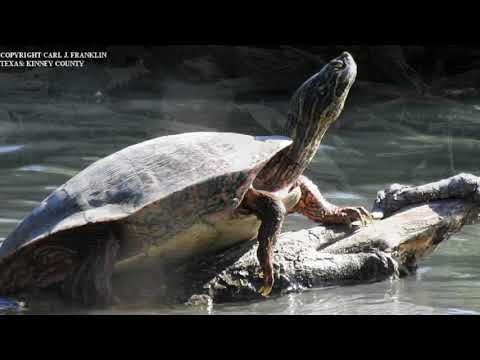
The Rio Grande cooter it is a medium to large sized aquatic turtle with pronounced sexual dimorphism in body size and other characteristics.
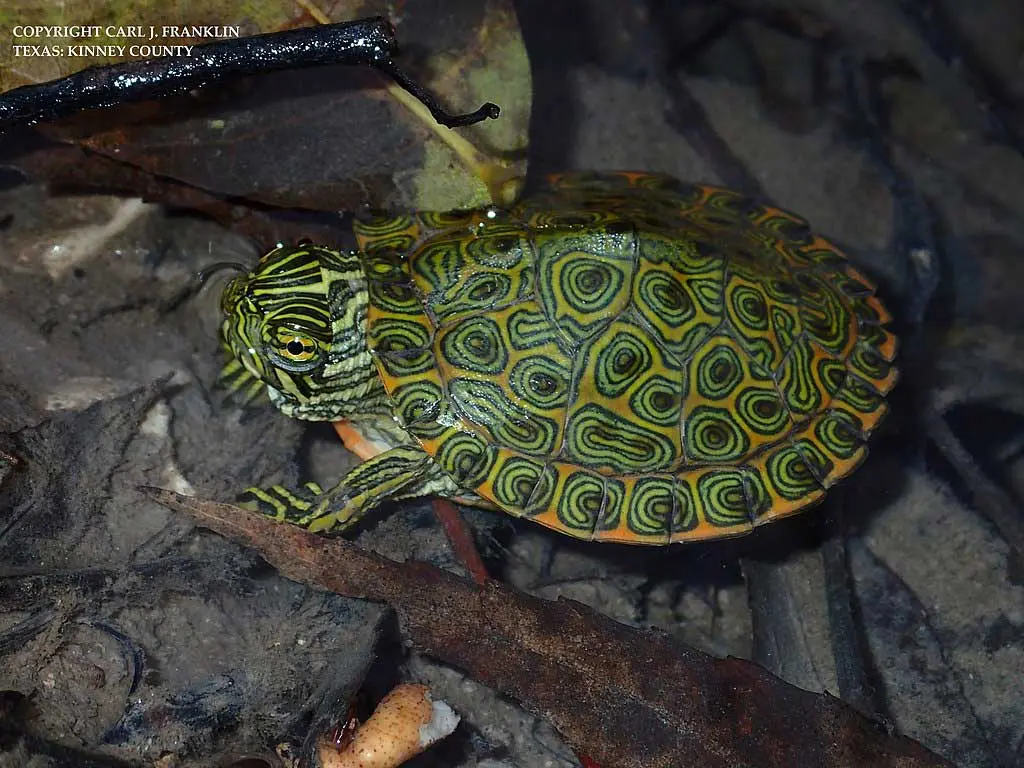
A baby “Rio Grande Turtle” from Kinney County, Texas – Texas Turtles, CC BY-SA 4.0, via Wikimedia Commons
Content
Origin / Distribution
The Rio Grande cooter (Pseudemys gorzugi), It lives in Mexico and the United States. It is distributed along the Rio Grande (= Rio Grande do Norte) from the Big Bend region to the Gulf of Mexico; the Pecos River from southeastern New Mexico to its confluence with the Rio Grande, with an apparent gap from just south of the New Mexico border to Independence Creek in Terrell County, Texas; and in the tributary streams of these two rivers in northeastern Mexico (Coahuila, Nuevo León, Tamaulipas and possibly Chihuahua) and in the southwestern United States (New Mexico and Texas).
Characteristics / Appearance
The Rio Grande cooter it is a medium to large sized aquatic turtle with pronounced sexual dimorphism in body size and other characteristics. The carapace of adults is elongated and oval., more convex in males than in females, and has its tallest point near the center and widest just behind the center. The posterior marginals are toothed and the pleurals are shallow.. Males have significantly longer and thicker tails and longer front legs than females..
Habitat
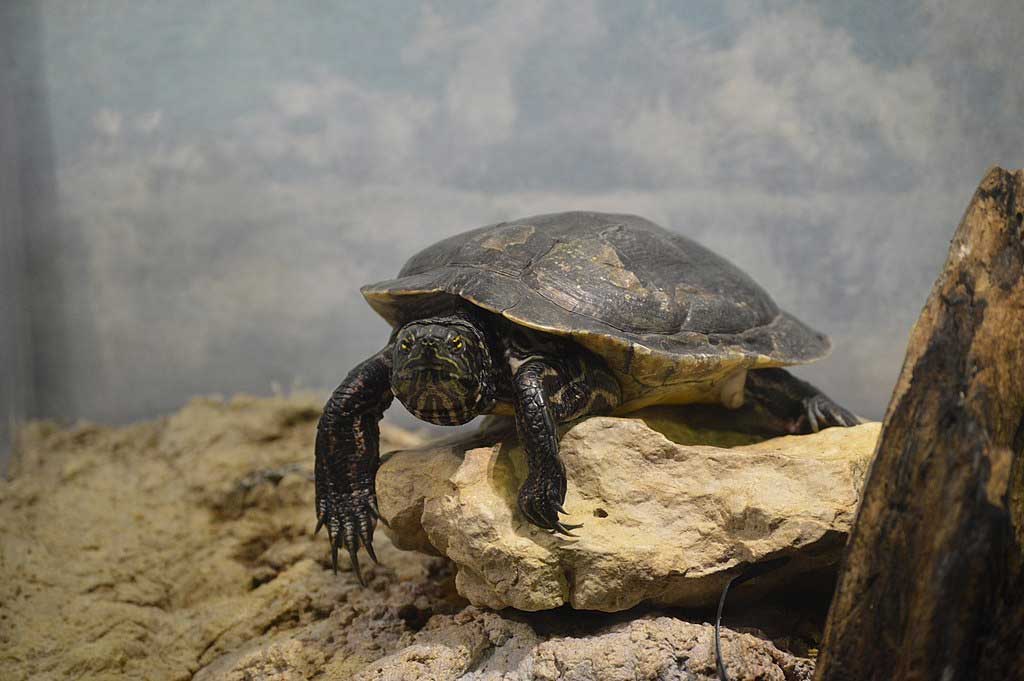
Rio Grande Turtle at the Fort Worth Zoo in Fort Worth, TX, EE.UU. – Sesamehoneytart, CC BY-SA 4.0, via Wikimedia Commons
The Rio Grande cooter found in a variety of freshwater habitats. It has a preference for larger and deeper pools in the streams it occupies., normally, but not always, where are aquatic plants. Substrates in their aquatic habitat vary from muddy or sandy to rocky, including algae covered limestone bedrock, and water quality ranges from clear to cloudy.
The species is found at elevations from near sea level in the lower Rio Grande to about 1100 m in southeastern New Mexico
Behavior
The eating habits of Rio Grande cooter have not been well studied, but the species is apparently omnivorous and feeds opportunistically. As with other Pseudemys, adults are probably more herbivorous than young. Specimens captured in New Mexico have been observed feeding on algae that grow on submerged boulders in the Negro River., and often defecated plant matter, especially green algae.
Threats to the species
State of conservation ⓘ
Near Threatened ⓘ(UICN)ⓘ
The International Union for Conservation of Nature (UICN) has classified the species Pseudemys gorzugi as Near Threatened due to its limited distribution (perhaps less than 2.000 km2), the decline in the quality and quantity of their aquatic habitat and the collection of individuals from wild populations for the pet trade. These multiple threats and other, combined with low genetic diversity and low recruitment of the species, endanger the persistence of the species in many places. In this sense, the Rio Grande cooter is similar to others freshwater turtles from the southwestern United States, facing similar threats.
Predation by other animals appears to affect all life stages of the Rio Grande cooter, from eggs to adults, Although direct evidence is lacking.
The "Rio Grande cooter" in captivity
Aquaterrarium
Smaller individuals can be kept in aquariums or indoor tanks if they are provided with an ultraviolet light source., adults are likely to do better if kept in large open-air ponds or livestock water tanks, equipped with a water circulation and filtration system and with platforms for sunbathing.
The young eat lettuce and other green leafy vegetables., in addition to commercial food for turtles and fish, raw meat and chicken. The pups require ample sunlight or constant exposure to a normal incandescent light bulb to maintain body temperature and induce the formation of vitamin D necessary for proper calcium metabolism.
The young feed on mosquitoes (Gambusia sp.), River Crabs, lettuce, spinach and aquatic plants collected in the wild, and juveniles are fed commercial food such as dry or canned dog food, trout and catfish food or cat food.
Eggs laid in water by captive females can be incubated with excellent results., provided they recover shortly after laying. Depending on the temperature, incubation in captivity can last between 70 and 110 days. You can get a hatching success higher than 90% incubating the eggs in moist newspaper, vermiculite or clean sand.
Buy one "Rio Grande cooter"
The price of a "Rio Grande cooter" at the exotic animal market, ranges between 50 – 80 EUR.
1. Rio Grande cooter, Western River Cooter (English).
2. Pseudémyde du Rio Grande (French).
3. Rio-Grande-Schmuckschildkröte (German).
4. Cooter do Rio Grande (Portuguese).
5. "Tortuga del Río Grande", Tortuga de Oreja Amarilla, Jicotéa del Río Bravo, Terrapene del Río Grande (español).
▷ The world of Pets: Dogs, cats, birds, reptiles, amphibians
Senegal chameleon
- Chamaeleo senegalensis
Origin: Senegal, Mali, Nigeria, Togo, Cameroon and Gambia
Gender: Chamaeleo
Life expectancy: 4 - 6 years
Length: Head - trunk: 14 cm.
The Senegal chameleon comes from West Africa and requires special care, as it is quite fragile.
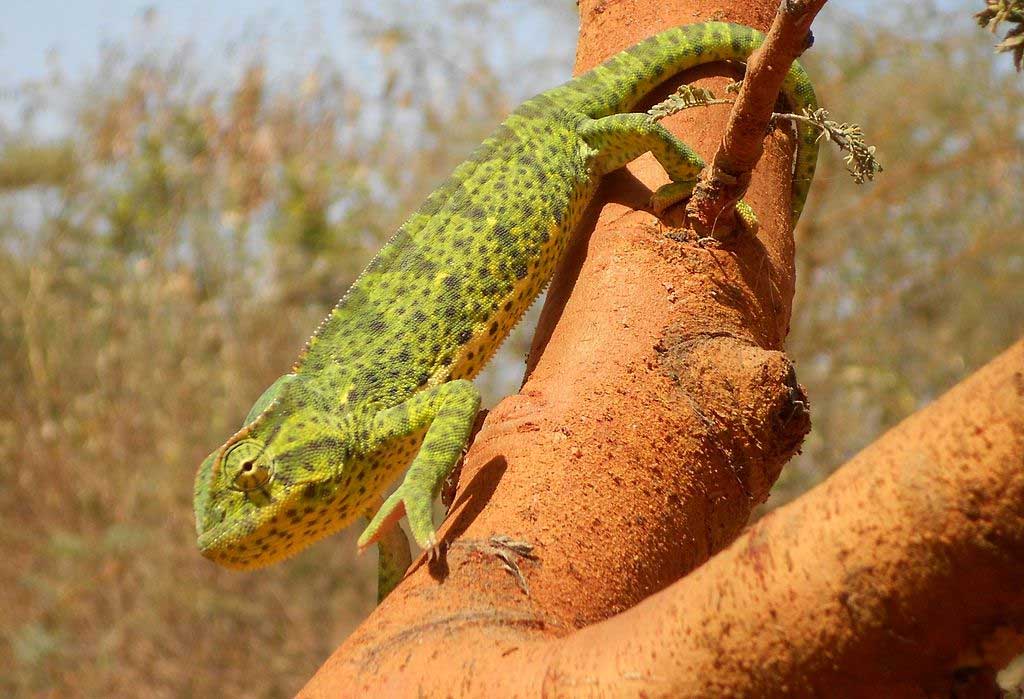
Chamaeleo senegalensis on Acacia seyal at the Beer-Sheba project near Sandiara, Senegal – NoahElhardt, CC BY-SA 3.0, via Wikimedia Commons
Content
Origin / Distribution
The Senegal chameleon (Chamaeleo senegalensis) lives in large areas of West Africa, as Togo, Cameroon and Gambia.
It is also said to be present in Mauritania.
Characteristics / Appearance
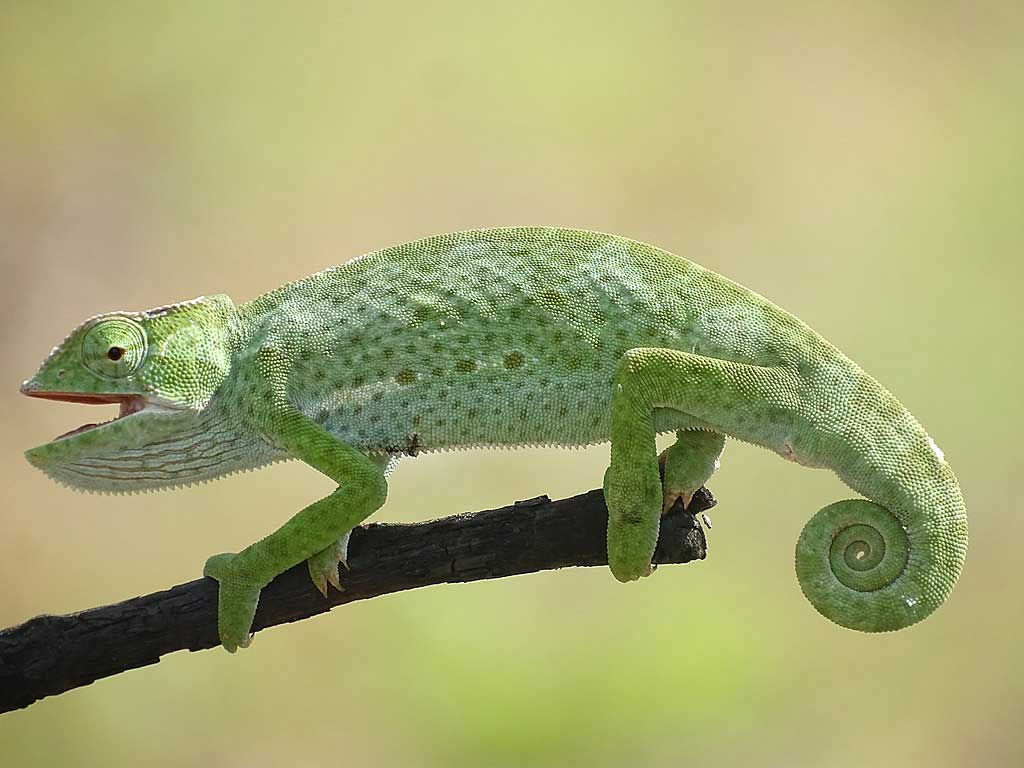
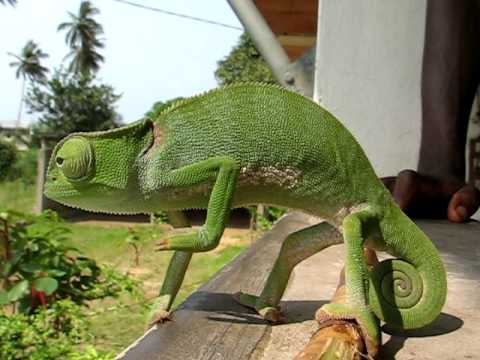
The Senegal chameleon shows no conspicuous special features.
hull is low, but the head is clearly separated from the trunk.
The scales on the helmet are larger than those on the body..
Body scales are homogeneous. A light side stripe runs from the chin to the anus. in addition, a slight longitudinal band runs from the armpit to the hips, but without reaching them. Males can reach a total length of 28 cm., of which the tail occupies about half.
Coloration consists of different shades of green.
Males sometimes show a more gray-brown color.
Habitat
Its habitats are savannah and arid forests., but it is also common to find them in inhabited centers.
Behavior
It is a kind of diurnal habits. It feeds on insects and other arthropods..
Threats to the species
Due to its wide range and unknown population, the Senegal chameleon is classified as Least concern on the IUCN Red list. But, may be threatened by the pet trade
Mira, but don't touch. This is exactly how you should treat your Senegal chameleon. Once your chameleon has settled into its habitat, you should have as little direct interaction with him as possible.
On the other hand, you can tell how your chameleon is feeling based on its color change. If the chameleon is depressed, you will notice that its color is not so bright and vibrant. And if you're really upset, will turn brown and black. But when you see them bright and colorful, you'll know they're alright.
The Senegal chameleon is an amazing creature with some of nature's most unique abilities. And they are docile pets that are best left under observation. But that doesn't mean they're easy to care for..
Like all chameleons, Senegalese require a lot of time, energy and resources. You have to be very prepared to assume the commitment of having and raising one. As wonderful as they are, You shouldn't jump headlong into chameleon parenting without a bit of experience..
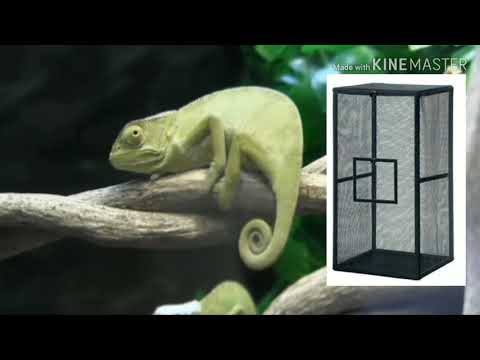
The terrarium
When you build your chameleon's habitat, you'll want to make sure he has plenty of room to move around and plenty of tree branches to climb on. We recommend that, in fact, build your habitat more vertically than horizontally.
Lighting and heating
the body of your Senegal chameleon is attuned to a very specific environment. And if you are going to raise a healthy lizard, you will have to do your best to reproduce those conditions. Your enclosure should have heat lamps strategically placed to allow for three different temperature zones:
30º: Sunbathing
24º: For the day
22º: For the night
You will also need UV lamps to help your chameleon stay healthy.. These lights are used to help regulate your metabolism, the appetite, and synthesize vitamin D. Vitamin D is exceptionally important for chameleons, as it helps strengthen your bones and joints.
If possible, you should spend time exposing your chameleon to direct sunlight for several hours each day. But, this is hardly possible. Thus, We recommend getting UV lights with timers that activate on a cycle of 12 power on hours and 12 off hours.
Hydration
Chameleons are native to extremely humid climates.. And without that same humidity and level of hydration inside your house, they won't last long. But it is not as simple as putting a bowl of water in its enclosure..
They drink by licking dew and water droplets from leaves, so you will have to spray them several times a day. This can be done by manual nebulization (that is to say, with a spray bottle) or by automatic means. A drip system or automatic misting system is a good investment to ensure the humidity in your chameleon's enclosure stays high.
The Senegal chameleon lives on a diet strictly based on live insects. This means you will need to invest in an insect habitat to meet dietary requirements., unless you like to go to the pet or bait store every day.
It is also worth mentioning that these insects must be fed by the intestine.. This means that the insects must be fed special food that, when ingested, add more nutrition to your chameleon's diet. There is also a special calcium powder that you can put on the bugs to help prevent bone disorders in your lizard..
When you feed your chameleon, it is important not to put too many insects at once. Your lizard will not overfeed, which means the leftovers will be left around the cage. Dead insects will begin to decompose, making your chameleon more susceptible to disease. Live insects can also clump together and attack your chameleon. In any case, not good.
Health and conditions
The Senegal chameleon well cared for it can be quite a strong creature. But, you may have a rocky start even when you first get it. These chameleons are usually caught in the wild. The shipping and transportation process alone can wreak havoc on their delicate constitutions.. Not only that, but their wild diet makes them more prone to parasitic infestation.
Your chameleon may already have a stress-related illness when you bring him home. The best way to care for him back to health is to make sure he has a suitable environment and give him his space.. Really, they don't want to be manipulated. That can complicate things even more.
One of the diseases caused by the stress of transport is known as dystocia. This occurs when egg-carrying females have depressed calcium levels or are too stressed and dehydrated to expel the eggs they are carrying.. Without the intervention of a veterinarian, it's a death note for them.
Another major problem your chameleon can suffer from is dehydration.. Although it is common for your new lizard to be dehydrated upon arrival, dehydration can also occur in long-term captives. That is why it is so important to put an automatic drip or mist system in your enclosure and maintain humidity.
Male vs female
Both males and females of the Senegal chameleon they are very similar in nature. Its color ranges from olive green to light brown., with more intense color bursts depending on the temperature, humidity and mood. Females tend to be slightly larger and more aggressive in this species of chameleon..
Buy one "Senegal chameleon"
when you buy a Senegal chameleon, you should first try to find out if it was bred in captivity or not. Wild-caught chameleons are not as robust as those bred in captivity, and they may have diseases or disorders when you buy them. It is also not known exactly what they have eaten in the wild. This means they are more than likely to have harmful intestinal bacteria or parasites.. If you acquire a wild-caught chameleon, you'll need to take him to the vet for very regular fecal tests to ensure your lizard's gut health.
It also, you should be careful if you get a breeding pair. The females of Senegal chameleon can put up 70 eggs per year. at that rate, soon you will be invaded by chameleons. And many of them may not survive just because of the stress.
The actual base cost of a Senegal chameleon is of some 40 EUR. With that you already have the lizard. But we would be lying if we didn't tell you that owning a chameleon can be very expensive.. It's everything else that goes into raising a chameleon properly that makes them such an impactful addition to your portfolio..
Chameleons need very specific conditions to live and stay healthy. This includes hydration and moisture, temperature and even ultraviolet light. To meet these conditions, you will have to buy a combination of heat lamps, UV lamps, nebulizers and other control instruments. And you will have to have live food on hand every day.
Videos "Senegal chameleon"
Senegal chameleon (Chamaeleo senegalensis)-General information and care guide







.jpg)


.jpg)


