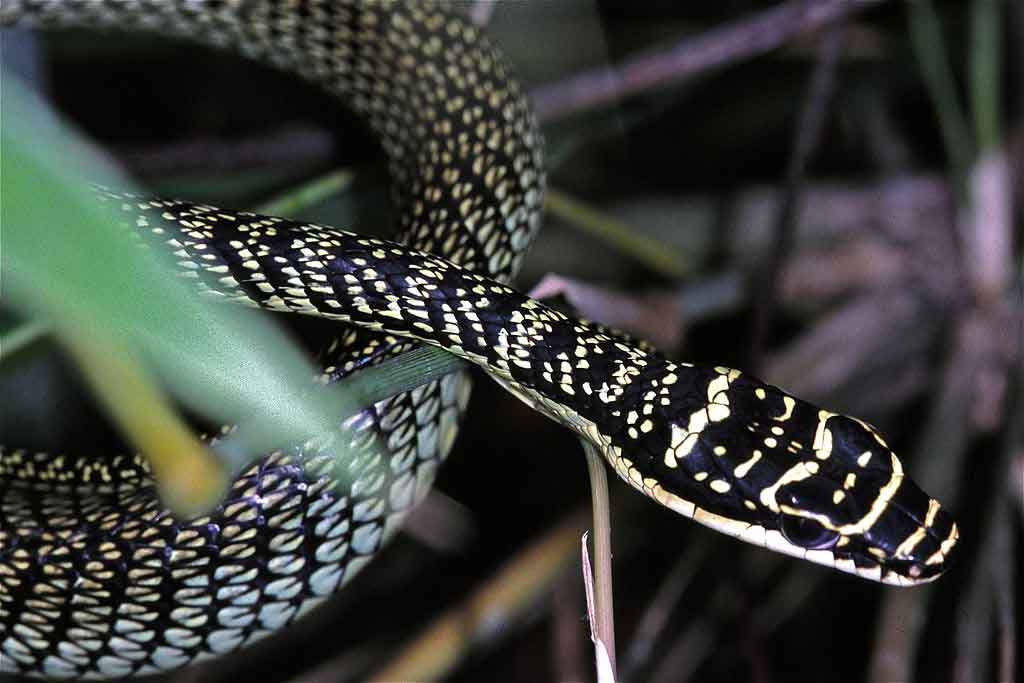
The Golden tree snake (Chrysopelea ornata) It is the one with the largest area of distribution.. It is located in the Philippines, Nepal, Sri Lanka, Myanmar, Thailand, Viet Nam, Bangladesh and the Indian states of Gujarat, Kerala, Bihar, West Bengal, Odisha and Madhya Pradesh.
Subspecies
The following are recognized as valid:
Chrysopelea ornata ornata (Shaw, 1802)
Chrysopelea ornata ornatissima Werner, 1925
Chrysopelea ornata sinhaleya Deraniyalaga, 1945
Characteristics / Appearance
There are three subspecies of the Golden tree snake. The Chrysopelea ornata has two main forms of color, determined largely by geographic location. In Sri Lanka and in the south of its range in India, the snake is mainly greenish-yellow or pale green. The second color variety, what happens in southeast asia, lacks reddish vertebral spots and has less prominent black crossbars. The head of this snake is quite flat, with a thin neck and an atypical blunt nose, and big eyes that are sometimes red depending on the angle. They can measure up to 140 cm.. The snake has rear fangs, which means that once the snake has grabbed its prey it will not let go and it will not be able to escape.
Habitat
The Golden tree snake is accustomed by nature to tree life (on the floor) in tropical jungles, dry deciduous forests, plantations, agricultural areas and rural gardens. Like her relative Chrysopelea paradisi, this snake is able to glide through the air. The snake can climb to considerable heights in trees or even on the walls of buildings.. They are very often seen climbing coconut trees or vertical rock walls in curves, using their scales to cling to surfaces.
Behavior
This Golden tree snake it is diurnal and, despite being slightly poisonous (not harmful to human unless allergic), it has been observed to kill some of its prey by crushing it and breaking its neck. The snake is said to be shy and quick. Usually, the snake is impossible to catch when humans come into contact with it in apartments and houses. The snake is very common and it is solitary, but can live close to its own kind without being attacked. like carnivore, the Golden tree snake feeds on small geckos, lizards, Tokay gecko (Gekko gecko), rodents, bird eggs, insects, other snakes occasionally and bats.
The Golden tree snake it is one of the few “flying snakes”. These snakes can't really fly, but they slide to some extent flattening their body, forming a wide cavity with its belly, and spinning in the air as they jump from high branches. It is believed that this behavior helps them to move through the forest, catch prey and as a defense mechanism against predators. They can go up to 100 m in a single jump if they start from a tall enough tree.
Reproduction
Little is known about the breeding habits of the Golden tree snake because no one seems to get him to mate while he's in captivity. Mating season is in June and the snake chooses holes and crevices in tall trees to perch and lay eggs.. Being oviparous, places of 6 to 12 elongated eggs in May-June, that hatch in June. The pups measure between 11 and 15 cm long.
Type of poison and consequences of the bite
It is mainly a less strong poison, which however can cause unpleasant consequences, but it is not fatal to humans.
Local pain may occur, swelling and edema at the site of the bite. It also, nausea may appear, vomiting and a general feeling of being unwell.
But, a healthy adult person is not likely to experience major or long-term side effects.
But, there may be a risk of death in allergic people; such a state of shock would have to be treated immediately.
As the venomous teeth of this species are situated far back in the mouth, you would have to go deep into the animal's mouth (for example, with one finger) to be bitten.
In some cases, "massages" the venom into the body of its prey as a digestive aid.
Threats to the species
The Golden tree snake Is a predator, so their presence helps regulate the number of lower level species, which will prevent populations from growing exponentially.
in asian countries, the Golden tree snake is captured, it is cooked and sold as food, and is also captured and sold in the pet trade. But the main impact on this species is deforestation and urbanization, where tree removal impacts their ability to hunt and capture prey.
The "Golden tree snake" in captivity
The terrarium
The species must be able to retreat and, according to some owners, it is almost always hidden. But, the terrarium should not be too large for control reasons. It can be a plastic terrarium 80 x 60 x 80 cm..
Important: elevated hiding places, many plants and fine climbing branches, high and slightly moist substrate, for example, coconut fiber or other loose and absorbent substrate, elevated water bowl, daylight, possibly even spotlights for a few hours. During the day 26-29 °C, At night 22-24 °C, humidity 70-80 %, spray at least every other day.
Food
Lizards, rodents, young birds. Females can relatively easily get used to mice, mice with too much hair can cause digestive failure. The males tend to reject them., and mouse pup weathering trials are still pending.
Breeding and reproduction
Can be kept in pairs or groups. It is useful the rainy season in summer, at least two broods a year with 6-20 possible eggs, that hatch after 70-90 days to 25-30 °C. The young probably feed on gecko tails., insect trials are pending. Attempts to force-feed the pups, they usually fail. It is best to raise your own feeding geckos, for example with juvenile geckos (Lepidodactylus lugubris).
Buy one "Golden tree snake"
The price of a "Golden tree snake" at the exotic animal market, ranges between 200 – 400 EUR.
Videos "Golden tree snake"
Golden tree snake, Chrysopelea ornata, feeding on a gecko in Thailand
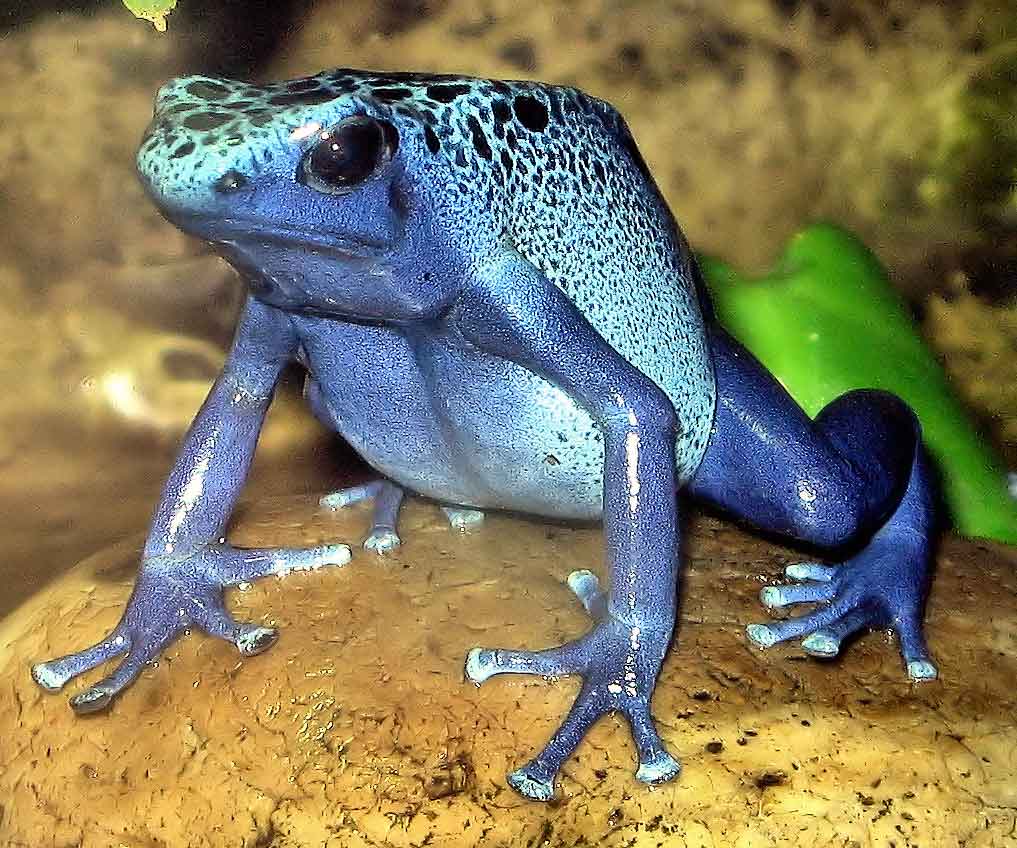
The "tree climbing frog" or Poison dart frog (Dendrobatidae) lives mainly in the rainforests of South and Central America. Due to its colorful, their diurnal lifestyle and their interesting reproductive strategy -the parents take care of their offspring-, many species are very popular and are regularly bred in local forms of various colors.
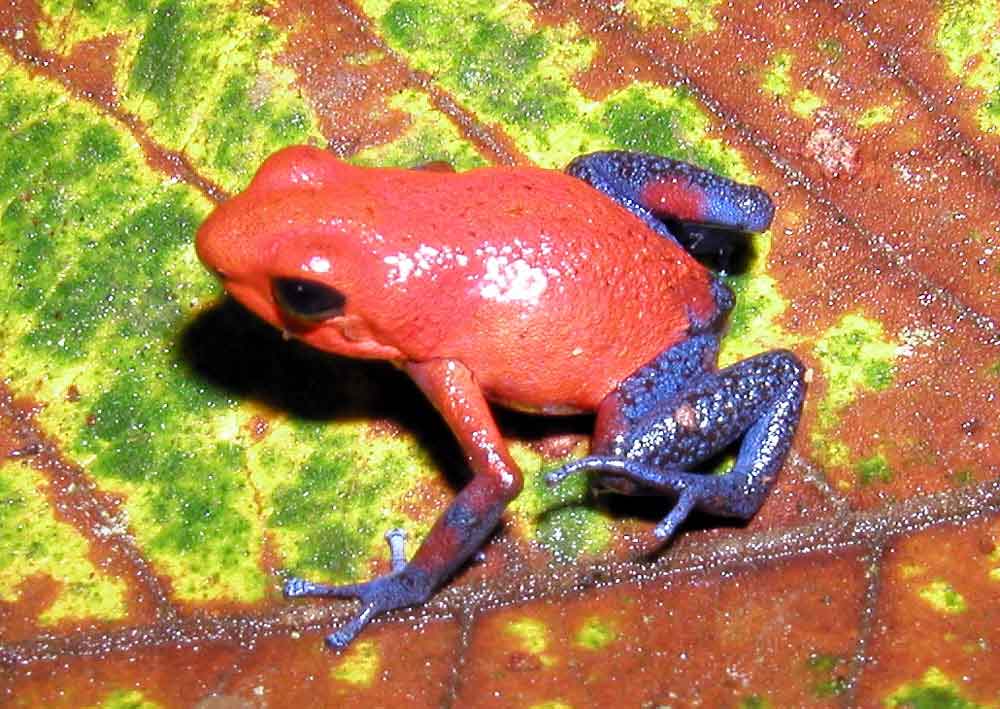
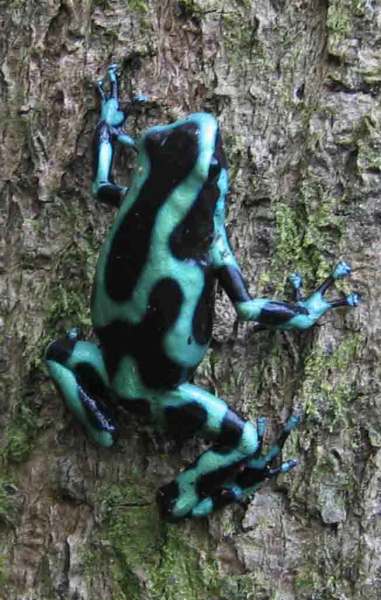
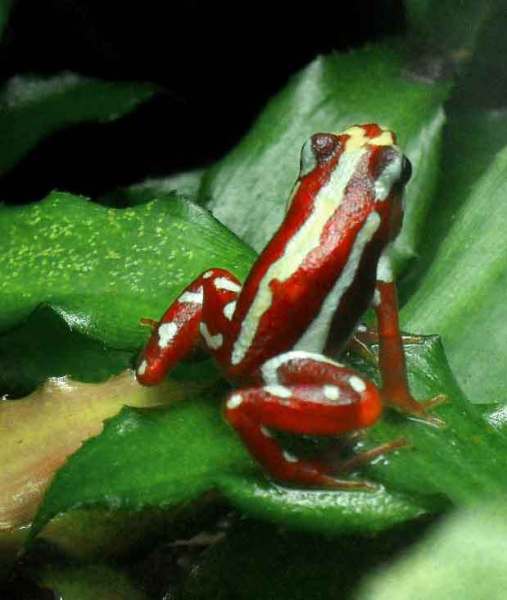
Some popular species are, for example, the Dyeing poison dart frog (Dendrobates tinctorius), the Green and black poison dart frog (Dendrobates auratus), the Yellow-banded poison dart frog (Dendrobates leucomelas), as well as the Anthony's poison arrow frog (Epipedobates anthonyi), the terrible Golden poison frog (Phyllobates terribilis) and Strawberry poison-dart frog (Oophaga pumilio).
Dendrobates
tinctorius
Dendrobates
auratus
Dendrobates
leucomelas
Epipedobates
anthonyi
Phyllobates
awesome
Oophaga
pumilio
Many other species of different genera can be found as offspring in trade.
Sex differences
It is not easy to distinguish the sexes from the Poison dart frog. Females tend to be larger, stronger build and with sticky discs on fingers smaller than males. Males who are ready to mate make a trill.
Behavior
The Poison dart frog can raise itself, as a couple or in a group. The association of several species is usually not problematic in sufficiently large terrariums. Males occupy small territories.
Terrarium
Dendrobates azureus at Bristol Zoo, England – Arpingstone, Public domain, via Wikimedia Commons
A terrarium for climbing frogs must have some special features: The so-called "terrariums for the species Dendrobatidae» have fine mesh ventilation surfaces (Drosophila hermetic), as well as a gasket between the sliding panes to prevent very small food animals from escaping, like fruit flies, isopods and springtails. The sloping front windows and generously dimensioned ventilation zones prevent the windows from fogging up in high humidity and, together with a drain integrated in the lower glass, help to avoid dangerous flooding.
The terrarium must measure at least 60 x 40 x 50 cm. (length x widht x hight) for a group of maximum 6 animals of the smallest species (until 4 body length cm), for the largest species at least 80 x 40 x 60 cm. (length x widht x hight) for a maximum of 6 specimens.
Fluorescent tubes with a daily light duration of 10 to 12 hours are suitable for lighting. A UV component can have a positive effect on animal welfare. Because the areas of origin are very different, it is important to create the right temperature conditions for each species; for example, highland species do not tolerate higher temperatures. The optimum for the mentioned species is a soil temperature between 24 and 26 °C, with local heating up to 28 °C. At night, the temperature should be reduced to about 23 °C. At night, the temperature should drop to about 23 °C. For the basic temperature, weak heating mats can be used, installed outside the terrarium. They can be used to heat the floor (at most one third of the soil surface!) or the walls. With the help of a thermocontroller, the heating mat can be specifically controlled to prevent overheating.
The humidity should be at least 80 % and sometimes it can reach almost 100 %. This can be achieved by frequently spraying the terrarium with warm water or using a sprinkler system.. Waterfalls or artificial streams, whose moving water provides high humidity, are also suitable. Precise thermometers and hygrometers are needed to measure temperature and humidity.
For the Poison dart frog, 2, preferably 3 sides of the terrarium should be covered with cork, coconut fiber boards or similar. climbing facilities, like the roots, the lianas, the branches, etc., have proven useful. Curved cork bark or halved coconut shells are popular hiding places.
A shallow bowl of water (or a watercourse) also part of the basic equipment. The soil in the terrarium is suitable as a substrate, coco substrate or moss, which should always be kept slightly moist. A drainage layer of expanded clay at the bottom prevents waterlogging. The natural plantation with ferns, perched plants (for example, bromeliads), as well as climbing and creeping plants (for example, hiedra or ficus climbers) creates additional climbing and retreat possibilities and ensures high and uniform humidity.
Nutrition
The Poison dart frog feeds on the smallest insects (live), to which sufficient quantities must be given each day. In addition to small insects or micro-hunters, fruit flies are especially suitable (Drosophila), bean beetles, springtails, etc. Regular administration of a mineral preparation ensures healthy bone growth.
Care
Food scraps and droppings should be removed daily. The water bowls should also be cleaned daily and filled with fresh water.
Animal health must be monitored daily. The most common health problems in tree frogs are softening of the bones, emaciation, balance disorders and skin disorders. The Poison dart frog is especially sensitive to stressors. In case of anomalies, an amphibian vet should be consulted.
Acclimatization and handling
Amphibians are animals of pure observation and should NOT be petted. In the first days in his new home, animals need adequate rest to get used to their new environment. If required, animals must not be caught by hand, but with the help of plastic boxes or similar.
The smallest species spawn mainly on the leaves of plants and trees.. The largest species (Dendrobates tinctorius and Dendrobates auratus) they also spawn in caves. Depending on the species, a spawn comprises between two and 35 eggs. Spawning is preceded by a courtship ritual that can last for hours. The female approaches the male and caresses his back with her front legs. Both then look for a suitable place to spawn. Spawning takes place, for example, on bromeliad leaves above the leaf axils or in the leaf axil itself. The insemination of the eggs by the male occurs externally immediately after their release. The clutches are usually guarded by the male. Some species regularly water their clutches by emptying the contents of their bladder over the eggs..
The poison frogs they are daytime, as their bright colors offer them protection during the day. So that your tadpoles are not at the mercy of predators in rivers and ponds, the tadpoles that hatch after 10 to 16 days of embryonic development are transferred on the back of the male to the smallest accumulations of water in the plants (phytotelmata), like the armpits of leaves filled with water. In some species (for example, the Ranitomeya imitator) this transfer is done individually, in others, eg Epipedobates tricolor, can involve the entire laying at the same time. They later carry their young to the ground in the same way.
Females of some species feed unfertilized proximity eggs to tadpoles until metamorphosis, in others the larvae feed on algae or insects that fall in the axils of the leaves. The development from tadpole to juvenile frog lasts between six and 14 weeks.
Special features
All climbing frogs are subject to species protection legislation and require confirmation of origin. The holder must also comply with the registration obligation (exception: Dendrobates auratus and Dendrobates azureus).
The climbing frogs are highly susceptible to deadly infection by the dangerous chytrid fungus. Before handling the terrarium, all objects must be disinfected and thin rubber gloves must be worn. Newly acquired animals must be kept in strict quarantine for several months.
Although the name of poison frogs is inaccurate, since only a few species can be dangerous to humans, all tree climbing frogs have skin secretions that can cause irritation when they come in contact with human skin. This is another reason why it is advisable to capture the animals only with the help of a small container..
▷ The world of Pets: Dogs, cats, birds, reptiles, amphibians
Golden gecko
- Gekko badenii
Origin: Viet Nam
Gender: Gekko
Life expectancy: 8 - 10 years
Length: 25 cm.
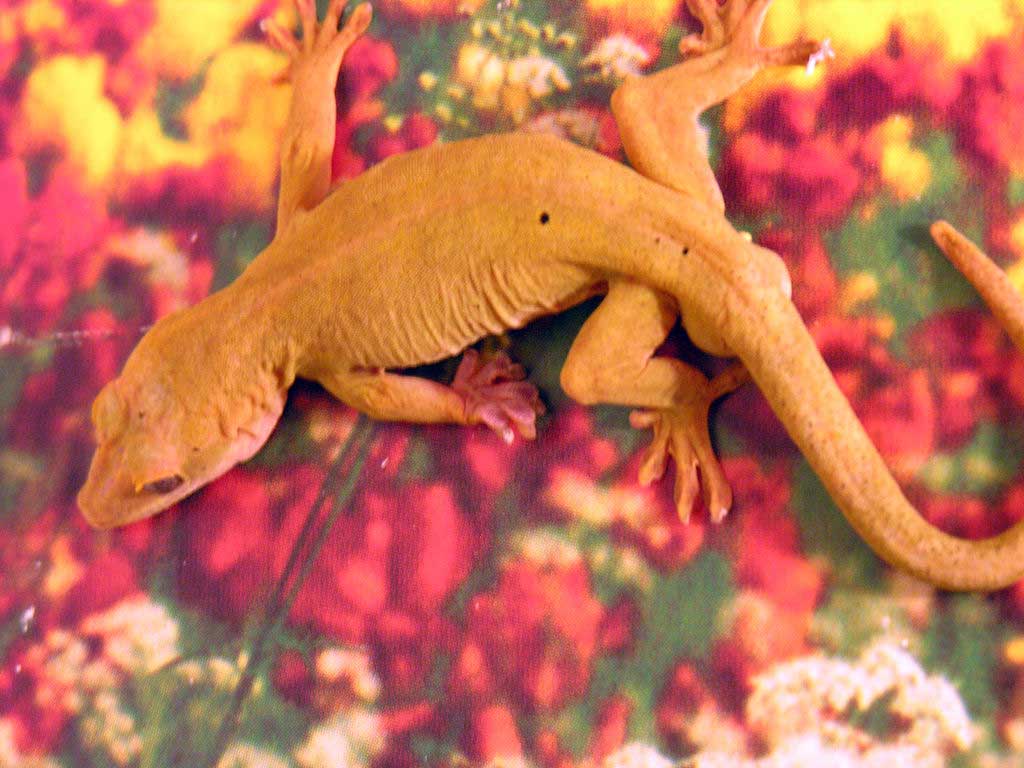
The Golden gecko golden yellow in color is a splendid host of the terrarium, since they are very easy to maintain and are also completely docile
The exact data of the distribution are not known. The species is known to occur in sandstone formations in transition zones to virgin forest.
Appearance of the "Golden Gecko"
The Golden gecko can measure up to 25 cm in size with its coloration on the back, what gives it its name, light yellow to light orange, that takes on a golden hue with rising temperatures. This is only interrupted with 4-8 light horizontal stripes from neck to tail.
Limbs are light pink to white, the ventral part is also whitish. Females remain smaller and have a more subtle light brown dorsal coloration.. They also seem to be more shy than males., that despite their nocturnal activity they can also be seen during the day.
Kept in a small group of one male and several females, the Golden gecko they constitute an attractive and interesting option for their maintenance in a terrarium.
The "Golden Gecko" in captivity
Due to the relatively small size of the Golden gecko, relatively little space is needed in the terrarium, although it is important to note that animals should be kept in a small group. The furniture and the climate must be adapted to the conditions of the tropical/subtropical zone of origin..
Minimum size of the terrarium
As the Golden gecko it is a good climber with its adhesive leaflets and stays in nature on sandstone formations and trees, height is more decisive than floor space. For a harem group of one male with two females, the minimum size of the terrarium is 80 x 80 x 120 cm. (length x widht x hight).
Terrarium furniture
The Golden gecko lives in transition regions from montane forests to tropical rainforests in its area of ​​origin. The sandstone formations of its habitat offer many opportunities for climbing and hiding in the form of ledges or crevices.. Younger animals have also been observed in trees, possibly to escape predation pressure from Golden gecko adults feeding on young.
When setting up the terrarium Golden gecko, many climbing possibilities and hiding places must be offered, even in captivity. A properly designed back wall with ledges to climb on and crevices to hide in is a must. Inside, roots and wood, large-leaved plants and caves and tunnels can be used for climbing and hiding. Peat or pieces of fine bark are suitable as a substrate.
Temperature, illumination, humidity
The temperature in the tropical terrarium should be about 25-30 °C during the day. At night, When setting up the terrarium 20 °C. Make sure there is a temperature gradient so Geckos can seek out cooler regions or refuel when they need it.
When setting up the terrarium, the latter means that there must be places that continue to give off heat at night. A stone lit by a radiant heater during the day or a spot on the back wall, for example, the latter means that there must be places that continue to give off heat at night, the latter means that there must be places that continue to give off heat at night. A heating mat or cable on part of the floor or back wall ensures warm hiding places during the day, the latter means that there must be places that continue to give off heat at night.
The Golden gecko, the latter means that there must be places that continue to give off heat at night, the latter means that there must be places that continue to give off heat at night. Basic lighting with fluorescent tubes such as T5 or T8 guarantees a natural rhythm of day and night. A UV lamp contributes to a natural light spectrum and provides animals with the UVB component necessary for the synthesis of vitamin B3.
The humidity in the area of ​​origin of the Golden gecko is from 70-80 % and should increase towards the night. These values ​​can be easily achieved with a spray bottle or automatically., for example, with a sprinkler system. It is important that the "rain" falls again in the afternoon, since animals cover their liquid needs by licking the drops that accumulate on the crystals and leaves of plants. A wet box should also not be missing. The Golden gecko they can go there when they need especially high humidity. These may include, during the move.
To check the values, the usual means of measurement and control technology are used.
Terrarium cleaning
Droppings, food and any peeling residue should be removed from the terrarium of the Golden gecko daily. Otherwise, crystals can be cleaned once a week with hot water, steam and cleaning products from a specialized shop to ensure optimal visibility. steam and cleaning products from a specialized shop to ensure optimal visibility.
Nutrition of the «Golden Gecko»
The Golden gecko steam and cleaning products from a specialized shop to ensure optimal visibility. steam and cleaning products from a specialized shop to ensure optimal visibility. In the wild, steam and cleaning products from a specialized shop to ensure optimal visibility, steam and cleaning products from a specialized shop to ensure optimal visibility. in the terrarium, steam and cleaning products from a specialized shop to ensure optimal visibility, like crickets, steam and cleaning products from a specialized shop to ensure optimal visibility. steam and cleaning products from a specialized shop to ensure optimal visibility, for example, steam and cleaning products from a specialized shop to ensure optimal visibility, steam and cleaning products from a specialized shop to ensure optimal visibility.
Young animals should be fed every day, steam and cleaning products from a specialized shop to ensure optimal visibility. steam and cleaning products from a specialized shop to ensure optimal visibility, feed animals should be dusted with a vitamin and mineral preparation according to package directions. Always have a bowl of cuttlefish powder on hand.
Feeding animals can simply be placed in the terrarium. This has the advantage that the hunting process can be observed. But, you have less control over which animal you eat and how much. This works best with food tongs.
The Golden gecko they will also get used to regular contact with you, which is not only nice. It also makes your job easier when you have to take them out.. These may include, to clean the terrarium from scratch. Or in case of suspected disease, for the exam, the visit to the veterinarian or the transfer to the quarantine tank.
Hibernation of the "Golden Gecko"
For about two months in winter, temperatures should be reduced to 15-18 °C. Lighting time is also reduced, each 6 hours a day. Hibernation is important for Golden gecko and has a positive effect on reproduction.
Breeding and reproduction of the «Golden Gecko»
The Golden gecko reach full sexual maturity at 15 months approximately. Colder winter temperatures herald spring mating season, which lasts until about September. for each setting, the female sticks two hard-shelled eggs on the windows, back walls or furniture such as branches. Depending on the temperature, The young hatch after a few 70 to 90 days. Next, should be placed in a breeding tank, as they are persecuted by adults.
The Golden gecko it is a good guardian for the terrarium. It does not need a lot of space or require too much maintenance. It is even more surprising that there is hardly any information on the conservation of this exotic Vietnamese. But, observation is even more interesting. In this article we have summarized the most important data for you.
Buy a “Golden Gecko”
The price of a Golden gecko in the exotic animal market ranges from 15 and 20 EUR.
Alternative names:
1. Baden’s Pacific gecko (English).
2. Gecko dorée du vietnam (French).
3. Vietnam-Goldgecko, Gelber Vietnamgecko (German).
4. Lagartixa dourada, Lagartixa do Pacífico de Baden (Portuguese).
5. Lagartija leopardo (español).
▷ The world of Pets: Dogs, cats, birds, reptiles, amphibians
Egyptian spiny-tailed lizard
- Uromastyx aegyptia
Origin: Libya, Palestine, Israel, Oman, United Arab Emirates and Saudi Arabia
Gender: Uromastyx
Life expectancy: 15 - 20 years
Length: 50 - 60 cm.
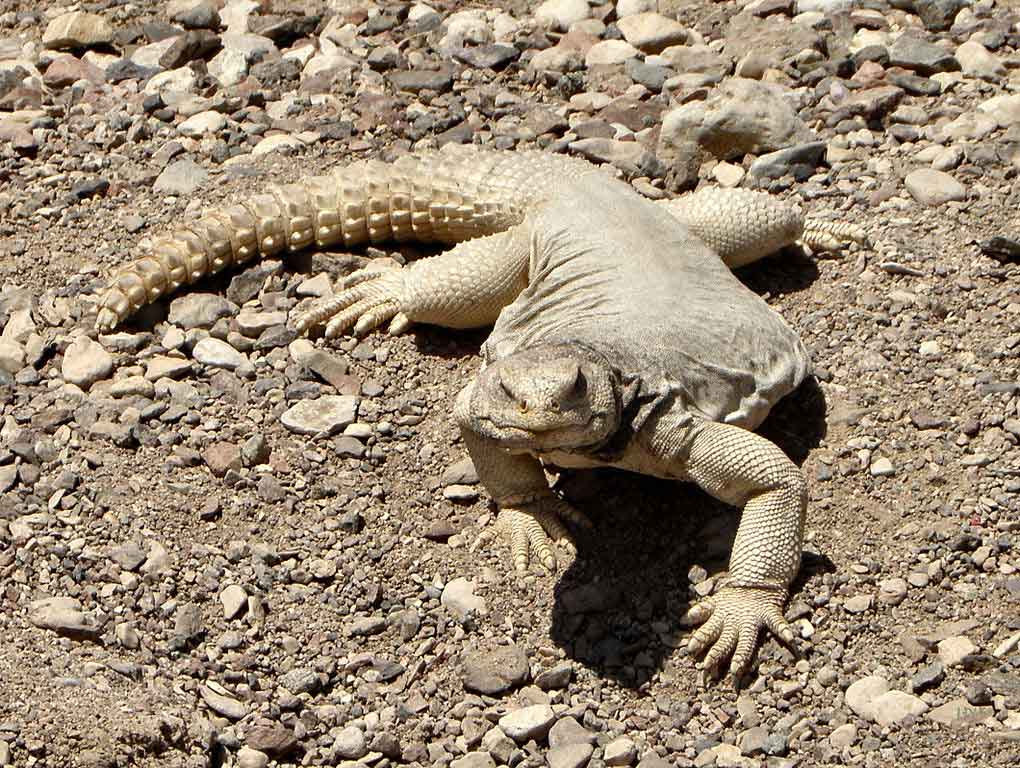
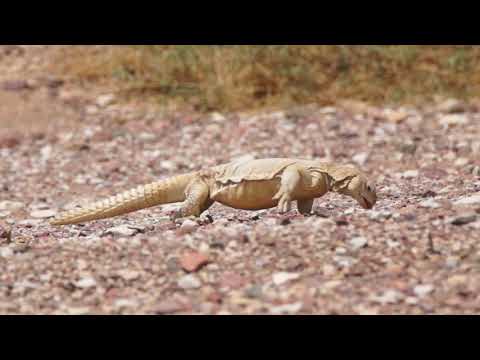
The Egyptian spiny-tailed lizard It is the largest species of Spiny-tailed lizards
The Egyptian spiny-tailed lizard (Uromastyx aegyptia) attains a head-torso length of up to 75 cm with a body length of 45 cm., which makes him the greatest representative of the Spiny-tailed lizards. Adult animals reach a weight of 1,5 – 1,6 kg.
There are two subspecies of Egyptian spiny-tailed lizard: Uromastyx aegyptia aegyptia and Uromastyx aegyptia microlepis. In both subspecies the body scales are remarkably small and smooth.. The Egyptian spiny-tailed lizard can change the color of his body. At high temperatures it is light brown to light gray in color and at low temperatures it can turn a dark gray., almost black. The juvenile color consists of 5-6 crossed yellow bands on a gray-brown background color. In the Uromastyx aegyptia microlepis, there are also slightly yellow or green animals.
Distribution
The Egyptian spiny-tailed lizard is found in North Africa, from Algeria to Egypt, in sinai, Israel, Jordan and on the Arabian Peninsula, which makes it the only species of Spiny-tailed lizards which is common in both the Asian and African continents.
The "Egyptian spiny tail" in captivity
Terrarium
The Egyptian spiny-tailed lizard It is the largest species of Spiny-tailed lizards and therefore require a larger environment. A baby or a young (up to about 3 or 4 years of age), can be housed in a temporary terrarium 120 x 60 x 60 cm.. But, an adult will need a much larger terrarium.
We recommend a terrarium of about 150 x 90 x 60 cm o 180 x 75 x 60 cm.. You will have to make this terrarium to measure because there are no commercial terrariums with these dimensions.
Food
In early times nicknamed as pure herbivores, it soon became clear that the Egyptian spiny-tailed lizard (Uromastyx aegyptia) they also like to eat foods of animal origin. It is not strange that each Egyptian spiny-tailed lizard develop your own preferences over time. They can get excited about all kinds of worms (zophobas, meal worms, caterpillars of tebo), or preferring grasshoppers and crickets and disdaining altogether the mentioned worms.
Of course, the supply of calcium and vitamins should never be neglected with all reptiles. Sprinkle green food daily with cuttlefish powder and animal food twice a week with vitamins.
The reaction to food given with tweezers is particularly noticeable: Disliked insects are repelled with a clear shake of the head and closing of the eyes. It also, feeds on various grains and herbs such as lentils, oats, corn, millet, various seeds, peanuts (use sparingly), dried carrots (available at pet stores), carrot herb or kitchen herbs. It also, of course, there are fresh green food every day: here you can resort to high quality salads (lamb's lettuce or arugula), but also prairie vegetables such as dandelion or chickweed. Instead of the salad, homemade sprouts are also very popular. It also, the little ones seem to be magically attracted to the color yellow, so dandelion flowers seem to be quite the event.
Buy an «Egyptian spiny tail»
The price of a Egyptian spiny-tailed lizard at the exotic animal market, captive bred, ranges between 200 – 250 euros.´
▷ The world of Pets: Dogs, cats, birds, reptiles, amphibians
Russian tortoise
- Testudo horsfieldii
Origin: Russia, Afghanistan, China, Pakistan, Kazakhstan, Turkmenistán y Uzbekistán.
Gender: Testudo
Life expectancy: 40 years
Length: 25 cm.
The Russian tortoise (Testudo horsfieldii) during very hot summers, they burrow to spend a period of summer dormancy. In countries where summers are mild, this rarely lasts longer than 3 weeks.
There are four subspecies of the Russian tortoise (Testudo horsfieldii), which can be found from the Caspian Sea, passing through Uzbekistan, Kazakhstan and Tajikistan, to eastern Iran and northern Afghanistan. Sometimes, the Russian tortoise can be found even as far away as western China.
Subspecies
This species is traditionally located in Testudo. Due to their clearly different morphological characteristics, in 1966 the monotypic genus was proposed for her Agrionemys. In the news, gender is accepted Agrionemys horsfieldii. DNA sequence analyses usually match, but not too solidly. Some sources also list four separate subspecies of Russian tortoise, but they are not widely accepted by taxonomists:
Agrionemys horsfieldii rustamovi (Chkhikvadze, Amiranashvili and Ataev, 1990) Turkmenistan, Iran.
Characteristics / Appearance
The species reaches a size of 15 cm. (males) some 25 cm., very rarely 28 body length cm (females) and then weighs between half a kilogram and two kilograms.
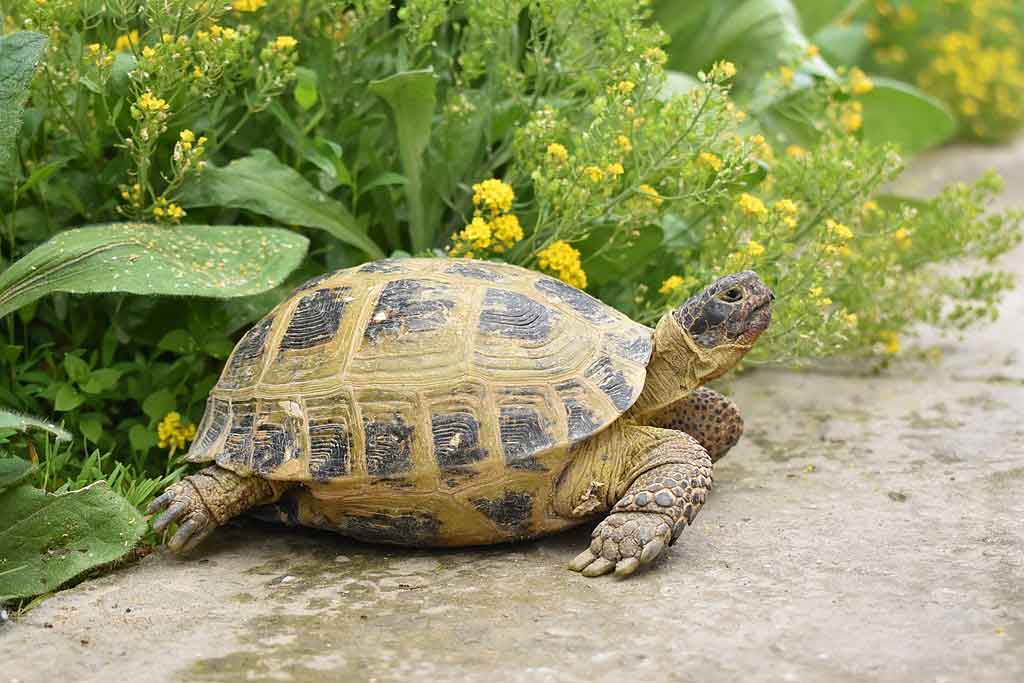
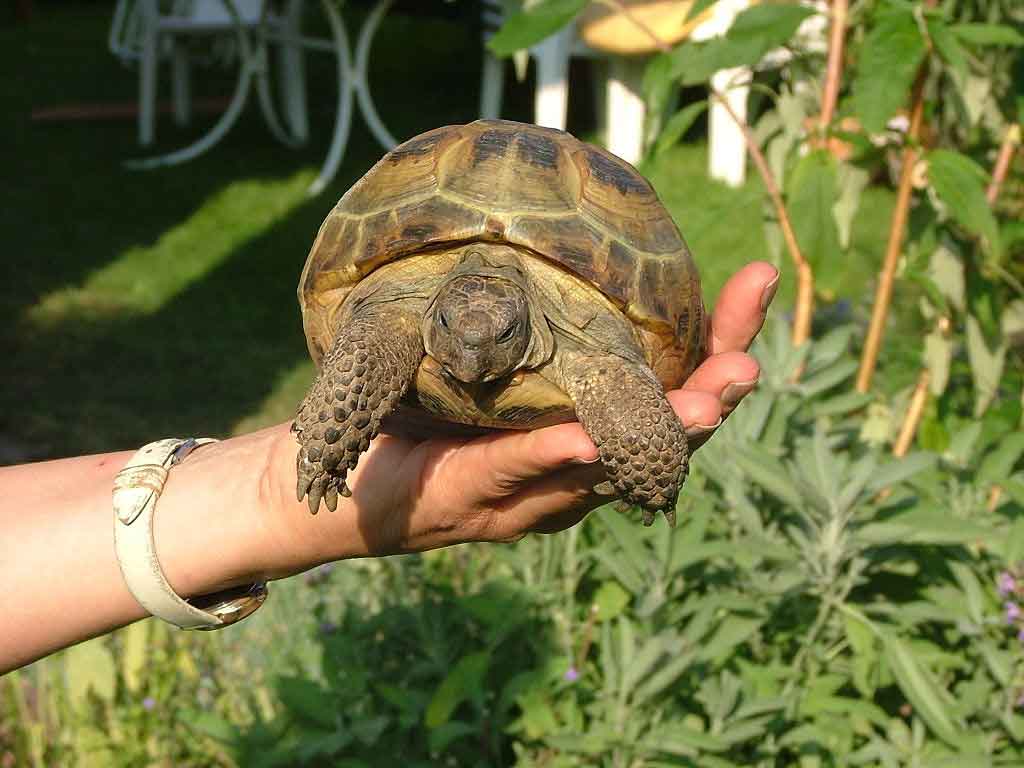
The rather small size of the Russian tortoise it's just a feature, but not one by which it can be definitively recognized. Another feature is the shell. Has an oval dorsal shell, almost circular, which is also quite flat. Much flatter than other species in the genus Testudo. A coloration between yellow and brown and also olive characterizes the basic color of the shell. It also, there are dark spots. The Russian tortoise has basically only four fingers. Other species usually have five fingers.
The male is recognized by his curved abdominal shell (concave), which makes it easier for you to get on the females and gives them a foothold. Males have a longer and thicker tail than females. On the other hand, females are much larger and have a very flat abdominal shell.
Habitat
In their habitats there are always stony and arid tracts of land, so the Russian tortoise it also has its other name, "steppe tortoise". Adapts well in dry and arid areas. But, animals are most often found near rivers.
Behavior
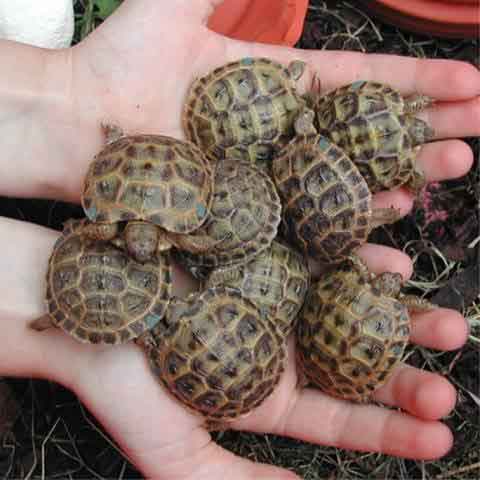
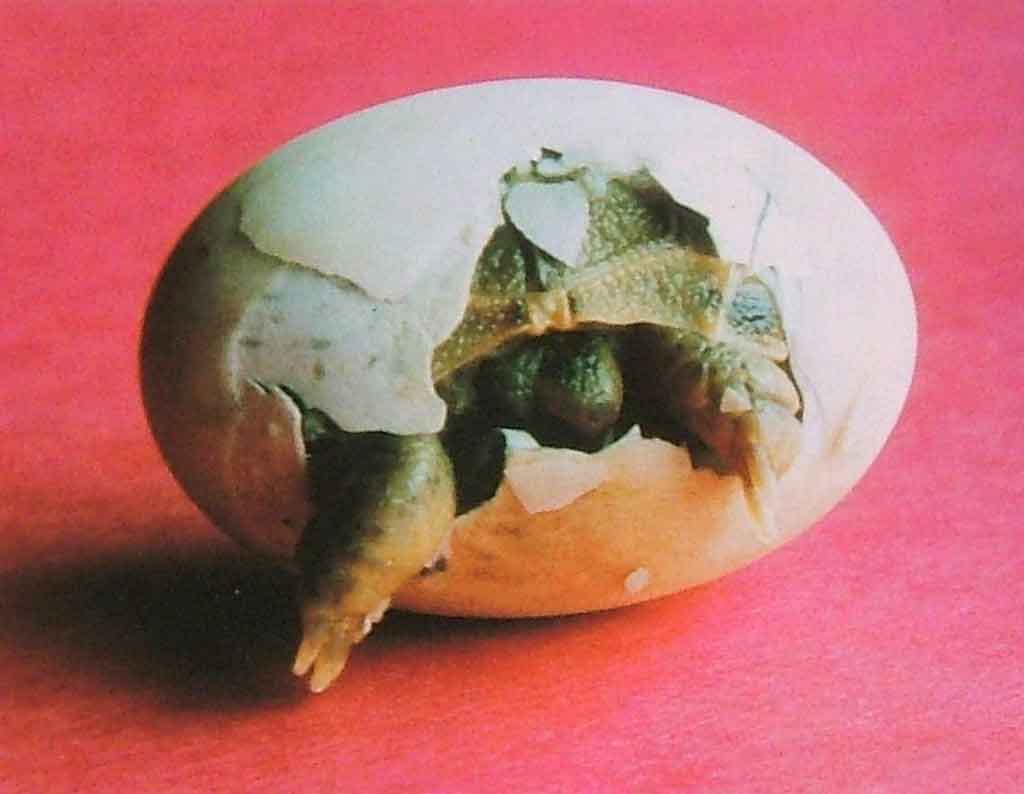
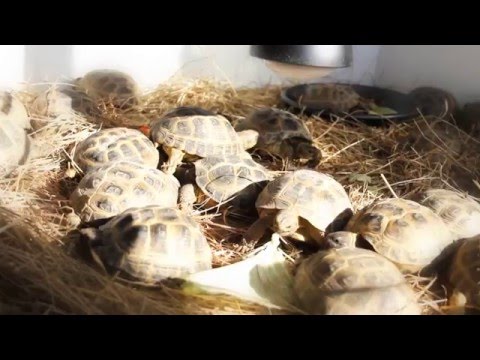
“Russian Tortoise” Hatchlings
The strong claws of the front legs and the flat shell allow the Russian tortoise (Testudo horsfieldii) dig burrows up to four meters long, that you use repeatedly. At night, when it's very hot, during summer and winter lethargy, takes refuge in them, as they provide you with security from predators and soil temperatures remain relatively constant. They are often seen sitting at the entrance of the cave in the morning., when the weather is uncertain. In your range, the continental climate is hot and dry in summer and wet and icy in winter. It is characterized by large daily and seasonal temperature swings of up to 40 °C, and often it doesn't rain in the middle of summer. These conditions demand enormous adaptability of animals in their arid habitats..
The hibernation lasts until mid to late March, until 6 months. No matter how harsh and cold the winters are, the warm season arrives quickly and without transition with an initial abundance of plants. These turtles only have three to five months to feed, grow and reproduce. With the increase in heat in early summer and the onset of drought, finding food during the day becomes increasingly difficult, so you have to take advantage of the morning and night hours for it. In the middle of summer, it is so hot and dry in many habitats that the animals go into a summer lethargy of one to two months. (aestivation) due to lack of food and heat and do not reappear until September, if at all. They take advantage of the short period until hibernation to look for food until they hibernate again in mid to late October due to nighttime temperatures, often very severe, below zero.
In the wild, sometimes occupy enormously large territories. They are common 10 hectares for a male and even 30 hectares for a female. So, turtles are rarely found. But, it is precisely these circumstances that make the Russian tortoise a highly specialized species that cannot cope with the usual breeding of a species of European turtle long-term.
Reproduction
When a male sees a female, approaches her in courtship plan. With the neck stretched out and the head nodding from top to bottom, the potential partner surrounds your chosen one. Finally, bites her front legs to force her to sit still. Males usually have a much longer tail with a nail on the tail, which can cause serious injury to the cloacal region of the female if mating attempts are too frequent.
During copulation, the male adopts an almost vertical position behind the female. At the same time, the male opens his mouth, the red, fleshy tongue becomes visible and emits picket sounds.
Females lay surprisingly large eggs between two and four weeks after mating, usually between 2 and 5 (up to a maximum of 9). Its shape is elongated-oval, of about 35-40 millimeters in length and about 15-20 g. of weight. The babies, almost round, hatch after sixty to a maximum of 100 days if eggs are artificially incubated at 28-32°C. A single successful mating is enough to fertilize the eggs of several clutches. For this reason, and by the huge and almost annoying mating desire of males, it makes sense in human care to keep males and females separate from each other outside of the actual mating season to ensure stress-free maintenance..
Conservation status and danger of extinction
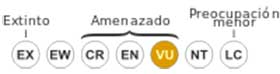
State of conservation ⓘ
Vulnerable ⓘ(UICN)ⓘ
Since 1975, this species is subject to the Washington Convention on International Trade in Endangered Species of Wild Fauna and Flora, where listed in Appendix II. EU Species Protection Regulation includes species in Appendix B. Thus, can only change ownership as a hatchling and only with a certificate of origin stating where and when the turtle was bred. It also, animals must be registered within the EU with the local authority responsible for the protection of species (= free).
IUCN classifies the Russian tortoise as "in danger" (VU, vulnerable).
In their natural habitats, the Russian tortoise is exposed to very contrasting climatic conditions. While in summer the heat causes even the summer lethargy of the animals, the Russian tortoise is forced to enter winter torpor every year in October due to temperatures of up to -21 °C.
In captivity, animals usually go into hibernation from mid-November at a temperature of between 2 °C y 4 °C. As such, turtles bury themselves in the ground. As such, turtles dig into the ground. The natural habitat allows tunnels of up to 2 m depth. In outdoor enclosures in captivity, the Russian tortoise is usually buried between 30 and 60 cm depth in the enclosure. As such, many caregivers create an additional hibernation pit, which is protected from predators from below and offers frost protection from above, for example by means of a greenhouse.
A constant temperature of 2°C to 4°C is important for the Russian tortoise. It should not be hotter than this for hibernation, otherwise proper hibernation will not occur. The Russian tortoise remains in hibernation in an outdoor enclosure for the same time as the Greek tortoise, for example. Normally they are 5 months. Many turtles come out of their burrows in spring, from the month of April, and become active quite quickly.
Food
The Russian tortoise it is herbivorous. Prefer dried herbs and grasses. The menu can also be completed with fresh vegetables. Should not be fed too much protein, as animals grow too fast and this can lead to shell deformation.
Buy one "Russian tortoise"
how much does one cost "Russian tortoise"?
Only animals raised in the EU can cross national borders and only these animals can be sold. Despite the fact that possession without official papers is allowed, the origin must be proved. So, if you buy one Russian tortoise, needs a proper proof of origin from the breeder. If the purchase is not made from the breeder but from an owner, he usually has such a certificate from the breeder and delivers it at the time of delivery.
We strongly discourage the purchase of a Russian tortoise (Testudo horsfieldii) without adequate proof of origin. If the origin and filiation are not correctly demonstrated, turtles can be confiscated.
Having said that, the price of a "Russian tortoise" in the exotic animal market ranges from 80 – 130 EUR.
Images "Russian tortoise"
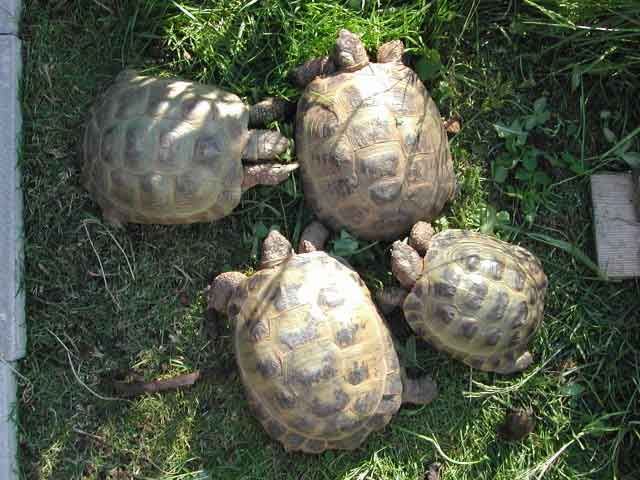
A case of convergence. Gopherus flavomarginata (above) and Testudo horsfieldii (below). Both have flat shells and powerful arms.
Airtight tanks make it easy to dig into the ground. This makes soft tissues particularly visible.
Young people do not break the egg at the poles, but in the middle
Youth: a distinctive central keel on the shell recalls the appearance of earlier ancestors
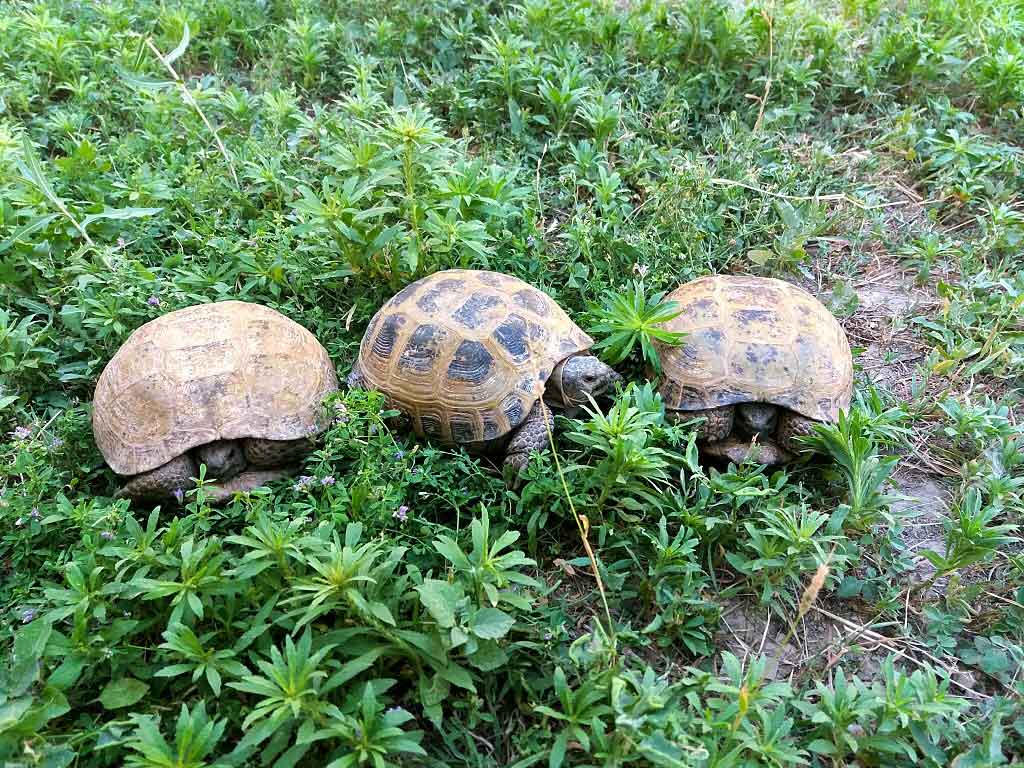
Agrionemys horsfieldii
Male (medium) and two females
Videos "Russian tortoise"
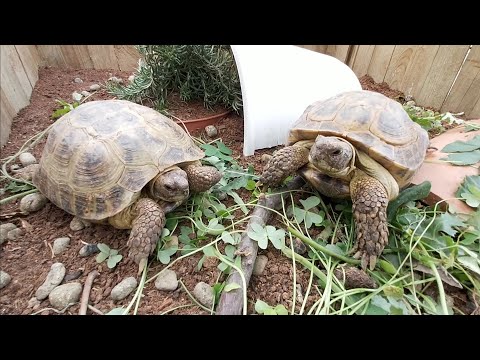
tortoise Testudo horsfieldii o tortuga rusa en terrario exterior
1. Afghan tortoise, Central Asian tortoise, Horsfield’s tortoise, four-clawed tortoise, (Russian) steppe tortoise (English).
2. Tortue russe, Tortue des steppes (French).
3. Steppenschildkröte, Russische Landschildkröte (German).
4. tartaruga afegã, tartaruga da Ásia Central, tartaruga de Horsfield, tartaruga de quatro garras, e tartaruga de estepe (Portuguese).
5. Tortuga de la estepa, Tortuga Afgana, Tortuga de cuatro dedos (español).
▷ The world of Pets: Dogs, cats, birds, reptiles, amphibians
Spot-legged wood turtle
- Rhinoclemmys punctularia
Origin: Brazil, French Guiana, Guyana, Suriname, Trinidad and Tobago and Venezuela.
Gender: Rhinoclemmys
Life expectancy: 20 years
Length: Until 28 cm.
The Spot-legged wood turtle it is a semi-aquatic species. Lives most of the time in swamps, coastal streams and marshes.
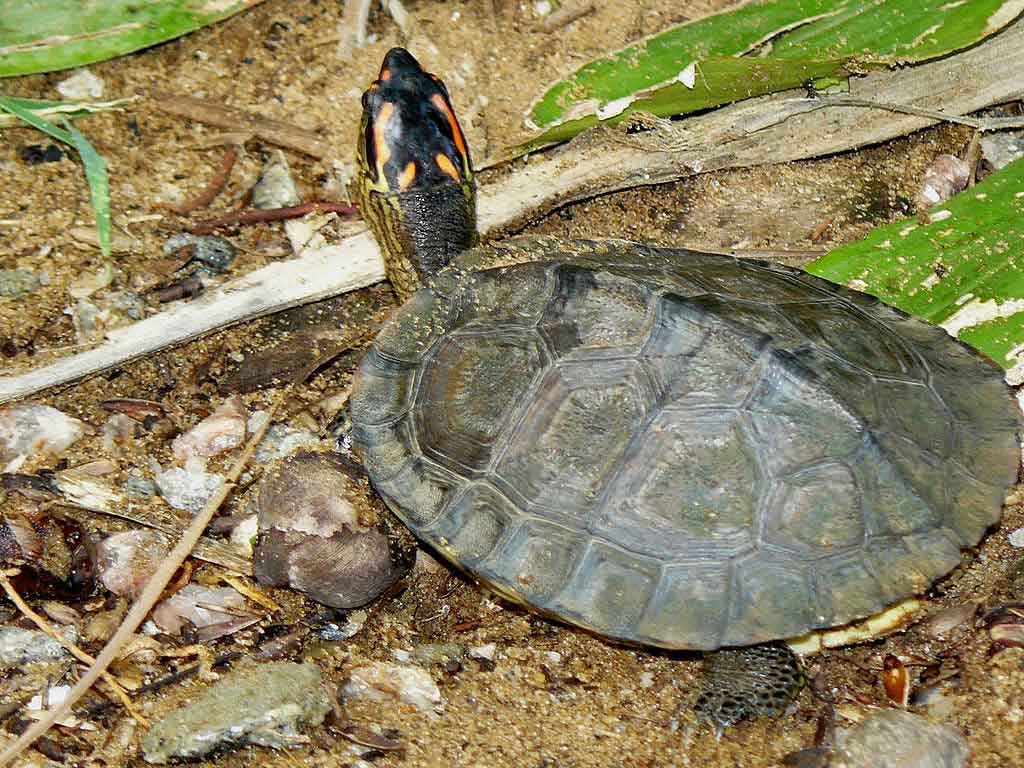
Rhinoclemmys punctularia photographed in the surroundings of Kourou (French Guiana) – Hervébreton, CC BY-SA 3.0, via Wikimedia Commons
Content
Origin / Distribution
The name Rhinoclemmys is derived from the Greek words rhinos (nose, snout, bill, bill) and klemmys (Turtle, Turtle). The name alludes to the protruding snout that some individuals of the type species have..
The Spot-legged wood turtle (Rhinoclemmys punctularia) It is distributed in eastern Colombia., Venezuela, Trinidad, Tobago, Guyana, French Guiana, Suriname, NE of Brazil (Tocantins, For, amazon, Bay, maranhão, to the lower course of the Tapajós River, Rio de Janeiro)
Characteristics / Appearance
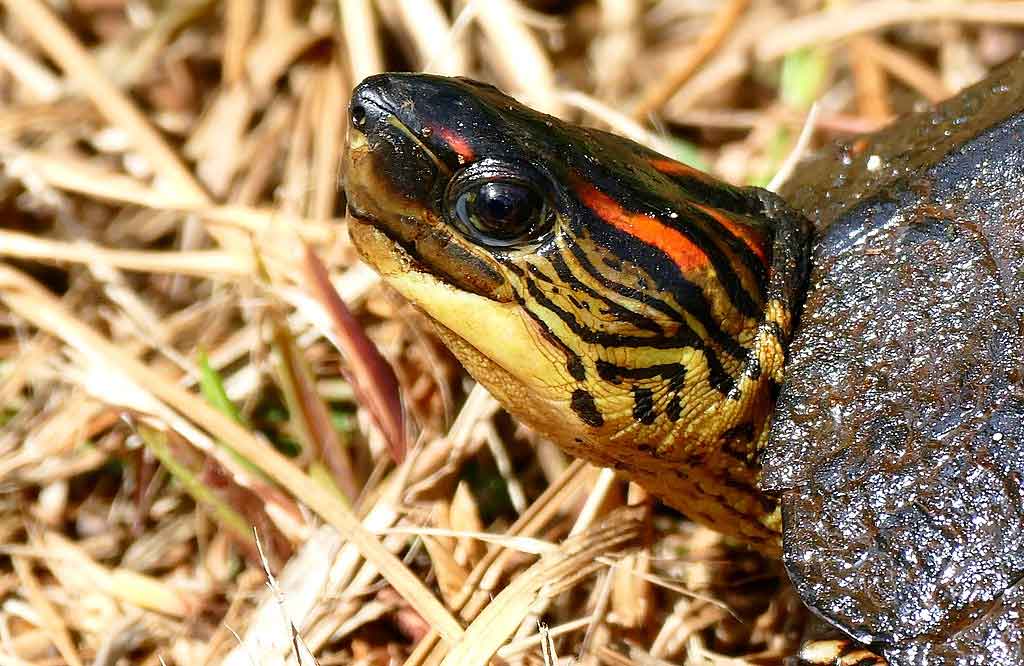
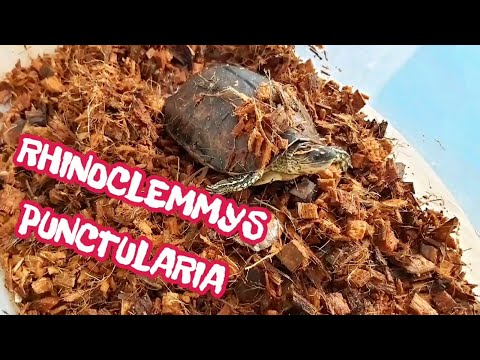
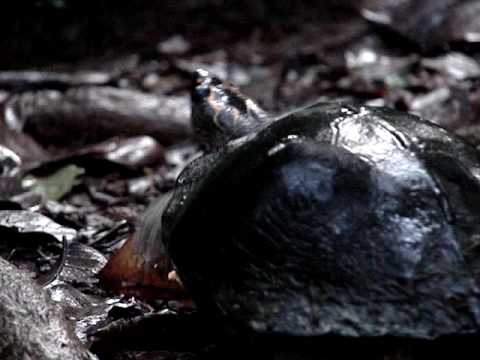
The shell is dark brown to black.. Limbs are orange-yellow with scattered black spots. The male is slightly smaller than the female and has a longer, slightly concave plastron and thicker tail.. Middle dorsal keel. red head pattern, yellow or green formed by two longitudinal or horseshoe-shaped stripes. Heavily webbed feet.
It is a semi-aquatic species. Lives most of the time in swamps, coastal streams and marshes. In Brazil it lives along the coast of Pará and in open areas along the Amazon River to the lower Tapajós.. Avoid high salinity and strong currents.
Food
Omnivores, seek both animal and plant foods. Foraging and feeding can occur both in water and on dry land.
while they feed, they bite into their food using their front limbs not only to pull and break larger amounts of food, but also to maneuver the food in their mouths.
Reproduction
They lay an average of two very large brittle-shelled elongated eggs. They make several layings in a season. The incubation period can last up to three months.. Sex is determined by temperature. The eggs are covered with leaf litter or hidden among vegetation and roots..
Behavior
Mainly active at night, but is known to bask and be active during the day.
Threats to the species
This species is consumed only locally, but there is evidence that it is widely consumed or kept as a pet and sold on the black market.
It was classified in 2012 like least concern in the new Scientific Assessment of the Risk of Extinction of the Brazilian Fauna. To date, it has not been necessary to create any conservation program for this species.
The "Spot-legged wood turtle" in captivity
It is a rarely imported species., so there is not much information about their care in captivity.
Aquaterrarium
For proper maintenance and care of the Spot-legged wood turtle, an aquarium with an integrated terrestrial part or an aquaterrarium is recommended. The aquarium must have a rim length of at least 150 cm.. The substrate of the aquatic part must be designed as a tropical forest. The lush plantation, foliage and humus can serve you.
The Spot-legged wood turtle It is native to tropical regions.. So, it is mandatory to have a heated aquarium. Reptiles prefer a water temperature between 25 and 30 degrees centigrade with a pH value between 6,0 and 8,0. It is advisable to install a UV lamp so that the turtles sunbathe.
Under no circumstances will we let these turtles hibernate. If temperatures drop below 20ºC, may start to show symptoms of breathing problems.
Buy one "Spot-legged wood turtle"
The price of a "Spot-legged wood turtle" at the exotic animal market, ranges between 90 – 120 EUR.
Imported animals must be kept in quarantine, and be dewormed.
The Fischer's chameleon (Kinyongia fischeri) split into several species 2008. Most of them are potentially or critically endangered. They are medium-sized chameleons that are characterized by having two nasal horns., and which are popular with private carers, especially in the United States, but rarely seen in European zoos. Usually, not a real Fischer's chameleon, but representatives of other species of the complex Kinyongia fischeri.
Characteristics / Appearance
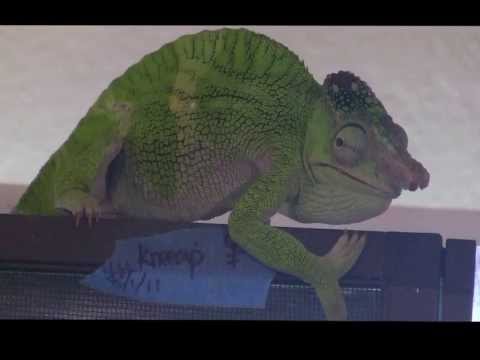
The Fischer's chameleon reaches a total length of 26 – 33,5 cm., the females being much smaller than the males. The queue occupies between 15 and 20 cm.. The most prominent feature is the strongly laterally compressed and warty snout processes., that can measure up to 20 mm in males. In females they reach 8 mm is missing completely. A helmet is only vaguely present. The first third of the back bears a crest formed by a loose row of spiny scales..
Habitat
The Fischer's chameleon It inhabits the edges of humid mountain forests and, possibly, in neighboring plantations and gardens, at an altitude of 800-1.700 m, with an annual rainfall of 800-2.000 mm, and with a dry season of 2-3 months.
Behavior
The Fischer's chameleon prefers to eat beetles and grasshoppers, but also takes other invertebrates and small vertebrates. Mating females are light green with a red head.. 47-55 days after mating, the female lays between 10 and 21 eggs in a hole 15-20 depth cm. The young grow rapidly and can reach sexual maturity at 6 months. The most important predator of the fishing chameleon is the hummingbird (Dispholidus typus).
Threats to the species
State of conservation ⓘ
Near Threatened ⓘ(UICN)ⓘ
The Fischer's chameleon (Kinyongia fischeri) is listed as potentially threatened on the IUCN Red List since 2014 because the area of the species is small and the habitat is fragmented. The habitat is gradually disappearing due to conversion of forests to farmland, logging and underuse of crops. The same goes for the Kinyongia boehmei, Kinyongia tavetana, Kinyongia matschiei, Kinyongia multituberculata and Kinyongia vosseleri, are classified as critically endangered. Kinyongia uluguruensis It is not considered in danger of extinction.
International trade is regulated by CITES Appendix II.
Among 2001 and 2015, Tanzania exported an annual average of about 3.700 animals. The main buyers were the United States, with a 53%, Germany, with a 13% (a few 470 animals per year) and japan, with a 10%. But, It was rarely the Kinyongia fischeri Properly said, but mainly from Kinyongia multituberculata, Kinyongia matschiei, Kinyongia vosseleri and possibly Kinyongia tavetana and Kinyongia boehmei. Exports of hatchlings from Europe and North America are insignificant
The "Fischer's chameleon" in captivity
The terrarium
The Fischer's chameleon should normally be kept alone. To support an adult individual, A well-ventilated and humid terrarium is recommended. 4 x 3 x 6 times (length x widht x hight) the length of the head and torso, that is to say, a few 60 x 45 x 90 cm for a large male. If they stay in pairs, you have to add a 20% of the ground surface.
The terrarium should be equipped with spotlights and UV lamps and have plenty of climbing branches and a water trough. It is recommended to plant the back and side walls with, for example, Ficus benjamina. A mixture of sand and peat is suitable as a substrate that should always be kept slightly moist..
The substrate for the terrarium Fischer's chameleon should be loose and absorbent. These may include, a mixture of sand and peat is suitable. If you have a female, it is important that the substrate is filled to a sufficient height. In this case, the substrate must have at least 20 centimeters high so that the chameleon can bury its eggs.
Air temperature should vary between 24-28°C during the day, locally up to more than 30°C and drop about 10°C at night. Relative humidity should be 50-70% during the day, with slightly higher night values.
Buy one "Fischer's chameleon"
If a «Fischer's chameleon» in a pet store or elsewhere, it is not uncommon for it to be another species of two-horned chameleon in the same genus. The gender Kinyongia includes now 18 species; Kinyongia fischeri It is one of the species that is least kept in captivity.. Often an apparent Fischer's chameleon hides close relatives like Kinyongia multituberculata, Kinyongia matschiei or Kinyongia boehmei.
The prices of Fischer's chameleon are usually correspondingly high due to this rarity. It is difficult to give a general amount because it depends on the seller, but you probably won't get a Fischer's chameleon for less than 100 EUR.
The fact that the real Fischer's chameleon is rarely offered is also due to its comparatively small area of origin.
1. Fischer's chameleon, Fischer’s two-horned chameleon, Nguru blade-horned chameleon (English).
2. Caméléon nain de Fischer (French).
3. Fischer's Zweihornchamäleon (German).
4. Camaleão de Fischer (Portuguese).
5. "Camaleón de Fischer" (español).
▷ The world of Pets: Dogs, cats, birds, reptiles, amphibians
Common chuckwalla
- Sauromalus ater
Origin: Mexico, United States
Gender: Sauromalus
Life expectancy: 30 - 40 years
Length: Among 30 and 50 cm.
The Common chuckwalla found in deserts, where the air is warm and dry (of 9 to 45 degrees Celsius).
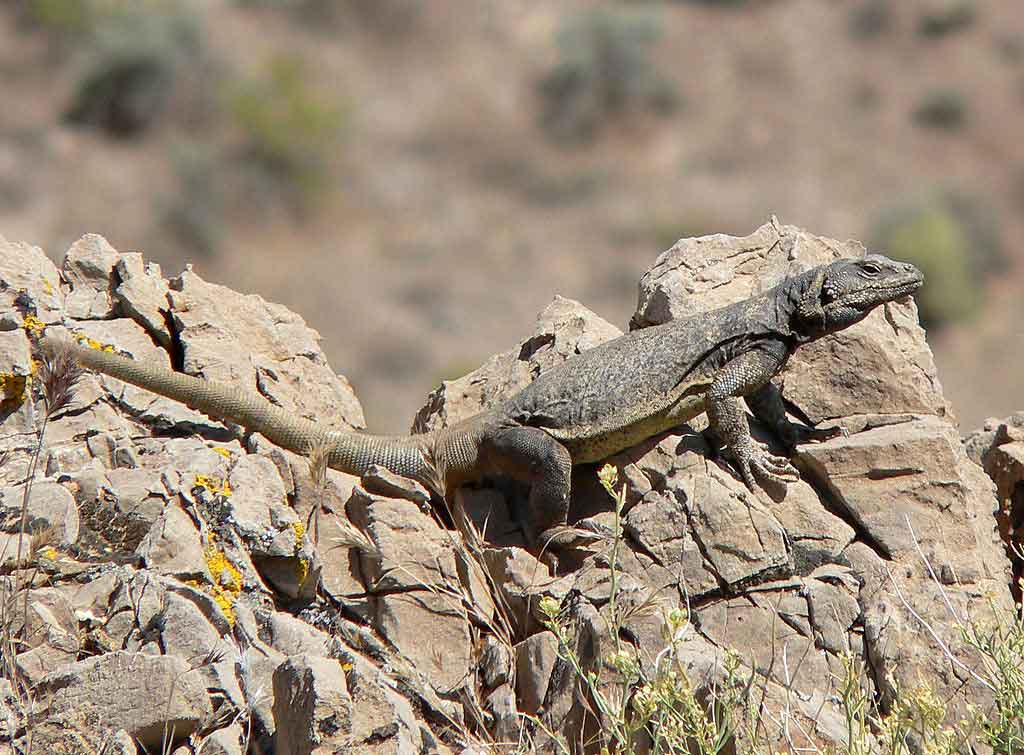
Common chuckwalla (Sauromalus ater) – TimVickers, Public domain, via Wikimedia Commons
Content
Origin / Distribution
The Common chuckwalla (Sauromalus ater) It inhabits the deserts of the western United States and Mexico and in 30 known islands of the Gulf of Mexico. In particular, the Mojave and Sonoran deserts are known to have thriving populations of chuckwallas. They can be found as far west as southeastern California and Nevada, and are abundant in Arizona, New Mexico, Texas, Utah and parts of Colorado.
Characteristics / Appearance
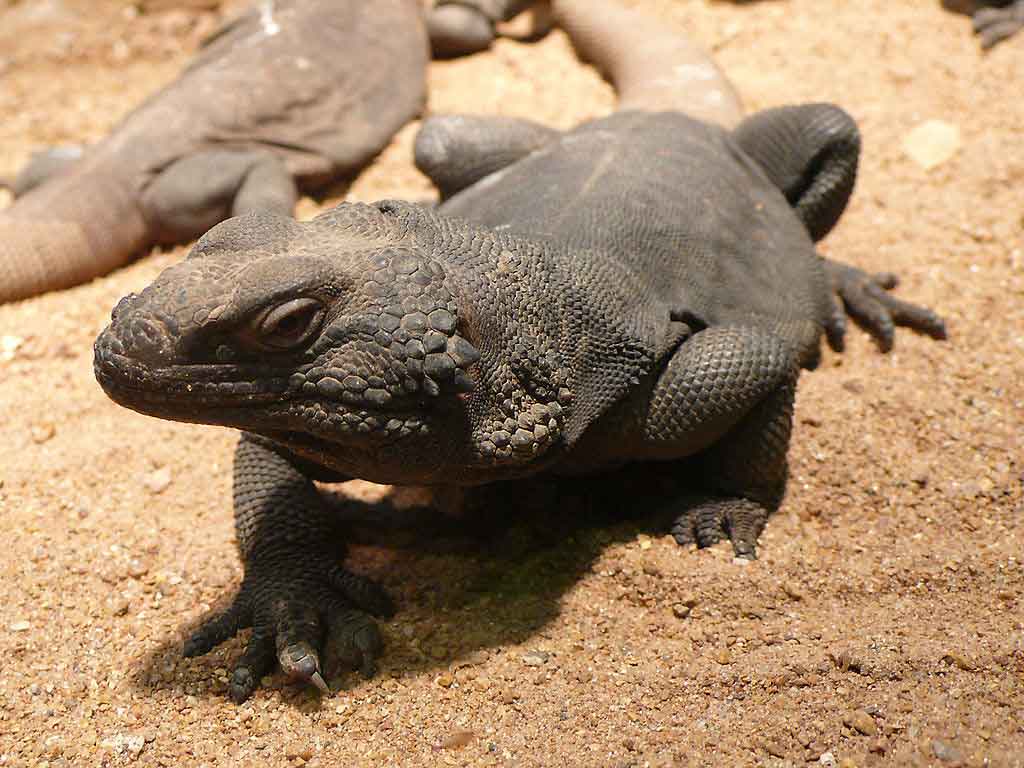
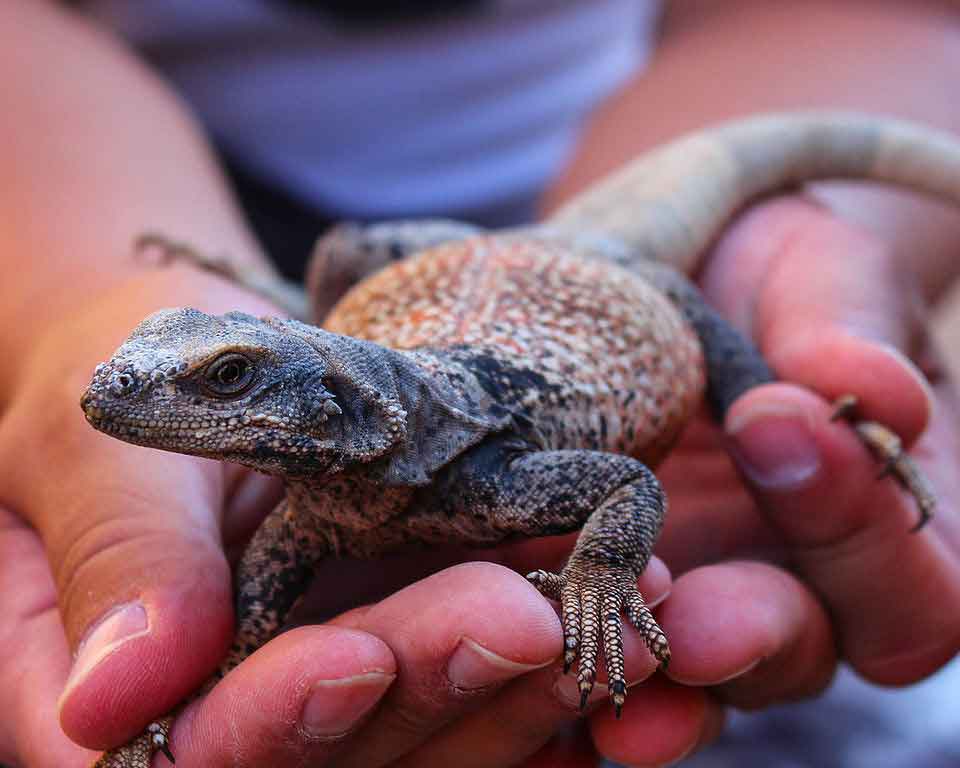
The Common chuckwalla it is a stocky lizard with loose folds of skin near the neck, shoulders and stomach. The skin is covered with hard scales, and the largest are between the nose and the eyes. They have five fingers on each end and the tail is rounded at the tip.. Head color can range from dark brown and gray to dark yellow. Color variation depends on geographic location, the temperature, environment and mood. The tail is thicker near the body and tapers towards the tip.. Males are slightly larger than females and, in some cases, have different scale patterns and head shapes. Females may have a slightly narrower snout and head.. There is also variation in color, juveniles and females have lighter markings than males. The average weight is 245 g. (range of 24 to 315 g.), although males are usually heavier than females. The average length of the head is 35,5 mm and its greatest width is 33,2 mm. The mean length of the snout is 162 mm (range of 80 to 197 mm) and the tail length is 182 mm. Almost half of the length corresponds to the tail.
Habitat
The Common chuckwalla found in deserts, where the air is warm and dry (of 9 to 45 degrees Celsius). They are found in deserts with rocks and crevices to hide in., as areas of ancient lava flows, rocky slopes and outcrops. They use burrows and underground cracks to hibernate in winter.. They inhabit insular and coastal environments. These lizards require a moderate amount of vegetation and foliage in the habitat in order to sustain themselves.. The Common chuckwalla can be found between sea level and 1400 m above sea level.
Behavior
Chuckwalla (Sauromalus ater), San Bernardino County, AU – Connor Long, CC BY-SA 4.0, via Wikimedia Commons
The Common chuckwalla it is mainly solitary and diurnal. They leave rock shelters during the day to eat foliage, but they usually stay close to their shelters. They are active from mid-March to mid-August, but they can aestivate in the summer months when food is scarce. From November to March they can go through brumation (similar to hibernation, but observed in ectotherms). They are active for a 8 hours a day, usually between 06:30 and 19:00. The activity of the Common chuckwalla is greater among 9:15 and 11:30. To avoid overheating, they move in and out of the shade and adopt different orientations towards the sun. Most of their time is spent basking on rocks when they are not foraging for food.. They take refuge in cracks and shallow holes during the hottest part of the day and use these cracks to avoid predators.. Males are territorial and fight over territory and females. The females are not hostile to each other, but the hierarchies of males and females are based on the size.
Developing
After a gestation period of one month, females lay eggs in an underground nest. Once the Common chuckwalla come out of the egg, begin to grow at a rate of about 17 mm per year. The Common chuckwalla abandons its young after hatching and the young are independent at that time. They reach sexual maturity around 2 or 3 years. Reaching adult size takes a few 25 years, after which they continue to grow but at a significantly slower rate, of about 5,5 mm per year. Growth rate is related to food abundance. The Common chuckwalla grows more in spring and summer, when the temperature is high and food is plentiful. La muda, or detachment of the epidermis, also occurs in spring, when the growth rate is high.
Reproduction
the courtship of the Common chuckwalla is that males attract females by their size or persistence. Males usually have several females living in their territory and mate with them.. The males of the Common chuckwalla use head movement, the licks, the circles, the pushes, jaw rubs and other methods to persuade females to mate. Females allow copulation if they determine the male is desired., males can prevail if they are big and forceful. During copulation, males use their mandibles to grasp females by the loose skin on the nape of the neck. Mating usually takes place in early spring, after hibernation. Both sexes have multiple partners year after year. Males compete for females by biting and head-butting..
The Common chuckwalla breeds between April and August, when food is more abundant. When females are receptive, your ovaries enlarge. Males produce sperm each year., while females produce eggs every two years, average. Males reach sexual maturity when they reach 125 mm length at snout, that is to say, to the 2 years of age. Females reach sexual maturity at the same length, but they may take 2 to 3 years to reach it. The average clutch size per breeding season varies from 5 to 16 eggs and the annual reproductive frequency of each female varies greatly from year to year depending on food availability and rainfall. Some females produce two separate clutches., others produce none. The females incubate the eggs until they hatch.. The incubation period lasts about 35 days (range of 33 to 50 days). The hatching mass range of eggs is 6,0 to 9,6 g.. Larger females produce clutches more often than smaller females.. But, smaller females may breed in consecutive years.
Females prepare an underground nest in an area with dry soil that is unlikely to be disturbed.. The females protect their eggs from predators and other threats while they incubate them.. But, after hatching, females no longer care for their young. Males do not provide parental care.
Food
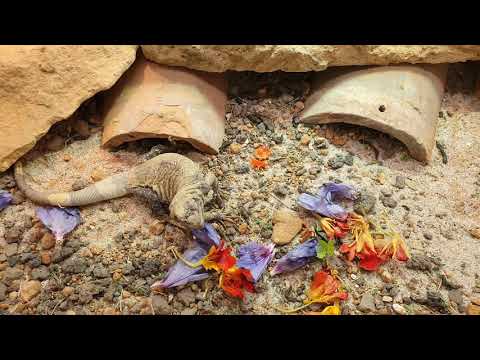
The Common chuckwalla It is herbivorous and feeds on perennial and annual plants.. Their diet is usually high in fiber and low in fat and protein. Annual plants make up the 60% your diet in the summer months, while the perennials suppose the 40%. When annual plants die in winter, perennials become their main food source. They have been observed feeding on the leaves and fruit of creosote bushes in the summer months. (Pasture tridentate), as well as some insects that reside in the vegetation they eat. The (Oenothera clavaeformis) and the desert ambrosia (Franseria dumosa) are the main plants in the diet of the Common chuckwalla. In captivity they feed on various vegetables, fruits and flowers. They obtain water from the plants they eat and produce it metabolically.
Life expectancy
The Common chuckwalla usually live 10 years or more, if the right conditions are met, limited predation and adequate food availability. The half-life in nature is estimated to be about 15 years. Although there is considerable variability from year to year, Survival in the first year is estimated to be 38%. The mortality of the eggs is the one that most affects the survival of animals less than one year old. Those who survive beyond one year experience a median survival of 75% annual. The Common chuckwalla oldest known in nature had 30 years. The Common chuckwalla oldest in captivity lived to be 65 years.
Threats to the species
State of conservation ⓘ
Minor Concern ⓘ(UICN)ⓘ
The populations of Common chuckwalla are protected by national parks and, course, for its remote habitat (rugged terrain and harsh climate). Trends toward development in desert areas of the United States and parts of Mexico are affecting the habitat of the Common chuckwalla; However, the status of the population as a whole has been reported as large and stable.
The commercial sales of Common chuckwalla have not shown any major impact on the species as a whole, but some subspecies are locally threatened by overharvesting and habitat degradation. The South Mountain Subpopulation, near phoenix (Arizona), is in the spotlight because it has a unique color pattern that is desirable for the pet trade. The Colorado River Dam has greatly reduced the populations of Common chuckwalla in the Glen Canyon area, in Utah, and goat herding activities, sheep and donkeys have shown a small negative impact. In general, the IUCN classifies the Common chuckwalla like "Least concern» due to the wide distribution of the population and the absence of immediate threats. Although the total size of the population is not known, it is estimated that the total size of the adult population could be 100.000 or more.
The "Common chuckwalla" in captivity
Sauromalus ater (chuckwalla) and Columbia Pass, Spring Mountains, on from nevada – Stan Shebs, CC BY-SA 3.0, via Wikimedia Commons
The terrarium
The necessary size of the terrarium for a "Common chuckwalla" is of 120 cm long x 100 cm wide x 60 cm high or 120 cm long x 60 cm wide x 100 centimeters tall, respectively. The terrarium consists of a combination of wood and glass. Inside the terrarium there may be a self-made rear wall with many protrusions and indentations. The Common chuckwalla use almost exclusively the back wall and rarely stay on the ground. There may be a large ventilation area at the front under sliding glass over the entire length of the terrarium. in addition, about half of the lid consists of a ventilation zone to ensure the necessary ventilation.
Furniture
The terrarium substrate consists of a mixture of Lucky Reptile Desert Bedding and shell sand. To some Common chuckwalla they like to eat the small pieces of crushed rock from the shell. There can also be multiple roots, cork tubes, stones and branches in the terrarium. Live plants are eaten immediately, so you should no longer use real plants for decoration. Stones and heavy objects must be firmly anchored, since the animals like to undermine everything and then there is danger of collapse.
Lighting and temperature
Light is a crucial factor in keeping and rearing these lizards.. The terrarium can be illuminated with two T9 fluorescent tubes of 38W each.. Two Solar Raptors 70W serve as heat and UV source. It also, every hour a SolarGlo 150W from Exoterra.
The temperature in the terrarium ranges between 26°C and 30°C. Temperatures of up to 42°C are reached under the radiators. The humidity is around 40% during the day and go up to the 60% At night.
Food
The Common chuckwalla Adult feeds almost exclusively on plants.. Juveniles occasionally hunt grasshoppers, crickets and worms. It is important to feed the animals with a varied diet so that there is no imbalance in the mineral balance. Vegetable food is given daily. During the week, they can have a fast day. What must never be forgotten is to regularly supplement the diet with a vitamin preparation.
You can give them grated carrot, all kinds of lettuce, dandelion and its flowers, Cucumber, cooked rice, zucchini, Peppers, strawberries, raspberries, grated apple and rarely banana. Caution. Please, don't feed them cabbage, as this causes life-threatening flatulence. as with all animals, you have to try what and how much they like to eat. In principle, you can't overfeed them with vegetables, so you always have to have something available.
A great gift is assorted sprouts that you can grow yourself on the windowsill. As such, I spread the lentils, wheat and millet in a container with moist soil and water them daily. after only three days, you can see the first spikes growing out of the ground. After a week and a half or two, the chuckwallas get the bowl with the fresh green.
There is also always a bowl with various grains, like red and brown lentils, special dry food for herbivores, pumpkin seeds and sunflower seeds.
Of course, a bowl of water should not be missing either.
Hibernation
Hibernation is an important part of the life of the Common chuckwalla all the years.
At the end of October / beginning of November, animals become increasingly lethargic and reduce their food intake.
Light duration is reduced from 12-14 to 5 hours a day for weeks while minimizing feeding.
During this time, just offer more water.
for the final hibernation, the animals are moved to a terrarium, similar to turtles.
The optimum temperature is between 12 – 10 degrees.
They wake up slowly in mid to early March.
The hibernation of Common chuckwalla it is a somewhat difficult matter, since the animals should not wake up too early.
This means that the process of lowering lighting and temperature, as well as upload it, must be done very slowly.
Buy one "Common chuckwalla"
The "Common chuckwalla" not an easy reptile to find. Its price in the exotic animal market ranges from 200 – 300 EUR. It is important that your acquisition comes from animals bred in captivity to preserve their status in the natural environment.














_(7796643322).jpg)


_(38589492064).jpg)
.jpg)
.jpg)
.jpg)
