โ–ท The world of Pets: Dogs, cats, birds, reptiles, amphibians

Nelson's milksnake
- Lampropeltis triangulum nelsoni

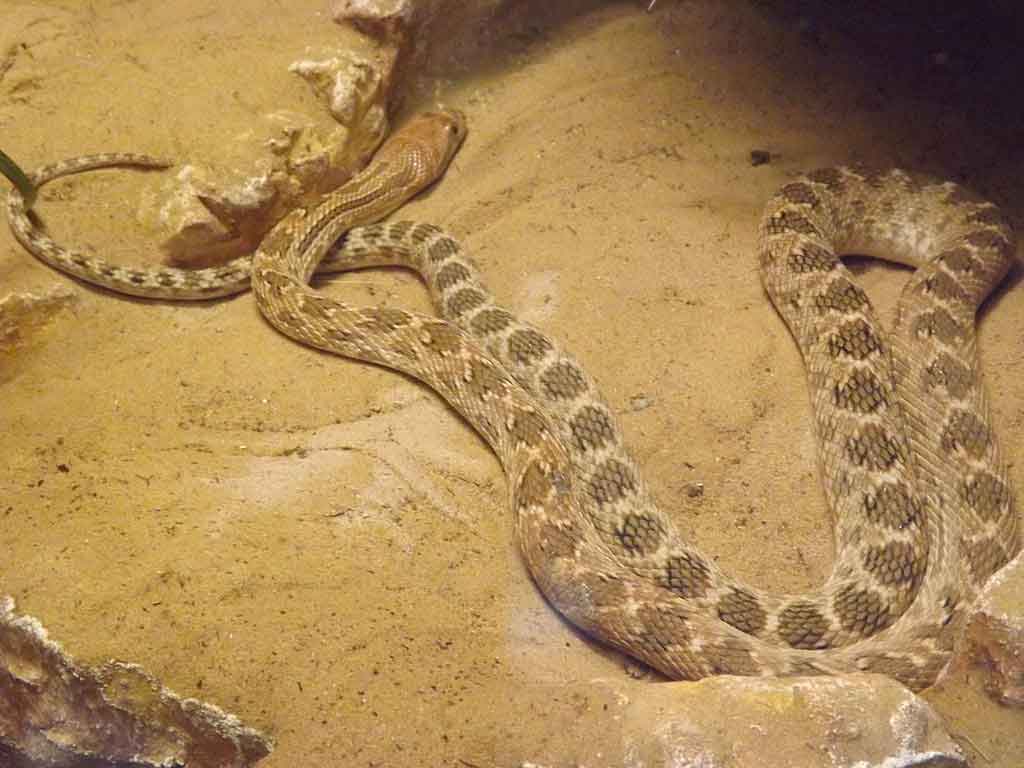
The Nelson's milksnake (Lampropeltis triangulum nelsoni) it is a small to medium sized snake, with a length of 91-152 centimeters.
Nelson's milksnake
Nelson's snake (Lampropeltis triangulum nelsoni) – John, CC BY 2.0, via Wikimedia Commons

Content

Origin / Distribution

The Nelson's milksnake (Lampropeltis triangulum nelsoni) It is named in honor of Edward W.. Nelson, who worked for the U.S.. Biological Survey desde 1890.

It is a subspecies of mousetrap coral (Lampropeltis triangulum) found in Mexico from southern Guanajuato and central Jalisco to the Pacific coast, also found in the narrow plains of northwestern Michoacรกn and on the Tres Marรญas Islands.

Characteristics / Appearance

The Nelson's milksnake (Lampropeltis triangulum nelsoni) it is a small to medium sized snake, with a length of 91-152 centimeters, being the mean of 107-120 centimeters. like most snakes, The females are bigger than the males. These snakes have 13 and 18 wide red rings on the body, with thinner black bands and even thinner white ones.

Habitat

The distribution area of โ€‹โ€‹this snake seems to be linked to the proximity of watercourses, including those used for irrigation and agriculture.

The "Nelson's milksnake" in captivity

Nelson's milksnake
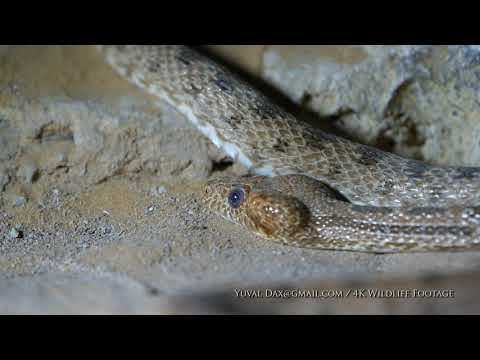
Detail of the head of an albino Lampropeltis triangulum nelsoni (Nelson's milksnake) – CC BY-SA 3.0, Link

The terrarium

Use a loose substrate and provide the snake with two hiding places, one on each side of the terrarium, and other decorations such as plants, remained, tubes, lianas, etc. This will not only add security to the terrarium, it will also encourage escalation. The creation of a bioactive facility, the use of a low percentage ultraviolet light during the day, and/or provision of a water dish large enough for the snake to soak in can also add enrichment.

Hideouts should be one at the cold end and one at the hot end. This allows the snake to thermoregulate, control your body temperature, while allowing her to feel safe.

Temperature and humidity

An under tank heater (UTH), like a heat mat, a thermal tape or a thermal cable, it is a good heat source for king snakes. Make sure the UTH covers at least 1/3, but preferably 1/2, of floor space. Surface temperature above the UTH should be 29-32ยฐC , and it should not go down at all at night. Ambient temperatures must be 23-28ยฐC throughout the enclosure, and can drop to 18-21ยฐC at night.

Humidity should be moderate: 30-50%. A wet hide box can be provided to aid in the molting process, and the general humidity can increase up to 60-70% during this time. This should be measured with a digital probe hygrometer. If the humidity is too high or too low for a long time, shedding problems or even an upper respiratory infection may occur.

Ambient temperatures should be measured with a digital probe thermometer, and surface temperatures should be measured with an infrared temperature gun. ALWAYS connect all heat sources to a thermostat or regulator to avoid burns or fires, and to be able to control the temperatures.

Don't trust glued-on analog thermometers and hygrometers, as they are notoriously inaccurate. Also avoid thermal rocks; they are known to overheat very easily and burn animals.

Illumination

The Nelson's milksnake does not require UV lighting; However, a linear light 5-6% UVB is beneficial and can be used, But again, not essential. Like most herpes, they should be provided with some source of lighting during the day so that they can distinguish day from night. Natural lighting can provide it, or LED lighting can be used in the enclosure, especially if it includes live plants. Always turn off all the lights at night, including the black ones, purple or red, as lights of any color can disrupt your sleep schedule. A ceramic heat emitter can be used instead (THAT).

Cleaning and maintenance

Unless you have a bioactive facility, cleaning the terrarium should be done whenever feces are seen. The substrate must be changed according to the instructions of the brand. Deep clean the enclosure every few months using a mixture 1:1 of white vinegar and water or other reptile-safe disinfectant.

The water bowl should be cleaned and refilled daily, and if it is emptied or soiled with substrate or excrement. All water used to spray the tank must be purified or treated, not distilled.

Food

like all snakes, the Nelson's milksnake is an obligate carnivore. In the wild, these snakes eat small rodents, birds, amphibians, lizards and other snakes. They are not immune, but they are resistant to the venom of native snakes. Captive bred specimens readily eat frozen or thawed mice. Mice should be slightly larger than (until 1,5 times) the thickest part of the snake's body, so that it leaves a small lump after feeding; adults usually eat weaned mice. The young should eat every 5-7 days, the youth each 7-10 days and adults every 10-14 days, depending on how they maintain their body weight.

The Nelson's milksnake you should always have a bowl of clean, fresh water at your disposal. The dish should preferably be large enough for them to soak in if they wish.. No food bowl needed, but a Tupperware lid can be used during feeding to help prevent the substrate from being consumed.

Substrate

Some good choices are kiln-dried pine, the coconut shell, cypress mulch, a mixture of sand and earth and orchid bark. Poplar chips can be used if the moisture is kept in a 30-40% to prevent the growth of mold and bacteria. A loose substrate must be used so that they can dig, but paper towels are a good substrate to use during quarantine.

Problem solving

Nelson's milksnake
Albino Lampropeltis triangle (Albino Honduran False Coral) – I, WilliamKF, CC BY-SA 3.0, via Wikimedia Commons

My snake does not eat

The Nelson's milksnake they are usually very enthusiastic eaters. First of all, take into account the time you have been with her. Newly acquired snakes usually take a few weeks to eat, since moving from one place to another causes them stress. Also make sure they are cared for properly; check temperatures and humidity levels, and make sure you provide them with plenty of security by using hiding places and foliage, and covering three of the sides. They do accept live prey but not frozen/thawed, try various techniques, how brainless he is, sniffing and pre-killing, to help them switch to dead prey. If you are concerned that you are not eating due to a health problem, or if you are losing a significant amount of weight, take her to the vet.

My snake is not molting at all

If they are given adequate moisture and lots of different textures to rub against as they shed, they shouldn't have any problem removing everything by themselves. A wet stash box or larger water container can help. If they have retained several molt layers, give them a shallow warm bath and carefully wash them off yourself.

My snake is always in its water bowl

First of all, check the humidity levels in the enclosure and make sure they are high enough (30-50%). Next, make sure the surface or ambient temperature is not too high. If humidity and temperatures are on point, consider whether or not the snake is in the shed. If they are, they may just be soaking to help the skin come off. You may want to give them a moist hiding place during this time., so they don't have to be exposed in the water dish. If they're not in the shed, maybe they're just soaking because they like it; However, shouldn't be a constant, as it is a sign of mites or other health problems, and frequent soaking can cause scale rot. if you care, take her to the vet.

Buy one "Nelson's milksnake"

They are usually sold between 70 and 150 EUR. It is always better to buy in exhibitions, small local breeders, reputable online reptile stores or breeders, rather than chain pet stores or large-scale breeders.

Videos "Nelson's milksnake"

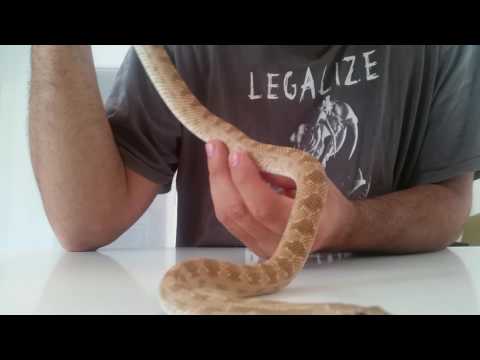
My Collection: Nelson's Milk Snakes (Lampropeltis triangulum nelsoni)

#canalreptil lampropeltis Nelsoni

Alternative names:

1. Nelson's milksnake (English).
2. Serpent faux corail, Serpent du lait du Honduras (French).
3. Nelsons Milchschlange (German).
4. Cobra de leite de Nelson, Milksnake de Nelson (Portuguese).
5. "Falsa coral de Honduras", Falsa Coralillo, Serpiente lechera de Nelson (espaรฑol).

โ–ท The world of Pets: Dogs, cats, birds, reptiles, amphibians

Puff-faced water snake
- Homalopsis buccata

The Puff-faced water snake inhabits freshwater bodies, like swamps, forest ponds and streams.
Puff-faced water snake
Homalopsis buccata of East Kalimantan – Rob Steubing, CC BY 3.0, via Wikimedia Commons

Content

Origin / Distribution

The Puff-faced water snake (Homalopsis buccata) is distributed from India, Bangladesh and Myanmar to most of Southeast Asia, including Cambodia, Thailand, Malaysia and Singapore. In Indonesia it is present in Borneo, Sumatra and Java.

Characteristics / Appearance

The Puff-faced water snake is dark brown above, with narrow pale brown transverse bands with black edges, in young specimens of yellow color; pale head with a dark triangular or V-shaped mark on the muzzle, an A-shaped spot on the occiput and a dark band on each side that passes through the eye and extends to before the eye. The lower surface is white or yellowish, with dark brown spots along each side; the tail has brown spots. Head and body length 820 mm; tail 230 mm.

Habitat

The Puff-faced water snake inhabits freshwater bodies, like swamps, forest ponds and streams. Of nocturnal habits, feeds mainly on small fish or frogs.

Behavior

It feeds on small crustaceans, fish and amphibians, that it captures using its venom and its jaws, instead of constriction.

Threats to the species

State of conservation โ“˜


minor concern Minor Concern โ“˜ (UICN)โ“˜

The Puff-faced water snake is piscivorous, so she is attracted to fish farms and, often, it is considered a pest.

This snake is frequently hunted for human consumption, for feeding farm crocodiles and leather goods. Millions of Homalopsis skins are exported to the United States and China each year.

No conservation measures are known for this species, although it is known to be present in several protected areas, including the National Park of U Mnh Thuong. Further research is needed to resolve the taxonomy of this group. It also, further research is needed on their abundance, trends and catch levels to ensure that a threat status is not triggered in the future. This species can be bred in captivity.

The "Puff-faced water snake" in captivity

Not suitable for neophytes more than anything due to the presence of medium strength venom. Caution is advised in its handling given the delicacy of the skin but, in general, its handling is quite easy.

The terrarium

Terrarium of 60 x 40 x 60 cm or even higher (it is also recommended 120 x 70 x 100 cm.), being aquatic arboreal, with a substrate of 5 cm of coconut fiber, moss and foliage that provides hiding places and greater absorption. Insertion of many plants and branches is recommended, to allow the creation of dark hiding places highly appreciated by this variety, allowing greater acclimatization and enrichment for the animal. Daily nebulizations should be abundant since these snakes love to drink both from a bowl of water and from the water deposited in the glasses or inside the terrarium..

It is a diurnal tree snake that loves to be in the low branches and in the water where it spends a lot of time..

Daytime temperature 26 – 27 ยฐC; 23 – 24 ยฐC at night; humidity 80/85%.

Buy one "Puff-faced water snake"

The price of a "Puff-faced water snake", in the exotic anomaly market, ranges between 100 – 150 EUR.

Videos "Puff-faced water snake"

Homalopsis buccata

Puff Faced Water Snake (Homalopsis Buccata)

Alternative names:

1. Puff-faced water snake, Masked water snake (English).
2. Homalopside joufflu (French).
3. Boa-Wassertrugnatter (German).
4. Homalopsis buccata (Portuguese).
5. "Serpiente acuรกtica enmascarada", Serpiente de agua careta, Serpiente de agua de Borneo (espaรฑol).

โ–ท The world of Pets: Dogs, cats, birds, reptiles, amphibians

East Indian brown mabuya
- Eutropis multifasciata

East Indian brown mabuya

Another species of this genus so docile and friendly from Southeast Asia. They are just as easy to maintain as the others. It is convenient to put a little humidity in the terrarium so that they stay more hydrated and shiny, although the ground may be dry. Food based on cricket and worms.

Price 20 to 30 EUR.

โ–ท The world of Pets: Dogs, cats, birds, reptiles, amphibians

Marbled gecko
- Christinus marmoratus

Very nice asian gecko, with a splendid contrast of colors in its range of grays, black and white. It is an animal that like the rest of its genus lives on the walls.
Marbled gecko
Marbled gecko – own work, GFDL 1.2, via Wikimedia Commons

Content

Distribution and habitat

The Marbled gecko it is quite common in some parts of Melbourne, but people rarely see it because it's nocturnal. You will most likely find them among driftwood in your garden, on your roof or even inside, behind a photo frame.

Description

The Marbled gecko is a small soft-bellied lizard, of up 150 length mm. Easily identified by large finger and toe pads, that extend to grip slippery or soft surfaces. Lacks mobile eyelids and uses the tongue to keep the eyes clean. It is insectivorous by nature., but eat anything small enough to fit in your mouth. In summer, females usually lay a clutch, containing two eggs at once.

Accommodation

The Marbled gecko is a very easy lizard to accommodate, since it is nocturnal and does not need heat or light. In cold areas, a heating pad or heat cord covering no more than 1/3 of the base during the colder months to keep them more active. Be sure to place them in a well-lit room if not using an overhead light so that a night/day simulation can be achieved. How is a small gecko, a small enclosure is suitable.

The minimum size would be a reptile terrarium of 45 cm.. The substrate should consist of a mixture of sand and clay, that makes it suitable for excavation. You have to place other pieces of rock or wood around the enclosure so that they have many places to hide. A small bowl of shallow water is recommended and it is also beneficial to spray the water regularly, as they are more likely to lick water from a piece of wood or rock than to drink from a bowl.

Food

The diet of the Marbled gecko consists mainly of small crickets and flies. When they are younger they should be fed every day and when they are adults every other day is fine. Wax worms and small silkworms may be offered when available. Crickets should be dusted with multivitamin and calcium powder weekly.

For sale Marbled gecko

The price of a Marbled gecko in the exotic animal market around the 20 EUR.

โ–ท The world of Pets: Dogs, cats, birds, reptiles, amphibians

North African mastigure
- Uromastyx acanthinura

The North African mastigure It is one of the most representative reptiles of the Sahara desert. It is medium in size: can measure more than 45 cm and weigh around 450 g..
North African mastigure
North African spiny-tailed lizard at the Vivarium Darmstadt (Hesse, Germany)

Content

Distribution

The North African mastigure (Uromastyx acanthinura) It is a lizard native to North Africa. (northwest africa).

Their habitats are usually in the mountains and consist of rocky desert and sandy stony desert., not found in purely sandy deserts.

Characteristics

They reach a head-torso length of up to 28 cm and a total length of 45 cm.. To the North African mastigure likes to sunbathe and can change color to regulate temperature. In their native habitat they live in rock deserts and scree, that is to say, in very rare habitats called hamada, and they like to dig. They make their own burrows, have a relatively constant climate.

The "North African mastigure" in captivity

Terrarium

The North African mastigure it is very territorial in nature and keeping one male and several females is only possible in a large terrarium. It is best to keep them in pairs..

To keep the North African mastigure, we recommend the following conditions. Especially when the minimum size is specified, note that optimal conditions can only be achieved in much larger terrariums.

  • temperatures during the day: 28ยฐ a 40ยฐC (locally at least 45ยฐC)
  • Night temperatures: 18-22ยฐC
  • Humidity: 20-30% during the day and 60-80% At night
  • Minimum size of the terrarium: starting at 160 x 120 x 90 cm for a couple

Hibernation

You have to let the animals hibernate for three or four months. The North African mastigure needed between 12 and 18ยฐC โ€‹โ€‹for it. Hibernation is very important for animals to regulate their bodily functions and stay healthy. It's also a good way to prevent obesity.

Reproduction

hibernation is very important. The North African mastigure puts up to 26 eggs. These should not be incubated too wet, otherwise they will easily turn into fungi. The pups of Uromastyx acanthinura can be bred together in a group for up to two years, provided they are compatible. It is essential to provide enough calcium and vitamins.

Food

The diet of the North African mastigure includes banana, vine leaves, dandelion, margaritas, clover, pamplinas, sometimes kitchen herbs and grains like corn, rice, millet, sunflower seeds and others. Young animals feed up to a 75% of animals. These may include, crickets, grasshopper, cockroaches, sometimes zophobas and other live food. Adults should be fed little or no animal food to prevent fatty degeneration..

no lettuce, iceberg lettuce or similar, since its calcium-phosphorus content is unfavorable. And cabbage or spinach should only be fed rarely due to oxalic acid…

Fruit should also be provided only in moderation., if it is accepted.

Additional vitamin and mineral supplements are recommended.

For sale "North African mastigure"

The price of a "North African mastigure" bred in captivity in the exotic animal market, ranges between 150 – 200 EUR.

Video "North African mastigure"

2 juvenile Uromastyx acanthinura

Alternative names:

1. North African mastigure (English).
2. Bell's dabb lizard (French).
3. Nordafrikanische Dornschwanzagame (German).
4. Lagarto-de-Cauda-Espinhosa-Norte-Africano (Portuguese).
5. "Lagarto de cola espinosa del norte de รfrica" (espaรฑol).

โ–ท The world of Pets: Dogs, cats, birds, reptiles, amphibians

African spurred tortoise
- Centrochelys sulcata

The African spurred tortoise It is the third largest tortoise after the Galรกpagos giant tortoise and Aldabra giant tortoise. It is the largest turtle in the world that lives on the continent.

African spurred tortoise
African spurred tortoise – Wikipedia

Content

Origin

The African spurred tortoise first received a scientific name, Testudo sulcata, by the English illustrator of animals and plants John Frederick Miller in 1779. It was later assigned for a long time to the genus. Geochelone Fitzinger, 1835. But, following a proposal by the French herpetologist Roger Bour in 1985, is now placed in the old subgenre Centrochelys Gray, 1872, which has since been elevated to the category of gender. So far no subspecies have been described.

The African spurred tortoise (Centrochelys sulcata) is native to the Sahara Desert and the Sahel, a transitional ecoregion of semi-arid grasslands, savannahs and thorny thickets found in the countries of Burkina Faso, the Central African Republic, Chad, Eritrea, Ethiopia, Mali, Mauritania, Nigeria, Senegal, Saudi Arabia, Sudan, Yemen and possibly Somalia, Algeria, Benin and Cameroon. Possibly extinct in Djibouti and Togo.

Characteristics / Appearance

The dorsal shell รขโ‚ฌโ€œ also called the carapacho รขโ‚ฌโ€œ, of about 80 cm size, it is quite flattened and has curved marginal shields around it. Strongly pronounced growth rings remain visible into old age, but they also give it its character. Throat shields protrude from the edge of the dorsal carapace, are curved upwards and are forked. These give the turtle their name of "spur turtle". A split can also be found in the rear shield. The color of the African spurred tortoise is cream, yellow-orange and sometimes brown or olive. You can't name a certain trend.

At the bottom of the African spurred tortoise a very clear and often almost white ventral shell can be seen that also shows growth rings. On the hind legs there is a very striking spur that also gave name to the animals.

Growth of the "African spur turtle"

When are born, theAfrican spurred tortoise weighs between 30 and 40 g.. Their weight multiplies in the first year. At one year of age, usually weigh between 150 and 210 g.. The growth of the African spurred tortoise depends largely on how it is maintained. Animals that are kept in an optimal environment grow evenly and gain weight each month. Specimens exposed to great stress usually have growth problems and can even lose weight in the meantime..

Habitat

The African spurred tortoise inhabits three different vegetation zones. Among them are dry and hot grasslands of semi-desert character, leafy thickets and grasslands with stands of acacia. Daytime temperatures above 40 ยฐC are the norm in its distribution area. You can even reach the 50 ยฐC. The minimum temperature values โ€‹โ€‹are 3-21 ยฐC. But, in some biotopes night frosts may occasionally occur.

The sparse vegetation of the habitat of the African spurred tortoise consists mainly of several species of acacias, baobab, tamarinds, species of thorny shrubs, species of wild millet, Digitaria sp., Panicum sp., thorny herbs Cenchrus sp. and low growth, mainly annual, of herbs and pastures.

Behavior

The African spurred tortoise it is a cold-blooded reptile that needs to minimize seasonal and diurnal temperature fluctuations through appropriate behavior to maintain a suitable body temperature. An important role in this type of thermoregulation is the search for a suitable shelter for the season and time of day.. As such, the African spurred tortoise uses burrows in the ground, that may have up to 4 m depth and 15 m length. If available, use the abandoned burrows of other animals. But from the 2-3 years of age, the African spurred tortoise also digs underground tunnels on its own with its strong front legs and, sometimes, with the throat shields in the form of a hairpin. They don't normally use a single burrow, but "possess" several, that they sometimes share with other turtles and even with other animal species.

In the coldest season, the African spurred tortoise it already comes out of its burrow in the morning and warms up before going in search of food. On the other hand, in the hottest season, often only activated in the evening hours. In the intervening periods, is usually active in two phases, that is to say, returns to its burrow during the hot day. In particular, the wettest season is used intensively, while dry and hot periods must also be endured inactively in the burrow to protect themselves from desiccation. During this summer lethargy, metabolism and heartbeat are greatly reduced, similar to the winter lethargy of other species.

Conservation

State of conservation โ“˜


Vulnerable Vulnerable โ“˜ (UICN)โ“˜

The African spurred tortoise is listed as endangered on the Red List and threatened in Appendix II of the Washington Convention on International Trade in Endangered Species. The reasons are the collection for personal use (pets, foods) and for export, the fragmentation and urban expansion of what was once a huge mountain range, and the advance of the desert towards the mountain range.

On the other hand, breeding in the care of man has been very successful.

The "African spurred tortoise" in captivity

These turtles need a lot of space and cannot be kept in a large terrarium even in winter after two or three years.. Then you need a full room in a room of the house, or a very modern and heavily heated stable. Many owners have converted their garage for this purpose. Insulation made to keep warm, but also good ventilation for good circulation are a great challenge based on opposites.

The African spurred tortoise needs a permanent ambient temperature of 30 ยฐC and also heat sources under which the values โ€‹โ€‹can be reached. 45 ยฐC. Animals must stay outdoors in summer. But, they always need access to the barn or the room where the 30 ยฐC. Who thinks that this is not a problem in summer because of the high temperatures outside, you will soon learn to do better. The place is heated basically all year round and, Therefore, energy costs will amount to several hundred euros.

Food

Then there's the food. Although animals eat almost only hay in winter and feed on straw, you have to bring bales of hay. The African spurred tortoise eats a lot because it is extremely large. Nor should you assume that you are going to buy a Turtle until there is no more space. Why deliver a great African spurred tortoise a new owner is a feat and often unsuccessful. Most of these tortoises reach their owners when they are young., who often don't know what they're doing. There are few people who take a African spurred tortoise adult, and only on rare occasions do they take one from an animal park, because here you have to face reality.

Reproduction of "African spur turtle"

The female of the African spurred tortoise reaches sexual maturity when weighing between 15 and 20 kg. The age of the tortoise plays a very minor role here.. The animal usually reaches that weight at the age of 10 years. Some specimens only reach this weight at the age of 12 to 15 years. Males growing in the same environment usually need one to three more years..

The African spurred tortoise puts 3 clutches per year and up to 40 eggs in a year. The hatchlings take a few 120 days to hatch. There is no specific time of year for mating. In captivity, this usually occurs in the normal summer, since that is when the days are cooler and rainier.

The females of the African spurred tortoise lays eggs about a month after mating.

Buy one "African spurred tortoise"

The price of a "African spurred tortoise" at the exotic animal market, bred in captivity, ranges between 100 – 150 EUR.

Images "African spurred tortoise"

A young woman "African spurred tortoise" (Geochelone sulcata) on his mother's shield
Giant turtle (Geochelone sulcata) in the Guembeul reserve in Senegal

Videos "African spurred tortoise"

sulcata tortoise review 30 years. Exotic animals 24h

Centrochelys sulcata, giant tortoise ,Giant tortoise,giant tortoise,giant tortoise

Alternative names:

1. Grooved Tortoise, Sahel Tortoise, Tortue Sillonnรฉe (English).
2. Tortue ร  รฉperons (French).
3. Spornschildkrรถte Centrochelys (German).
4. Tartaruga sulcata, Tartaruga-purgada africana (Portuguese).
5. Tortuga Sulcata, Tortuga gigante africana (espaรฑol).

โ–ท The world of Pets: Dogs, cats, birds, reptiles, amphibians

Eastern mud turtle
- Kinosternon subrubrum

The Eastern mud turtle uses tactile senses and vision when searching for food. They use vision to search for prey and tactile senses to consume it..
Eastern mud turtle
Eastern mud turtle – Kinosternon subrubrum subrubrum – Bombay Hook National Wildlife Refuge, Smyrna, Delaware. He wasn't sure if he wanted to hide or not.. I was glad he didn't totally retreat into the shell. – Judy Gallagher, CC BY 2.0, via Wikimedia Commons

Content

Origin / Distribution

Two subspecies are recognized as valid, including nominate subspecies.

  • Kinosternon subrubrum subrubrum (Bonnaterre, 1789) – Eastern mud turtle (nominal subspecies)
  • Kinosternon subrubrum hippocrpis Gray, 1855 – Mississippi mud turtle

  • The Eastern mud turtle (Kinosternon subrubrum) found in the US states of Alabama, Arkansas, Delaware, Florida, Georgia, Illinois, Indiana, Kentucky, Louisiana, Maryland, Mississippi, Measure, New Jersey, New York City, North Carolina, Oklahoma, Pennsylvania, South Carolina, Tennessee, Texas y Virginia.

    In Indiana, the Eastern mud turtle is listed as an endangered species.

    Characteristics / Appearance

    The Eastern mud turtle it is a small species, with a carapace length of 7 to 10 cm for adults. The head is irregularly mottled or streaked with yellow. The shell is convex, yellow to black, and lacks a keel or distinctive pattern. The plastron is yellow to brown in color and may have a variable number of dark markings.. Sometimes they are confused with the Common musk turtle. But, the plastron of the Eastern mud turtle differs from that of Common musk turtle in that it has two hinges and a triangular-shaped pectoral shield. As well, Unlike in the Common musk turtle, he doesn't have two stripes on his face.

    The sexes are similar in size. Males have a longer preanal length with the vent posterior to the edge of the carapace.. The youth of the Eastern mud turtle are darker in color, they lack head markings and their plastron is orange to red with a dark center.

    Habitat

    The Eastern mud turtle it is semi-aquatic and prefers relatively calm and shallow bodies of water. wet meadows, ponds, swamps and drainage ditches are their typical habitats. in coastal areas, eastern mud turtles can tolerate brackish water and are found on the edges of mudflats and offshore islands. Although they do not sunbathe often, They are much more terrestrial than the Common musk turtle and can often be seen on land from spring through fall. They reach maturity between 4 and 8 years of age. Individuals in captivity have lived up to 38 years. The Eastern mud turtle feeds mainly on the bottom of the sea. Their diet consists of a variety of insects, mollusks, Tadpoles, crustaceans, carrion and aquatic vegetation.

    Behavior

    Eastern mud turtle
    Eastern mud turtle

    The Eastern mud turtle it is swimming and lonely. They hibernate between November and March., but start and end times vary by location. The hibernaculum of these turtles includes shallow burrows at the edge of wetlands. They are crepuscular. Depending on ambient temperature, they spend their time submerged in shallow water or basking on the surface of the water. These tortoises can sunbathe with conspecifics on the same trunk, but this occurs mostly during the mating season.

    These turtles are occasionally aggressive and fight each other with head-to-head confrontations.. Such clashes can lead to possible serious injury, such as limb amputation, but the motive for the attack is unknown. The Eastern mud turtle uses color perception to distinguish the sexes, what plays a role in courtship. when they mate, female musk glands release pheromones to signal males to initiate courtship. The females dig their nests and hide them using their front and hind legs., and then they lay their brood.

    Food

    The Eastern mud turtle it is omnivorous and its diet is very varied. They feed mostly on the bottom., consuming mainly in the water, but sometimes they rise to the surface if the opportunity arises. Its range of consumption includes seeds, small invertebrates like earthworms (family Lumbricidae) and snails (Lymnaea, Physa, Planorbis), small insects like moths and butterflies (orden Lepidoptera ), june beetles (orden Coleoptera, familia Scarabaeidae, Melolonthinae subfamily), as well as arachnids (order Araneae), green algae, crustaceans and carrion. Strecker (1927) reported that these turtles also consumed a small striped snake (Tropidoclonion lineatum).

    Mahmound (1967) investigated the diet Eastern mud turtle

    Threats to the species

    State of conservation โ“˜


    minor concern Minor Concern โ“˜ (UICN)โ“˜

    The Eastern mud turtle It is classified as a species of โ€œLeast Concernโ€ according to the IUCN Red List.. They are not on the US federal list., CITES or listed by the state of Michigan. The Eastern mud turtle are considered endangered at the state level in Indiana, New York and Pennsylvania, and a species of greatest conservation need in Kentucky (Meshaka et al. 2017).

    The main threat to these turtles is habitat loss and road mortality., since few turtles manage to cross them. Habitat loss through roads bisecting aquatic habitats, increased urbanization and climate change that raises sea levels harm these mud turtles. The illegal pet trade of this species has also caused damage to its native ecosystem through loss of biodiversity..

    Potential conservation efforts to reduce mortality rates include wetland legislation that protects a terrestrial buffer zone around these semi-aquatic habitats. These terrestrial buffer zones are already intact in national parks. Future conservation efforts need a better understanding of population changes over time, as well as their perceived response to general climate change and microhabitat change.

    The "Eastern mud turtle" in captivity

    Aquaterrarium

    The Eastern mud turtle They can reach a maximum carapace length of 12 cm.. So, they need an aquarium with a rim length of at least 80 cm.. For the benefit of Kinosternon subrubrum, the aquarium should have several hiding places and retreats. So, they need an aquarium with a rim length of at least 80 cm.. For the benefit of the Kinosternon subrubrum, the aquarium should have several hiding places and retreats. The roots, dense plantings of tanks and stone or rock structures are suitable for it. There should also be an integrated area for sunbathing

    These turtles are solitary animals. Ideally, keep them individually in a species tank. Especially the males tend to be aggressive. In any case, must be stored separately.

    The Eastern mud turtle feels very comfortable in water temperatures between 17 and 28 degrees Celsius. But, they need a fixed change between summer and winter. During the winter months you can reduce the lighting time and lower the water temperature to 10 – 17 Celsius degrees.

    Food

    The Eastern mud turtle they are carnivorous. They prefer live food, frozen food or dried animals. The insects, the molluscs, amphibians or even plants are at the top of the menu.

    Reproduction

    The Eastern mud turtle (Kinosternon subrubrum) have already been successfully bred in the aquarium.

    Buy one "Eastern mud turtle"

    The prices of one "Eastern mud turtle" in the exotic animal market ranges from 50 – 100 EUR.

    Videos "Eastern mud turtle"

    HTTPS://www.YouTube.com/watch?v=U95SSLoQ4dk
    HTTPS://youtu.be/xnHl0EZqG9g

    Alternative names:

    1. Eastern mud turtle, Common mud turtle (English).
    2. Cinosterne rougeรขtre (French).
    3. Pennsylvania-Klappschildkrรถte, Kinosternon subrubrum, Mississippi-Schlammschildkrรถte, ร–stliche Klappschildkrรถte (German).
    4. Tartaruga de barro comum, Tartaruga de barro orienta (Portuguese).
    5. "Tortuga de pantano comรบn", Tortuga de pantano del este (espaรฑol).

    โ–ท The world of Pets: Dogs, cats, birds, reptiles, amphibians

    Four-horned chameleon
    - Trioceros quadricornis

    The Four-horned chameleon, also known as Cameroon bearded chameleon, it is recognizable not only by its four protruding horns, but also because of his flaky "beard", its large crest and sail-shaped fin.
    Four-horned chameleon
    Four-horned chameleon – Zoological Research Museum Alexander Koenig, No restrictions, via Wikimedia Commons

    Content

    Origin / Distribution

    The Four-horned chameleon It was first described by the naturalist Gustav Tornier in 1899. There are three subspecies, including the nominal.

    • Trioceros quadricornis quadricornis ( Tornier, 1899) – Southern four-horned chameleon.
    • Trioceros quadricornis eisentrauti ( Mertens, 1968) – Eisentraut's chameleon
    • Trioceros quadricornis gracilior (Bรถhme amp; Klaver, 1981) – Northern four-horned chameleon

    The Four-horned chameleon (Trioceros quadricornis) only found in some land areas of Cameroon and eastern Nigeria; its range includes the western highlands, the bamboo massif, Mount Manengouba, the oku massif, the Bakossi mountains, including Mount Kupe, and the Obudu Plateau in Nigeria. In particular, the subspecies Trioceros quadricornis eisentrauti is endemic to the Rumpi Hills in Cameroon.

    Characteristics / Appearance

    Like many other chameleons, the Four-horned chameleon it has a prehensile tail and simple claws on its toes. Usually, has four protruding horns, but sometimes two with up to four adjacent reduced horns are present;adults usually grow to 25 to 35 cm long. The Four-horned chameleon male has a prominent hemipenal bulge and gular beard, while some females have a horn or even two horns at the tip of their snout.

    Habitat

    In general, the Four-horned chameleon has a presence extension of 13.300 km2 and an inferred occupation area of 1.000 km2. The species is mainly associated with relatively intact montane forests with little human activity, where it has a relatively restricted elevation range (1150 to 2400 m). Research suggests this likely reflects competition with other chameleon species rather than physiological tolerances.. The type locality of the species is Monte Manegouba in Cameroon

    Behavior

    The species feeds almost exclusively on arthropods..

    Reproduction: puts up 14 eggs.
    Incubation period between 130-160 days at 18-25ยฐC. Temperatures should not exceed 25ยฐC.

    Life expectancy: a few 7 years.

    Threats to the species

    State of conservation โ“˜


    Vulnerable Vulnerable โ“˜ (UICN)โ“˜

    The main threat to this species is deforestation.. Agricultural development extends to the 1.700 m altitude near the village of Nsoung on Mount Manengouba, and the forest on the southeast slope of the mountain is rapidly disappearing. In 1995, forest degradation on the western slope of Mount Kupe had reached 1.200 m above sea level, due to selective logging for firewood and construction materials. So, future encroachment of human activities on the slope may pose a threat to this chameleon, which depends on a largely pristine forest and, therefore, likely to be at risk from forest degradation or clearing. Deforestation for cultivation and the burning of nearby grasslands to renew pasture for cattle threaten the species in much of its range..

    Due to its small and fragmented distribution area and the numerous threats that weigh on the population, the Four-horned chameleon It is classified as vulnerable by the International Union for Conservation of Nature.

    The "Four-horned chameleon" in captivity

    Four-horned chameleon
    Four-horned chameleon – www.chameleons.info

    Of the three subspecies, T. quadricornis quadricornis, T. quadricornis gracilior and T. quadricornis eisentrauti. The T. q. quadricornis is the most common, but the gracilior not uncommon. The T. quadricornis eisentrauti, on the other hand, not known (far as I know) that is in captive collections. It is even difficult to find images of the subspecies.

    It is not a pet suitable for beginners.

    The terrarium

    terrarium size: individual storage is recommended. It is possible to keep the animals in pairs, but always pay attention to size and furnishings.
    For single breeding: A terrarium of at least 100 x 60 x 120 cm..
    The cages/flexarios they are just as suitable. Chameleons love fresh air..

    Temperature

    During the day approx.. 20-25ยฐC, local heating up to approx.. 30-32ยฐC. Go down to at least 15ยฐC at night. Better still lower. If a cool cellar is available, you can also spend the night there.

    Humidity

    The humidity in the terrarium should range between 80-100%. In the morning and evening, spray the terrarium with warm water. But, Please, do not spray the animal.

    Lighting and temperature

    Daylight fluorescent tubes and/or light bulbs.
    To obtain sufficient UV radiation, We use a solar light 75 watts for hobbyists. Get a surrounding heating of about 25-27 ยฐC and local heating up to 32 ยฐC at the highest point of the terrarium. In this case, an additional daylight lamp is not necessary..

    Substrate

    For us, pine bark and forest leaves have given good results, but it can be terrarium sand… The 30% of the terrarium soil must be kept moist at all times. The leaves of the forest serve as living food. to the piglets, for example, they like to crawl under, the leaves are moved by the animals and the chameleon can naturally search and observe the prey and then hunt it on its own.

    Decoration terrarium

    Lots of climbing opportunities, branches should not be too thick or slippery and should be easy to grip with feet.
    Privacy screen for the rear and side walls. In summer, we take a flexo to the garden.
    For planting we use Ficus benjamini and ivy, bamboo and, of course, a trough made by ourselves.

    Food

    house crickets, mealybugs, cockroaches, two-spotted crickets, zophobas, meal worms, wax worms, etc.
    In summer, they go to a secluded meadow armed with a net and collect everything that crawls and flies. But it's better to do without roadside critters. We don't want to poison it!
    Regular mineral and vitamin supplements are also indispensable in this case.
    They only eat fruits and vegetables to cover their water needs.
    The sprayed and dripping leaves are gladly used as a water source.

    Buy one "Four-horned chameleon"

    These Cameroonian chameleons ultra rare they are highly prized within the reptile community for their incomparable horns, its high dorsal crest, its coloration and scarcity.

    Its price in the exotic animal market is around 200 EUR.

    Videos "Four-horned chameleon"

    Four Horned Chameleon (Trioceros quadricornis) | Zeppelin the Uni-Quad and Eris

    Zeppelin the four Horned Chameleon (Trioceros quadricornis) makes a print | Zeppelin the Uni-Quad

    Alternative names:

    1. Four-horned chameleon, Eisentraut’s chameleon (English).
    2. Camรฉlรฉon ร  quatre cornes, Chamaeleo quadricornis (French).
    3. Vierhรถrniges Chamรคleon, Eisentraut-Chamรคleon, Vierhornchamรคleon (German).
    4. Camaleรฃo de quatro chifres, Camaleรฃo de Eisentraut (Portuguese).
    5. "Camaleรณn de cuatro cuernos", Camaleรณn de Eisentraut, Camaleรณn cuadricorne (espaรฑol).