โ–ท The world of Pets: Dogs, cats, birds, reptiles, amphibians

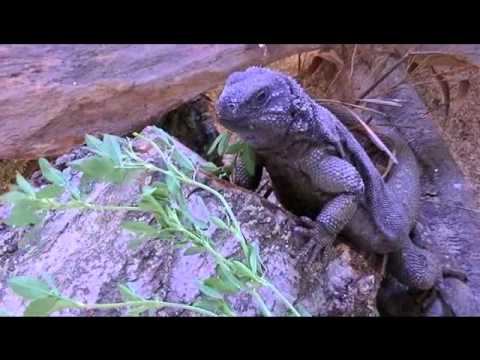
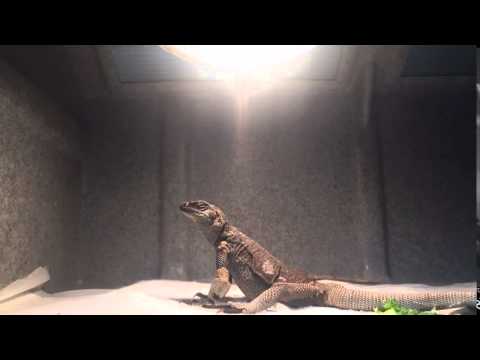
Angel Island chuckwalla
- Sauromalus hispidus

The Angel Island chuckwalla it is the second largest species of the genus Sauromalus (chuckwallas), reaching 44 cm of body length and 64 full length cm
Angel Island chuckwalla
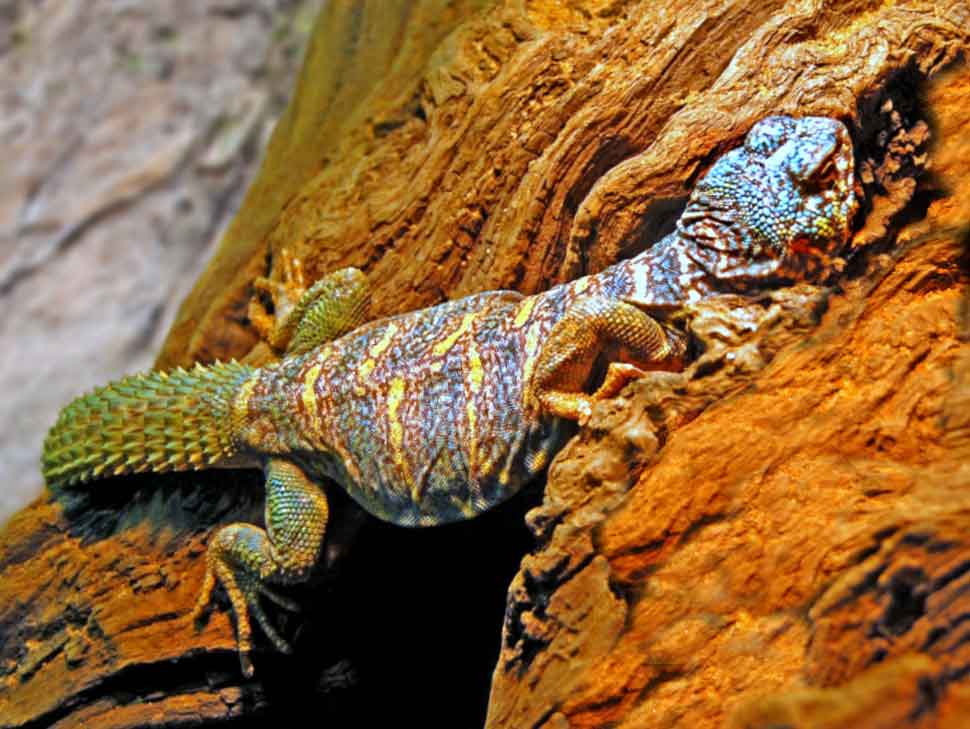
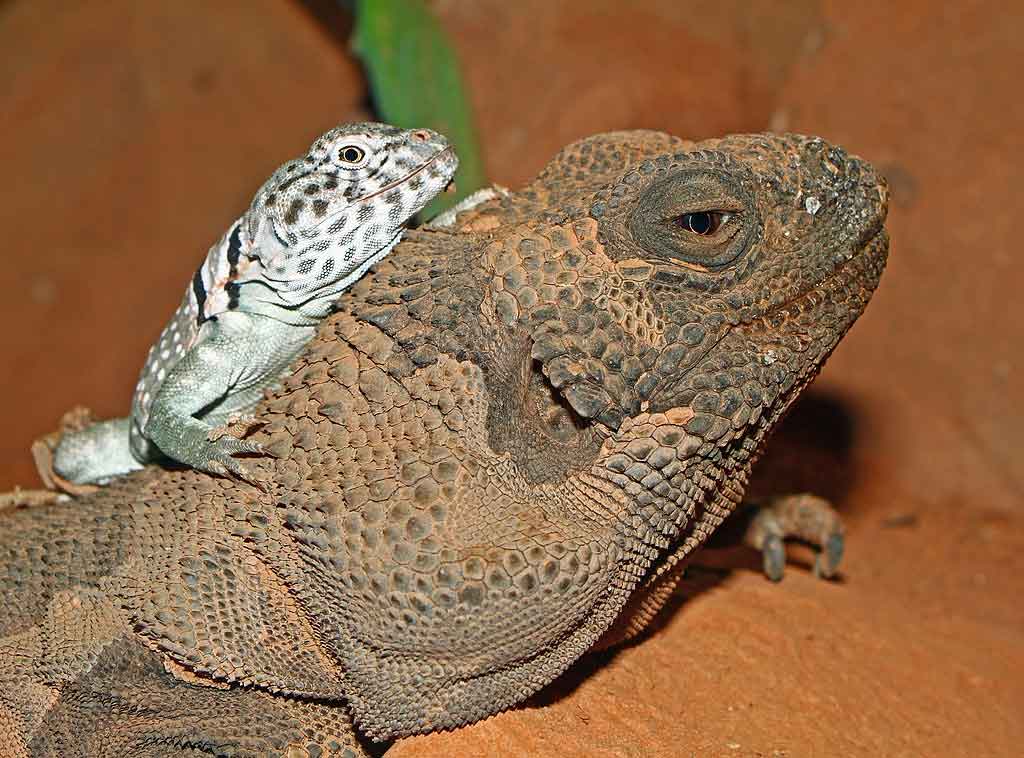
A common collared lizard, (Crotaphytus collaris) sitting in a Angel Island chuckwalla (Sauromalus hispidus;) Reptilium Landau, Germany – H. Zell, CC BY-SA 3.0, via Wikimedia Commons

Content

Origin / Distribution

The Angel Island chuckwalla (Sauromalus hispidus) it is found in the northwestern islands of the Gulf of California (Mexico): Guardian angel, Granite, Mejia, Pond, Saint Lawrence North, South San Lorenzo and smaller islets in the Bay of Los Angeles (Horse's head, Window, Louse, Arrow, Mitlรกn and Coronado). These islands make the west cool and mild in winter and hot in summer..

Characteristics / Appearance

The Angel Island chuckwalla it is the second largest species of the genus Sauromalus (chuckwallas), reaching 44 cm of body length and 64 full length cm, and weighing up to 1,4 kg. It is considered a gigantic species, as it is two to three times the size of their counterparts on the continent. Its body color is a dark brown color with black transverse bands that fade into a solid darker brown to black color as the animal ages..

Habitat

The vegetation is dominated by xerophytic plants. Characteristic are the large cardon cactus (Pachycereus pringlei) and creosote bushes (Larrea tridentata).

The Angel Island chuckwalla it is present in all the smaller islands, but generally prefers the vicinity of rocky areas where animals find their hiding places.

But, due to the influence of the sea, humidity is generally higher than in mainland parts of the Sonoran Desert and rises sharply at night, with occasional early morning mists. Extreme temperatures are a minimum of 8 ยฐC and a maximum of 43 C.

Behavior

When two adults meet, they occasionally flatten on their sides and threaten each other with typical iguana โ€œshovesโ€ and head nods. But, the animals do not come any closer and move to another rock after a short time.

Also striking is the general absence of any flight reaction towards humans..

Once the morning mist has cleared (between the 8 and 10 in the morning), the Angel Island chuckwalla appears on rocks to warm up in the sun. After the first sunbaths in the morning, many of the observed animals migrate to the canyon, where they feast on growing strawberries.

In the afternoon there is a second phase of activity, in which many animals go back into the canyon and look for food there.

Threats to the species

State of conservation โ“˜


Endangered in danger โ“˜ (UICN)โ“˜

The Angel Island chuckwalla (Sauromalus hispidus) has recently been assessed by the IUCN Red List of Threatened Species in 2018. Sauromalus hispidus is listed as In danger under criterion B1b

The "Angel Island chuckwalla" in captivity

The islands of the distribution area of โ€‹โ€‹the Angel Island chuckwalla have been protected by the Mexican government through the decree of the 2 in August of 1978 as "Reserve and Refuge for Migratory Birds and Wild Fauna". It also, Mexican legislation prohibits in principle the capture of reptiles for commercial purposes from 1952.

The Environmental Protection Law of 1988 establishes in principle that the taking of reptiles from the wild for commercial purposes is permitted under certain conditions, but until 1993 at least, there were no application guidelines for it, and the Mexican government had not issued a single permit for Baja California or the islands of the Gulf of California.

In the Decade of 1970, the giant chuckwallas (mainly Sauromalus varius, but also Sauromalus hispidus) were captured for the pet trade. MELLINK (1993) points out that illegal collection activities continue and that this also affects the Angel Island chuckwalla. While the Sauromalus varius is included in Appendix I of the WA, There is no international protection status for the Angel Island chuckwalla (Sauromalus hispidus).

It follows that at least most of the giant chuckwallas circulating in the terrarium trade must be illegally harvested animals.; this applies to all animals originating from Baja California or from the islands of the Gulf of California. The Angel Island chuckwalla (Sauromalus hispidus) it is rare in the international pet trade, but regularly shows up there at fairly high prices as claimed pups (in july 2001 the species was offered by two dealers in Germany). In U.S.A. the Angel Island chuckwalla (Sauromalus hispidus) is maintained and reproduced by at least three private owners.

The terrarium

Angel Island chuckwalla
Angel Island chuckwalla – Reptilium Landau, Germany – H. Zell, CC BY-SA 3.0, via Wikimedia Commons

The data indicated here are those corresponding to HEIKO WERNING, a breeder of "Angel Island chuckwalla"

Temperatures, illumination, heating

All the animals were always kept together in the same terrarium.. Initially I housed them in a terrarium of 150 x 200 x 200 cm. (wedged in a corner of the flat with diagonal walls, hence it only has average measurements), which was lit by an HQI burner of 150 W y luz natural (a "terrarium wall" was an exterior window).

The "terrarium wall" was an exterior window). a focus of 100 W, shining from a distance of about 30 cm on a platform of artificial rock, served as a hot island. Another local heat source was the HQI lamp ballast, which was mounted on the ground and covered by a metal plate. In both heat islands the temperatures were 40-50 C, The ambient temperature in the terrarium varied between 25 and 35 C, depending on the measuring point. In summer, temperatures could rise above (up to about 40 ยฐC ambient temperature), in autumn and spring they were below (up to about 20 ยฐC ambient temperature). At night, values โ€‹โ€‹dropped at room temperature (normally 18-22 C). The duration of artificial lighting was 14 constant daily hours outside the winter rest period; the total length of the day varied throughout the year depending on daylight hours in Berlin due to light from outside. In winter, artificial light sources were turned off for a period of 8 to 12 weeks, so that the values โ€‹โ€‹dropped to room temperature throughout the day and only natural light from outside illuminated the terrarium.

Furniture and design

The terrarium was furnished with artificial rock constructions made of Styrofoam, which were covered with wood glue and then sanded. The artificial rocks manufactured in this way turned out to be quite resistant., even to the mighty claws of the chuckwallas. Several vertical and horizontal "cracks" in the Styrofoam served as hiding places for the lizards, what they used at night, sometimes during the day when it was hot in summer and to hibernate in autumn and winter. The slits were designed in such a way as to provide a comfortable shelter for the animals., but at the same time they always offered contact surfaces from above and below. Sand available on the market was used as substrate., and the set-up was completed with a large climbing branch that almost filled the room and reached just below the HQI spotlight.

In 1999 I move house, and as the new terrarium originally intended for the chuckwallas could not be completed at the moment, they had to move to a much smaller enclosure. They are now kept in a terrarium of 150 x 70 x l00 cm, with whom he had already had a good experience in the maintenance and breeding of common chuckwallas (Sauromalus obesus BAIRD, 1859) (WERNING 1998) and that animals still inhabit today.

Two fluorescent lamps 60 W, a focus of 60 W shining on an artificial rock platform from a distance of 30 cm., and the UV lamp ยซOsram Ultra Vitalux" from 300 W, which is mounted on the lid and burns irregularly once or twice a day for 1-4 hours from a distance of about 60 cm., serve as lighting. This terrarium is also mainly equipped with artificial rocks (made of polystyrene and polyurethane foam, again painted with wood glue and then sanded). Borders and cork boards serve as additional structural and concealing elements. The temperature and lighting regime is similar to that described above, with the exception that there is hardly any natural light.

The tenarium is watered at irregular intervals at night.

Water is usually available in a small bowl. Animals have never been observed drinking.

Food
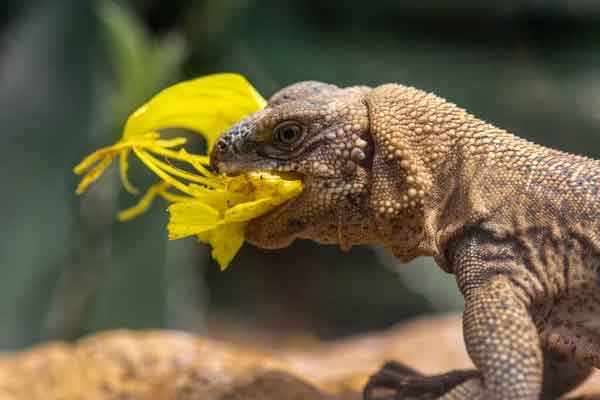
Angel Island chuckwalla
Photos of Sauromalus from | Depositphotosยฎ

According to the herbivorous way of life, I feed my chuckwallas almost exclusively with plant foods. They are fed an average of three to five times a day at will, that is to say, animals receive the amount of food they eat throughout the day. The main ingredient is lettuce, which has a very high calcium content compared to other leaf lettuce. From the beginning, constituted between 2/3 and 80% of the ration. If this lettuce is not available in season, a mixture of green lettuce, iceberg lettuce and other leaf lettuce (trade name "mixed lettuce") served as main food.

This basic diet is supplemented with other plant foods (mainly banana, Cucumber, tomato, chickweed, Apple, strawberries, grapes, carrots); occasionally I also offer food for animals (young mice, grasshopper, zophoba larvae). Juveniles still do not accept animal food; only at the age of 2-3 years showed for the first time a cautious interest. The Sauromalus hispidus adults from about five years of age, on the other hand, they pounce on all offered food with great avidity and clearly prefer it to any type of vegetable food.

Plant feeds were generally mixed with a mixture of vitamins and minerals. There was no exact dose, but they mixed 1-2 ml of the preparation with the green food in approximately three out of four meals as a well-tested empirical value from the care of the Dipsosaurus dorsalis and Common chuckwalla Sauromalus ater.

I feared giving the animals too many vitamins and reduced the addition to every one or two weeks, but I also offered them crushed egg shells and pieces of cuttlefish so that they could meet their calcium needs on their own.. After wintering 1999/2000, clear symptoms (hind leg lameness, slight deformation of the bones) showed that three of the four juveniles of 1997 suffered from a calcium deficiency. A diagnostic examination with rontographs confirmed the suspicion. Two animals died shortly after, one of them could be saved with the administration of vitamin D by the veterinarian. Hind leg injury healed almost completely, the animal returns to normal mobility and shows only slight changes in movement compared to other animals. Since then, the animal has been fed again with a mixture of vitamins and minerals, as described above.

Mating
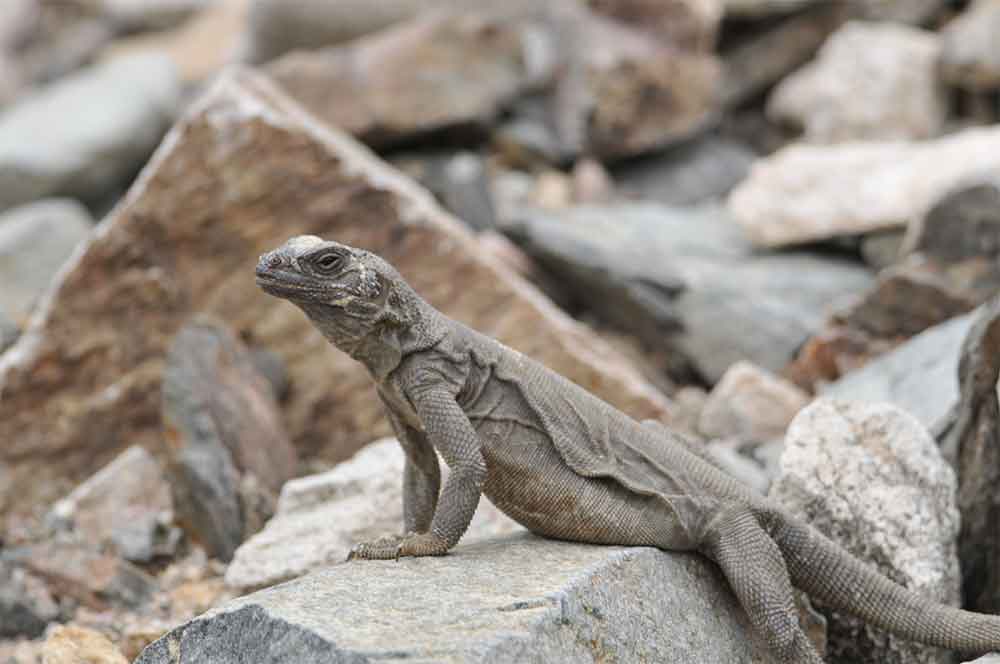
Angel Island chuckwalla
Angel Island chuckwalla – colombia.inaturalist.org

In winter 1999/2000 the animals hibernated from early December to early February. From April 2000, the two adult males displayed completely different behavior. They threaten each other several times a day by flattening on the side and nodding their heads. They stood facing each other, leaning towards each other, so that the two animals together formed almost a circle. after a few nods, they started hitting each other with their tails. Either one of the males ran away, or a few flicks of the tail caused one of the animals to run towards the other and try to bite, what was partially successful. The second male then fled and was chased by the winner through the tenarium for some time., sometimes for several minutes, until finally he left her and the situation relaxed for a while.

In May, these fierce fights, which in two cases resulted in smaller but bloody bite wounds, could be seen almost every hour. But, while they fed, the two males continued to ignore each other and fed together without disturbing each other. If the superior male stood directly in front of the adult female during the chase, he left the adversary and impressed his partner by nodding his head. The 15.5.2001 mating was observed. It took place on the highest rock platform in the corner of the tenaria, illuminated by spotlight. The male had bitten the female's neck in typical iguana fashion and pushed her cloaca below that of his mate.. As I only arrived during copulation, I can't tell how long it lasted. Some 60 Seconds later, the male abandoned the female and a large drop of sperm from the female came out of his cloaca. No more matings could be observed, but the rivalry between the two males remained just as intense until June, and there were repeated clashes between the two until hibernation. In 2001, on the other hand, only very isolated fights without biting attacks were observed between the males.

After observed mating, the female showed a large appetite and quickly gained visibly in body size.

The eggs were visible under the skin when the animal was at rest.. About a week before egg laying, the female began to dig in several places of the ten-ario. In the ten-arium itself there is an artificial rock cavity made of Styrofoam (a few 15 x 30 x 15 cm.), that I have now filled up 2/3 with moist potting soil. The 14.06.2000 The female laid nine eggs of about 40 x 22 mm. It remained in the cavity for about a day. Then, not only was the egg well of the cavity filled with substrate, but the female pushed all the substrate of the terrarium on the artificial cavity, so that it finally disappeared under a mountain of substrate. Eggs were removed shortly after laying and placed in a Styrofoam box converted into an incubator., as described by WERNING (1995). Once the eggs are removed, the female scratched the cavity again to close it completely. For a week or so, seemed to guard the nest cavity and continued to move material up the mountain.

The incubation substrate was moist sand., with which he had already had good experience in laying eggs in the Chacahuala del Noroeste Sauromalus ater. I adjusted the humidity of the substrate with the "safe instinct" that I had already acquired with the other Chuckwallas. The sand is moist but not wet, humidity reaches approx. 90-95 % due to evaporation above the heat source in the brood box. Half of the eggs were buried in the substrate. No light enters the incubator except during controls.

During the first four weeks I incubated at 30ยบC, the remaining 6,5 weeks at 32ยบC. One egg died after about four weeks for no apparent reason. He seemed to have suddenly lost tension; had softened and yielded. The opening showed that she was fertilized. another egg, after eight weeks of incubation, also collapsed a bit and was without tension. Then I increased the humidity of the substrate a little, the egg recovered after a few days and was plump and firm again.

The 01.09.2000 the first eggs hatched. The 03.09.2000 the eight pups were born. The incubation period was, Therefore, of 80 to 83 days. CARL & JoNES (1979) inform of 94-99 days to 29-31 incubation temperature ยบC. In my case, all the young animals first scratched the egg, from which the clear came. Only hours later they took the head out of the egg, followed by the upper body after a few more hours. The pups took a 24 hours to finally hatch. All hatchlings still had a large yolk sac, that were completely reabsorbed during the 48 following hours. During this time I left them in the incubator. The pups measured between 5,5 and 6,1 cm. in length and between 10,1 and 12,3 cm.. So, hatchlings were much smaller than previously reported in the literature (CARL & JoNES 1979: 7,2 cm., SYLBER 1985: 7,1 cm.). Egg sizes also remained below literature values. (CARL & JoNES 1979: 44 x 29 mm, SYLBER 1985: 50 x 35 mm), the smallest clutch size known so far was given by CASE (1982) with 14. But, according to the same author, the smallest female known so far to have reproduced, with a length of 24 cm., was already considerably larger than my female with 18 cm..

Breeding

The newborn pups seemed very weak and barely moved, so I feared that they would not be viable. Once the yolk sac is completely reabsorbed, I placed them in the breeding room. In a few minutes they cheered, they ran around the tank, they caressed all the furniture and even nibbled on a piece of wood from a root.

The average breeding terrarium 100 x 60 x 50 cm and was equipped with two fluorescent lamps of 40 W and a focus of 60 W that illuminated a root from a distance of about 20 cm.. It also, juveniles were irradiated several times a week for 1-2 hours with an Osram Ultra Vitalux lamp.

The glass of the terrarium was replaced by a grid so that the UV rays were not filtered and the lamp was placed at a few 50 cm in front of tenarium. Young animals reacted immediately to radiation. They reached out and clung to the net to get as close to the radiation source as possible.. when they had enough, they gradually retreated to their hiding places.

In addition to the root mentioned, a small artificial rock from the shops and a stack of compressed cork sheets arranged in such a way that there were enough indentations to hide were used as furniture. The back and side walls are pasted over with decorative cork boards, which allowed the animals to climb the walls a little, although the little ones are already quite clumsy when climbing vertical surfaces. I initially chose quartz sand as the substrate, but after discussing with two terrarium keepers I decided to use only cellulose cloths (kitchen towels), as they both reported for their experience of death traps in young Uromastyx and Sauromalus, that had occurred due to clogging as a result of massive ingestion of sand.

feeding the little girl Angel Island chuckwalla did not cause any problems. From the first day in the breeding terrarium they ate all the vegetable food that was offered to them.. Feeding was similar to that of adults.. From the beginning, small crickets were offered, wax moth caterpillars and cockroaches for interest, but the chuckwallas ignored them. Today, they do not accept food of animal origin.

In December, the little ones chuckwallas were subjected to a three-week "mini-hibernation" with the lights off and at room temperature (a few 20 C).

At four months, I moved the young animals to a larger terrarium (150 x 70 x 100 cm.). So far no interactions between the animals have been observed., apart from occasional mutual nods. But, a young man lagged behind in growth. Only too late did I realize I wasn't eating enough. when i split it, he was already refusing food and died shortly after at five months. After nine months there were two more losses. One was apathetic and separated. Although he kept eating, died after a few days. The same day, another animal in the group died without any previous signs of disease. The necropsy revealed a massive salmonella infestation in both animals as the probable cause.. The swabs from the other animals showed the same results., and an antibiogram revealed the sensitivity of microorganisms to Baytril. treatment with Baytril was carried out successfully under veterinary supervision.

Buy one "Angel Island chuckwalla"

When buying a reptile with these characteristics, it is an obligation to make sure that the store where it is sold is certified and has the necessary permits according to the law so that you do not have any type of problem., if it complies and is in order, you make sure to buy an animal that is not in danger of extinction since they are surely from specialized farms for the sale of this particular species.

Please be aware and for no reason acquire animals in clandestine shops illegally or on the black market.. Since you favor the disappearance of species that are in danger of extinction.

Videos "Angel Island chuckwalla"

SAUROMAL HAIRY (chuckwalla).wmv

Angel Island Chuckwalla(chuckwala)

Alternative names:

1. Angel Island chuckwalla, Spiny chuckwalla (English).
2. Chuckwalla รฉpineux (French).
3. Angel Island Chuckwalla, Stachelige Chuckwalla (German).
4. Chuckwalla espinhosa, Angel island chuckwalla, Ilha dos Anjos chuckwalla (Portuguese).
5. "Iguana espinosa", Chacahuala de la Isla Angel de la Guarda (espaรฑol).

โ–ท The world of Pets: Dogs, cats, birds, reptiles, amphibians

Sunbeam snake
- Xenopeltis unicolor

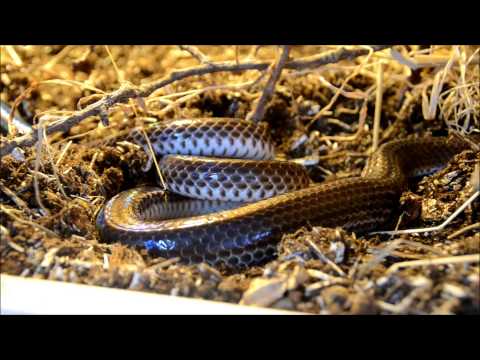
The Sunbeam snake They are constrictors and kill their prey by suffocating them in their muscular coils..
Sunbeam snake
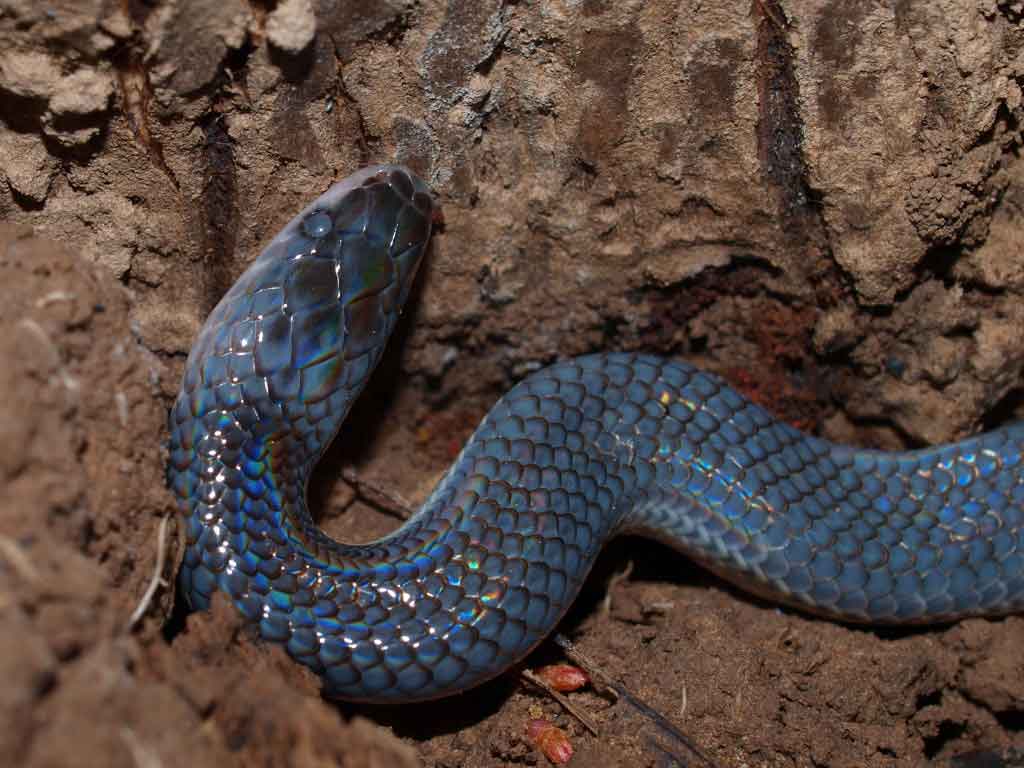
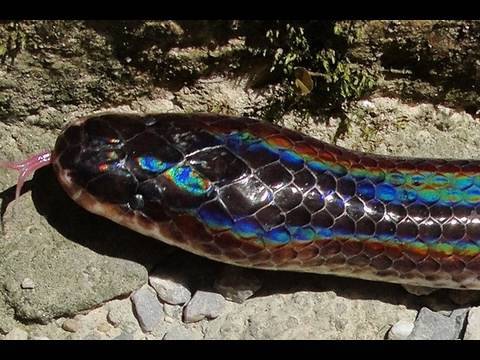
This close-up clearly shows the characteristic highly polished iridescent scales. – Bochr, CC BY-SA 3.0, via Wikimedia Commons

Content

Origin / Distribution

The Sunbeam snake (Xenopeltis unicolor) is located in China (Guangdong y Yunnan), Myanmar, the Andaman and Nicobar Islands, Viet Nam, Laos, Cambodia, Thailand, west malaysia, la isla de Penang, the island of singapore, East Malaysia (Sarawak), Indonesian (the Riau archipelago, Bangka, Billiton, Sumatra, We, Simalur, Nias, the Mentawai Islands of Borneo, Java and Sulawesi) and the Philippines (Balabac, Bongao, Jolo and Palawan). The indicated type locality is "Java".

Characteristics / Appearance

The Sunbeam snake grows to an average of 1 m. The head is wedge-shaped and narrow., with little delineation of the neck, which makes it easy to push along the ground. Its most defining characteristic is its iridescent scales., highly polished, which give this snake its common name. They have a layer of dark pigmentation just below the surface on each scale that enhances the iridescence.. The young look very similar to the adults., except that they have a strong white "collar" of scales evident just below the head. This coloration fades during the first year,

It is a primitive form of snake with python characteristics; the family to which he belongs is still the subject of debate.

Habitat

This lowland snake lives in forests, swamps and bushes. The species can be found in both disturbed and undisturbed areas., including urban environments, paddy fields and other agricultural areas, as well as the tropical forest. These snakes are most often found in disturbed areas, such as gardens adjacent to secondary forest. In Vietnam the snake is cosmopolitan among 100 and 2.000 m above sea level, but seems to prefer forested mountain valleys, with rocky areas near streams. The snake spends most of its time underground and only emerges at night or during heavy rains in the wet season..

Behavior

These snakes are constrictors and kill their prey by suffocating them in their muscular coils.. They are fossils and spend most of their time underground.. They can bite easily if handled roughly, but most of the time they only try to escape if they are caught. They have also been observed to vibrate their tail like a rattlesnake when threatened..

Food

The diet is varied and consists mainly of frogs, reptiles, including other snakes, and small mammals.

Reproduction

Oviparous, females lay up 10 eggs at a time.

Threats to the species

State of conservation โ“˜


minor concern Minor Concern โ“˜ (UICN)โ“˜

The Sunbeam snake (Xenopeltis unicolor) was assessed on the IUCN Red List of Threatened Species in 2011. The Xenopeltis unicolor figure as of Least concern.

It is generally a common species. It is described as very common in Vietnam, and is also common in Myanmar.

No specific conservation measures known for the species, although found in protected areas in Vietnam and Myanmar, and presumably throughout its range. In Thailand the species is protected by law.

The "Sunbeam snake" in captivity

This species is taken from the wild for the pet and fur trade..

The terrarium

terrarium size

minimum requirement 1 x 0,5 x 0,5 of the total length of the animals for a pair.

Temperature

Soil temperature should be between 26-28 ยฐC, with local heating up to 33 ยฐC. Baja a 22 ยฐC at night. The basic temperature can be reached well with, for example, Thermo Mat. But, this should be very weak. Otherwise, it is better to use a spotlight.

Humidity

60-80%, also above the 90%; proper substrate moisture is most important. To create the ideal conditions, it is recommended to use musgo Sphagnum. This creates loose, airy hiding places that retain moisture optimally..

Illumination

Daylight fluorescent tubes, for example, Daylight Sun ECO in combination with the light strip.

Substrate

Loose and absorbent substrate such as Jungle Bedding, Snake Bedding or Eco Bark. Never use gravel or sand. The snake must be able to bury itself.

Furniture

Create lots of hiding places, for example, with stones, cork roots and bits. A shallow bowl of water should not be missing. Climbing branches are not necessary.

Food

Mice, rats and other rodents of adequate size.

Buy one "Sunbeam snake"

The price of a "Sunbeam snake" at the exotic animal market, ranges between 120 – 160 EUR.

Videos "Sunbeam snake"

Sunbeam Snake a Rainbow Snake with Rainbow Colors ๐Ÿ‡น๐Ÿ‡ญThailand VLOG | ThaiPulseCom

rainbow snake (Xenopeltis unicolor) many

Alternative names:

1. Sunbeam snake (English).
2. Serpent arc-en-ciel (French).
3. Regenbogen-Schlange (German).
4. Cobra solar (Portuguese).
5. "Serpiente rayo de sol", Serpiente iridiscente asiรกtica (espaรฑol).

โ–ท The world of Pets: Dogs, cats, birds, reptiles, amphibians

Schneider's skink
- Eumeces schneideri

Schneider's skink

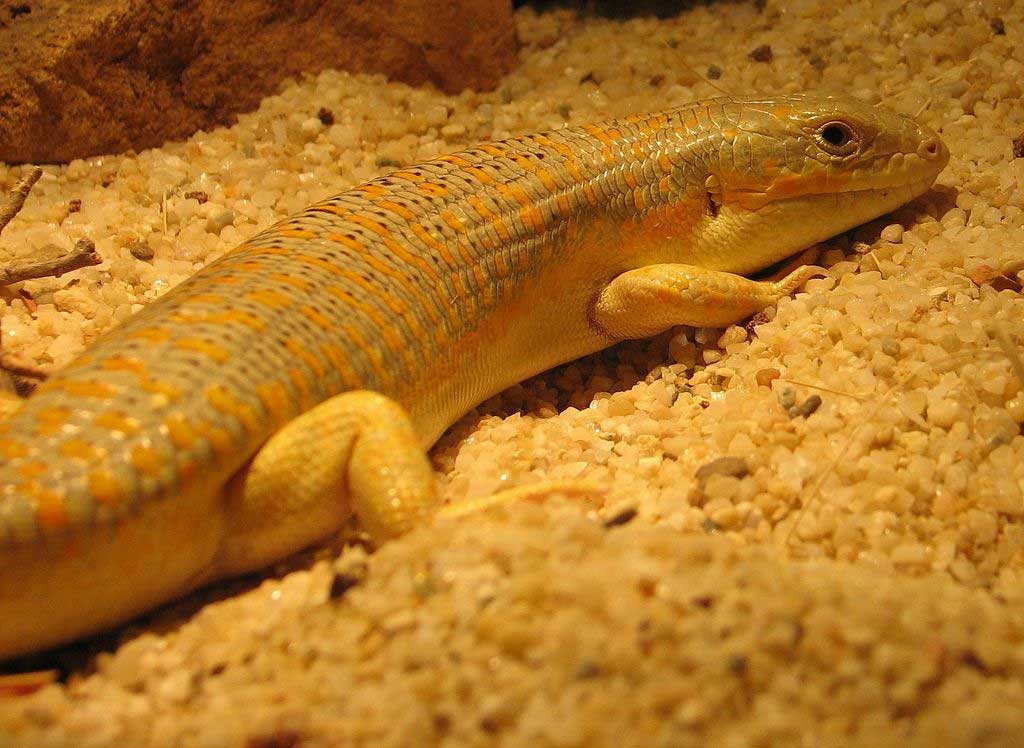
The great skink North Africa and one of the most beautiful we can find, since the orange colors that it has on the back with the yellow sides make it a beautiful animal. feeding, In addition to giving it insects and worms, we can add fruit that it will take with pleasure.. Docile and manageable. Perfect.

Its price ranges from 30 and 40 EUR, 60 euros for the couple.

โ–ท The world of Pets: Dogs, cats, birds, reptiles, amphibians

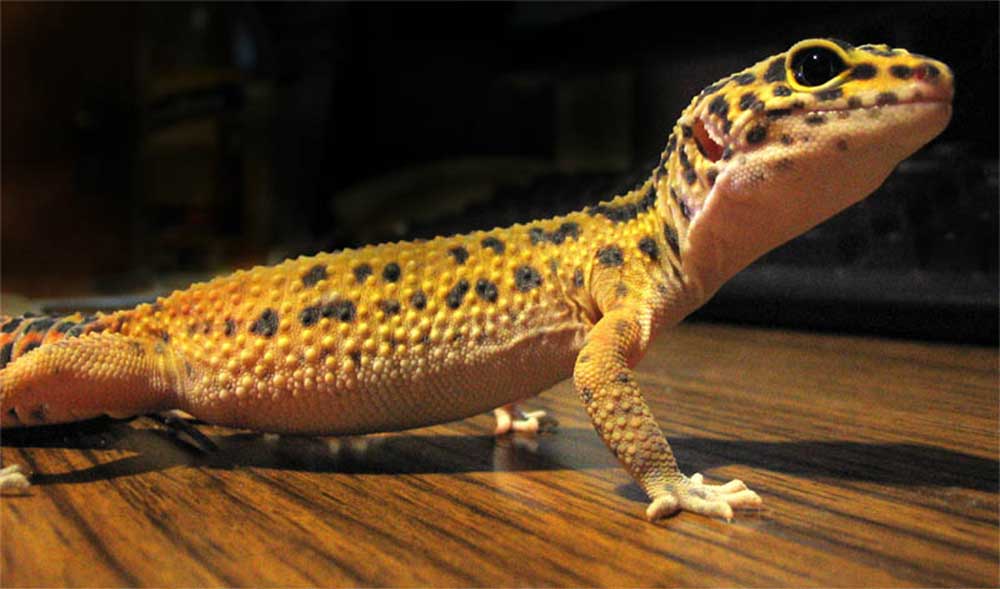
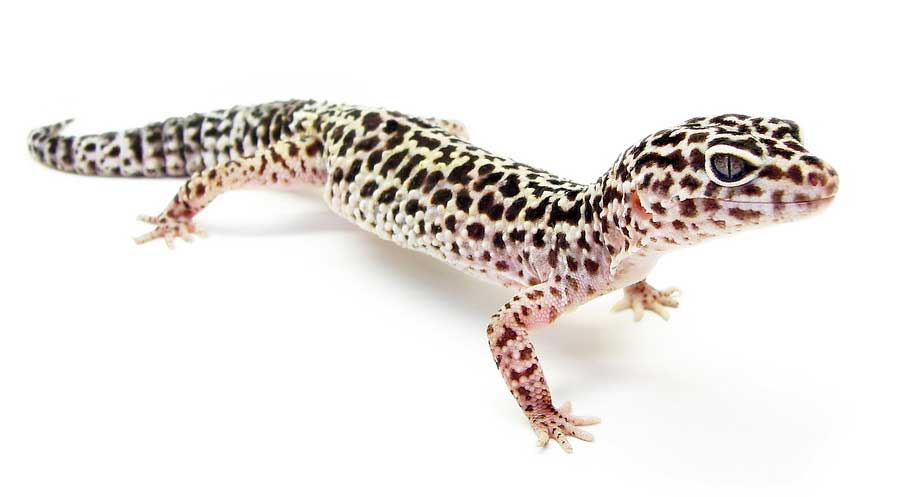
Leopard gecko
- Eublepharis macularius

The Leopard gecko they are peaceful and friendly creatures. They can be kept individually, as a couple or in a group without any problem.
Leopard gecko
Leopard gecko – Iterat at the English-language Wikipedia, CC BY-SA 3.0, via Wikimedia Commons

Content

Distribution and habitat

The Leopard gecko is originally from eastern Afghanistan, Pakistan and North India. They inhabit rather dry steppe landscapes and grasslands. These crepuscular and nocturnal reptiles spend the day under stones or in burrows that they have dug themselves or have taken from other animals.. At dusk, they like to use the stones that are still hot from the day to warm themselves.

The Leopard gecko is considered a good climber because, Unlike many other species of geckos, does not have adhesive foils on the fingers, but claws. They reach a total length of about 30 centimeters and live up to 20 years.

Summers in the natural range of the Leopard gecko they are hot and humid, with daytime temperatures around 40ยบC. Winters are dry and cool, below 20ยฐC during the day. At night there are sometimes temperatures below zero, in the mountains even down to 20ยฐC below zero.

during the cold season, animals hibernate for several months.

Description

The Leopard gecko also shows great variability in nature. The head is about half as long as the trunk.. The eyelids are striking. The snout usually shows an X- or Y-shaped light pattern. The scales are fine grained, with bulging elevations below. The body is usually yellow to grey-violet.. The spots are blackish brown. The segmented tail reaches about a third of the length of the head and torso and, often, still shows the bands of the youth brands. The ventral side is smoothly scaled and unmarked.. Fingers have claws but no sticky plates.

males are more powerful, with broader heads and have pronounced preanal pores. Can you find out the sex of a Leopard gecko observing the anal regions.

Behavior

Leopard gecko
Leopard gecko – Matt Reinbold, CC BY-SA 2.0, via Wikimedia Commons

During the day, the Leopard gecko they shelter from the heat and sunlight in caves, well-heated crevices and burrows. They occasionally bask in the sun for a short period of time, but they only activate at dusk. They choose stones heated by the sun to obtain the heat of their activity, then they go hunting and take refuge in caves to protect themselves from the night cold.

in the terrarium, animals change residence several times. At bedtime (during the day) prefer heated caves and crevices, which must offer a maximum of 27ยฐC. They switch between wet areas, dry, lighter or darker. Especially for egg laying and moulting, well-moistened areas should be offered. This is easily achieved by using a wet box, which can be made decoratively to match the design of the terrarium.

The Leopard gecko They need a place to relieve themselves.. Us, we determine which place in the terrarium is suitable. From then on, droppings are always deposited in the same place.

The Leopard gecko are in dire need of protection, are reluctant to move through open spaces. They prefer to cover themselves from at least 3 sides (soil, rear wall and from above).

In case of danger, The Leopard gecko they can release their tail fully or partially (so-called default breakpoints). This severed piece continues to squirm like a worm and distracts the attacker from their true prey.. Terrarium keepers should never grab an animal by the tail.

The Leopard gecko they are good to keep them in groups, but you should never socialize 2 males. A male can share a terrarium with 2-4 females, it just needs to be the right size.

Leopard Gecko in captivity

Life expectancy

The Leopard gecko they can become proverbially old if maintained in a manner appropriate to the species. In this case, 20 years are considered normal. In the news, almost been verified 30 years in literature.

Terrarium

For a group of 1,2 Geckos, the minimum dimensions of 100 long x 50 wide x 50 high have proven to be adequate. You should not choose the smallest, the largest is gladly accepted.
If the group consists of 4 animals, should aspire to 120 long x 60-80 wide x 60-80 High.
The substrate should consist of a mixture of sand and clay, that makes it suitable for excavation. Soft sand is avoided by animals. It is a mistake to think that the sand is eaten on principle, what causes a bowel obstruction. Healthy animals can also ingest sand, which is not necessarily harmful.

Building

The terrarium can be glass, wood, Styrodur, acrylic or similar materials.
Back walls can be Styropur, construction foam, adhesive for tiles or natural materials.
Crush holes in the rear walls look mandatory. But, taking into account their way of life, more attention should be paid to substrate design.
The substrate must be rich in cracks, caves and passageways. In this way, different microclimatic zones can be offered. Substrate may be tiled or otherwise protected from moisture, but a cana steppe must be designed above.

ventilation slots

They must always be at odds, that is to say, at the front under the glass panes and at the top of the rear wall or on the terrarium lid.

Decor

  • Stones taken from nature or trade, according to taste and color combination.
  • Roots taken from nature or from a specialized store.

Illumination

– Basic lighting should be fluorescent tubes (LSR) during 12-14 hours a day to simulate a day. In this case, simple light bars with a daylight spectrum are enough.

– late afternoon, for example between 16 and 20 hours, a foco BY 38 of 50 watts, or a little more, can heat a root, a rocky outcrop, a stone or similar structure.

– UV light is considered controversial, animals are active at dusk, so ultraviolet light is unnecessary.

– Heating stones or heating mats are also controversial, but they can be very useful to provide a warm surface at night, similar to rocks heated by the sun in nature.

– Heating stones or mats should never be buried in the substrate. Rather they should be integrated above the substrate, like the rocks in nature.

– The operating time of these "hot stones" is reasonable from 16 to 22 hours, after which it should be cooled in the terrarium.

– Night lighting should be refused for this species, because it goes against his nature.

Diet

  • There are crickets on the menu, various cockroaches, crickets, grasshopper, zophobas larvae and mealworms, centipede, worms, beetles, spiders, scorpions, as well as mammals and young birds that nest.
  • These Geckos they are hunters who are attuned to a certain range of movements of their prey, so they should also actively hunt whenever possible in the terrarium and not passively wait for them to feed.
  • A varied diet is recommended, more than a lot, to avoid overfeeding.
  • This variety is easier to come by if small foods are chosen rather than a single large one..
  • Insects from specialized stores can be used as food, their own brood and prairie plankton.
  • Adult animals only need to be fed a variety of small insects once a week in the terrarium.
  • Young animals should be given food every day for breeding, reduced according to development progress.
  • Care must be taken to ensure optimal supplementation.
  • – The insects, if not the plankton of the prairie, should also be well fed before feeding. This is called a good charge.
  • It also, the terrarium should not lack a supply of calcium. It is useful to distribute cuttlefish bone or ground shell gravel on the rock walls, since animals like to explore their territory by licking. A small bowl filled with calcium flour is also helpful.
  • Of course, there should always be a small bowl of water.
  • As animals tend to quickly lose their shyness towards humans, they will eat from the tweezers or even from the hand of the keeper. This should not tempt you to train them, so to speak, because active hunting at the right time keeps them healthier in the long run than begging for food.

Reproduction

Females usually lay 2 eggs each, sometimes only one. It is quite common for there to be 4-5 put per year, and have a few 4 weeks between two sets. We incubate the eggs between 26 y 28ยฐC. The young hatch after a few 7-8 weeks.

It is interesting to note that young animals are extremely aggressive at first, but completely harmless. This protection mechanism disappears after a few weeks. The juvenile coloration in the form of horizontal stripes is maintained for about 4-6 months, then the animals slowly change color and after a few 10-12 months have the appearance of an adult animal. The completion of the color change is a clear signal of the beginning of sexual maturity.. The rearing of young animals does not present any problem.. They are raised separately from the adults. Price of a

price of a leopard gecko

The price of a Leopard gecko in the exotic animal market ranges from 50 – 60 EUR.

Alternative names:

1. Common leopard gecko (English).
2. Eublepharis macularius (French).
3. Pakistanische Fettschwanzgecko (German).
4. Osga-leopardo, Geco-leopardo (Portuguese).
5. Gecko Leopardo Asiรกtico, (espaรฑol).

โ–ท The world of Pets: Dogs, cats, birds, reptiles, amphibians

Ornate mastigure
- Uromastyx ornata

The Ornate mastigure (Uromastyx ornata) is included in the Appendix 2 of the Washington Convention on International Trade in Endangered Species of Wild Fauna and Flora.
Ornate mastigure
Ornate mastigure (Uromastyx ornata) – Hectonichus, CC BY-SA 4.0, via Wikimedia Commons

Content

Distribution

Its natural range is the northeast of the Red Sea, from the Sinai Peninsula in the north to northern Yemen in the south.

This species does not occur in pure sandy deserts. They inhabit the cracks of rocks and caves of their biotopes or use burrows dug by themselves.

Characteristics

The Ornate mastigure reaches a maximum total length of 37 cm., although animals in captivity rarely exceed 32 cm..

Is a sexual dimorphism recognizable, males being much more colorful than females. But, are common to both sexes yellow dots or transverse bands that are visible from the neck on the back to the base of the tail. It also, females have a rather smooth cream coloration in the throat and belly.

Terrarium

The large enclosures are suitable for keeping this species of lizard, dry and spacious terrariums are suitable. I believe that 140 x 60 x 60 (long, width, alto) is the absolute minimum size for a single animal/pair. It's not always easy to find a harmonious partner, but most of the time the animals harmonize very well, and you can keep them as a couple throughout the year.

But, it should be possible to separate them at any time. If you don't want to breed, to the Uromastyx ornata can also be maintained individually, since they are actually solitary by nature. This avoids conflicts within the species.

The most colorful males are especially suitable for this, as they are usually more confident than females, but even a female does not feel alone, but it may happen that it forms unfertilized eggs without a male, which can lead to problems when putting them.

Construction of terrarium

The most suitable as substrate is a mixture of sand and mud suitable for excavation. To create additional space it makes sense to design the rear and side walls of the tank with โ€œrock wallsโ€ modeled from polystyrene., adhesive for tiles and epoxy resin. Other suitable furniture elements are secure stone structures with quarry slabs, the roots, cork tubes and various climbing branches.

It is also important to create several hiding places, but they must be controllable at all times without having to completely disassemble the terrarium. To avoid molting problems, a part of the terrarium may also have a slight moisture of the substrate, but not too much. You also have to spray from time to time. A bowl of water completes the installation.

The Temperatures should be 28-35ยฐC in summer, with 12-14 hours of illumination, and up to 60ยฐC in the sunning place. At night, the temperature can drop to room temperature. In winter, lighting is gradually reduced to 8 hours, and slowly increases again after a few 8-12 weeks. In winter, the temperature should be 20-28ยฐC during the day and 18-20ยฐC at night. A sunny spot should reach about 40-45ยฐC for about 4 hours in this time.

Food

The Ornate mastigure they have an omnivorous diet, that is to say, eat both plant and animal foods.

Should not be fed animal feed too often, once or twice a week is enough. An exception must be made with pregnant females, which must be given a lot of animal protein. You can also feed them more โ€œunhealthyโ€ treats., such as rose beetles or wax moth larvae.

It can be given fresh vegetable food to adult animals about 3-4 times a week. Grain mixture and dried herbs/flowers can always be available to animals. But, in the case of particularly voracious specimens, you also have to ration this food to prevent them from getting fat.

All common types of insects available in specialized stores are suitable as animal feed, as well as self-caught prairie plankton. Grasshoppers, crickets and cockroaches are the most suitable.

All insects should be fed a high-quality diet 1-2 days before feeding, and dusted with a high-quality calcium vitamin mix about once a week. The fat larvae of the wax moth, zophobas and rose weevils should rarely serve as food as treats.

Young animals can be fed green food and insects daily. Subadults feed on green food on a daily basis, of insects on alternate days and a weekly fast.

The cereal mixture adapted to size is also always available for young animals and subadults.

Reproduction

Depending on geographical location and weather conditions, the mating season occurs in the spring months of March and April. Sexual maturity occurs among 3 and 5 years of age and probably a little earlier in females. During reproduction they are oviparous, the female usually buries some 15 – 20 eggs in the sand and after an incubation period of some 3 – 4 months the pups are born.

For sale Ornate mastigure

The price of a Ornate mastigure bred in captivity in the exotic animal market ranges from 350 – 400 EUR.

โ–ท The world of Pets: Dogs, cats, birds, reptiles, amphibians

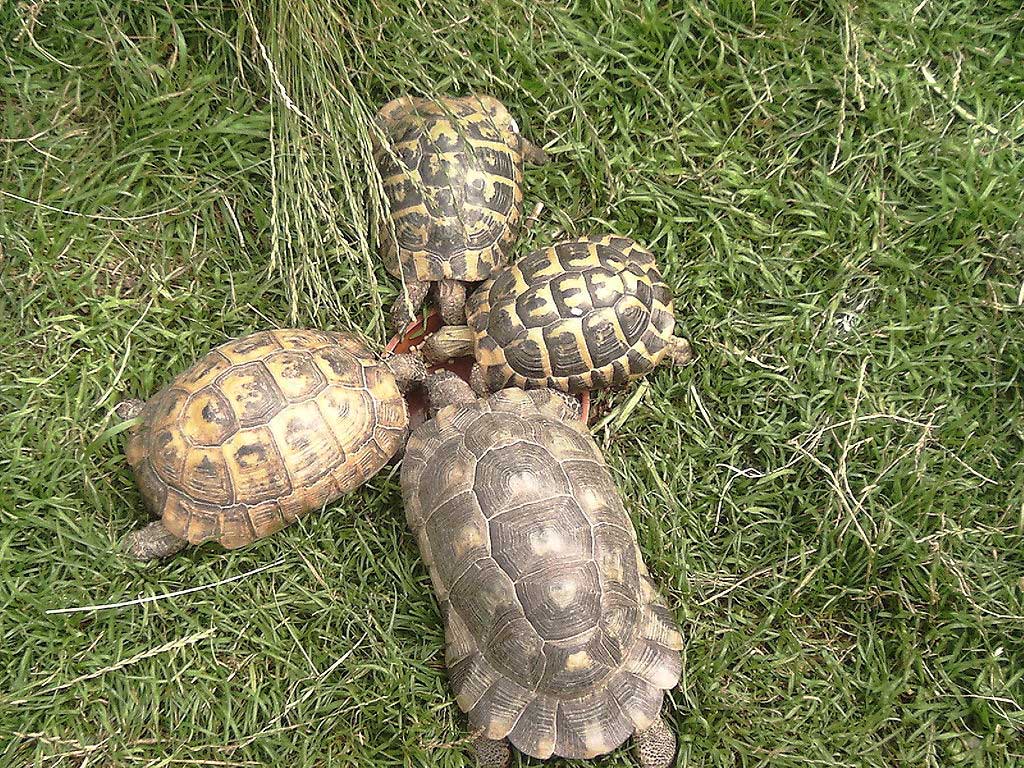
Greek tortoise
- Testudo graeca

The Greek tortoise You can live up 80 years. This should be taken into account when buying a young animal. So, it is advisable to think about inheritance when buying: who will take my animal?
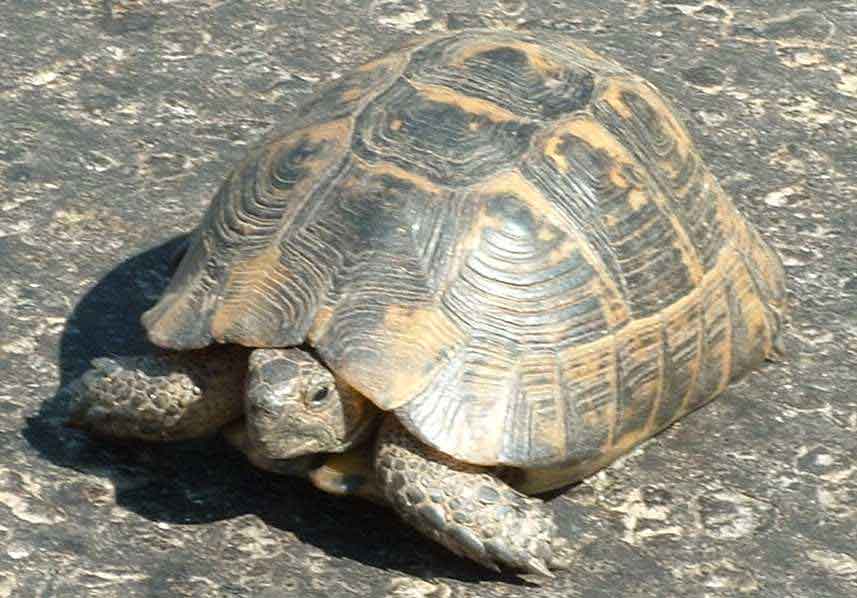
Greek tortoise
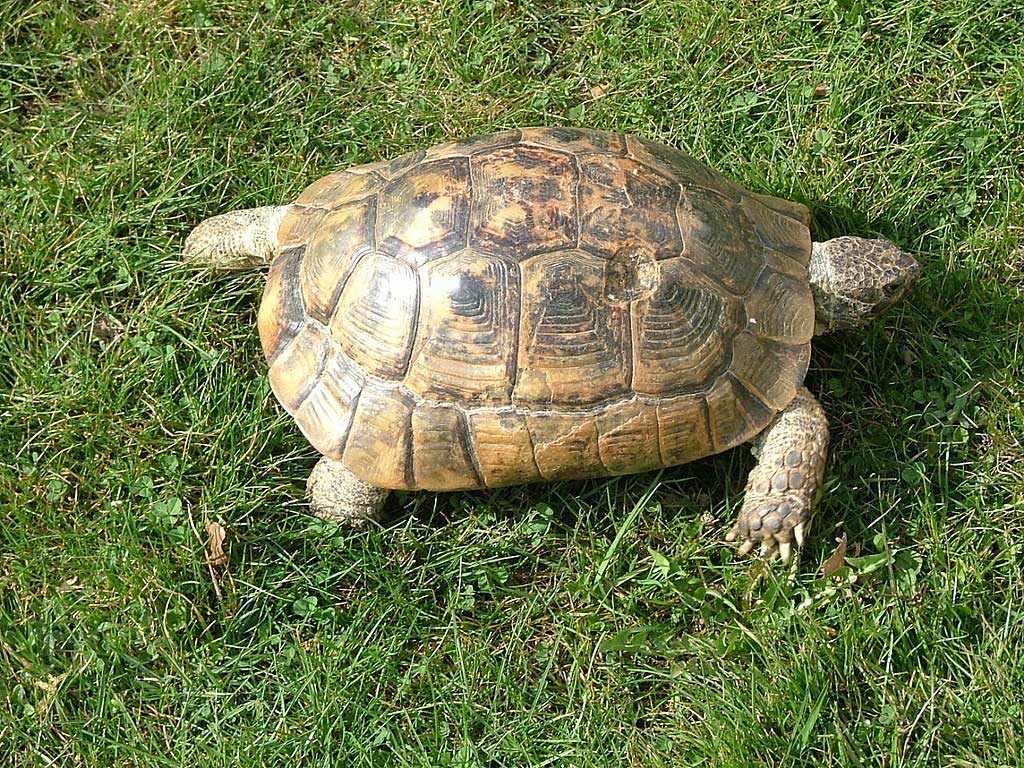
Greek tortoise – Mayer Richard, CC BY-SA 3.0, via Wikimedia Commons

Content

Origin

The Greek tortoise is a representative of the genus Testudo, small to medium size. Its distribution area extends from North Africa to the Balkans and Asia., passing through the eastern Mediterranean. There are also individual populations in southern Spain and the Balearic Islands.. According to the latest discoveries, can be distinguished even 10 subspecies.

Characteristics / Appearance

The largest adult specimens weigh more than 5 kilograms and have a carapace length of up to 35 centimeters.

The Greek tortoise adult has a dorsal shell tall and gently curved. The neck shield is narrow and elongated. Vertebral scutes are trapezoidal in shape and flare downwards. The tail shield is almost always indivisible. Due to its enormous distribution range and associated adaptation to different habitats, the coloration base of the dorsal carapace varies greatly. The spectrum ranges from light brown to olive and from sandy yellow to light gray. The scutes are black to dark brown.. With increasing age, coloration appears faded. The ventral shell it is usually dark in color and clearly thickened in the anterior region. At the end there is a slightly movable hinge.

The Paws of the Greek tortoise they have large horny scales and five claws. typical of the strong hind legs are the horny nipples found next to the tail. The hind legs they have four claws each. The tail short does not have horny nail. This is also the most important characteristic that distinguishes it from the Greek tortoise.. The differentiation of the sexes can be determined by the size of the animals and the different size of the tail.. The female turtles they are usually considerably larger than their male counterparts and have a shorter tail.

These reptiles have a life expectancy of 60 to 80 years in its natural environment. There are also animals that live longer than 100 years.

The subspecies

The categorization of the individual subspecies is as diverse as the inhabited habitat with different climatic influences.. Based on genetic studies, Today we describe some 10 subspecies, divided into oriental species and westerners according to habitat. All species differ in size and weight, in the coloration of the carapace and in the bulging of the rim scutes. The distribution area of the eastern species stretches from the Near East to southeastern Europe and the Arabian Peninsula. The western species They inhabit North Africa to the Iberian Peninsula..

Subspecies

For a long time it was considered that the Greek tortoise was a species with few subspecies, despite its huge distribution area on three continents with different landscapes and climatic zones. But, for some years new varieties have been discovered and described as additional subspecies (for example, Testudo graeca pallasi) or independent species (for example, Testudo graeca perses) or even genres (for example, Testudo graeca nabeulensis), but some of them are not generally recognized. Two recent studies based on genetic studies give the following 10 subspecies for the Greek tortoise.

Eastern subspecies
  • Armenian tortoise, Testudo graeca armeniaca, Chkhikvadze, Bakradze 1991
    This subspecies is characterized by a low carapace shape reminiscent of Testudo horsfieldii and generally quite dark coloration with few contrasting markings.. The maximum size is 20-23 centimeters. After genetic studies, Testudo graeca pallasi, previously described as a separate subspecies, was synonymized with Testudo graeca armeniaca.

    Distribution area: western coastal area of รขโ‚ฌโ€นรขโ‚ฌโ€นthe Caspian Sea, eastern or parts of the central Caucasus in Armenia and Turkey.

  • buxton's tortoise, Testudo graeca buxtoni, Boulenger 1921
    Testudo perses was included in this subspecies.

    Distribution area: Northwestern and central Iran, east caucasus.

  • Asia Minor tortoise, Testudo graeca ibera, Pallas 1814
    This is the largest subspecies. Individual animals reach body sizes of more than 30 centimeters. The shape of the shell is somewhat flatter than in other representatives of the species and from round to oval.. The basic coloration of the carapace when young is olive with light black markings.. With the age, animals tend to darken, especially in the soft parts. Testudo ibera racovitzai and Testudo graeca nikolskii, previously described separately, have also been included in this subspecies.

    Biotope: Open scrub and grasslands, sparse forest edges, sandy coastal strips, steppe and semi-desert.

    Distribution area: south east europe, western Asia Minor, Russian and Georgian Black Sea coast, central caucasus.

    Name's origin: The name of the subspecies ยซiberaยป goes back to an old name of the Kura Valley in Georgia (Iberia) and not to the Iberian Peninsula (Spain).

  • Mesopotamian tortoise, Testudo graeca terrestris Purse 1775
    These animals stand out for their predominantly light coloration., sometimes surprisingly yellow ("golden greek"), shell and soft tissues. Dark pigment spots are rarely black, but rather brown and of reduced extension. The animals are very tall. The head shows a characteristic yellow marking. The maximum size is usually 16 centimeters. Included in this subspecies are Testudo ibera var. bicaudalis, Testudo floweri, Testudo graeca anamurensis and Testudo antakyensis.

    Biotope: steppe with little vegetation, matorral, dry forests.

    Distribution area: southern and eastern Asia Minor, Levantine region

  • Iranian tortoise, Testudo graeca zarudnyi, Nikolsky 1896
    The elongated carapace with a serrated and enlarged posterior margin resembles the Marginated tortoise Testudo marginata. The coloration of the animals is olive to brown, the clear spotting pattern of the juvenile stage only fades later. It is a large subspecies, with carapace lengths greater than 20 centimeters.

    Biotope: Rocky hills and plains up 2500 meters above the sea level.

    Distribution area: east of iran

    Name's origin: This subspecies was named after the Russian zoologist Nikolai Alexeyevich Sarudny..

western subspecies
  • Cyrenaican spur-thighed tortoise, Testudo graeca cyrenaica, Pieh y Perรคlรค 2002
    The cyrenaica tortoise it has narrow forelimbs and only weak defense scales. The shell is notched, with a narrow anterior opening and upwardly puckered posterior margins. The supracaudal scale is comparatively strongly incurved in males..

    Distribution area: Libya

    Name's origin: the name refers to the Cyrenaica region in northeastern Libya.

  • moroccan tortoise, Testudo graeca marokkensis, Pieh y Perรคlรค 2002.
    It has a comparatively flatter dorsal shell than the Greek tortoise. The ocher to yellow background color of the dorsal carapace contrasts with a multitude of fine lines and specks, and the shields have a dark border, partially torn, and spots on the central areola. The ventral carapace is lighter than the back., but it also has black markings. The head is dark with several pale scales., limbs mainly dark with individual lighter scales. Genetic studies have shown that the Testudo graeca lamberti is very closely related to the Testudo graeca moroccoensis and should not be considered as a separate subspecies.

    Biotope: arid landscape with steppe climate.

    Distribution area: north of morocco, on both sides of the Rif

    Name's origin: The name derives from the distribution area in Morocco.

  • Greek tortoise, Testudo graeca graeca, Linnaeus 1758.
    The shell pattern consists of solid markings on a yellow background.. The vertebral scutes have a dark border and also dark spots on the areoles.. The local form described as Testudo graeca whitei genetically belongs to this subspecies.

    Distribution area: Algeria, eastern morocco, Spain (probably introduced here).

  • Souss Valley tortoise, Testudo graeca soussensis, Pieh 2001
    Basic ocher dorsal carapace coloration, low contrast, fine linear markings and almost complete absence of markings on the plastron. The soft parts are brown to sandy., sometimes yellow-orange, with lighter scales, but little contrast, in the head. Juveniles show few or no markings. It's the kind of Moroccan turtle largest, with a dorsal carapace length of up to 25 cm.. The thigh spurs that are usually present in graeca animals are usually absent in the Testudo graeca soussensis, especially in the animals of the Souss valley proper.

    Biotope: Opportunistic colonization of cultivated areas, especially in thorny hedges, that offer protection and food.

    Distribution area: South of Morocco

    Name's origin: the name comes from the Souss valley, in the south of Morocco.

  • Nabeul tortoise, Testudo graeca nabeulensis, Highfield 1990.
    This subspecies has highly contrasting black markings on a yellow background.. Soft tissue skin and limb defense scales are sandy to yellow, sometimes with black tips. The head has a characteristic pattern of bright yellow spots. The Nabeul tortoise is the subspecies graeca smaller. Females usually reach a dorsal carapace length of just over 13 cm and a weight of about 600 g. The males are still much lighter, with a carapace length of just under 12 cm and a mean weight of 375 g.

    Distribution area: Tunisia, eastern algeria, Sardinia and Sicily (probably introduced).

    Name's origin: the name refers to its place of origin.

Testudo graeca subspecies

Different types: Testudo graeca (left) other testudo species (right)
Different subspecies: Tg nabeulensis (left) Iberian Tg (right)
Testudo g. Ibera Heraclea, Turkey
T. g. nabeulensis variety „Sardinian", Sardinian

Habitat

The great expanse of Greek tortoise has made the species adapt to a wide variety of habitats and climatic conditions. Its habitats are dry semi-deserts in the north of the African continent., mild Mediterranean climates in Greece and Turkey, and hot, dry summers with cold winters in the steppes of Asia. The tortoise lives in sandy semi-deserts, scarce forests, grasslands and can be found on the edge of swampy wetlands.

Behavior

The Greek tortoise belongs to the class of reptiles and, like all representatives of this class, is cold-blooded. Body temperature is largely determined by ambient temperature and behavior adapts accordingly. when it's very hot, animals are forced to seek out shady places. If the temperature approaches 40 degrees, they burrow into the ground or seek cool cracks in rocks to prevent their bodies from overheating.

Turtles are diurnal. Thus, in the hot summer months, activities are limited to the early morning and late afternoon. In very hot steppe and desert areas, sometimes the activities stop completely and the tortoise falls into a summer sleep. For the metabolism to work, body temperatures of more than 30 degrees for a few hours a day, that are achieved by sunbathing a lot. If the ambient temperature drops below the 8 degrees, the tortoise can no longer maintain the metabolic cycle and falls into winter torpor. Thus, in the coldest regions, spends the winter buried without activity.

Food

The Greek tortoise it is herbivorous and its diet depends on the vegetation of the corresponding habitat. The herbs, flowering plants and clover are preferred when food is plentiful. Especially the fruits with seeds, buds and young shoots, just like the flowers, are the main foods. in dry habitats, the diet also consists of low-quality plant parts and, in exceptional cases, in insects and invertebrates when food is scarce.

Reproduction

After waking up from hibernation, the mating season begins between February and May. Fierce fights for the female's favor may occur between males. Once the rival has been expelled, mating ritual begins. Females are bitten on the extremities and rammed with the shell to stop them. Once this is done, the act of mating takes place. The male emits the typical screeches.

In spring, the eggs are laid. Up to three clutches of eggs are laid. Females spend a lot of time choosing the best place to lay their eggs.. On average, they stand between 5 and 8 eggs per clutch. As such, the female digs a pit of about 10 centimeters deep in which it lays the eggs. Next, the pit is carefully closed. No more brood care. The incubation period varies between 60 and 100 days. At the end of summer the first young are born, whose dorsal coloration of the carapace is clearly more contrasted than that of adults. Obviously, hatching temperature plays a decisive role in the formation of the sex of turtles. There are indications that an average temperature of more than 30 degrees during the hatching process produces predominantly female animals.

Conservation

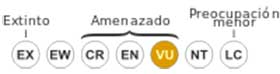
State of conservation โ“˜


Vulnerable Vulnerable โ“˜ (UICN)โ“˜

The Greek tortoise is in danger of extinction in its countries of origin. According to the Washington Convention on International Trade in Endangered Species of Wild Fauna and Flora of 1976, animals cannot be officially imported into the EU without documentation. In many countries, especially in North Africa, the turtles, or their shells, are put up for sale in the markets. Anyone who tries to import these animals illegally can be prosecuted.. Within the EU, there are certain restrictions on trade in turtles. There is an obligation to demonstrate to the authorities that the animals were acquired legally. There is also an obligation to notify the sale, donation, exchange, breeding or death of a turtle.

The natural enemies of Greek tortoise in their habitat they are mainly small predators such as foxes, martens or stray dogs. But birds of prey and corvids are also a threat to reptiles. As in all species of turtles, nests are the most threatened. It is not uncommon for nests to be raided by rats, Snakes, birds and boars.

The "Greek tortoise" in captivity

Reproduction

Ideally, keep the Greek tortoise in pairs or in a group. During the mating season, you have to be careful that there are many more females than males in the group, since they can develop quite aggressive behavior towards their congeners during this time. After mating, the females will look for a warm and sunny place to lay their eggs after a few weeks. The pit is dug and they are placed between 5 and 8 eggs. The process is repeated at intervals of 2-3 weeks, give place to 3-4 sunsets. Females react very sensitively to temperature fluctuations during egg laying.. So, in our latitudes, they must be compensated with aids such as a heat lamp. after sunset, eggs can be carefully removed and placed in the incubator. As far as possible, you should not change your position. Approximately between 65 and 90 days after laying, the first pups are born. Feeding is done with the same foods as for adult animals.

Maintenance

The Greek tortoise should be kept in an outdoor enclosure in summer. It must be located in a sunny place, because animals need the warm rays of the sun for digestion to work, among other things. Of course, there should be a place to water and hiding places such as roots or bushes should be provided. Pine soil or peat mixed with sand are suitable as a substrate. Small patches of meadow with some grasses are also a source of food for the turtles.. In their natural habitats, the tortoise hibernates in hibernation. Possibilities must be created in the enclosure so that, even in the coldest local weather, the tortoise can make a burrow and thus survive the winter. Soil must be frost free.

all wild herbs, as well as clover, Dandelion, the hibiscus and all the flowering plants, from pansies to lilies, serve as food. In no case should it be fed with animal products, noodles or pasta. These damage the digestive system of animals and can be deadly. Fruit should be an absolute exception on the menu. If there is a sufficient supply of natural foods, you can do without the addition of vitamins.

Keeping this species of tortoise in a species-appropriate manner requires sufficient space. The outer enclosure must be surrounded by a border of 40 height cm. Young animals must also be protected from smaller predators, like martens or foxes, and the largest birds. The easiest way to do this is with a metal mesh cover over the enclosure. Representatives of the eastern subspecies are especially suitable for conservation. The needs of African species are much greater in terms of warmth and susceptibility to stress and disease. The Greek tortoise It is one of the most common species of turtles..

Buy one "Greek tortoise"

how much does one cost "Greek tortoise"?

The price of a "Greek tortoise" at the exotic animal market, bred in captivity, ranges between 100 – 160 EUR, depending on its size.

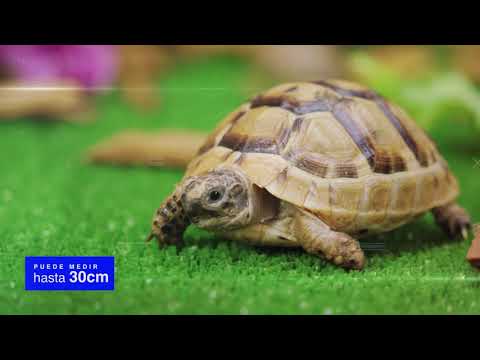
Videos "Greek tortoise"

Tortuga Tortudo Greek Iberian Paradis Pets 2021

Alternative names:

1. Spur-thighed tortoise (English).
2. Tortue grecque (French).
3. Testudo graeca (German).
4. Testudo graeca (Portuguese).
5. Tortuga griega (espaรฑol).

โ–ท The world of Pets: Dogs, cats, birds, reptiles, amphibians

Mississippi map turtle
- Graptemys pseudogeographica kohni

The Mississippi map turtle it is a popular pet among aquarists and is very pleasant to watch.
Mississippi map turtle
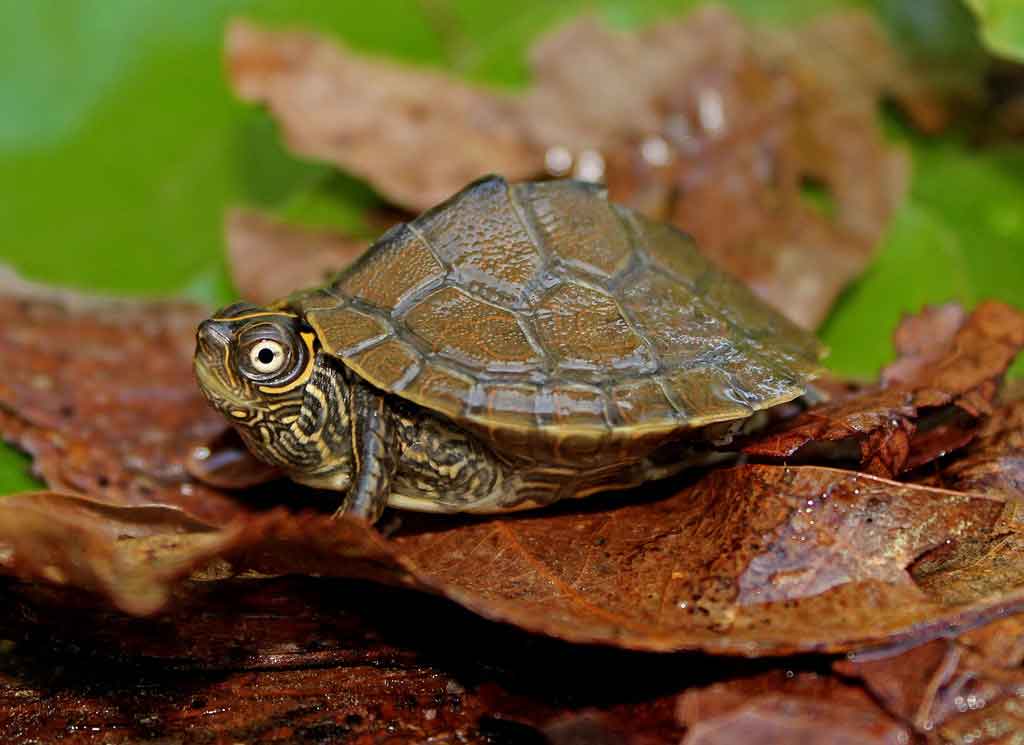
Mississippi map turtle (Graptemys pseudogeographica kohni) – Peter PaplanusFlickr

Content

Origin / Distribution

The Mississippi map turtle (Graptemys pseudogeographica kohni) found along the Mississippi River and its tributaries, from Illinois and Missouri south.

Characteristics / Appearance

In the Mississippi map turtle (Graptemys pseudogeographica kohnii), two prominent lines also run from the neck towards the eye and bend there, but then they go much further and enclose the eye in the shape of a crescent or a sickle. The circular markings on the head are relatively small and occur almost exclusively on the chin. Neck stripes do not touch the eye, because there is already the drawing in the shape of a sickle around. The iris is white and only rarely has a dark line. The beak is colorless to whitish.. Leg and neck lines are evenly thick, with lighter and darker lines.

Threats to the species

State of conservation โ“˜


minor concern Minor Concern โ“˜ (UICN)โ“˜

This species faces several threats, such as destruction of egg nests by animals and insects, falling into gillnets and shooting. The Mississippi map turtle, like the Red-eared slider (Trachemys scripta elegans), have also been collected for the pet trade.

All Map turtles are included in CITES Appendix III and in Appendix C of the EU Species Protection Regulation. But, they do not need any documents when trading within the EU and are not subject to declaration.

The "Mississippi map turtle" in captivity

Aquaterrarium

The Mississippi map turtle can reach a maximum size of about 20 cm in the aquarium. Females grow considerably larger than males. For the maintenance and care of aquatic turtles, A tank with a minimum length of 150 cm.. It is important that the water level is very high. In this way, your turtles will be able to swim wonderfully in it. In addition to the water level, a part of soil must also be integrated into the aquarium. can be plastic, stone or cork. Your turtles can sit on it and sunbathe. It is recommended to use sand or fine gravel as a substrate in the aquarium. It also, must offer your Mississippi map turtle roots or stone structures. These decorations provide good structure in the tank and create a natural habitat..

The Mississippi map turtle is a solitary animal. This will not change in the aquarium. Animals should ideally be kept individually.

The Mississippi map turtle optimally adapts to the values โ€‹โ€‹of the water in the tank. They feel comfortable in waters with temperatures between 25 and 28 degrees centigrade and a pH value between 6,0 and 8,0. During the winter months, the water turtle hibernates. During this time, the water temperature should be reduced to 4 – 12 Celsius degrees. "On land, the temperature should be about 40 degrees Celsius. A metal halide lamp can be very useful in this case.

Food

Mississippi Humpback Turtles Prefer a Varied Diet. It can be live food, frozen, dry the vegetable.

Reproduction of the Mississippi map turtle in the aquarium

The Mississippi map turtle (Graptemys pseudogeographica kohni) has already been successfully bred in the aquarium. Plastic boxes are recommended as egg laying sites.

Buy one "Mississippi map turtle"

The price of a "Mississippi map turtle" at the exotic animal market, ranges between 30 – 70 EUR

Videos "Mississippi map turtle"

Mississippi map turtle (Graptemys pseudogeographica kohni ) having a lobster for lunch

Turtle Shack Unboxing: Mississippi Map Turtle

Alternative names:

1. Mississippi map turtle (English).
2. Tortue gรฉographique du Mississippi (French).
3. Mississippi-Hรถckerschildkrรถte (German).
4. Tartaruga do mapa do Mississippi (Portuguese).
5. "Tortuga Mapa del Mississipi" (espaรฑol).

โ–ท The world of Pets: Dogs, cats, birds, reptiles, amphibians

Malagasy giant chameleon
- Furcifer oustaleti

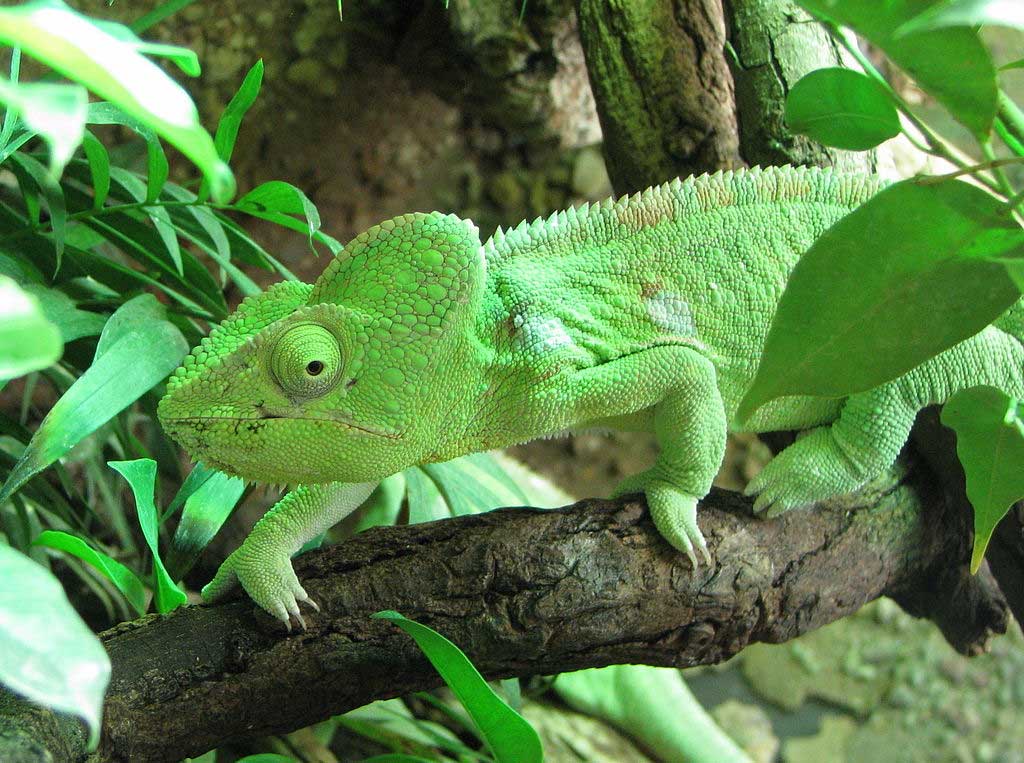
The Malagasy giant chameleon is considered the longest chameleon in the world (although exceptionally longer adults such as the Parson's chameleonCalumma parsonii).
Malagasy giant chameleon
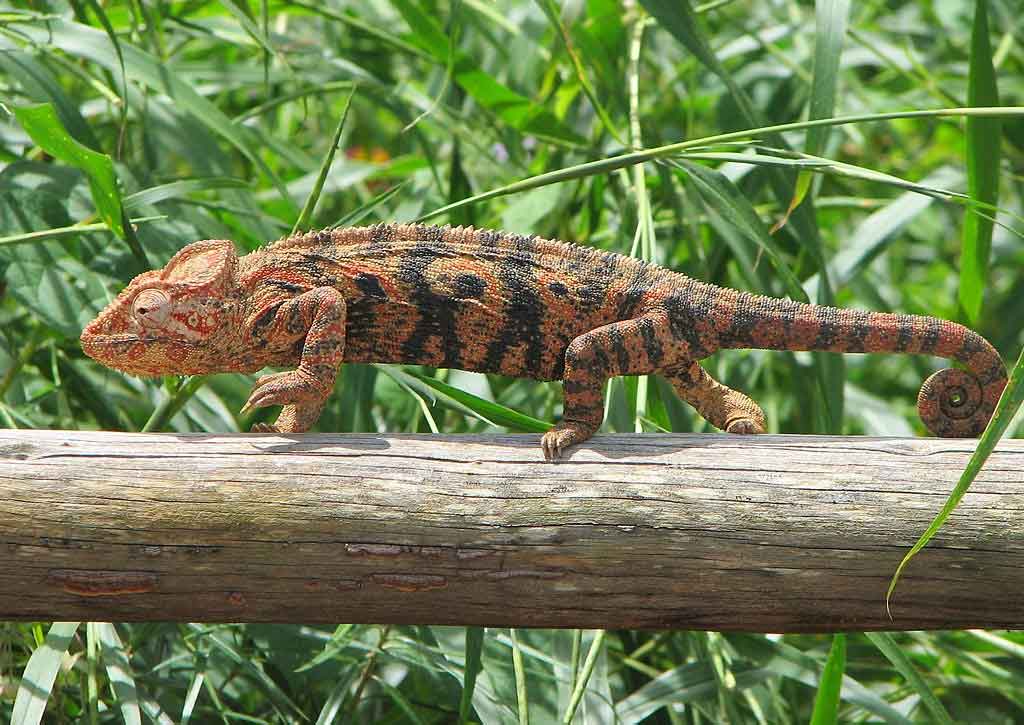
Oustaletโ€™s chameleon, Ambalavao, Madagascar. The image shows the different groupings of the front and hind toes. this is a male – Bernard Gagnon, CC BY-SA 3.0, via Wikimedia Commons

Content

Origin / Distribution

The Malagasy giant chameleon (Furcifer oustaleti) is endemic to Madagascar, where is the most widespread chameleon species. It has been recorded in all parts of the island at a variety of dry and wet sites at all elevations.. A localized population introduced into Kenya is probably extinct.

Characteristics / Appearance

Considered the longest chameleon in the world (although exceptionally longer adults such as the Parson's chameleonCalumma parsonii). This species reaches lengths close to 70 cm., and is also the second heaviest member of the family (after the Parson's chameleon). But, many specimens found are likely to be adults or smaller subadults. The helmet is high, with a pronounced parietal crest. Rostral ridges are present and extend to the tip of the muzzle, but do not connect. A lateral crest is present but poorly developed.

The most important diagnostic feature is the Crest Ridge, which extends to the vent and consists of 45 or more short, triangular spines with a regular space between them. Ventral and gular ridges are present, but they are not connected to each other.

Malagasy giant chameleon
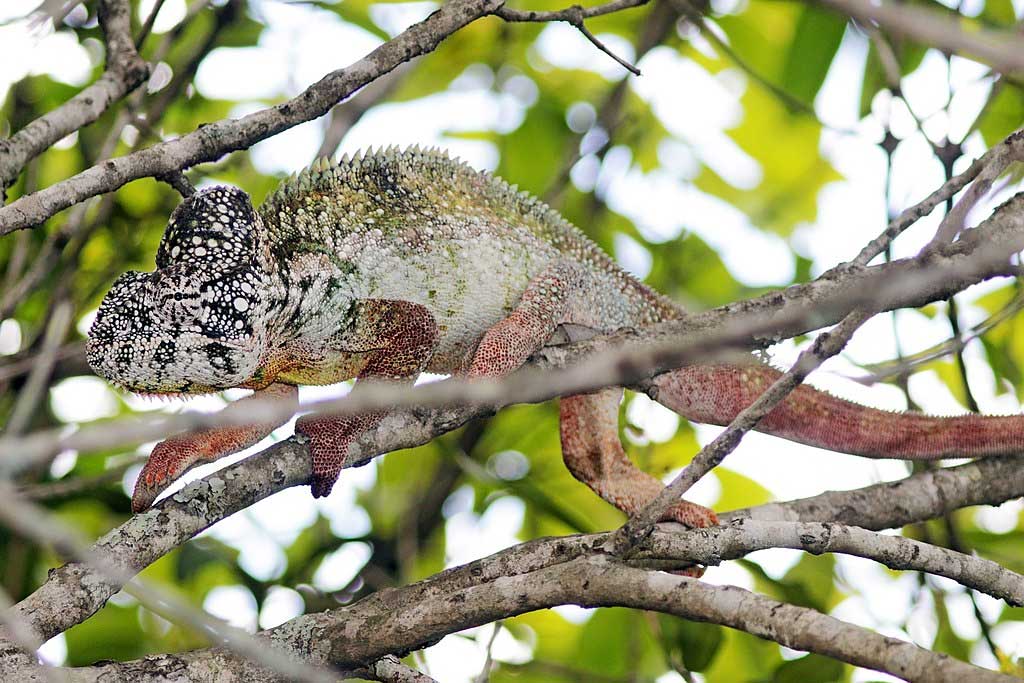
Oustaletโ€™s chameleon (Furcifer oustaleti) female, Andasibe, Madagascar – Charles J. Sharp, CC BY-SA 4.0, via Wikimedia Commons

The coloration in both sexes is usually gray or brown, although females are usually more showy and may show a red coloration on the head and limbs. But, females may be variable with a yellow or mottled coloration, and in some cases can be largely green. The pattern may include a row of four large circles of dark edges along the flanks., although a white line is absent in contrast to the Carpet chameleon (Furcifer Lateralis). There are often indistinct dark vertical bands on the flanks. The absence of a white stripe on the central part of the body is considered diagnostic, but see the warning in Taxonomy below.

taxonomy

The Malagasy giant chameleon belongs to a species complex consisting of three recognized species; However, the variation between populations and the wide distribution of both the Malagasy giant chameleon as of the Warty chameleon (Furcifer verrucosus) suggest that both may represent multiple cryptic species. In a population found by the author during fieldwork, animals assigned to Furcifer oustaleti (a diagnosis subsequently supported by Frank Glaw) consistently showed a small size, unusual coloration and pattern; Unlike in the F. oustaleti Typical, sometimes there was a white stripe in the central part. Since these animals coexist with the F. oustaleti Typical, it is not clear whether they represent a distinct population or species, or if this coloration and pattern is a constant feature of the subadults of this population.

Habitat

In Madagascar, the Malagasy giant chameleon It is distributed in the coastal lowlands. It is found throughout the island, but its appearance in the eastern part of Madagascar is linked to relatively high temperatures. Being a species well adapted to the warm climate of the savannah, benefits from human changes to the landscape (deforestation). It is said that there is an abandoned population in Kenya (ngong forest, near Nairobi) and that a breeding population also exists in South Florida.

Behavior

Malagasy giant chameleon
Madagascar giant chameleon in Prague zoo – dragus, CC BY-SA 3.0, via Wikimedia Commons

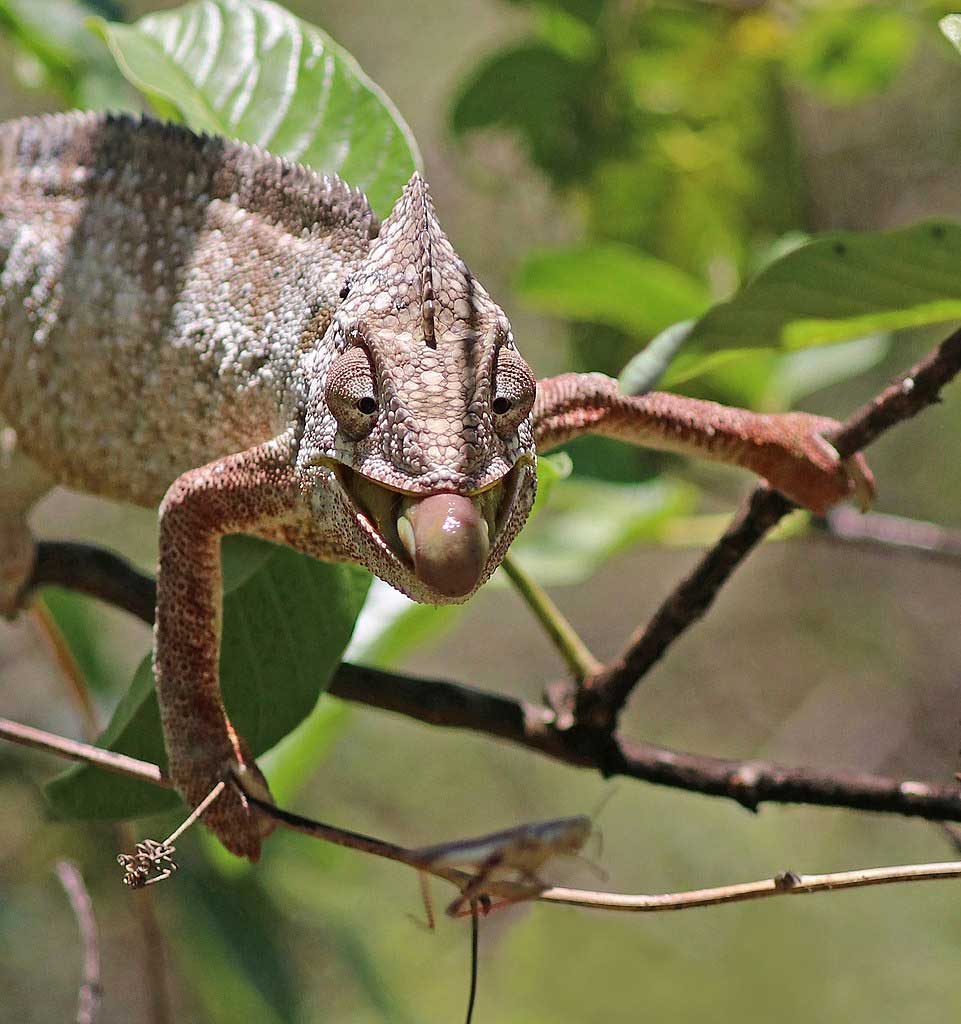
The Oustaletโ€™s chameleon (Furcifer oustaleti), also known as Malagasy giant chameleon, leads a mainly sedentary life. Moves very slowly, or does not move at all, for long periods of time, allowing you to conserve energy and stay out of sight of predators, and also be himself a predator. When an insect passes, an unsuspecting lizard or small bird, his very long sucker-tipped tongue is launched to catch him. Language, which is loaded with springs and shoots forward like an arrow bow, can extend to almost twice the length of the entire chameleon.

Diet

Until recently chameleons were thought to be totally carnivorous.. Recently, Takahashi (2008) reported the first confirmed case of herbivory in the Furcifer oustaleti, who was observed to select and consume fruits from the bushes Grangeria porosa, Chassalia princei and Malleastrum gracile.

Reproduction

The maximum and average sizes of the layings are unknown, but it is known that females can put at least 61 eggs in a single laying, with a combined weight of 56 g. This registration is from February, but no other information is available on the length of the breeding season.

Gestation lasts a few 40 days and animals reach sexual maturity one year after hatching.

Threats to the species

State of conservation โ“˜


minor concern Minor Concern โ“˜ (UICN)โ“˜

Apart from a small number legally exported as pets, the Malagasy giant chameleon is endemic to Madagascar, where it enjoys a stable population in various habitat types.

They are also found in a number of protected national parks across the country., but they are abundant enough across the country to earn the conservation status of ยซleast concernยซ.

The "Malagasy giant chameleon" in captivity

Malagasy giant chameleon
Malagasy giant chameleon(Furcifer oustaleti) male feeding, Anja Community Reserve, Madagascar – Charles J. Sharp, CC BY-SA 4.0, via Wikimedia Commons

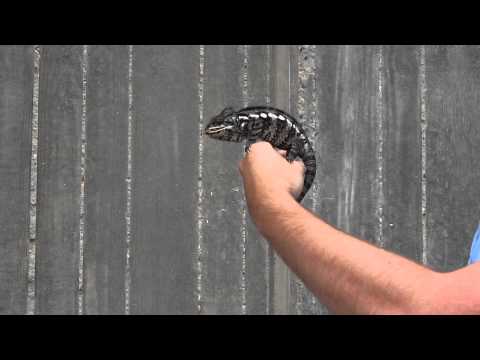
Chameleons are usually considered easily excitable animals. It is notorious that, in some particularly territorial species, the constant vision of a congener (for example, when two animals can be seen in adjacent terrariums) can lead to stress-related kidney failure and, Therefore, death! But, the Malagasy giant chameleon is a comparatively peaceful and quiet representative of the chameleon clan. Males do not get along with each other, and pregnant females are strictly solitary. But in terrariums large enough (a greenhouse is, of course, more suitable in view of the size of animals), these chameleons can be kept in pairs. The Malagasy giant chameleon it also shows this coldness towards humans.. Even if they are carefully caught in the hand, do not get too excited. The threatening mouth opening, that we know of many other chameleons, it only occurs with the Malagasy giant chameleon if you are provoked a lot. Field researchers say you can normally put a Malagasy giant chameleon on the shoulder; will stay there quietly for hours.

Since the Malagasy giant chameleon is comparatively common, the local population likes to take advantage of the voracity of these chameleons and put them in their gardens, where they eat unwanted animals up to the size of a mouse and thus keep them at bay.

The terrarium

To the Malagasy giant chameleon all the usual principles of chameleon care apply to you. This includes the need for relatively large feeding., What, However, is easy to satisfy for this species, since animals will eat all the usual food bugs, like crickets, domestic crickets, grasshoppers and zofas, as well as young nest mice; in the nature, small birds and reptiles are also eaten.

All insects that serve as food should always be sprinkled with one of the vitamin lime powders available on the market.

The need to drink water, which is also high, makes the care of chameleons always time-consuming, since most animals do not easily learn to drink from bowls. So, chameleons must be given to drink at least every other day with a pipette. But, there are some tricks to avoid it. Many chameleon caregivers use drip drinkers, of which a drop of water drips into a collection container placed underneath at intervals of 1-2 seconds. Chameleons recognize this simulated "rainwater" and drink. The most natural way to give chameleons a drink is by spraying the water that animals collect from the leaves of plants., etc. But this is also labor-intensive and can cause the terrarium to get too wet.. An elegant way is to install an artificial waterfall with a small aquarium pump. But, these systems are somewhat prone to failure and the pumps always break down โ€“ as in Murphy's Law- when you least need it, for example, during the holidays. A very clever way to make water move in the drinker and, therefore, that chameleons recognize it, is to aerate the container with an aquarium air pump available on the market. Simply hang the air hose in the bucket and adjust the air supply so that about two air bubbles per second come out of the hose.. A pleasant side effect of this method of watering is that it simultaneously increases the humidity of the terrarium, which should also be around the 70% of relative humidity for the Malagasy giant chameleon during the day; At night, humidity can rise up to 100%.

Due to their natural habits, the Malagasy giant chameleon can be classified as one of the easiest chameleon species to care for, as it does not react immediately with discomfort and subsequent illnesses if it gets too hot in the terrarium.

Daytime temperatures should range between 22 and 28ยฐC, and under the spot they can rise up to 45ยฐC. But, you always have to make sure that the animals can go to a relatively cool and well-ventilated place in the terrarium..

Reproduction

The female puts up 61 eggs after a gestation period of about six weeks. Eggs take between 210 and 280 days to hatch at an incubation temperature of about 28ยฐC. Many breeders use vermiculite as a breeding substrate. Juveniles grow very quickly and reach sexual maturity at one year of age. In general, care and breeding are similar to those known Panther chameleon (Furcifer pardalis).

Buy one "Malagasy giant chameleon"

Although they are the largest chameleons, The "Malagasy giant chameleon" not necessarily one of the most expensive. You can find one in specialized stores for prices ranging from 150 – 300 EUR.

Videos "Malagasy giant chameleon"

Oustalets Chameleon (Furcifer oustaleti) Hand-Feeding

Furcifer oustaleti, Oustalet's Chameleon in central west Madagascar

Alternative names:

1. Malagasy giant chameleon, Oustalet’s chameleon, Malagasy giant chameleon (English).
2. Camรฉlรฉon gรฉant de Madagascar, Camรฉlรฉon d’Oustalet (French).
3. Riesenchamรคleon, Madagaskar-Riesenchamรคleon (German).
4. Camaleรฃo malgaxe gigante, Camaleรฃo do Oustalet (Portuguese).
5. "Camaleรณn gigante de Madagascar", Camaleรณn de Oustalet (espaรฑol).