โ–ท The world of Pets: Dogs, cats, birds, reptiles, amphibians

Corn snake
- Pantherophis guttatus

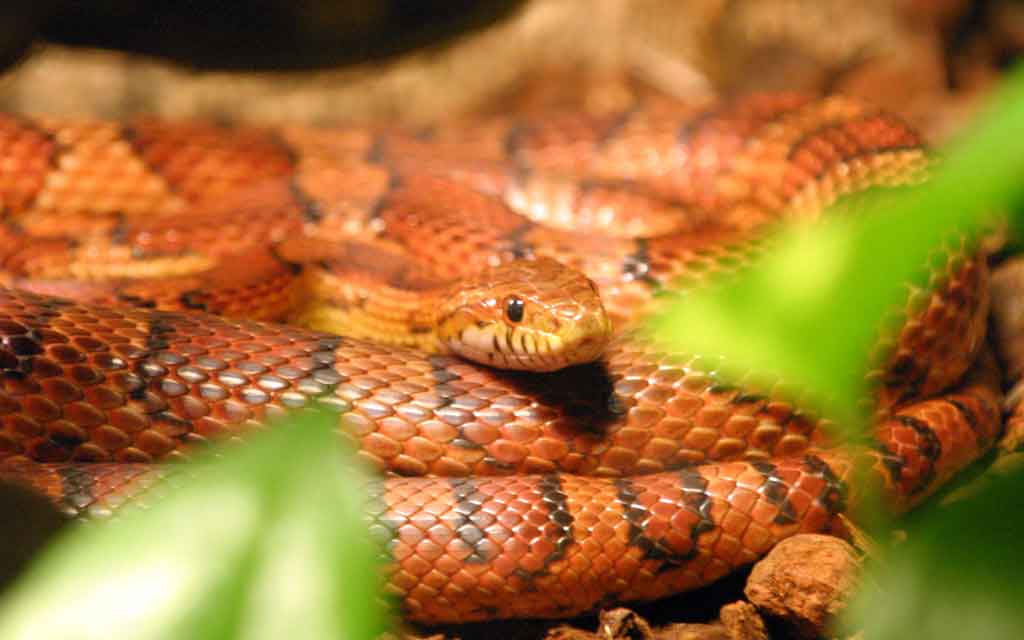
The Corn snake also known as Red rat snake. It is believed that the common name "Corn Snake" has its origin in the fact that these snakes are commonly found in agricultural fields., like cornfields, while hunting prey.
Corn snake
Corn snake – Wikimedia

Content

Origin / Distribution

The Corn snake (Pantherophis guttatus) can be found in the eastern United States, from southern New Jersey to south, passing through Florida, to western Louisiana and parts of Kentucky. But, the Corn snake is most abundant in Florida and the southeastern United States.

Characteristics / Appearance

The Corn snake has a beautiful pattern of brown to red spots on a gray background, brown to orange-red. The belly of the corn snake is white with steel-blue to black spots. There is a V-shaped pattern on the head. The rump is thin and the head small compared to the body, with a round pupil and only slightly separated from the body.

Habitat

The Corn snake can be found in groves, rocky slopes, Meadows, Plots, barns and abandoned buildings.

Behavior
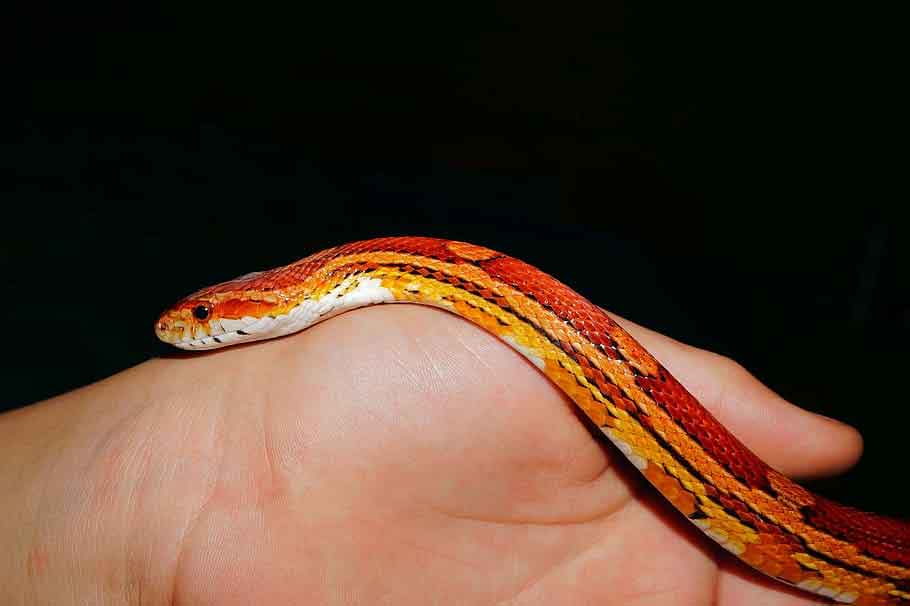
Corn snake
Corn snake

The Corn snake is mainly nocturnal, but usually active in the early afternoon. They easily climb trees and enter abandoned buildings in search of prey. But, they are very stealthy and spend most of their time underground prowling the burrows of rodents.. They also usually hide during the day under loose bark and under logs., rocks and other debris. Not much is known about the reproductive behavior of the Corn snake.

Reproduction

The breeding season of the Corn snake goes from March to May. Snakes are oviparous and deposit a clutch of 10 to 30 eggs between the end of May and July. Eggs are laid on rotten stumps, piles of decaying vegetation or other similar places where there is enough heat and moisture to incubate them. Eggs are not cared for by adult snakes. Once put, the gestation period of the eggs is 60 to 65 days at approximately 28ยบ. Eggs hatch sometime between July and September. The pups measure between 25 and 38 cm long and mature in 18-36 months.

Food

The Corn snake does not usually feed every day. Usually, are fed every few days, More or less. The young tend to feed on lizards and tree frogs, while adults feed on larger prey, like mice, Rats, birds and bats. They are constrictors, which means they use their coils to choke their food before eating it.. First of all, the Corn snake bites its prey to grab it firmly and, then, quickly envelops the victim with one or more spirals of their body. The snake squeezes hard until it suffocates the prey. Then he swallows the food whole., usually headfirst. But, the Corn snake swallowing small live prey.

Threats to the species

State of conservation โ“˜


minor concern Minor Concern โ“˜ (UICN)โ“˜

The Corn snake is often confused with the Copperheads and sometimes she is killed for it. It also, due to his docile temperament, are usually kept as pets. Sometimes they are caught in the wild to sell as pets.. But, there are many snake breeders, so wild capture does not pose a serious threat to this species.

The Corn snake is not an endangered species. But, are listed by the state of Florida as a Species of Special Concern because they face habitat loss and destruction in the lower Florida Keys.

The "Corn snake" in captivity

The Corn snake is the secret queen among terrarium animals. For many years they have been among the most popular and well-known snakes for the terrarium. The reasons are multiple. May be due to attractiveness, the tranquility or ease of maintenance of reptiles. If you are thinking of acquiring a snake, the Corn snake it's a good option. These exotics are ideal for the first steps in the exciting world of terraristics.

The terrarium

The Corn snake is the ideal cohabitant. They are visually appealing, interesting to see, calm, cozy and only demand little from their surroundings. A pet dream! Thus, it is not surprising that more and more terrarium aficionados are acquiring a Corn snake. Beginners, in particular, benefit from the exotic easy care.

As the animal should not roam freely on the floor, you, as owner, you need a terrarium. This must have minimum dimensions of 100 x 50 x 70 cm for the benefit of the animal. But, this information is not set in stone. Depends on the size and number of reptiles. Large animals or a group of corn snakes will require, of course, a larger terrarium.

Behavior in terrarium

The Corn snake is twilight and nocturnal. At night they usually roam the terrarium for hours in search of prey. In spring, which is also the mating season, are also active during the day. If animals are well kept, are already sexually mature by the age of two or three. The Corn snake can live on 12 to 15 years. The record is 25 years!

Terrarium interior design

The interior design of the terrarium should reflect the natural habitat of the Corn snake (Pantherophis guttatus). A terrarium earth substrate, bark mulch or bark bed can serve you here. Avoid sand that is too fine. But, mixed with coconut fiber, coarse beach sand is a very good substrate. Suitable hiding places are overturned pots and flat stones, as well as the pieces of bark.

To the Corn snake likes to climb a lot. This behavior must be taken into account when designing the terrarium. It is advisable to offer climbers isolated climbing opportunities. Here we refer explicitly to wood or roots. It also, in the terrarium there should be a drinker with fresh water.

Socialization:

The Corn snake is a very calm and peaceful creature. Flatmates accepted. These beautiful exotics can easily be maintained individually, in pairs or in groups with several congeners. There is also no danger to you as a human. The Corn snake is not poisonous.

Temperature and humidity:

To the Corn snake likes warmth and comfort. During the day, the temperature in the terrarium should be between 24 and 27 degrees Celsius. At night the temperature can be 5 colder degrees. A radiant heater is absolutely enough. No additional floor heating needed. The humidity should be between 50 and the 60 %. To increase humidity, it is recommended to spray the terrarium at regular intervals.

An environment that is too dry can lead to problems during molting.

Food:

The food and nutrition of the Corn snake it's very simple. Animals effortlessly accept food (mice and rats). Most owners give their vipers frozen food.

Reproduction

Some 4 weeks after fertilization, females put between 10 and 20 eggs. The eggs, very soft at first, they are usually glued. It is not recommended to separate eggs, as they could be damaged quickly. So, it is advisable to transfer the glued parts to the incubator in one piece. If you wait too long, eggs can stick to the terrarium or furniture and it is not safe to remove them. Fill the cavities between the eggs with dried vermiculite.

At 27ยฐC the incubation time is about 80 days, at higher temperatures about 10-15 days less. But, constant temperatures above 30 degrees. Shortly before hatching, eggs reach a size of about 4,5 cm.. We will keep young animals individually. This prevents stress from animals and allows for better care..

Variations

After many generations of selective breeding , the Corn snake Bred in captivity is found in a wide variety of different colors and patterns. These result from the recombination of dominant and recessive genes that encode proteins involved in development., maintenance or function of chromatophores . New variations, or morphs, are available each year as breeders gain a better understanding of the genetics involved.

Buy one "Corn snake"

Before buying animals, find out if there are any special legal regulations that must be respected.
The price of a "Corn snake" at the exotic animal market , ranges between 80 – 120 EUR.

Videos "Corn snake"

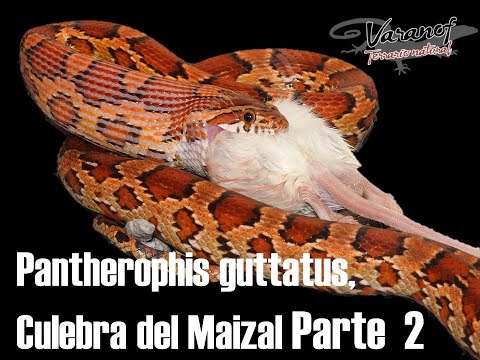
Pantherophis guttatus Elaphe guttata Corn Snake Part 02

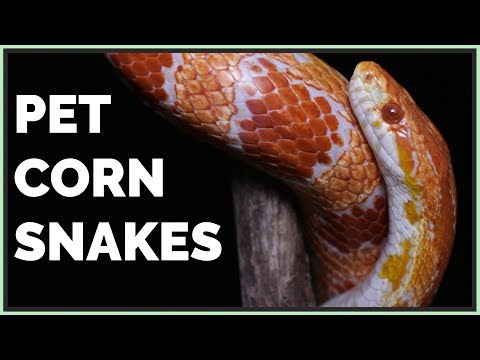
Pros and Cons of Corn Snakes as Pets

Alternative names:

1. Corn snake (English).
2. Serpent des blรฉs (French).
3. Kornnatter, Gewรถhnliche Kornnatter (German).
4. Cobra-do-milho, Cobra-do-milharal (Portuguese).
5. "Serpiente del maรญz" (espaรฑol).
โ–ท The world of Pets: Dogs, cats, birds, reptiles, amphibians

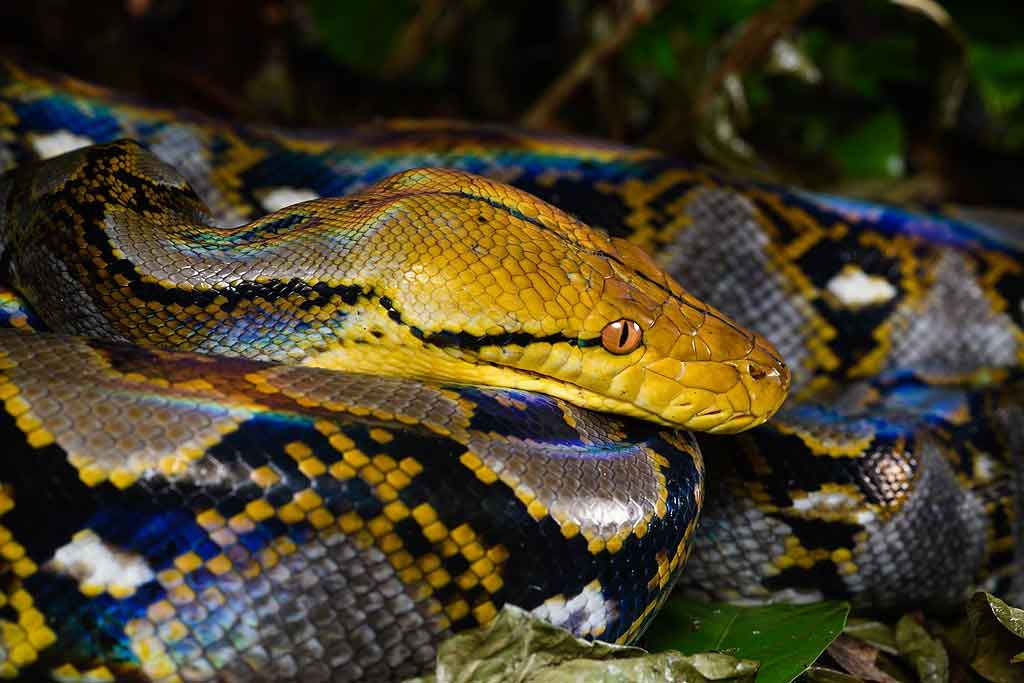
Reticulated python
- Malayopython reticulatus

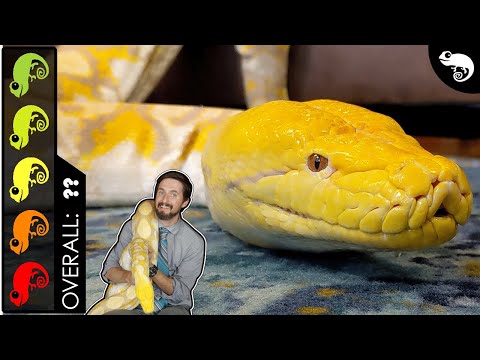
The great demand for exotic animals has grown, what makes the Reticulated python be captured in the pet market to be sold all over the planet.

Reticulated python
Reticulated python – Mariluna, CC BY-SA 3.0, via Wikimedia Commons

Content

Origin / Distribution

The Reticulated python (Malayopython reticulatus) it is native to Southeast Asia and western Bangladesh to southeastern Vietnam and on the Indo-Pacific islands west of New Guinea.. Other reports have shown the presence of the Reticulated python in eastern Sudan Africa and in northern Queensland and the Northern Territory in Australia. This species has been introduced to South Florida, as a direct result of the negative effects of pet importation.

Characteristics / Appearance

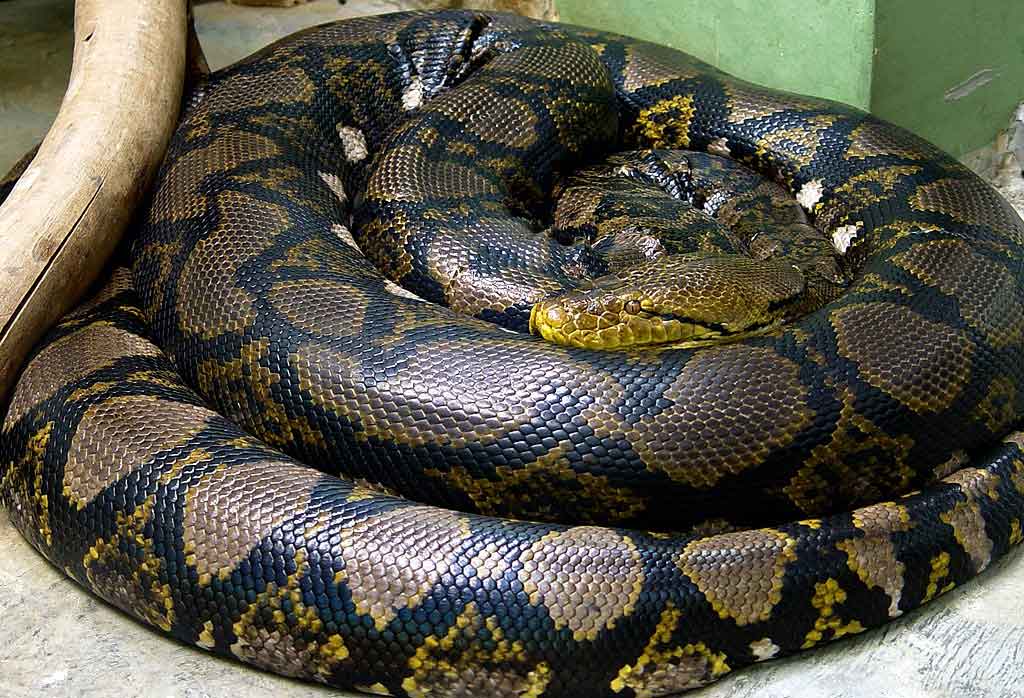
The Reticulated python is light yellowish to brown on the dorsal part of its body, with black lines extending from the ventral area of the eyes diagonally to the muzzle. Sometimes there is another black line on the snake's head that extends from the end of the muzzle to the base of the skull or nape of the neck.. Along the back of the Reticulated python there is a repeated pattern of black X's that create diamond-shaped patterns. Younger pythons have been reported to have latitudinal lines with black-rimmed spots along their body..

One way to distinguish this species from similar ones is to examine the upper jaw near the front of the muzzle.. The reticulated python has the presence of a suborbital portion of the maxilla (upper jaw) that lacks a lateral or protruding figure.

In general, this species has shown that females grow much larger than males in terms of size and weight.. The average female can grow up to 6,09 m and 90 kg in contrast to the male who has an average of 4,5 m long and up to 45 kg.

Life expectancy

Reticulated python
Reticulated Python head. Photo taken at Serpentarium Blankenberghe BELGIUM. Natural biotope: rainforests of Asia. Goalsurfer, CC BY-SA 3.0, via Wikimedia Commons

The Reticulated python it is rarely found in captivity and is more commonly found in the wild. Its large size makes it difficult to provide an area large enough to keep a healthy python in captivity.. But, on average, the Reticulated python lives longer in captivity because their environment and food sources are well maintained in a controlled area.

The longest known life of a Reticulated python in captivity is 32 years. This species may have difficulty finding adequate food sources and environmental protection., which may explain why the life of a wild reticulated python is shorter than that of those in captivity. The longest life of a Reticulated python wild is from 23 years compared to 32 years in captivity.

Developing

After laying the eggs, the female python incubates them in a nest for a while 90 days until they are ready to hatch. Newborn reticulated pythons use a specialized element called egg tooth, located on the upper lip, to open the eggshell. The young measure approximately 60 cm in length and weigh some 140 g.. Immediately after hatching, the python sheds from the skin. Then it will begin to hide and wait for rodents and small birds to prey on..

Habitat

The Reticulated python it lives mainly in tropical rainforests, wetlands and grassland forests, at a height of 1200-2500m. The temperature necessary for the correct gestation and survival of the reticulated python should be between โ‰ˆ24ยบ C and โ‰ˆ34ยบ C with large amounts of moisture present. The Reticulated python requires an area near an area of water to protect itself, as well as to succeed in predation. Pythons use water as protective camouflage to hide before ambushing their prey. Similar behavior is observed in wetlands, where these species are able to hide under the undergrowth to ambush their prey.

Behavior

It is known that the Reticulated python occupies areas that usually have a present or nearby water source. This allows you better movement due to its large size. Through the process of lateral progression, the snake is able to contract the muscles and release the muscles simultaneously to create the most commonly recognized serpentine pattern..

Due to the large size of this snake, rectilinear movement, a type of movement in which the snake contracts its body and then unfolds in a linear motion, is most commonly observed because it allows its large size to move more quickly. Using the technique of constriction and deployment a python can climb trees. This is more common in smaller, younger individuals..

Using a similar body movement, the Reticulated python, like all snakes, you must shed your skin to repair wounds or during the developmental stages of life. The molting of skin of snakes is necessary to facilitate the growth of their bodies. These snakes have an indeterminate growth.

Reproduction

Reticulated python
Reticulated python (Malayopython reticulatus). Kaeng Krachan District, Phetchaburi Province, Thailand – Rushenb, CC BY-SA 2.0, via Wikimedia Commons

The male of the Reticulated python uses vibrations to signal its mating status to the female, that you will choose whether to mate or not. If she decides to mate, the male of this species rubs his body on the female and rubs her with his spurs. Spurs are vestigial hind limbs found in your abdomen. When the female is ready, will raise the tail and mating will occur. The female python can keep the male's sperm inside her until a later date., if weather conditions are not favorable. Females can also have several males mate with them in the same season..

Although it is uncommon, parthenogenesis has been documented in captive pythons. Parthenogenesis is the process of mating without a male. The female fertilizes an egg inside, creating an offspring with identical DNA. It is an adaptation to reproduce even when there are no males.

It is said that the breeding season of the Reticulated python focuses on the months of February and March. Shortly after winter pythons begin to prepare for breeding due to the increase in temperature and the promising summer heat. In most areas it depends on geography due to the need for warmer climates. So that, pythons reproduce according to the climate change of the specific area they inhabit.

The breeding area that is inhabited must be rich in prey so that the female can have offspring. So, the Reticulated python needs a normally undeveloped and uninhabited area to maintain high reproductive performance. The viability of eggs depends on the mother's ability to protect and incubate them, as well as high humidity levels. Adult pythons are usually ready to breed once the male has reached a 2,5 meters in length and some 3,0 meters for females. This is in the range of 3-5 years for both sexes.

If the food is abundant, the female of Reticulated python can have up to one clutch a year. In areas and seasons when food is not as abundant, the size and frequency of the clutches is one clutch each 2 or 3 years. The Reticulated python reproduces more frequently in areas of higher temperature for better gestation. In a year of breeding, a single female can produce 8 to 107 eggs, but the number is usually 25 to 50. The average mass at birth is 0,15 g (rank 0,12-0,17 g). The independence of the offspring is immediate.

Food

It is known that the Reticulated python it feeds mainly on mammals and bird species found in its geographical range. Documented prey types include small bats, tree shrews , and Cervidae deer, even Malay bears (Helarctos malayanus).

The Reticulated python it is considered the snake most likely to consume a human being due to the numerous attacks on people in the wild and the attacks on the owners by this species. Through the organs of the fossa, specialized organs in certain species of snakes that detect radiant heat, the Reticulated python detects the location of the dam by the temperature relationship of the dam with the surrounding area. This allows the python to detect prey and predators without necessarily seeing them..

Threats to the species

State of conservation โ“˜


minor concern Minor Concern โ“˜ (UICN)โ“˜

The Reticulated python is not endangered, However, according to CITES Appendix II, the trade and sale of your skin are regulated to ensure that your survival is not compromised. This species is not on the IUCN Red List.

However, the Reticulated python is one of the most hunted snakes worldwide. Due to its large size, this species is hunted and sold internationally for its fur throughout the year. Apart from the skin, the Reticulated python it is so large in size that it is also hunted and sold for its meat..

The "Reticulated python" in captivity

Reticulated python
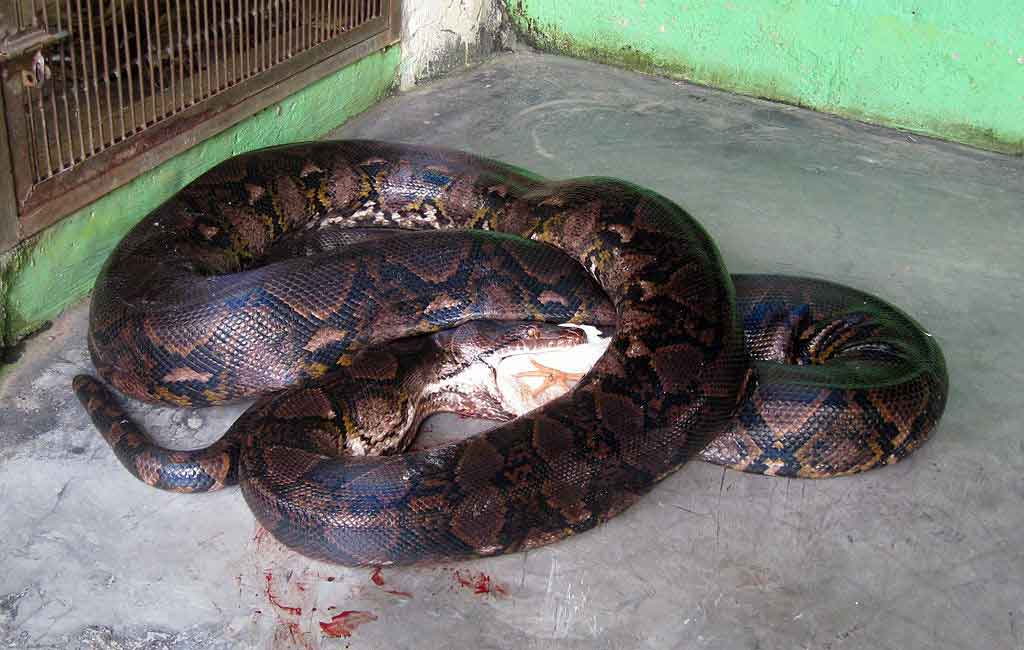
A large reticulated Python feeding on 5 chickens at Taman Mini Indonesia Indah Reptile Park, Jakarta, Indonesian. Gunawan Kartapranata, CC BY-SA 3.0, via Wikimedia Commons

The great demand for exotic animals has grown, what makes the Reticulated python be captured in the pet market to be sold all over the planet.

It is important to remember that a Reticulated python Adult is technically capable of causing injury or death to a human being, However, attacks in nature are rare, and even rarer attacks in captivity, as long as the snake is well accustomed to manipulation, safely maintained and well fed.

The terrarium

You won't be surprised that you have to increase the size of your vivarium as your cross-linked grows., as well as making sure that the glass fronts are the most resistant, with locks to ensure there are no escapes or unauthorized access to the snake in your absence.

The Reticulated python, like all snakes, they start out quite small when they are young, so any small or medium-sized land or tree nursery should be suitable, provided that the necessary heating equipment can be installed to reach those pleasant subtropical temperatures.

But as they grow and get bigger., you will have to change to the biggest vivariums you can, and consider the possibility of a custom-made vivarium to provide adequate accommodation, just make sure you invest in a sturdy glass!

Heating and lighting

Most caregivers agree that a Reticulated python you will enjoy more of an environment with a temperature gradient around the 29 degrees Celsius, that allows you to move to the hot side or to the cold side to thermoregulate depending on how you feel.

Although this temperature can be achieved with thermal carpets, most like to keep at least the hot end of their enclosures warm with a point lamp connected to a reliable thermostat to keep it within range.. But, do not forget to use a bulb protector, otherwise you Reticulated python could get too close.

Substrate

The driest substrates, like aspen, are usually the best, and some people even use unprinted paper, although we can't say that this makes the enclosure look great. The substrate of the Reticulated python should be changed relatively frequently when you relieve yourself, that in adulthood can be of large proportions.

Food and feed

As with most snakes, we recommend that you feed your Reticulated python outside of its normal enclosure to help dissociate your incoming hand with feeding, helping your snake know the difference between handling and feeding and helping to avoid being "tagged", which is a little worse than usual with this species.

As a general rule, it is best to feed your Reticulated python with a frozen rat, or later with a rabbit of comparable size to yours, and repeat this every 7 to 10 days on average.

Most homeowners get to buy a second freezer for their home, as frozen rats and rabbits are cheaper when purchased in bulk and stored.

Buy one "Reticulated python"

The price of a "Reticulated python" at the exotic animal market, depends on its sizes and the rarity of its color.
A brood of "Reticulated python" can be sold for a price between 300 – 400 EUR, while adult snakes approach the 1000 EUR.

Questions and answers about the "Reticulated python"

Reticulated python
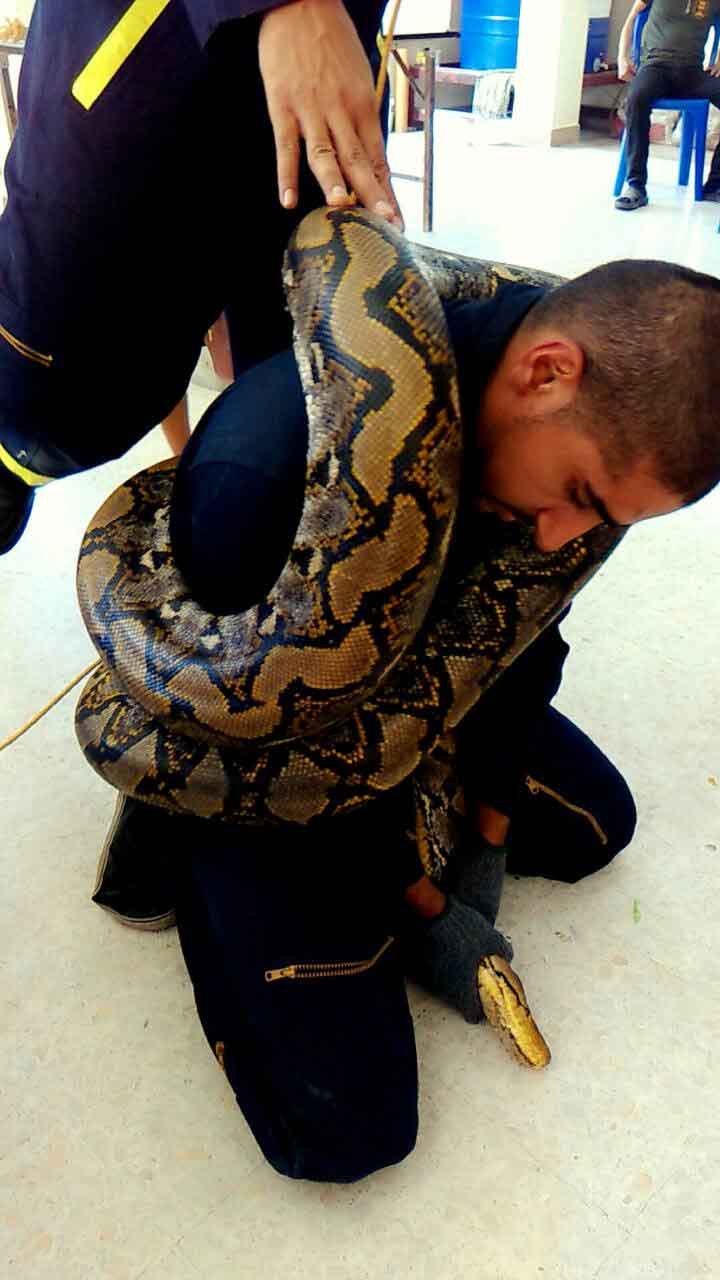
A member of wildlife rescue removes a Reticulated Python from 4 meters in bangkok, Thailand. vvar, CC BY-SA 4.0, via Wikimedia Commons

Has a Reticulated Python ever killed someone??

like all pythons, is a non-poisonous constrictor. The Reticulated python have killed adults (and, in at least two cases, have eaten them).

What are the predators of a "Reticulated python"?

King cobras and crocodiles feed on the Reticulated python. Eggs and young pythons are vulnerable to predators, like hawks, the eagles, herons and small mammals.

Why the "Reticulated python" it is called reticulated?

The Reticulated python usually reaches a length of more than 4 m. Its color pattern comprises a complex diamond-shaped pattern that extends along the back.. This pattern in the form of a network is the origin of its name, since "cross-linked" means network.

How fast can a reticulated Python move??

This type of movement works both on the ground and in trees.. But, pythons can't move very fast: only 1 mile per hour (1,6 kilometres per hour) on open ground. But since they don't have to chase their food, don't need to move quickly.

What's bigger, the green anaconda or the Reticulated Python?

The green anaconda of South America, member of the boa family, It, kilo per kilo, the largest snake in the world. Your cousin, the Reticulated python, may reach a slightly longer length, but the enormous circumference of the anaconda makes it almost twice as heavy.

Do Reticulated Pythons Climb Trees??

An oversized snake has shown its unique ability to climb trees and is as fascinating as it is slightly disconcerting.. Filmed in what is believed to be Thailand, the body of the snake, that has been identified as a Reticulated python, is rolled around the trunk of a tree.

How long is the longest Reticulated python??

The Reticulated python longer than is known was found in 1912 and measured the staggering number of 10 m, that is to say, more than half the length of a bowling alley and makes this snake longer than the height of a giraffe.

Does the Reticulated Python bite??

The Reticulated python bite first. Next, "literally in a few seconds", envelops a person's body with its powerful spirals, cutting off blood circulation to the brain, blocking the airways and preventing the chest from expanding. For one or all of these reasons a person would die quickly..

How long can a reticulated Python hold its breath??

They are also excellent swimmers, and can remain submerged up to 30 minutes before surfaced to take in air.

How long can a reticulated Python go without eating?

A Reticulated python adult can survive up to 6 months without eating, but such a long period can be disastrous for the health of the reptile.

Is an aggressive Reticulated Python?

The Reticulated python It is a large predatory animal.. As such, they prefer large prey, among which humans are known to be, so they should be considered aggressive.

How do you manage the Reticulated Python??

The Reticulated python young, bred in captivity, it is the easiest to tame. Once the snake is taken out of its cage, hold it in your hands and allow it to crawl through your fingers. Spending time with a young retic acclimatizes her to his touch, smell and company

Videos "Reticulated python"

Feeding a Reticulated Python | Secrets of the Zoo: Down Under

Reticulated Python, The Best Pet Snake?

Alternative names:

1. Reticulated python, Retic (English).
2. Python rรฉticulรฉ (French).
3. Netzpython (German).
4. Pรญton-reticulada (Portuguese).
5. "Pitรณn reticulada" (espaรฑol).

โ–ท The world of Pets: Dogs, cats, birds, reptiles, amphibians

Common blue-tongued skink
- Tiliqua scincoides

Common blue-tongued skink

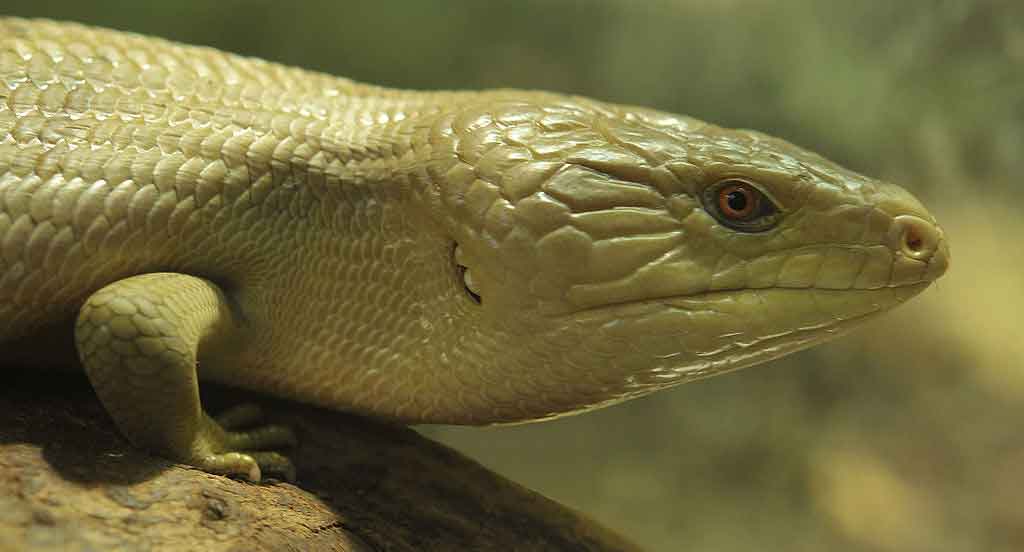
Its coloration ranges from gray to brown with perpendicular dark bands. reaches 60 cm in length and its is a popular species for keeping in captivity, coming to live 25 years. Dry terrarium, not desert.

Price ranges from 180 and 250 EUR.

โ–ท The world of Pets: Dogs, cats, birds, reptiles, amphibians

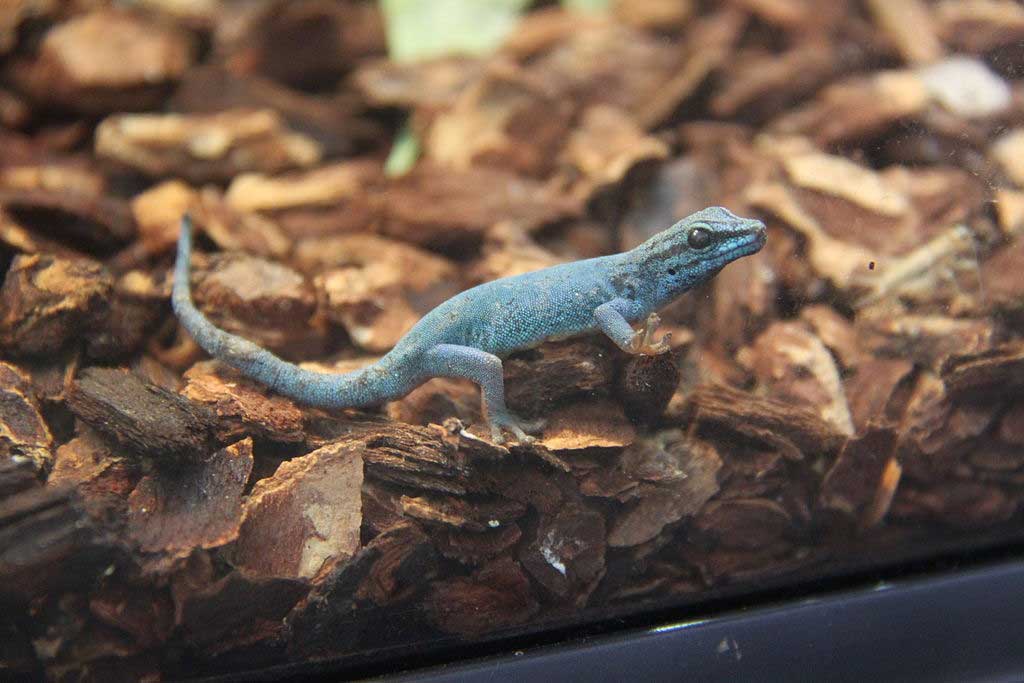
Electric blue gecko
- Lygodactylus williamsi

The trade of Electric blue gecko is now banned in the EU. Cannot be kept or sold in the EU without documentation and permits, renewables every three years
Electric blue gecko
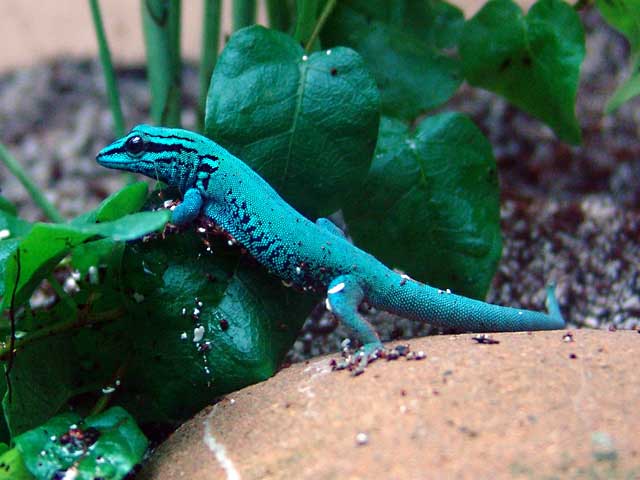
Electric blue gecko – Esther Bock; AnimalBase.info, CC BY-SA 3.0, via Wikimedia Commons

Content

Description

Males and females of the Electric blue gecko do not show decisive differences in size. Most animals of this species reach a total body length of about 60-80 mm.

The length of the tail is more or less the same (not decisively minor) than the rest of the body including the head. Sex distinction is often made based on the intense blue coloration of males.. But, this method of sex determination can lead to considerable errors, since a male subdued, in contrast to the dominant rival, it doesn't have to show this intense coloration. So, clear sex determination is only possible in strict individual preservation or on the basis of male preanal pores (7 parts). It also, males can be recognized by a thickened tail root.

The females of the Lygodactylus williamsi they have a clear greenish-gold coloration. Both sexes are decorated with a black band from the muzzle over the eyes to the neck.. In the head, a second minor V-shaped line approaches the first. Juveniles of this species have the same coloration as females and are first recognized by distinctive preanal pores..

Distribution and habitat

The Electric blue gecko lives exclusively in the Kimbosa Forest, less than 4 kmยฒ, and in small nearby areas of Tanzania, and lives to some 350 m above sea level. The Kimboza forest area is very dry during the day and semi-humid at night. Ocean temperatures and rainfall prevail locally. The highest temperatures are reached in December and are 28 degrees Celsius. There is a dry season from the end of June to the end of August. In the other months maximum values of 24 degrees. This species lives in trees and is found mainly in trees of Pandanus (Pandanus kirkii and rabaiensis).

The Electric blue gecko in captivity

Electric blue gecko
Hembra Lygodactylus williamsi (in captivity) – Hembra Lygodactylus williamsi, CC BY-SA 3.0, via Wikimedia Commons

The Electric blue gecko (Lygodactylus williamsi) is under the protection of EU Appendix B in December 2014, under the protection of EU Appendix A in January 2017 and under the protection of CITES Appendix I in January 2017. Cannot be kept or sold in the EU without documentation and permits, renewables every three years, and Geckos must now register. Similar restrictions apply in some other jurisdictions. Trade in these animals is now banned in the EU.

Specimens bred for which an exemption from the trading ban has been issued are exempt from the ban.. So, breeders of these species will in future have to apply for such a marketing permit from their competent nature conservation authority before they can sell their offspring.

Terrarium

Relatively little is known about the life expectancy of the Electric blue gecko in the terrarium. This is because this species was recently discovered and, therefore, has not been kept in the terrarium for a long time. According to other species of Lygodactylus, life expectancy is between 6 and 9 years. It is already known that, especially in the male, intense blue coloration becomes darker and darker and, Therefore, represents the first sign of the aging process.

Behavior in the terrarium

Electric blue gecko
Electric blue gecko at Berkenhof Tropical Zoo – Donar Reiskoffer, CC BY 3.0, via Wikimedia Commons

The huge sexual impulse of the male is often reported and therefore a maintenance of 1,2 or 1,3, so that a single female does not suffer this sexual pressure. I personally recommend keeping the 1.1 for the moment, only if necessary, and whether the terrarium is large enough, possibly a female can be added later. Note that with a 1.x breeding, each animal should have its own place to sunbathe.

The male may copulate once a day after laying the eggs and, for the rest, leaves the female alone. Copulation can last between 10 and 45 minutes. After a brief acclimatization period, one quickly realizes that the Electric blue gecko not a shy species and makes the most of the tank. Especially the male turns out to be a real acrobat and does gymnastics all over the terrarium. Its main phase of activity is mainly in the afternoon, which now lasts until shortly before the lights go out. In the terrarium you can experience jumps of more than 20 cm over and over again.

Terrarium measurements

According to legal regulations, the terrarium must be a size of 30 x 30x 40 cm.. (Length x width x height) As minimum (if a Electric blue gecko of 5 cm.). But, this size cannot be recommended at all and is too small. Due to the behavior already described, a larger terrarium is recommended so that animals can also follow their natural preferences. A terrarium with a minimum size of 50 x 50 x 80 for breeding 1.1. for breeding 1.2 a terrarium with dimensions of 60 x 60 x 100. Of course, the terrarium can also be much larger, because the bigger, best!

When buying the terrarium, make sure that the upper ventilation area is greater than the 6 to 10 cm that standard terrariums usually have. It is also very advantageous to use fine gauze if you want to offer it to the Drosophila as food from time to time.

I can only disagree with the frequently asked questions that it is supposedly more difficult for the animals to get hold of food in a larger tank and that, Therefore, a smaller tank is recommended. The Electric blue gecko It, on the one hand, a very good and agile hunter and, for another, nothing is served on a silver platter in nature. Even in young animals, a pronounced hunting instinct can be observed, which should certainly be encouraged.

Decoration terrarium

As a substrate we use a layer of large balls of expanded clay/seramis as drainage and a layer of untreated coconut fiber on top of it.. To prevent the soil from settling over time and mixing the two layers, you must add a layer of fleece. It is recommended to inoculate the substrate with white isopods and tropical springtails. They can serve as food, but mainly take care of the tasks of natural waste disposal (mold, feces, dead plants).

Otherwise, it is advisable to have at least one large-leaved plant, as: Sanseveria, bromeliads, Palm trees, etc., since they are usually used as walking areas, rest, removal and egg laying. Cork tubes, the branches, lianas or bamboo tubes can be used as additional furniture.

Illumination

In commercial terrariums, a large part of the UV radiation is filtered due to the insufficient ventilation zone at the top and the forced placement of the light source on the glass, and does not reach the animal at all. It also, the glass can crack in the worst case due to the high heat.

In any case, lighting for Geckos (and also for chameleons) must be installed outside the terrarium, because animals, very agile and jumping, can burn with the light source. Metal halide lamps (for example, Bright Sun, SolarRaptor, etc.), which are highly recommended, get very hot and there is a risk of injury.

In any terrarium of any species of gecko or chameleon, lighting - without exception- must be placed outside the terrarium! It doesn't matter what you've been told in a pet store.

Of course, tank lighting should be chosen individually. But, you must pay special attention to the necessary UV radiation. This ultraviolet radiation is very important because reptiles are tetrachromatic.. This means they see in the UV-A range and, unlike us, also have photoreceptors.

So-called compact lamps are not recommended (energy saving lamps) or fluorescent tubes, since neither the illuminance (lux) nor the UV intensity are sufficient for lighting. But, Unfortunately, this type of lighting is often used for cost reasons. You have to be aware that keeping terrariums is a hobby that requires a lot of technology and costs., and you should not skimp on the most basic element (lighting). Insufficient lighting causes deficiency symptoms and diseases in animals.

On a sunny day in nature, an illuminance of approximately 100.000 lux. By way of comparison, compact lamps reach an average of 1.500 lux, while metal halide lamps (HQI) reach approximately 60.000 lux. These values โ€‹โ€‹speak for themselves.

For these reasons, it is advisable to buy an HQI spotlight with the appropriate ballast. Bright Sun, Reptile Expert or Solar Raptor can be recommended without reservation. At the time of buying, it is essential to take into account the power and the variant (flood or spot) depending on the size of the terrarium and the manufacturer's specifications (minimum distance to the animal). These lamps must be replaced no later than one year later than, as UV emission is not guaranteed after this period. Also keep in mind that your animals will thank you for this investment with health and activity.

Temperature in the terrarium

The temperature should oscillate between 26 and 30 degrees during the day, and occasionally up to 34 degrees. Make sure each animal has a place to sunbathe. At night, the temperature can oscillate between 18 and 22 degrees (approximately the ambient temperature). Relative humidity should be between the 50 and the 65% during the day and increase to 80% At night.

Food

All usual feeding animals can be offered. Medium-sized crickets, terfly, baked fish and occasionally fruit pulp, Repashy Daygecko Food or gelatin have been successful. Drosophila or worms rarely occur. Drosophila are not well tolerated by all animals and should never be used as exclusive food.. Small wax worms are popular, but they are very rich in content and should be offered as a rare gift or to feed themselves. Otherwise, animals can easily become obese.

Feeding insects should be dusted with a vitamin preparation before approximately every two meals.. We use Korvimin (available at the veterinarian), Herpetal T or Reptivite. Reptivite sticks to feeders better than Korvimin. It also, the animals fed must have been previously fed for an appropriate period of time (good load). We will use DIY gelatin, Repashy SuperLoad or BugBurger for our crickets. You can also use oatmeal, Cucumber, carrots, apples, etc., but the above products are easier to use and there is no risk of mold, but they are also much more expensive.

for females, there should be some cuttlefish/calcium citrate separately in a small container, for an increase in calcium needs (for example, during pregnancy) can be covered individually. The water supply is ensured by spraying water on the terrarium equipment every day. Please, do not use waterfalls or nebulizers, even if it seems "nice" to you, as water becomes contaminated quickly and animals can get sick.

Reproduction and rearing in the terrarium

Due to the enormous demand of the Electric blue gecko, breeding is essential to protect the natural habitat of these animals. During the breeding season, females usually glue a double laying (2 eggs) to an accessory or use an offered place of oviposition. If possible, the laying must be transferred to an incubator. But, no problem in incubating the laying in the terrarium, unless damaged by daily spraying of terrarium furniture. It is not impossible for the parents to chase the young. Our first clutch of eggs could not be removed from the terrarium and one of the hatchlings was eaten by one of the parents., although they were provided with enough food as a precaution.

At a constant incubation temperature of 25 degrees Celsius, the pups will be born after a few 90 days. Due to relatively low temperatures, a higher than average number of females can be bred.
As eggs are hard shelled, moisture does not play an important role during incubation. Once the pups have hatched, I transfer them to our breeding terrarium.

Video Electric blue gecko

Electric Blue Geckos (Lygodactylus williamsi) at LLLReptile

Alternative names:

1. Turquoise dwarf gecko, William’s dwarf gecko (English).
2. Gecko de William (French).
3. Tรผrkisblauer Zwergtaggecko, Williams-Zwerggecko (German).
4. Lagartixa anรฃ turquesa, Lagartixa anรฃ de William (Portuguese).
5. Gecko enano turquesa, Gecko enano de William (espaรฑol).

โ–ท The world of Pets: Dogs, cats, birds, reptiles, amphibians

Crested gecko
- Correlophus ciliatus

Crested gecko
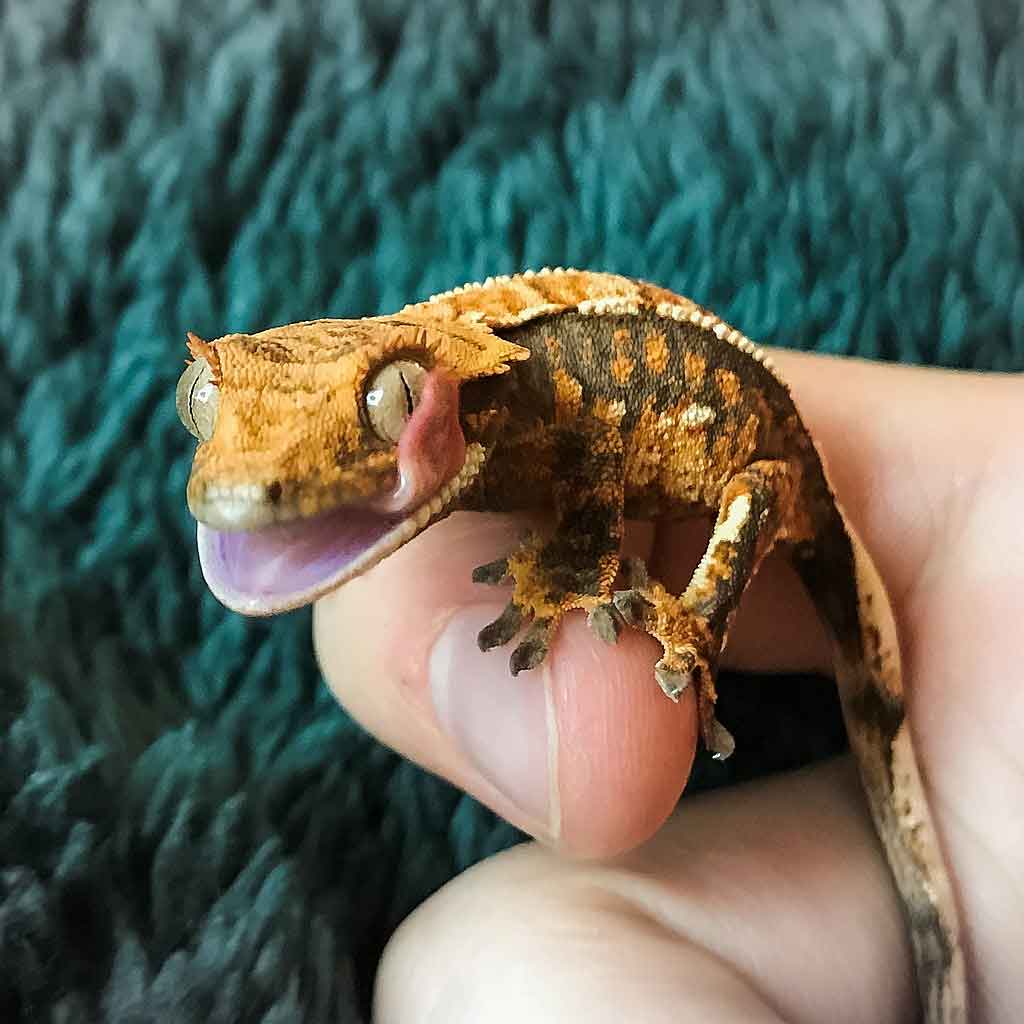
The "Crested Gecko" in captivity is docile and tolerates regular handling – Jazium, CC BY-SA 4.0, via Wikimedia Commons

Content

Origin

The Crested gecko (Correlophus ciliatus) is located at the southern end of Grande Terre, the main island of New Caledonia, and on the island of Pins, what makes it endemic.

Although the natural habitat of the Crested gecko continues to decline due to permanent environmental degradation, unfortunately not subject to any international protection status. It is being considered in protected status by the Convention on International Trade in Endangered Species of Wild Fauna and Flora (CITES).

Description

The Crested gecko usually measures between 15-25 cm length, including between 10-15 cm of tail. Among the most distinctive features of these geckos are the hair-like projections above the eyes., that look a lot like tabs. These projections continue in the form of two rows of spines that run from the eyes to the sides of its wedge-shaped head and continue to the base of its tail..

The Crested gecko no eyelids. In its place, a transparent scale, or glasses, keeps each eye moist, using the tongue to clean up waste.

These geckos have a semi-prehensile tail that they use to climb. Tail can be dropped (via caudal autotomy) to distract predators. The Crested gecko do not regenerate their tail once they have lost it; most adults in the wild lack a tail.

The toes and the tip of the semi-prehensile tail are covered with small hairs called setae. Each mushroom is divided into hundreds of smaller hairs (of about 200 nanometers in diameter) called spatulas. These structures are thought to take advantage of the weak van der Waals force to help the gecko climb most solid surfaces., easier in the flatter and smoothest, like glass or wood. The fingers have small claws that help them climb over surfaces that their fingers can't hold onto..

Habitat

It is arboreal in nature and lives in the treetops of humid forests., hot and dense lowland vegetation.

The Crested gecko perches on tree branches, but also in the holes of the branches that serve as a hiding place. Its period of activity begins at dusk and ends in the early hours of the morning.

Characteristics

The Crested gecko it is a crepuscular and nocturnal gecko and less shy than the species of the genus Rhacodactylus.

She is a skilled climber. For this it has the help of its adhesive sheets and its claws, as well as his tail, which serves as an additional gripping organ and to maintain balance. Like most Geckos, the Crested gecko is able to release the tail in case of danger (autotomy). But, does not form a full regenerate, so there is only a short stump left.

The growth of the Geckos in general it has no comparison with that of many other reptile species.
Its nature is slow growing. While many species of Geckos of the warm regions of the world grow completely in 1 or 2 years maximum, all the Gecko of New Caledonia need more time for their development.

In the case of Crested gecko need 3 years until they have grown at all.
But, in general, each animal must be considered individually.
Even siblings born on the same day and raised the same way can grow up totally different.

There is a wide range of colors on the market, the following types have demonstrated their heritage over time.

  • No pattern | Exists 1 color Orange, Yellow, White, Negro…
  • Bicolor | 2 colors with mostly light reverses
  • Tricolor | The animal is completely stamped or superimposed with 3 colors.
  • Tiger / Striped | Patterns very rich in contrast, mostly single basic color.
  • Design harlequin interlaced with dark background tone
  • Rear stripe mostly white and the rest very dark
  • Morphs There are many of these on the market, but only the years will show if the inheritance is guaranteed.

  • The "Crested gecko" in captivity

    Terrarium

    The terrarium for him Crested gecko must be high enough, as they are inhabitants of trees and are almost never found on the ground. As a key to the size of the terrarium we recommend calculating with the head-torso length of the animal. The size of the terrarium is calculated as follows for non-adult animals:

    Terrarium floor space: 4 x 3 times the head-torso length of the animal.
    Height of the terrarium: Four times the head-torso length of the animal.
    Observe the growth of the animal in the coming months (fast-growing animal/slow-growing animal).

    Terrarium decoration

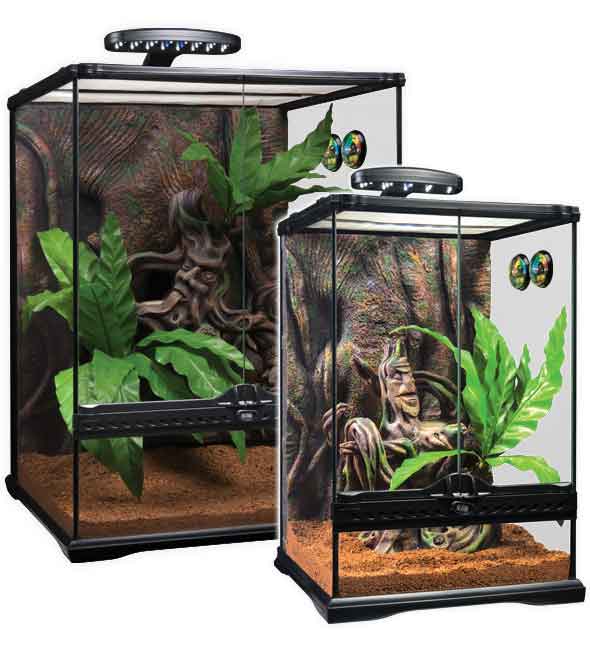
    Terrarium Crested Gecko
    TERRARIUM ยซGECKO EXOTERER

    The Crested gecko it is an excellent climber and needs several cork branches and cork tubes. The bamboo poles also have a decorative aspect and provide the animal with a space to walk, including the coveted heat point under a spotlight. As such, place a branch or root at the right distance from the light source so that the right temperature is created in it. Some vertical climbing possibilities should not be missing.

    It also, the terrarium must be well decorated with plants. Artificial plants are a practical option, as they can be easily cleaned of feces.

    The substrate suitable is the bark bed (Also called "crust") and the land of the terrarium. Moss cushions are decorative and regulate humidity. Droppings and food scraps should be removed daily.

    Temperature and lighting of the terrarium

    Although they are twilight and nocturnal, the Crested gecko sometimes sunbathe and will gladly accept a spot of ultraviolet light. It also, only an optimal supply of UV-B light provides enough vitamin D3 for young animals to grow optimally and adults to also be in top shape and display their bright colors.. We recommend the JBL L-U-W Light, which is available in various powers and in the version ยซJungleยซ. This type of lighting provides light, heat and UVA/UVB rays.

    As a caregiver, can get an especially good climate (and easy to control) using a heating mat under part of the floor of your terrarium. Although the Crested gecko almost never goes to the ground to warm up there, yes it heats the basic temperature of the high terrarium -which by design is similar to a fireplace- from below. These terrariums usually have too low temperatures in the lower half of the terrarium outside of summer., so the fry have a hot back and a cold belly. The heating mat must be accompanied by a thermostat. In this way, always get the right climate, as the heating mat turns on automatically when needed.

    A plus point is the more favorable energy consumption in terms of the environment, since terrariums operated in this way not only require lower power for point lamps, but also, usually, fix themselves with less energy. For one uniform lighting of your terrarium as decoration of your living space, we recommend the LED lighting across the entire terrarium. Light and heating sources are always turned on and off at a daily rate by means of a timer, 14h on, 10h off.

    Food

    Food-Crested gecko
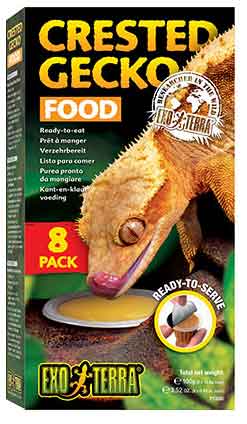
    Food-Crested gecko – ExoTerra

    The Crested gecko seems very quiet, but he is a good hunter. Feeding insects (crickets, domestic crickets, grasshopper, etc.) they are always sprinkled with mixtures of vitamins and minerals. This is the only way to avoid irreversible deficiencies, which can often lead to serious illness or even death in young animals and pregnant females, for example.

    Feeding animals must always be adapted to the size of the Gecko. Feed only insects that will be eaten directly. Otherwise, feeding animals would disperse in the terrarium, they would hide away and get rid of the attached vitamins/minerals – the result is malnutrition and malnutrition despite food supplies. They also like to eat fruit pulp, for example, food for the Crested gecko from Exoterra.

    Social behavior and reproduction

    The Crested gecko can be held individually or in a group. Males are territorial and incompatible with each other. They can be very demanding with females, so it is not recommended to keep them as a "couple.".
    Females put 2 eggs several times a year, that burrow into the moist substrate. After 60-120 days at 21ยฐC to 28ยฐC the young hatch.

    For sale "Crested gecko"

    The price of a "Crested gecko" at the exotic animal market, bred in captivity, ranges between 60 – 80 EUR.

    Videos"Crested gecko"

    My Correlophus ciliatus and the aquaterrarium bombinas orientalis | dadenReptilera

    CUTE! Crested Gecko Correlophus ciliatus Eating

    Alternative names:

    1. Eyelash gecko (English).
    2. Gecko ร  cils, Gecko ร  frange (French).
    3. Neukaledonischer Kronengecko (German).
    4. Crested gecko (Portuguese).
    5. Gecko de pestaรฑas (espaรฑol).

    โ–ท The world of Pets: Dogs, cats, birds, reptiles, amphibians

    Razor-backed musk turtle
    - Sternotherus carinatus

    Like all species of the genus Sternotherus, the Razor-backed musk turtle it is a very aquatic species that rarely comes out of the water to sunbathe. It is very territorial and does not migrate much..
    Musk turtle
    Musk turtle – Sternotherus carinatus at the Louisville Zoo in Kentucky – Ltshears, Public domain, via Wikimedia Commons

    Content

    Origin / Distribution

    The Razor-backed musk turtle (Sternotherus carinatus) is originally from the southern United States. Its range extends through Alabama waters., Arkansas, Louisanna, Oklahoma, Texas y Florida.

    Characteristics / Appearance

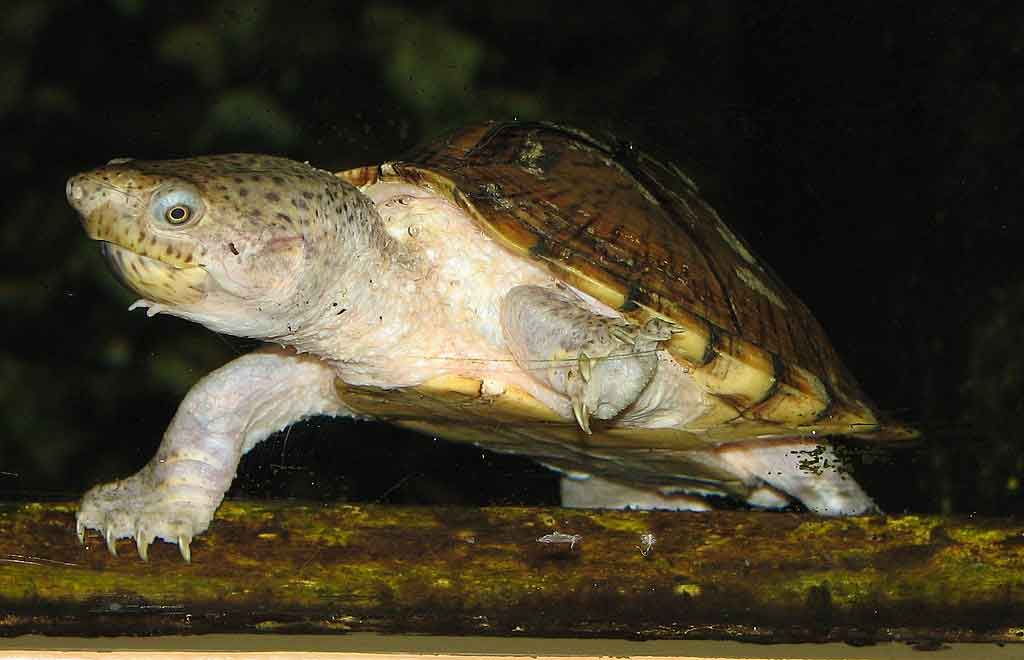
    the shell of the Razor-backed musk turtle it is light brown, between beige and olive brown, and has dark spots and line markings on each shield, with individual carapace scutes bordered by a narrow dark stripe. Its name refers to the strongly pronounced central keel, resembling a roof. In the youngest specimens, the keel can be especially pronounced and flatten with age.

    The plastron scutes are very poorly developed (somewhat stronger in the female), and the color can vary between yellow and brown.

    The soft parts of the species are gray to grey-brown with black flecks., the jaw is decorated with black stripes. There is a pair of barbels on the chin.

    Shell, plastron and soft tissues of juveniles light brown with various dot and line patterns. The posterior margin of the carapace is serrated.

    The males of the Razor-backed musk turtle grow to 17,5 cm length, Females reach a maximum body length of 13 cm.. This makes it the largest species in the genus. Sternotherus.

    Habitat

    The habitat of the Razor-backed musk turtle ranges from large slow-flowing rivers to heavily vegetated swamps and floodplains, preferring soft sandy bottoms. The presence of dead wood, both above water to sunbathe and underwater to retreat, appears to be an important factor determining habitat suitability. (Lindeman 2008).

    Behavior

    Musk turtle ( Sternotherus carinatus ) in the Natural History Museum and Vivarium of Tournai (Belgium) – Vassil, CC0, via Wikimedia Commons

    Like all species of the genus Sternotherus, the Razor-backed musk turtle it is a very aquatic species that rarely comes out of the water to sunbathe. It is very territorial and does not migrate much.. From December to February, animals go into hibernation, looking for hiding places in the substrate and on the banks. The species is active in the early hours of the morning and from afternoon to night. The Razor-backed musk turtle It is almost exclusively carnivorous and feeds on aquatic insects., clams, snails and crayfish. Molluscs increase their proportion in the diet as animals grow.

    Reproduction

    Breeding season runs mainly from spring to fall. Like this, up to two clutches of eggs may be laid per season. The sets usually contain 2 to 5 eggs. under natural conditions, The incubation period lasts between 100 and 140 days. Like this, the pups of the Razor-backed musk turtle are the latest compared to the different species of Sternotherus.

    Threats to the species

    State of conservation โ“˜


    minor concern Minor Concern โ“˜ (UICN)โ“˜

    The Razor-backed musk turtle has been evaluated by the International Union for Conservation of Nature (UICN), and their abundant populations result in their inclusion in the category of Least concern.

    While populations appear to be stable, potential risks include habitat destruction, contaminated water and dead wood extraction. They are also considered the fifth most vulnerable turtle species in the commercial pet trade..


    The "Razor-backed musk turtle" in captivity

    The pups of Razor-backed musk turtle are caught and sold in the commercial pet trade. These turtles are quite popular, especially in Europe, and it is estimated that around 50 000 individuals were sent to the European Union between 2008 and 2012. But, between 2002 and 2005, only about 900 individuals from the United States, suggesting that its popularity has recently increased.

    The "Kelified Musk Turtle" needs an aquaterrarium

    Theoretically, the final size of a Razor-backed musk turtle You can reach up 17 cm., but in captivity it is usually only of 10 to 15 cm., and females are usually somewhat smaller than males. These turtles need a tank with a rim length of at least 100 cm., a conceivable size would be 100 x 50 x 50 cm.. The aquaterrarium must have an aquatic part and a terrestrial part for the benefit of the animals. The water level must be at least 15 cm and can be up to 30 cm..

    Although they are classified as Aquatic Turtle, to the Razor-backed musk turtle offer them some climbing opportunities, which are usually accepted with gratitude by animals.

    The illumination with an ultraviolet component it approaches nature and is recommended. Sunbathing, a spotlight should be placed on land for aquatic turtles, under which the temperature can be up to 40 degrees.

    The Razor-backed musk turtle it is a rather solitary animal. The ideal is to keep them alone in the aquarium. Males are unfortunately incompatible, a socialization of females CAN work.

    The Razor-backed musk turtle prefers a water temperature of between 22 and 28 degrees centigrade with a pH value between 6 and 8. During the winter months the turtle maintains the hibernation. During this time, the water temperature should be reduced to 10 – 15 Celsius degrees.

    Food

    The "Razor-backed musk turtle" it's easy to feed. They can get used to frozen food, to live food and dry food. In the wild they like to eat snails and mussels which they can easily snap with their strong jaws., also insect larvae and small crustaceans and shrimps are taken with pleasure.

    breeding of the Razor-backed musk turtle in the aquarium

    The Razor-backed musk turtle has already been successfully bred in aquaterrariums.

    Curiosities

    This turtle owes its name musk to your musk glands, with whose help it can secrete a strong-smelling secretion to scare away predators. When kept in a aquaterrarium, the use of the glands is very rare, for example, when taken in hand. They are not used to swimming freely in the aquarium.

    Buy one "Razor-backed musk turtle"

    The price of a "Razor-backed musk turtle" at the exotic animal market, bred in captivity, ranges between 100 – 140 EUR.

    Videos "Razor-backed musk turtle"

    Sternotherus Carinatus (Razorback Musk Turtle) vs Sternotherus Minor (Loggerhead Musk Turtle)

    Sternotherus carinatus

    Alternative names:

    1. Razor-backed musk turtle, Keeled Musk Turtle (English).
    2. Cinosterne carรฉnรฉ (French).
    3. Dach-Moschusschildkrรถte, Hochrรผckige Moschusschildkrรถte (German).
    4. Tartaruga almiscarada de dorso de navalha (Portuguese).
    5. Tortuga Carenata, Tortuga almizclera aquillada (espaรฑol).

    โ–ท The world of Pets: Dogs, cats, birds, reptiles, amphibians

    Scorpion mud turtle
    - Kinosternon scorpioides

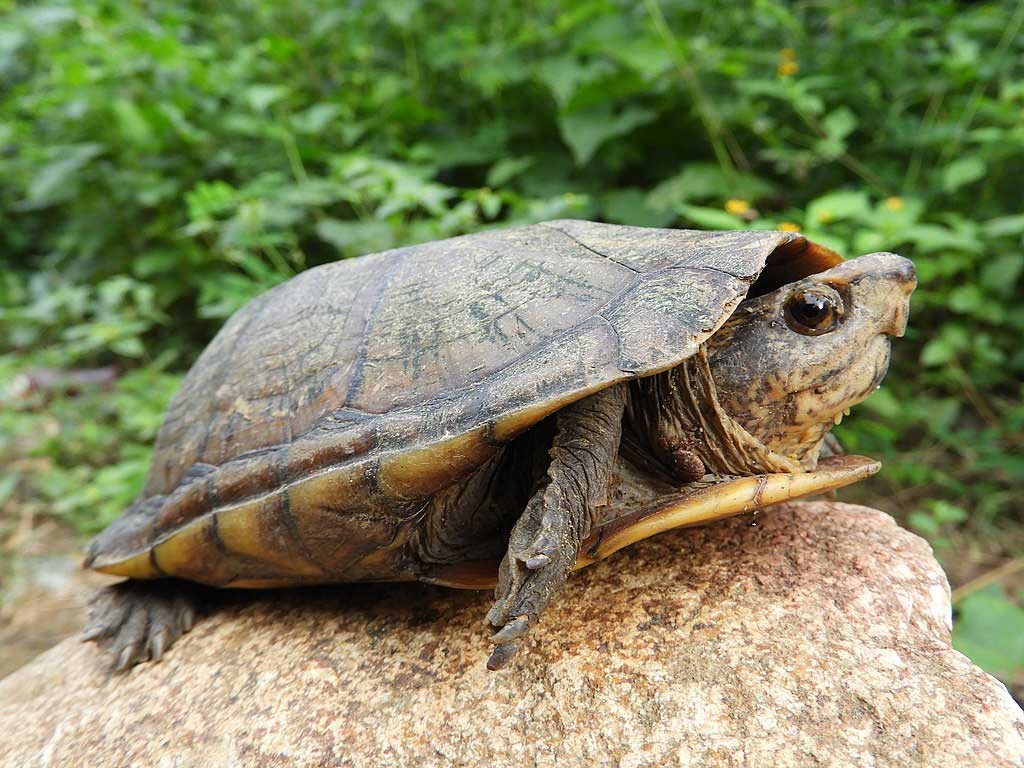
    The Scorpion mud turtle is a Kinosternidae (mud turtle) medium to large in size with an oval shell (top shell) with a length of 92-270 mm.
    Scorpion mud turtle
    Scorpion mud turtle (Kinosternon scorpioides scorpioides) – Jose Gabriel Julio Guzman, CC BY 4.0, via Wikimedia Commons

    Content

    Origin / Distribution

    The Scorpion mud turtle (Kinosternon scorpioides) It is native to the south-southeast of Mexico., including Cozumel Island), south to Belize, and in the Caribbean channels in Honduras, Nicaragua and on the Island of San Andres, Colombia. It also, It is distributed in the Pacific channels in southern Mexico., Central America to Panama; Atlantic drainages, and other inland or coastal regions of South America, including Bolivia, Brazil, Colombia, the Guianas, Ecuador, Peru, Trinidad, Venezuela, and disjunct populations in Argentina and Paraguay.

    Subspecies

    • Scorpion mud turtle (subspecies) – Kinosternon scorpioides scorpioides (Linnaeus, 1766)
    • White-throated mud turtleKinosternon scorpioides albogulare (Dumรฉril and Bibron, 1870)
    • Red cheeked mud turtleKinosternon scorpioides cruentatum (Dumรฉril, Bibron and Dumรฉril, 1851)

    Characteristics / Appearance

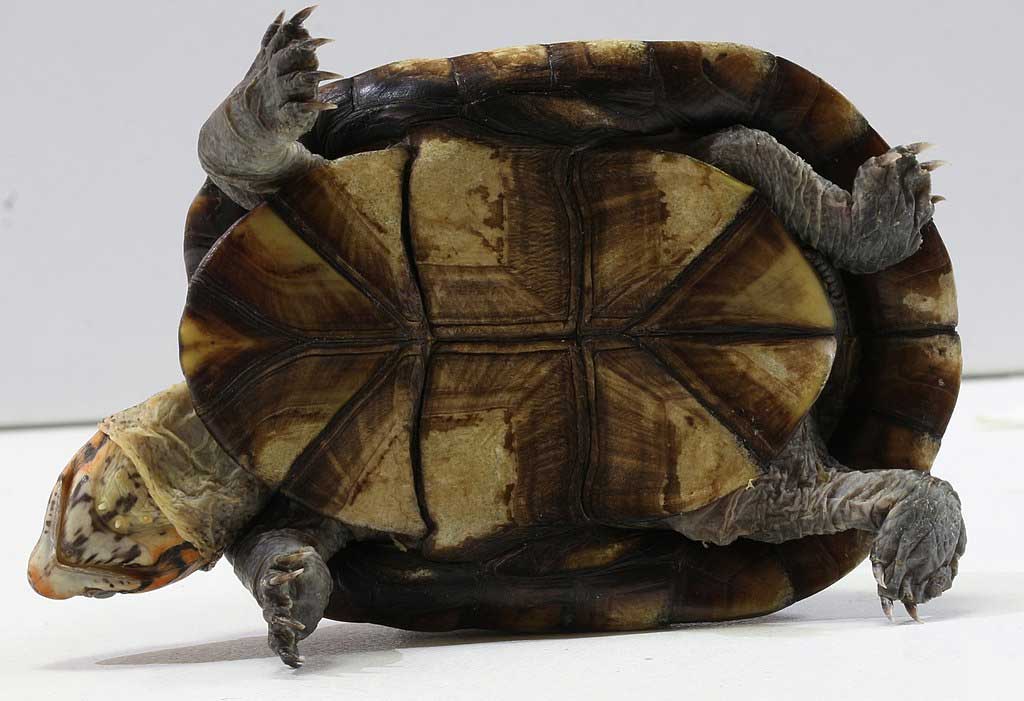
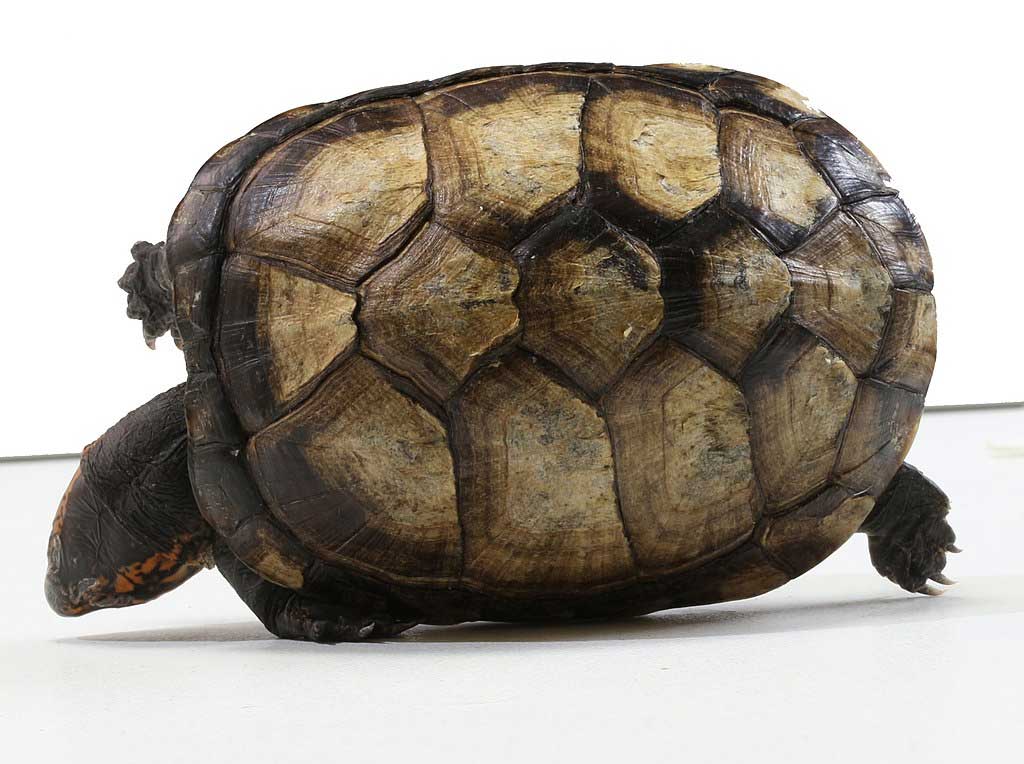
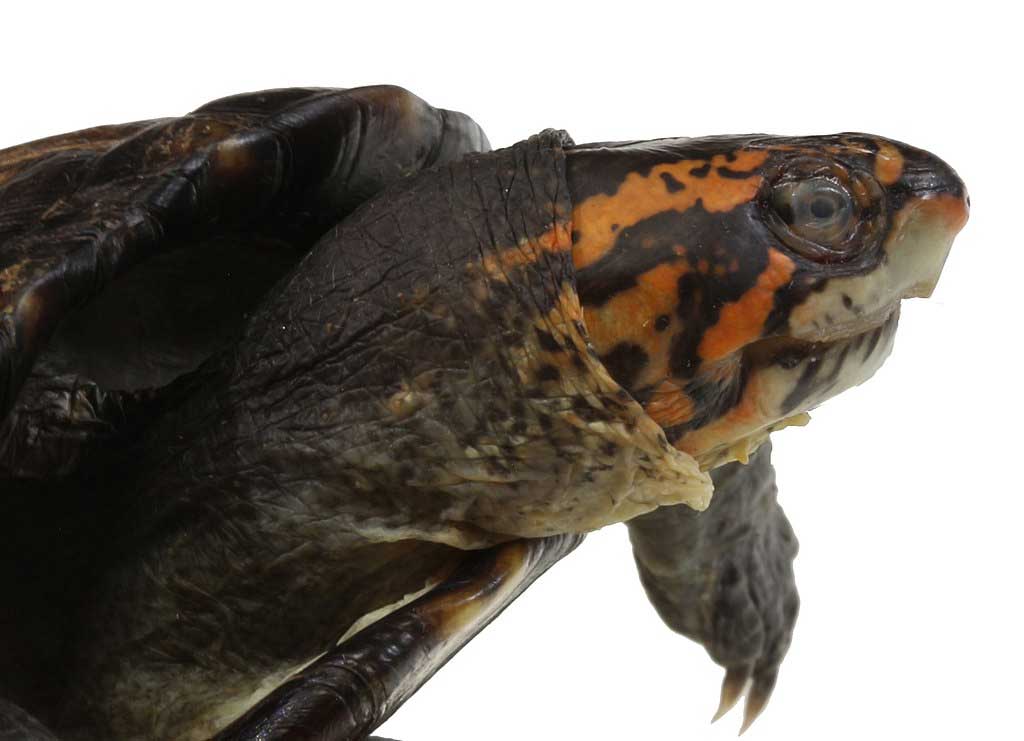
    The Scorpion mud turtle is a Kinosternidae (mud turtle) medium to large in size with an oval shell (top shell) with a length of 92-270 mm. The shell may have three keels (Crests) in many individuals . The plastron (lower shell) has two hinges and little or no anal notch on posterior lobe. The first vertebral scale (shield or foil) of the carapace is wider than long, and the vertebral scales 1 to 4 have distinct posterior notches. Shell color varies from light brown to olive or black; head may be brown, gray or black with a reticulate or cream-colored spotted pattern, orange, red, pink or yellow. In most individuals the tip of the tail has a horny spine.. This description of Scorpion mud turtle should be compared with the anatomical features of other kinosteridos similar-looking North Americans described in other works.

    Scorpion mud turtle

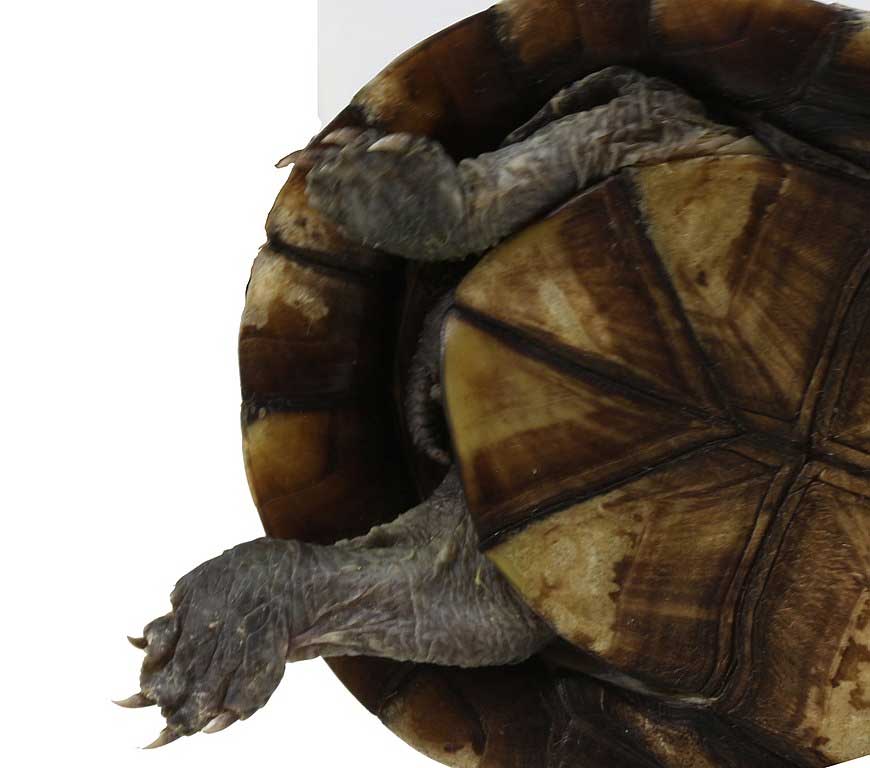
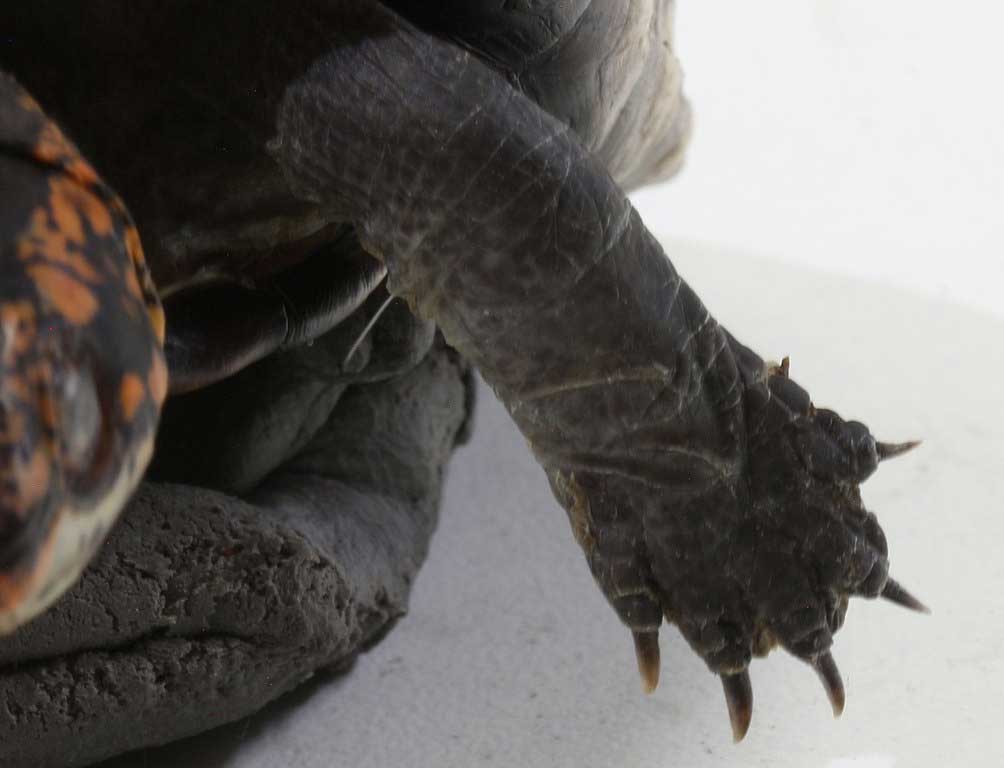
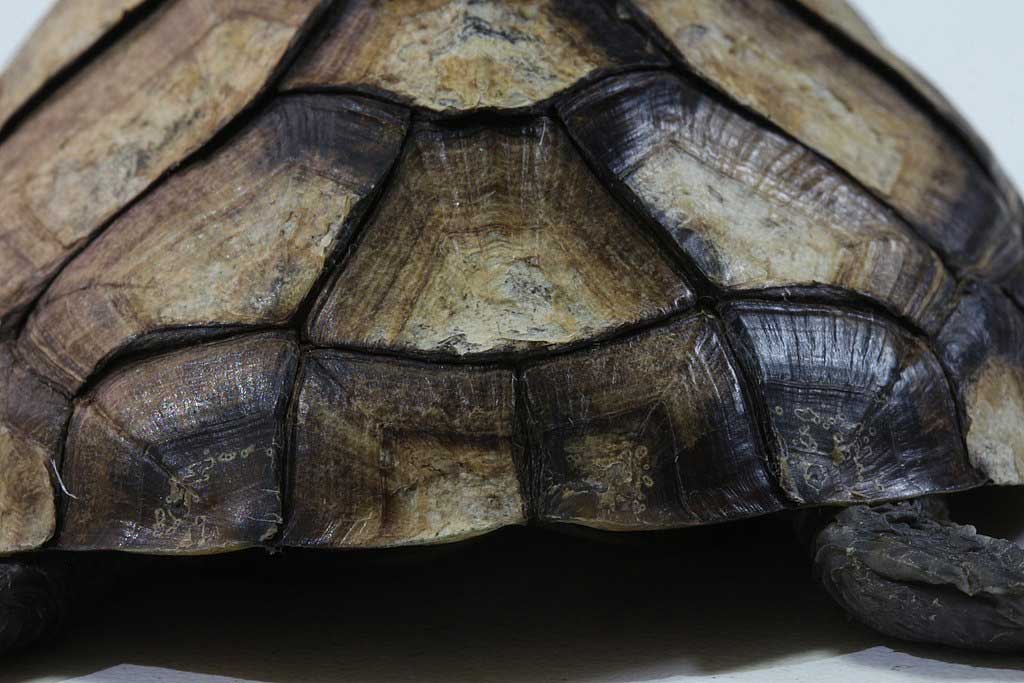
    Detail view of the plastron, look at the shape and shields of the bridge Shell view of Kinosternon scorpioides Kinosternon scorpioides, head details Kinosternon scorpioides, hind leg details Kinosternon scorpioides, front leg details Detail of supracaudal shields
    Source: Vicente.niclos

    Size:

    Carapace length 92-270 mm

    Habitat

    They are found in shallow water, in flooded forests, swamps and ponds from Mexico to Argentina and is said to be the quelonio with the widest distribution in the neotropics.

    Behavior

    Its feet are webbed, but this species of turtle divides its time between water and land and prefers to walk on the bottom instead of swimming. They can be aggressive and can inflict a painful bite with their horny parrot-like beak. When the male of a species is larger than the female, usually indicates that males compete for females or have to subdue them.

  • Diet: Omnivores, they eat fruit, seeds, algae, fish, amphibians and carrion. They tend towards the more carnivorous end of the omnivorous scale.
  • Reproduction: They are of 2 to 6 eggs in a shallow ground nest. The incubation period varies from 3 to 6 months and is determined by a series of environmental conditions, not necessarily the temperature. The sex of the offspring is determined by temperature..

  • Threats to the species

    Not currently classified as at risk, but the widespread consumption of adults and eggs, along with deforestation, has caused a decrease in their number in some areas.

    This species is widely consumed in For, where the "casquinha de Muรงuรฃยป is one of the most famous dishes of Belem.

    The "Scorpion mud turtle" in captivity

    The Scorpion mud turtle usually kept as a pet. Of course, they are beautiful aquatic turtles, but that alone is not enough. They are easy to care for. One of the reasons is that, like tropical turtles, they do not need to hibernate. Since they feed almost exclusively on foods of animal origin, planted aquariums are also possible.

    Aquaterrarium

    To the Scorpion mud turtle he likes to climb.

    The Scorpion mud turtle can grow to a maximum body length of 20 cm in the aquarium. These aquatic turtles need an aquarium with an integrated terrestrial part for basking.. Said container must have a size of at least 80 x 40 x 40 cm.. The water part must have a sand or gravel substrate. It also, the Scorpion mud turtle needs climbing opportunities. especially the stones, roots or plants are very popular.

    The Scorpion mud turtle is a solitary animal. The ideal is to keep them individually in a nice aquarium.

    These reptiles adapt perfectly to the conditions of the aquarium water.. They prefer water temperatures between 20 and 28 Celsius degrees. low heat point, temperature can also be 40 degrees Celsius.

    Food

    The Scorpion mud turtle accepts meat and vegetable food. In the aquarium, However, live and frozen food preferred. They also eat turtle sticks or dried animals.

    Reproduction in the aquarium

    The Scorpion mud turtle (Kinosternon scorpioides) have already been successfully bred in the aquarium. They lay eggs, which they then bury in the sand. A set can contain up to 5 eggs. The young hatch after 60 to 120 days.

    Buy one "Scorpion mud turtle"

    The price of the offspring "Scorpion mud turtle" at the exotic animal market, ranges between 80 – 120 EUR.

    Videos "Scorpion mud turtle"

    Case Turtle Release (kinosternon scorpioides)

    Kinosternon scorpioides HD

    Alternative names:

    1. Scorpion mud turtle (English).
    2. Tortue scorpion, Cinosterne de l’amazone (French).
    3. Skorpions-Klappschildkrรถte (German).
    4. Muรงuรฃ, Jurarรก (Portuguese).
    5. "Tortuga estuche", Casquito escorpiรณn, Morrocoy de agua, Tapaculo, Chachagua y Tortuga de pecho quebrado (espaรฑol).

    โ–ท The world of Pets: Dogs, cats, birds, reptiles, amphibians

    Lau banded iguana
    - Brachylophus fasciatus

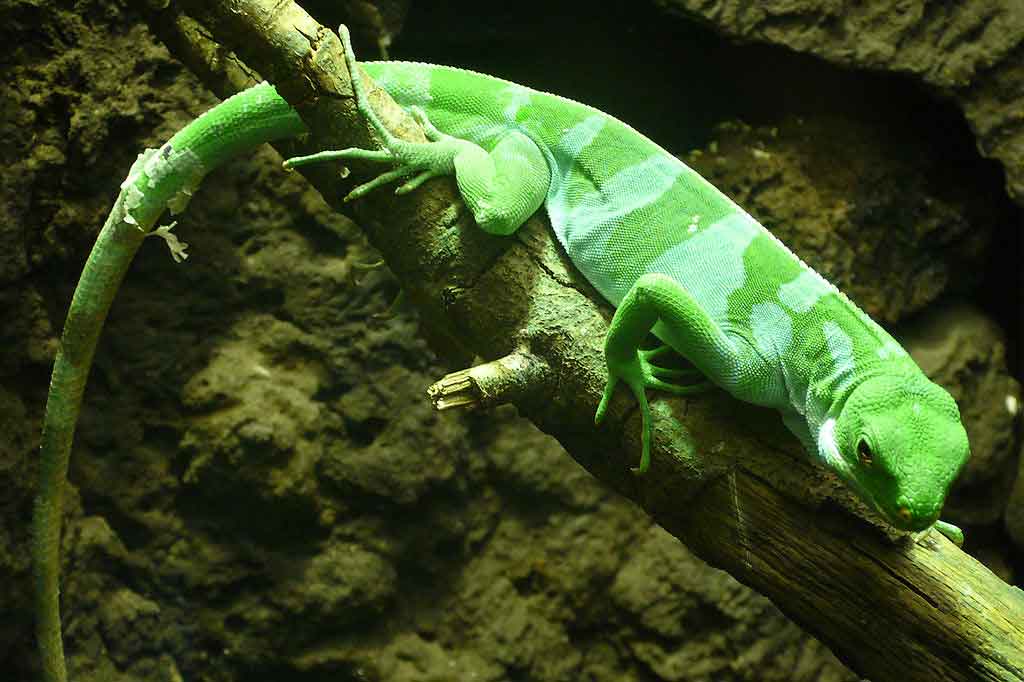
    The Lau banded iguana is considered a national treasure by the government of this country, and his image has appeared on postage stamps, currency and phone book covers.
    Lau banded iguana
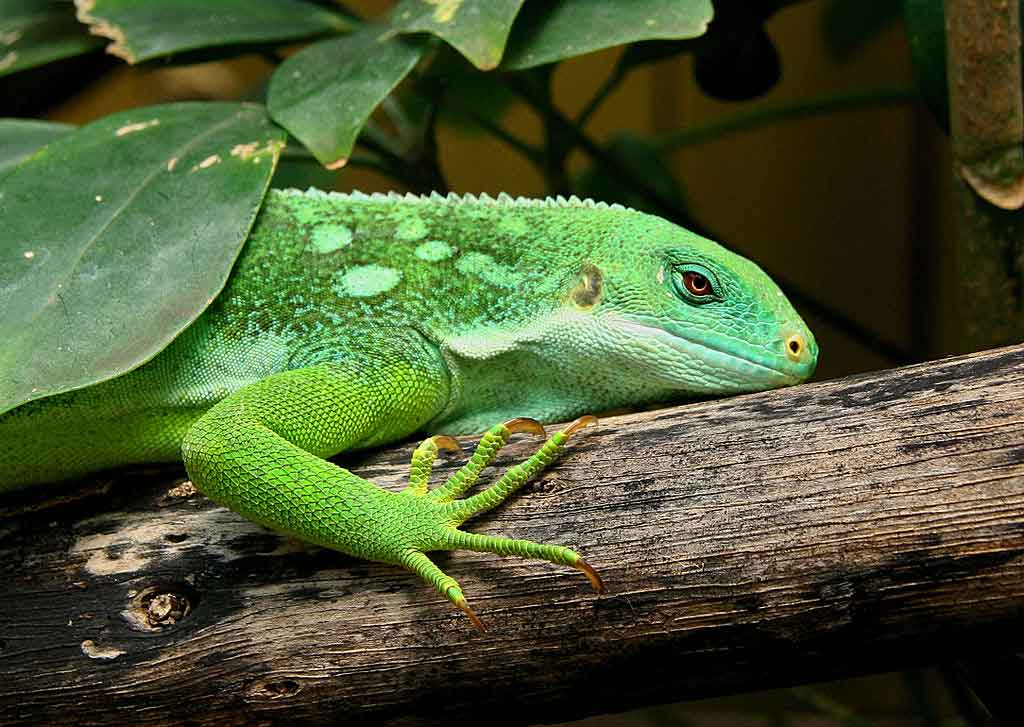
    Lau banded iguana – TimVickers, Public domain, via Wikimedia Commons

    Content

    Origin / Distribution

    two species (Brachylophus fasciatus and Brachylophus vitiensis) belong to the genus Brachylophus (Fiji iguanas).

    Its geographical distribution is limited to some islands of the archipelago of Fiyi y Tonga. Son, Therefore, the most isolated members of the subfamily Iguaninae (major iguanas), whose other representatives live in America. Until a few years ago, gender was supposed to Brachylophus was monotypic. The nominal species Brachylophus brevicephalus is considered a synonym of Brachylophus fasciatus. Was not up 1981 that a second valid species of Brachylophus, Brachylophus vitiensis.

    Characteristics / Appearance

    The Lau banded iguana It is a slender build iguana that reaches a total length of more than 70 cm.. The difference in size between both sexes is minimal. The measures, (head – torso), for adults are in the range of 14-19 cm. (male) and 14-18 cm. (female) with a mass of 95-210 g (male) and 105-220 g (female). These weights refer to mating males and egg-laying females..

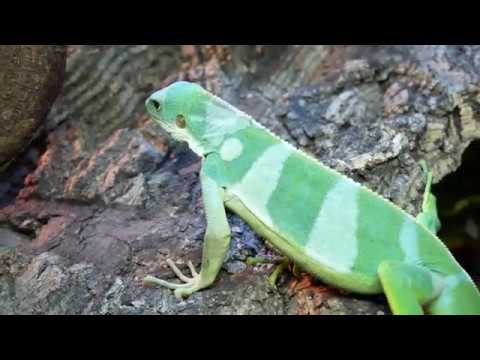
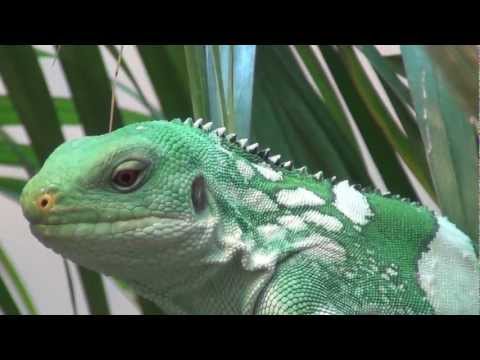
    The Crest Ridge is little pronounced in both sexes. there is between 11 and 17 femoral pores on the bottom of each thigh, which are more pronounced in males. Each animal has an individual pattern, neither looks like the other. The normal coloration of females is mostly uniform green, with a light green or white stripe on the front of the body in some specimens. The nostrils are edged with yellow in both sexes.. Males, on the other hand, have a contrasting cross-hatching (green and light blue to two different shades of green) of the body and tail. The intensity of the coloration depends a lot on the mood. In courtship or aggressive phases, light blue stripes on males turn almost white and green stripes dark blue to black.
    When the coloration is very intense, yellow spots also appear on front and back legs.

    Habitat

    The Lau banded iguana feeds on leaves and other plant material. During the day these animals rest in the tops of tall trees. Life expectancy is about 10-15 years.

    Behavior

    The species is diurnal, spending their days looking for food, basking in the sun and guarding their territories during the day and retreating to the treetops at night. Male iguanas are highly visual and aggressively defend their territories from rival males.. Iguanas deepen their green coloration to intensify their bands, and shake their heads and intimidate intruders by pouncing on them with their mouths open.

    Threats to the species

    State of conservation โ“˜


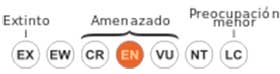
    Endangered in danger โ“˜ (UICN)โ“˜

    The Lau banded iguana (Brachylophus fasciatus) is unfortunately highly endangered in its natural habitat and is listed on the IUCN red list. If you want to have this species of iguana in Europe, you must have the corresponding papers and regularly document the animals with photos. feral pigs, the goats, dogs, cats and introduced species, like the mongoose, has contributed to the fact that there are only less than 10.000 animals of this species in freedom.

    But, in the meantime, there are breeding projects to increase the natural population of the animals again. Unfortunately, A few years ago it was not known that both Brachylophus bulabula as the Brachylophus fasciatus were kept in private homes. The two species were thought to be the same. As the animals hardly differ from each other visually, many animals mixed with each other. It is very likely that there are no pure species of the Lau banded iguana in Europe.

    The "Lau banded iguana" in captivity

    The terrarium

    The Lau banded iguana should be housed in terrariums 200 x 80 x 120 cm.. Containers can be made of plastic plates (of 1 cm thick). This material is lighter, more hygienic and easier to work with than for example, timber. It also has a much longer shelf life.

    Since Lau banded iguana only kept singly or in pairs, the terrariums will be designed so that they can be separated in the center with a plastic plate. The advantage is that the iguanas can be separated and reunited without removing them from their usual environment.. Plastic strips will be placed on the front (20 cm height at the bottom, 10 cm at the top). ventilation (round plastic grilles) will also be incorporated into these two front panels. This has the advantage that there is sufficient air circulation but no drafts. But, this design is not suitable for small terrariums. The front is completed with sliding glass panels of 4 mm thick.

    Illumination

    Lighting is provided by a fluorescent tube (18 watts) per side and one HQL mercury vapor lamp (80 W). The weights are outside the terrarium. The fluorescent tubes will be on during 14 hours all year (of 7:00 to 21:00 hours), HQL lamps will light at 10:00 hours and will be on until 15:00. In general, It should be noted that the intensity of light plays a decisive role in the breeding.

    Terrarium Decoration

    The terrariums they are provided with thick branches and cork tubes. Pressed cork boards or coconut fiber mats are placed on the rear wall, that are increasingly accepted by juvenile iguanas to climb.

    The plastic plants are used as decoration, Since the Lau banded iguana consider real plants as food. This makes food control difficult and can lead to deaths if the plants are poisonous or hard-fibered.. The substrate is filled with river sand (height of 5 to 15 cm.). The females also use it to lay their eggs.. A water reservoir 45 x 20 x 5 cm. , not used for drinking, complete the assembly.

    Bottom heaters are not used, as they would be atypical for tree dwellers. Hideouts are not necessary, Since the Lau banded iguana does not seek visual protection from human observers in terrarium conditions.

    Terrarium temperature

    The air temperature is about 30ยฐC during the day in summer and about 27ยฐC in winter. At night, values โ€‹โ€‹drop by about 5ยฐC each. On very hot summer days, temperatures rise to 35ยฐC, but this does not cause any negative reaction in animals.

    Measurements are always made at the center of the sidewall, outside the radiation zones of light sources. The iguanas cover their water needs by spraying the terrariums. This is done daily, depending on the season, once in winter to four times in summer.

    Food

    Lau banded iguana
    Augsburg Zoo, Fijian, Brachylophus fasciatus – Rufus46, CC BY-SA 3.0, via Wikimedia Commons

    Feeding is done at different intervals. Seasonal conditions and the weight of the animals play a decisive role. As a rule, iguanas feed every five days.
    Overweight specimens are only offered vegetable food every two days.

    The Lau banded iguana can be fed with tomatoes, cucumbers, carrots, courgettes, various lettuces, chinese cabbages, dandelions and their flowers, as well as with the following fruits: apples, grapes, oranges, tangerines, peaches and bananas. It also, can accept insects (black beetle larvae, Argentine giant cockroaches, grasshopper, crickets and house crickets). All insects are given only with tweezers to prevent their unhindered dispersal.

    The Lau banded iguana develop a character of their own and also have individual food preferences. But, the favorite food of adult iguanas is black beetle larvae (Zophobas morio), that are only offered recently dead for security reasons. Females are less picky eaters than males.. The vitamin preparation, minerals and amino acids Korvimin-ZVT is added to each feed.

    Management "Lau banded iguana"

    The management of Lau banded iguana too easy, since they are not aggressive and do not bite. But, watch out for their sharp claws. Females are usually a bit more shy than males.. It should be noted that the Lau banded iguana seem to be very susceptible to stress when moved.

    Reproduction

    Good conditioning of the animals is important as a prerequisite for successful breeding. Fat animals are largely unsuitable for breeding. The females of more than 230 g could only have false pregnancies. Males with excess fat just sit in the terrarium. Males reach sexual maturity already under the year. Females do not reach sexual maturity until they are two years old.. In some cases even before.

    The Lau banded iguana does not have a specific breeding season, but can reproduce throughout the year. However, the best time for successful copulation is spring..

    The male will approach the female with a strong movement of his head.. If the female is willing to mate, does not change color and retains its normal green coloration. The males are normally very gentle in their approach.. But, this can change drastically if the female is unwilling to mate. The chase then becomes increasingly vehement and aggressive and ends with the female seeking shelter and hiding places on the ground.. Then takes on a stress coloration (dark olive green to almost black). I eat very late, stop the experiment and separate the animals to avoid serious bite injuries. Females can also injure smaller males if they are not ready to mate.. Dominant females do not discolor, they do not take stress coloring. when you put them together, always take the time to observe if they harmonize. In the early years, the iguanas were kept in pairs between one day and four weeks.
    Otherwise, they were staying individually. with this method, mating is usually quick, but sometimes with little success (false pregnancies, unfertilized clutches). Females that do not lay clutches for a long period of time are mixed with other males on a trial basis.. With this breeding method, females do not show any stress behavior. When copulation occurs, the male carefully approaches the female from behind and harasses her. This is followed by the typical bite on the neck of lizards. In most cases, copulation takes place on branches or cork tubes. No mating has been observed on the ground. Mating lasts only a few minutes.

    As places of oviposition, some areas of the bottom substrate remain more or less moist. Moist sandy areas are preferred, whose surface is additionally protected with a cork branch or tube. The first signs that oviposition is approaching are shown by the female searching the ground and exploring suitable places in the sand.. The period of burrowing activity is highly variable. In the fertilized clutches, the burrowing activity of the female is much more constant than in the non-fertilized. If wet sand areas are not prepared, it can happen that the female destroys the entire floor of the terrarium. Post-inserted storage containers are not accepted, e.g. with peat substrate. The females need between one and two weeks from the beginning of the excavation until the laying of fertilized eggs.. For unfertilized eggs, deposition may occur spontaneously; often, the eggs are simply distributed on the ground without the need to dig. In the upper part of the branches, unfertilized eggs can also be deposited., then they will fall to the ground. But, the period can also last 2 months, with the animal taking several breaks.

    When the female has found a suitable place, dig a hole about 10 cm in diameter with a lot of intensity, observing their surroundings carefully. It is barely possible to observe the female doing this. If a male is in the terrarium at the time, the female is not disturbed by him. It also ignores the egg-laying activities of the female.. No matter how high the bottom substrate is filled, animals always dig to the bottom of the terrarium. So, the ground level in the planned storage places must be at least 10 cm.. When they are satisfied with their work, its color changes from green to dark olive green (work coloring). This transformation can only be observed for a very short time. This is followed by egg laying. According to observations, clutch size ranges from 1 and 7 eggs, these two being the extremes. They usually put on 3 to 5 eggs. Once the setting is finished, the eggs are placed in the correct position and the clutch is sealed.

    Incubation

    Lau banded iguana
    A Fiji Iguana photographed at ZooParc de Beauval – Clement Bardot, CC BY-SA 3.0, via Wikimedia Commons

    Incubation time varies a lot, although the reasons are not clear. The incubation temperature plays, of course, an important role in this regard, but it does not fully explain this phenomenon. the season of the year, the substrate and predevelopment in the female body probably also play a role. At 28ยฐC the young will hatch after 113 to 126 days, at 29.5ยฐC after 103 to 146 days.

    When hatchlings see the light of day, They usually need between 6 and 12 hours from when they open the egg shell until they completely leave it. The sex of the pups can now be clearly recognized by their markings. Usually, the yolk sac has not yet been fully depleted, but falls off on its own after a day or two. The newborn pups have a total length of 17 to 24 cm and a mass of approximately 8 g.

    the brood, especially in the first four weeks, requires a lot of time and patience. The food spectrum is the same as that of adult iguanas. So far, young animals have mostly rejected all food in the first period. About five days after hatching, they are offered freshly killed wax worms with tweezers. You have to be careful not to stress the iguanas too much, so the animals should not be surprised. If required, repeat feeding attempts several times a day. after a few days, young iguanas usually start eating waxworms on their own (placed on a branch in front of its snout). Only still mineral water is given as a drink up to nine months of age. The same goes for spraying two or three times a day.. This is done as a precaution (chlorine content in tap water). Young animals are moved to terrariums just as large as adults, since this seems to favor its growth. A small disadvantage is that the insects (except grasshoppers) should always be given with tweezers. Solitary breeding is not necessary in the first months; even several males can be kept together without problems. Only in very difficult cases is solitary breeding preferred.. The character of the young animals is already pronounced individually. Some are more confident, others more reserved.

    Buy one "Lau banded iguana"

    if you want to buy one Lau banded iguana, you should expect to pay a lot of money for it. They are not easy to find online and you are not likely to find one at your local pet store.. As a result, you could end up paying 1.000 euros for one of these iguanas.

    Videos "Lau banded iguana"

    Brachylophus Fasciatus in 4k - Iguanas Fiji in 4k

    Fiji Island Iguana - Brachylophus fasciatus

    Alternative names:

    1. Lau banded iguana (English).
    2. Iguane des Fidji (French).
    3. Kurzkammleguan (German).
    4. Iguana-listrada-de-fiji (Portuguese).
    5. "Iguana bandeada de Fiyi" (espaรฑol).