โ–ท The world of Pets: Dogs, cats, birds, reptiles, amphibians

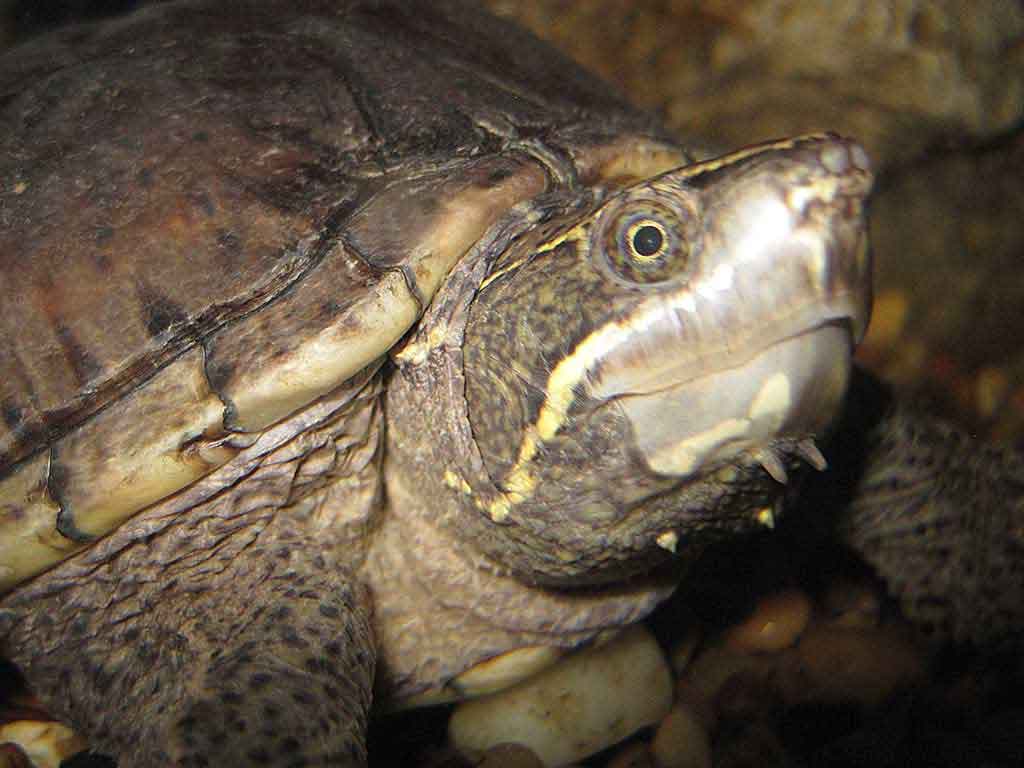
Striped mud turtle
- Kinosternon baurii

The Striped mud turtle inhabits stagnant and slow-flowing waters of all kinds, including temporary.
striped bog turtle
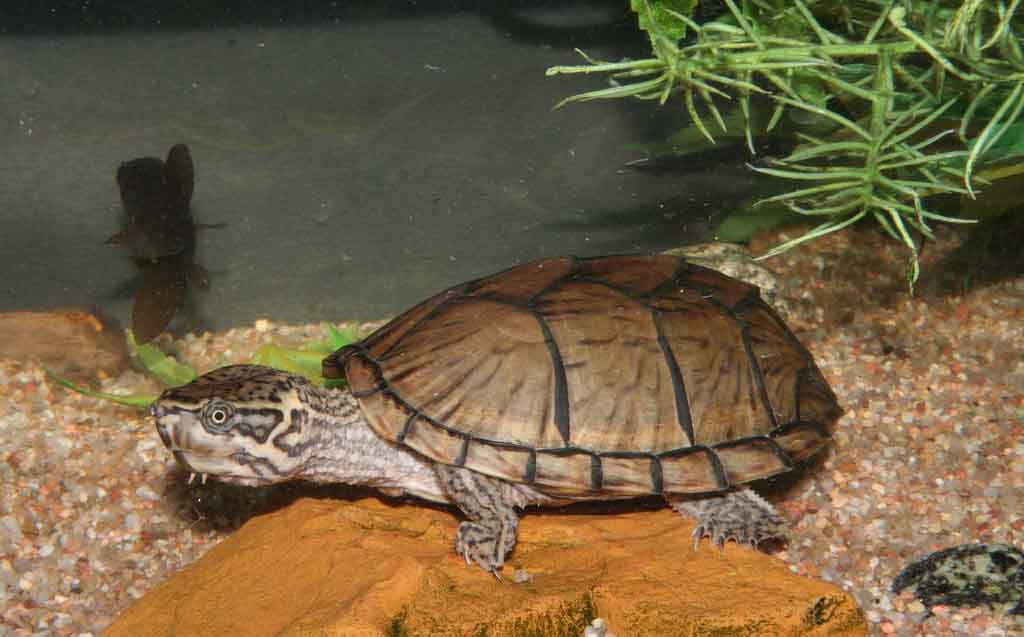
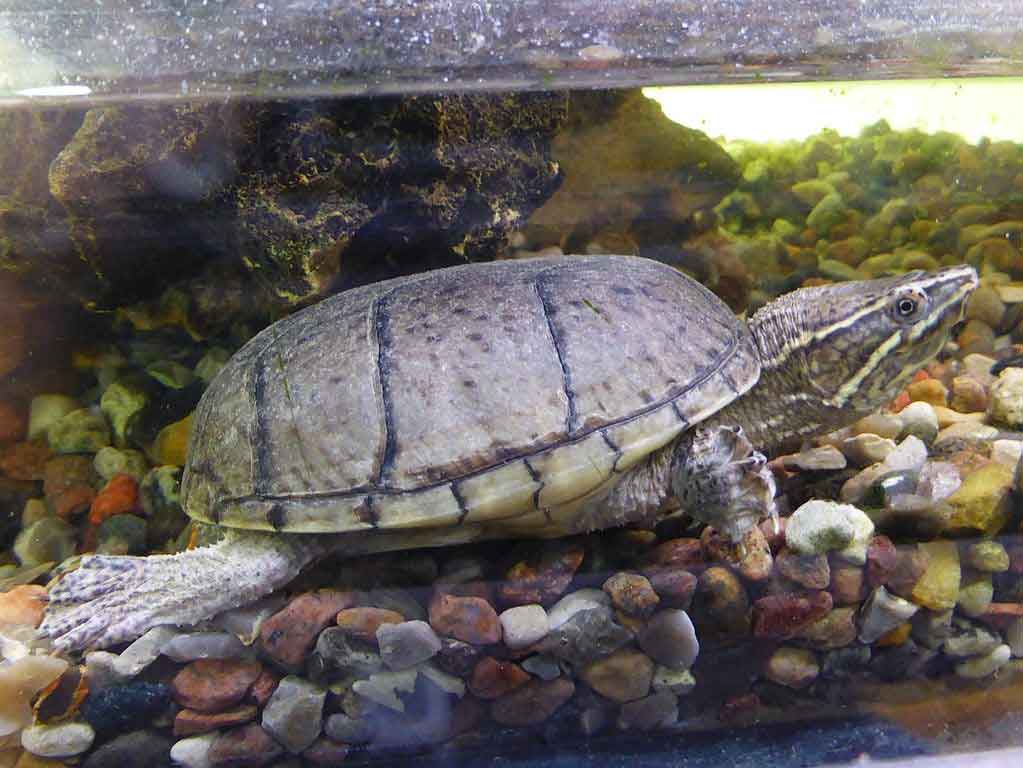
Kinosternon baurii au Vivarium Elapsoidea (Meyrin, Geneva, Switzerland) – Totodu74, CC BY-SA 3.0, via Wikimedia Commons

Content

Origin / Distribution

The Striped mud turtle (Kinosternon baurii) is native to the southeastern United States. The main distribution area is the Florida panhandle, but the species is also present in the coastal lowlands of South Carolina, Georgia, Alabama, North Carolina and Virginia. In general, the species is considered common and not endangered, and is not subject to trade restrictions or species protection laws. But, the local population of the Florida Keys is threatened by the destruction of the biotope and, therefore, has been placed under protection in the United States. Trade has no impact on natural populations.

Characteristics / Appearance

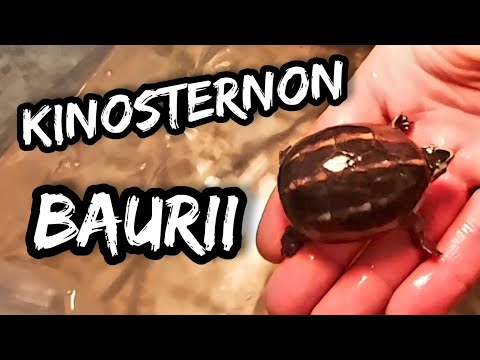
The Striped mud turtle it has an oval shape and a dark brown or black shell. The skin is dark and the underside of the shell is slightly yellowish.. In most places in Florida, animals have stripes on their shells that give them their names. But, there are regions where these turtles continue to have signs of these stripes or do not have any. this is known, for example, by populations of the Everglades.

These reptiles usually have two distinct stripes on their heads on each side.. This goes practically through the eye to the tip of the nose. Females have longer tails that are slightly bent at the end.. It is assumed that this fold serves to better cling to the female when courting and mating..

With a maximum shell length of only 12 cm in females, males are even smaller, about 10 cm., this turtle is really small. These are already record dimensions; females reach sexual maturity when they measure about 7-8 cm long and have 5-6 years.

Habitat

The Striped mud turtle inhabits stagnant and slow-flowing waters of all kinds, including temporary. If such a pond dries up, animals change habitat. Migrations of up to 3,5 km. They also look for the preferred places for laying eggs.. Thus, the Striped mud turtle, is unfortunately a frequent victim in road traffic.

Behavior

These little turtles are omnivorous by nature and feed on palm seeds, algae, insects, snails and the like. For its part, They are common prey for alligators and birds of prey such as the snail kite.. The small hatchlings and eggs are eaten by a large number of animals, which the turtles compensate with a very high reproductive rate.

A female can produce up to six (normally: three) broods per year with 1-6 (normally: 2-3) eggs each. The eggs are huge compared to the mother, one wonders how they fit in little mama. Eggs need between 80 and 145 days to mature, and only grow at temperatures between 28 y 30ยบC. If the temperature drops to 22.5-24ยฐC, the embryo pauses in its development. The pups measure between 2 and 2,5 cm in length and weigh between 2,1 and 3,9 g..

The "Striped mud turtle" in captivity
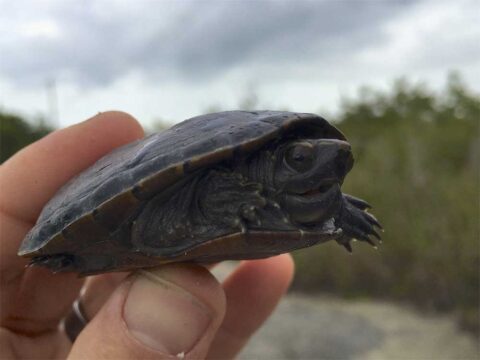
Striped mud turtle
This Striped mud turtle (Kinosternon baurii) was one of six mud turtles observed on two islands in the Florida Keys during a survey in January 2016. This listed reptile is one of seven species targeted during this study. Foto de Jonathan Mays – Flickr

Aquaterrarium

The minimum size of the aquaterrarium for the care of a single animal is three times the length of the carapace as the length of the tank, one and a half times the length of the shell as the width of the tank and two times the height of the shell as the water level. For a single animal this means (with a maximum carapace length of 12 cm.) a background surface of 36 x 18 cm with a water level of about 10-12 cm.. But, you will hardly be able to keep a turtle in such a small aquarium. But, a standard aquarium of 60 cm is absolutely sufficient to create a well-structured living environment for the little turtle. The following principles are very important: The Striped mud turtle climb and run instead of swimming. So, the water surface must always be easily accessible and the water level must not exceed 20 cm..

Aquaterrarium decoration

Waterproof roots and round stones are suitable for furnishings. The substrate should consist of a layer of fine sand of about 5 height cm, since animals like to dig. Many specimens only come out of the water to lay their eggs.. But, this varies greatly from one individual to another and, therefore, must be tested: add a piece of floating decorative cork to the tank. If you visit this part of land, a fixed part of earth must be installed, which may consist of a plastic bowl suspended and filled with sand, for example.

Illumination

On the ground part can be installed a weak focus under which a temperature of 30-35ยฐC is reached. The uv need of these turtles is low; a commercially available fluorescent terrarium tube with a UV component is perfectly suitable. A too bright location of the aquaterrarium should be avoided.

Temperature

The water temperature should oscillate between 22 and 26ยฐC from February to November, with 14 daylight hours. A hibernation period of about two months with only a few 8 daylight hours (this is much more decisive for the start of hibernation, that is regulated by hormones, than temperature) at 12-15ยฐC is very favorable for keeping turtles healthy for many years and for reproduction.

Individual maintenance, as a couple or in a group?

In principle, It is best to keep all swamp turtles alone. The males are very incompatible with each other and can drive the females crazy by their constant willingness to mate.. Females also prostitute themselves sometimes with violence against each other. But, this varies greatly from individual to individual. You can be very lucky and buy a pair that will get along very well, but unfortunately you can't trust it. Sometimes, the animals only split up after years of peaceful coexistence. This is said to occur even in humans…

In principle, you should have as many tanks as animals you want to have, so you can elegantly avoid all difficulties from the beginning and you can react quickly if necessary.

for breeding, the female is put with the male, which usually bears fruit very quickly. In this way we have a fertilization rate of almost 100%, while annoying females often do not take care of themselves if they are kept together for a long time.

Unlike many other reptiles, females are not at all demanding when it comes to laying eggs. They gladly accept the sand-filled dirt area described above. At worst, they will simply lay the eggs in the water, but don't let it go to that extreme. By the way, females that stand alone also produce eggs (unfertilized, of course). It's like with chickens, they don't need a rooster to produce eggs for breakfast.

Turtles and fish

Video Kinosternon Baurii

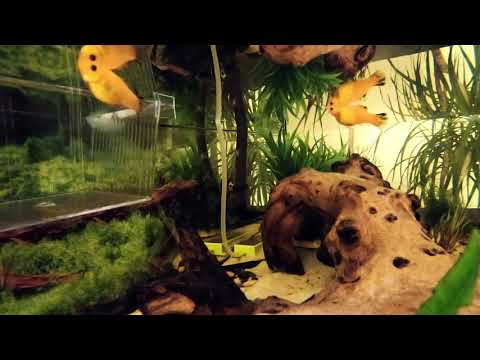
Tortue Kinosternon Baurii

The most exciting and beautiful thing is to keep the turtles together with the fish.. First of all, the aquarium becomes more attractive - there are more things in it- and, in the second place, fish realize very quickly when something goes wrong in the water. The right species for the biotope are, for example, the Jordanella floridae (Jordanella floridae), the Least killifish (Heterandria formosa), the Blackbanded sunfish (Enneacathus chaetodon) or the Everglades pygmy sunfish (Elassoma evergladei).

If you are lucky enough to have the Sailfin molly (Poecilia latipinna), You will see how these creatures, otherwise delicate, become authentic beauties. For reasons that are still unknown, the Sailfin molly they develop exceptionally well when kept next to turtles. Of course, the selection of fish species is not limited to those mentioned. Only the slow fish that live on the bottom, as the Whiptail catfish (Rineloricaria fallax, etc.), should not live with turtles. As a rule, fish are safe from small shell carriers; at most, weak or sick specimens become their victims, but that doesn't matter.

Food

The Striped mud turtle is more carnivorous than omnivorous. It is advisable to grow duckweed, especially the large species Spirodela polyrhiza, in the tank. Like this, they are simply available as food when turtles feel like vegetarian food. Otherwise, feeding is very easy, because Kinosternon baurii is not demanding. But, food should always be absolutely fresh and of high quality. It doesn't matter if it's industrially produced food for swamp and water turtles or frozen food..

Vitamins and valuable unsaturated fatty acids are destroyed more quickly than many people realize. Here we continue to sin a lot. Always buy food in small containers. Dry food should be consumed at the latest 6 weeks after opening the can, and frozen food after about half a year. Dry food should never be stored in a bright place, warm and humid. They should always be stored in an airtight container, in a dark and cool place.

If properly cared for, these friendly dwarfs hardly cause problems and give years of pleasure to their caregiver.

Buy one "Striped mud turtle"

The price of a "Striped mud turtle" ranges between 130 – 160 EUR.

Videos "Striped mud turtle"

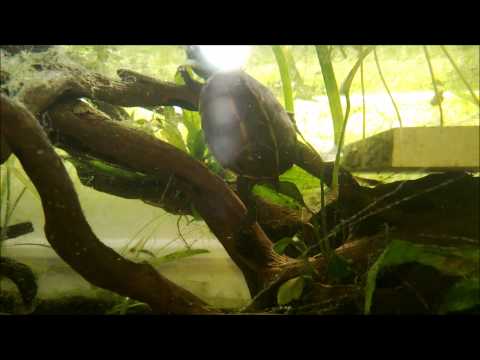
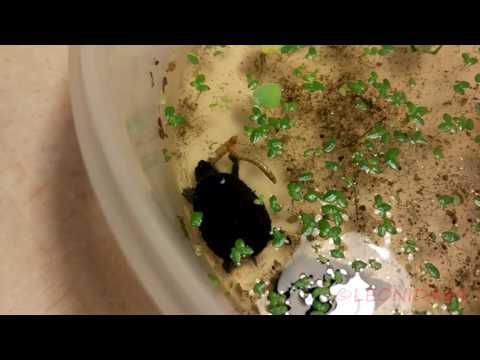
kinosternon baurii baby in mini aquaterrarium

Primo Ingresso in Acquario Kinosternon Baurii

Alternative names:

1. Striped mud turtle (English).
2. Tortue de boue rayรฉe (French).
3. Dreistreifen-Klappschildkrรถte (German).
4. Tartaruga de lama listrada (Portuguese).
5. "Tortuga de pantano rayada" (espaรฑol).

โ–ท The world of Pets: Dogs, cats, birds, reptiles, amphibians

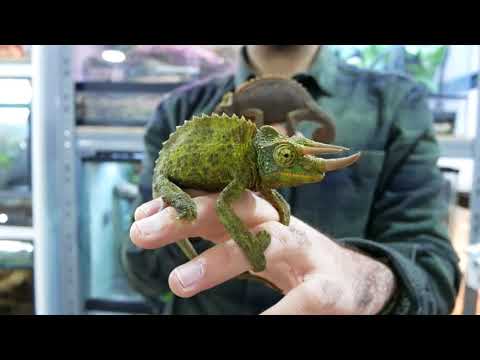
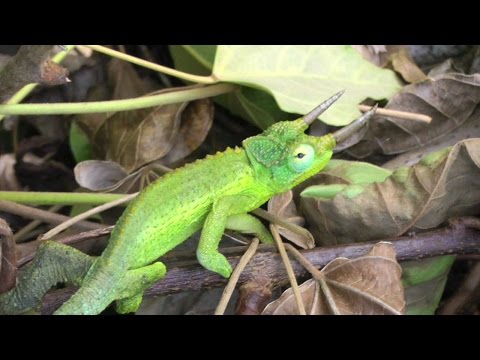
Jackson's chameleon
- Trioceros jacksonii

The Jackson's chameleon is diurnal and shows a foraging behavior with few movements per minute and a very slow locomotion rate.
Jackson's chameleon
Jackson's chameleon (Chamaeleo jacksonii) b. 27-01-2005 1 year Wellington Zoo 22-01-2006, Wellington, New Zealand – Photo credit: Peter Halasz. (User:Pengo)

Content

Origin / Distribution

The Jackson's chameleon (Trioceros jacksonii) is native to Kenya and Tanzania.

It has been introduced in the US. USA, in California, Hawaii and Florida.

Subspecies of Trioceros Jacksonii

Currently there 3 subspecies of "Jackson's chameleon" described:

  • Machakos Hills Jacksonโ€™s Chameleon (Trioceros jacksonii jacksonii)

    The Machakos Hills Jacksonโ€™s Chameleon is originally from Kenya, and it is the rarest type of chameleon. It measures an average of 20-25 cm long. Males have 3 horns, and the females have 1 or 3 little horns, which can sometimes make sex determination difficult. Females are lighter green in color than males., although sometimes they are red. Males are dark green., sometimes with aquamarine blue head and bright yellow patch on flanks. Individuals with this coloration may soon be described as a separate subspecies.

  • Mount Meru / Dwarf Jacksonโ€™s Chameleon (Trioceros jacksonii merumontanus)

    The Dwarf Jacksonโ€™s Chameleon comes from Tanzania and is very difficult to find in captivity. Wild-caught specimens are no longer available, as all export of wildlife from Tanzania is prohibited. it is extremely rare, although there are some breeders of the Mount Meru in Europe.

    These chameleons are the smallest of the species, with 17-20 cm length. Males have 3 long narrow horns, while the females only have a diminished horn on the nose. Both sexes have a dark green or blue-green body with much yellow on the face and at the base of the horns.. The eyelids are bluish-green.

  • Yellow-Crested Jacksonโ€™s Chameleon (Trioceros jacksonii xantholophus)

    The Yellow-Crested Jacksonโ€™s Chameleon is originally from Kenya, specifically from a limited range in the foothills of Mount Kenya and Nyambeni. It is the most common type of Jackson's chameleon. As the largest member of the species, individuals can grow to 36 cm long, and males are known to far outnumber 40 cm.. Males have 3 horns and females do not have horns.

    Invasive populations of the Trioceros jacksonii xantholophus are present in the Hawaiian Islands because a well-meaning pet store owner released some in O'ahu in 1972 in an attempt to restore the health of a wild-caught cargo from Africa. They have since spread to Maui., Hawaii and Kauai.

Characteristics / Appearance

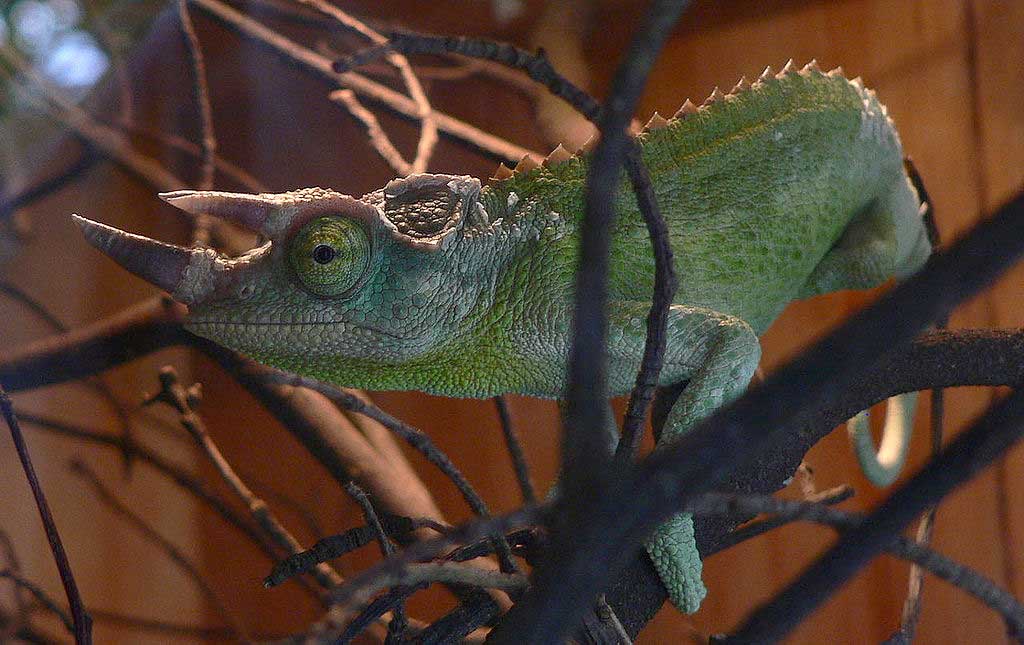
Most measure approximately between 15 and 35 cm length. They usually have several shades of green, but they can become as dark as black when they are very distressed.. Are sexually dimorphic. Males have three long, pointed horns protruding from the head. These horns are absent or underdeveloped in females. The back of the head has a small crest. There are small spines along the vertebral line. Like other chameleons, the Jackson's chameleon has zygodactyl feet (divided so that two fingers point inward and three point outward) that are specialized for life in trees, and a prehensile tail that is also used for grasping.

But, the most recognizable feature of all chameleons are their eyes. The pupil is the only visible part from its skin covering. Each eye rotates 180 degrees and is independent of the other. Chameleons have unusually strong control over the curvature of their lenses, and can enlarge an image.

They are considered a long-lived chameleon (until 10 years).

Habitat

The Jackson's chameleon prefers to live in thickets and mountain forests. They need to hide and prefer to live in trees. They rarely venture on the ground, except for laying eggs or mating.

Behavior

Males are territorial and fight with their horns, which they can also use to attract females. When two males meet, they stand on their side, flatten their bodies, curl their tails and push their heads forward. They inflate with air to appear larger and become brightly colored. Next, open their mouths to show the varied colors of their interior, while swaying and wiggling with the occasional soft hiss. The submissive male will normally try to hide, freeze on the spot or try to escape the area. Fade into muted colors. When males fight, they hit each other with their horns and try to push themselves from the branches. These fights can cause physical harm to chameleons.

They use stillness and dull natural coloration to protect themselves from bird predation, Snakes, shrews and lizards.

Reproduction

The Jackson's chameleon has a mating ritual that mimics its threat ritual. The male initiates the display of threat to the female, including color changes, inflating of the throat and elevation of the front legs towards the opponent. The female then has two options. May make threatening gestures, in which case you do not want to mate. If you want to mate, make weak threatening gestures or make no gestures at all, in which case the male recognizes his will. Then the male surrounds the female, grabs your neck with your mouth, is placed on your back and inserts the hemipene into the cloacal orifice. This whole process usually takes a few 13 minutes. The female will continue to mate during 11 days, but not with the same male twice in a day. Gestation lasts approximately 190 days. The young are usually born in the morning. The female opens the cloaca and the young are born one at a time on a branch.. They are still surrounded by a gelatinous egg sac and remain asleep until the egg touches the substrate.. The young then wake up and stretch and break the egg sac.. At birth, the offspring measure some 5,5 cm long and weigh some 0,6 Gm. After 20 days females copulate again. The young will reach sexual maturity at the age of 9 or 10 months.

Food

The diet of this chameleon consists mainly of insects and spiders. Using your eyes independently, sit completely still and watch if an element of prey crosses your path. When you locate it, both eyes converge and it swings a bit to improve its vision and confirm the distance at which the prey is located.. The prey is captured by projecting the tongue, which has a fleshy tip covered in sticky saliva. The prey is brought back to the mouth, chewed and swallowed. Language, one and a half times the length of the lizard, can reach its full length in a sixteenth of a second.

They get water by licking the drops from the leaves.

In the morning, sunbathe, bending one side towards the light and flattening the body and stretching the neck to increase its surface. Once heated, are able to hunt.

Threats to the species

State of conservation โ“˜


minor concern Minor Concern โ“˜ (UICN)โ“˜

The Convention on International Trade in Endangered Species (CITES) classifies all chameleons as threatened. Two reasons for its decline are habitat destruction and the exotic pet trade.. Demand for chameleons encourages pet suppliers to pull them out of the wild and ship them over long distances; the survival rate may be approximately 1 of each 10, and those who survive arrive malnourished and stressed. Proper care methods for these lizards are not well understood, so they can be mistreated without knowing it. Captive breeding has not been very successful, with the exception of the San Diego Zoo and some private breeders.

The "Jackson's chameleon" in captivity

The terrarium

  • Size: The bigger, best, minimal 60 x 45 x 90cm.
  • Type of cage: Full or hybrid mesh (combination of mesh and glass or panel)
  • Lights: UVB source (inside or outside), natural light source (window or LED) (inside or outside), Heat source (exterior)
  • Hydration: Nebulizer at night, manual misting in the morning and afternoon
  • Ventilation: full mesh, Small fans when using a hybrid cage and/or the air is stagnant
  • Interior: live plants (not fake), natural branches (no fake vines, non-strings, non-bleached wood), non-substrate.

Care

UVB light source: T5 HO 12 hours a day, 5-12% according to the height of the cage
Visible light: Full spectrum or natural light, 12 hours a day
Resting point: 26-28ยฐC, 1 time maximum 2 times a day
Temperature during the day: 21-23ยฐC.
Temperature at night: Max. 15-17ยฐC, Ideal temperature below 15ยฐC.
Humidity during the day: 50-70%.
Humidity at night: 100%, fog
Hydration: Nebulizer at night, Manual nebulization, Dropper
Type of feeding: Crickets, Soldier flies, Cockroaches, No vegetables, Fruit-free
Volume of food: Youth without limit, Adults maximum 1 daily cricket
Supplement – Every meal: Simple calcium, Bee pollen
Supplementation – Once every two weeks: Calcium with D3

Buy one "Jackson's chameleon"

The price of a "Jackson's chameleon" at the exotic animal market, ranges between 150 – 250 EUR.

Videos "Jackson's chameleon"

TRIOCEROS JACKSONII XANTHOLOPHUS - Jackson's Chameleon

A Chameleon Comes Over to Visit | Trioceros jacksonii | Color Video

Alternative names:

1. Jackson's chameleon, Jackson’s horned chameleon, Three-horned chameleon, Kikuyu three-horned chameleon (English).
2. Camรฉlรฉon de Jackson, Chamaeleon jacksonii (French).
3. Dreihornchamรคleon (German).
4. Camaleรฃo-de-jackson, Chamaeleo jacksonii, Camaleรฃo-de-trรชs-chifres (Portuguese).
5. "Camaleรณn de Jackson", Trioceros de Jackson (espaรฑol).

โ–ท The world of Pets: Dogs, cats, birds, reptiles, amphibians

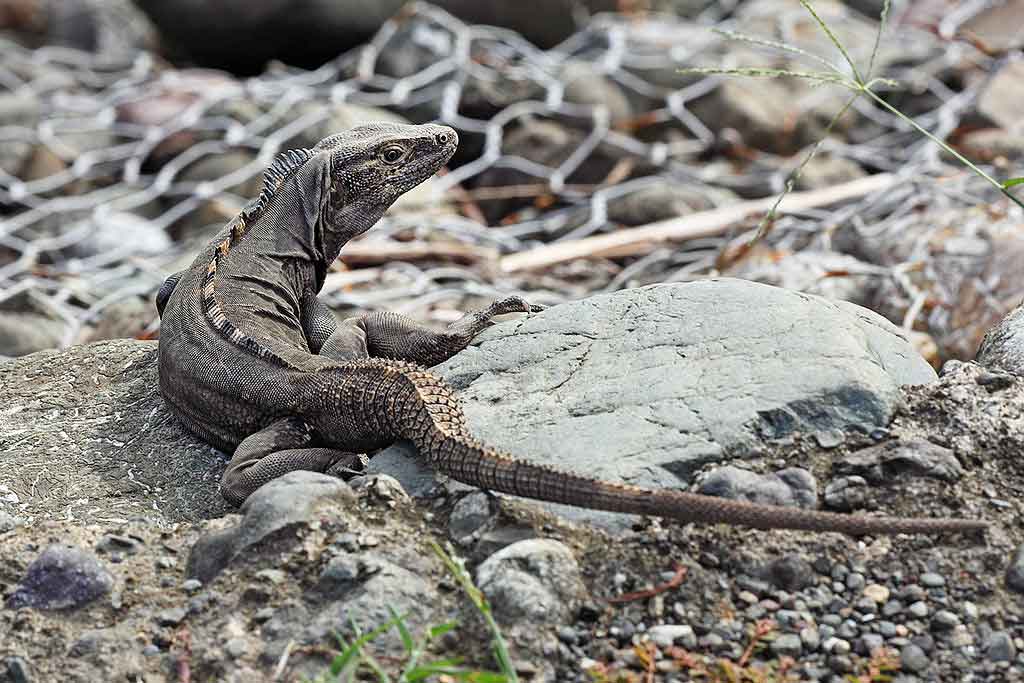
Oaxacan spinytail iguana
- Ctenosaura quinquecarinata

As to the nature, the Oaxacan spinytail iguana is relatively tame, eats from the hand and does not get scared when you put your hand in the terrarium
Oaxacan spinytail iguana
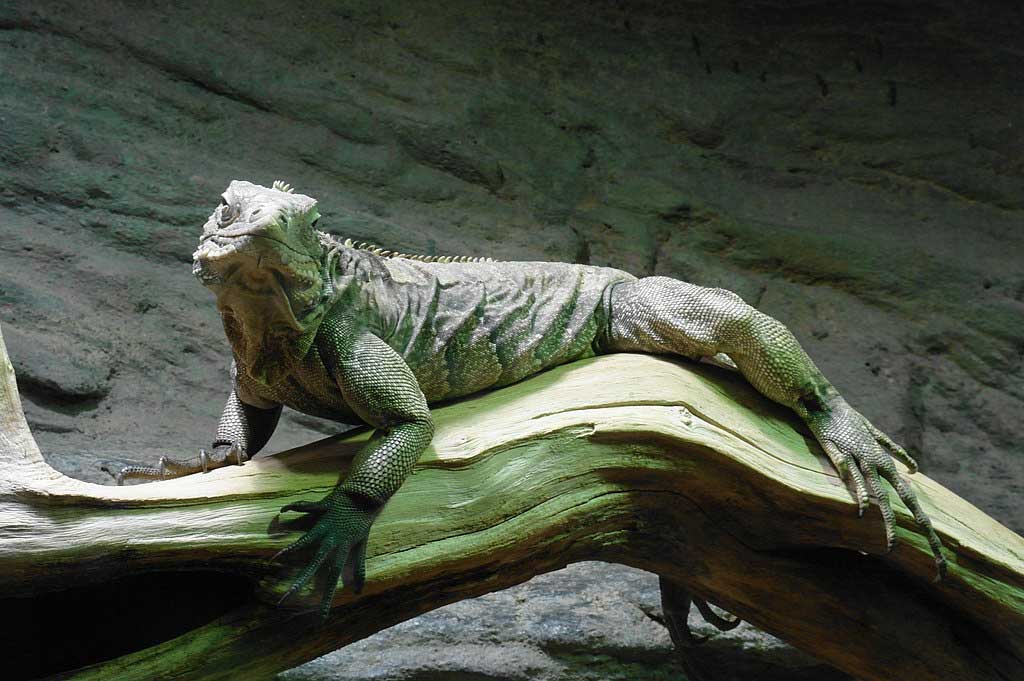
Oaxacan spinytail iguana (Ctenosaura quinquecarinata) Osa Peninsula Costa Rica – Benjamint444, GFDL 1.2 , via Wikimedia Commons

Content

Origin / Distribution

The Oaxacan spinytail iguana (Ctenosaura quinquecarinata) mainly inhabits tropical and subtropical dry forests, in both Costa Rica and Nicaragua. They can also be found in secondary successional forests and in human-transformed environments, like small towns, crops, tree plantations and pastures for cattle.

Characteristics / Appearance

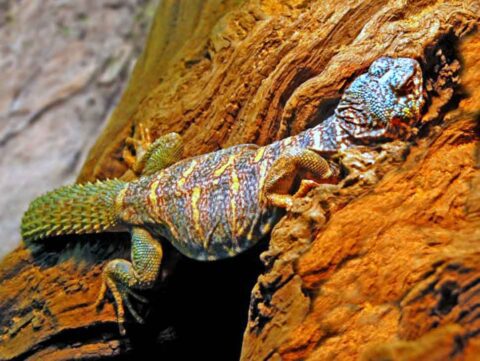
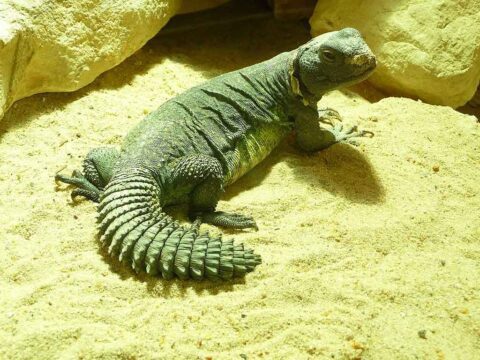
The tail of the Oaxacan spinytail iguana it is heavily armored with five rings of spines that form longitudinal ridges. The males of this species reach a length of 35 centimeters, while females measure 18,5 centimeters. Like most of the Ctenosaura, iguanas are born a bright green color that fades to brown as the animal ages. Females tend to take on a uniform brown color and males develop shades of black., blues and yellows on his body and head on the brown background.

Habitat

It is a kind of secretive and strictly diurnal habits, terrestrial and arboreal, that usually hides in caves or holes in the ground or between roots and cracks in fallen logs, or low over trees or bushes. They are occasionally seen resting or basking, usually during the hottest hours of the day, and are extremely quick to escape and hide from any potential danger..

Adults are basically vegetarians, feeding mainly on leaves and fruits and occasionally on some invertebrates. Its reproduction is oviparous.

Behavior

Food

The Oaxacan spinytail iguana it is omnivorous and is known to consume leaves, fruits and flowers of many trees, including the indian agati (Sesbania grandiflora), the jobo (Spondias mombin) and the azulillo (Tecophilaea cyanocrocus), as well as various insects. This species has a significant symbiotic relationship with shrubs in the plant families Fabaceae and Bignoniaceae. It is sometimes known to eat crop plants, like the bean.

Reproduction

The sexual maturity of Oaxacan spinytail iguana reached at two years of age; reproductive males have an average of 26 cm long snout-cloaca (SVL), while the females measure 24 cm SVL. Males can reach up to 35 cm long SVL. Breed annually, with five eggs or less; the incubation period is 80 days. Their average lifespan is six years.

Threats to the species

Oaxacan spinytail iguana
Pygmy club-tailed garrobo in Prague Zoo – Jklamo, CC BY-SA 4.0, via Wikimedia Commons

It is currently considered a rare species with reduced populations and in danger..
Total population size unknown, but it is estimated that there may be less than 2,500 mature individuals.

These Ctenosaura are threatened by habitat fragmentation and destruction caused by human activities, including urbanization, Agriculture, deforestation and ranching.

  • The Oaxacan spinytail iguana takes refuge in fence posts or hollow trees that are threatened by ranchers and farmers who intentionally set fires to annually regenerate their fields.
  • Sometimes they are also killed by accident, inside tree holes that are collected for firewood.
  • Large-scale farming and ranching displaces Oaxacan spinytail iguana and fragment the population, this can reduce their genetic variability to some extent.
  • forest clearing, the uncontrolled burning and extraction of wood and the construction of roads, provides easier access to garrobo dispersals outside its habitat for gamers.
  • In regions where they are not hunted for food or for the pet trade, these iguanas are feared and intentionally killed in the belief that they are poisonous.
  • In many cases, iguanas die due to blocking their burrow entrances in hollow trees and fence posts.

  • The "Oaxacan spinytail iguana" in captivity

    This species is widely traded within the legal and illegal pet trade and is sold nationally and internationally.. The Oaxacan spinytail iguana was the second species of the genus Ctenosaura most imported into the United States 2001-2008, with the 50 % of imported specimens registered as wild-sourced and 50 % as captive maids (3171 iguanas) from two hatcheries in Nicaragua. One of the breeding facilities reported a total export of more than 6000 captive-bred juveniles to Europe, Asia and USA in 2009. Since 2005, the number of reported exports to the US has decreased; the number of exports to other countries is unknown. Interviews conducted in several municipalities reported wild captures destined for the pet market.

    Recently, all spiny tailed iguana were approved for inclusion in Appendix II of the Convention on International Trade in Endangered Species of Wild Fauna and Flora (CITES), to improve the regulation of international trade. Before listing in CITES, this species was included in a partial trade ban within the European Union since 1996.

    The terrarium

    As to the nature, the Oaxacan spinytail iguana is relatively tame, eats from the hand and does not get scared when you put your hand in the terrarium, but if you try to catch it it bites, to clean the terrarium you have to hold it with gloves. When it comes to eating, he likes practically everything.: Apple, pear, banana, melon, zucchini, green pepper, Canons, cockroaches, crickets, grasshopper,all kinds of worms, little mice, small reptiles, etc.. It is a very easy species to care for..

    Buy one "Oaxacan spinytail iguana"

    Annually they are exported every year to Europe, Asia, and the US, an approximate number of plus almost 6000 young individuals of Oaxacan spinytail iguana from captive breeding.

    Its price can range from 30 euros for a baby up to 300 euros for an adult male.

    Videos "Oaxacan spinytail iguana"

    ctenosaura

    Alternative names:

    1. Oaxacan spinytail iguana, Five-keeled spiny-tailed iguana (English).
    2. Iguane ร  queue รฉpineuse (French).
    3. Fรผnfkiel-Schwarzleguan , Oaxaca-Stachelschwanz-Leguan, Fรผnfkielige Stachelschwanz-Leguan (German).
    4. Iguana de cauda espinhosa de Oaxaca, Iguana de cauda espinhosa de cinco quilhas (Portuguese).
    5. "Garrobo enano de cola de garrote", Cola chata, Garrobo de cola espinosa, Garrobo enano o Iguana de cola espinosa de cinco quillas (espaรฑol).

    โ–ท The world of Pets: Dogs, cats, birds, reptiles, amphibians

    Keeled slug-eating snake
    - Pareas carinatus

    The Keeled slug-eating snake is a predominantly lowland resident. Rarely found near human settlements and farming areas.
    Keeled slug-eating snake
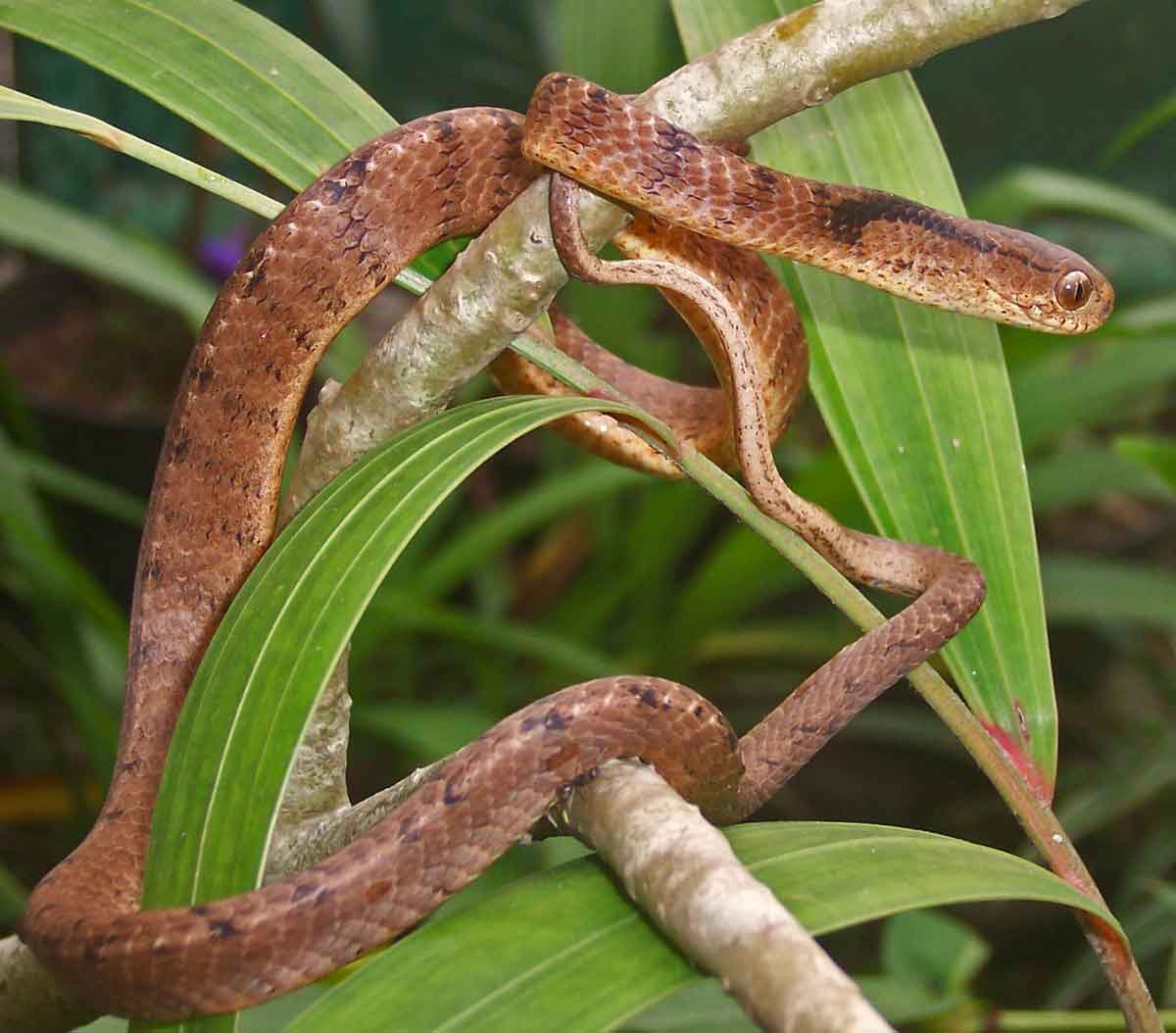
    Pareas carinatus, from Bogor, West Java, Indonesian – W.A. Djatmiko (Wie146), CC BY-SA 4.0, via Wikimedia Commons

    Content

    Origin / Distribution

    The Keeled slug-eating snake (Pareas carinatus) is present in parts of southern China, Myanmar, Thailand, Laos, Cambodia, Viet Nam, Peninsular Malaysia (only in northern states), Sumatra, Borneo, Java and Bali. No records from Singapore.

    Characteristics / Appearance

    It has a remarkably sharp snout and relatively large eyes.. Its body is relatively thin and laterally compressed.. Its color is typically medium brown, with a pattern of darker spots and numerous narrow, broken bars. On the top of the head there are dark markings, that can form a clear cross shape, or they can be somewhat less defined. Its underside is pale yellow..

    Habitat

    This Keeled slug-eating snake broad-spectrum inhabits lowland and low-mountain forests up to the 1300 meters above sea level. It is nocturnal and has mainly arboreal habits..

    Behavior

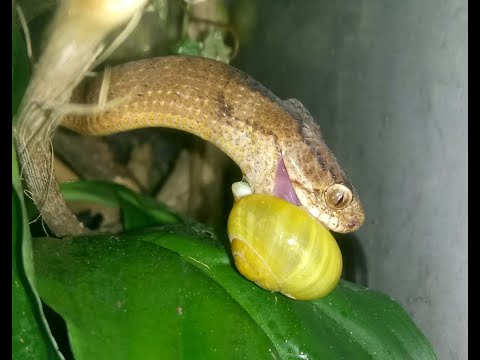
    The Keeled slug-eating snake is a predominantly lowland resident. Rarely found near human settlements and farming areas. Its predominant habitat is forests.. Here the snake feeds at dusk and at night close to the ground. Snakes move very slowly. Their diet consists of nudibranchs and slugs..

    When disturbed, sometimes curls into an S shape, raises the front body off the ground and pushes the "adversary", but usually without biting.

    This species lays eggs. Females can lay between 3 and 6 eggs throughout the year. The pups measure between 15 and 18 cm when hatched.

    Threats to the species

    The Keeled slug-eating snake (Pareas carinatus) has recently been assessed by the IUCN Red List of Threatened Species in 2011. It is classified as Least concern.

    The "Keeled slug-eating snake" in captivity

    Video of the "Keeled slug-eating snake"

    PAREAS CARINATUS, the snail snake! the snail eater....

    The terrarium

    Some measures of 40 x 35 x 60 cm. (width x depth x height) for the terrarium, illuminated and heated with a fluorescent tube and a parabolic radiator of 60 W. The terrarium may have peat plates on the bottom, as well as at the rear and on a side wall. A thick layer of soda clay under the peat plates serves as drainage and water storage to keep the peat moist at all times and thus ensure higher humidity. The Ficus benjamina and the Ficus pumila they take root in the peat and grow forming a tangled web in the terrarium. A few pieces of cork bark add more structure.

    Drinking water can be an ornamental birdbath, and animals can be sprayed at least every three days. Depending on the season of the year (warmer in summer, cooler in winter), The temperature in the terrarium ranges from 22 and 32 ยฐC during the day and 18 and 24 ยฐC at night.

    Food

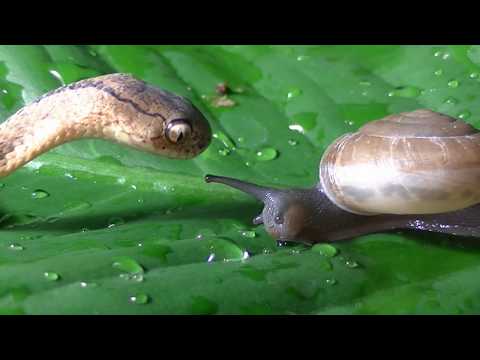
    The Keeled slug-eating snake is specialized in feeding on shelled snails. With their enlarged fork-shaped jaws they try to hold the prey by the soft body and lever it out of the shell by alternately retracting the two jaws..

    Nudibranchs offered sporadically have so far only been accepted with great hesitation and only when very hungry. The snails that feed are the bright band snails or (Cepaea spp.), that can be found in almost all the field and have an adequate size. for the juniors, look for smaller snails. Bernstein the snail (Succinea putris), that can be found in wet meadows, offers a good alternative to the not always frequent juveniles of Cepaea due to its smaller size. The collection of young vineyard snails (Helix pomatia) is prohibited for reasons of conservation of the species.

    Water snails have never been accepted as prey. Feeding the previously frozen snails or their bodies or soft parts proved to be extremely difficult.. It seems that, in addition to the olfactory stimulus, visual stimulation due to the slow movement of the live prey animal and the round shape of the snail shell also plays an important role in prey recognition.

    Normally, the animals eat about eight snails once or twice a week. Feeding always takes place at night. If snails are introduced into the terrarium, snakes immediately begin to lick intensely. They then appear to follow the odor gradient in the air until they have the snails directly in front of them..

    Buy one "Keeled slug-eating snake"

    The price of a "Keeled slug-eating snake" at the exotic animal market, ranges between 200 – 300 EUR.

    Videos "Keeled slug-eating snake"

    Keeled Slug Snake eats snail

    Pareas carinatus feeding

    Alternative names:

    1. Keeled slug-eating snake (English).
    2. Serpent mangeur d'escargot (French).
    3. Gekielte Schneckennatter (German).
    4. Serpente-comedora de lesmas (Portuguese).
    5. "Serpiente comedora de babosas", Serpiente caracolera (espaรฑol).

    โ–ท The world of Pets: Dogs, cats, birds, reptiles, amphibians

    Red-headed rock agama
    - Agama agama

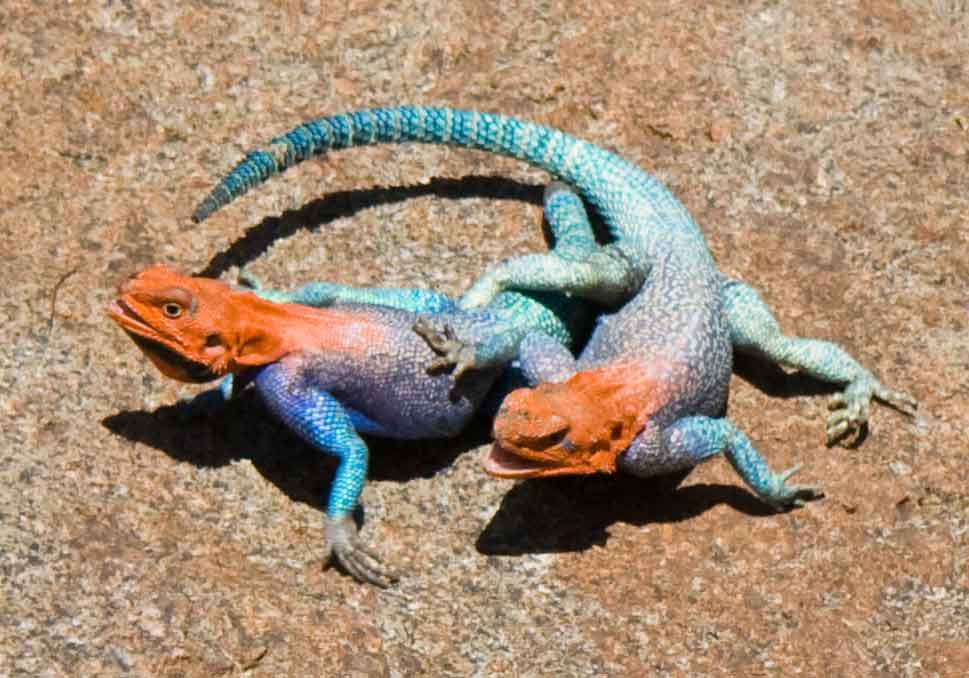
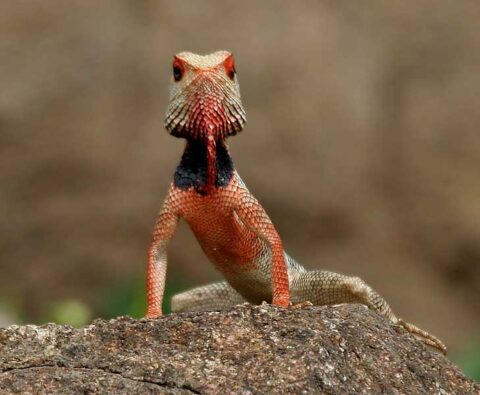
    The Red-headed rock agama (Agama agama) It is one of the most colored lizards that we can find, since even the females are quite colorful. They are desert terrarium animals like the Pogona, with whom they can also coexist perfectly.
    Red-headed rock agama
    Red-headed rock agama – Jason Pratt, CC BY 2.0, via Wikimedia Commons

    Content

    Characteristics

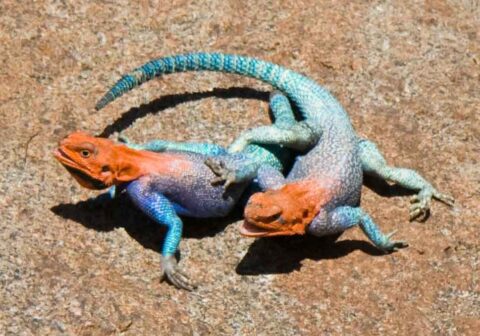
    The Red-headed rock agama has a very marked color change, but it is only visible during the day. At night, the look of a Red-headed rock agama is uniformly gray. According to your mood, the Red-headed rock agama changes its color.

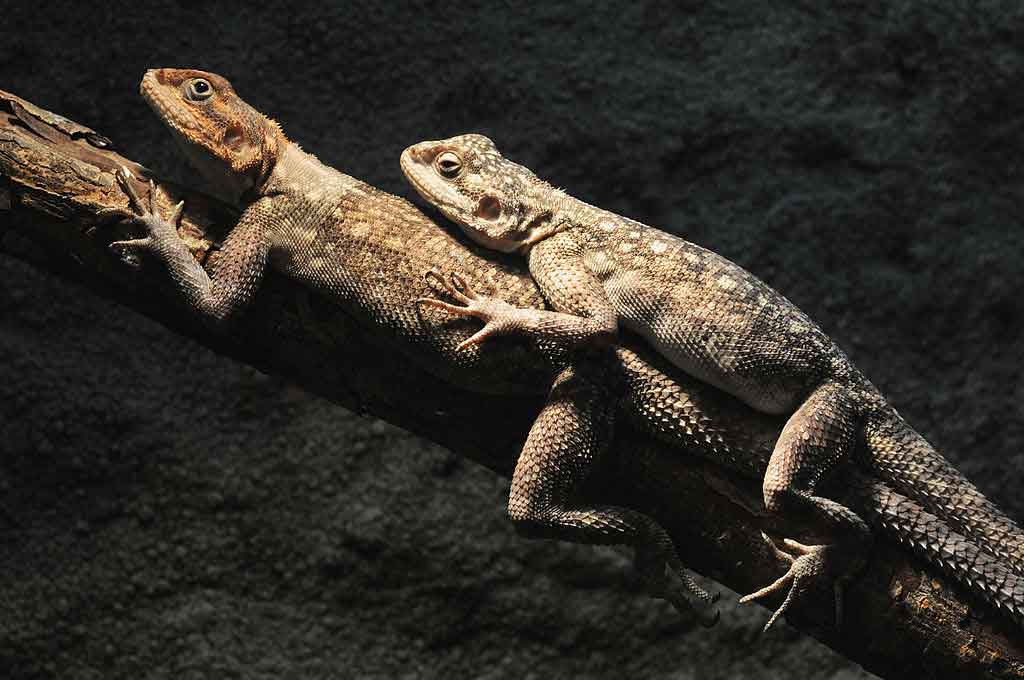
    The females., juveniles and lower-ranking males have brown to gray bodies. Dominant males are recognized by their flattened steel-blue or olive-green body and yellow head and tail., about orange to red. Depending on the subspecies, head color spreads over anterior body. The males acquire their splendid colors when they have warmed up in an elevated place during the day.

    During gestation, females show yellow to orange spots on flanks and turquoise spots on head. The tail, long and round, does not drop, unlike numerous iguanas or of the Skinks.

    Its size varies between 13 and 30 full length cm. Males are usually 7,5 to 12 cm longer than average female.

    Behavior

    Red-headed rock agama
    Agama agama at the Schmiding Zoo in Schmiding near Bad Schallerbach, Austria – Michael Gรคbler, CC BY 3.0, via Wikimedia Commons

    The Red-headed rock agama lives in colonies with a dominant male in a limited area. Group size can be up to 25 individuals. At dawn, group members are activated. During the day, the dominant male usually stays in a high place and shows his color.

    Yet Red-headed rock agama also likes to warm up on a high place in the scorching sun. Stand on front legs and stretch body, and occasionally the tail, diagonally up. When a sexually mature young male changes color, is expelled by the dominant male and has to find his own territory. In a fight with a rival, the fighting male's head turns brown and white spots appear on the body. The males emit hissing sounds and try to strike the opponent's head with their tail.. But, before doing it, adopt a threatening posture. They shake their heads back and forth, lift the body off the ground and unfold the skin folds of the throat.

    The "fire lizard" in captivity

    Terrarium

    In its original habitat, the Red-headed rock agama live in groups of several animals. This condition must also be maintained in the terrarium.

    The terrarium for him Red-headed rock agama must have very generous dimensions for a couple, or better, one male with two females, since the Red-headed rock agama captured in the wild have a pronounced flight reflex, apart from great mobility. So, dimensions must be at least 200 cm long x 100 cm deep x 150 centimeters tall.

    As the Red-headed rock agama he is very hungry for sun, must be brightly lit, of course with UV, temperatures should be 26-32ยฐC with a basking point per animal up to 38ยฐC. Humidity during the day should be at a constant level. The humidity during the day should be 40-50%, but it should be sprayed every morning and every night.

    The terrarium must be provided with a sand mixture suitable for digging as a substrate, as well as various stones and branches to climb, in order to provide the animals with sufficient variety.

    Diet

    as food, live insects come into question, they must be pollinated regularly, if possible you have to feed many ants, which unfortunately is hardly possible without raising, in any case the diet should be as varied as possible.

    Reproduction

    The Red-headed rock agama (Agama agama) it's hard to breed

    In the wild, mating usually occurs before the rainy season, but it is probably less due to the time of year than to the increased food supply, so maybe you could try to provoke mating in the terrarium by giving more food and spraying with special intensity. If this is successful, which, as I have already said, would be a very lucky case, the eggs are incubated at about 30ยฐC and around 70% of humidity during 60-90 days.

    For sale "Red-headed rock agama"

    First of all, I would like to say that almost all animals found in trade or exchanges are wild caught, and that it takes a lot of intuition to keep these animals, and wild-caught animals in general, unfortunately most of the animals that are sold die due to improper care, and only very rarely are hatchlings successful in the terrarium, so I would advise anyone who is not really versed in terraristics not to buy them, I know that animals are beautiful, but precisely for this reason we must try to protect them.

    The price of a "Red-headed rock agama" in the exotic animal trade ranges from 20 – 25 EUR.

    โ–ท The world of Pets: Dogs, cats, birds, reptiles, amphibians

    Feeding the lizards
    What do lizards eat in the terrarium?

    The lizards they feed mainly on living beings, usually from invertebrates. But this pattern does not work for all lizards. Some are always vegetarians, others change to vegetarian during their evolution.
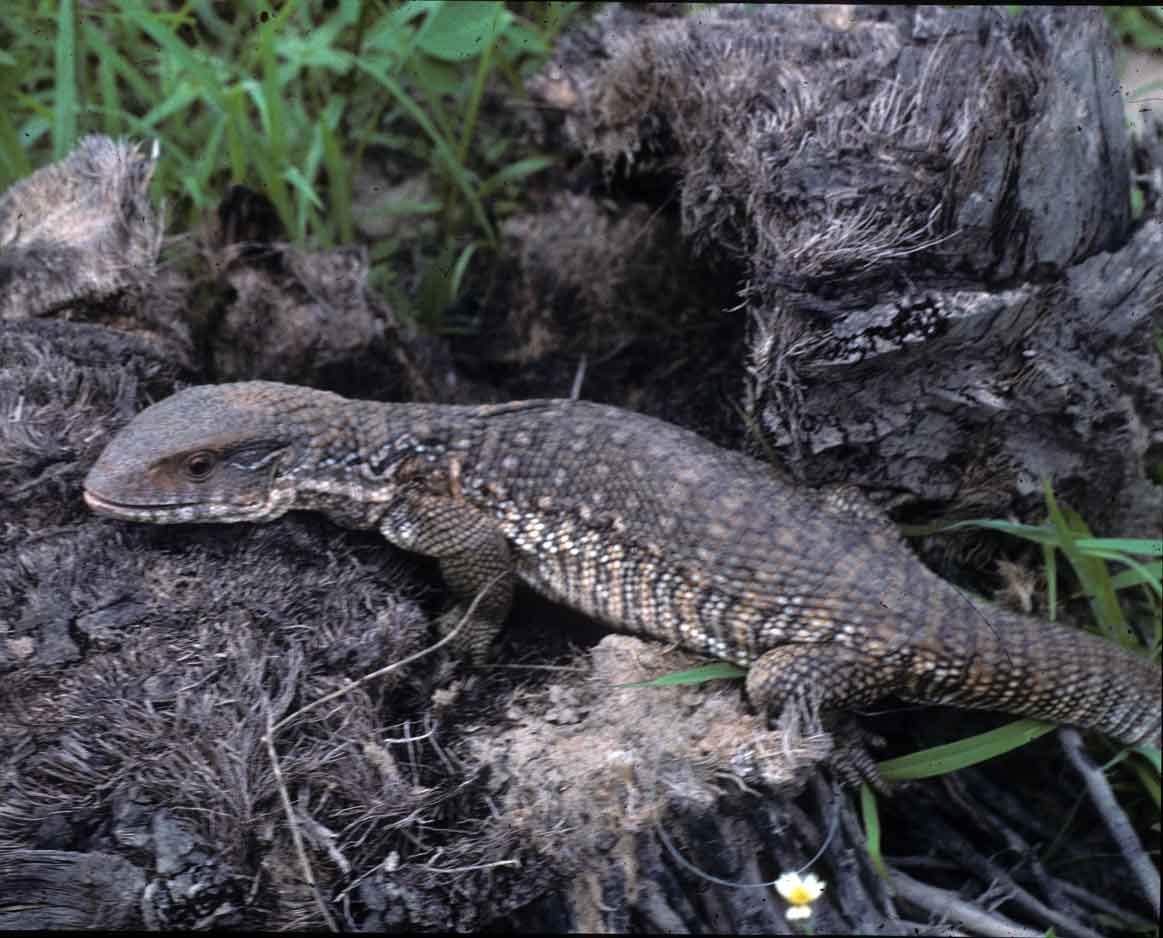
    Varano of the savannah
    Varanus exanthematicus in the coastal plain of Ghana – Daniel Bennett, CC BY-SA 3.0, via Wikimedia Commons

    Content

    What do lizards eat in the terrarium?

    Most species of lizards are not very picky about what they eat., as they eat almost all invertebrates and arthropods that they can master. As with snakes, among the lizards there are also feeding specialists who are not suitable for the care of the terrarium (for example, ant and egg eaters). On the other hand, the vegetarian and those who eat snails are very suitable.

    Most of the lizards use the combination language and the Jacobson's organ to search for food to look for food, which often exceeds the olfactory capacity of the nose.

    Animal-feeding lizards also find their prey by eye contact, especially for their movements. in the terrarium, for example, you can observe a Gecko sitting a few inches from an insect that doesn't move. If you move, will eat it immediately; if you stay still, the Salamander will leave the place and look for food elsewhere. But, not all lizards display this hunting behavior; many smooth lizards, for example, they also perceive the immobile arthropods as food and prey on them.

    Gecko
    Gecko

    The capture and treatment of the food vary, of course: for example, the Chameleons They "shoot" their food with their tongue at great distances and swallow it; the Skinks and other lizards push on purpose with the muzzle, using lateral head movements to place bulky limbs in a good position to swallow, or they are completely stripped away; the Geckos and some Monitor lizard they hit large prey caught with their mouths against objects to stun them, crush or soften them.

    Types of food

    Depending on the species and, above all, its size, you have to offer feed the lizards once or twice a day. Young animals, in particular, they should be fed once a day if possible.

    The following types of food are suitable:

    Various types of crickets, domestic crickets, fruit flies, flies, your worms, various types of worms, mealybugs and their larvae, other beetles and their larvae, wax moths, wax worms, various types of grasshoppers and cockroaches, Collembola, oven fish, mealybugs and prairie plankton. In the case of the latter, nature conservation laws must be respected and poisonous food animals may not be given to the young.

    Some of the food species mentioned can be purchased, but the breeding of some of these invertebrates is quite easy and also advantageous, as then there is always enough food available, also in the required size. In general, the animals themselves must be fed a substantial diet, that is to say, they should only be offered the best food. Some animals that our lizards feed on would immediately hide in the terrariums, so they must be offered in suitable containers or directly on the tweezers.

    Vegetarian food

    Offering vegetarian food is easier. In general, food can be placed directly on a plate or in a bowl in the terrarium. Also in this case it is important to offer food during the activity time of the fry, that is to say, do not put food in the terrarium at night (this does not apply to Skinks night and vegetarian wraparound tail).

    Some vegetarians also like to eat dry or wilted foods. (spiny-tailed lizards), but vegetarians also get much of the fluid they need from their fresh, green foods. The โ€œlettuceโ€ diet should be a thing of the past, because lizards need more nutrients than they contain.

    Wild herbs are especially suitable for feeding vegetarian lizards: the leaves and flowers of dandelion, clover varieties, nettle, alfalfa, also sprouted wheat and various types of banana, lentil and thistle. Also vegetables like zucchini, pumpkin or cucumber, while hard varieties such as carrots can be offered grated. Even hay is an important part of the food assortment..

    Some more important notes:

    It is better to use homemade or organic products, as many vegetables and fruits imported from southern Europe, in particular, are heavily contaminated with various toxins. It also, the vegetables offered should be washed thoroughly. The mixture of lime preparations and vitamin products should be used at appropriate intervals.

    Feeding for specialist lizards

    Shell snails are a welcome change for some species of lizards รขโ‚ฌโ€œ for example, the Red-eyed crocodile skink and the Indonesian blue-tongued skink-, but for others they are the only natural food (for example, the Pink-tongued skink).

    Like the skinks mentioned are fairly large members of your family, they can usually break large shell snails by themselves with the help of their jaws. The smallest snails should be offered to their young. If they are not available in appropriate sizes, open the shells of large snails.

    To some lizards, especially to some species of Geckos, like to eat sweet foods. For this reason, in the nature, lick the overripe fruit or eat the nectar of the flowers. They are offered fruit pulp, fruit yogurt or fruit puree in small bowls, that are placed on the ground or on top of the terrarium, according to the way of life of lizards. You have to be careful not to give these sweet food components too often, since many lizards then tend to gain weight.

    To other lizards - for example, the Monitor lizard or the Argentine black and white tegu (Salvator merianae)- like to eat ready-made foods, as dog or cat food, heart meat of cow and poultry, dead chicks, Rats, hamsters or guinea pigs, instead of live food. Keep in mind that day-old chicks, for example, do not contain large amounts of nutritional values, so they should not be fed or only very rarely.

    โ–ท The world of Pets: Dogs, cats, birds, reptiles, amphibians

    Agamid Lizards
    - Agamidae

    Red-headed rock agama
    Red-headed rock agama – Jason Pratt, CC BY 2.0, via Wikimedia Commons

    Content

    The Agamid Lizards are found in Europe, Africa, Asia and Australia. They show an astonishing diversity of forms and behaviors. They inhabit dry deserts, steppes and forests. The Flying dragons of the gender Draco can plan from one tree to another, the Thorny devils (Moloch horridus) have a system of microscopic grooves on their skin to transport rainwater or moisture from fog to their mouth. The Agamid Lizards they have excellent eyesight and hearing. The sense of smell is not very developed, despite the presence of olfactory cells in the nostrils and Jacobson's organ.

    Between the Agamidae, six subfamilies are generally recognized:

  • Agaminae (Africa, Europe and South Asia)
  • Amphibolurinae (Australia and New Guinea, 1 species in Southeast Asia)
  • Draconinae (South and Southeast Asia)
  • Hydrosaurinae ( Hydrosaurus , Papua New Guinea, Philippines and Indonesia)
  • Leiolepidinae ( Leiolepis , Southeast Asia)
  • Uromasticinae ( Saara and Uromastyx , Africa and South Asia)
  • Alternative names:

    1. Agamid Lizards (English).
    2. Agamidรฉs (French).
    3. Agamiden (German).
    4. Agamรญdeos (Portuguese).
    5. Agรกmidos (espaรฑol).

    List of Agamid lizards for maintenance in captivity

    Family
    - Anolis carolinensis
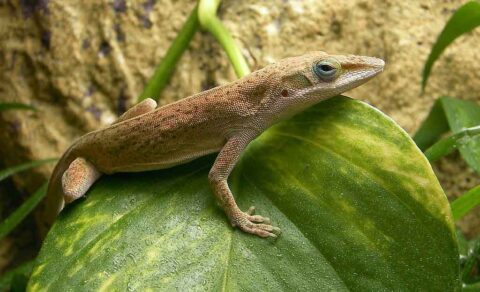
    Green anole

    Green anole

    Very nice tree lizard also called chameleon lizard, due to the ability to change color depending on the environment ...
    Family
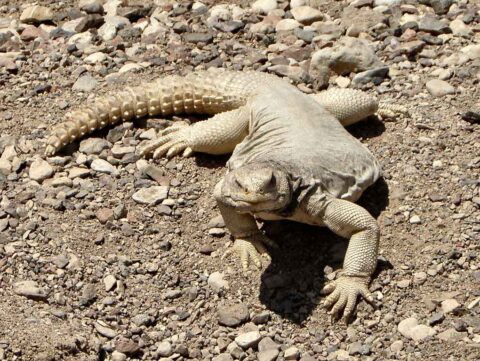
    - Uromastyx aegyptia
    Egyptian spiny-tailed lizard

    Egyptian spiny-tailed lizard

    The Egyptian Spinytail is the largest species of Spiny-tailed Lizards. Contents Characteristics The Spinytail ...
    Family
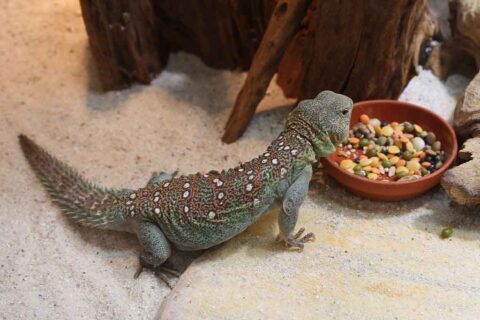
    - Uromastyx ocellata
    Tail hawthorn ocellated

    Ocellated spinytail

    The ringed spinytail is native to northeastern Africa., where it can be found in southern Egypt, Sudan, ...
    Family
    - Uromastyx ornata
    Ornate mastigure

    Ornate mastigure

    The ornate spiny tail (Uromastyx ornata) is included in the Appendix 2 of the Washington Convention on Trade ...
    Family
    - Calotes versicolor
    Oriental garden lizard

    Oriental garden lizard

    Although the Bloodsucking Tree Dragon can be found relatively frequently and quite cheaply in the trade, ...
    Family
    - Acanthosaura capra
    Acanthosaura capra

    Mountain horned dragon

    The Mountain Horned Dragon is a beautiful lizard that is also called the Asian chameleon., due to your changes of ...
    Family
    - Diploderma splendidum
    Green striped tree dragon

    Green striped tree dragon

    The Mountain Dragon is shy in nature and tends to panic. This can be counteracted with ...
    Family
    - Uromastyx acanthinura
    North African mastigure

    North African mastigure

    The North African Spiny-tailed Lizard is one of the most representative reptiles of the Sahara desert ...
    Family
    - Uromastyx geyri
    Saharan spiny-tailed lizard

    Saharan spiny-tailed lizard

    The Sahara Spiny-tailed Lizard is a relatively small and thin species for the genus, with a length ...
    Family
    - Agama agama
    Red-headed rock agama

    Red-headed rock agama

    The Fire Lizard (Agama agama) It is one of the most colored lizards that we can find, since even females ...

    โ–ท The world of Pets: Dogs, cats, birds, reptiles, amphibians

    Common musk turtle
    - Sternotherus odoratus

    The Common musk turtle owes its name musk (colloquially stinky) to their musk glands, with whose help it can secrete a strongly scented secretion to scare away predators.
    Common musk turtle
    Sternotherus odoratus ร— Sternotherus carinatus hybrid – Laurent Lebois, CC BY 2.0, via Wikimedia Commons

    Content

    Origin / Distribution

    The Common musk turtle (Sternotherus odoratus), It has a fairly wide distribution area., extending north into the eastern half of the US. (Illinois, Wisconsin, hasta Maine) and south into southern Canada (Quebec, Ontario) to Florida and west to central Texas.

    Characteristics / Appearance

    The carapace of adults is dark brown., dark gray to black and has no markings. It is evenly curved, narrow and elongated. In juveniles a pattern of dark spots is visible. Juveniles also have three characteristic keels, that disappear with age.

    The plastron is small and cross-shaped. (bikini shell), and the color can range from light beige to full black. In this species, connective tissue sutures are especially prominent.

    The head, legs and other soft tissue are light gray to black, although coloration changes with age. On the sides of the head there are two yellow stripes that vary depending on the specimen., one above and one below the eye from the tip of the nose to the neck (sometimes with a connection behind the eye). These stripes can fade or disappear completely with age.. There is a pair of barbels on the chin, sometimes there may be a second pair.

    The Common musk turtle can reach a size of 13,7 cm., but in most cases it only measures between 7,5 and 10 cm., and both sexes are about the same size.

    Habitat

    Inhabits all types of fresh water, like lakes, ponds, rivers, swamps and canals, and prefers slow-moving waters with sandy bottoms. The species prefers shallow water areas. Despite its undemanding character, does not tolerate brackish water.

    Behavior

    The Common musk turtle belongs to the genus Sternotherus and it looks a lot like Striped mud turtle of the gender Kinosternon at first sight. unlike the turtles Kinosternon, that they can close their abdominal shell with the help of two hinges, the Common musk turtle has a retracted abdominal shell and is not hinged. This makes them more mobile and they compensate for the lack of protection by being more aggressive.. when they are threatened, give off a strong, unpleasant odor, what gives them their name.

    The Common musk turtle is active in the morning and at night. Land rides are popular at night. Other species of Sternotherus are more active during the day.

    Threats to the species

    State of conservation โ“˜


    minor concern Minor Concern โ“˜ (UICN)โ“˜

    Although the Common musk turtle does not have federal conservation status in the US. and is fairly common throughout most of its range, has decreased markedly in some areas, and appears to be more sensitive than some native species to human degradation of wetlands. It is listed as a threatened species in the state of Iowa.. It is listed as an endangered species in Canada., and is protected by the federal Species at Risk Act (SARA). It is also protected under the Ontario Endangered Species Act.. In this part of its range, only wetlands with minimal human impact have robust populations. The mortality of reproductive females on roads can be one of the problems associated with human development.

    The "Common musk turtle" in captivity

    Aquaterrarium

    Depending on the size or age of the Common musk turtle, the aquarium should measure between 80 x 40 cm. and 100 x 50 cm., more space never hurts. The water level should initially be about 5 cm for small pups, the Common musk turtle adult prefers some 30 cm.. Animals like to run through the sandy substrate, but also climb to the surface of the water in the indoor furniture or swim freely in the water. Consequently, exuberant planting and good structuring with root wood or non-slip stones up to the surface must be carried out. Occasionally, turtles use furniture that protrudes from the water to sunbathe, although much less frequently than, for example, the ornamental turtles. Furniture also creates important hiding and resting places..

    Females should be offered a sandy, partially planted area of โ€‹โ€‹land for egg laying.

    Lighting and temperature of the aquaterrarium

    A lamp, for example HQI, should hang above to heat the area to 35-40ยฐC. The species also likes to use the area to rest. This species also likes to use the area for nocturnal terrestrial excursions..

    During the period of activity, The water needs to reach a temperature of 22 a 26ยฐC, which is why, depending on ambient temperature, a heating rod must be used. A rest phase in winter of about 3 months at about 10ยฐC is suitable for the species and is necessary to keep it healthy in the long term. This value is only indicative due to the large distribution area. Animals from the north of the distribution area have to enter torpor at a water temperature of 4ยฐC – 5ยฐC, animals in southernmost areas hibernate mostly at 10ยฐC – 15ยฐC.

    A sufficiently sized filter ensures clear water and serves the health of the turtles..

    In the middle of summer, the Common musk turtle can also be kept in secure outdoor enclosures if provided with gently sloping edges and plenty of greenery. But, in these conditions, animals cannot be observed regularly and, Therefore, are difficult to control.

    Maintenance of the "Common musk turtle"

    Common musk turtle
    Common musk turtle, Reid Park Zoo, Tucson. Underwater, in aquarium. This turtle curiously uses its tongue to breathe underwater – David BygottFlickr

    The Common musk turtle is a solitary animal, so adult males should generally be kept solitary. It is also recommended to keep females individually.. If two or more females are kept together, aggression and stress among lower animals are very likely, Therefore, close observation is necessary. Then, it may be necessary to separate the animals and set up another tank.

    To keep the Common musk turtle as appropriate as possible to the species, we recommend the following conditions.

    • air temperature: 25ยฐ a 26ยฐC
    • Minimum size of the terrarium: 200 litres

    Outside maintenance

    The Common musk turtle can be kept in a garden pond from May to October. The pond should have a shallow shore and be sunny, as this particular species likes to bask in shallow water. It also, Don't rule out a large, powerful aquarium heater in the event of bad weather and the temperature drops below 10 degrees Celsius for a long period of time. The enclosure must be relatively high, Since the Common musk turtle it is a very good climber; concrete blocks and palisades can be used for this. It is essential that crystals or the like are not used, since of the turtles they will try to cross the transparent barrier constantly.

    Food

    The Common musk turtle feeds mainly on animal feed, consisting of dry food for turtles, worms, meat and fish strips. But, fruit and salad should also be offered occasionally.

    Reproduction

    The breeding season is mainly from April to May and from September to October.. Like this, can be put from 2 to 4 clutches of eggs by season. The stalls are usually 1 to 5 eggs, Although they can reach 10 eggs. under natural conditions, The incubation period lasts between 65 and 86 days, but can also reach 107 days in unfavorable cases.

    Buy one "Common musk turtle"

    The Common musk turtle, by breeding in large numbers on US breeding farms., is frequently and cheaply available commercially. This encourages ill-considered impulse purchases, which means that the number of unwanted animals that are given away is very high.

    The price of the "Common musk turtle" in the exotic animal trade ranges from 40 – 70 EUR.

    Videos "Common musk turtle"

    First Pasto Sternotherus odoratus CB2016

    Alternative names:

    1. Common musk turtle, Eastern musk turtle (English).
    2. Tortue musquรฉe, tortue musquรฉe commune (French).
    3. Gewรถhnliche Moschusschildkrรถte, Moschusschildkrรถte (German).
    4. Tartaruga Almiscarada Comum, Tartaruga do musgo (Portuguese).
    5. "Tortuga almizclada", Tortuga almizclera comรบn (espaรฑol).